
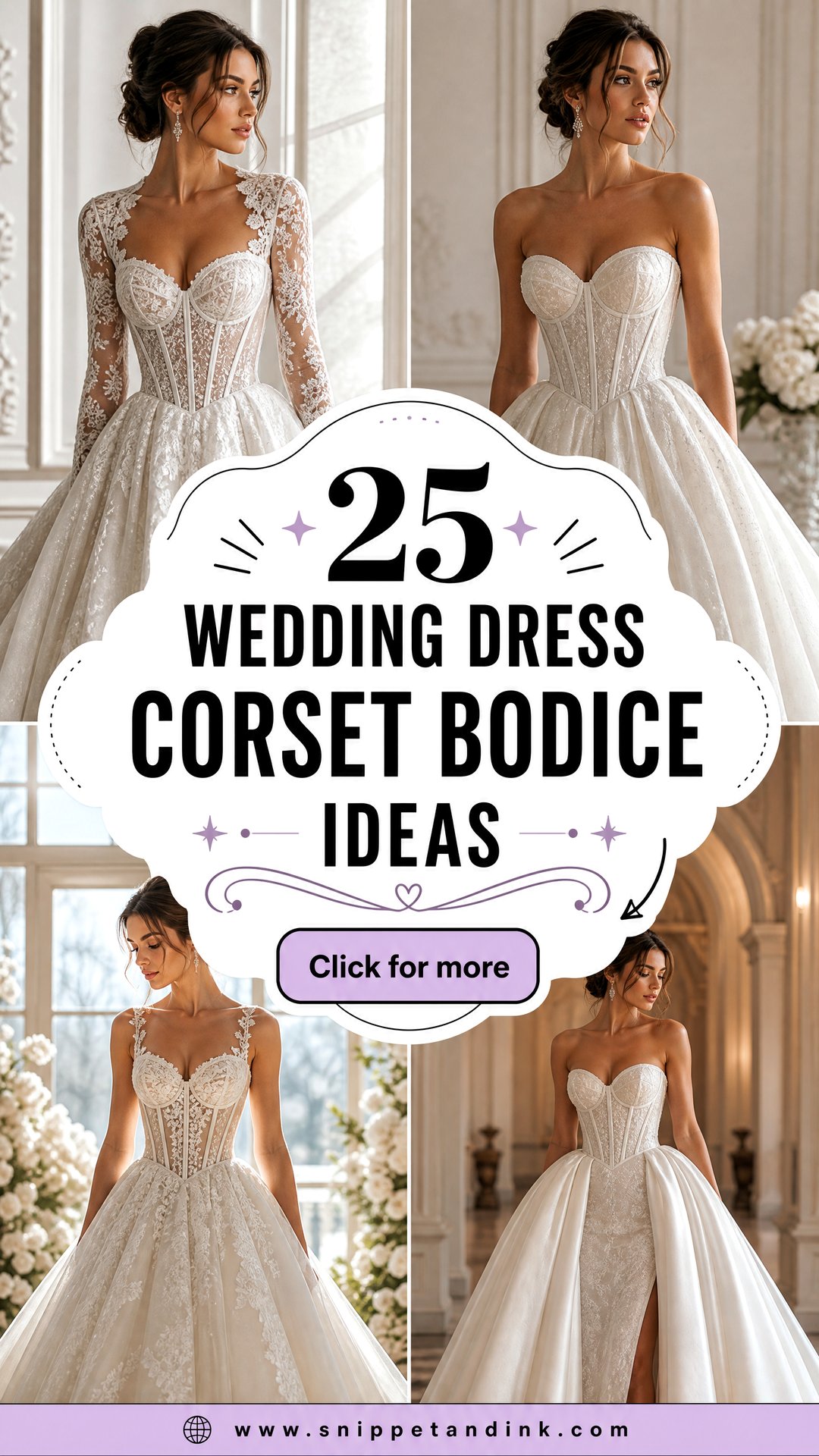
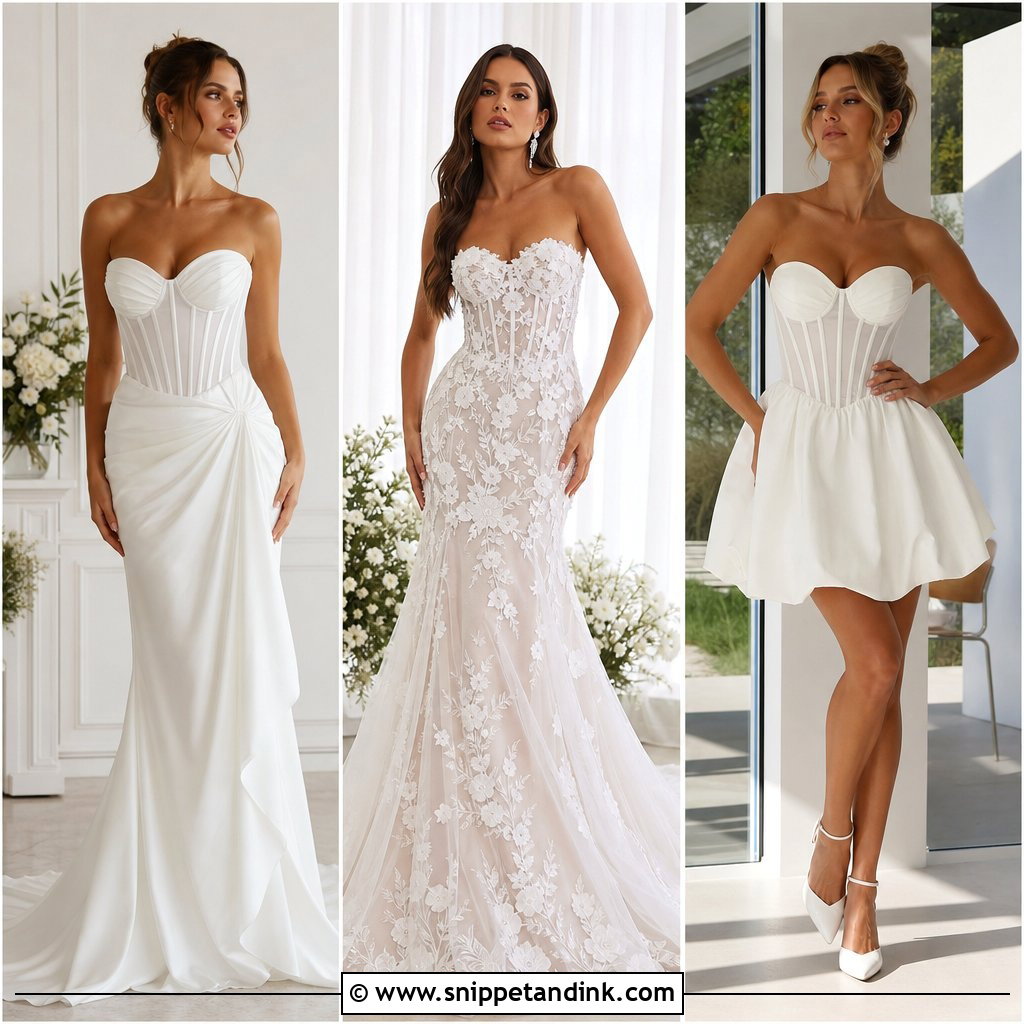
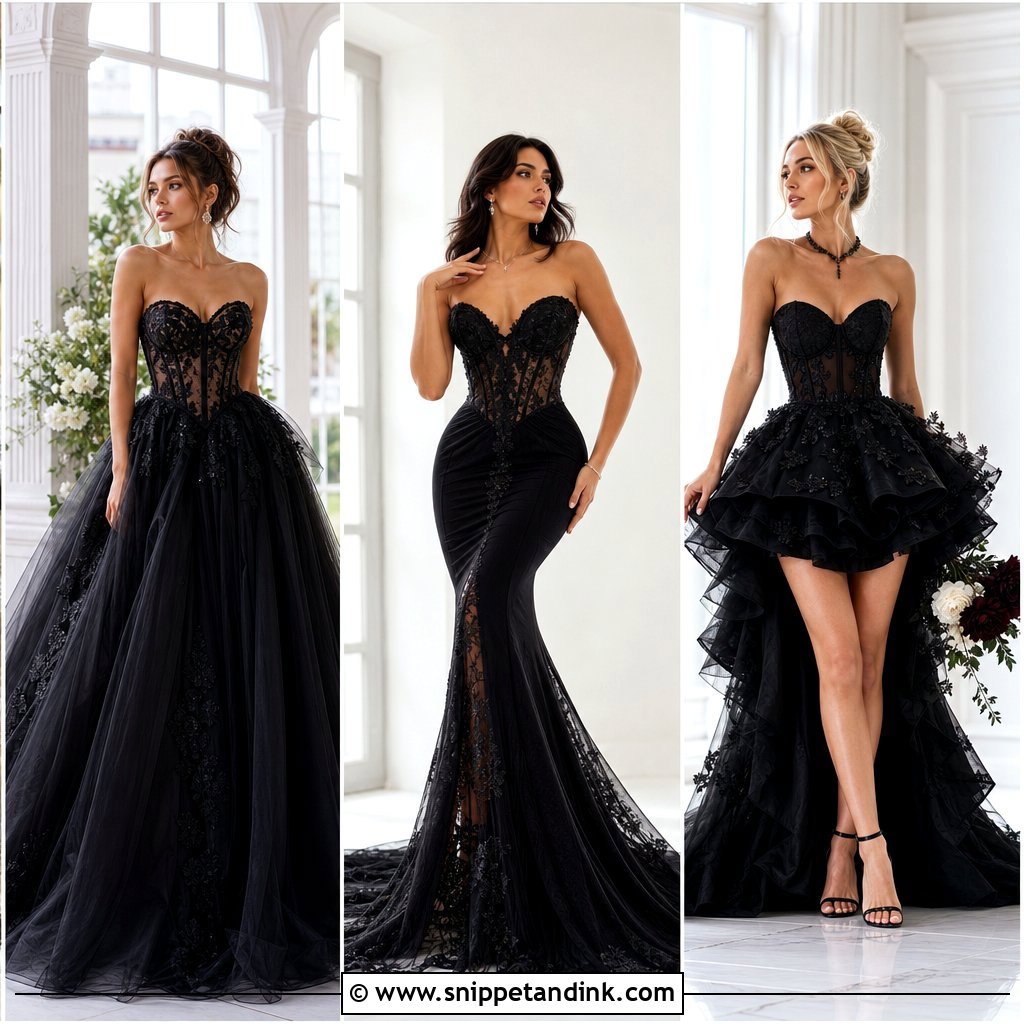
Corset bodices are back on nearly every rail I pull from, and I understand why: a well-built one holds the dress up for you, shapes the waist and frees you from straps and bra worries. It works in satin, lace, tulle, mikado, crepe or sheer illusion, and on ball gowns, sleek columns and vintage basque waists alike. What changes the look is how the structure is finished. You can show exposed boning for structure, hide it under draped fabric, or cover it with floral appliqué. Below are 25 corset gowns, with what I’d watch for when you try each one on.
Boning, Waist Tape and the Bend-Forward Test
A corset bodice that looks the same on the hanger can feel completely different on the body, and the difference is inside. These are the things I check before I let a bride fall in love with one.
What the boning is made of
Better gowns use flexible steel or firm synthetic boning that bends with you and springs back. Very soft plastic boning can kink after a few hours of sitting, leaving a dent you’ll see in photos. Ask your consultant what’s inside, or feel along a channel: it should flex and return, not stay bent.
The waist stay
Many structured bodices have a grosgrain waist tape inside that fastens around your natural waist first. It takes the weight of the skirt so the bodice isn’t pulled down all day. If your gown has a heavy skirt and no waist stay, ask your seamstress whether one can be added.
Three movements at every fitting
- Take a full breath. The top edge should not cut in or leave you short of air.
- Bend forward as if to pick up a bouquet. The neckline should stay against your skin without gaping.
- Sit on a hard chair. The front shouldn’t fold into a ridge or dig in under the ribs.
1. Satin Corset Bodice Wedding Dress
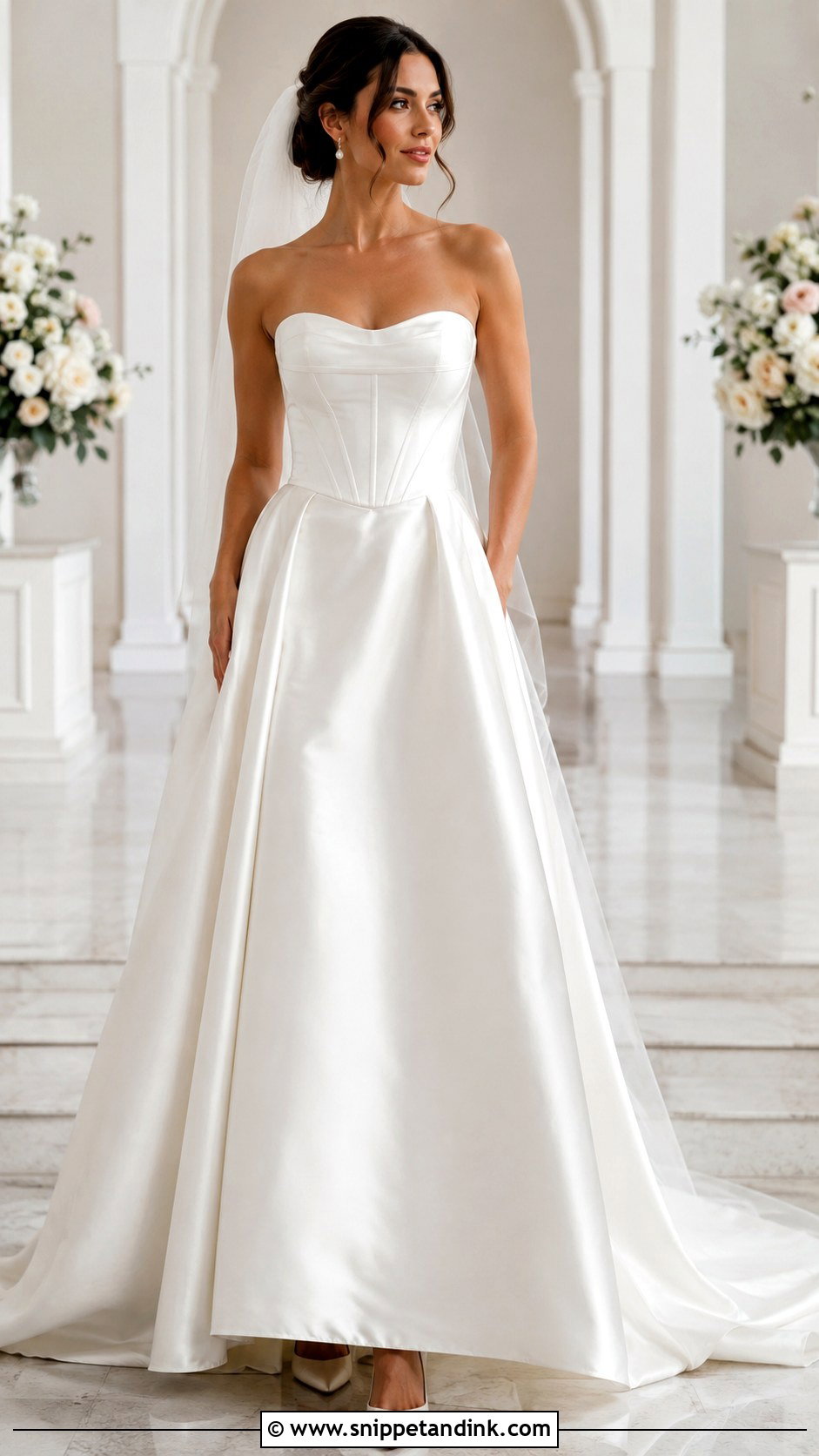
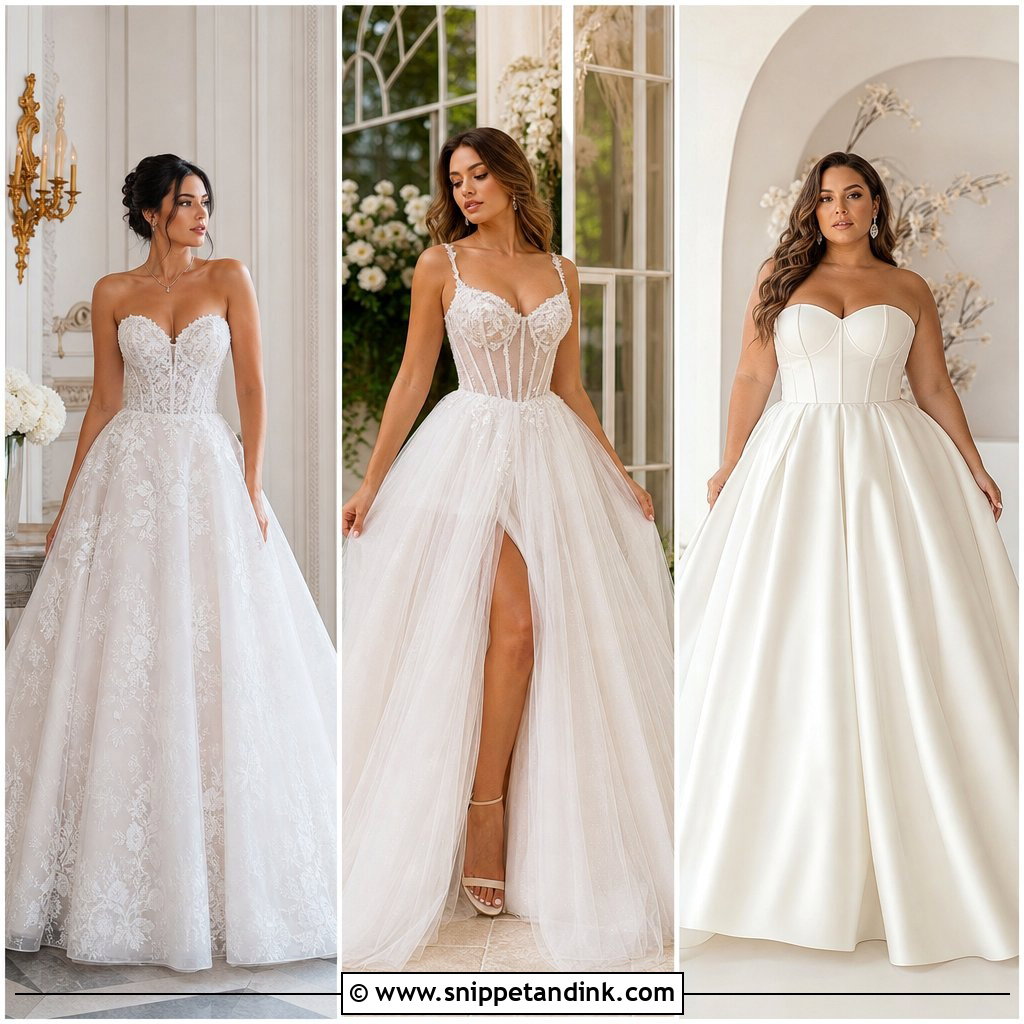
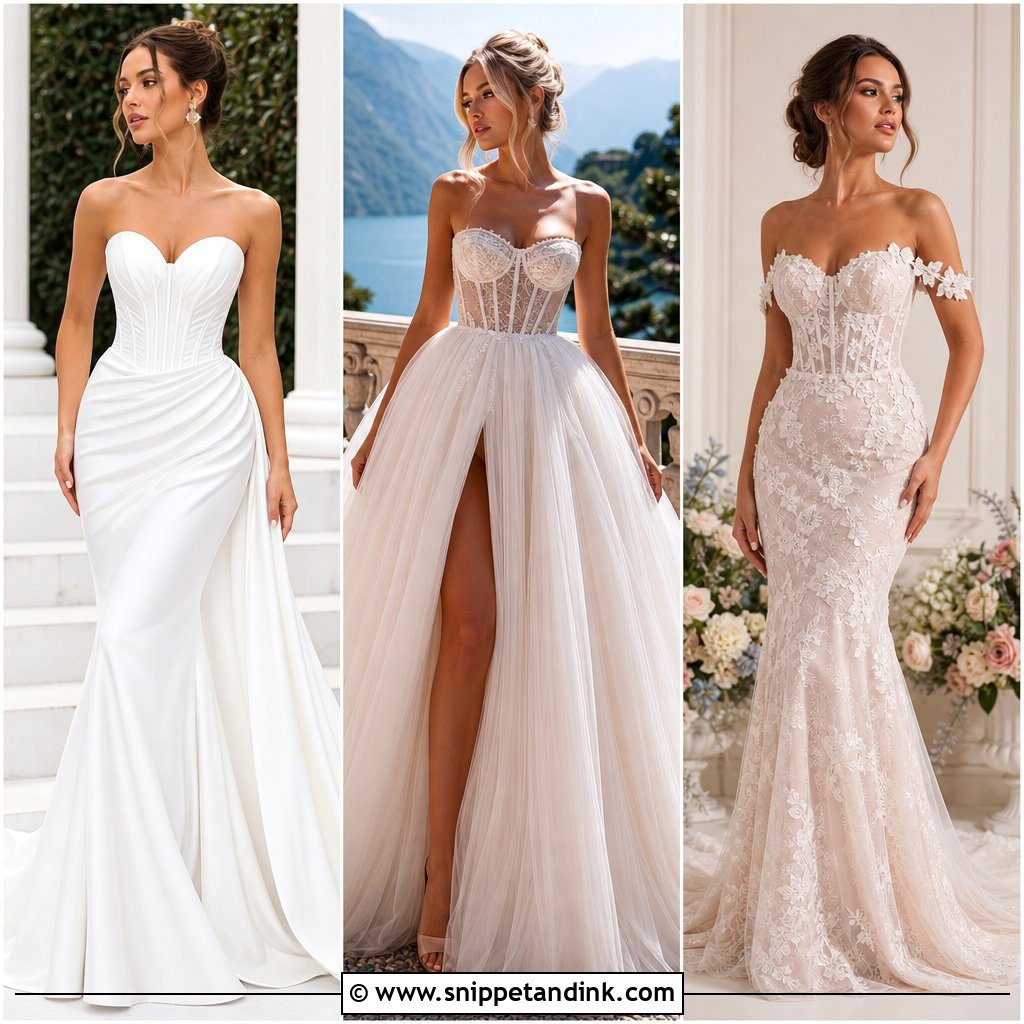
Satin shows the shape of a corset with nothing added, which is exactly why fit matters so much in it: any ripple across the waist seam catches the light. A strapless satin bodice over an A-line or ball skirt is classic; over a fitted skirt it reads modern. Pointed heels, pearl earrings and a plain veil are all it needs. For coverage, a soft sweetheart with detachable sleeves works well. Let the sheen do the talking.
2. Lace Corset Bodice Wedding Dress
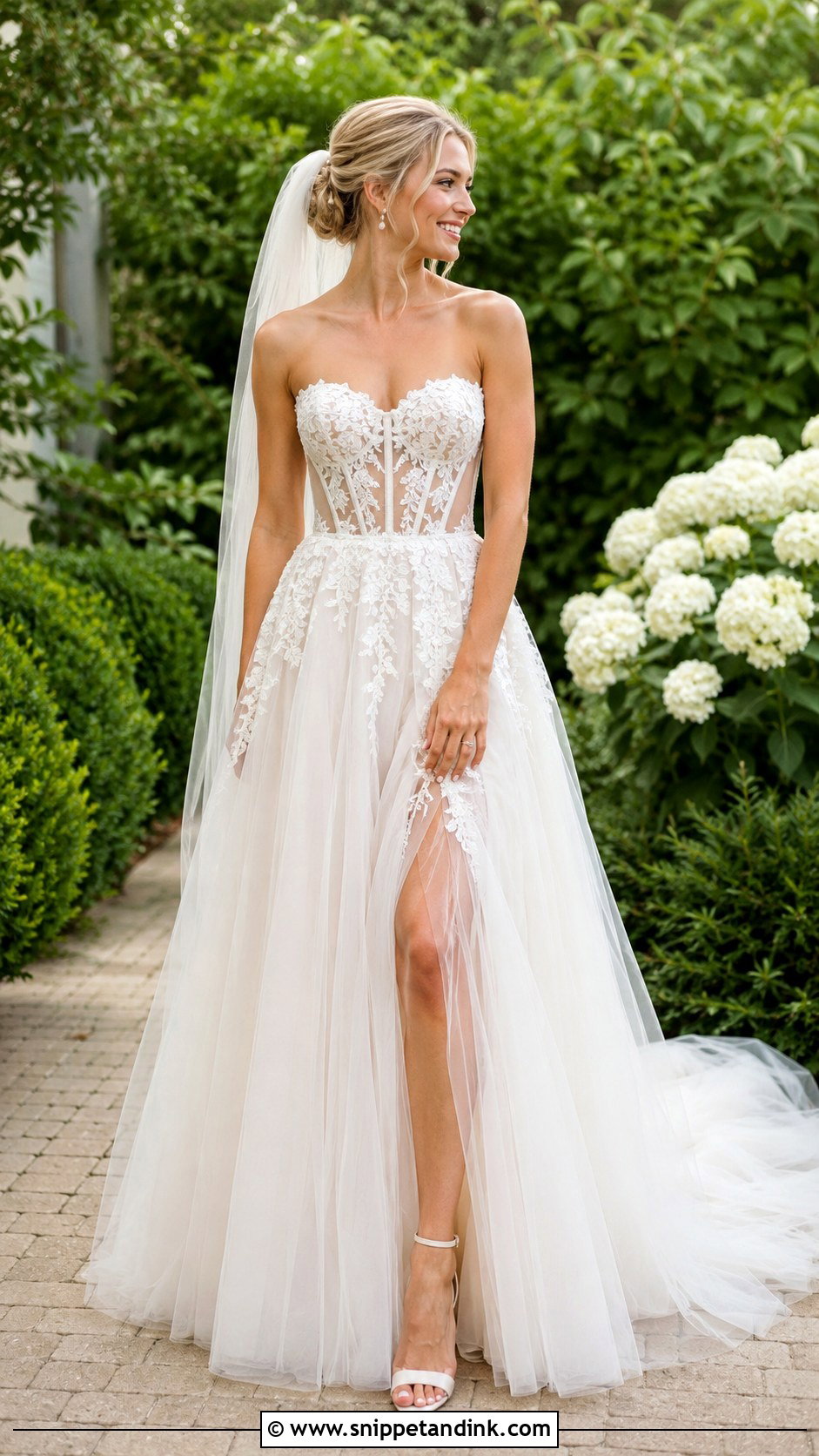
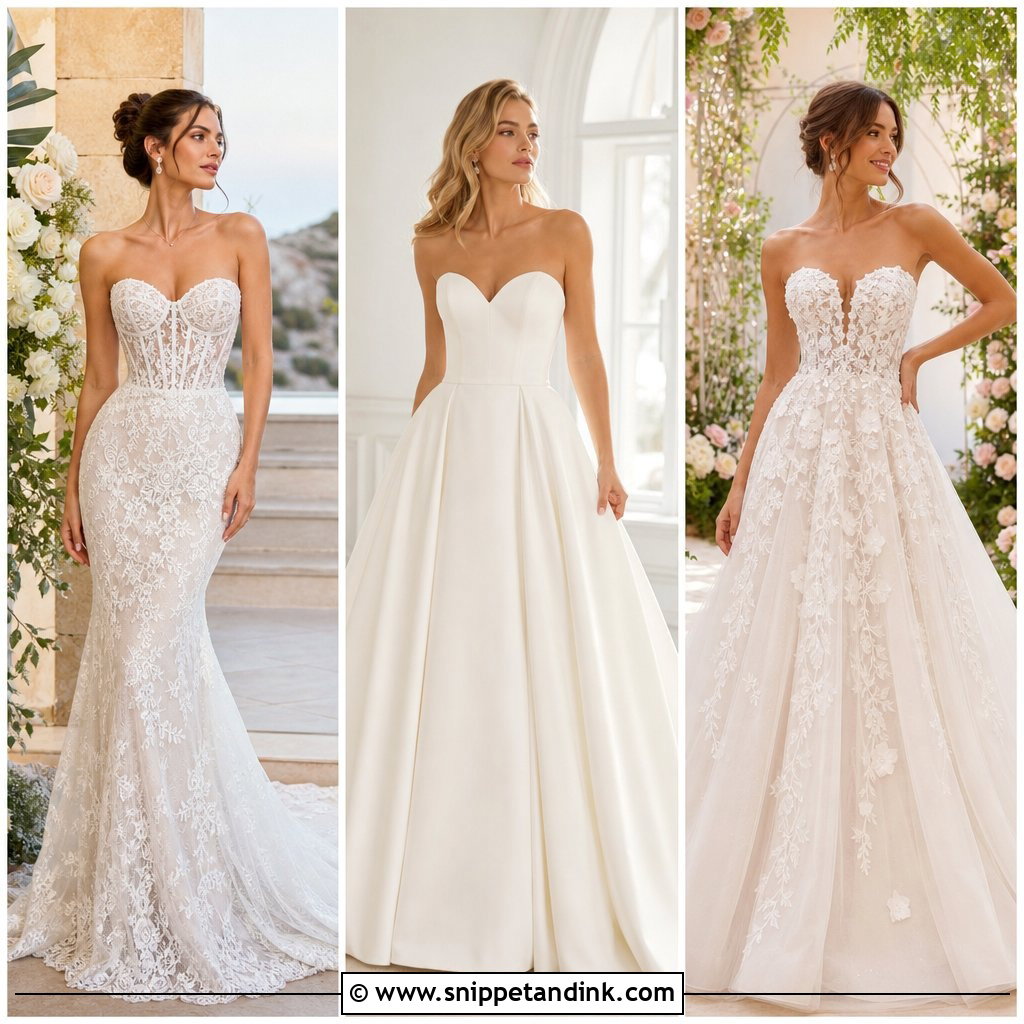
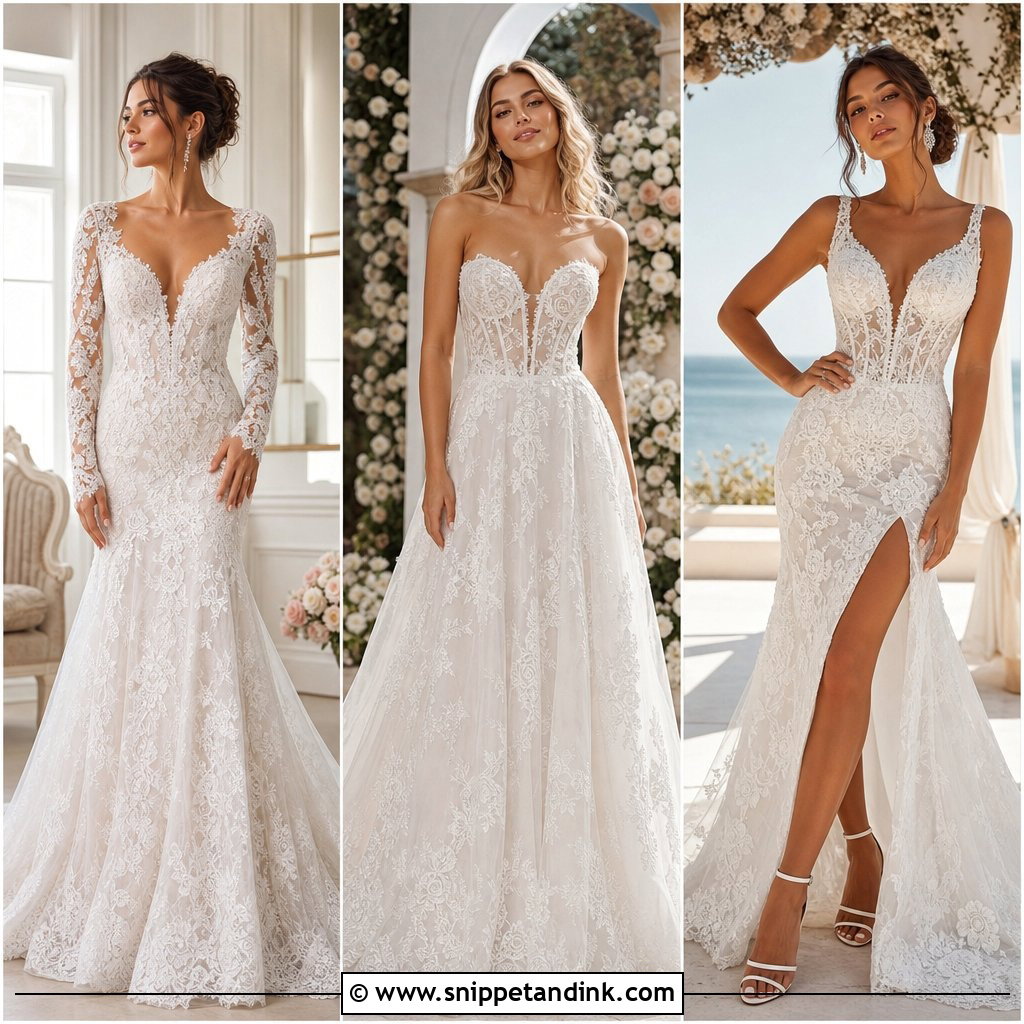
Floral lace laid over structured boning softens the corset without hiding its shape. It pairs with a flowing tulle skirt, a fitted mermaid or a soft A-line. The detail I look for is lace that drifts a little way onto the skirt; a hard stop at the waist seam cuts the body in half visually. Drop earrings, a sheer veil and loose waves suit it. Gardens, estates and spring ceremonies are where it feels most at home.
3. Sheer Corset Bodice Wedding Dress
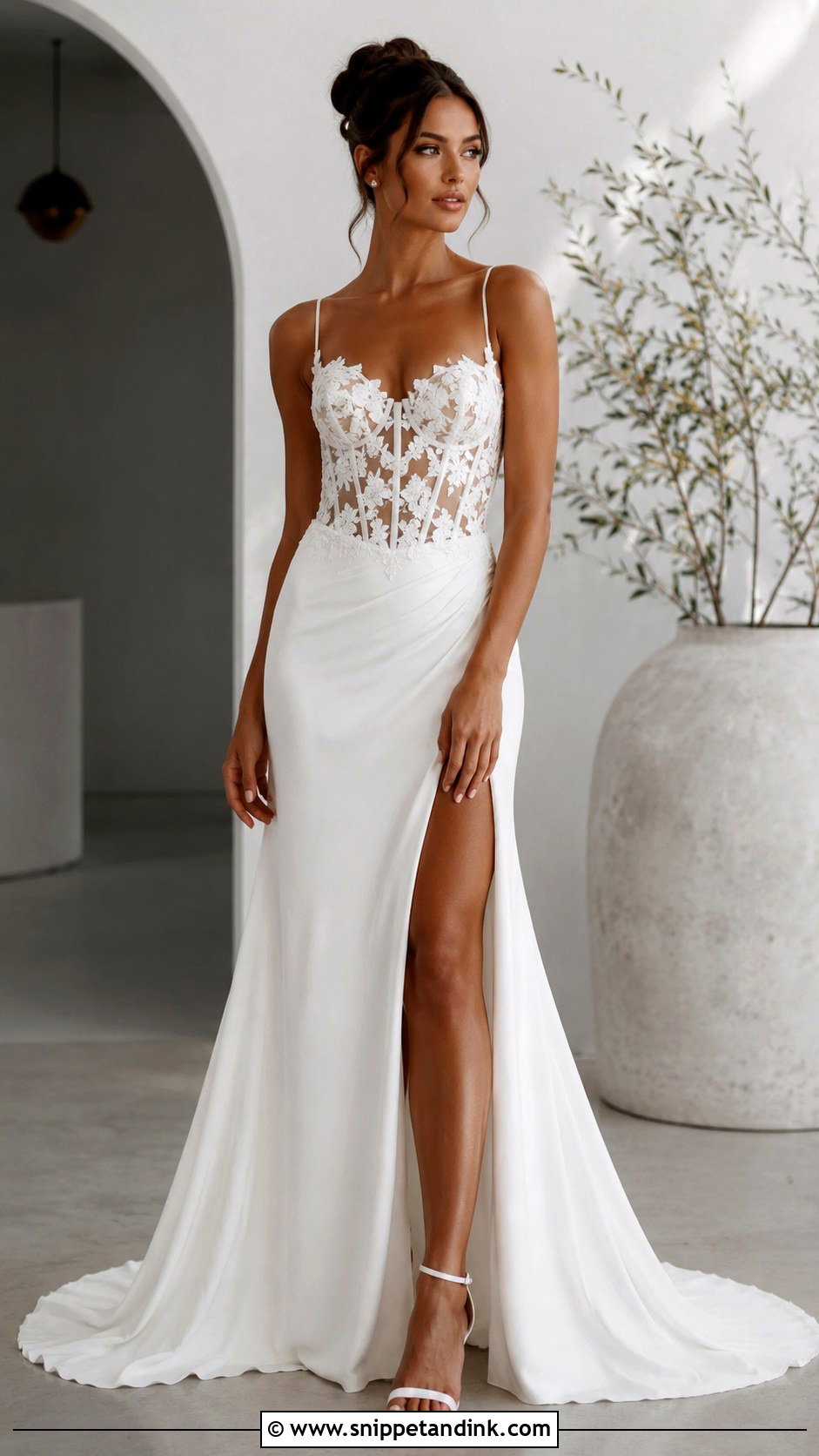
Sheer corsets look like structure floating on skin, and the trick is that the illusion mesh is doing real work, holding the boning in place and giving support. Placement decides whether it looks refined or too revealing, so I always check it in daylight and under a camera flash, which can see through more than the mirror does. Appliqués, lace panels or soft draping over the bust make it easier to wear. Pair it with a plain chiffon, tulle or crepe skirt, a sleek bun and very little jewelry.
4. Basque Waist Corset Bodice Wedding Dress
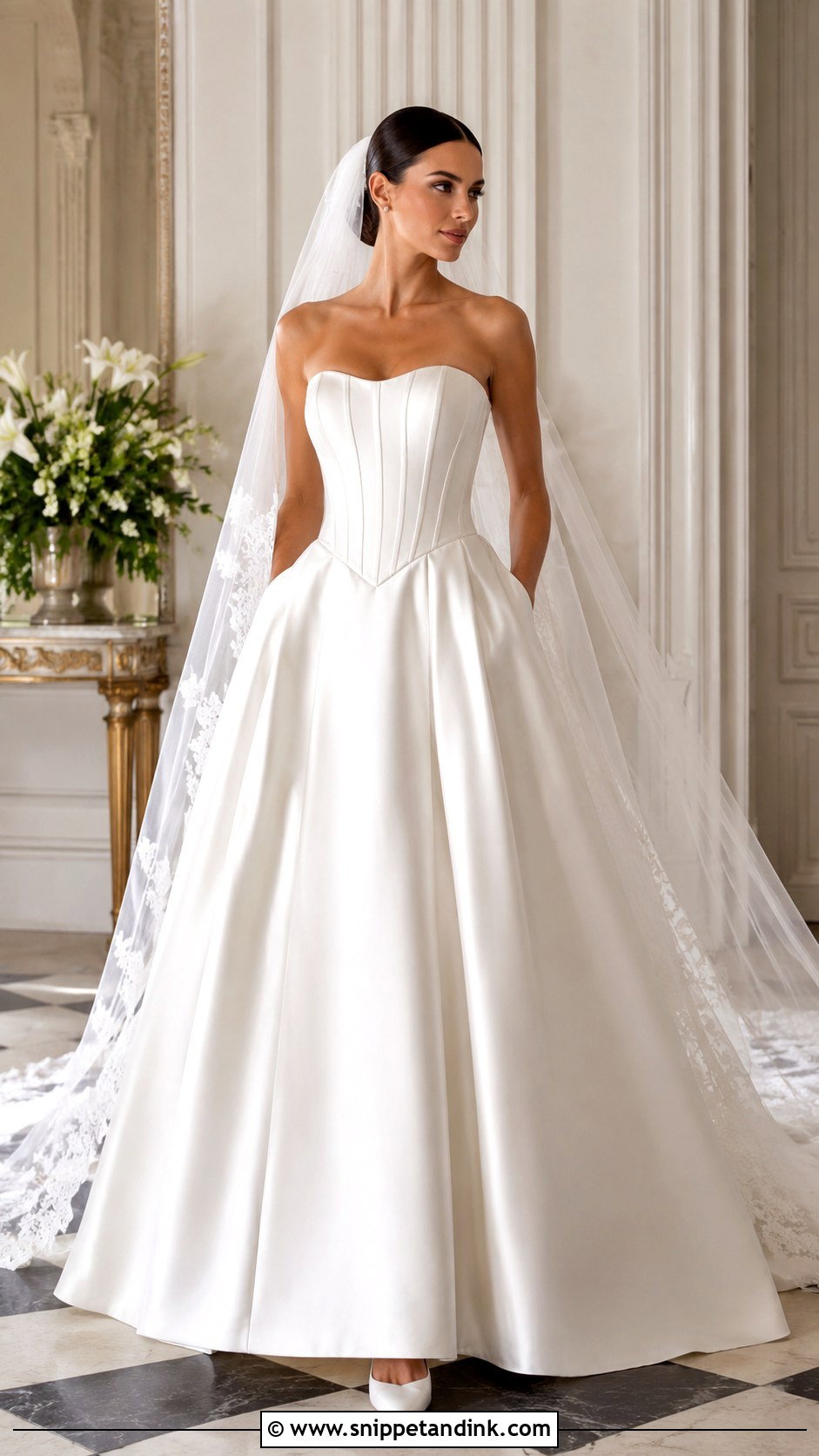
A basque waist corset bodice dips below the natural waist in a V or U, so the torso looks longer. It sits naturally over full skirts, pleated satin or layered tulle, because the low point balances the volume below. Strapless is dramatic; off shoulder sleeves soften it. I find it flatters a shorter torso especially well. Classic pumps, pearl studs and a cathedral veil keep it formal without any sparkle.
5. Strapless Corset Bodice Wedding Dress
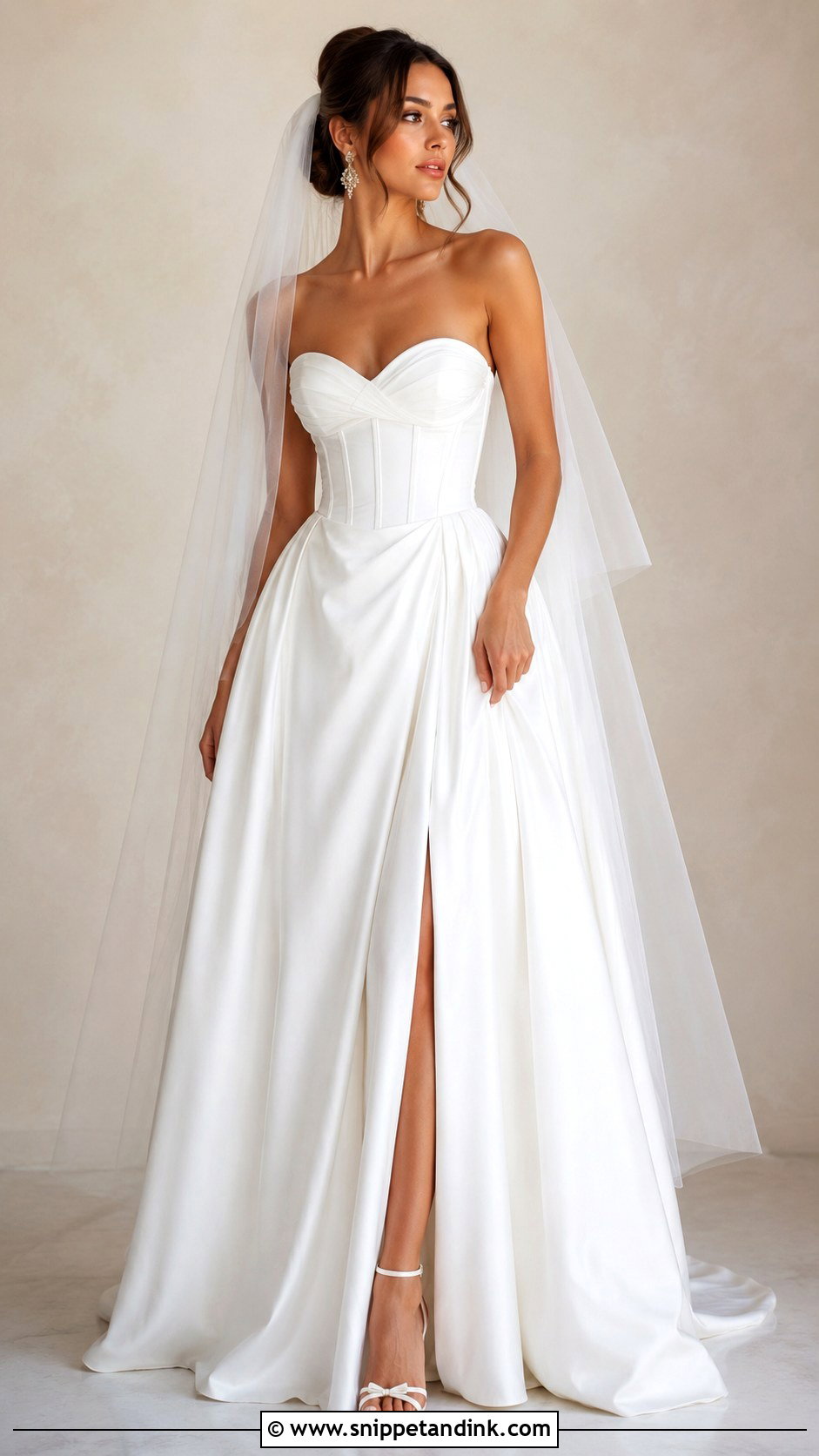
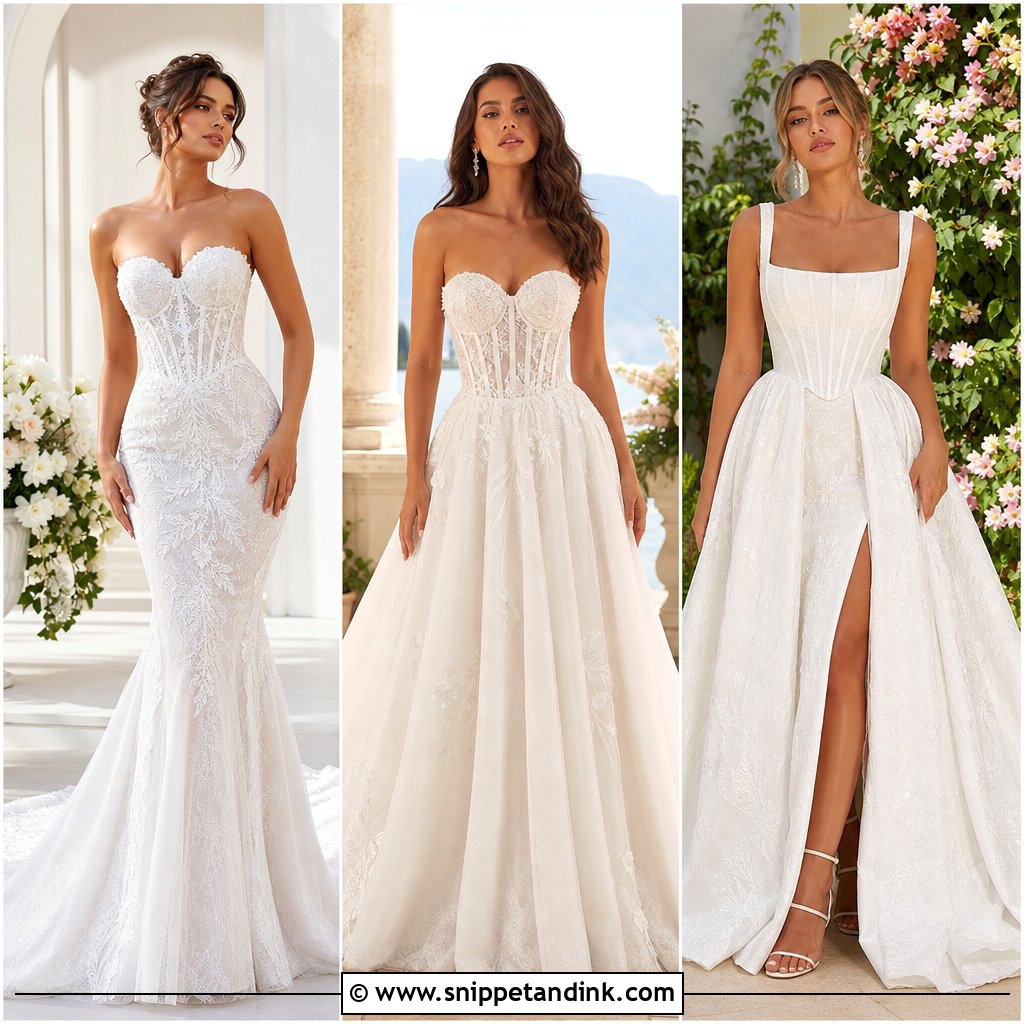
Strapless is the corset style I fit most often, and the boning is what keeps it up, not tightness at the top edge. If the bodice relies on squeezing the bust to stay put, it will slide down by the evening. A sweetheart neckline is romantic; a straight one is modern. It goes with a ball skirt, fitted crepe or a soft A-line. Skip the necklace unless the neckline is very plain, and choose earrings, a smooth veil and heels you can stand in.
6. Off Shoulder Corset Bodice Wedding Dress
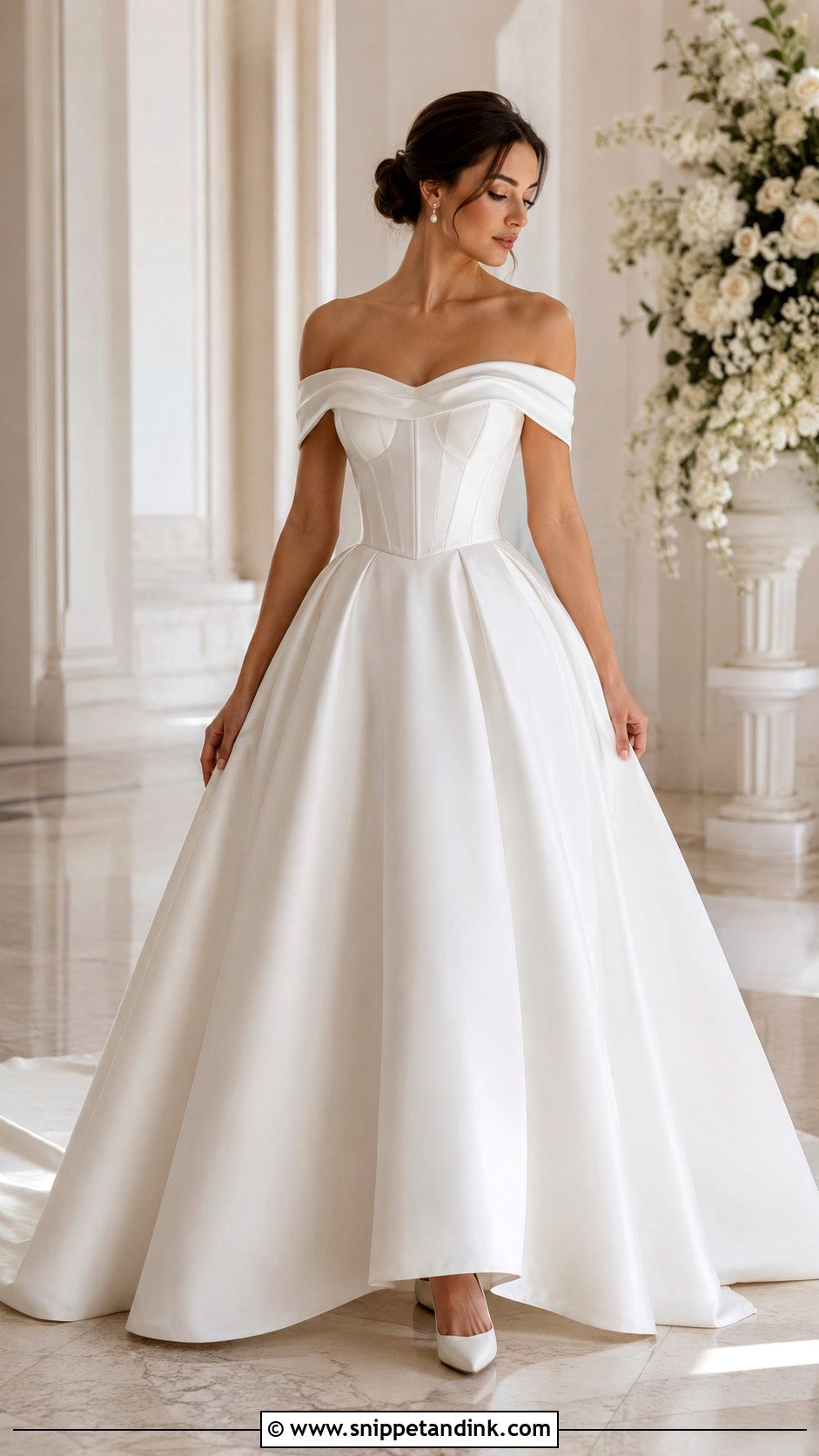
Off shoulder sleeves frame the shoulders while the corset carries the support at the waist, which makes this a good middle ground if fully strapless worries you. Satin is classic, lace is vintage and tulle draping is soft. Test your arm range: off shoulder bands can stop you lifting your arms for a hug. A full skirt makes it formal; a fitted one is sleek. Swept-back hair, pearl earrings and a long veil finish it.
7. Long Sleeve Corset Bodice Wedding Dress
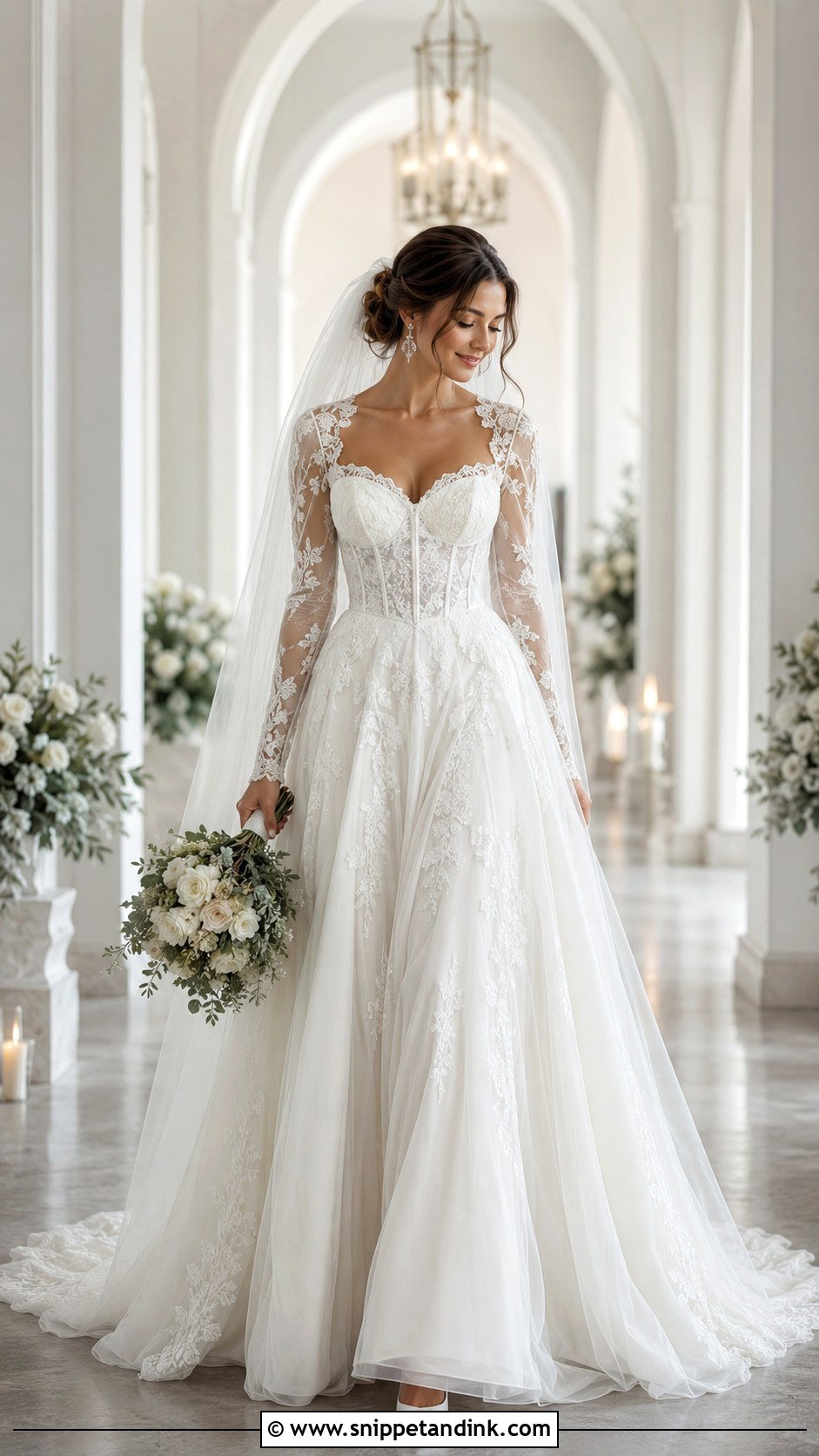
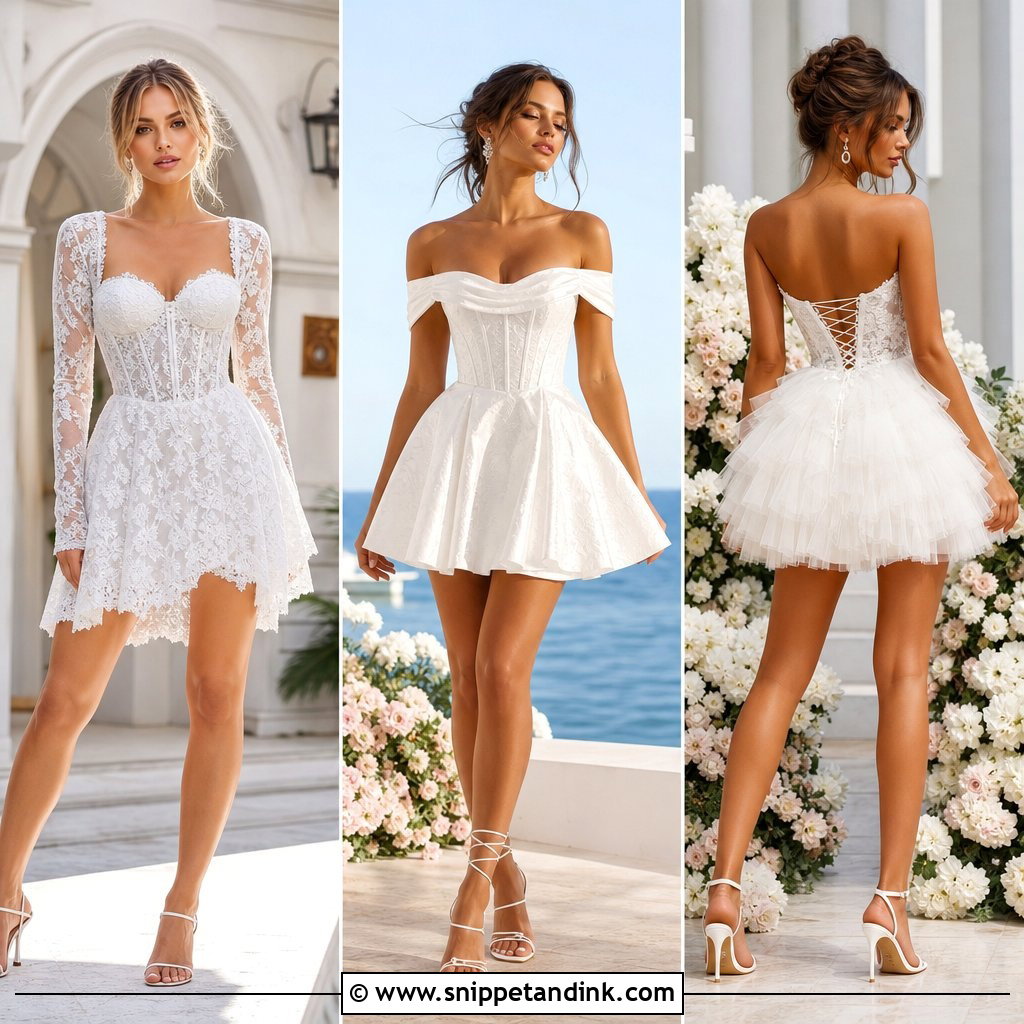
Long sleeves add coverage, and the contrast with a fitted bodice gives a strong, clean outline. Lace sleeves are romantic, sheer ones are light, satin ones are fashion-led. I see this most at autumn, winter and formal indoor weddings. One balance rule I use: if the bodice shows its boning, keep the sleeves delicate rather than beaded. Closed-toe heels, soft earrings and a simple veil.
8. Floral Applique Corset Bodice Wedding Dress
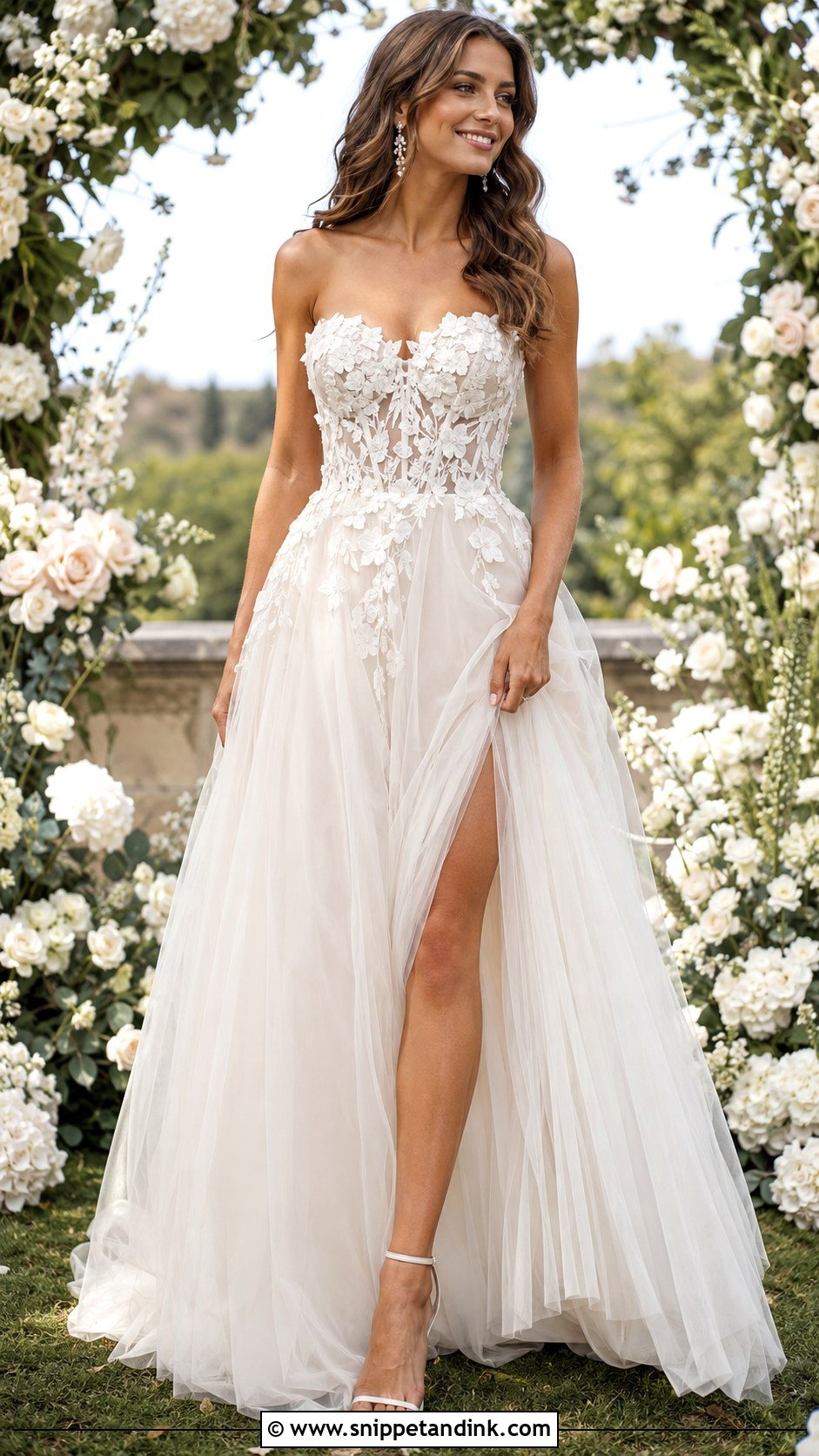
Three-dimensional fabric flowers across the bodice, trailing lightly into the skirt, give the corset depth. The skirt should be plain enough to let them stand out: tulle, organza or soft net. Small flowers read delicate; large ones look editorial. Ask how they’re attached, since raised flowers at the underarm can rub and flatten when you lower your arms all day. Soft curls, simple earrings and neutral heels suit it, especially outdoors or in a greenhouse.
9. Pearl Corset Bodice Wedding Dress
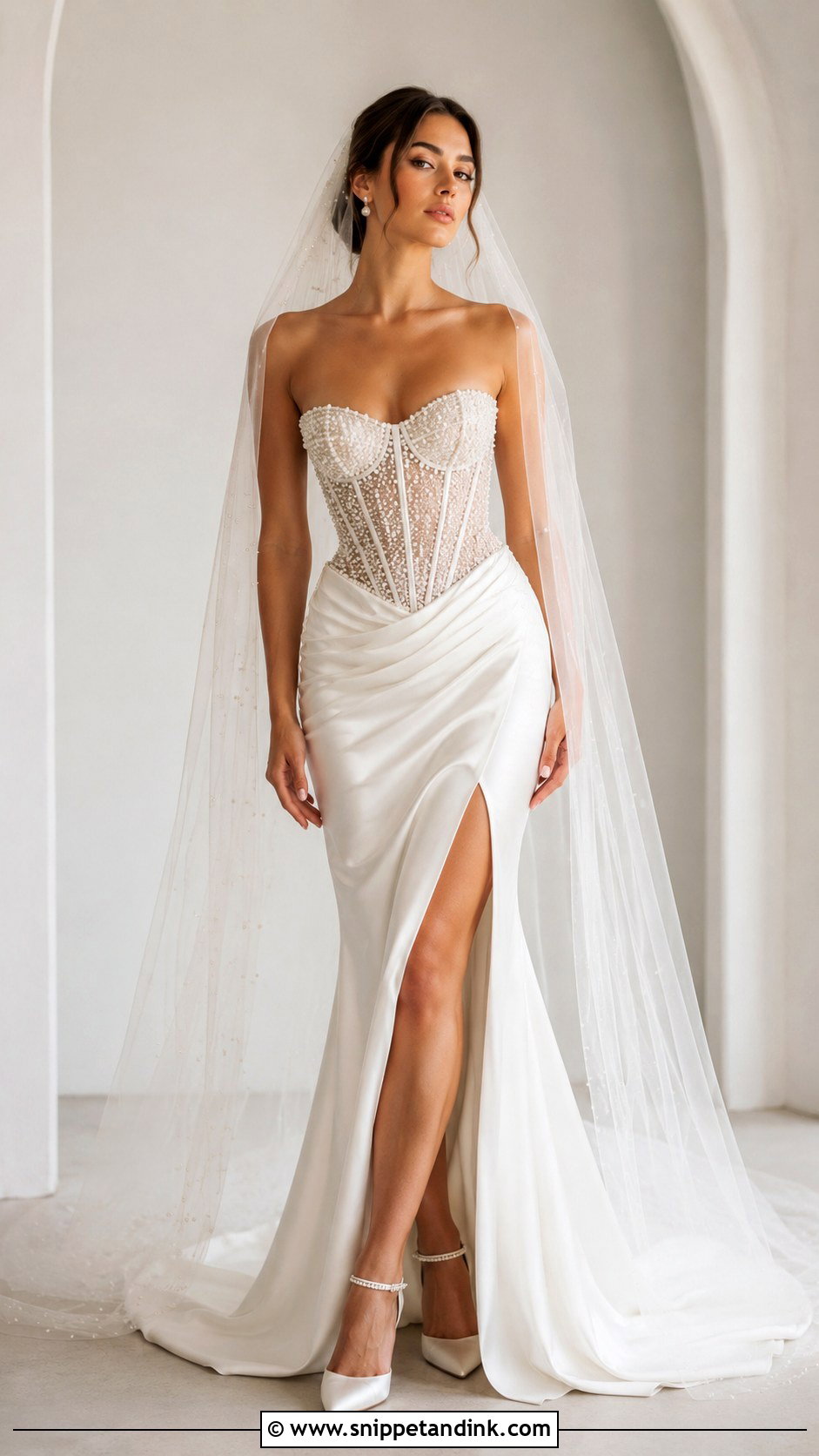
Pearls can be scattered across the bodice, set along the neckline or used to trace each boning channel, which shows off the structure nicely. They glow rather than flash, so the effect is softer than crystal. Satin, tulle or crepe skirts all pair well. Keep the rest quiet: pearl studs, a plain veil and satin heels. It suits formal venues and anyone who likes classic style with a modern cut.
10. Beaded Corset Bodice Wedding Dress
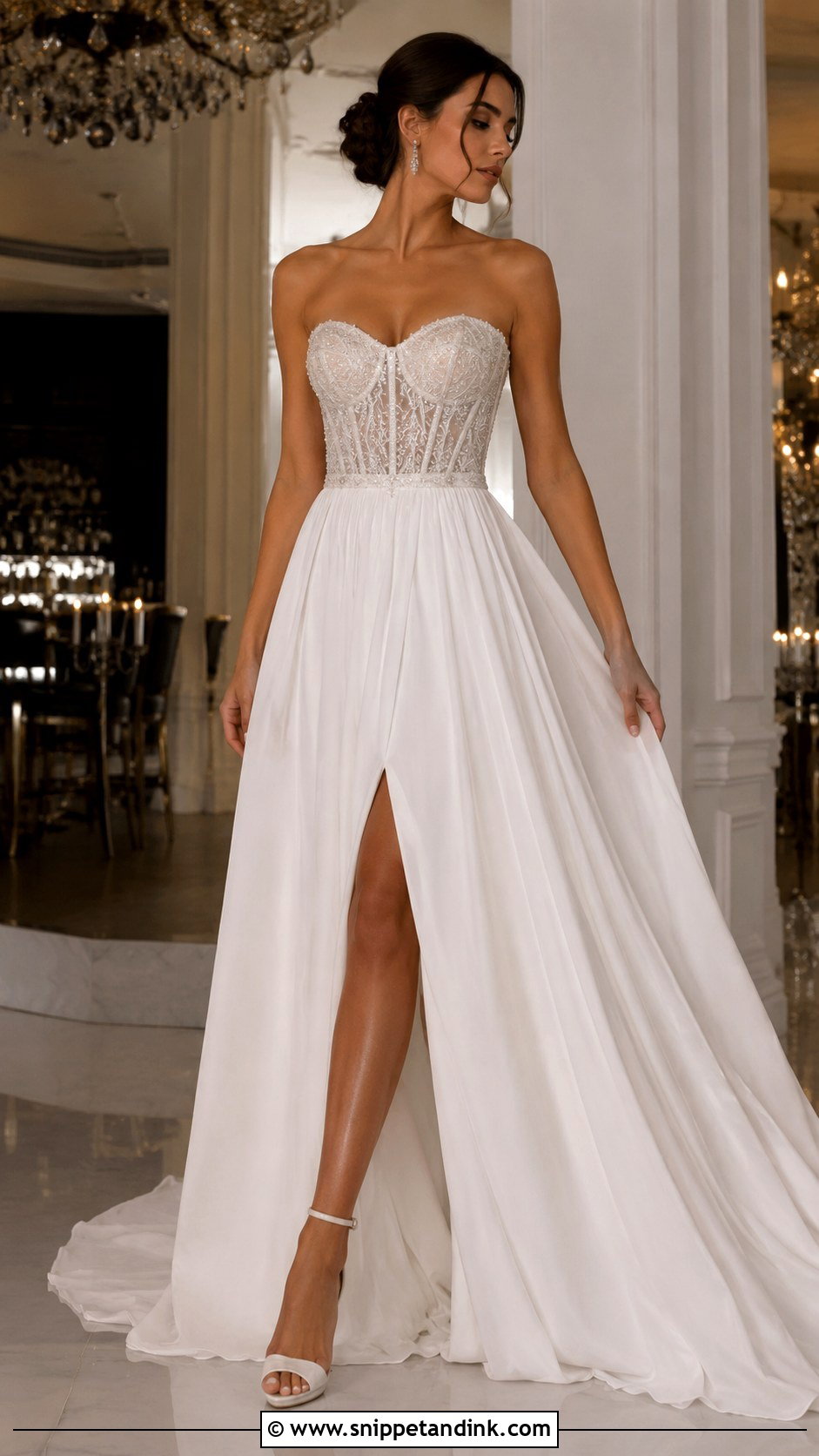
Beading follows the lines of the corset and picks up ceremony lighting. A heavily beaded bodice wants a plain skirt below it, chiffon, satin or simple tulle. If the whole gown is beaded, keep the silhouette sleek and the accessories few. Beading adds weight to the bodice, so I check that the boning is firm enough to stop the front from folding when the bride sits. A low bun, small earrings and clean heels complete it.
11. Tulle Corset Bodice Wedding Dress
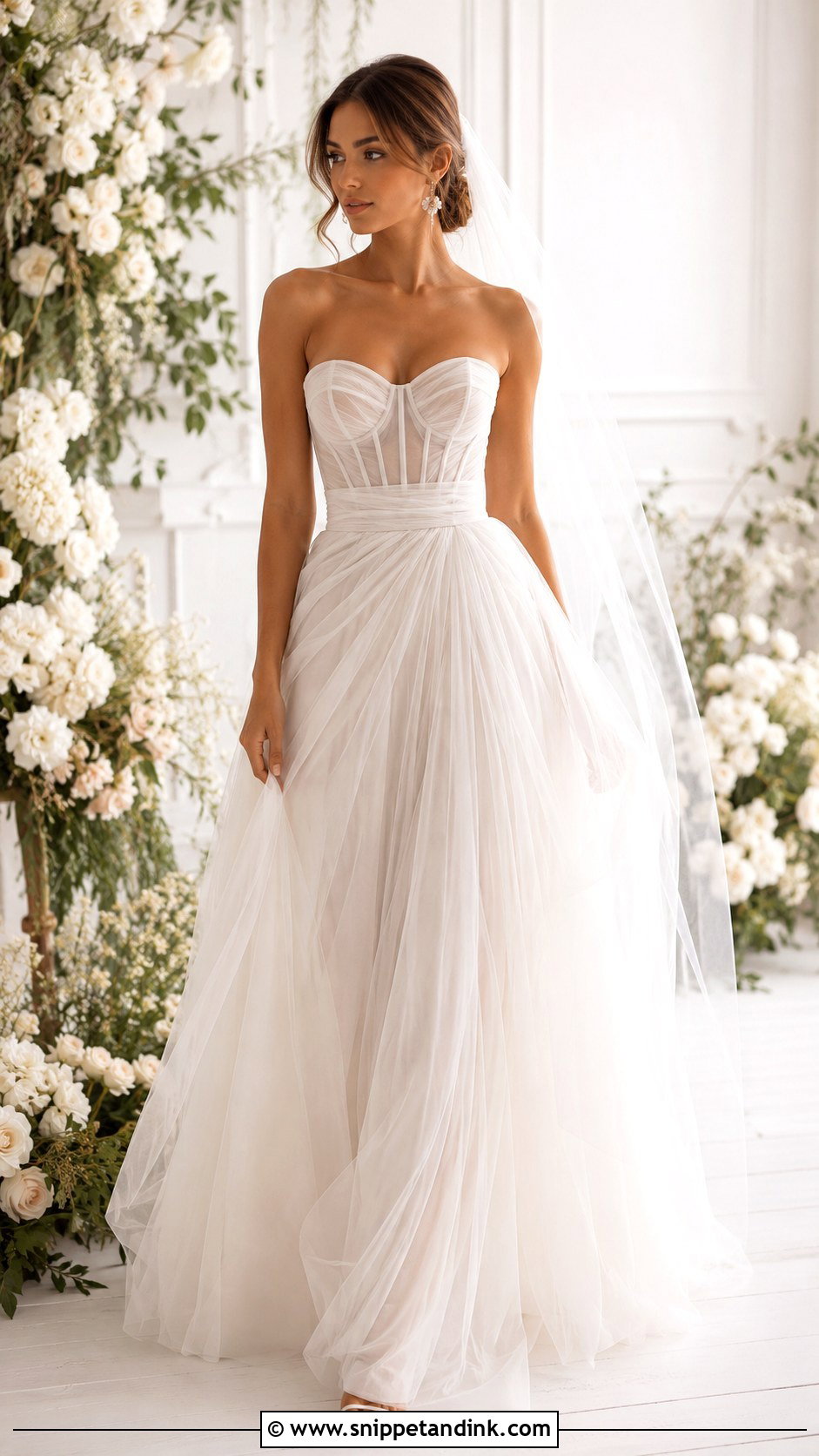
Gathered tulle over the bodice looks soft and dreamy; semi-sheer tulle with visible boning looks modern. Both keep the waist defined. It pairs naturally with layered tulle skirts, though a slimmer skirt gives an interesting contrast. Tulle is light, so you get volume without weight, which brides appreciate by the evening. Delicate earrings, soft makeup and a fingertip or chapel veil are enough.
12. Mikado Corset Bodice Wedding Dress
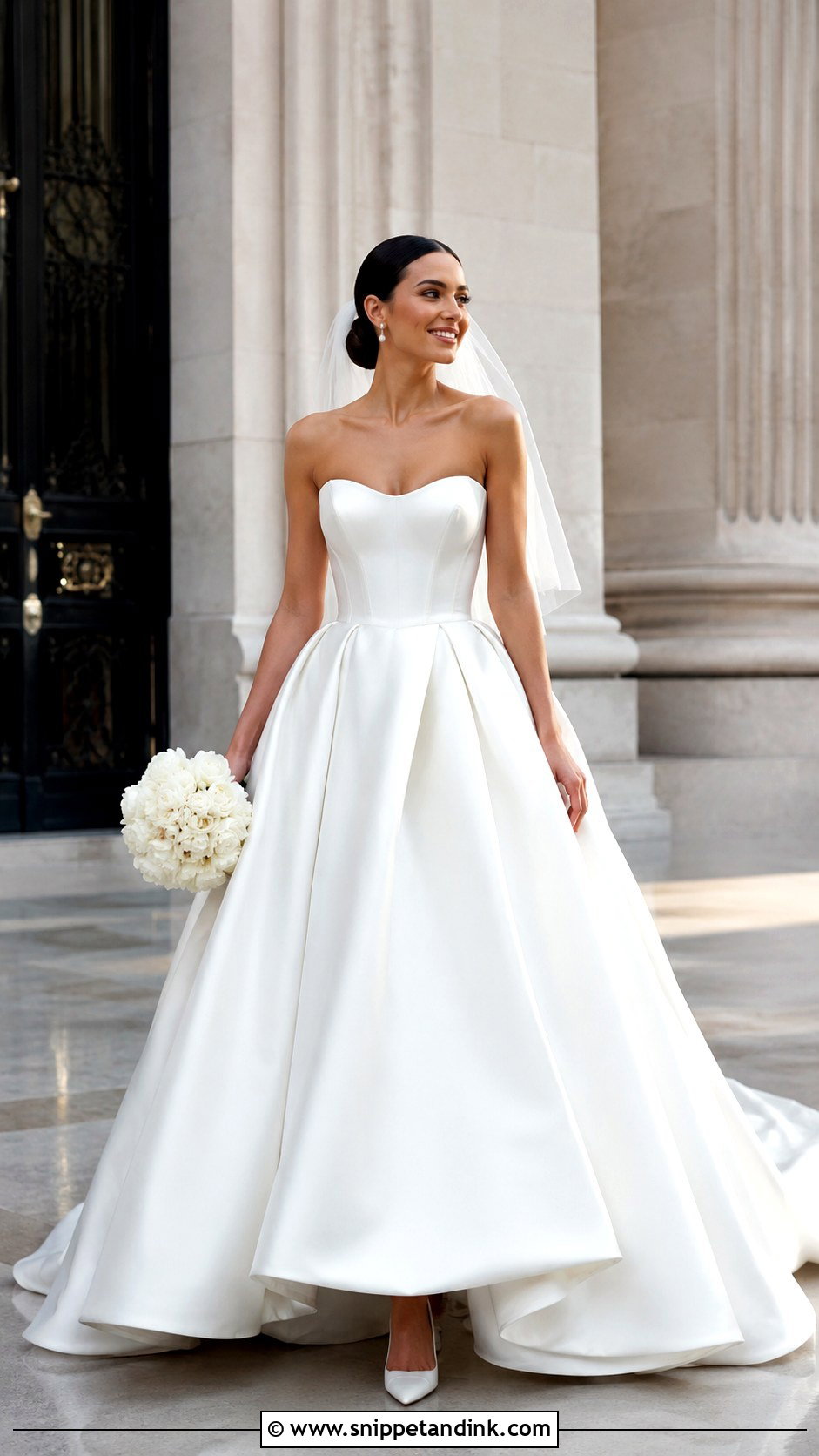
Mikado has far more body than soft satin, so a mikado corset holds its shape all day with almost no wrinkling. A mikado ball gown looks architectural; a mikado fit-and-flare is crisp and modern. The fabric already has presence, so pearl earrings, a smooth veil and pointed pumps are plenty. I’d steer brides toward it for grand venues, city weddings and cooler months, as it’s warm to wear in summer heat.
13. Crepe Corset Bodice Wedding Dress
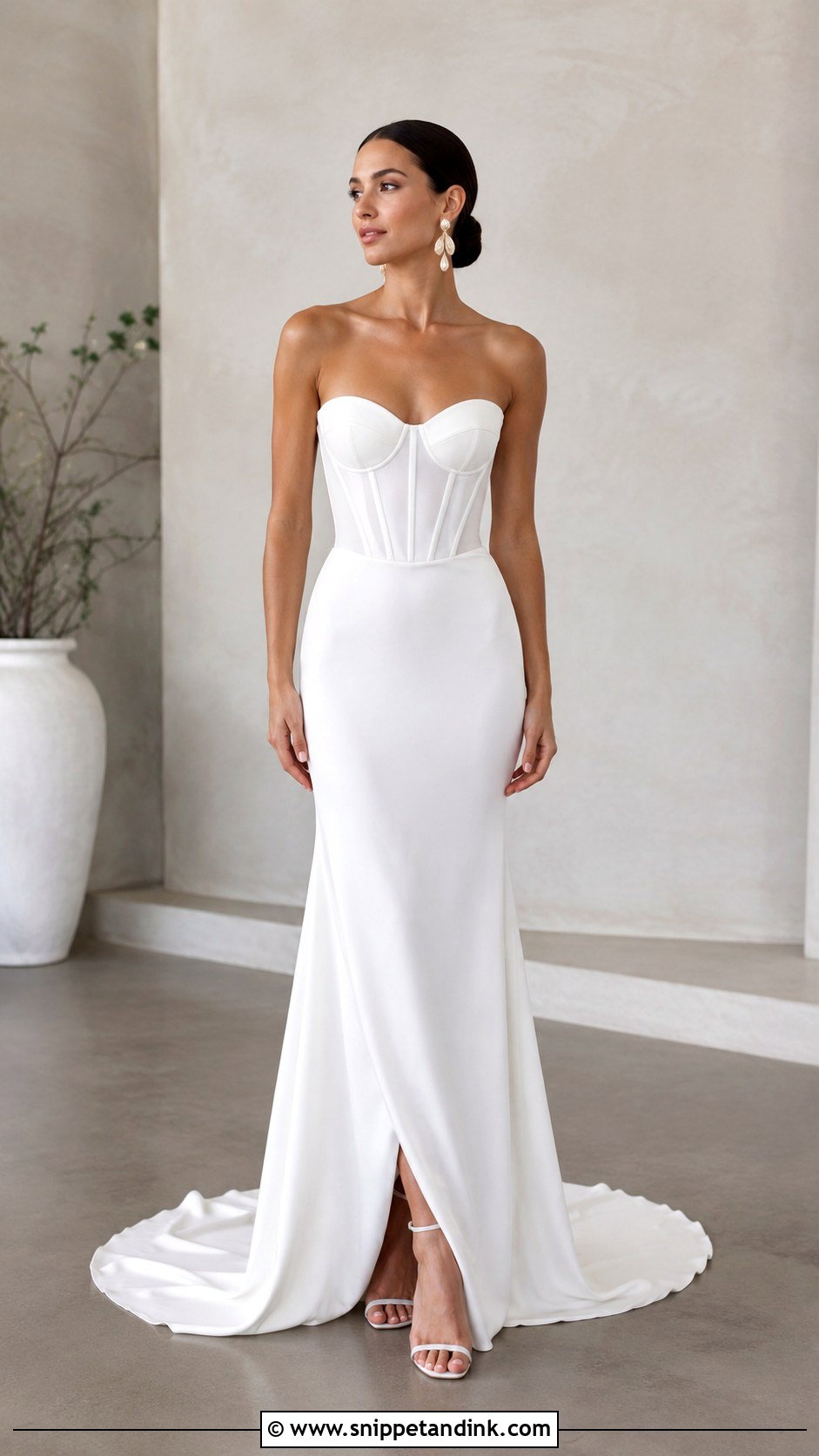
Crepe skims the body, and the corset underneath gives definition at the waist without adding bulk. It looks best with clean seams, subtle boning and a straight or scoop neckline. A fitted crepe skirt with a small train is modern and understated. Crepe is honest about what’s beneath it, so the internal boning should be smooth enough not to show as ridges. Sculptural earrings, simple heels and a low veil; add detachable tulle sleeves or a sheer cape for softness.
14. Ball Gown Corset Bodice Wedding Dress
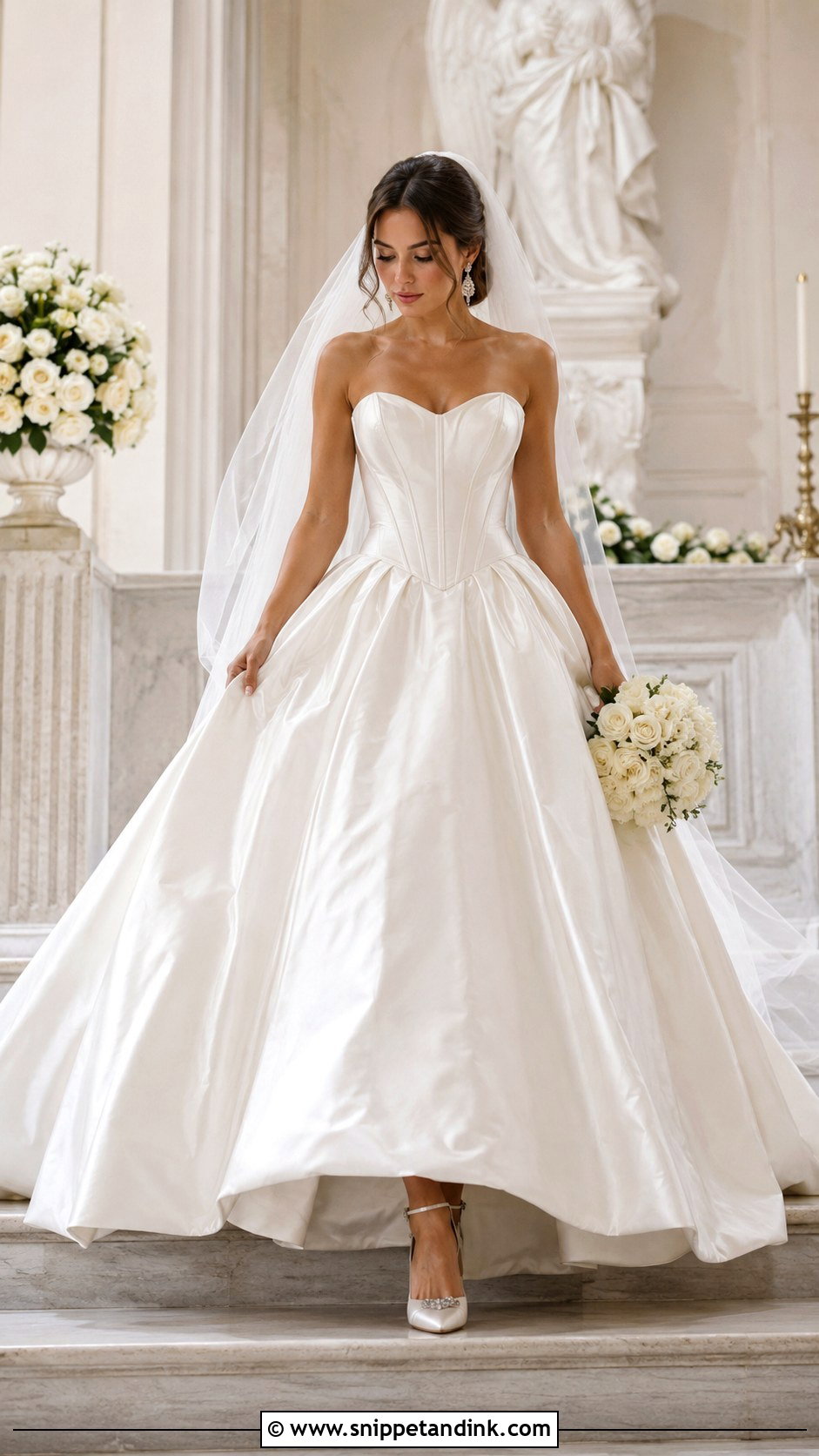
A fitted bodice over a full skirt is the most dramatic pairing here. Satin, mikado, tulle and organza all hold this shape, and a strapless or basque waist bodice makes it even more regal. Because the skirt is heavy, the corset must be anchored firmly at the waist, otherwise the skirt drags the bodice down. Keep jewelry to elegant earrings, and choose heels with support. It belongs in large, formal rooms.


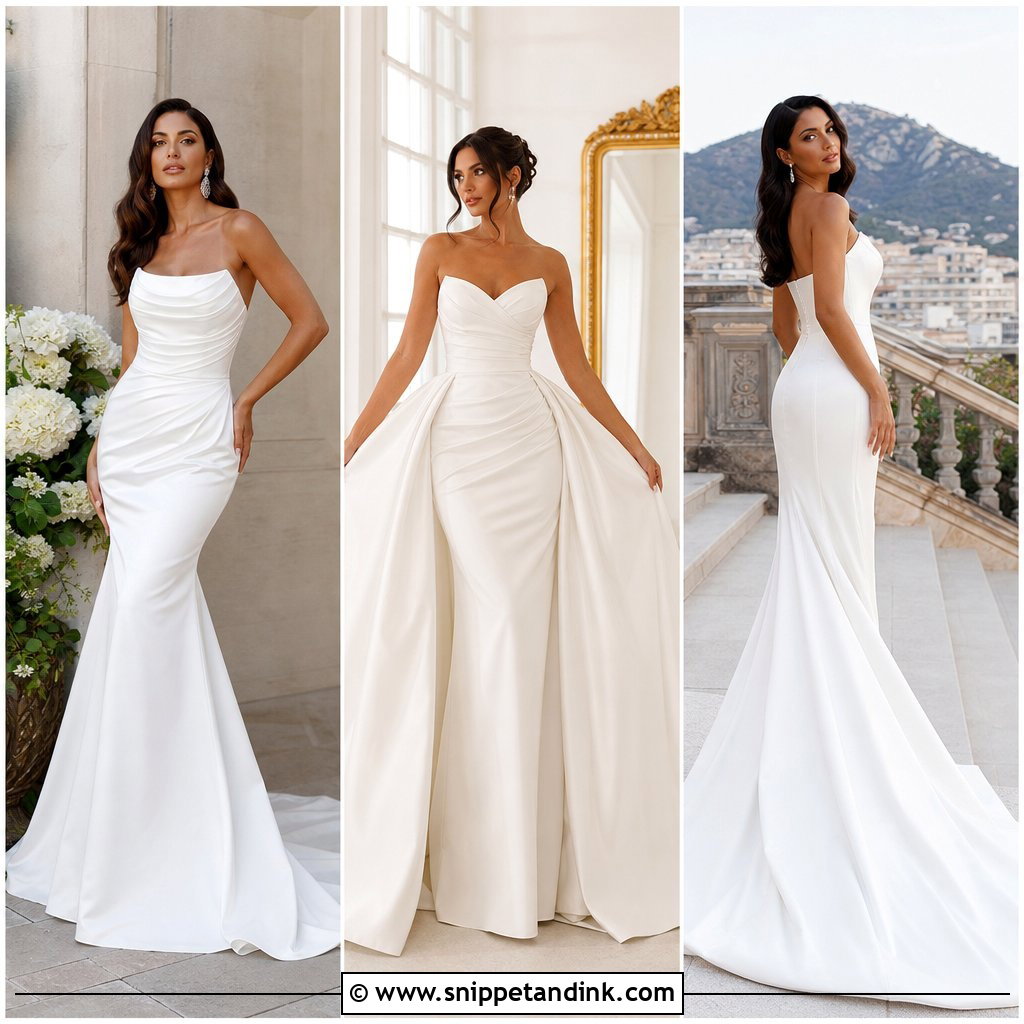
15. Mermaid Corset Bodice Wedding Dress
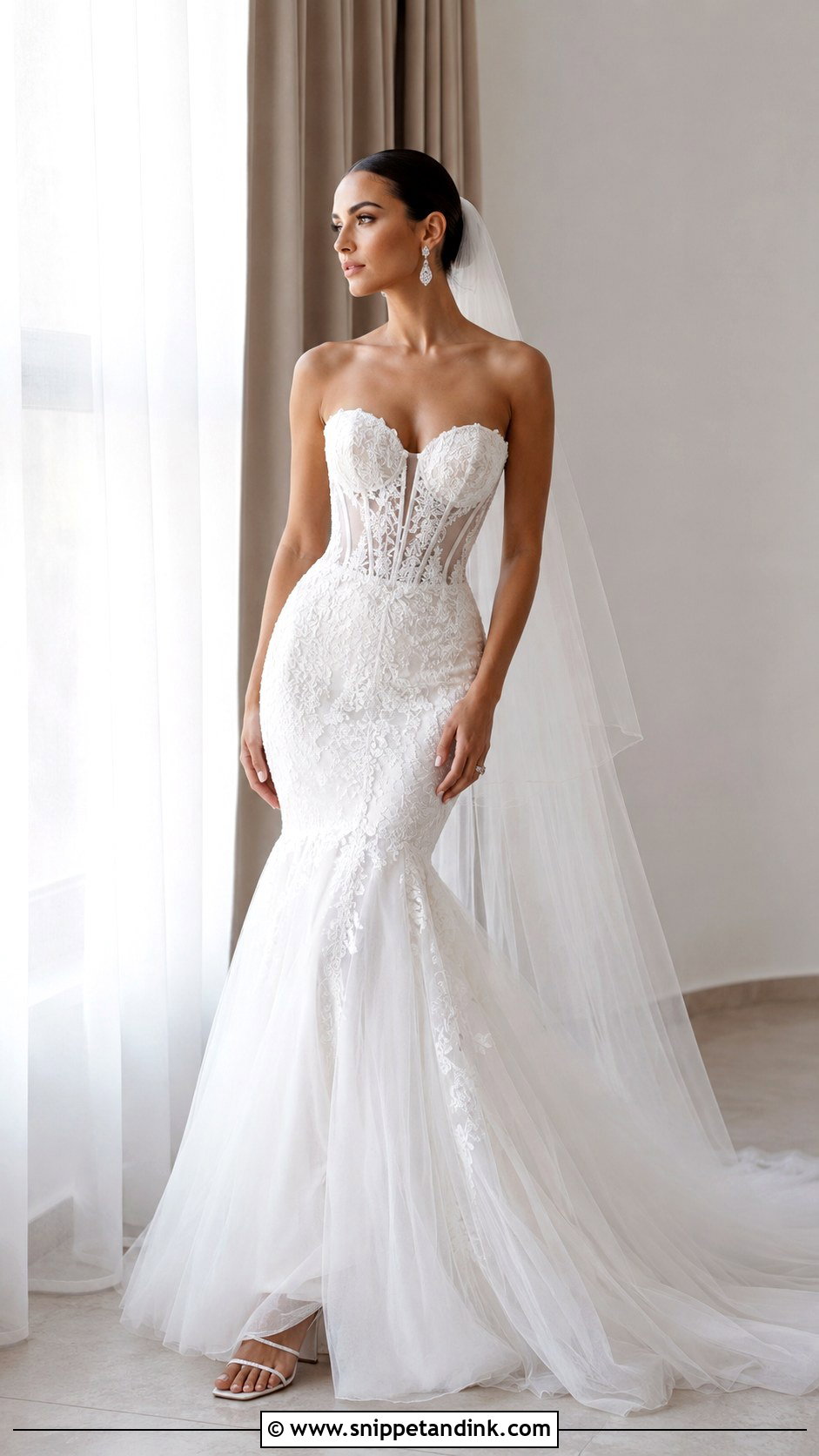
The corset shapes the upper body; the skirt fits through the hips and flares near the knee or lower thigh. Lace appliqué with a tulle flare is softer, smooth crepe with minimal seams is modern, and satin or beading sits in between. The fitted skirt limits stride, so I have brides walk a few steps and climb a step in the fitting room. Supportive heels, a sleek veil, drop earrings and polished hair.
16. A Line Corset Bodice Wedding Dress
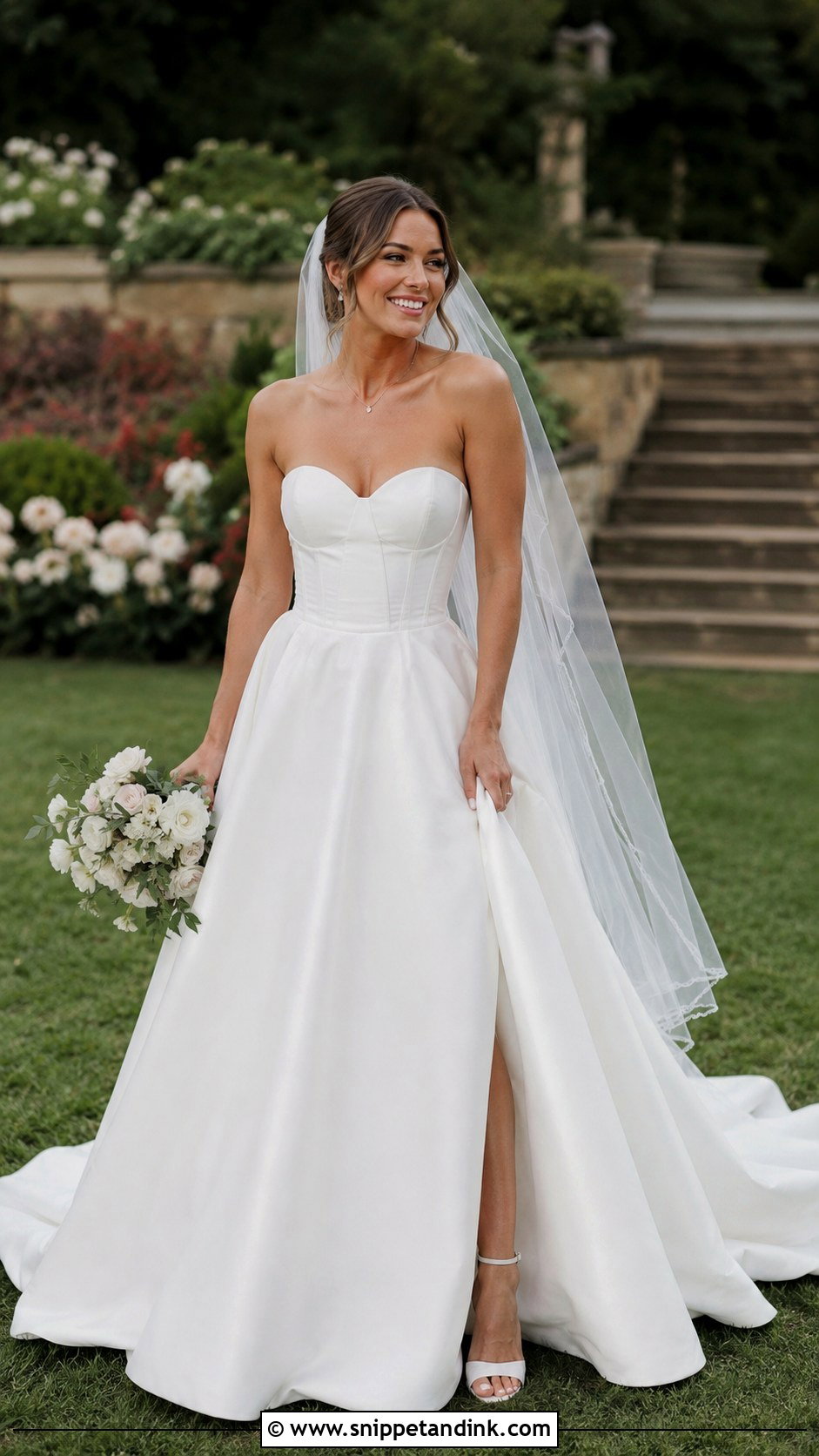
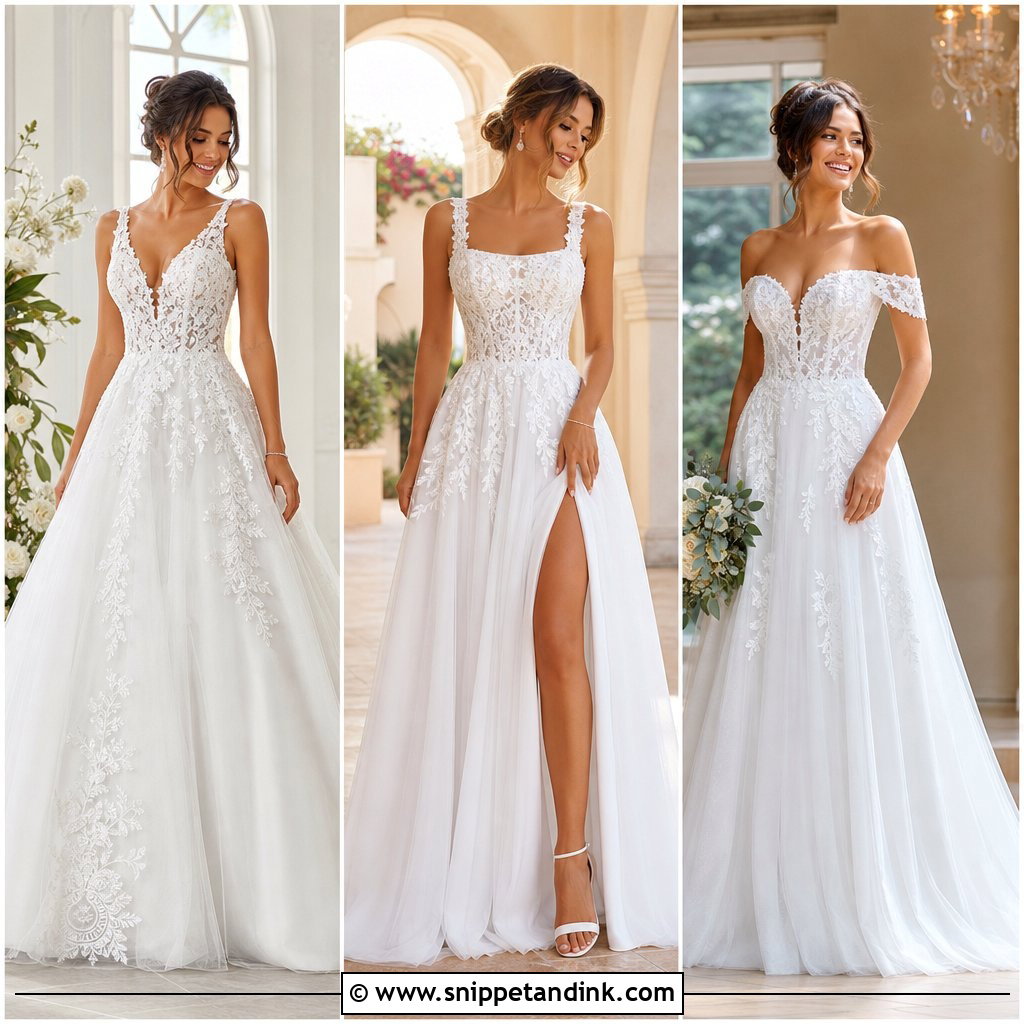
This is the most comfortable silhouette on the list: the corset defines the waist and the skirt flows away from the body. It works from garden lawns to banquet halls. Satin is clean, lace is romantic, tulle is airy. A sweetheart neckline is traditional; a square one reads modern. With comfortable heels, a light veil and simple jewelry, it’s easy to move in all day.
17. Square Neck Corset Bodice Wedding Dress
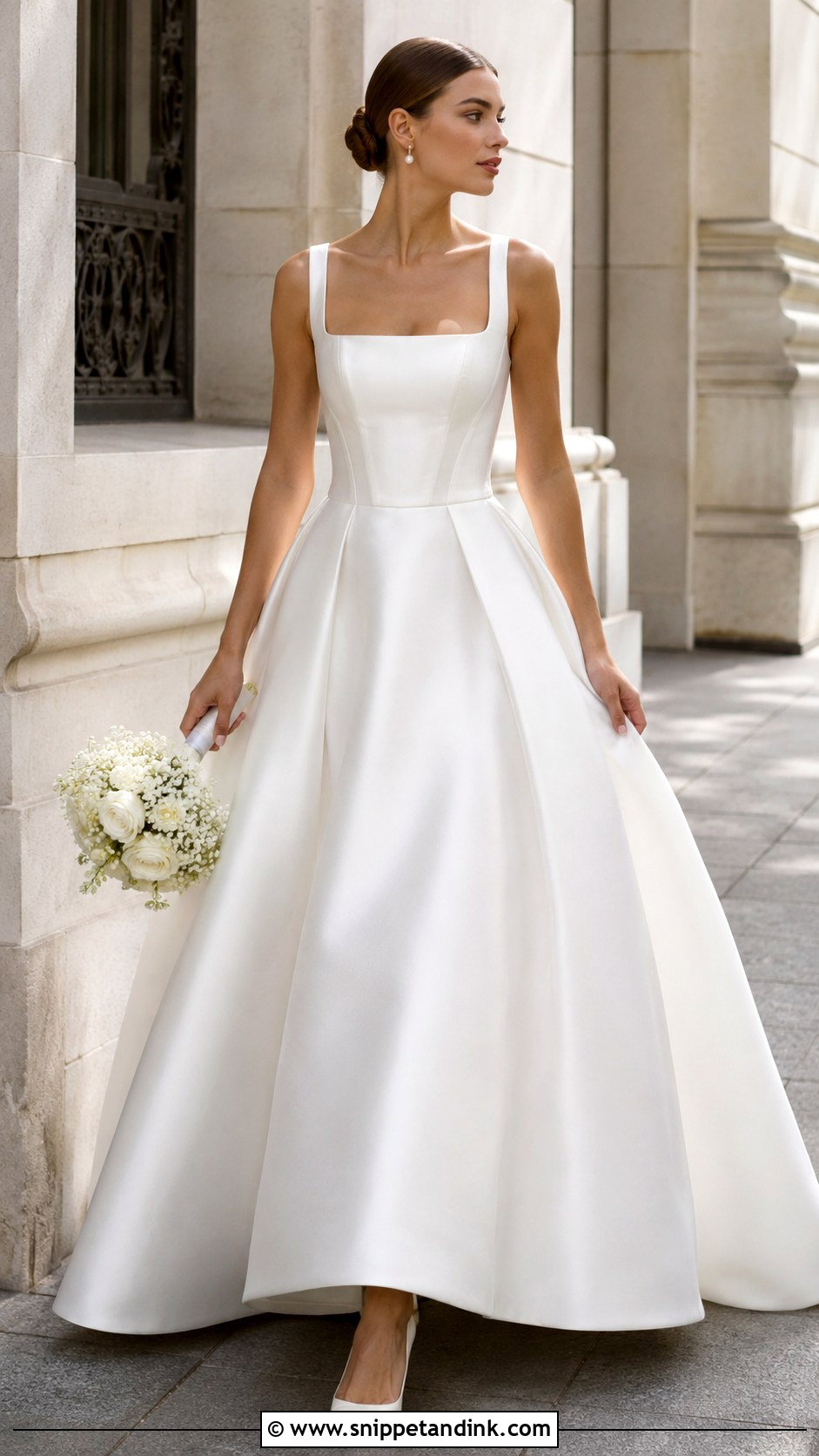
The square neckline frames the collarbone with straight lines and gives a little more coverage than a deep sweetheart. It can be strapped, sleeved or sleeveless. A fitted crepe skirt makes it minimal; an A-line satin skirt keeps it classic. On square necks, I usually skip the necklace altogether or use a small pendant that sits inside the neckline. A smooth bun or soft waves keeps the shape clear.
18. Sweetheart Corset Bodice Wedding Dress
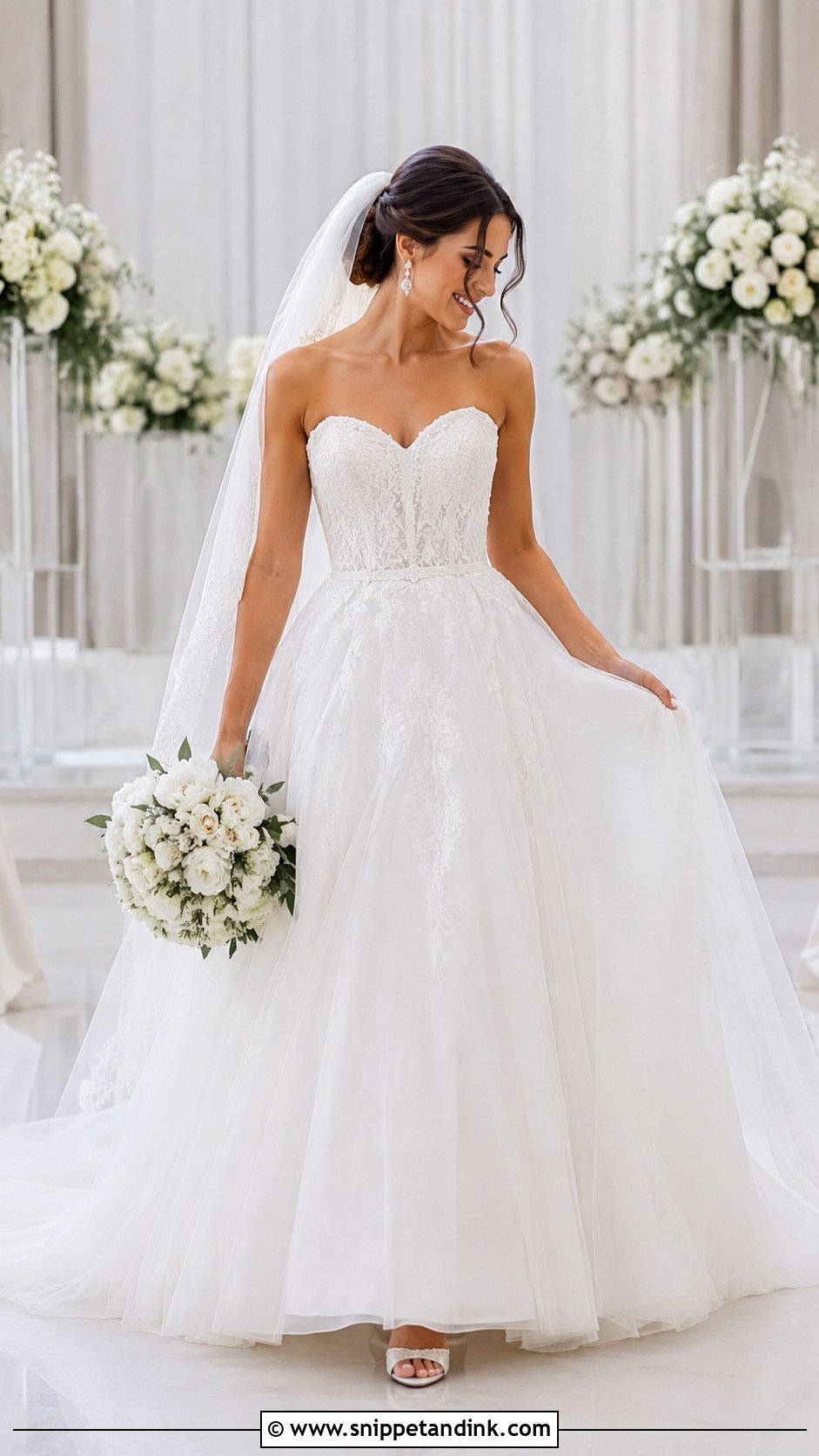
The curved sweetheart line softens all that structure, and it works with ball gown, A-line, mermaid and fit-and-flare skirts. Lace is delicate, satin classic, beading formal. For a fuller bust, I look for wider side panels and boning placed under the bust as well as at the sides; that’s what stops the sweetheart from spilling or gaping. Match the veil to the gown’s level of detail, and add drop earrings and heels.
19. Draped Corset Bodice Wedding Dress
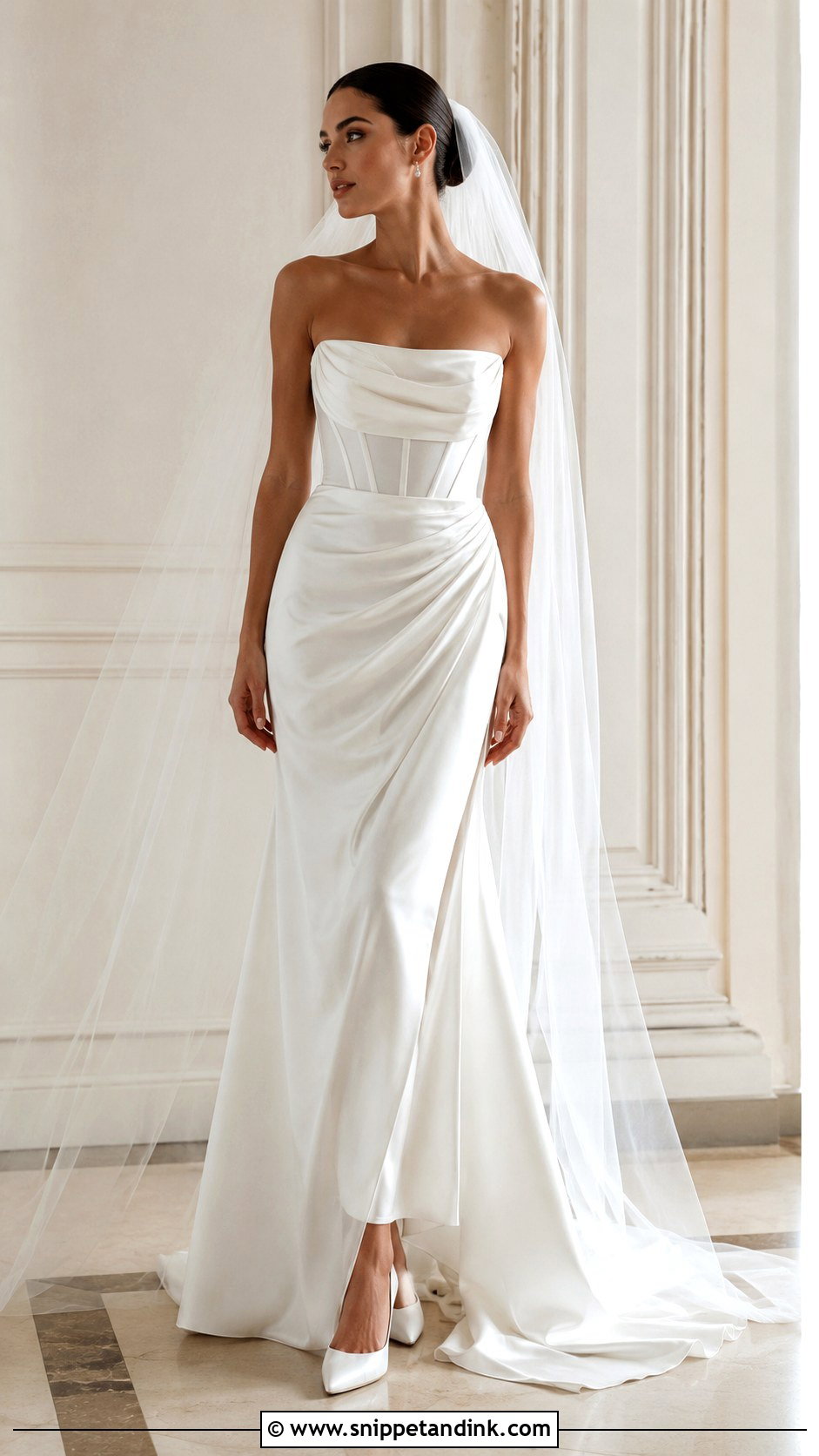
Draped satin, tulle or chiffon folded across the bust and waist hides the boning and gives movement, so the gown looks shaped but not stiff. It can make a simple dress look custom-made. It pairs with a fitted skirt, an A-line or a basque waist. Draping is forgiving on the tummy, which is why I suggest it to brides worried about a smooth corset showing everything. A smooth updo, soft veil and satin heels; very little jewelry.
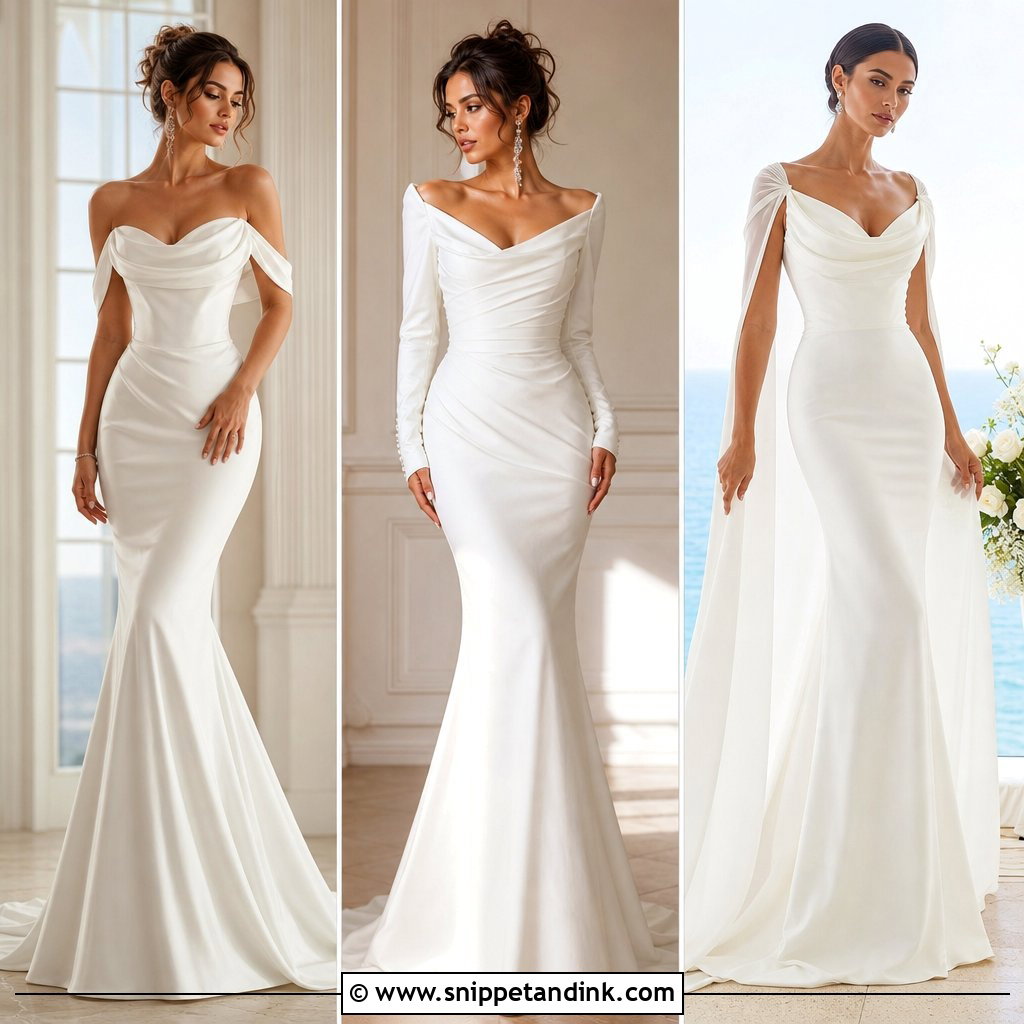



20. Vintage Corset Bodice Wedding Dress
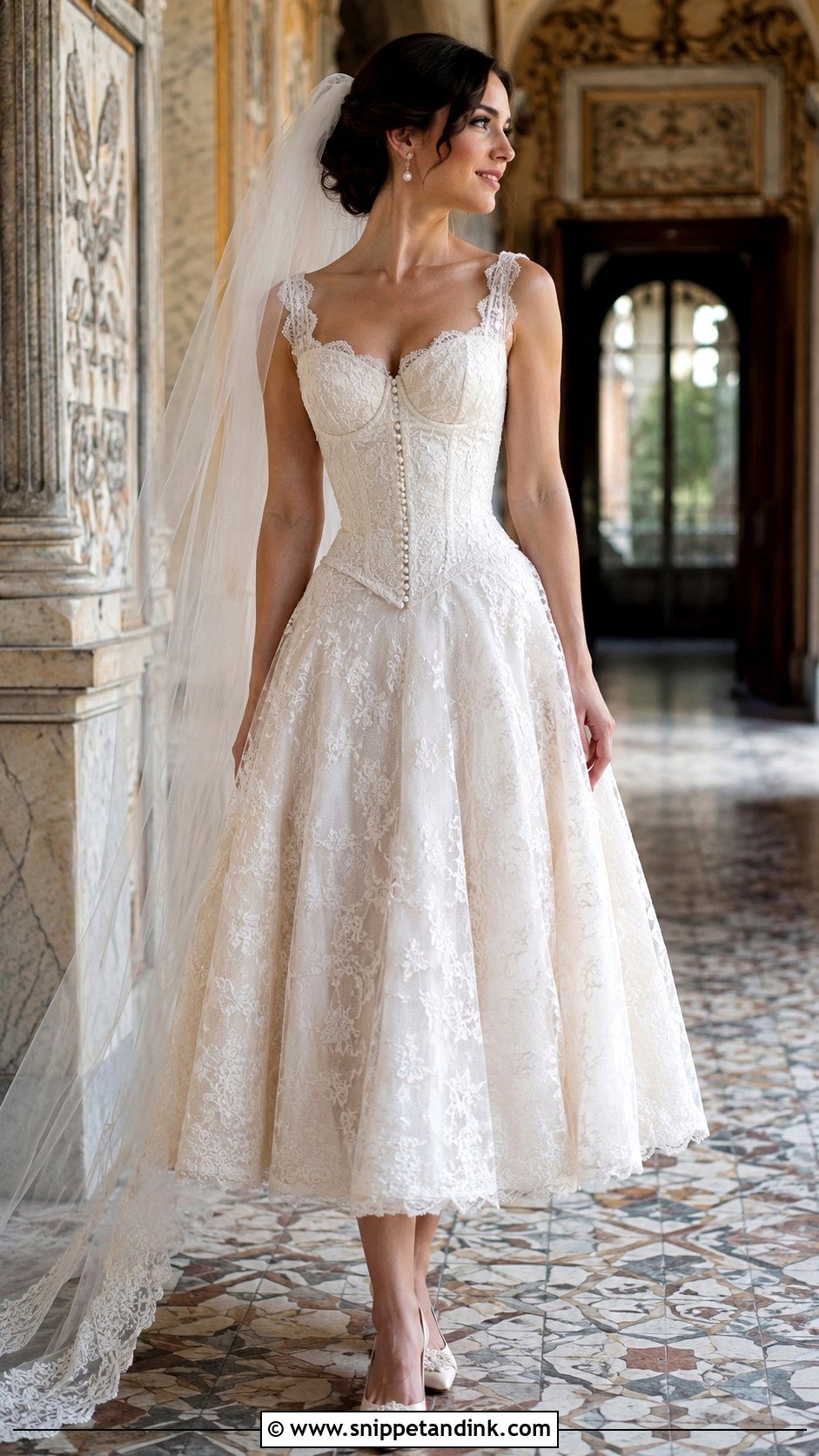
Lace overlays, basque waists, covered buttons, full skirts and soft sleeves give a corset gown an old-world feel. Depending on the cut, it can lean Victorian, Edwardian, 1950s, or 1990s. The danger is costume: one era per outfit, and accessories that look worn rather than themed. Pearl earrings, a classic veil, simple heels, a soft bouquet and natural makeup keep it fresh.
21. Minimal Corset Bodice Wedding Dress
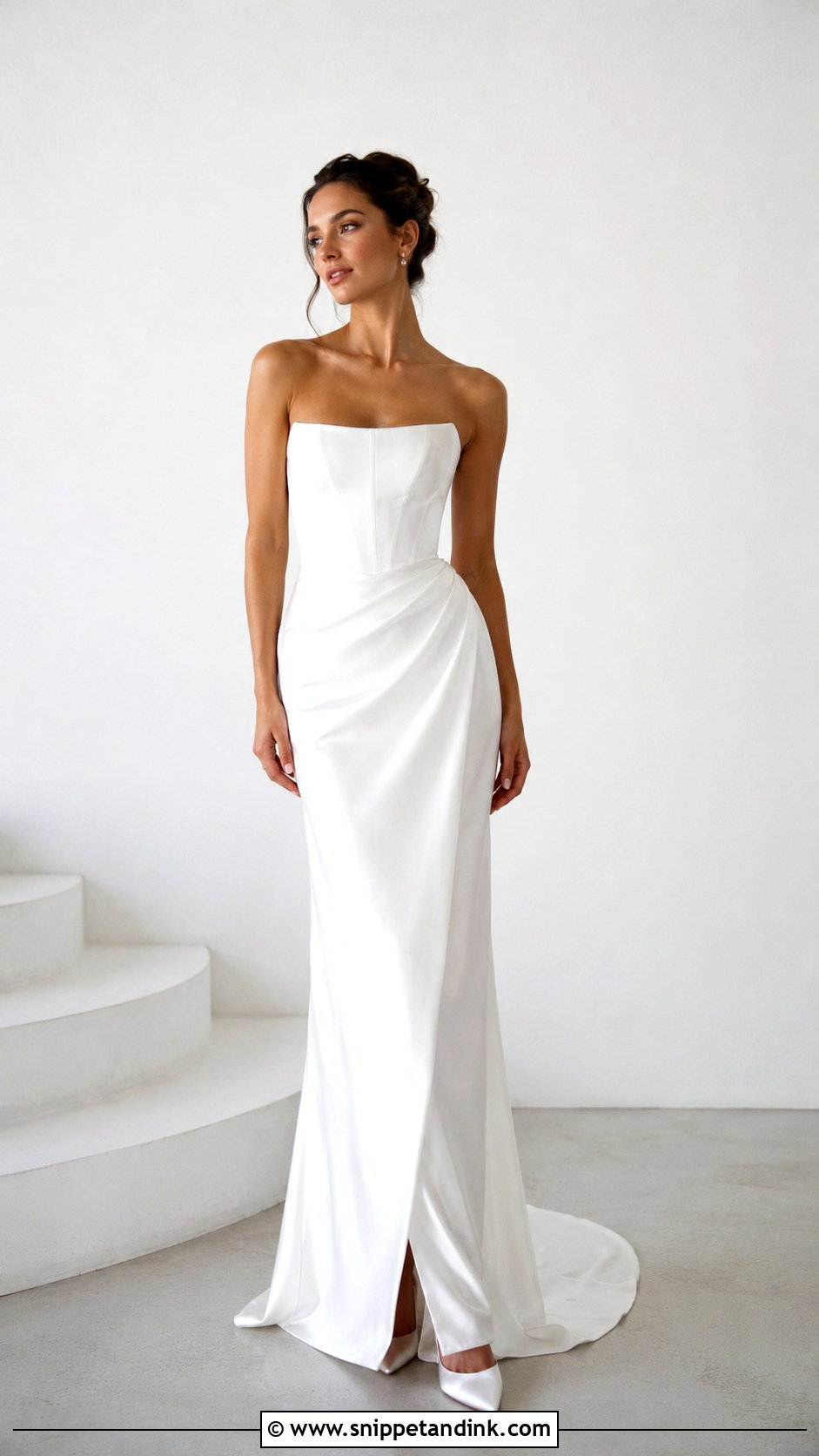
Clean fabric, sharp seams and a perfectly fitted bodice are the whole design here, so there’s nowhere for poor tailoring to hide. Satin, mikado or crepe give the smoothest finish. A straight or square neckline keeps it modern. Sleek heels, small earrings and a simple veil, or no veil. It suits city weddings and modern venues, and I’d budget properly for alterations on this one.
22. Corset Bodice Wedding Dress With Detachable Sleeves
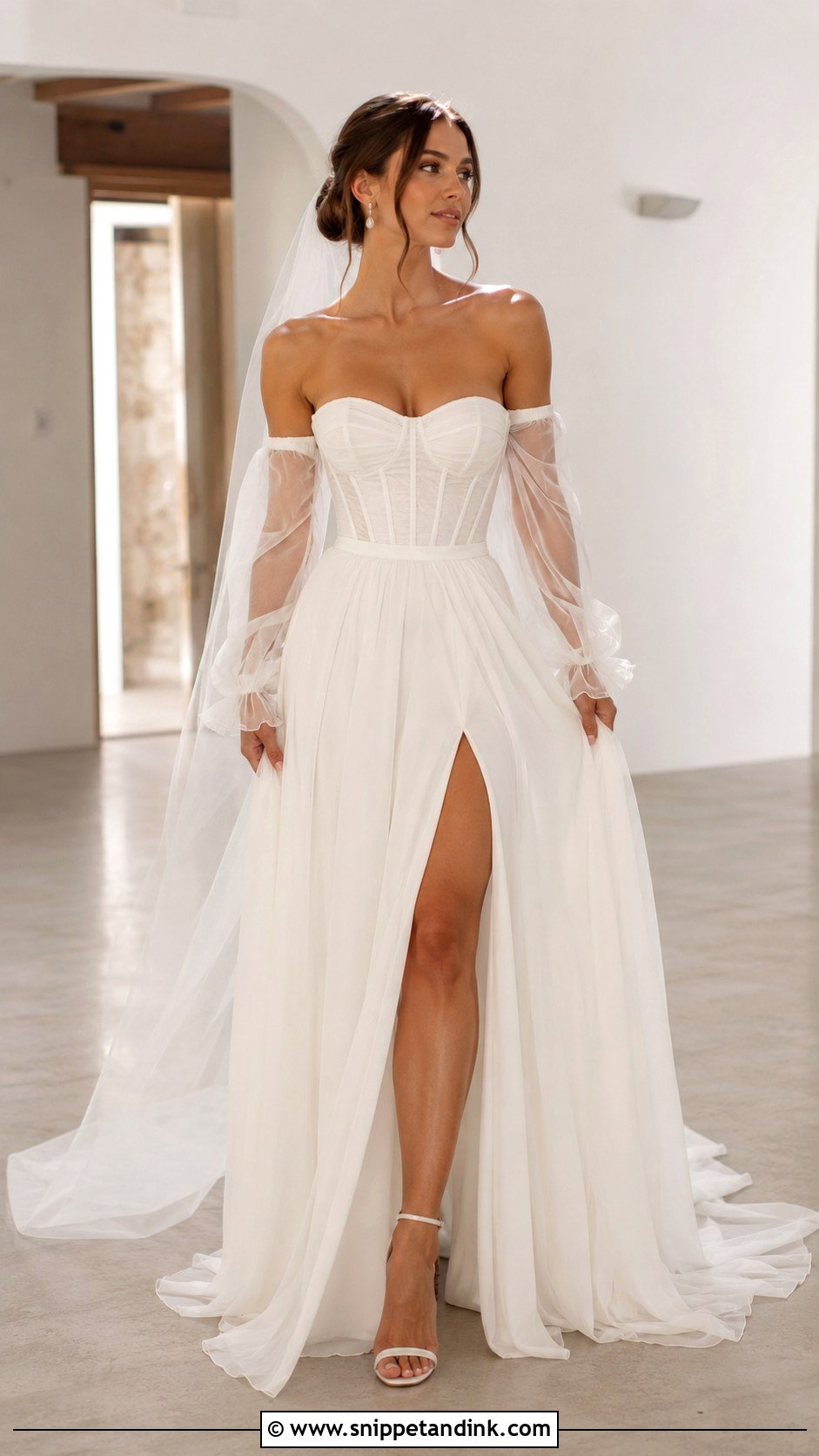
Detachable sleeves give you coverage for the ceremony and photos, then bare shoulders for dancing. They can be sheer, lace, puffed, fitted or off shoulder. The good ones look like part of the gown, in a fabric matched to the bodice or skirt. Ask how they fasten; small snaps or loops inside the bodice are quicker for a helper to undo than tiny hooks. Simple jewelry and a veil that doesn’t fight the sleeve detail.
23. Corset Bodice Wedding Dress With Overskirt
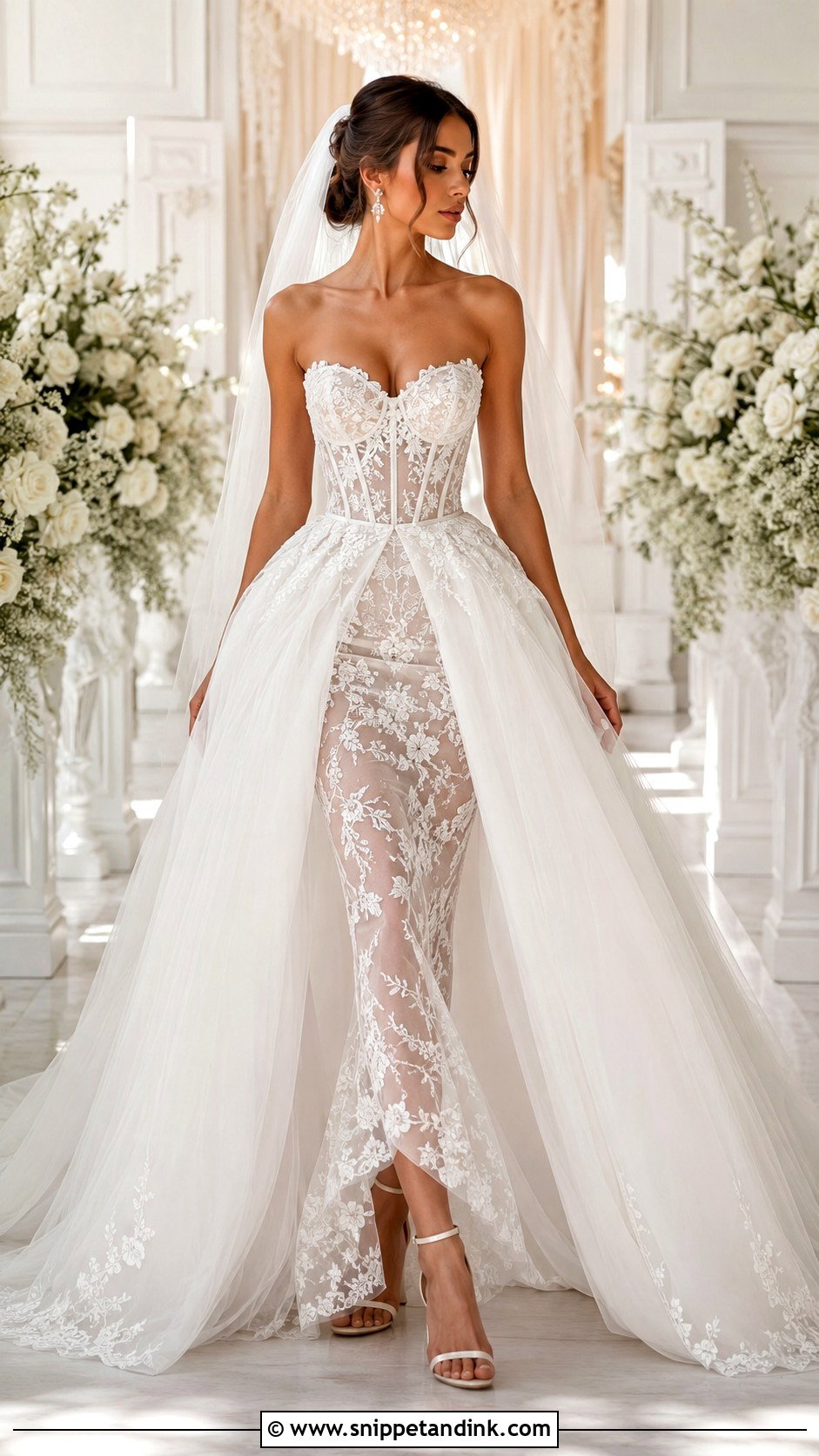
The overskirt adds ceremony volume, then comes off to reveal a fitted gown for the reception, two looks without a dress change. Satin, tulle and organza overskirts all work. The corset has to be very secure because the overskirt fastens at the waist and adds weight there; I check that nothing shifts when the overskirt is hooked on and pulled. Elegant heels, a simple veil and refined earrings.
24. Corset Bodice Wedding Dress With Bow
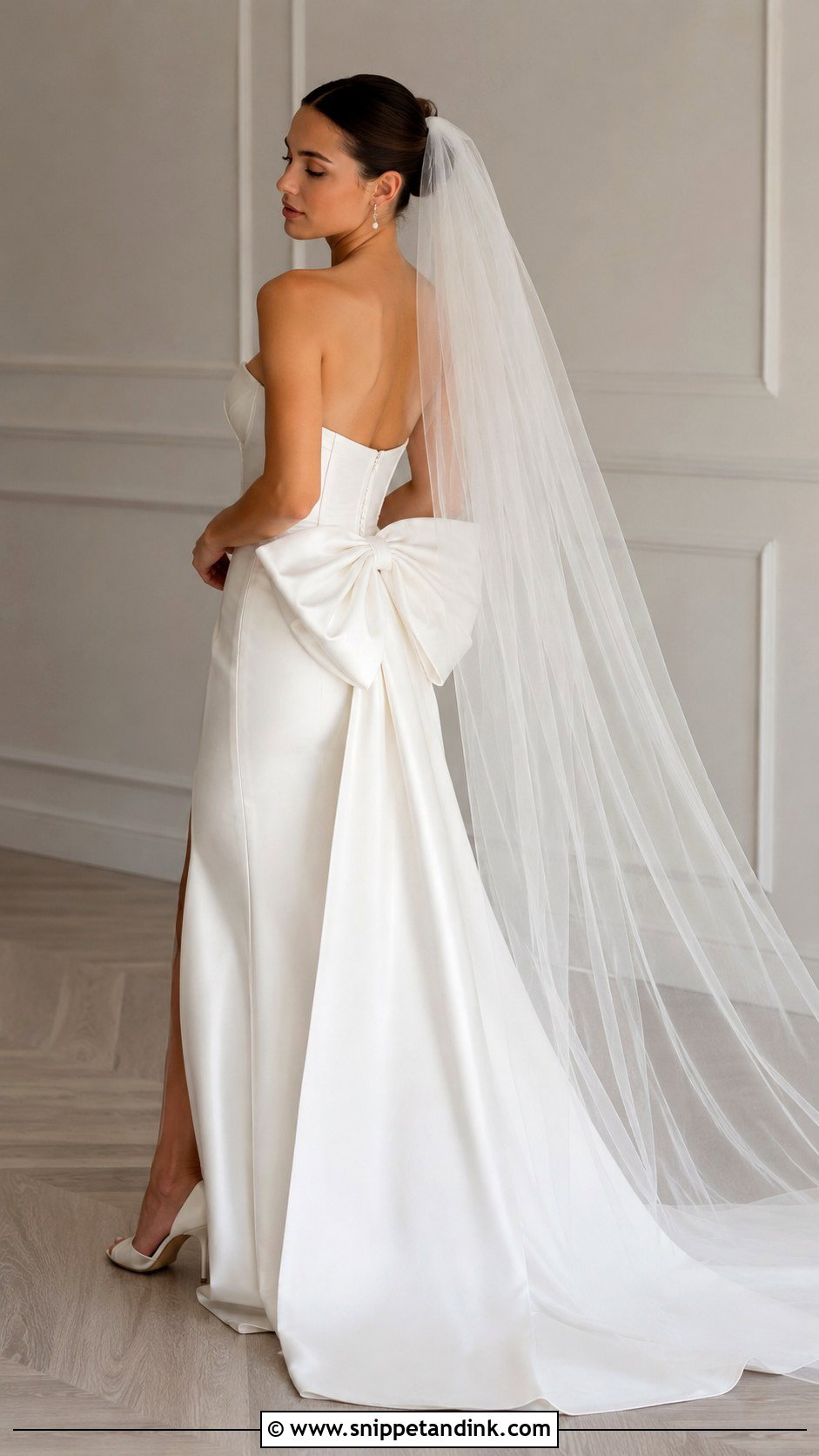
A bow can sit at the back waist, the neckline, the shoulder or the seam where bodice meets skirt. Structured satin bows stay crisp; soft tulle bows look romantic but flatten when you sit back in a chair. Keep the rest of the gown calm. If the bow is at the back, choose a veil sheer enough to show it. A clean skirt, simple heels and delicate jewelry.
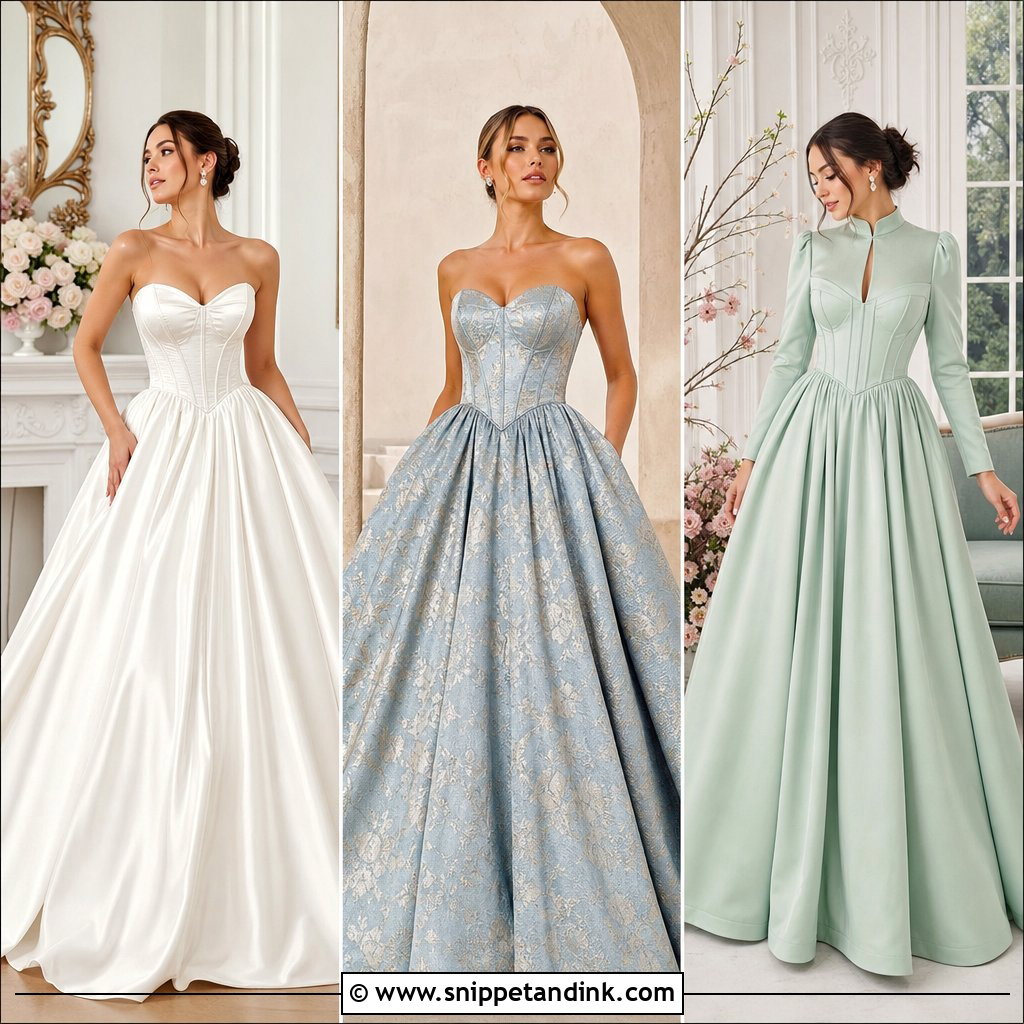

25. Corset Bodice Wedding Dress With Slit
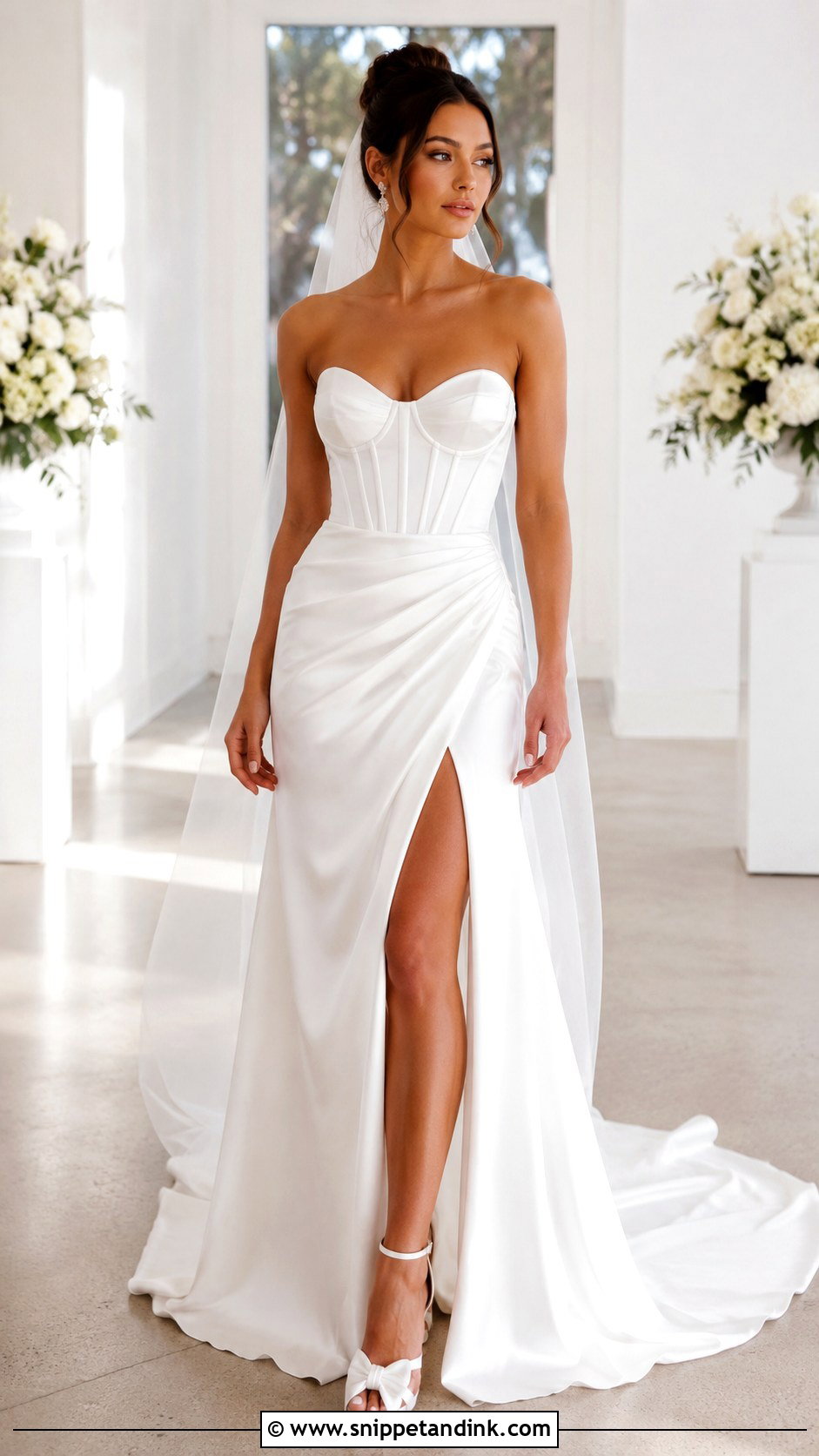
The corset keeps the top bridal and secure while the slit lightens the skirt and makes walking easier. Satin, crepe or soft chiffon skirts suit it. Choose the slit height sitting down, not standing; a slit that looks modest standing can open much higher on a chair. Your shoes will show, so pick them carefully. Drop earrings, a plain veil and a small bracelet.
How a Structured Bodice Feels by Hour Eight
Brides worry about breathing in a corset. In a properly fitted one, breathing is fine. What catches people out are smaller things that build up over a long day.
- Eating. A firm bodice leaves less room after a big meal. Small plates through the evening are more comfortable than one heavy course.
- Rubbing at the underarm. The top of a side bone can press into the skin by evening. A small piece of moleskin on the skin, or a padded tip your seamstress sews in, stops it.
- Heat. Boned bodices hold warmth against the torso. At a summer outdoor wedding, a lighter fabric like crepe or tulle over the corset helps more than you’d expect.
- Bathroom trips. You’ll need a helper for the skirt more than for the bodice. Lace-up backs can’t be loosened and retightened quickly, so leave them as they are.
Wear the gown for at least half an hour at your final fitting, sitting and walking in your shoes. That half hour tells me more about comfort than any measurement does.
Fit Decides Whether a Corset Looks Sculpted or Squeezed
A corset bodice can be classic, romantic, minimal or dramatic depending on fabric, neckline, skirt and detail. Think about your venue, season, comfort and how much you want to move. Above all, take alterations seriously; with a corset, fit matters more than with almost any other gown feature. Satin, lace, pearls, sleeves or an overskirt can all work once the structure underneath sits right on your body.
You'll Like These Ideas:








Leave a Reply