
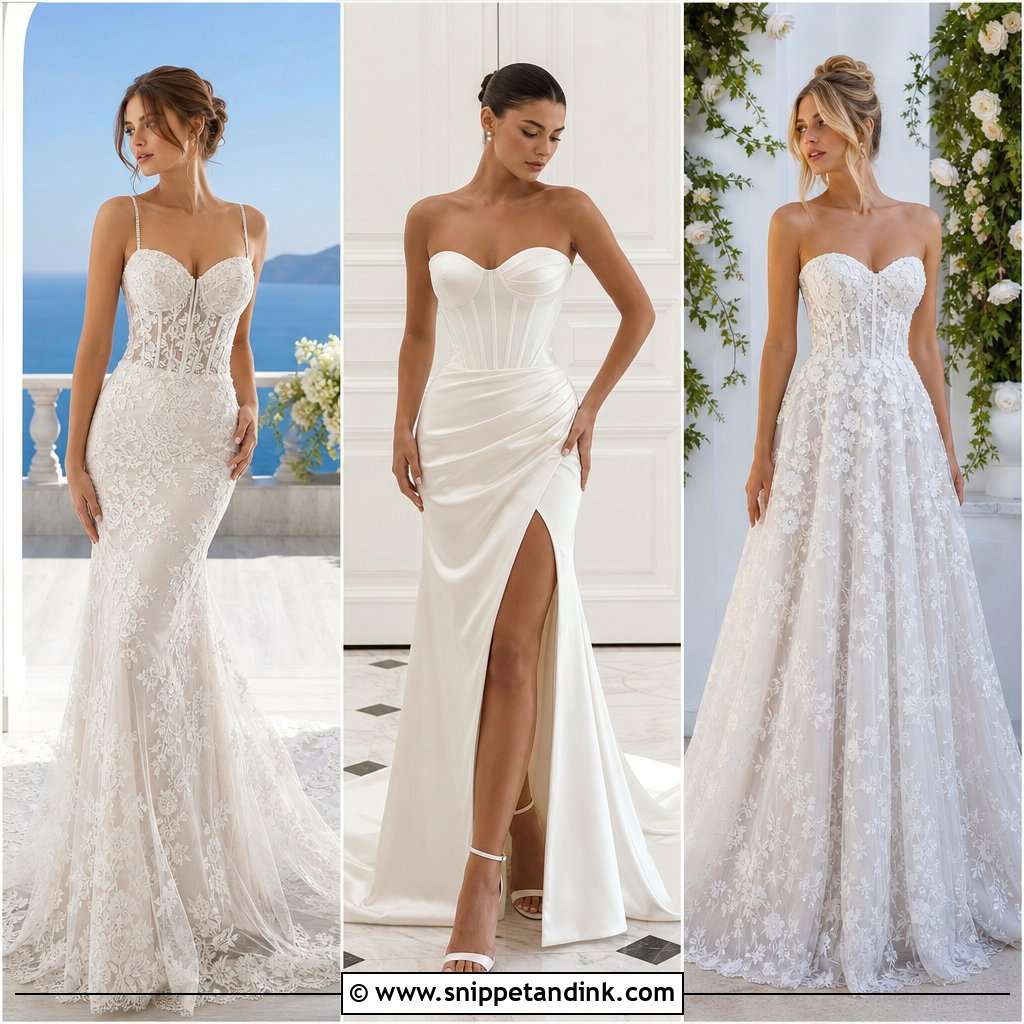
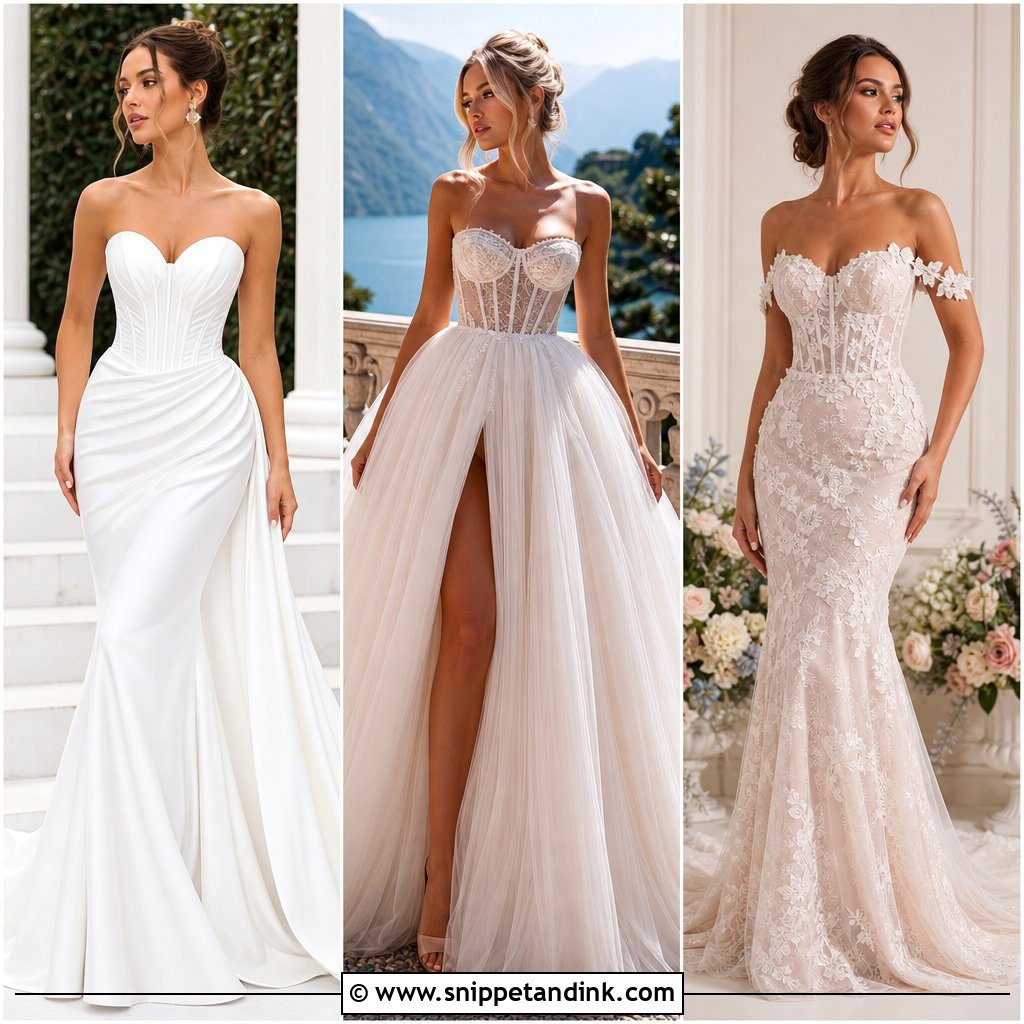
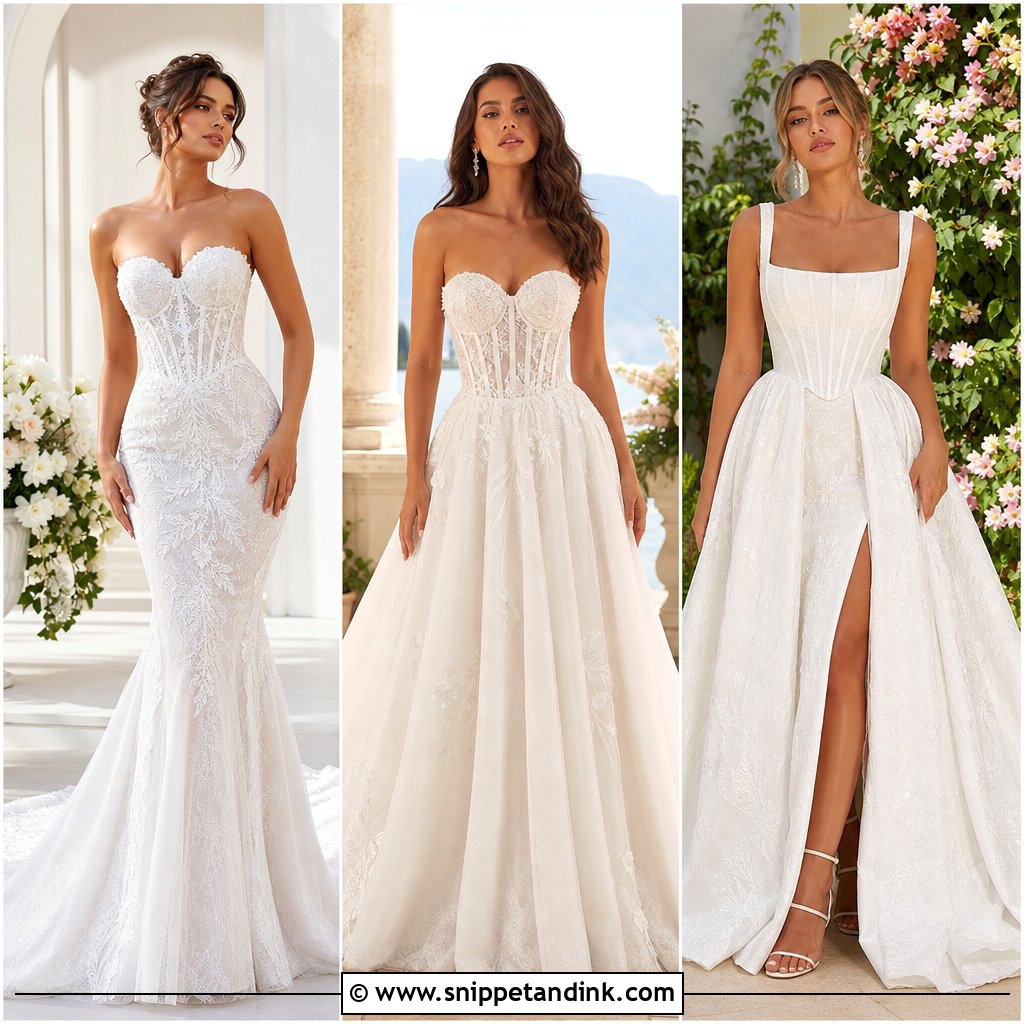
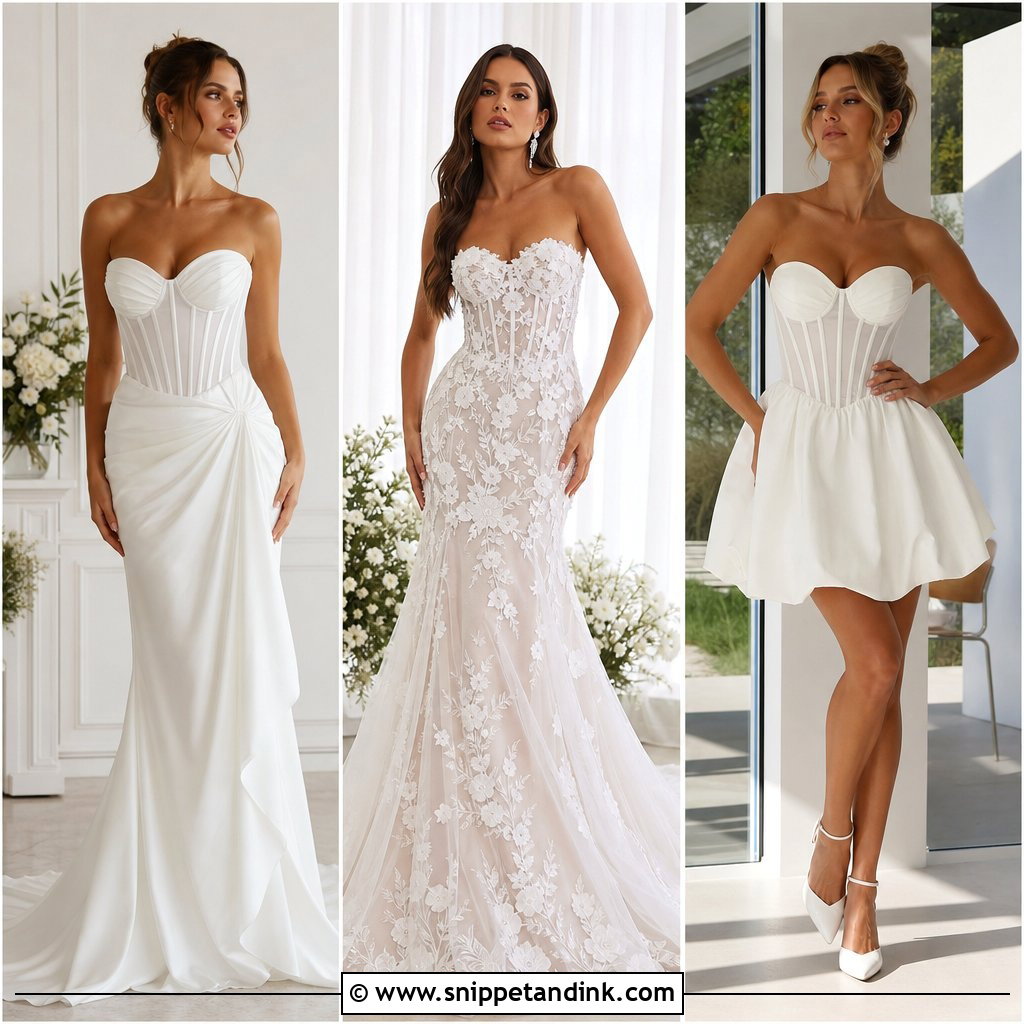
A pointed corset waist does one thing very well: it draws the eye down into a V and makes the torso look longer than it is. Every gown here has some version of that shape, from sharply pointed basque corset waists to softer boned bodices, in fabrics ranging from smooth satin to lace and tulle. I spend a lot of fitting time on these dresses because the structure is doing real work, holding the bodice up and shaping the waist at the same time. Get the fit right and the dress feels supportive all day. Get it wrong and you notice the boning every time you sit. Read through the ideas with that in mind, and look at the veil, shoes and jewelry suggestions too, since a strong bodice changes what pairs well with it.
Spiral Steel, Plastic Boning and How Tight Is Too Tight
Most bridal corsets aren’t the waist-cinching garments of costume dramas. They’re boned bodices built to hold a strapless dress up and smooth the torso, and the materials inside decide how they feel at hour eight.
- Plastic boning is light and common in ready-to-wear gowns. It’s comfortable at first but softens with body heat and can bend or take on a curve over a long day.
- Spiral steel flexes in two directions, so it follows the curves at the sides and over the hip. It’s what I look for in a dress you’ll dance in.
- Flat steel is rigid and keeps the center front and back straight, which is what holds a sharp basque point in shape.
Lace-up backs allow more adjustment than zips, which helps if your weight changes before the wedding, but they need someone to lace you in properly. A zip with a hidden inner waist stay is quicker and very secure.
For fit, I use a simple test. You should be able to take a full, deep breath and slide two fingers flat under the top edge of the bodice. If the dress stays up only when it’s pulled tight, the cups or the bodice cut are wrong, and tightening further only moves the problem to your ribs.
1. Satin Ball Gown V Corset Wedding Dress
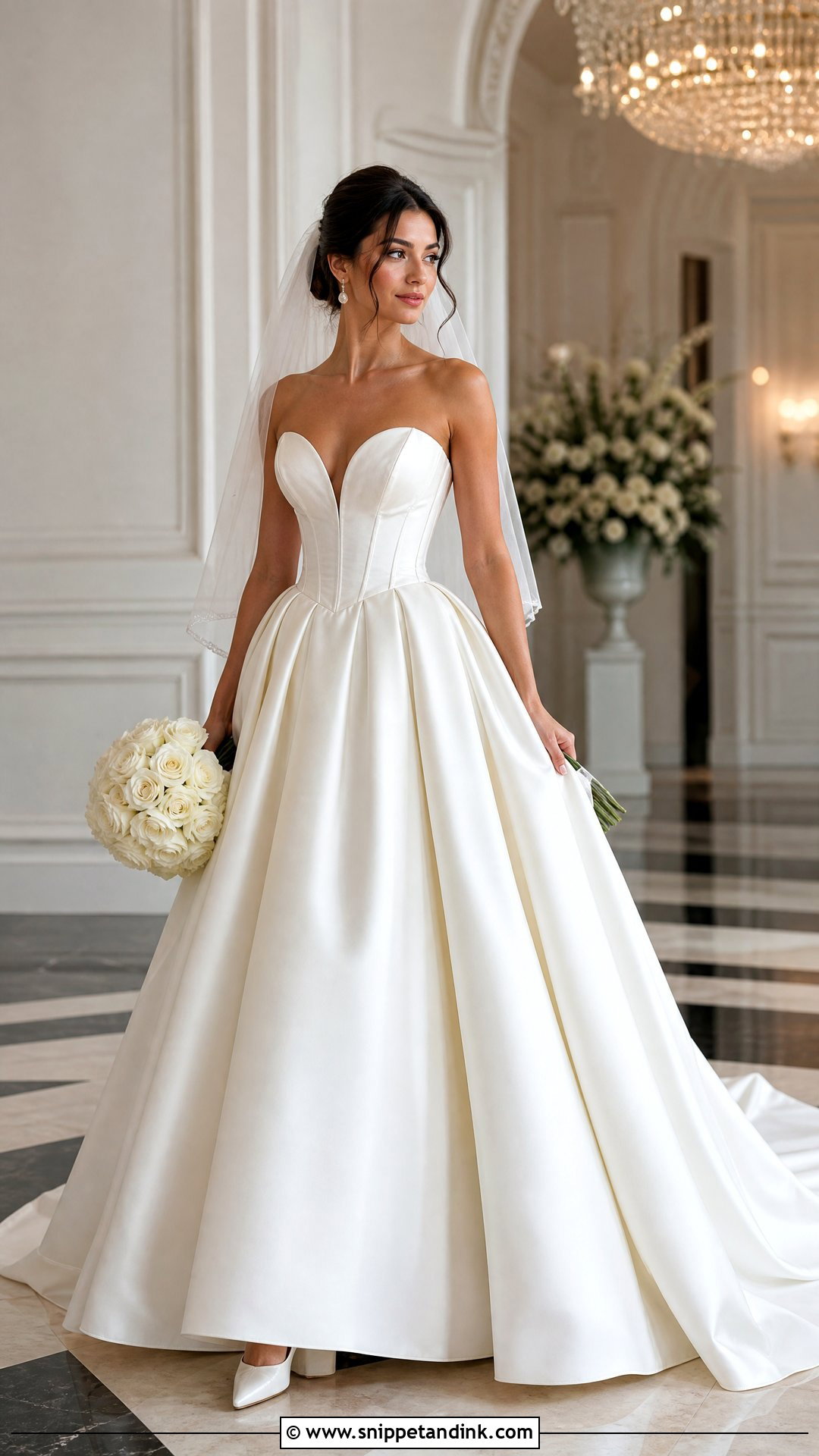
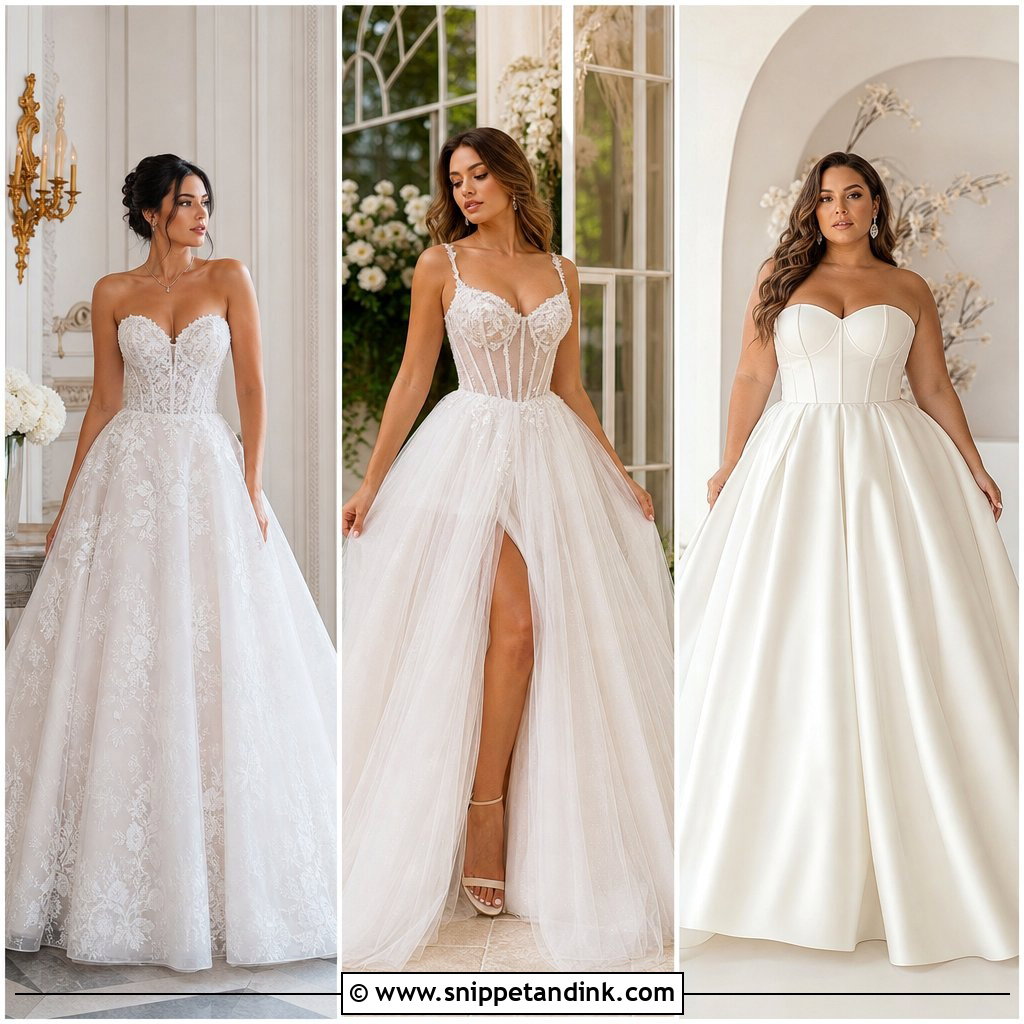
Satin ball gowns are the most classic version of the corset waist, and the reason is structural. A strapless bodice with a pointed basque waist meets a full box-pleated skirt, and the contrast between the tight torso and the volume does all the shaping. No beading needed. Pearl drops, a fingertip veil, ivory pointed pumps and a small bouquet of white roses keep it clean. If the satin has a noticeable sheen, I hold back on sparkle, because shiny fabric plus crystals starts to compete with the seam lines. Pleats on a full skirt add weight at the waist, so ask how the skirt is anchored to the bodice. A good waist stay inside takes that pull off your ribs.
2. Lace A-Line V Corset Wedding Dress
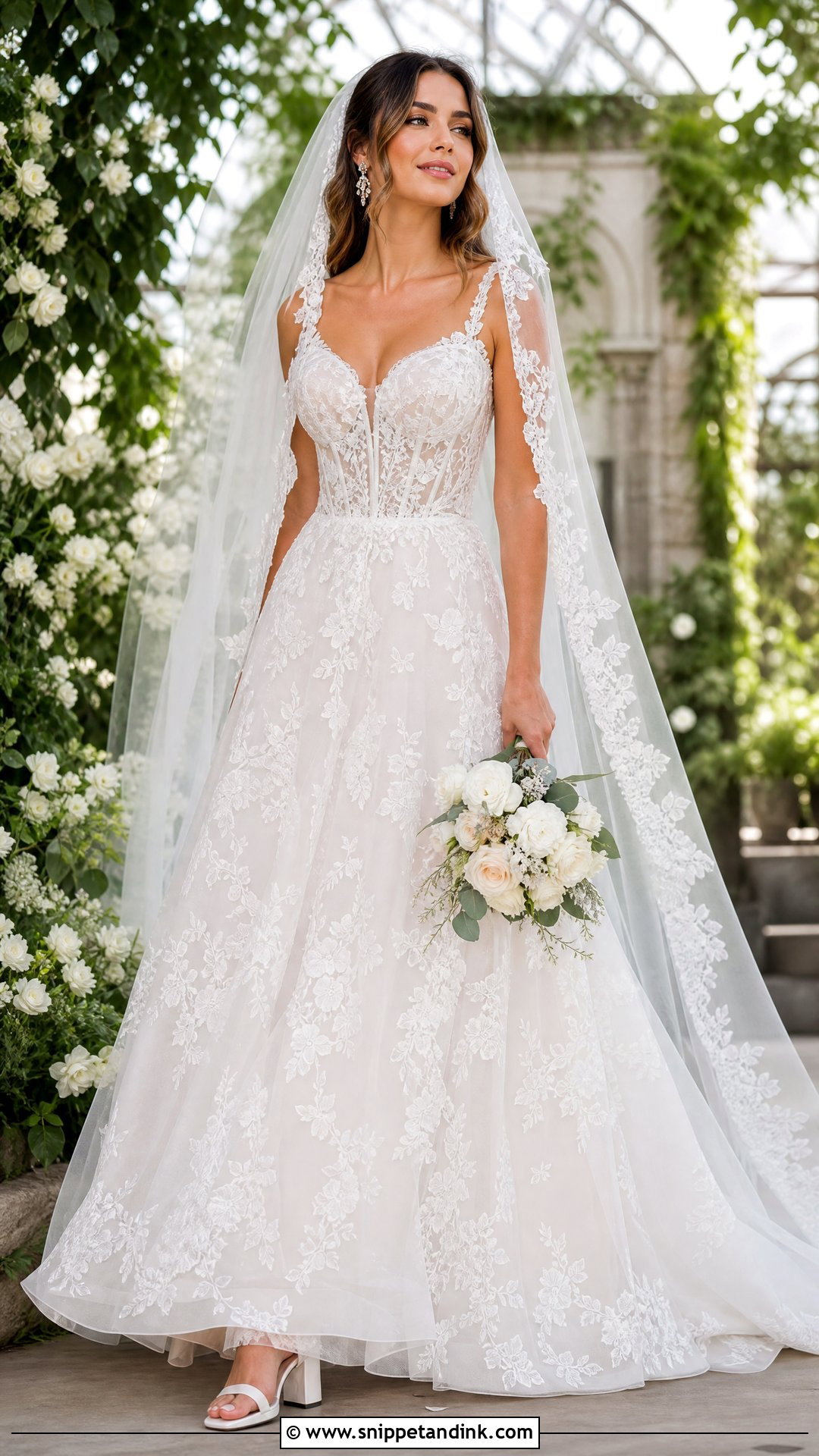
Lace softens the hard point of the V. An A-line in floral lace with lightly defined boning, appliqués that spill onto the skirt and a sheer layer over supportive lining lets the corset lines show through without feeling exposed. A lace-edged chapel veil, small crystal earrings and closed block heels suit it, with a loose bouquet of ivory flowers and pale greenery. Gardens and outdoor ceremonies feel right for this one. It’s my usual suggestion for a bride who wants a defined waist but finds a full ball gown too heavy to wear for hours. One check at the fitting: the lace should be cut so its motifs meet at the center front point, or the V looks lopsided.
3. Mikado V Corset Wedding Dress With Basque Waist
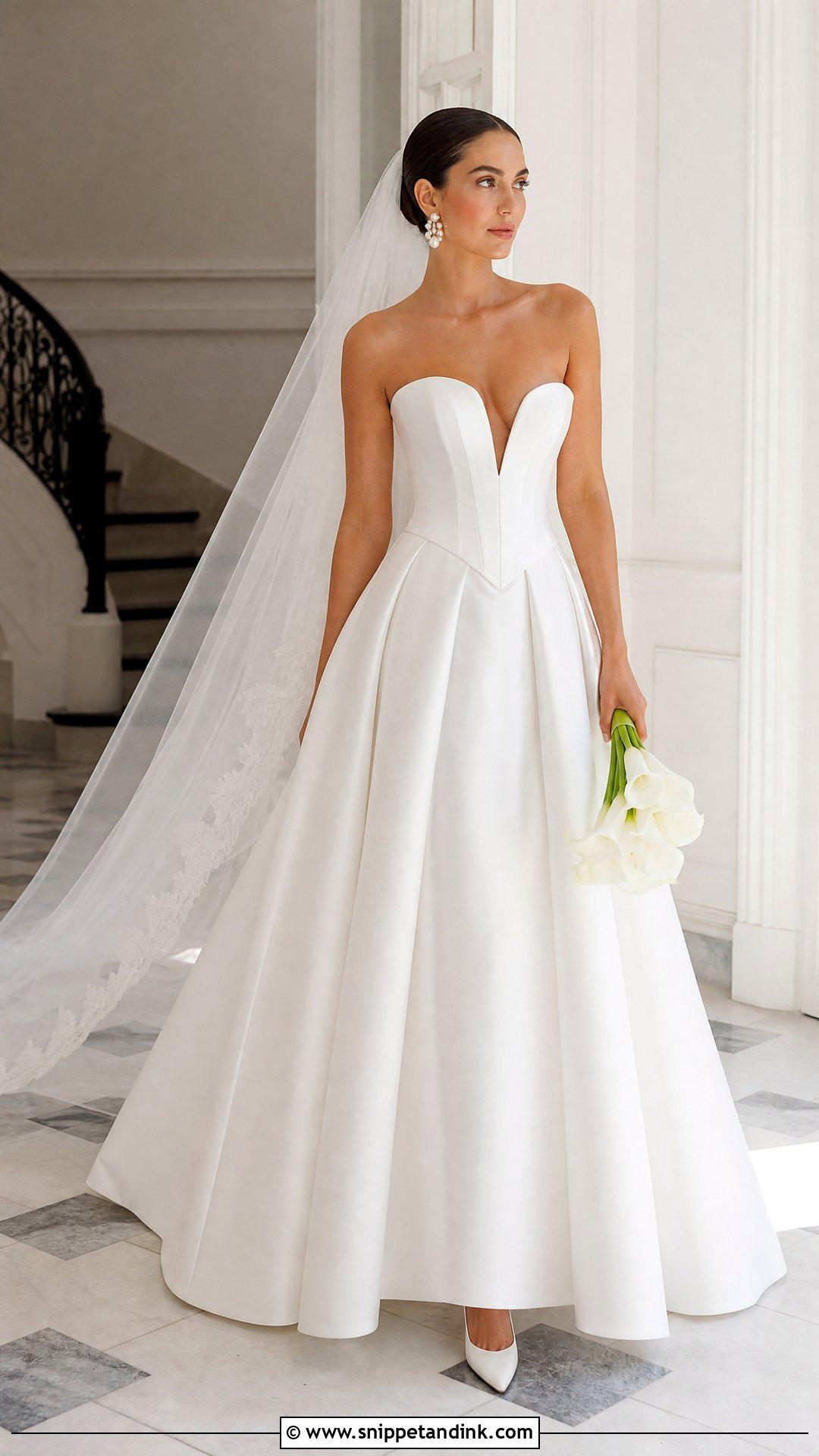
Mikado is stiff, slightly ribbed silk or poly blend, and it doesn’t collapse at the waist. That makes it the most reliable fabric for a sharp basque point. Choose a strapless neckline with visible seaming and a wide skirt that keeps its silhouette into the evening. A clean raw-edge cathedral veil, sculptural pearl earrings and satin pumps suit the architecture, with a sleek low bun and a few white calla lilies. Grand venues and evening ceremonies bring it out. The downside is that mikado creases sharply where it folds, especially at the hip when you sit, so steam it on the morning and avoid long car rides in it if you can.
4. Tulle Princess V Corset Wedding Dress
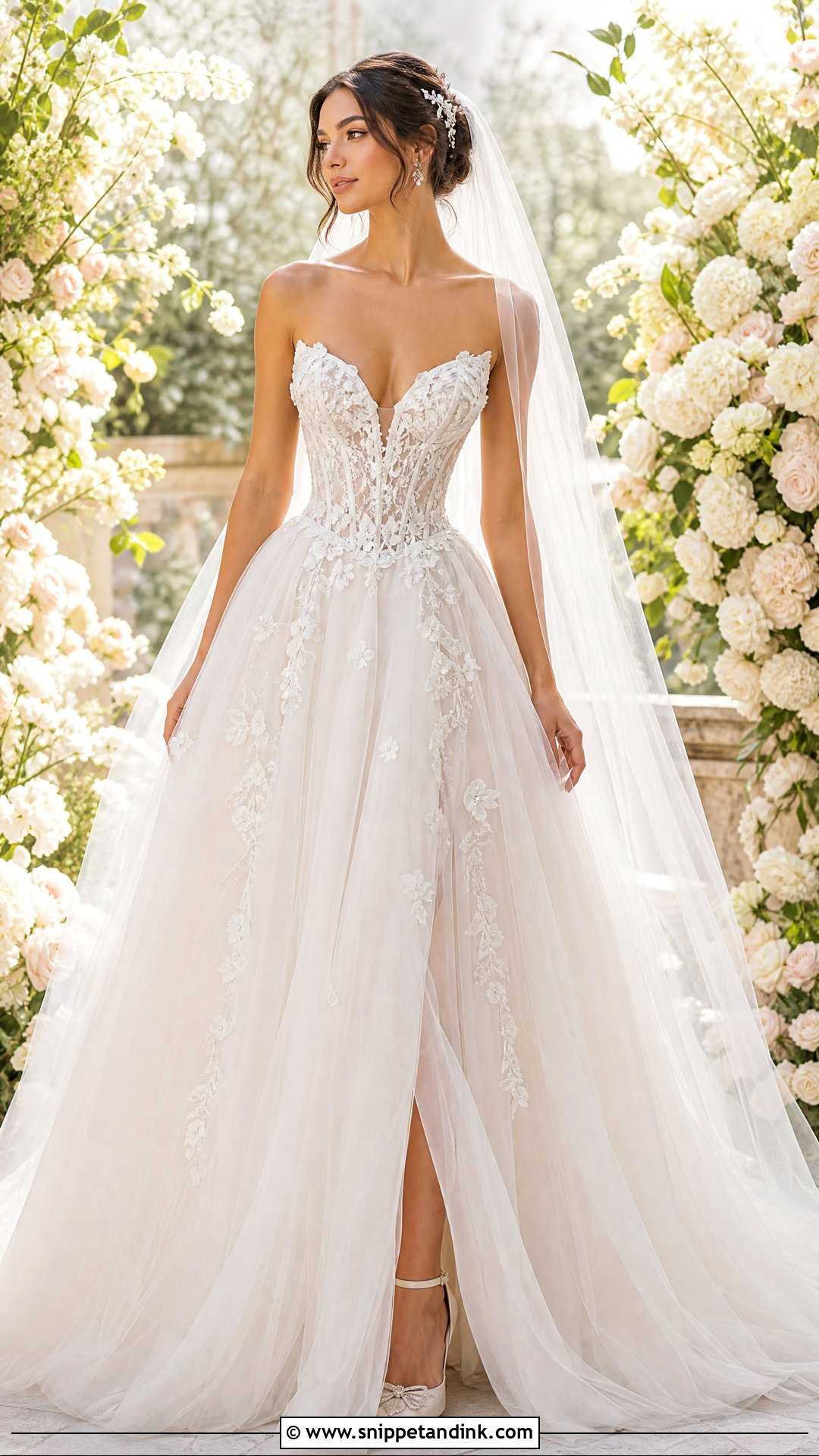
Tulle princess gowns take the edge off a corset by burying it under air. A fitted V bodice with light boning and built-in cups, with the skirt starting at the point of the waist and swelling gently, keeps the structure without the stiffness. Scattered appliqués or a little shimmer add depth. A long sheer veil, crystal hairpins and almond-toe heels hidden under the skirt finish it, and a pastel bouquet of blush, cream and pale lavender matches the softness. Spring gardens suit it well. Fifteen layers of tulle can still be heavy, though. If you plan to dance, ask whether the skirt can be built with fewer, wider layers and a firmer net underneath.
5. Mermaid V Corset Wedding Dress
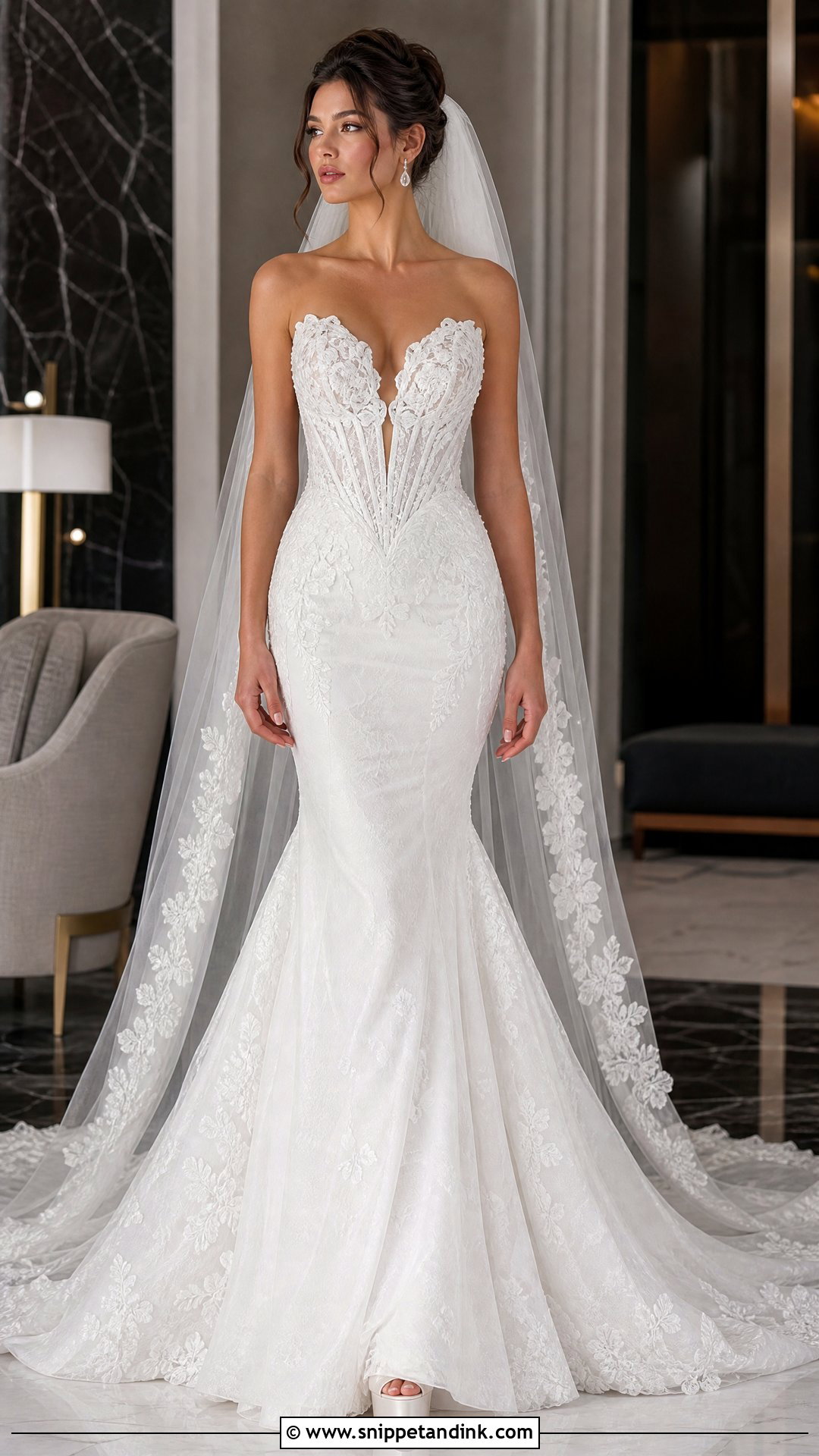
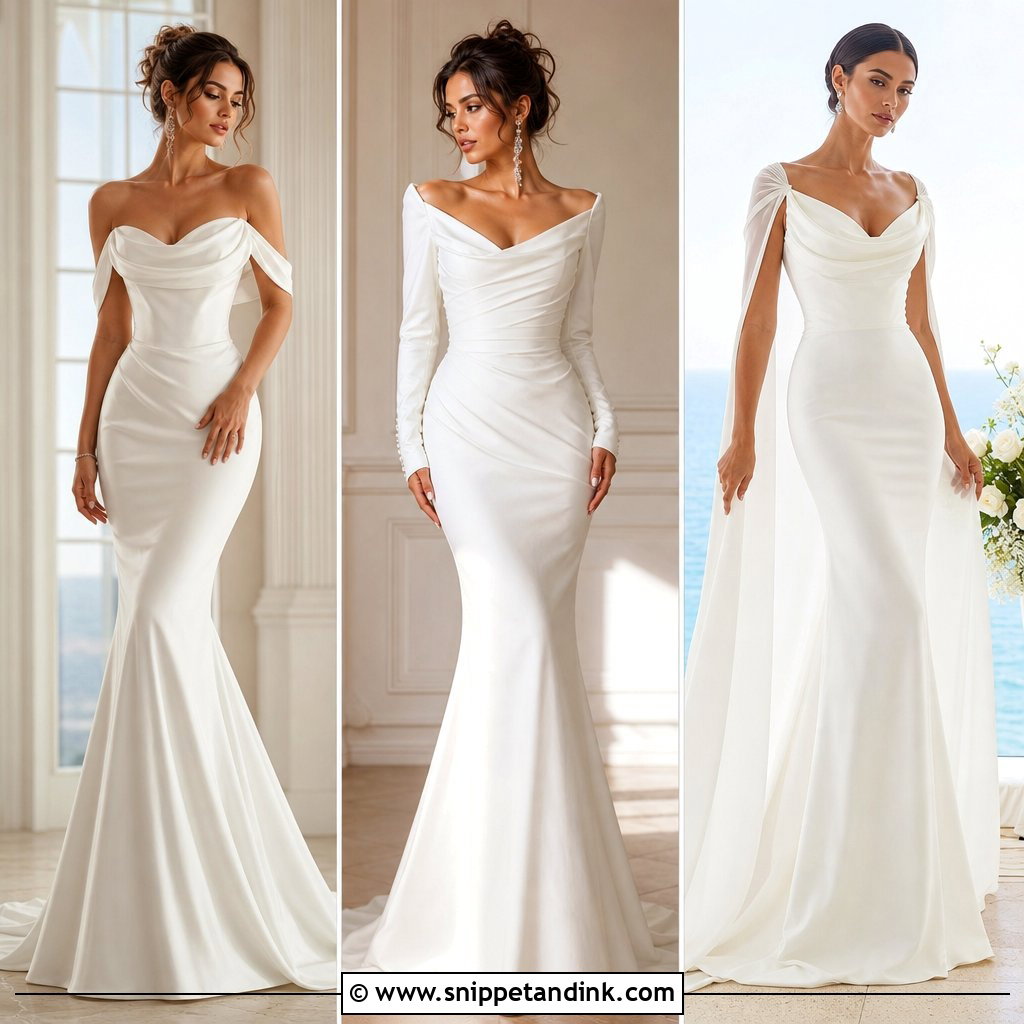
On a mermaid, the V waist sits right above the fitted hip, so the lengthening effect is at its strongest. Look for a structured bodice with a pointed front and a skirt that follows the hips before opening near the knee. Crepe looks modern, and lace looks softer and more detailed. A narrow chapel veil, teardrop earrings and supportive platform heels help the proportions, and a polished bun or side-parted waves keep the neckline clear. Choose a long, slim bouquet rather than a round one. Mermaid plus corset is the most restrictive combination on this page. Test whether you can sit, climb steps and bend down to hug a child before you commit.
6. Off-Shoulder V Corset Wedding Dress
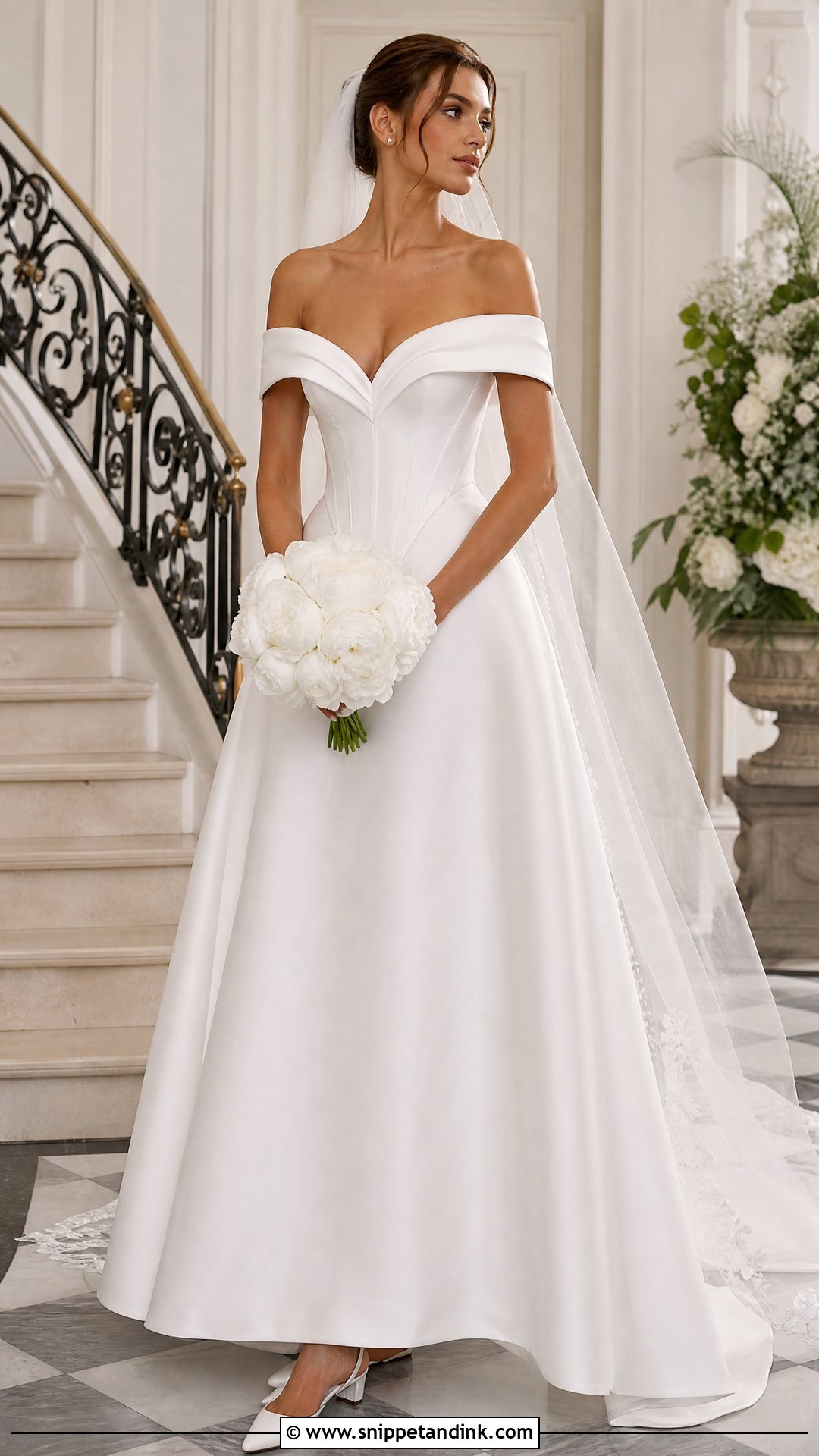
An off-shoulder neckline draws a horizontal line across the shoulders, which balances the strong downward V at the waist. Satin or crepe with a folded neckline, a fitted bodice and a basque waist into an A-line skirt is the classic version. The sleeves must leave you room to lift your arms. Tight off-shoulder bands are the most common complaint I hear after weddings, because they pin the upper arms all evening. A simple cathedral veil, pearl studs and pointed slingbacks are enough, with a bouquet of white peonies or roses tied in ivory ribbon. You can add a fine necklace, but an open neckline usually looks cleaner.
7. Long-Sleeve Lace V Corset Wedding Dress
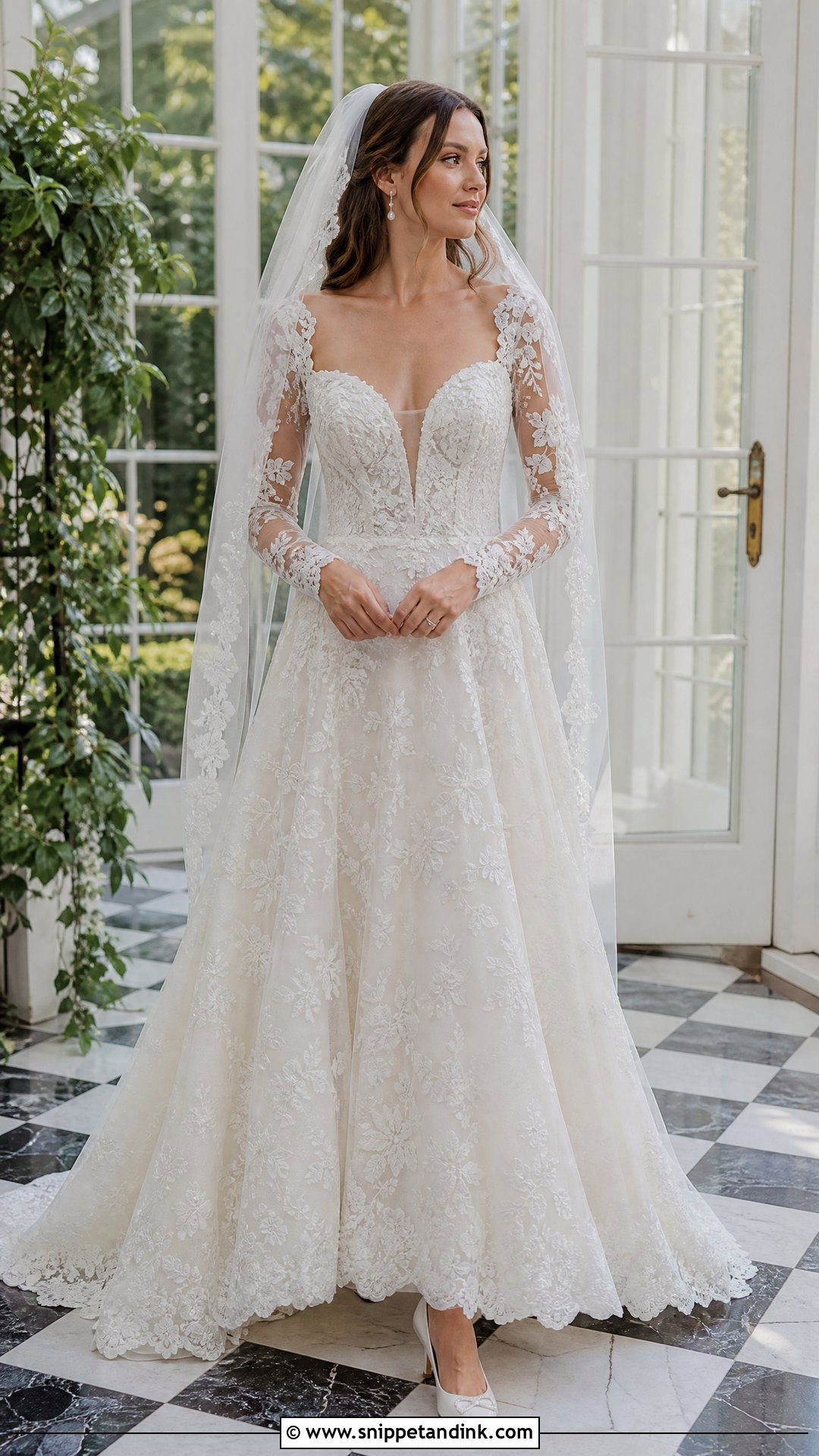
Lace sleeves and a corseted bodice give full coverage without hiding the shape. The good versions put firm lining through the torso and keep the sleeves sheer and flexible, so the support comes from the body of the dress and not from the arms. A basque waist into a soft A-line skirt defines the figure without restricting it. Pearl and crystal earrings, an embroidered veil and low satin heels suit a long day, with a smooth chignon to show the lace at the neck. Autumn and winter suit it, and lightweight lace makes it workable in a cool spring. Sleeves on a boned bodice must be set in with room in the armhole. Too snug, and raising your arm lifts the whole corset.
8. Minimal Strapless V Corset Wedding Dress
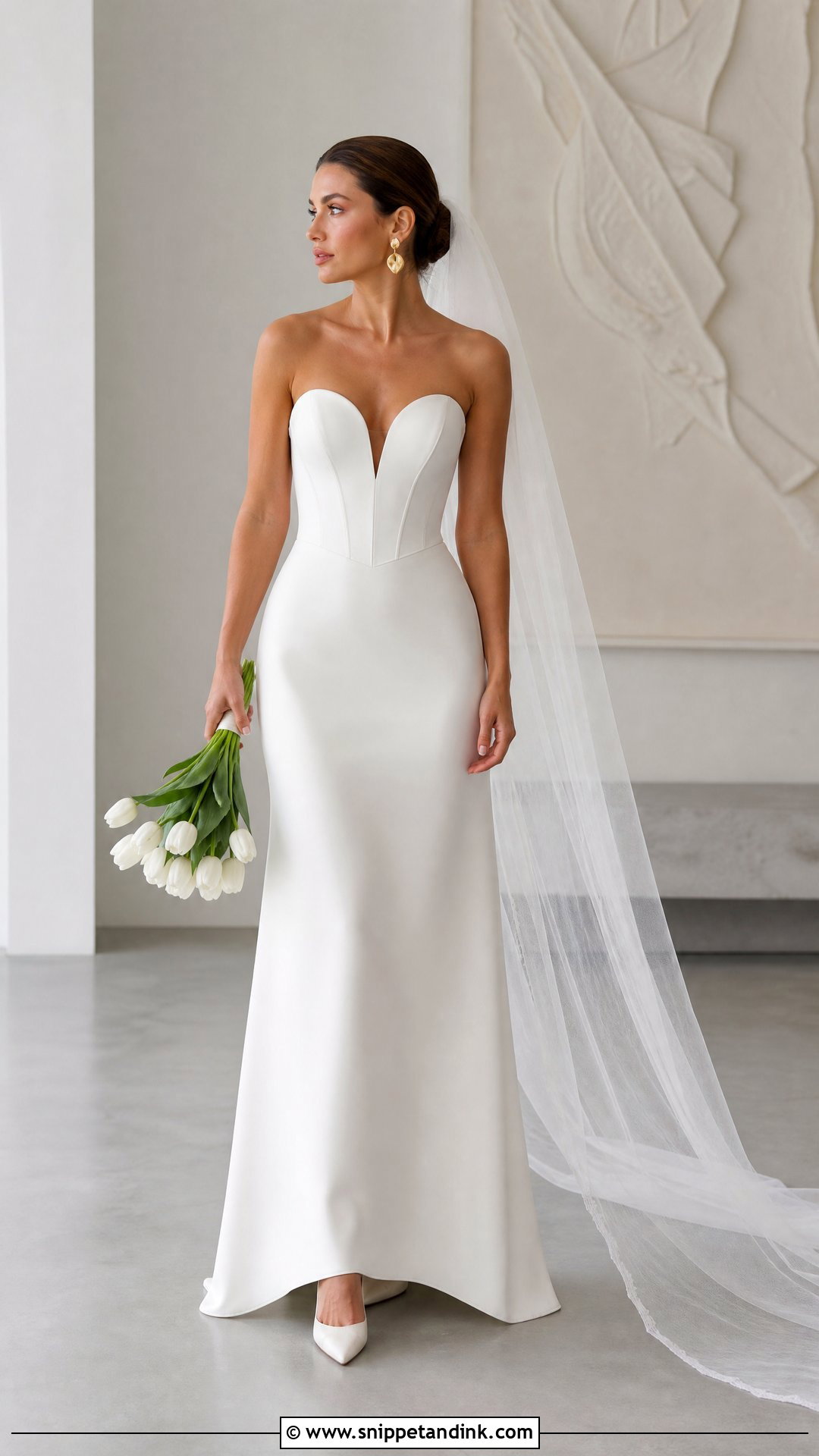
Remove the decoration and the corset seams become the design. Matte crepe, silk faille or plain satin with careful seaming, a straight or gently curved strapless neckline and a slim A-line skirt keep it modern. A long plain veil, sculptural earrings and pointed ivory pumps suit it, and a sleek bun or glossy waves match the clean finish. Carry a small, tight bouquet of tulips or calla lilies. This is the hardest dress here to alter, because every seam shows. A bodice that’s slightly too big wrinkles across the ribs, and one that’s slightly too small strains at the side seams, so choose a seamstress who has worked on structured bridalwear.
9. Square-Neck V Corset Wedding Dress
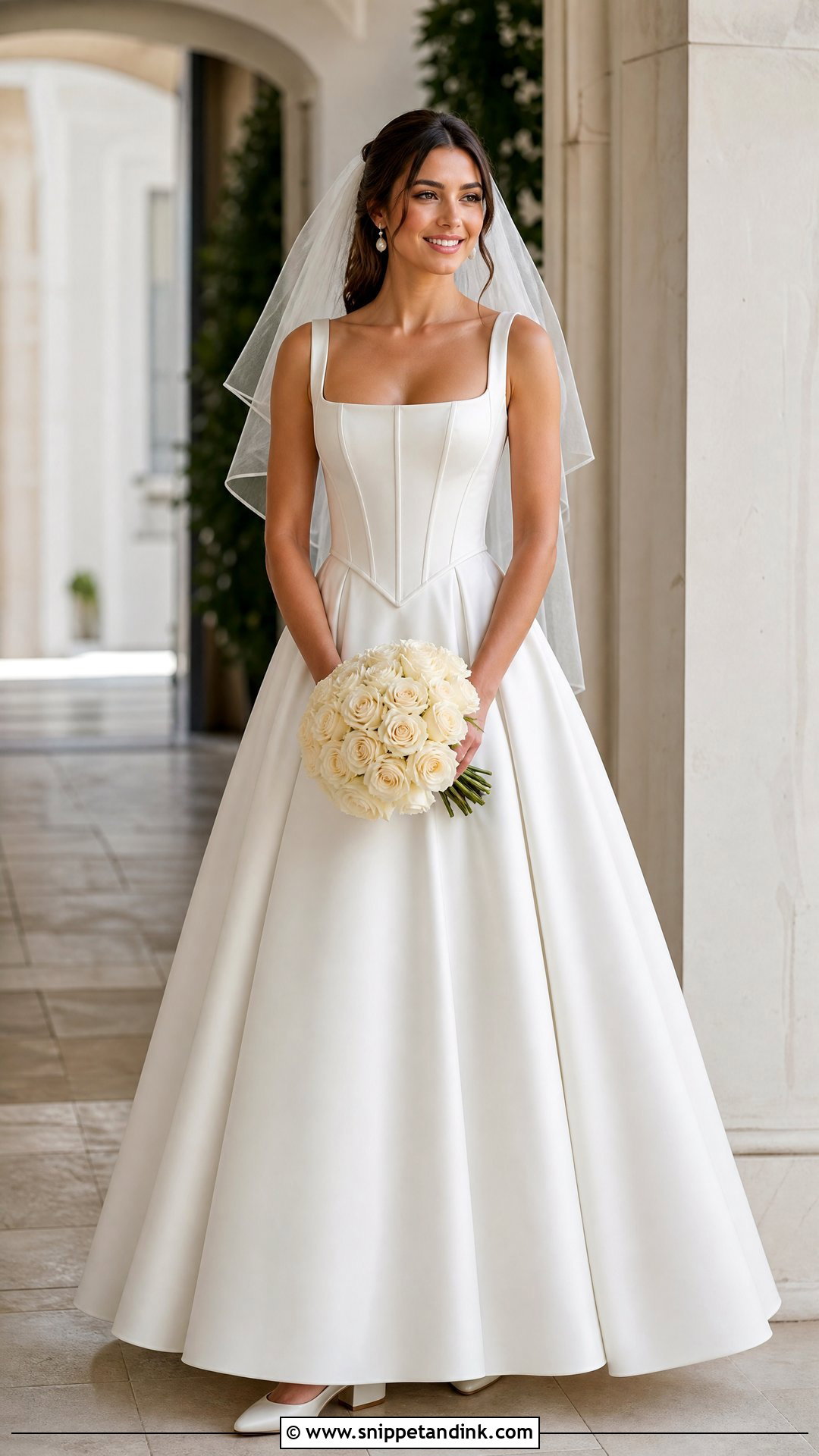
A square neckline frames the face and gives more coverage than a strapless corset while keeping the sculpted waist. Wide straps, defined bodice panels and an A-line or full satin skirt make the base. A shoulder-length veil, pearl drops and low block-heel pumps suit it, with a neat bun or half-up style and a round bouquet of cream roses. It reads traditional without looking dated, which makes it a natural choice for daytime ceremonies. At fittings, sit, hug someone and lift both arms. Square-neck straps can slide toward the edge of the shoulder on a structured bodice, and a small elastic or ribbon stay inside fixes it.
10. Sweetheart V Corset Wedding Dress
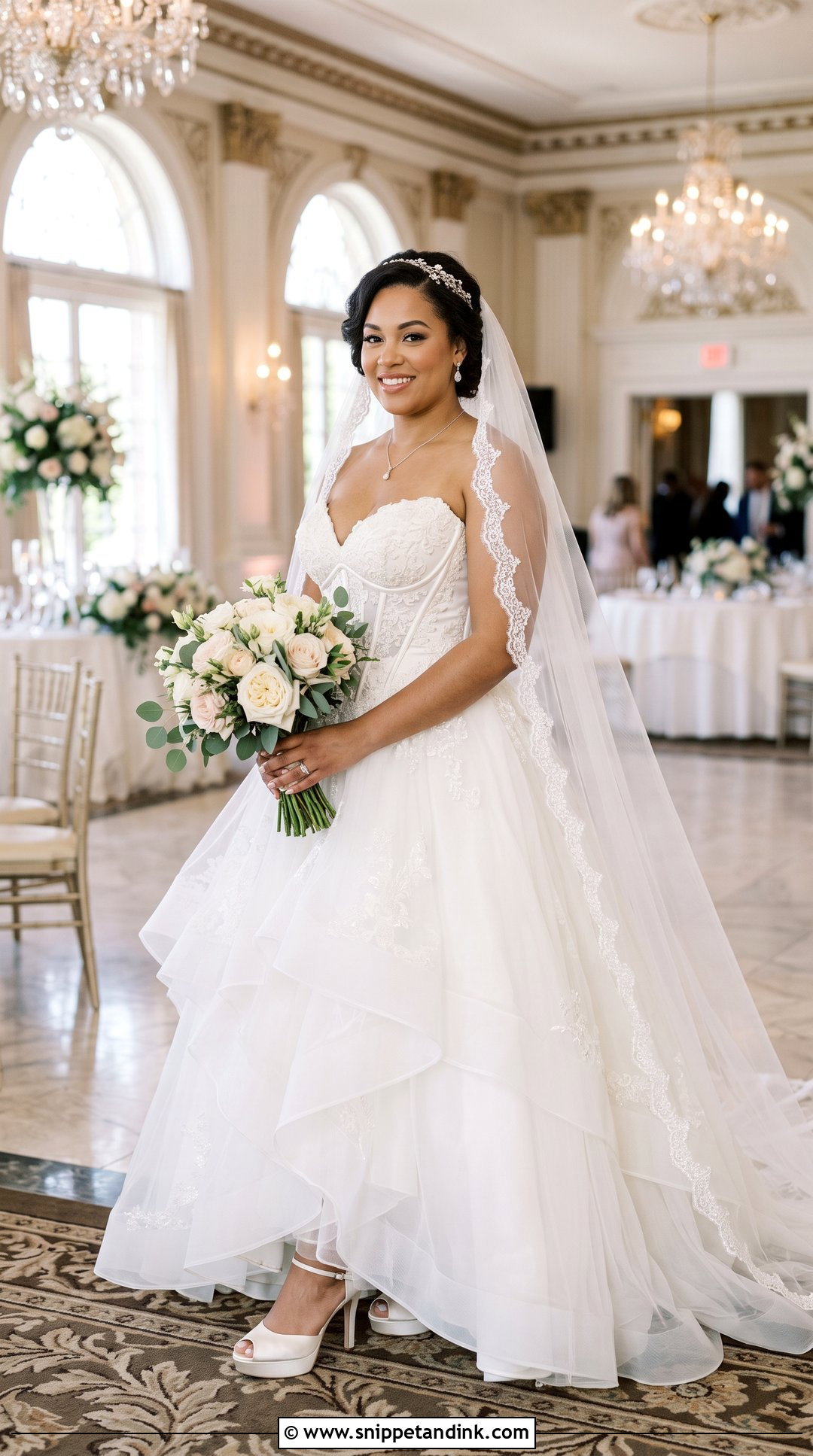
A sweetheart neckline curves where the V corset points, and the two shapes play off each other. Supportive cups, smooth boning channels and a full skirt in satin, tulle or organza are the base. The center dip of the sweetheart has to sit flat against the sternum, which is the thing I check first. If it stands away, it gapes in every downward-angled photo. A fine pendant, small drops and a chapel veil complete it, with cushioned platform heels under a big skirt and a bouquet of ivory roses and pale pink blooms. The same dress can read classic or whimsical depending on fabric and veil.
11. Floral Appliqué V Corset Wedding Dress
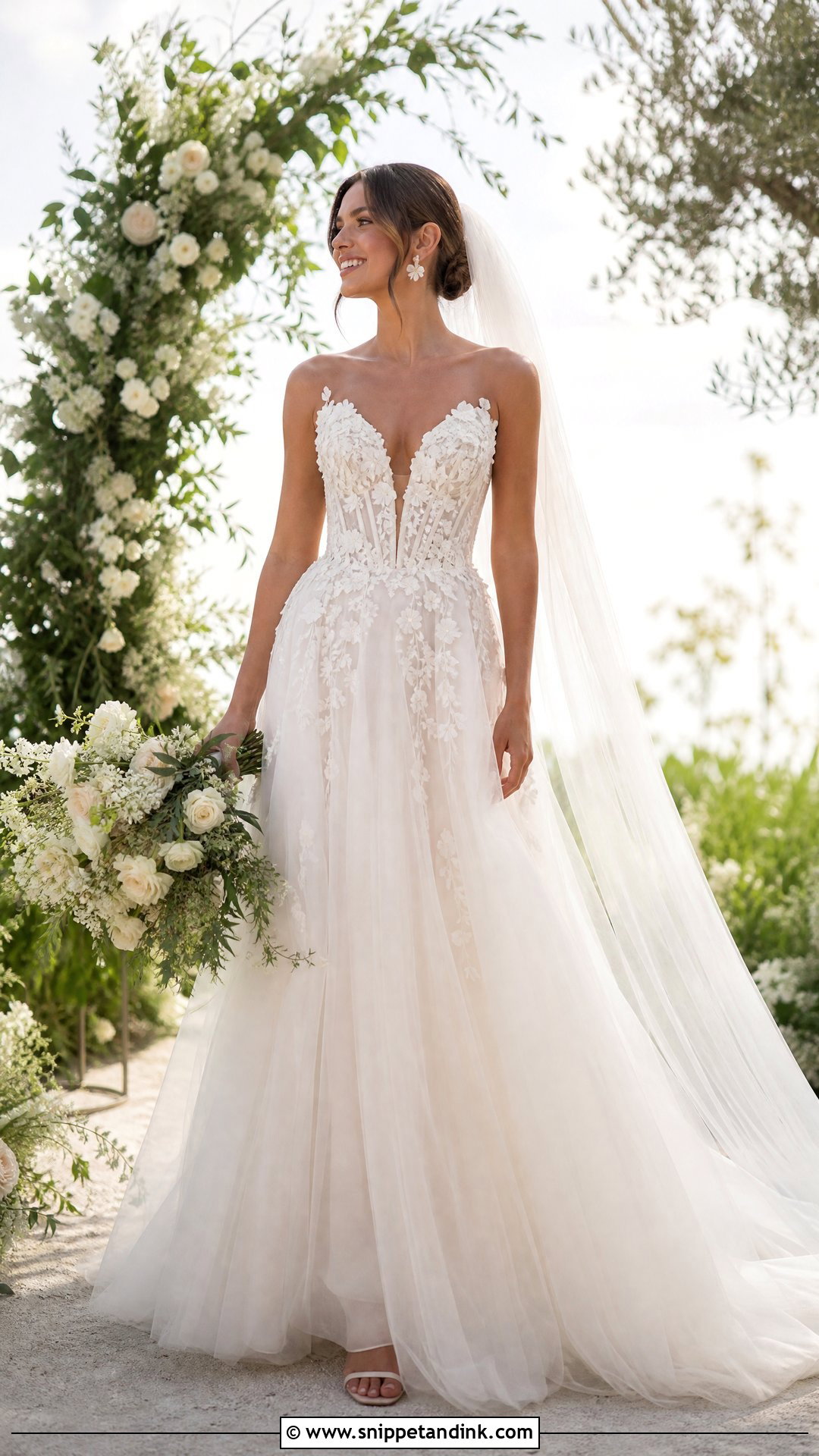
Three-dimensional flower appliqués make a structured corset feel softer. I like them placed along the cups, the boning lines and the point of the waist, with a few drifting onto the skirt, so they follow the shape instead of hiding it. A plain sheer veil, floral earrings and simple ivory sandals avoid repetition, and a textured updo suits the botanical details. Repeat only one or two flower shapes from the dress in the bouquet. Spring and summer are its season. Raised appliqués catch on things, including veils, bouquet wire and lace sleeves on hugging relatives, so check that each one is stitched flat at the edges.
12. Pearl Beaded V Corset Wedding Dress
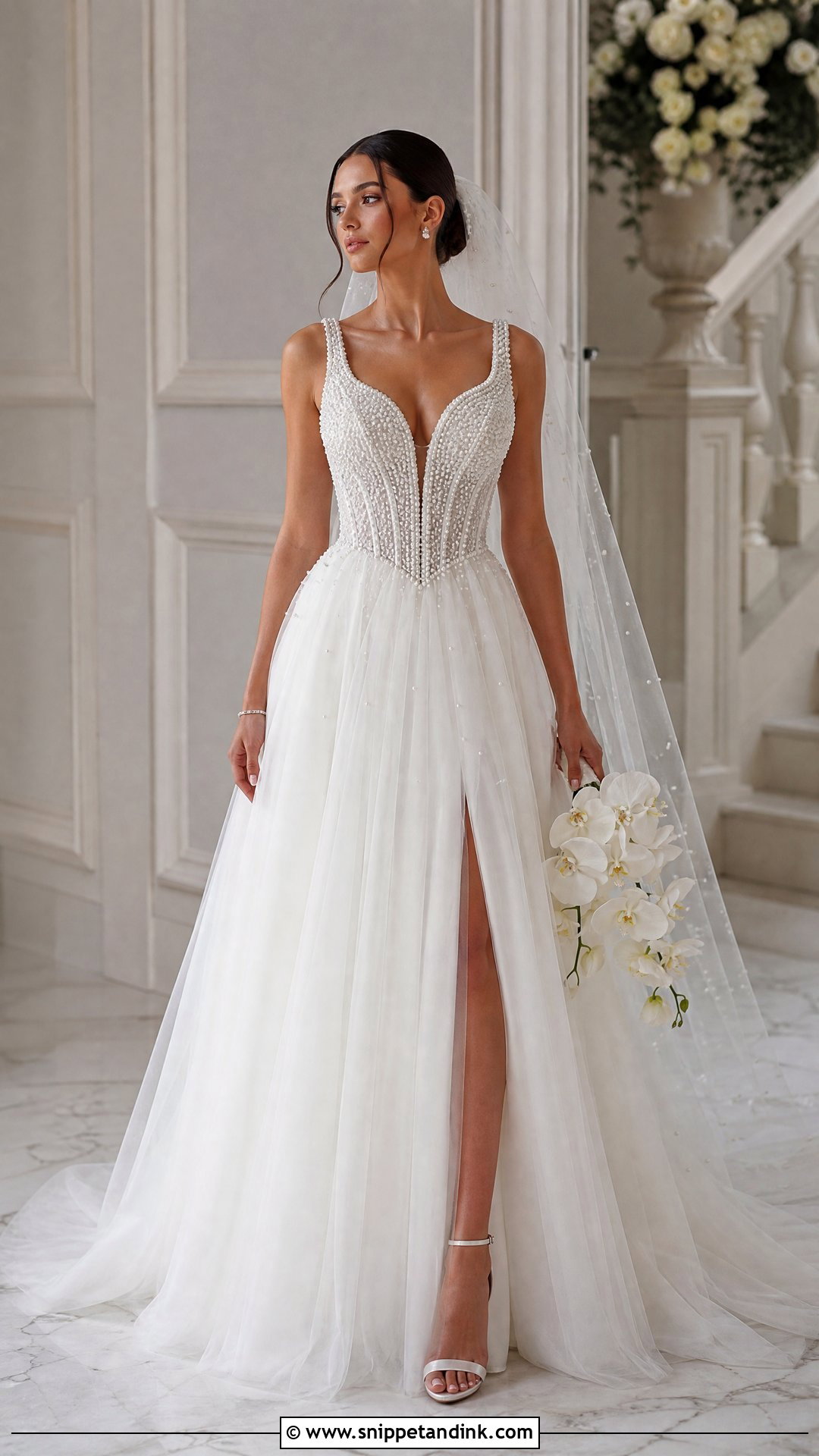
Pearls catch the light softly, and on a corset they emphasize the seam lines without looking glittery. Concentrate them at the neckline and the V of the waist, then let the skirt stay plain in tulle or satin. Pearl studs, a thin bracelet and satin ankle-strap heels continue the theme. A veil with scattered pearls works only if it’s lighter than the bodice. A smooth low bun and white orchids complete it, and evening receptions with clear lighting show off the beading. Ask for the pearls to be individually sewn, not on strung lengths. Strung rows snap if one thread catches, and a trail of pearls across a dance floor is easy to avoid.
13. Drop-Waist V Corset Wedding Dress
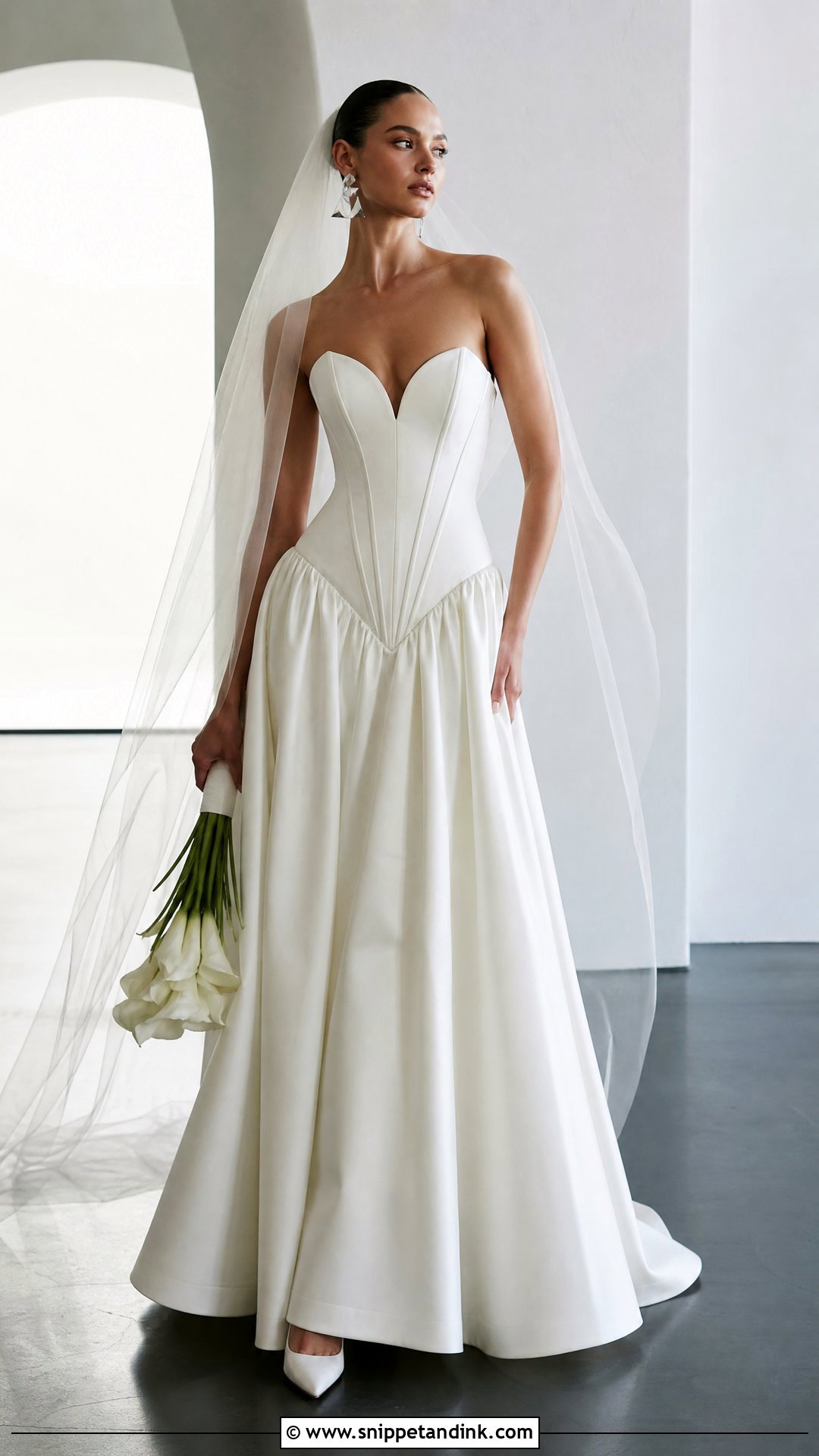
A drop-waist corset runs lower than the natural waist before the skirt begins, so the bodice looks long and the silhouette dramatic. It needs firm internal structure, and the skirt should open gradually instead of puffing out right at the hips. Satin, faille and taffeta show this construction best. A long veil, geometric earrings and pointed pumps suit it, with sleek hair and a narrow bouquet. Sitting is the issue. The point of a long basque presses into the lap when you’re seated, and stiff boning can dig in. Sit on a hard chair for a few minutes at a fitting, and ask whether the point can be finished with a softer, shorter bone.
14. Draped V Corset Wedding Dress
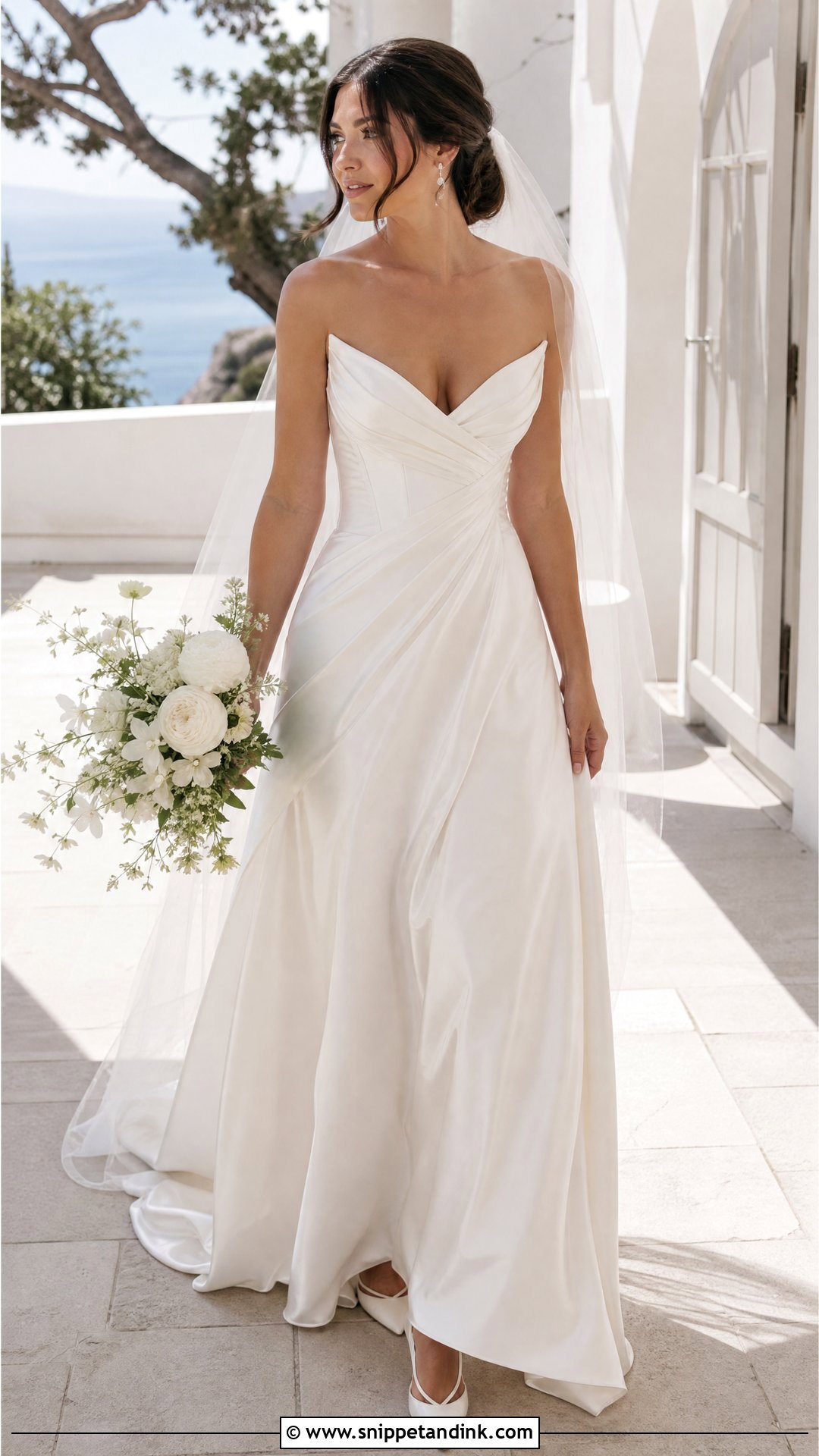
Draping hides the corset but keeps its shape. Silk, satin or chiffon folded diagonally across internal boning gives soft dimension and still lands on a defined V at the waist. The skirt can fall into an A-line or stay slim through the hips. Delicate drops, a raw-edge veil and satin slingbacks suit it, with a side-parted low bun that follows the direction of the drape and a relaxed bouquet with a few trailing stems. I recommend it to brides who want the support without visible boning lines. Drapes shift during the day unless they’re hand-tacked to the bodice underneath, so check that during alterations.


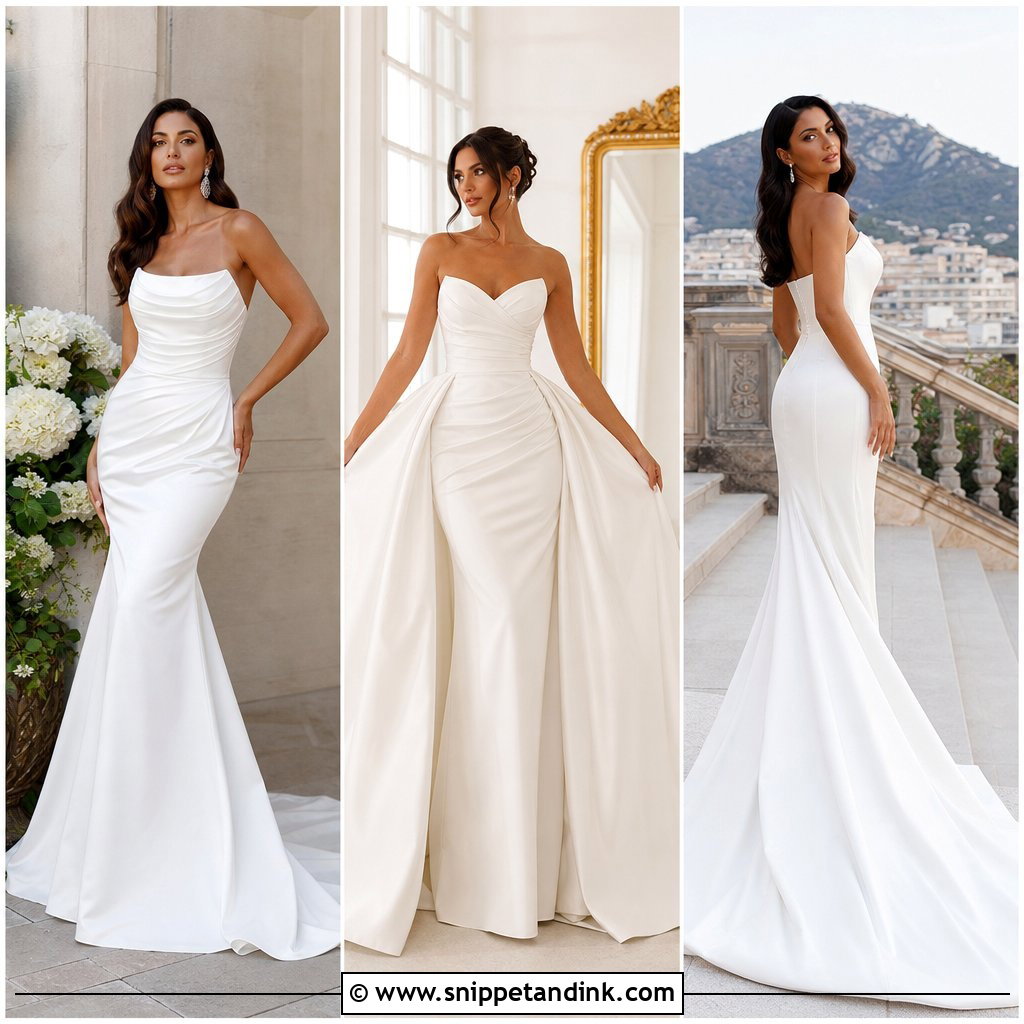
15. Sheer Panel V Corset Wedding Dress
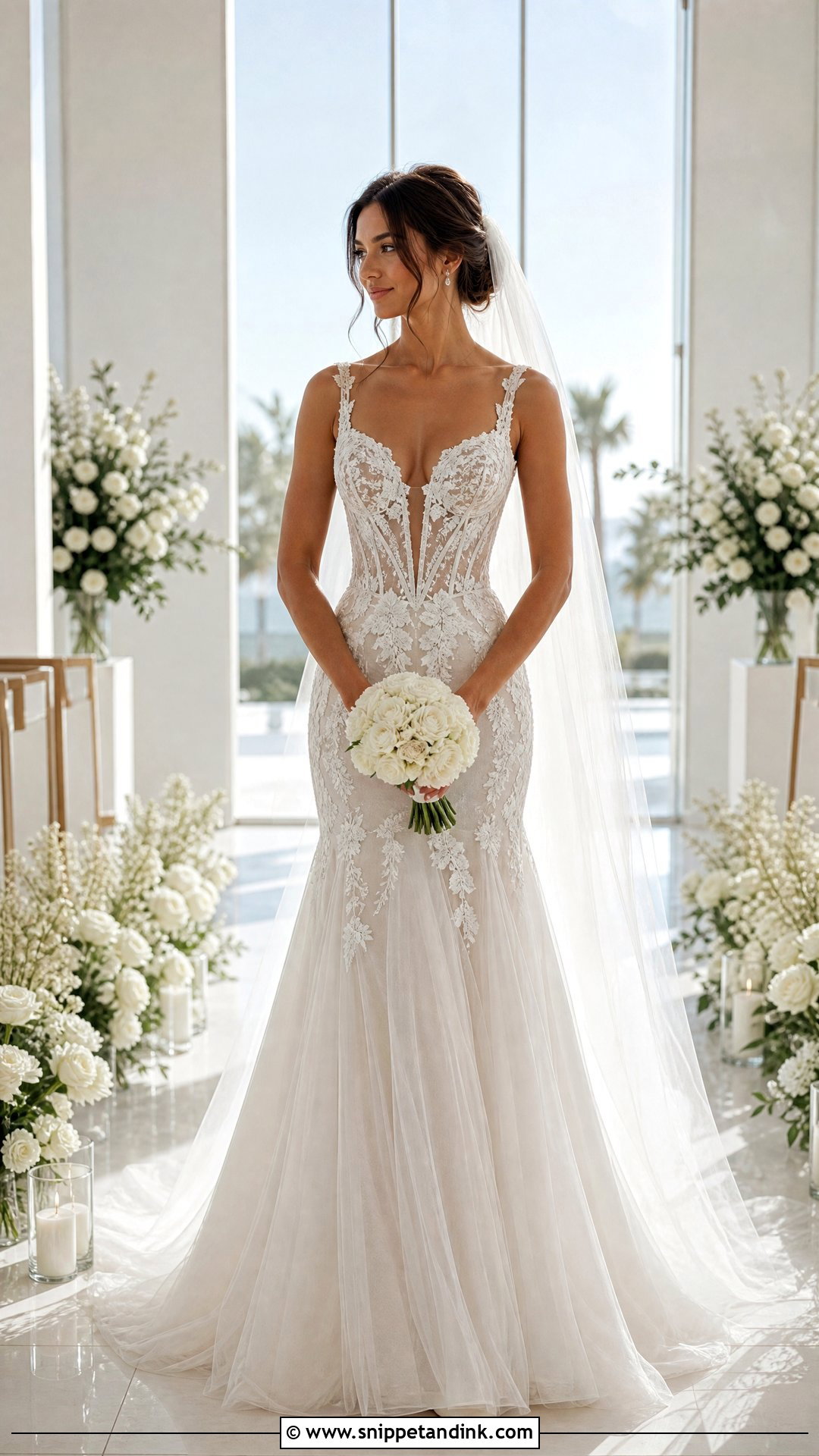
Sheer panels show the boning while lining keeps everything covered where it matters. Tonal mesh matched to your skin or the gown’s ivory, with appliqués placed along the cups, seams and waist, is the standard approach. Balance the detailed top with a soft tulle skirt or a clean satin A-line, and keep the accessories small: a plain chapel veil, petite earrings, closed heels and a neat updo. A compact bouquet with minimal greenery avoids clutter. Mesh color is the decision to slow down on. Compare swatches against your skin in daylight. If you’d like more coverage, a seamstress can add lining behind any panel without changing the look from a distance.
16. Detachable Sleeve V Corset Wedding Dress
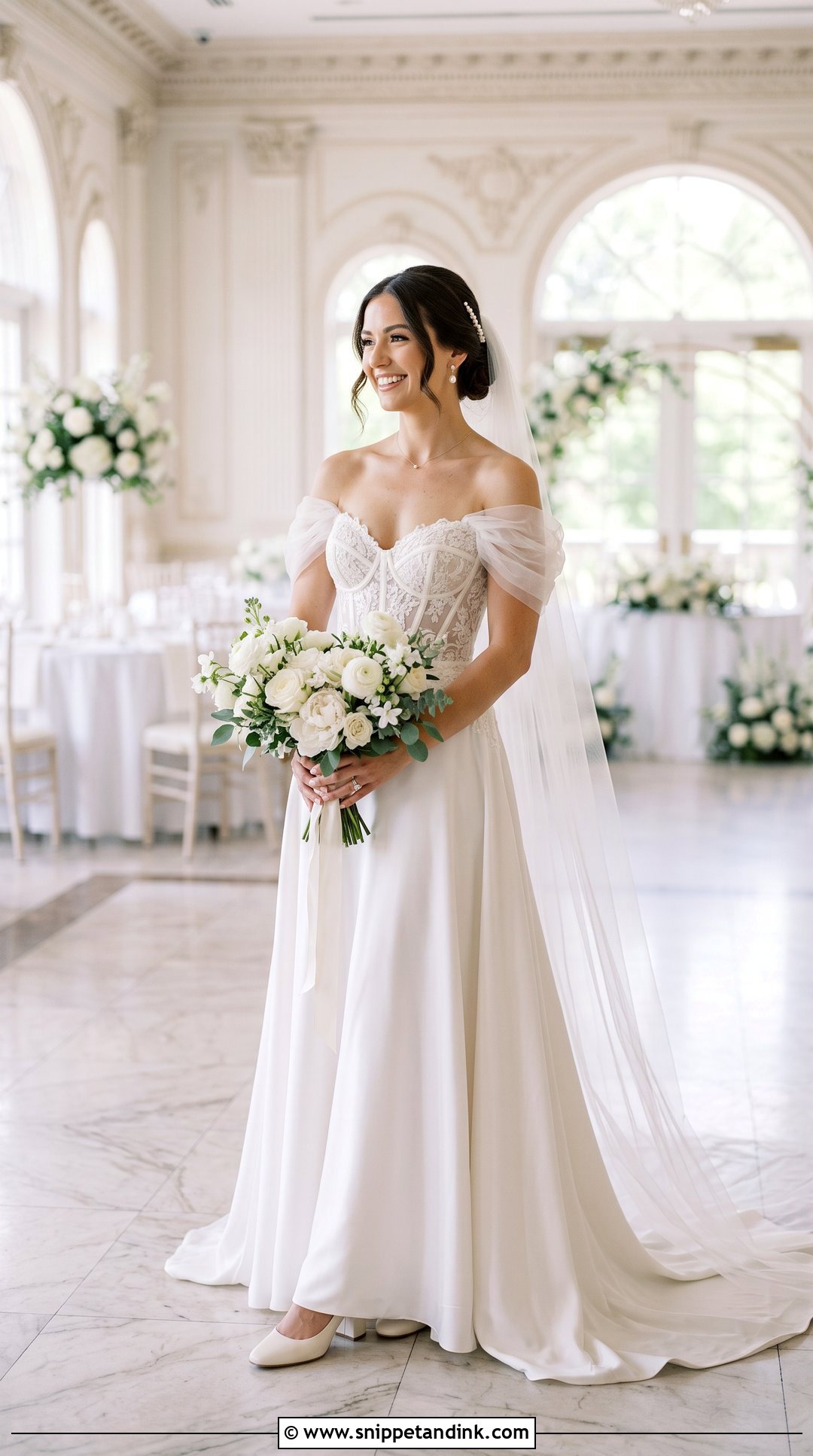
Detachable sleeves give you two dresses for the price of one bodice. Fitted lace sleeves, off-shoulder drapes or light puffs can sit on a strapless corset for the ceremony and come off for dancing. A long veil, pearl earrings and block heels suit the first look, and a statement hair comb takes over once the veil and sleeves are off. A white bouquet with subtle greenery works either way. Practice removing the sleeves at a fitting with whoever will help you on the day. Snaps and small hooks are quickest, while ties and buttons look neater but take time in a crowded bathroom.
17. High-Slit V Corset Wedding Dress
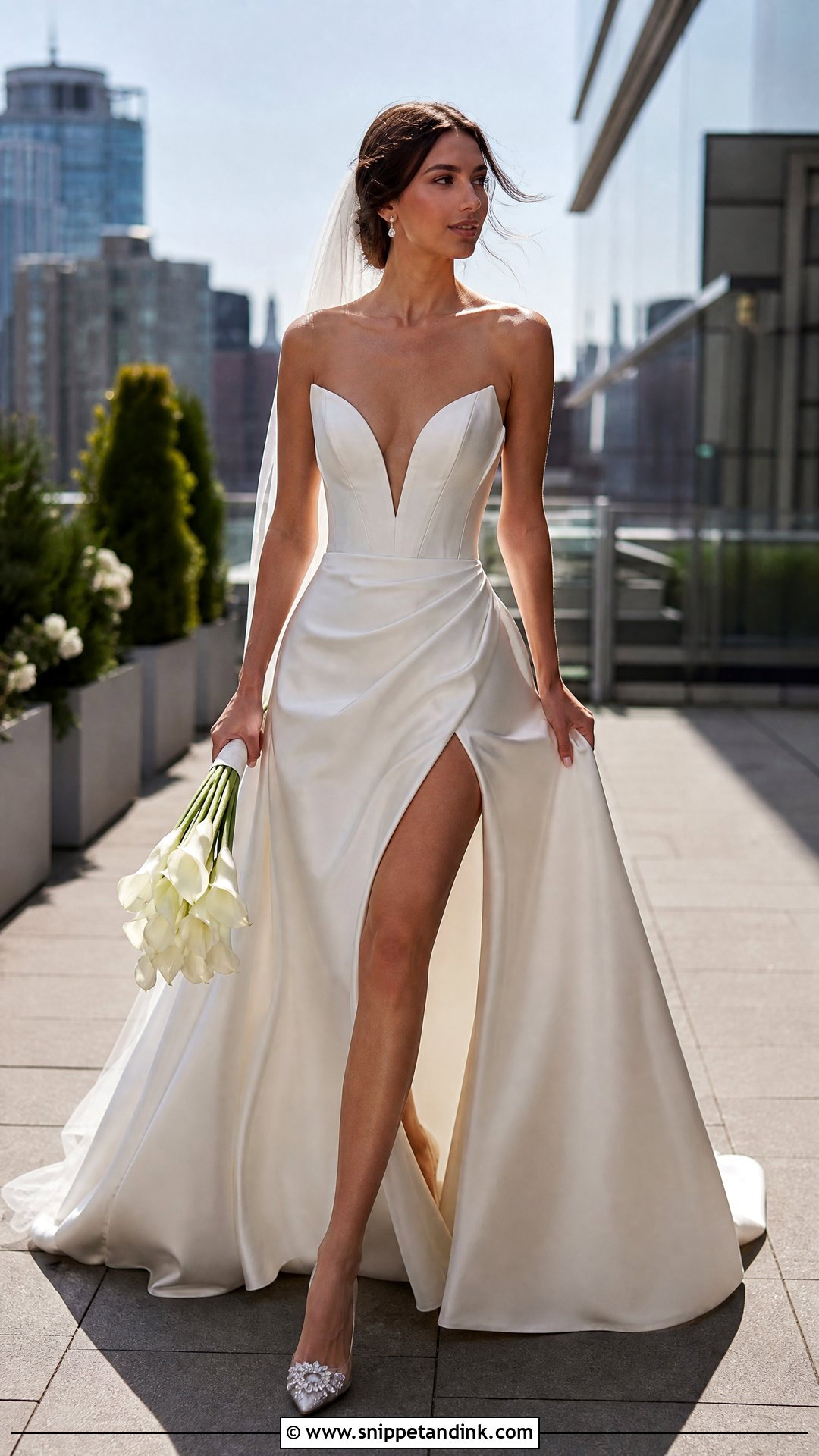
A high slit adds movement and a modern edge to a structured corset. Smooth satin or crepe with a secure V bodice and an A-line skirt that opens as you walk is the right base. Placement is everything. I mark the slit with the bride seated and standing, so it shows leg on the stride but stays closed at the table, and the lining has to be faced properly so it doesn’t flip out. The shoes will show, so make them count: embellished pointed pumps or slim ankle straps. Understated earrings, a simple veil and a sleek ponytail or bun keep the rest restrained, with a narrow bouquet. Rooftops and modern hotels suit it.
18. Bow-Back V Corset Wedding Dress
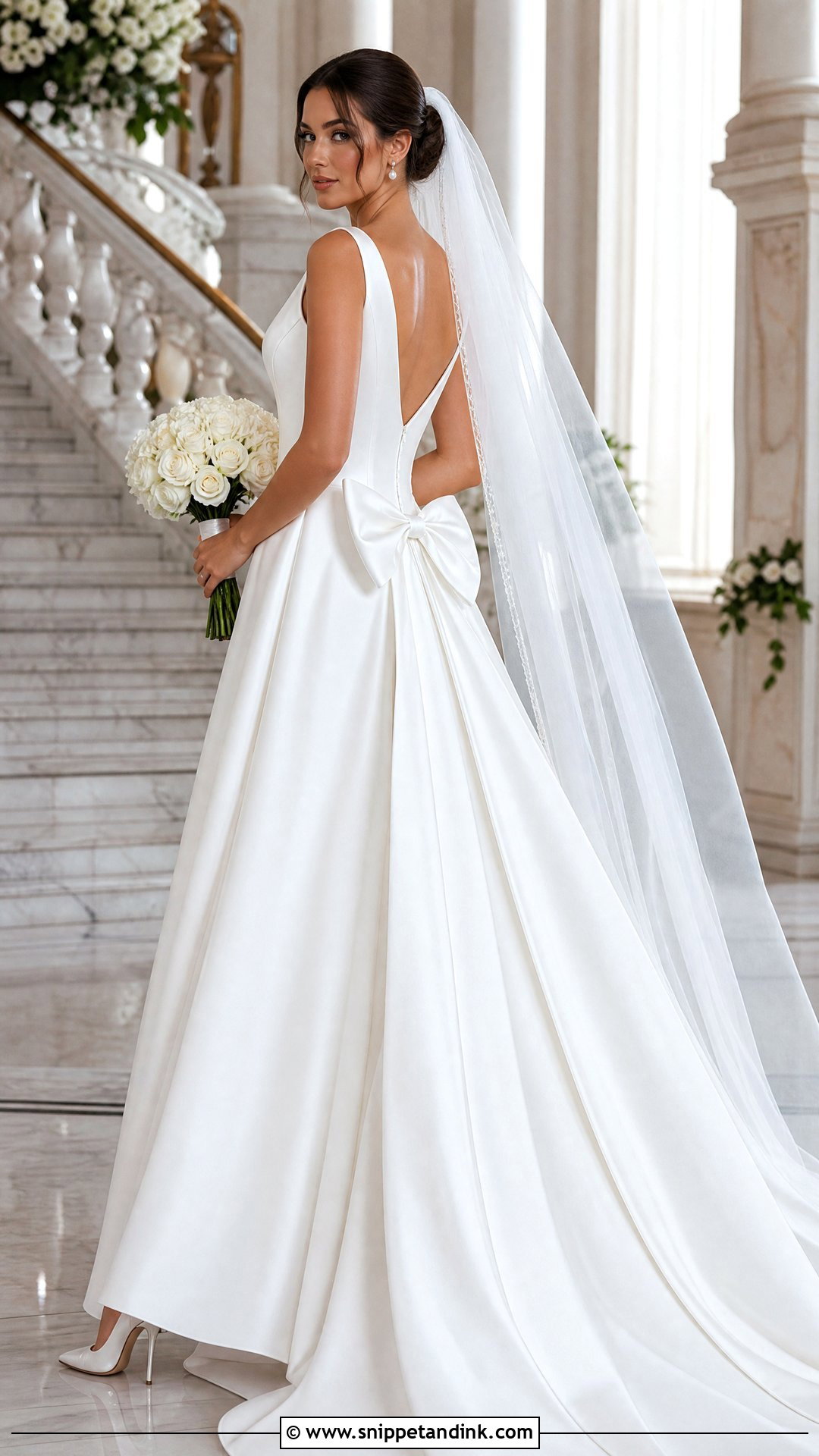
A big bow at the back softens the sculpted front of a corset gown. Smooth satin with a pointed basque waist, a full skirt and a fixed or detachable bow at the waist is the classic shape, and long tails can run into the train. Choose a fingertip veil that ends above the bow, plus pearl earrings, satin pumps, a low bun and a structured bouquet of white roses. Think about the bustle before you fall for the tails. Bustling lifts the train up to the back of the waist, right where the bow sits, so confirm with your seamstress that the bow can be lifted or removed when the bustle goes up.
19. Colored V Corset Wedding Dress
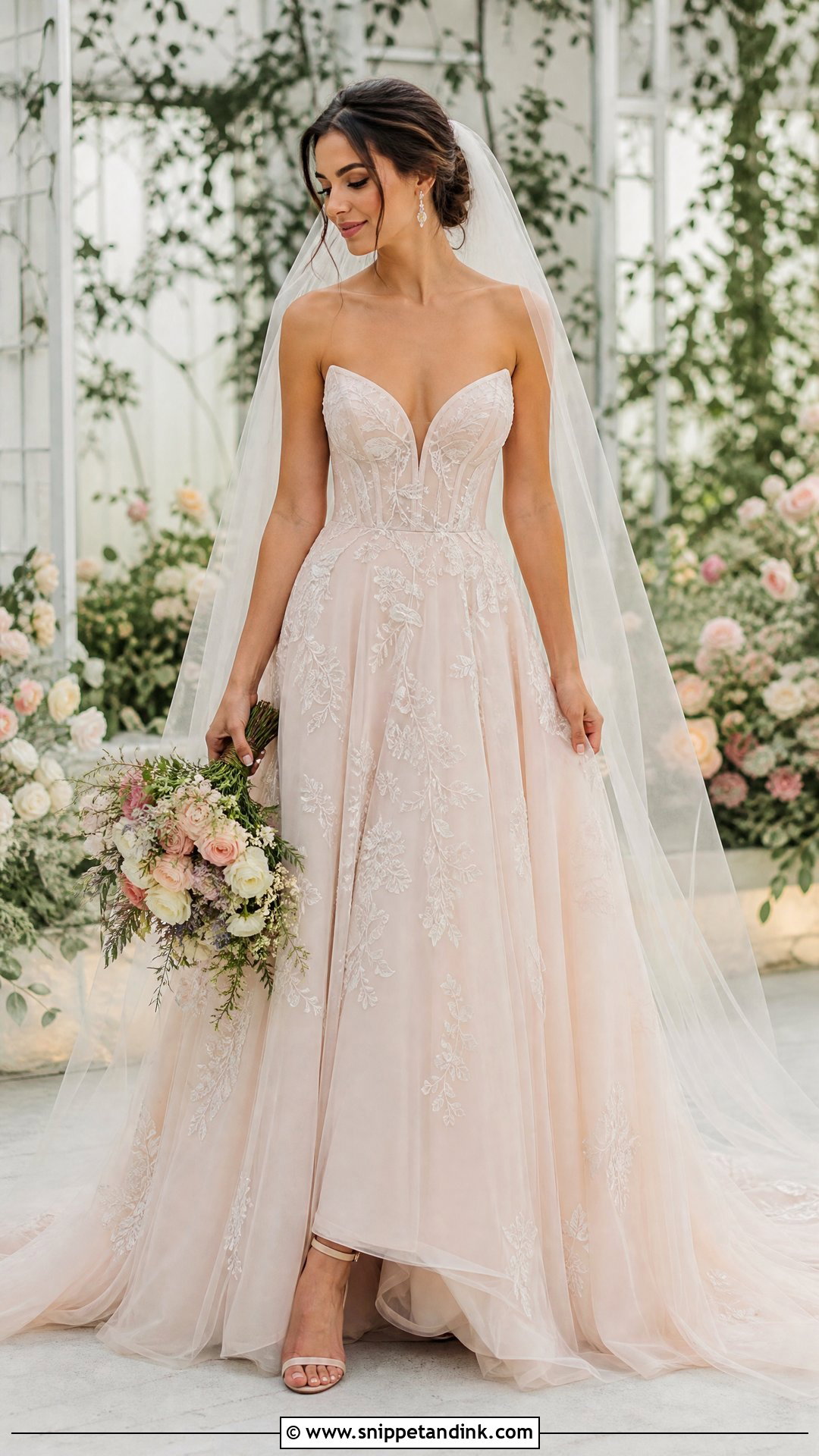
Color takes a corset gown away from bright white while keeping the bridal shape. Blush, pale blue, champagne or soft silver on a basque bodice and flowing skirt all work, and tonal embroidery adds depth without contrast. Ivory heels, fine metallic earrings and a sheer veil that lets the color show through finish it, and a white and pastel bouquet links the gown to the wider palette. Artistic venues and gardens suit it. Pale colors are the trickiest to judge. Champagne can look grey under fluorescent light and blush can turn peach in warm evening light, so look at the fabric in daylight and in the venue before ordering.



20. Short V Corset Wedding Dress
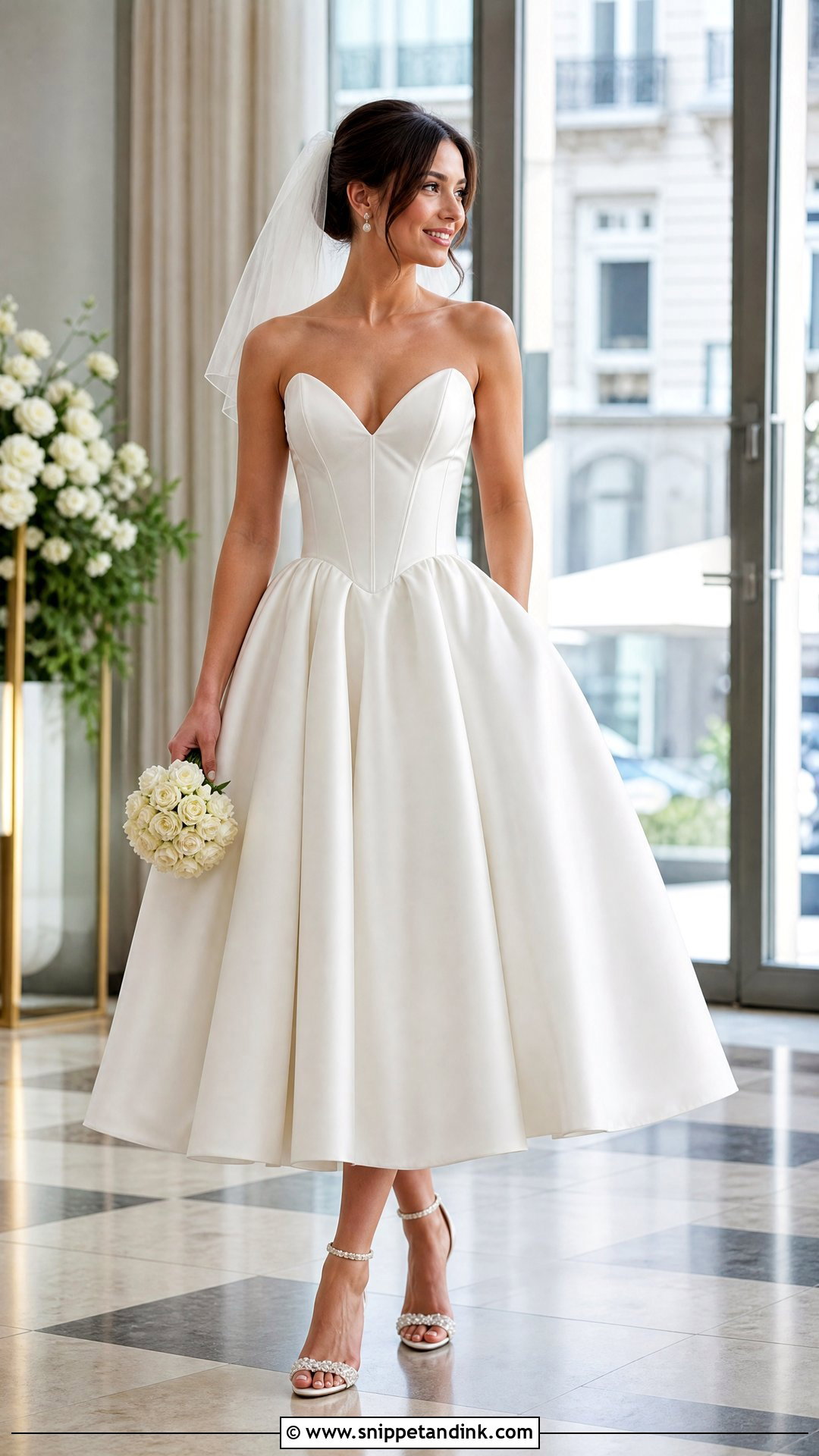
Short corset dresses work for a reception, a civil ceremony or a small wedding. A structured bodice with a pointed waist and a full mini or tea-length skirt that clearly balances the top is the shape to look for, in satin or layered tulle. Your shoes are on show, so embellished pumps, bridal flats or ankle straps all suit it, with pearl earrings, a short veil and a small bouquet. A ponytail, bun or softly waved bob suits the proportions. On a short skirt, sit down in front of a mirror at the fitting to check coverage. A removable overskirt gives you a long look for the ceremony.
Who Laces You In, and Other Morning Details
A boned bodice behaves differently over a full day than it does during a ten-minute fitting. A little preparation means you won’t think about it again after the ceremony.
Lacing and dressing
Choose one person to lace you and have the seamstress show them how at the final fitting. Lacing normally tightens from the center outward, with the waist loops pulled first, then the top and bottom. Ask for a modesty panel behind the laces so no skin shows through the gaps. Put the dress on after hair and makeup, stepping in rather than pulling it over your head.
Eating, sitting and loosening
- Eat a proper breakfast before you dress, then small amounts through the day. A full plate in a tight bodice is uncomfortable fast.
- When you sit, sit tall on the front of the chair. Slouching pushes the basque point into your lap.
- Ask your maid of honor to loosen the laces slightly before dinner. A small adjustment makes a big difference and no one will notice.
- Practice the bathroom routine with your helper at home. With a full skirt, it’s far easier to step into the skirt backward over the seat than to gather it all up.
A Sculpted Waist You Can Breathe and Dance In
A pointed corset waist suits nearly every silhouette here: ball gowns, mermaids, A-lines, short dresses and long drop waists. Fabric changes the mood. Satin looks polished, lace looks romantic and tulle adds air. In fittings, sit, walk and lift your arms, and resist the urge to have the bodice pulled tighter than it needs to be. Bring shoes at roughly your wedding heel height, and talk through lining, cup placement, sleeve fastenings and the bustle with a tailor who knows structured gowns. The right corset should feel like support, not like something you’re putting up with.
You'll Like These Ideas:








Leave a Reply