
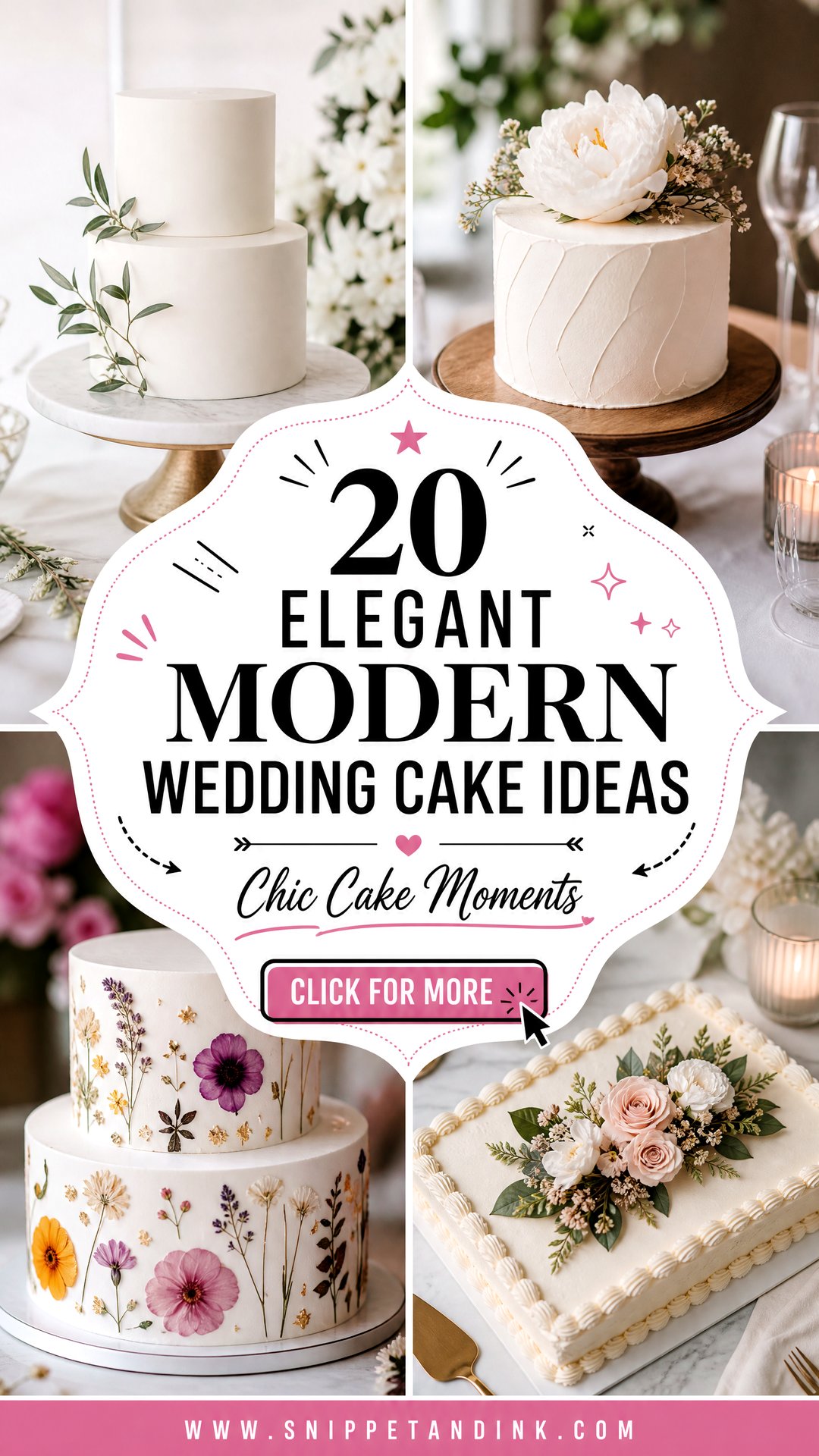
The cakes couples bring me as reference photos have changed. Fewer cascades of sugar roses, more clean buttercream, sculpted tiers, pearls, pressed flowers, bows and gentle texture in a narrow palette. These cakes still read as wedding cakes, but they’re quieter and more personal. What makes one work is fit: it has to suit the room, the flowers, the dress and the kind of evening you’re planning. Some of the designs below are minimal and some are full centrepieces. For each I’ve noted what goes into making it, and where it can go wrong.
What Your Baker Needs Before Sketching Anything
A good first consultation saves weeks of back and forth. I can design a cake from a single photo, but I’ll make a much better one if I know the room it’s going into.
- Your final or rough guest count, and whether there’s another dessert
- Photos of the venue, especially where the cake table will stand
- Your florist’s palette or a mood board for the flowers
- A swatch or photo of the dress fabric if you want lace or texture echoed
- The time of the cutting and whether the cake sits out in daylight or a heated marquee
- A realistic budget range, so I can suggest where to save
Popular bakers often book several months ahead, particularly for summer Saturdays. Sculpted tiers, large sugar flowers and hand-painted work all need extra lead time, so mention them at the first meeting rather than the final one.
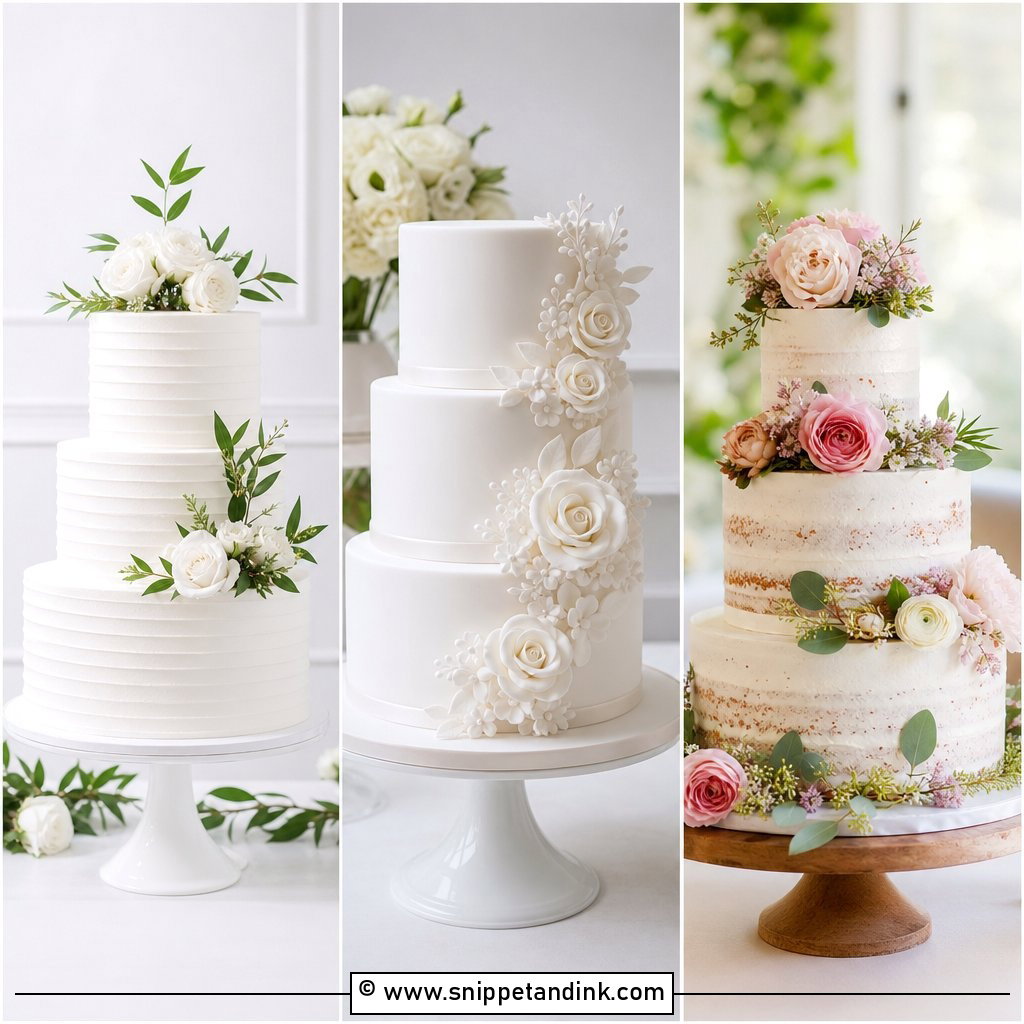
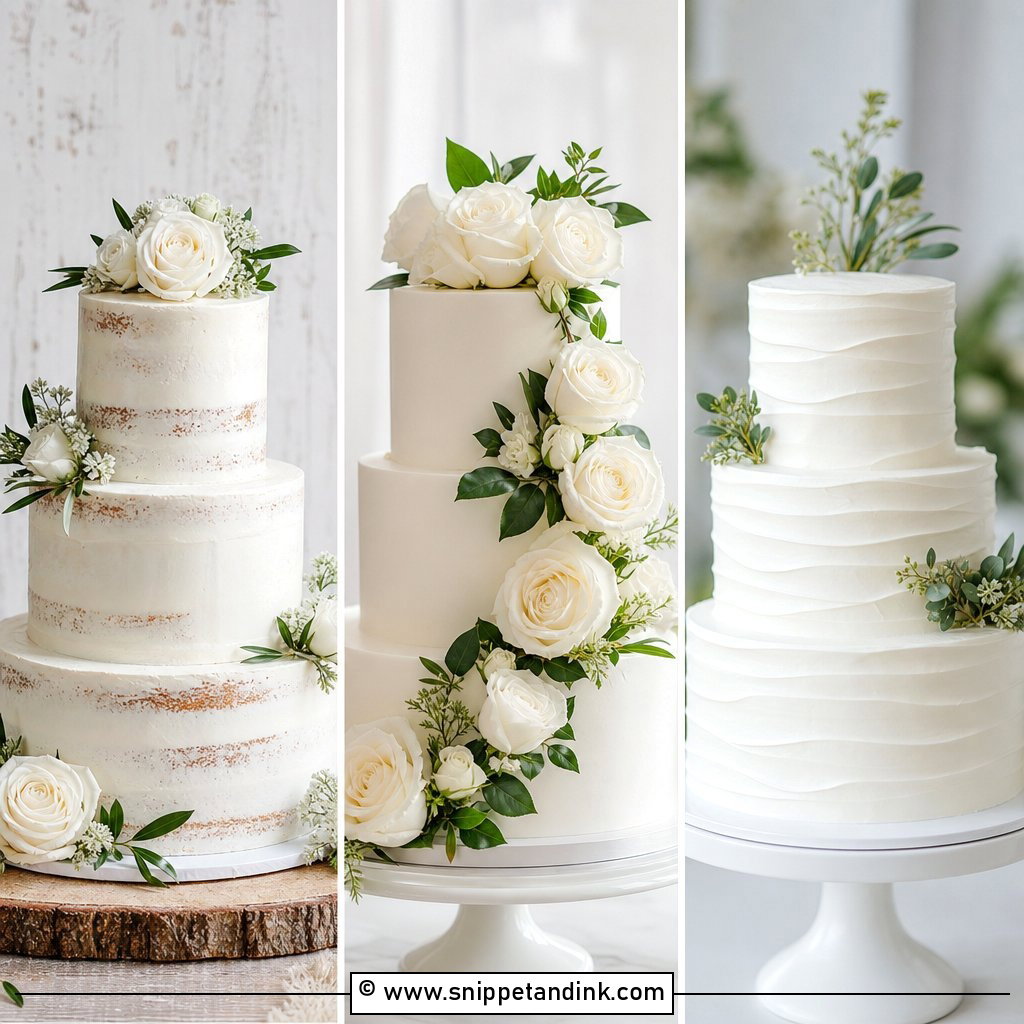
1. Minimalist Wedding Cake
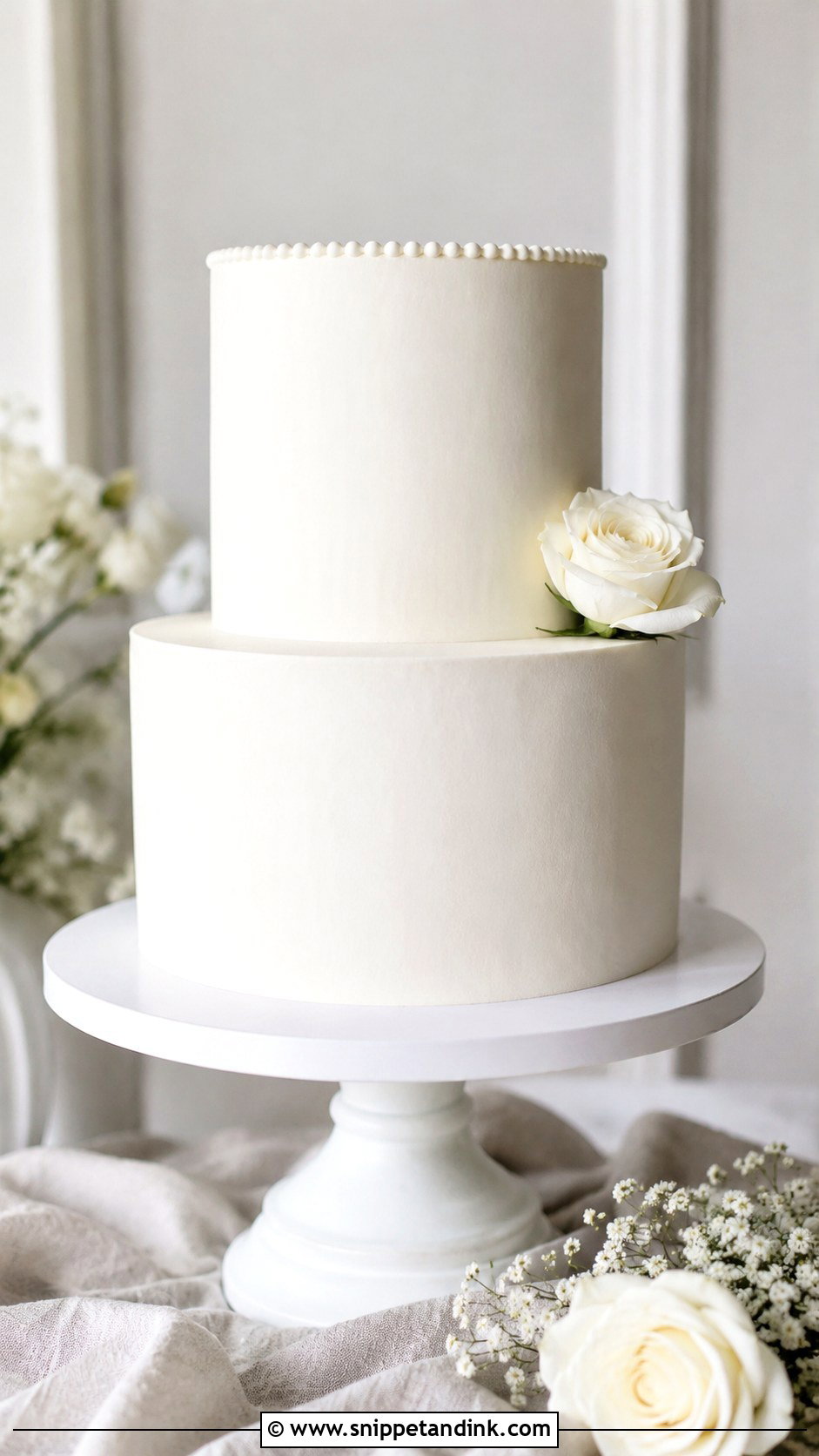
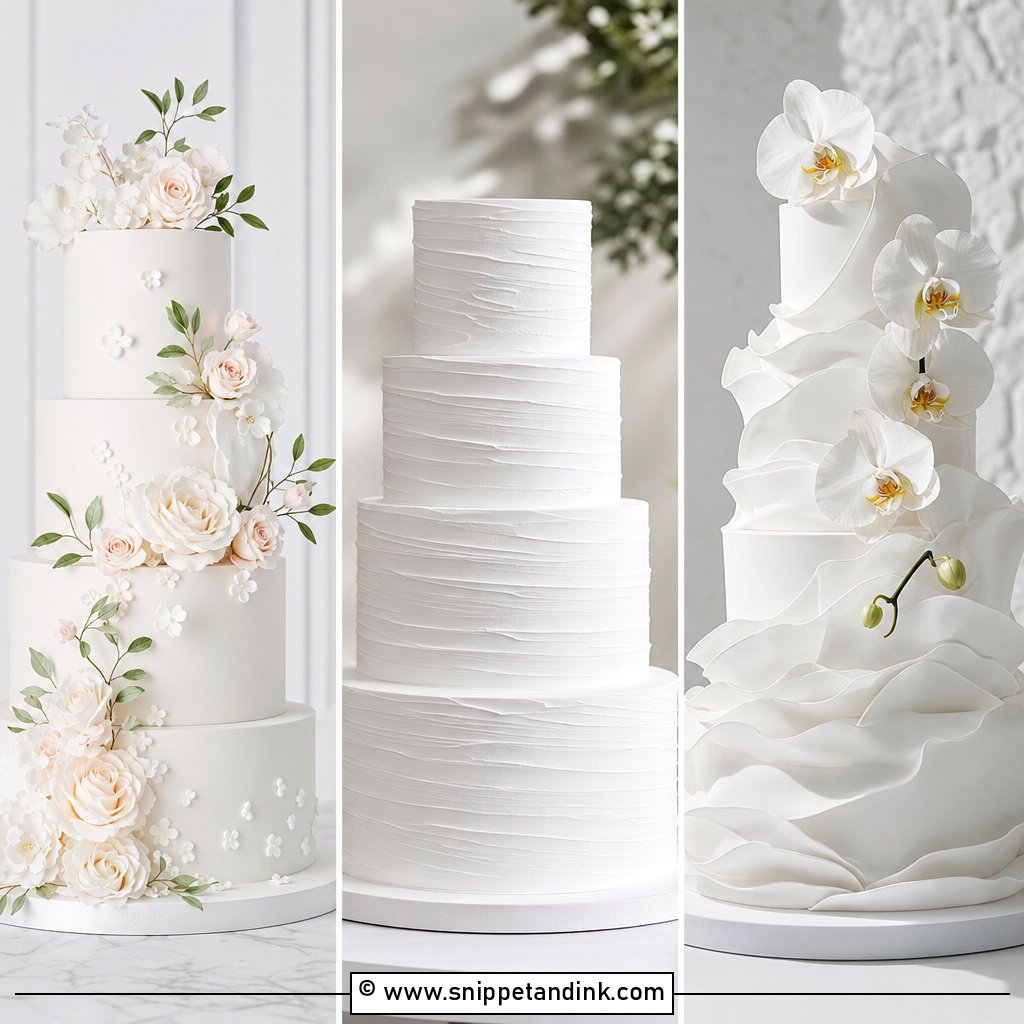
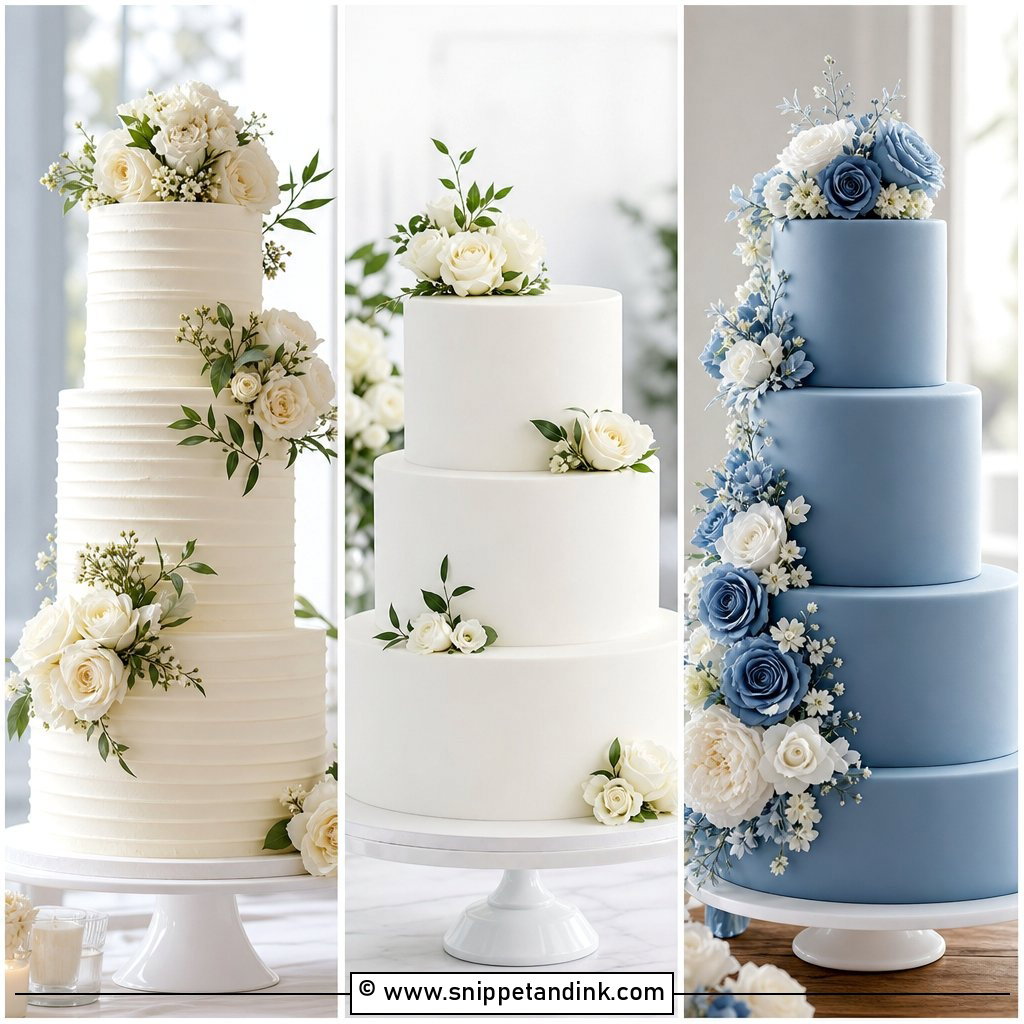
Plain cakes are the hardest to make. With nothing on them, every ripple in the buttercream and every soft corner shows, so a minimalist cake depends entirely on the finish. I use a chilled cake and a hot bench scraper to get the edges sharp. One flower stem, a tiny pearl border or a slim ribbon is all the decoration it needs. Height stops it looking plain, so I’d choose a tall two or three tier over a squat one. Vanilla, almond or a champagne-style sponge keep the inside as gentle as the outside.
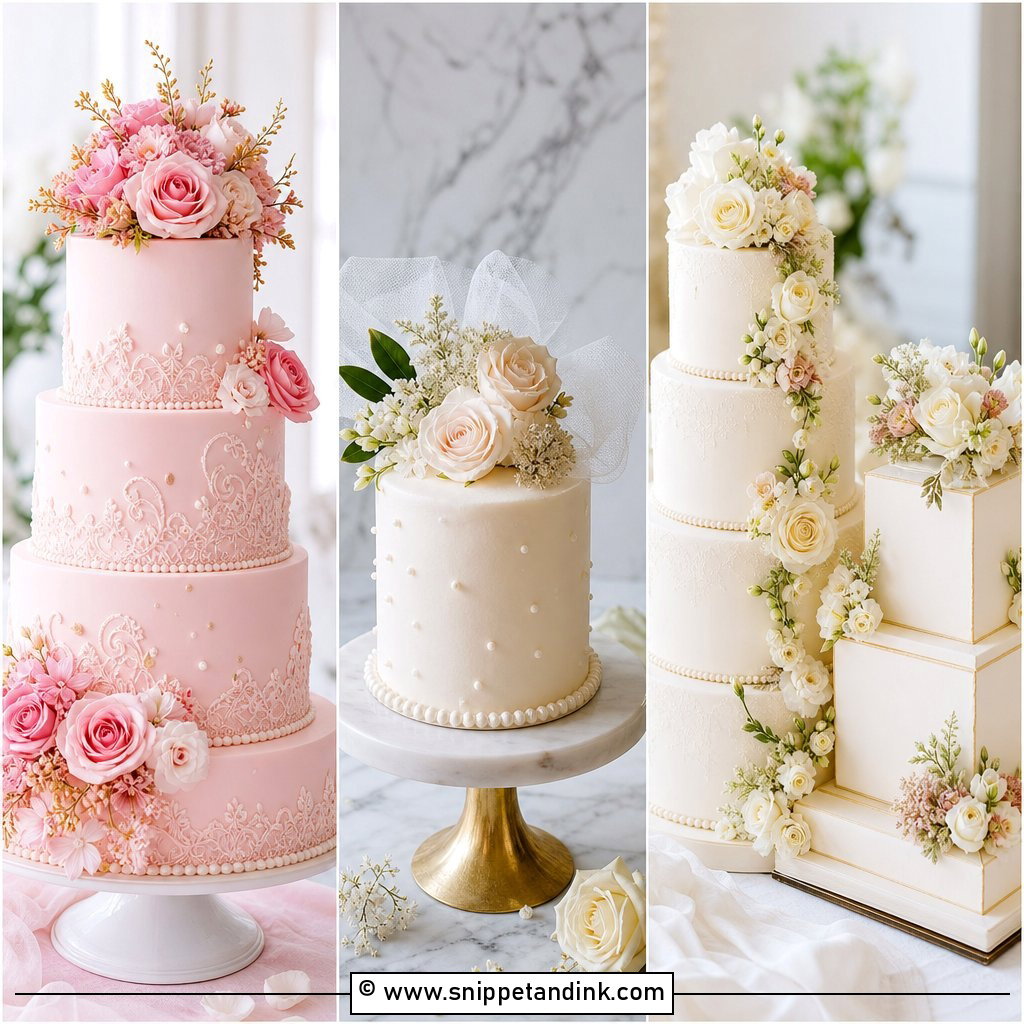
2. Pearl Wedding Cake
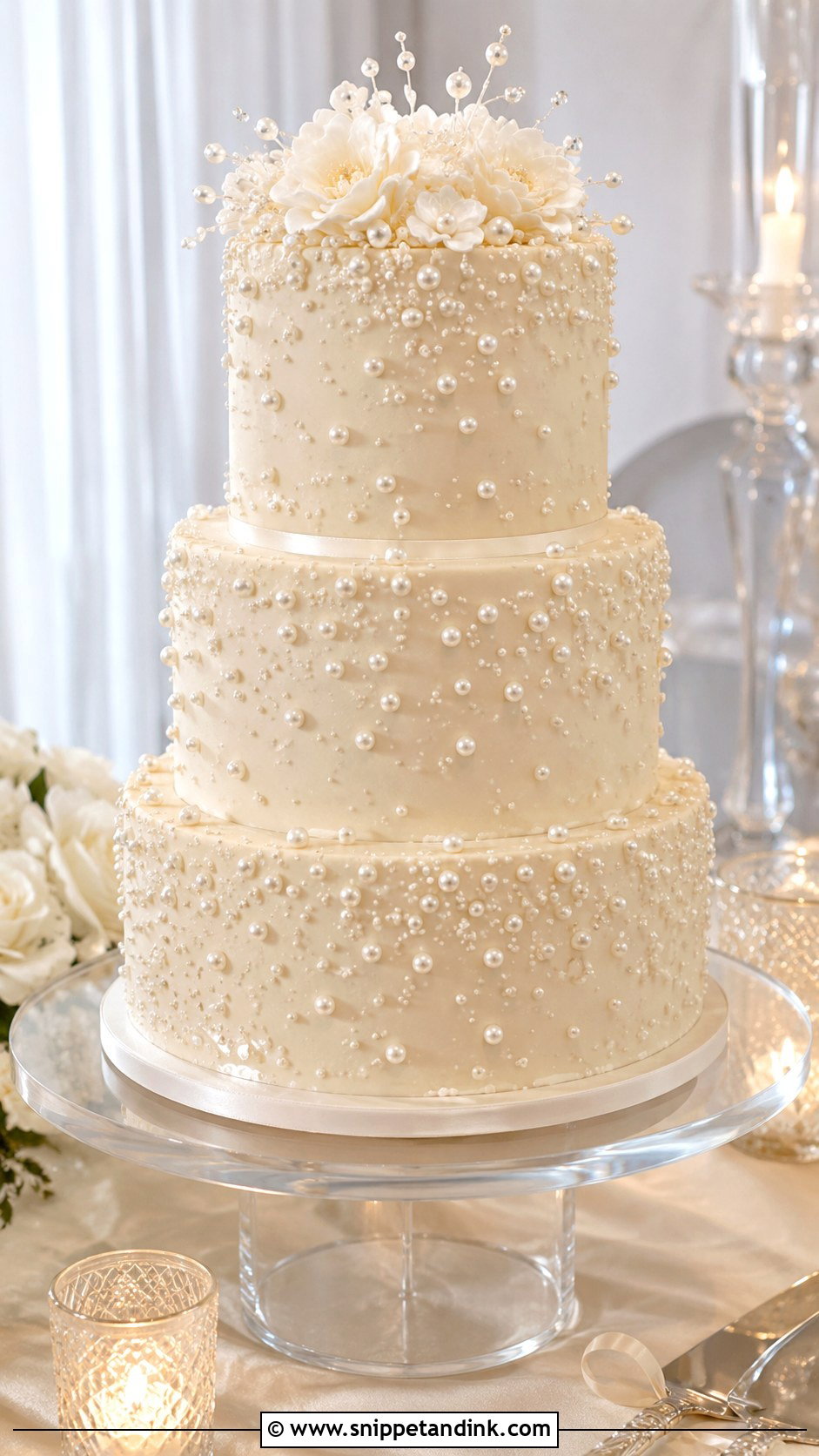
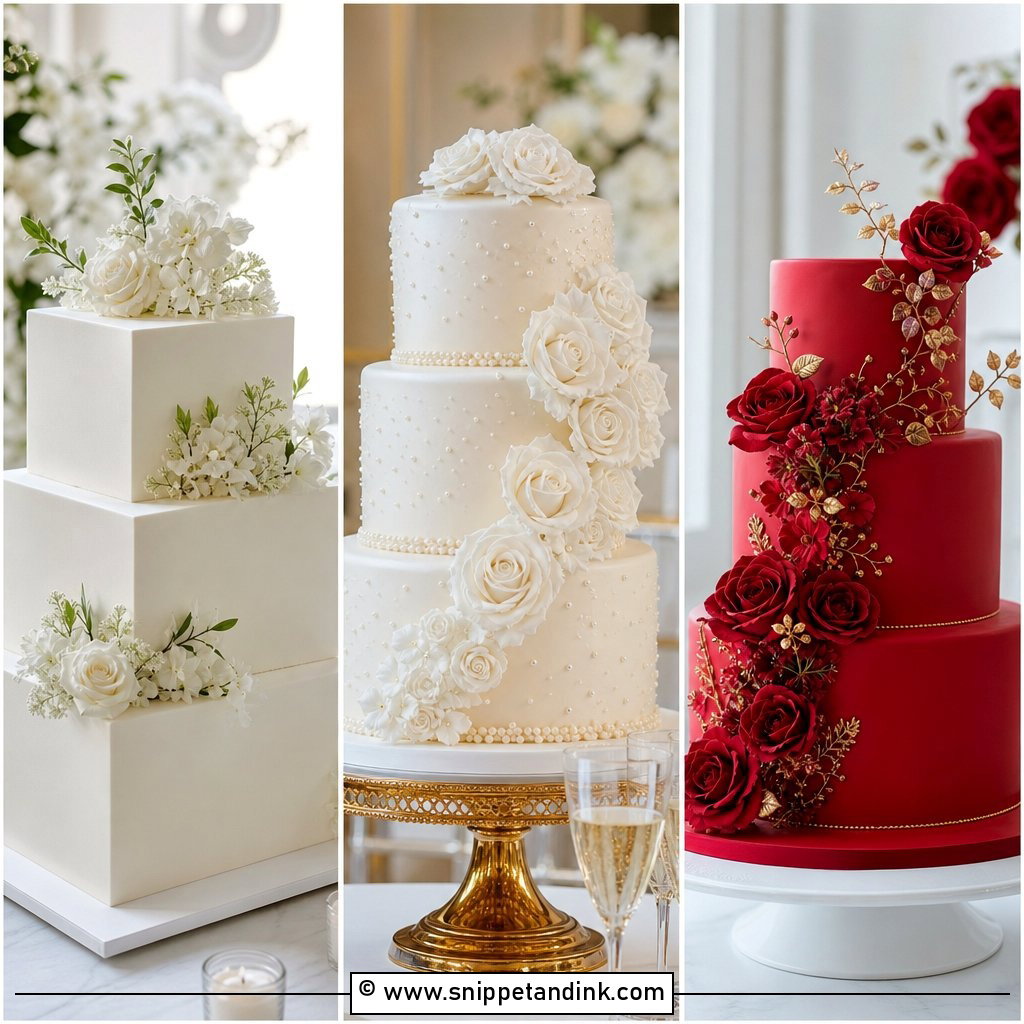
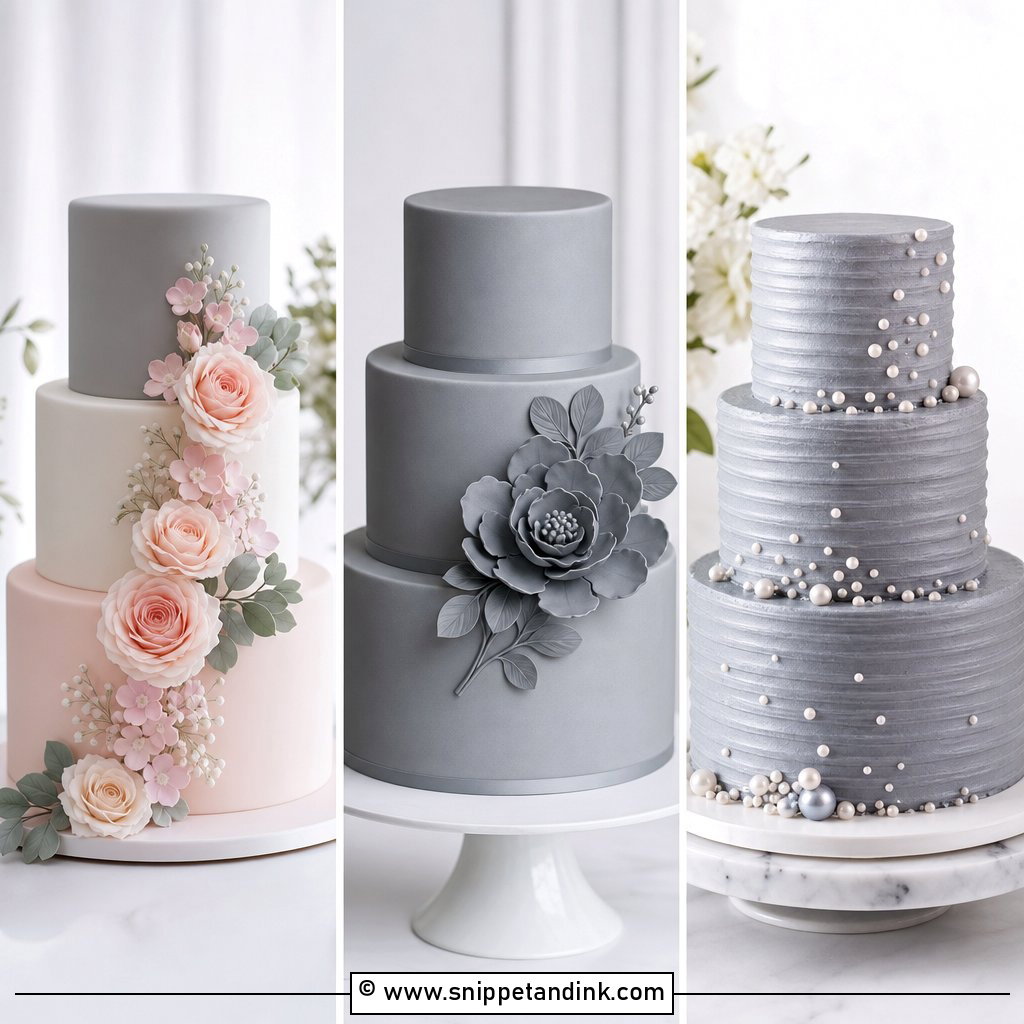
Pearls are an old bridal detail that looks modern when placed with restraint. Small edible pearls in clusters, rows or a light scatter work on ivory, blush or champagne icing, and on buttercream, fondant or ganache. Mixing two or three sizes looks more current than one uniform size. Sugar pearls draw moisture in a humid room and can go dull or weep colour, so I set them as close to delivery as possible. Satin linens and candlelight suit this cake well.
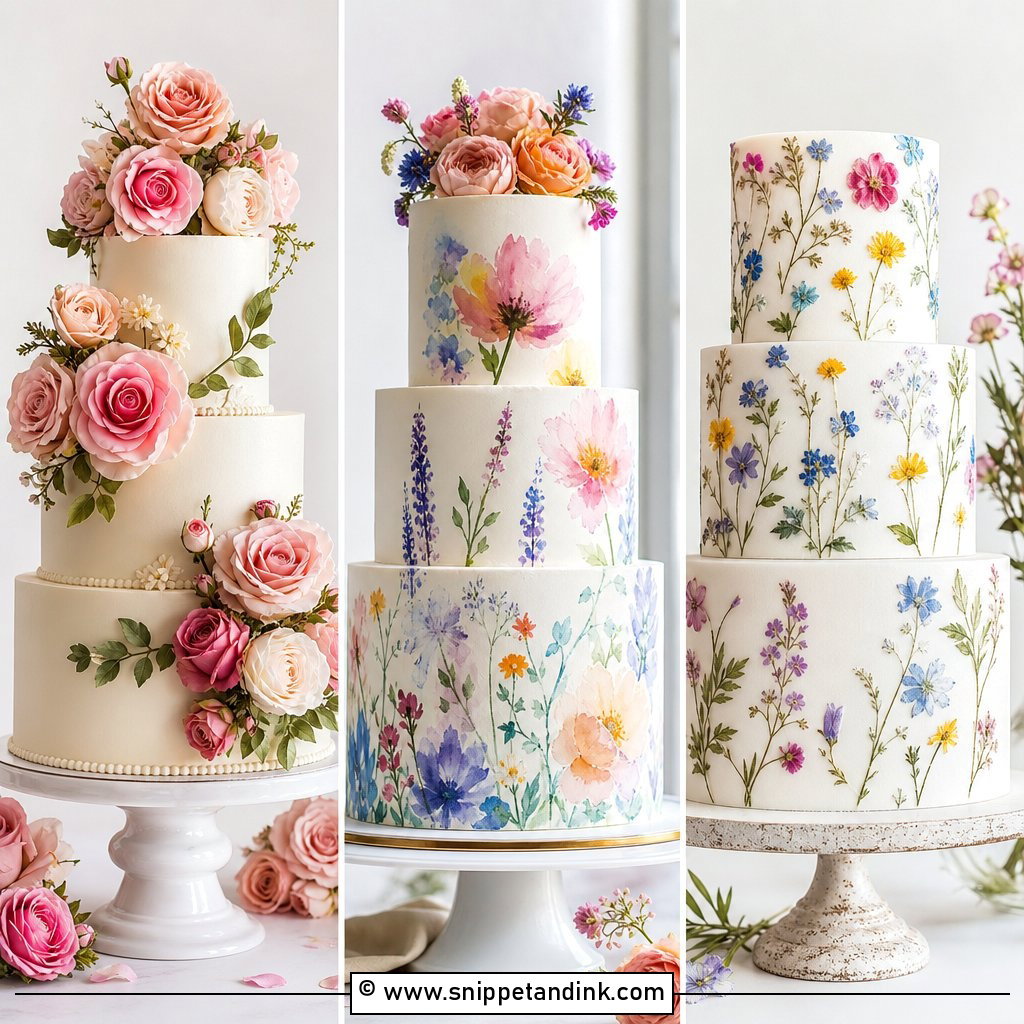
3. Floral Wedding Cake
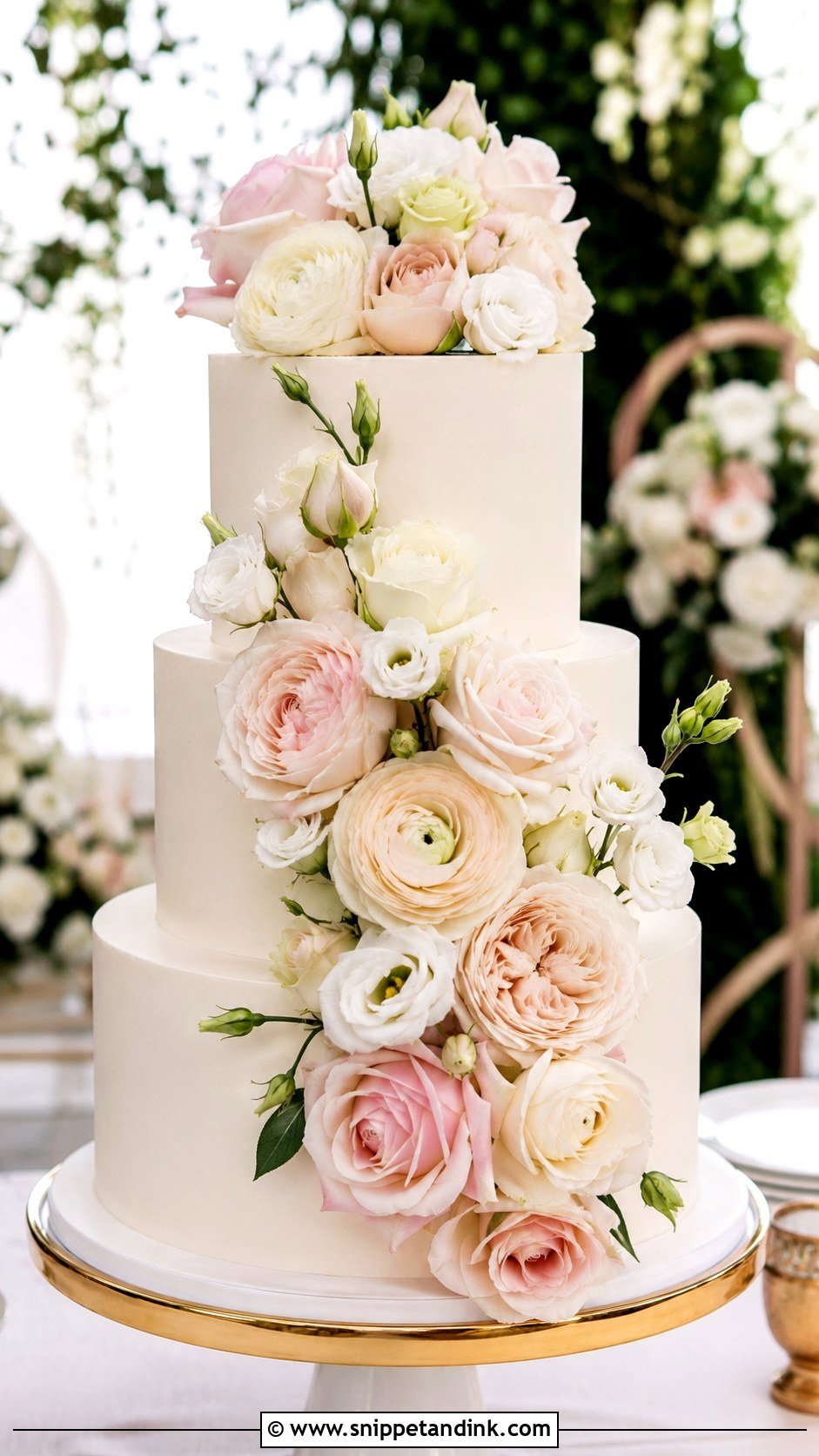
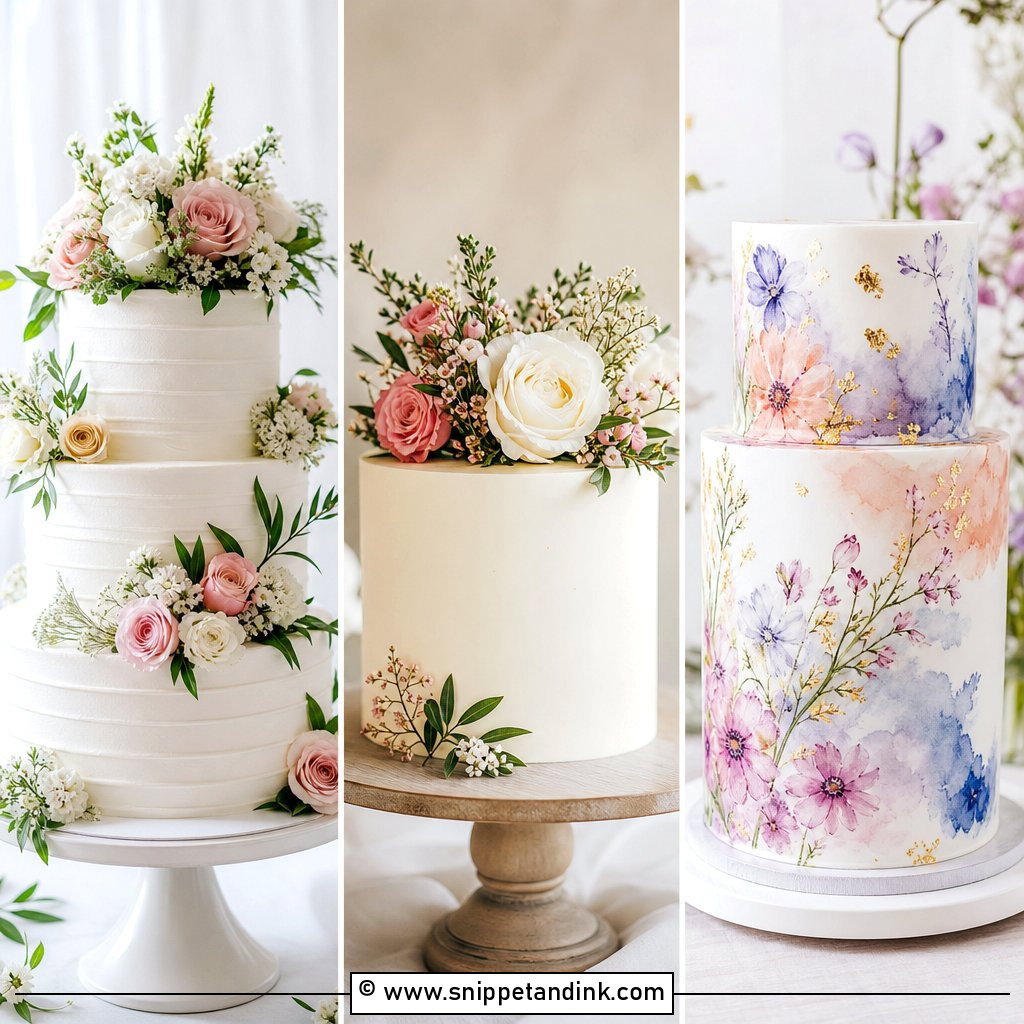
The modern way to put flowers on a cake is to edit them down. One arrangement flowing from the top tier down one side looks more intentional than blooms on every tier. Roses, ranunculus, sweet peas and lisianthus all sit well on smooth icing. Match the colours to your bouquet; mauve or terracotta can feel more current than white and blush. Spring and summer weddings suit this most. Ask your baker and florist to agree on who supplies the flowers and how stems are sealed, so nothing raw touches the cake.
4. Textured Buttercream Wedding Cake
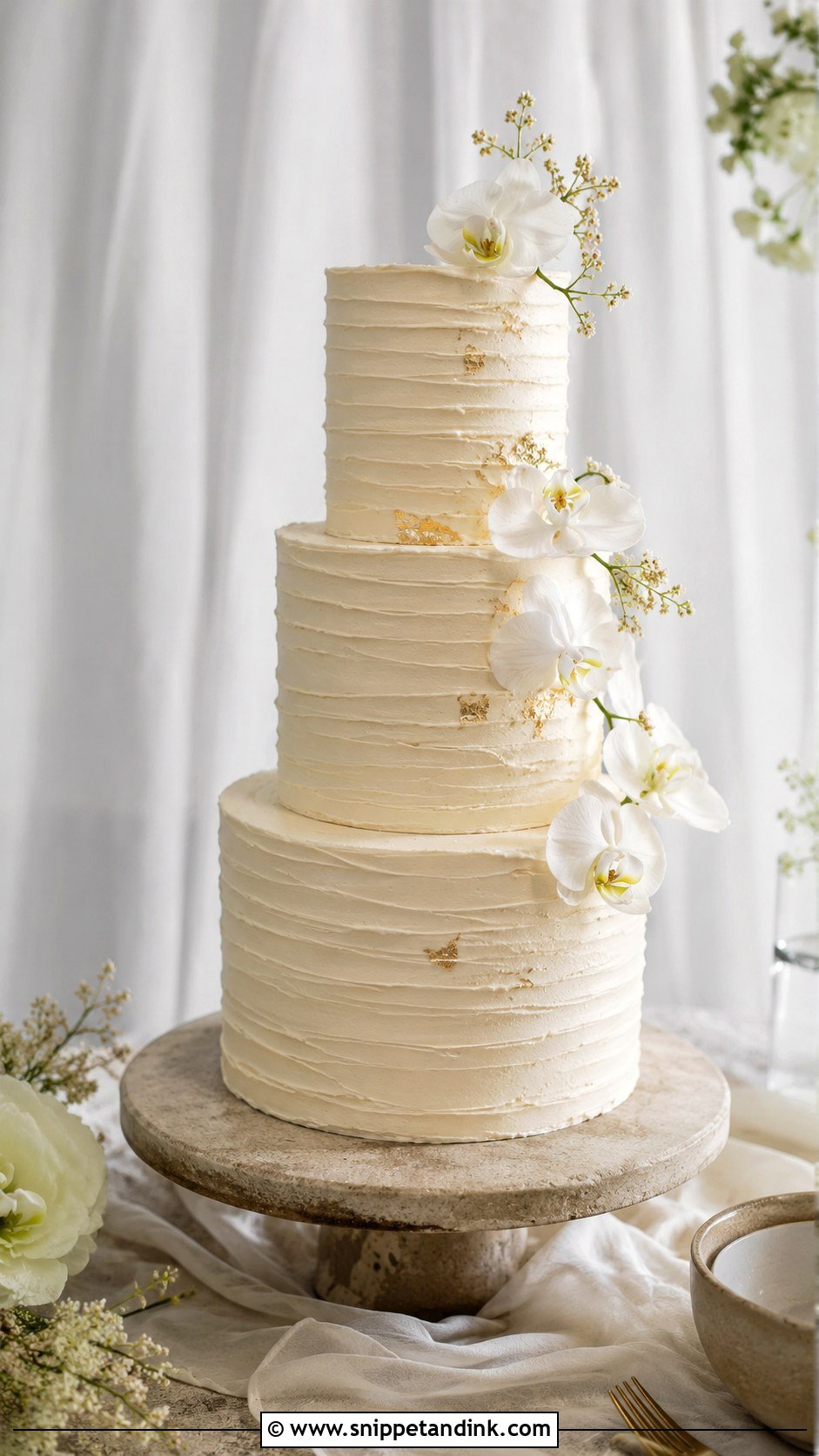
Textured buttercream gives a cake movement without decoration: horizontal combed lines, gentle waves, plaster-like palette knife strokes or a linen finish. It’s my usual suggestion for outdoor receptions, because texture hides small marks that a smooth finish would show the moment it gets warm. Ivory with white flowers or a few pearls keeps it calm. Pair it with flavors like vanilla bean, lemon elderflower or coconut. The texture is done with a scraper or palette knife in one pass, and a second pass usually makes it look fussy.
5. Square Wedding Cake
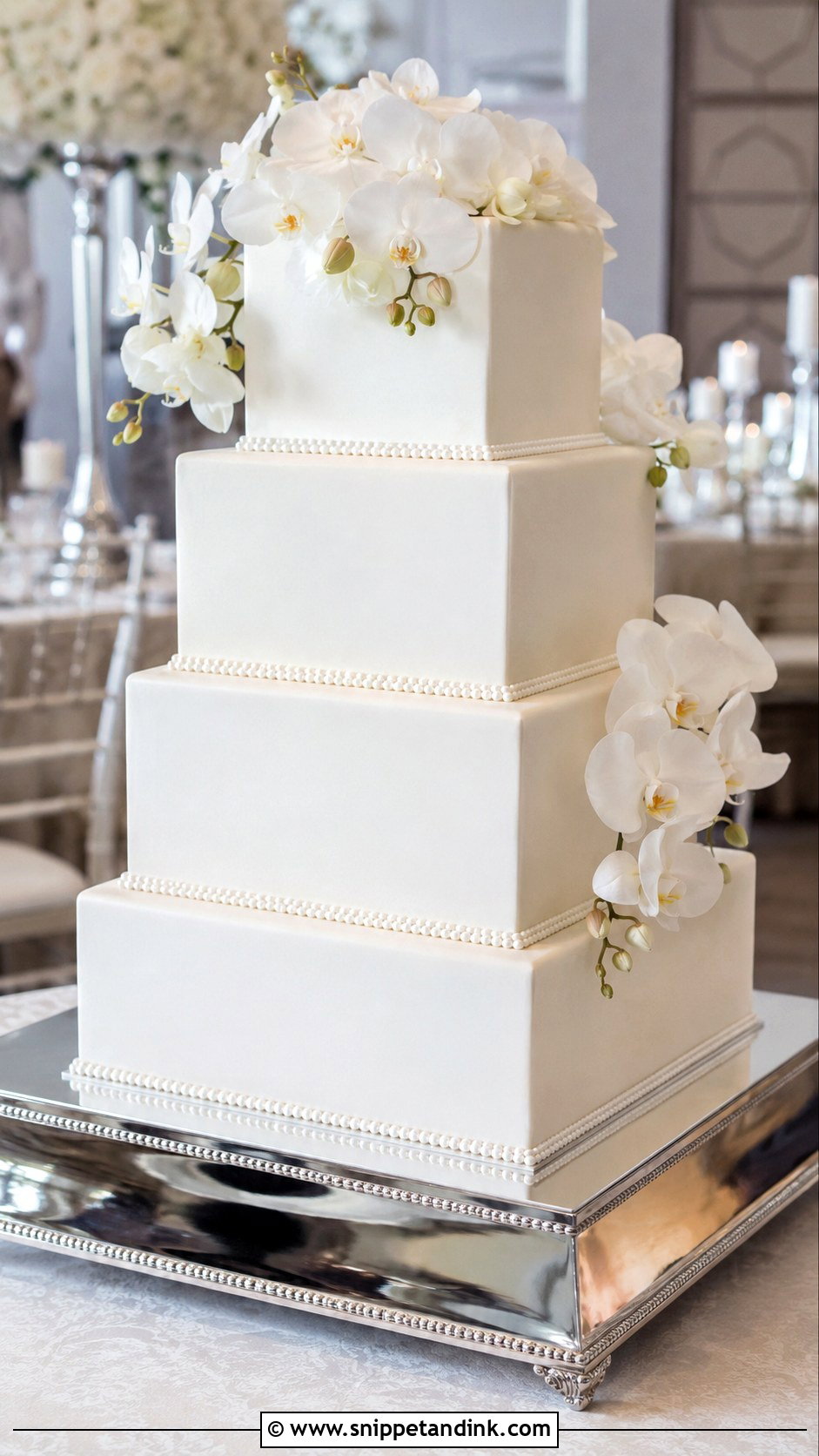
Square tiers look architectural and a little unexpected, and they suit city venues, galleries and black-tie receptions. The shape is the design, so I keep decoration to a thin pearl border, a few orchids or a single fondant bow. White, ivory or pale stone grey all work. Square corners are where sponge settles and icing cracks first, so they need a firm ganache coat under the finish. Squares do cut into very even portions, which caterers appreciate.
6. Tall Wedding Cake
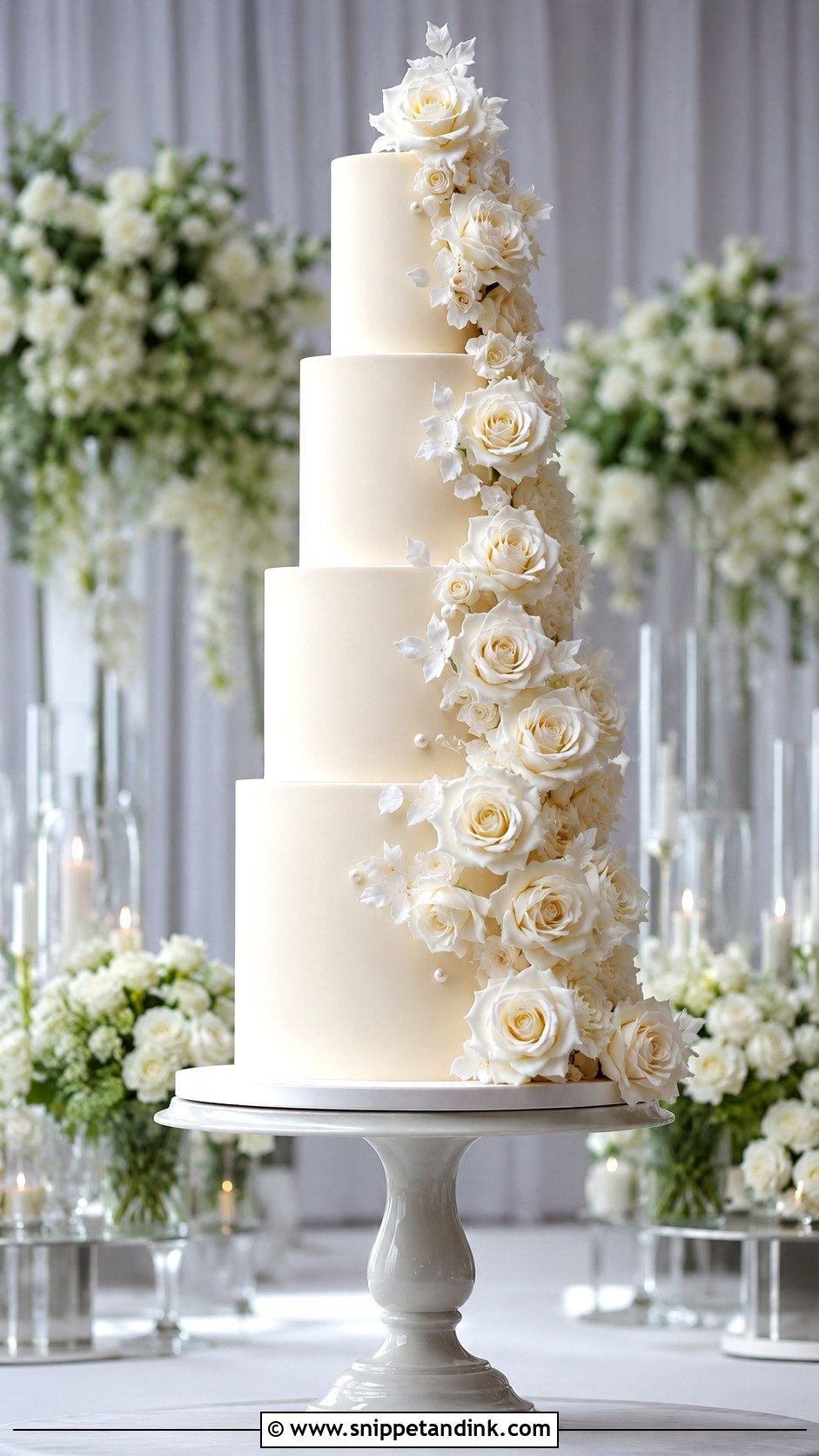
Tall cakes use narrow, extra-deep tiers to make height the statement. They give a large reception’s cake table real presence with very little decoration: smooth ivory buttercream and perhaps a cascade or a fabric-style bow. Proportion is everything. A tier that’s too deep for its width looks unstable, and taller tiers need internal boards and supports every few inches of height. Work with a baker who builds these regularly. Different flavours per tier give guests a choice.
7. Single Tier Wedding Cake
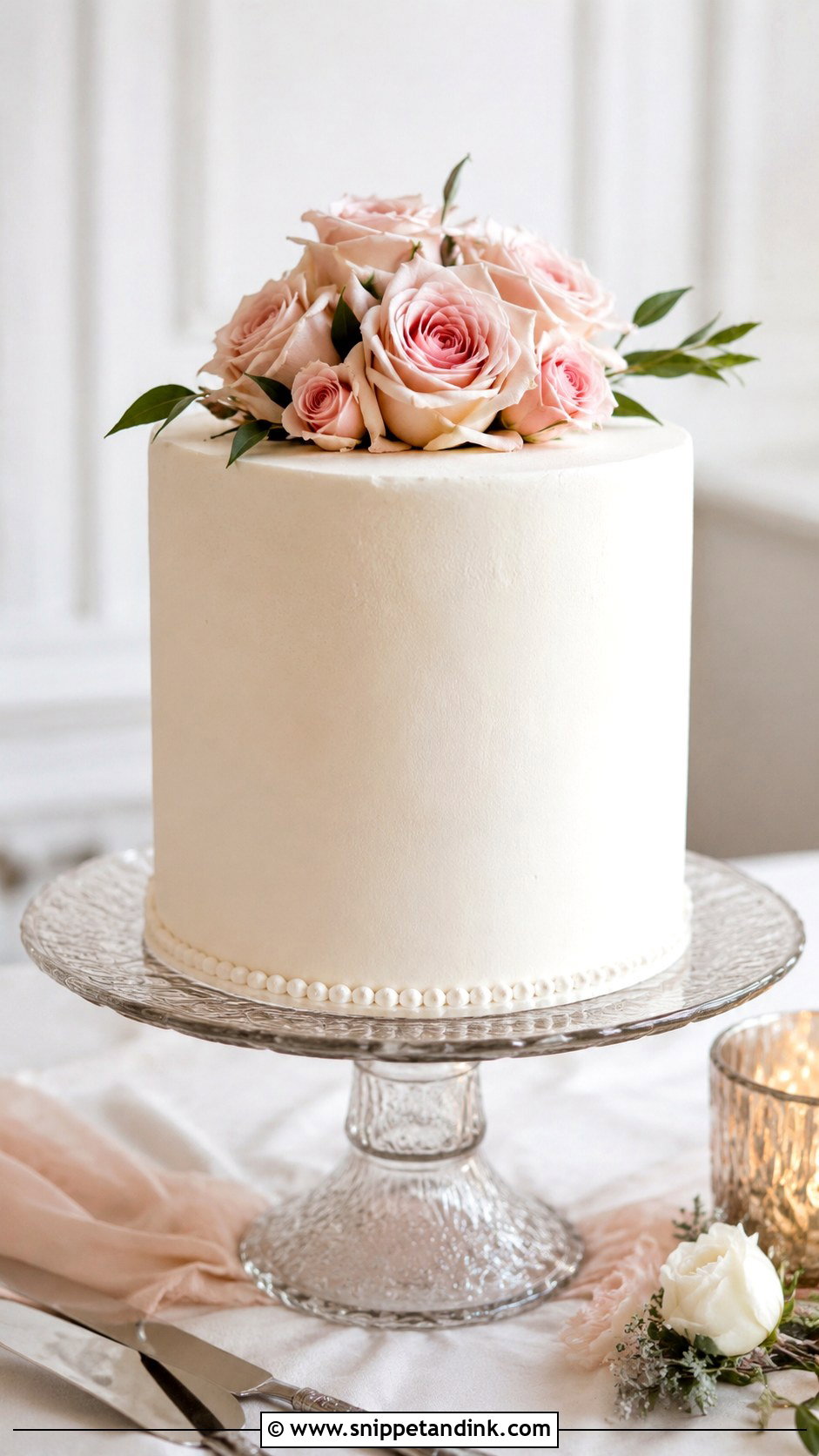
One tier can look as considered as five. It suits small weddings, courthouse celebrations, elopements and couples serving other desserts too. I’d make it tall rather than wide so it looks deliberate, and set it on a raised stand. Smooth buttercream, soft piping or a few flowers is enough. For flavour, I’d look at vanilla raspberry, lemon, pistachio or chocolate ganache. If your guest count is over about thirty, plan a back-up dessert or kitchen cake.
8. Bow Wedding Cake
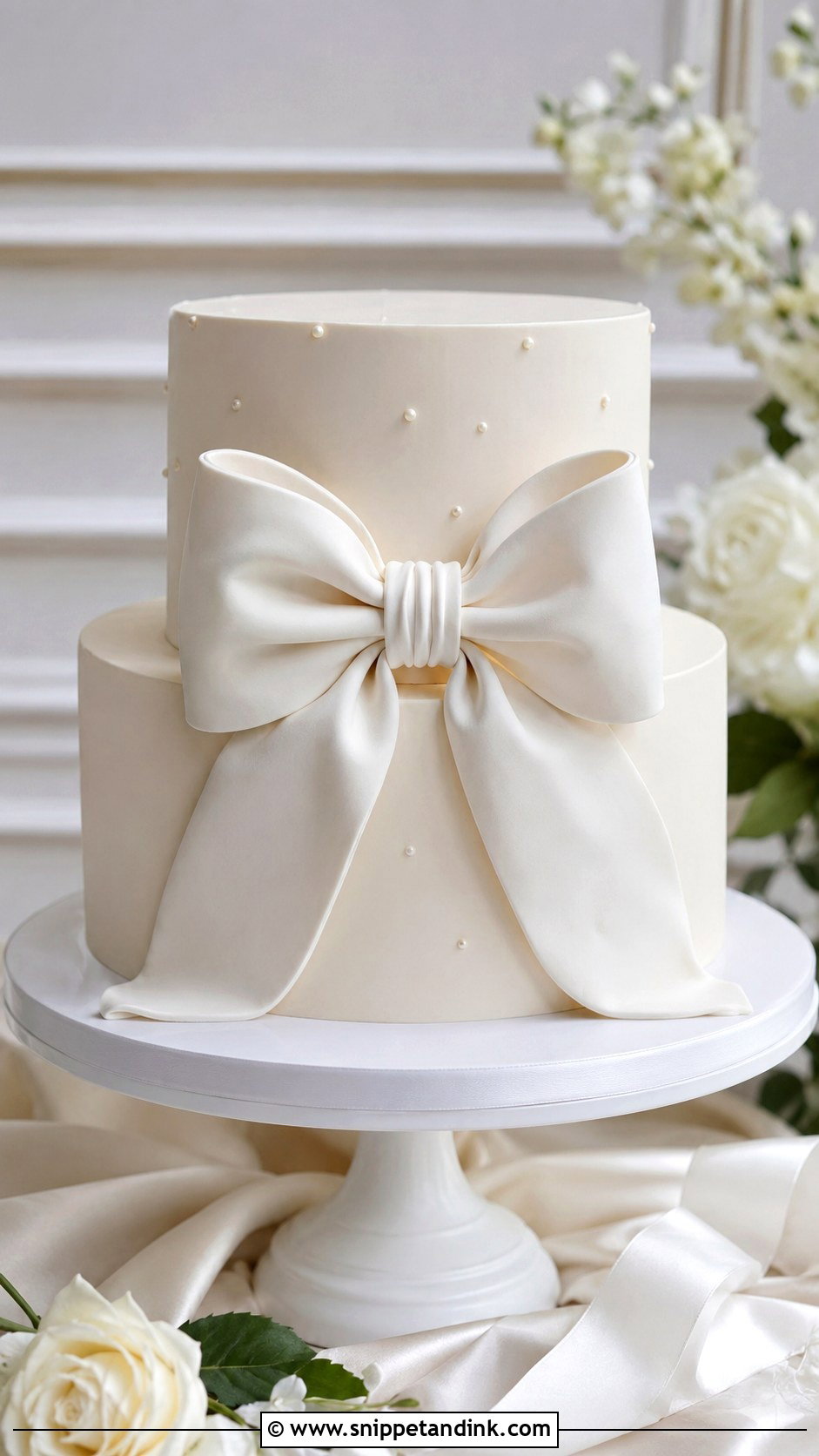
Bows are the detail I’m asked for most this year. They can be fondant, wafer paper, sugar silk or real ribbon, and a single oversized white bow on smooth ivory looks almost editorial. A thin black ribbon bow suits a formal evening; blush or champagne softens it. Large sugar bows are heavy and fragile, so I make them days ahead to dry and support the loops with tissue or wire until they set. Keep the rest of the cake simple so the bow leads.
9. Gold Accent Wedding Cake
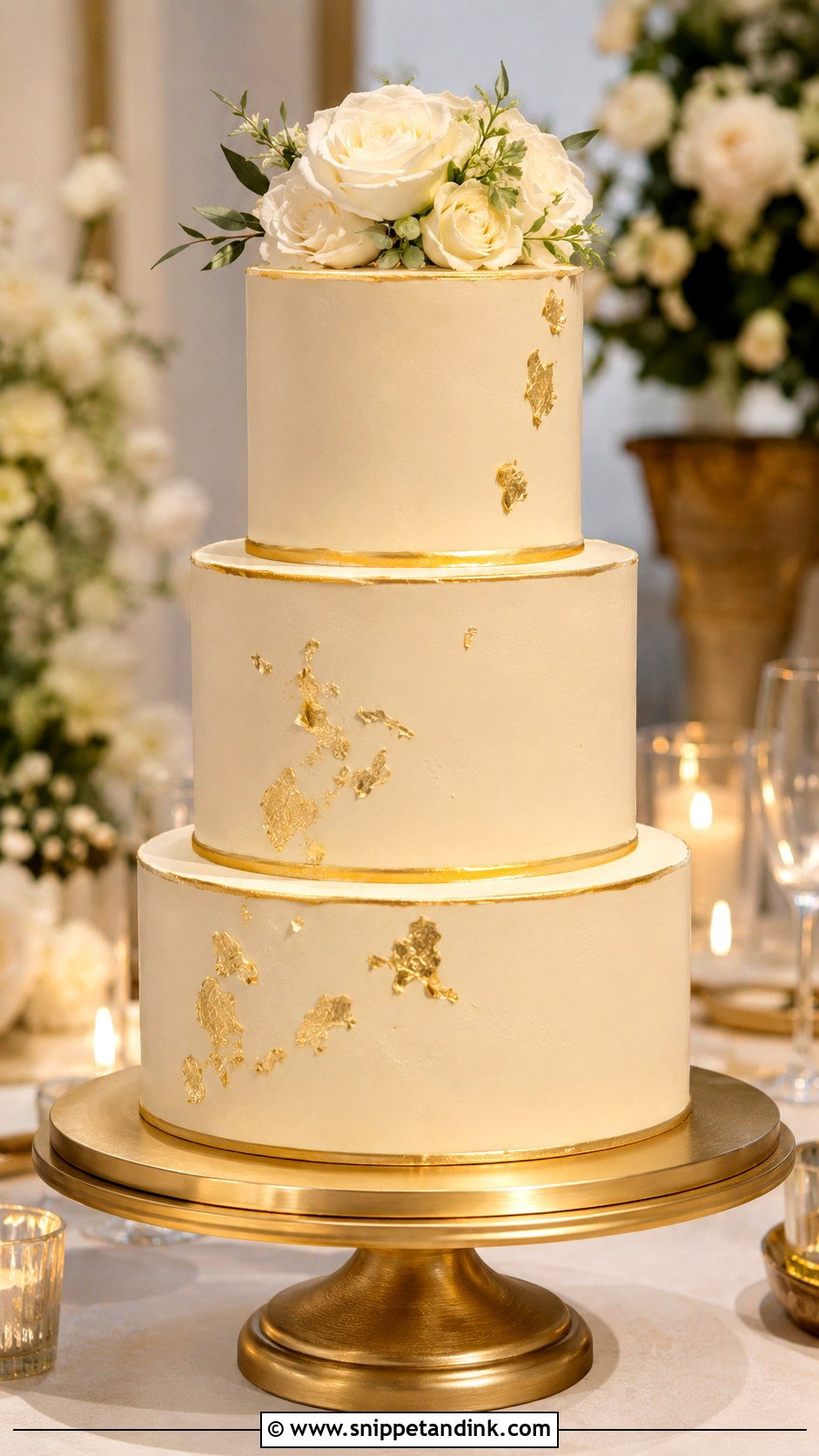
Gold works when there’s not much of it. Thin painted edges, small patches of gold leaf, a fine monogram or a line between tiers is enough on ivory, white or blush icing. A fully metallic cake can look like a prop under reception lighting. Gold sits well with orchids, roses and pearls, and suits evening and ballroom receptions. Check that the gold is labelled edible rather than just non-toxic; the two are different, and only the first belongs on a cake people eat.
10. Black And White Wedding Cake
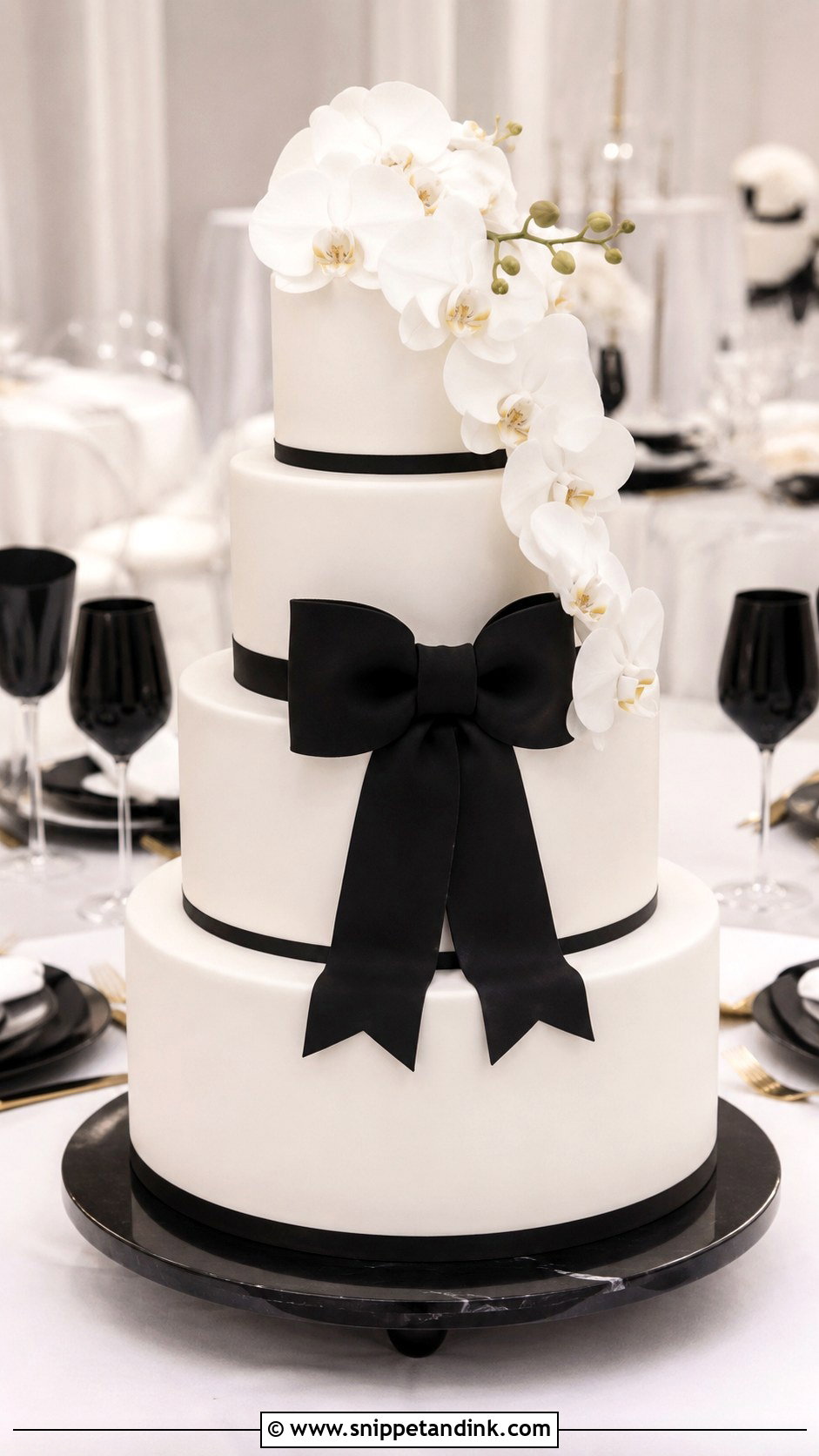
Contrast cakes suit formal weddings and city venues. A white cake with black ribbon trim keeps it restrained; black fondant tiers with white flowers make it dramatic. Use sharp lines and very little decoration. Black fondant needs a lot of colour to get a true black, which can taste slightly bitter and stain mouths, so I often keep black to the outer layer or details. White orchids or a small painted pattern add personality. Inside, classic flavours such as vanilla bean or almond raspberry balance the boldness.
11. Sculptural Wedding Cake
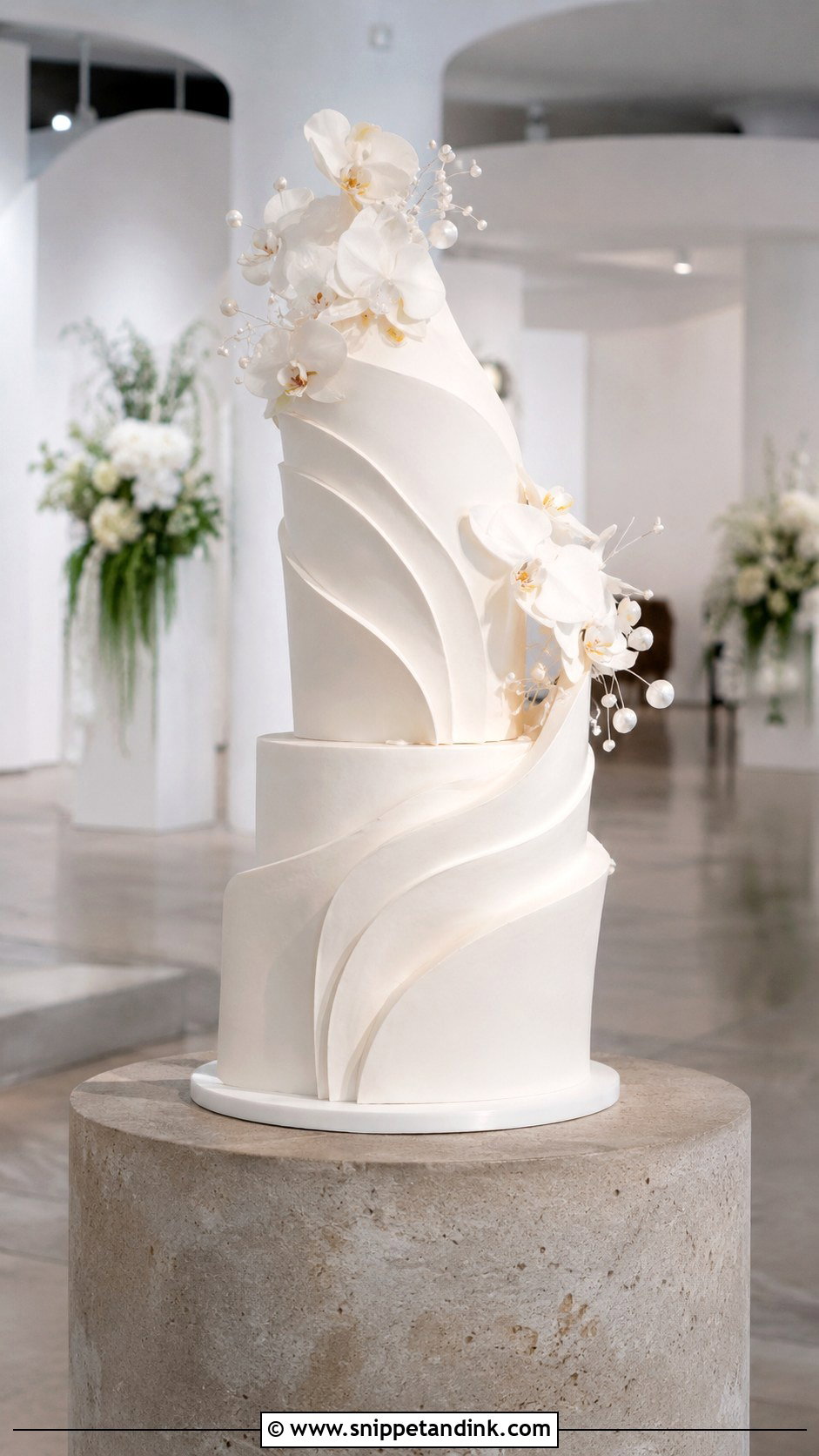
Sculptural cakes use curved tiers, waves, asymmetry or abstract forms, so the cake works as a centrepiece on its own. Keep the colours pale: ivory, pearl white, beige or blush. The shapes are usually carved from firm sponge or built with modelling chocolate over a structure, which makes them heavier and slower to make than a standard tier, and they need booking well in advance. A few orchids or a small pearl cluster finishes it. Modern venues and minimal receptions suit it best.
12. Vintage Modern Wedding Cake
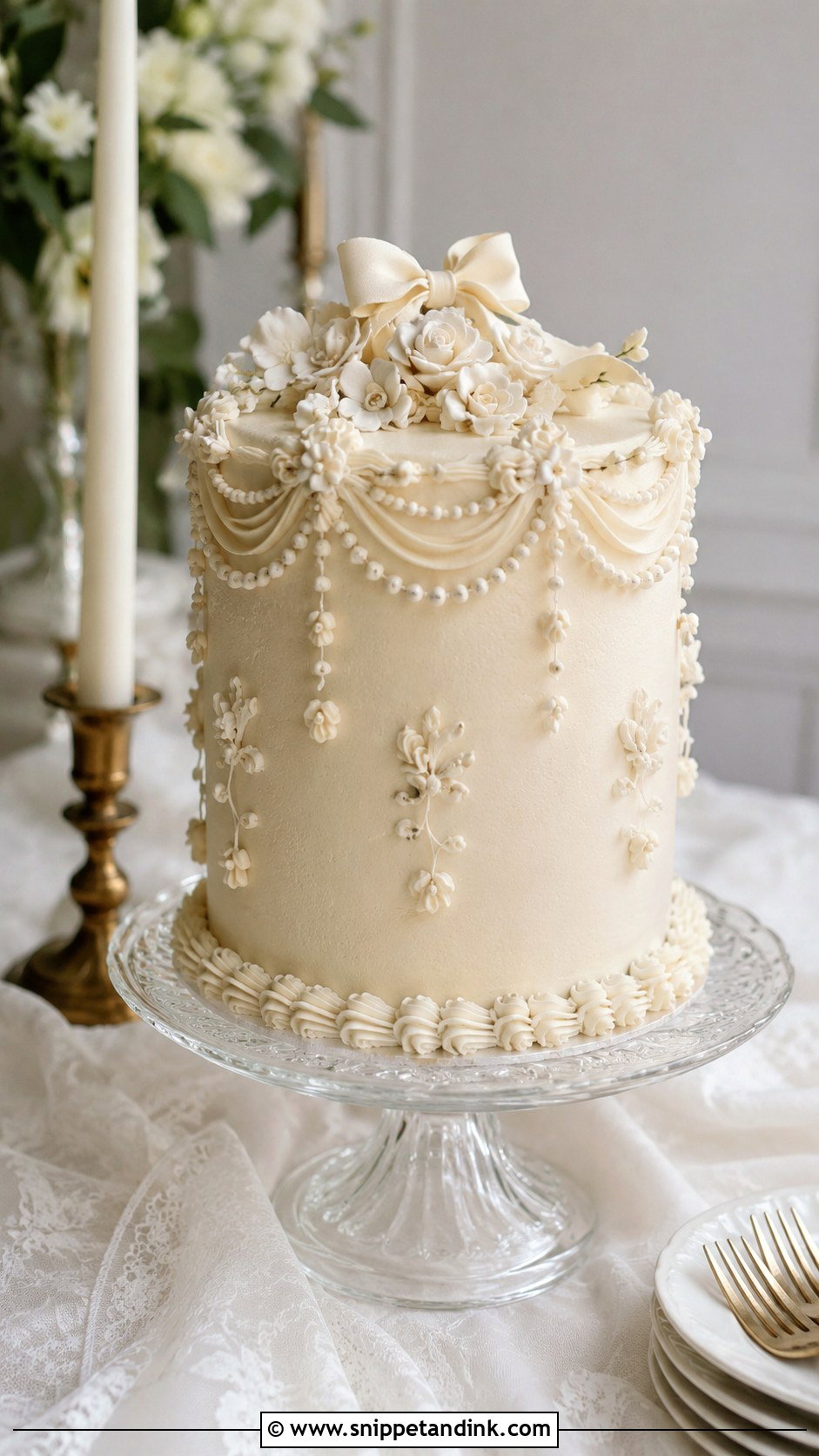
Vintage piping on a modern shape is the trend I’m most fond of. Lambeth swags, shell borders and soft ruffles look fresh on a tall white or ivory cake in cream, blush, butter yellow or champagne. Cherries are playful; pearls, bows or sugar flowers keep it bridal. Overpiping takes time and a steady hand, and it needs a stiff, cool buttercream to keep its edges, so it’s not one to leave in a warm marquee all afternoon. It suits antique mirrors, lace linens and taper candles.
13. Pressed Flower Wedding Cake
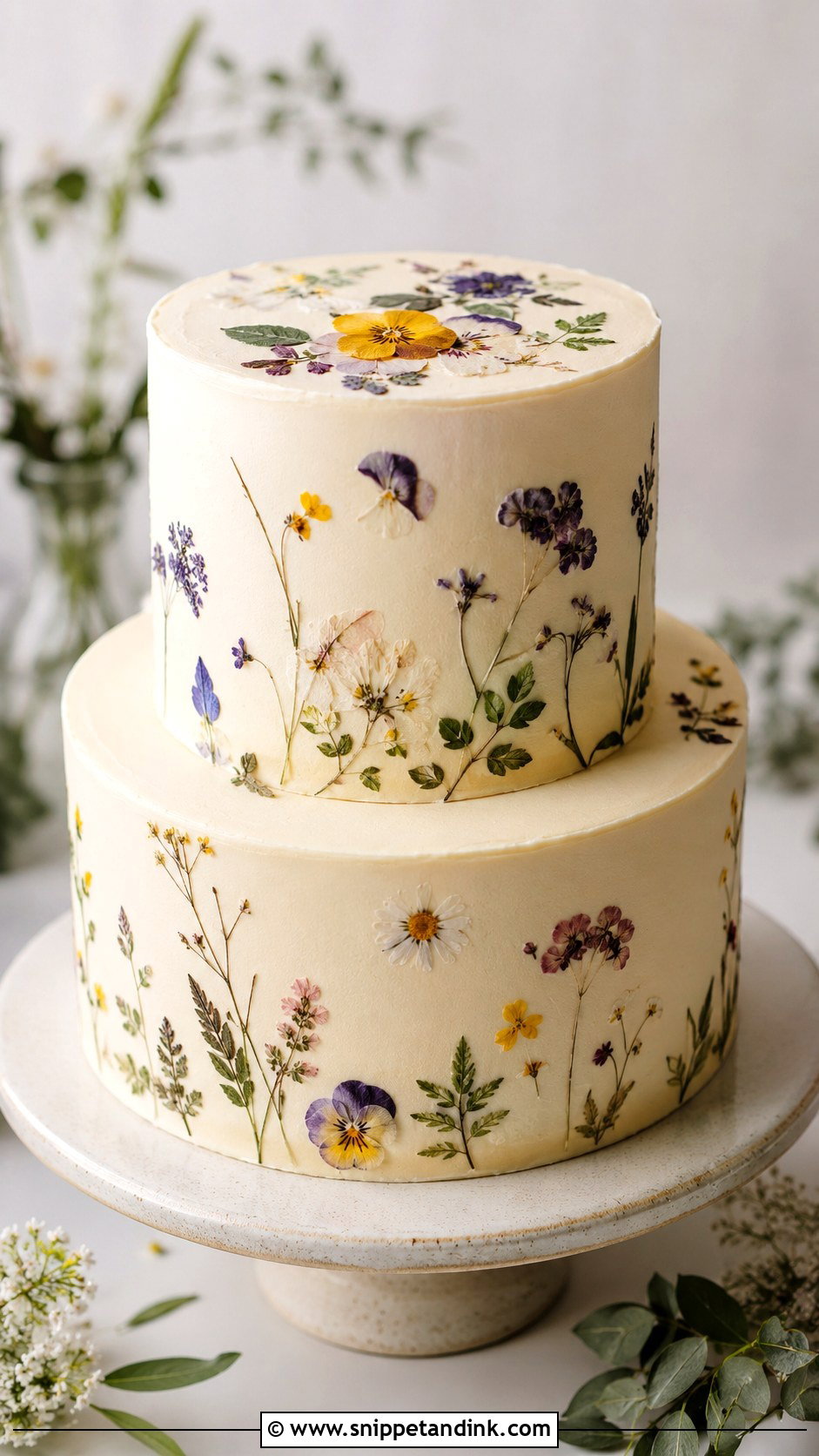
Pressed flowers sit flat against smooth buttercream like a botanical print. Keep the base white, ivory or very pale so the petals show. Small blooms, herbs and loose petals give an organic finish. Every flower must be properly edible and grown without sprays, which usually means pressing them myself or buying from a specialist. Petals can darken where they meet moist icing, so they go on as late as possible. Lemon, lavender or honey flavours suit spring and summer gardens.
14. Watercolor Wedding Cake
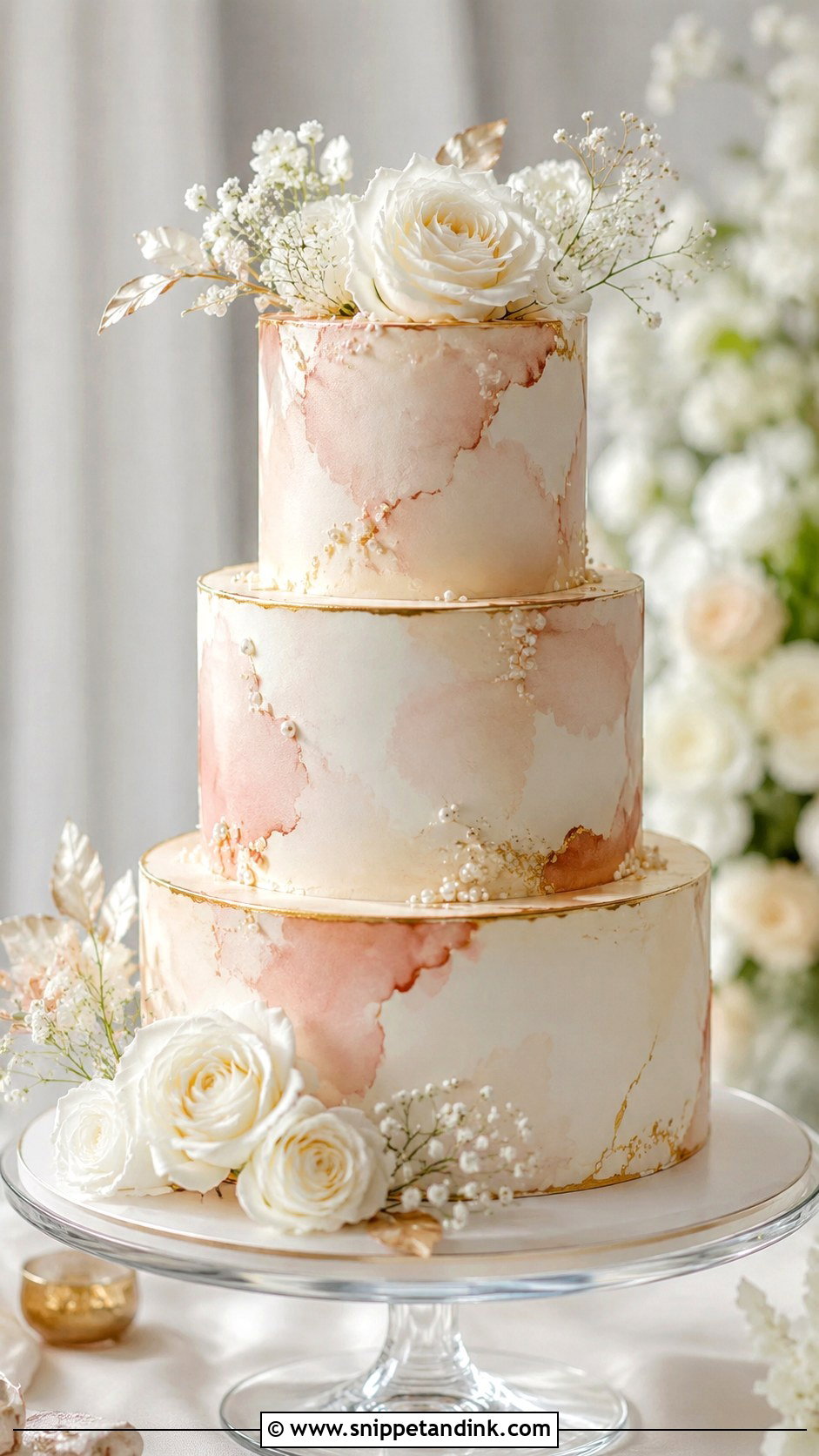
Watercolour icing brushes soft washes of blush, blue, lavender, champagne or sage into a white base. Muted colours keep it elegant; bright ones turn childish quickly. It works on smooth fondant or buttercream, finished with flowers, gold edges or a little piping. I’d stick to one colour family. On buttercream I blend with a scraper in a single pass; on fondant I paint with diluted gel colour, which gives a cleaner, more painterly result.
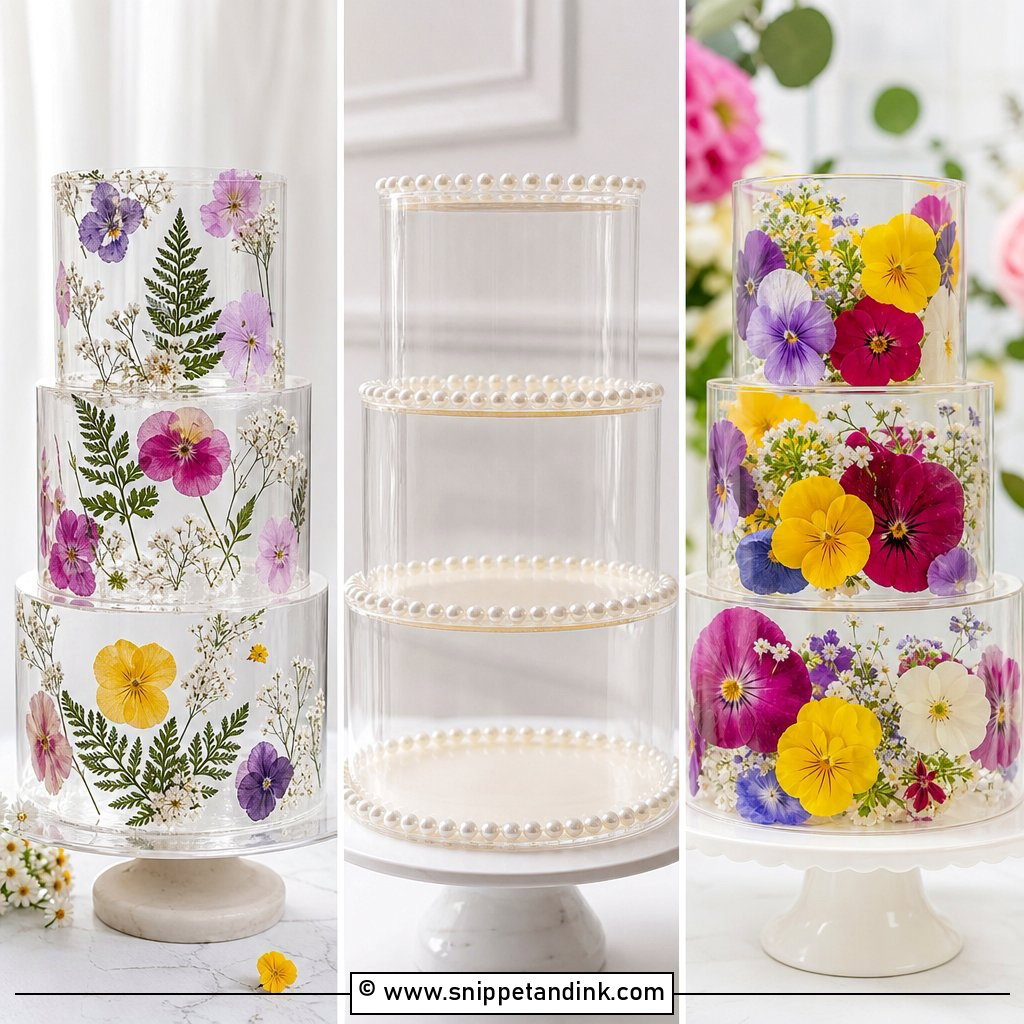

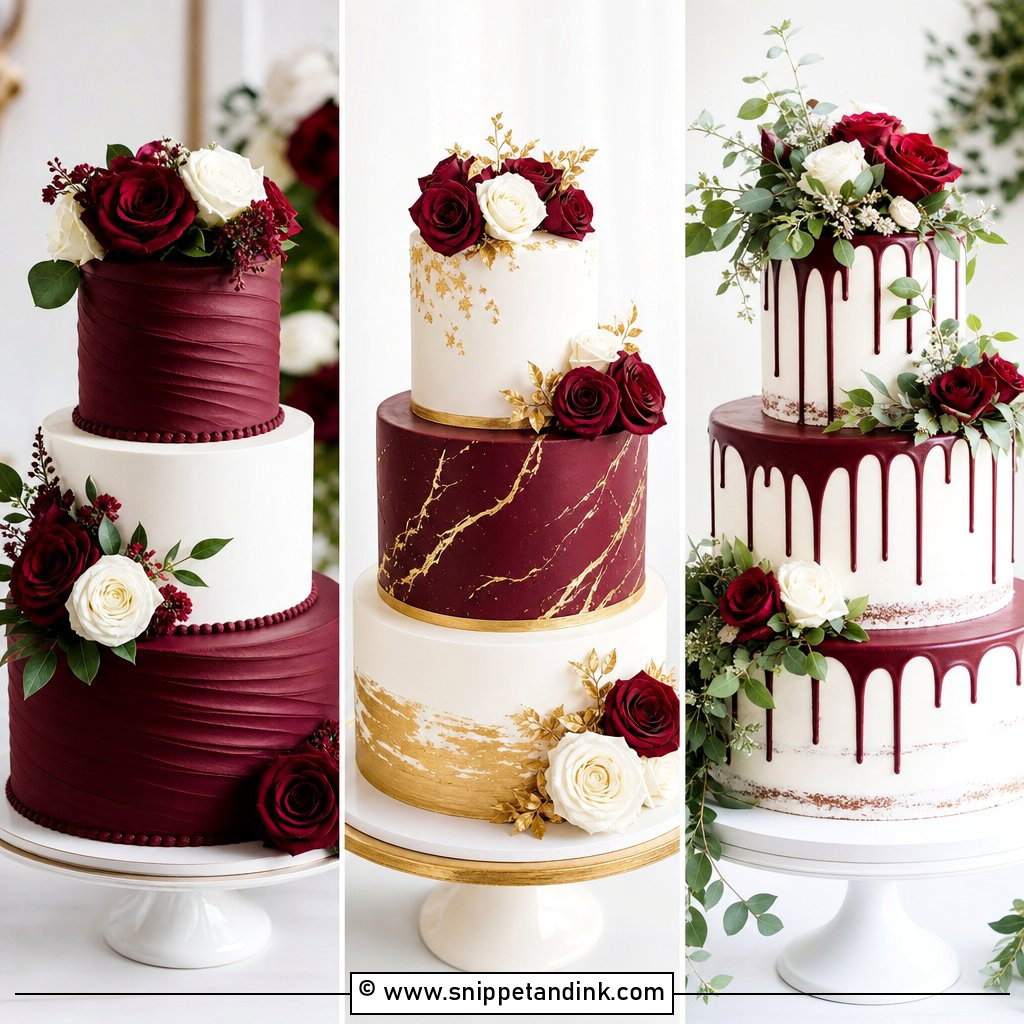
15. Marble Wedding Cake
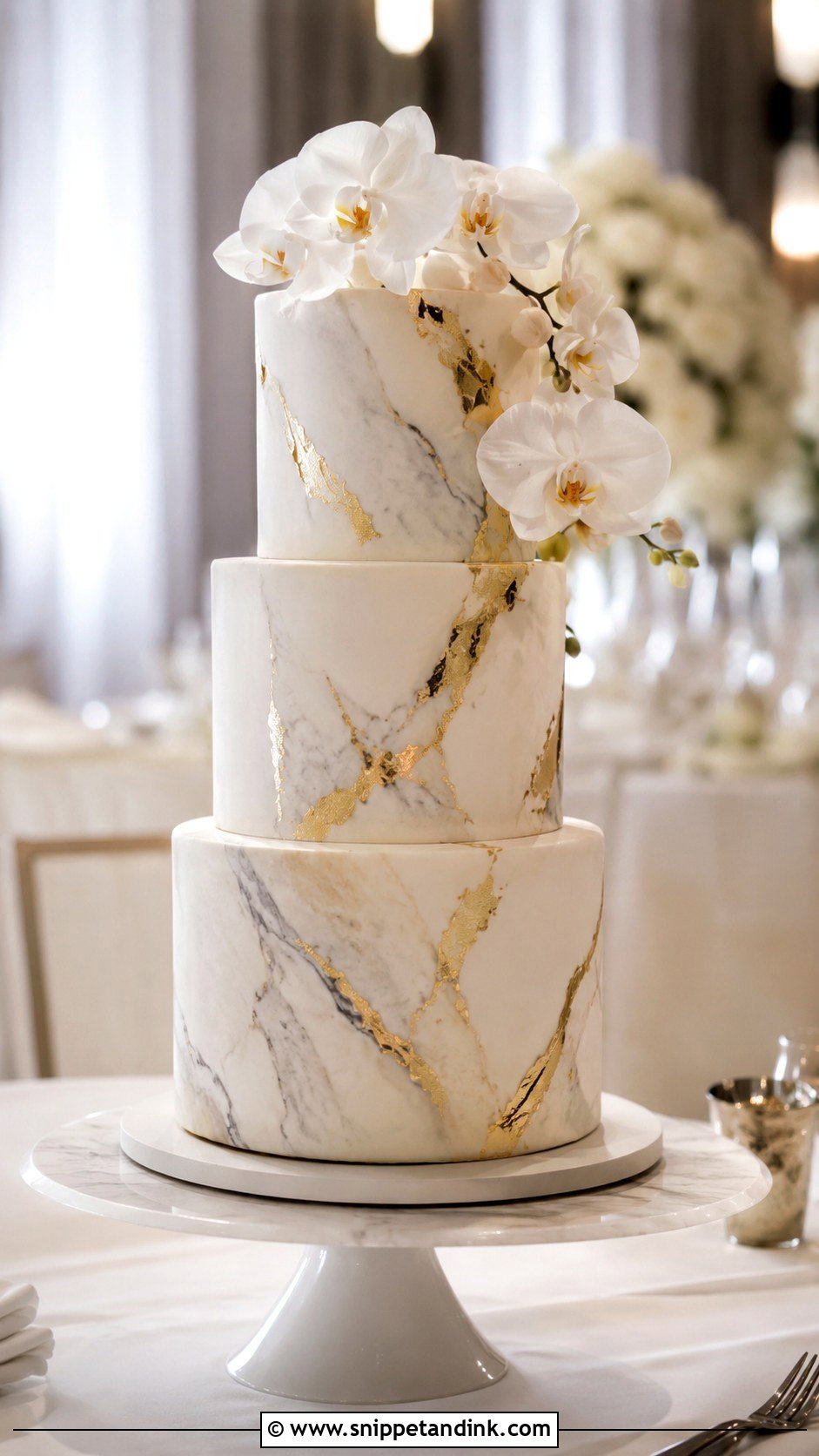
A marble wedding cake has grey, ivory, beige or blush veining through fondant or buttercream. Pale veins read bridal; dark, strong veins look more like a kitchen countertop. Gold leaf on one or two veins, white orchids or roses finish it. Fondant marbling holds its lines better than buttercream, which smudges if overworked. It suits stone floors, glass tables and black-tie receptions with metallic accents.
16. Orchid Wedding Cake
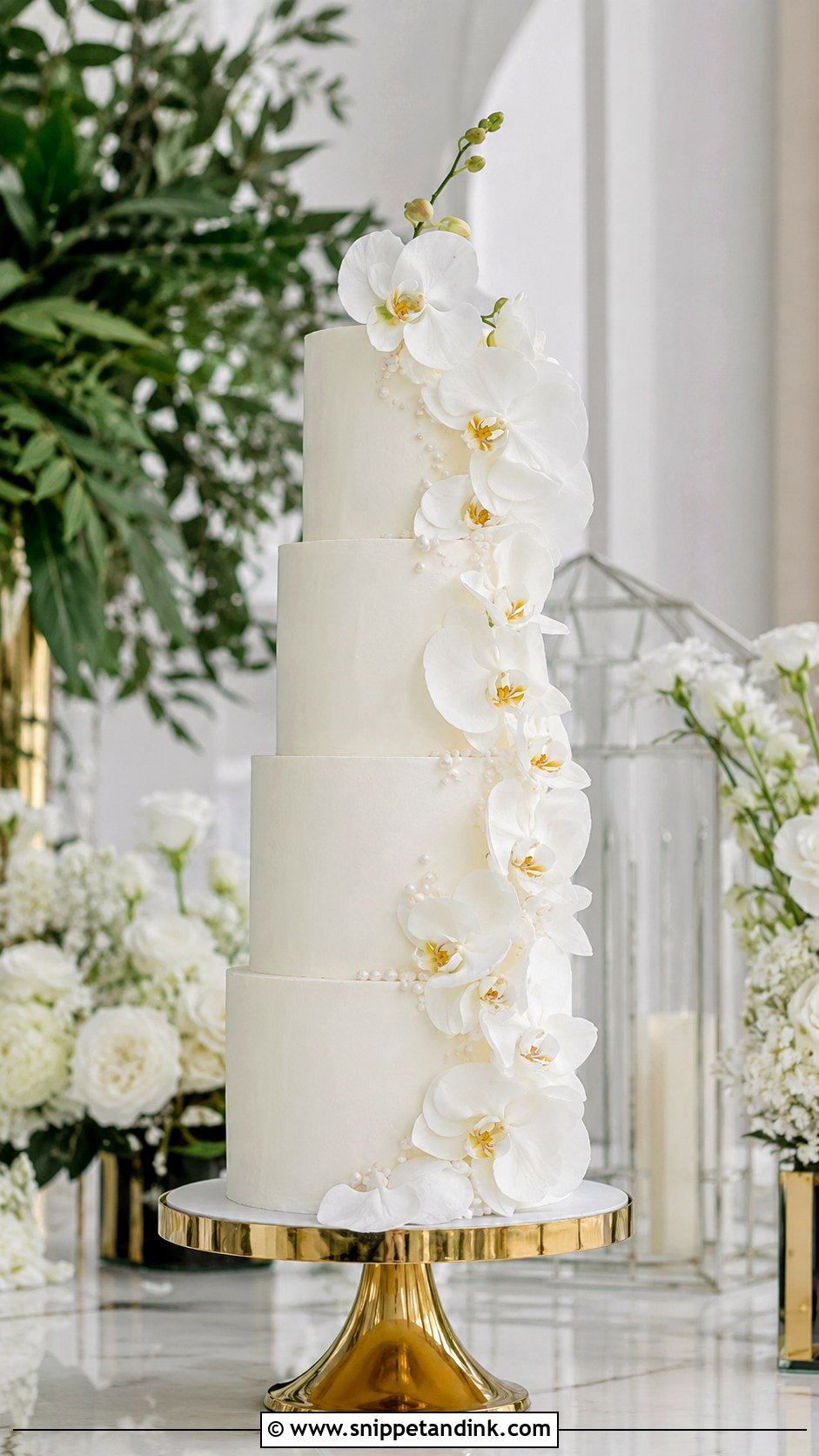
Orchids have clean, graphic shapes that suit smooth modern tiers. White reads bridal; blush, mauve or burgundy looks more fashion-led. A cascade down one side or one sculptural cluster both work. Fresh orchids are fairly sturdy, but they’re not food-safe to eat, so stems are sealed and blooms removed before cutting. Sugar orchids are the alternative if you want everything edible. Keep the icing simple. Tropical venues, hotels and ballrooms suit this cake.
17. Ruffle Wedding Cake
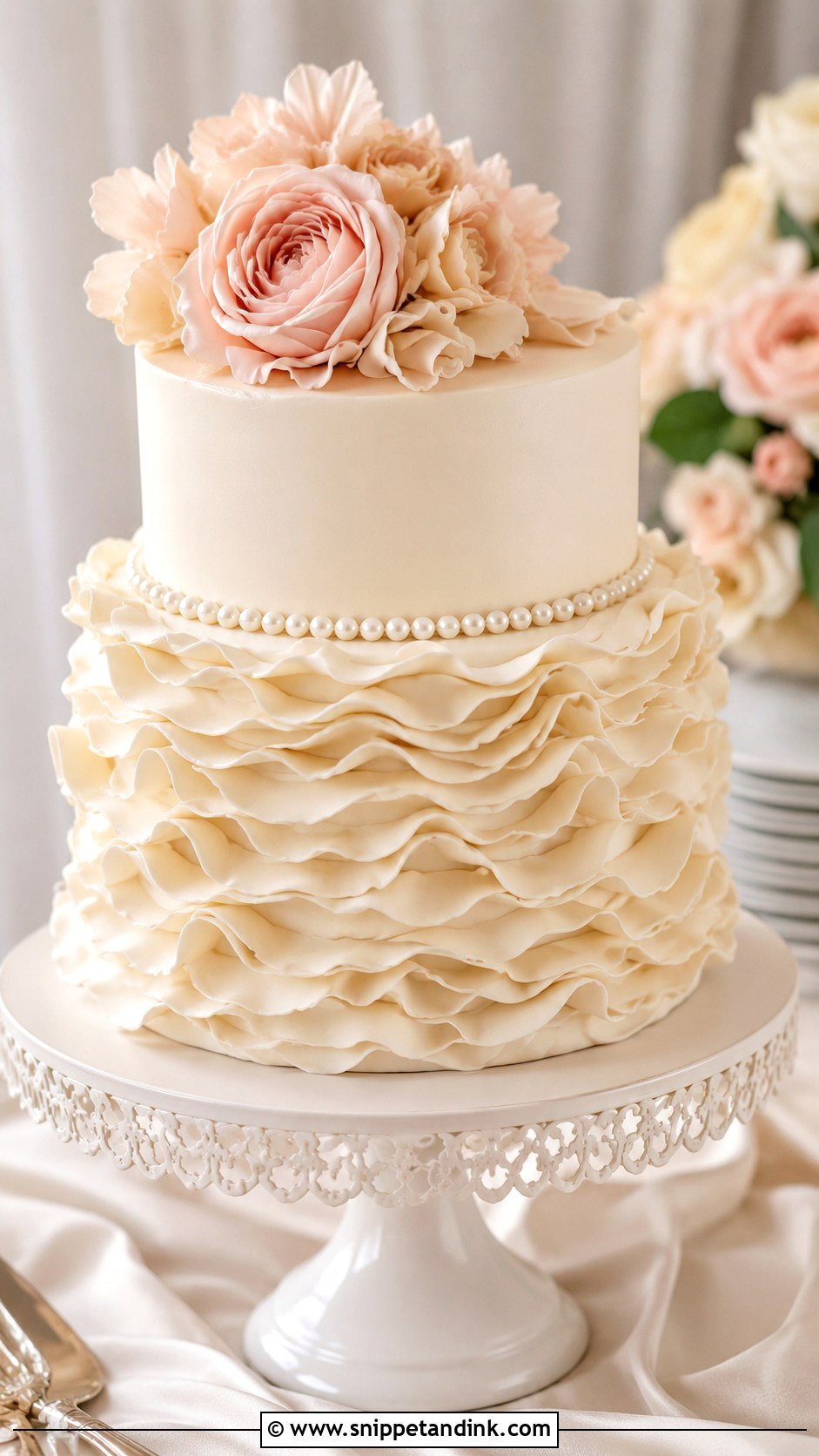
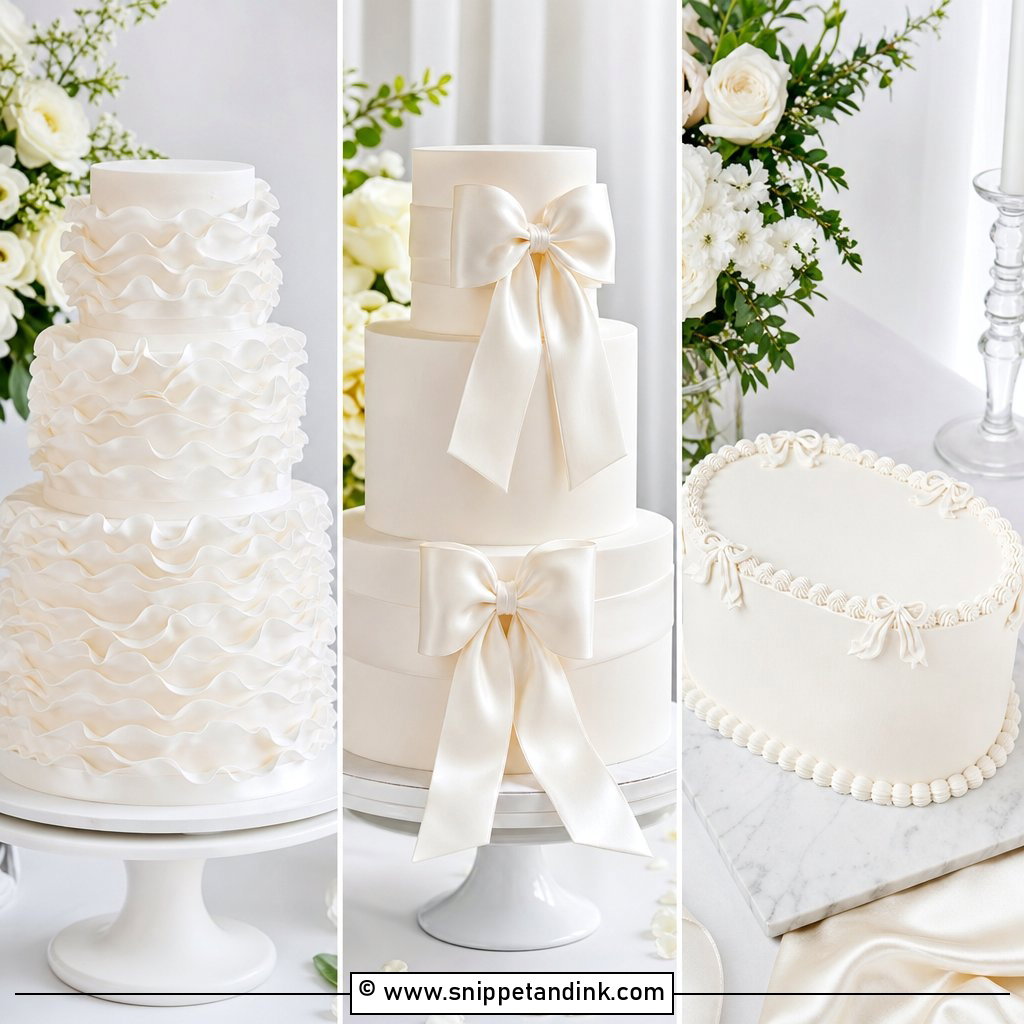
Controlled ruffles give a cake soft texture without looking frilly. They can cover a single tier, wrap the base, or mimic draped fabric. White and ivory are classic; blush or champagne makes the texture show more in photos. Buttercream ruffles are piped with a petal tip and need a cool room; fondant ruffles hold longer but take far more time. Pair them with a smooth top tier for contrast. They suit romantic gowns and candlelit rooms.
18. Fruit Wedding Cake
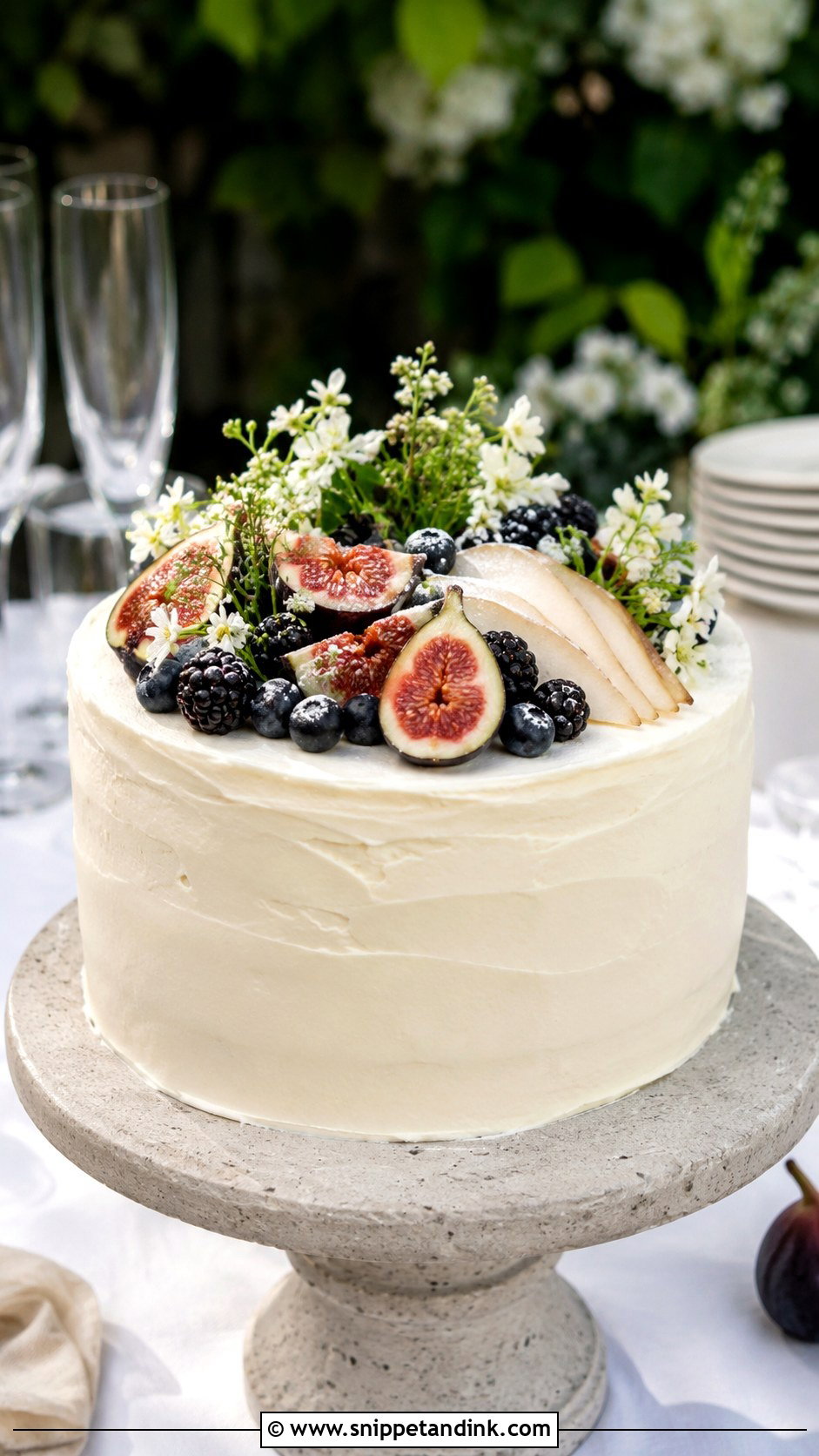
Fruit looks modern when it’s arranged sparingly: figs, berries, pears, citrus slices or grapes in a soft seasonal palette. The base can be smooth buttercream, semi-naked or light whipped icing. Cut fruit weeps juice onto icing within a couple of hours, so I use whole or halved fruit where I can and brush cut faces with a thin glaze. It works with lemon, vanilla, almond, olive oil or berry cream sponges. Add small herbs for a garden feel.
19. Sheet Wedding Cake
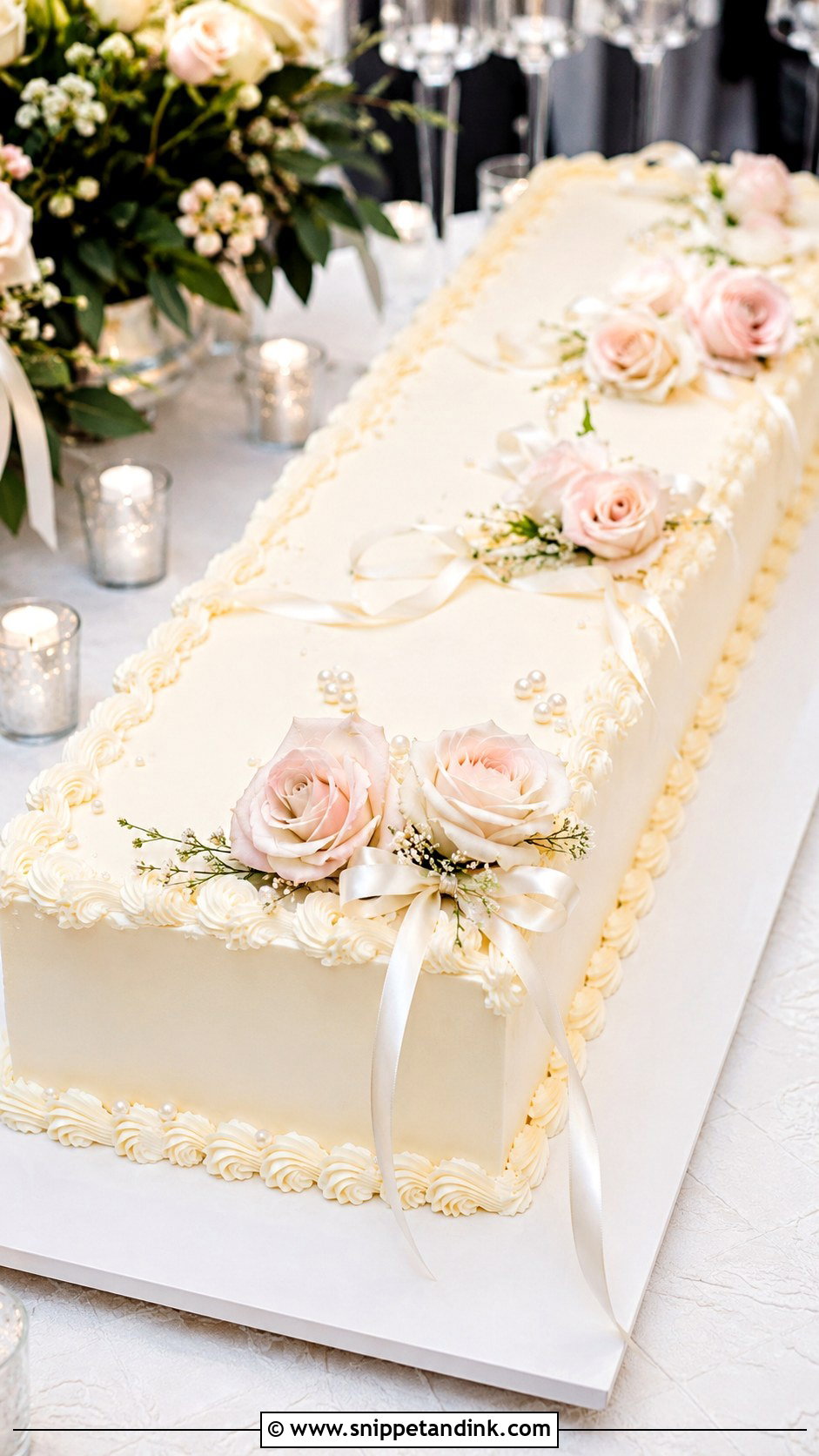
Sheet cakes are back, and the wedding version isn’t a supermarket slab. It’s a long rectangular cake with smooth frosting, piped borders, flowers, fruit, pearls or ribbon, displayed along a long table. It’s practical: it serves easily and keeps a low profile in intimate rooms. A board for a long cake must be rigid, or the cake cracks when lifted, so ask how it’ll be carried. Chocolate raspberry and lemon cream suit it.

20. Mini Wedding Cake
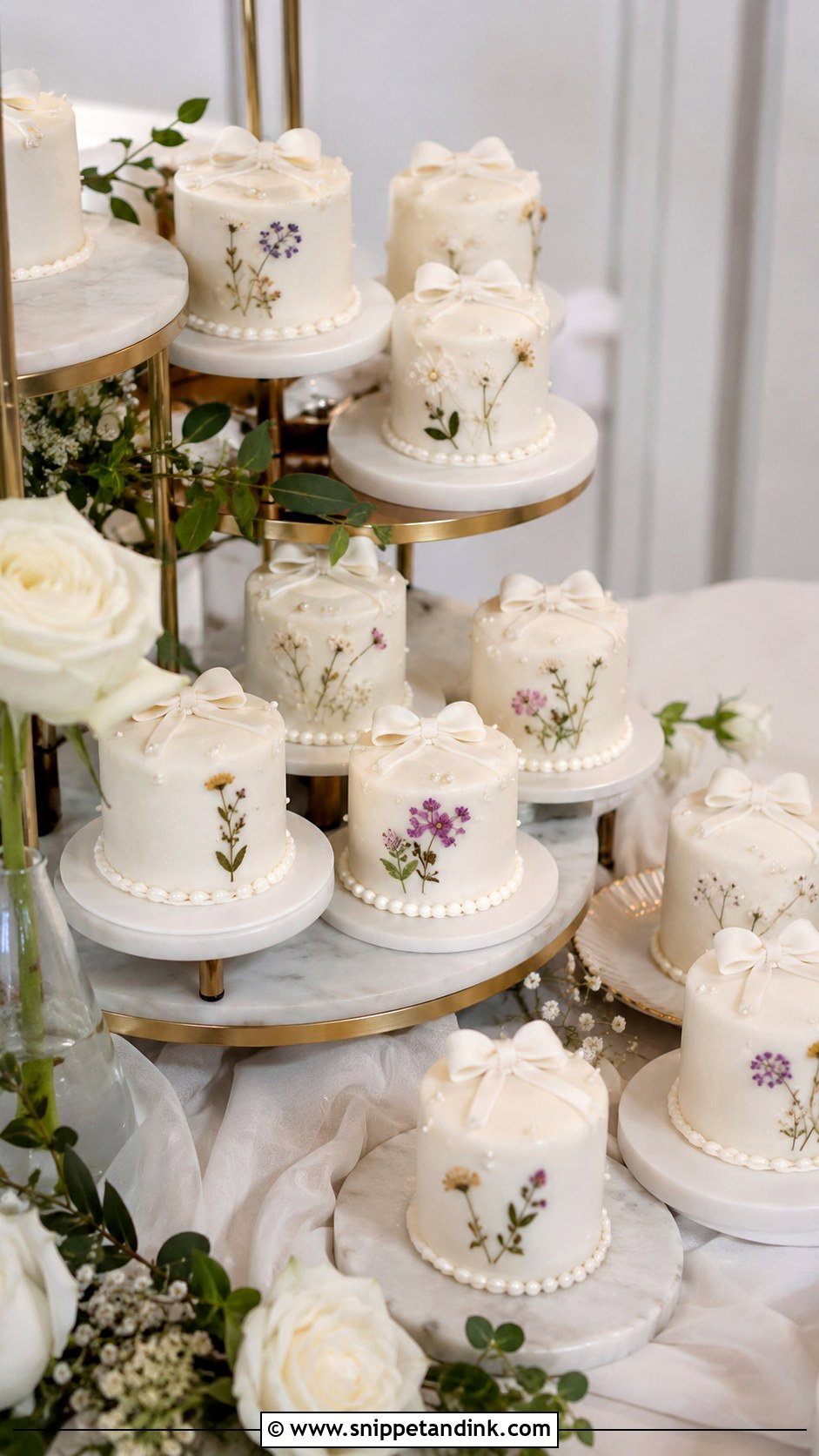
Mini cakes give every guest their own small finished dessert, or several can be displayed together. They’re a good way to serve multiple flavours without a giant tiered cake. Each one is decorated individually, so the labour per serving is much higher than a tiered cake; expect that in the quote. Smooth buttercream, tiny pearls, pressed flowers or small bows work at this scale. Trays, tiered stands or individual place settings all suit them.
Sharp Edges and Tall Tiers Rely on What’s Inside
Modern cakes look simple, but the clean lines are engineering. Sharp edges usually come from a firm ganache layer under the buttercream or fondant, which also helps the cake hold its shape in a warm room.
Every stacked tier sits on its own board, supported by dowels in the tier below, and very tall cakes often travel in sections and are assembled at the venue. Ask your venue for a sturdy, level table placed away from radiators, sunny windows and the dance floor speakers. Vibration and a wobbly trestle have finished off more cakes than heat ever has.
Who Slices It Once the Photographer Moves On?
After the ceremonial cut, the cake usually goes back to the kitchen. Check whether your venue or caterer cuts and plates it, and whether they charge a per-person cutting fee; many do, and it varies widely.
Wedding portions are smaller than party slices, usually a slim finger about an inch wide, which is how a modest-looking cake feeds a big room. If you want the display cake small, a plain kitchen cake in the same flavour can be cut out of sight. Ask for a few cake boxes to be left with the caterer so leftovers can go home with you or your families.
Shape, Colour and One Detail Is the Whole Formula
Every cake here works because the decisions are made in the right order. Choose the shape, then the colour, then one detail. A plain buttercream cake can feel as special as a sculptural one when those three fit the wedding. Pearls, bows, orchids, pressed flowers, marble or a little gold can lift the design without crowding it. Before you settle on a style, consider the venue, your flowers, the guest count and what else is on the dessert table. Save the photos that feel most like you, and use them to brief your baker.
You'll Like These Ideas:







Leave a Reply