
Couples choose black and white for a cake because it goes with nearly any room: ballroom, garden tent, rooftop, loft or a small restaurant dinner. The palette can be sleek, romantic, dramatic or vintage, and the mood comes from shape and texture rather than colour. Flowers, bows, stripes, marble, pearls, damask, calligraphy and sugar work all appear in the twenty cakes below. I’ve added what I’d tell you at a consultation about each one: how it’s made, where it can go wrong and who it suits.
Where the Money Goes on a Black and White Cake
Two cakes that look equally simple in photos can be quoted very differently, and in monochrome designs the gap almost always comes down to hand work. Here’s roughly how I’d rank the details from least to most time at my bench:
- A ribbon, a single colour block or a black base tier.
- Marble, stencilled damask and pearl borders.
- Stripes, checkerboards and geometric panels, which need measuring and cutting piece by piece.
- Hand-painted calligraphy, piped lace and Lambeth-style detail.
- Sugar flowers, each petal cut, wired, veined and dried.
If height matters more than servings, ask about a dummy tier: a decorated foam tier that looks identical but can’t be eaten. It adds presence for less, and plain kitchen cakes can cover the remaining guests. Prices vary widely by region and by baker, so get quotes for the same design brief from each one.
1. Black And White Wedding Cake With Flowers
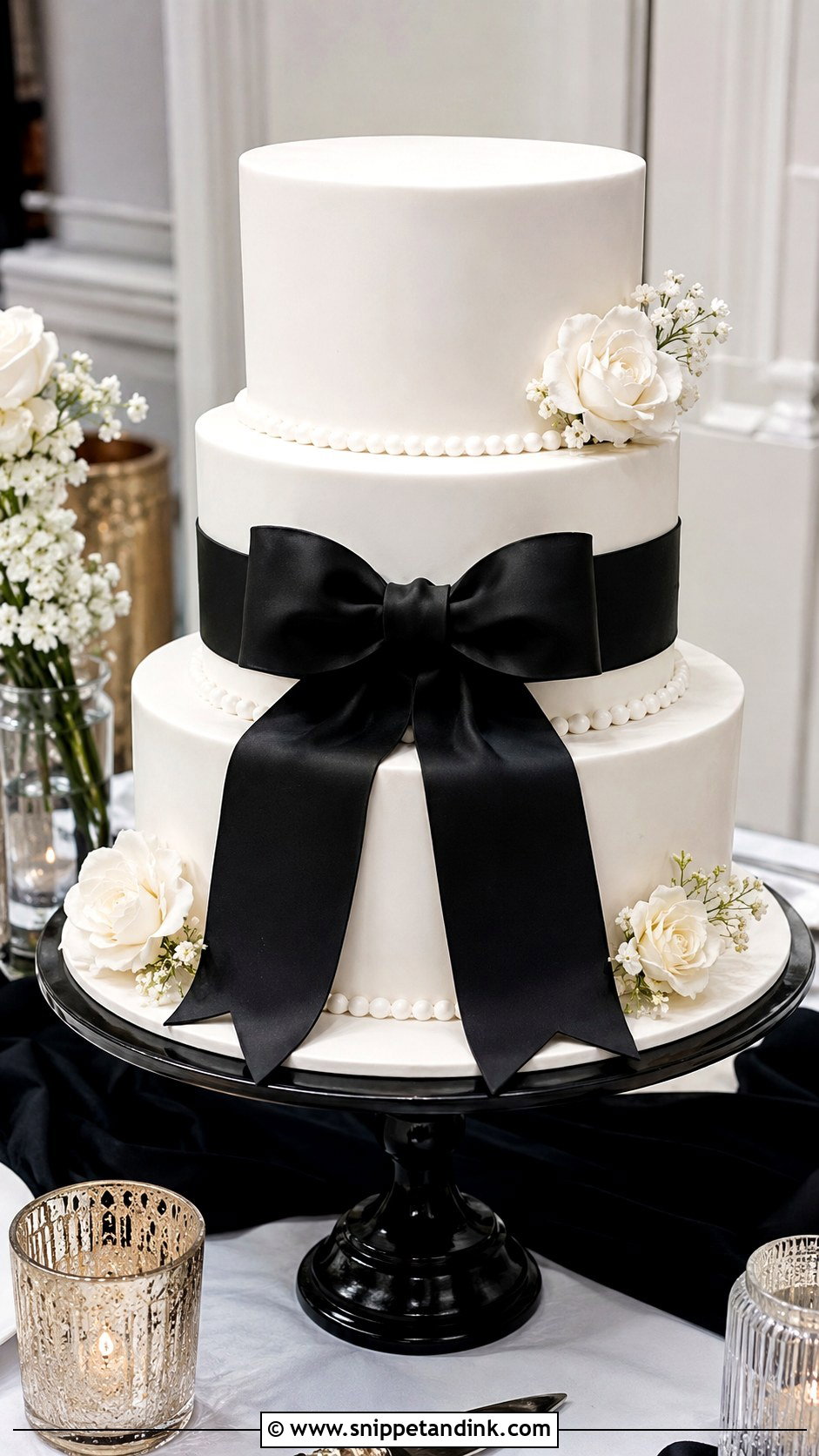
Flowers stop black and white from feeling stark. I start with a clean white buttercream or fondant base, then bring in the black through sugar flowers, pressed edible petals, painted vines or fresh blooms your florist and baker have agreed are suitable. White roses, ranunculus and orchids sit well next to black accents. For a softer cake, keep the black to one tier or a ribbon. For drama, let black sugar flowers trail diagonally across a white cake; diagonal placement gives the eye a path from top tier to board.
2. Black And White Wedding Cake With Gold
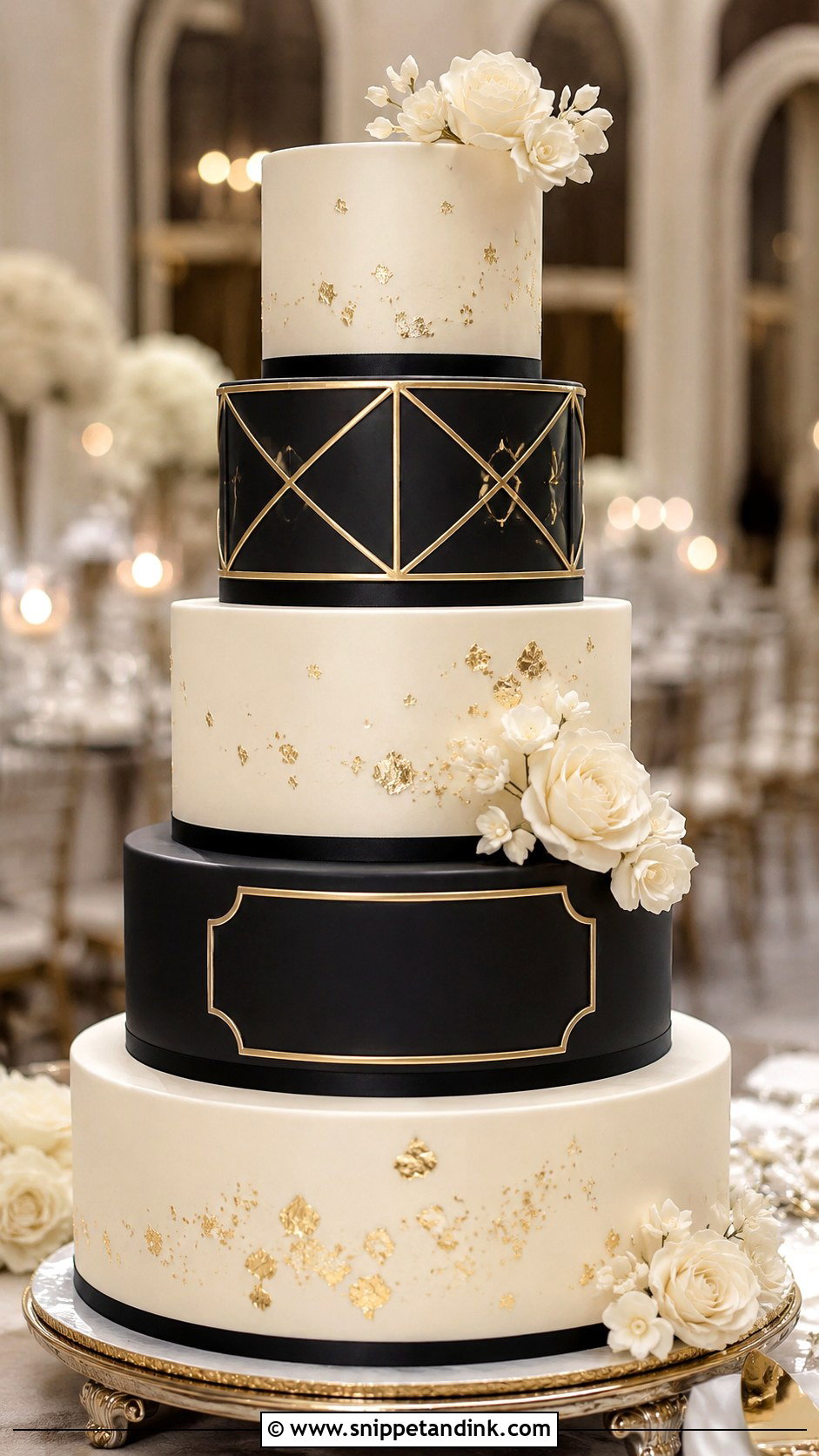
Gold warms up the contrast and makes the cake feel formal without a complicated shape. A white tiered cake with black fondant panels, thin gold trim and a few pieces of gold leaf is a classic layout; a matte black base tier with white tiers above and brushed gold edges is another. I keep gold to edges and small accents so the cake still reads black and white at first glance. Gold paint on black also needs two thin coats; one heavy coat cracks as it dries. Ivory flowers, pearls and black satin ribbon go well with it.
3. Black And White Wedding Cake With Bow
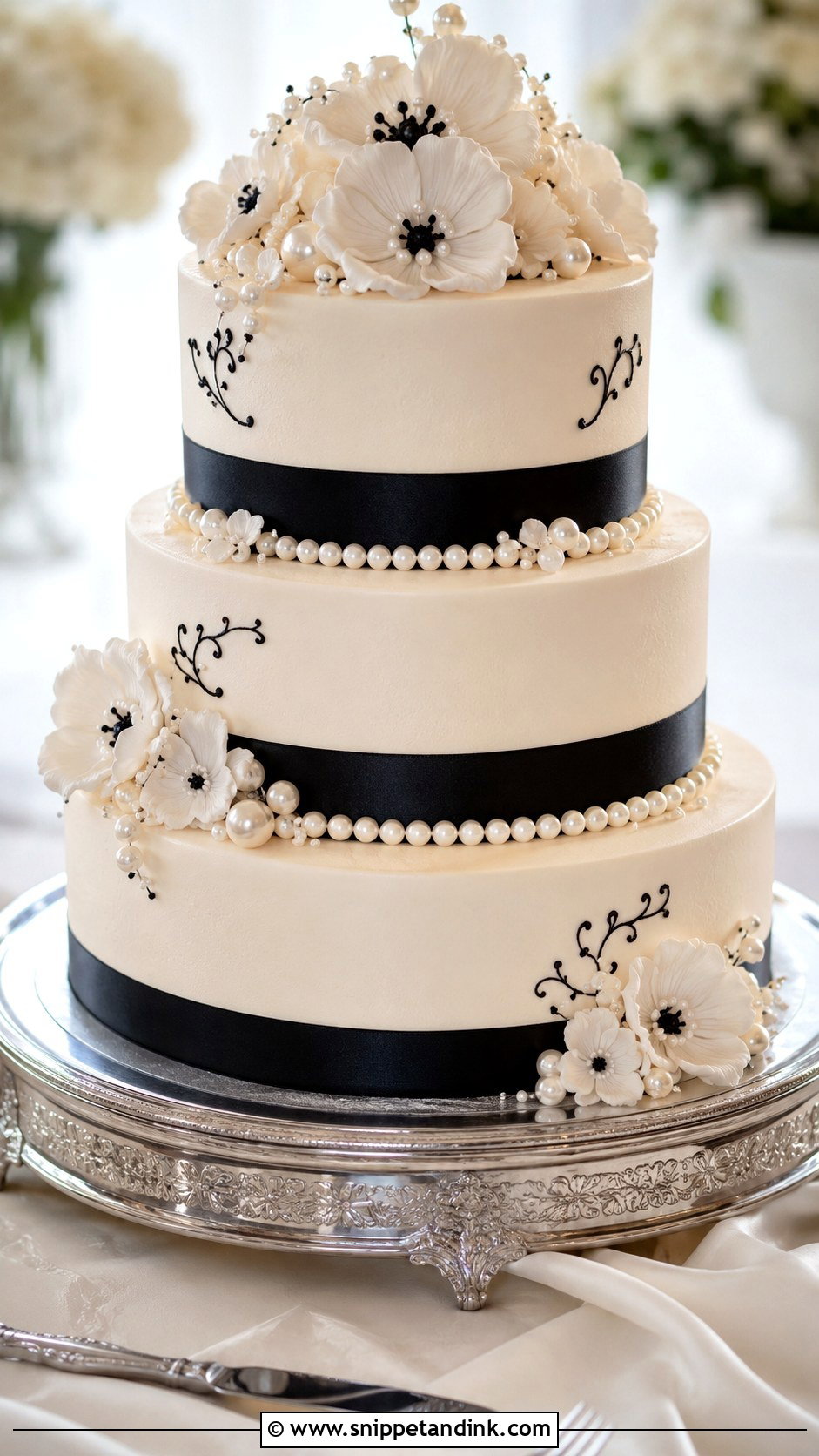
A bow gives the cake a fashion reference. Oversized and dramatic suits a big room; small and neat suits a delicate dress. A black fondant bow on the centre tier of a white cake is the classic version. A softer one uses a satin-effect sugar ribbon around one tier with tails down the side. Leave the rest of the surface clean. Fondant bows need to dry over supports for a day or two before they go on, or the loops collapse under their own weight.
4. Black And White Wedding Cake With Pearls
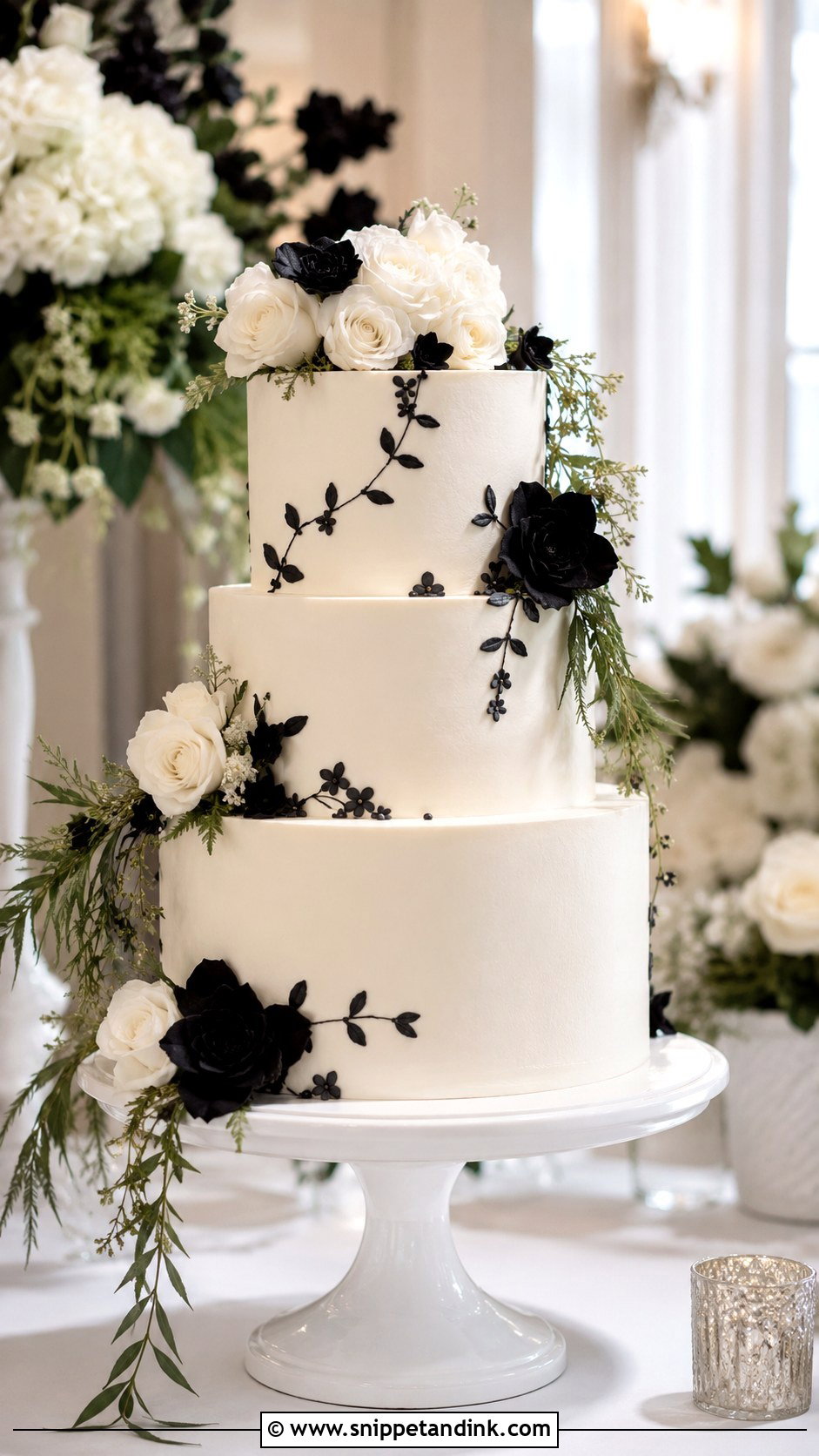
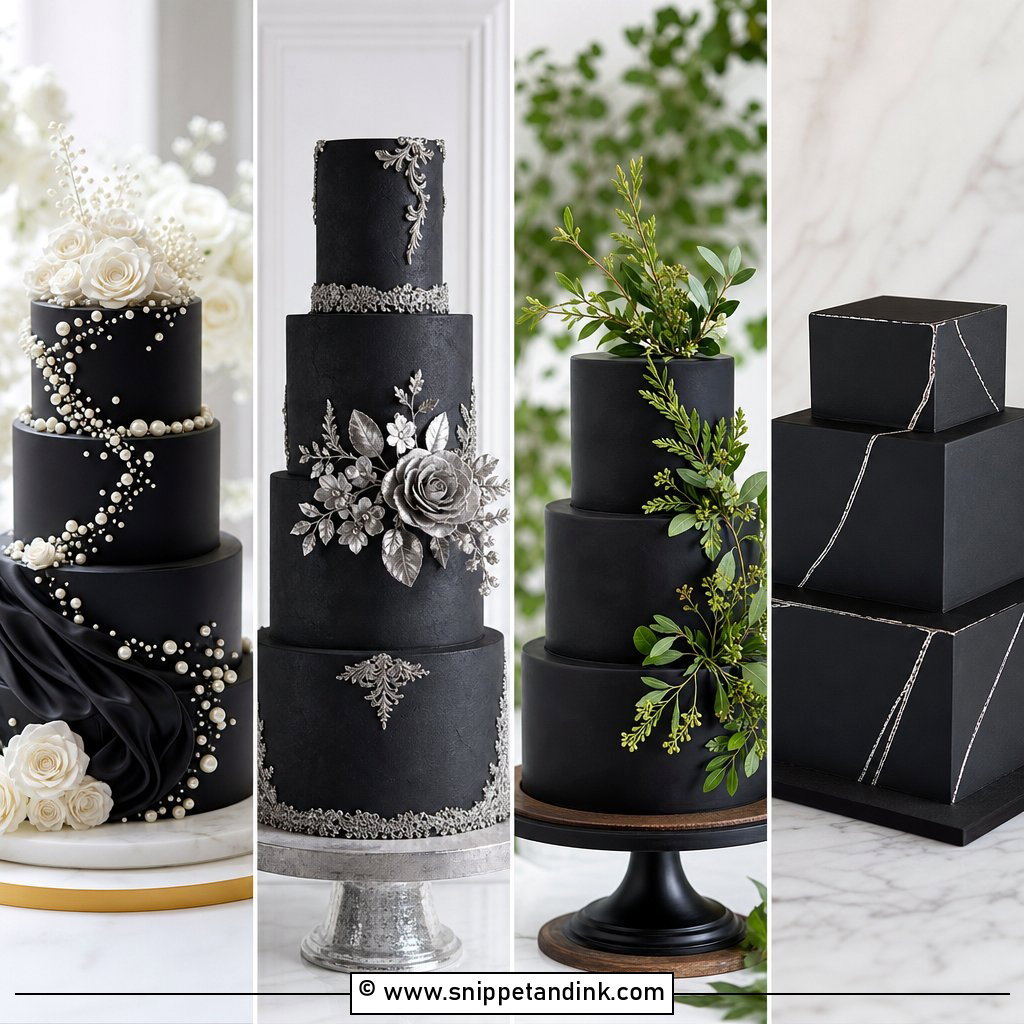
Pearls are the bridal detail in this palette. Use tiny edible beads at the base of each tier, scatter them like jewellery, or set them in neat rows for something tailored. White cake with black bands and pearl borders is classic; black cake with clusters of white pearls is more dramatic. Varied sizes look more natural than a single size. I set pearls in while the icing is soft, because pearls stuck to a crusted surface tend to roll off on the drive. Keep the stand simple so the texture shows.
5. Black And White Wedding Cake With Marble
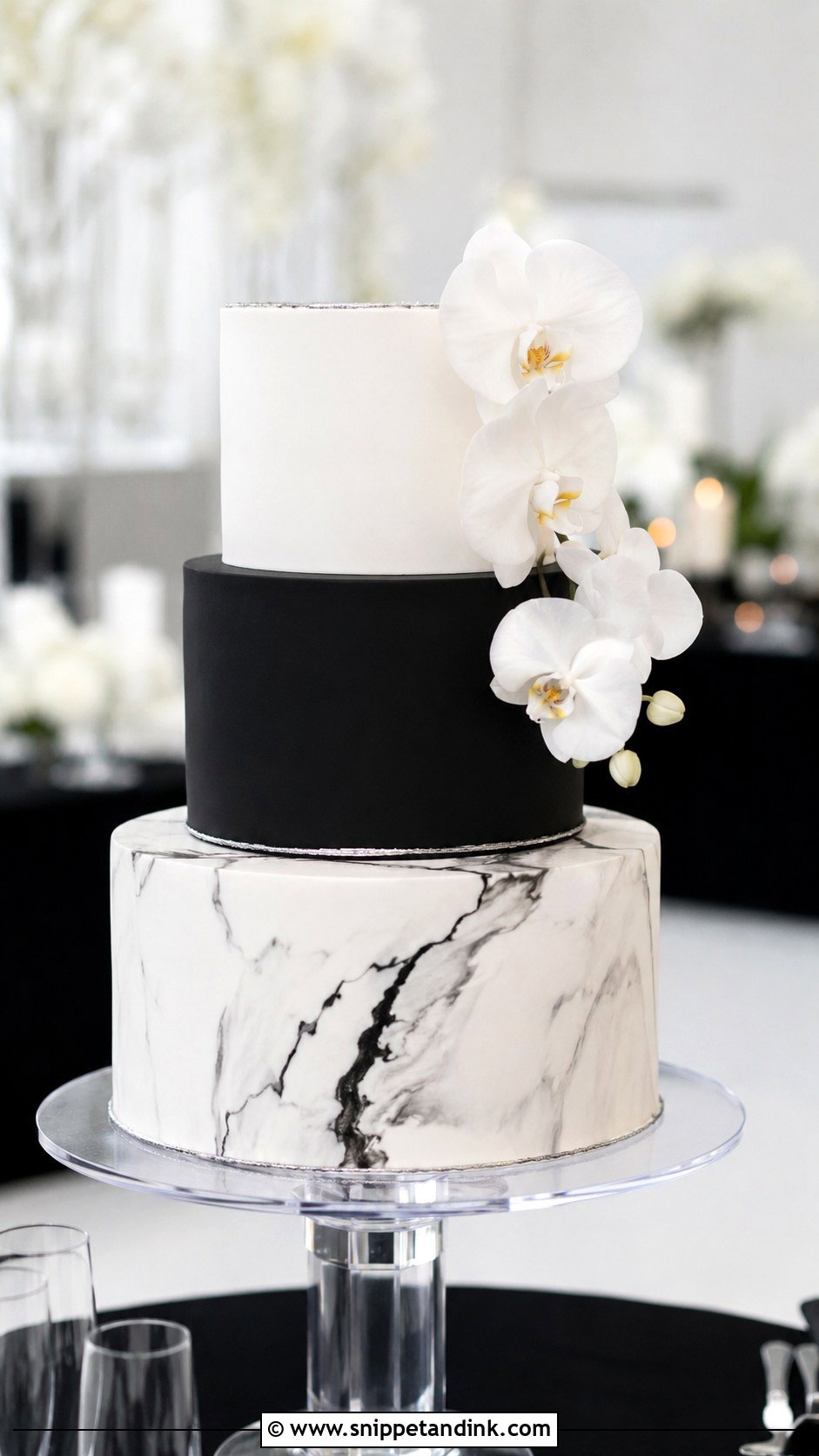
Marble can look soft and cloudy or sharp with dark veins, depending on how much black goes into the white. A three-tier cake with one marble tier, one matte black tier and one plain white tier balances well. Marble buttercream is made by streaking colour onto the cake and scraping it smooth, and every pass reveals a different pattern, so I stop the moment it looks right; overworked marble goes grey. Metallic accents are optional. White orchids, black sugar roses or a single sculptural topper finish it.
6. Black And White Wedding Cake With Stripes
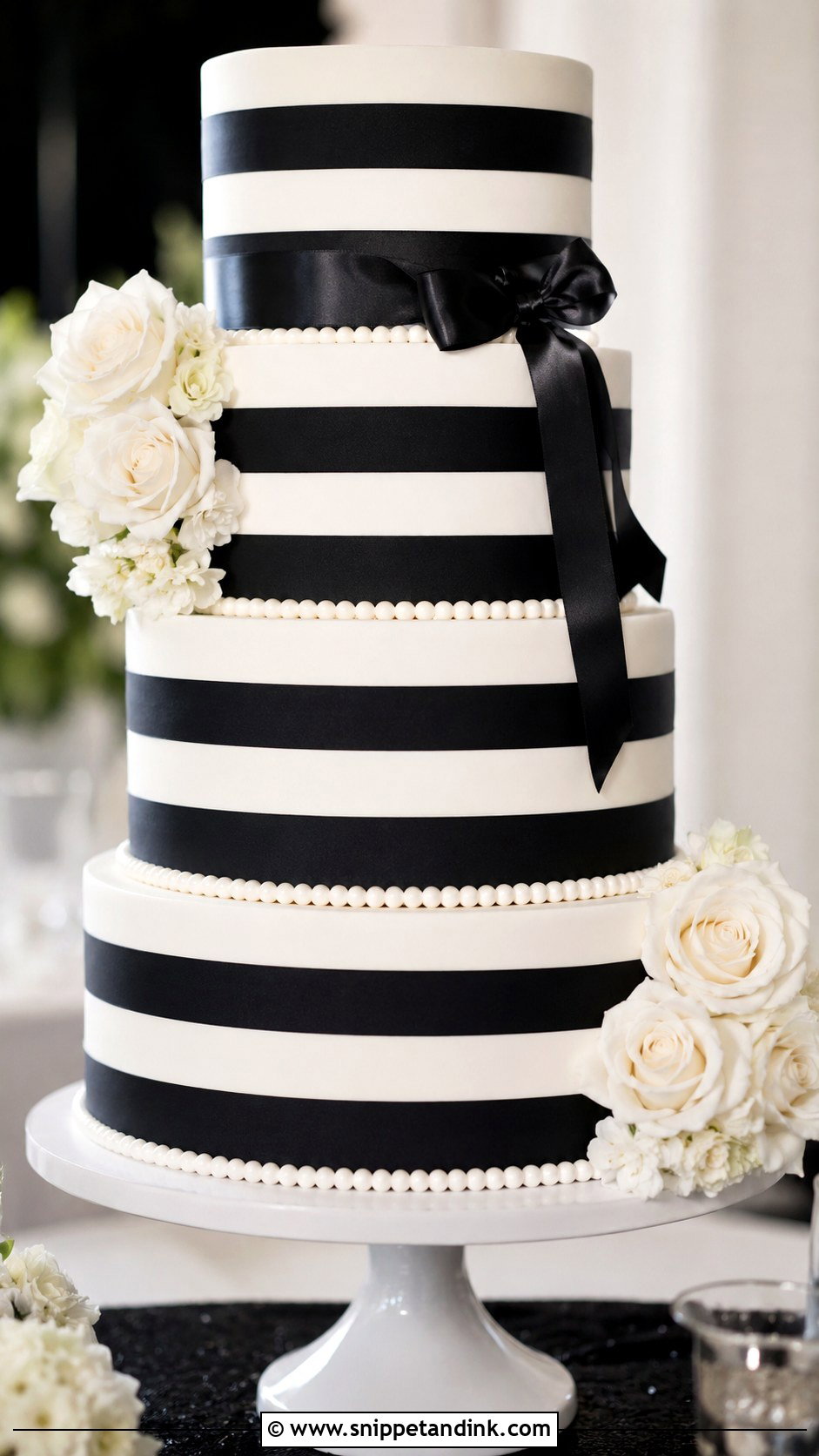
Stripes are graphic and easy to read in photos. Horizontal stripes feel bold and classic; vertical stripes make the cake look taller. Black on white, white on black, or striped tiers alternating with plain ones. Thin stripes look refined and wide ones read as a statement. In buttercream, crisp stripes are usually made by piping colour into grooves cut with a comb and scraping back; it’s slow, precise work. White flowers, black ribbon or a monogram topper suit it, along with clean symmetry in the room.
7. Black And White Wedding Cake With Lace
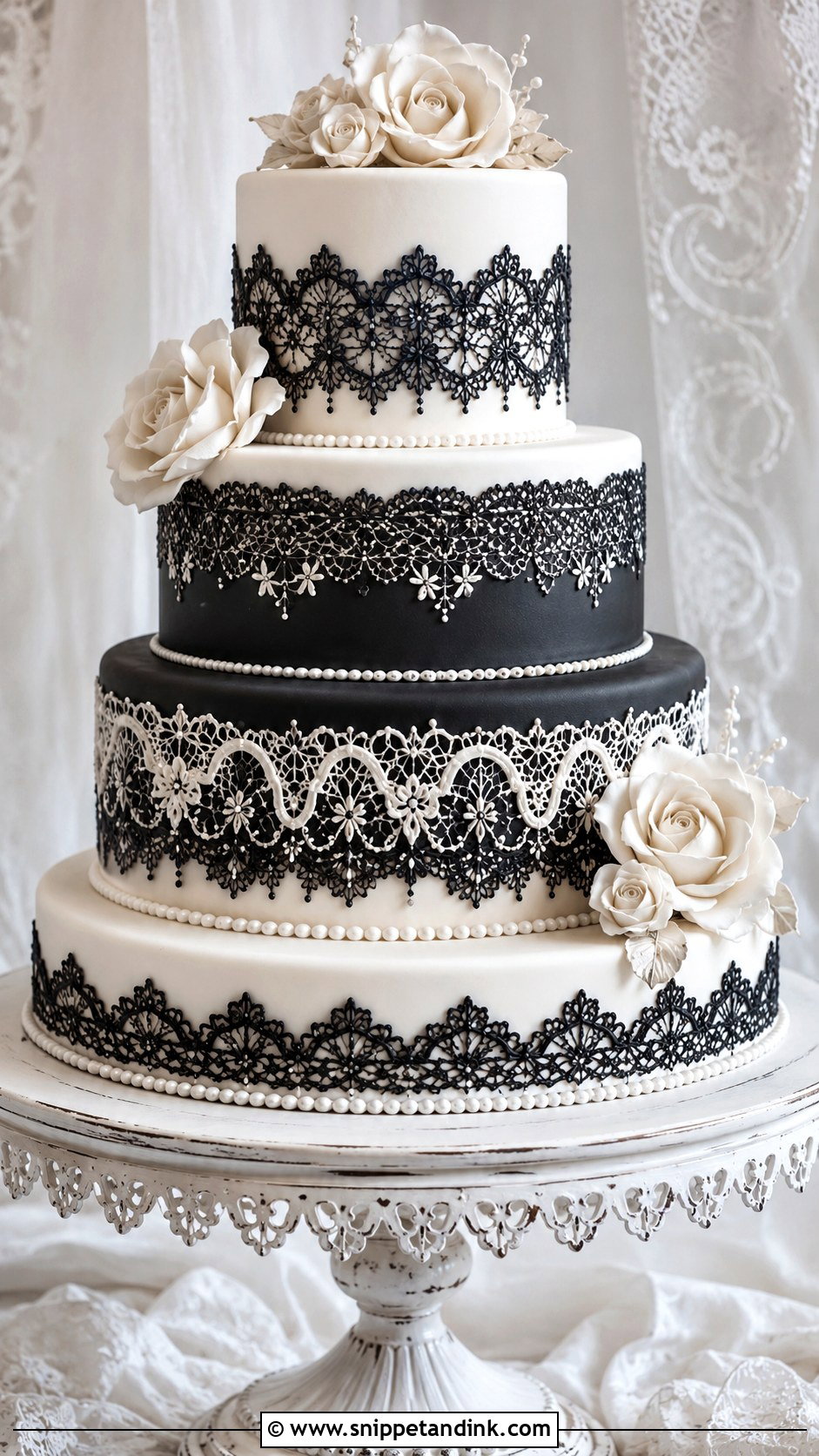
Lace brings vintage romance with a formal edge. White fondant lace over a black tier is the high-contrast option; black lace piping on a white cake is more delicate. I can often match a motif from your dress, invitation or linens if you send a close-up photo. Round tiers keep it classic, while square tiers make it structured. A small pearl border, white sugar flowers or a black ribbon complete it without making it look old-fashioned.
8. Black And White Wedding Cake With Anemones
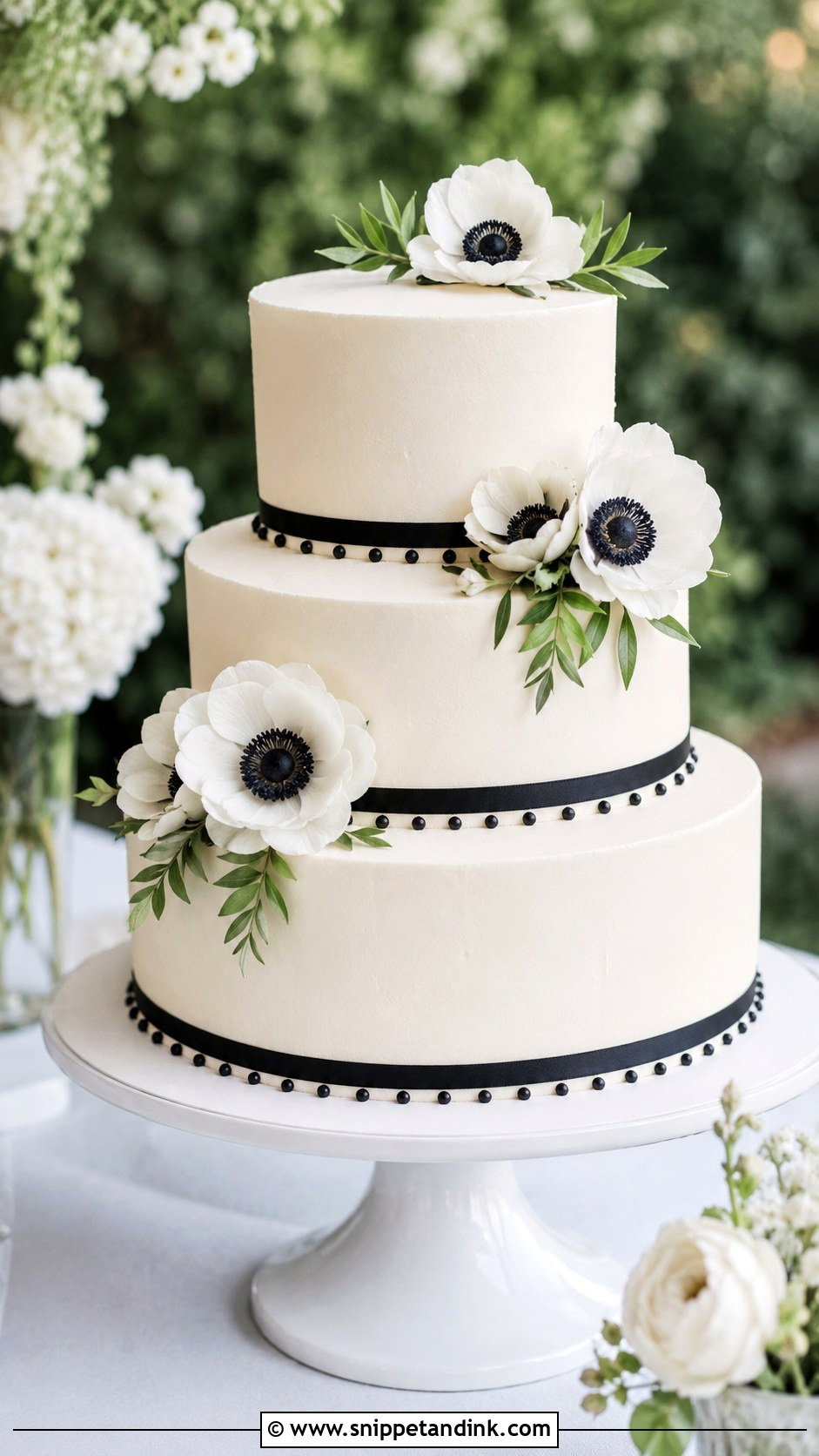
Anemones look made for this palette, with white petals around a dark centre. The catch is that anemones belong to a plant family that’s toxic if eaten, so if you want them fresh, the stems need to be wrapped and the flowers set on a barrier, never pushed into the icing, and removed before the cake is cut. Sugar anemones avoid the problem completely and last for years. Black ribbon, painted stems or a dark bottom tier add depth. It suits spring and summer, and garden settings.
9. Black And White Wedding Cake With Monogram
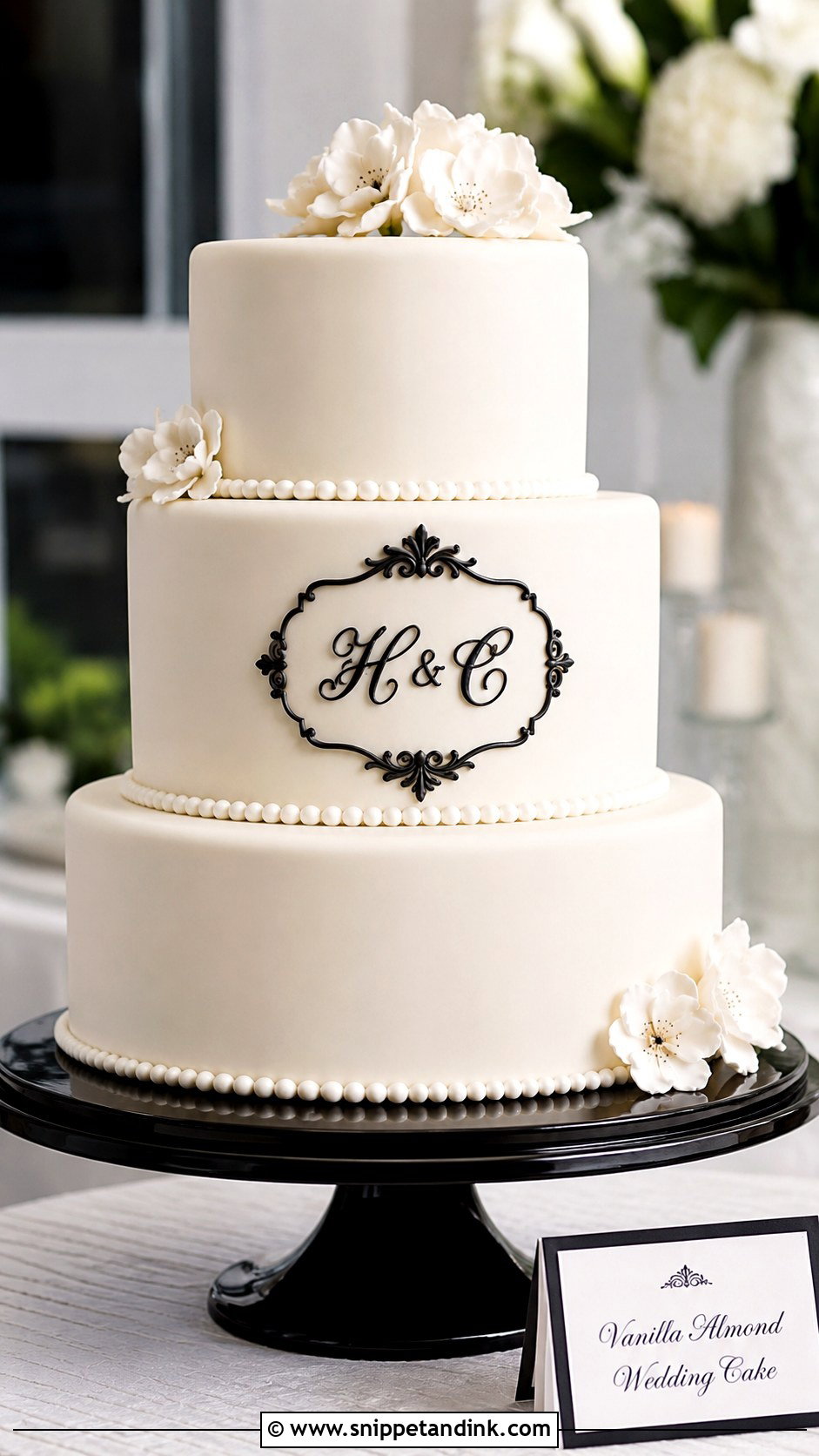
A monogram makes the cake personal while keeping it formal. Initials can be painted in black on a white tier, piped in royal icing, embossed on fondant or used as a small topper. White cake with a black monogram framed by fine piping feels formal; a matte black tier with a white monogram in a clean font feels modern. Legibility comes first. I size the letters so they can be read from a few metres back, because that’s where most guests will see the cake. Keep surrounding decoration minimal.
10. Black And White Wedding Cake With Damask
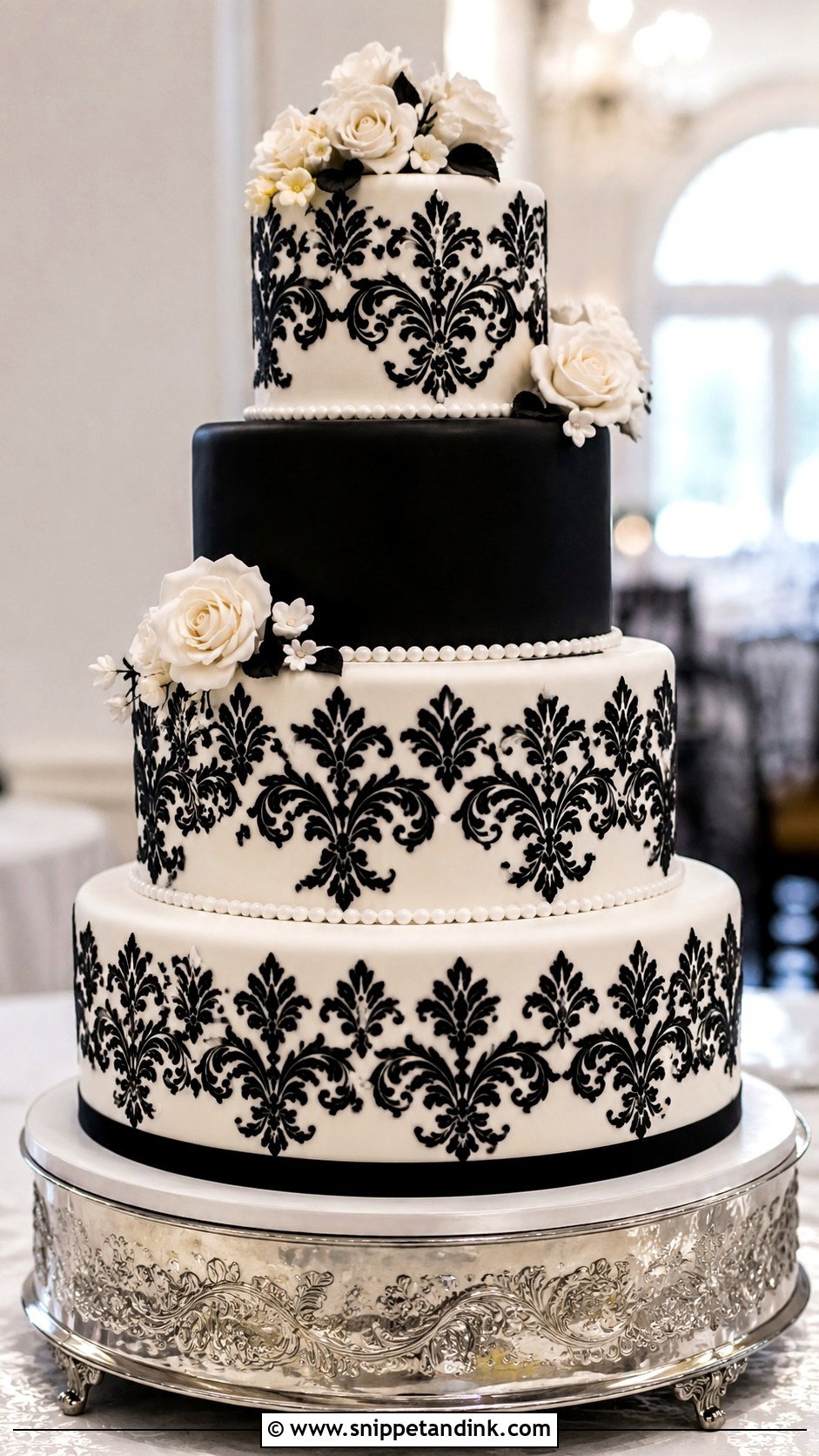
Damask is the ballroom pattern: ornate scrolls stencilled in black over white. It’s done with a stencil and royal icing or airbrushed colour, and every repeat has to line up around the tier, which is harder than it sounds on a curved surface. Use it on one tier for a softer cake, or alternate black damask tiers with plain white ones for a bolder look. Smooth fondant and stacked round tiers suit it. Sugar roses, a pearl border or a black ribbon are enough to finish.
11. Black And White Wedding Cake With Drip
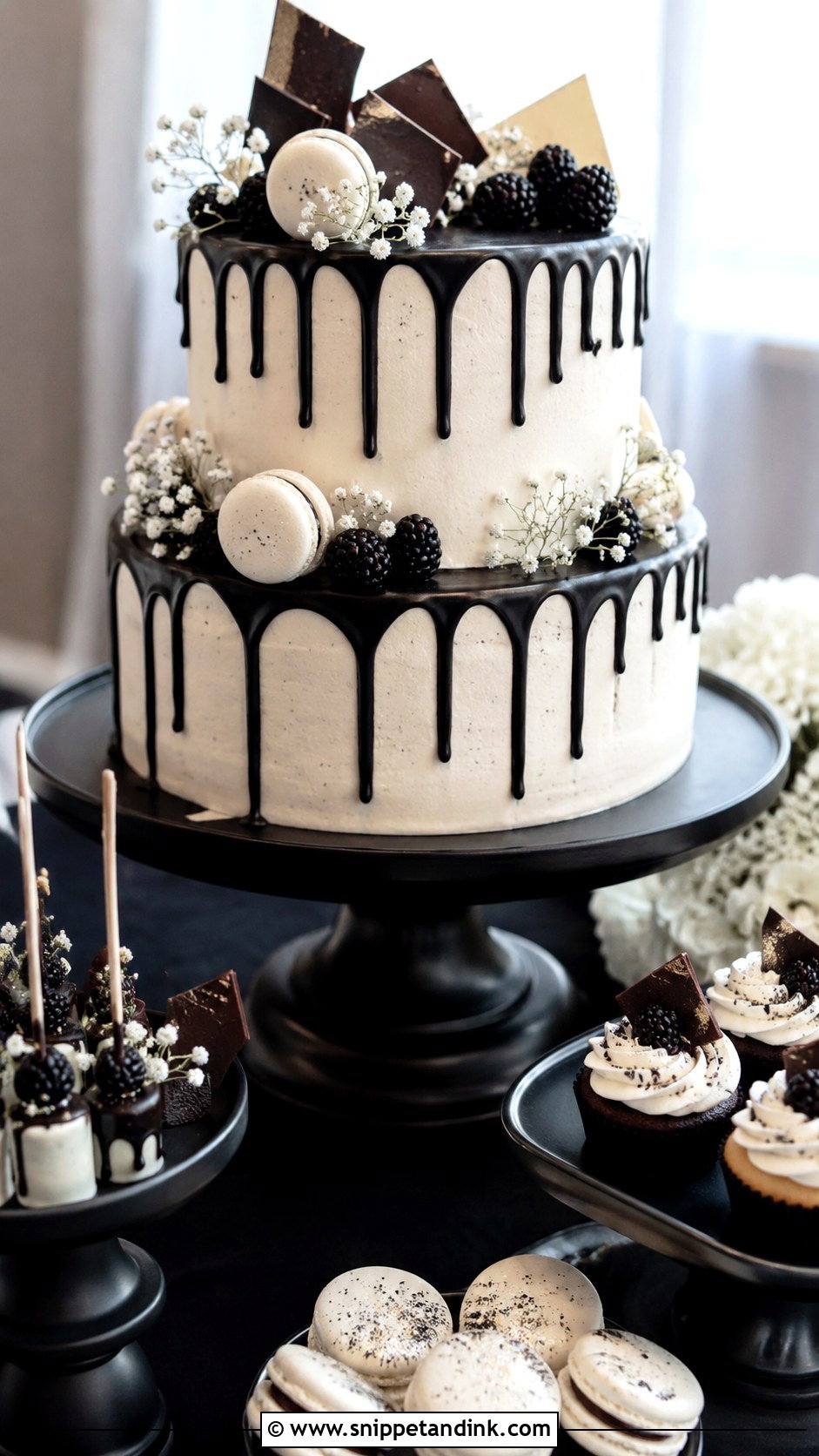
A drip cake can still feel elegant if it’s tidy. White buttercream with a glossy black chocolate drip is the strongest contrast; a black cake with a white drip is the reverse. Keep drips short and even. The drip sets glossy only if the cake is cold and the ganache is at the right temperature, so this is a finish I apply close to delivery. White macarons, blackberries, sugar flowers or chocolate shards add height, and it pairs naturally with a matching dessert table.
12. Black And White Wedding Cake With Buttercream
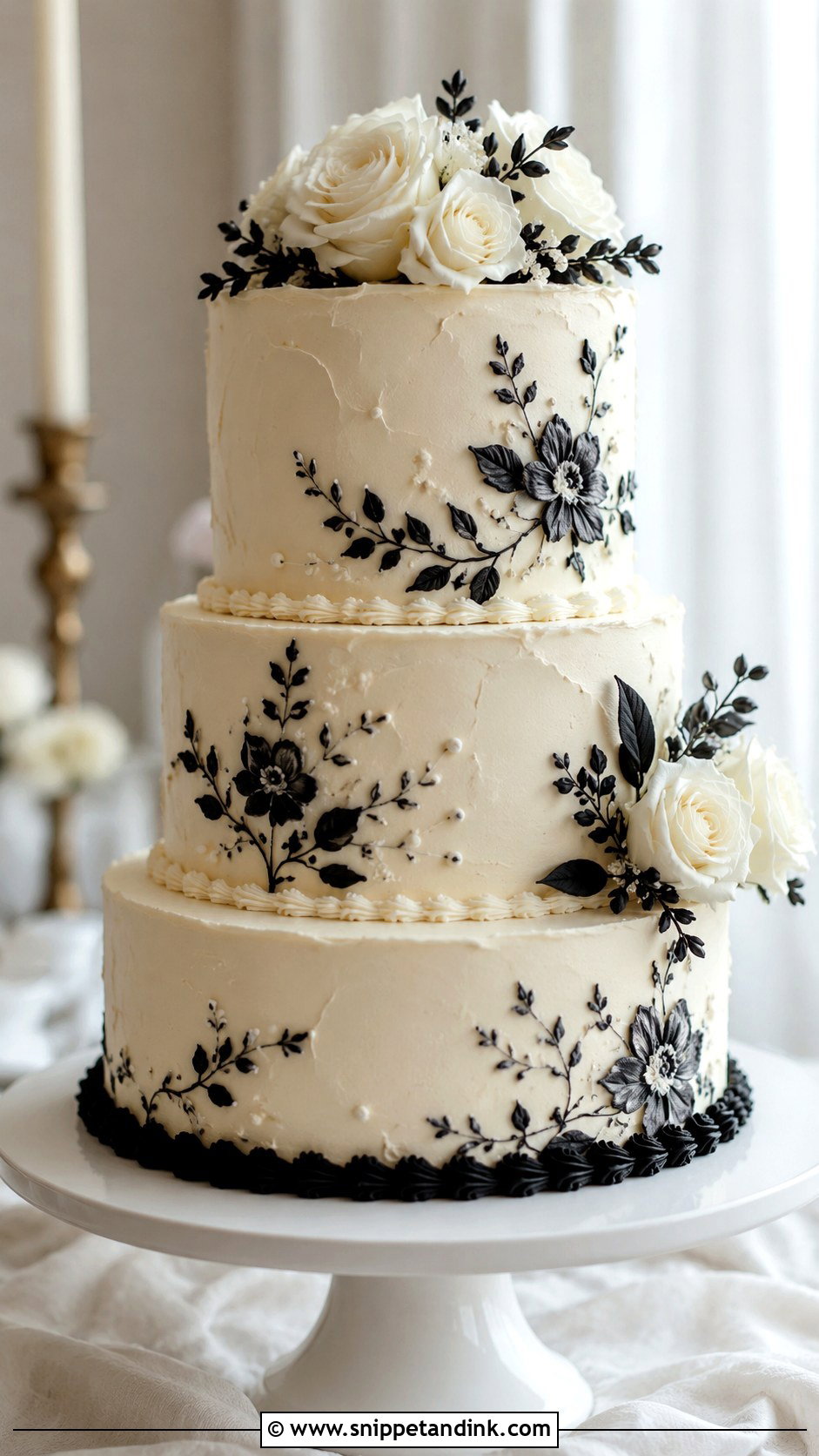
Buttercream softens the palette. Smooth white buttercream with black piping, ribbon or painted accents is classic but relaxed; textured buttercream works too if the black stays minimal. Black floral stencilling on white tiers, a black base tier with white piping, or alternating tiers all suit buttercream. The trade-off is heat: buttercream softens in a warm room and black buttercream softens fastest, so I’d keep this cake in a cool spot until it’s cut. Couples who care about taste as much as looks usually land here.
13. Black And White Wedding Cake With Fondant
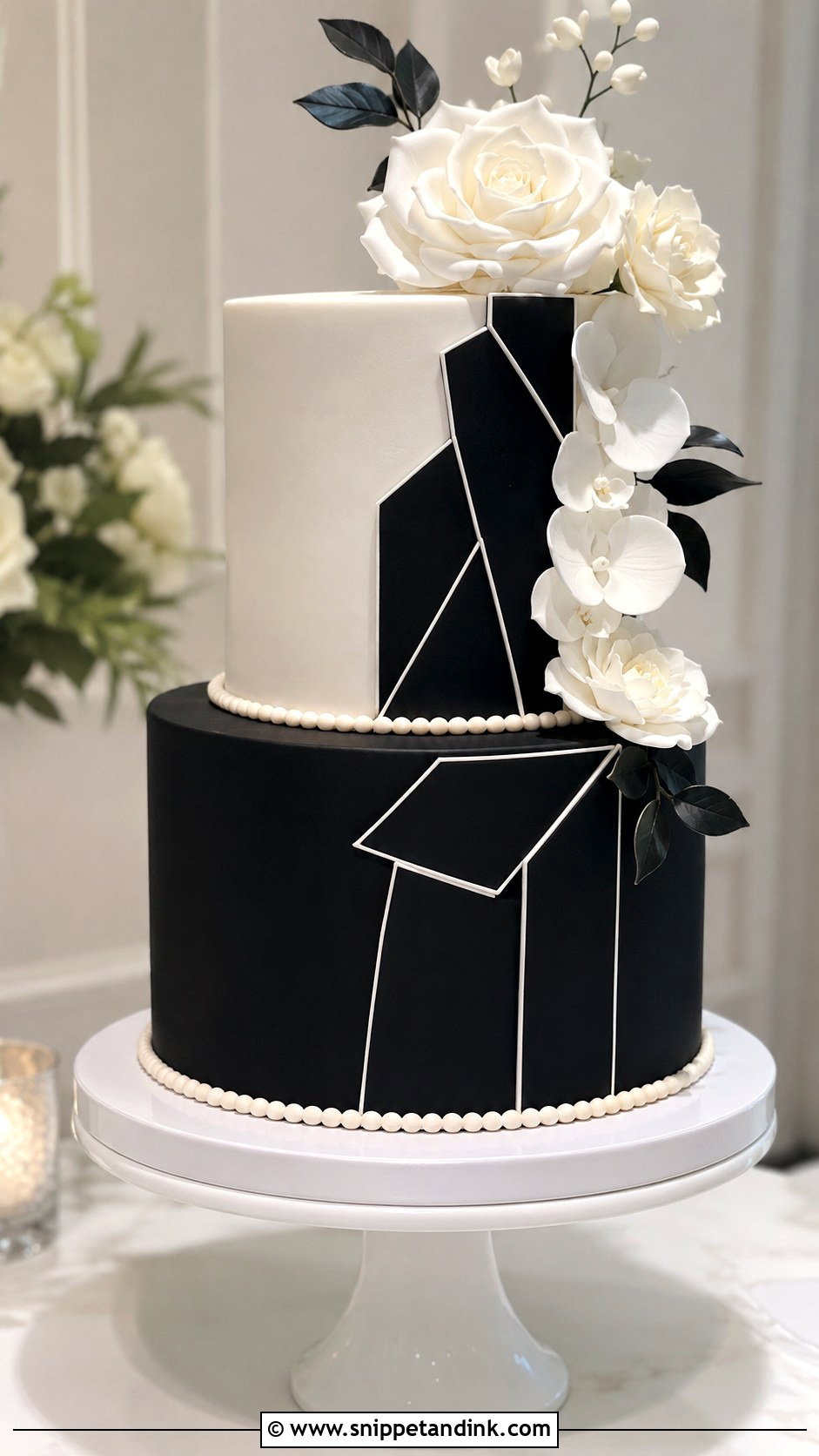
Fondant gives the sharpest edges and the smoothest surface for stripes, geometric panels, lace, bows and sculpted flowers. A tall white fondant cake with one matte black tier looks modern; a full black fondant cake with white sugar flowers is dramatic. Fondant shows every flaw, so look at a baker’s close-up photos of edges and seams, not just styled shots from a distance. It’s the most stable choice for a long display in a warm room, and it suits formal indoor receptions.
14. Black And White Wedding Cake With Ruffles
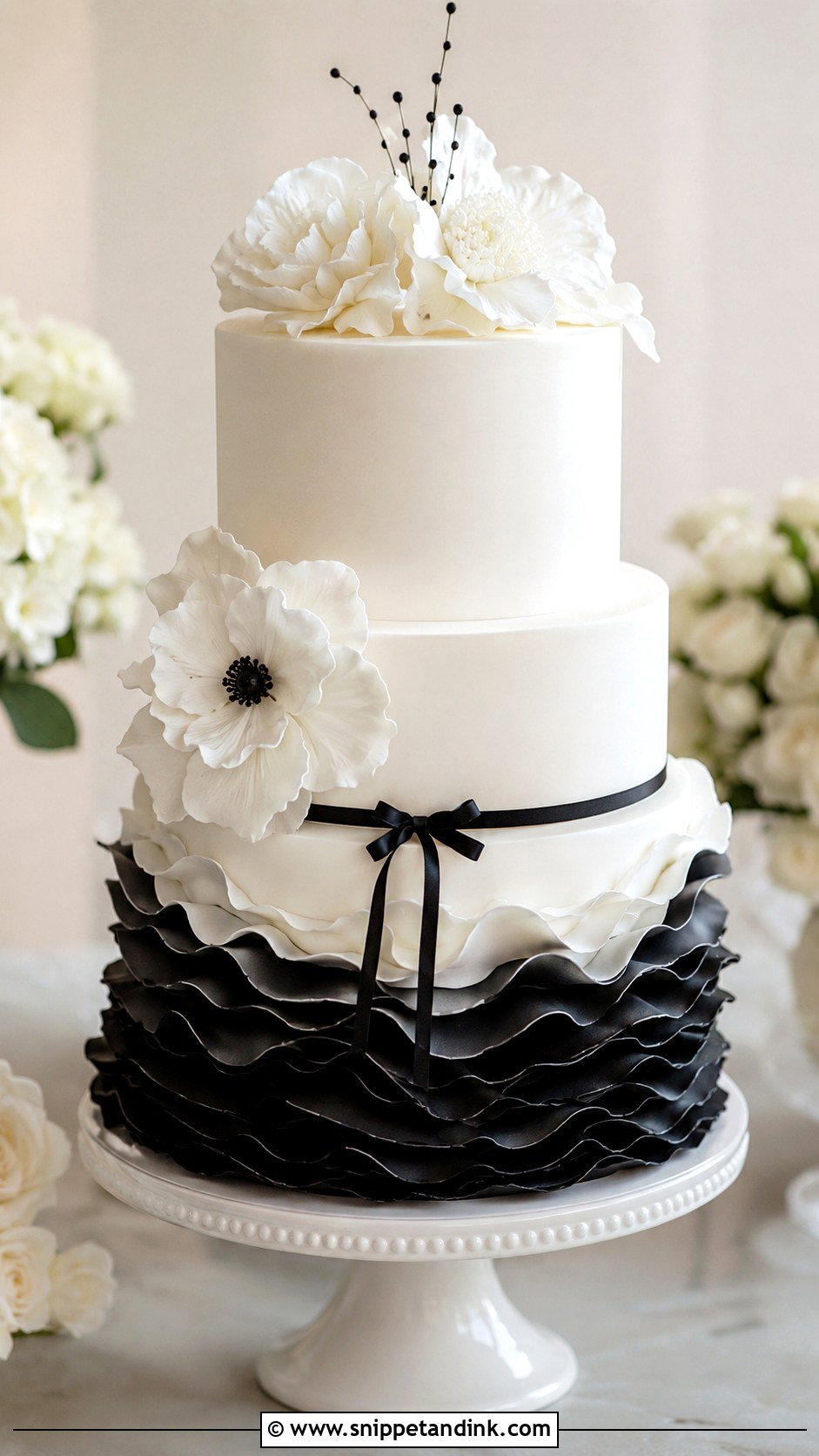
Ruffles bring movement. Fondant ruffles hold their shape best; wafer paper is lighter but softens in humidity; buttercream ruffles are the most edible. White ruffles on black look dramatic and black ruffles on white feel fashion-led. I’d put ruffles on the bottom tier only and keep the upper tiers smooth, which keeps the cake from looking top-heavy. A few white sugar flowers or a small black bow are enough. Texture replaces flowers here, not the other way round.

15. Black And White Wedding Cake With Geometric Pattern
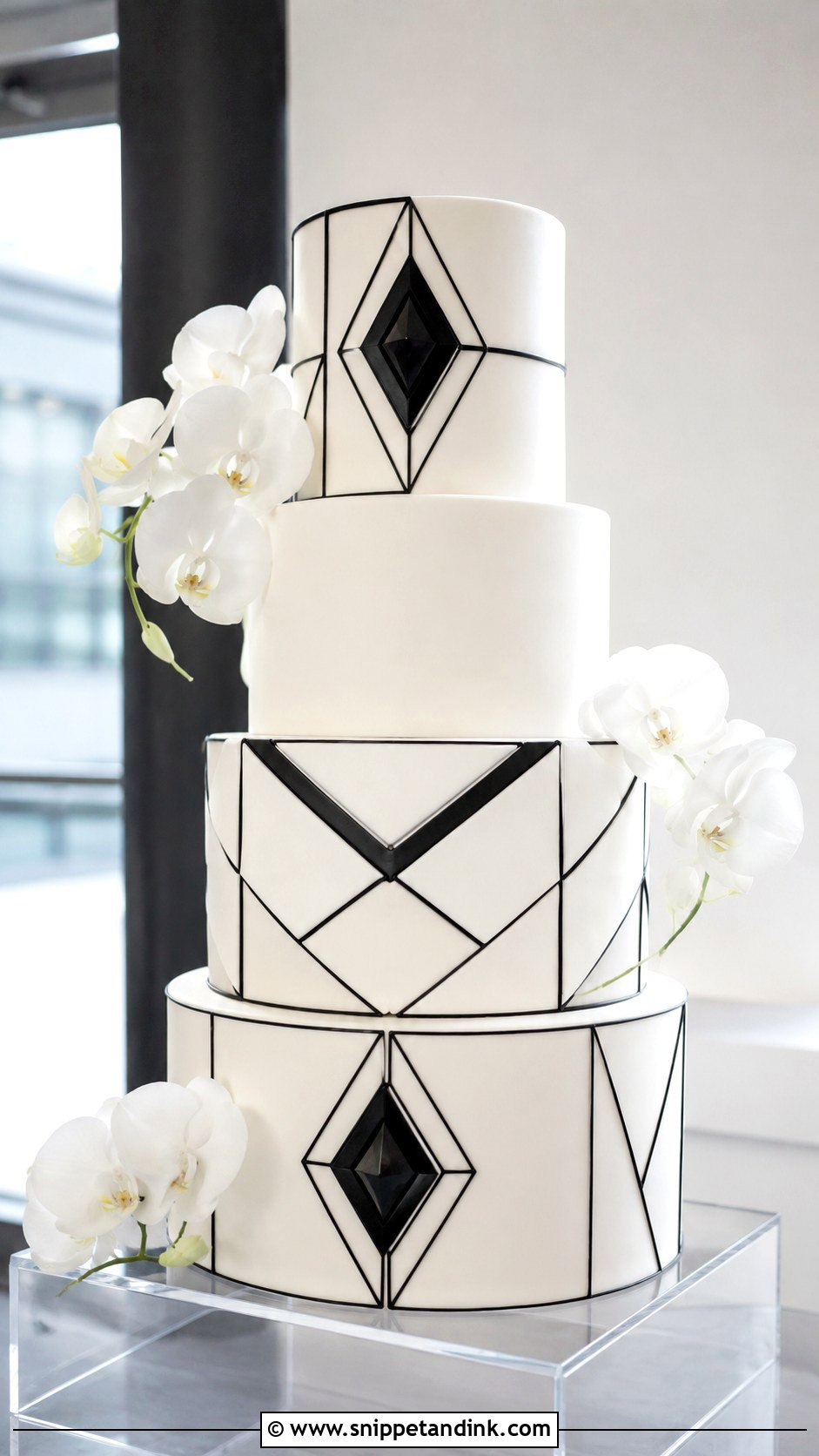
A black and white geometric wedding cake uses hexagons, angled panels, checker accents, diamonds or abstract lines. Black fondant pieces on a white cake can look like modern art; thin black lines on white buttercream with one cluster of white flowers is gentler. Geometry exposes any tier that isn’t level, so I check every tier with a spirit level before decorating. Lofts, museums and rooftops suit it. Keep the cake table plain.
16. Black And White Wedding Cake With Calligraphy
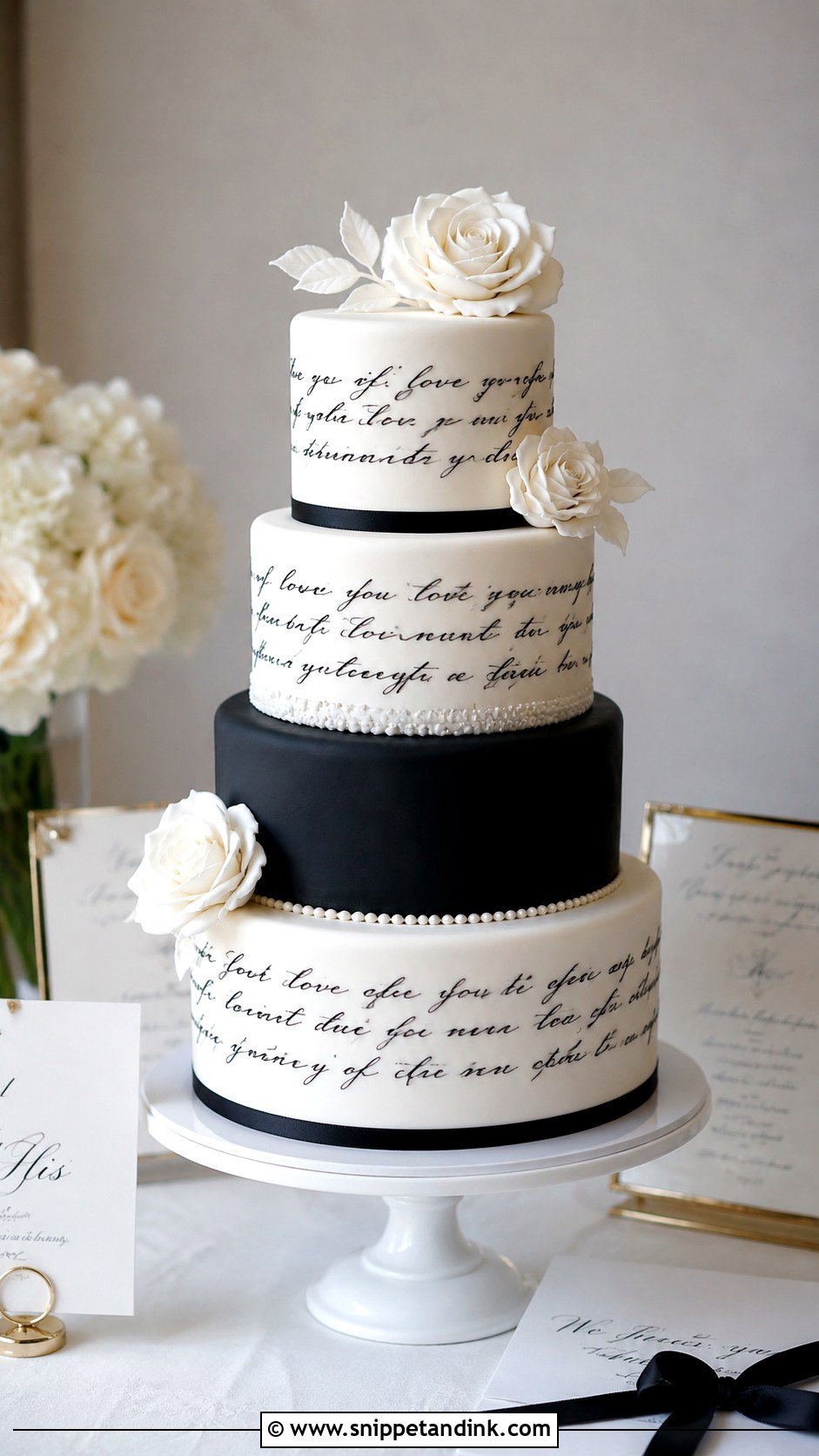
Calligraphy gives the cake a handwritten feel: your names, a short phrase or script wrapping around one tier. Black calligraphy on white fondant is the classic route; white lettering on matte black is striking. Hand-painted lettering is skilled work, and a lot of bakers trace it from a printed template first so the spacing is even. Keep the words few so they stay readable. Thin ribbon, simple florals or small pearls are enough. It ties in naturally with calligraphy invitations and handwritten place cards.
17. Black And White Wedding Cake With Checkerboard
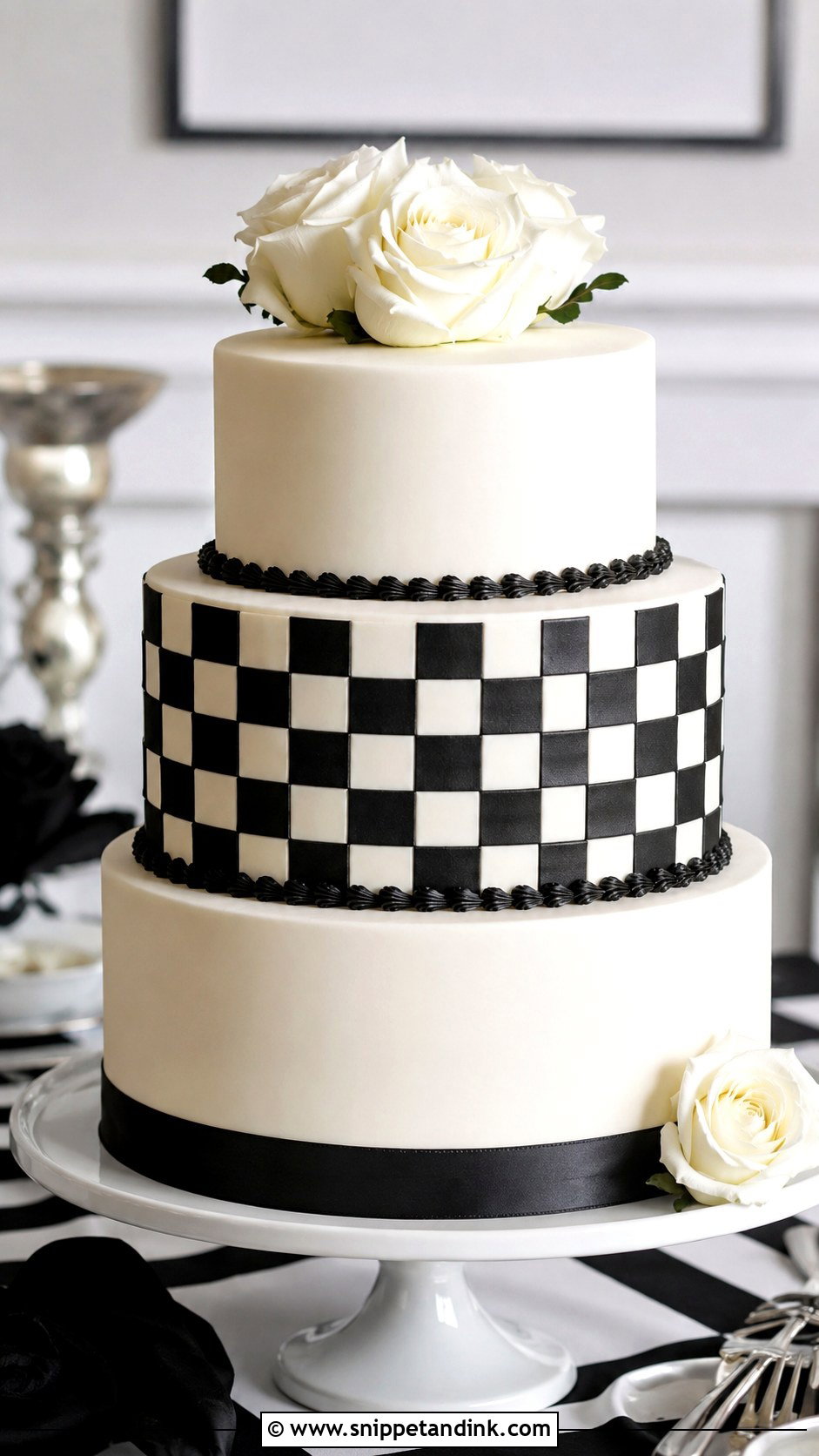
A checkerboard is playful, and it can look chic when it’s limited. Put it on one statement tier and keep the others plain, or wrap the whole cake for maximum impact. With smooth white tiers and fresh flowers it still reads as a wedding cake. An irregular, hand-cut checker with soft edges looks more modern than a perfect grid, and it’s more forgiving on a curved tier, where perfect squares tend to warp at the back. A clean white stand finishes it.
18. Black And White Wedding Cake With Sugar Flowers
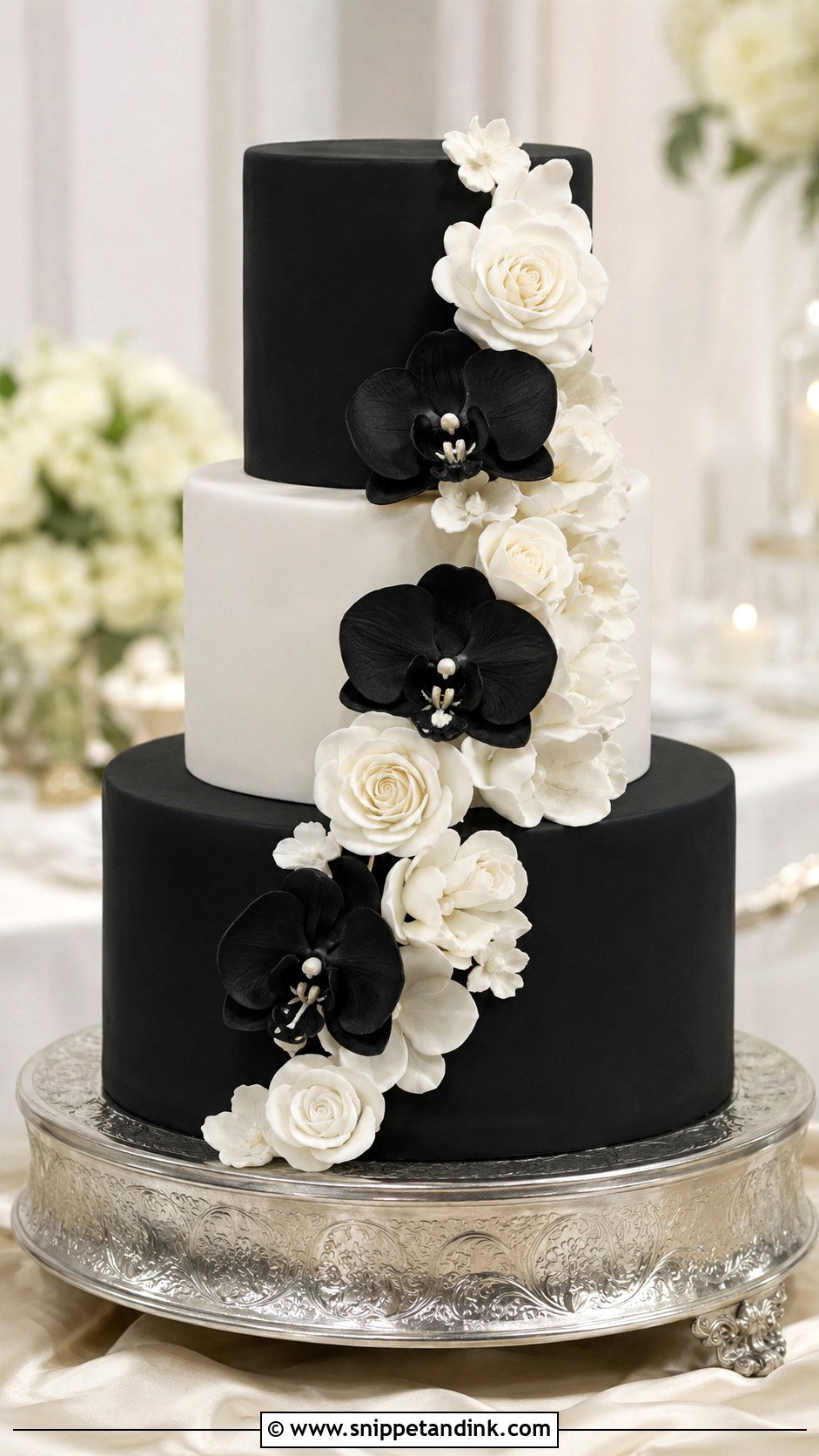
Sugar flowers can be shaped, coloured and placed exactly where they’re needed. White sugar roses on black tiers look dramatic; black sugar orchids on white tiers feel bold. A cascade from the top tier to the board is the most romantic layout. Ask to see the baker’s flowers close up: good sugar petals are thin at the edges, veined, and in varied sizes, while thick, flat petals give themselves away in photos. Keep the cake surface simple so the flowers lead.
19. Black And White Wedding Cake With Tall Tiers
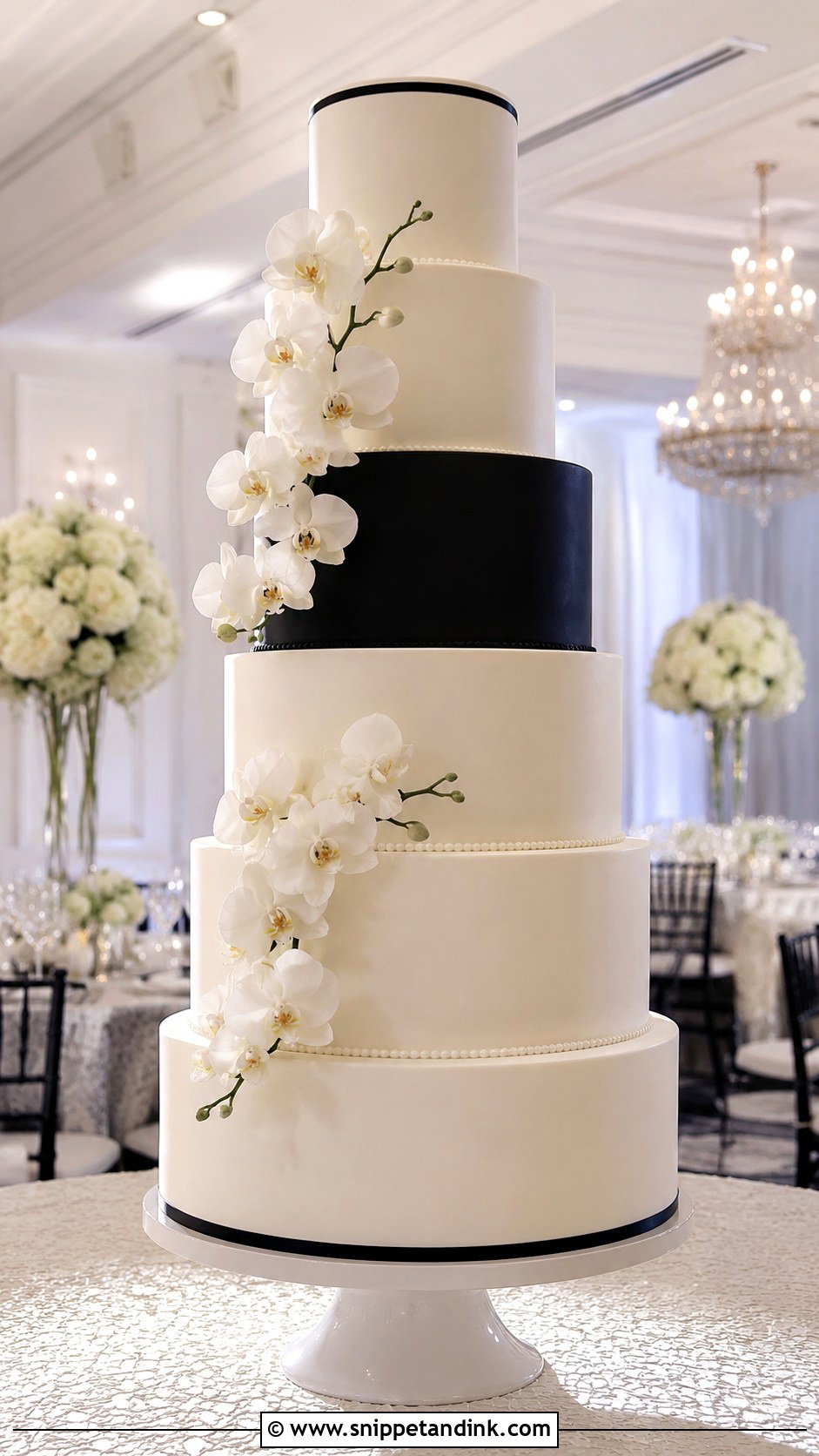
Extra-tall tiers give the cake an editorial look and room for colour blocking, vertical stripes, florals or ribbon. A tall white cake with one black middle tier is balanced; a mostly black tall cake with white floral accents is bold. Big rooms suit it, because a short cake gets lost. Tall tiers need internal boards and dowels partway up each tier, not just between tiers, and very tall cakes are often stacked on site. Keep the finish smooth so the height looks graceful.

20. Black And White Wedding Cake With Minimalist Style
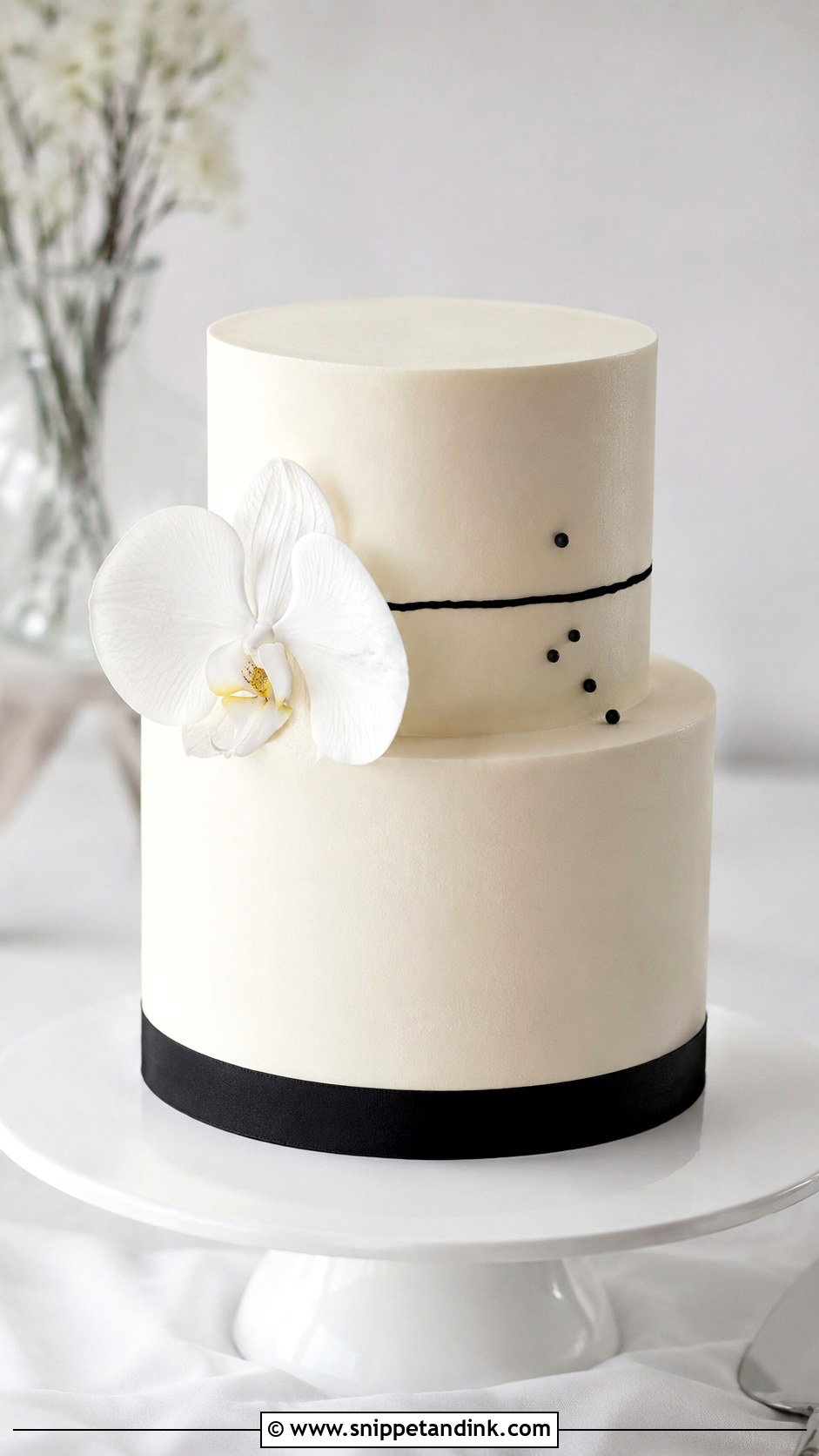
Minimal cakes put everything on one detail: a thin ribbon, a painted line, a single flower or a small abstract accent on smooth white. Or reverse it with matte black and one white floral cluster. With so little on the cake, the finish has to be perfect, so I’d choose a baker whose plain cakes impress you, not just their elaborate ones. Modern venues and intimate weddings suit it, with a low stand and soft lighting.
Fresh Flowers That Should Never Touch the Icing
White flowers against black icing is one of the strongest looks in this list, but not every florist’s flower belongs on food. Many are grown with sprays, and some are toxic in their own right. Anemones, hydrangeas, lily of the valley, sweet peas, foxgloves and daffodils are among those I keep off cakes or behind a barrier.
When fresh flowers are going on, I agree three things with the florist in advance: which varieties are coming, that stems will be wrapped in floral tape or set in food-safe picks, and who places them. Petals sit on small discs of parchment or fondant rather than directly on icing, and everything comes off before the cake is cut.
If you’re unsure, sugar flowers or a mix, sugar near the icing and fresh on the stand around the base, remove the risk entirely.
Keeping the Top Tier and the Sugar Flowers
If you want to save a tier for your first anniversary, tell your caterer before the day so it doesn’t get sliced by mistake. Chill it so the icing firms, wrap it tightly in several layers of cling film and then foil, and freeze it. Rich fruit cake keeps well; a light sponge is best eaten within a few months, and a small fresh cake from your baker on the anniversary often tastes better.
Sugar flowers are the real keepsake. Store them in a box in a dry, dark cupboard; damp makes them soften and sunlight fades black petals to grey. Kept that way, they’ll last for years.
What Your Baker Needs From You Next
Black and white shifts from classic to modern with only a few choices. Flowers make it romantic; marble, stripes and geometry make it current; pearls, lace and monograms make it formal; bows, ruffles and height add fashion. Match the cake to your venue, dress code and flowers, then take a few favourite photos to your baker and talk through servings, flavour and the room temperature on the day. Those practical answers often settle the design for you.
You'll Like These Ideas:









Leave a Reply