
Luxury wedding cakes are judged up close. Guests walk right up to them, photographers shoot them at an arm’s length, and at that distance a slightly uneven tier or a stiff sugar petal is obvious. What makes a cake look expensive is rarely the amount of decoration; it’s the finish, the proportions and the hours of handwork you can’t see. These are twenty ideas I’d put in front of a couple planning a high-end reception, each with a note on how it’s built and what it asks of your venue, your timeline and your baker.
Where the Money Goes in a High-End Cake
Couples are often surprised that a cake with less decoration can be quoted higher than a busier one. The cost of a luxury cake is mostly time and skill, and some of that time is spent on things guests never notice. Prices vary widely by region and designer, but the work usually breaks down like this:
- Handmade sugar flowers, which can take hours per bloom for large peonies or roses, plus drying time before they can be arranged.
- Finish quality: sharp edges over ganache, flawless fondant and hand painting are slower than a rustic coat.
- Structure for tall or sculptural designs, including boards, dowels and a central support.
- Design time, sketches and a tasting before anything is baked.
- Delivery, on-site assembly and a careful setup on the stand.
If the quote is too high, ask which of these can shrink. Swapping a few sugar flowers for fresh ones, cutting a tier and adding a kitchen cake, or choosing texture over hand painting all lower the cost without making the cake look cheaper.
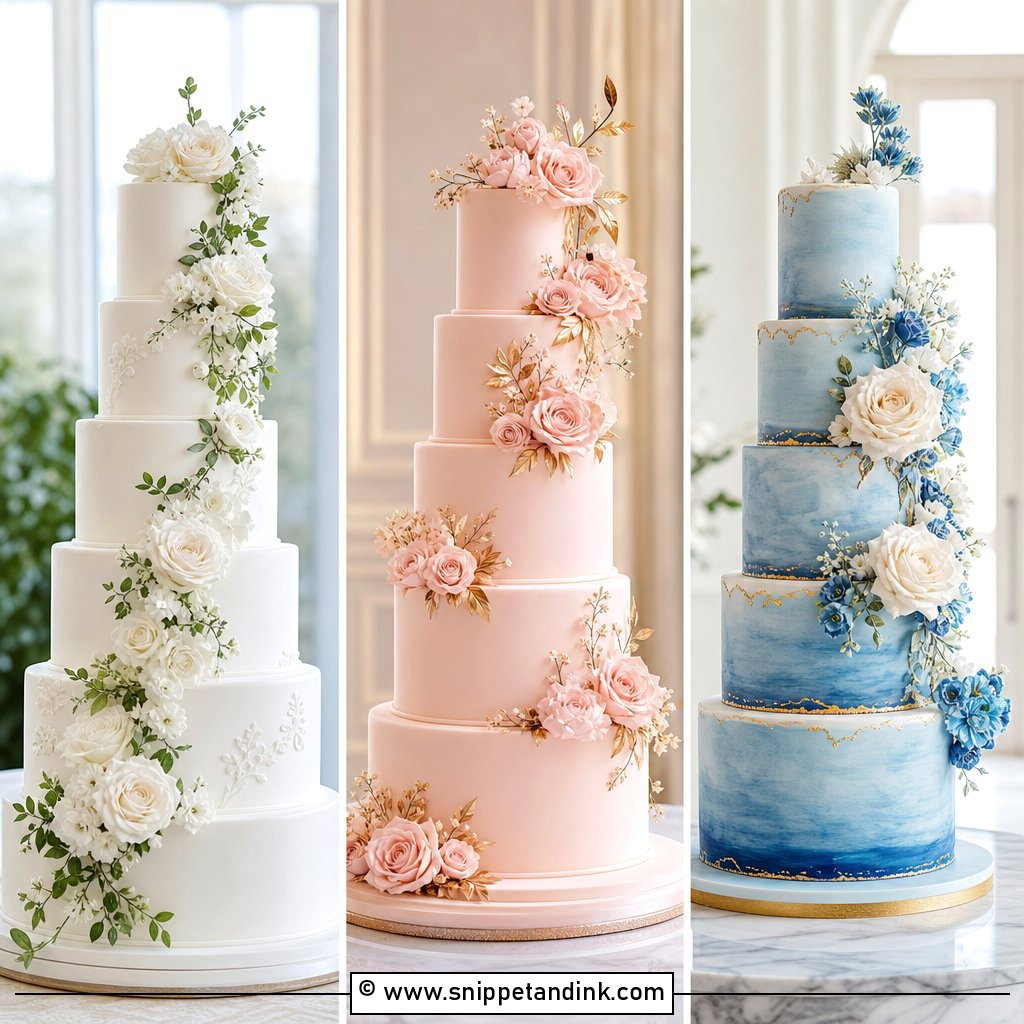
1. White Wedding Cake With Sugar Flowers
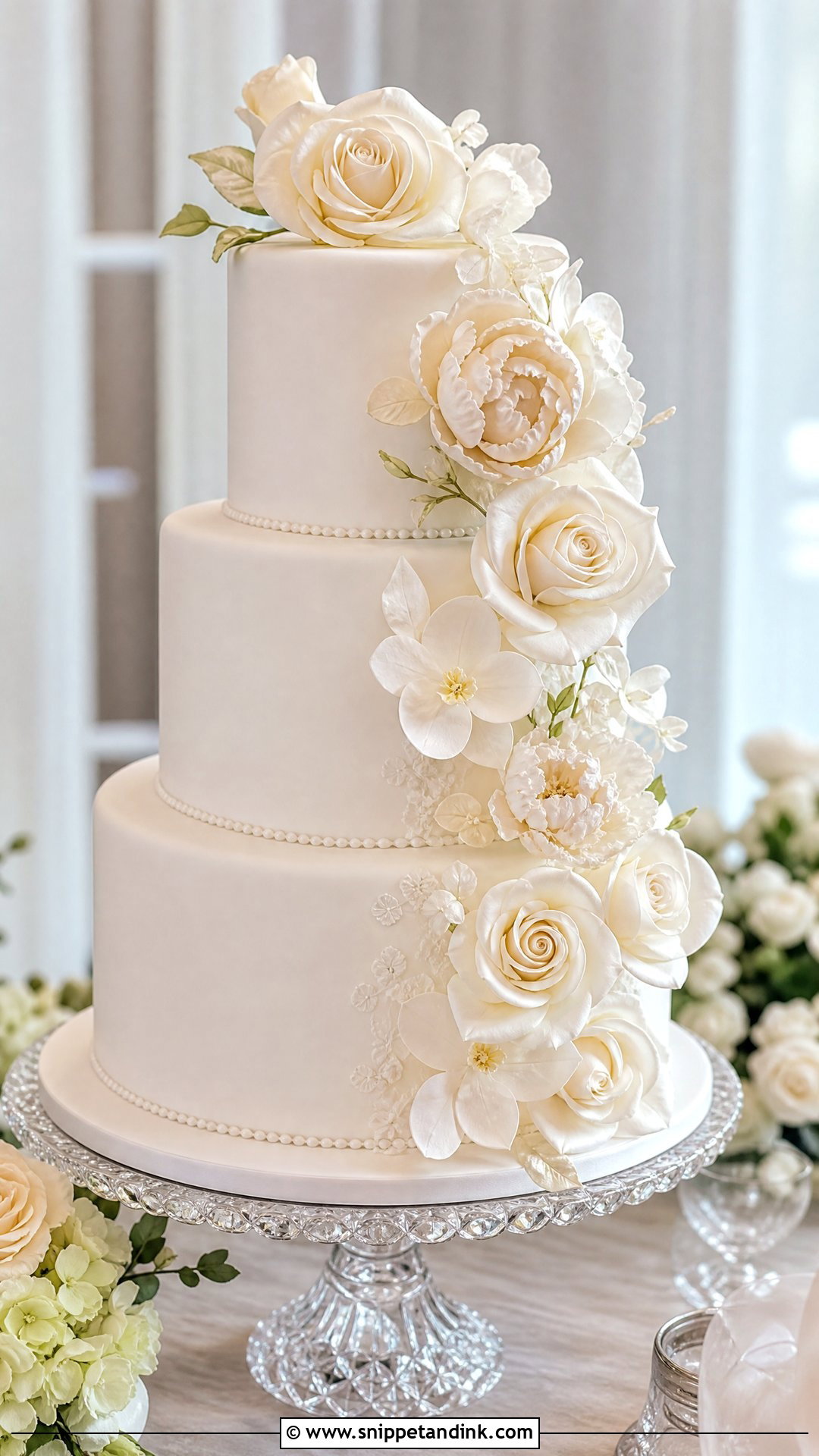
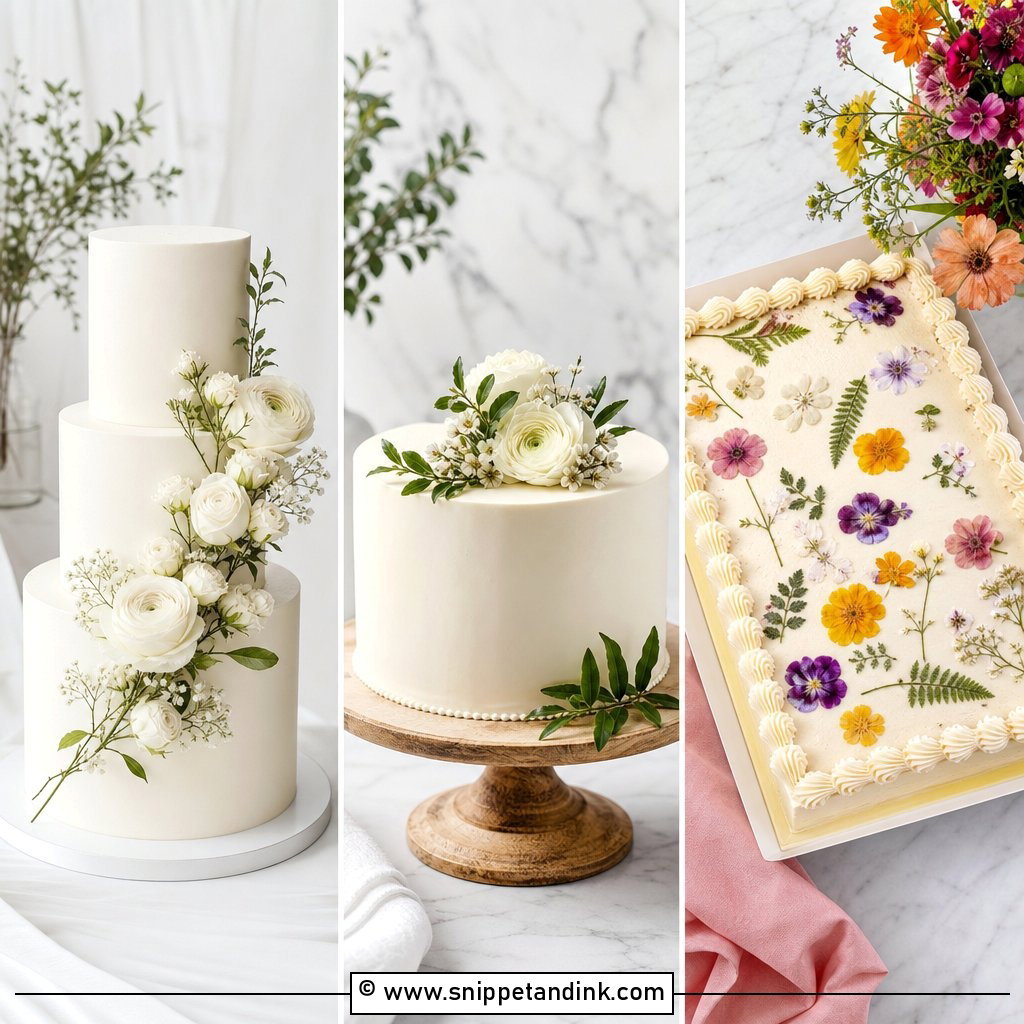
Sugar flowers are made petal by petal, wired, dried and dusted with colour, often over several days, which is why this is the classic high-end order. I group a few large blooms with smaller buds and leaves rather than spacing identical roses evenly; real arrangements are uneven, and the eye reads that as natural. Peonies and garden roses take the most time to make. Keep the cake itself in the ivory to pale champagne range so the flowers carry all the detail.
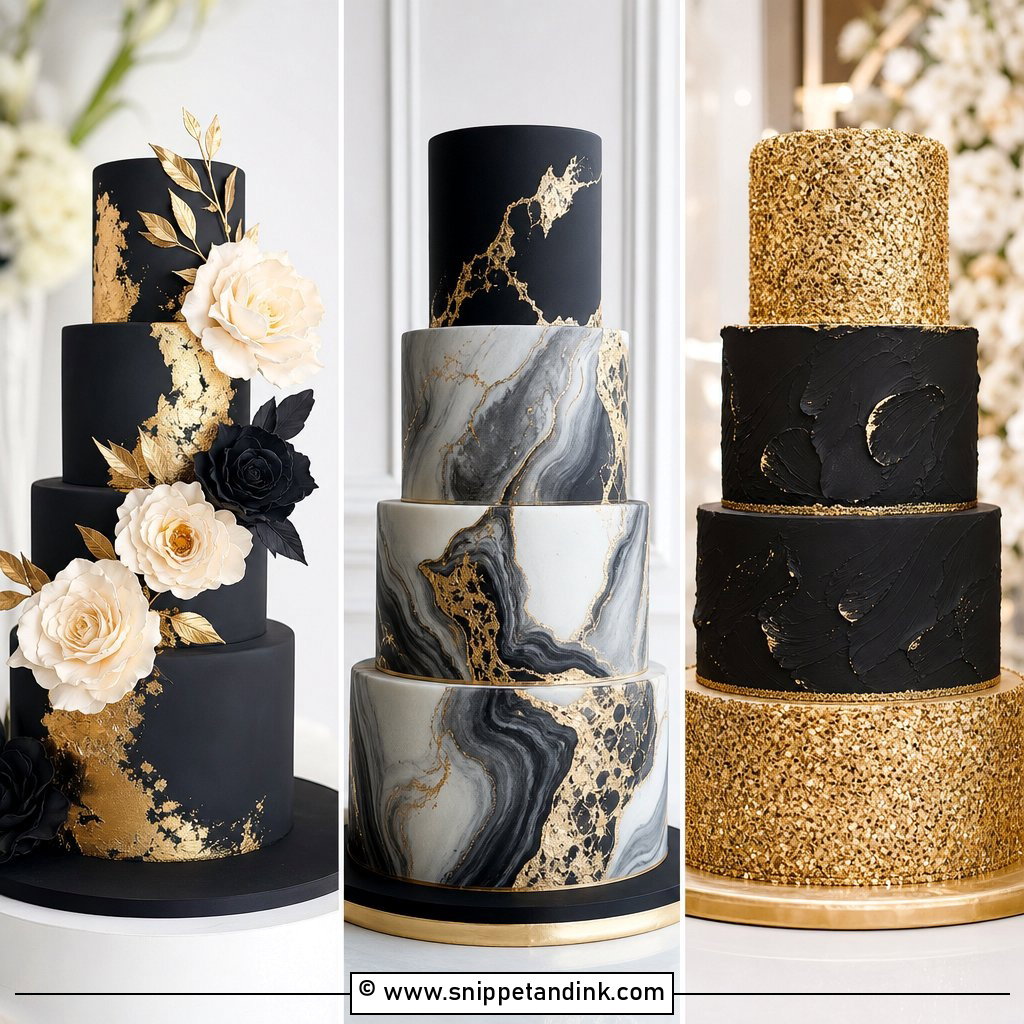
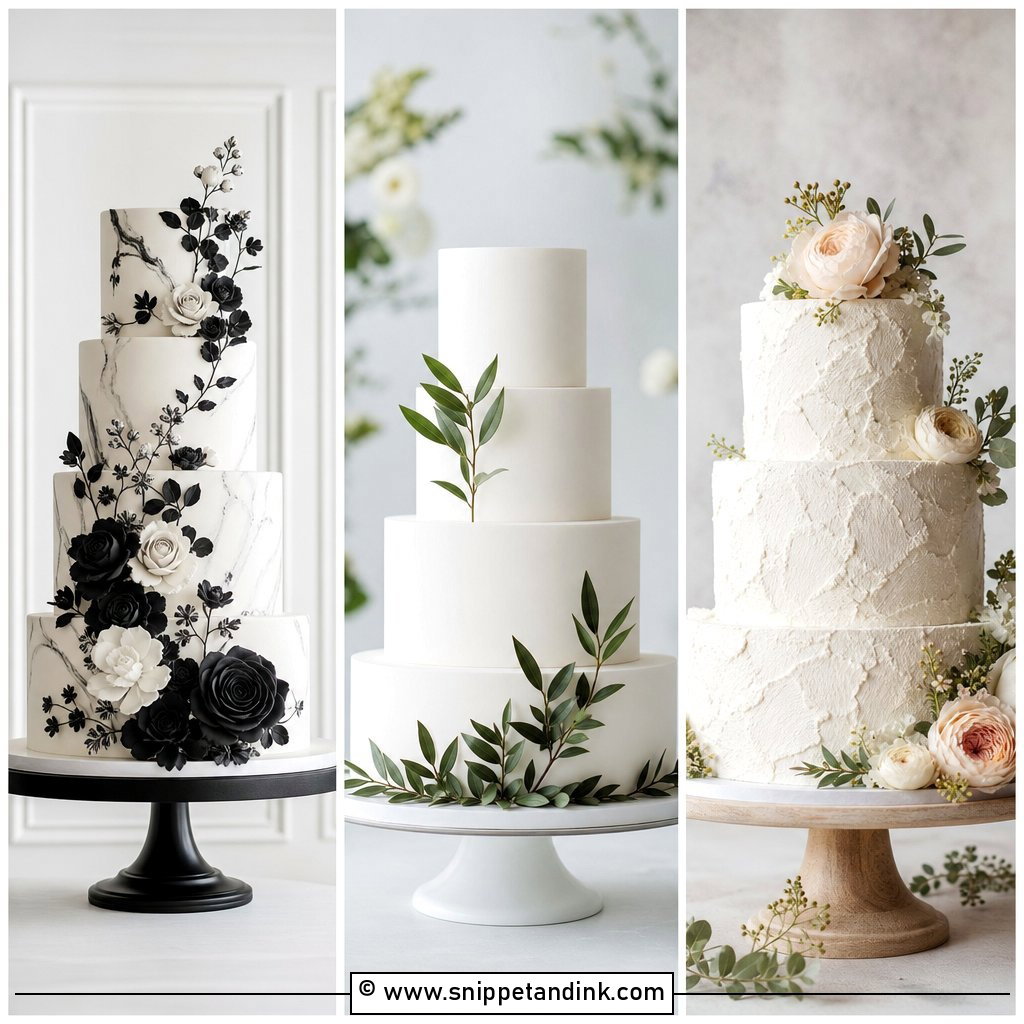
2. Black And White Wedding Cake
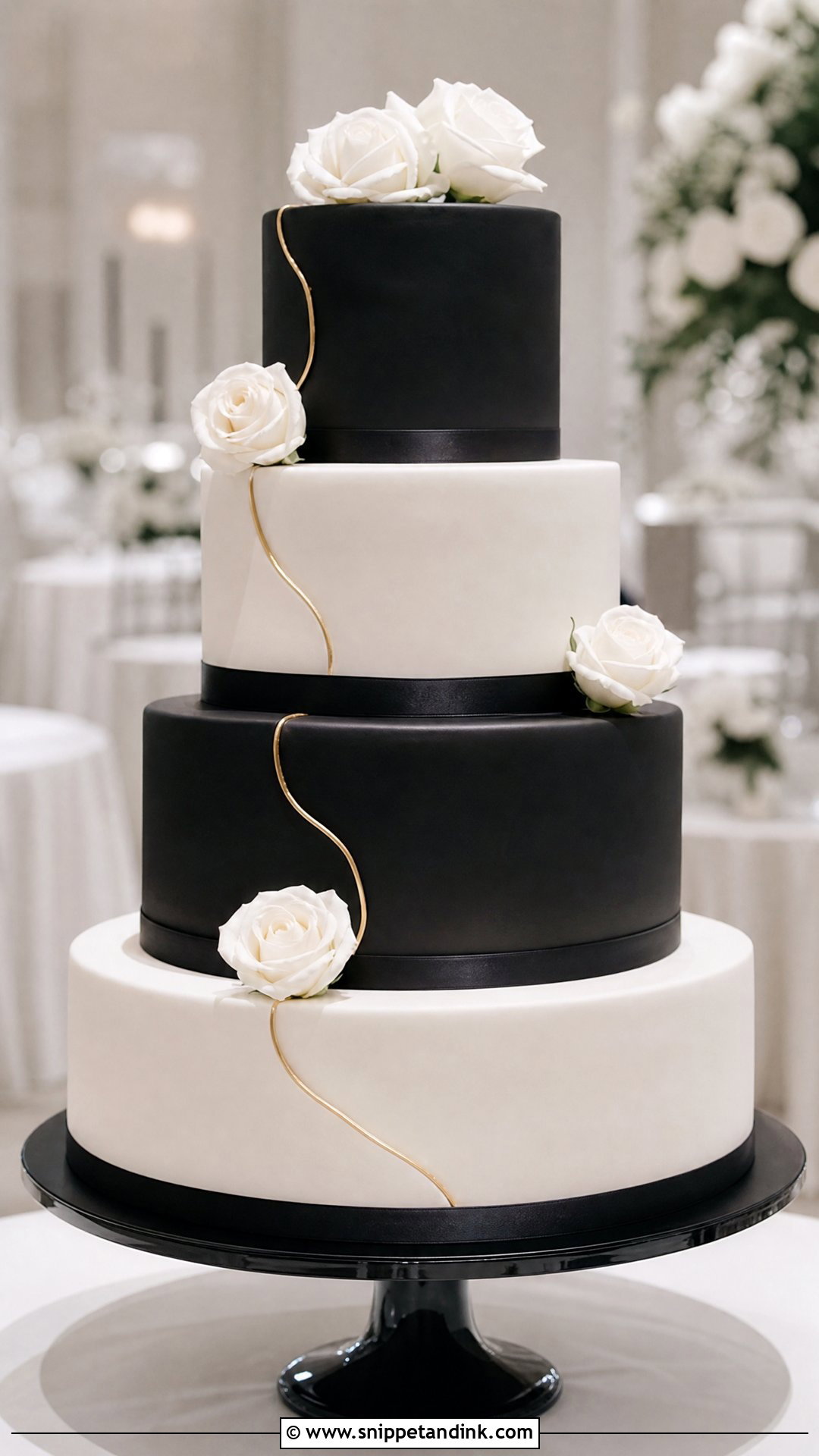
Contrast does the work in a black and white wedding cake, so the shapes need to be very clean. I’d use white fondant tiers with black ribbon bands, hand-painted black florals or a single black base tier. A practical warning: deep black fondant takes a lot of colouring and can tint lips and teeth, so I keep black to the outer decoration or a thin layer guests can peel away. Espresso, chocolate or vanilla bean sponge sits well inside.
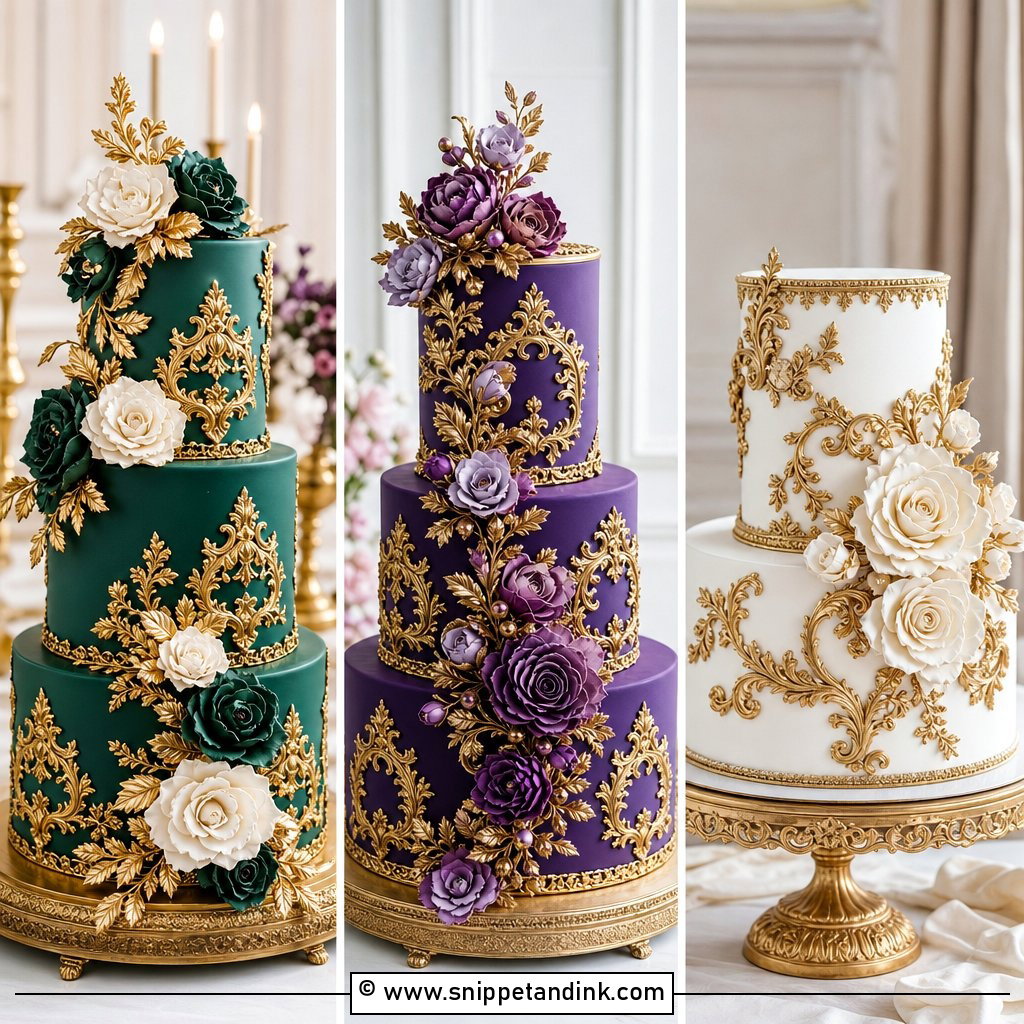
3. Gold Wedding Cake
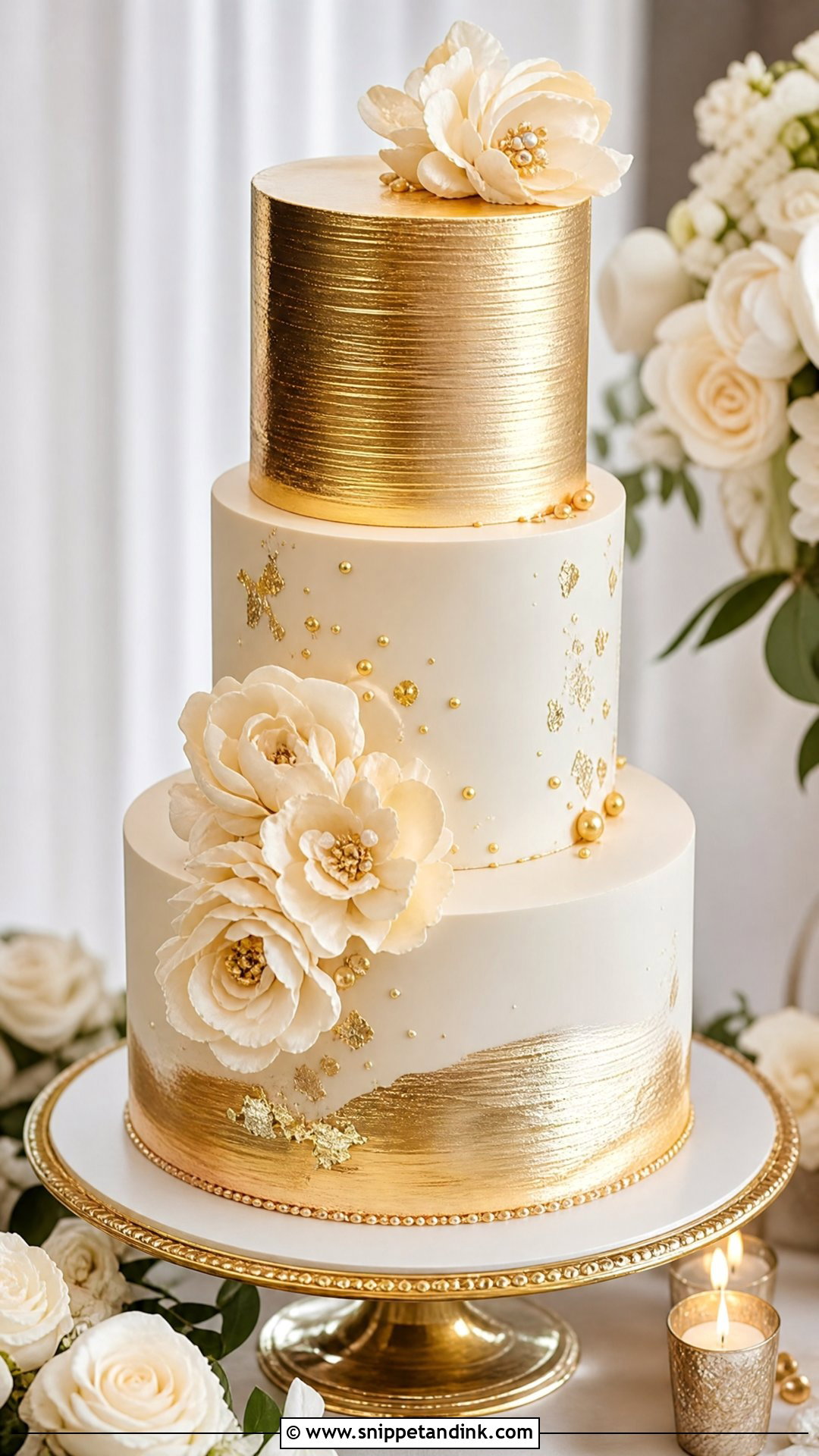
Real gold on a cake should be edible gold leaf or a dust that’s sold as edible. Many shimmer dusts are labelled “non-toxic”, which only means they’re safe as decoration on something you remove, not something you eat. I use leaf on a brushed edge or one accent tier, applied last because it sticks to warm fingers and tears easily. Restraint is what keeps it from looking like a party shop. It reads warmest under candlelight at an evening reception.
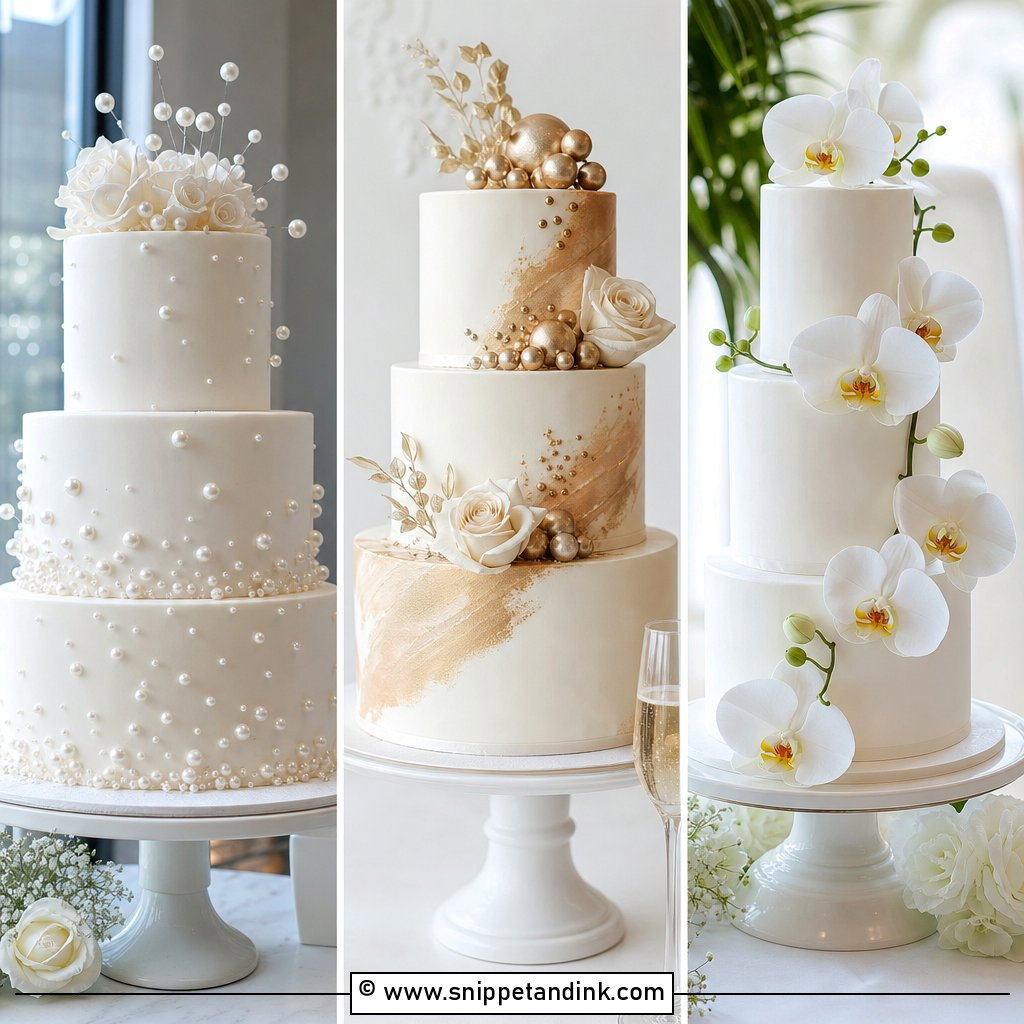
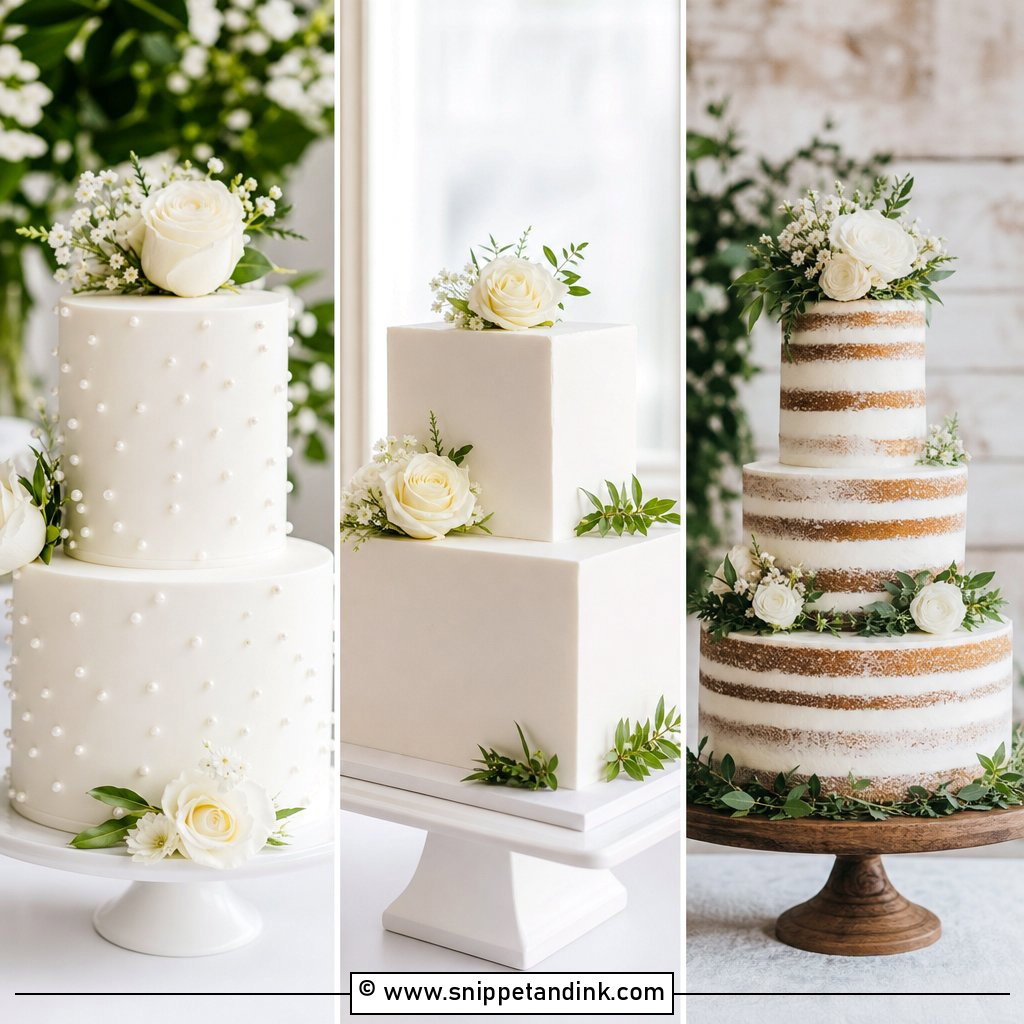
4. Pearl Wedding Cake
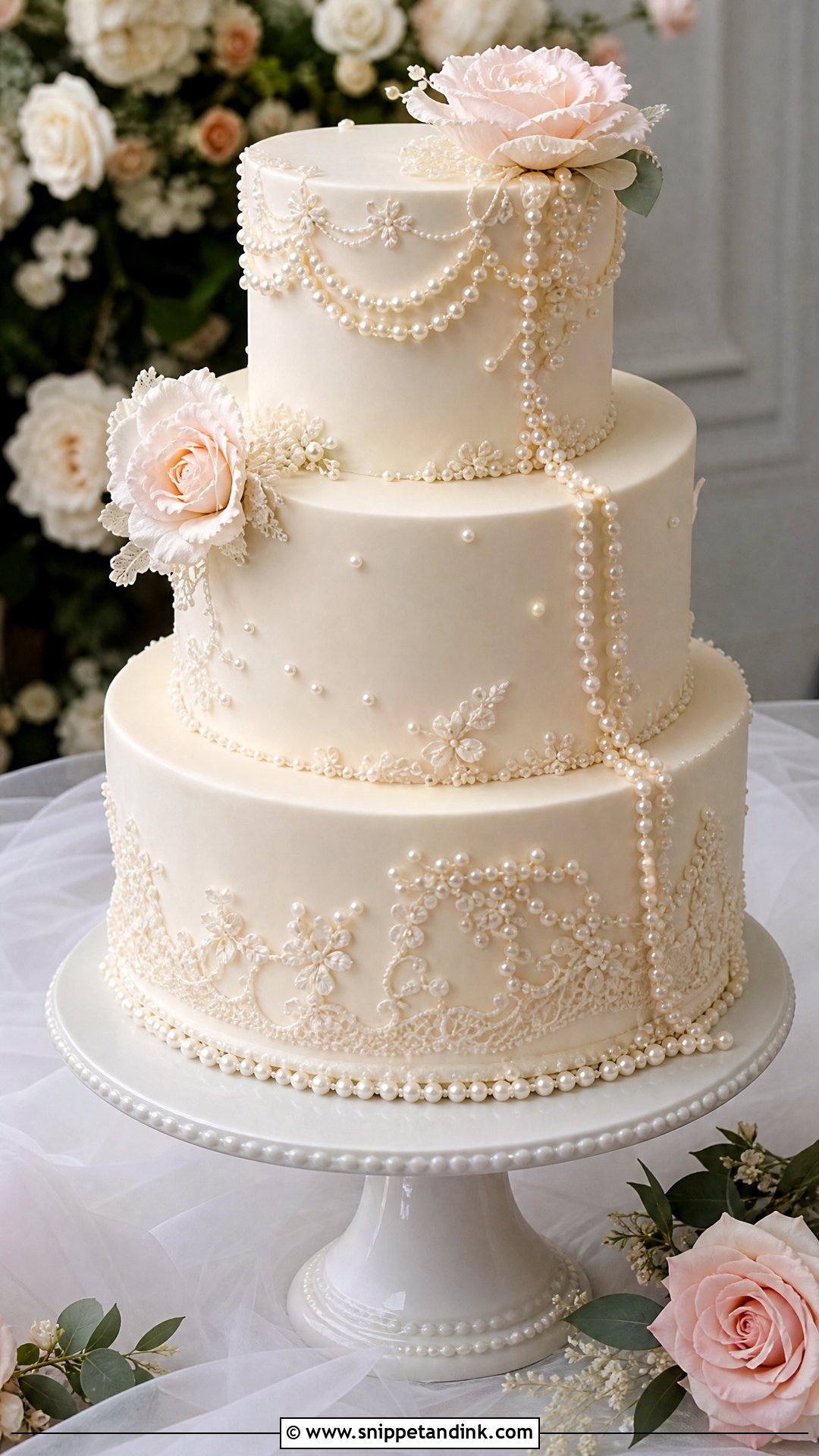
Pearls can be tiny piped dots, moulded fondant beads or a pearlised shimmer brushed over smooth fondant. Spacing decides whether it looks expensive or crowded. I set them by hand in graduated sizes or in loose drifts across one side of a tier. A full pearl coat is hours of work and tends to look heavy in photos. Small sugar flowers or a satin-look fondant band are enough to finish it.
5. Modern Sculptural Wedding Cake
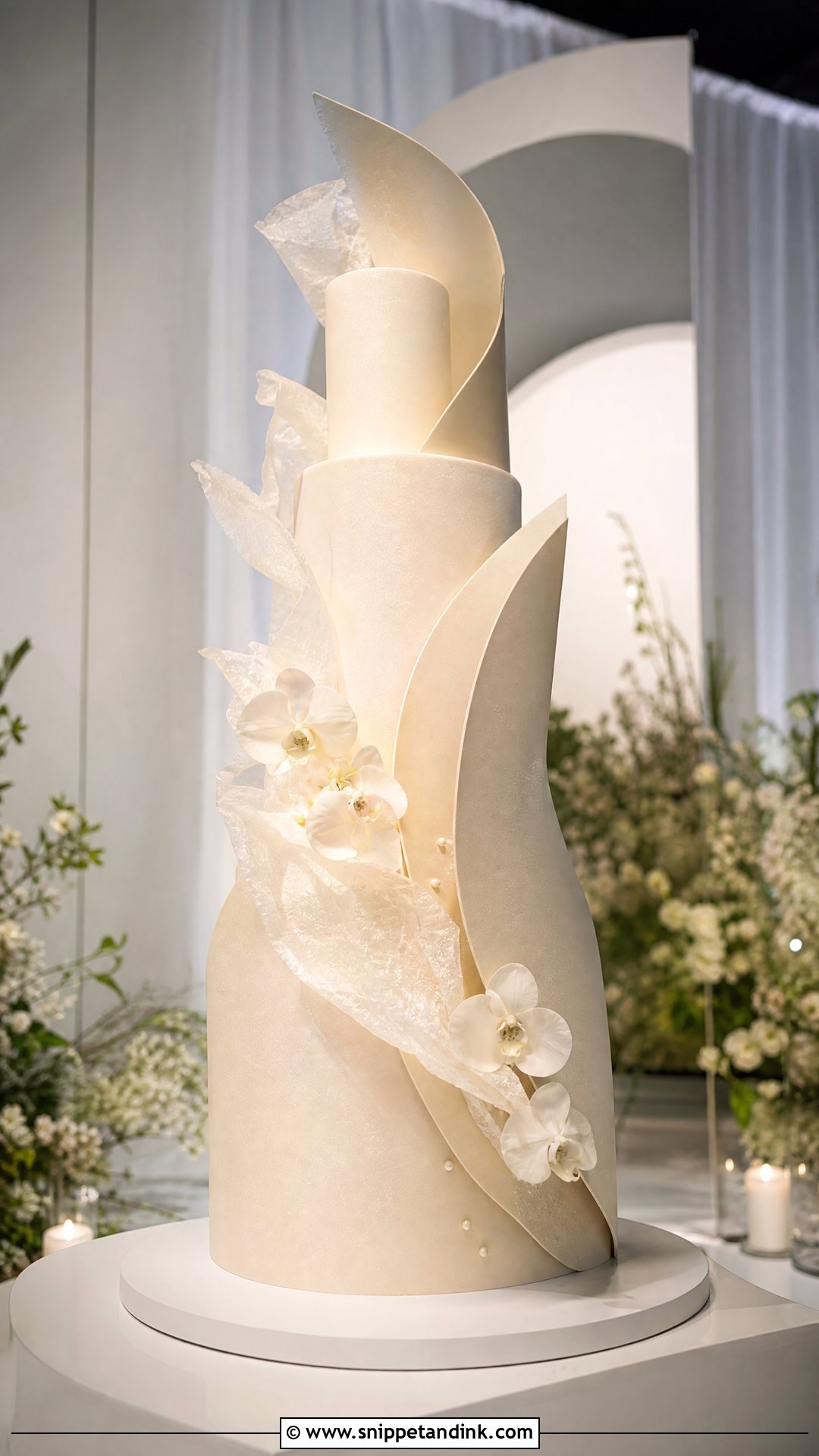
Sculptural cakes are the ones I sketch most before quoting. Offset tiers, curved panels and wafer-paper sails need internal supports and boards that you never see, and each shape adds design and build time. Wafer paper reacts to humidity, so sails that look crisp in an air-conditioned studio can soften at a damp outdoor venue. I keep the colours muted, stone white or taupe, so the shape is the point. A gallery or rooftop setting suits it.
6. Vintage Lambeth Wedding Cake
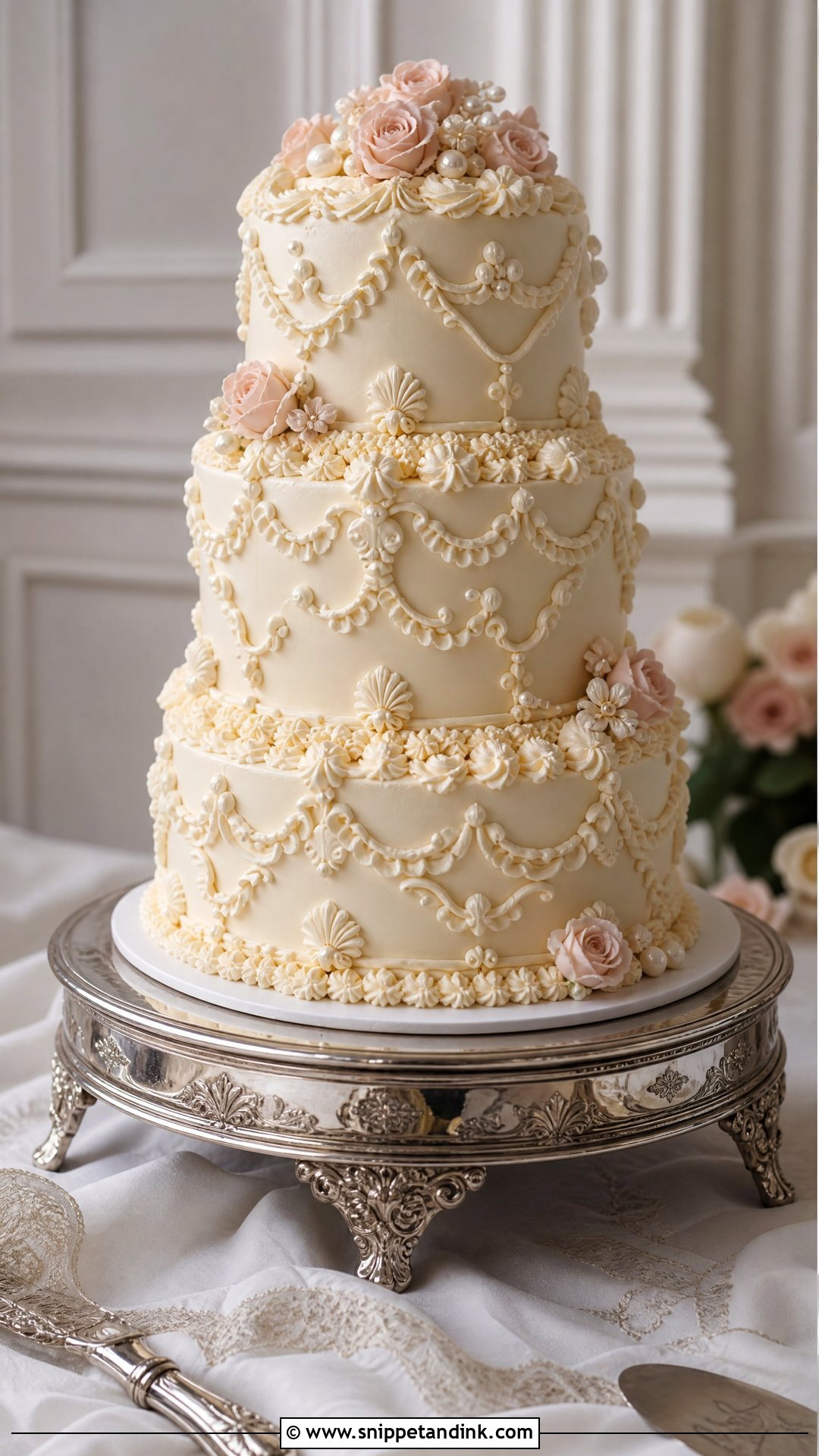
Lambeth piping is layer on layer of borders, swags and scrolls, and it is slow, careful work. It needs a stiff buttercream or royal icing to hold its shape, which makes it better suited to an indoor or tented reception than a hot lawn. I’d keep the palette to ivory with one soft accent so the detail stays readable. Cherries feel playful and retro; sugar pearls and small florals make it formal.
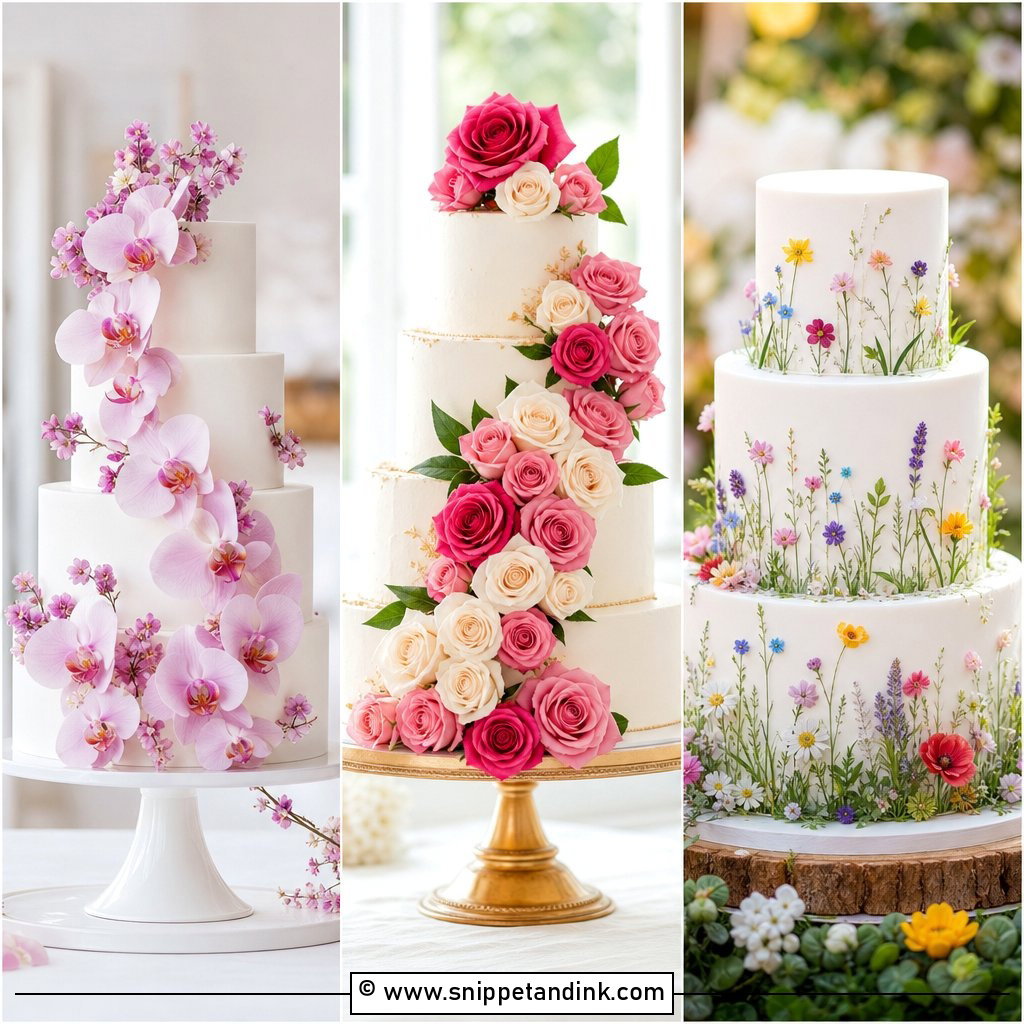
7. Floral Cascade Wedding Cake
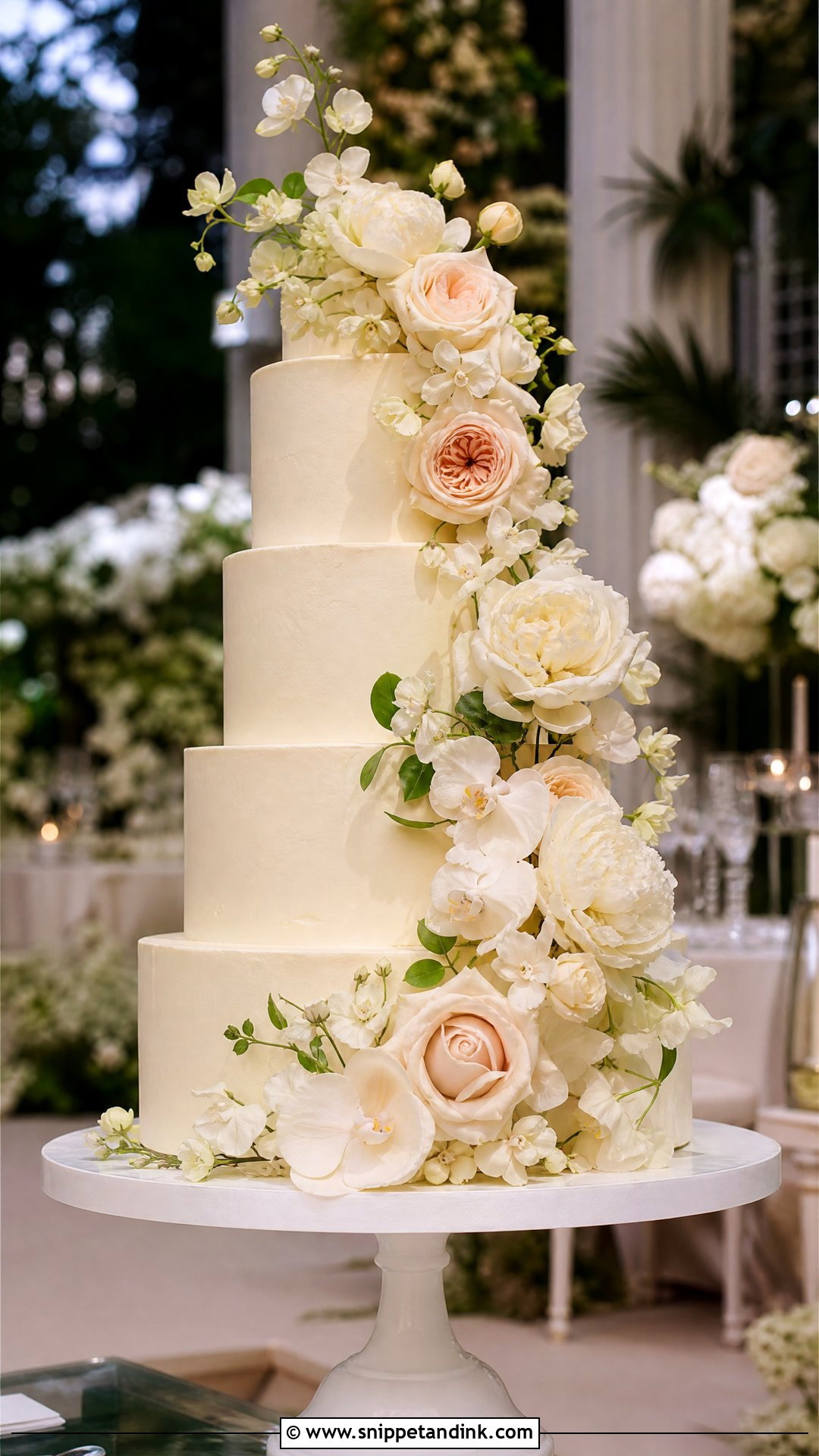
A floral cascade wedding cake should look as if the flowers grew down the tiers, not as if they were tipped from a bucket. I mix a few large blooms with small fillers and trailing greenery, heavier at the top and thinning as it falls. If the flowers are fresh, your florist and I agree on varieties a week or two ahead and the stems go into food-safe picks so nothing touches the frosting directly. Sugar flowers cost more but survive heat and keep afterwards.
8. Tall Tiered Wedding Cake
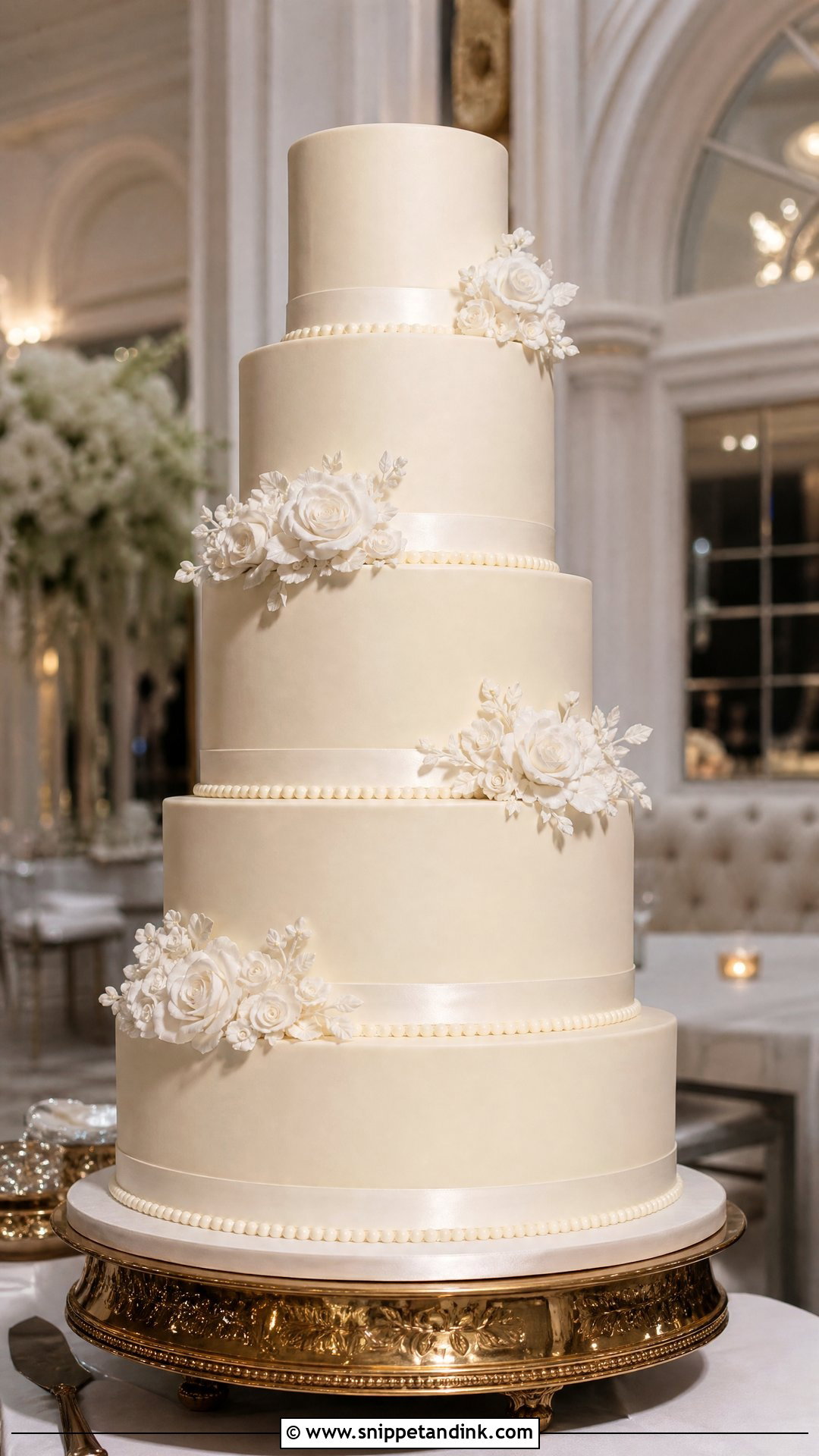
A tall tiered wedding cake needs engineering. Every tier sits on its own board with dowels underneath, and a cake of four or five tiers usually also gets a central rod through the stack. Very tall cakes are often delivered in sections and assembled at the venue, so the setup time goes in the schedule. Keep the decoration consistent from top to bottom, and check the table and stand can carry the weight. Under a high ceiling with good lighting, it holds the room.
9. Square Wedding Cake
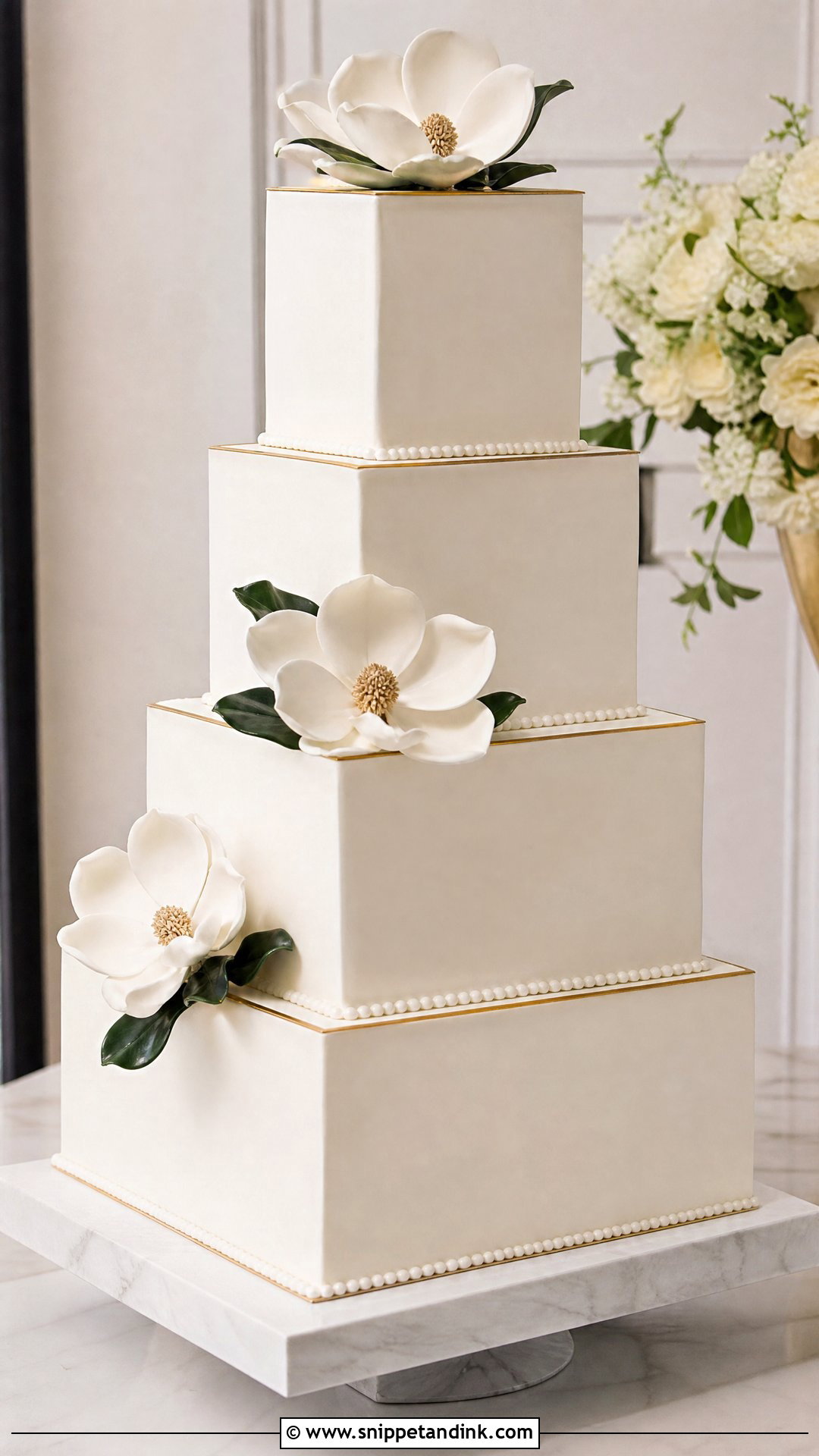
Square tiers are unforgiving: the corners show every bump, so I finish them over a firm chocolate ganache and cover with fondant for the sharpest edge. Alternating tall and short tiers keeps the stack from looking like boxes. One statement sugar flower per tier or a thin gold trim is plenty of decoration. Square tiers also give more slices than round ones of the same width, which helps a large guest count.
10. Marble Wedding Cake
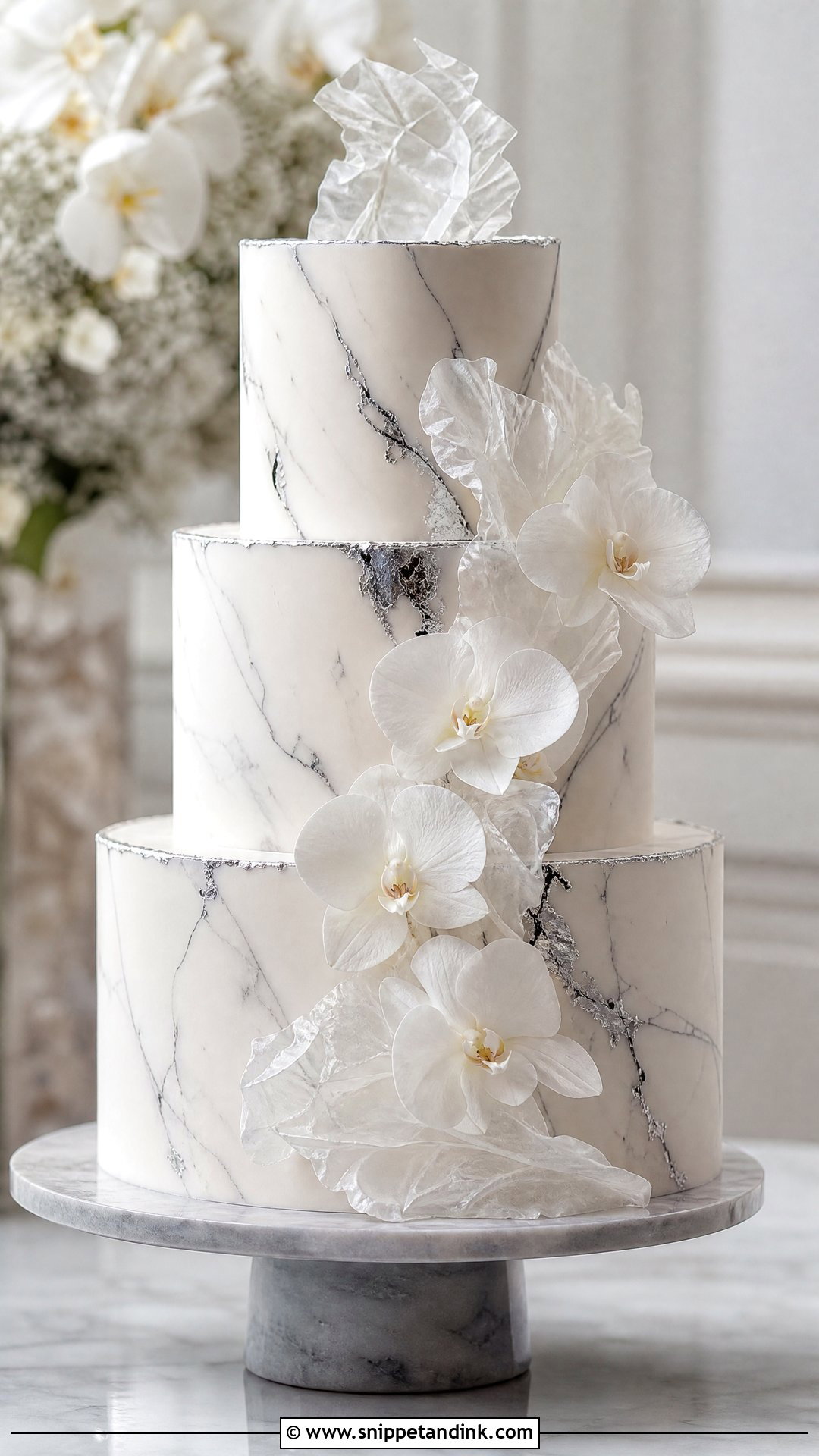
Marble effects come from twisting coloured fondant before rolling it out, or from painting veins on by hand. The kneaded version is less predictable, so I roll several sheets and choose the best one; painting gives more control. Soft grey veining on white looks like real stone; harsh streaks look like a craft project. Clear acrylic separators between tiers suit the architectural feel. Dark chocolate, mocha or salted caramel sponge fit the moody palette.
11. Ruffle Wedding Cake
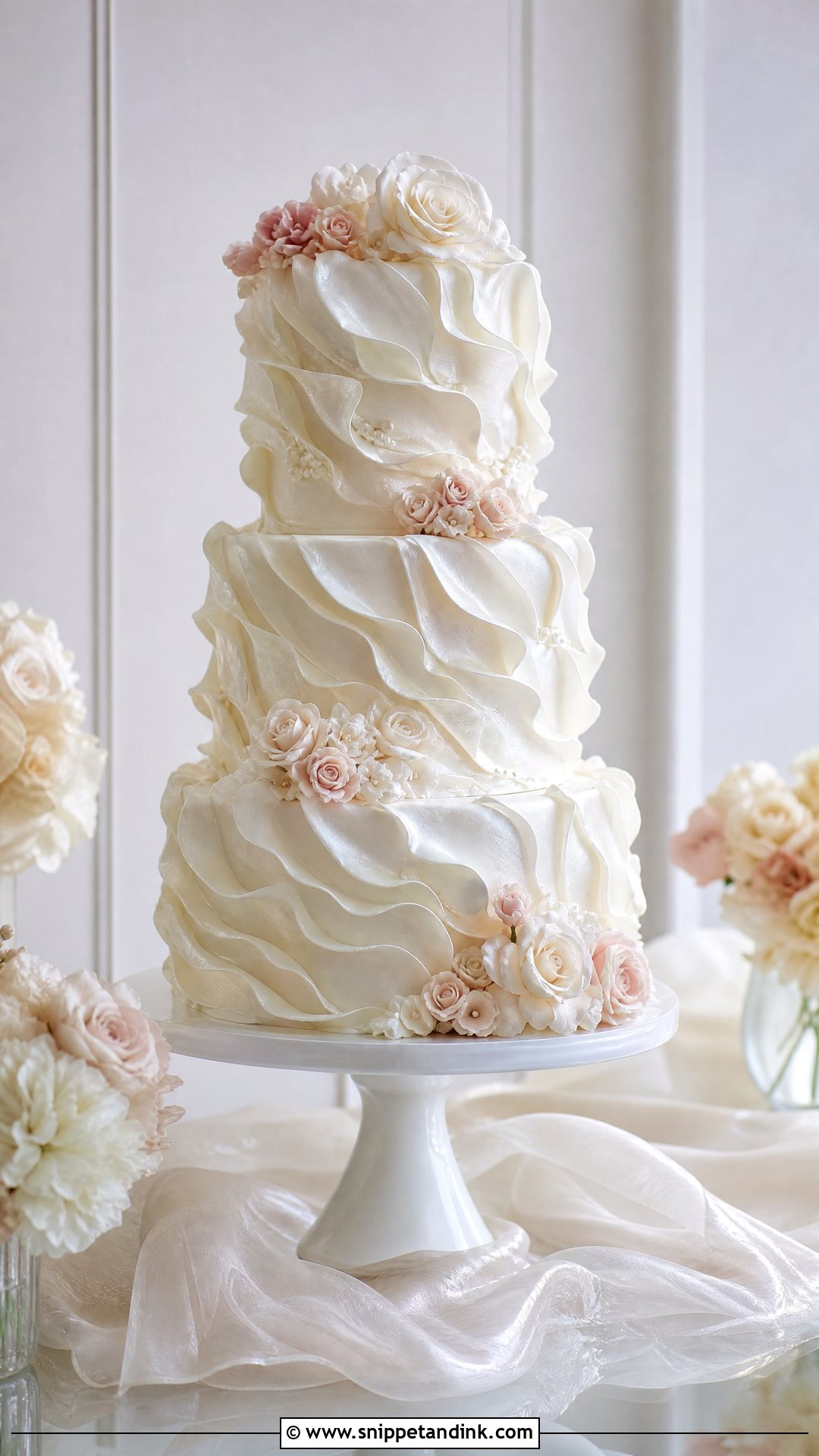
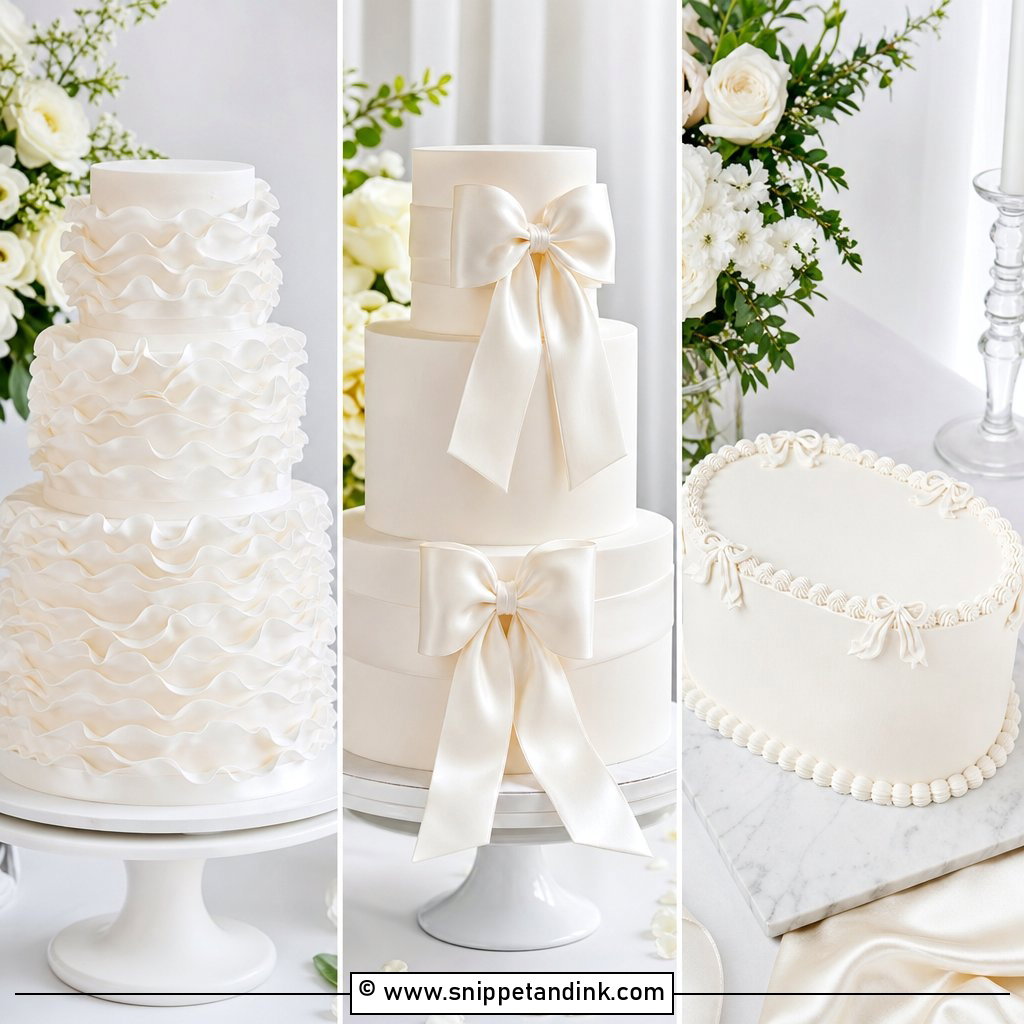
Fine fabric-like ruffles are usually wafer paper or very thin fondant, and they take patience to layer. Wafer paper is lighter and more delicate but doesn’t like humid air; fondant ruffles are sturdier and hold their curl better in warm weather. Buttercream ruffles are piped and softer-looking, best at a cool indoor venue. With this much texture, a single sugar flower or a few pearls is all it needs.
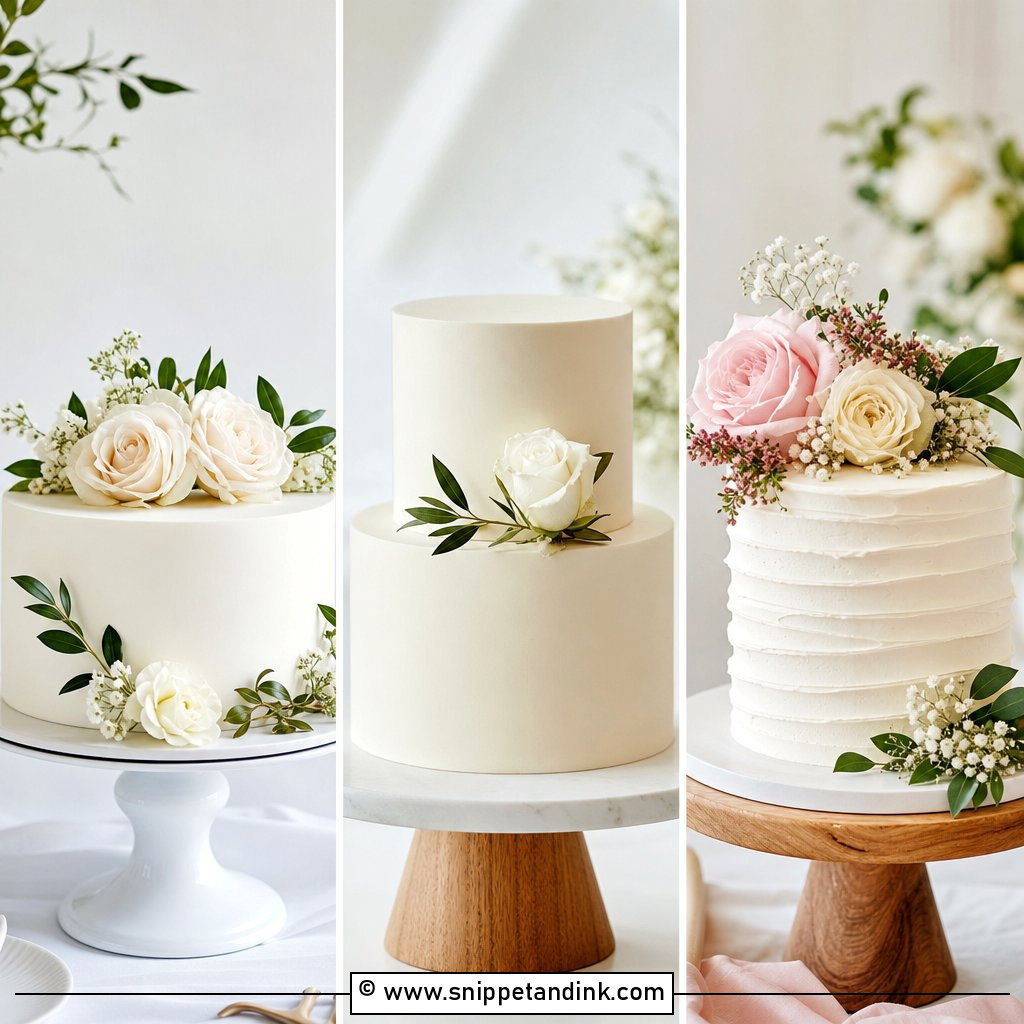
12. Minimalist Wedding Cake
Minimalist cakes hide nothing, which is why they cost more than people expect. The luxury is in a flawless finish: perfectly smooth sides, sharp top edges and tiers sized in clean proportion. I’d add one decision only, such as a single floral cluster or a fine piped border. A faint stucco texture gives depth if you want something softer than glass-smooth. It looks calm next to big floral installations.
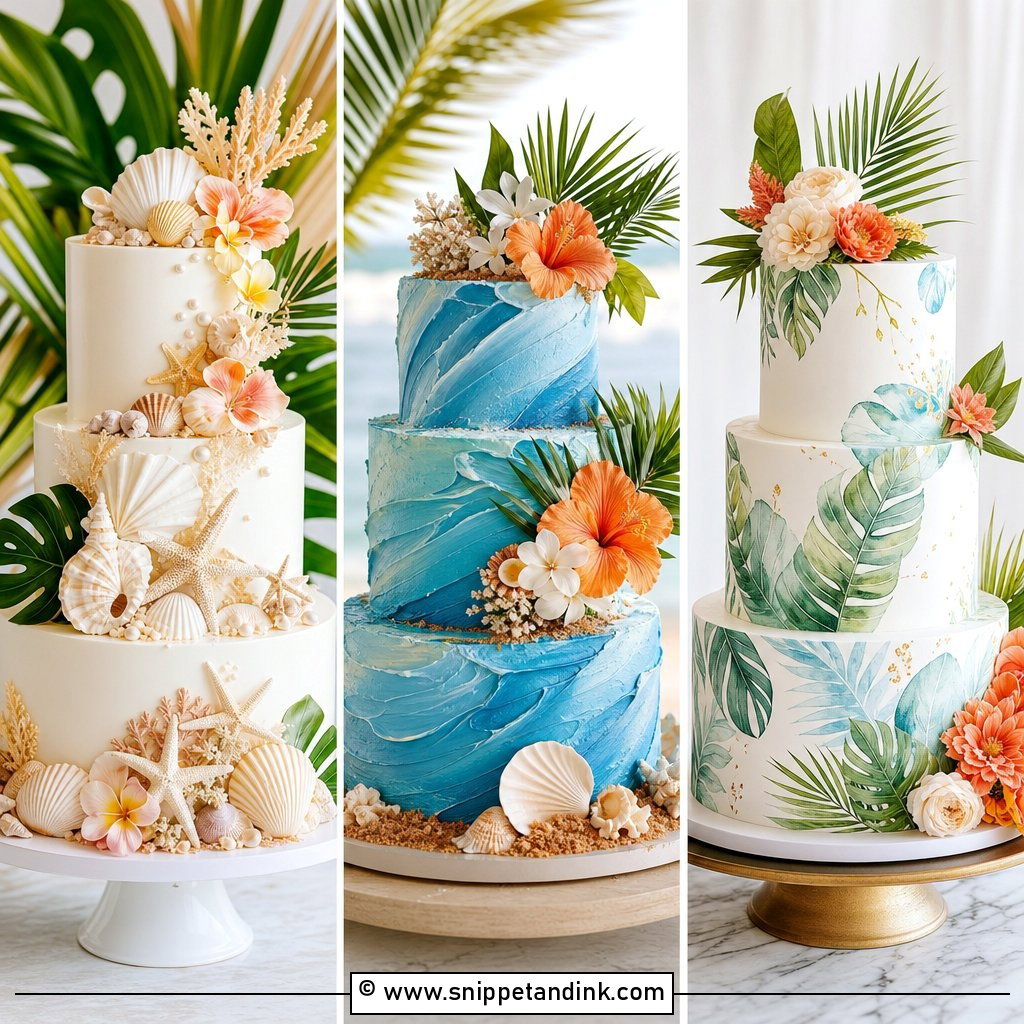
13. Blue Wedding Cake
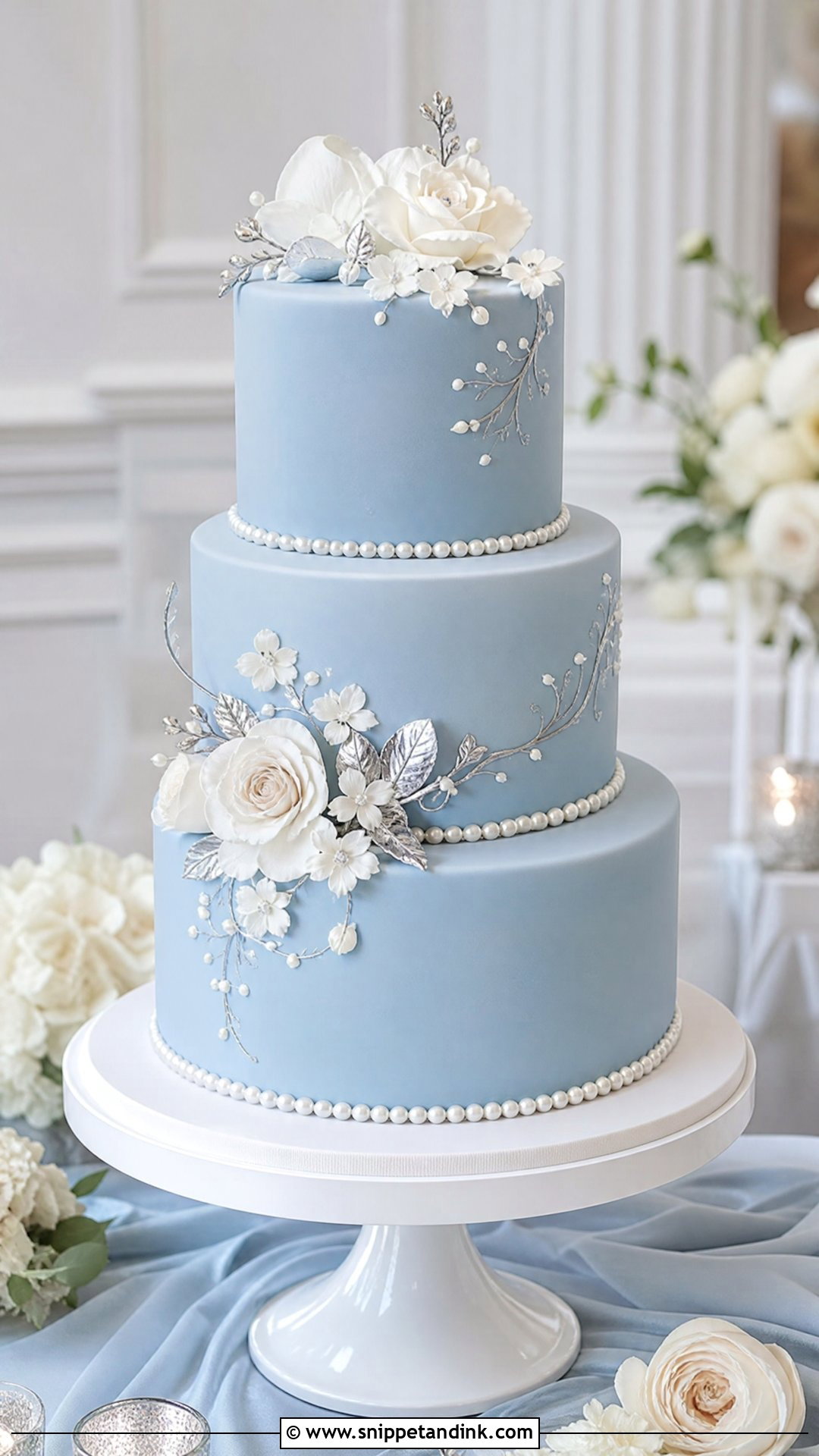
Blue tints unevenly in butter-based frosting because the yellow pulls it green, so for strong blues I work in fondant or whiten the buttercream first. Powder and dusty blues are the most forgiving. Hand-painted floral work on a blue base tier adds drama, and white florals keep it bridal. I always approve the shade with a couple under daylight, since reception lighting often shifts blue toward grey.
14. Green Wedding Cake
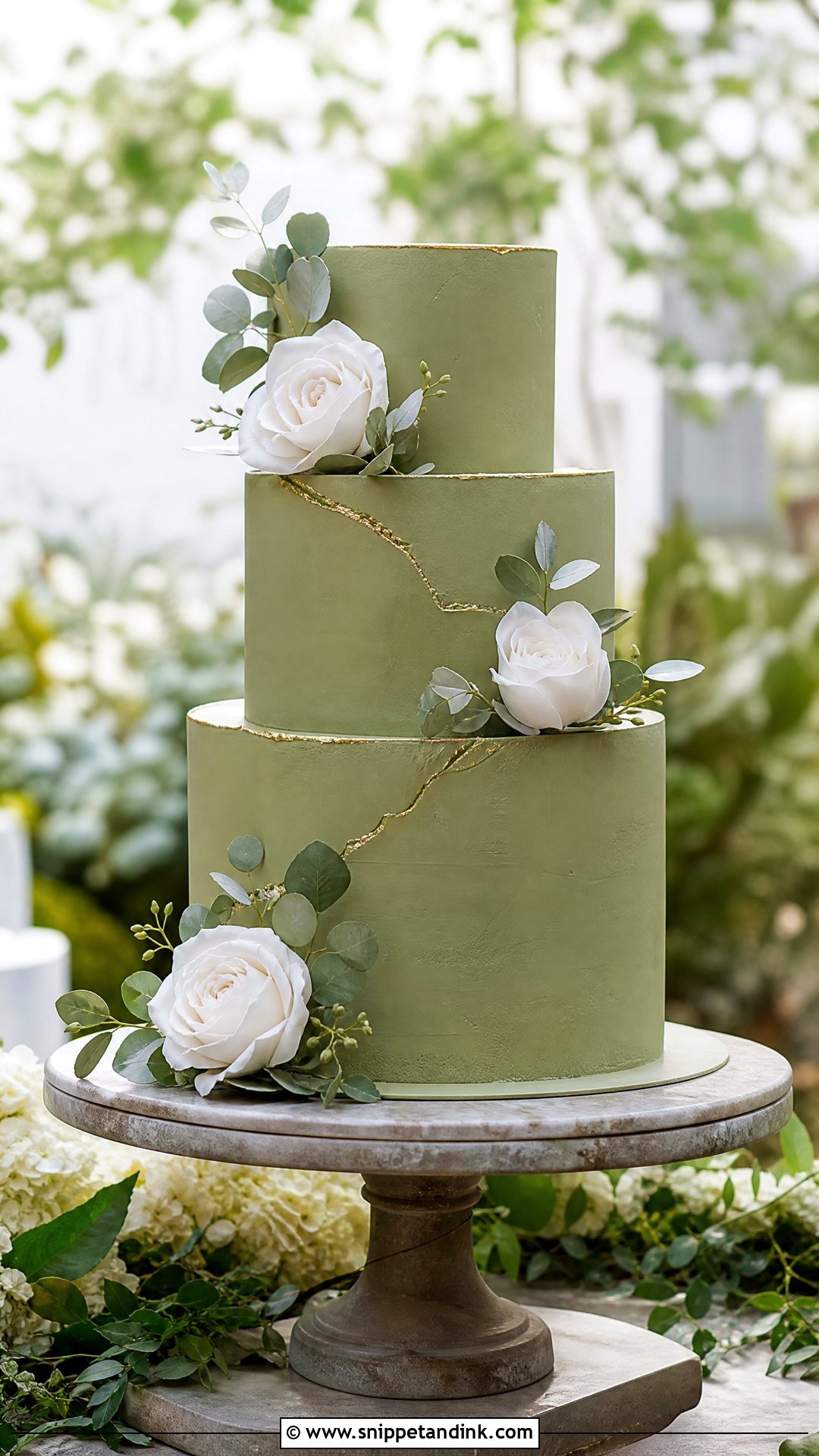
A green wedding cake ranges from a soft sage to deep emerald, and the right shade comes from your florals. Sage with white sugar flowers feels light; emerald fondant with gold edging feels formal. Pressed leaves and textured buttercream add a botanical touch. Emerald needs a lot of colour to look rich, so I usually tint fondant rather than buttercream for that shade. Pistachio, pear or matcha sponge echoes the colour inside.


15. Champagne Wedding Cake
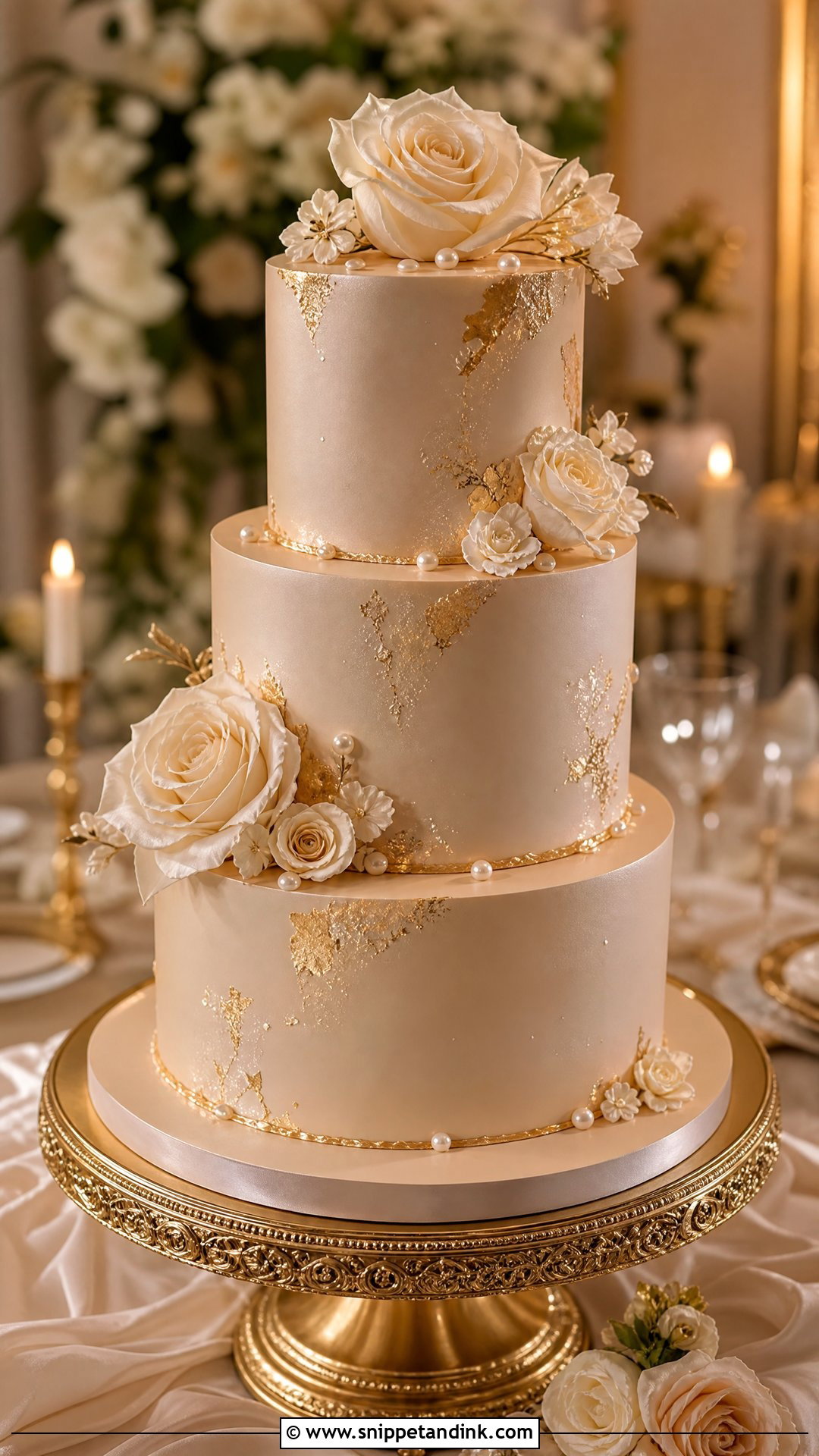
Champagne is warmer than white and kinder to most skin tones in photos, which is why I suggest it to couples who find pure white too stark. I build it with pearlised fondant, satin-look bands, a little gold leaf and cream sugar flowers. The tone sits beautifully with candles and neutral linens. Caramel almond, brown butter and honey sponges match its warmth.
16. Red Wedding Cake
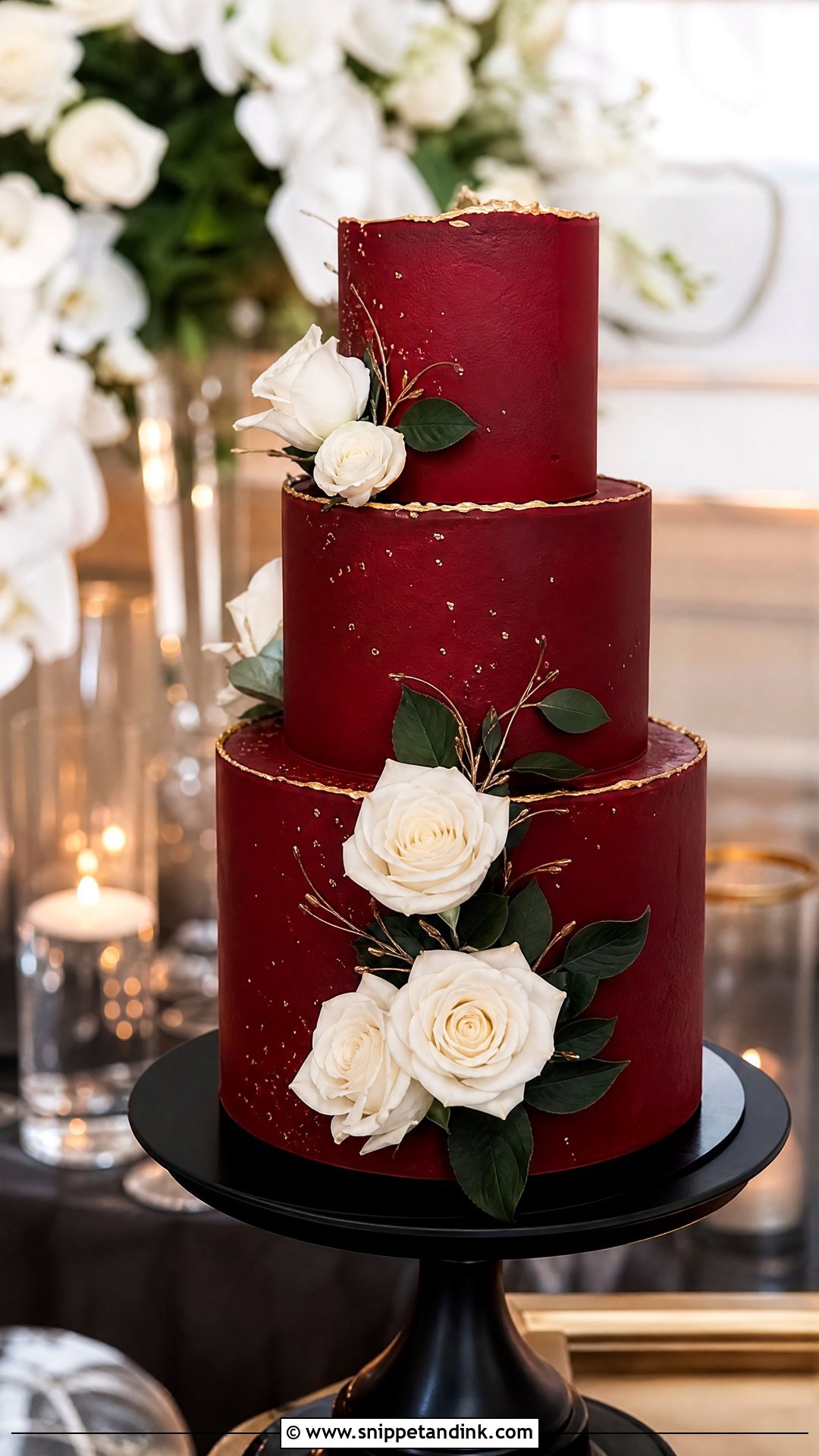
Deep burgundy and oxblood look richer than bright red, and they are easier to achieve, since a true red needs heavy colouring and can taste bitter. I usually buy in pre-coloured red fondant for even tone, or use a velvet-sprayed buttercream finish. Ivory sugar flowers and dark foliage keep it bridal. It suits a formal autumn evening; in a bright summer garden it can feel heavy. Red velvet and dark chocolate cherry fit the mood.
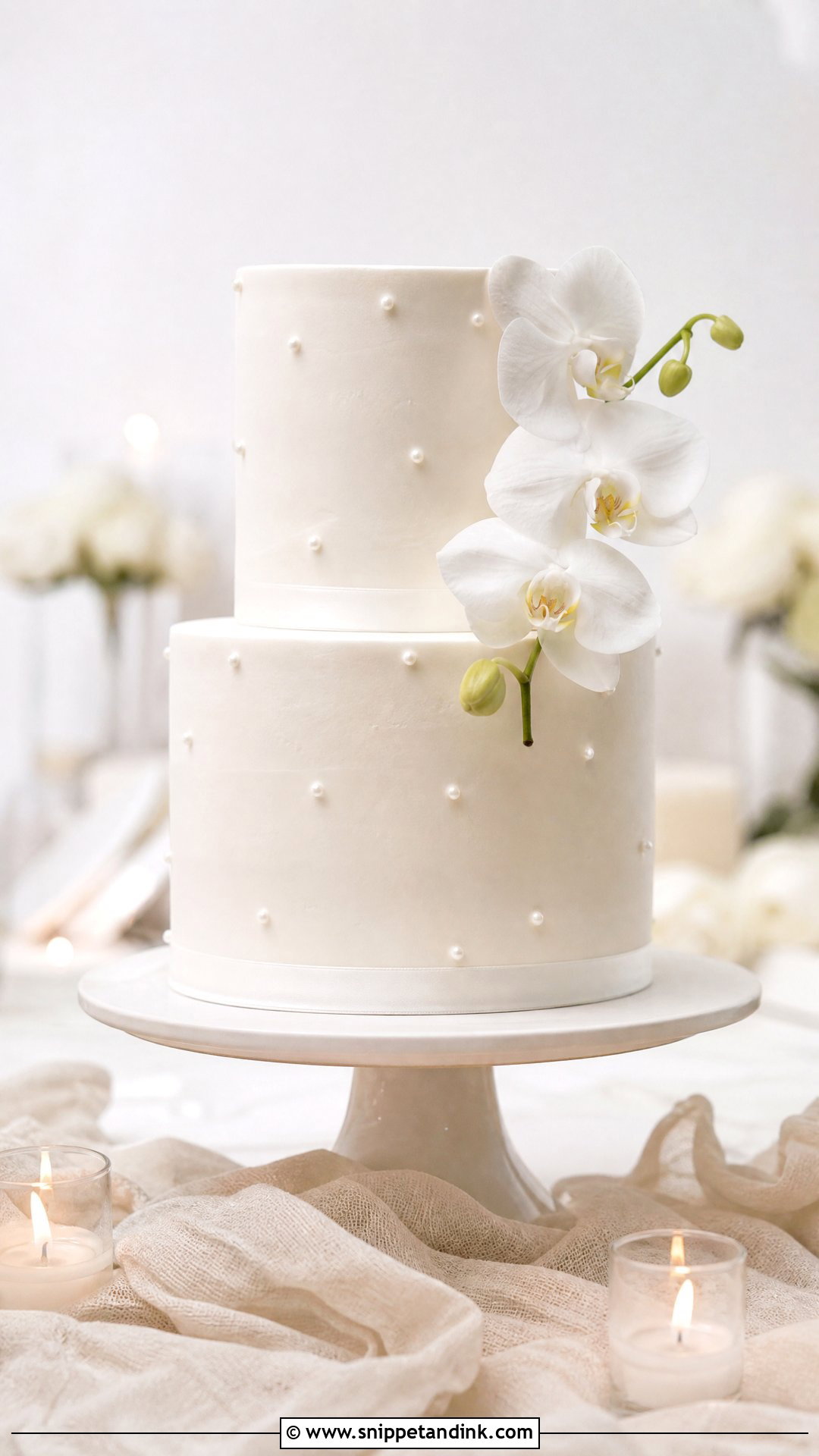
17. Orchid Wedding Cake
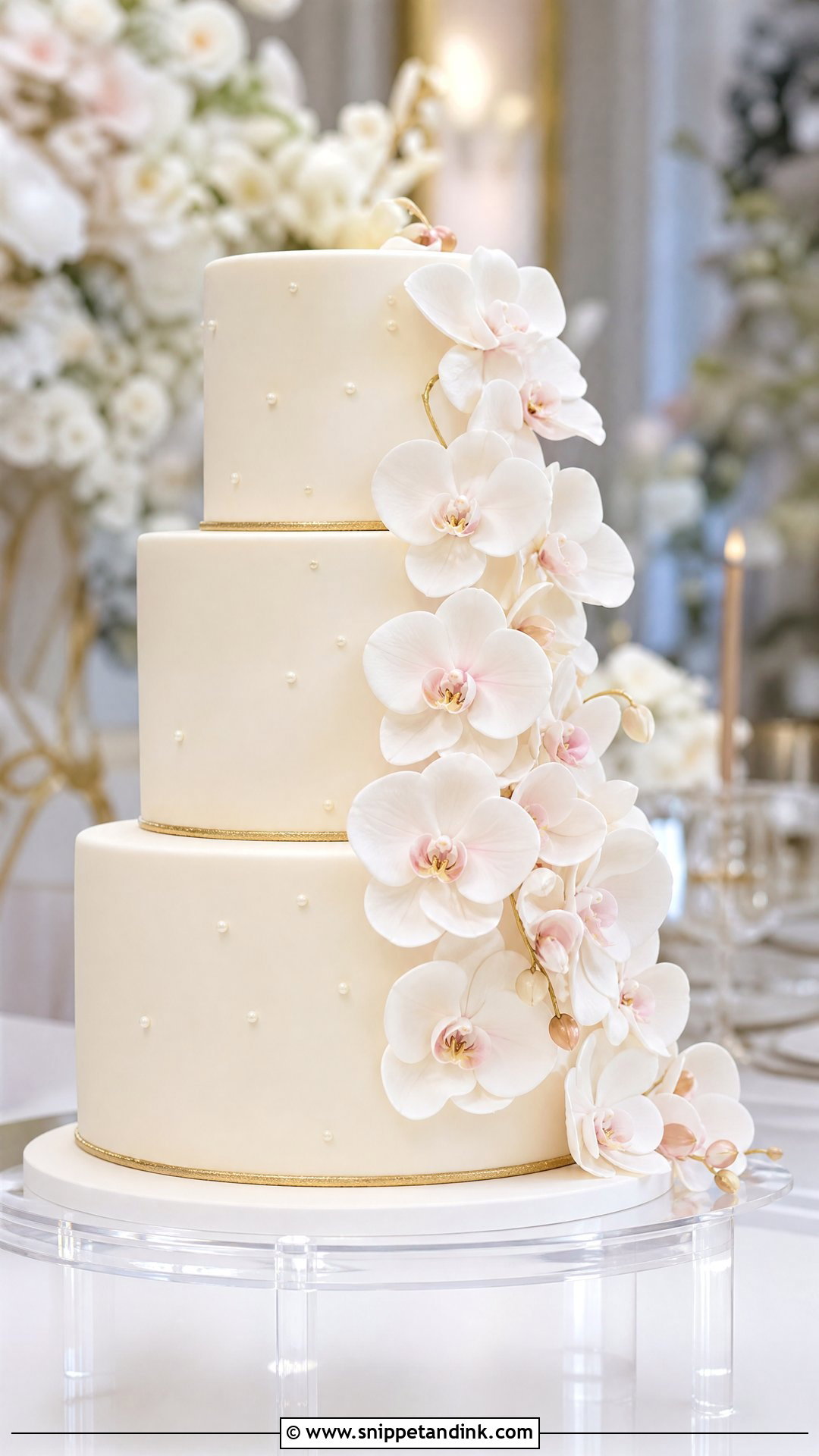
Orchids already have a sculptural outline, so they need very little around them. I make them in sugar for most luxury orders because fresh orchids can bruise and wilt under warm lights, and a sugar orchid stays perfect in every photo. White orchids on ivory are classic; pink or purple feel tropical. A trailing cascade down one side is enough decoration for the whole cake. Coconut, passion fruit or lemon sponge suit them.
18. Bow Wedding Cake
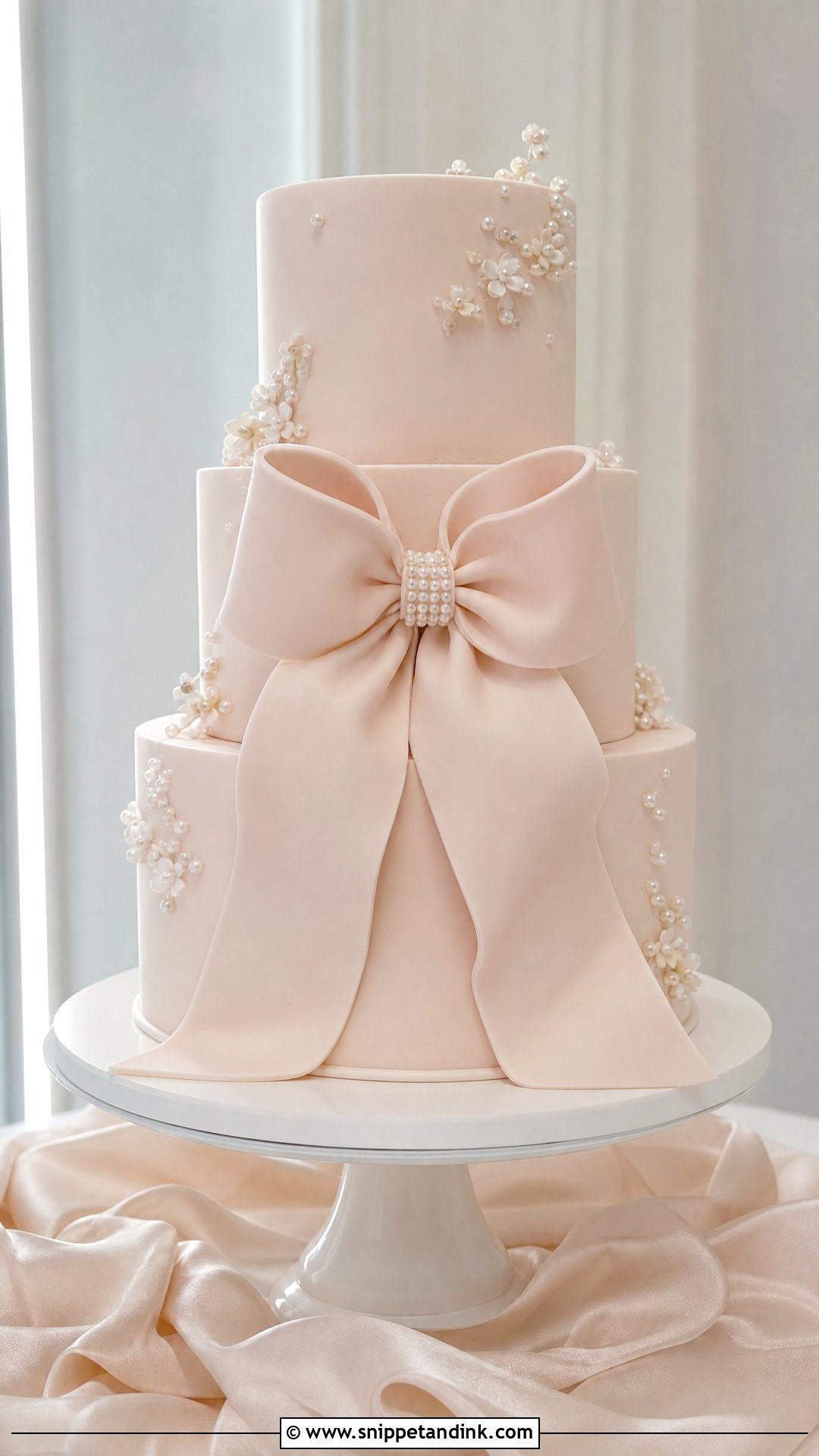
A bow is a fashion detail, so it should look like fabric. I make large bows in sugar paste over a few days so the loops dry firm and don’t sag; small bows can be wafer paper or real ribbon backed with acetate so butter doesn’t stain it. One large bow on a single tier is bolder than many small ones. Keep the surface smooth so the bow stays the focus.
19. Draped Fondant Wedding Cake
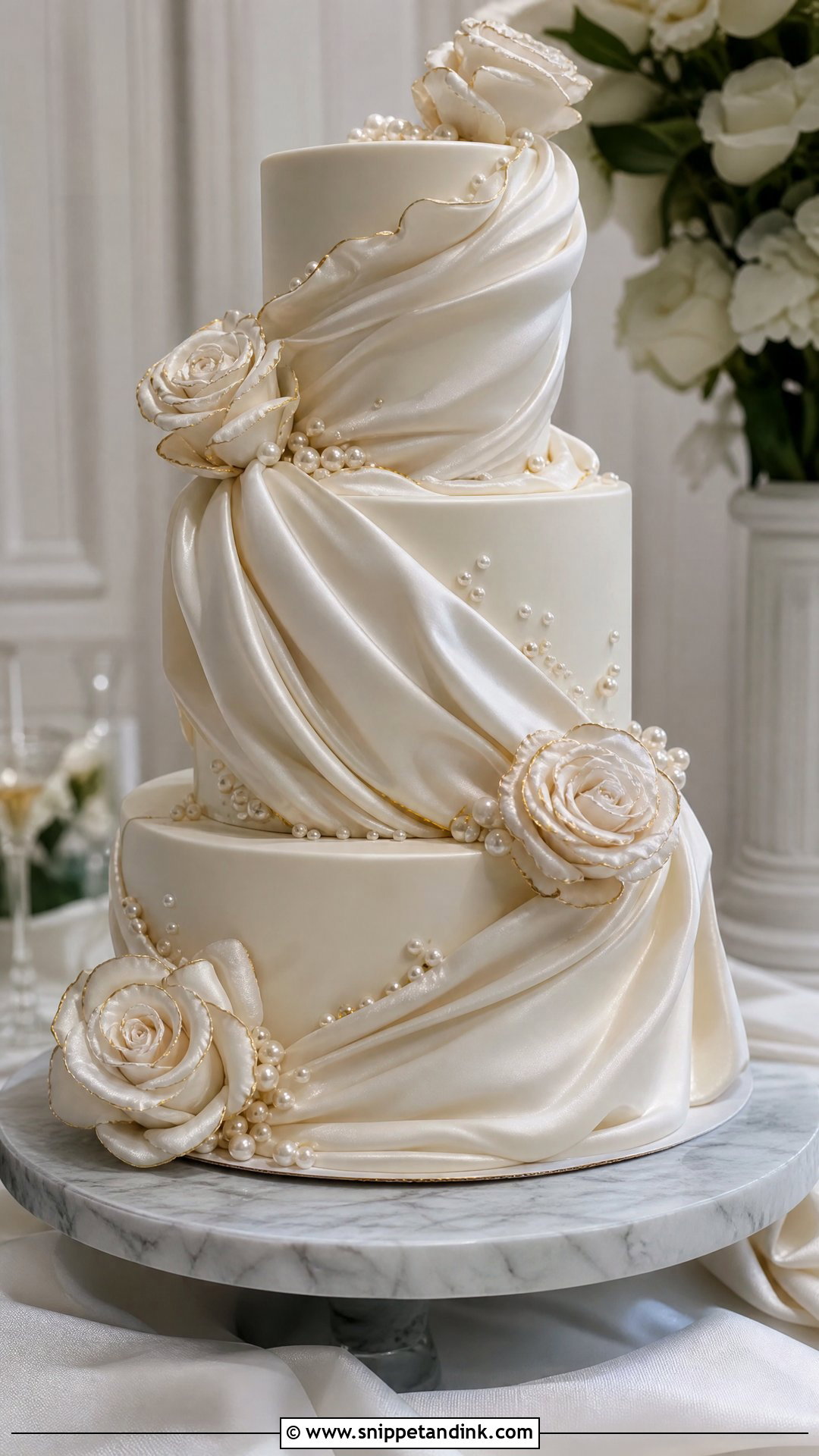
Draped fondant is rolled thin and folded by hand so it falls like silk or chiffon. It must be placed while still soft and supported until it sets, so this is one of the longer decorating jobs on the list. The folds give movement without needing many flowers. Ivory and warm beige show the shadows in the drape best; a fine metallic edge picks out the folds.

20. Dessert Table Wedding Cake
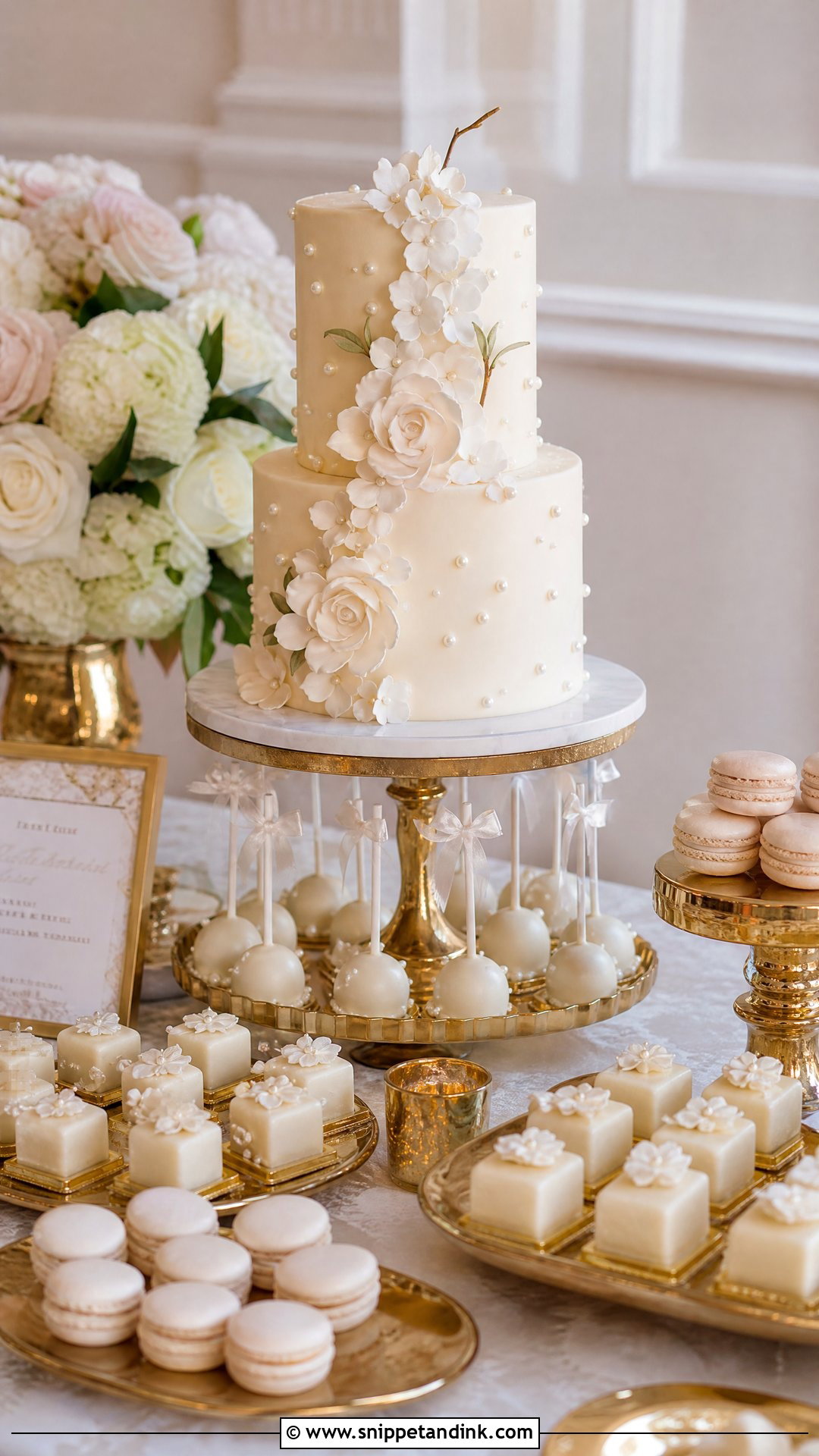
A dessert table lets the main cake stay smaller and more detailed, with matching mini desserts around it for variety. Macarons and petit fours hold up better on a long table than mousse cakes, which need chilling. One colour story ties everything together, so I match the minis to the cake’s main shade. For a large reception, this spreads the visual weight across a whole wall instead of one stand.
Sugar Flowers Aren’t Dessert, and Other Things to Know Before the Cut
Sugar flowers are built on florist wire and covered in a paste that dries hard. They are made to look at, not eat, and they should be lifted off before the caterer starts slicing. Tell your caterer which decorations are inedible, including wires, ribbons, dowels and any non-edible shimmer.
Keeping them afterwards
Many couples keep the top arrangement. Store it in a box with a little tissue, away from sunlight and damp air; humidity softens sugar paste and sunlight fades the dusted colour. Kept dry and out of the light, they can last for years.
Leaving enough lead time
Designers who do this kind of work take a limited number of weddings each weekend, so it pays to approach them early, often six months or more ahead for a busy season. Leave room for a tasting and a sketch, and plan to confirm the final guest count and design a few weeks before the date. Sugar flowers are usually started well in advance, so late changes to colours or varieties are the hardest to accommodate.
One Mood, Carried Through Every Tier
The expensive-looking cakes in this list share one habit: they commit to a single idea. Sugar flowers, contrast, sculpture or texture, each works when every other detail steps back to support it. Start from your venue and the light the cake will sit in, then choose the flavour and finish that will survive that room. Your cake designer can push one idea much further than five ideas at once.
You'll Like These Ideas:




Leave a Reply