
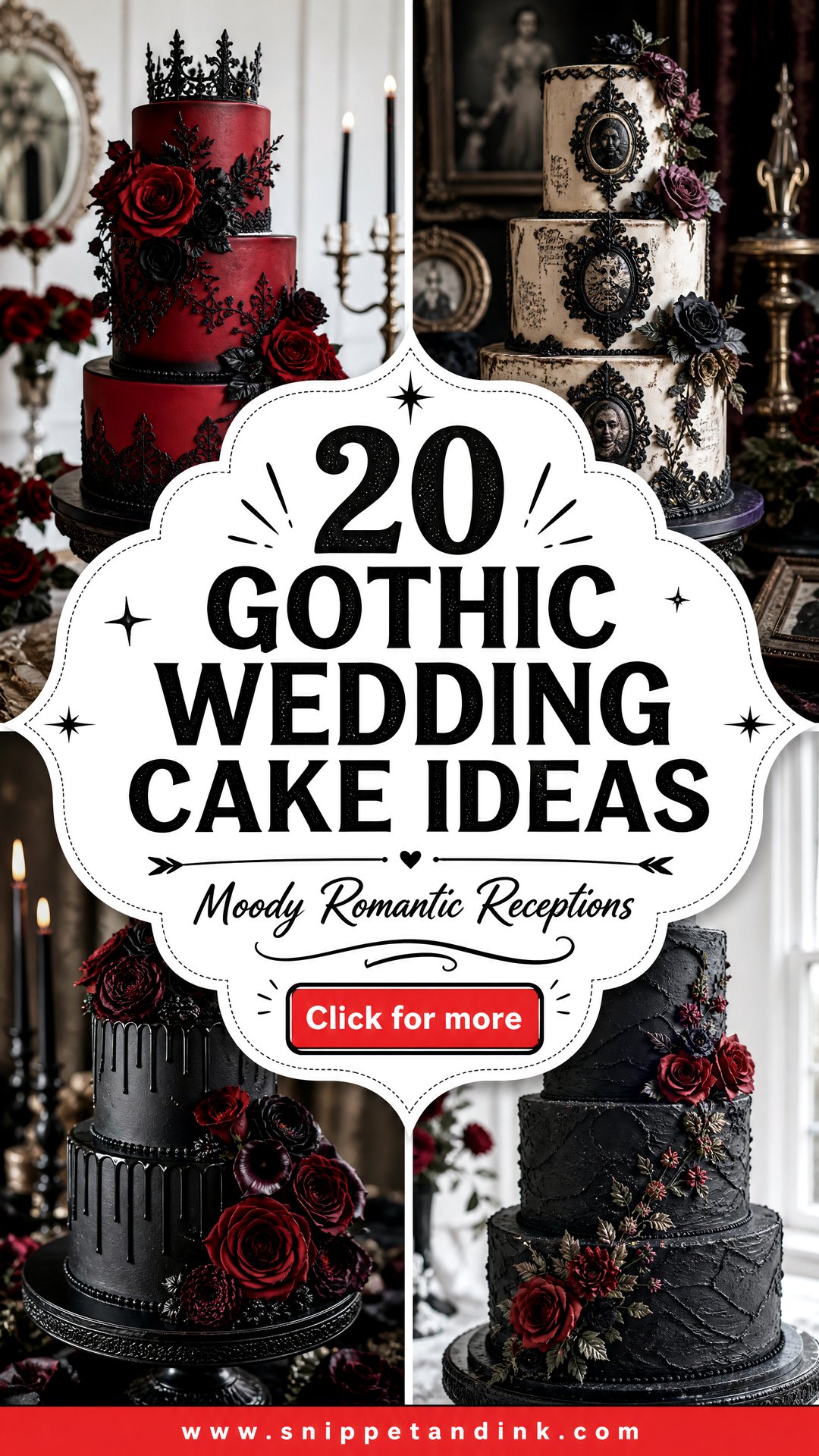
Gothic wedding cakes are for couples who want romance with a darker edge: black buttercream, burgundy roses, lace, pearls, old-fashioned piping, and flavors that can stand up to the colour, like red velvet, dark chocolate, blackberry and espresso. Gothic doesn’t have to mean harsh. Some of my favourite dark cakes are almost quiet, with one deep colour and a single cluster of flowers doing all the talking. The ideas below range from Victorian and heavily piped to sleek and modern, and I’ve added notes on how each one behaves once it leaves my kitchen and lands in a candlelit room.
Black Frosting Without Black Teeth or a Bitter Aftertaste
The first question I get about a dark cake is whether guests will end up with grey tongues in the photos. They can, if the colour is built entirely from gel dye. Getting true black means stacking the odds before any colour goes in.
- Start dark. I make black buttercream on a base of black cocoa, a heavily alkalised cocoa that is already close to black, so it needs far less gel than plain white buttercream.
- Mix it a day ahead. Dark colours deepen as they rest, so what looks charcoal on mixing is usually black by the next morning. Adding more gel to chase the shade straight away is how it ends up bitter.
- Keep the black on the outside. A thin black coat over a pale crumb coat stains far less than a cake filled with black icing too.
- Ask about fondant for the darkest finish. Bought black fondant gives the deepest colour with no extra dye on my side, though it is a thicker layer that some guests peel off.
If staining really worries you, deep burgundy, plum or forest green give the same moody effect with far less dye. On a dim reception table they read almost as dark as black anyway.
1. Black Gothic Wedding Cake
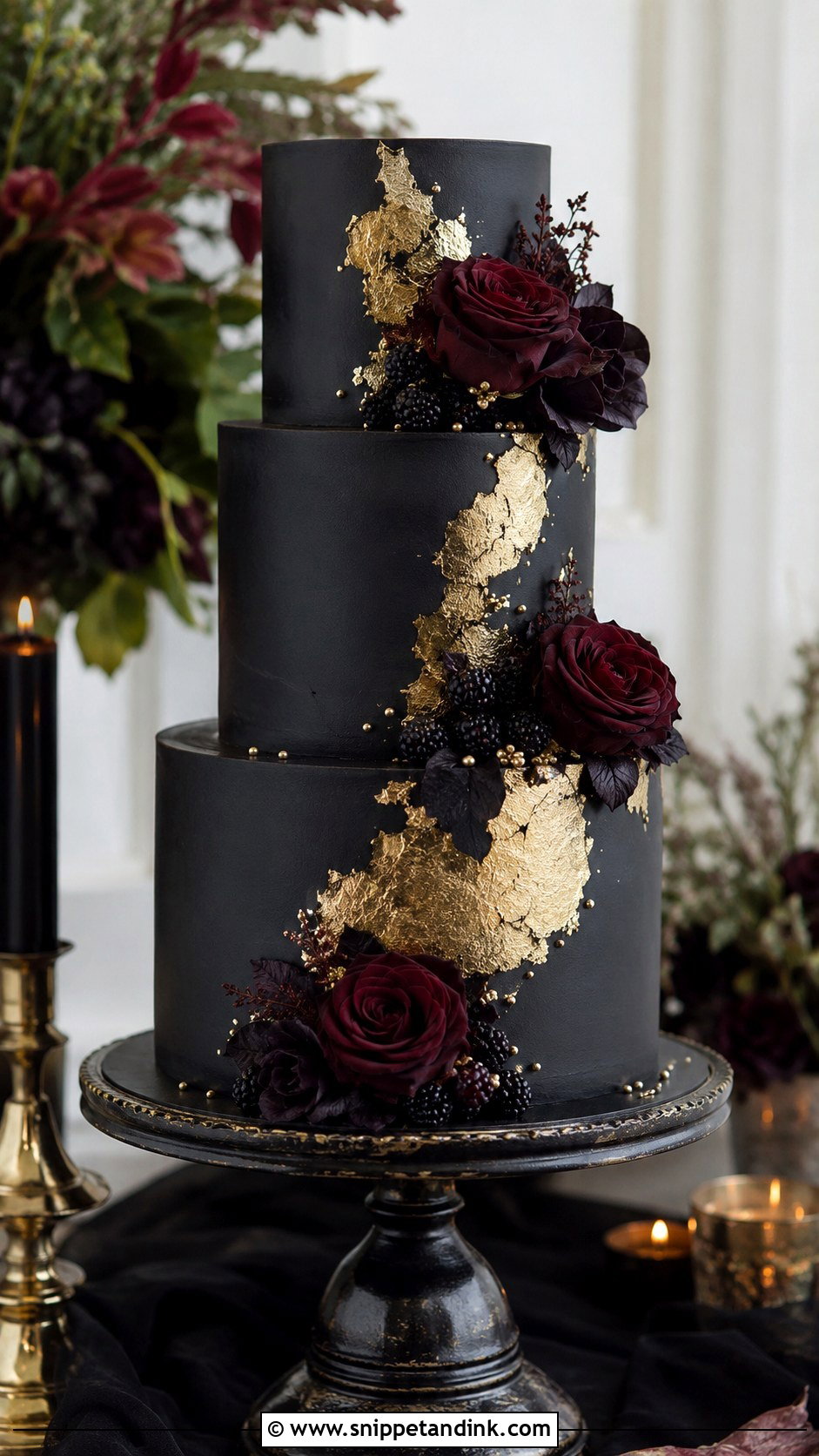
All-black is the classic, and the finish you pick changes it completely. Matte black fondant reads clean and modern, while black buttercream keeps a softer, handmade texture. I almost always bring in one warm element so the cake doesn’t look like a void on the table: burgundy roses, blackberries, gold leaf or fine pearl piping. Three tiers give cascading flowers enough height to fall properly. Inside, dark chocolate, red velvet, espresso or blackberry vanilla all suit the outside. One honest warning: matte black fondant shows every fingerprint and every speck of icing sugar, so I smooth it with a little shortening rather than a dusting of starch.
2. Red And Black Gothic Wedding Cake
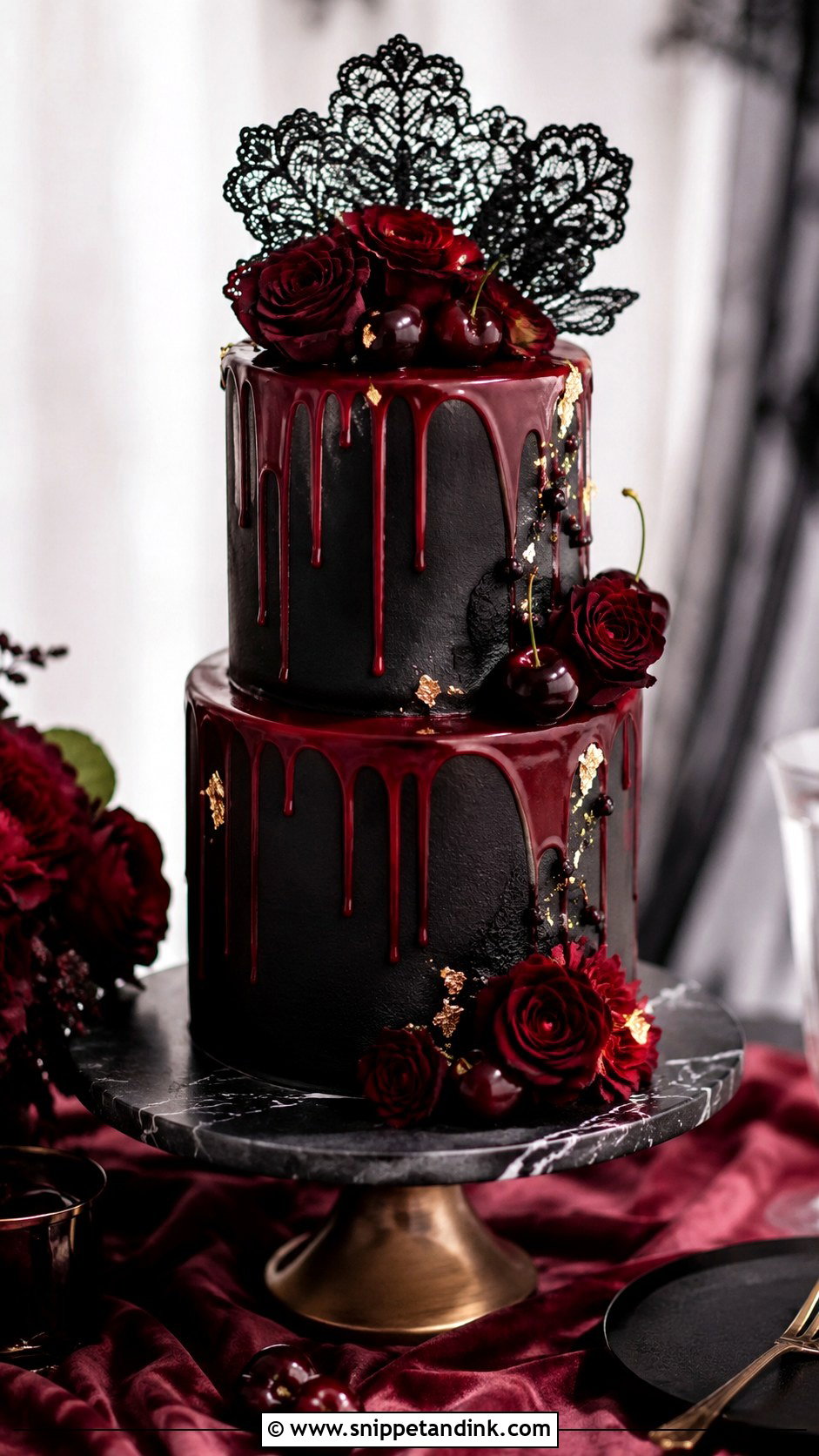
Red against black is the most passionate pairing on this list, and the shade of red decides whether it looks romantic or like a Halloween table. Keep it dark, burgundy or oxblood, never fire-engine. Deep red flowers, red velvet layers or a glossy red drip all bring warmth to the black base, and the structure underneath can be smooth fondant, ruffled buttercream or vintage shell piping. If you want a softer edge, fresh roses, dark cherries, edible lace and brushed gold accents all help. A red drip needs a firm, chilled tier to sit on, or it races to the board before anyone sees it.
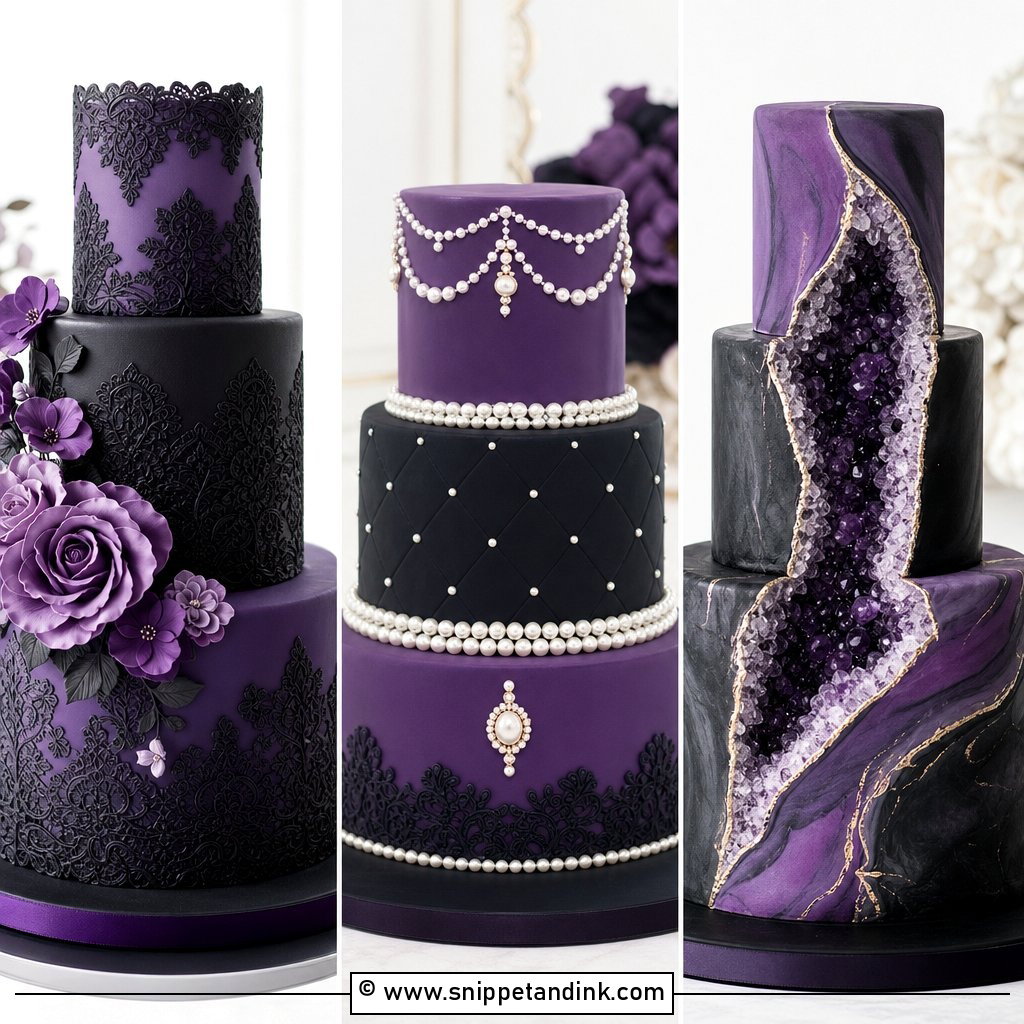
3. Purple Gothic Wedding Cake
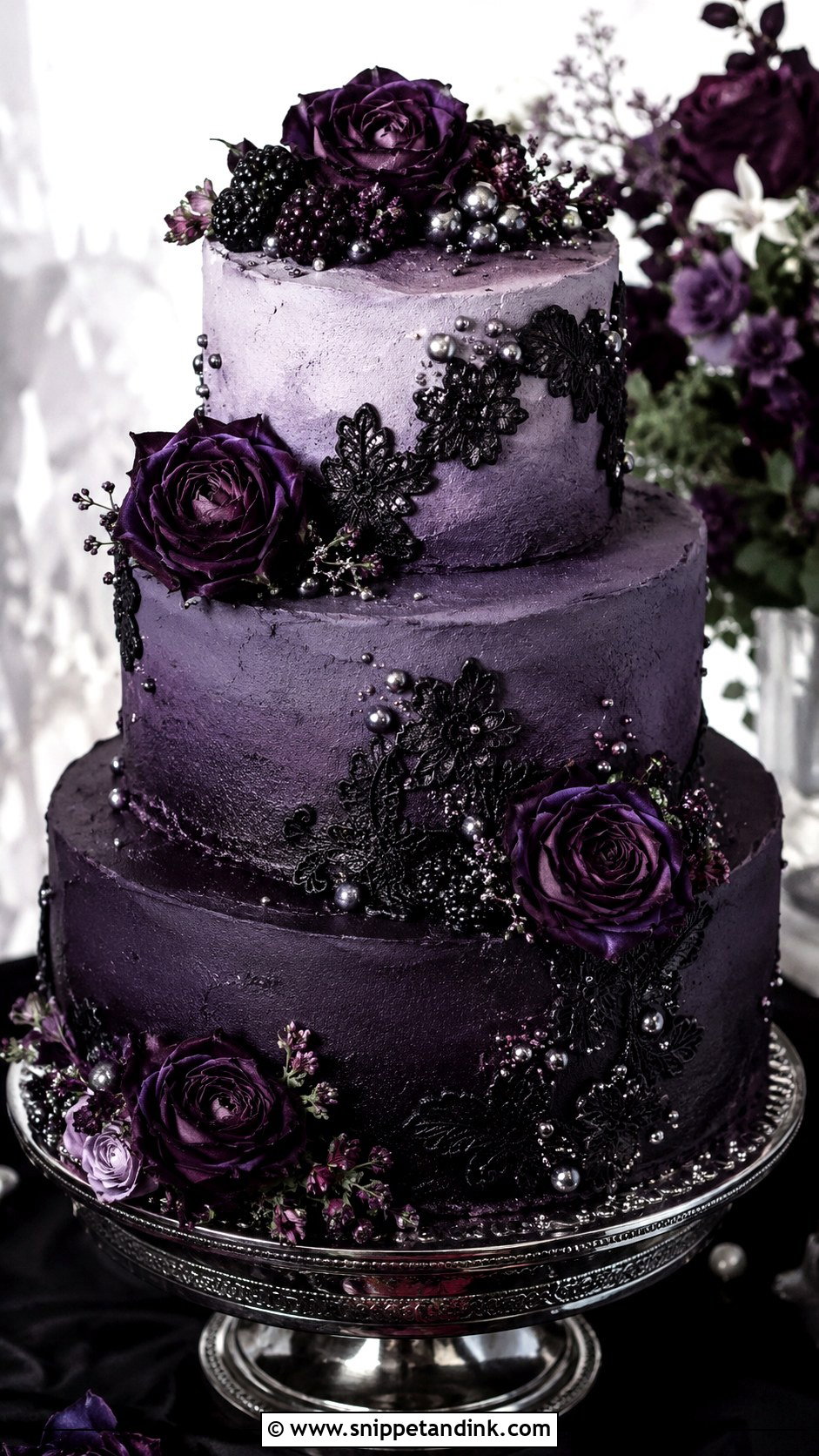
Purple softens the whole theme into something more enchanted. Plum, aubergine and black violet look rich without feeling severe, and they sit well beside black lace, silver edging, sugar roses or a velvet-effect buttercream. An ombré that fades from near-black at the base to smoky lavender at the top is one of my favourite ways to use it. Purple is also the colour I test hardest: some purple gels drift blue or grey under warm venue lighting, so I always check a swatch in a room lit like the reception. Blackberry, ube, chocolate raspberry or vanilla bean with a berry filling tie the flavour to the colour.
4. Vintage Gothic Wedding Cake
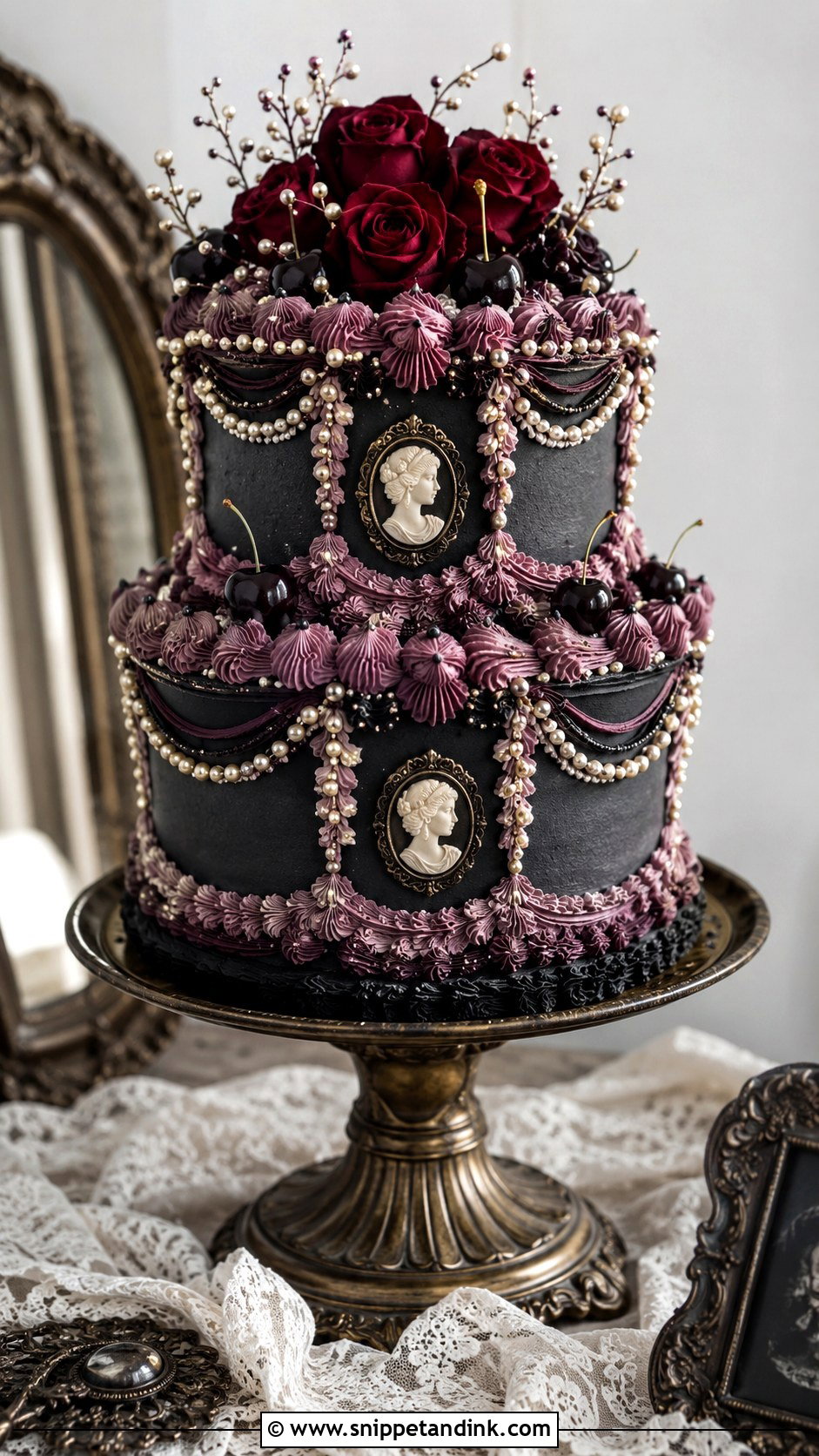
Vintage gothic is where piping does the heavy lifting. Lambeth work, shell borders, pearl drops and deep swags make the cake ornate and formal, and swapping the usual white for black, charcoal, ivory, deep red or dusty mauve buttercream turns it moody. It looks best tall, as a two-tier or a three-tier cake with a small floral topper, and edible cameos, black cherries or tiny sugar pearls add character. Heavy overpiping takes hours and plenty of patience, so expect it to cost more than a smooth cake of the same size. It suits antique frames, lace gowns and historic venues.
5. Gothic Wedding Cake With Roses
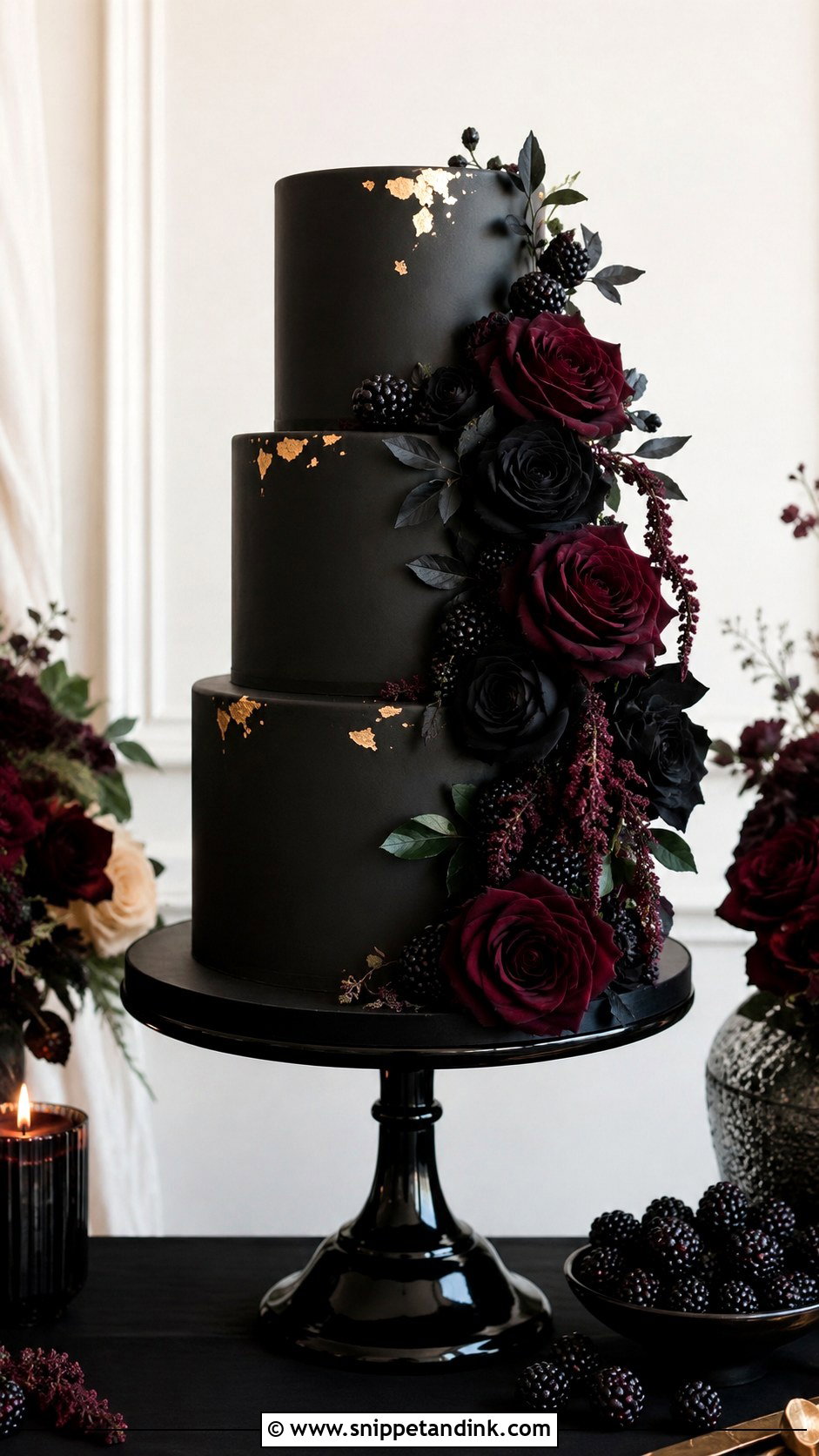
Roses are the quickest way to stop a dark cake looking cold. Dark red, black baccara, ivory or deep purple garden roses all read well against black or charcoal frosting. On smooth tiers the flowers are the star; on textured buttercream the whole thing feels more like a garden. I like a cascade down one side because it adds movement without smothering the cake, finished with berries, a bit of trailing greenery or a touch of edible gold. Any fresh rose that touches icing should be unsprayed, and I wrap or tube the stems before they go anywhere near the sponge.
6. Gothic Wedding Cake With Black Lace
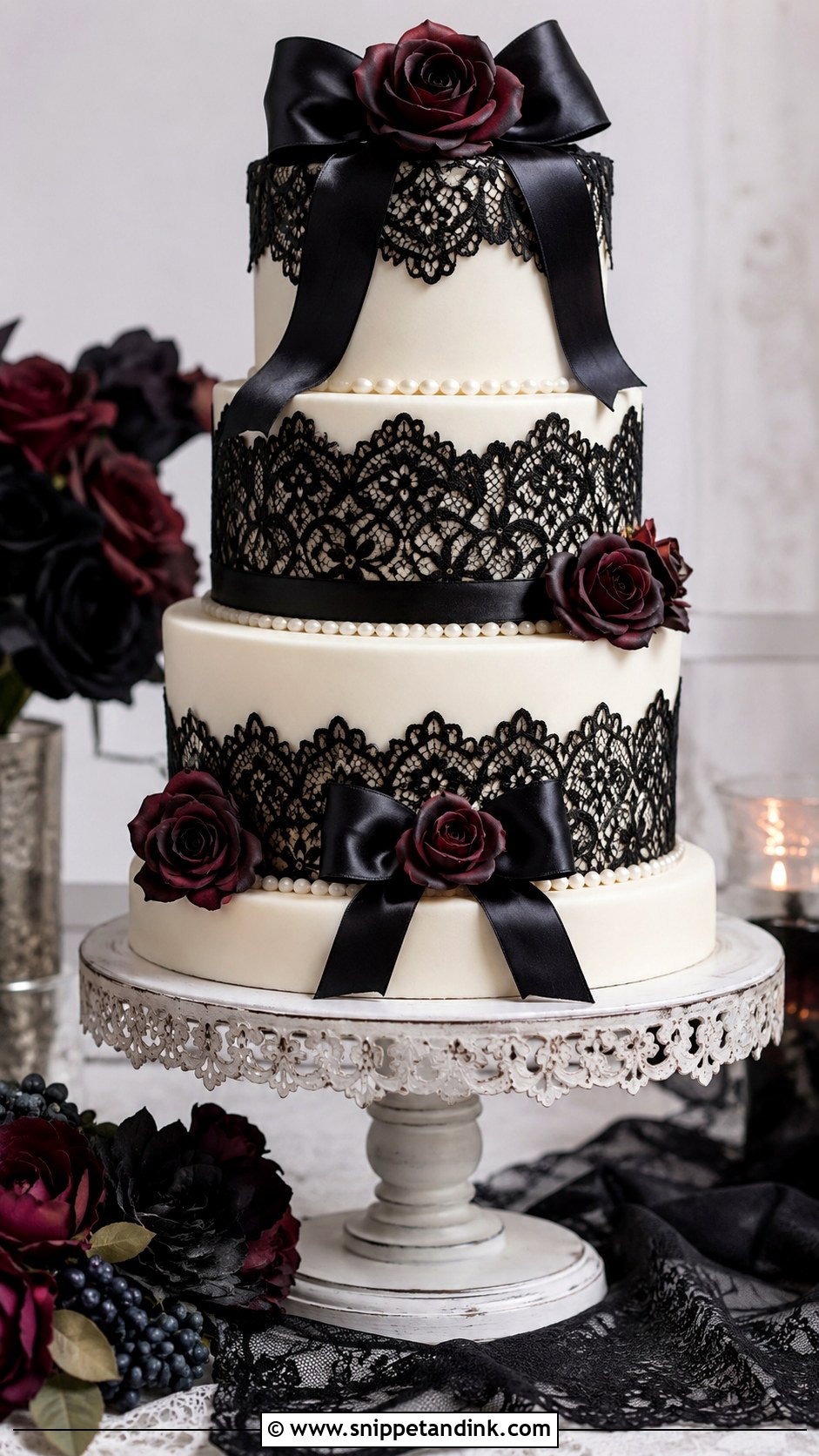
Lace is the detail that makes a dark cake look bridal. It can be piped in royal icing, set from edible lace sheets, or painted straight onto ivory fondant for strong contrast, and it shows up best on a white, grey, burgundy or champagne base rather than solid black. Edible lace softens in humidity, so on a sticky summer day I apply it as late as I can. Finish with sugar roses, a few pearls, or a plain black ribbon between tiers and leave it there.
7. Gothic Wedding Cake With Gold
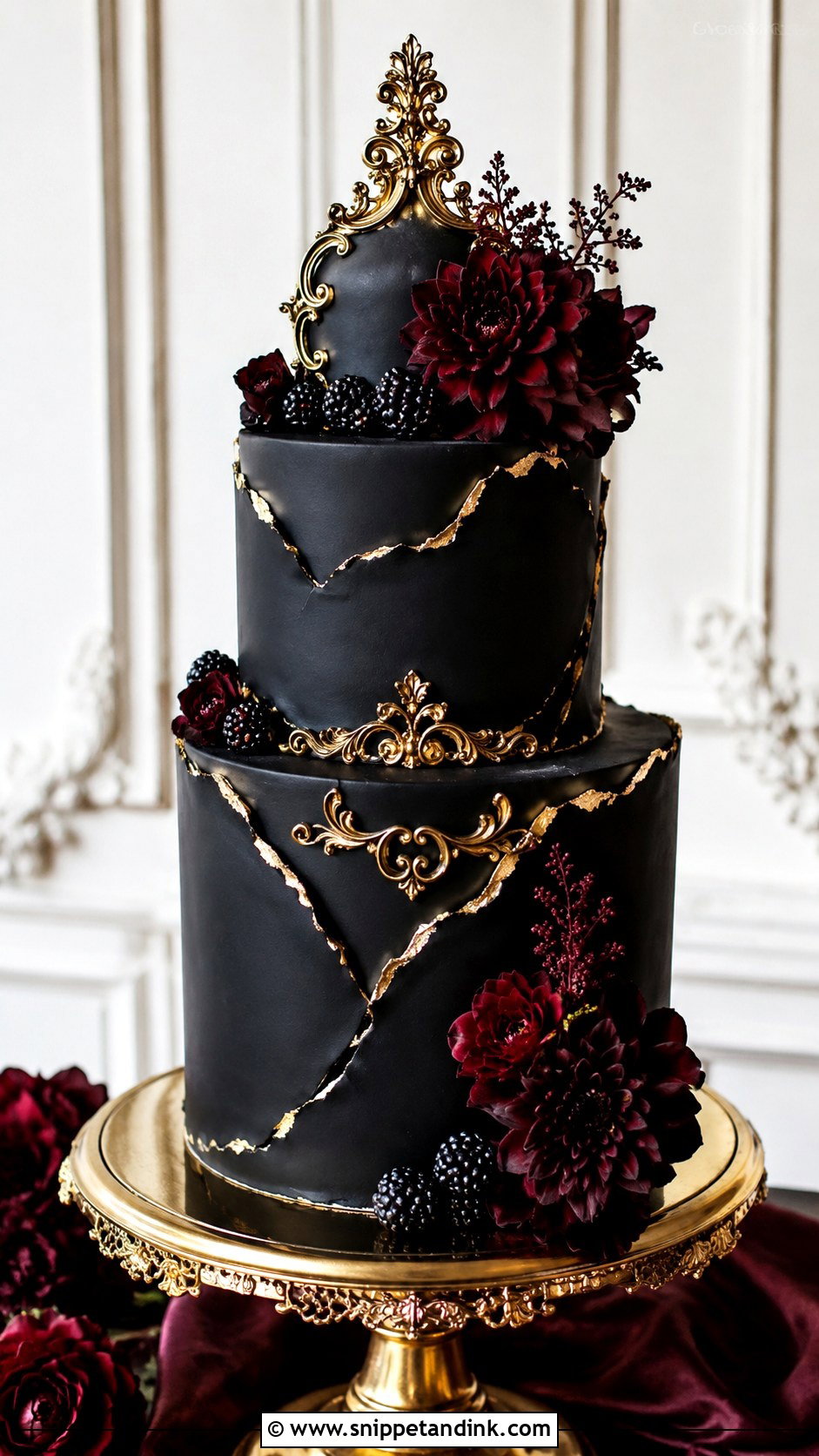
Gold warms a dark palette straight away. Black fondant with rough gold-leafed edges feels modern; gold piping on burgundy or plum frosting feels regal and old. You can work with edible gold leaf, painted baroque details, a metallic drip or gold-dusted sugar flowers. Keep it as an accent, though, because once gold covers more than a few areas the gothic mood disappears. I also check the label on every gold product I use: some lustre dusts are sold as non-toxic decoration only, not as food, and those stay on parts nobody will eat. Chocolate hazelnut, salted caramel, espresso or spiced vanilla sit well under it.
8. Gothic Wedding Cake With Drip
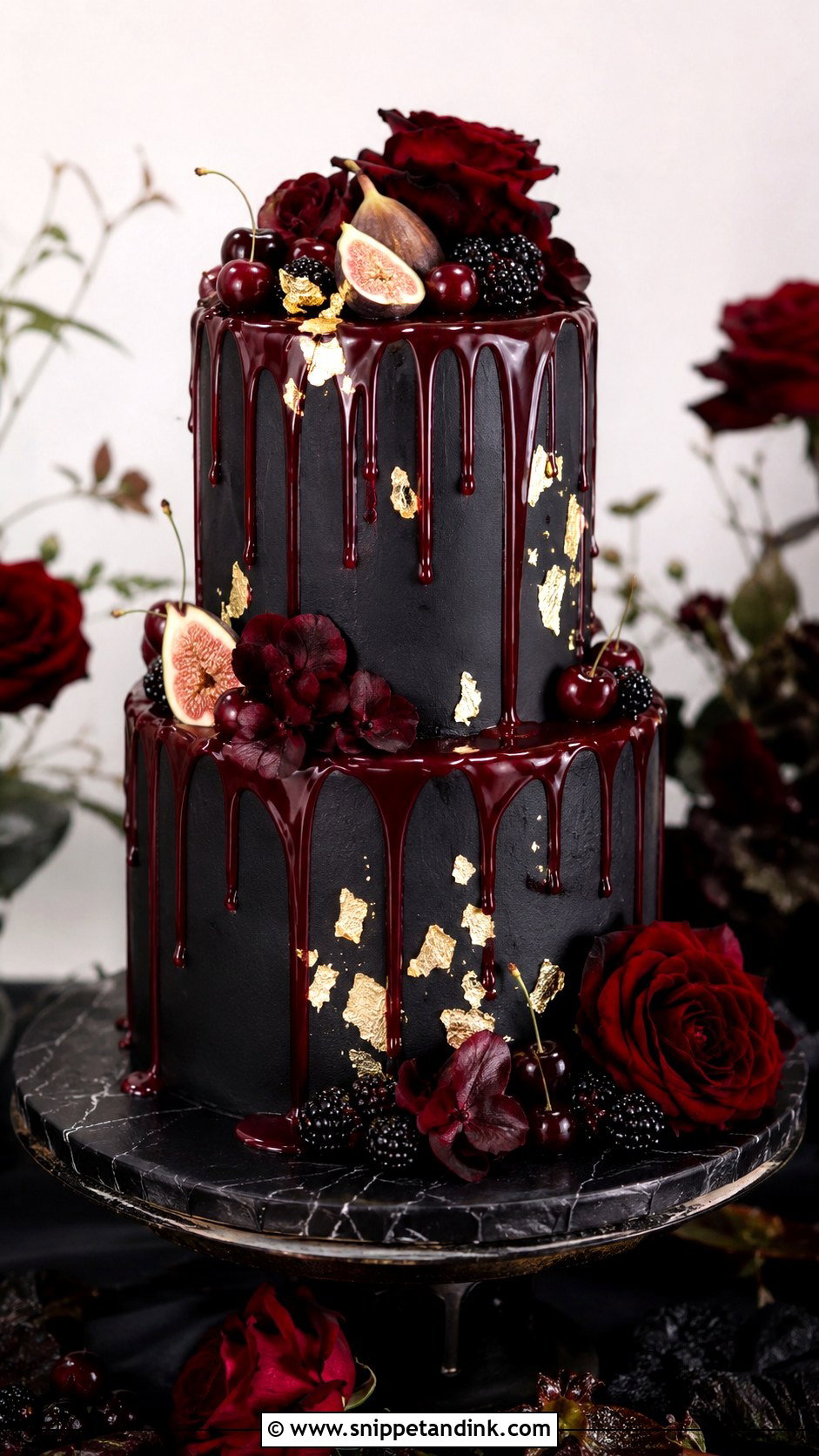
A drip cake is all about control. Burgundy ganache running down a black cake feels romantic; dark chocolate over red velvet frosting looks more like dessert. The trick is temperature: I pour the ganache slightly warm onto a properly chilled cake, test one drip on the back first, and only then go round. Too hot and it runs to the board, too cool and it sits in lumps. Top with roses, blackberries, figs, cherries or gold leaf. Drips suit two tiers, a tall single tier, or a centrepiece cake on a dessert table better than very tall stacks.
9. Gothic Wedding Cake With Flowers
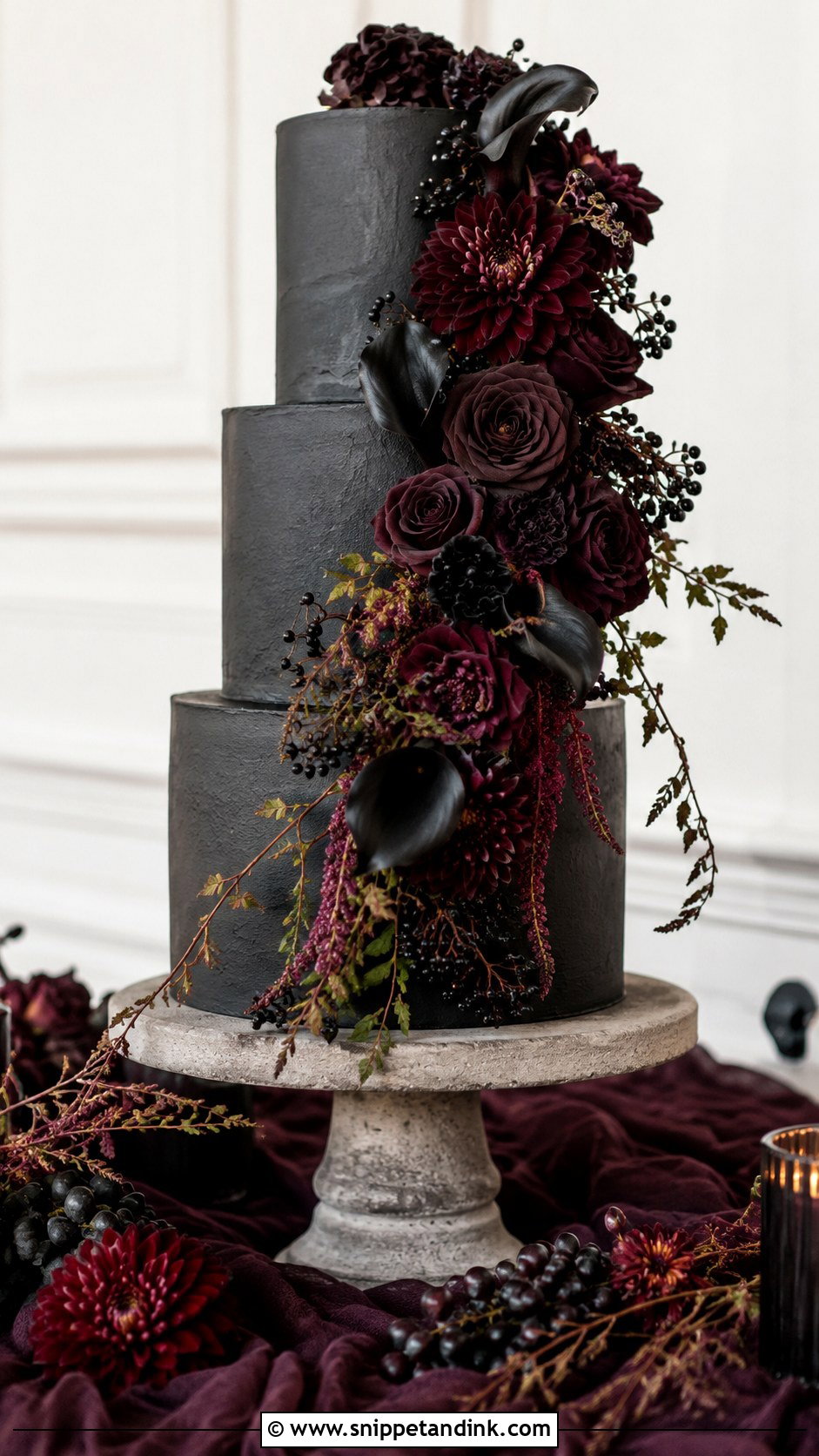
Flowers can make a gothic cake feel lush rather than severe, as long as you skip the pastels. Burgundy, plum, black, ivory, mauve and dark greenery all belong here, and dahlias, roses, calla lilies, ranunculus, orchids and anemones can all be arranged into a dramatic crescent or cascade. Some of those, calla lilies, ranunculus and anemones among them, are not safe to eat, so they sit on a barrier or in sealed picks and get lifted off before cutting. The cake underneath can be black, charcoal, dark green, ivory or deep red depending on how bold you want to go, and matching the blooms to the bouquet ties the cake into the rest of the room.
10. Gothic Wedding Cake With Pearls
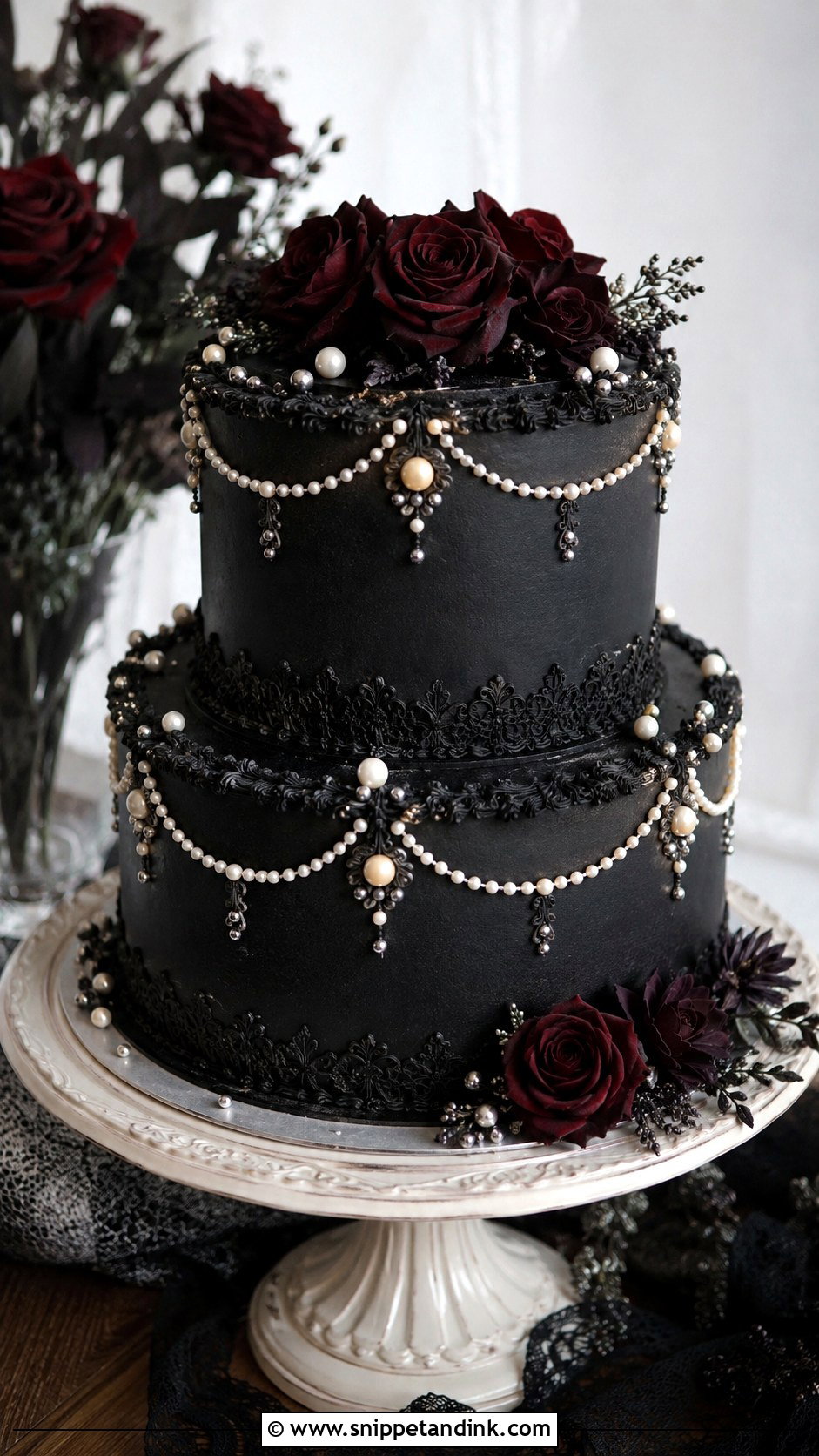
Pearls are how I take the edge off black or charcoal frosting without lightening the colour. Ivory sugar pearls, silver dragées or pearl-like beads catch light against a dark base, and they pair naturally with vintage piping, lace or a smooth fondant finish. One cluster of burgundy roses or a small topper is plenty alongside them. Placing hundreds of pearls by hand takes a steady afternoon, and they need a soft surface to grip, so I set them while the buttercream is still slightly tacky.
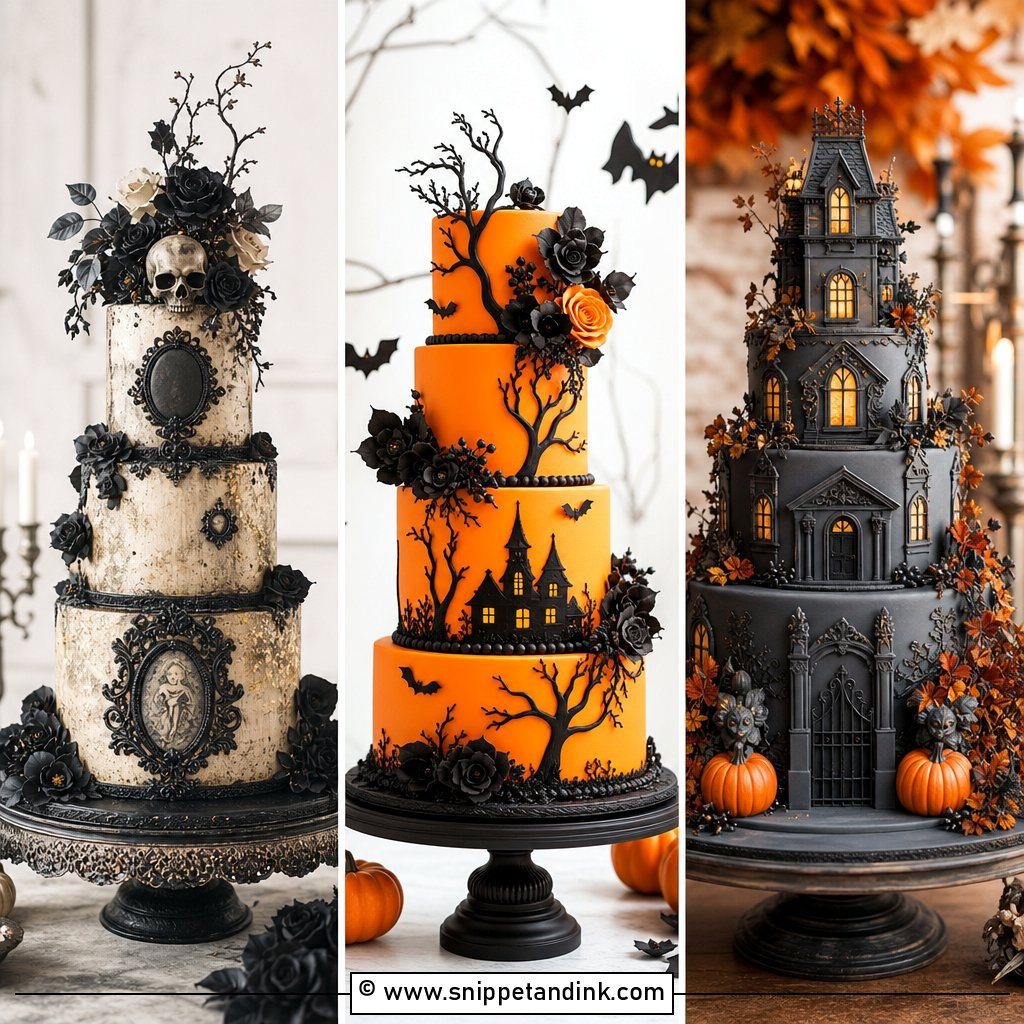
11. Gothic Wedding Cake With Skulls
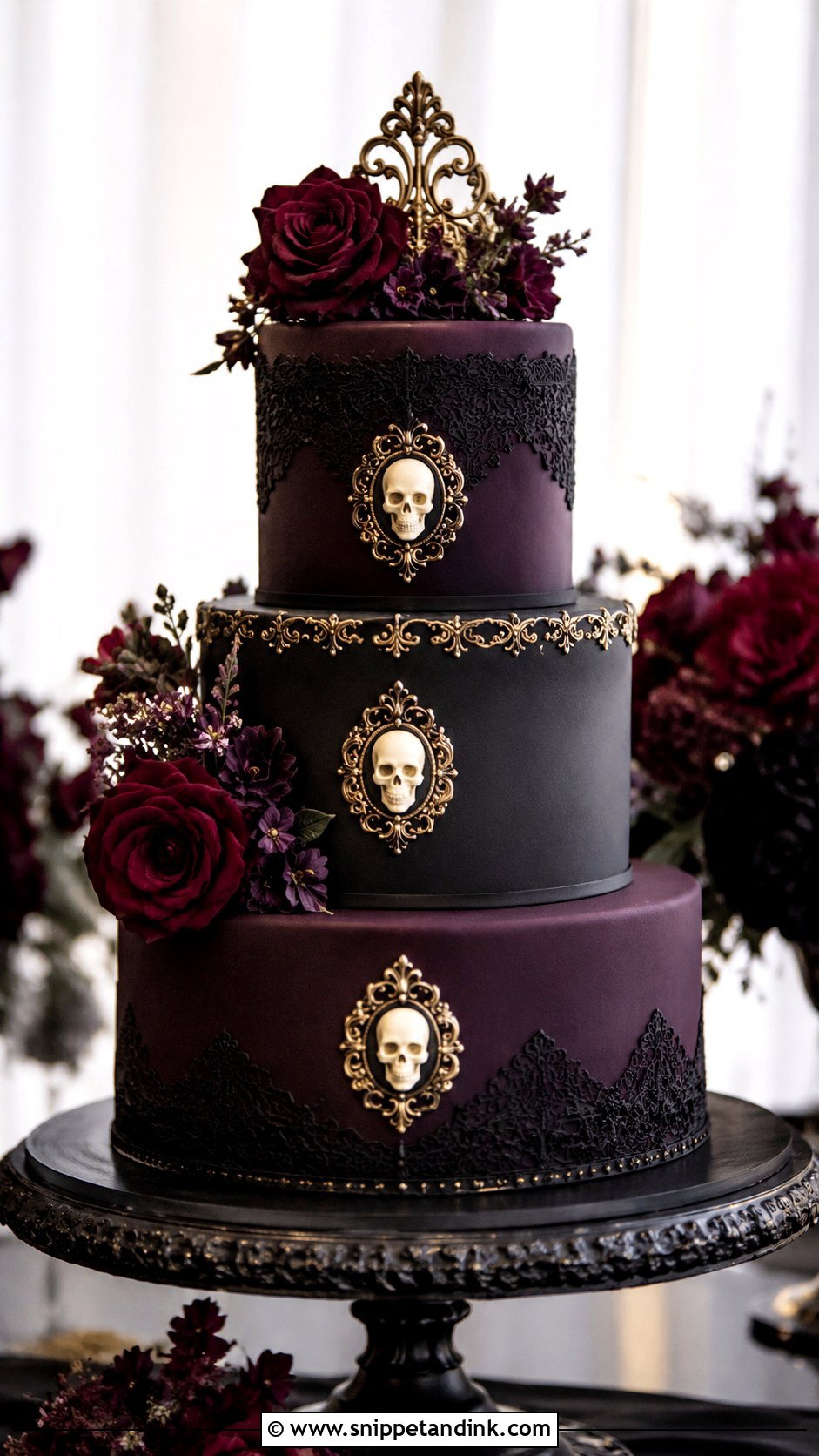
Skulls are the idea that most easily tips into costume, so scale matters more than anything else. Small sugar skull accents, cameo-style medallions or a subtle topper add the gothic note without taking over. Set them on a black or dark plum base with soft roses, lace piping and antique gold, or put ivory skulls on a black tier for contrast. Before I commit to this one with a couple, I ask how their grandparents will feel about it, because it divides a room. Chocolate raspberry, black forest or red velvet fit the darker look inside.
12. Gothic Wedding Cake With Cathedral Arches
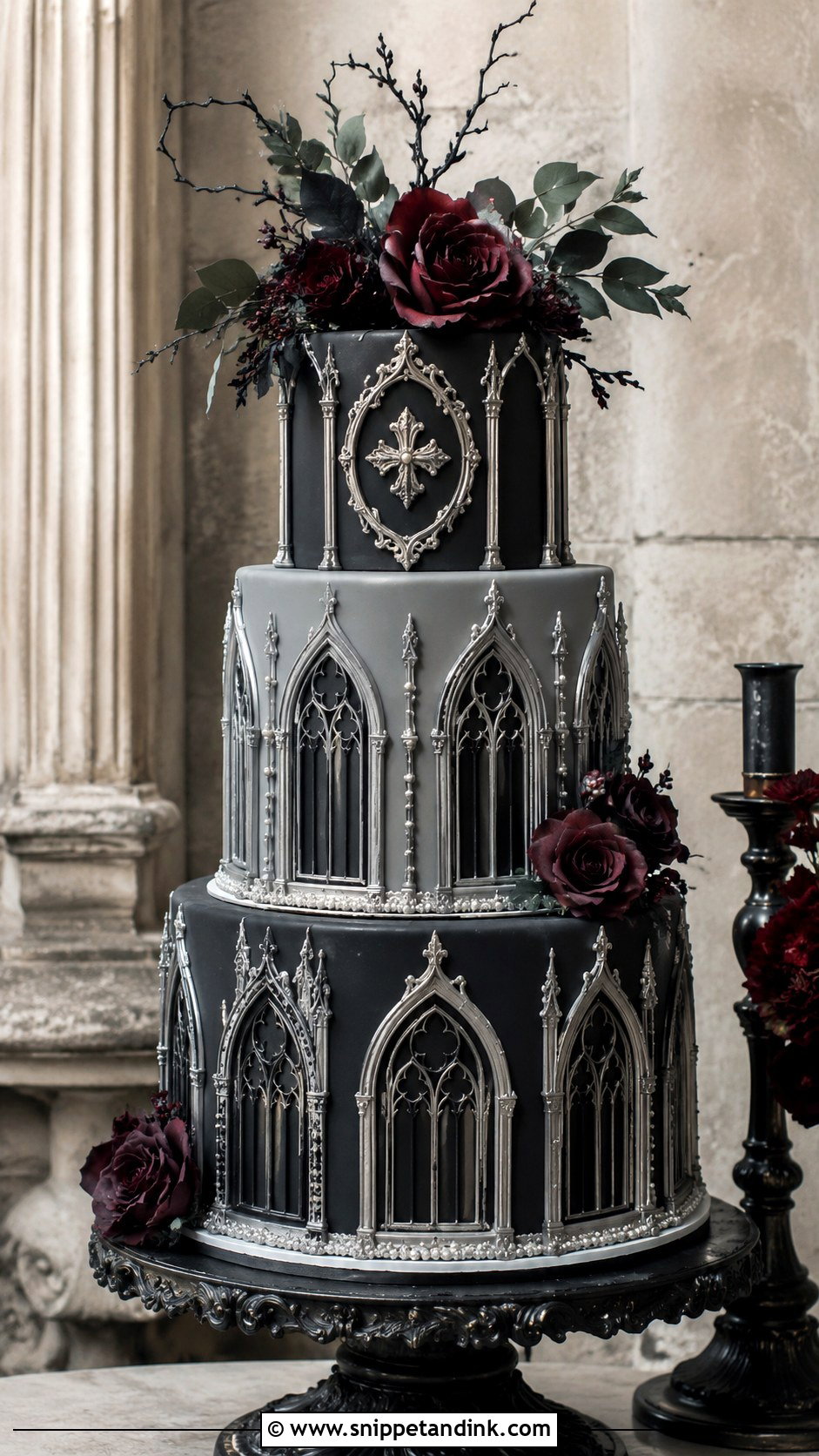
Cathedral arches turn the cake into architecture. Pointed arch panels, window-style piping or painted stone-grey detail borrowed from old buildings look best on tall tiers in black, charcoal, ivory or silver, softened with sugar roses, candle motifs or a little pearl work. A hexagonal cake makes the arches feel more structural; round keeps them graceful. The arches have to line up tier to tier, so I mark them out with a template before any piping starts. Old chapels, historic halls, libraries and rooms with dramatic ceilings are where this design makes the most sense.
13. Gothic Wedding Cake With Buttercream
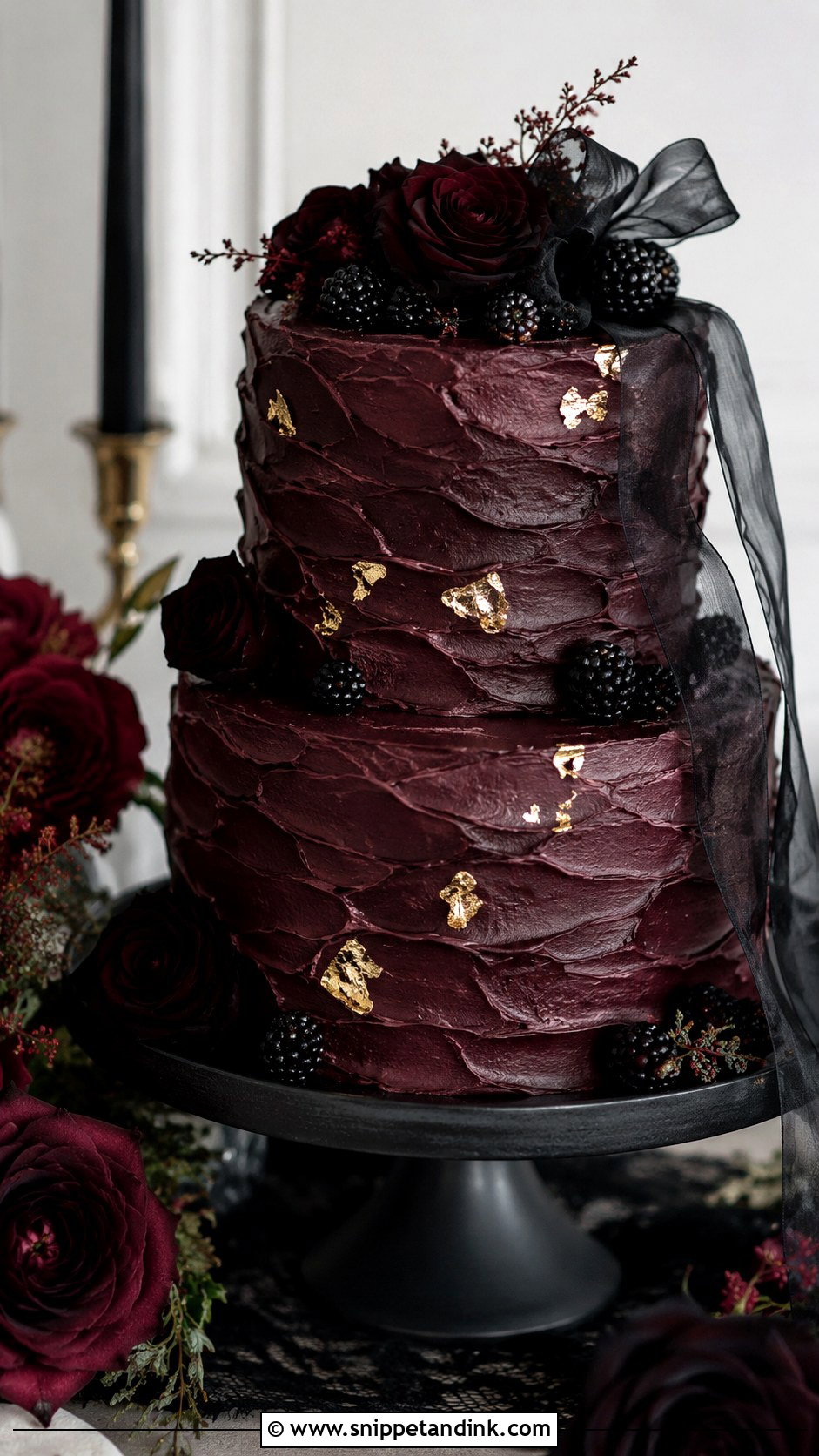
Buttercream gives you a softer, more inviting finish than fondant. Black cocoa buttercream reaches a deep colour with much less dye and tastes of dark chocolate, while burgundy or plum buttercream adds warmth. Smooth sides, texture, vintage piping or ruffles all suit the theme, finished with dark flowers, berries, gold leaf or black ribbon. The trade-off is heat: dark buttercream absorbs warmth faster than white, so this is not the cake for an outdoor table in direct sun. Guests usually prefer eating it, and it keeps a handmade feel.
14. Gothic Wedding Cake With Fondant
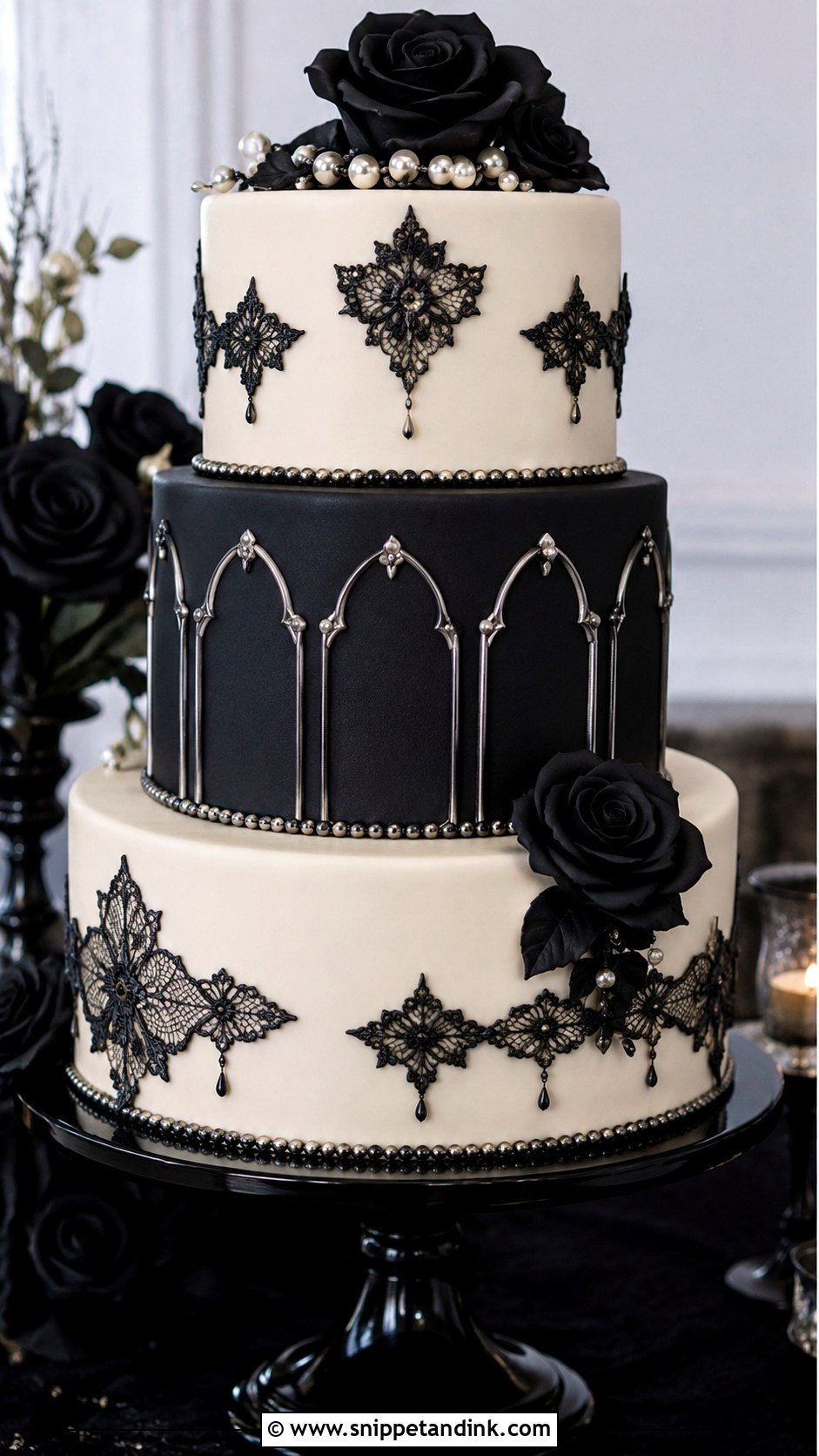
Fondant is what you want for crisp edges and structure: lace overlays, sculpted panels, metallic painting, arches, book tiers or geometric edges. A matte black fondant cake can hold its own with only a few roses and some gold. For a softer version, ivory fondant with black lace or dark floral appliqués works well. Heavily coloured fondant is softer and stickier to handle than white, and it can sweat when a chilled cake meets a warm room, so I let it come up to temperature slowly and keep it out of fridges on the day. It suits formal weddings where the dessert table should look precise.
15. Gothic Wedding Cake With Burgundy Flowers
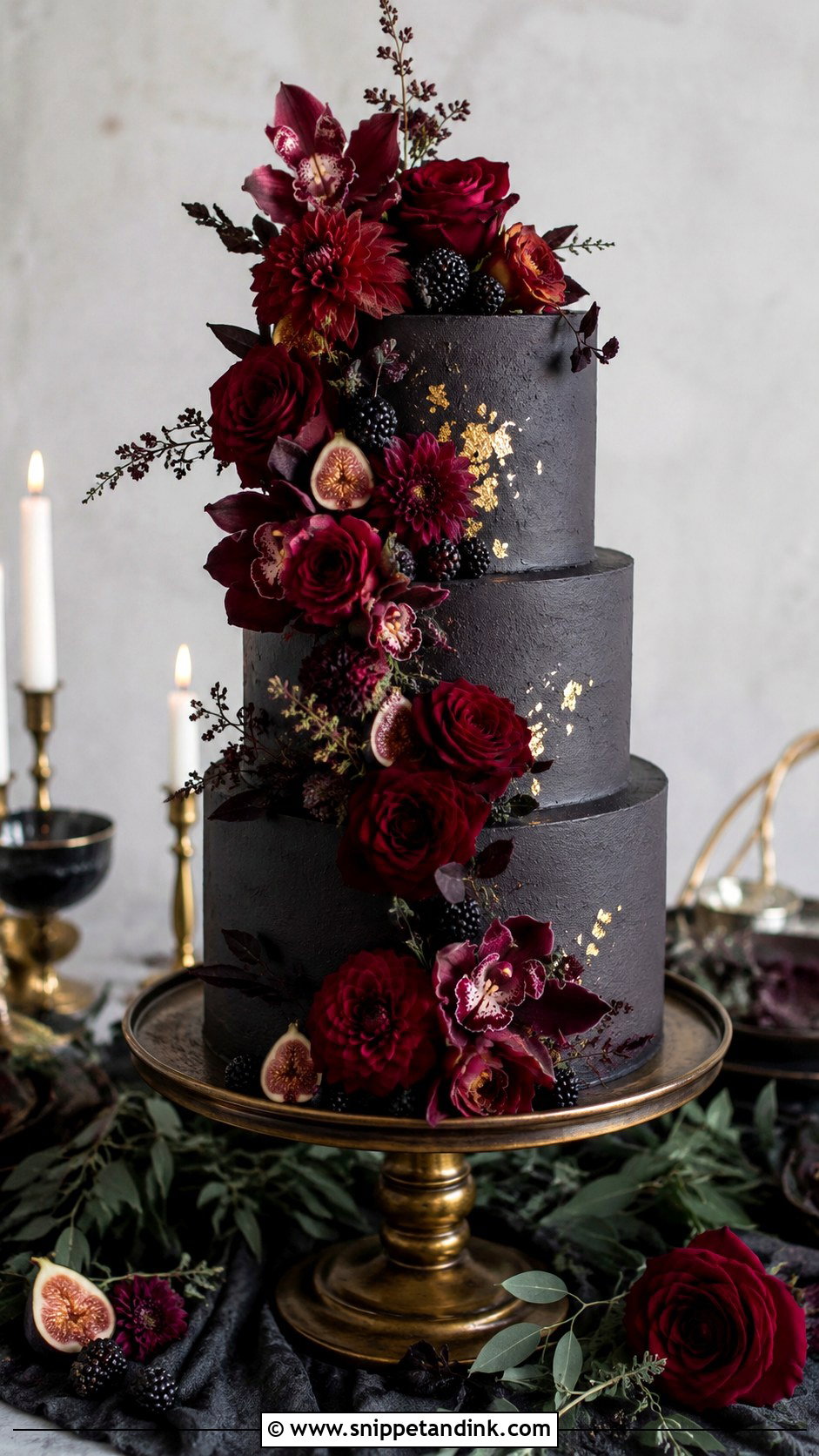
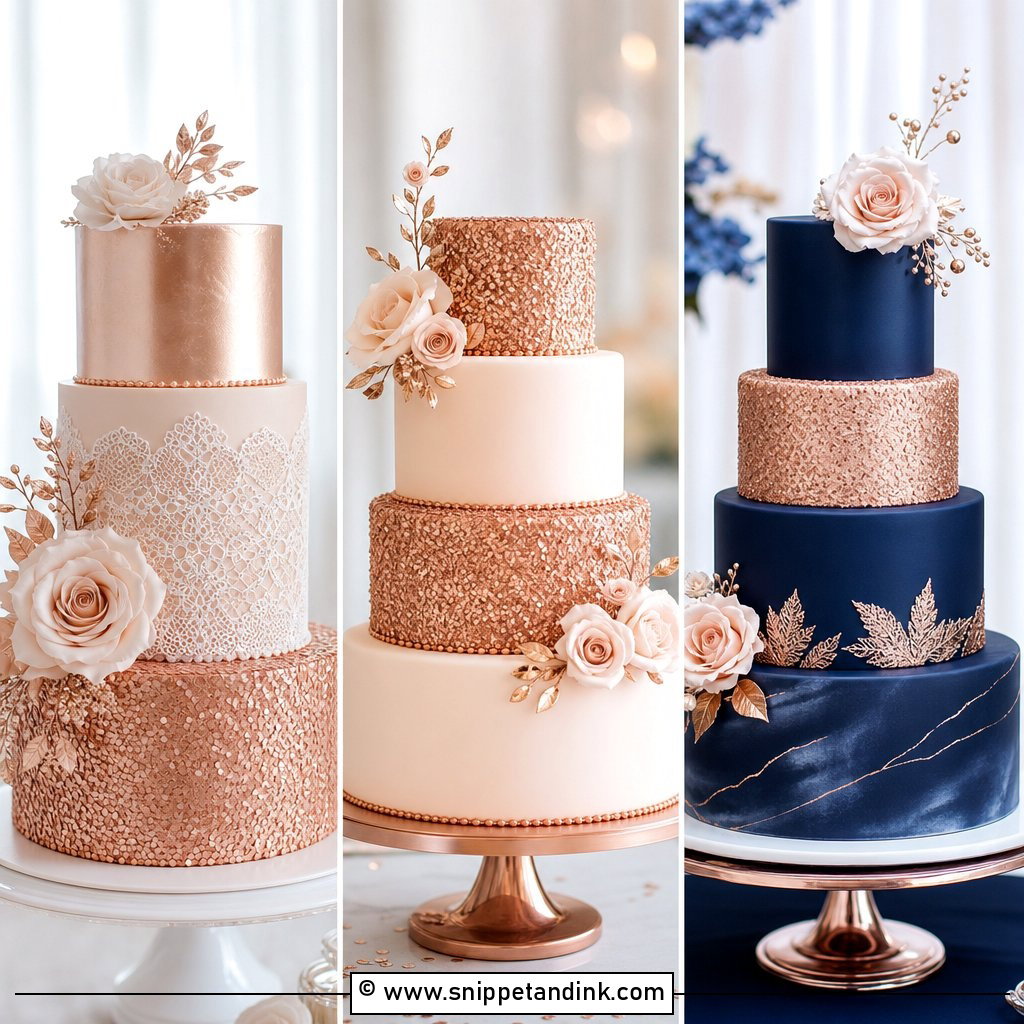
Burgundy flowers are the easiest gothic detail to fit into an existing palette. Burgundy roses, dahlias, ranunculus and orchids look rich on black, ivory, charcoal or dark green frosting, cascading down tall tiers or gathered in clusters between layers. Add blackberries, figs, dried foliage or antique gold leaves if you want more texture. The burgundy brings softness to the dark base, so the cake feels moody without turning heavy. Red velvet, dark chocolate cherry or vanilla with a berry filling suit it well.
16. Gothic Wedding Cake With Silver
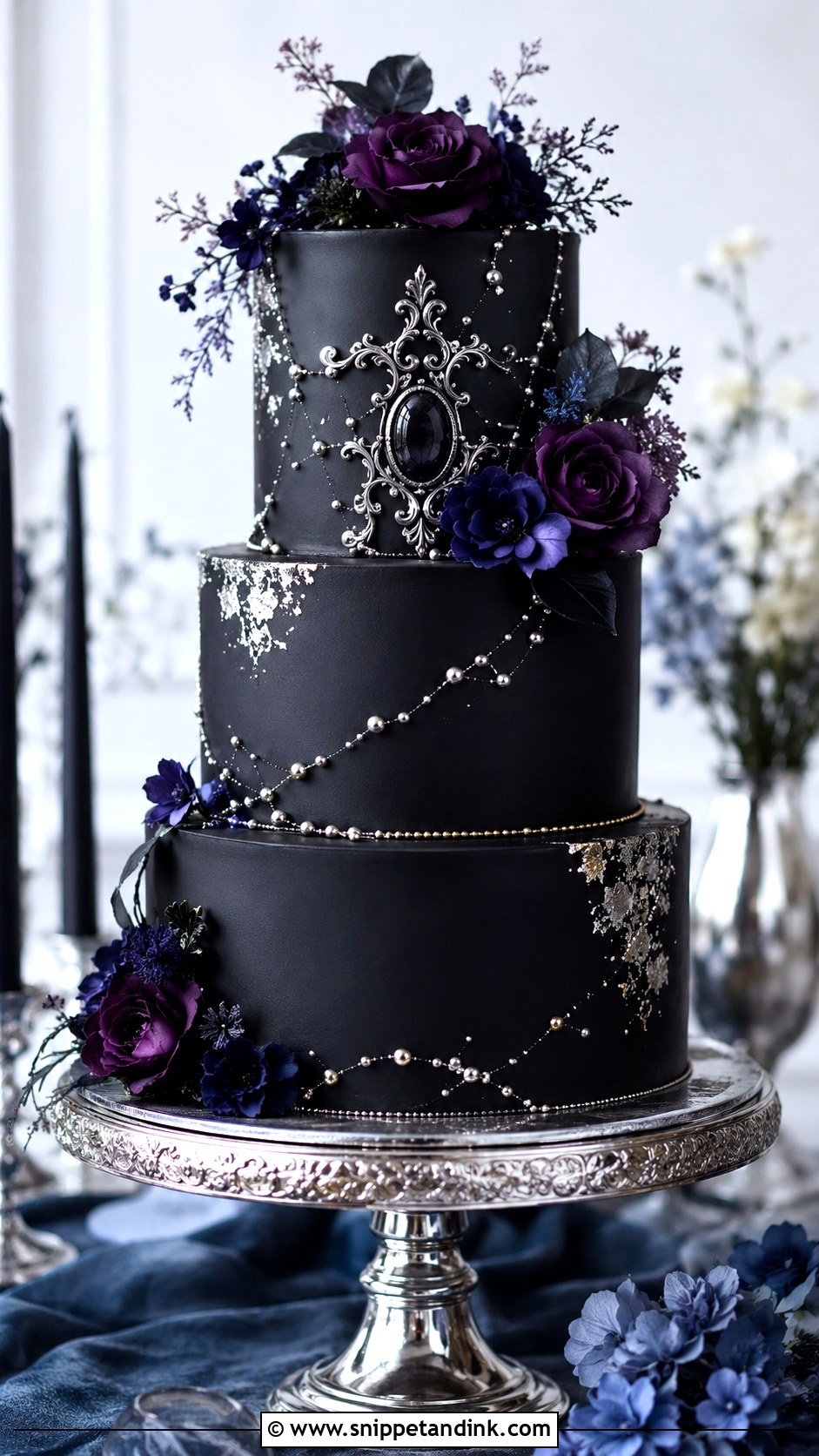
Silver makes a dark cake feel cooler and a little celestial. It suits black, midnight blue, charcoal or dark purple frosting, applied as silver leaf, painted edges, metallic piping, pearls or shimmer-dusted sugar flowers. Keep it refined so it looks bridal rather than flashy: a smooth three-tier cake with silver baroque patterns reads formal, textured buttercream with silver berries reads softer. Silver leaf tarnishes and dulls faster than gold once it’s exposed to air and handling, so I apply it close to delivery. Vanilla bean, chocolate espresso, blueberry lemon or almond cream fit the cooler palette.
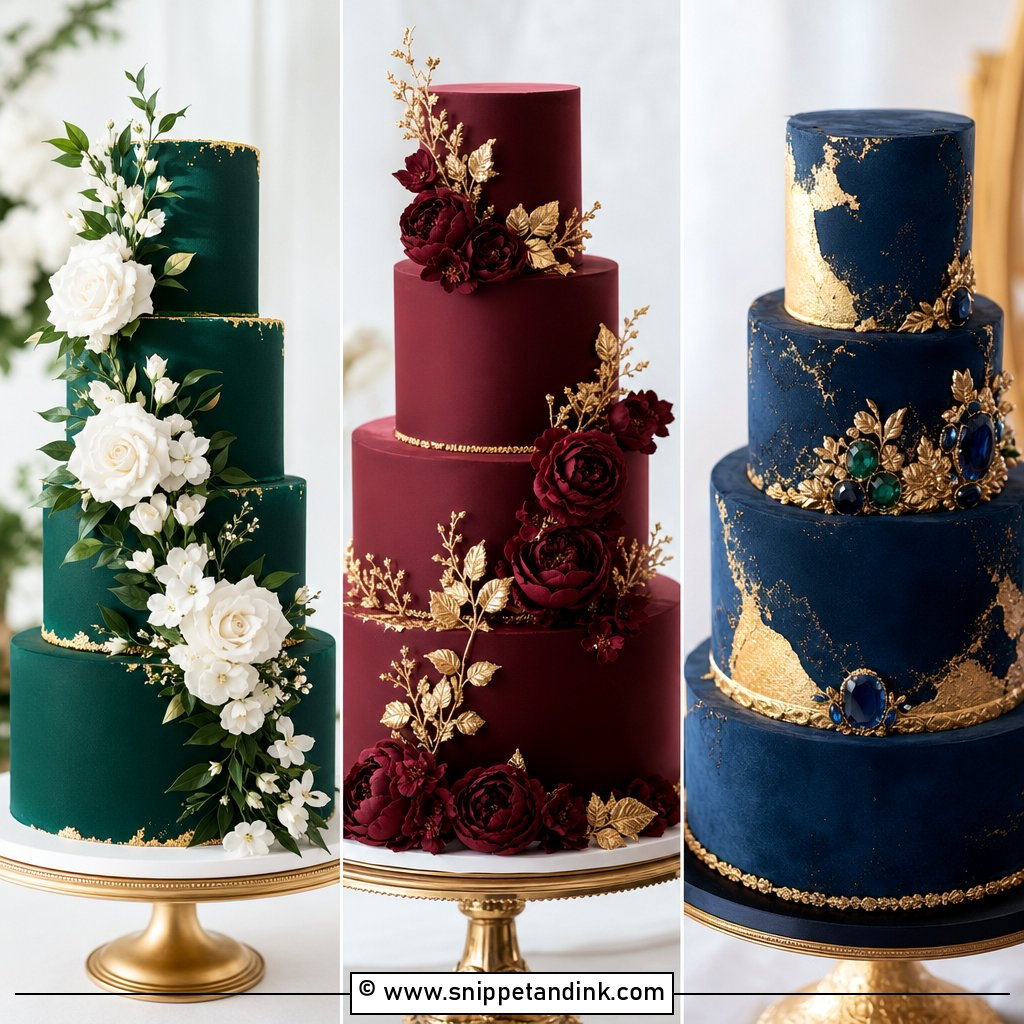
17. Gothic Wedding Cake With Dark Green
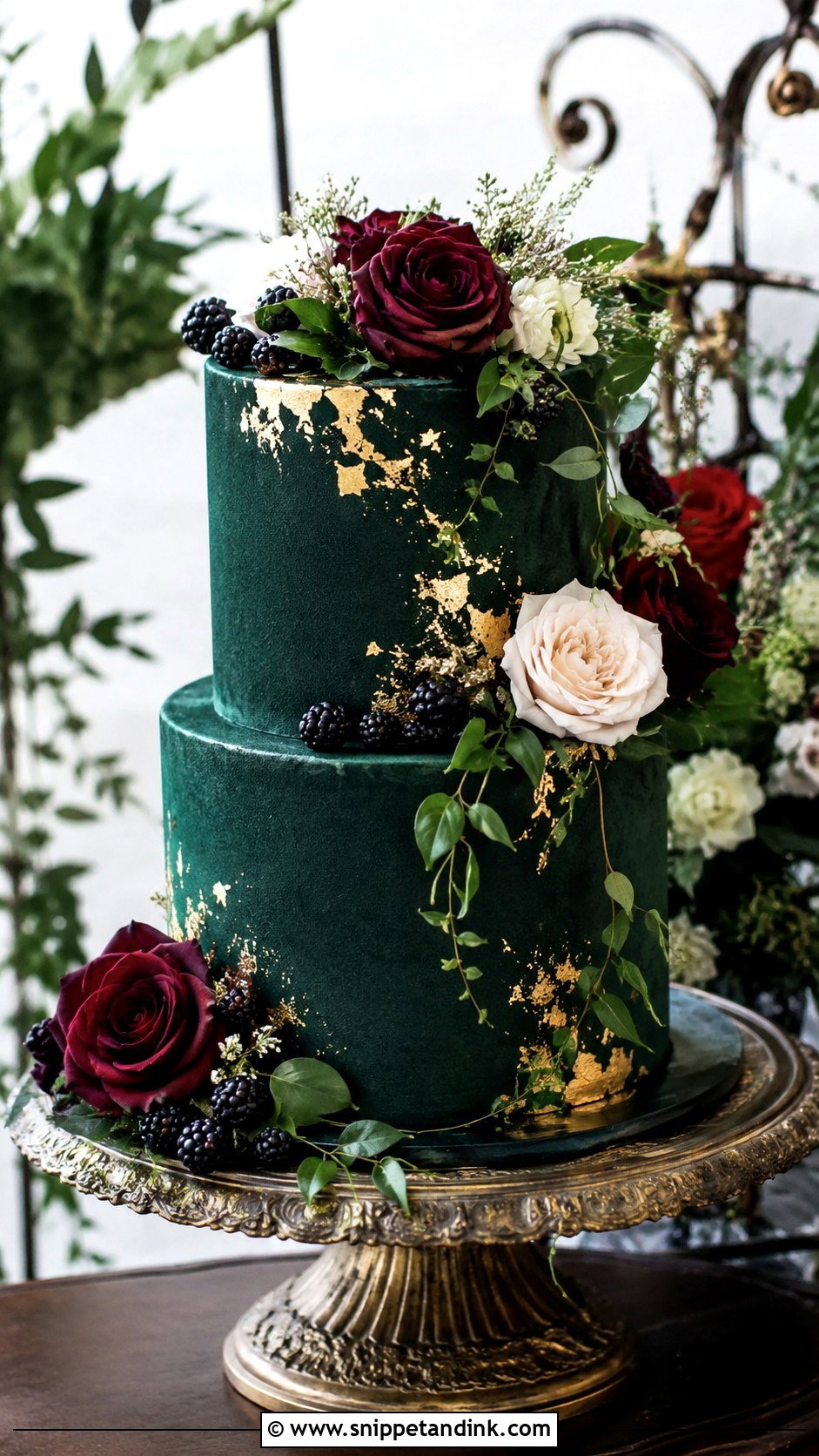
Dark green is the alternative to black I suggest most often, especially for garden and castle-style venues. Forest, emerald and moss shades feel rich and natural, and they pair well with burgundy roses, blackberries, gold leaf, ivory flowers and trailing greenery. A velvet-look buttercream makes the green feel luxurious; smooth fondant gives a cleaner, more formal result. Green is surprisingly hard to get deep without a bitter edge, so I build it on a darker base rather than pouring in more gel. Pistachio, chocolate mint, matcha vanilla or spiced pear connect the flavour to the colour.
18. Gothic Wedding Cake With Blackberries
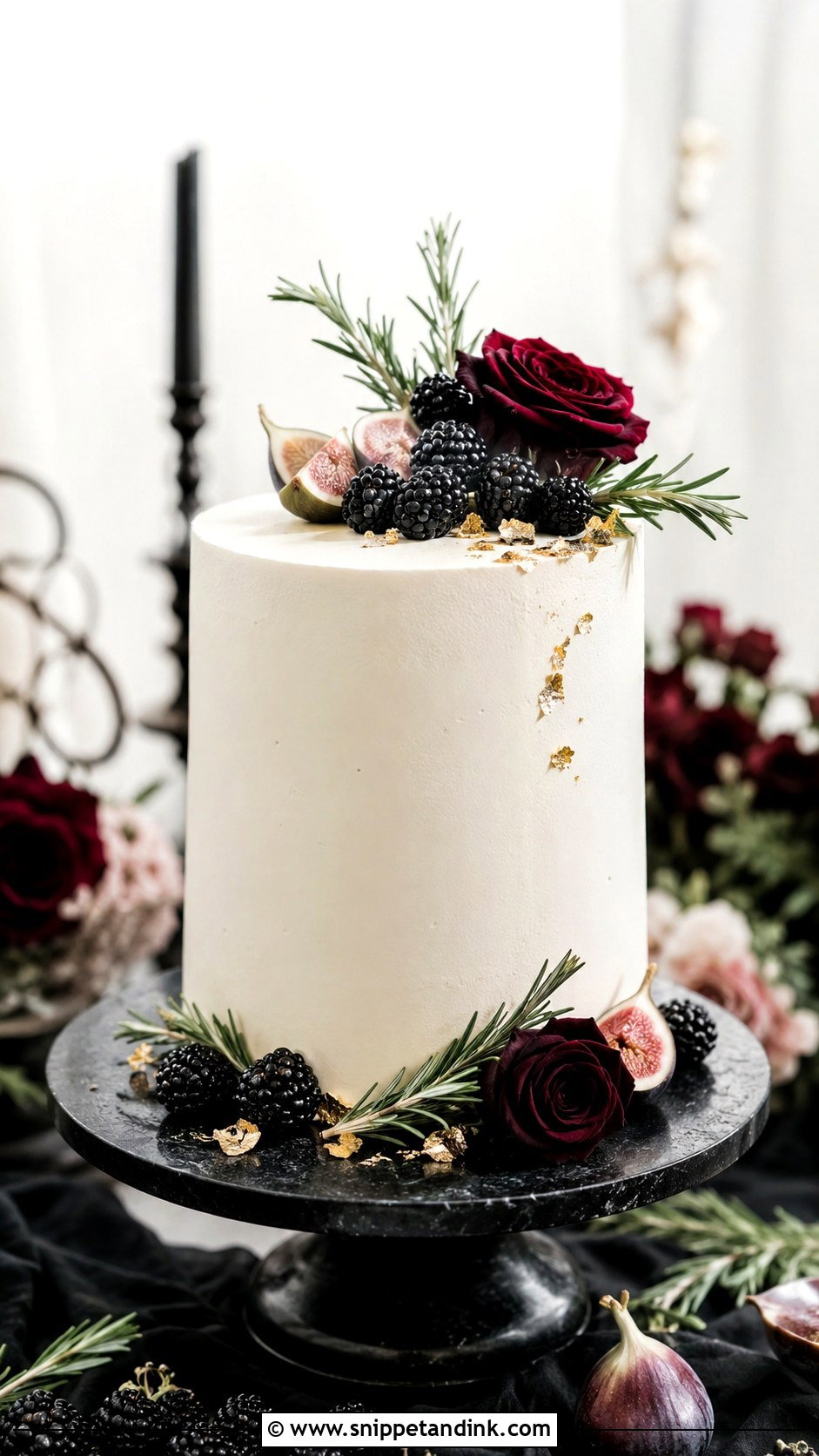
Blackberries do a lot for very little effort. They look rich against ivory buttercream, charcoal frosting, deep purple ganache or black fondant, adding shine and texture in exactly the right colour. Figs, dark roses, rosemary or a little edible gold finish the styling. The catch is juice: cut or bruised berries weep purple into pale frosting, so I use whole, dry berries and place them as close to serving as possible. Blackberry vanilla, lemon blackberry, dark chocolate blackberry or almond berry keep the flavour and decoration connected.
19. Gothic Wedding Cake With Vintage Books
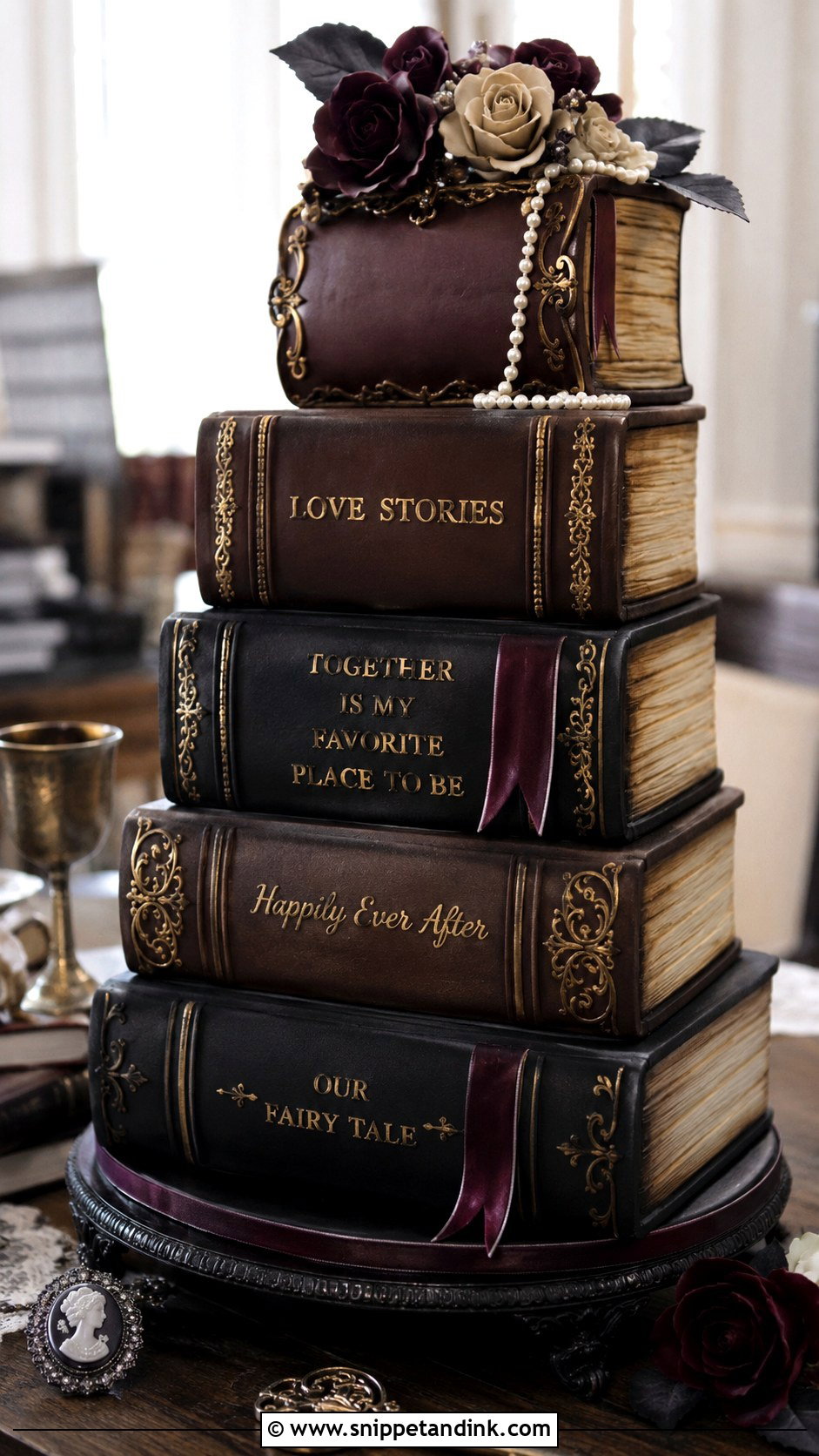
Couples who love literature, libraries or old estates tend to light up at the book cake. Each tier becomes an antique volume with edible pages, dark covers, gold lettering and aged edges, in black, burgundy, brown, ivory and antique gold. Sugar roses, ribbon bookmarks or a small floral arrangement on top give it a wedding finish. Carved book tiers are sculpted, so they take more time and serve fewer people for their size than round tiers. Spiced vanilla, chocolate caramel or earl grey buttercream suit the old-world mood.




20. Gothic Wedding Cake With Moon And Stars
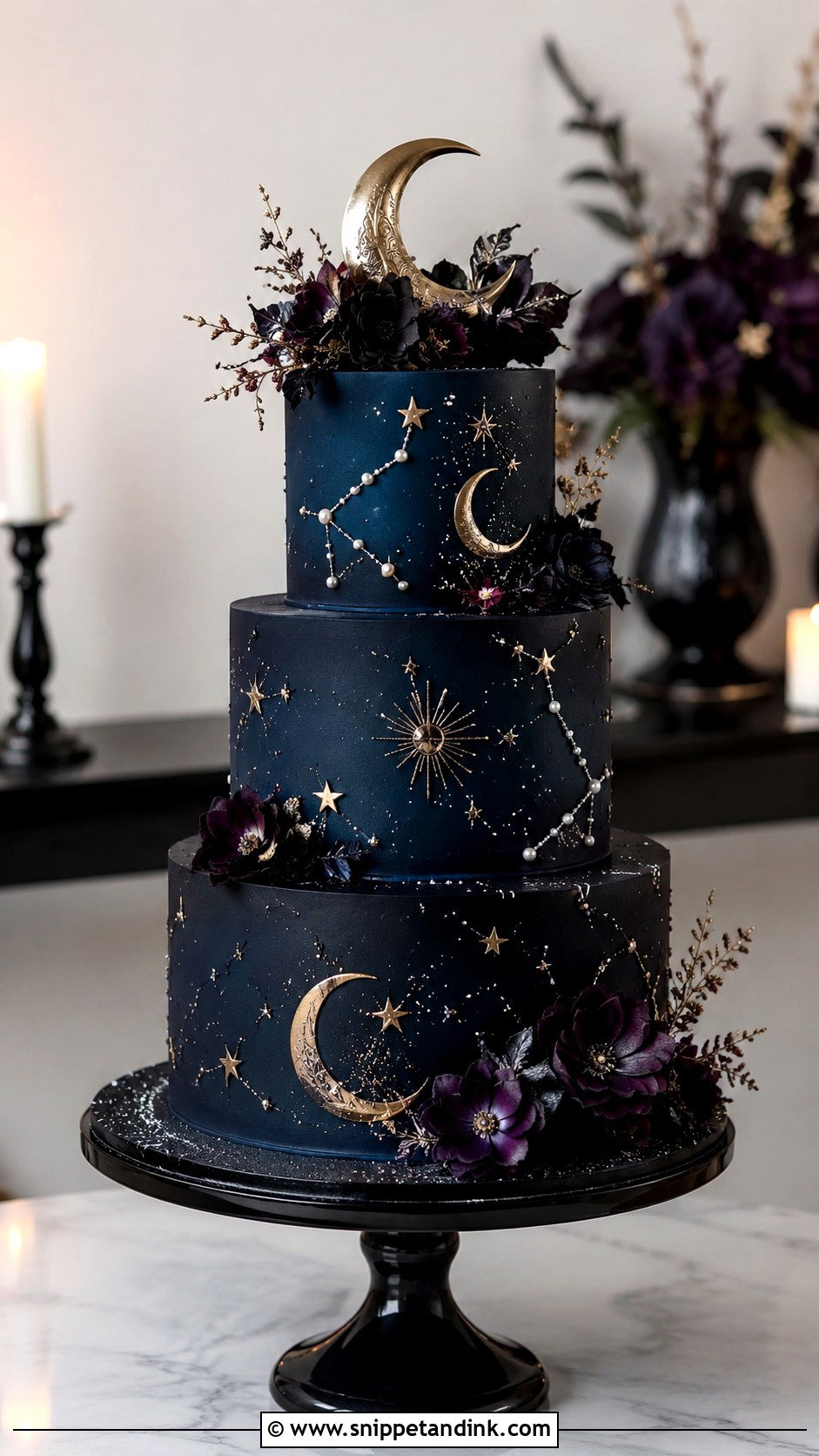
Moon and stars give the theme a dreamy turn. A black or midnight blue base creates the night sky, and silver stars, gold crescent moons, pearl constellations or a little shimmer dust add depth. Restraint is everything here; once every inch is covered it starts to look like a children’s party. Dark purple flowers or ivory roses at the base or between tiers bring it back to bridal. It suits evening receptions and couples drawn to a mystical mood, with chocolate, vanilla blackberry or lavender honey inside.
Where a Dark Cake Should Stand in a Candlelit Room
A black cake in a dim room can vanish. Candles alone make the white cakes glow but turn a charcoal tier into a silhouette, so I talk to the venue and the photographer before the design is final.
- Give it its own light. A small spotlight or uplighter aimed at the cake table does more than any amount of gold leaf.
- Pick a lighter backdrop. A black cake against a black drape disappears; ivory linen, stone or greenery behind it gives the outline something to stand against.
- Keep it out of sun and away from heaters. Dark surfaces warm up faster, so buttercream softens and fondant can sweat or bulge.
- Schedule the cutting early in the evening if you can, before the room gets warm and the candles burn low.
Getting it there in one piece
Every scuff shows on matte black, so dark cakes travel in a deeper box with plenty of clearance and I carry a small touch-up kit to the venue. Fresh berries and anything delicate, like edible lace or silver leaf, go on at the venue rather than in my kitchen. If you’re planning a dark cake for a summer wedding, ask your baker how they deliver in heat; a cool car and a short wait before setup make more difference than any recipe.
Matching the Darkness to Your Room, Your Flowers and Your Guests
Gothic cakes can be bold or vintage, floral or quietly magical, and the right one depends on the room it will stand in. Black and red reads passionate, purple mysterious, gold rich, dark green unexpected. Lace, pearls, roses, arches, berries and metallic touches are what turn a dark cake into a wedding centrepiece rather than a novelty. When you meet your baker, bring your venue photos, your flower plan and a picture of the dress, and ask to see a colour swatch in similar light. Balance the drama with one soft detail and the cake will look right from the first photo to the last slice.
You'll Like These Ideas:







Leave a Reply