
Poppies are one of the flowers couples ask me about most and one of the hardest to work with fresh, which is exactly why they’re so good on cakes made by people who know how. Their petals are like crumpled silk, and the dark centers give a cake contrast that roses never will. Red reads dramatic, peach reads warm, white reads quiet, and orange suits an outdoor party. On a cake they can be sugar flowers, pressed petals, paint, wafer paper or, with care, the real thing. The cakes that work tie the poppy color back to the bouquet or the tables and leave space around the blooms. Below are 25 ways to use them, with my notes on what holds up.
Why I Rarely Put Fresh Poppies Straight on a Cake
I love poppies in a bouquet, but they’re among the most demanding cut flowers I handle. Field poppies drop their petals almost as soon as they’re picked. Iceland poppies last longer, a few days in a vase, but their stems bleed a milky sap when cut, and they need their ends seared in boiling water or a flame to stop it. That sap is the last thing you want near icing.
Poppies also aren’t a recognized edible flower, and some species contain alkaloids, so a fresh poppy should never sit directly on cake that people will eat. If you want real ones, they go on as decoration only, with sealed stems in posy picks or on a small barrier, and they come off before the cake is cut.
- Sugar poppies: the most reliable, made weeks ahead, last all day and can be kept afterwards.
- Wafer paper poppies: light and realistic, but sensitive to humidity.
- Painted poppies: flat, crisp and safe, best on fondant or very smooth icing.
- Fresh poppies: only for a short display, with stems sealed and never touching the icing.
Season matters too. Iceland poppies are a cool-season flower and oriental poppies bloom around late spring, so for a late summer or autumn wedding, sugar or paint is often the only realistic route anyway.
1. Poppy Wedding Cake With White Buttercream
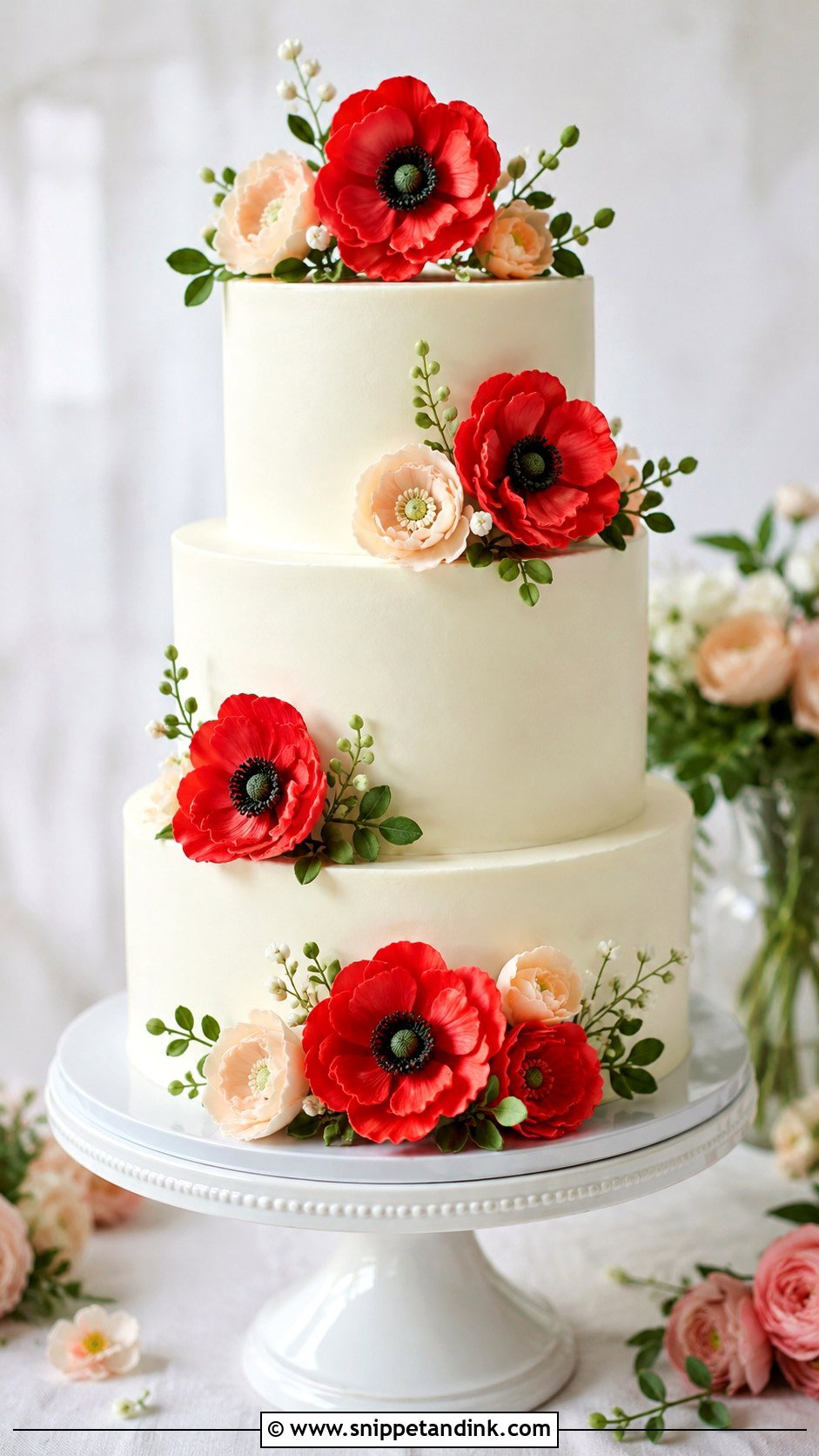
White buttercream gives poppies a clean page to sit on, so red, coral, peach or white blooms all read clearly. Smooth icing looks refined; soft horizontal ridges look handmade. I’d group the flowers in two places, a cluster at the base and one on an upper tier, rather than dotting them evenly, because a poppy’s charm is its loose, slightly floppy shape and it gets lost when repeated like a pattern. It moves easily between a barn, a garden and a ballroom.
2. Semi Naked Poppy Wedding Cake
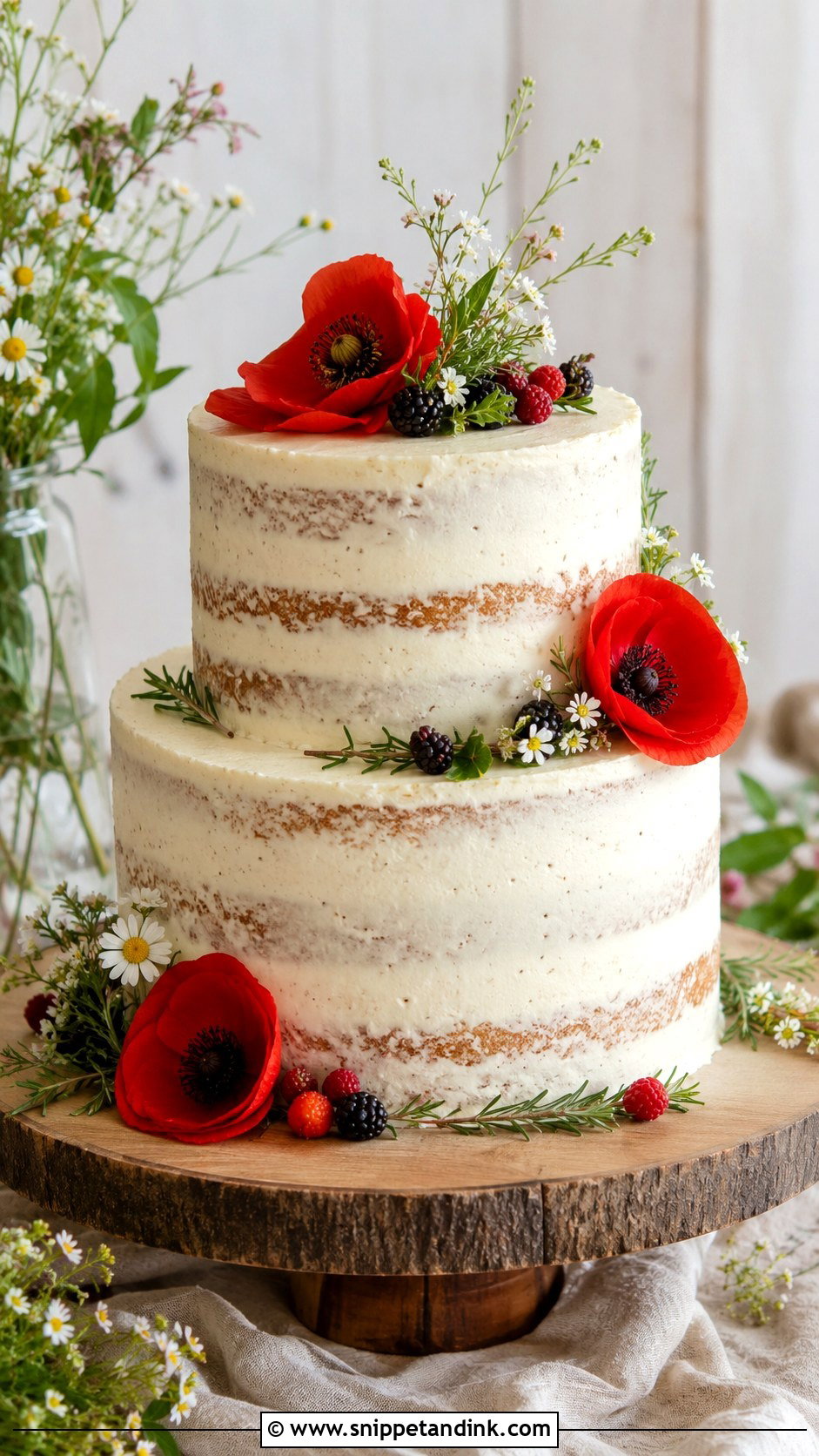
Thin buttercream lets the sponge show, which suits couples who’d rather skip formality. Poppies add color without competing with that texture. The exposed layers suit vanilla bean, almond, lemon, honey, or spice cake. Keep the flowers airy: a few poppies, some greenery, small berries and fine filler look like a meadow, while a tight pack looks like a florist’s bucket. One caution from my side is that a semi-naked cake dries faster than a fully iced one, so it shouldn’t be dressed hours before the reception.
3. Red Poppy Wedding Cake
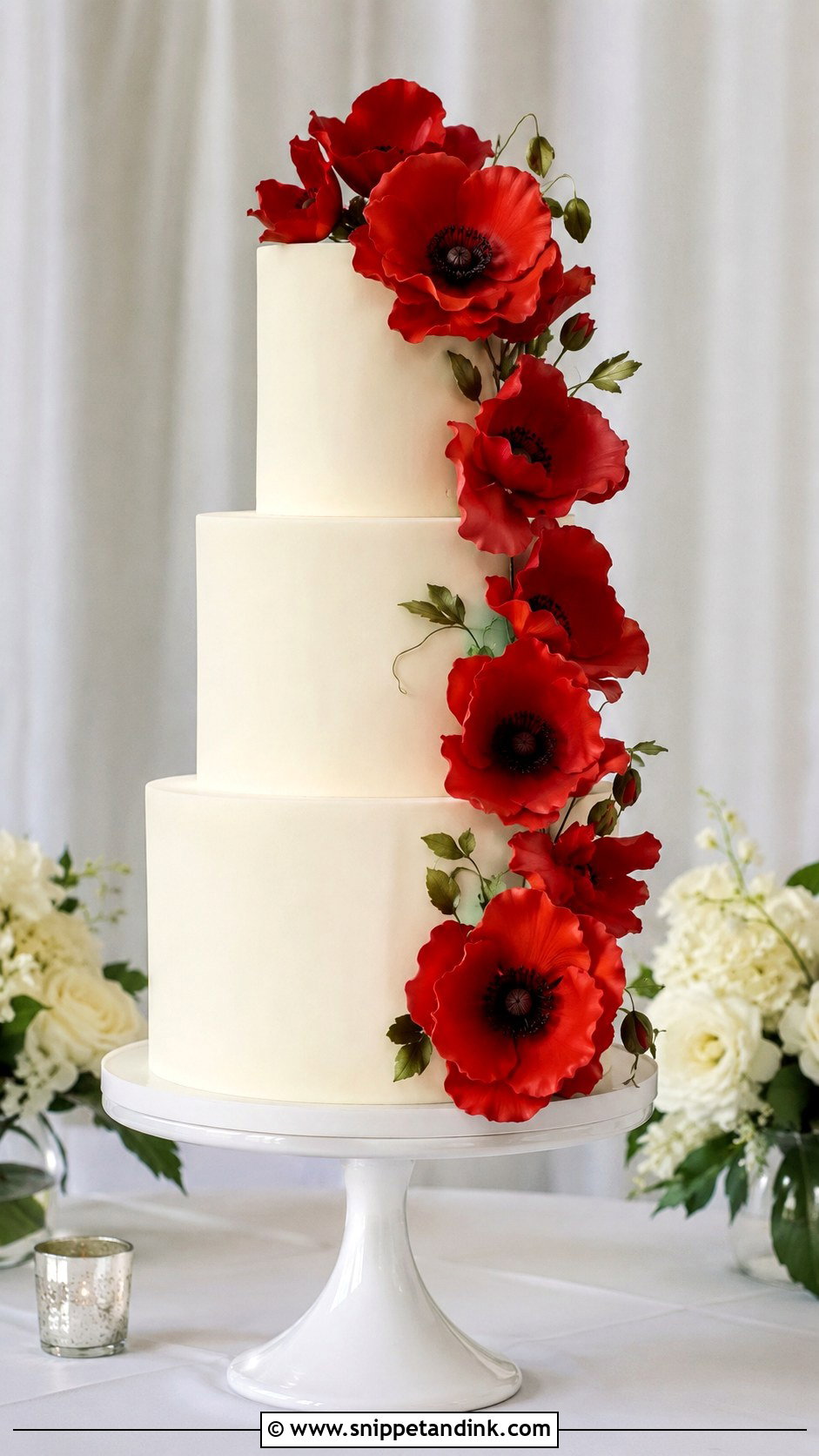
Red is the poppy most people picture, and it’s the boldest accent a cake can carry without getting heavy. It sits well on ivory, pale blush, soft gray or barely tinted buttercream. On a tall cake I’d run the reds upward in a loose cascade and keep everything else quiet: smooth icing, fine piping, a thin ribbon at each tier. Red sugar petals take a lot of color to get right, and deeply colored petals can bleed onto white icing where they touch in a humid room, so ask your baker how they finish them.
4. Orange Poppy Wedding Cake
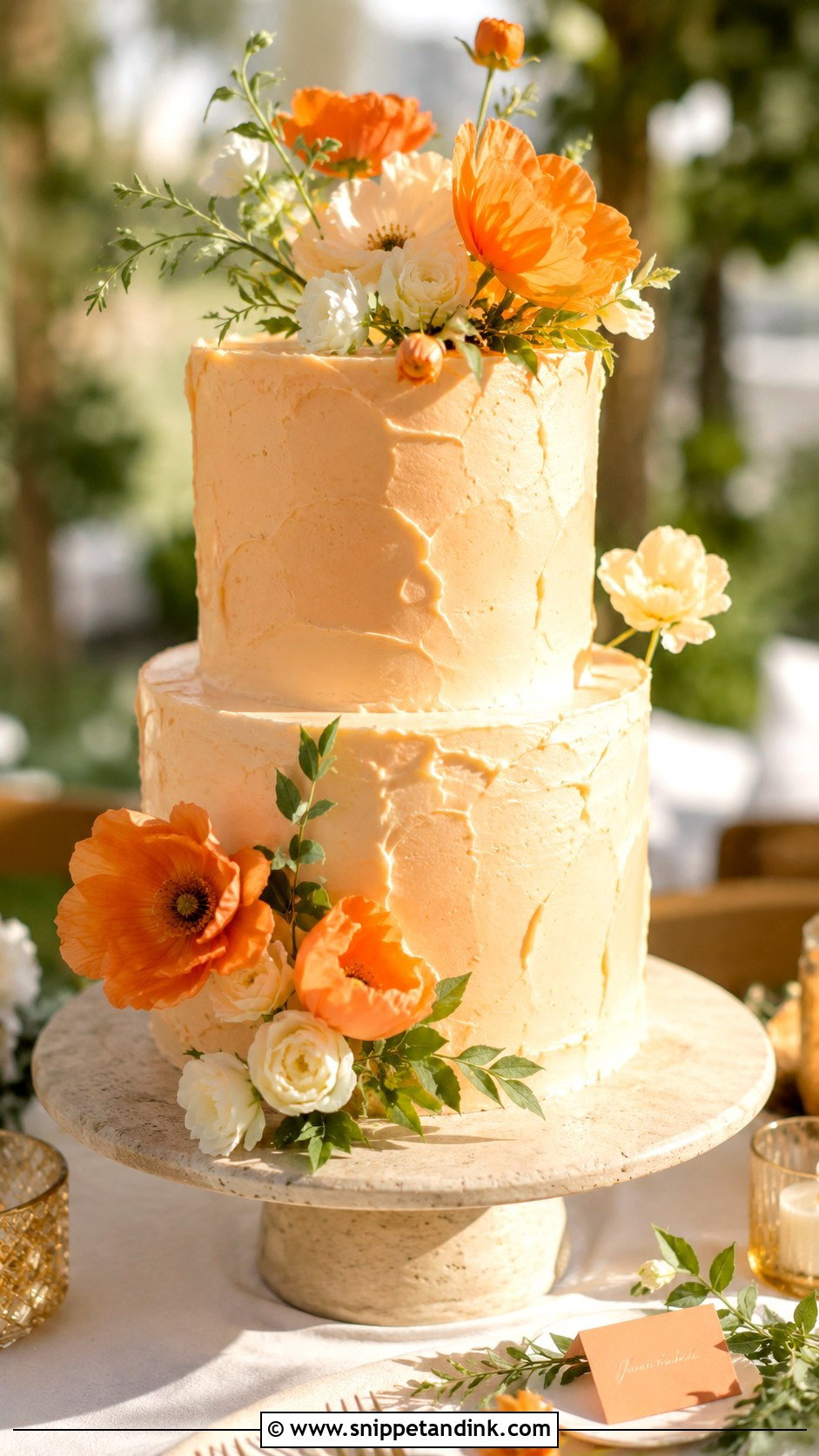
Orange poppies look like late spring sun, and they suit outdoor receptions, desert venues and colorful gardens. Pick a softer base so the orange looks fresh rather than loud: ivory buttercream, pale peach fondant or a light honey tint. A little greenery, a few cream flowers or dried grasses calm the palette, though dried grasses need a barrier against the icing. Citrus, vanilla, almond or carrot sponge sits well with it.
5. White Poppy Wedding Cake
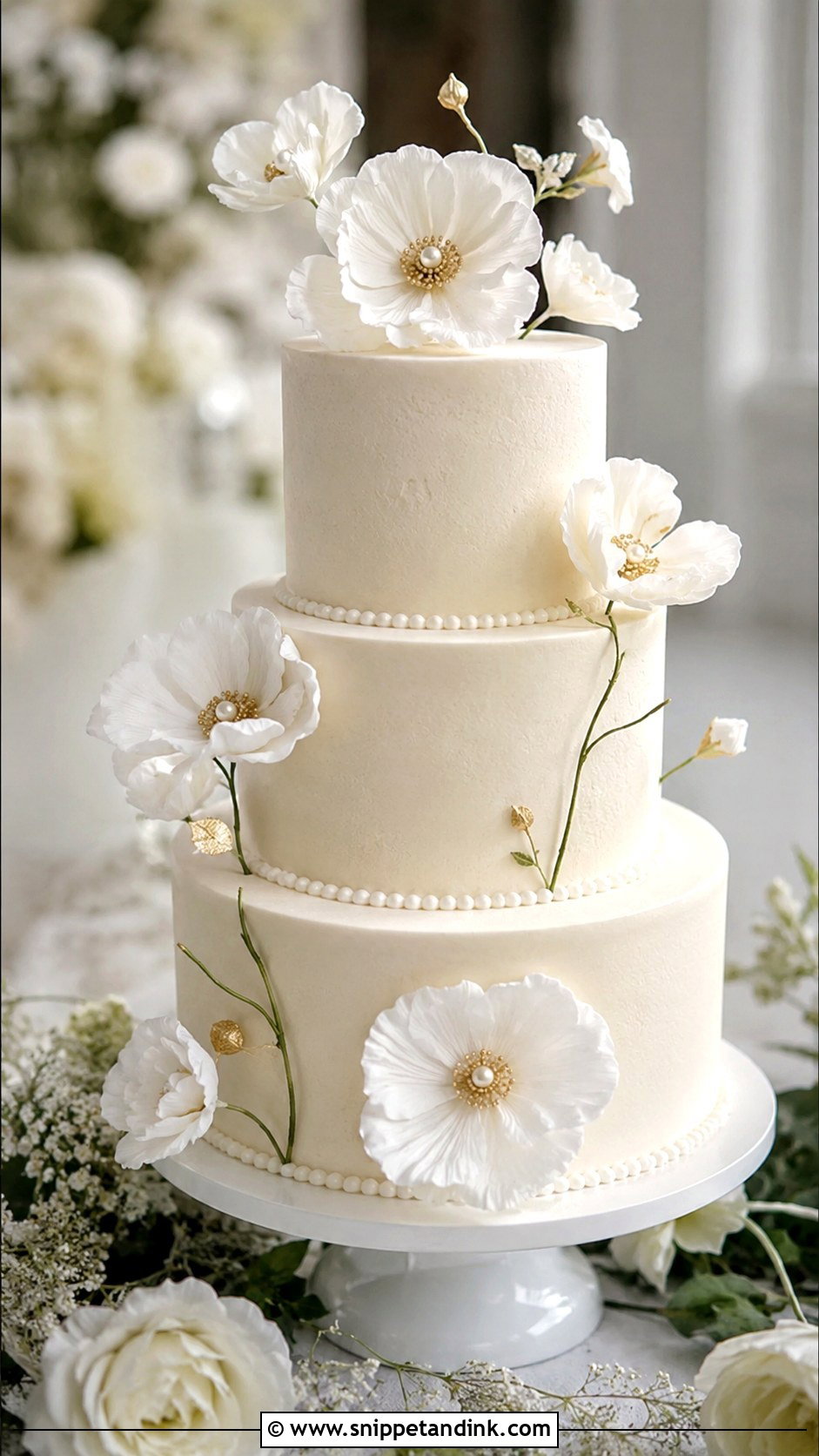
White on white disappears unless you give it texture, so this is a design I plan around contrast in shape rather than color. Pearl or pale green centers, a slightly ivory fondant, or a faint blush ground behind the flowers all help the petals read. A touch of gold at the stamens can lift them too. It’s a quiet, graceful choice for chapels, minimalist rooms and garden receptions, and it suits a couple who loves flowers but finds red too loud.
6. Poppy Wedding Cake With Sugar Flowers
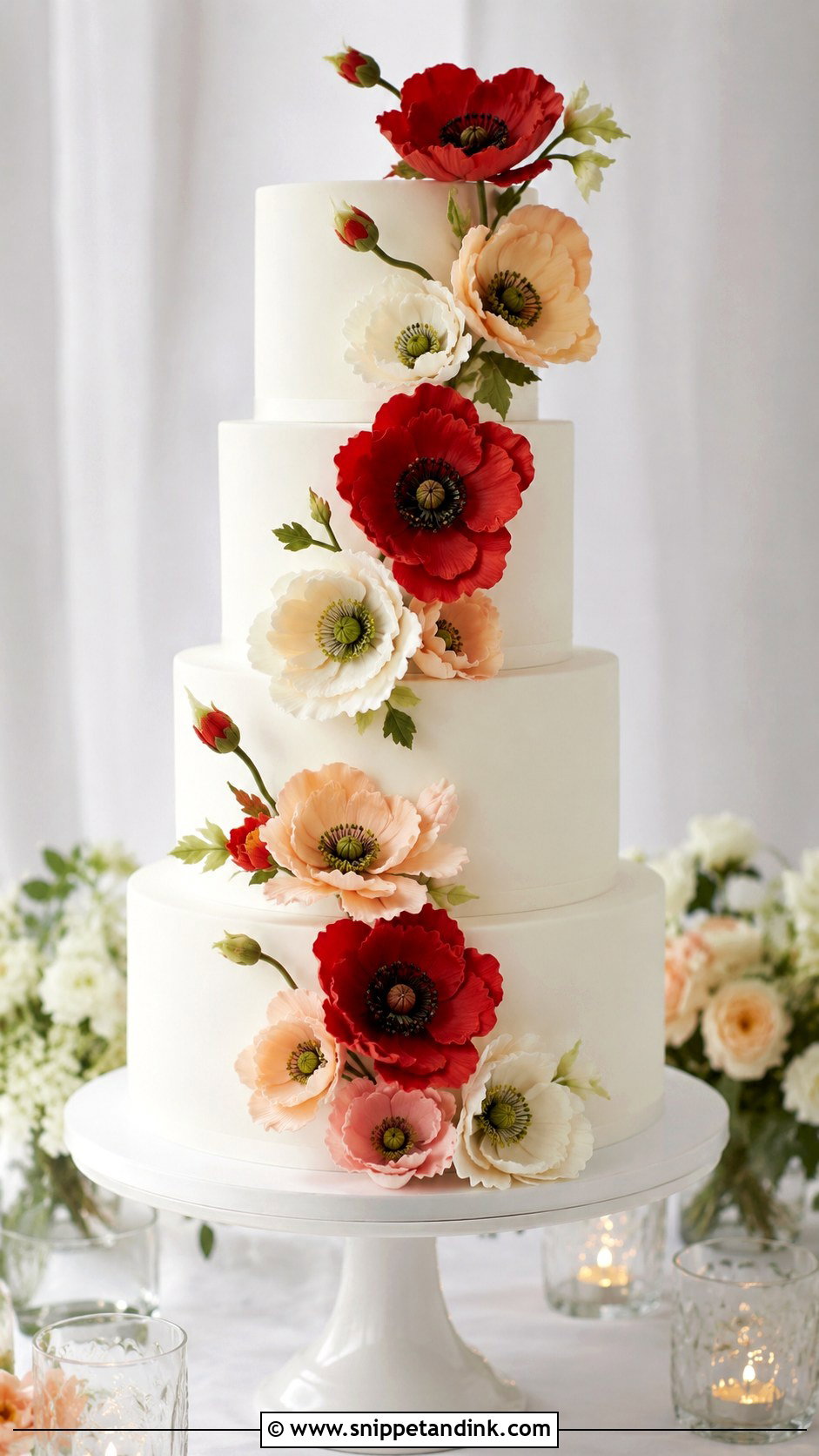
Honestly, sugar poppies are what I recommend to most couples. Fresh poppies are fragile and short-lived once cut, while sugar ones hold their shape all day and can be made in any color, from true red to dusty peach, cream, pale pink or burgundy. Your baker controls the size and the angle of every bloom, and season doesn’t matter. They sit equally well on fondant, buttercream or ganache. The best arrangements mix a few open flowers with closed buds and seed heads, the way poppies actually grow, so it looks like a plant rather than a row of decorations.
7. Poppy Wedding Cake With Pressed Flowers
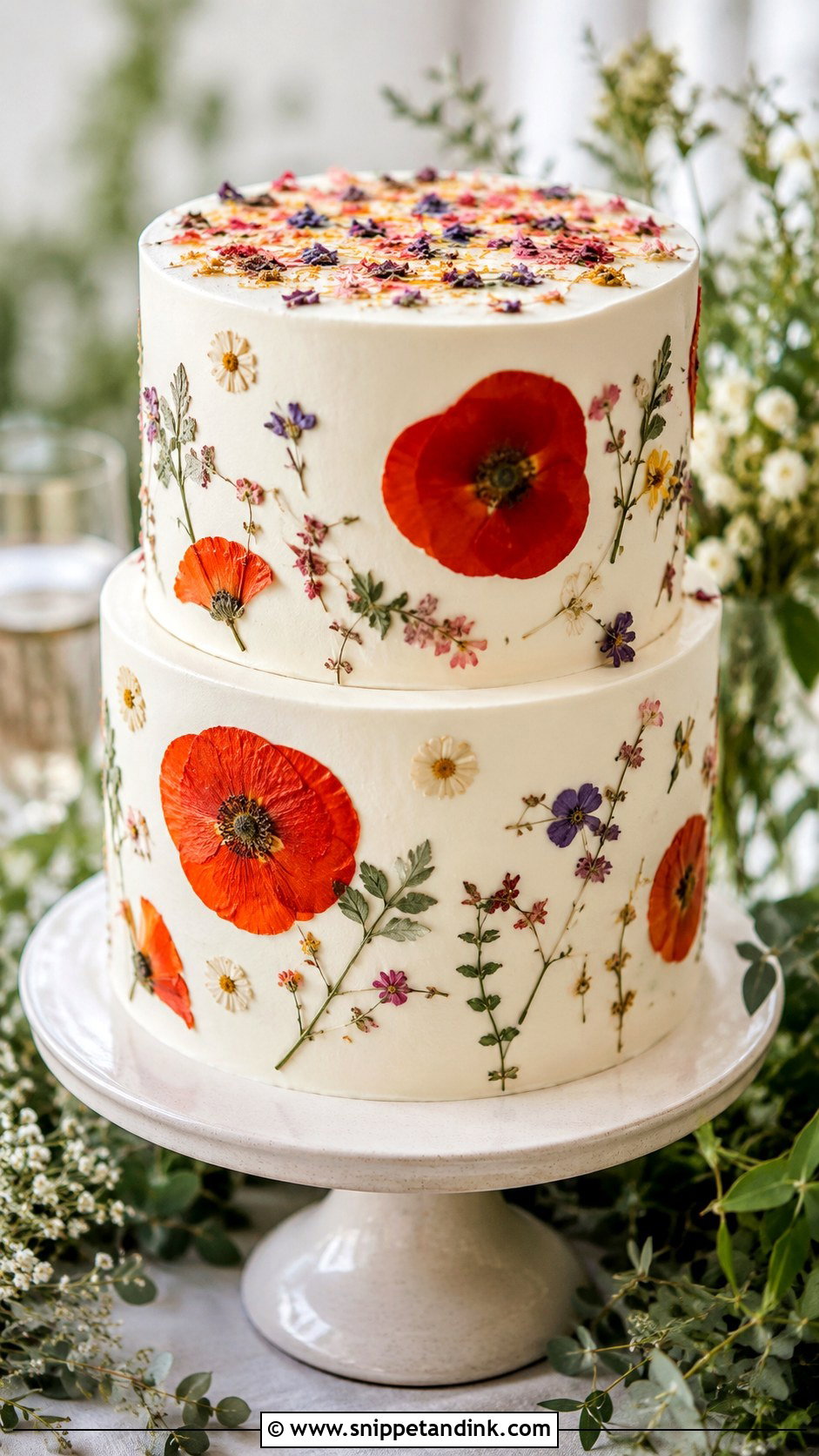
Pressed petals lie flat over smooth buttercream or fondant like a botanical print, and they look best on smaller tiers where people see them close up. Here’s my honest caveat: poppies aren’t on the usual list of edible flowers, so most bakers use poppy-colored edible flowers such as violas or pansies, or a wafer paper poppy, alongside them. Mix in tiny edible blooms and fine herbs for a meadow feel. Everything has to be grown without pesticides and prepared by the baker, never picked from a field on the morning.
8. Hand Painted Poppy Wedding Cake
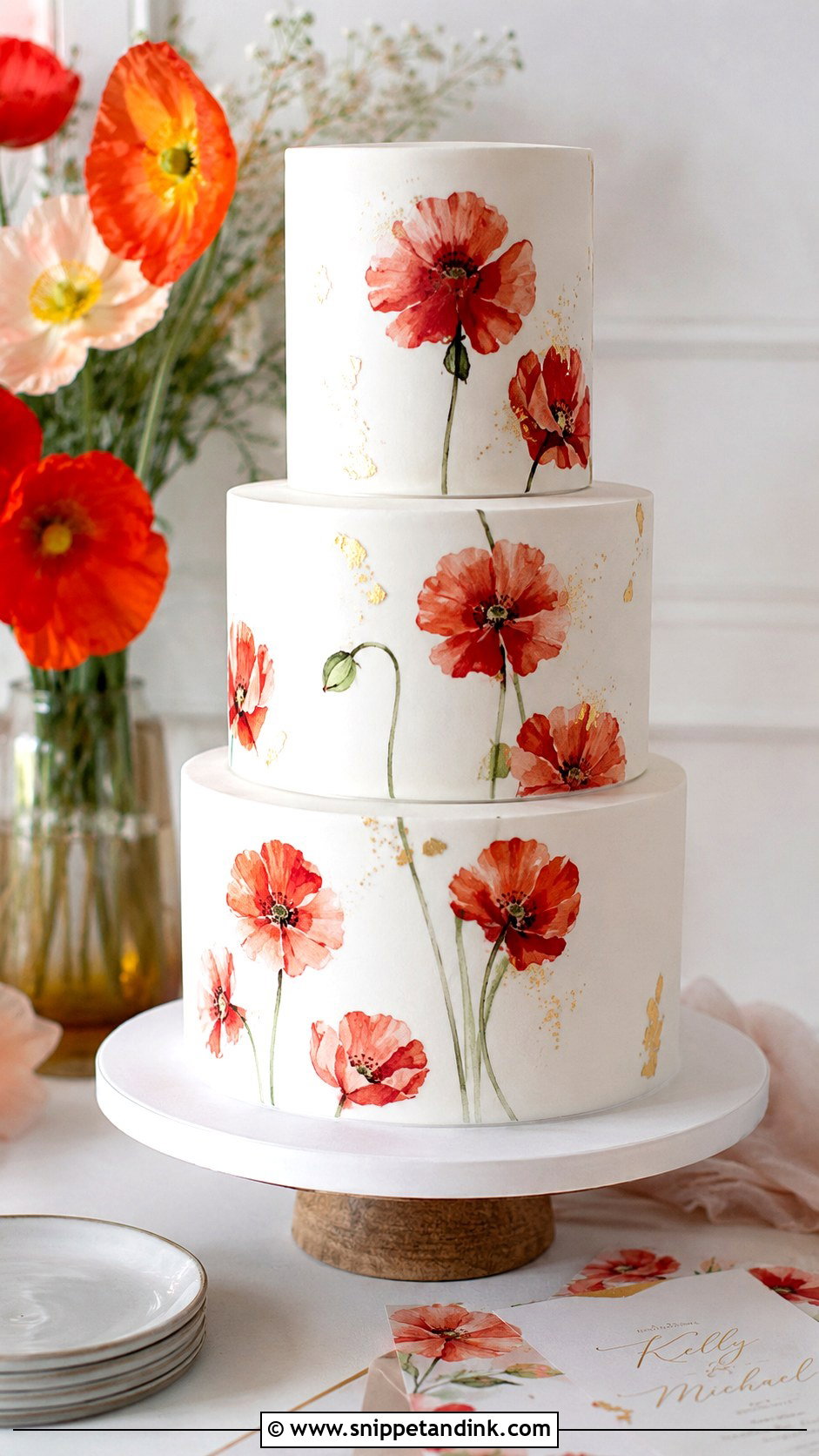
Painted poppies give you flowers with a flat, clean finish, which suits couples who love florals but not bulk on the cake. A baker paints them in watercolor washes, bold red petals or fine botanical lines. The surface has to be very smooth, so fondant or a well-chilled, crisp buttercream works best. Keep the cake white for a classic feel or use a pale blue, sage or blush ground. If your invitations carry a poppy illustration, ask whether the painter can echo it.
9. Poppy Wedding Cake With Wafer Paper Flowers
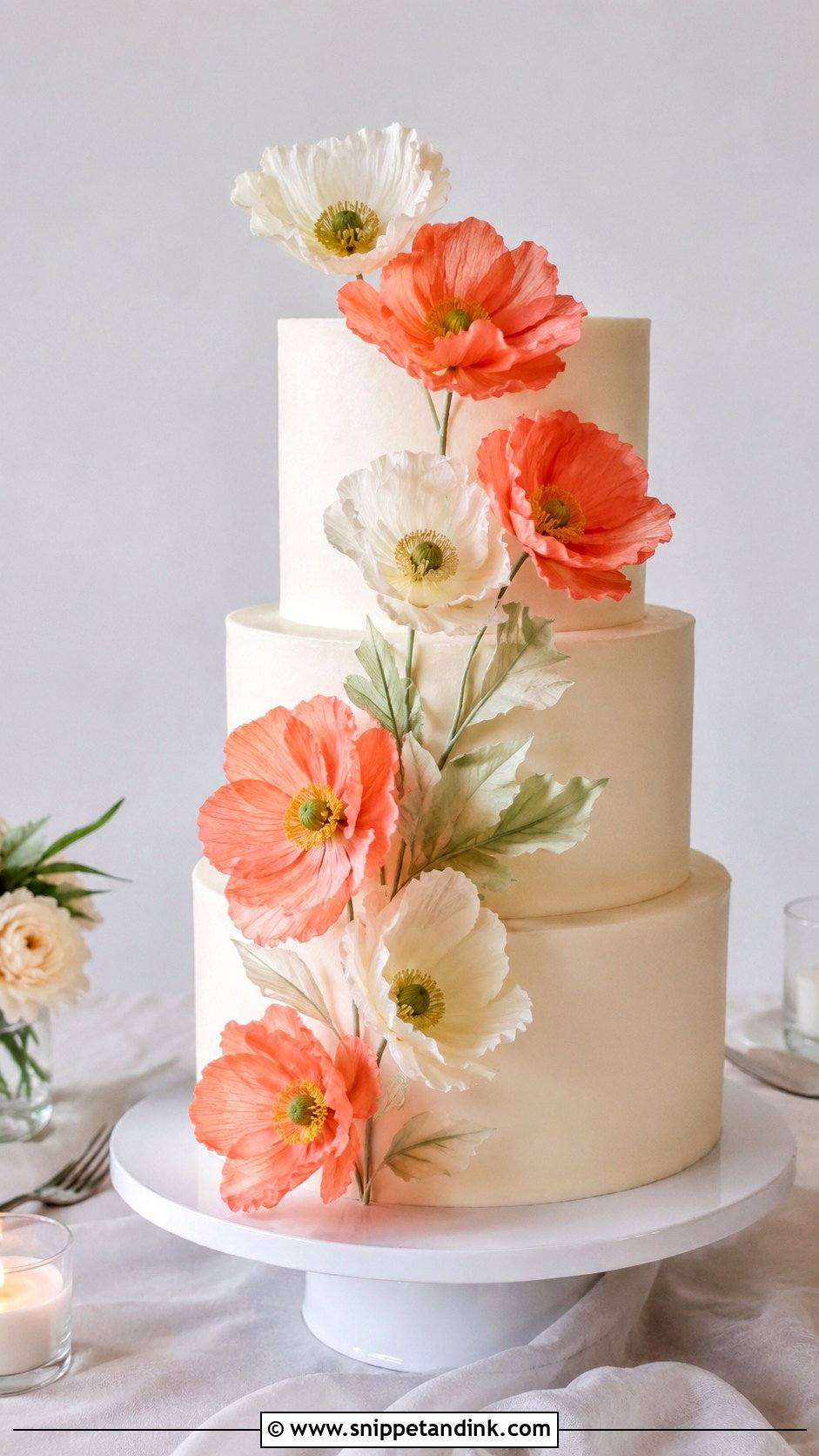
Wafer paper can be cut and shaped into thin, crinkled petals that come surprisingly close to a real poppy, and it weighs almost nothing, so you get height and movement without strain on the tiers. It takes red, coral, peach, blush or ivory tint. The weakness is moisture: in a humid tent or next to damp buttercream, wafer paper softens and can droop, so it does best on fondant or in a cool indoor room. Loose clusters along the tiers look more natural than a neat line.
10. Poppy Wedding Cake With Gold Accents
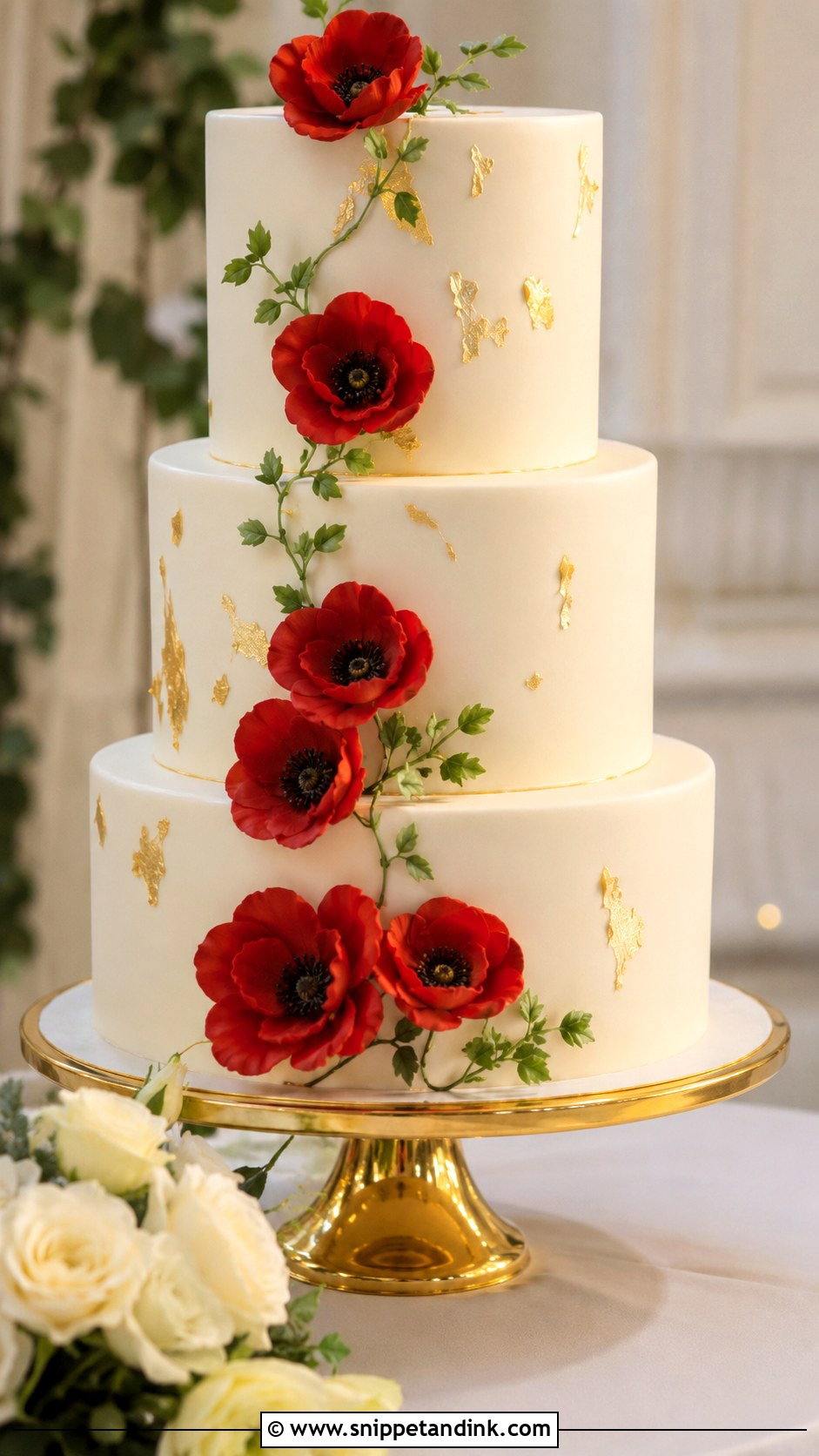
Gold is a supporting act here. A few flakes of leaf, a narrow painted edge, a soft stencil or gold-touched stamens on sugar flowers are enough; more and the poppies stop being the point. Warm gold flatters red and orange petals, while white poppies with gold look more classic. Ivory icing, almond sponge, champagne linens and simple table flowers finish the picture, whether that’s a ballroom, a museum or a formal garden.
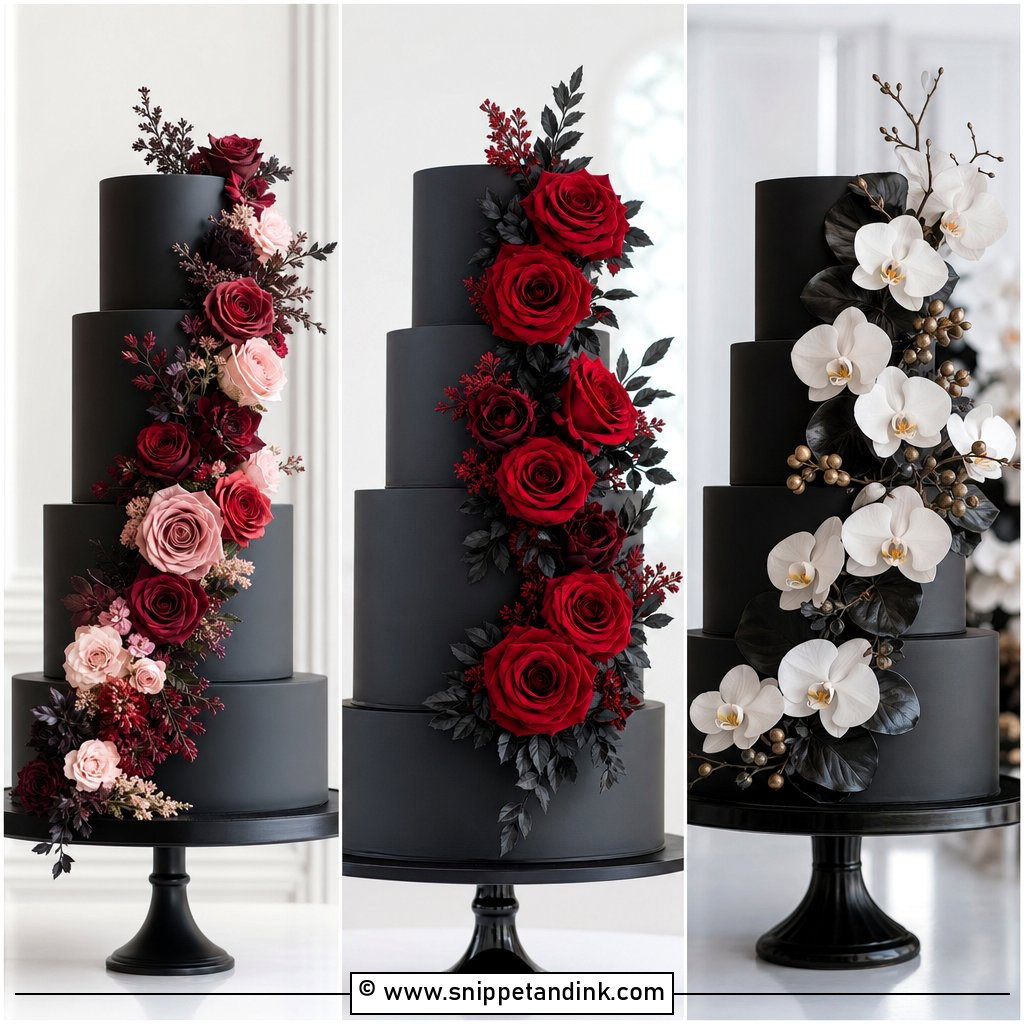
11. Poppy Wedding Cake With Black Accents
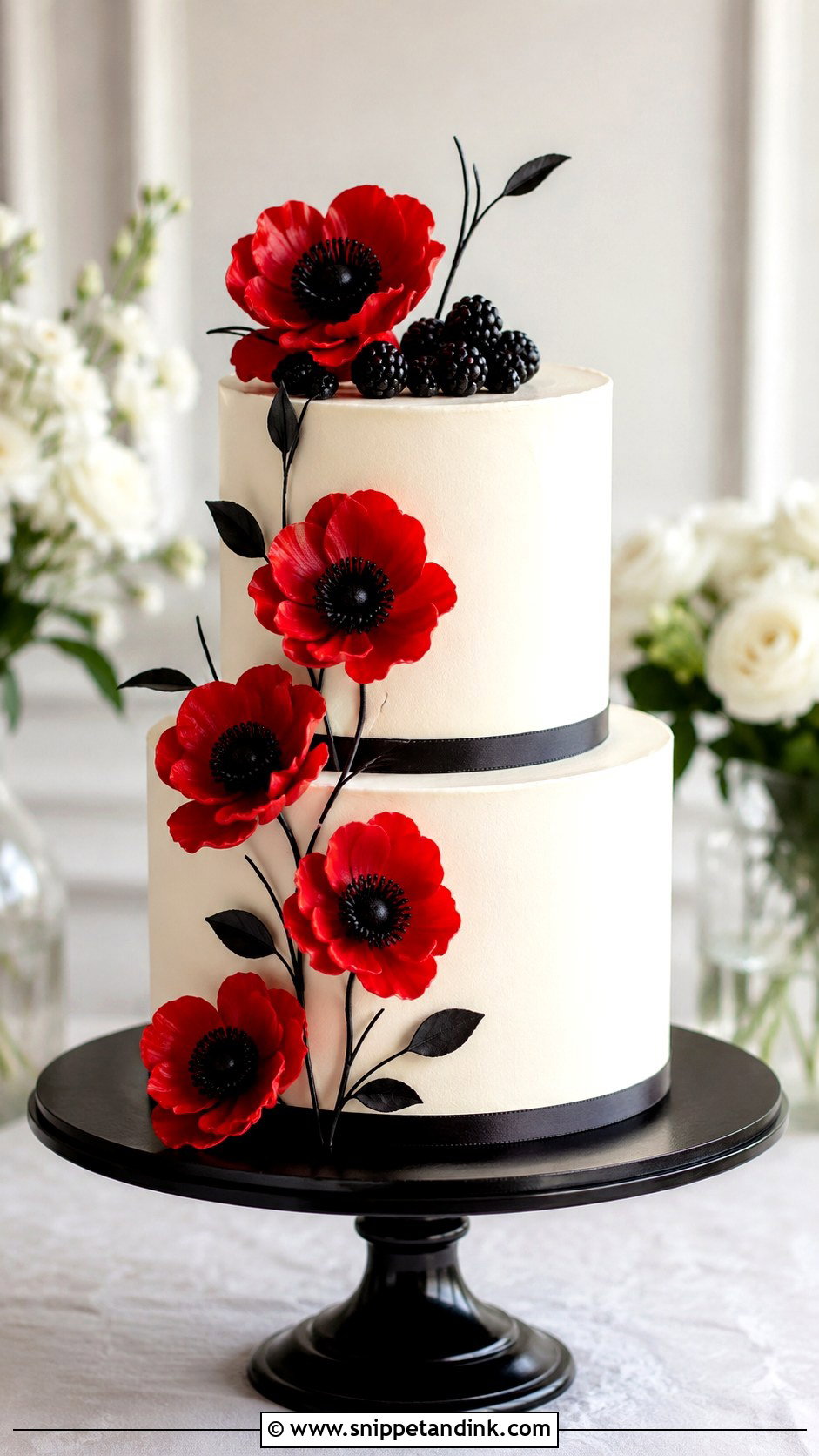
Look into a real poppy and you’ll often see a dark blotch at the base of each petal and a ring of black stamens, so black detail on a poppy cake is borrowed from the flower itself. A thin black ribbon, painted centers, fine line art or a few blackberries add contrast without harshness. It suits white buttercream, deep red flowers and clean tier shapes. If true black feels severe, charcoal gray softens it. Gallery venues and modern rooms suit this one.
12. Poppy Wedding Cake With Greenery
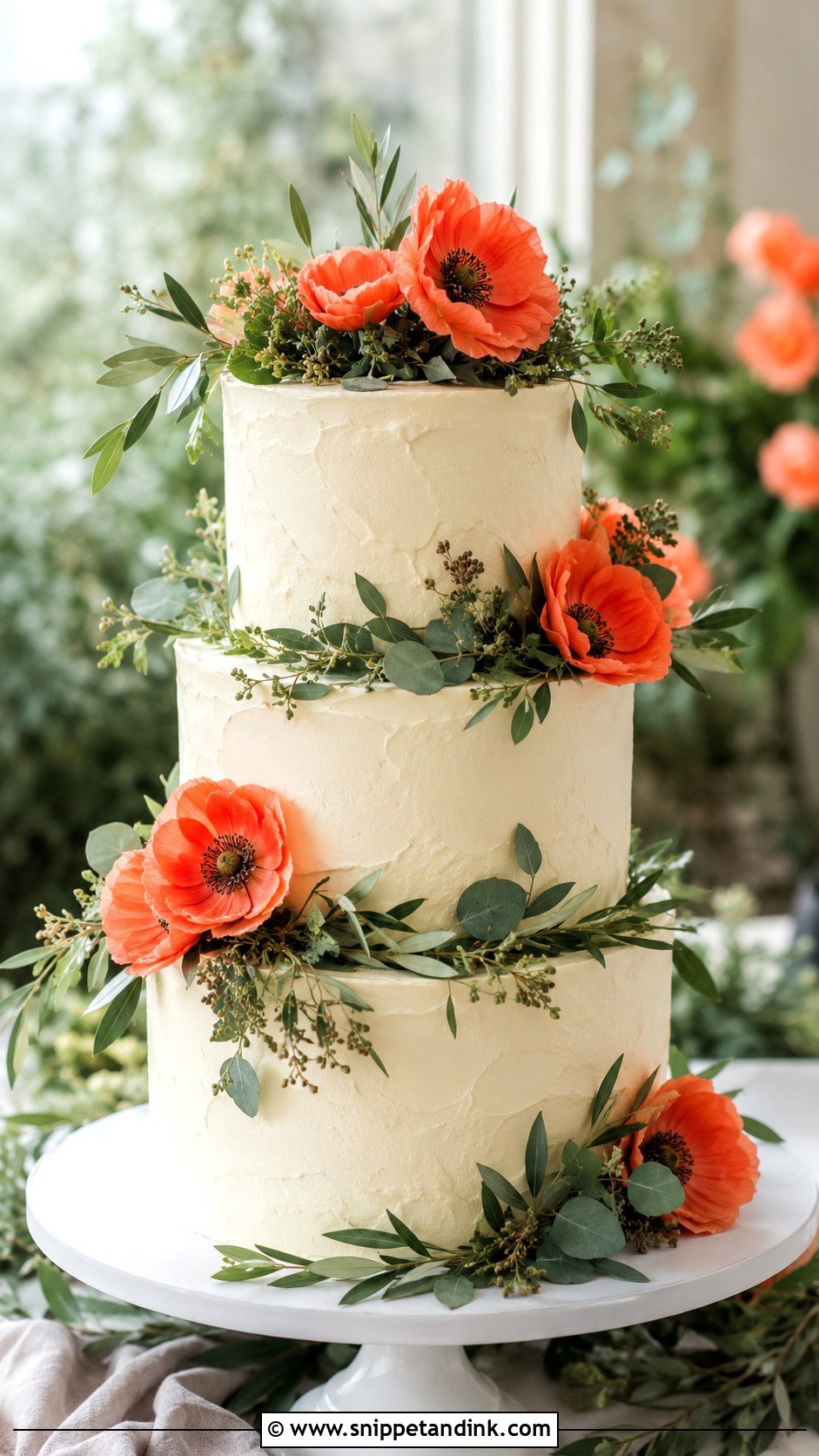
Greenery softens bright petals and links the cake to your table arrangements. Eucalyptus, olive leaves, fern, rosemary or small herbs can all work. As a florist I’m careful here: eucalyptus and many ornamental leaves aren’t food safe and florist foliage is often sprayed, so I wrap stems, use posy picks and put a barrier under anything that touches the icing. Run the greens around the tiers like a vine instead of in one heavy bunch, and it will look like it grew there.
13. Poppy Wedding Cake With Wildflowers
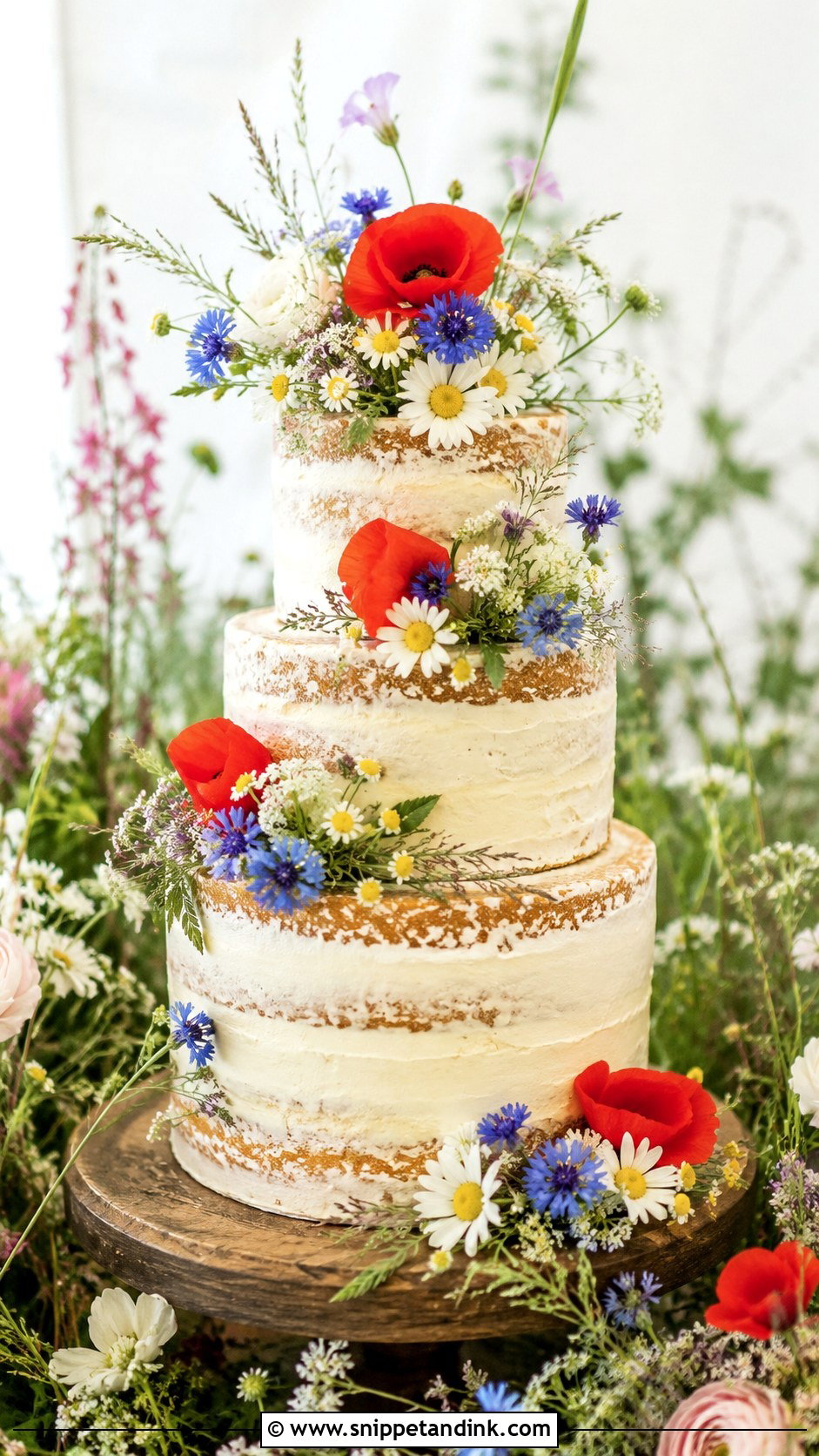
A poppy wedding cake with wildflowers is a meadow on a stand: poppies with daisies, cornflowers, chamomile, small roses, lavender or edible blossoms. Keep the icing simple so the flowers carry the design, and use a white, ivory or pale yellow base so the mixed colors look fresh rather than chaotic. Vary the heights and sizes, because a field never grows at one level. Outdoor ceremonies and tented receptions in the country are its natural setting.
14. Poppy Wedding Cake With Floral Cascade
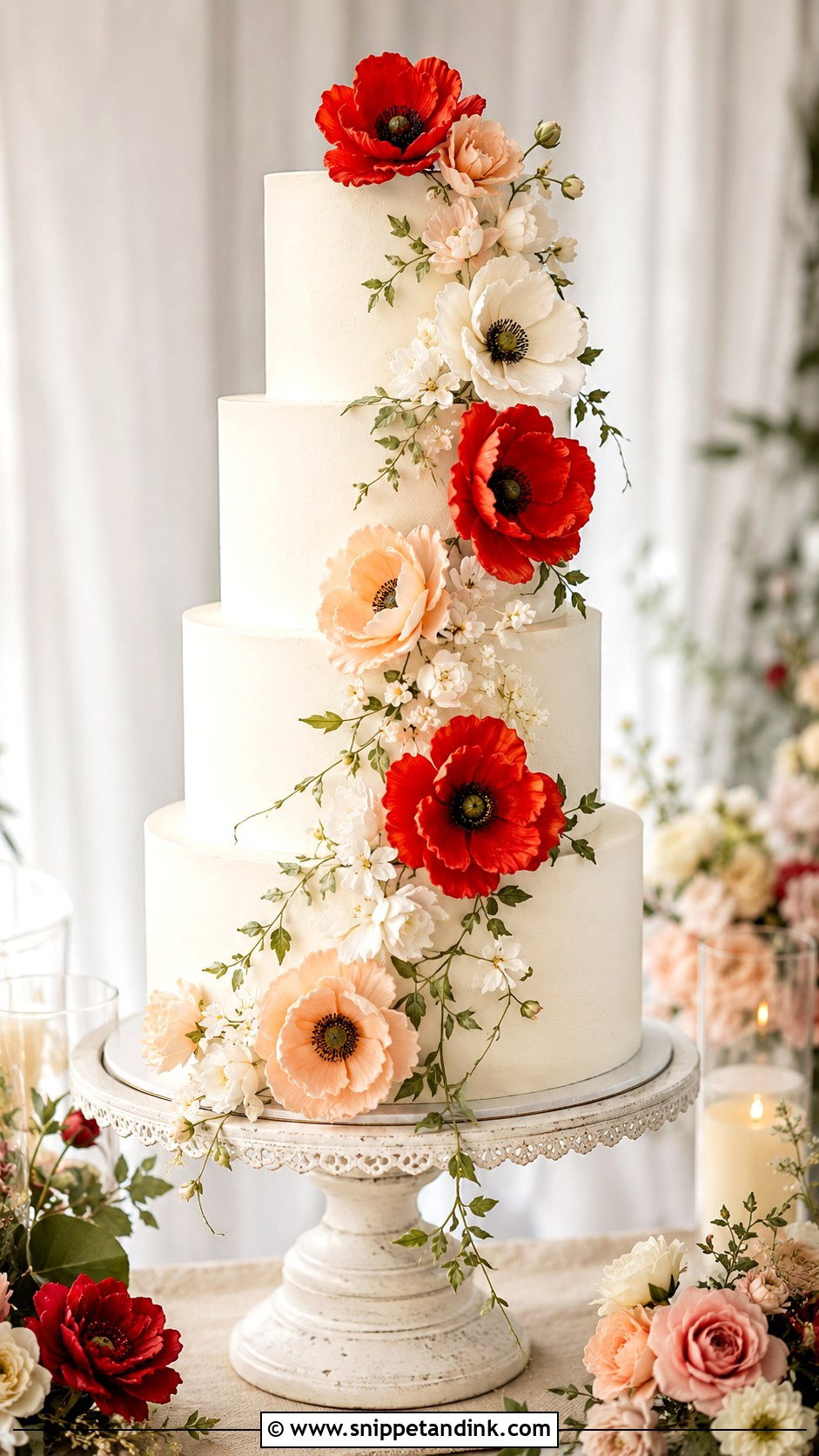
A cascade gives the strongest vertical line you can put on a cake, with poppies flowing from the top tier down one side. It needs height to look graceful, so three or four tiers suit it best. Poppies lead, with small filler blooms, leaves and buds for texture; red reads bold, peach and cream read soft. A cascade has weight, so it’s built on picks or a hidden support rather than resting on soft icing. Keep the rest of the cake plain so the eye follows the flowers down.
15. Single Tier Poppy Wedding Cake
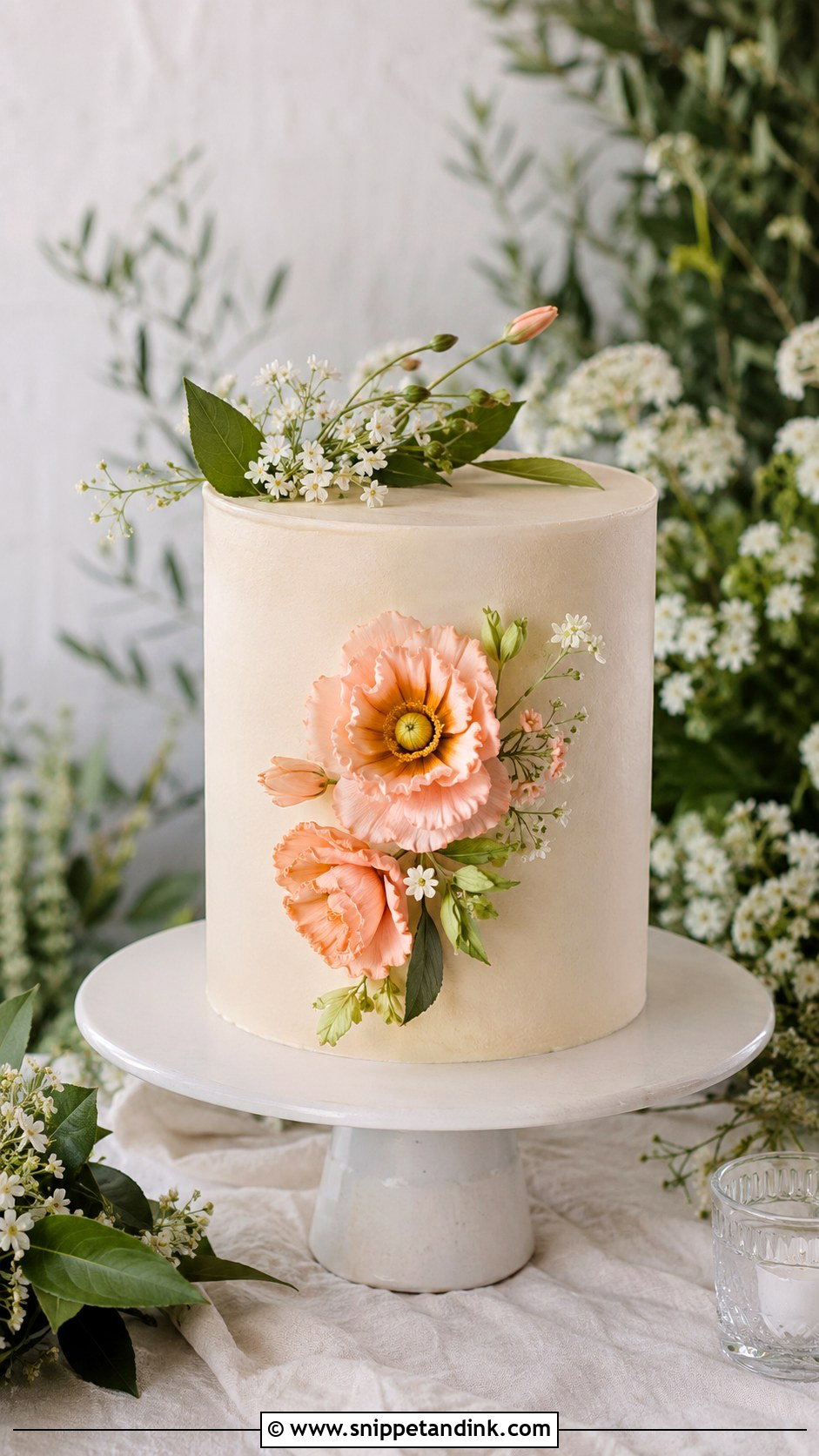
One tier is enough for an elopement, a small dinner or a wedding where other desserts do the serving. A tall round gives it presence. Put the budget into one detail: a large poppy cluster, pressed petals or a painted pattern. Lemon, vanilla bean, pistachio or almond all suit the fresh floral look. I like to repeat the cake’s poppy in a small arrangement beside the stand, which makes a small cake feel finished without adding to it.
16. Two Tier Poppy Wedding Cake
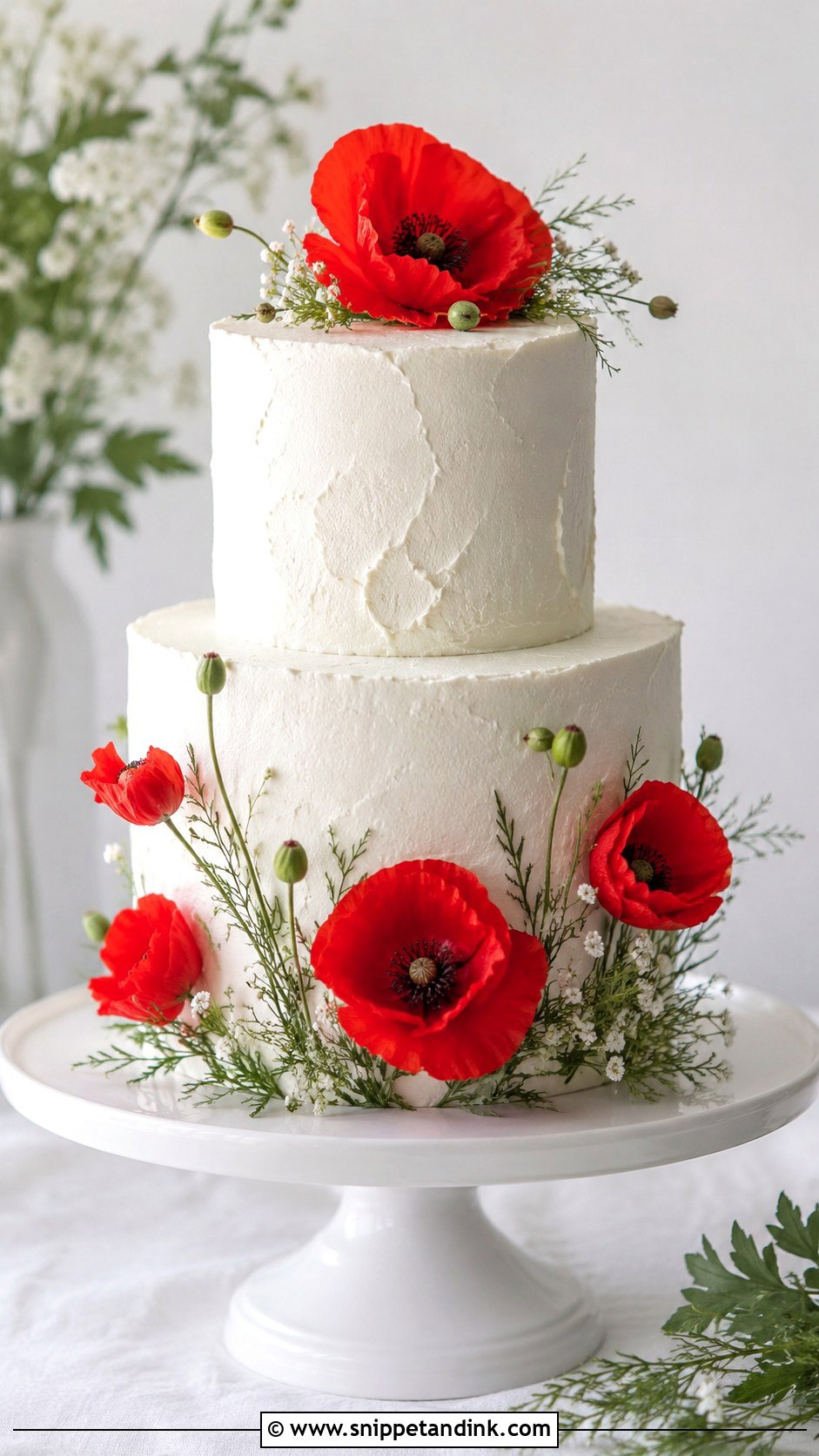
Two tiers suit small and medium weddings: enough height for a proper display, nothing oversized. Let the lower tier carry most of the flowers and give the top a few buds or one statement bloom, which keeps the weight visually low and the outline clean. Smooth buttercream reads classic; textured reads relaxed. Red for contrast, peach for warmth, white for softness.
17. Three Tier Poppy Wedding Cake
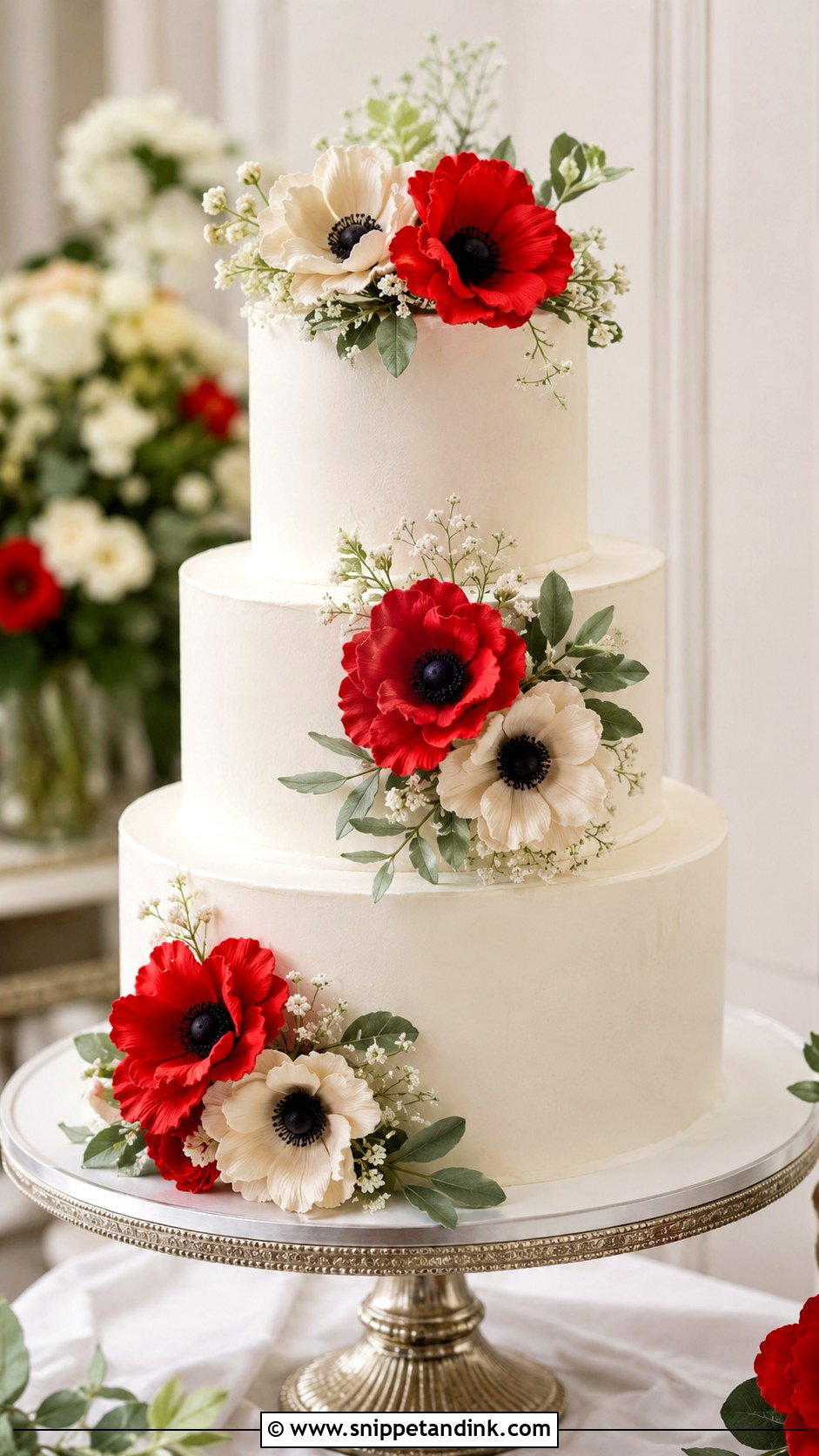
A three tier poppy wedding cake has enough height to be a centerpiece and still adapts to almost any style: smooth white with a cascade, semi-naked with wildflowers, or fondant with painted poppies. Each tier can be its own flavor, say vanilla almond, lemon raspberry and chocolate ganache. I put flowers on every tier but change the quantity, more at the base and fewer at the top, which ties the tiers together without making them identical.
18. Four Tier Poppy Wedding Cake
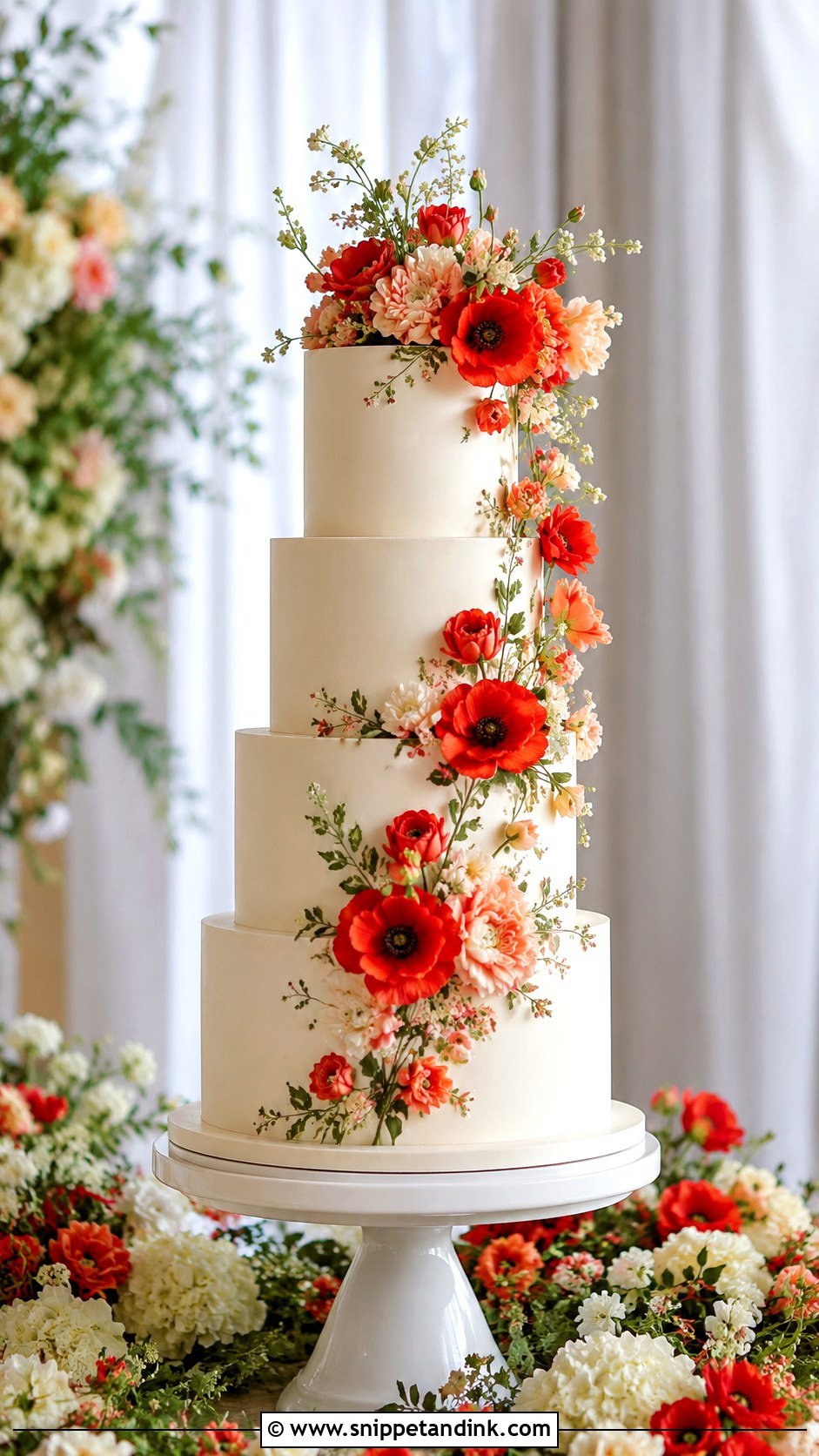
Four tiers make a real statement at a large reception, and at that height the flowers have to be planned, not added at the end. A long cascade works, and so do scattered clusters for a more modern look. Pick one main poppy color and support it with smaller shades so it stays readable from across the room. White or ivory icing keeps the structure classic, and a little texture adds interest. Ballrooms, estates and formal gardens suit it, and the height gives your photographer plenty of angles.
19. Square Poppy Wedding Cake
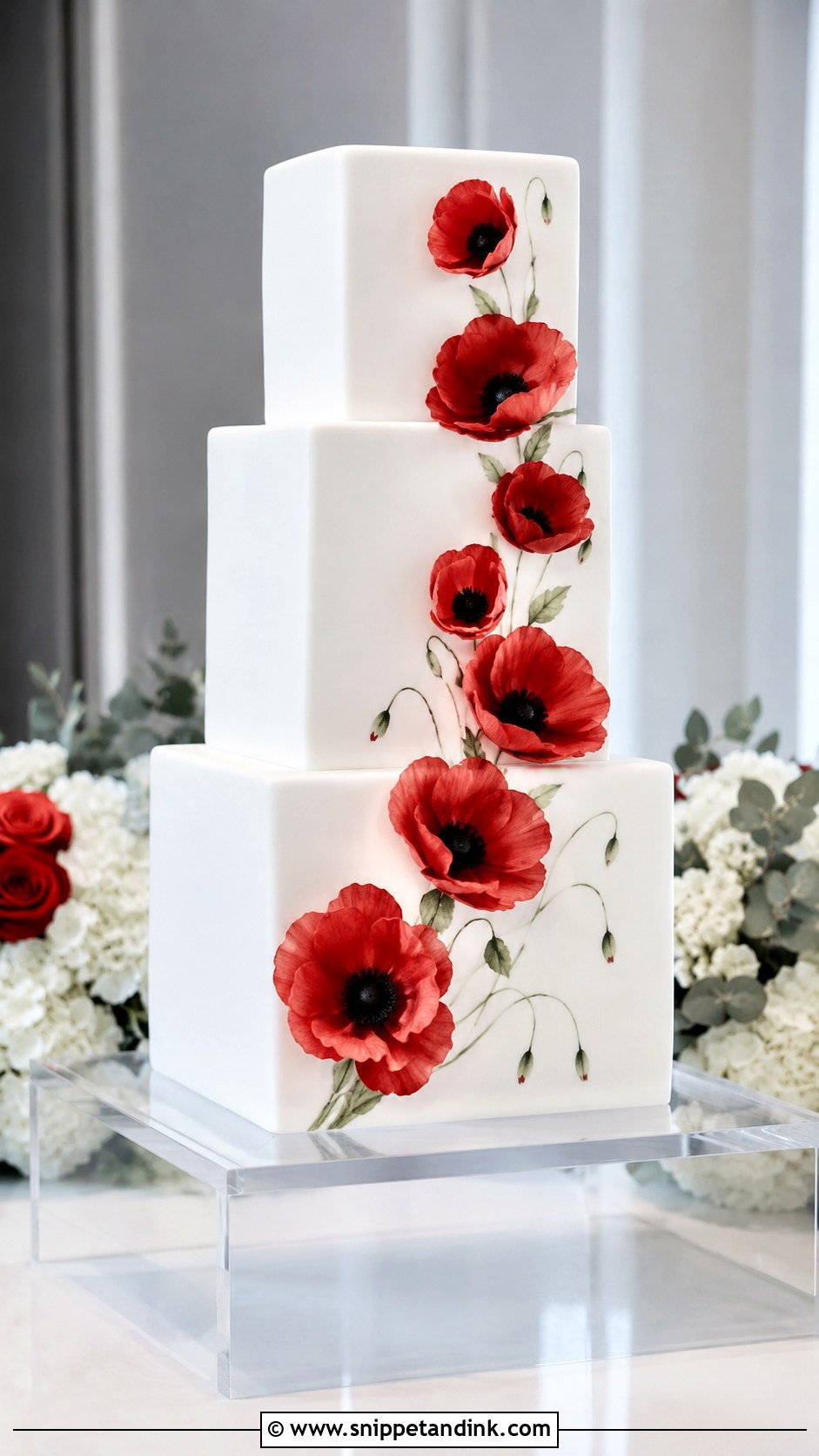
Square tiers give soft petals a hard edge to play against, which makes poppies look even more delicate. Fondant keeps the corners crisp. Place flowers along one corner, run a diagonal path across the tiers or paint a poppy on each face. Clear stands, simple greenery and minimal table styling suit it. Almond, vanilla bean, lemon or red velvet sponge fit the polished look.
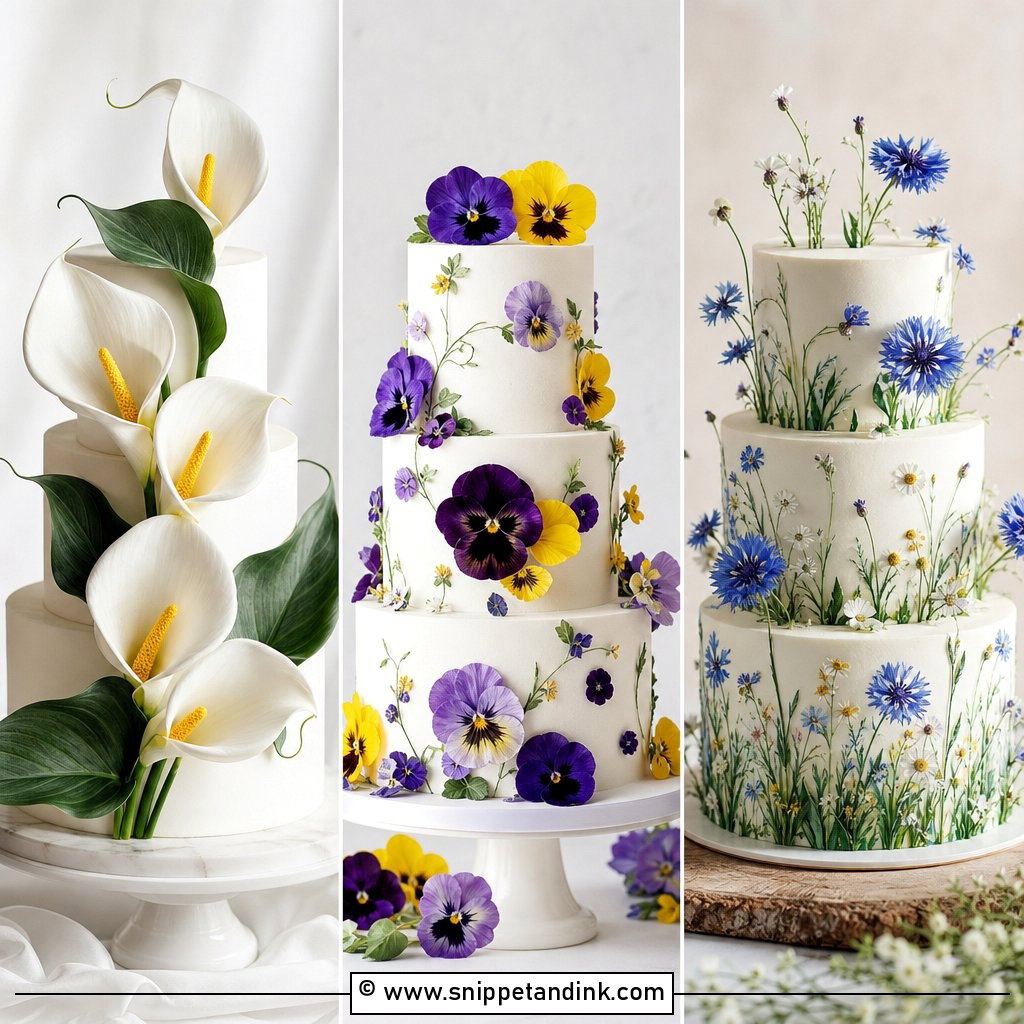
20. Round Poppy Wedding Cake
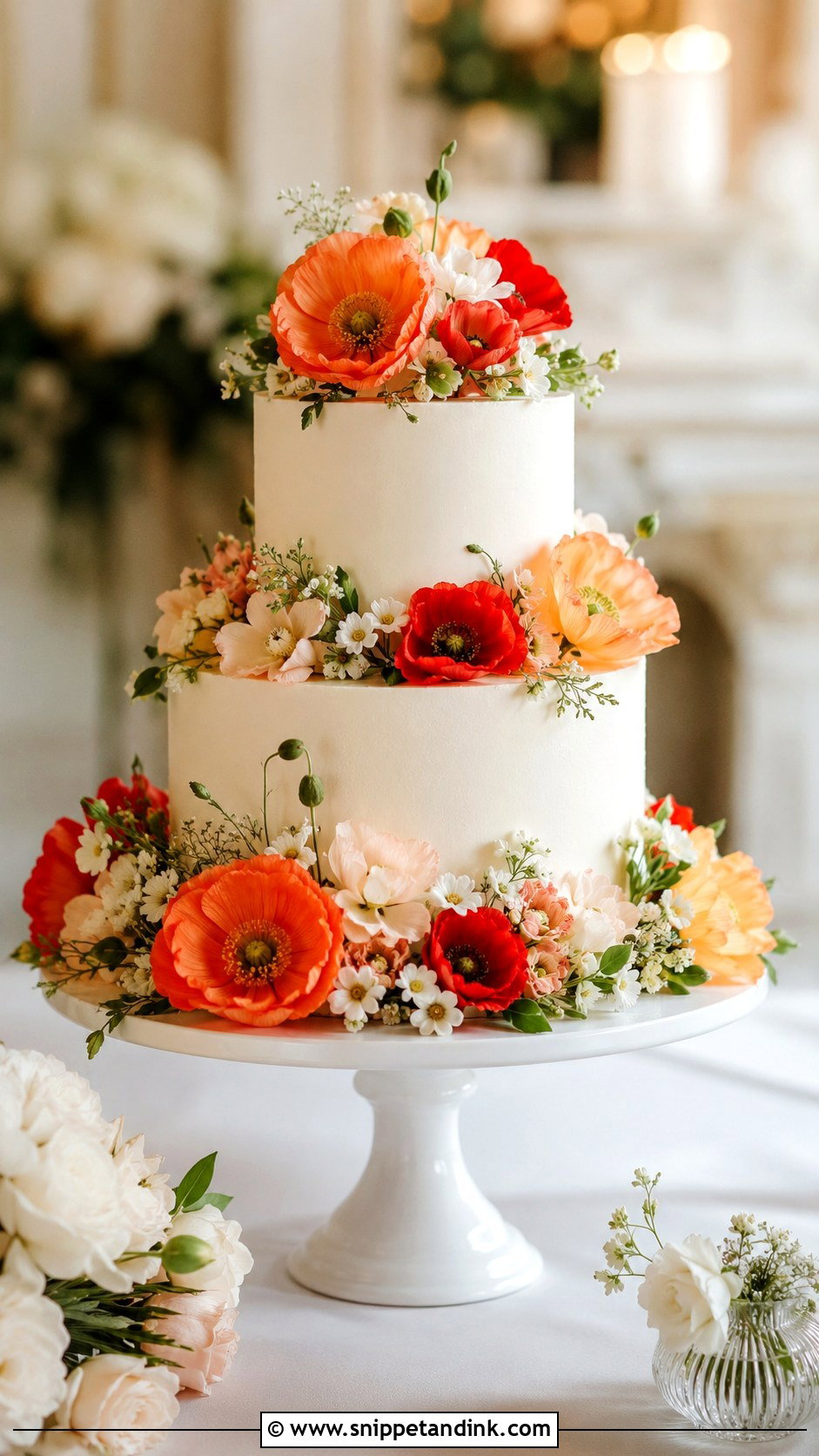
Round tiers go with nearly every wedding style, from rustic to formal, and they show buttercream texture well, whether smooth, ribbed or swirled. Poppies can ring the base, gather between tiers, fall in a cascade or be painted across the sides. It’s the dependable option if you’d rather not follow a trend. I’d match the poppy colors to the bouquet or ceremony flowers so the cake doesn’t look like it came from a different wedding.
21. Vintage Poppy Wedding Cake
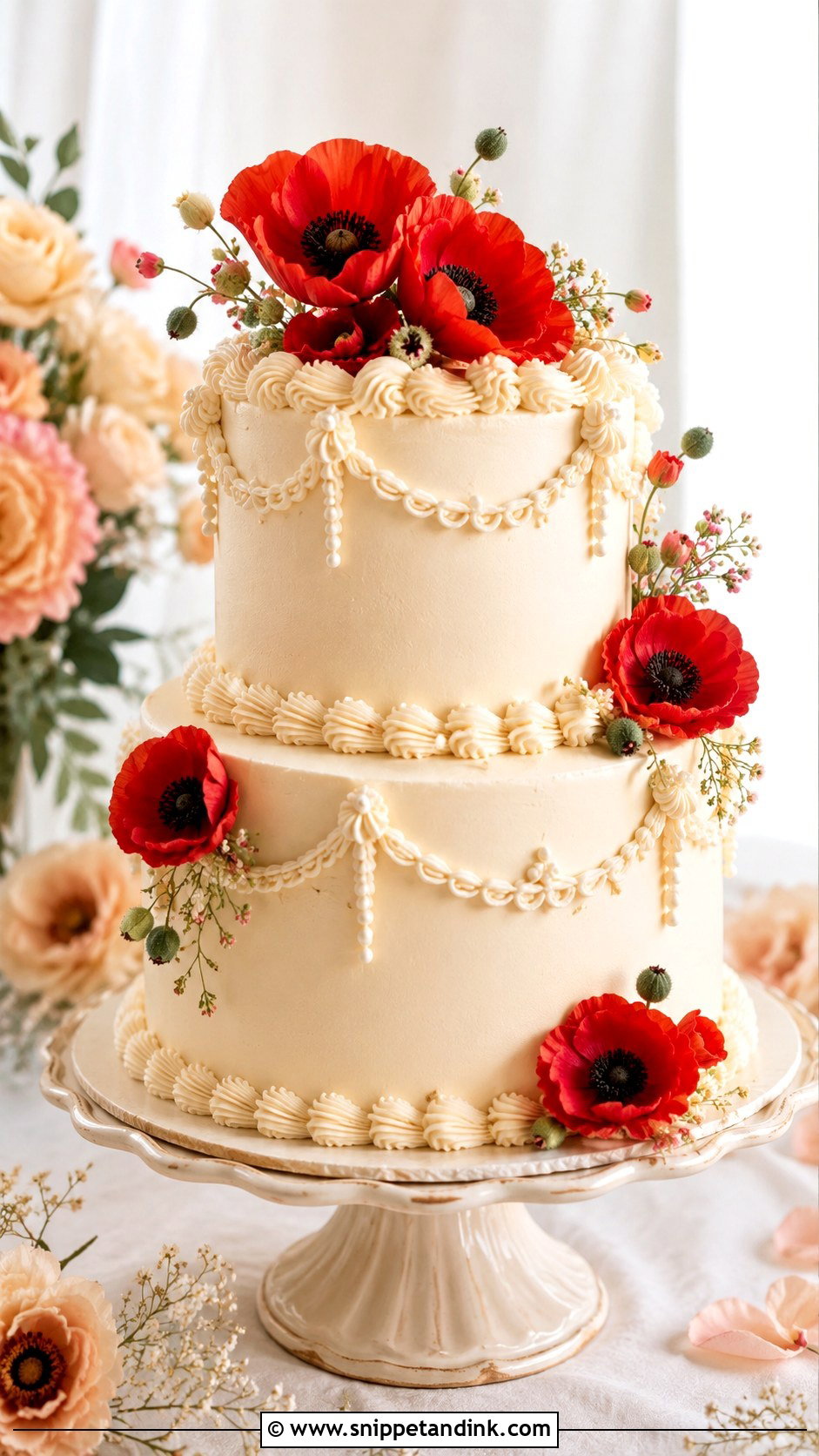
Vintage piping and poppies are a cheerful pair: scalloped borders and shell details in buttercream, with poppies as the bold floral accent. All ivory feels classic; blush, pale yellow or soft blue icing gives more personality. Red flowers make old-fashioned piping feel lively, and peach makes it warmer. Historic venues, tented receptions and garden parties suit it. The piping has to be neat, or the cake slides from vintage into home-baked.
22. Modern Poppy Wedding Cake
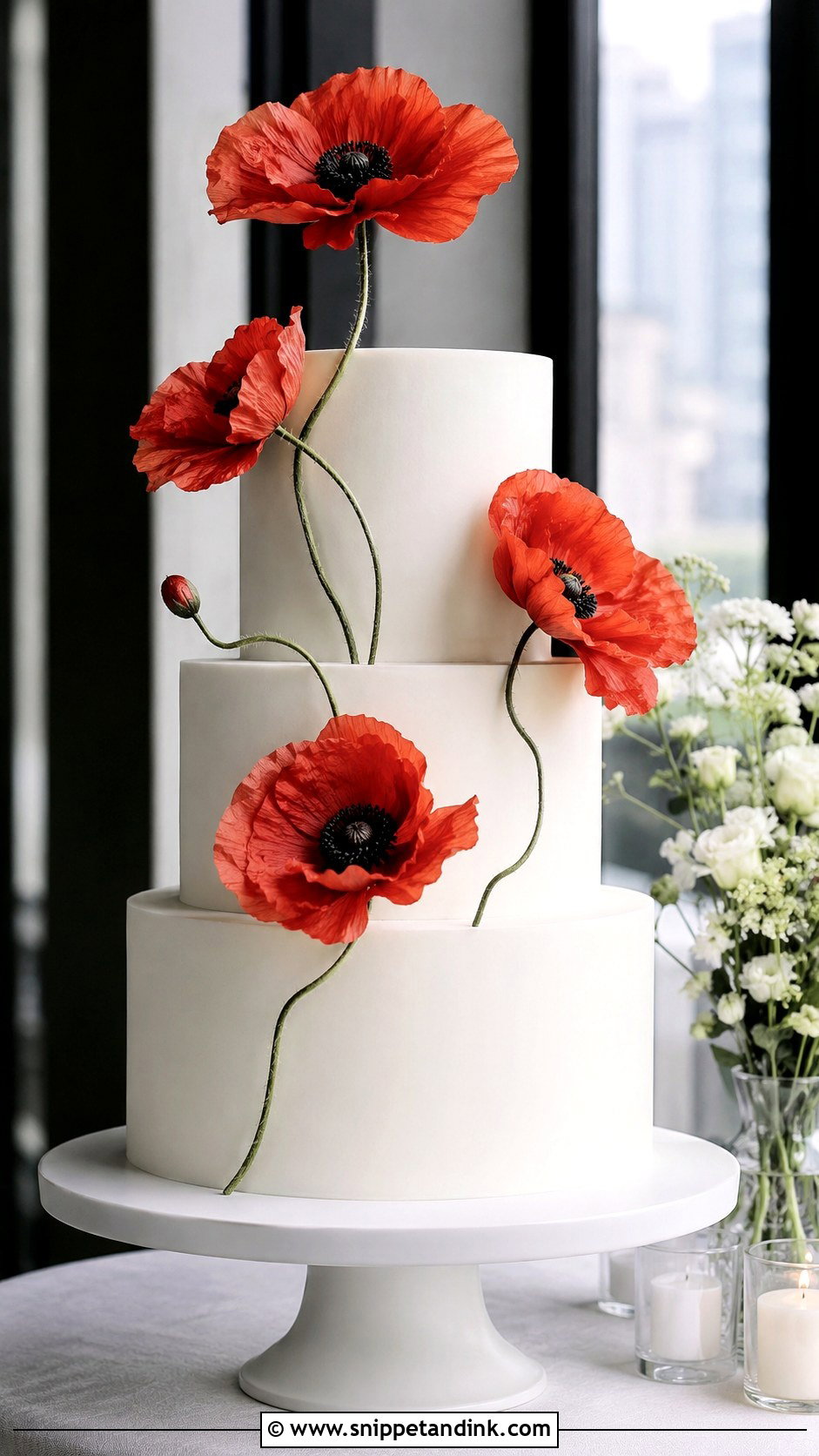
Modern poppy cakes rely on one strong choice rather than many small ones: smooth fondant, an offset tier, red poppies on plain white, or a few oversized wafer paper blooms. Black centers, thin stems and a lot of empty space make poppies look graphic. City venues, galleries and minimalist rooms suit it. Vanilla bean, dark chocolate, lemon or pistachio sponge keep the inside as clean as the outside.
23. Rustic Poppy Wedding Cake
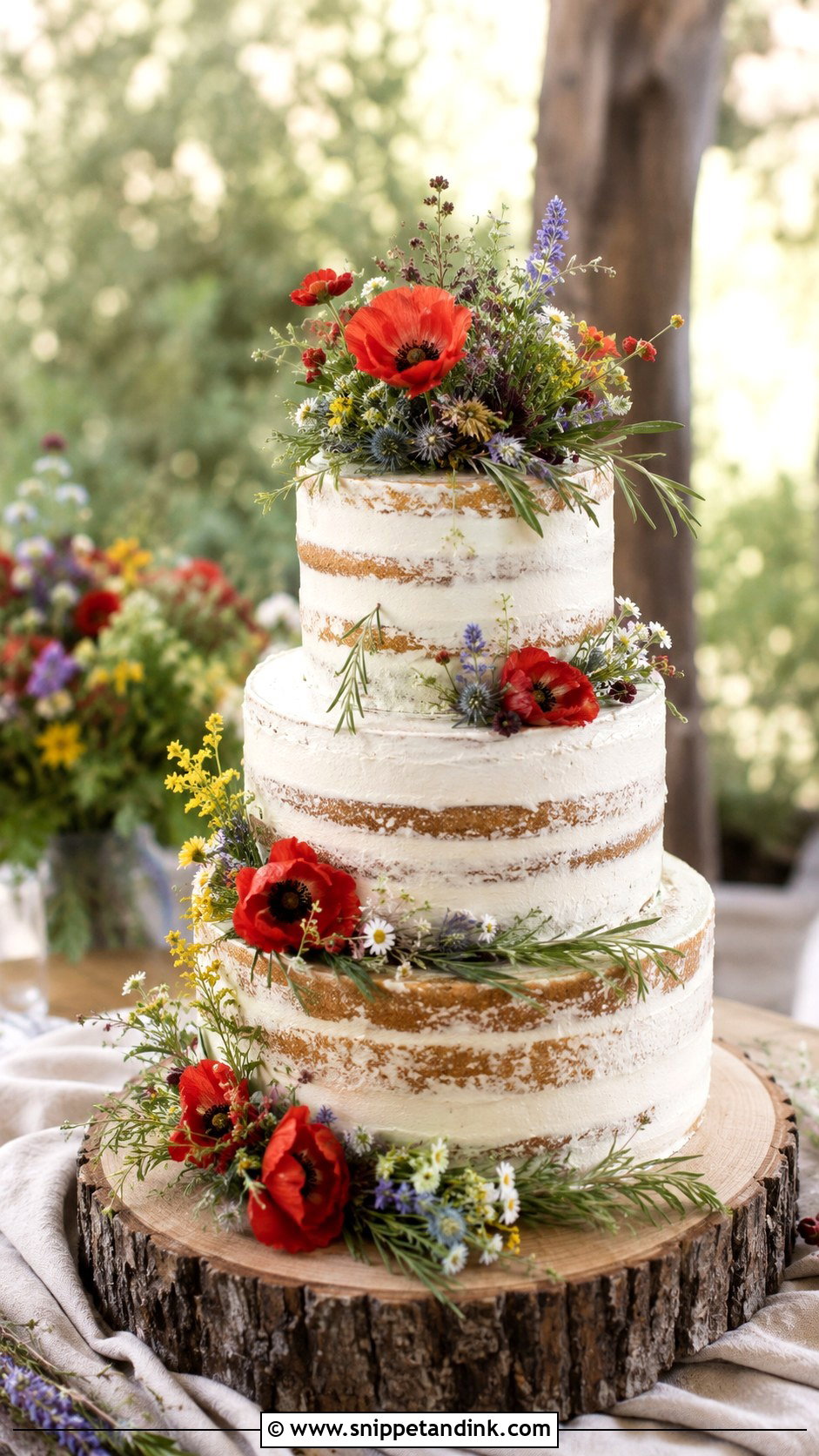
Rustic poppy cakes should look a little imperfect: textured buttercream, a semi-naked finish, a wooden stand and loose greenery, with poppies tucked among small wildflowers or herb sprigs. Slightly uneven icing and organic flower placement make it feel real. Barns and countryside venues suit it, with honey, spice, vanilla, carrot or lemon sponge. Herbs like rosemary and thyme are a safer choice near icing than most ornamental foliage, which is one reason I reach for them on rustic cakes.
24. Boho Poppy Wedding Cake
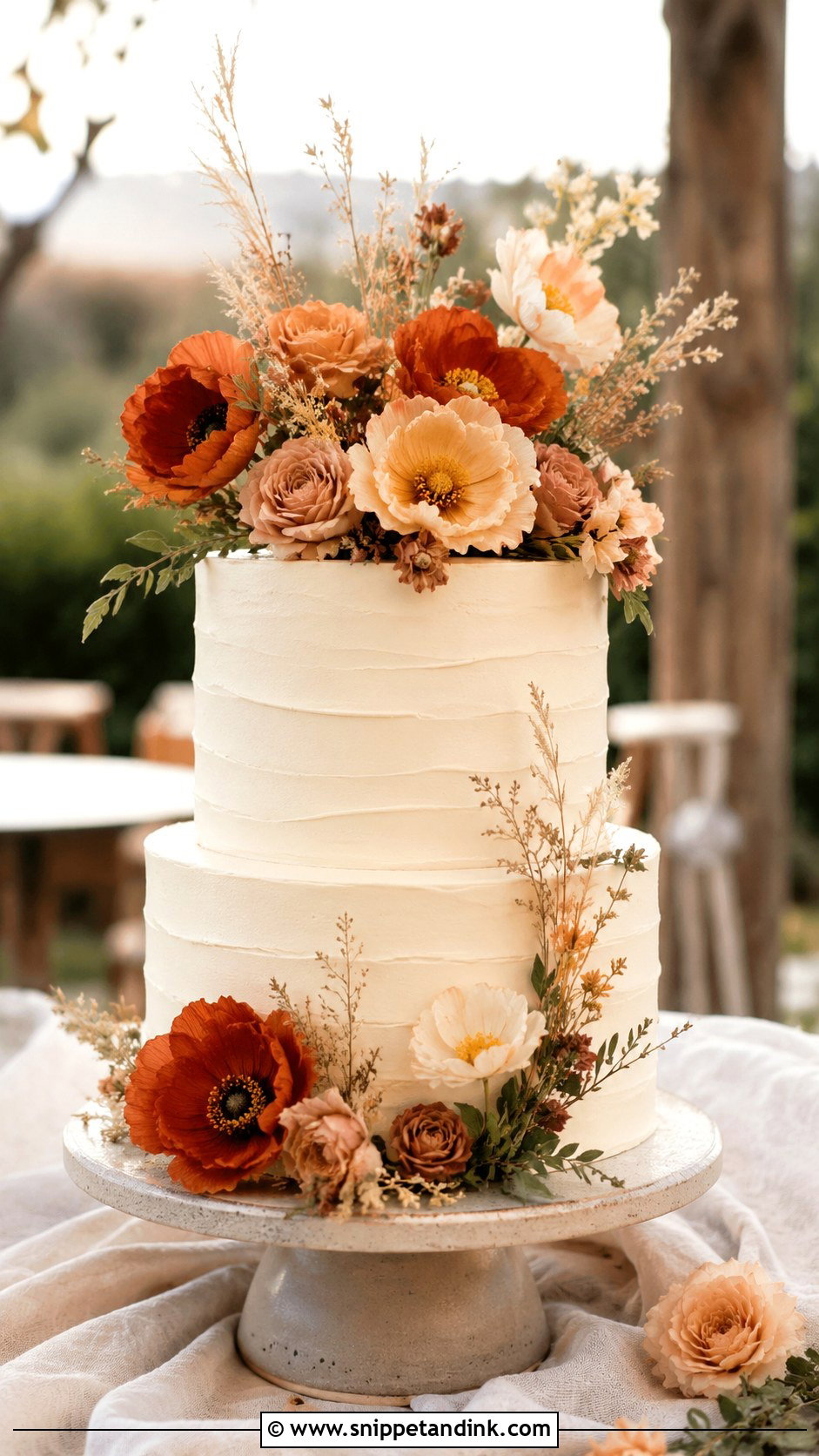
Boho styling layers peach, coral, rust, cream and red poppies with dried grasses, soft greenery or small edible flowers. The icing can be smooth, lightly textured or semi-naked depending on the venue, and a matte finish feels more natural than shine. A plain ceramic stand or a wood table with linen nearby suits it. Dried grasses shed and are rarely food safe, so keep them off the icing or on a barrier, especially outdoors where wind moves them around.
25. Blue Poppy Wedding Cake
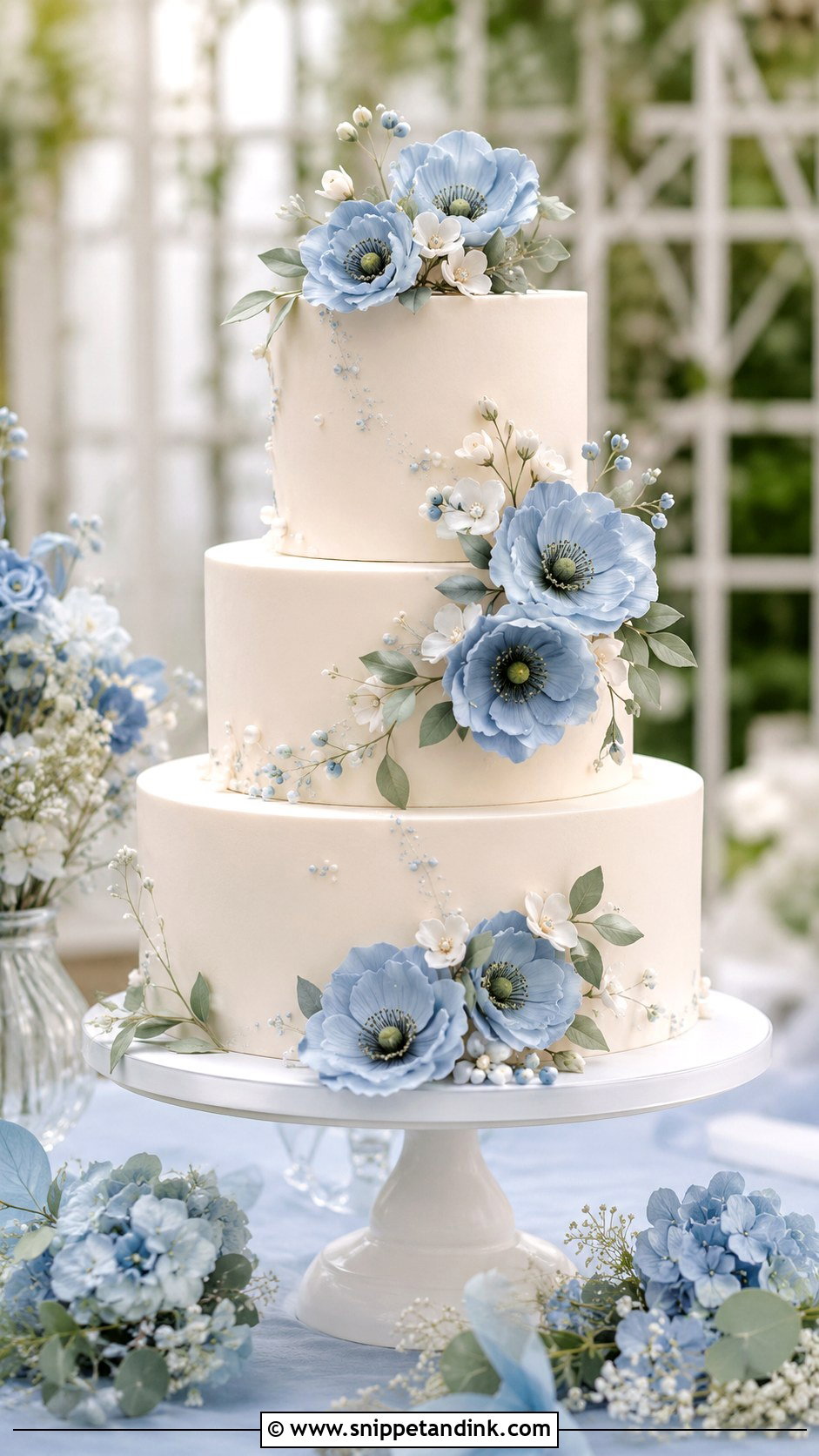
Blue poppies exist, but they’re Himalayan plants that are hard to grow and rarely sold as cut flowers, so on a cake they’re almost always sugar or paint. That makes the color unexpected in a good way. Pair blue petals with ivory icing, pale sage leaves and small white blooms for a calm garden look. Spring weddings, coastal venues and dusty blue palettes suit it. Keep the design simple so the color reads as elegant, not playful, and consider lemon, vanilla, almond or blueberry inside to echo the cool tones.
Putting the Poppy in the Sponge as Well
The poppy is the one wedding flower you can genuinely taste, through its seeds. Lemon poppy seed sponge is the obvious match, and it gives the cut slice a fine speckle that echoes the black centers on the outside. Almond poppy seed and orange poppy seed are softer options.
In much of Central and Eastern Europe, sweet poppy seed filling is a traditional celebration bake, so if that’s part of your family’s table, a poppy seed layer can be a quiet nod to it. Poppy seeds do get stuck in teeth, so I’d keep them in one tier rather than all of them and label it, since some guests avoid them.
A Red Poppy Means Something Else in November
In Britain, Canada, Australia, New Zealand and other Commonwealth countries, the red poppy is the symbol of remembrance for those who died in war, and it’s worn in the weeks around 11 November. If your wedding falls in that season and your guests come from those countries, some will read a cake covered in red poppies through that lens.
That doesn’t rule red out. It just means it’s worth a moment’s thought. Many couples in that window choose peach, coral or white poppies instead, or mix red with other colors so the cake reads as a garden rather than a remembrance wreath.
A Few Poppies, Each Placed for a Reason
Poppies can go bold, soft, modern or rustic depending on the color and finish, and the cakes that work use them with a reason behind every bloom. A few well-placed flowers almost always look better than many competing for space. Think about your venue, bouquet, season and palette before settling on red, orange, peach, white or blue. Then sit down with your baker and florist together to agree what’s sugar, what’s paint, what’s fresh, and who puts it on the cake and when.
You'll Like These Ideas:






Leave a Reply