
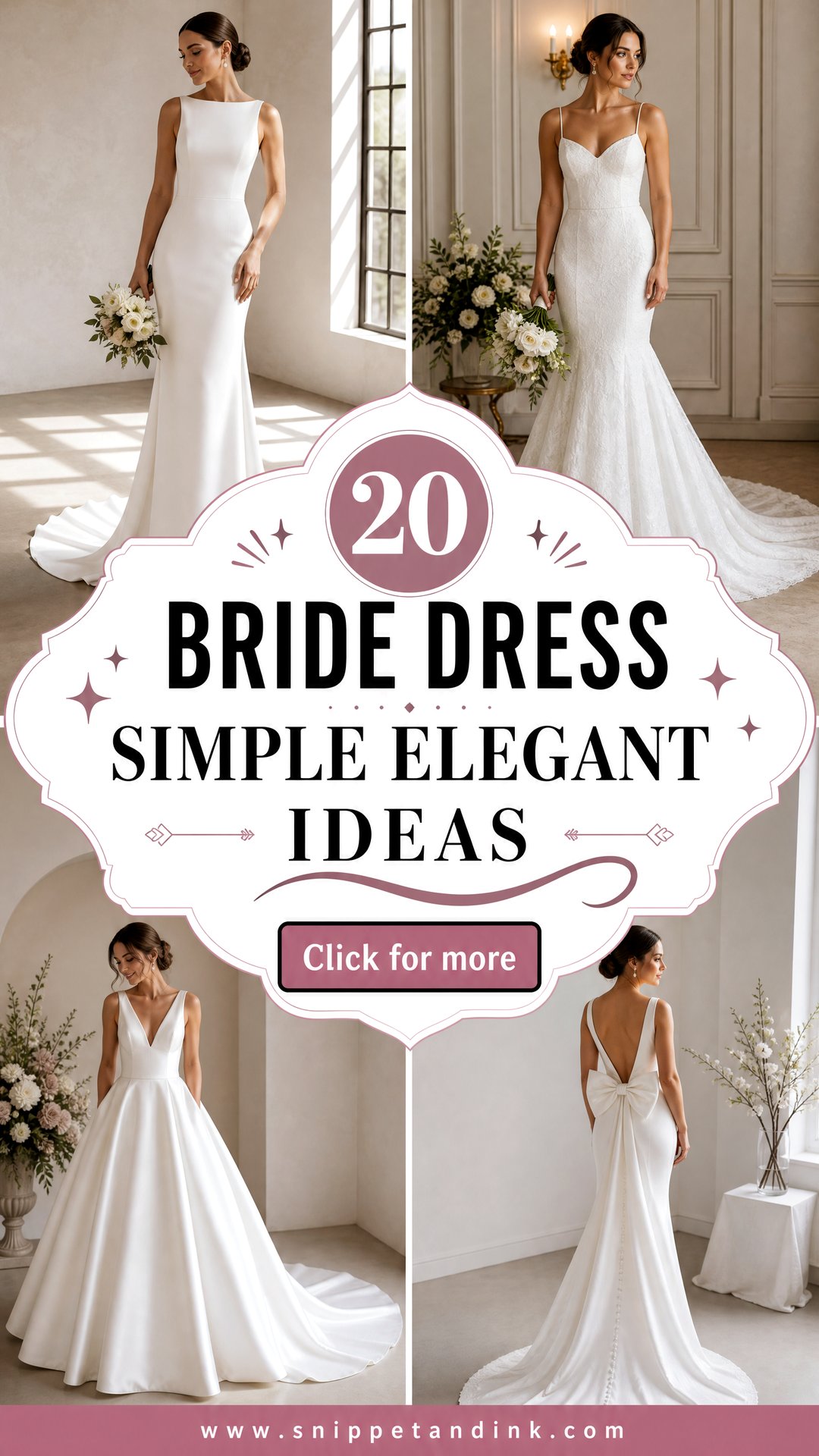
Plain Dresses Hide Nothing, So Judge the Fabric First
On a beaded gown, embellishment covers a lot. On a clean dress, the fabric is the entire design, and I check it before I even look at the silhouette.
- The crush test. Gently squeeze a bit of the skirt in your hand for a few seconds, then let go. If the creases stay, they’ll be there after the ceremony car ride too.
- Weight and drape. Good crepe and satin have some weight and fall in smooth folds. Thin fabric ripples at the seams and shows the lining through.
- Sheen under daylight. Shop lighting flatters everything. Take the sample to a window: cheap satin often looks plastic-bright outdoors.
- Seams and hems. Look at the inside. Clean, straight stitching and a neatly finished hem matter more on a plain dress than on one covered in lace.
Matte crepe forgives more wrinkles than satin, and silk is the most delicate of the three. If you’ll be traveling with the dress or sitting through a long dinner, that alone may decide your fabric.
1. Simple Satin A-Line Wedding Dress
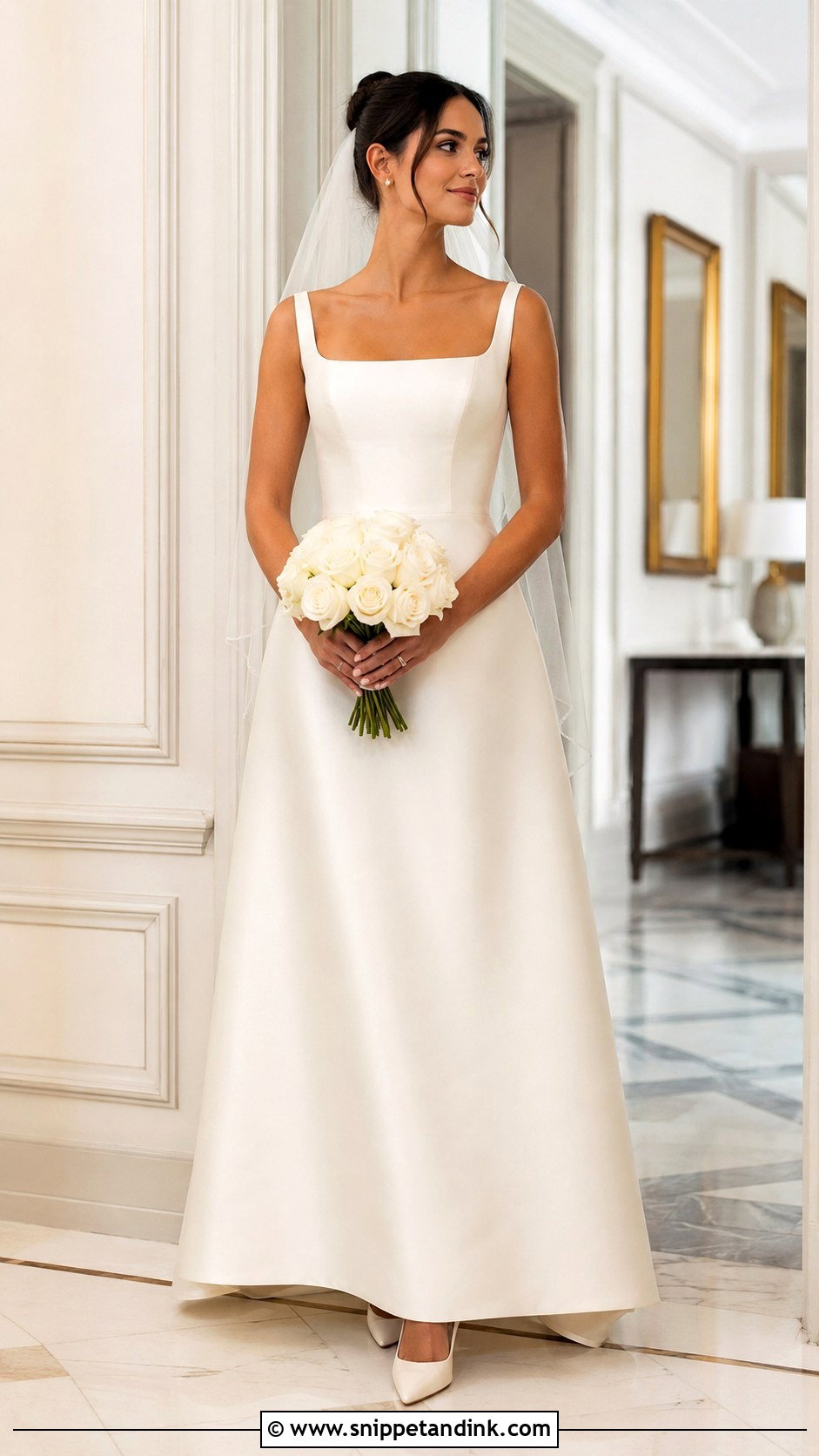
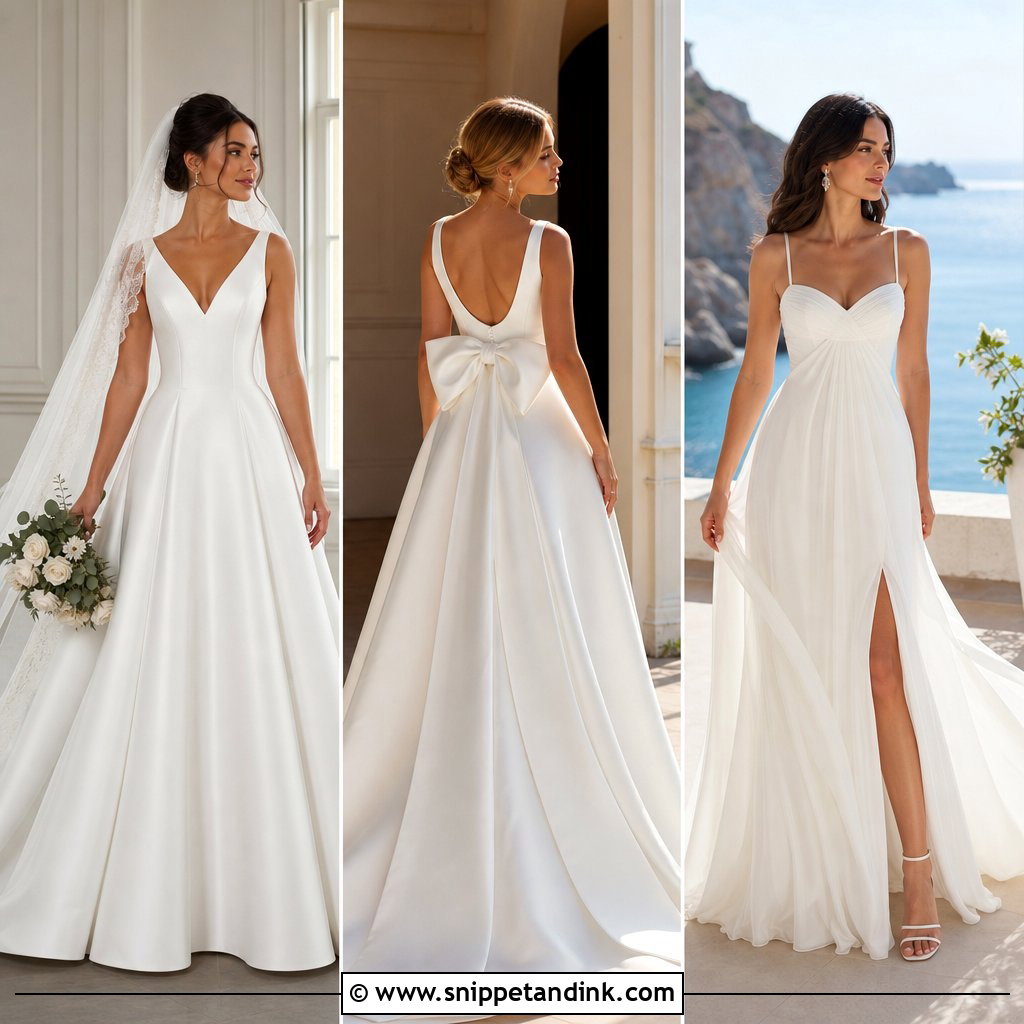
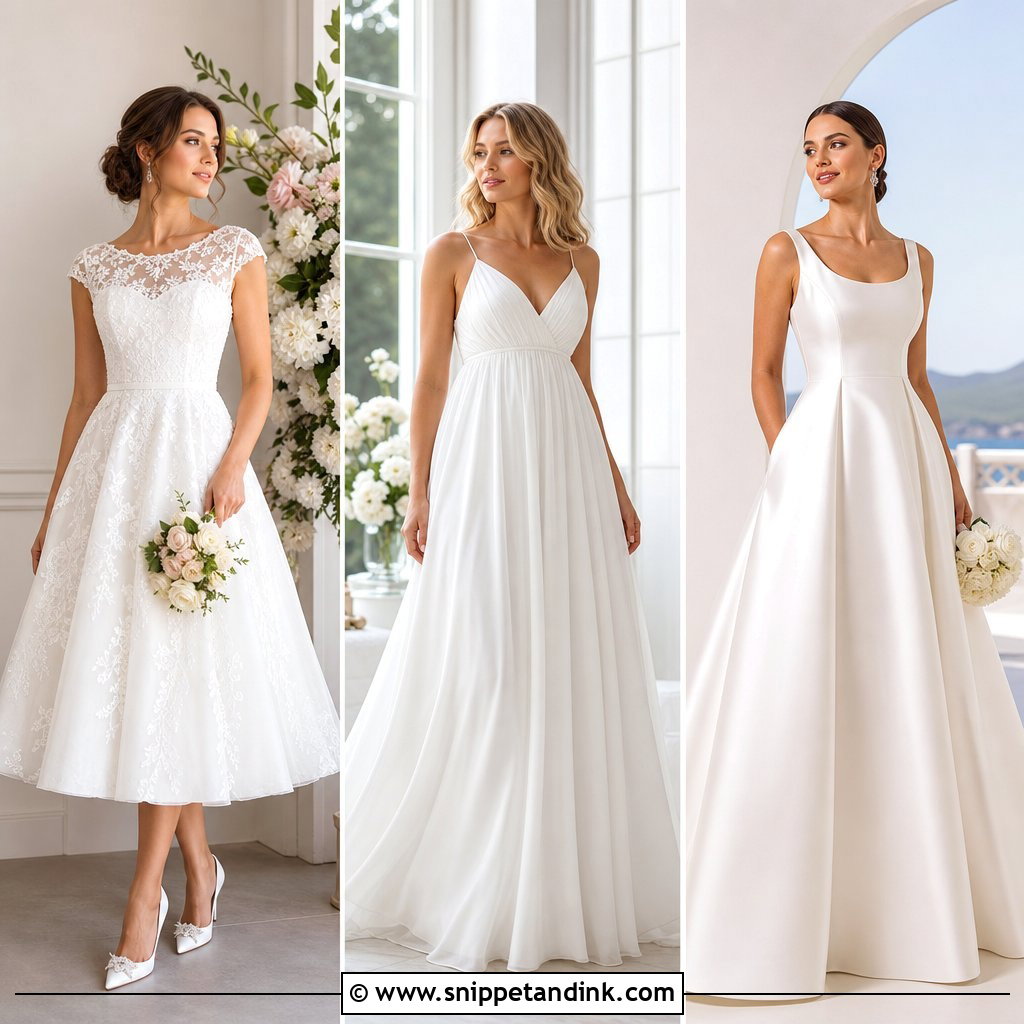
Satin A-lines are where I start most brides who say they want something plain, because the shape suits nearly everyone and the fabric does the decorating. Wide straps, a softly defined waist and a skirt that drops cleanly to the floor are enough. A square or gentle scoop neck shows the collarbone without fuss. I’d add pearl studs, pointed ivory pumps and a fingertip veil with a raw edge, plus a small bouquet of white roses or calla lilies. Keep the hair sleek, a low bun or waves tucked behind the ears. Ballrooms, hotels and older indoor venues suit it well.
2. Simple Crepe Sheath Wedding Dress
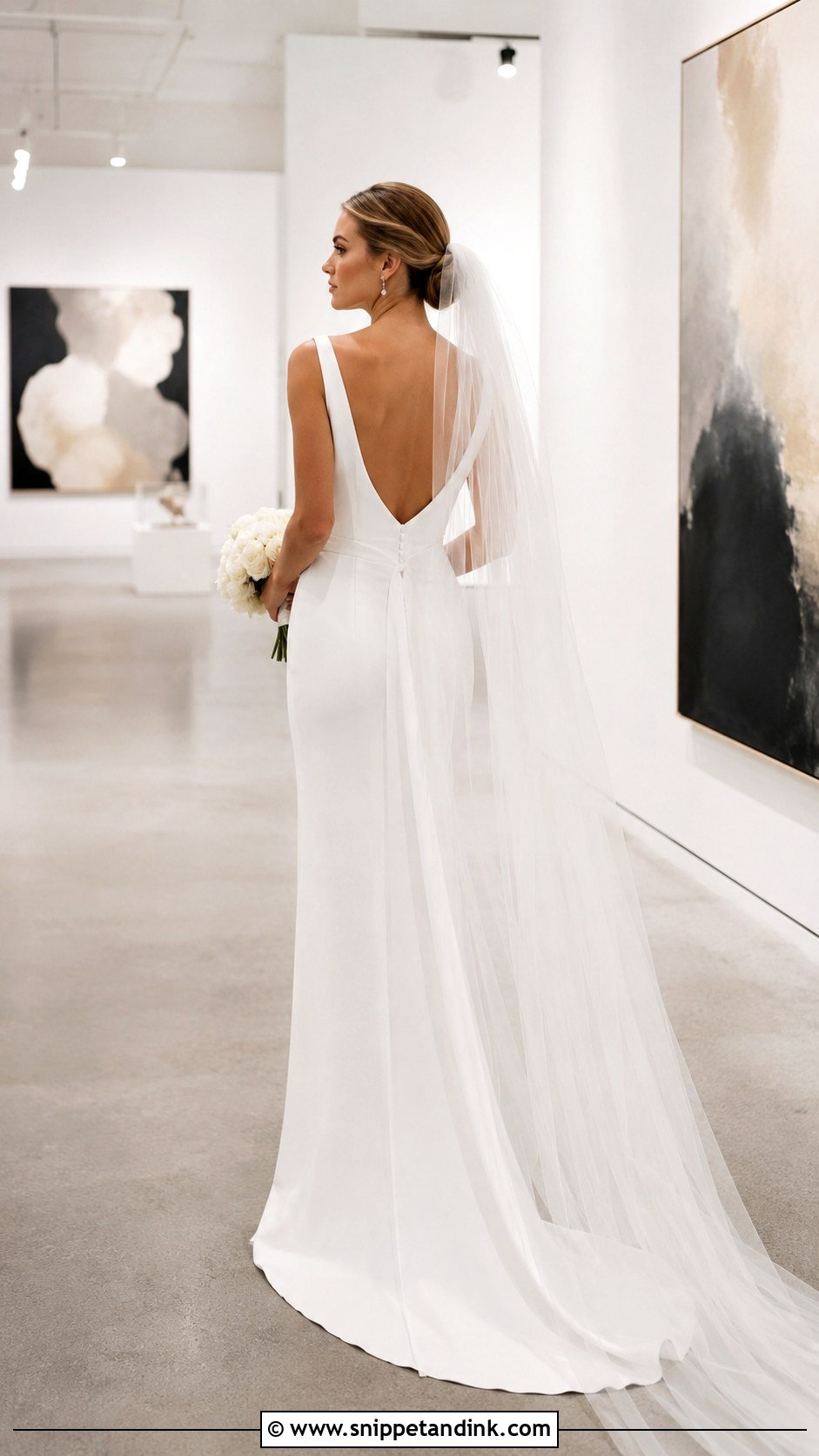
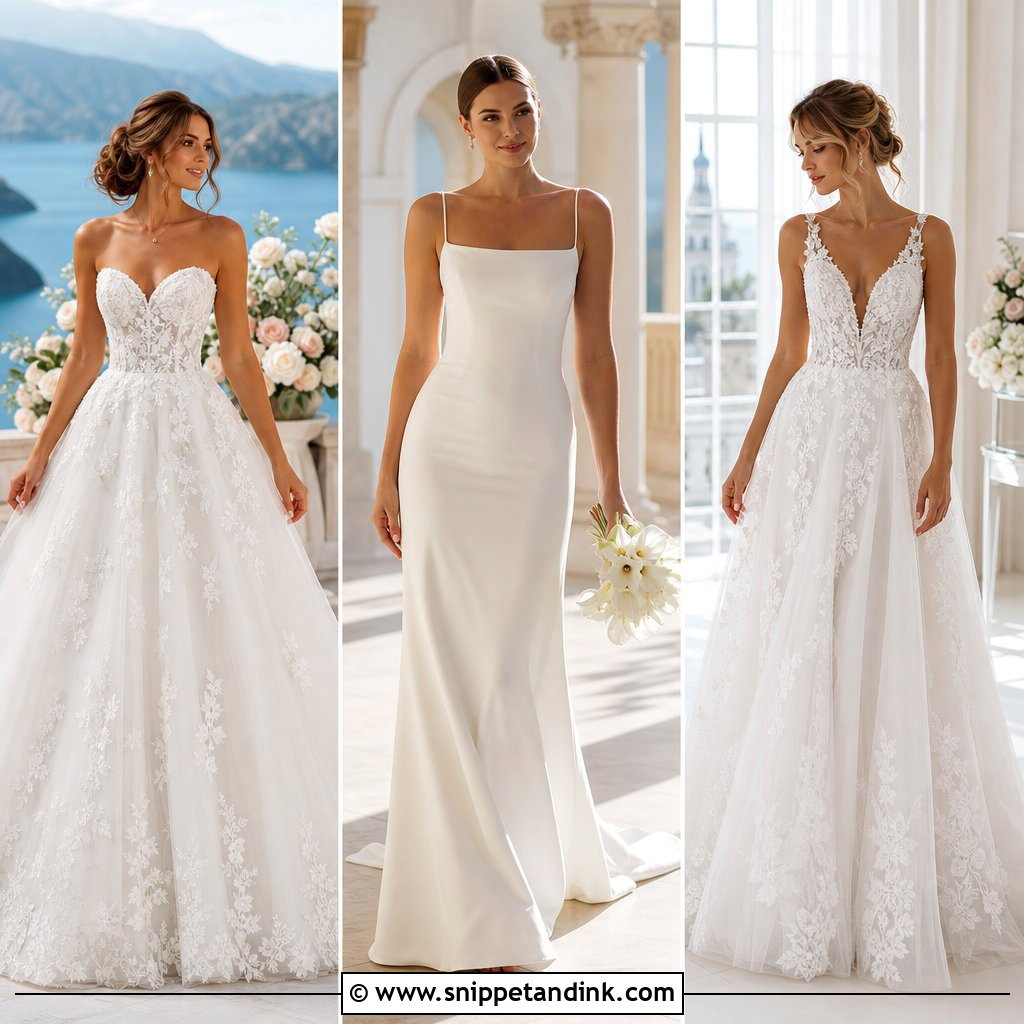
A crepe sheath dress should follow the body, not grip it, and the difference is usually half an inch at the hip. Matte crepe looks quietly expensive; the seams give it shape. A sleeveless bateau front with a low V at the back is the version I find most wearable. Drop earrings, a thin bracelet, pointed slingbacks and a long sheer veil finish it, with a compact bouquet and a polished chignon to show off the back. Crepe marks easily where shapewear ends, so bring your undergarments to every fitting. It feels at home in a gallery, a loft or a rooftop.
3. Simple Square Neck Wedding Dress
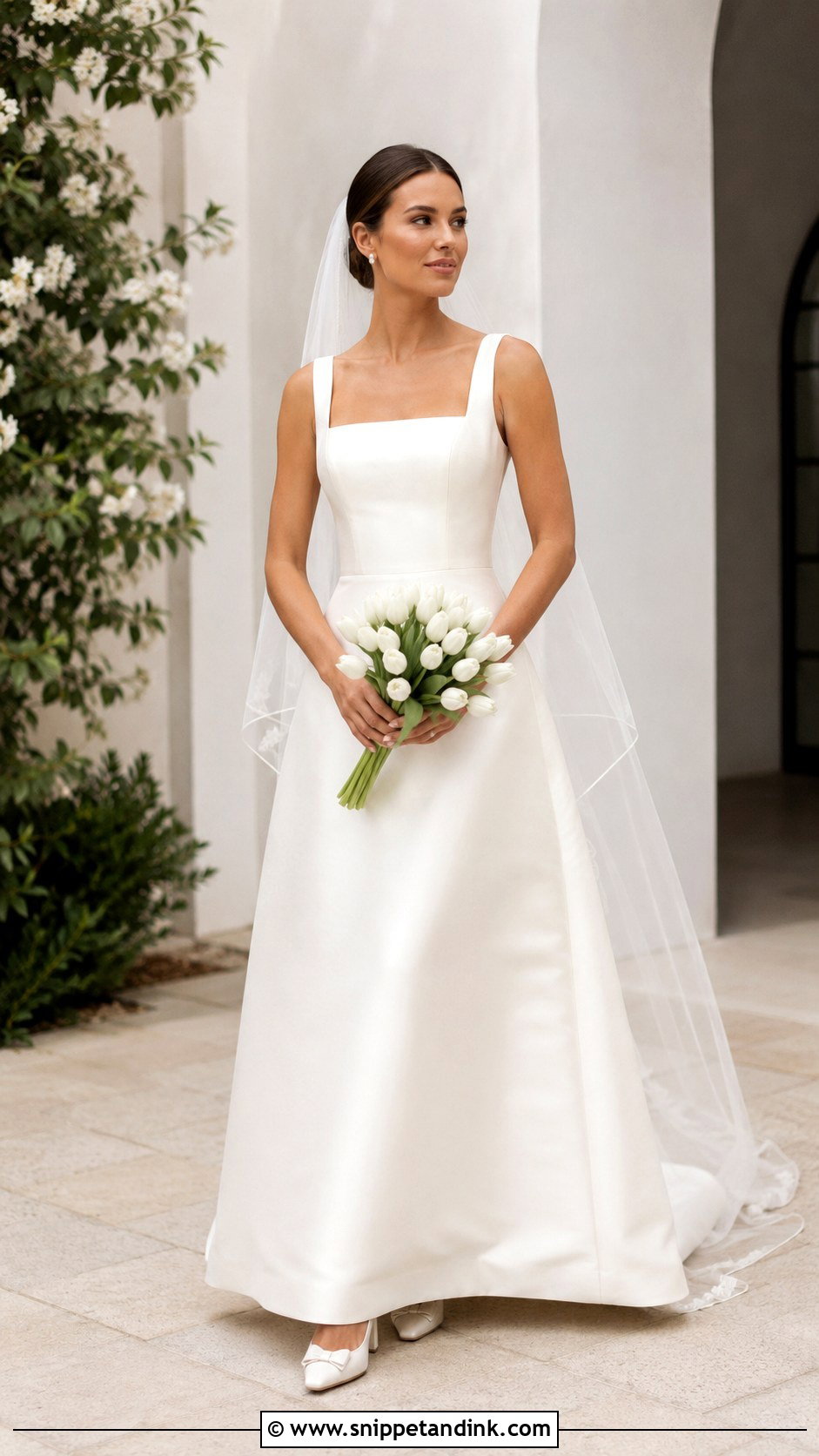
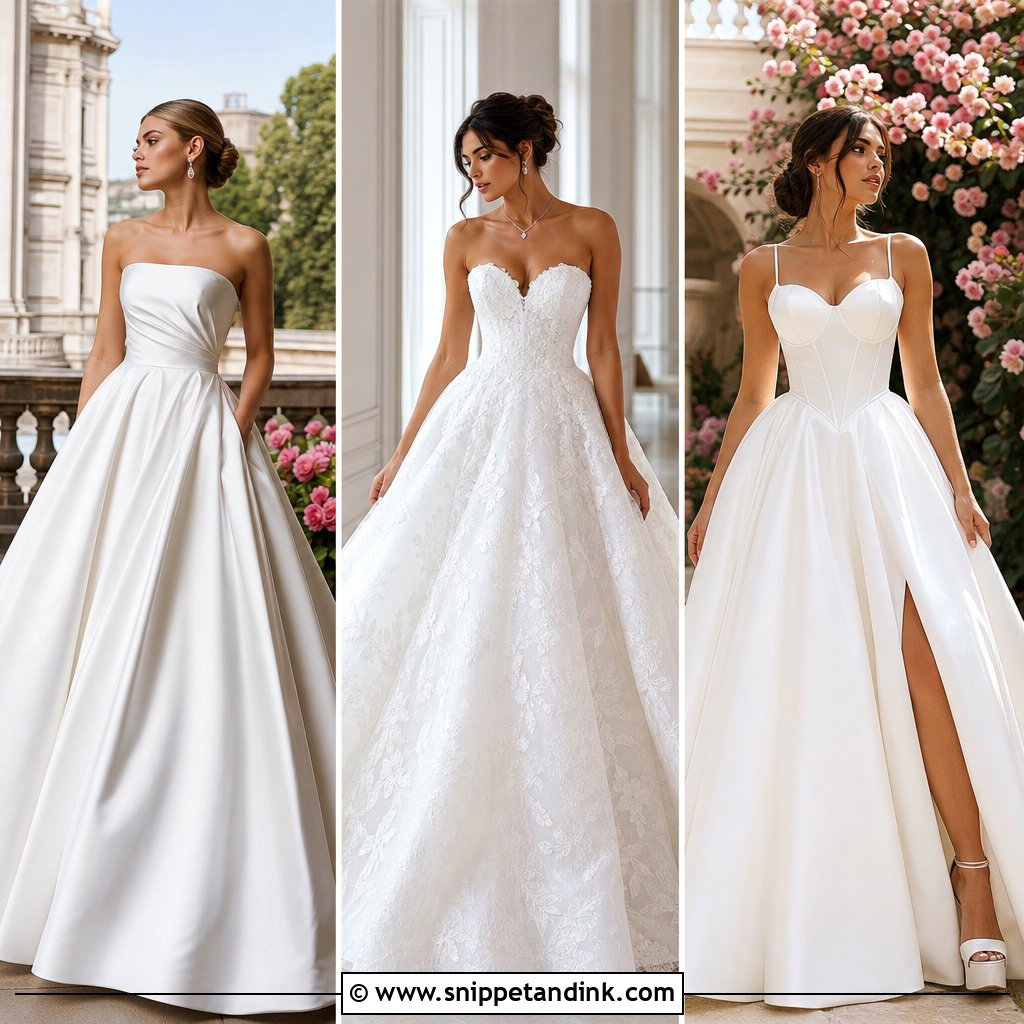
Square necks give structure while the rest of the dress stays soft. Look for wide straps, a fitted bodice and a gently flared skirt in satin or a heavy crepe; thin fabric won’t hold the corners sharp. Leave the neck bare and wear pearl or crystal earrings. Closed block heels get you through a full day. A chapel veil adds movement, a low textured bun keeps things relaxed, and a round bouquet of tulips or garden roses tied with ivory ribbon finishes it. It sits as easily in a grand hall as a small outdoor wedding.
4. Simple Long Sleeve Wedding Dress
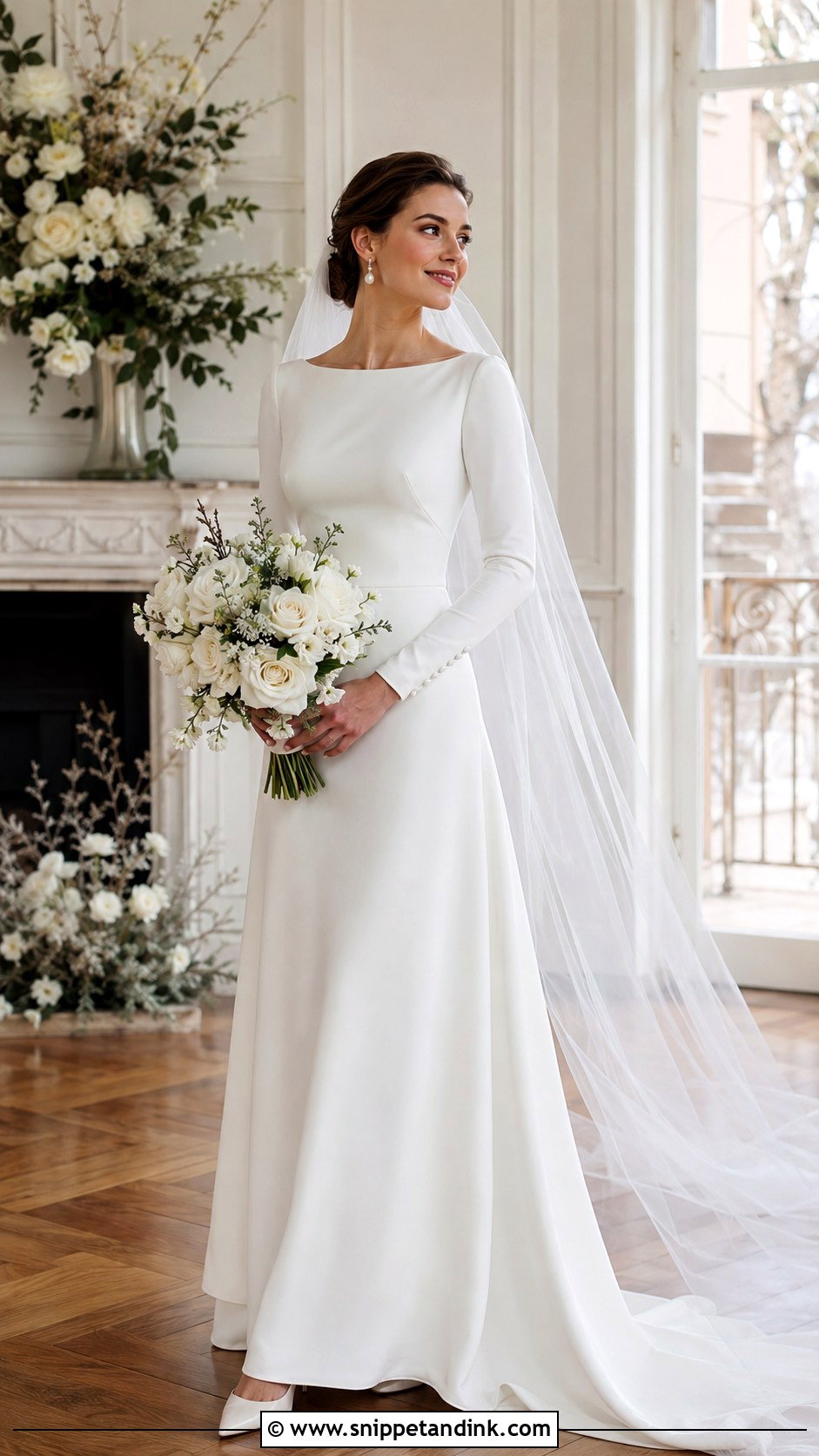
For a cold-weather wedding, I’d look at smooth crepe with fitted sleeves, a high bateau neckline and either a column or A-line skirt. Covered buttons at the cuffs or back give detail without breaking the minimal line. Pearl earrings, ivory pumps and a soft cathedral veil are all it needs, with a low bun and a center part. Roses, ranunculus and a little greenery make a quiet bouquet. If you’ll be outside for photos, bring a tailored ivory coat rather than a cardigan or pashmina; a casual layer cheapens a clean dress instantly.
5. Simple Strapless Column Wedding Dress
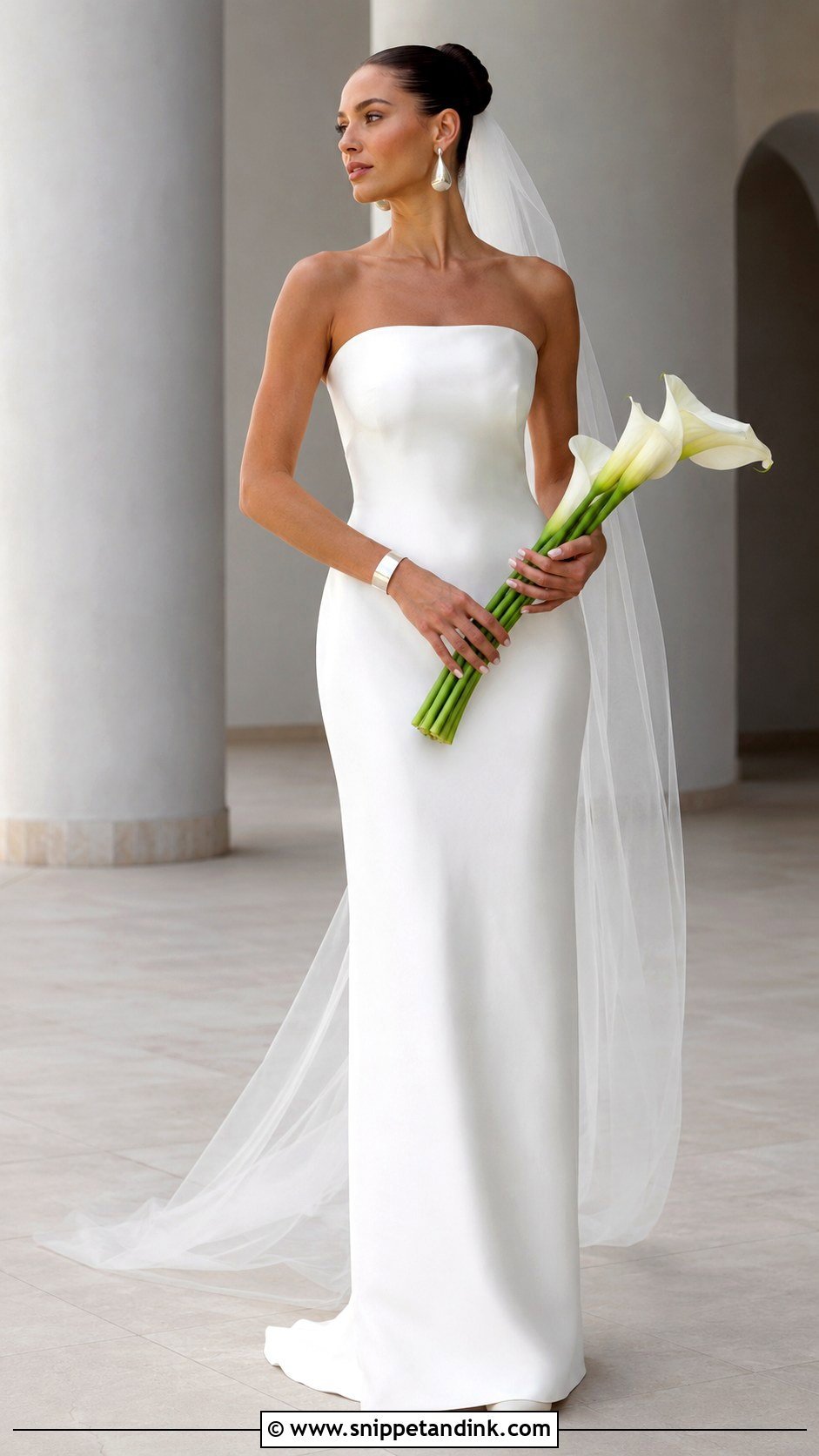
Strapless columns live or die on the inside of the bodice. Boning and a firm waist stay are what keep the neckline in place, and I ask brides to raise their arms and bend forward in the fitting room to see whether it slips. Choose satin, crepe or silk with a floor-length hem and a short train. Leave the neck bare and wear sculptural drop earrings and a narrow cuff. Pointed heels continue the long line. Tuck a plain veil under a smooth bun and carry orchids or calla lilies. Architectural venues and stylish courthouse ceremonies suit it.
6. Simple Off Shoulder Wedding Dress
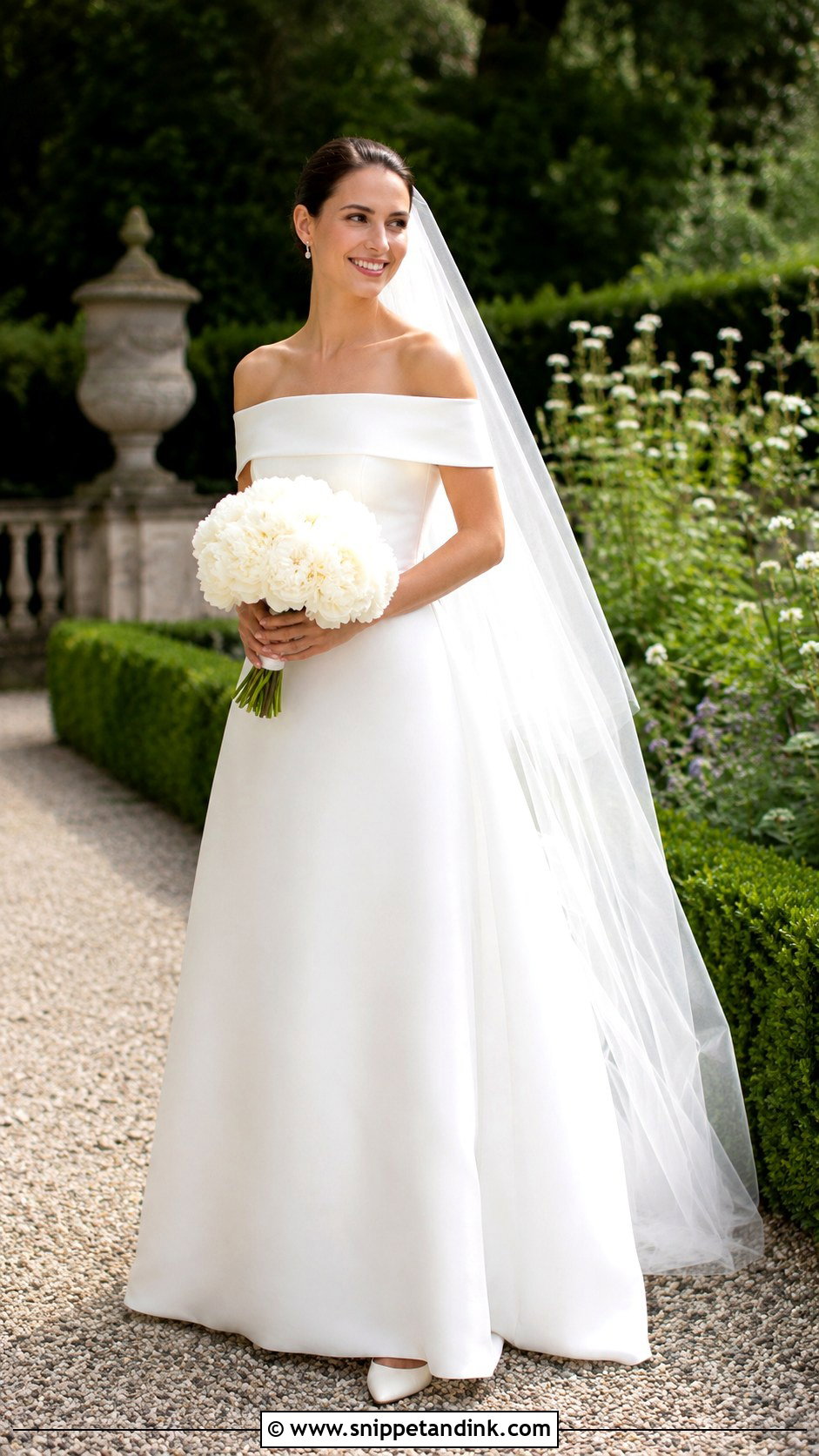
An off-shoulder neckline can feel romantic with no lace at all. The folded band has to sit securely across the shoulders, and structured satin or Mikado holds that fold far better than soft fabric, which tends to droop by the afternoon. A fitted bodice and clean A-line skirt keep the proportions calm. Small drops, an updo and comfortable ivory pumps suit it, with a sheer chapel veil that doesn’t cover the neckline. Peonies or roses in a hand-tied bouquet finish it for a garden, ballroom or estate. One limit worth knowing: you won’t lift your arms fully overhead in this neckline.
7. Simple Silk Slip Wedding Dress
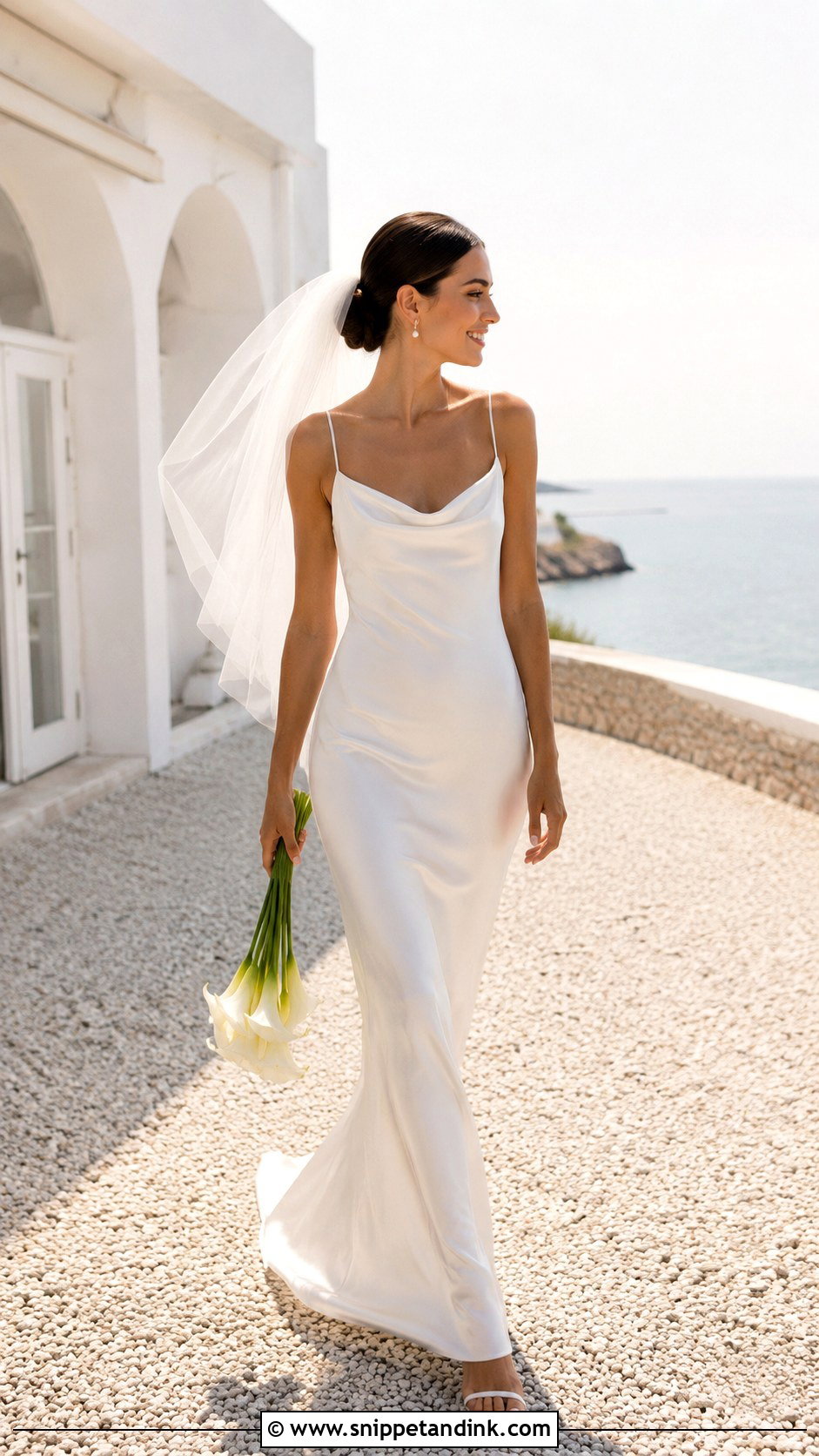
Silk slips look easy and are the hardest dress on this list to get right. Bias-cut silk shows every bump, seam and bra line, and it creases where you sit. I’d only recommend one if you’re happy to spend time on tailoring and on the right underwear. Choose floor length, slim straps and a softly draped neck. Barely-there sandals, pearl earrings and a fine bracelet keep it light, with a shoulder-length veil and loose waves. Calla lilies or sweet peas suit the narrow shape. A silk wrap helps outdoors. It suits a beach, a destination dinner or a small city wedding.
8. Simple High Neck Wedding Dress
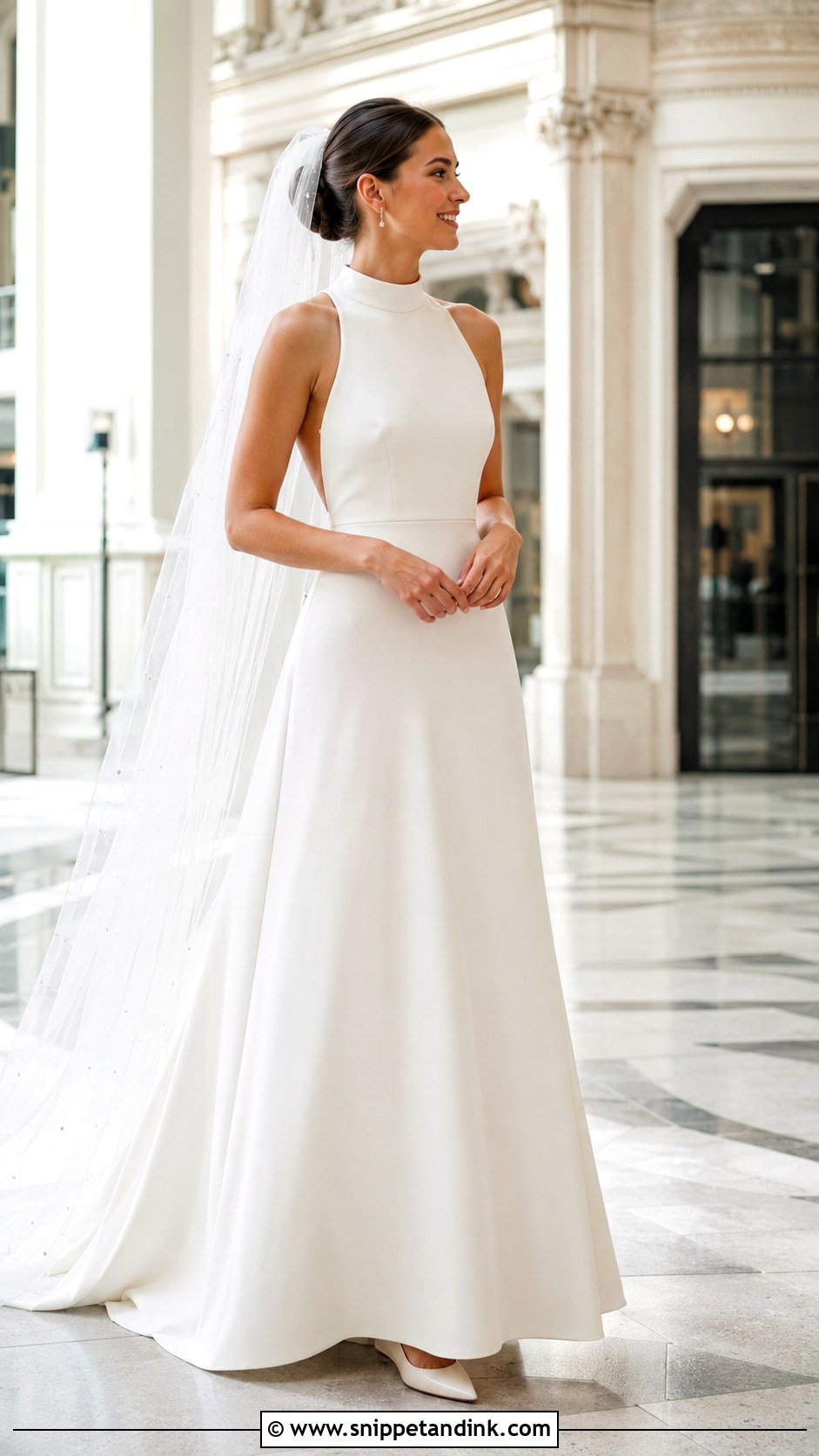
High necks give coverage and a lot of confidence. Choose sleeveless crepe or satin with a fitted upper body and a softly flared skirt, and add a modest open back so it doesn’t feel closed off from behind. No necklace; pearls or small crystal drops at the ears. Closed heels and a long veil anchored under a sleek bun complete it, with anemones, tulips or roses. At fittings I check the collar while the bride turns her head and swallows, because a high neck cut a fraction too tight is miserable by evening. It’s a good alternative for anyone who doesn’t want a plunge or strapless bodice.
9. Simple V-Neck Wedding Dress
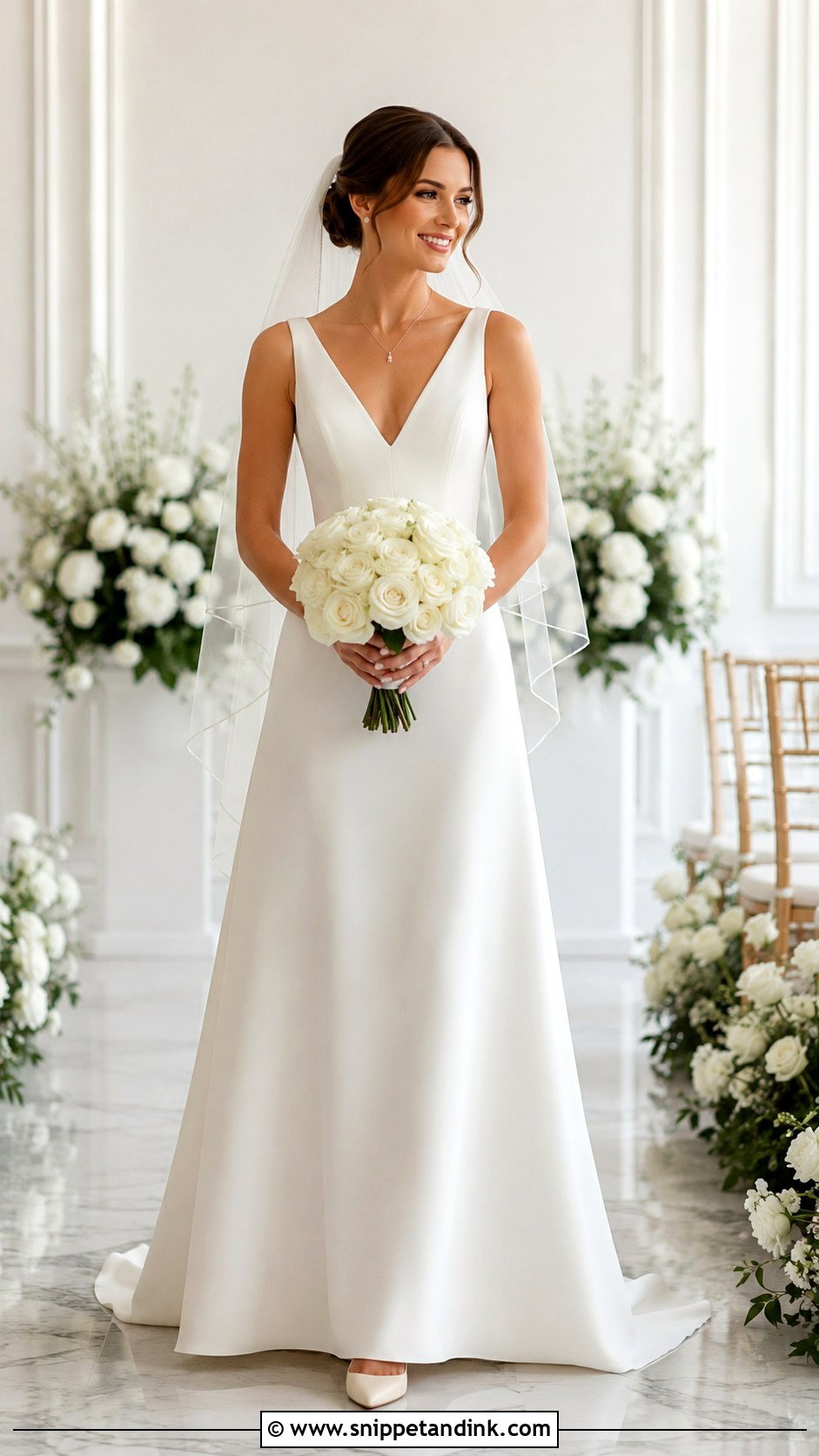
Want a neckline that’s open and easy to accessorize? A moderate V-neck on a crepe A-line or gentle fit-and-flare is that dress. Wide straps and a supportive bodice matter more here than the depth of the V; a modest V with good support looks better in photos than a deep plunge that needs adjusting all day. A fine pendant, small earrings and pointed heels suit it. Waves, a low ponytail or a loose bun can follow the formality of the day. Add a fingertip veil and white roses. It moves easily from ceremony to a relaxed reception.
10. Simple Fit And Flare Wedding Dress
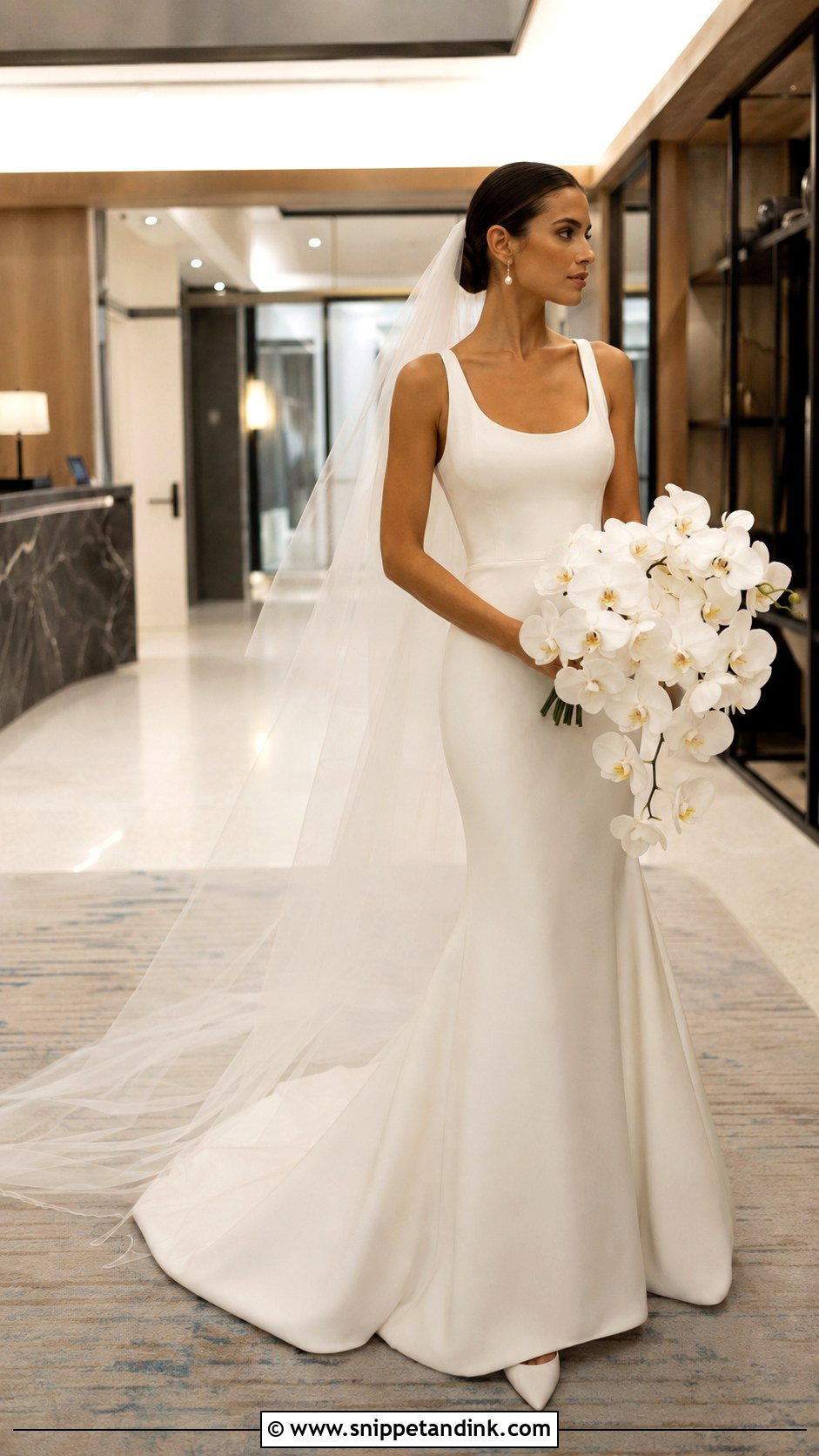
Fit-and-flare in plain crepe gives shape without decoration. The dress hugs through the bodice and hips and opens just above the knee. A scoop neck and supportive straps keep it comfortable. Pearl drops, ivory pumps and a cathedral veil with no lace edge suit it, with a neat bun and an elongated bouquet of orchids. The detail that decides comfort is where the flare begins. Too low and you’ll shuffle, so take full strides at your fitting and ask the seamstress to raise the flare point slightly if your step catches.
11. Simple Tea Length Wedding Dress
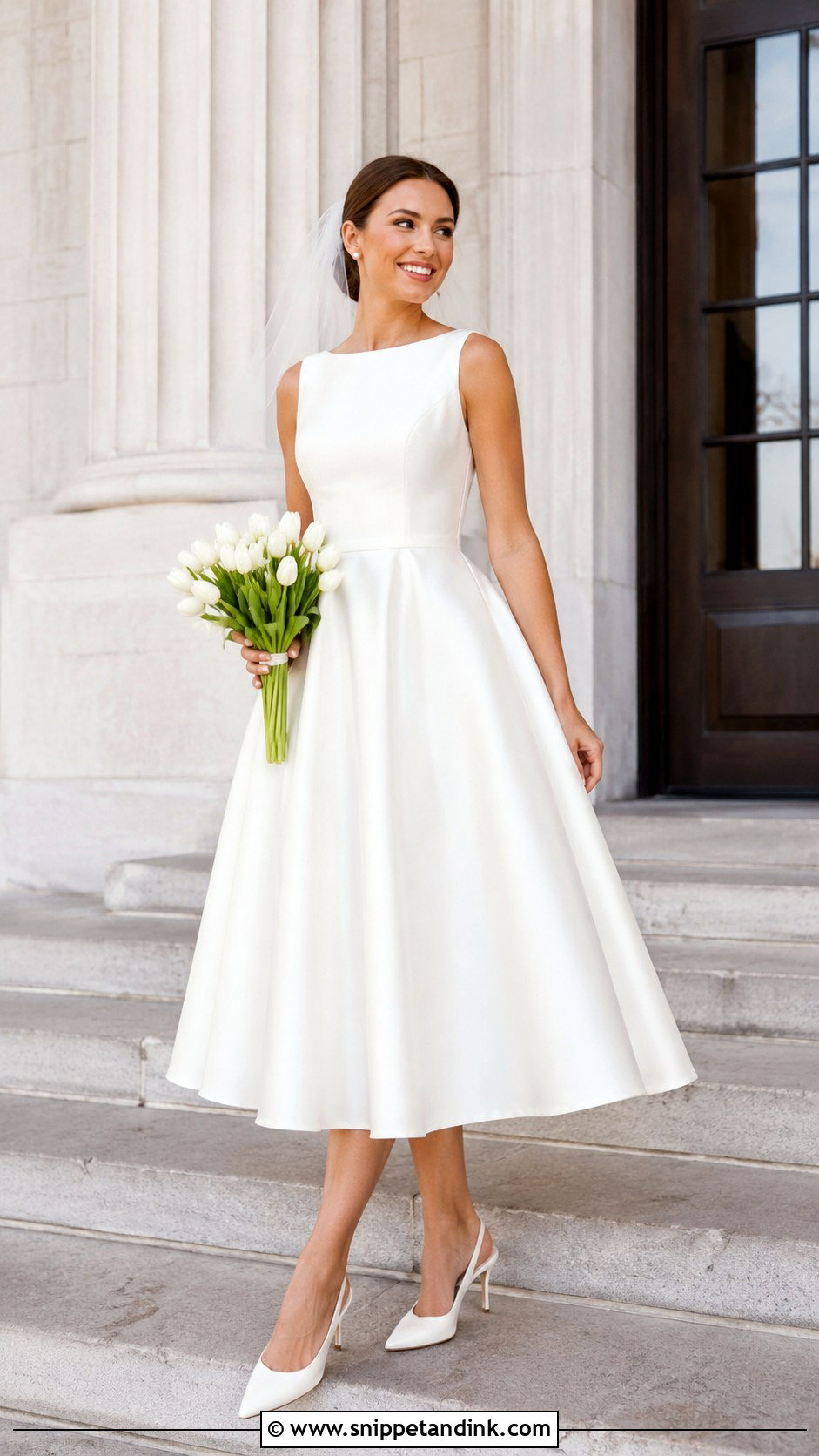
Tea length lands between the knee and ankle, and it’s what I suggest first to anyone who wants to move freely and still look bridal. A fitted bodice and defined waist with a flared satin or Mikado skirt give enough body that the hem swings rather than hangs. Your shoes are on show, so choose them first: pointed pumps, slingbacks or low ivory block heels. Pearl studs, short gloves if you like them, a shoulder-length veil and a neat bun or curled bob complete it. Courthouse ceremonies, restaurant receptions and garden lunches suit it.
12. Simple One Shoulder Wedding Dress
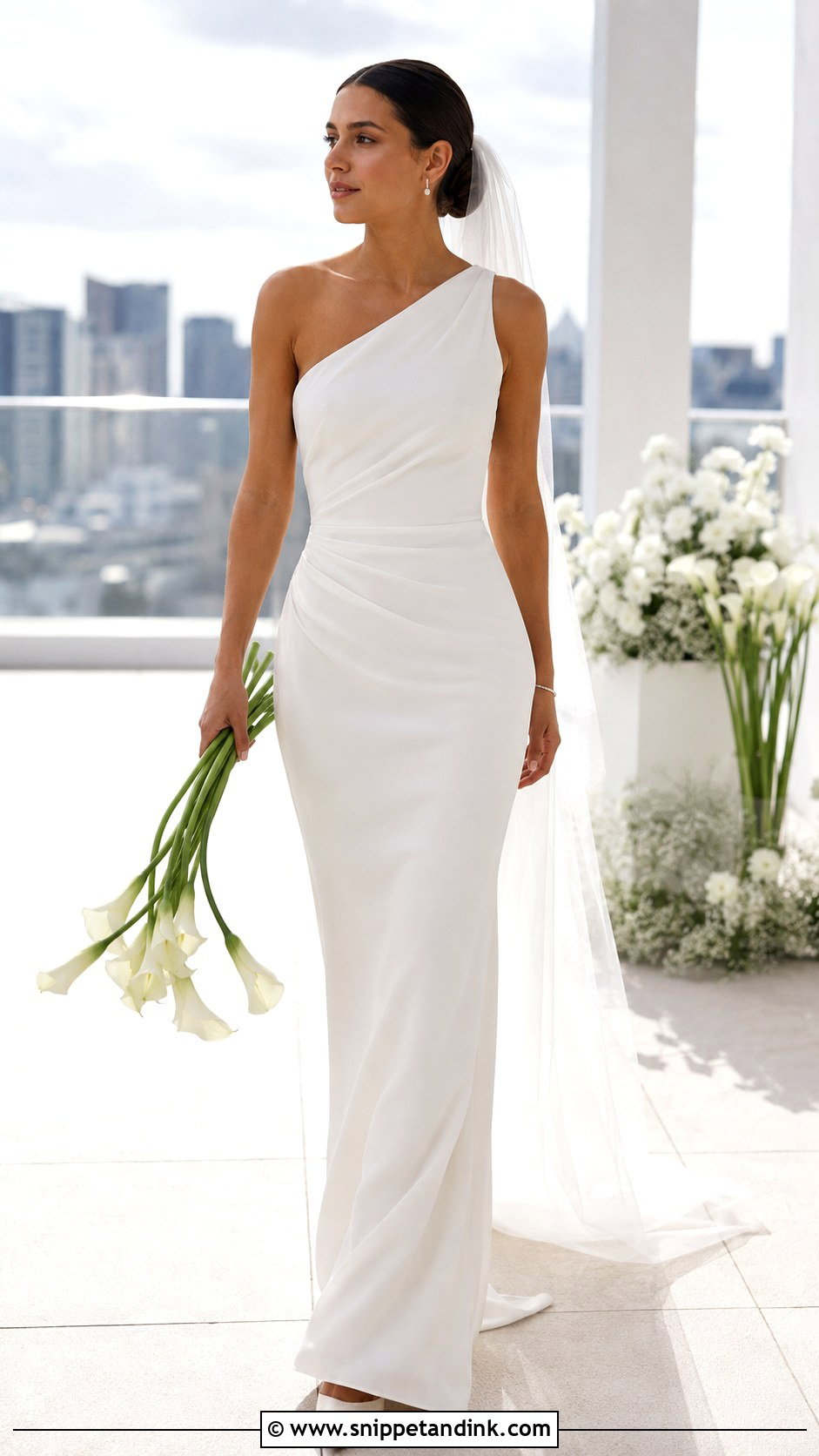
A one-shoulder gown has one artistic line and lets the rest stay plain. Matte crepe, satin or silk in a column or soft draped A-line works. Wear small earrings only, and set the low bun on the side away from the covered shoulder so the asymmetry reads clearly. Sleek ivory heels, a slim bracelet and a veil attached low at the back keep the lines clean, with orchids or long-stemmed callas. My one caution: a single strap carries the weight of the bodice, so make sure it has internal support and test it with a few dance moves. It suits rooftops, art spaces and contemporary hotels.
13. Simple Empire Waist Wedding Dress
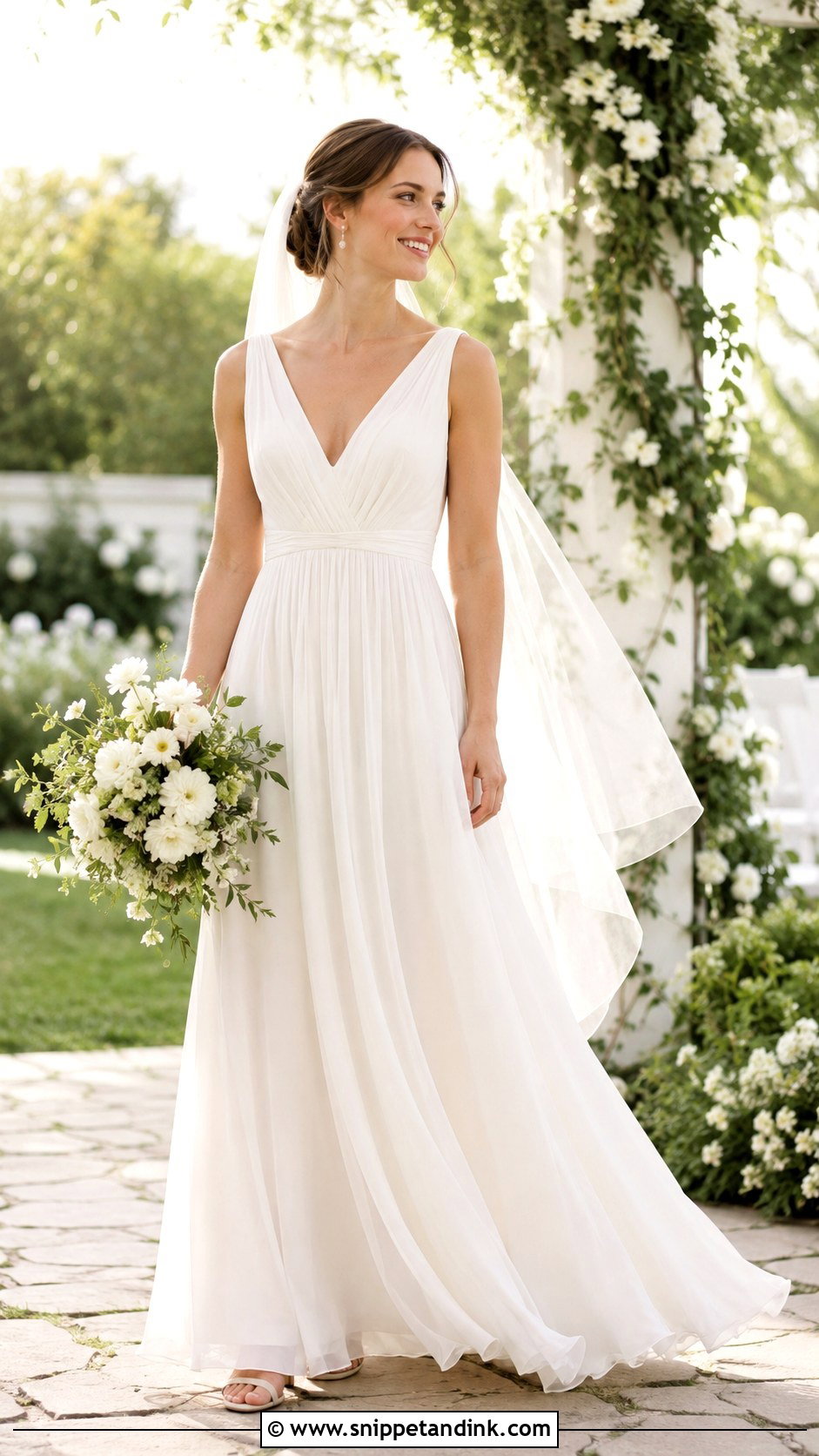
Empire waists sit just under the bust and let the skirt fall straight from there, which makes them one of the coolest shapes to wear in heat. Chiffon, silk or light crepe give movement without bulk. A modest V or scoop neckline with slim or medium straps suits the line. Delicate drops, low block-heel sandals and a light fingertip veil keep it airy; waves or a loose bun match the relaxed mood. It’s comfortable for a long warm-weather day in a garden or on the coast. Brides with a long torso may find the seam sits too high, so check it in a mirror from the side.
14. Simple Satin Ball Gown Wedding Dress
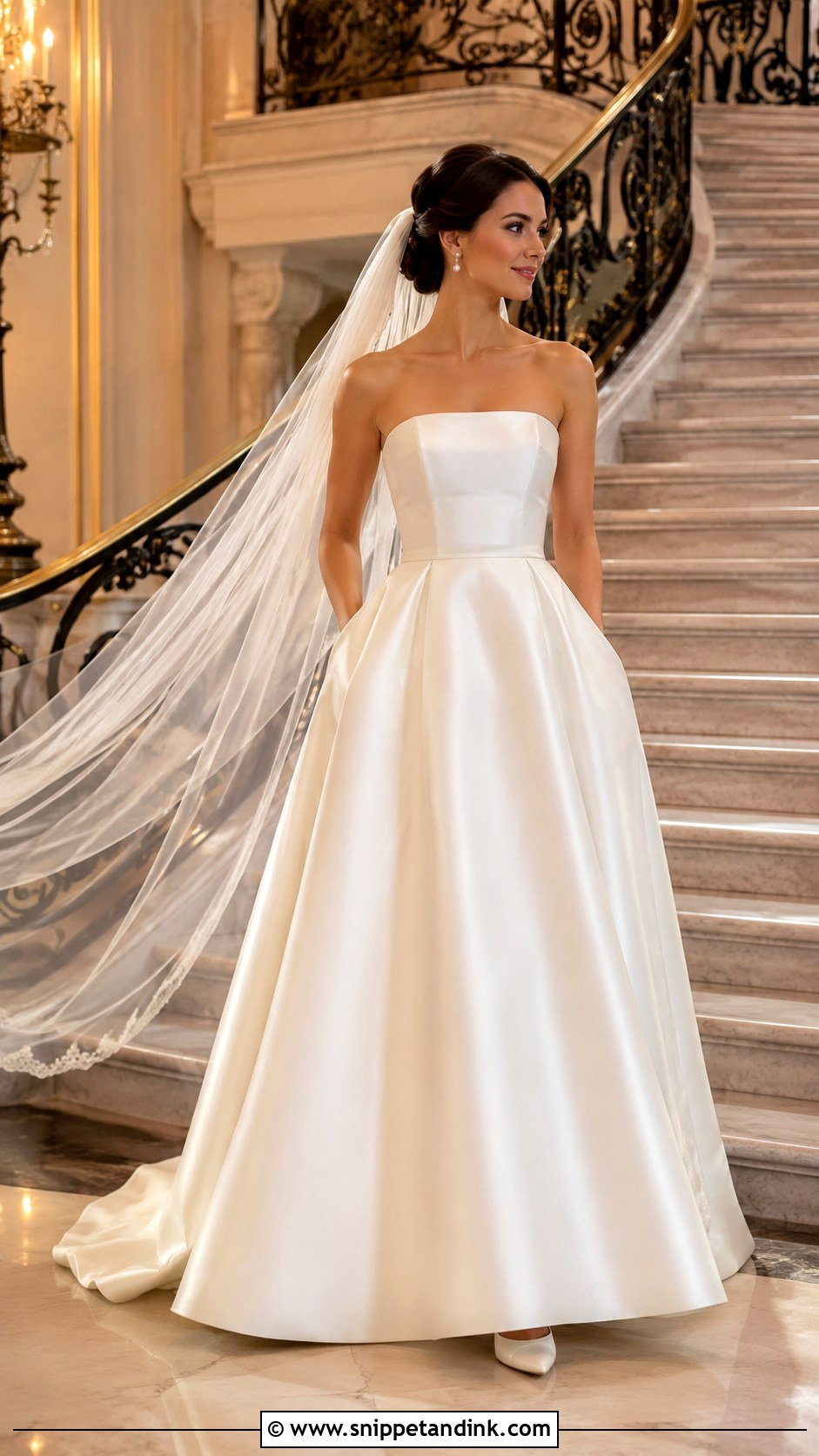
A big skirt doesn’t need beading to make an entrance. A plain satin ball gown with a structured bodice, natural waist and smooth skirt gets its presence from shape alone. Strapless or square necklines keep the top clean, and I always ask for hidden pockets, which add no bulk if they’re set into the side seams. Pearl drops, a polished bun and classic ivory pumps finish it. Wear a cathedral veil for the ceremony and take it off for dancing. A medium bouquet balances all that skirt. Staircases, ballrooms and estates suit it.
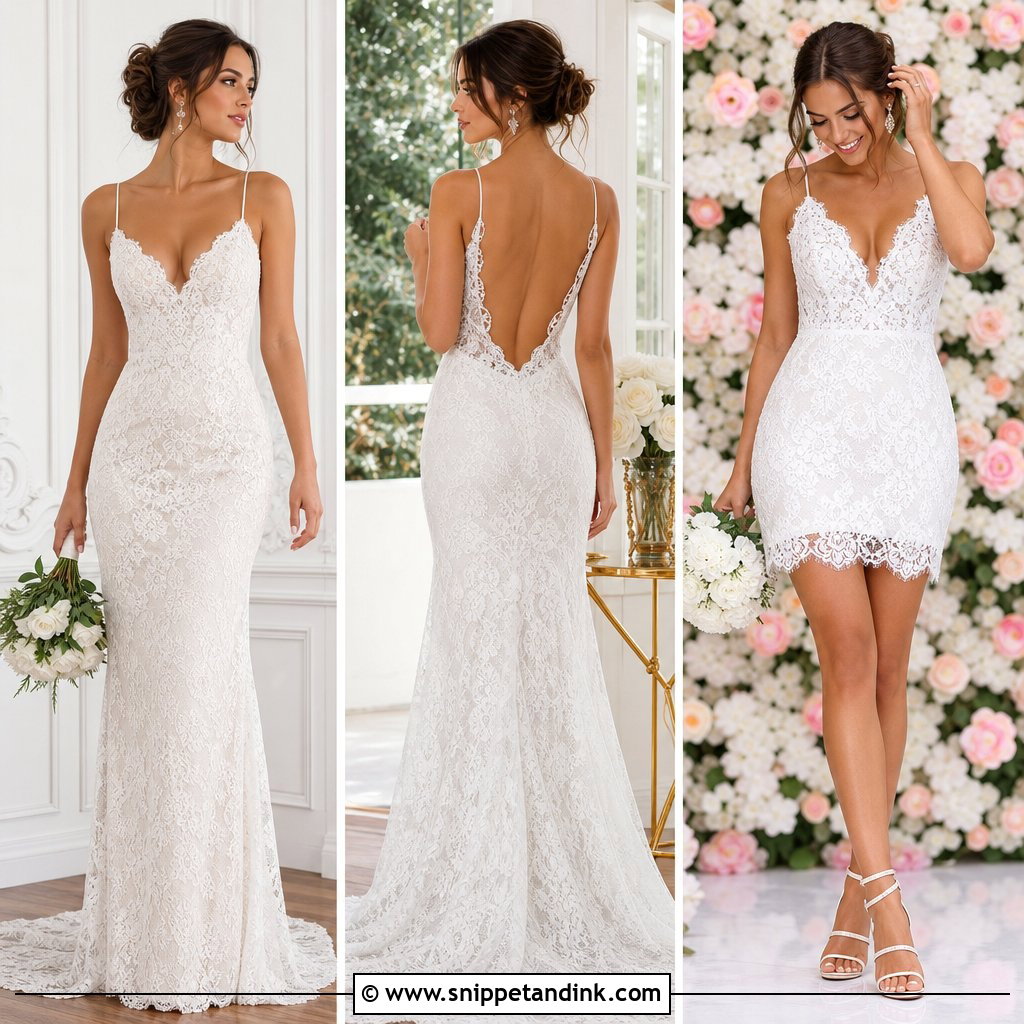
15. Simple Wedding Dress With Cape
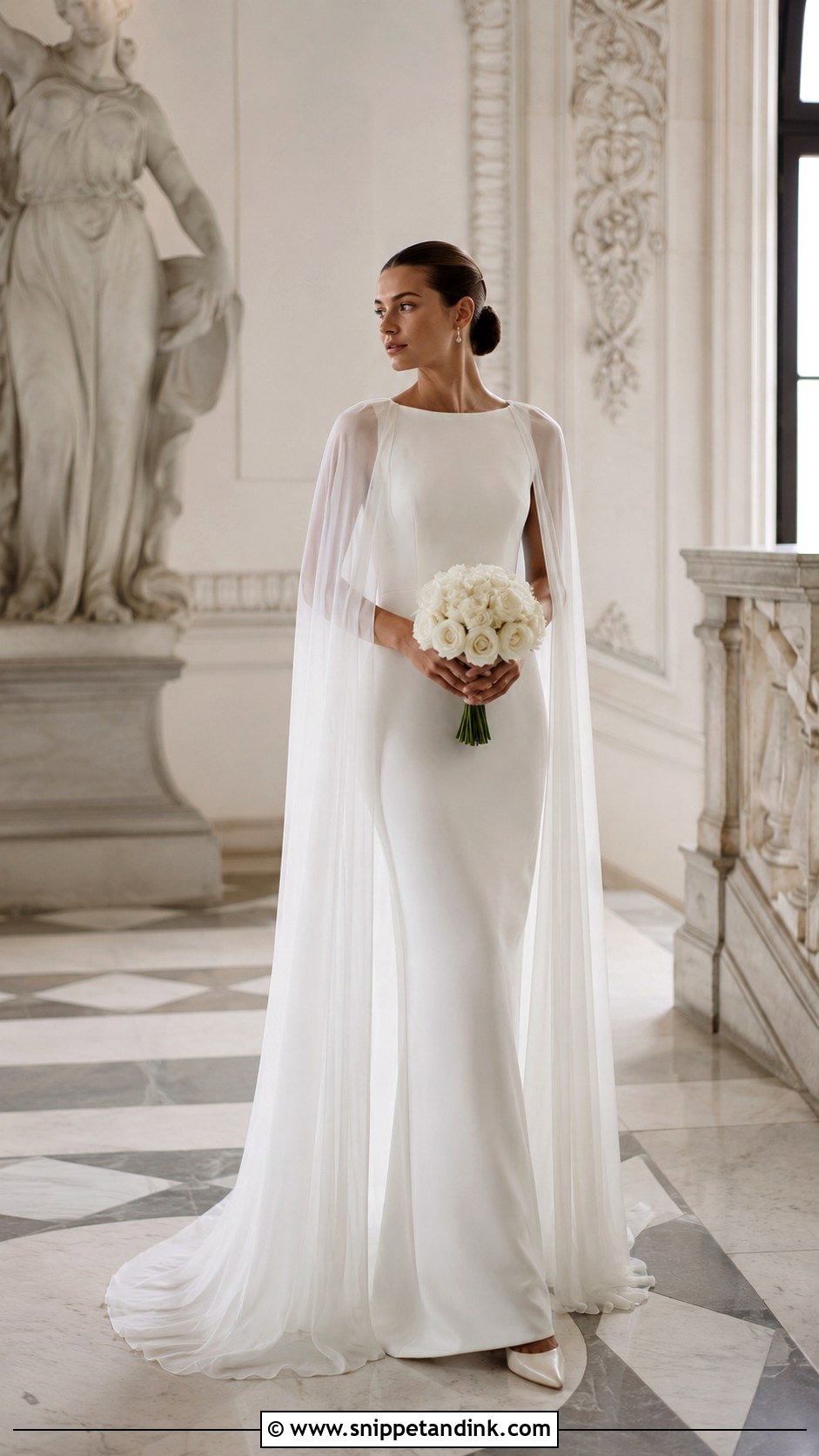
A sheer cape adds movement to a plain gown without changing its simplicity. Start with a sleeveless crepe column with a straight neck or modest V, then add a light floor-length cape attached at the shoulders, ideally without heavy lace or sequins. It flows down the aisle and comes off for the reception. Pointed pumps, small pearl earrings and a smooth low bun keep it tidy, and I’d skip the veil so the cape is the only accessory. How the cape fastens matters: snaps or hooks at the shoulder seam should be hidden and tested with arms raised, because a long cape gets stepped on and pulled more than you’d think.
16. Simple Wedding Dress With Bow Back
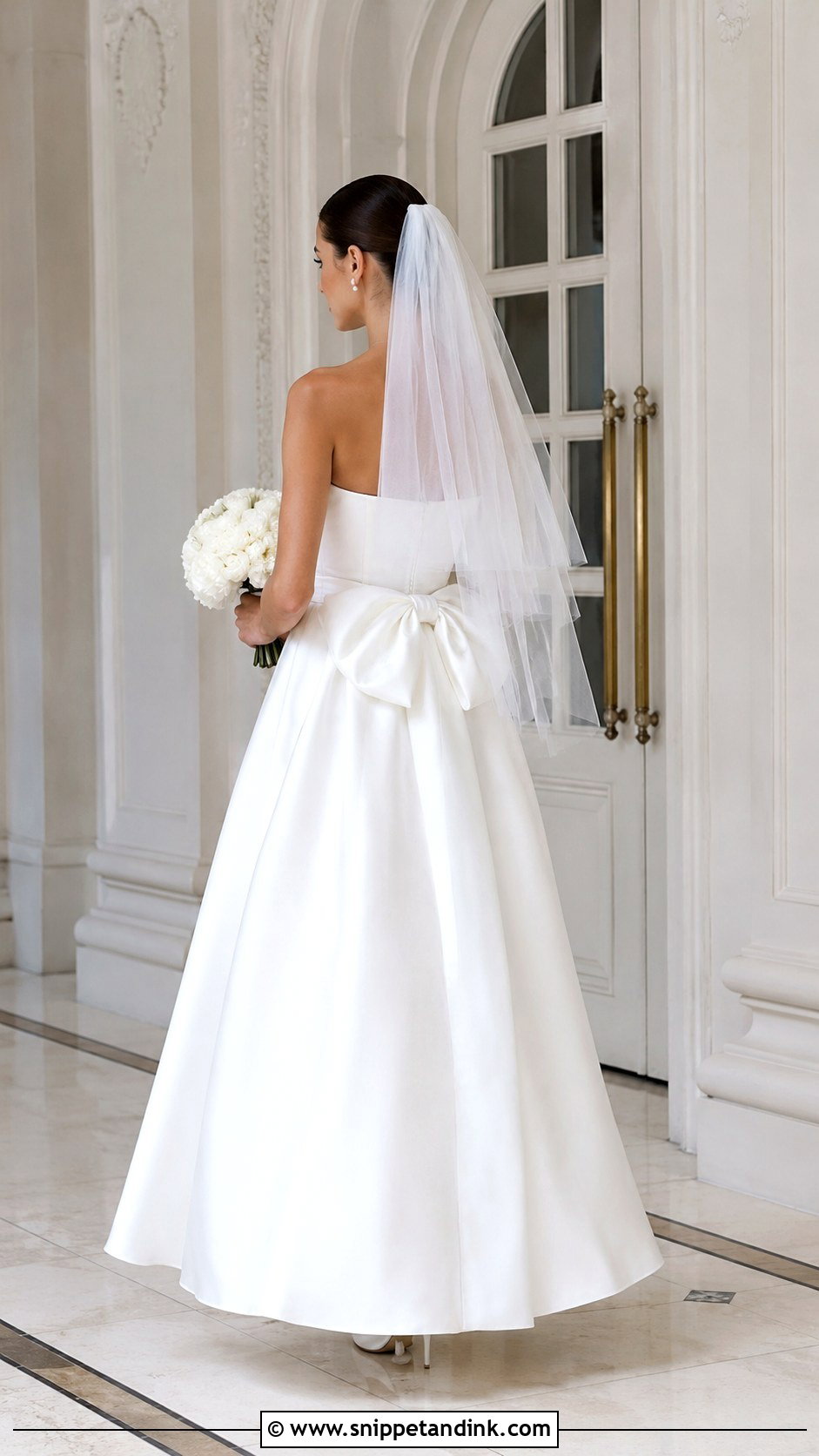
Turn around, and a single bow at the back changes a minimal gown completely. Choose a clean satin A-line or fitted column with a straight neckline and a low or softly scooped back, with a structured bow at the waist. Pearl studs, pointed ivory heels and a plain chapel veil that doesn’t cover the bow suit it. An updo keeps the back visible in photos. Large bows can crush when you sit against a chair, so I ask for a stiffened interfacing inside and suggest perching forward at dinner. One deliberate detail beats several competing ones.
17. Simple Courthouse Wedding Dress
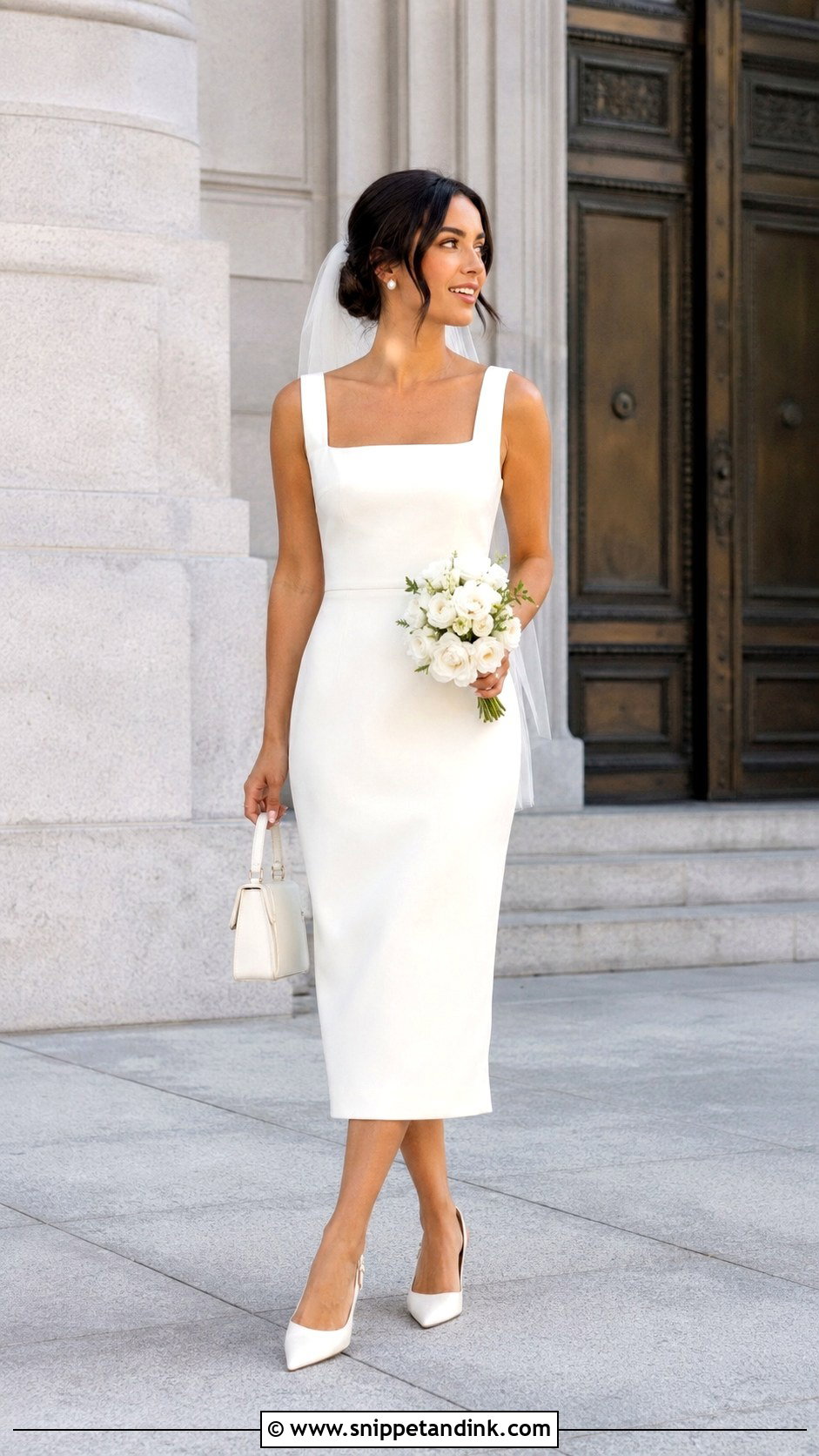
Courthouse outfits have to handle stairs, security lines and a walk to lunch. A tailored ivory midi with a square neckline, fitted waist and straight or softly flared skirt does all that and still looks bridal. Long sleeves suit cool months; sleeveless works in summer. Pointed slingbacks, pearl earrings and a small structured bag keep it neat. Swap a long veil for a short one, a hair bow or a slim headband, and carry a small bouquet that survives a car ride. Add a tailored white coat in cold weather. It moves smoothly from the courthouse to a restaurant or a family gathering.
18. Simple Beach Wedding Dress
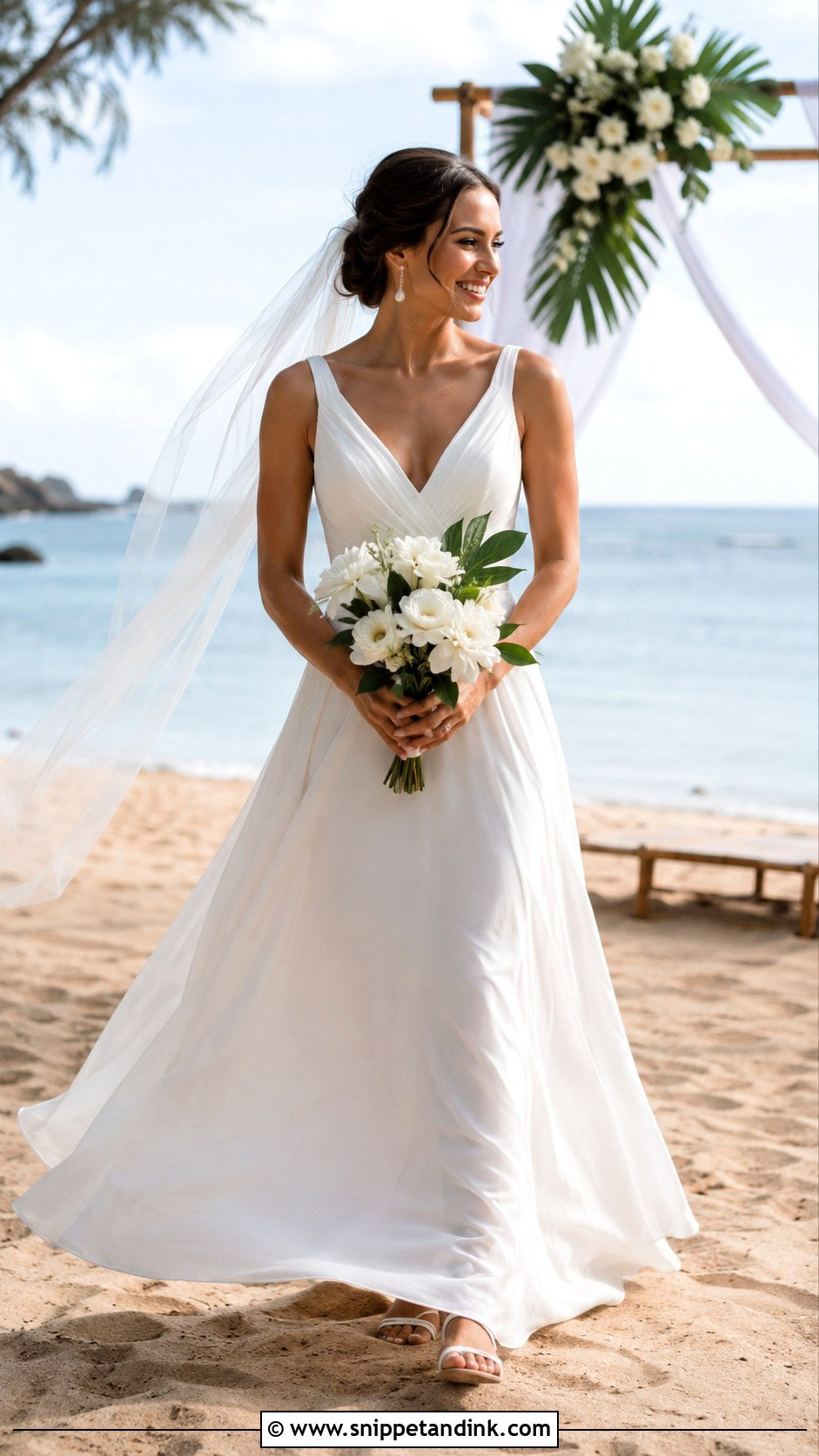
Sand and wind are the two things a beach bridal outfit has to survive. Chiffon or silk in an A-line with a V-neck and supportive straps moves with the breeze and dries quickly if it gets damp. Skip a long train; it fills with sand and drags. Flat sandals, low wedges or barefoot sandals depend on how soft the beach is underfoot. Pearl earrings and a light veil pinned firmly under a loose bun keep things in place. I’d keep the bouquet to white tropical flowers or simple coastal greenery, nothing themed. The hem should clear the ground by a fraction when you stand in your actual shoes.
19. Simple Garden Wedding Dress
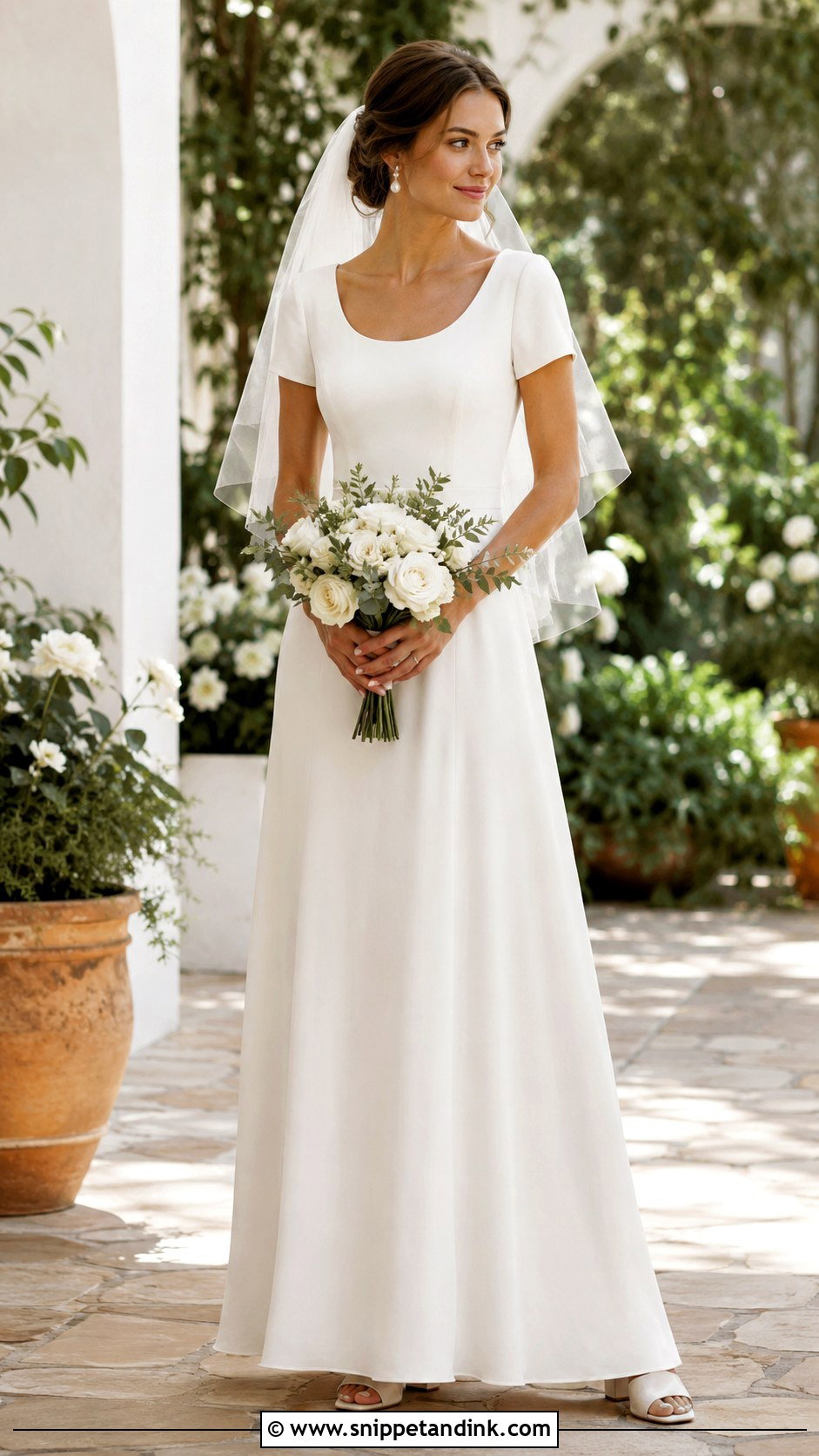
Garden ceremonies call for light crepe or chiffon in a soft A-line, with a scoop neck, short sleeves and a gently defined waist. A modest sweep train looks bridal without dragging heavily through grass. Heels sink into lawns, so I’d choose block heels or flat shoes with some grip. Pearl earrings, a delicate bracelet and a fingertip veil finish it, with waves or a low textured bun. Garden roses and greenery tied with silk ribbon suit it. Expect grass stains on the hem by evening; a pale lining wipes better than raw chiffon.
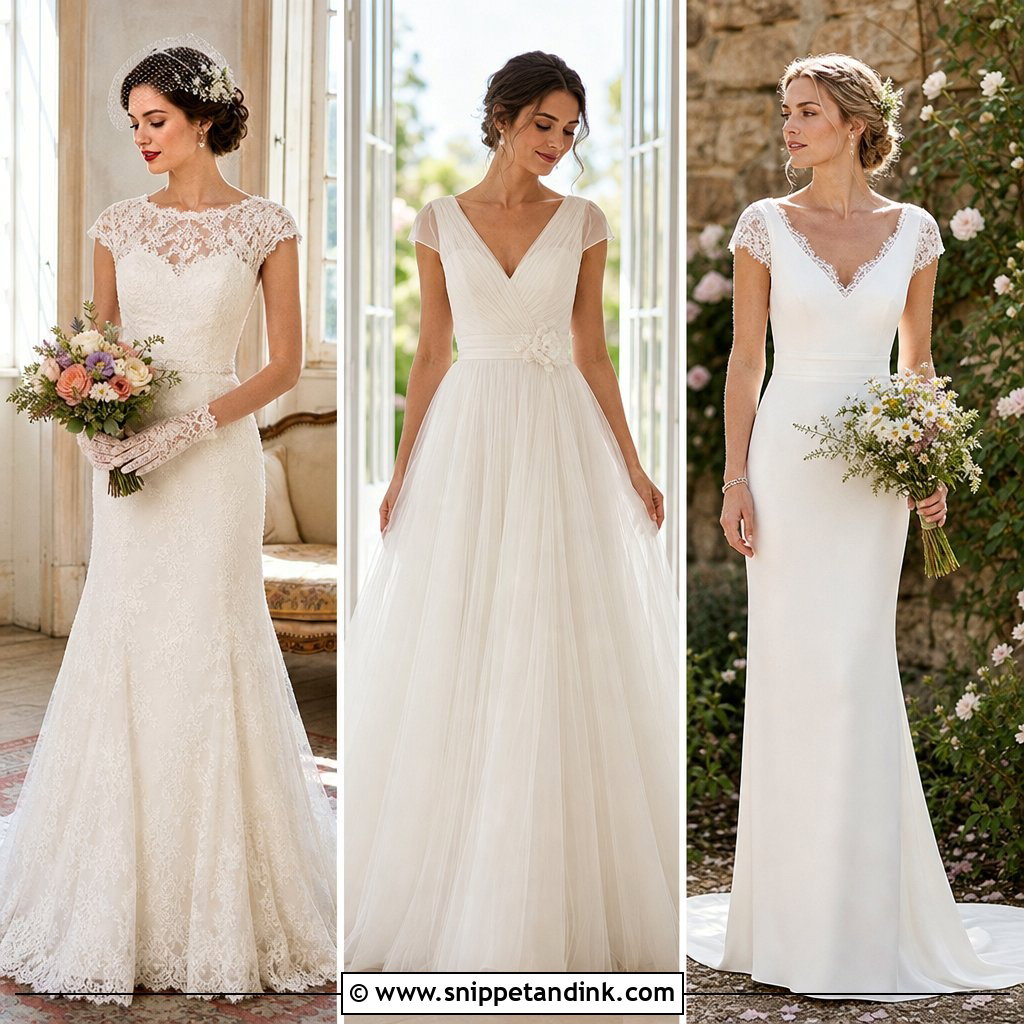
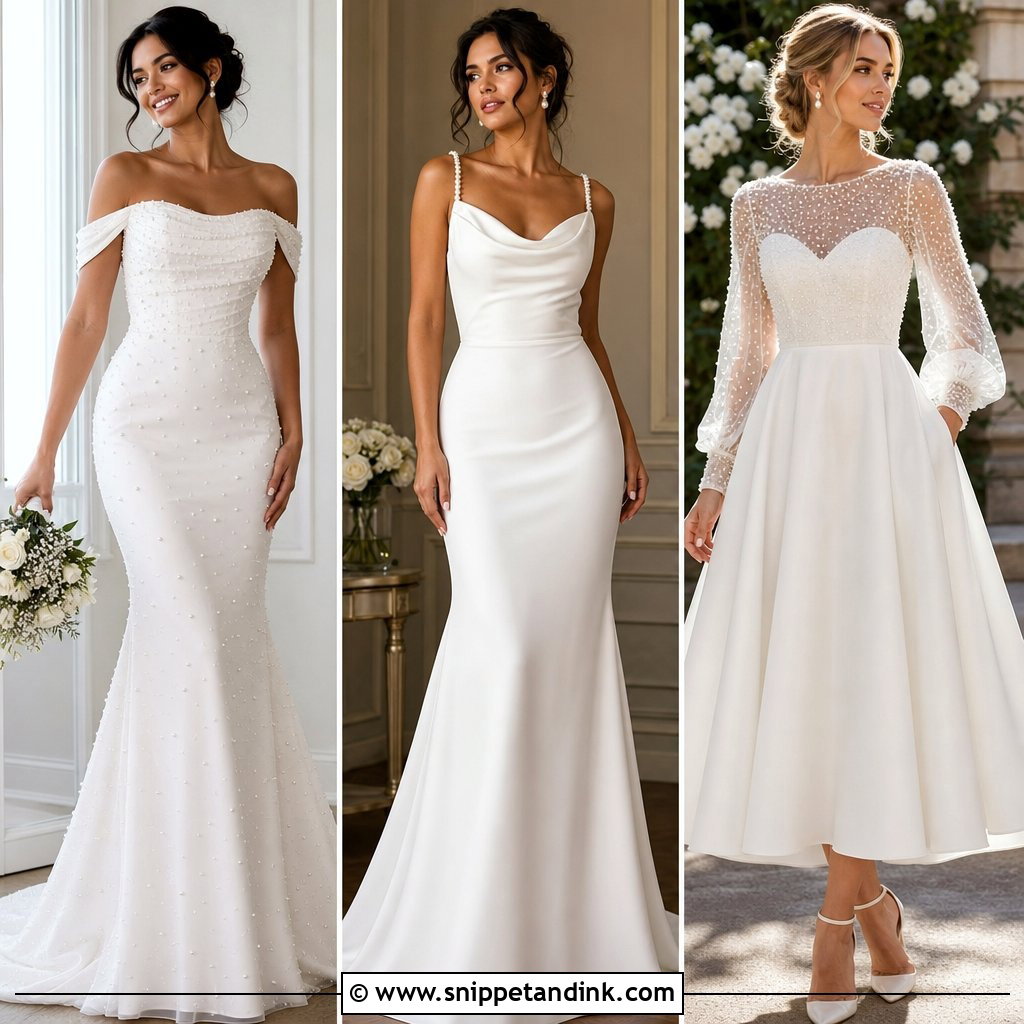
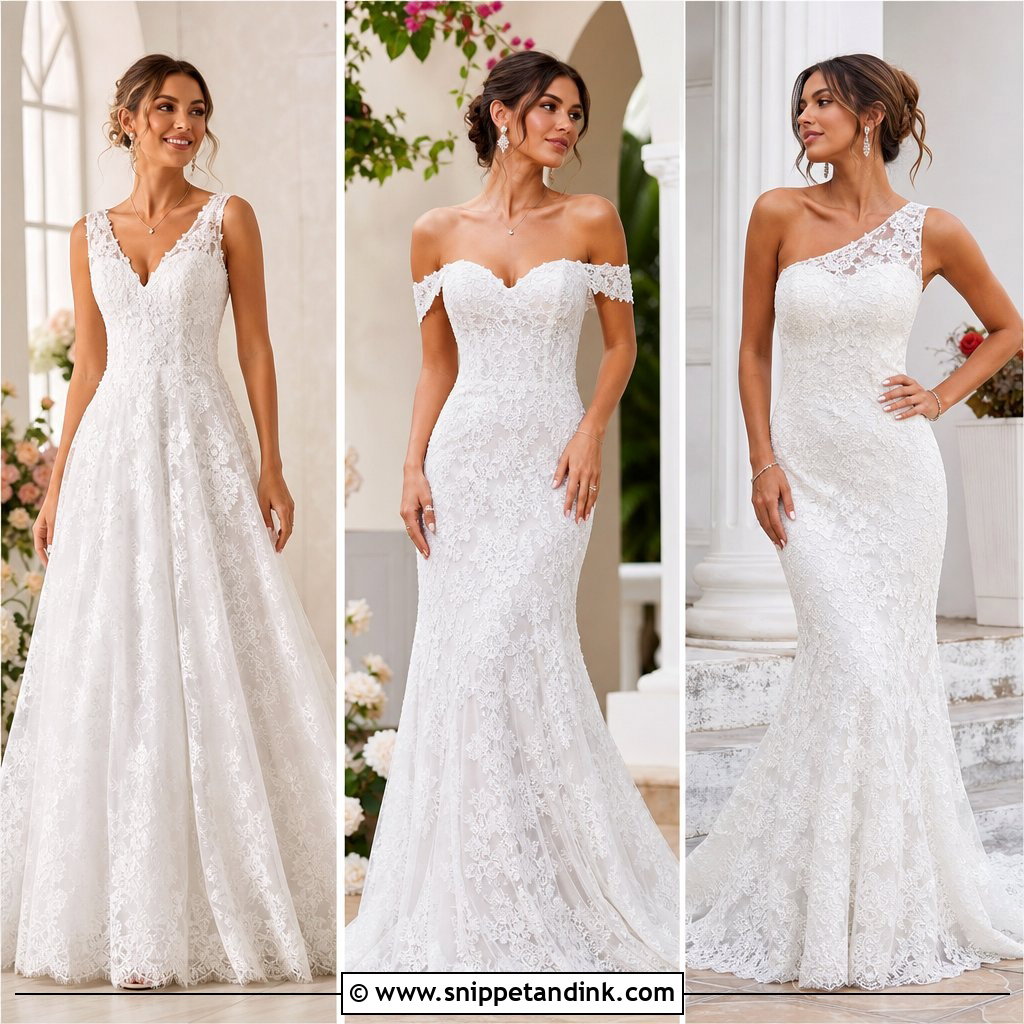
20. Simple Wedding Dress With Detachable Sleeves
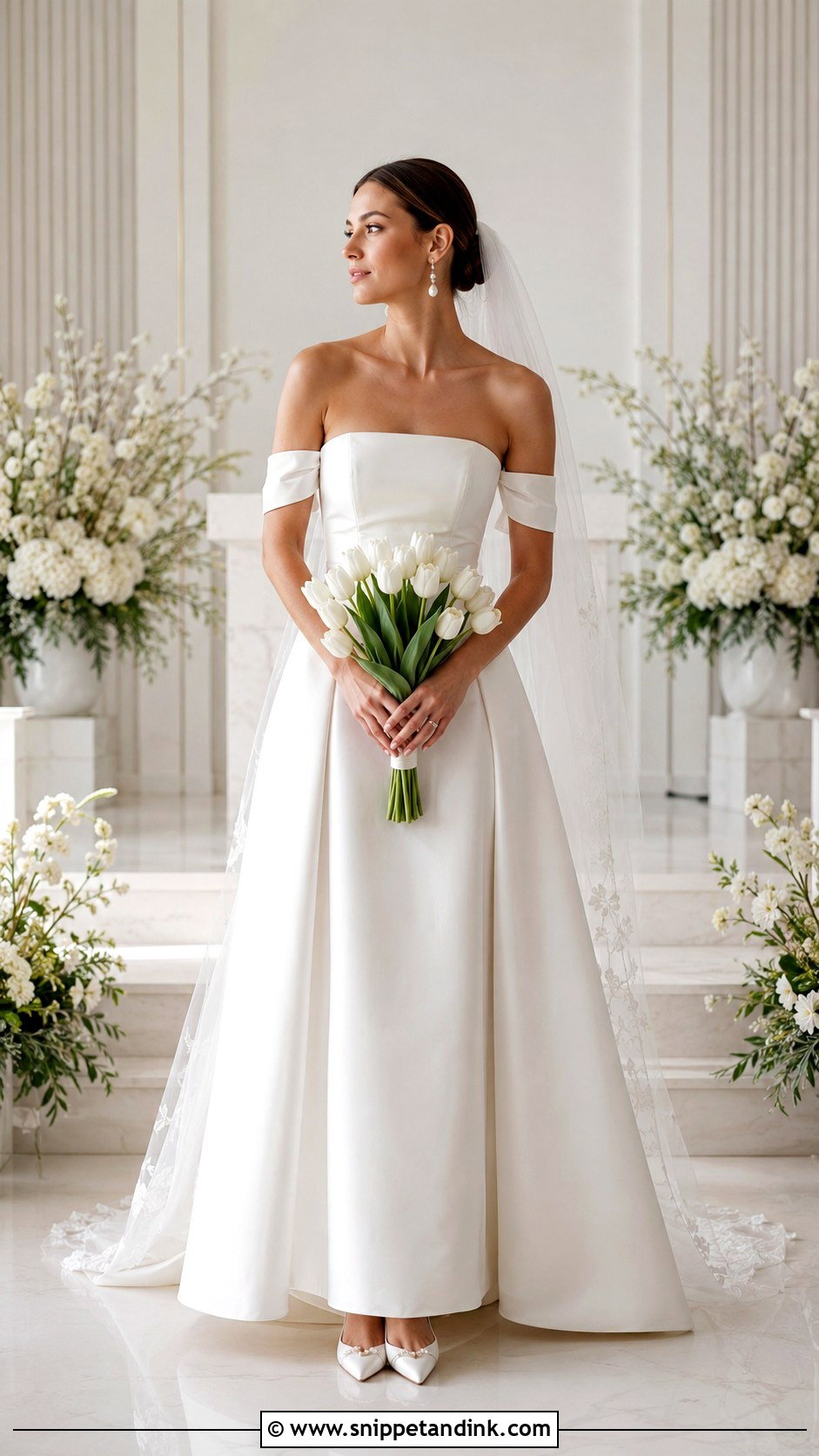
Detachable sleeves give you a covered ceremony look and a lighter reception look from one dress. Start with a strapless satin or crepe A-line with a structured bodice and plain skirt, then add fitted off-shoulder sleeves for the ceremony. Pearl drops, pointed ivory pumps and a chapel veil suit both versions, with a low bun that keeps the neckline visible. The attachments must be secure and hidden, so I test them at fittings by hugging and waving, and I have whoever will help you practice removing them. It saves buying a second reception dress.
Underwear, Steaming and the Last Hour Before You Get Dressed
Minimal dresses show problems that a fuller gown would hide, so the morning routine matters.
Underneath
Choose underwear in a shade close to your skin, not white, which shows through ivory and silk. Bring the exact pieces to your final fitting so the tailor fits the dress over them. For slip dresses and backless styles, I prefer adhesive cups or a bra built into the bodice over clear straps, which catch the light in photos.
Getting the creases out
Hang the dress as soon as you arrive at your getting-ready space, by its inner hanger loops, not the straps. Steam from the inside, keeping the steamer moving and a short distance from the fabric; water drips can spot silk and satin. Never iron satin directly. Steam it at least an hour before you dress so the fabric has time to dry and settle. Then sit carefully, smoothing the skirt under you; that small habit keeps a satin skirt looking crisp for the first photos.
What Makes a Simple Dress Look Expensive
Simple bridal outfits depend on fit and fabric, not decoration. A good silhouette, a bodice that fits properly, quality material, comfortable shoes and a few accessories make an understated gown look distinctive. Think about your venue, the season, how formal the ceremony is and how much you’ll be moving. Then choose a dress that feels natural when you walk, sit, turn and dance. Satin A-lines, crepe sheaths, silk slips, ball gowns and midi dresses all have a plain version here. Use them as a starting point, and let comfort and your own taste make the final call.
You'll Like These Ideas:











Leave a Reply