
Gold is the color couples ask me for when they want a cake to look expensive without adding a single loud shade. White keeps it bridal; gold gives warmth and a bit of glow. I’ve put this palette in ballrooms, gardens, hotels and on beach tables, and the reason it travels so well is that gold can be dialed up or down. Pearls and flowers make it soft, fully metallic tiers make it bold, and a gilded edge on a plain tier keeps it simple. It works in buttercream, fondant, ganache and sugar flowers alike. These are the twenty directions I’d show you, each with what I watch for when I make it.
Is All That Gold Actually Edible?
This is the first question I’d ask any cake designer about a gold design, and it’s one couples rarely think of. Not every gold product used on cakes is meant to be eaten.
- Edible gold leaf is real gold beaten very thin, usually sold as 22 to 24 karat for food use. It has no taste and passes through the body unchanged.
- Edible metallic dusts and paints are made from food-approved pigments. They give a softer, more champagne shine than leaf.
- Luster dusts labeled non-toxic or for decoration only are not the same thing. They’re intended for pieces that come off before serving, such as sugar flowers on wires or a topper.
I tell couples exactly which parts of their cake are decorative so the caterer knows what to remove before slicing. If your design has a lot of gold on the frosting itself, ask your baker to confirm in writing that every metallic touching the cake is food grade.
Gold also changes how long the work takes. Leaf and hand-painting are slow, and a fully gold tier can add many hours, so a heavily gilded design will cost noticeably more than a white cake with gold trim.
1. White And Gold Pearl Wedding Cake
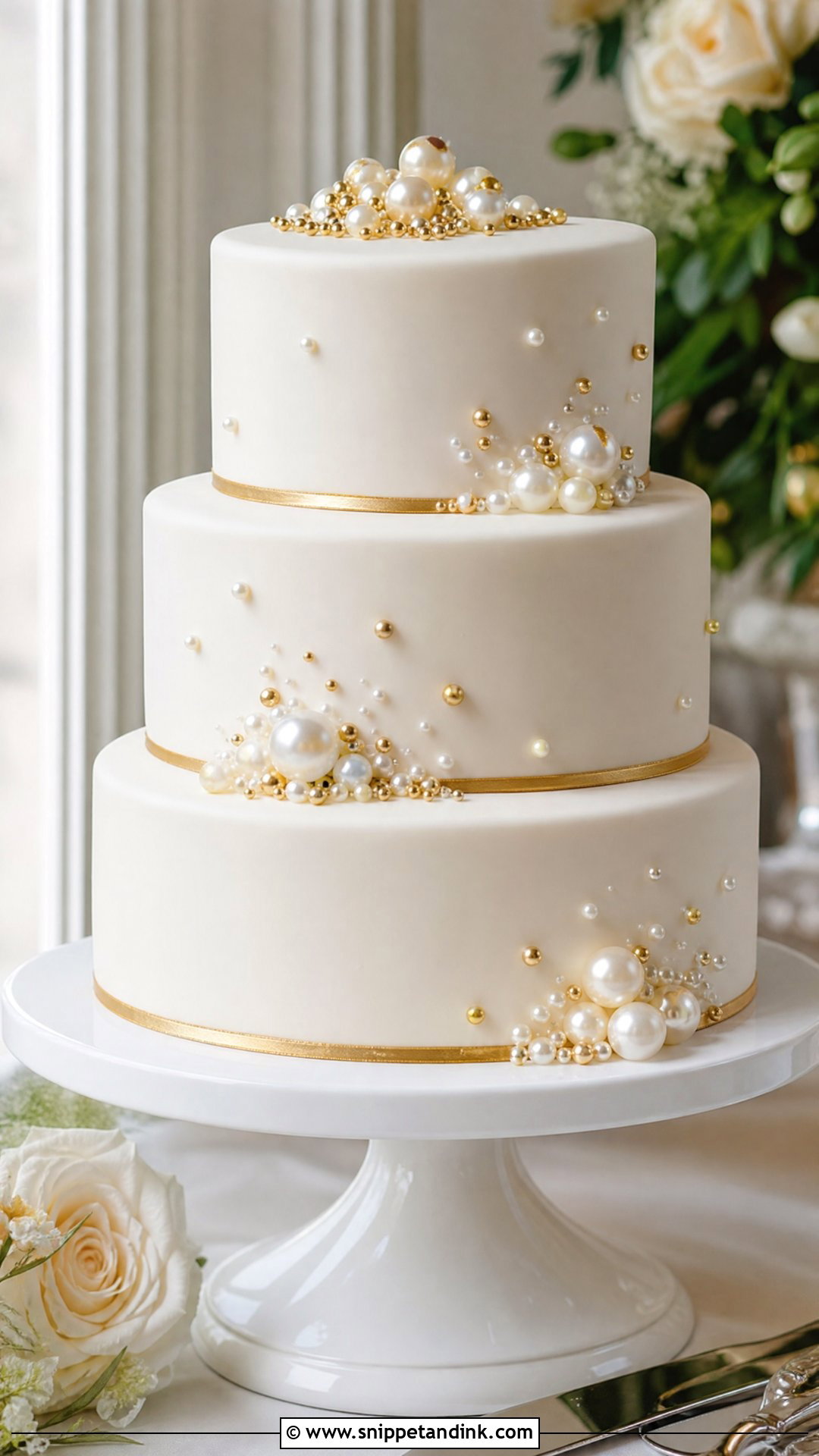
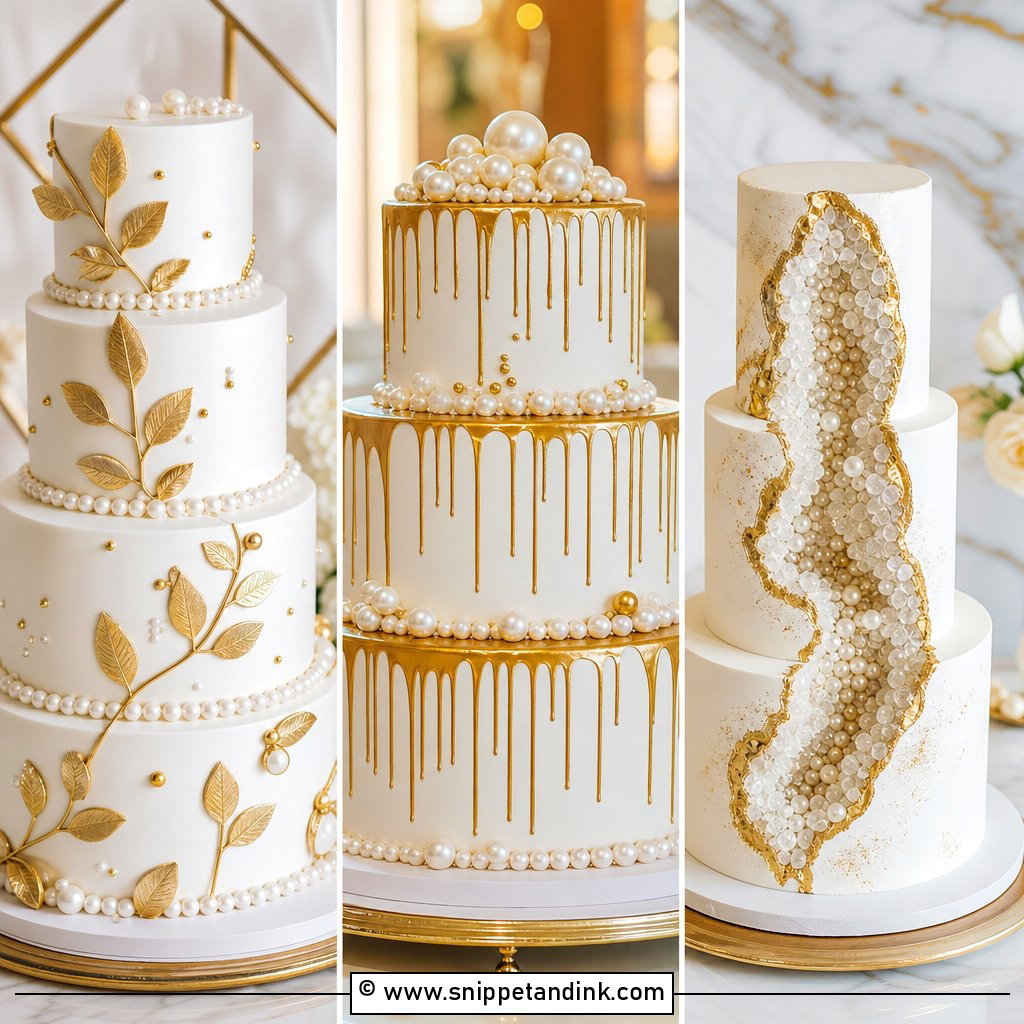
Pearls are where I start couples who worry gold might look flashy. Clean white tiers, edible sugar pearls for texture, and gold as thin borders, tiny painted dots or a brushed accent behind the pearl clusters. The detail I check is size: graduated pearls, larger at the base of a cluster and smaller at the tips, look natural, while one size all over looks like a craft kit. Clustering is better than covering every inch. Smooth buttercream or fondant gives each pearl a clean background, and the look sits well beside pearl bridal accessories and candlelit rooms.
2. White And Gold Floral Wedding Cake
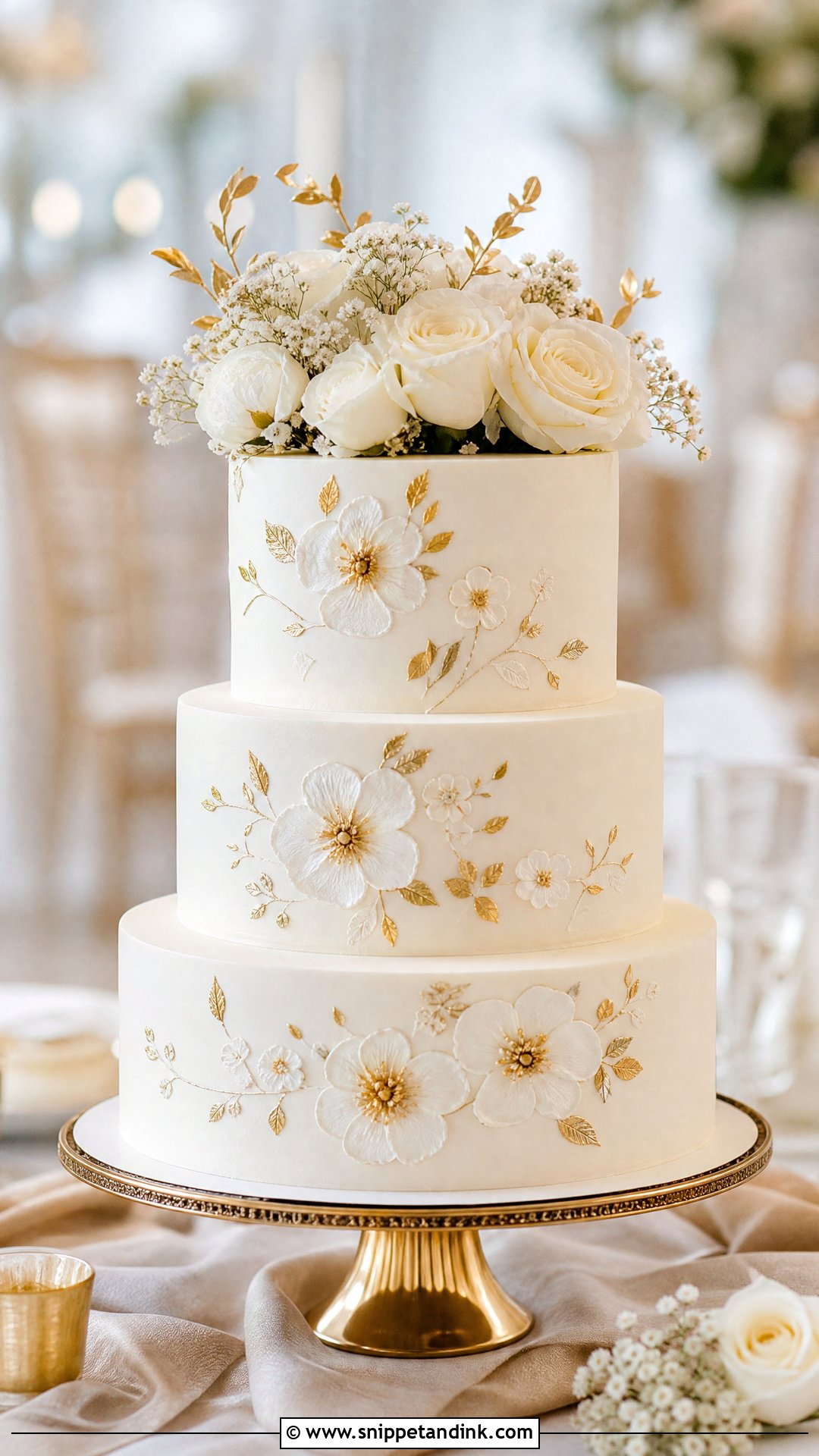
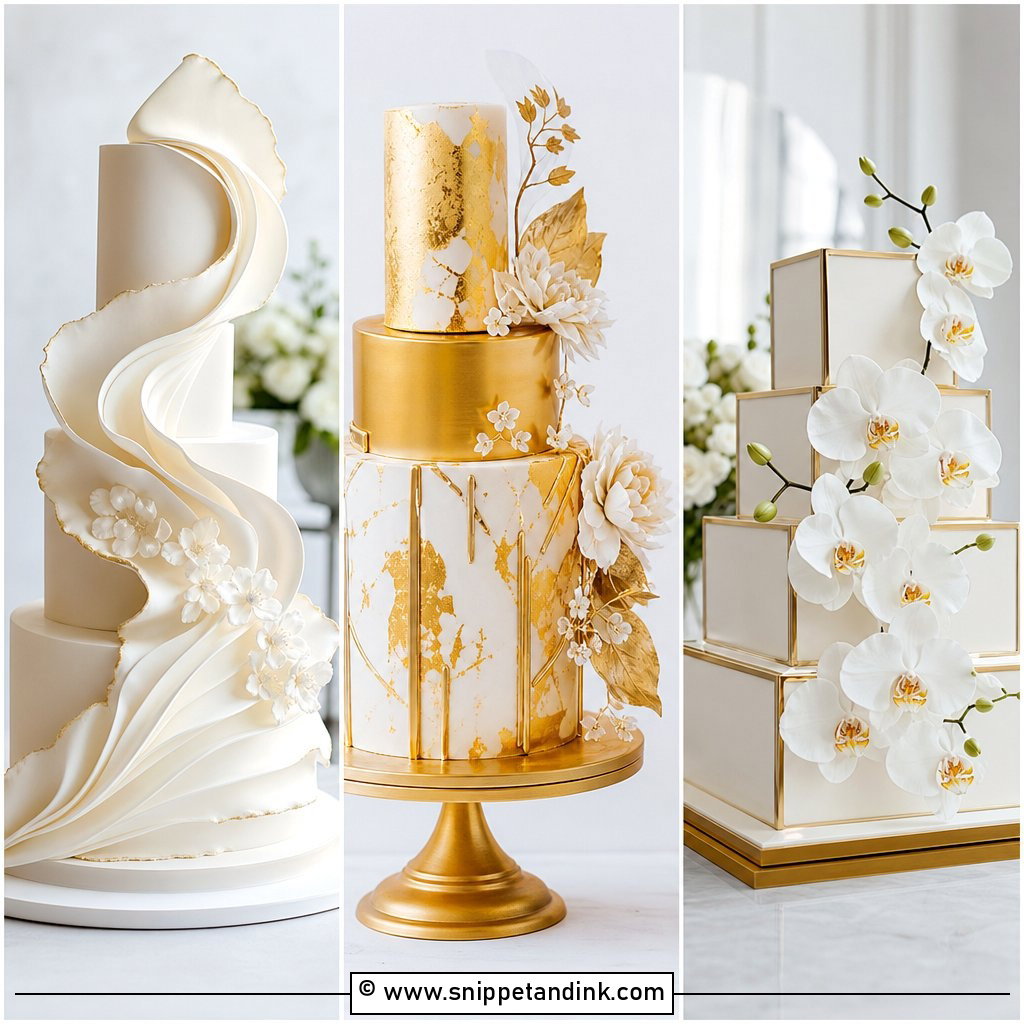
Flowers keep a gold cake from feeling cold. I’d use white roses, orchids, peonies or sugar flowers with gold-painted centers, and limit the gold to leaf edges, tier rims or a few petals so it reads as a highlight. Spring and summer suit it best, though creamy blooms under warm indoor light work all year. If you’d like the cake to echo your bouquet, ask your florist for a stem list and I’ll match it in sugar or coordinate fresh stems with them. Sugar is safer if the cake sits out in heat, since fresh petals wilt and brown at the edges.
3. White And Gold Marble Wedding Cake
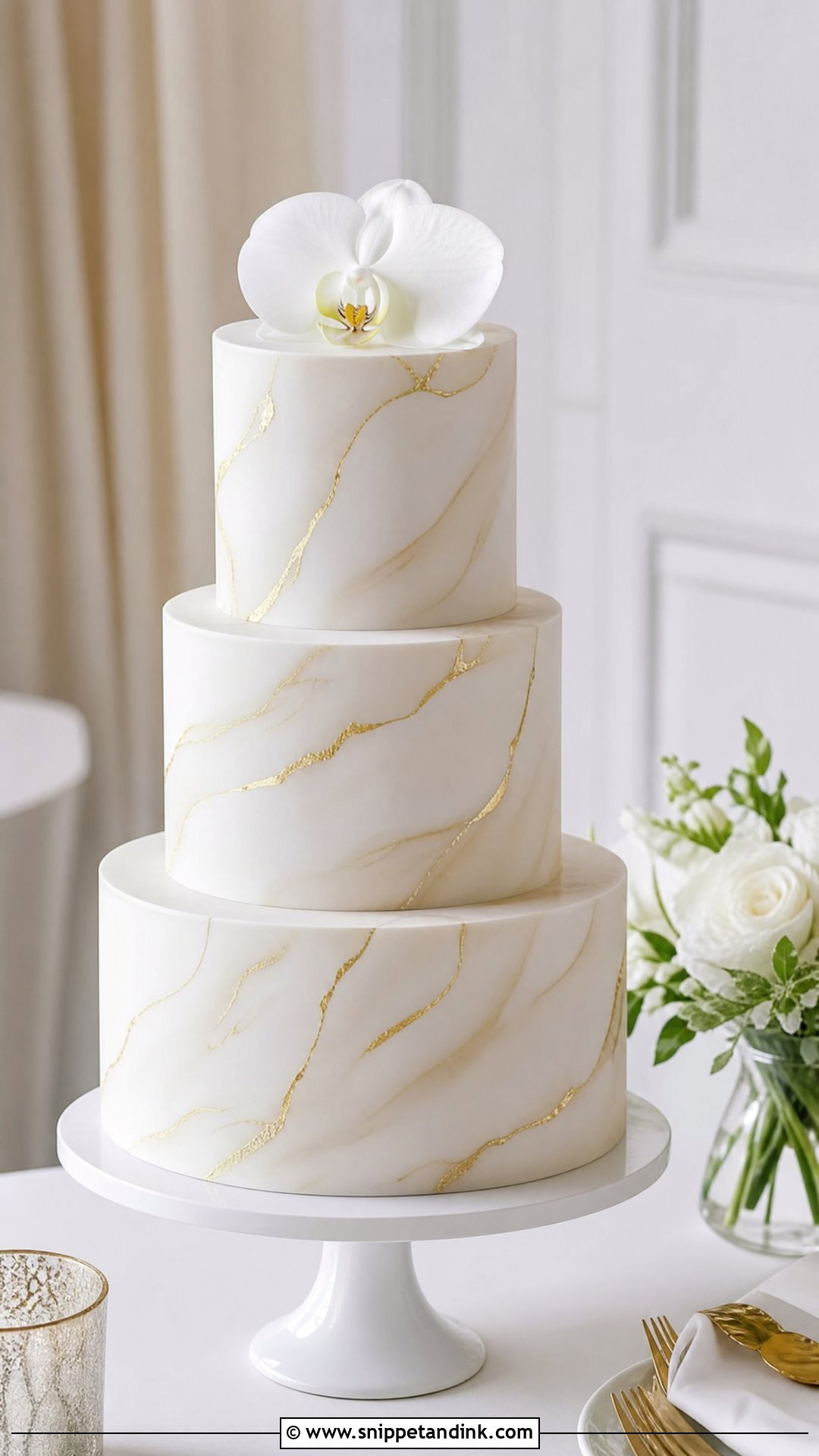
Marble gives the palette a modern edge. I swirl soft grey, ivory or champagne into white fondant, then paint fine gold veins along the natural lines of the swirl so they look like real stone rather than random squiggles. Fondant is the right surface for this; the veining needs a smooth, firm base. Keep the decoration to one floral cluster or a simple gold topper, because the pattern is already busy enough. Modern venues with neutral decor are where it fits.
4. White And Gold Drip Wedding Cake
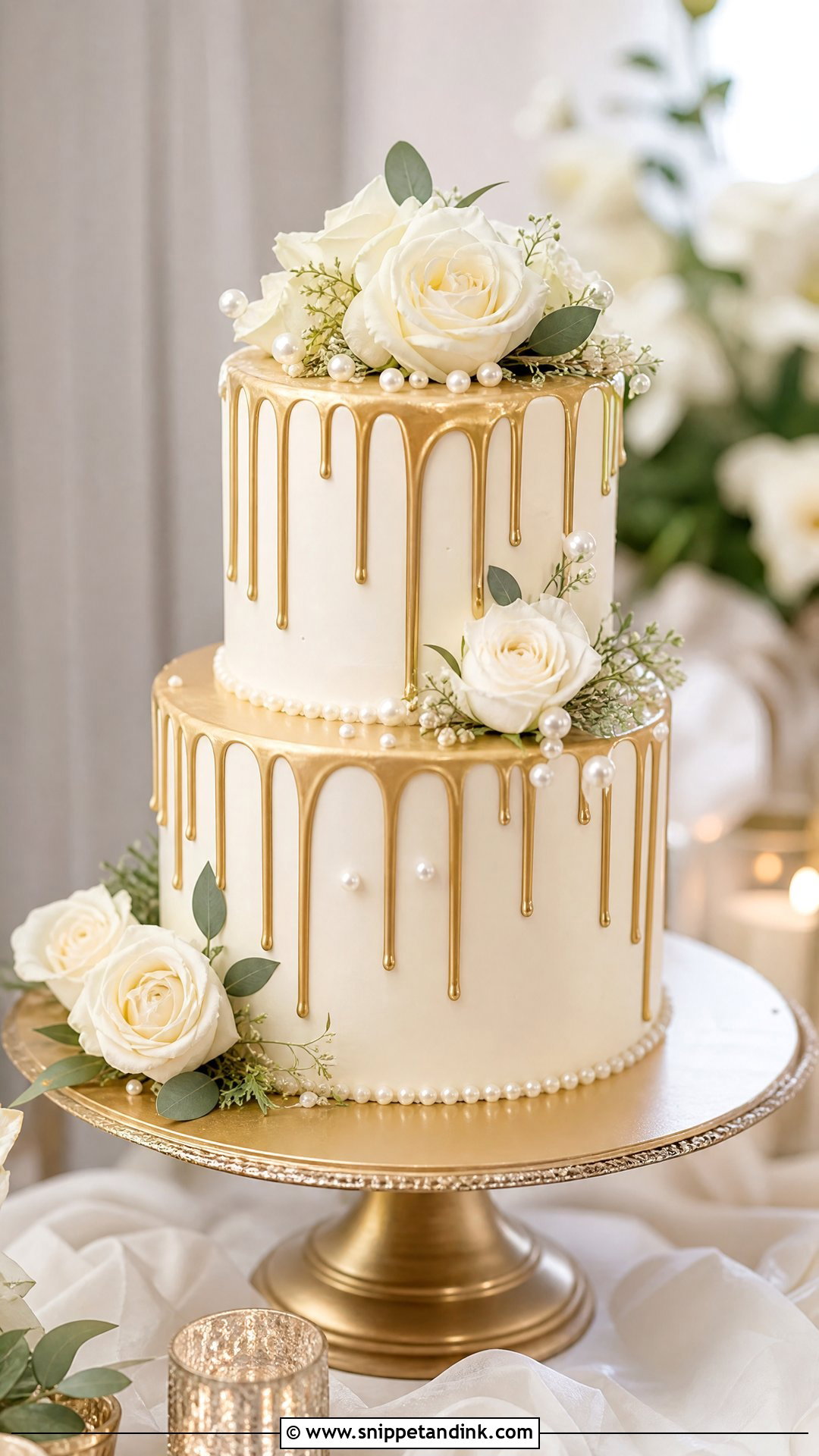
A gold drip starts as a white or pale ganache drip that I paint gold once it has set; pouring metallic directly doesn’t work. Soft champagne gold keeps it subtle, a bright metallic gives more impact. It suits smooth buttercream on two or three tiers. White flowers, macarons, pearls or gold leaf fill it out without breaking the palette. Painting each drip by hand takes time, and drips that are too long or uneven make it look sweet rather than luxe, so I keep them short and regularly spaced.
5. White And Gold Textured Buttercream Wedding Cake
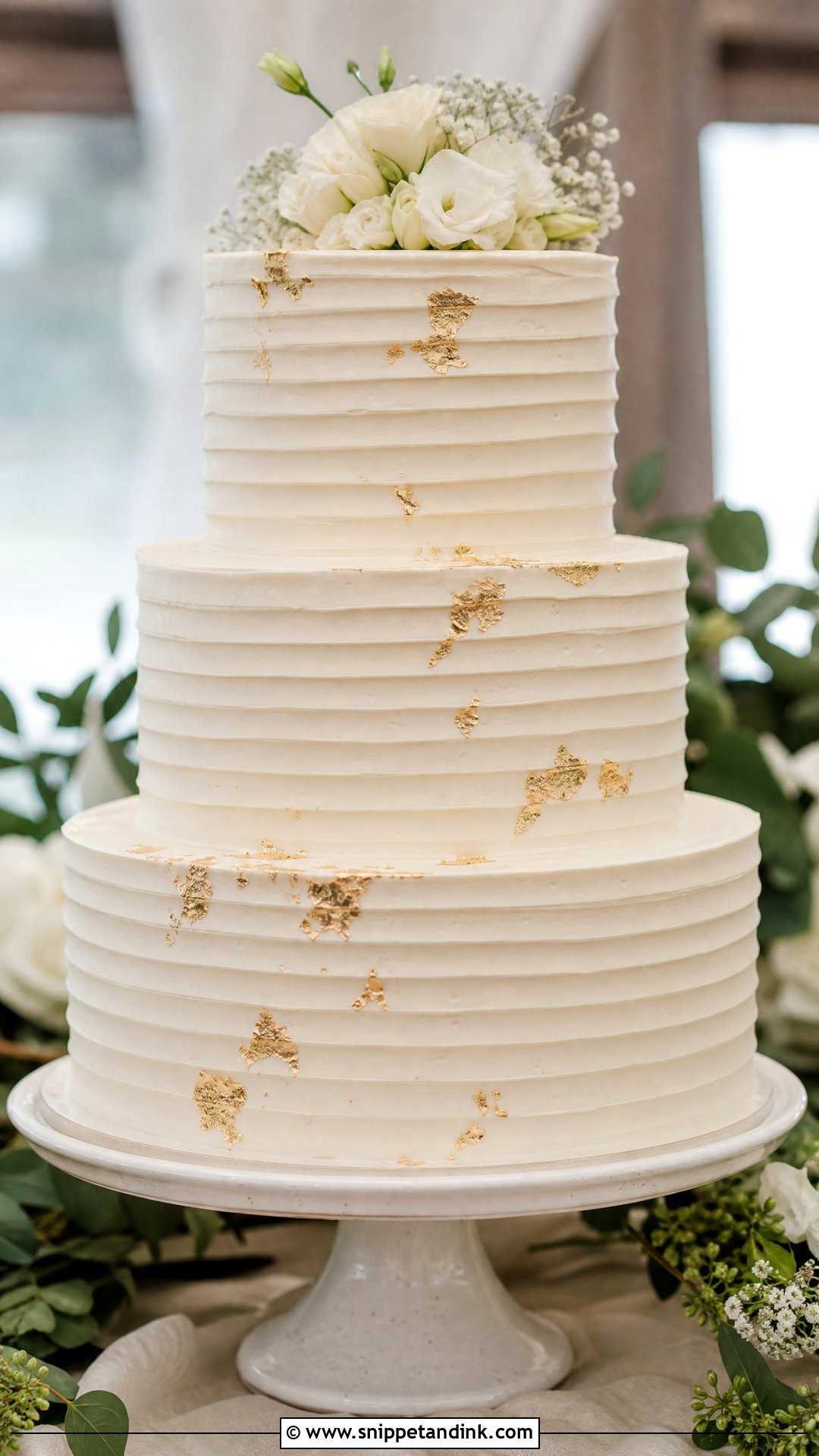
Textured buttercream feels relaxed and still wedding-ready. Horizontal ridges, soft waves, palette knife strokes or fine combed lines give the tiers movement. Gold placed only on the raised edges catches light differently as guests move around the table. The practical catch is that gold paint on buttercream only works once the surface is chilled and crusted, or the brush drags frosting with it. Garden venues, rustic spaces and modern receptions with a handmade feel suit it. Finish with a few white flowers or gold flakes.
6. White And Gold Fondant Wedding Cake
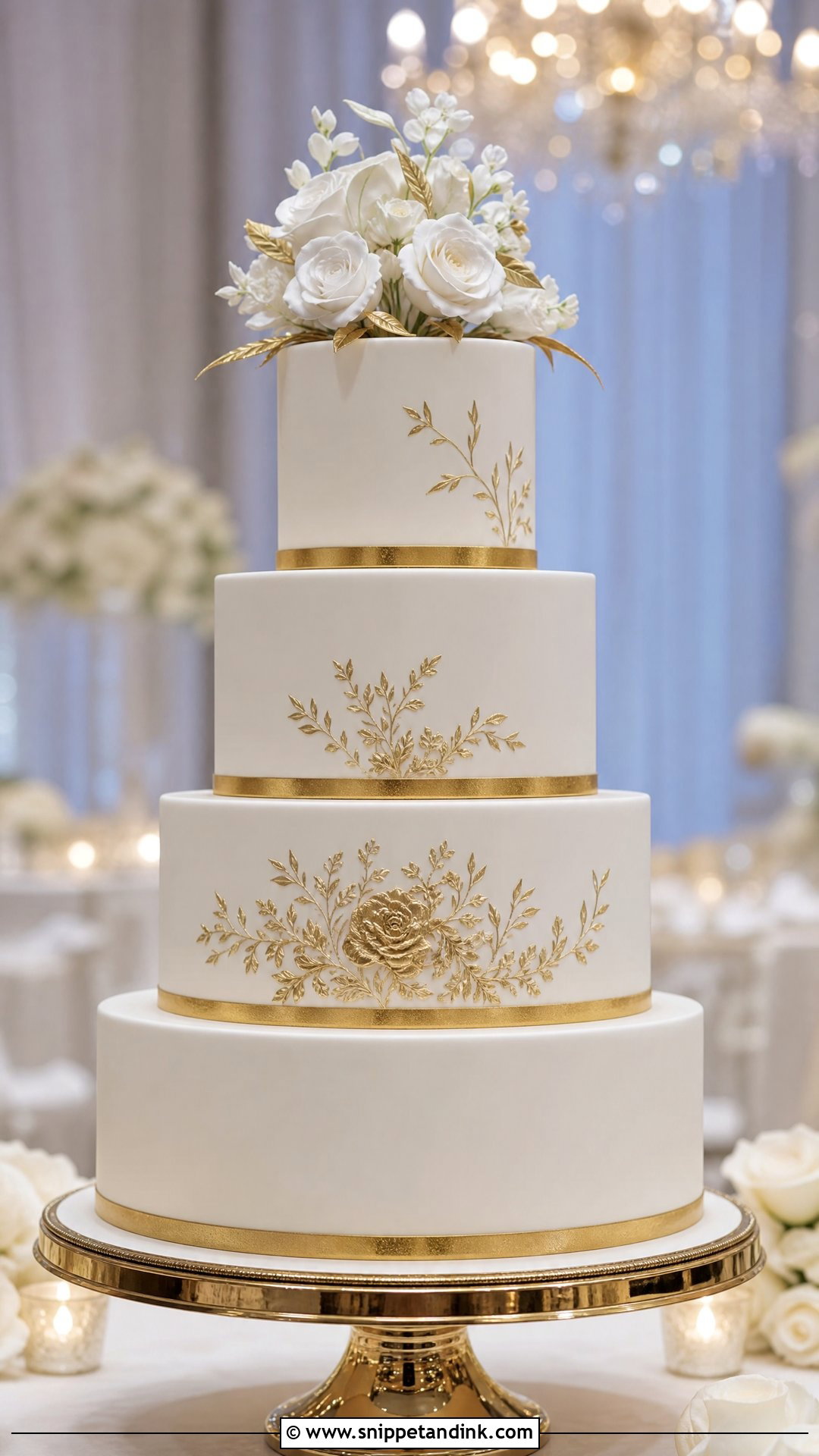
A white and gold fondant wedding cake is the most polished option. Fondant gives clean edges and a flawless surface, so gold bands, painted patterns, monograms, lace or metallic leaf all look sharp. For a grand look, three or four tiers with one fully gold focal tier. That gold tier is usually hand-painted in several thin coats, since one heavy coat streaks. White sugar flowers or pearl piping soften it. Formal weddings suit it, and it can stay simple or carry a lot of detail.
7. White And Gold Vintage Wedding Cake
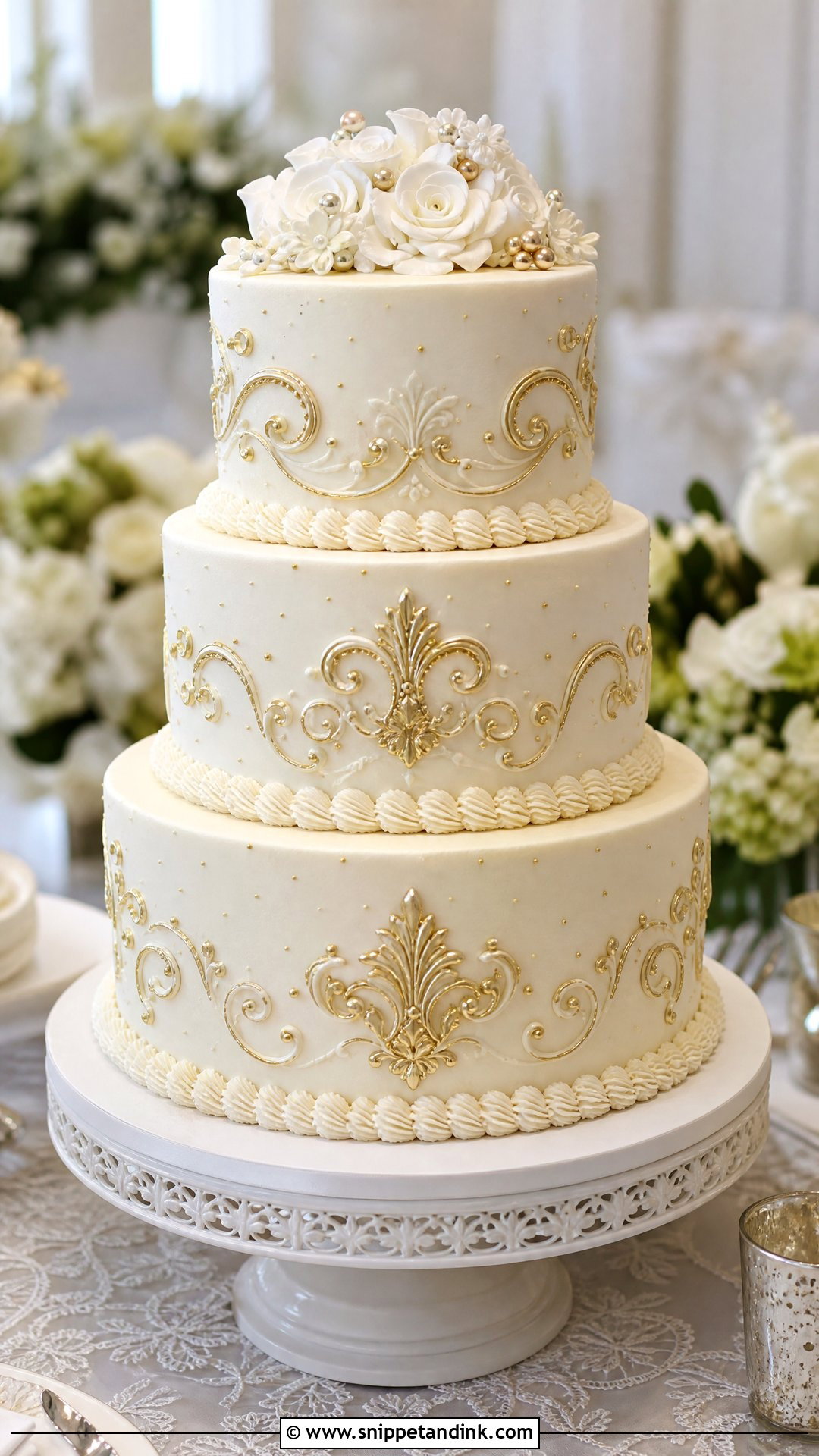
Vintage gold brings back ornate piping: shell borders, swags, scrollwork. I pipe everything in white and let it dry, then brush gold dust onto only the raised edges so the shimmer follows the piping. That gives depth that full gold piping never does. Couples who love heirloom jewelry, lace gowns and candlelit receptions are drawn to it. Symmetry is what makes it read as vintage, not fussy. Pearls or small sugar flowers add more detail if you want it.
8. White And Gold Minimalist Wedding Cake
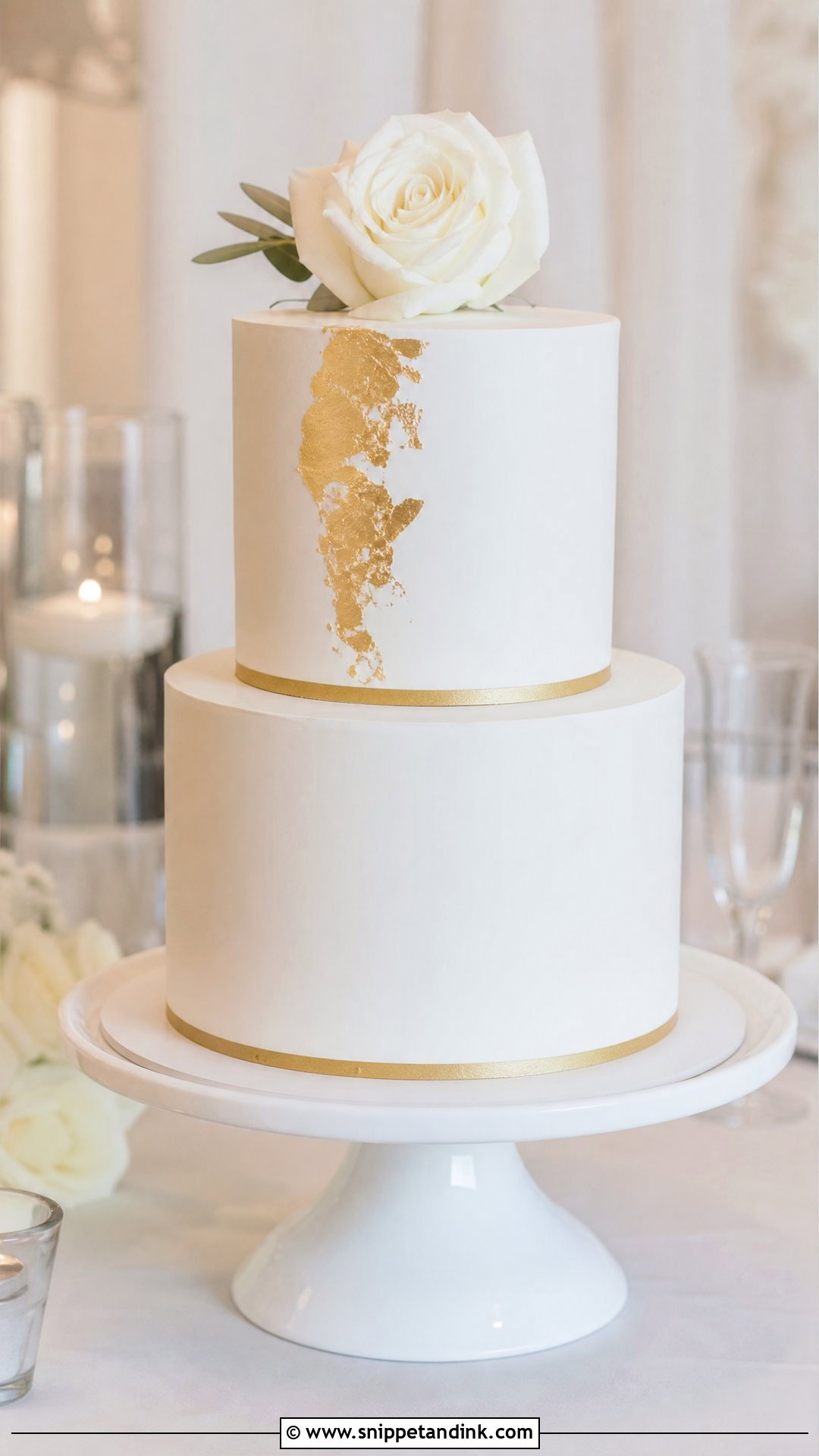
Minimalist cakes leave nowhere to hide, so the finish has to be perfect. Smooth white buttercream or fondant and one or two gold touches: a thin rim, a small gold leaf cluster or a clean line around each tier. Sharp top edges and straight sides matter more here than on any other style. Small receptions and couples who dislike fussy desserts suit it. I’d skip flowers or keep them to a single stem. The effect is calm and expensive-looking.
9. White And Gold Geometric Wedding Cake
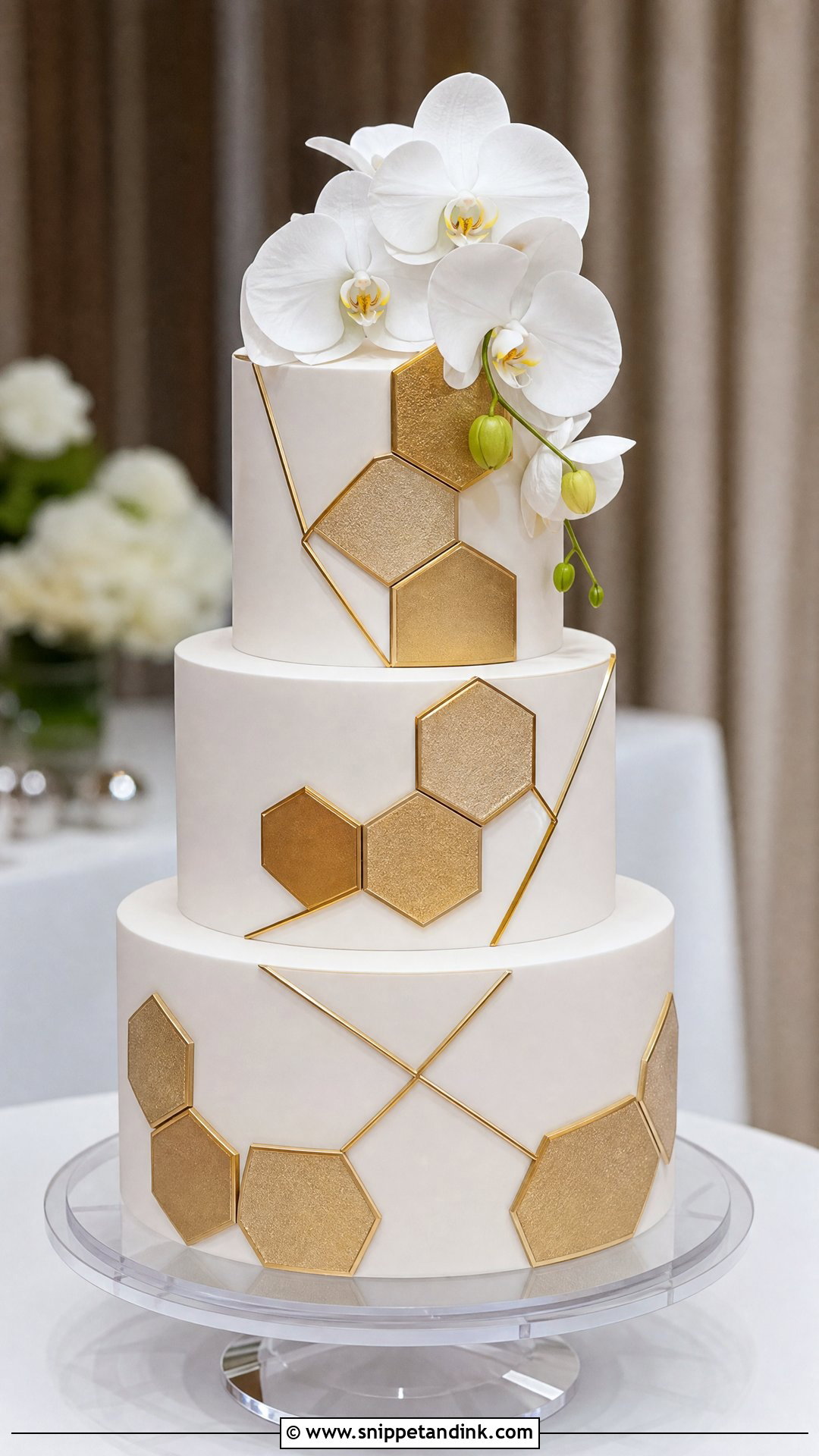
Geometric gold makes a white cake look modern and bold. Hexagons, angled lines, square tier accents or metallic panels give it structure. I cut the shapes from thin fondant or gum paste using templates, paint them gold off the cake and apply them once dry, which keeps the lines crisp. City weddings, galleries and sleek venues suit it. Ask for clean lines and very little extra color. A few white orchids or a single sugar flower soften the edges.
10. White And Gold Lace Wedding Cake
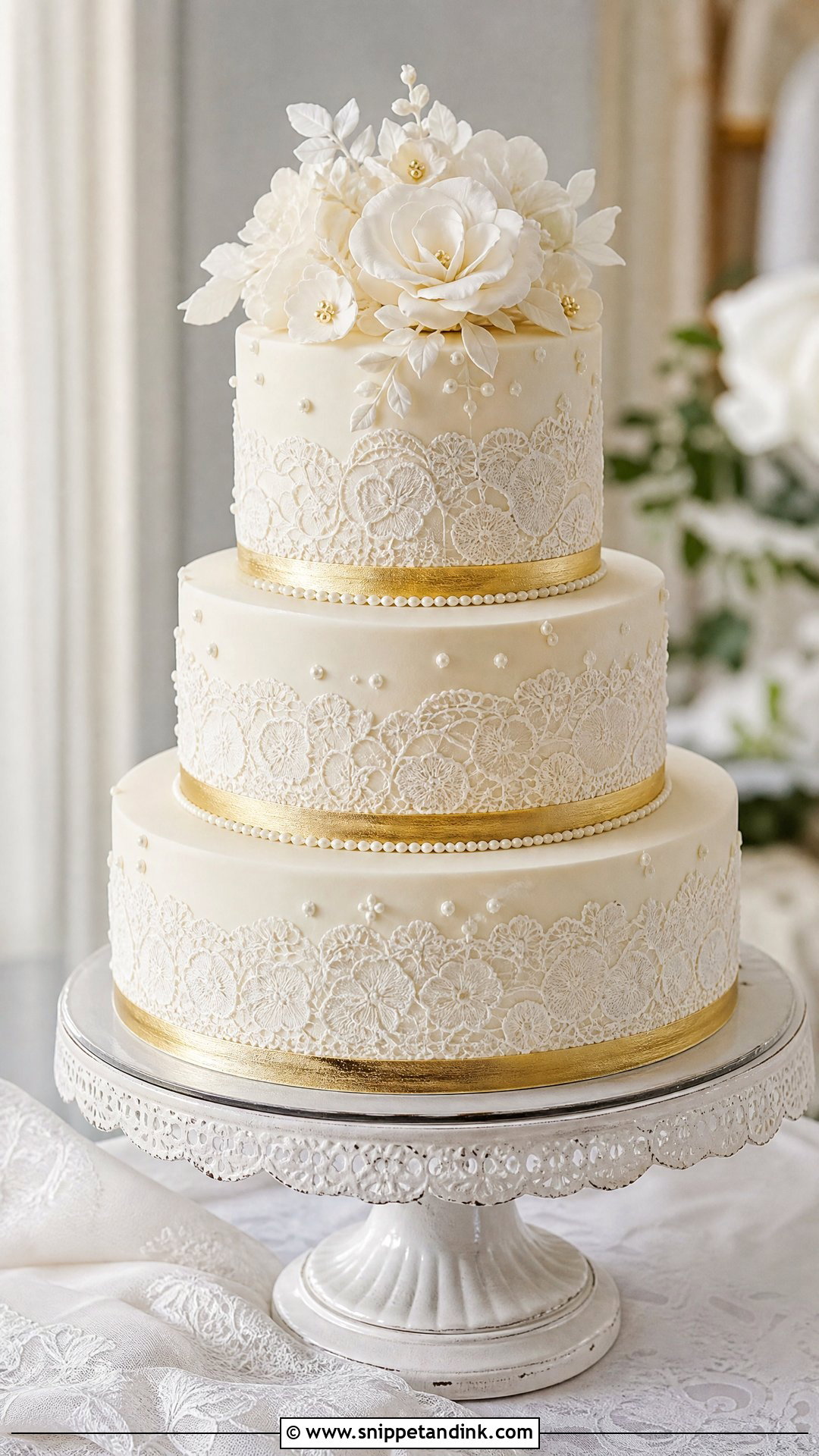
Lace on a gold cake pairs naturally with lace gowns and long veils. It can be fondant appliques, royal icing or piped buttercream, with gold brushed lightly over the texture or used as a border between tiers. Detailed but not crowded is the balance I aim for. If your dress has lace, bring a close-up photo or a spare fabric scrap to your tasting; I can echo the motif so the cake and gown share a pattern. Soft white florals or pearls complete it.
11. White And Gold Tall Tier Wedding Cake
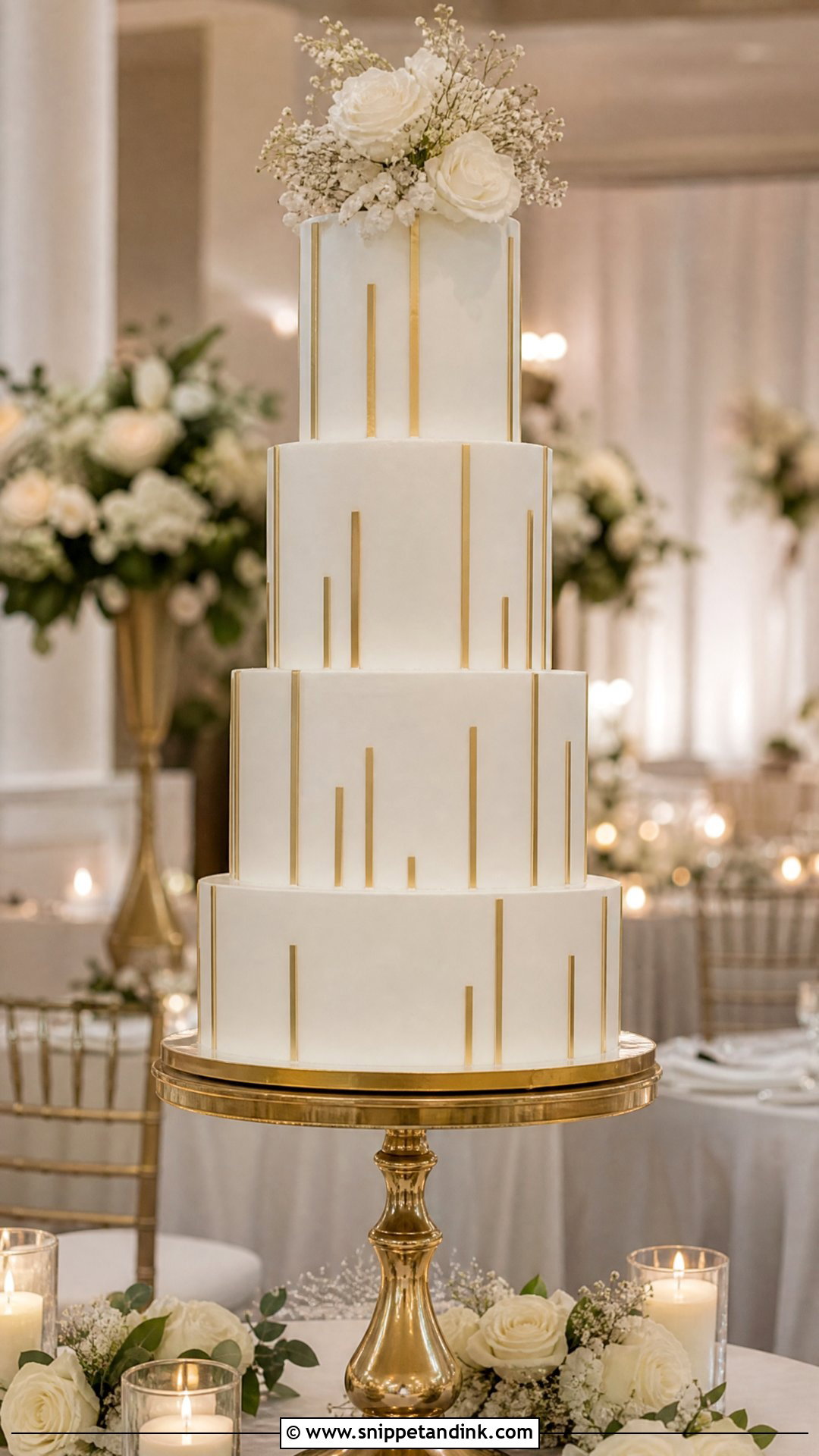
Tall tiers give drama without heavy decoration. Slim, extended tiers, sometimes double-height, look grand in high-ceiling ballrooms and at large formal dinners. Extra height means extra internal support, so double-barrel tiers get their own board and dowels halfway up. Gold bands, vertical lines or scattered leaf accents draw the eye upward. Because the shape already does a lot, I keep the surface clean, with a small floral cascade or a gold monogram at most.
12. White And Gold Floral Cascade Wedding Cake
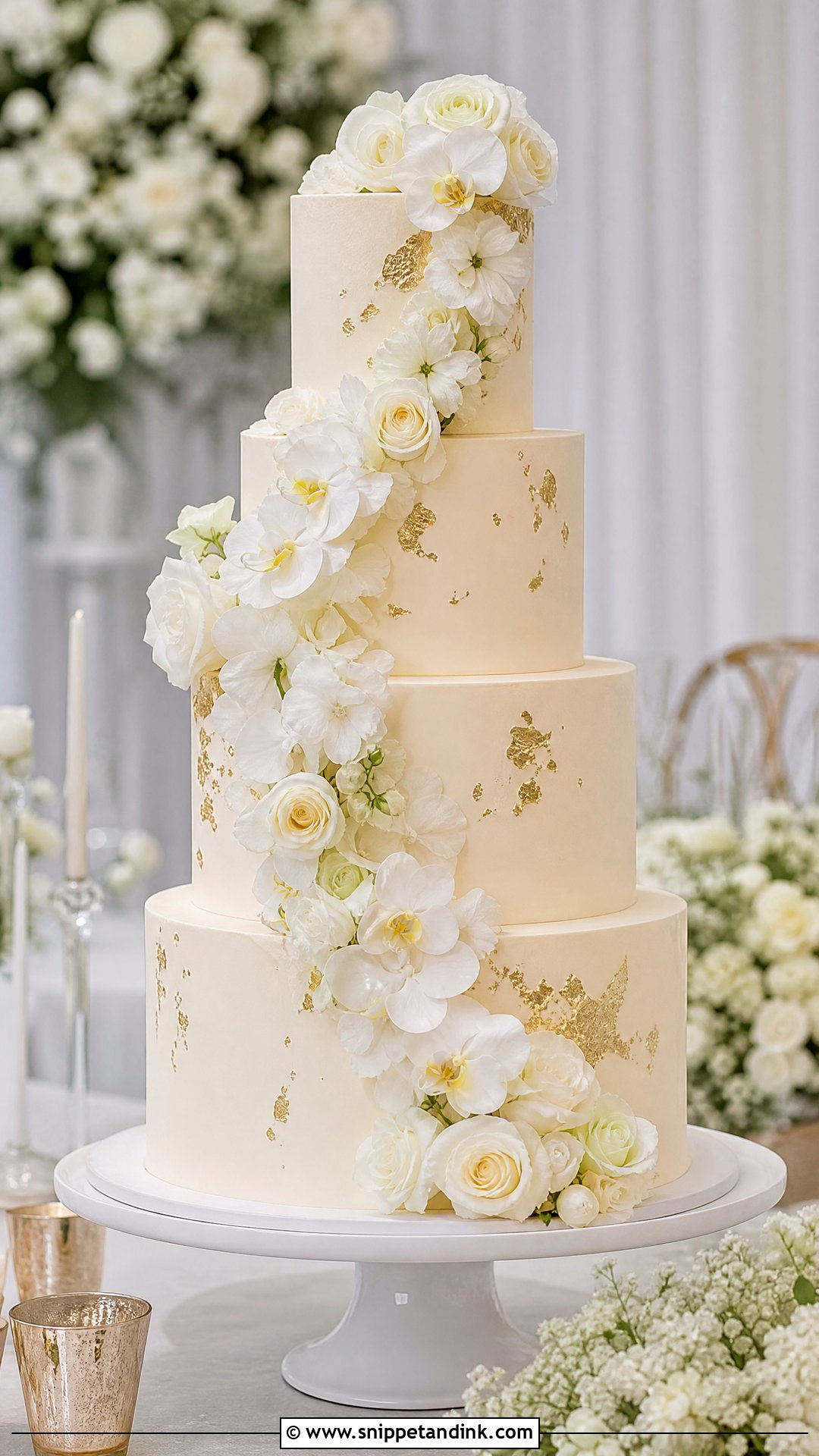
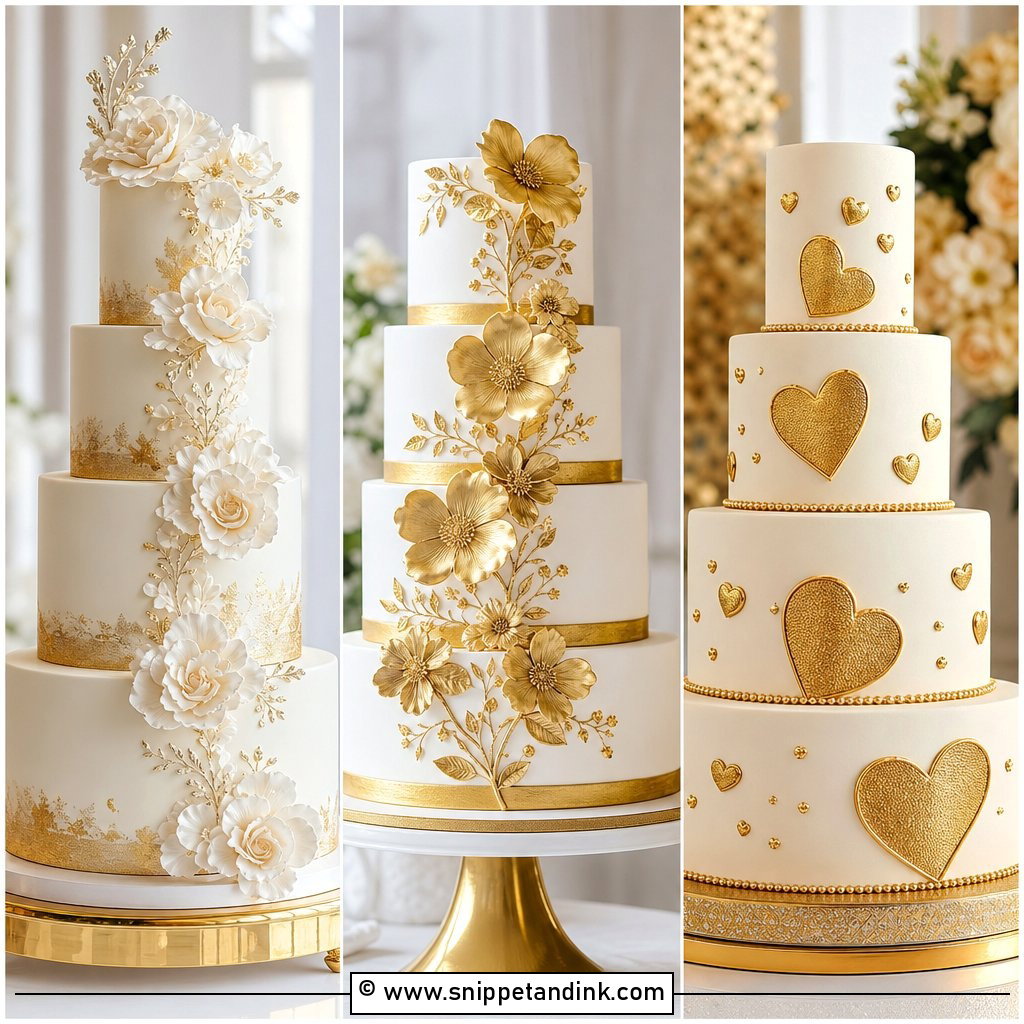
A cascade brings movement. Flowers flow from the top tier down one side in a soft diagonal. White roses, ranunculus, orchids and sugar blossoms all suit gold accents like gold leaves or painted centers. Keep the cascade full but controlled so plenty of white shows; when flowers cover most of the cake, the gold disappears. Romantic weddings, gardens and elegant indoor receptions suit it. With fresh flowers I coordinate with the florist so stems are wrapped and food-safe before they go in.
13. White And Gold Ruffle Wedding Cake
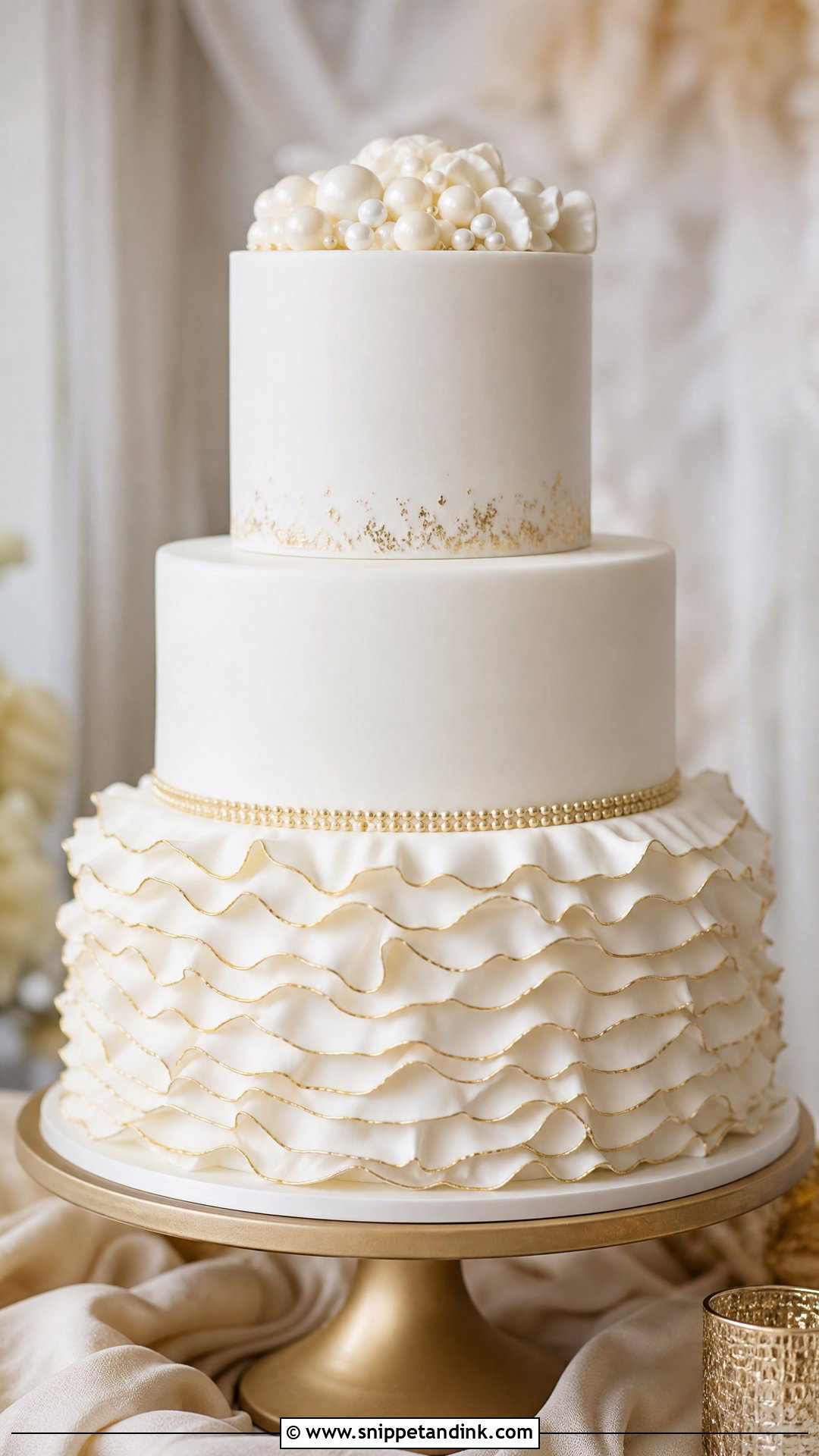
Ruffles add softness and texture. They can cover one tier as a focal point or the whole cake for drama. Gold works best as a thin line on the very edge of each ruffle or a soft shimmer, since gold across the whole ruffle looks heavy. Buttercream ruffles feel relaxed and hold up better in warm rooms; fondant ruffles look sculpted and need time to set. Modern or vintage, it depends on the ruffle shape. Flowing gowns and elegant florals pair well.
14. White And Gold Square Wedding Cake
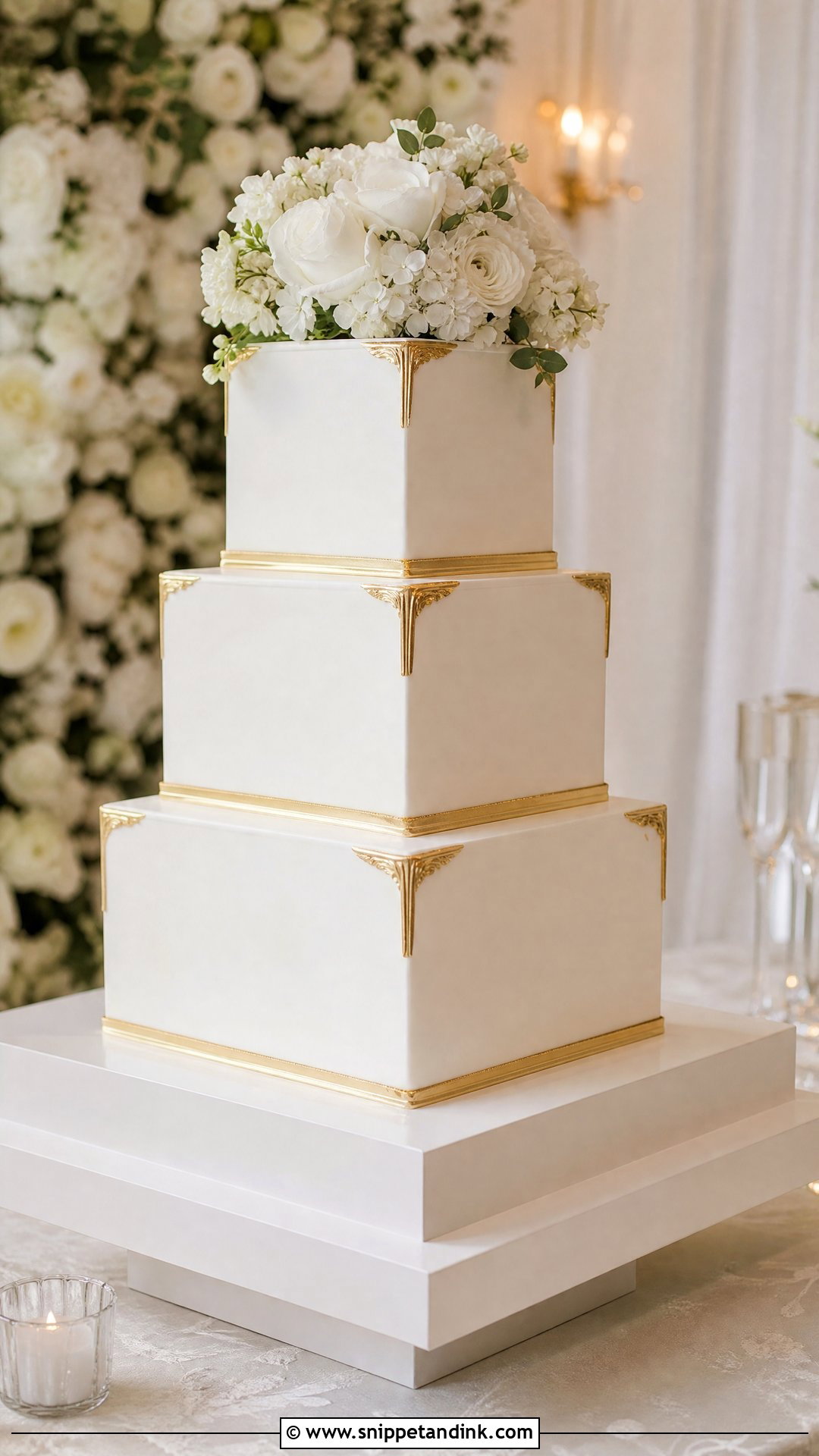
Square tiers swap the usual round shape for crisp corners and an architectural outline, with gold warming it up. Gold trim on the edges, corner accents or painted side panels suit square cakes especially well. I’d choose fondant for crisp lines; square buttercream is possible but the corners are hard to keep sharp, especially in heat. Flowers or pearls make it romantic. It looks good from front and side, which matters if the table is in the middle of the room.

15. White And Gold Monogram Wedding Cake
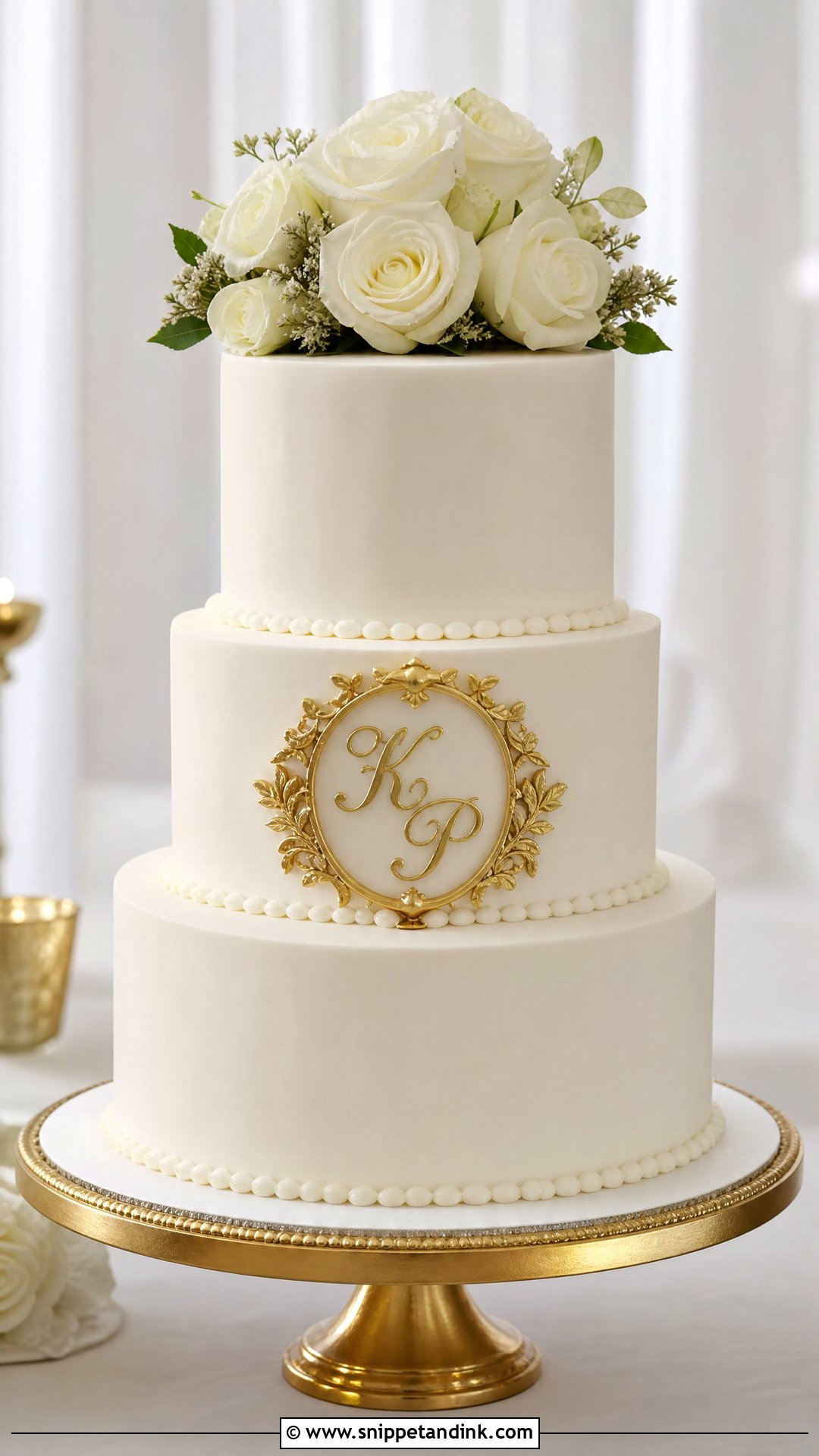
A monogram makes a traditional cake personal. Initials painted in gold, set on a fondant plaque or used as a topper. On smooth white tiers the monogram becomes the focal point, and gold borders, pearl dots or subtle flowers complete it. Formal weddings suit this one. Readable lettering matters more than ornate lettering; very thin script disappears from a few feet away. I trace it from your stationery so it matches the invitations.
16. White And Gold Leaf Wedding Cake
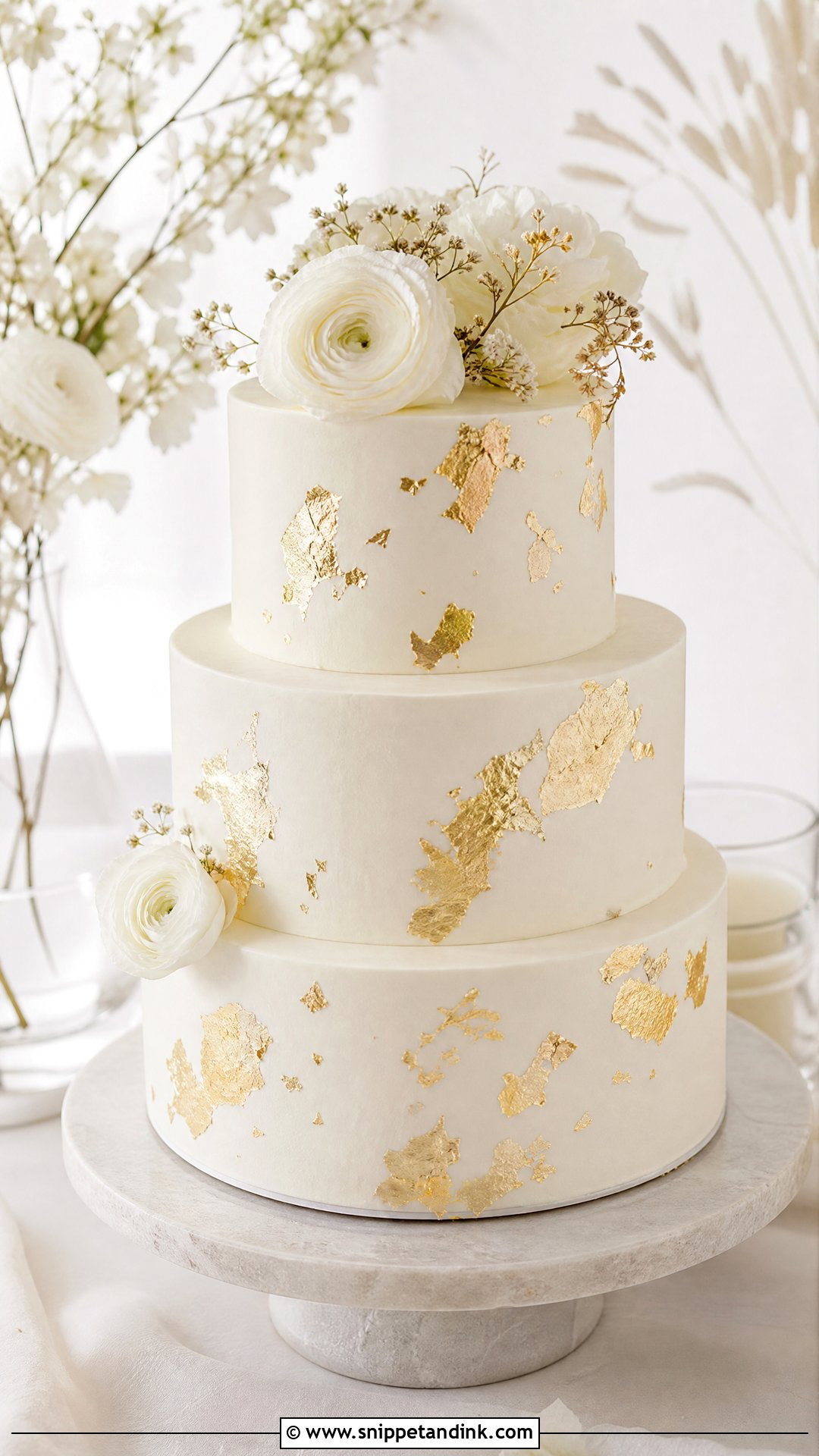
Gold leaf looks artistic and slightly organic. It can be scattered across the tiers, placed around the edges or laid in larger patches. The uneven, broken texture is part of its character, so I don’t try to make it symmetrical. Leaf is extremely thin and sticks to anything, including fingers, so it’s applied with tweezers or a dry brush onto a slightly tacky surface. It suits buttercream or fondant with white flowers, greenery or minimal styling, and gives shimmer without metallic paint.
17. White And Gold Two Tier Wedding Cake
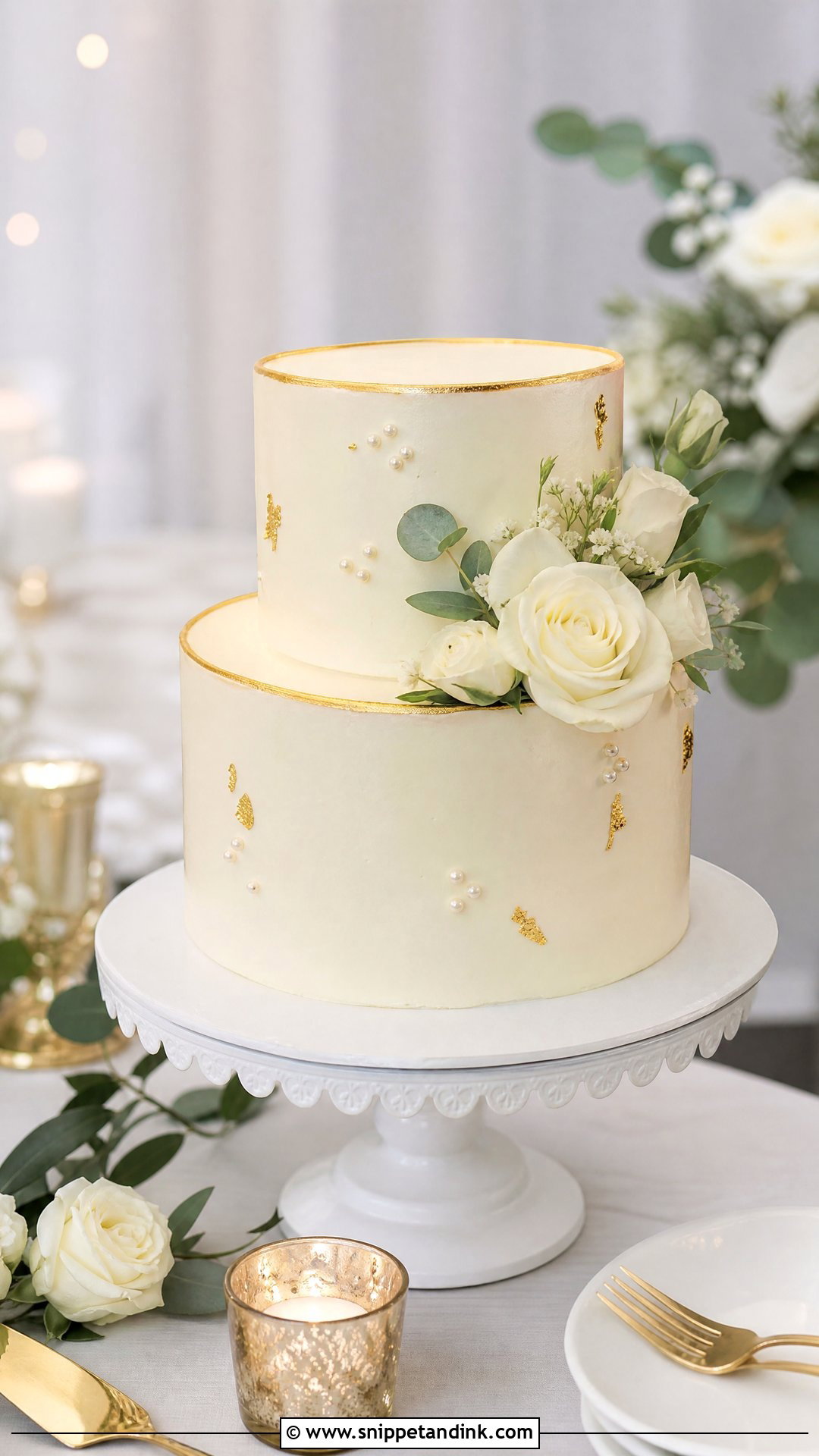
Two tiers suit smaller weddings, courthouse celebrations, micro weddings and dessert tables. Careful details make it feel special: a gold rim, a pearl border, a floral cluster or a small leaf accent. A two-tier cake is easier to style with a good stand, candles and soft fabric. Proportion is the thing I’d check. A small top tier on a much wider base looks squat, so I keep tier sizes a few inches apart and add height with the stand rather than a third tier.
18. White And Gold Four Tier Wedding Cake
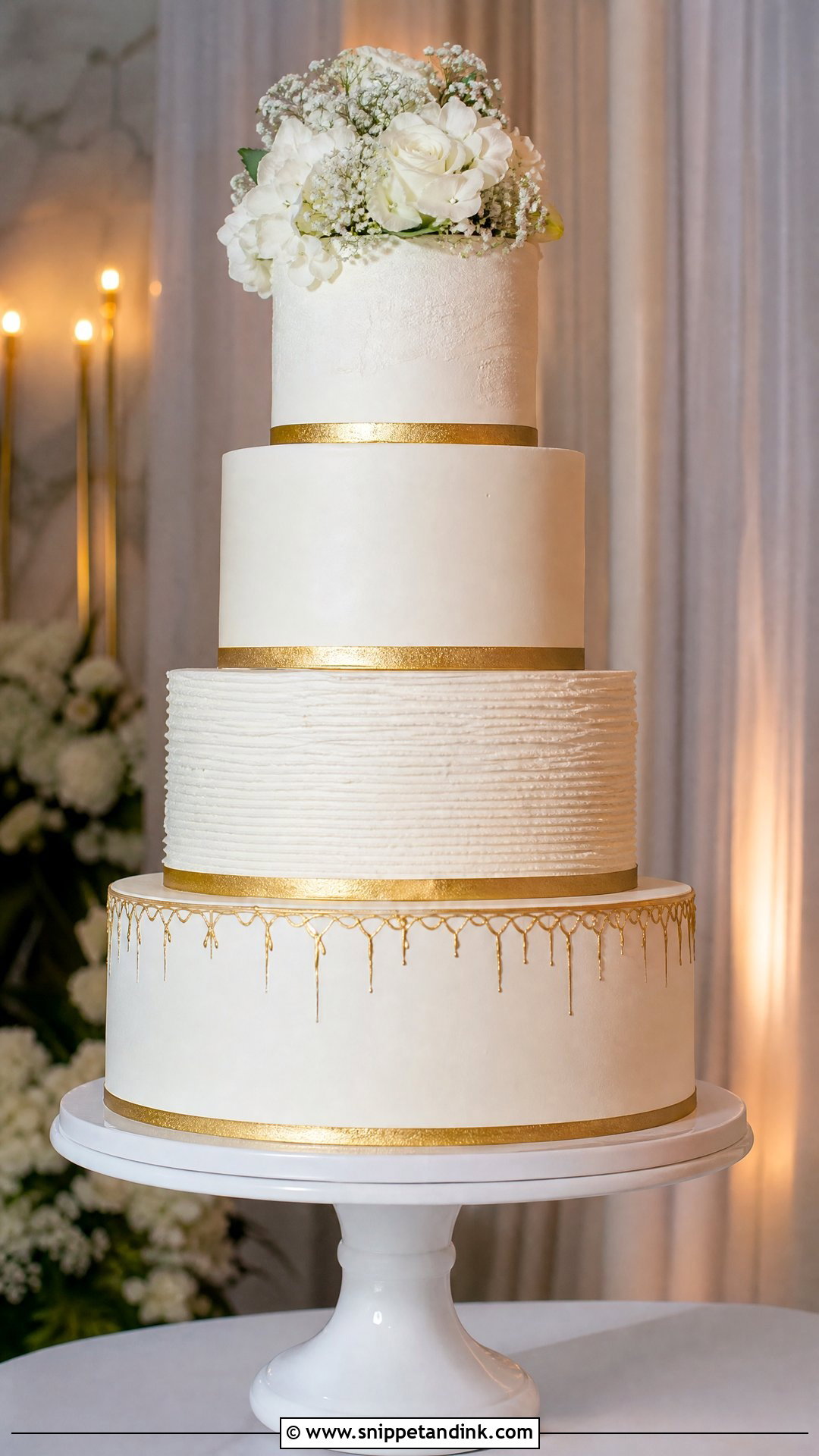
A white and gold four tier wedding cake is the formal choice for a larger celebration. With four tiers you can mix finishes inside one palette: smooth white fondant, one textured tier, gold trim and a floral accent. Each tier should have a role so the cake doesn’t look crowded. Four tiers are heavy, so they travel in sections and get stacked at the venue. On a tall stand in a softly lit room, it gives guests the traditional cake moment and is visible from every table.
19. White And Gold Sugar Flower Wedding Cake
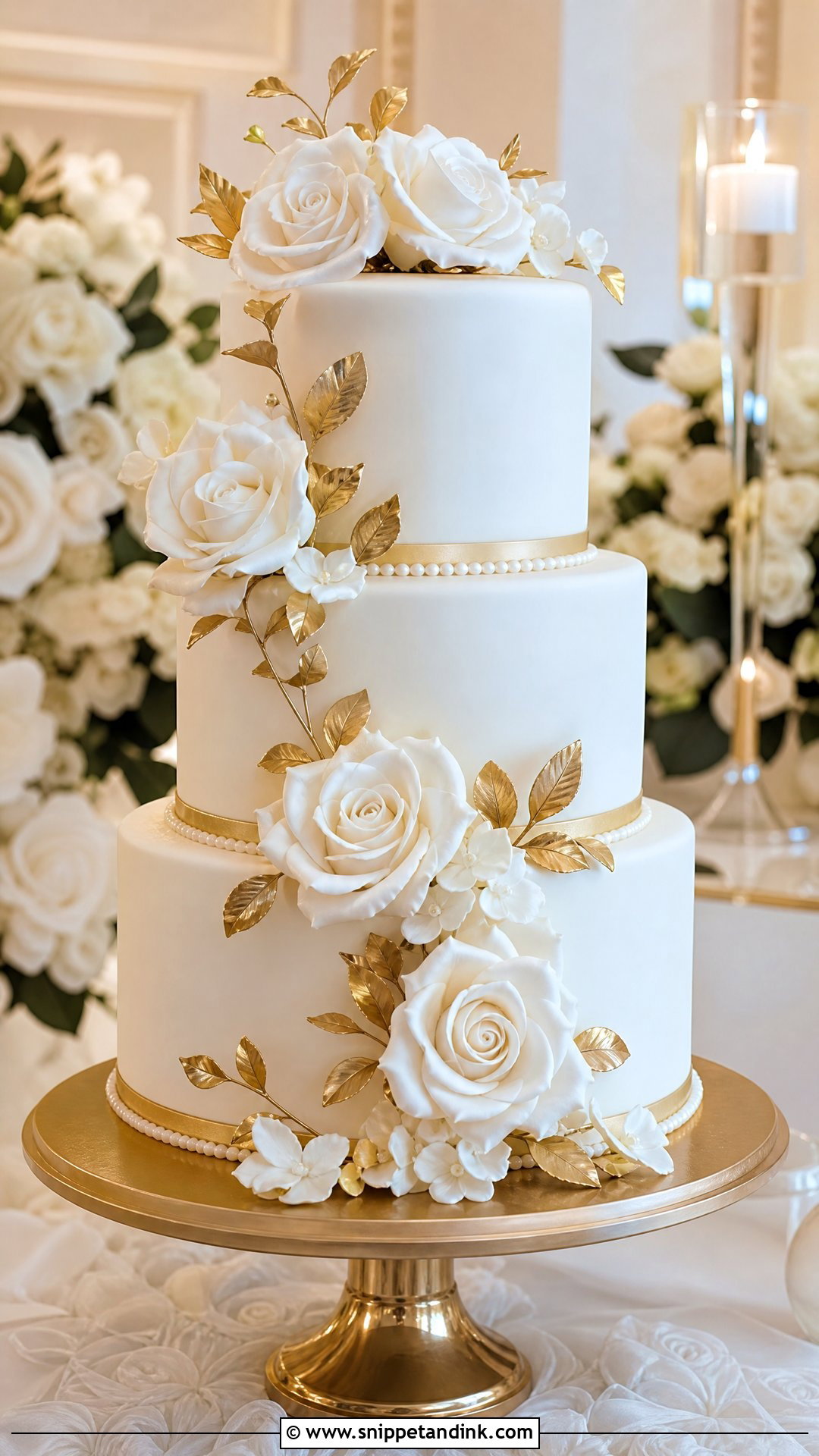
Sugar flowers give a gold cake its most polished floral finish. Unlike fresh flowers, they can be shaped, colored and placed exactly where the design needs them. White sugar roses, orchids, peonies or blossoms look right with gold-painted leaves or centers. They don’t wilt in heat, though they are fragile and slow to make, which is reflected in the quote. Keep the base clean so the flowers lead. Sugar flowers also make a keepsake, since they last for years stored dry and out of sunlight.


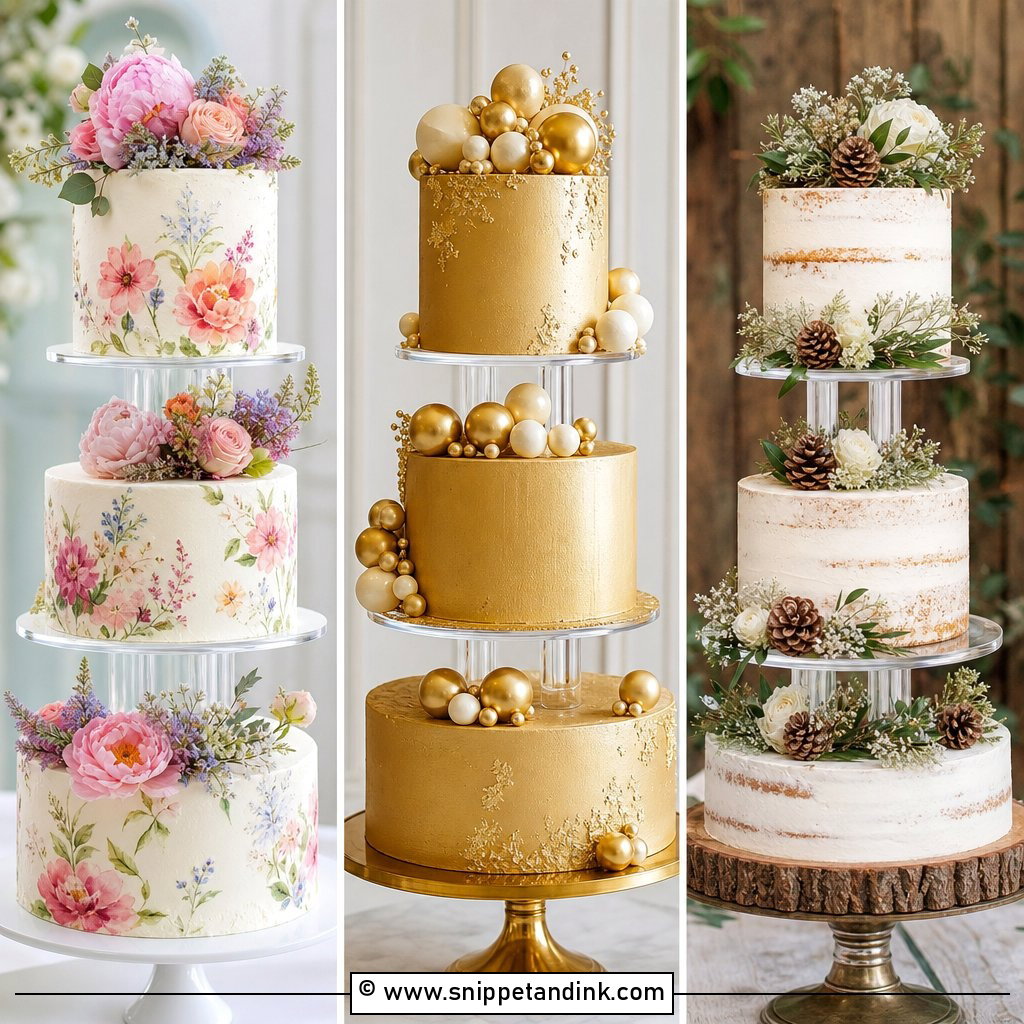
20. White And Gold Champagne Wedding Cake
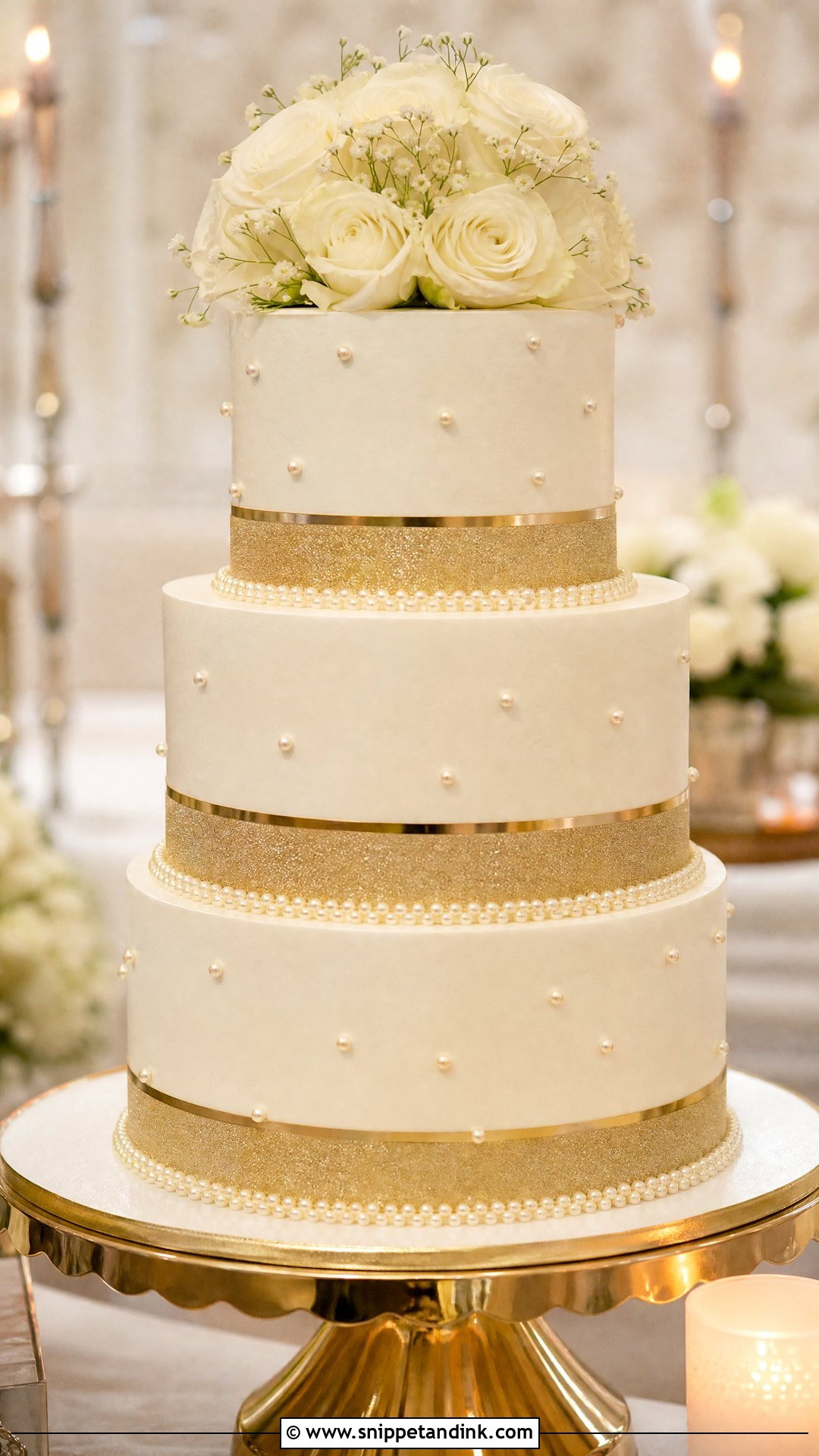
Champagne gold is softer and warmer than yellow gold, which is why I like it for evening receptions. Ivory-white frosting with champagne-gold details, a soft shimmer and pearl or floral accents. Gold bands, brushed metallic texture or one shimmering tier look festive while staying tasteful. It suits hotel ballrooms and formal dinners, especially under warm lighting where yellow gold can look brassy. White flowers, a clear stand or gold table decor tie the display together.
Yellow, Champagne or Rose Gold Next to Your Table Decor
Gold is not one color. Yellow gold is warm and bright, champagne is paler and softer, and rose gold leans pink. On a cake, each reads differently depending on what surrounds it.
I ask couples to bring one physical gold item from the reception to the tasting: a charger plate, a piece of cutlery, an invitation with gold foil. Matching to an object takes the guessing out. A bright yellow cake beside champagne chargers looks like a mistake, even though both are technically gold.
How the room lighting changes it
Warm candlelight makes yellow gold look deeper and champagne look almost ivory. Cool daylight does the opposite. If your reception starts in daylight and runs into candlelight, champagne holds its look across both better than yellow gold. Under a direct camera flash, metallic paint can flare white in spots, so I keep large flat gold areas to a minimum on cakes that will be photographed close up.
A Little Gold Goes Further Than You Think
White and gold cakes stay popular because they fit almost every wedding. Pearls and flowers make the palette soft, marble or geometry make it modern, ruffles make it romantic, tall tiers and trim make it formal. My advice is to pick one strong direction rather than adding every detail at once. Look at your venue, dress, flowers and table decor first. A plain white cake with a little careful gold can feel just as luxurious as a tall centerpiece, and with the right balance this pairing always looks elegant.
You'll Like These Ideas:









Leave a Reply