
Sizing a wedding cake looks like simple arithmetic until the guest count, the tier heights, the way the venue cuts and the size of the room all pull in different directions. Too small and the cake looks lost in a ballroom; too big and you’ve paid for slices that go in the bin. Most bakers, me included, size cakes on wedding portions, which are much narrower than a birthday slice because cake usually comes after a full dinner. The setups below are realistic starting points by guest count and serving style. Your own baker’s chart will vary a little, and their numbers are the ones to trust.
The Slice Every Serving Chart Assumes
Most bakers’ charts are built on a wedding portion of about one inch wide, two inches deep and four inches tall. That’s the height of a standard tier of two or three cake layers with filling. A party or dessert slice is roughly half as wide again, which is why the same tier feeds fewer people at a birthday.
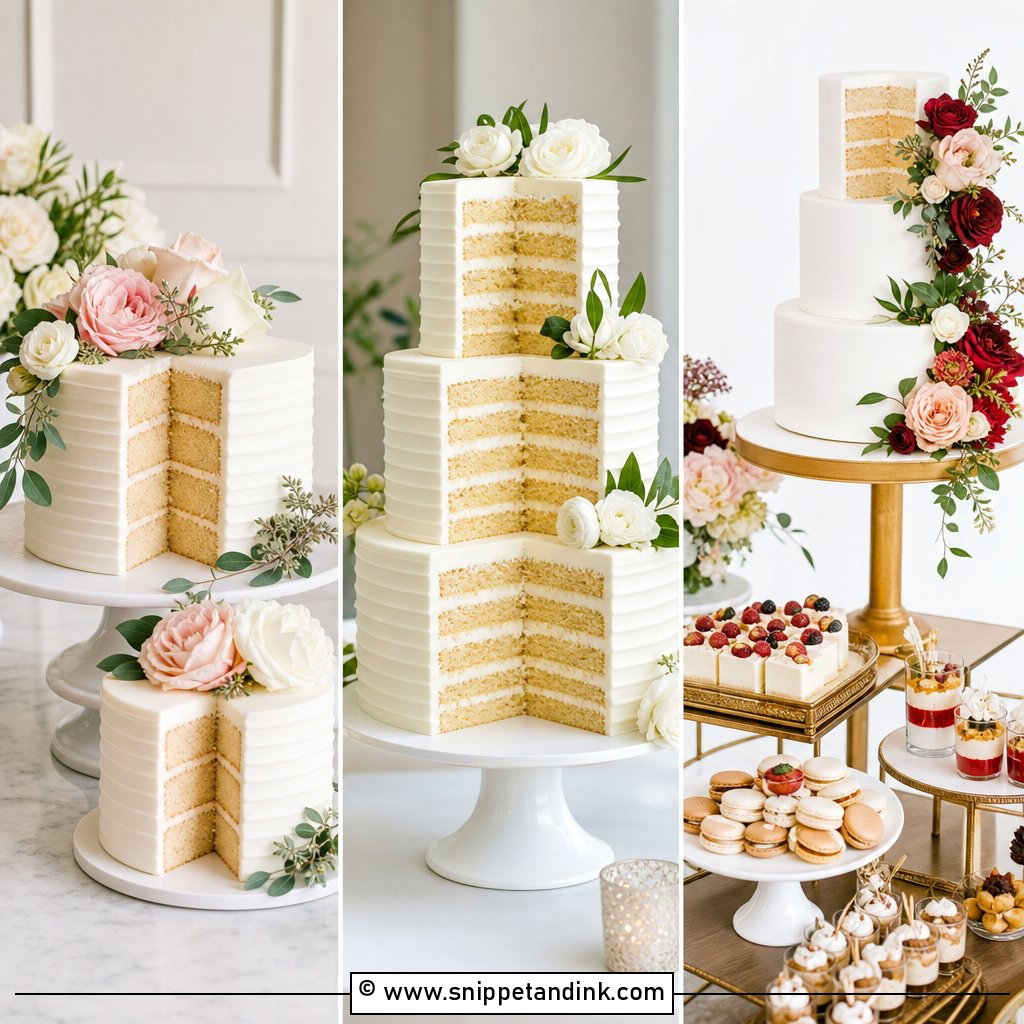
Those charts only work if the cake is cut the way they assume. A round tier isn’t cut in wedges like a pie.
- Cut a circle about two inches in from the outer edge.
- Slice the outer ring into one-inch pieces.
- Cut the next circle two inches further in and repeat until the small center is left, which is cut into portions.
- Square tiers are simpler: cut straight across two inches in, then slice that strip into one-inch pieces.
Caterers who cut wedges get far fewer pieces, and that’s how a correctly sized cake runs out. Share the cutting method with whoever is cutting.
1. One Tier Wedding Cake For 20 Guests
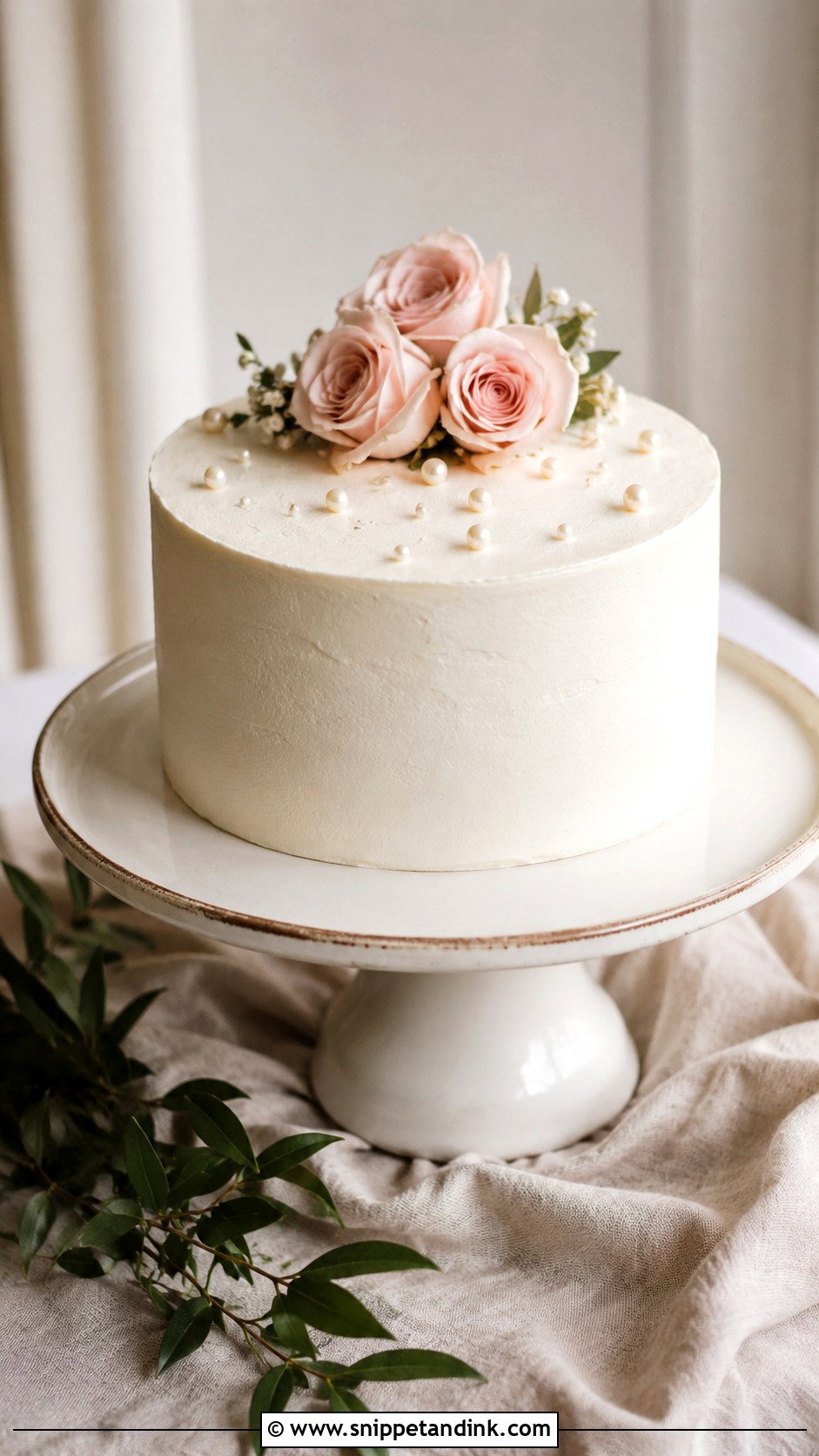
For twenty guests, an 8-inch round with standard four-inch-tall layers gives roughly two dozen wedding portions, so there’s a small cushion. I like this size for courthouse dinners and backyard ceremonies because one person can carry it and it fits on any table. Heavy decoration overwhelms a single tier quickly, so a smooth finish and a small cluster of flowers is usually enough. If it’s the only dessert and your family eats generously, ask for a taller tier rather than a wider one.
2. One Tier Wedding Cake For 30 Guests
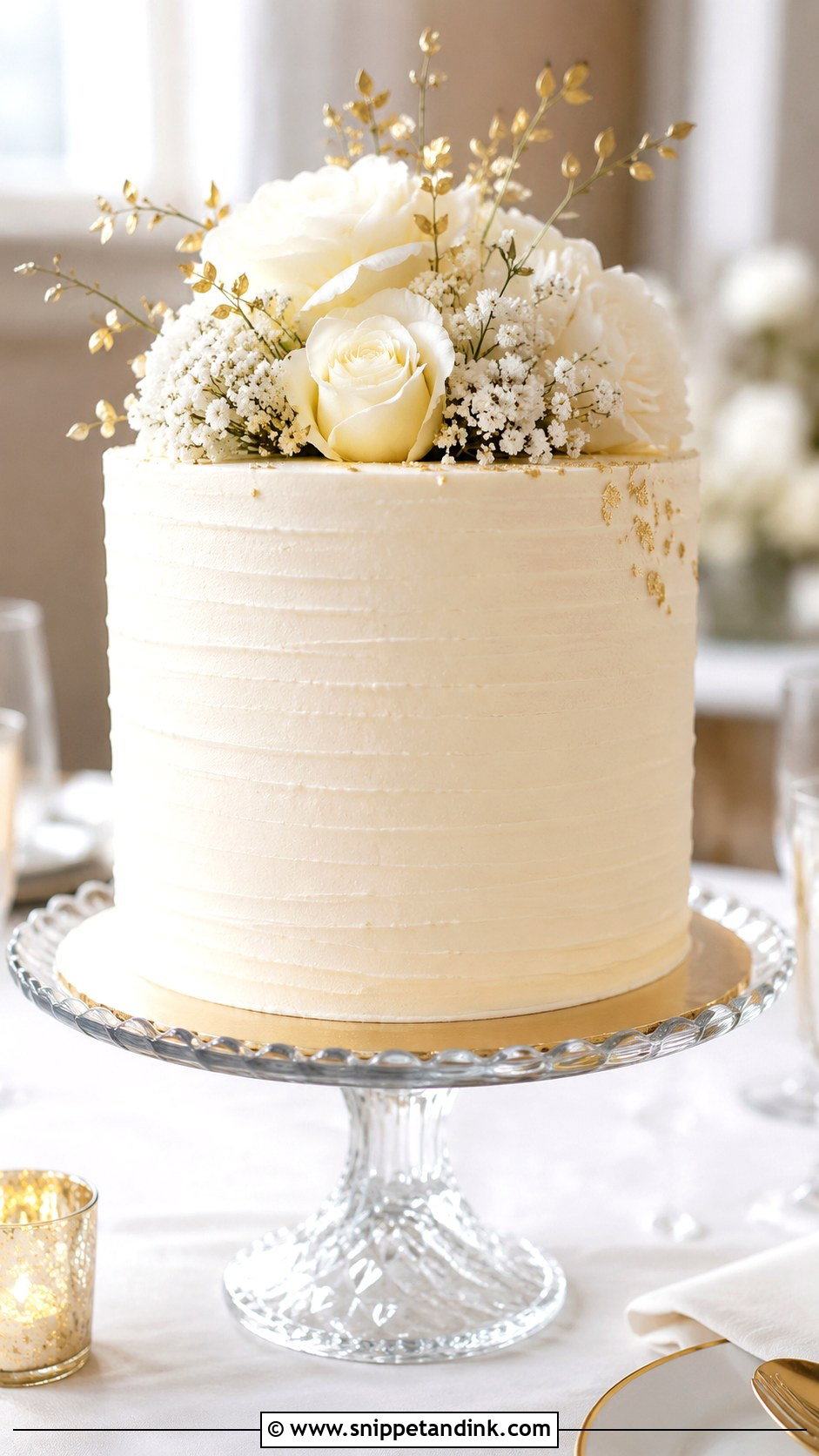
Thirty guests is where I’d suggest a 9- or 10-inch round, and ideally an extra-tall one. Height is what stops a single tier looking like a celebration cake from a shop case; a six-inch-tall tier has real presence in photos and gives more servings without widening the footprint. Taller tiers need internal support of their own, so mention the height early. If cupcakes or cookies are also out, this cake can be the centerpiece without carrying the whole dessert count.
3. Two Tier Wedding Cake For 40 Guests
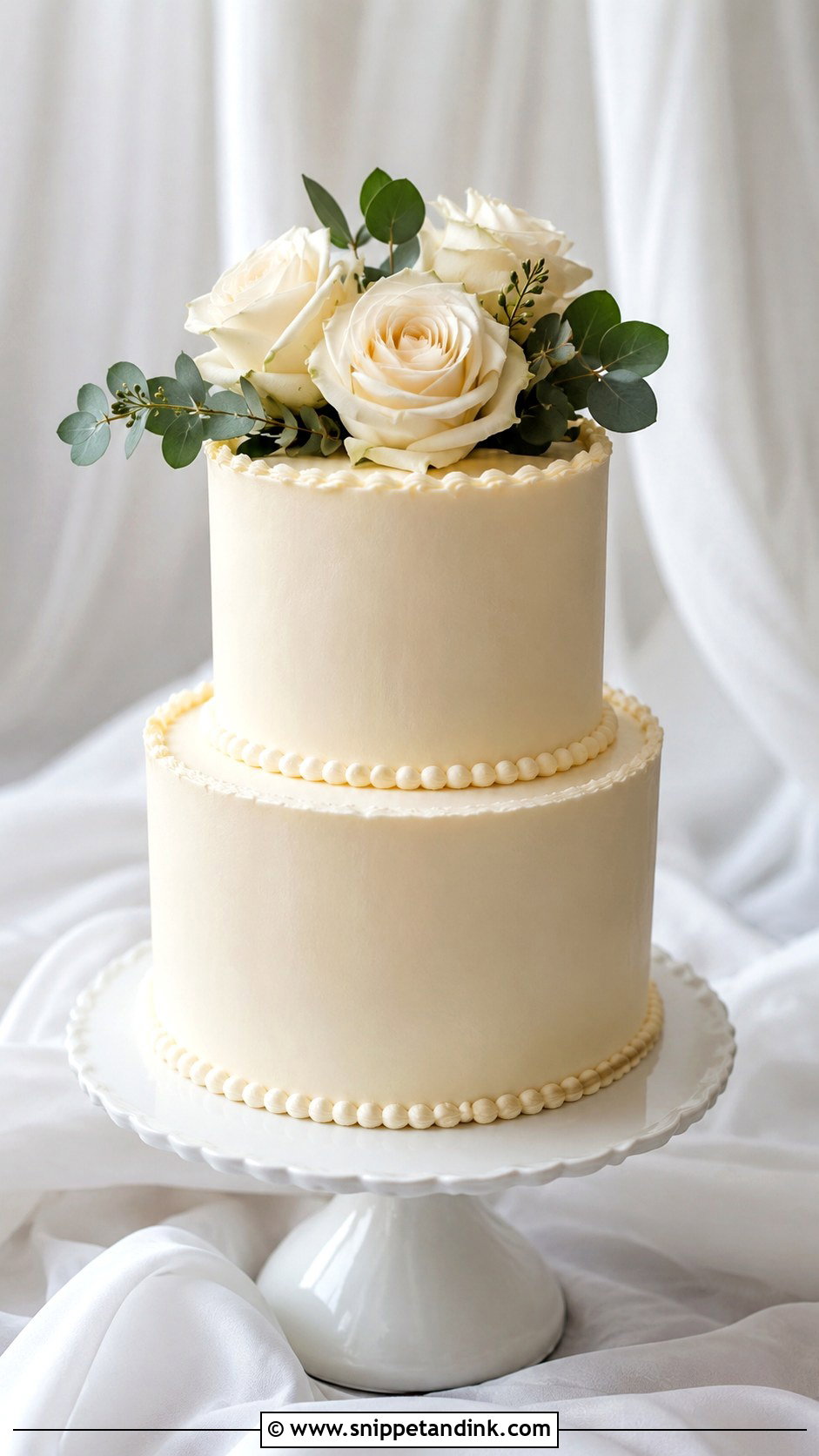
A 6-inch over an 8-inch is the smallest cake that reads as a classic tiered wedding cake, which is why micro weddings love it. On a standard chart it lands in the mid-thirties for servings, so for forty guests I’d make the tiers a little taller or keep a few cupcakes as backup. Two tiers also let you split flavors, with the top one as your personal favorite. Keep decoration in proportion; three big sugar flowers on a 6-inch tier swallow it.
4. Two Tier Wedding Cake For 50 Guests
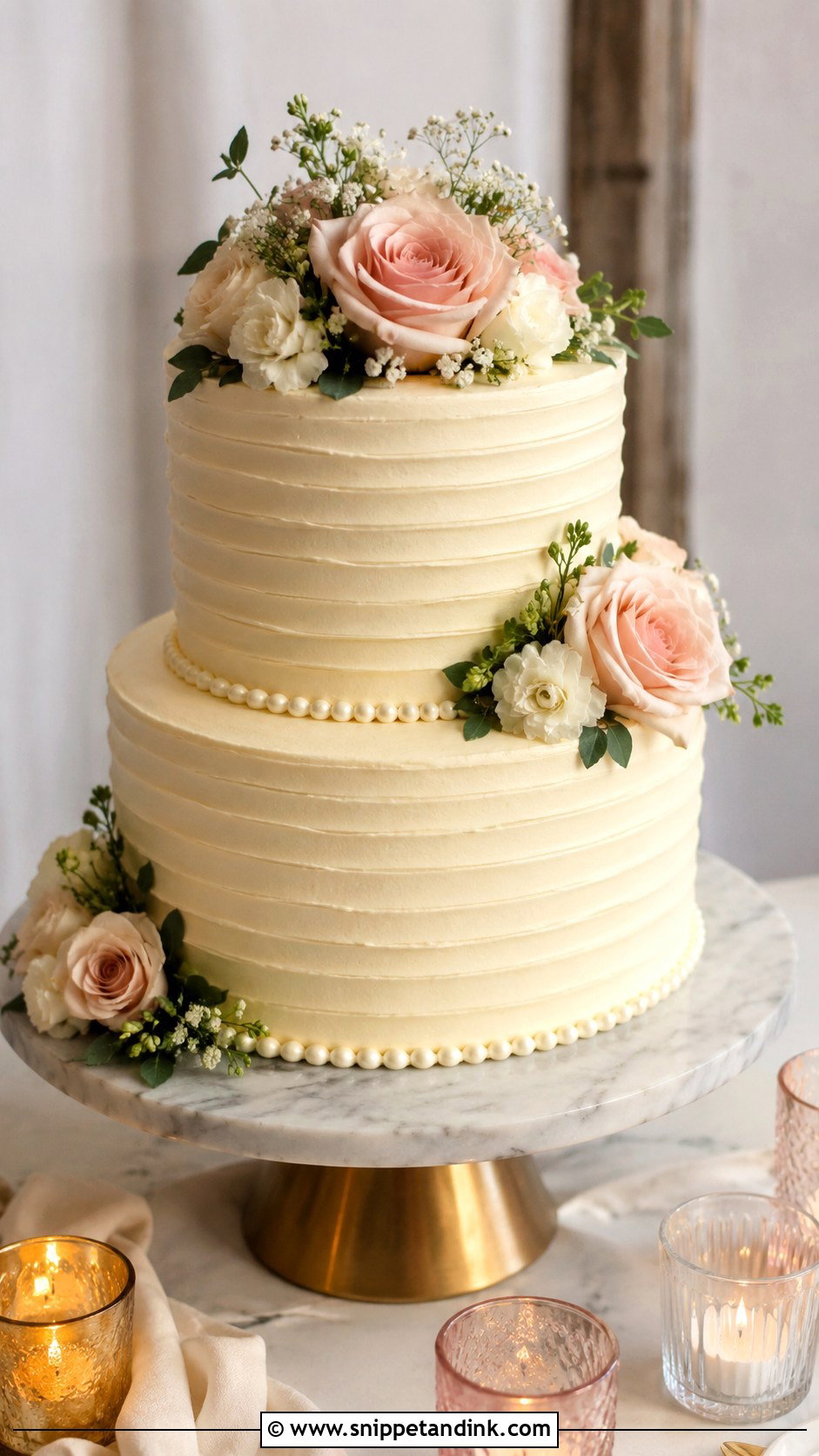
Fifty guests is a flexible size: a 6-inch and 10-inch, or an 8-inch and 10-inch, depending on your baker’s serving portions and tier height. The 6-over-10 has a sharper step and looks more dramatic; the 8-over-10 gives a few extra slices and a gentler shape. Either has room for a textured finish or a modest floral cascade. If your venue tends to cut generous pieces, a small plain cake in the kitchen protects you from running out.
5. Two Tier Wedding Cake For 60 Guests
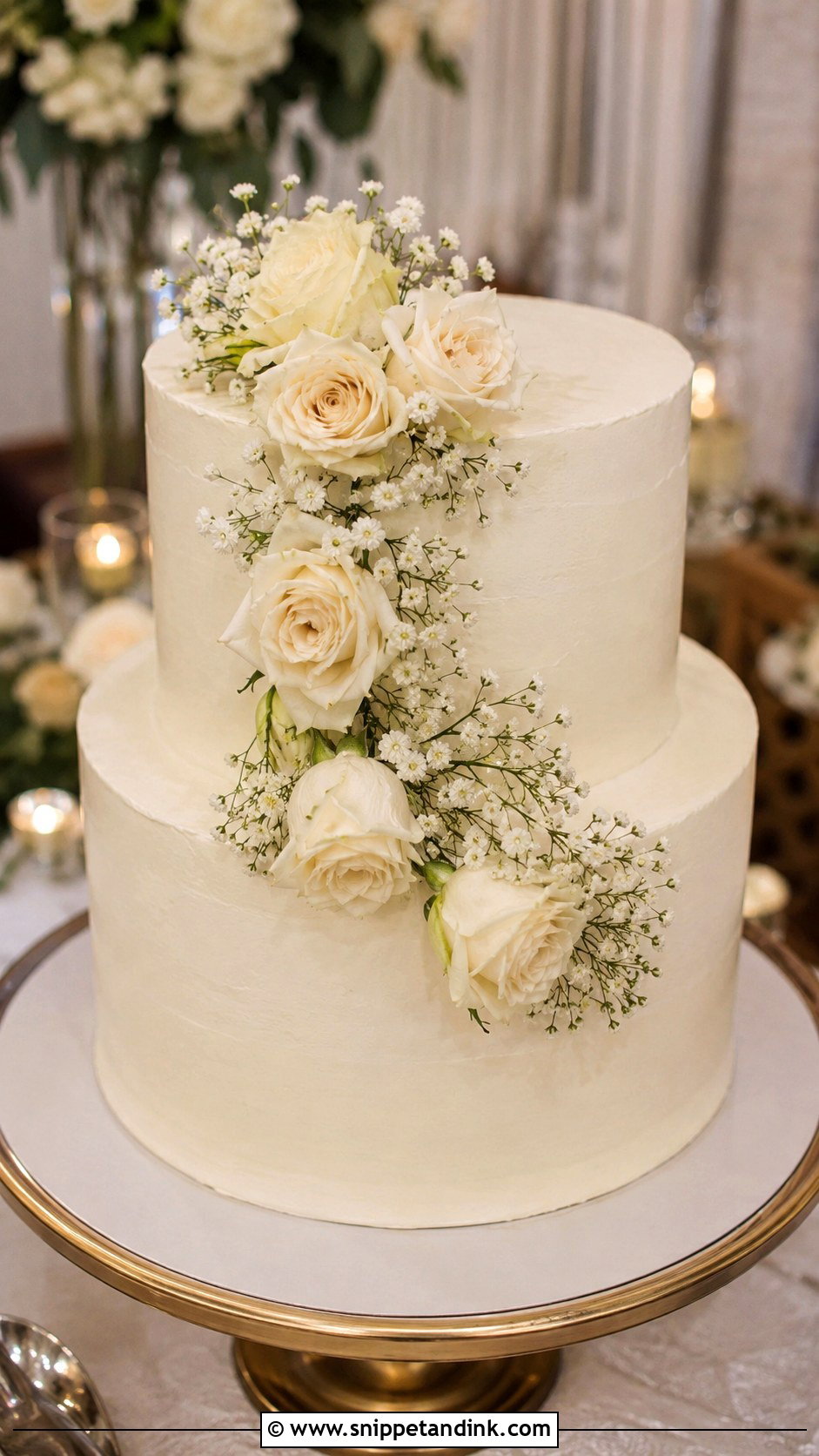
For sixty guests, an 8-inch top on a 10-inch base gets you into the low sixties on a typical chart, which is cutting it close. That’s fine for a seated dinner where the caterer controls portions; it’s tight for a buffet. If you plan to save the top tier, those servings come out of the count, so you’d need a kitchen cake or a wider base. Ribbed buttercream or sugar flowers round the base give a simple two-tier cake more interest.
6. Three Tier Wedding Cake For 75 Guests
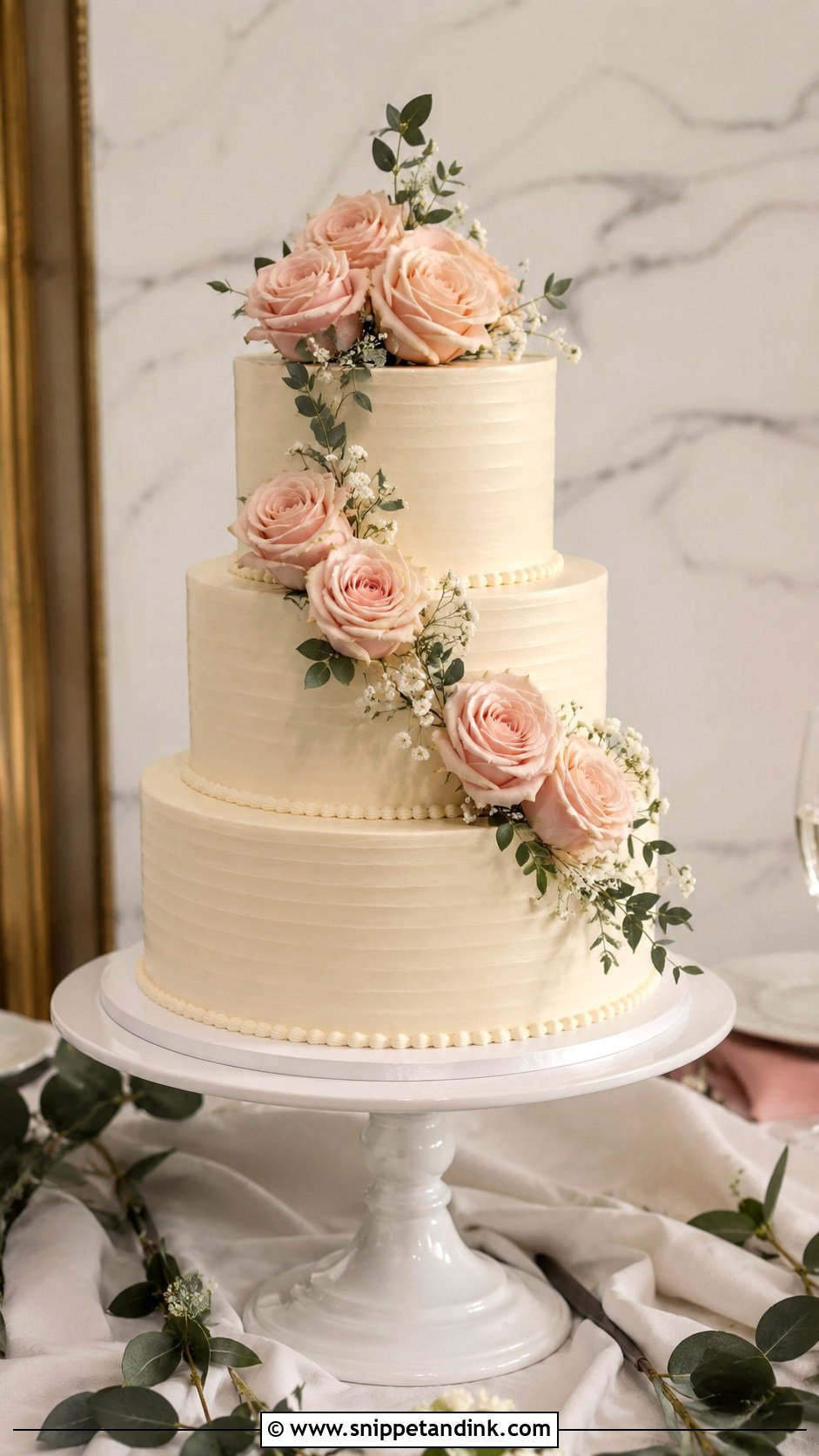
The 6-8-10 stack is the cake I build most often for mid-size receptions. It gives roughly seventy-plus wedding portions on a standard chart, enough height to read as a proper wedding cake, and three tiers for three flavors. My advice is to vary the flavors and keep the outside consistent: same frosting texture top to bottom, flowers placed to tie the tiers together. Three different designs on three tiers looks like three cakes stacked.
7. Three Tier Wedding Cake For 90 Guests
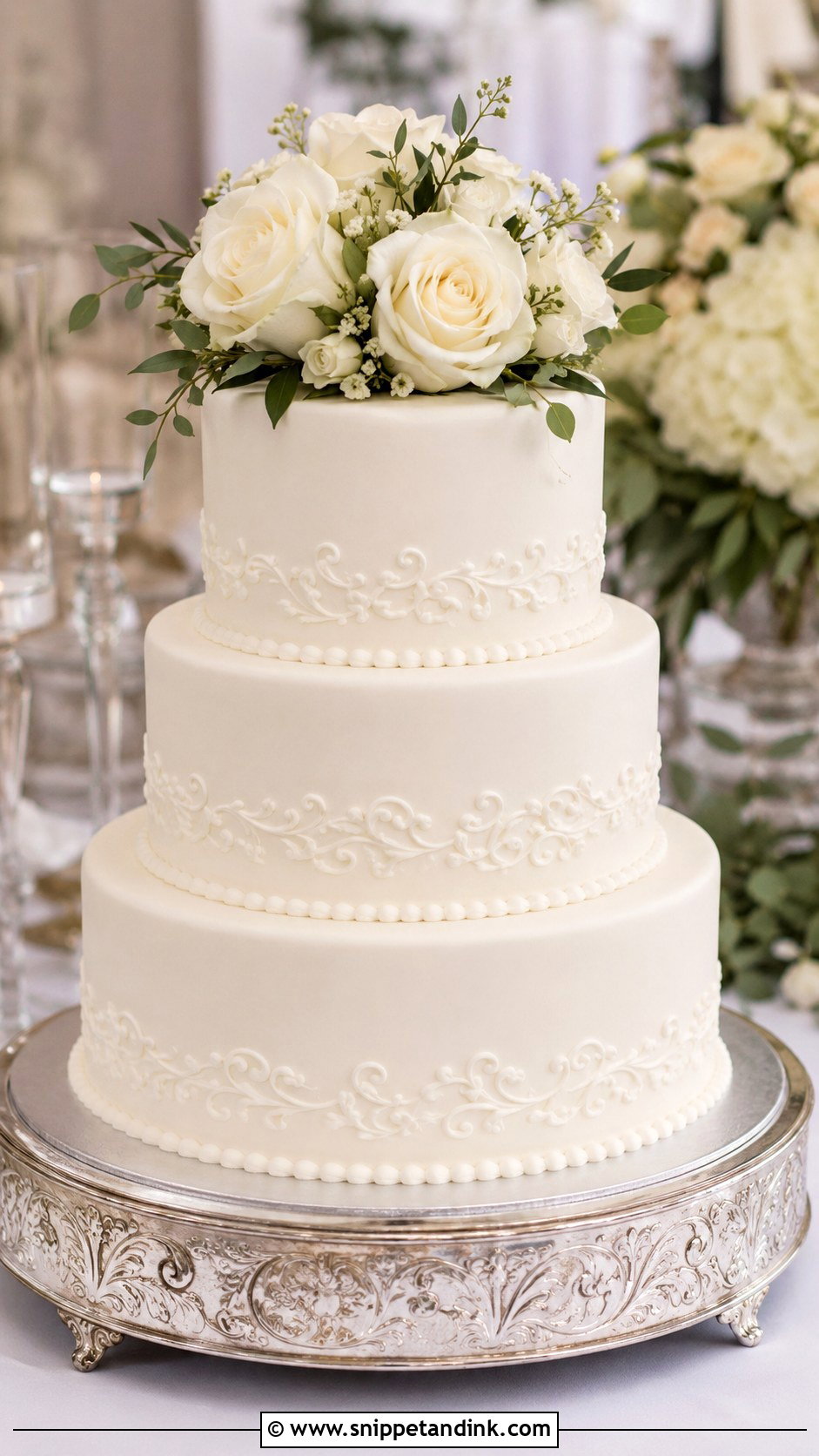
Ninety guests is where the bottom tier usually jumps to 12 inches, as in a 6-9-12 combination. The wider base gives the cake a more graceful taper and room for piping or panels. If cake is the only dessert and your count sits right at ninety, add a buffer. A few guests skip cake, but others take two pieces, and late arrivals at the dessert table are the ones who find nothing left. Agree on a slice size with the caterer before the day.
8. Three Tier Wedding Cake For 100 Guests
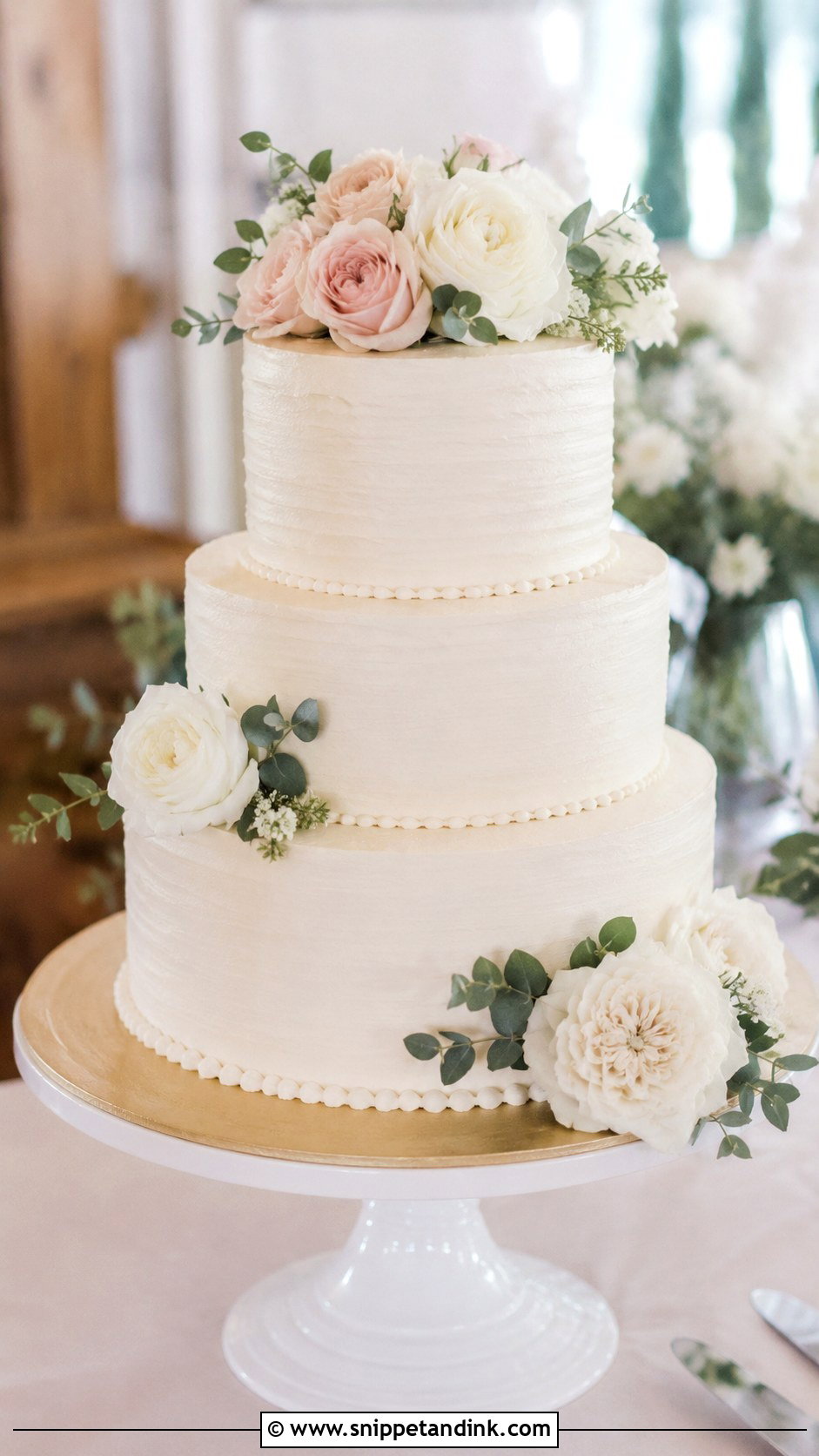
A three-tier cake for a hundred is the size most people picture when they think of a wedding cake. A 6-9-12 or similar works on most charts, and it’s still far simpler to deliver and stack than a four or five tier cake. Cake served after dinner as the main dessert is exactly what this size is made for. The design can go simple or detailed, but anything heavy, such as fondant drapes or large sugar flowers, needs the tiers properly doweled.
9. Three Tier Wedding Cake For 120 Guests
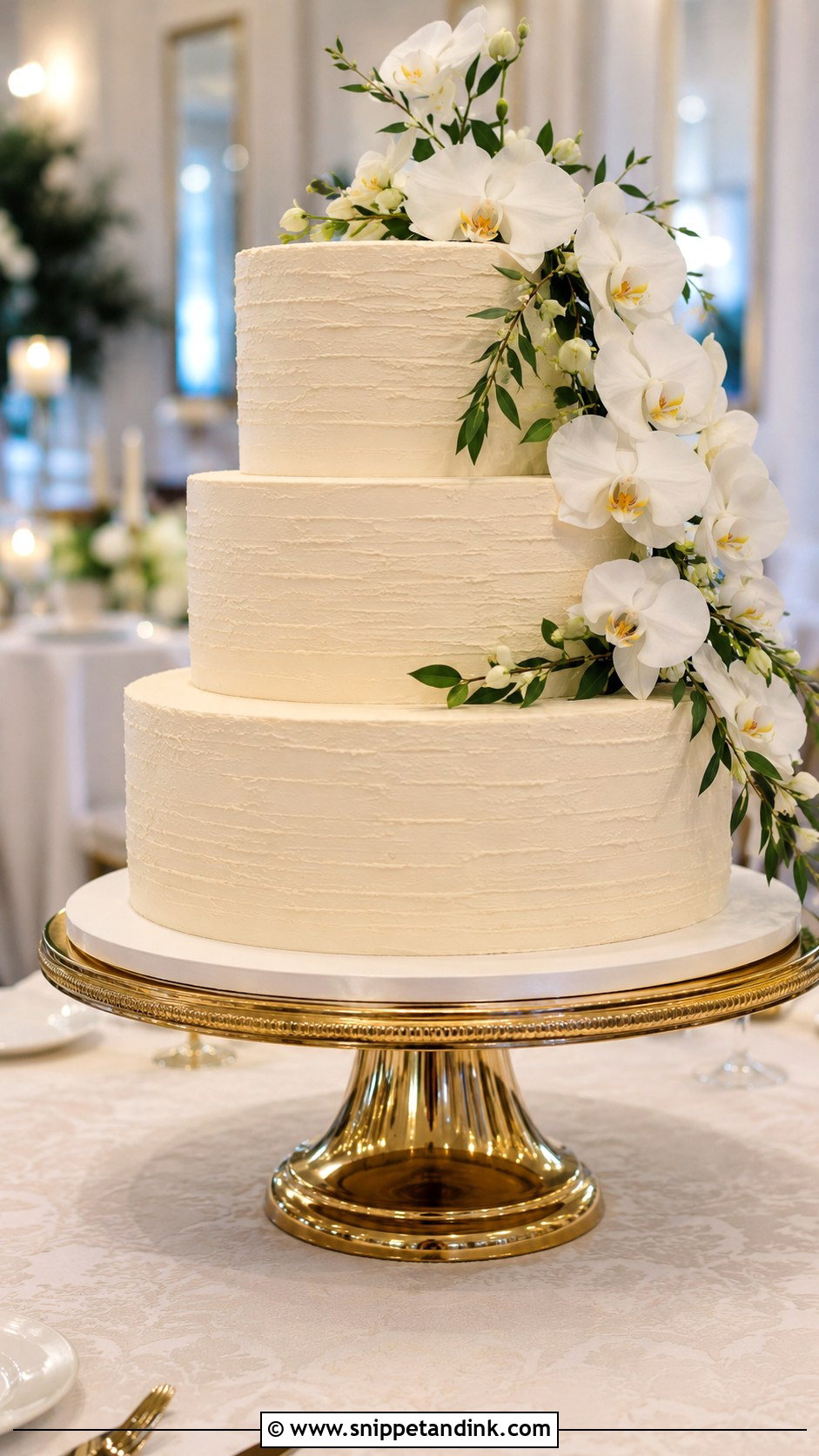
Covering 120 with only three tiers means wider or taller tiers: an 8-10-12 suits some bakers, while others prefer a 6-10-14 for a dramatic step. Slice size makes the biggest difference at this count. Narrow wedding portions stretch the cake; dessert-size slices need noticeably more. A 14-inch base is also heavy and needs two people to lift, so check that your table and the delivery route can handle it. Ask whether the top tier is counted in the servings, because many quotes assume it is.
10. Four Tier Wedding Cake For 130 Guests
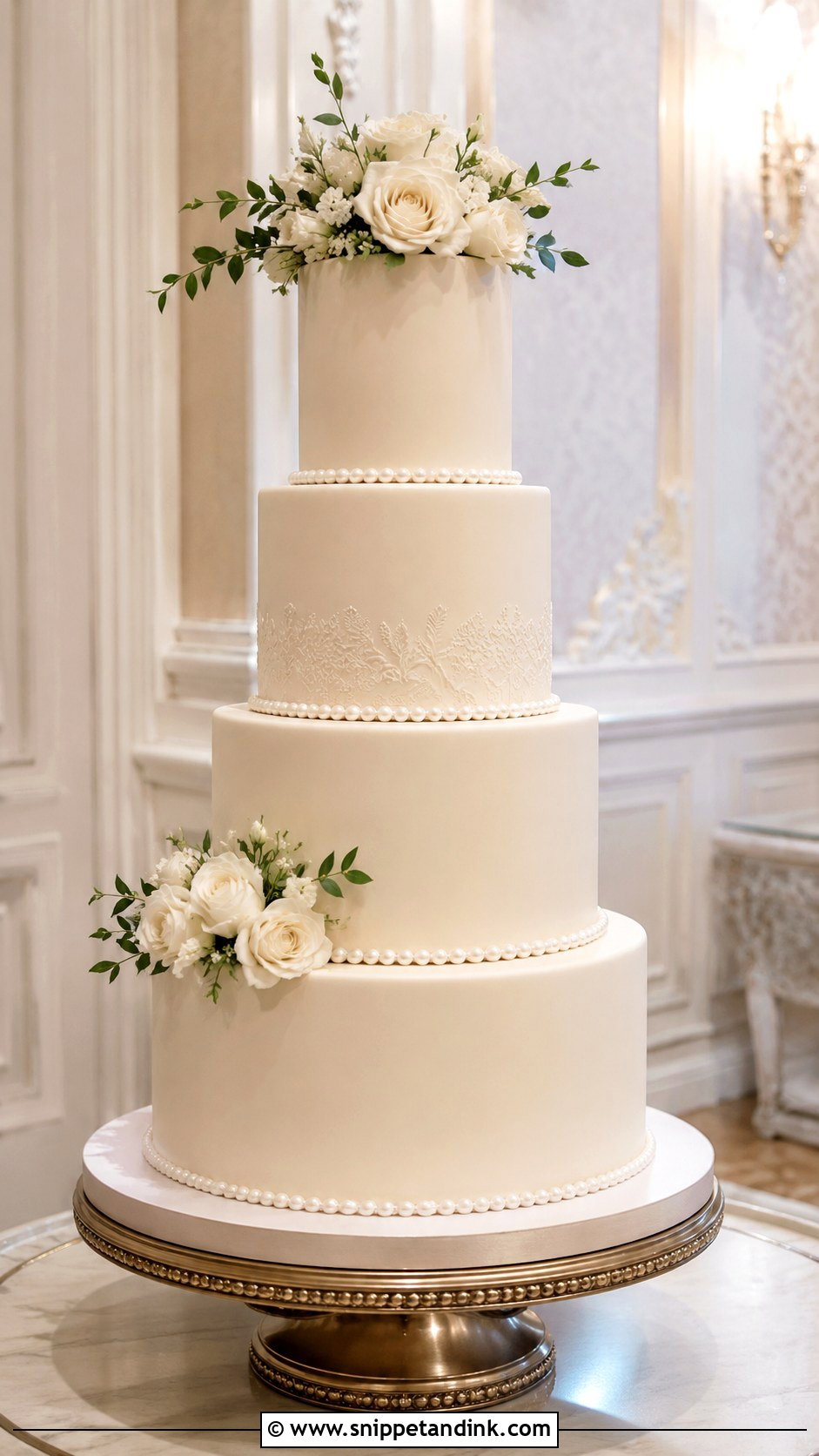
Four tiers for 130 guests is really about height. You could feed that number with three wide tiers, but four gives the tall, formal silhouette that suits hotel ballrooms. A small top tier over 8, 10 and 12 inches makes a neat tower. Each extra tier means more boards and dowels and a longer setup, so the baker will usually stack it at the venue. One detailed tier with the rest kept smooth looks more expensive than decoration on every level.
11. Four Tier Wedding Cake For 150 Guests
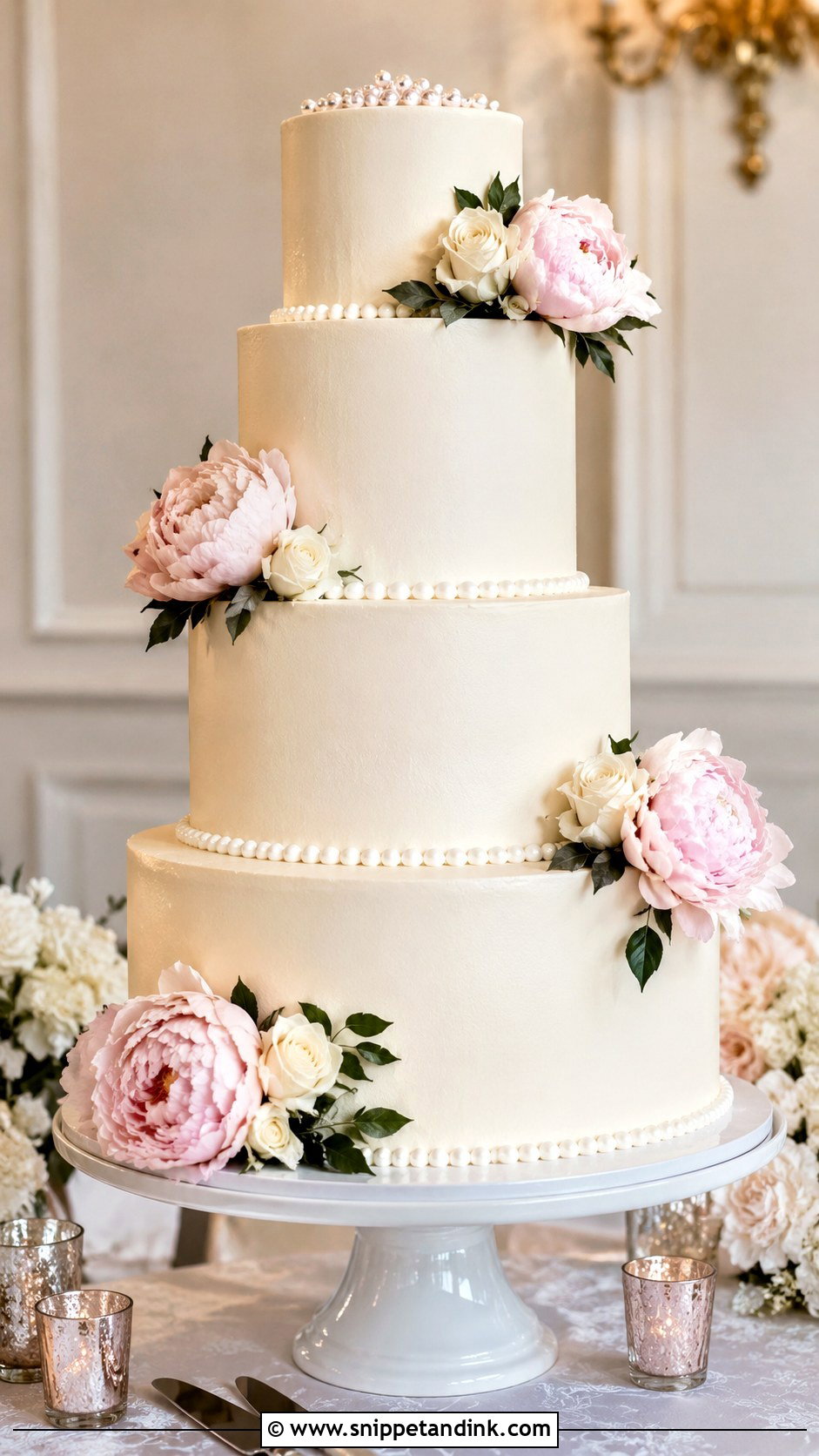
At 150 guests, something like 6-8-10-14 is a common shape, depending on the chart your baker uses. The jump to a 14-inch base adds a lot of servings at once, which is why it appears so often at this size. Four tiers also let you offer a classic flavor, a chocolate and something seasonal. If a dessert table is running alongside, your baker may suggest fewer cake servings, since guests split their appetite.
12. Four Tier Wedding Cake For 175 Guests
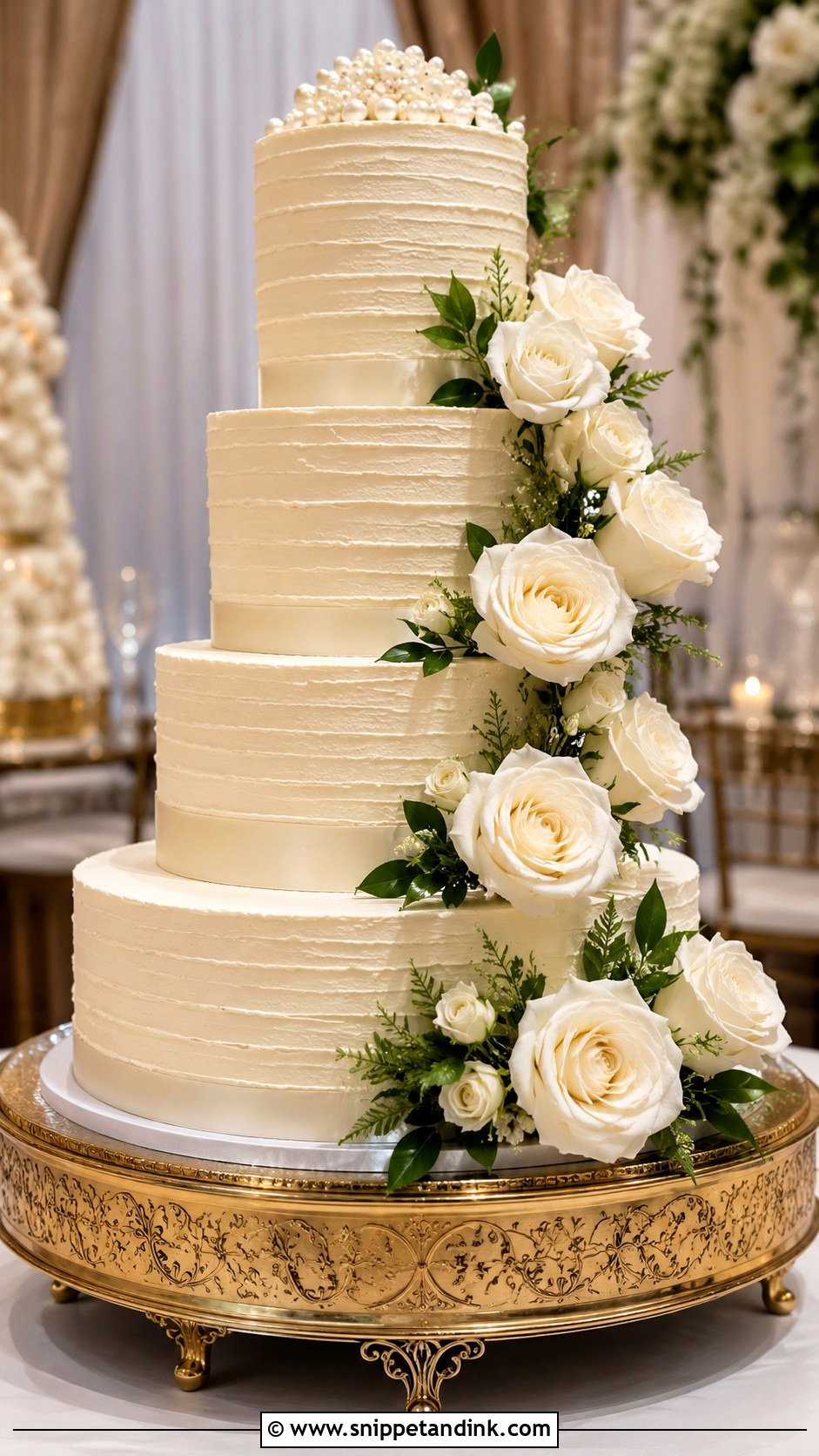
For 175, the lower tiers get wide, often 12 and 14 inches, and the whole cake gets heavy. This is where I’d insist the bakery delivers and sets up rather than a relative with a van; a large stacked cake shifts with every turn. Check that the cake table is sturdy and won’t sag in the middle. Keep it away from heaters, sunny windows and the route guests walk to the bar. Cascading flowers and textured buttercream both suit a cake this size.
13. Five Tier Wedding Cake For 200 Guests
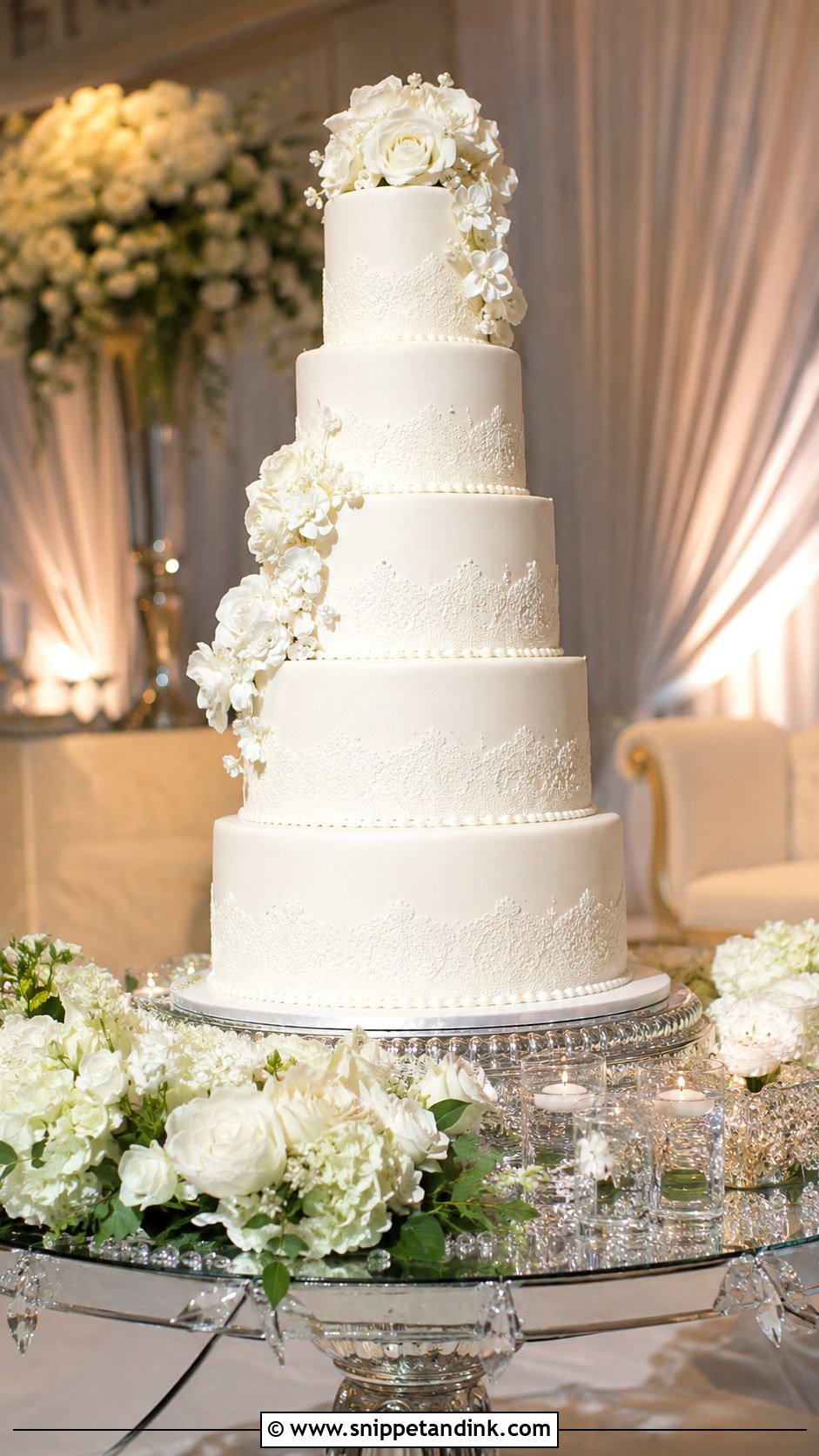
A five tier wedding cake for two hundred fills a big room the way a smaller cake can’t. Not every tier needs to be real; a foam dummy tier adds height without adding servings you’d pay for and not eat. With five tiers, consistency matters more than variety, so I’d repeat one element on every tier. Tall cakes are built on site in stages, so plan the setup window with your venue early.
14. Five Tier Wedding Cake For 250 Guests
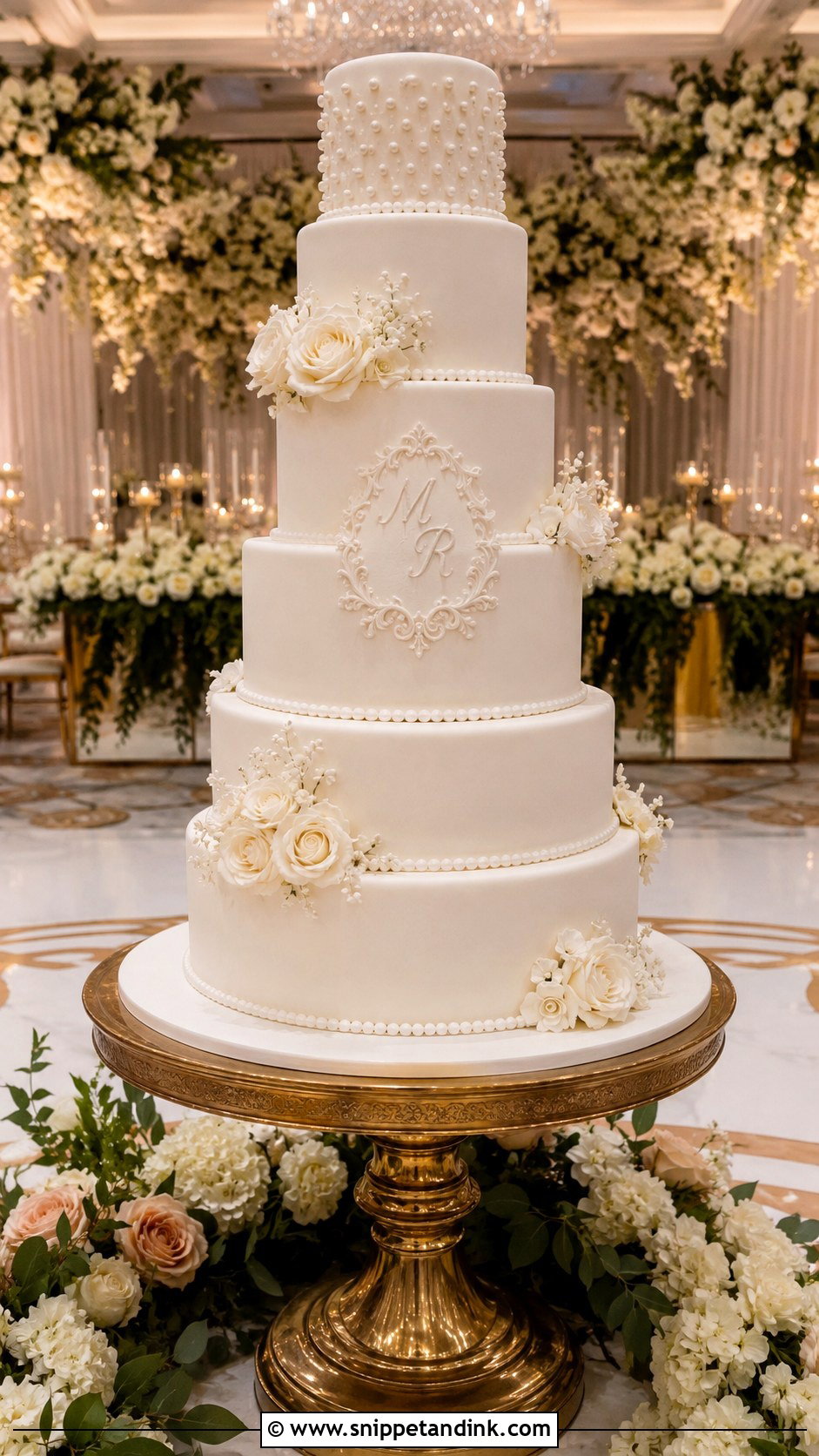
Feeding 250 from a display cake alone takes wide tiers and tall layers, and often a kitchen cake as well. Cakes this size become part of the room design, which tempts couples to put every idea on them. Pick one direction, whether that’s sugar flowers, lace piping or a monogram, and let the scale do the rest. Ask your caterer whether they cut wedding portions or dessert portions, because at this count the difference can be dozens of slices.
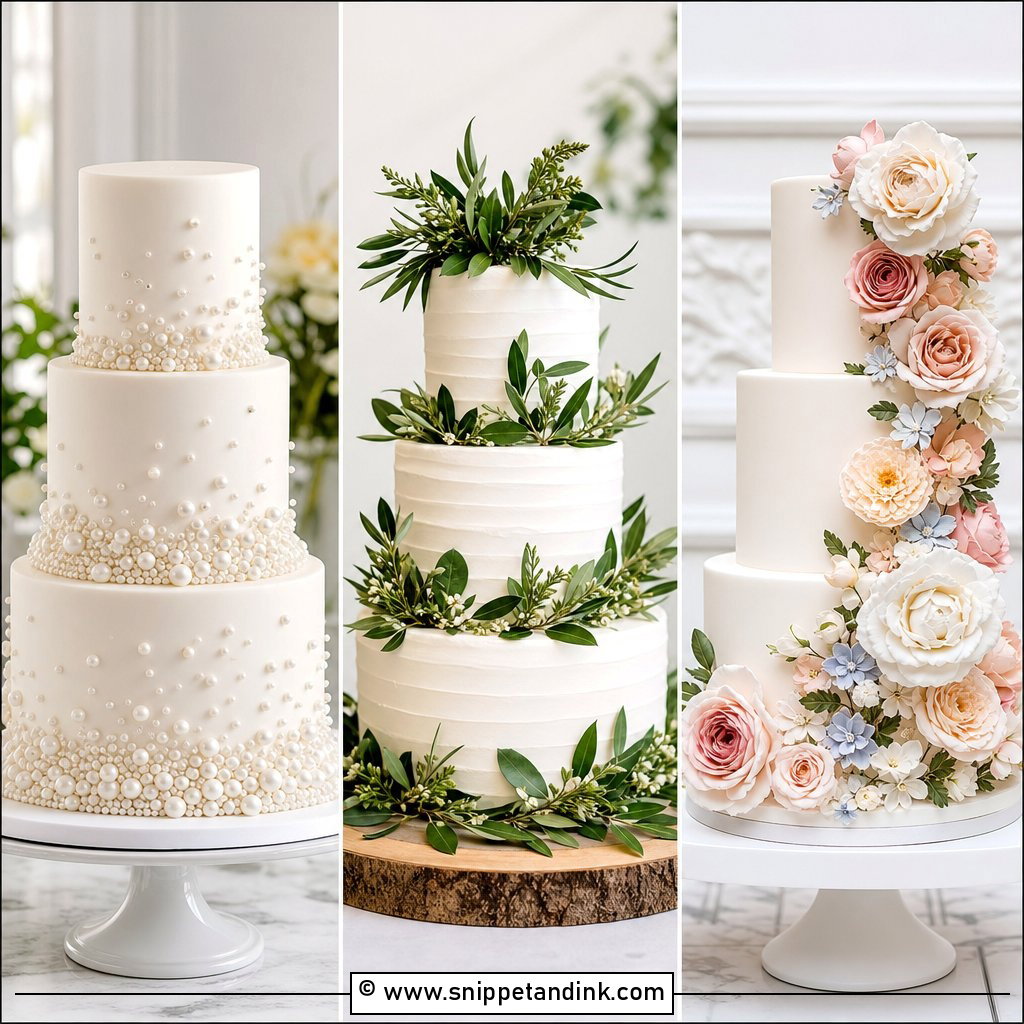
15. Six Tier Wedding Cake For 300 Guests
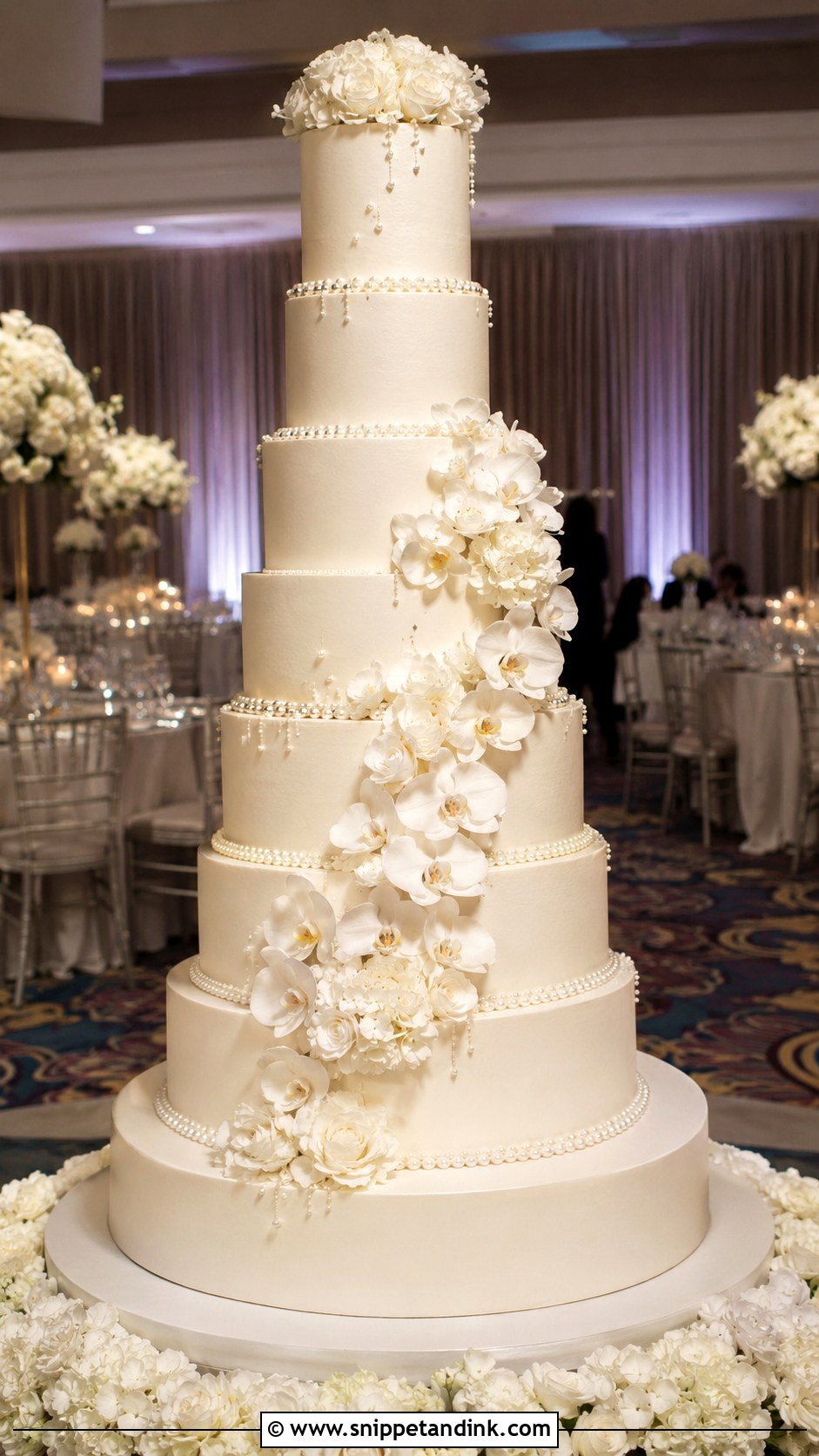
Six tiers is a statement piece, and the logistics are serious. It needs professional delivery, internal supports that run through several tiers, and a setup window long enough to stack it carefully in place. Many six-tier cakes mix real and dummy tiers and rely on kitchen cakes for most of the servings. Plain white finishes with a few sugar flowers often look more striking at this height than heavy decoration, which gets lost when guests stand far back.
16. Wedding Cake With Kitchen Cake For Extra Servings
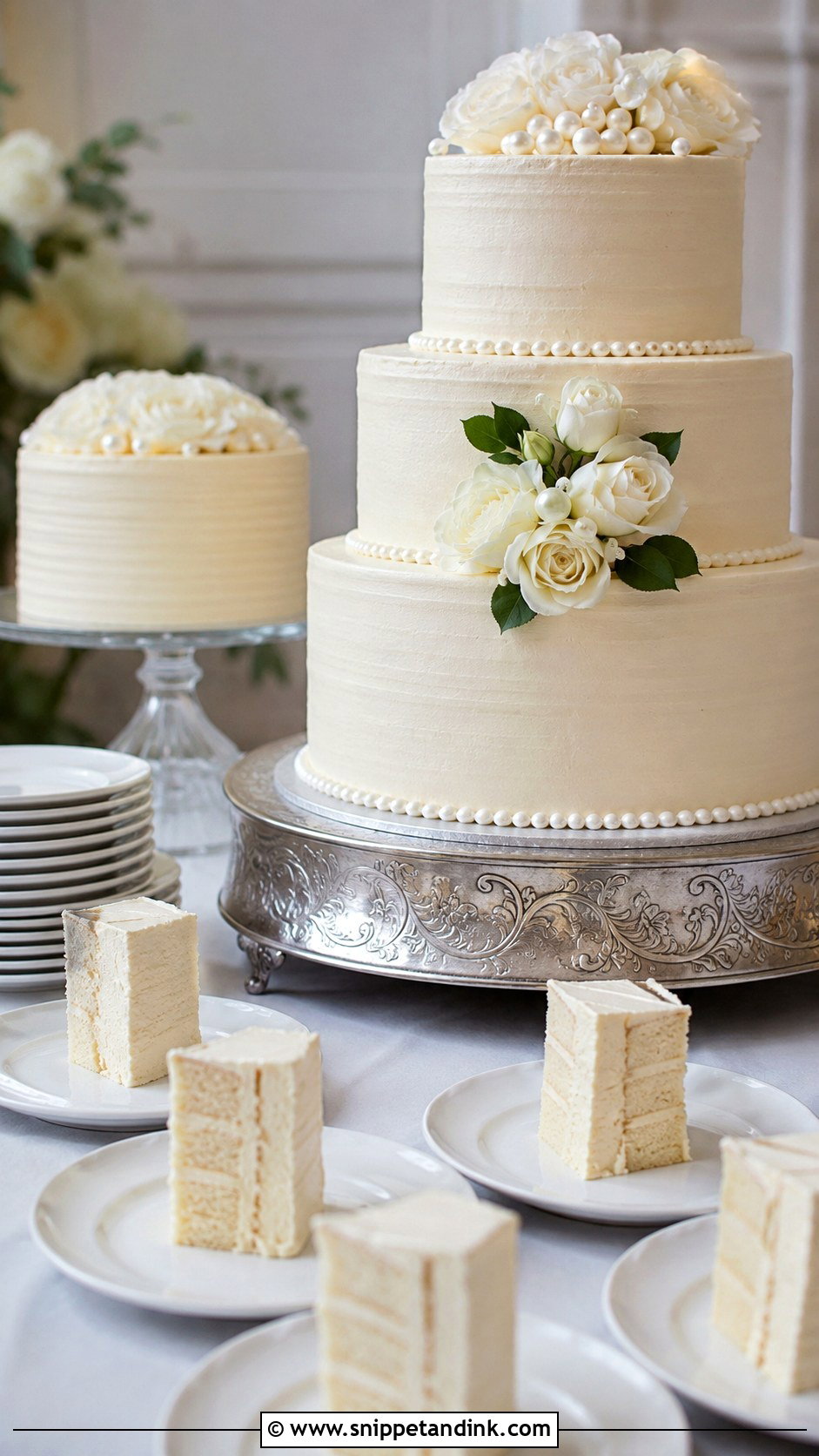
Kitchen cakes are plain sheet or tier cakes kept behind the scenes and cut alongside the display cake. They’re the simplest way to feed a large crowd from a modest display, and because they’re barely decorated they usually cost less per serving than extra display tiers. Match the flavor and frosting to the main cake so no guest gets a noticeably different slice. Make sure the caterer knows the kitchen cake exists and where it’s stored.
17. Wedding Cake With Dummy Tiers For Height
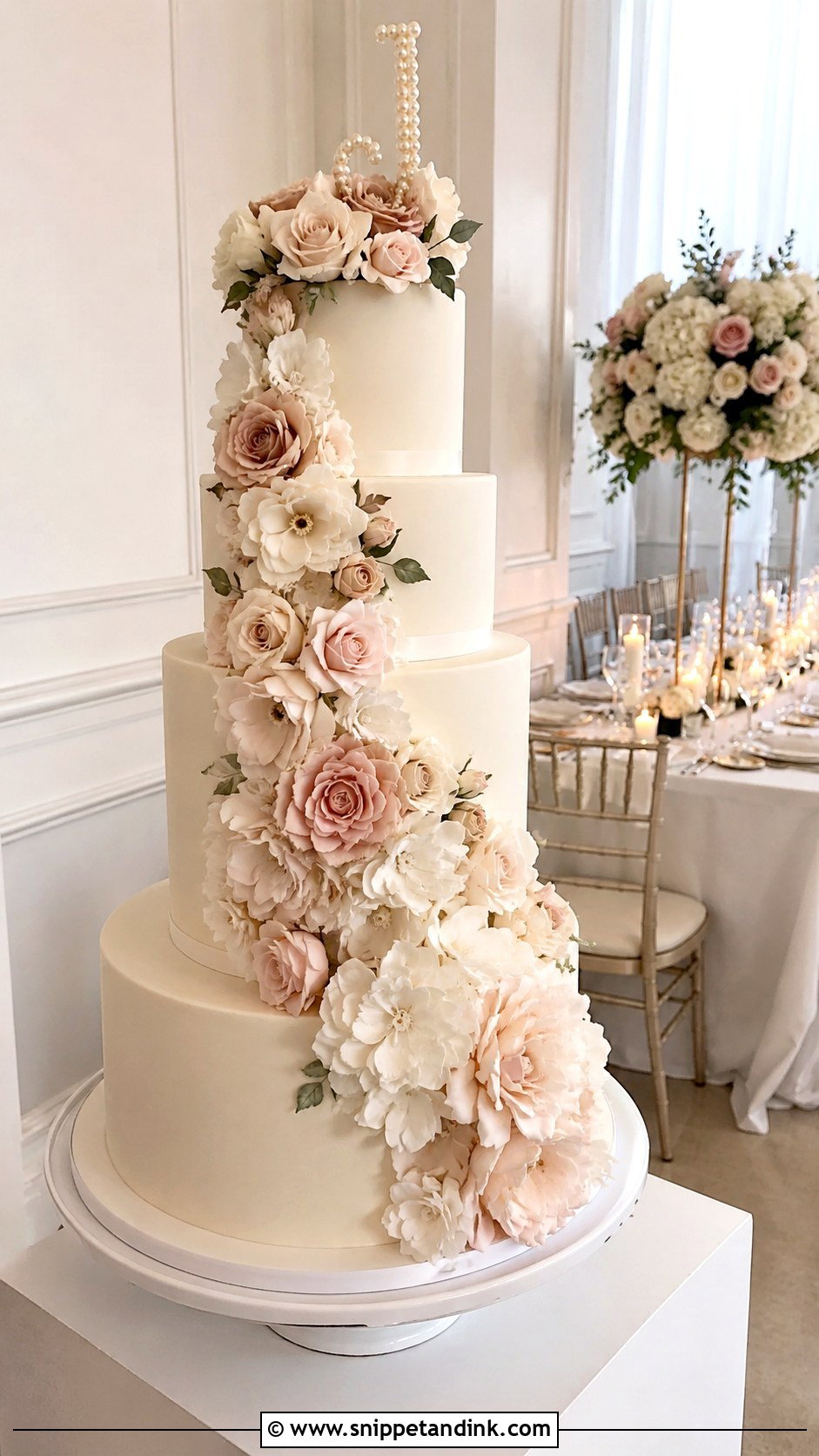
Dummy tiers are foam rounds covered to match the real tiers, and once they’re decorated nobody can tell the difference from a few feet away. They’re useful when you want a tall cake for a smaller crowd, or extra height in a big room. The real tiers are placed where they’re easy to cut, often at the top and middle. Don’t expect dummies to be free; covering and decorating them still takes time, and that’s most of what a cake costs.
18. Wedding Cake For Dessert Table
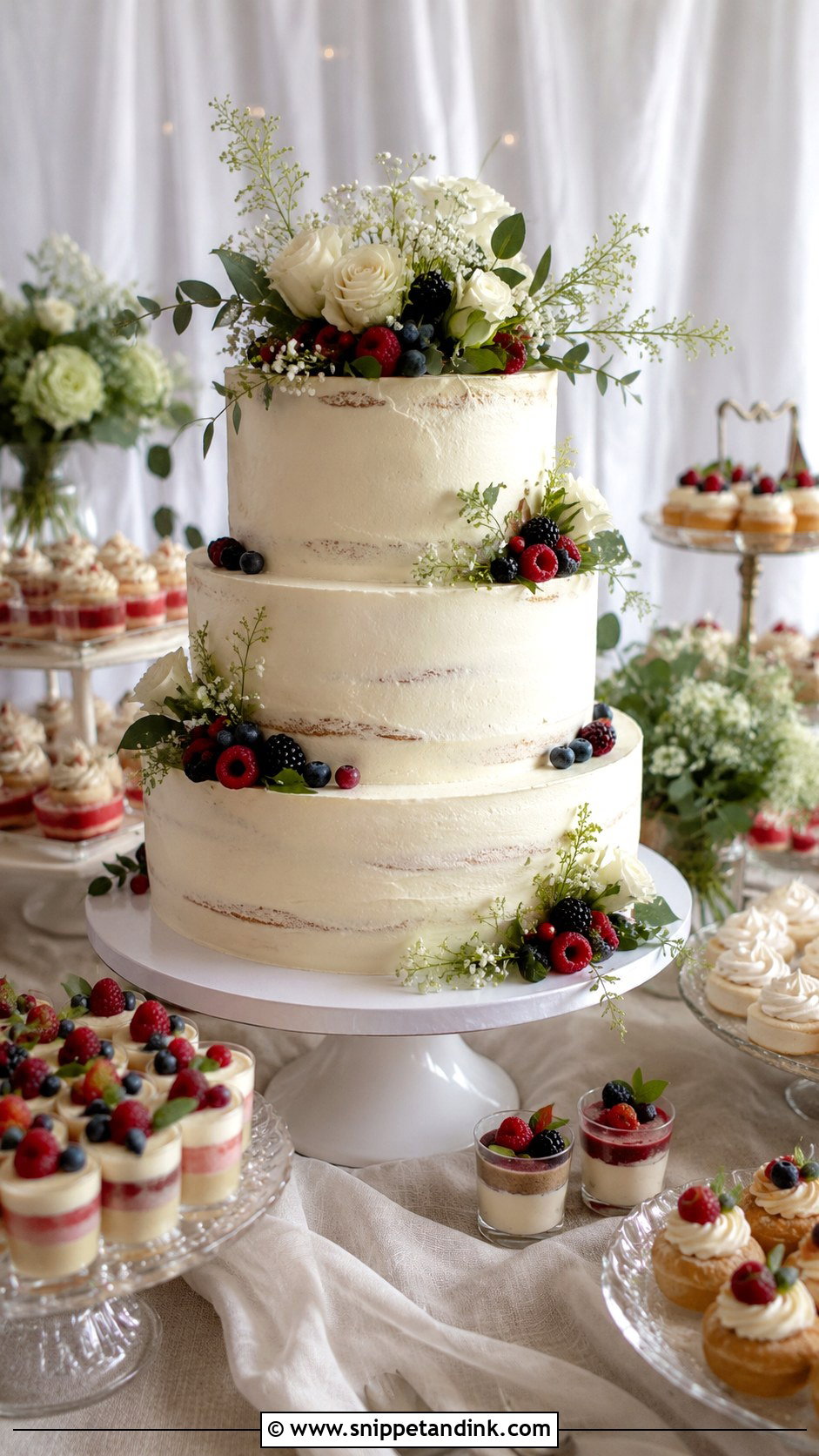
When a wedding cake for a dessert table sits among other sweets, it doesn’t need to serve everyone. I size it for the share of guests likely to take cake after browsing everything else, often well under the full count. A two or three tier cake gives the table height without crowding it. Coordinate colors with the surrounding desserts, and keep the cake design simple so the table doesn’t look busy.
19. Wedding Cake For Buffet Reception
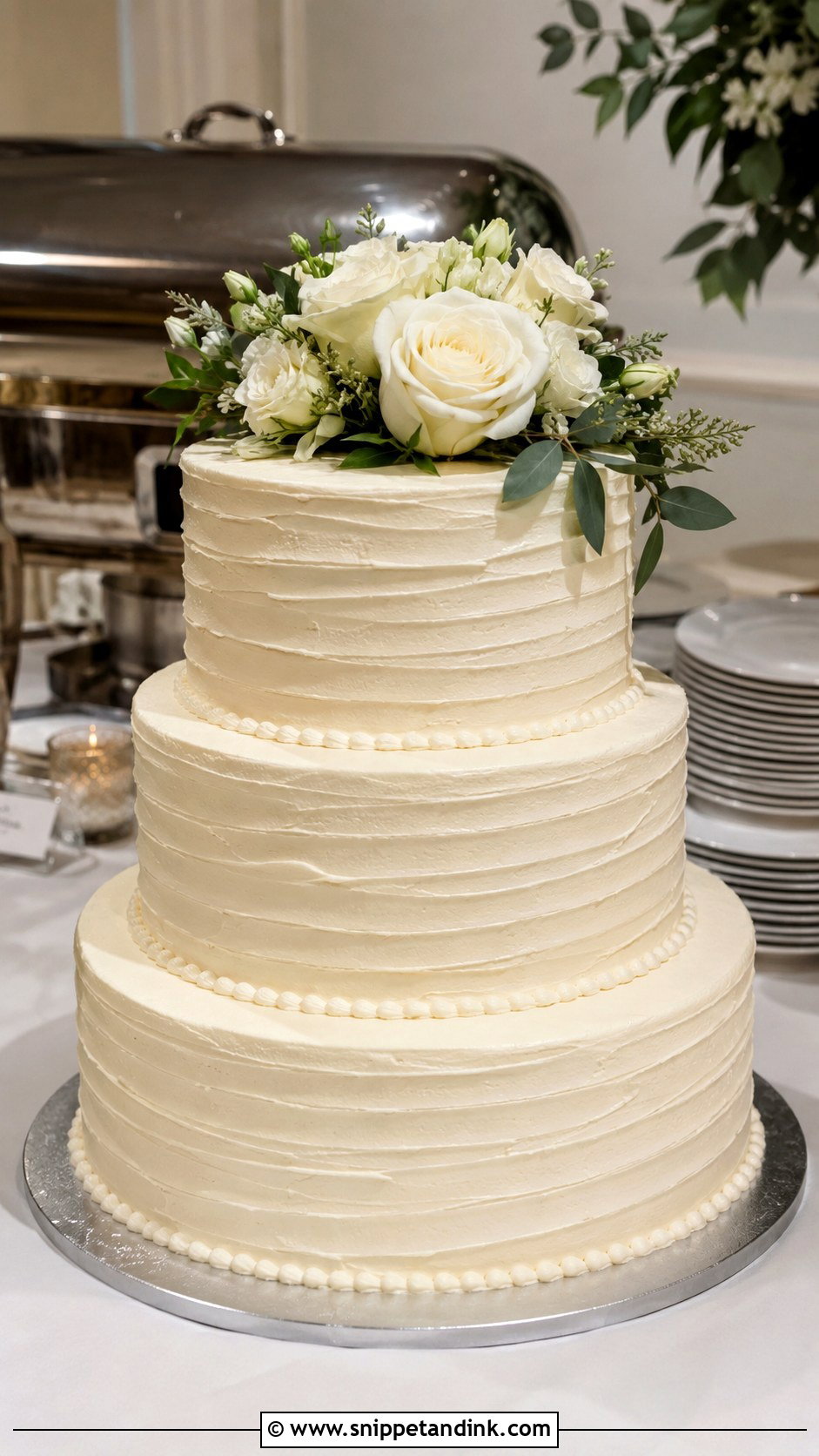
At a buffet, people eat at different times and drift back for dessert later, so portion control is looser than at a seated dinner. I’d pair a three-tier display with a kitchen cake rather than build one oversized cake; it lets the caterer slice and refill without dismantling the display. Keep decoration sturdy if the cake table is near the buffet line, because people bump into things while carrying plates. Buttercream textures cope better than delicate sugar flowers.
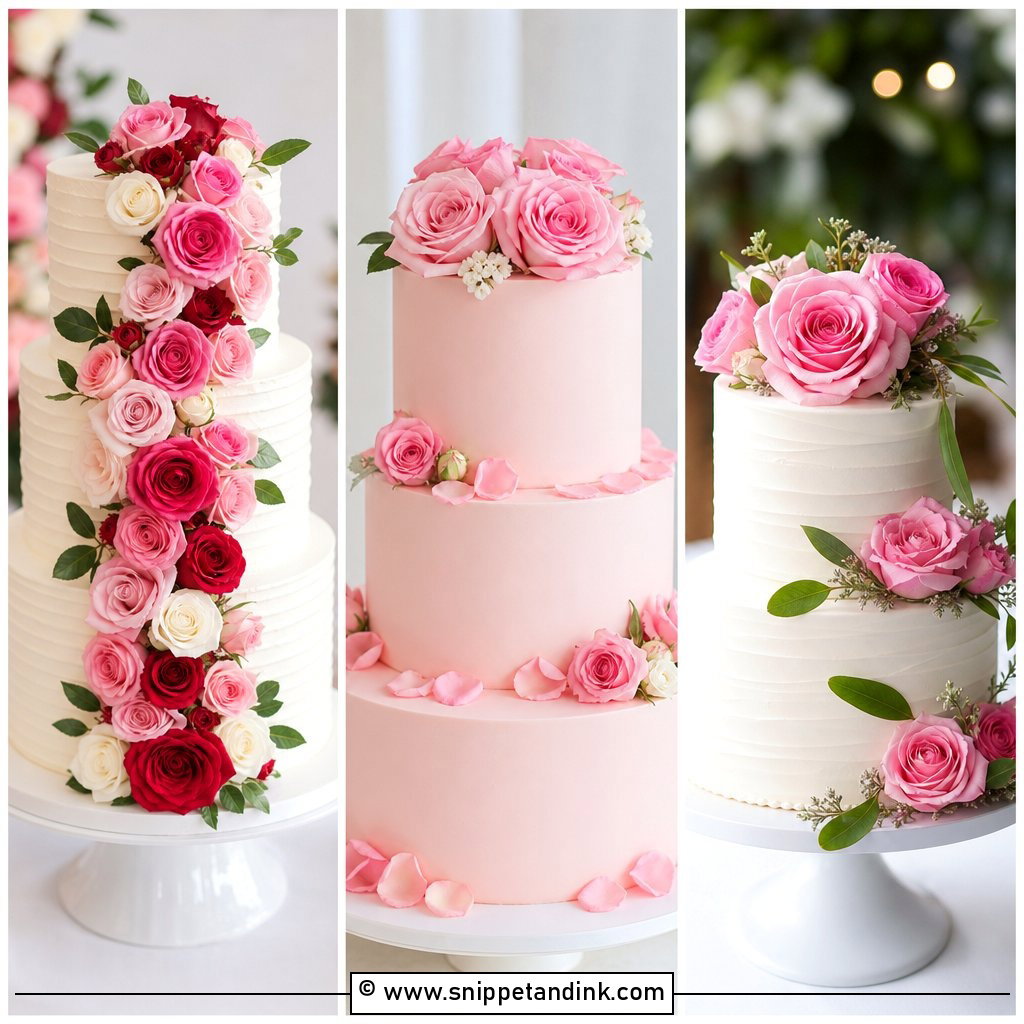
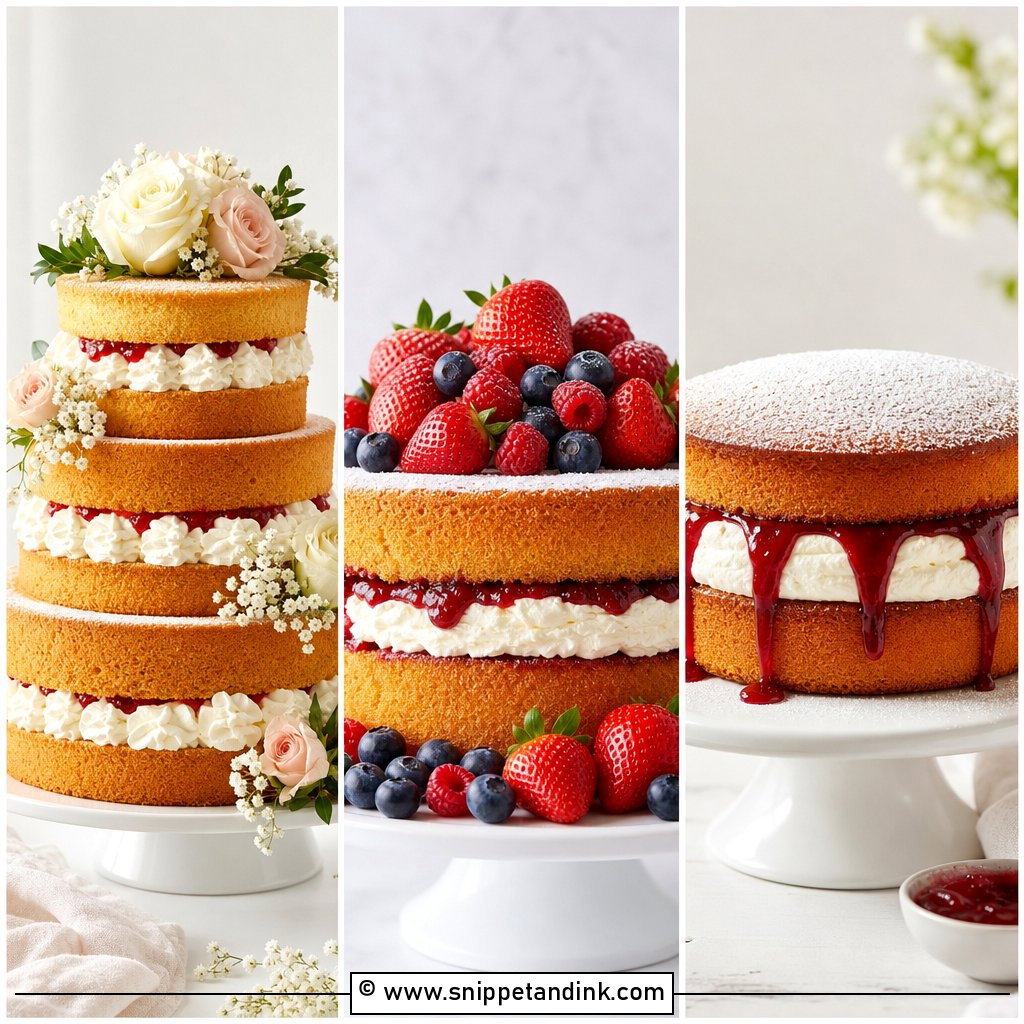
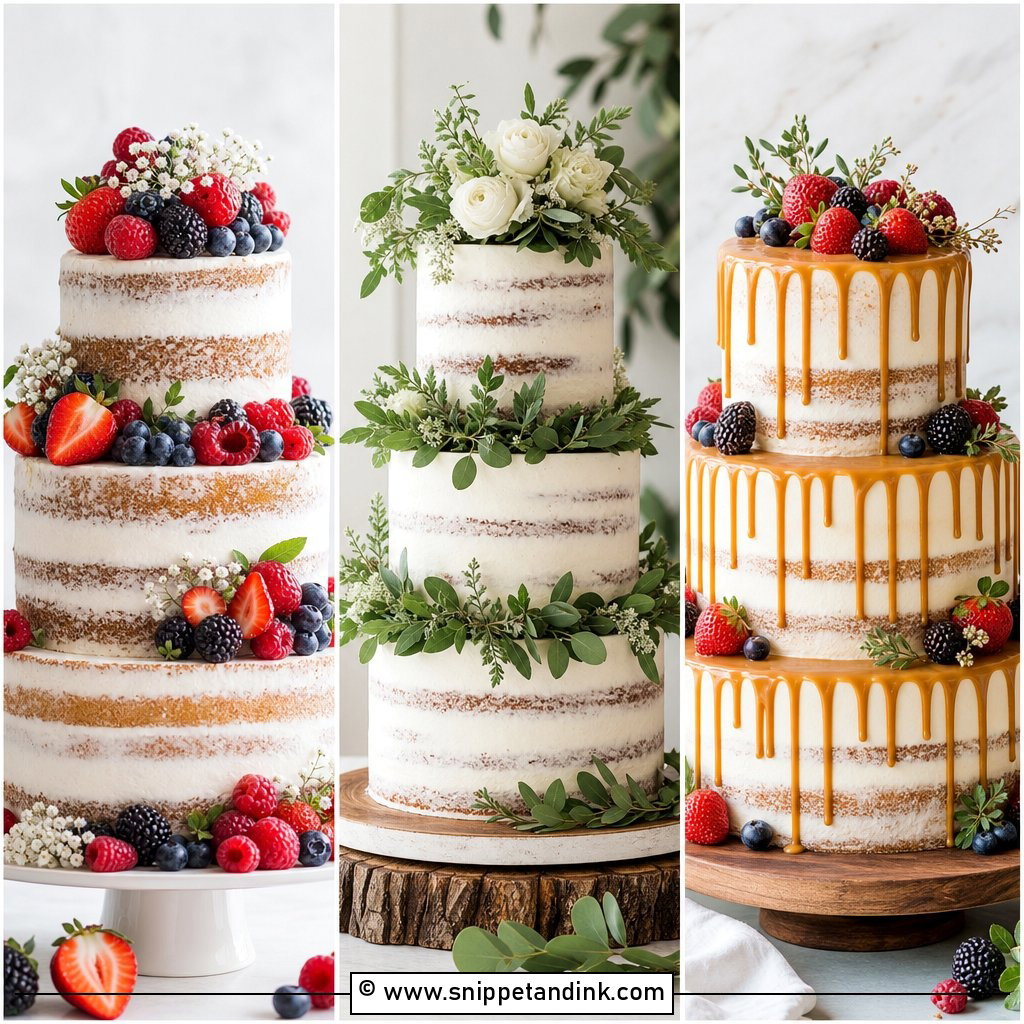
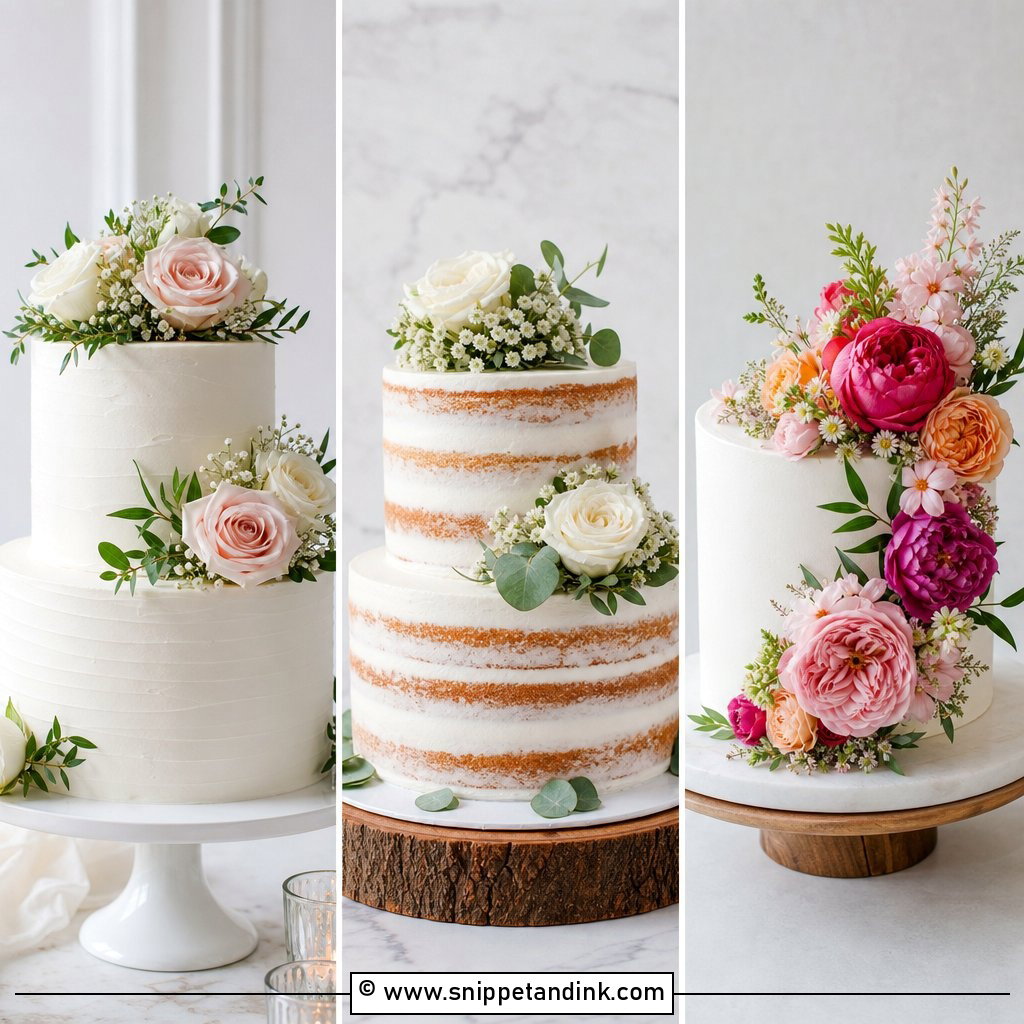
20. Wedding Cake For Plated Dinner
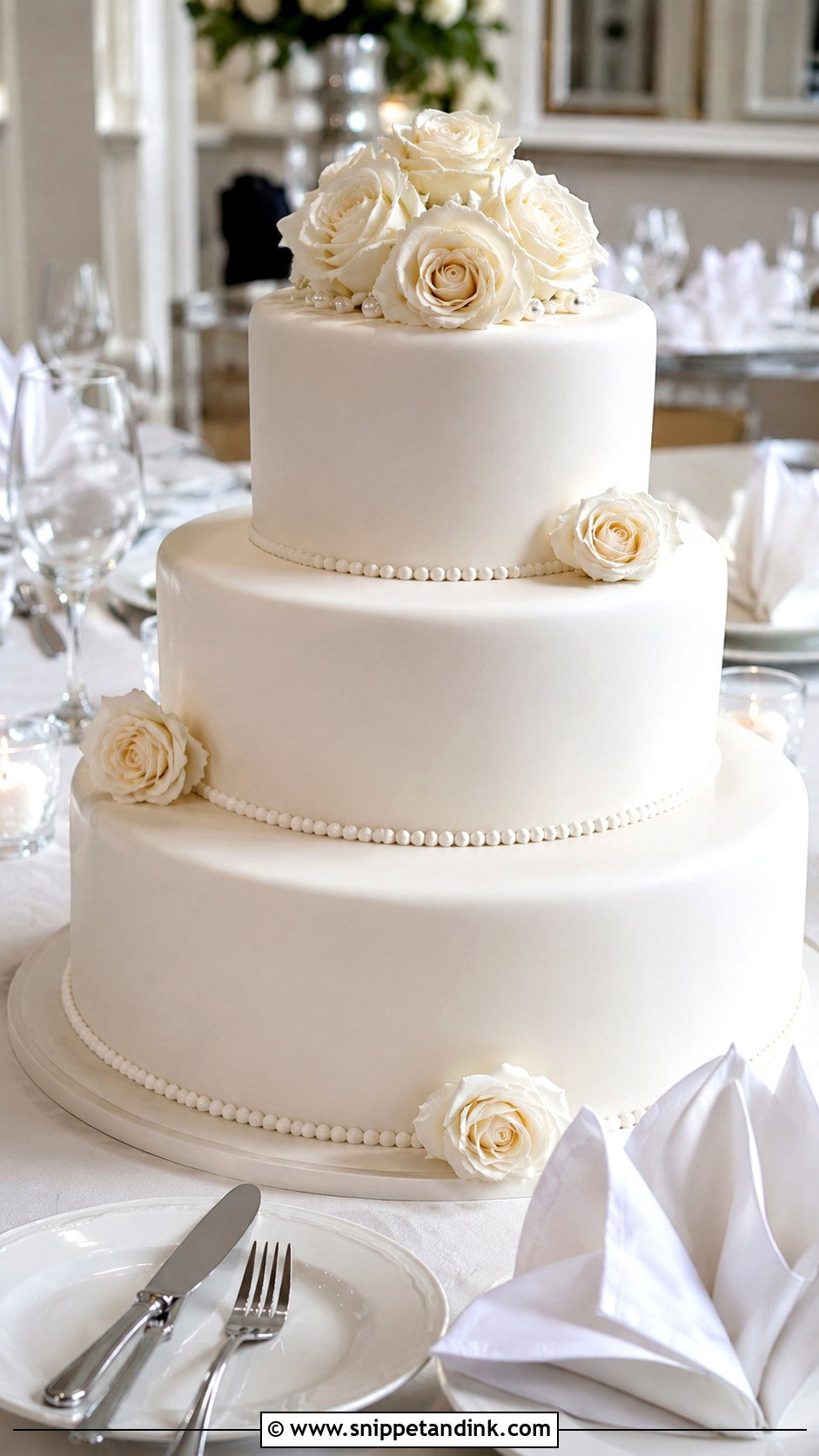
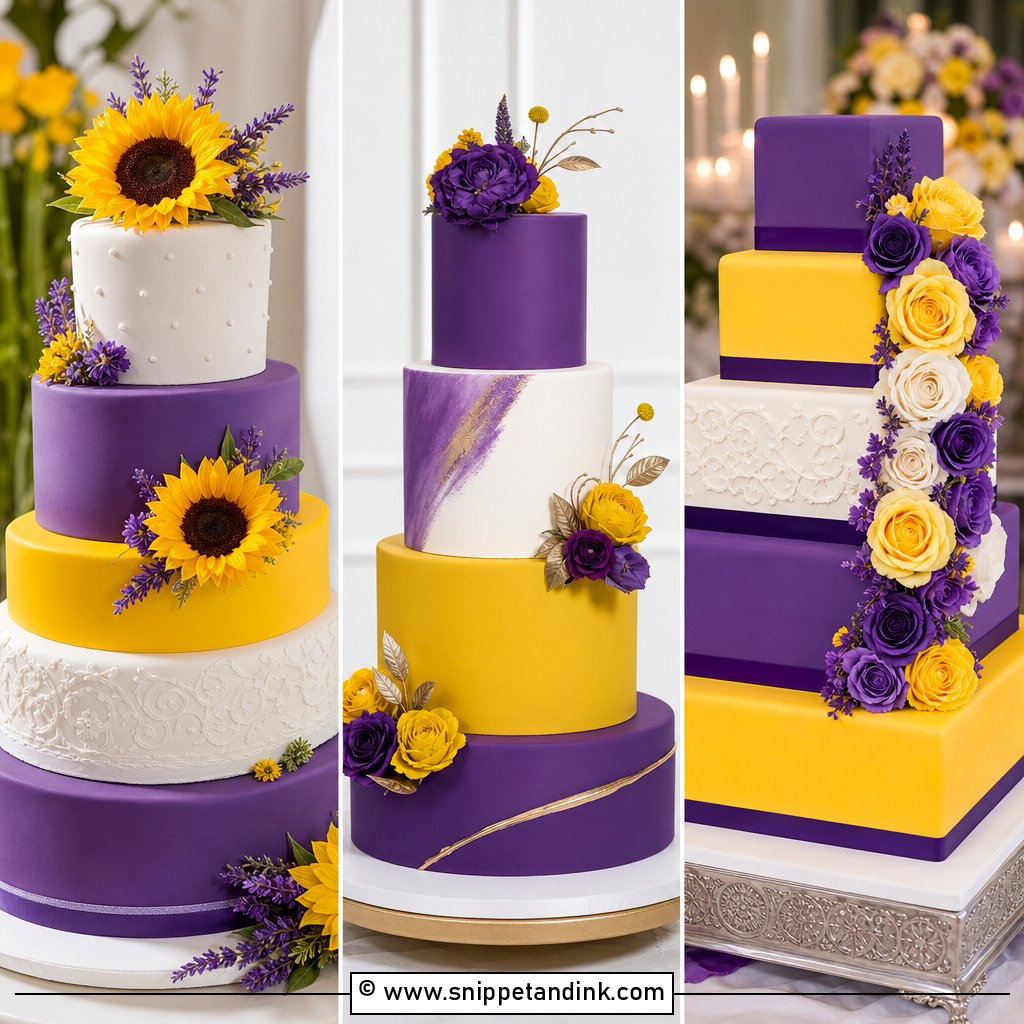
A plated dinner gives the most predictable cake numbers, because the catering team cuts and serves every slice. If cake is the dessert, plan about one serving per guest plus a small buffer. If there’s a plated dessert as well, cake becomes an extra and smaller slices or fewer servings are fine. Three or four tiers suits the formality, and the design should echo the table settings and flowers.
21. Wedding Cake With Saved Top Tier
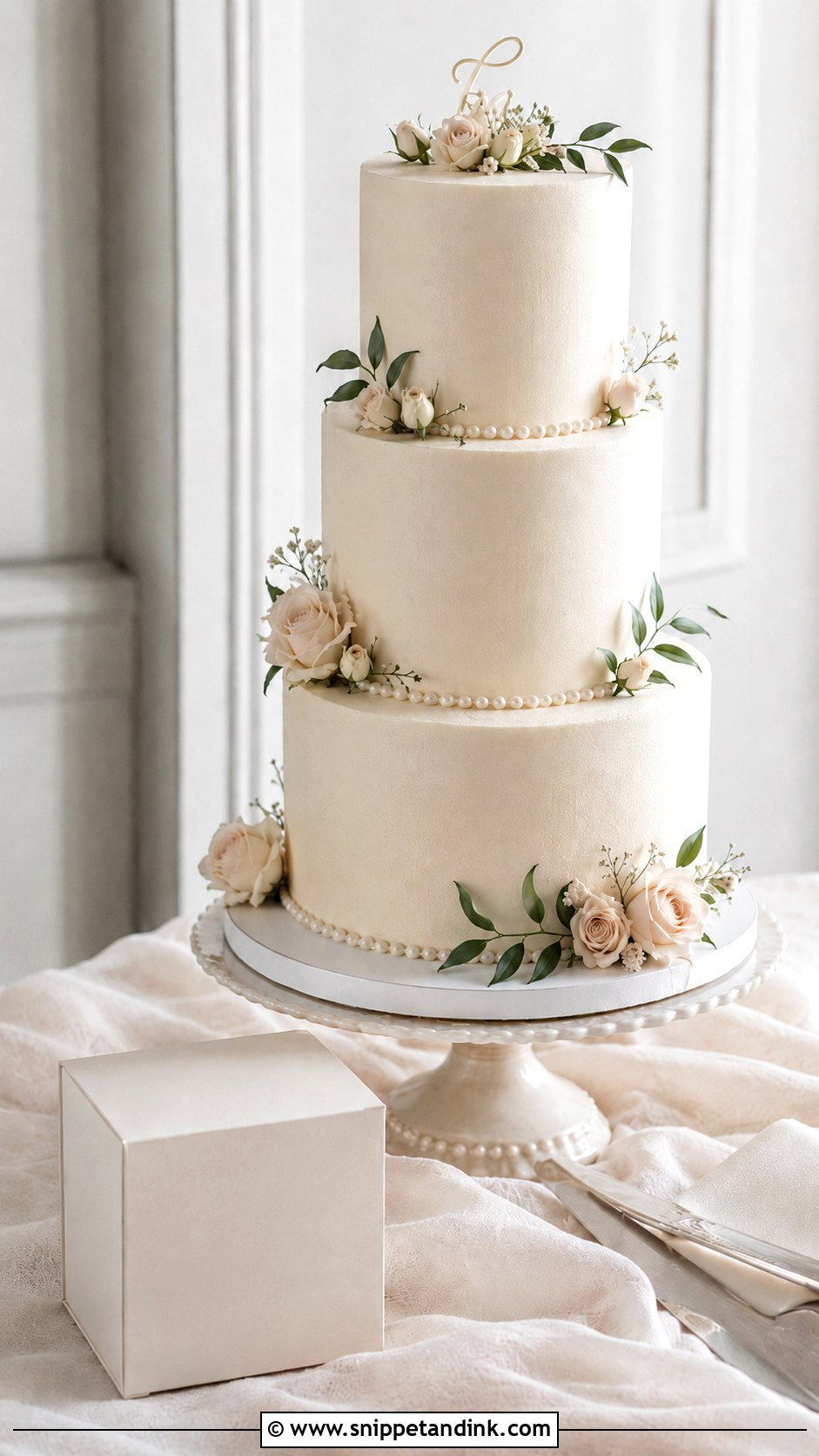
Saving the top tier is a lovely tradition and an easy way to come up short. Those servings leave the count, so a cake that looked right for a hundred may feed eighty-odd once the top comes off. Tell your baker at the start. For freezing, remove decorations, chill the tier until the frosting is firm, then wrap it tightly in several layers of plastic wrap and foil before it goes in the freezer. Dense cakes like chocolate and carrot survive freezing better than delicate sponges or fresh-fruit fillings. Some couples skip the frozen tier and order a small fresh cake on the anniversary instead.
22. Wedding Cake With Larger Dessert Slices
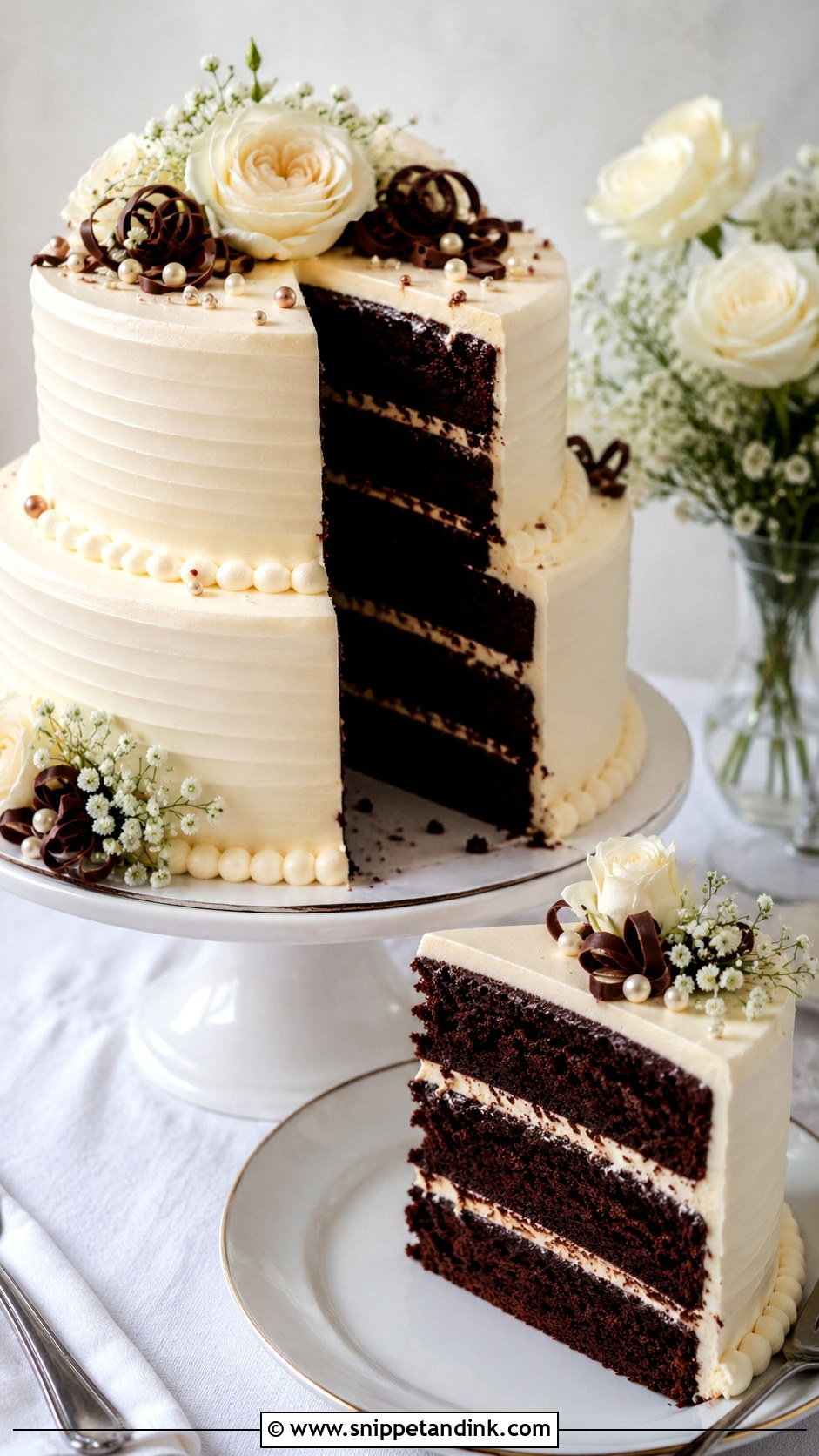
Wedding charts assume narrow portions, and if cake is the only sweet thing at the reception, guests may find them stingy. If you’d like fuller dessert-size slices, ask your baker to size for dessert portions, which means wider tiers, taller tiers or an extra kitchen cake. Rich flavors such as chocolate, red velvet, or carrot cake feel like a complete dessert at that size, especially with a little fruit on the plate.
23. Wedding Cake With Smaller Coffee Slices
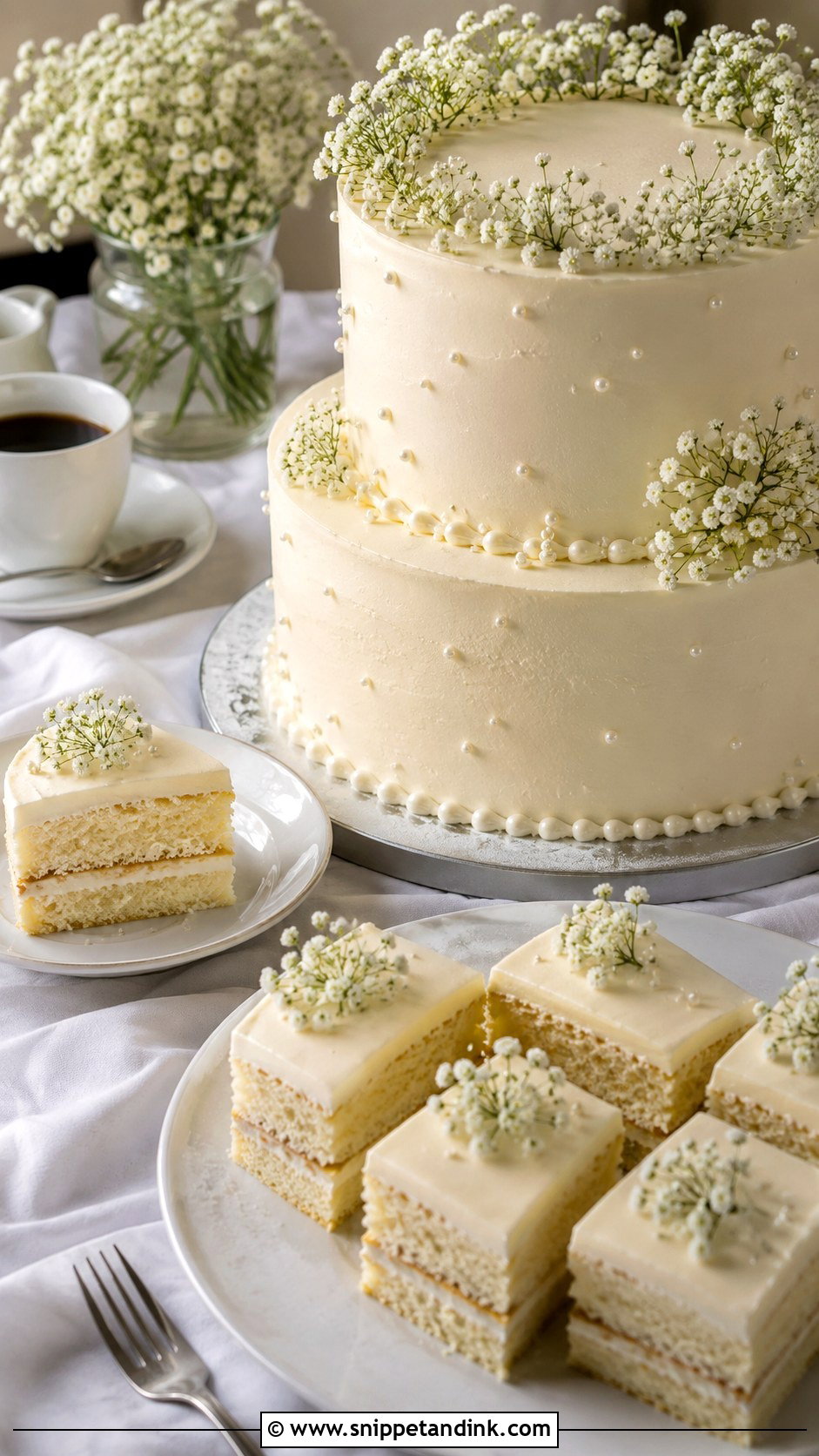
Coffee portions are even smaller than wedding portions and make sense late in the evening, when cake comes with coffee or alongside other desserts. The same cake stretches noticeably further. That suits receptions where plenty of guests are dancing and won’t eat much more. It also cuts waste. If you want the cake to look bigger than the serving count needs, a dummy tier or a taller base fixes that. Confirm the slice style in writing with the caterer, since they’re the ones holding the knife.
24. Round Wedding Cake Size Guide
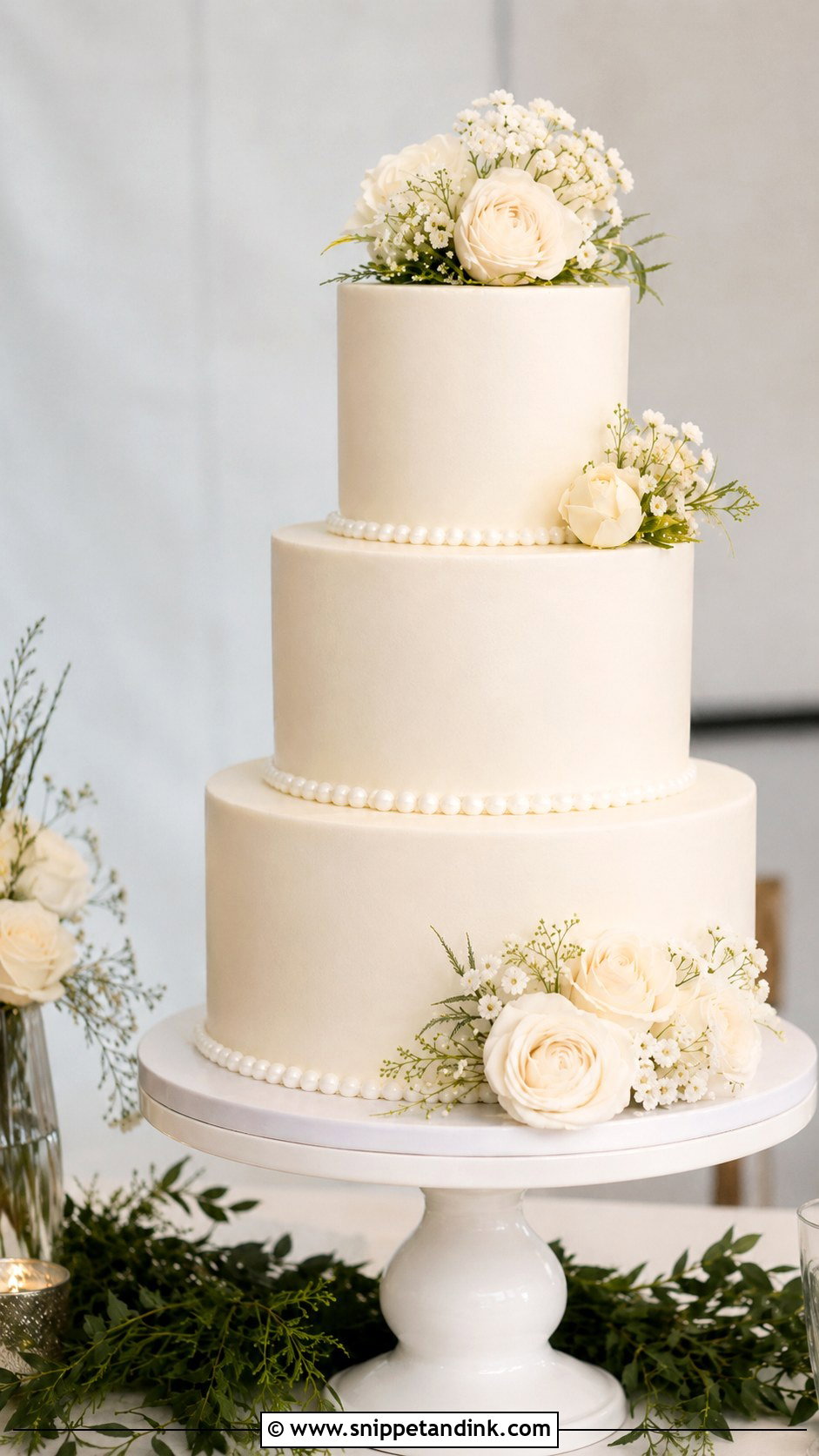
Rounds are where most charts start, because round tiers are the most common and stack predictably. Six- and 8-inch rounds suit small weddings; 10, 12 and 14 inches build the serving count. Height changes everything: the usual chart assumes four-inch-tall tiers, and taller tiers serve more. If you don’t know where to begin, give your baker your guest count, serving style and your plans for the top tier, and let them suggest the combination.
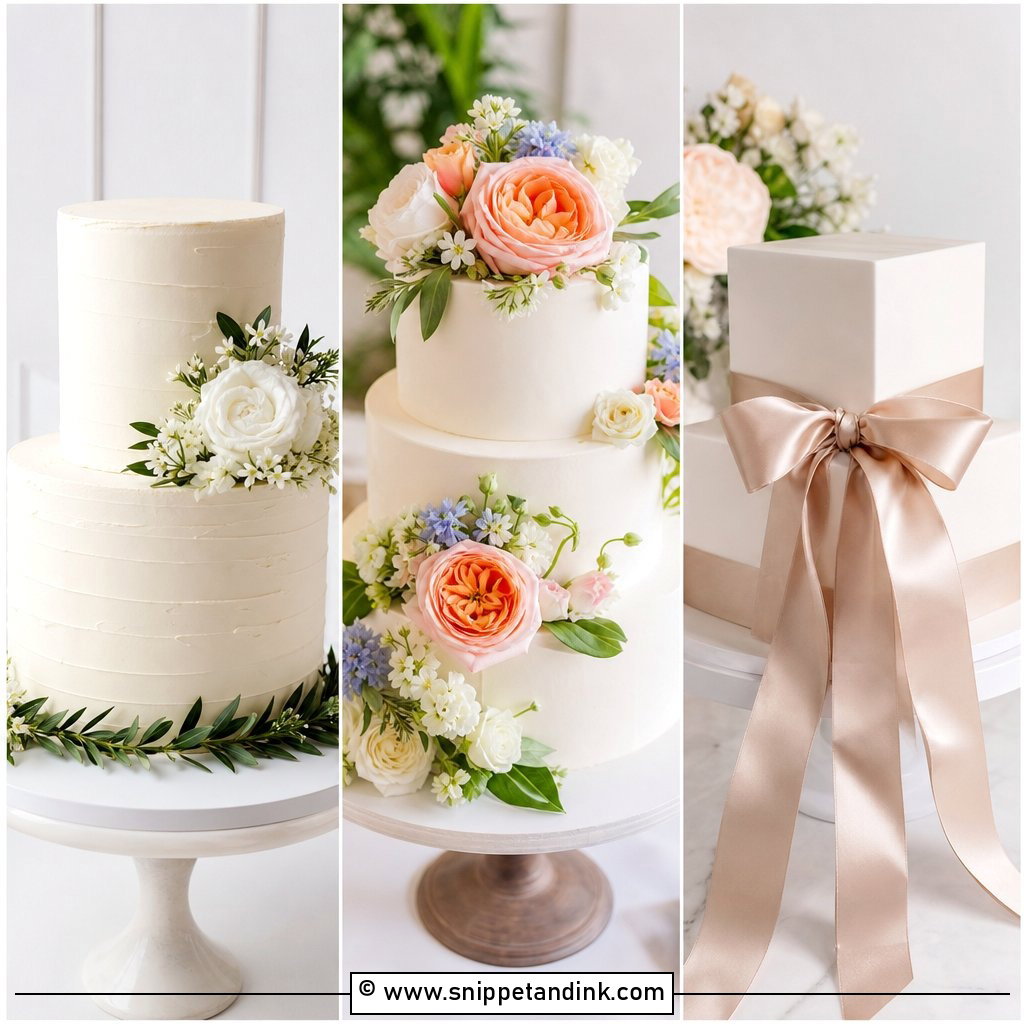
25. Square Wedding Cake Size Guide
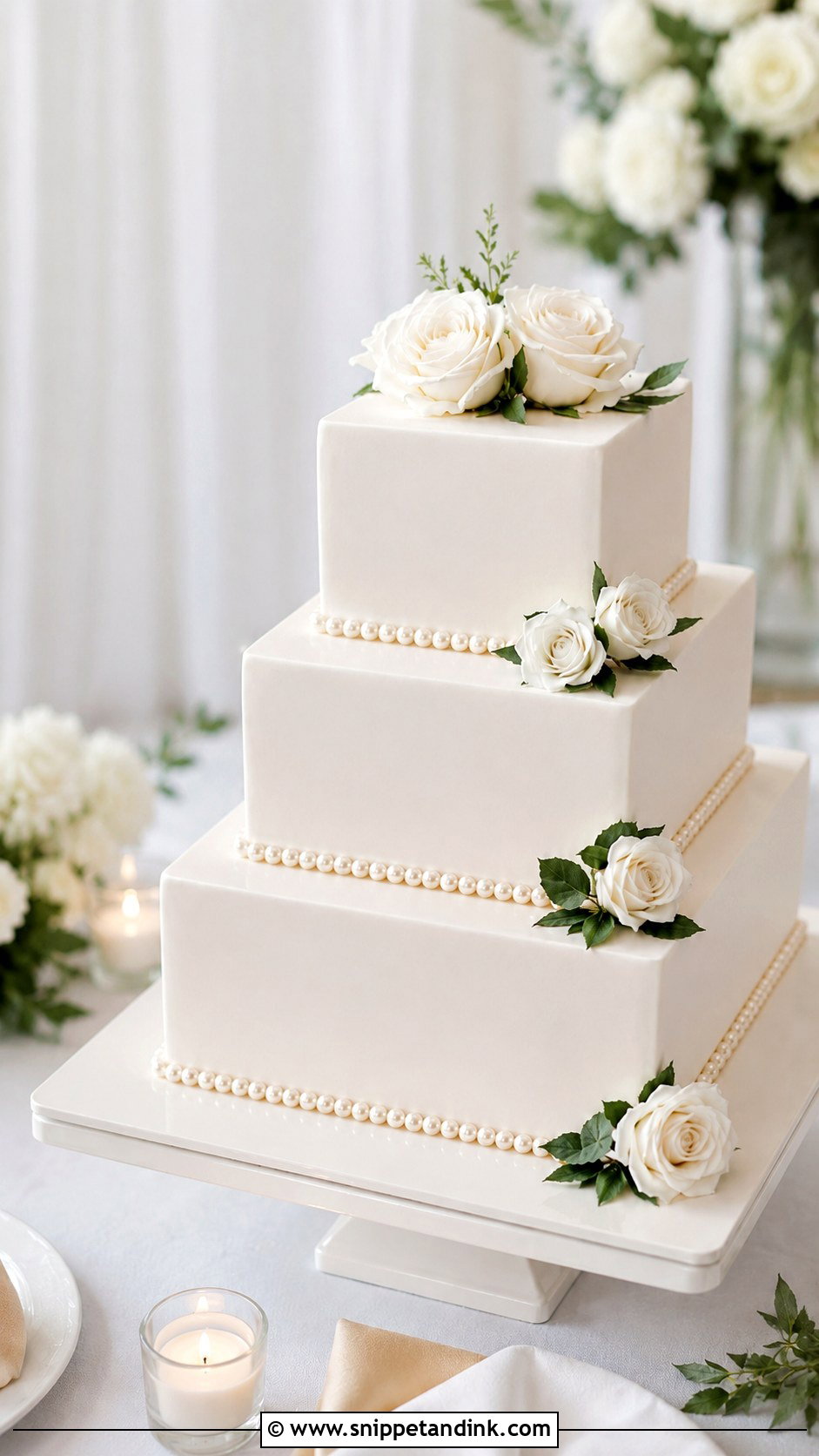
Square tiers serve noticeably more than round ones of the same width, because there’s no curve cutting off the corners. They cut into neat, even pieces too, which caterers appreciate. The trade-off is finish: corners show every flaw in fondant or buttercream, so look for square cakes in your baker’s portfolio before choosing one. Square suits structured, modern designs, and a smaller square cake can feed the same crowd as a larger round one.
Working Out Your Number Before the Tasting
Bakers can size a cake in minutes once they know a few facts. Have these answered before your consultation and the quote will be accurate the first time.
- Expected adults and children. Small children often eat a smaller piece or skip cake, though it’s safest to count everyone.
- Other desserts. A dessert table, favors or a late-night snack all reduce how much cake gets eaten.
- Serving style. Plated by the caterer, buffet, or self-serve from the cake table.
- Portion size. Coffee, wedding or dessert slices.
- Top tier. Saved or served.
- Display height. Whether you’d accept dummy tiers or a kitchen cake to get the look you want.
When the headcount changes late
Most bakers set a deadline for the final number a few weeks out. If your list grows after that, adding a kitchen cake is far easier than redesigning the display, so ask whether that’s an option before you need it.
Going the other way, a shrinking list rarely saves as much as couples hope once the design is set, since the decorating time stays the same. It is still worth telling your baker, because they may be able to drop a tier width or swap a real tier for a dummy without changing the look.
Your Serving Count Depends on Who Holds the Knife
Guest count is only the starting number. How the cake is served, how wide each slice is, whether the top tier is saved and how much presence you want in the room all shift the order. A small wedding may need one or two tiers; a large one may need five or six with kitchen cakes behind it. Compare your baker’s chart with your caterer’s cutting style before you sign, because that one conversation prevents most shortages. Once the size is right, the design can be whatever you love.
You'll Like These Ideas:


Leave a Reply