
Couples come to me wanting cakes that look sculpted and personal but still taste like cake, not sugar sculpture. That’s the right instinct. The designs below balance classic details with newer ones: smooth buttercream, pressed flowers, pearl piping, wafer paper blooms, draped fondant, tall tiers and small single-tier cakes. A good cake reads clearly from across the room, suits the venue, and is still worth eating at the end of the night. As you go through these 20 designs, notice height, texture, color and flower placement, because those are what end up in your cake-cutting photos.

What Drives the Price of a Designer Wedding Cake
Quotes vary a great deal between bakers and regions, so I won’t put numbers on it, but the factors behind them are the same everywhere. Knowing them helps you decide where to spend and where to hold back.
- Servings, not tiers. Most bakers price per slice, so your guest count sets the baseline before any decoration.
- Handwork. Sugar flowers, Lambeth piping and hand painting are slow. A single large sugar peony can take hours, and that time shows on the quote.
- Finish. Fondant and razor-sharp edges take longer than a rustic buttercream.
- Delivery and setup. Tall cakes stacked on site need time, often a second person, and sometimes a return trip to collect a stand.
- Fresh flowers. Whoever supplies and places them may charge for the stems and the labor.
Two common ways to save: faux tiers made from decorated foam add height without adding cake you pay to bake, and keeping expensive sugar flowers on one tier instead of all of them still gives a strong focal point.
1. White Wedding Cake With Fresh Flowers

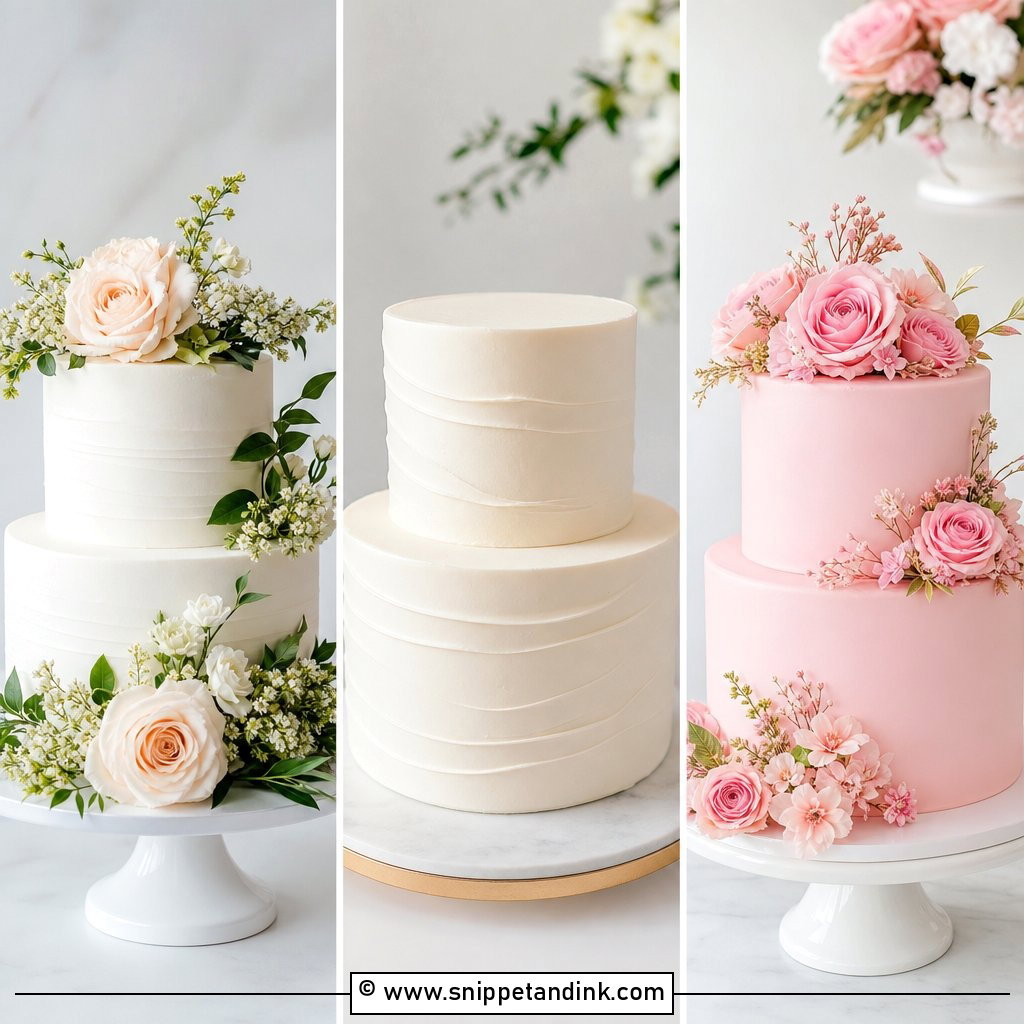
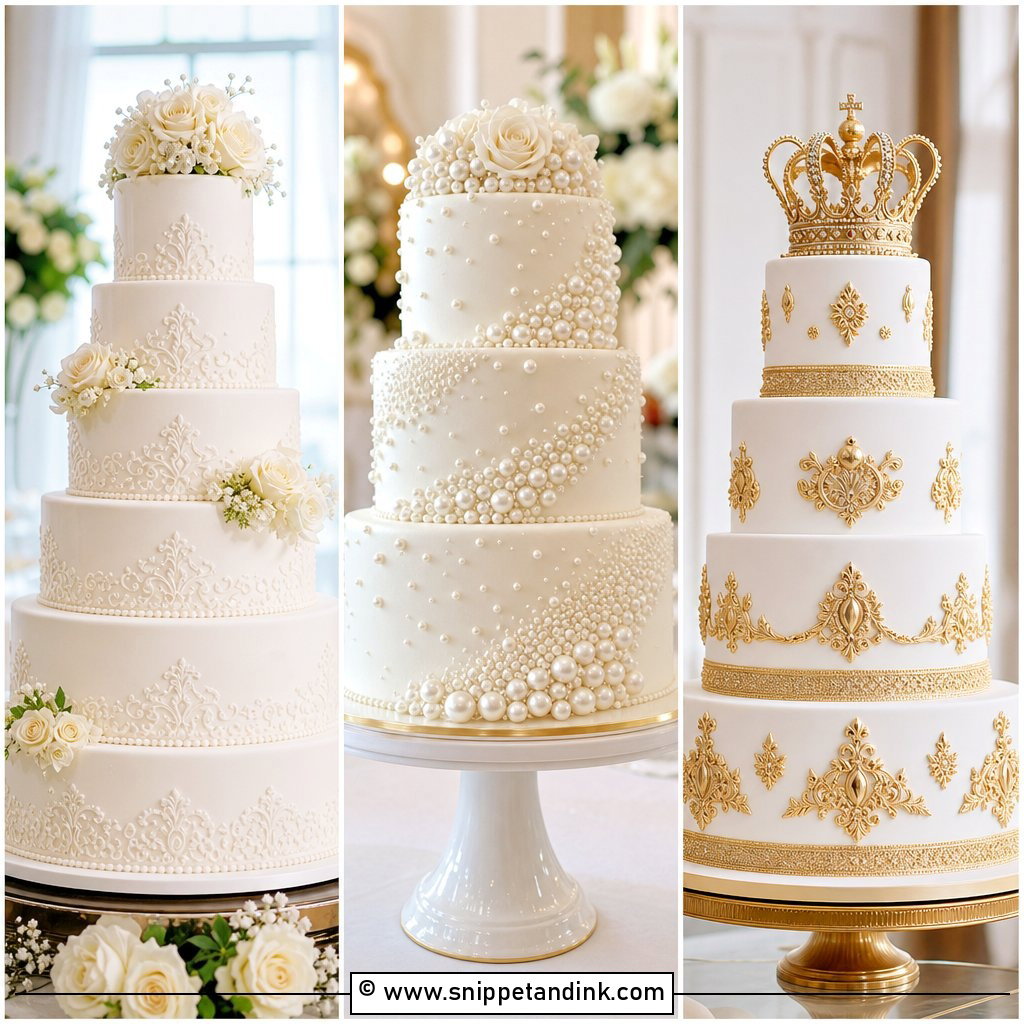
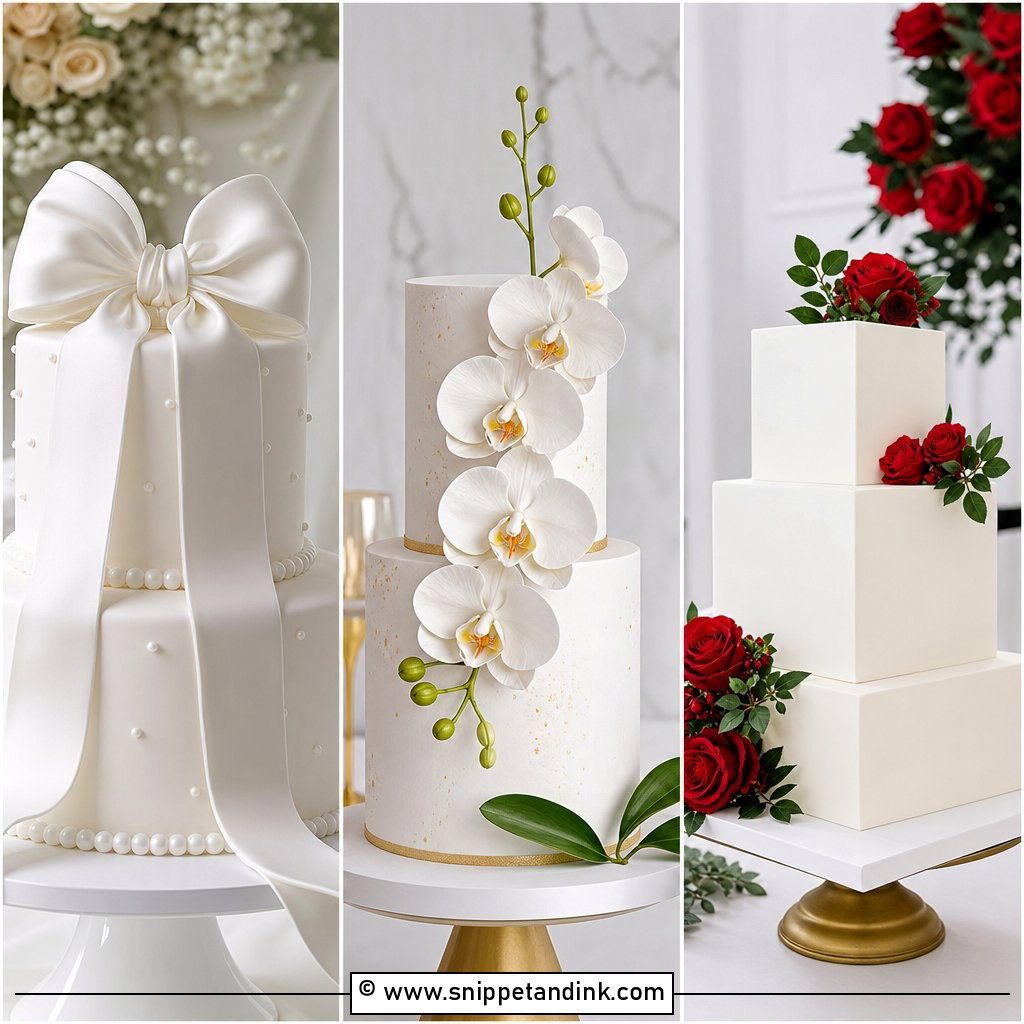
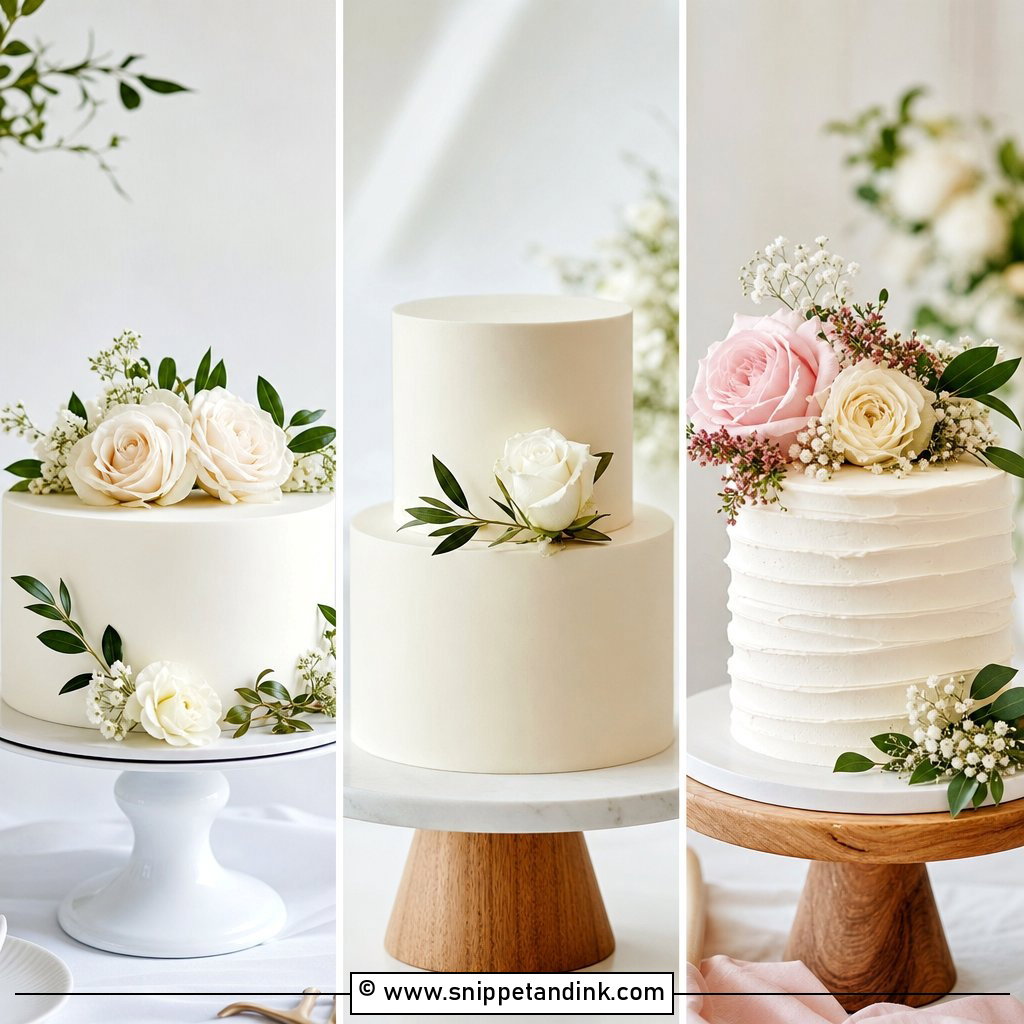
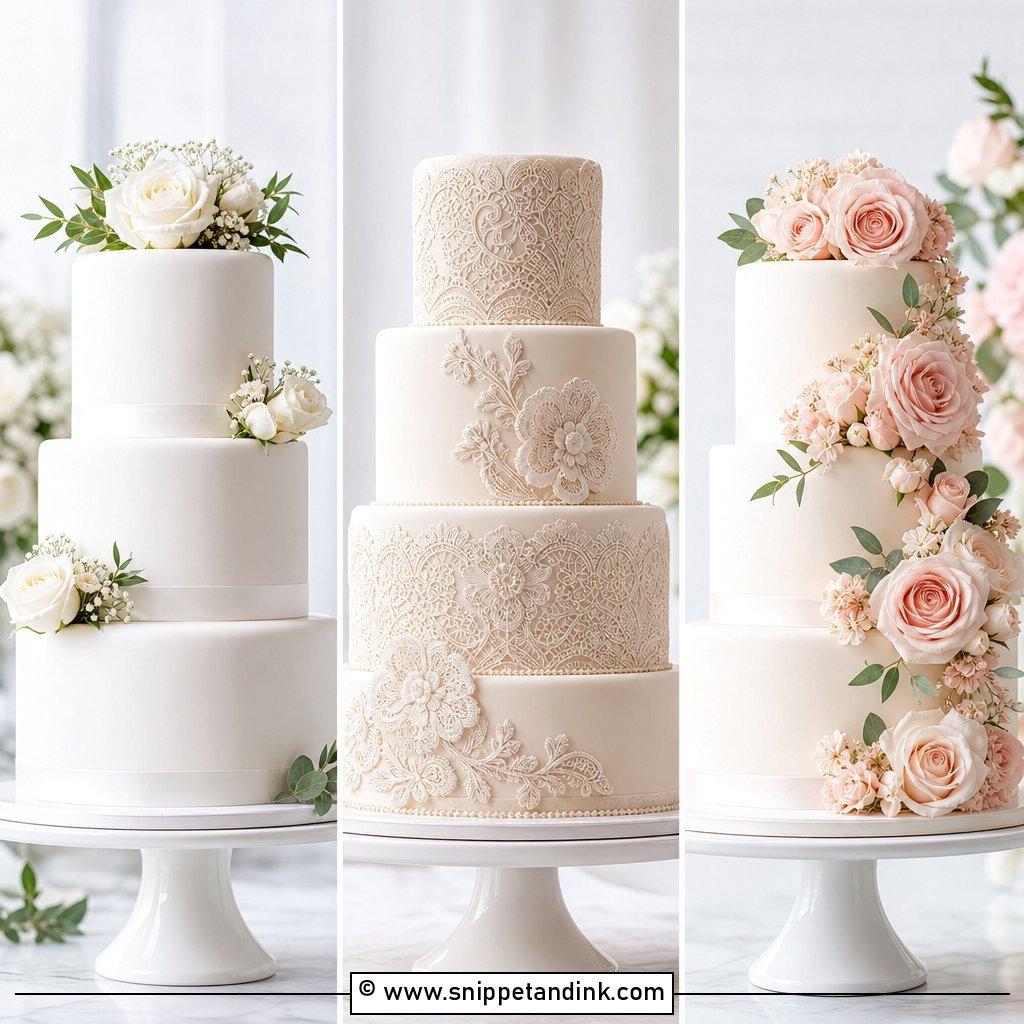
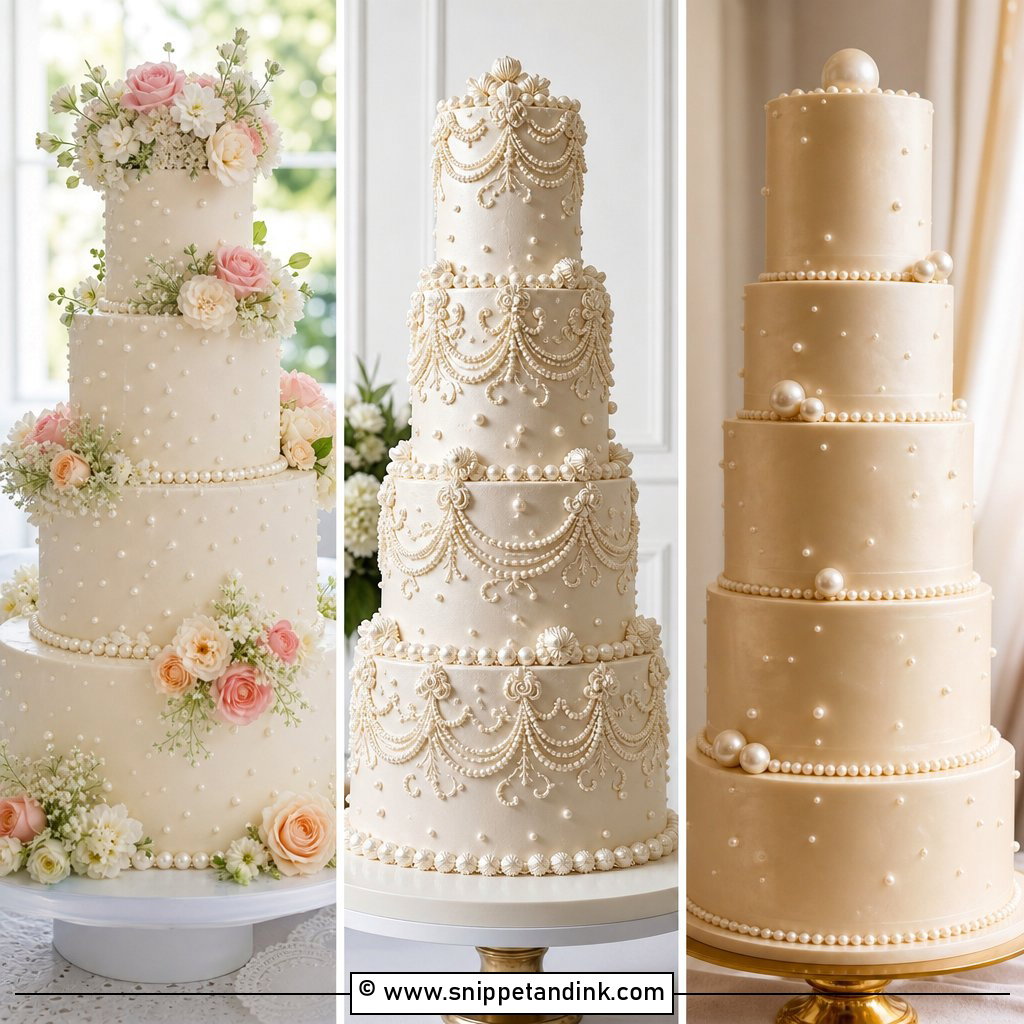
White frosting with fresh flowers is the simplest route to a classic cake that doesn’t look busy, and it’s also the one that needs the most coordination. Not every flower is safe near food. Roses, ranunculus, orchids and sweet peas are common choices, but the stems still need wrapping and a barrier so sap never touches the cake, and the blooms should come from a grower who didn’t spray them. I ask the florist to set aside a few stems from the bouquet order so the cake matches. Let the arrangement drift across the tiers rather than sit in tight clumps. It suits a garden, a ballroom or a tent equally well.
2. Three Tier Wedding Cake

Verdict first: a three tier wedding cake is the size I’d recommend to most couples. It has enough height to read as a wedding cake but stays manageable for many guest counts, and each tier can be a different flavor while the outside stays uniform. Evenly stepped tiers, something like six, eight and ten inches, look balanced; uneven jumps make the outline look awkward. Pick one main detail, such as sugar flowers, a ribbon border or pearl accents, and repeat it on every tier. A raised stand helps it photograph well from the side as well as the front.
3. Vintage Wedding Cake

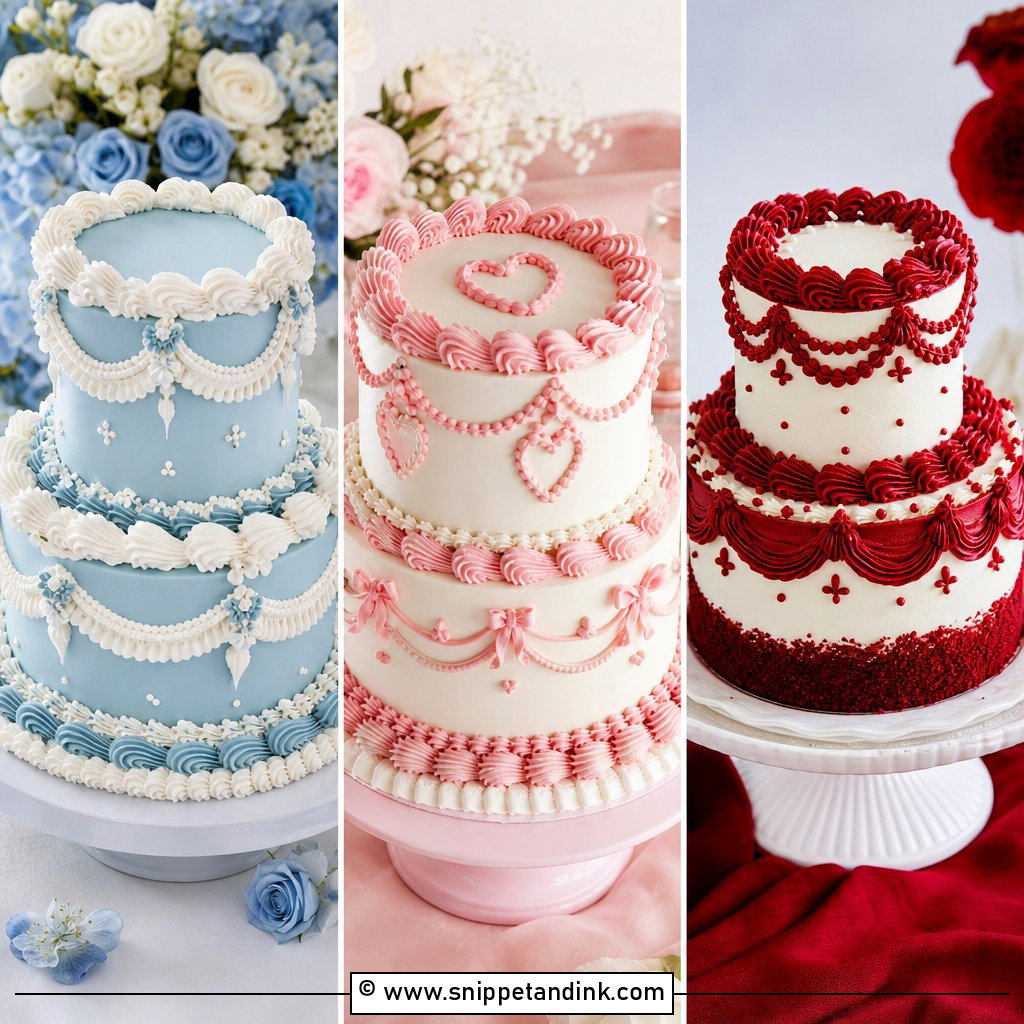
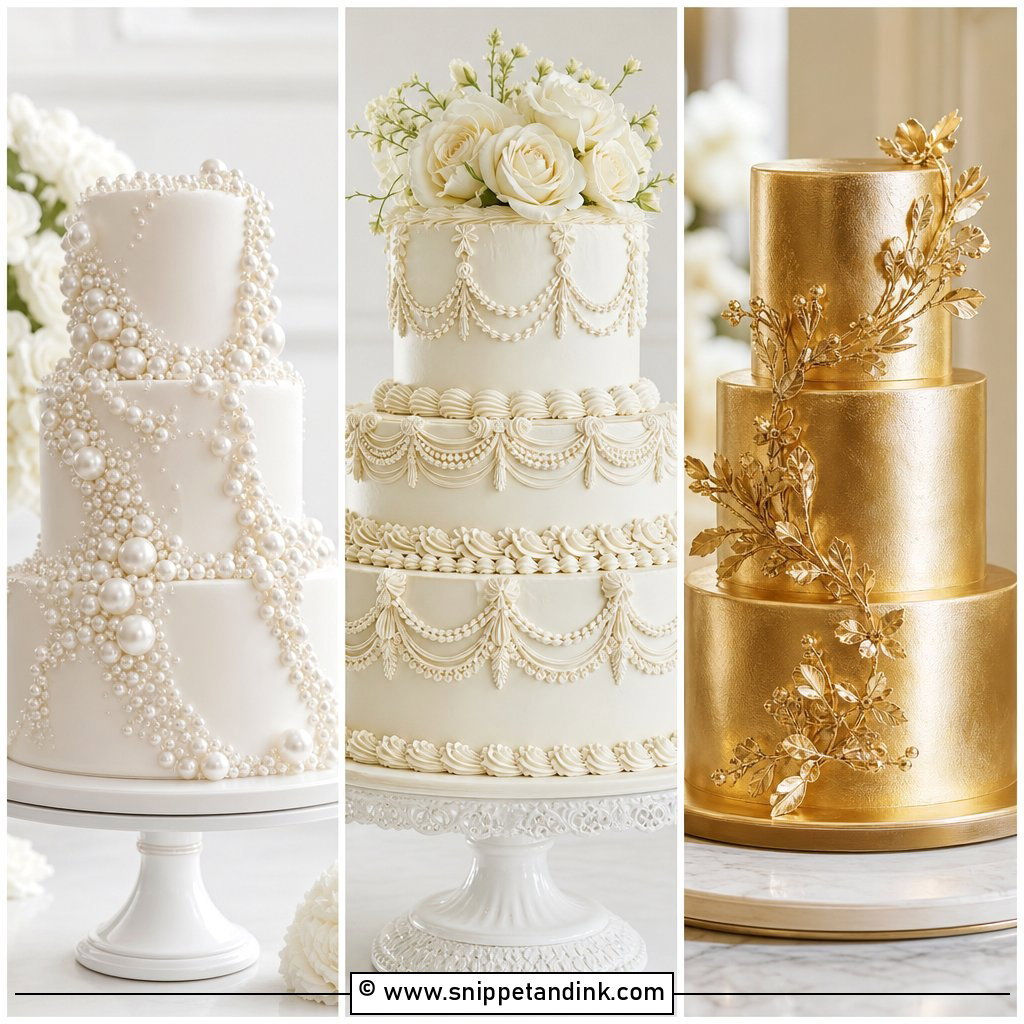
Vintage design means piping: Lambeth overpiping, shell borders, drop strings, bows and piped pearls. It’s ornate, so symmetry is what keeps it from looking messy. I mark the cake with a paper template before piping so every swag lines up with the one below it. White-on-white is the most classic, though pale blush, butter yellow or soft blue look refined too. This kind of work takes hours, so expect it to cost more than a smooth finish. A scalloped stand and a linen cloth suit it.
4. Minimalist Wedding Cake

A minimalist cake has nowhere to hide, which makes it one of the harder ones to do well. With no decoration to cover a wobble, the tiers have to be dead straight and the edges sharp, and that takes proper chilling between coats and a steady hand on the scraper. One finishing detail is enough: a single orchid stem, a silk ribbon, a fine pearl border or a soft texture. It sits naturally in city venues, museums and bright loft spaces. Polished flavors suit it, like vanilla bean, almond, lemon or a champagne-style sponge.
5. Pearl Wedding Cake

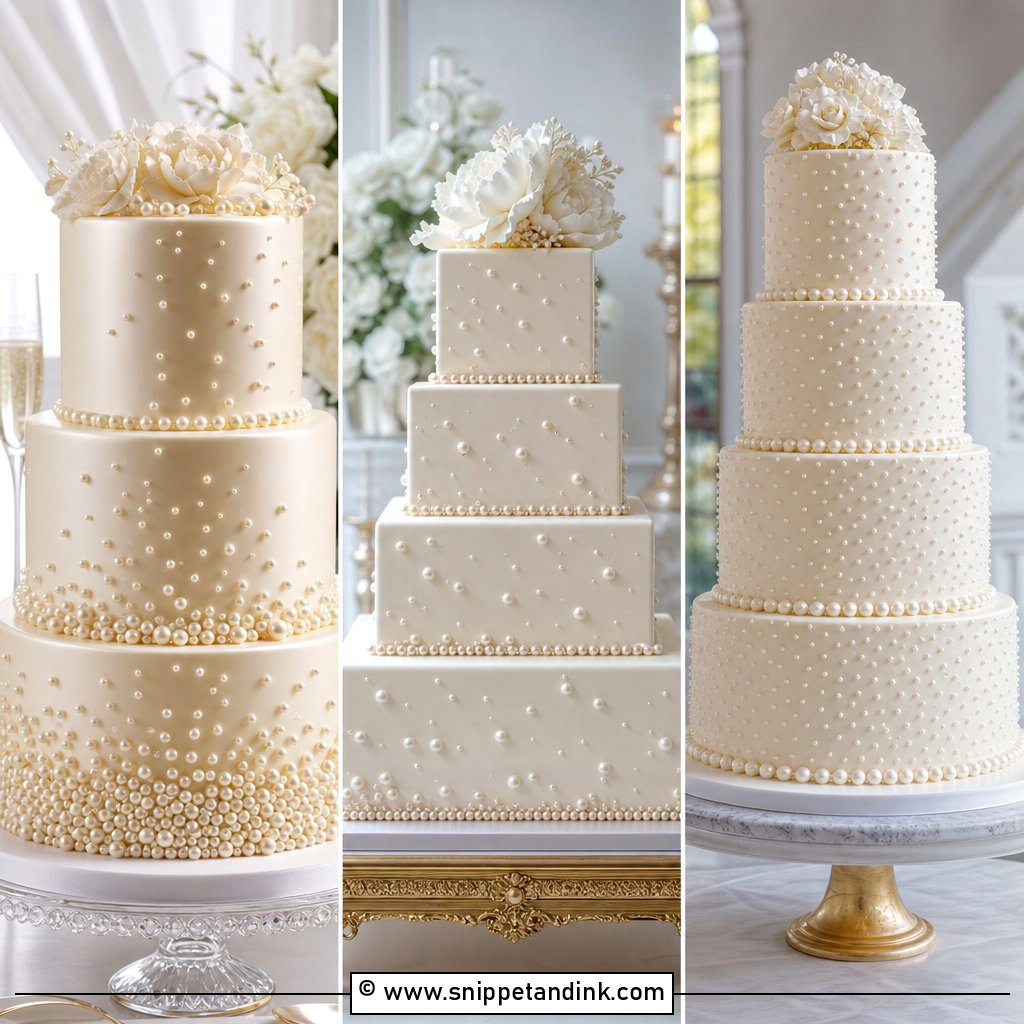
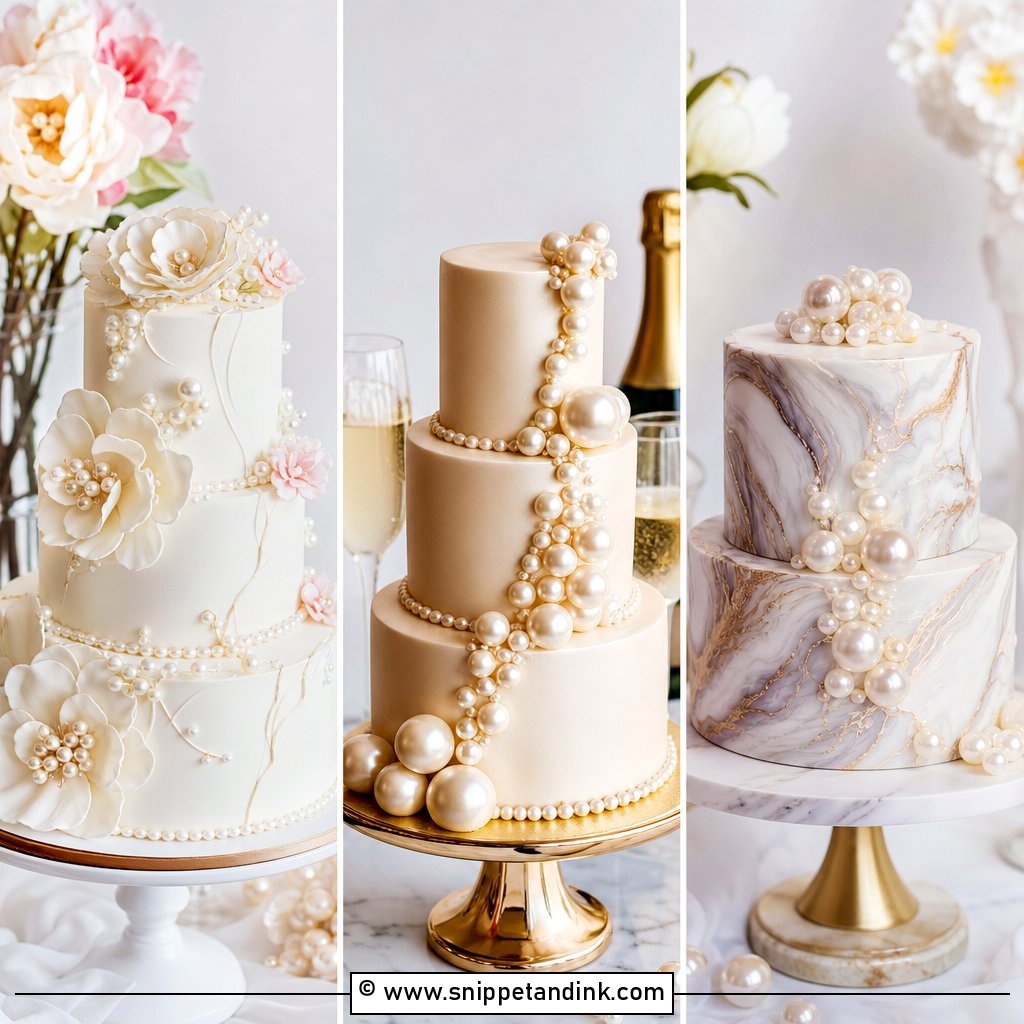
Pearls work best with restraint. Scatter edible pearls lightly over smooth buttercream or set them in neat borders, or for more drama cover one tier with pearl clusters and leave the rest plain. Clusters of mixed sizes look richer than rows of one size. Ivory and cream are the kindest bases. Hard sugar pearls are tough to bite, so I keep the densest cluster on a tier that’s saved or displayed, or switch to softer pearls on the tiers that get served. It suits pearl jewelry, silk gowns and candlelit receptions.
6. Floral Wedding Cake

Floral cakes can be bold or quiet, and the material decides the mood more than the color does. Sugar flowers look sculptural and last for years as keepsakes. Fresh ones look natural but need food-safe handling and go on at the venue. Piped buttercream flowers look handmade and are edible all the way through. Whichever you choose, I let the blooms curve around the tiers rather than cover them and keep greenery sparing so the cake still looks like a cake. Vanilla, almond, lemon or berry fillings sit well under any of them.
7. Buttercream Wedding Cake
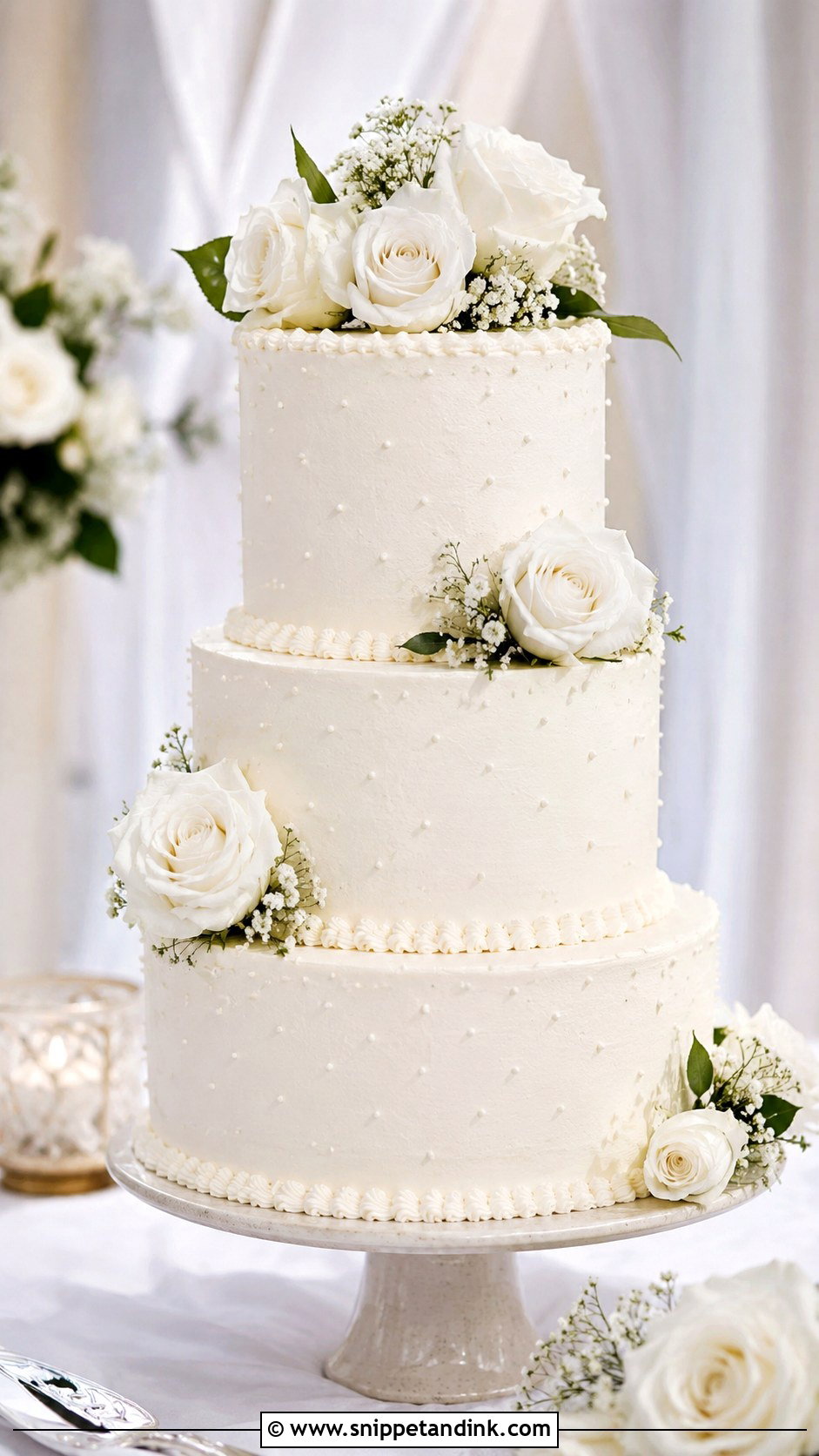
Most guests prefer the taste of buttercream, and it suits couples who want elegance without the very smooth look of fondant. The finish can be sleek, lightly textured or combed into ridges. Ivory with fresh flowers, piped pearls or a simple border keeps it refined. Its weakness is heat. Butter softens in a warm tent, and a cake left in sun can bulge or lean, so for a summer outdoor wedding I talk through shade, cooling and timing before we discuss decoration at all.
8. Fondant Wedding Cake
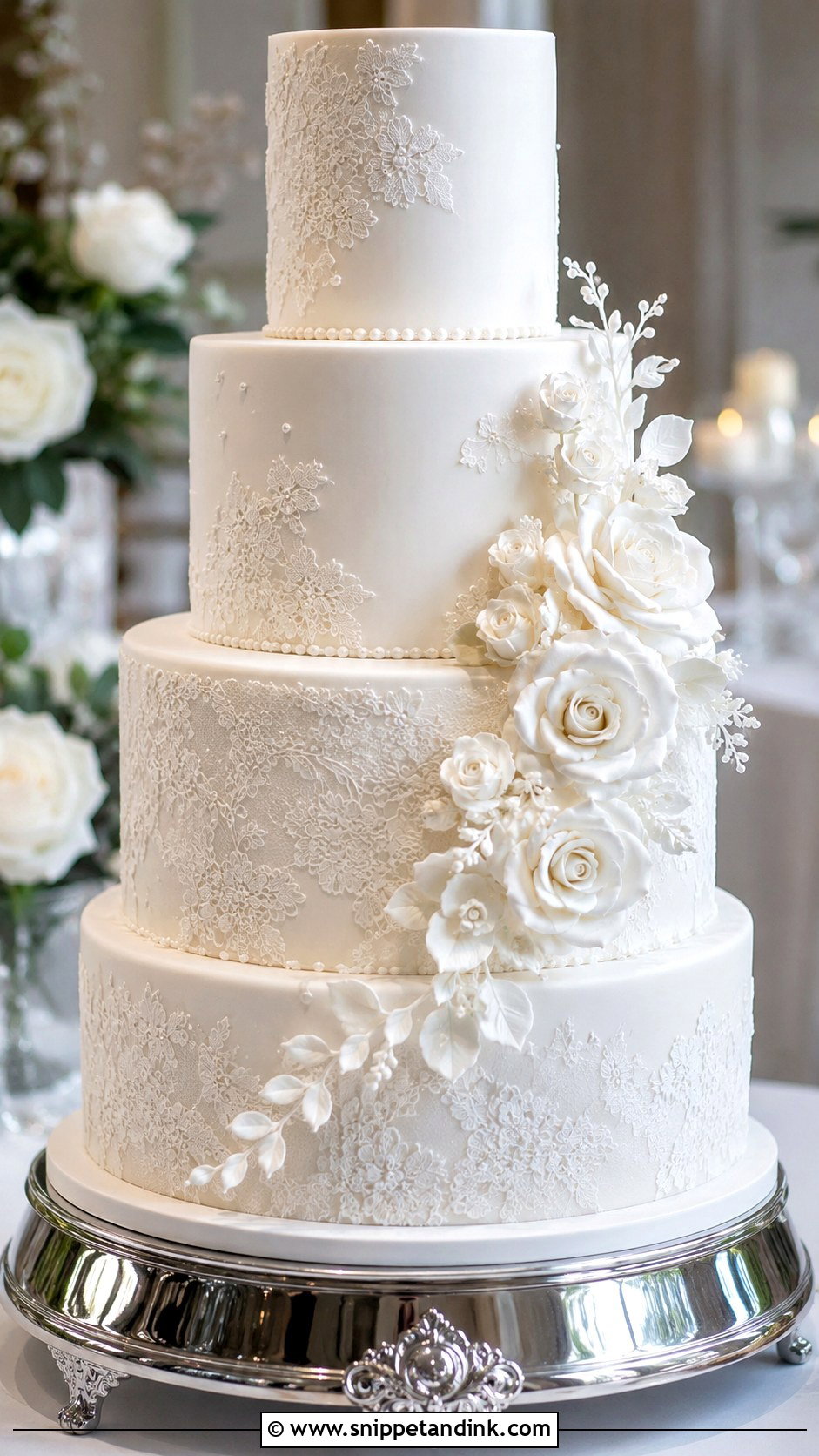
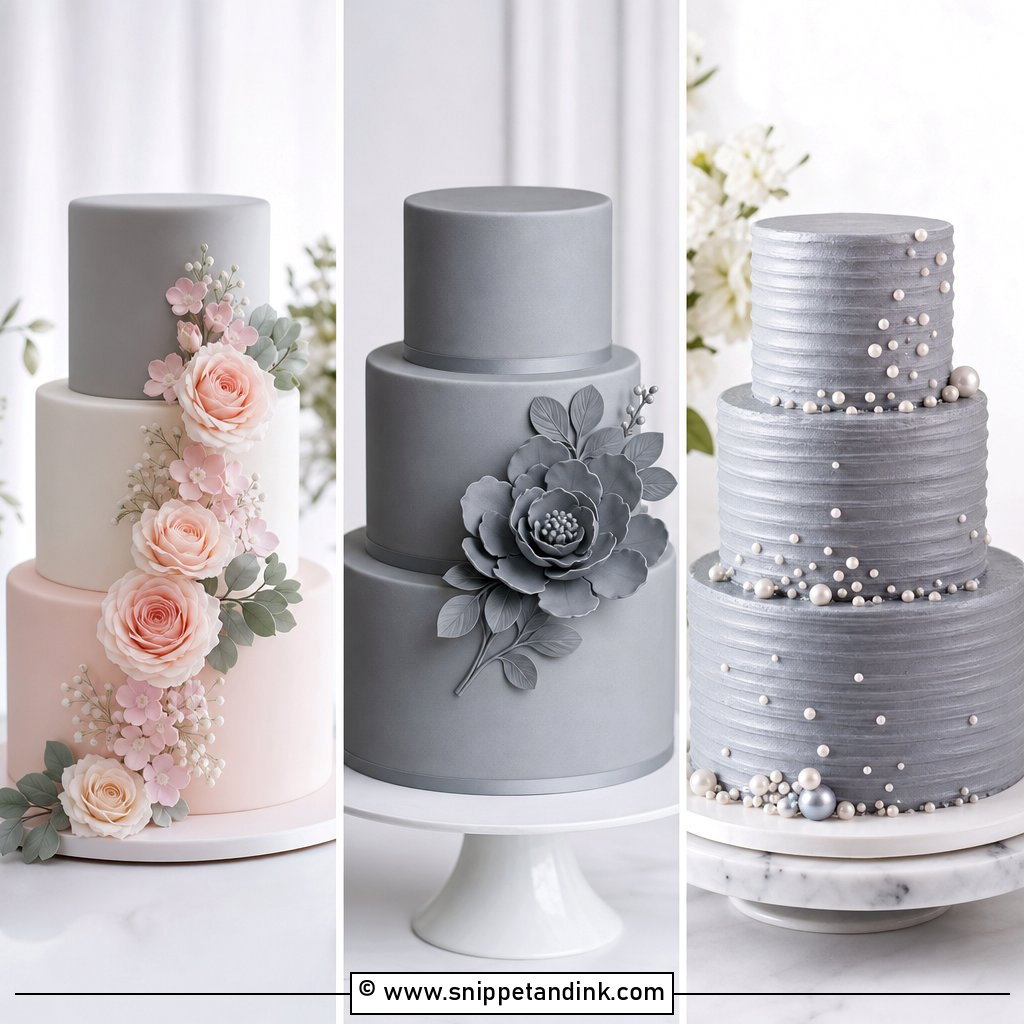
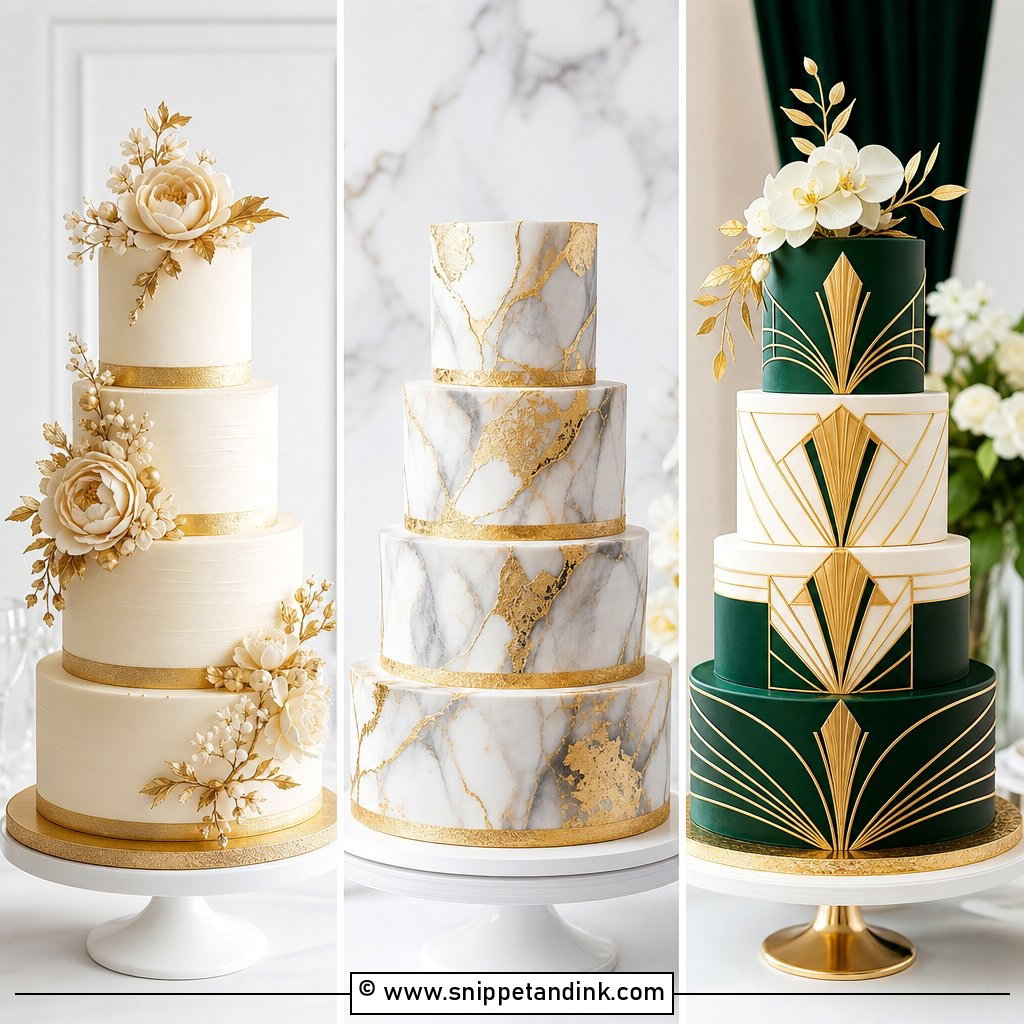
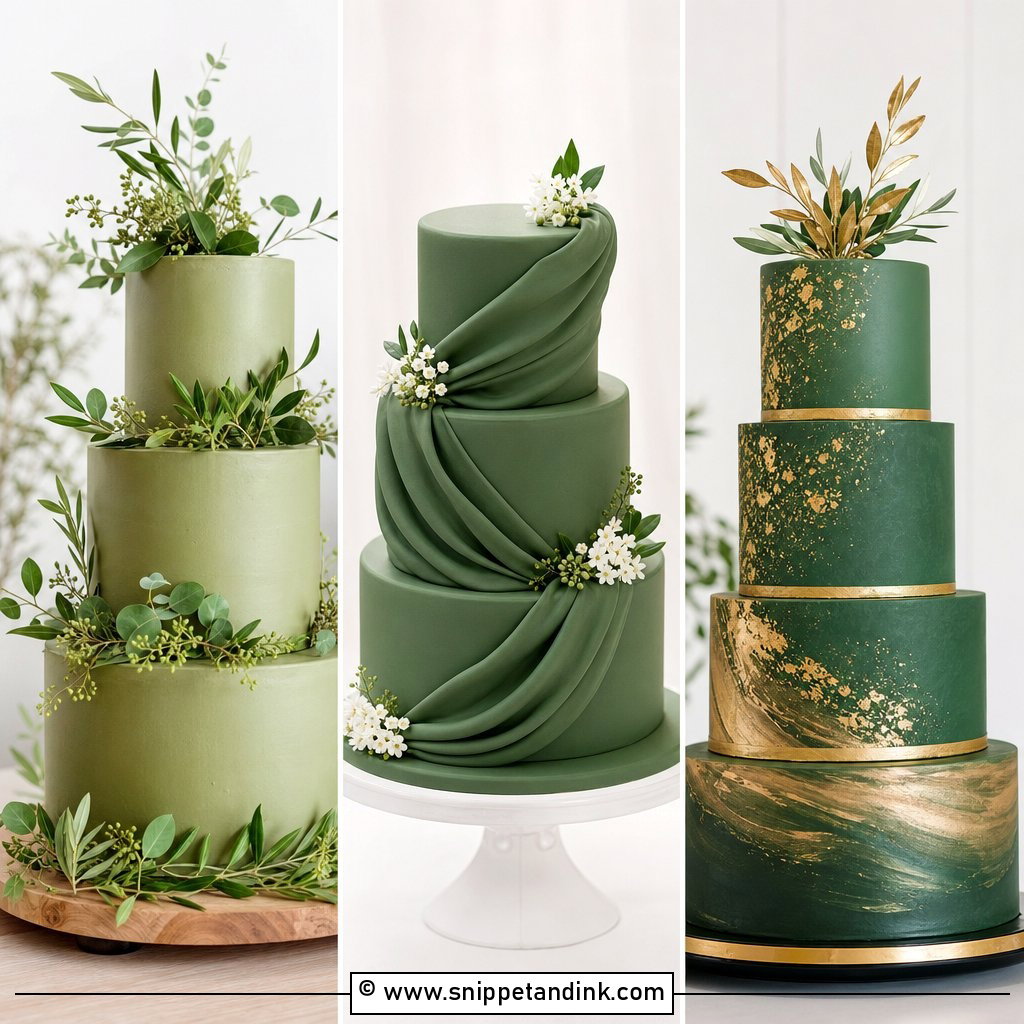
Fondant gives the smooth surface and sharp edges you can’t get any other way, which is why it’s chosen for pleats, lace impressions, drapes, painting and metallic leaf. Underneath, it usually covers buttercream or ganache, and guests who don’t like it can peel it off. It also copes with a warm room better than exposed buttercream. White or ivory is classic, but fondant takes color evenly too. Choose one feature and let the clean surface do the rest. A fondant cake with five techniques on it starts to look like a sample board.
9. Tall Wedding Cake

A tall cake owns a big room, especially one with high ceilings. Extra-tall tiers or five-tier stacks create drama without needing much decoration. Height means engineering: every tier sits on its own board over dowels, and anything beyond three or four tiers usually gets a central rod and is assembled at the venue. Ask your baker how they build and transport tall cakes, and look at photos of ones they’ve actually delivered. Smooth buttercream, fondant or a thin floral trail keeps the height graceful.
10. Single Tier Wedding Cake

A single tier is right for elopements, courthouse weddings and couples serving other desserts too. To make one tier look special, I make it taller than a standard layer, what bakers call a double-barrel, and keep the finish smooth with one detail: fresh flowers, pressed petals, pearl piping or a soft ribbon. You also get to pick a flavor you really love, since you aren’t trying to please a crowd with variety. Set it on a raised stand so it doesn’t disappear on the table.
11. Square Wedding Cake

Square tiers look structured and modern, and they’re more work than rounds because the corners must be crisp and the sides perfectly flat. Fondant or a very sharp buttercream finish carries them best. They suit city weddings and contemporary venues. Keep decoration simple so the shape reads: a few sugar flowers at the corners, thin ribbon around each tier, or a soft metallic edge. Tiers can stack evenly or be rotated a quarter turn for a sculptural look. They also cut into neat, even portions, which caterers appreciate.
12. Round Wedding Cake

Round is the shape most people picture, and it’s the most flexible one there is, reading romantic, modern, rustic or formal depending on the finish. For an elegant result I focus on clean frosting, sensible tier sizes and decoration that flows down the cake. Cascading flowers, piped borders and subtle texture all sit naturally on curves. Round tiers cut efficiently for small and large guest counts. If you’d like a cake that won’t look dated in photos years from now, this is the safest shape.
13. Black And White Wedding Cake
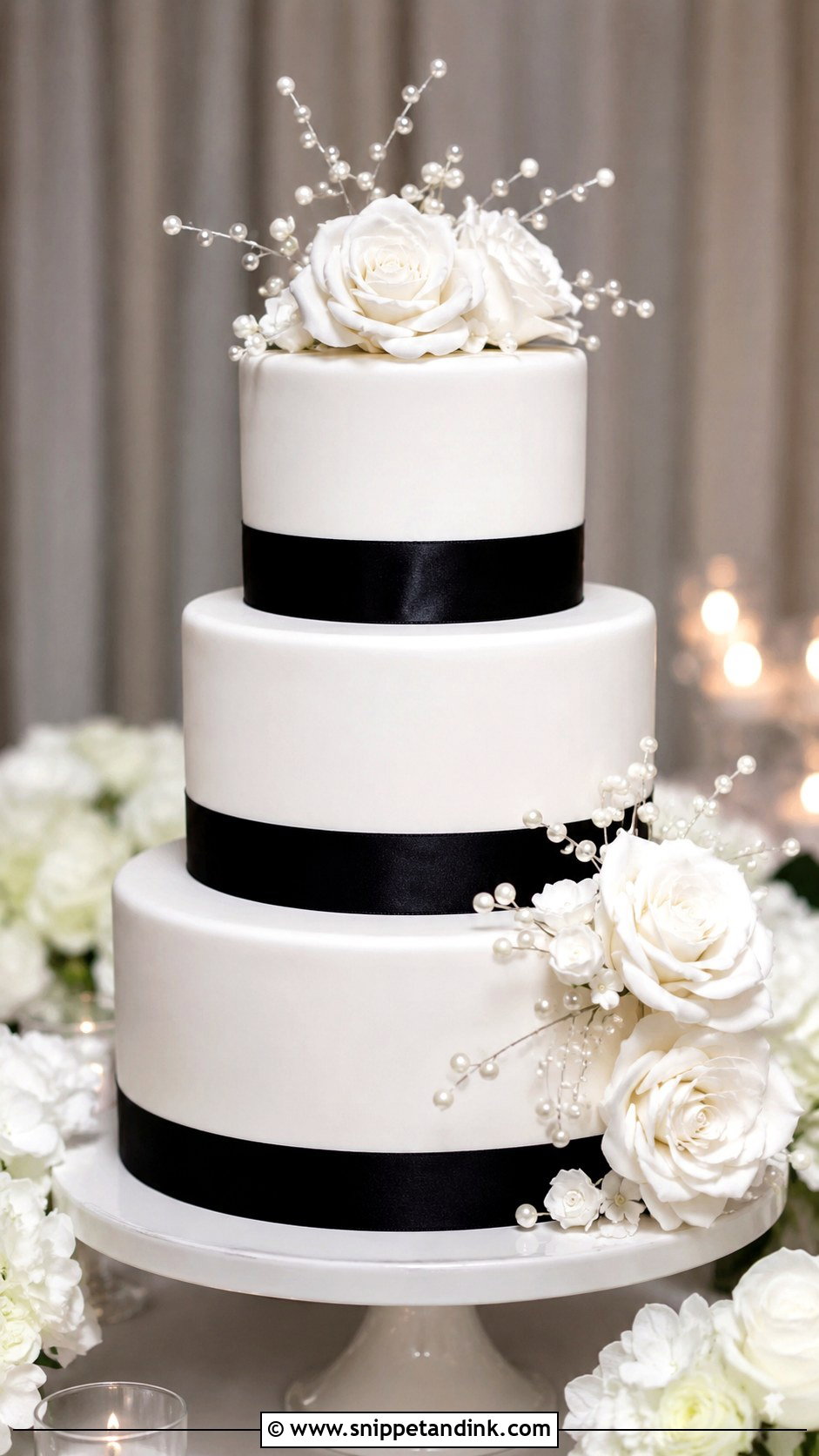
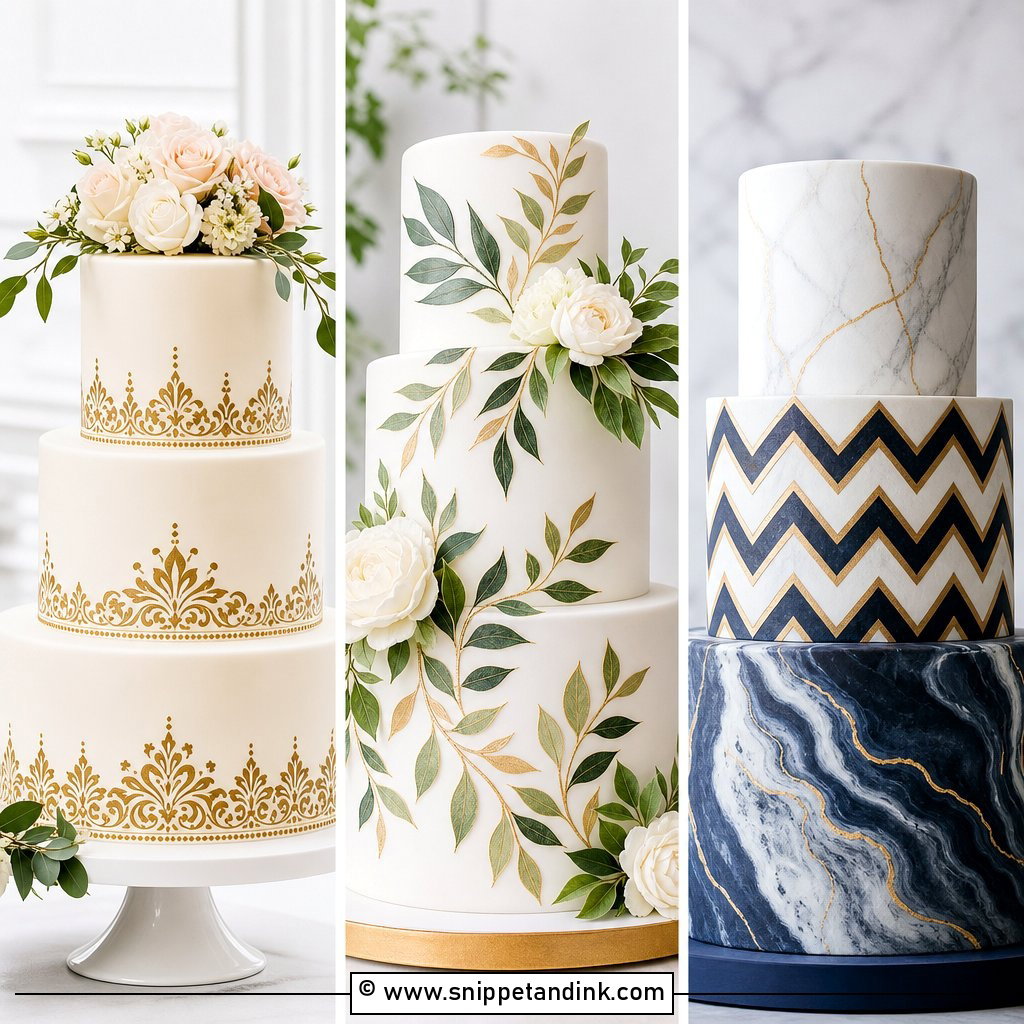
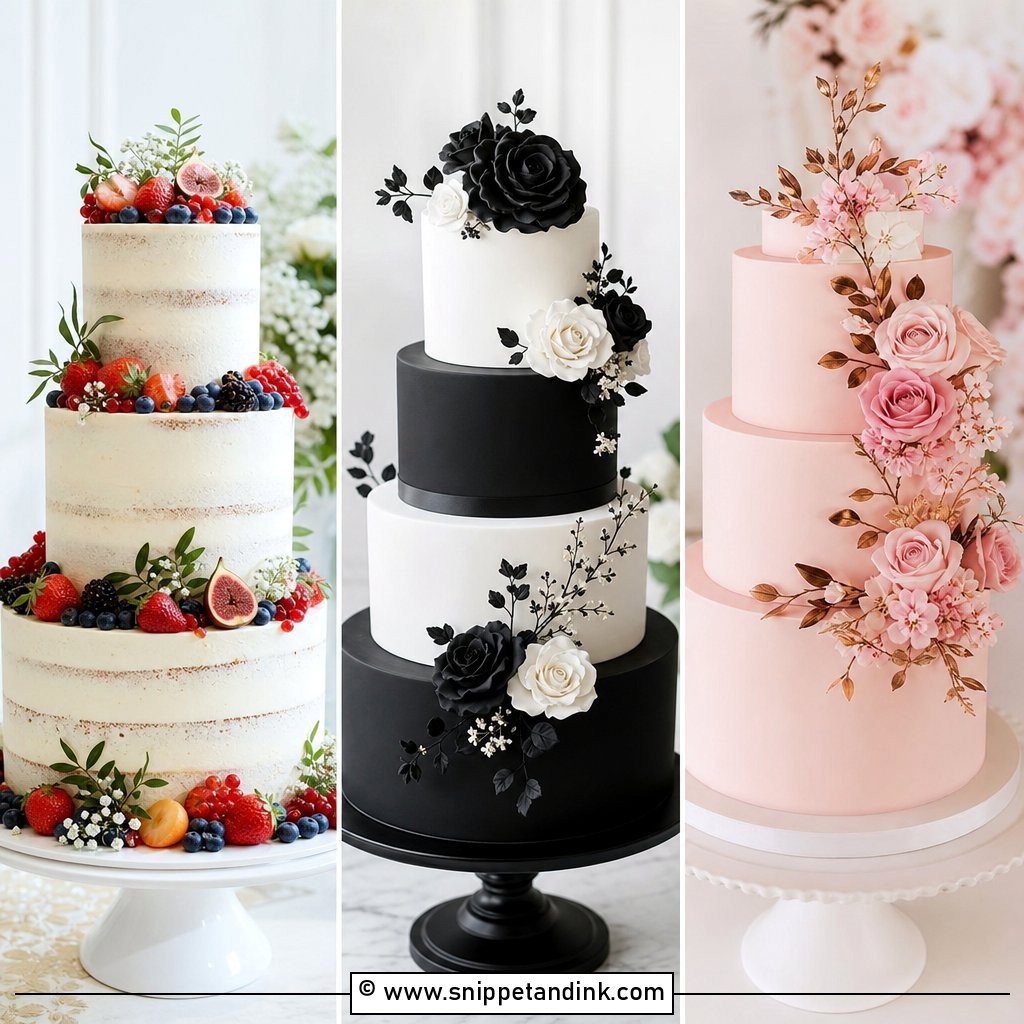
Black and white is dramatic, and it only stays elegant when it’s disciplined. White fondant with black ribbon, black piping on ivory, or one black tier among light ones all work. Black frosting needs a lot of coloring, which can taste bitter and stain teeth and lips, so I prefer to put the black on fondant details, ribbon or a dark chocolate base. It suits evening weddings and formal receptions. White flowers or pearls soften it, and sticking to one motif stops the contrast from looking busy.
14. Gold Wedding Cake

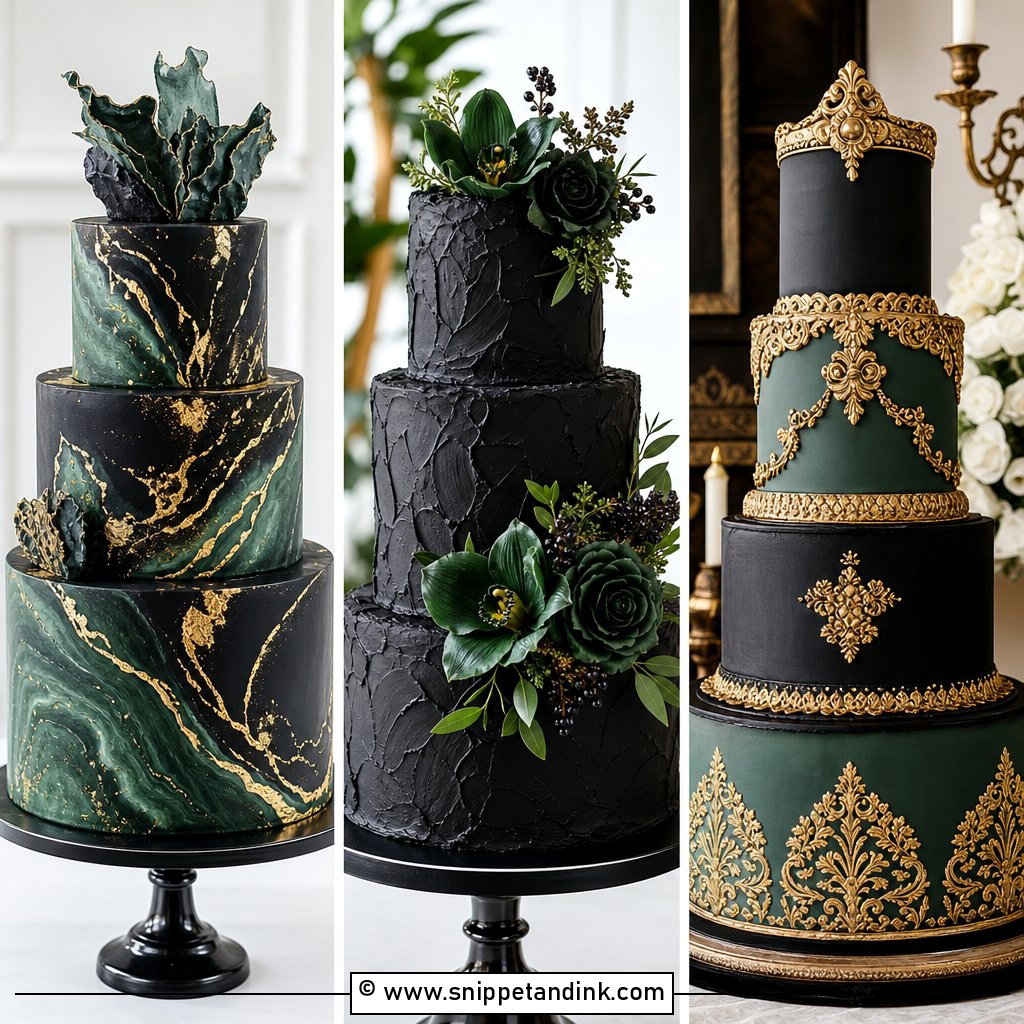
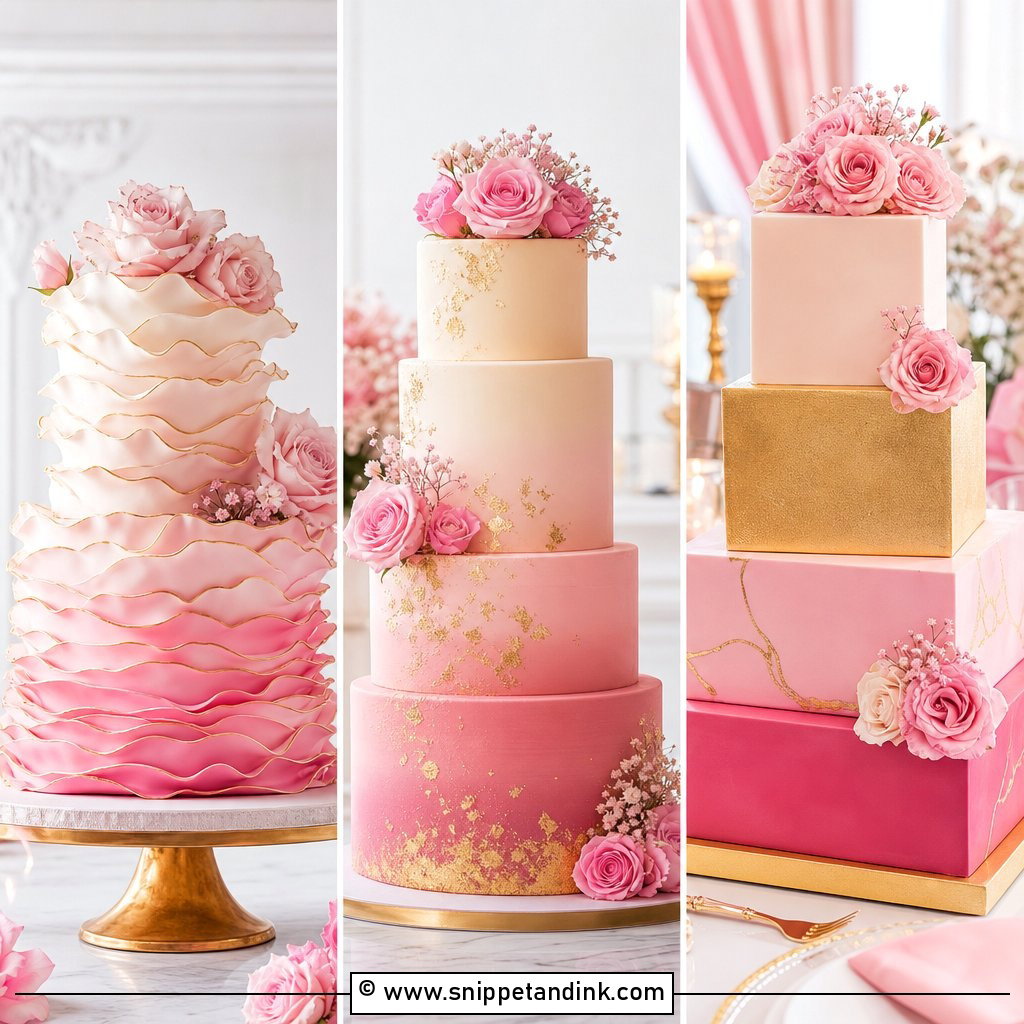
Gold belongs on the edges, not over the whole cake. Thin gold leaf, painted borders, brushstrokes or a gold stand do more than a fully gilded tier ever will. On anything that gets served, I use edible gold leaf or food-grade paint, since some sparkly dusts are sold for decoration only. Ivory, white, blush and champagne all pair with gold. It suits ballrooms, rooftops and evening receptions, and it shines most when the cake stands near candles or warm lighting.
15. Blue Wedding Cake

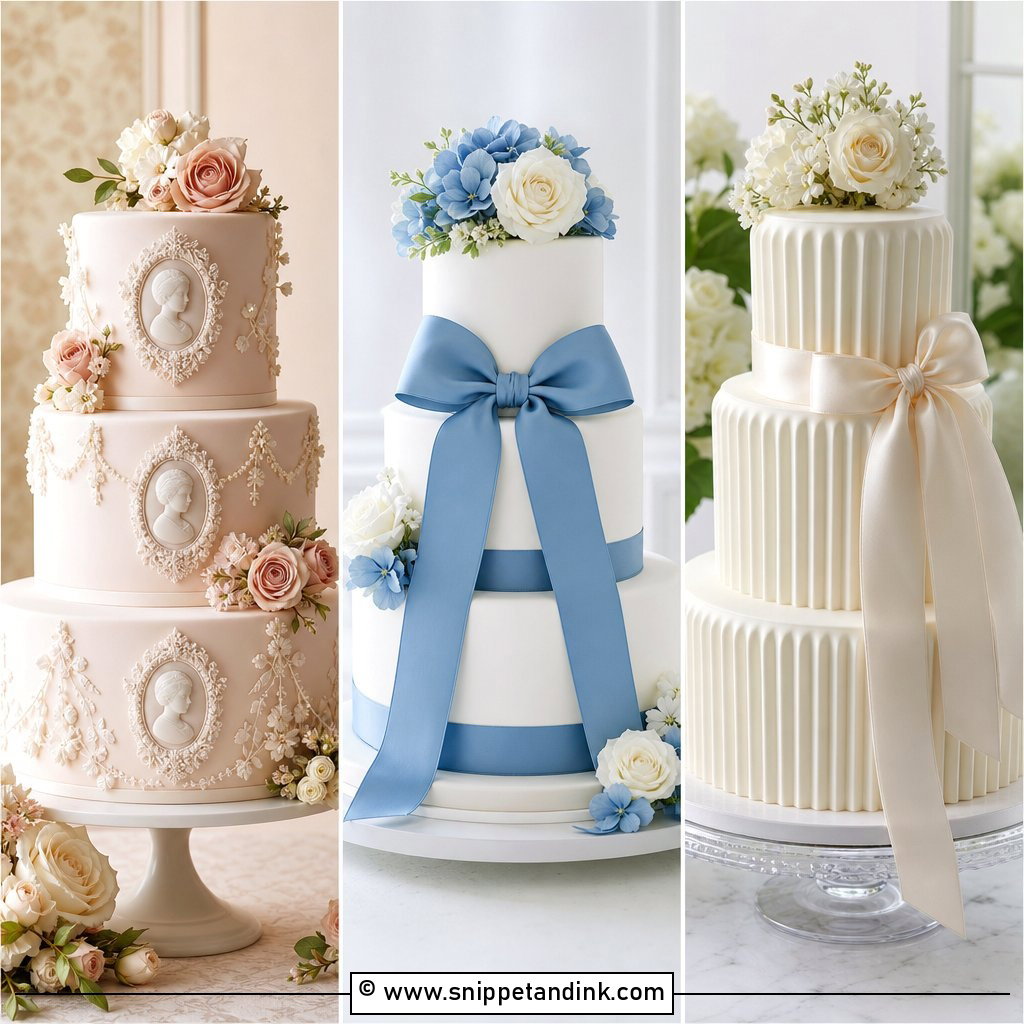
Blue is unexpected on a cake, and easy to get wrong. Soft blue suits coastal and spring weddings; navy suits formal evenings. Blue buttercream deepens as it sits and can look slightly green under warm yellow bulbs, so I test the shade a day ahead in similar light. White florals, pearls, silver details or a watercolor wash keep it refined. One accent tier is a gentle way to carry your something blue without coloring the whole cake, and vanilla bean, lemon or a blueberry filling fit the fresh mood.
16. Blush Pink Wedding Cake

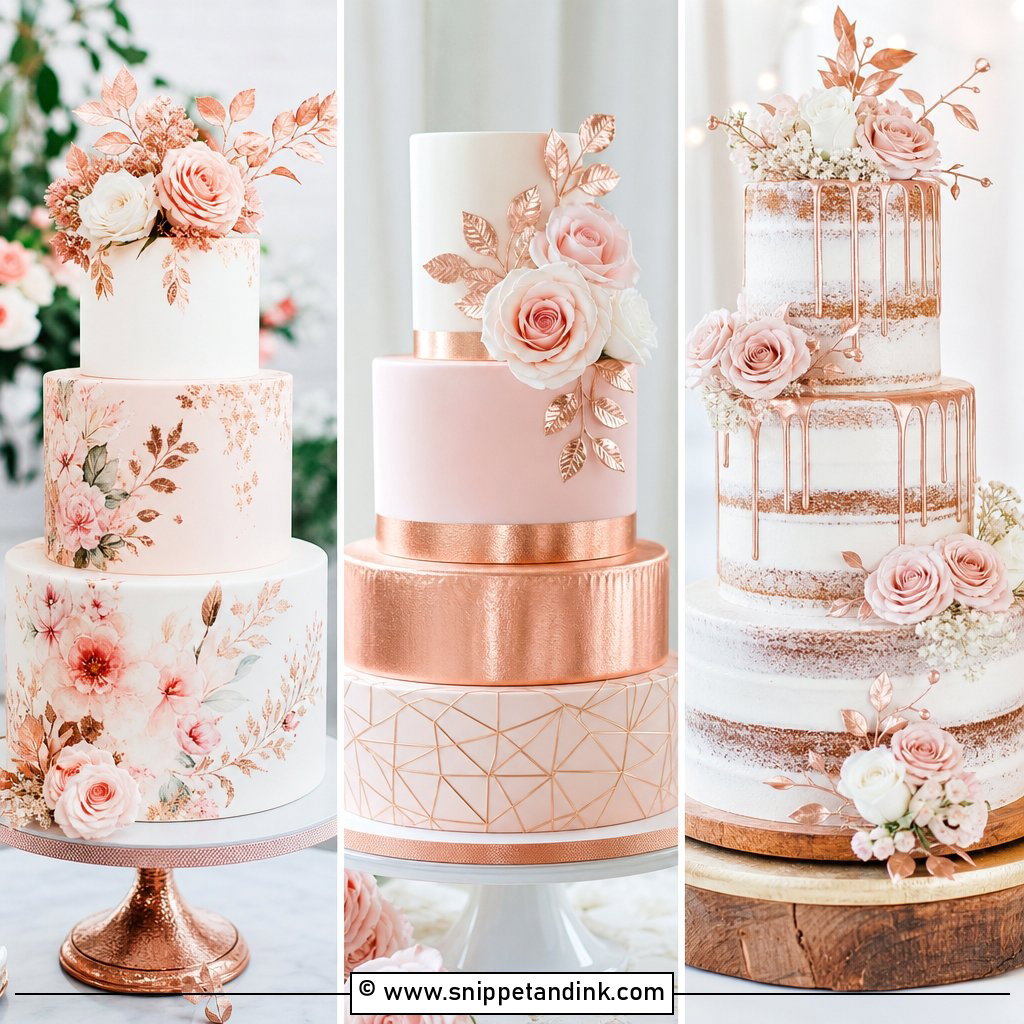
Blush works because it’s barely there. A hint too much color and it reads as a pink birthday cake, so I add coloring a drop at a time and check it beside ivory before committing. Smooth buttercream gives a modern feel, fondant a more polished one. Sugar roses, pearl piping or a silk ribbon add a bridal note. Strawberry, raspberry, vanilla or a champagne-style sponge suit it, and it fits spring, garden and classic indoor weddings.
17. Pressed Flower Wedding Cake

Pressed flowers sit flat on the cake like a botanical print. They have to be edible varieties grown for eating, such as violas, pansies, cornflowers and small herb leaves, dried flat for a week or two beforehand, so this needs planning. They show best on smooth white or ivory buttercream, and small blooms with tiny leaves look more refined than big ones. Moisture from the frosting can darken petals over many hours, so I press them on as late as I can. It suits garden weddings and spring receptions.
18. Ruffle Wedding Cake

A ruffle wedding cake moves like fabric, which is why it reminds so many people of a gown. Ruffles can cover one tier, several or the whole cake, in fondant or buttercream. Fondant ruffles are heavier and need sturdier support inside; buttercream ruffles are lighter but soften in heat. Keep them thin and controlled. White, ivory, blush and pale champagne work best, with a clean top tier or simple flowers to give the eye a rest.
19. Greenery Wedding Cake

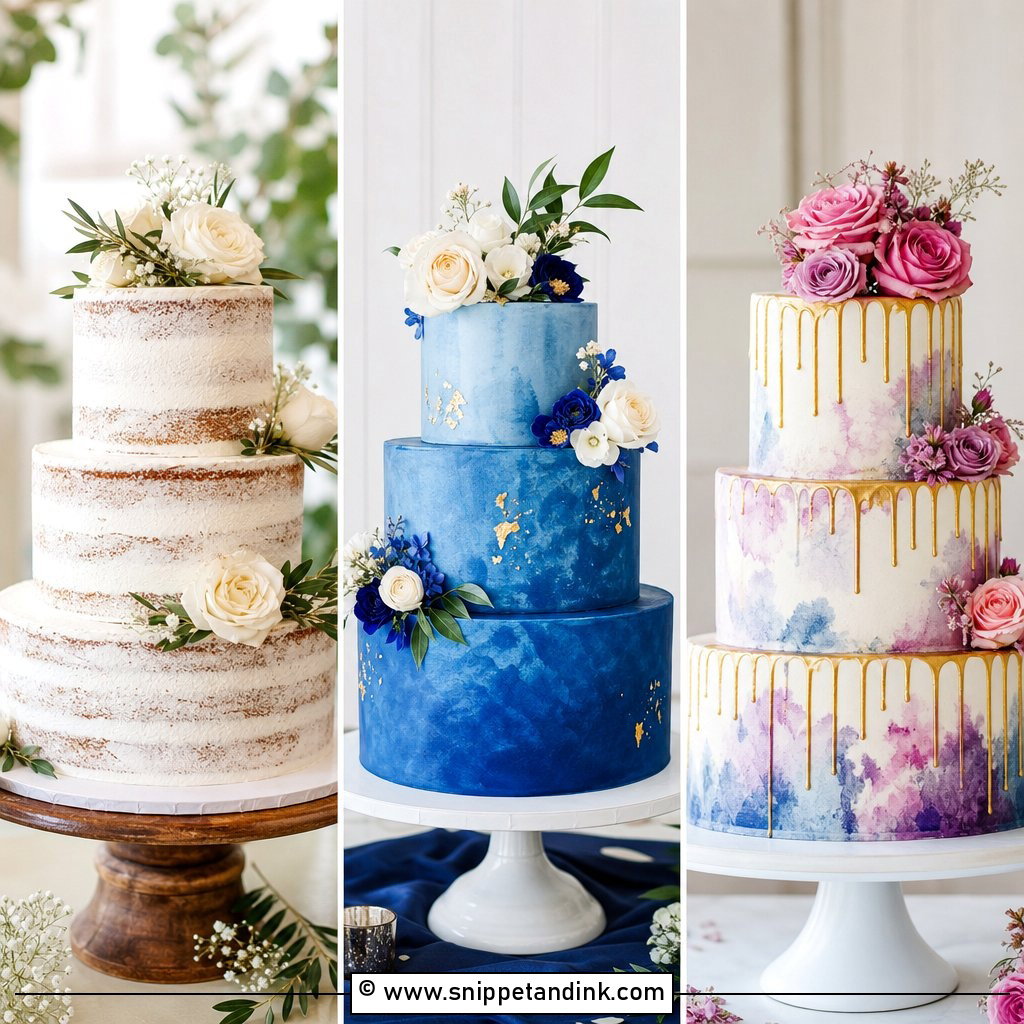
Greenery looks fresh, but not every leaf belongs on a cake. Eucalyptus shows up in plenty of photos, yet it isn’t edible, so it should only go on with wrapped stems and a barrier, and many bakers won’t put it directly on frosting at all. Rosemary, olive sprigs and small herb leaves are safer. Small clusters or a gentle wrap keep it clean, with plenty of white frosting showing. It suits garden, modern rustic and minimalist weddings on buttercream, fondant or a semi-naked finish.
20. Watercolor Wedding Cake

A watercolor wedding cake gives soft color without heavy decoration. On buttercream, the effect comes from spreading streaks of tinted frosting and scraping them smooth; on fondant, it’s painted on with diluted food color. Pale blush, blue, lavender, peach or champagne work best, limited to two or three shades so the colors don’t muddy. A few fresh flowers, a touch of gold leaf or a simple piped border finish it. It suits spring, coastal and art-loving couples.
Placing the Cake Where the Photographer Can Use It
A well-made cake in a dark corner simply disappears. Before the day, walk the room with your planner or venue coordinator and think of the cake as part of a scene, not just a table.
- Pick a spot with a clean background, such as a plain wall, drapes or a window with soft daylight, rather than the bar or an exit sign.
- Keep it clear of direct sun, heaters, speakers and the dance floor, where people bump into tables.
- Leave room on both sides of the table so the two of you can stand there for the cutting, facing the guests.
- Ask for a sturdy, level table. Folding banquet tables can wobble under a heavy tiered cake.
- A stand that lifts the cake a few inches brings the top tier closer to eye level in photos.
A Tasting Is Your Chance to Interview the Baker
Most couples arrive thinking the tasting is about flavor. It’s just as much about whether the baker can deliver the design you’ve fallen for, so come with questions.
- Ask to see photos of cakes they’ve delivered in a similar style, especially anything taller than three tiers.
- Ask how the cake travels to the venue, who stacks and finishes it, and what time they arrive.
- Confirm who supplies and places any fresh flowers, and how the stems are kept away from the cake.
- Check whether your venue charges a cutting fee and whether the cake stand has to be returned, and by whom.
- Taste the sponge, filling and frosting together in one bite. A rich frosting can drown a delicate filling, and you only find that out by eating them as guests will.
Start From the Room, Then Pick the Frosting
The right cake fits your venue, your flowers, your colors and the mood of your reception. A tall white cake with fresh flowers and a single tier with pearls can both be the right answer, depending on the room. Buttercream reads soft, fondant reads formal, and texture adds movement without extra decoration. Save the cake photos you keep returning to and look at what they share, whether it’s shape, height, frosting, color or flower placement. Bring that pattern to your baker along with a photo of the room, and you’ll get a cake designed for your wedding rather than copied from someone else’s.
You'll Like These Ideas:


Leave a Reply