
Cream is what buttercream wants to be. Real butter gives frosting a natural warm ivory, and getting a true bright white actually takes extra work, so a cream cake is in a sense the most honest colour I can offer. It sits comfortably next to garden flowers, satin bows, pearls, textured finishes and smooth fondant. In candlelight, a barn or a ballroom it looks warmer and kinder than stark white. It also suits the quieter flavours couples love at weddings, like vanilla bean, almond, lemon, champagne and coconut. Here are thirty cream cakes, with my notes on what each one needs behind the scenes.
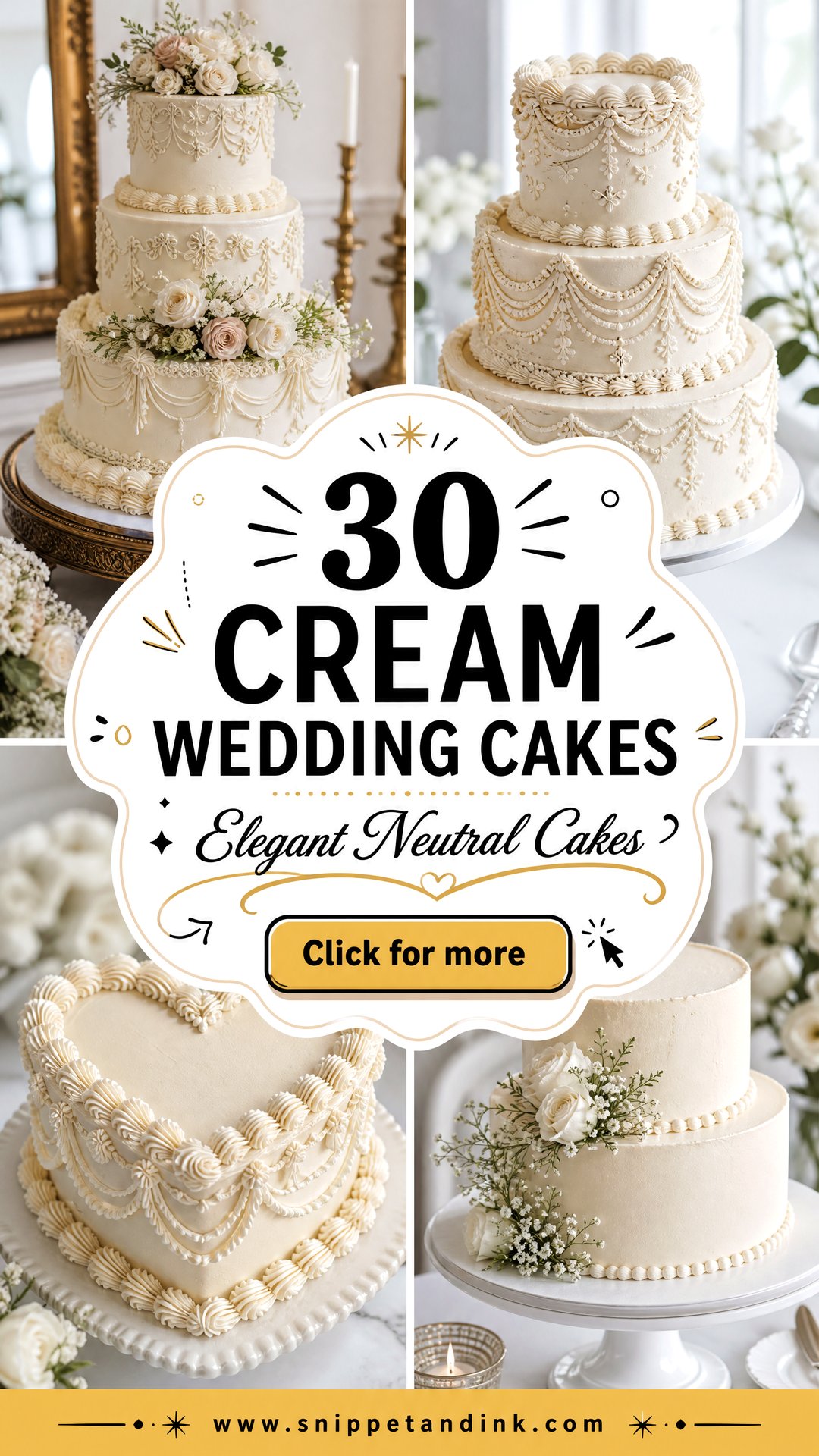
Holding a Fabric Swatch Up to the Buttercream
Cream covers a wide range, from almost white to a deep butter yellow, and couples are often surprised by how different shades look side by side. I ask for a swatch of the dress fabric or a table linen at the tasting, and hold it against a sample of frosting in daylight. Then I check it again under warm light, because candles and tungsten bulbs push cream toward yellow.
- Butter-based frosting is naturally ivory, and the shade varies a little with the butter itself.
- A cooler, paler cream usually needs some shortening in the frosting or a tiny drop of whitening, which changes the taste slightly.
- Fondant colour is easier to match exactly and stays consistent across tiers.
- Cake and dress don’t need to match perfectly; a cake a shade warmer than the gown usually looks better in photos than one a shade cooler.
1. Cream Buttercream Wedding Cake
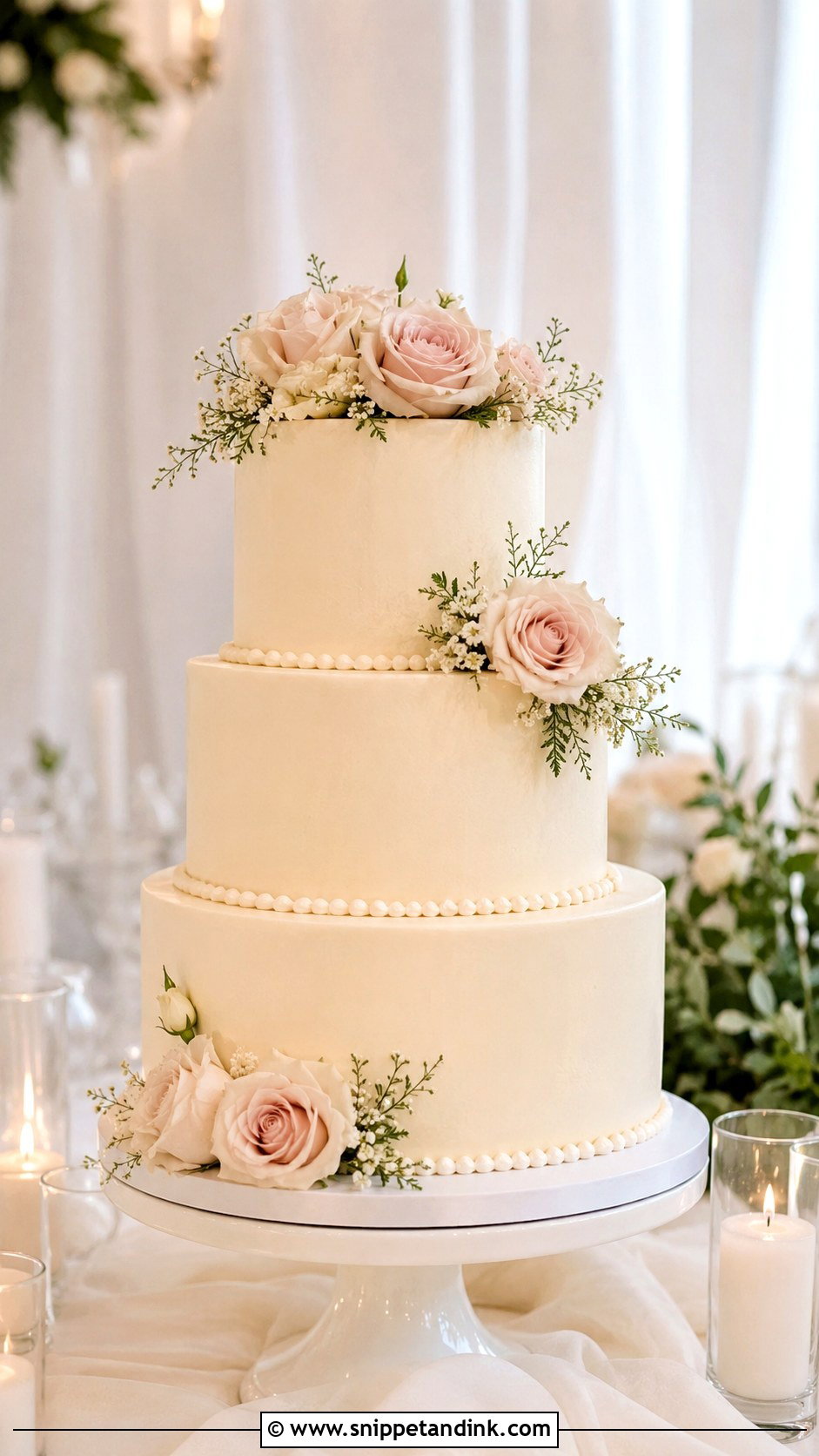
Plain cream buttercream is the cake I’d recommend if you’re unsure about everything else. It flatters almost every flower colour, from blush roses to champagne orchids. Ask for sharp edges if your wedding is modern, rounded edges if it’s traditional. The one thing I check first is the venue temperature; American-style buttercream holds its shape well indoors but softens in a hot tent within an hour or two.
2. Cream Fondant Wedding Cake
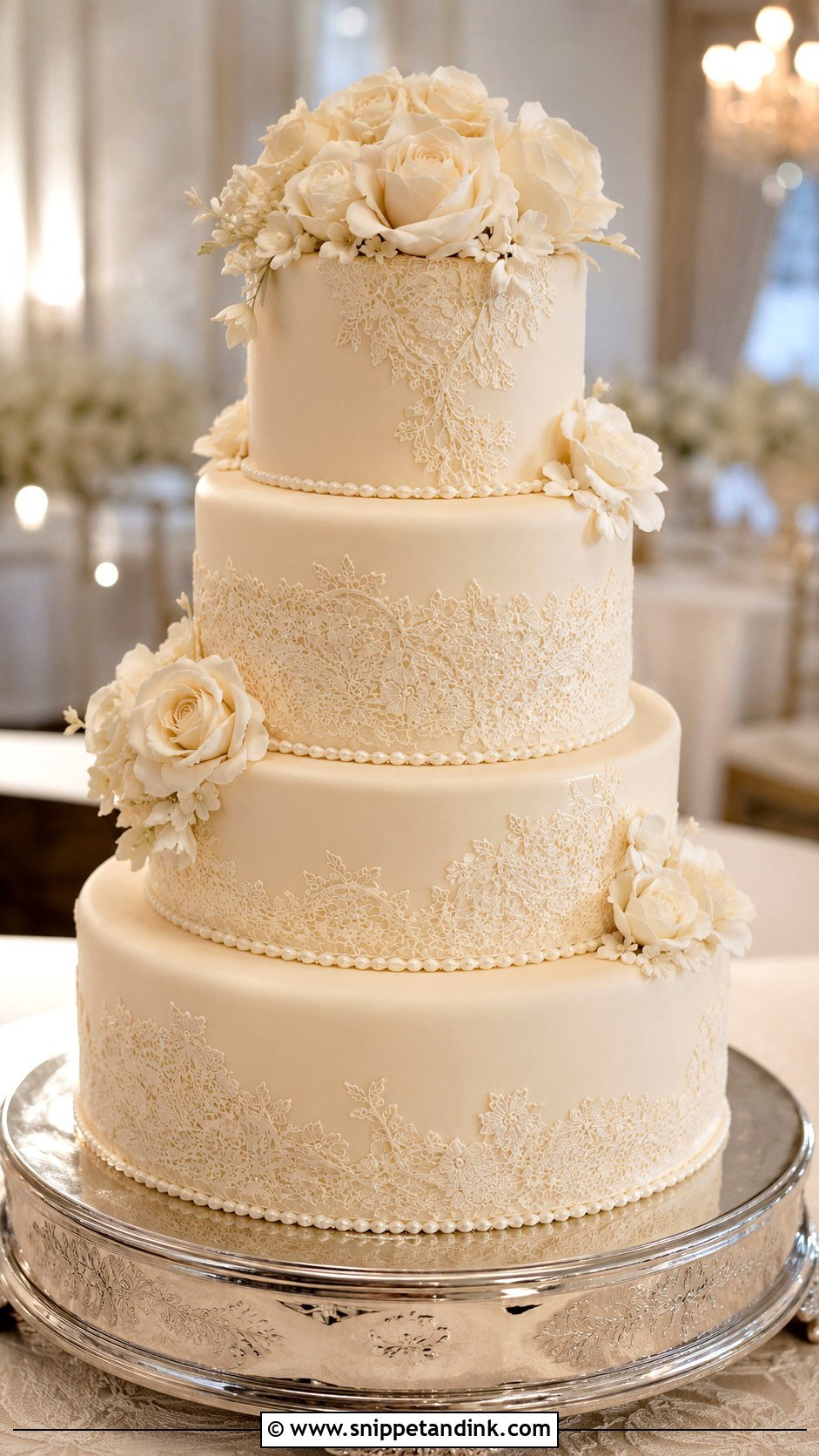
Fondant gives the smoothest possible surface, which is why I use it for pearl borders, sugar flowers, lace and crisp stacked shapes. Cream fondant looks warmer under reception lighting than white. It’s also my choice for tall tiered cakes that need structure, since fondant helps the tiers hold firm. Don’t refrigerate a fondant cake right before display; it sweats as it warms and the surface goes tacky.
3. Cream Floral Wedding Cake
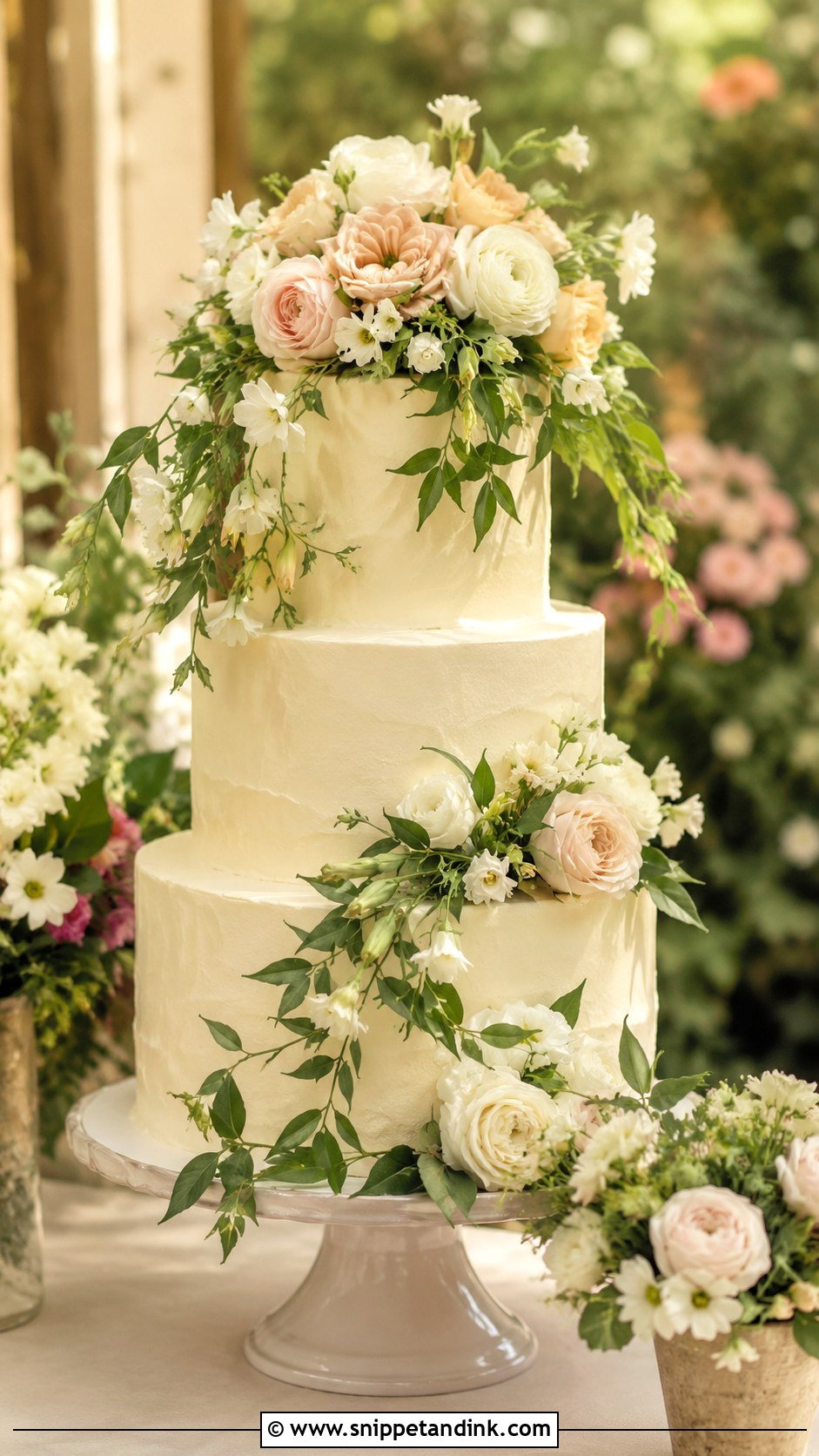
Fresh roses, ranunculus, peonies, orchids and lisianthus all sit well against cream. One colour looks clean; mixing blush, peach, ivory and greenery looks like a garden. I place flowers in groups and leave some frosting showing between them, otherwise the cake disappears under the arrangement. Your florist and baker should talk directly, because fresh flowers must be pesticide-free and the stems need wrapping or a food-safe barrier before they touch the cake.
4. Cream Pearl Wedding Cake
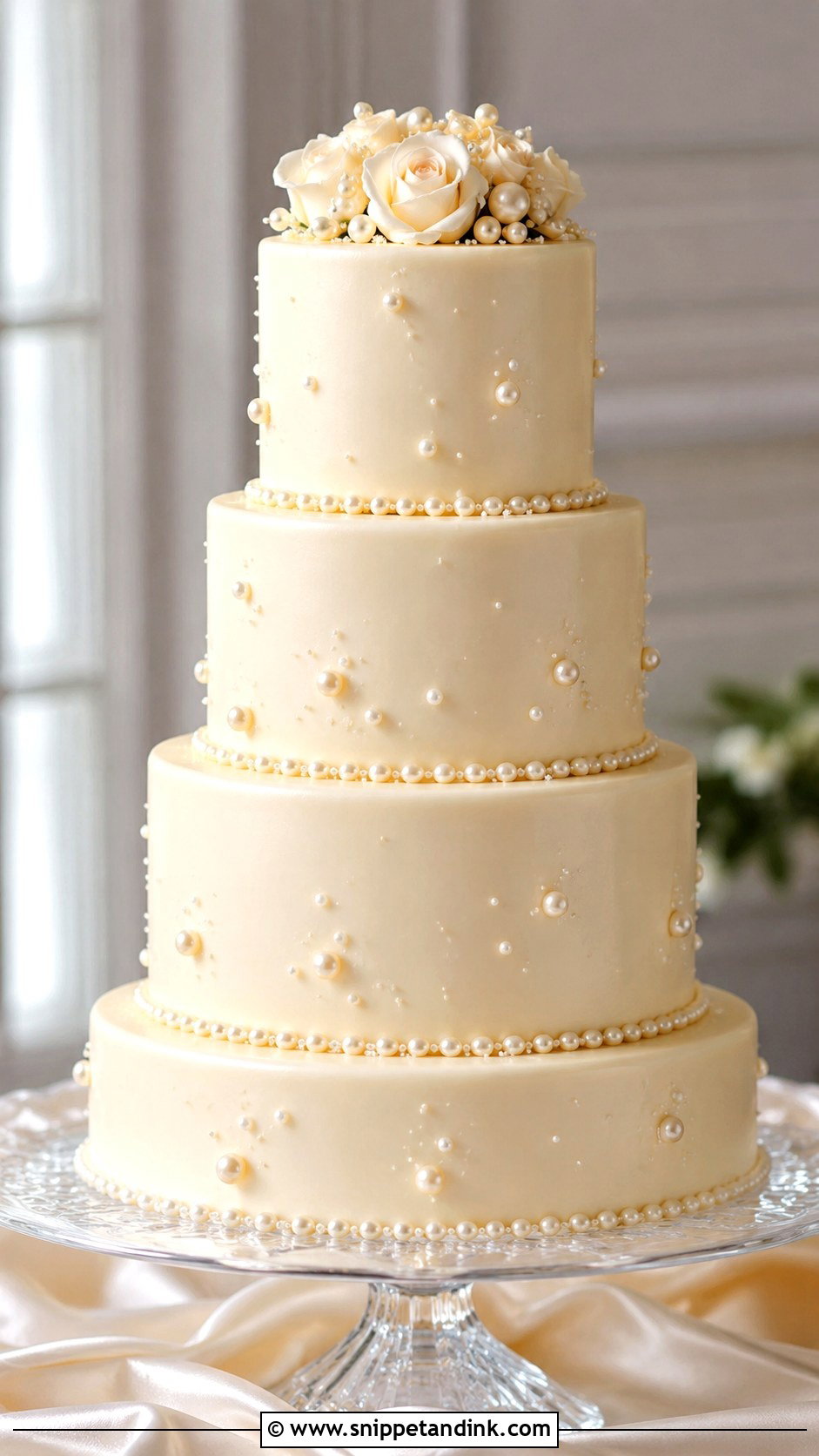
Pearls give cream cakes a soft vintage glow without making them fussy. I pipe or place them in rows, along borders, or scatter a few across smooth buttercream. They suit brides wearing satin and pearl earrings especially well. A small honest note: hard sugar pearls are crunchy and not everyone likes biting into them, so I use them as a border guests can push aside rather than all over the tier.
5. Cream Vintage Wedding Cake
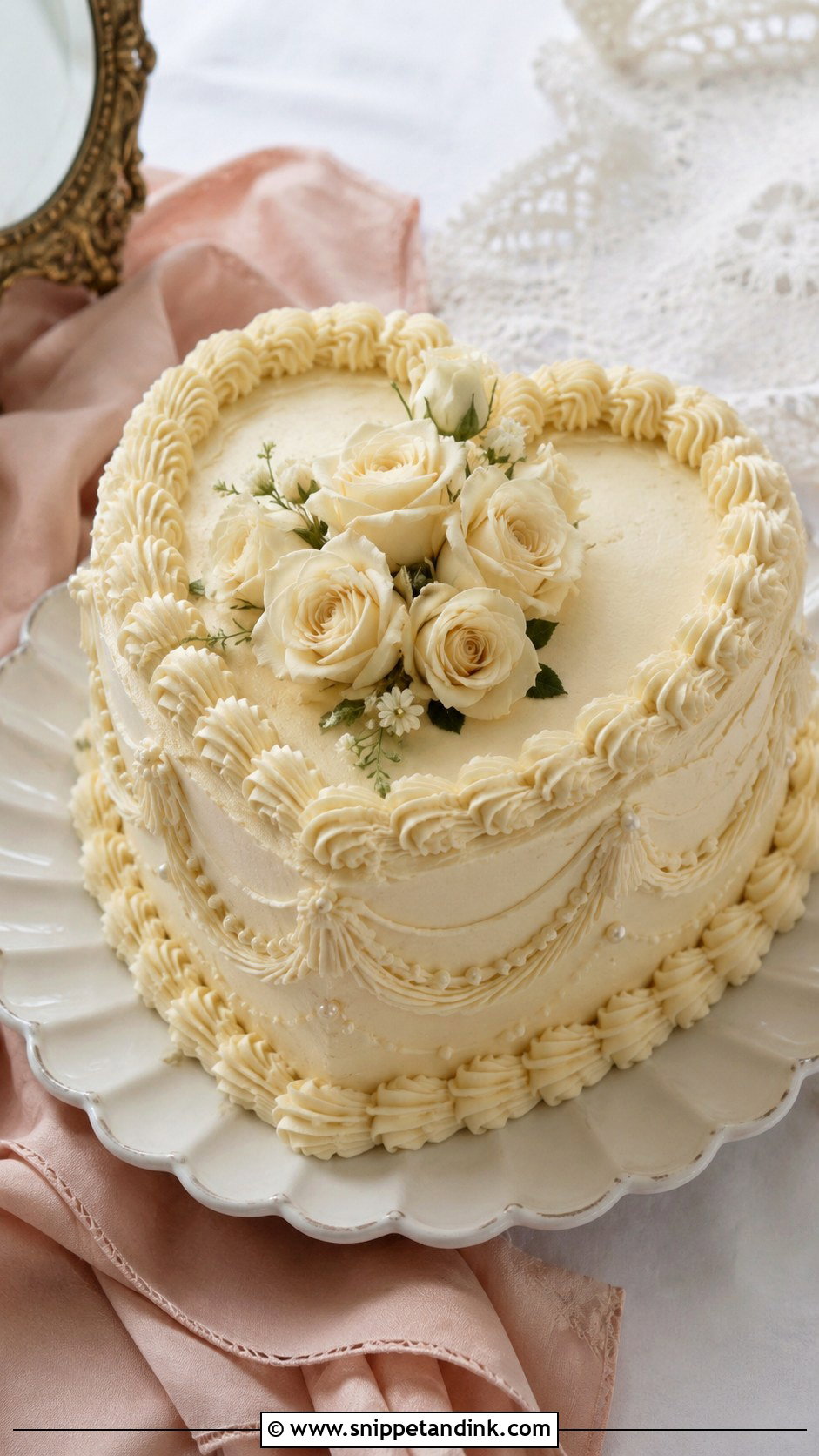
Vintage piping, with its shells, swags and ruffles, is back because it looks handmade. Cream keeps it bridal rather than kitschy. Rounds, hearts or a tall single tier for a smaller wedding all work. Cherries give a retro feel; pearls and ivory roses keep it refined. Detailed piping takes time and lots of buttercream, so expect it to cost more than a smooth cake of the same size.
6. Cream Lambeth Wedding Cake
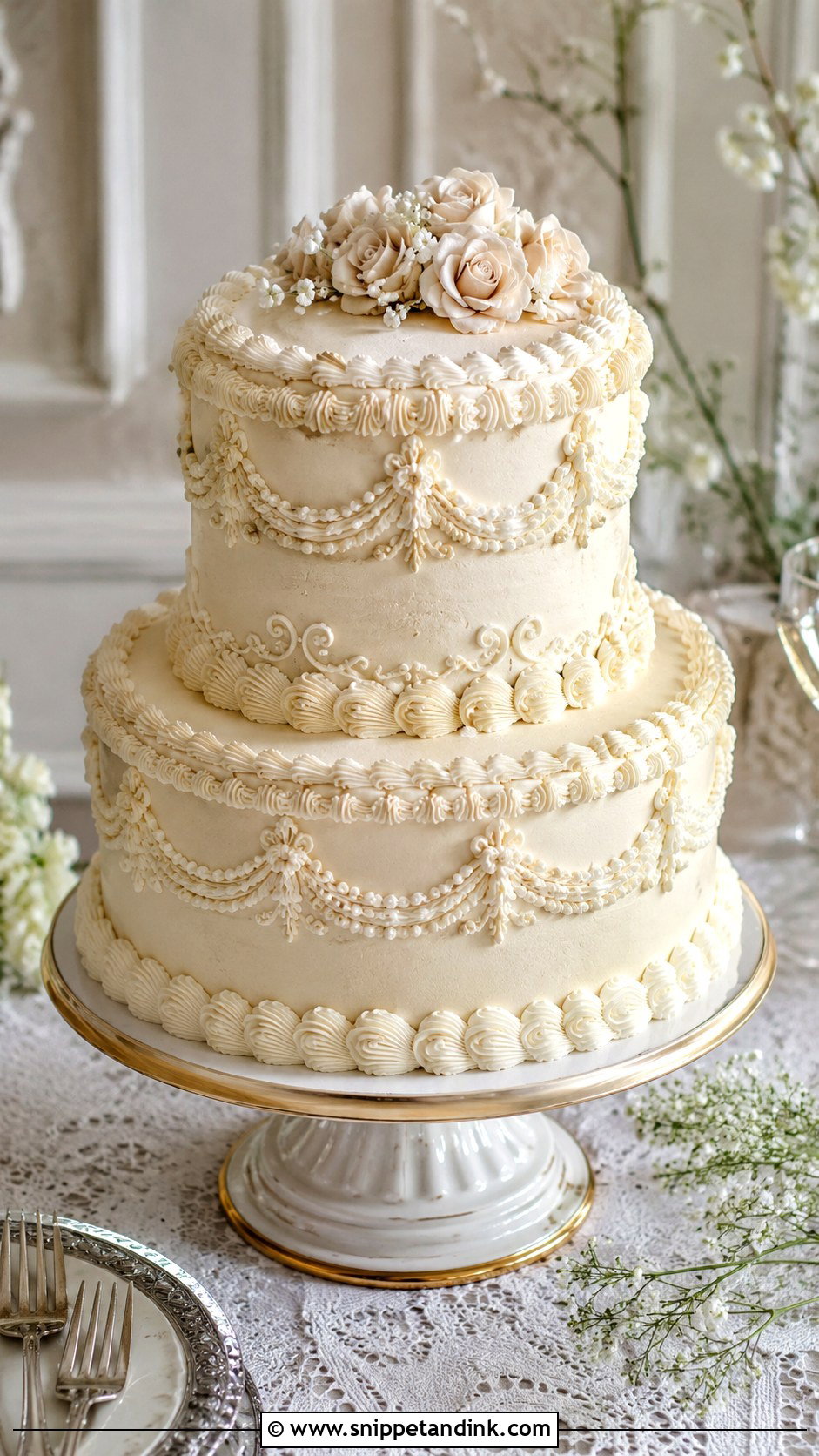
Lambeth is vintage piping turned up as far as it goes: layer upon layer of overpiped borders, drapes and scrolls. In cream, it reads soft and wedding-like rather than loud. A single statement tier suits a small reception; a stacked version holds its own on a big table. Keep the colour calm and let the piping do the work. Lambeth cakes are heavy with buttercream, so they need a cool room and careful transport.
7. Cream Textured Buttercream Wedding Cake
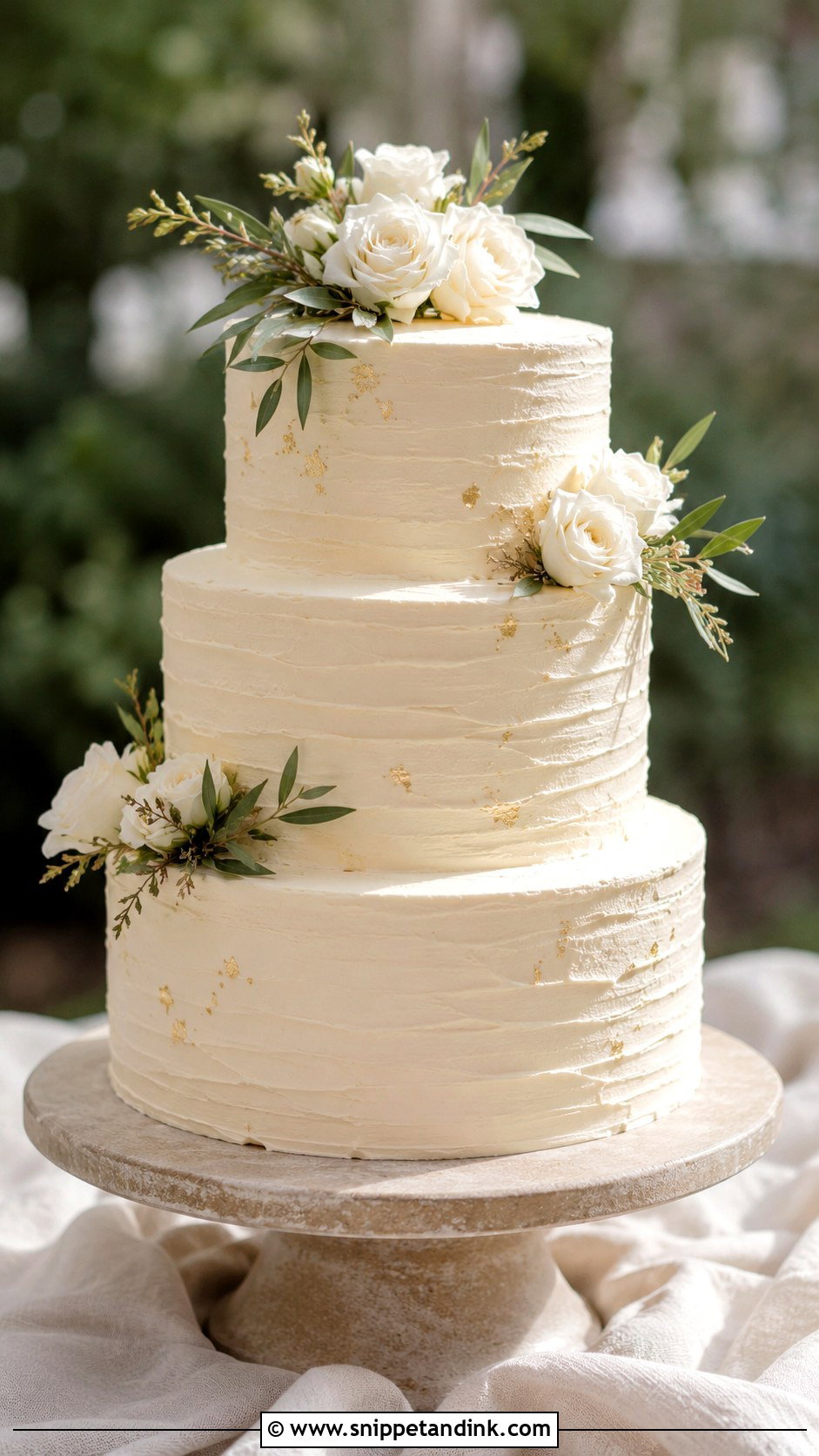
Texture hides the small imperfections a smooth finish would show, which makes it a forgiving choice for outdoor weddings where the cake might soften slightly. Horizontal lines, waves or palette-knife strokes all catch light nicely in close-up photos. I dress them with fresh flowers, greenery, figs, berries or a little gold leaf. It looks relaxed but not careless.
8. Cream Rustic Wedding Cake
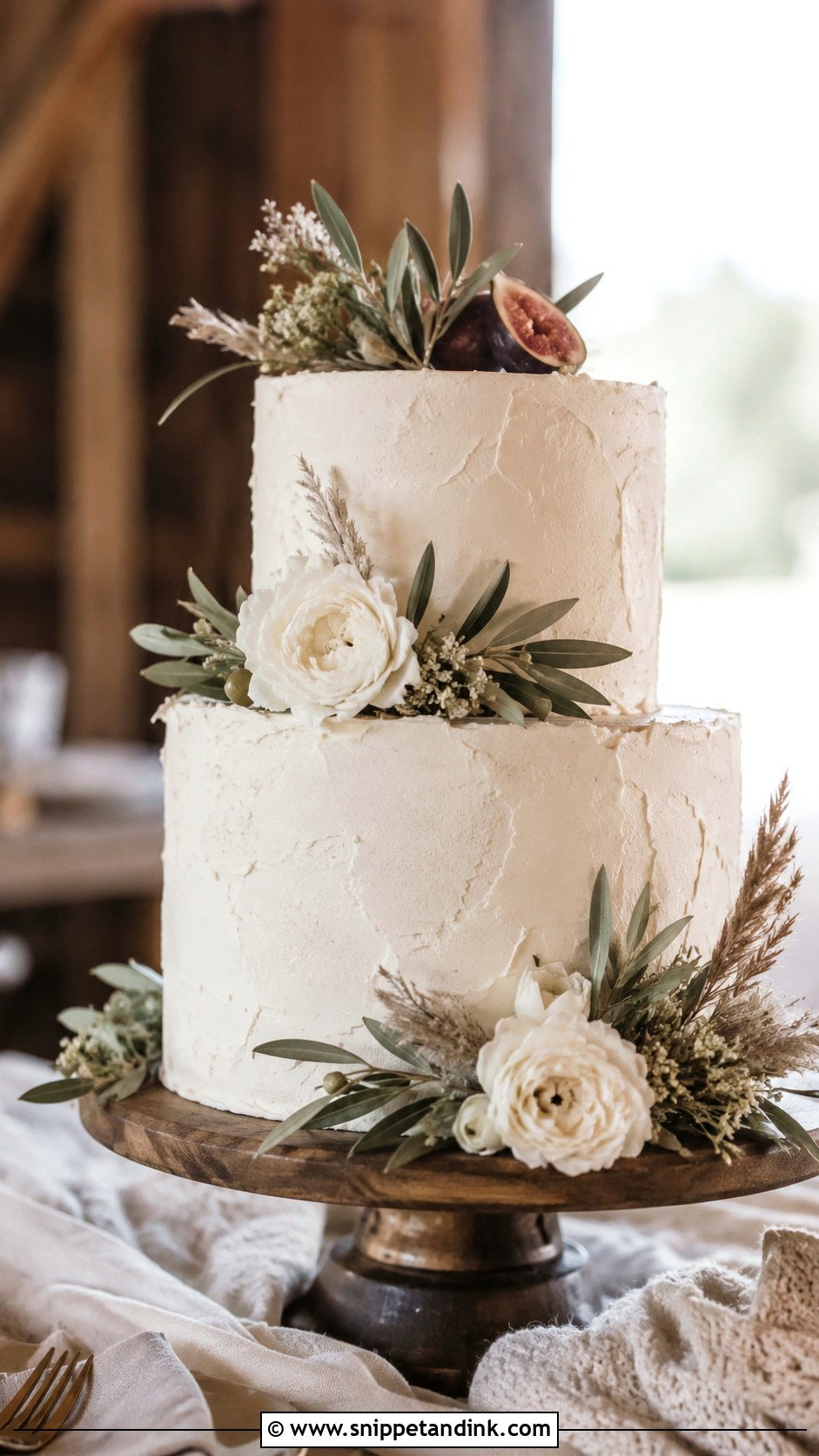
Rustic cream cakes sit happily on wooden or ceramic stands beside linen and candlelight, where bright white would look cold. A semi-naked finish feels casual, full buttercream a little neater. I finish them with herbs, olive branches, dried grasses or small ivory blooms. Herbs and branches should be food-safe and washed; rosemary and olive are fine, but some decorative greenery is not.
9. Cream Naked Wedding Cake
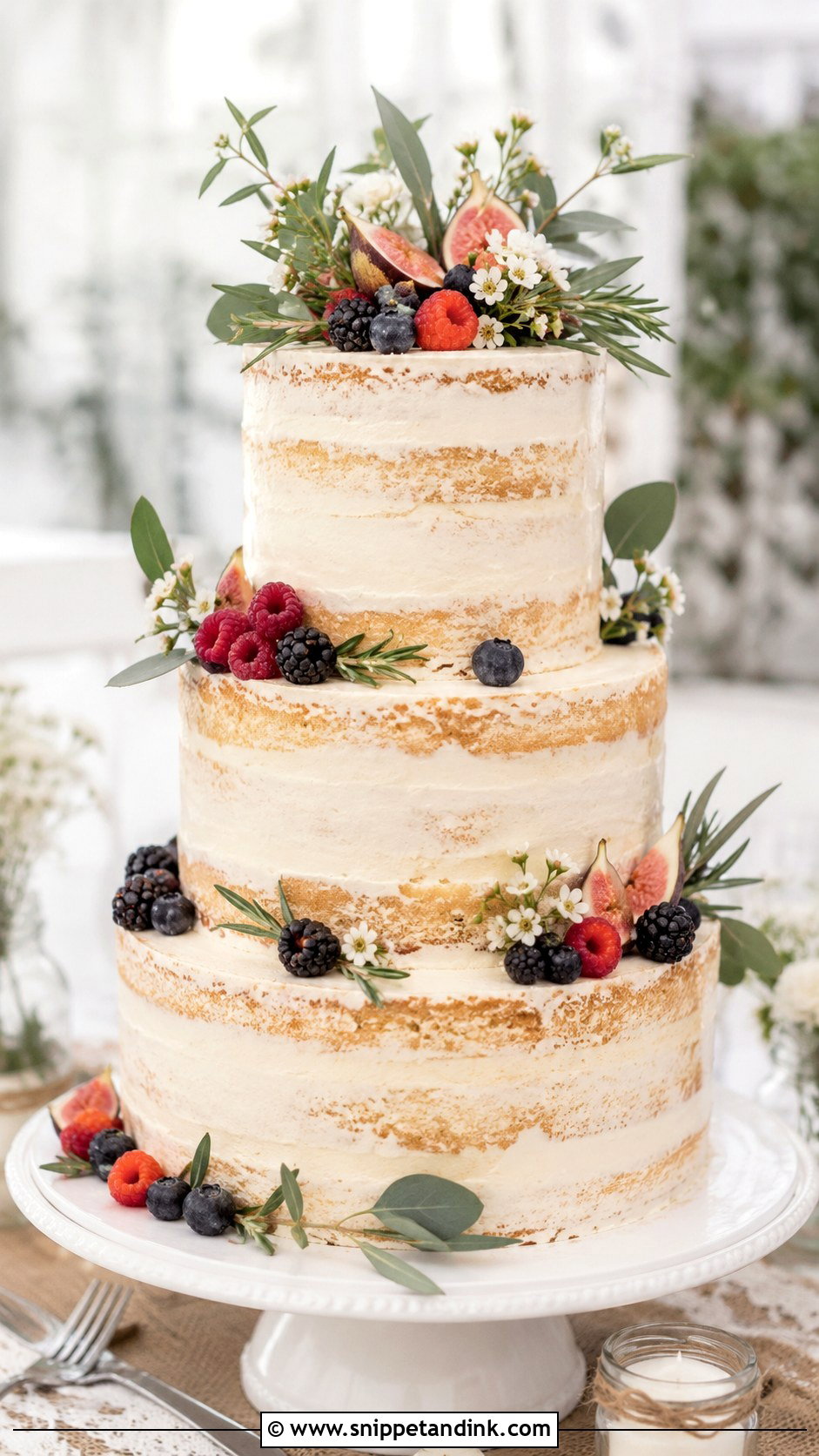
A naked cake has just a whisper of frosting, so the sponge layers show. It’s informal and pretty, with berries, figs and flowers for colour. The trade-off is that exposed sponge dries out quickly, so I assemble naked cakes as close to the event as I can and recommend them for cooler indoor receptions. If yours will be outside in summer, I’d choose semi-naked instead.
10. Cream Semi Naked Wedding Cake
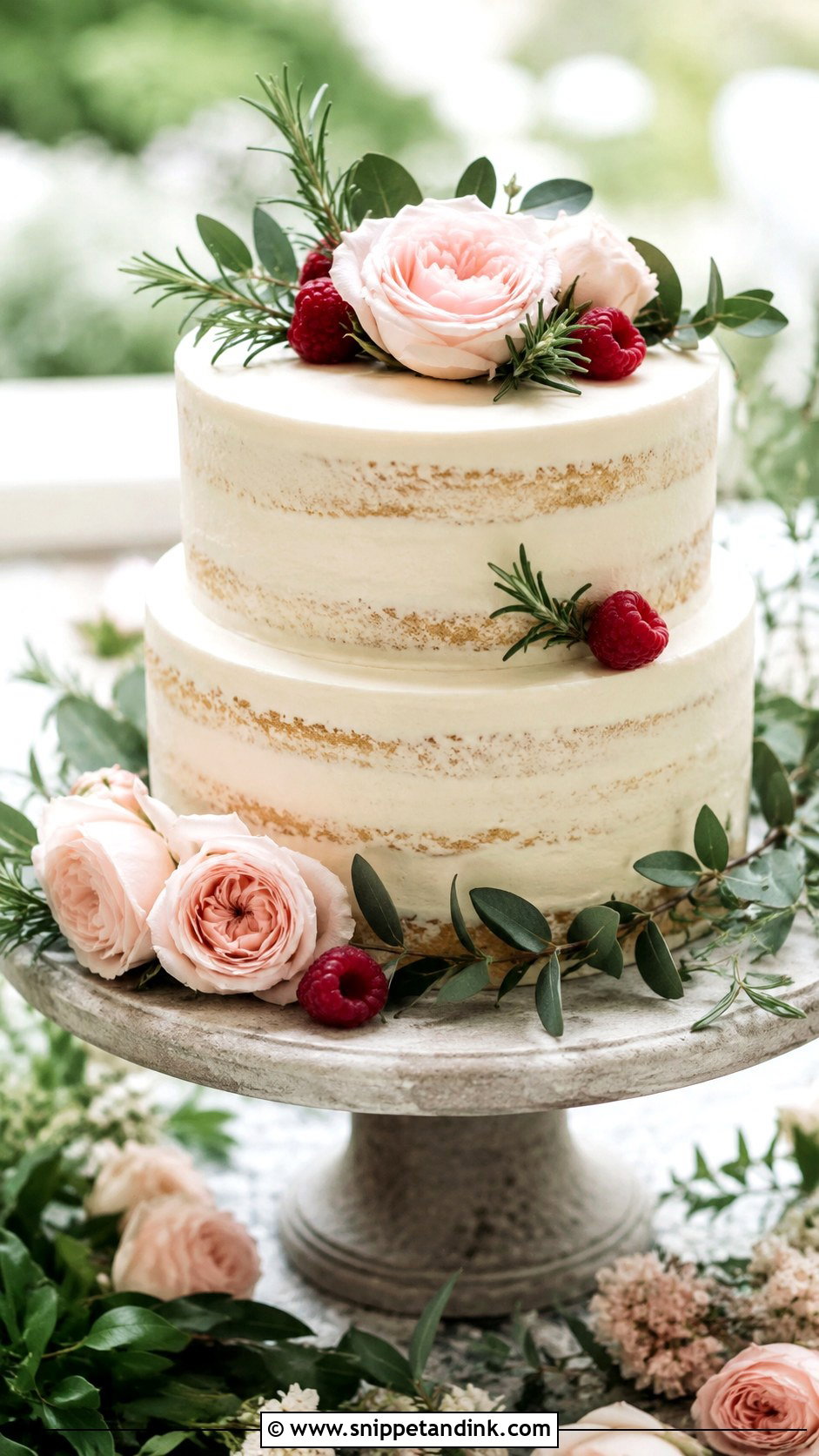
Semi-naked sits between rustic and polished: enough frosting to seal the cake, scraped thin so the layers peek through. Garden and barn weddings suit it best. Clean tier edges and a smooth top make it feel more refined. It still dries faster than a fully frosted cake, so it shouldn’t sit out uncovered for hours before the cutting.
11. Cream Drip Wedding Cake
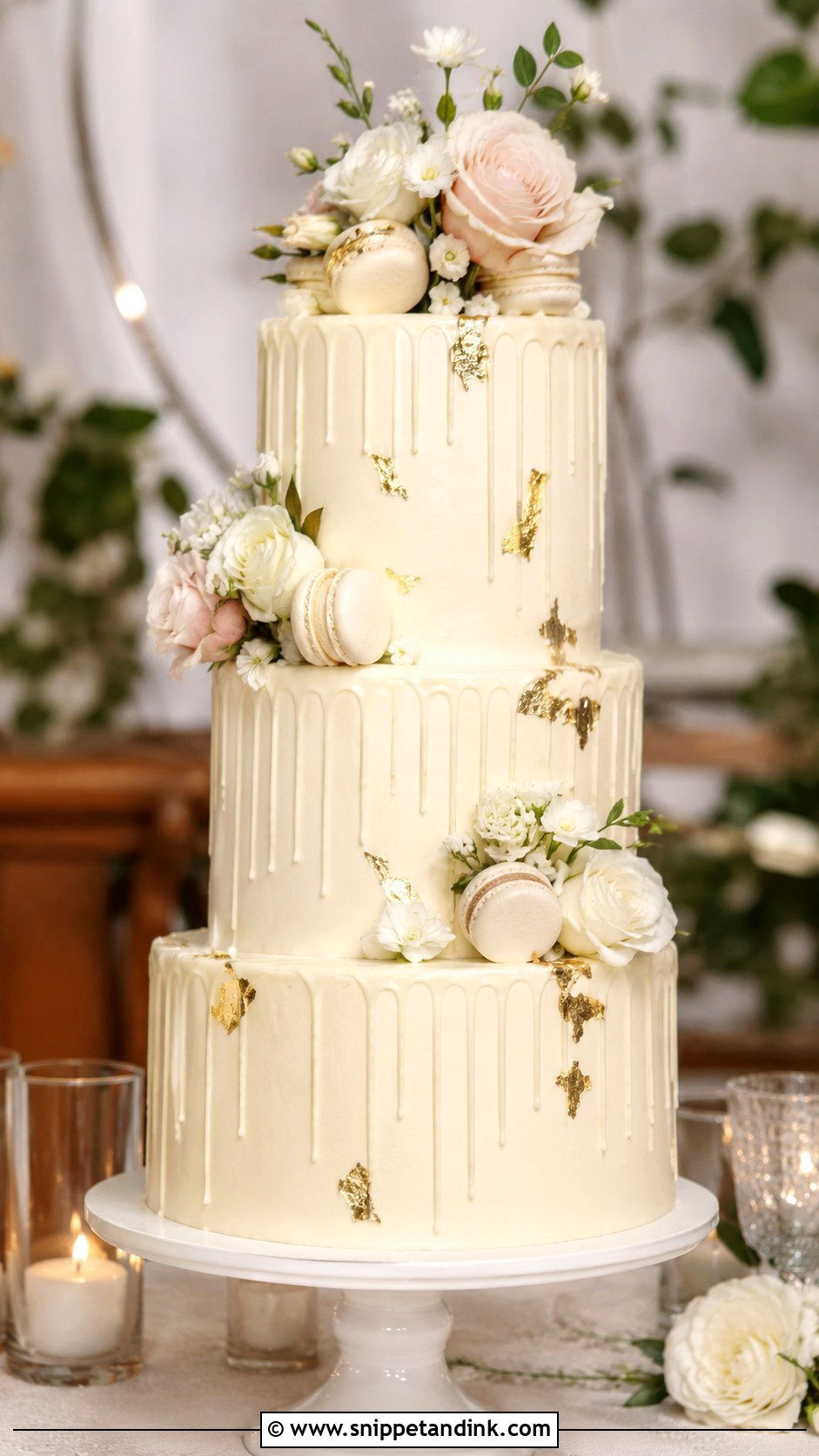
A drip on a cream cake can be white chocolate, caramel, champagne ganache or a pale glaze. Over cream buttercream the effect is soft and modern rather than loud. I chill the cake first so the drips stop at neat lengths. Flowers, macarons, gold leaf or fruit finish the top. It’s a nice way to add movement to a single tall tier.
12. Cream Gold Wedding Cake
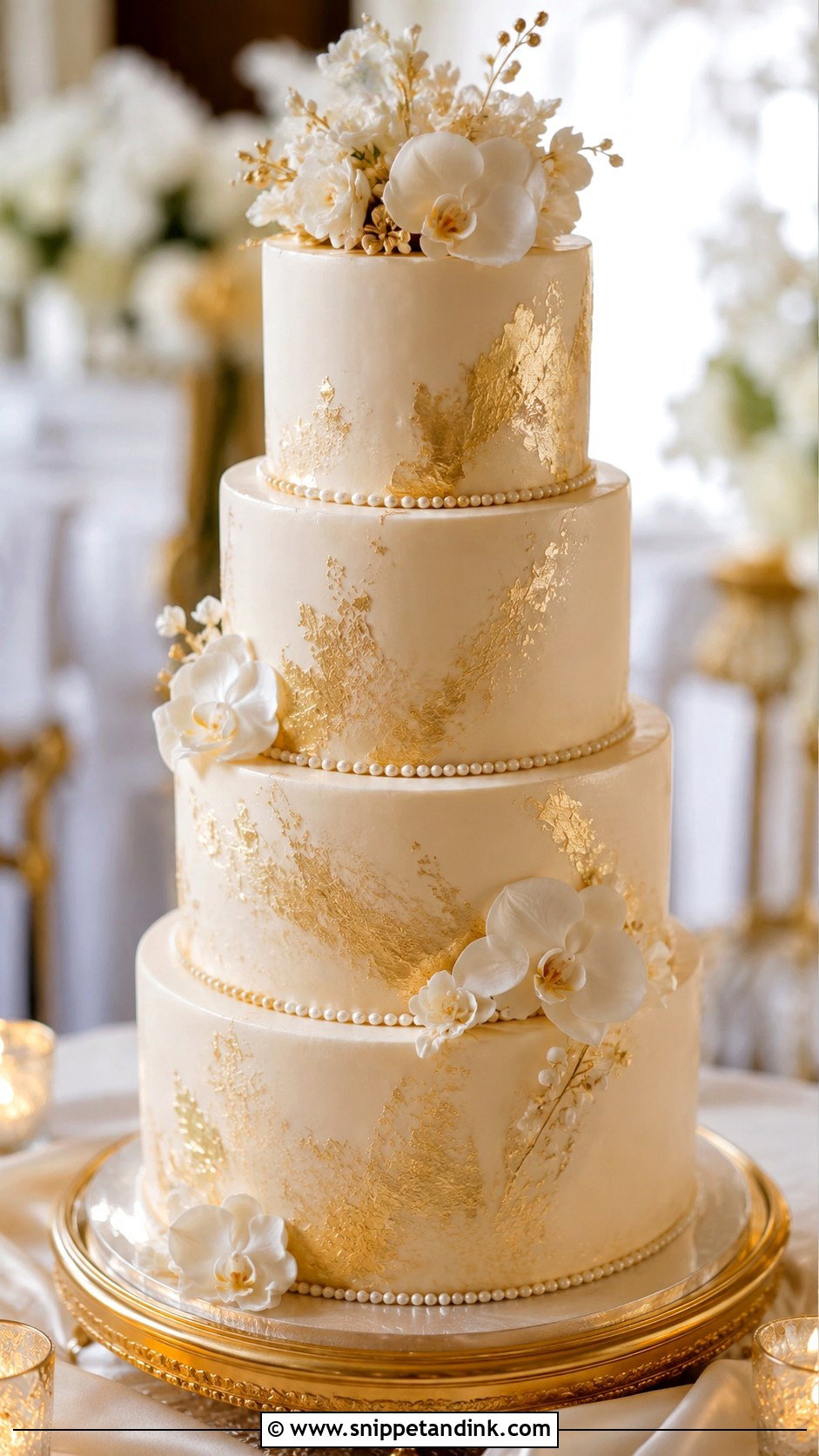
Cream and gold feel formal and warm, which suits evening weddings and candlelit ballrooms. I use gold as brushed accents, edible leaf, thin borders, painted edges or stencilling. White flowers keep it classic, blush flowers make it romantic. Limit gold to one or two tiers; covering every tier looks heavy and photographs as a glare under flash.
13. Cream Rose Wedding Cake
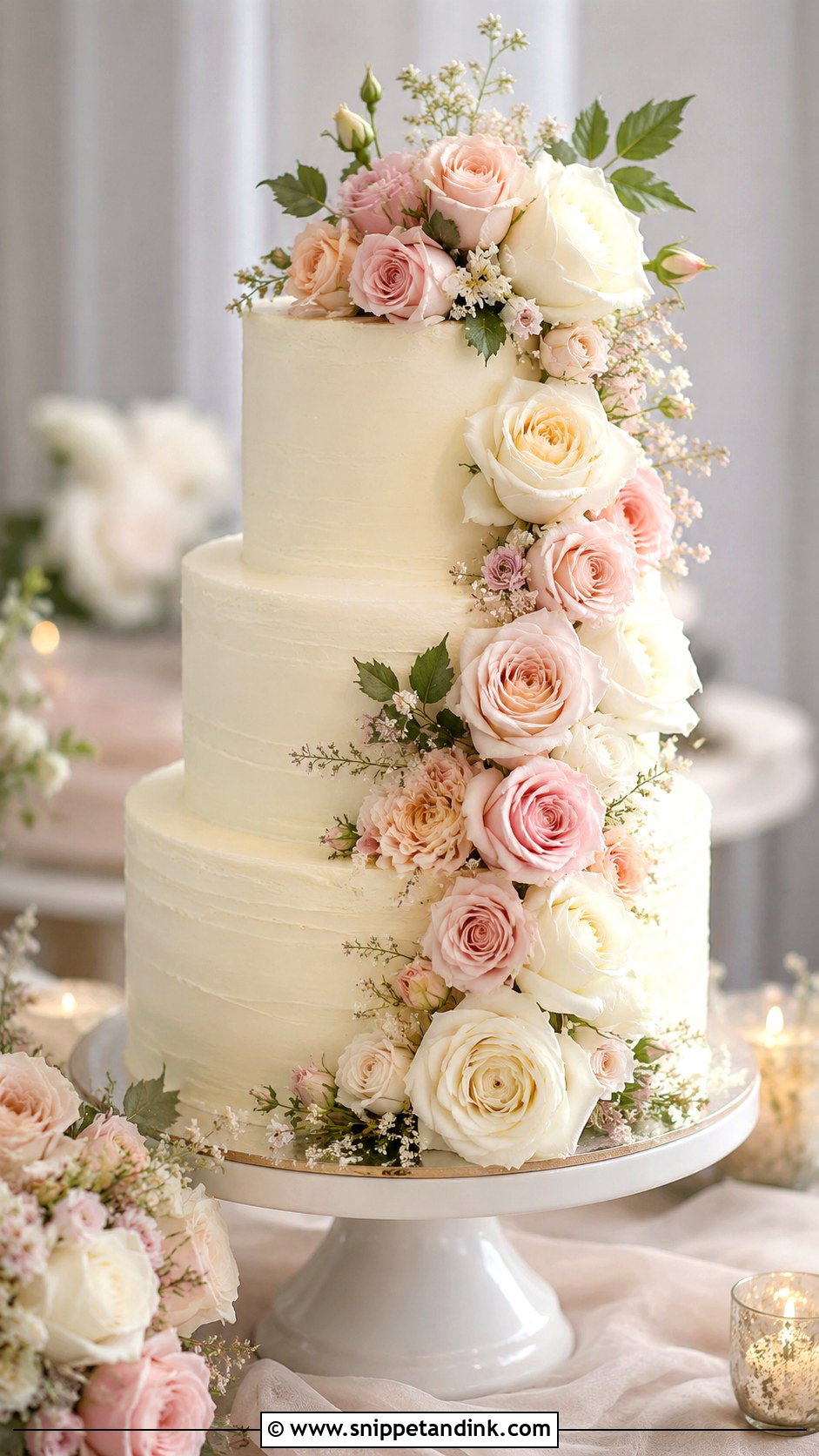
Roses can be fresh, sugar or piped, and I often mix them. Cream lets blush, ivory, champagne, dusty pink and pale peach roses stand out without shouting. A cascade down one side is dramatic; a small cluster on each tier looks more modern. Matching the rose tones to the bouquet ties the cake to the rest of the day. Sugar roses can be kept afterwards.
14. Cream Orchid Wedding Cake
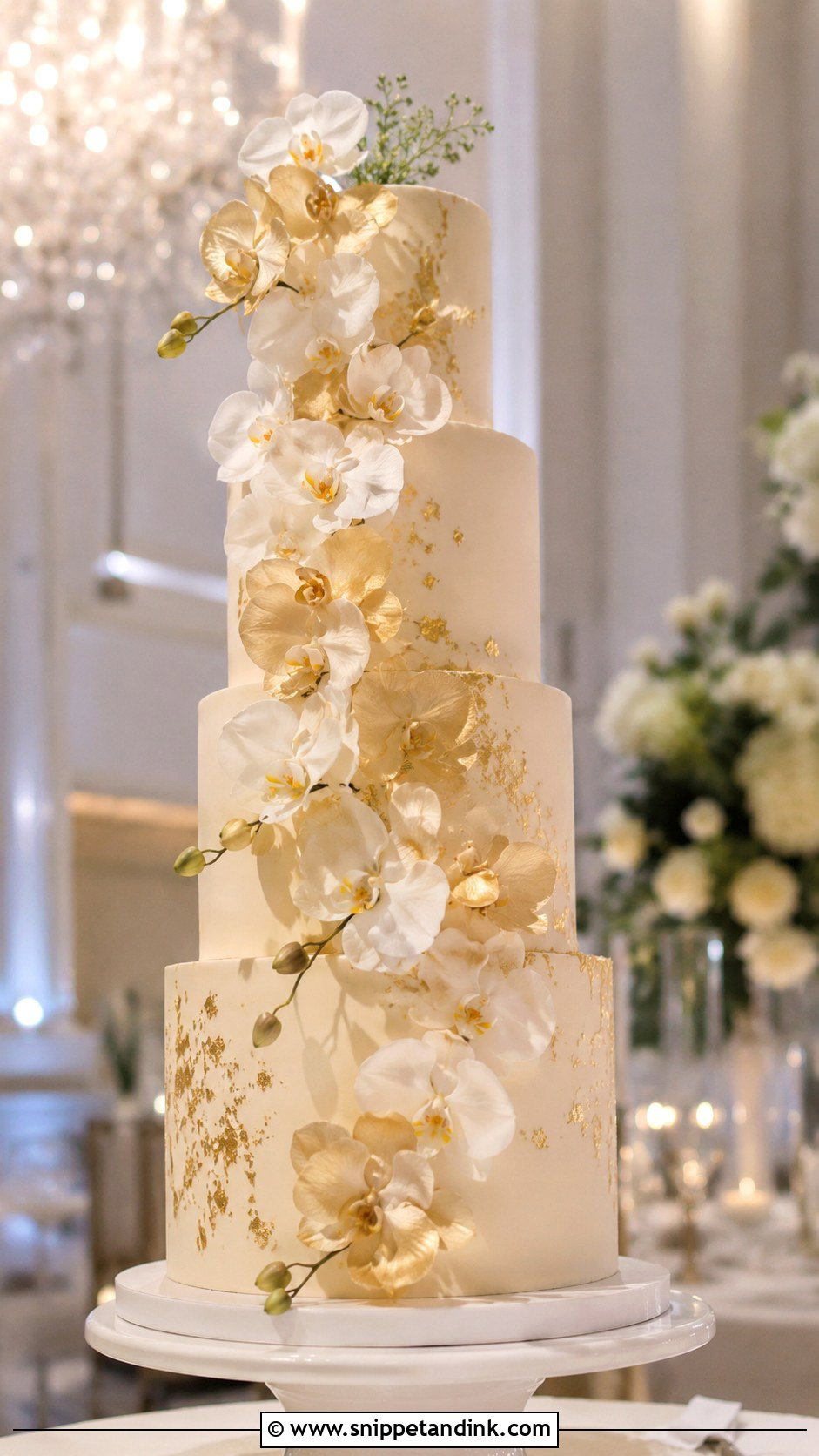
Orchids give a cream cake a modern, sculptural look because their stems naturally arc down the side. White, ivory, pale pink or champagne orchids all work. Smooth buttercream or fondant lets the flowers lead. Fresh orchids hold up well but bruise easily in transport, so I add them at the venue. They suit tall tiers, hotel receptions and tropical weddings.


15. Cream Ruffle Wedding Cake
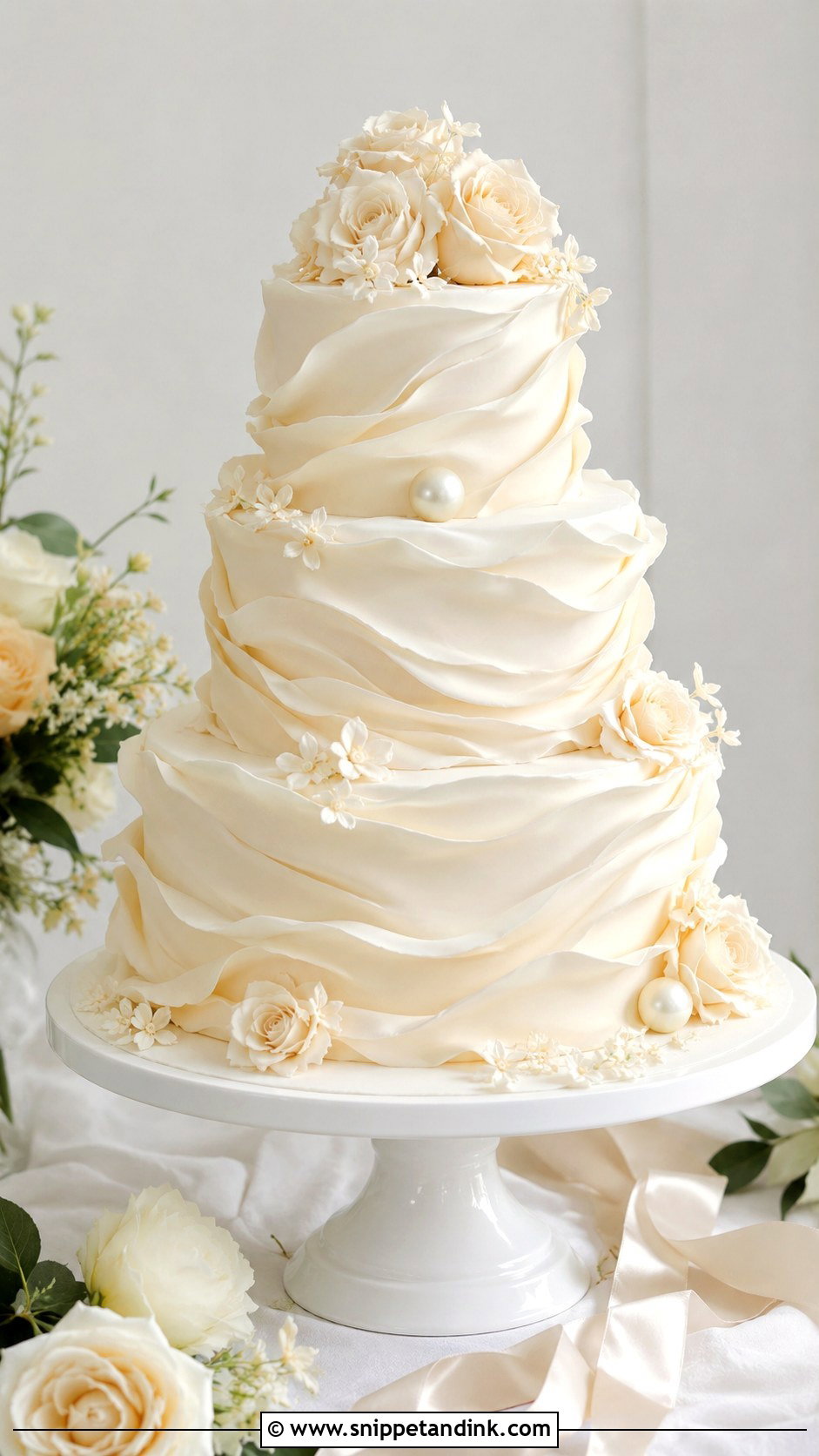
Ruffles behave differently depending on what they’re made of. Buttercream ruffles are soft and full, fondant ruffles look neat and polished, and wafer paper ruffles are almost weightless. Wafer paper is lovely but hates humidity: it wilts and curls in a damp tent, so I’d only use it indoors. In cream, ruffles look like fabric and echo lace gowns. One ruffled tier between smooth ones is plenty for most couples.
16. Cream Lace Wedding Cake
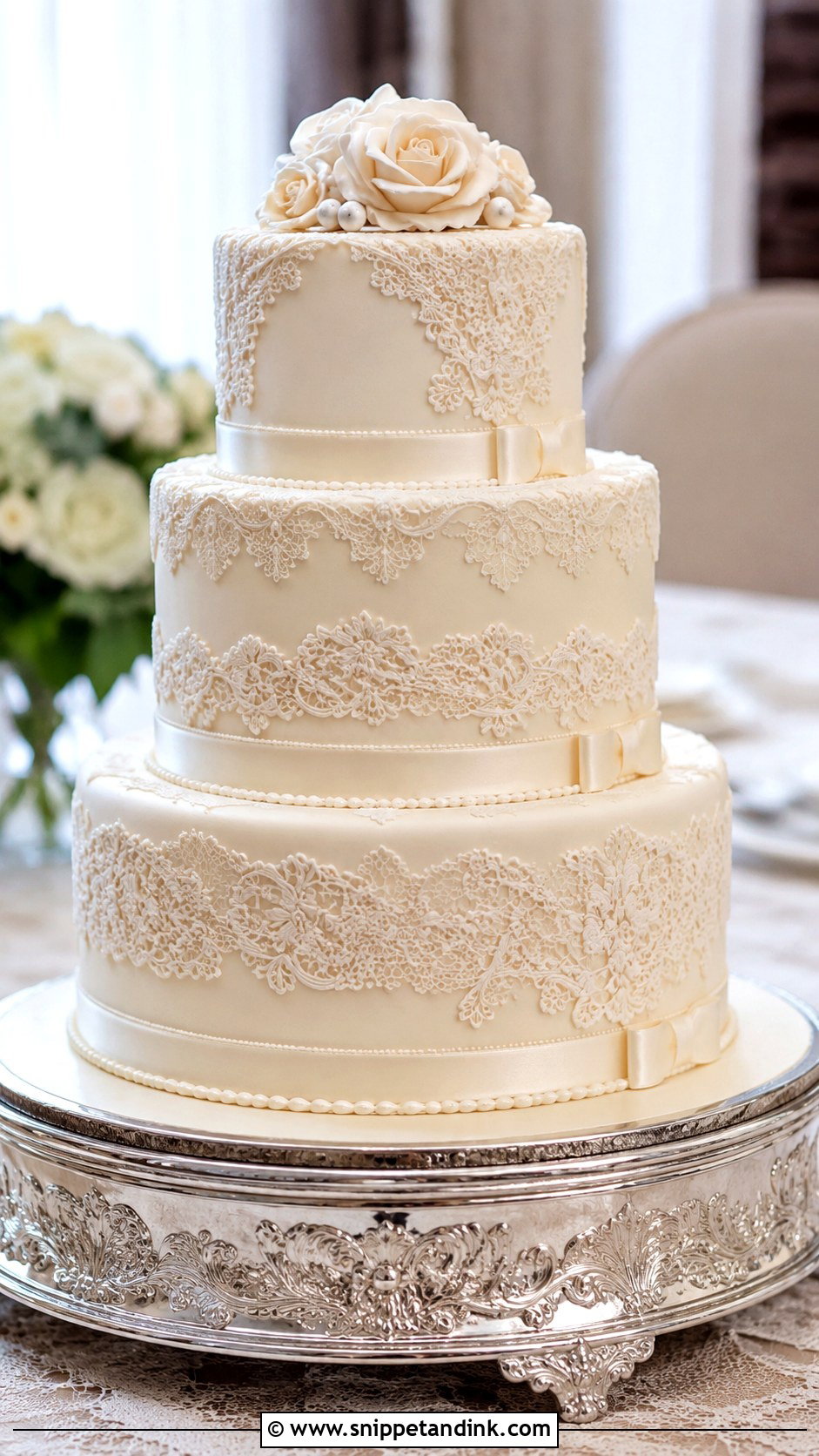
Lace can be piped in royal icing, pressed into fondant with a mould or applied as edible lace sheets. Cream makes it look antique rather than sharp. I sometimes copy a motif from the bride’s gown if she sends a close-up photo of the fabric. Lace on every tier is detailed; one feature tier is simpler. Finish with small flowers, pearls or satin ribbon.
17. Cream Bow Wedding Cake
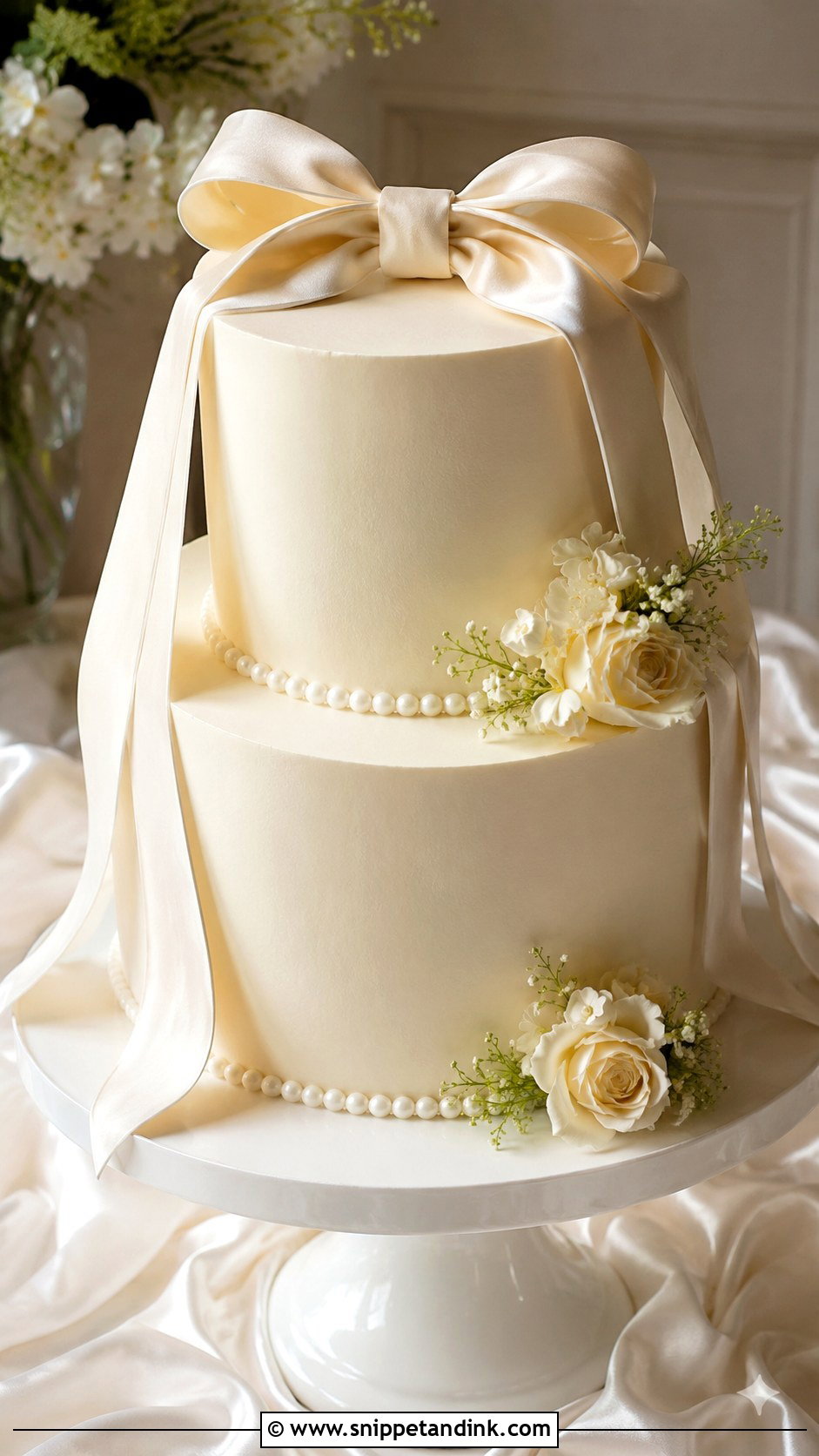
Bows are the detail I’m asked for most this year. I make them in fondant or sugar paste, pipe them in buttercream, or tie real ribbon around the tiers. Real ribbon needs a thin strip of food-safe backing underneath, or the butter in the frosting seeps into the fabric and leaves grease spots. One large bow makes a statement; small bows on each tier feel sweet. Keep the rest of the cake restrained.
18. Cream Heart Wedding Cake
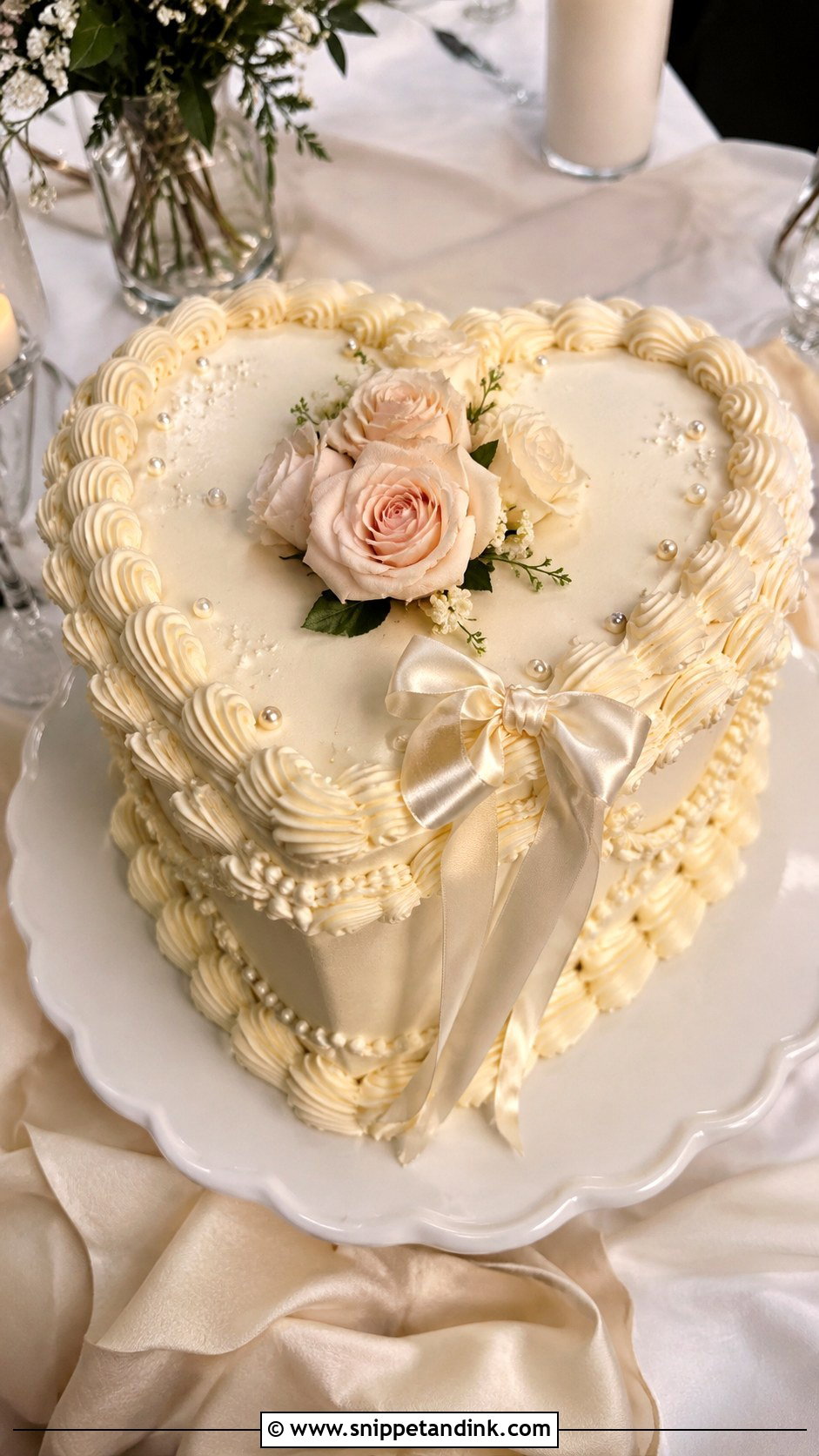
Heart-shaped tiers suit smaller weddings, elopements and bridal showers. Cream keeps the shape romantic without tipping into playful. Shell borders, pearls, satin bows and small roses fit the vintage feel. You can stack heart tiers for drama, but they’re harder to support than rounds, so I’d keep it to two. Ivory, blush, champagne and pale green make a soft palette.
19. Cream Square Wedding Cake
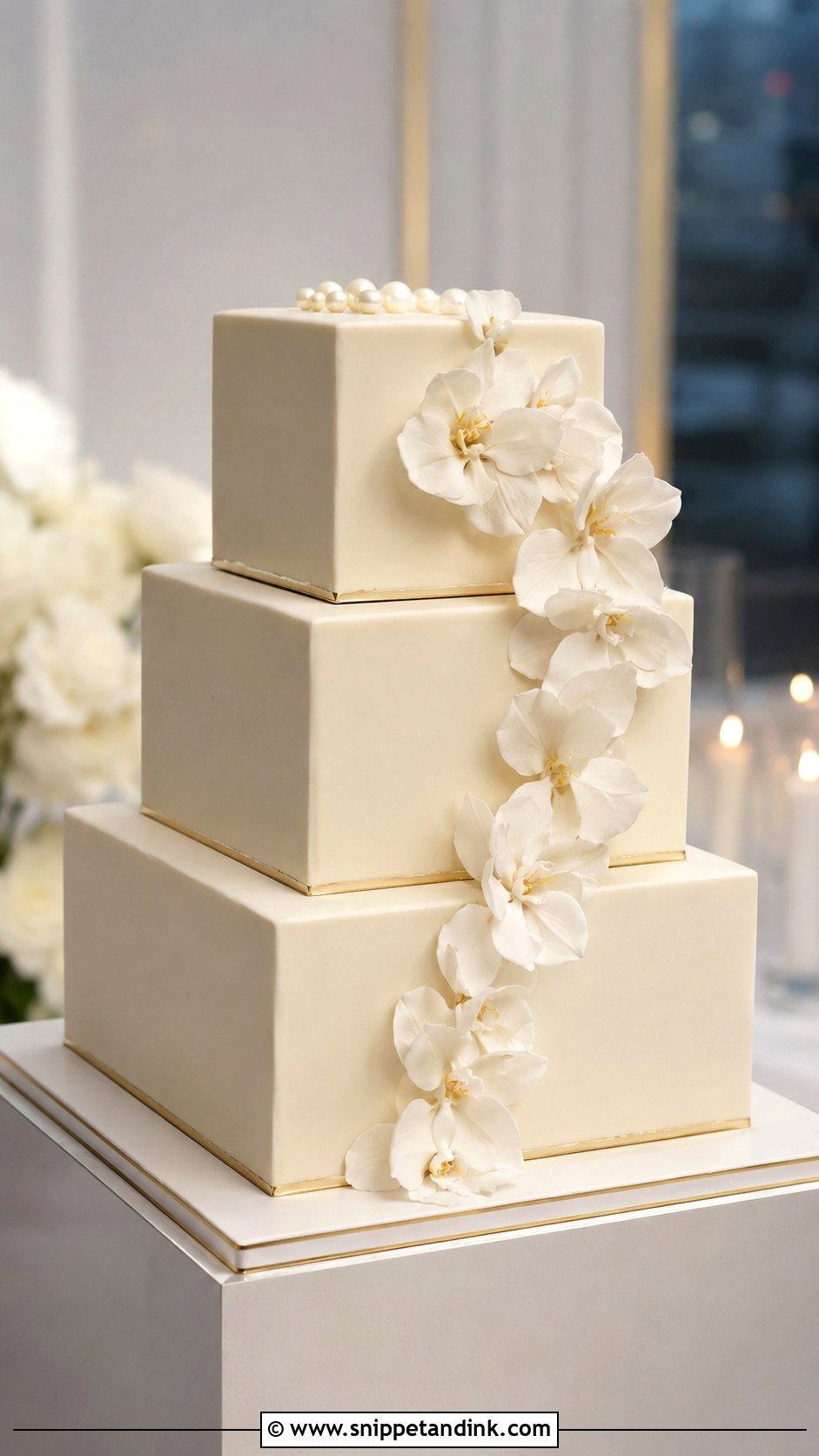
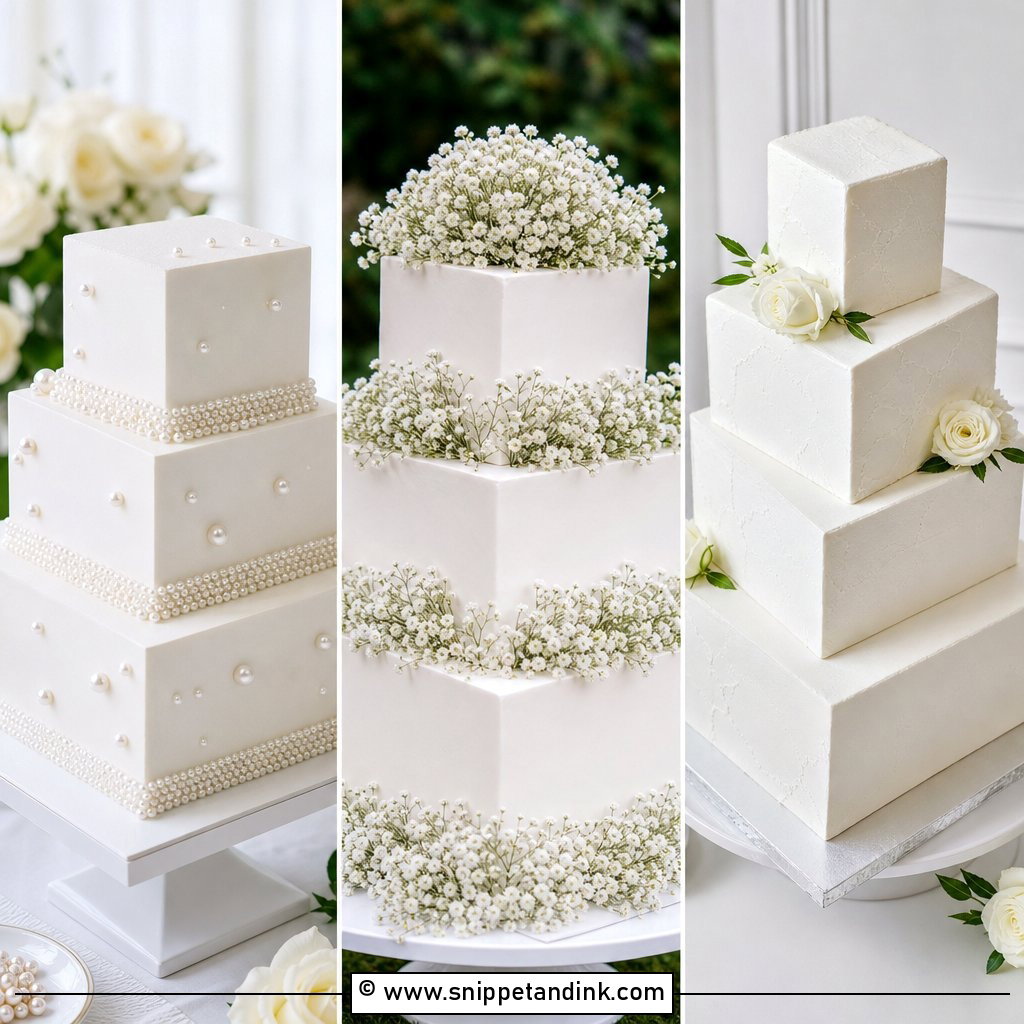
Square tiers look architectural and suit city venues and gallery spaces. They’re also harder to finish than rounds, since every corner has to be sharp, so look at a baker’s previous square cakes before you book. Smooth fondant or sharp-edged buttercream, ribbon borders and a few orchids or roses are enough. Rotating each tier slightly gives a modern twist.


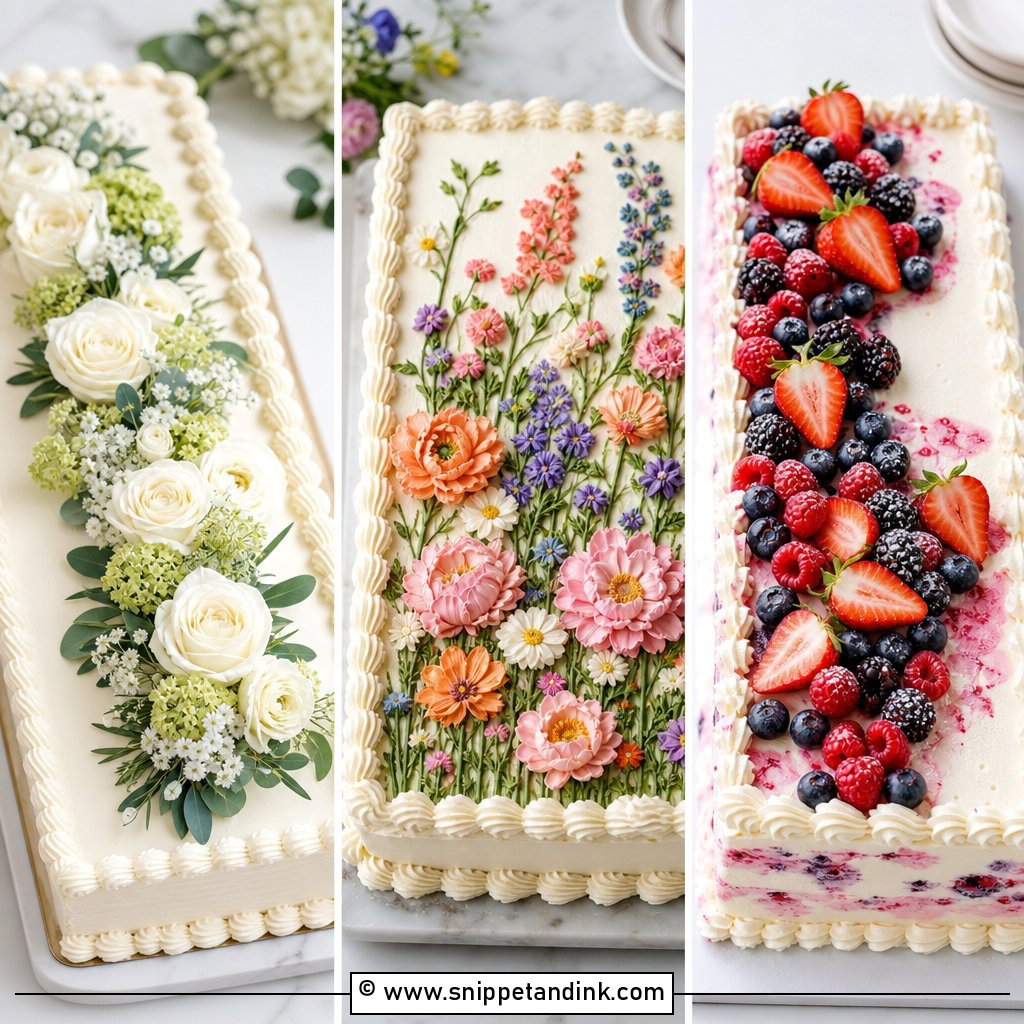
20. Cream Tiered Wedding Cake
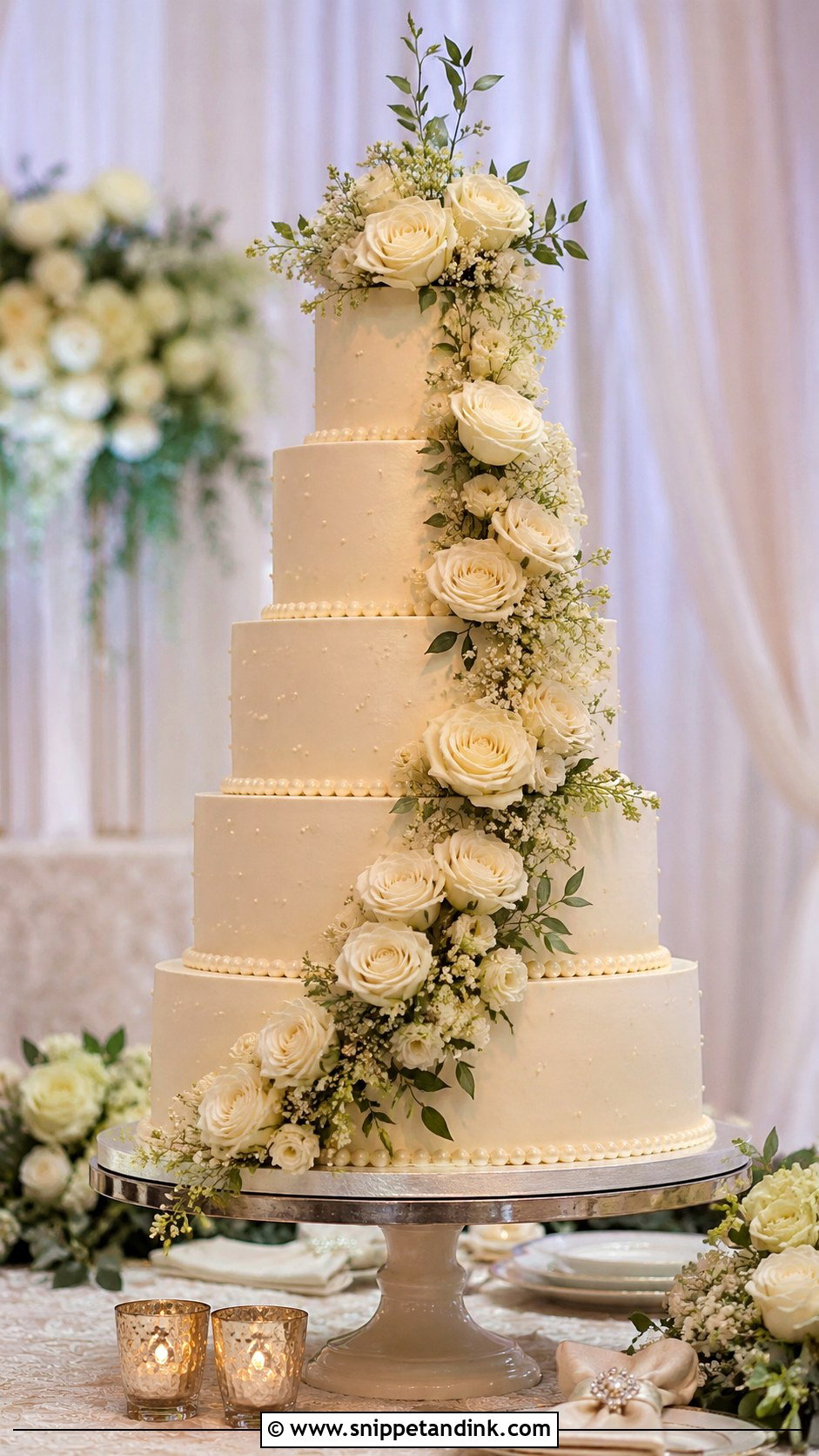
A classic tiered cake is still the centrepiece most couples imagine. Whether it’s two tiers or six, the trick is proportion: each tier usually steps down by two inches in diameter, and the height of each tier should look balanced with its width. Smooth frosting reads formal, textured buttercream reads relaxed. Every stacked tier sits on dowels or supports and a board, so the cake can’t be cut like a single sponge.
21. Cream Two Tier Wedding Cake
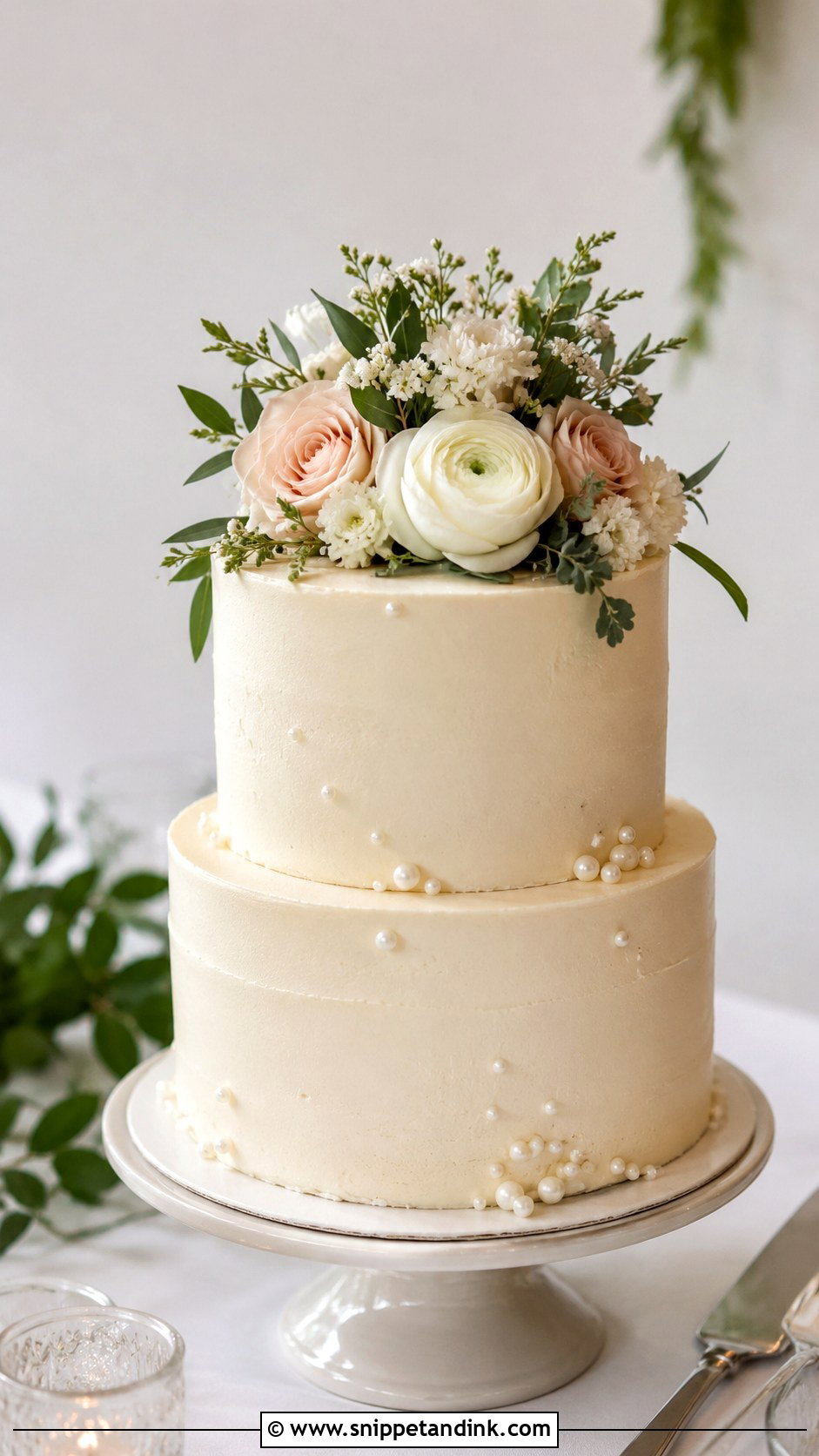
Two tiers suit intimate weddings and smaller tables. It’s still special, and it’s far easier to move and set up than a tall cake. Flowers between the tiers, a smooth minimal finish or textured buttercream all work. Each tier can be a different flavour, such as vanilla almond below and lemon above. For larger guest lists, a two-tier cake can be paired with a plain kitchen cake that’s cut out of sight.
22. Cream Three Tier Wedding Cake
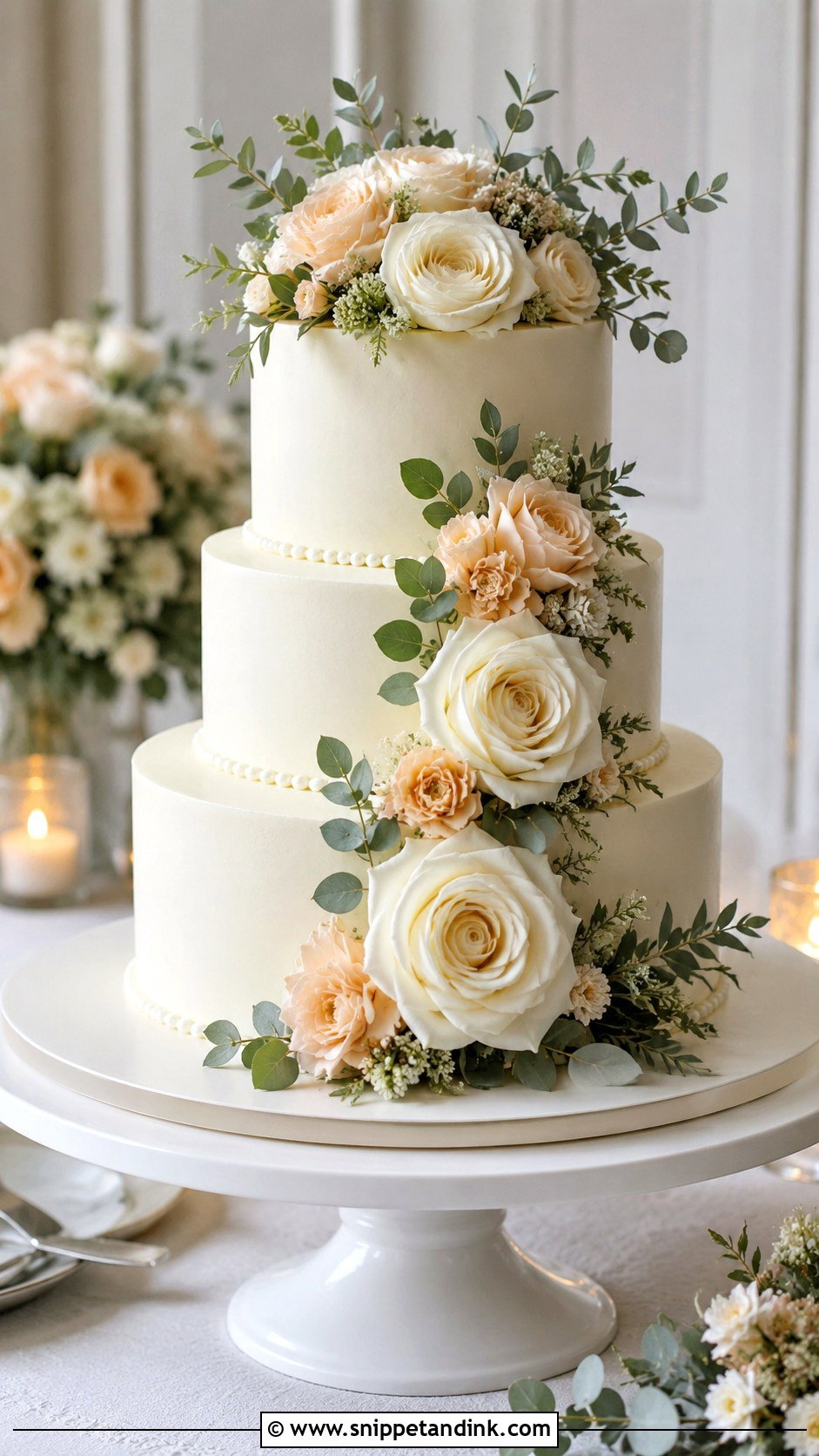
Three tiers is the size I make most often. It’s large enough to look like a wedding cake from across the room but not so tall that it needs special handling. One textured feature tier between two smooth ones keeps it interesting. Flowers from the bouquet or neutral sugar flowers both suit. It fits a garden tent as comfortably as a ballroom.
23. Cream Minimalist Wedding Cake
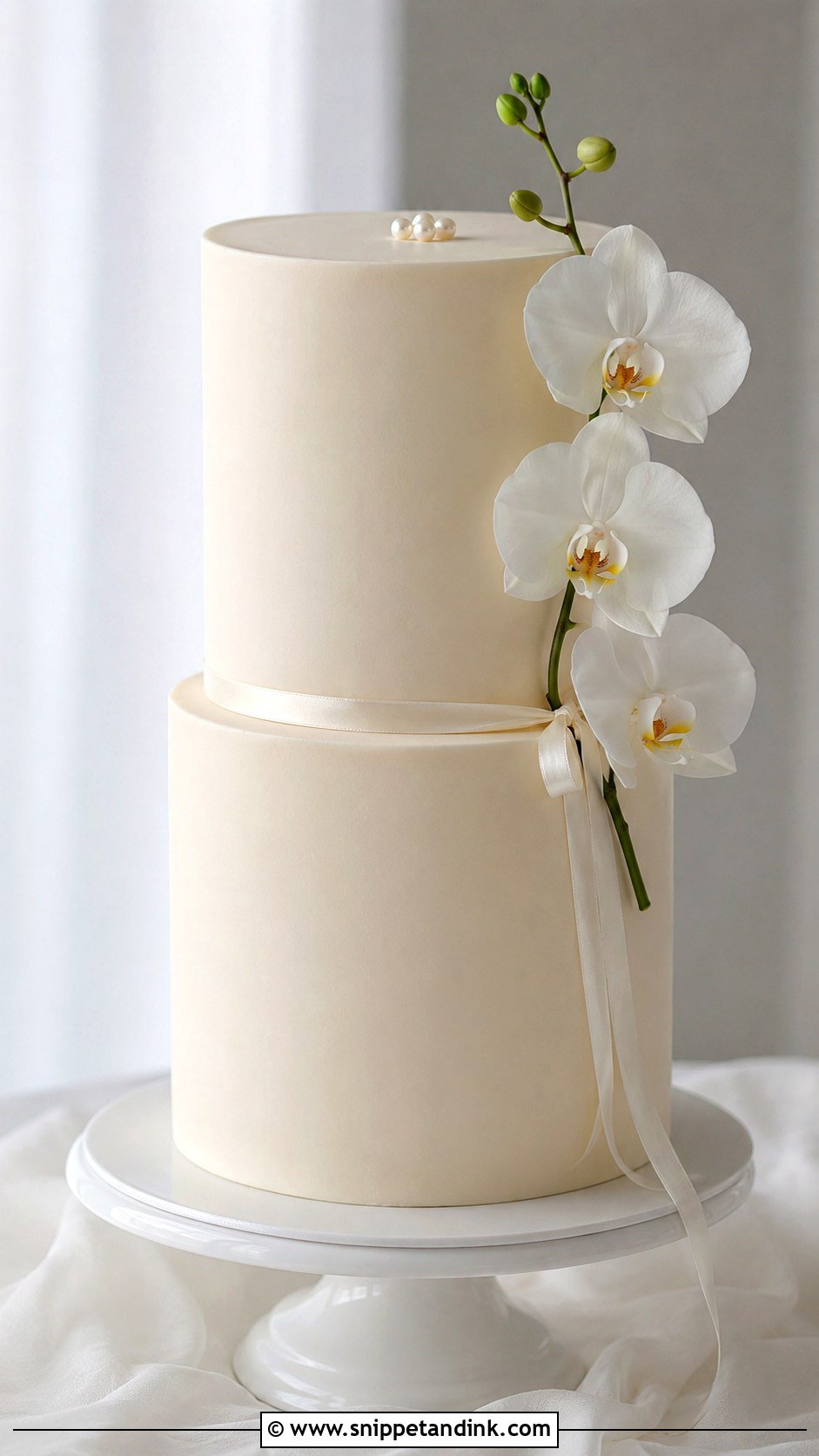
Minimalist cakes show every flaw, so I spend more time smoothing and sharpening edges than on any decoration. One or two accents are enough: a single flower stem, a thin ribbon, a pearl border or a brush of gold. The cream keeps the minimal look from feeling cold. It suits courthouse weddings and modern venues well.
24. Cream Modern Wedding Cake
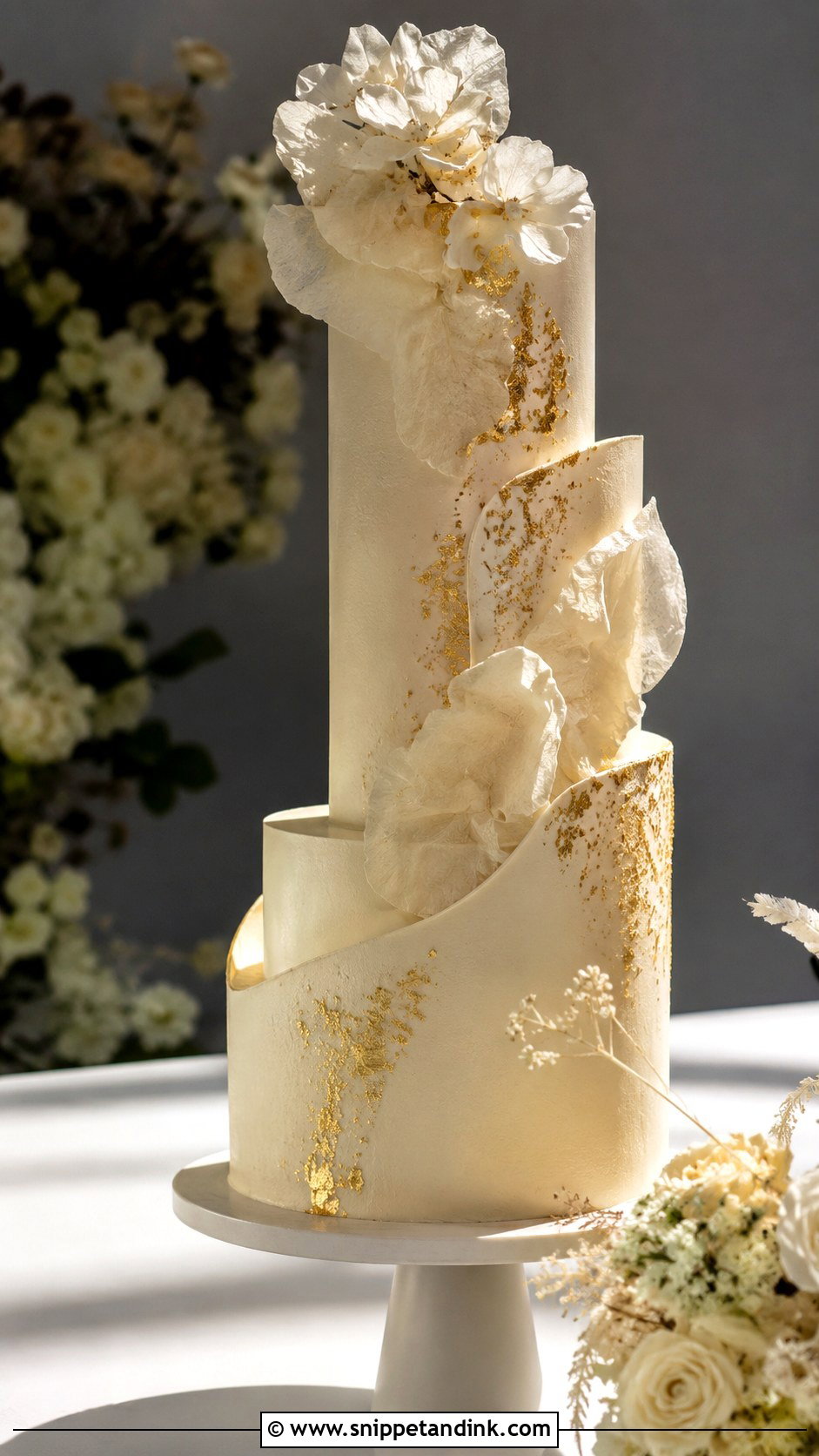
Modern cream cakes play with shape: tall tiers, offset stacking, asymmetrical flowers, wafer paper sculptures or abstract textures. Cream keeps them soft enough for a wedding. A tall single tier with sharp edges or one oversized sugar flower on a smooth cake are good starting points. Keep the palette to cream, ivory, champagne and soft green. Offset tiers need careful internal support, so leave this to an experienced baker.



25. Cream Boho Wedding Cake
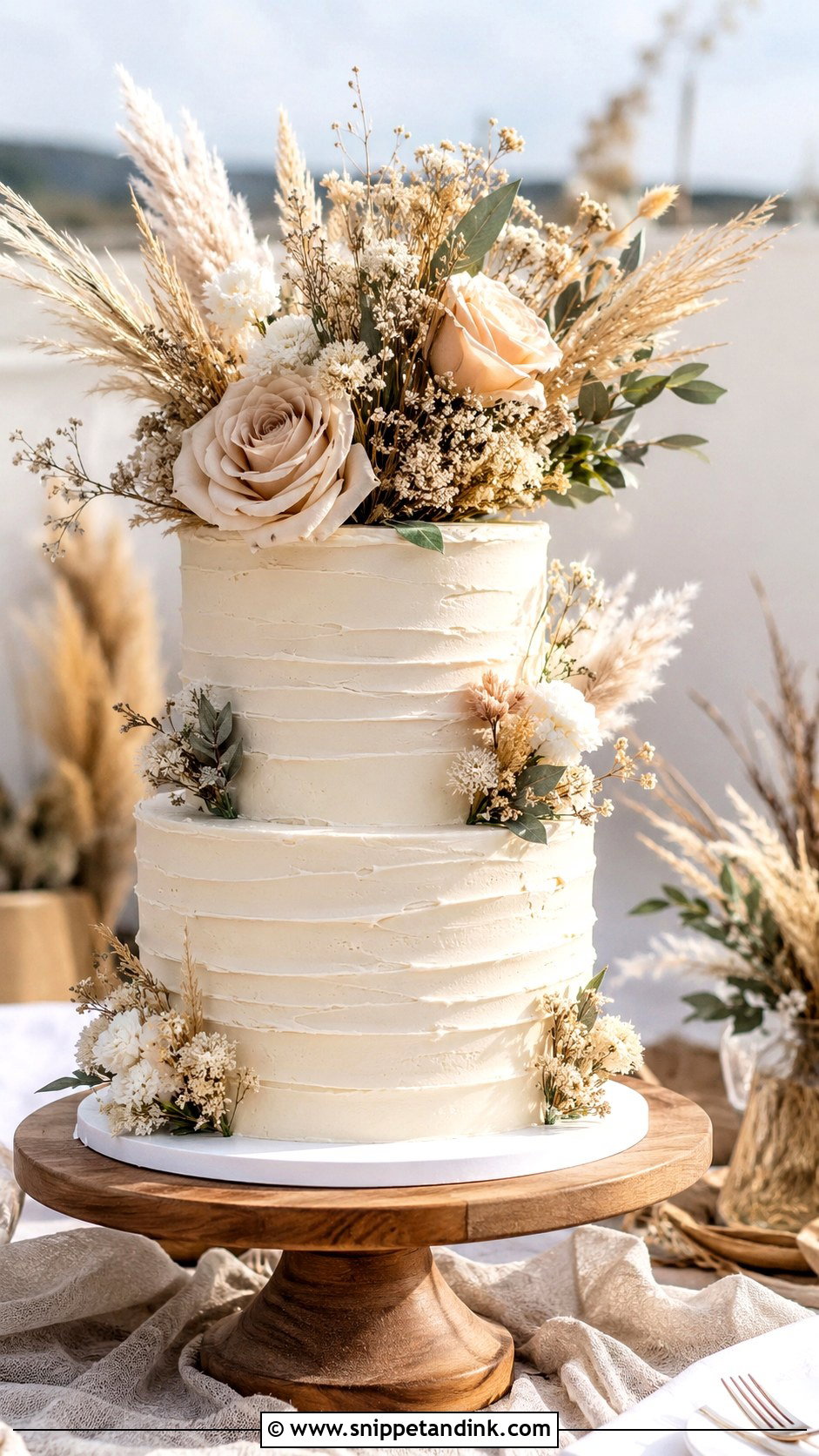
Boho cakes lean on texture and dried elements: pampas grass, dried flowers, muted blooms. Cream pairs naturally with beige, tan, muted peach and sage. A wooden stand or stone pedestal suits it. Dried flowers shed and some are treated with sprays or dyes, so I keep them on picks or wrapped stems and away from any slice that will be served. Keep it airy.
26. Cream Garden Wedding Cake
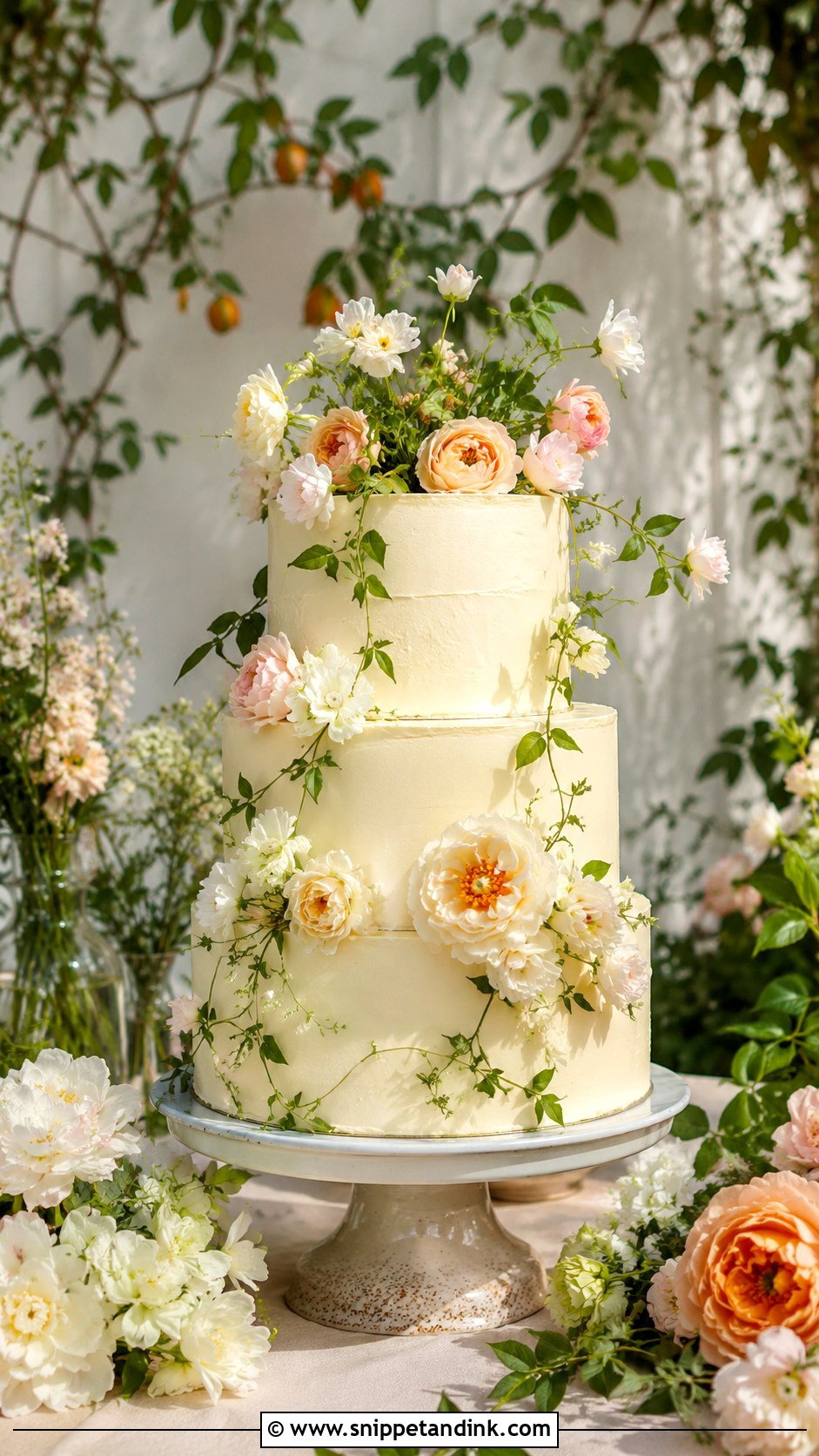
Garden cakes should look as if the flowers were gathered from outside: loose placement, trailing vines, roses, sweet peas and ranunculus. Smooth for a refined garden party, lightly textured for relaxed. I add flowers around the base so the cake connects to the table. Sweet peas are pretty but toxic if eaten, so they should never touch the frosting directly. It works indoors with botanical decor too.
27. Cream Beach Wedding Cake
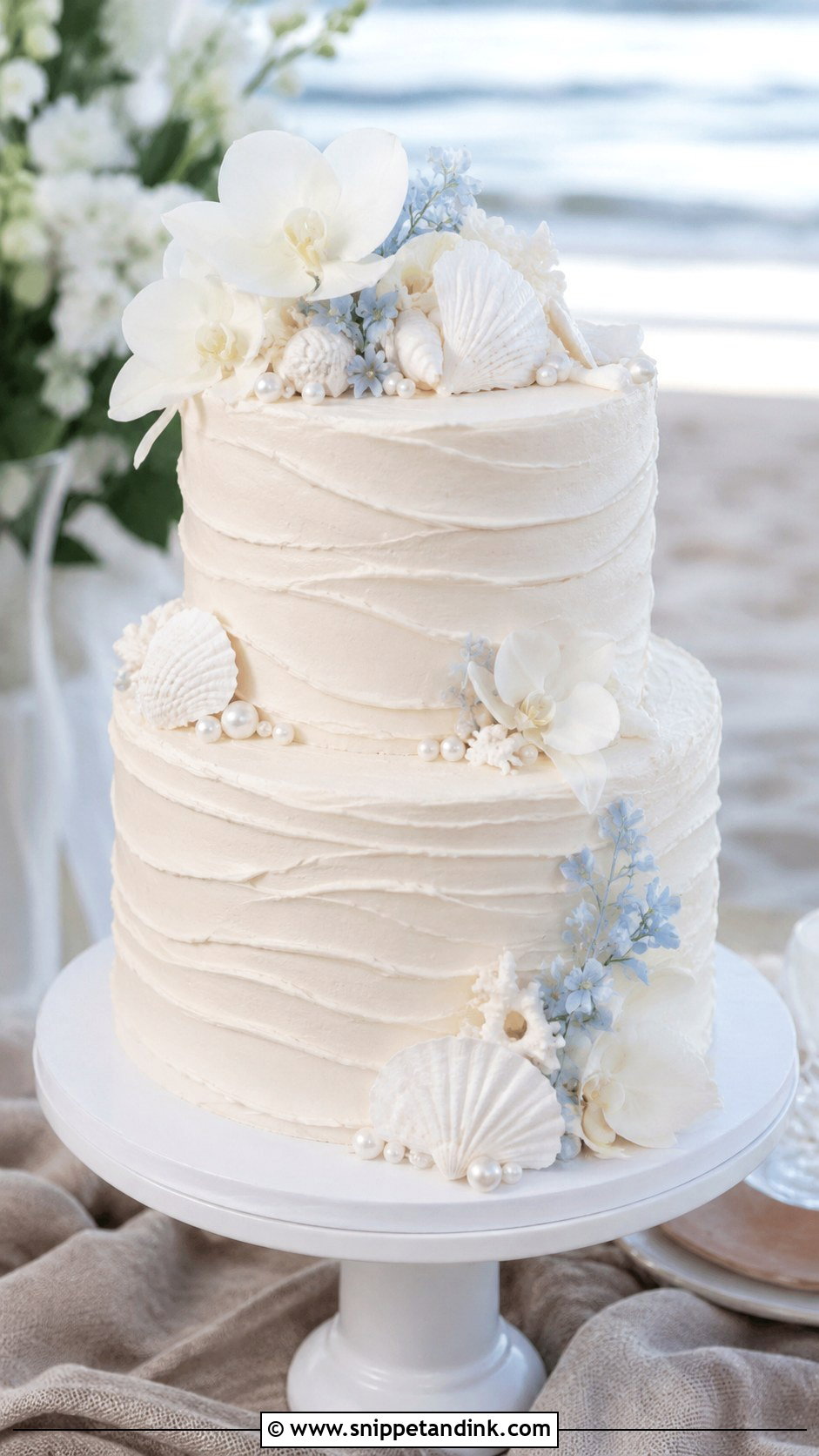
A cream beach wedding cake doesn’t need anchors and starfish to feel coastal. Smooth buttercream, a wave texture, pearls, tropical orchids or white sugar shells are enough. Coconut, lemon and passion fruit suit the setting. The real problem at the beach is heat and humidity, so I’d go with fondant or a stable buttercream and keep the cake shaded until the cutting.
28. Cream Fall Wedding Cake
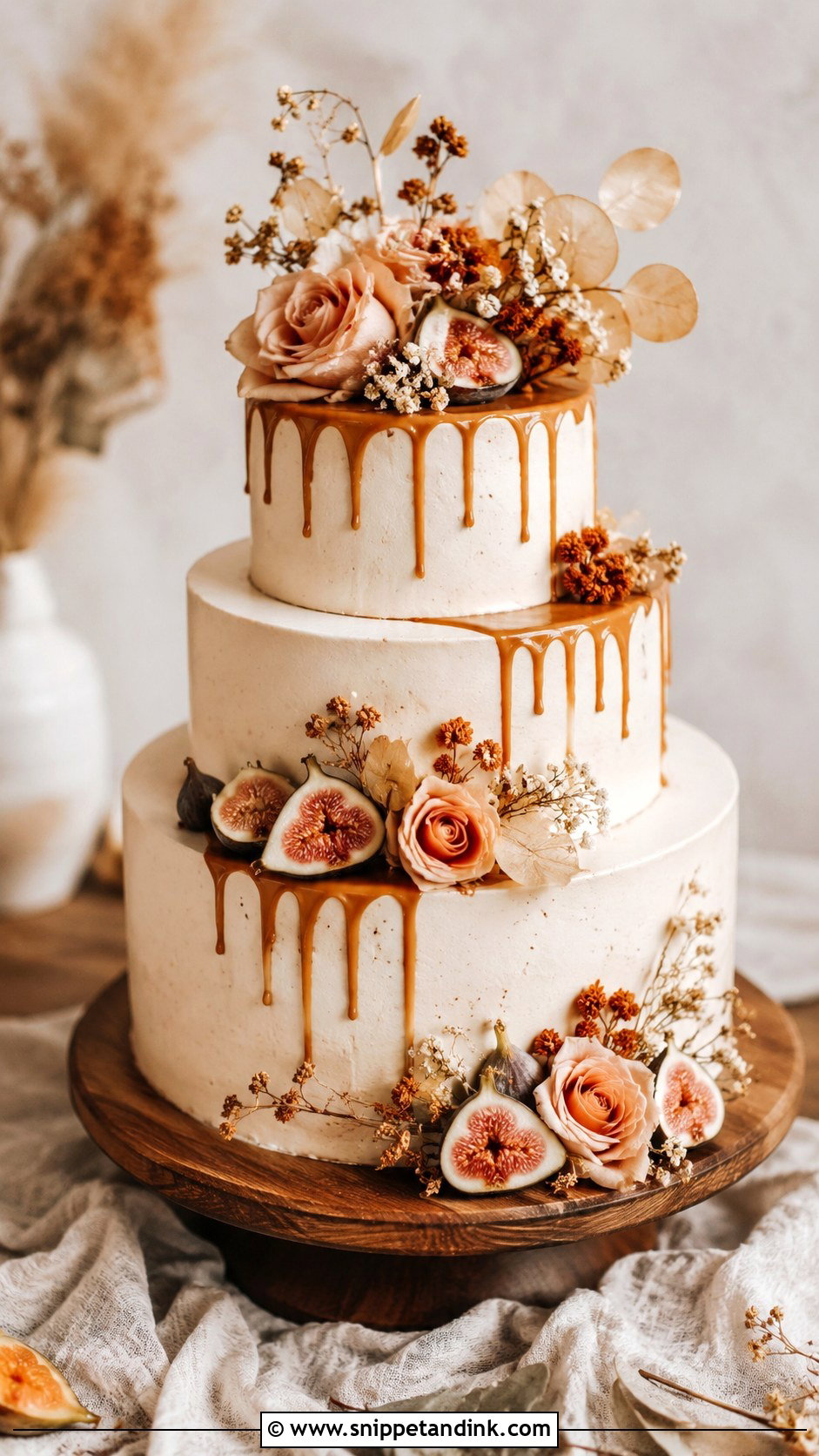
A cream fall wedding cake gets its warmth from the decoration rather than dark frosting: caramel drizzle, figs, pears, amber leaves and muted roses. Spice, almond, pear, pumpkin or brown butter vanilla suit the season. Gold accents and deep greenery make it formal; dried grasses and fruit make it organic. Cut figs and pears brown quickly, so they go on at the venue.
29. Cream Cheese Frosting Wedding Cake
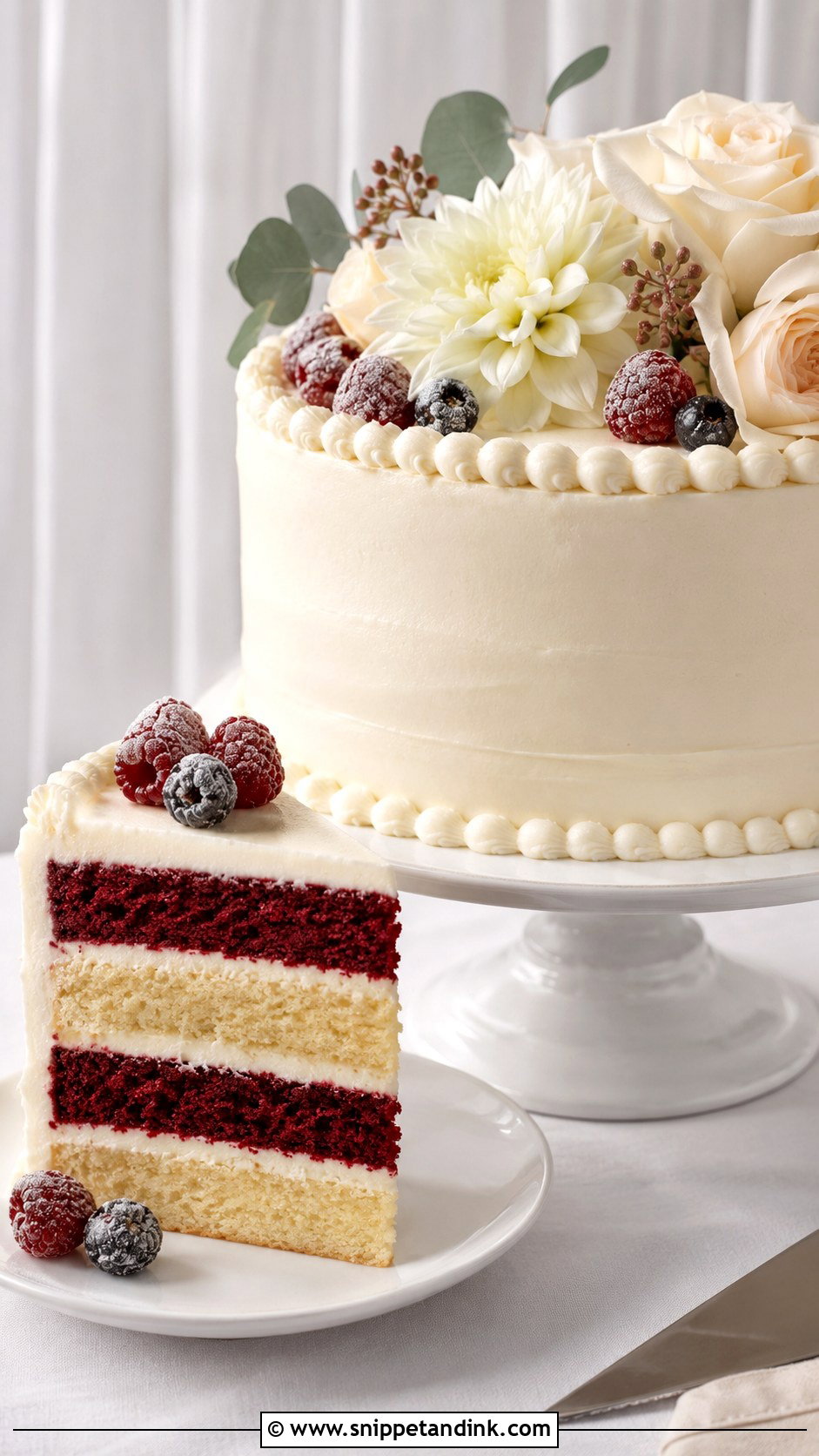
Cream cheese frosting is less sweet and tangier, and it’s the natural partner for red velvet, carrot cake, spice, hummingbird and lemon. It’s also soft and must be kept chilled, so I use it between the layers and cover the outside in a firmer buttercream that holds up on the table. I’d never put fondant over it. Fruit or citrus fillings balance its richness.
30. Cream Champagne Wedding Cake
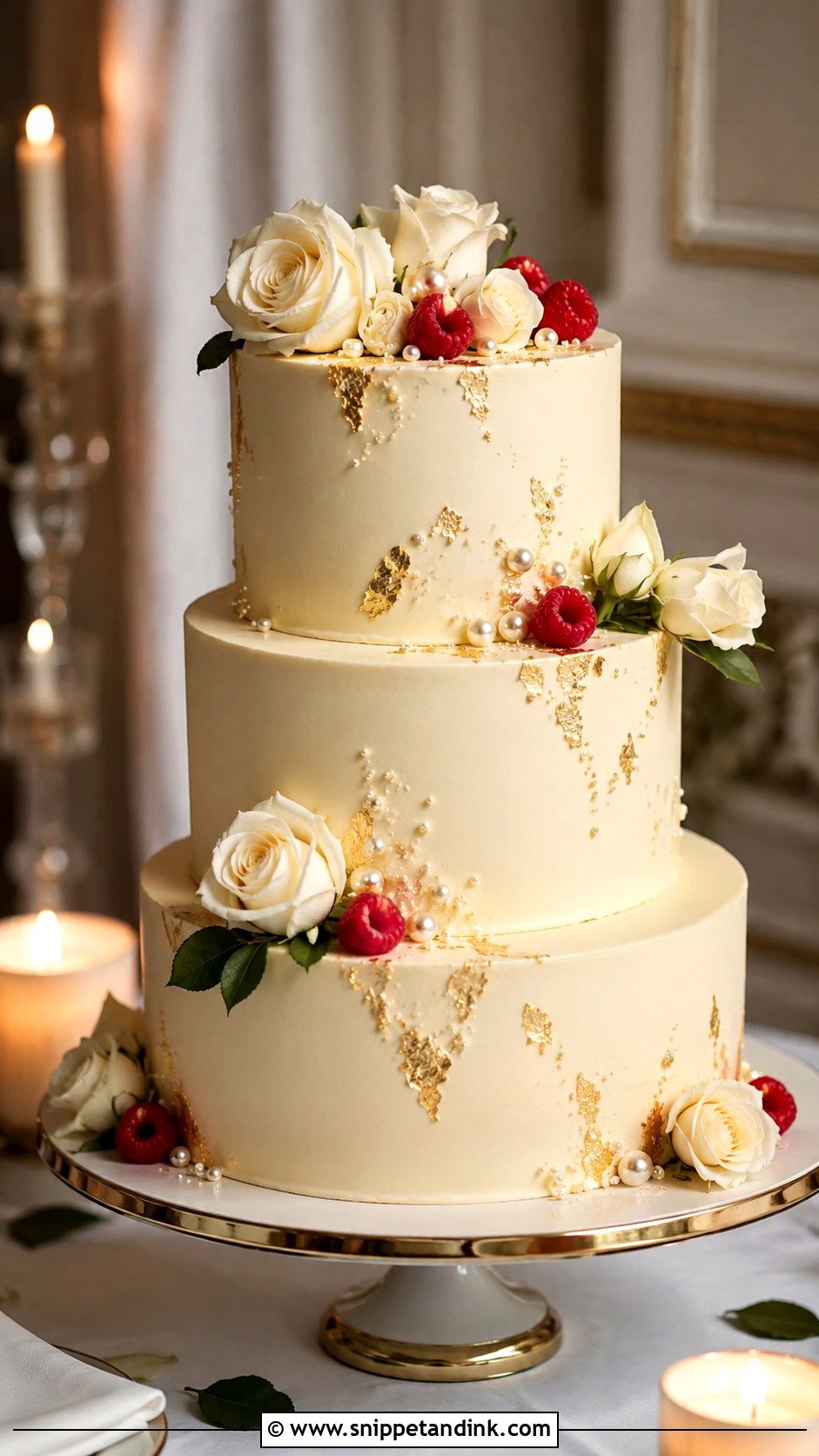
Champagne cake is flavoured with sparkling wine or a champagne-style flavouring, and most of the alcohol cooks off in baking. It pairs well with vanilla buttercream, strawberry filling, raspberry preserves or white chocolate ganache. A cream exterior with gold leaf, sugar pearls or pale flowers keeps it classic. It feels celebratory without being an unusual flavour, which suits formal evening weddings. If any guests avoid alcohol entirely, ask your baker for an alcohol-free version.
Tier Sizes, Guest Counts and Where the Cake Should Stand
Wedding portions are cut as thin fingers rather than party wedges, so a tiered cake goes further than people expect. As a rough guide, and bakers do vary, a six-inch round tier gives around a dozen wedding portions, an eight-inch about twice that, and a ten-inch close to forty. A classic six, eight and ten-inch stack feeds roughly seventy guests.
If your guest list is much bigger than your dream cake, keep the design and add a plain cutting cake in the same flavour, sliced in the kitchen. Nobody can tell the difference on the plate.
Once you know the size, think about the table it will stand on:
- Away from windows with afternoon sun, heaters, candles and the dance floor speakers.
- On a sturdy, level table; a wobbly trestle is the most common reason I re-level a cake on site.
- With a clear path for the baker to carry it in, and somewhere cool to wait if the room isn’t ready.
- Set up as close to the reception as the venue allows, especially for naked cakes and cream cheese fillings.
Match the Finish to the Room and the Flowers to the Bouquet
Cream can go rustic, vintage, modern or formal depending on the finish, flowers and shape you choose. Inside, it suits everything from vanilla bean and champagne to lemon, carrot and cream cheese. My advice is to choose the texture for your venue’s temperature and the decoration to match your flowers, linens and lighting. Get those two decisions right and almost any of these cakes will look right on the day.
You'll Like These Ideas:










Leave a Reply