
Most brides fall for a gown on a hanger and only later wonder how it looks with a veil, shoes and the venue behind it. I’d rather you see the whole outfit from the start. Bridal shops are carrying everything at once right now: full ball gowns, clean satin sheaths, romantic lace, short minis, colored gowns and light destination dresses. The thirty below are grouped as complete looks, with what I watch for at fittings, so you can sort them by your venue, your comfort and how much you plan to dance.
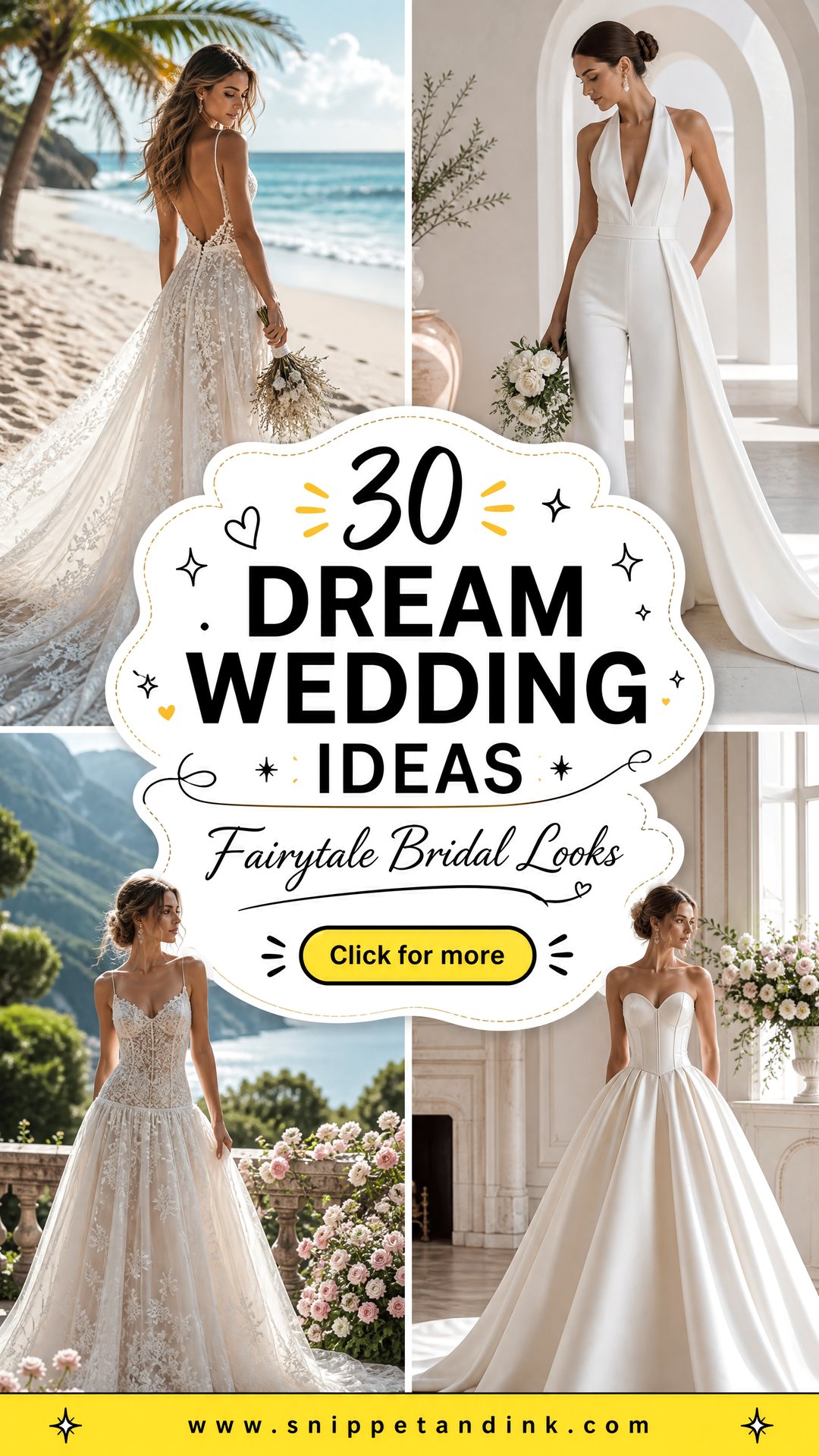
Does Your Venue Floor Agree With Your Skirt?
Before I pull a single dress, I ask what you’ll be walking on. Ground and weather decide more than trend does, and a gown that’s wrong for the floor gets ruined or fussed over all day.
- Sand: light chiffon or crepe, short or no train, flat sandals. Heavy satin and big tulle skirts drag and collect grit.
- Grass and gardens: an A-line or tea length keeps the hem off damp lawn. Block heels or heel protectors stop you sinking.
- Stone stairs and old churches: long trains pick up dust, and a cathedral veil can catch on rough steps. A bustle is essential.
- Ballrooms and polished floors: almost any shape works, and this is where a big ball gown or long train makes the most sense.
Season matters as well. Heavy satin and long sleeves feel right in winter; in a hot summer, a high neck or full crinoline can leave you overheated before the photos even start. I’d also ask places of worship whether they expect covered shoulders, since a bolero or cape can solve that without changing the dress.
1. A Line Wedding Dress
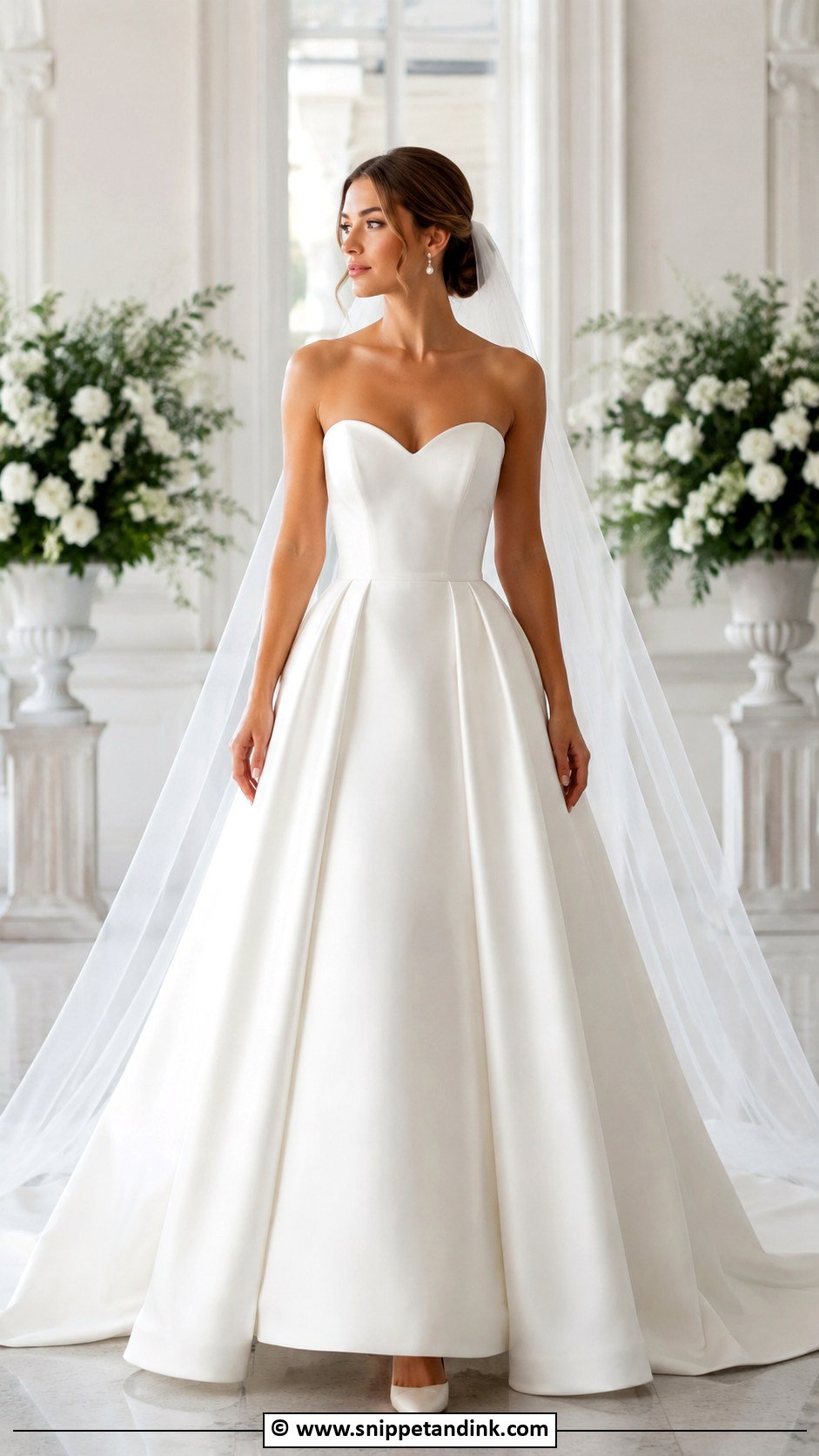
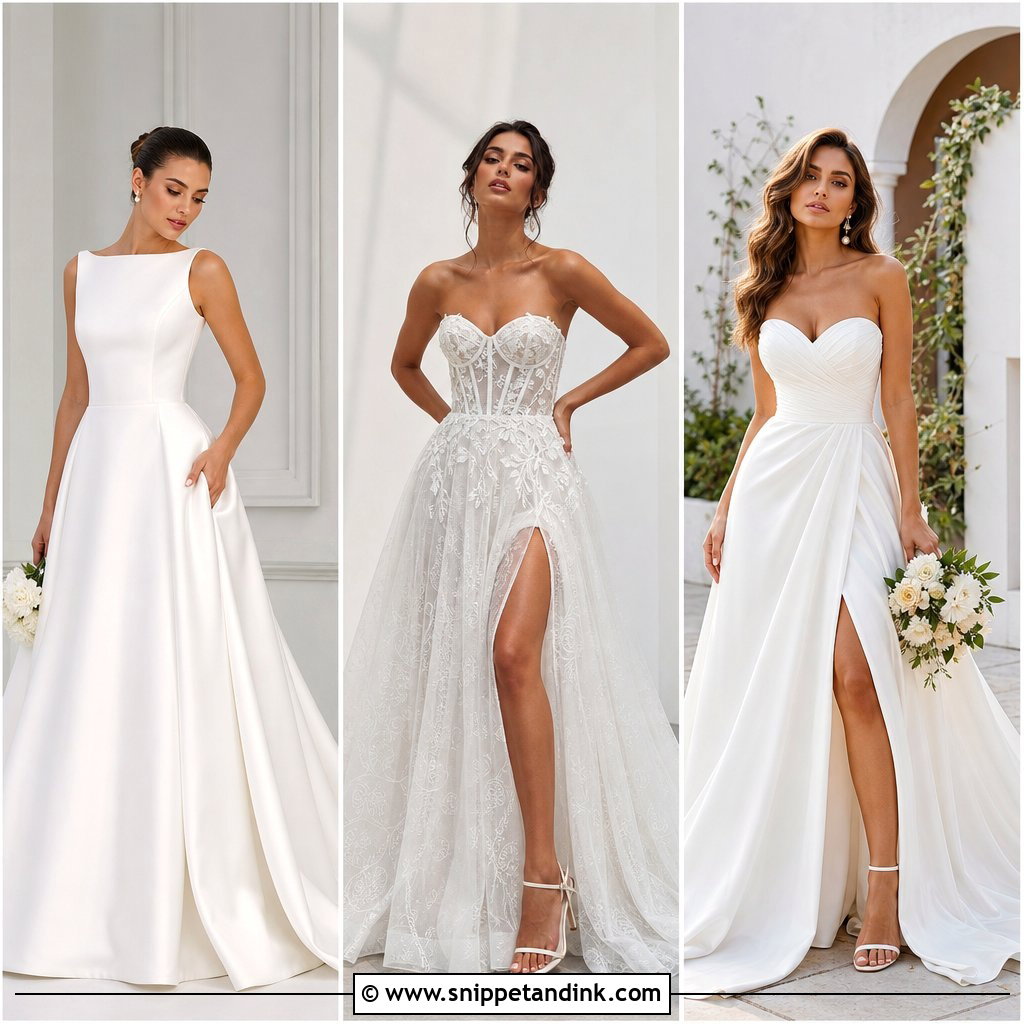
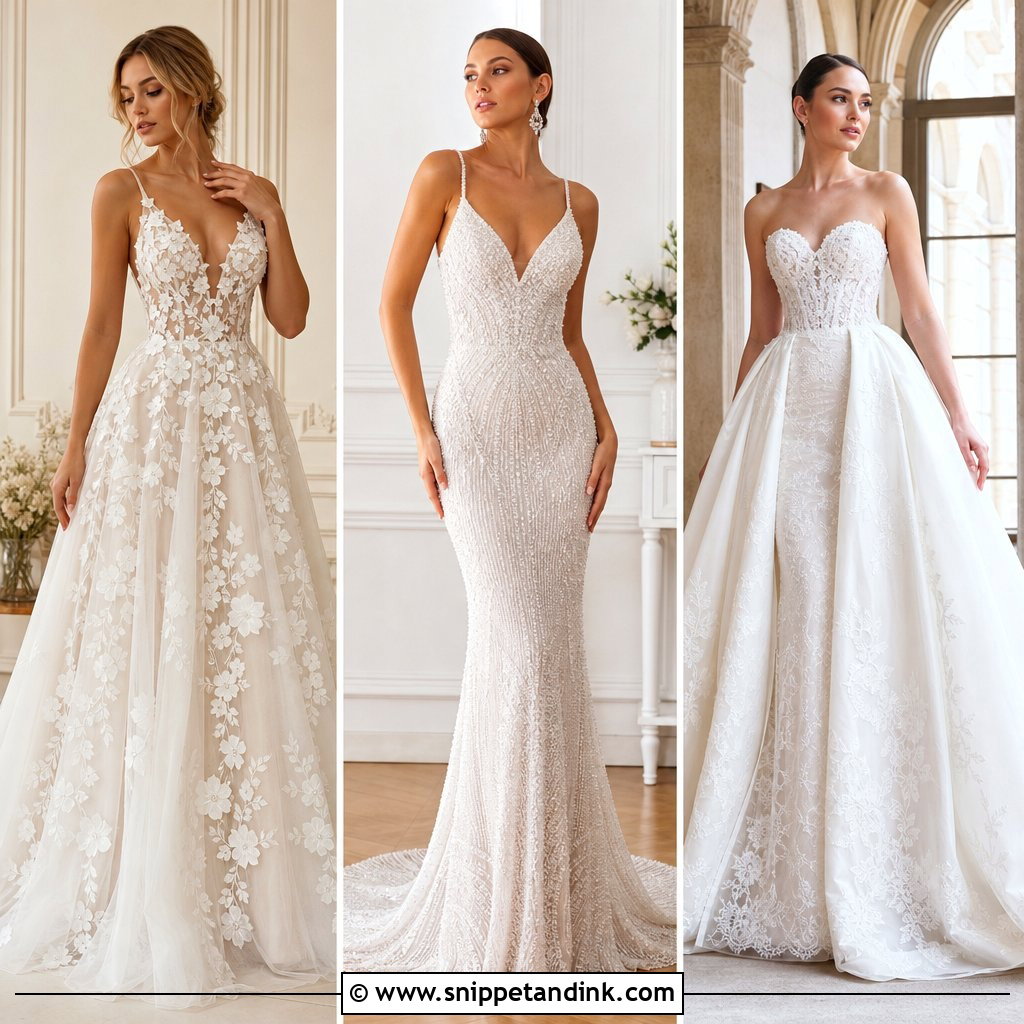
If a bride walks in unsure of everything, I pull an A-line first. The skirt opens from the waist without much weight, so it suits a church, a barn or a ballroom. In satin or mikado with a soft sweetheart neckline, pearl studs and ivory pumps, it reads classic. Lace applique softens it. The detail I check is skirt length in your actual shoes; A-lines drag at the front first, and you’ll step on that hem going up the altar steps.
2. Ball Gown Wedding Dress
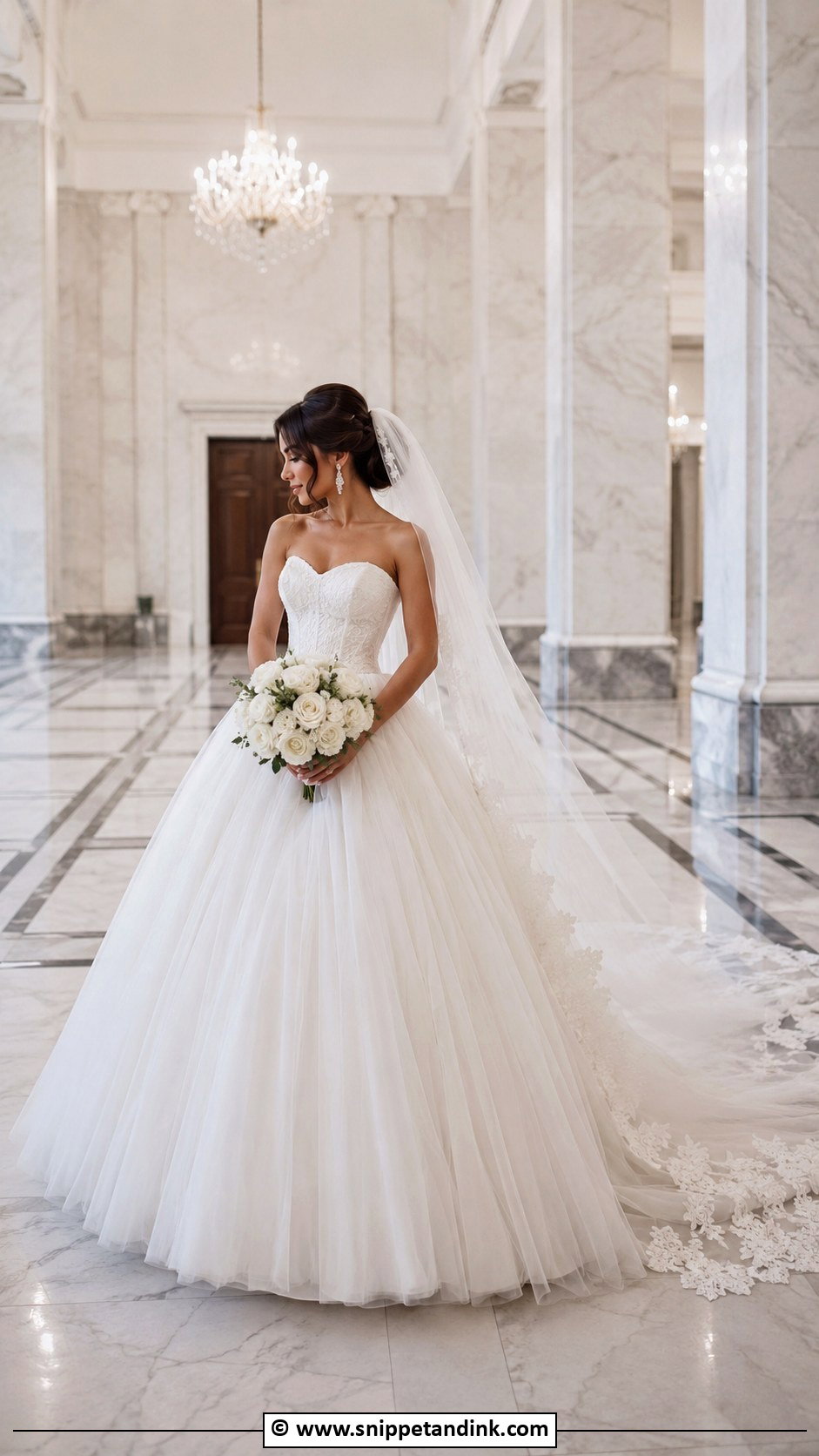
A ball gown wedding dress is the fairytale shape, and it’s heavier than people expect. A full satin skirt over a crinoline carries real weight on the hips, so I always have brides walk the length of the salon and sit on a normal chair before deciding. A strapless or off-shoulder bodice, drop earrings and a clean bun keep it from tipping into costume. Plan the car too: a big skirt needs a back seat to itself.
3. Mermaid Wedding Dress
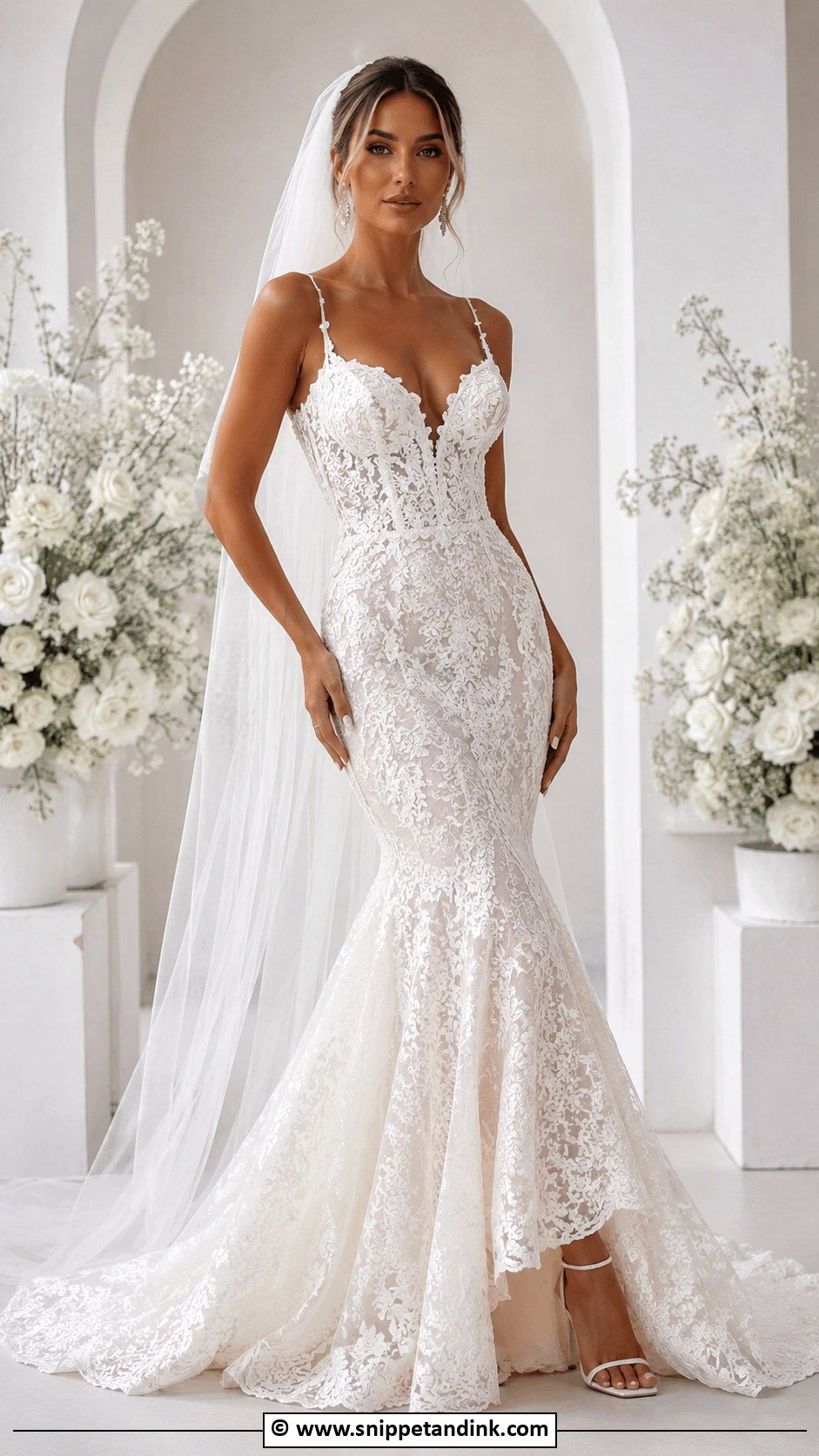
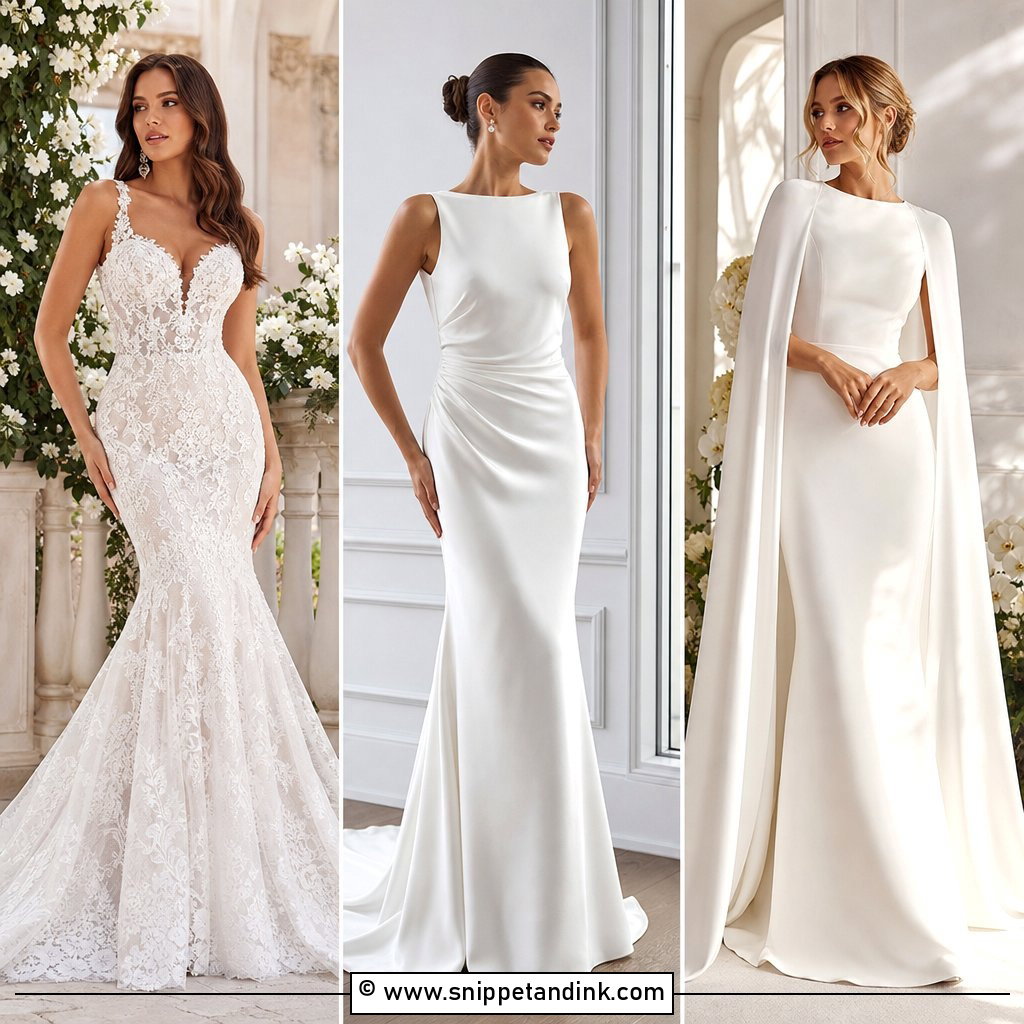
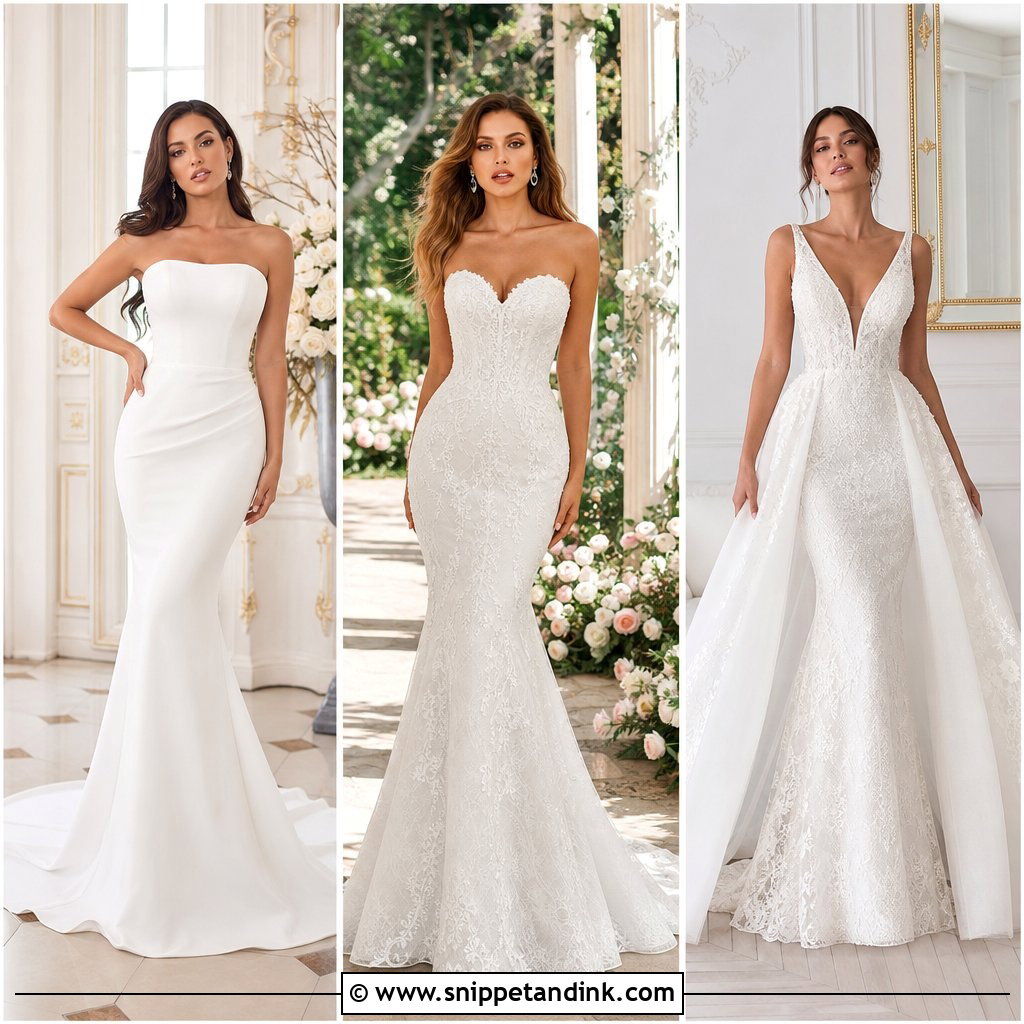
Mermaid gowns hug through the hips and flare near the knee. The two things I test are stairs and sitting. Stretch crepe or lined lace gives you more movement than stiff satin, and a short sweep train is easier than a cathedral one. Strappy heels with an ankle strap keep you steady in a narrow skirt. A center part or waves pushed behind the shoulders shows off the fit, and you won’t need much jewelry beyond crystal earrings.
4. Sheath Wedding Dress
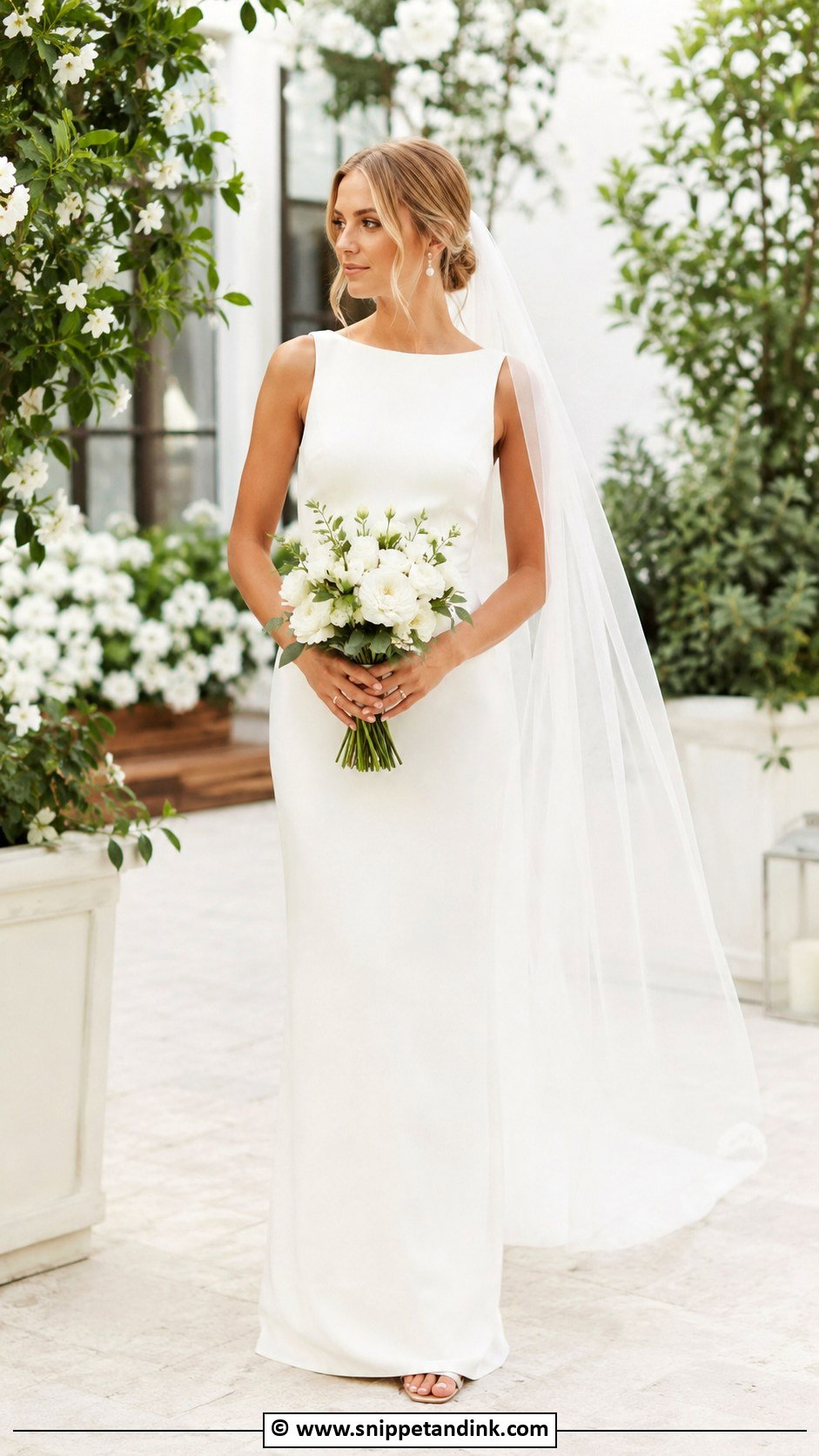
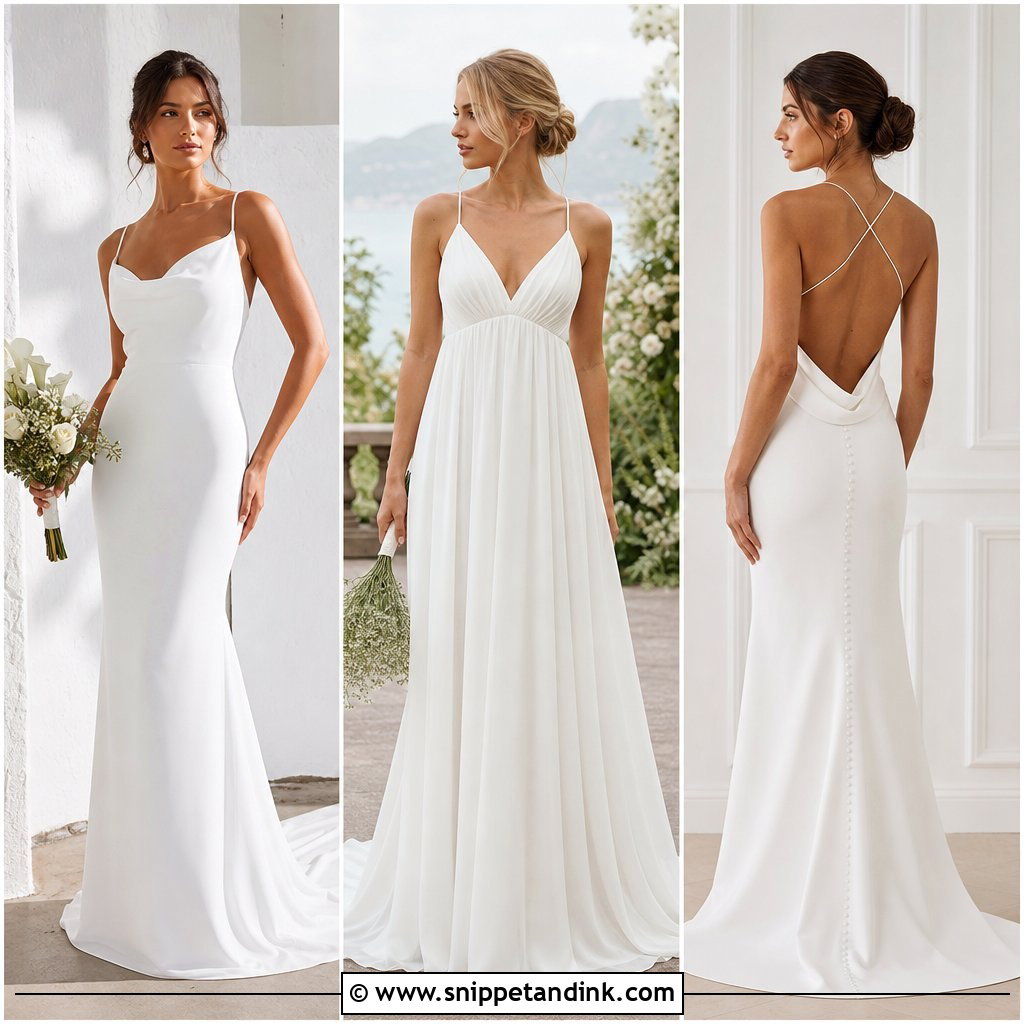
Sheaths drop straight from the body with no flare, which makes them the lightest dress here to wear and to pack. Satin looks polished; chiffon and lace move more in a breeze. Because there’s no volume to hide behind, fabric quality shows, so I feel the weight before I look at the price. Flat sandals, a slim bracelet and pearl earrings keep it easy. It’s my first pick for courthouse ceremonies, gardens and small dinners where you’ll be standing close to guests.
5. Lace Wedding Dress
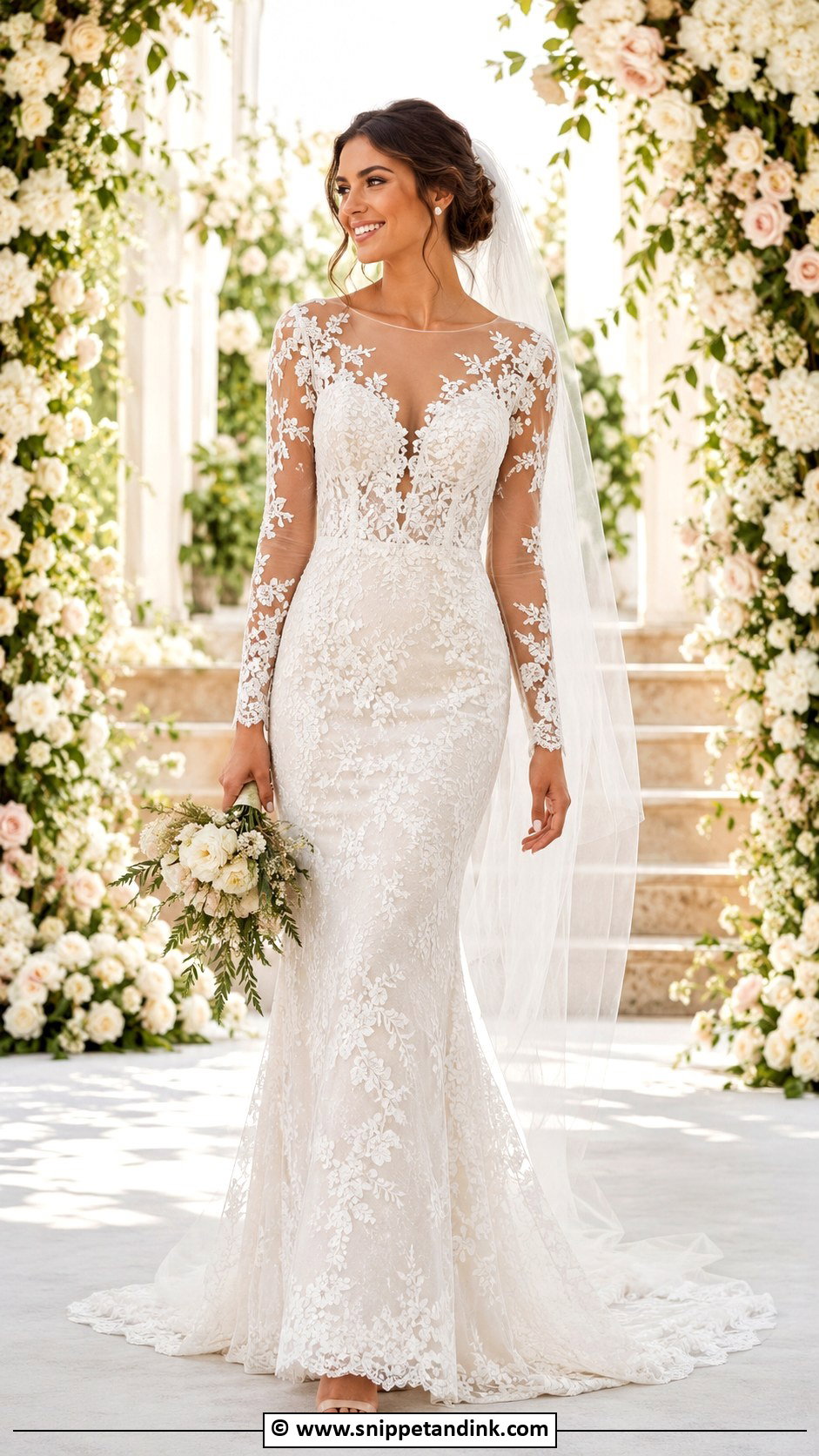
With lace, I ask brides to pick one type and stay with it: fine chantilly, corded alencon or bold botanical applique. Mixing several on one dress, then adding a lace veil, gets busy fast. Nude or ivory heels, a sheer plain veil and tiny pearl earrings let the lace lead. Long lace sleeves feel traditional; a low back or illusion neckline makes it modern. Look at the hem edge too, since scalloped lace that ends in a clean border wears far better than a cut edge.
6. Satin Wedding Dress
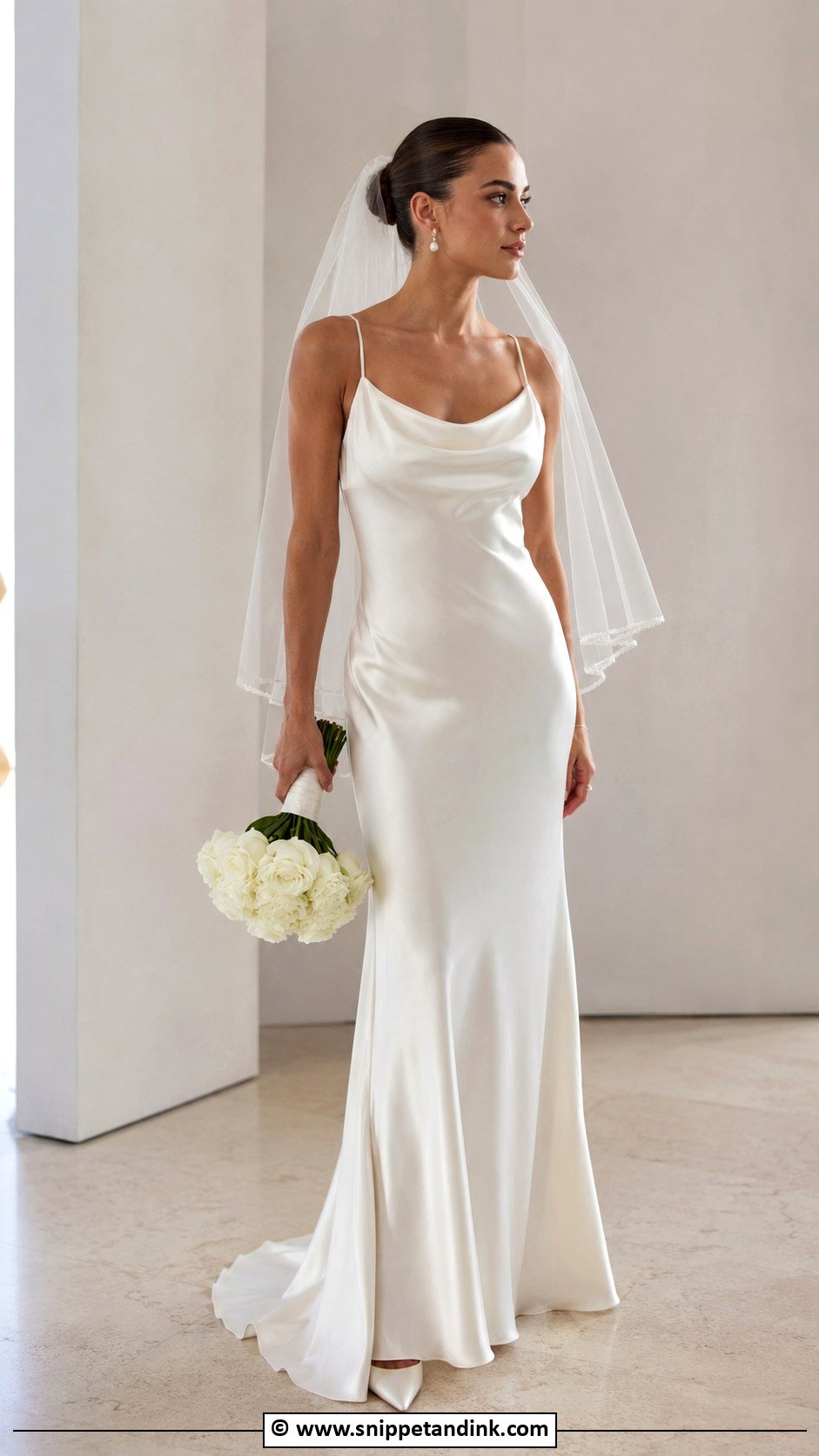
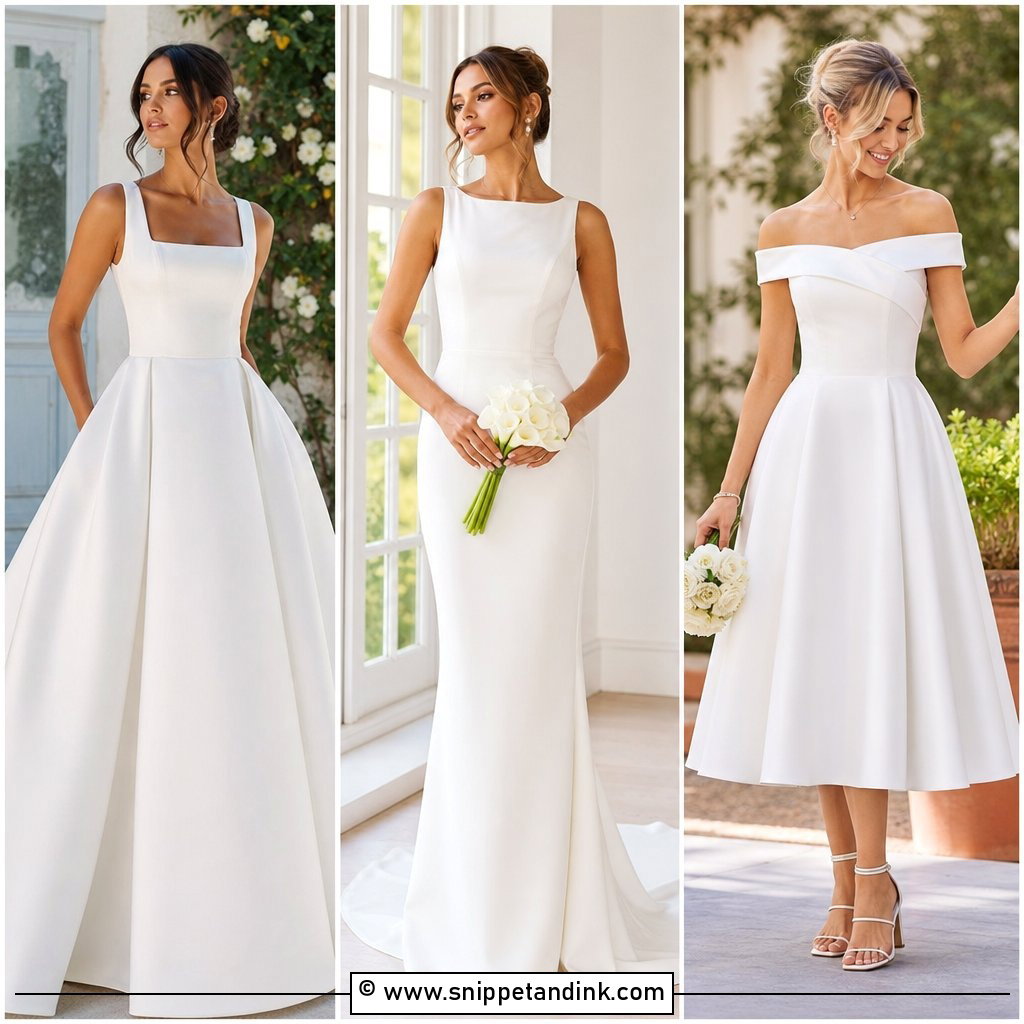
Satin is unforgiving in a useful way: it shows the cut, so a well-made satin dress looks expensive with nothing added. A cowl neck is soft; a square neck feels fresh. I style it with pointed pumps, pearl earrings, a structured low bun and a fingertip veil. The trade-off is creasing. Satin marks where you sit, so I tell brides to stand for the drive if the car allows, or at least sit on the skirt’s back panel smoothed flat.
7. Off Shoulder Wedding Dress
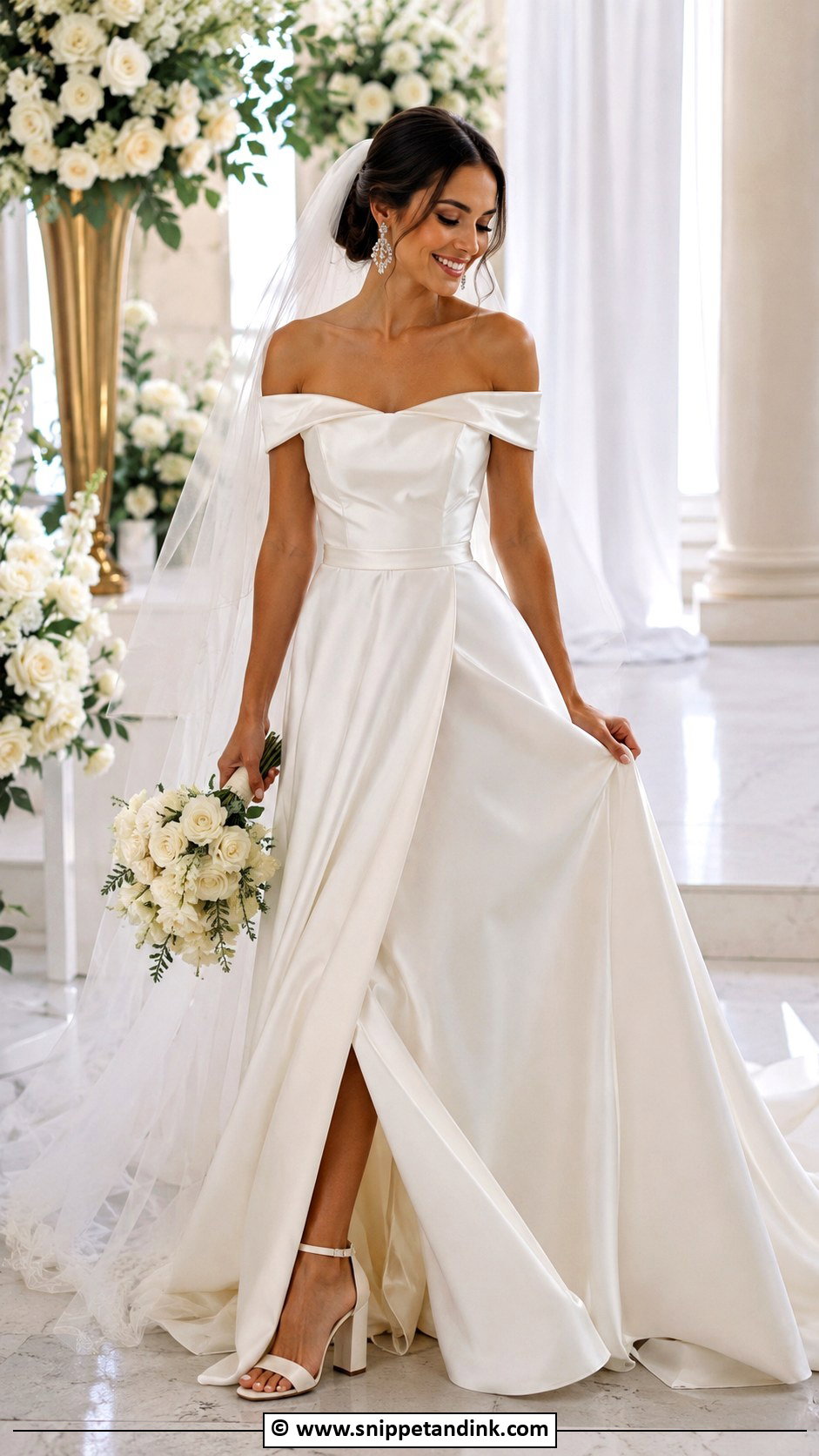
Off-shoulder bodices raise one question at every appointment: what bra? Most need a bodice with sewn-in cups or a strapless longline underneath, and straps on the arm mean you can’t wear a regular one. I have brides reach forward as if for a hug to check the band doesn’t slide. Statement earrings usually work better than a necklace here. Block heels, a soft veil and a low chignon keep the shoulders as the focus.
8. Long Sleeve Wedding Dress
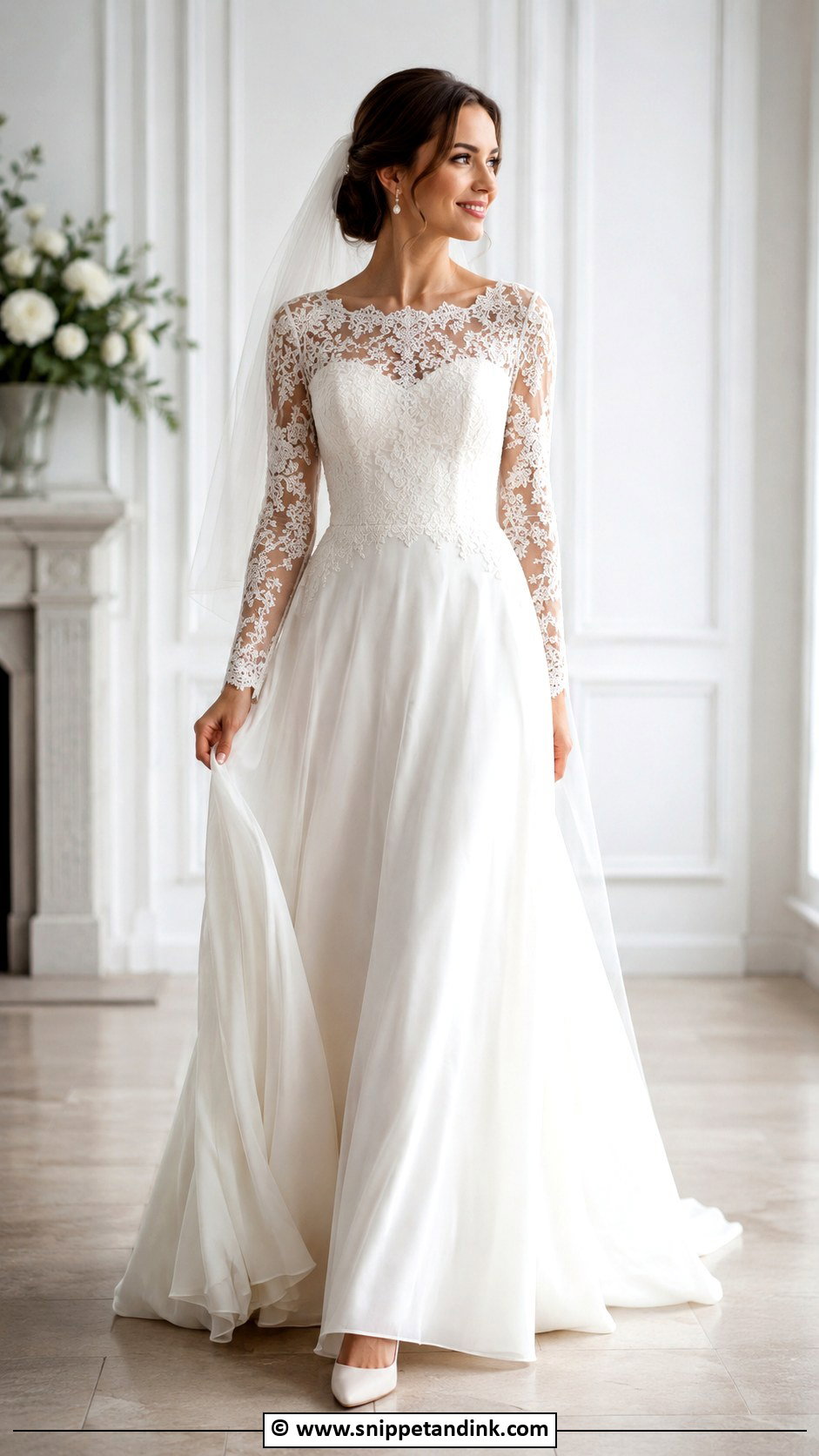
Sleeves come in three moods: sheer lace for romance, fitted crepe for clean lines, puff sleeves for fashion. The practical thing is the armhole. A high, snug armhole lets you lift your arms; a low one pulls the whole bodice up when you wave. Look for a bit of stretch or illusion mesh. Closed-toe heels and earrings that don’t compete with the sleeve finish it, and it suits autumn, winter and formal churches.
9. Strapless Wedding Dress
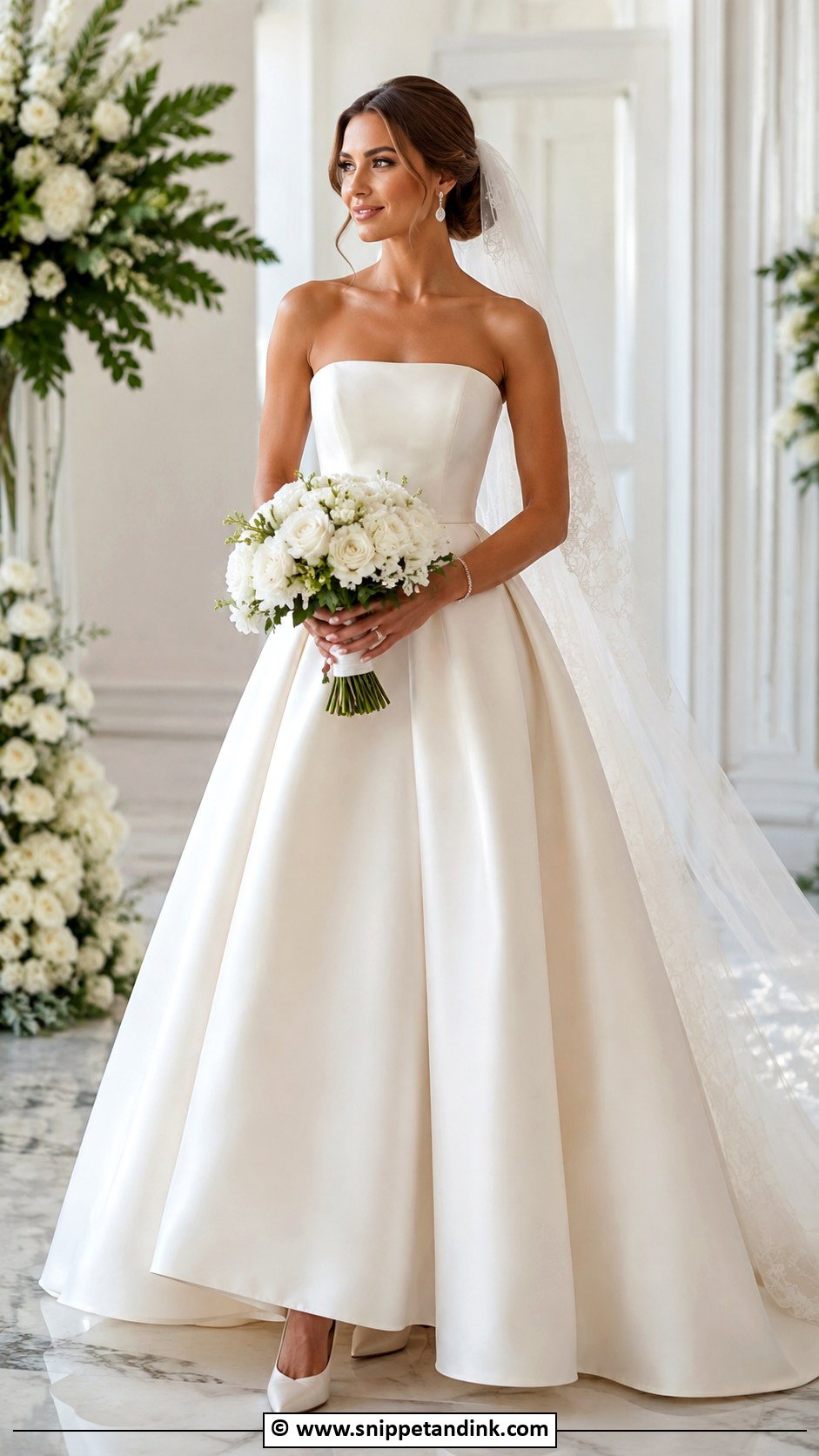
A strapless bodice stays up through structure, not tightness, and I can tell within a minute whether one will need hiking all night. Good ones have boning and an inner waistband that grips; some seamstresses add a silicone strip along the top edge. Satin, mikado, lace and tulle all work. A smooth updo, delicate earrings and a veil placed low at the back keep the shoulders open, whether the skirt is a ball gown or a slim column.
10. Square Neck Wedding Dress
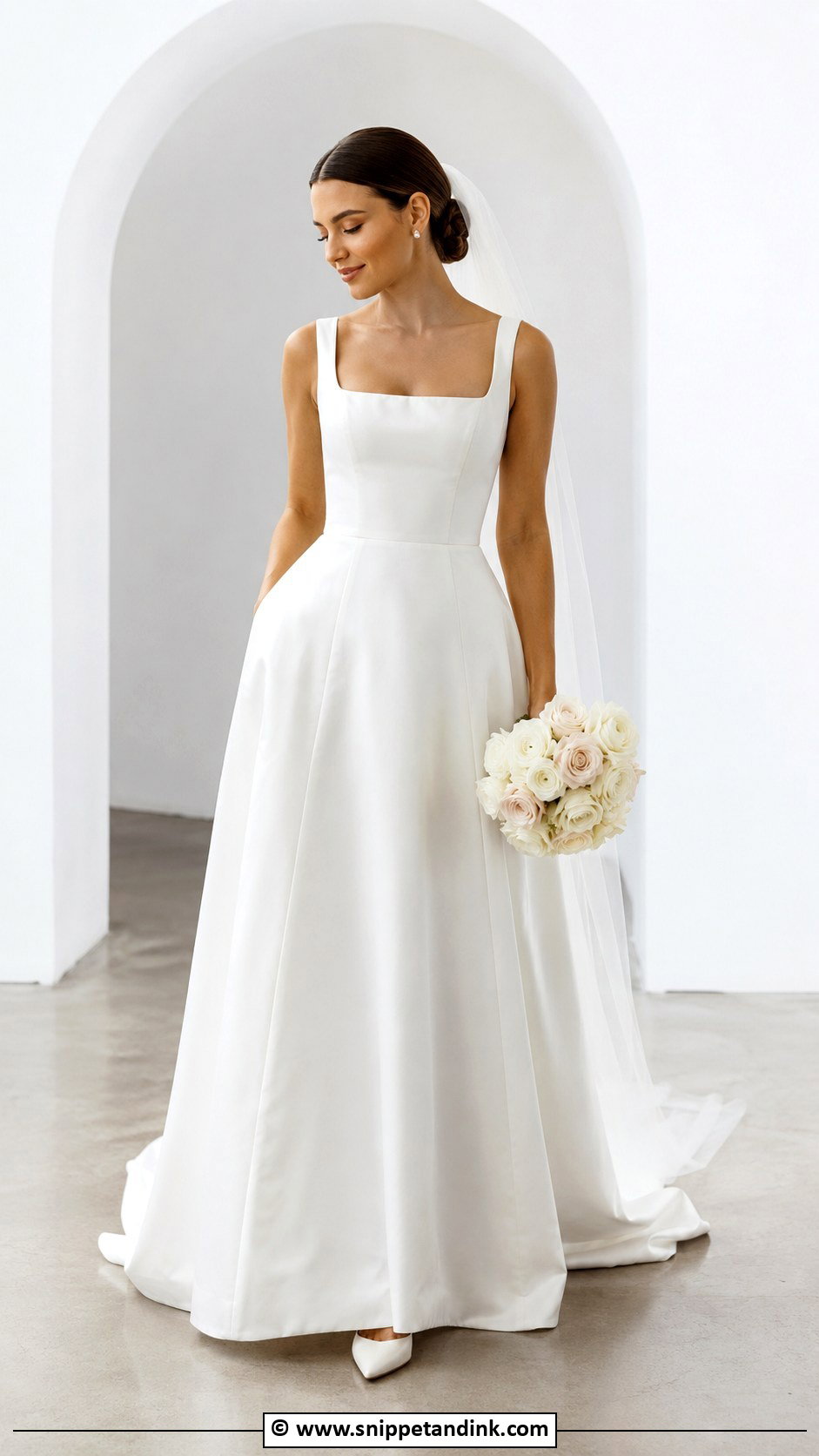
A square neck gives structure without severity, and it works on thick straps, cap sleeves or long sleeves. It gives real support through the bodice without climbing up to a high neckline. A satin A-line in this shape looks classic; a lace sheath feels vintage. Pearl studs, a low bun and soft makeup are enough. At the fitting, check that the straps don’t sit too wide on the shoulder, because they’ll slip all evening if they do.
11. High Neck Wedding Dress
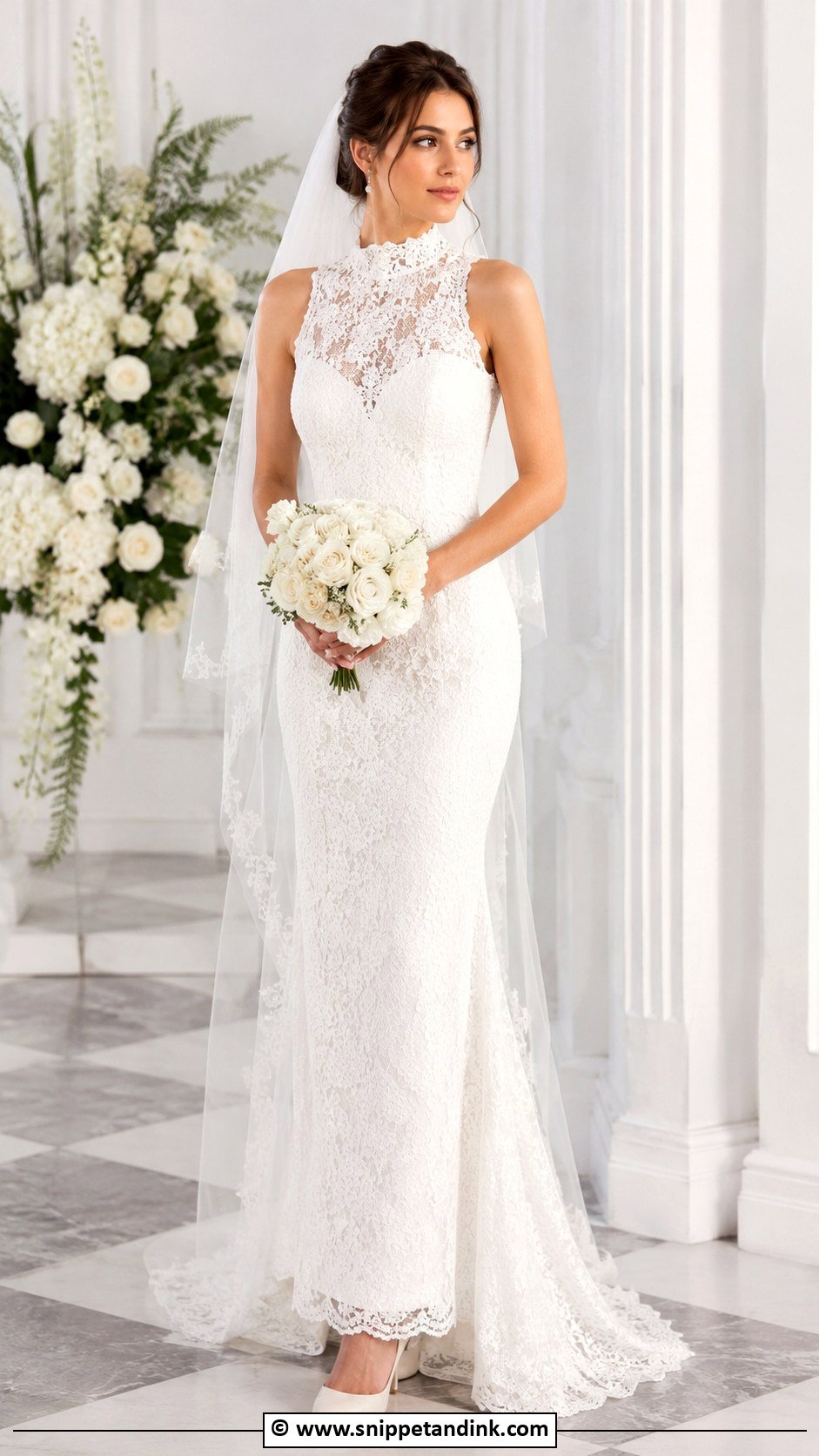
High necks feel regal in lace, sleek in crepe and soft in chiffon. Since the collar is already the feature, I skip necklaces and anchor the veil behind the crown so the front stays clean. Earrings and a slim bracelet do the rest. A low back or sheer lace panel stops it feeling heavy. If your wedding is in summer heat, try it on for a full twenty minutes, because a closed neck gets warm sooner than you’d think.
12. Backless Wedding Dress
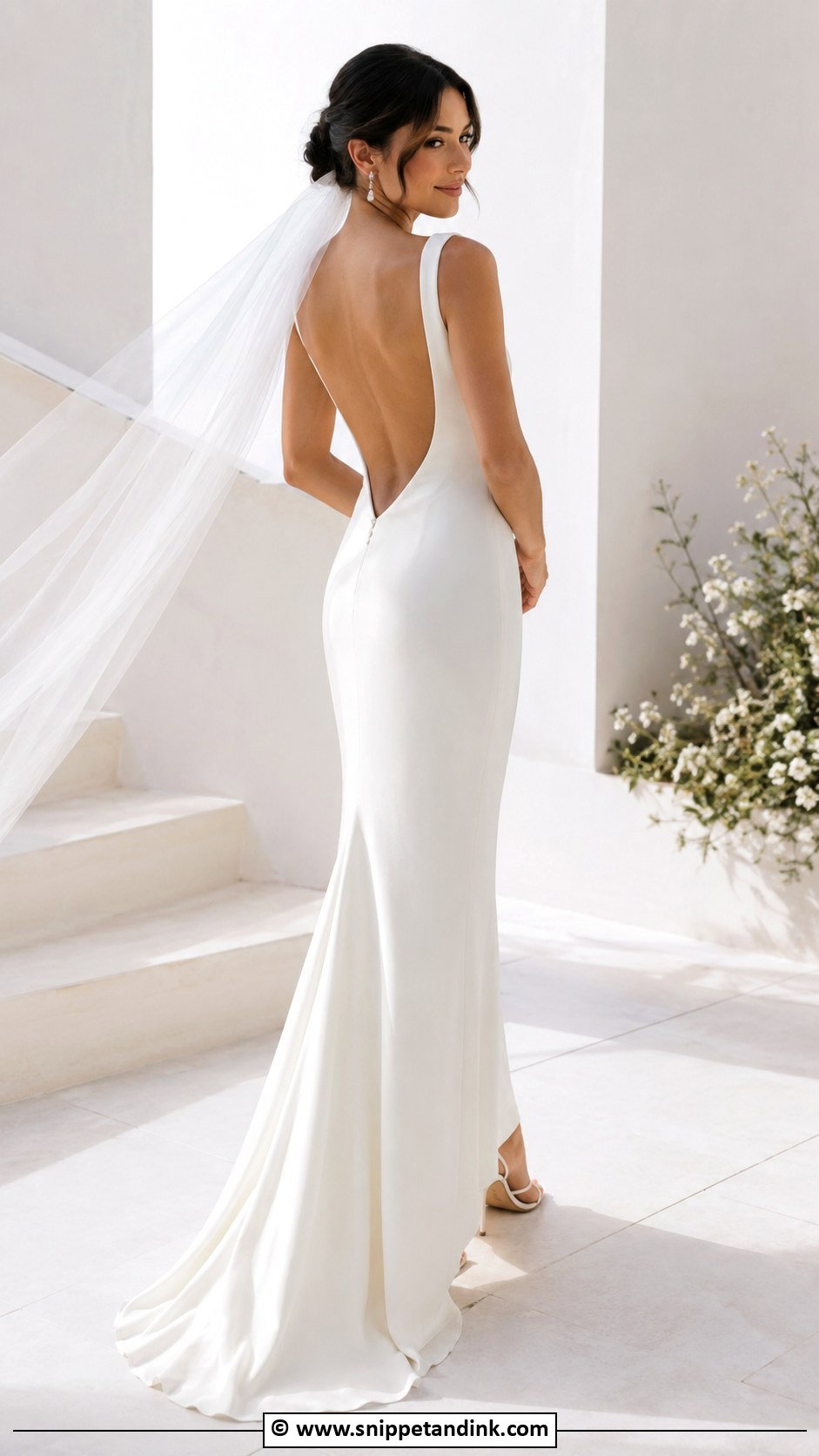
Open backs drape best in satin, crepe or lace. The front can stay almost plain because the back carries the moment. I check support first: illusion mesh at the sides, a waist stay or a back cut deep enough for a low-back bra. A low bun, delicate earrings and barely-there heels suit it. Many brides take the veil off for portraits so the photographer can actually see the back they paid for.
13. Floral Wedding Dress
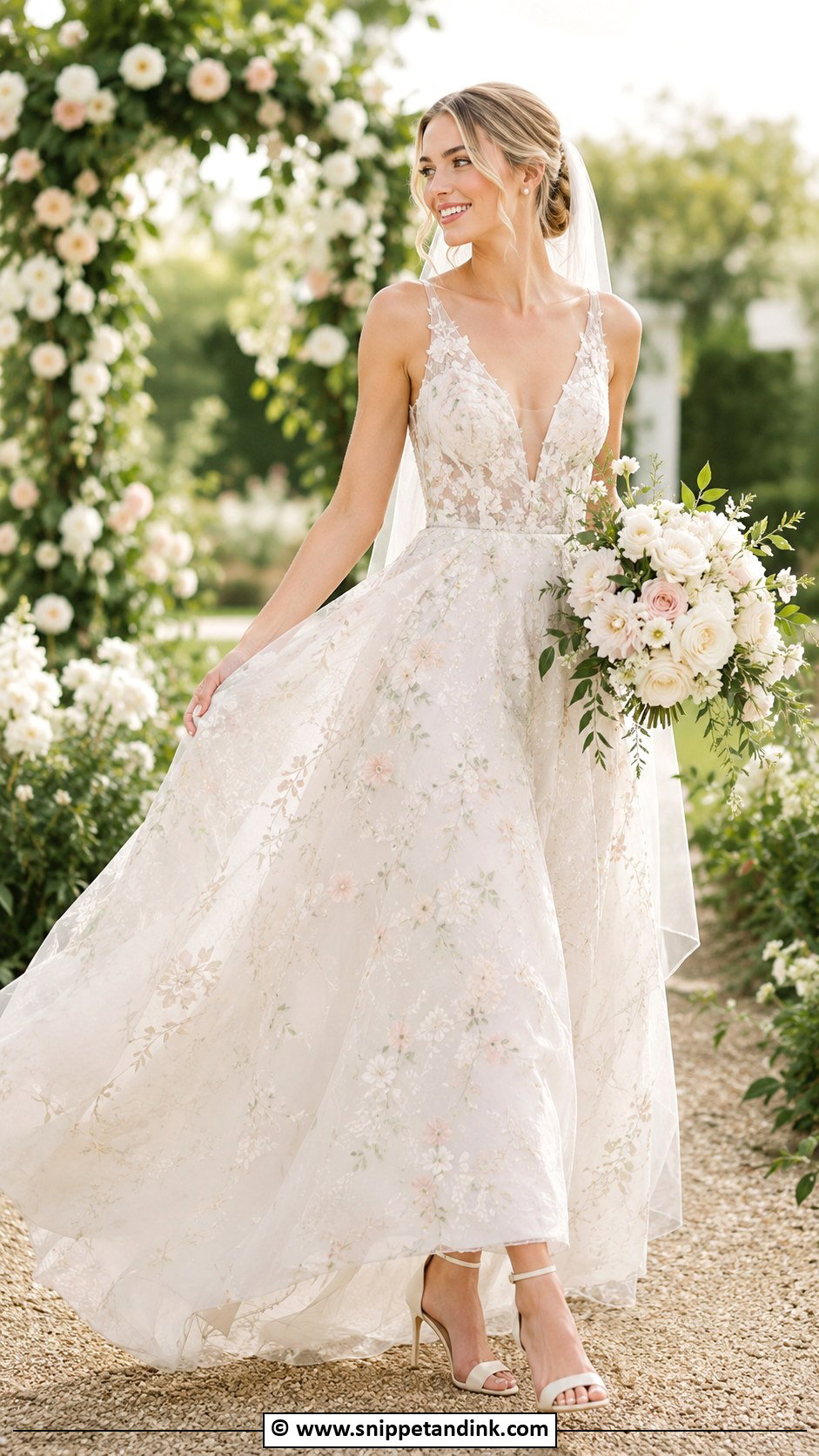
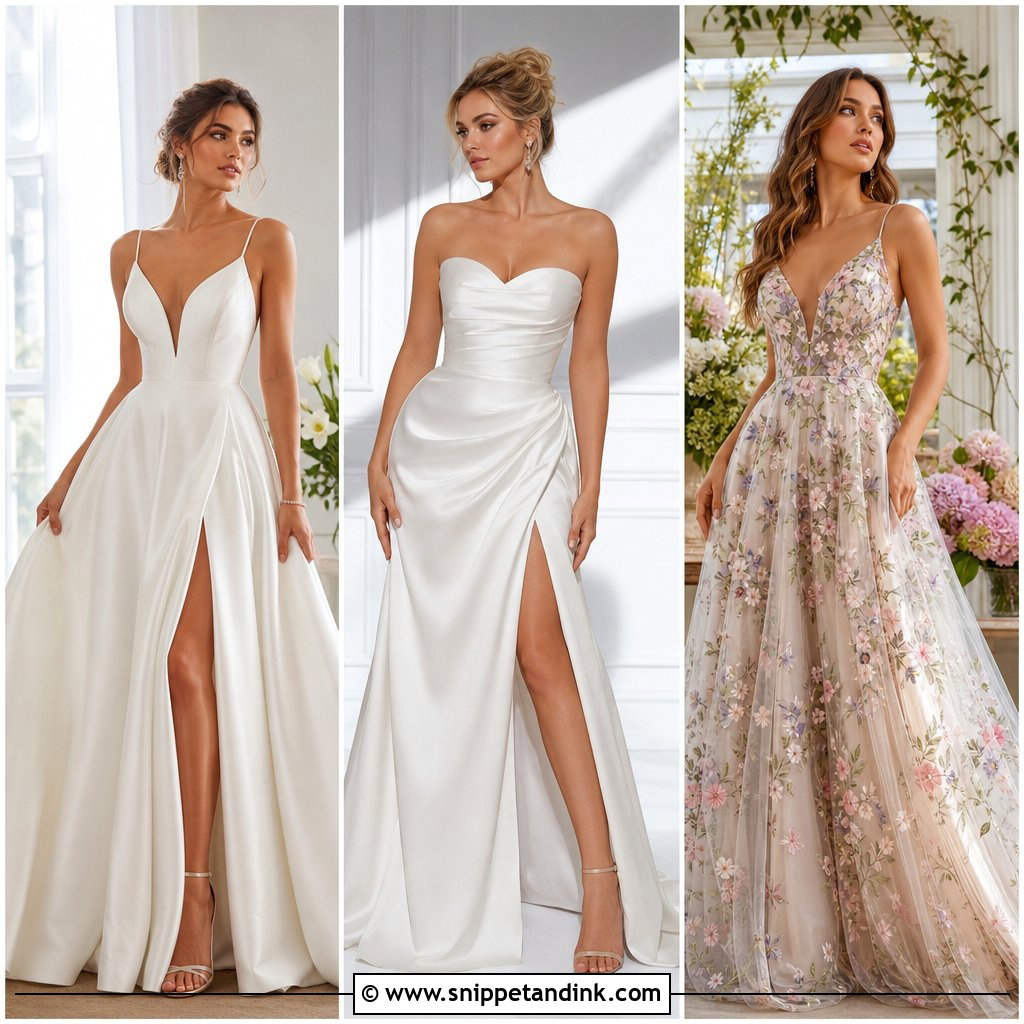
Floral gowns come embroidered, appliqued, printed or beaded, and each reads differently on camera. Raised appliques throw tiny shadows in daylight; printed florals look flatter but brighter. Simple heels, small earrings and a veil with no trim keep the flowers in charge. Soft waves or a loose bun sit well with it. Subtle ivory blooms age well in photos, while colored flowers say more about you right now. Spring gardens and outdoor ceremonies suit both.
14. Tulle Wedding Dress
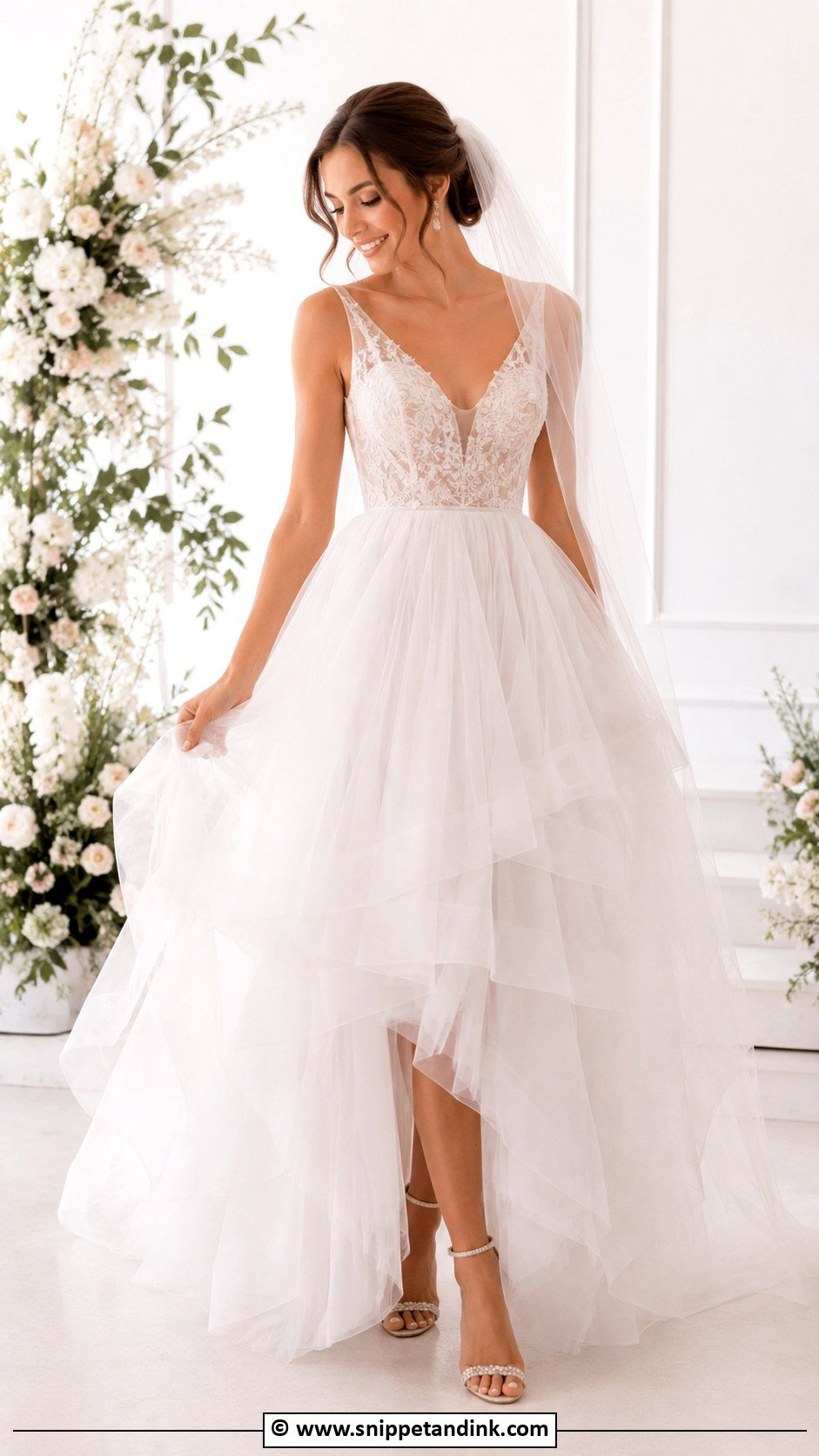
Tulle gives volume for very little weight, which is why it’s my answer to brides who want a full skirt but dread a heavy one. Plain tulle over a clean bodice looks modern; embroidered tulle looks whimsical. If full volume worries you, a slim A-line tulle skirt gives movement without the width. Tulle does snag, so keep bracelets smooth and watch rough garden benches. Delicate heels, pearl earrings and blush-toned makeup finish it.

15. Boho Wedding Dress
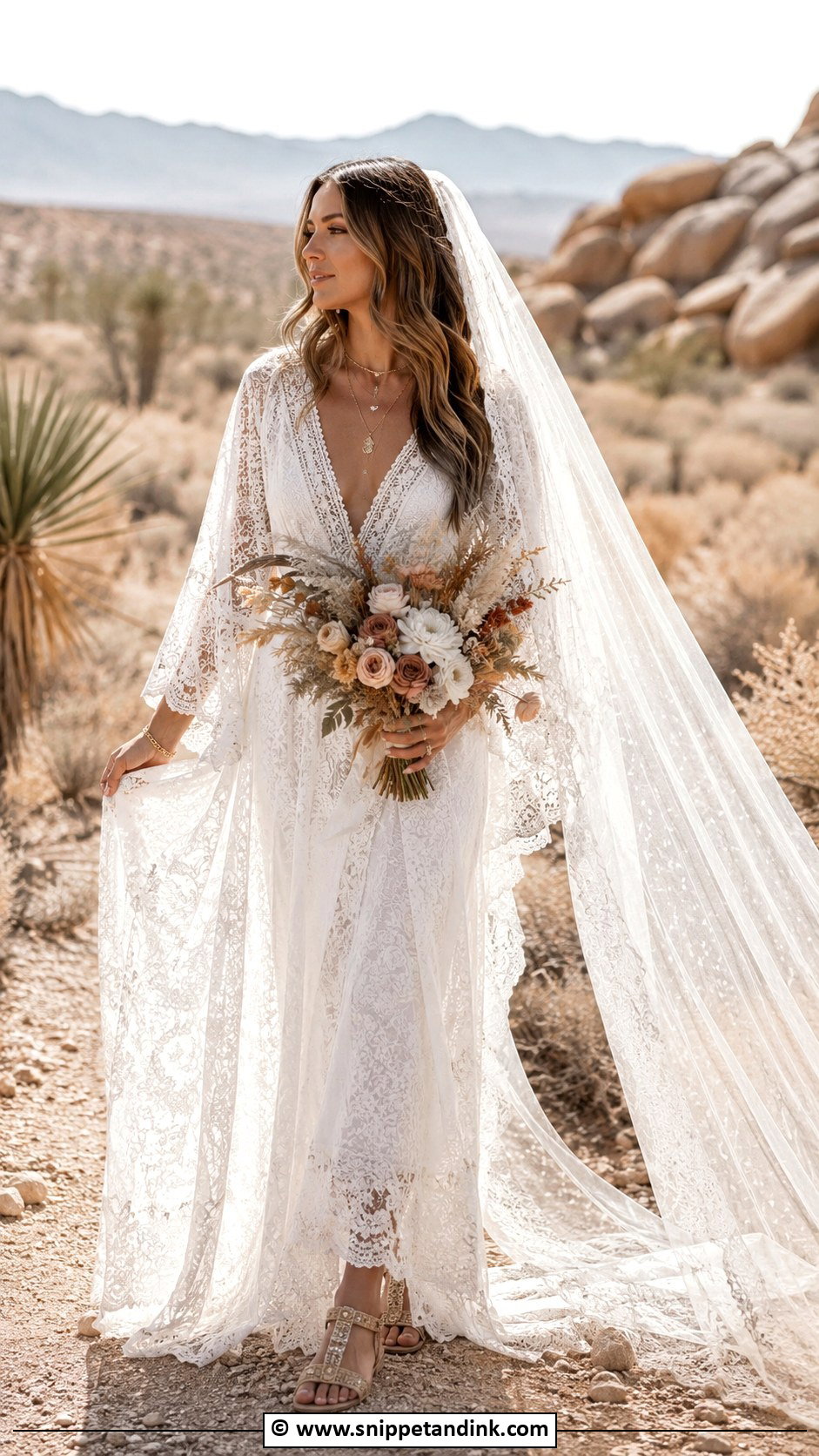
Boho dresses look easy, but they still need tailoring, or the light fabric just hangs. Flowing chiffon, crochet lace, bell sleeves and soft embroidery are the usual details. Bridal sandals or low block heels, loose waves and gold or pearl jewelry keep it relaxed. A flower comb or textured veil adds a little ceremony. Crochet stretches when wet or heavy, so I’d hang it rather than fold it before the day.
16. Beach Wedding Dress
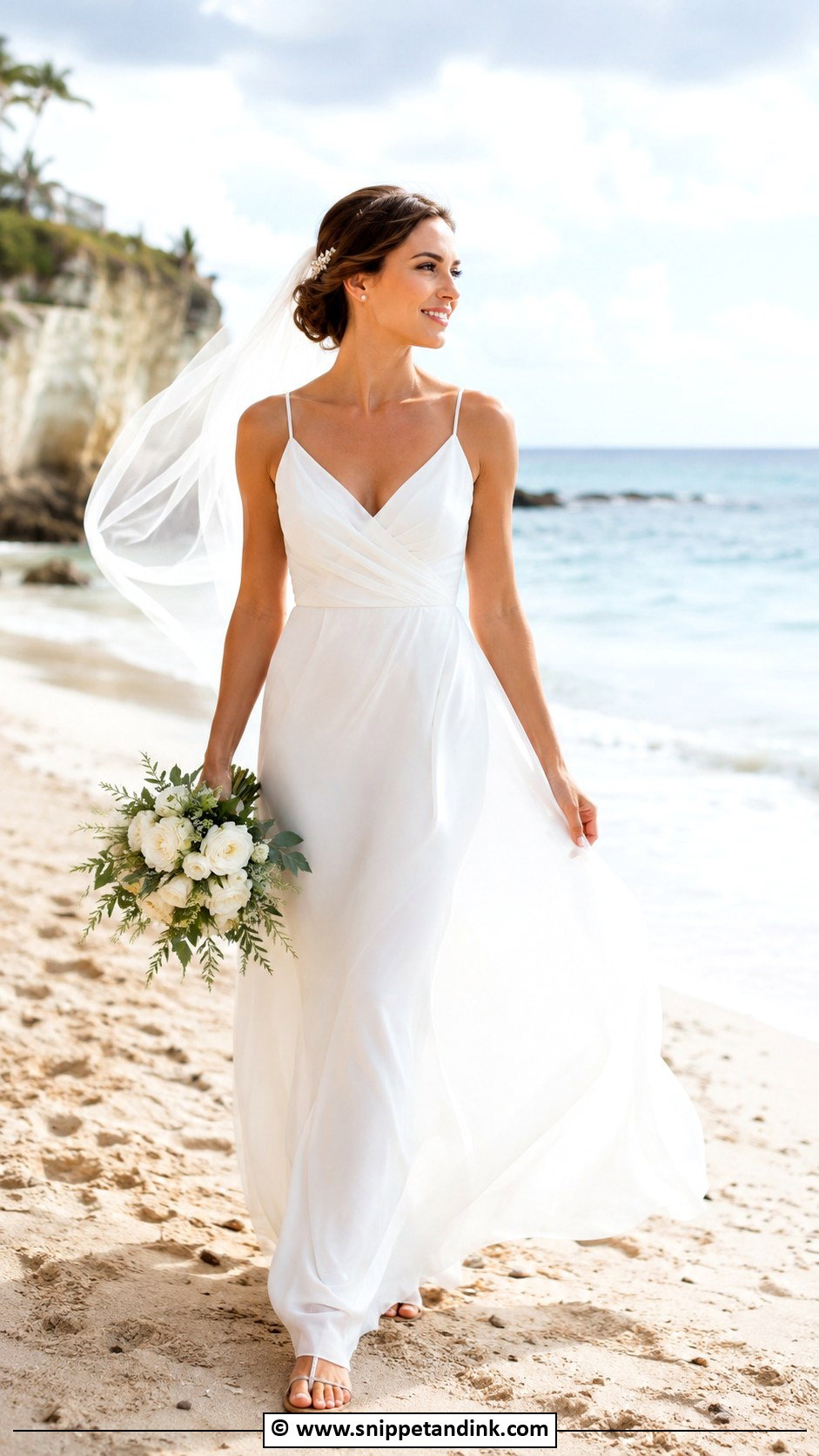
On sand, weight is your enemy. Chiffon, organza, crepe and soft lace stay light and breathe in heat, and a sheath, slip or loose A-line moves with wind instead of fighting it. I’d skip a long train entirely, because it drags wet sand into the hem. Flat sandals or bare feet, pearl studs and a hair clip in place of a long veil keep you comfortable. Salt air also frizzes tulle, so lighter fabrics simply photograph better near water.
17. Courthouse Wedding Dress
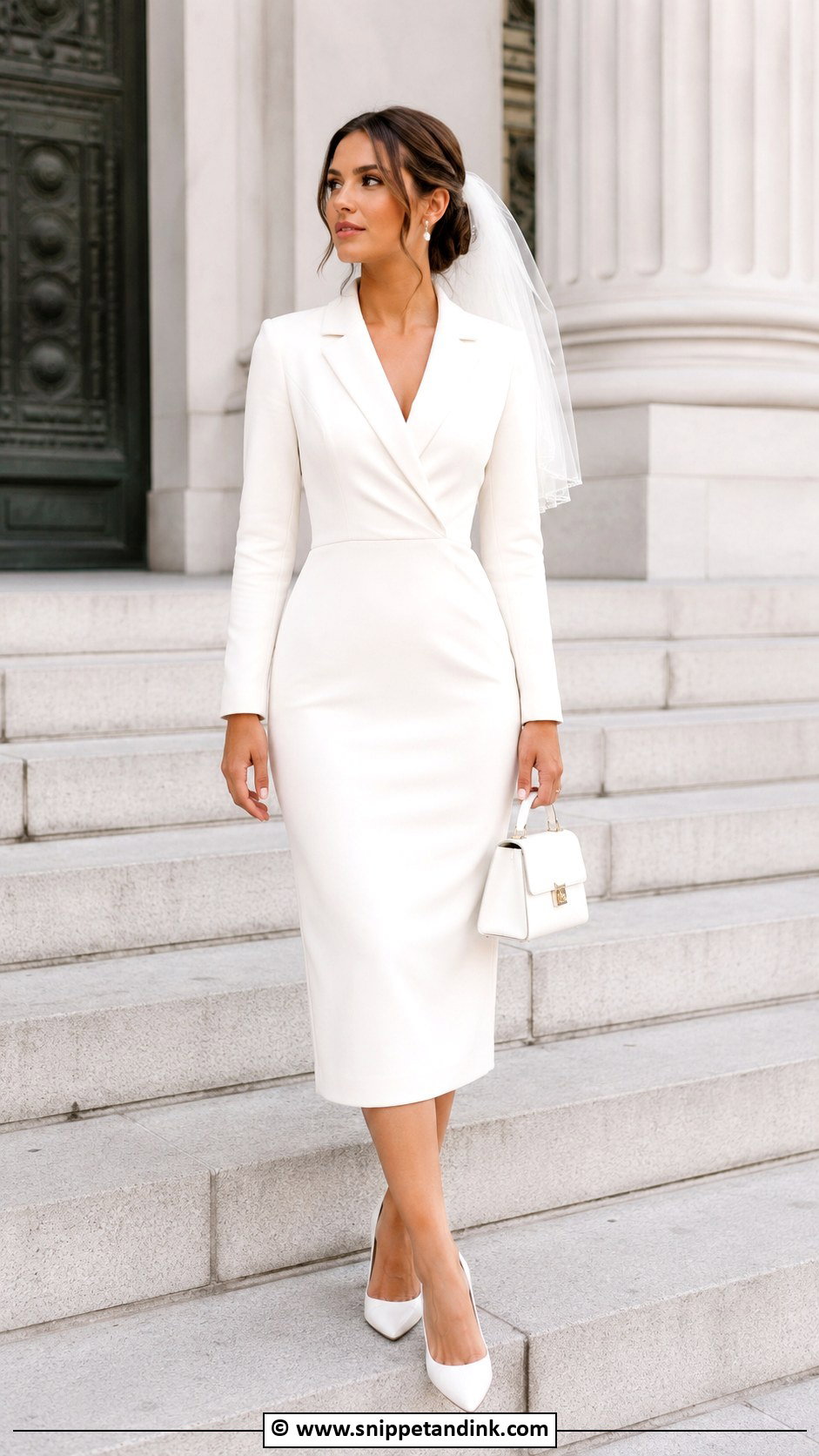
Courthouse outfits work best with clean lines, because the setting is plain and close-up. A tailored midi, satin mini, crepe sheath or a modern suit dress all suit it. Pointed pumps, a small structured bag, pearl earrings and a short veil or bow make it bridal. If you want some drama, add one thing: statement sleeves, a square neck or a short train. Check whether the building has security; long trains and big skirts make the line slow.
18. Tea Length Wedding Dress
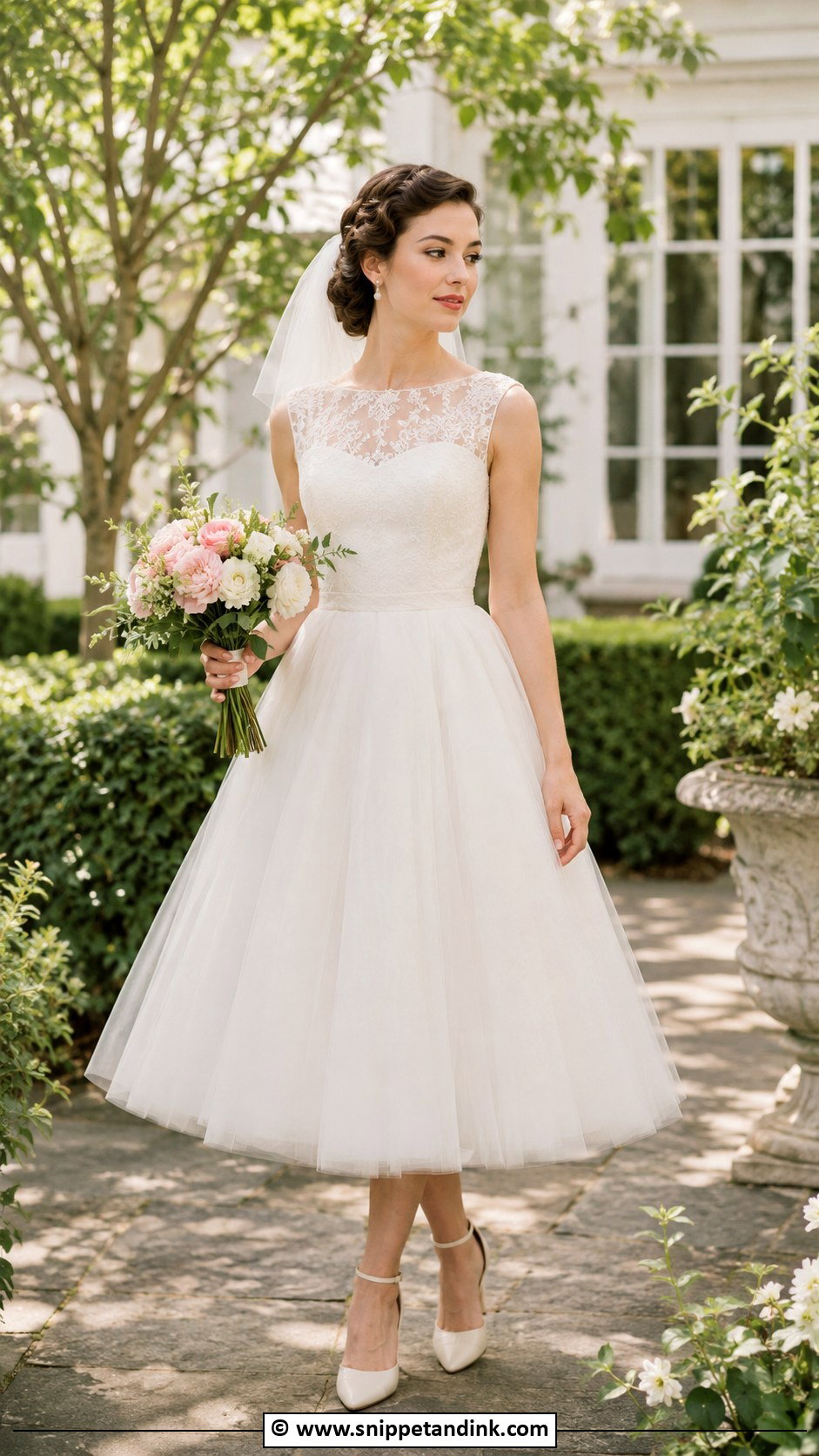
Tea length sits between knee and ankle, which puts your shoes on show all day, so I buy those first and hem around them. A fitted bodice and fuller skirt look classic; a slim tea length looks modern. Pointed pumps, ankle-strap heels or elegant flats all work. Pearl earrings and a short veil finish it. Garden ceremonies, brunches and reception changes are where it shines, since you can walk on grass without lifting a skirt.
19. Wedding Mini Dress
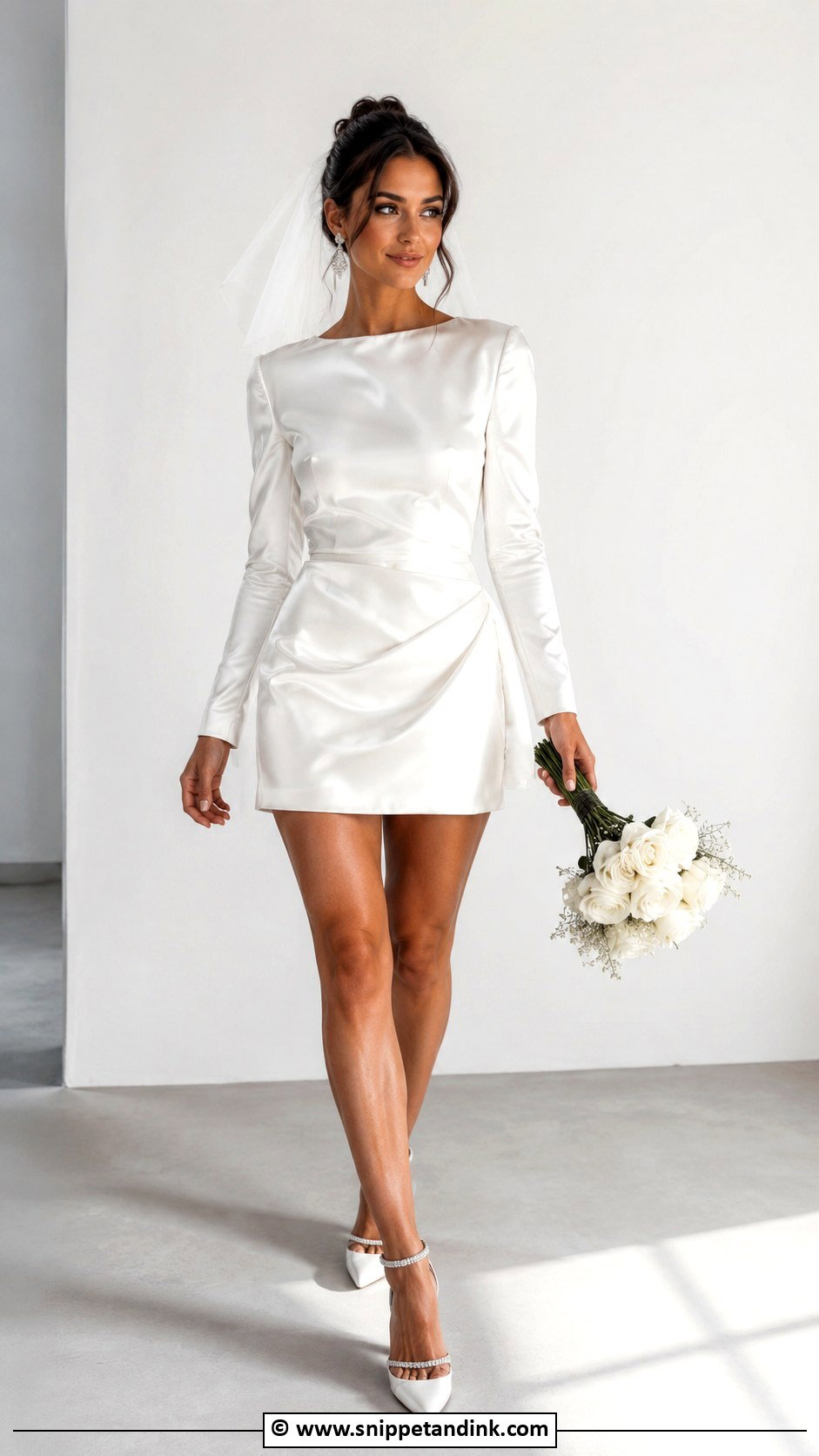
A wedding mini dress needs one bridal detail to stop it looking like a party dress: satin, pearl trim, feathers, a bow or sharp tailoring. With a short hem, balance comes from the top, so long sleeves or a structured bodice keep it refined. Statement heels, sparkling earrings and a short veil or headband do the rest. Sit down in it in front of a mirror at the shop. Minis ride up more than you expect.


20. Two Piece Wedding Dress
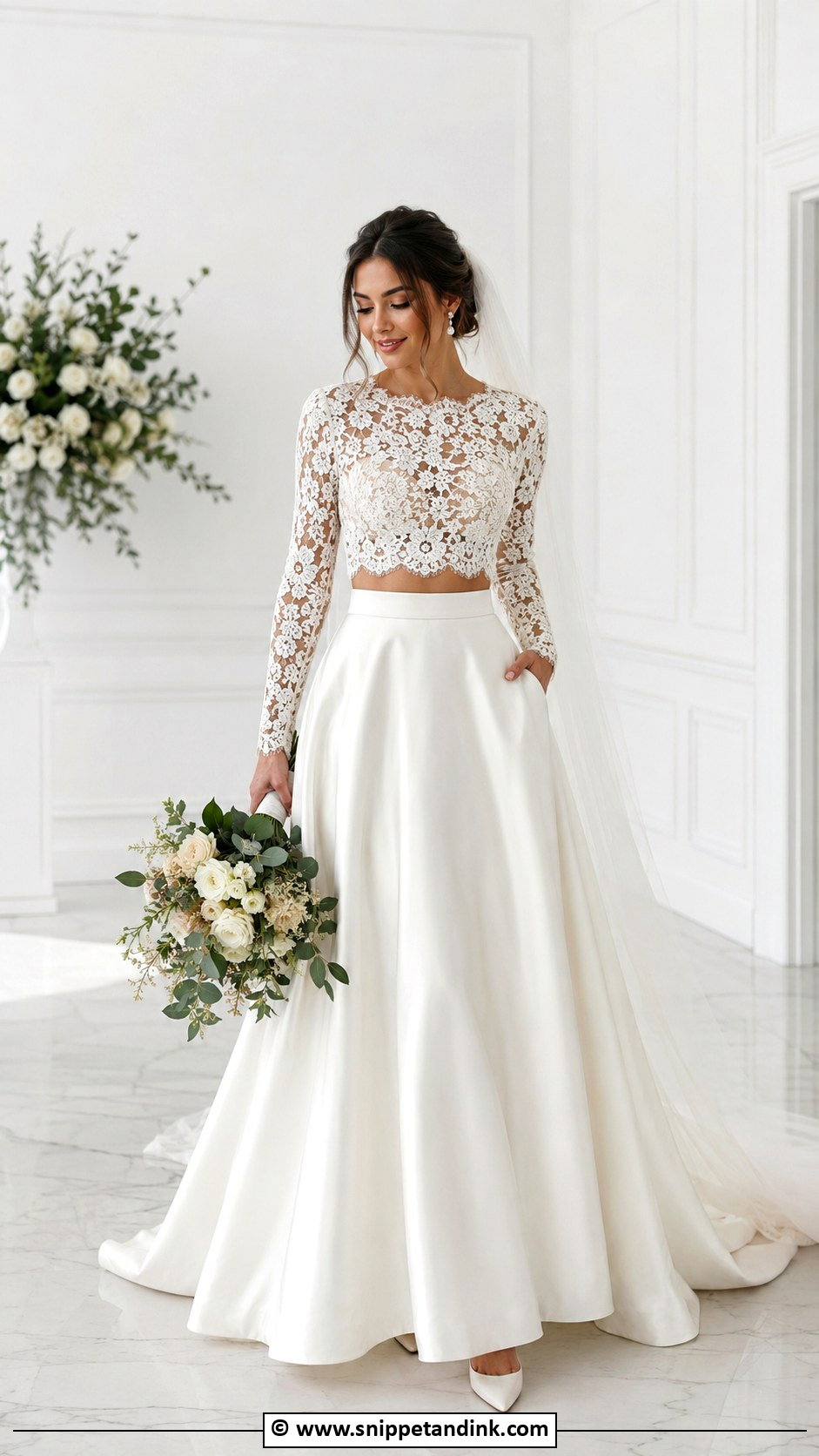
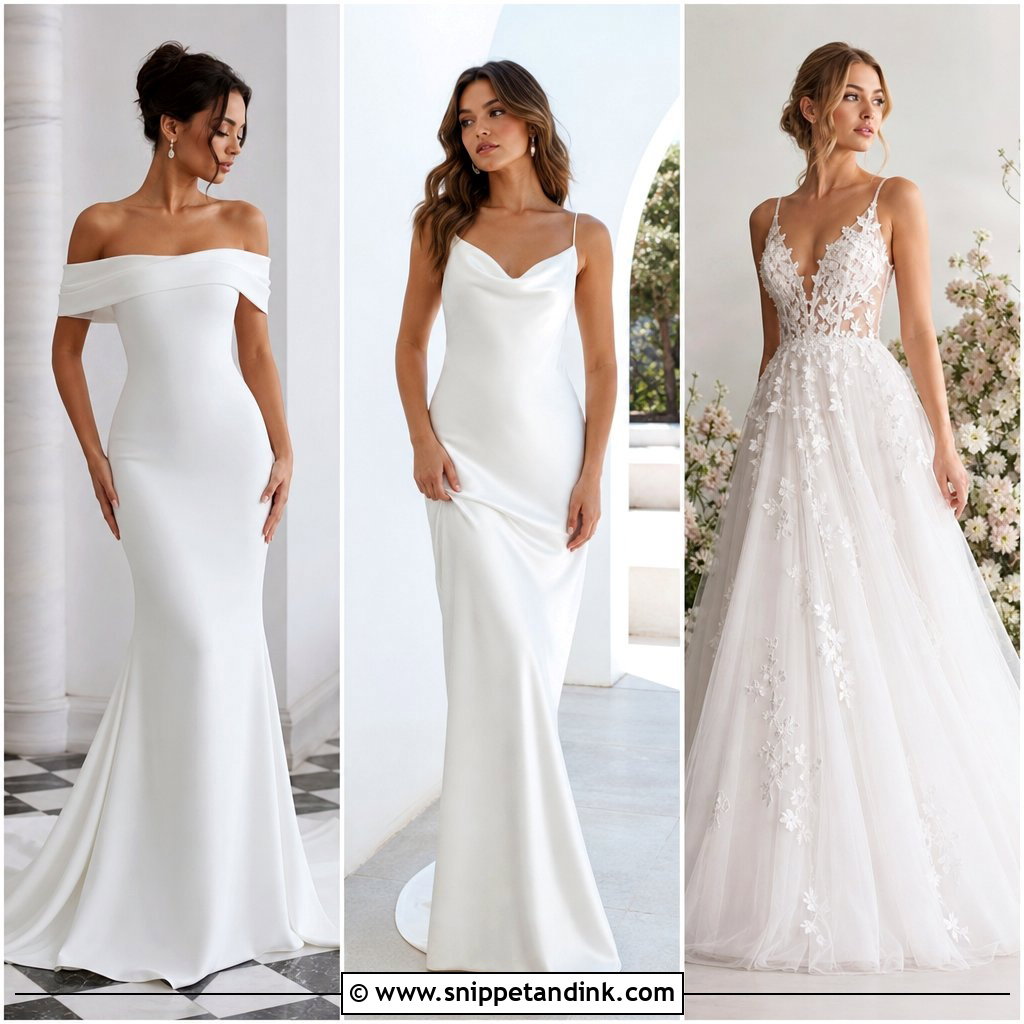
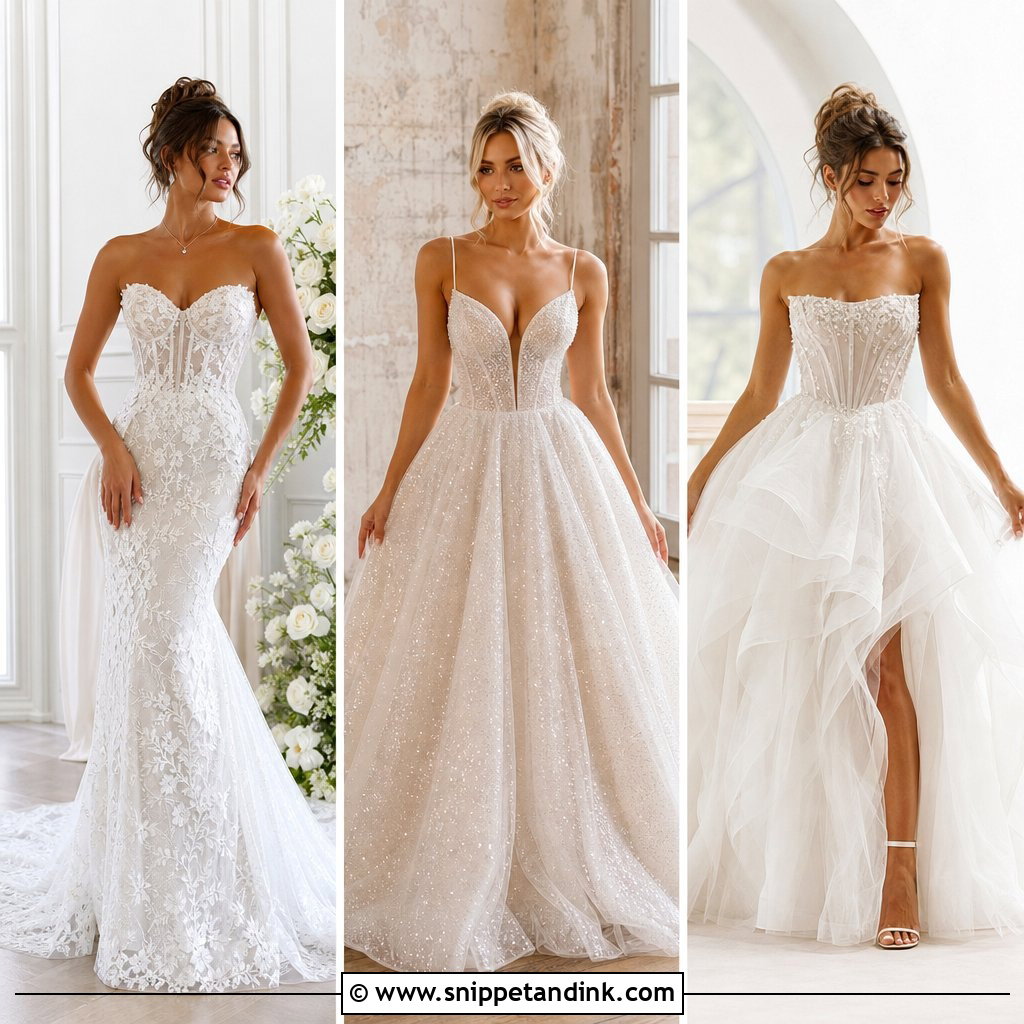
Two pieces let you build your own dress: a crop top over a full skirt, a lace blouse over satin, or a corset with a clean A-line. The thing I check hardest is whether both whites match under daylight. Two fabrics from different dye lots can look a shade apart in photos. Simple heels, earrings and a veil in the same tone tie it together, and you’ll likely rewear the top or skirt later.
21. Bridal Jumpsuit
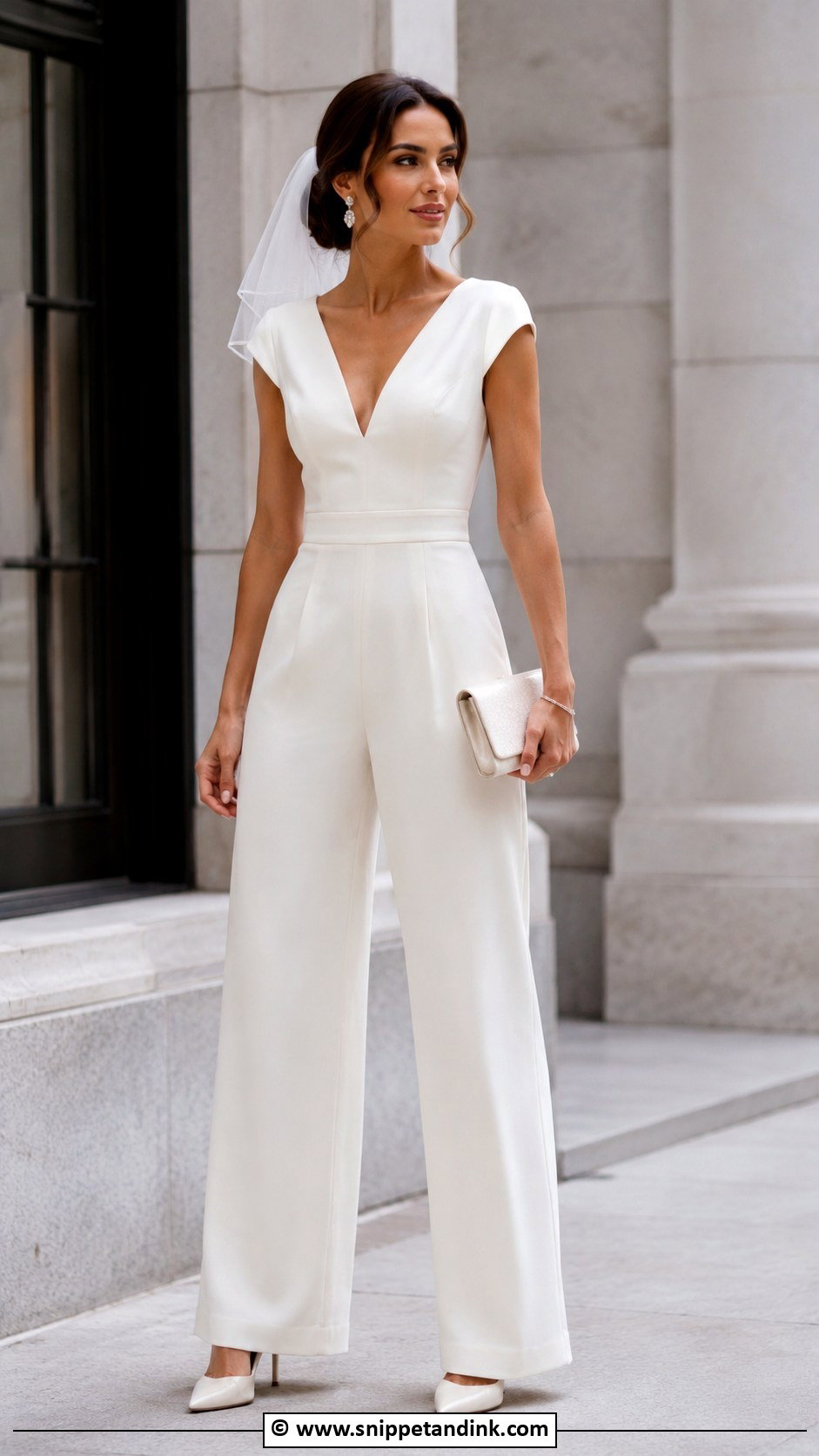
Jumpsuits give you pockets, freedom to dance and a sharp modern shape. A wide leg, fitted waist and a neckline with some interest is the classic version in white or ivory. Lace panels, satin or crepe tailoring make it ceremony-ready, and a short veil or cape adds drama. Hem it with the shoes on. I’d also do a bathroom rehearsal at the fitting, because a back zip plus a one-piece needs help from someone.
22. Detachable Skirt Wedding Dress
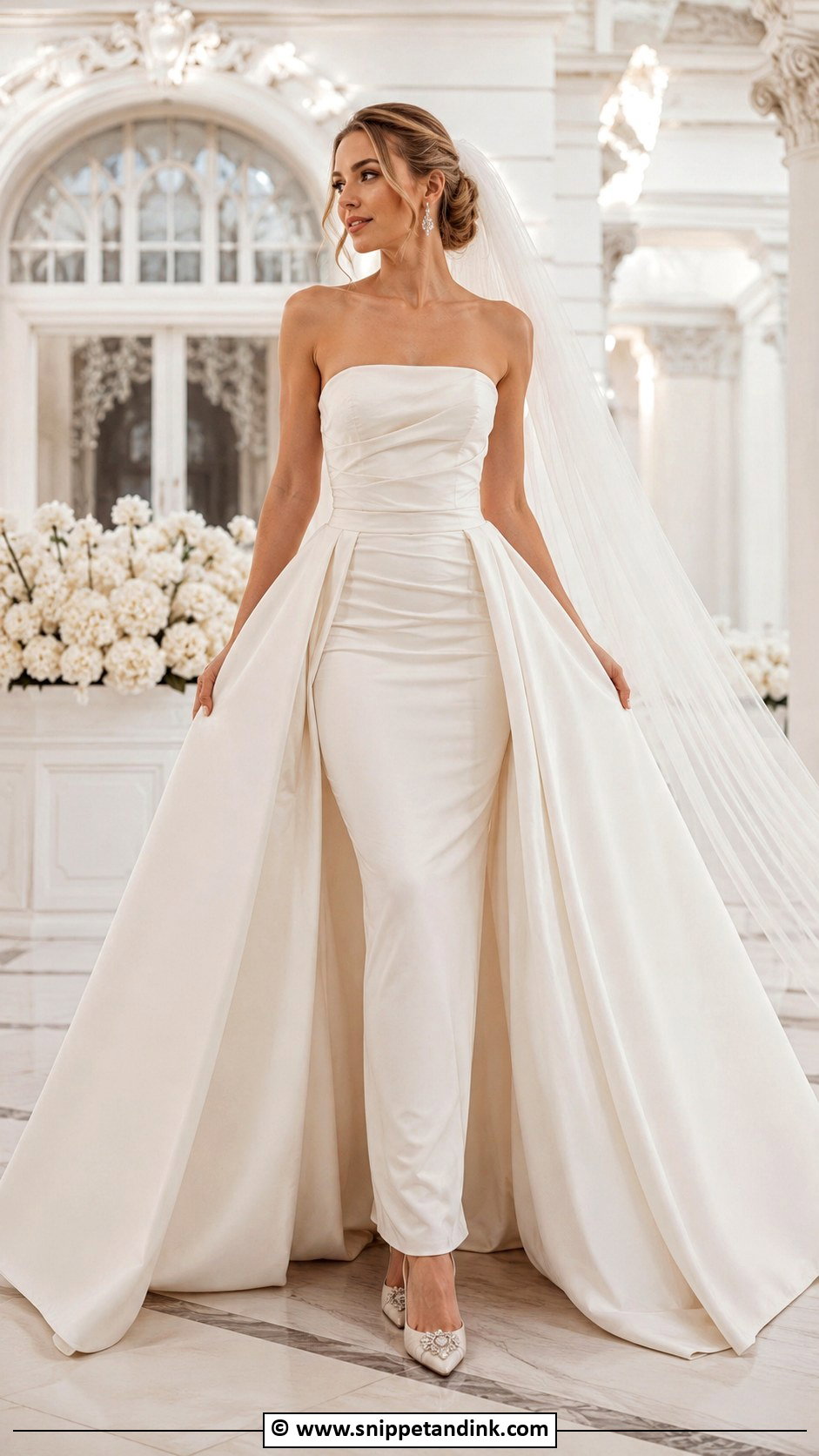
A detachable skirt gives you two outfits from one purchase: the full skirt for the ceremony and photos, a slimmer dress underneath for the reception. Ask how it attaches. Snaps come off quickly, while hooks under a belt are neater but slower. Once the skirt is off, bolder earrings or a hair accessory refresh the look. Good designs make the under-dress complete on its own, with a finished hem and proper lining.
23. Corset Wedding Dress
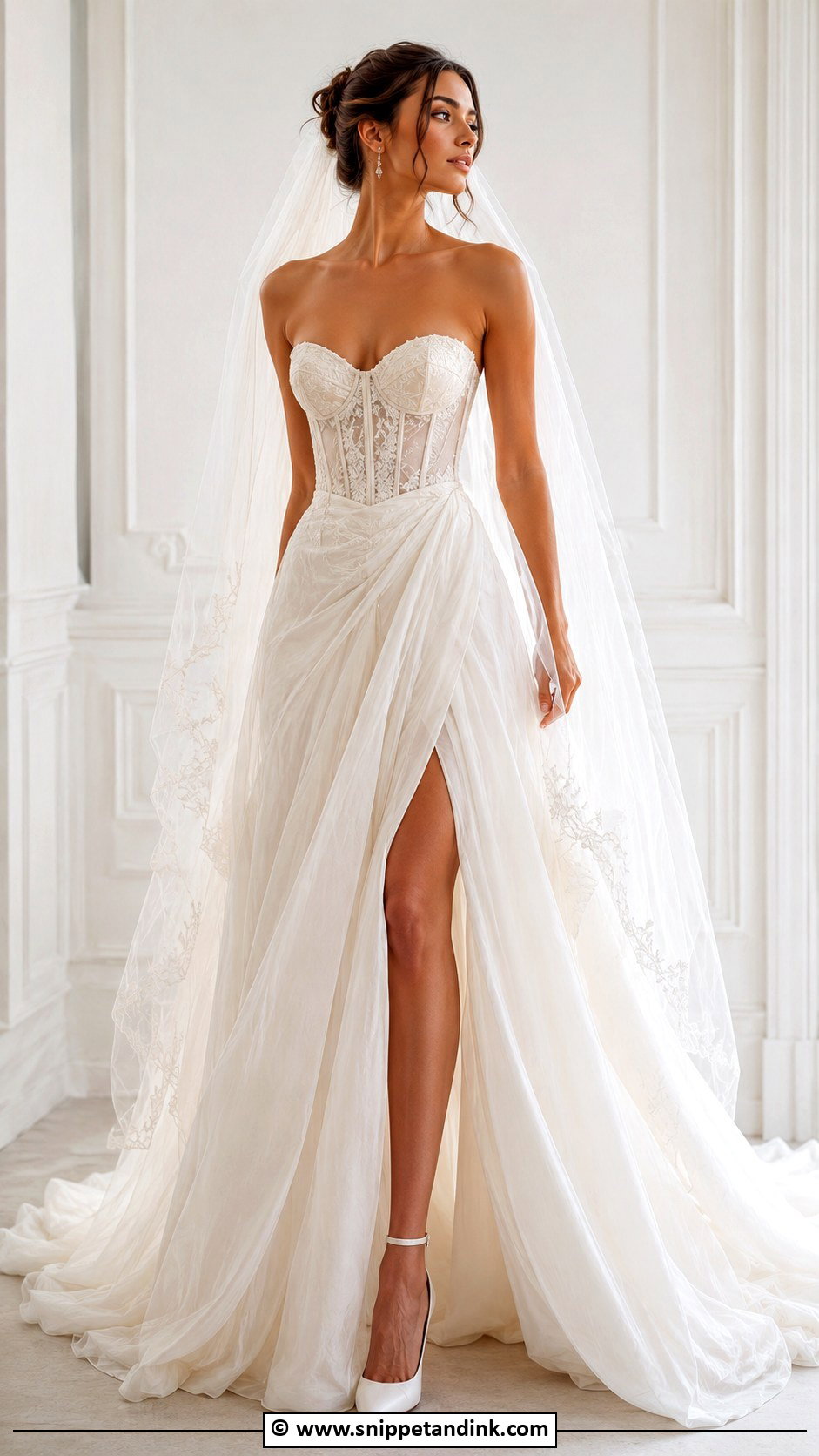
Modern corsets can look soft instead of stiff, especially paired with a flowing skirt or smooth satin. Covered boning looks subtle; visible boning reads fashion-forward. The fit is all in the ribcage. Too tight and you can’t breathe through dinner; too loose and the bodice drops when you sit. Delicate earrings, a sheer veil and heels matching the gown’s undertone finish it. It suits ball gown, A-line, mermaid and drop waist skirts.
24. Drop Waist Wedding Dress
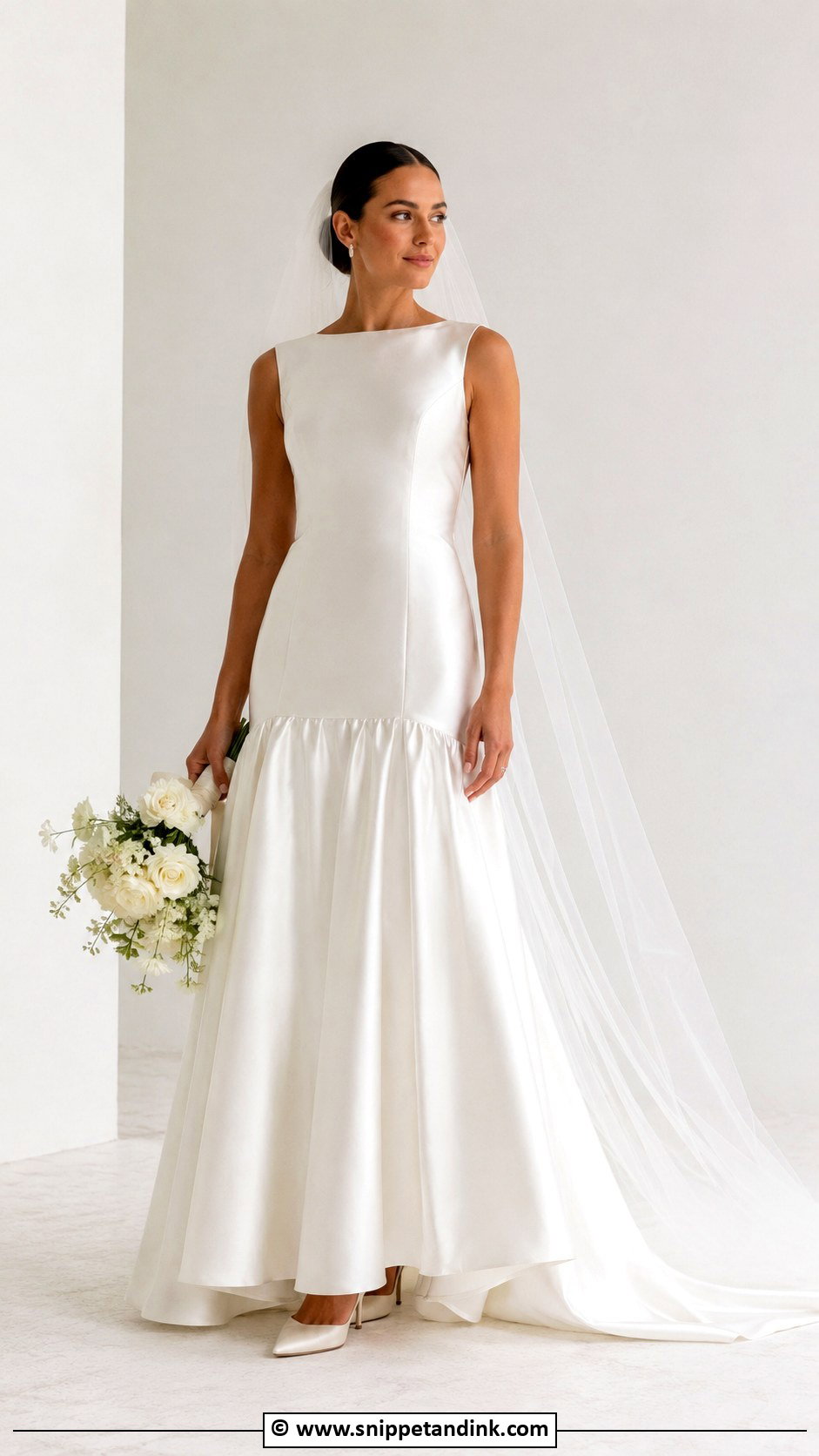
The drop waist moves the bodice seam below your natural waist, giving a long, sculpted torso. Satin versions look architectural; lace or tulle versions are softer. Proportion is everything, so I pin the seam on your body and check it in a full-length mirror from the side. Sleek heels, a smooth veil and minimal jewelry keep the line clean. Shorter brides should try it on before committing, since a low seam can shorten the leg.



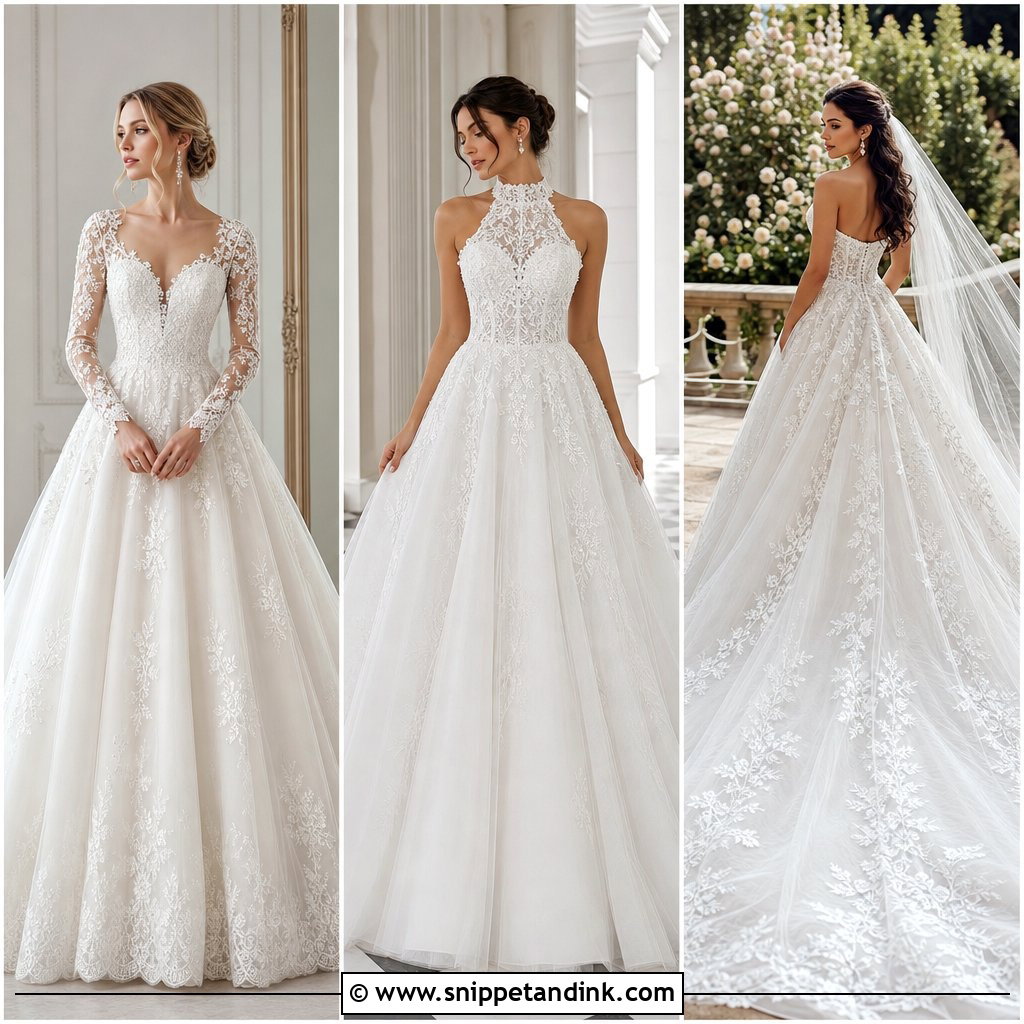
25. Basque Waist Wedding Dress
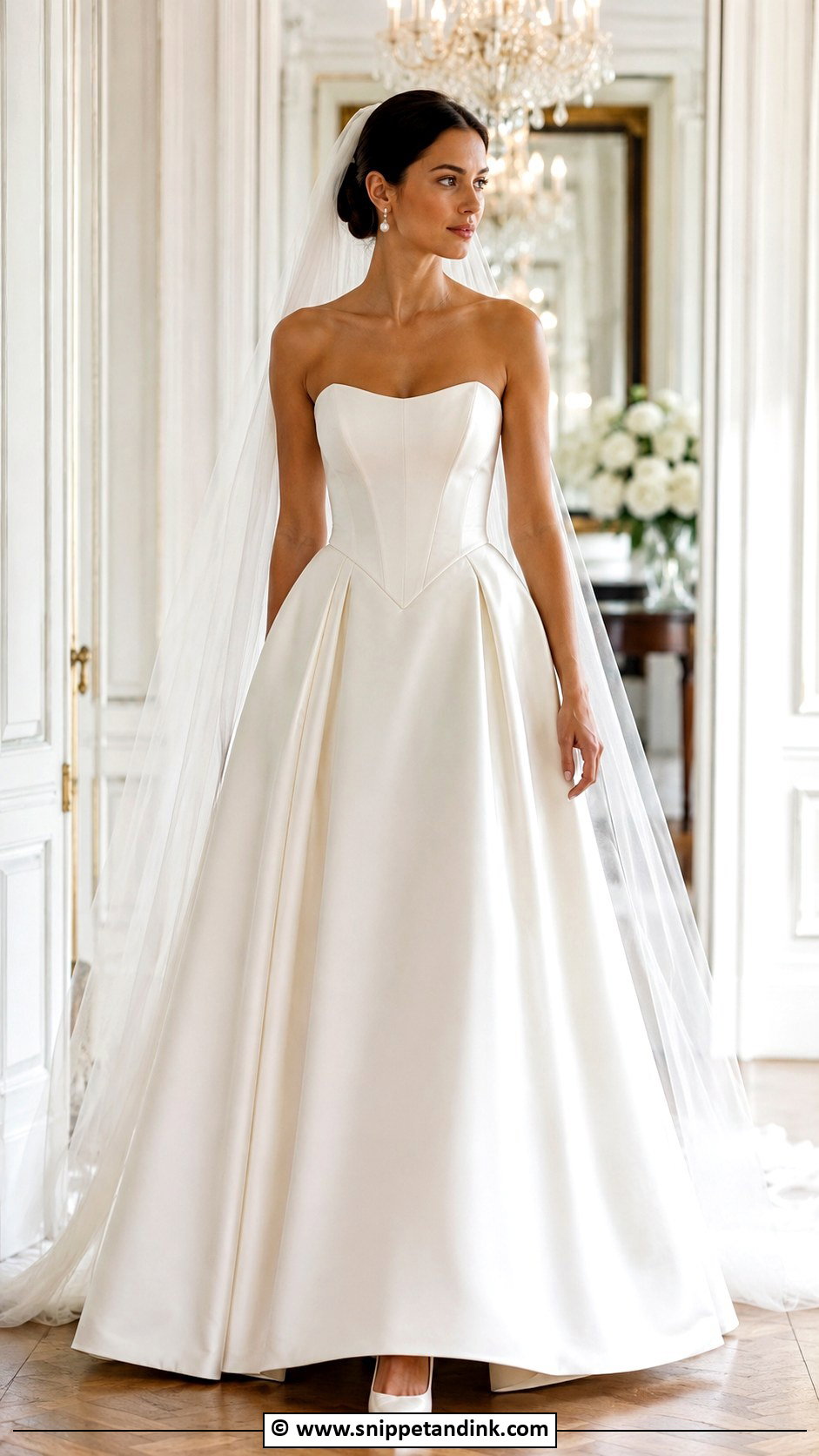
A Basque waist dips into a point or V at the front, and that point draws the eye down and lengthens the torso. It sits well over full satin skirts and structured bodices. Because the waist shaping is already detailed, I keep the neckline bare or use a very fine chain. Pearl earrings, a long veil and ivory heels suit the old-world feel. Check the point when you sit; a stiff one can dig in at dinner.
26. Vintage Wedding Dress
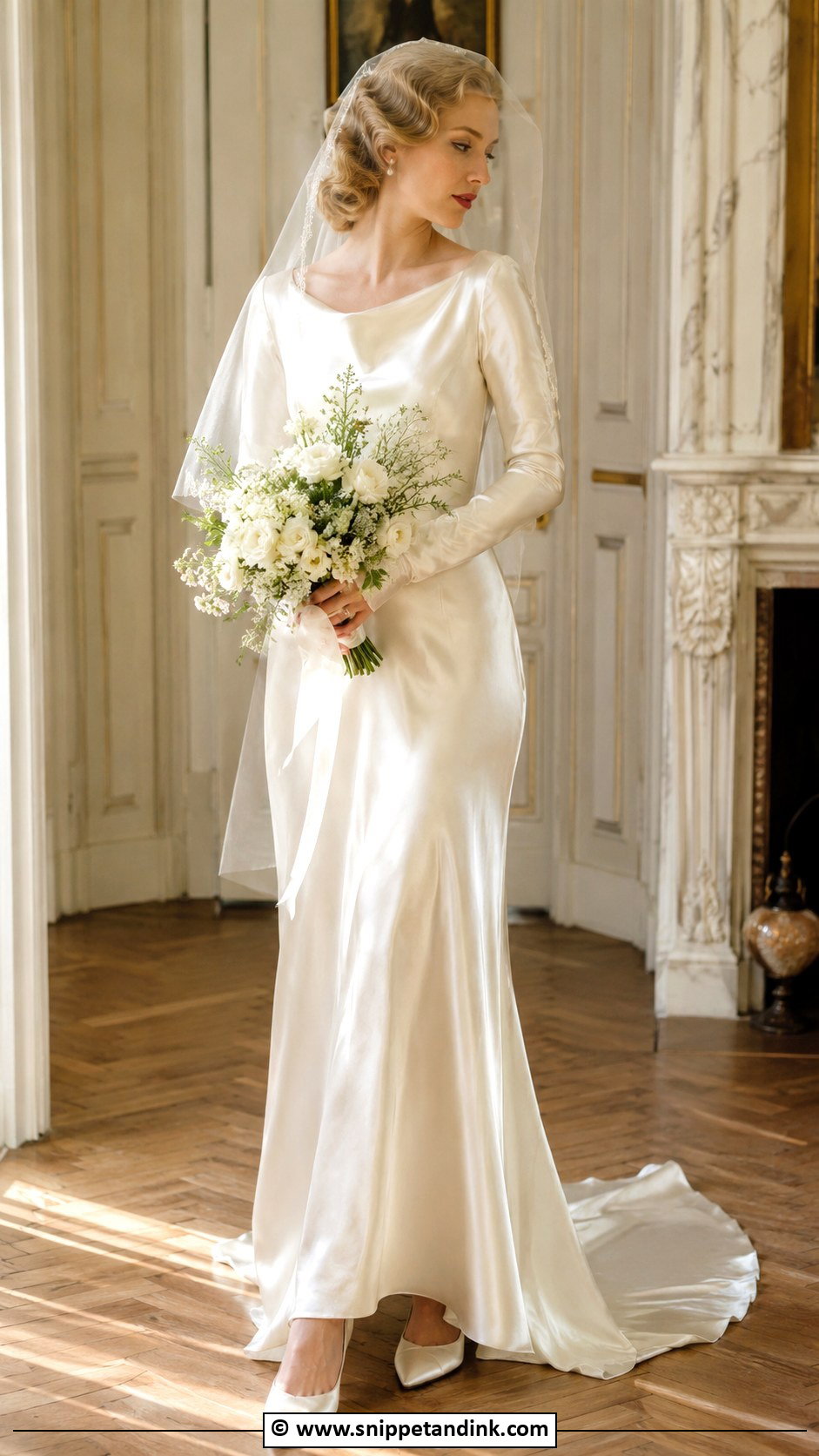
Vintage can mean a 1930s bias satin, a 1950s tea length or a 1970s lace sleeve. True vintage gowns are often small and fragile, so I’d have a seamstress inspect the seams before buying and expect alterations to need extra care. Modern dresses with a vintage shape are easier to fit. Pearl earrings, a birdcage veil, satin pumps or a soft finger wave suit the era. Keep one or two period details, not five, so it doesn’t drift into costume.
27. Simple Wedding Dress
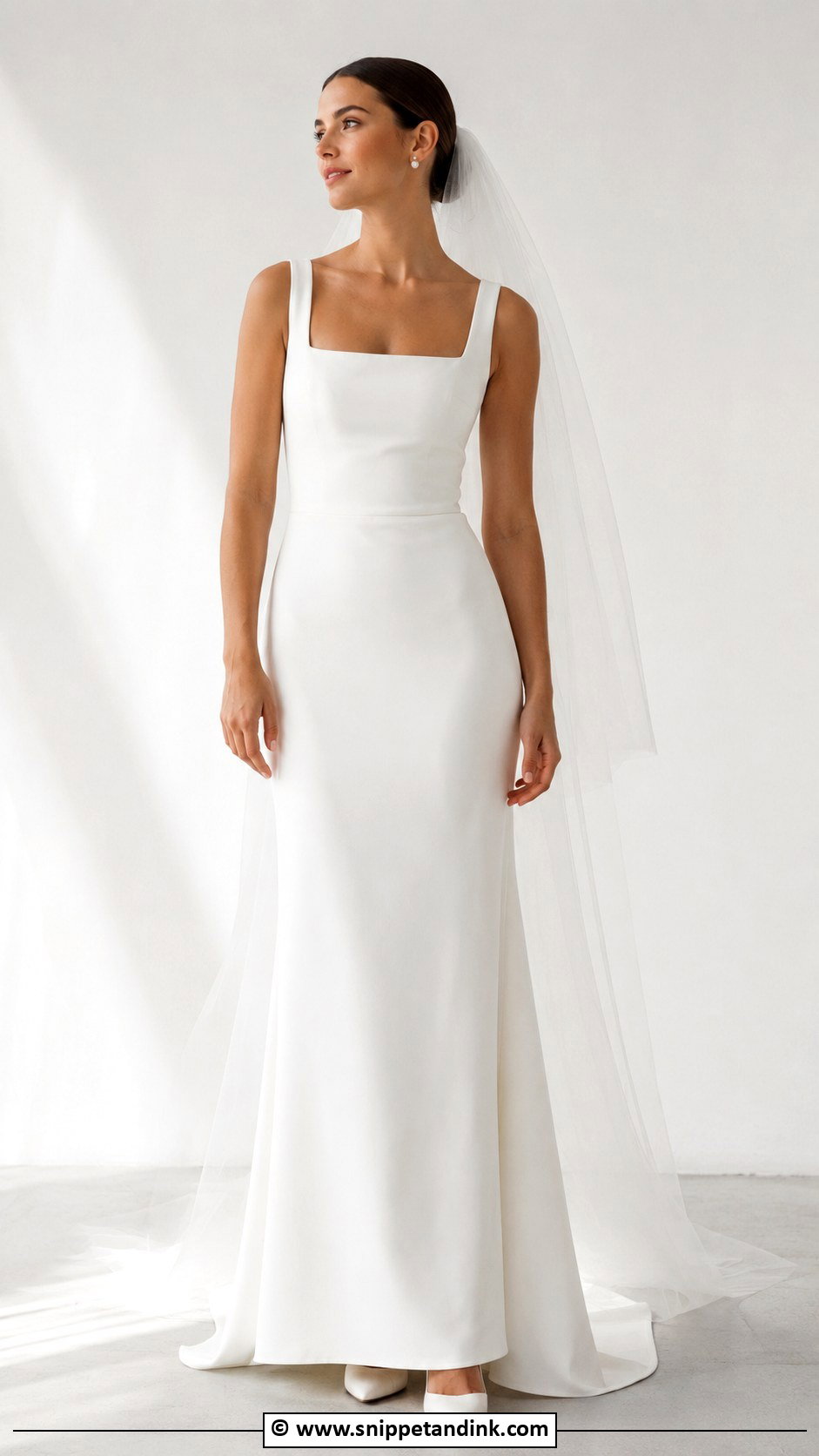
Simple dresses need one strong detail: a square neck, low back, bow, slit or a row of covered buttons. Crepe, satin and mikado drape best for minimal gowns. With so little decoration, fit is the whole dress, and I’d budget for tailoring before anything else. Elegant heels, polished hair, studs and a veil matching the dress length finish it. Smaller weddings and modern venues suit this kind of restraint.
28. Plus Size Wedding Dress
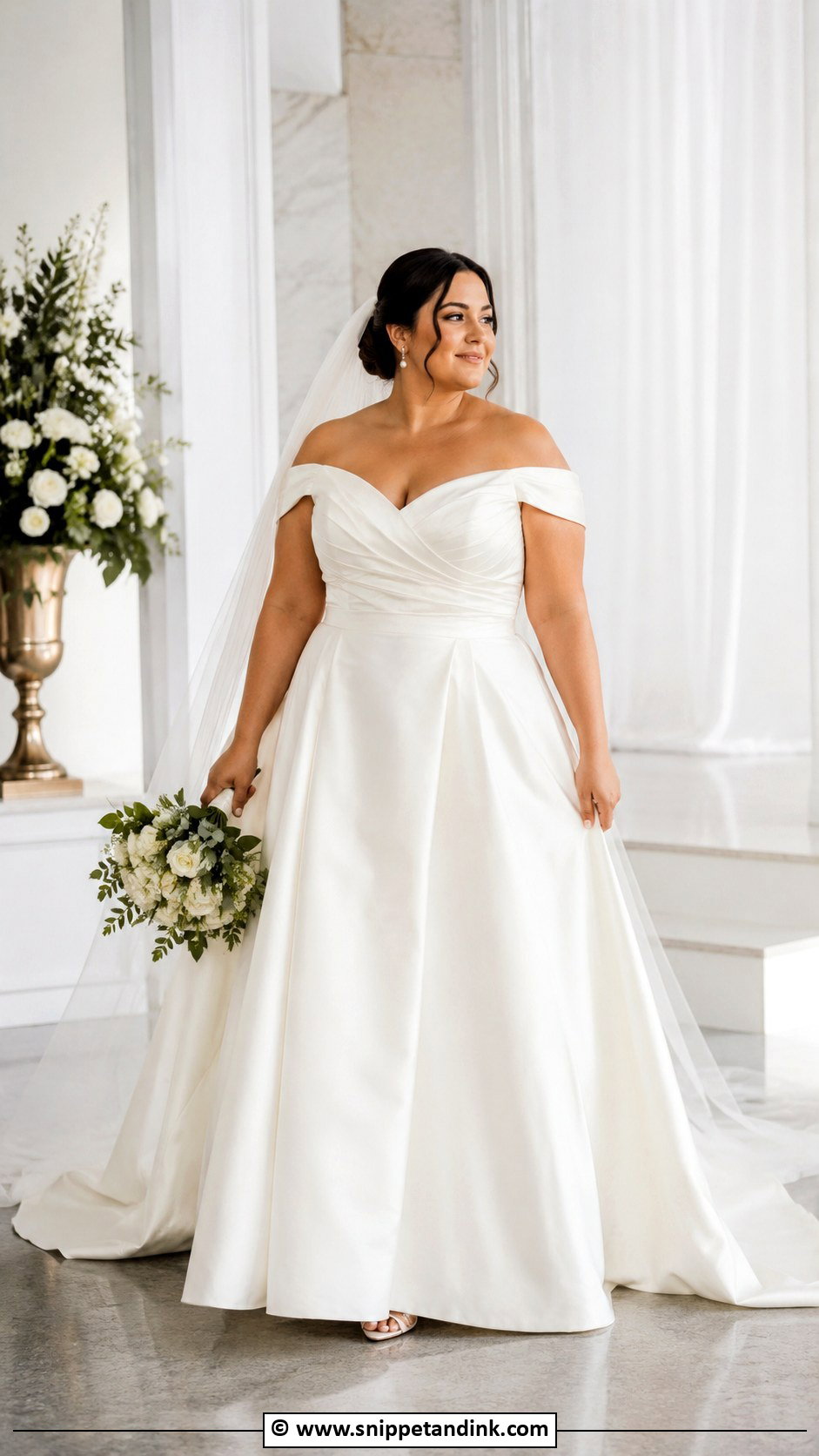
Plus size gowns should be built around support and comfort, not around old rules about what to hide. A-lines, ball gowns, fitted crepe, corset bodices and off-shoulder shapes can all look wonderful when the fit is right. I check for proper structure, smooth lining and straps or bodices that feel secure when you raise your arms. Try shapewear and shoes with the dress before alterations start. If you can stand, sit, hug and dance without adjusting it, you’ve found the one.
29. Colorful Wedding Dress
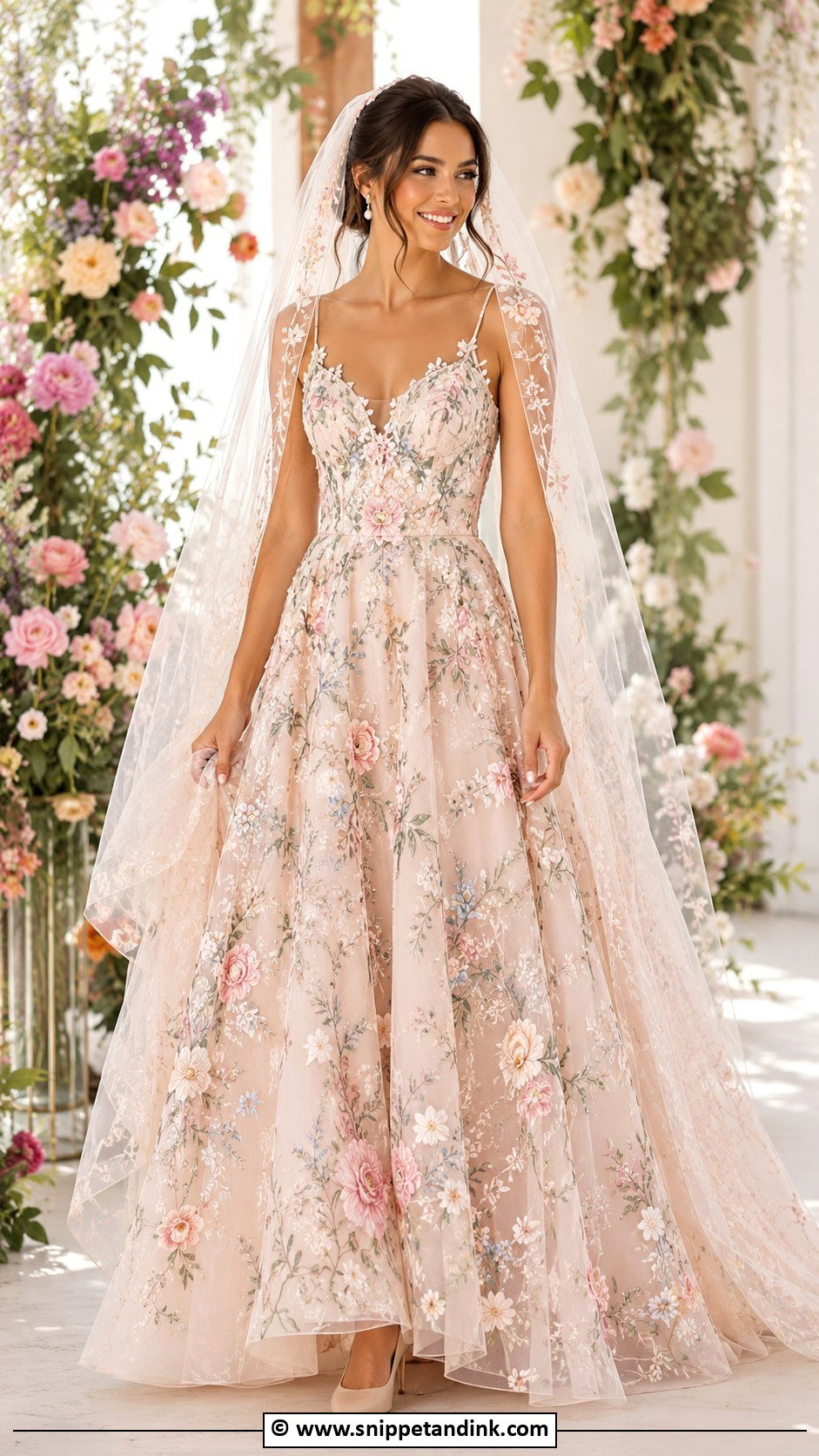
Color is a big decision, so I start subtle and go bolder only if the bride keeps asking. Blush, champagne, pale blue, lavender, silver and soft florals all still read bridal. With a bold gown, keep accessories quiet; with a pale tint, pearls or crystal add light. Match the veil to the dress in daylight, because a white veil over a pale pink gown can make the pink look dirty. Creative weddings and gardens suit it.
30. Reception Wedding Dress
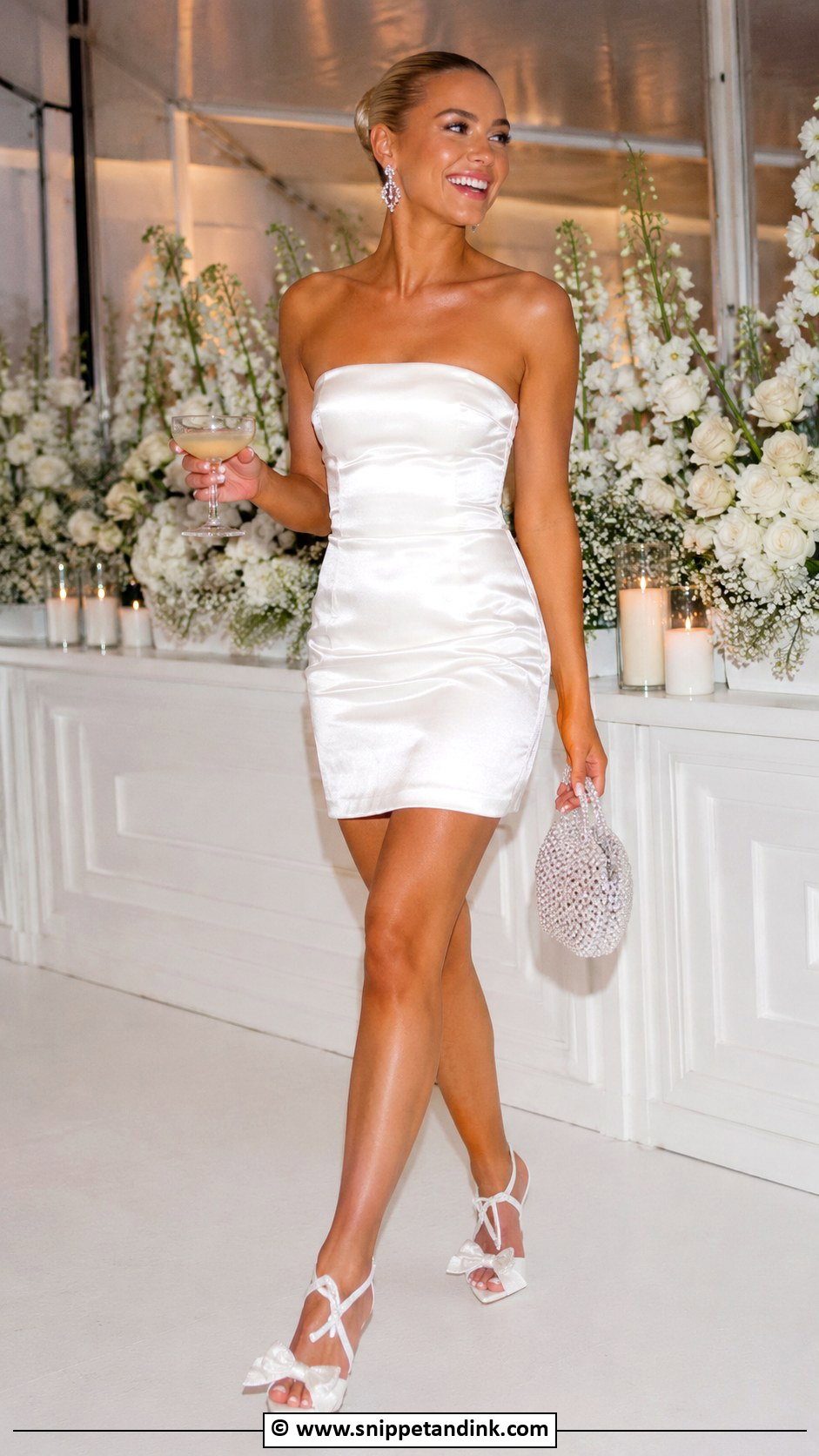
Reception dresses are for dancing, so I test them by having brides spin and sit. Satin minis, feather-trim dresses, sleek midis, embellished sheaths and jumpsuits are all popular. Comfortable heels, statement earrings and a small bag go with it, and your ceremony hair may need loosening into something that suits a short dress. A dramatic ceremony gown pairs best with a simple second look; a minimal first dress leaves room for sparkle now.
After the Last Dance: Cleaning and Storing the Gown
Most brides forget the dress the morning after, and that’s when the damage sets in. Sweat, makeup, food and sugary drinks often look invisible at first, then oxidize and turn yellow or brown over the months that follow. I tell brides to get the gown to a specialist cleaner within a few weeks.
What I’d do in the first week
- Hang it on a padded hanger using the inner hanging loops, so the shoulder straps don’t stretch under the skirt’s weight.
- Don’t scrub stains yourself. Rubbing satin or silk can lift the shine and leave a dull patch.
- Find a cleaner who works with bridal gowns and ask how they handle beading and glued details.
- Tell them about any spills you remember, even clear ones like white wine or soda.
For storage, keep the gown out of plastic, which traps moisture. An acid-free box with acid-free tissue between the folds, kept somewhere cool, dark and dry, protects it best. Avoid attics and basements, where temperature swings and damp do slow harm.
If you think you may pass it on or rewear part of it, take it out every year or two and refold it along different lines so permanent creases don’t form.
One Gown, Three Questions Before You Say Yes
From ball gowns to sleek sheaths and jumpsuits, there are many ways to dress for your wedding. In the salon I come back to three questions: does it suit the venue and season, can you move and sit in it, and do you feel like yourself when you forget the mirror? Pick the shapes from this list that answer yes to all three, try them on with real shoes, and let the rest of the outfit grow around that one dress.
You'll Like These Ideas:









Leave a Reply