
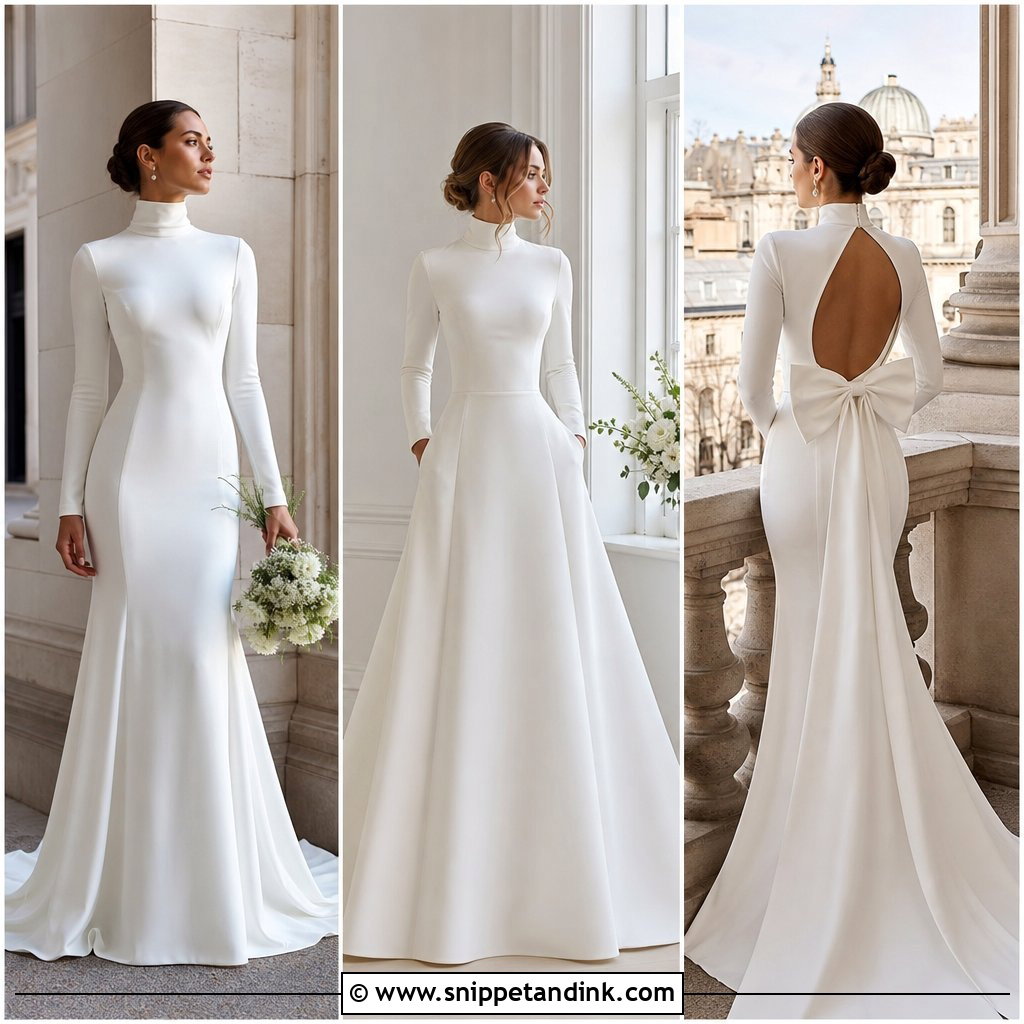
A turtleneck bridal gown is one of the few necklines that does the accessorizing for you. It covers, it frames the jaw, and it gives the whole dress a graphic, architectural line. In the fitting room I see it suit far more brides than expect it to, as long as the collar height is right for their neck and the fabric is right for their season. Below are twenty high-neck gowns in satin, lace, crepe, tulle and beadwork, each with the details I’d check before you commit and the way I’d finish the outfit, from veil length to shoes.
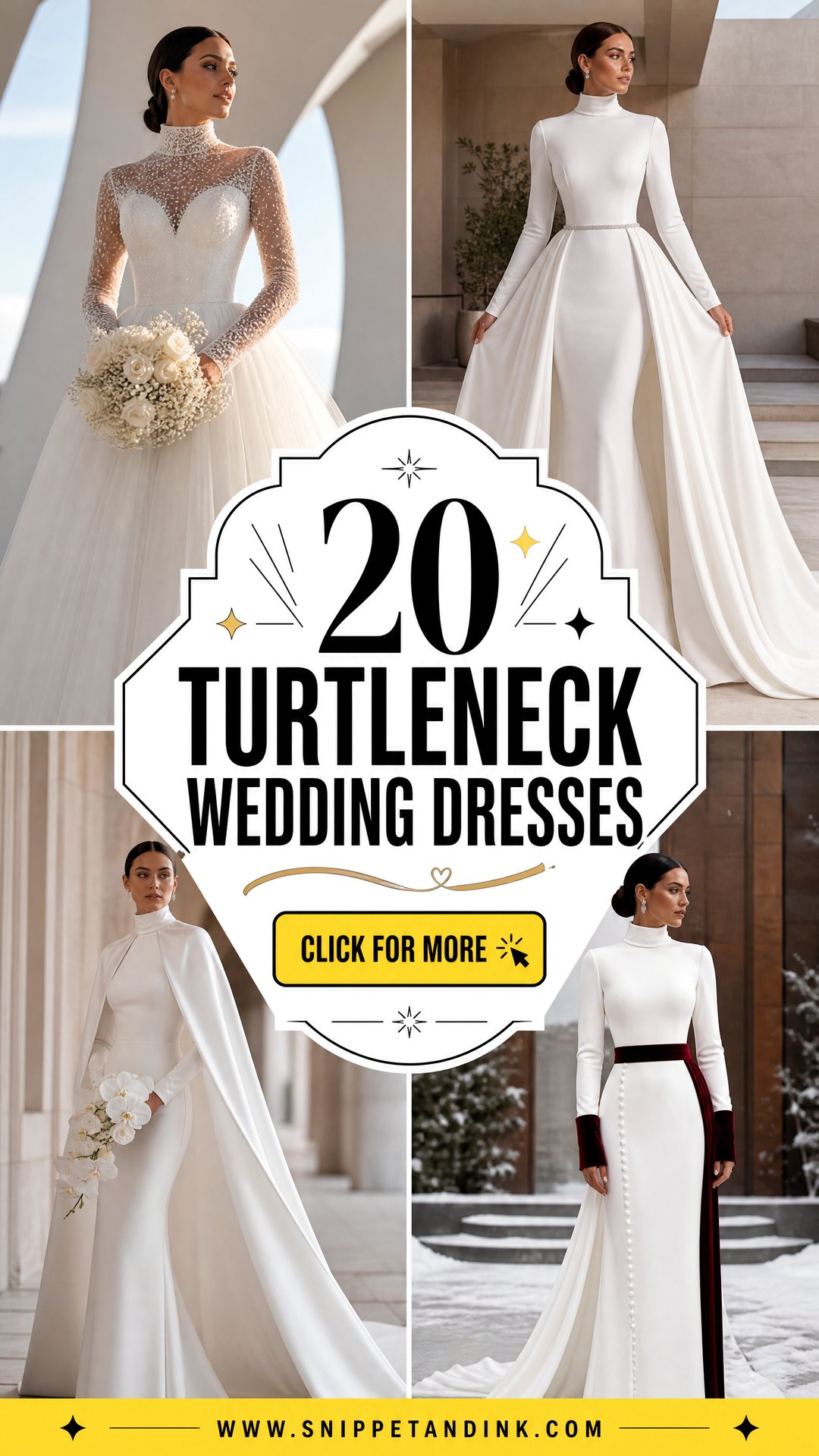
How High Should the Collar Sit on Your Neck?
Turtleneck is a loose word in bridal. Some gowns have a true folded roll that reaches nearly to the jaw, some have a mock neck that stands two or three fingers high, and some have a soft funnel that rises only slightly. Before choosing fabric or sleeves, I find out which height a bride can actually live in.
- Long neck: you can carry a full roll or a tall mock collar, and it often looks most striking on you.
- Shorter neck or full bust: a lower mock neck or a funnel collar keeps space between collar and chin, so the neckline doesn’t look cramped.
- Broad shoulders: a sleeveless cut-in shoulder with a high neck narrows the frame visually more than puffed sleeves will.
- Anyone who finds clothing at the throat claustrophobic: try a sheer illusion collar first. It gives the line without the closed-in feeling.
Test it properly. In the fitting room, tip your chin down to look at your bouquet and then laugh. If the collar folds into a bunch or presses your throat, it’s too tall or too tight, and a seamstress can usually lower or ease it if you ask early. Collars are far simpler to adjust on a lined crepe or satin gown than on lace with a scalloped edge, where the motif has to be cut and reapplied.
1. Satin Long Sleeve Turtleneck Wedding Dress
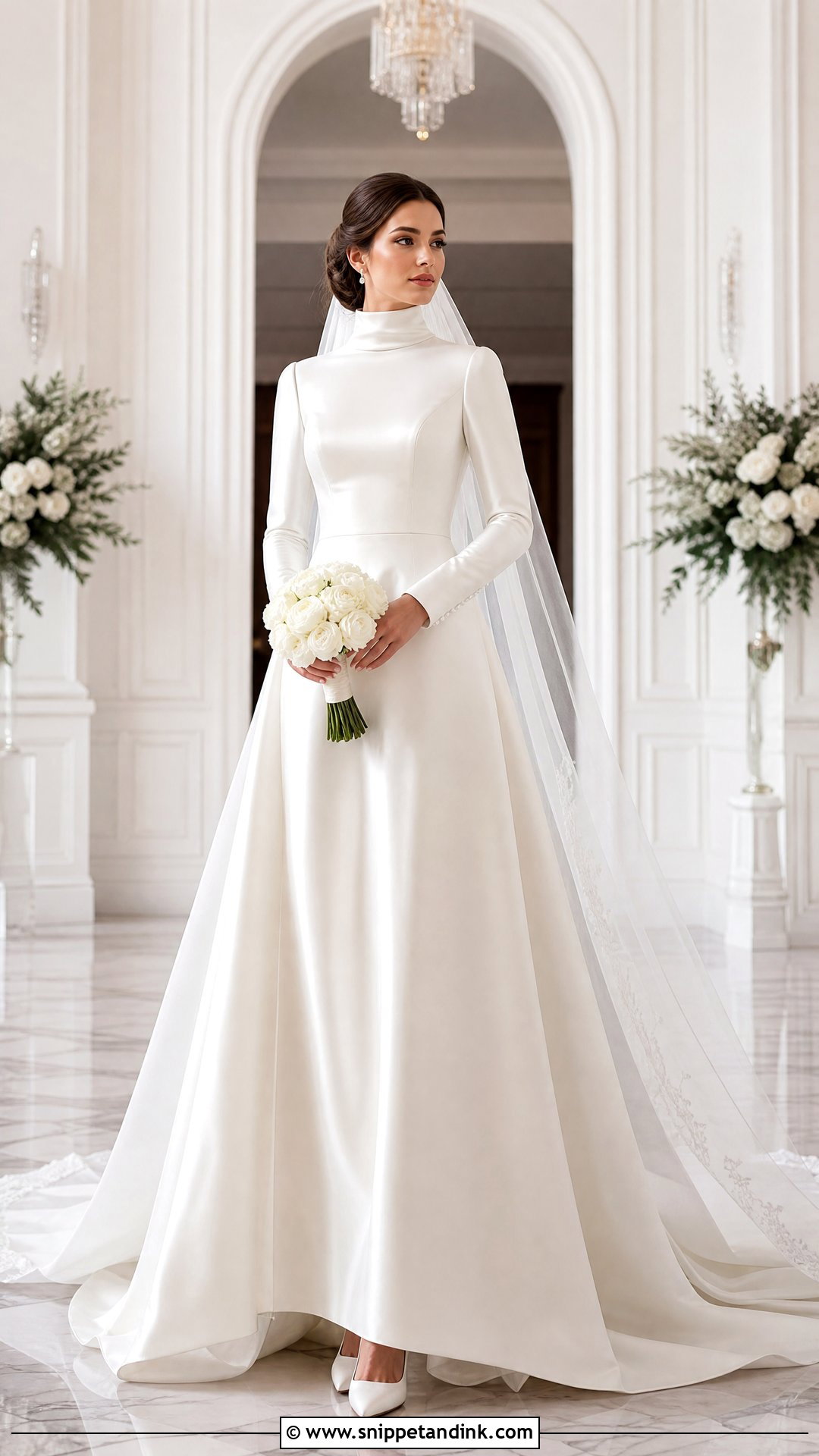
Satin is the strictest fabric for a high neck, because it shows every ripple at the collar seam. When I pin a satin turtleneck, the first thing I watch is whether the collar stands on its own or collapses into soft folds when you tilt your chin down. A good one has interfacing inside and keeps its shape. Pair the A-line skirt and fitted sleeves with pearl drops, a low chignon and a cathedral veil tucked beneath the bun, and leave the necklace in its box. Satin also wants bright, even indoor light; it reads flat and slightly grey on an overcast terrace.
2. Lace Turtleneck Wedding Dress With Long Sleeves
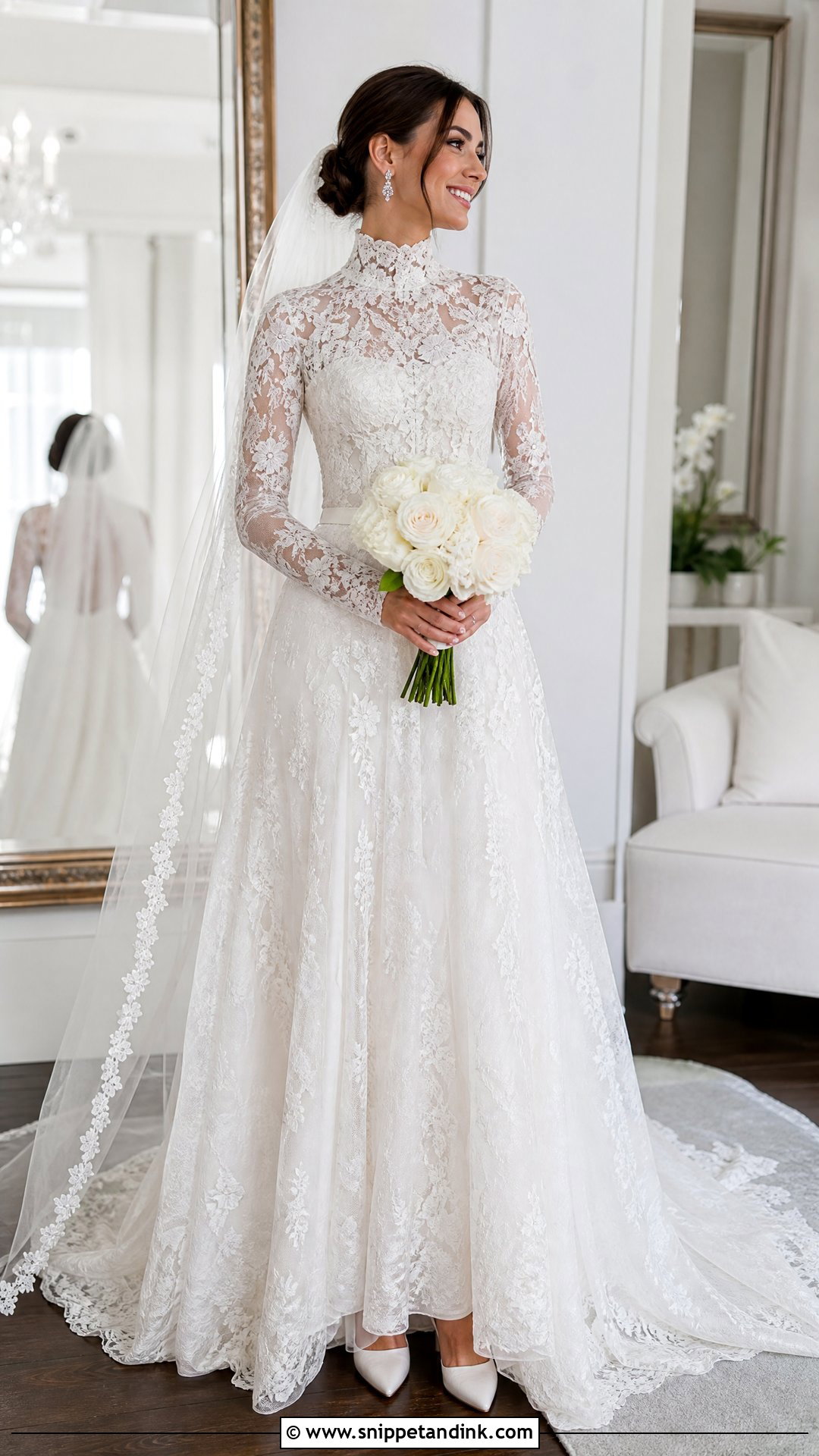
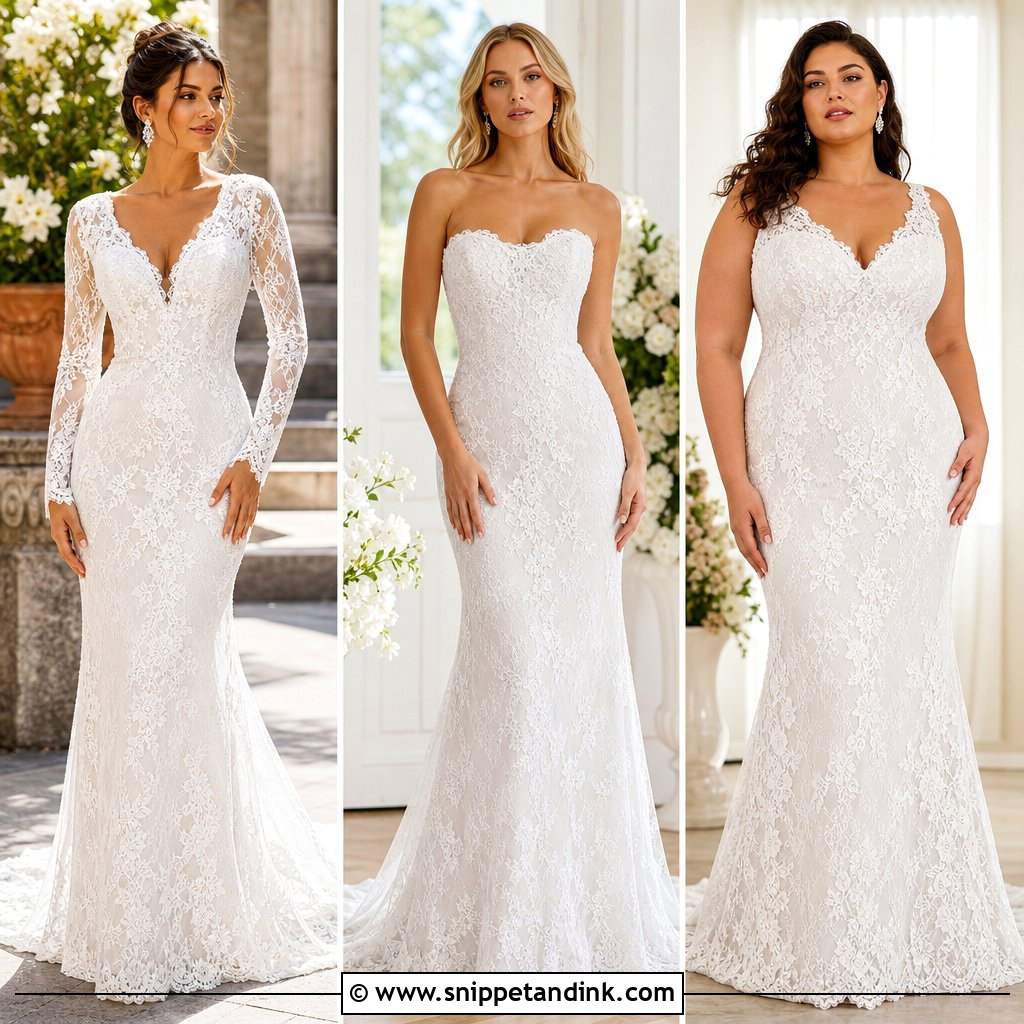
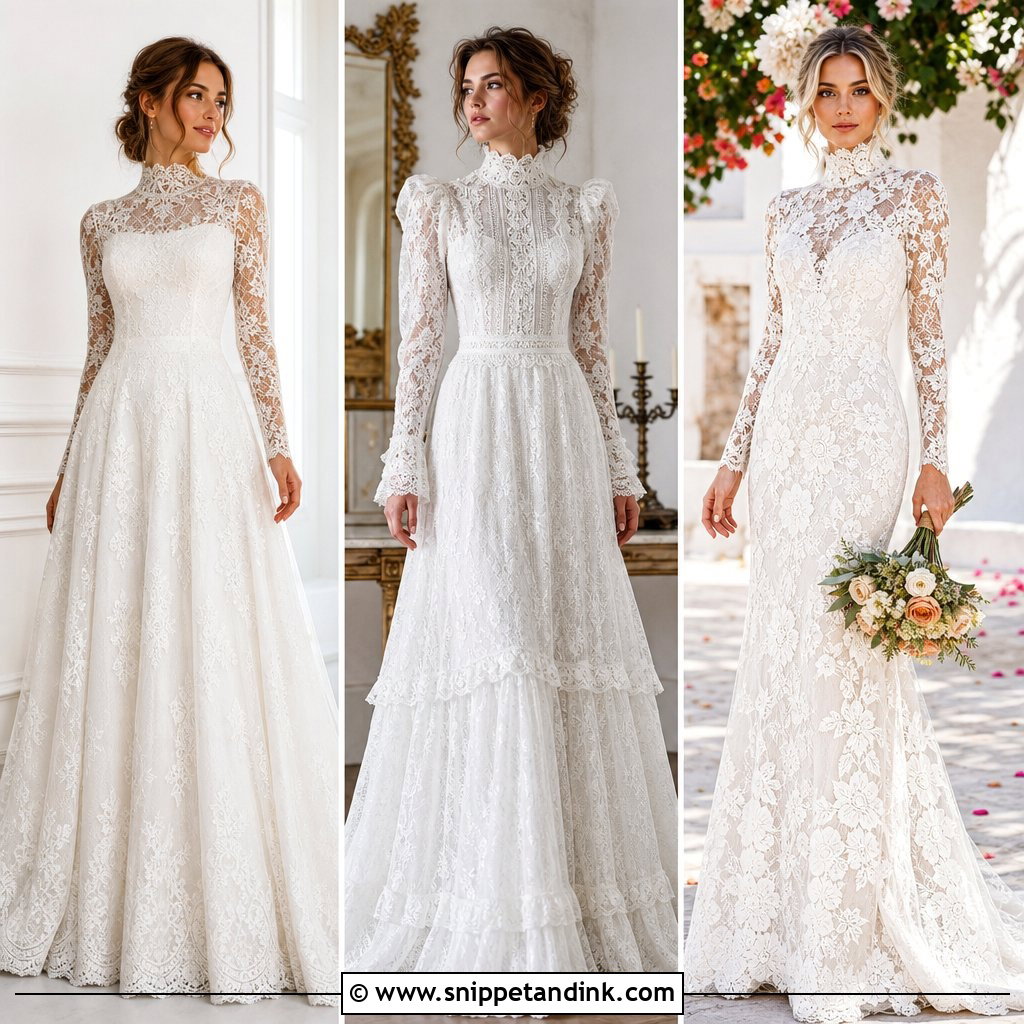
Lace softens the stiffness of a high collar, and the best versions let the motif run unbroken from the throat into the sleeves. When lace can continue from the turtleneck down the bodice, the neckline stops looking like an add-on. What I always ask about is the lining colour behind the sheer areas. Nude mesh comes in several shades, and a near match to your skin makes the illusion sleeves disappear in photos, while a mismatch shows as a pale band at the neck. Keep the hair low with a small comb above the bun, and wear closed ivory heels that won’t snag the scalloped hem.
3. Crepe Turtleneck Mermaid Wedding Dress
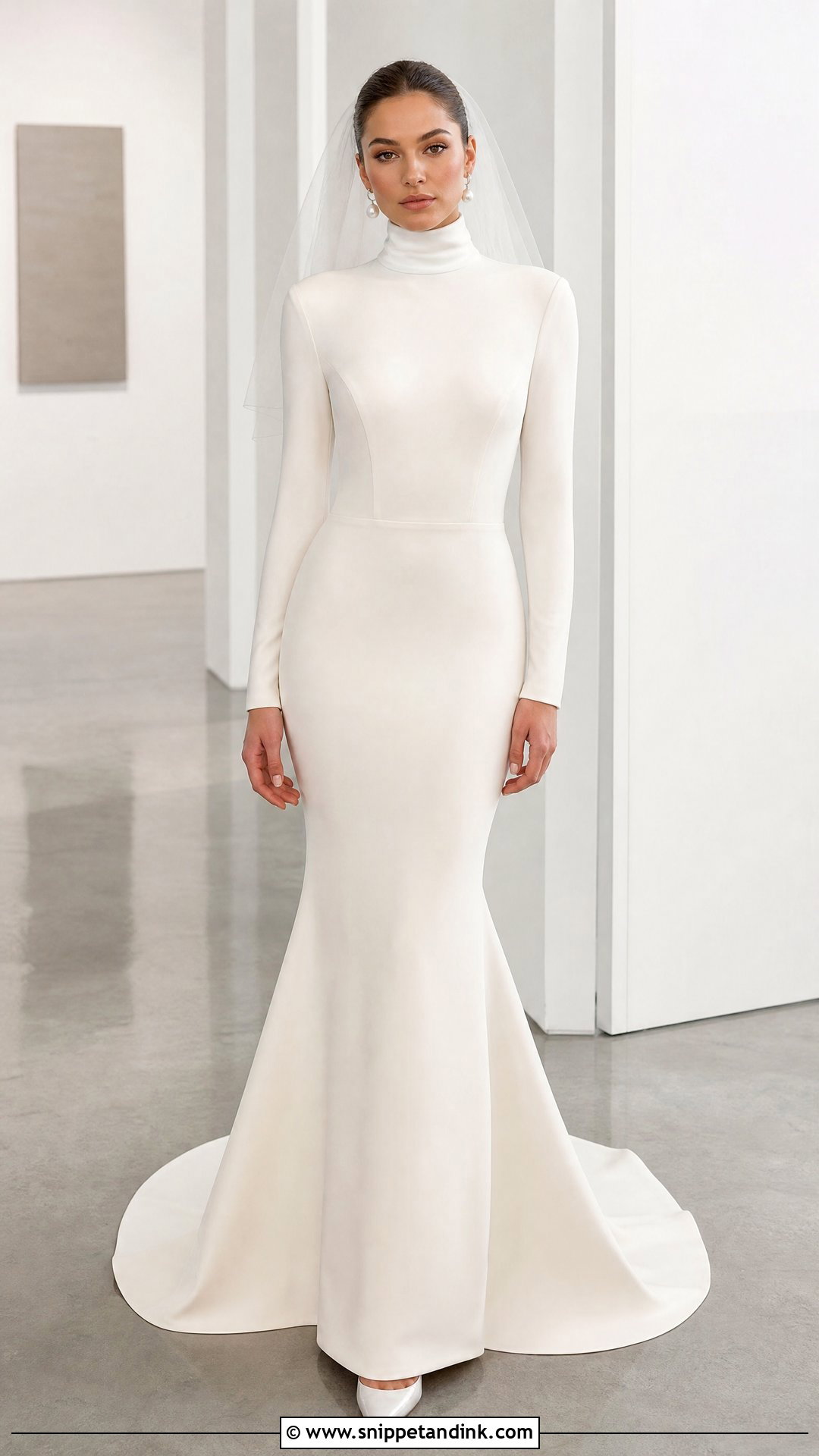
Crepe mermaid gowns are the cleanest silhouette on this list, and they are the least forgiving. The flare has to start where your knee actually bends; set it too low and you’ll shuffle down the aisle. I sit every bride in a crepe mermaid during the second fitting, because seated is when the hip seams pull and the collar rides up. Finish with pearl studs, a smooth bun, a chapel veil and pointed pumps. If the back is cut low, have your seamstress sew in a hidden support rather than relying on tape, which tends to loosen on warm skin after a few hours.
4. Sleeveless Turtleneck A-Line Wedding Dress
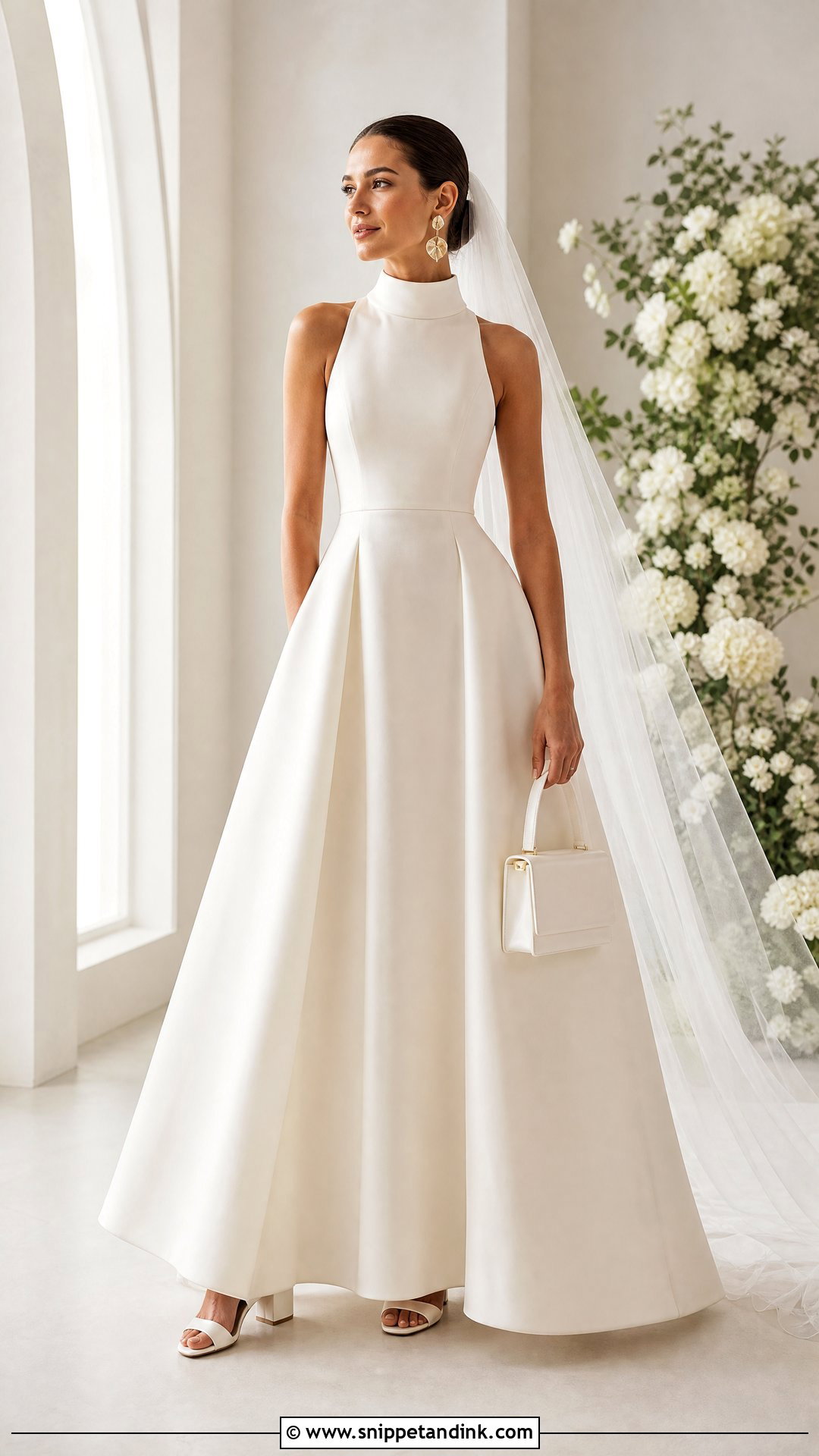
A sleeveless turtleneck is the answer I give brides who want a high neck in July. You keep the clean throat line and lose the trapped heat in the arms. Matte crepe and mikado hold the cut-in shoulder sharply; lightweight satin can buckle at the armhole if the pattern isn’t drafted for it, so check that edge in a mirror with your arms down. A neat low bun shows the neckline best. For grass or flagstones I’d switch to block-heel sandals, and keep any bag for the reception so your hands stay free for the portraits.
5. Turtleneck Ball Gown Wedding Dress
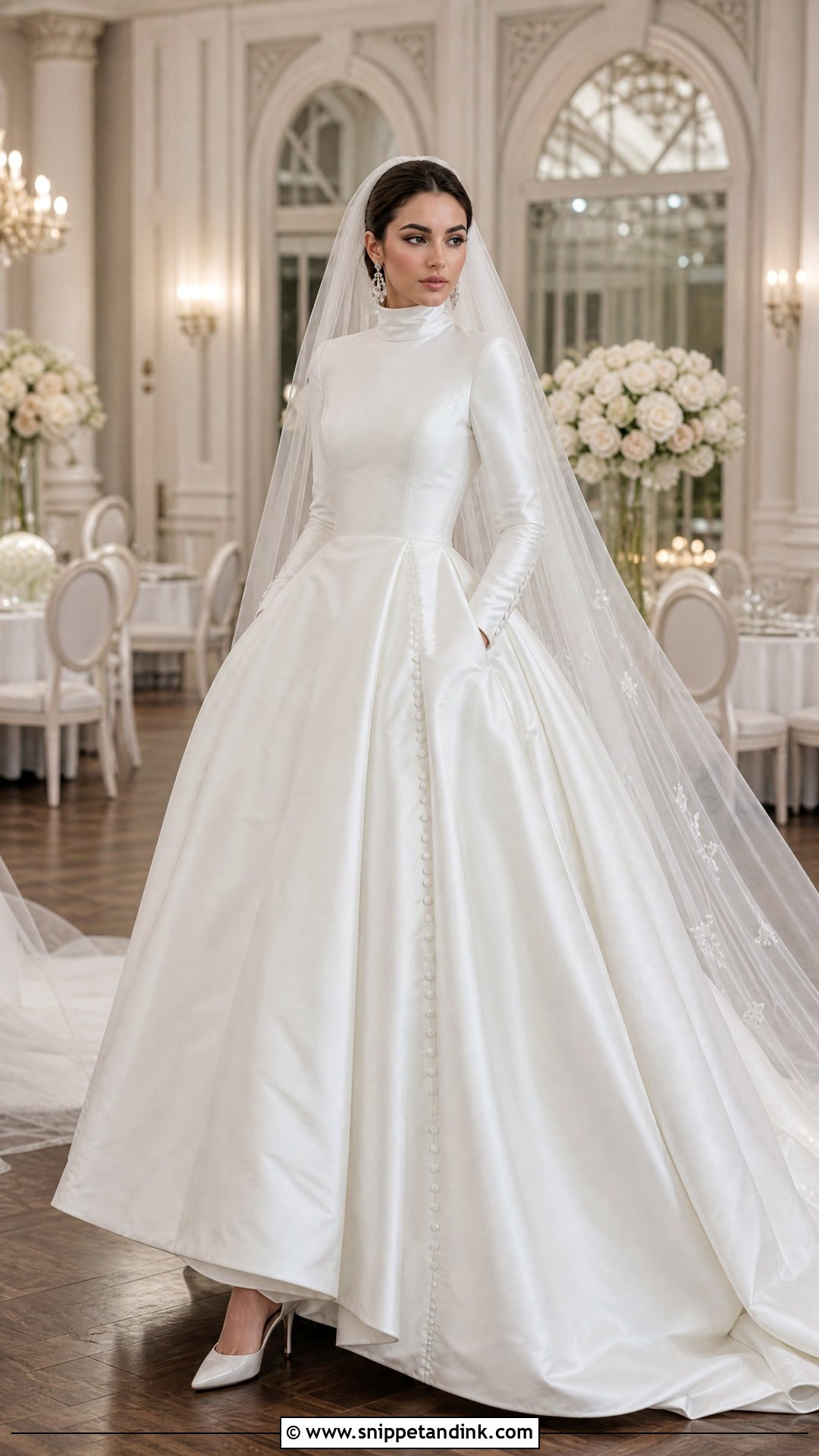
The ball gown version is pure ceremony, and I tell brides to plan for its logistics as much as its look. A fitted long-sleeve bodice over a full mikado or tulle skirt is heavy, and that weight drags on the high collar unless the waist seam is anchored properly inside. Ask to see the waist stay. Chandelier earrings, a sleek updo and a cathedral veil that runs past the train keep the proportions balanced, and a structured bouquet holds its own against the skirt. Hem it with the exact shoes you’ll wear, because several layers of tulle catch on a toe faster than one.
6. Tulle Turtleneck Wedding Dress With Illusion Sleeves
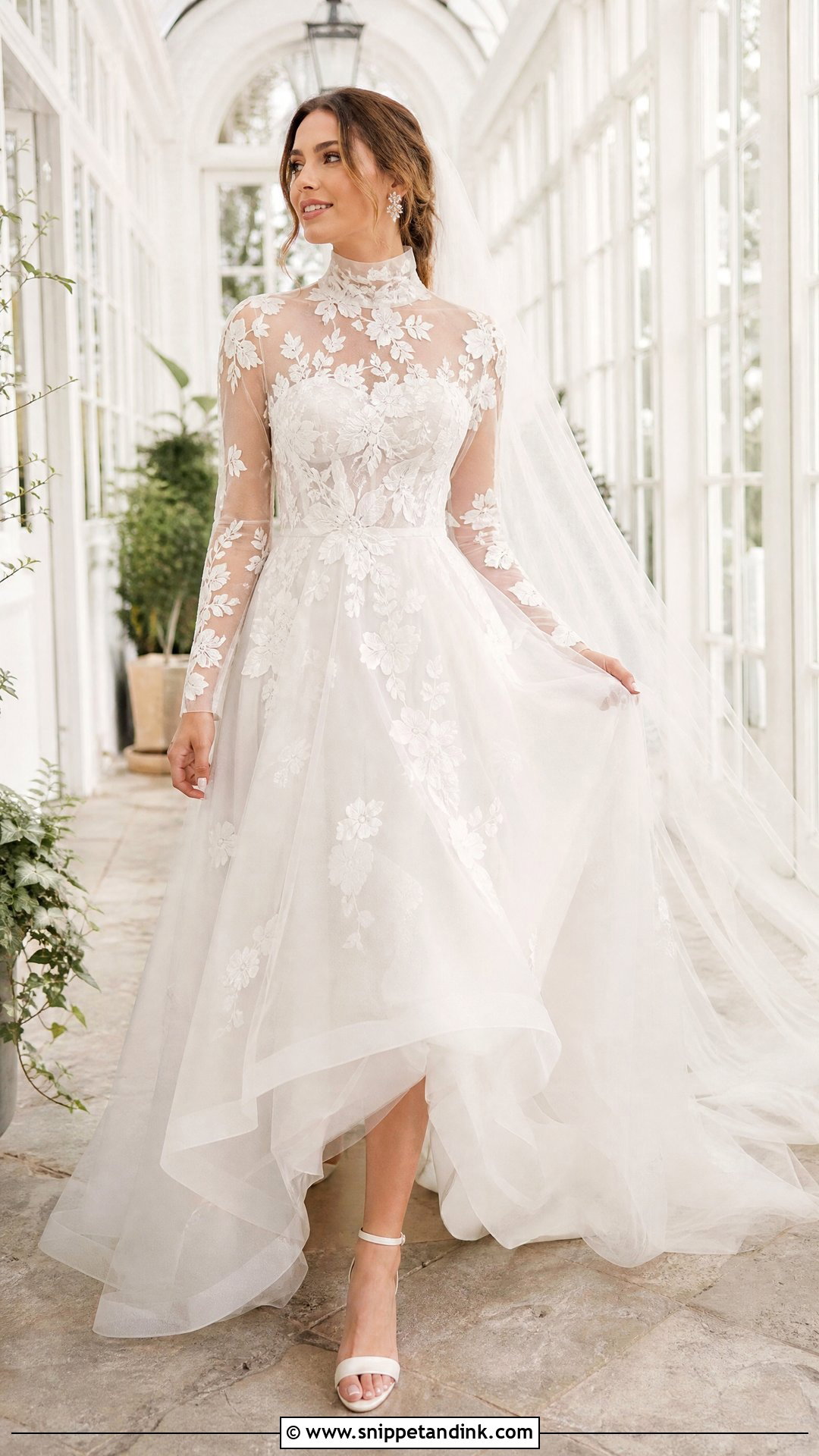
Tulle keeps a covered bodice from feeling heavy, but sheer necklines have one weakness: the edge of the collar. Cheap finishes scratch, and you’ll feel it within an hour. When I fit illusion turtlenecks, I run a finger around the inside of the collar and look for a soft binding or a fold of tulle rather than a raw cut edge. Placed appliqués and a lined sweetheart underneath give the bodice depth. Wear a loose low bun, small crystal studs and ankle-strap heels, then sit down and turn your head both ways in the fitting room. The collar should follow you without pulling.
7. Beaded Turtleneck Wedding Dress
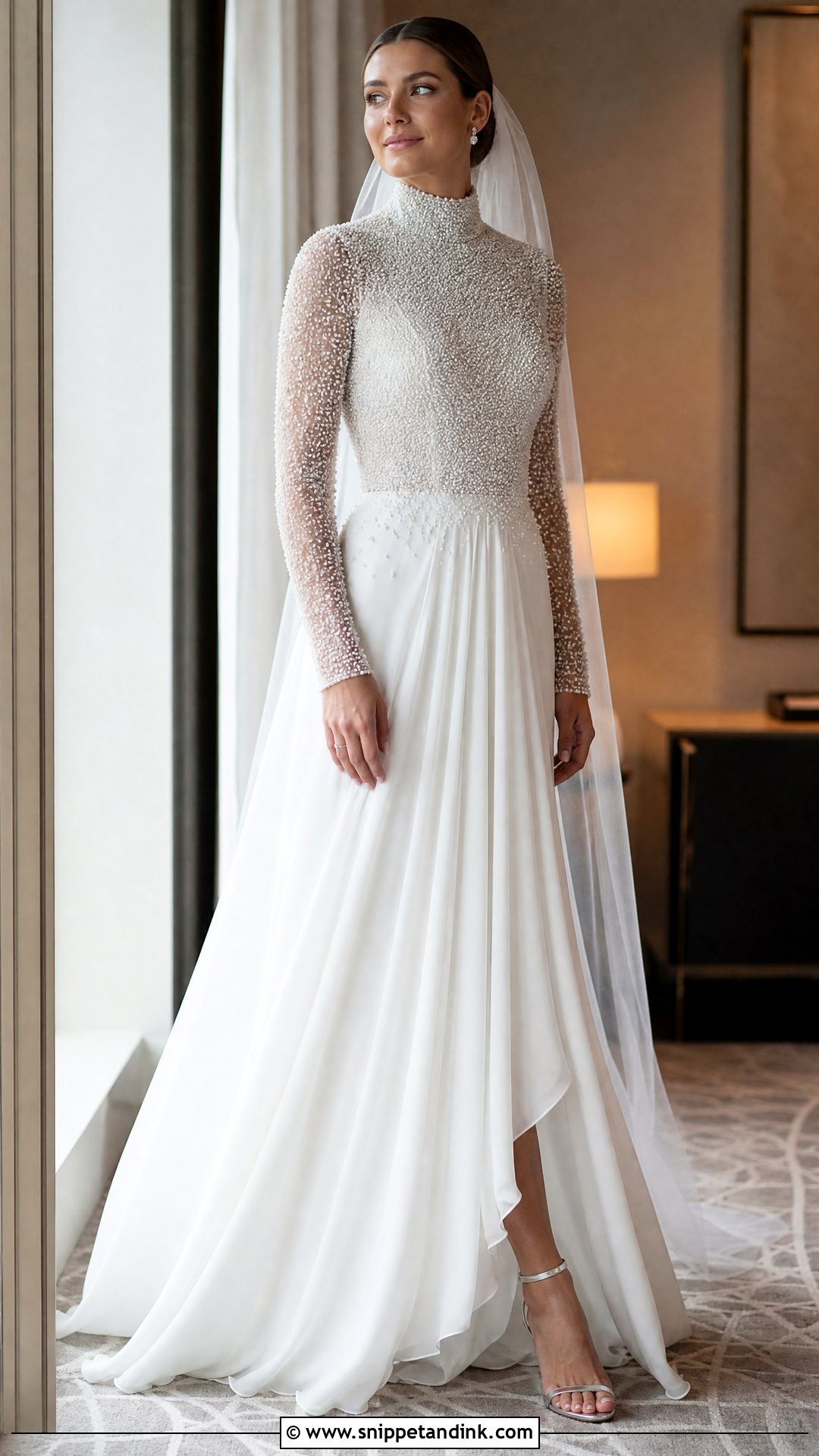
Beading at the throat replaces a necklace entirely, which is why I keep everything else quiet with this one: studs, a smooth bun, a plain veil. The thing I’d check is weight. A densely beaded collar can drag forward and make the neckline gape at the back, so ask whether the bodice is built on a firmer base fabric. Look at the dress under daylight and then under warm indoor bulbs. Heavy crystal can flare into white spots in flash photography, and tonal beads in ivory or champagne usually photograph more evenly than clear stones.
8. Boho Lace Turtleneck Wedding Dress
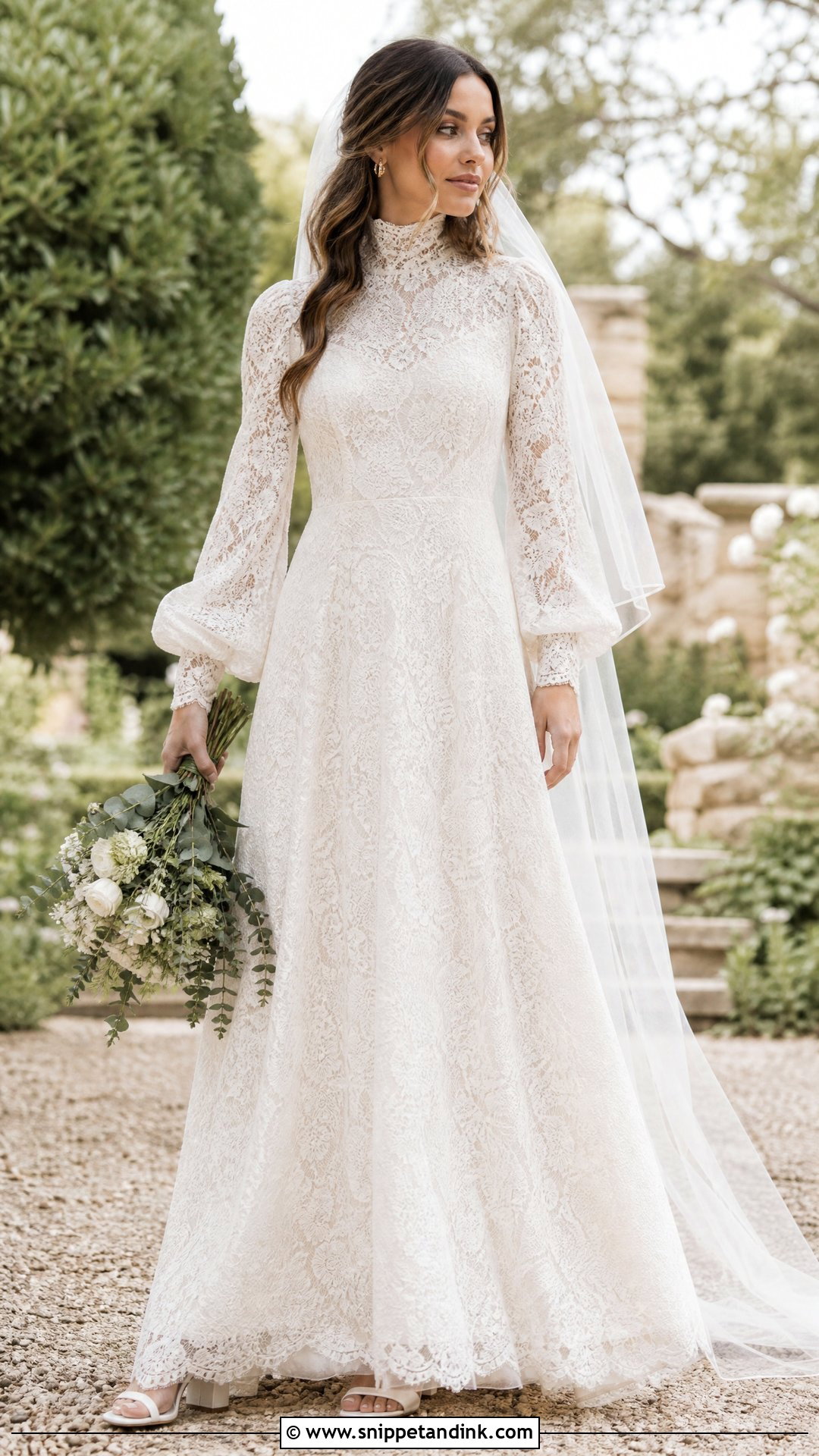
A boho high neck sounds like a contradiction until you see it in soft lace with bishop sleeves. That is the bohemian interpretation of the turtleneck I reach for most: a gently fitted collar, a flowing A-line skirt and sleeves that move. Loose waves suit it, which is rare for a high neckline, but I’d keep them pinned back on one side so they don’t catch in the lace at the collar. Block heels or bridal boots handle outdoor ground. A plain fingertip veil lets the lace pattern stay visible instead of fighting a second layer of embroidery.
9. Minimalist Turtleneck Column Wedding Dress
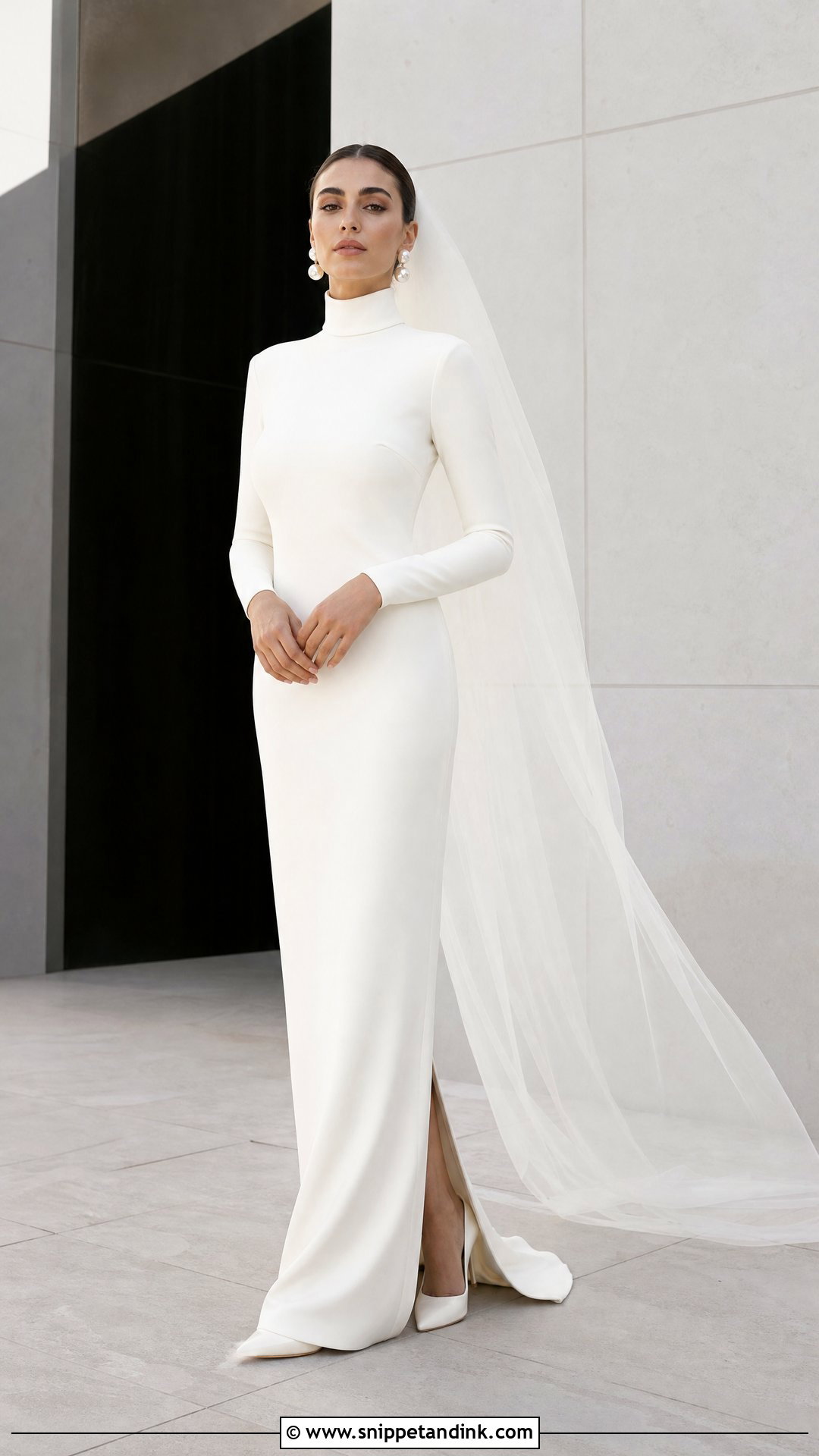
Column gowns hide nothing. In matte crepe with long fitted sleeves and a straight skirt, the only detail is the tailoring itself, so I’m fussy here. Shoulders must sit exactly at your shoulder point, and the collar base should lie flat without a crease where it meets the bodice. A back slit or short train gives you a walking stride. Bold pearl earrings, a centre-parted bun and a sheer veil with no border keep the architecture intact. If you plan to eat, dance and sit for speeches, ask for a quarter inch more ease at the waist than the mirror tempts you to take.
10. Vintage Turtleneck Lace Wedding Dress
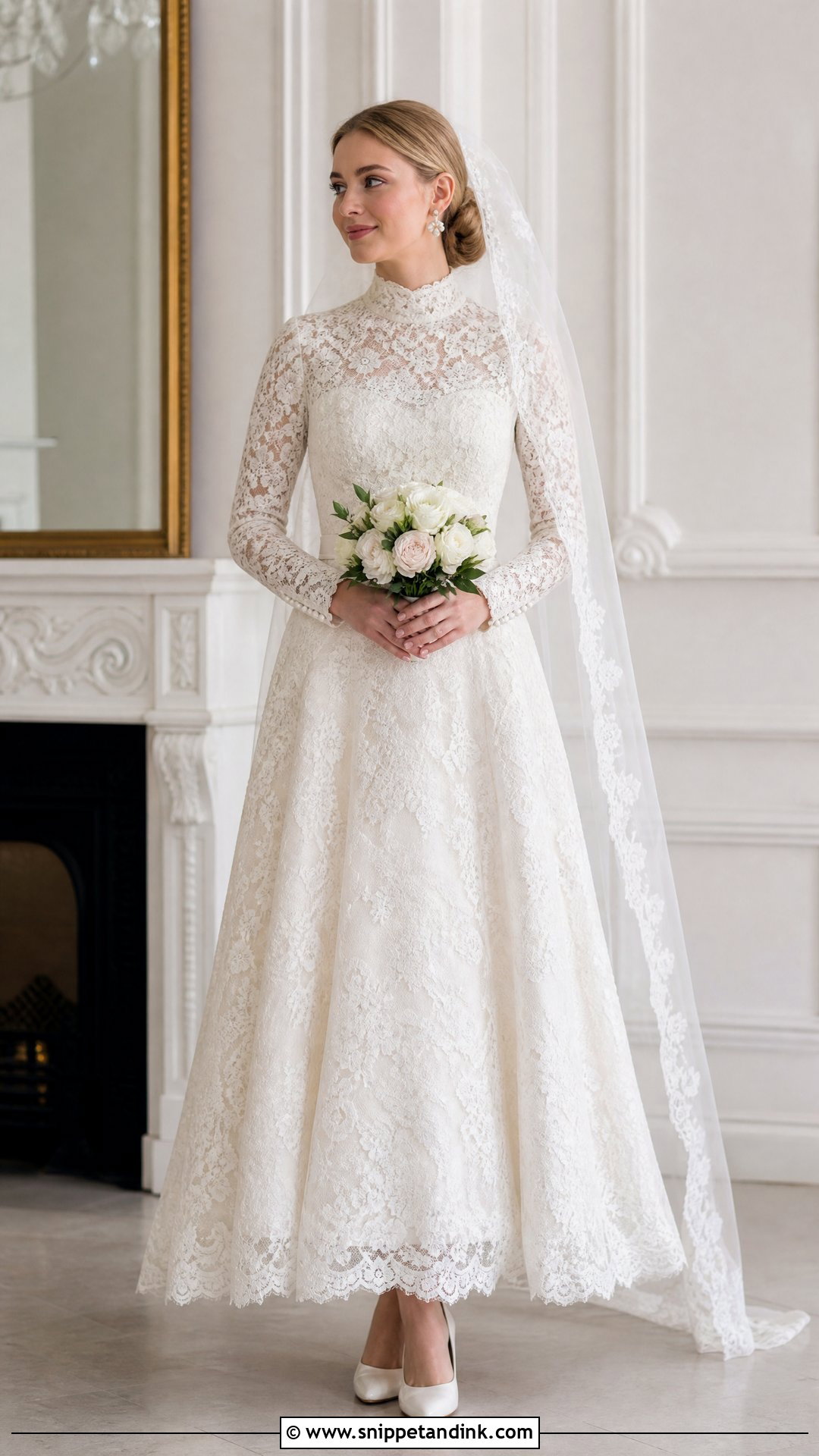
Vintage lace and a high collar belong together; it’s the silhouette most people picture from older bridal portraits. Here I often suggest a softer raised collar instead of a full folded turtleneck, because it carries the period feel without the bulk. Covered wrist buttons, an A-line skirt, pearl cluster earrings and a low rolled updo complete it. One detail worth asking for: an ivory lace over a champagne lining shows the floral pattern far more clearly than ivory on ivory. Keep the makeup fresh and modern so the outfit reads as inspired rather than costume.
11. Turtleneck Wedding Dress With Open Back
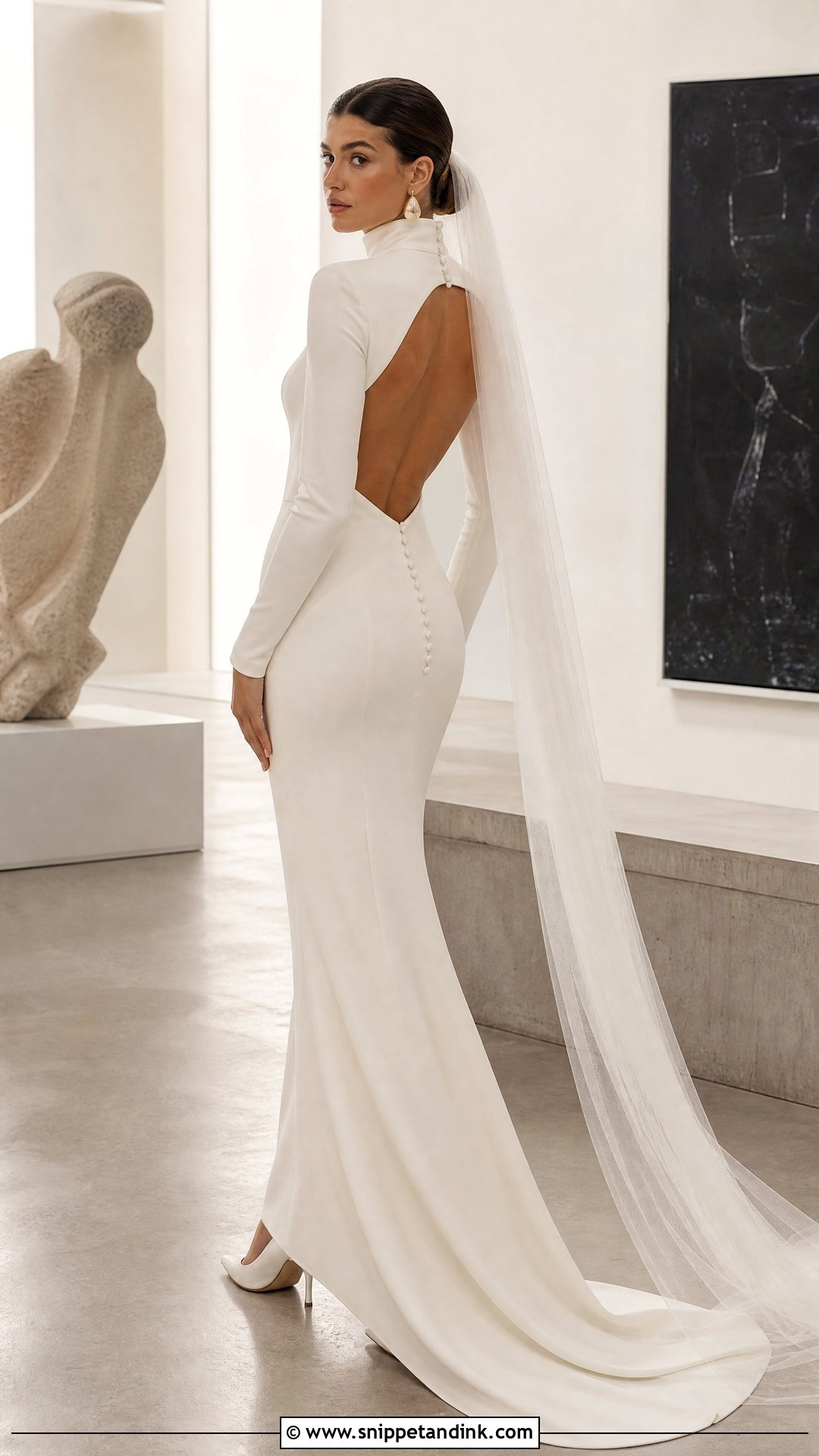
Covered front, open back: this contrast is my favourite reveal for the moment you turn at the altar. The engineering matters more than the look. A high collar closed with buttons at the nape has to carry the whole front of the dress when the back is open, so the neck closure must be firm, not a single hook. Ask your tailor to build a discreet support into the back edges, then raise your arms and dance a few steps in the fitting room. If the opening gapes, the fix happens now, not on the morning. Pointed heels, statement earrings and a low-set veil finish it.
12. Pearl Turtleneck Wedding Dress
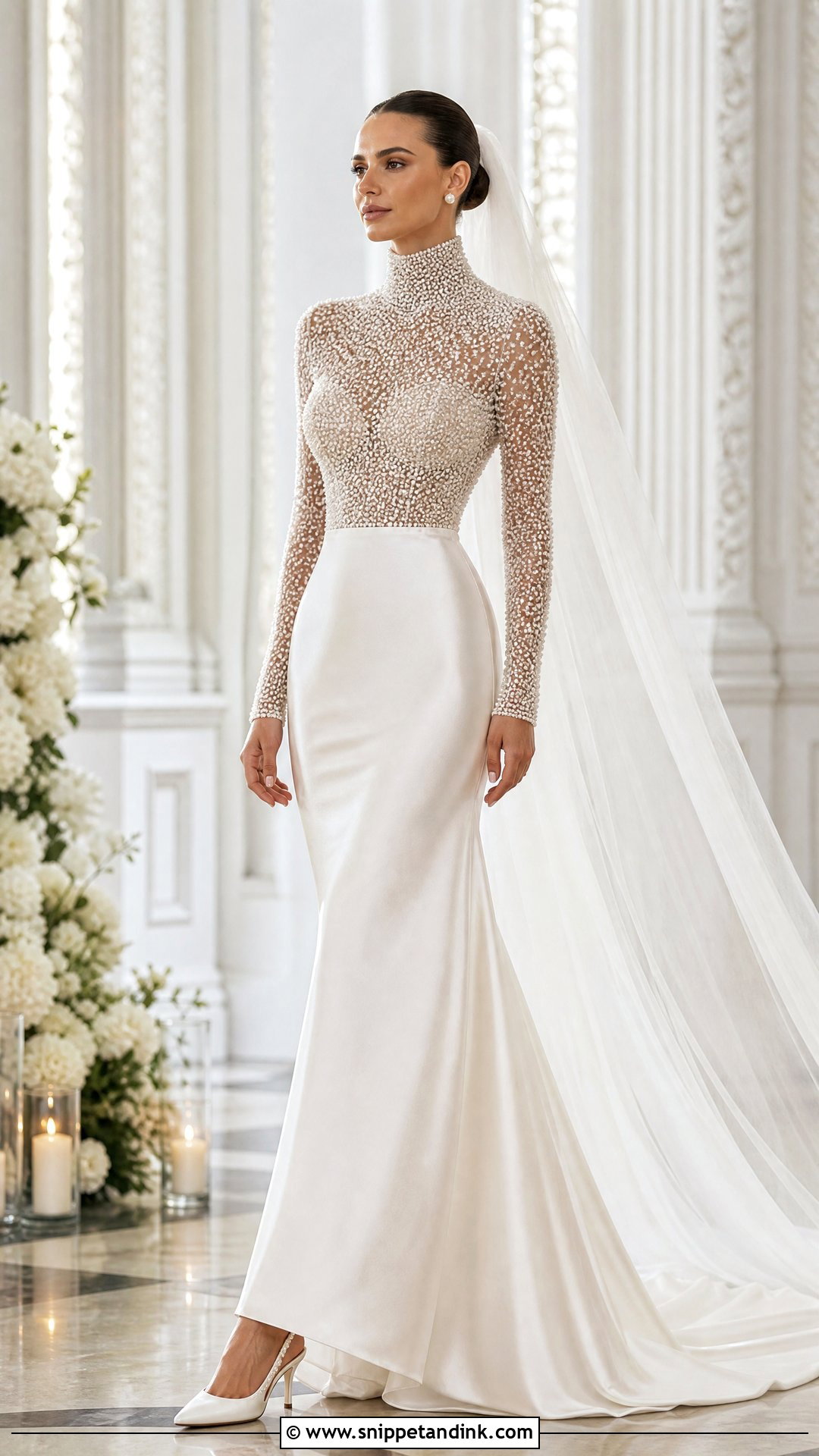
Scattered pearls catch light more gently than crystals, which is why a pearl turtleneck looks luminous rather than sparkly. I prefer the heaviest decoration concentrated on the sheer bodice, leaving a clean satin or crepe skirt that can move. Before buying, tug lightly at a few pearls at the cuffs and collar. Those are the stress points: you’ll touch your neck, rest your wrists on tables and hug a lot of people. Loose threads there are easy to secure during alterations. Pearl studs, a polished bun, a plain cathedral veil and satin slingbacks are all it needs; skip the jewelled headpiece.
13. Turtleneck Wedding Dress With Bishop Sleeves
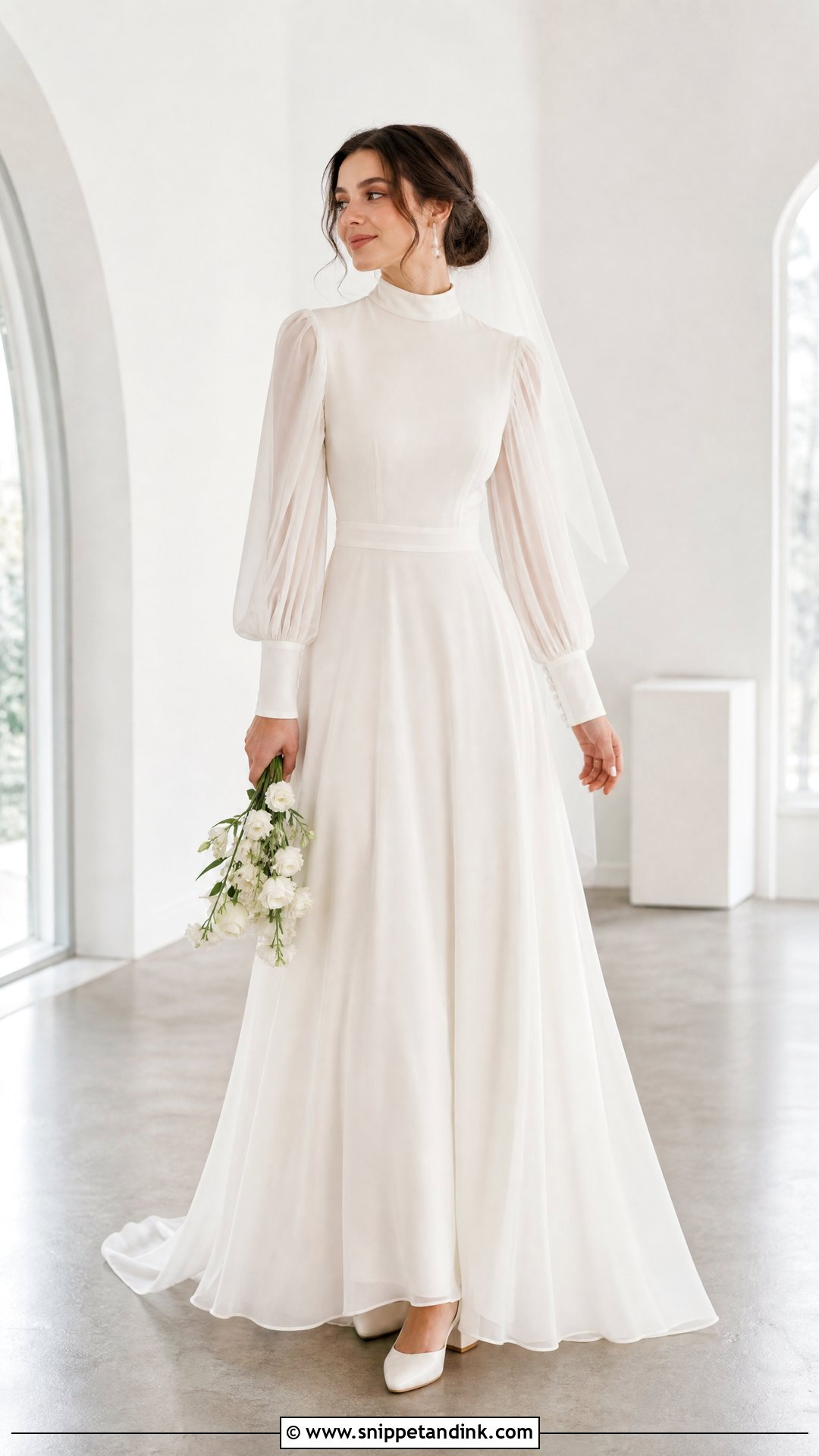
Bishop sleeves add graceful volume to a covered bodice, and they balance the narrow line of a high neck nicely. Chiffon and organza give the billow without bulk; heavier fabrics can make the arms look wider than they are. The cuff is where I spend fitting time. It should close firmly without pressing on the wrist bone, because a tight cuff becomes uncomfortable once your hands swell a little through a long day. Practise reaching across a table, too. Full sleeves drift into candle flames and buffet dishes more often than brides expect.
14. Turtleneck Wedding Dress With Detachable Skirt
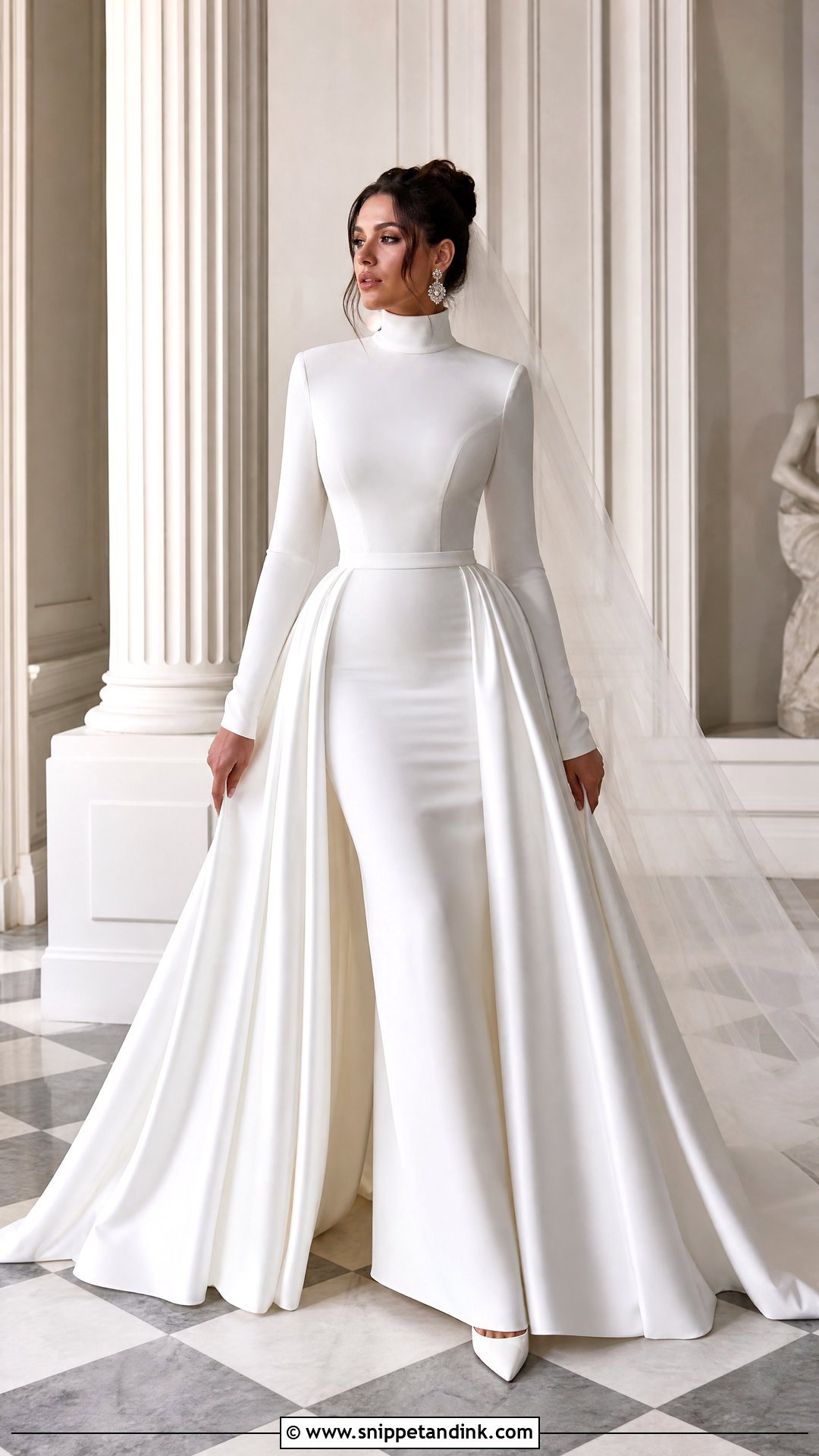
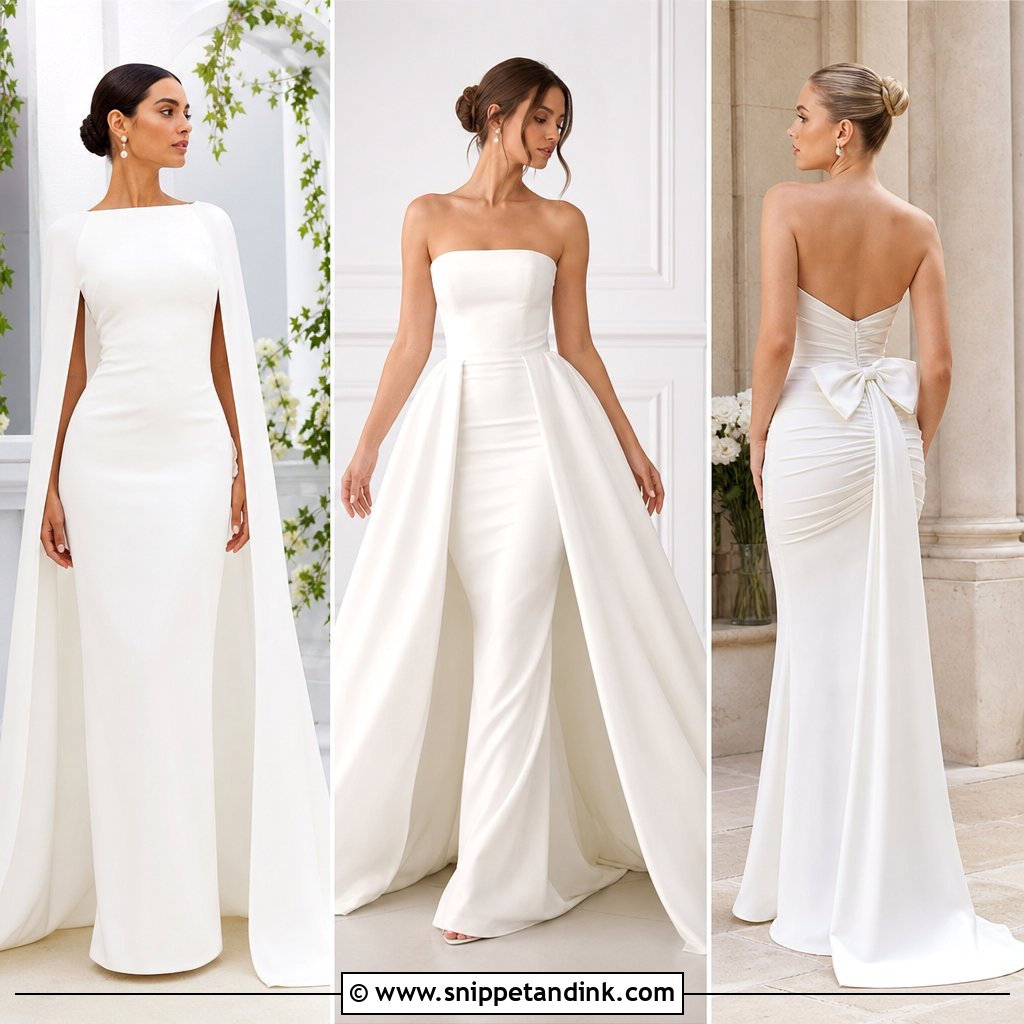
A detachable overskirt gives you two dresses: a formal ball gown for the vows and a sleek turtleneck column for the party. The trick is in the waistband. I check that the overskirt fastens over a smooth band so it leaves no lump on the column underneath, and that the closure releases quickly with one person helping. Rehearse taking it off before the day, ideally with whoever will do it at the reception. Statement earrings and a neat updo work for both halves. Swap the long veil for a small crystal comb once the overskirt comes off.
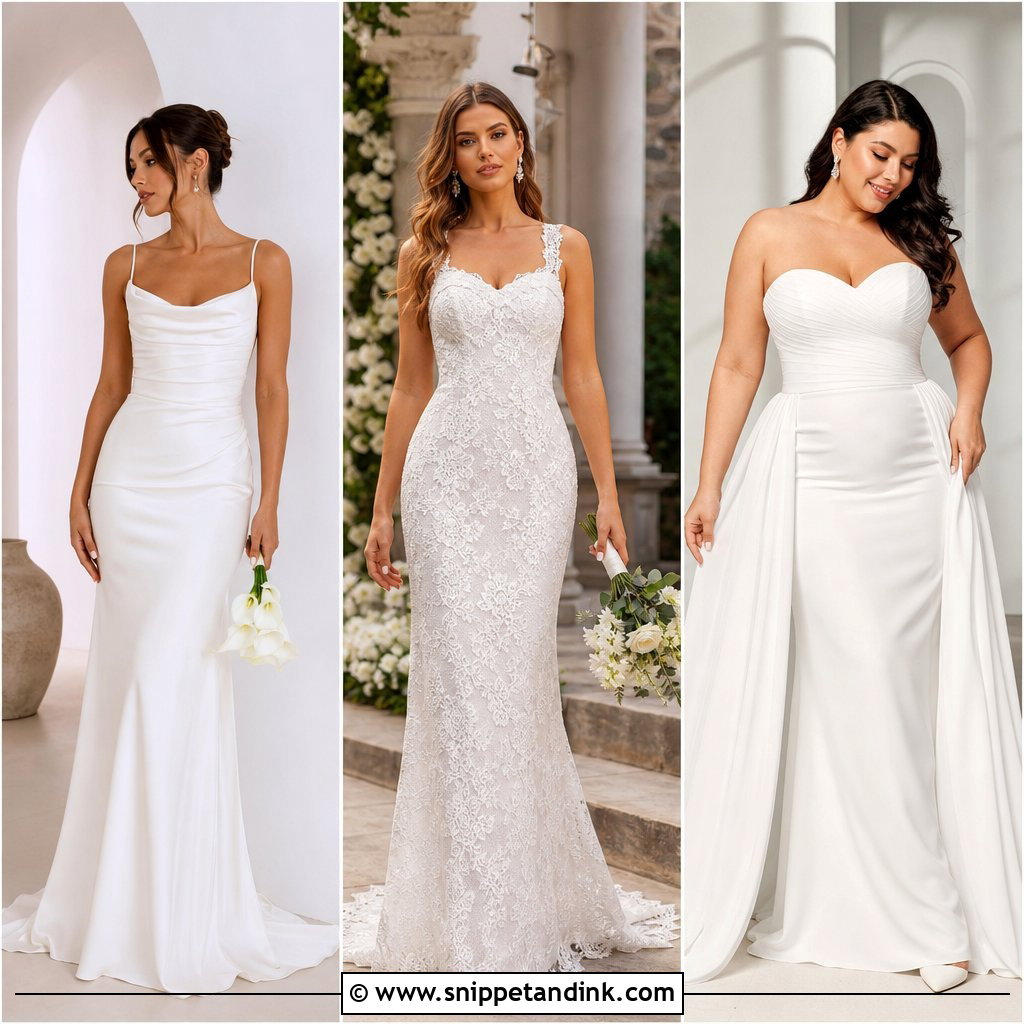

15. Modest Turtleneck Wedding Dress With Full Coverage
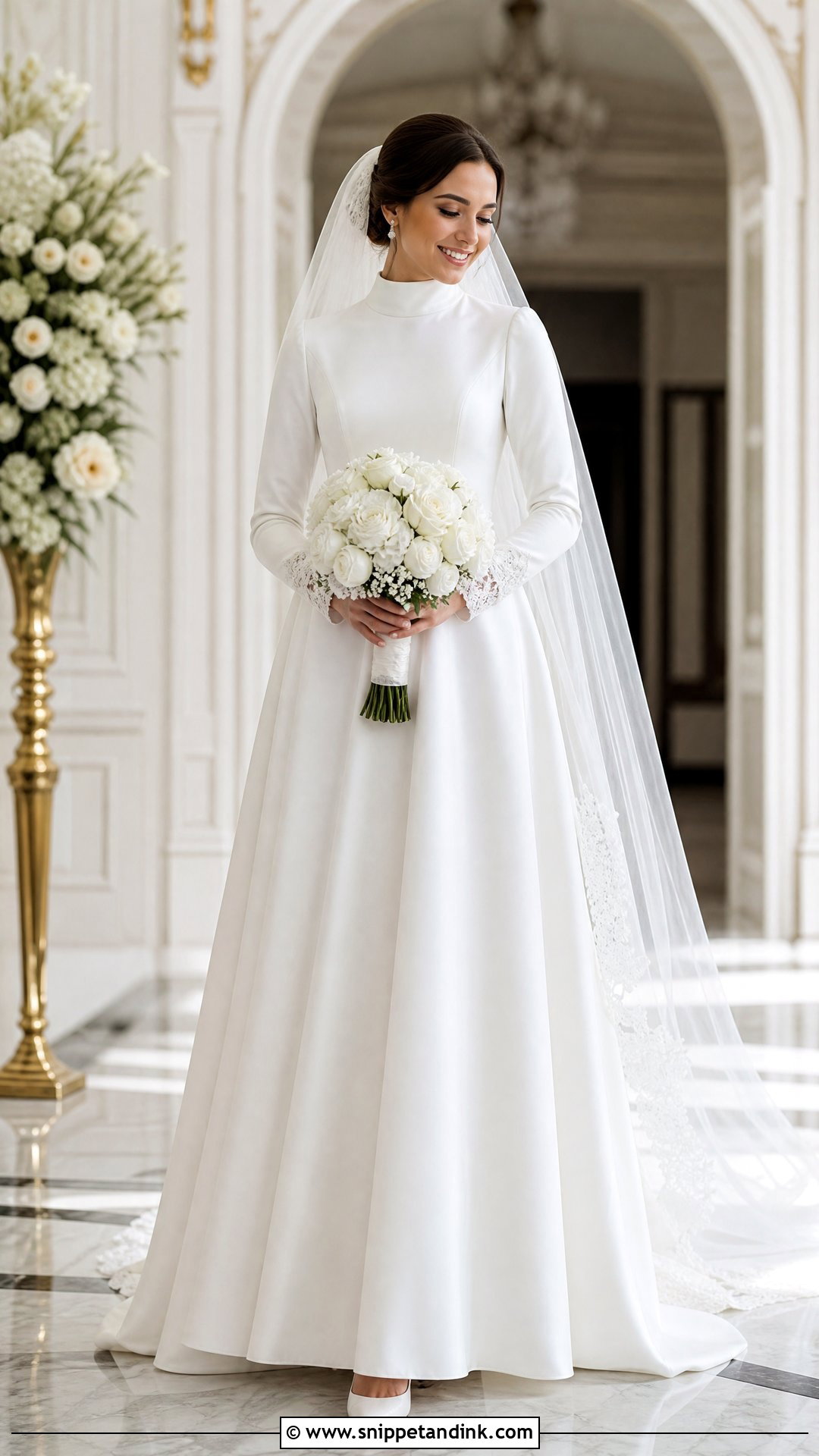
Full coverage done well looks deliberate, not like a compromise. I build these around an opaque turtleneck bodice, a fully lined back and long sleeves, with an A-line skirt that moves away from the body instead of clinging. Satin gives structure; crepe drapes more softly. Lace appliqués at the cuffs or shoulders add detail without any sheer panels. Since nothing is exposed, breathability is the real test, so ask what the lining is made of and stand under a warm light for a few minutes at a fitting. Custom adjustments can raise or soften the collar to meet personal, cultural or religious requirements exactly.
16. Turtleneck Wedding Dress With Cape
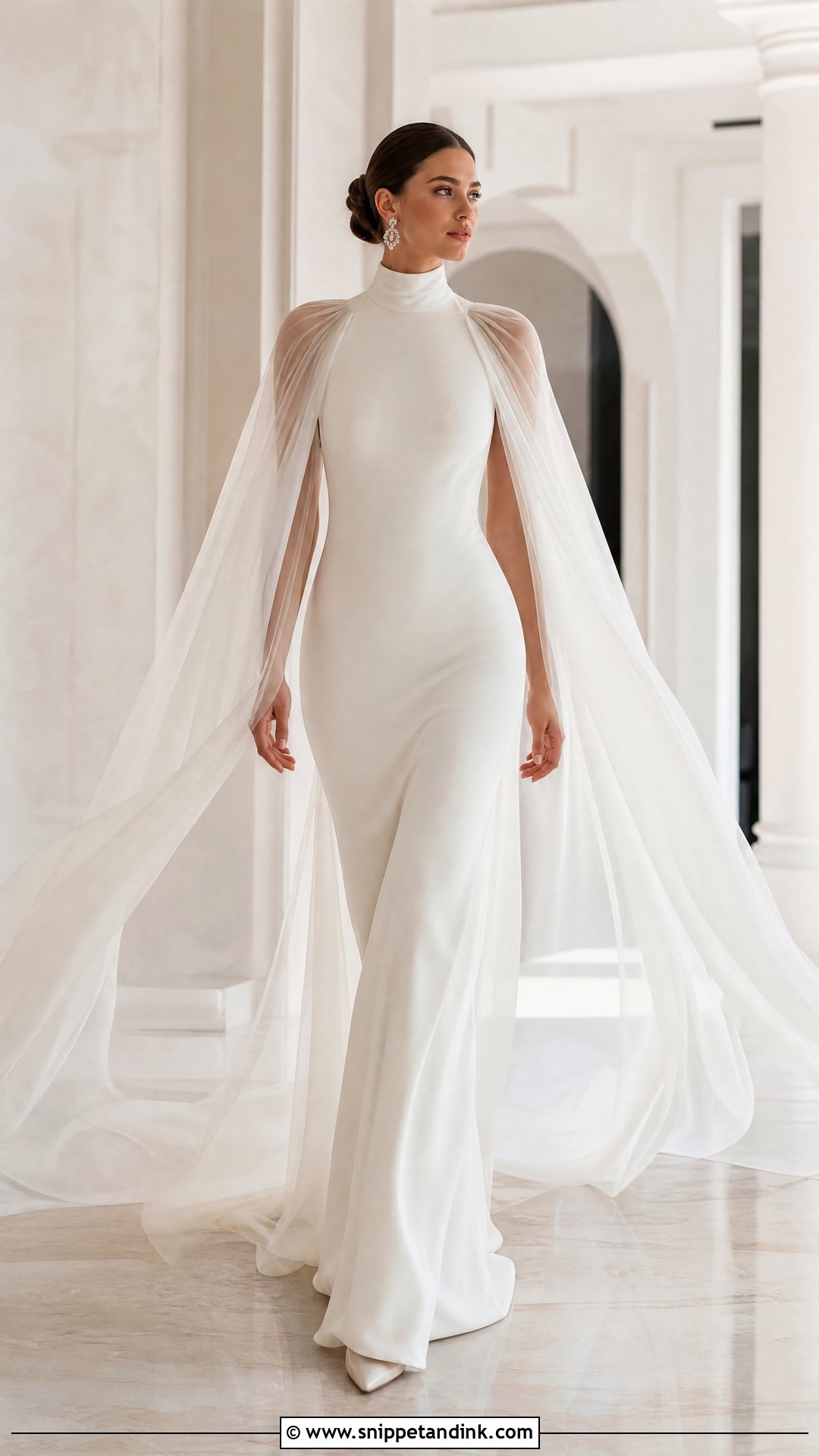
A cape can do the work of a veil on a high-neck gown, and it moves from every angle as you walk. I like it on a matte crepe column, attached at the shoulders or collar. Fastening is the detail to test: a cape anchored at the neck alone tends to pull the collar backward, so shoulder attachment points spread the weight better. If the cape is removable, decide who unhooks it and when, before the reception starts. Crystal earrings, a sleek bun and a compact bouquet keep the front drape visible.
17. Short Turtleneck Wedding Dress
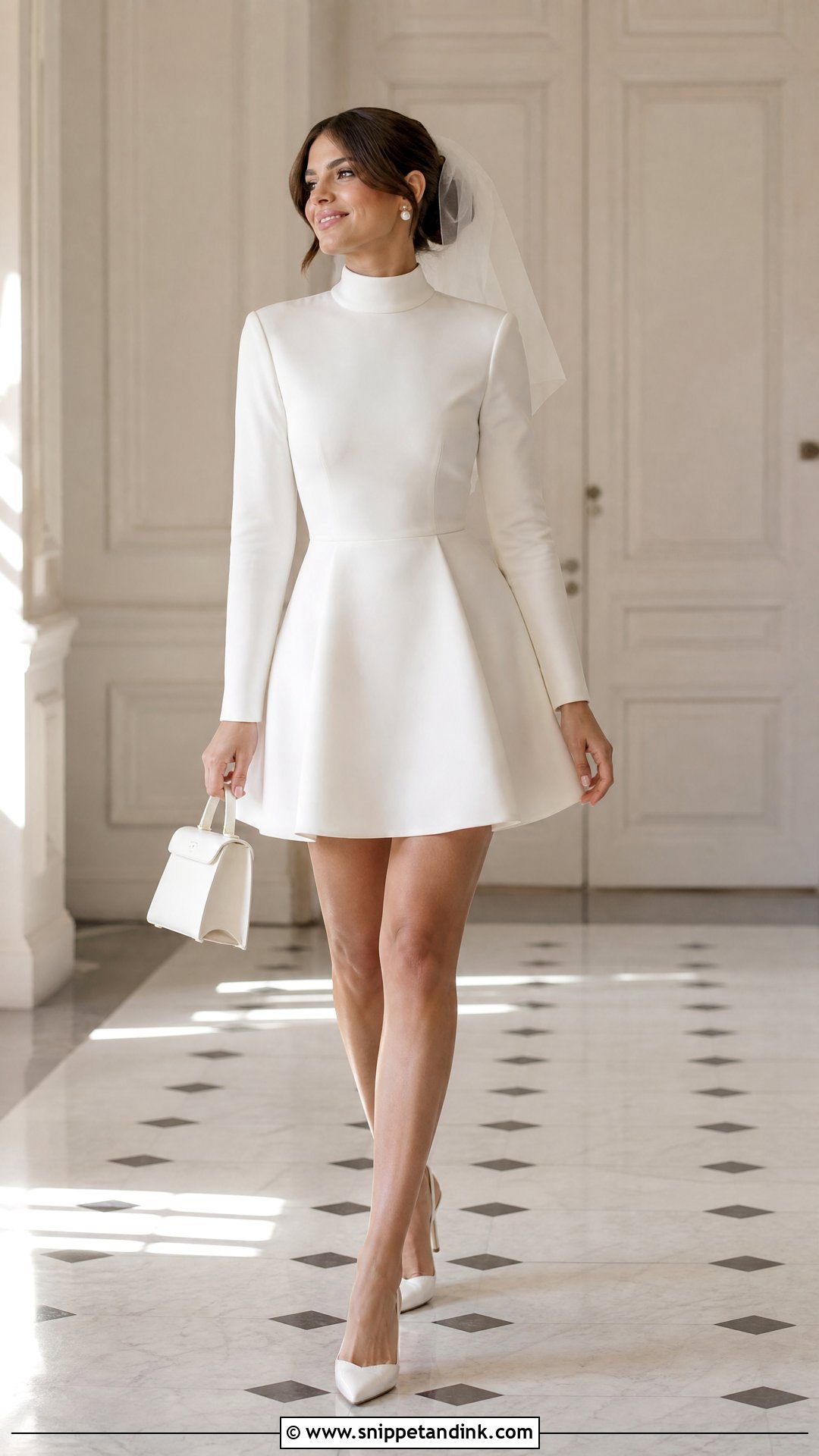
Short turtleneck dresses are my go-to for city hall ceremonies and second outfits. A structured mini or knee-length cut with long sleeves and a slight flare needs a fabric with body, mikado or heavy satin, so it reads as bridal instead of office wear. Sheer white tights help on cold days. Because the hem and the collar are the only two lines anyone sees, both need careful tailoring; a collar that sits a fraction too high on a short dress makes the whole figure look boxy. A short veil or a bow, pearl earrings and block-heel slingbacks finish it.
18. Plus Size Turtleneck A-Line Wedding Dress
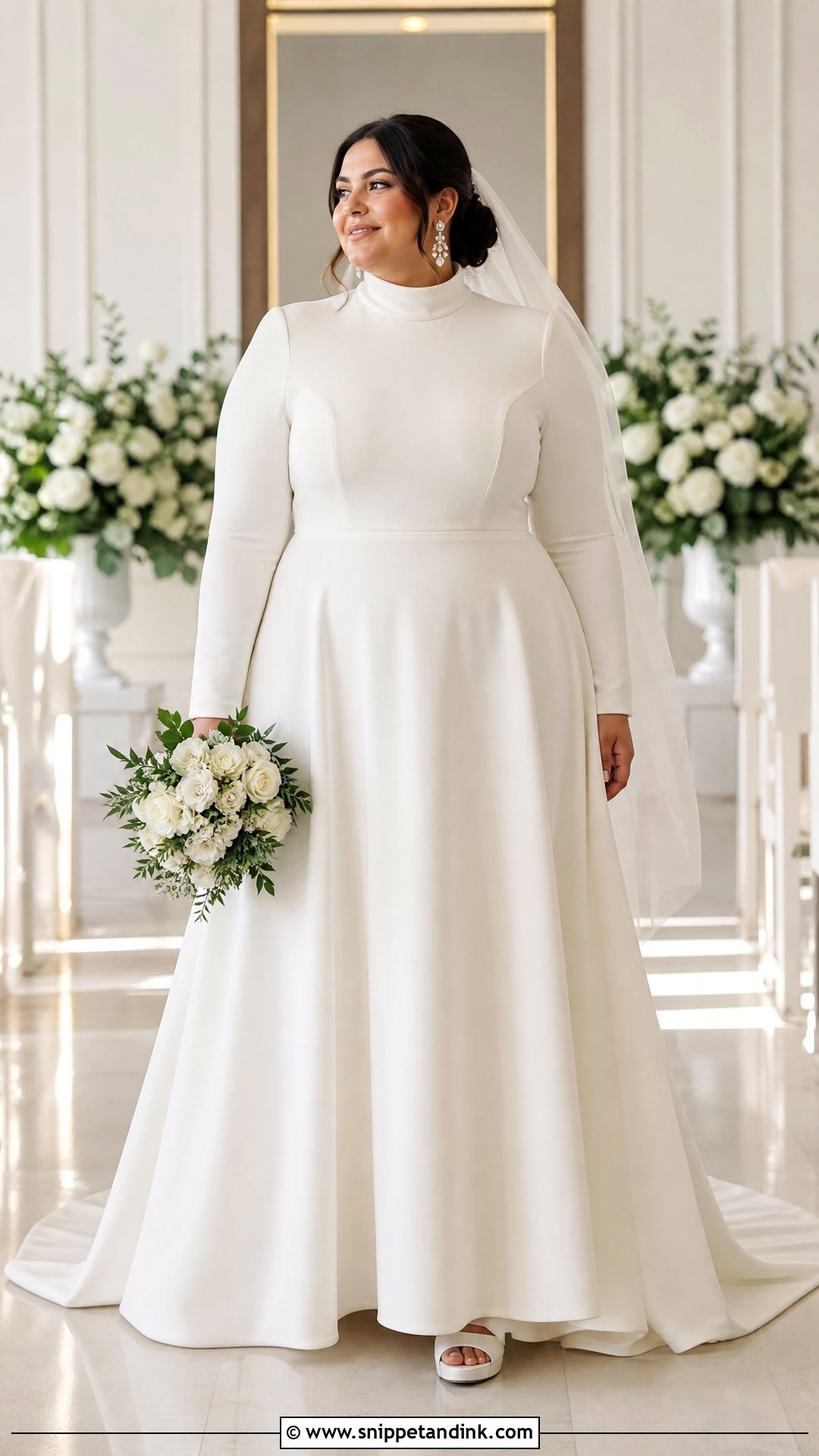
For plus-size brides, a high neck can be wonderful when it’s built on real structure. I look for a shaped bodice with boning, a stable waist seam and sleeves cut with enough room at the upper arm to lift your hands. Try crepe, satin and lined lace side by side; each holds the body differently and you’ll know quickly which feels right. The right bra matters too, because bust support changes where the collar sits. My one firm rule: don’t size up for coverage. A gown that is too big sags at the neck and adds bulk, while precise tailoring follows your proportions.
19. Winter Turtleneck Wedding Dress With Velvet Details
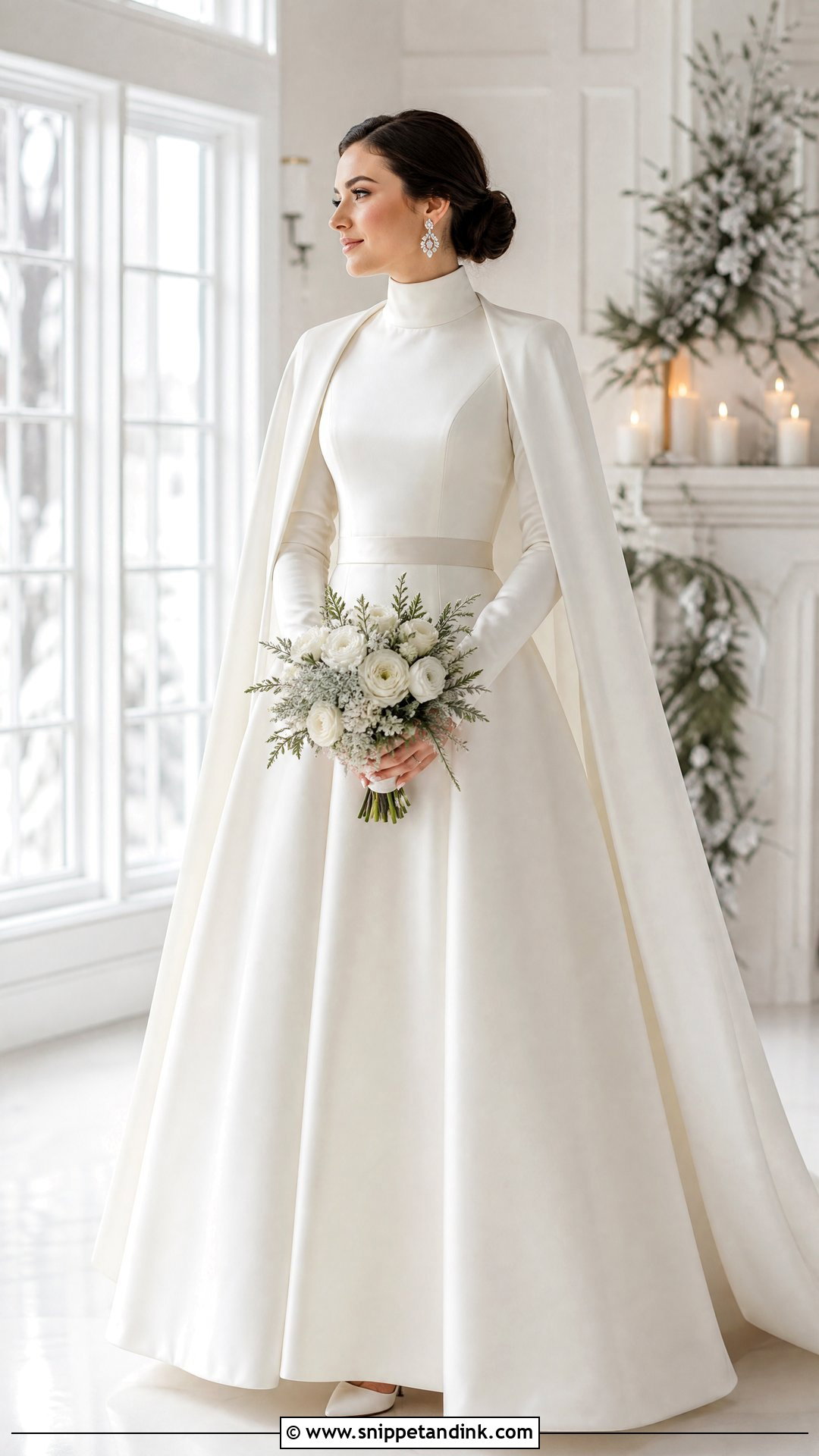
Winter is the season a long-sleeve turtleneck wedding gown was made for. Velvet ribbon at the waist, velvet-covered buttons or a removable velvet cape add warmth to an ivory satin or crepe A-line without turning it into a costume. For outdoor portraits, bring a tailored white coat or faux-fur wrap and take it off indoors. I’d avoid thermal layers under a fitted bodice, since they change the line and add heat once the dancing starts. Instead, talk to your seamstress about a slightly heavier lining before the final fitting.
20. Turtleneck Wedding Dress With Dramatic Train
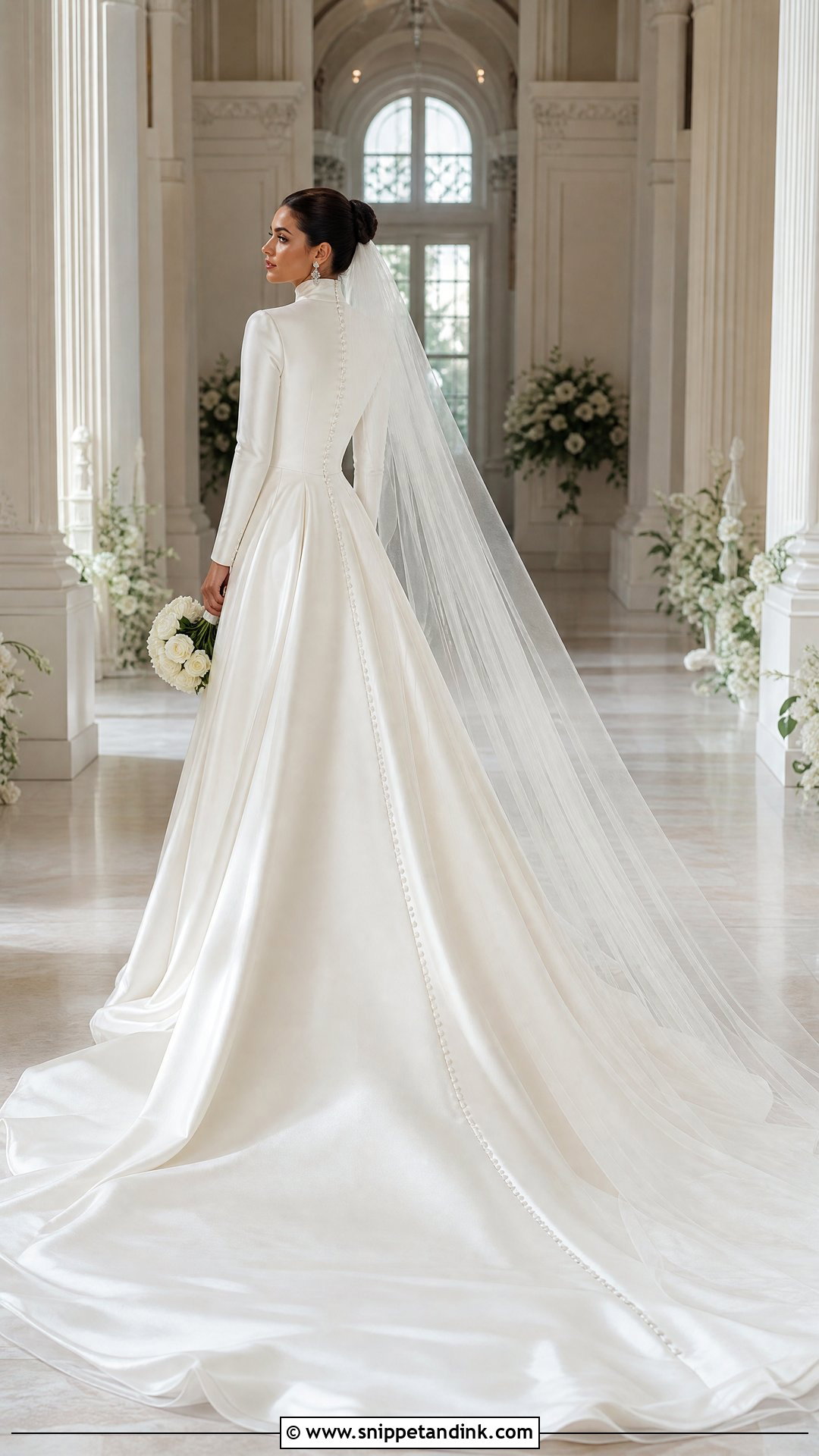
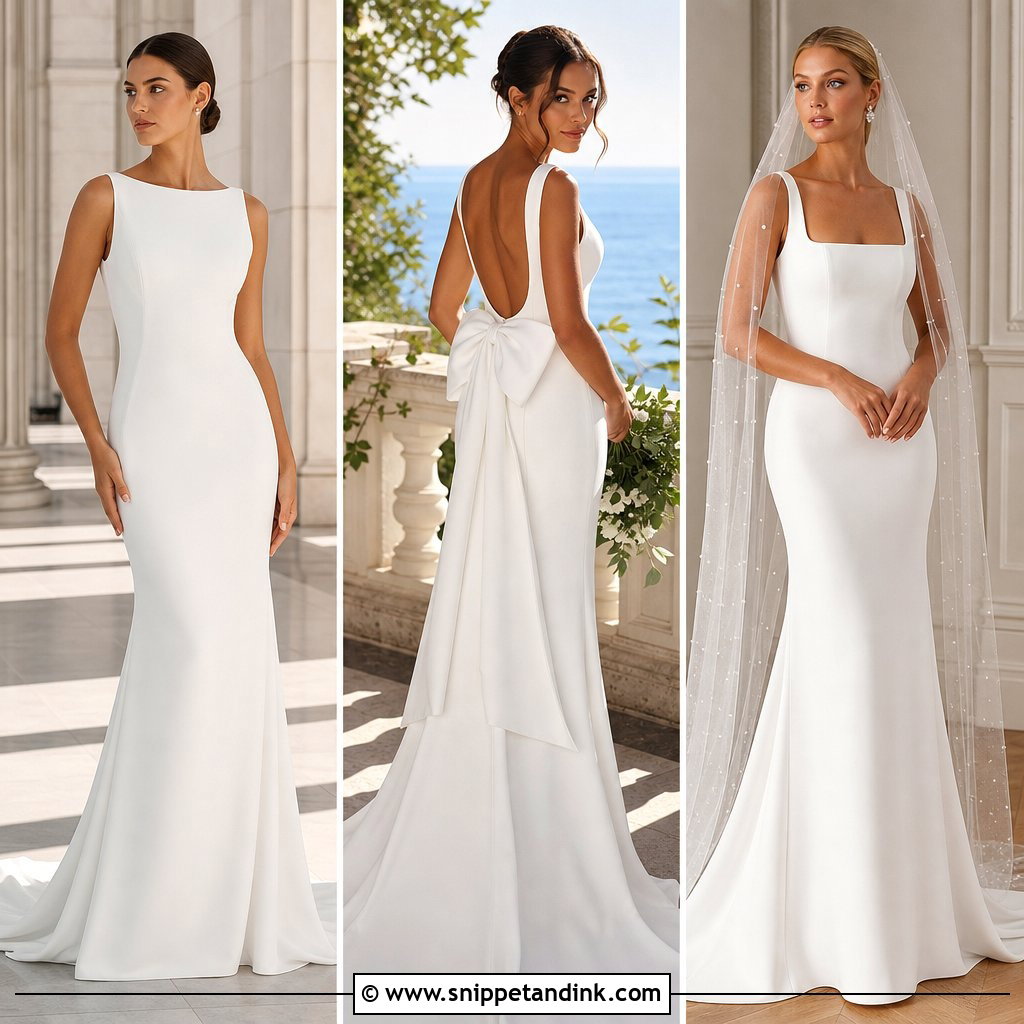
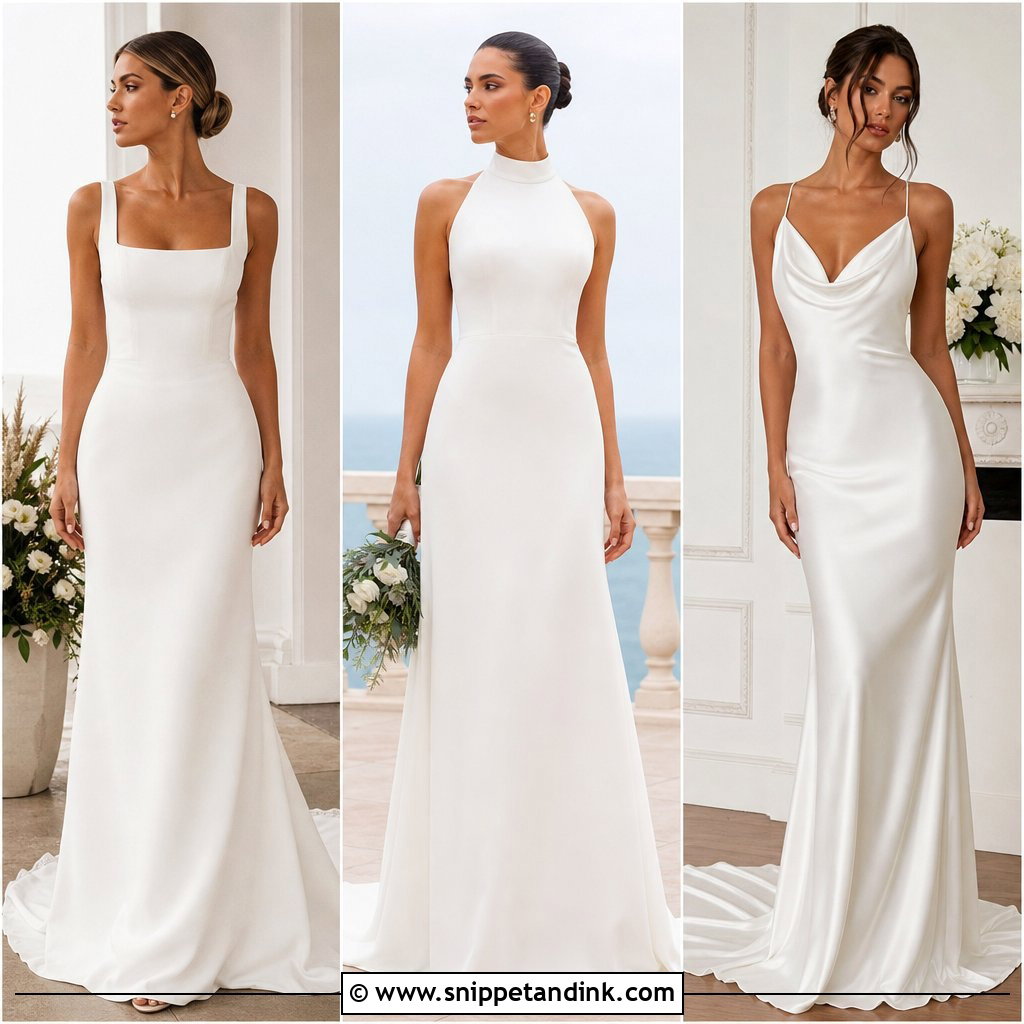
A long train gives the restrained bodice scale. Chapel or cathedral length in satin, crepe or lace makes the back view the dramatic one, and a row of buttons draws the eye down toward it. The part brides forget is the bustle. A cathedral train needs several bustle points, and they should be sewn to match the weight of the fabric, so ask your seamstress to show you and your helper how it goes up. Wear stable heels, because a heavy train pulls backward with every step, and keep the veil only slightly longer than the train.
Getting Dressed in a High Neck Without Ruining Your Makeup
This is the morning problem nobody warns you about. A turtleneck sits right where foundation and powder finish, so the collar picks up makeup within minutes if the order of dressing is wrong. I plan the getting-ready timeline around it.
Step into it, never over your head
Almost every high-neck gown should go on from the floor upward. Have your helper hold it open, step in, then fasten the back. If the dress has a fitted collar that only clears your head when pulled down, put a thin scarf or a hood-style makeup cover over your face first.
Ask your makeup artist to stop at the jaw
Tell her in advance that the neck will be covered. Most will blend foundation to the jawline and set it with powder, so there’s nothing on the throat to transfer. Self-tanner applied in the days before is a bigger risk to an ivory collar than foundation, so let it settle and avoid touching it up the day before.
Hair goes up before the dress goes on
A high collar looks best with the hair lifted off it, and hairspray mist settles on fabric. Finish styling and spraying first, then dress. Keep a clean white cloth and a stain pen nearby, and ask your helper to dab rather than rub if anything lands on the neckline.
Fit the Collar First, Then Everything Else
If I had to give one rule for a high-neck gown, it would be to treat the collar as the fitting priority. Skirt shape, fabric and train can be argued over, but a collar that scratches, pulls or sits at the wrong height will bother you every minute of the day. Pick your silhouette by how you want to move and where you’re marrying, then let the neckline carry the jewellery and keep earrings as the main accent. At every fitting, sit, turn your head, lift your arms and walk with the train before you approve a single change.
You'll Like These Ideas:






Leave a Reply