
Drips have earned a place on wedding cakes because they add movement to a design that would otherwise sit very still. The drip itself can be white chocolate, caramel, dark ganache, fruit glaze or a metallic finish, and each behaves differently on the cake and in the room. On a formal tiered cake a drip softens the stiffness; on rustic buttercream it adds shine; on a single tier it makes a small cake feel finished. What separates a good drip cake from a messy one is restraint. The drip has to agree with the flowers, colours, texture and mood of the reception, and its length has to be planned tier by tier. Below are the drip designs I make most often, with the practical notes I’d share at a tasting.
Ganache, Caramel or Glaze: How Each Drip Behaves
Couples usually pick a drip by colour. I’d add one more question: how will it act on the day? Each drip is a different material with its own habits.
- Dark chocolate ganache sets firm and holds a clean line. It’s the most reliable in a warm room and tastes the least sweet.
- White chocolate ganache is softer and sweeter, takes colour well and gives that glossy ivory edge, but it needs a cooler room to stay put.
- Caramel stays tacky and keeps moving slowly in heat. It’s delicious and looks warm, but it’s the drip I’d avoid for an outdoor summer reception.
- Fruit glazes and mirror-style finishes give bright colour and shine, though they can soften buttercream underneath if left for hours.
- Metallic drips are usually a set white drip painted with edible lustre. The paint is decorative, so taste comes from the ganache below.
The cake temperature matters as much as the drip. I always apply drips to a well-chilled cake, test one drip at the back first, and adjust the ganache if it runs to the board or stops too short. Ask your baker to show you a photo of drips they’ve done in the same material, not just the same colour.
1. White Drip Wedding Cake
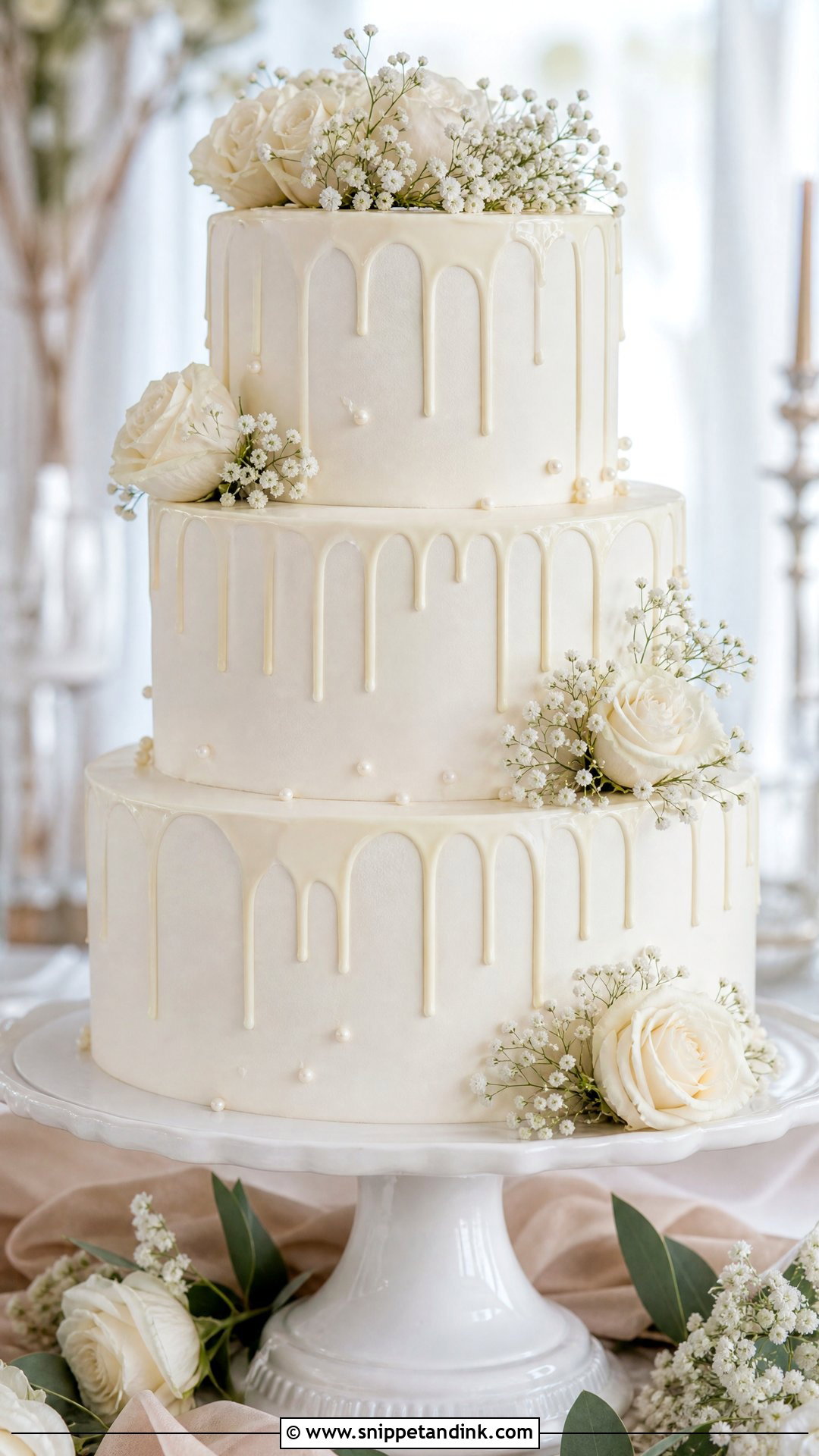
White on white is the safest drip to put in front of a mixed crowd and a formal venue. The base is smooth buttercream or fondant, and the drip is white chocolate ganache, which stays glossy and soft at the edge. Pure white chocolate is actually ivory, so if the cake is bright white I add a touch of white colouring to the ganache to stop it looking yellowish beside it. Ivory roses, baby’s breath, orchids or greenery all suit it. A piped border or pearl detail stops it looking plain.
2. Gold Drip Wedding Cake
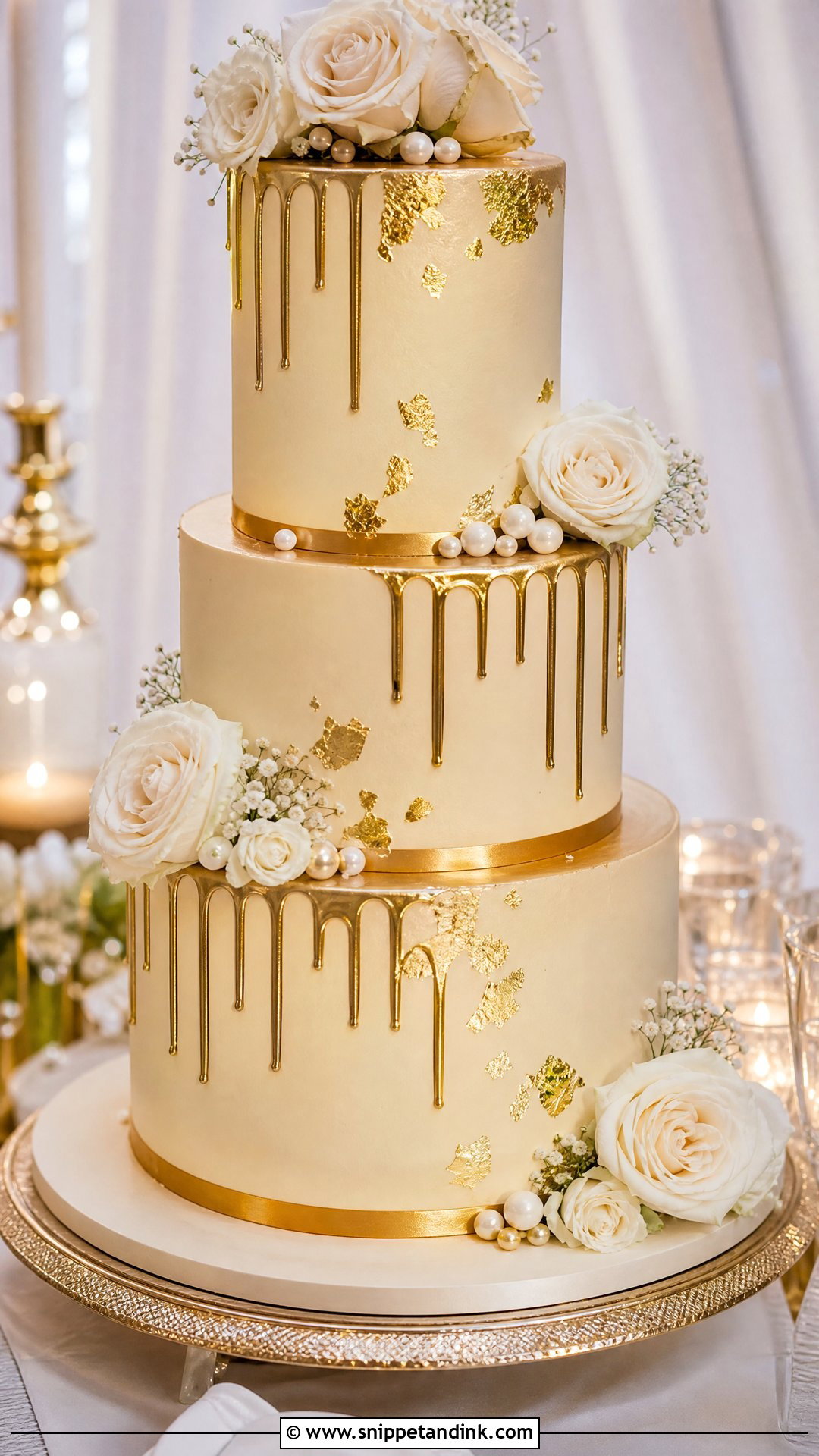
Gold drips are usually a white chocolate drip that is allowed to set and then painted with edible gold lustre mixed into a little clear alcohol, which evaporates. Painting a set drip gives a much crisper metallic than tinting the ganache. It reads best over white, ivory, blush or champagne frosting and suits evening receptions and formal rooms. Keep the rest calm: white flowers, soft greenery, a few macarons or pearls. If every tier is dripping gold and covered in gold leaf too, it tips from glamorous into heavy.
3. Chocolate Drip Wedding Cake
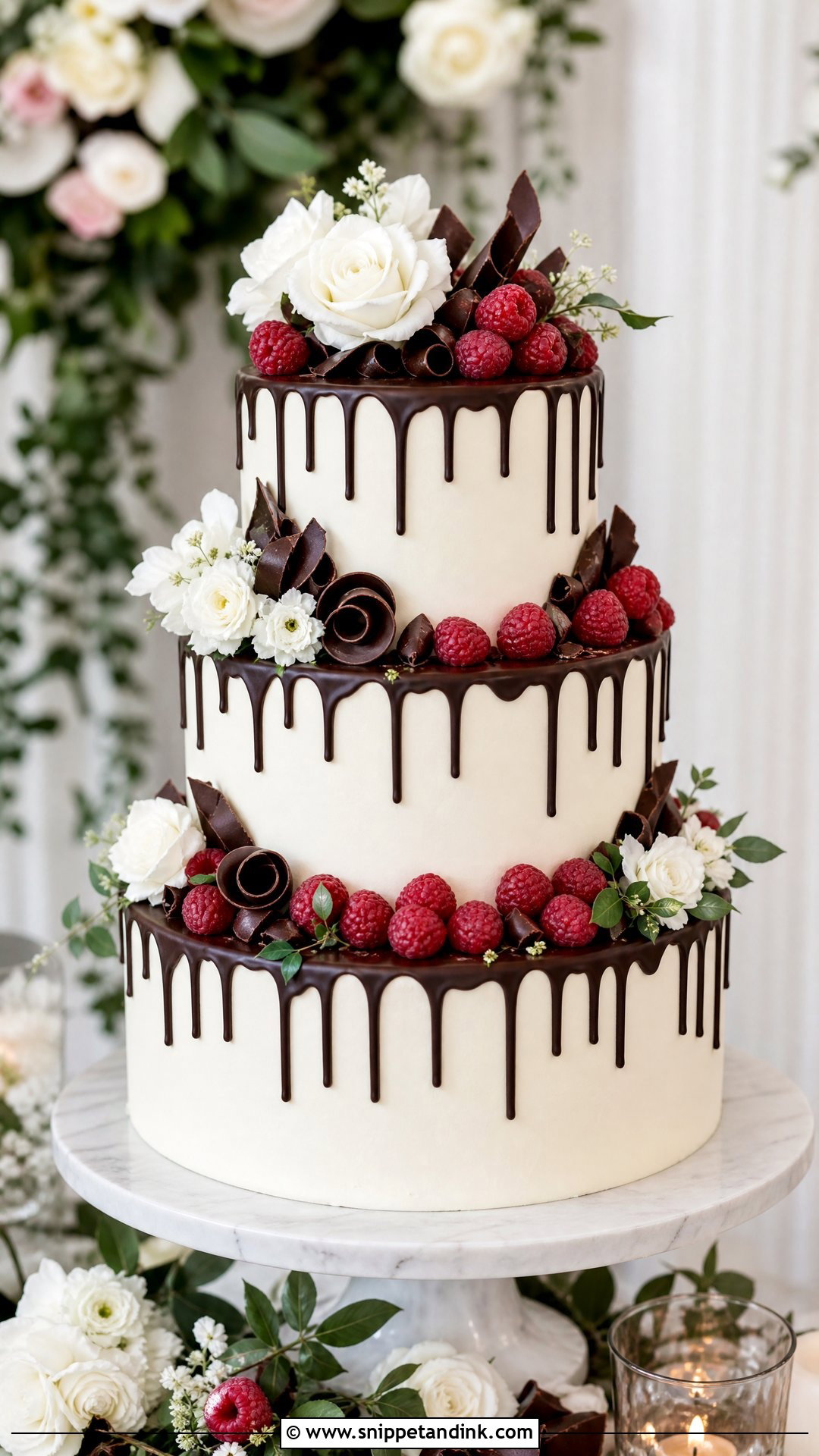
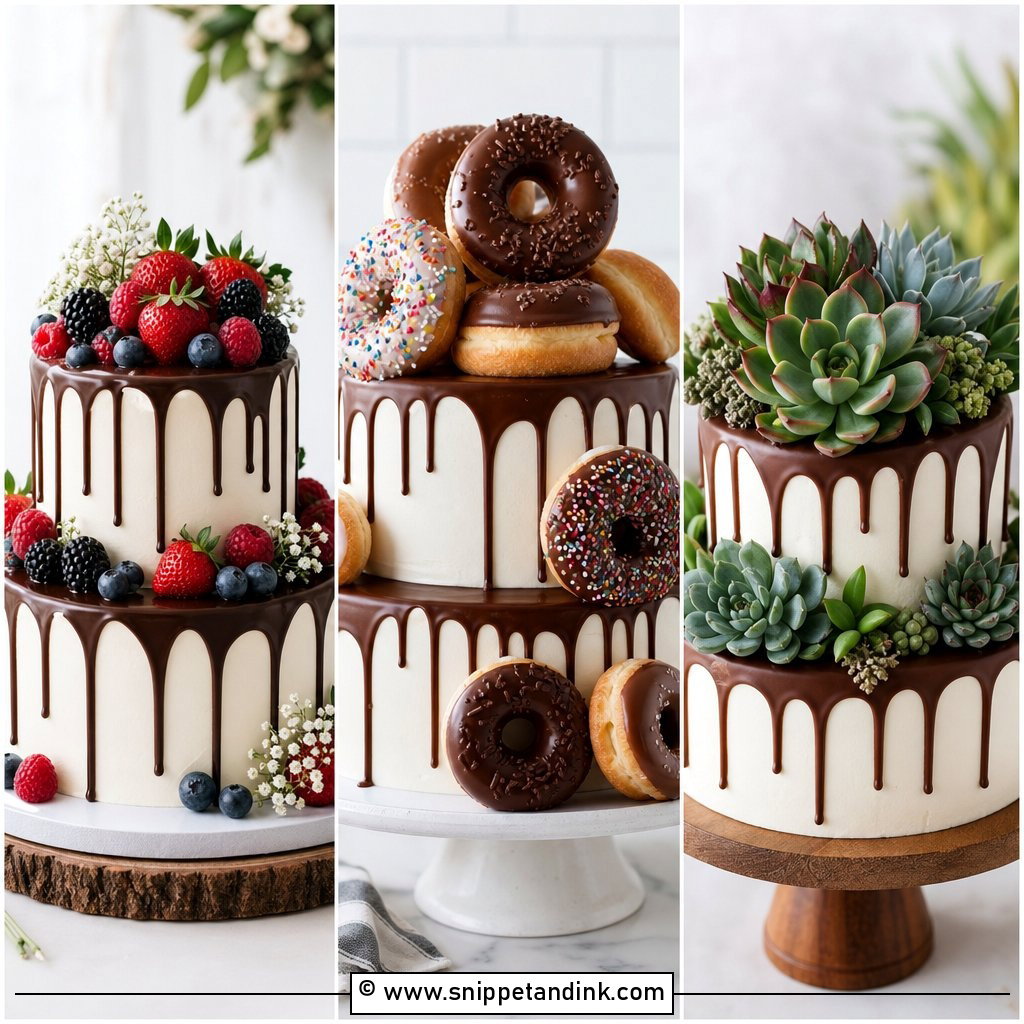
Chocolate drips are what I suggest to couples who want the cake to taste as rich as it looks. Chocolate sponge, vanilla layers, mocha filling or a salted caramel centre all sit well under dark ganache running over pale buttercream. Dark ganache sets firmer than white, so the drips hold their shape well, but it shows every uneven length, which means the top edge needs to be sharp before I start. Fresh berries or white flowers make a strong contrast. Chocolate curls or a few gold flecks finish it for an autumn or rustic reception.
4. Caramel Drip Wedding Cake
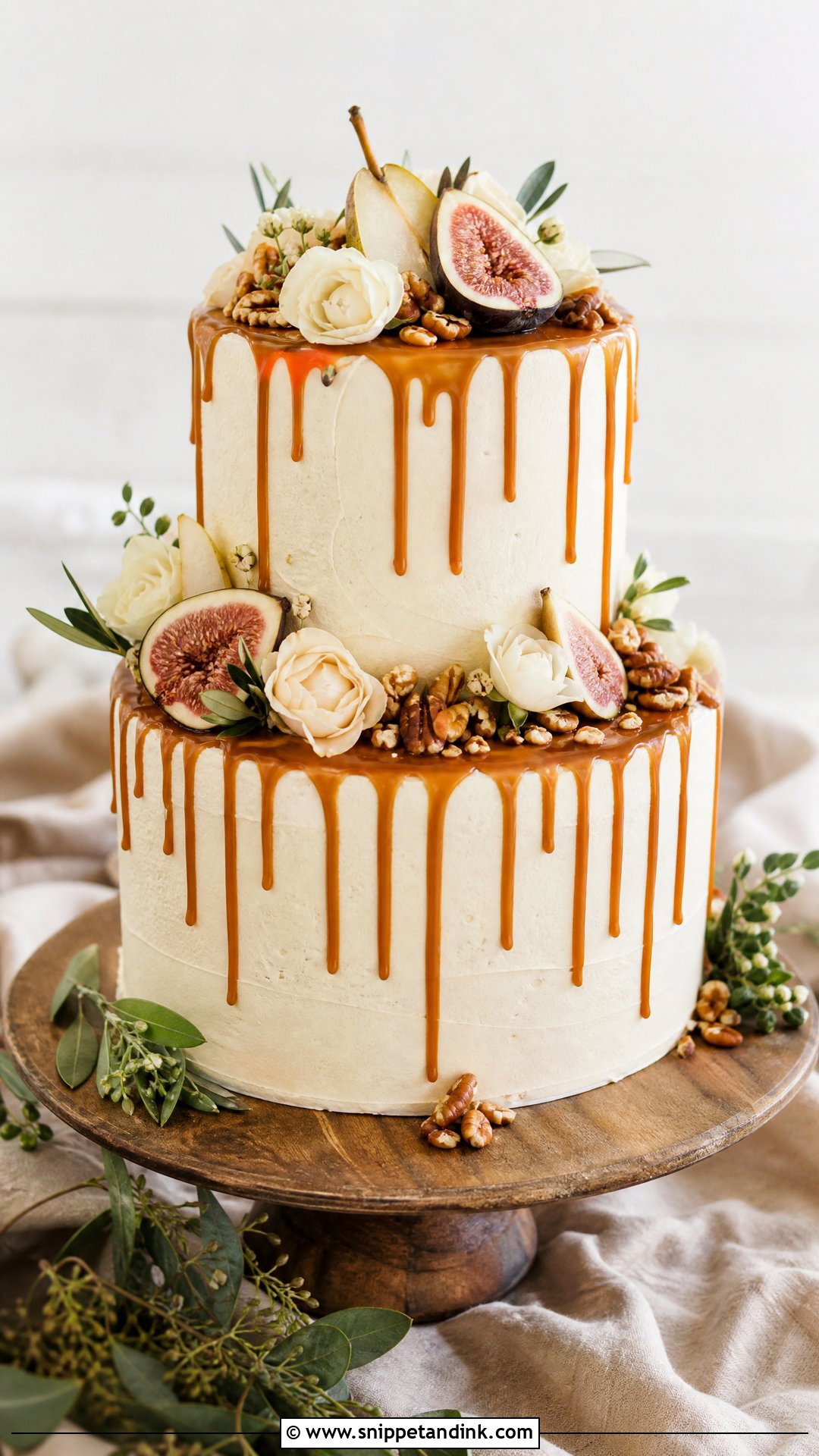
Caramel has a warm, golden colour that suits barns, garden tents and cosy indoor receptions, and it pairs with vanilla, spice, apple, chocolate, banana or brown sugar layers. The thing to know is that caramel never sets fully hard. It stays slightly tacky and, in a warm room, keeps slowly creeping down the cake. I thicken it more than a sauce and apply it to a well-chilled cake so the drips stop where I want them. Figs, pears, dried citrus, flowers or toasted nuts look natural beside it, and it ties together cream, tan, amber, blush or sage palettes.
5. Floral Drip Wedding Cake
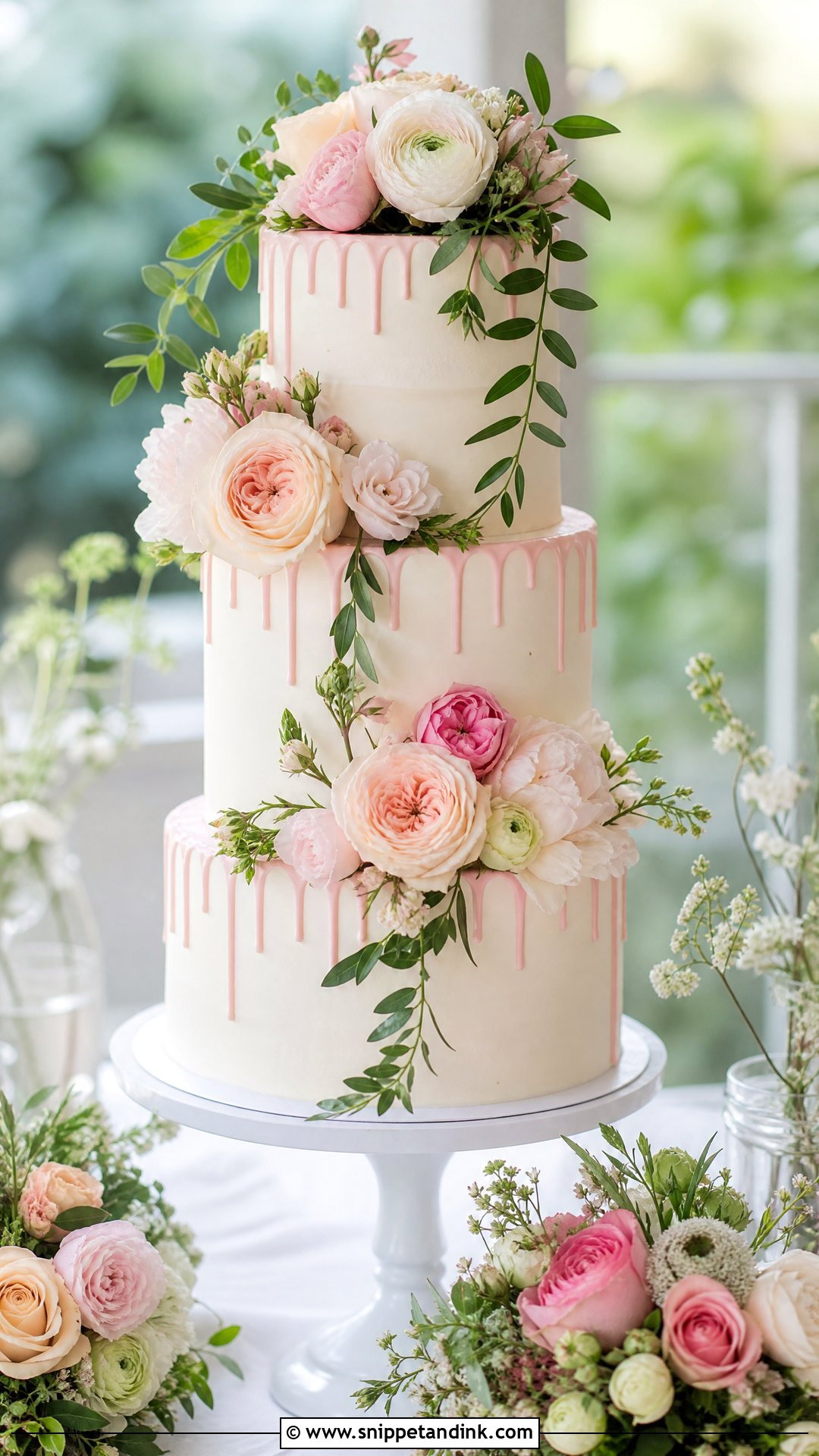
A floral drip cake combines the shine of the drip with the softness of flowers, and it’s the design I’m asked for most. Fresh roses, ranunculus, peonies, orchids or pressed edible flowers all work depending on season. A white or blush base keeps it classic, while a pastel drip gives it personality. I cluster flowers in one or two places rather than scattering them across every tier, because clusters look like an arrangement and scattered blooms look like they fell on. Fresh stems should be wrapped in floral tape or set in a pick so they never touch the cake directly.
6. Buttercream Drip Wedding Cake
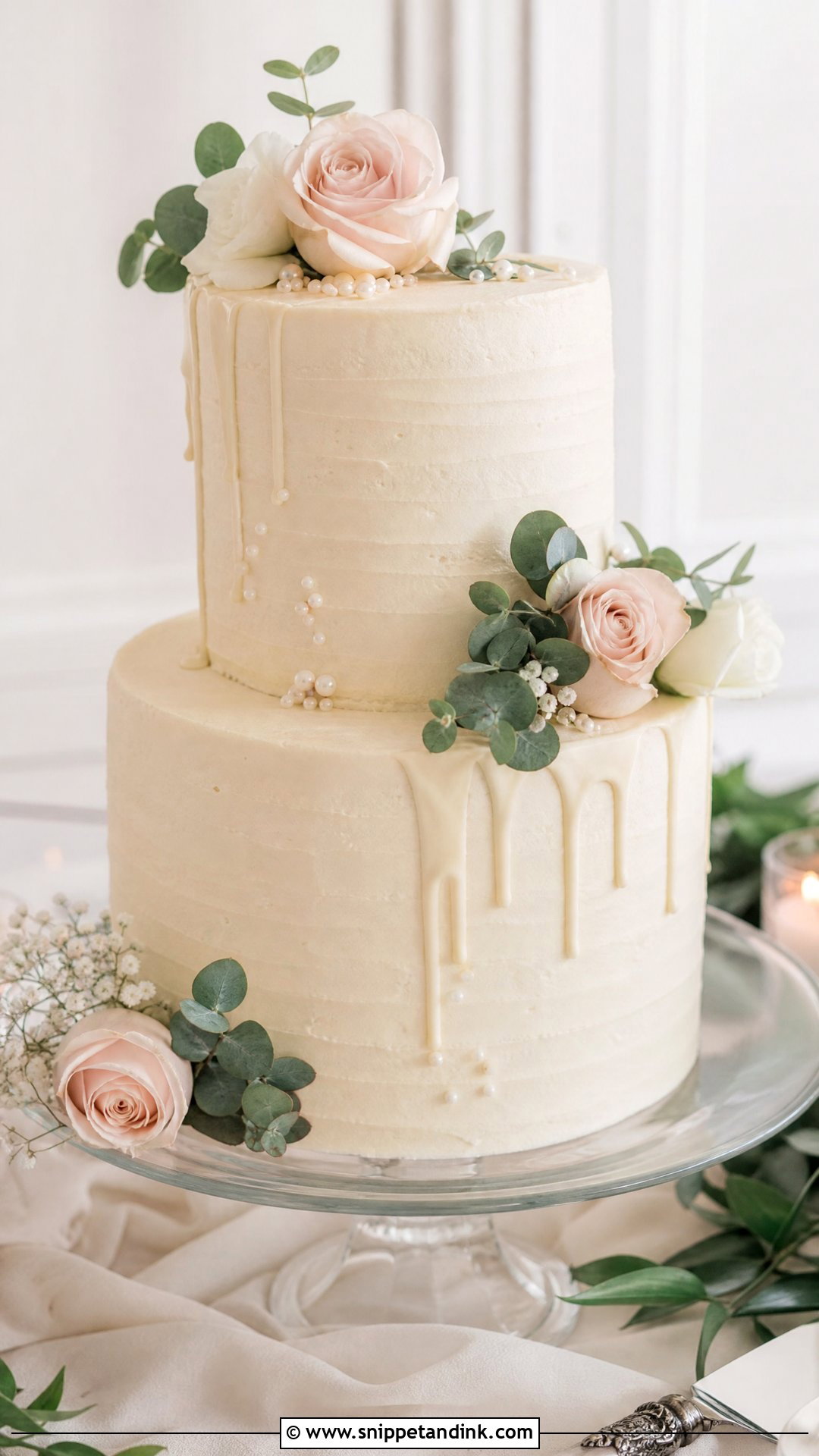
Buttercream gives the cake a soft, handmade look, and a drip adds polish without making it formal. Swiss meringue buttercream is my preference under a drip because it’s smooth and less sweet, though it softens faster in heat than American buttercream. White chocolate, caramel, fruit glaze or dark ganache all work on top. Sides can stay smooth or get a light spatula texture. Flowers, greenery, berries or piping finish it, and the style adapts to almost any theme.
7. Semi Naked Drip Wedding Cake
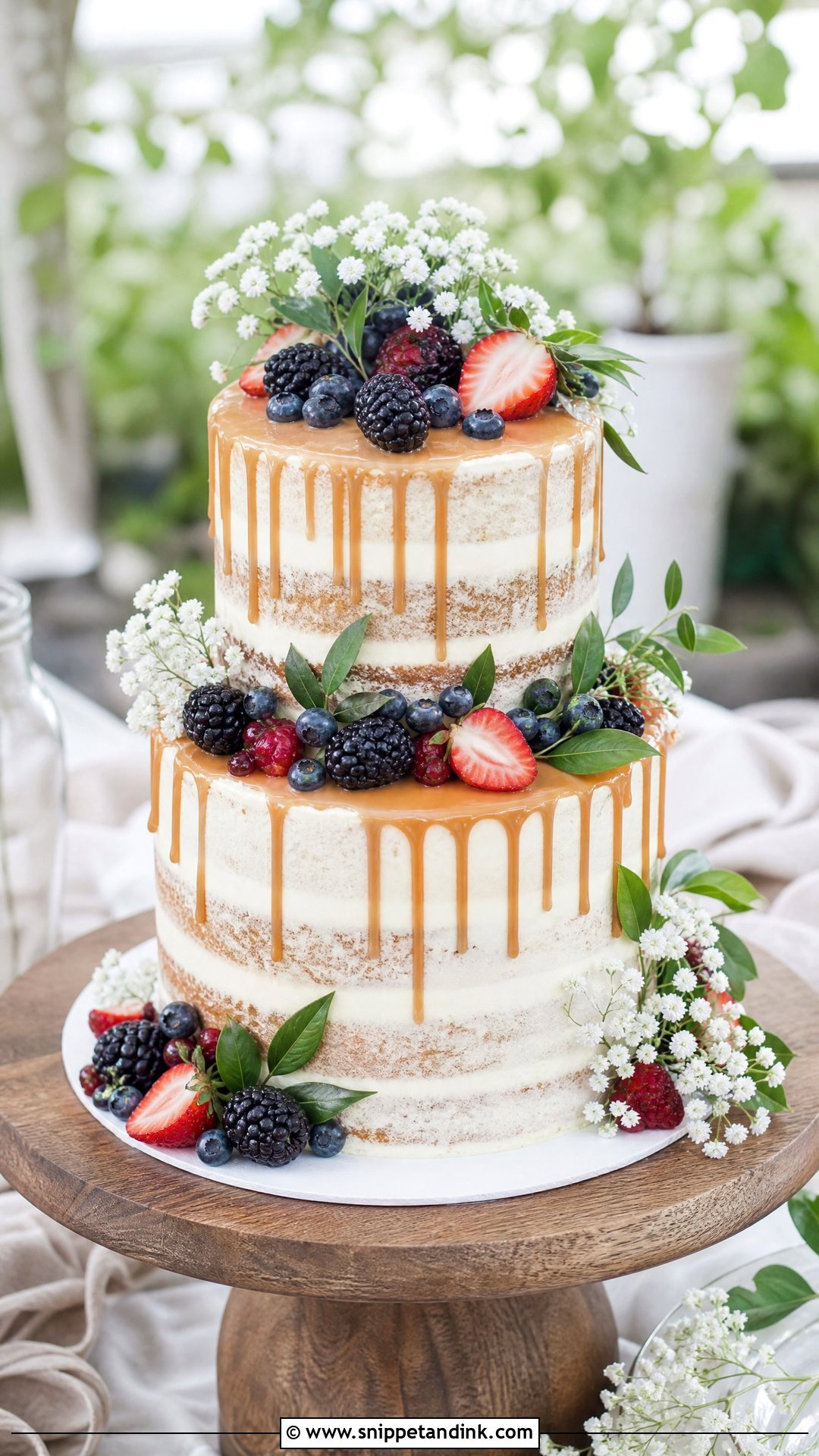
A semi naked drip wedding cake has only a thin scraped coat, so some sponge shows through, and the drip adds enough finish to make that look deliberate. Exposed sponge dries out faster, so I brush layers with a light syrup and wouldn’t put this cake out more than a couple of hours before cutting. Vanilla, almond, lemon, carrot or chocolate layers all suit it. Keep the drip thin and short here; a heavy drip on a semi naked cake hides the very texture people chose it for. Berries, greenery, small blooms or figs suit garden and outdoor weddings.
8. Rustic Drip Wedding Cake
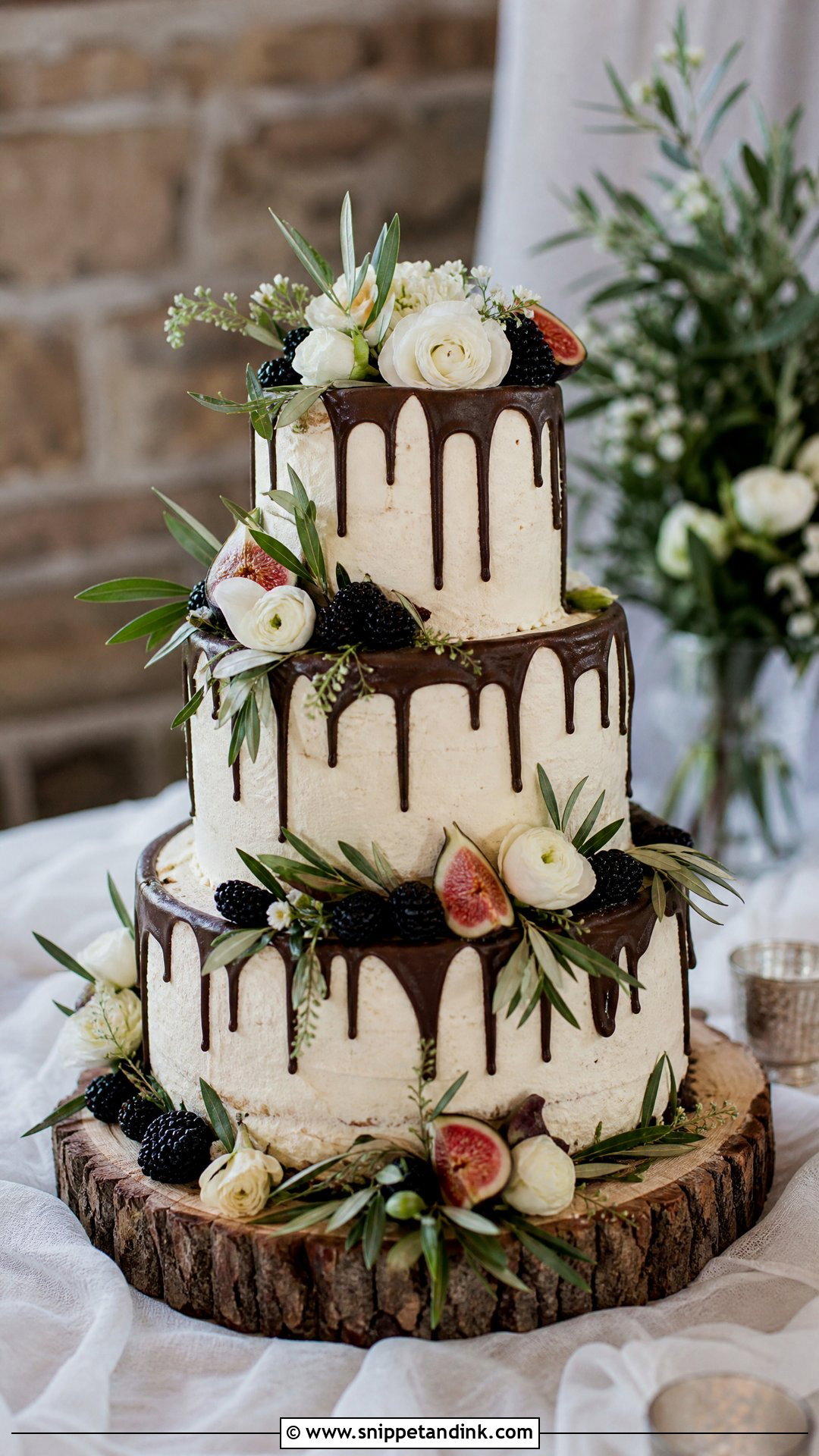
Rustic drip cakes combine textured buttercream with a caramel or chocolate drip and natural decoration: greenery, berries, figs or seasonal flowers. They look warm rather than perfect. A wooden stand finishes the barn or countryside look alongside linen and candles. Vanilla, spice, carrot or chocolate suit it. I still keep the tiers level and the decoration placement planned, because rustic only works when the cake underneath is well built.
9. Blush Drip Wedding Cake
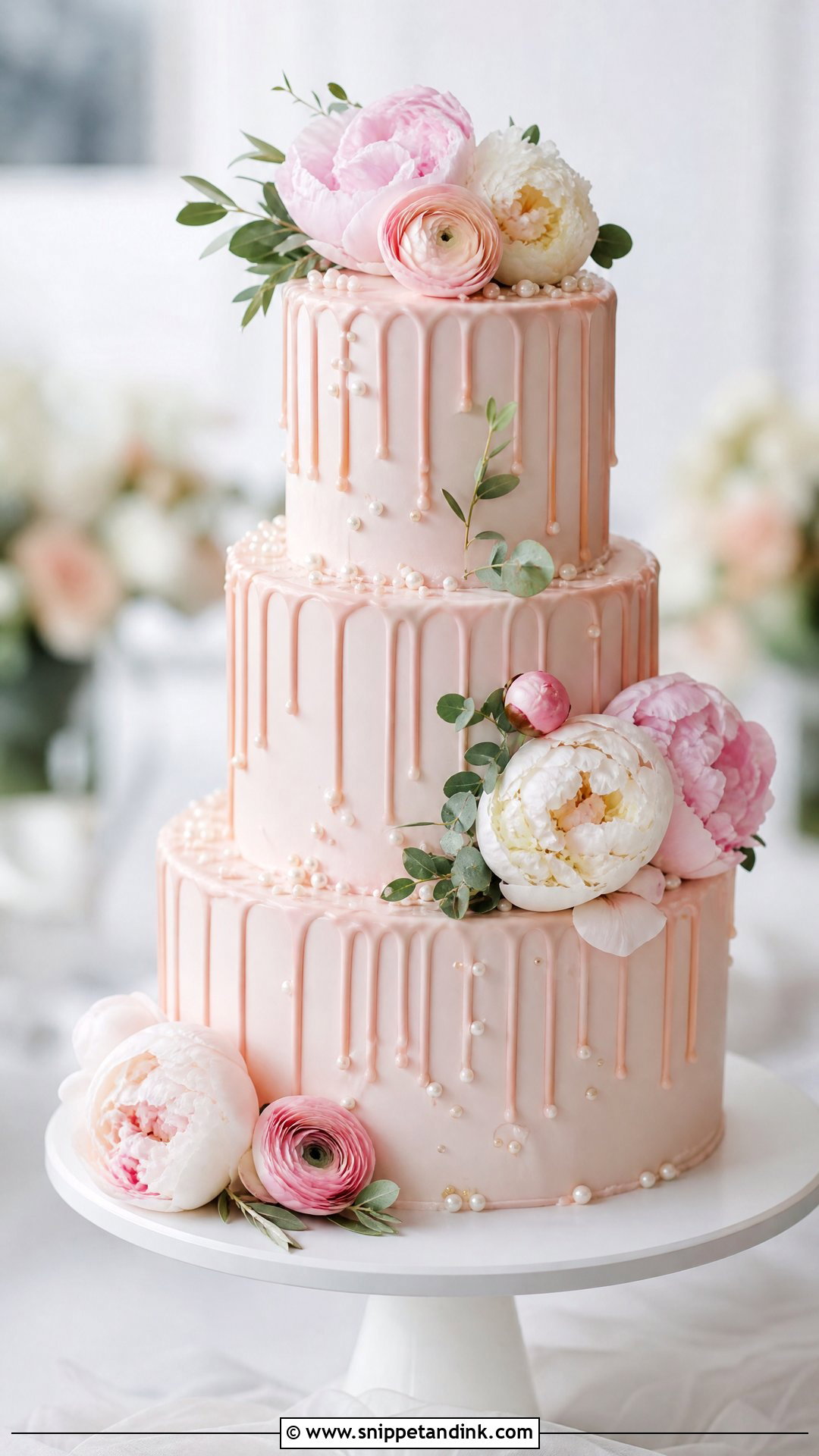
Blush is the colour I’m most careful mixing, because pink frosting shifts noticeably under different light and can look peach under warm reception bulbs. I tint a small sample and look at it beside the bridesmaid fabric if the couple can bring a swatch. The drip can be white chocolate, rose-tinted ganache or a champagne glaze over pale pink, ivory or a gentle ombré. Roses, peonies, ranunculus and greenery suit spring and garden weddings. Keep the colour muted and add pearls or fine piping if you want detail.
10. Blue Drip Wedding Cake
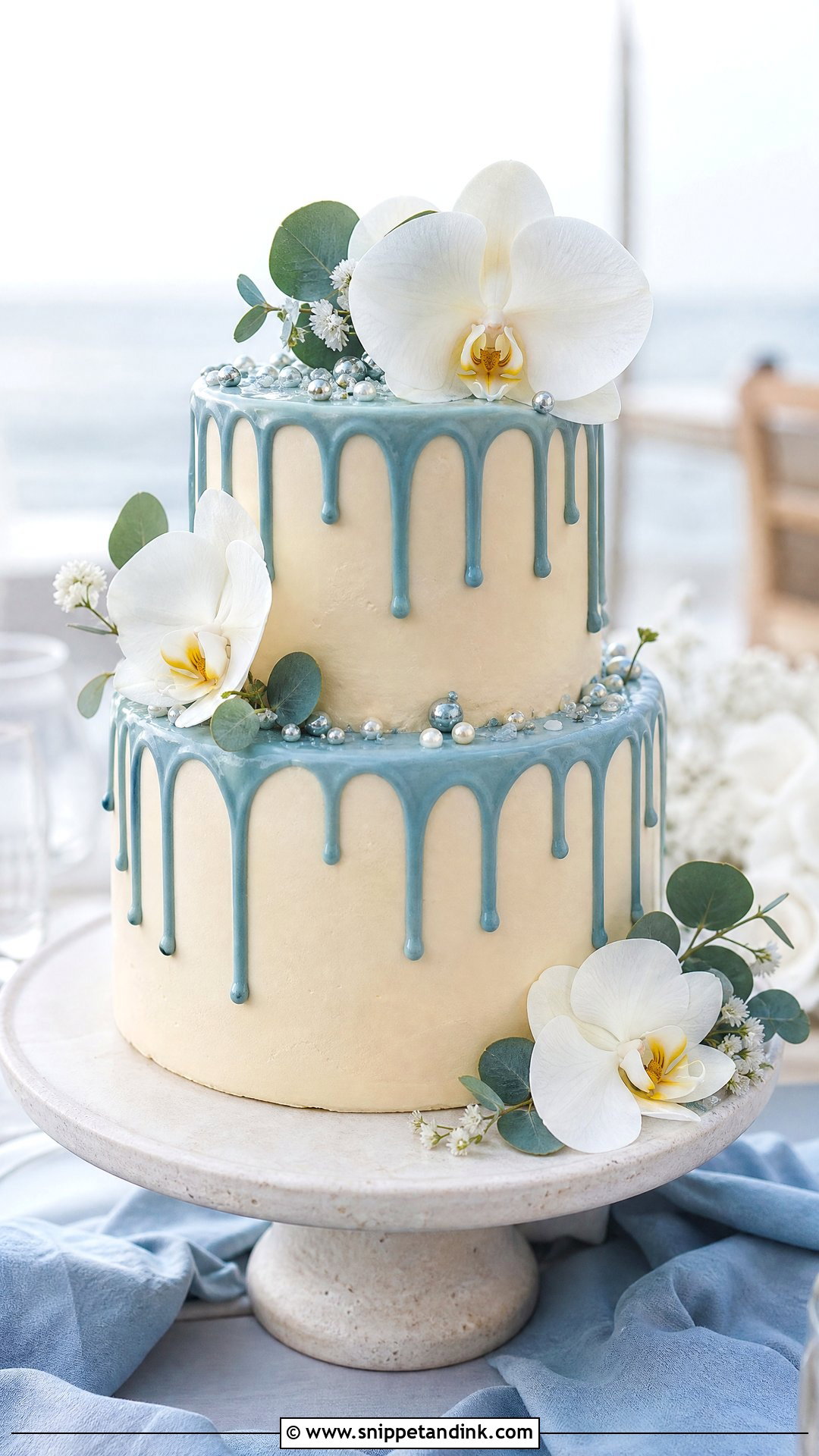
Blue on a wedding cake works best in dusty, pale or slate shades. One warning I give every couple: butter-based buttercream has a slightly yellow tint, and blue colouring on a yellowish base can drift toward green. I whiten the base first or use a very white frosting. Pair the drip with ivory buttercream, white flowers, silver and soft greenery for coastal, winter or modern receptions. Vanilla, almond, lemon and coconut suit the lighter colour story.
11. Pink Drip Wedding Cake
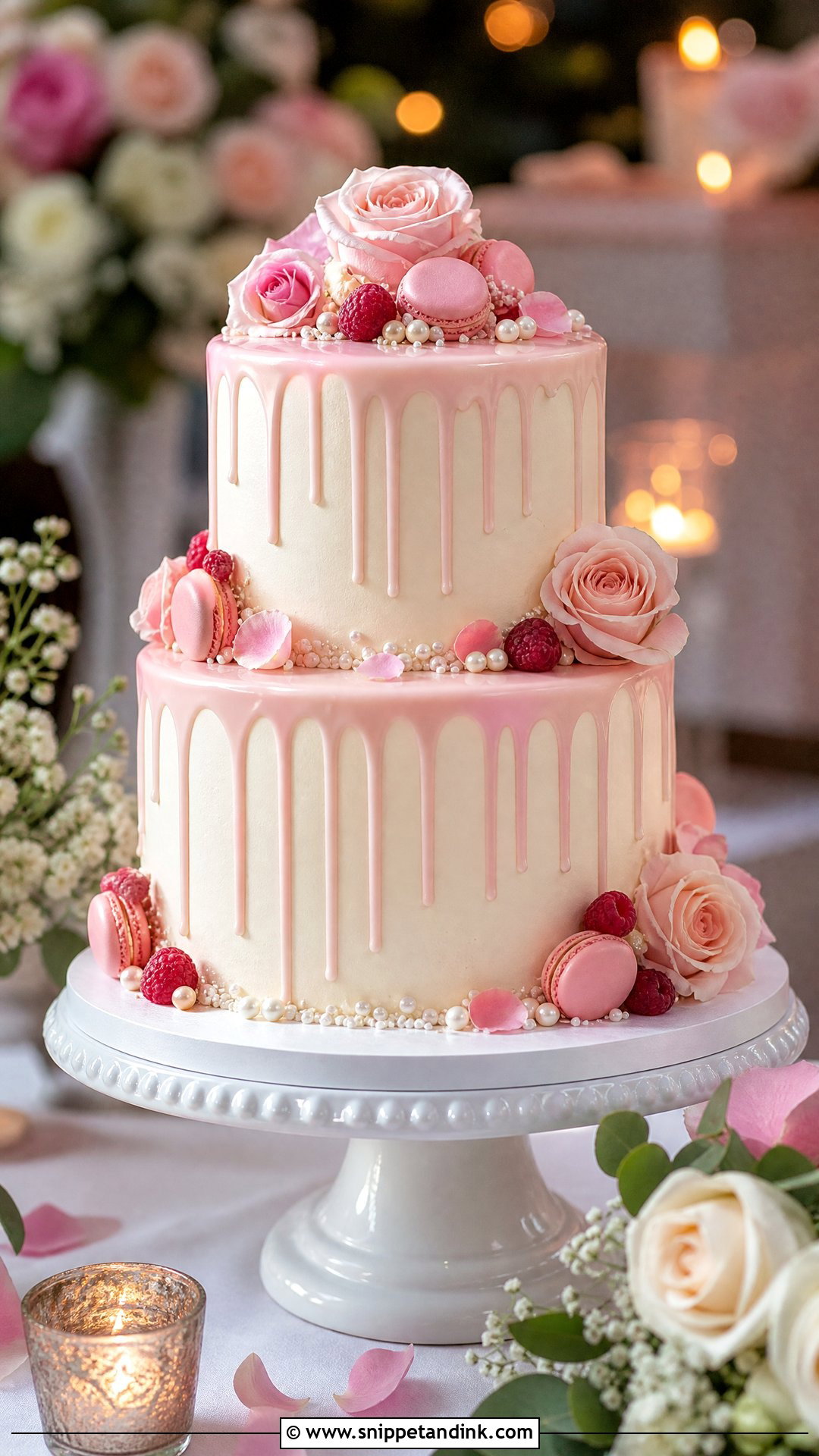
A pink drip is cheerful and suits spring and playful receptions; soft pink reads elegant, brighter pink more fun. I tint white chocolate ganache and pair it with vanilla buttercream, strawberry cake or almond layers. Some pink colourings fade if the cake sits in direct sunlight for hours, so I’d keep it in shade. Roses, macarons, berries or pearl sprinkles finish it. Limit the cake to pink and one other colour so it still looks grown up.
12. Black Drip Wedding Cake
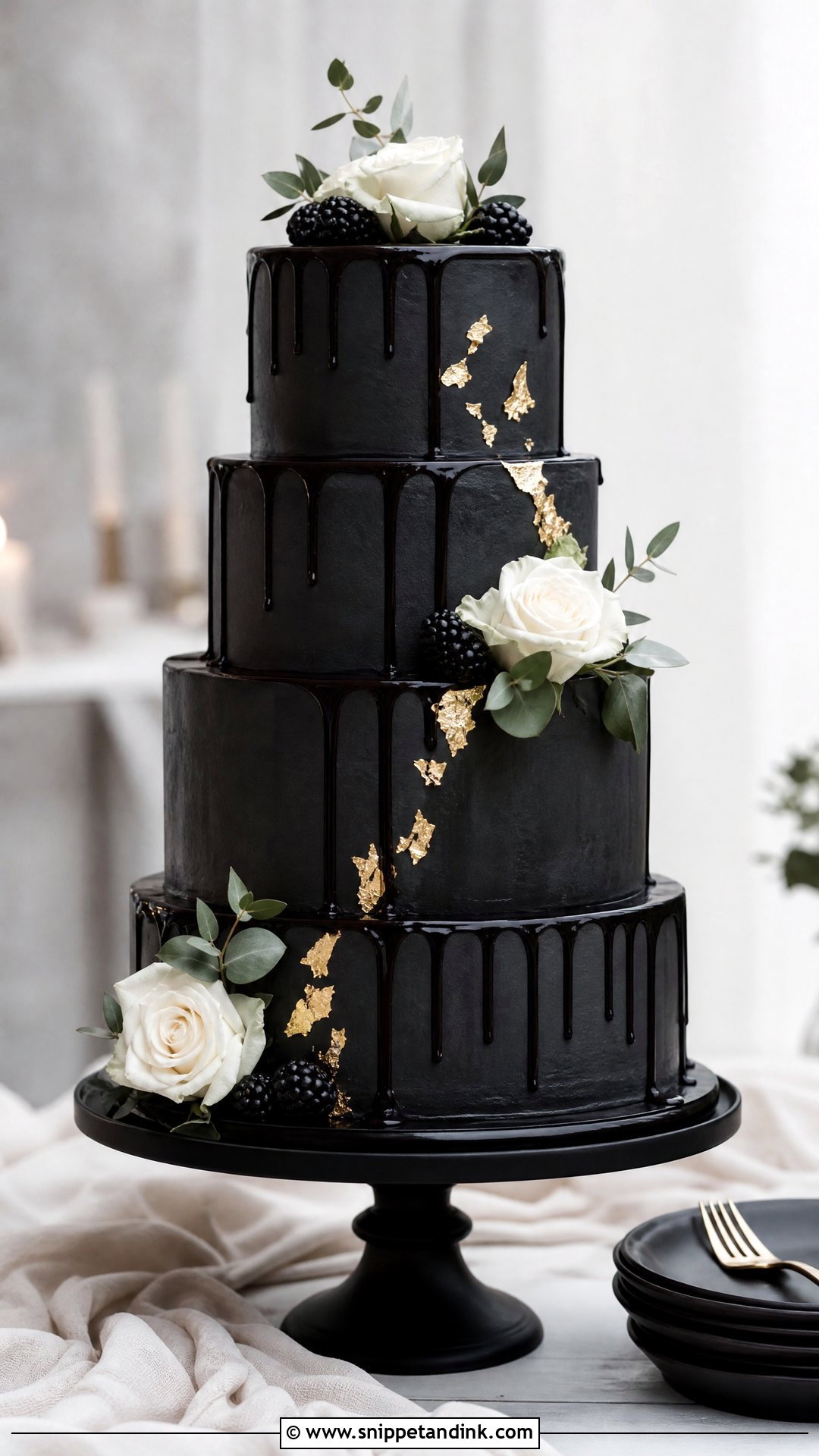
Black drips are dramatic, and they suit modern, formal or evening weddings. I make them with black cocoa and a little black colouring rather than heaps of dye, because heavily coloured black ganache can stain lips and teeth, which nobody wants in the first-dance photos. Ivory, charcoal or black bases, white roses, gold leaf and dark berries look striking with it. Chocolate, mocha, red velvet or black cocoa layers fit. Clean lines keep it stylish rather than gloomy.
13. Marble Drip Wedding Cake
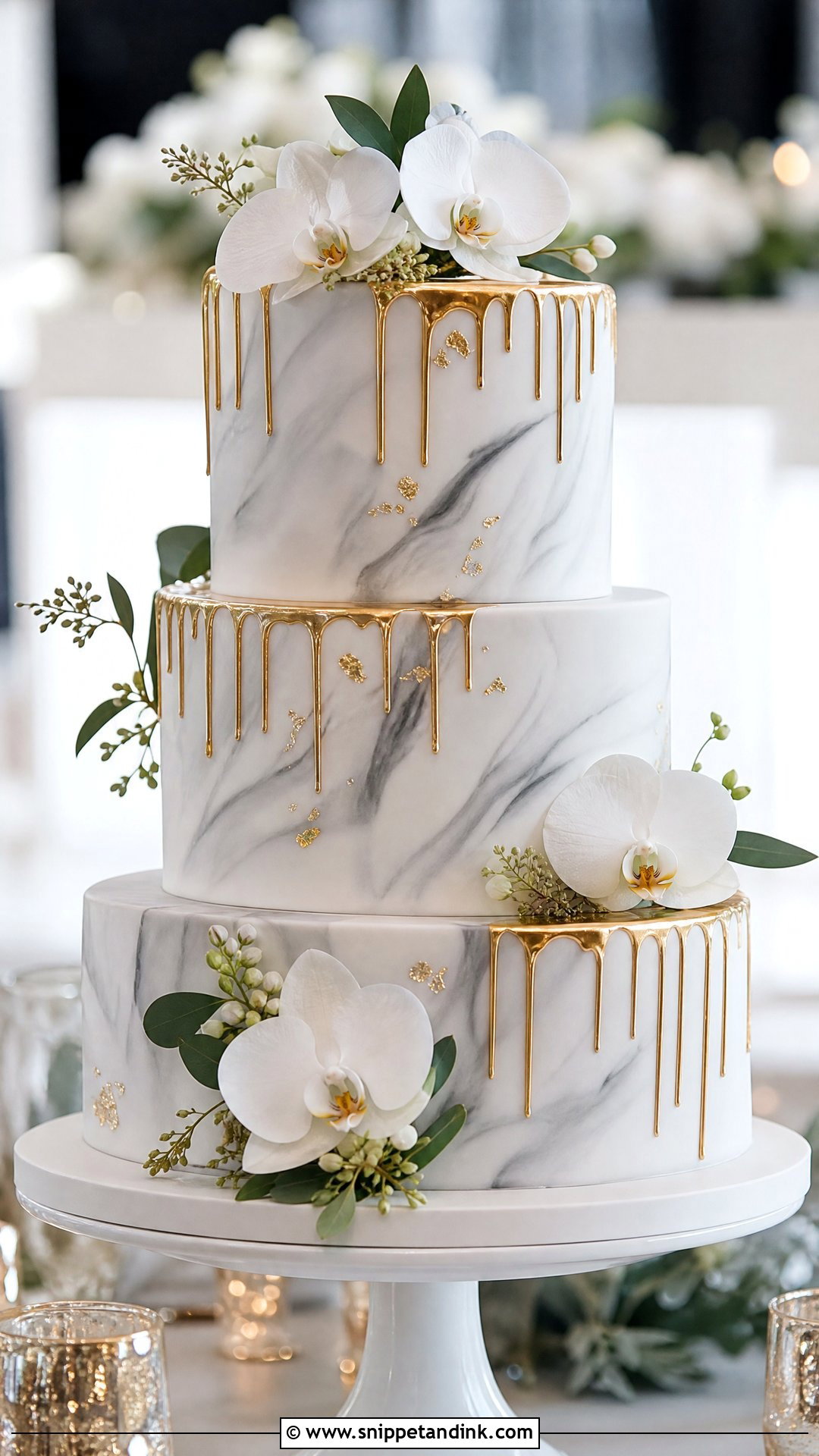
Marble and drip together suit modern venues and art-inspired receptions. The marble is made by streaking grey, blush, blue or beige into a white base, then the drip adds shine and movement. A gold drip pairs well with white and grey marble; white chocolate keeps it softer. Sugar flowers, orchids or greenery finish it. I keep the marble veins fine and the drip short, since two busy finishes can easily fight for attention.
14. Pearl Drip Wedding Cake
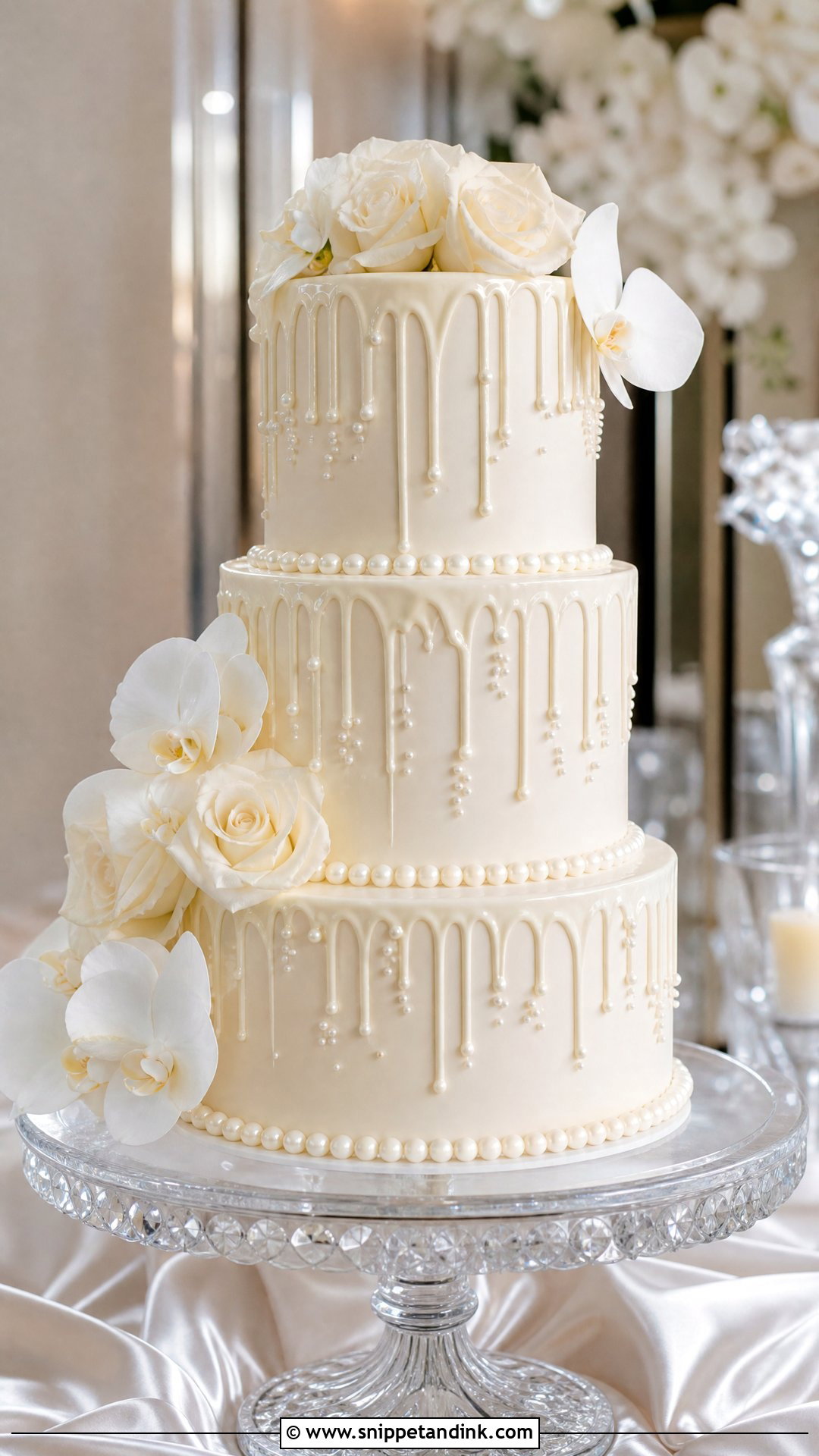
Pearls and a white chocolate drip on an ivory base is a classic pairing. I place edible pearls along the drip line, pipe pearl borders or cluster small pearls near the flowers. Pearls stick best when pressed in while the drip is still just tacky. Roses, orchids, lilies and satin table linen suit it, and almond, vanilla, coconut and champagne-style flavours fit the mood. Keep the drip neat so it frames the pearls rather than swallowing them.

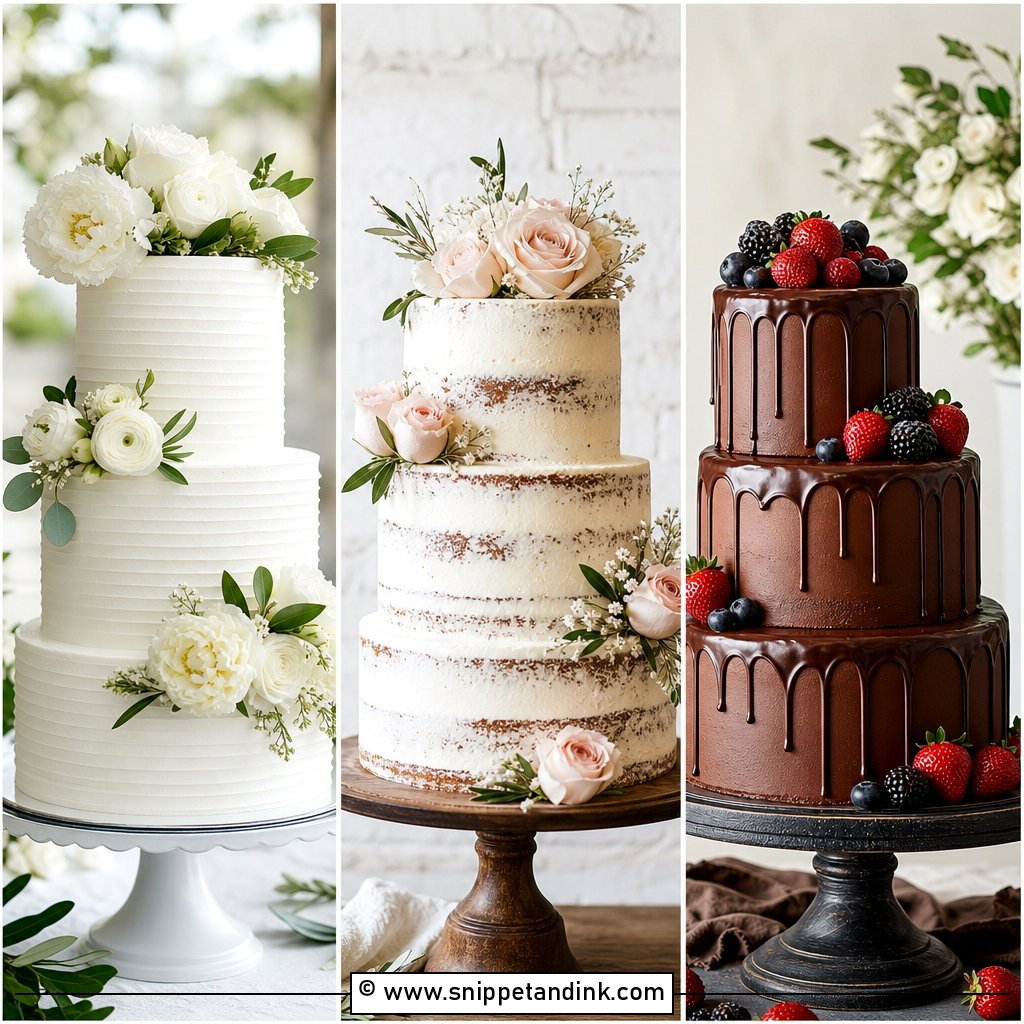

15. Greenery Drip Wedding Cake
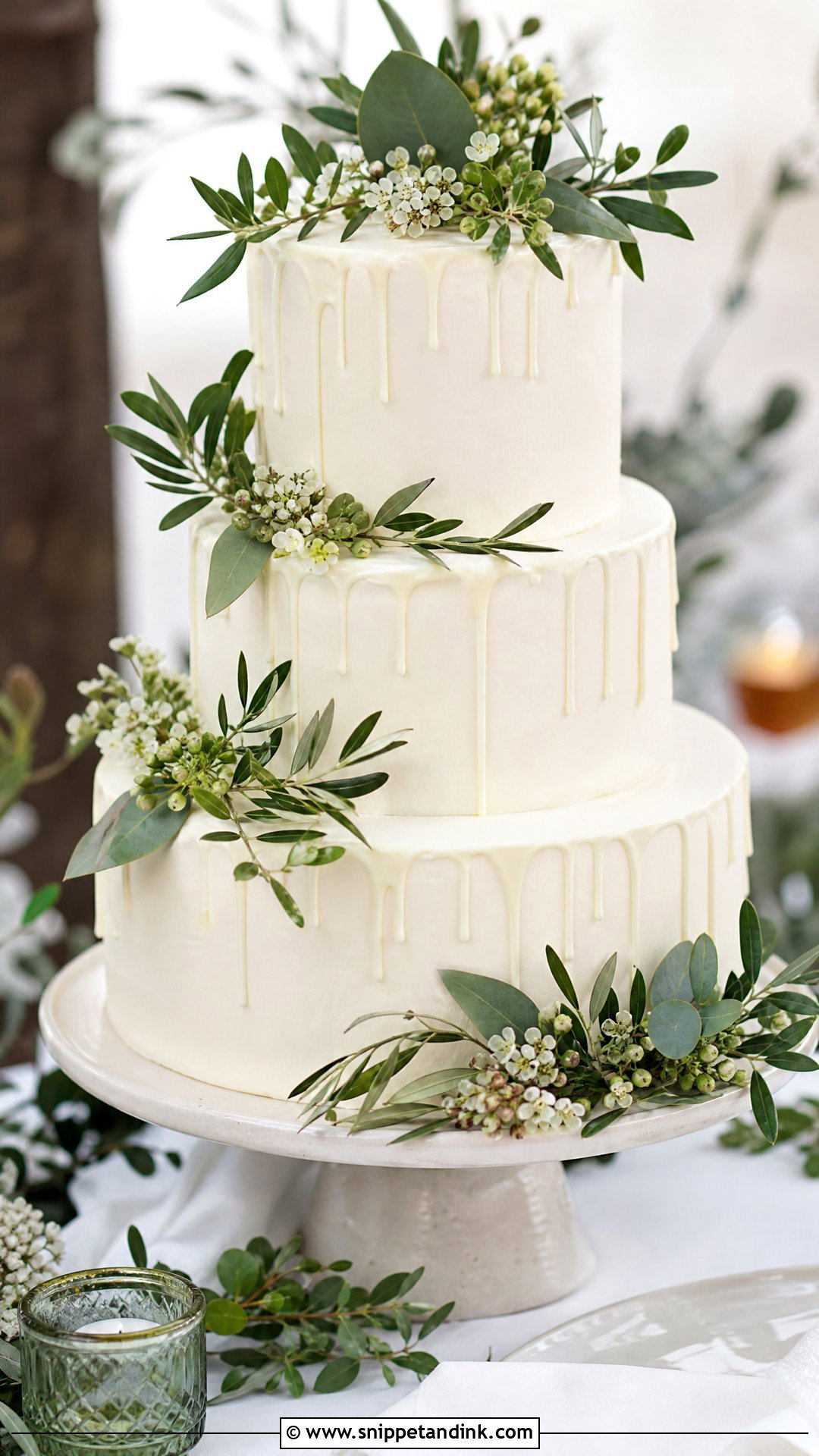
Greenery cakes use eucalyptus, olive leaves or fern with white or ivory buttercream and a soft white chocolate or caramel drip. Not every leaf is safe near food; eucalyptus, for one, shouldn’t be eaten, so I wrap stems and keep leaves where they’ll be removed before cutting. The greenery should frame the cake rather than cover it. A few white flowers or berries add detail for garden, rustic and minimalist weddings. Lemon, vanilla, almond or pistachio keep it light.
16. Berry Drip Wedding Cake
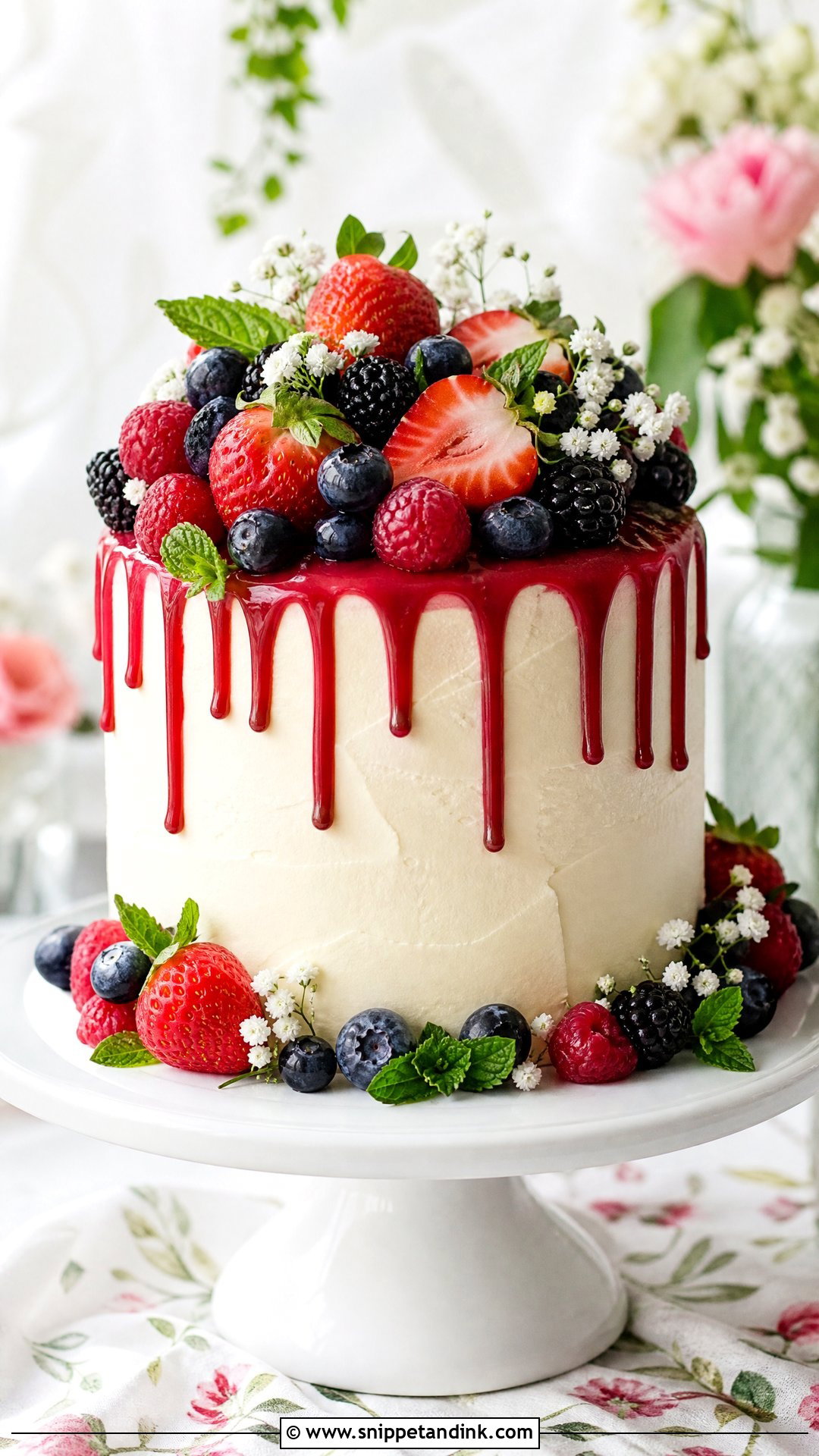
Berry cakes use raspberry, strawberry, blueberry or blackberry with a fruit glaze or chocolate drip over the frosting. Berries weep juice once they sit on a cake, so I add them as late as possible and brush them with a little piping gel to keep them glossy and dry. A white buttercream base lets them stand out. Small flowers, mint leaves or a dusting of powdered sugar finish it. Spring and summer are natural, but darker berries look right in autumn too.
17. Macaron Drip Wedding Cake
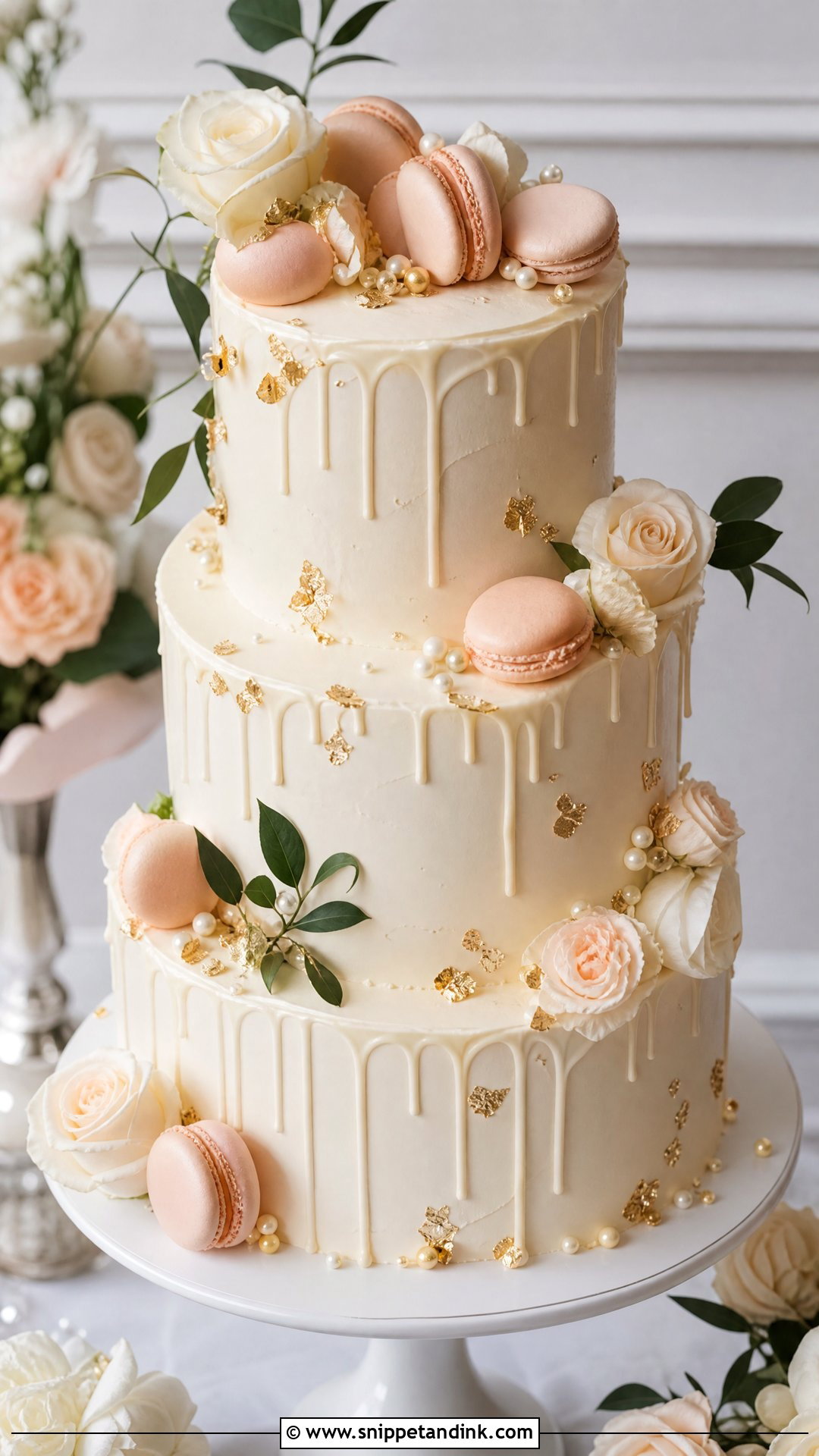
Macarons give a drip cake a bakery-window look. I arrange them on top and down the tiers, matching the colours to the wedding palette: blush, ivory, sage, lavender or champagne. Macarons soften if they sit on moist buttercream for hours, so I set them on at the venue or on a dab of chocolate. Keep the base simple so the macarons aren’t competing with heavy decoration, and add a few flowers or gold accents for softness.
18. Geode Drip Wedding Cake
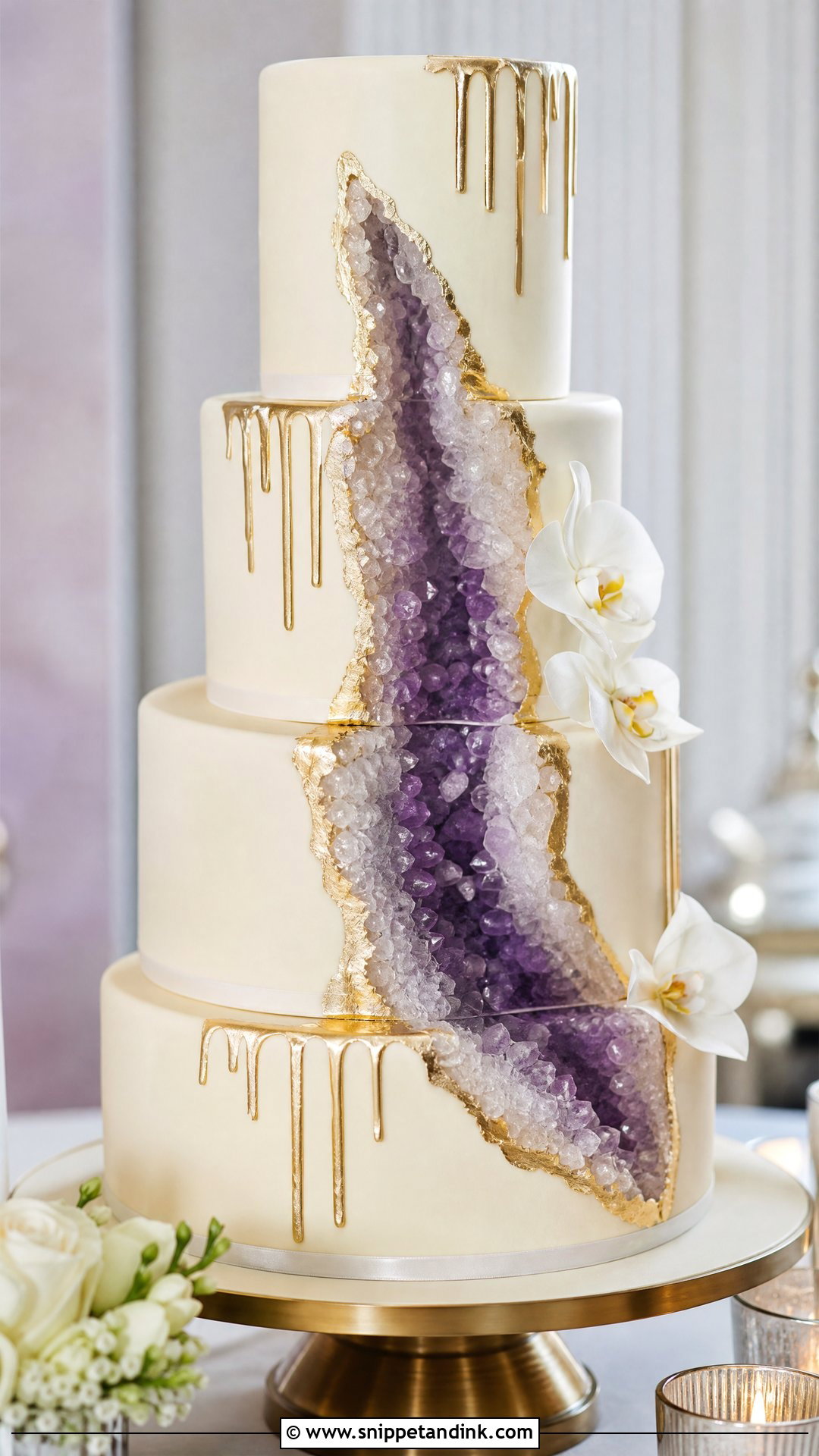
A geode cake has a section carved out and filled with rock candy or isomalt crystals, with a drip running around the tiers. White, gold, blush, amethyst and soft blue crystals look best at weddings. I keep the base smooth so the crystals stay the focus, and a little metallic edging around the cut highlights the stone effect. Flowers should be minimal; the geode is already a lot. Warn guests that rock candy is hard on teeth.
19. Ombre Drip Wedding Cake
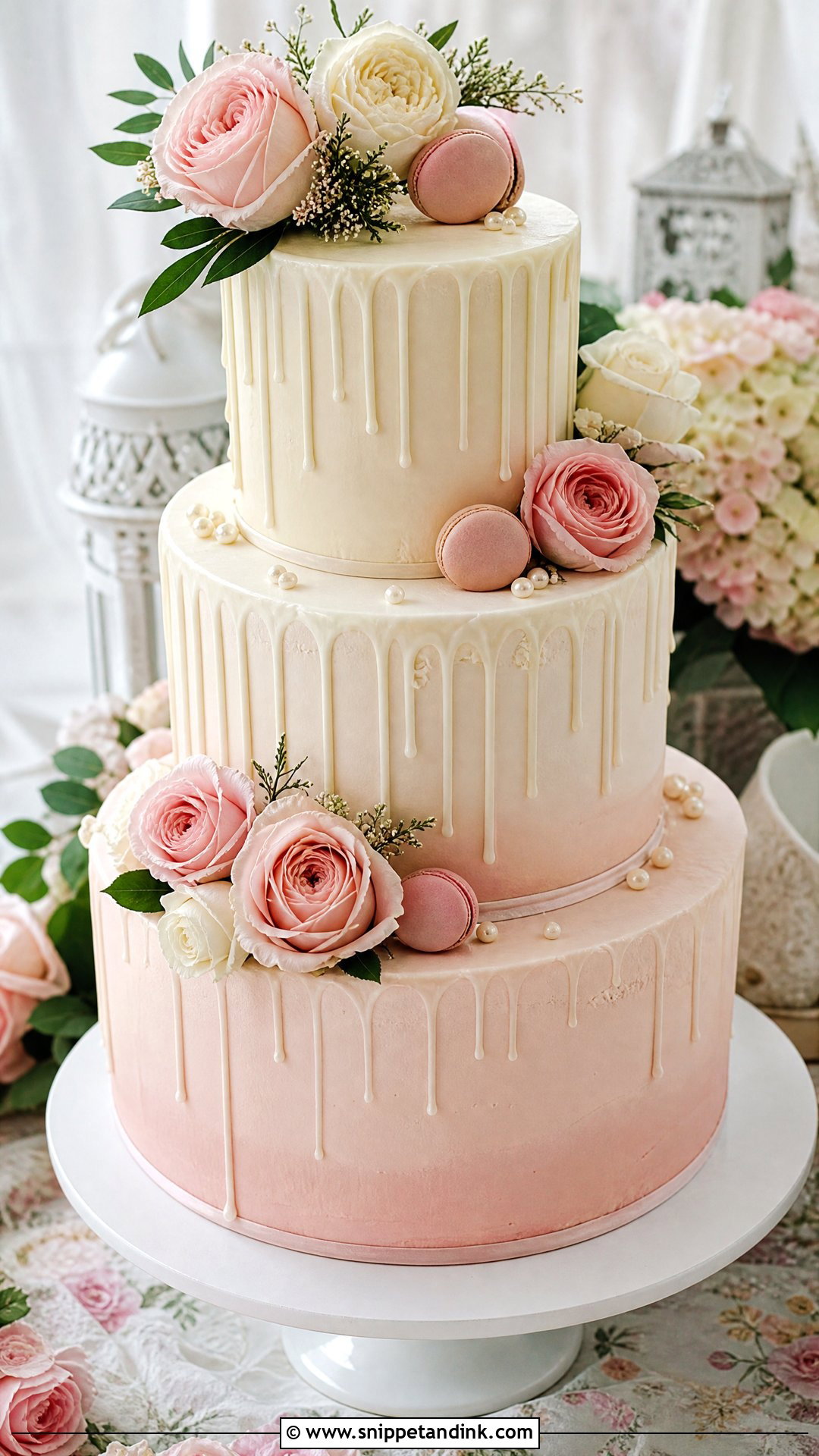
Ombré frosting fades from one shade to another up or down the tiers, white to blush, ivory to champagne, blue to white. The blending has to be done while the buttercream is soft, which means working fast and chilling after. A white chocolate or lightly tinted drip adds shine without hiding the fade. Fresh flowers, pearls or macarons in matching tones are enough decoration for a romantic, beach, garden or modern wedding.
20. Rose Drip Wedding Cake
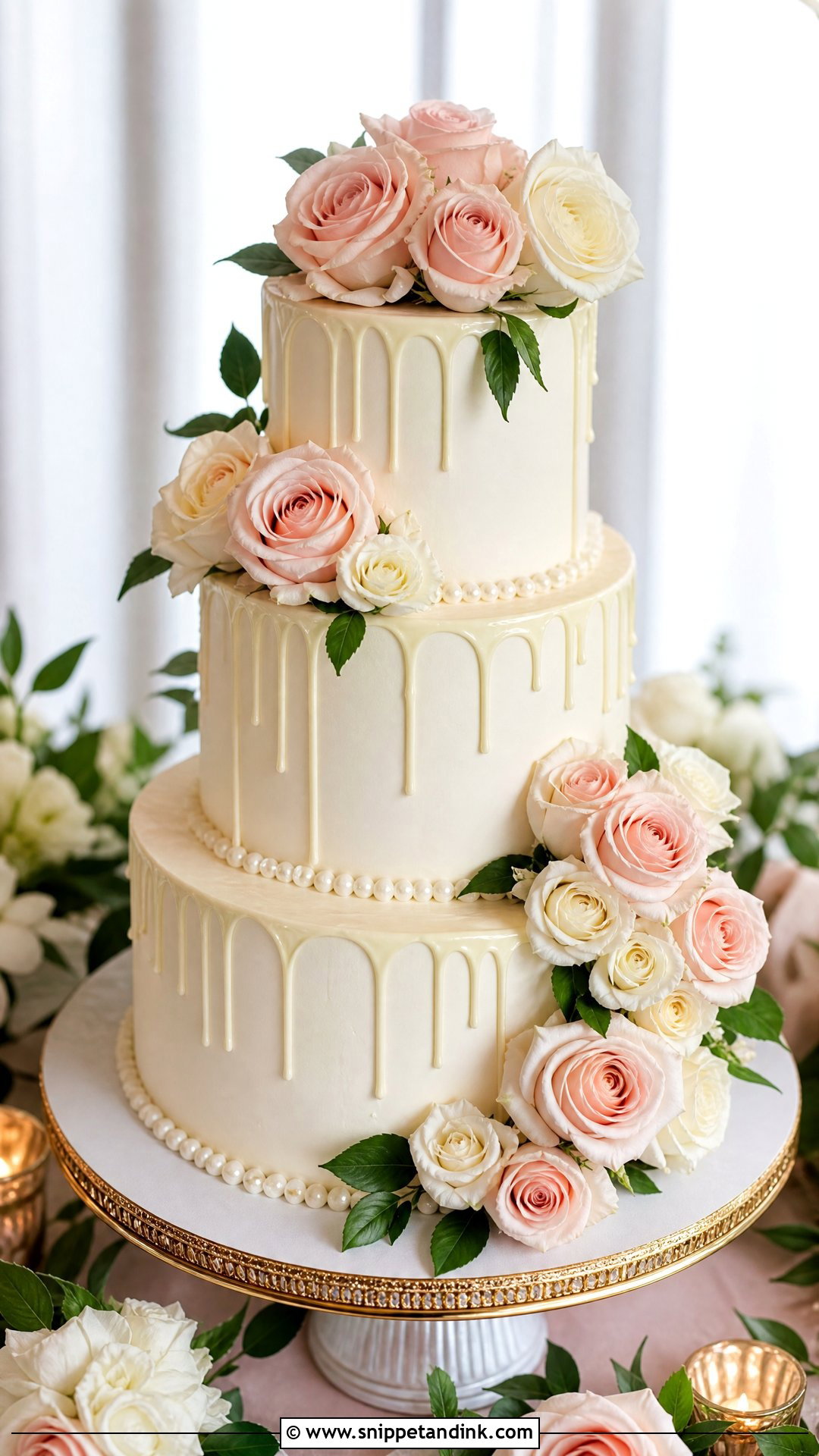
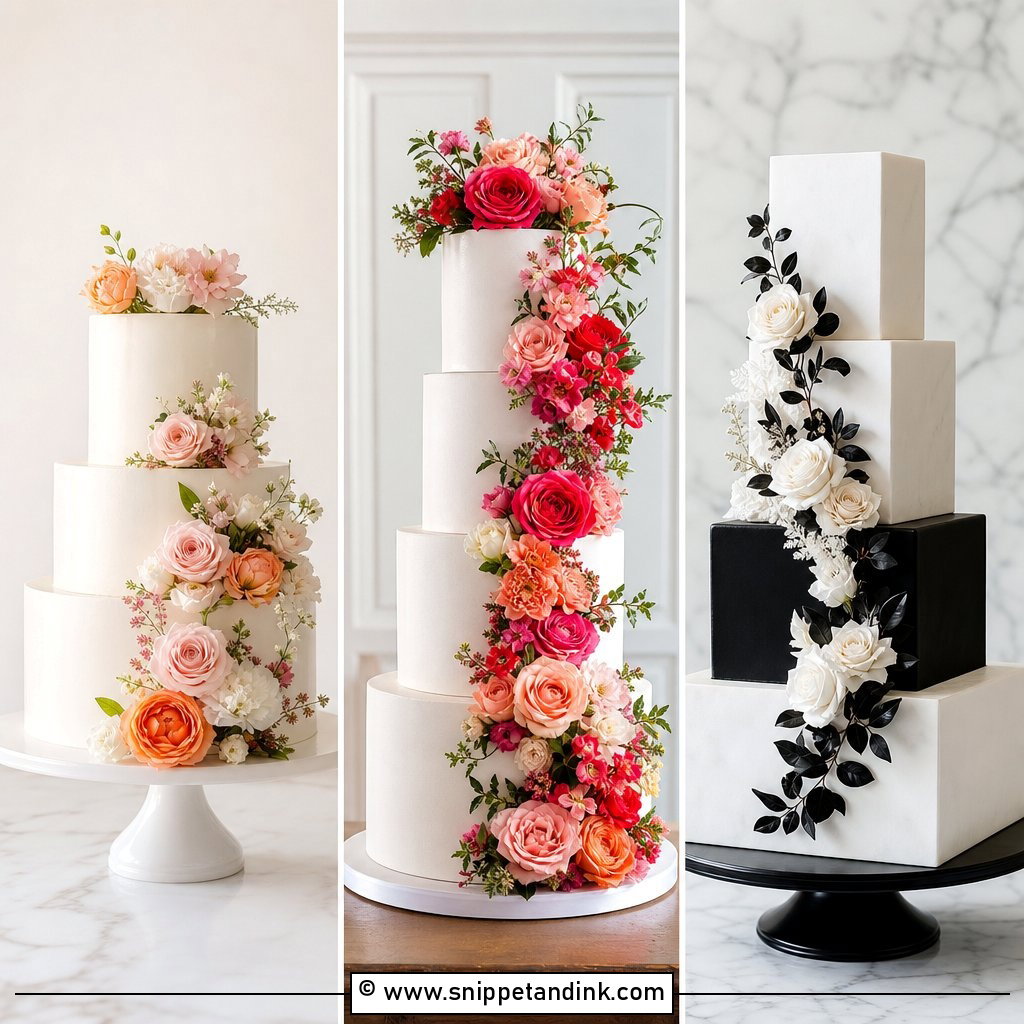
Roses can be fresh, sugar or piped buttercream, which lets the cake fit almost any budget. Sugar roses cost more because each petal is shaped by hand, but they last and can be kept. A white, blush or champagne base works with white chocolate or gold drip. I cluster roses on the top and down one side. Vanilla, almond, rose, lemon or red velvet suit it. One rose colour keeps it refined.
21. Orchid Drip Wedding Cake
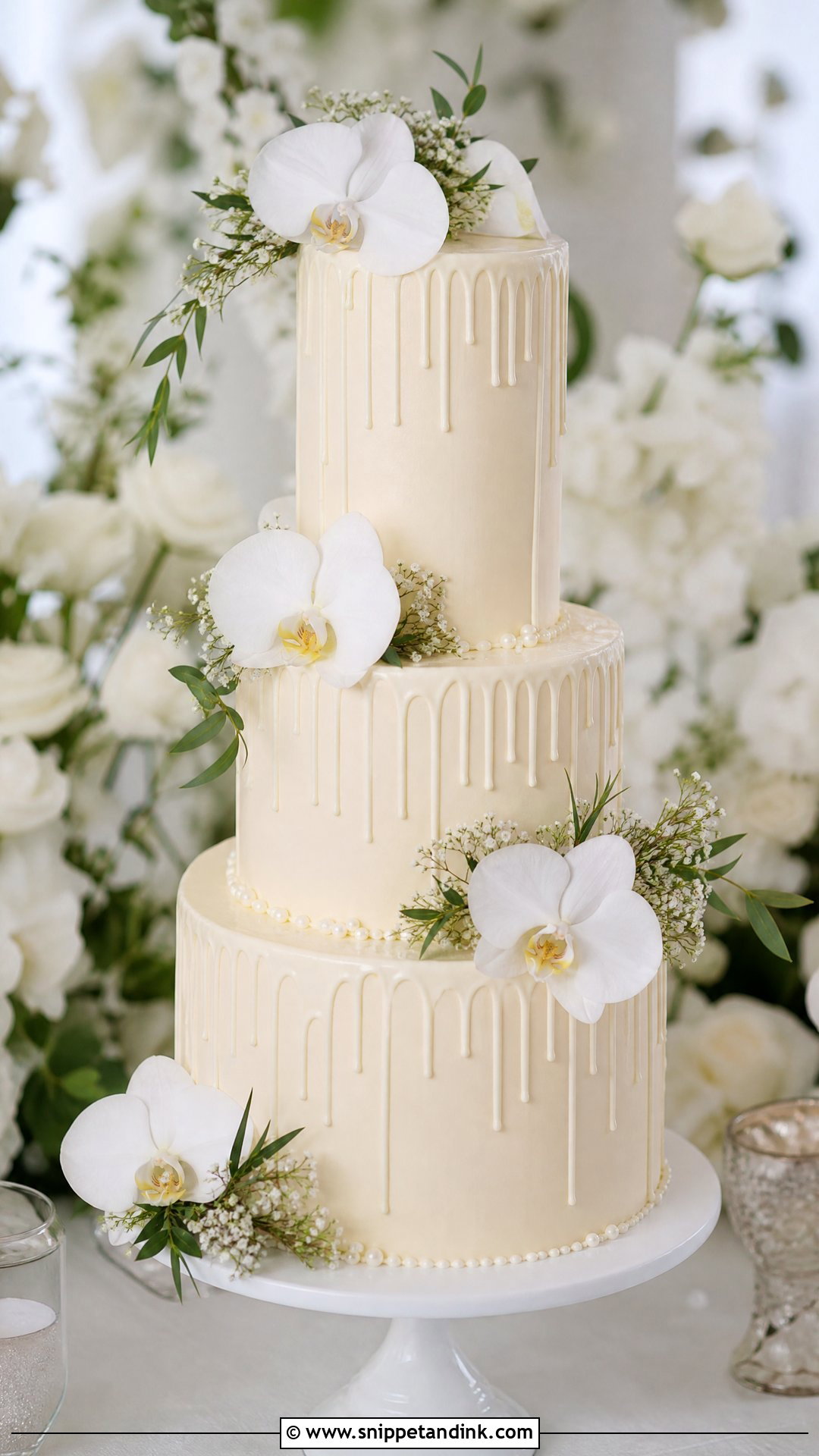
Orchids have a strong, clean shape, so they need very little help. White orchids feel classic; pink or purple add colour. A smooth buttercream base with a white chocolate, gold or clear glaze drip keeps it polished for ballrooms, gardens and destination celebrations. Cymbidium and phalaenopsis orchids hold up well out of water for several hours, which suits a cake. Keep everything else to subtle greenery or a few pearls.
22. Single Tier Drip Wedding Cake
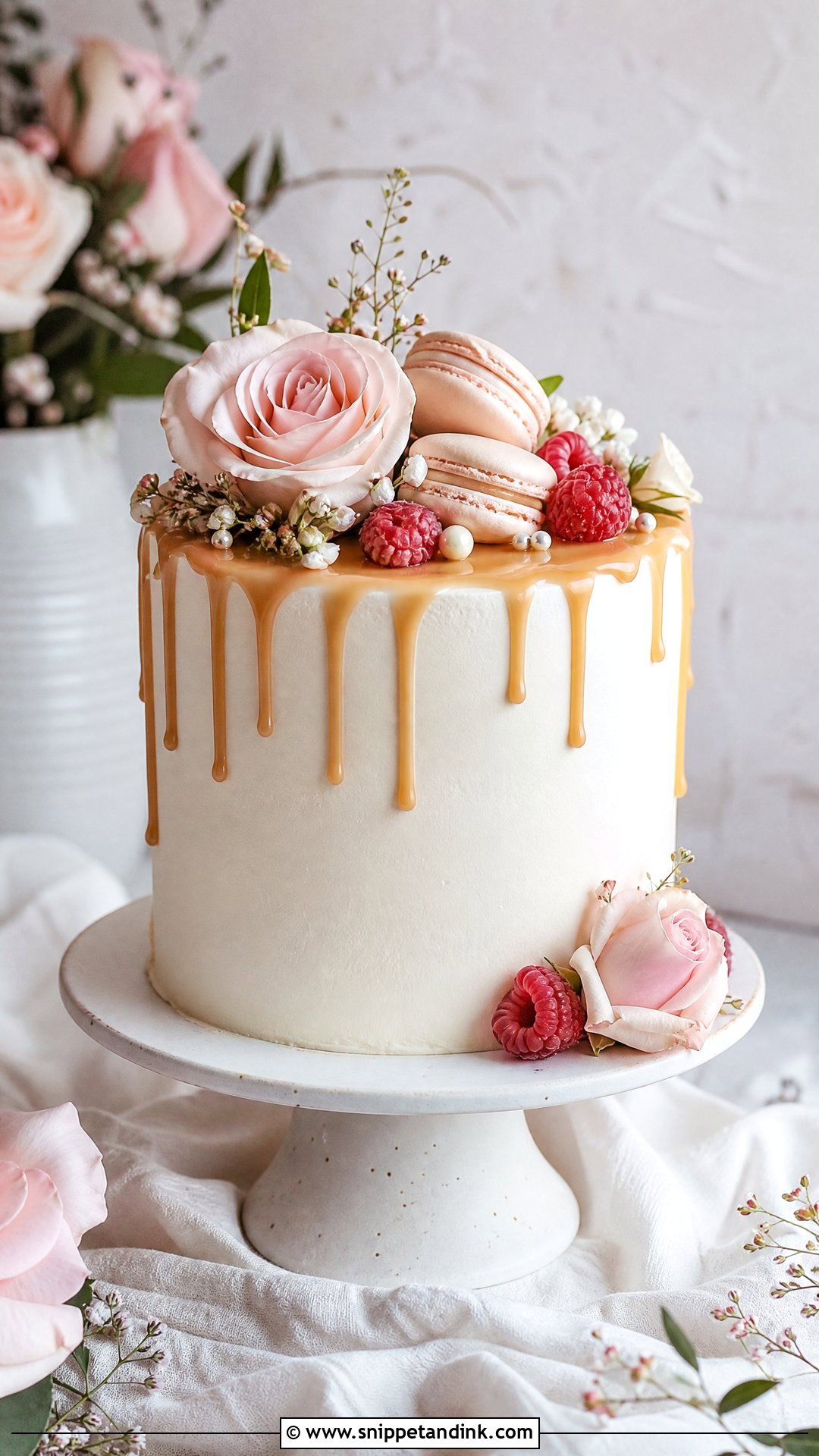
A single tier is the right size for small weddings, elopements, bridal brunches or a dessert table with plenty of other sweets. I make single wedding tiers taller than a standard cake, often with four or more layers, because height is what makes one tier feel ceremonial. A smooth finish, a neat drip and flowers, berries, macarons or pearls complete it. Vanilla, chocolate, lemon, almond and strawberry all suit. A good stand adds height too.
23. Two Tier Drip Wedding Cake
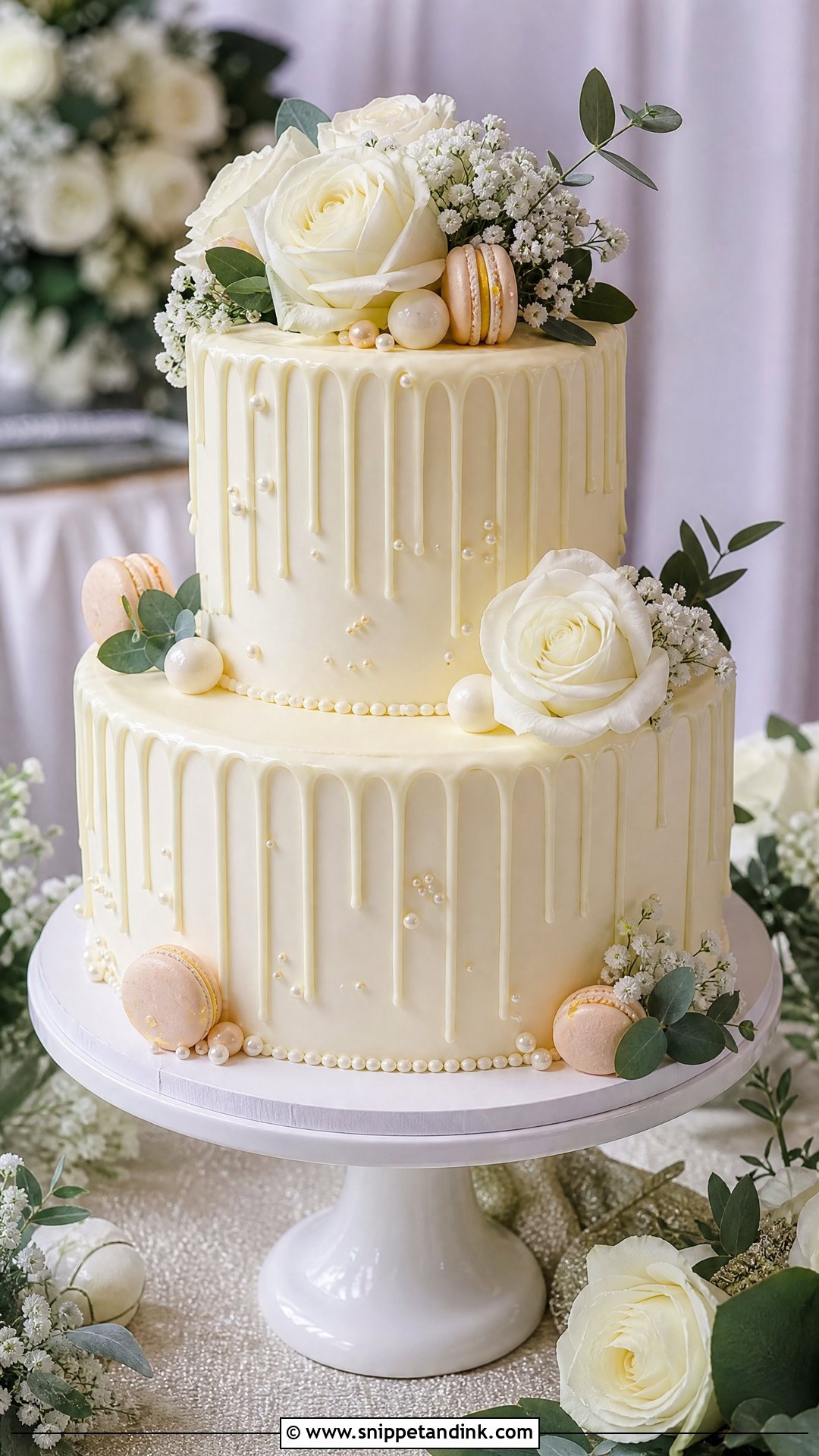
Two tiers suit medium-sized weddings: enough height for a moment, not so much that it looks oversized. The drip can run from the top tier only or appear on both. I usually drip each tier before stacking, which keeps the lower drips clean where the top tier sits. A white or ivory base with flowers, greenery, macarons or fruit adds personality. Keep the tiers in proportion; a top tier much narrower than the bottom looks unstable.
24. Three Tier Drip Wedding Cake
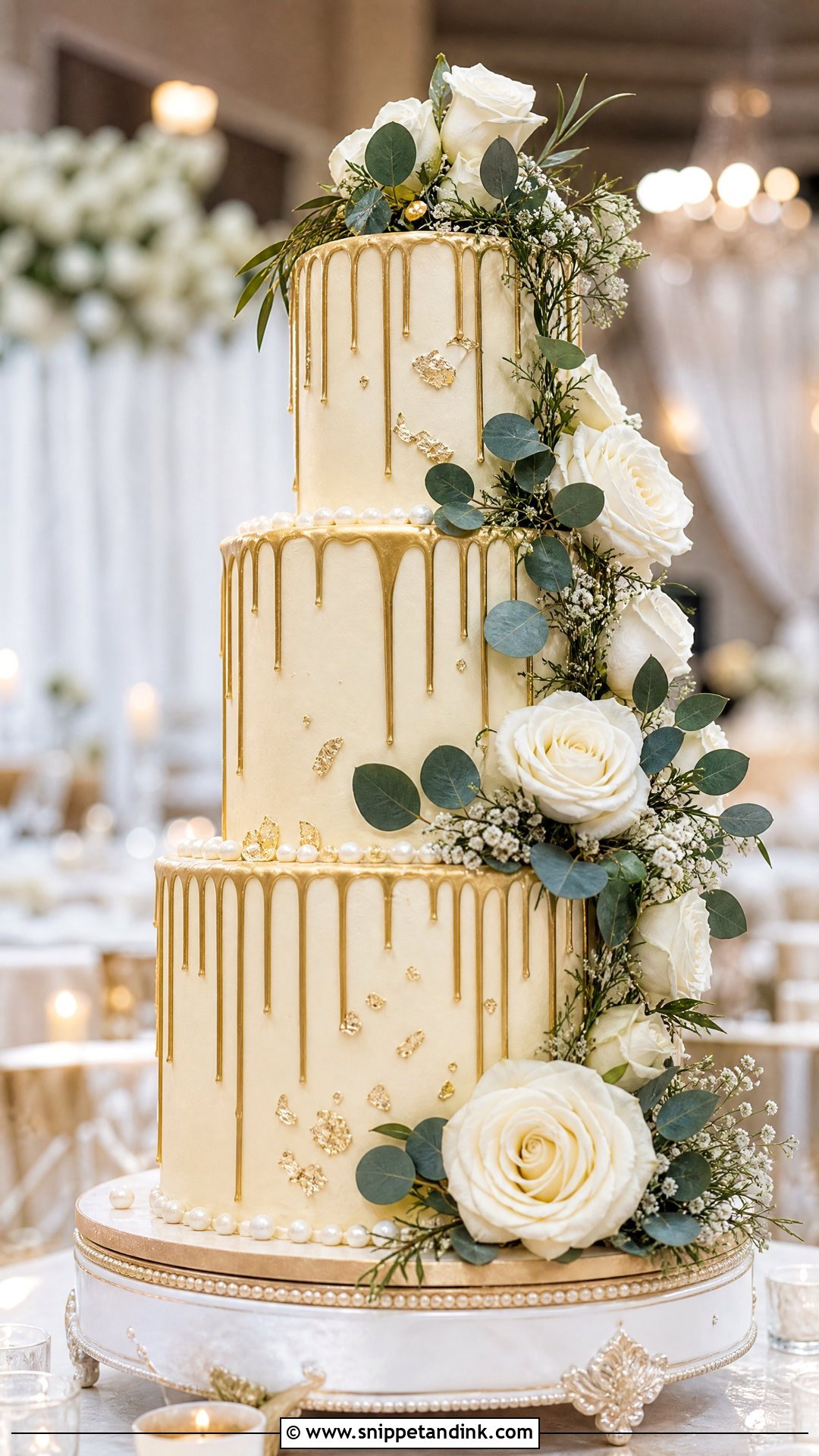
A three tier drip wedding cake becomes the centrepiece of the room. A smooth buttercream base, a metallic or chocolate drip and flowers cascading from the top tier down one side gives it flow. Every tier needs dowels and a board so the weight doesn’t sink into the tier below, and the drips should get shorter or stay consistent; random lengths on three tiers look chaotic. It suits larger, formal weddings, or rustic ones with semi naked frosting and greenery.


25. Square Drip Wedding Cake
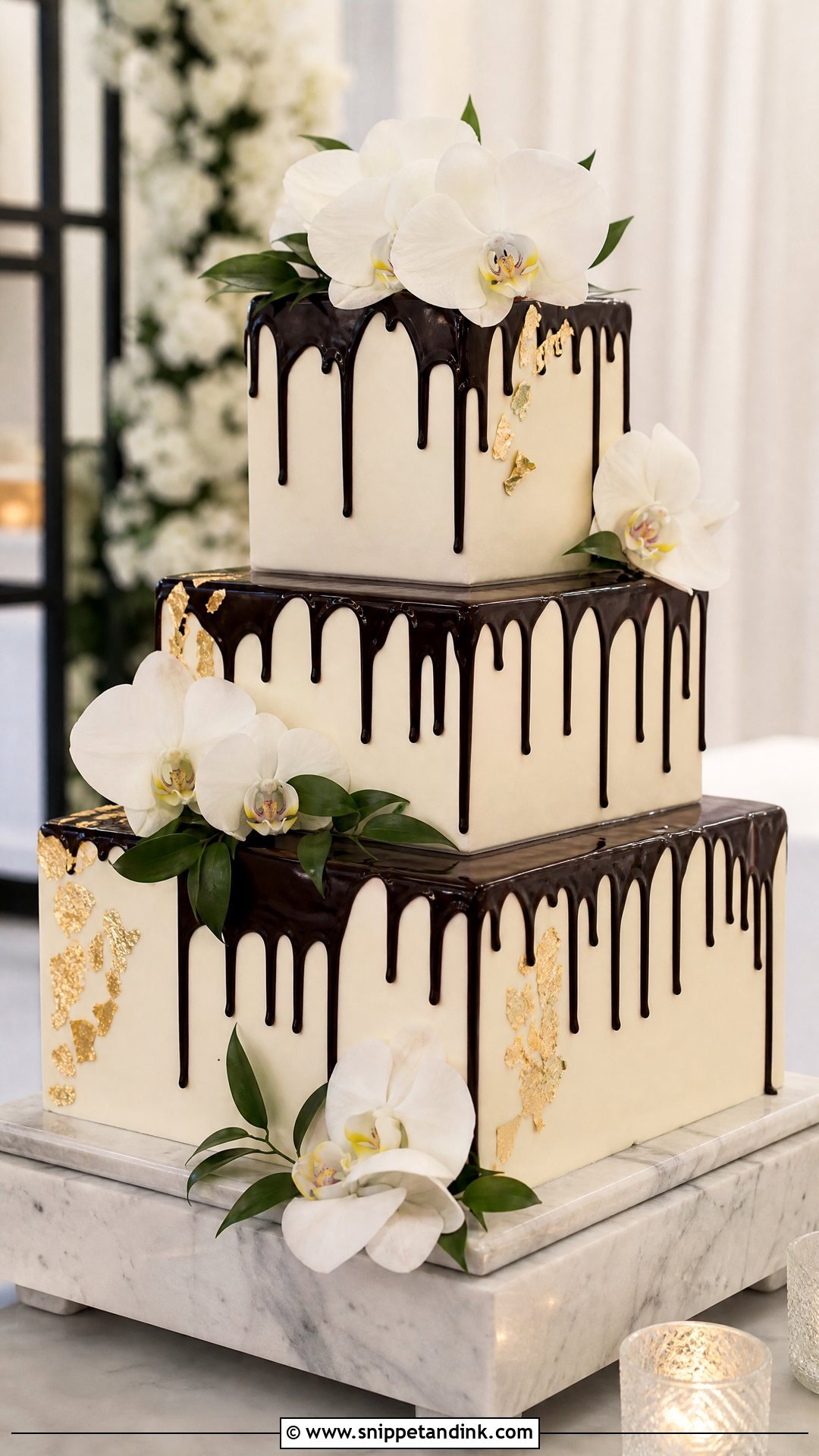
Square cakes make a drip look more graphic, especially over smooth buttercream or fondant. They’re also the hardest shape to finish well. Sharp corners show every flaw, and a drip running off a corner tends to be longer than the drips on the flat sides, so I control the amount at each corner. White, black, gold, marble or minimalist palettes suit it, with orchids, roses, greenery or geometric accents. Chocolate, vanilla, almond or mocha fit the modern feel.
26. Minimalist Drip Wedding Cake
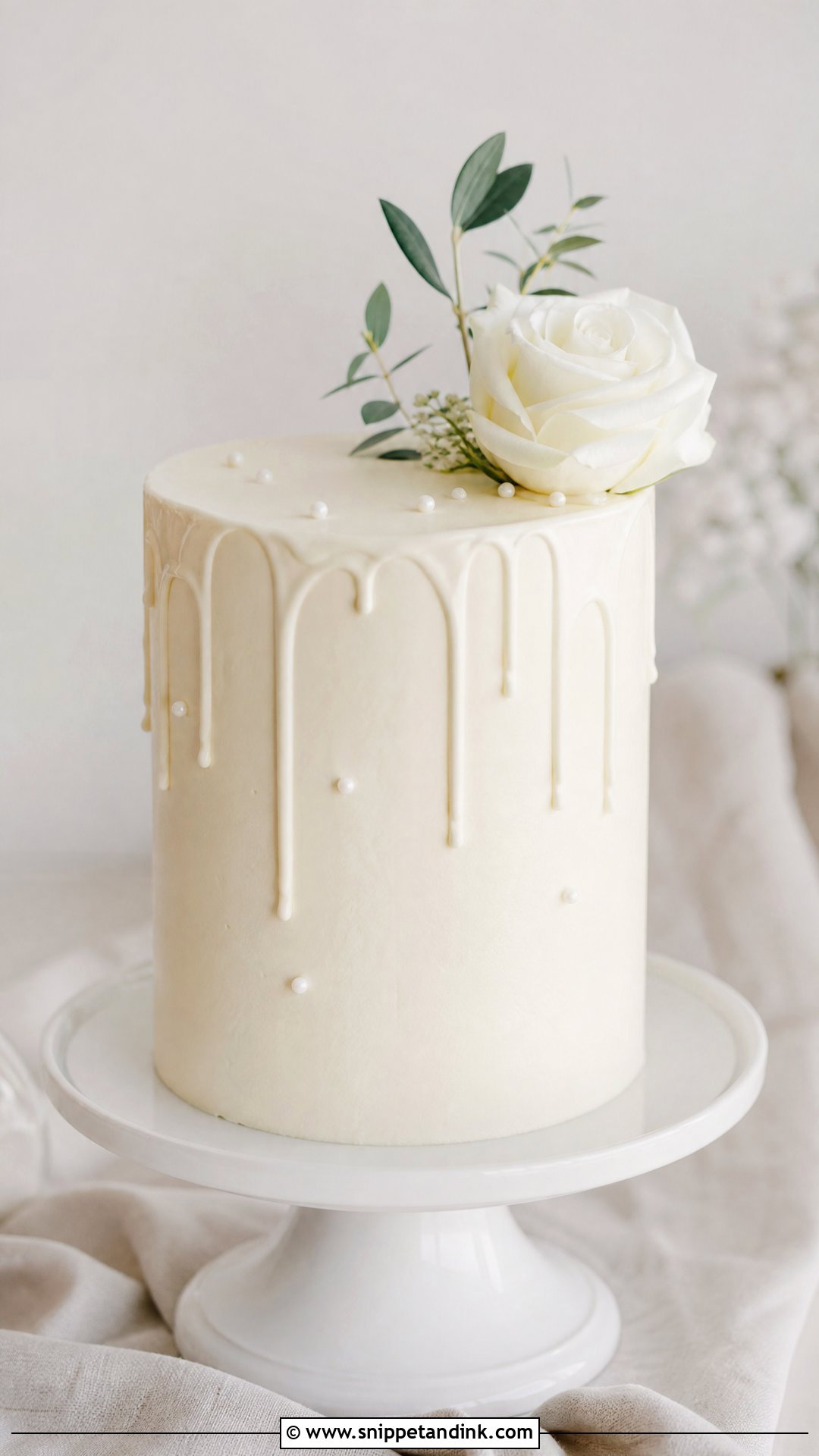
Minimal drip cakes rely on restraint: smooth white or ivory frosting, a thin drip and one or two carefully placed details, a single flower, a greenery stem or a few pearls. Choose a drip colour close to the base, such as white chocolate, champagne or pale caramel. Minimal designs are less forgiving than busy ones because there’s nothing to hide a dent behind, so the finish must be exact. It suits modern venues and intimate weddings.
27. Boho Drip Wedding Cake
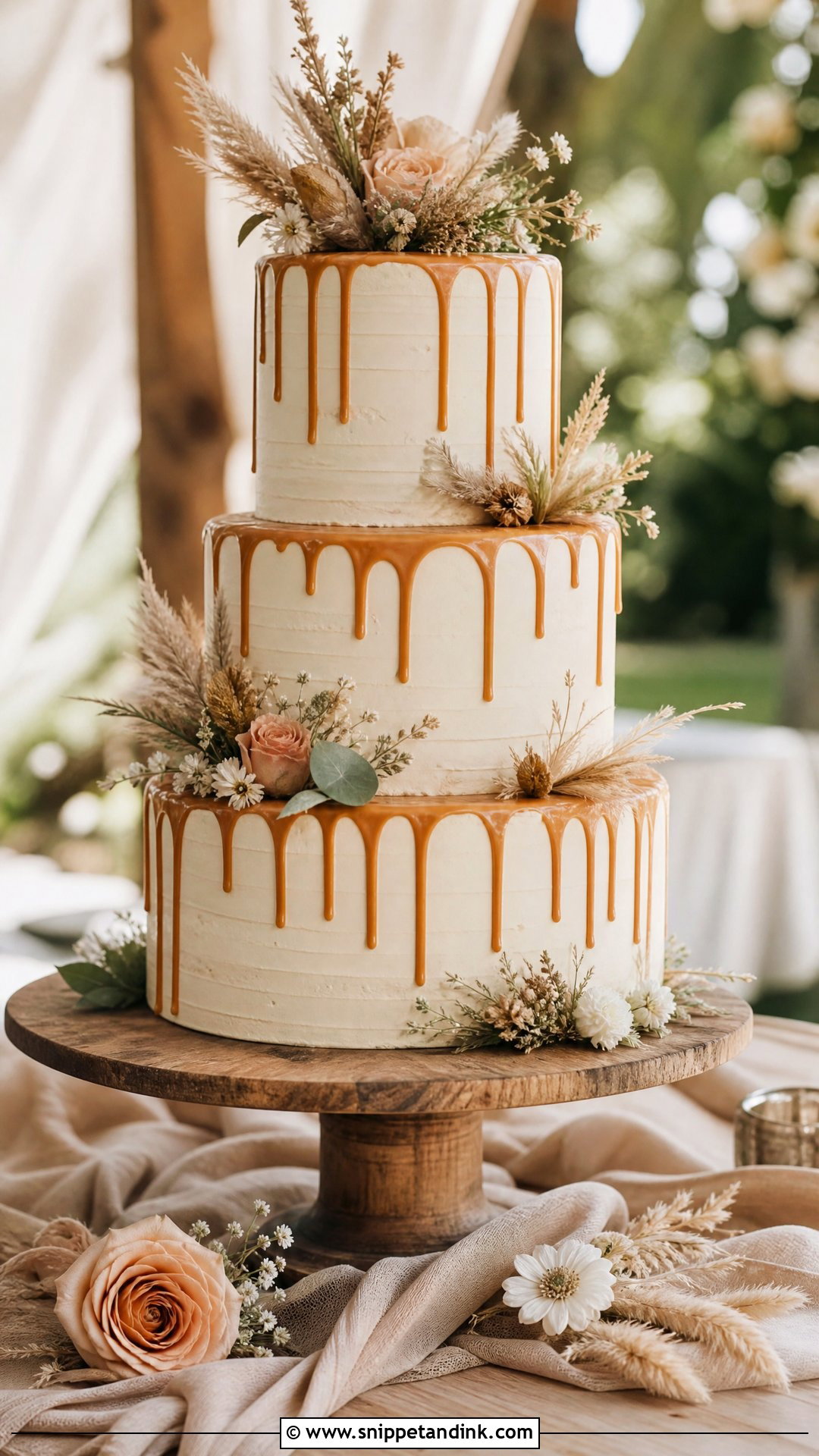
Boho cakes use ivory or beige buttercream, a caramel or white chocolate drip and dried flowers, grasses, greenery or small fresh blooms. Dried flowers are handy because they don’t wilt in heat, but they’re not food, so I keep them on picks. Warm, muted colours like cream, tan, peach, sage and dusty rose suit outdoor and desert-inspired weddings. A semi textured finish adds to the handmade feel, and the drip can look slightly loose.
28. Beach Drip Wedding Cake
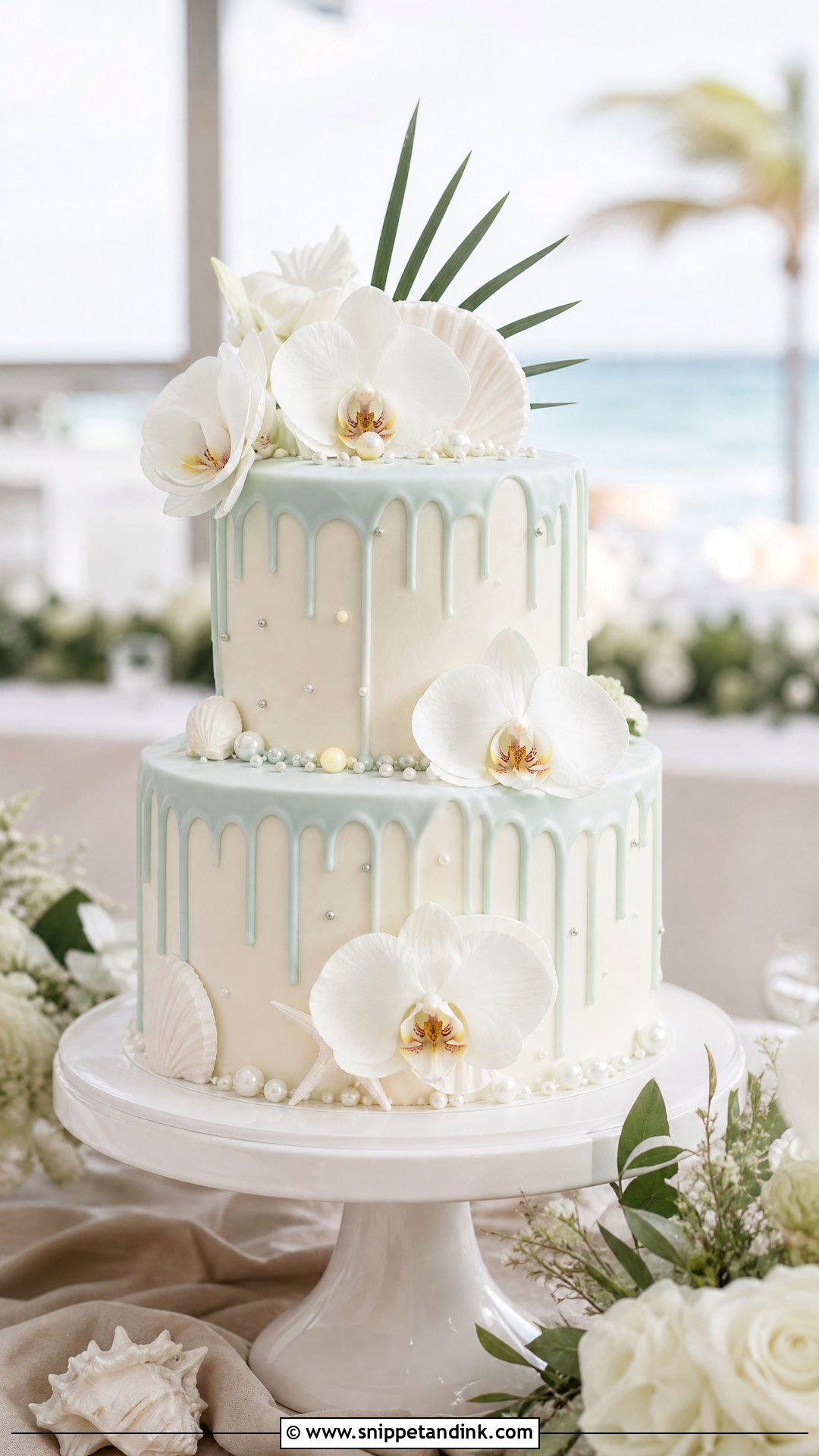
Beach cakes should feel light rather than themed. Soft white, pale blue, sand and pearl tones work well, with a white chocolate drip on smooth buttercream and orchids, edible pearls, tropical greenery or a subtle shell detail. Heat and humidity by the sea are the real challenge: buttercream softens and drips keep moving, so I’d ask for the cake to be set up in shade, as close to cutting as possible. Coconut, vanilla, lemon and passion fruit suit the setting.
29. Vintage Drip Wedding Cake
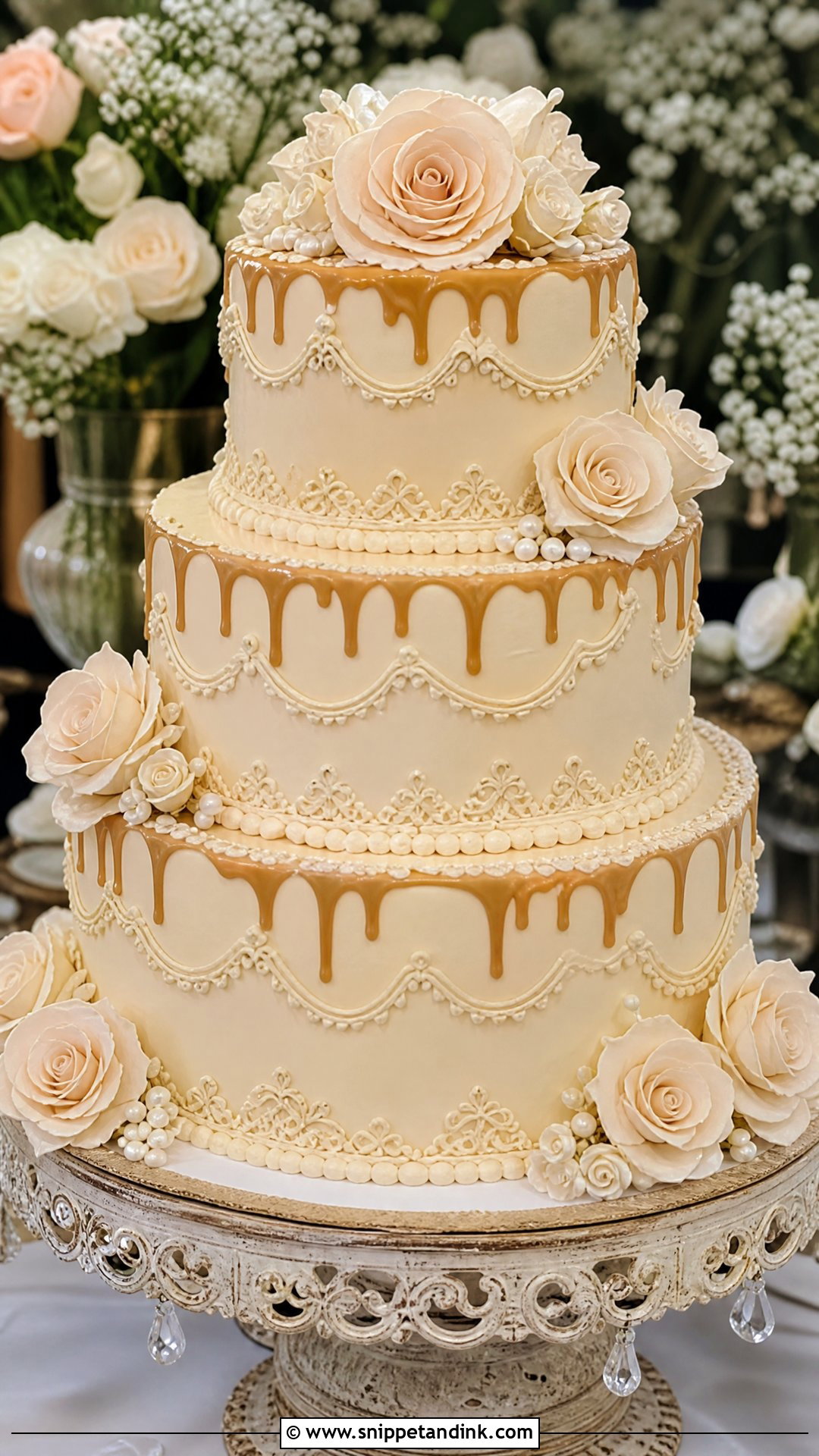
Vintage drip cakes combine ivory frosting, fine piping, pearl details and a short, controlled white chocolate or caramel drip. The drip has to stay subtle so the piping still reads. I pipe the vintage details after the drip has set, otherwise the ganache runs into the piping and fills it in. Roses, lace patterns or small sugar flowers suit historic venues and garden receptions. Vanilla, almond, lemon or red velvet are good flavour choices.
30. Colorful Drip Wedding Cake
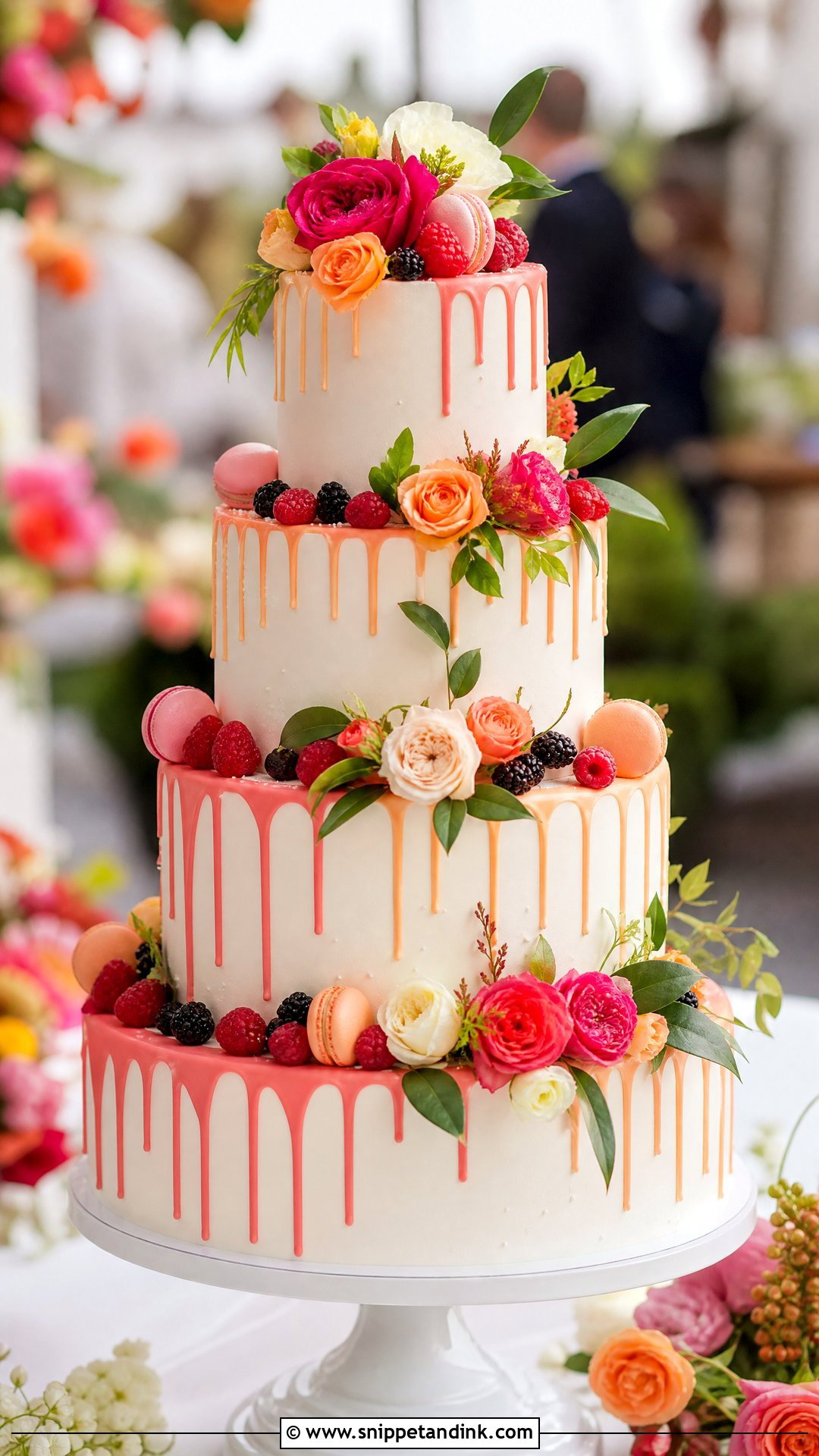
Colour can come from the drip, the frosting, flowers, macarons or fruit. For weddings I suggest choosing two colours and sticking to them: blush and gold, lavender and ivory, sage and white, coral and peach. A smooth base keeps it refined while the drip adds the fun. Bright colours need strong concentrated gel colouring, and I’d taste a sample, because very saturated colours can taste bitter. It suits garden weddings and couples who want a joyful dessert.
A Drip in a Warm Marquee
Drips are made to look like they’re moving, and in heat they can actually move. A marquee in summer, a sunny window or a table next to the dance floor lights can warm a cake enough to soften the buttercream, lengthen the drips and let decorations slide.
How I plan around it
- Ask where the cake table will be before the design is final, and move it away from direct sun, heaters and stage lights.
- For hot venues, choose dark ganache over caramel and a firmer buttercream or ganache coat under the drip.
- Have the cake delivered and set up as close to the reception as the venue allows, rather than first thing in the morning.
- Leave flowers, macarons and fresh berries until the cake is in place, so they’re not knocked off in transit.
- Agree on cutting time with your planner; a drip cake cut within a couple of hours of setup will look closest to the design.
If the day turns out hotter than expected, a cool room behind the scenes can hold the cake until speeches finish. A short wait indoors is better than a drip that has crept to the board by the time the knife comes out.
Pick the Hero Detail, Then Size the Drip
A drip lets a wedding cake change character with very small adjustments. White is classic, gold feels glamorous, and berries or flowers feel fresh. The cakes I’m proudest of match the venue, the palette, the season and the couple’s actual favourite flavours. Start with one strong feature, whether that’s flowers, a metallic drip, fruit or macarons, and let everything else support it. Then talk to your baker about where the cake will sit and for how long, because that decides which drip will still look right when you cut it.
You'll Like These Ideas:










Leave a Reply