
Pearls and gold are a pairing I rarely have to talk anyone into. Pearls bring a soft, bridal texture; gold adds warmth and a bit of luxury. Together they suit a ballroom as easily as a garden tent or a small dinner. What changes from cake to cake is the shape, the frosting finish and how loud the metallic is allowed to be. Some couples want a plain white tier with a ring of tiny pearls, others want gold leaf, pearl cascades and sugar flowers all at once. Below are twenty directions I’d take this combination, with notes on what each one asks of the baker and of your venue.
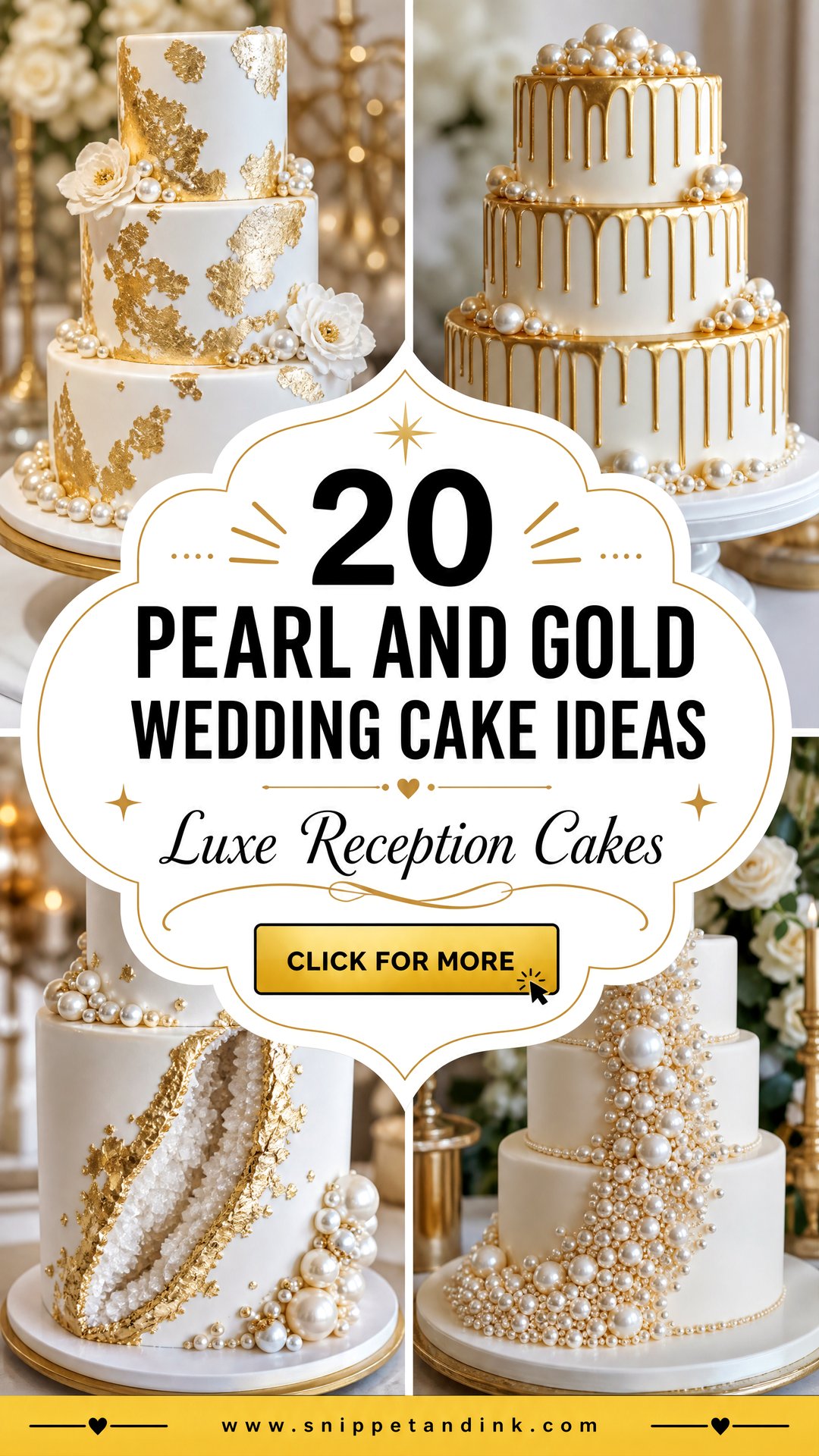
Real Gold Leaf, Luster Dust and the Pearls Nobody Should Bite
Not every shiny thing on a wedding cake is food, and couples are often surprised by that. Before we design anything, I walk through the materials so you know what guests will eat and what comes off before cutting.
- Edible gold leaf: high-karat gold beaten paper thin. It’s safe to eat in these tiny amounts and has no taste. It’s also delicate and costs more than paint.
- Gold paint and luster dust: check the label. Some are made as food, others say decorative or non-toxic only, which means they belong on items that are removed.
- Sugar pearls: hard little sugar balls. Safe, but the larger ones are crunchy enough that I tell couples to warn anyone with dental work.
- Fondant or isomalt pearls: softer, shaped by hand or molded, and easier to eat.
- Bead strands, brooches and pearl toppers: decorative. They need a named person to lift them off before the cake is cut.
If your caterer or venue is cutting the cake, tell them about any non-edible pieces in writing. I tape a note to the cake box too.
1. Pearl And Gold Leaf Wedding Cake
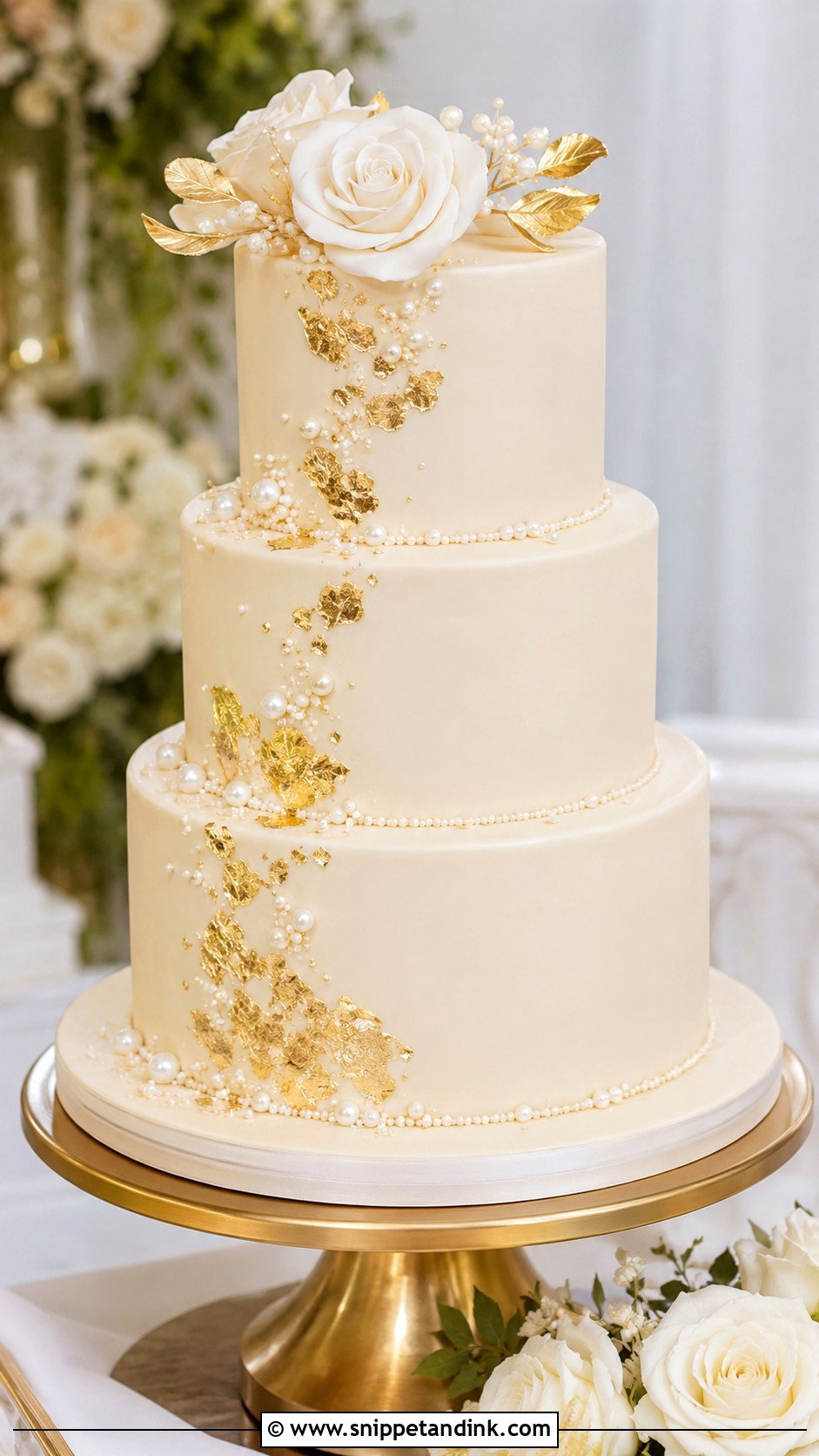
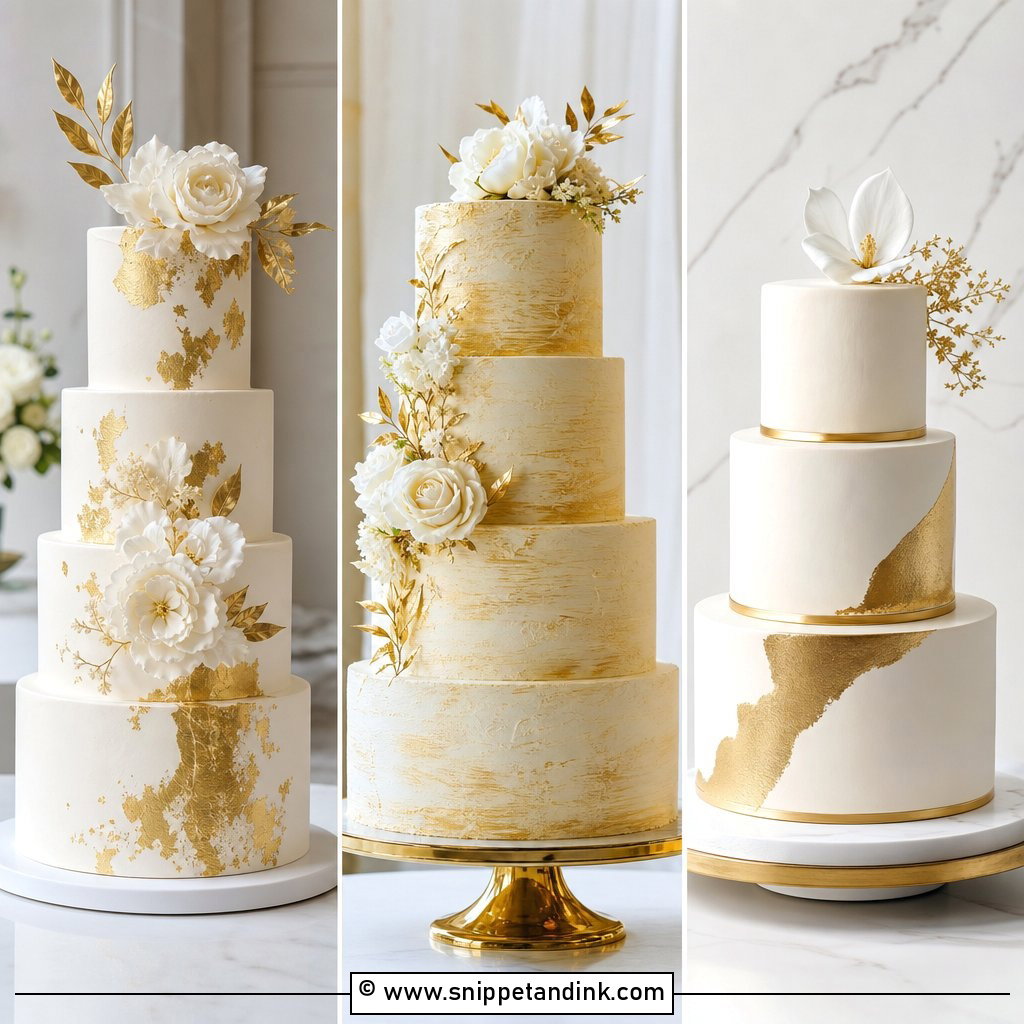
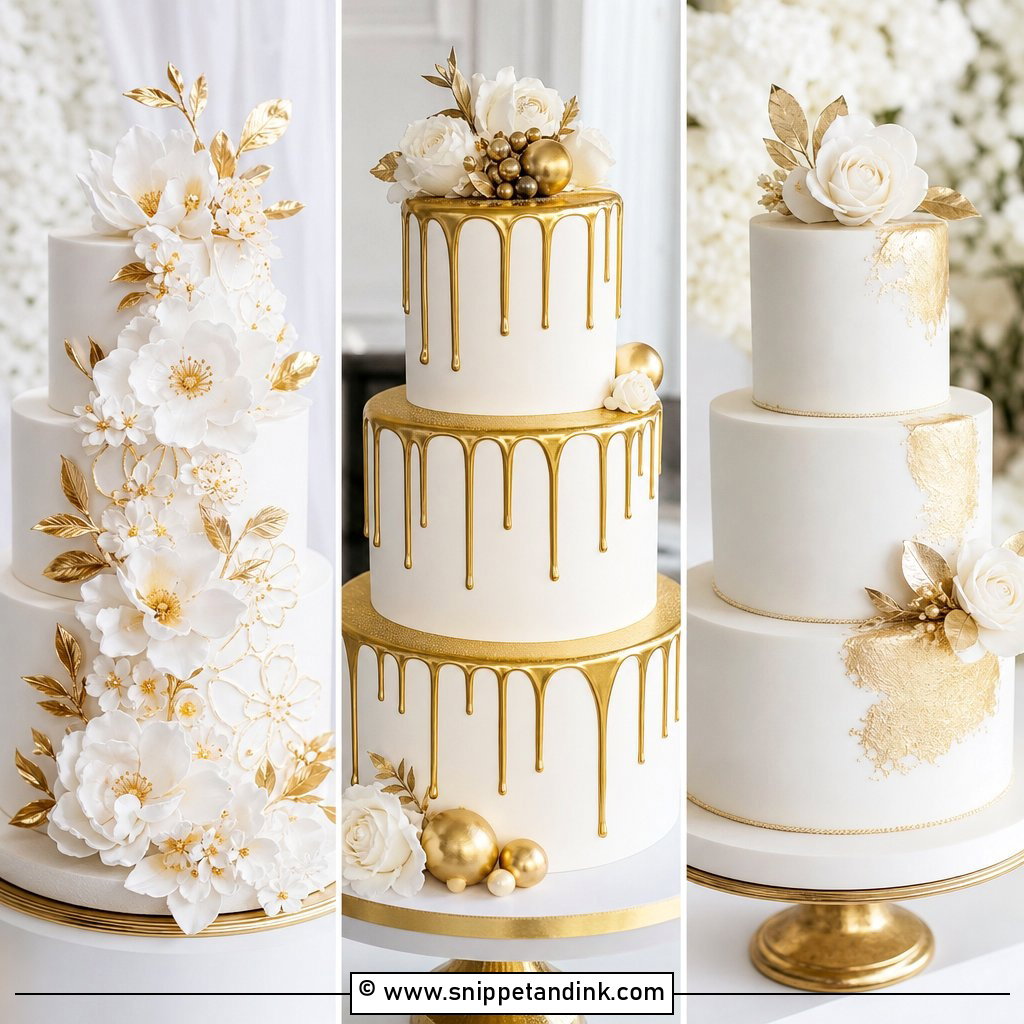
Gold leaf is the quickest way to make a plain white cake look expensive, but only when it looks placed rather than scattered. I lay soft patches along the top edges of the tiers and balance them with small pearl clusters or a pearl border lower down. Smooth fondant or a very sharp buttercream finish is essential here: leaf picks up every bump and dent underneath it. Ivory roses or orchids soften the metal. Keep the stand plain, in glass, white ceramic or brushed gold, so the cake doesn’t compete with its own pedestal.
2. Pearl And Gold Drip Wedding Cake
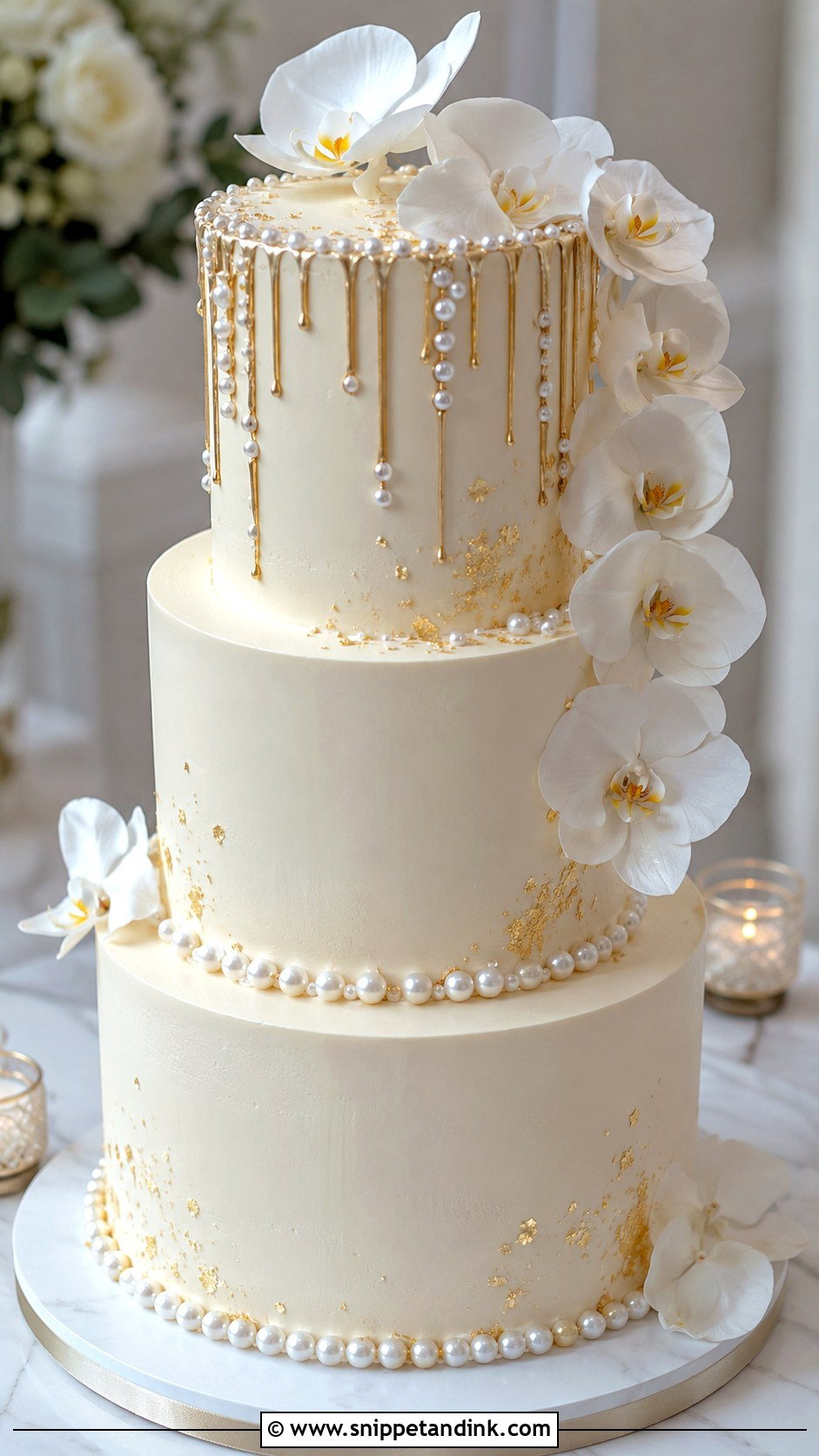
A gold drip gives the classic tiered cake a more current edge. The drip is usually white chocolate ganache painted gold once it sets, and the consistency matters: too warm and it runs to the board, too cool and it stops in stubby blobs. I test a single drip on the back before going round. Pearls look tidiest around the drip line or the base of each tier. A white vanilla or almond sponge under ivory buttercream gives the gold a clean background. A few white flowers finish it, and I’d keep it to one tier dripped rather than all of them.
3. Pearl And Gold Vintage Wedding Cake
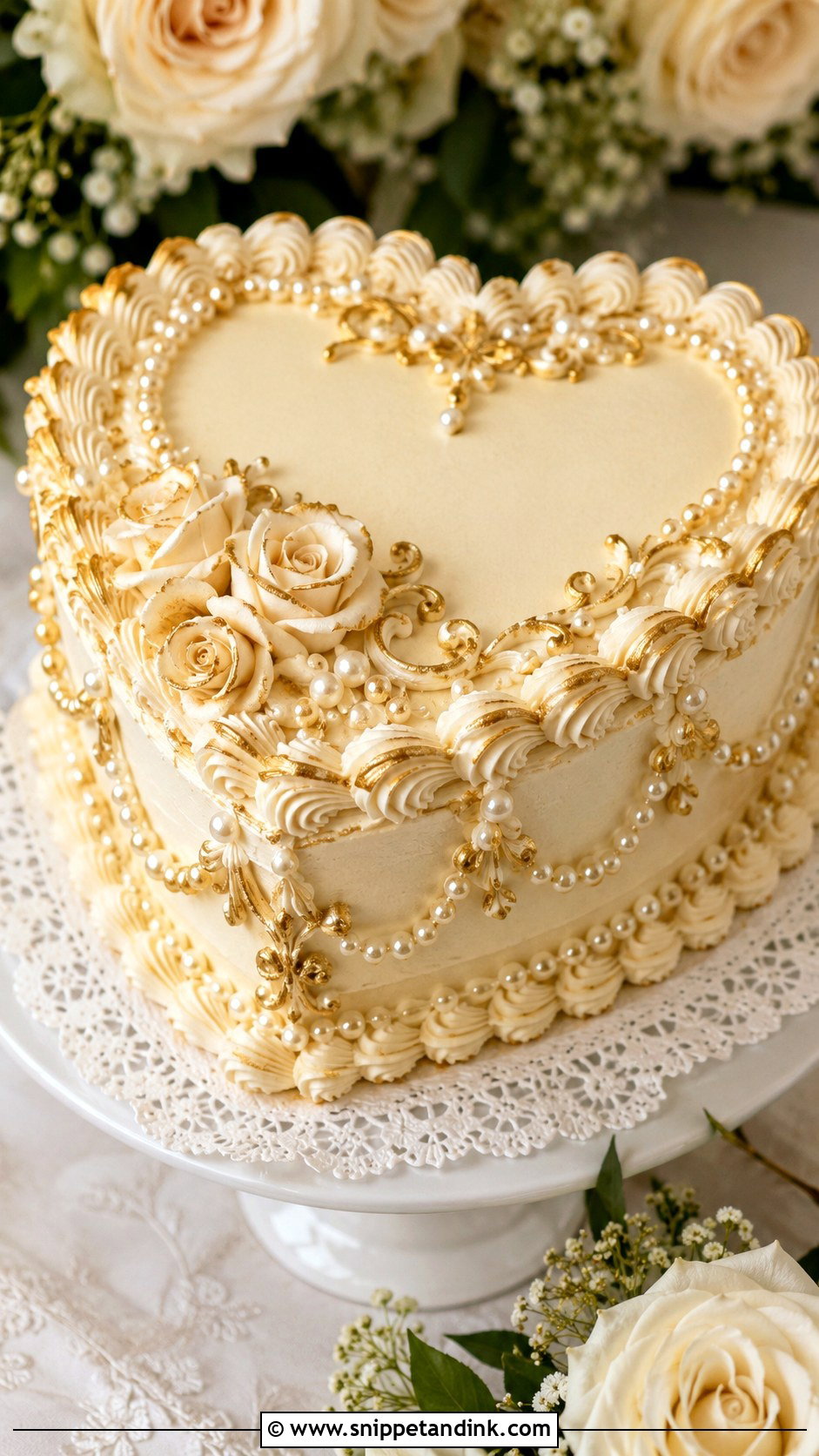
Vintage piping is having a real moment, and pearls suit it naturally. Heart-shaped tiers, shell borders, lambeth-style swags, pearl dots and gold touched onto the piping edges all belong here. The palette has to stay soft: ivory buttercream with champagne gold looks far better than bright yellow gold, which can read cheap on ornate piping. Lambeth work is layered over several passes, so it’s time-intensive and priced accordingly. One tier or several, keep the overall silhouette balanced and finish with ribbon or sugar roses.
4. Pearl And Gold Tiered Wedding Cake
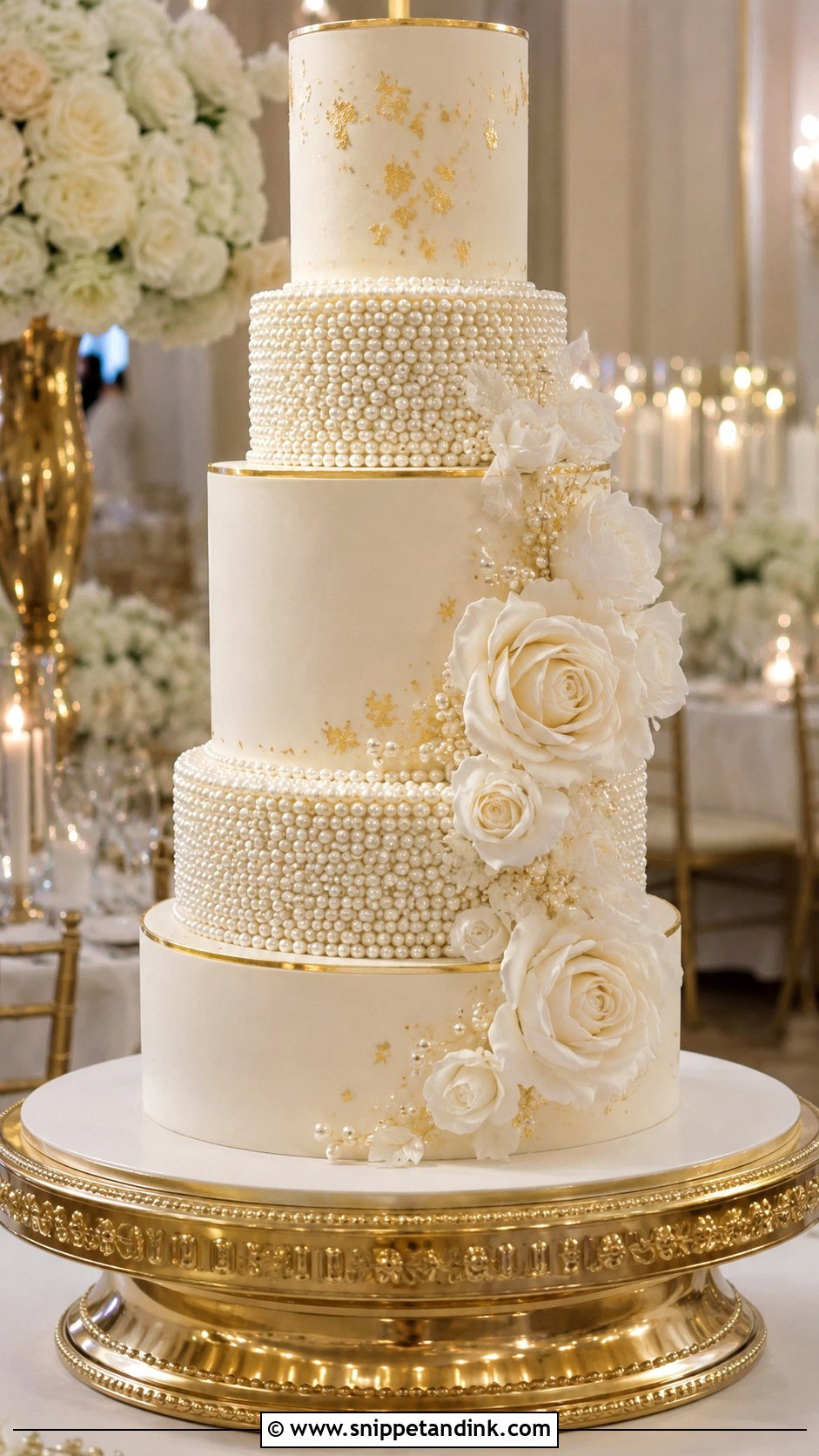
Height turns the cake into the room’s centerpiece, and larger weddings need the extra servings anyway. Each tier can carry a different detail: smooth ivory on one, gold leaf on the next, pearl bands on another. The thread that ties them together is repetition of the same two colors. On tall tiers I use tiny sugar pearls rather than large ones, because big pearls on a tall cake make it look top-heavy. Fresh or sugar flowers, or a small pearl topper, finish it. Any cake over three tiers needs internal dowels and a central rod for transport, so ask your baker how it will travel.
5. Pearl And Gold Buttercream Wedding Cake
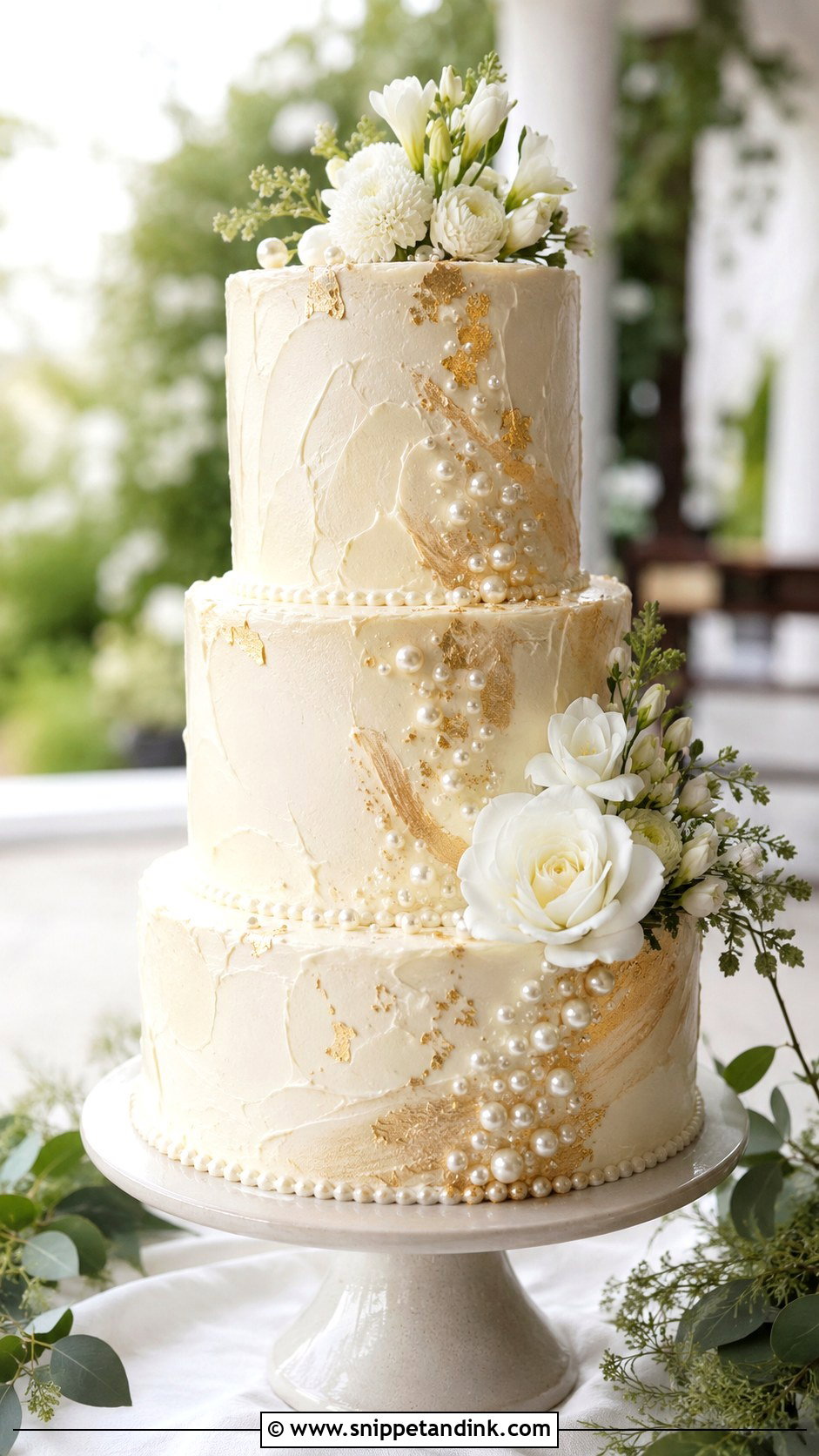
Buttercream reads warmer and less formal than fondant, and its slight texture makes pearls look more delicate. Choose a smooth finish for a clean look or a light palette-knife texture for a handmade feel. Gold goes on as brushstrokes, small leaf patches or a fine rim around each tier. My one caution is temperature: buttercream softens in warm rooms, and sugar pearls pressed into soft frosting can slide or sink. For a summer garden wedding I’d use a firmer Swiss or Italian meringue buttercream and keep the cake indoors until just before guests see it.
6. Pearl And Gold Fondant Wedding Cake
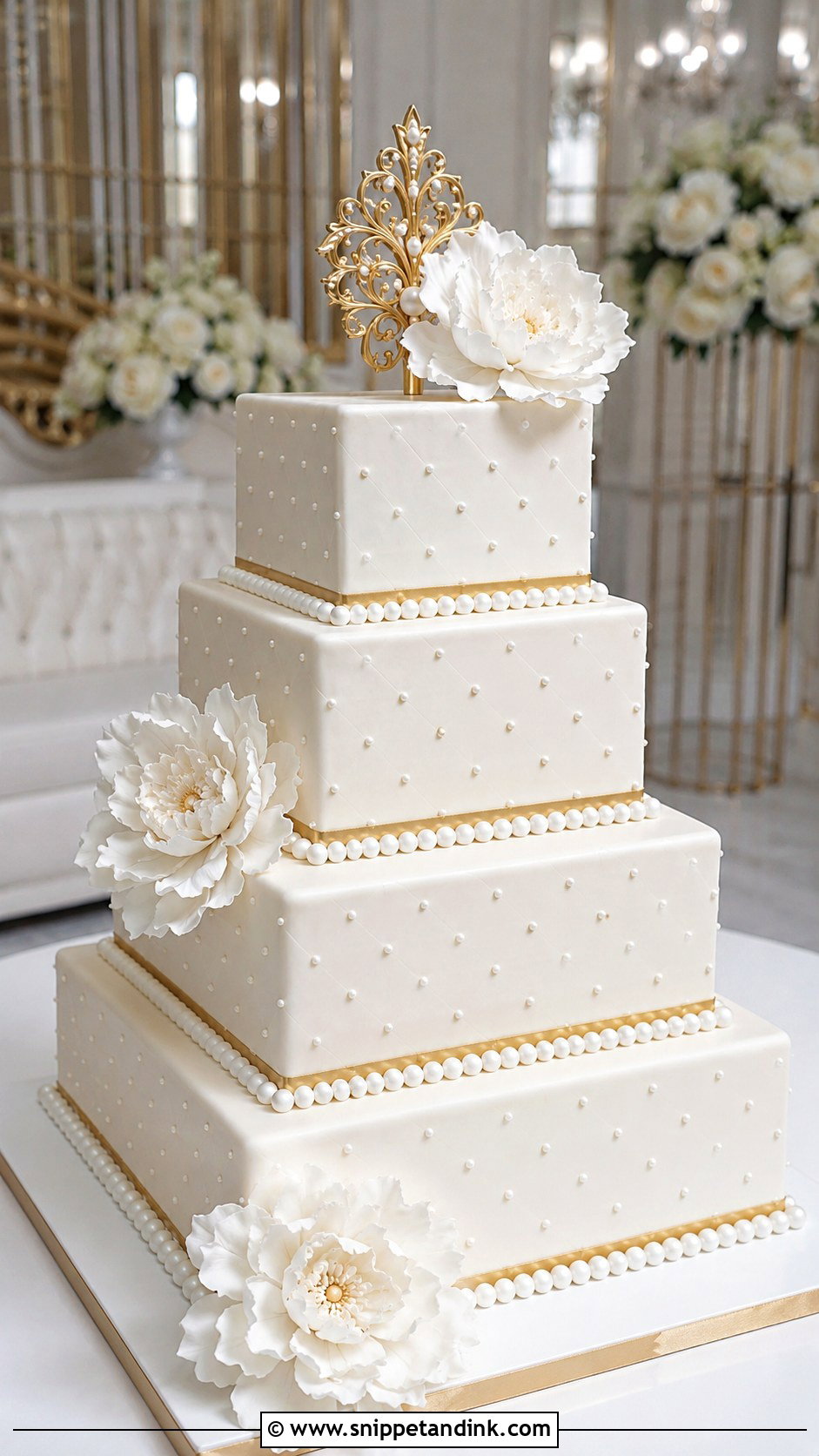
Fondant gives the crispest finish I can offer: sharp edges, smooth sides and a clean surface for pearl patterns, stenciling and embossing. It photographs evenly from any angle, which is why it suits formal receptions. Gold might be a thin painted band, a lace stencil or one fully metallic tier. Pearls can be spaced evenly for a tailored look or grouped in small clusters for something softer. Some guests peel fondant off, and that’s fine; the cake underneath is what they’re eating. White sugar flowers finish it.
7. Pearl And Gold Floral Wedding Cake
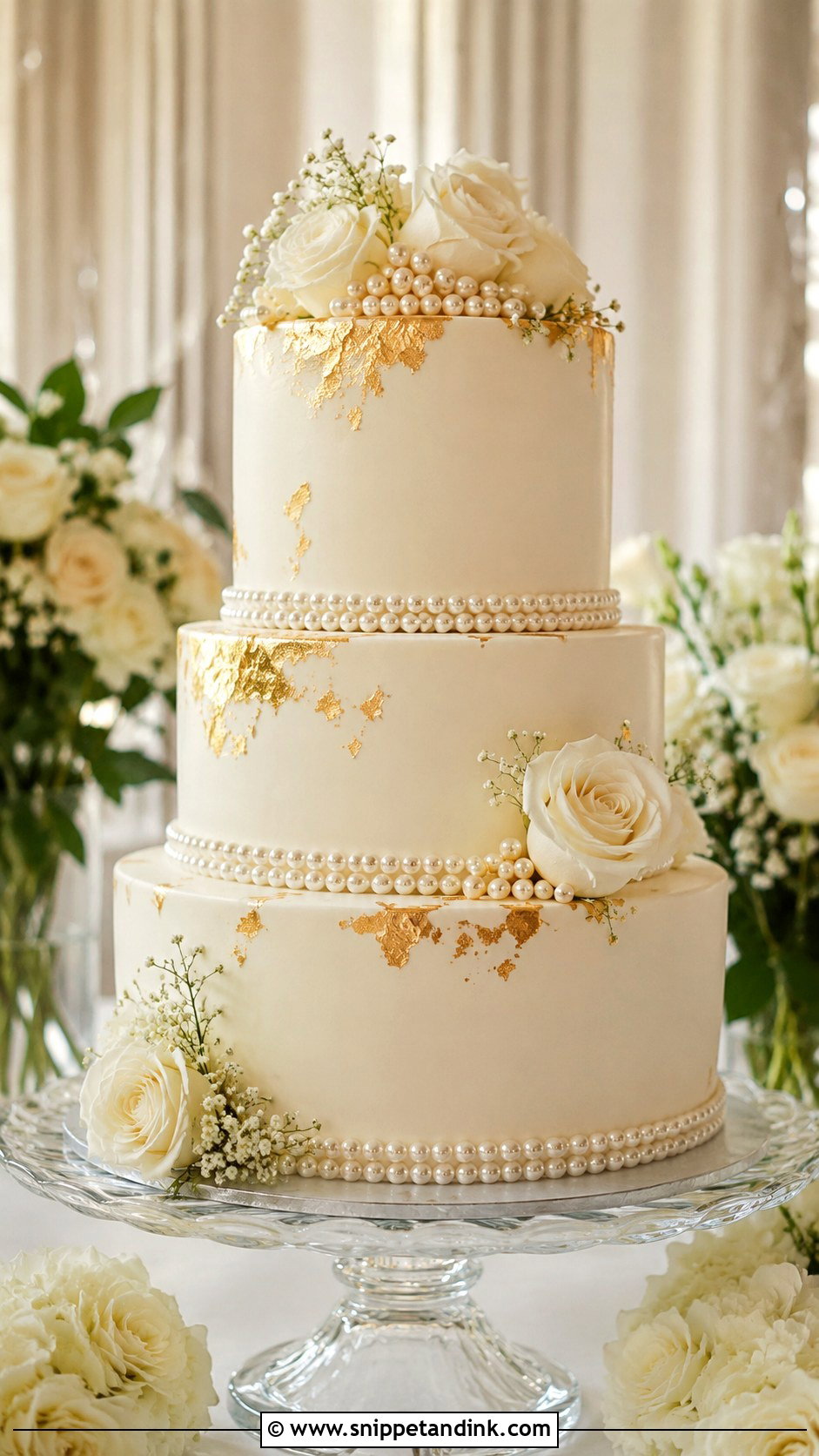
Flowers give the cake movement, and pearls and gold become the accents. They can be fresh, sugar or wafer paper, and the choice depends on budget and the room. Sugar flowers last and can be kept; fresh ones need to be food-safe and have their stems wrapped or inserted into a pick, never pushed straight into the sponge. White roses, orchids, peonies and ranunculus all suit pearls. I like gold leaf tucked just behind a petal edge so it catches light without crowding the bloom. Spring and summer suit it, but an ivory and champagne palette makes it year-round.
8. Pearl And Gold Marble Wedding Cake
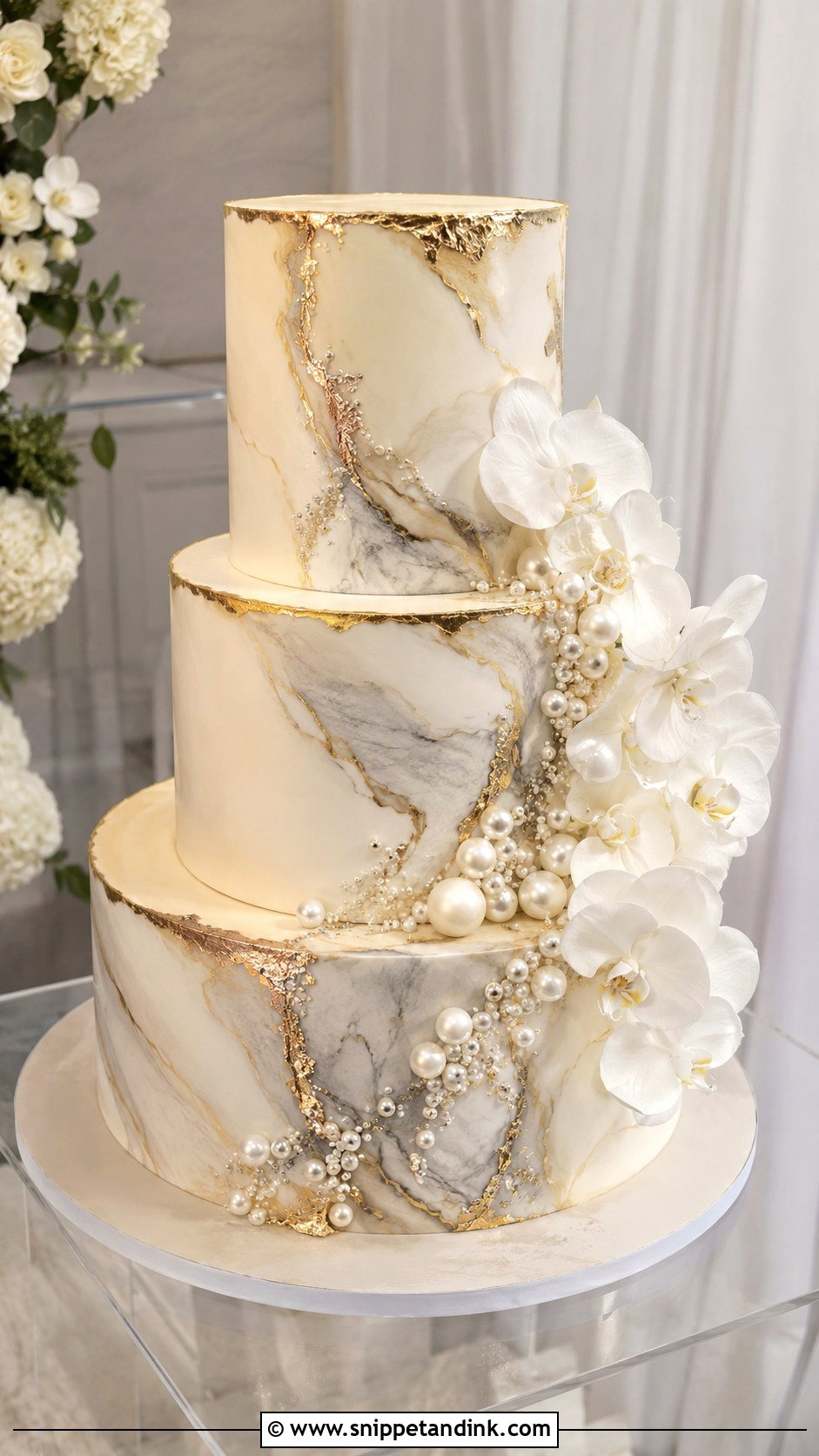
Marble fondant feels modern without losing the romance, as long as the veining stays subtle. Soft grey, ivory, beige or blush works; strong marbling fights the pearls. Gold painted along a few veins with pearl clusters on one side is my preferred balance. A two- or three-tier cake usually gives enough surface for the pattern to show. Every marbled sheet comes out slightly different, so if you have a reference photo, expect the same mood rather than an identical pattern.
9. Pearl And Gold Square Wedding Cake
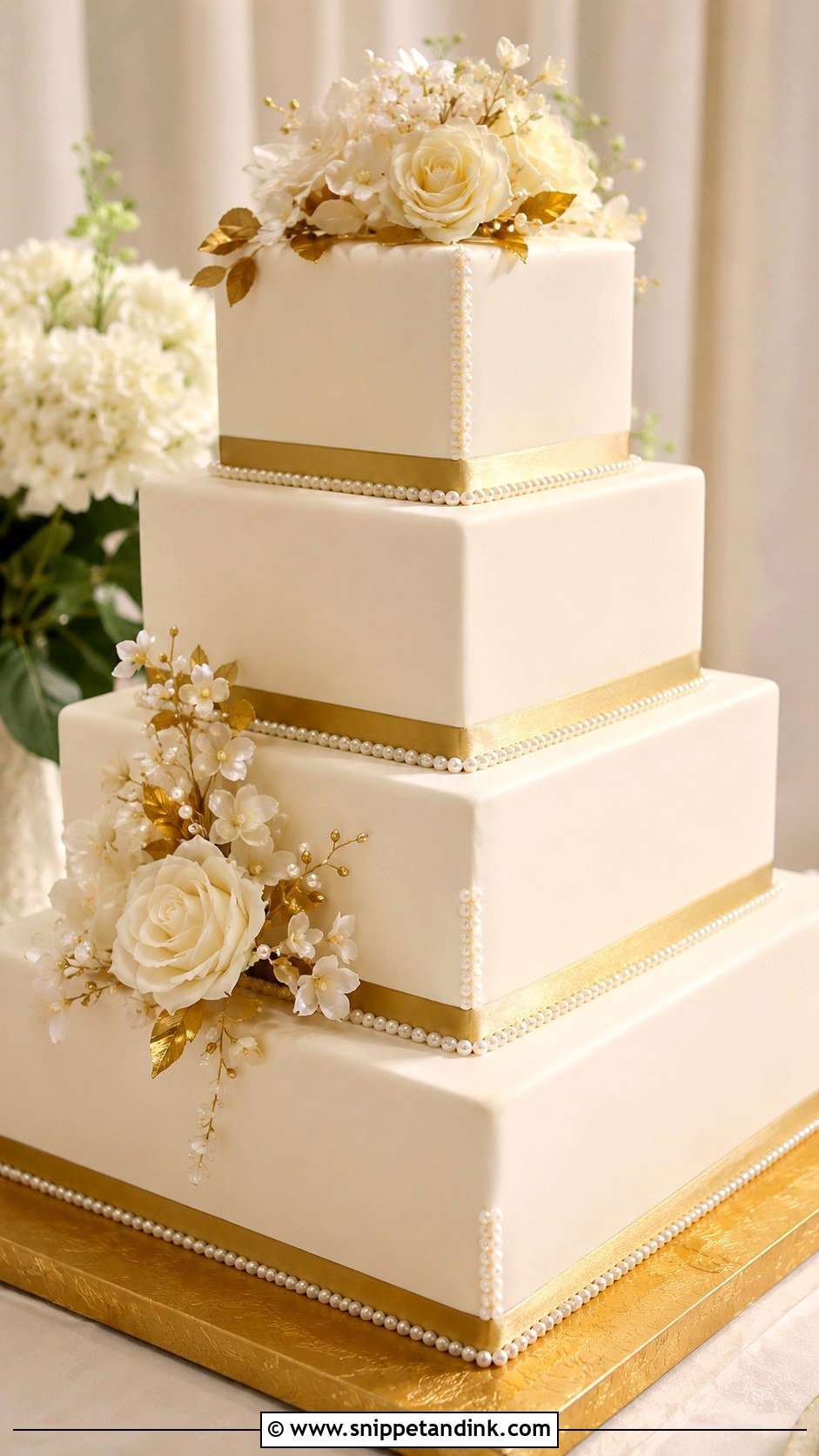
Square tiers look structured and modern, and their straight edges make gold bands and pearl borders look extra sharp. Smooth fondant suits them best. They’re also harder to finish than round: those four corners have to be sharp without tearing, which takes more decorating time. Soften the shape with pearl clusters, a few sugar flowers or a light gold stencil, and leave open space rather than covering every face. Highlighting just the corners or the tier edges usually looks more expensive than full coverage.
10. Pearl And Gold Round Wedding Cake
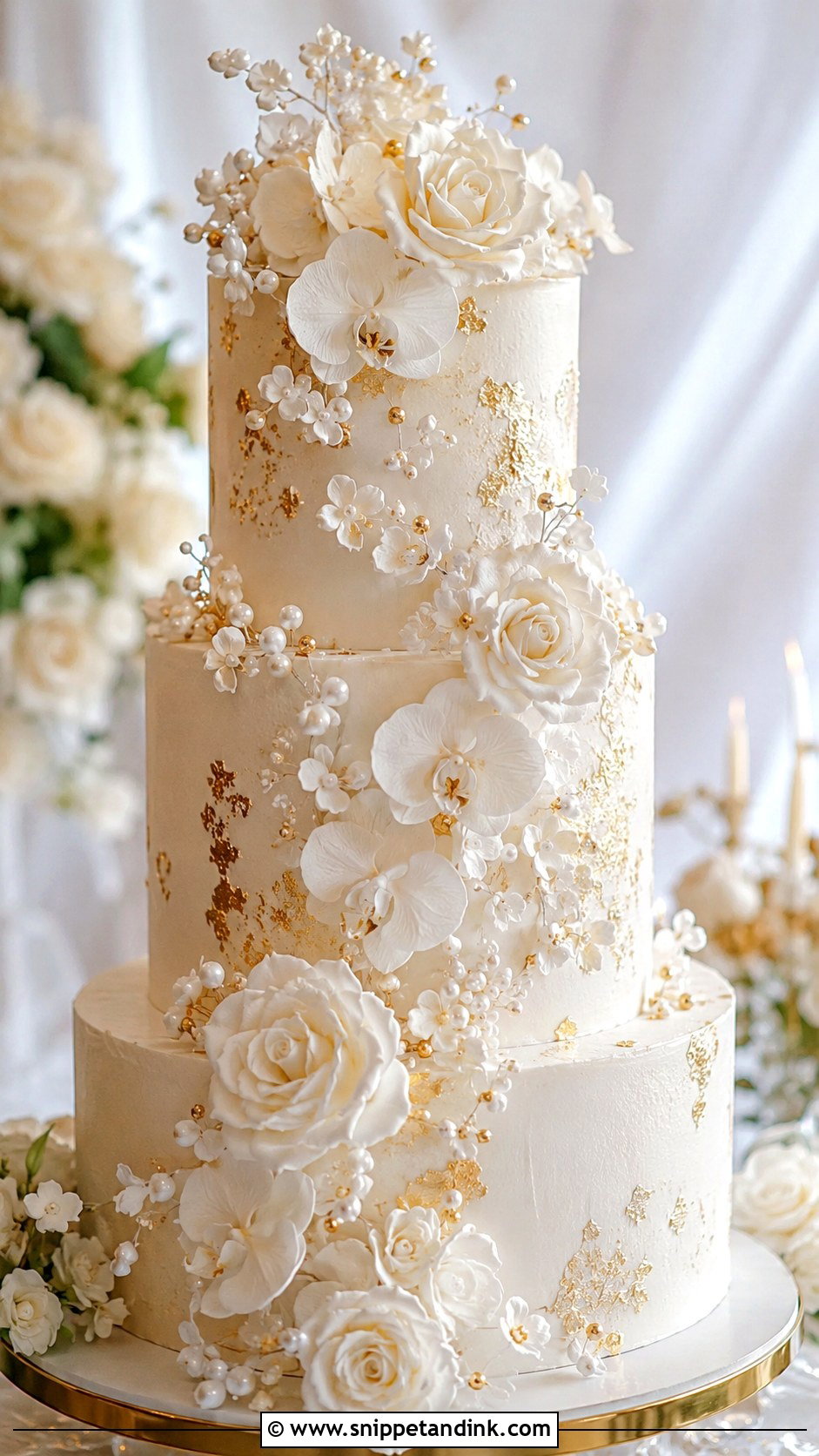
Round tiers are the classic for good reason: they suit nearly any frosting and are easy to customize. Pearls wrap around them like a necklace, and gold can go on as leaf, trim, painted edging or shimmer. A three-tier round cake in ivory with fine pearl bands and small gold accents will still look right in your photos decades from now. Round cakes also cut most efficiently into even slices. Simple white flowers or a little greenery are enough.
11. Pearl And Gold Minimalist Wedding Cake
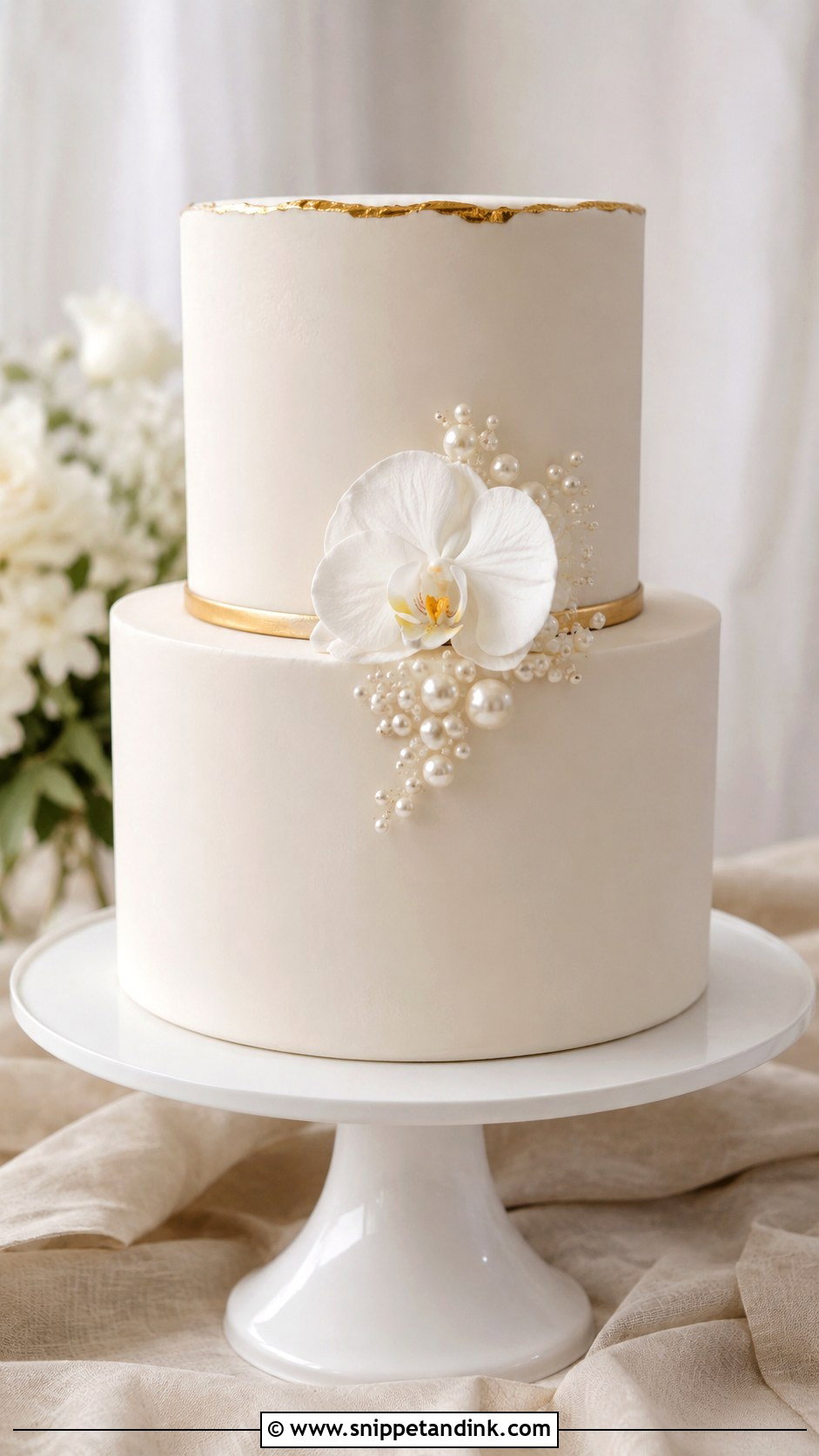
Restraint can look richer than decoration. A smooth white or ivory cake with one gold rim and a few pearl clusters often looks more expensive than a heavily dressed one. My rule is to choose one main detail, such as a pearl border, a corner of gold leaf or a single floral accent, and leave the rest of the surface clean. That also means every flaw shows, so minimalist cakes need a very good base finish. A sleek stand and a plain backdrop keep the presentation clean.
12. Pearl And Gold Tall Wedding Cake
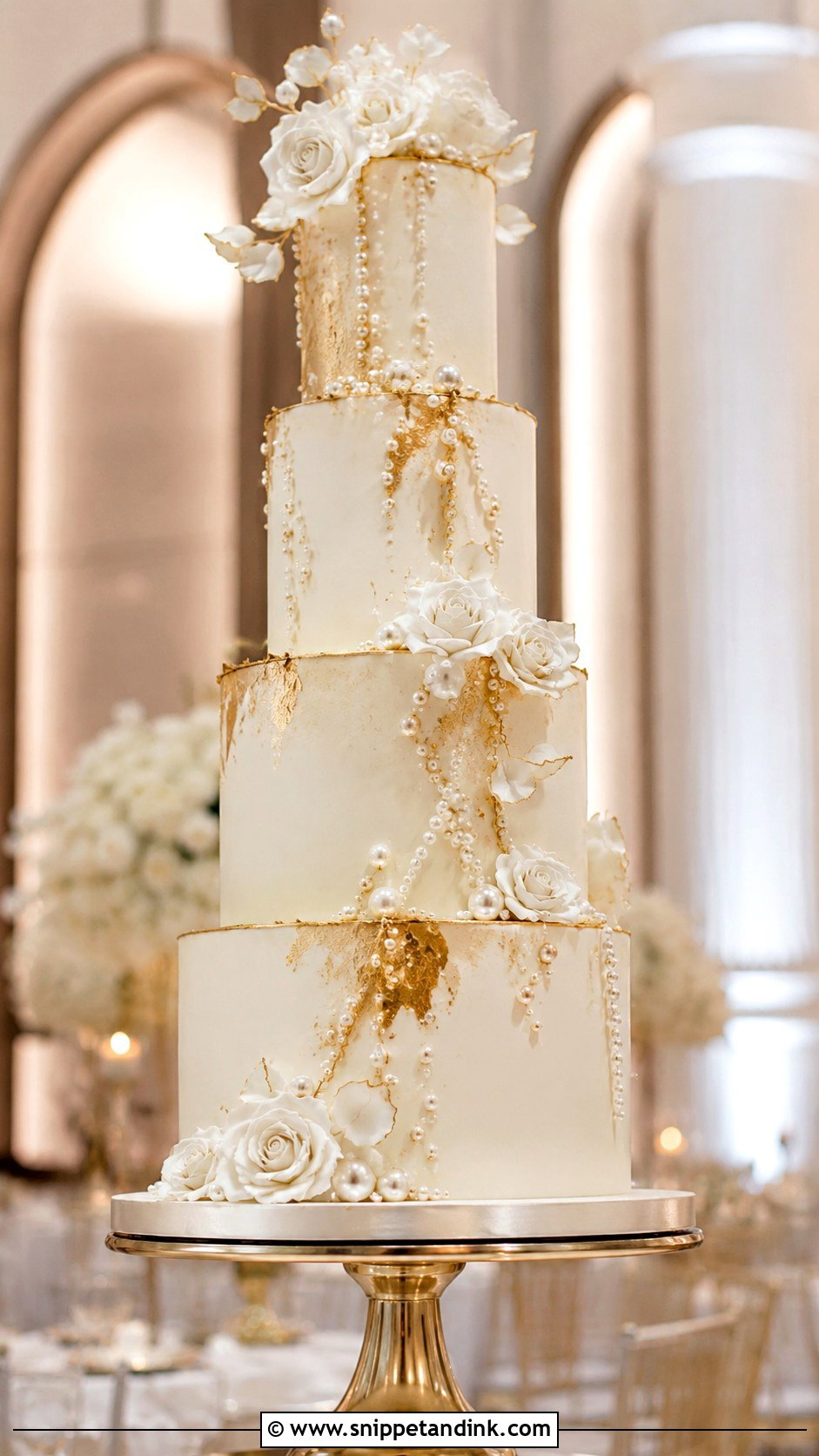
Tall tiers, sometimes called double-barrel tiers, make the cake look grand even with simple decoration. Vertical pearl trails, painted gold edges and long floral sprays all suit the extra height. Large pearls get heavy fast here, so I use small edible pearls in soft clusters or thin lines, and I run gold leaf upward to pull the eye. Double-height tiers need internal support boards halfway up, just like a separate tier. They suit high ceilings and big guest counts.
13. Pearl And Gold Small Wedding Cake
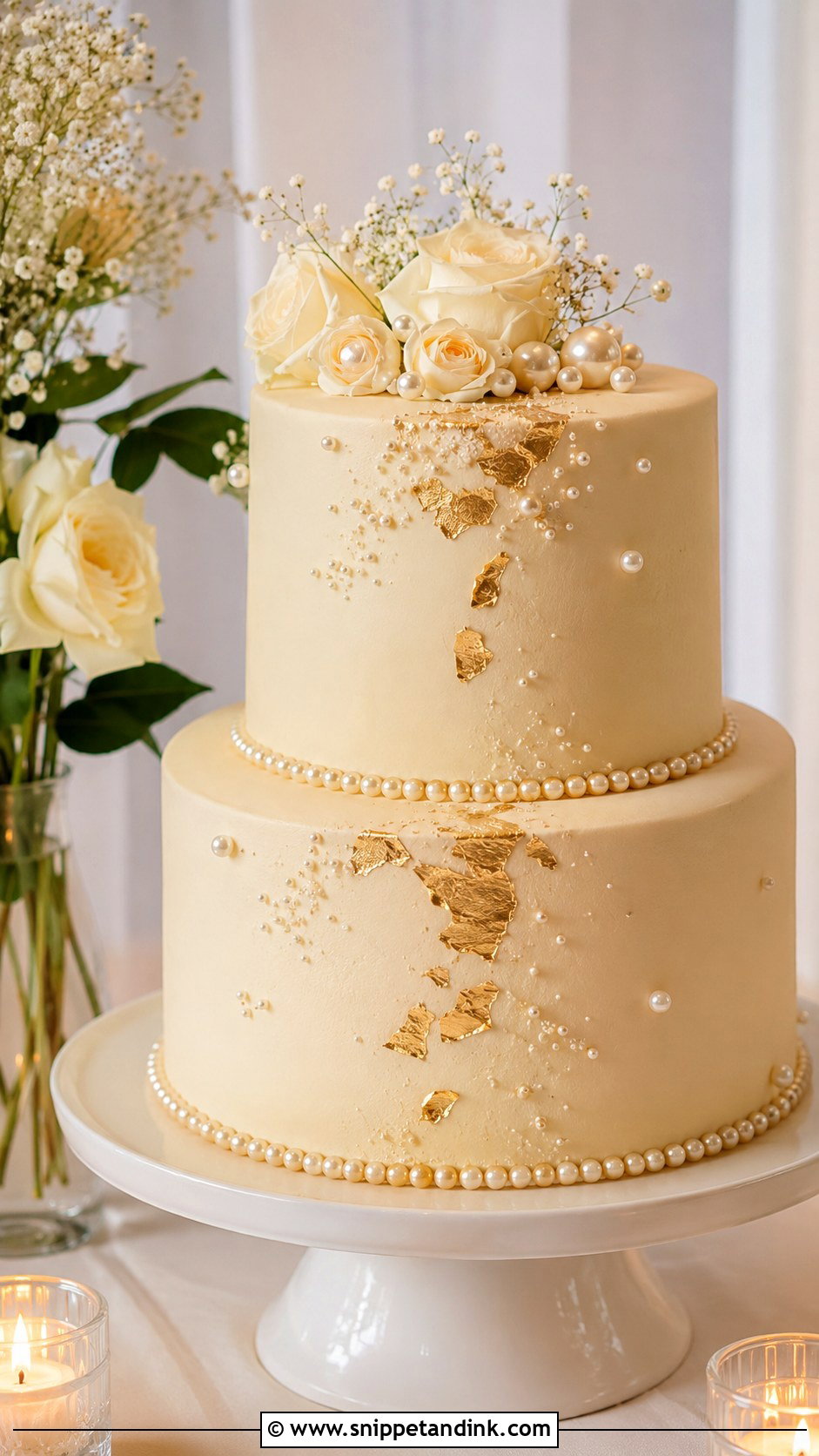
Small cakes are a good fit for elopements, micro weddings and couples serving other desserts. A one- or two-tier ivory cake with pearl edging, soft gold leaf and a small floral topper can feel special. With less surface, every decoration counts, so I choose fewer and make them finer. A small heart shape works nicely with pearls and gold for a vintage feel. Raise it on a stand with candles or flowers nearby, otherwise a small cake can disappear on a big table.
14. Pearl And Gold Heart Wedding Cake
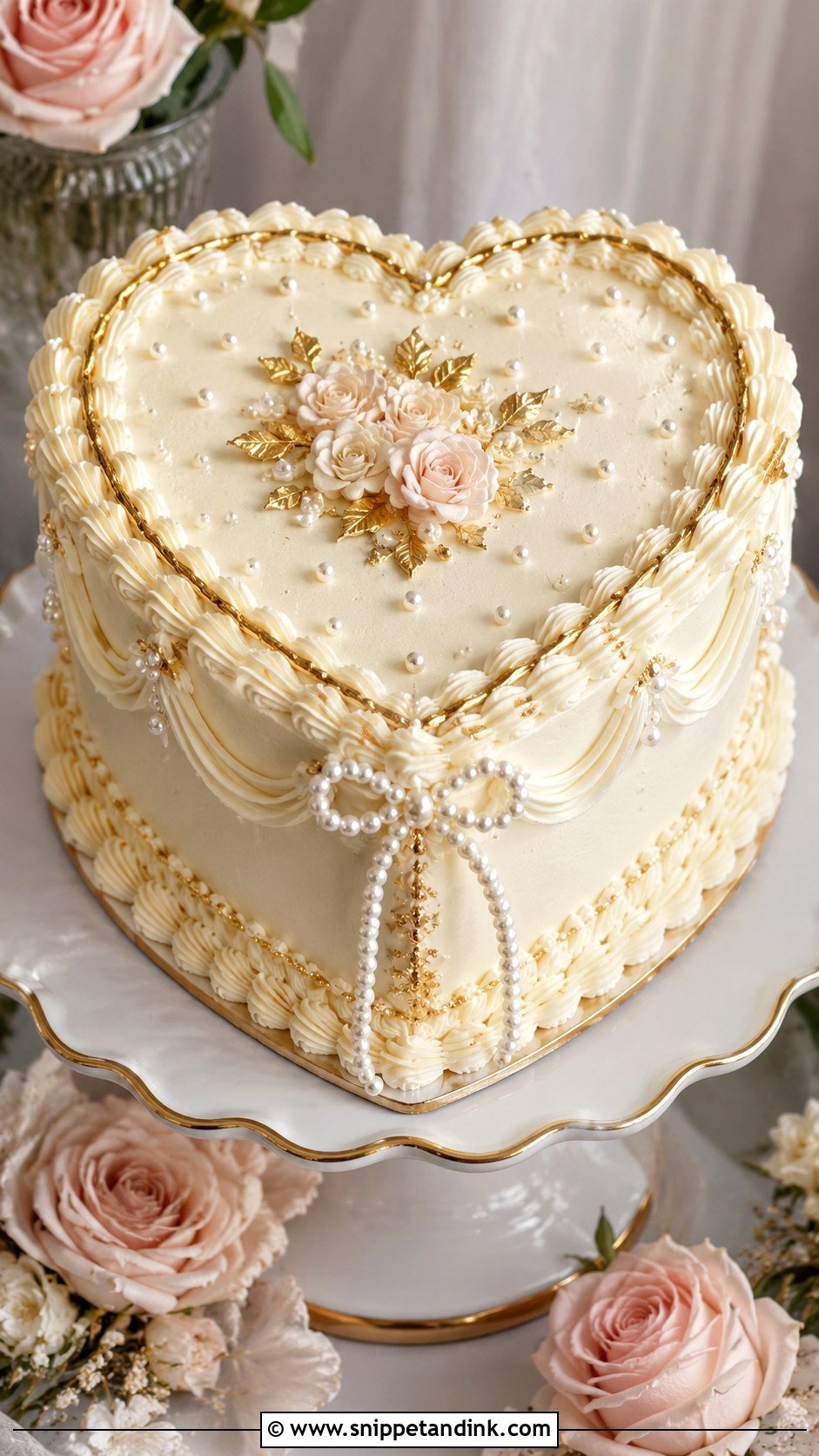
Heart-shaped cakes bring a sweet, vintage feel, and they’re especially good for intimate receptions. Buttercream piping looks right on a heart, especially with pearl dots, gold accents and fine borders. I keep the frosting ivory or soft white so the shape reads elegant instead of playful. Gold can be brushed onto the piping or added as small leaf details near the edges. A short piped message, sugar flowers or a pearl bow finishes it. Heart cakes cut less neatly than round, so I’d plan servings a little generously.

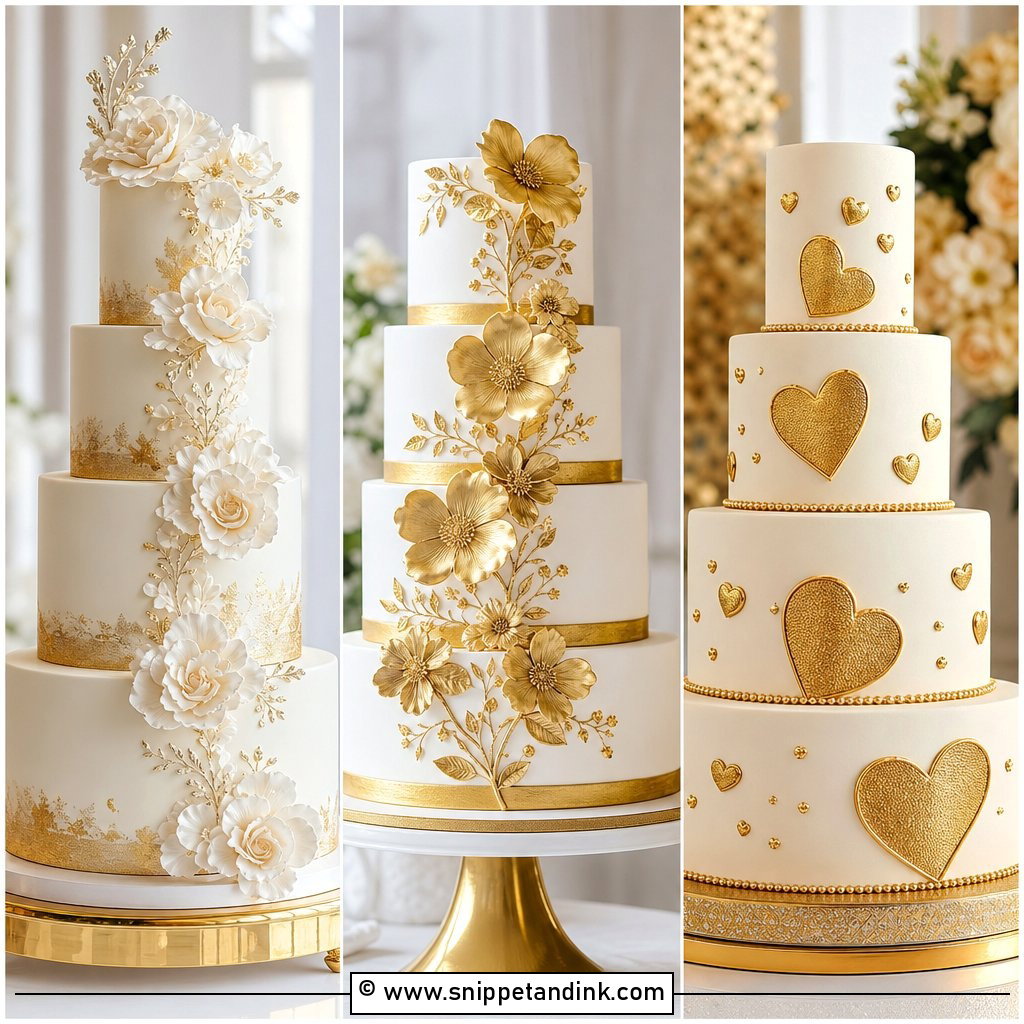
15. Pearl And Gold Lace Wedding Cake
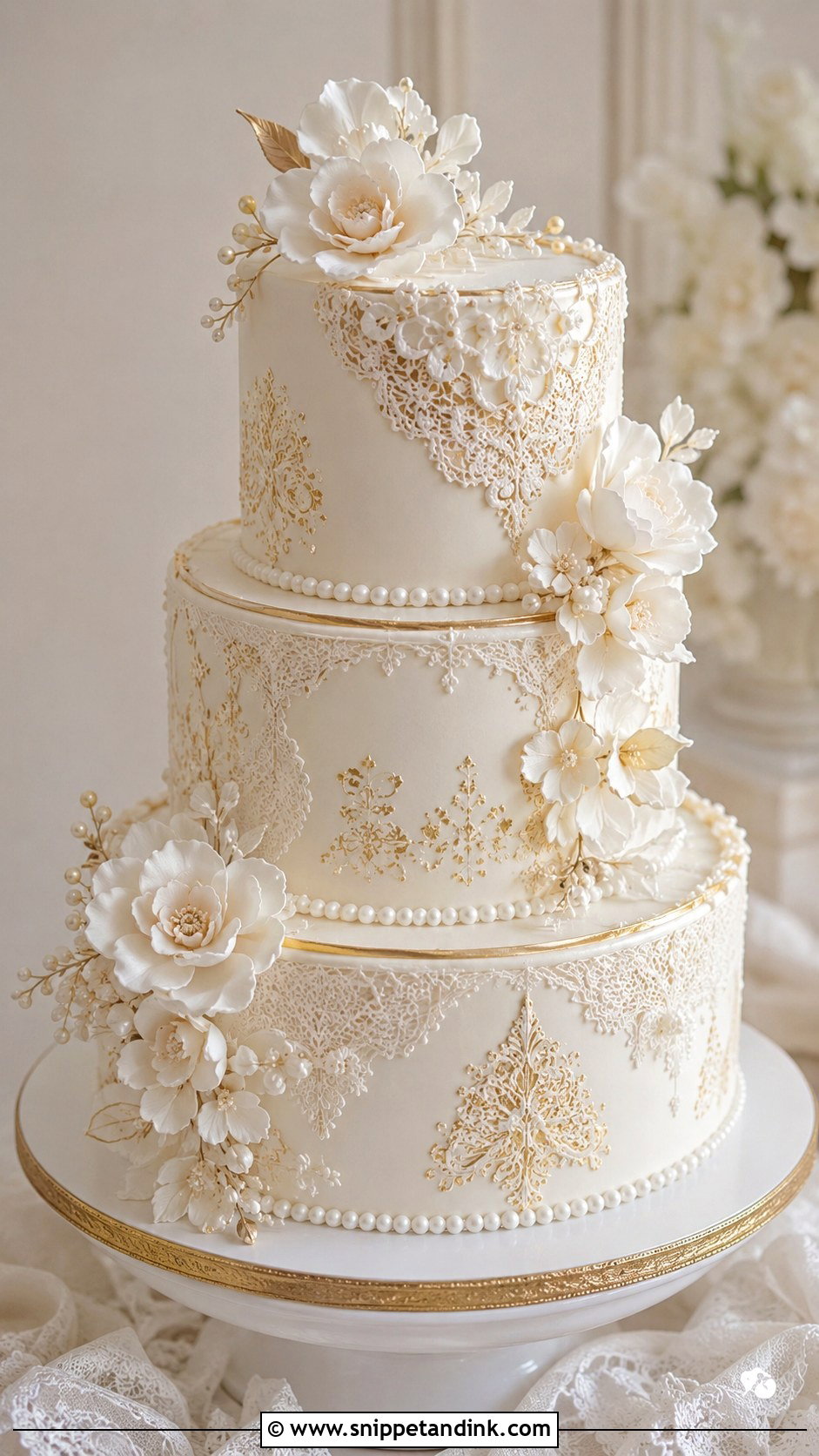
Lace and pearls both come straight from bridal gowns, so they sit together naturally. Lace can be fondant appliqué, edible lace mats, stenciling or piped buttercream. Gold should stay light: a soft stencil, a thin trim or small touches on the lace edges. Edible lace sheets go soft and sticky in humidity, so for a summer wedding I’d choose piped or appliqué lace instead. Use lace on one or two tiers and leave the others smooth, then finish with pearl borders and white flowers. Matching the lace pattern to your dress is a detail people notice.
16. Pearl And Gold Chandelier Wedding Cake
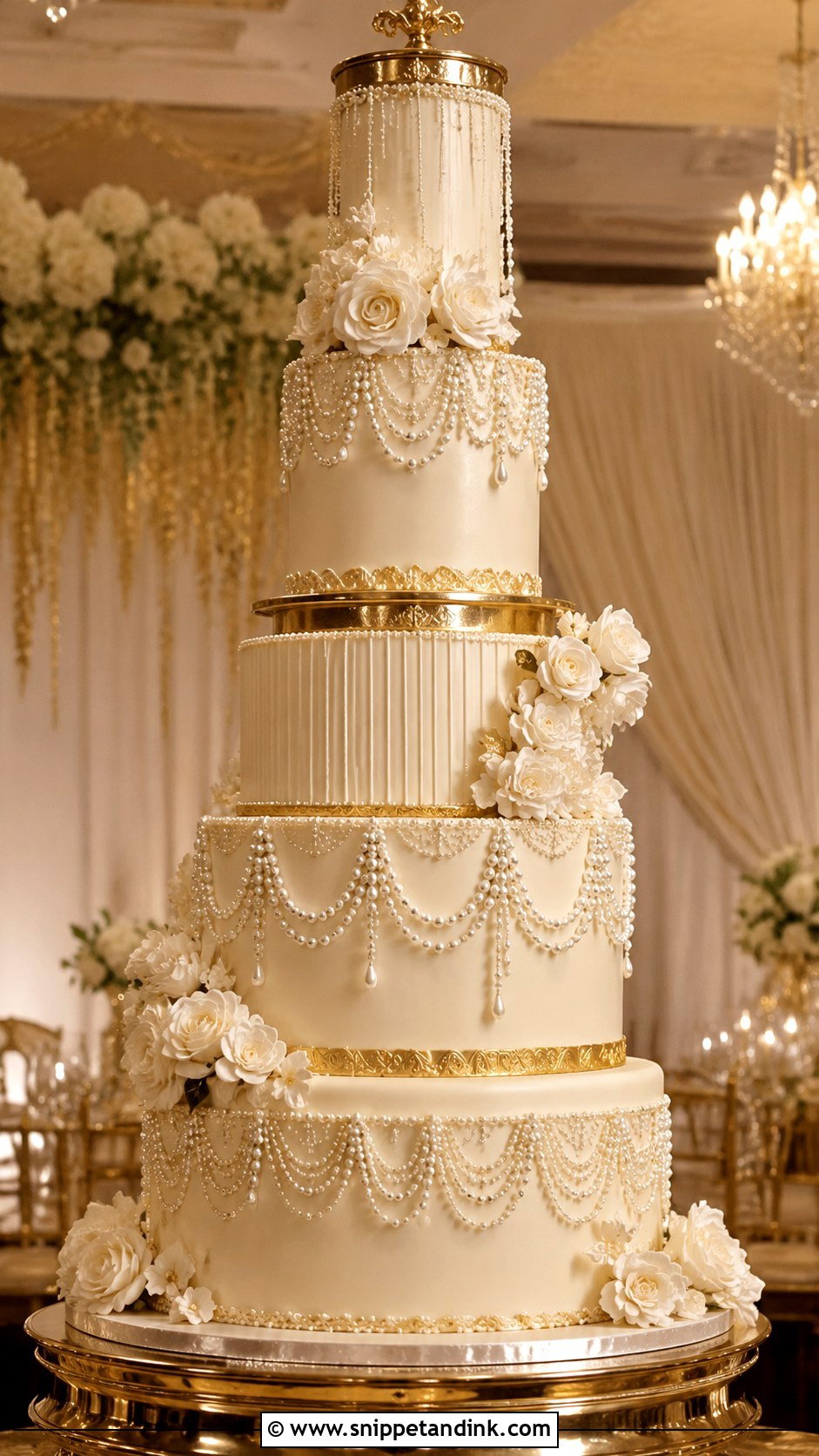
A chandelier cake uses hanging pearl strands, gold accents and tiered structure to echo a sparkling light fixture. It’s at its best on a tall cake with smooth ivory fondant and metallic gold separators. Strands can drape from one tier or loop around the whole cake. Hanging strands are usually decorative beads rather than edible pearls, so they must be removed before cutting, and the baker needs to know who will do that. Keep flowers minimal; the strands already bring movement. Ballrooms, museums and formal indoor rooms suit it.
17. Pearl And Gold Geode Wedding Cake
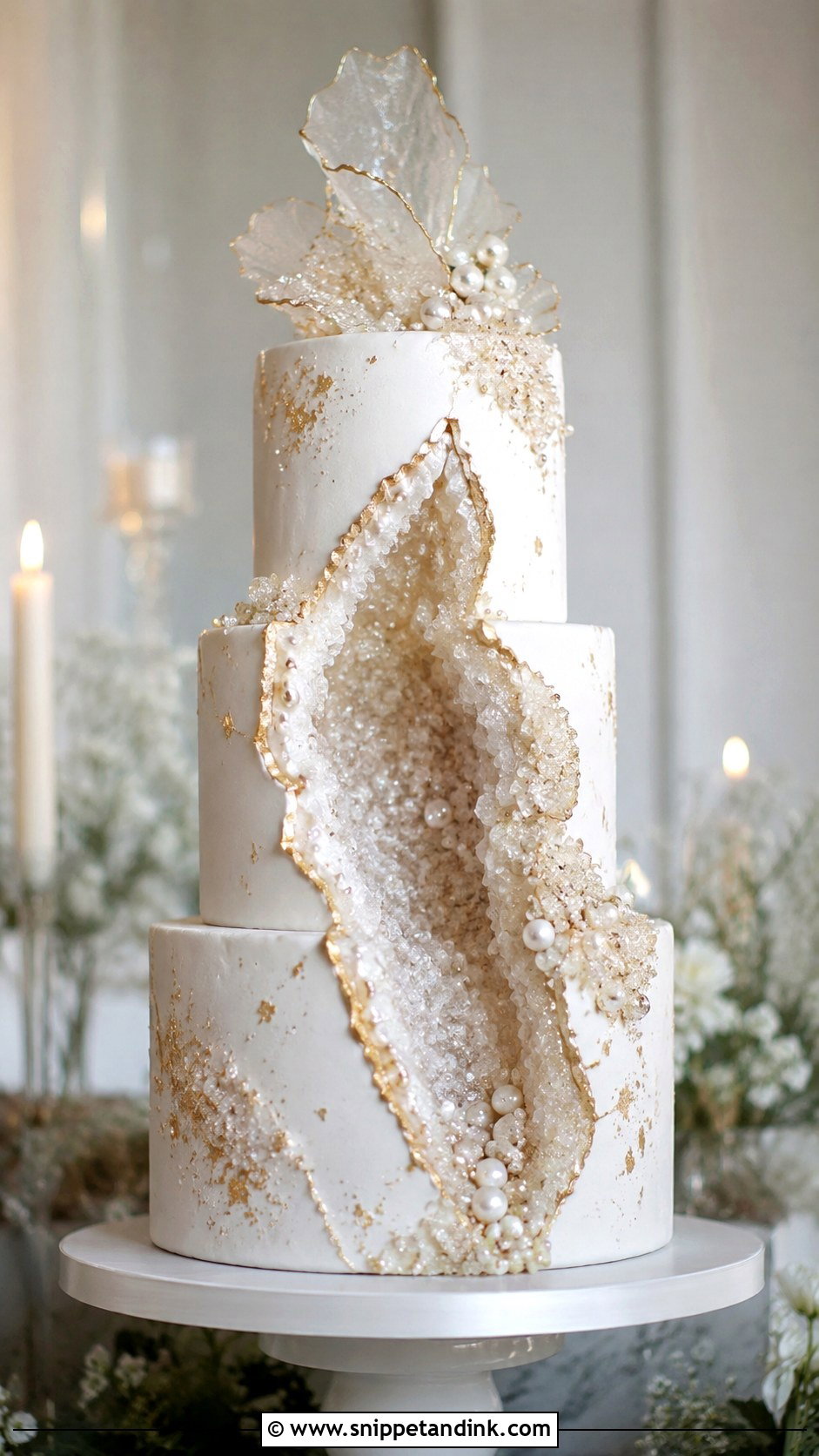
Geode cakes are the most artistic option on this list. Instead of crystal colors alone, this one uses pearl tones, champagne gold and rock candy or isomalt crystals set into a carved opening down one side. Gold edging and pearls frame the split, which contrasts nicely with smooth white frosting. Keep the palette soft, in ivory, cream, pale blush or champagne, so it still reads bridal. Rock candy is very hard on the teeth, so I’d let your caterer know to cut around the geode section when serving. Modern venues and evening receptions suit it.
18. Pearl And Gold Sequin Wedding Cake
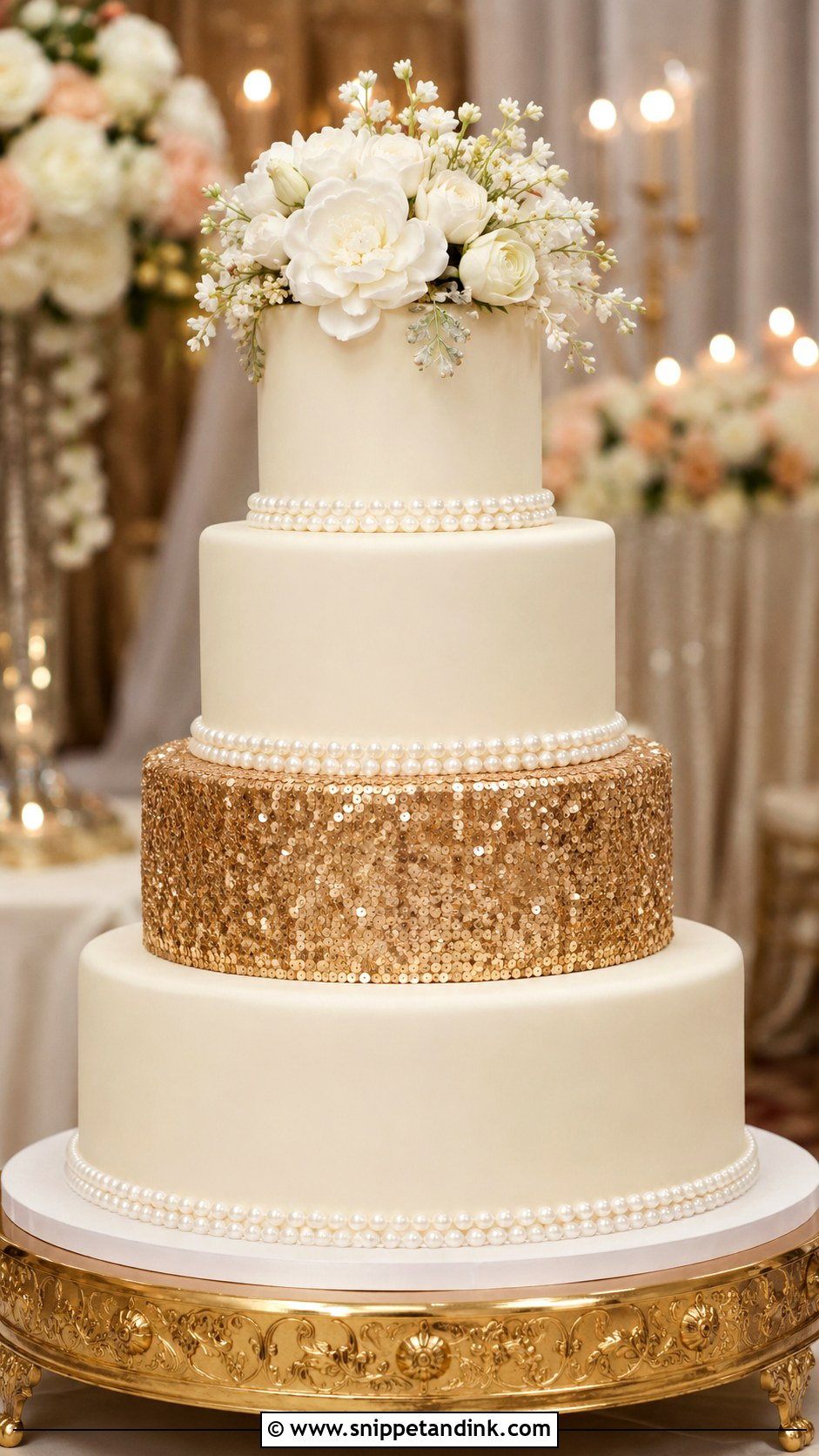
A sequin tier gives the dessert table a fashion feel. The effect comes from tiny edible gold discs, metallic sprinkles or hand-painted dots, applied one by one, which makes it slow to make. Pearls soften the shine. I put the sequins on one tier only and leave the others smooth, otherwise the whole cake looks busy. Pair the sequin tier with ivory frosting, pearl borders and a simple floral topper. Under evening lighting, the sequins catch every flash in the room.
19. Pearl And Gold Pearl Cascade Wedding Cake
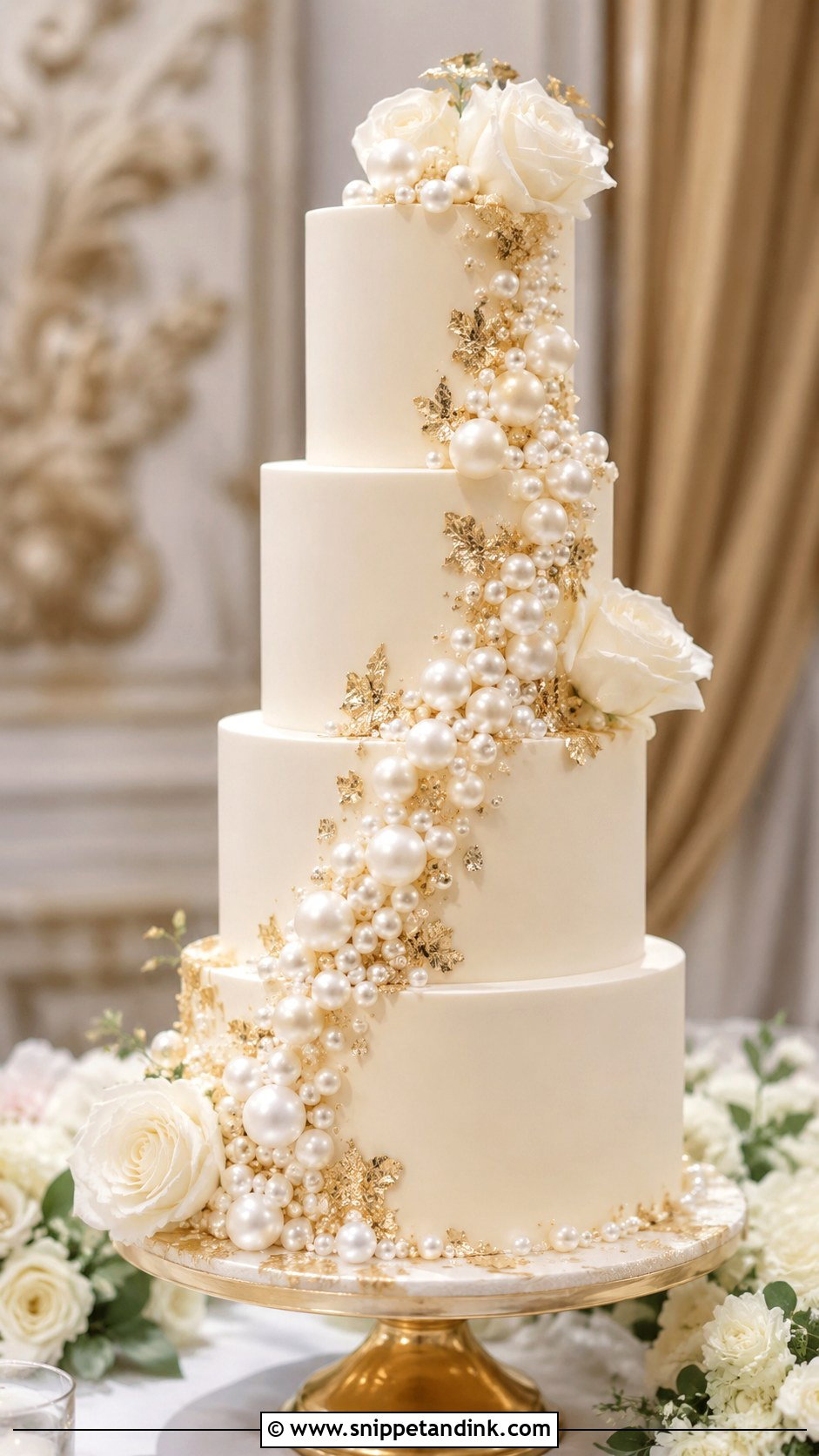
A pearl cascade creates a waterfall down the tiers. It starts near the top and flows diagonally to the base, mixing pearl sizes so it looks natural rather than lined up. Gold leaf or dust can follow the same path for warmth. The rest of the cake stays simple so the cascade leads. Smooth ivory fondant or buttercream works best. I attach each pearl with a dot of edible glue rather than pressing it in, because pressed pearls on a slope tend to slide over a long reception. A few white flowers at the top or bottom of the cascade finish it.




20. Pearl And Gold Art Deco Wedding Cake
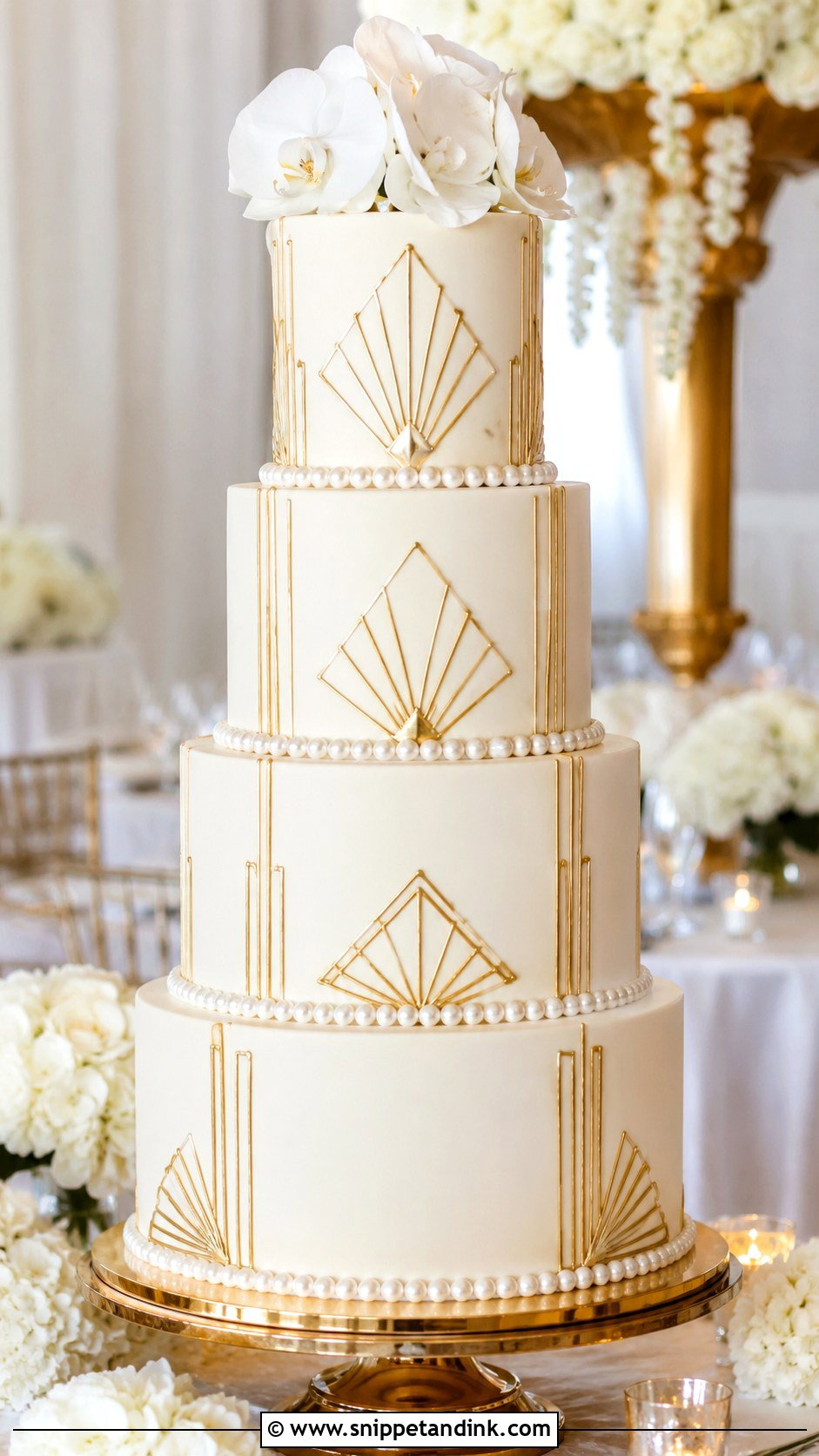
Art deco brings clean lines, symmetry and old-Hollywood glamour to a art deco wedding cake: fan shapes, geometric gold patterns, sharp edges and pearls set in neat rows. A little black can work in tiny amounts, but ivory and champagne gold keep it bridal. Fondant holds crisp patterns best. I use pearls to highlight the geometry rather than cover it, placing them only at the points where lines meet. Historic venues and evening receptions suit its polished look.
Heat, Condensation and a Cake That Has to Wait Three Hours
A wedding cake usually sits on display for hours before it’s cut, and pearls and gold react to the room more than most people expect. A chilled fondant cake moved into a warm, humid space beads with condensation. That moisture can make gold paint streak and colored sugar pearls bleed into the frosting. Gold leaf itself doesn’t tarnish, but it lifts on a wet surface.
So I deliver close to the reception, set the cake well away from windows, heaters and the dance floor, and avoid sunny tent corners. Buttercream needs a cool room; if the venue gets warm in summer, ask your baker about a firmer frosting or a fondant finish. Outdoors in direct sun, no metallic detail will last, and I’d move the cake inside until the cutting.
Details to confirm with the venue
- A sturdy, level table that nobody will lean on.
- Room temperature during the reception, not just at setup.
- Who receives the cake and where it can wait if the room isn’t ready.
Ask Your Baker Which Pearls Are Edible Before You Sign
Pearl and gold cakes can be classic, modern, romantic or dramatic depending on the finish. Smooth fondant with pearl borders reads formal; buttercream with gold leaf feels relaxed; a vintage heart is sweet; tall tiers are grand. Match the cake to your venue, dress, flowers and the temperature of the room. Bring clear inspiration photos, but also ask what is edible, what is decorative, and what’s realistic for your budget. Balance is what makes pearls and gold look expensive instead of busy.
You'll Like These Ideas:








Leave a Reply