
Mexican bridalwear draws on deep textile traditions, skilled handwork and a good dose of romantic European influence, but Mexican and Spanish style are not the same thing, and a good outfit knows which is which. Mexican pieces tend to bring hand-embroidered flowers, birds and nature motifs, full skirts and regional techniques. Spanish influence shows up as ornate lace, fitted shapes, ruffles and the mantilla veil. When brides bring me this mix, my first questions are about the ceremony, the family and where the embroidery comes from, because those answers shape the dress more than any trend. The twenty looks below run from colorful to all-ivory, for haciendas, churches, beaches and ballrooms.
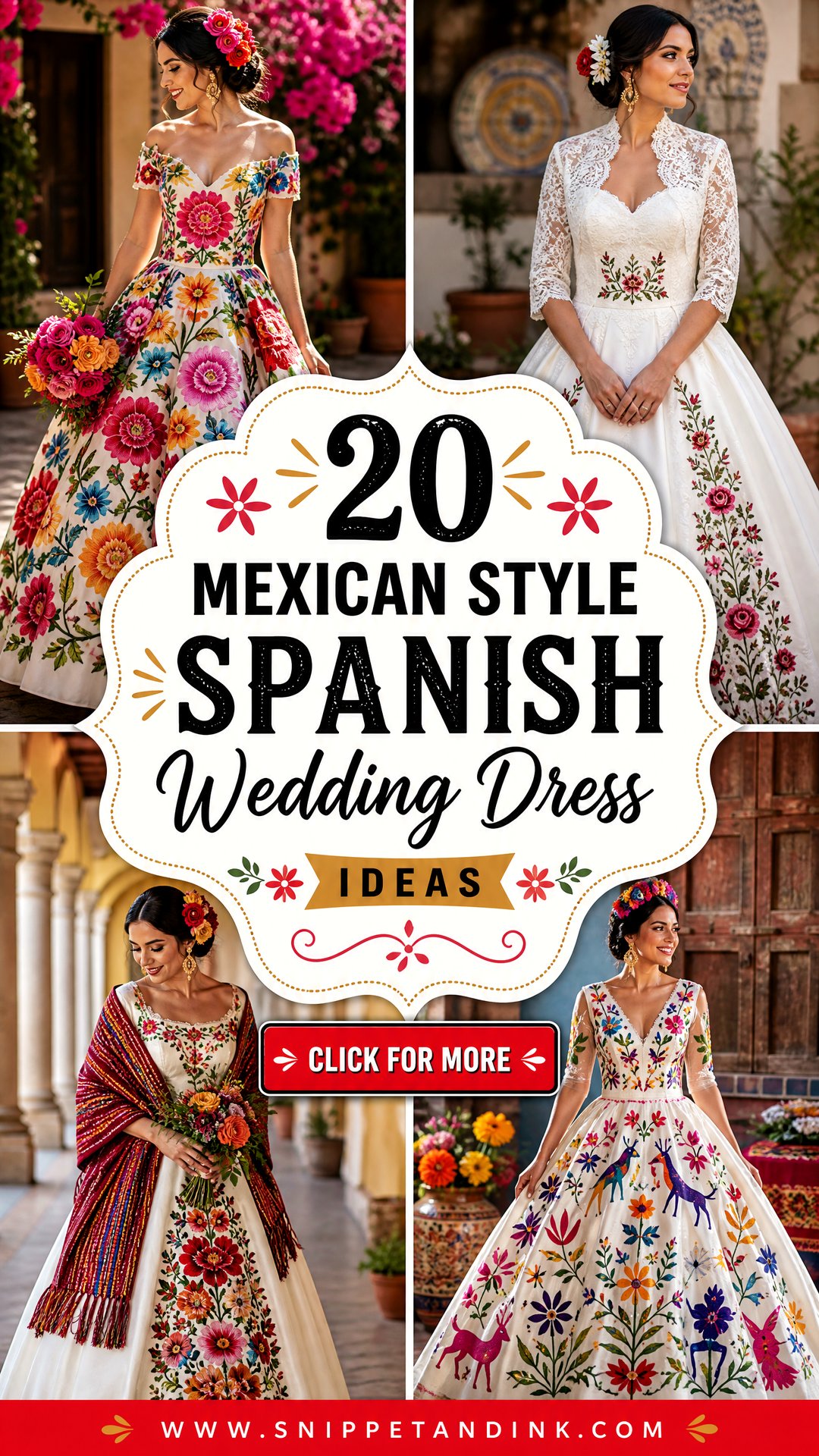
Hand Embroidery Takes Months, So Start With the Maker
Handwork moves at its own pace. A heavily embroidered dress made by artisans can take many weeks to stitch, and makers often have a queue ahead of you, so I suggest starting the conversation six months or more before the wedding, then adding time for shipping and fitting.
When you talk to an artisan or a Mexican designer, these are the questions that tell you most:
- Which region and technique is this, and are any of the motifs reserved for particular occasions or people?
- What is the base fabric and what are the threads made of? Cotton, silk and synthetic threads behave very differently when cleaned.
- Can the garment be altered once it’s finished? Embroidered panels often can’t be taken in without cutting through stitches.
- Will the colors run if the dress gets wet in a summer storm or a spilled drink?
Loose traditional shapes such as huipiles are not meant to be fitted like a gown. If you want a closer fit, ask the maker to build it in from the start rather than relying on a seamstress afterwards, which protects both the textile and the craftsperson’s work.
1. Embroidered Mexican Wedding Dress With Mantilla Veil
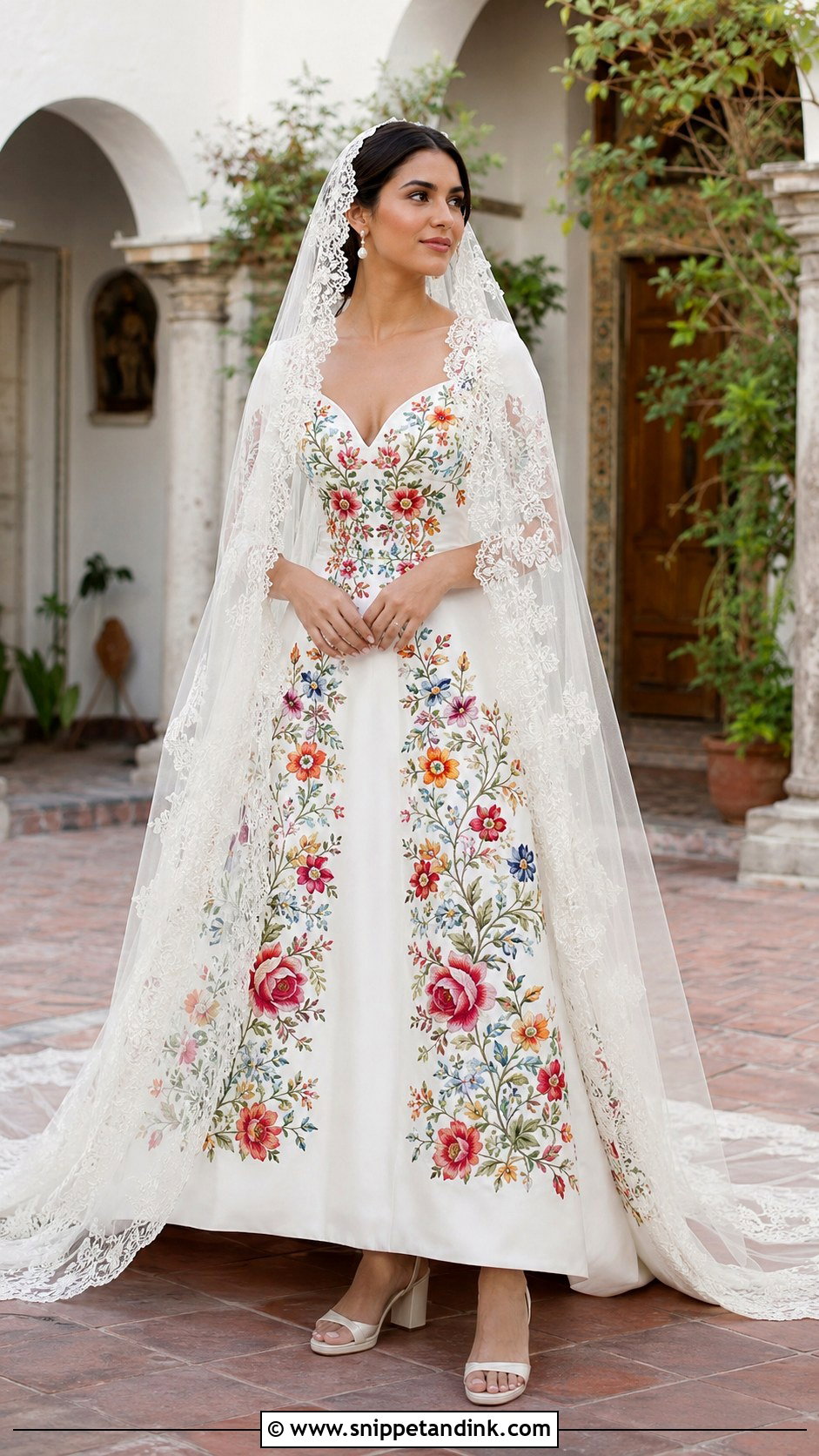
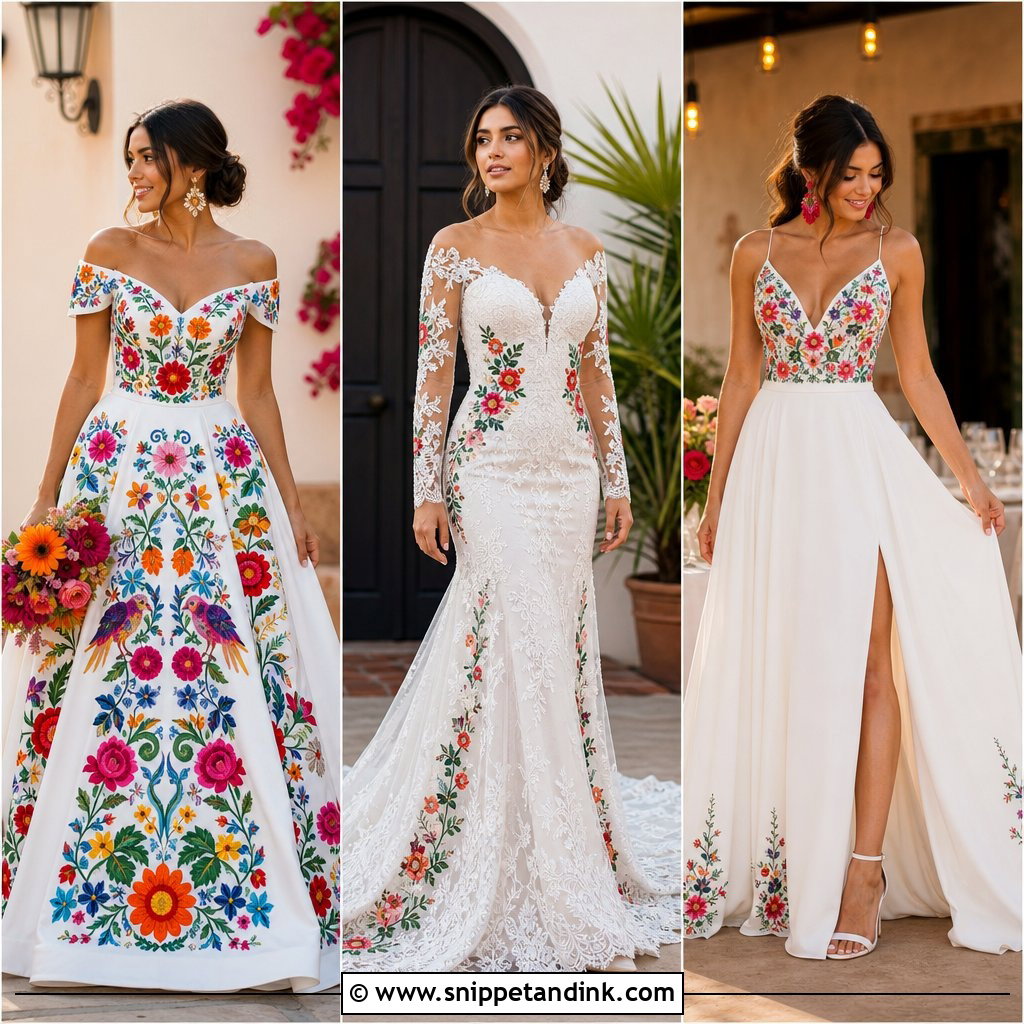
White space is what keeps colorful embroidery looking joyful rather than crowded. On a white A-line, I like hand-finished flowers at the neckline, sleeves, waist and lower skirt with plain fabric between them so each motif reads. Flowers, birds and natural imagery are common in Mexican embroidery, though motifs and techniques vary by region and community. A cathedral-length mantilla with a scalloped border adds Spanish softness. Ivory block heels give stability on hacienda paving, and a bouquet that picks out two or three of the embroidery colors ties it together. Keep the hair to a simple low bun and the earrings to small pearls.
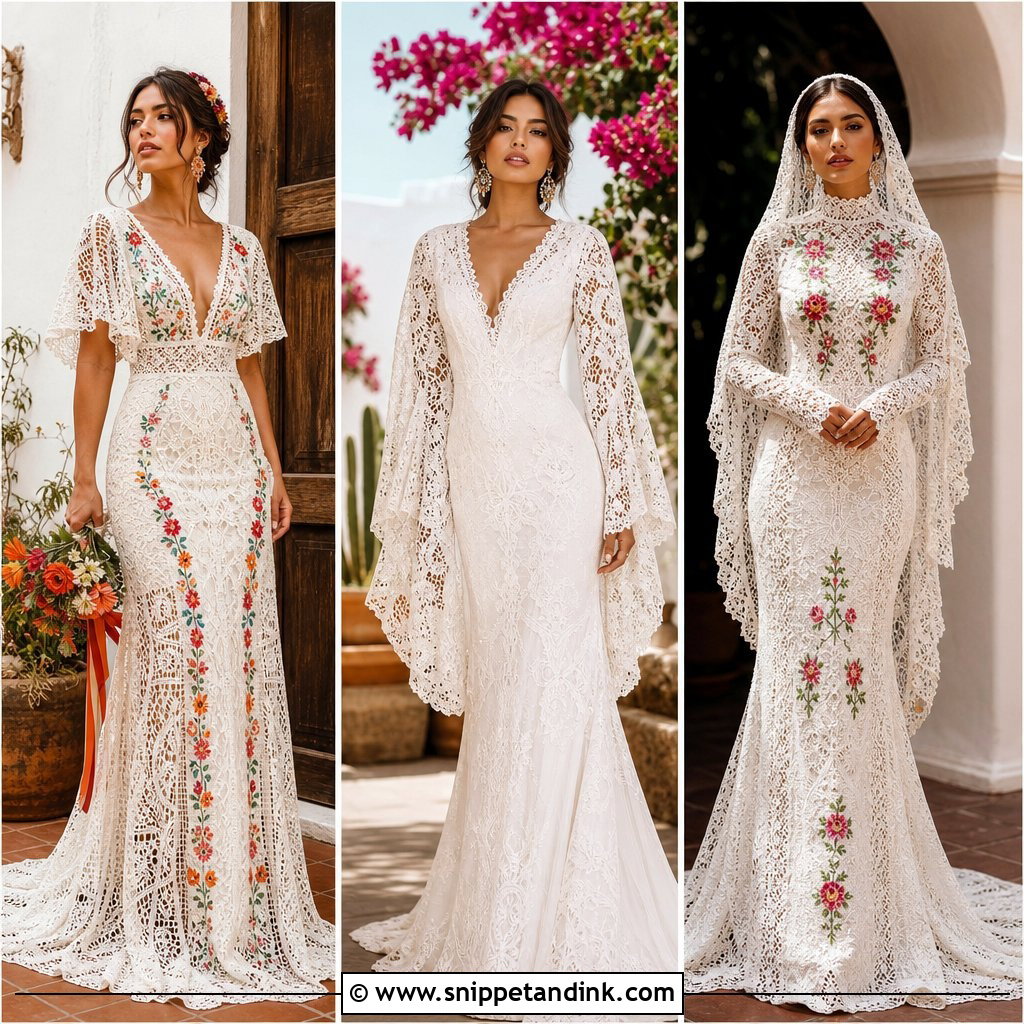
2. Spanish Lace Mermaid Wedding Dress
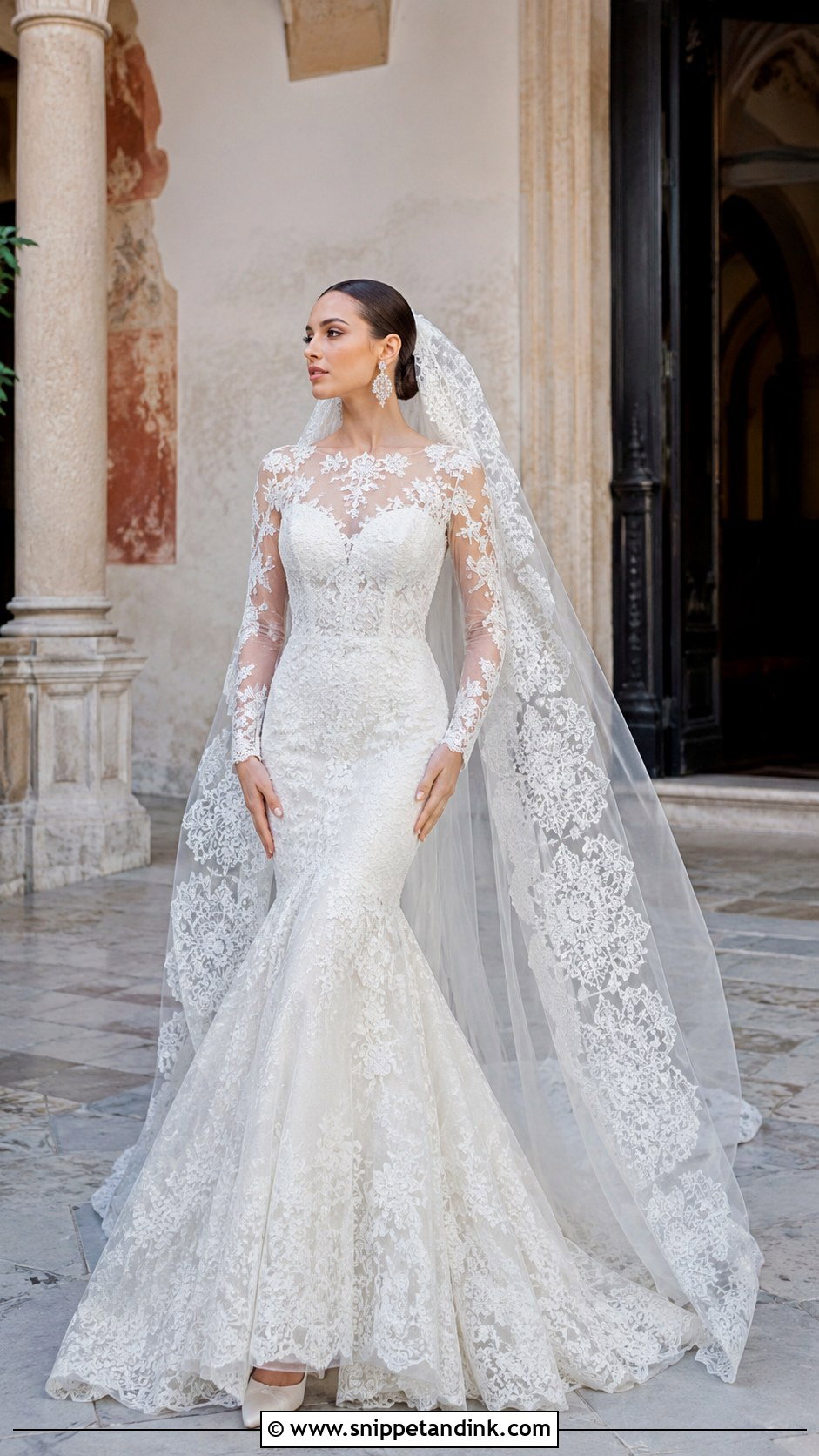
A circular mantilla over a smooth chignon is the detail that makes an ivory lace mermaid read as Spanish rather than simply lacy. Spanish-inspired bridal fashion leans on lace, embroidery and decorative depth, and a fitted gown shows that lace off well. Look for a structured bodice, a flare around the knee and a train you can manage on courtyard stone. Long illusion sleeves let the pattern sit against the skin. With lace on the dress and the veil, I’d ask that the two patterns are related, or at least similar in scale, so they don’t argue. Crystal drops and pointed ivory pumps finish it.
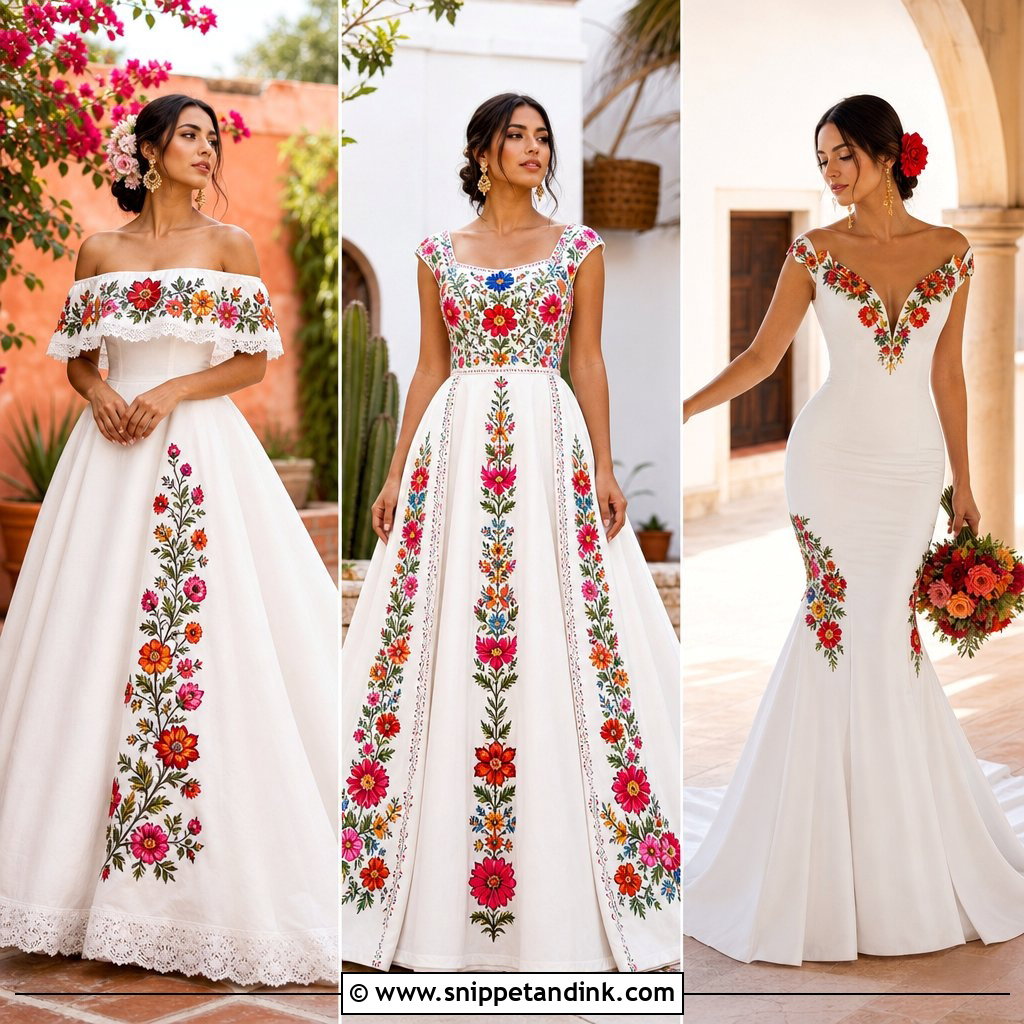
3. Off Shoulder Mexican Wedding Dress With Ruffles
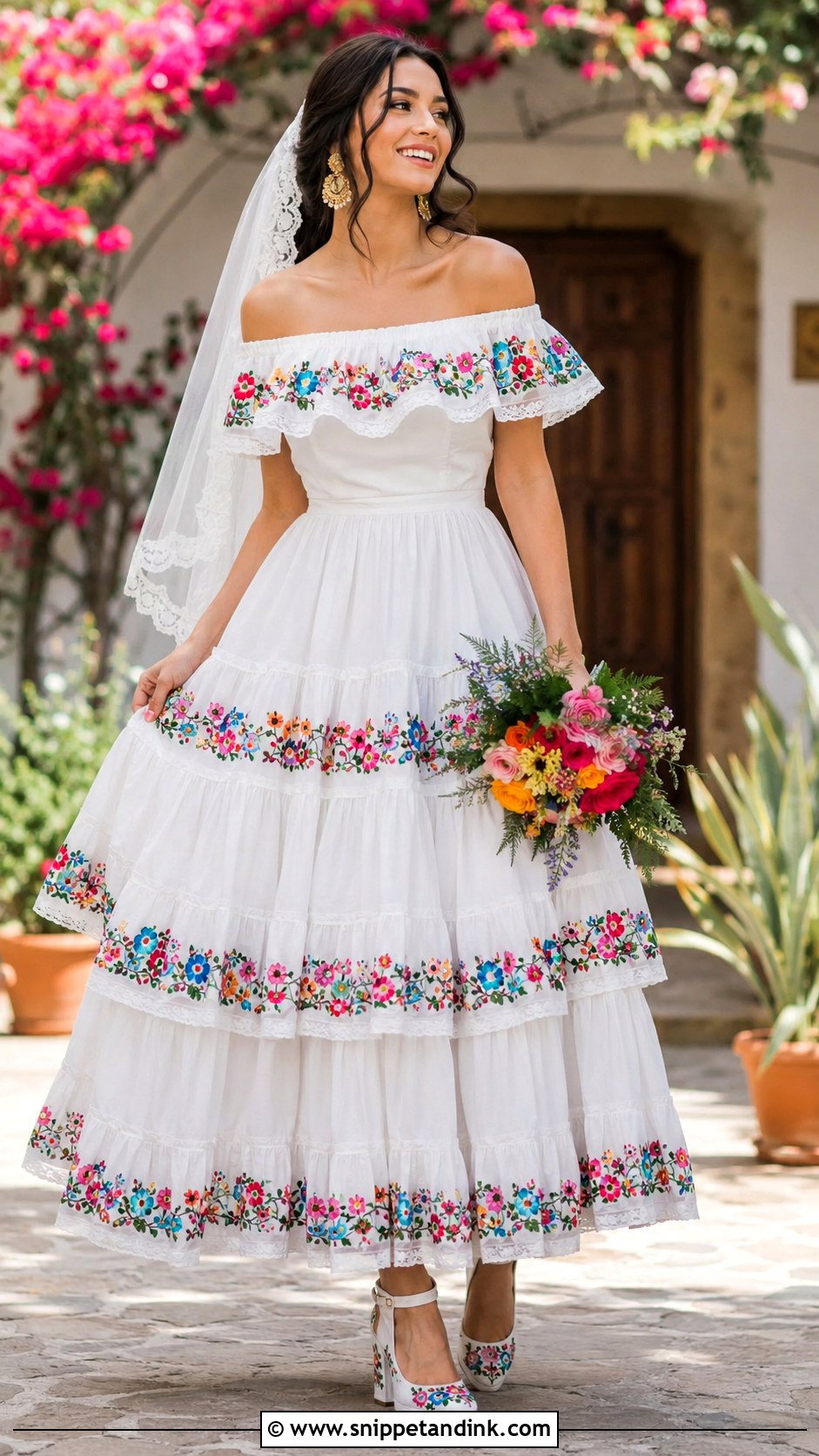
Ruffles at an off-the-shoulder neckline move every time you do, which is why this dress is so good for a lively reception. A fitted white bodice with a wide ruffled neckline and a tiered skirt is the shape, with small embroidered flowers along the ruffle or hem bringing in color without covering the whole gown. One fitting check matters here: wide ruffles sit on the upper arm, and if they’re cut too snug you’ll feel them every time you hug someone. Embroidered heels or polished leather sandals, delicate gold earrings and a lace-edged fingertip veil complete it.
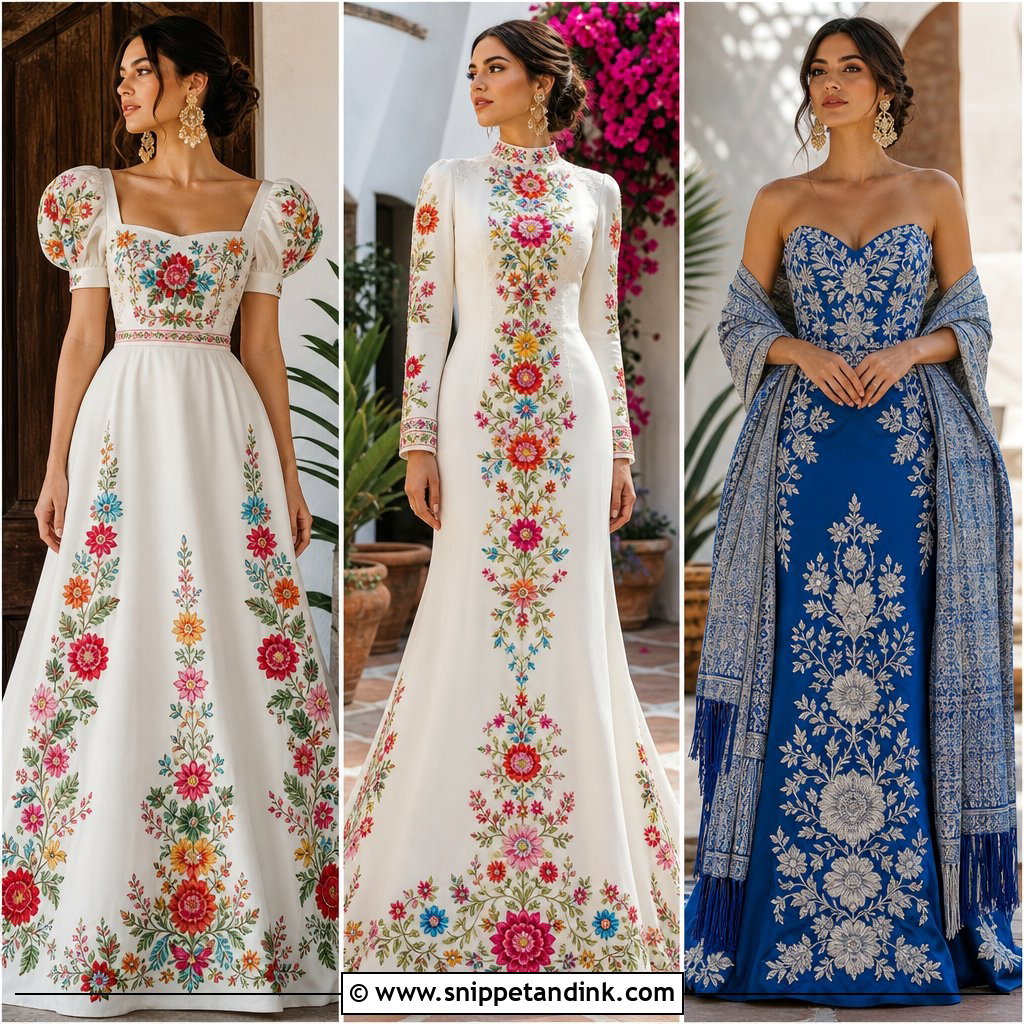
4. Long Sleeve Mexican Embroidered Wedding Dress
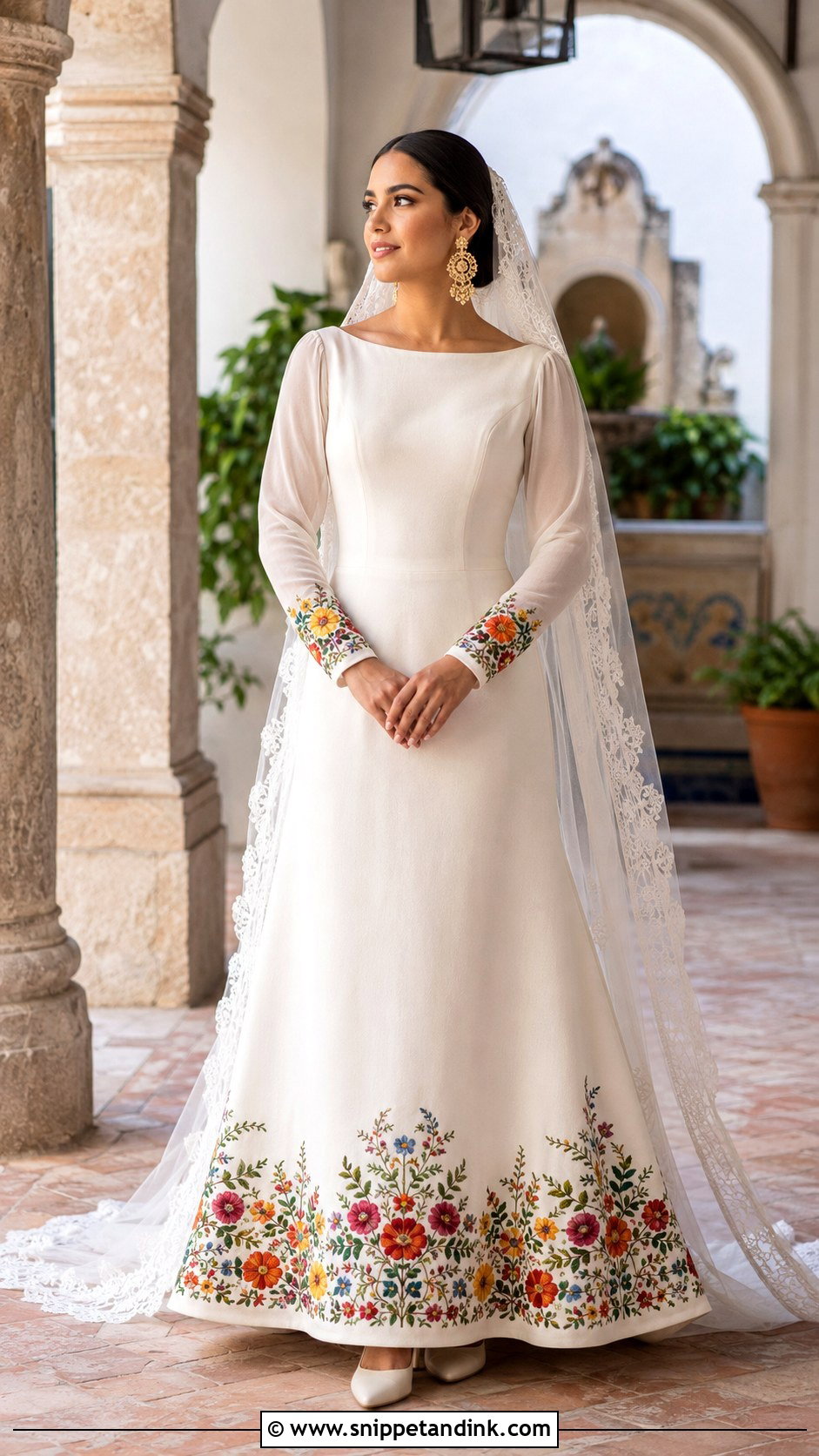
Long sleeves, a higher neckline and a full skirt are common in Mexican bridal gowns because they balance ceremony coverage with room for decoration. On a floor-length ivory dress with sheer or light sleeves, I’d place the embroidery at the cuffs, neckline and skirt border so it frames the body rather than scattering. A modest boat neckline leaves space for heirloom earrings. Lightweight sleeves are the point; heavy embroidered sleeves can make a cool-season dress feel like a coat by the reception. Add ivory closed-toe heels, a lace chapel veil and a bouquet tied with embroidered ribbon.
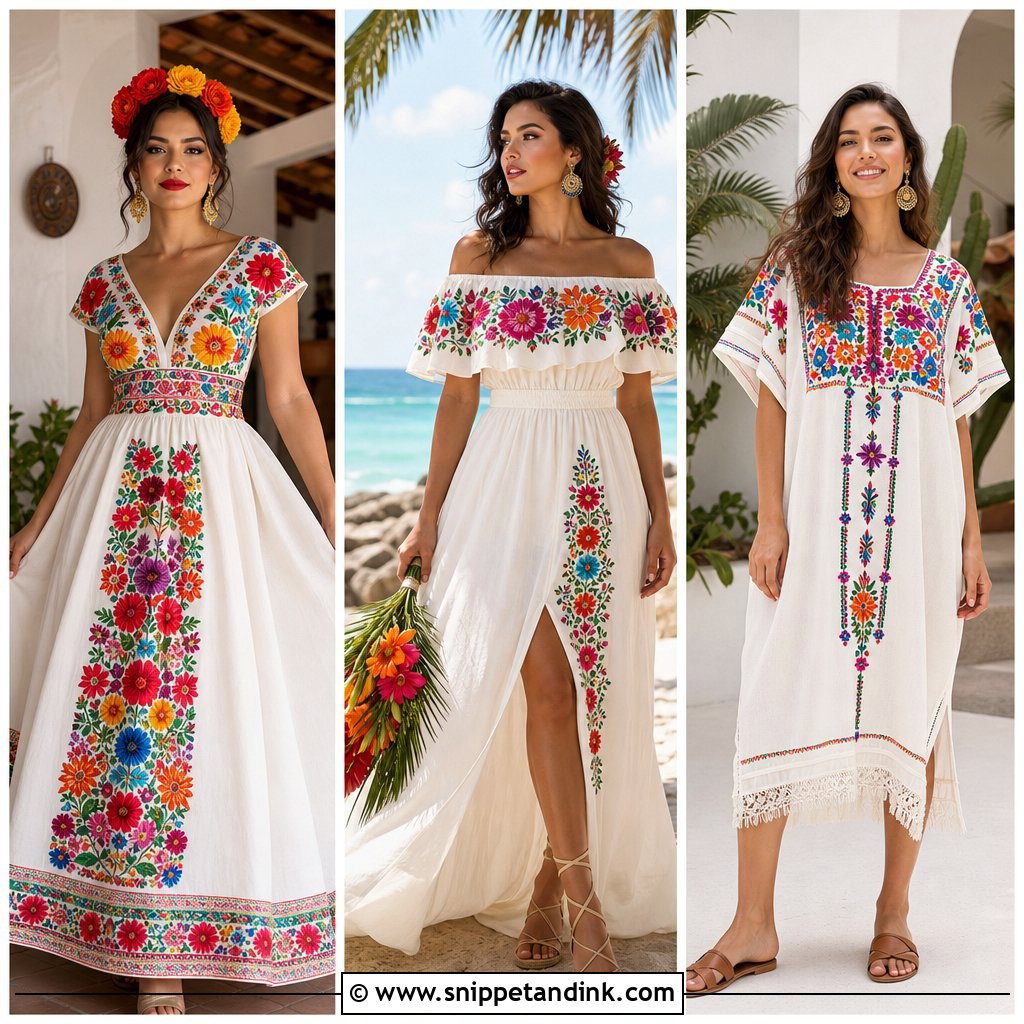
5. Colorful Floral Mexican Wedding Dress
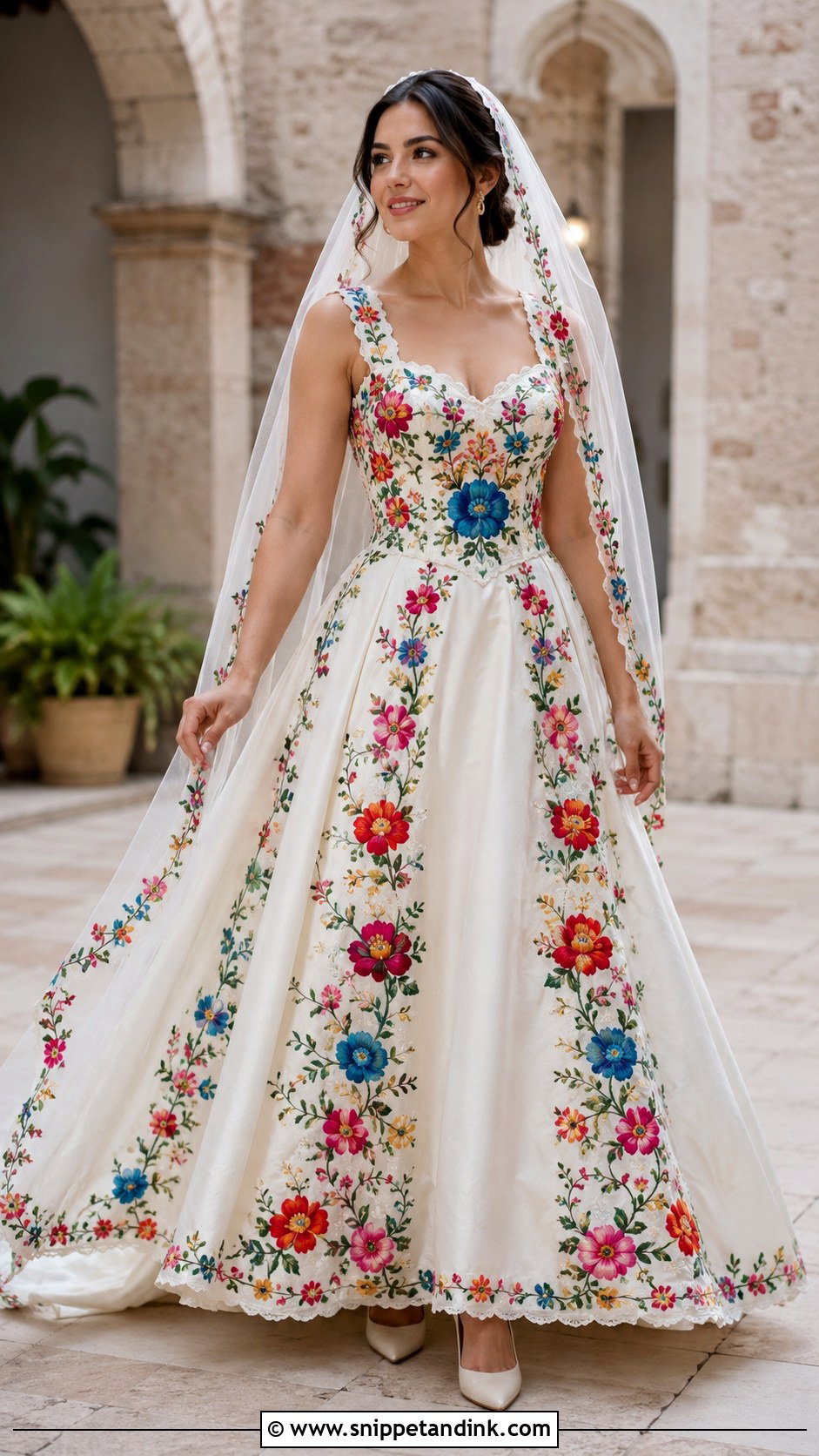
If vivid color is part of who you are, let the embroidery lead and keep every accessory quiet. Red, pink, orange, blue and green flowers on a white or soft ivory A-line need room, which the A-line shape provides. Ivory heels, small gold hoops and a simple tulle veil with only a narrow embroidered edge stop the outfit tipping into costume. My rule for the bouquet is one or two colors from the gown rather than all of them, which looks more deliberate. Neutral stone walls and plain courtyards make the color sing in photos.
6. Mexican Wedding Dress With Lace Bolero
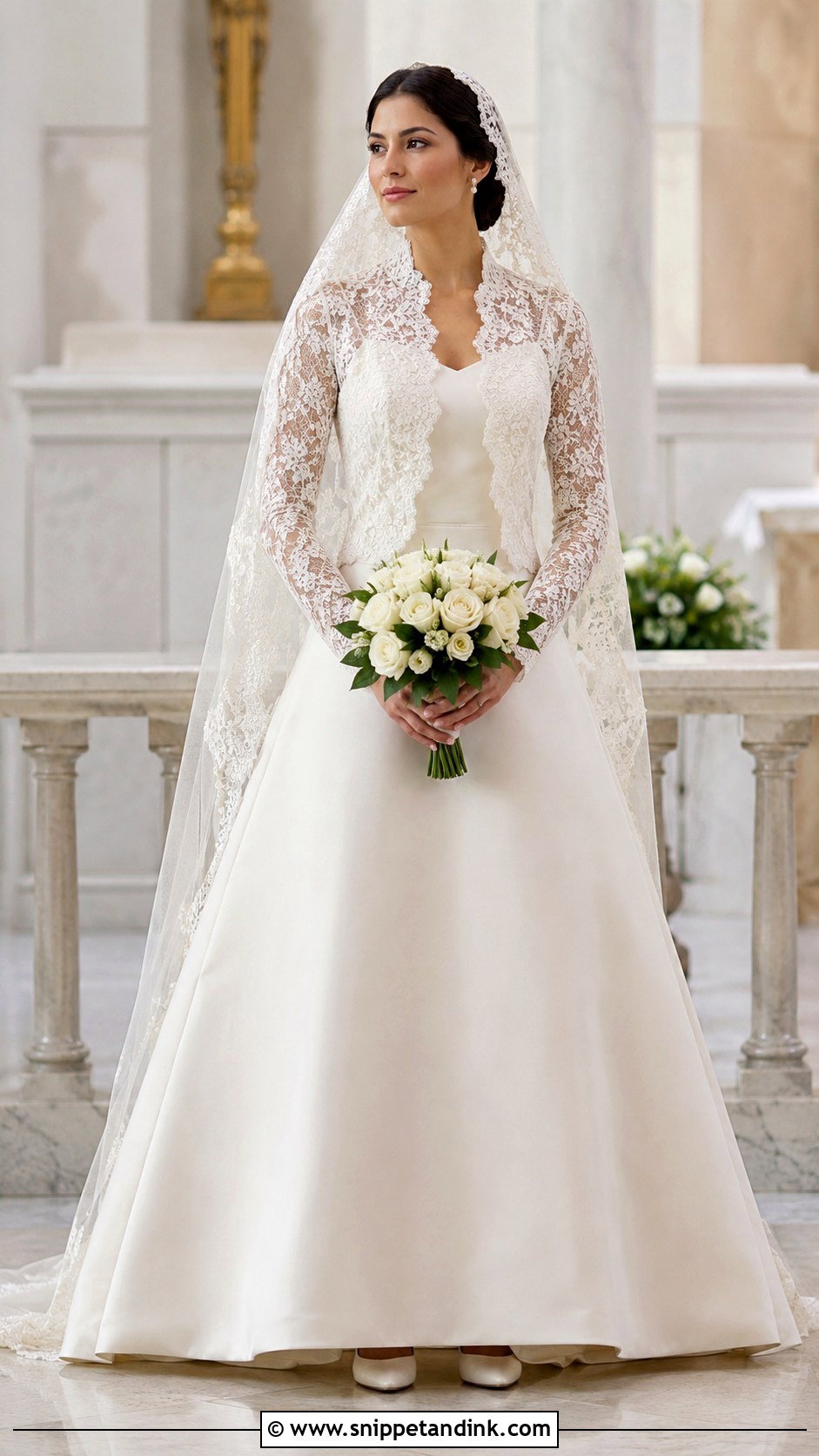
A removable lace bolero turns a sleeveless gown into two outfits. Start with a plain ivory satin or crepe A-line with a defined waist, then add a fitted lace bolero for shoulder and upper-arm coverage during a church ceremony. Boleros are a familiar way to add texture and modest coverage to Mexican bridal looks. After the ceremony, take it off and you’re in a cleaner reception dress. Have the bolero fitted at the same appointment as the gown, so its hem lands at the right point on your waist rather than cutting across the bust. Pearl studs and closed-toe ivory heels suit the ceremony version.
7. Ivory Huipil Inspired Wedding Dress
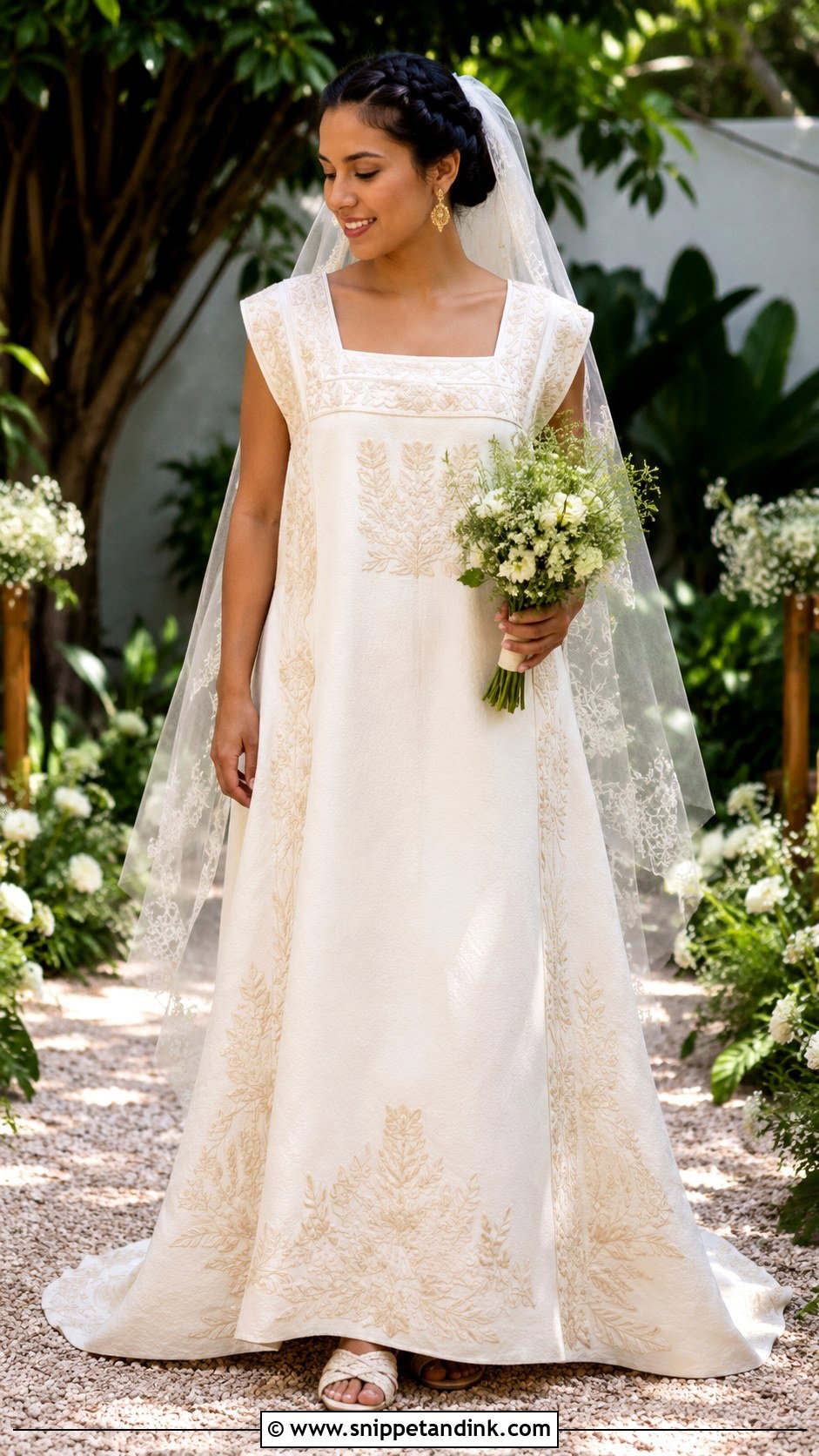
A huipil-inspired bridal dress is a loose garment by nature, and that’s its charm: handwoven texture, a square neckline and embroidery across the chest, sleeves and hem. Huipil designs can carry meaning tied to a specific community, so I always point brides toward a knowledgeable artisan or a Mexican designer rather than a copy of sacred or culturally significant motifs. Resist the urge to belt it tightly; a cinched waist fights the garment’s shape. Woven sandals, understated gold earrings and a light veil under a braided updo suit a garden or countryside wedding.
8. Mexican Wedding Dress With Rebozo
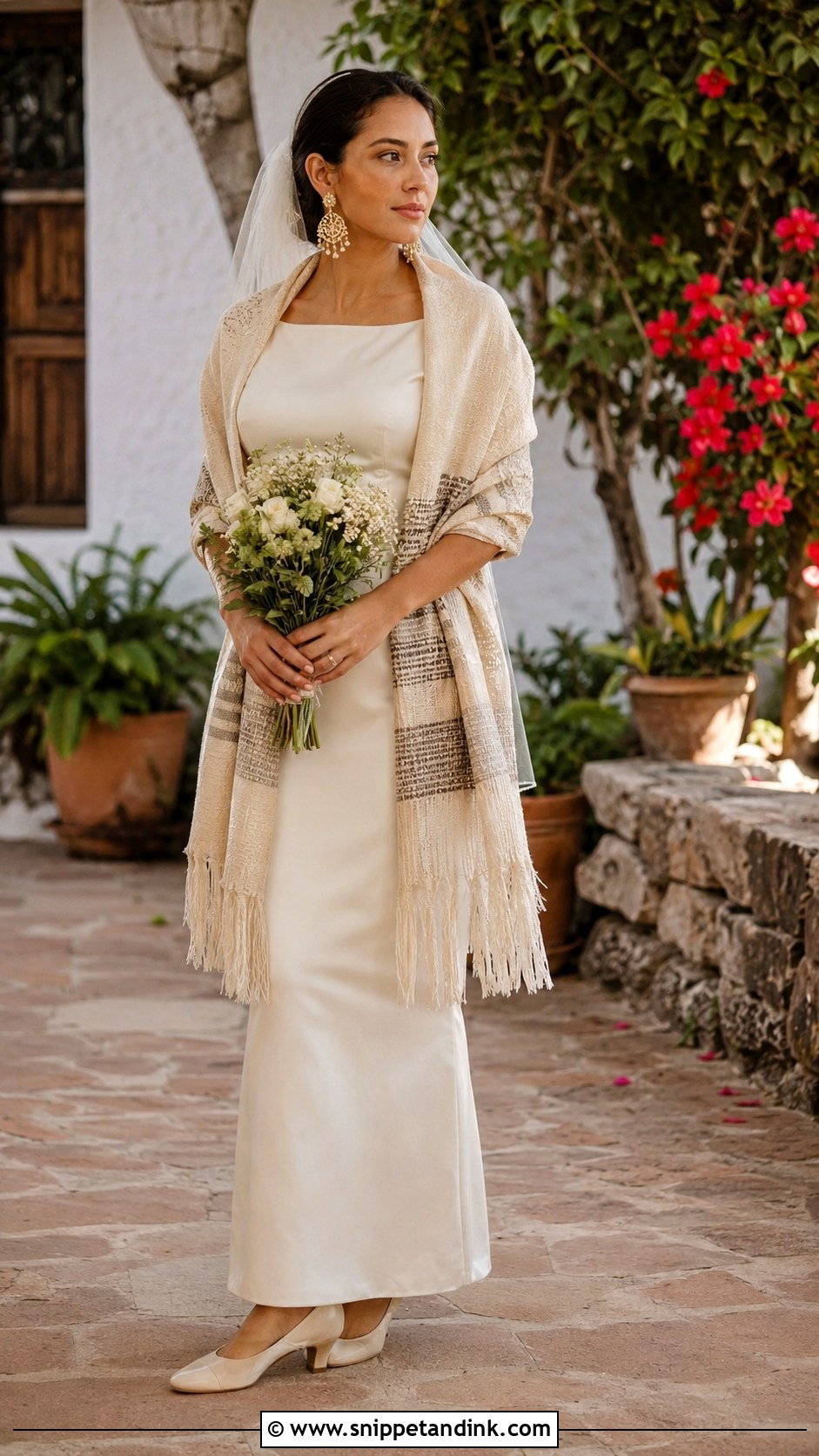
Drape a handwoven rebozo across your shoulders and a plain column dress gains movement and meaning in one step. Silk, cotton or crepe all work underneath. A white tonal rebozo is quiet, while woven stripes and fringed ends bring color. Rebozos vary hugely in technique and regional identity, so buying one directly from the people who weave them makes it more personal. A long veil usually competes with the shawl, so I’d choose a short tulle veil or a floral comb. And it’s practical: when the evening cools, the rebozo becomes a wrap.
9. Yucatan Terno Inspired Wedding Dress
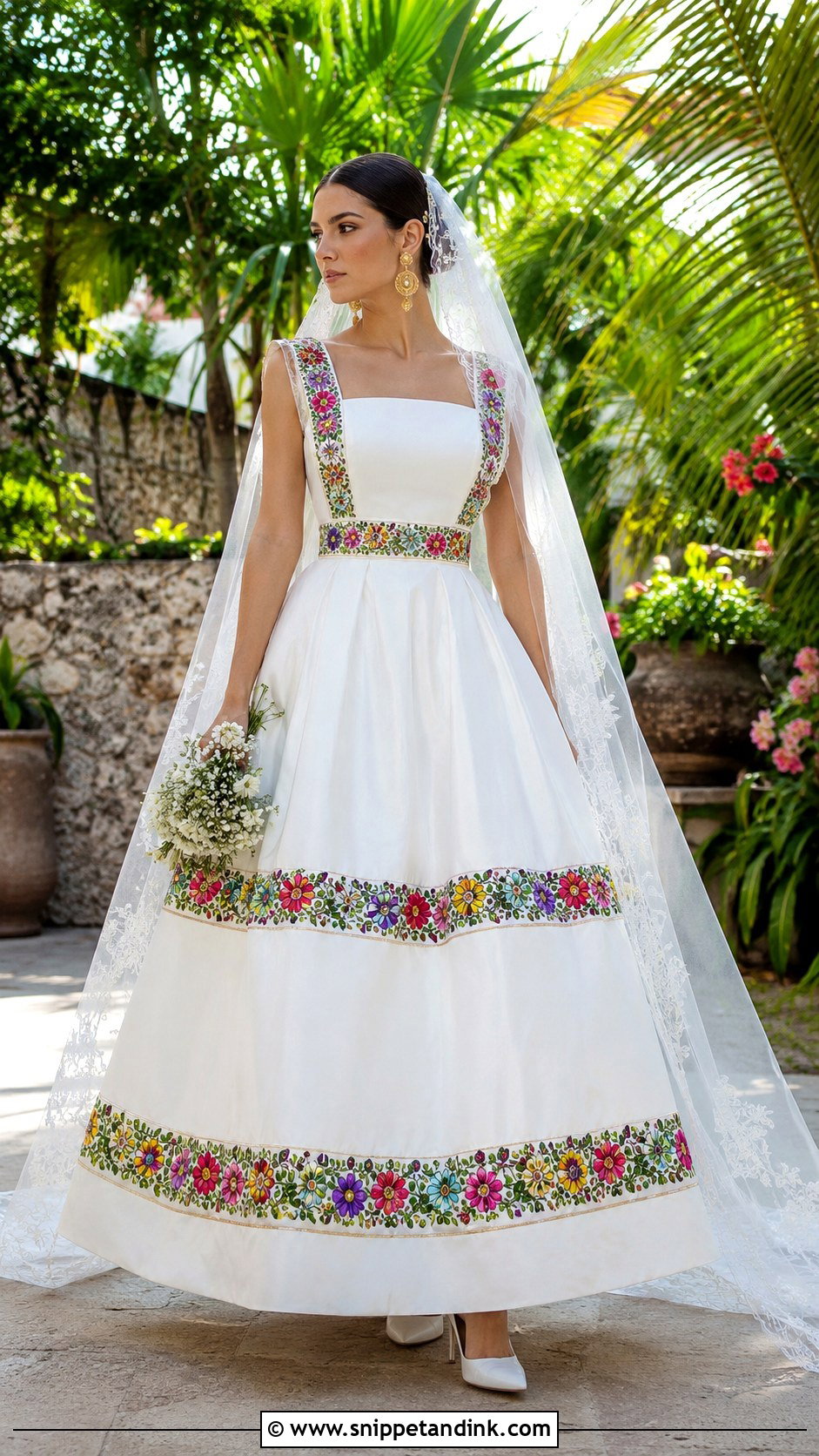
The Yucatán terno is recognizable by its clean white base and bands of colorful floral embroidery at the neckline and hem. For a bridal interpretation, a floor-length dress with a square neckline, a structured upper layer and embroidered borders keeps that identity. Keep the skirt full but controlled so it’s easy to walk in. Regional dress carries local history, so I’d look for authentic construction from Yucatecan makers wherever possible. White low heels, pearl or gold earrings, a sheer chapel veil and a neat bun with small white flowers finish it for a warm outdoor ceremony.
10. Oaxacan Embroidered Wedding Dress
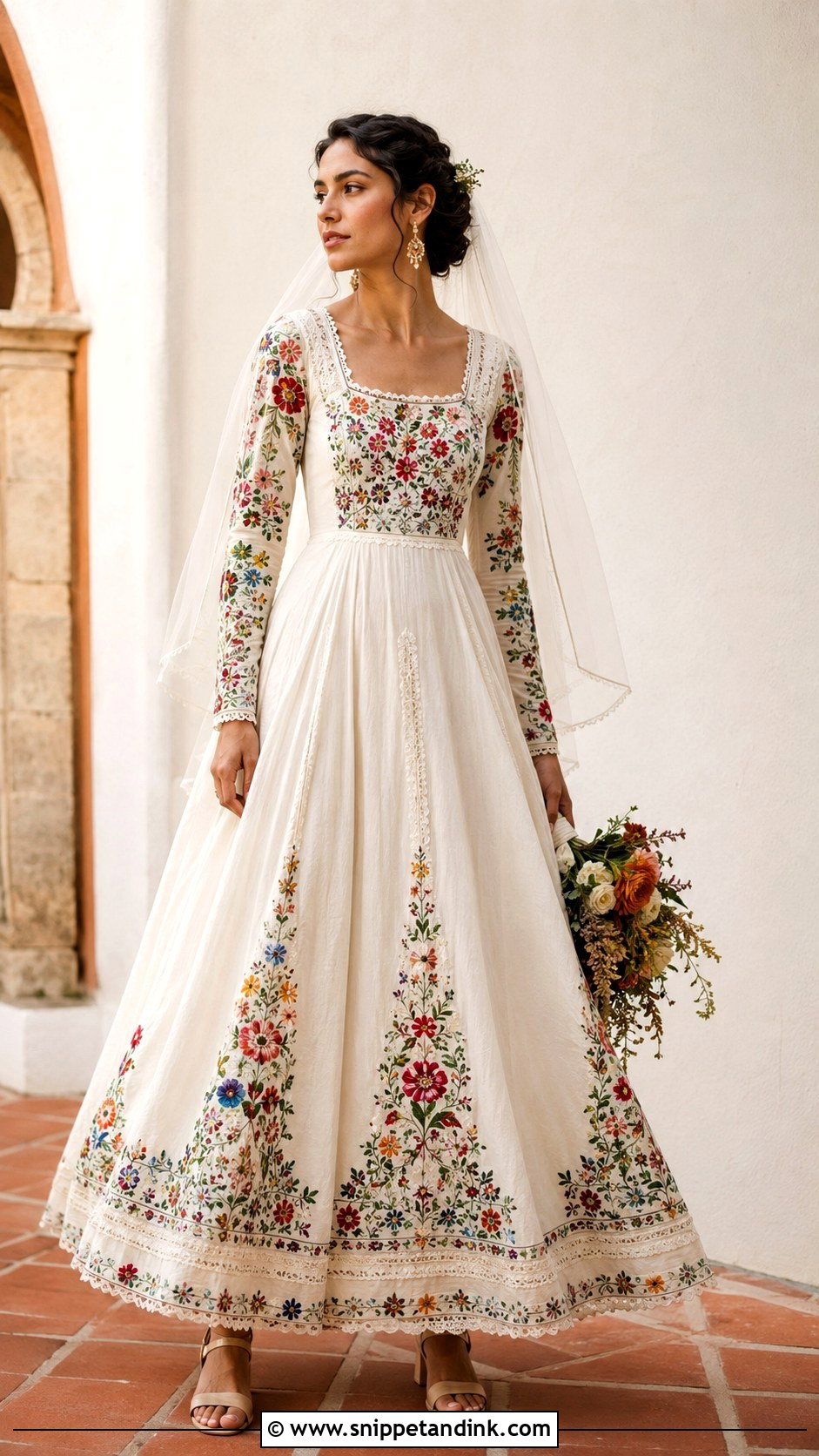
Oaxacan needlework placed against crisp ivory needs to follow the garment’s shape, tracing the bodice, sleeves and lower skirt rather than landing randomly. Embroidery methods and motifs differ between Oaxacan communities, so buy from an artisan who can tell you where the piece comes from and what it represents. Hand embroidery also has a little irregularity in it; that’s a sign of the maker, not a fault. A flowing A-line or straight dress suits it, with leather block heels, gold drop earrings and a soft tulle veil that doesn’t hide the bodice.
11. Otomi Inspired Mexican Wedding Dress
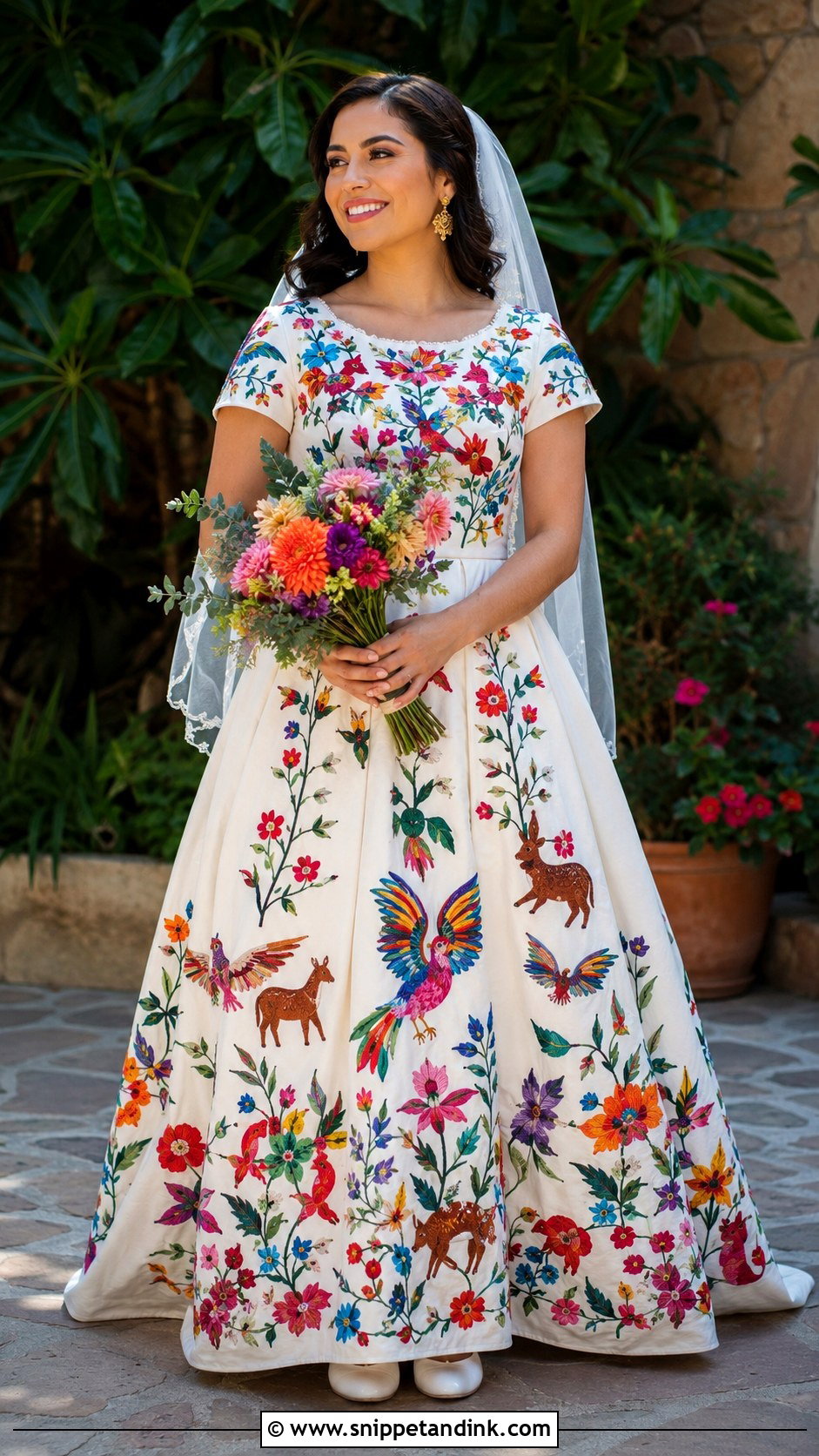
Animals, birds and flowers in energetic Otomí-style forms look bold on a plain A-line with short sleeves and a round neck. Concentrate the stitching on the bodice and skirt border, or choose white-on-white stitching for a quieter take. Otomí needlework belongs to specific Indigenous communities, which makes working with artisans and knowing exactly where the piece comes from essential, not optional. Accessories should stay plain: ivory pumps, a shoulder-length veil and small gold earrings, nothing patterned. It’s a strong choice for an outdoor ceremony full of color.
12. Spanish Wedding Dress With Tiered Lace Skirt
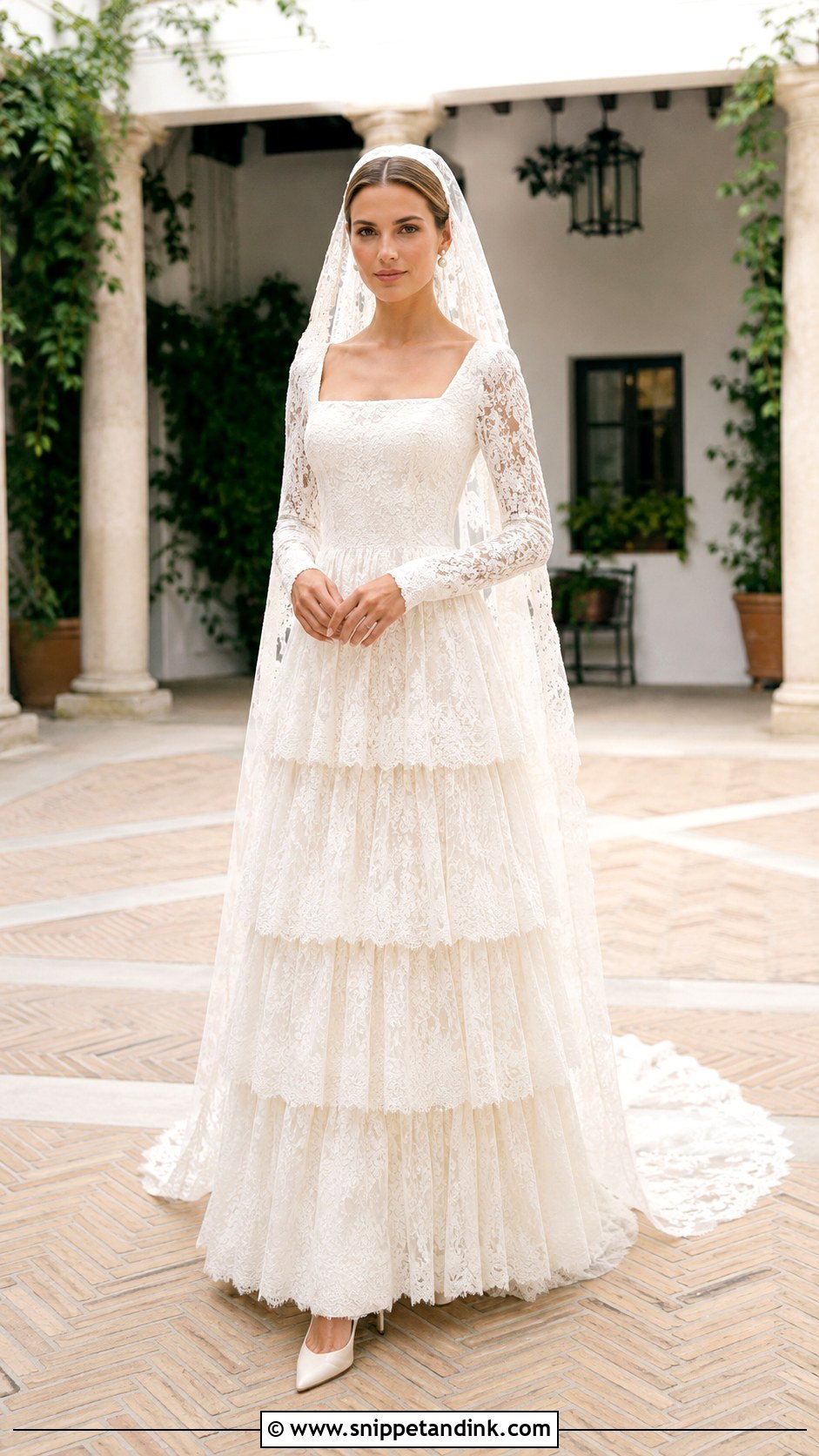
Graduated lace tiers create movement without color or beading. A fitted bodice with a square or scoop neckline sits over a floor-length skirt in which the tiers lie flat at the hips and fill out toward the hem. I check the tiers when the bride sits; if they’re stiff, they bunch up into the lap and photograph awkwardly at the table. Long fitted sleeves or lace caps balance the volume below. Repeat one lace pattern from the gown in a chapel mantilla, and keep the rest simple with pearl earrings and a polished low bun.
13. Mexican Ball Gown With Embroidered Bodice
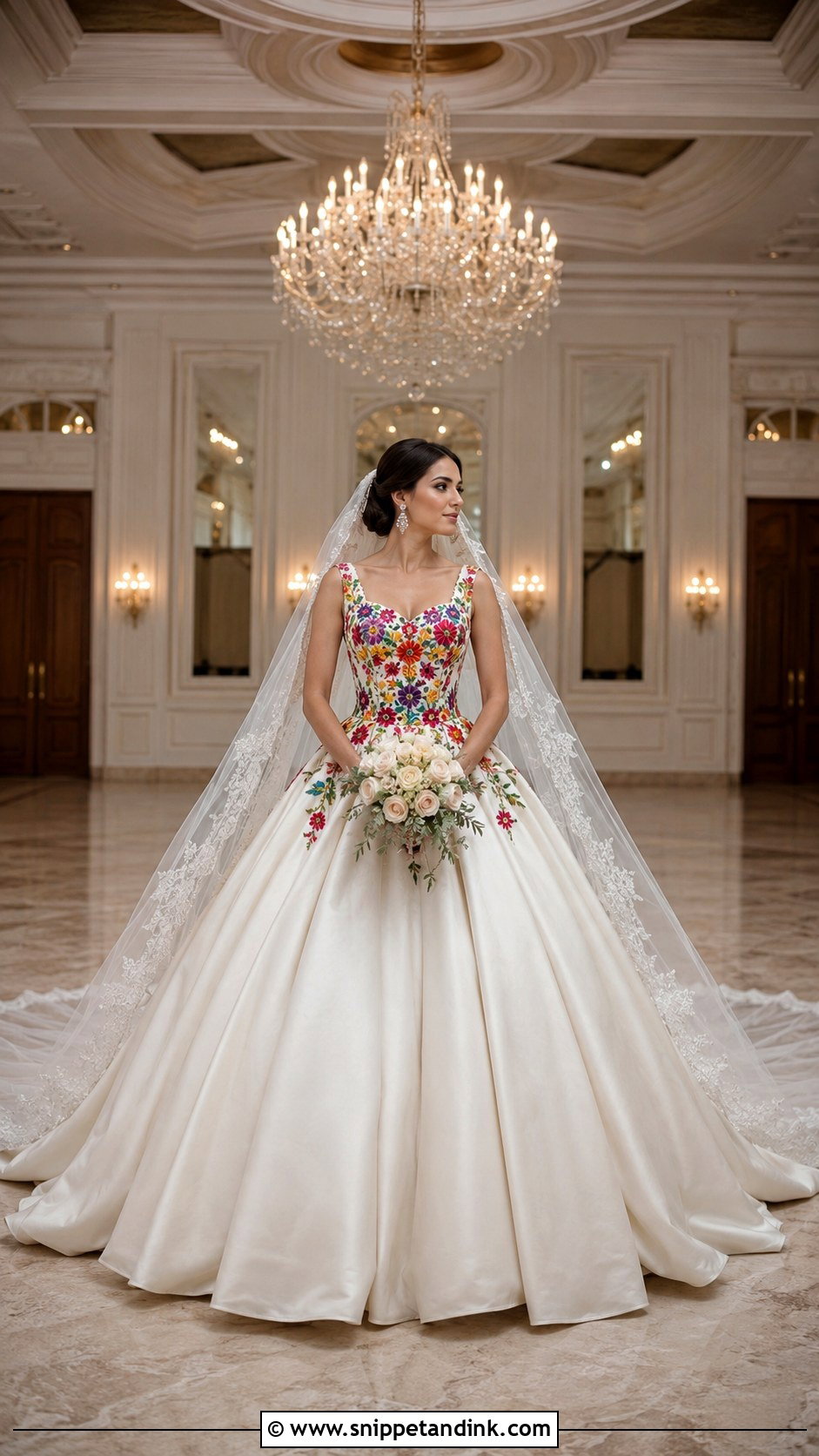
A full ball gown has room for embroidery to be generous. A structured ivory bodice with floral stitching that continues just below the waist, over a satin, organza or Mikado skirt, gives formal drama, and a little embroidery near the hem links top and bottom. The bodice has to carry that skirt’s weight, so proper boning and a waist stay matter; you should still be able to breathe, eat and sit. Add a cathedral veil, closed-toe heels and medium drop earrings. Keep the hair smooth and secure so the veil comb stays put through a long Mass.
14. Spanish Wedding Dress With Dramatic Ruffle Train
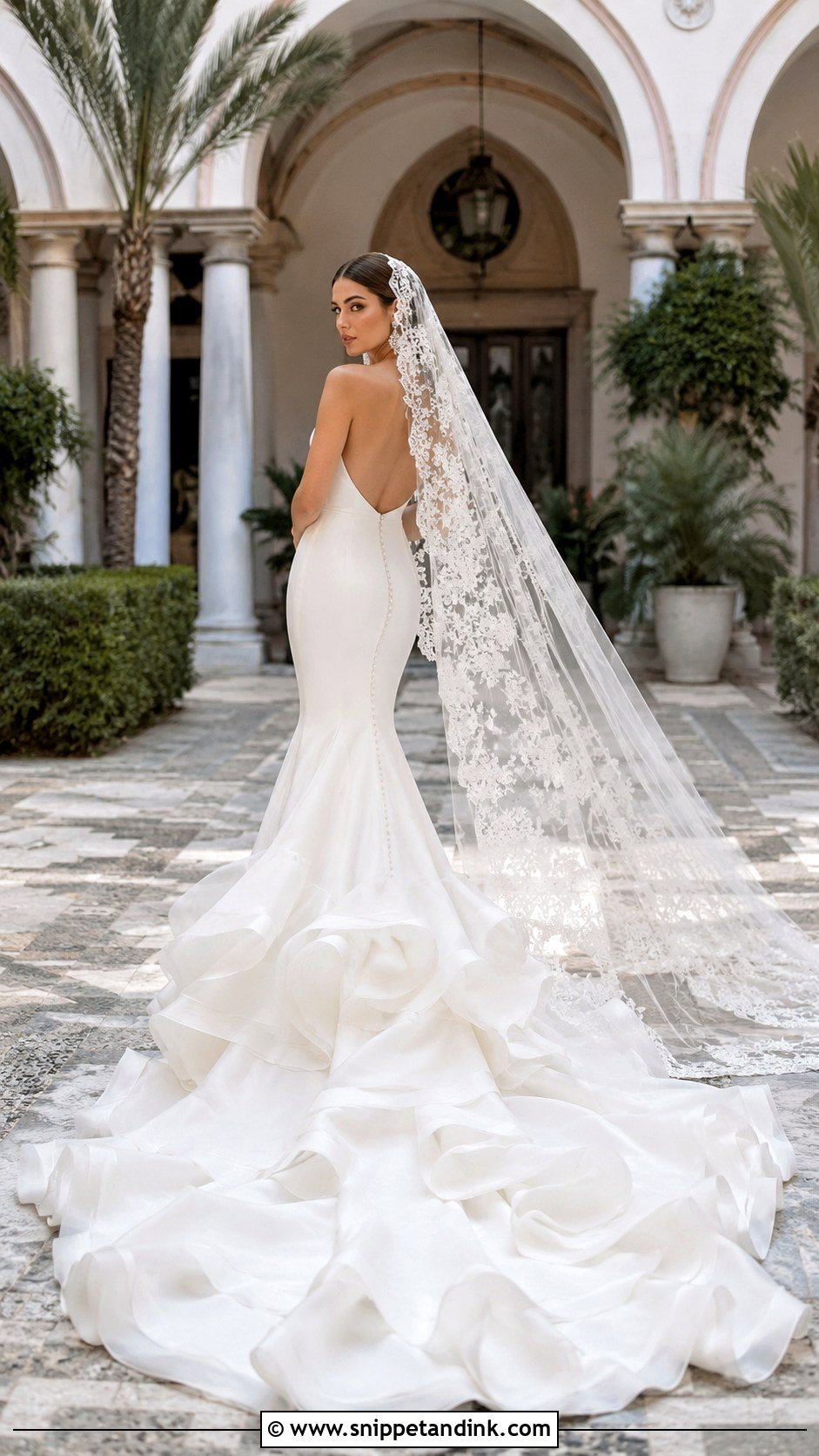
Cascading ruffles give a fitted Spanish-inspired gown its drama from behind. A clean crepe or satin mermaid with layered organza ruffles starting below the hips keeps the front simple. The mantilla should end before the biggest ruffles, otherwise the lace catches in the organza every time you turn. Organza ruffles also flatten if they’re dragged across rough ground, so this dress belongs on smooth floors with a wide aisle. Secure block heels, crystal earrings, a sleek bun and a long-stemmed bouquet complete it.
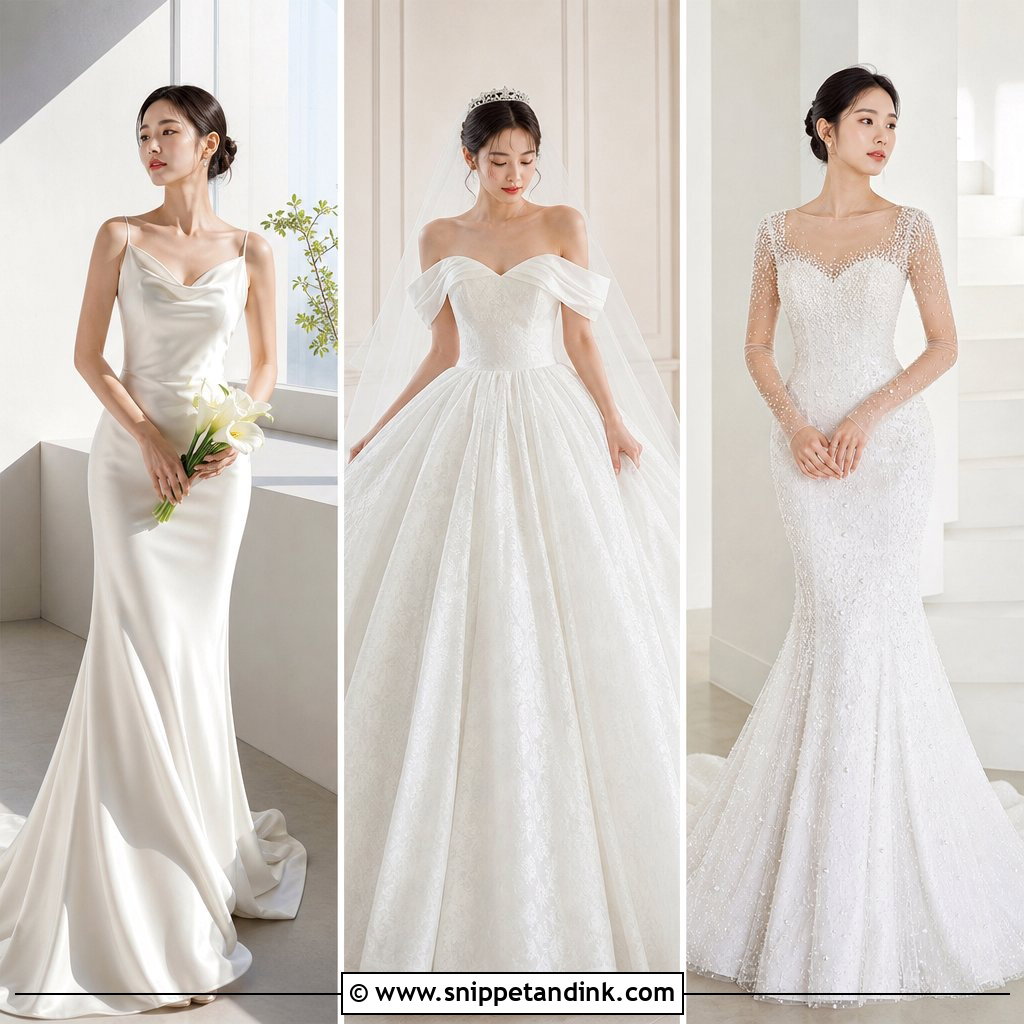
15. Mexican Boho Wedding Dress With Embroidery
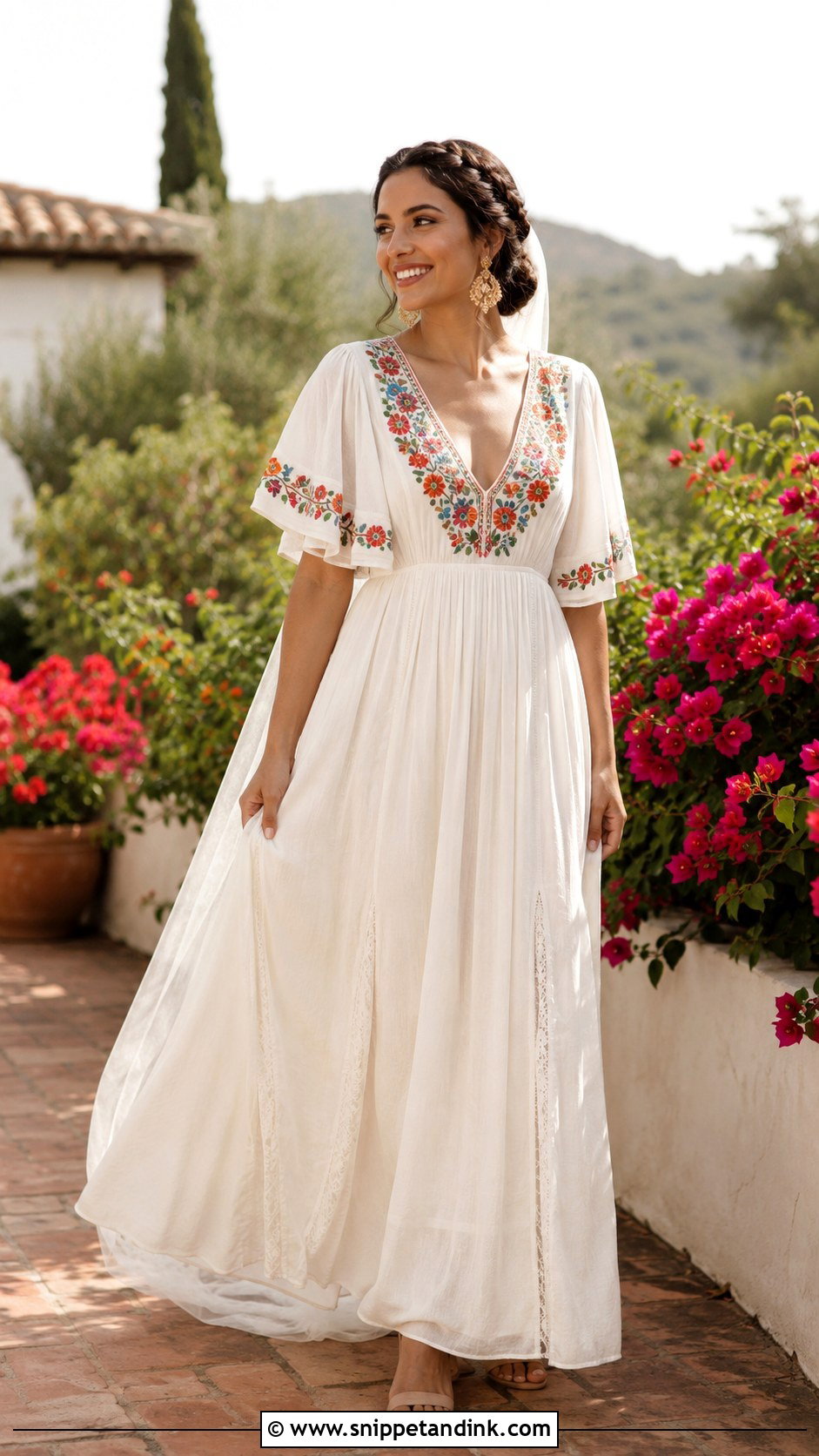
Cotton, chiffon or soft lace keeps a boho dress breathable on a hot afternoon, and that matters more than any styling choice for a desert or beach wedding. A gently fitted bodice, flutter sleeves and an easy A-line skirt feel relaxed without looking casual. Put the colored embroidery at the neckline and cuffs and leave the rest light. Ivory block-heel sandals won’t sink into sand or lawn the way stilettos do. Hammered-gold earrings, a loose braided updo and a sheer fingertip veil or embroidered floral comb finish it.
16. White Mexican Wedding Dress With Tonal Embroidery
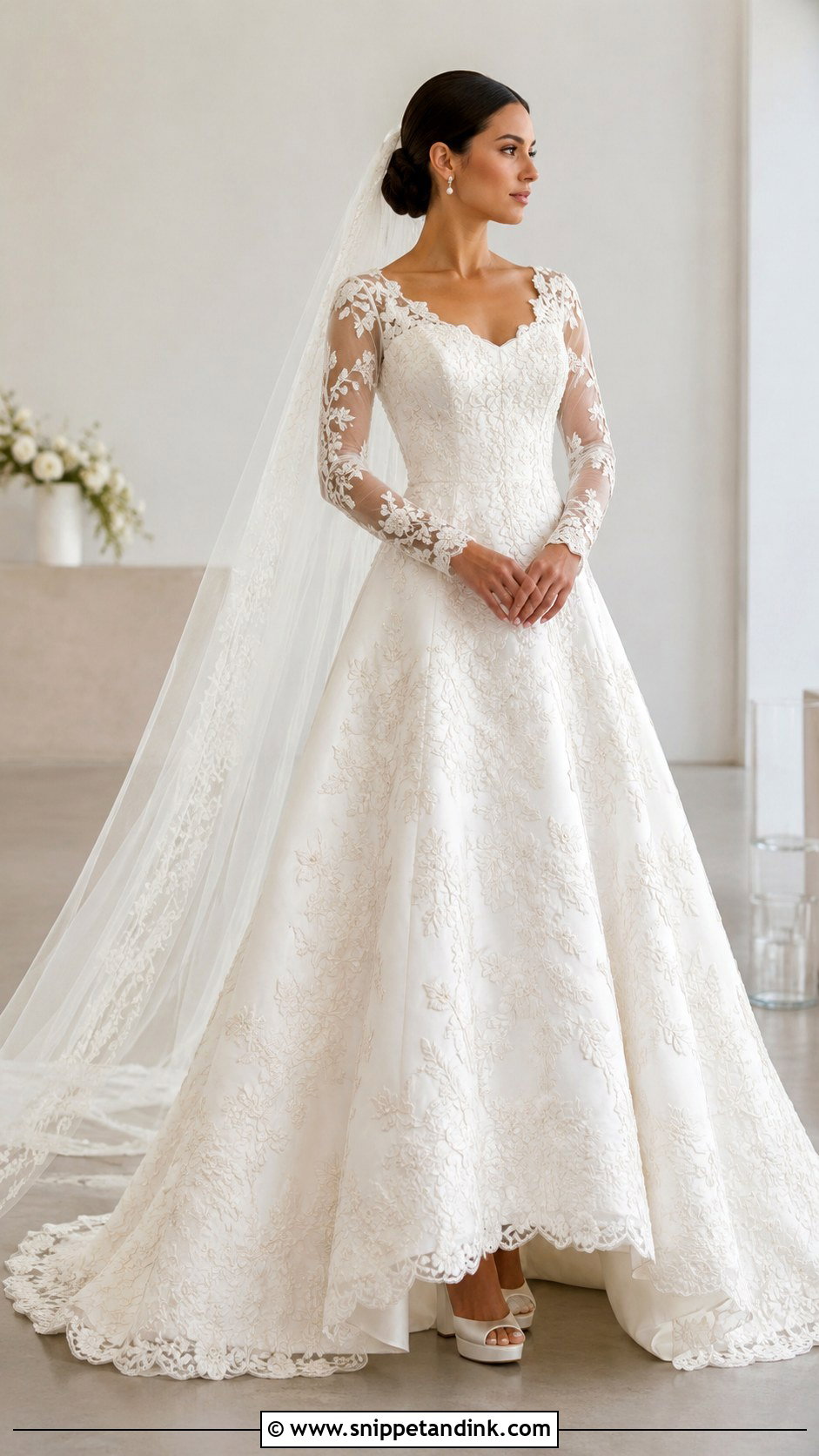
White-on-white embroidery is the answer for a bride who loves Mexican textile detail but wants an all-white palette. Floral stitching across the bodice, sleeves and hem of an ivory A-line creates texture that shows up in natural light. A detail worth asking about is the thread: slightly glossy thread on matte fabric makes the pattern much easier to see in photographs than matte on matte. A long plain veil lets the embroidery show through, and satin block heels, pearl earrings and a low bun keep it clean. It works almost anywhere, from a minimal indoor ceremony to a courtyard.
17. Mexican Wedding Dress With Square Neckline
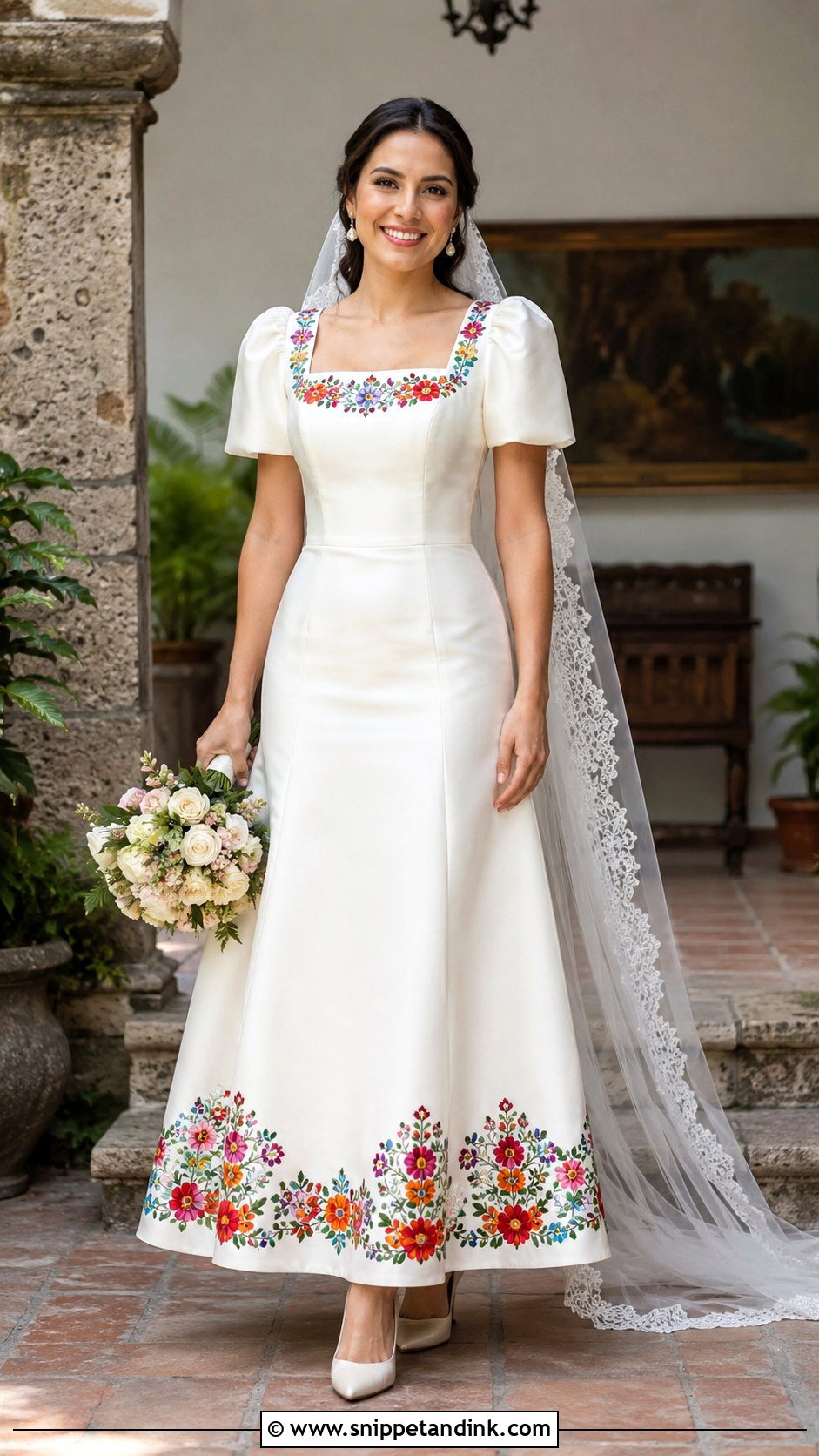
Square necklines give embroidery a frame. On an ivory gown with short puff sleeves, a fitted waist and a gently flared skirt, I’d keep the flowers to the neckline and sleeve edges with a narrow matching border near the hem, so the bodice doesn’t fill up. The defined waist and open neckline work on many body shapes. Hold a compact bouquet low; a large one hides the neckline, which is the whole point of the dress. Ivory pumps, small pearl drops and a lace-edged fingertip veil suit day or evening.
18. Spanish Satin Wedding Dress With Mantilla Veil
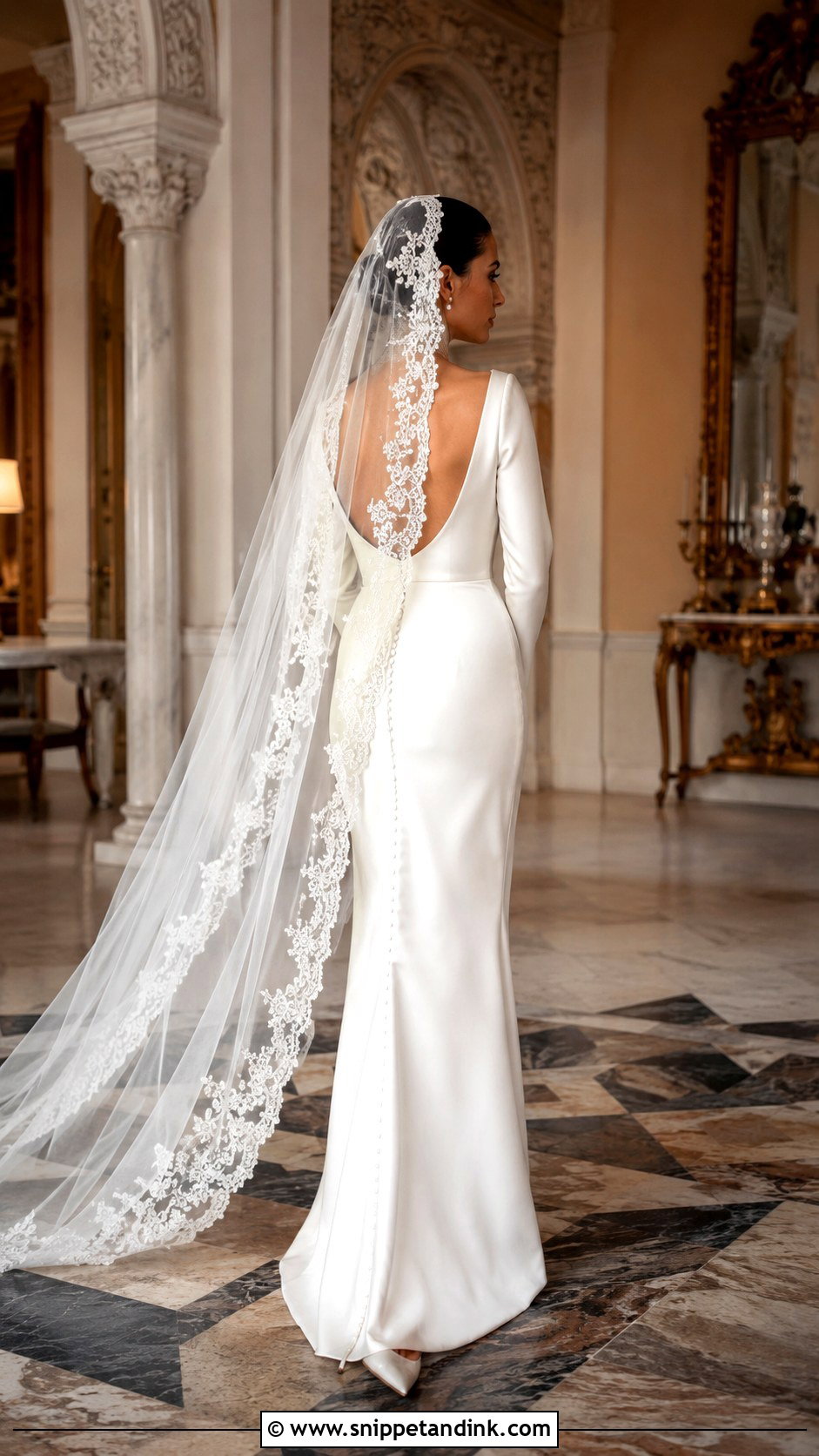
Here the veil is the decoration and the dress is the backdrop. A minimalist satin gown with a fitted bodice, a long clean skirt and covered buttons down the back lets a large lace mantilla take the lead. Mantillas are traditionally draped over the head and shoulders, and longer versions feel especially formal. Secure it with a comb set into a low chignon, and have your hairstylist anchor the comb with crossed pins, since a big lace mantilla has more weight and catches more wind than tulle. Pointed satin heels and pearl studs are all the jewelry it needs.
19. Mexican Tea Length Wedding Dress With Embroidery
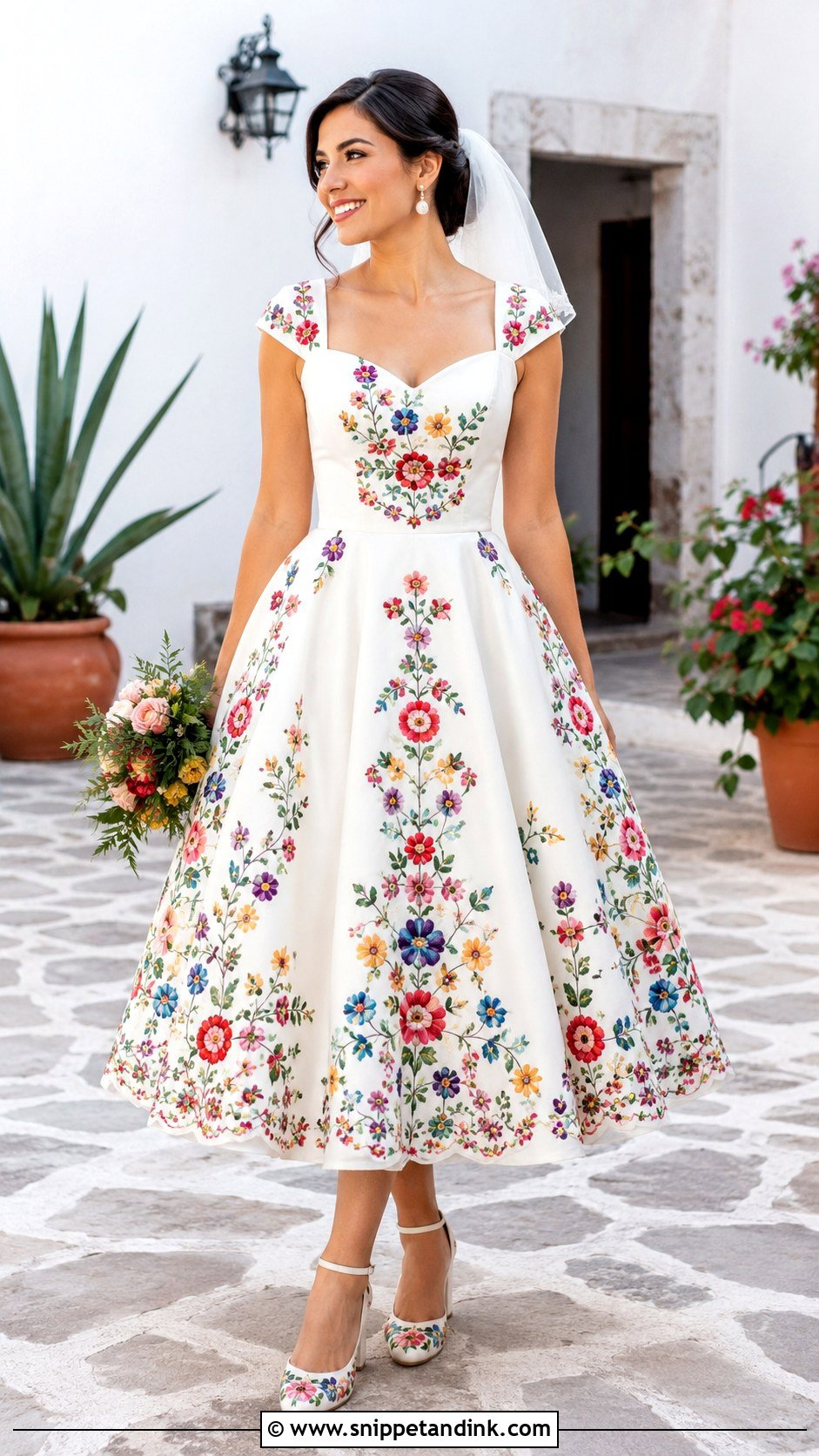
Shoes show with a tea-length hem, so choose them as part of the outfit, not an afterthought. Embroidered block heels or polished ivory pumps with ankle support work well on a fitted ivory bodice with cap sleeves and a full skirt that falls between knee and ankle. Colorful stitching at the neckline and lower skirt is easier to see at this length. Pearl earrings, a short veil and a neat updo keep it clearly bridal. It’s easy to dance in and suits a civil ceremony or an intimate daytime reception.
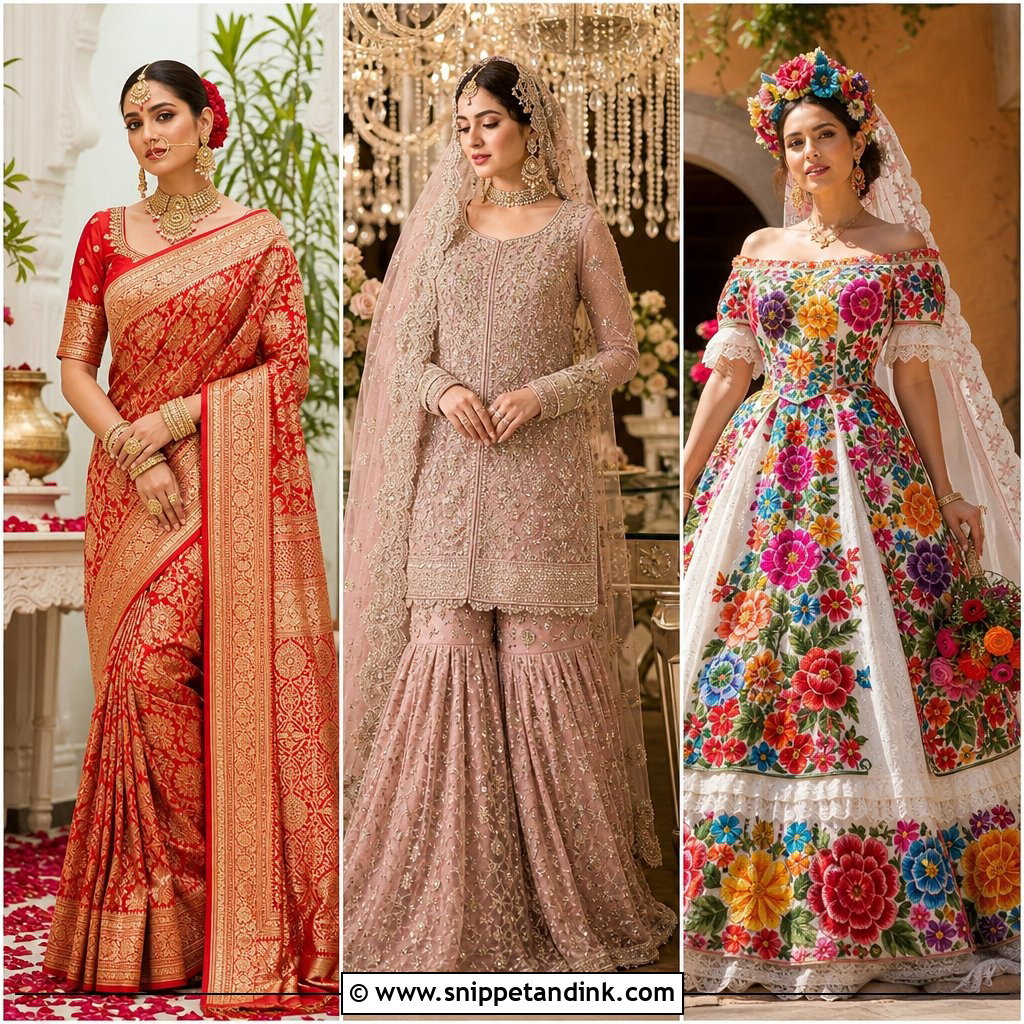

20. Modern Mexican Spanish Wedding Dress
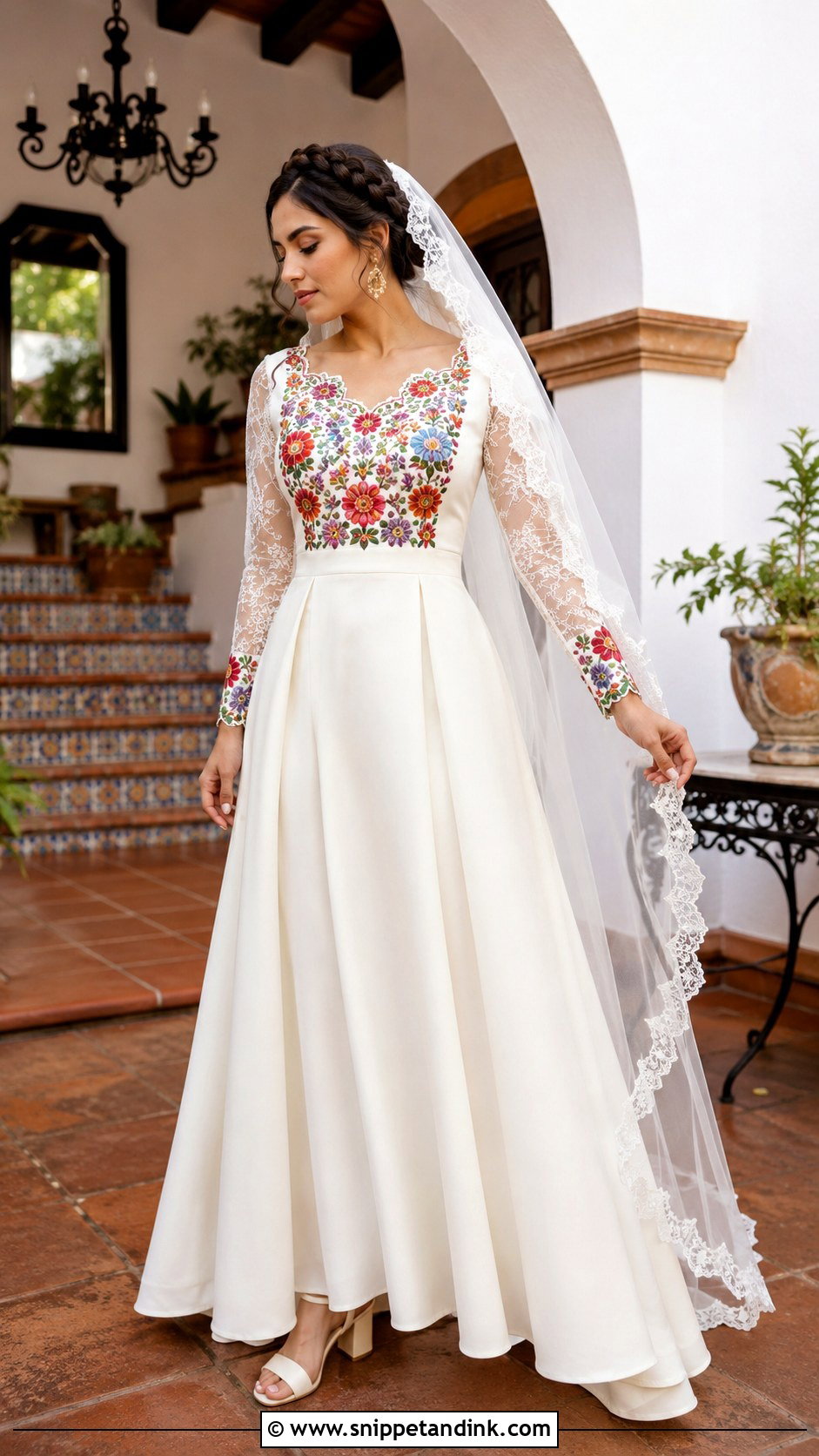
Fusion works when you edit. On a clean ivory A-line, add hand-embroidered Mexican floral details at the bodice and cuffs, then bring in Spain through fitted lace sleeves and a scalloped mantilla. Keep the skirt smooth and lightly structured so the eye can rest. I’d stop there; adding ruffles, a bolero and a rebozo on top turns a fusion into a collage. If the embroidery references a specific community, work with artisans who can explain what the motifs mean. Ivory block heels, gold earrings and a low braided bun complete it.
Planning the Dress Around the Lazo and the Mantilla
In many Mexican Catholic ceremonies, the couple receives the lazo, a large loop of rosary beads, flowers or cord laid over both sets of shoulders. Once you know it’s part of your ceremony, a few dress decisions follow from it.
A lazo sits across the top of the back and shoulders, so raised appliqué, crystal beading or ruffles at the shoulder can snag on it. An off-the-shoulder neckline is fine, but the lazo will sit on bare skin. If you’re wearing a mantilla, the lazo goes over the veil, so a sturdy comb and well-secured lace keep everything in place when it’s lifted off again. Run through the moment with your sponsors so nobody tugs your veil sideways.
Some parishes still expect covered shoulders inside the church. A bolero, a rebozo or a long mantilla all solve that without changing your reception look.
Washing Colorful Cotton Embroidery After the Wedding
Bright threads, especially reds and pinks, can bleed into white cotton if they get wet or meet the wrong cleaning solvent. Tell your cleaner the dress is hand-embroidered and ask for a spot test on a hidden area first. If the maker advises hand washing, use cold water and a gentle soap, never wring the fabric, and dry it flat, out of direct sun. Store it wrapped in acid-free tissue in a breathable bag, folded as little as possible so the stitches don’t crease.
Who Made the Embroidery Matters as Much as the Gown
Colorful embroidery makes a white gown joyful, tonal stitching gives a softer version, and lace sleeves, ruffles, mantillas, boleros and rebozos let you shape the outfit around your family and ceremony. Before you choose regional embroidery or an Indigenous-inspired garment, learn what it means and buy from skilled artisans wherever you can. Then give comfort the same attention as looks, especially with a full skirt, a long train, a fitted bodice or an outdoor venue. The right dress honors the celebration and lets you enjoy it from the vows to the last dance.
You'll Like These Ideas:




Leave a Reply