
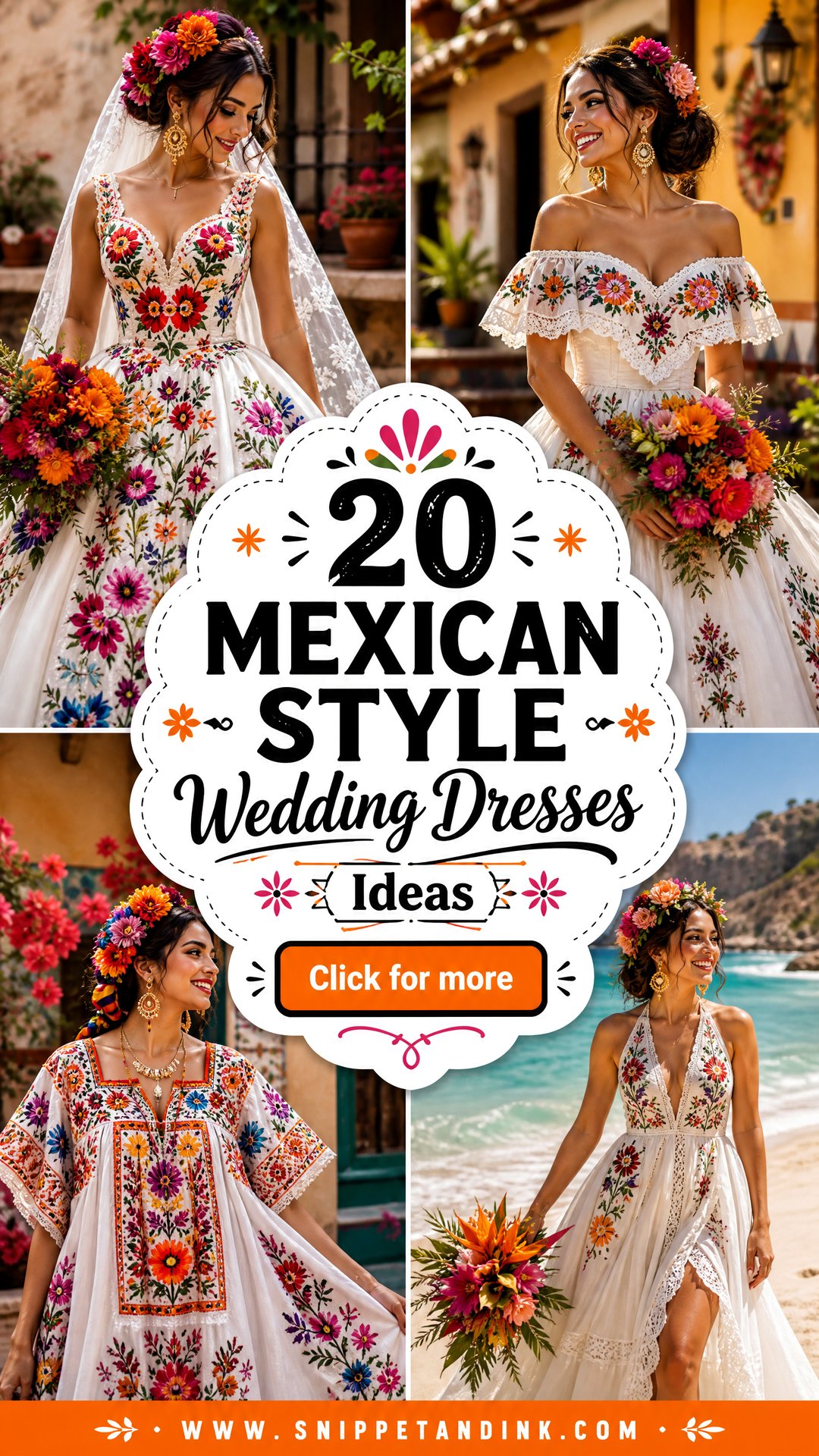
Mexican-inspired bridal dresses cover an enormous range, because the clothing traditions behind them change from one region to the next. Some gowns carry quiet white-on-white stitching; others are covered in bright flowers, airy cotton or folkloric volume. You could wear a Yucatecan-style terno, one of the embroidered huipil silhouettes, or a contemporary fitted gown with a single panel of artisan work. When I style a bride in this direction, I start with where the details come from: her family, the place she’s marrying, or a maker she wants to support. That answer usually narrows the field faster than any mood board. The twenty looks below run from relaxed beach cotton to formal ballroom volume, each with shoes, hair and veil already worked out.
Why Hand Embroidery Changes How a Dress Gets Altered
Most bridal alterations assume the fabric is plain: take in a seam, let it out, move a dart. Embroidered dresses don’t behave that way. A floral band that runs across the side seam or waist has to meet itself again after the seam moves, and stitching can’t simply be shifted along the fabric. So I treat the embroidered areas as fixed and plan the fit around them.
- Size to your largest measurement. Taking in an embroidered gown is usually manageable; letting one out often exposes unstitched fabric or old needle holes.
- Ask where the embroidery crosses seams before you buy, and have the tailor pin the fit with the motifs in view.
- If you’re commissioning, give the maker your measurements before the panels are stitched. Embroidery is often worked flat and assembled afterwards, and that is the only stage where placement can be adjusted cheaply.
- Dense embroidery stiffens fabric. A heavily stitched bodice sits differently on the body than the same cut in plain cotton, so try the actual dress, not a sample in another finish.
Timing matters too. Handmade pieces from individual artisans can take several months, and each maker works at a different pace, so ask for a realistic date in writing and leave room for at least two fittings after it arrives.
1. White Floral Embroidered Mexican Wedding Dress
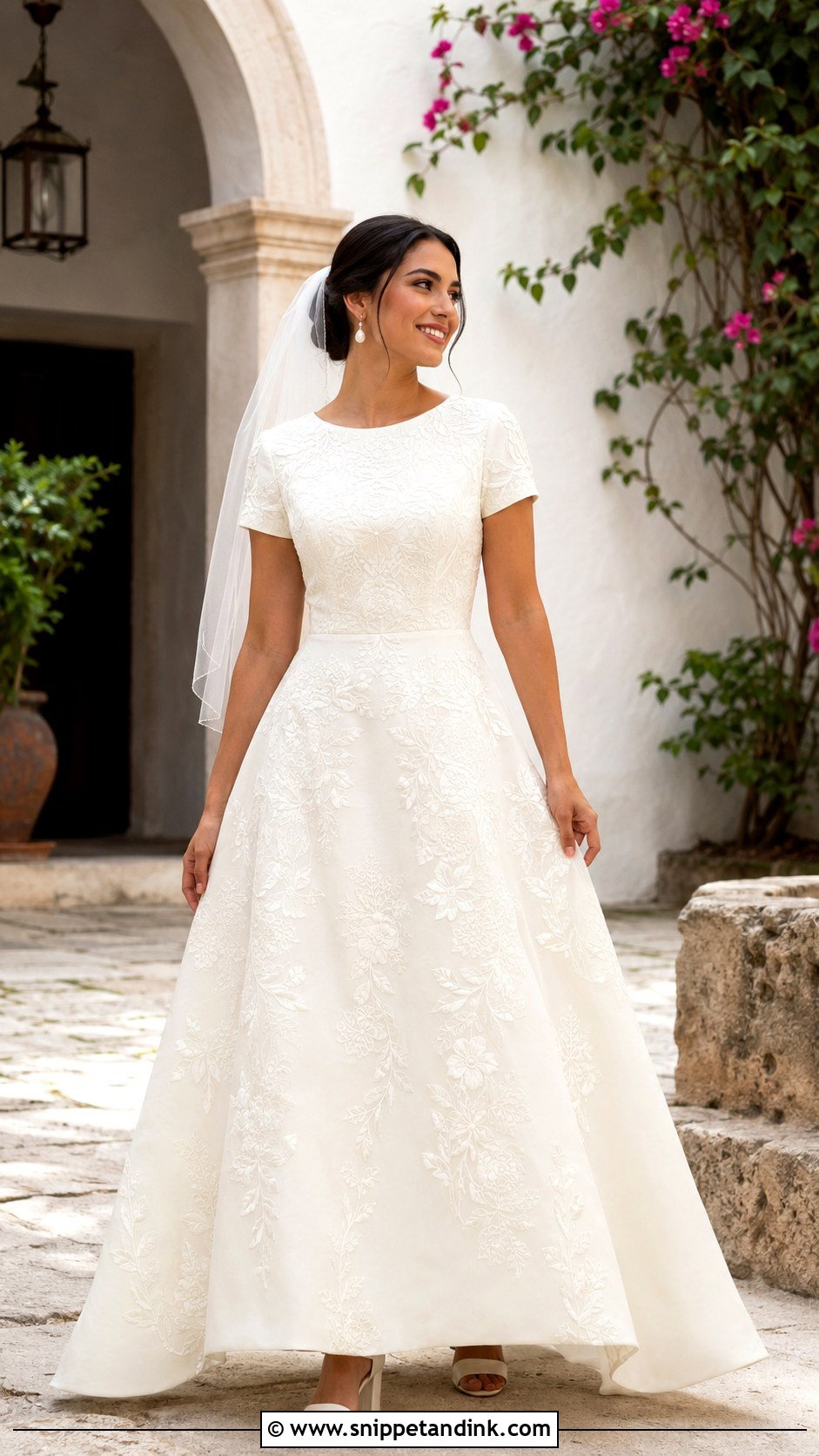
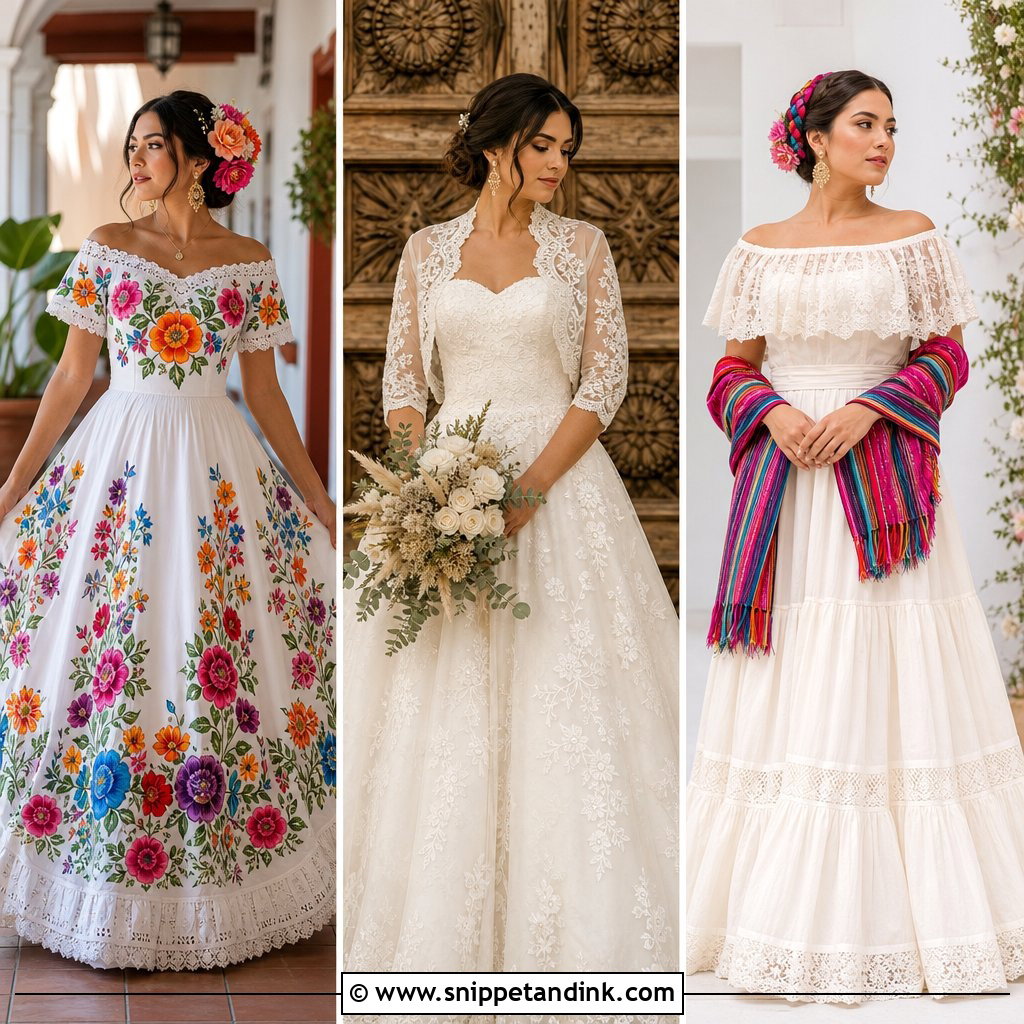
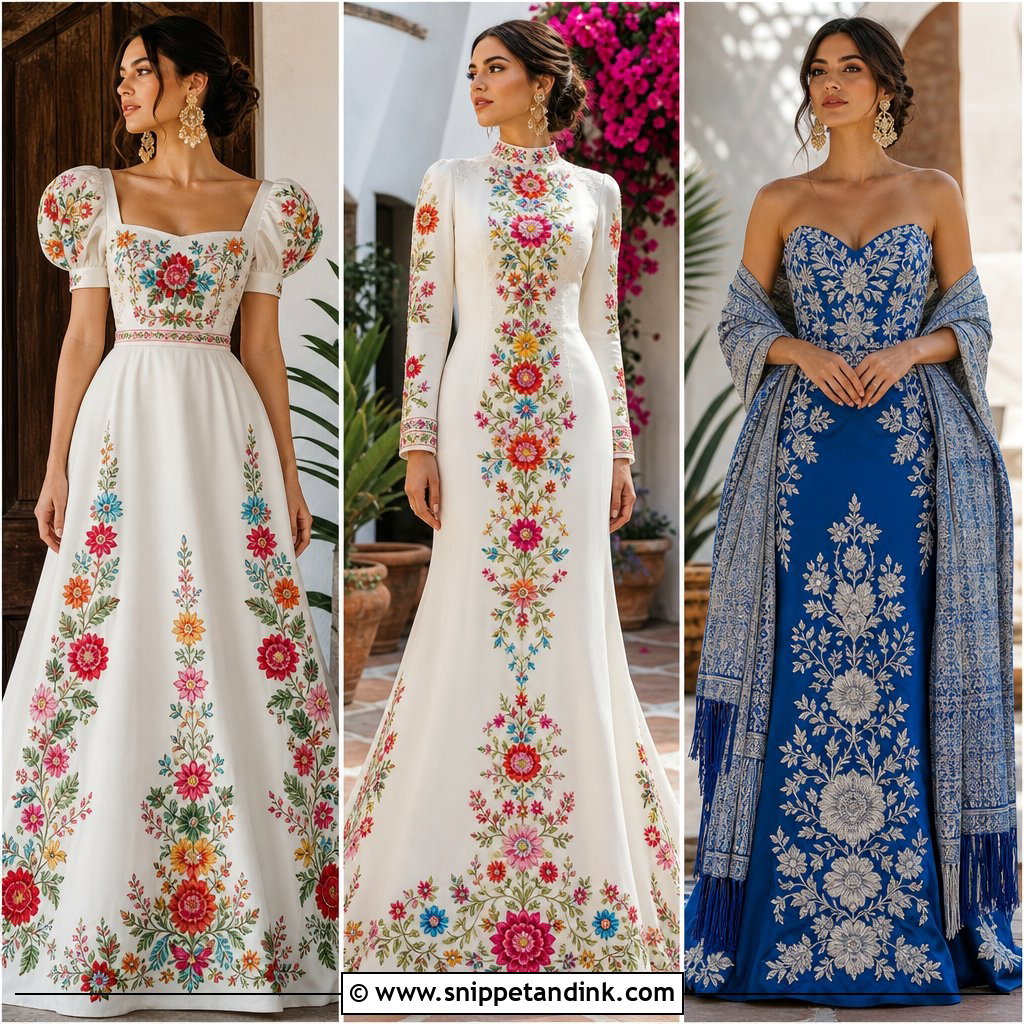
Tonal embroidery is the gentlest way into this style, and it is the one I see grandmothers approve of fastest. An A-line gown with white flowers stitched across the neckline, sleeves and skirt stays clearly bridal while the handwork still reads up close. The detail I watch is the veil: a fingertip length that stops above the skirt embroidery keeps it visible, while a long veil lays a haze over everything. Ivory block heels, pearl drops and a low bun with a few loose pieces finish it. Courtyards and haciendas suit it well. If the stitching is handmade, ask the seller which region it draws from and who did the work; a clear answer is a good sign the piece was sourced fairly.
2. Colorful Embroidered Mexican Wedding Dress
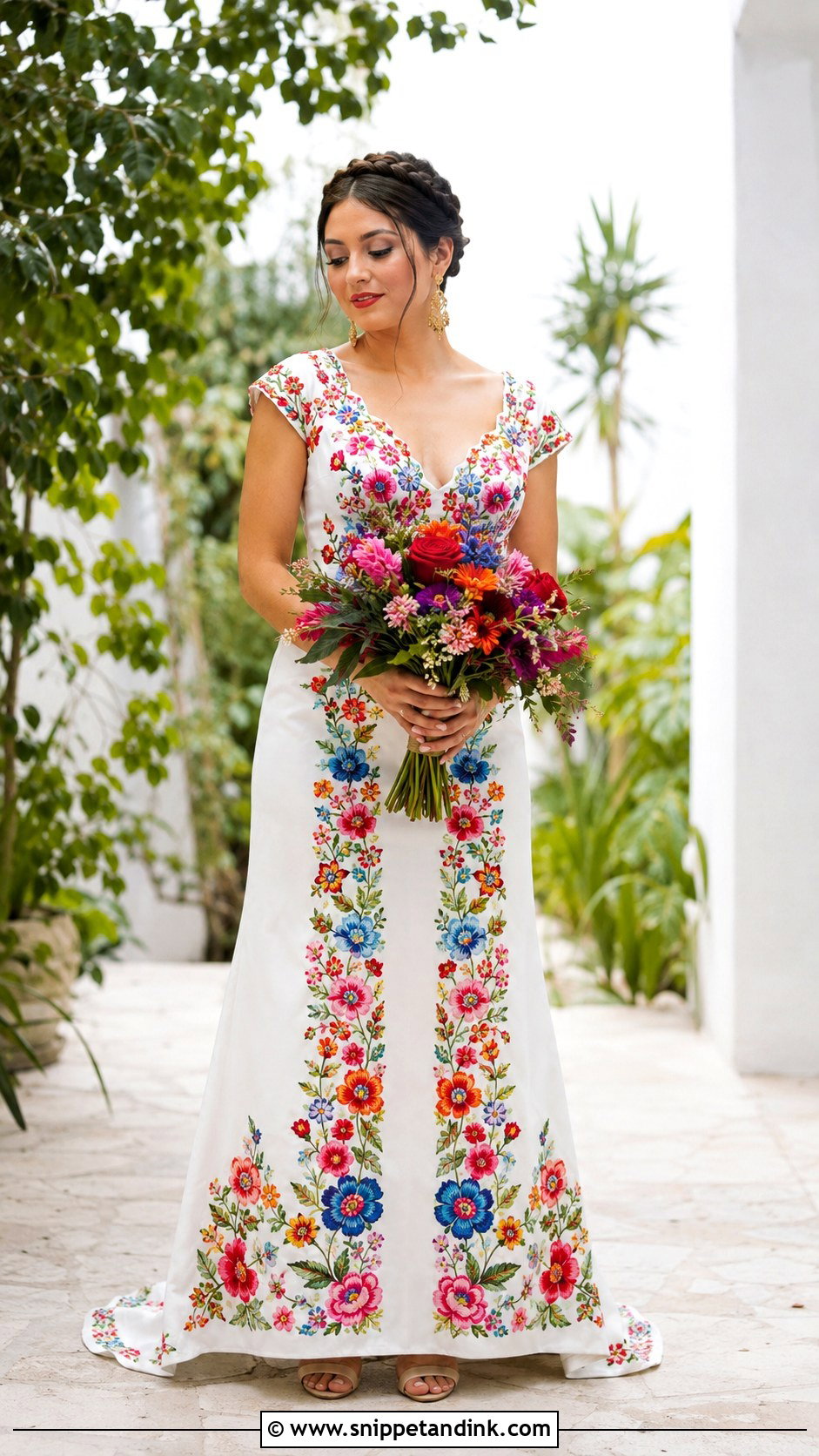
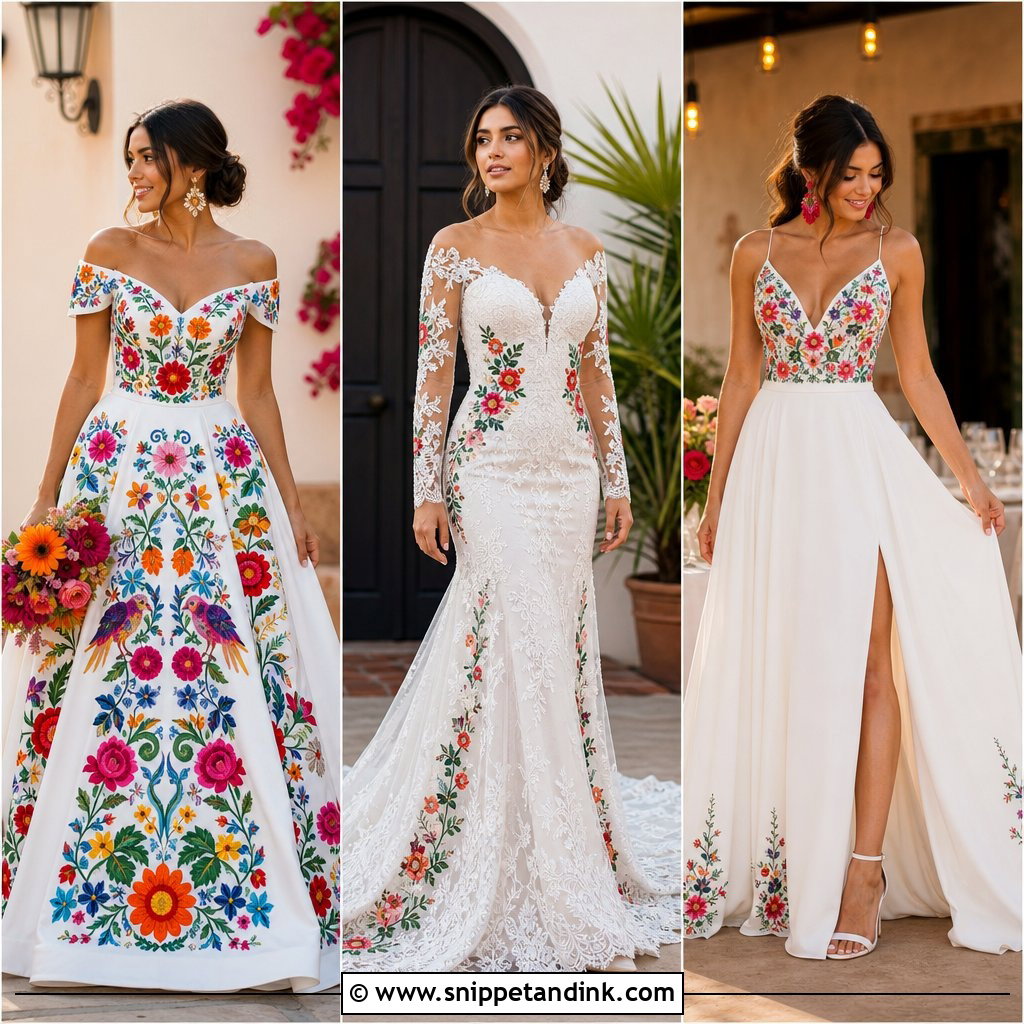
Multicolor flowers turn a white gown into something joyful, but they need a plan or the whole outfit gets loud. On a floor-length dress with red, pink, blue, orange and green thread at the bodice and hem, I pull just two of those colors into the bouquet and leave the rest alone. A softly defined waist keeps the embroidery from swallowing the shape. Neutral leather heels, small gold earrings and a smooth braided updo let the neckline carry the color. Daylight shows off bright thread best; under dim reception lighting the deeper shades hold up better than pastels, so check the venue’s evening light before you commit.
3. Mexican Lace Wedding Dress With Mantilla Veil
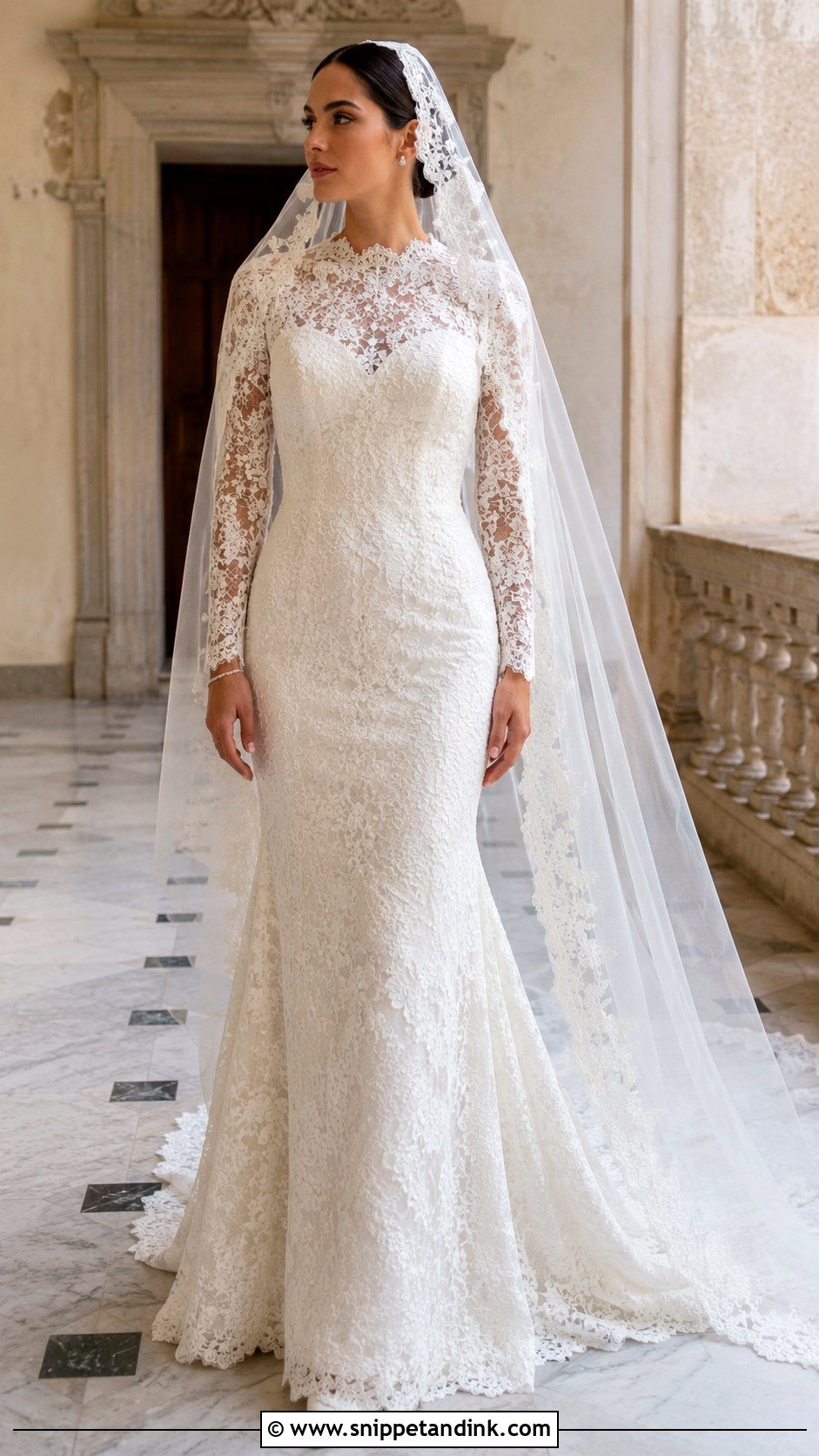
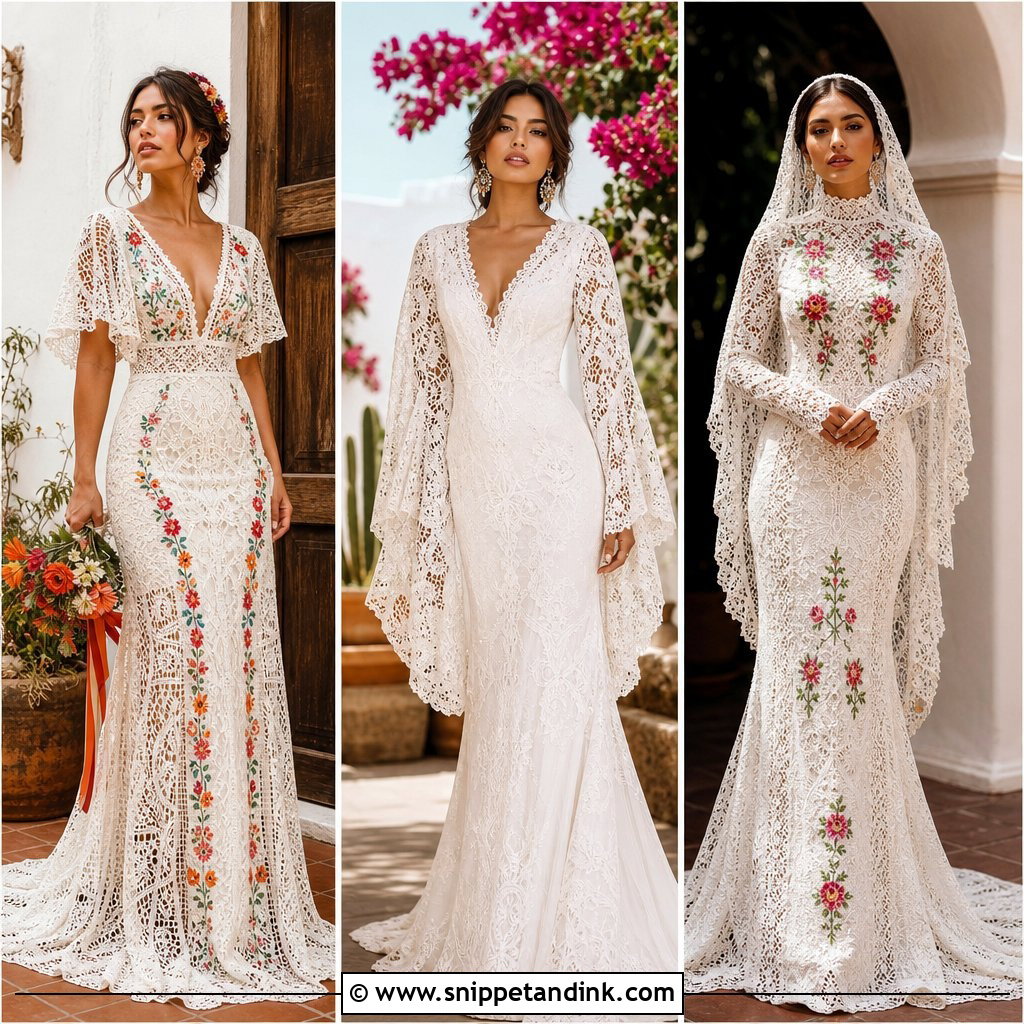
Lace and a mantilla make a soft, covered look that moves well. A fitted or A-line dress with lace sleeves, a higher neckline and a gently flared skirt sits naturally under a scalloped mantilla draped over the head and shoulders. Mantillas and modest lace are often linked with Mexican Catholic weddings, though families differ in what they expect, so ask at home before you assume. My one firm rule here is matching the lace scale: put the veil edge against the sleeve in daylight, because a large floral veil over a fine floral bodice looks like two shopping trips. Pearl studs, ivory pointed toes and a sleek chignon keep everything else quiet, and the chignon also gives the mantilla comb something solid to grip.
4. Off Shoulder Mexican Wedding Dress
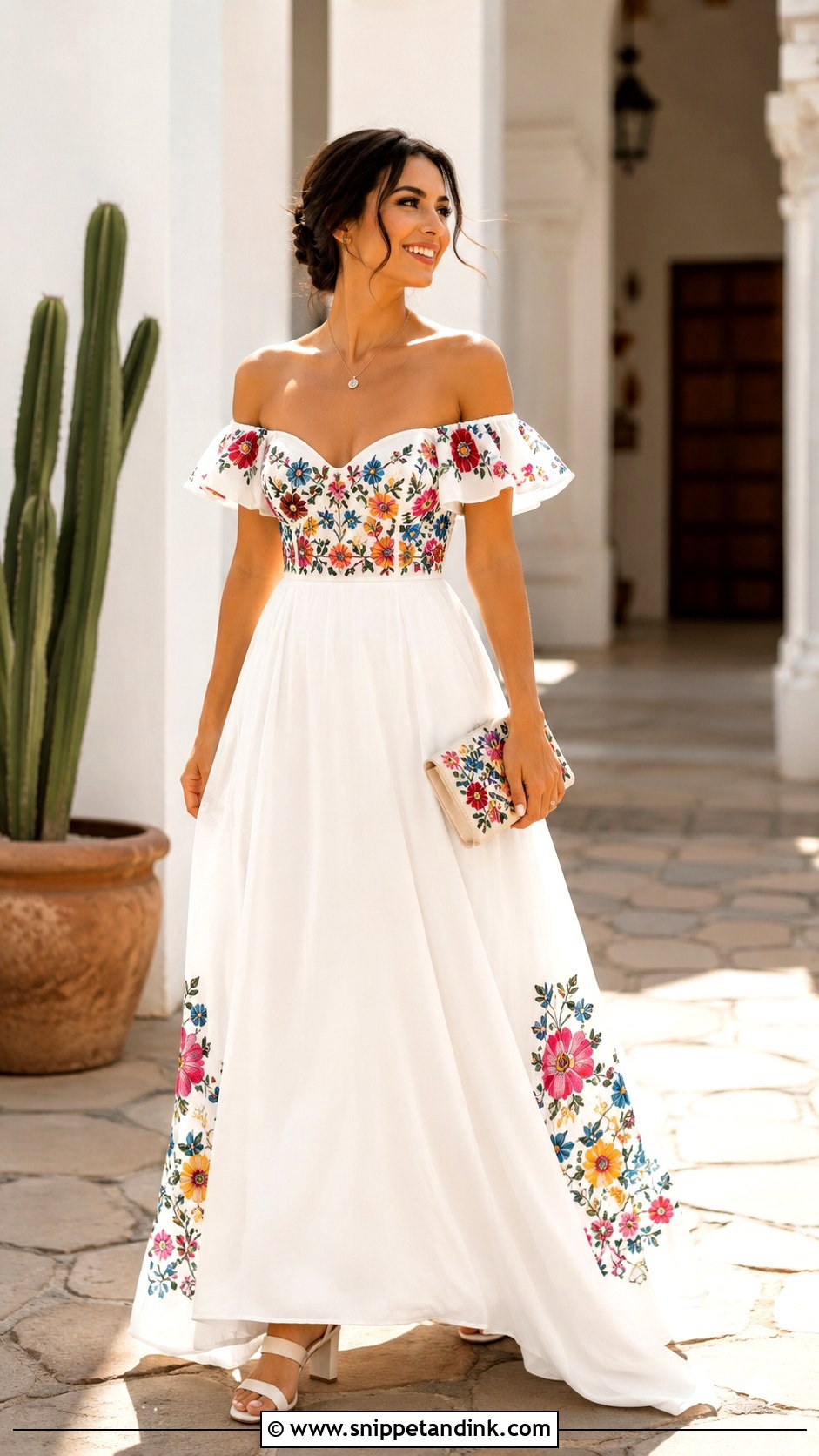
Off-the-shoulder necklines are where I spend the most fitting time. A structured bodice with embroidered flowers, short ruffled sleeves and a full skirt looks relaxed, but only if the internal boning and an elastic grip at the top edge hold it in place while you hug people. Test it by reaching both arms forward as if for a hug; if the neckline rides up or digs into the upper arm, it needs adjusting. For outdoor heat, cotton, linen blends or soft tulle beat heavy layers. A delicate pendant, block-heel sandals and a half-up style balance the open shoulders, and a removable embroidered shawl gives you coverage for a church ceremony.
5. Long Sleeve Mexican Wedding Dress
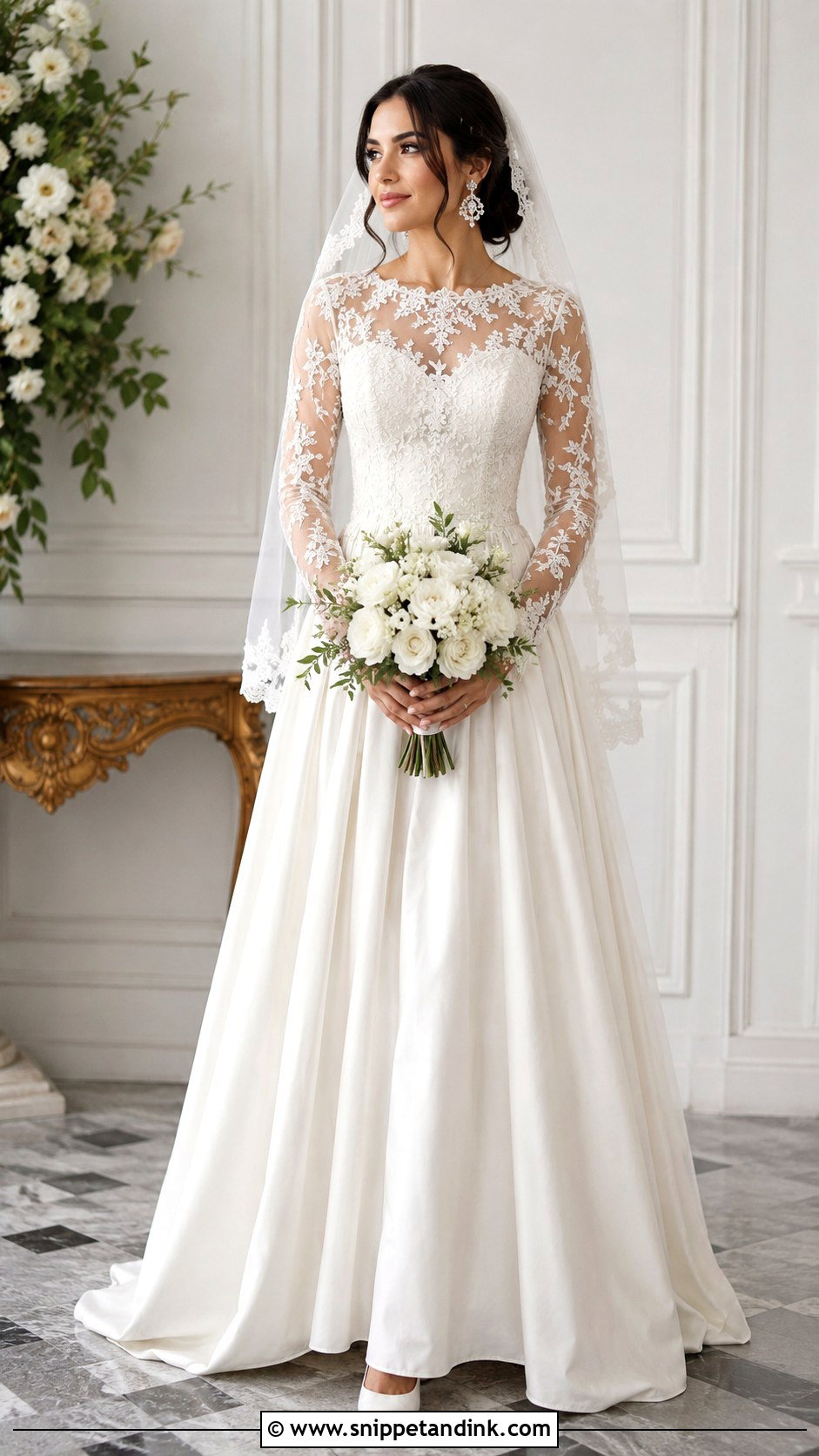
Sheer lace sleeves over an embroidered fitted bodice make sense for cooler months and formal churches. A softly gathered floor-length skirt below keeps the waist defined without restricting your stride. Closed-toe pumps, vintage earrings and a white bouquet with greenery suit the coverage. Sleeves are the part I check twice: lift your arms overhead and bend your elbows at every fitting, because lace that pulls across the back of the shoulders will do it all night. If the back has embroidery, I’d steer you to a fingertip veil over a cathedral one. Lined sleeves and a higher neckline give a more modest version without changing the silhouette.
6. Boho Mexican Wedding Dress
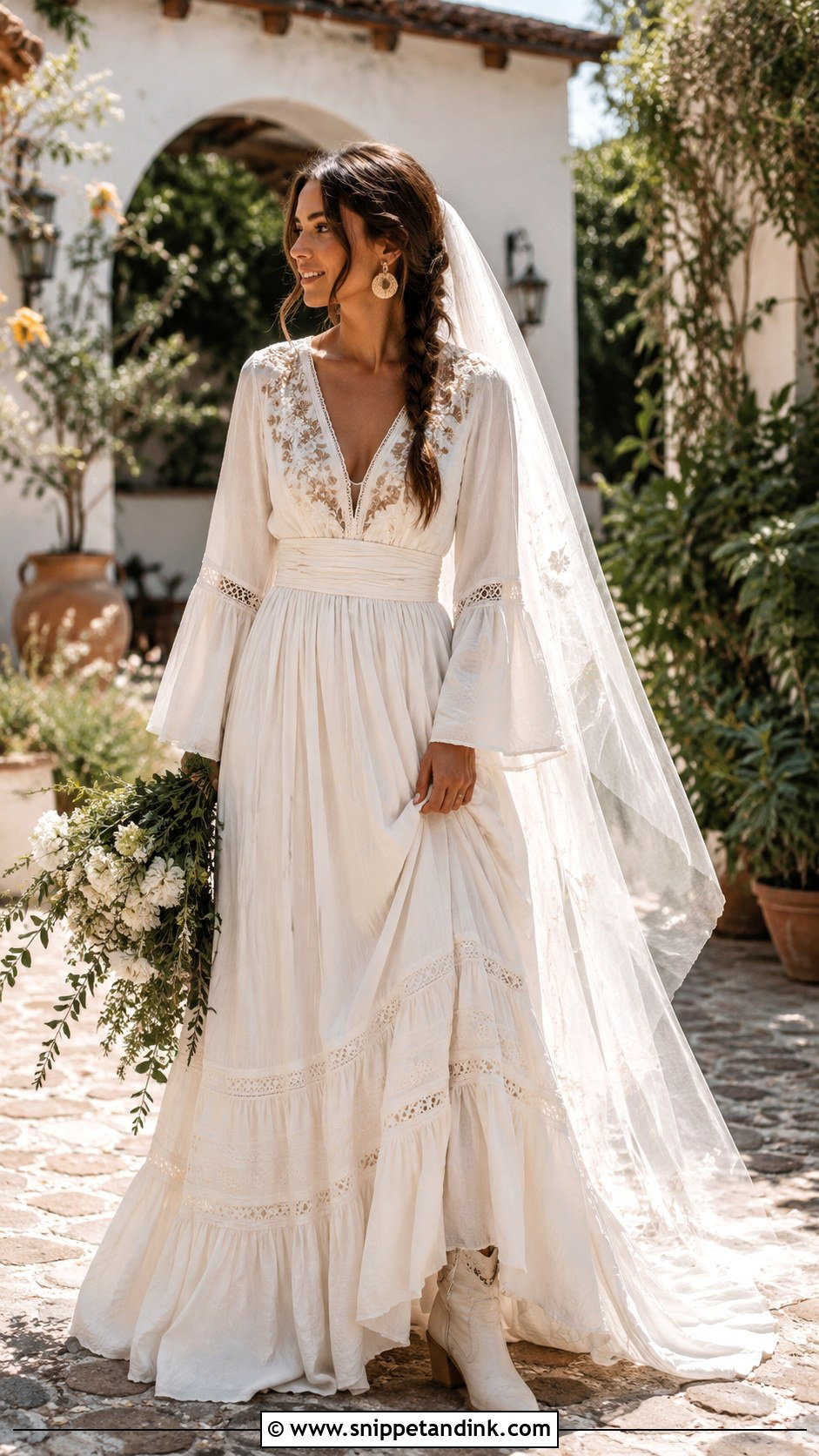
Boho versions work best when you let the dress do the talking. An airy cotton or lace gown with bell sleeves and small flowers at the neck already carries plenty, so I keep accessories to hammered gold earrings, a loose braid and a light veil tucked under the hair. Pile on fringe, feathers and layered necklaces and it starts to look like a costume. The surface underfoot decides the shoes: ankle boots on grass, low block sandals on stone. Ask for a hem that clears the ground by a finger’s width if you’re outdoors, because cotton wicks up dirt and damp quickly. Breathable lining matters more here than anywhere else in the list.
7. Vintage 1970s Mexican Wedding Dress
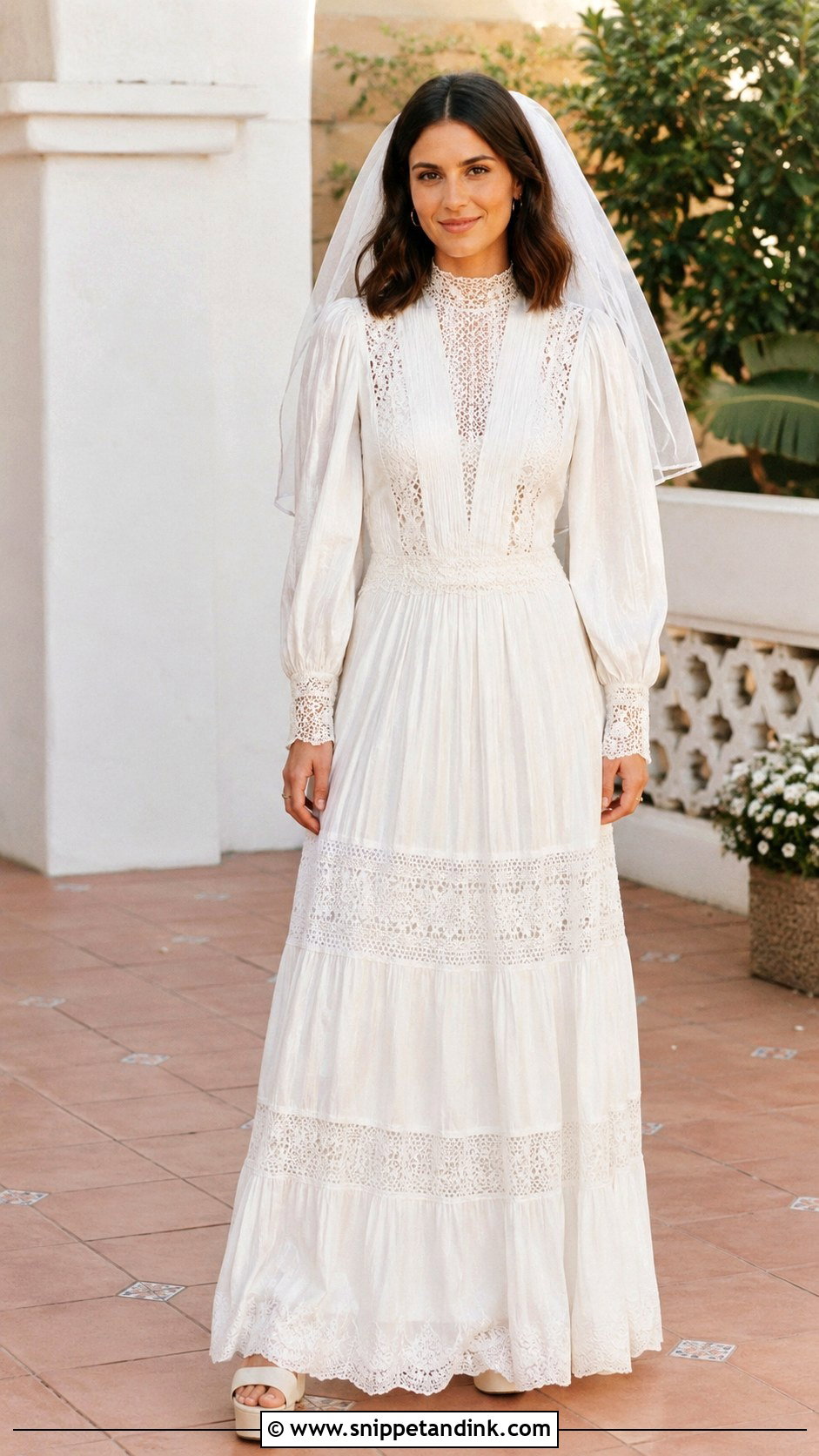
A vintage 1970s Mexican wedding dress has the easy romance that suits a small wedding. Cotton maxi gowns from that era often have crochet inserts, gathered sleeves and a high neck. Before anyone alters a genuine vintage piece, I hold it up to a window and check the underarms, seams, fastenings and hem, since old cotton and crochet thin out at stress points and can tear when a seam is opened. A good tailor can back those weak areas and add a modern lining. Platform sandals, small hoops and a shoulder-length veil keep the period feel without tipping into fancy dress, and loose waves or a centre-parted low bun suit it.
8. Yucatan Terno Wedding Dress
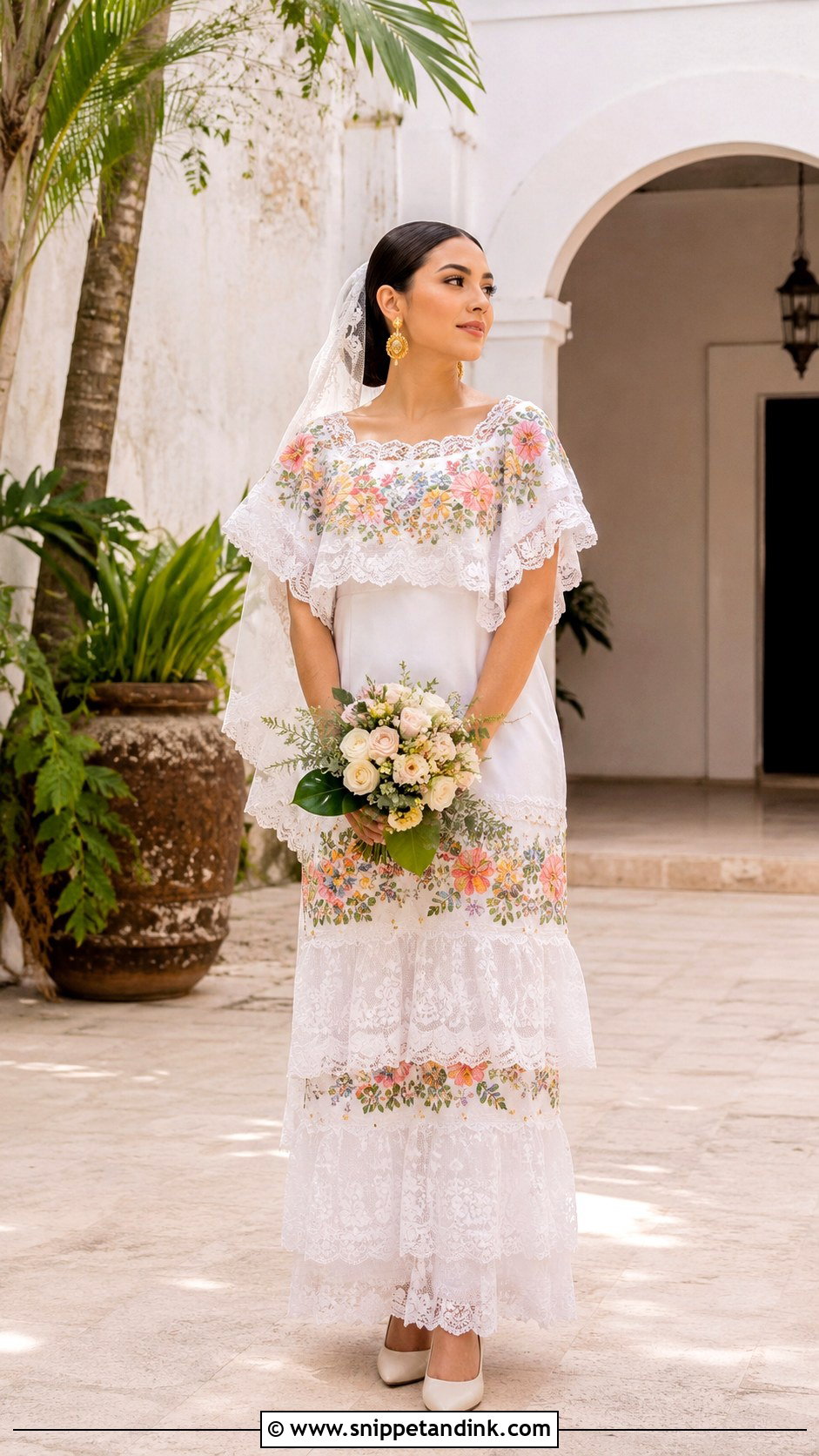
A Yucatecan terno is the most formal piece in this list: layered white fabric, dense floral embroidery and lace, with a long, graceful line, though makers vary in technique and detail. If you want the real garment rather than a loose nod to it, commission it from an experienced maker from the region instead of buying a mass-produced copy. Because of the layers, a terno can be warm and heavier than it looks, so talk through weight, airflow and the forecast during the design stage, not at the final fitting. Understated heels, gold earrings and a smooth updo keep the neckline clear. A plain sheer veil works if its edge doesn’t fight the embroidery, and the bouquet should stay compact.
9. Huipil Mexican Wedding Dress
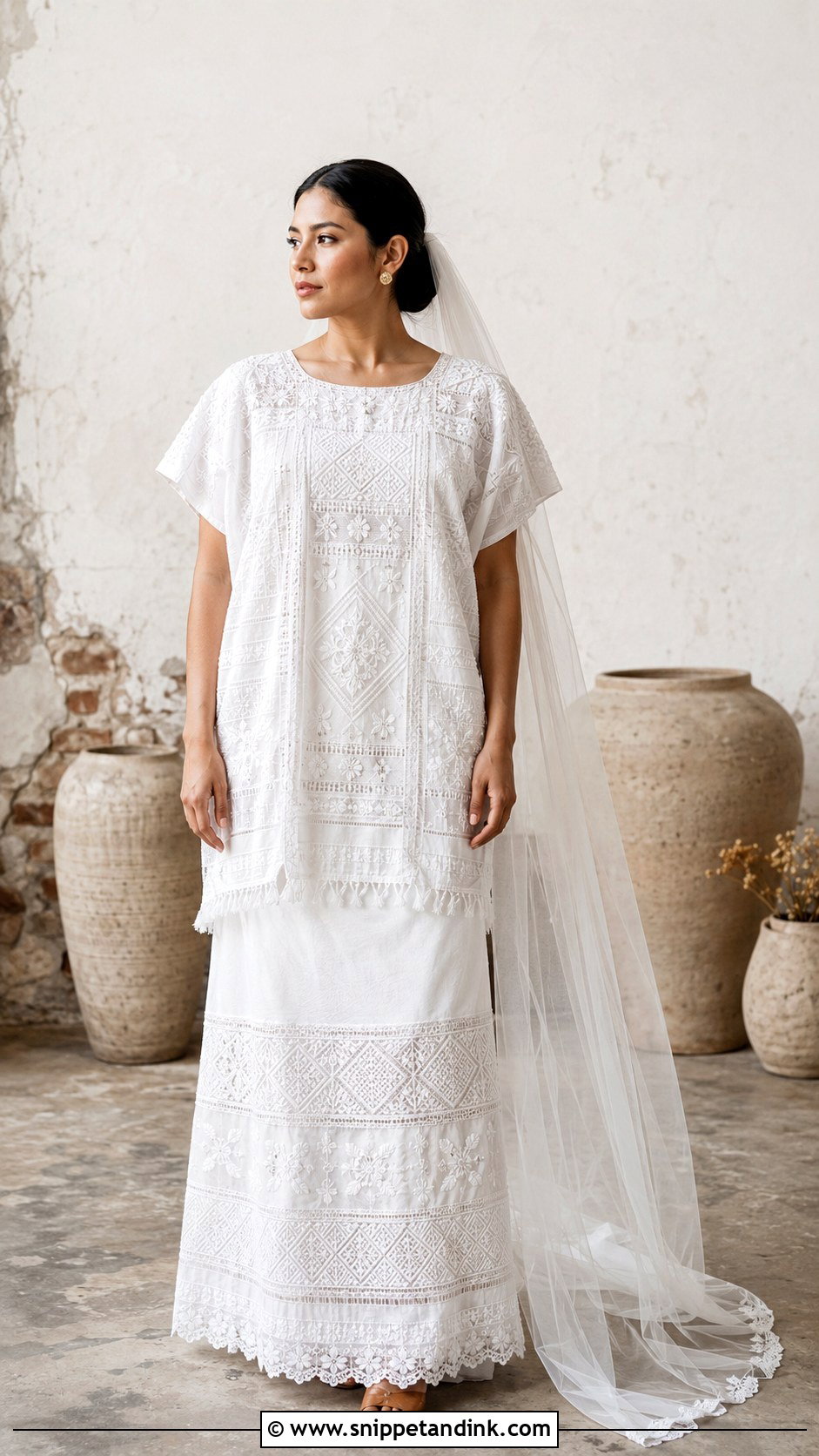
A huipil Mexican wedding dress gives you a straight, comfortable shape carrying a remarkable amount of textile work. Huipiles take many regional forms, woven, embroidered, ribboned or trimmed with lace, so there’s no single correct version. If your family comes from a particular community, working with its makers is the most meaningful route. Huipiles are built from rectangular panels, so they hang boxy on most bodies; small changes at the shoulder and hem improve the proportion without cutting into the panels. Never alter a culturally significant motif without asking the person who made it. A full-length skirt, low heels, gold studs and a long plain veil complete the look.
10. Tehuana Inspired Mexican Wedding Dress
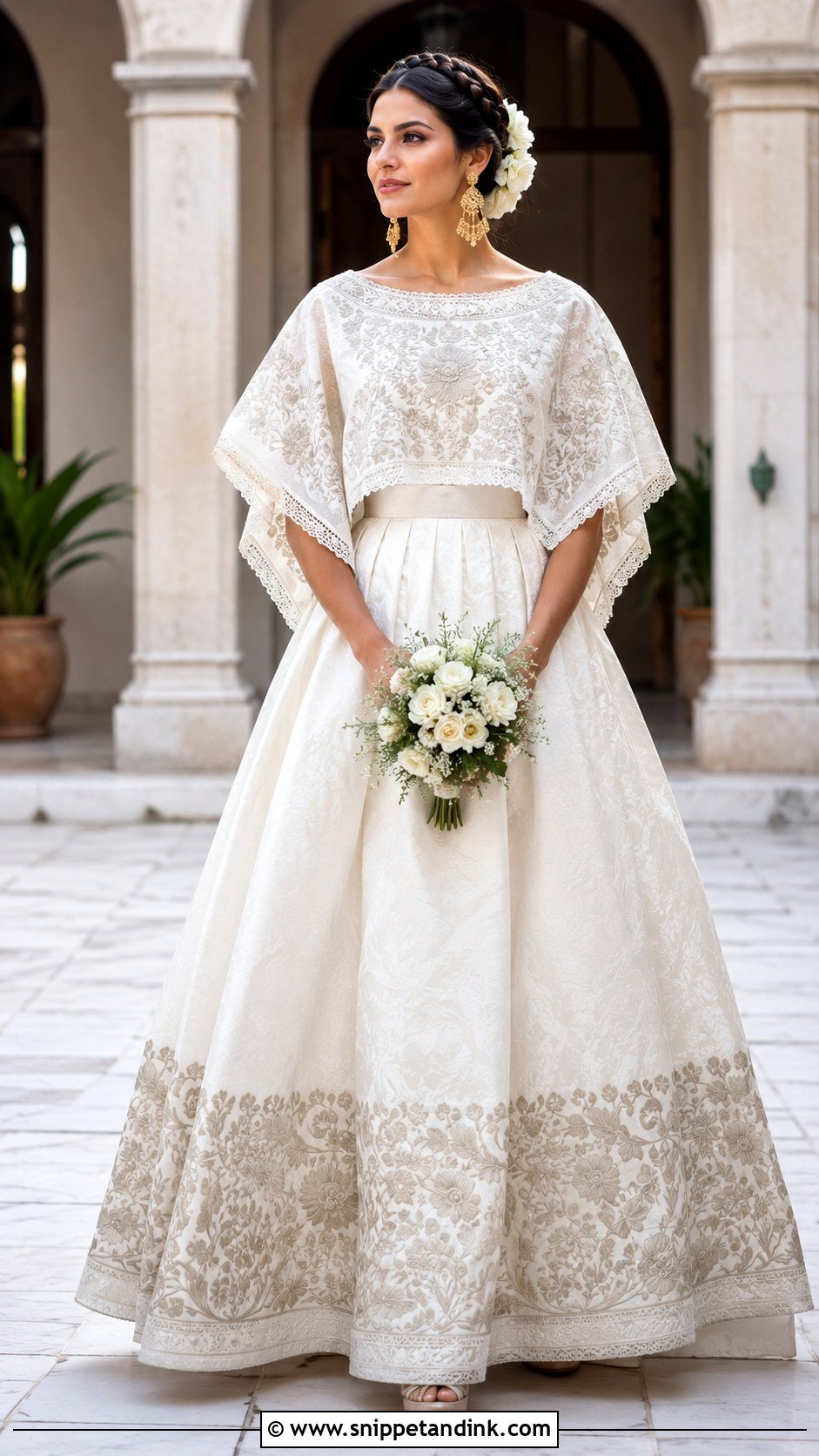
For real drama, a Tehuana-inspired Mexican wedding dress made with knowledgeable artisans is hard to beat. The look usually pairs a structured embroidered huipil-style top with a full skirt finished in a deep floral border. Tehuana dress belongs to the Isthmus of Tehuantepec and has specific garment parts, so collaborating with people from that tradition matters far more than copying a photograph. Practically, that skirt border is heavy and long; hidden low heels let you walk without stepping on it. A braided updo and gold earrings are enough; I’d skip an elaborate veil entirely. For a quieter take, ask for ivory fabric with tonal thread, and credit the makers openly.
11. Puebla Embroidered Mexican Wedding Dress
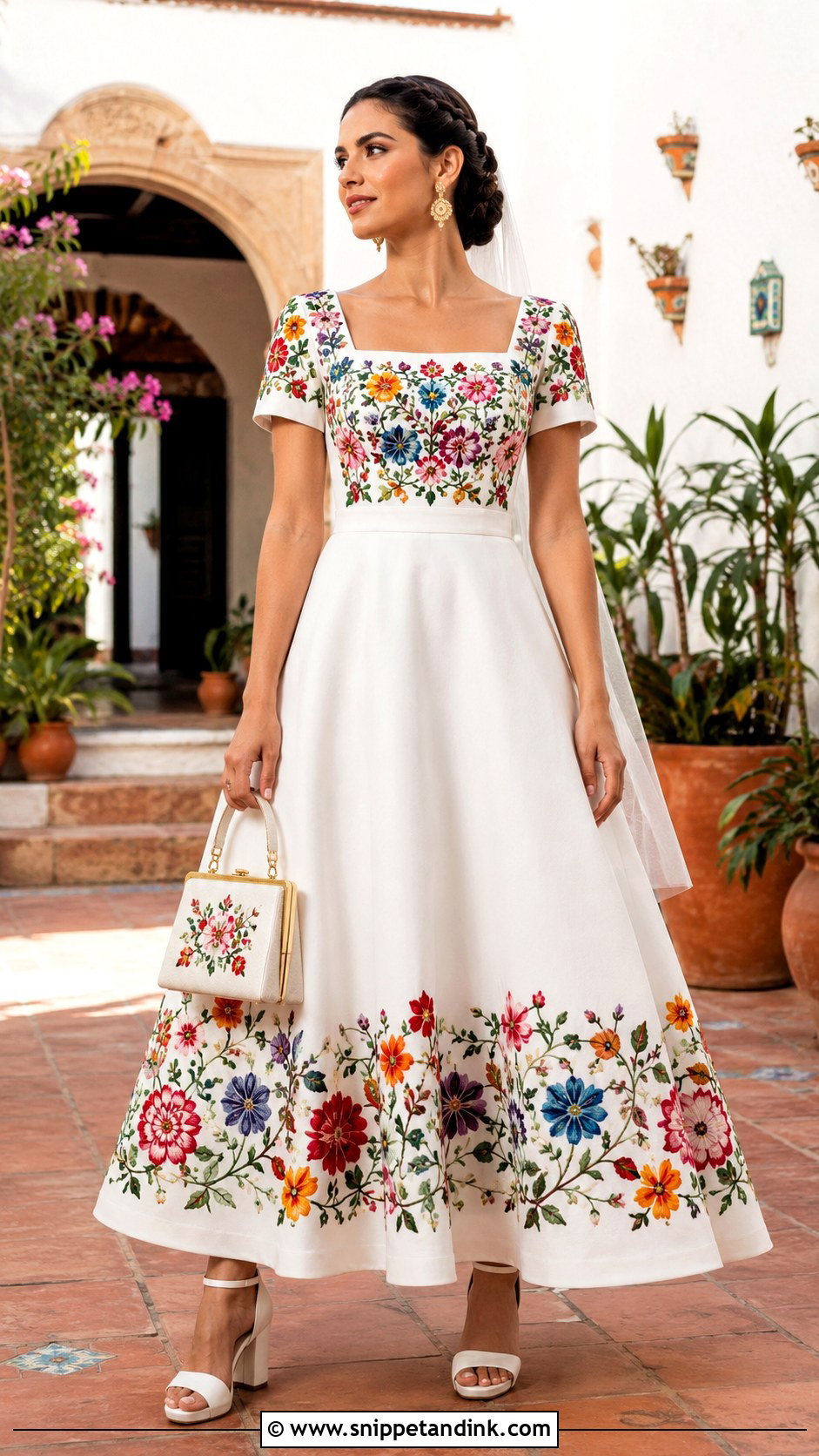
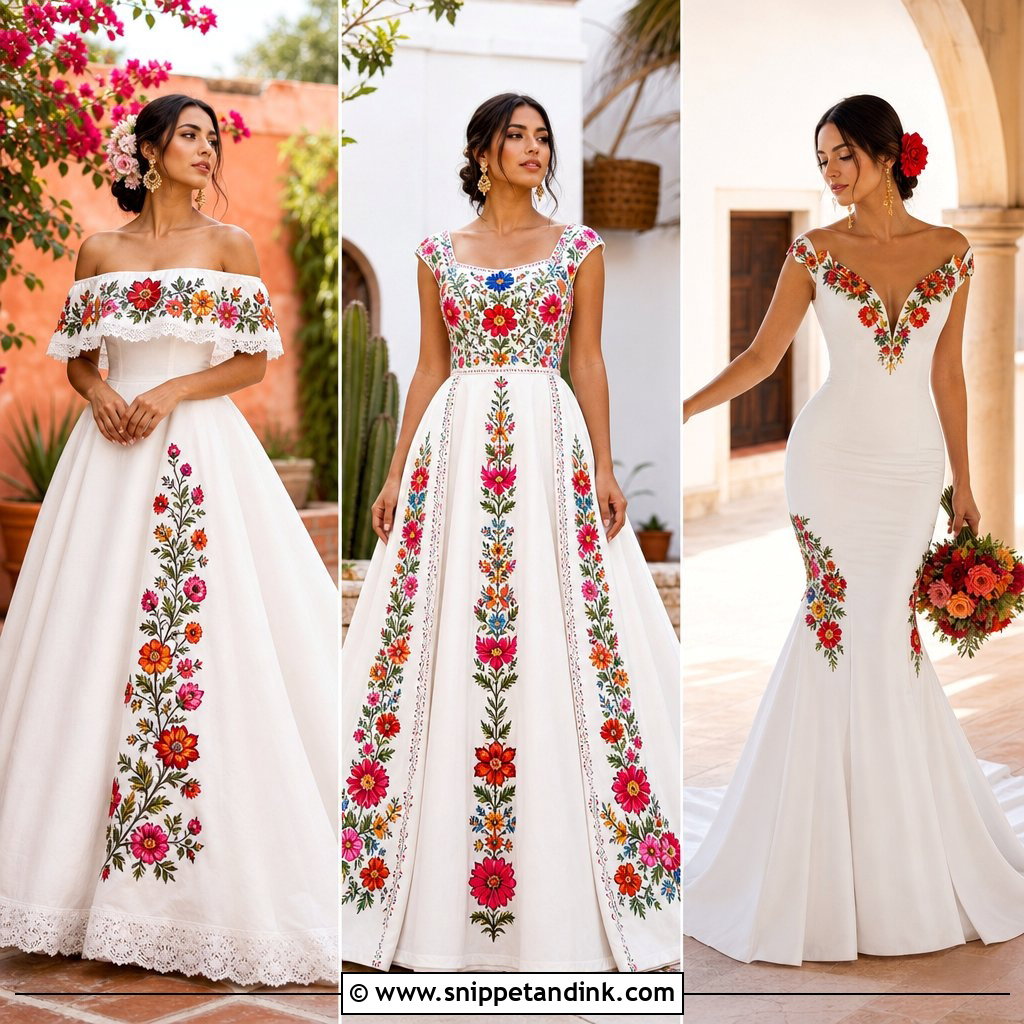
Puebla-style embroidery works well concentrated in two places: across the bodice and near the hem of a white A-line with a square neck and short sleeves. That top-and-bottom placement frames the face and balances the dress in full-length photos. White block heels, small gold drops and a low braided bun keep the neckline open. If bright thread feels like too much, ivory embroidery with a few blue or green accents is a calmer alternative. When commissioning, ask the designer which technique is used and who stitches it. Please don’t ask for motifs to be invented just to match the napkins; that is exactly how regional craft gets flattened.
12. Oaxaca Embroidered Mexican Wedding Dress
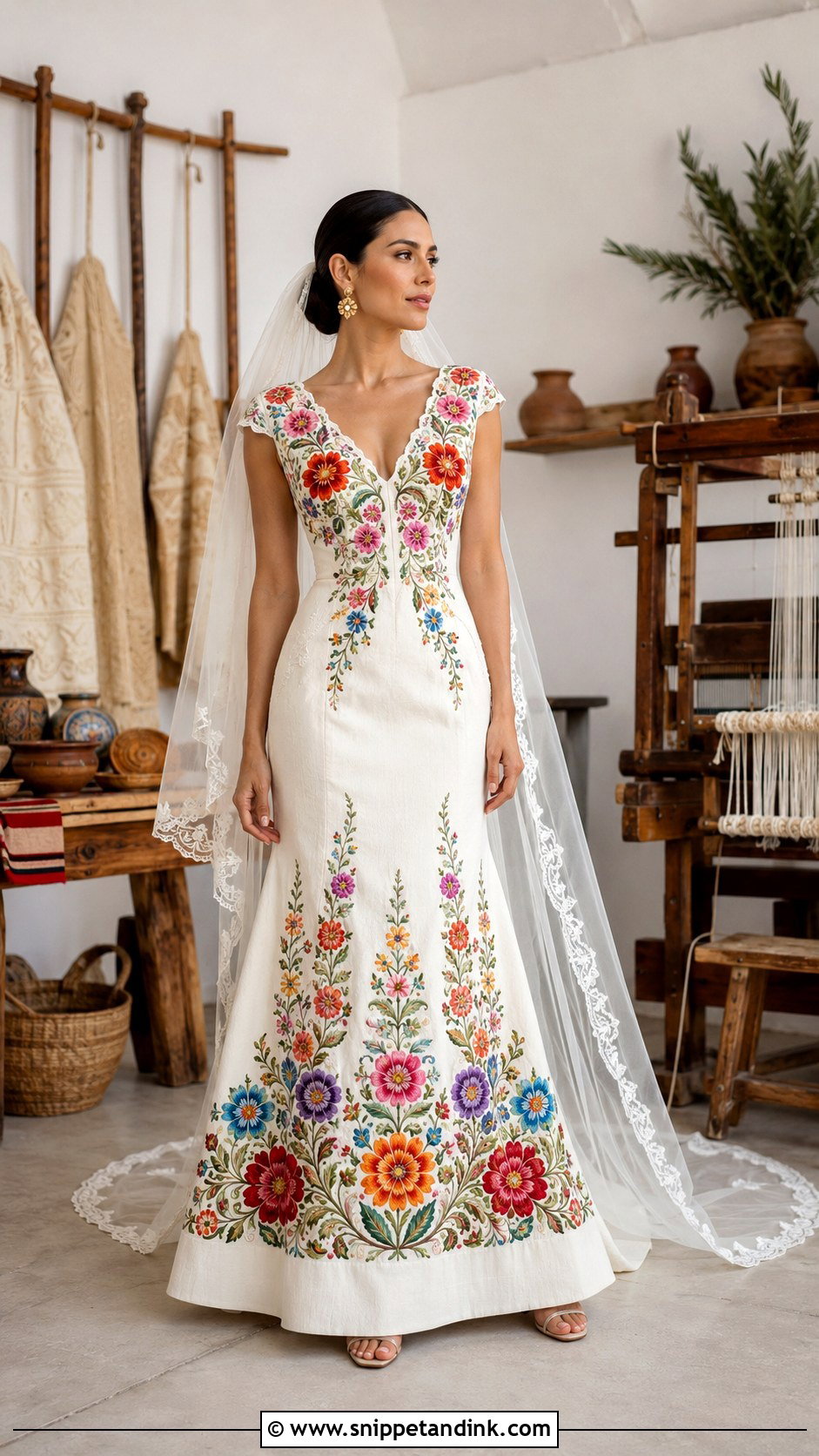
Oaxaca is home to many communities with very different textile traditions, so “Oaxacan embroidery” on a label tells you almost nothing. Ask which technique and which place the gown draws from. A floor-length ivory dress with a fitted embroidered bodice and a gently flared skirt is a versatile base. Measurements need extra care here: where stitching crosses a seam or waistline, the motif has to line up after tailoring, and a seam let out later can break the pattern. Low neutral heels, brushed gold earrings and a plain cathedral veil under a sleek bun keep it calm, and a mostly white and green bouquet lets the thread colors lead.
13. Simple Cotton Mexican Wedding Dress
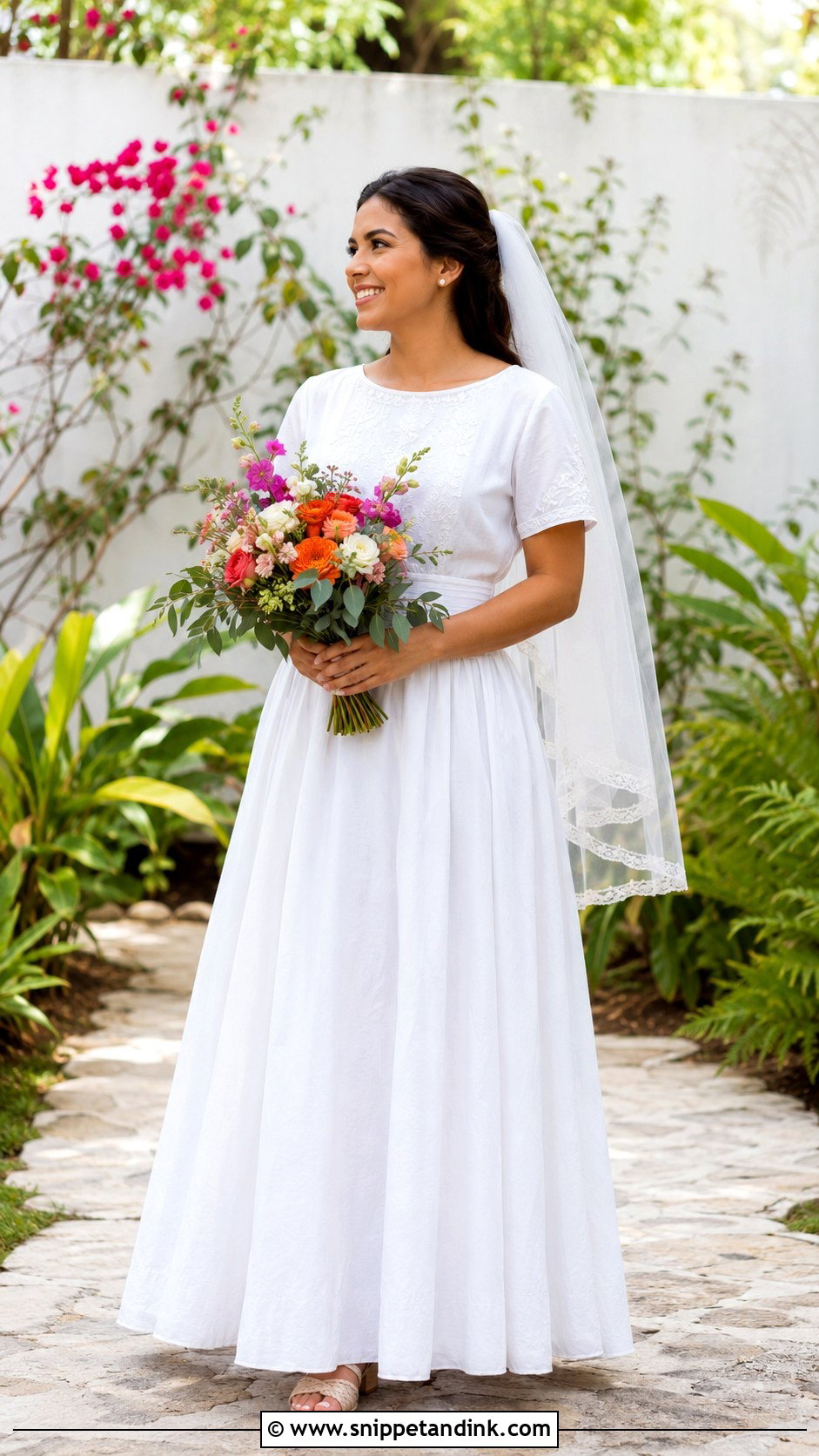
In real heat, a simple cotton gown is the kindest thing you can wear. Look for a breathable floor-length dress with a gathered skirt, short sleeves and white embroidery at the neck. The fabric test I always do: hold the skirt up to the window. Thin cotton turns see-through in sun, so you want a smooth, substantial weave and lining at least through the bodice and upper skirt. Woven sandals, pearl studs and a light chapel veil keep it bridal. A low ponytail or braided bun copes with humidity better than loose curls. Pockets are handy if they lie flat; bulky ones pull the skirt out at the hip.
14. Beach Mexican Wedding Dress
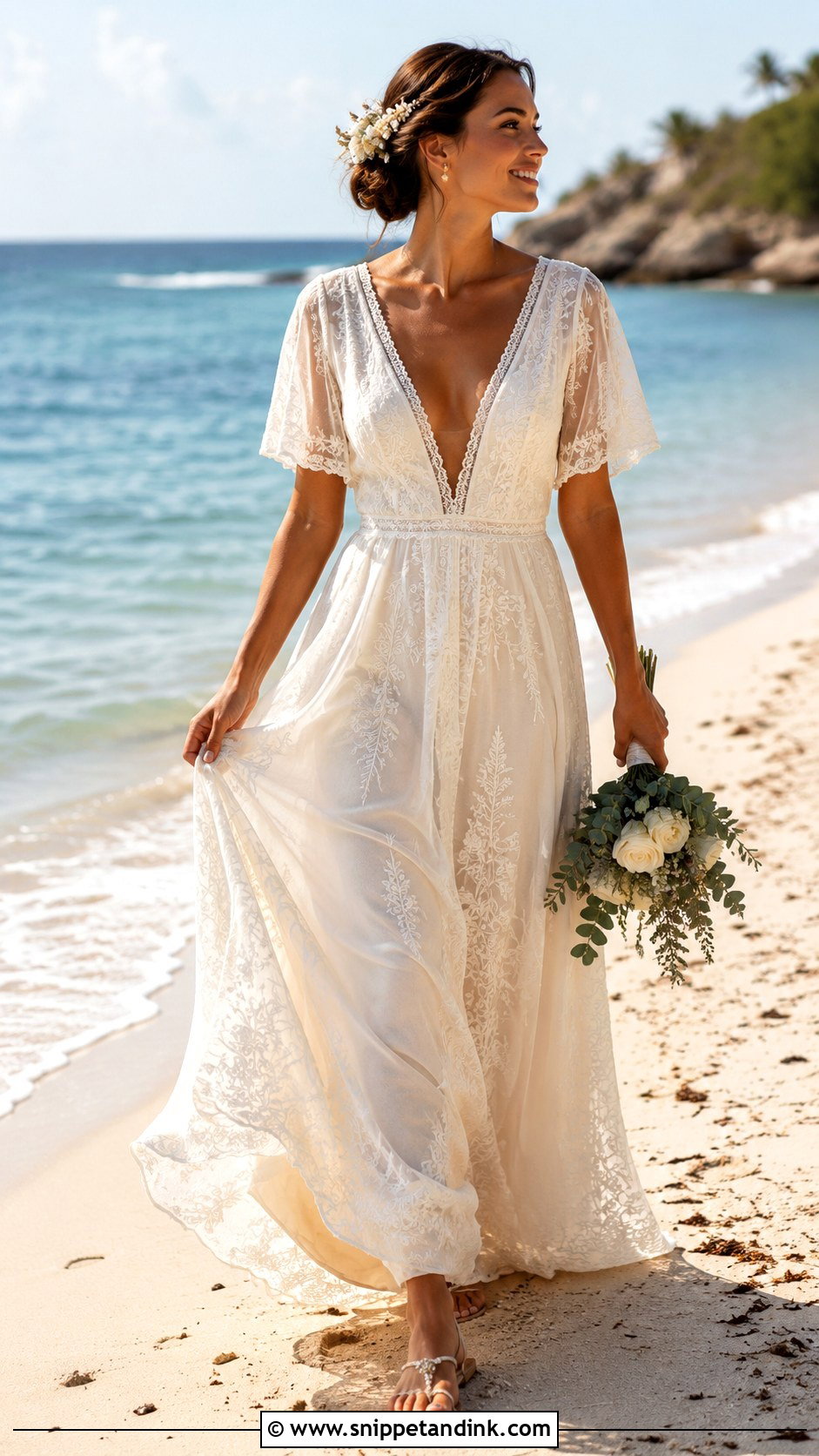
A beach Mexican wedding dress has to cope with wind, sand and heat before it can look good. I’d choose a light embroidered gown with a V-neck, flutter sleeves and a fluid A-line skirt with no long train, since a train on sand just collects it. Go barefoot or in flat sandals for the ceremony and change into low block heels on the dance floor. Coastal wind will pull a cathedral veil sideways in every photo, so a shorter one is far easier. Cotton voile, soft lace or light chiffon with a breathable lining all work; heavy beading traps heat and drags the hem down. A loose updo pinned firmly and a bright bouquet finish it.
15. A Line Mexican Wedding Dress
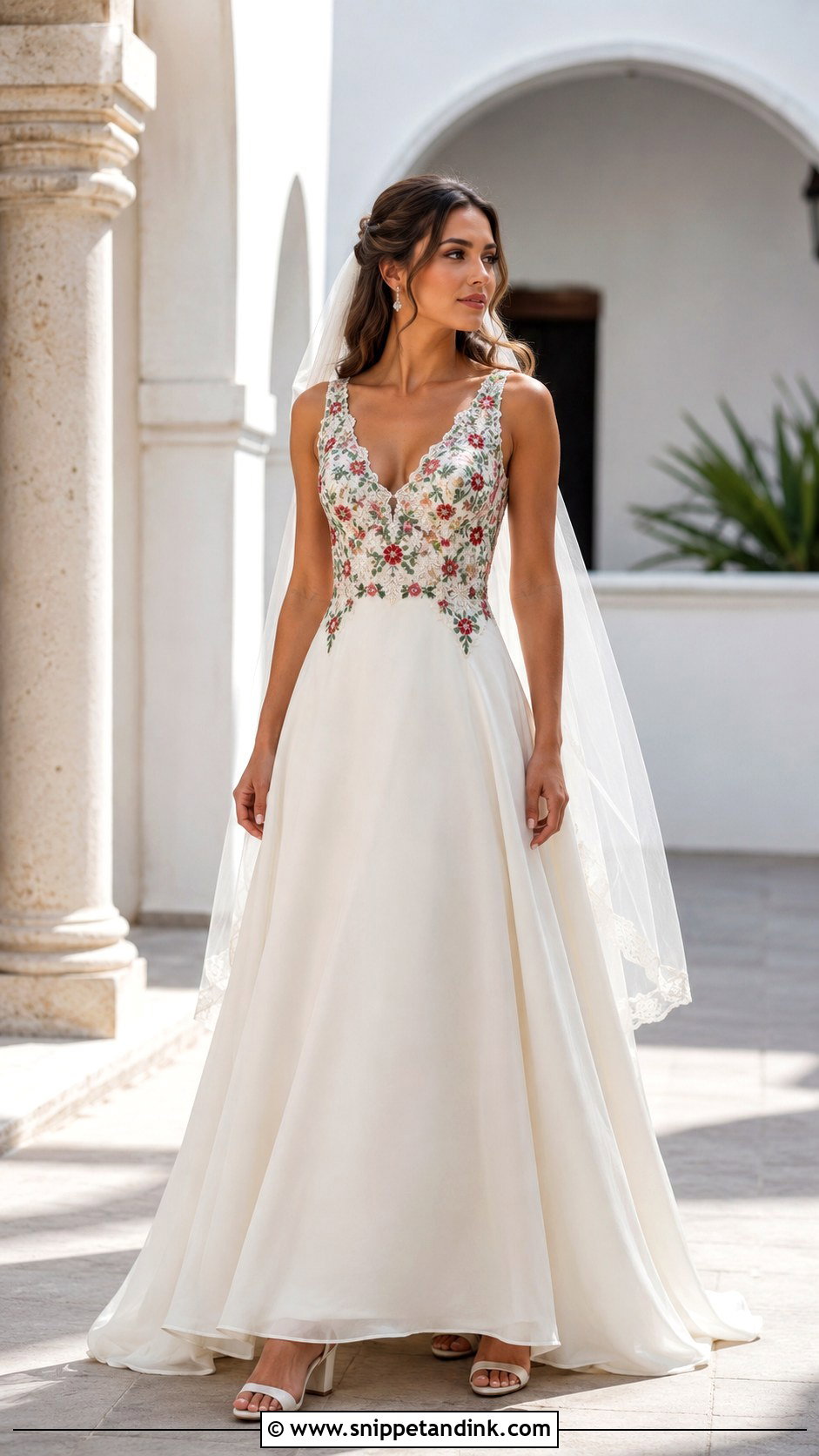
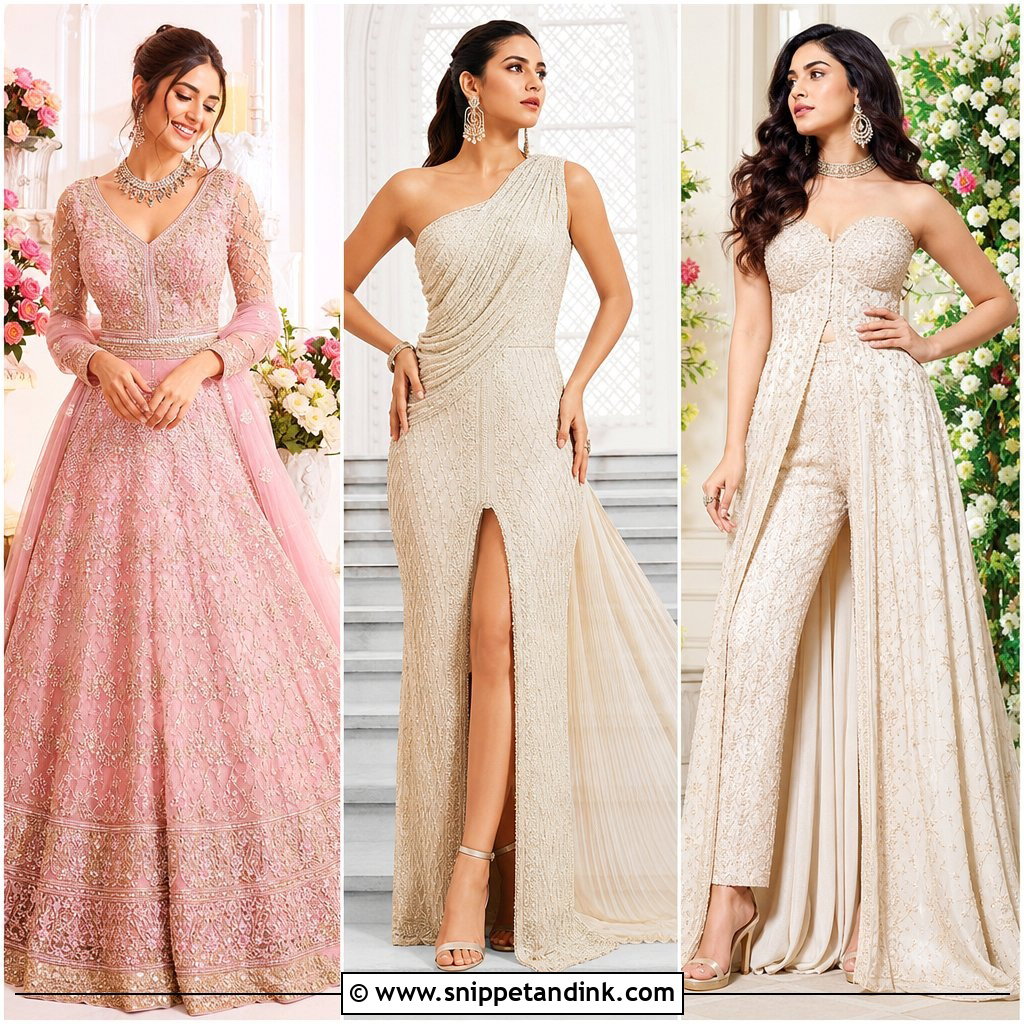
The A-line is the shape I reach for when a bride isn’t sure what she wants, because it suits most bodies and forgives a long day. A fitted embroidered bodice opens gradually into a smooth floor-length skirt without clinging at the hips or thighs. Earrings that repeat one thread color and a fingertip veil keep it tidy, and a half-up style suits a V or scoop neck. For more structure, add boning; for softness, a flexible waistband and lighter lining. Bring your wedding shoes to every hem fitting. The hem should skim the floor evenly with enough clearance at the front that you can walk down steps without kicking it.
16. Ball Gown Mexican Wedding Dress
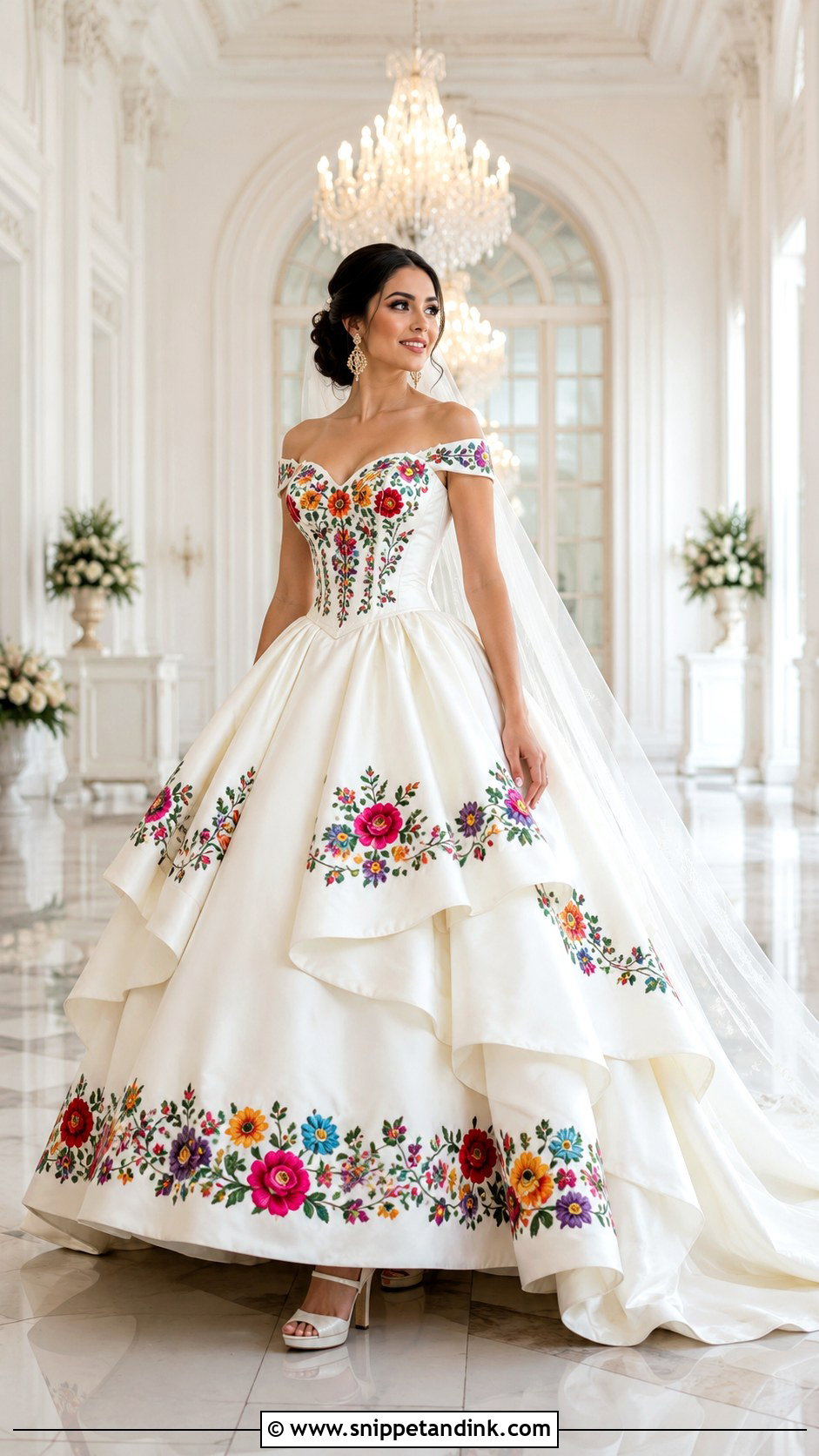
Ball gowns bring the most ceremony drama, especially with tonal or colorful embroidery on a structured ivory bodice above a wide layered skirt. They need room, so a ballroom, historic hall or large courtyard suits them better than a small restaurant. I always plan the bustle before the wedding, not on the night, and practice it with whoever will do it. A veil just longer than the train, chandelier earrings and a polished updo balance the volume. Petite brides do better with lighter skirt layers and a slightly higher waist. A well-made petticoat should give shape without weighing you down; if the skirt feels heavy at the fitting, it will feel twice as heavy at hour eight.
17. Mermaid Mexican Wedding Dress
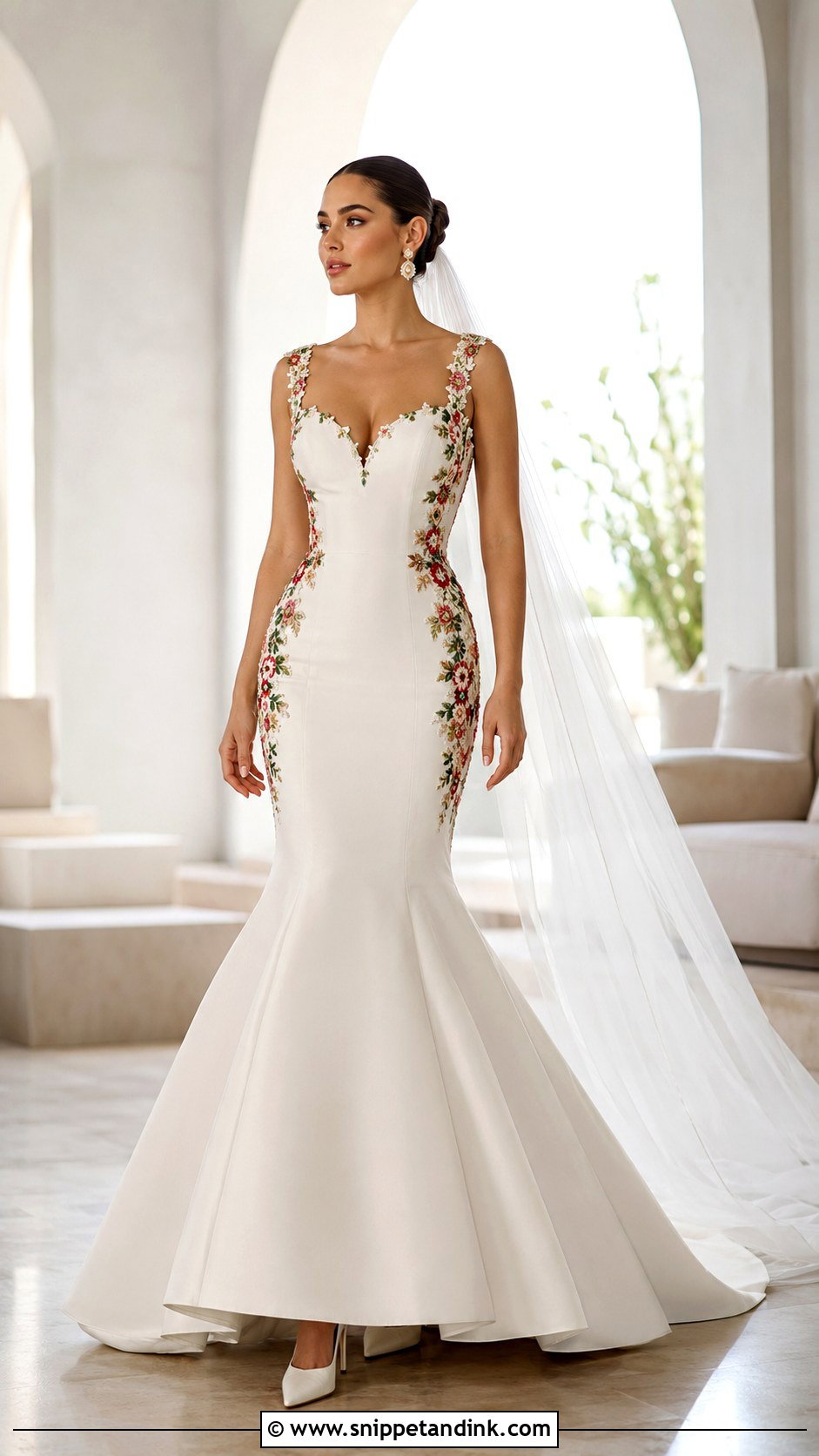
Mermaid gowns put a fitted modern line under handcrafted detail: snug through the hips, flaring at or just below the knee. Embroidery can frame the neckline, trail down the sides or gather at the flare. The catch is movement. At fittings, sit, walk and climb a few steps; a flare set too low will stop you on stairs. Stretch lining and a slightly higher flare point fix most of that. Smooth, no-line underwear matters here more than with any other shape, since every line shows through a close fit. Pointed heels, a long plain veil and small statement earrings with a sleek bun keep it contemporary rather than ornate.
18. Plus Size Mexican Wedding Dress
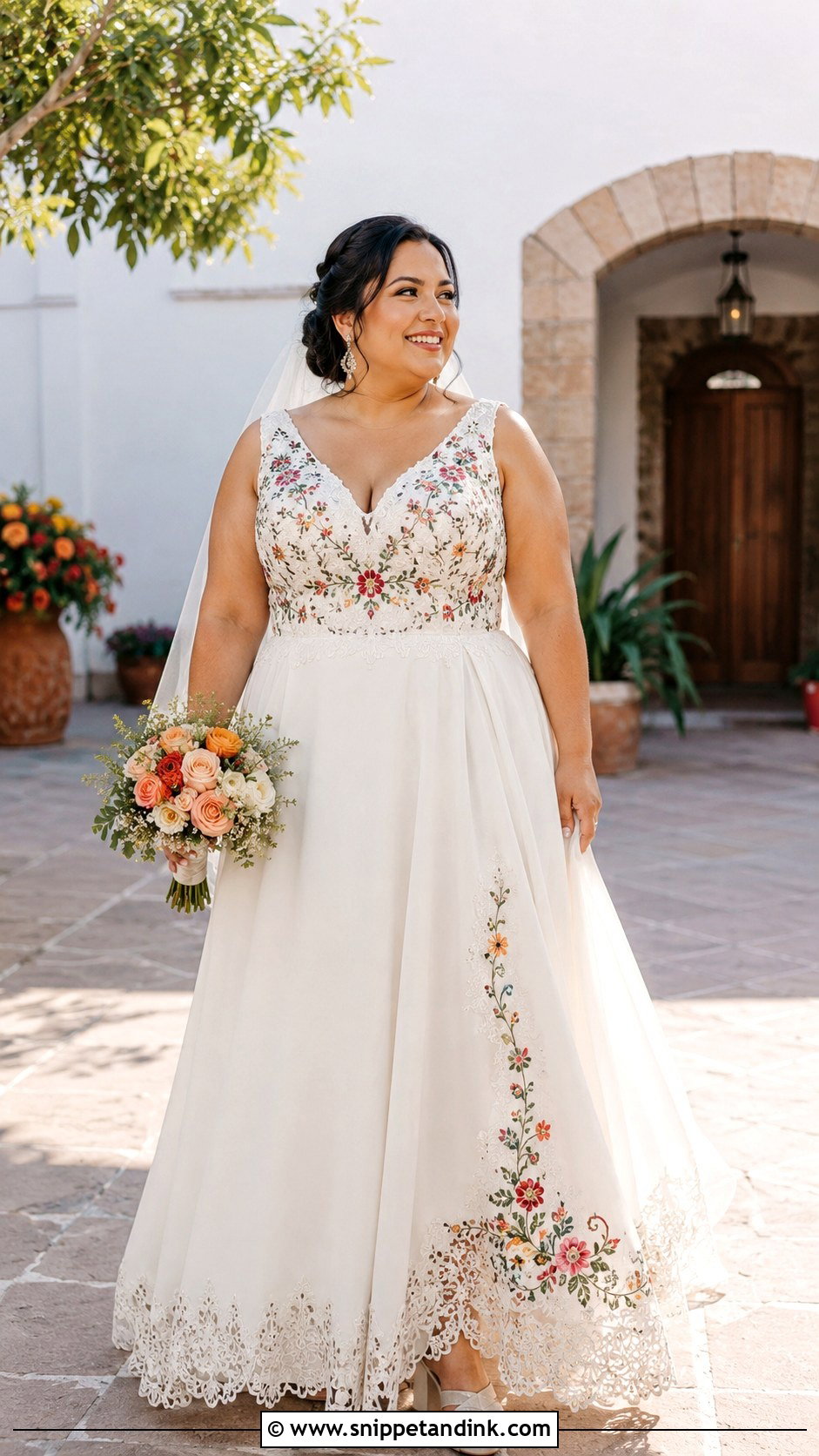
Support comes first on a plus-size gown, and none of the color or personality has to be lost for it. An A-line with a structured embroidered bodice, wide straps and a skirt flowing from the waist gives a secure fit, and a square or soft V-neck frames the face. Vertical embroidery placement draws the eye along the whole outfit. Look for a tailor who knows fuller busts, sleeve proportion and internal support; ask how they would build the bodice before you commit. Test the dress sitting and dancing, not only standing on the fitting box. If it’s commissioned months ahead, request generous seam allowances, because embroidered seams are hard to let out later.
19. Short Mexican Wedding Dress
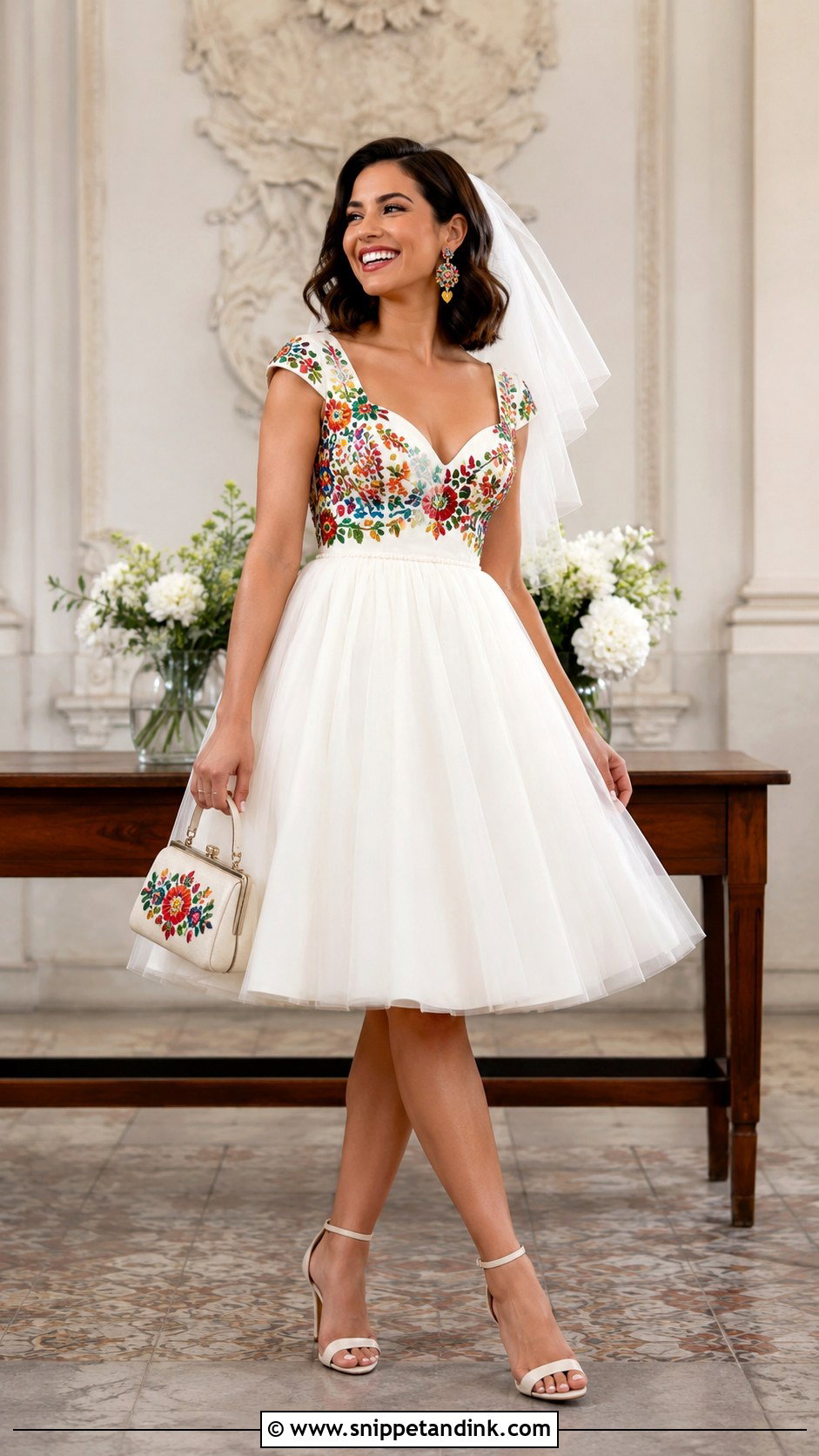
Short dresses are my favorite answer for a civil ceremony, a daytime party or a second look later in the evening. A knee or tea-length cut with a fitted embroidered bodice and a flared skirt pairs well with ankle-strap heels, colorful drops and a small structured bag. Long veils look odd with a short hem; a birdcage or short tulle veil sits better. Tea length with soft waves leans vintage, while a square neck and sleek bun reads modern. Check the hem from the side and back at alterations, since full skirts often dip unevenly. Smooth shorts or a slip underneath make dancing and sitting much less of a worry.
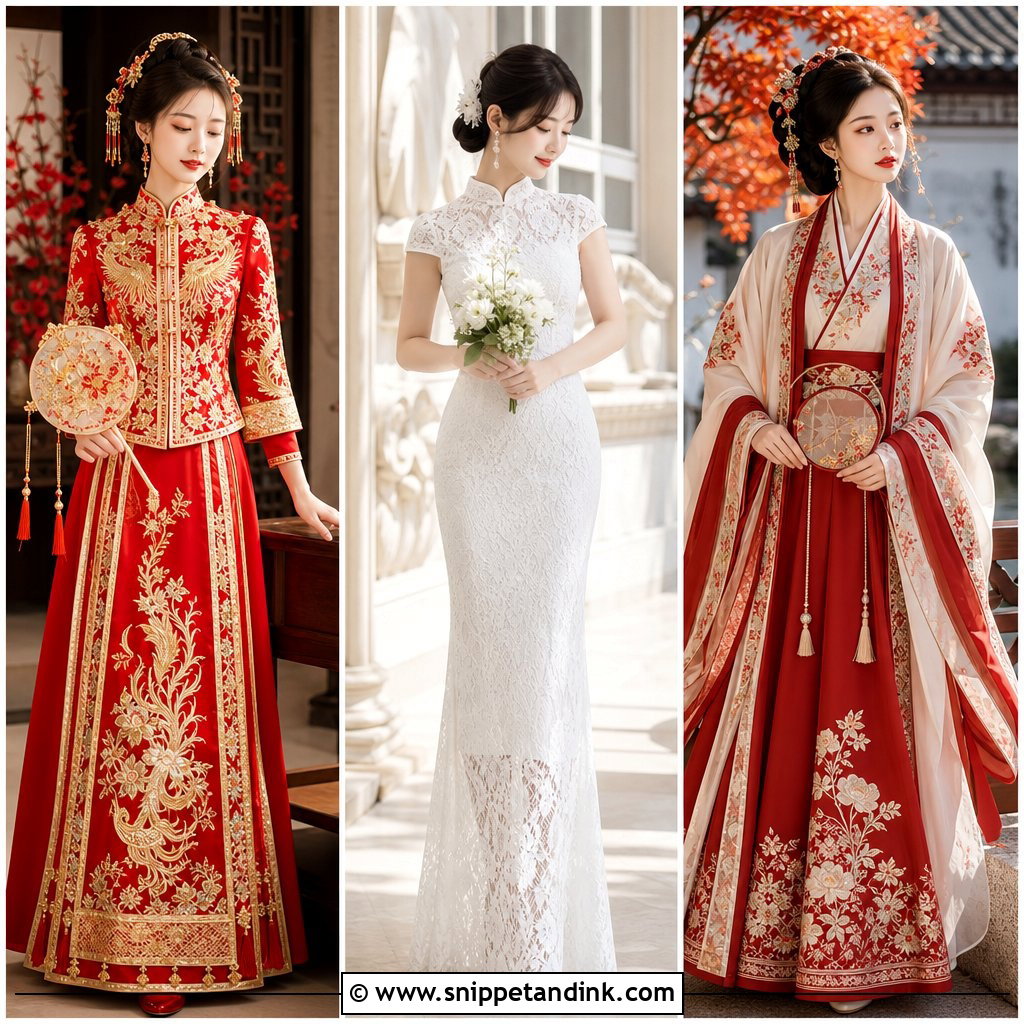

20. Modern Mexican Wedding Dress
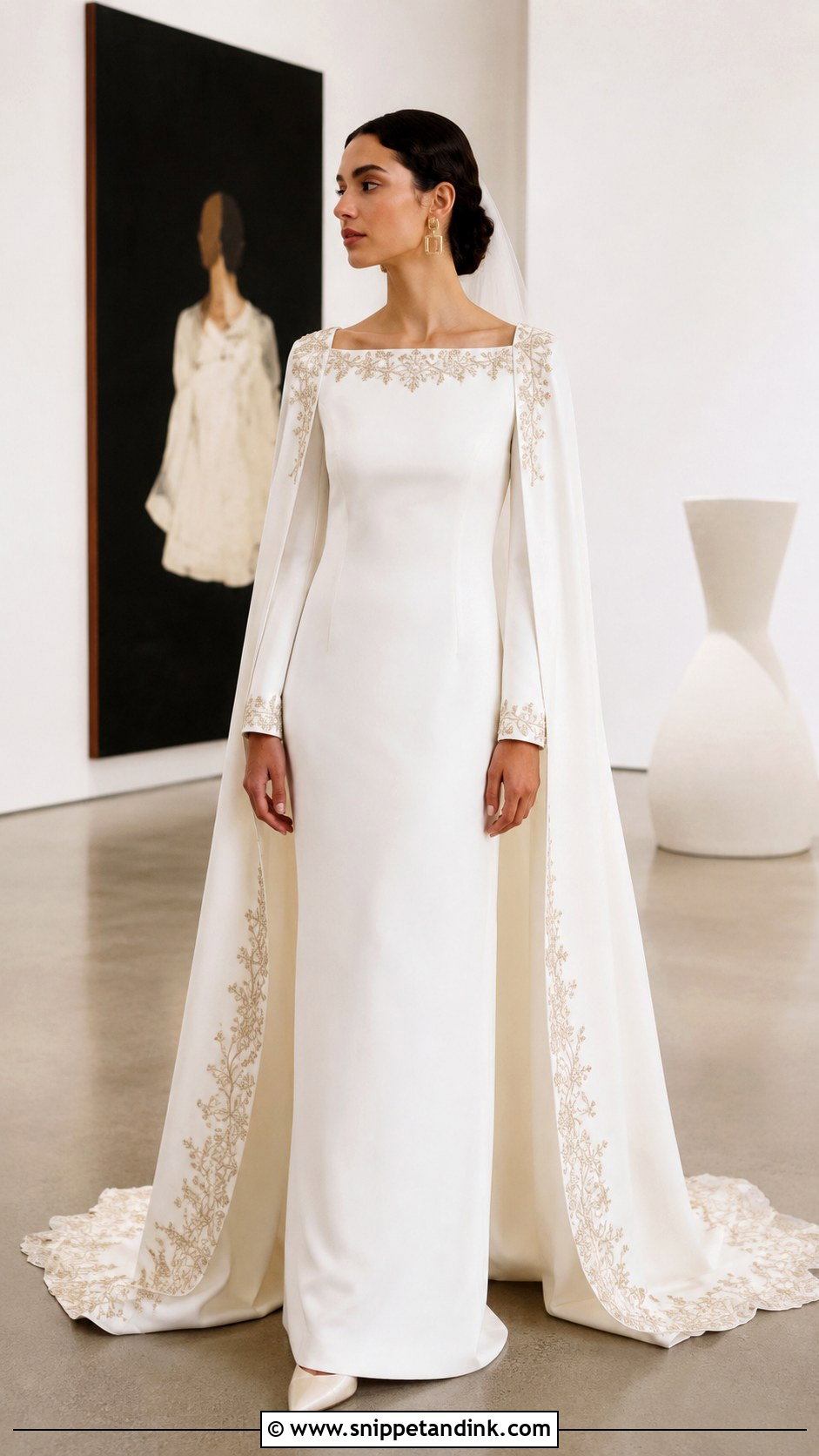
Modern versions use cultural detail sparingly. I like a minimalist ivory column or A-line with hand embroidery confined to the neckline, cuffs, back or a detachable overskirt, so the artisan work stands out against plain fabric. Architectural earrings, pointed heels, a plain chapel veil and a centre-parted low bun keep everything streamlined. You can also wear an embroidered cape or bolero for the ceremony and take it off for the reception, which gives you two looks from one gown. Keep the thread tonal or allow a small group of bright flowers. Whatever you choose, keep a written note of the maker, region and technique; your children will ask.
Caring for Embroidered Cotton After the Wedding
Cotton and thread don’t always age at the same rate, and bright embroidery thread can bleed if the dress meets water carelessly. Most of what goes wrong with these gowns happens in the weeks after the wedding, not on the day.
Spills on the day
Blot, never rub, and keep water away from colored stitching until you know it holds its dye. Dab a hidden thread on the inside with a damp white cloth; if color transfers, leave all cleaning to a professional and tell them the embroidery is not colorfast.
Pressing and long-term storage
- Press embroidered areas from the reverse, face down on a thick towel, so the stitches stay raised instead of flattening.
- Store the dress folded in acid-free tissue inside a breathable cotton bag, never sealed plastic, which traps moisture and yellows cotton.
- Pad every fold with rolled tissue and refold along different lines once a year to avoid permanent creases.
- Avoid long-term hanging for heavy pieces such as ternos; the weight of the embroidery slowly stretches the shoulders.
Keep the maker’s notes with the dress. If the gown is passed down, the next bride will want to know who made it and how it was stitched.
Respect for the Maker Is Part of the Fit
Every dress here works best when the meaning, the construction and the day itself line up. White-on-white stitching, a lace mantilla, a cotton huipil or a terno can all be right for someone; what decides it is your venue, your climate, how far you’ll walk and how formal the day is. If you’re wearing a heritage textile, find a maker who can explain where it comes from, and pay for that knowledge. Then give the tailor time, because embroidery only sits correctly on a body that has been properly fitted. Comfortable, respectful and clearly yours is the goal.
You'll Like These Ideas:



Leave a Reply