
Mexican bridal dressing is built on handwork: embroidery, lace, full skirts, modest necklines and woven textiles, each tied to particular places and communities. The range is wide, from quiet white-on-white stitching to vibrant floral gowns that read as pure celebration from across a courtyard. When I style a bride for a wedding like this, the first conversation is about her connection to the culture and where the textile comes from, because a regional technique carries meaning and deserves credit. The second is practical: heat, ground, how heavy the embroidery is. Below are twenty looks for haciendas, gardens, beaches and modern venues, with the shoes, veil or rebozo, jewellery and flowers I’d pair with each.
Commissioning Hand Embroidery: Time, Questions and Fair Credit
Hand embroidery is slow work. A densely stitched bodice or a full embroidered hem can take an artisan weeks, sometimes months, and a custom piece may need to be shipped and then altered. I suggest starting the conversation as early in your planning as you can and asking the maker for a realistic timeline rather than assuming bridal-shop lead times apply.
- Which community and technique is this, and is it appropriate to wear for a wedding?
- Who stitched it, and will they be credited?
- Is the thread cotton, silk or synthetic, and is it colourfast?
- Can the embroidered panel be moved or adjusted during alterations without damaging it?
- Can I see a finished sample of the stitching before committing?
Bring the embroidered piece to your seamstress early, too. Not every alterations studio is comfortable working around handwork, and it’s better to know that at the first fitting.
1. Colorful Embroidered Mexican Wedding Dress
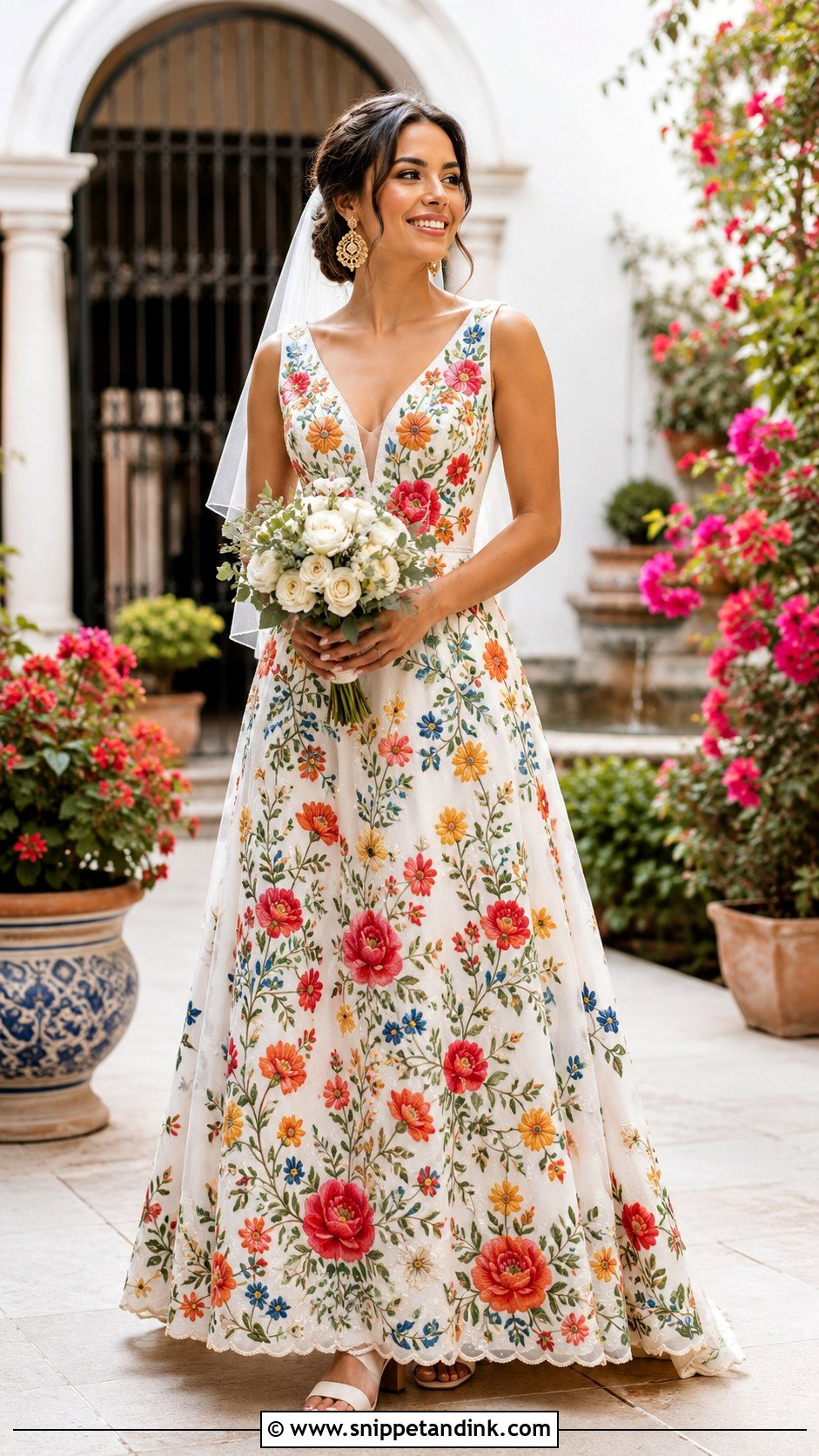
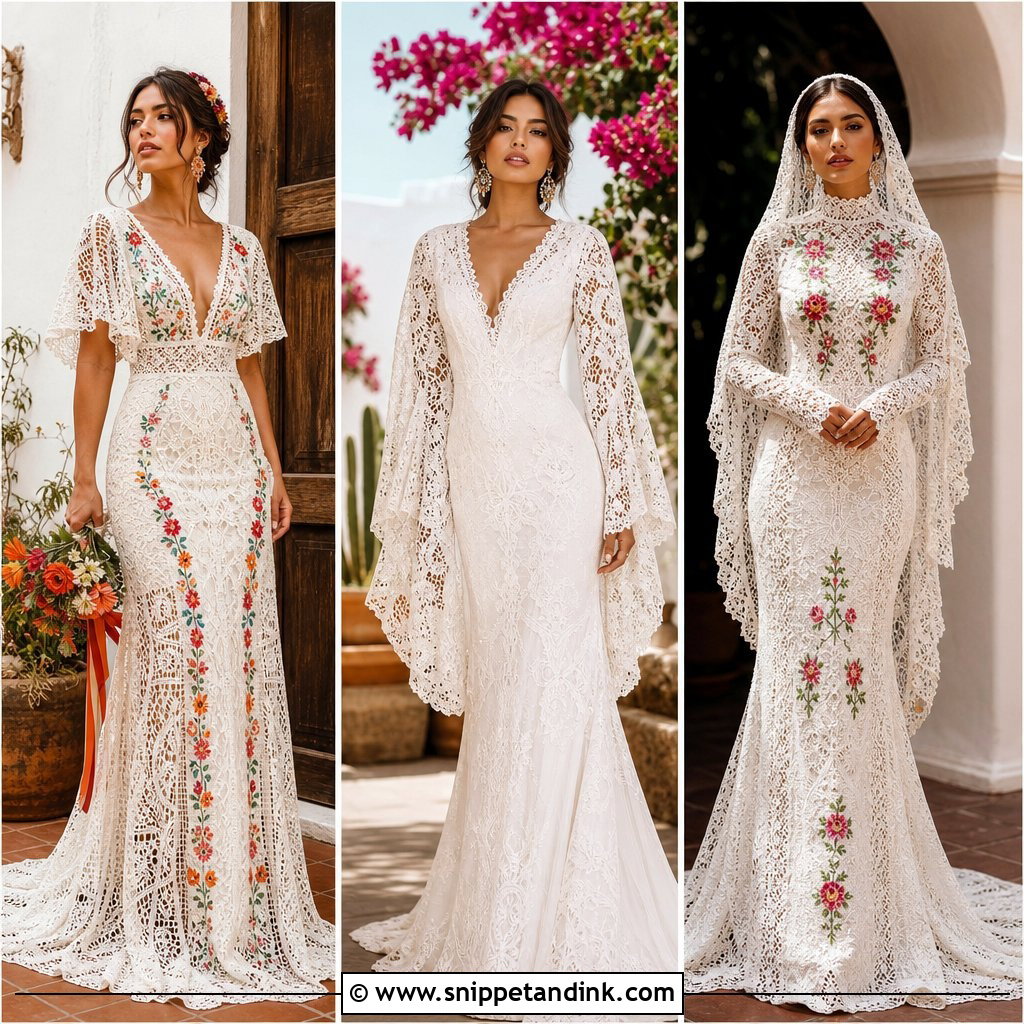
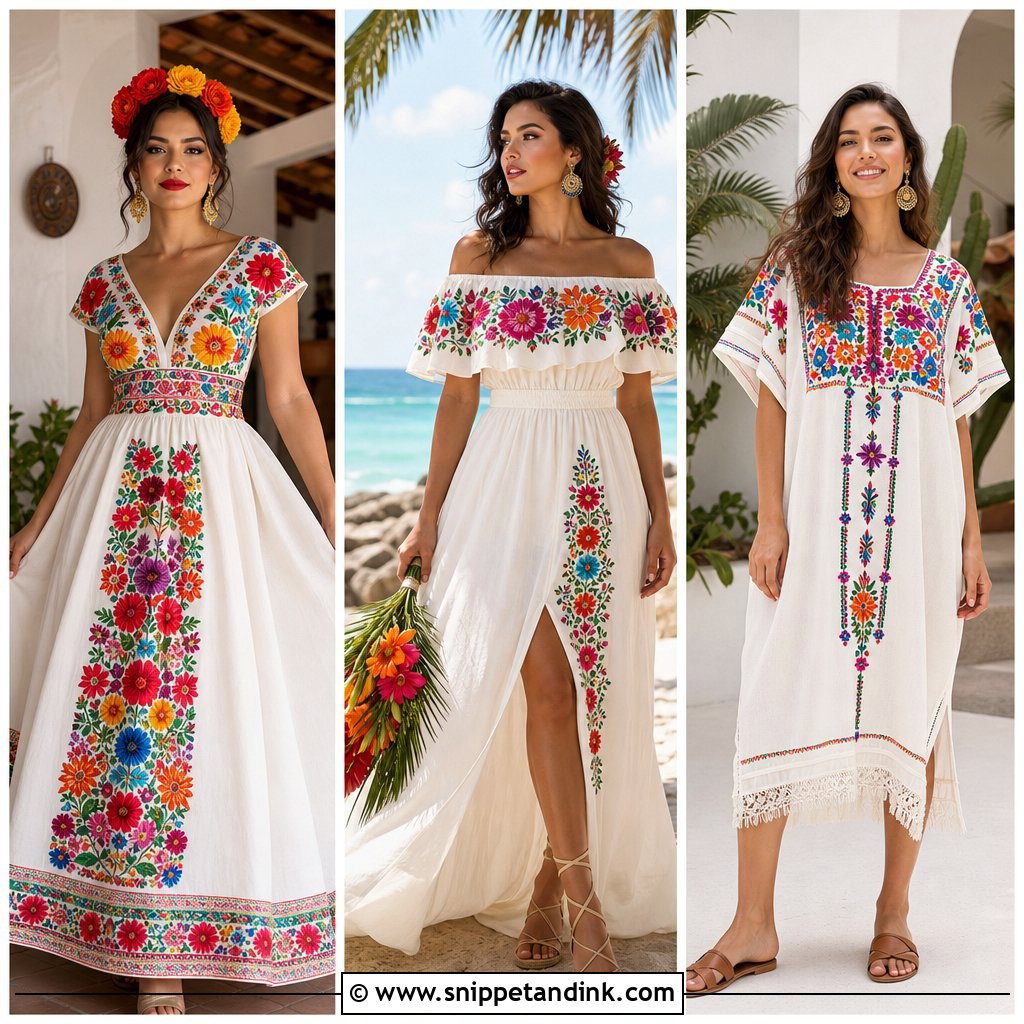
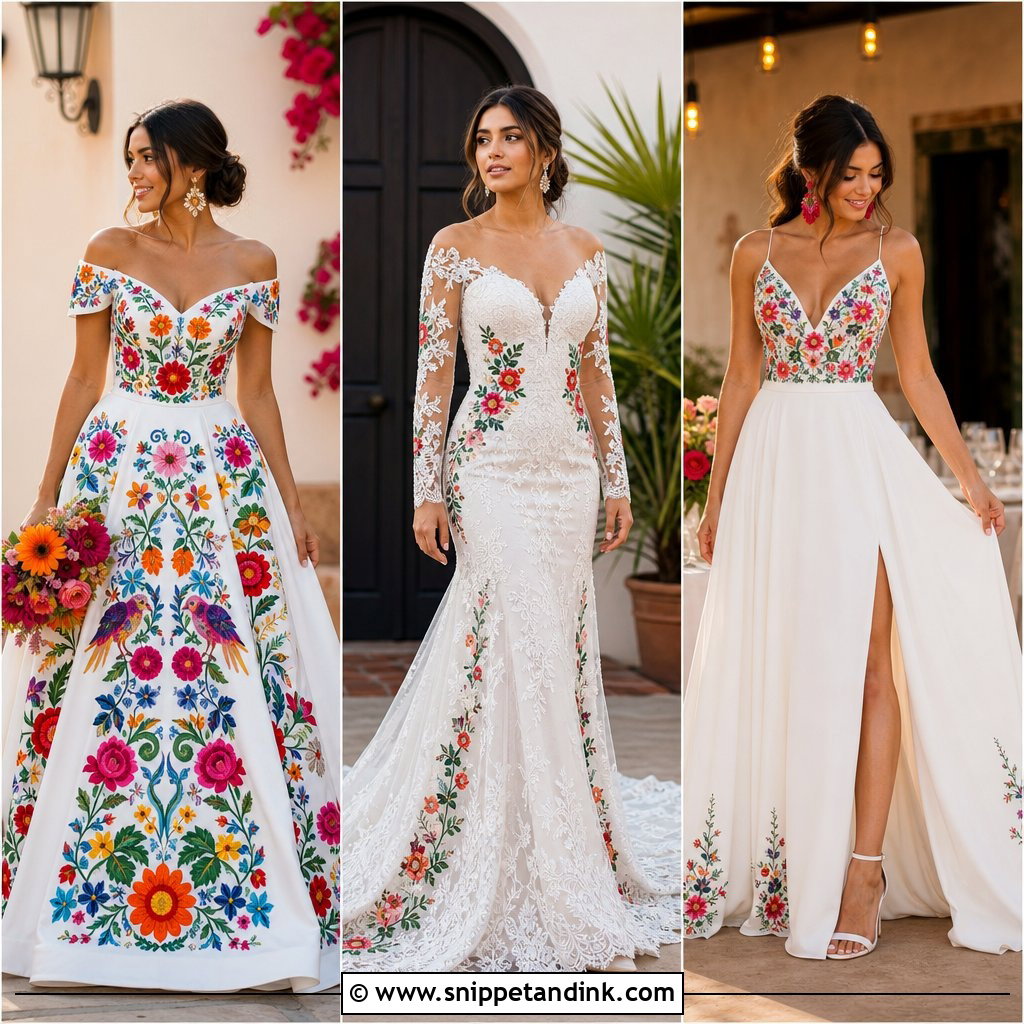
Bright flowers in red, coral, yellow, blue and green on an ivory A-line feel joyful without losing polish, as long as the embroidery is placed with restraint. I like it concentrated at the neckline, waist and hem, which leaves the middle of the dress calm and keeps the eye moving. A short, plain veil won’t hide the stitching. Small gold earrings and ivory block-heel sandals are enough. In the bouquet, pick one or two of the brightest thread colours and add them to white roses; matching every shade makes the whole look busy. Outdoor light shows this kind of embroidery best.
2. White Embroidered Mexican Wedding Dress
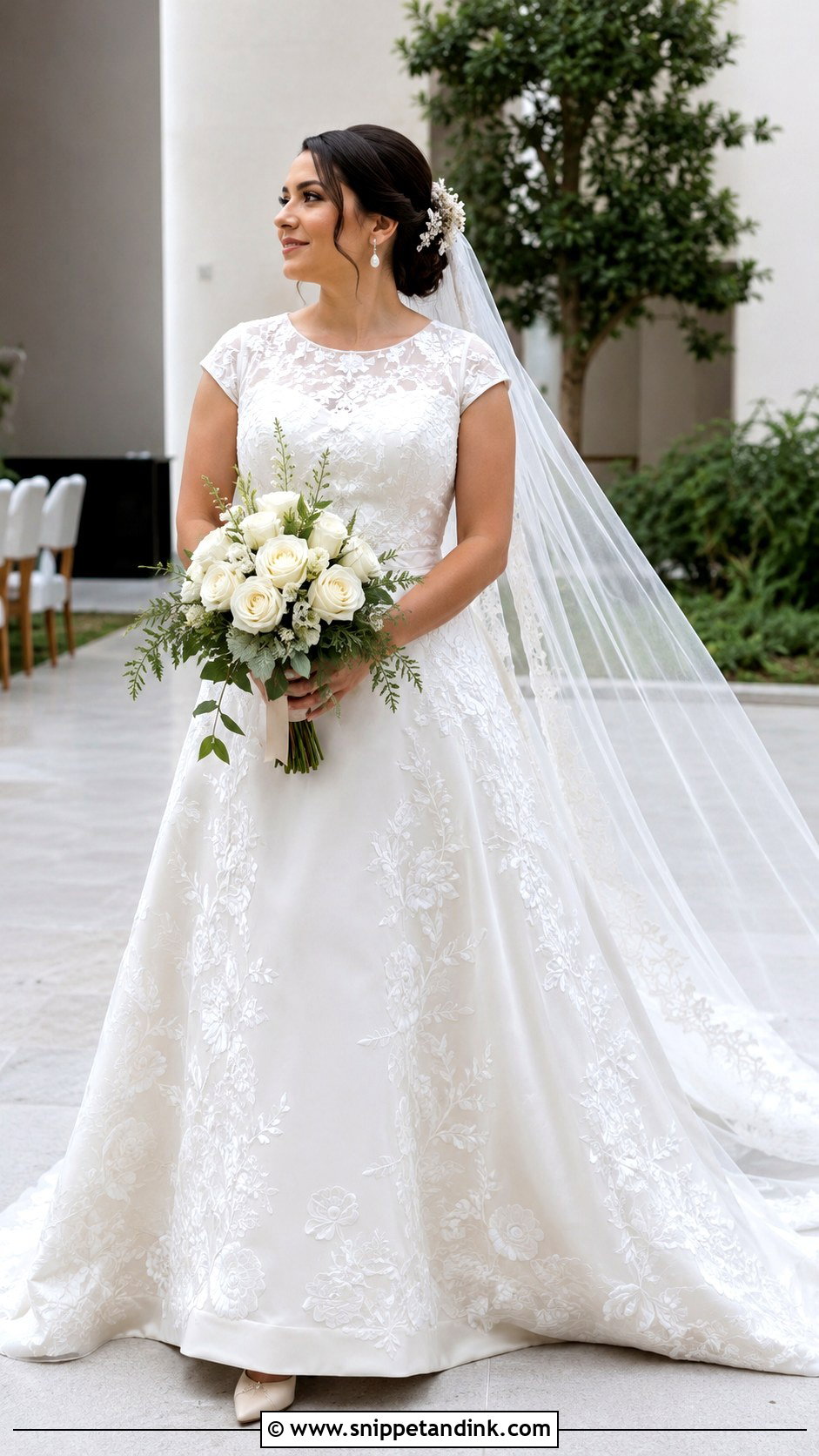
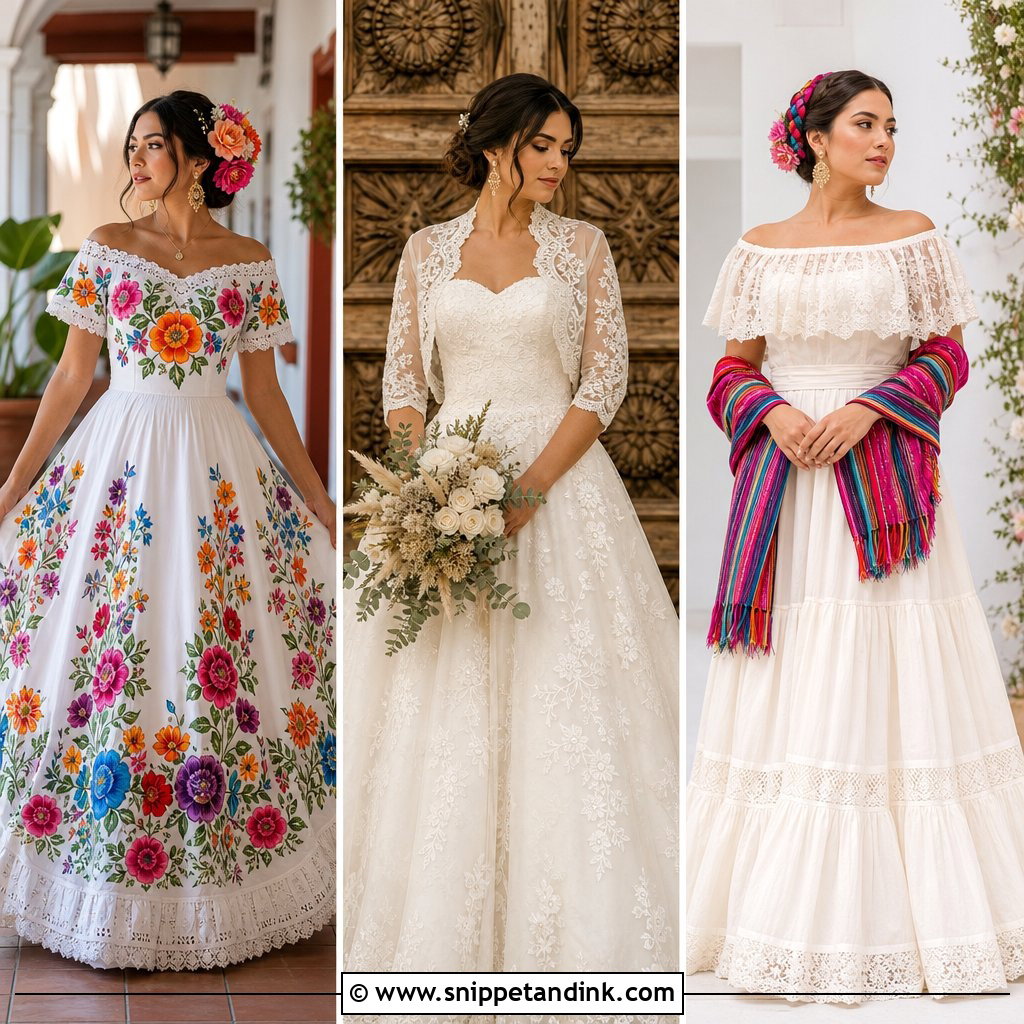
White-on-white embroidery only shows up close, which is exactly why some brides love it. Tonal floral stitching on soft cotton, silk or organza gives texture without colour. An A-line skirt, fitted waist and gently curved neckline suit most bodies. Cotton creases more than silk, though, and I warn brides that a cotton gown will look relaxed by the evening. Pearl drops, pointed ivory flats, a lace-edged fingertip veil and a white floral comb keep the palette quiet. White ranunculus and roses complete it.
3. Off-Shoulder Mexican Wedding Dress
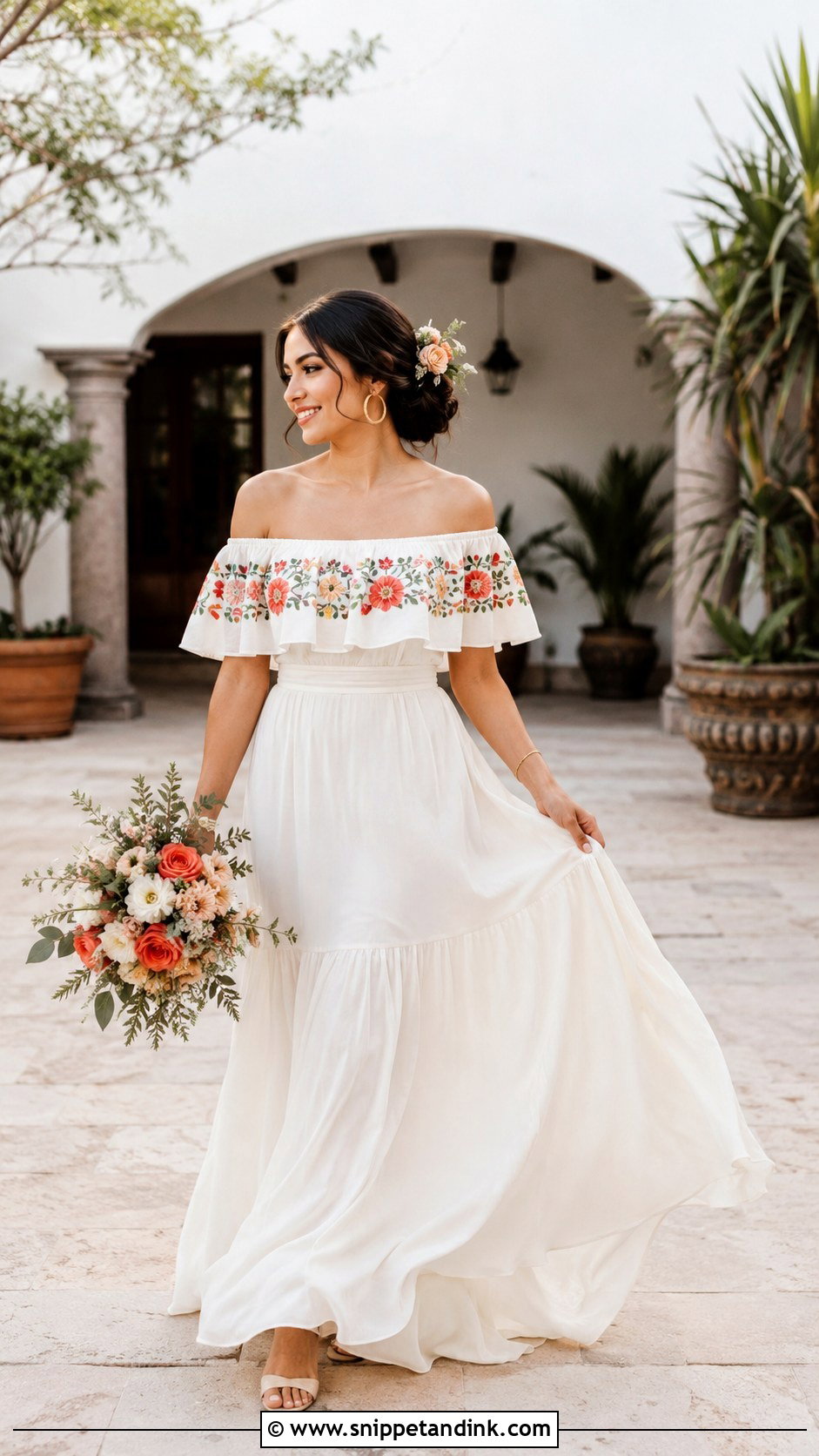
The ruffle is the whole point here, so its width matters. Too wide and it swallows a petite bride; too narrow and it looks like trim. I measure it against the shoulder at the fitting and usually settle on a ruffle that ends just past the shoulder point. Embroidered or lace-edged ruffles on a fitted waist and flowing skirt suit an outdoor party. Low block heels or embroidered sandals, gold hoops and a loose bun with fresh white flowers keep the focus at the face. Skip the necklace.
4. Long Sleeve Lace Mexican Wedding Dress
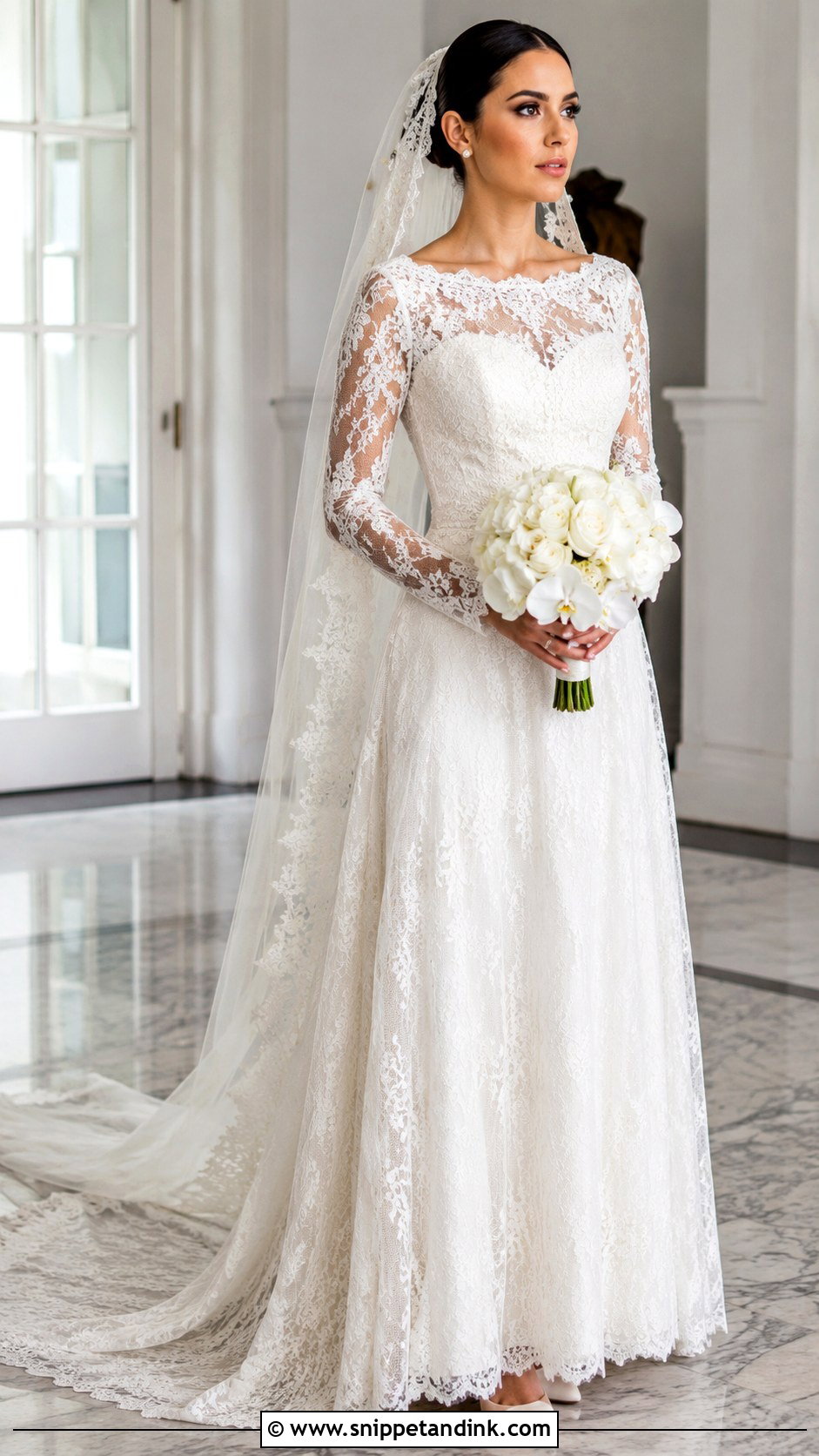
Sheer lace sleeves with a boat neck feel traditional and graceful, especially in a cooler season or a formal room. Floral lace can cover the whole gown, or embroidered cuffs and a scalloped hem can add a more personal finish. A narrow mantilla-style veil over a low bun is my favourite pairing; the lace edge frames the face beautifully. Proper lining through the bodice and skirt gives coverage while the sleeve pattern stays visible. Closed-toe ivory heels and pearl studs finish it.
5. Chiapas Inspired Mexican Wedding Dress
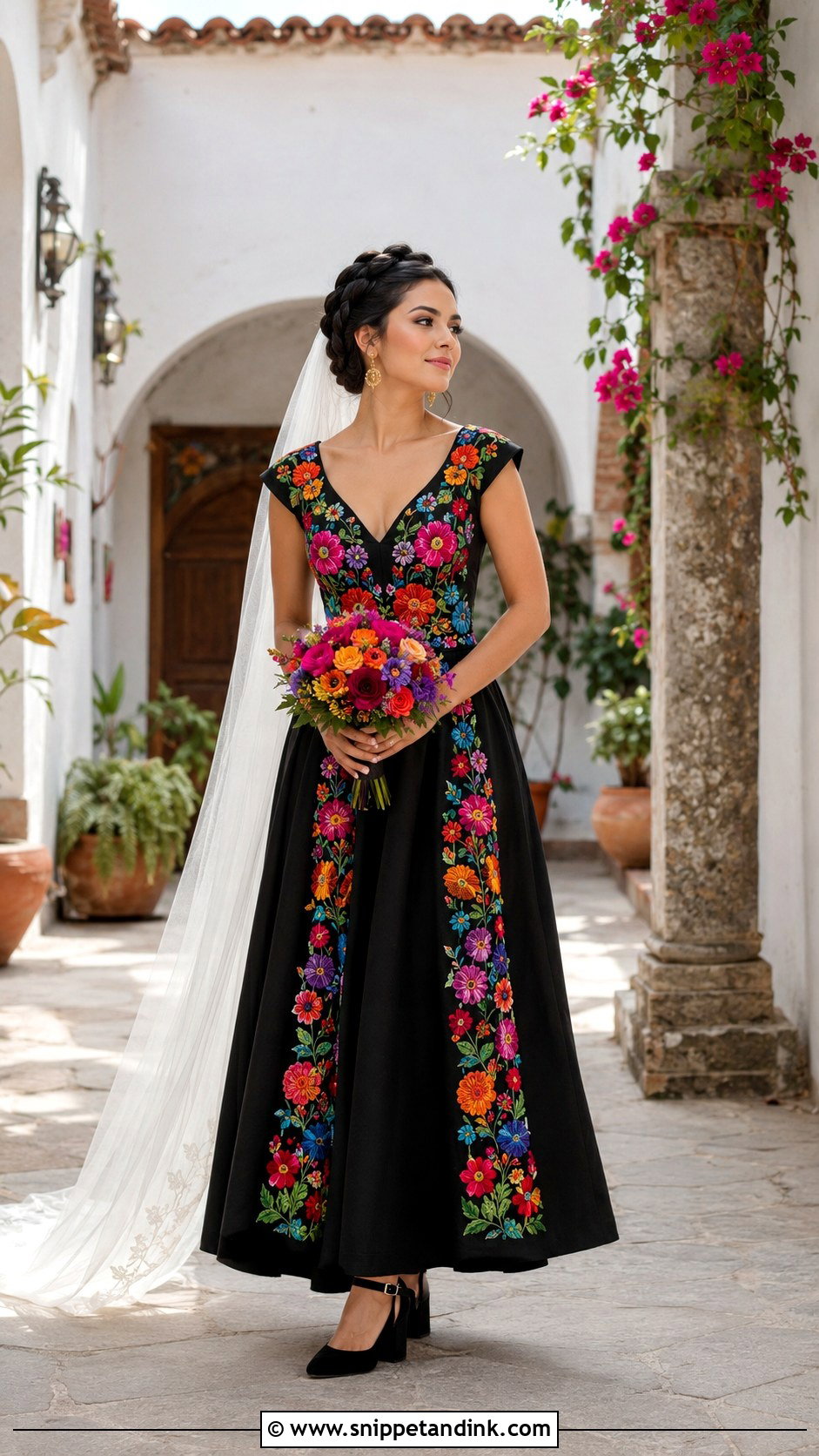
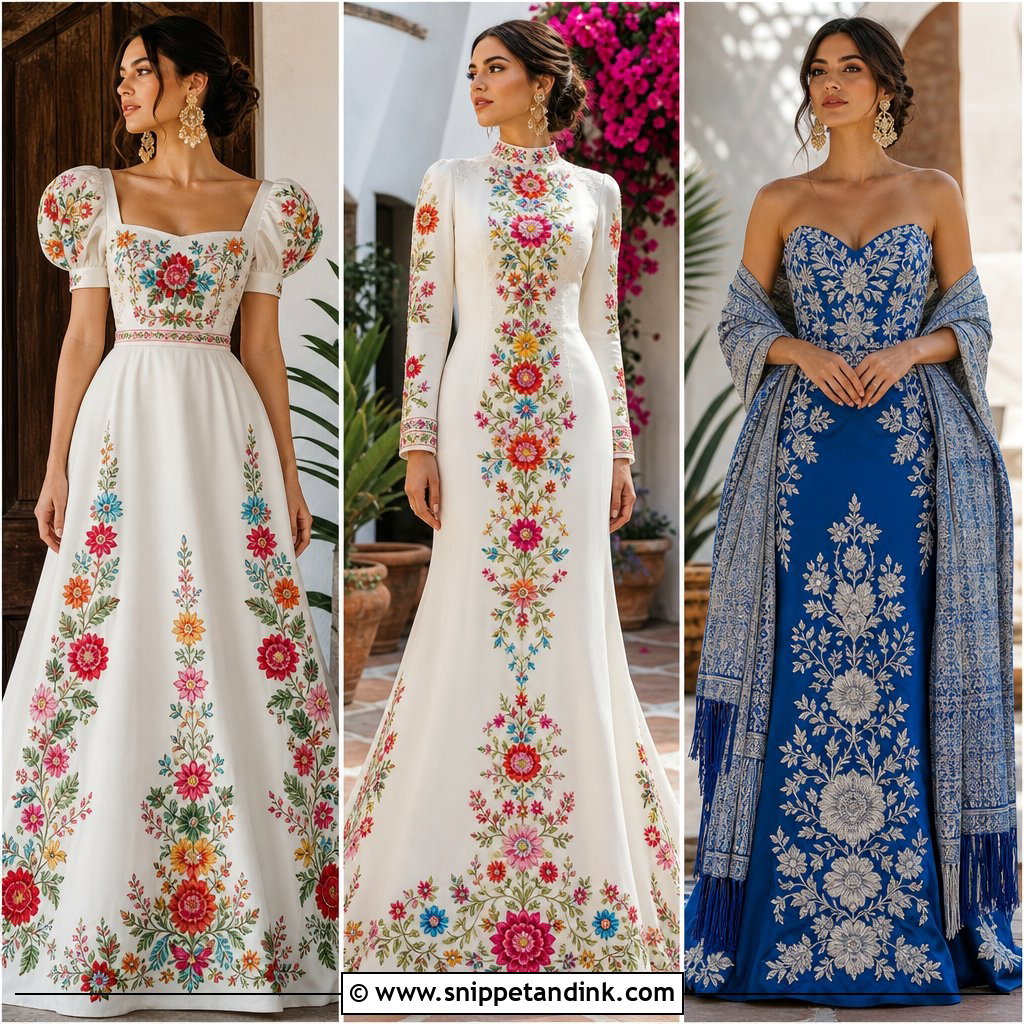
Embroidery inspired by Chiapas is known for dense, bold flowers, often on a dark ground, and that contrast can be striking on a black, ivory or deep navy gown. Because these techniques belong to specific communities, I’d work with a Mexican designer or artisan who knows them rather than asking a general dressmaker to copy a pattern. Keep everything else plain: solid block heels, small gold earrings, a low ponytail or braided bun and a plain tulle veil. Pull one or two colours from the embroidery for a compact bouquet. That restraint is what keeps it from looking like a costume.
6. Oaxacan Embroidered Mexican Wedding Dress
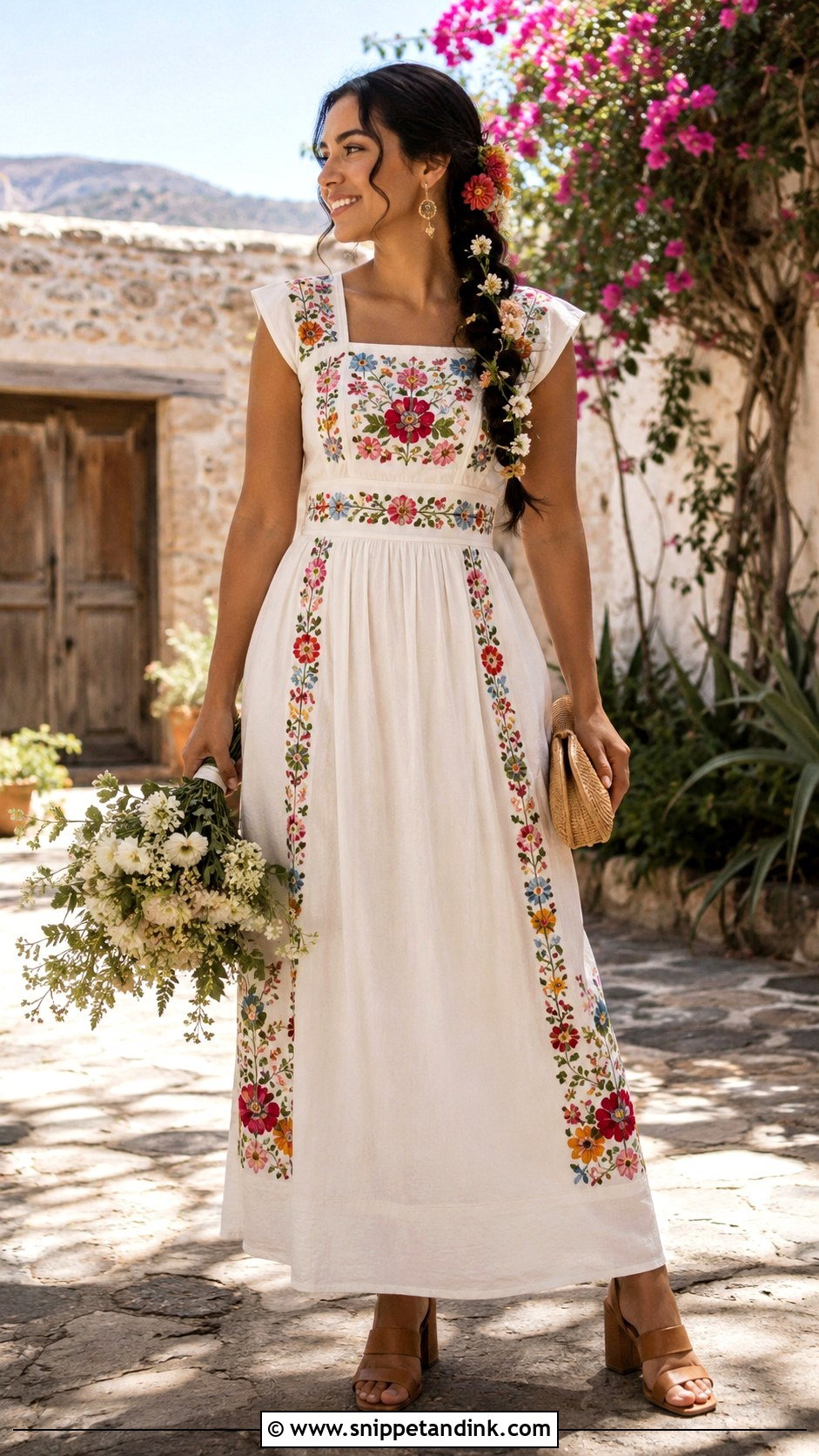
Hand-stitched flowers on a breathable ivory cotton or linen gown with a square neckline feel personal and cool to wear in heat. If you’re commissioning Oaxacan-inspired work, ask who made it, which community and technique it comes from, and what materials were used; good makers are happy to tell you. Linen relaxes and creases through the day, which suits a countryside or courtyard wedding. Leather block-heel sandals, a woven clutch, gold drops and a long braid with small white blossoms complete it.
7. Otomi Embroidered Mexican Wedding Dress
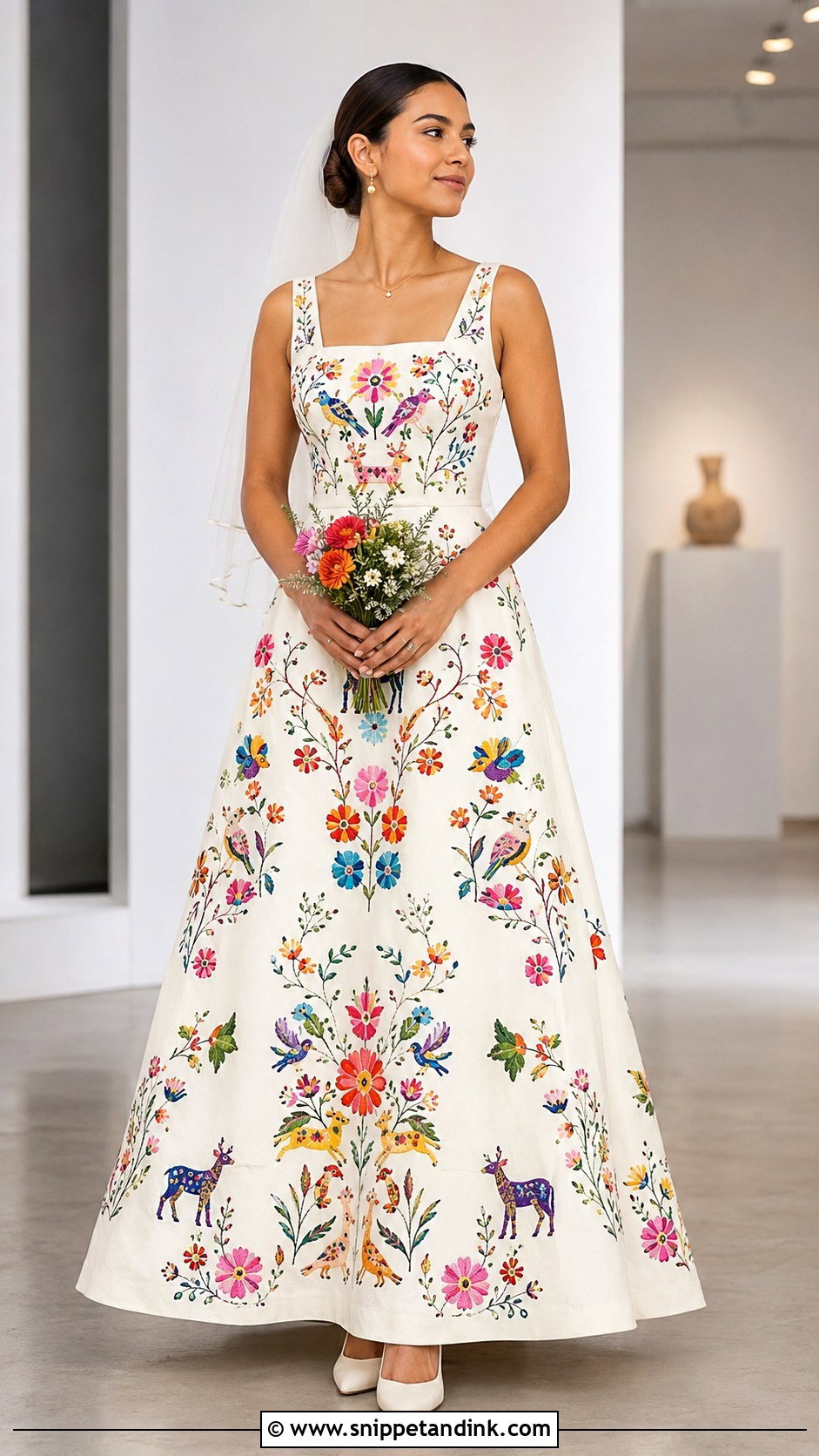
Otomi embroidery, with its animals, birds and flowers, needs open space to be read, so I’d put it on a clean A-line or column gown and leave the rest of the dress simple. Colourful thread over the bodice and hem is bold; white tonal stitching is quieter. Mass-produced imitations of this work are everywhere, so look for pieces made with Otomi artisans and credited to them. A sleek bun, ivory pumps, a short plain veil and a small bouquet in colours already in the needlework let the craft stay the focus.
8. Huipil Inspired Mexican Wedding Dress
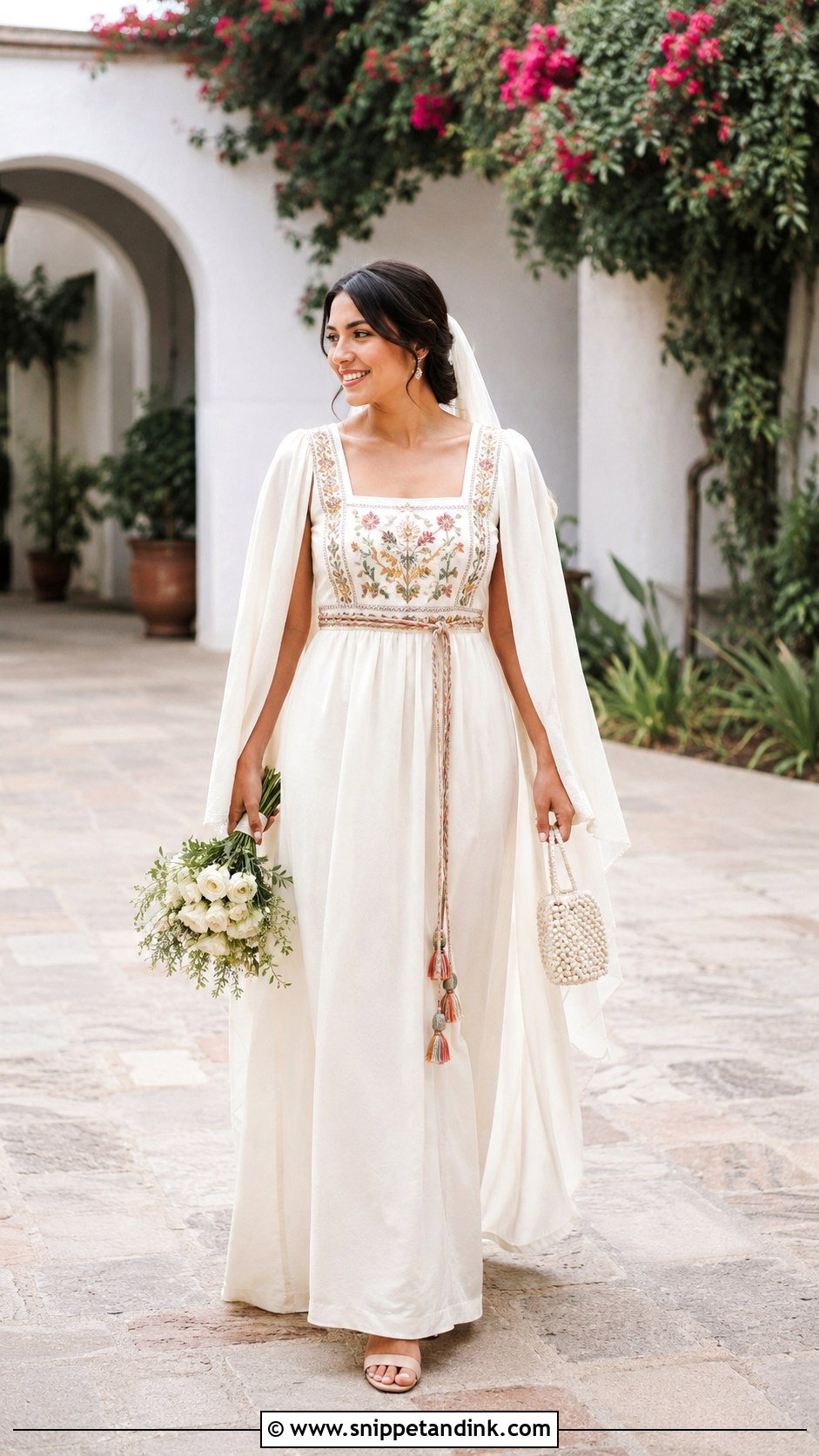
A huipil-inspired gown is loose and comfortable by design, with a square-cut bodice, draped sleeves and embroidery concentrated around the neck. Side slits help you walk and dance. A removable fabric belt defines the waist for portraits without changing the relaxed structure. I’d pair it with woven ivory sandals, simple gold or natural-material earrings and a low braid with a few fresh flowers. For the textile work itself, commission through an artisan or Mexican-owned studio rather than buying a copy.
9. Rebozo Mexican Wedding Dress
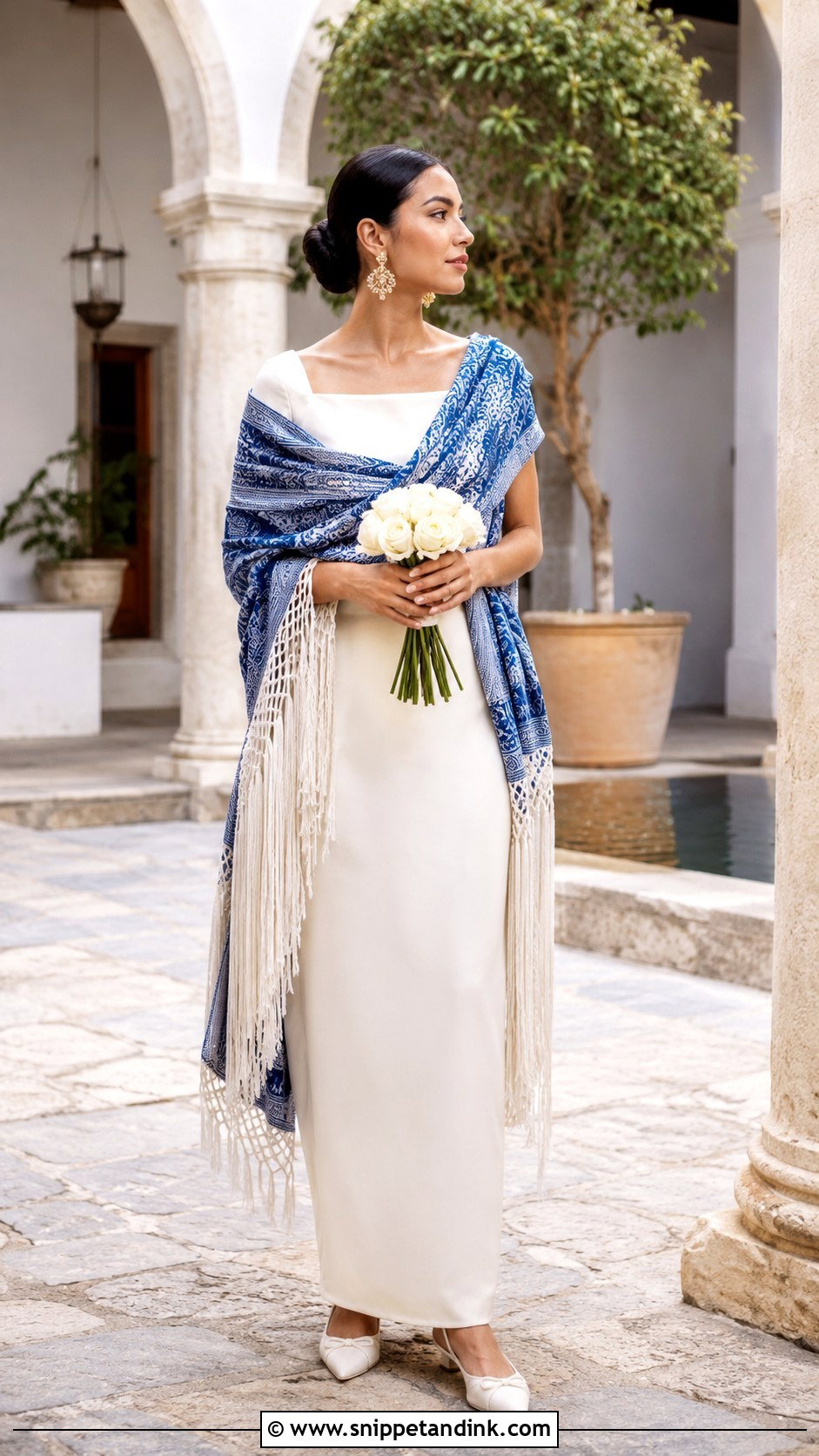
A rebozo turns a plain dress into something layered and personal. Start with a sleeveless ivory column or soft crepe gown, then drape an artisan-made rebozo over the shoulders for the ceremony and move it to the arms or one shoulder for the reception. White, blue, burgundy or soft stripes all work depending on your palette. I’d choose the rebozo or a decorative veil, not both, so one textile leads. Pointed flats, sculptural gold earrings and a smooth low bun are enough.
10. Hacienda Mexican Wedding Dress
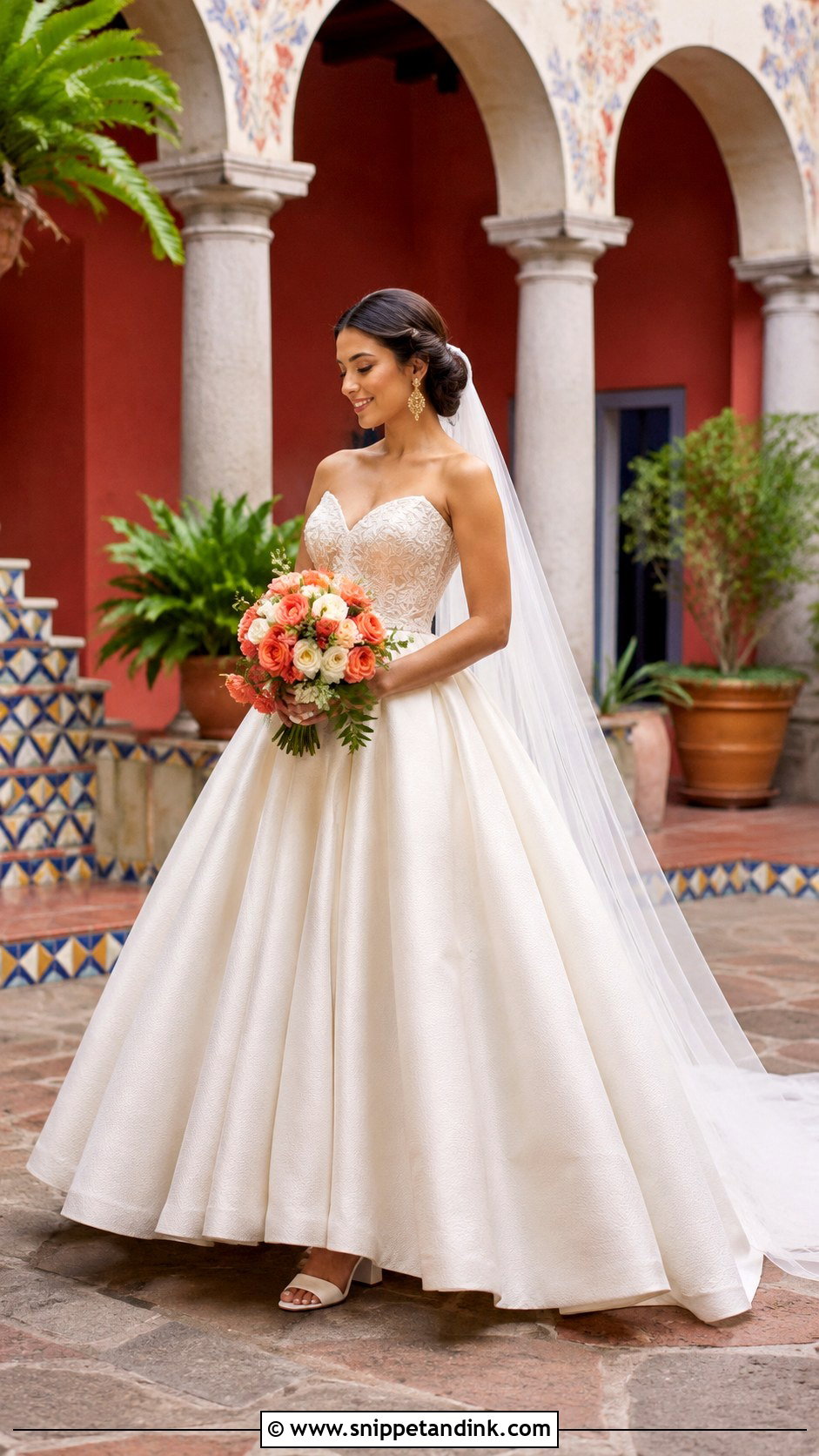
Stone courtyards and coloured walls call for a dress with presence, and a hacienda Mexican wedding dress with an embroidered fitted bodice and gathered ball skirt has it. Stone paths are hard on long trains, so I suggest a chapel-length veil and sturdy block heels. Plain veil with a bold bodice; a narrow embroidered veil edge with a simple one. Gold statement earrings, a textured low bun and a bouquet of white, coral and deep pink flowers suit the setting.
11. Beach Mexican Wedding Dress
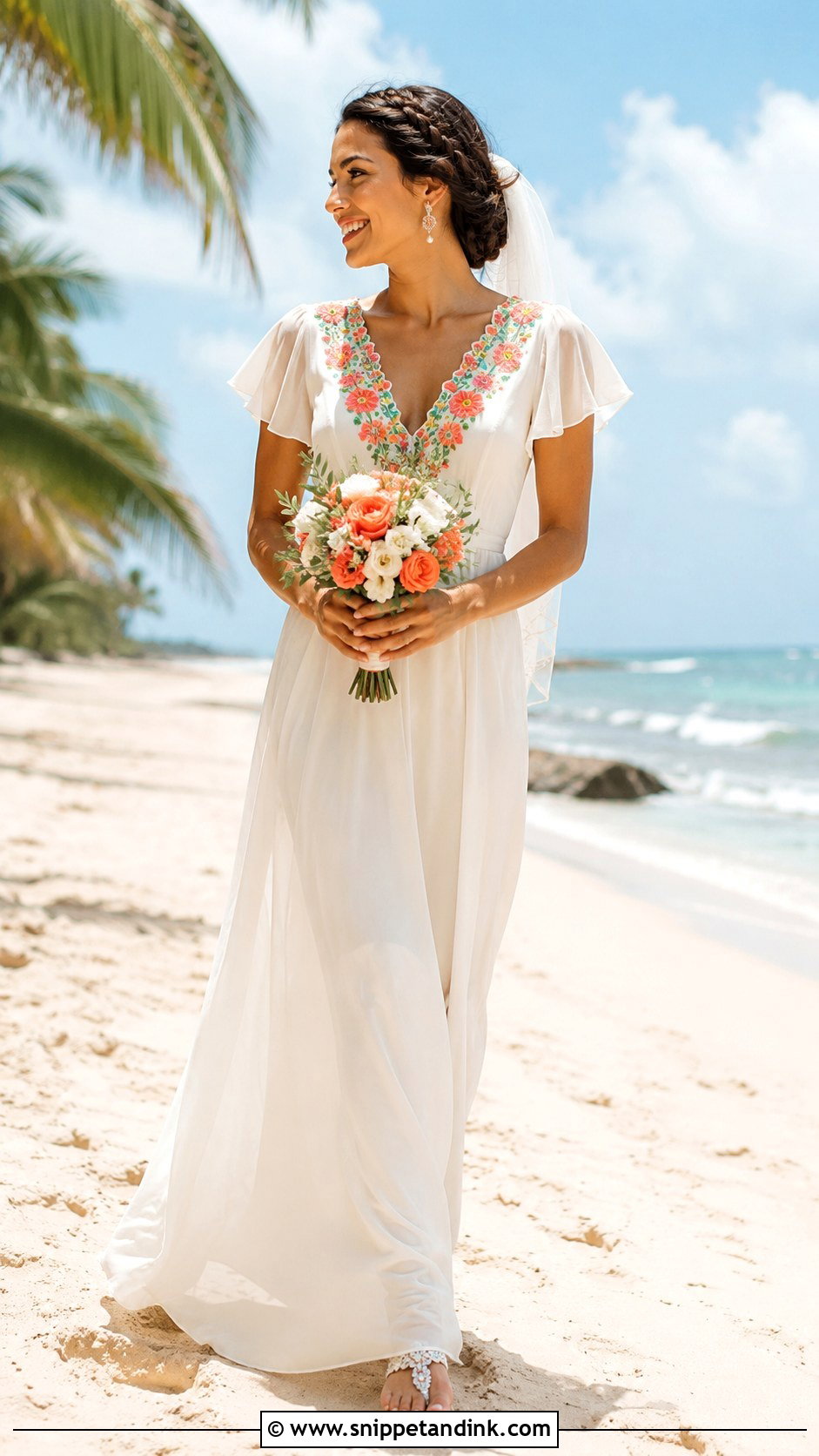
Heat and wind decide everything at a beach wedding. Flowing chiffon, cotton voile or a silk blend with a softly fitted waist stays cool, and embroidery around the neck keeps colour near the face. Flutter sleeves or wide straps are comfortable without structure. I always suggest flat sandals for sand and earrings that won’t tangle in the breeze. A loose braided updo holds up in wind far better than loose waves. Leave stiff petticoats, heavy beading and thick lace at home.
12. Boho Mexican Wedding Dress
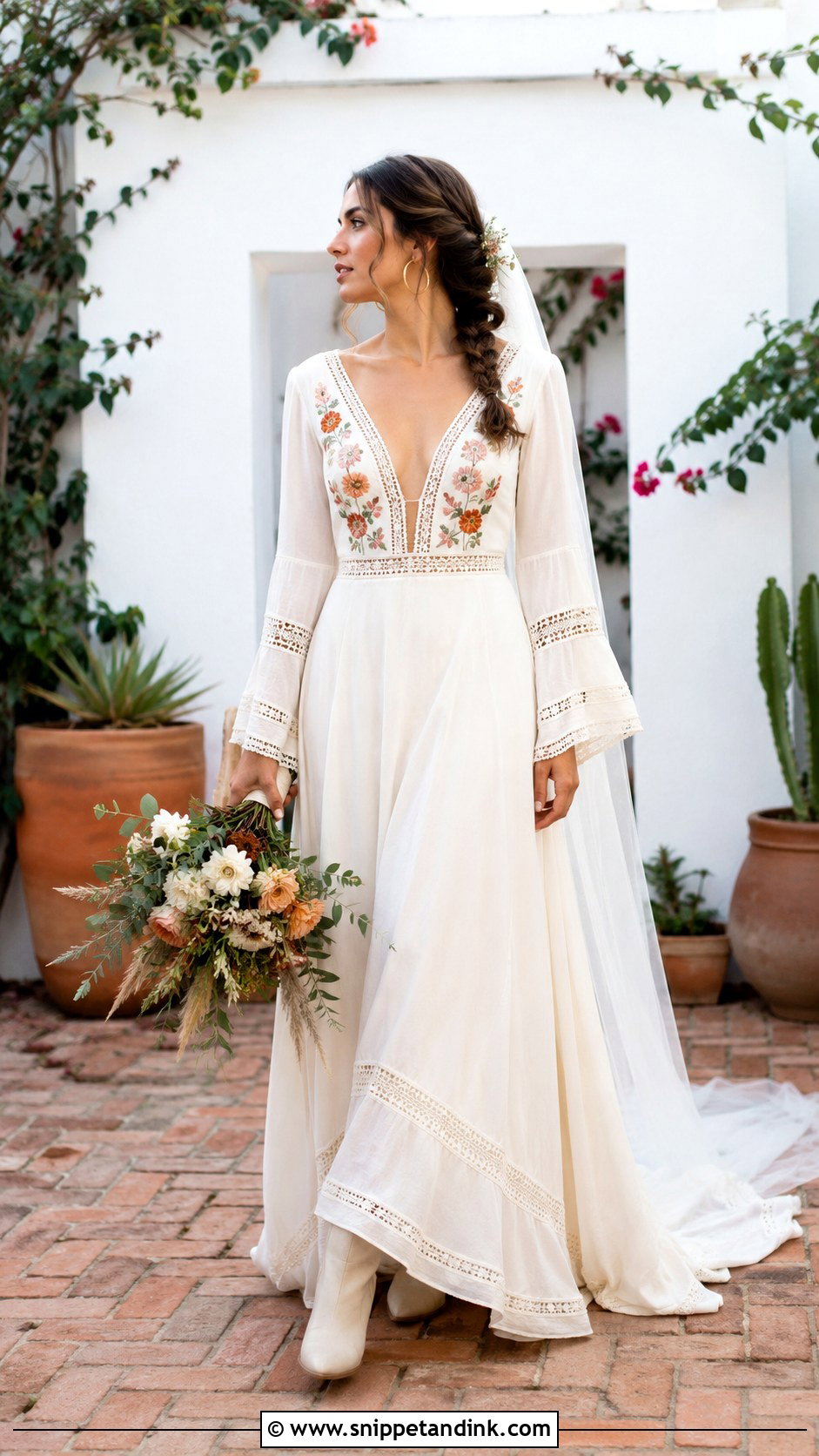
Bell sleeves, a defined waist and floral embroidery along the bodice and cuffs give a relaxed silhouette some shape. Crochet trim adds texture but should stay secondary to the embroidery. Footwear depends on the ground: cream ankle boots handle a ranch or desert, leather block heels suit a garden. A loose braid, small gold hoops and a veil tucked under the braid finish it. Loose dresses can look shapeless in photos, so I always have the shoulders and waist tailored.
13. A-Line Mexican Wedding Dress
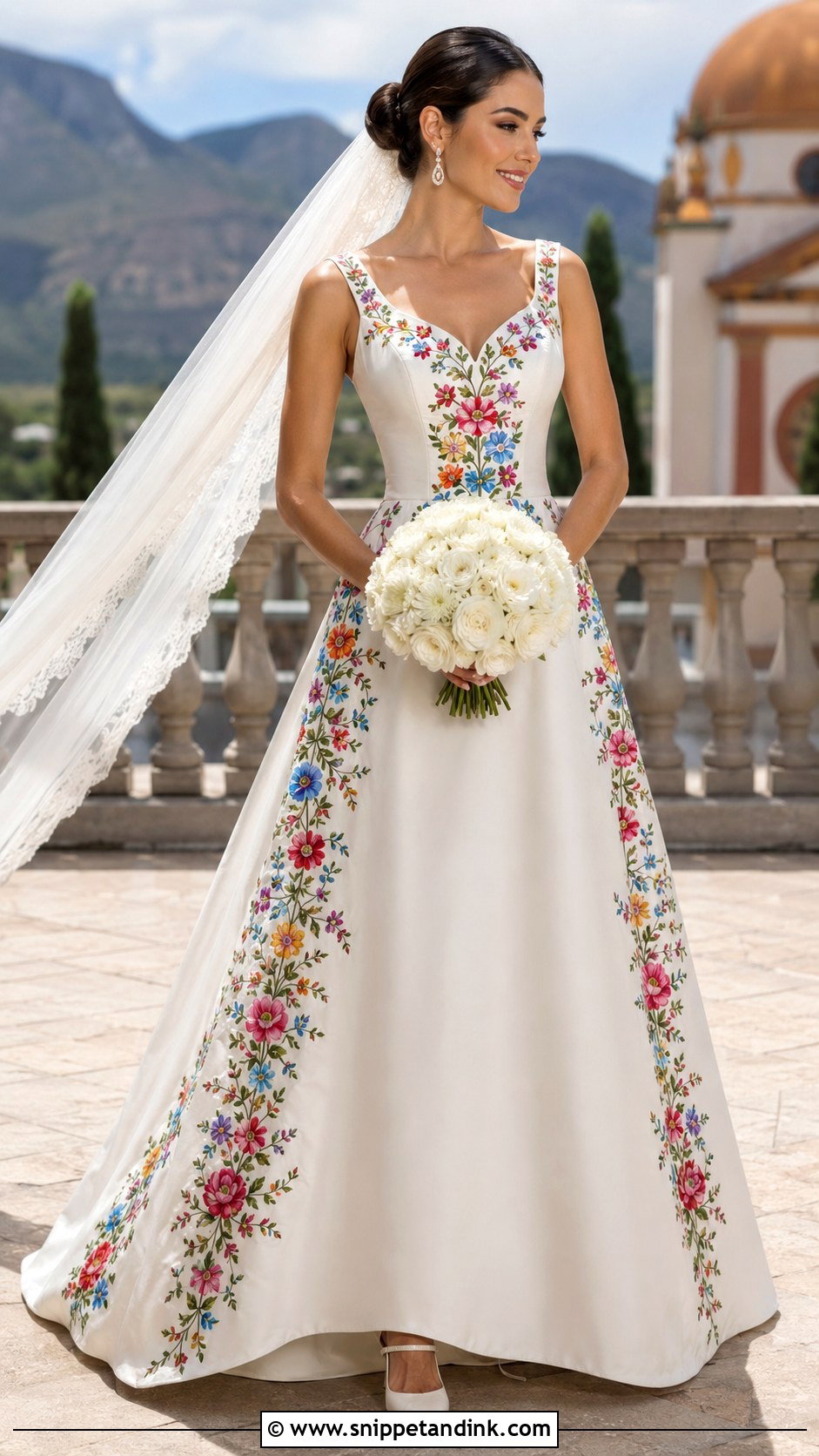
An A-line is the safest canvas for embroidery because the skirt gives room to move and the waist stays defined. I like stitching that’s heaviest near the neckline and fades toward the hem, which lifts the eye and keeps the skirt from looking weighed down. Ask for hidden pockets; brides always use them. Ivory slingbacks, delicate drops and a waist-length plain veil work, with a polished bun or smooth waves. A few bright flowers in a white rose bouquet repeat the embroidery colours.
14. Ball Gown Mexican Wedding Dress
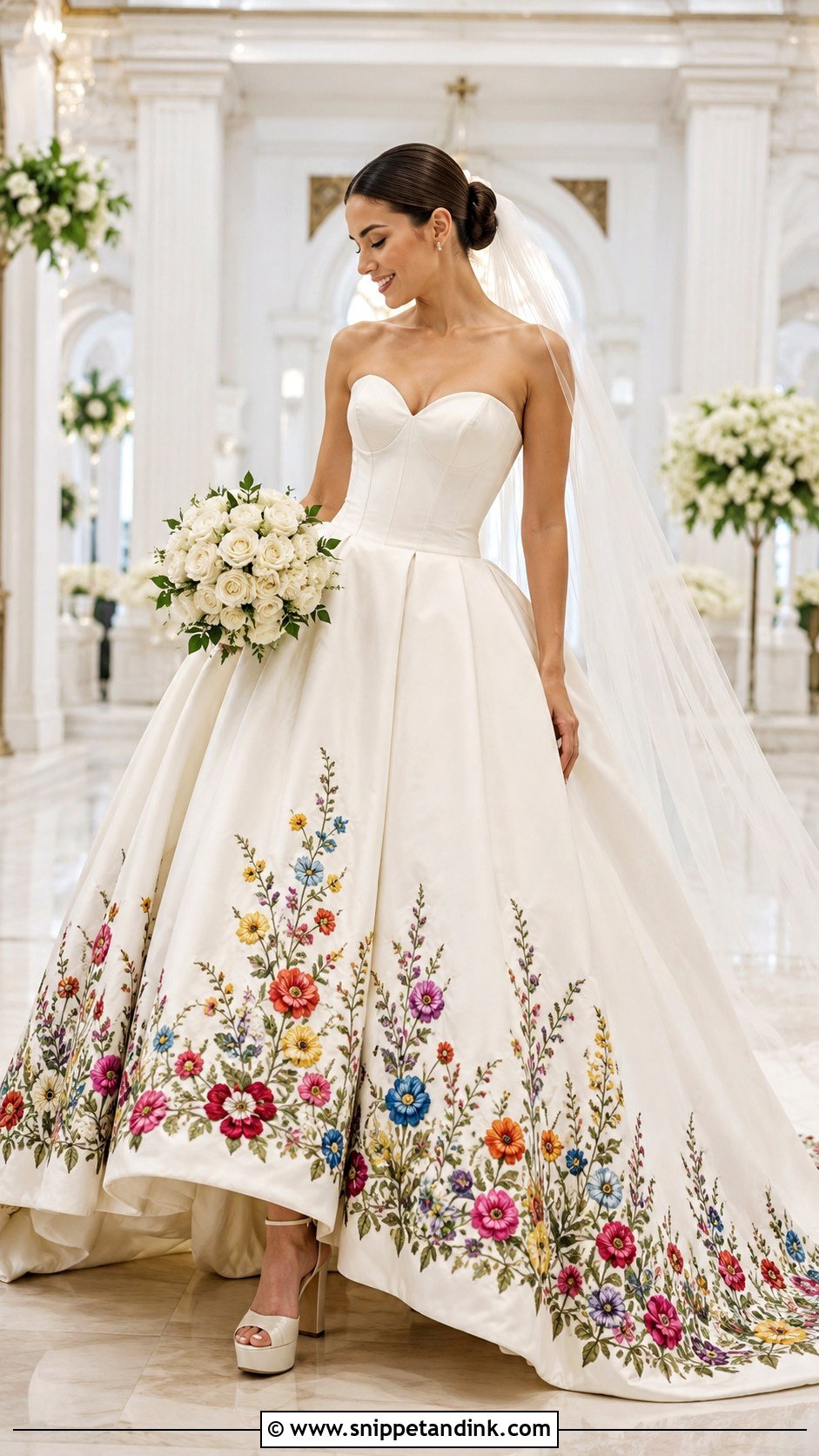
Volume plus colour is a lot, so I keep the bodice relatively clean and let the embroidery climb up from the hem of a full satin, organza or tulle skirt. A fitted bodice with real internal support carries the weight of a big skirt. Platform heels should be fitted to the finished hem. A cathedral veil, small earrings and a sleek bun keep the top simple. A medium bouquet is better than an oversized one here, and a secure bustle is essential for dancing.
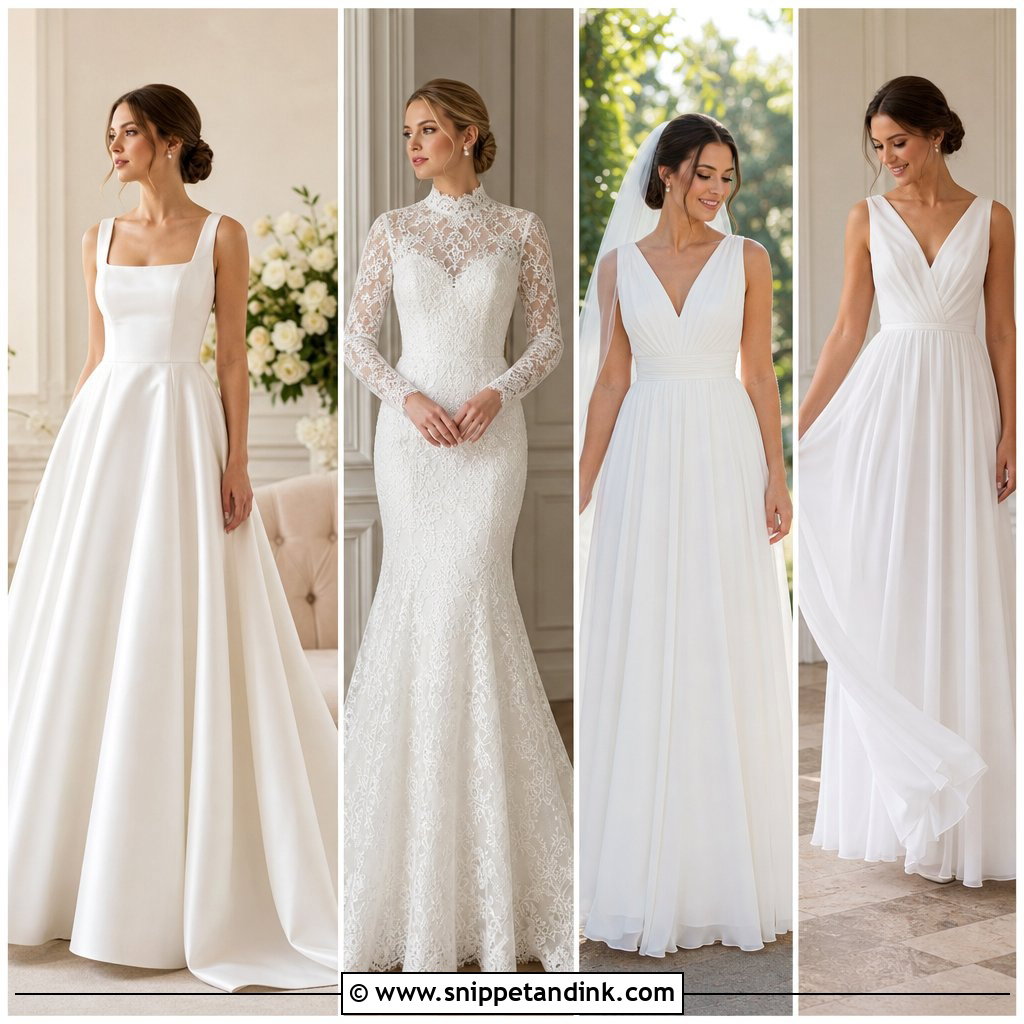
15. Mermaid Mexican Wedding Dress
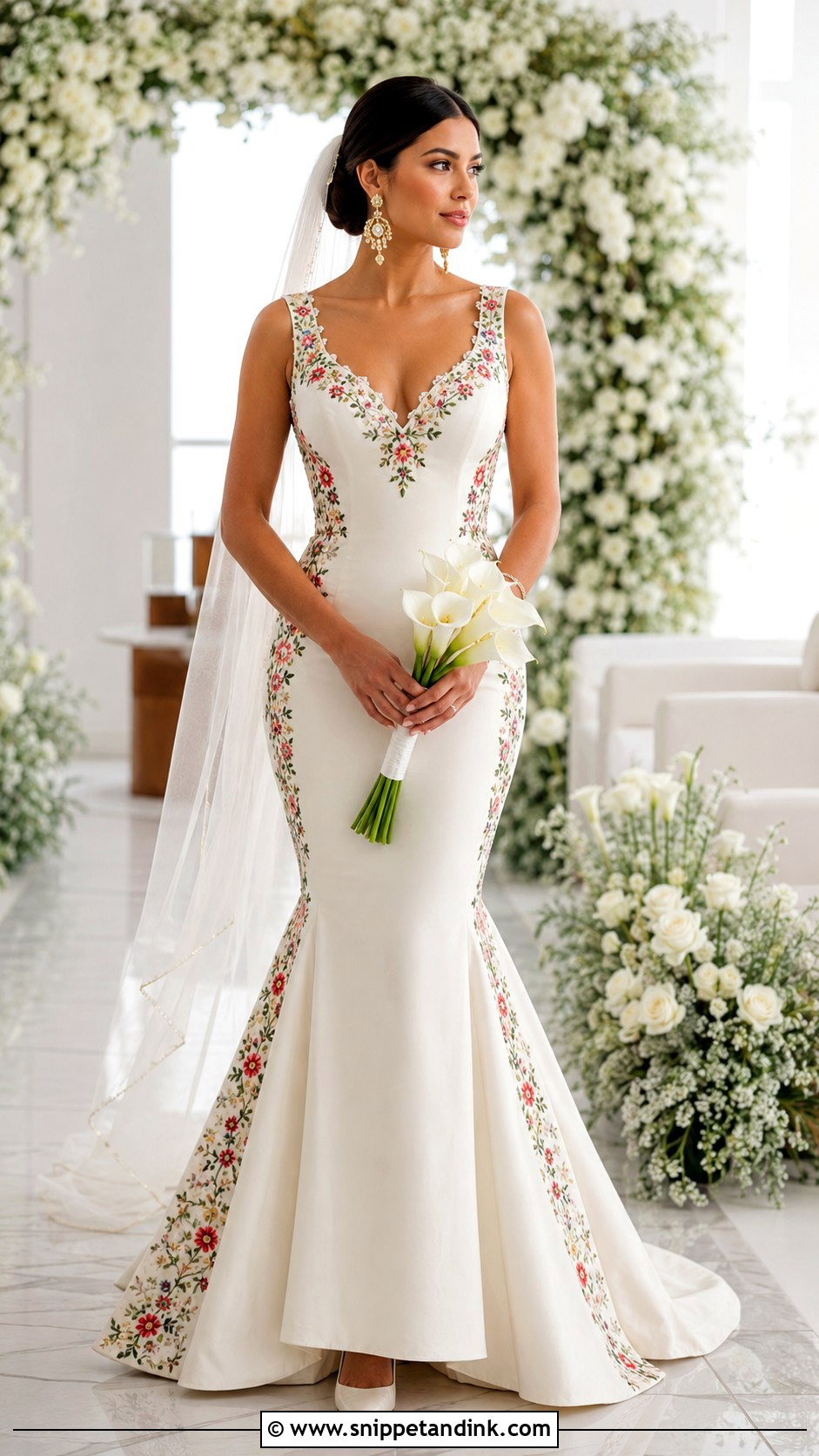
On a mermaid, embroidery works best when it follows the shape: the neckline, the side panels or the flare. Covering every section flattens the sculpted line. Stretch lining and a discreet slit make sitting and dancing far easier. Pointed ivory heels, long gold earrings, a side-parted bun and a narrow fingertip veil suit it. Embroidered fabric doesn’t give much, so alterations must be precise or the stitching pulls and puckers at the hips.
16. Tea-Length Mexican Wedding Dress
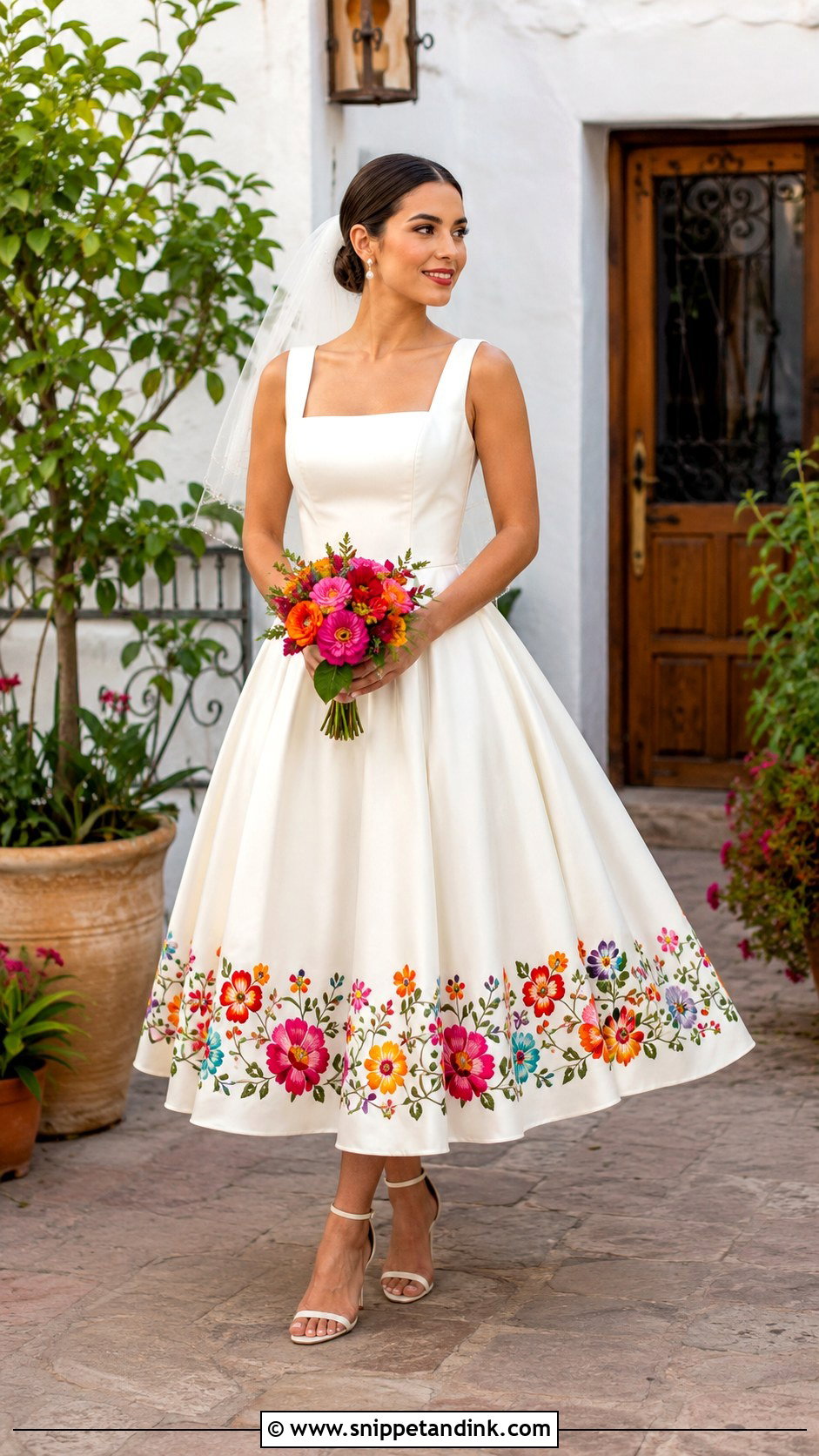
Tea length is my answer for a courthouse ceremony, a daytime garden party or a small courtyard wedding. A fitted bodice with a square neck and a full skirt ending between knee and ankle lets an embroidered hem flash every time you move. Shoes are on show, so ankle-strap heels, embroidered pumps or polished flats all become part of the look. A soft petticoat adds volume; a stiff one fights the embroidery. Pearl earrings, a short veil and a petite bouquet keep proportions light.
17. Plus Size Mexican Wedding Dress
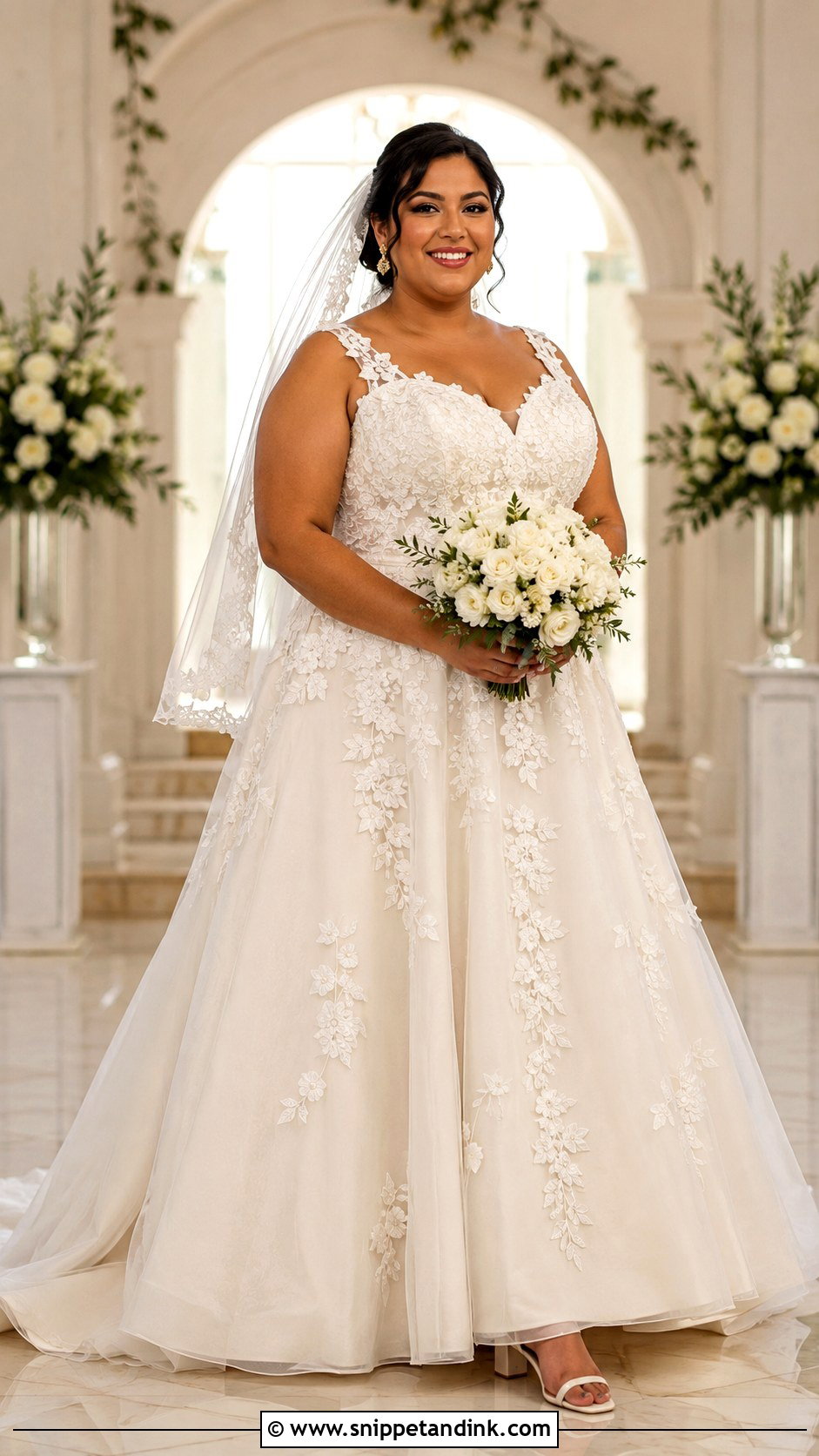
Support first, then decoration. An A-line with a structured bodice, wide straps and a flowing skirt is comfortable and doesn’t hide the body. A corset-style interior or professionally fitted lining keeps the outside smooth. I balance embroidery around the neckline, waist and skirt so it looks considered from every angle, including the back. Any neckline or colour can work. What matters is accurate measurements, careful alterations, comfortable underwear and enough room to sit and dance. Choose a bouquet in proportion to your height.
18. Modest Mexican Wedding Dress
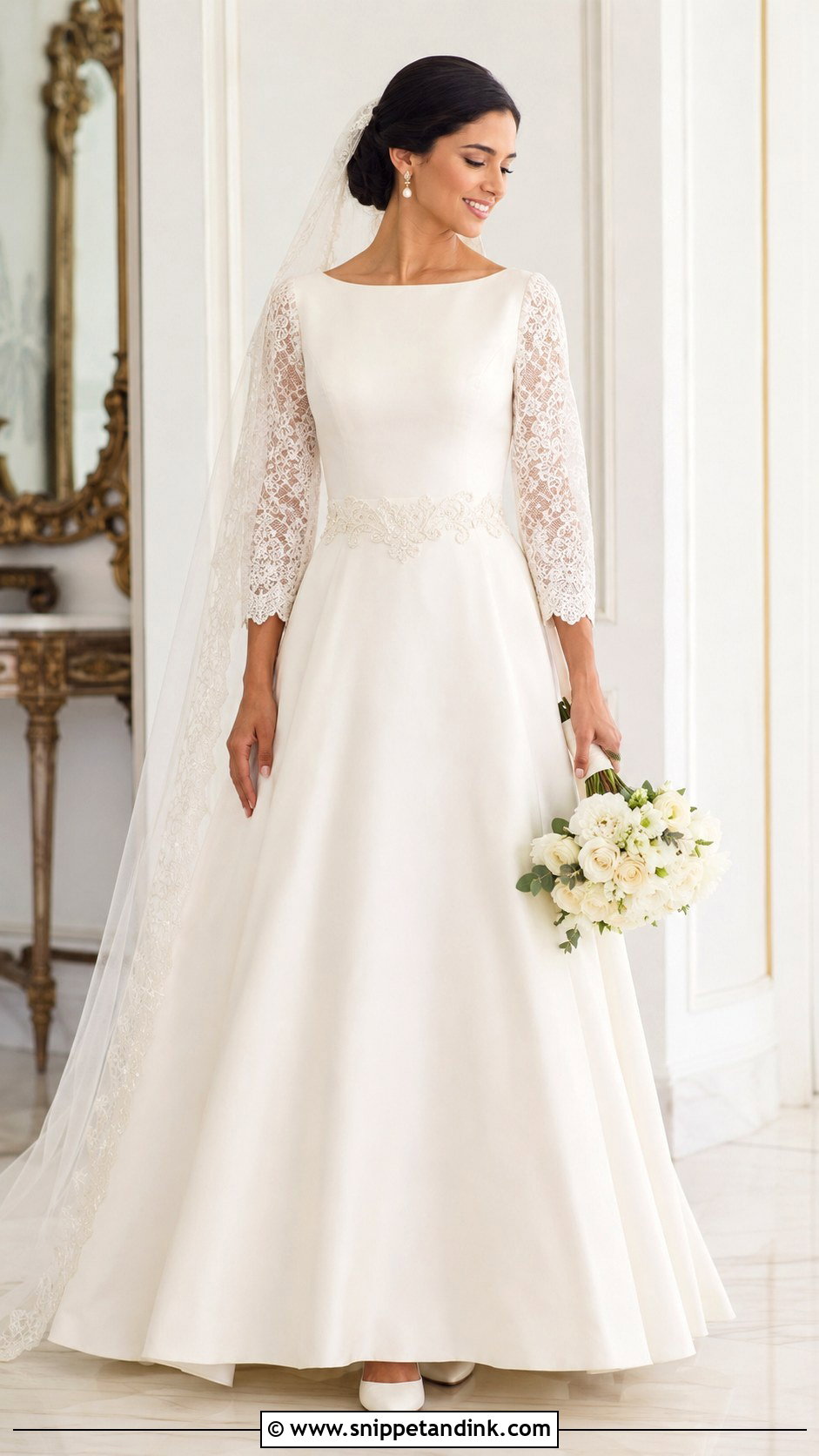
Coverage can feel fresh rather than formal. A floor-length A-line with a high boat neckline, three-quarter sleeves and embroidery at the waist or cuffs is a good starting point. Sheer lace lightens it, while an opaque lining gives dependable coverage. Breathable fabric is a must for a warm celebration. A removable embroidered bolero lets you start covered for the ceremony and change the look later. Closed-toe pumps, pearl drops and a long veil over a low bun finish it.
19. Convertible Mexican Wedding Dress
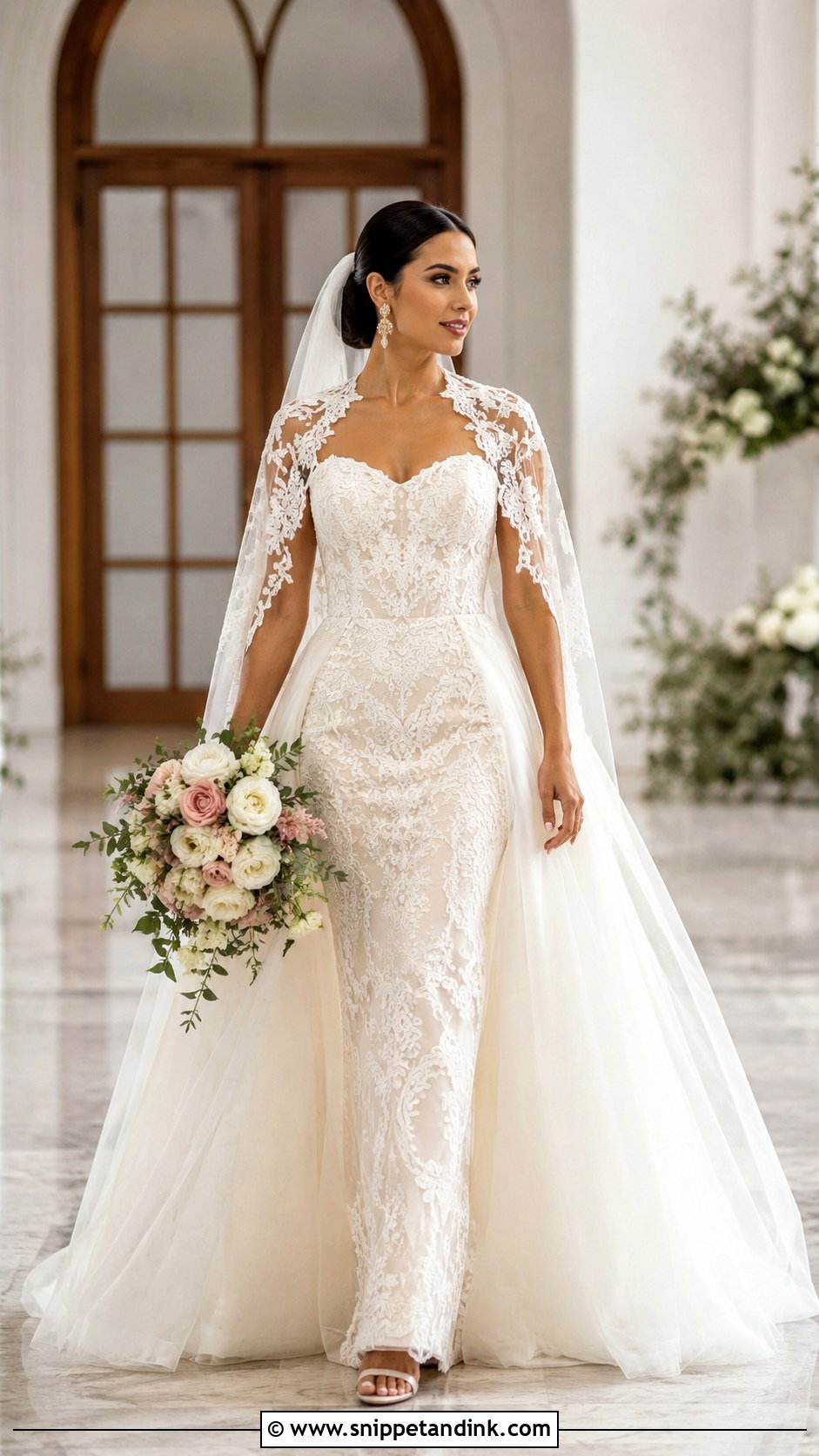
A convertible Mexican wedding dress starts with a fitted embroidered gown, in A-line, sheath or mermaid, and adds layers: a plain organza or tulle overskirt for the entrance, perhaps a lace bolero or embroidered cape. Choose shoes, earrings and a low bun that work with every version. Every extra layer means another fastening, so test each one before the day and give one person the job of helping with all of them. Hidden hooks and snaps keep each change quick.
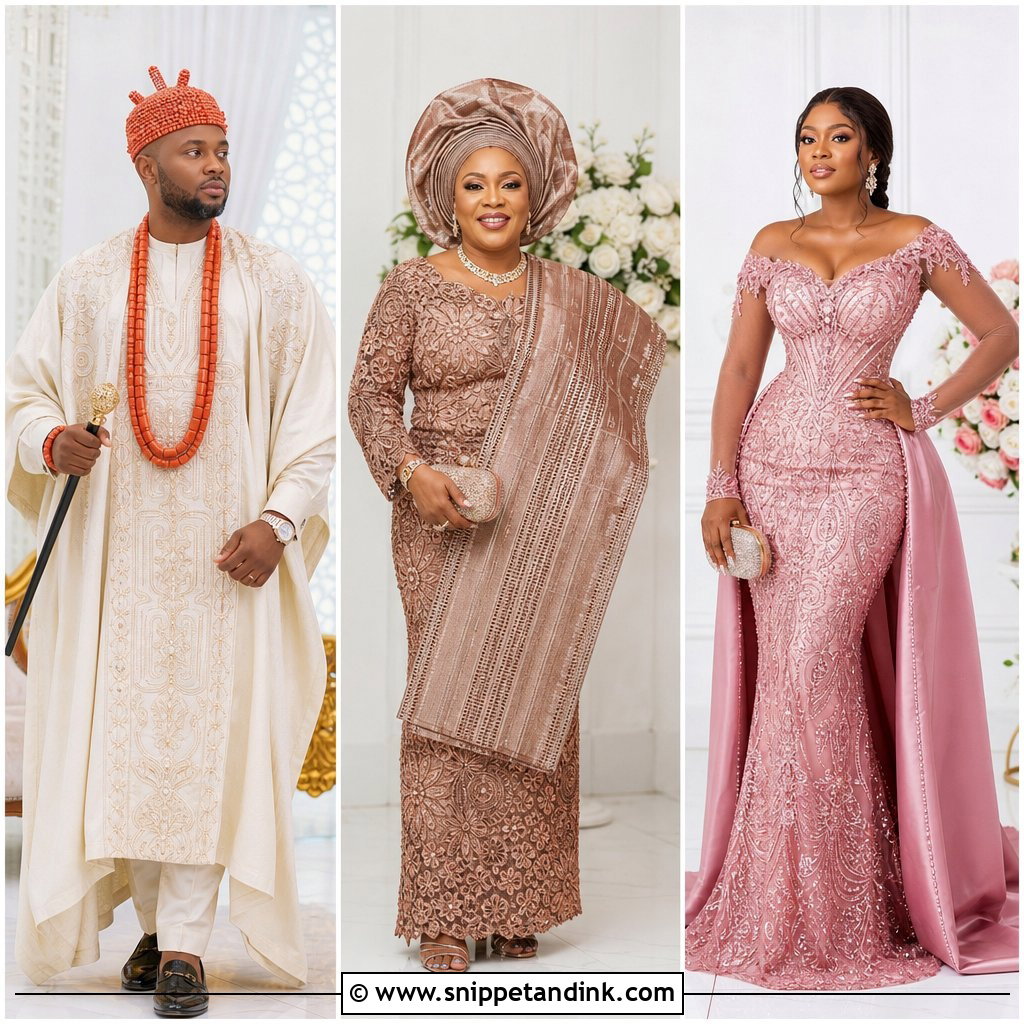
20. Red Embroidered Mexican Wedding Dress
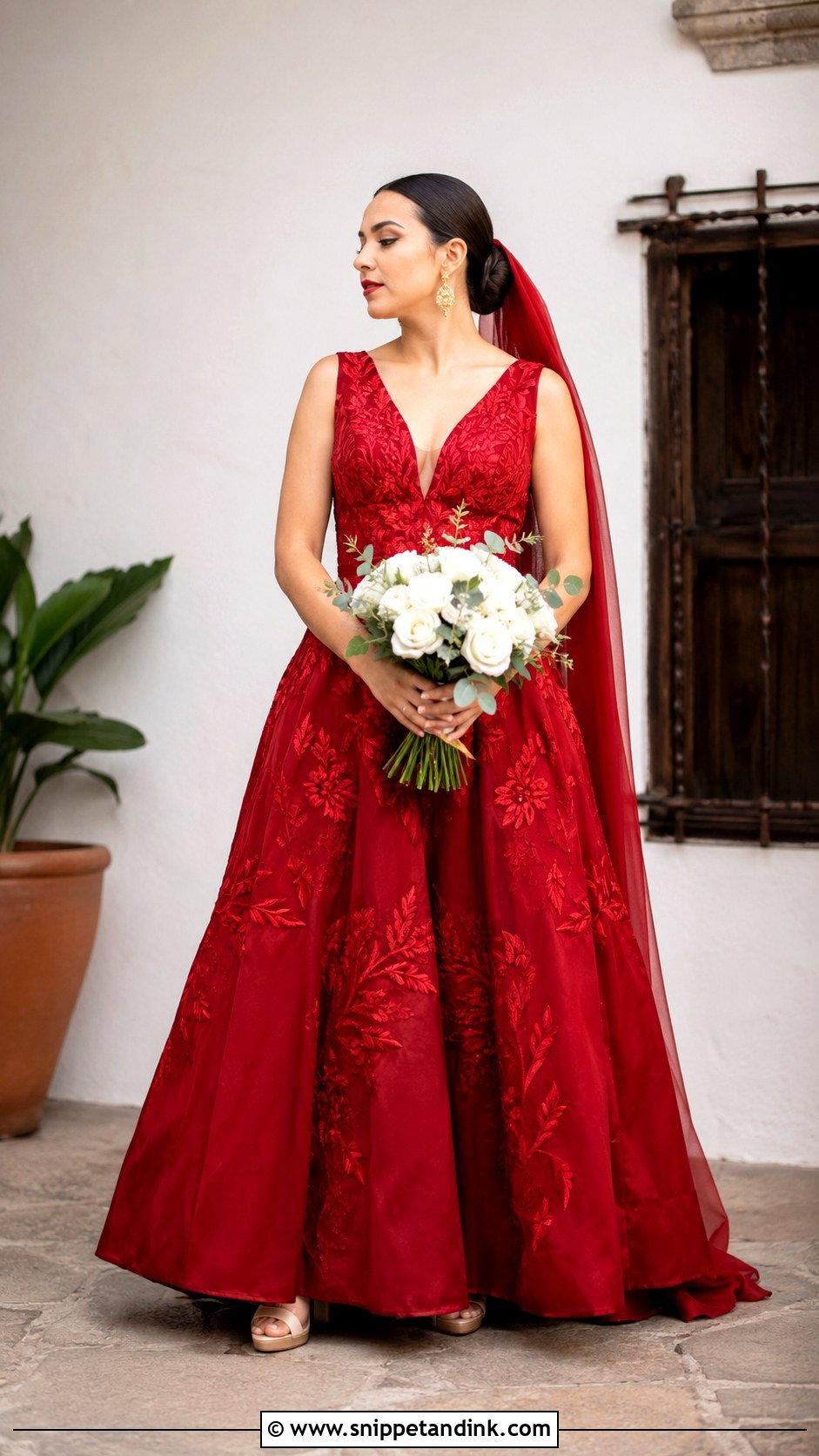
Red is a confident choice with deep roots, and it can go two ways. A deep red gown with tonal embroidery feels rich and grown-up; an ivory gown covered in red flowers keeps a stronger bridal contrast. A plain ivory or red veil follows the base colour. I keep makeup to a defined lip and soft eyes, and the bouquet to white flowers and greenery so it stands apart from the dress. Red dominates every photo, so choose a clean backdrop and few accessories.
Bright Thread on Pale Fabric: Keeping Colours From Running
The biggest risk with colourful embroidery on ivory cotton or linen is bleeding. Some dyes run when they get wet, and a spilled drink or a damp hem can leave a pink halo around a red flower. Ask whether the thread has been tested, and if you’re unsure, test a hidden spot with a damp white cloth.
On the day, blot spills rather than rubbing, and never soak an embroidered area. Keep a few white cloths and a little cold water in the bridal kit for quick blotting.
Heat plays a part as well. Dense embroidery is surprisingly warm to wear, because every stitch adds a layer over the fabric, and sweat at the waist and underarms can loosen dye in the same way water does. For a summer wedding outdoors, I’d keep the heaviest stitching away from the underarms, choose a breathable cotton or linen lining, and plan a shaded spot for the long portrait session. Dress shields sewn into the lining are a small, invisible fix that protects both the thread and the fabric.
Cleaning and storing it afterward
Take the gown to a cleaner who handles hand-embroidered pieces, and point out the coloured areas. Store it folded with acid-free tissue between the layers, away from sunlight, which fades bright thread faster than you’d think. A rebozo can be folded the same way; roll it loosely instead if it has long fringes, so they don’t tangle.
Credit the Craft, Then Make It Yours
Embroidery, lace, colour, regional techniques and modern tailoring can all come together in a Mexican-inspired bridal look that means something. Start with a silhouette you feel comfortable in. Then choose details that fit your venue, season and personal connection to the culture. If you’re using recognisable Indigenous or regional textiles, ask where they come from and work with Mexican designers or artisans when you can. Practical shoes, balanced jewellery, a veil or rebozo and flowers in the gown’s colours will make it feel considered rather than themed. Above all, wear the dress that reflects who you are.
You'll Like These Ideas:



Leave a Reply