
Most of the Vintage Mexican wedding dress ideas I’m asked about start with a piece of cloth rather than a silhouette: a grandmother’s embroidered blouse, a rebozo, a stretch of cotton lace. Puff sleeves, flowing skirts and floral stitching from Oaxaca, Puebla, Chiapas and Yucatán all turn up below, some quiet and white, some loud with color. My job as a stylist is to build the rest of the outfit around that cloth so it feels like a bride and not a costume. Comfort matters here more than with most gowns, because these weddings tend to run long, warm and full of dancing.
Hand Embroidery or Machine Stitching? Turn the Fabric Over
Many dresses sold as Mexican-inspired are machine embroidered, and that’s fine if you know what you’re paying for. The quickest test I use is to look at the reverse side of the work.
- Hand embroidery shows small knots, thread ends and slight variation in stitch length on the back. No two flowers are quite identical.
- Machine embroidery is usually backed with a stiff stabilizer layer, and the stitches are perfectly even, with a second thread color visible underneath.
- Handwoven cloth, such as many huipiles, has a slightly irregular weave you can feel; printed copies of the same design feel flat.
If you’re buying new, I’d look for makers or cooperatives who can tell you which community the design comes from and who stitched it. Hand embroidery takes a long time, so a dress like that also needs ordering well ahead, and the price reflects the hours. For a vintage piece, ask the seller what they know of its history. Wearing a regional design with some understanding of where it comes from makes the outfit feel personal rather than borrowed.
1. Vintage Mexican Lace Wedding Dress
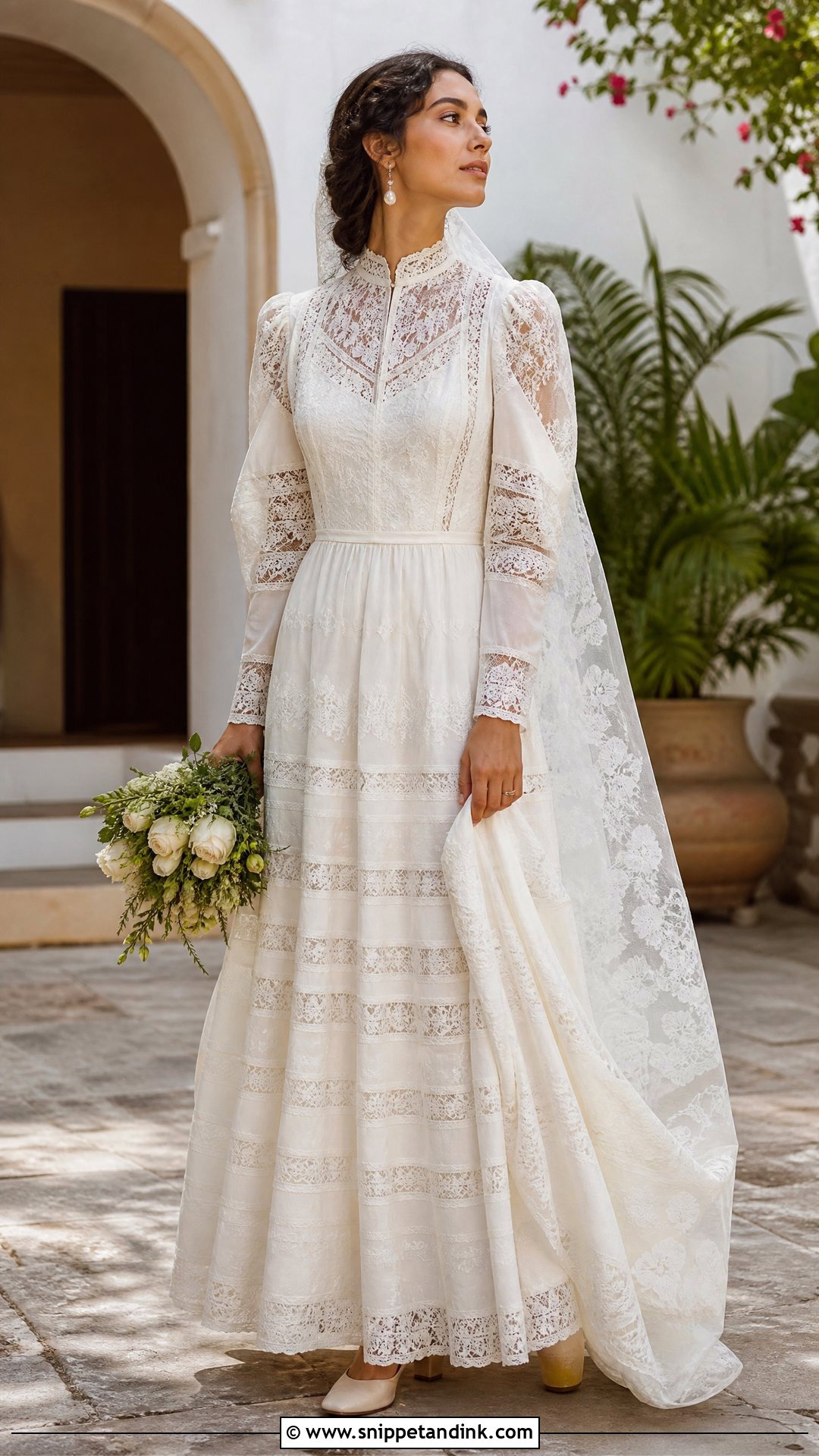
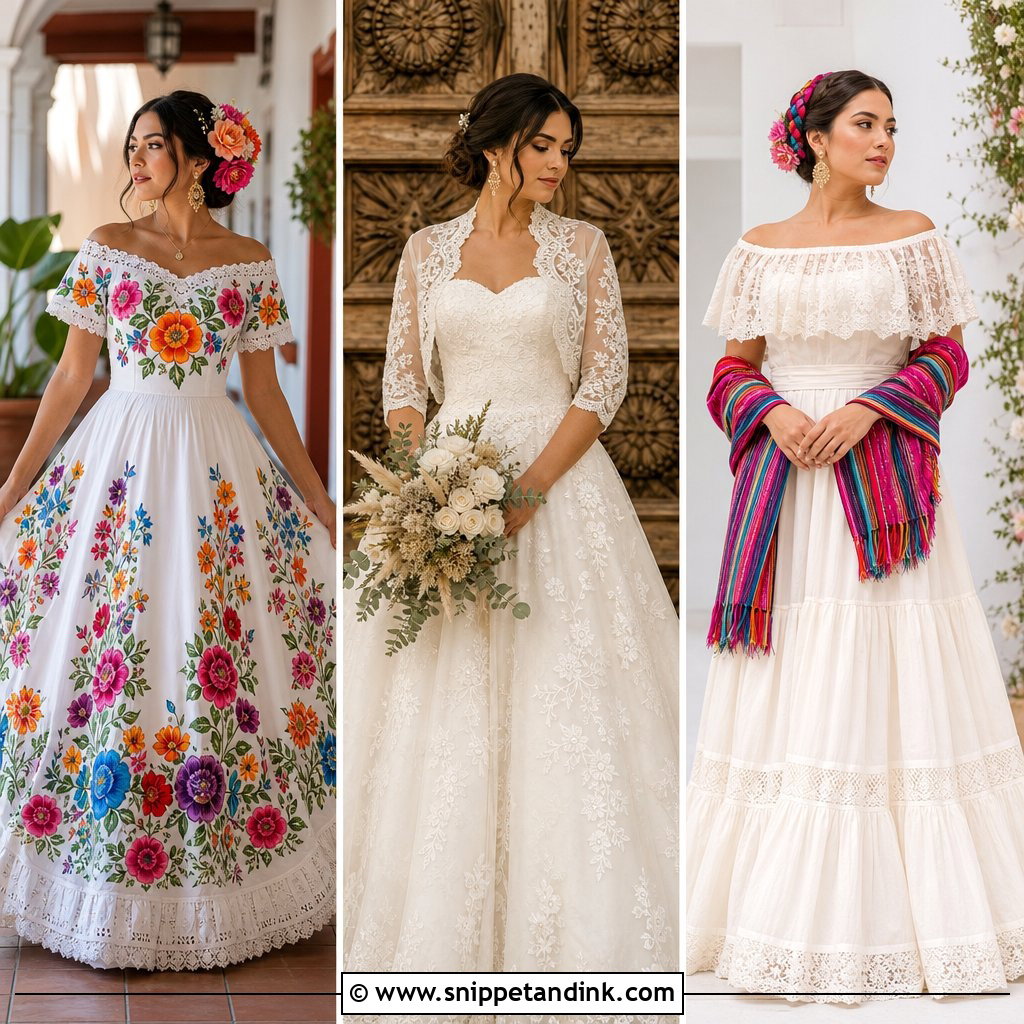
Cotton lace is cooler than the nylon lace on most bridal racks, and that’s the reason I steer warm-weather brides toward it. A white or ivory cotton dress with lace panels, a high neckline and soft long sleeves gives a 1970s-inspired bridal look without much weight. Low block heels, pearl earrings and a lace-edged veil keep it graceful, and a slim braid or soft waves suit the delicate texture. Courtyards and haciendas show this dress at its best. If the lace inserts are detailed, keep the jewelry small.
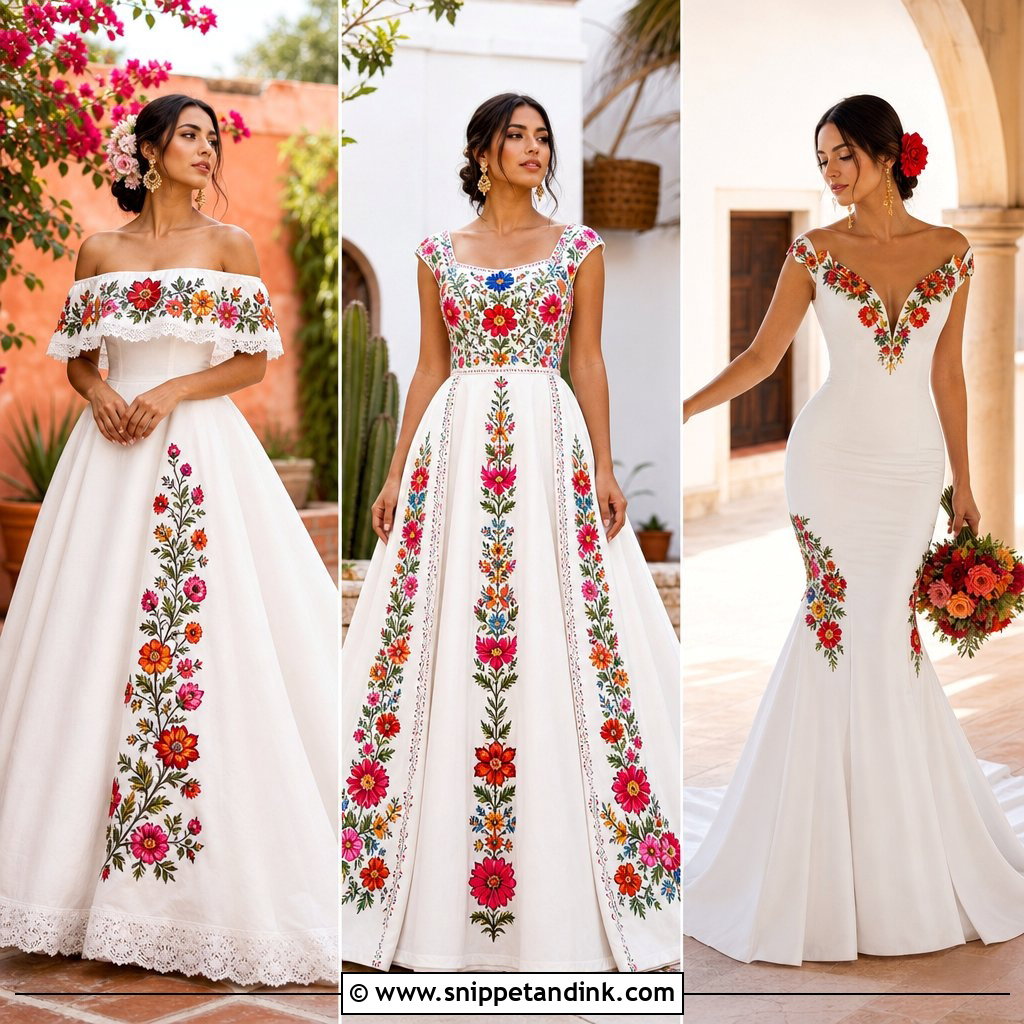
2. Vintage Mexican Embroidered Wedding Dress
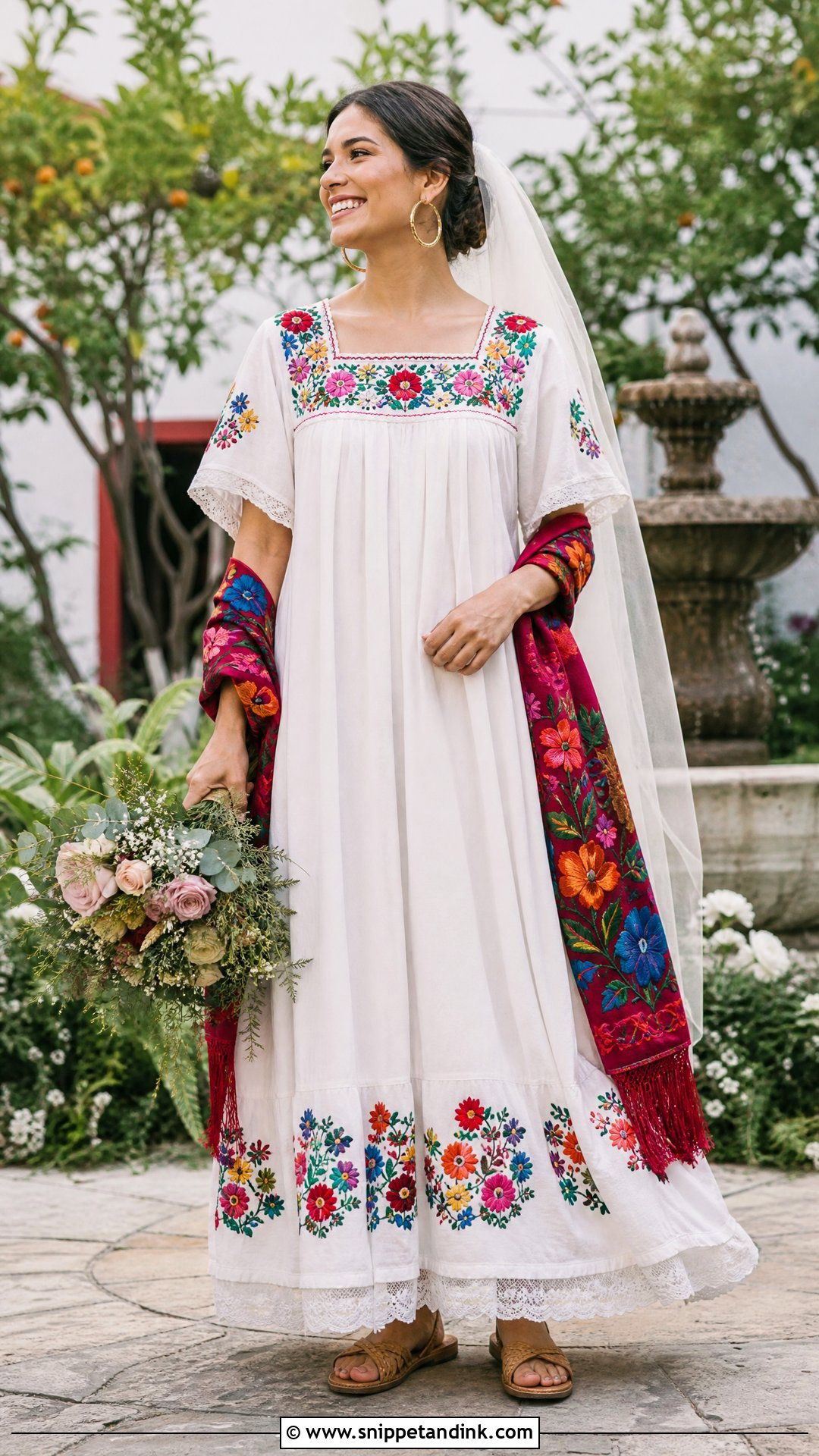
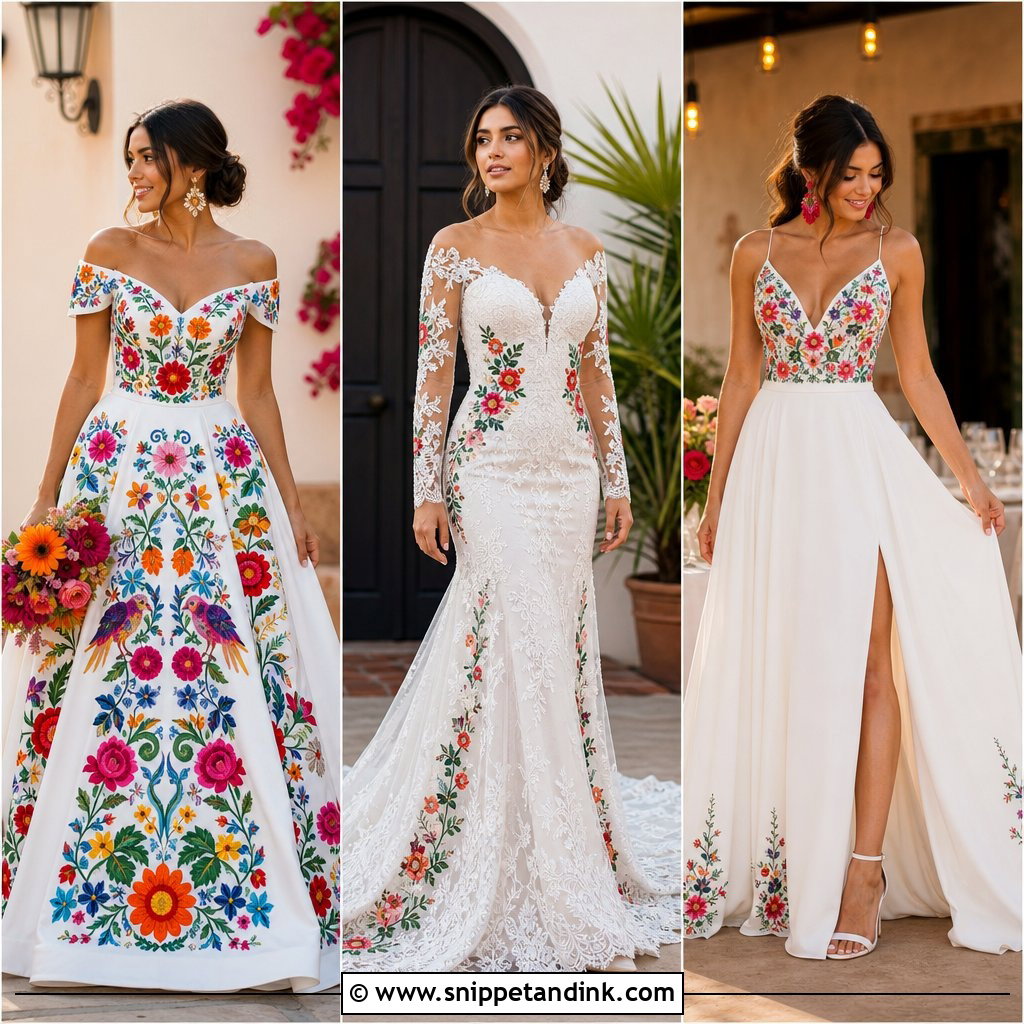
Look at where the stitching sits before you look at its colors. Embroidery around the neckline and sleeves frames your face in portraits, while embroidery at the hem mostly shows in full-length shots, and I plan photos with that in mind. White cotton or linen keeps bright thread looking fresh and bridal. Woven sandals, gold hoops and a flower comb finish it, and a bright rebozo adds movement when you walk. Daylight is kind to this kind of dress, since colored thread reads truest outdoors.
3. Vintage Mexican Off Shoulder Wedding Dress
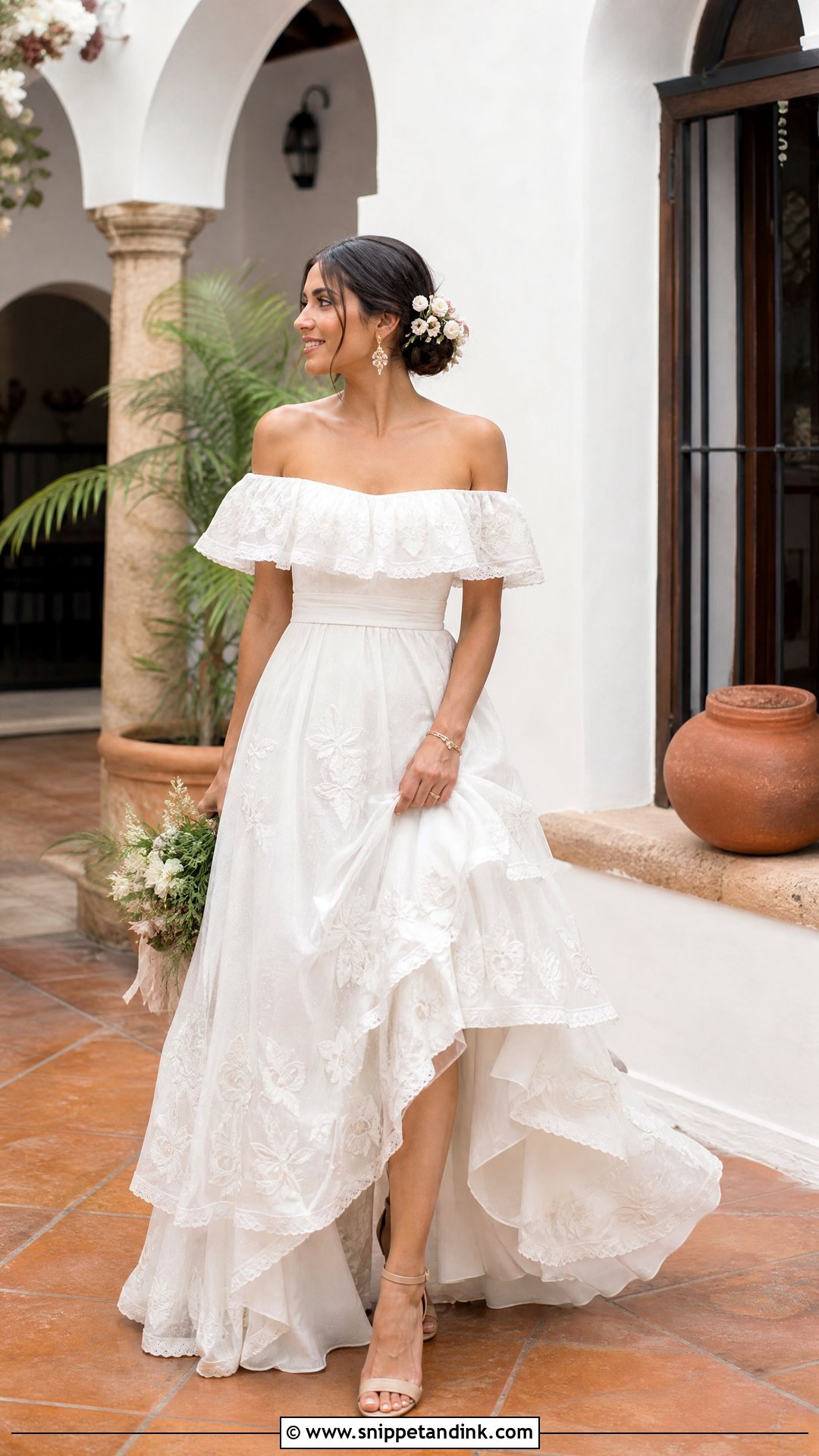
Off-shoulder ruffles slide. That’s the honest trade-off, and I fix it with a strip of silicone gripper or a narrow elastic sewn inside the neckline so the bride isn’t hitching it up all evening. A white dress with a ruffled neckline, full skirt and hand-stitched flowers keeps the shape traditional. Drop earrings, ankle-strap heels and a low bun with small fresh blooms go with it. Drape a rebozo over the arms for the ceremony and let it fall loose for portraits. Keep accessories light; the shoulders are the feature.
4. Vintage Mexican Long Sleeve Wedding Dress
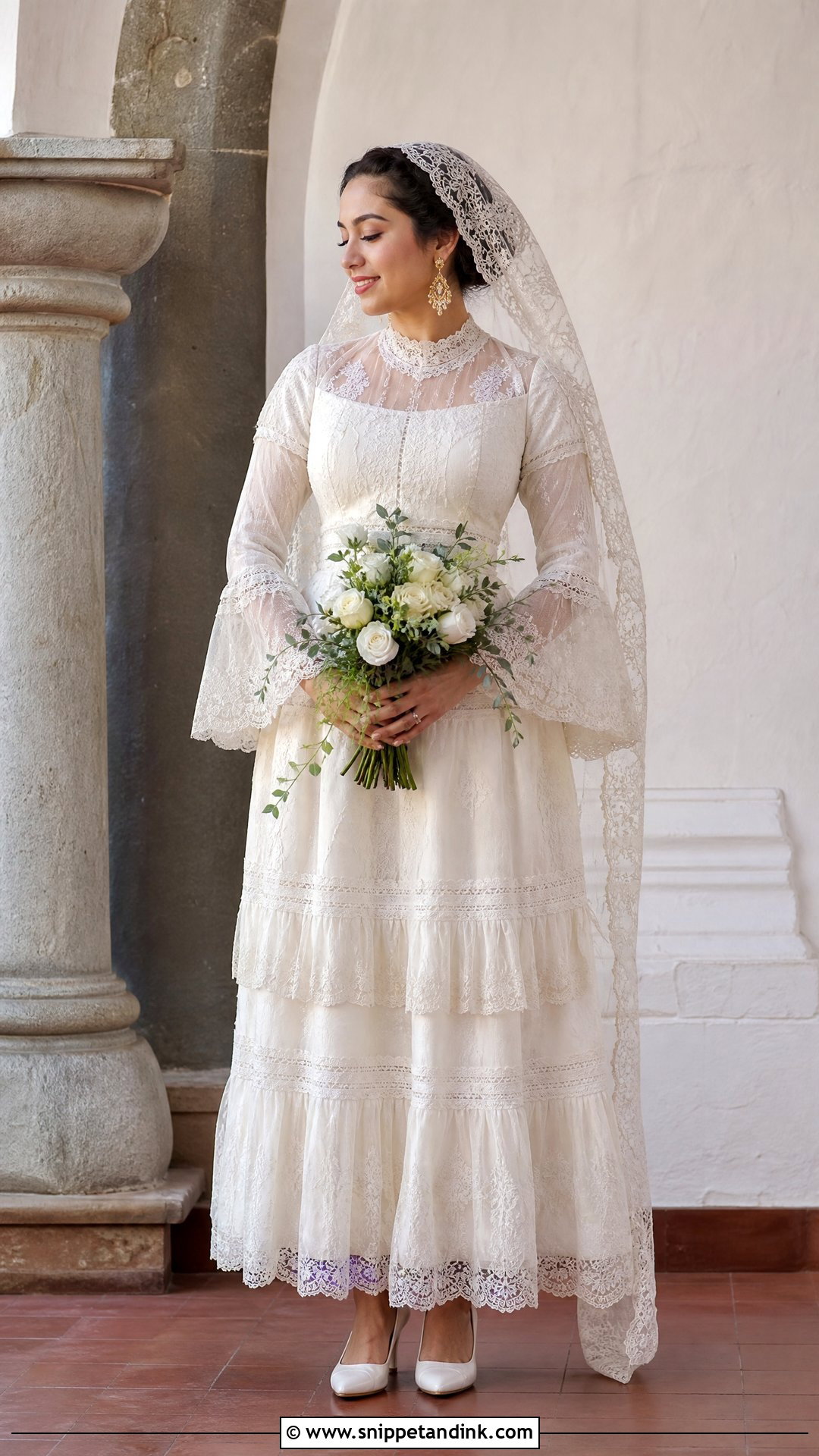
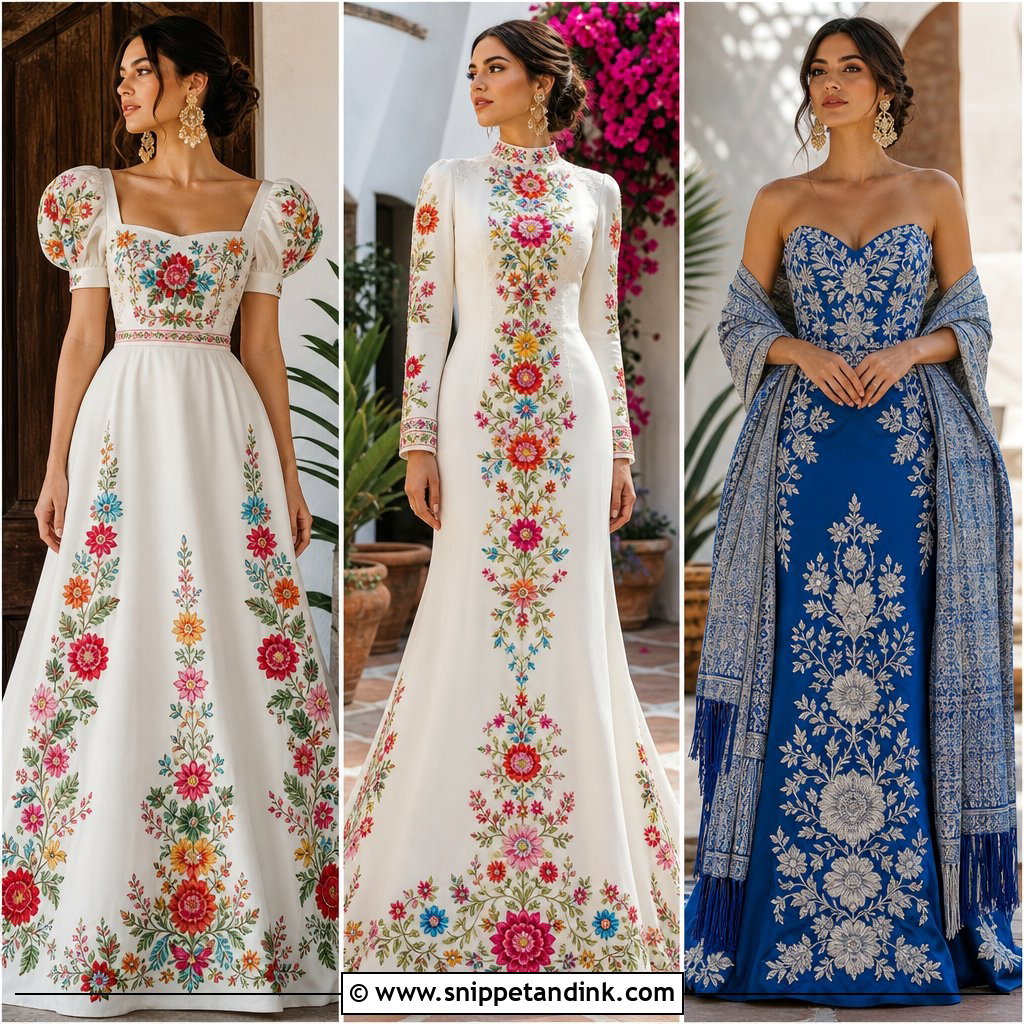
Cotton voile is my favorite fabric for a long sleeve dress in this style, because it’s sheer enough to breathe and still gives coverage. Bell, bishop or straight sleeves with embroidered cuffs all suit it. Closed-toe heels, vintage-inspired earrings and a soft mantilla veil complete the bridal outfit. Loose shapes can look like a nightgown in photos, so I define the waist with a narrow woven sash or tonal ribbon. Fall weddings and evening receptions in older venues suit this one well.
5. Vintage Mexican Boho Wedding Dress
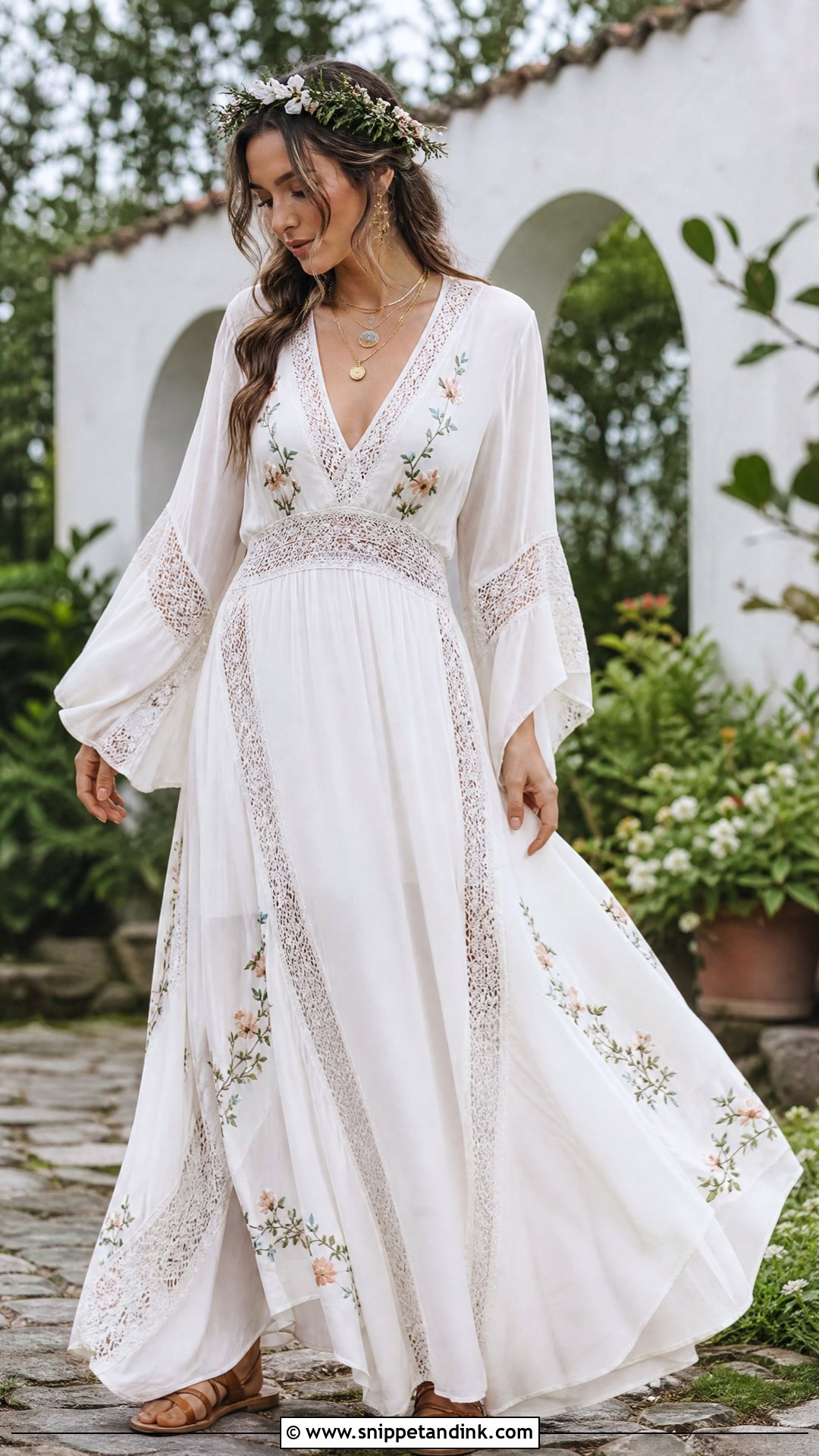
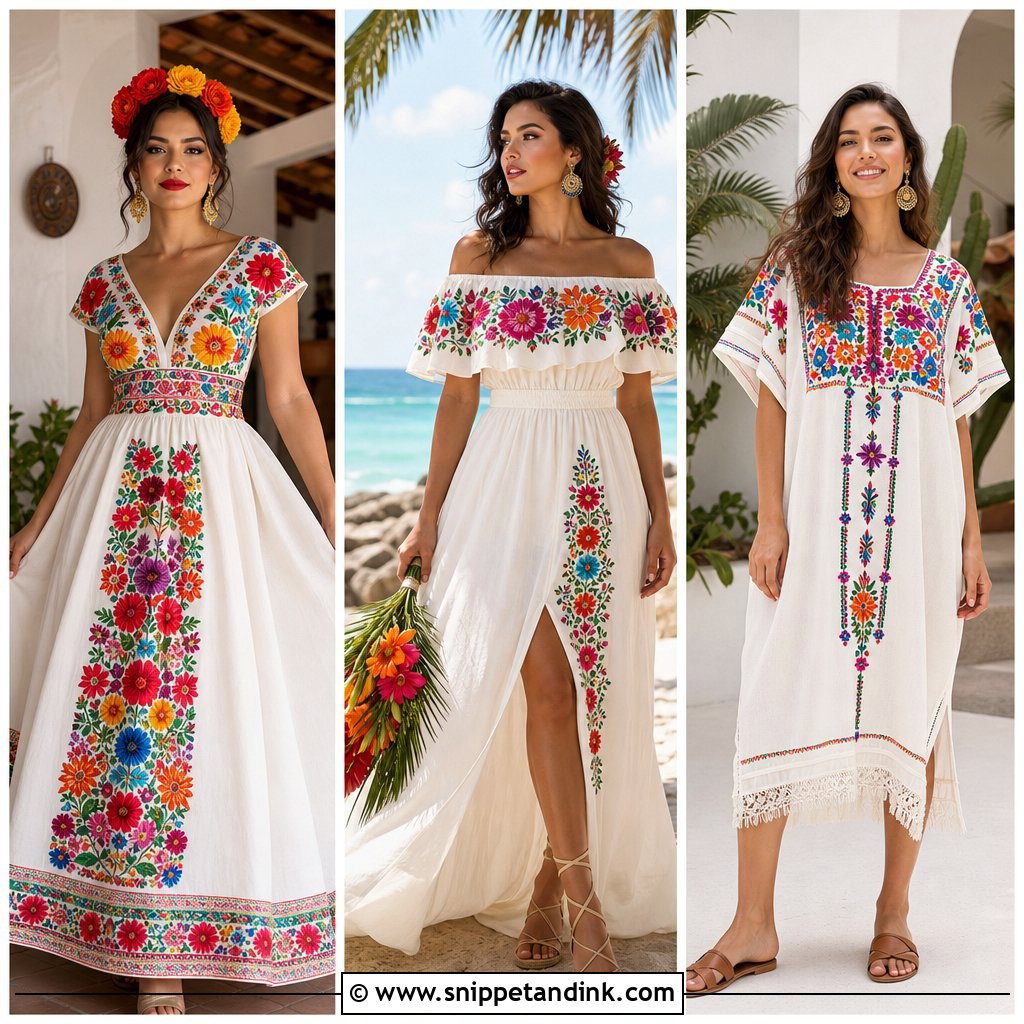
Boho dresses only work if you can actually move in them. I ask brides to dance a few steps in the fitting room, and if the lace insets pull at the armholes, the dress gets let out or swapped. A flowing white dress with lace insets, embroidered flowers and a slightly loose silhouette is the base. Leather sandals, layered gold jewelry and loose waves keep it natural. A flower crown can work, but small; an oversized one tips the whole look toward festival wear. Gardens, beaches and rustic venues are its natural home.
6. Vintage Mexican Huipil Wedding Dress
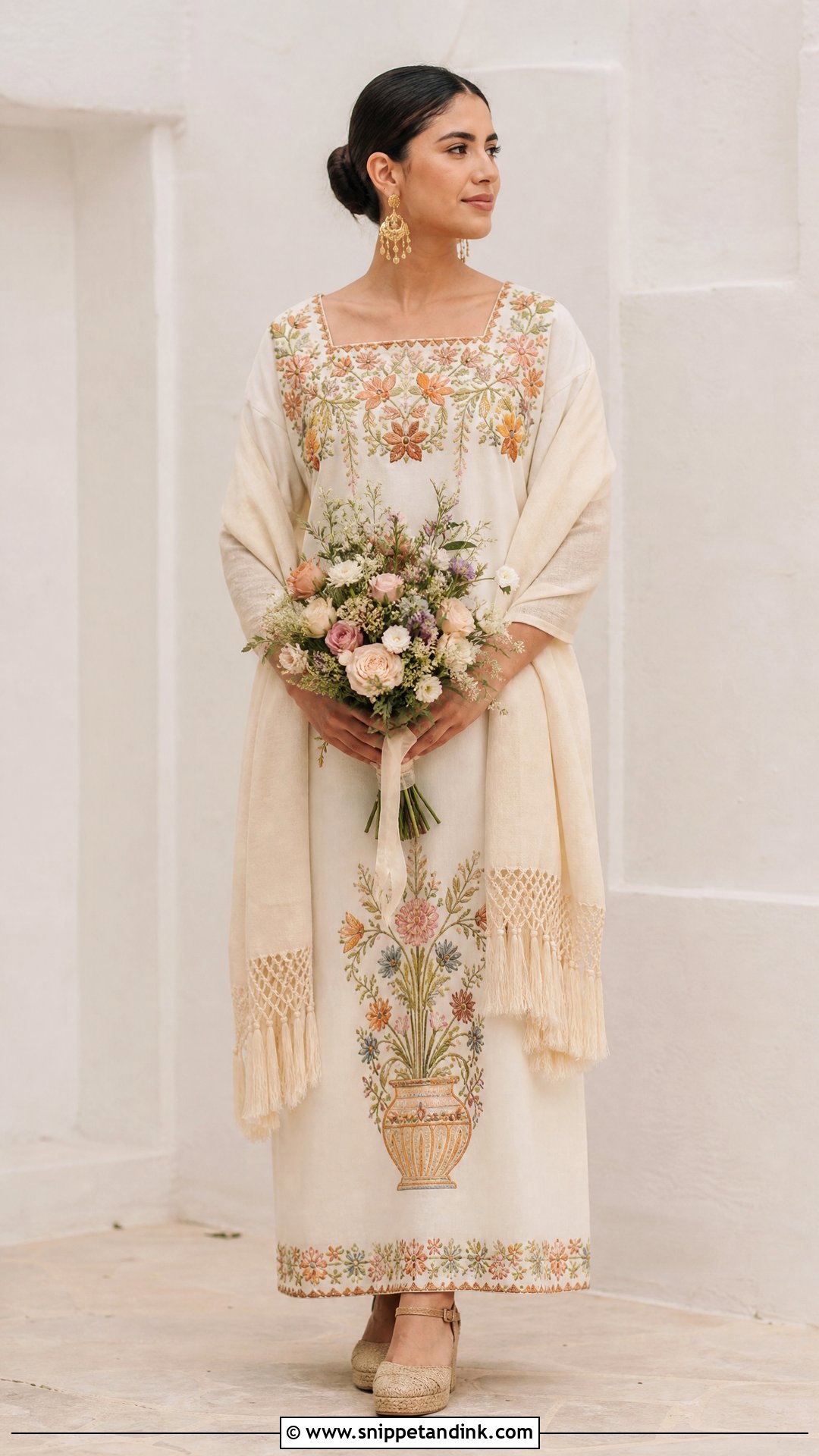
A huipil is a garment with deep regional roots, and many are still woven and embroidered by hand in specific communities, so I encourage brides to learn where theirs comes from. A vintage Mexican huipil wedding dress usually has a straight or gently flowing shape and a relaxed fit, with the stitching concentrated across the chest and neckline. Choose an ivory or white base so the embroidery leads. Woven heels, a sleek low bun and handmade earrings complete it, and a soft rebozo adds structure without hiding the stitching. Brides who dislike fitted gowns tend to love this one. The embroidery sits right where the camera looks: around the face.
7. Vintage Mexican Puebla Wedding Dress
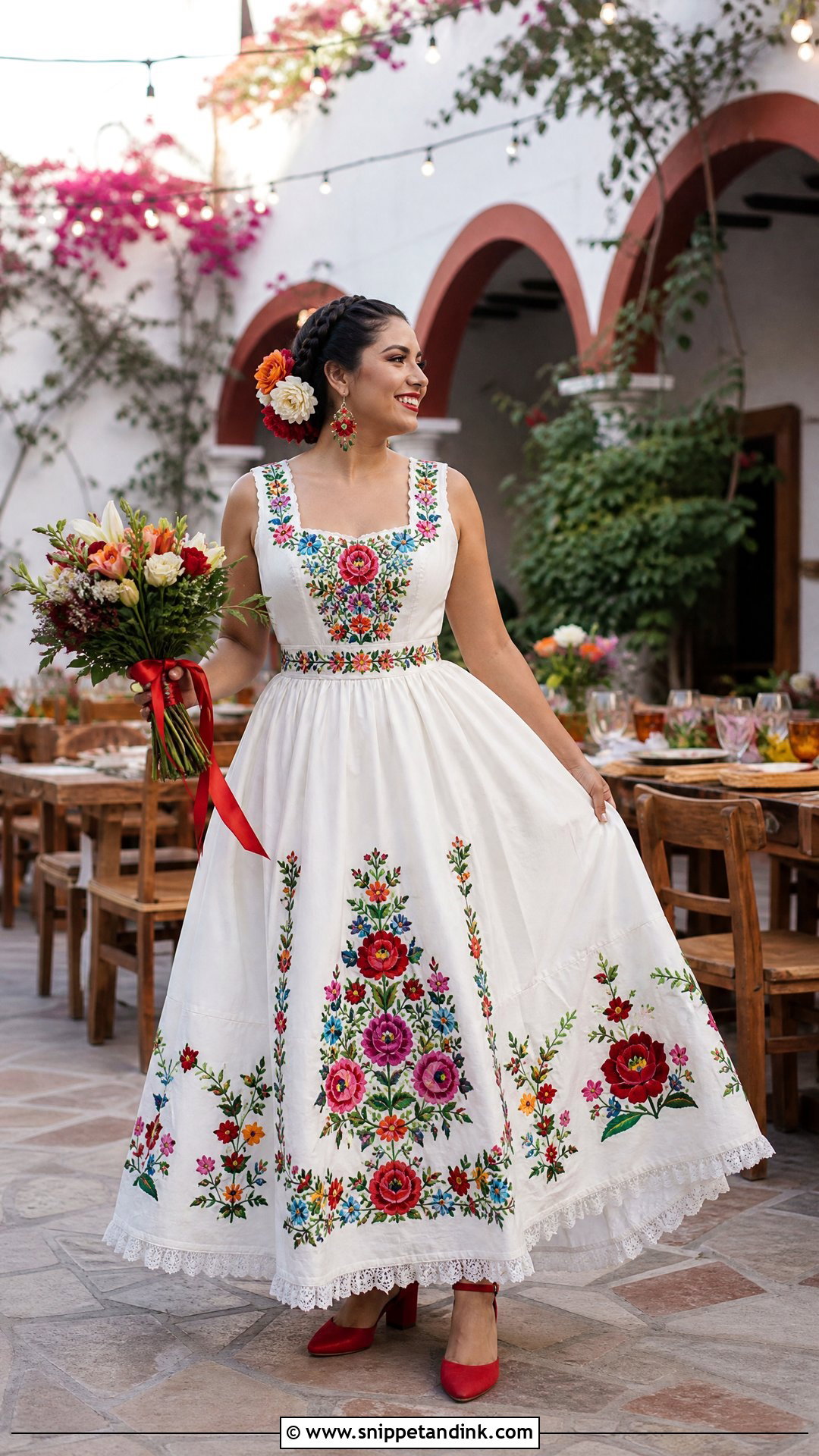
Puebla-style embroidery is bold and floral, often in strong reds and greens on white, so I pull the accessory colors straight from the thread. A white dress with colorful stitching on the bodice or sleeves, plus red or gold accessories, gives a warm finish. Simple block heels, a braided style and floral earrings stop it from getting busy. Full skirts need a waist, so add a fitted bodice or a sash. Save this one for a lively reception or an outdoor party where people will dance around you.
8. Vintage Mexican Oaxaca Wedding Dress
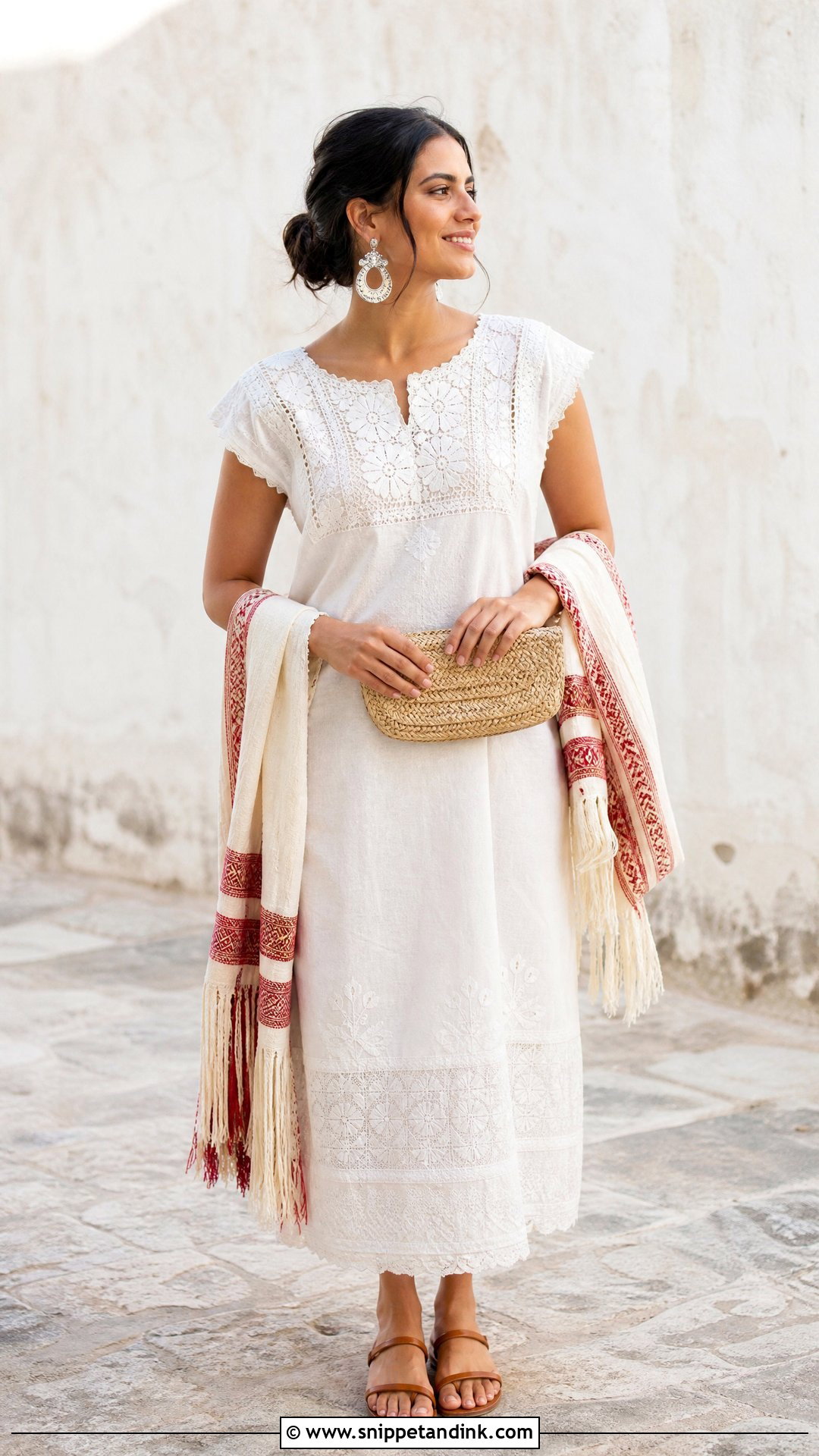
Oaxacan textile traditions are about the hand of the maker, and the outfit should feel that way too. I keep everything around the dress matte and natural: leather sandals, a woven clutch, hammered silver earrings. Look for hand embroidery or woven accents on a relaxed cotton shape. A long rebozo in cream, red or earth tones finishes it. With so much detail in the cloth, makeup and hair should stay simple; heavy contour and glossy curls fight the handmade surface. Destination weddings and small outdoor ceremonies suit it.
9. Vintage Mexican Chiapas Wedding Dress
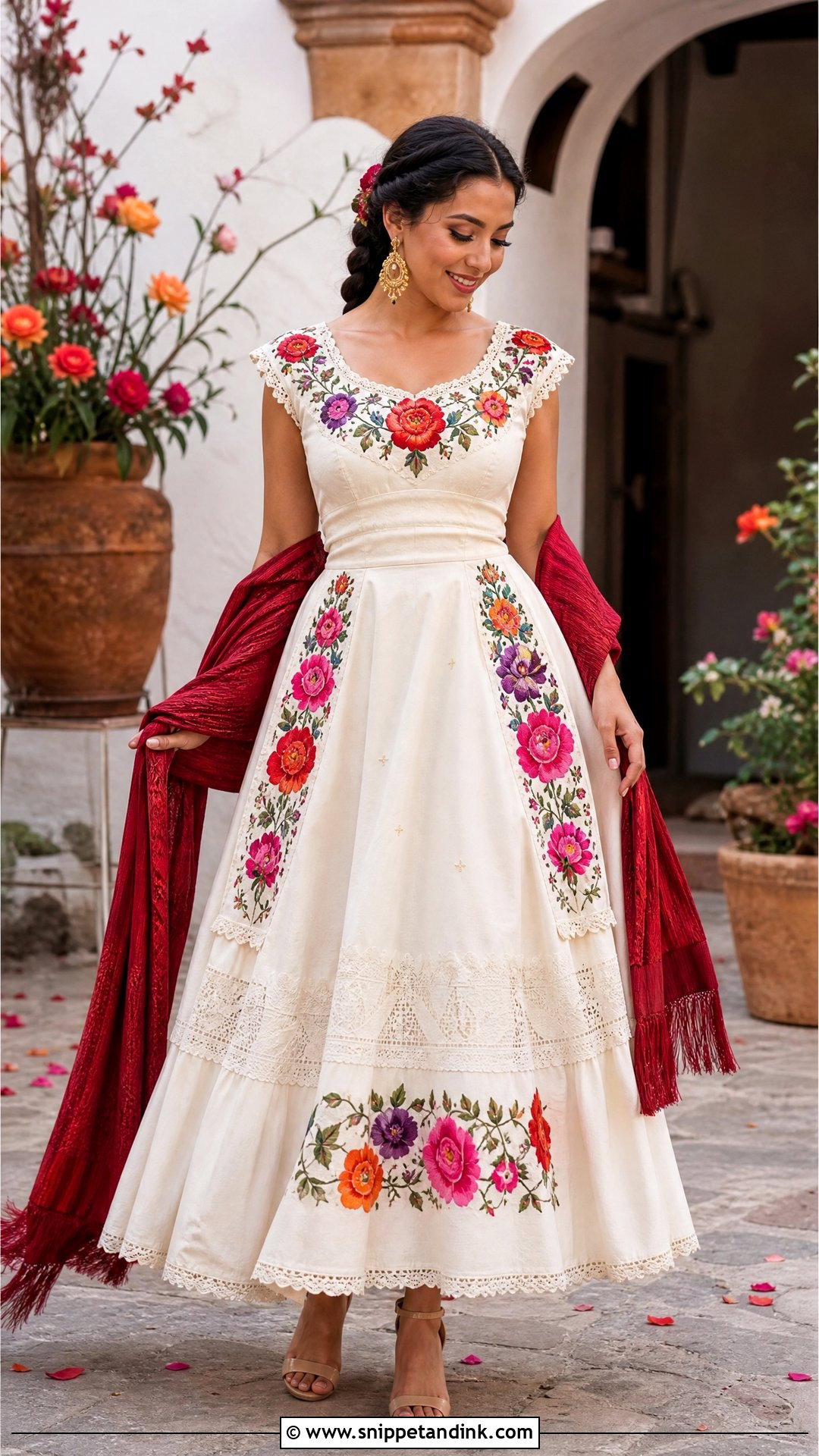
Chiapas embroidery is often worked in dense, bright florals against dark or white grounds, and the contrast is the point. For a bride, I choose the white or ivory version with flowers across the neckline and skirt. Black or tan heels, statement earrings and a smooth low braid keep the outfit balanced. A red or black rebozo makes a strong portrait. My one warning: dense satin-stitch flowers add real weight to a skirt, so check how the hem hangs once you’ve walked around for ten minutes.
10. Vintage Mexican Yucatan Wedding Dress
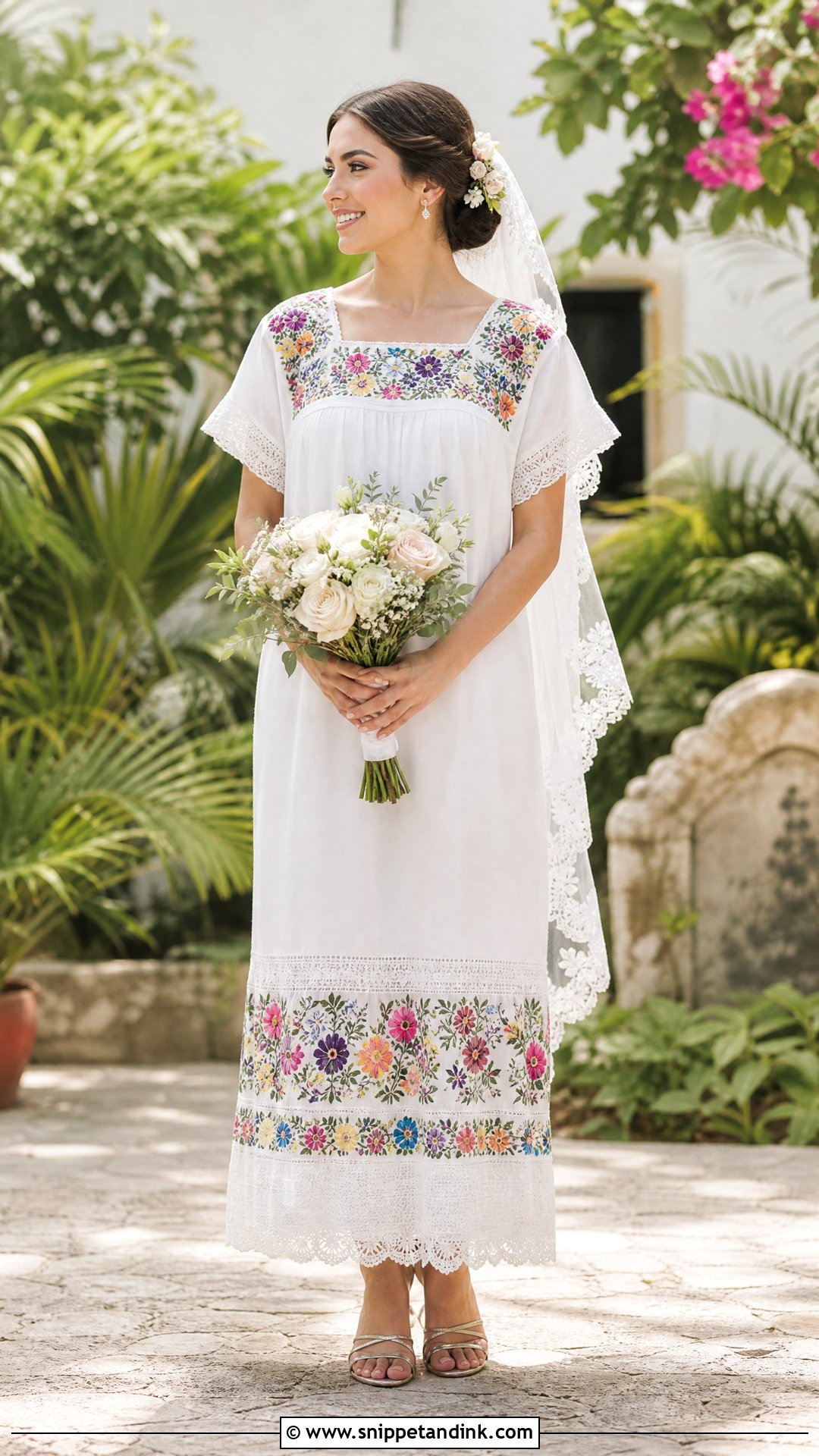
Yucatán’s traditional dress is built for heat, and a bride can borrow that logic. A white dress inspired by the terno or hipil, with embroidery at the neckline and hem, stays light and breathable. Crisp cotton or linen keeps its shape better than synthetic blends in humidity. Delicate sandals, pearl studs and a neat bun with small flowers suit it, and a sheer veil or lace mantilla adds softness without trapping heat. I’d put this on any bride marrying on a beach or in tropical weather.
11. Vintage Mexican Cotton Wedding Dress
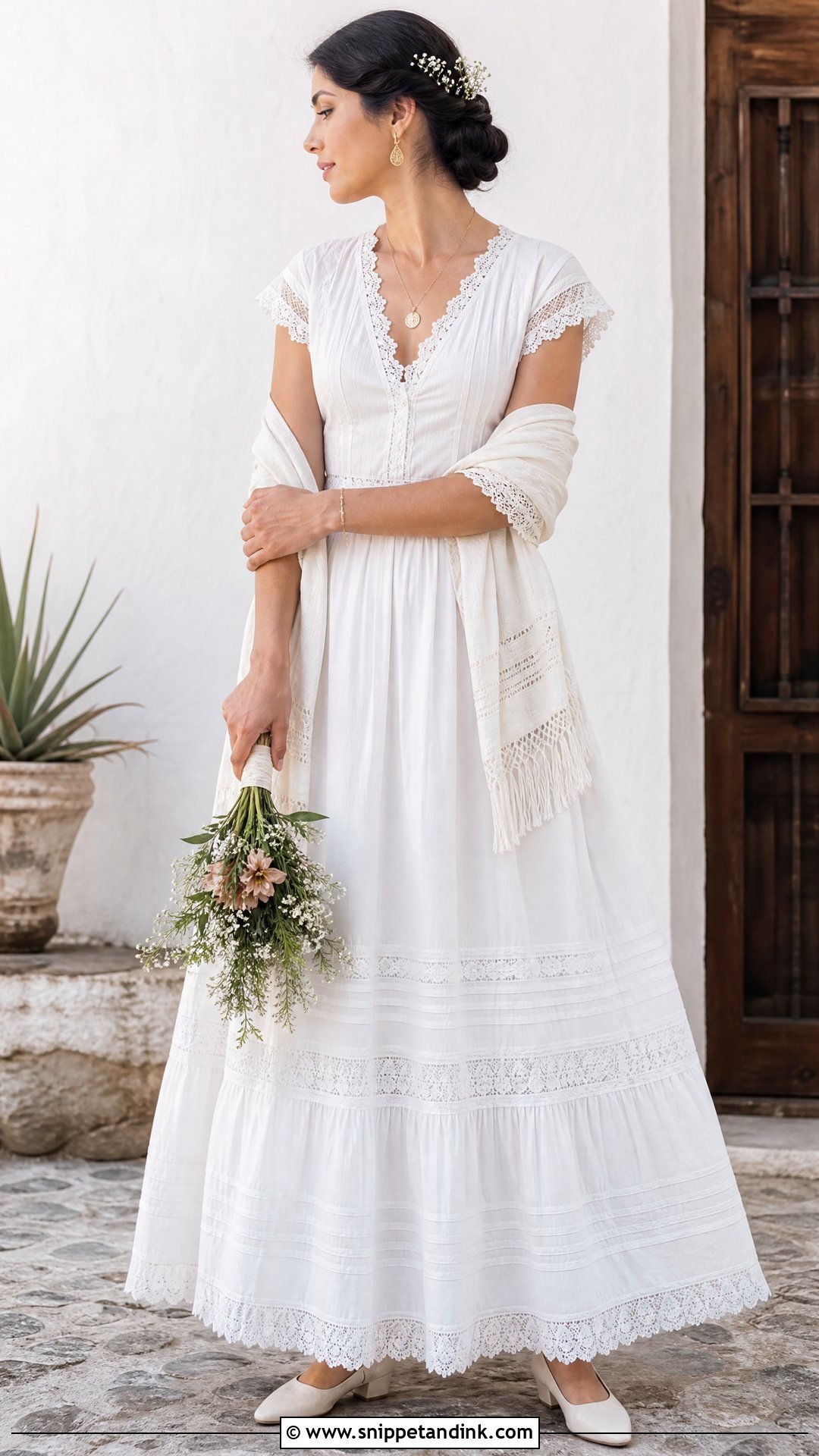
Plain cotton tells you everything about the fit, because there’s no embellishment to hide behind. A soft white cotton gown with lace trim, embroidery or pintucks feels handmade and nostalgic. I always check the pintucks lie straight across the bust; if the fit is off they fan out unevenly. Low ivory heels, a small bouquet and classic gold jewelry suit it, with a cotton veil or lightweight rebozo. It’s the easiest dress here to dance in.
12. Vintage Mexican Crochet Wedding Dress
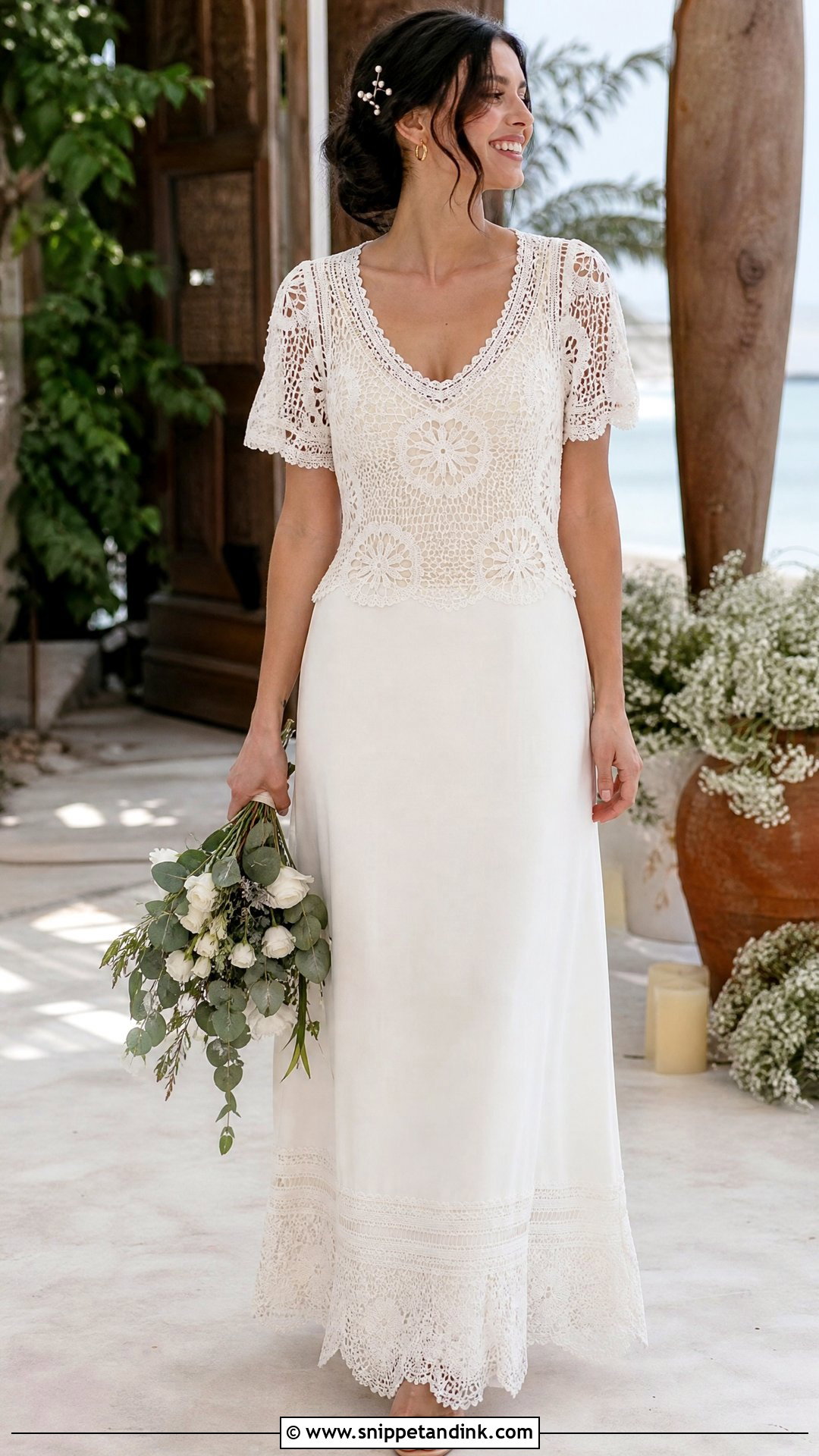
Crochet stretches as you wear it, and heavier crochet can grow a little longer over a long day. I fit crochet bodices slightly snug for that reason and check the lining underneath is cut to match. Crochet sleeves, a crochet bodice or openwork panels over a simple lining are the usual forms. Nude or ivory sandals, pearl hair pins and small hoops are plenty, since crochet already has strong texture. A sleek hairstyle keeps it from looking costume-like. Beaches and small outdoor receptions suit it.
13. Vintage Mexican Bell Sleeve Wedding Dress
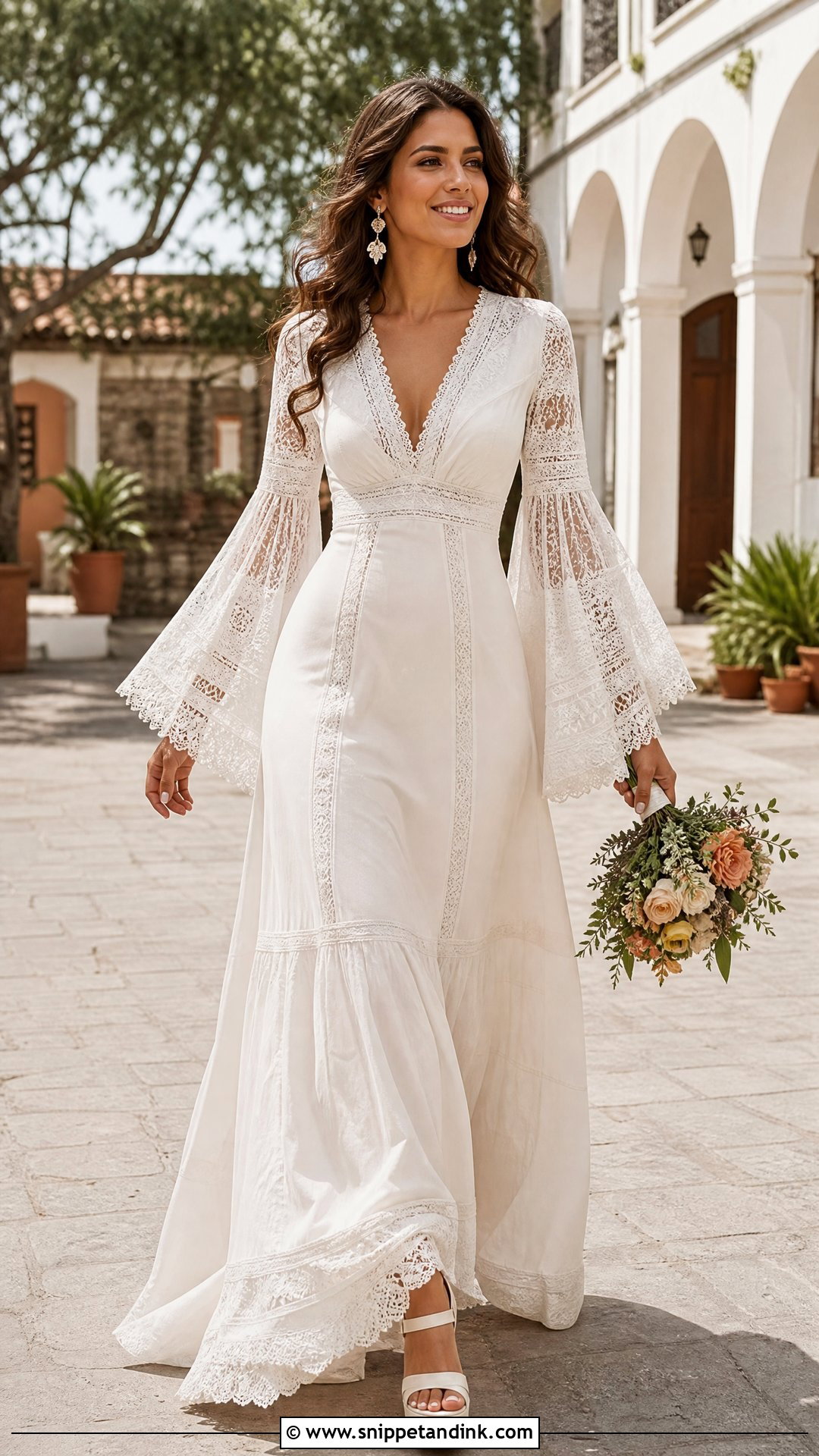
Bell sleeves move when you do, which gives photographers something to work with every time you lift the bouquet. A white lace or cotton gown with wide sleeves, a fitted bodice and a soft A-line skirt is the classic shape. Platform sandals or block heels, delicate earrings and loose waves, maybe with a center part, lean into the retro feel. With dramatic sleeves, I pair a simple veil and keep candles in mind at the reception, since wide cotton cuffs and open flames are a poor mix.
14. Vintage Mexican High Neck Wedding Dress
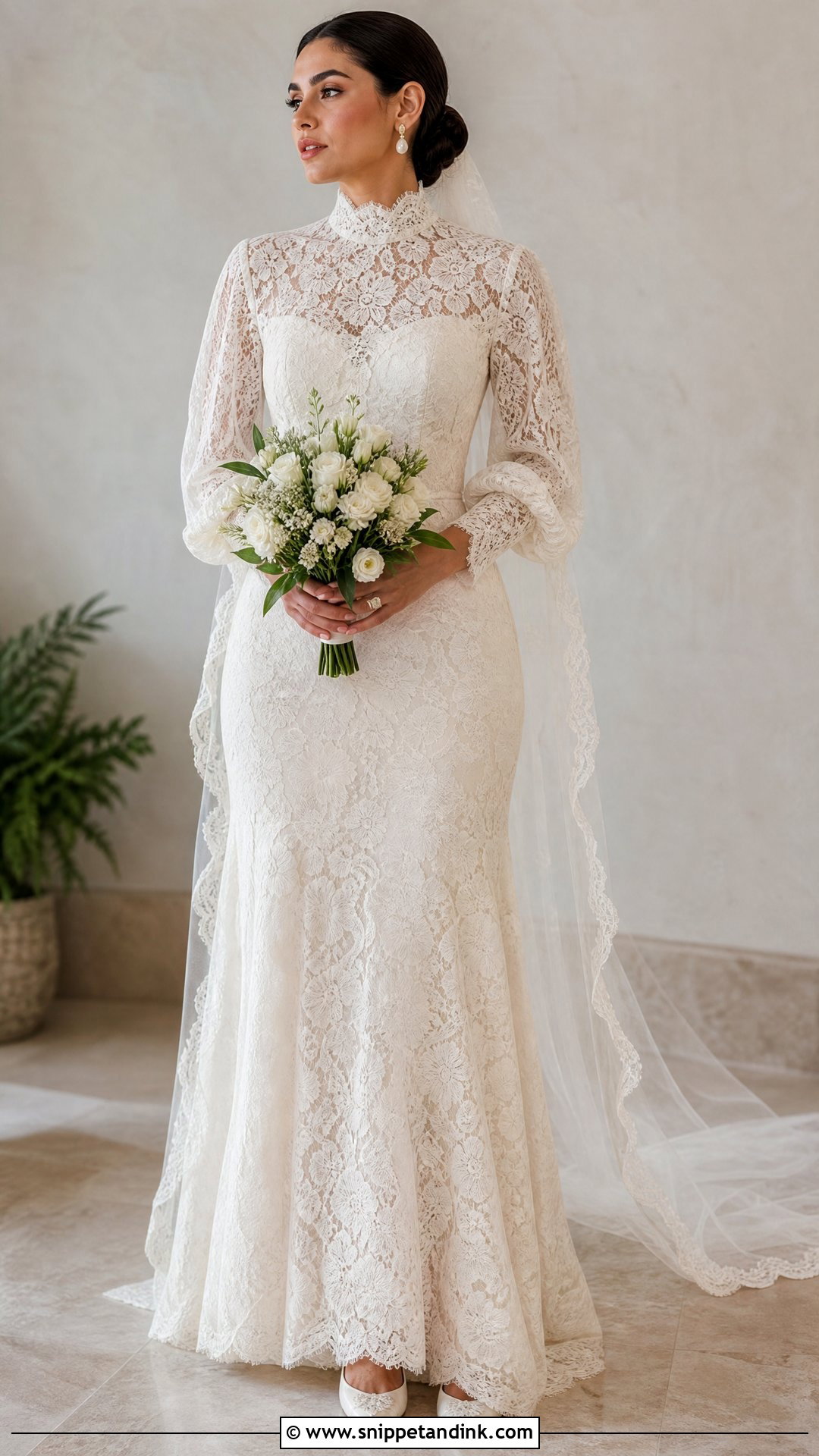
A high collar is flattering on camera because it draws the eye up to the face, but it has to be comfortable to talk and eat in. I check the collar with the bride turning her head fully to each side. Lace, cotton or embroidered fabric with soft sleeves works. Pair it with a low bun, pearl earrings and pointed ivory heels, and add a chapel-length veil or lace mantilla. If the bodice is detailed, keep the skirt plain. Brides who want more coverage without stiffness tend to settle here.
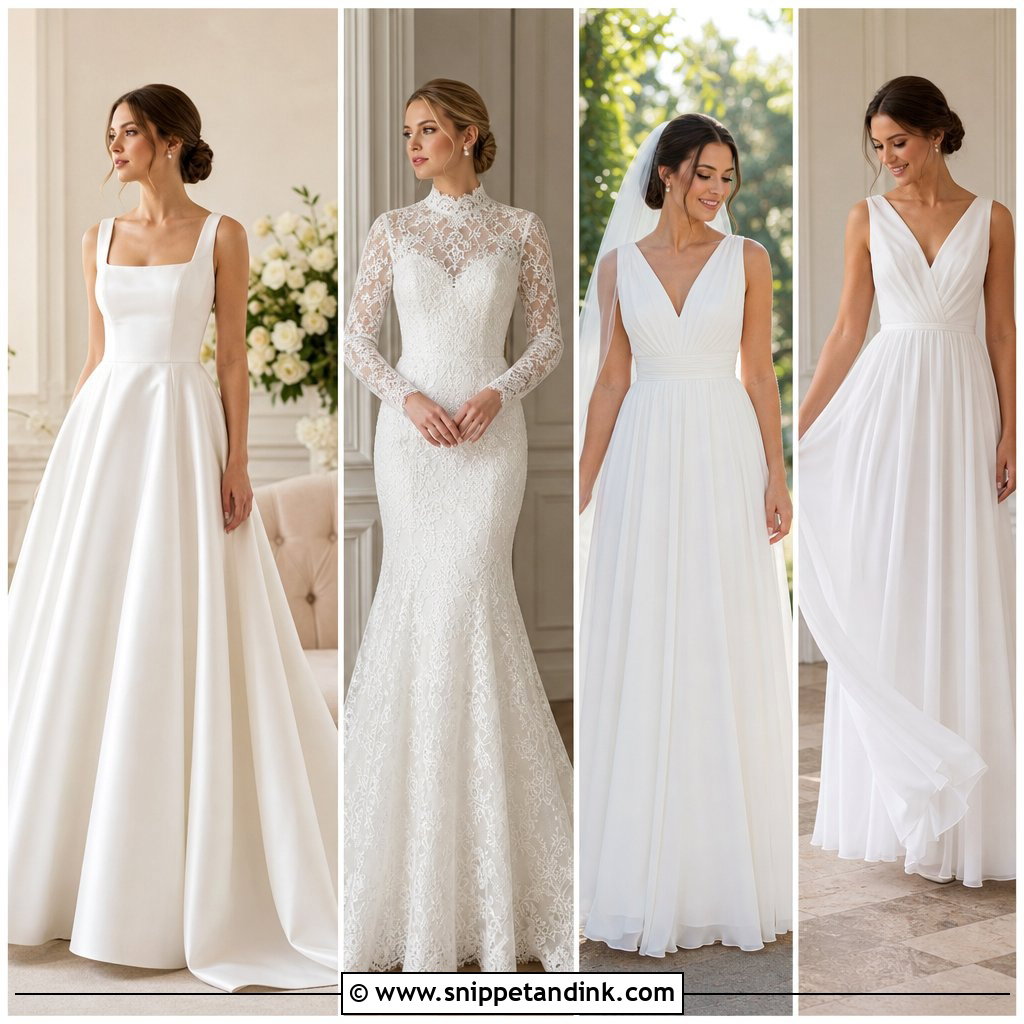
15. Vintage Mexican Ruffle Wedding Dress
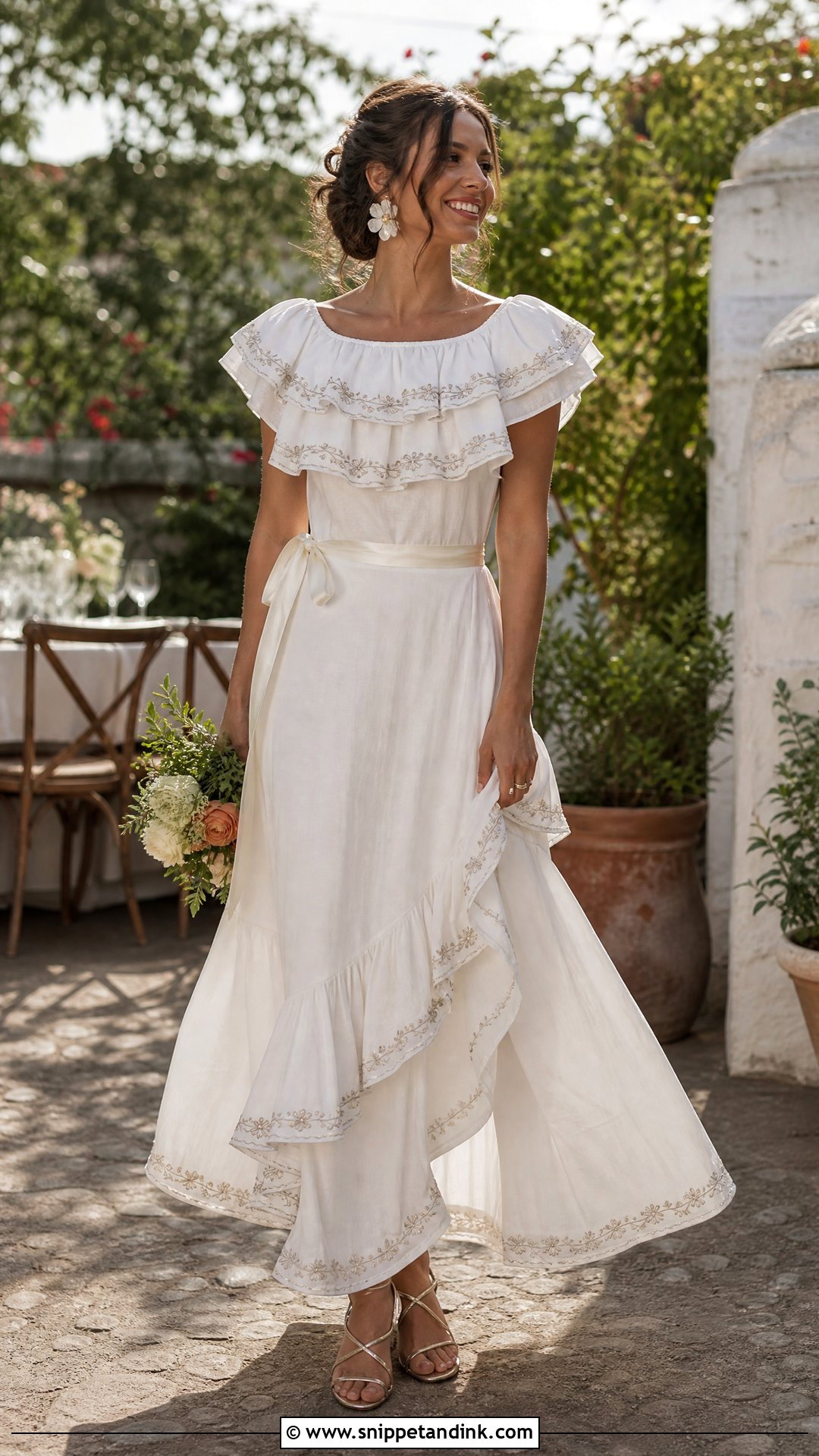
Ruffles look best in small doses. I prefer them at one place, the neckline or the hem, rather than layered everywhere, which adds bulk at the hips. A white off-shoulder or square-neck dress with embroidered trim keeps it playful but bridal. Strappy heels, floral earrings and a loose updo complete it. A narrow ribbon at the waist gives shape to a flowing cut. Ruffles also catch the air when you walk and spin on the dance floor, so they suit an outdoor reception. Keep the bouquet simple.
16. Vintage Mexican Floral Wedding Dress
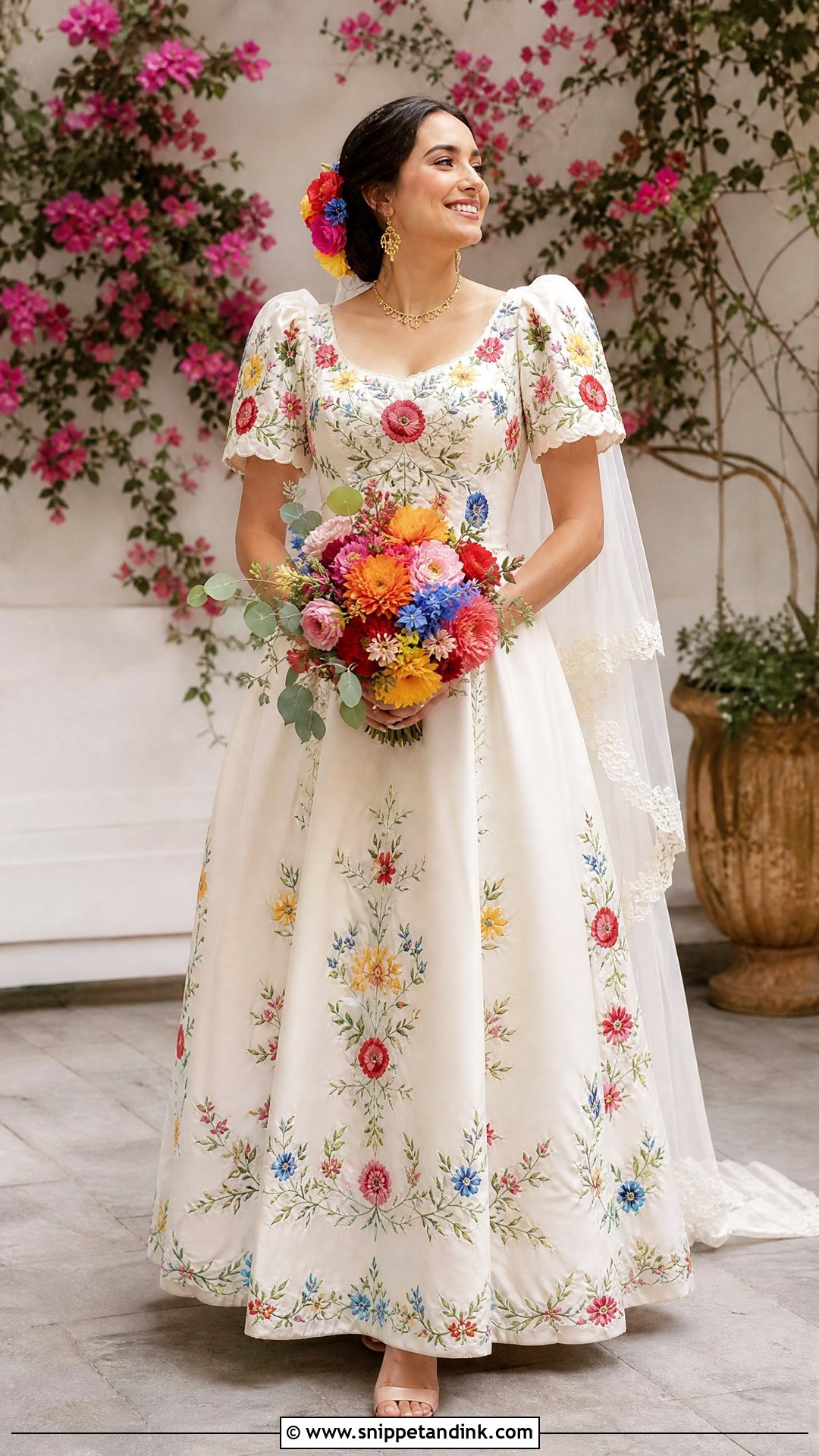
Colored floral embroidery on white is the most joyful option here, and the trick is matching flowers in your hair or bouquet to one thread color, not all of them. Choose a white or ivory dress with florals in red, pink, blue, green or yellow. Simple heels, a flower comb and soft gold jewelry suit it. Bold embroidery competes with a detailed veil, so wear a plain one or skip it for a rebozo. Gardens, courtyards and spring ceremonies show off the color.
17. Vintage Mexican Two Piece Wedding Dress
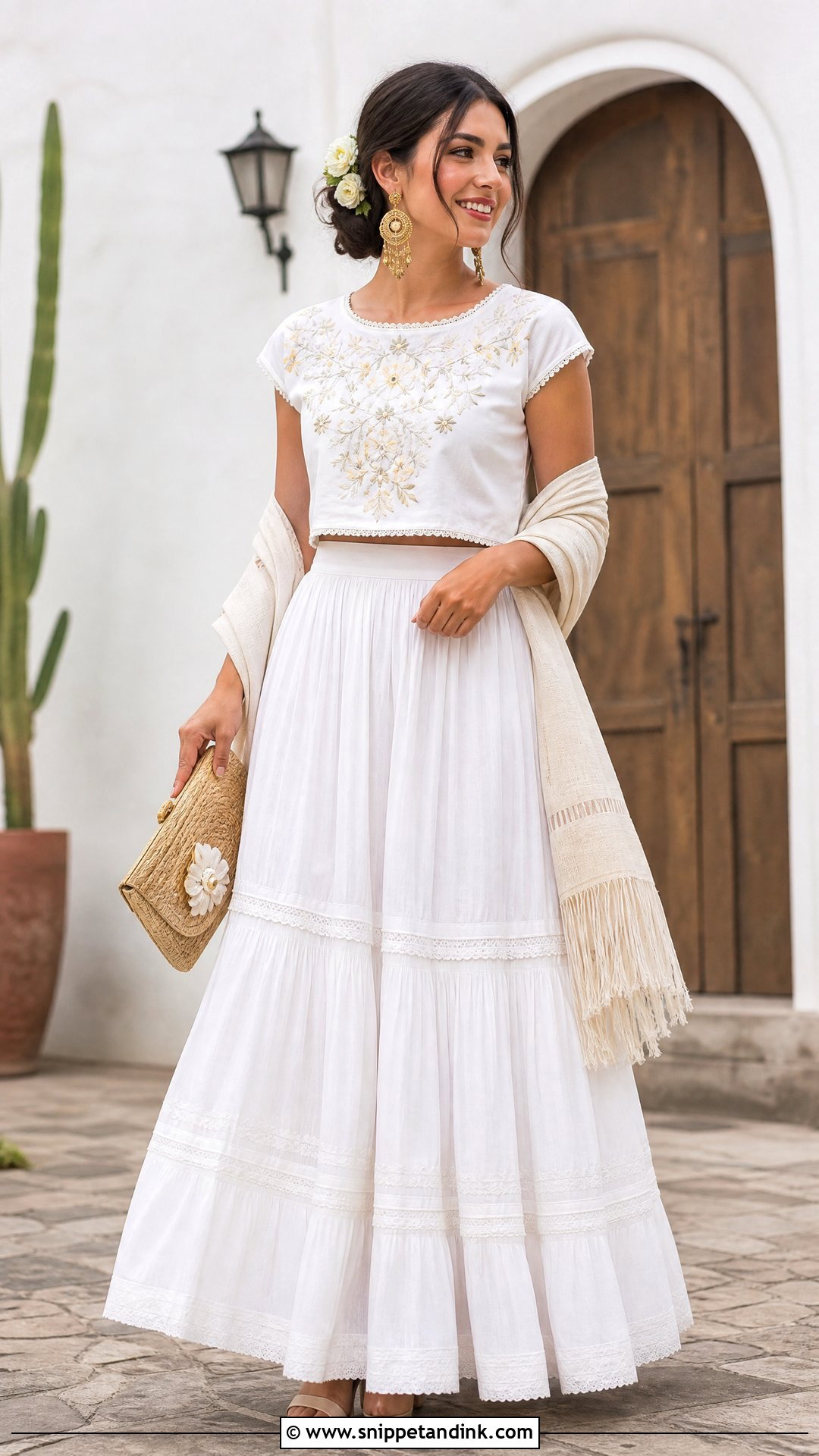
Separates solve a fitting problem many brides don’t realize they have: a top size and a bottom size that don’t match. An embroidered blouse with a high-waisted white skirt, or a lace crop top with a cotton maxi skirt, can each be fitted on their own. Block heels, a woven clutch and statement earrings finish it, and a rebozo ties the two pieces together visually. It’s practical for a civil ceremony or as a second outfit. Keep both pieces in the same white or ivory, since two slightly different whites look like a mistake in photos.
18. Vintage Mexican Maxi Wedding Dress
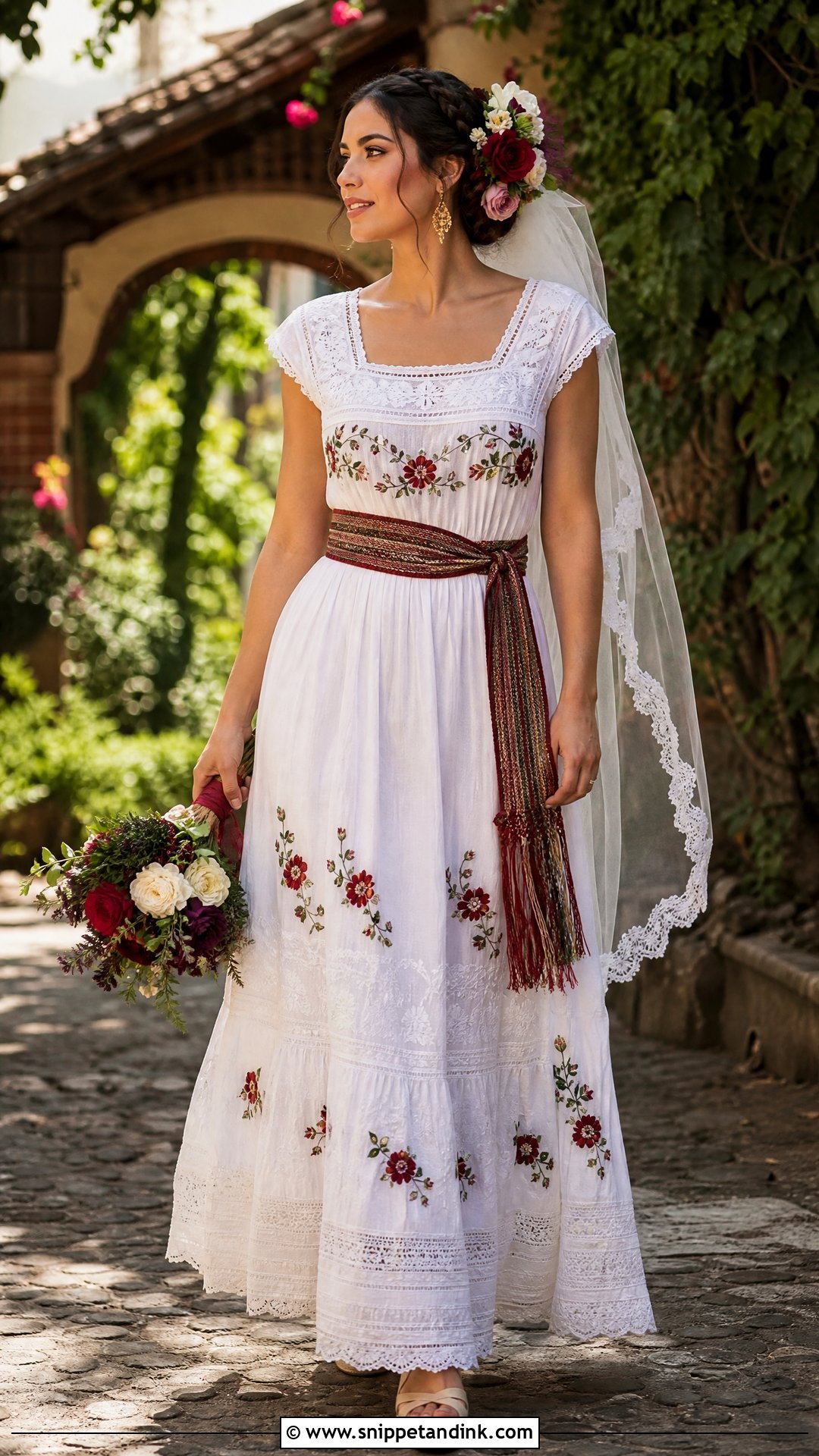
A maxi dress has no train to manage, which is half its appeal at an outdoor wedding. I do check the hem length against the actual shoes, because a maxi hem that sits a little too long will catch on every step. A long white dress with embroidery, lace trim or soft gathered sleeves is the base. Wedges or block heels sink less on grass than stilettos. A floral hairpiece, a light veil and a woven sash at the waist add definition and a traditional note.
19. Vintage Mexican Peasant Wedding Dress
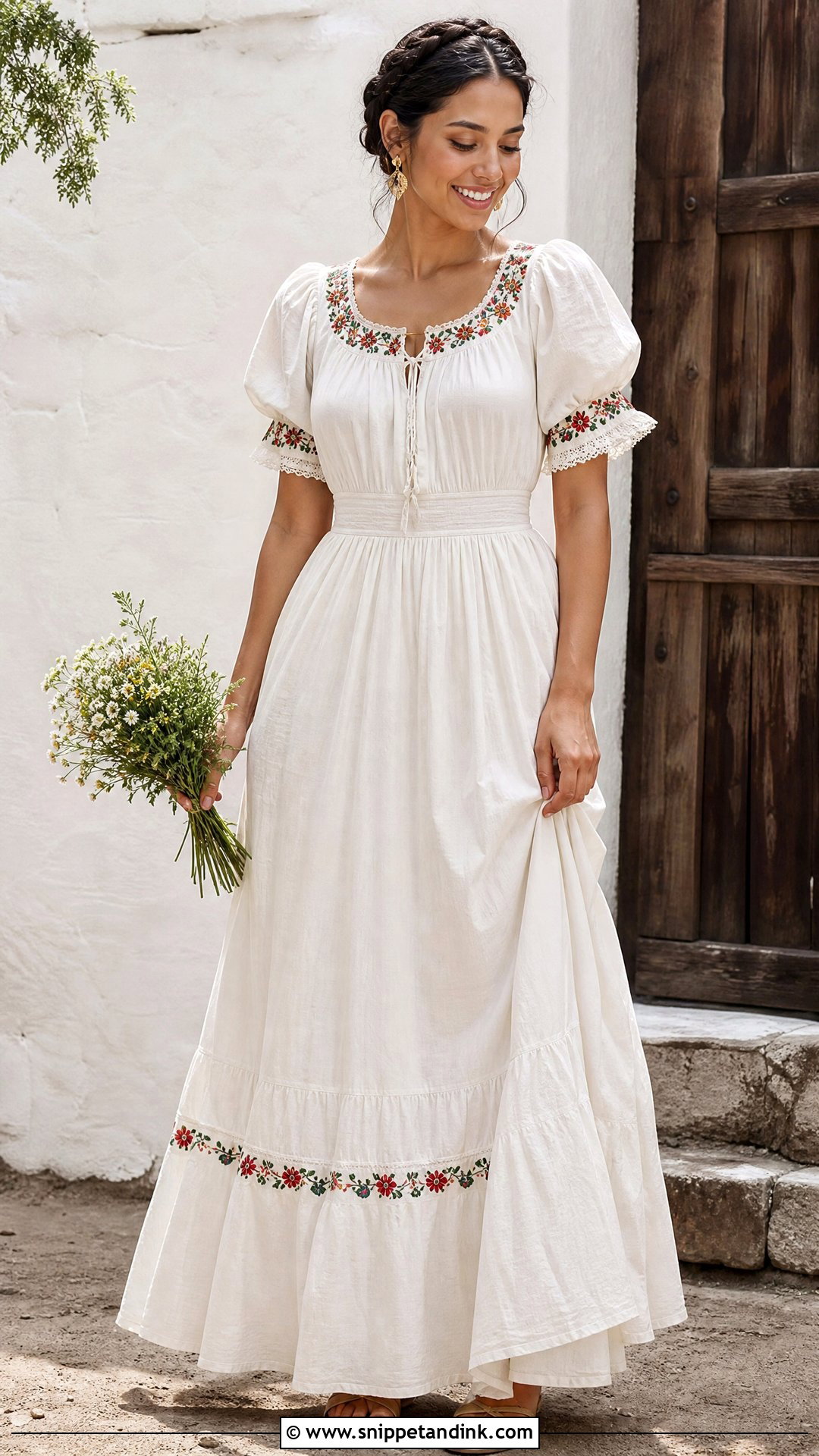
Peasant dresses forgive a lot, which is why I suggest them to brides who hate the feeling of a boned bodice. The gathered neckline, puff sleeves and flowing skirt move with you instead of holding you in. Embroidered trim gives the personality. Simple sandals, a braid and small gold earrings keep it easy, and a lace veil or light rebozo makes it bridal. The neckline elastic should sit flat without digging in; if it leaves a mark after an hour, it’s too tight. Countryside and backyard weddings suit it.
20. Vintage Mexican Mantilla Wedding Dress
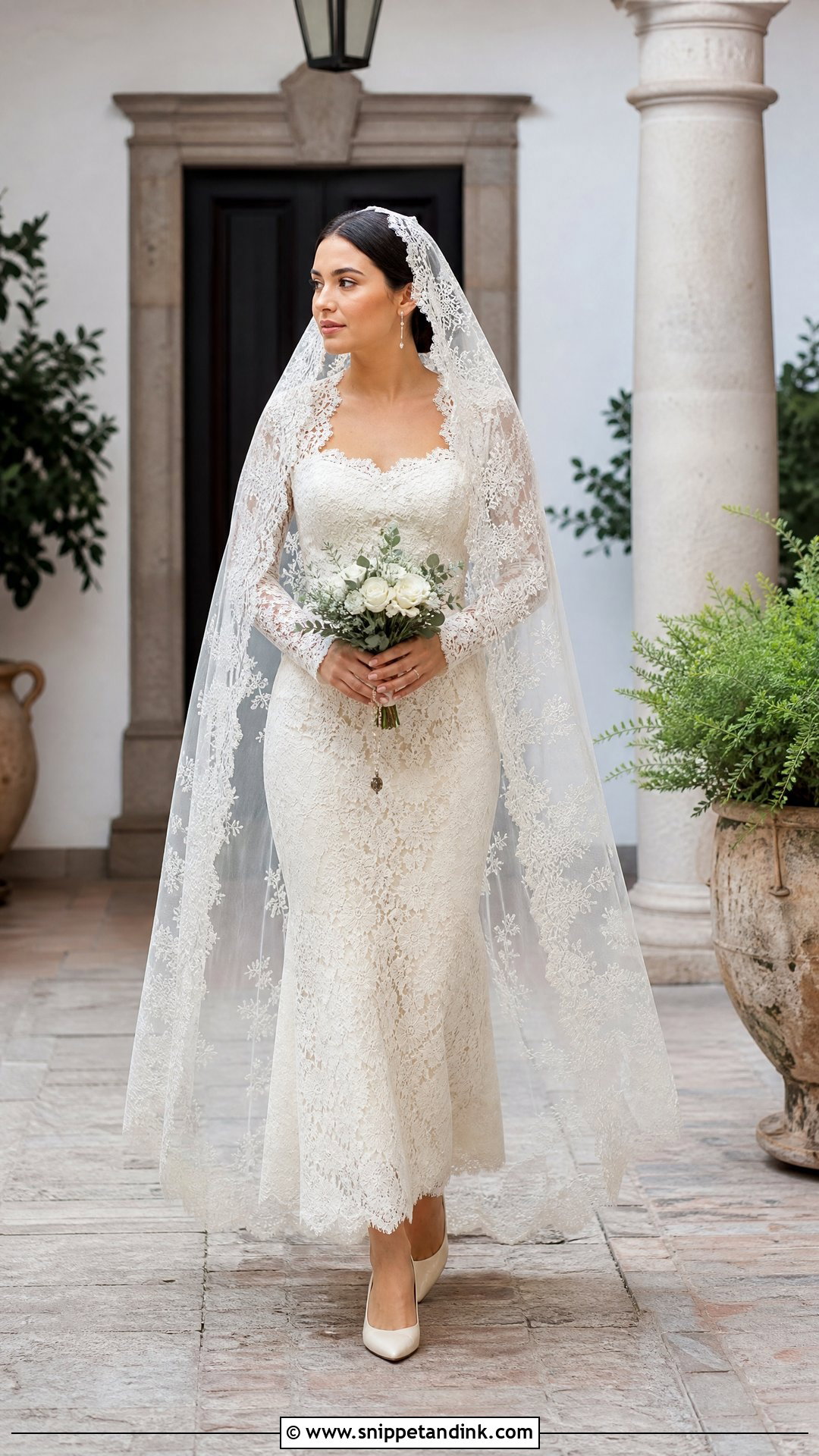
Here the mantilla is the star, so the dress has to step back. I pick the veil first and then choose a dress whose neckline and lace weight don’t compete with it: a simple ivory lace or cotton gown, fitted, A-line or flowing. Mantillas are usually anchored with a comb set high on the crown, and the hair needs enough grip for that comb to hold, so a low bun or smooth waves with a little texture work best. Delicate earrings and classic ivory heels finish it. Portraits with the lace edging framing the face are where this look earns its place.
21. Vintage Mexican Rebozo Wedding Dress
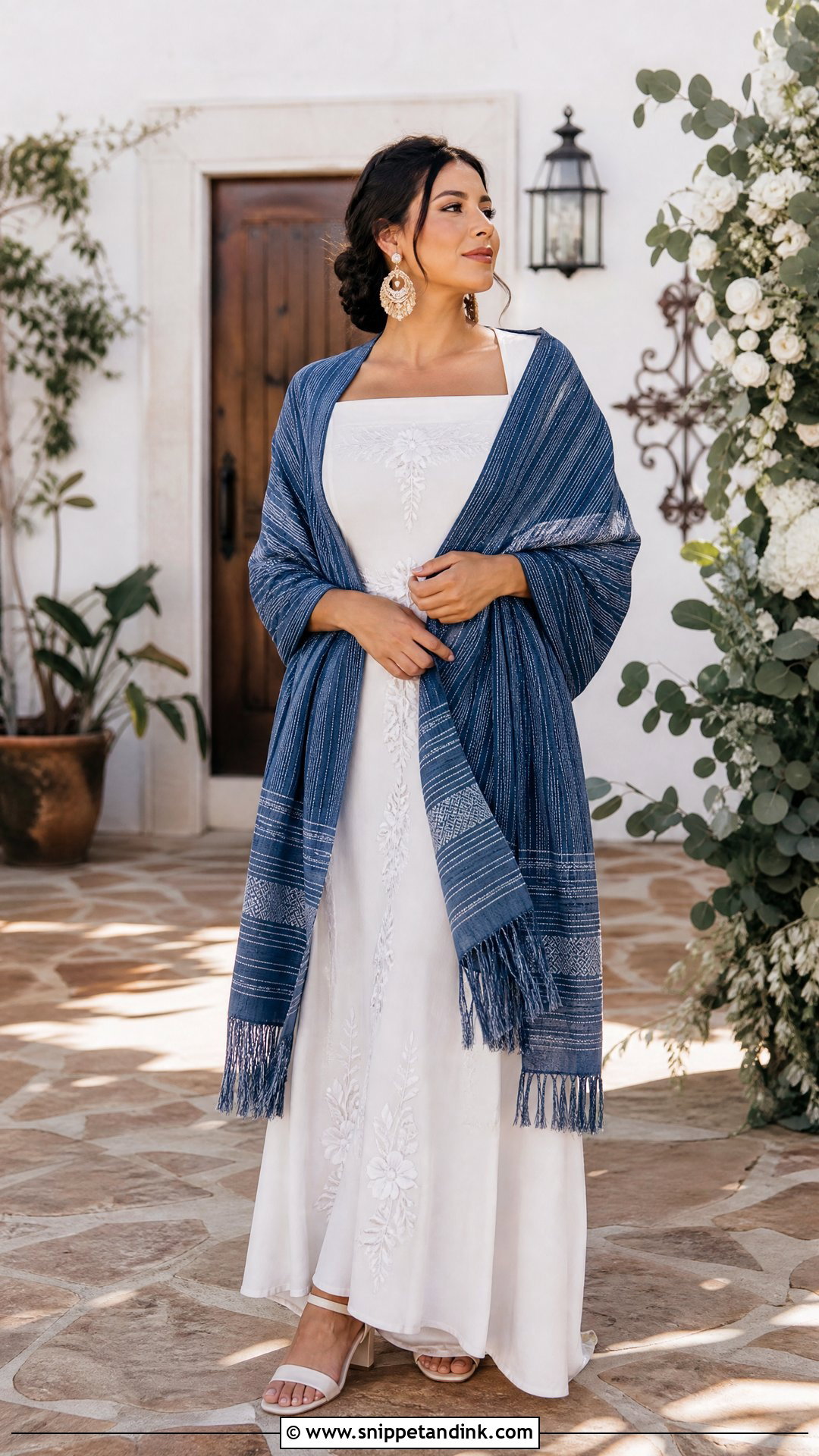
A rebozo is a working piece of cloth as much as an accessory, and knowing how to drape it is the whole skill. Start with a simple white embroidered dress and add a woven rebozo in ivory, red, blue or earth tones. I usually drape it over both shoulders for the ceremony, then wrap it loosely around the arms for portraits. Block heels, handmade earrings and a low braided bun complete the look. It also keeps you warm once the evening cools, which brides tend to appreciate around ten o’clock.
22. Vintage Mexican Ball Gown Wedding Dress
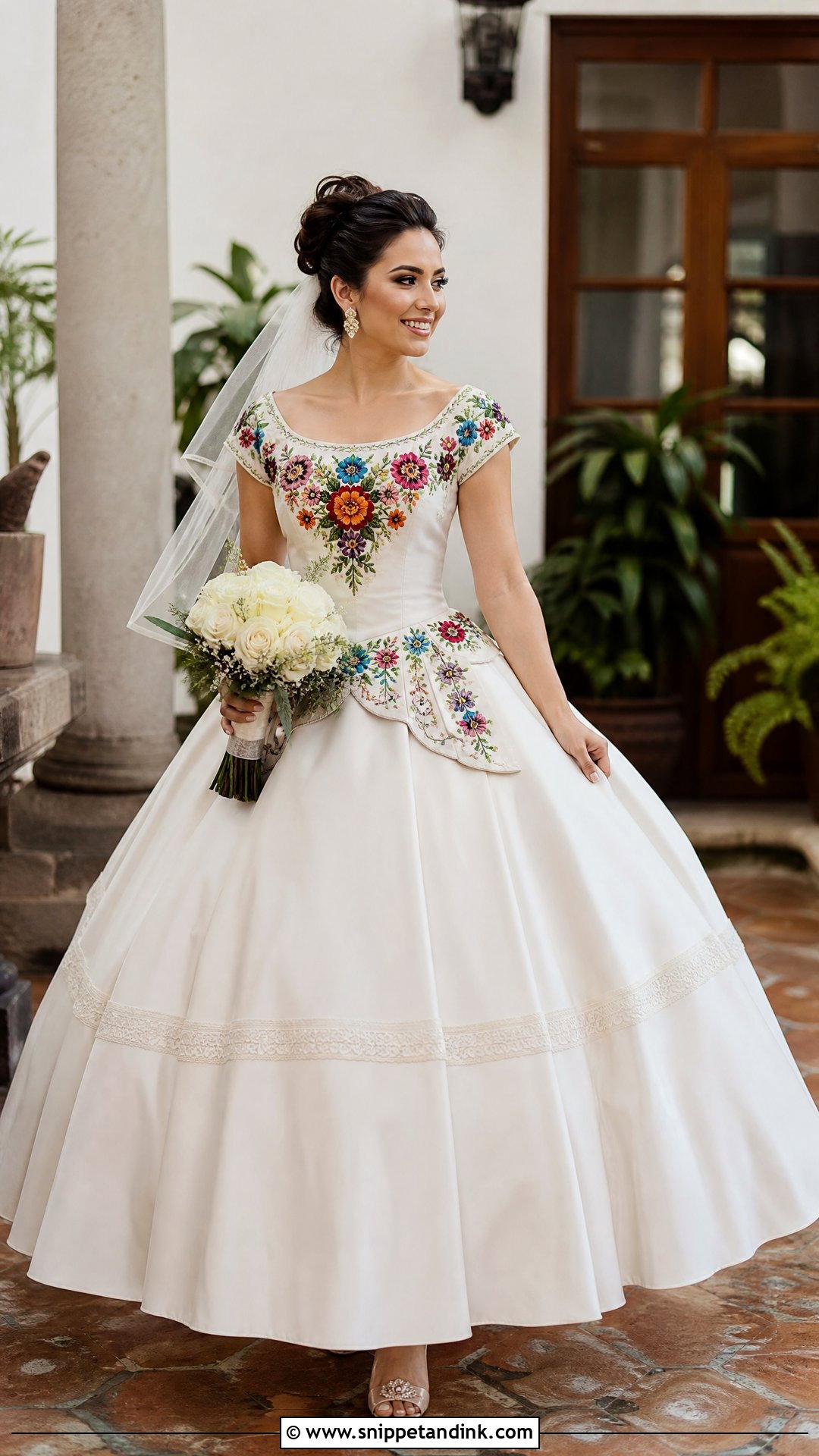
Volume plus embroidery can get heavy fast. When a bride wants a full white skirt with embroidered florals, I place the work at the bodice and hem rather than over the whole skirt, which keeps the weight manageable and the eye moving. Elegant heels, a structured updo and small statement earrings suit it. A plain veil works best against colorful stitching. Choose a breathable fabric for the skirt layers, especially at a large evening reception where the room fills and warms up.
23. Vintage Mexican Simple Wedding Dress
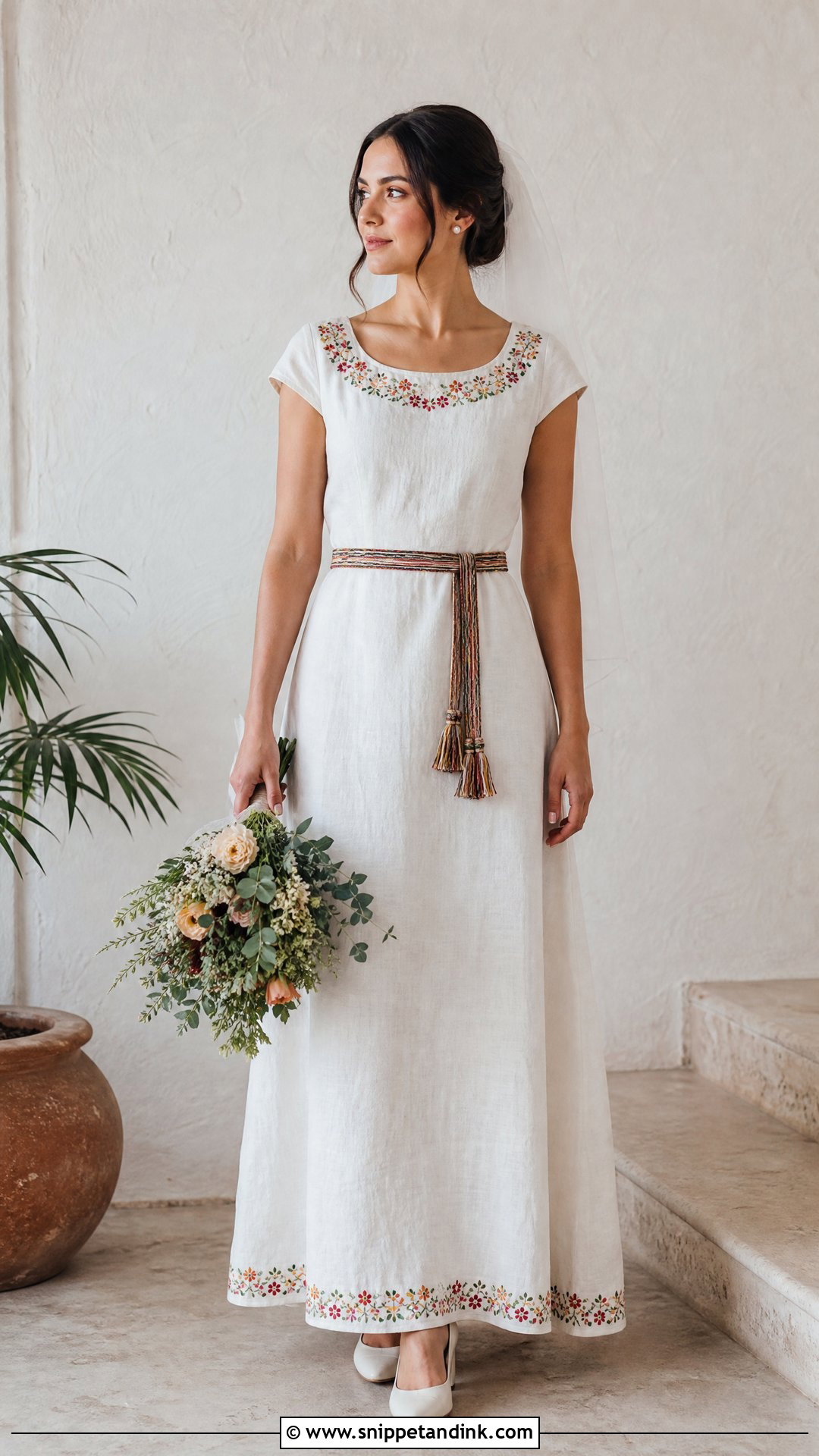
Simplicity puts all the attention on fabric and fit, so I spend more time on fit with these dresses than with busy ones. Clean white cotton or linen with small embroidered details at the neckline, cuffs or hem is the whole idea. Low heels, pearl studs and a soft veil keep it sweet, and a small woven belt adds shape. Minimal brides who still want a thread of heritage suit this, as do small destination weddings. Press the linen just before you dress; it creases the moment you sit.
24. Vintage Mexican Colorful Wedding Dress

Color is joyful but easy to overdo. I settle on one main color story first, then pick the hairpiece and bouquet from that palette. A white or cream base with bright embroidery, ribbon trim or a colorful skirt inspired by celebration wear gives the energy. Neutral heels and gold jewelry calm it down, and a plain veil or simple rebozo balances the brightest parts. The goal is a festive look that still reads as deliberate.
25. Vintage Mexican Civil Wedding Dress
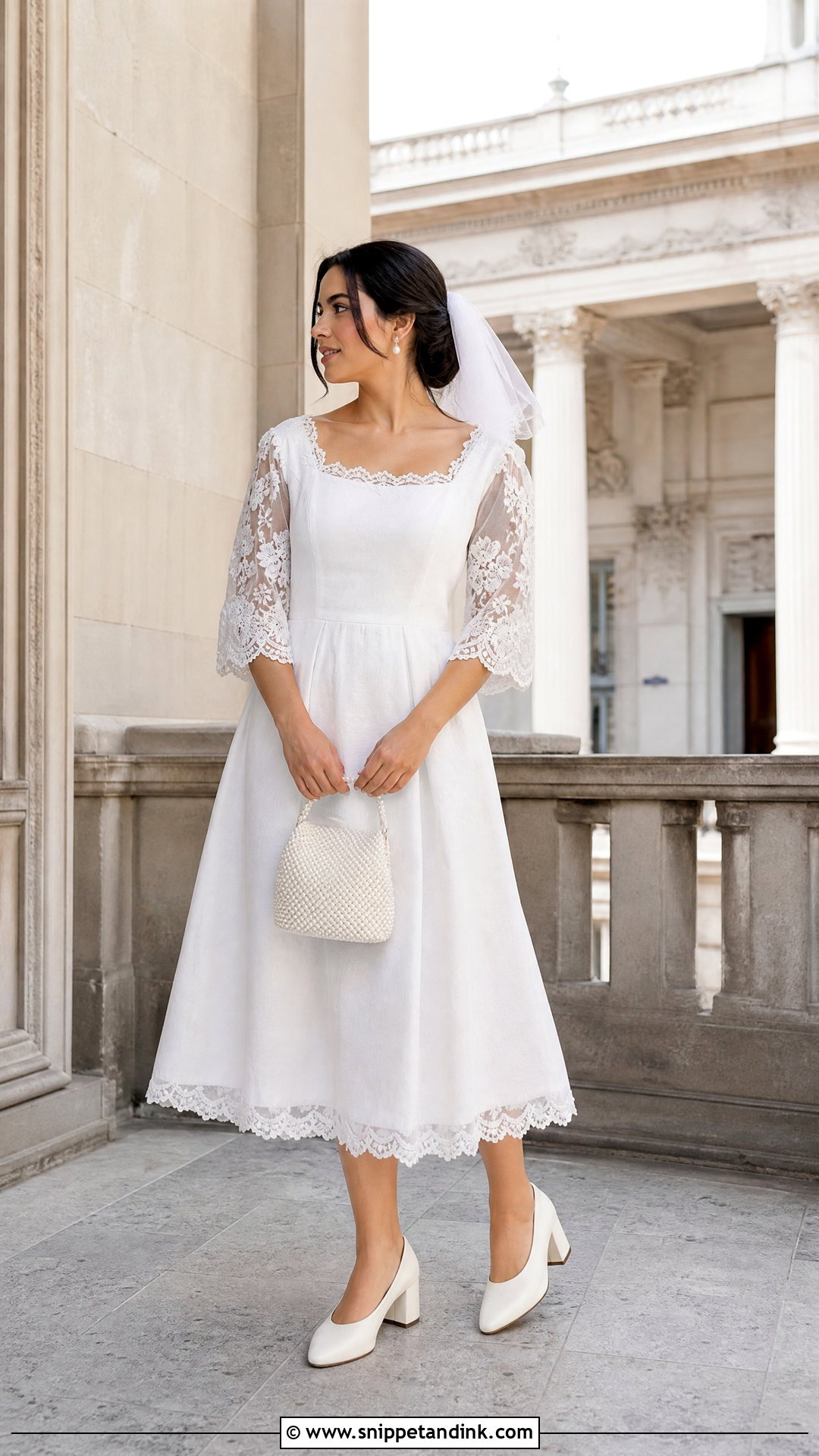
Civil ceremonies are short, often bright, and full of standing, so I aim for a shorter hem and shoes you can stand in for an hour. A knee-length or midi white dress with lace trim, embroidered sleeves or a square neckline works. Block heels, a small handbag, pearl or gold earrings and a short veil or hair bow keep it polished. A light rebozo adds a meaningful layer for portraits. This also works as a courthouse dress, for small family gatherings or as a second bridal look, and it ties neatly to the main celebration through the embroidery.
Cotton Creases and Red Thread Can Bleed
Natural fabrics are why these dresses feel so good to wear, and they’re also why they need a little planning.
On the morning
Cotton and linen crease as soon as you sit in the car. I steam the dress on its hanger at the venue, not at home, and I ask the bride to stand for the last stretch before the ceremony if she can. Bring a small handheld steamer in your emergency bag. Steam from the inside of the skirt so you don’t flatten the raised embroidery.
Before any washing
Bright embroidery thread, reds especially, can run when it gets wet. Test an inside seam by pressing a damp white cloth against the stitching; if color transfers, the dress goes to a cleaner who handles hand-embroidered pieces rather than into your machine. If a guest spills on you at the party, blot with cold water only and leave the rest for later.
After the wedding
Store embroidered cotton folded loosely with acid-free tissue between the layers, in a breathable box. Refold it along different lines every year or so; cotton left on the same crease for years can weaken along it. A rebozo stores best rolled rather than folded, which keeps its fringe from tangling.
Start With the Cloth That Means Something
Lace gowns, embroidered cotton, huipil-inspired dresses, mantillas and rebozo styling all carry real meaning, and none of them needs a heavy gown to feel bridal. Start with the piece of cloth that matters most to you, then build outward: breathable fabric, accessories that don’t compete, and a fit you can dance in. Simple white cotton or bright hand embroidery, either can be the right answer if it fits your venue and your family’s story.
You'll Like These Ideas:



Leave a Reply