
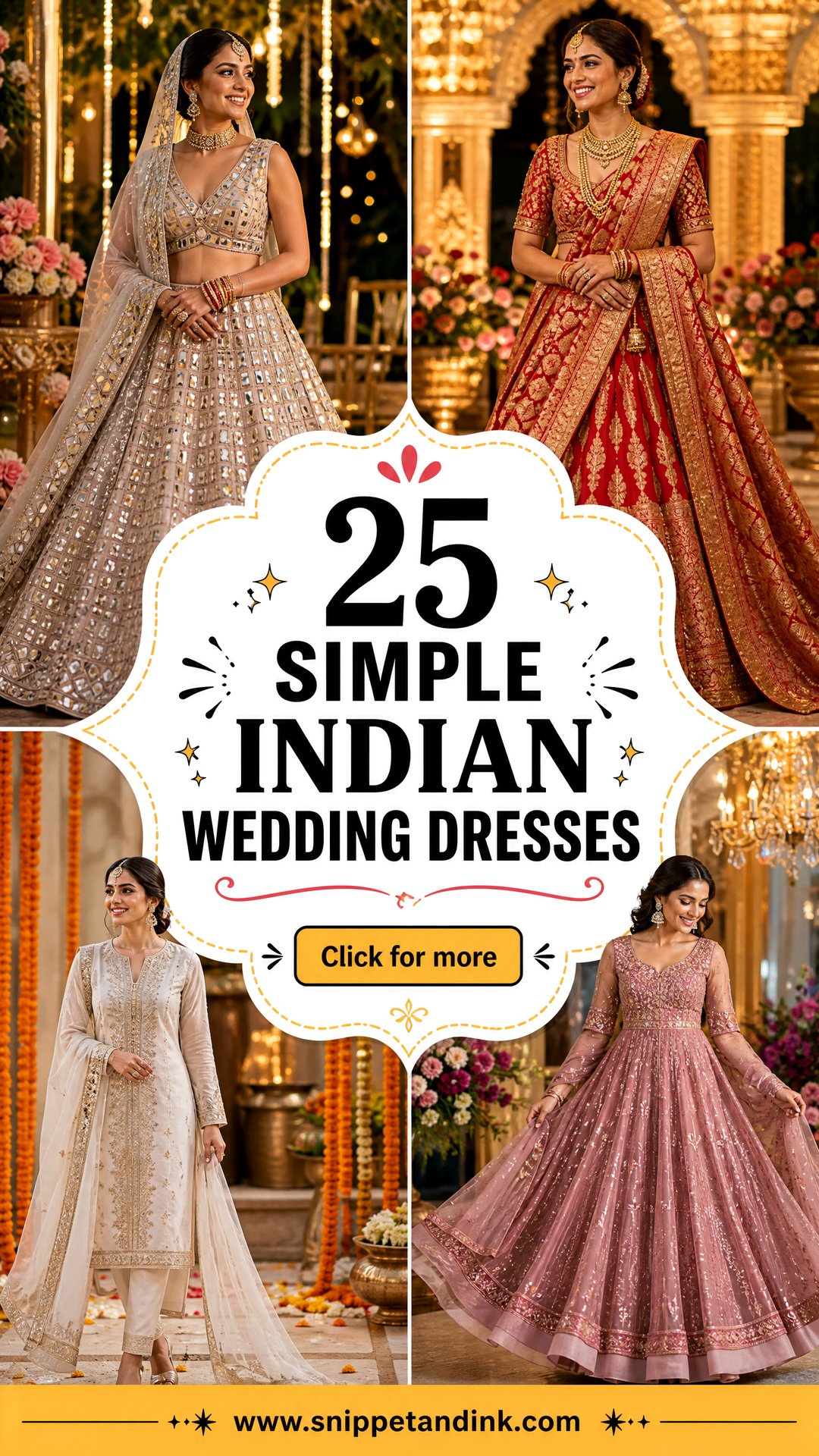
An Indian wedding isn’t one outfit, it’s a run of events: haldi, mehendi, sangeet, the ceremony itself, then the reception. Most of the women I dress for these weekends, brides’ sisters, cousins, bridesmaids and guests, want to look festive at every one of them without wearing something so heavy they can’t sit through a three-hour ritual. That’s what this list is about. You’ll find light sarees, soft lehengas, anarkalis, sharara and kurta sets, and a few Indo-western pieces, each kept clean so the fabric and cut do the work. Simple here doesn’t mean plain. It means choosing one good detail, a border, a weave or a bit of mirror work, and letting the rest of the outfit stay calm.
Four Events, Two Outfits and a Few Swaps
When someone brings me a list of four or five wedding events, I rarely suggest buying an outfit for each. Simple pieces are easy to rotate if you plan the swaps at the start. My usual approach is two base outfits, one light and one dressier, plus pieces that change their character.
- A plain lehenga skirt worn with a printed blouse for mehendi can return at the reception with an embroidered blouse and a different dupatta.
- One solid-color saree looks completely different with a contrast brocade blouse at the ceremony and a sleeveless blouse at the sangeet.
- A dupatta is the cheapest way to change an outfit. Two or three in different weights go a long way.
- Keep daytime events in cotton, chanderi and prints, and save silk and shimmer for after dark.
Leave time for the blouse
The blouse is where most outfits go wrong. Tailors get very busy in wedding season, and a well-fitted blouse often needs a second fitting. I’d order blouses several weeks before you travel, try each one on with the saree or skirt, and lift your arms in it. Ask for a little extra seam allowance too, so it can be let out if needed.
1. Simple Organza Saree Indian Wedding Dress
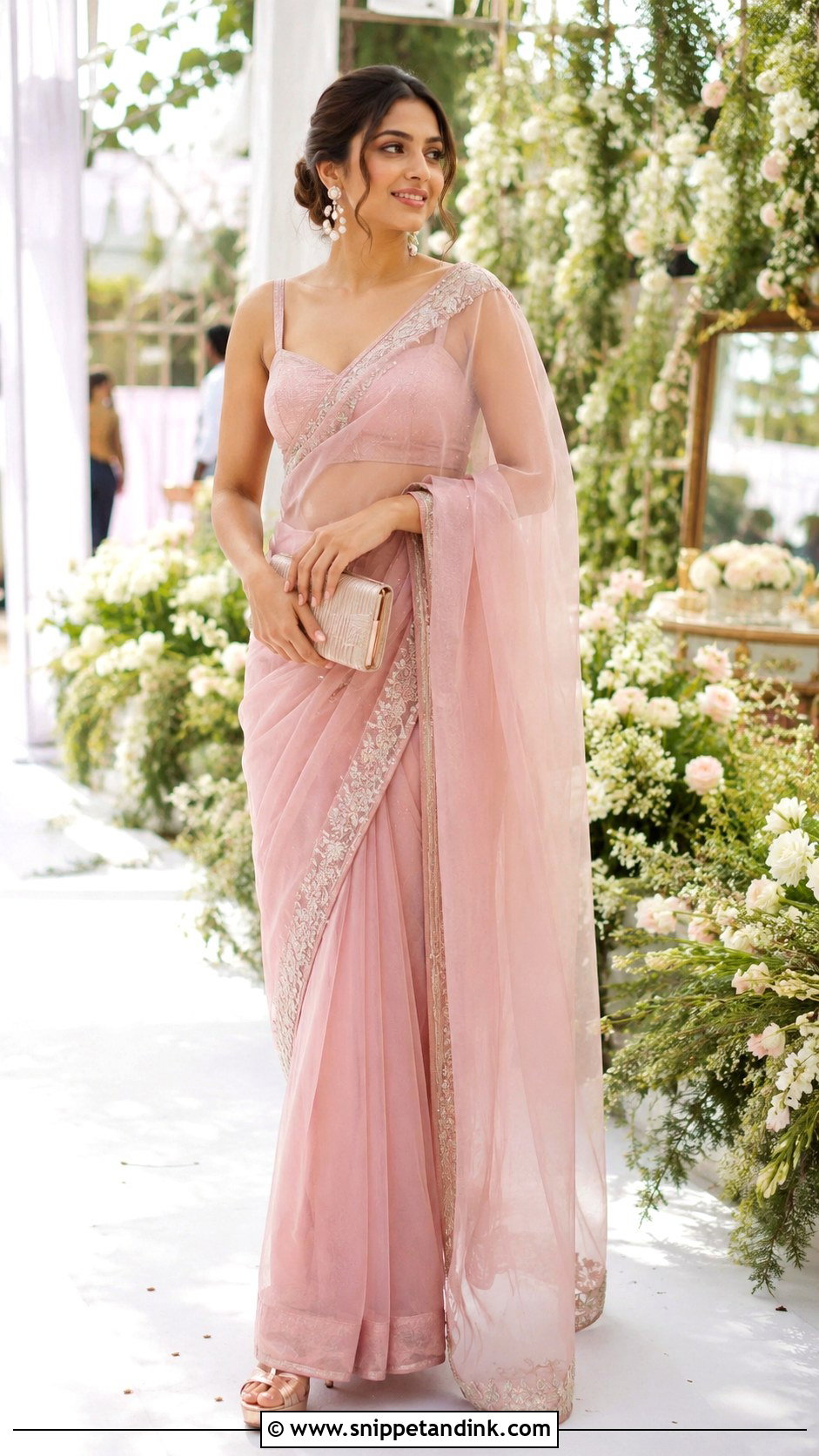
Organza is the lightest way I know to look dressed up for a daytime wedding. It’s crisp, a little sheer and it catches light without any sequins. Blush, mint, ivory, peach and powder blue with a thin embroidered border all suit it. Organza is springy, though, so the pleats want to fan open; I pin them at the waist and once more near the knee. Pair it with a fitted blouse, delicate earrings, a small clutch and block heels or embellished sandals. It’s an easy pick for the bride’s sister or a guest who wants polish with very little effort.
2. Simple Silk Saree Indian Wedding Dress
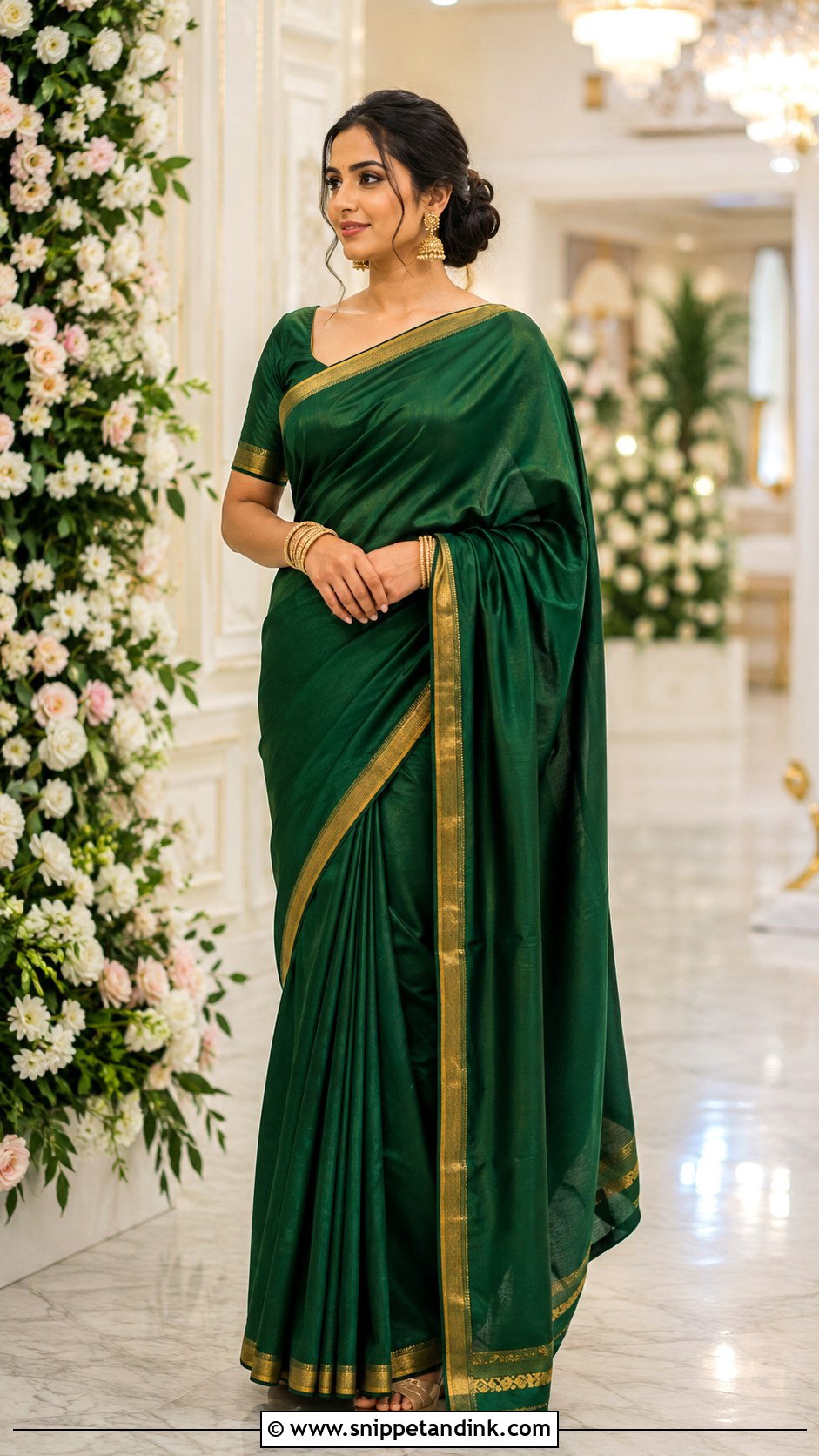
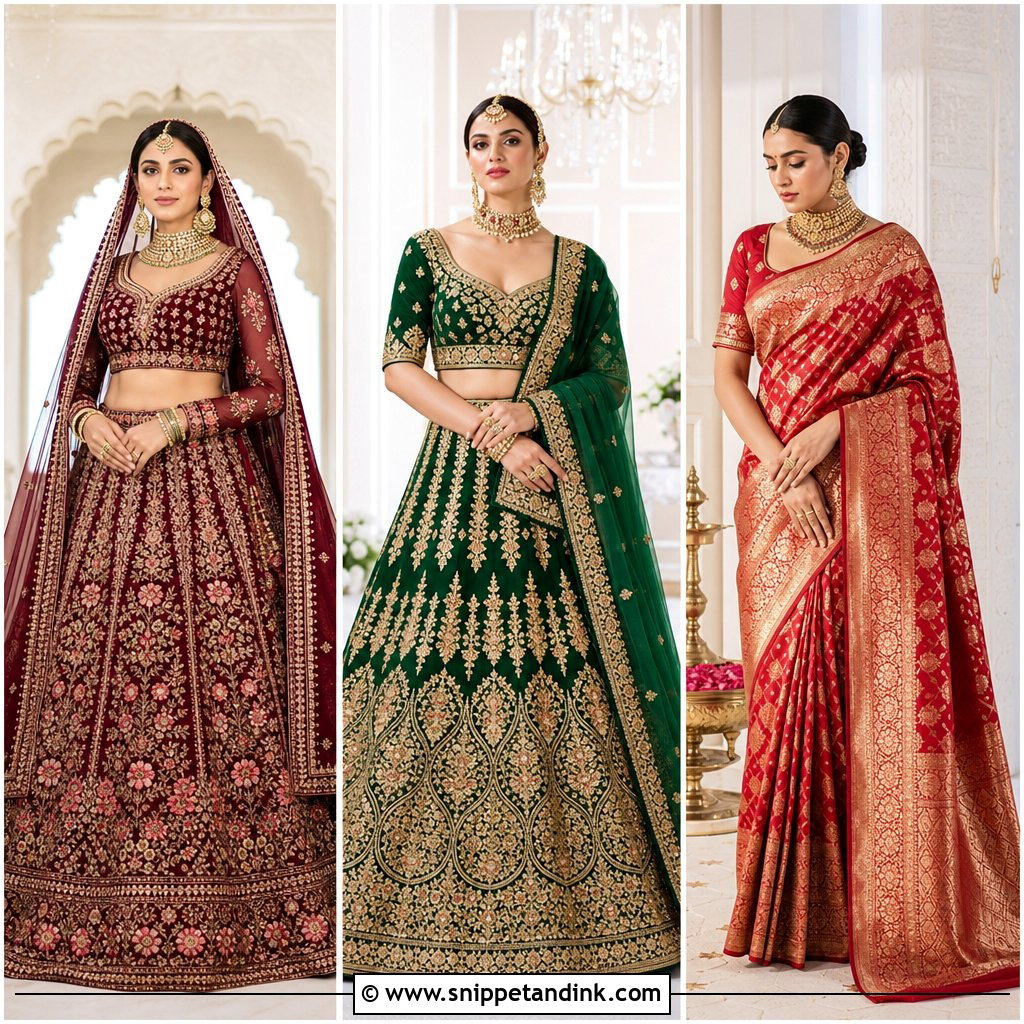
A light silk saree in gold, rose, emerald, teal or maroon suits a traditional ceremony better than almost anything else here. To keep it simple, skip heavy zari and choose a clean contrast border. Pure silk can leave water spots if it’s splashed, so I keep a dry handkerchief in the clutch rather than dabbing with a wet tissue at the buffet. A short-sleeve blouse, gold jhumkas, bangles and a low bun give the classic finish. Wedges or low heels make walking and sitting easier. It’s right at home at a temple wedding or a formal daytime family ceremony.
3. Simple Chiffon Saree Indian Wedding Dress
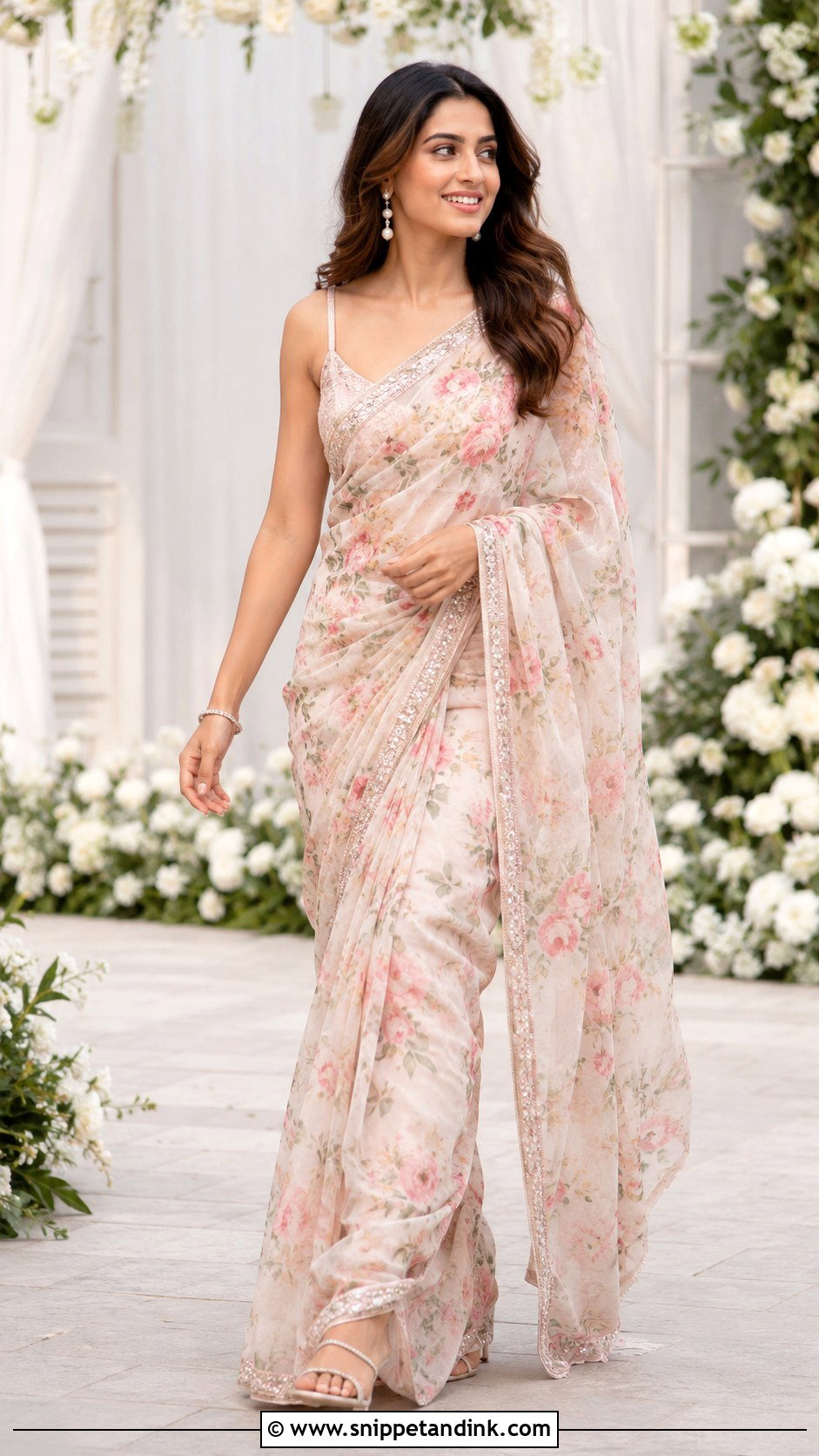
Chiffon is the saree I hand to someone who has never draped one before. It’s forgiving, it falls into pleats easily, and it doesn’t feel heavy after hours. Floral prints, a tiny sequin border or a subtle embroidered edge keep it festive. A sleeveless or elbow-sleeve blouse looks modern, with pearl earrings and a slim bracelet. One caution: chiffon is slippery and shows a crooked drape quickly, so pin the pallu at the shoulder. Wear strappy heels or embroidered flats depending on the event. Mehendi, an intimate wedding or an outdoor reception all suit it.
4. Simple Georgette Saree Indian Wedding Dress
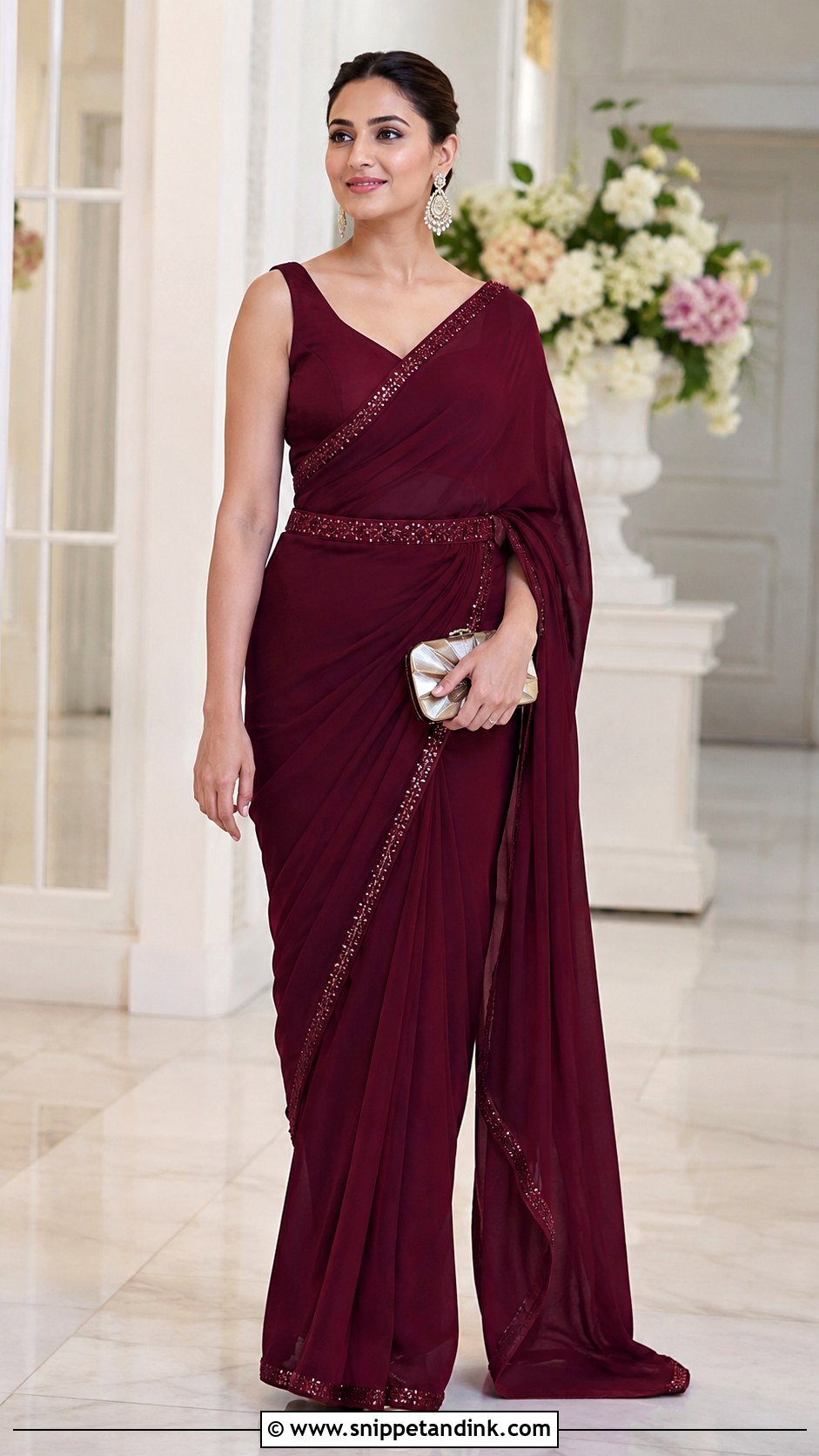
Georgette sits between chiffon and silk. It drapes softly but has a slightly grainy texture that holds pleats well, which is why it flatters so many body types. Ruby, sapphire, wine and forest green are good for evening; lighter shades suit daytime. Pair it with a matching blouse, small stone earrings and a metallic clutch. A thin embellished belt over the pleats keeps them secure and gives the waist some shape. It gives you the polish of a silk saree with none of the weight.
5. Simple Printed Saree Indian Wedding Dress
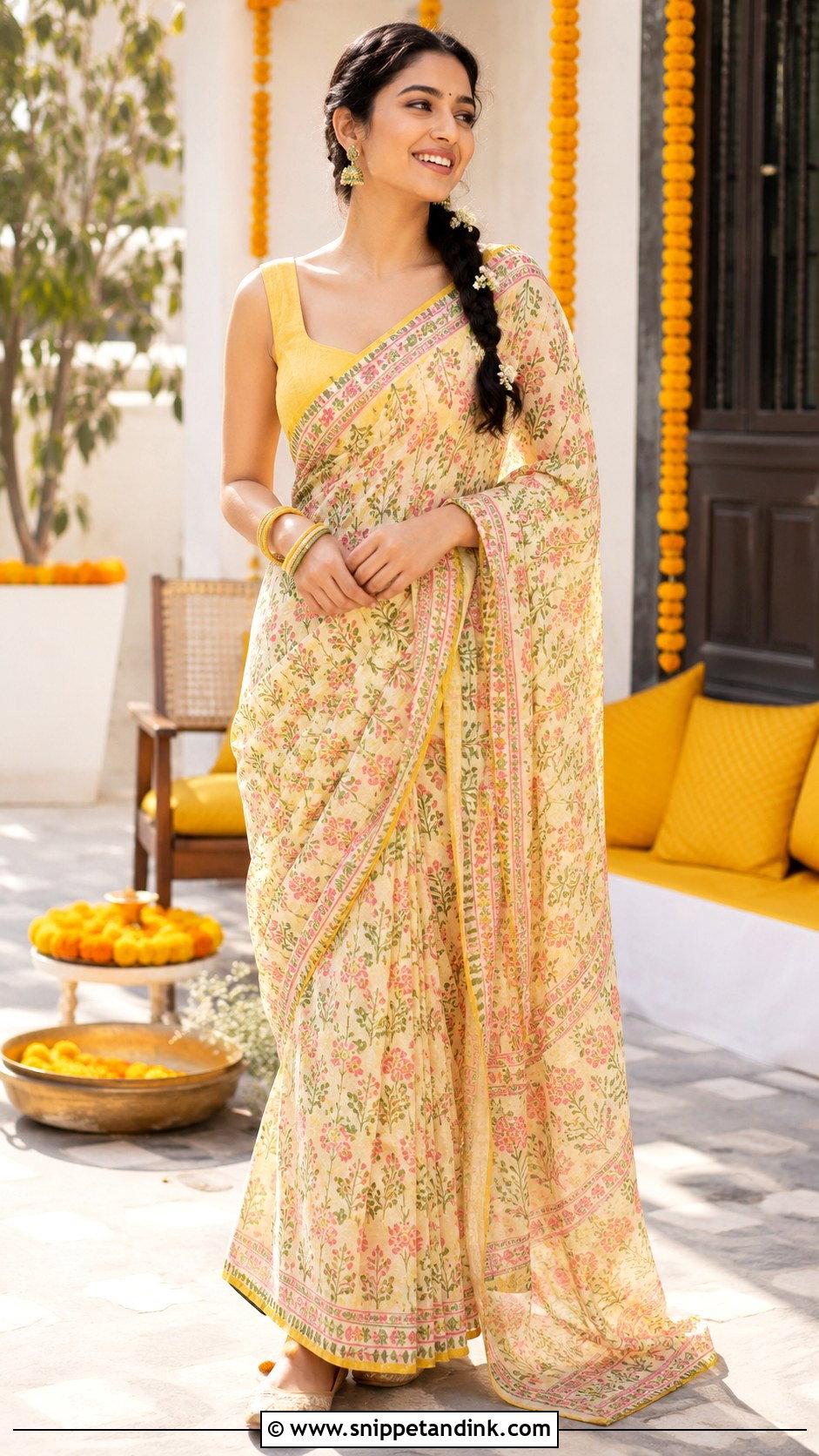
For haldi, mehendi or a brunch wedding, a printed saree is the most relaxed choice in this list. Floral, paisley or block prints in soft festive colors photograph cheerfully and forgive the odd turmeric or henna mark. I pick the blouse color straight out of the print, usually the second-strongest shade, so it ties together without matching too exactly. If the print is busy, keep jewelry to simple earrings and bangles, with comfortable flats and a ponytail, braid or soft waves. These are some of the most practical simple Indian wedding dresses for women who want to move freely all day.
6. Simple Ready To Wear Saree Indian Wedding Dress
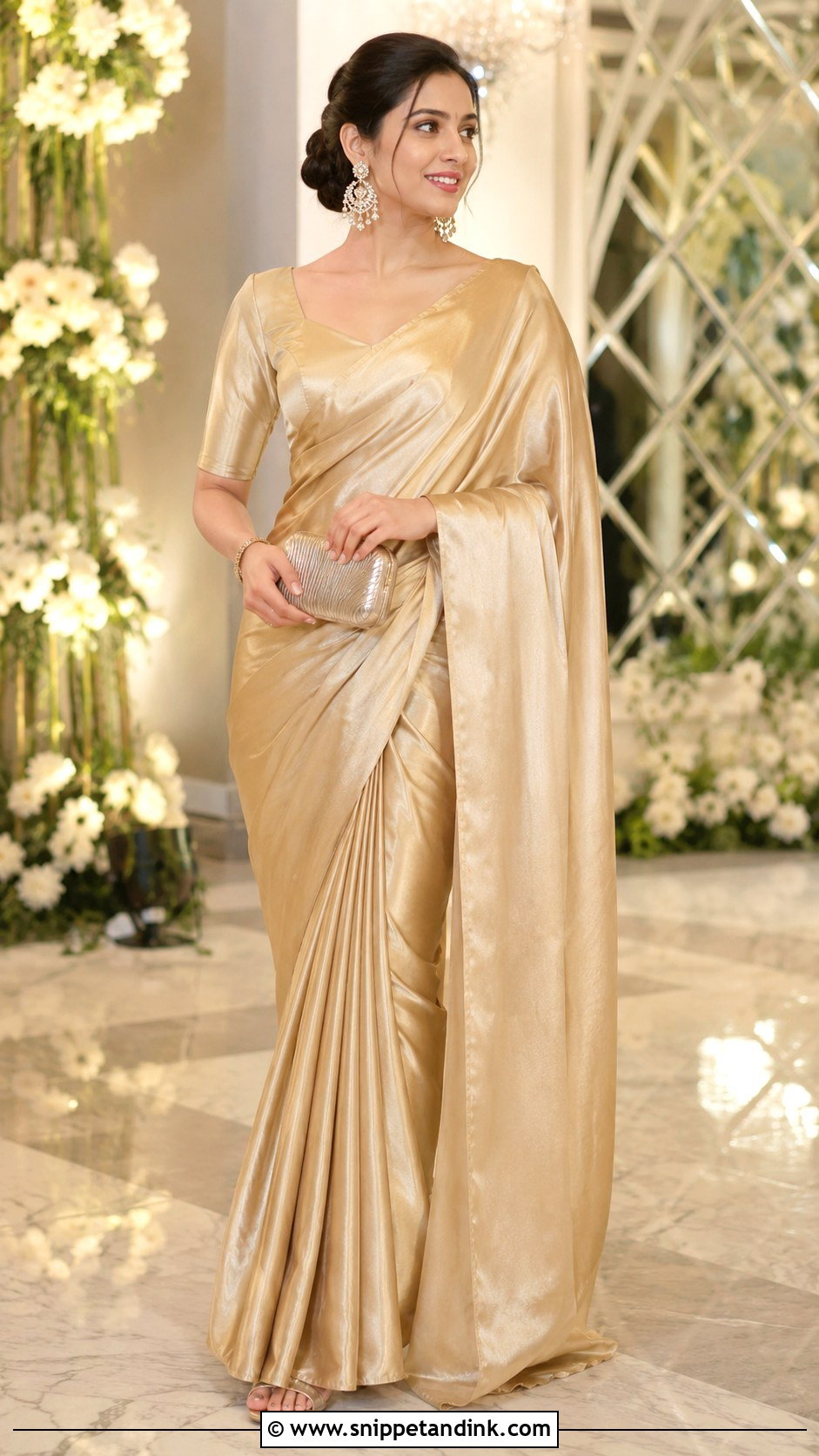
If draping makes you nervous, buy a ready-to-wear saree. The pleats and pallu are stitched in place, so you zip or hook it on in a minute and nothing shifts while you dance. I recommend them to guests flying in for a destination wedding, since there may be nobody around to help you drape at 8 a.m. Satin, georgette, chiffon and crepe all come pre-stitched; choose a clean blouse and light embellishment. Statement earrings, a clutch and comfortable heels finish it. It’s my default for a sangeet or a cocktail-style reception.
7. Simple A Line Lehenga Indian Wedding Dress
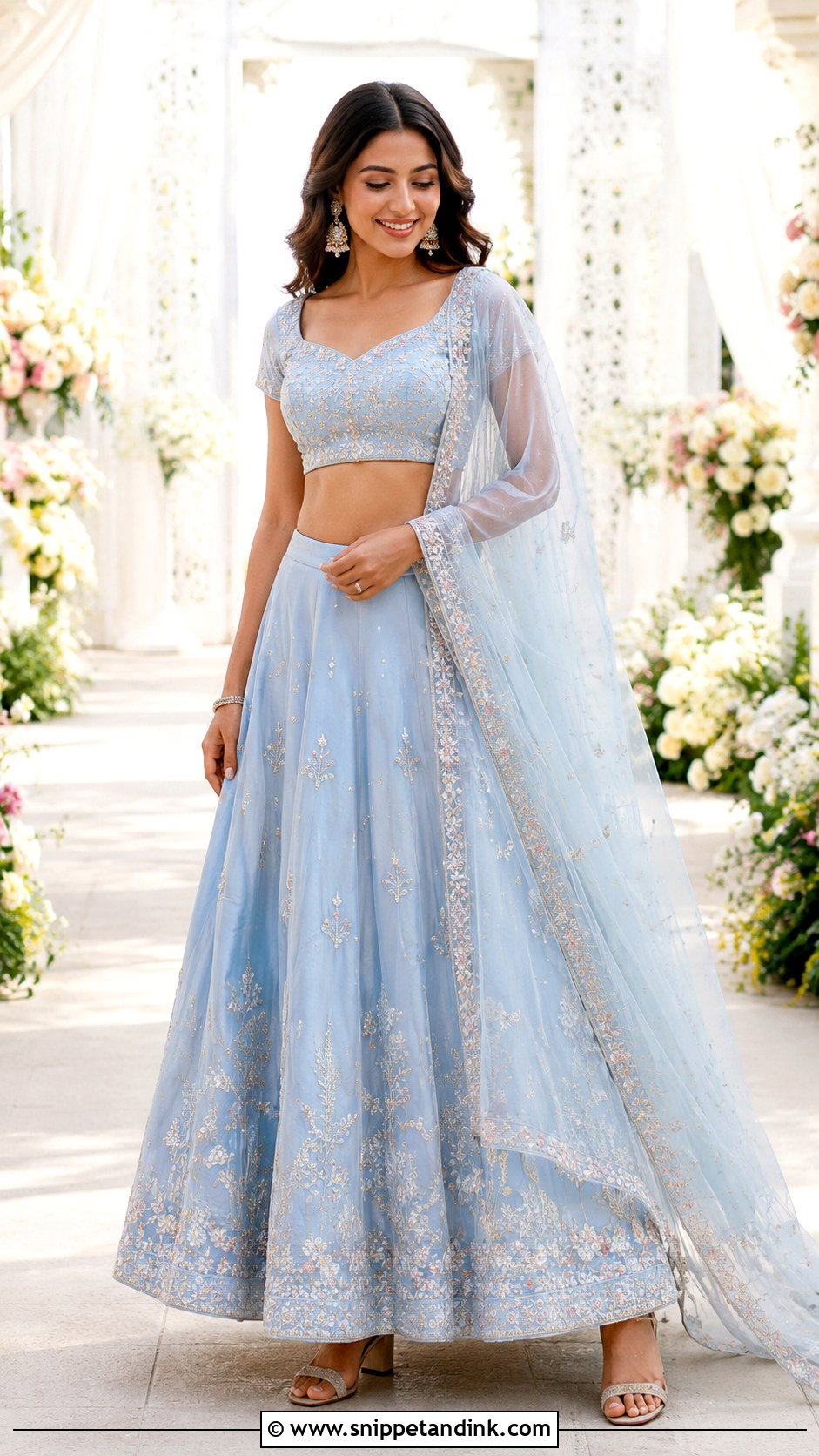
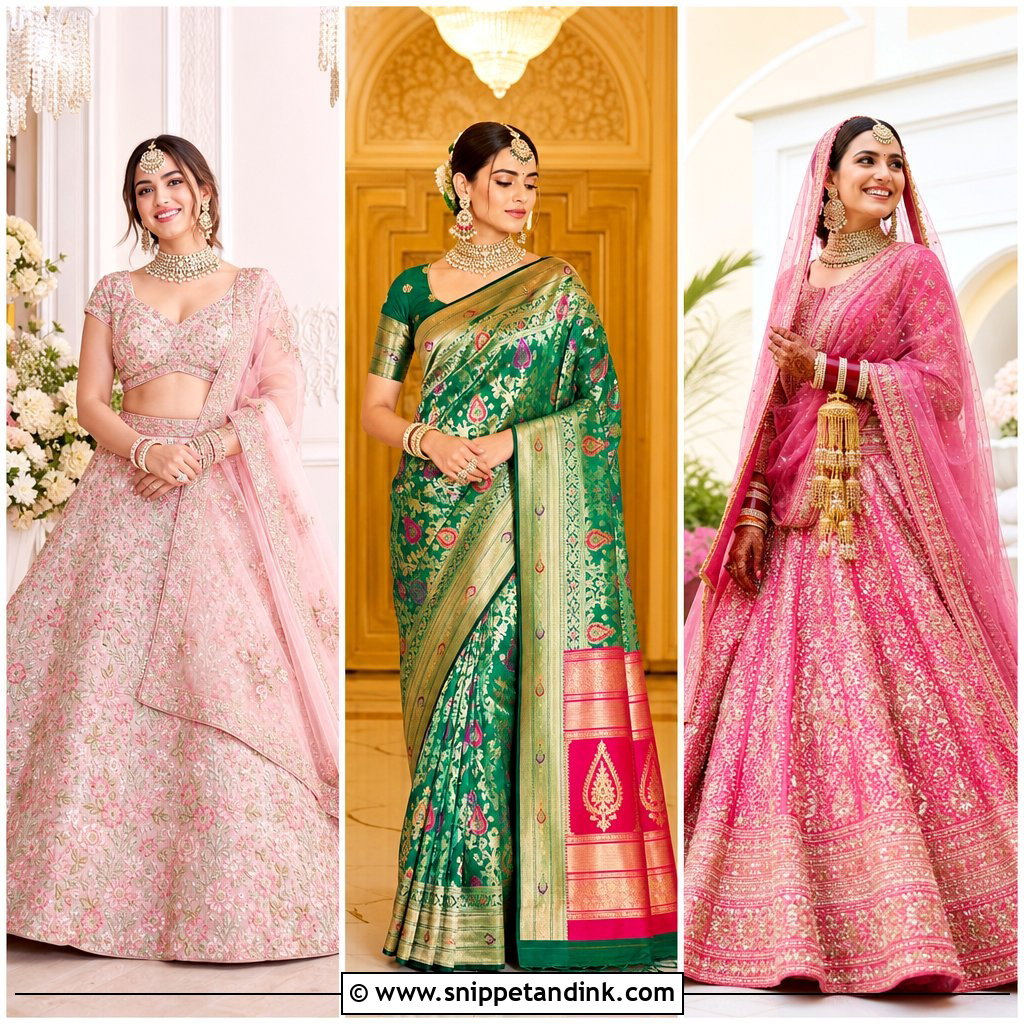
An A-line lehenga skims the waist and flares gently, so it gives you the lehenga shape without a heavy, wide skirt. Georgette, organza, silk blends and cotton silk keep it light. A short blouse and soft dupatta keep it traditional, with small earrings and a sleek bracelet. Pastels suit daytime and deeper shades the evening. Check the can-can lining: many ready-made lehengas come with a stiff net layer that scratches and adds bulk, and a tailor can swap it for a softer one. Bridesmaids and cousins who want a lehenga without the volume tend to love it.
8. Simple Floral Lehenga Indian Wedding Dress
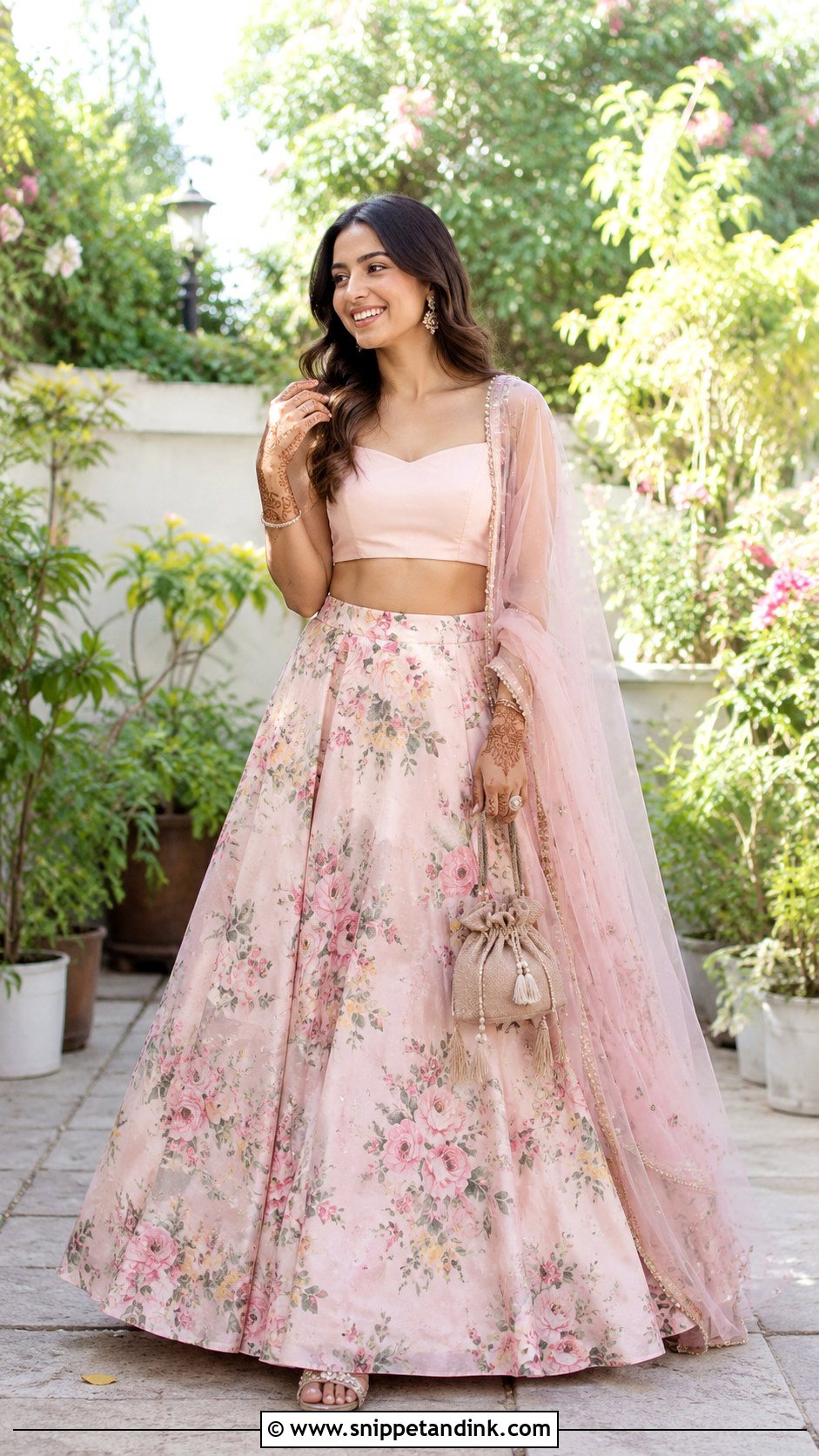
Floral lehengas belong to the daytime events: mehendi, haldi, garden ceremonies and lunch receptions. Printed florals or light threadwork keep it wearable. Pair the skirt with a plain blouse and a sheer dupatta so the print stays the focus, then add dainty earrings, a small potli and sandals or block heels. I steer people toward prints with a white or pale ground for summer, since dark florals absorb heat under a midday sun. Soft curls or a low ponytail finish it.
9. Simple Chikankari Lehenga Indian Wedding Dress
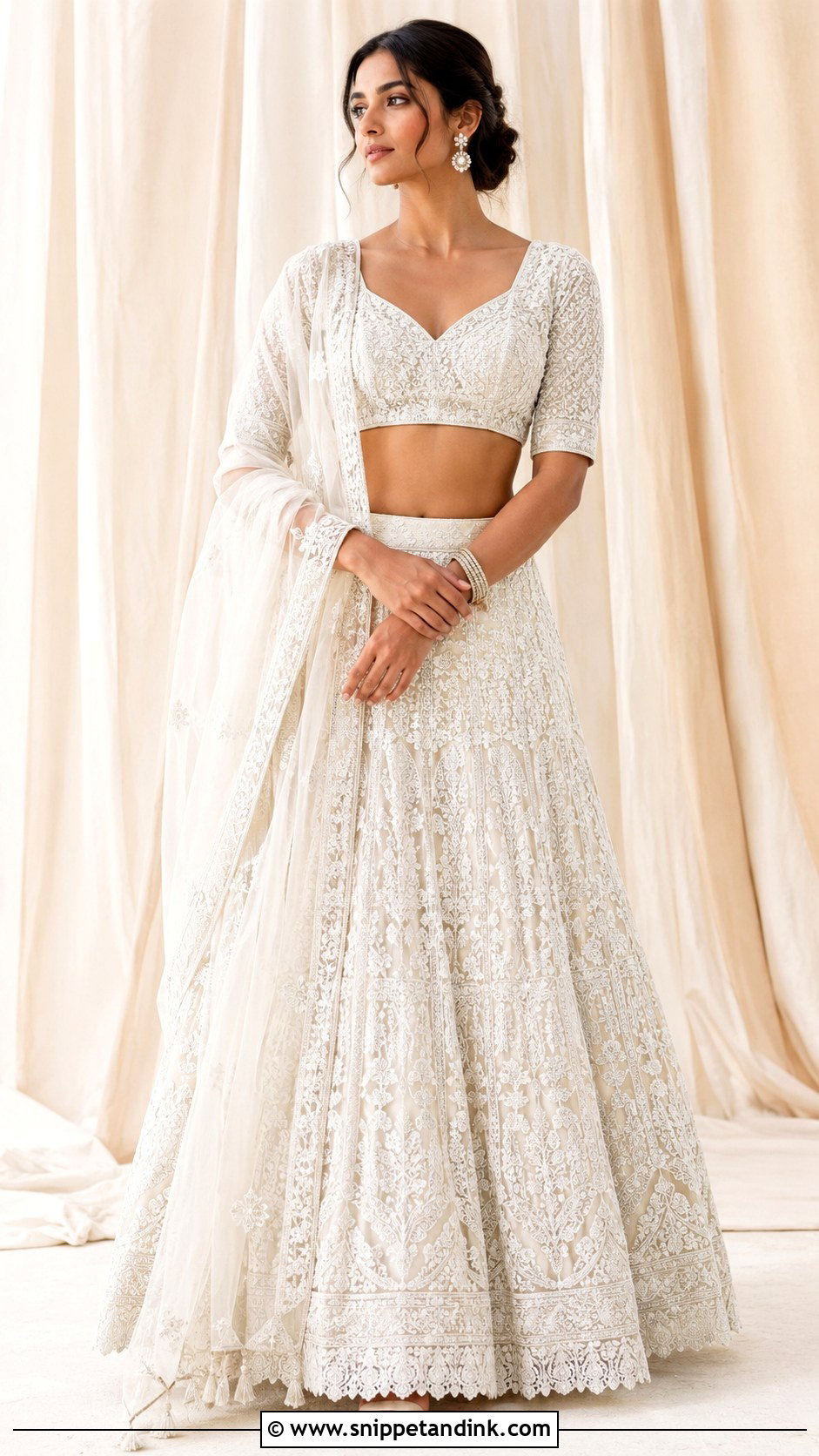
A chikankari lehenga is quiet in the nicest way. The hand embroidery gives texture you notice up close without weight. Ivory, sage, blush, lavender and powder blue all suit it. Pair it with a matching blouse, a light dupatta, pearl earrings and nude or metallic sandals, and add a slim bangle stack if the event is formal. Chikankari is often worked on fine, sheer fabric, so ask whether the skirt is lined before you buy. Daytime weddings and engagement lunches suit it, and the embroidery shows detail in close-up photos without looking busy.
10. Simple Mirror Work Lehenga Indian Wedding Dress
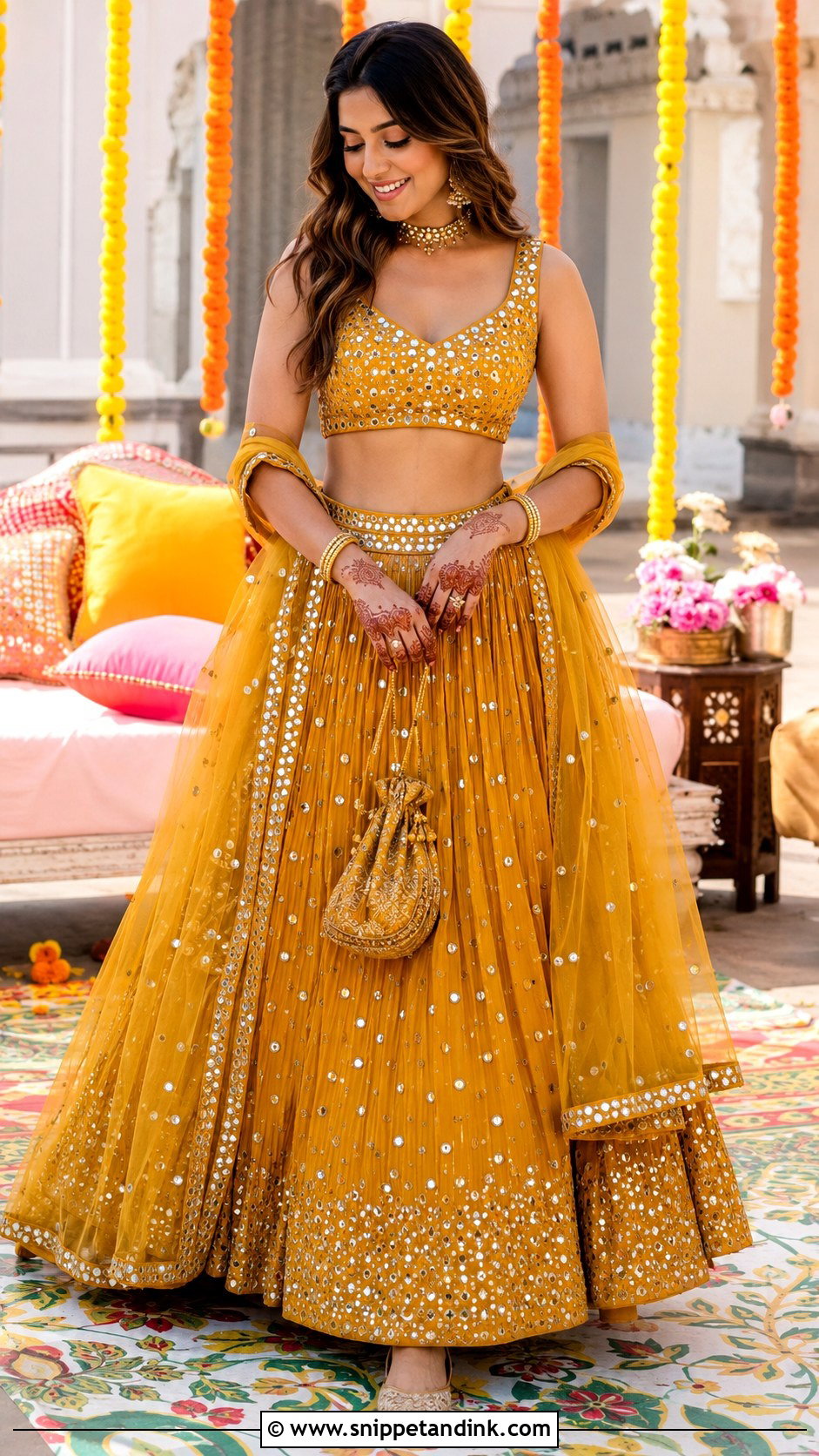
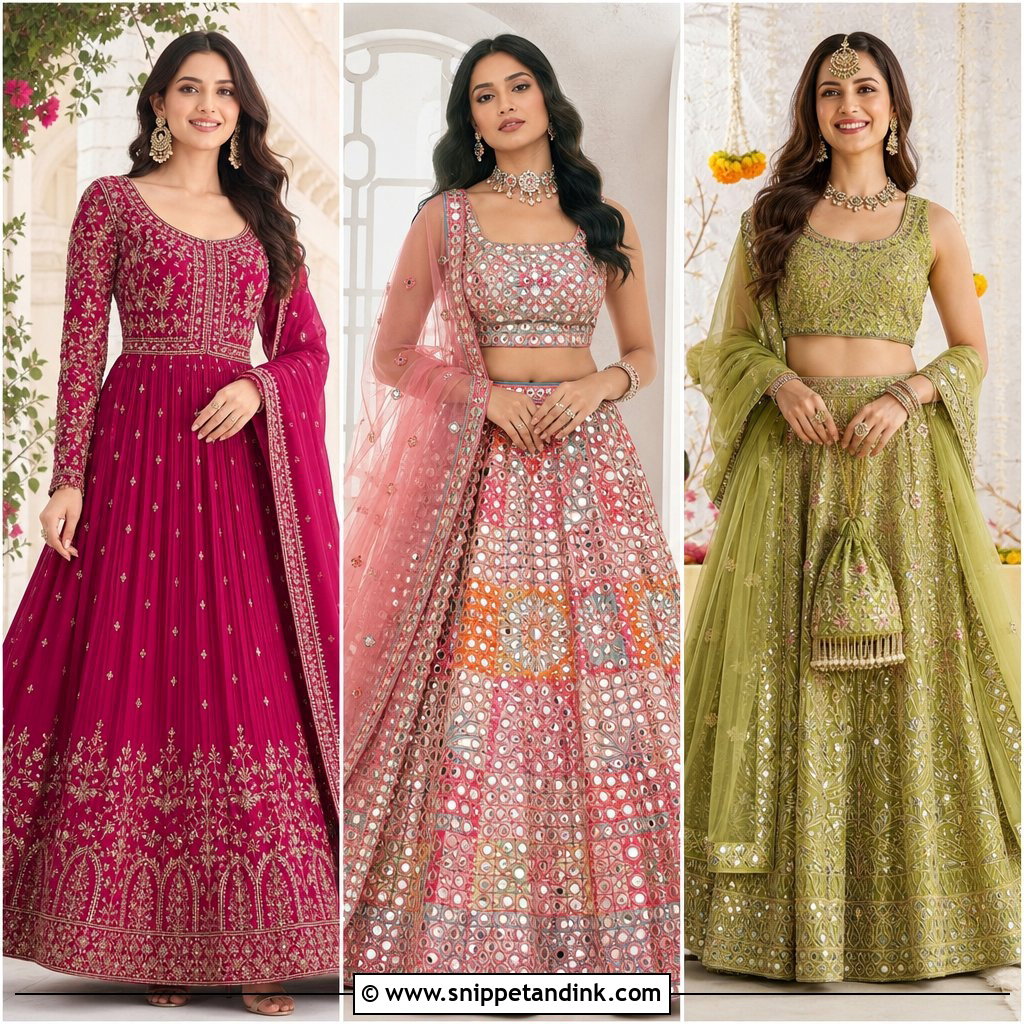
Mirror work stays simple when the mirrors are scattered and the base fabric is light. Choose a lehenga with scattered mirror details in mustard, coral, turquoise, ivory or rani pink for a mehendi or sangeet. Keep the blouse comfortable and the dupatta soft so it doesn’t compete. Because the outfit already catches every light, small earrings or a simple choker are enough. I’d also run a hand inside the blouse before buying; mirror backs and the stitching around them can scratch when you dance. Juttis or block heels keep you on the floor for hours.
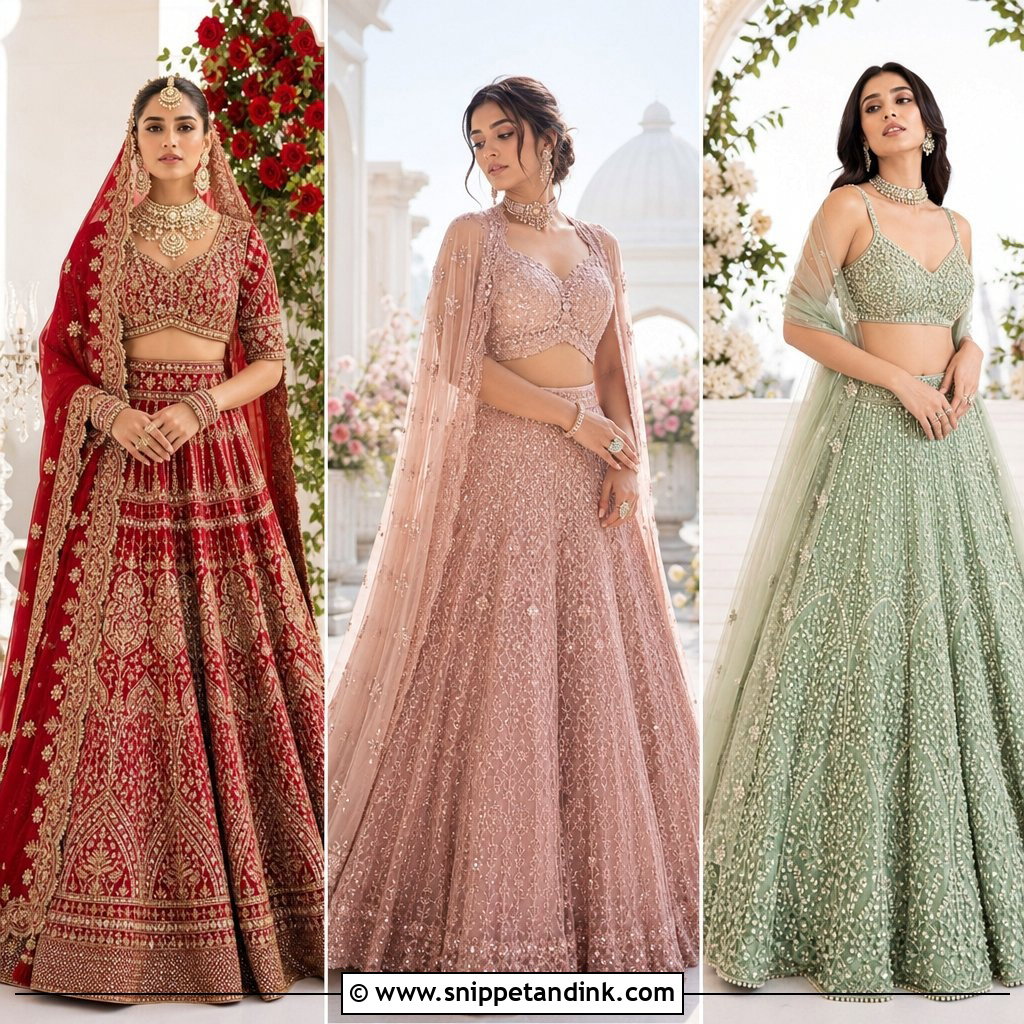
11. Simple Pastel Lehenga Indian Wedding Dress
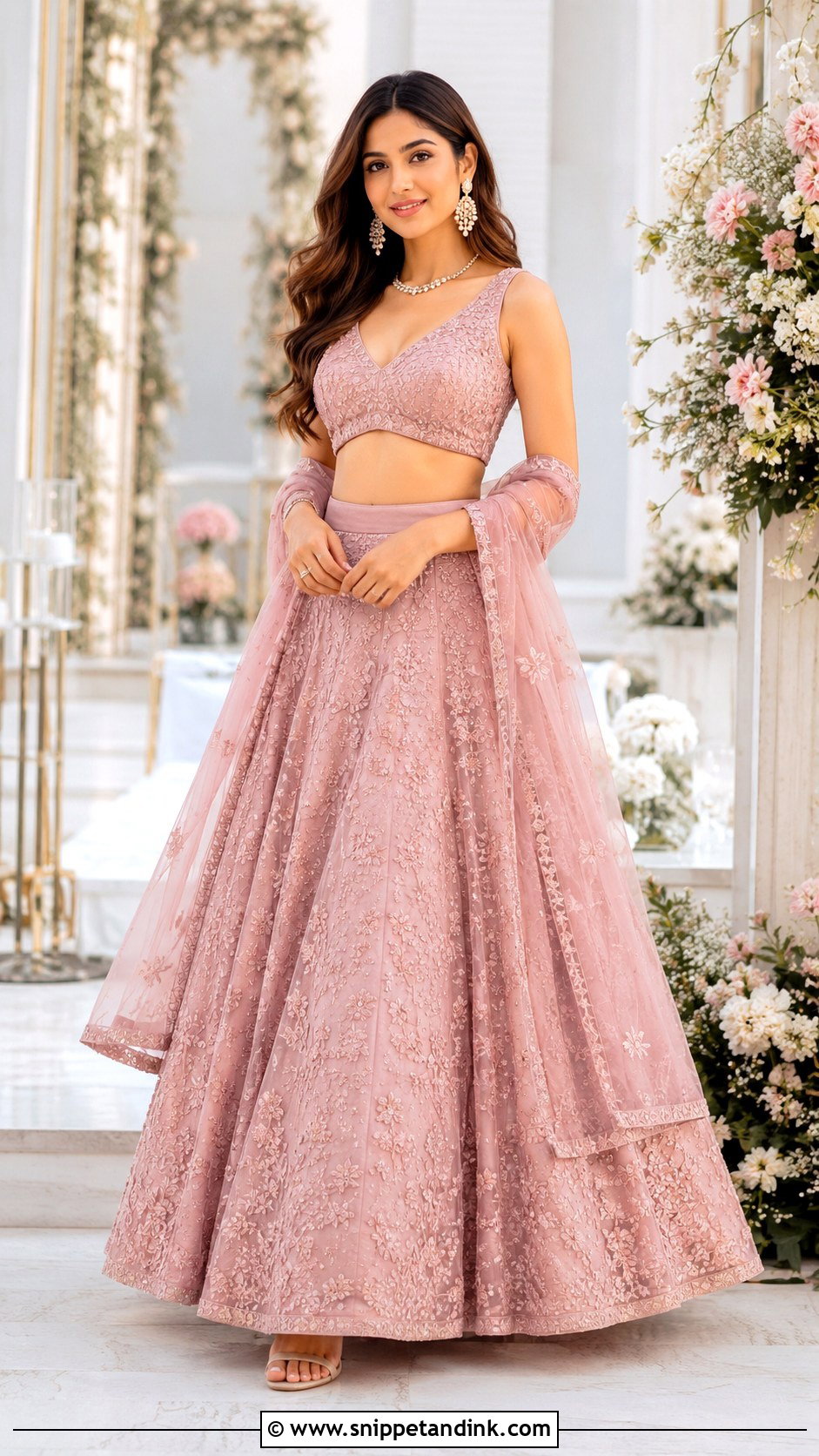
Pastels are where most people start with a simple lehenga, and for good reason. Dusty rose, lilac, pistachio, champagne, peach and sky blue are soft but still read festive. Tone-on-tone threadwork or a minimal sequin border keeps them understated. Match the dupatta for a clean look or contrast it for interest. One thing I check in daylight: very pale pastels can wash out next to deeper skin tones, and a slightly richer shade of the same color often fixes it. Pearl earrings, a delicate necklace and soft makeup finish it. Coordinated bridesmaids and engagement parties suit it well.
12. Simple Banarasi Lehenga Indian Wedding Dress
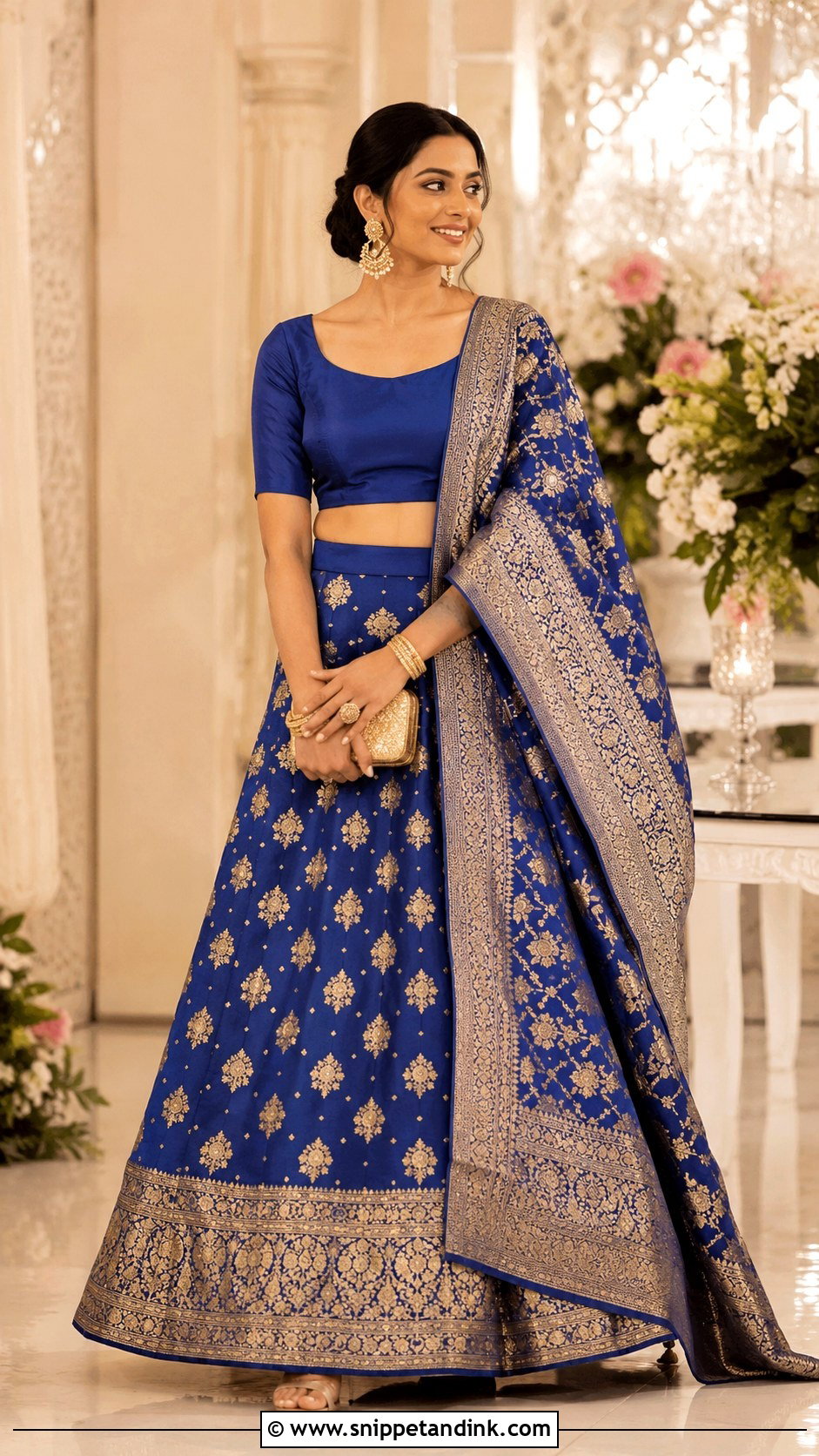
Banarasi silk has its pattern woven into the fabric, so even a plain cut looks rich. You don’t need embroidery or many accessories. Choose a straight or lightly flared skirt with a plain silk blouse and matching dupatta. Deep pink, emerald, royal blue and maroon look ready for a ceremony, while gold or beige feels softer. Banarasi is heavier than it looks on a hanger, so try the full skirt on for ten minutes before deciding. Classic earrings, bangles and comfortable heels finish the outfit for a formal ceremony or family wedding.
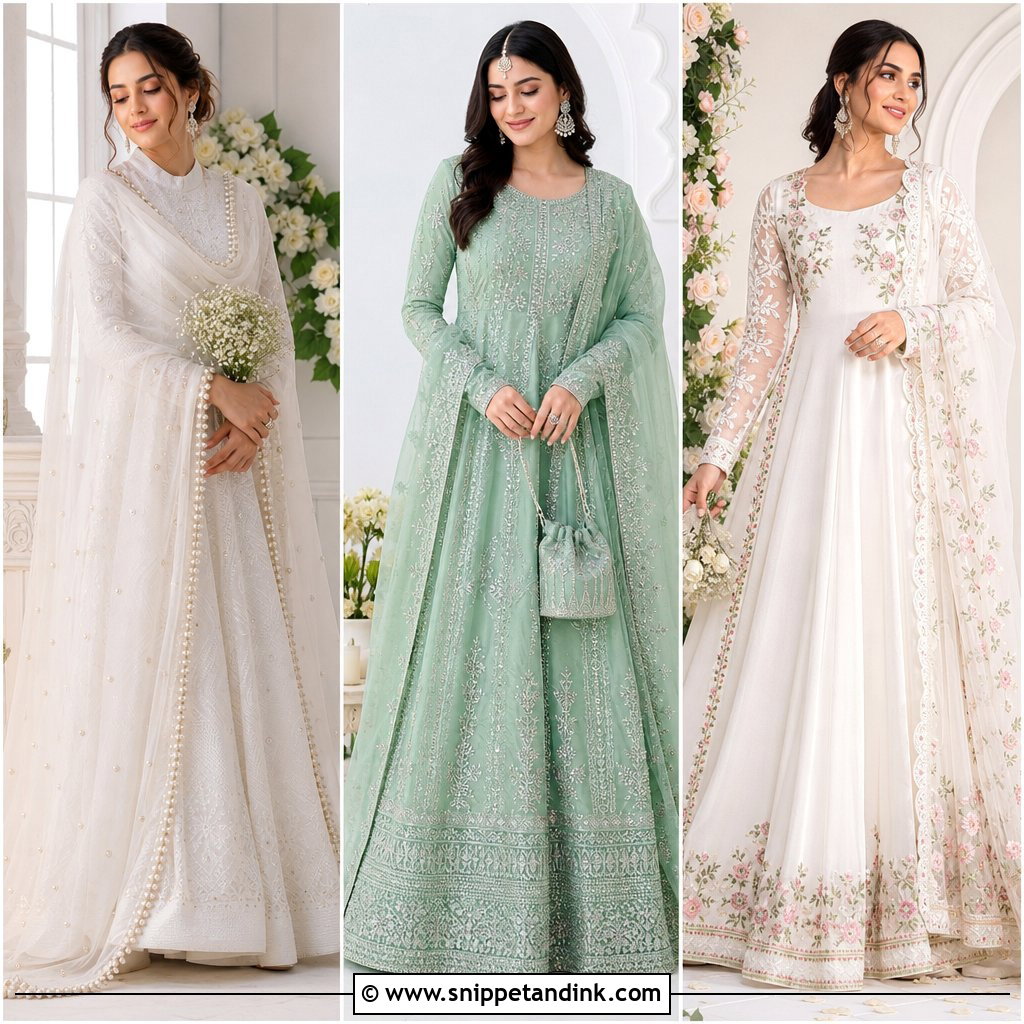
13. Simple Anarkali Suit Indian Wedding Dress
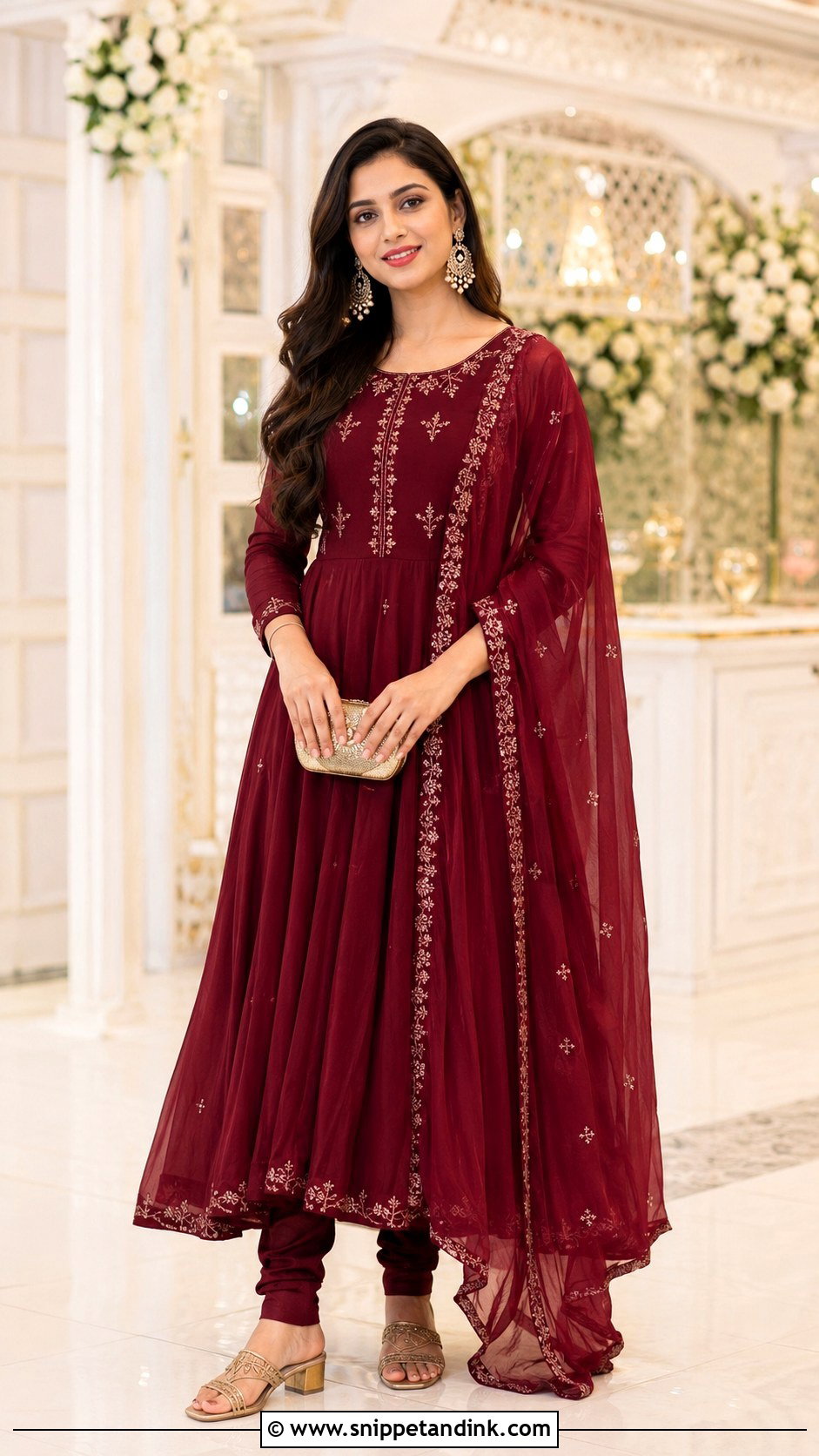
An anarkali feels like a long, flowing dress, and that’s exactly why it’s so comfortable. Choose floor or calf length with light embroidery, a soft dupatta and a fitted churidar or slim pants. Wine, teal, blush, navy and ivory each suit different ceremonies. Earrings, a clutch and low heels or juttis complete it. If the neckline is worked, skip the necklace. I always check the flare in a fitting room mirror while sitting down; very full anarkalis can bunch up awkwardly in a chair.
14. Simple Cotton Silk Anarkali Indian Wedding Dress
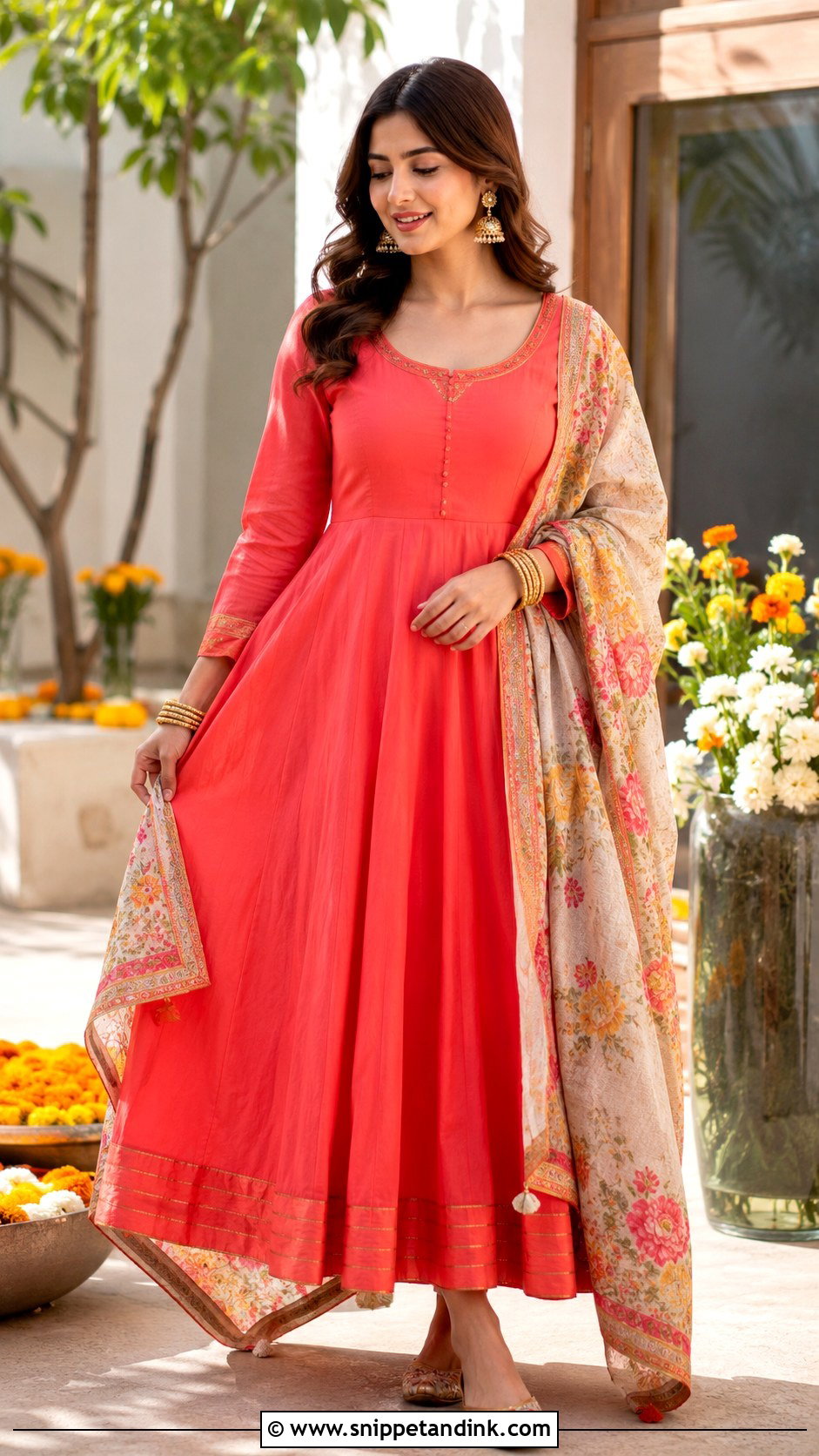
Cotton silk has a gentle sheen but breathes like cotton, which makes it my pick for outdoor daytime events in warm weather. Go bright for haldi and mehendi and softer for a wedding ceremony. A printed or lightly embroidered dupatta adds charm. Jhumkas, bangles and embroidered flats finish it. The cut covers well and moves easily, so it suits anyone who prefers modest coverage. Cotton silk wrinkles, though, so steam it after packing rather than relying on the hotel iron.
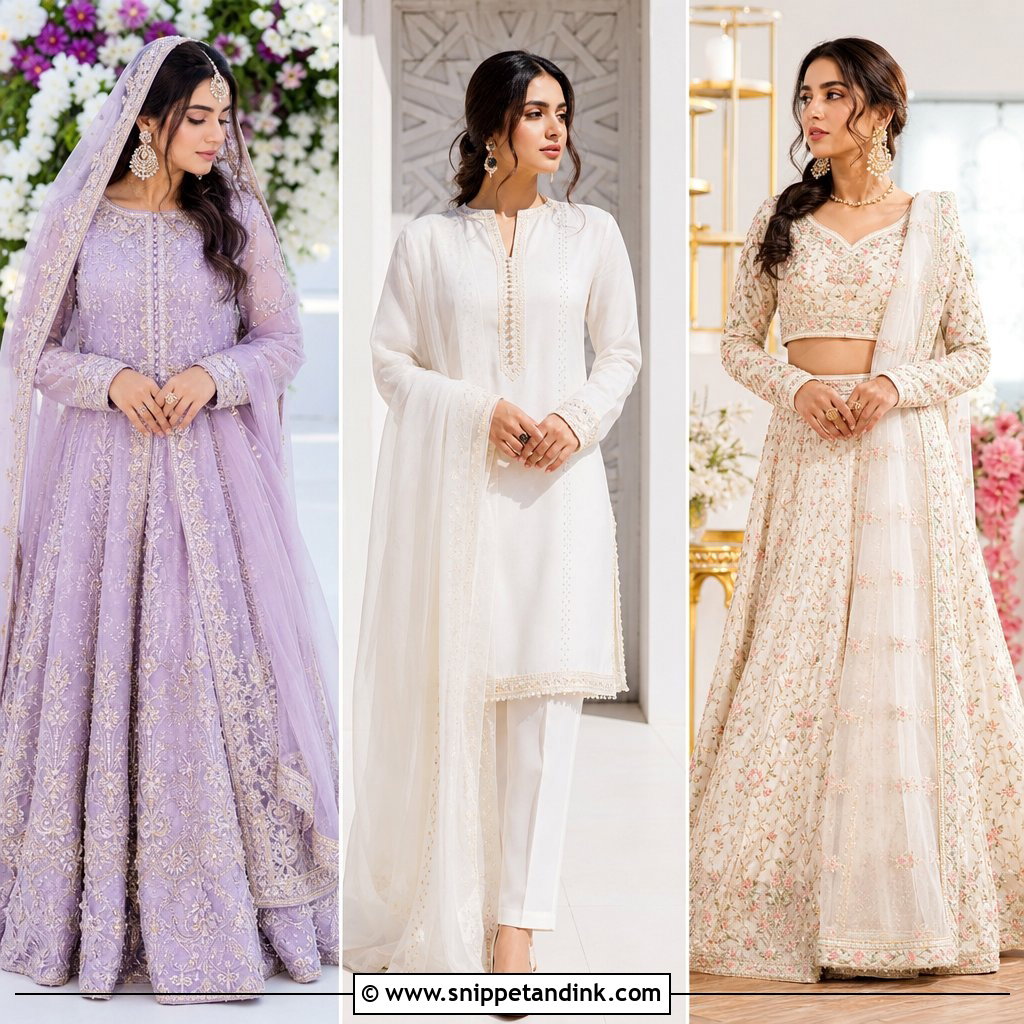
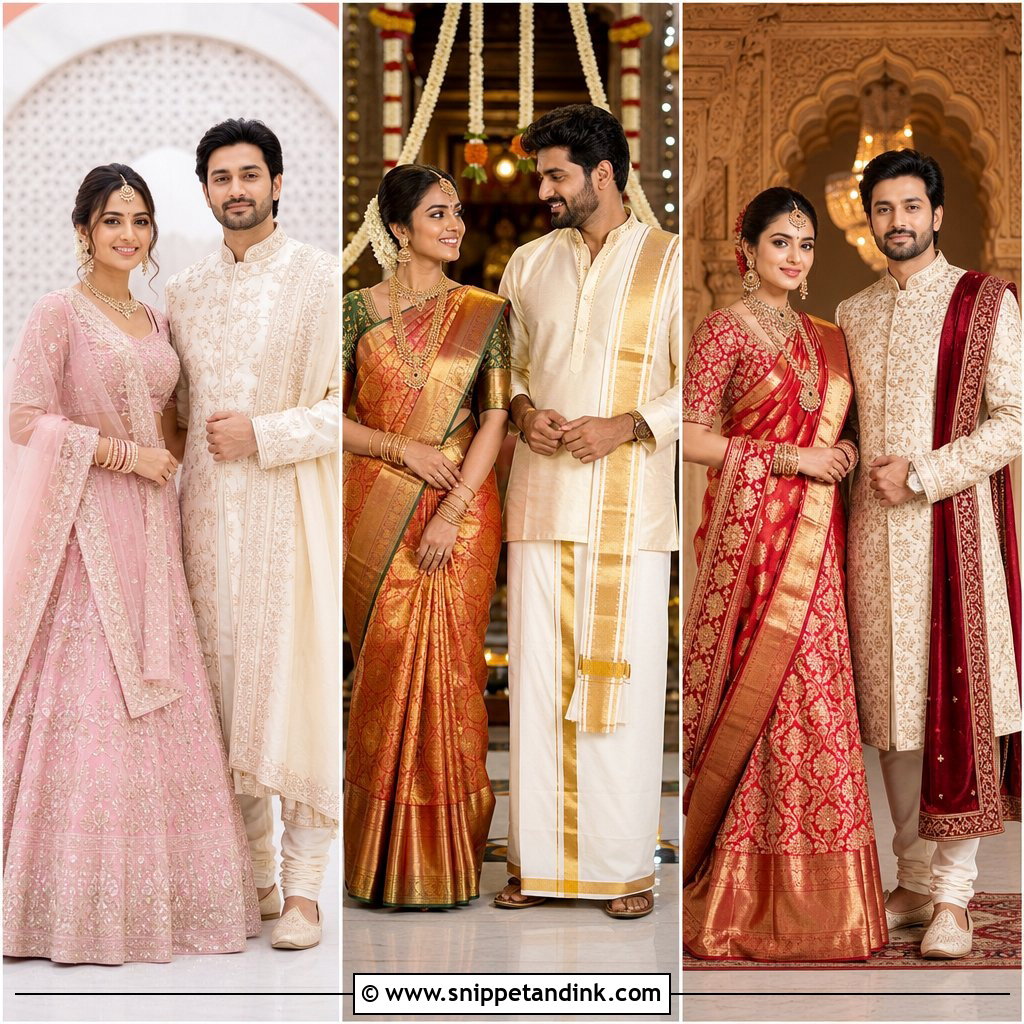

15. Simple Straight Kurta Set Indian Wedding Dress
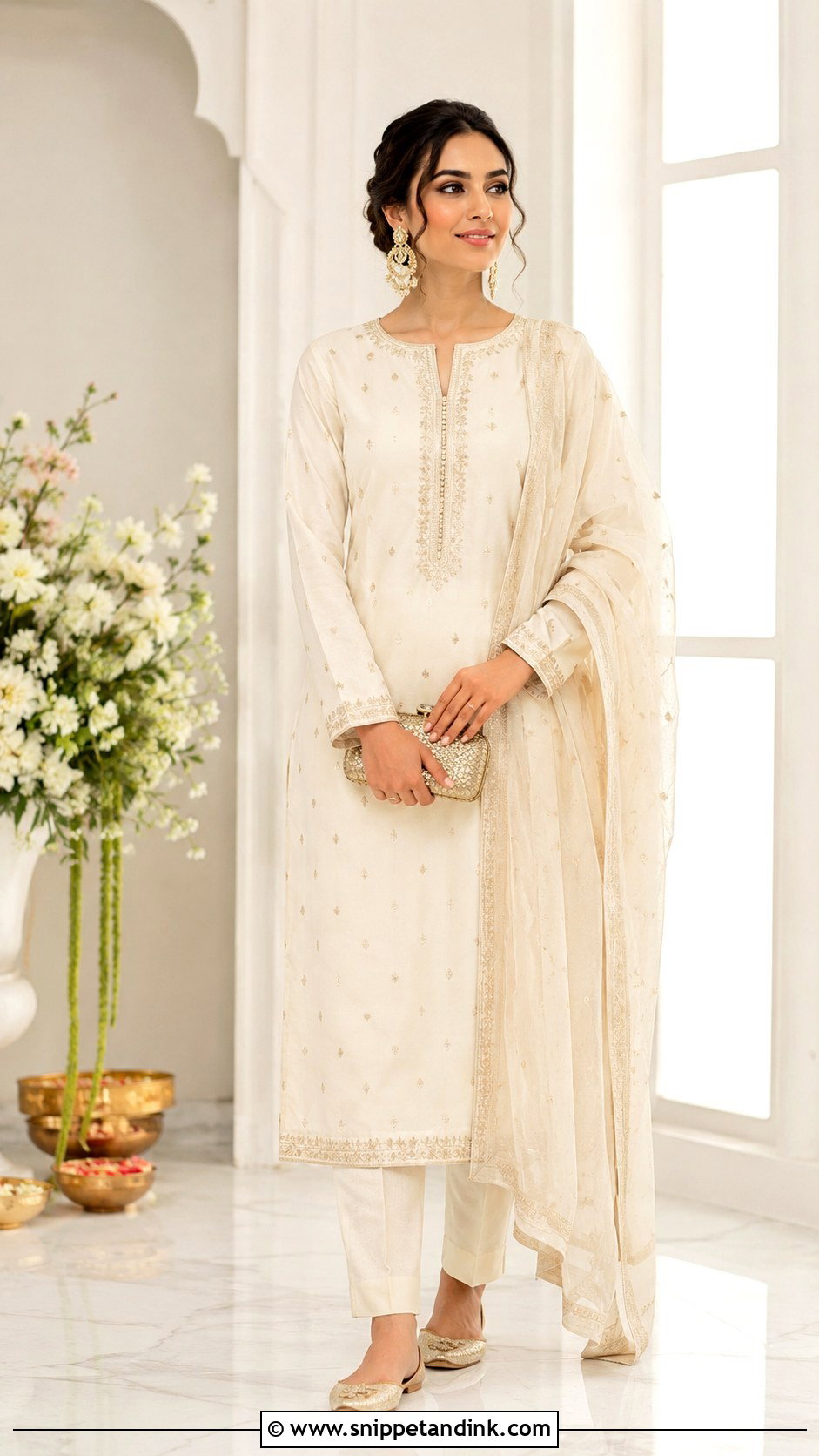
A straight kurta set is the outfit I recommend to anyone traveling between three events in one day. It’s quick to put on, easy to sit and walk in, and it survives a car journey. For a wedding, move up from everyday fabric to silk blend, chanderi, georgette or embroidered cotton, and let a zari border, fine threadwork or a pretty dupatta make it special. Statement earrings, a structured clutch and pointed flats or block heels finish it. Cigarette pants look sharp; make sure they’re cut with enough ease at the knee to sit cross-legged.
16. Simple Palazzo Kurta Set Indian Wedding Dress
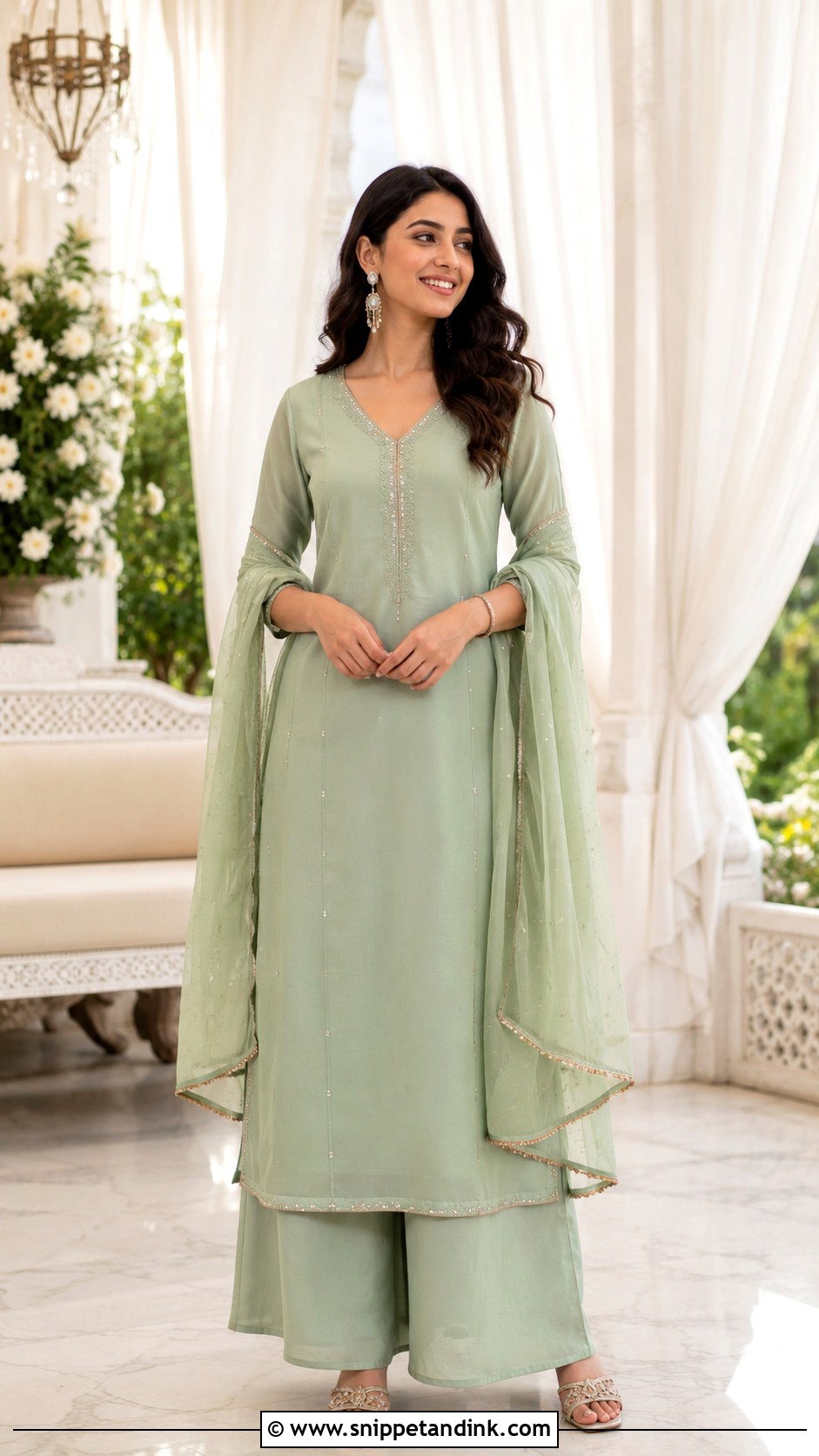
A palazzo kurta set combines the ease of wide-leg pants with a traditional kurta and dupatta. Silk cotton, crepe, chanderi or georgette make it festive enough for a wedding. A short kurta with wide palazzos looks modern, and a long kurta looks more formal. Hem the palazzos to just clear the floor in the shoes you’ll wear, because wide legs that pool on the ground get stepped on. Drop earrings, a slim bracelet and embellished sandals finish it for a mehendi, welcome party or small ceremony.
17. Simple Sharara Suit Indian Wedding Dress
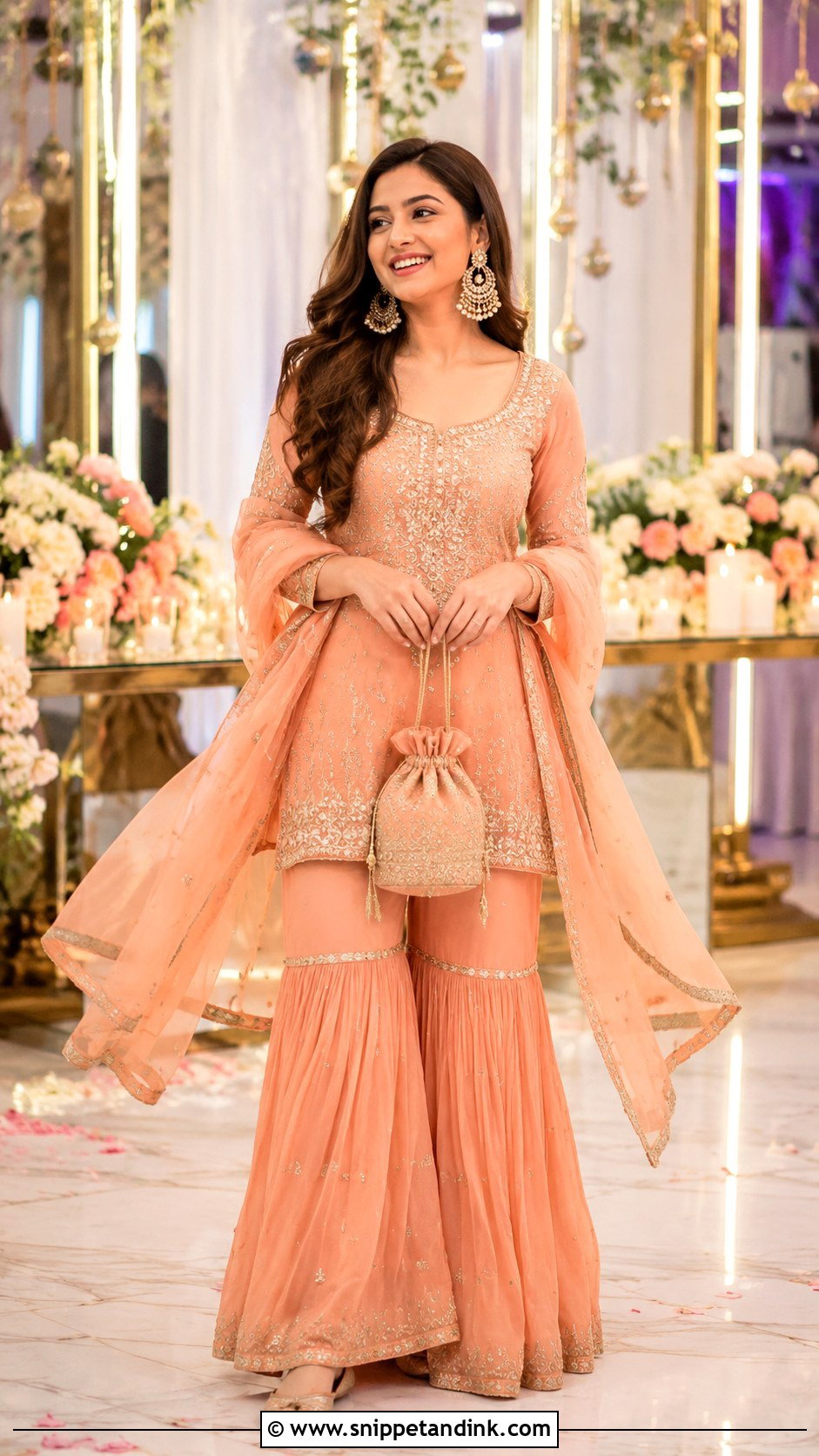
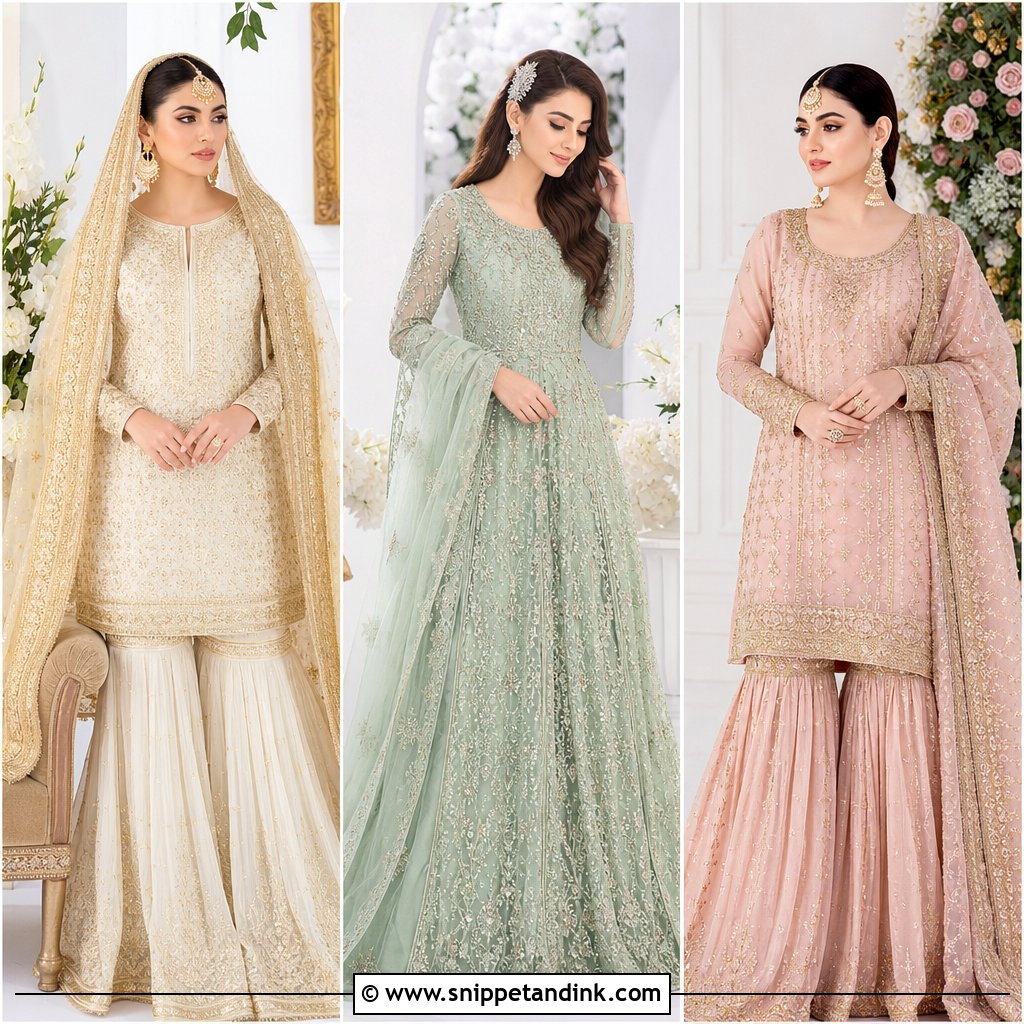
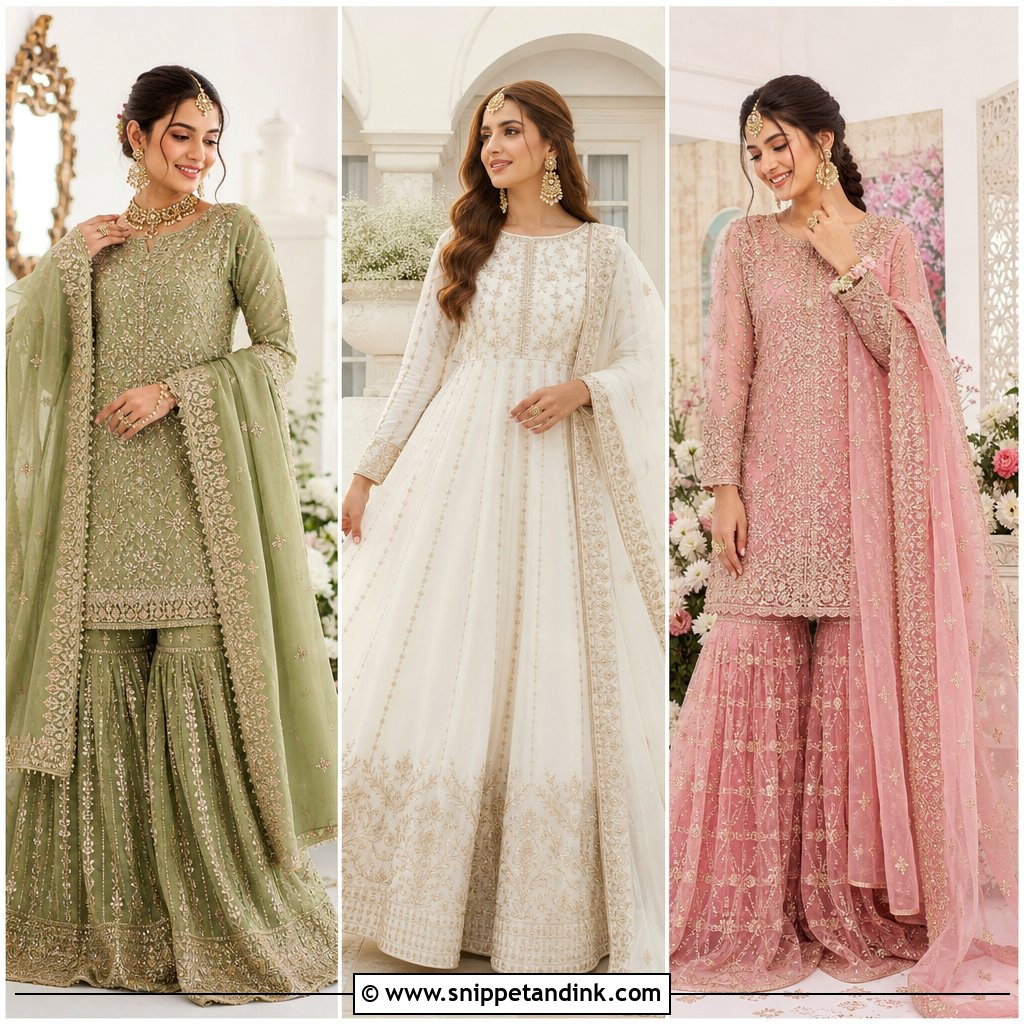
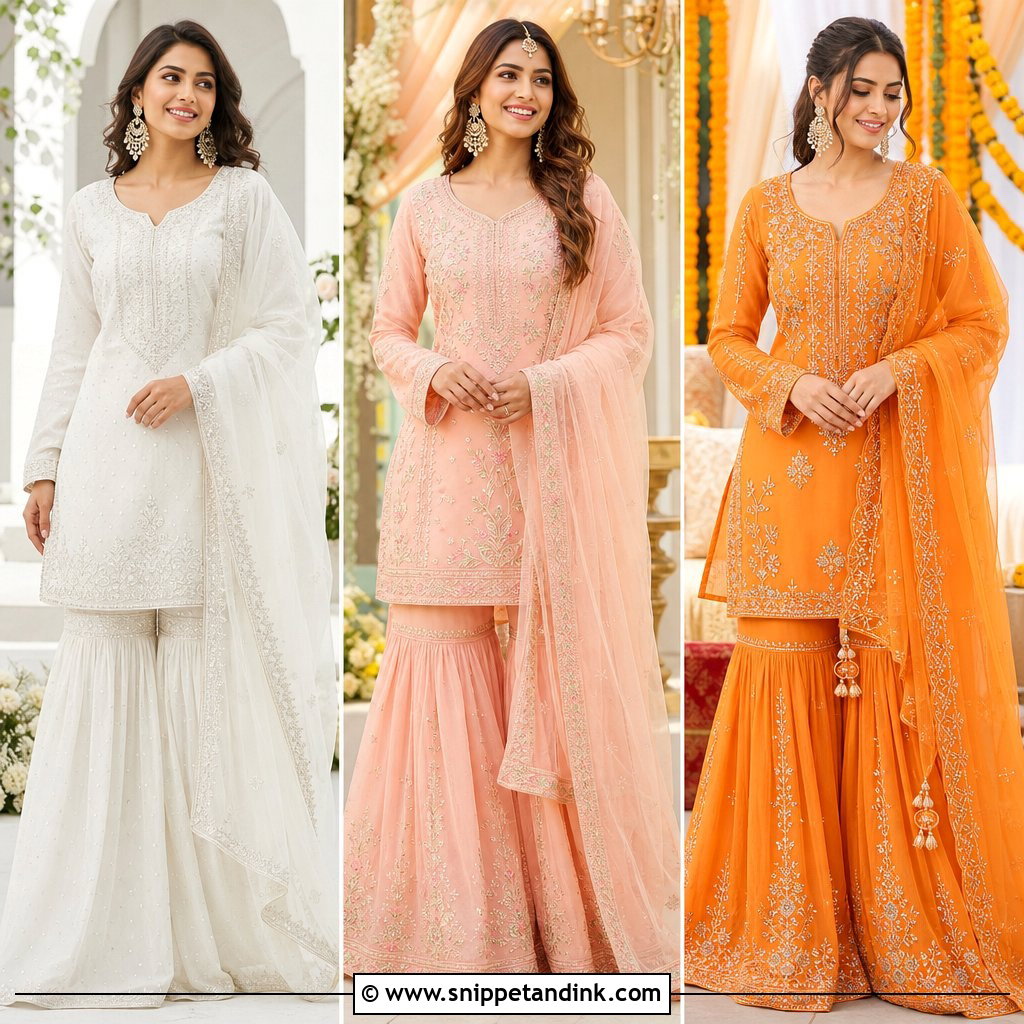
Sharara suits stay simple when the embroidery is limited to the hem, neckline or dupatta border. The flared pants give movement, and the kurti and dupatta make it wedding appropriate. Mint, peach, ivory, mustard and rose suit daytime; navy or emerald suit evening. I’m careful with sharara length on guests who’ll be dancing, since too much fabric at the hem catches under the heel. Juttis, chandbalis and a small potli complete it. It’s my go-to for a sangeet.
18. Simple Gharara Suit Indian Wedding Dress
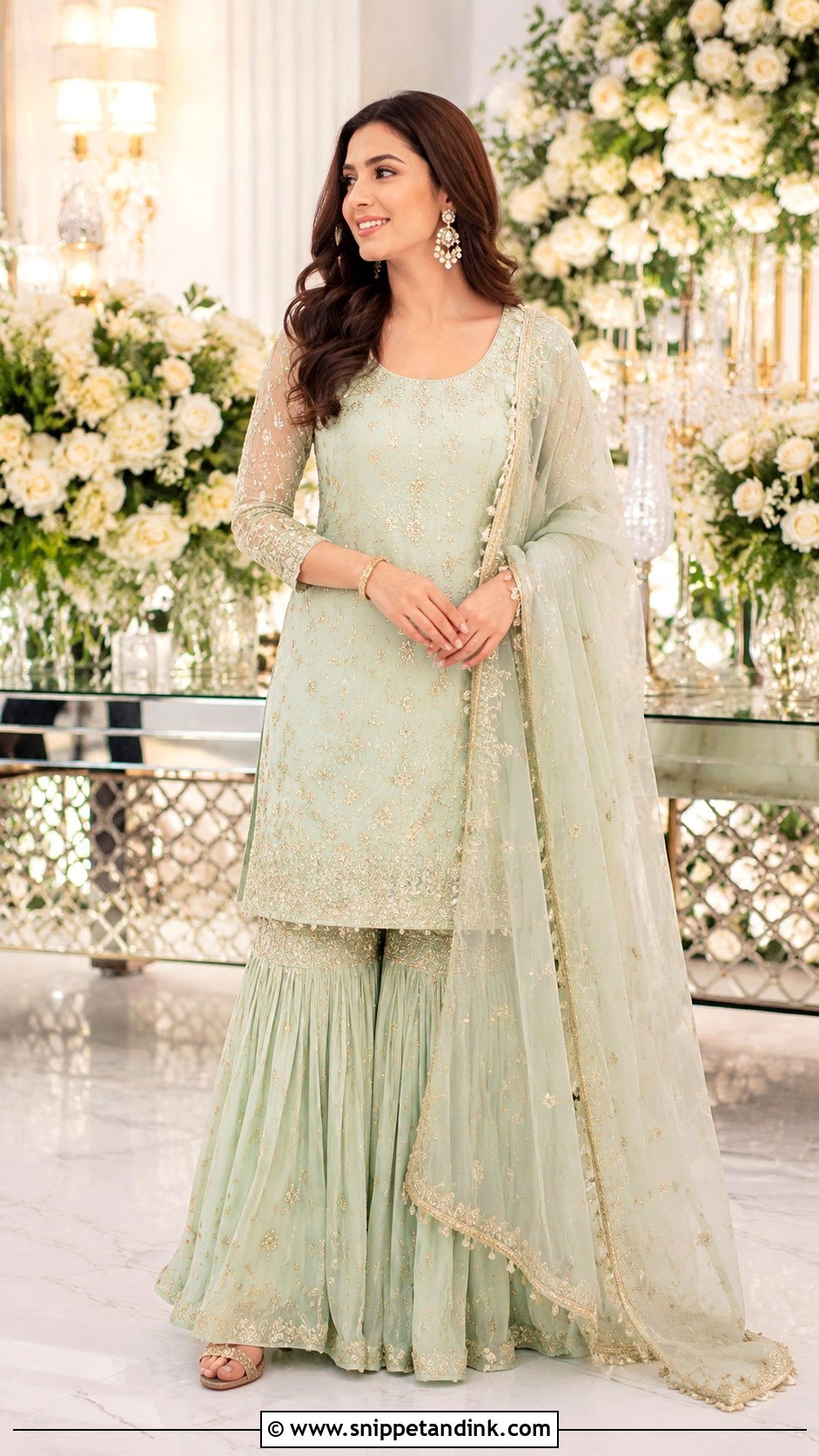
A gharara fits close to the knee and then flares, which gives it a very distinctive traditional line. To keep it simple, choose soft fabric and light embroidery rather than heavy zari or beading, with a short kurti, flowing dupatta and delicate jewelry. Pastels, jewel tones and soft metallics all work. The knee joint, where the flare is gathered on, is usually trimmed with gota, and I check that it sits exactly at the knee; too high or too low and the shape looks off. Heels or embellished flats help the flare fall properly.
19. Simple Salwar Kameez Indian Wedding Dress
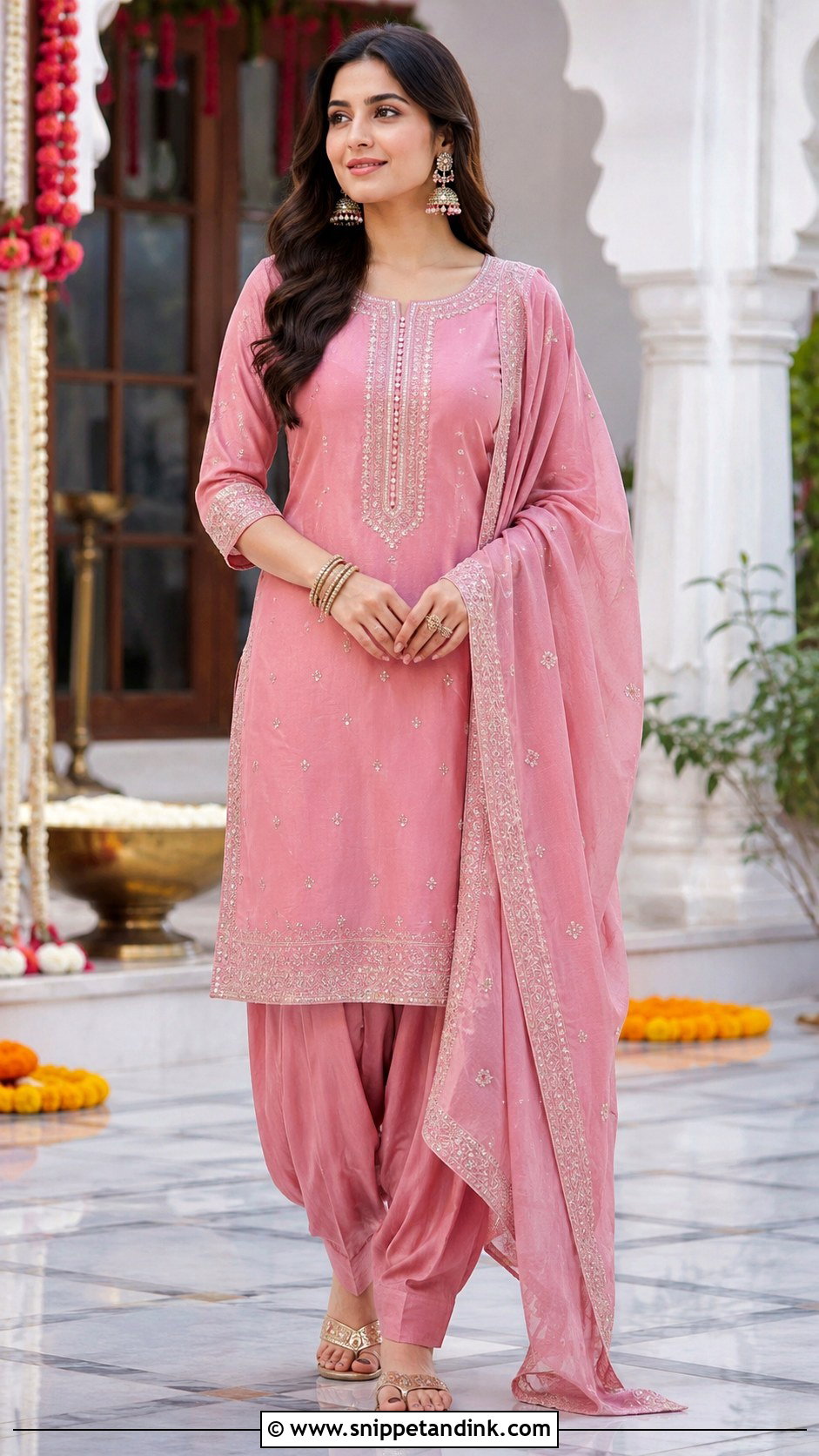
A salwar kameez looks wedding-ready when the fabric and fit are polished. Choose a festive kameez in silk, georgette, chanderi or embroidered cotton with a classic salwar and a soft dupatta, and let a lace border, fine threadwork or printed dupatta bring the occasion. Jhumkas, bangles and comfortable sandals finish it. The fit at the shoulders and armholes makes or breaks a salwar kameez; ready-made sets often need taking in there. It’s comfortable and modest for pre-wedding functions and family ceremonies.

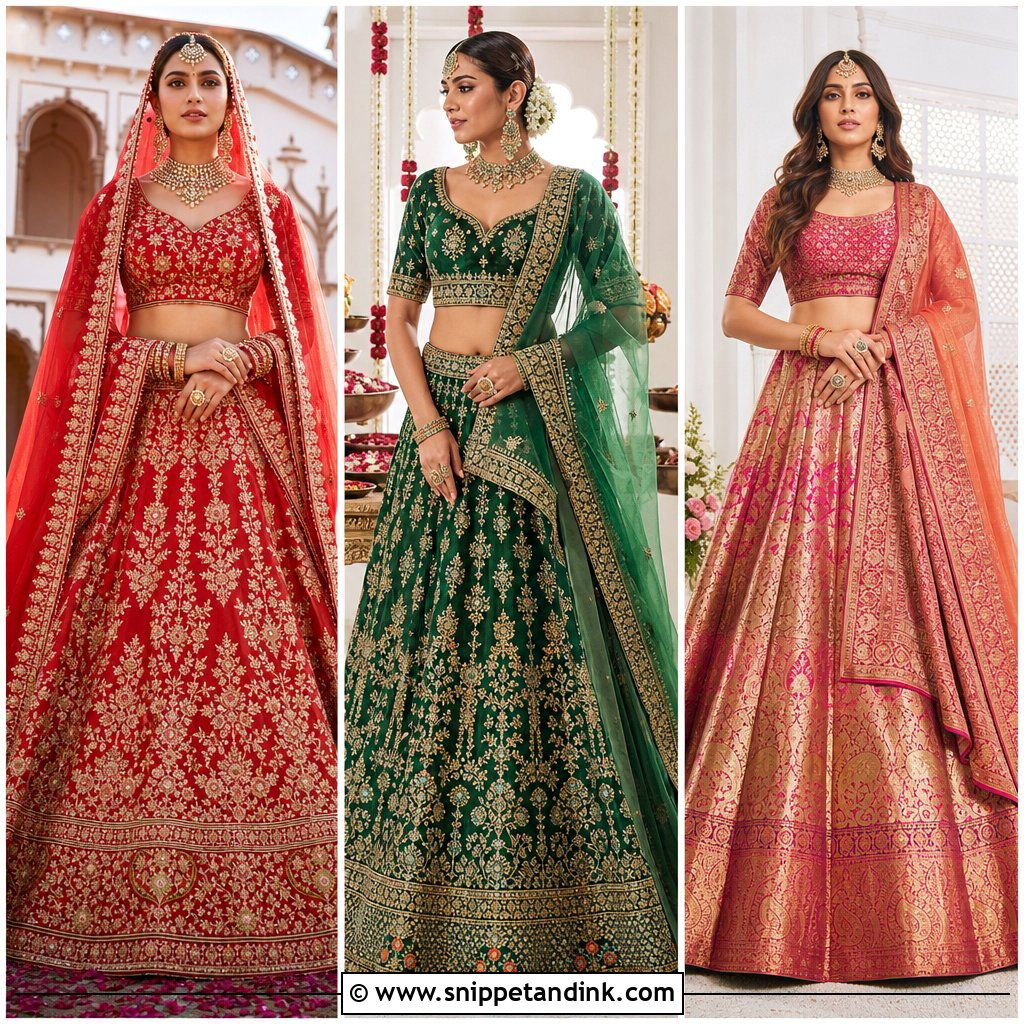


20. Simple Churidar Suit Indian Wedding Dress
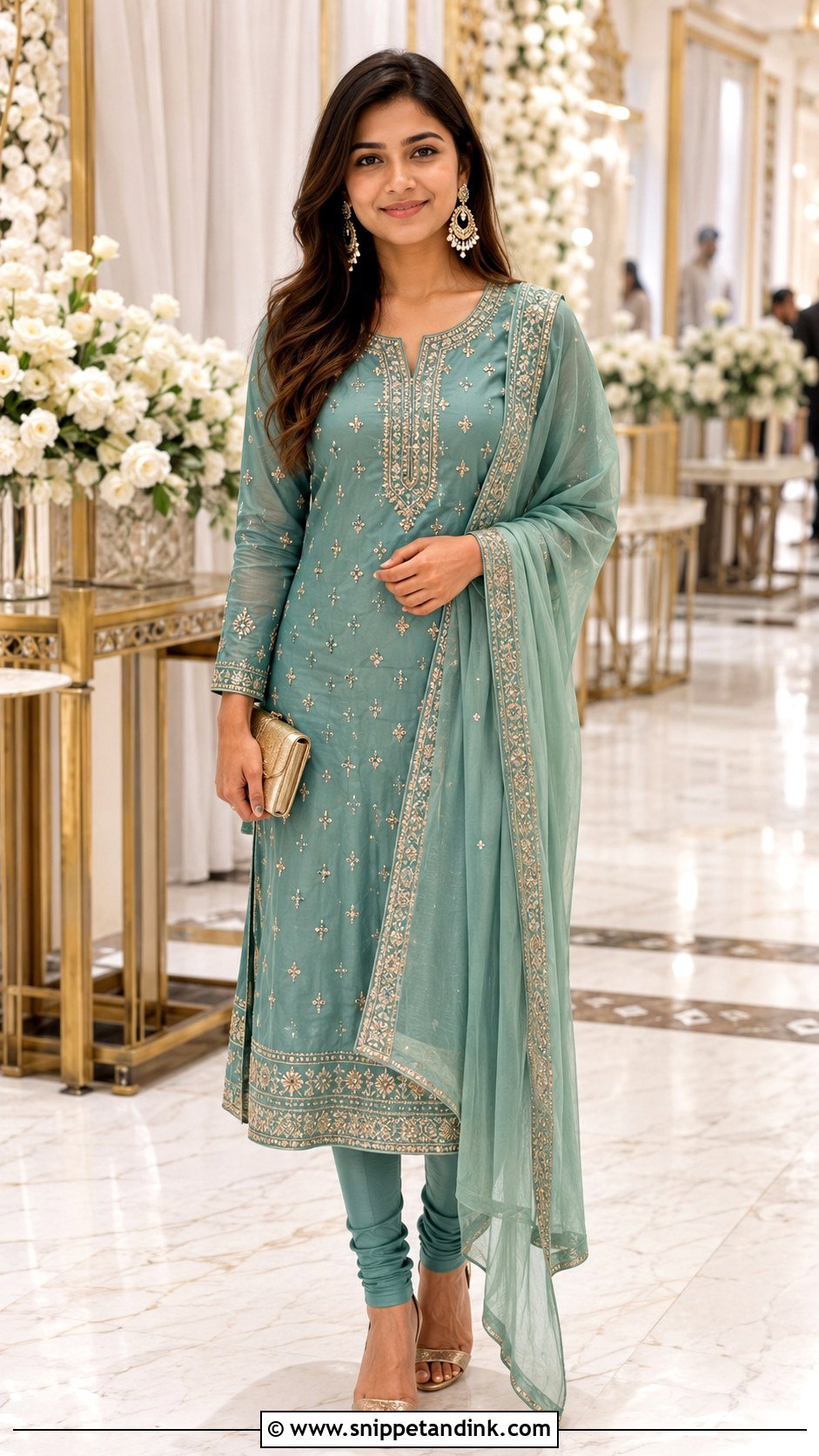
A churidar is fitted through the calf and gathered at the ankle, which balances a longer kurta or anarkali neatly. Choose a kurta with light embroidery, a soft dupatta and a color right for the event: ivory with gold, pink with silver or teal with antique accents. Earrings, a clutch and low heels complete it. Churidars are cut extra long so they ruche at the ankle, and I tell first-timers to sit in them before the day, since a tight one at the knee is uncomfortable for hours. It suits any age and anyone who likes classic dressing.
21. Simple Indo Western Gown Indian Wedding Dress
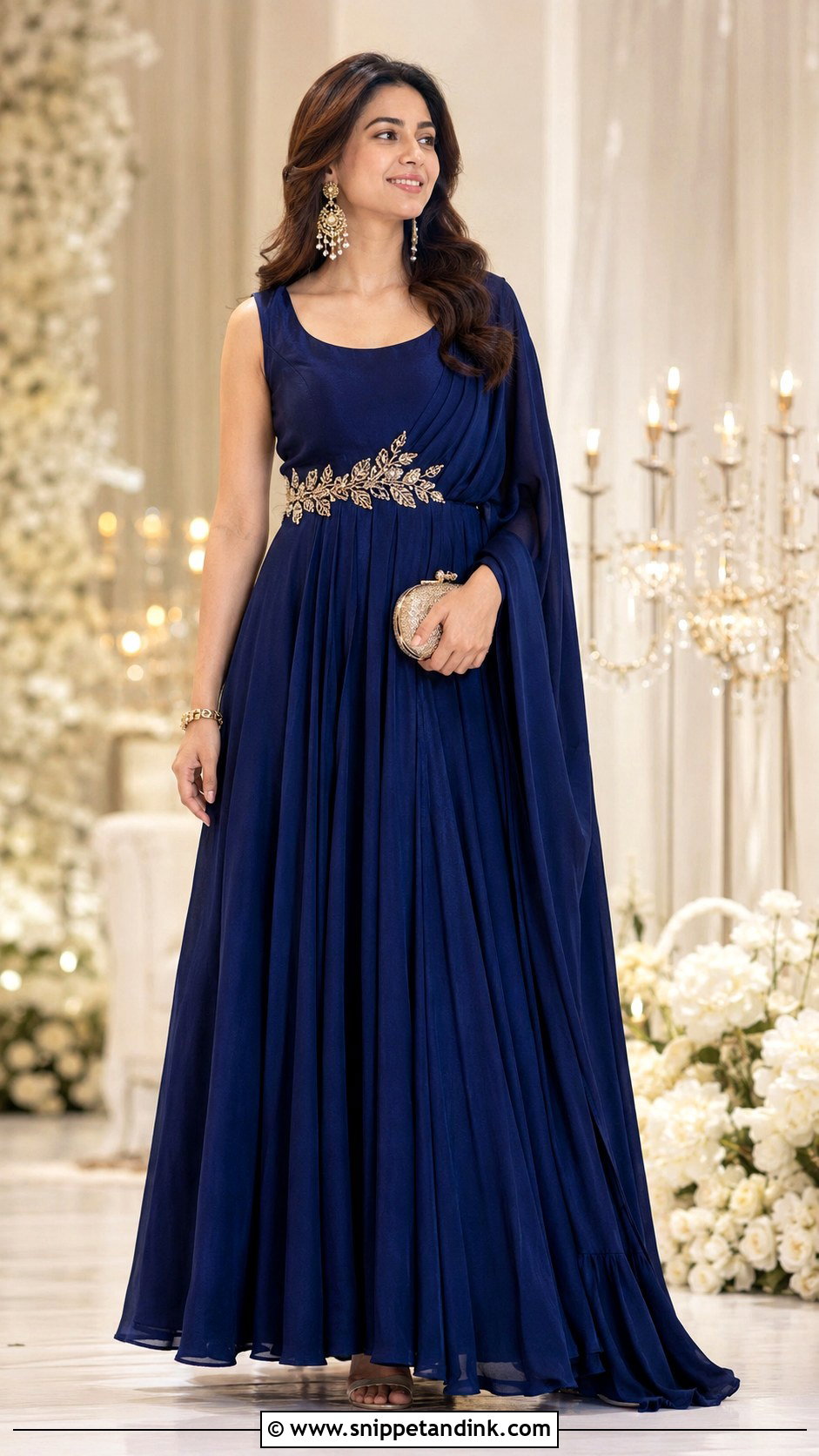
An Indo-western gown gives you the ease of a dress with Indian detailing. Look for a modest neckline, an embroidered waist, cape sleeves or a dupatta-style drape in georgette, satin, crepe or net. Jewel tones suit receptions, pastels the daytime. Keep accessories to earrings, a bracelet and heels. I’d suggest one with a built-in drape for anyone who wants a festive look without managing a saree or lehenga all night, as long as the drape is tacked down at the shoulder.
22. Simple Cape Dress Indian Wedding Dress
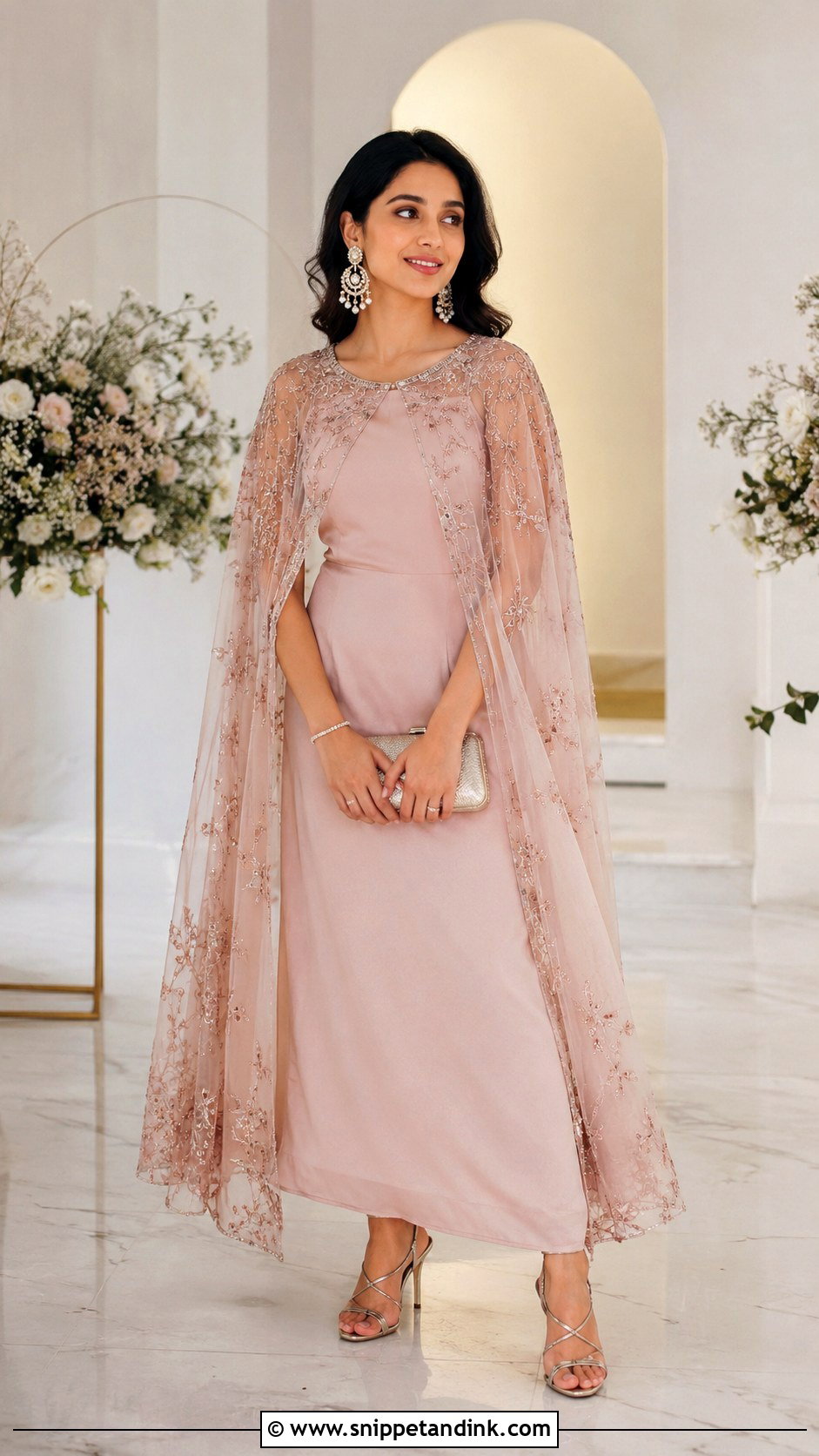
A cape dress feels modern but fits right in at an Indian wedding when it carries embroidery, beadwork or an ethnic print. The cape gives coverage and movement, so you don’t need a dupatta. Knee, midi or floor length depends on the event; for a reception or engagement, I’d go midi or longer. One color with tonal embroidery keeps it simple. Earrings, a clutch and heels or embellished flats complete it. It packs flat and doesn’t crush the way a lehenga does, which makes it handy for a destination wedding.
23. Simple Jacket Lehenga Indian Wedding Dress
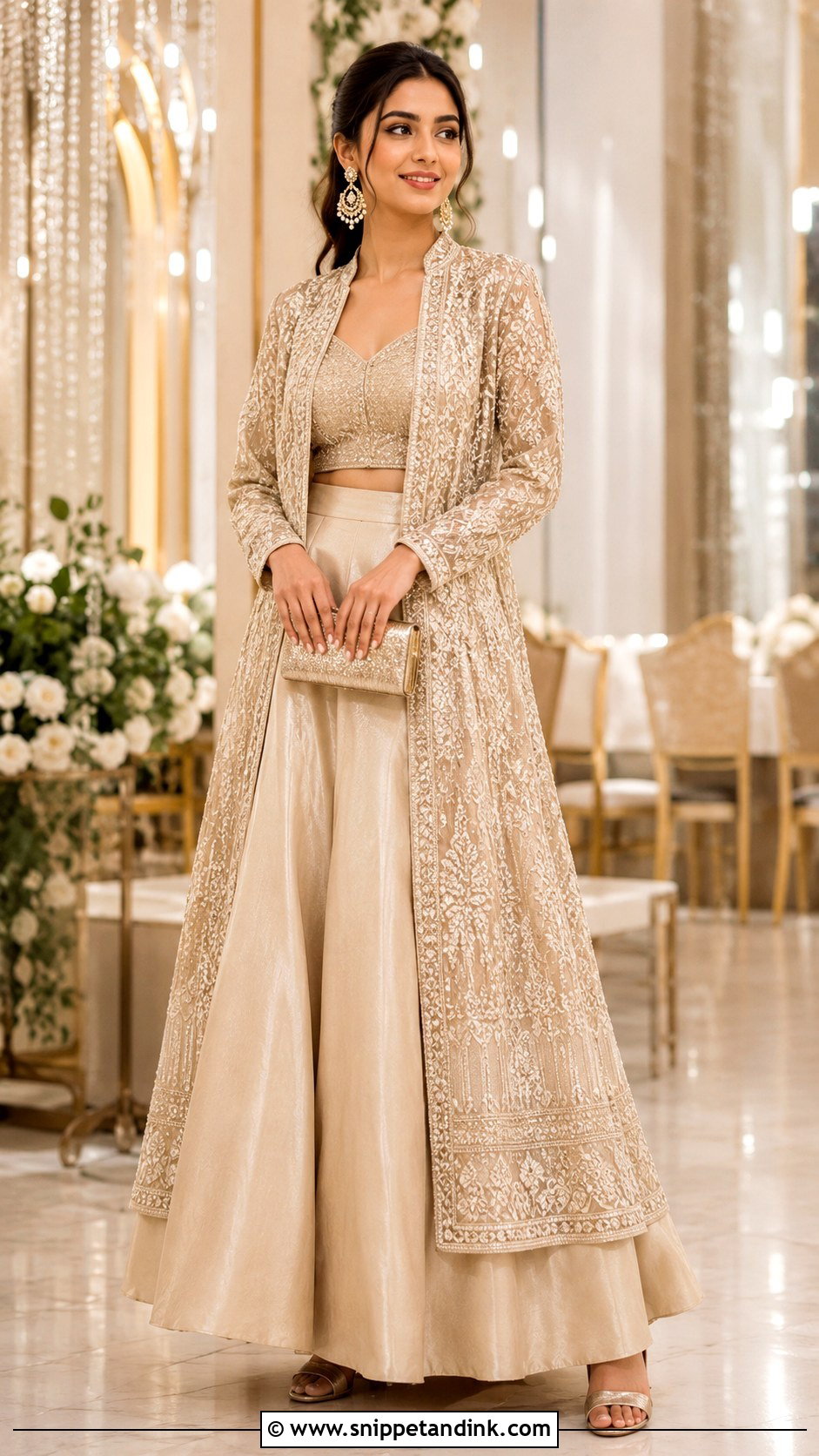
A jacket lehenga replaces the dupatta with a long or short jacket, so you get coverage and structure with nothing to rearrange all night. Choose a plain skirt with an embroidered jacket, or a plain jacket over a woven skirt; one busy piece is enough. Statement earrings, a sleek clutch and block heels finish it. It’s my favorite for winter weddings, since the jacket adds warmth in an outdoor evening mandap. Make sure the jacket armholes leave room to lift your arms for photos and dancing.
24. Simple Skirt And Dupatta Indian Wedding Dress
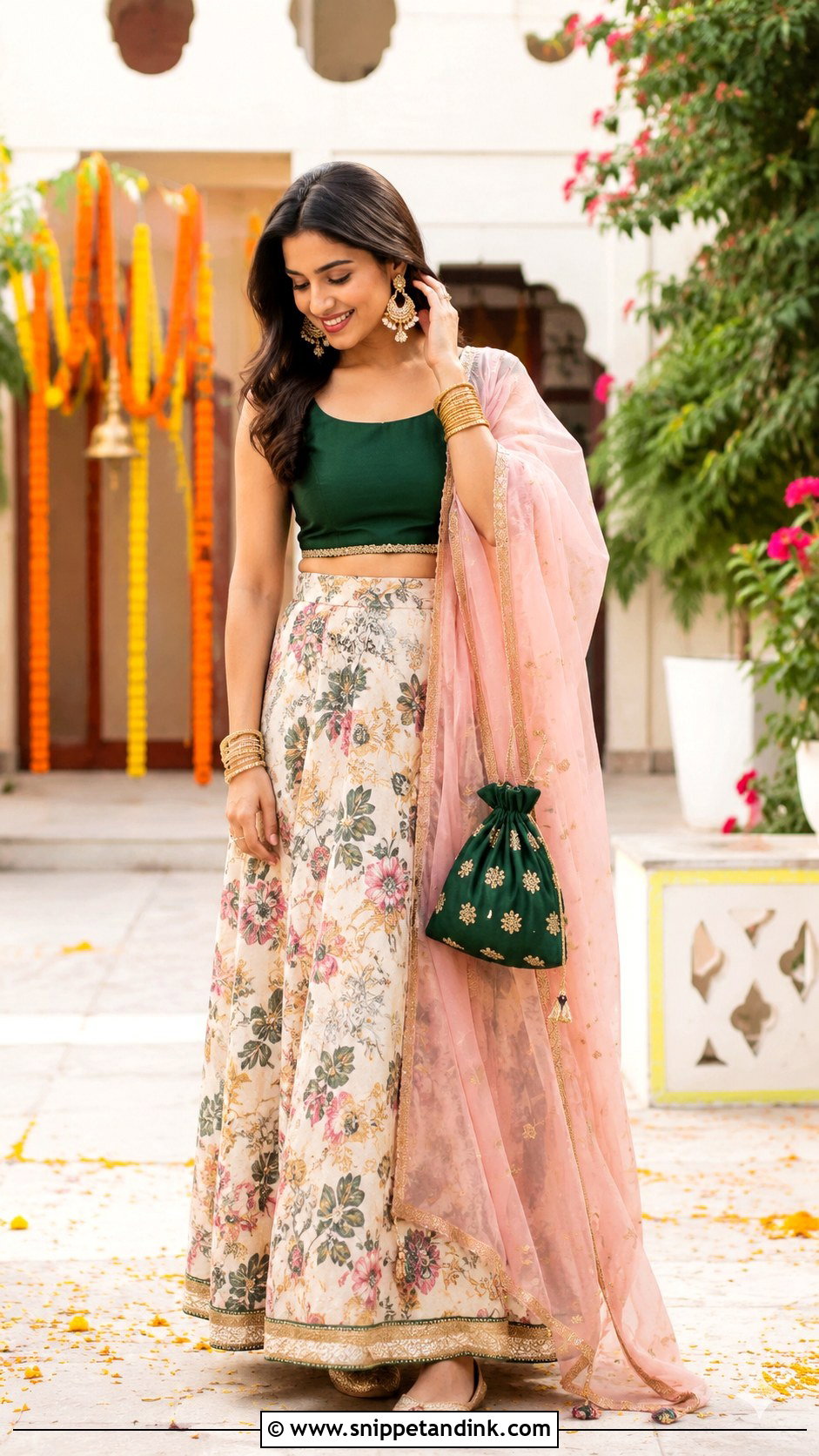
A long ethnic skirt with a blouse and dupatta gives you a lehenga look with none of the weight, and you may already own half of it. Choose a printed, woven or lightly embroidered skirt with a solid blouse, then a sheer dupatta for a traditional feel or a contrasting one for color. Earrings, bangles and juttis or low heels keep it simple. I like this combination for guests attending several events, since each piece can be remixed with something else the next day. Mehendi, haldi and small ceremonies suit it.



25. Simple Dhoti Set Indian Wedding Dress
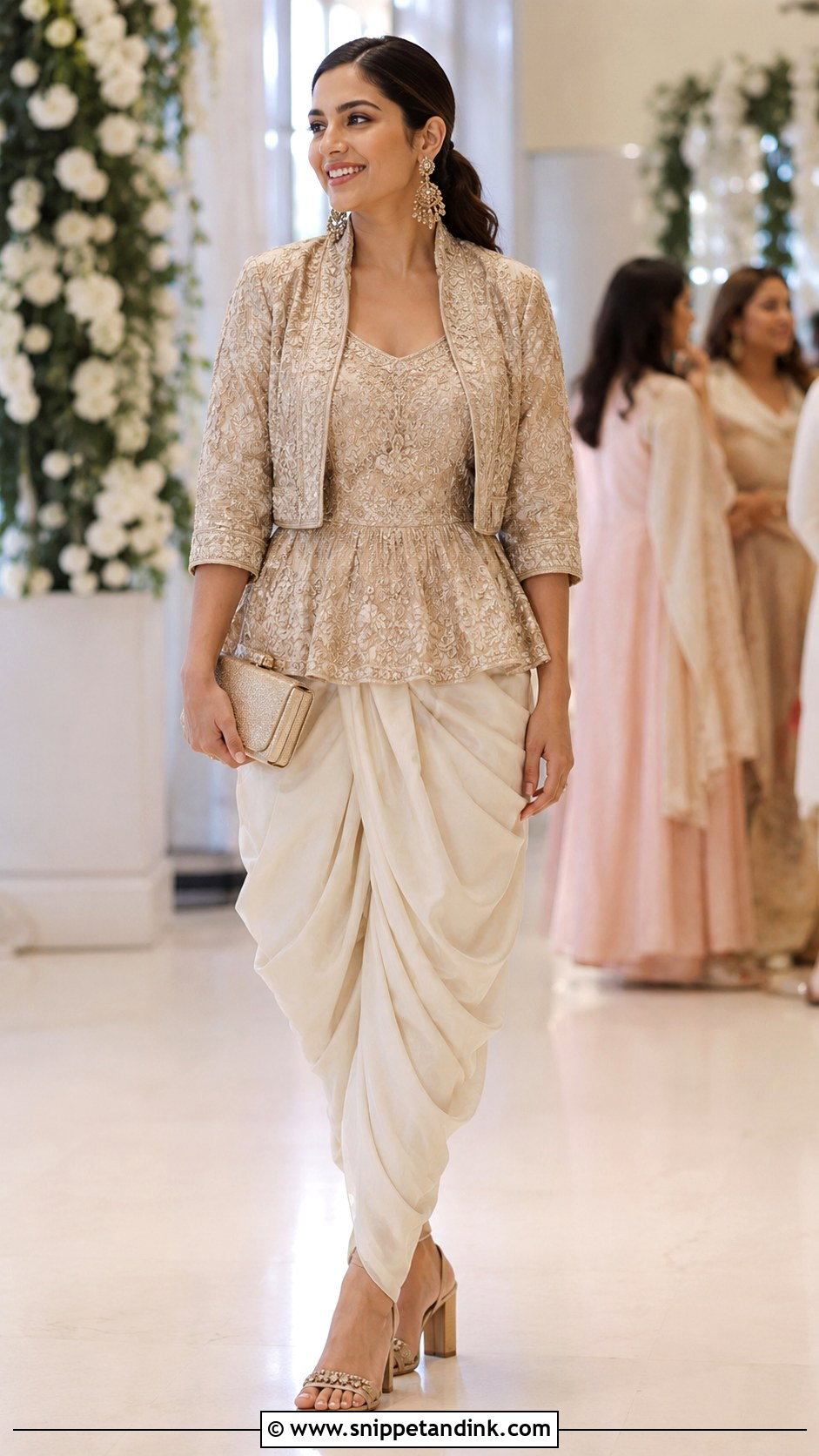
A dhoti set is a modern Indian wedding dress for someone who’d rather dance than manage a drape. Draped dhoti pants pair with a kurta, crop top, peplum or jacket. For a wedding, silk, crepe, georgette or a brocade detail make it feel dressed up, and a short embroidered jacket or dupatta adds a traditional note. Ask for the dhoti to be pre-stitched; tying one yourself for every event gets old fast. Statement earrings, block heels and a clean clutch finish it for a sangeet, mehendi or fusion celebration.
Temple, Gurdwara or Ballroom? The Venue Changes the Outfit
Guests from outside the culture often ask me what not to wear. The honest answer varies by family and region, so the best thing you can do is ask the couple. A few points come up again and again, though.
- At a Sikh ceremony in a gurdwara, everyone covers their head and removes their shoes, and guests usually sit on the floor. Bring a dupatta or scarf, and wear something you can sit cross-legged in.
- Many Hindu temple ceremonies also mean shoes off at the door, so choose footwear that slips on and off easily.
- In many North Indian families red is the bride’s color, so guests avoid head-to-toe red. A red border or detail is usually fine.
- Some traditional families consider all-white or all-black outfits unsuitable for a wedding. A modern couple may not mind at all; ask if you’re unsure.
- Covered shoulders are the safer choice for religious ceremonies, even if the reception is more relaxed.
Hotel and banquet receptions are the most flexible. That’s where I’d put the Indo-western gown, the cape dress or the dhoti set. For the ceremony itself, traditional shapes rarely put a foot wrong.
Daytime Cotton, Evening Silk
A simple outfit can look every bit as festive as a heavily embellished one when the fabric, color and fit are right. A light saree, a soft lehenga, an anarkali, a sharara or kurta set, or an Indo-western dress will keep you comfortable through a long day. Let the event and the time of day lead: breathable fabrics and softer colors for daytime, jewel tones and silk or a bit of shimmer for the evening. Then try the whole outfit on together, shoes and jewelry included, and sit down in it once before you pack.
You'll Like These Ideas:






Leave a Reply