
Dressing for a Walima outfit as the bride’s sister is a different brief from dressing a guest. You’ll stand next to her in the family portraits, greet people at the door and probably run a few errands between courses. So the outfit has to look special, move easily and never pull focus from her. Soft pastels, floor-length cuts and refined embroidery on organza, chiffon, tissue, velvet or raw silk all fit the occasion. Below are 25 head-to-toe looks, and with each I’ve noted what I’d check if you were standing in my fitting room.

How Close Your Colour Should Sit to Hers
You’ll be beside the bride in more photos than almost anyone, so the relationship between your outfit and hers matters more than your outfit alone. I ask sisters to bring a photo or a fabric swatch of the bride’s Walima outfit to their own fitting.
- Same colour family, different depth. If she’s in pale blush, a deeper rose or mauve looks related without competing.
- Or pick a gentle contrast. Sage or powder blue next to a pink bride reads fresh and calm in group shots.
- Keep your embroidery lighter than hers. A good rule is that her outfit should look heavier from three metres away.
- Skip white and plain ivory unless she suggests it, and avoid anything with a long trail or a veil-like dupatta over the head.
If several sisters and cousins are coordinating, agree on a palette rather than one exact shade. Three or four related pastels look far better in a group photo than five women in identical mint.
1. Pastel Pink Walima Dress With Lehenga
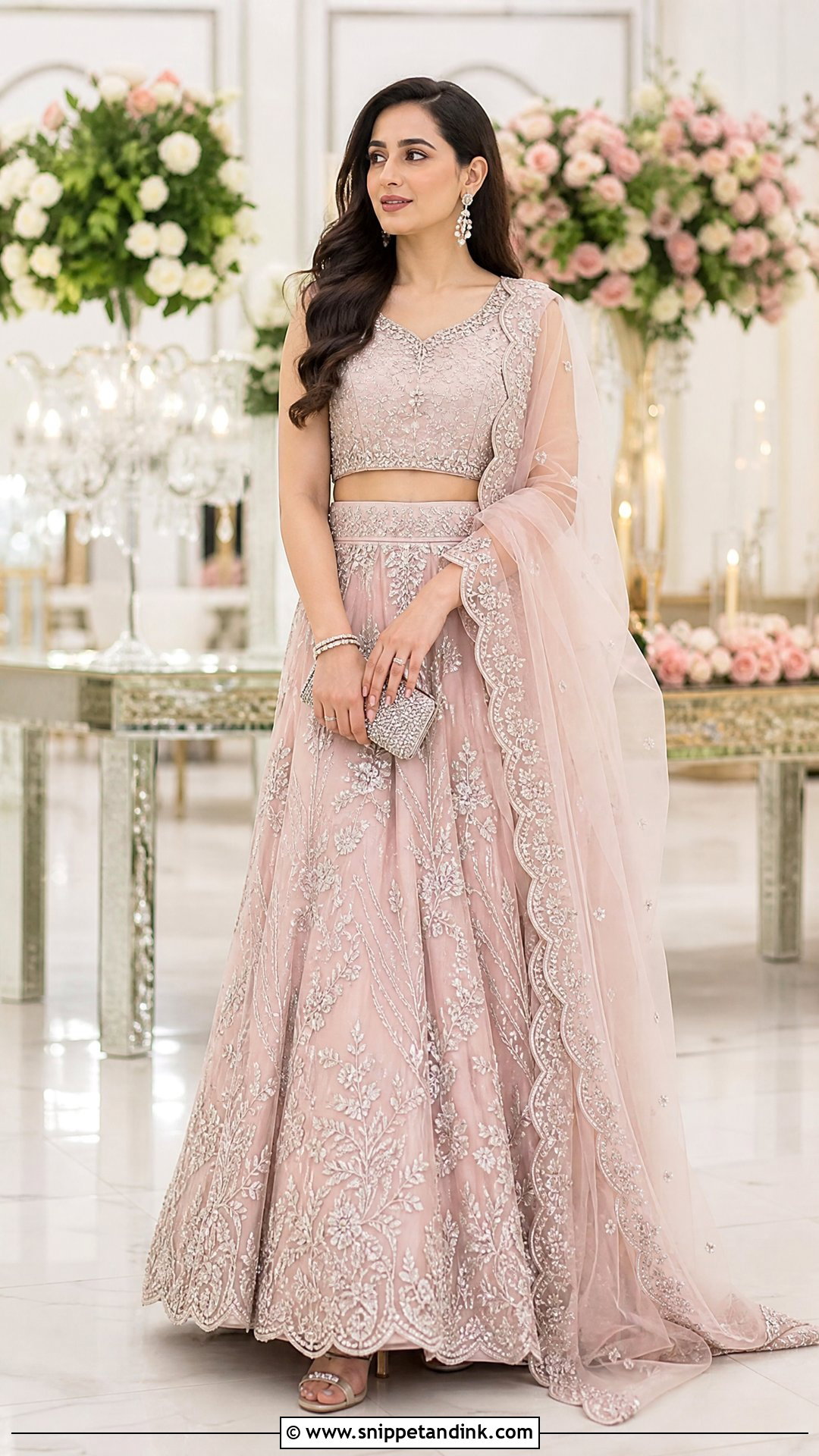
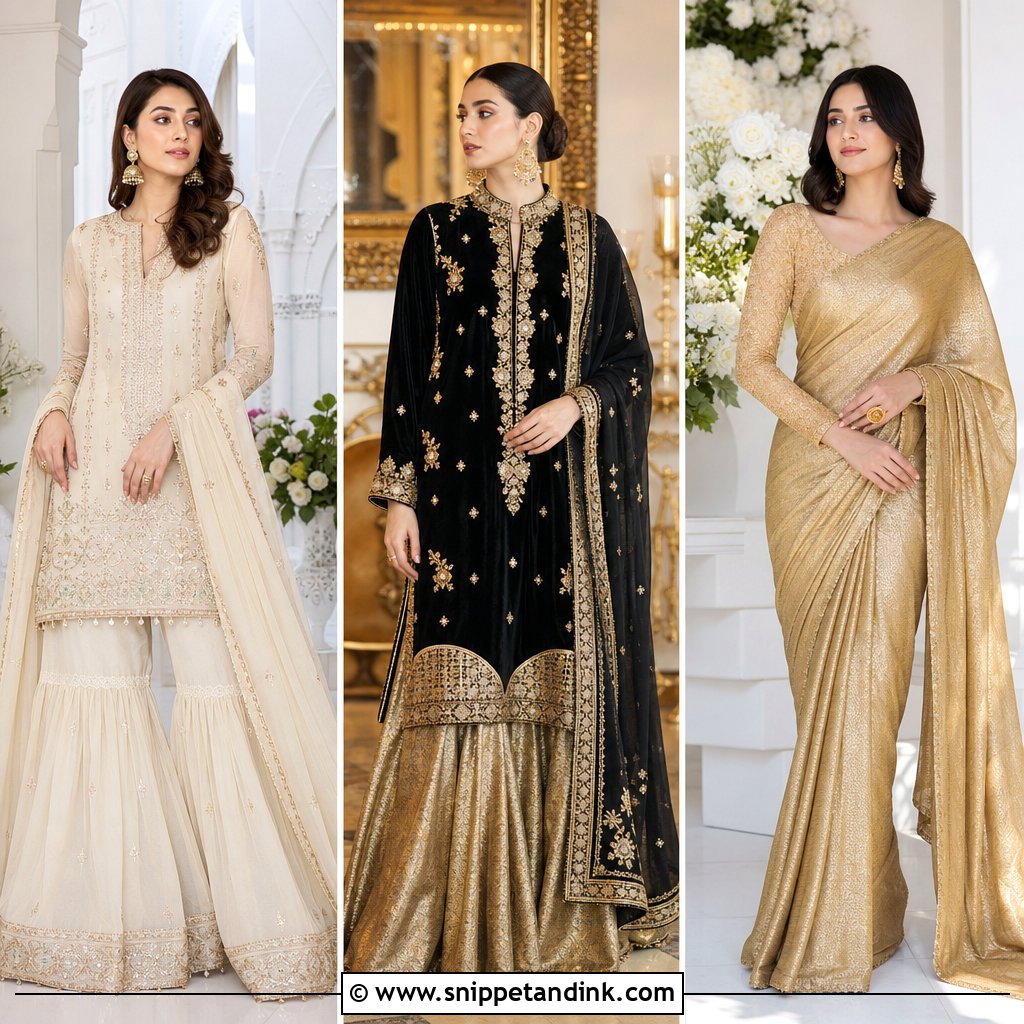
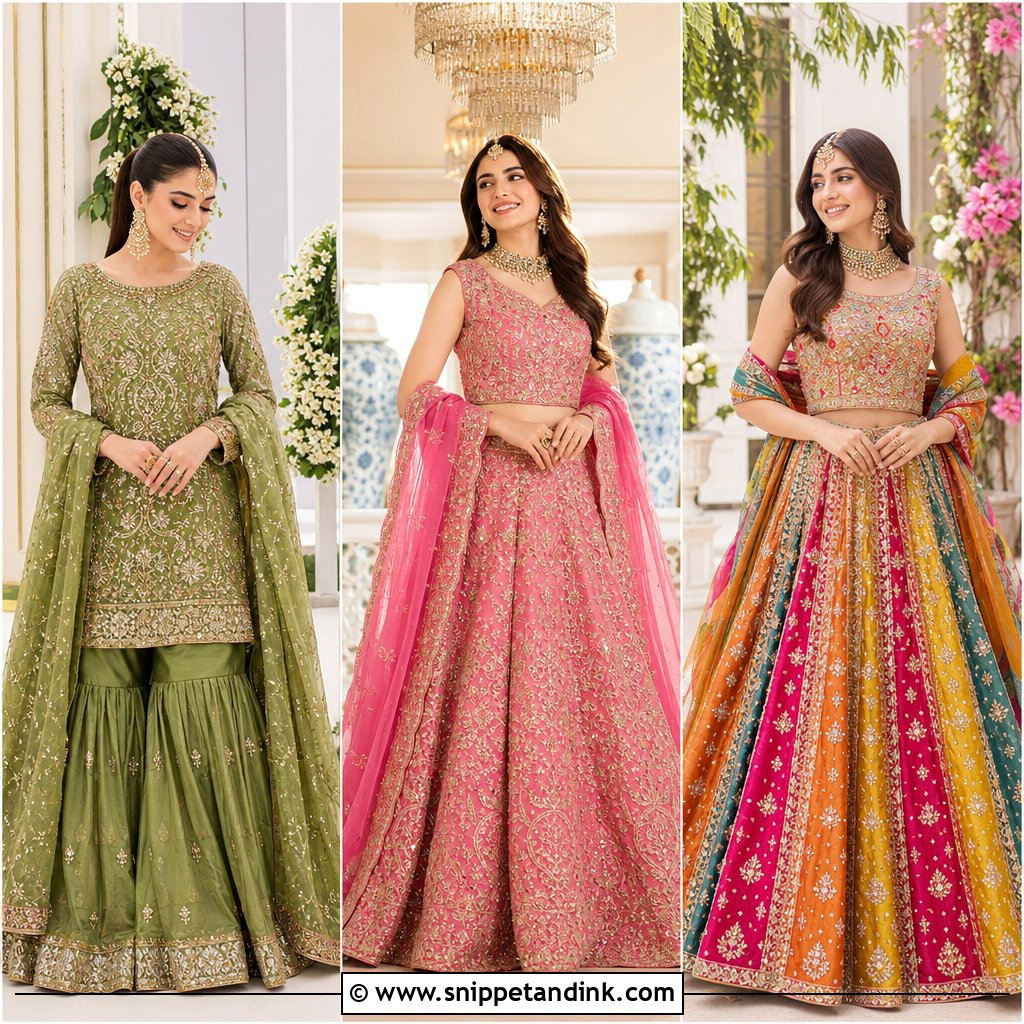
Pink is the colour I’d double-check first, because so many Walima brides wear it. If she’s in blush, go a shade deeper toward dusty pink or mauve so you read as family, not as a copy. A flowing organza or tissue lehenga with light silver embroidery, a fitted blouse with a modest neckline and a sheer dupatta with a narrow scalloped edge. Silver heels, a crystal clutch, pearl drops, and soft curls or a low bun.
2. Ice Blue Walima Dress With Long Shirt
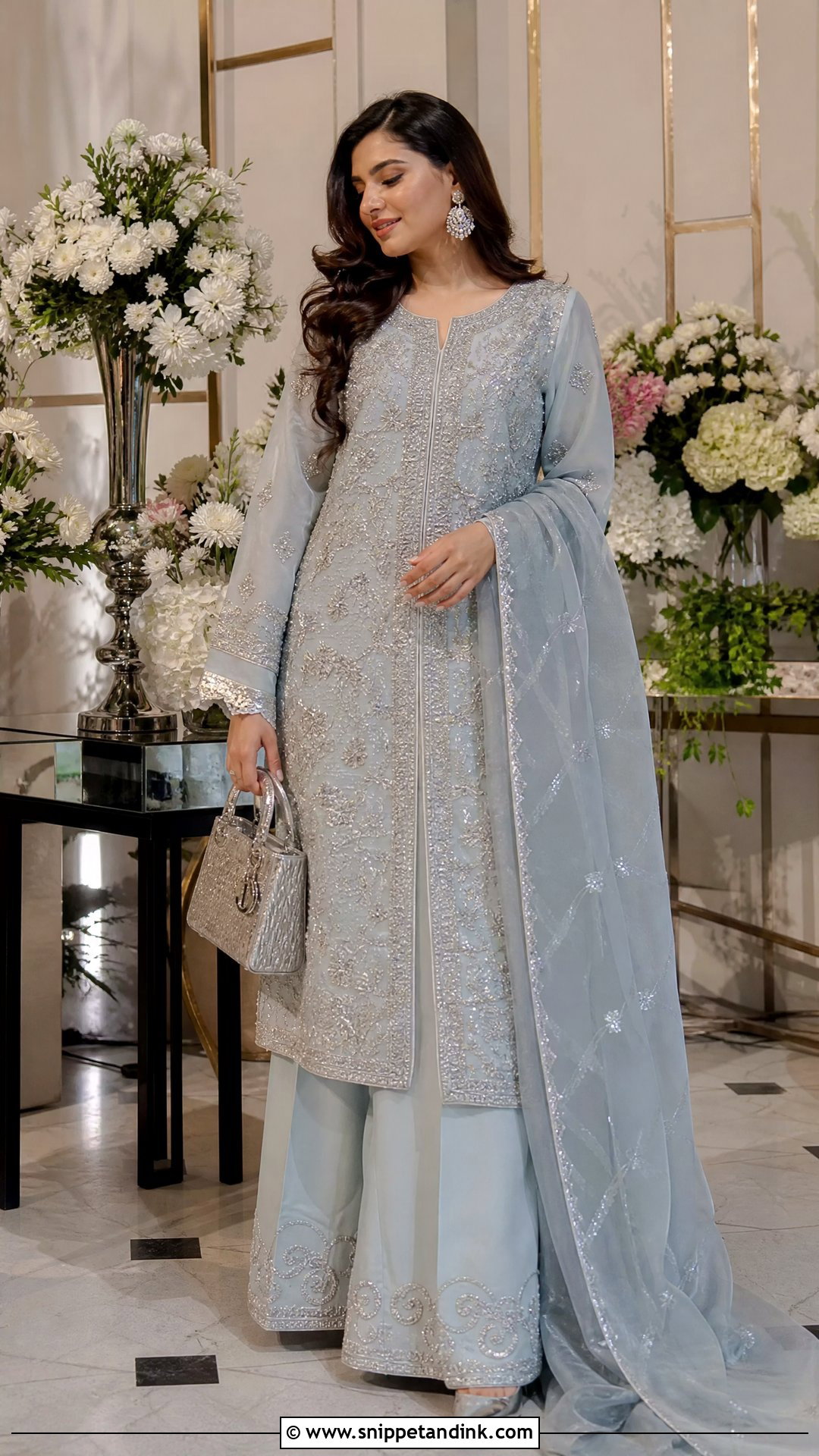
Ice blue looks cool and polished at an evening reception. A straight or slightly flared long shirt with silver threadwork and small crystals at the neckline and hem, over wide-leg trousers or a lightly worked lehenga. Drape a blue-grey dupatta over one shoulder so both hands are free. Silver pointed heels, a metallic bag and chandelier earrings. I’d hold the earrings to your face in a mirror with the dupatta on, since long chandeliers tangle in net.
3. Sage Green Walima Dress With Sharara
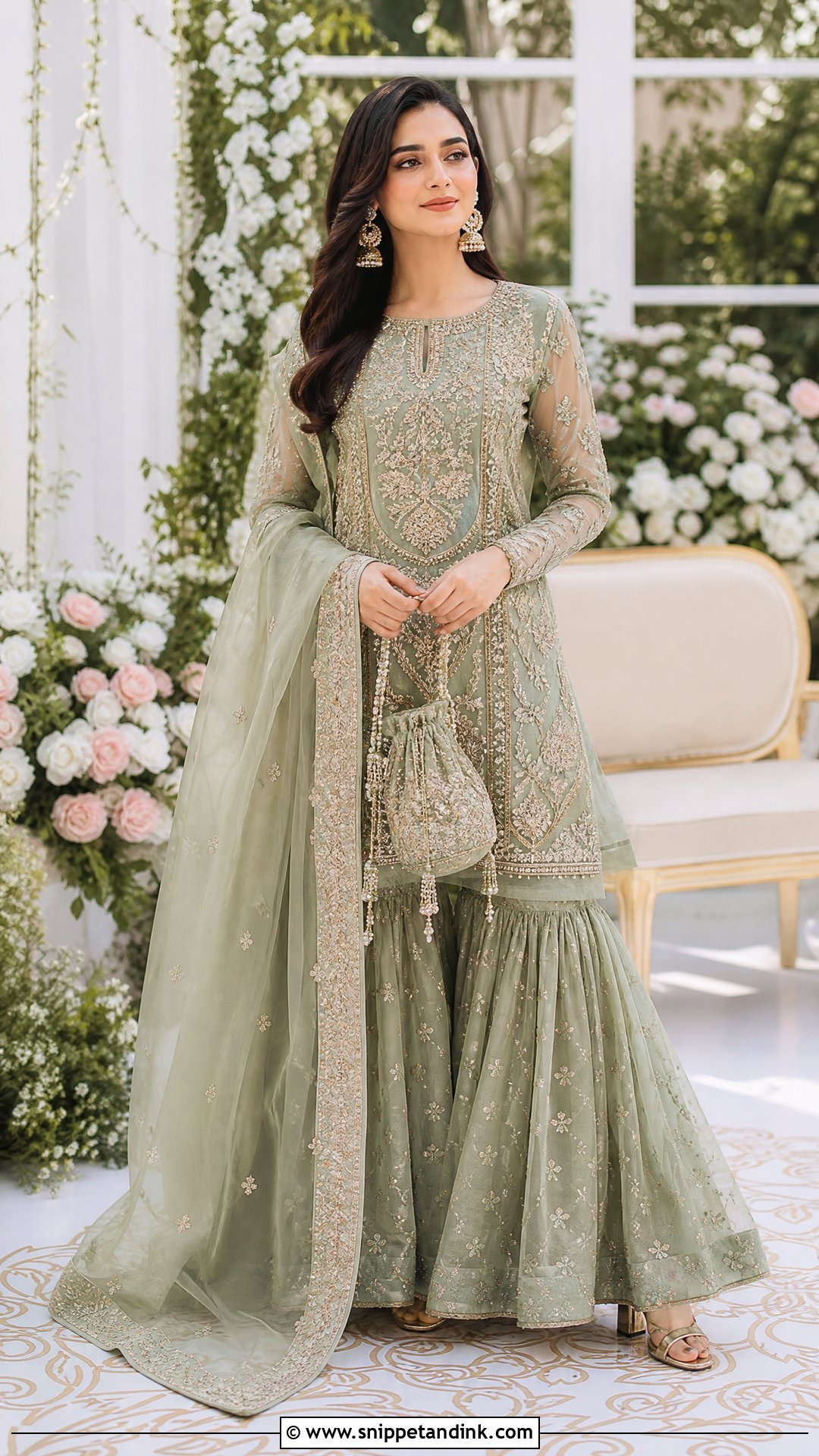
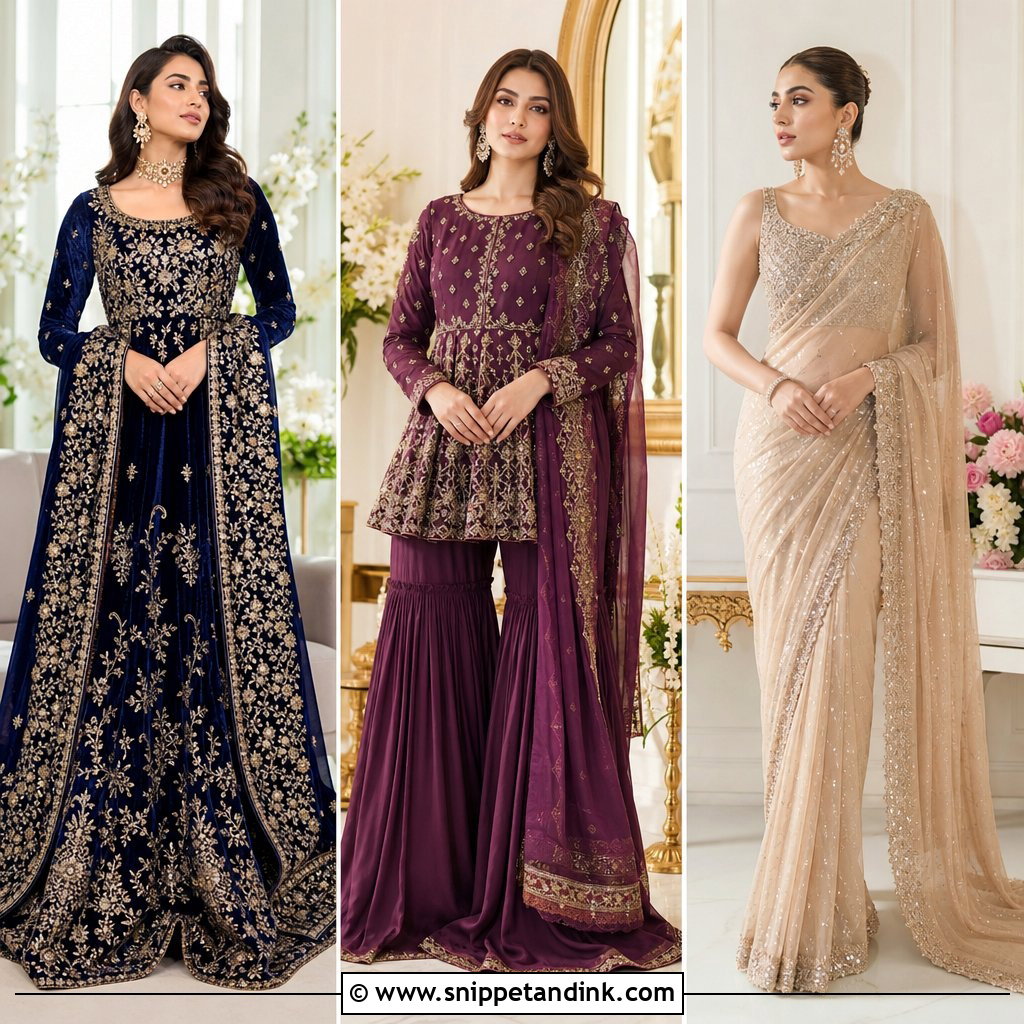
Sage green with a sharara is comfortable and still looks dressed up. A short kameez with champagne embroidery, a structured neckline and three-quarter sleeves, and a sharara that flares below the knee with small motifs rather than heavy work. A light organza dupatta with a border. Champagne heels, a beaded potli and antique gold earrings warm the green. A braided bun or side-swept waves show off the neckline. It suits a daytime garden Walima, where you’ll be on your feet the whole time.
4. Silver Gray Walima Dress With Maxi Gown
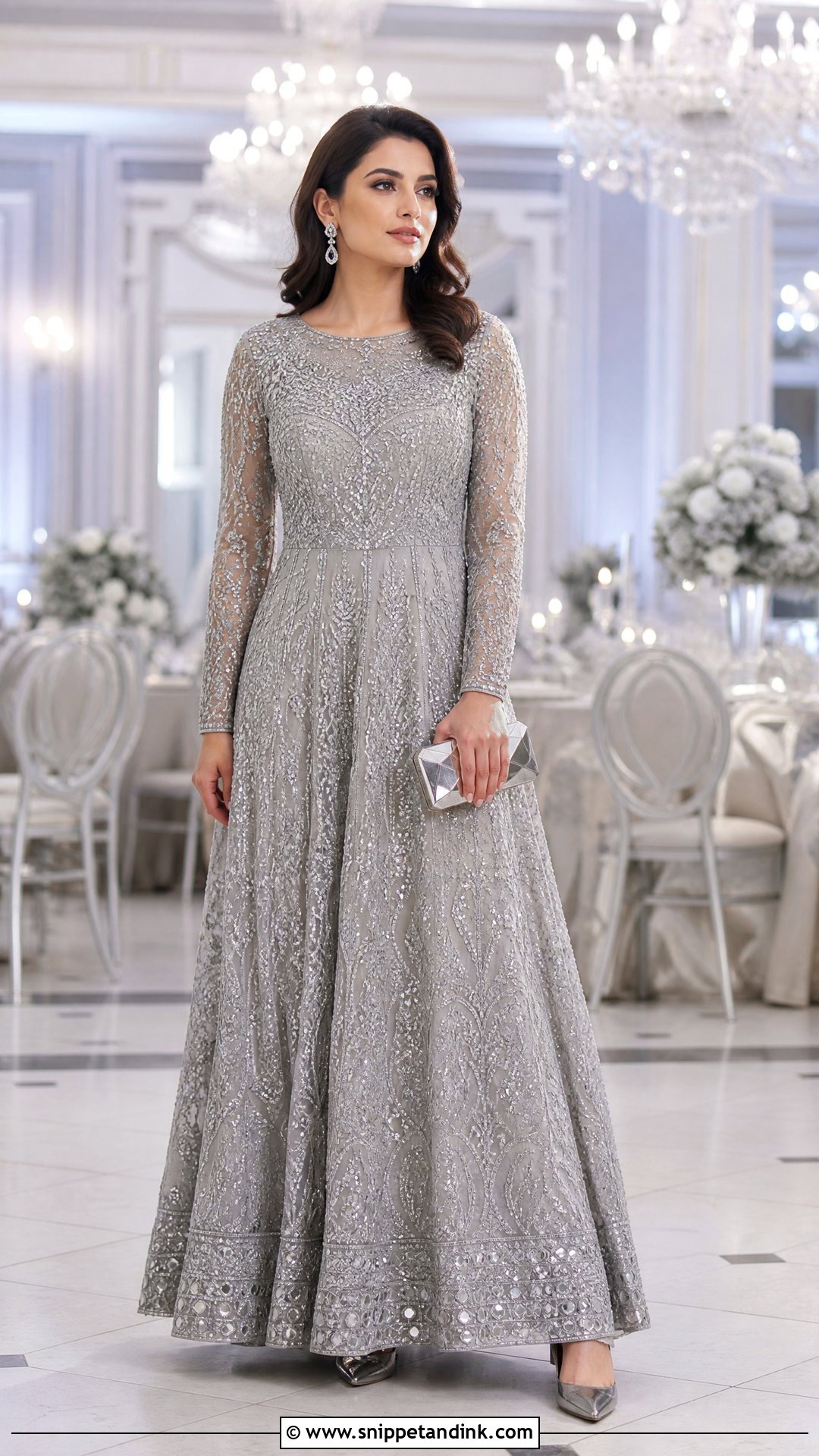
A silver-grey gown in an A-line or panelled cut gives quiet glamour. Tonal sequins, crystal vines and fine beading add depth without breaking the monochrome. Full illusion sleeves give coverage. Pewter heels, a mirrored clutch and slim diamond-style earrings, and nothing more: the dress reflects enough light. A sleek middle-part bun and cool-toned makeup. Sequins scratch when you hug, so I’d ask the tailor to keep the inner arms plain.
5. Lavender Walima Dress With Pishwas
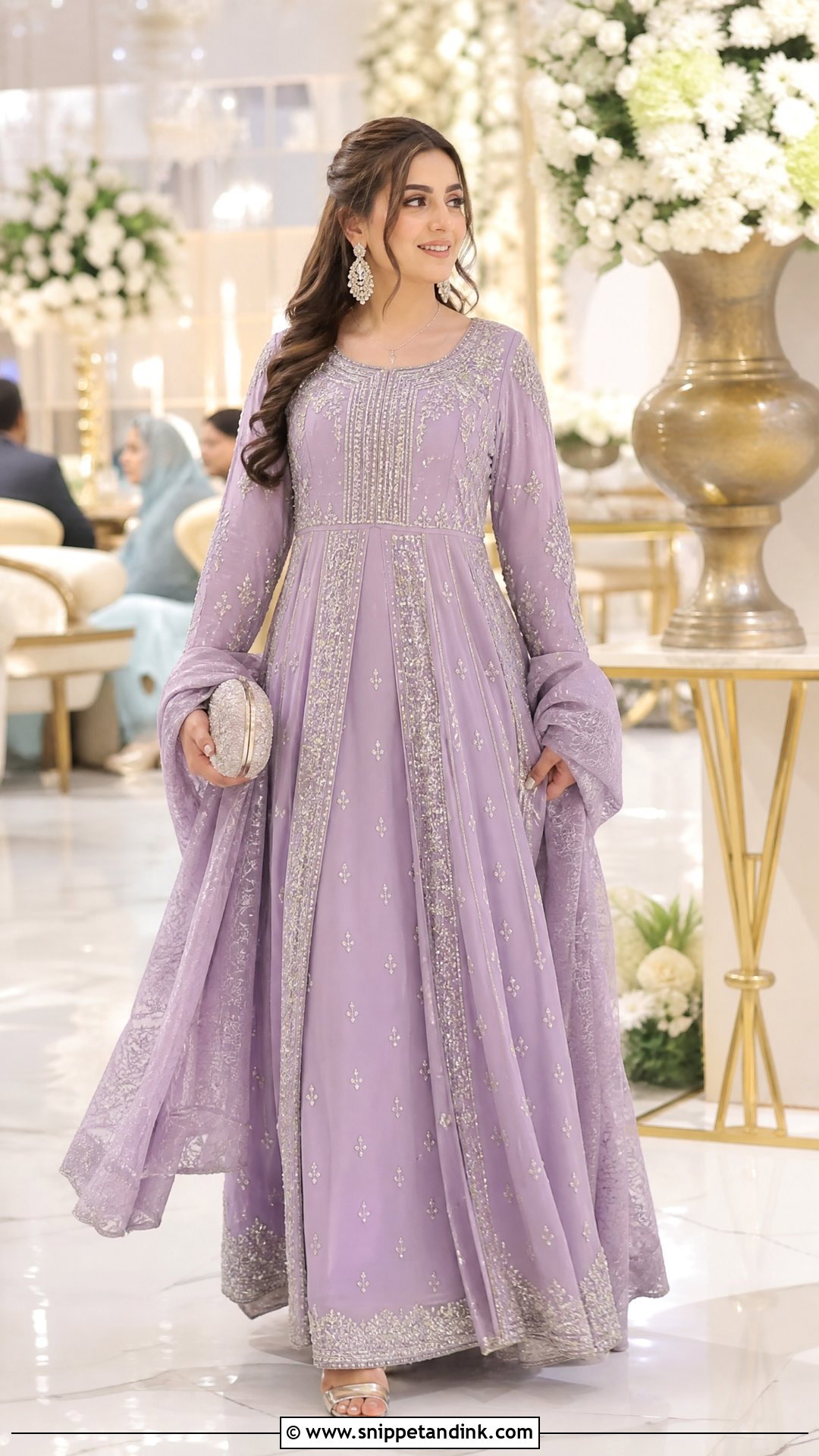
A lavender pishwas makes every entrance feel graceful, but only if there are enough panels. Too few and it hangs flat; too many and it swamps you. A fitted bodice, defined waist and silver or pale gold embroidery at the neckline, cuffs and hem. A net dupatta with scattered sequins worn loosely over both arms. Metallic sandals, a small embroidered clutch and long earrings. Half-up hair keeps it young. Deeper lilac tones carry it into cooler months.
6. Champagne Gold Walima Dress With Saree
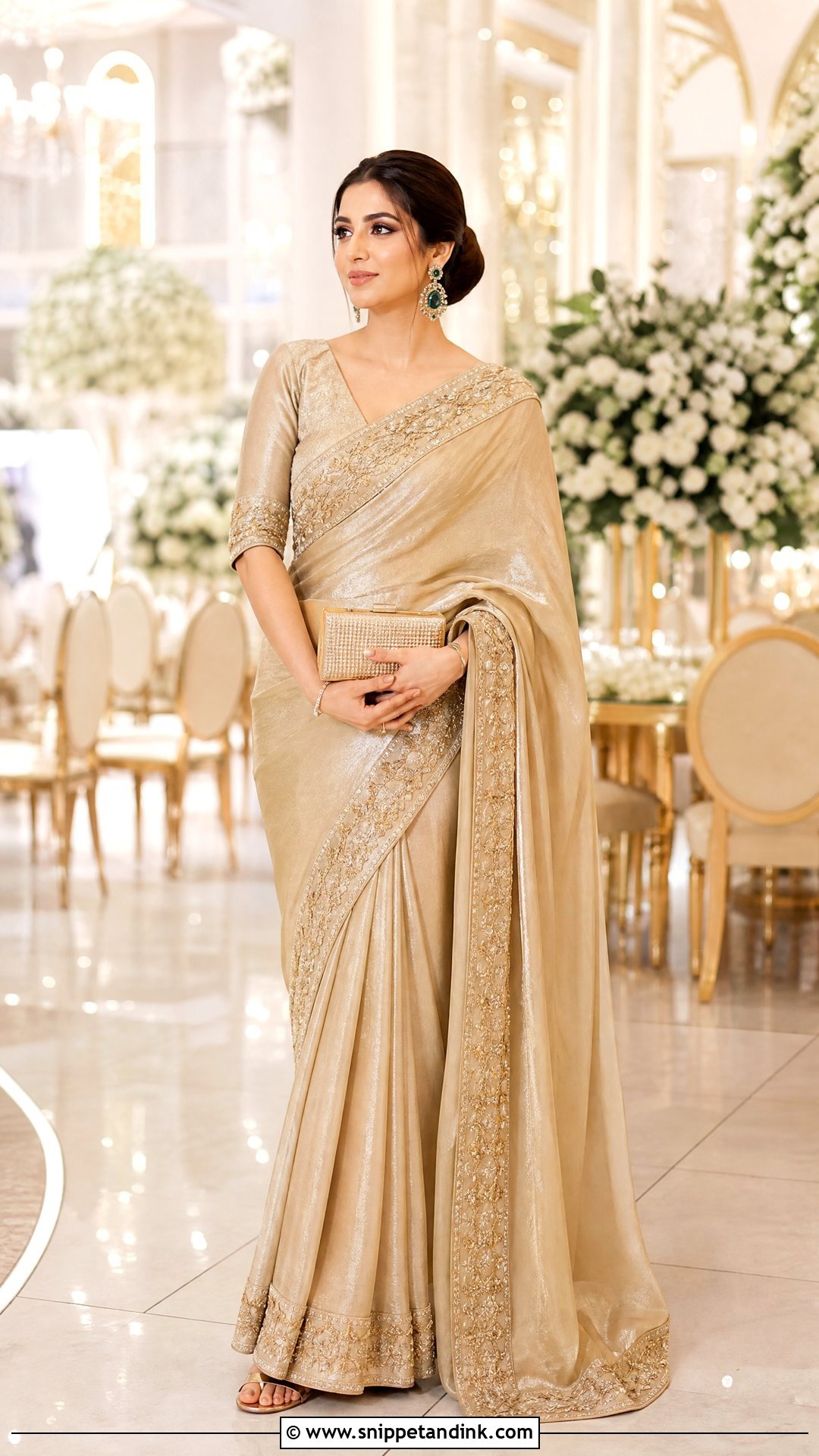
Champagne gold in a saree feels mature and polished. Tissue silk, chiffon or organza drape well without bridal stiffness. Pair it with a fitted blouse with elbow-length sleeves and a soft curved neckline, and keep the embroidery to the border and small scattered motifs. Nude-gold heels, a box clutch, and emerald or ruby earrings for a touch of colour. As the sister you’ll be up and down constantly, so have the pleats pinned firmly and the pallu secured with a brooch at the shoulder. A low bun with a decorative pin.
7. Dusty Rose Walima Dress With Gharara
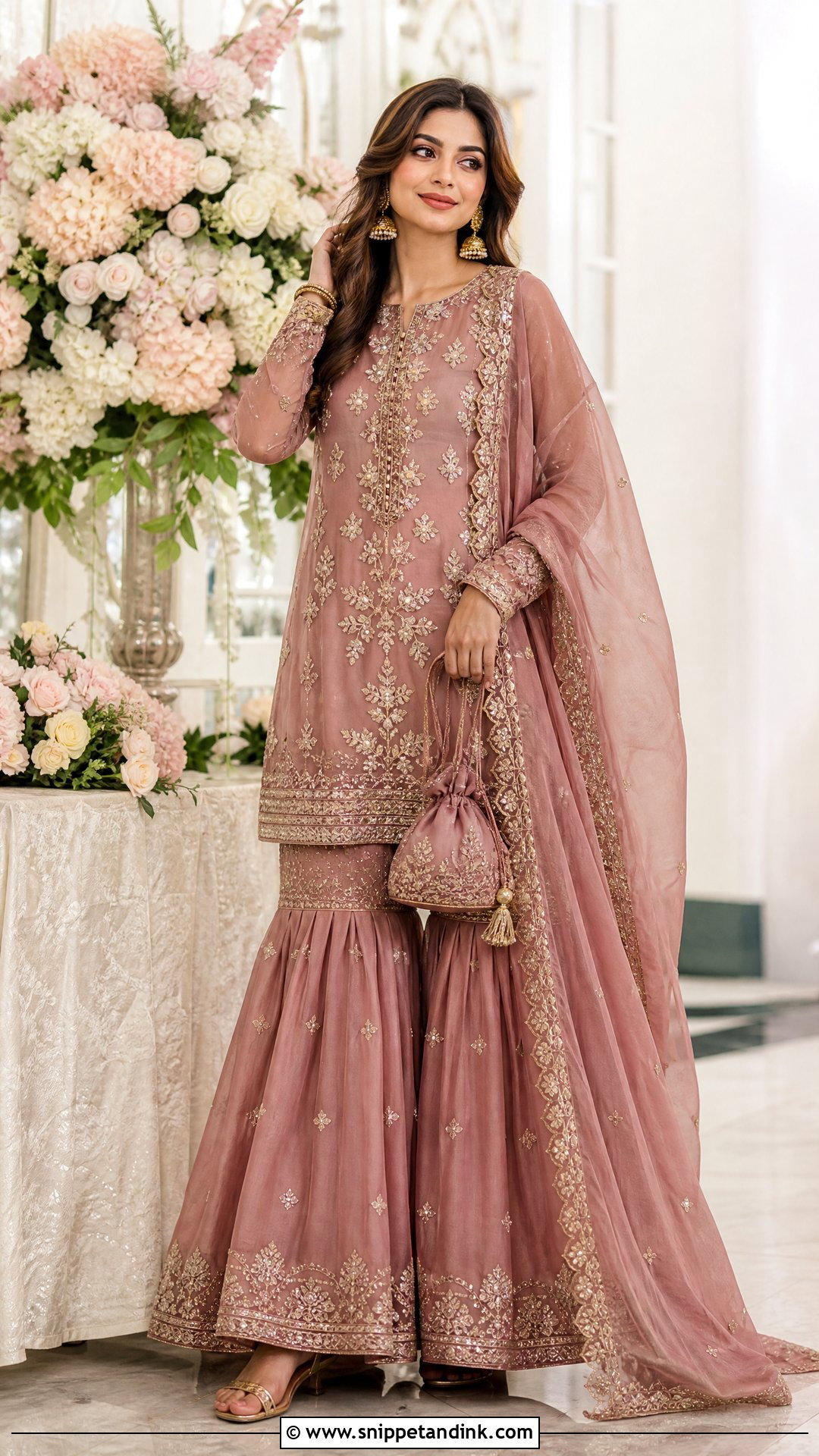
A dusty rose gharara has old-world charm without looking bridal. A knee-length shirt with zardozi, pearl or dabka at the neckline and borders, over a gharara with clear knee gathers and a graceful flare. A chiffon dupatta edged with fine lace. Antique gold sandals, a matching potli and medium jhumkas. A gharara looks best when the shirt stops right at the knee gathers; any longer and it hides the shape. Dusty rose sits well beside champagne, silver, sage and ivory.
8. Navy Blue Walima Dress With Cape Gown
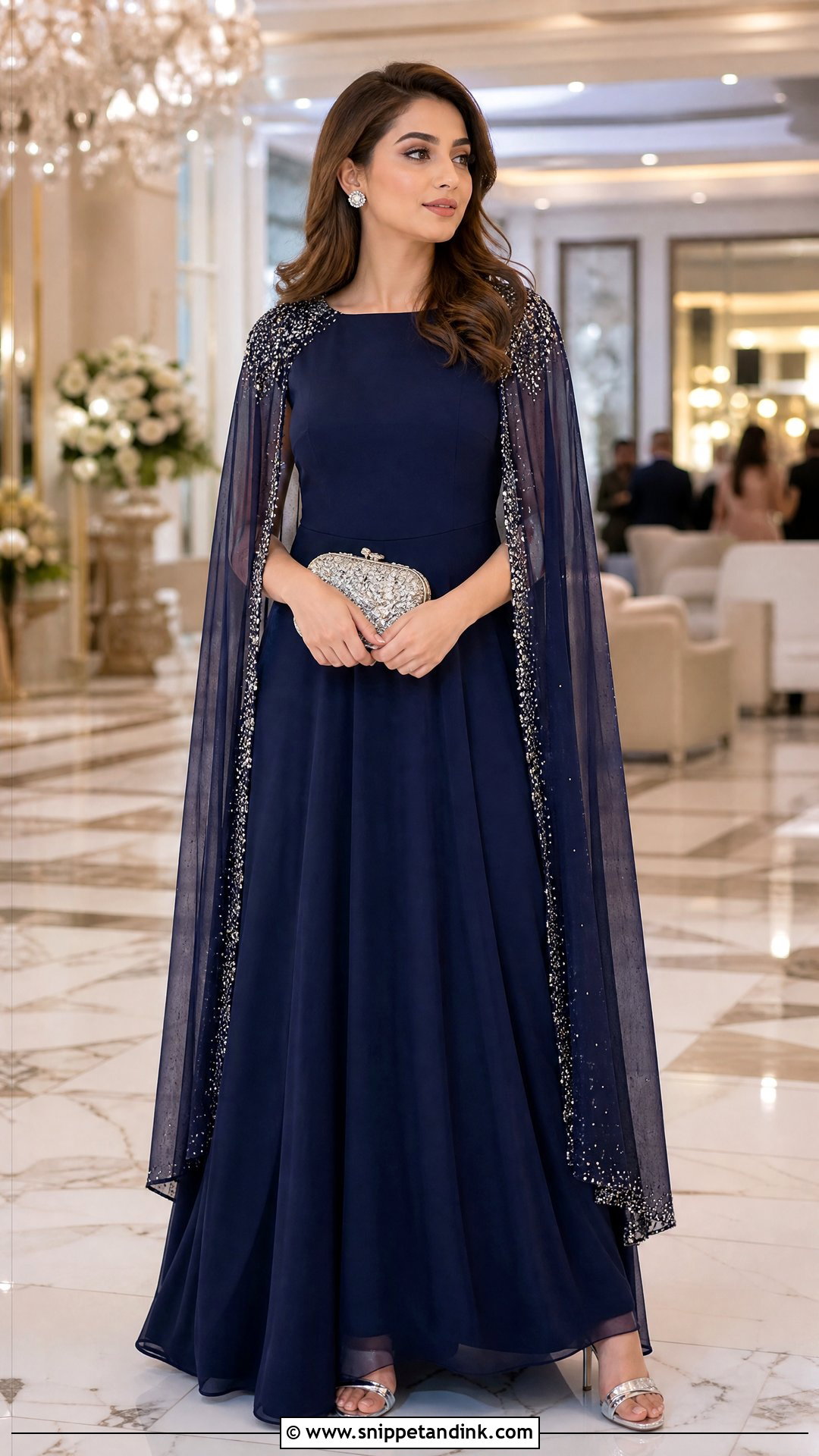
For a reception after sunset, navy with a sheer cape is dramatic but grown-up. A column or A-line gown, a detachable cape from the shoulders, crystal embroidery on the cape border and bodice. Silver heels, a compact crystal clutch and statement studs; long earrings catch on a cape. A sleek low ponytail or bun. Navy beside a pastel bride gives strong contrast in photos. Check with the family first, since some households have firm views on dark colours at weddings.
9. Mint Green Walima Dress With Peplum Lehenga
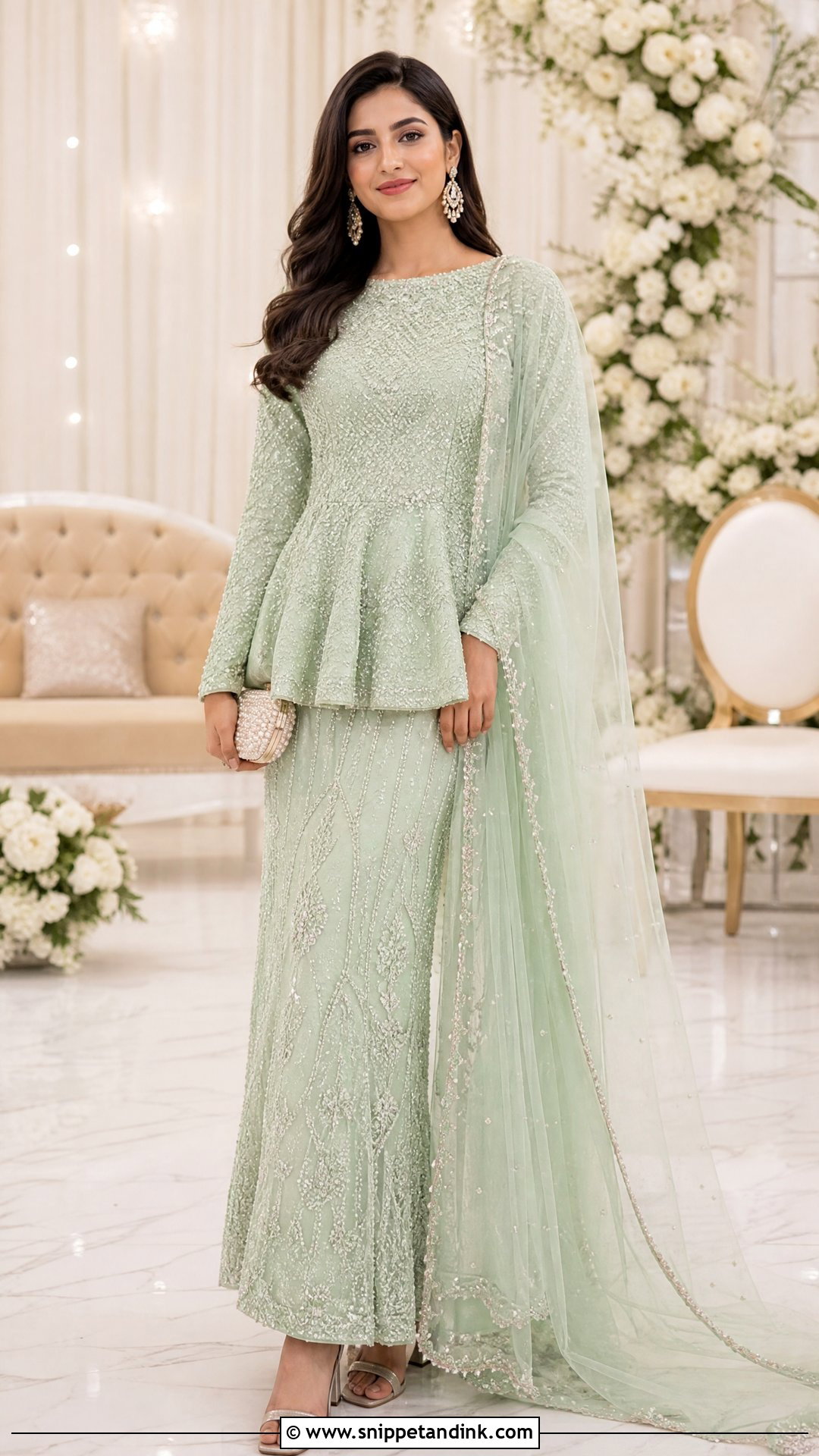
A peplum over a streamlined lehenga gives mint green a modern structure. The peplum should sit exactly at the natural waist and flare gently; set too low, it makes the legs look short. Silver threadwork, tiny pearls or clear sequins. A light net dupatta pinned on one shoulder or draped across the arms. Silver block heels, a pearl clutch and crystal drops. Soft waves and luminous makeup suit the airy shade.
10. Powder Blue Walima Dress With Anarkali
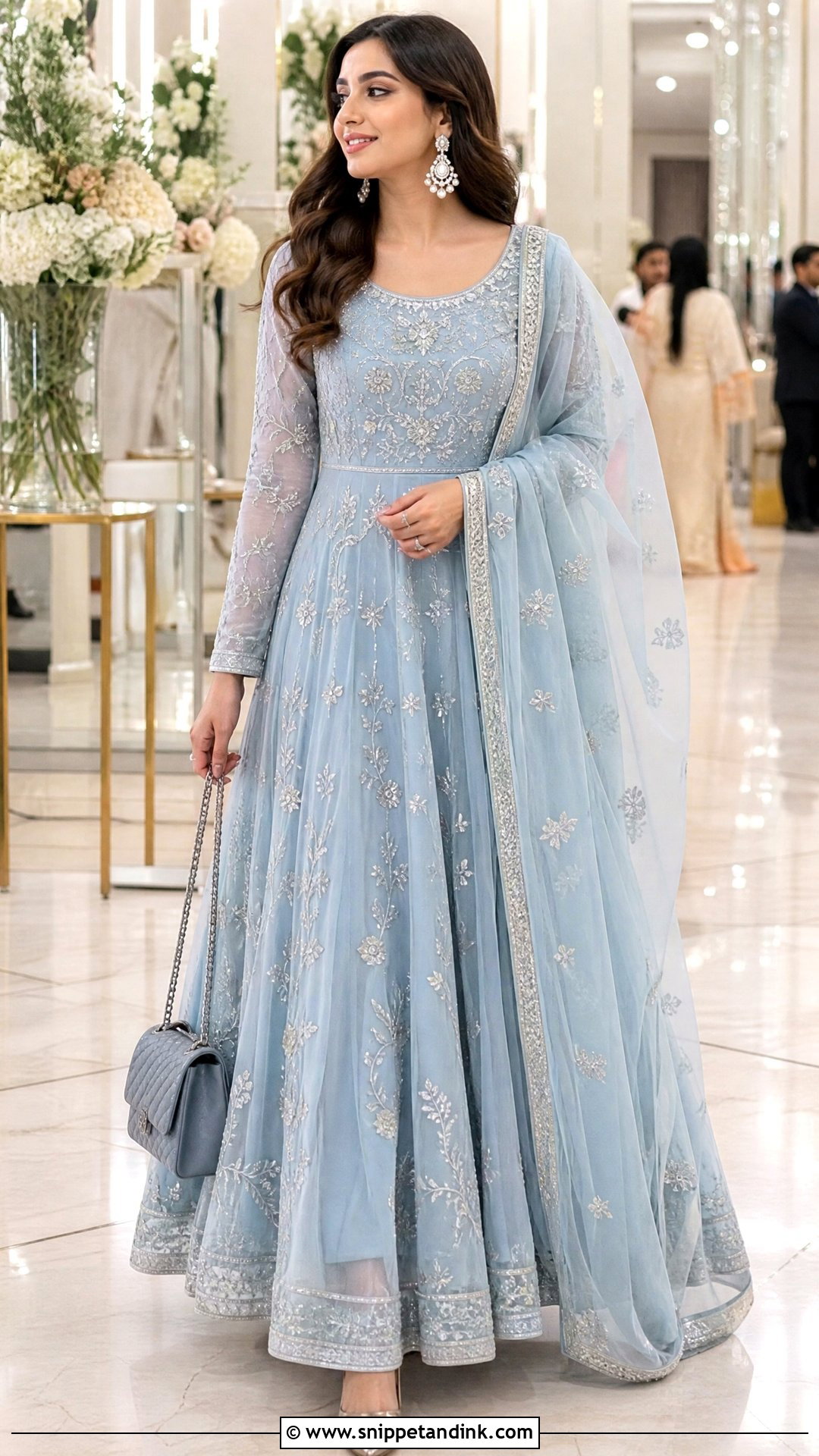
Fitted at the bodice and flaring gently to the floor, a powder blue Anarkali creates a long, flattering line. Chiffon or georgette moves best; a raw silk lining makes it hang properly instead of clinging. Silver floral embroidery on the neckline and lower panels. A sheer dupatta, closed-toe silver heels and a small blue-grey bag. Pearl chandeliers and a delicate bracelet. A half-up twist or smooth blow-dry. It covers well and you can sit on the floor in it for a rasm without fuss.
11. Mauve Walima Dress With Straight Trousers
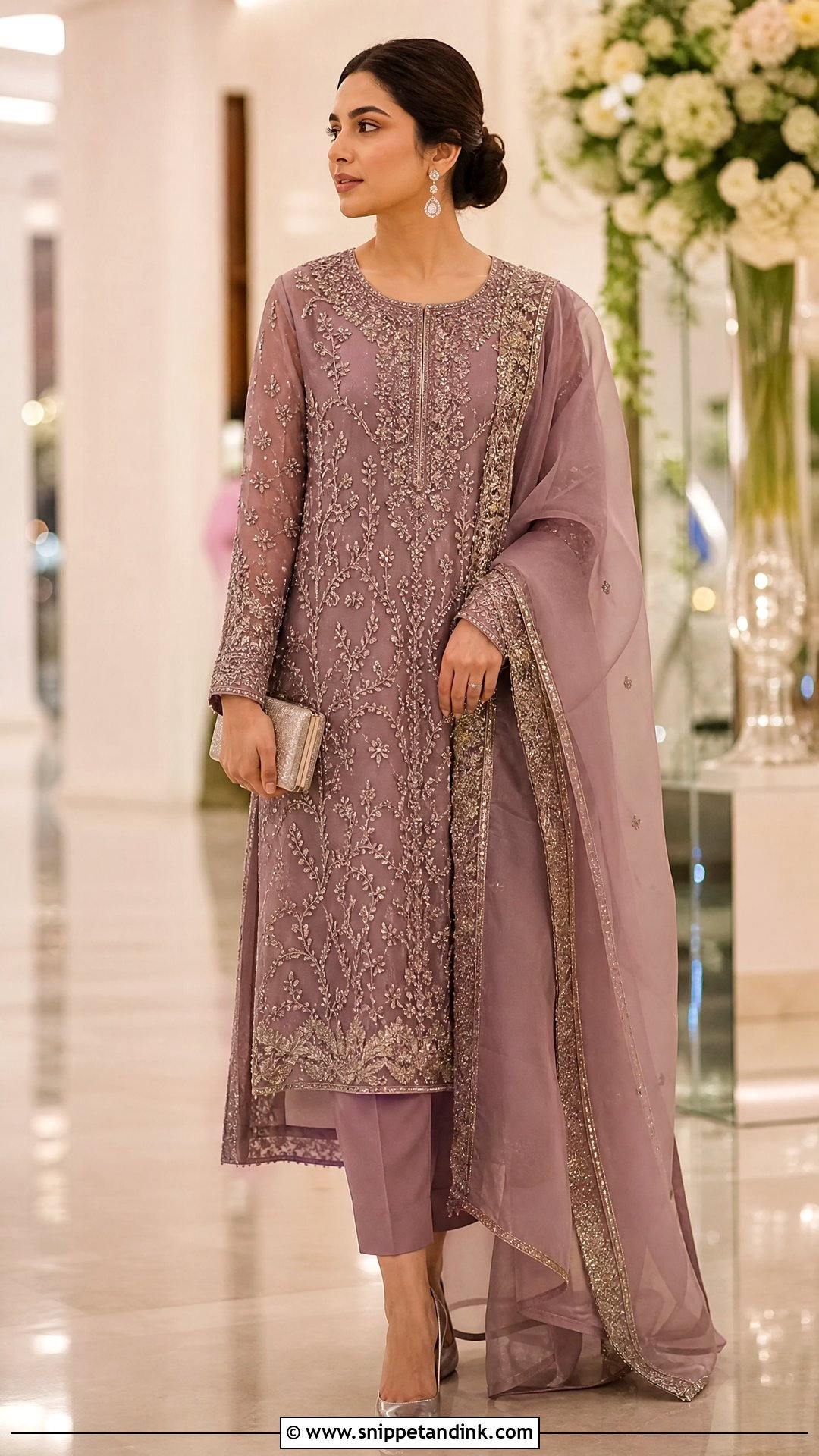
A mauve shirt and trouser set is the practical sister’s choice, and I mean that as a compliment. A knee or calf-length shirt with side slits, structured shoulders and tonal embroidery running down the front. Straight trousers that fall neatly over pointed metallic heels. An organza dupatta with a worked border adds the formality. A silver envelope clutch, pearl earrings, one ring. You’ll move between the stage and the kitchen without lifting a hem once.
12. Peach Walima Dress With Layered Lehenga
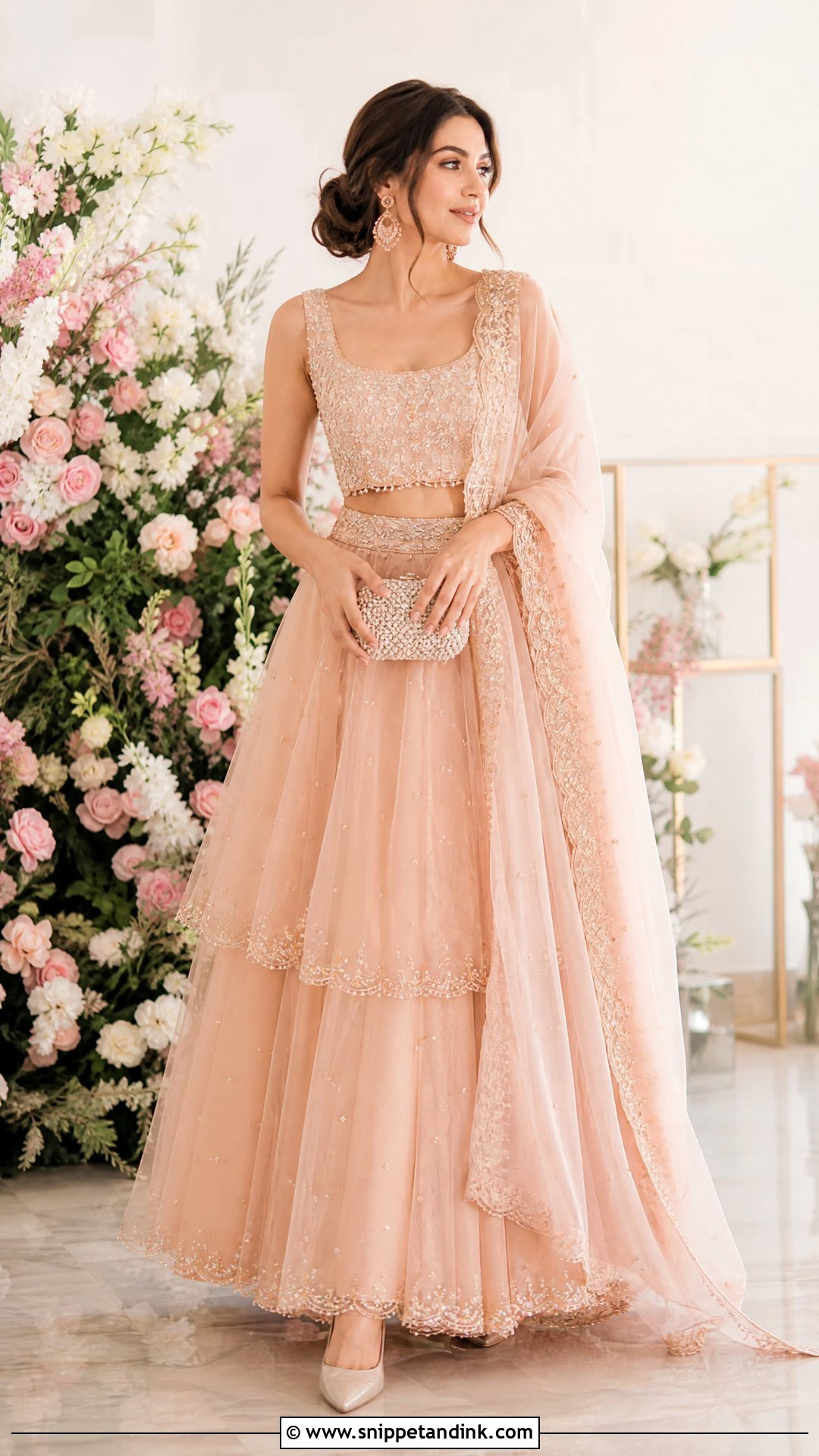
Layers of organza or net over a satin base make a peach lehenga look full without weight. A structured blouse with small floral motifs and pearl detail, sleeves to your preferred coverage. Drape a matching dupatta simply so the skirt doesn’t look overwhelming. Champagne heels, a beaded clutch and rose-gold earrings. A loose low bun with face-framing strands, peach blush and a neutral lip. Net layers snag on embellished heels, so I’d choose a smooth shoe.
13. Emerald Green Walima Dress With Velvet Gown
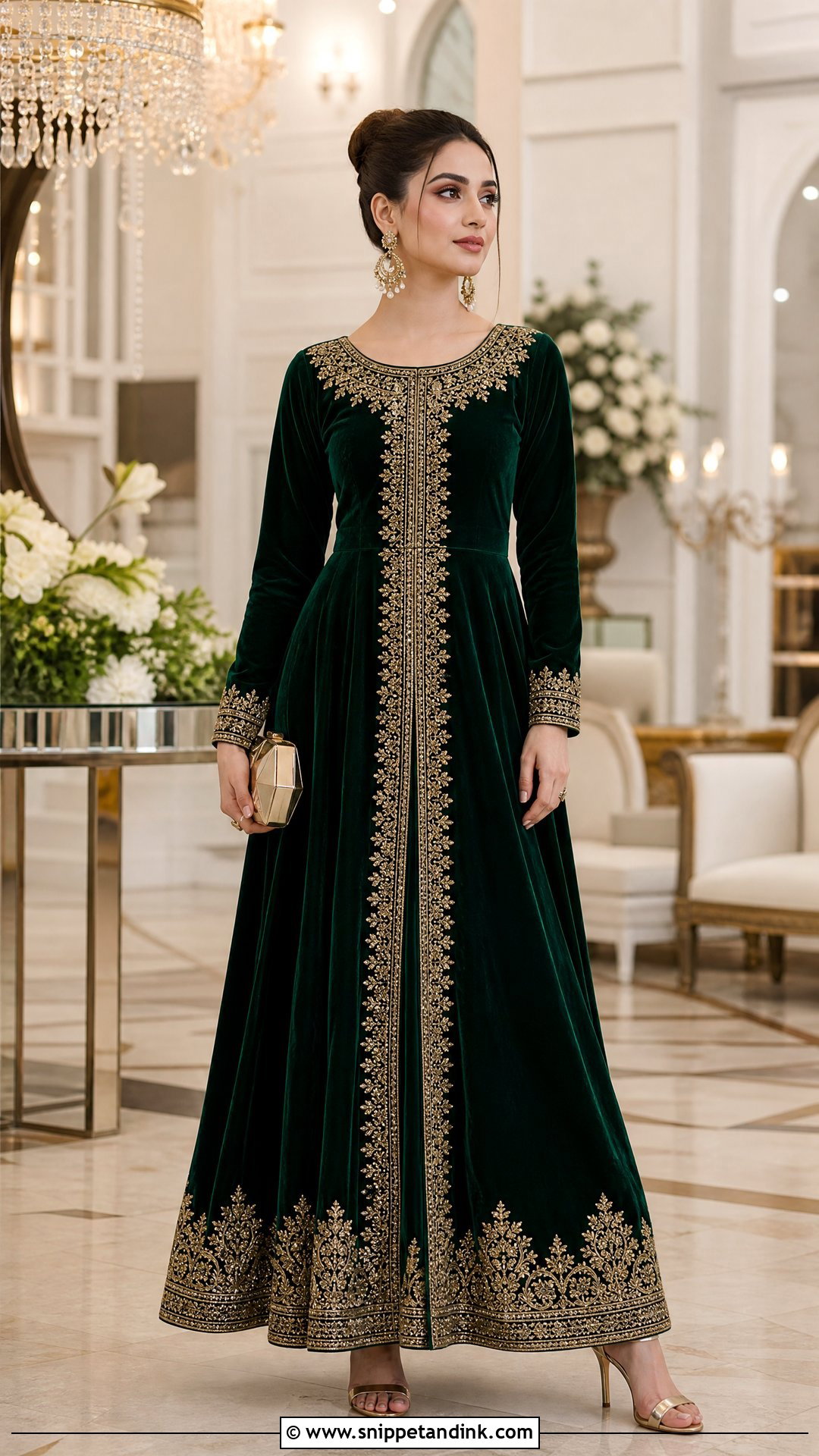
Emerald velvet is the winter Walima option. A floor-length A-line gown with a defined waist and long fitted sleeves, with gold embroidery at the neckline, cuffs and hem and plenty of plain velvet left to show. Add a light net dupatta only if the gown suits one. Gold heels, a structured clutch and classic kundan earrings. Velvet holds heat, so it’s lovely in a cold hall and miserable in a warm one; ask the venue about heating before you commit.
14. Blush Pink Walima Dress With Jacket Lehenga
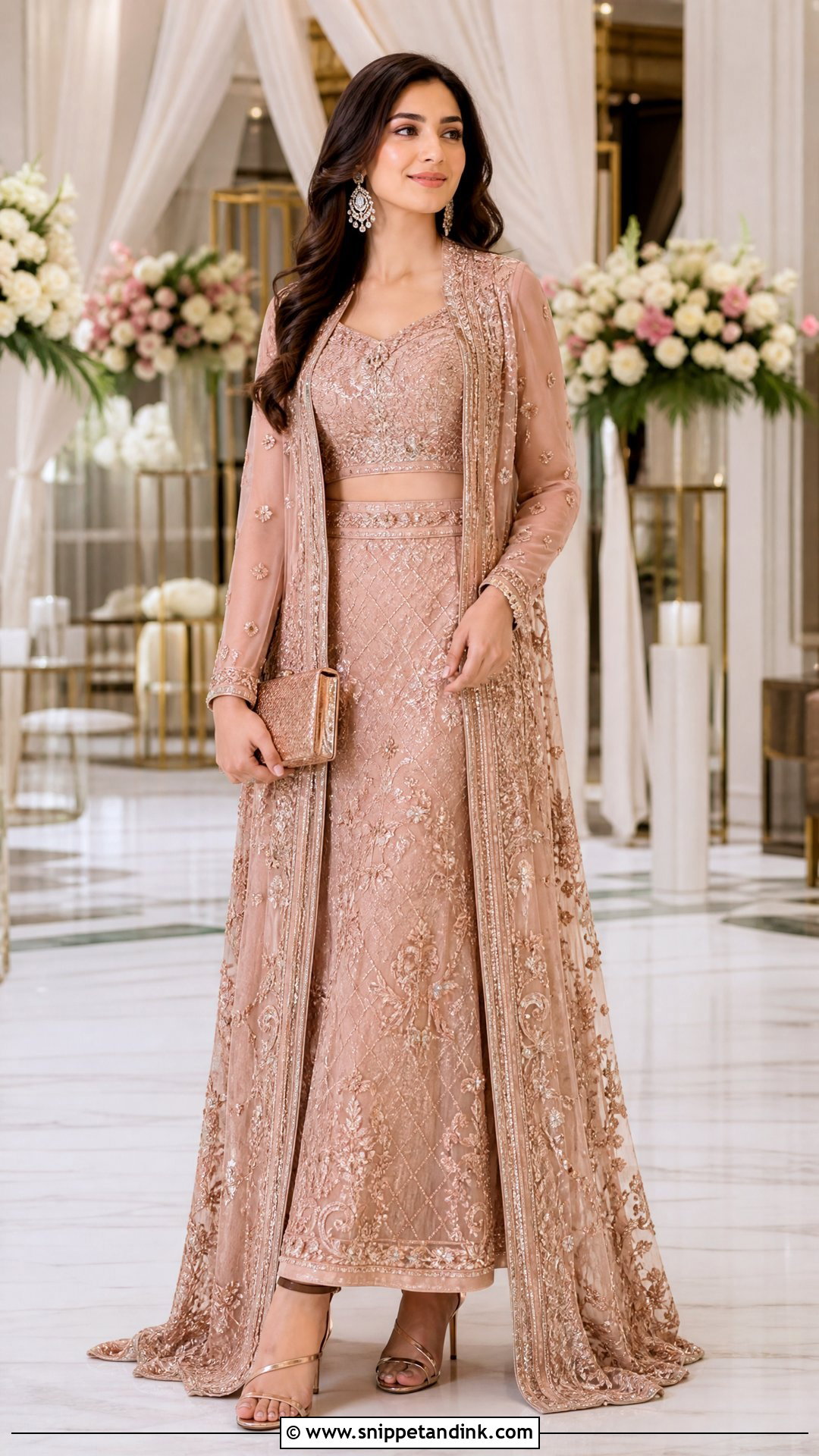
A sheer embroidered jacket turns a simple blush lehenga into something distinctive. A fitted sleeveless or short-sleeve blouse with a moderately flared skirt, then a calf or floor-length organza jacket with embroidery on the front opening, cuffs and hem. It adds coverage and long vertical lines. Nude metallic heels, a rose-gold clutch and small crystal earrings. Keep the lehenga plain since the jacket does the work. The jacket also comes off if the hall gets warm.
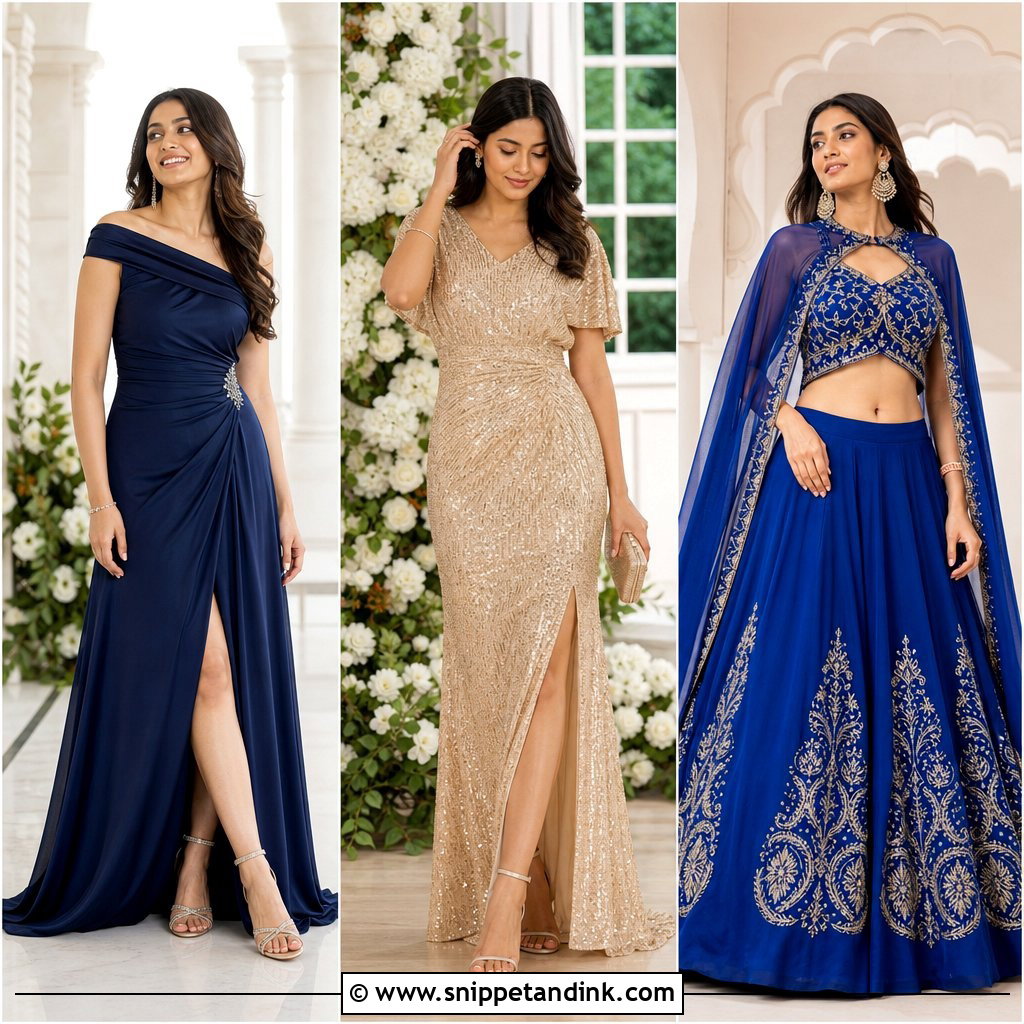
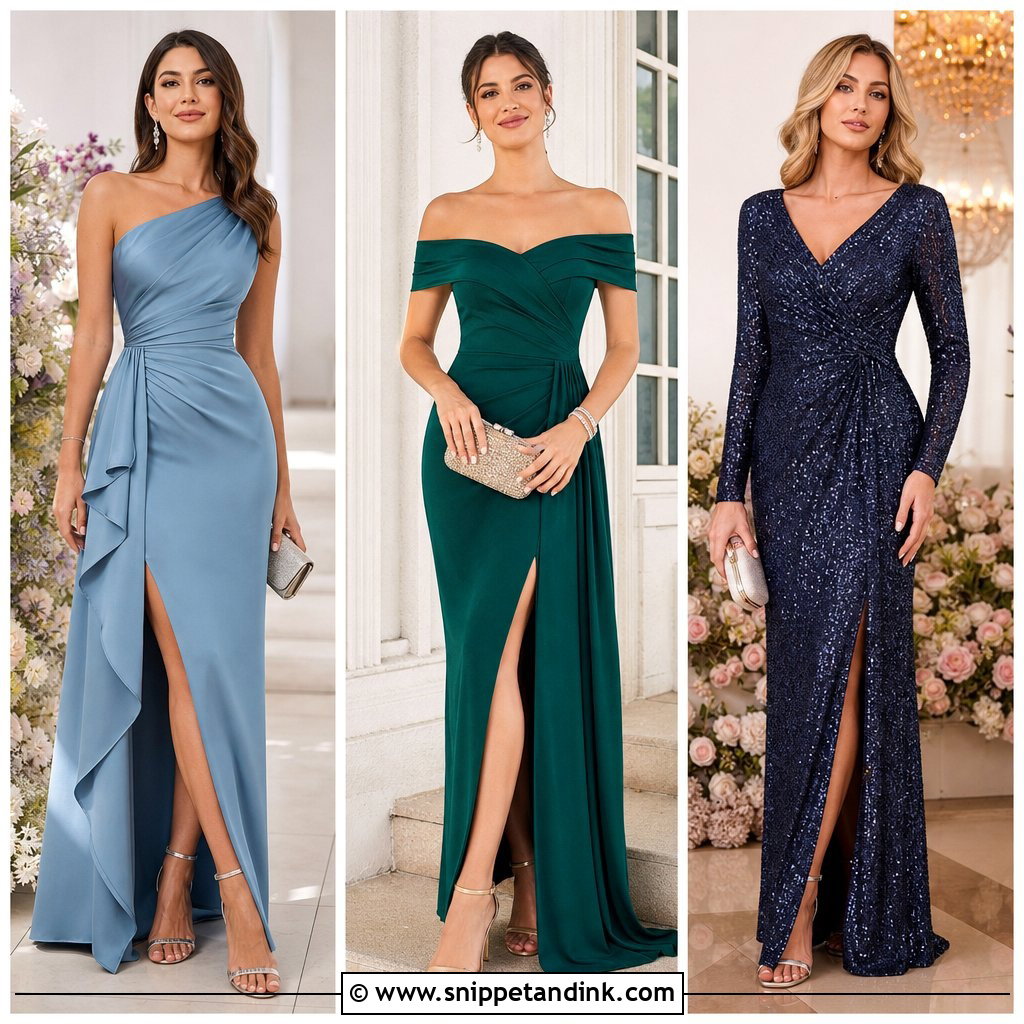
15. Ivory Walima Dress With Pastel Embroidery
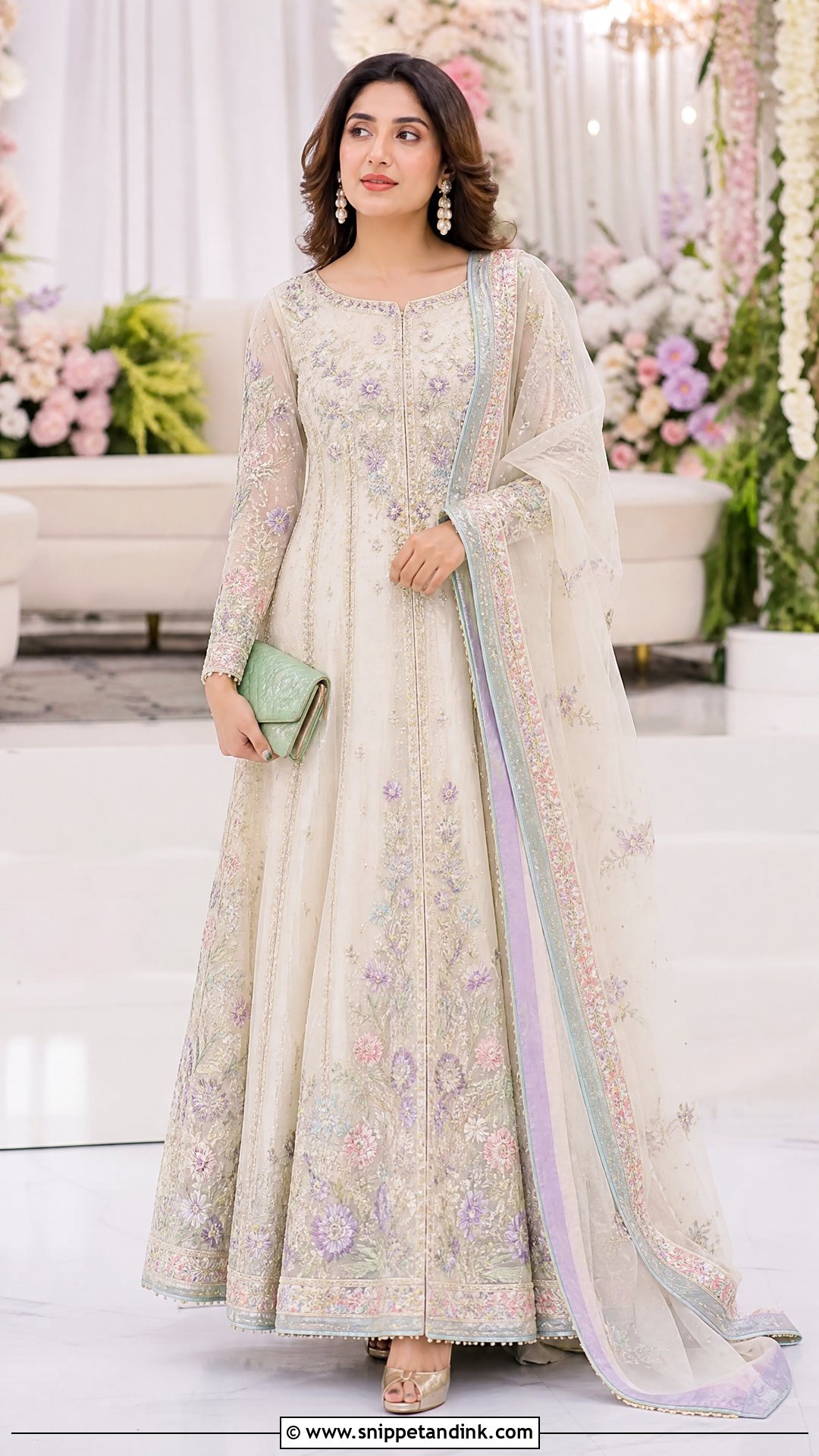
Ivory can work for a sister, but only once the bride has said yes. Add colour through pastel floral embroidery in lavender, mint, blush and powder blue, so nobody confuses you with an all-white bridal outfit. An ivory long shirt or panelled gown, wide-leg trousers or a light skirt, and a pastel-edged organza dupatta. Pale gold heels, a mint or lavender clutch and pearl earrings. No train, nothing veil-like, and no heavy white crystal work.
16. Teal Walima Dress With Dhaka Pajama
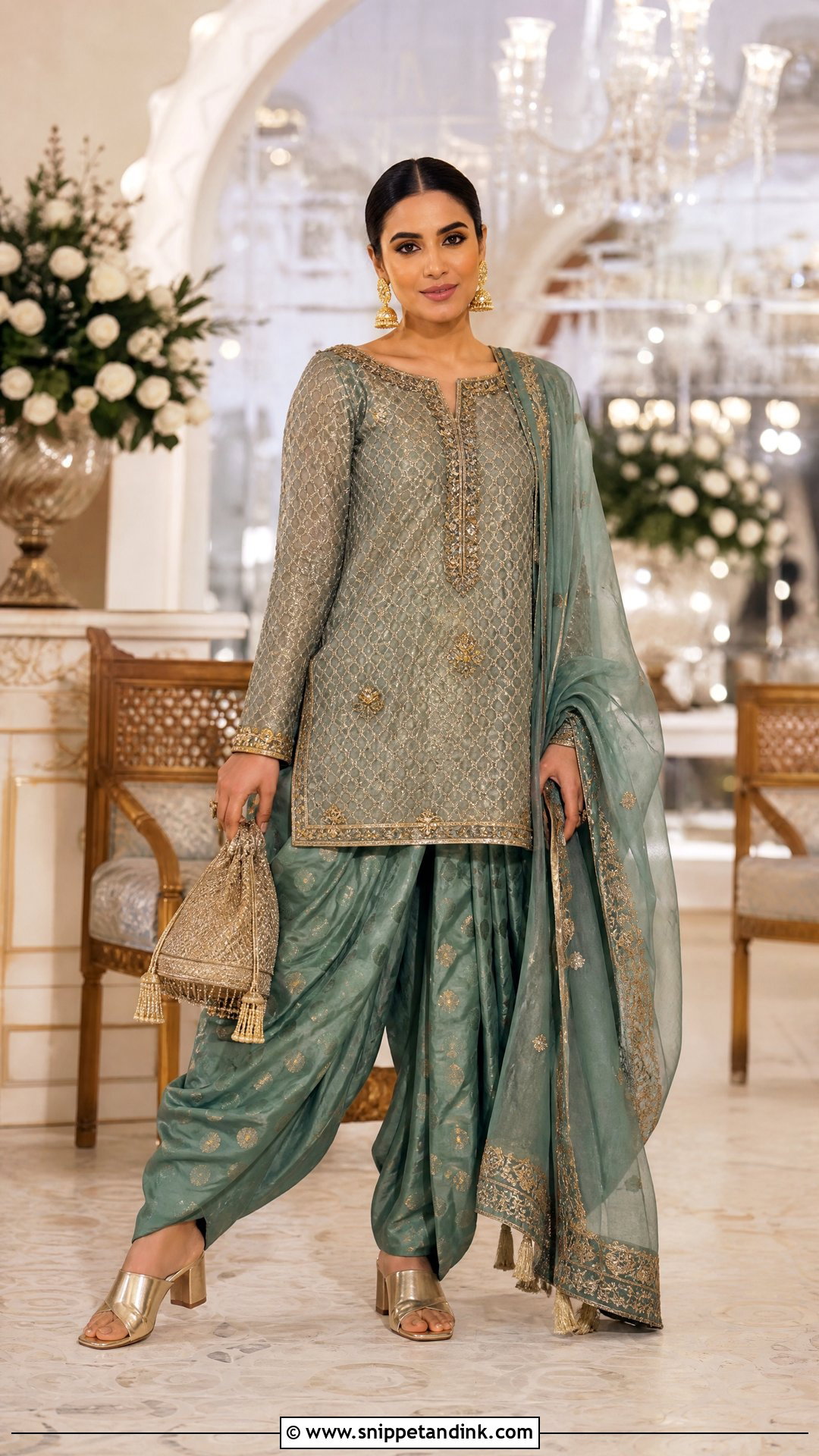
For classic Pakistani dressing, pair a teal short shirt with a traditional Dhaka pajama. A structured neckline, fitted sleeves and antique gold embroidery on the borders. The pajama’s pressed folds give volume, so have it pressed the day before; the pleats lose their sharpness once they’re crushed in a bag. A tissue or organza dupatta in teal, muted gold or blue-green. Gold block heels, a woven potli and jhumkas. A centre-part bun or braided updo. Teal has more depth than the usual pastels, which suits evening.
17. Lilac Walima Dress With Draped Saree Gown
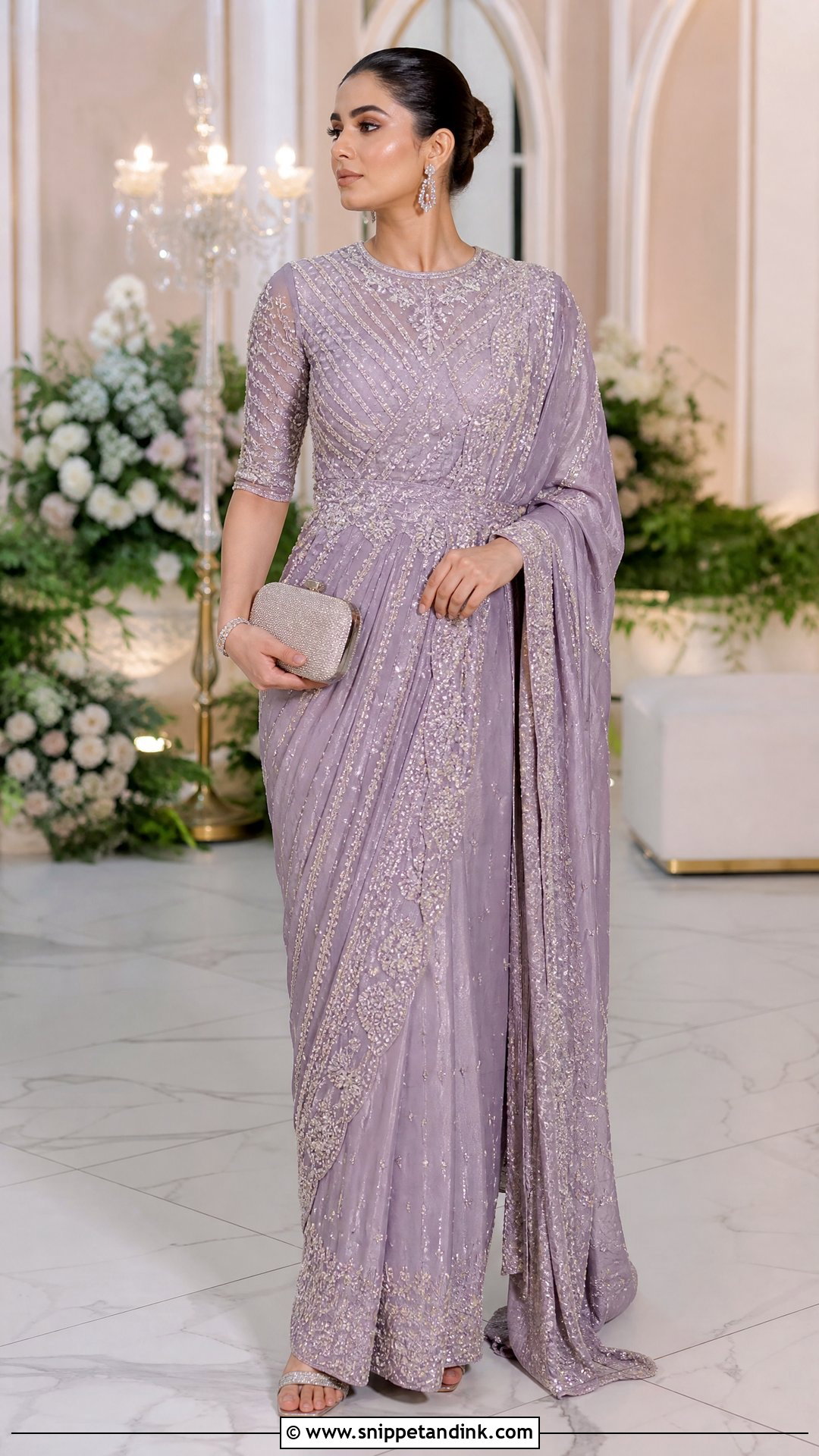
A lilac saree gown gives you the drape of a saree with the security of something stitched. A defined waist, clean pleats and a pallu falling from one shoulder, with silver beading on the bodice and border. Metallic sandals, a slim crystal clutch and modern drops. Keep the hair sleek or side-parted so the shoulder detail shows. Because nothing needs re-pleating, you can greet guests and jump into photos without checking a mirror.
18. Pistachio Green Walima Dress With Farshi Shalwar
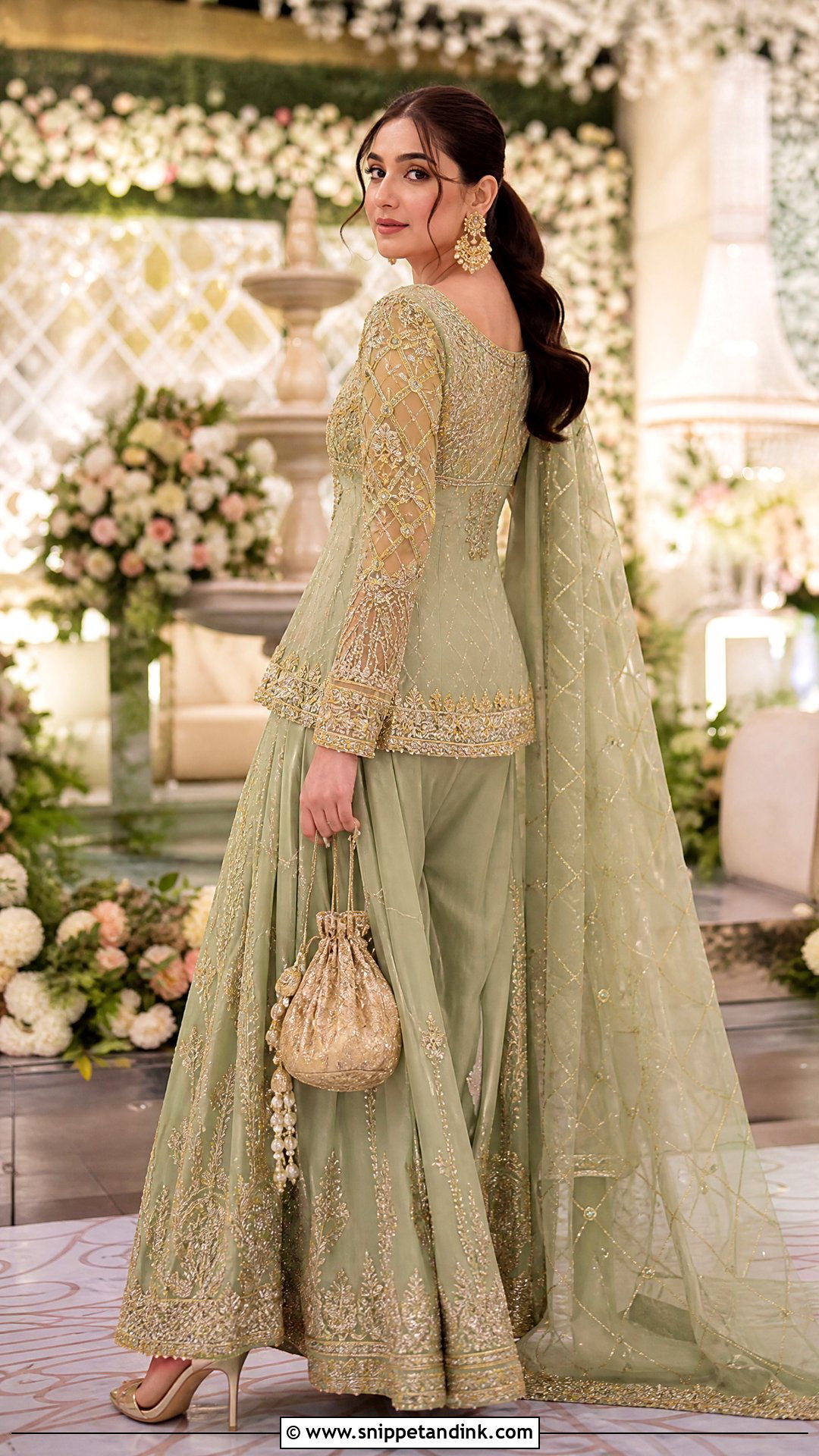
Pistachio green softens the dramatic shape of a farshi shalwar. A fitted short shirt with a curved hem, fine gold embroidery and pearl accents. Ask the tailor to keep the trailing hem short enough that you can walk at a normal pace, because as the sister you won’t have anyone carrying it. A sheer dupatta over one shoulder. Champagne heels, a gold potli and light chandbalis. A sleek bun balances the volume below.
19. Rose Gold Walima Dress With Embellished Maxi
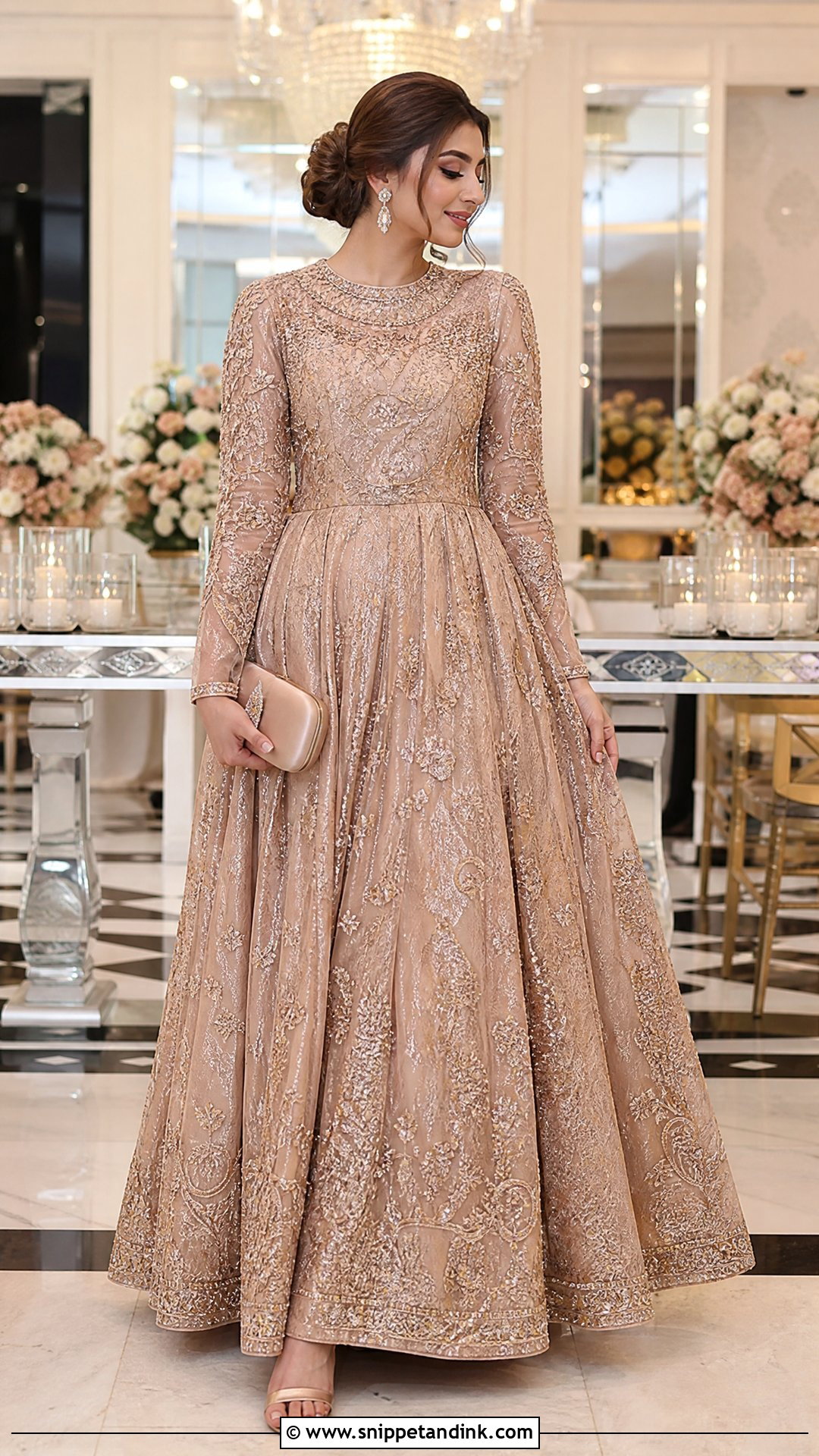
Rose gold shines without shouting when the embroidery is tonal. A floor-length maxi with a defined waist, softly flared skirt and a modest V, boat or illusion neckline. Nude rose-gold heels, a satin clutch and simple crystal earrings. With full sleeves, skip bangles and wear one ring. A soft blow-dry or low twisted bun. I’d lean toward matte metallic thread over all-over sequins; it’s easier to balance and photographs without harsh hot spots.
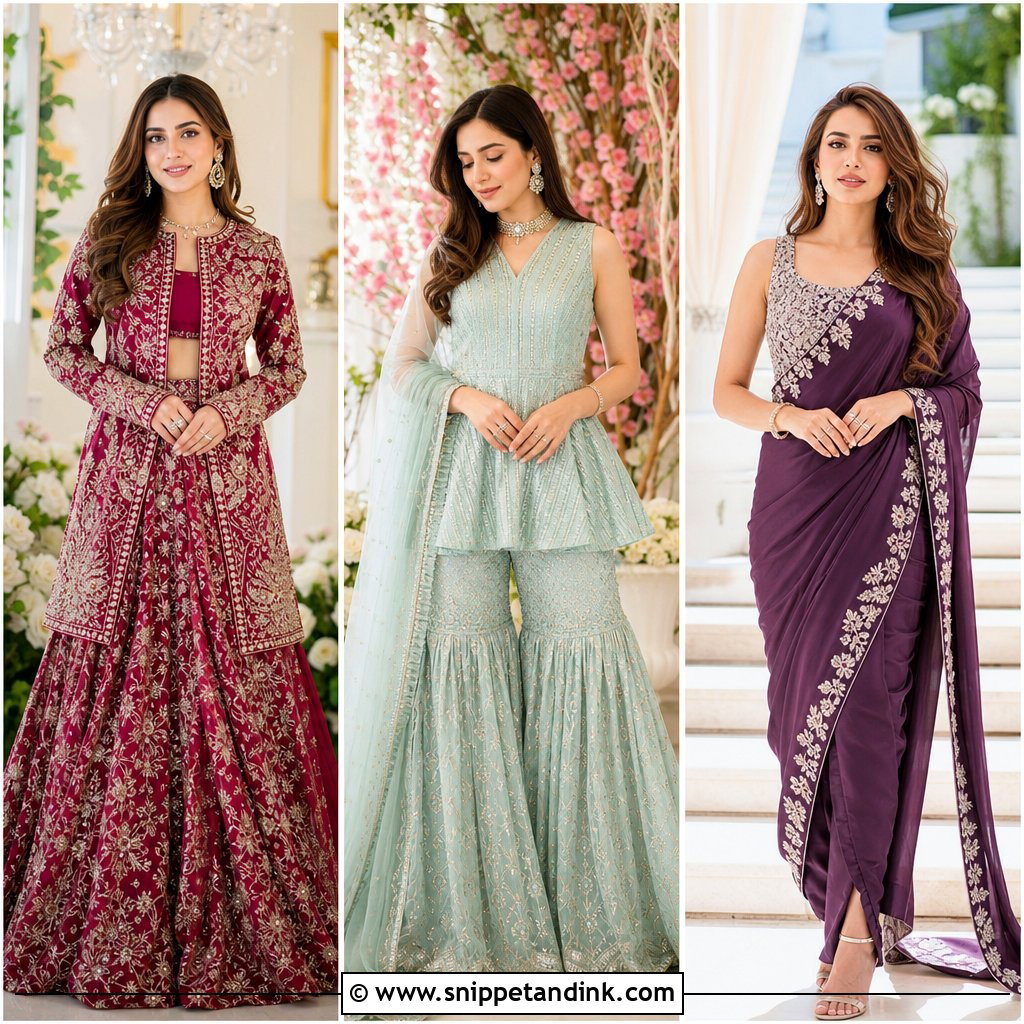
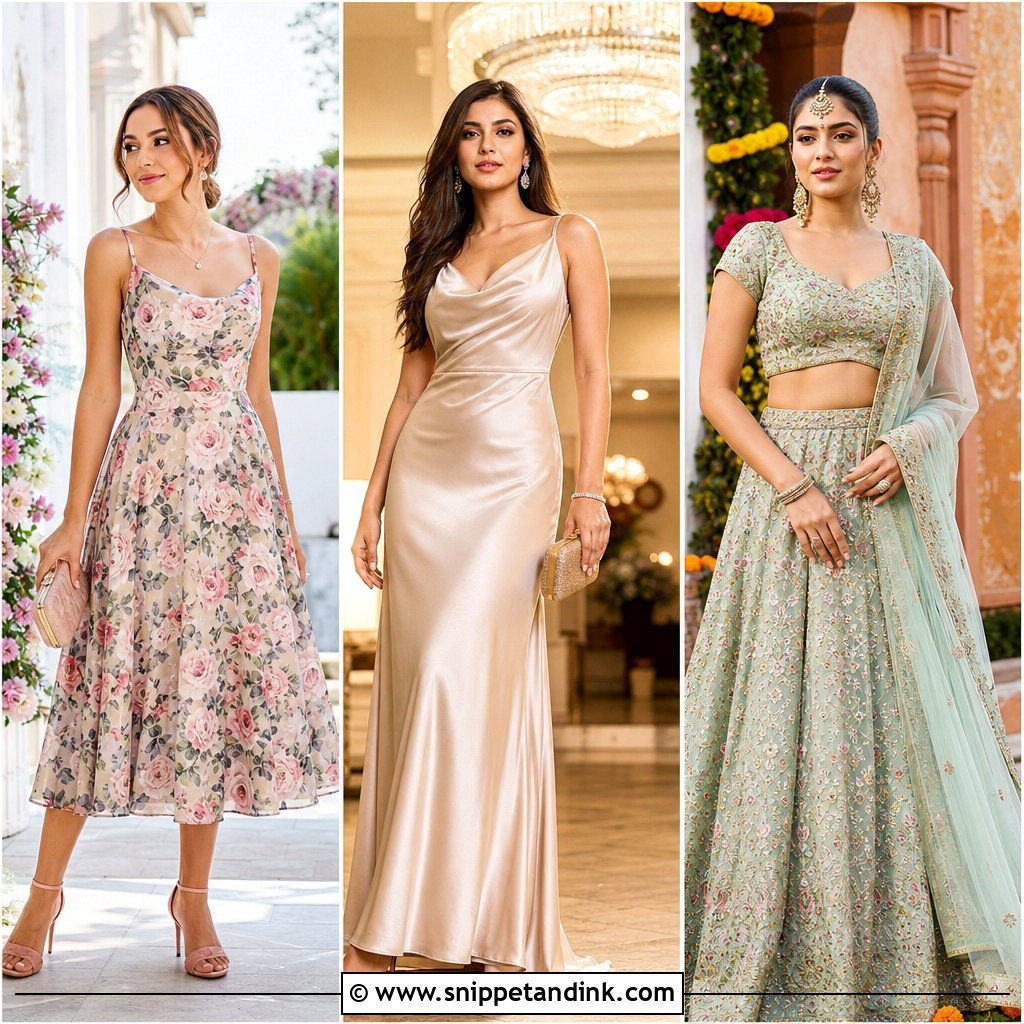
20. Plum Walima Dress With Long Angrakha
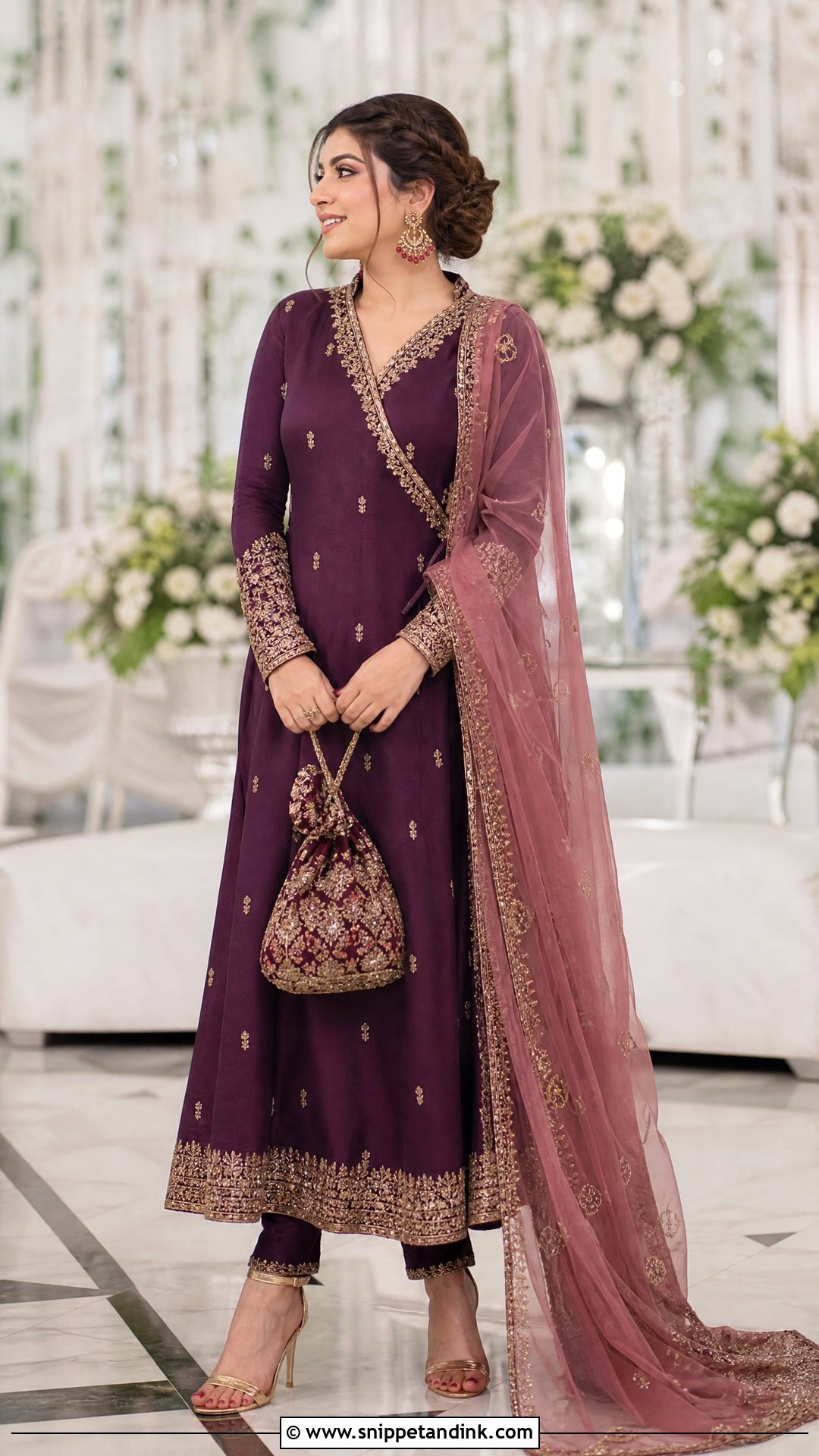
An angrakha wraps and ties at the side, so it moves beautifully and flatters most figures. In plum, choose a long wrap style with an embroidered neckline, a decorative tie and an ankle-length hem. Narrow trousers or churidar keep the bottom half slim. A dusty pink or muted gold dupatta softens the depth. Antique gold heels, a compact potli and medium earrings with coloured stones. Have the tie stitched in place underneath, so it can’t come loose while you’re running about.
21. Gray Blue Walima Dress With Palazzo Pants
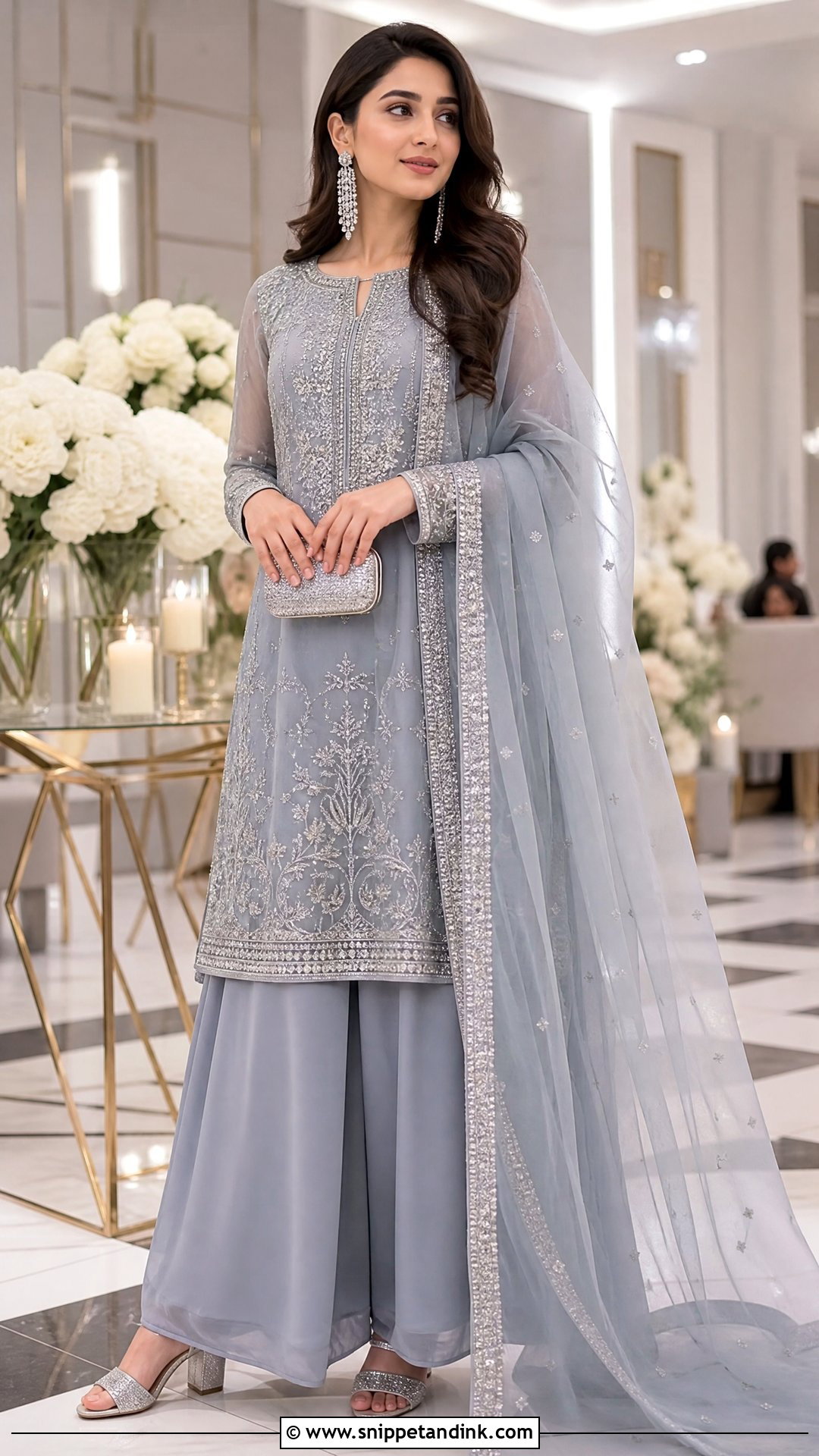
Palazzo pants are the comfort pick. A calf-length grey-blue shirt with side slits and scattered silver embroidery, with wide flowing trousers tailored to fall just over your shoes. An organza dupatta with a narrow crystal border, silver block heels and a structured clutch. Long earrings and a sleek ponytail. Vertical lines on the shirt balance the width of the pants, which helps both petite and tall sisters.
22. Soft Gold Walima Dress With Banarasi Lehenga
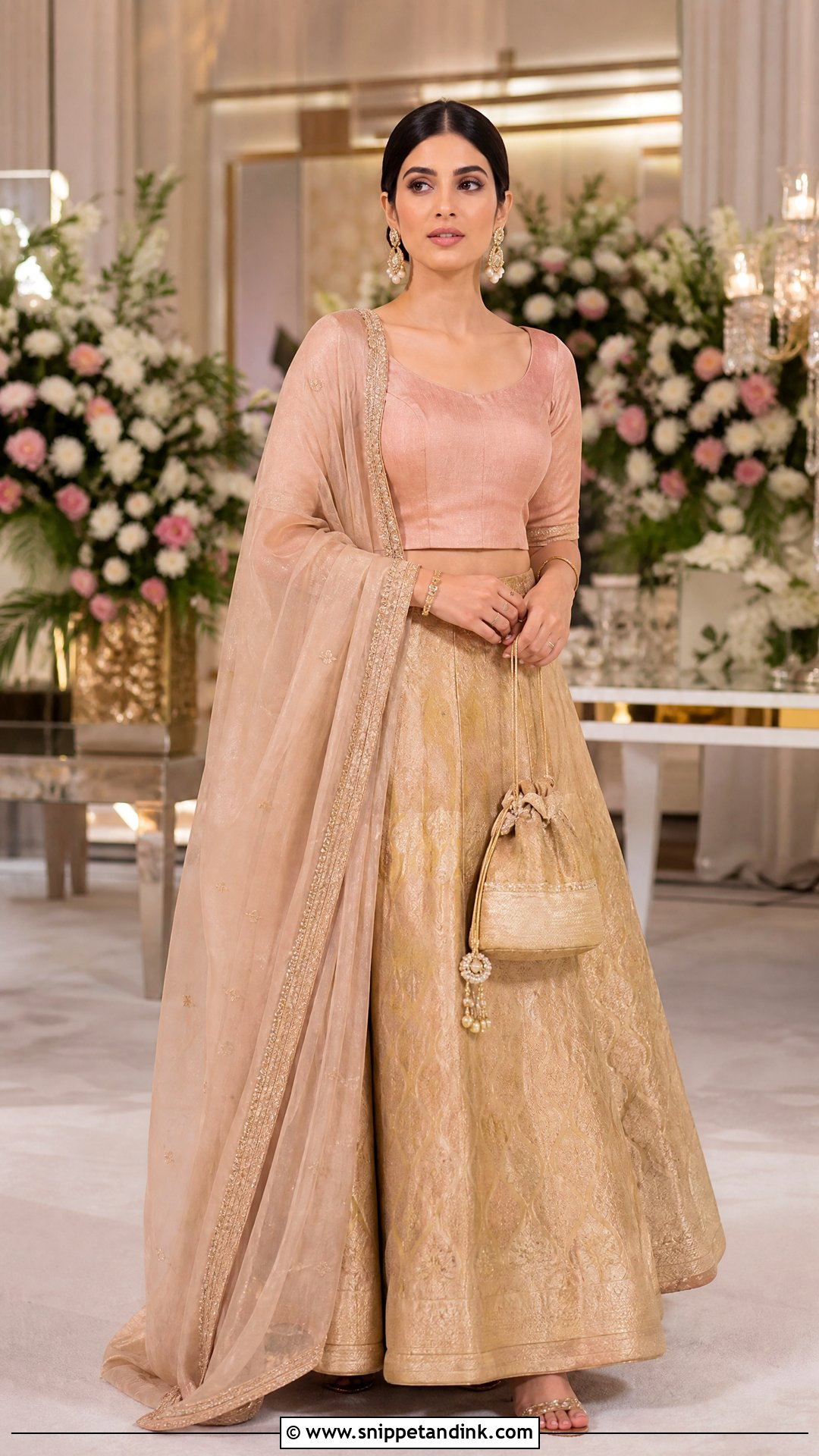
Banarasi silk has the pattern woven into the fabric, not stitched on, so it looks rich without heavy handwork. Choose a soft gold skirt with a restrained floral weave, then a plain raw silk blouse in blush, sage, ivory or muted blue. An organza dupatta with a matching woven border connects them. Antique gold heels, a silk potli and pearl or kundan earrings. Skip a heavily embroidered blouse. The separates restyle well afterwards, which makes it a sensible spend.
23. Coral Walima Dress With Short Shirt Sharara
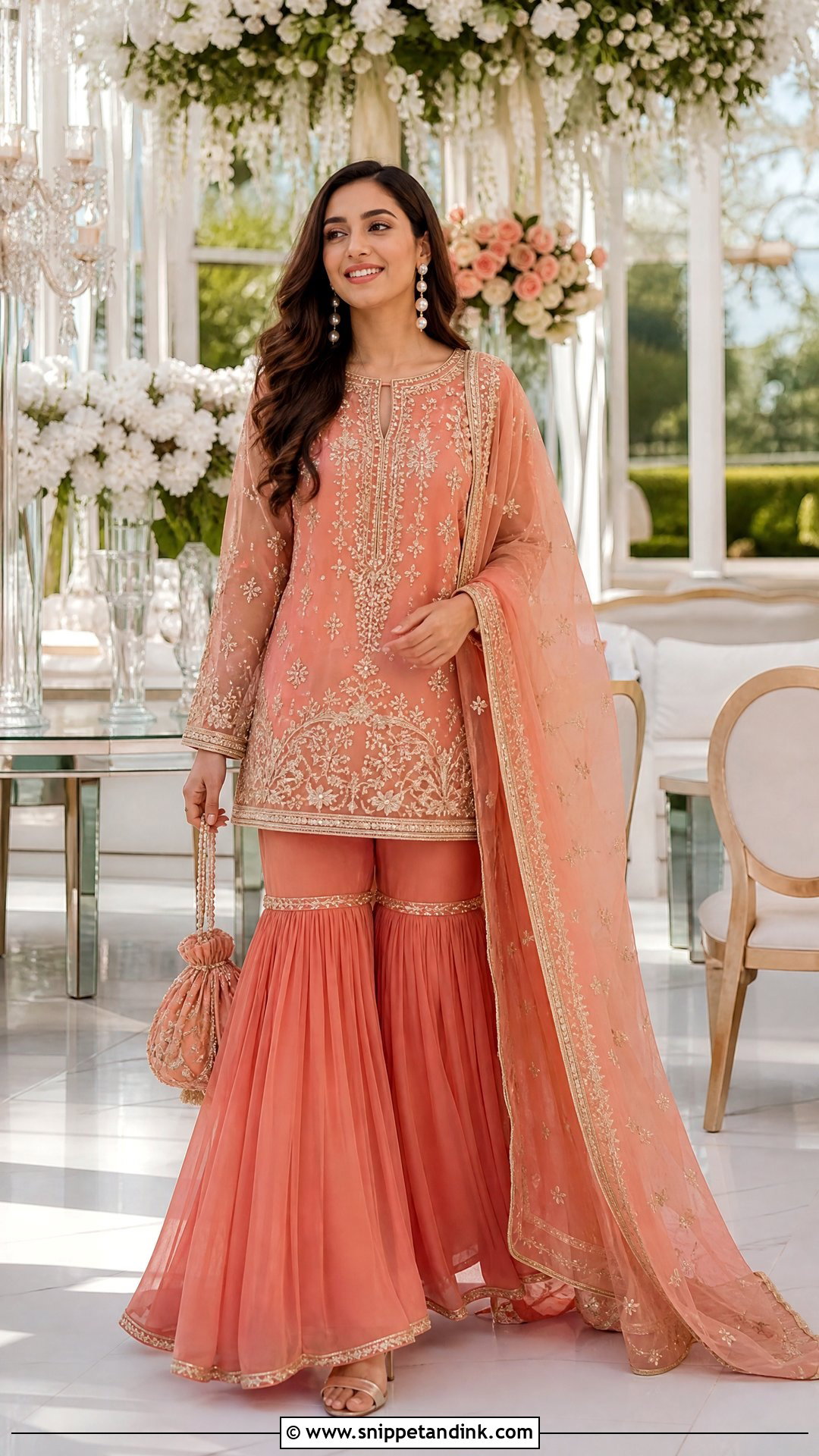
Muted coral brings energy to a daytime Walima. A short raw silk shirt with a flowing chiffon sharara in the same family, champagne embroidery or small mirror accents at the neckline and sleeves. A dupatta blending coral with peach or soft gold. Gold block heels, a beaded potli and pearl earrings. A loose braid or bouncy waves. Keep coral soft rather than neon. Bright coral next to a pastel bride makes her look washed out in photos.
24. Black Walima Dress With Gold Embroidery
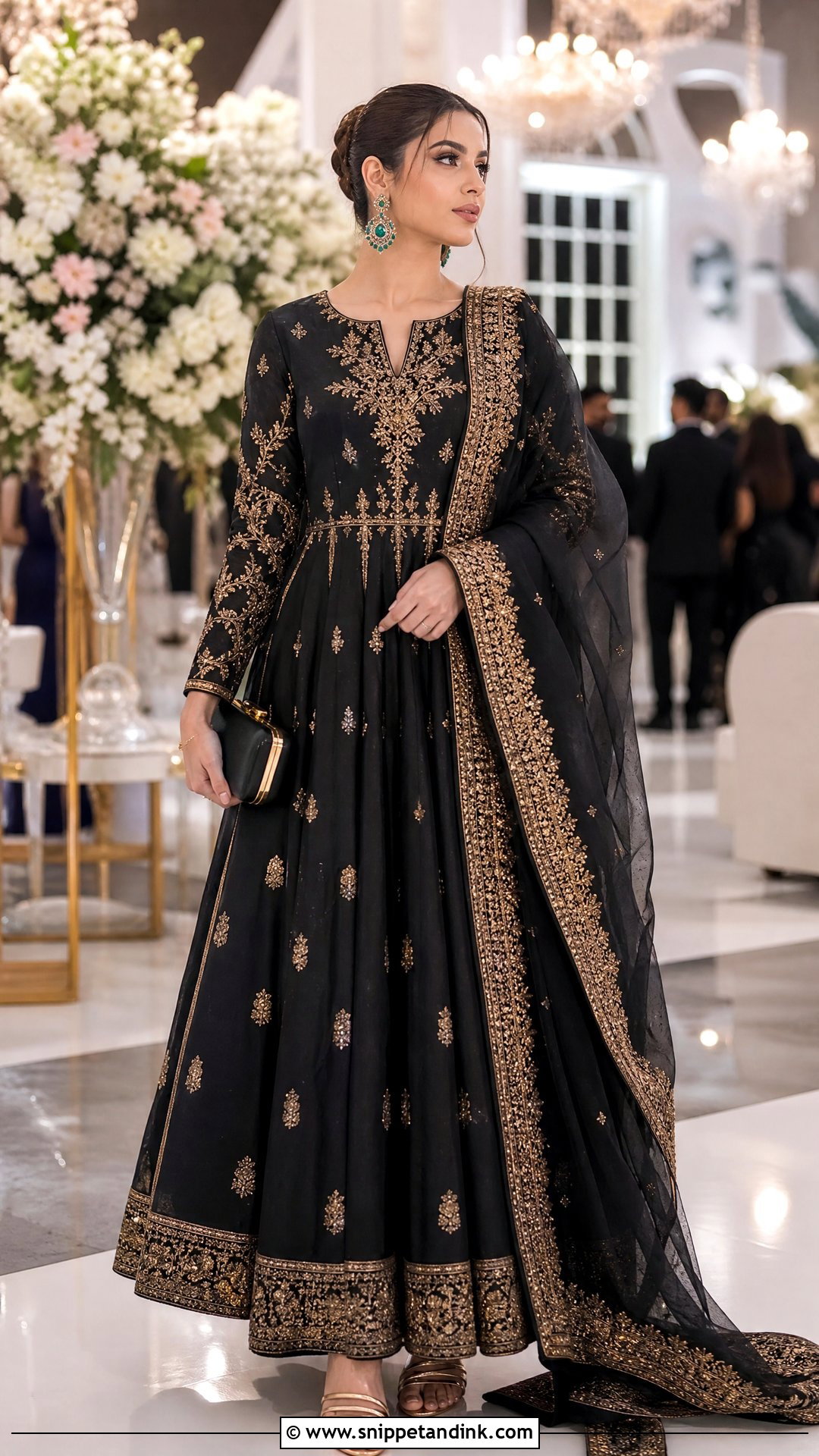
Black can look sharp at a night reception, but attitudes to it at weddings differ from family to family. Ask the bride and her parents first. A long black gown, pishwas or straight shirt set with carefully placed antique gold embroidery, leaving plenty of plain fabric. A black organza dupatta with a narrow gold border. Gold heels, a black clutch and emerald or pearl earrings. A neat bun. Black also shows every bit of lint and face powder, so pack a lint roller.
25. Multicolor Pastel Walima Dress With Paneled Lehenga
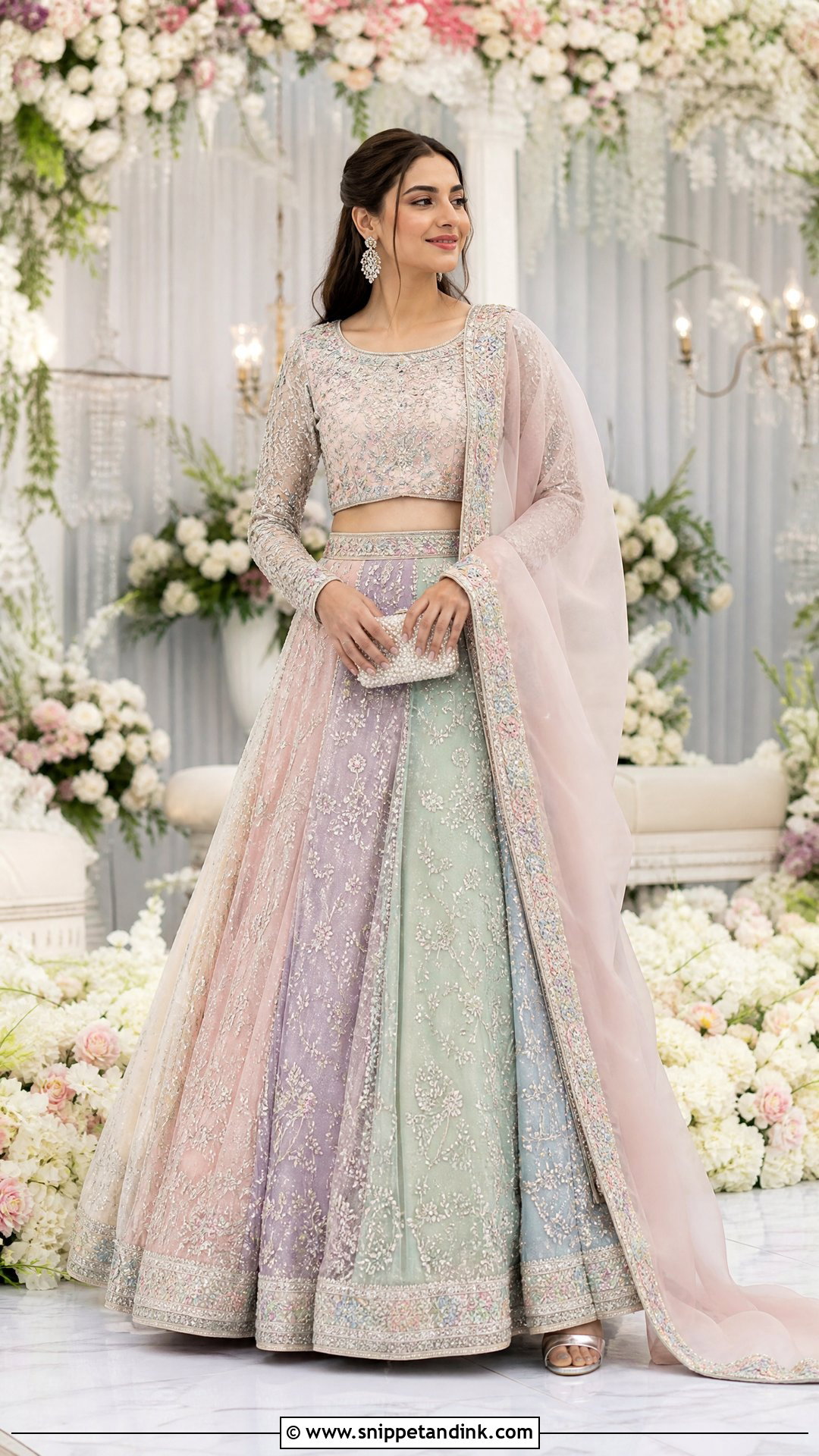
Can’t pick one pastel? A panelled lehenga in blush, lilac, mint, powder blue and ivory gives you all of them. Keep the blouse in one dominant shade and repeat its embroidery across the panels so the skirt holds together. A plain organza dupatta with a multicolour border, rather than another busy pattern. Silver heels, a pearl clutch and crystal earrings. It stands out in group portraits, so I’d only suggest it if the bride is in a single solid colour.
Pockets, Pins and a Spare Pair of Flats
The outfits that fail sisters are rarely the wrong colour. They’re the ones that need two hands to manage, a dupatta that slides every time you bend to fix the bride’s hem, or heels that give out halfway through the receiving line. A few small decisions at the tailoring stage prevent most of that.
On the day, the bride’s sister usually becomes her assistant. Whatever outfit you choose, plan for that job.
Ask the tailor for a pocket
A hidden side-seam pocket in a long shirt or gharara is easy to add at stitching stage and saves you carrying a clutch all night. It’s where your phone and the bride’s lipstick will live.
Fill the potli before you leave home
Keep a potli with safety pins in her dupatta colour and yours, bobby pins, blotting papers, a small mirror, tissues and a mint. Her dupatta will slip at some point, and you’re the one standing closest.
Shoes you can rush in
Long lehengas and ghararas hide your feet, so nobody will notice flats or low block heels, and you’ll be crossing the hall many times. If you love a heel for photos, keep flats under the stage and swap between portraits. Have your hem stitched for whichever pair you’ll wear most.
Dressed for the Portraits, Ready for the Errands
The best sister’s outfit is the one that looks special in the family portrait and still lets you work the room. Lehengas, ghararas, gowns, sarees and trouser sets can all do that. Ask the bride about her colour and embroidery level, then think about the venue, the weather, your shoes and how much you’ll be moving. Pick one statement feature, whether that’s the silhouette, a detailed dupatta or a rich fabric, and keep the rest calm. Your sister stays at the centre, and you still look like you belong right beside her.
You'll Like These Ideas:


Leave a Reply