
Plain cakes are the ones I’m asked for most now, and they are also the ones that leave a baker nowhere to hide. Without a wall of sugar flowers, the eye goes straight to the edges, the height of each tier and how cleanly the frosting meets the board. Get those right and a small white cake looks finished on its own. Soft buttercream, a single statement tier, fine piping, fresh flowers and fruit all show up below, and every one of them works in a garden, a ballroom or a backyard as long as the cake suits the room it sits in. Here are twenty designs I’d happily put my name to, with what each one asks of your baker.
A Plain Cake Shows Every Wobble, So Brief Your Baker on the Finish
When a cake has almost no decoration, the finish is the design. I build smooth buttercream cakes over a crumb coat and chill them between coats, and fondant cakes usually go over a layer of ganache so the corners stay crisp. That base work takes time, which is why a minimal cake is rarely the cheapest option on a price list. The decoration is cheaper; the hours are not.
At a tasting, I’d ask three practical things rather than talk about style:
- Can I see an unedited photo of a smooth white cake you made recently? Edges and the join with the board tell you more than a styled shot.
- Which frosting would you use for my venue and month, and why?
- Will you deliver the tiers stacked or assemble on site? Tall or square cakes are often stacked at the venue.
Bring a swatch of your linens or a petal if colour matters. White frosting is never one white; butter makes it ivory, and a baker can whiten it but should know the target.
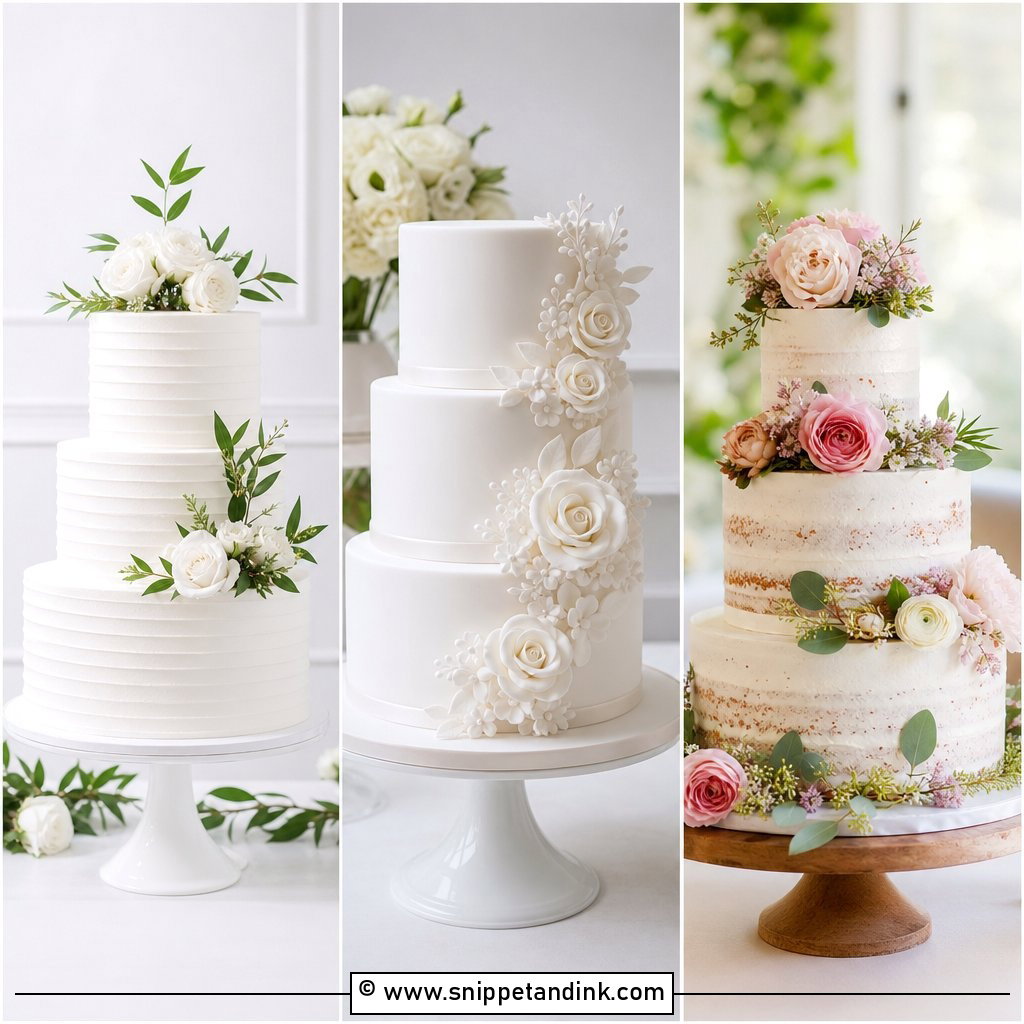
1. Simple White Wedding Cake
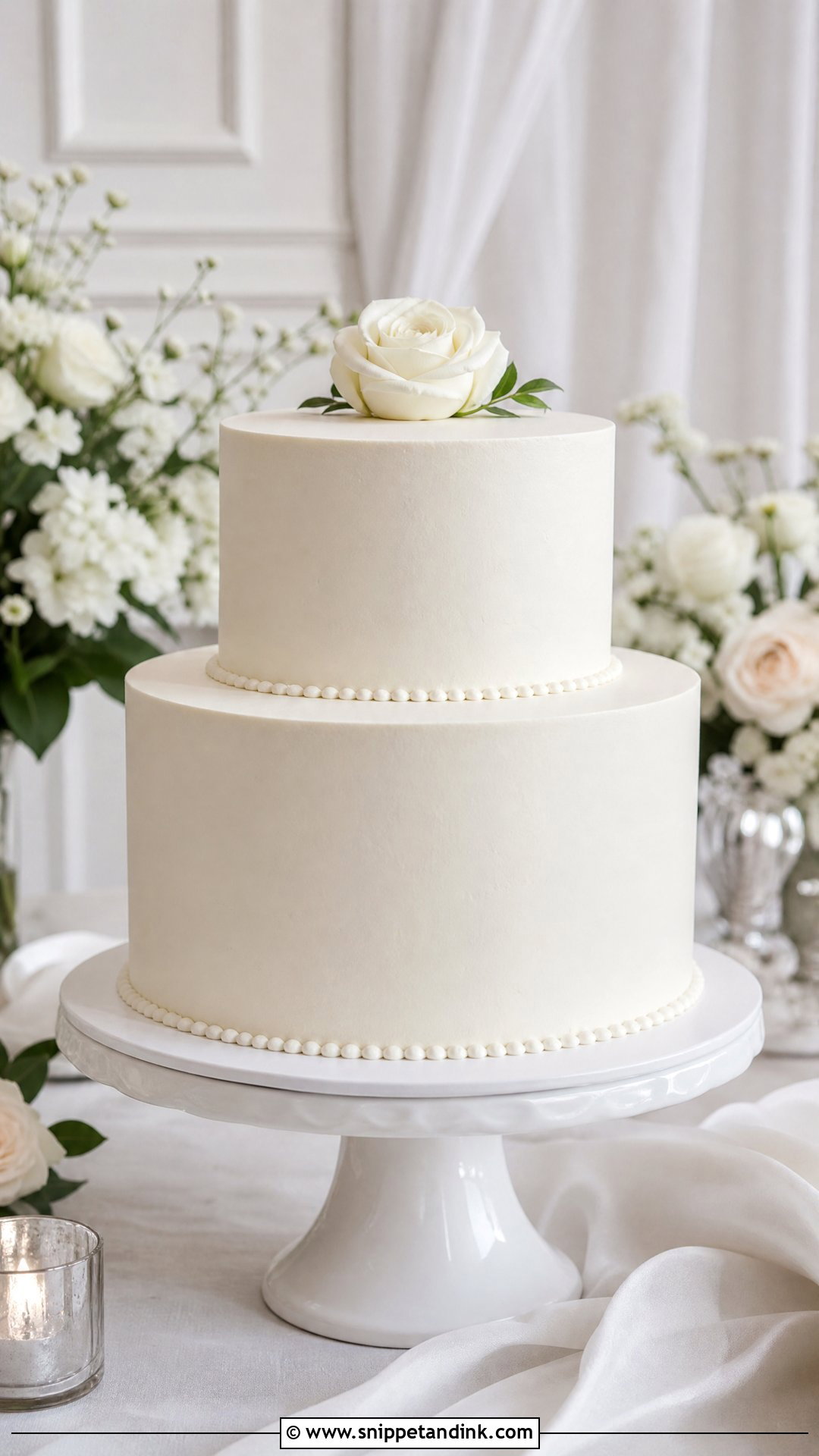
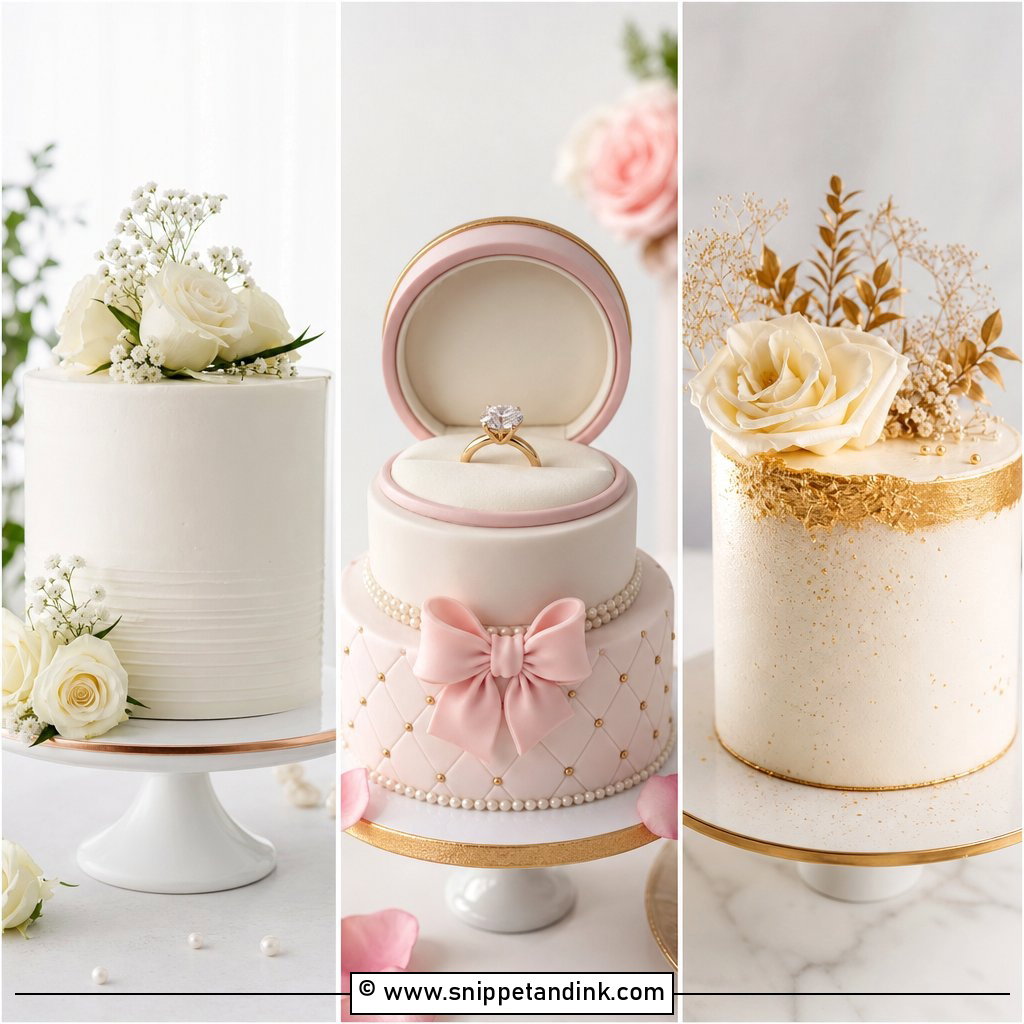
An all-white cake goes with any palette, from blush flowers to black linens, and that’s why it never really leaves the order book. The choice that matters is the finish. Smooth buttercream reads softer and slightly matte; fondant gives a sharper, almost porcelain surface but tastes sweeter and has to be cut away by some guests. I usually suggest one detail only, a flower cluster, a pearl border or a satin ribbon, because on white every extra element gets noticed. It scales well too, so the same design works for thirty guests or two hundred.
2. Two Tier Wedding Cake
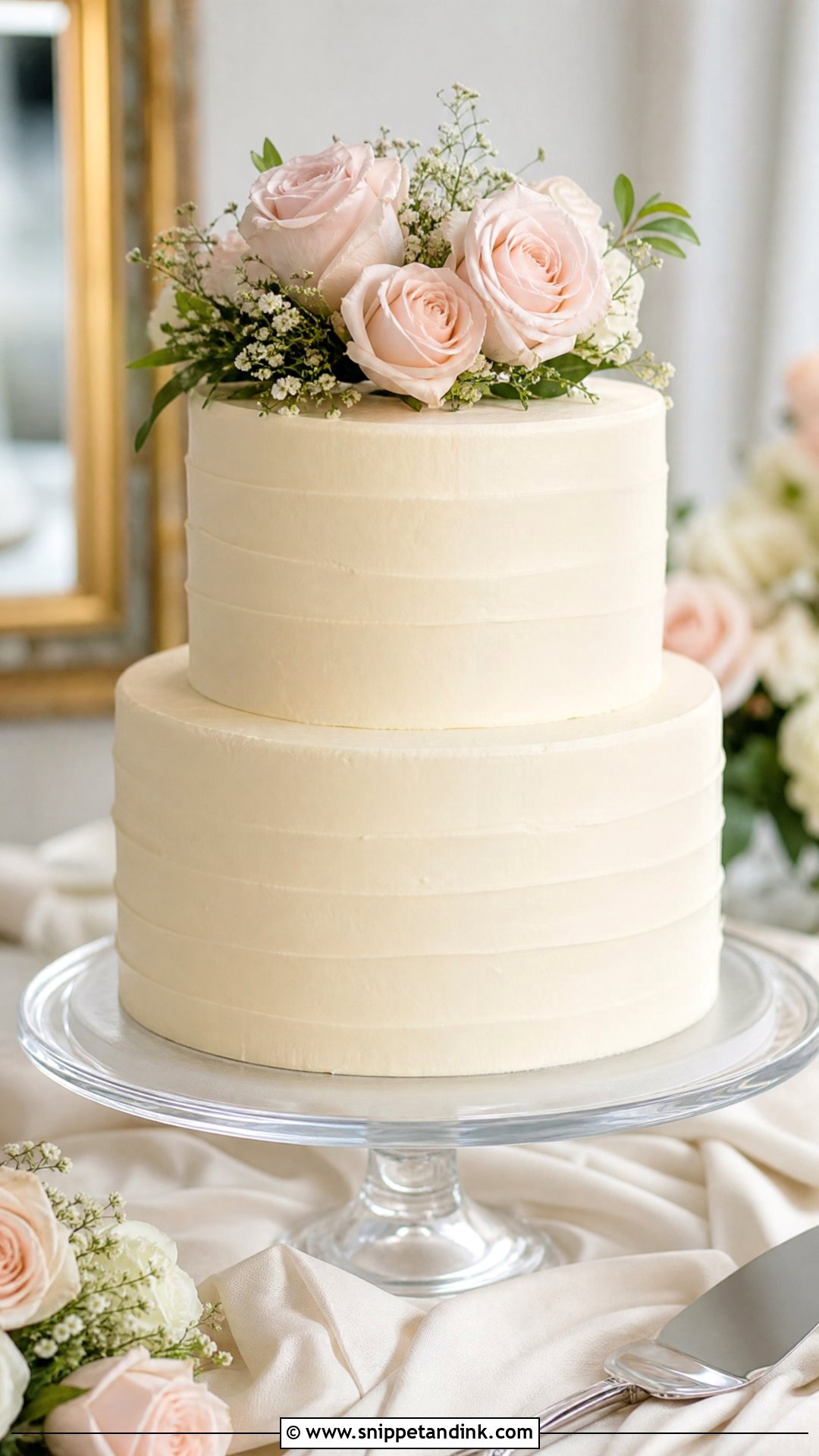
Two tiers give you the stacked shape people picture without the height, the internal supports or the price of a tall cake. Proportion is where these go wrong. I keep at least a two-inch step between tiers, so a ten-inch base with a six-inch top, otherwise the cake looks squat. Flavours can differ per tier, which guests enjoy. Many couples order this as the cutting cake and have sheet cake sliced in the kitchen for the rest of the room.
3. Single Tier Wedding Cake
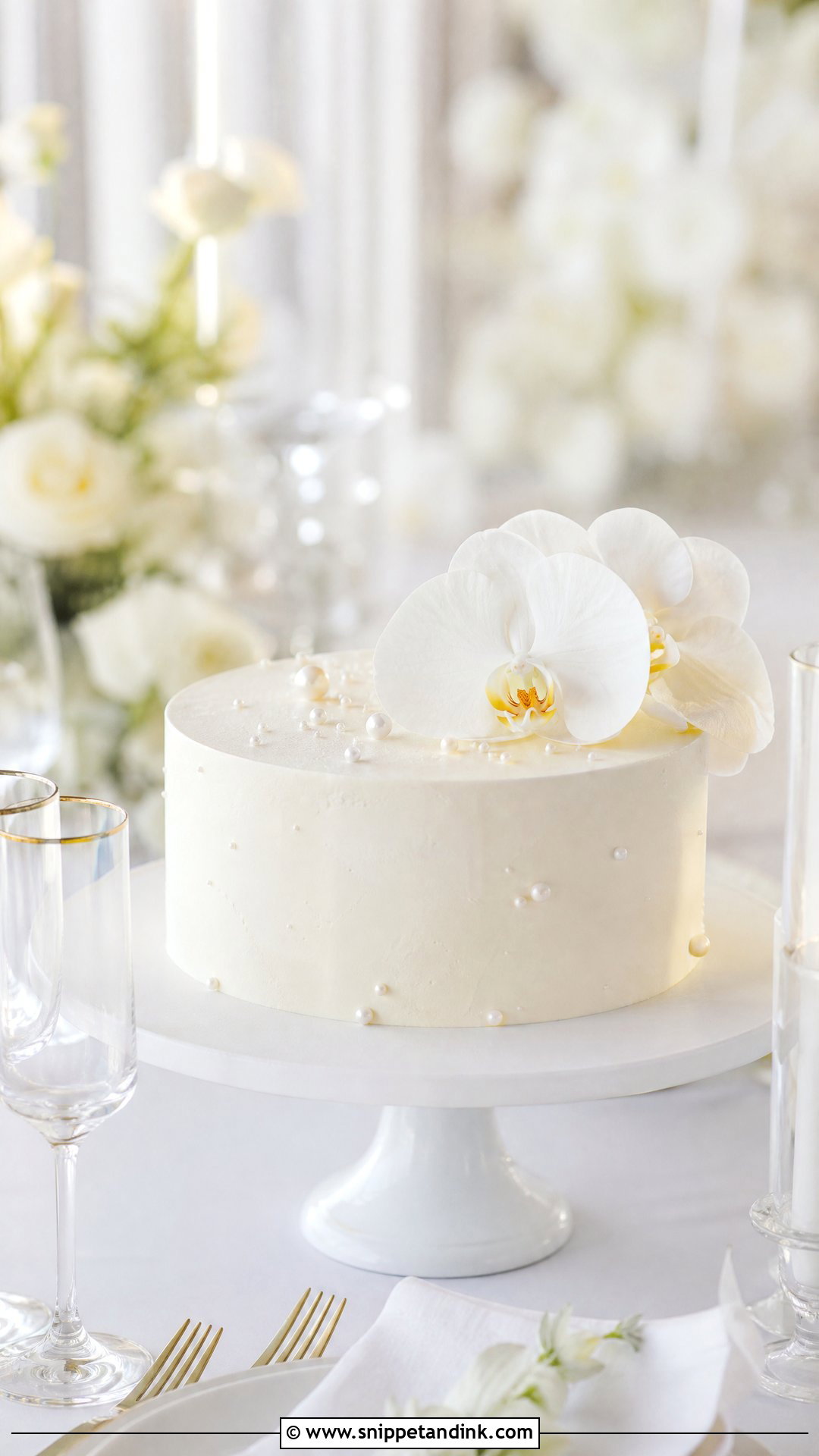
A single tier no longer looks like the backup plan. A wide, low tier, say eight inches across and only four high, gives the top a proper surface for flowers or fruit, while a tall single tier looks more modern and needs a central support. Either way, pick one focal point and let the stand do the lifting. It helps you control serving size and budget and you still get a real cake to cut. Elopements and courthouse dinners suit it best.
4. Buttercream Wedding Cake
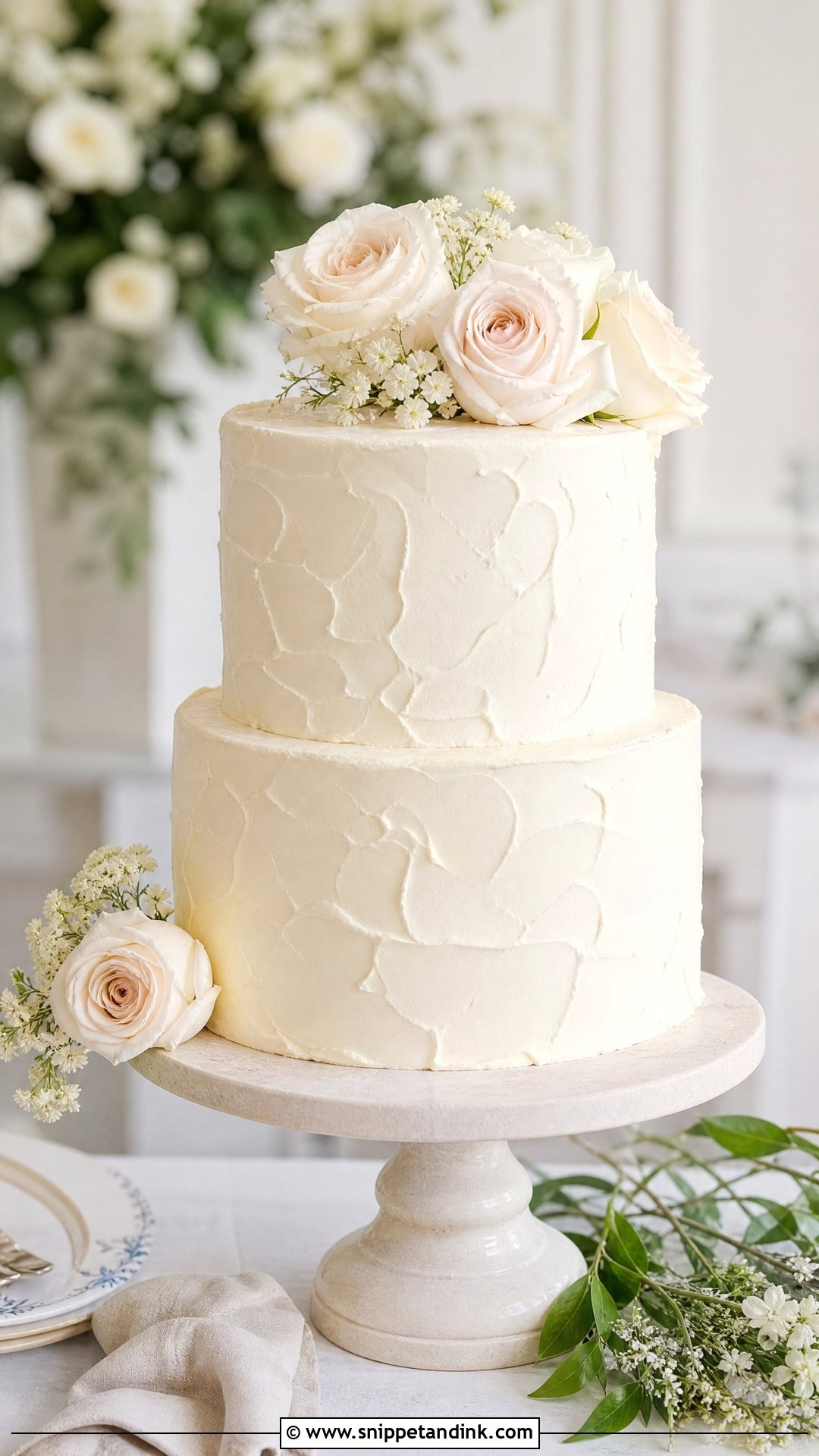
Buttercream tastes like cake to most people, which is half its appeal. The other half is texture: smooth, lightly ridged or swirled with a palette knife, it looks hand-made up close and soft from across the room. What I watch is the type. American buttercream crusts and holds a little better in warmth; Swiss meringue is silkier but softens fast above room temperature. For a summer lawn, ask your baker which one they’d use and how long the cake can sit out, because that answer changes the plan.
5. Naked Wedding Cake
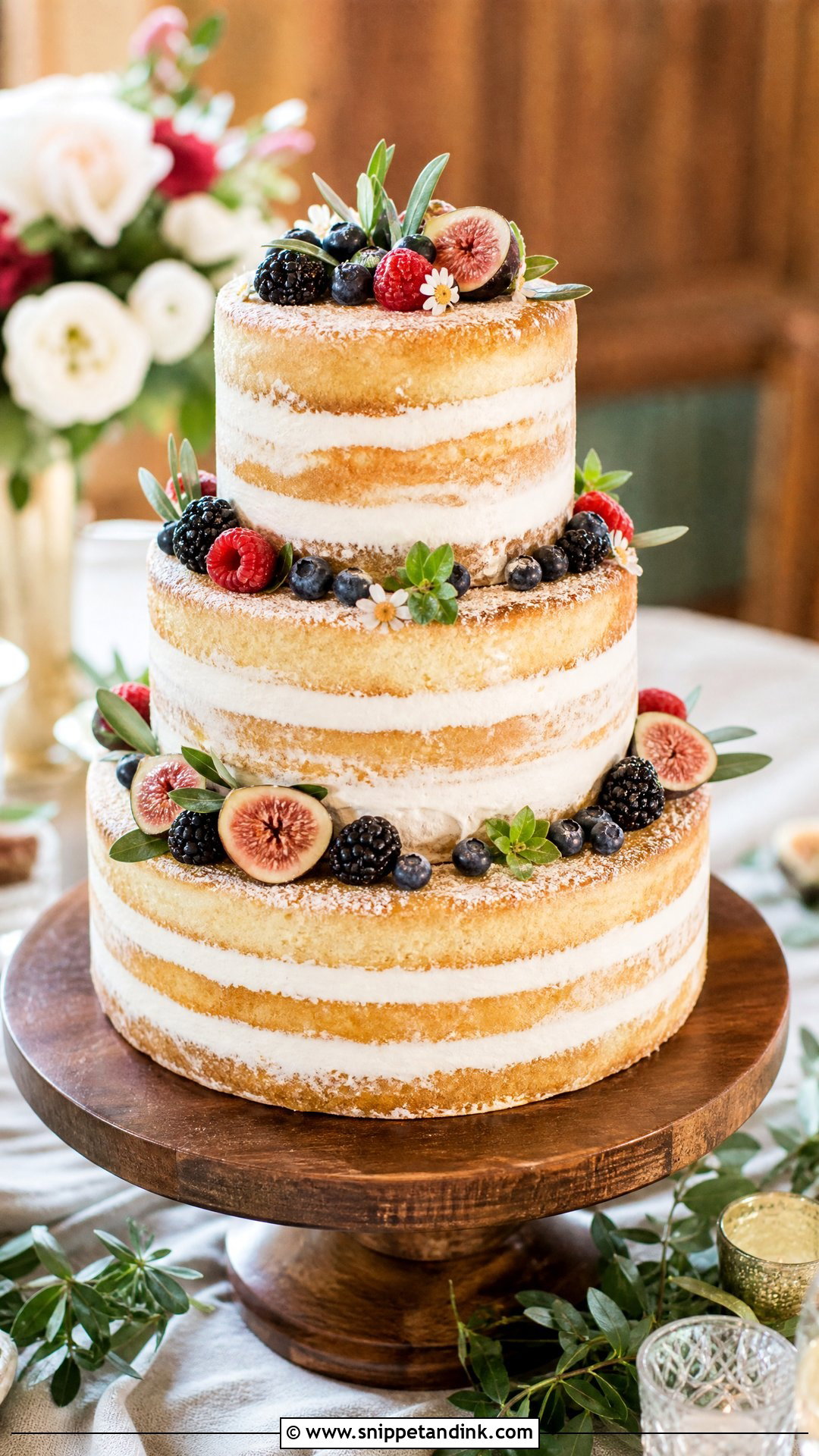
With little or no outer frosting, the sponge and filling become the decoration, so the bake itself has to be even and level. Vanilla, almond, carrot, and lemon layers all look natural next to a cream filling. Berries, figs or a few small flowers finish it. The honest drawback is drying: exposed sponge starts to stale within a couple of hours in open air, so I brush the layers with syrup and schedule a naked cake to go out as close to cutting as the venue allows. Barns and gardens are where it fits.
6. Semi Naked Wedding Cake
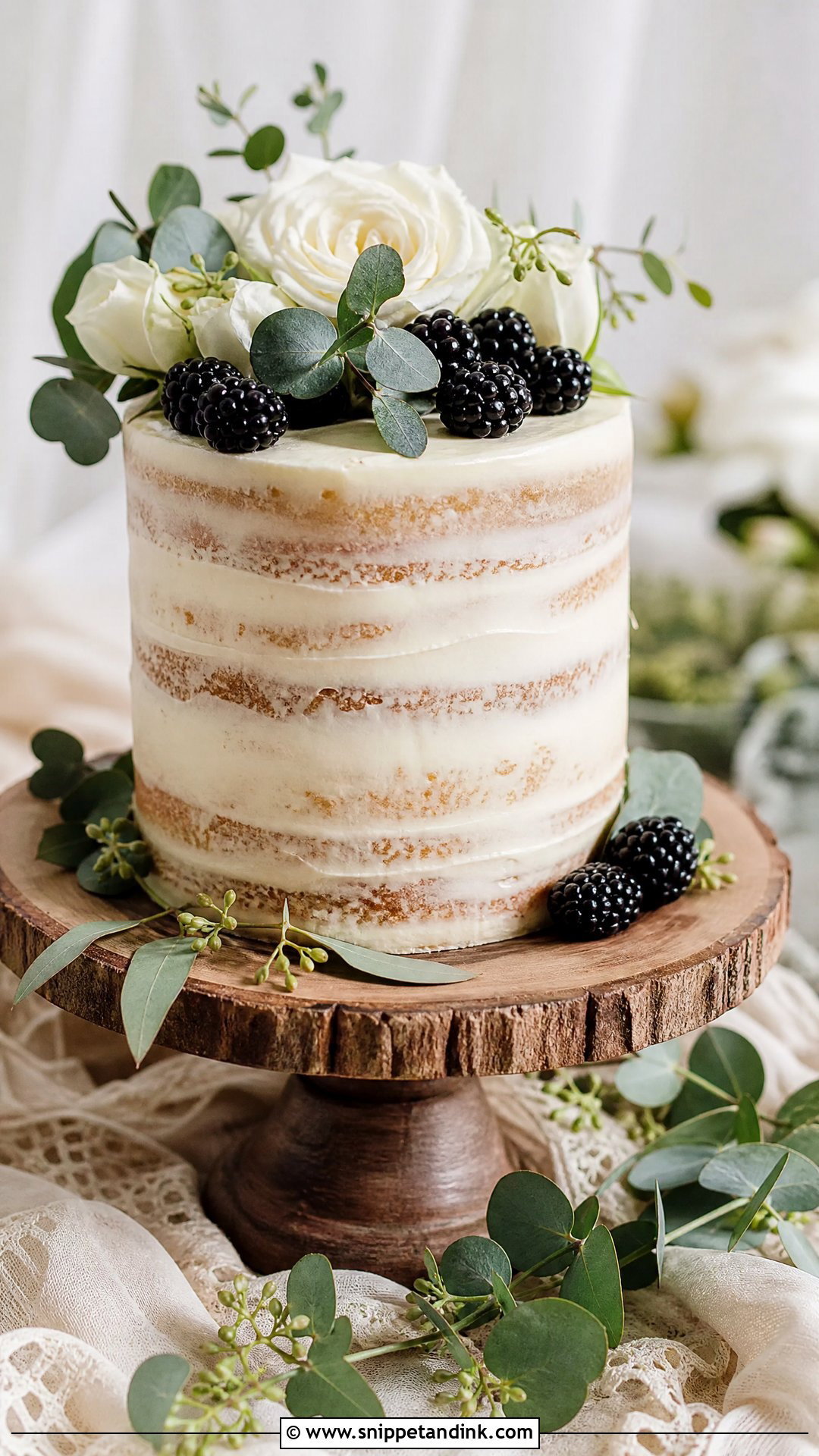
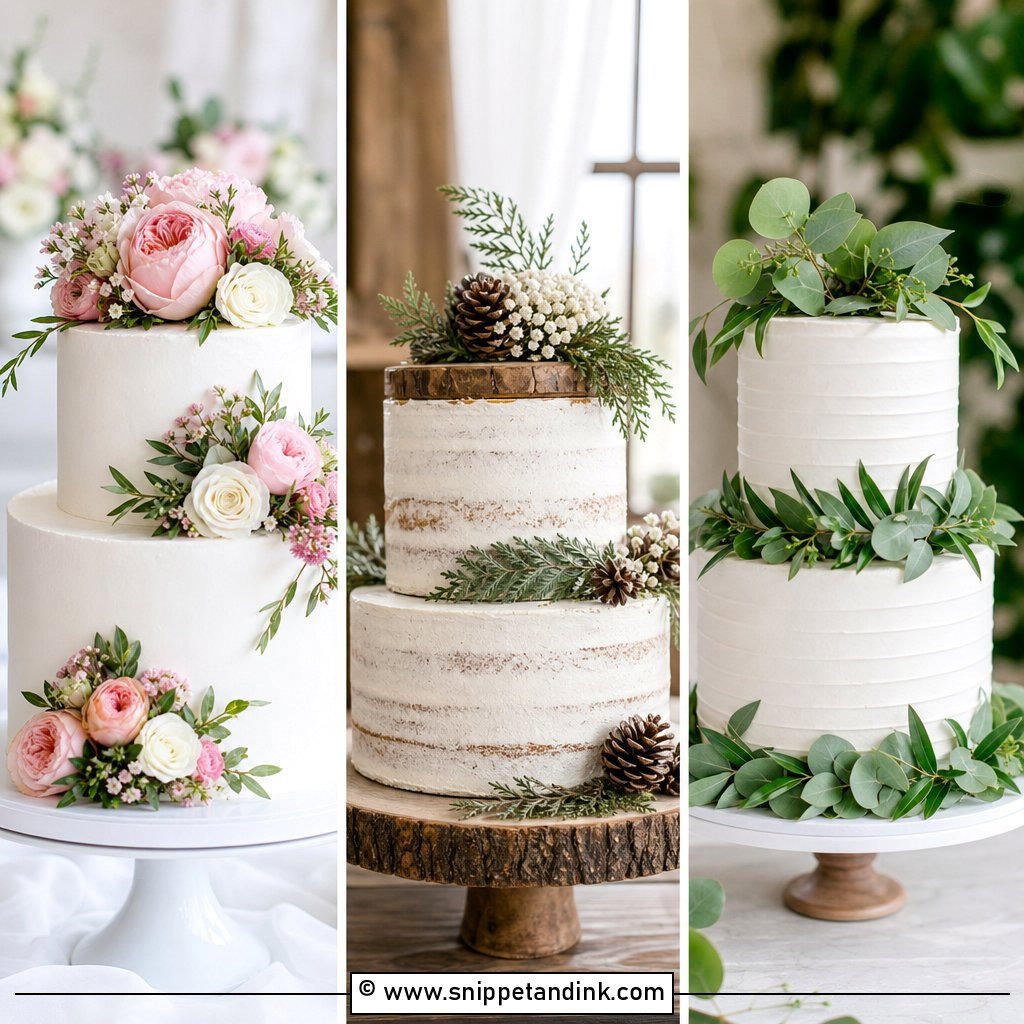
A semi naked cake is a thin scraped coat over the layers, so the sponge peeks through at the edges and the tiers look a little tidier than a fully naked one. That thin coat also slows drying, which is why I steer outdoor couples toward this rather than fully bare sponge. It suits white roses, baby’s breath or seasonal berries. It looks casual, but the scraping is a skill: too heavy and it becomes an ordinary buttercream cake, too light and the crumb tears.
7. Rustic Wedding Cake
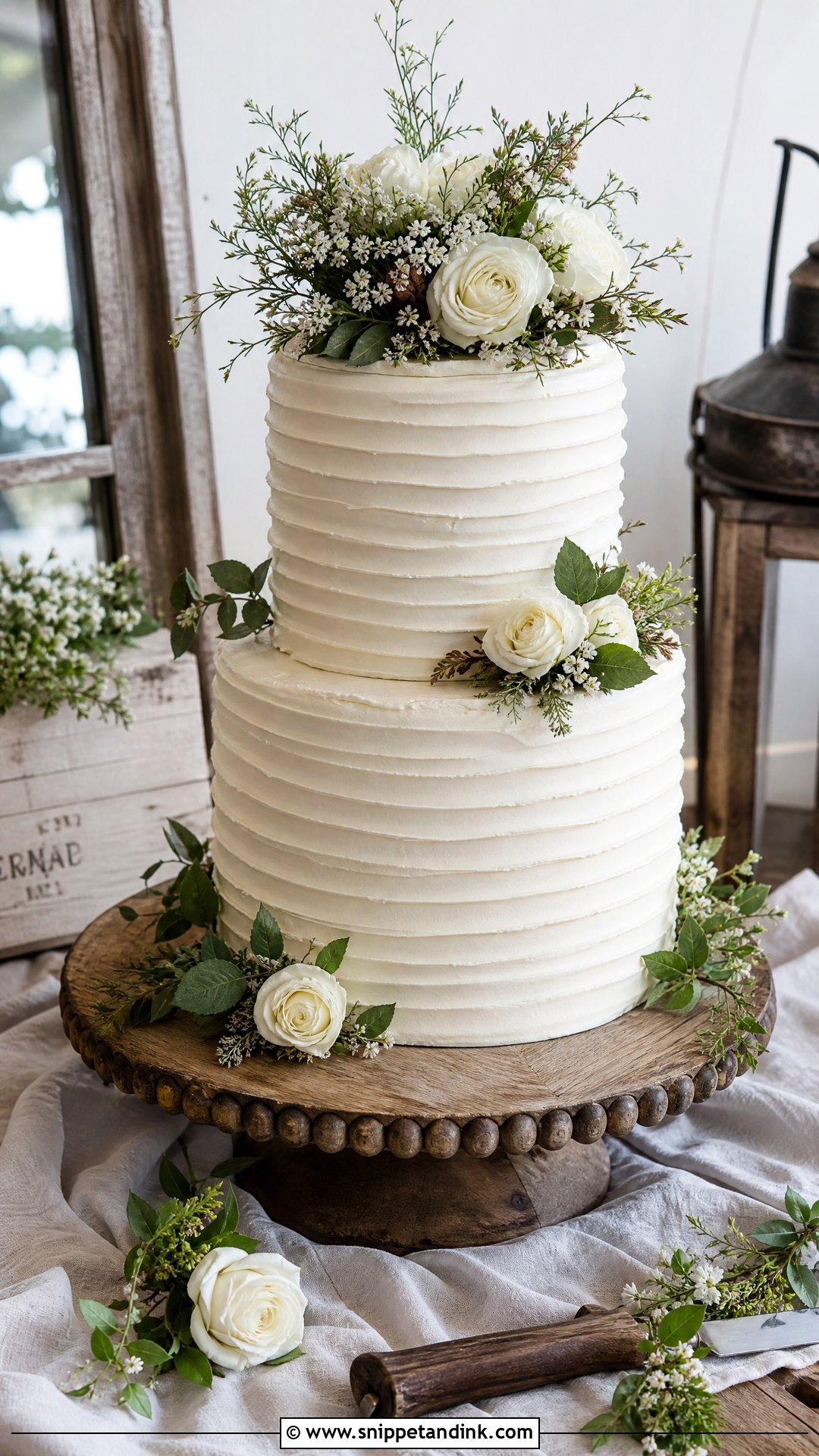
Rustic cakes rely on visible texture: soft ridges, a wooden stand and greenery that looks just picked. Smooth sides aren’t the goal, which makes the finish more forgiving. Spice, carrot, vanilla bean or lemon fit the mood. Where I see these go wrong is too many props at once, bark, burlap, berries and twine all on one tier. Choose one colour direction and borrow the rest from the room, the wood tables, the linen napkins, the candlelight.
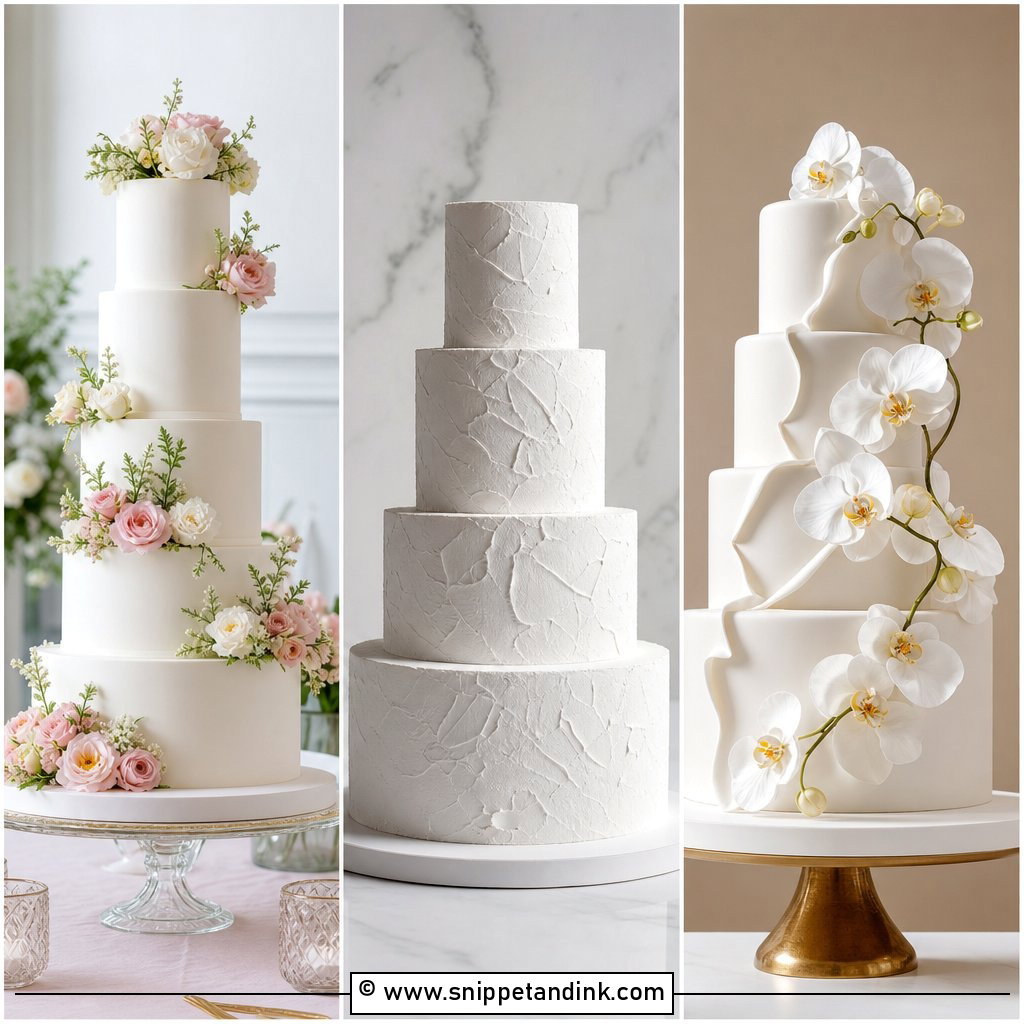
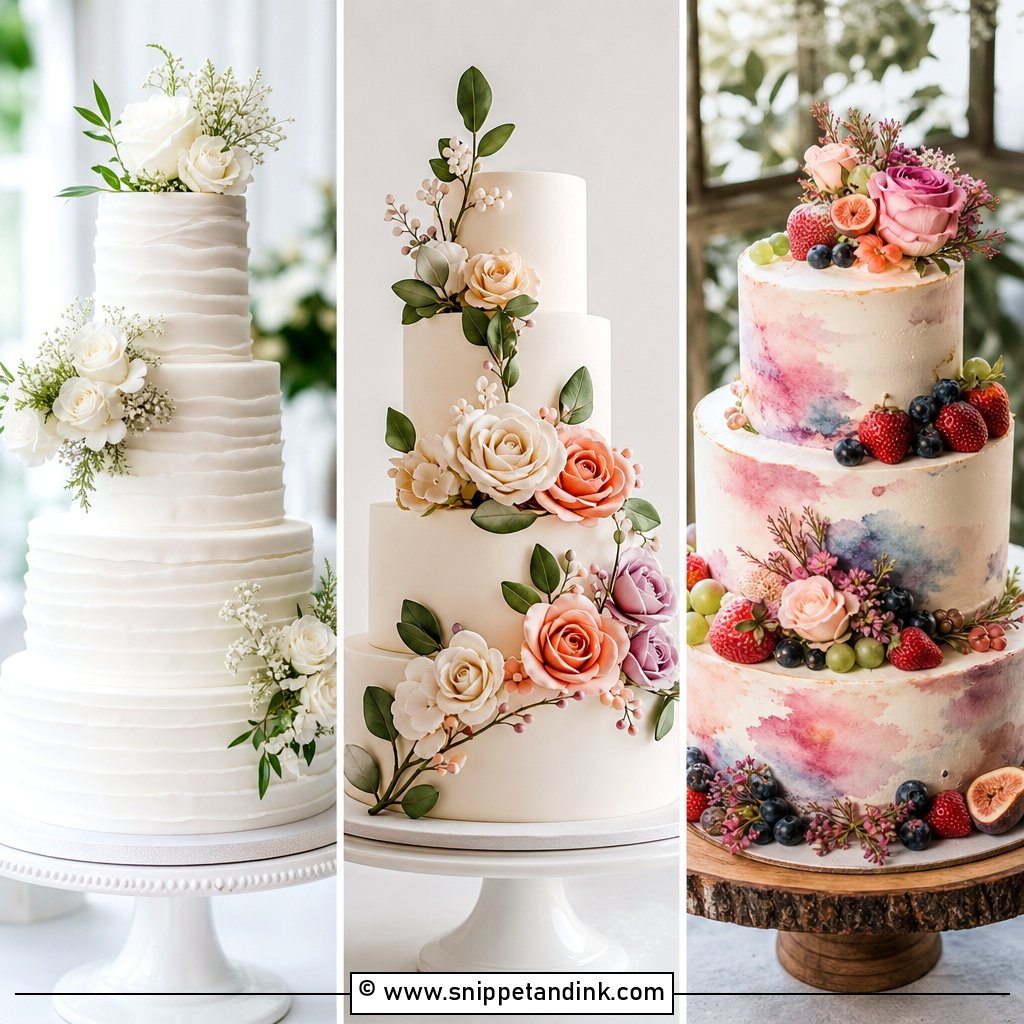
8. Floral Wedding Cake
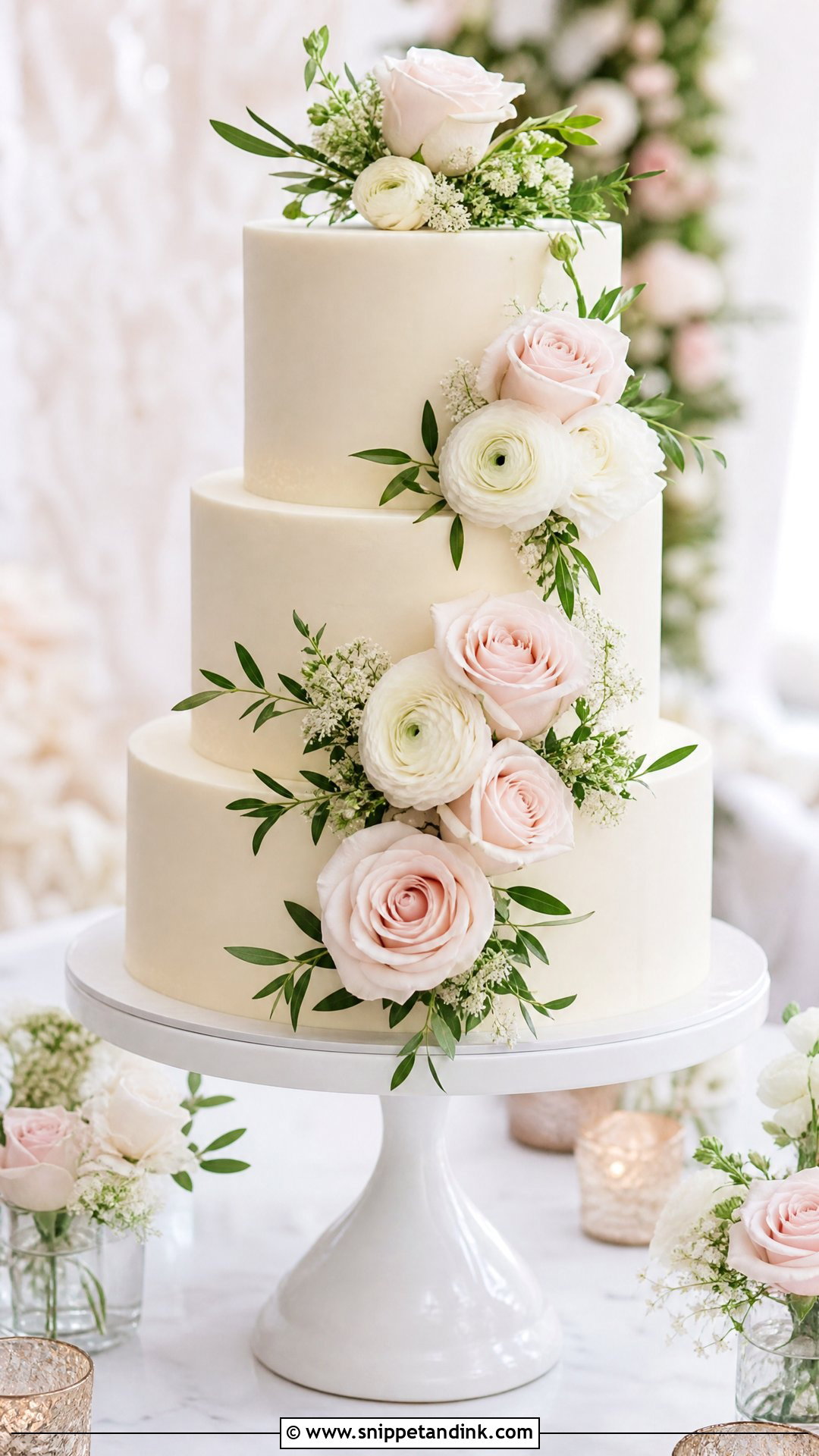
Flowers keep a cake simple only when they are placed with restraint: one cluster on the side, a small crown on top or a soft diagonal. Not every bloom belongs near food. Some popular wedding flowers are toxic or heavily sprayed, so your baker and florist should agree on the varieties, and stems should be wrapped or sit in a barrier, never pushed straight into the sponge. Sugar flowers cost more in hours but last for the whole evening and can be kept. Keep the cake underneath in white or ivory so the flowers carry it.
9. Greenery Wedding Cake
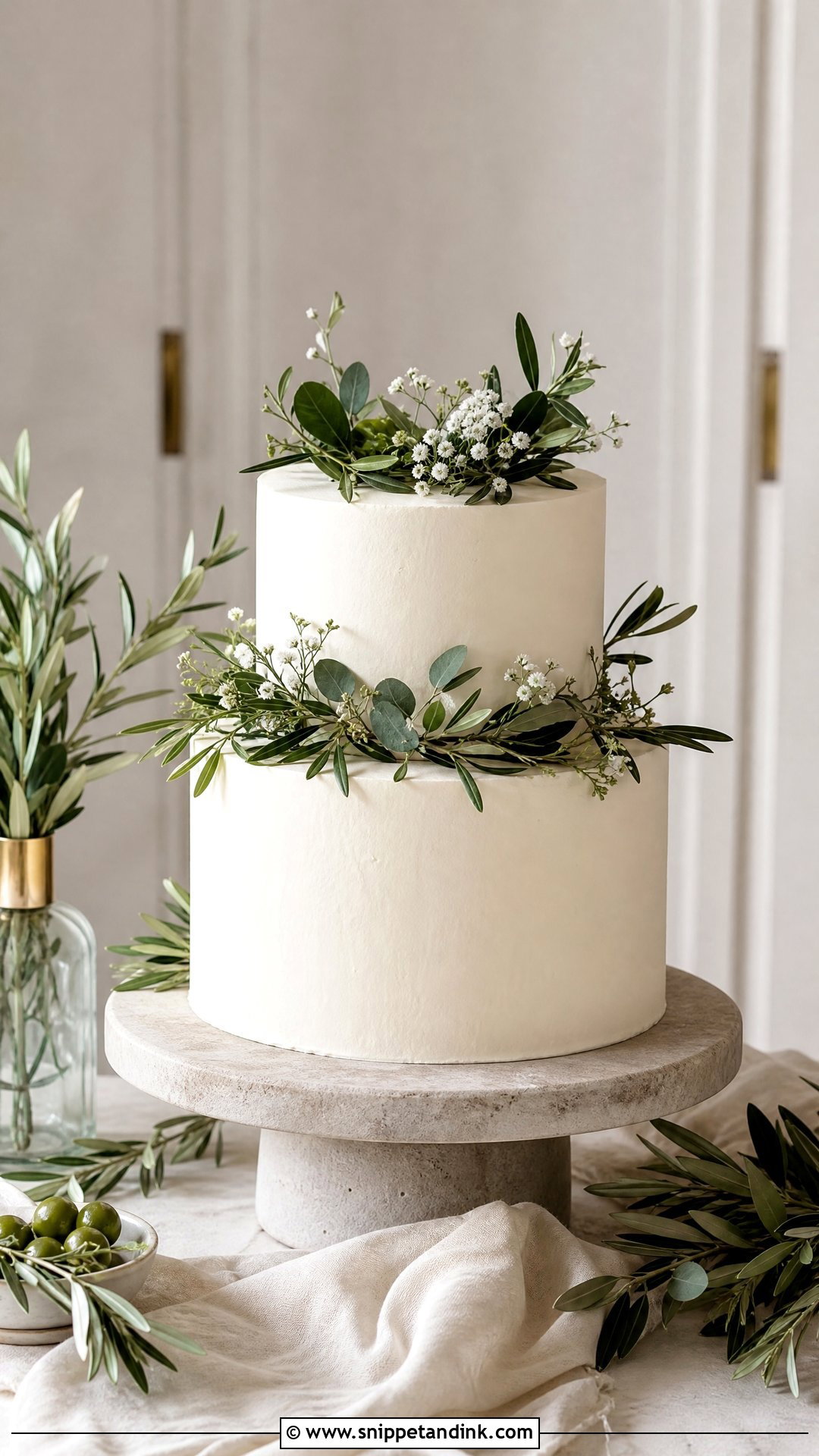
Greenery gives the garden look with fewer flowers to source. Olive, rosemary, eucalyptus and small vines all appear on cakes, but eucalyptus is not food-safe, so I place it on a barrier or swap it for olive or rosemary when the stems would touch frosting. Use it sparingly and the cake still looks crisp. Green reads strongest against white buttercream or ivory fondant. It sits comfortably in a farmhouse barn or a minimalist hall.
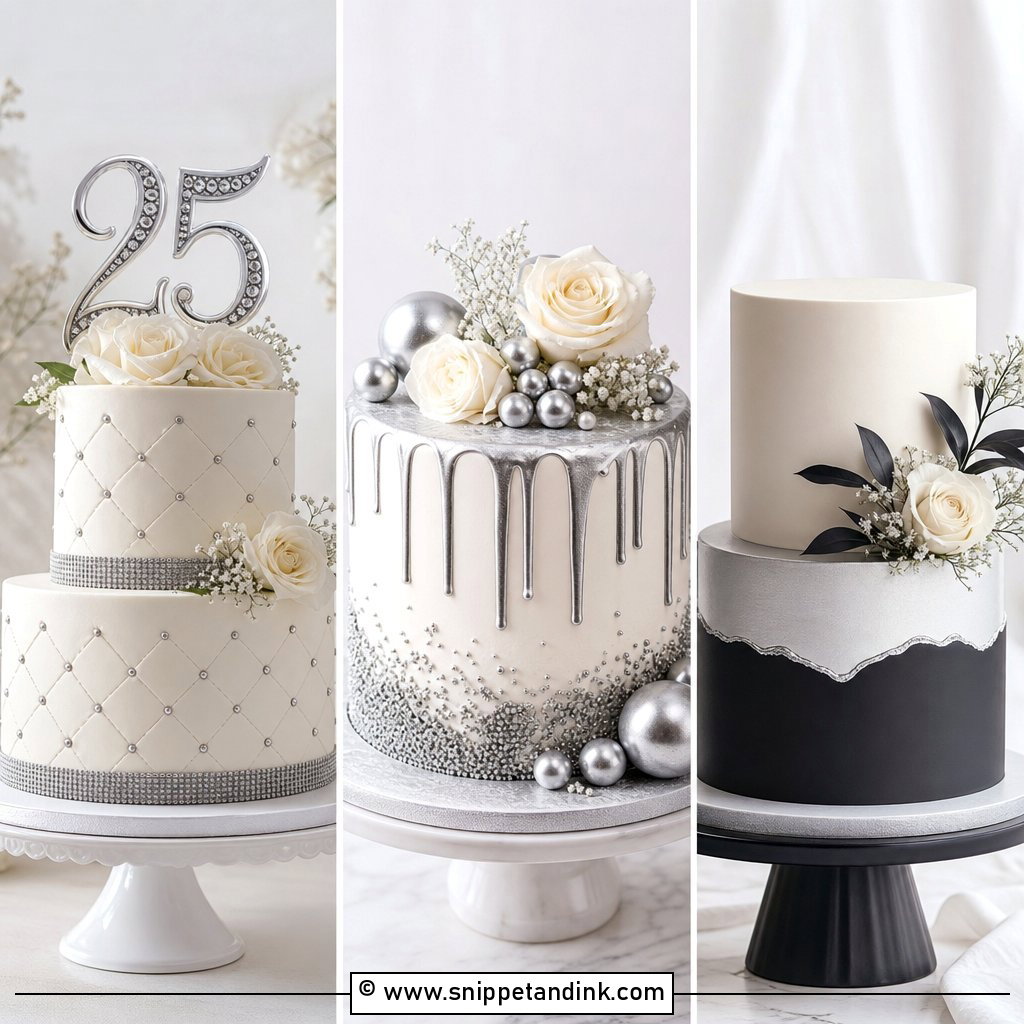
10. Pearl Wedding Cake
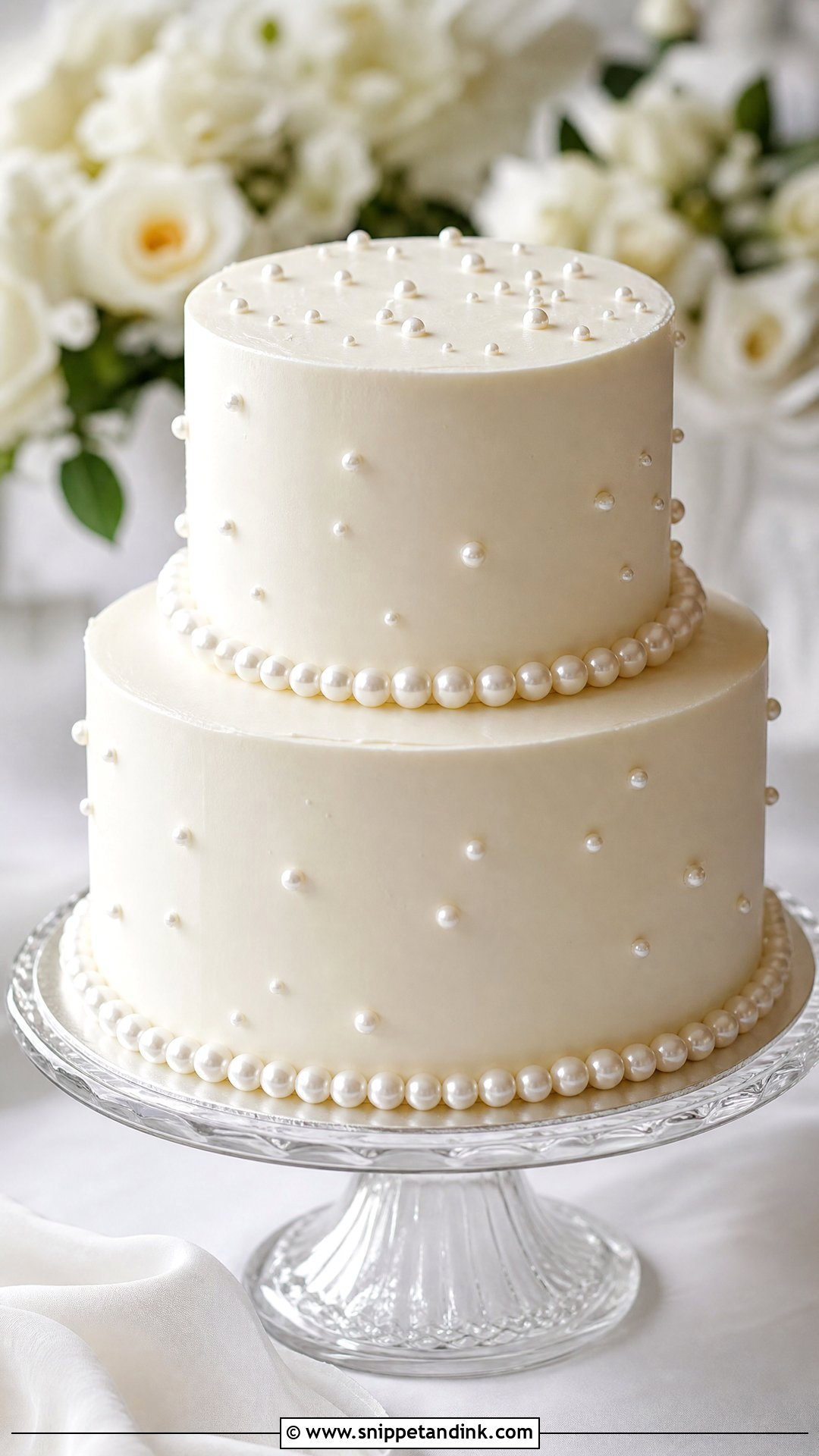
Edible pearls dress a cake up without piping or big flowers. I place them as a border at the base of each tier, or scatter a few over smooth frosting. They come in sugar or chocolate, and the shiny coated ones catch light well in photos, which is the real reason they work at a distance. White, ivory, blush and champagne tones all pair with them. Push them in gently while the buttercream is still slightly tacky or they slide off later.
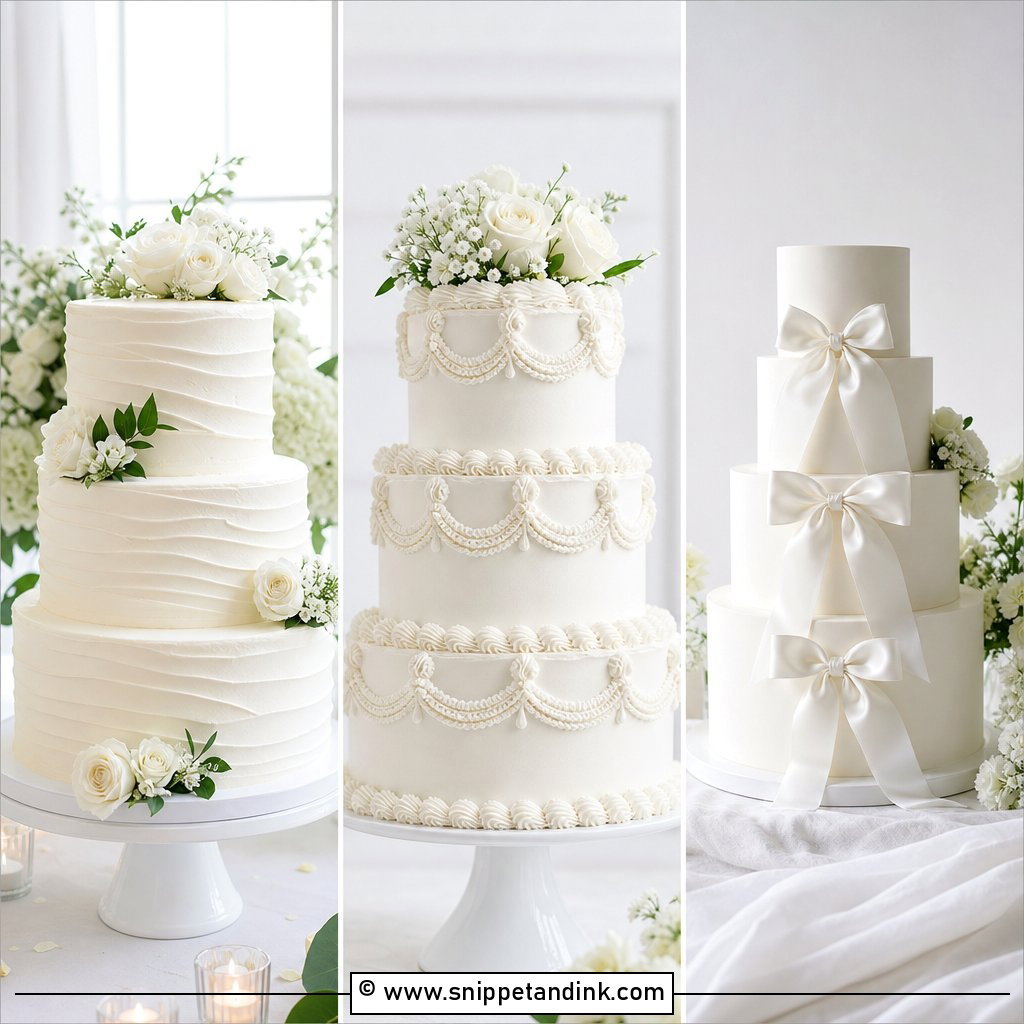
11. Ribbon Wedding Cake
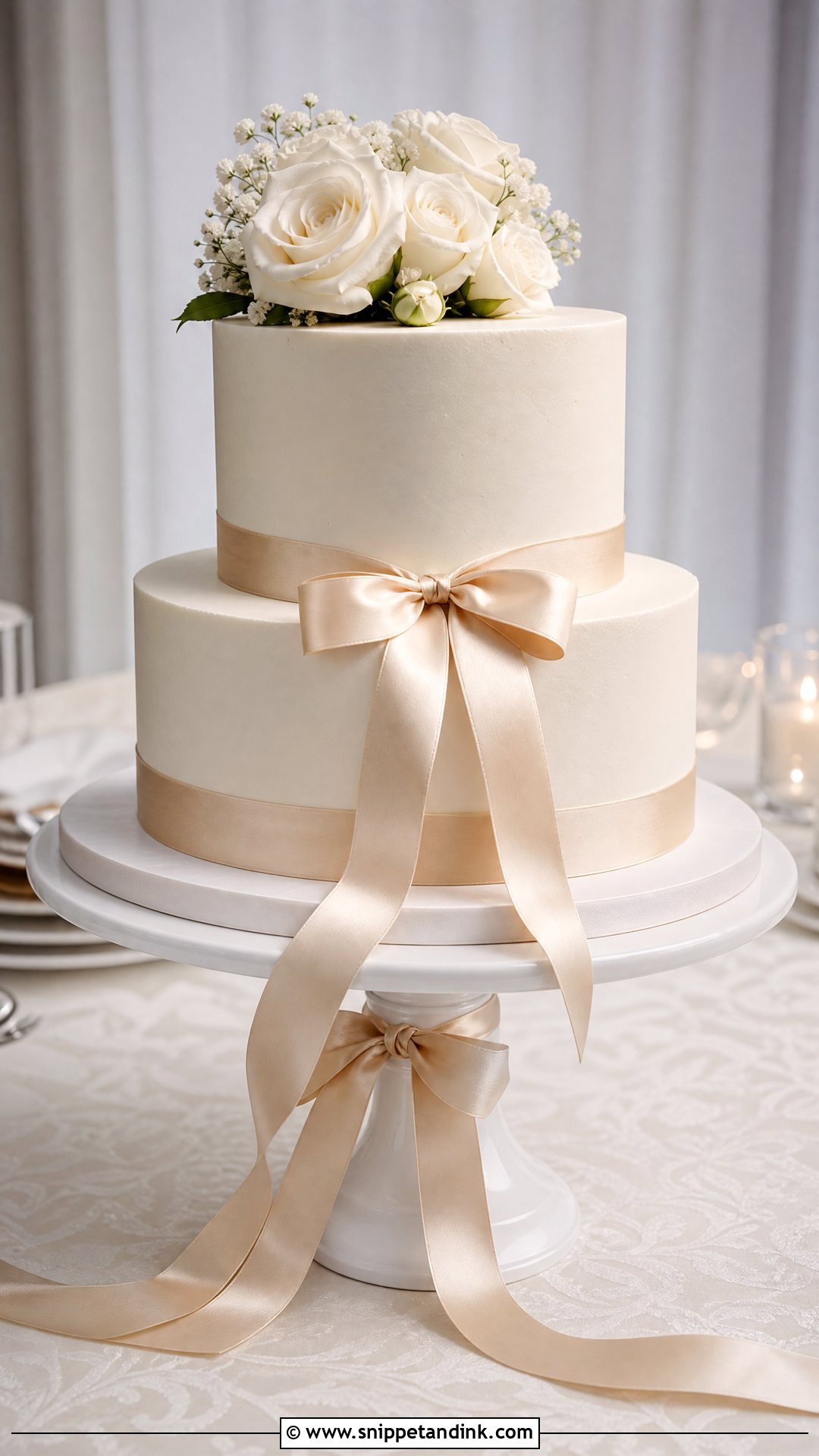
A ribbon is the cheapest way I know to tie a cake to your colours. Real satin or velvet needs a strip of acetate or parchment behind it, because the butter in the frosting will bleed through the fabric and leave grease spots within an hour. An edible fondant ribbon around each tier avoids that entirely. Ivory is classic, dusty blue softer, black more graphic. Keep the frosting smooth so the line looks deliberate, and match it to the bridesmaid dresses or the invitations rather than inventing a new colour.
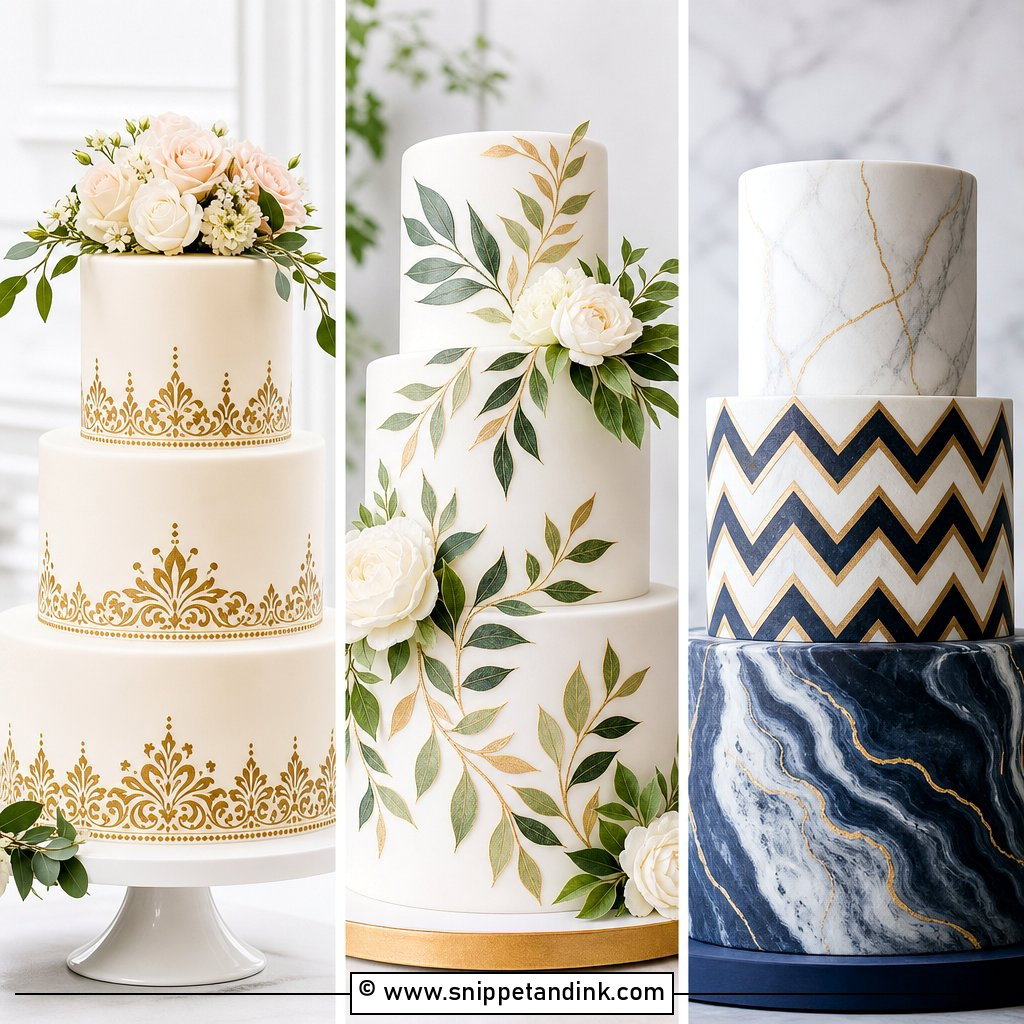
12. Gold Wedding Cake
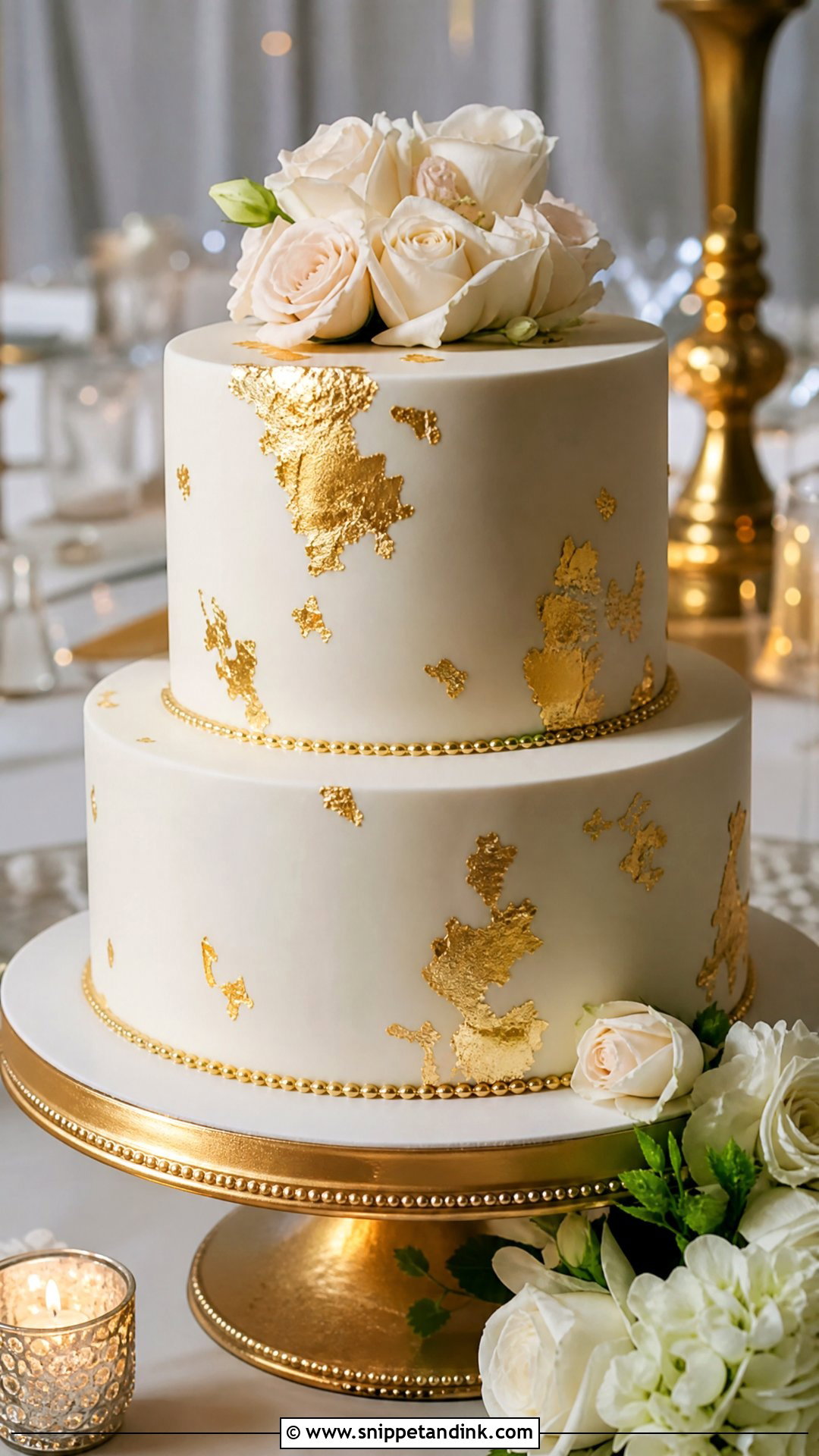
Gold stays simple when it’s one gesture: a thin painted line at the base, a few flakes of leaf or a brushed edge on one tier. Edible gold leaf is fragile and lifts with a breath, so it goes on last, in a still room. Lustre paints vary, and some sold for cakes are labelled non-toxic rather than edible, which is worth checking with your baker. It suits evening receptions and ballrooms. Pick one gold accent, not several.
13. Textured Buttercream Wedding Cake
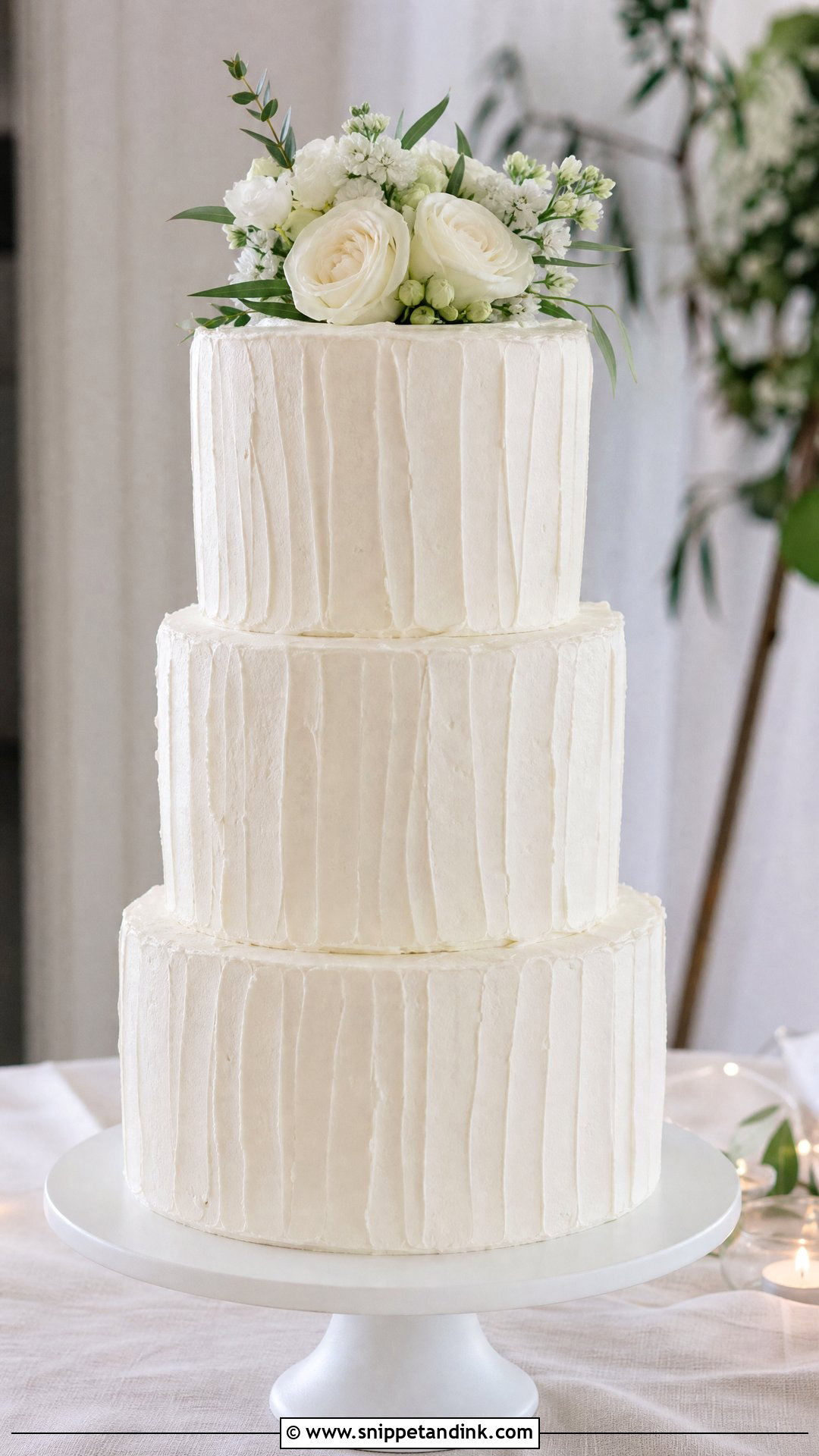
Textured buttercream turns a plain white cake into something with shadow and movement: vertical combed lines, soft waves, stucco or spatula strokes. Each texture photographs differently, so ask to see real pictures of your baker’s version, not a mood board. Texture also hides small imperfections, which is a quiet advantage for venues with long transport. It works on one tier or five.
14. Vintage Wedding Cake
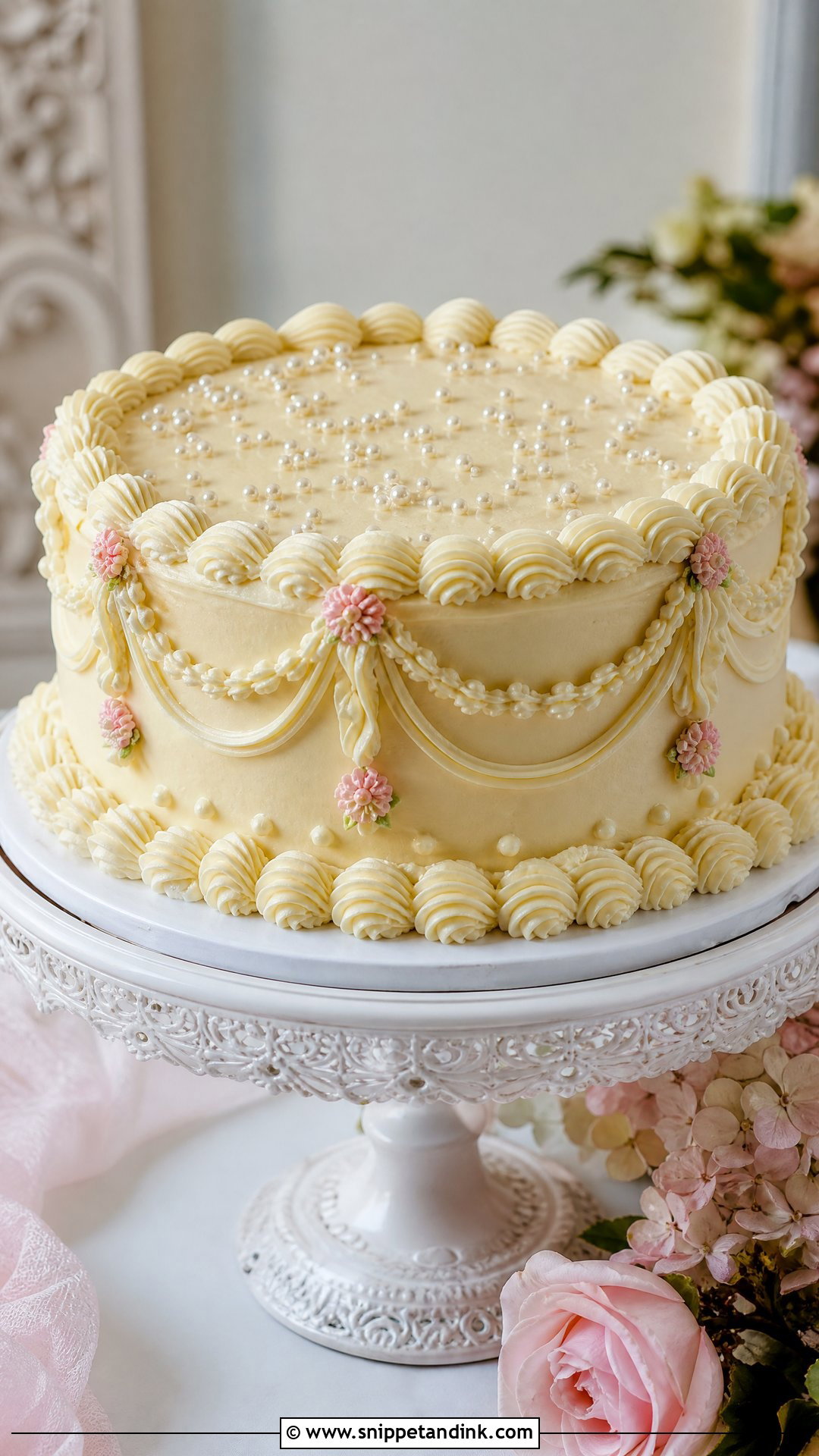
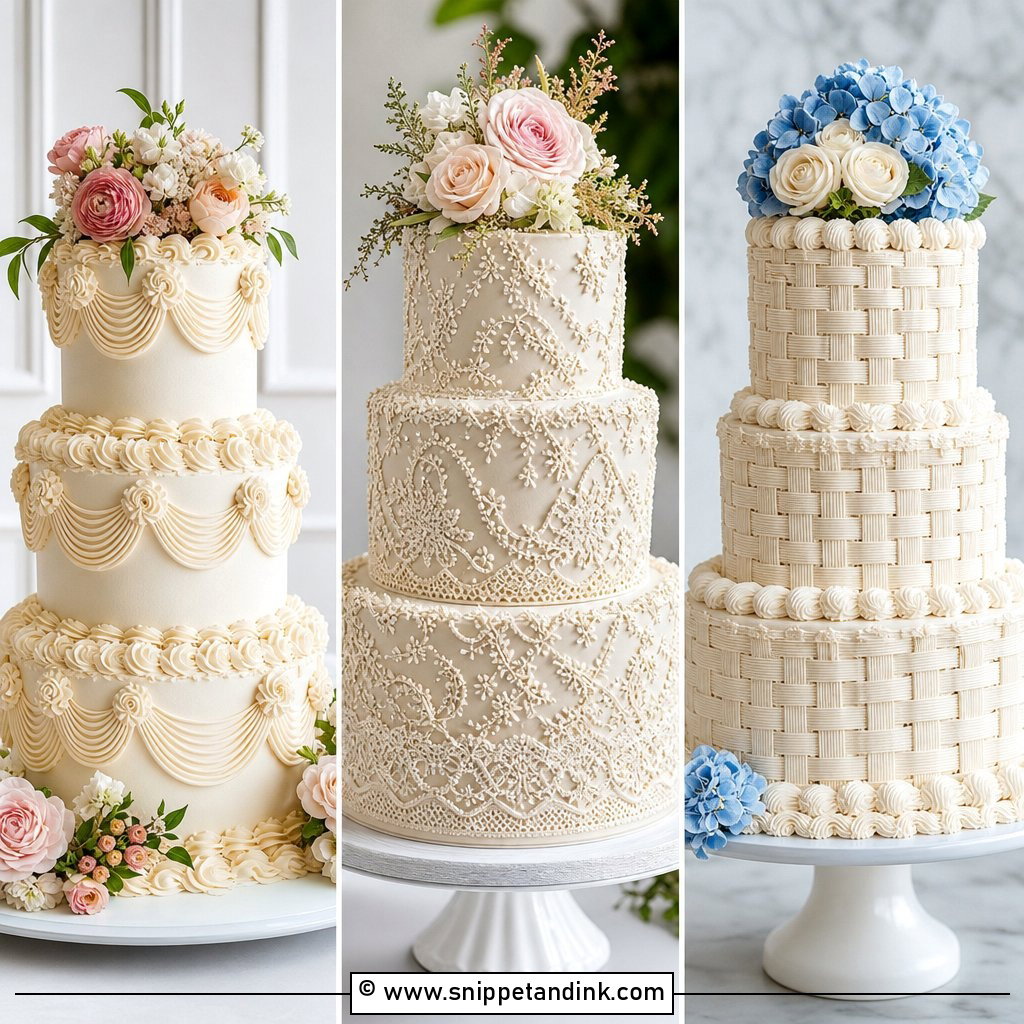
Vintage piping, shell borders, small swags and dotted garlands, can still read as simple if the palette stays pale. On a single tier, ivory buttercream with pink or blue accents looks charming rather than crowded. Over-piping is a real risk here: every border added makes the cake look busier and the piping heavier. I’d stop at two styles of piping per tier. A small pedestal stand gives a vintage cake the height it needs.



15. Square Wedding Cake
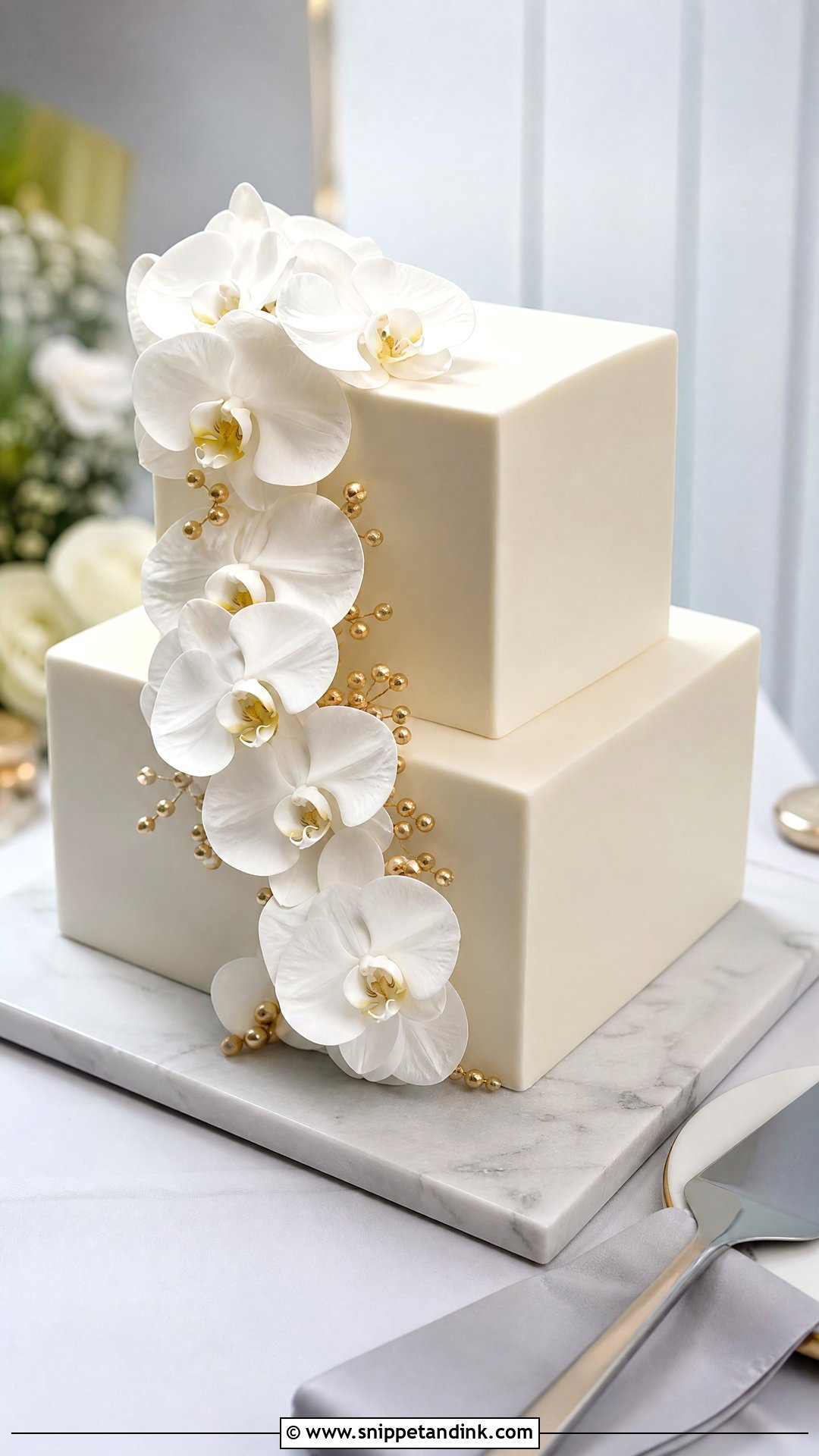
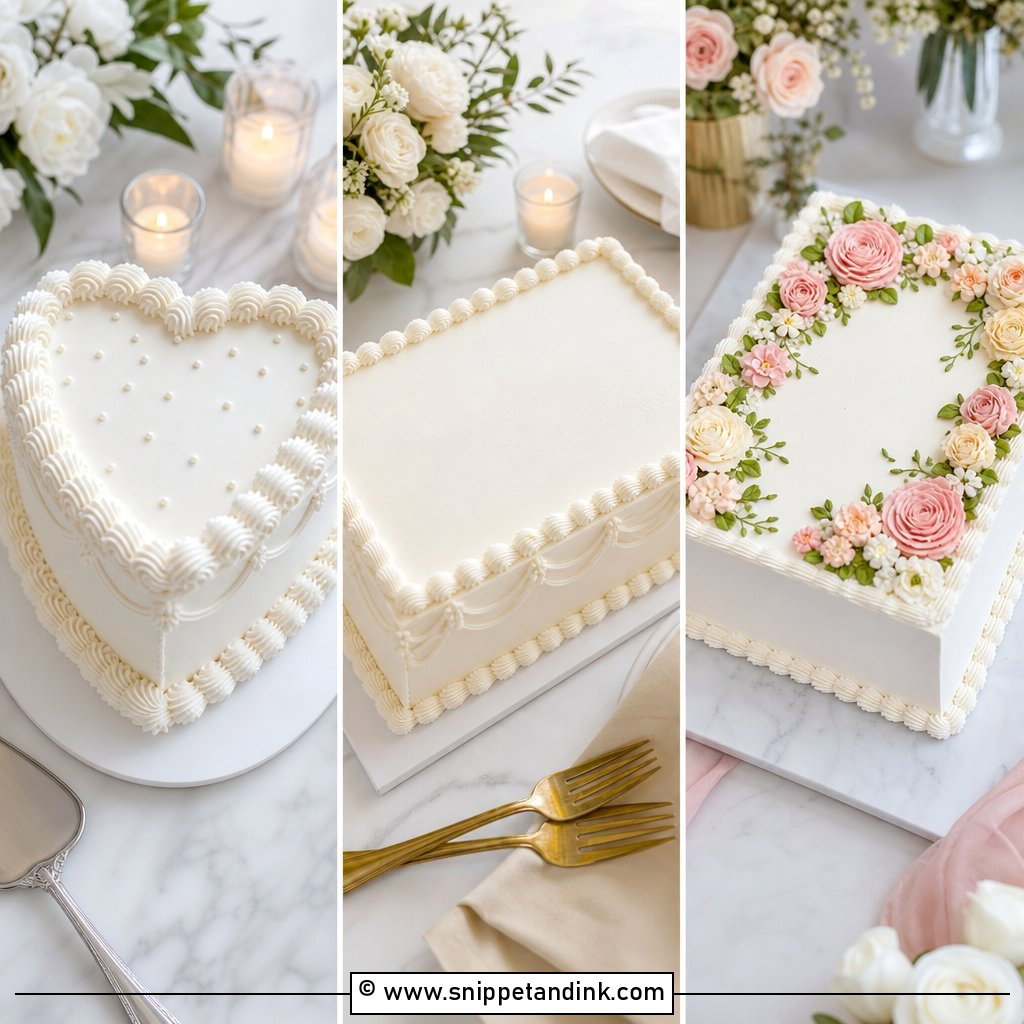
Square cakes look modern because every edge is a line, and that is also what makes them harder. Sharp corners need a firm base coat, usually ganache under fondant or well-chilled buttercream, and any bulge shows straight away. Keep decoration to a small cluster or a thin border. They line up neatly on long tables and suit gallery spaces, hotel ballrooms and city weddings. Cutting is easier too, since the slices come out even.
16. Oval Wedding Cake
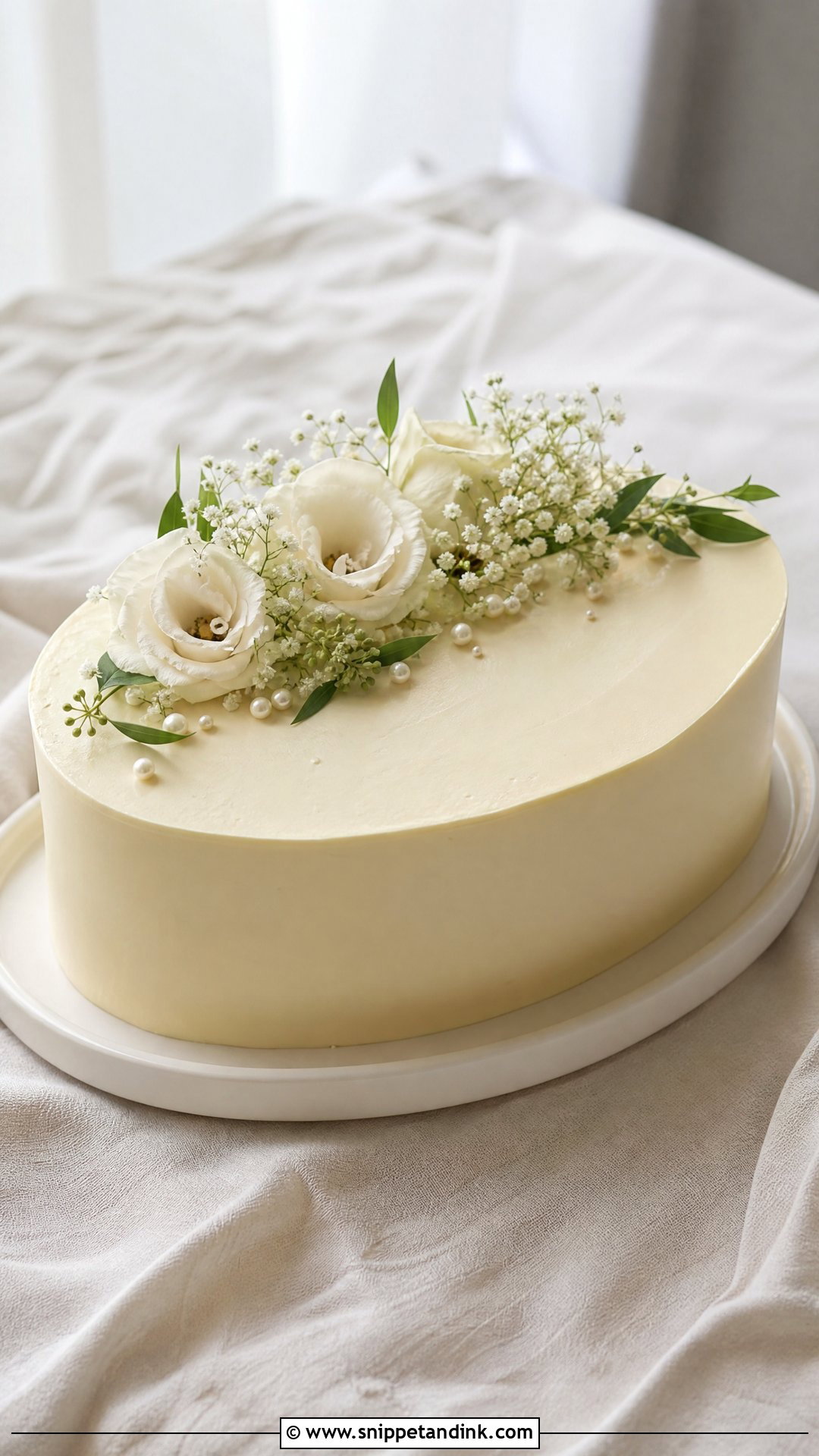
An oval shape is different without shouting about it. It looks best as a single tier or a low two-tier, with the longer top giving more room for fruit or fine piping. Ovals are harder to source than rounds because many bakers don’t own the tins, so ask early. Smooth ivory buttercream shows the curve clearly. Put it on a plain stand so the unique shape stays the focus.
17. Sheet Wedding Cake
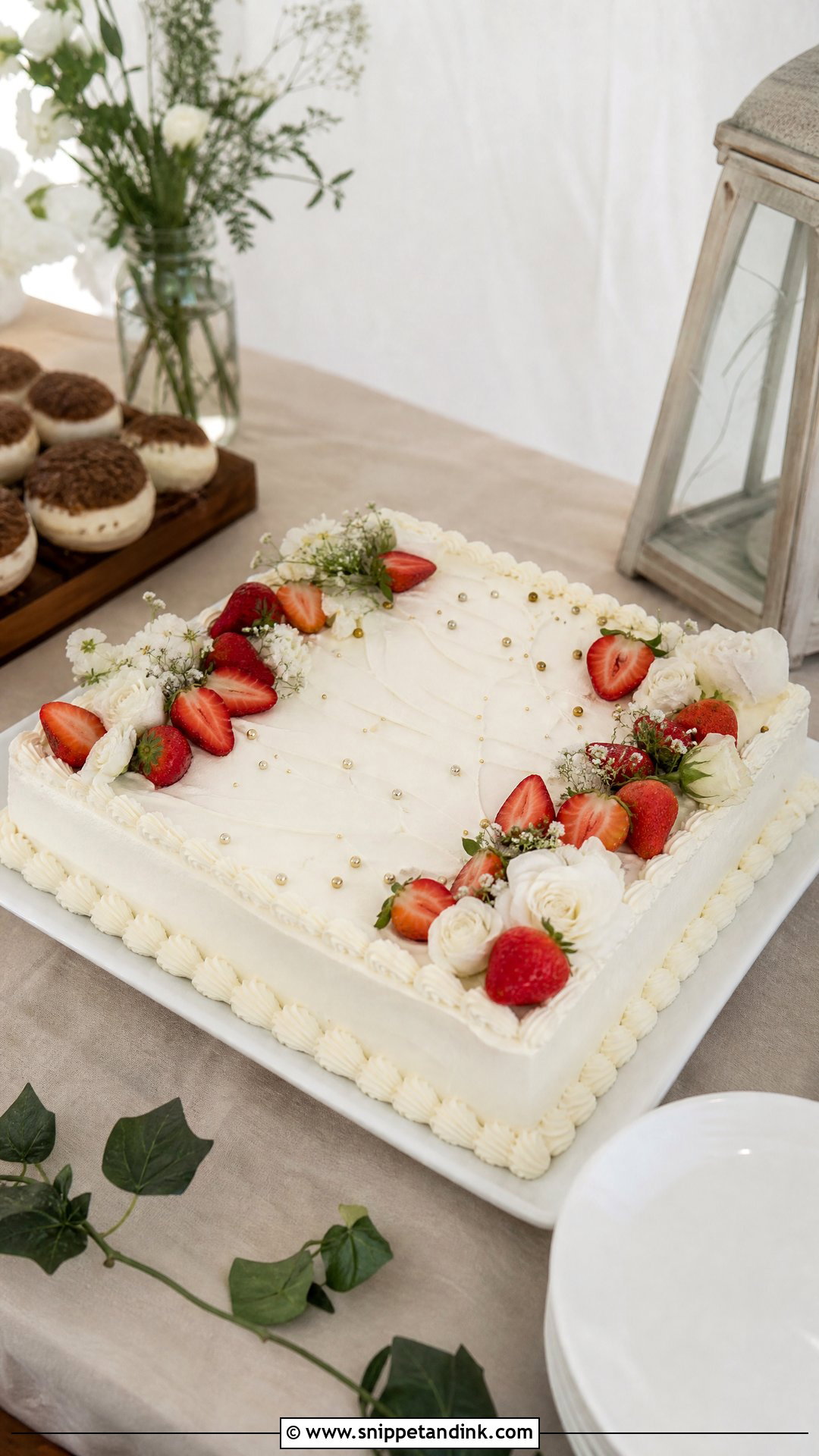
A sheet wedding cake doesn’t have to hide in the kitchen. Set out on a long table with clean frosting, a piped border and flowers or fruit, it becomes the dessert table. Caterers like it because the cutting is fast and the portions come out even. Repeat one detail from your flowers or linens so it looks planned. The one thing I’d avoid is heavy colour on a large flat surface; any streak in tinted frosting shows.
18. Mini Wedding Cake
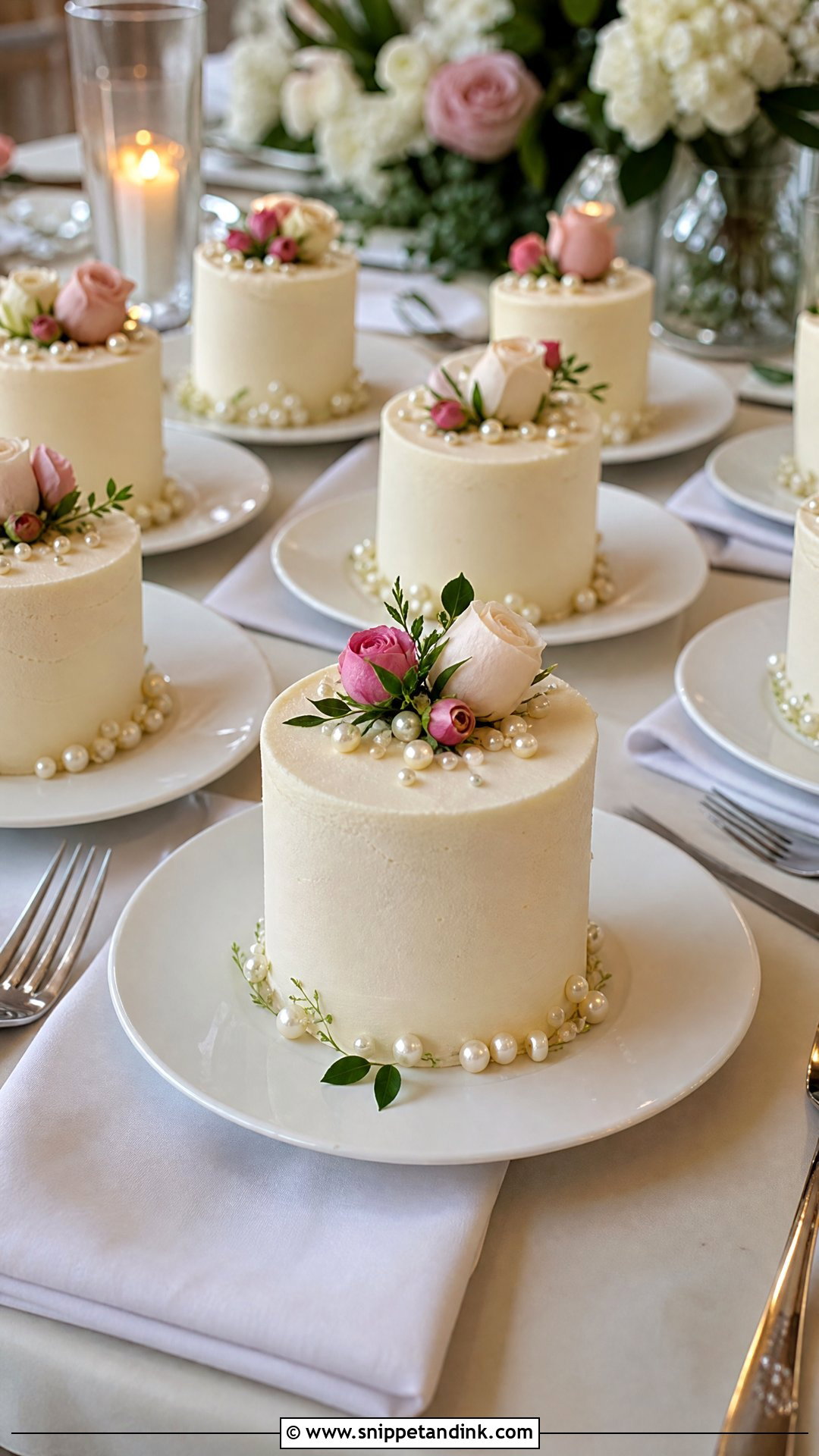
Mini cakes are individual cakes at each place setting or on a tiered display, and they remove slicing from the evening altogether. They do take far more labour than one large cake, since every one is frosted and decorated by hand, so the cost per guest is usually higher, not lower. A tiny flower, a pearl border or a single berry is plenty. Keep every decoration identical so a full display looks orderly.
19. Fresh Fruit Wedding Cake
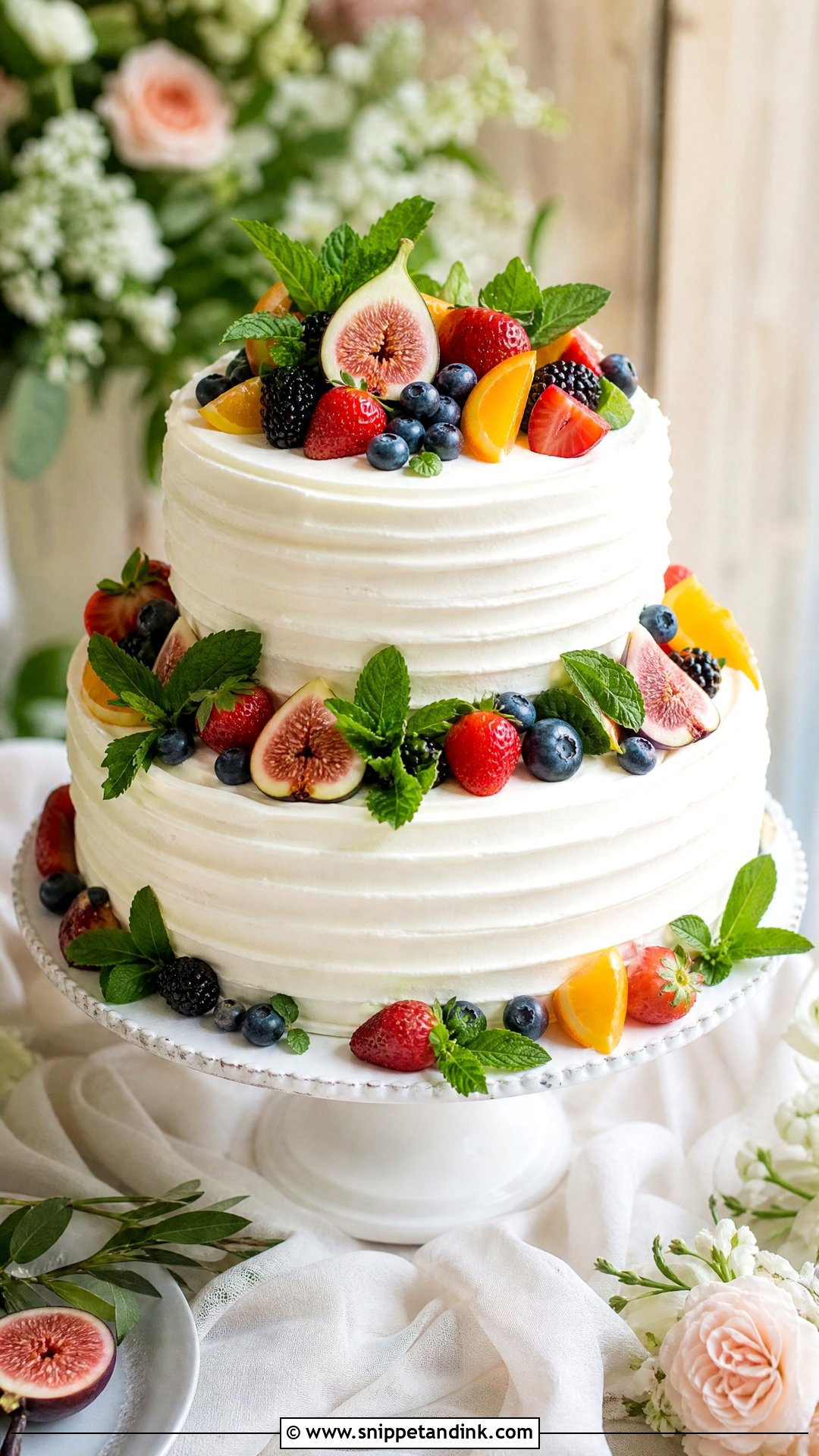
Fruit brings colour with almost no decoration. Berries, figs, citrus slices, grapes and stone fruit all appear, but they don’t behave the same. Cut fruit weeps juice into frosting within a couple of hours, so I use whole berries where possible and add sliced figs or citrus only at the venue. Whipped frosting looks fresh but is the least stable topping in heat. Spring and summer weddings suit it best.

20. Small Wedding Cake
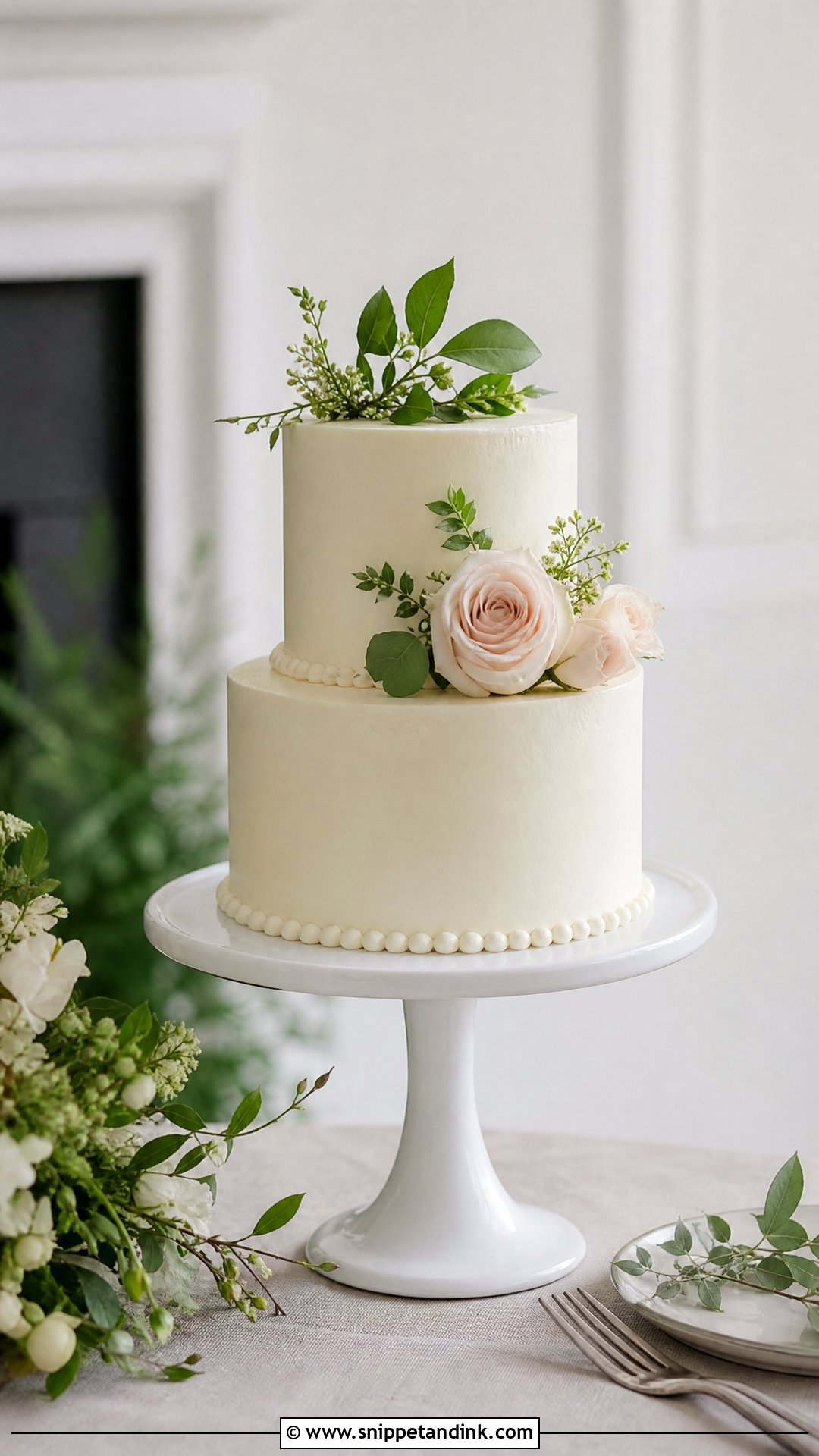
A small cake gives you the cutting moment without serving cake to every guest. Many couples pair it with cupcakes, plated desserts or a kitchen sheet cake. The design has to look intentional, not undersized, so I add height with a tall tier or a raised stand. One flower cluster or a fine border finishes it. It travels easily in an ordinary car, which matters more than people think.
From Order Date to the Cake Table
Most wedding bakers book months ahead, and in busy summer months the good ones fill early, so I’d reach out once you have a venue and an approximate guest count. A plain design does not shorten the queue. Tastings usually happen a few months out, and the final design and numbers are confirmed a few weeks before.
How long it can sit out
This depends on frosting and room temperature more than anything. A buttercream cake in a cool indoor room is comfortable for several hours. The same cake on a warm terrace starts to soften and sag at the edges much sooner, and fresh cream or whipped toppings should stay chilled until shortly before serving. If the cake will be outside, ask for a shaded, level table away from the heaters and the dance floor speakers, which vibrate more than you’d think.
Cold room to warm room
Fondant beads with moisture when a cold cake meets warm, humid air, and that condensation can streak colours. I let a fondant cake come up to room temperature slowly in its box rather than unboxing it straight from a fridge into a hot marquee. Buttercream has the opposite problem: it travels best chilled and firm, then softens on display.
If you’re keeping the top tier, wrap it tightly in several layers of cling film and foil once it has chilled, and freeze it. Thaw it slowly in the fridge so it doesn’t sweat.
One Detail Per Cake Is Usually Enough
None of these cakes needs heavy decoration to hold a room. What makes them work is a clean finish, sensible proportions and a baker who knows how the cake will behave in your venue. Guest count, season and budget will narrow the list quickly. Naked, semi naked, rustic and fruit cakes suit a relaxed day; pearls, ribbon, gold and a smooth two tier suit a dressier one. Keep to one idea per cake and it will look like yours.
You'll Like These Ideas:




Leave a Reply