
White is the one cake color that shows exactly how good your baker is. There’s no gold, no painted flowers and no bright icing to cover a soft edge, so shape, height and finish carry the whole design. Get those right and the same plain cake reads modern in a loft, traditional in a ballroom and relaxed at a courthouse lunch. I’ve grouped twenty white cakes below by size, finish and detail, with the flavors I’d tuck inside each one, because a plain outside leaves you free to be bolder underneath.
A Timeline for Ordering a White Cake
Plain cakes look simple, but the bakers who make them well book up early, especially for Saturdays in peak season. This is the rough order I’d work through, and every baker’s calendar runs a little differently.
- Nine to twelve months out: shortlist bakers and look for plain finishes in their portfolios specifically. Sharp edges and smooth white surfaces in real photos tell you more than a decorated showpiece.
- Six to eight months out: book a tasting. Bring a fabric swatch from the dress, photos of the venue and a rough guest count.
- Three to four months out: confirm tier sizes, flavors and any sugar flowers, which are made by hand well before the wedding.
- Two to four weeks out: give final numbers, the delivery time and the name of whoever will receive the cake at the venue.
One question I’d raise at the tasting: how long will the cake stand before it’s cut, and where? The answer changes the icing I recommend more than any inspiration photo does.
1. Two Tier White Wedding Cake
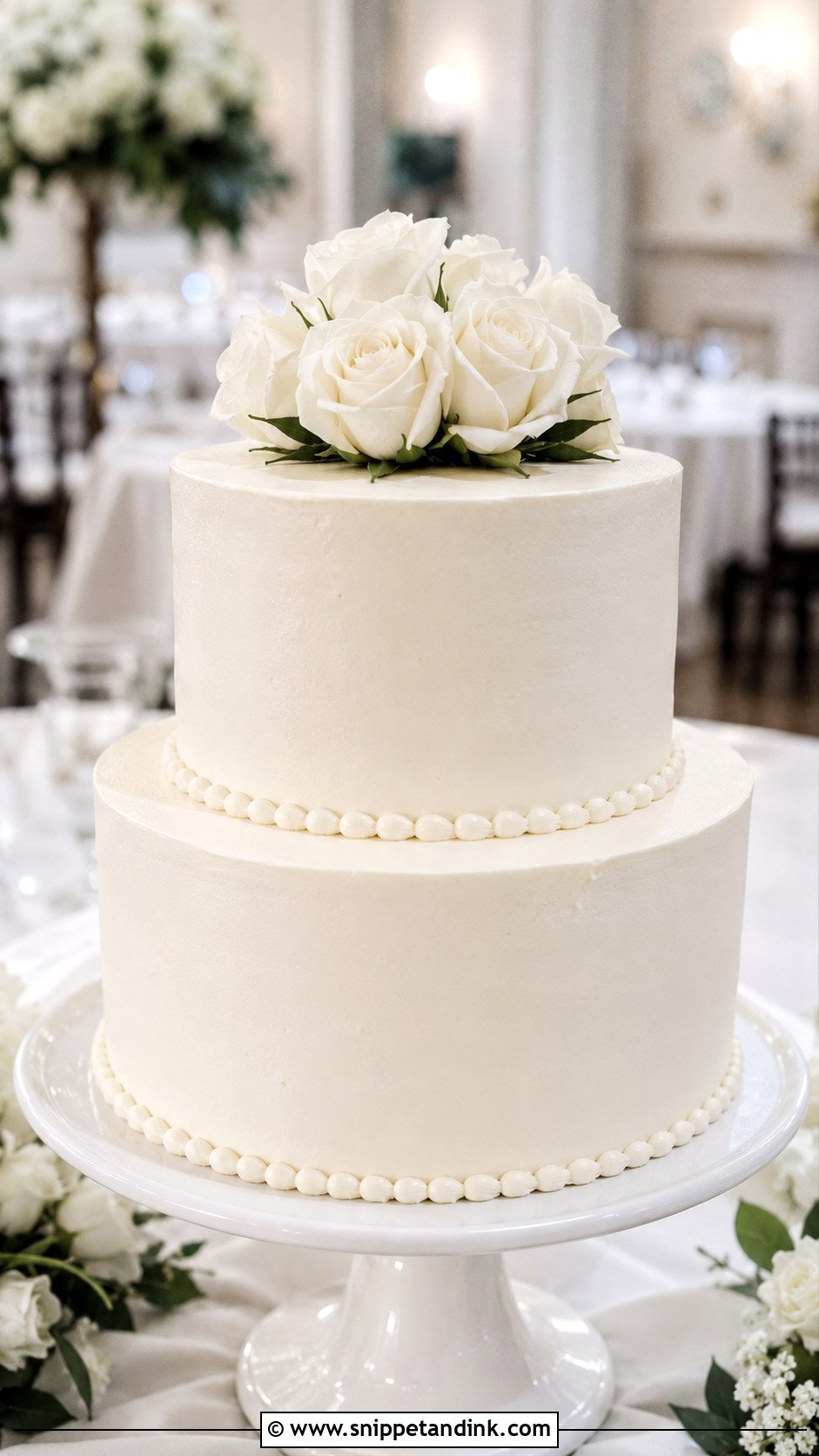
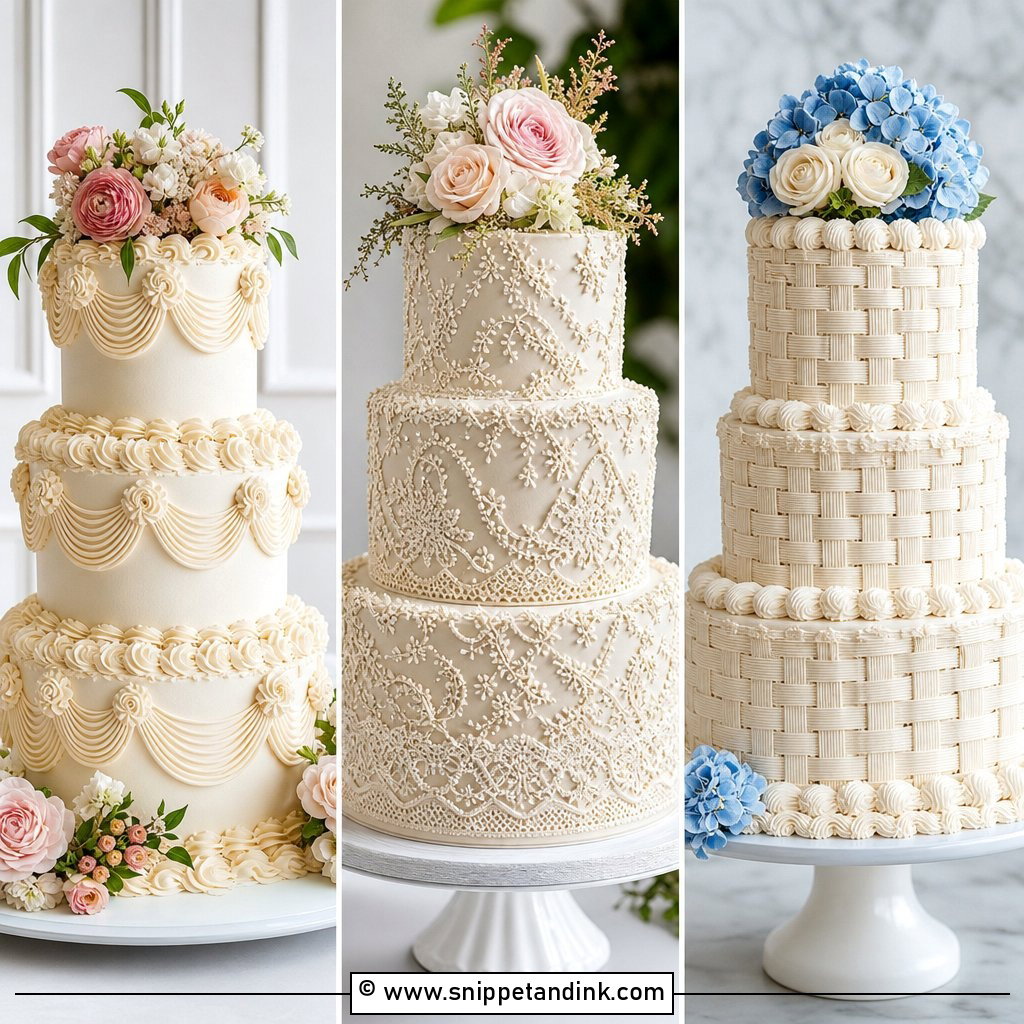
Two tiers is the size I suggest most often for weddings of roughly thirty to sixty guests, depending on tier sizes and whether a dessert table is doing some of the feeding. A two tier white wedding cake still gives you the stacked silhouette without looking lost on a small table. I keep the finish smooth and pick one detail: a clean base border, a small cluster of white flowers or a satin band. Because the cake is short, a raised ceramic stand matters more here than with taller cakes, since it lifts the top tier into the line of the photos. Lemon, almond and white chocolate sponges all fit.
2. Three Tier White Wedding Cake
Three tiers is where a cake stops being a dessert and becomes the centerpiece of the room. Balance is everything. I usually step each tier down by two inches so the profile reads as an even staircase, and I’d only break that for a deliberately tall look. Thin piped borders or a few small sugar flowers are plenty. When your tables already carry heavy flowers, candles and textured linen, a clean three-tier is the quiet counterweight the room needs. Crisp edges lean modern; softer rounded edges lean romantic.
3. White Buttercream Wedding Cake
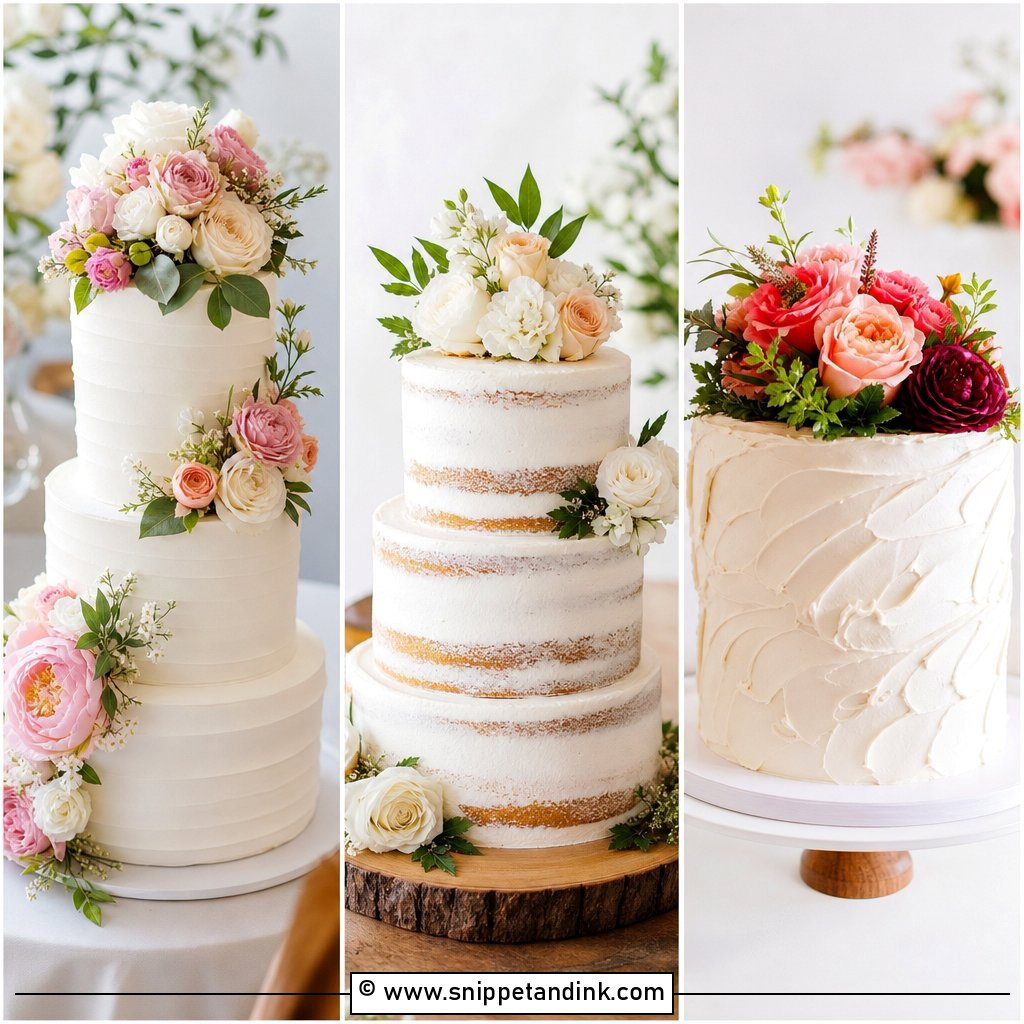
Taste is why most couples land on buttercream. It’s creamy and familiar, and it offers more finishes than people expect: smooth, spatula-marked, ridged or stuccoed. Swiss meringue is my default because it’s silky and less sweet, but it is also the least heat-tolerant, so for a summer marquee I’ll firm it up or put a ganache layer underneath. Cream cheese buttercream tastes wonderful and is the softest of all, which is why I keep it as a filling rather than the outer coat for a long display. Decide between ivory and bright white by holding the icing next to your flowers, not your phone screen.
4. White Fondant Wedding Cake
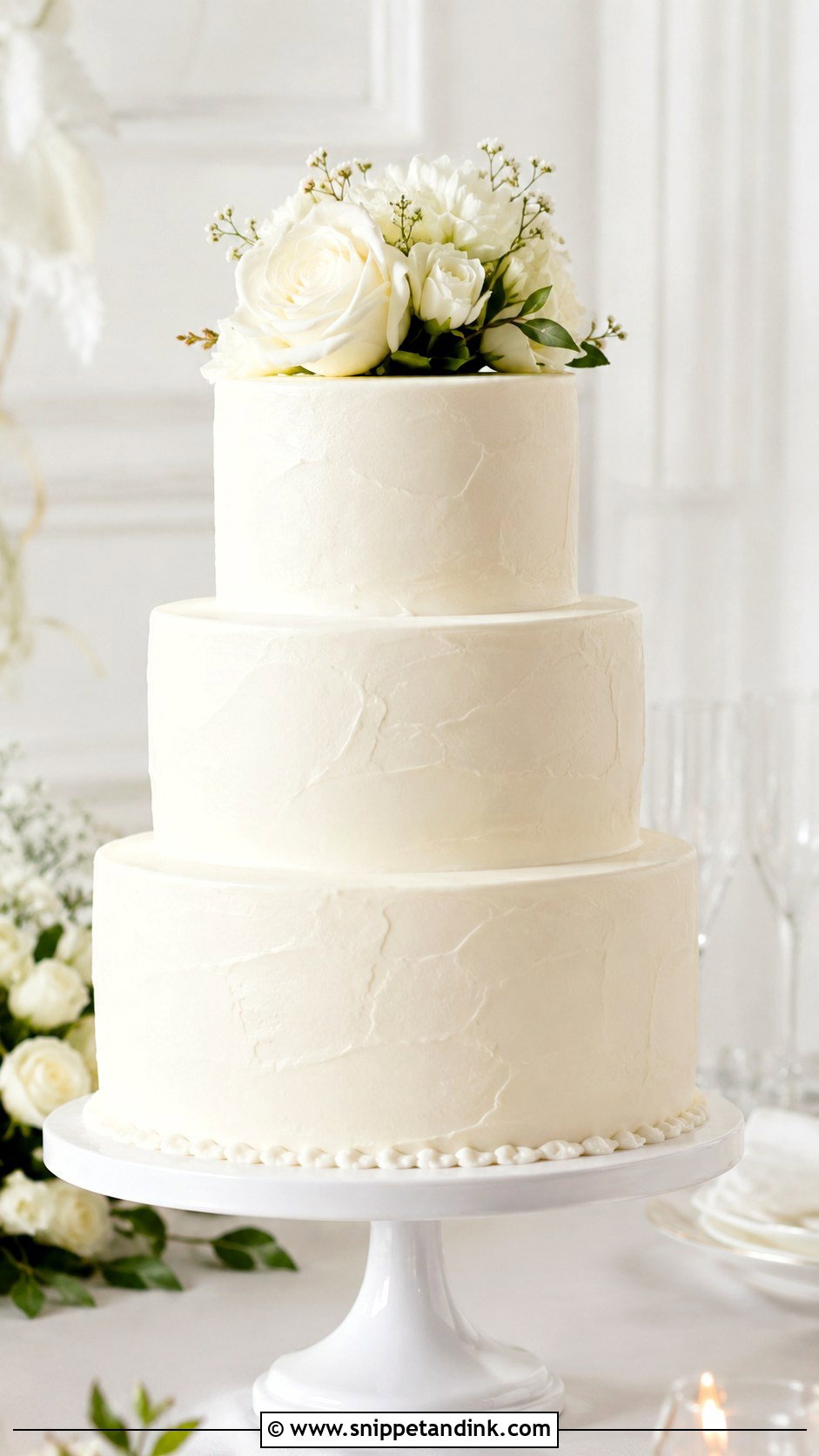
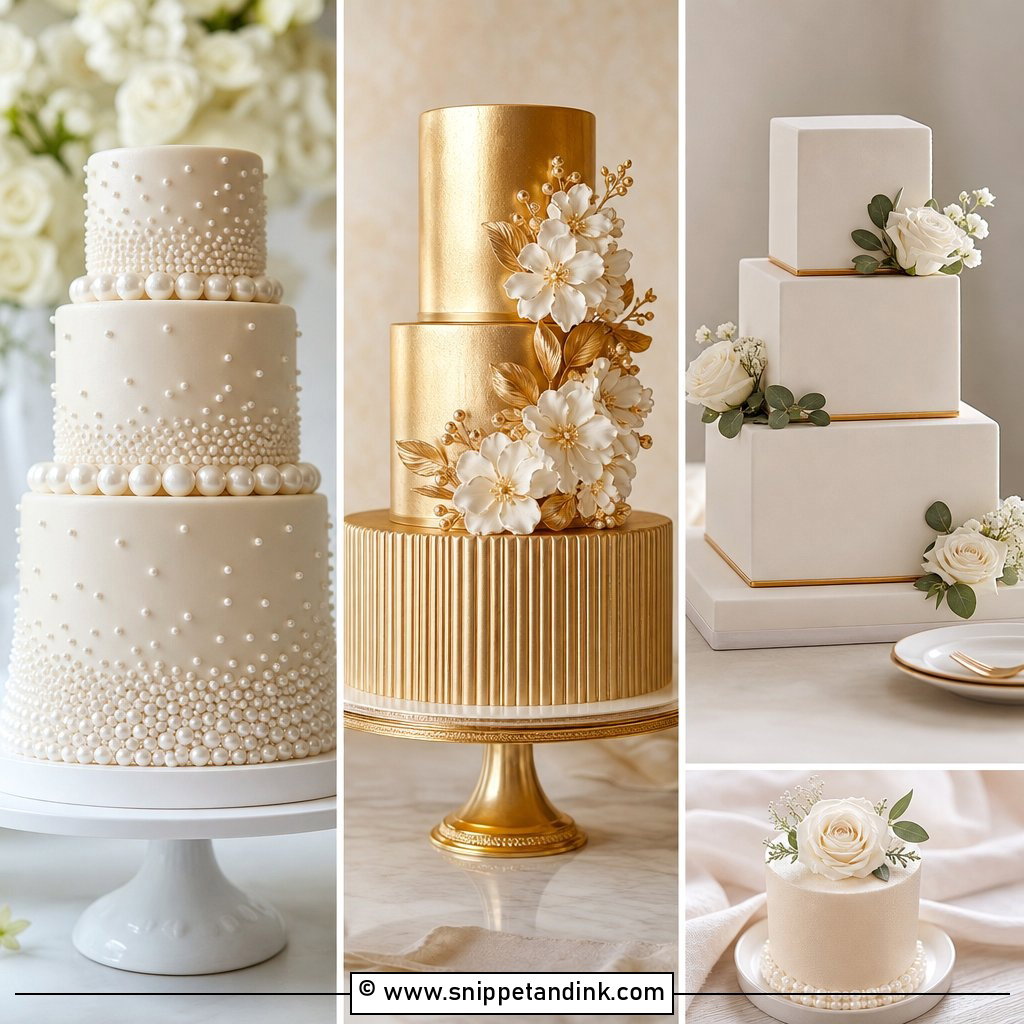
A white fondant wedding cake gives the cleanest lines I can make, which is why it’s the covering for sculpted details, sharp tier edges and long formal receptions. Ask for a matte finish. Shiny fondant can glare under flash and look plasticky up close. A thin ribbon, one flower cluster or a line of piped pearls is enough decoration. If taste worries you, ask for a thin roll over firm buttercream or ganache, and a sponge you’d happily eat on its own.
5. White Wedding Cake With Pearls
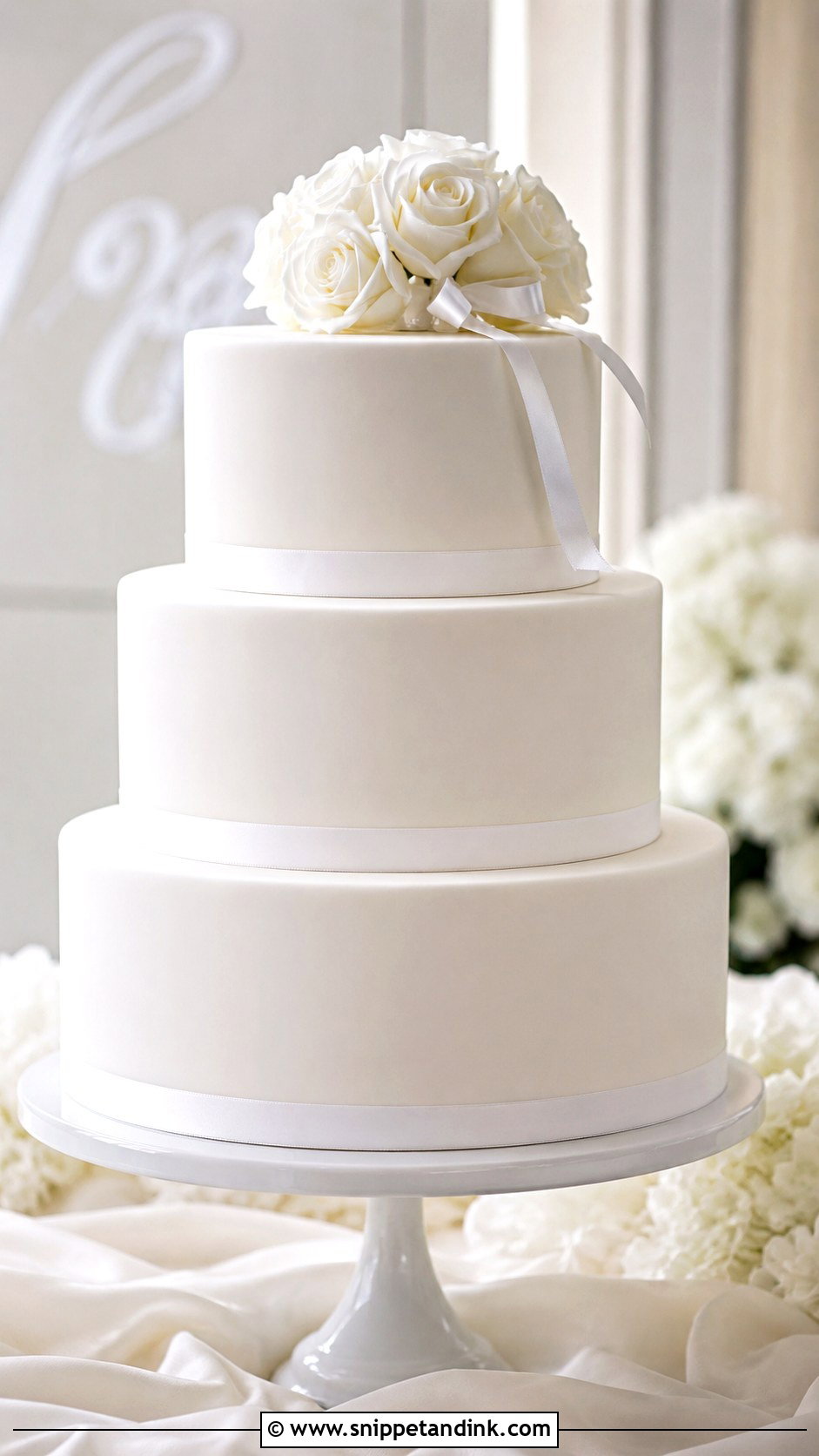
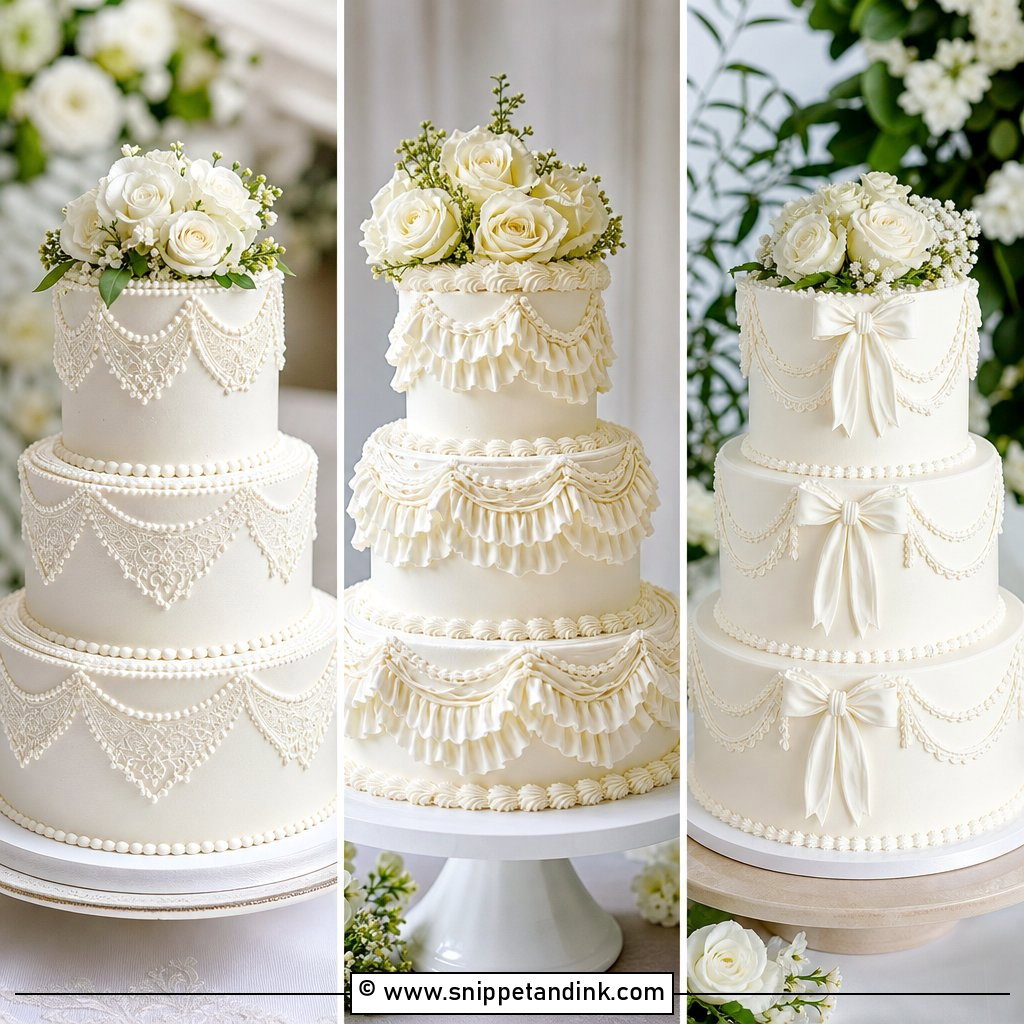
Pearls can be made three ways, and they look quite different. Piped buttercream pearls are soft and slightly irregular, sugar pearls are uniform and glossy, and tiny hard dragées are the brightest but crunchy to bite into. One pearl border at the base of each tier looks refined; a loose scatter feels more delicate. Keep every other surface smooth so the texture actually registers. Lace gowns and pearl earrings sit naturally beside it, and an almond sponge with vanilla buttercream keeps the flavor as gentle as the design.
6. White Wedding Cake With Roses
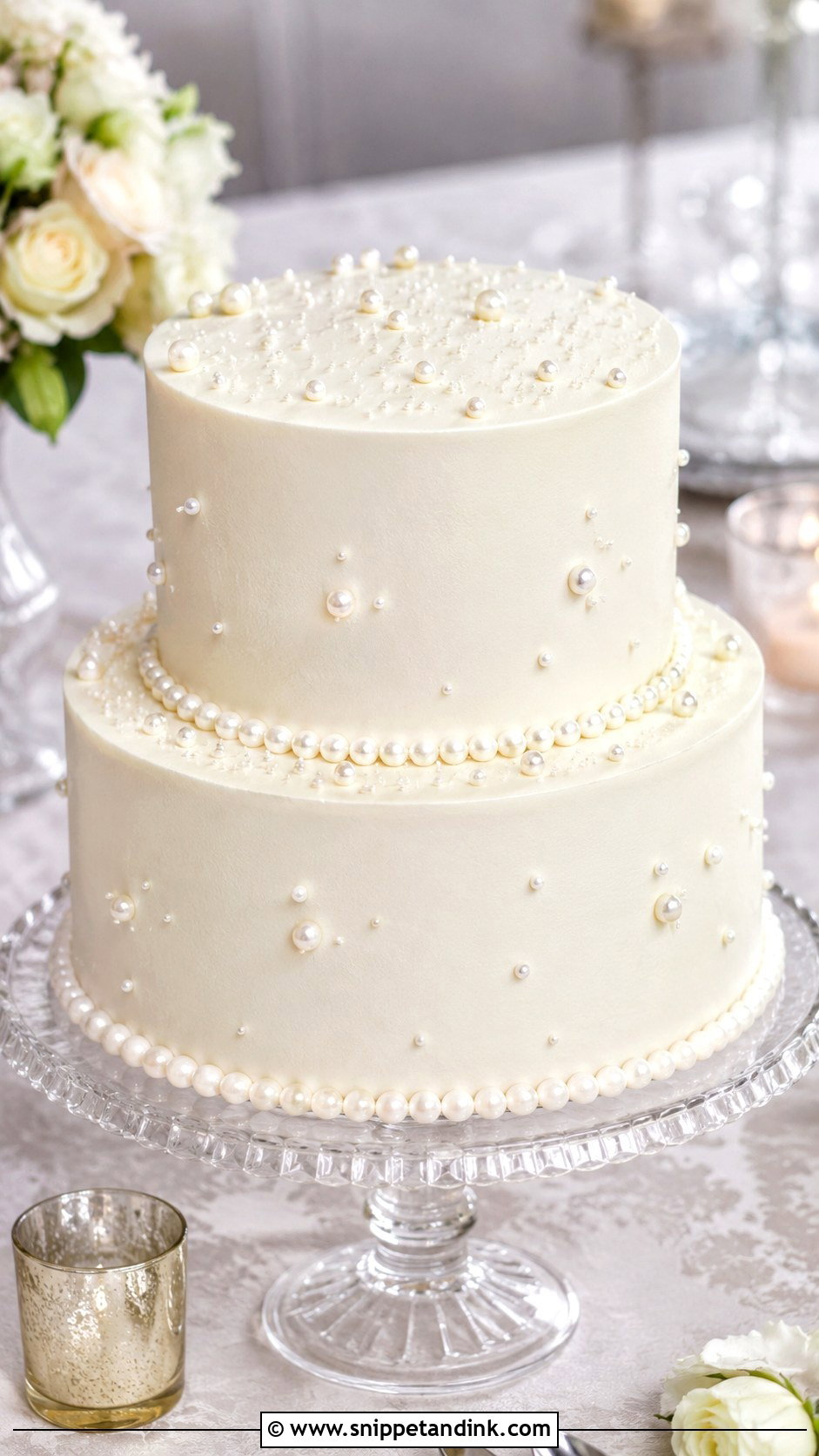
Roses warm up a plain cake without adding any color. White garden roses, spray roses or sugar roses can sit in a small top-tier cluster or trail down one side, and either way the icing underneath should stay clean, with little or no piping. Fresh roses need to be unsprayed where possible and set on a barrier, and I sort that out with the florist before the day, not in a rush at the venue. Raspberry filling inside a vanilla bean sponge is a lovely surprise at the cutting, though it needs a buttercream dam so the red doesn’t seep toward the white edge.
7. White Wedding Cake With Hydrangeas
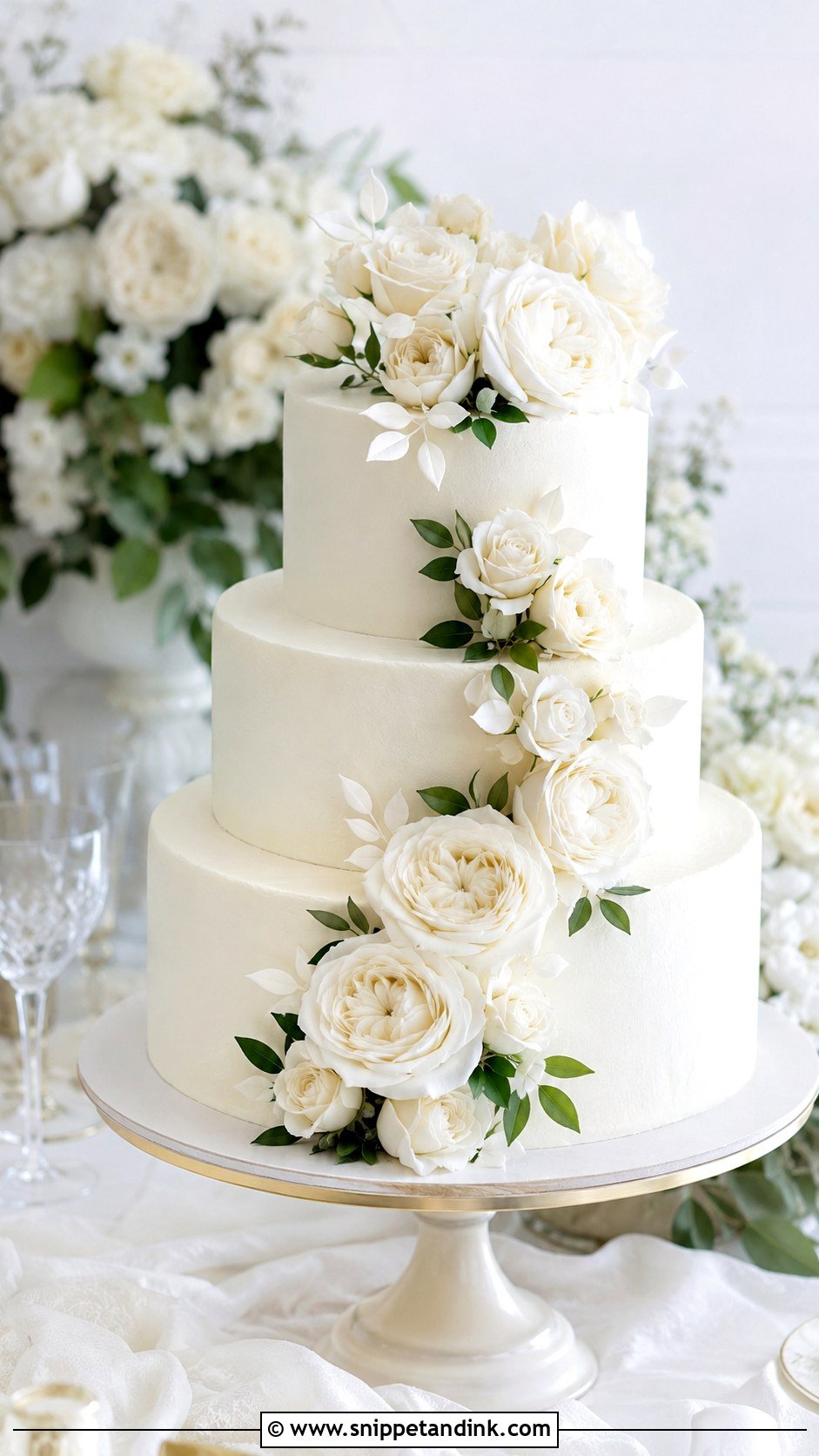
Hydrangeas fill space fast, so one fresh cluster between tiers or a small group on top is usually enough. They’re thirsty and wilt quickly once out of water, which makes them one of the trickier fresh flowers for a cake that stands for hours. Every stem needs sealing and a barrier, because hydrangea isn’t safe in contact with food. In a warm room I’d switch to sugar florets, or ask the florist to keep the blooms in water until the last possible moment. A bright lemon or almond sponge keeps the inside tasting as fresh as the outside looks.
8. White Wedding Cake With Baby’s Breath
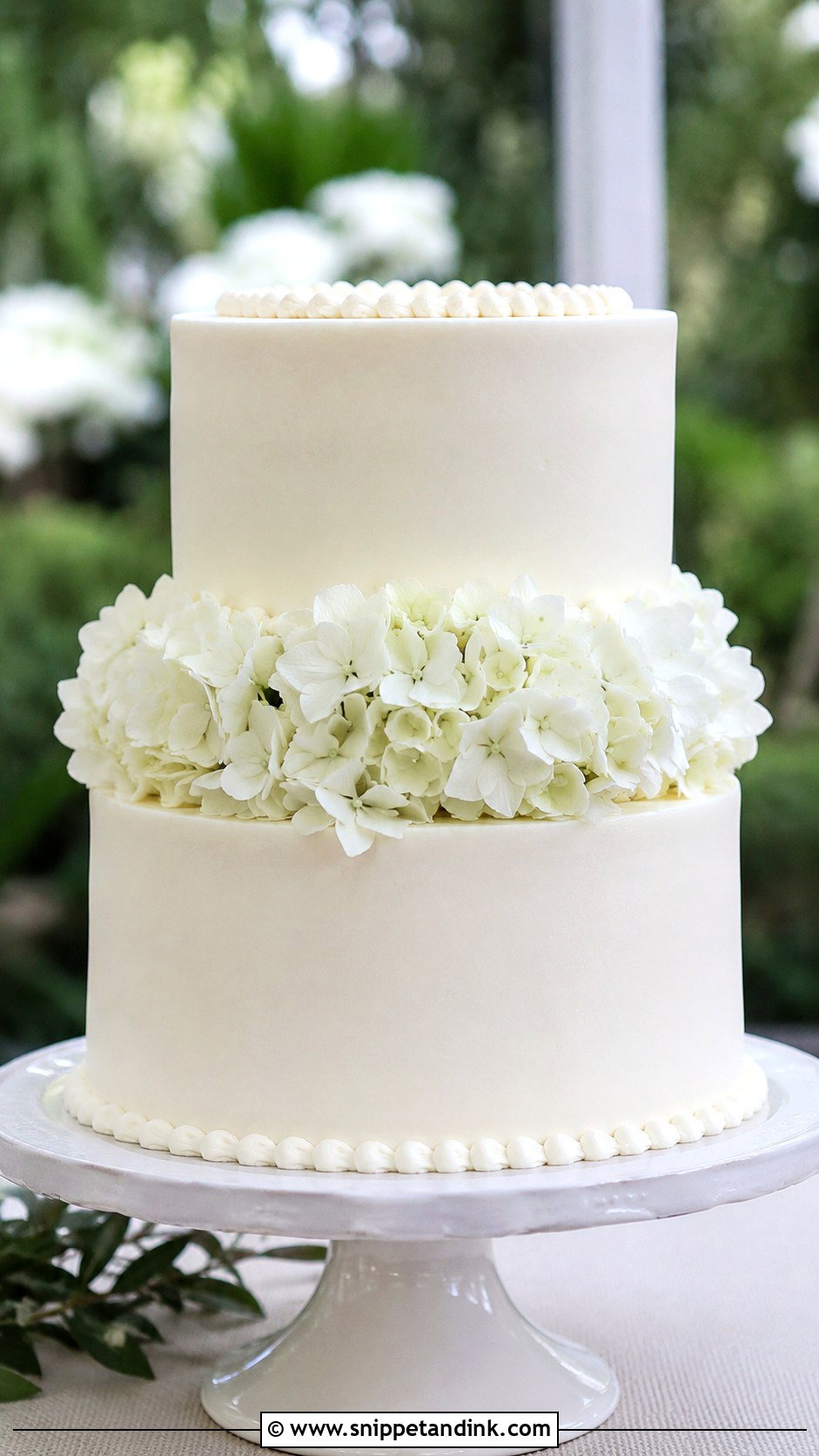
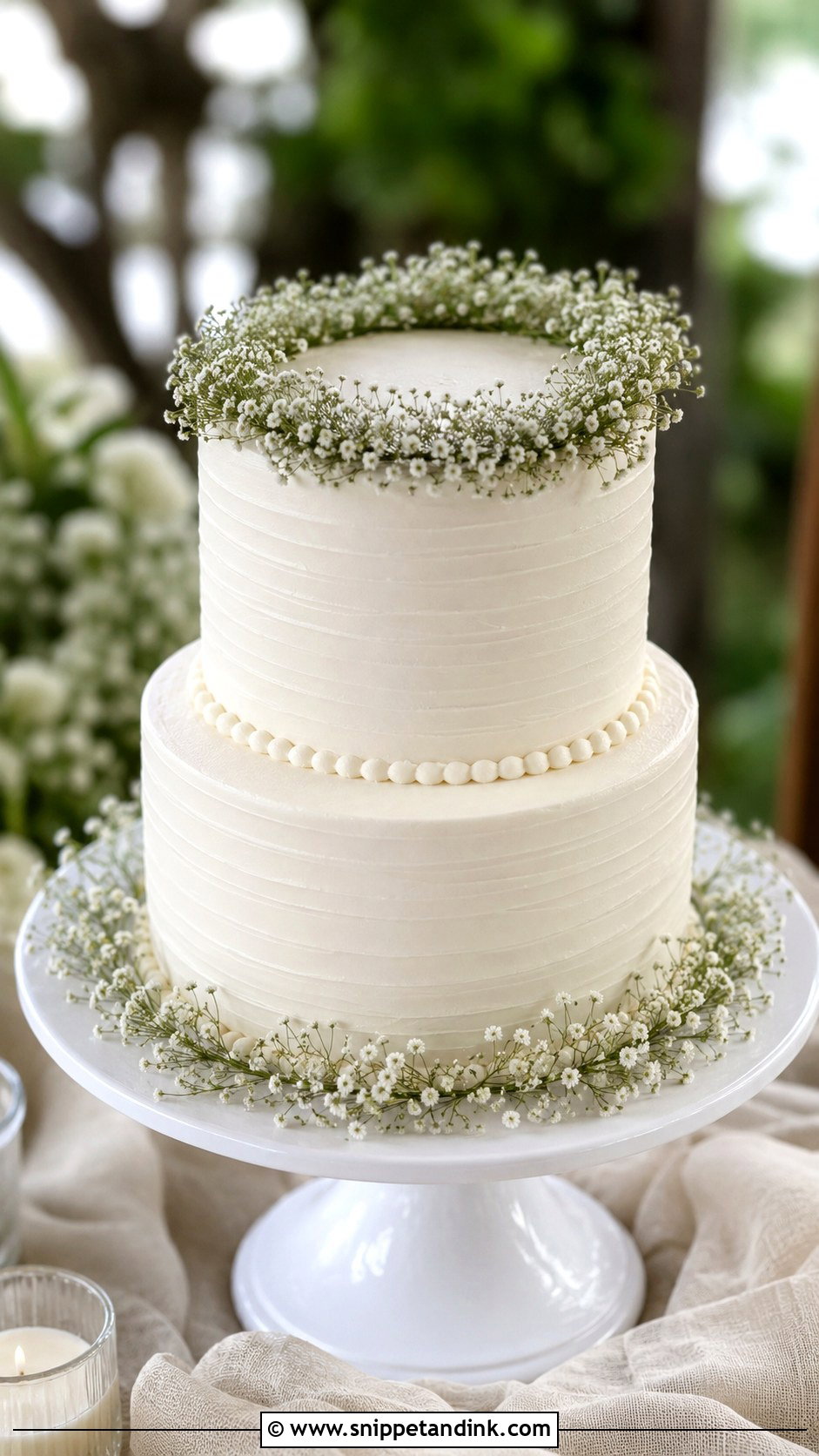
Gypsophila gives texture while keeping the palette completely white, and it copes out of water better than most delicate flowers. It still isn’t food-safe, so I never push it into the cake. It goes in a small wreath around the base or onto a topper set on its own disc. A smooth buttercream finish lets the sprigs read clearly, and barns and garden tents suit it well. Be generous with spacing. Packed tightly, it looks like foam rather than flowers.
9. White Wedding Cake With Ruffles
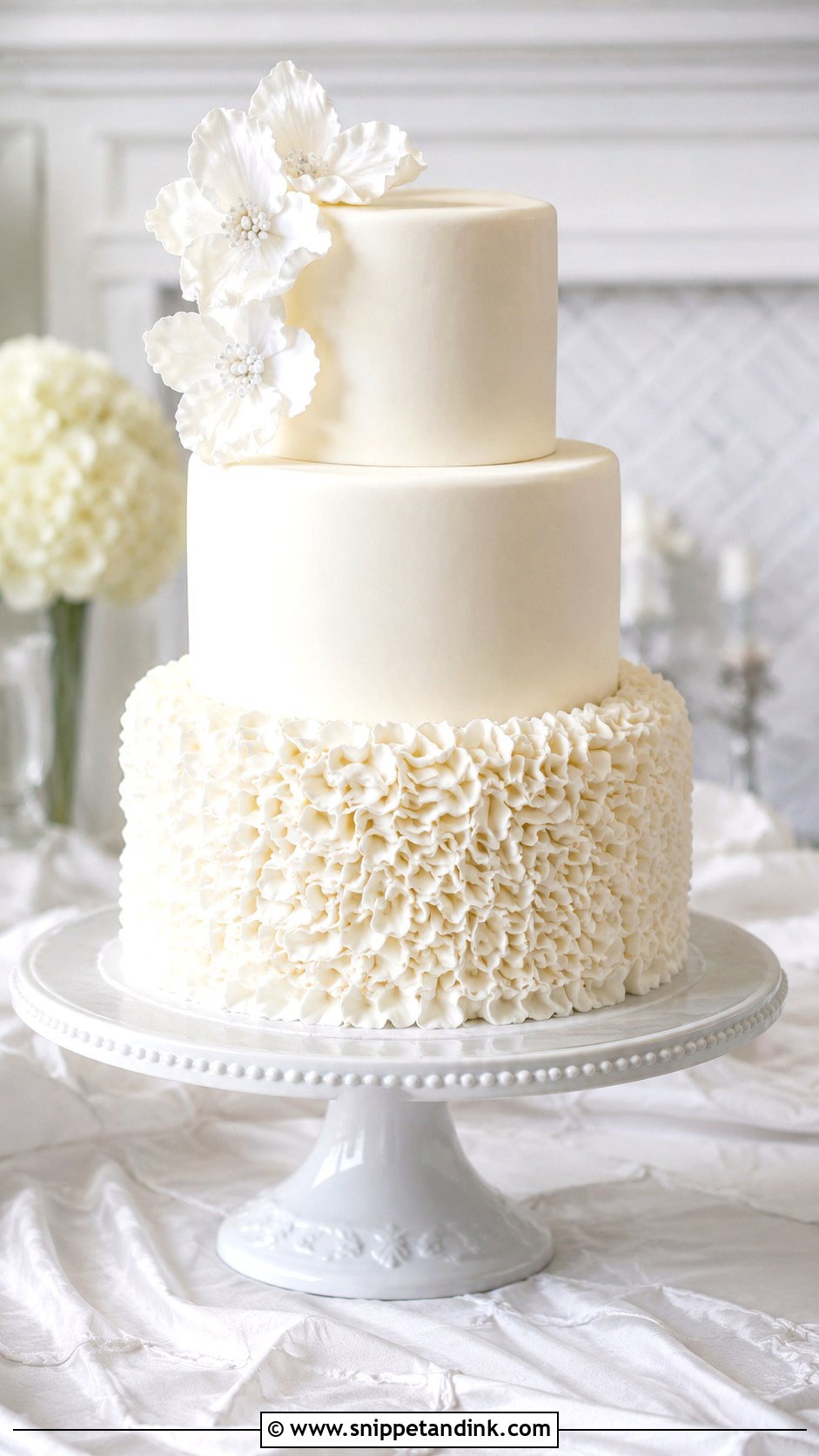
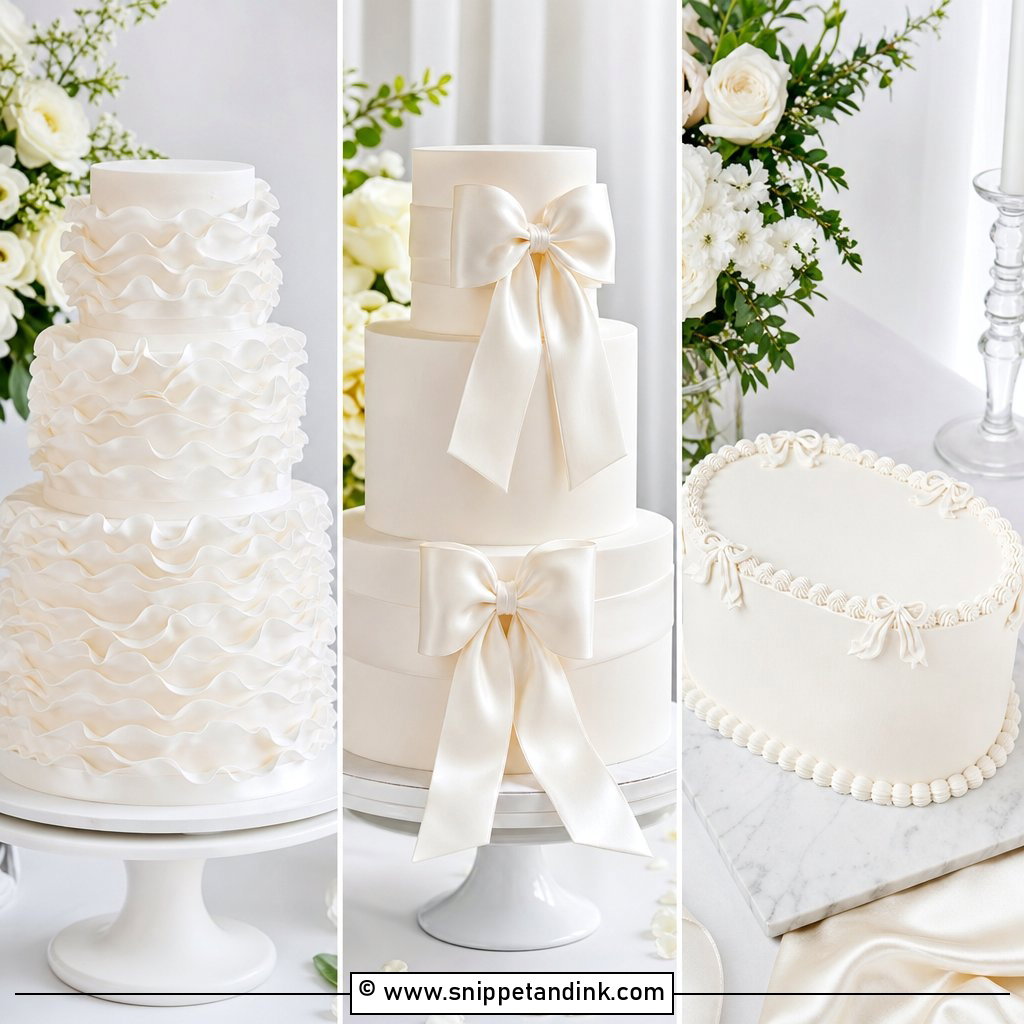
Ruffles look best when they follow the cake in clean, even rows, and that comes down to holding the piping tip at the same angle all the way round. I’d ruffle one tier and keep the others smooth so the texture has contrast. Buttercream ruffles are softer and taste better; fondant ruffles keep their shape in a warm room. White chocolate buttercream is a good compromise, as it sets slightly firmer than plain butter icing and holds thin edges crisp a little longer. Chiffon and other soft bridal fabrics pair naturally with it.
10. White Wedding Cake With Piping
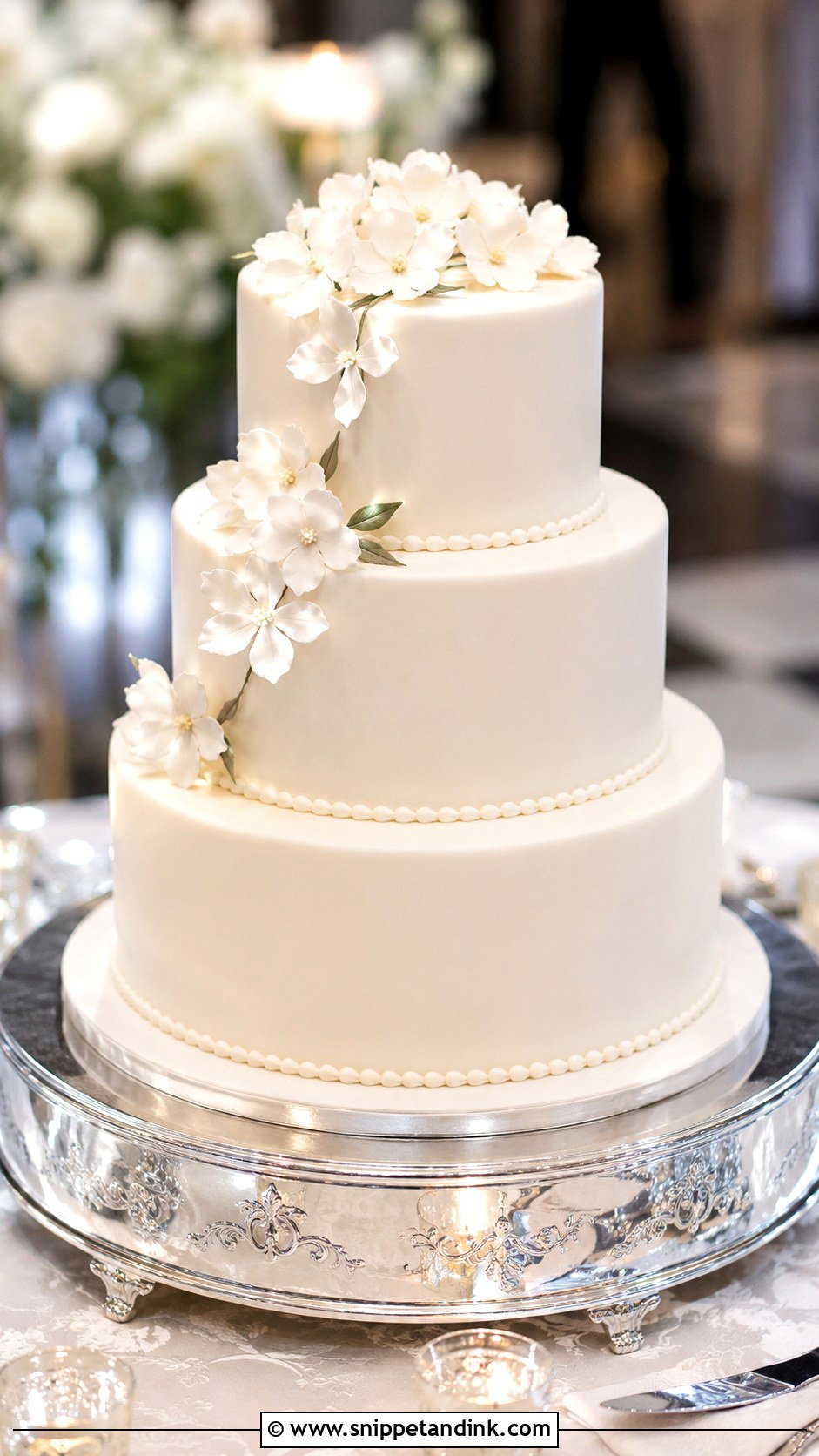
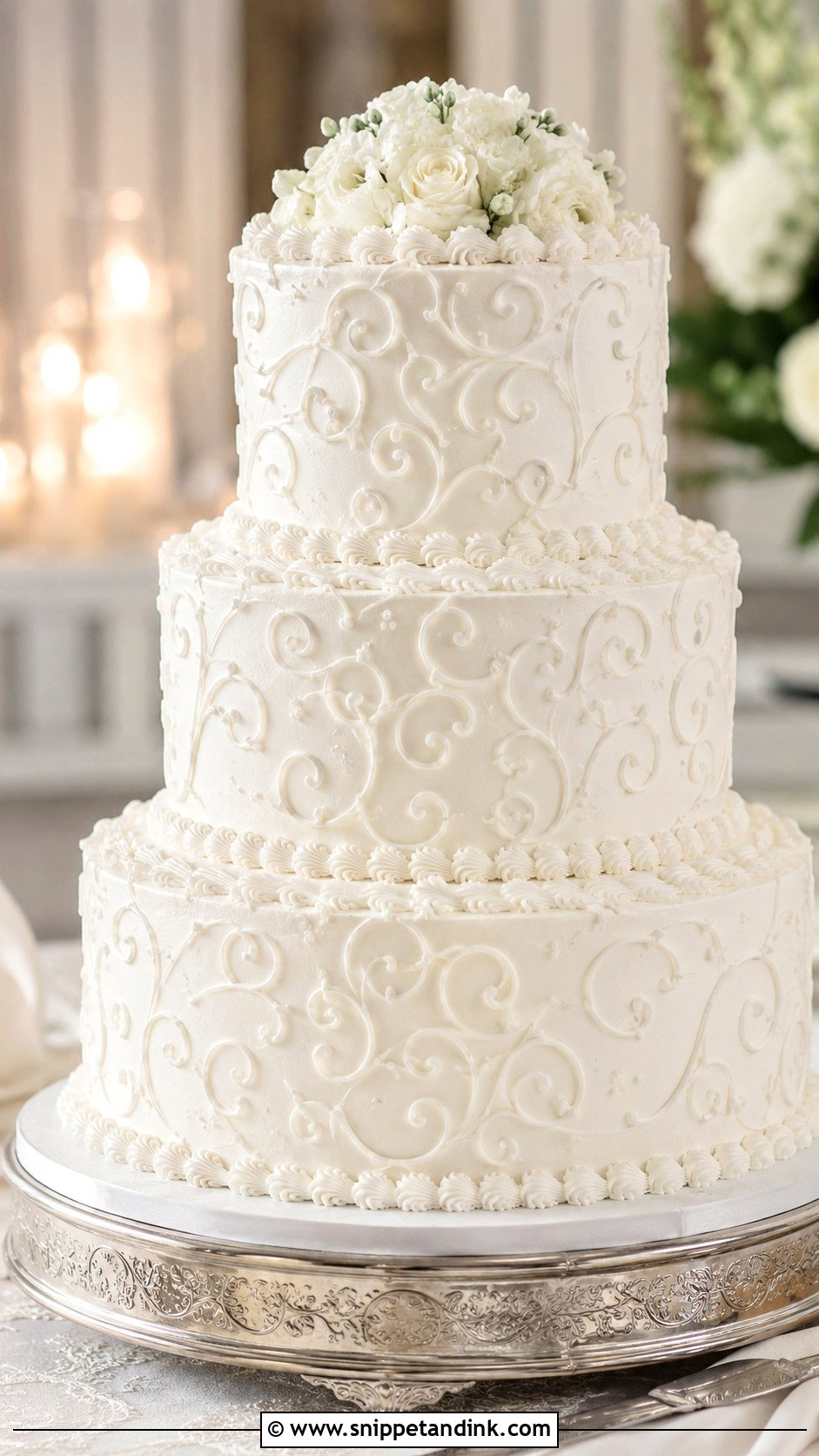
Tone-on-tone piping is the detail I’d choose for a couple who want close-up interest and a clean cake from across the room. Shell borders, dots, fine scrolls and thin vertical lines all work, and the pattern sets the mood: scrolls feel vintage, a grid of dots feels modern. Buttercream piping looks handmade and a touch soft. Royal icing looks crisper but sets hard. Keep the sponge familiar, white almond or vanilla bean, and let the piping supply the interest.
11. White Wedding Cake With Satin Ribbon
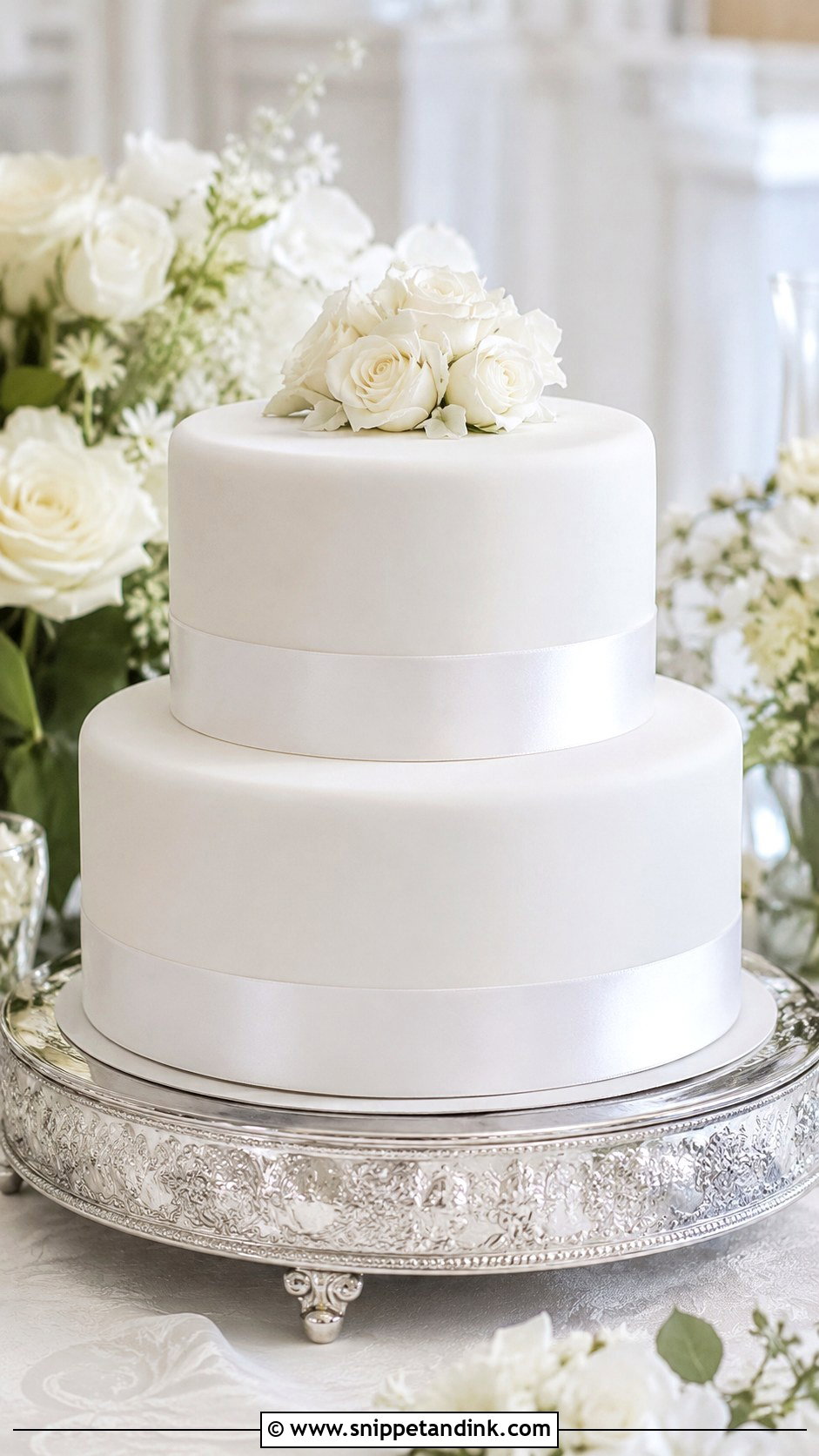
White ribbon around the base of each tier is the neatest way to hide the seam where one tier sits on the next, and it makes a smooth cake look tailored. Match the ribbon to the icing rather than the linens, because a pure white ribbon next to ivory buttercream makes the cake look yellow. I measure each band so the join sits at the back, out of sight. A small flower topper is optional. White chocolate sponge with vanilla buttercream keeps the flavor as quiet as the look.
12. Square White Wedding Cake
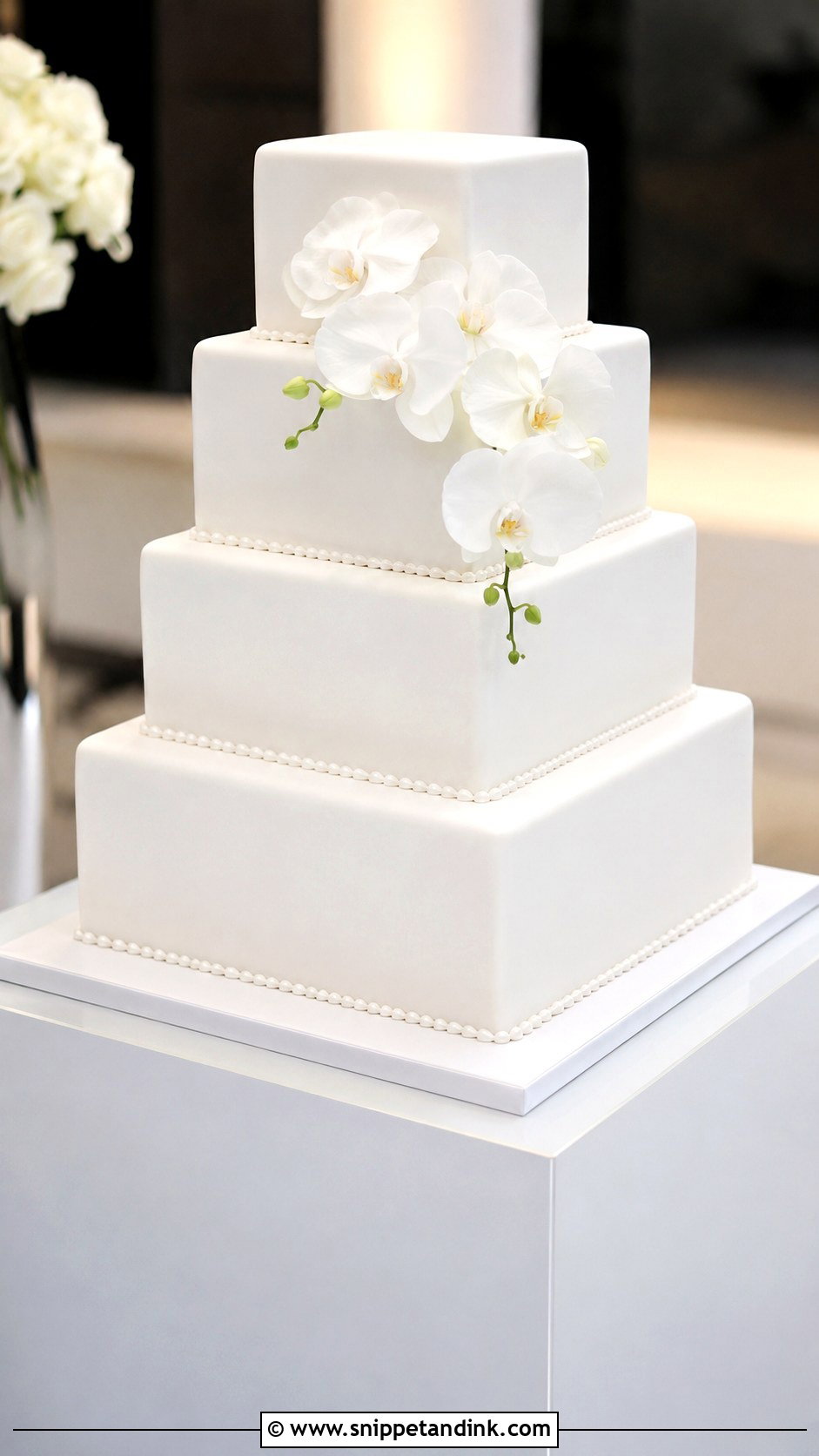
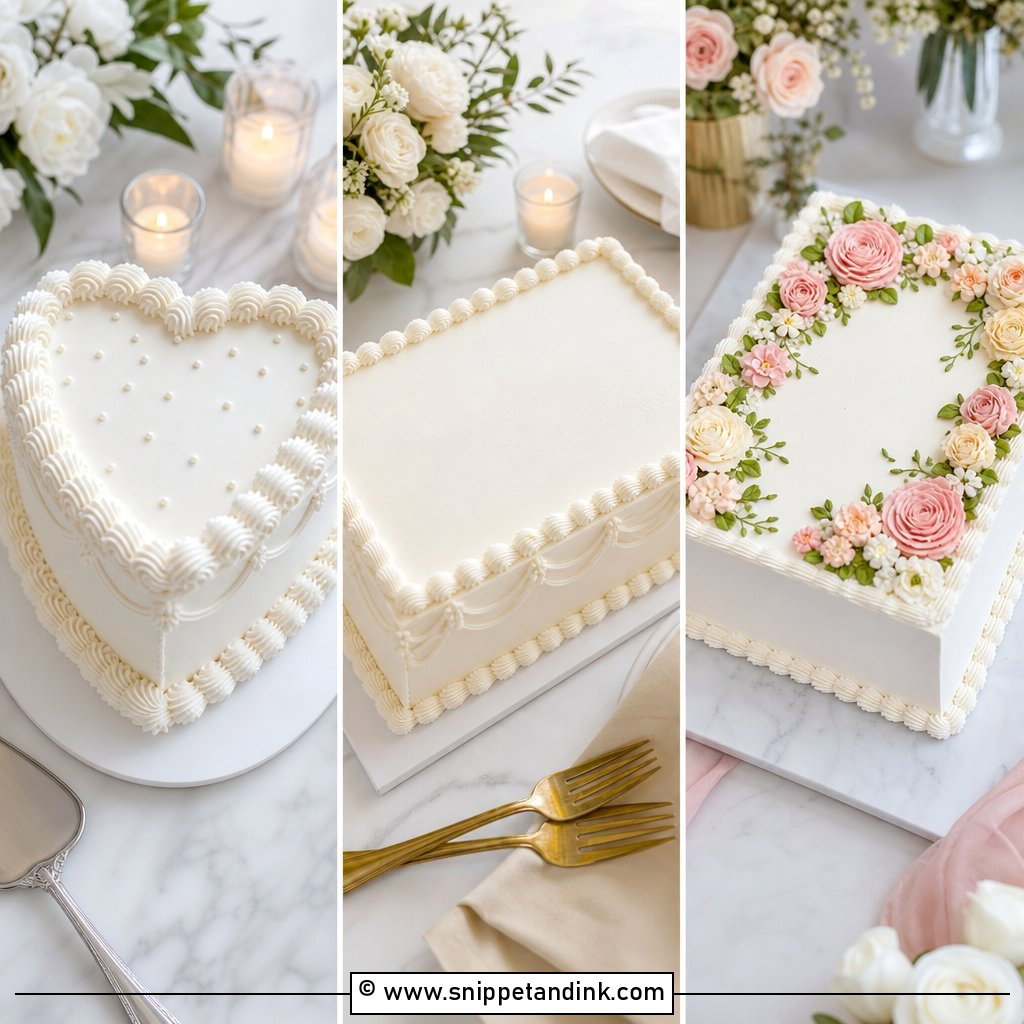
Square tiers feel architectural and suit a sleek pedestal or mirrored table. Corners are the real test, though. Buttercream corners need very cold tiers and a patient decorator, and fondant gives crisper corners but can crack if it’s rolled too thin. Keep decoration to a thin border, a small sugar bow or a few white flowers set off-center. Square tiers cut into more portions than round ones of the same width, which helps a city wedding with a long guest list. Almond, vanilla bean or lemon all fit inside.
13. Round White Wedding Cake
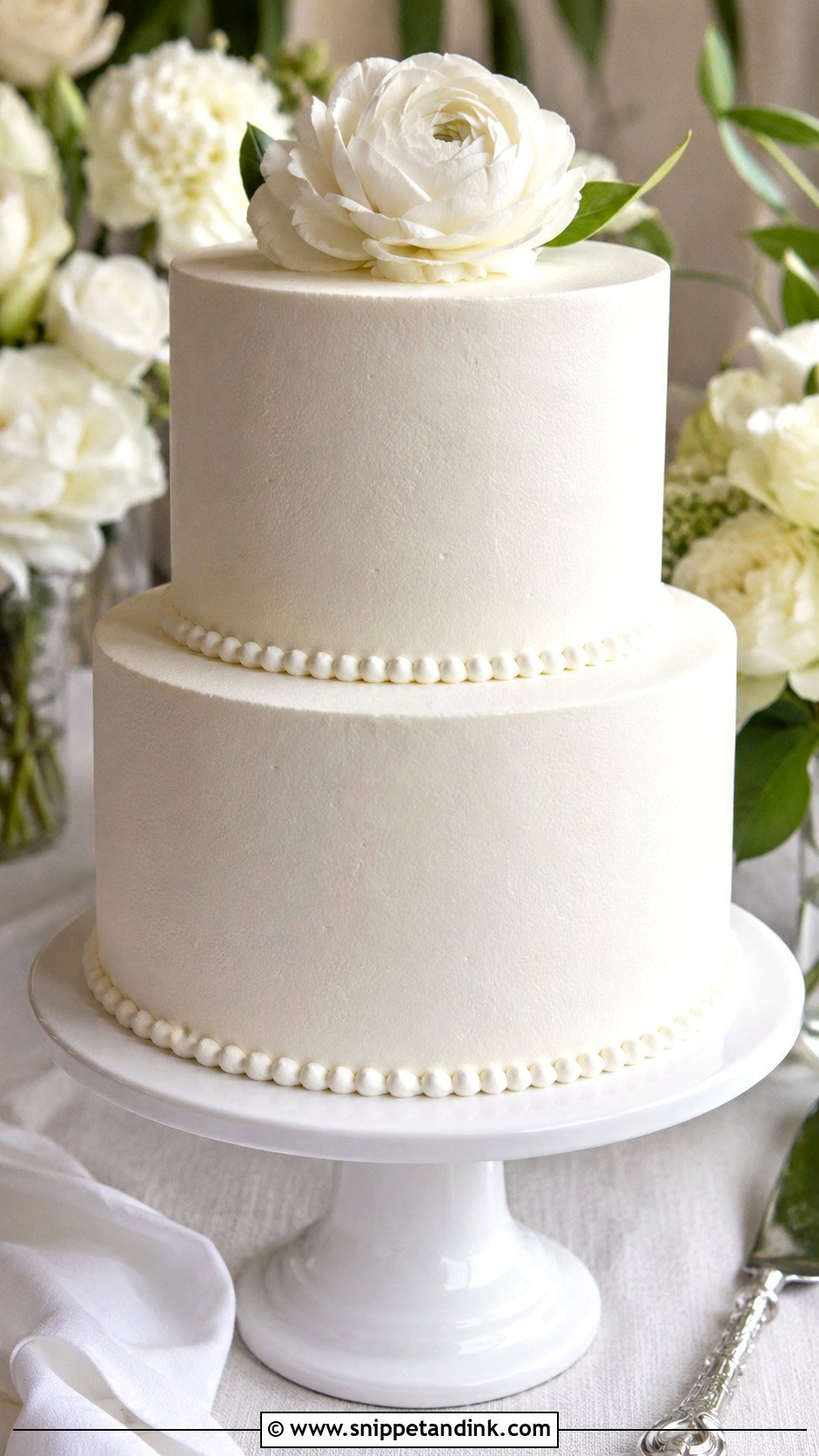
Round is the default shape for good reasons. It’s the easiest to finish smoothly, the sturdiest to transport, and it looks right from every side, which matters when guests crowd round at the cutting. To keep it plain I use smooth buttercream and a single finishing detail, maybe a tiny piped border or one white bloom. Ivory buttercream warms it up under candlelight. Vanilla almond sponge with a light cream filling is a classic pairing, though fresh cream fillings need to stay chilled until close to serving.
14. Tall White Wedding Cake
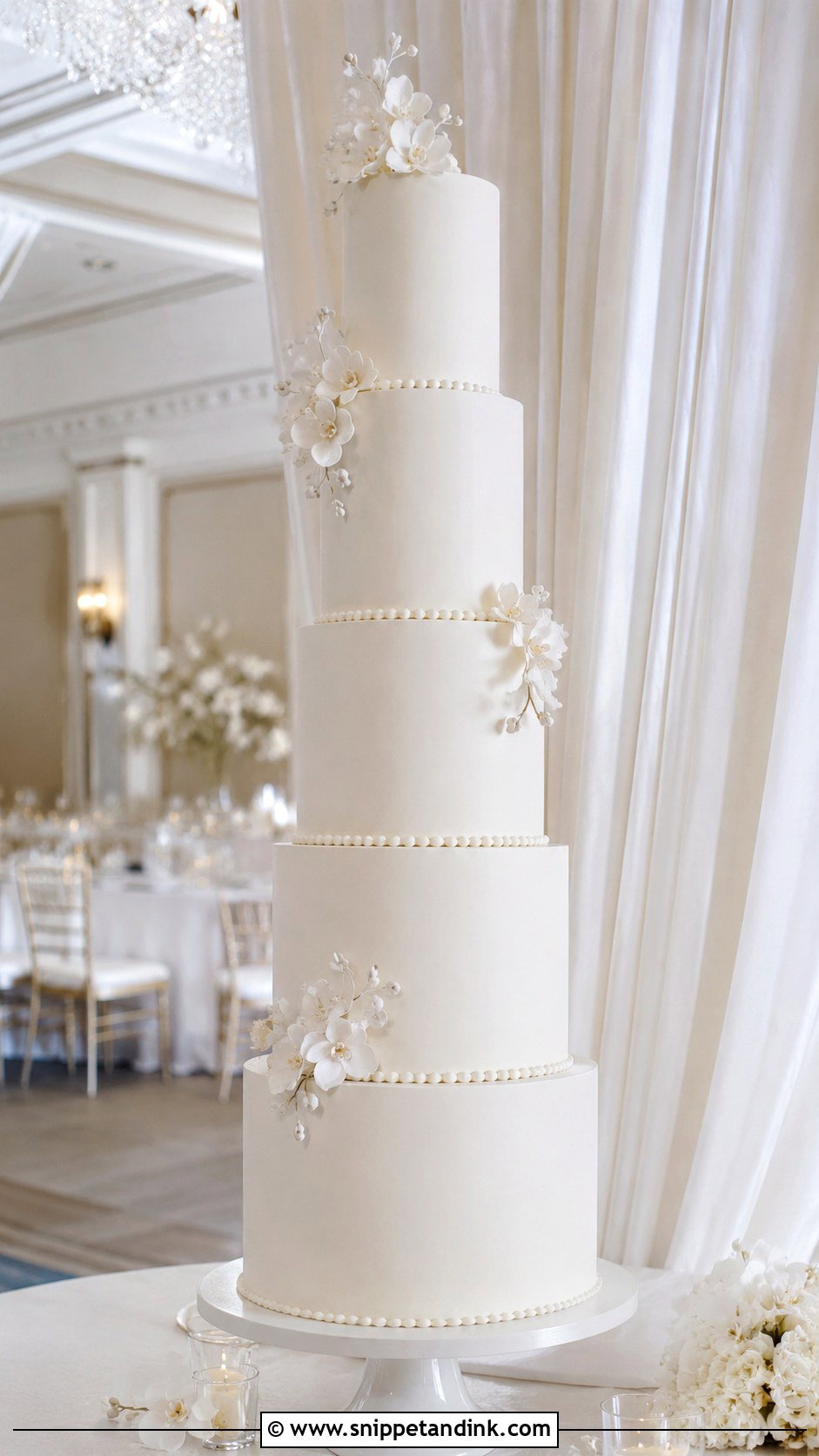
Height lets a plain cake hold its own in a big room. Tall tiers, a narrow stacked profile or a double-barrel base all add presence, and they need more internal support than standard tiers, with a board and dowels partway up each tall section. That’s why I’d pair this shape with a sturdier sponge, a firm vanilla or white chocolate mud cake, rather than a very light chiffon. High ceilings and large floral installations are where it makes sense. Keep any topper small, or leave it off.
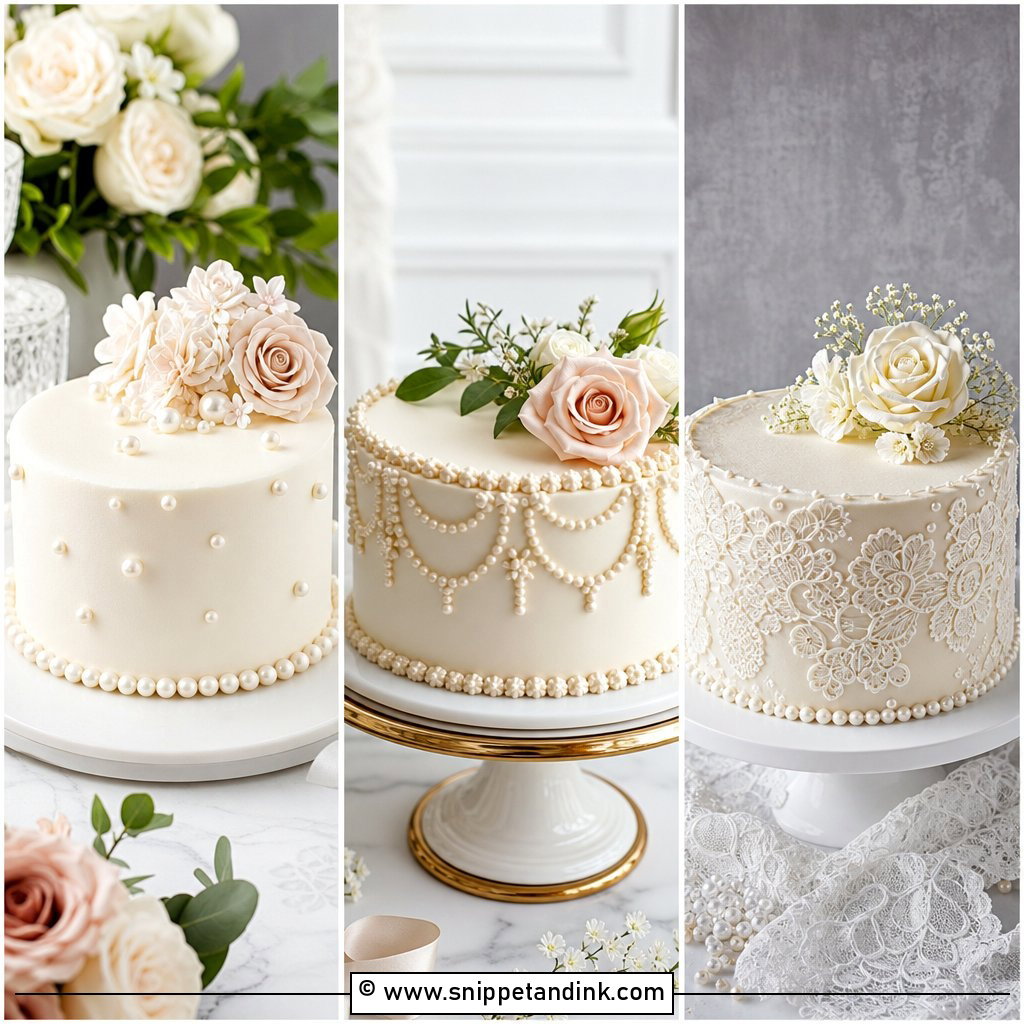


15. Small White Wedding Cake
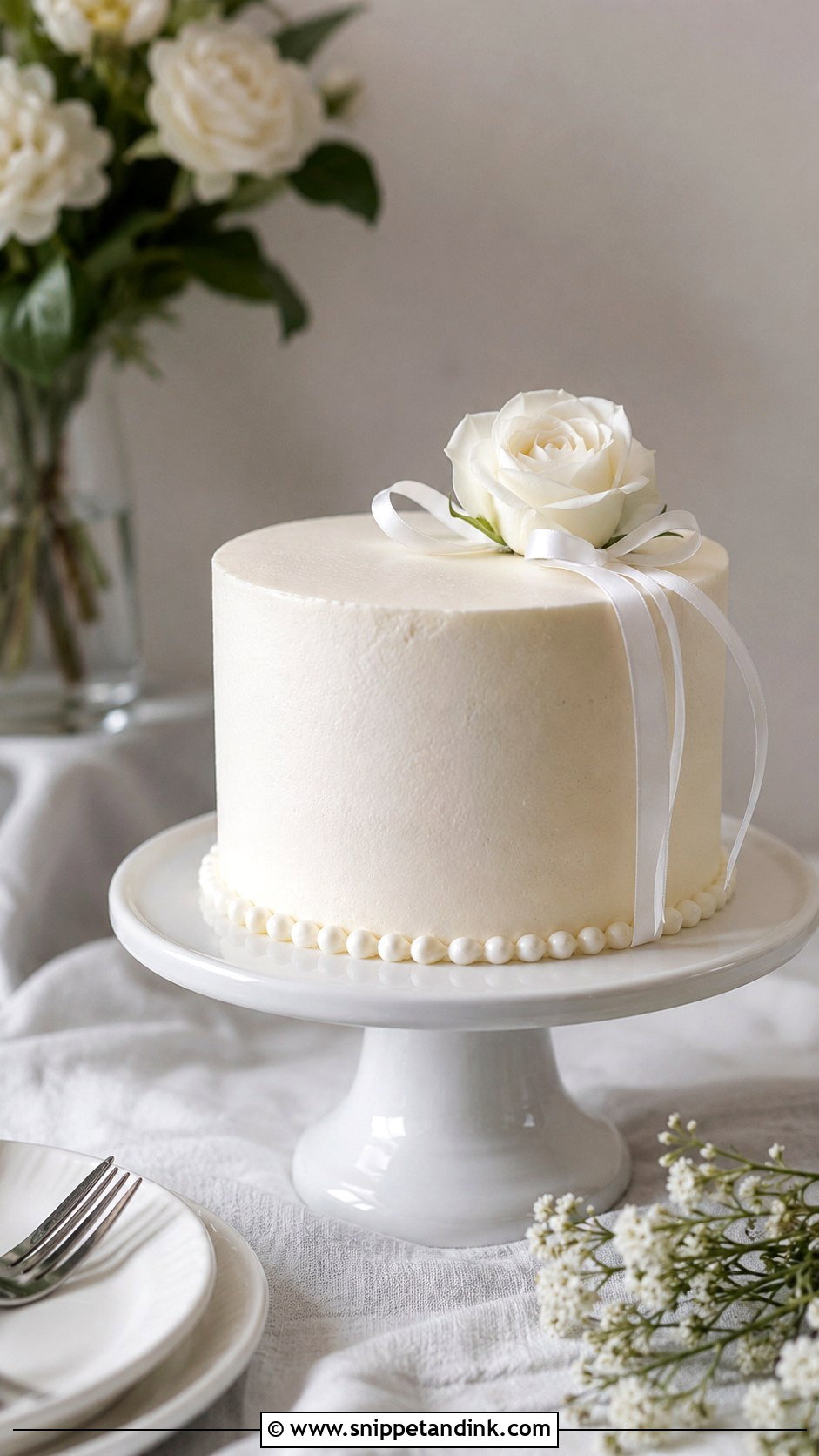
For an elopement, or a wedding where a dessert table does the real feeding, one tier or a petite two-tier is all you need for the cutting. A small cake can feel premium because you’re not paying for scale, so I often suggest spending the difference on fillings: lemon curd, raspberry preserves or vanilla pastry cream. Smooth buttercream and one detail on a white ceramic stand is enough. Check the stand isn’t wider than it should be, though. A petite tier on a big stand looks like it has shrunk.
16. White Wedding Cake With Texture
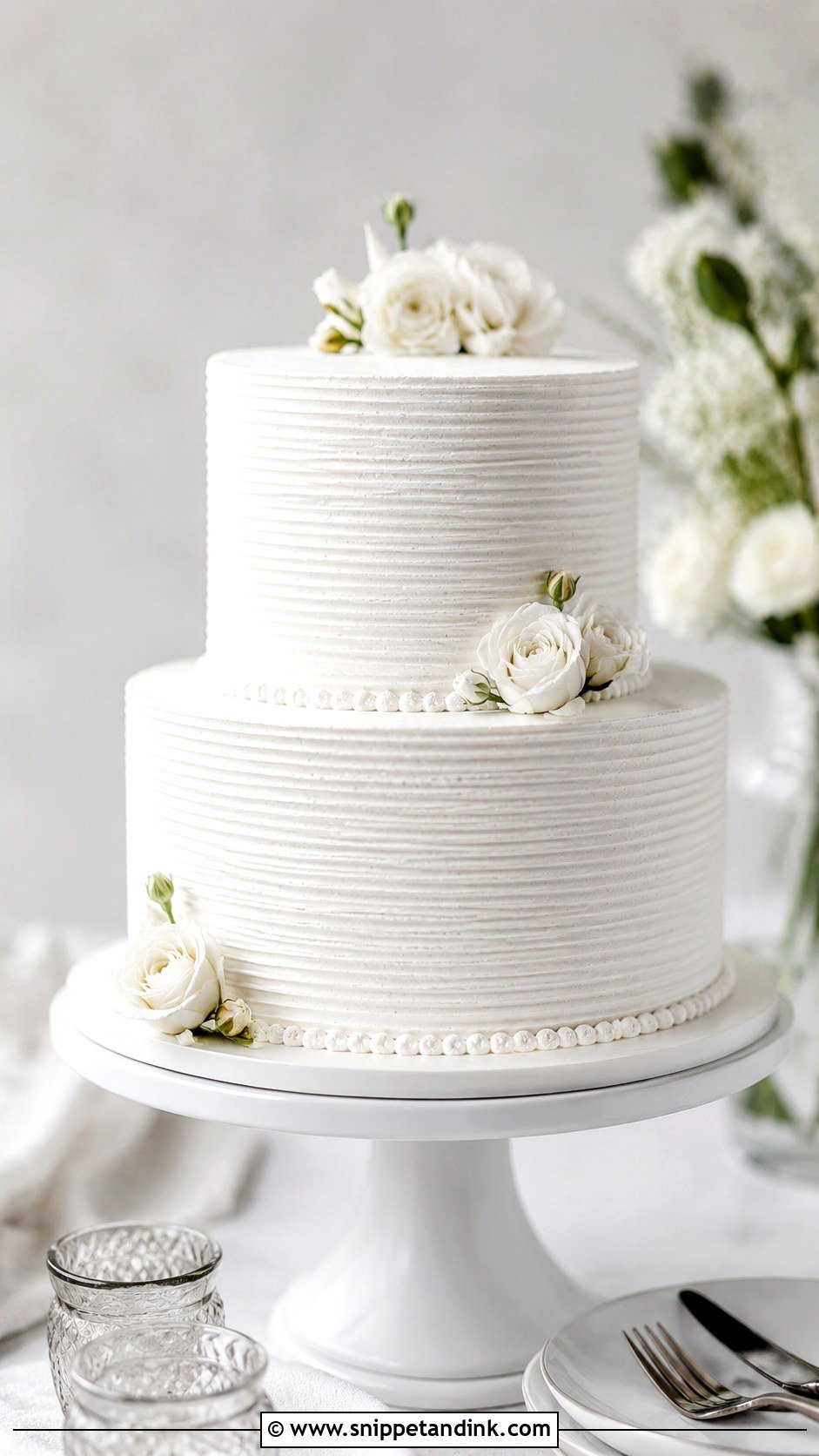
Texture stops a plain cake looking flat in photos, because ridges catch highlights and throw small shadows. Combed sides, rough icing, vertical ridges and palette-knife strokes all count, and I’d pick one rather than mixing them. Side light from a window shows it best; flat overhead light can make texture vanish. Vanilla bean sponge with Swiss meringue buttercream is a strong pairing, since the silky icing takes a clean palette mark without tearing.
17. White Wedding Cake With Lace
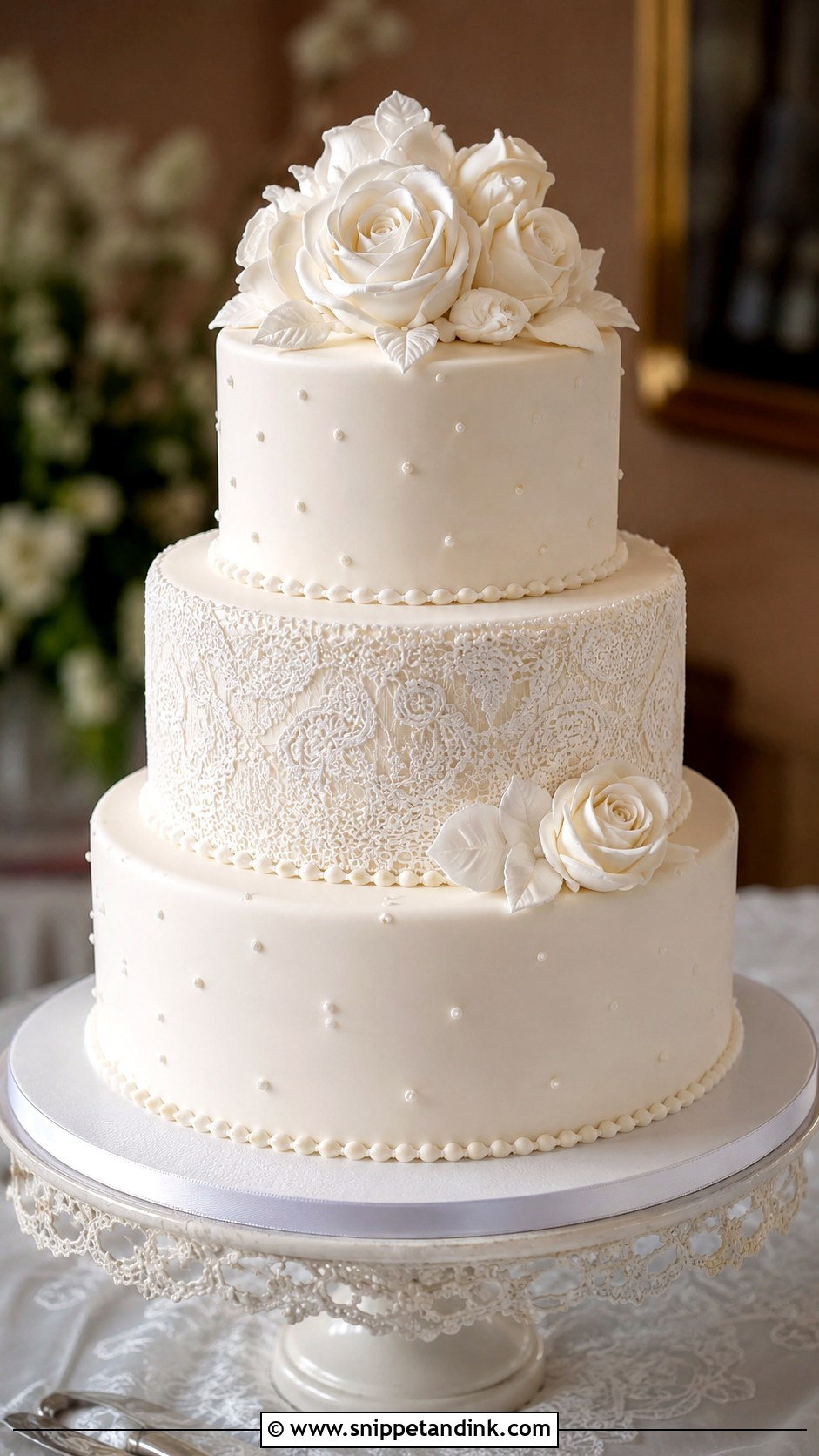
Cake lace can be piped, set from an edible lace mix in a silicone mat, cut as fondant appliqué or stencilled. Set edible lace is flexible and very fine, but it can go tacky in a humid room, so for a summer wedding I’d lean toward piped or appliqué lace. One or two laced tiers is enough; lace on every tier gets heavy. From across the room it reads as a soft pattern, and the detail only appears up close. A classic white sponge with almond buttercream suits it.
18. White Wedding Cake With Bows
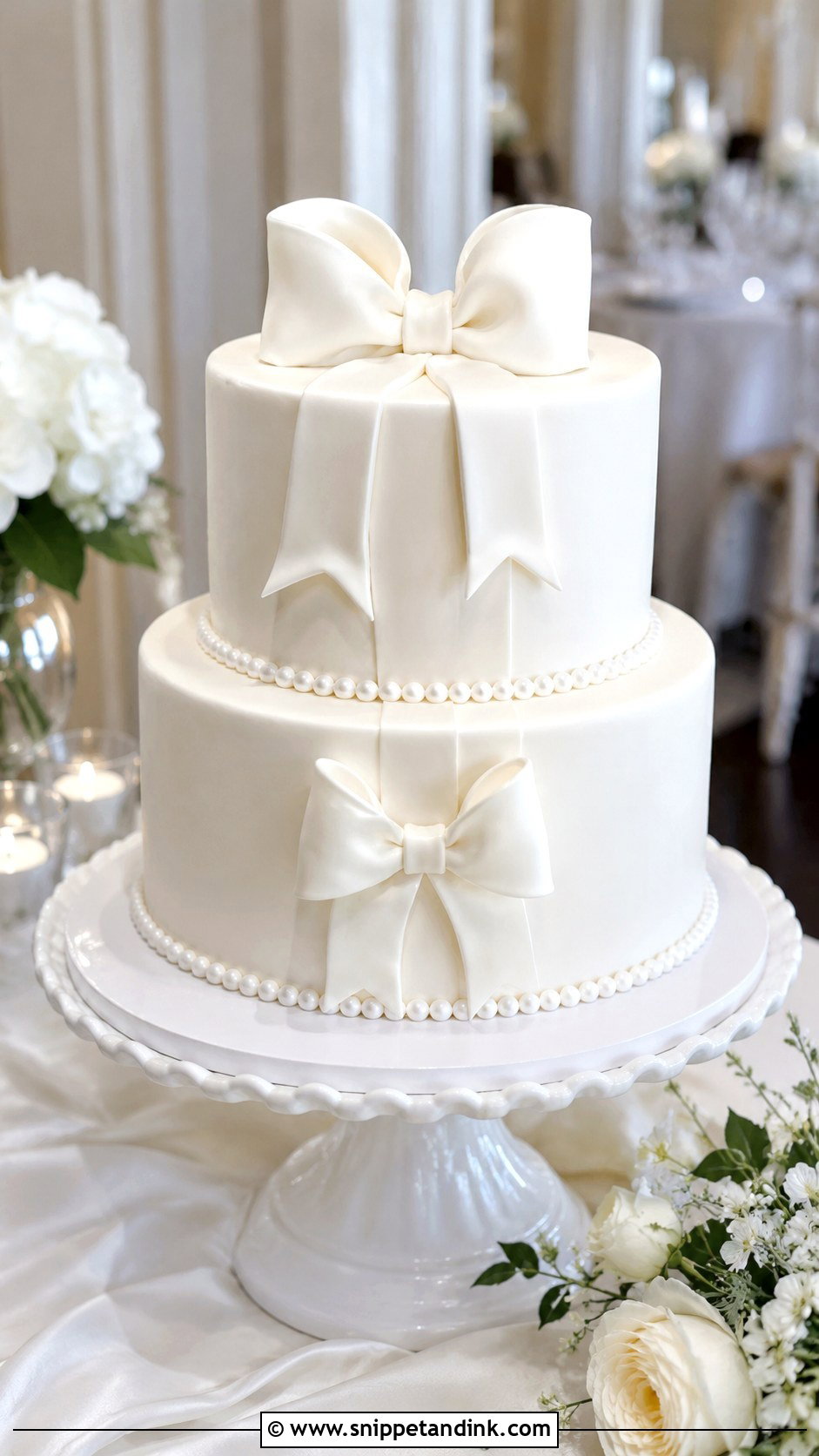
Bows are easy to overdo, so a white wedding cake with bows looks best with one bow on the front of each tier, or a single larger bow on the bottom tier only. Fondant bows hold their loops but need several days of drying and some internal support. Satin bows look softer, but fabric should never sit directly on buttercream, or it will mark. Keep the surface smooth and it reads tailored, a little like the back of a satin gown. Vanilla sponge with white chocolate buttercream pairs well.
19. White Wedding Cake With Sugar Flowers
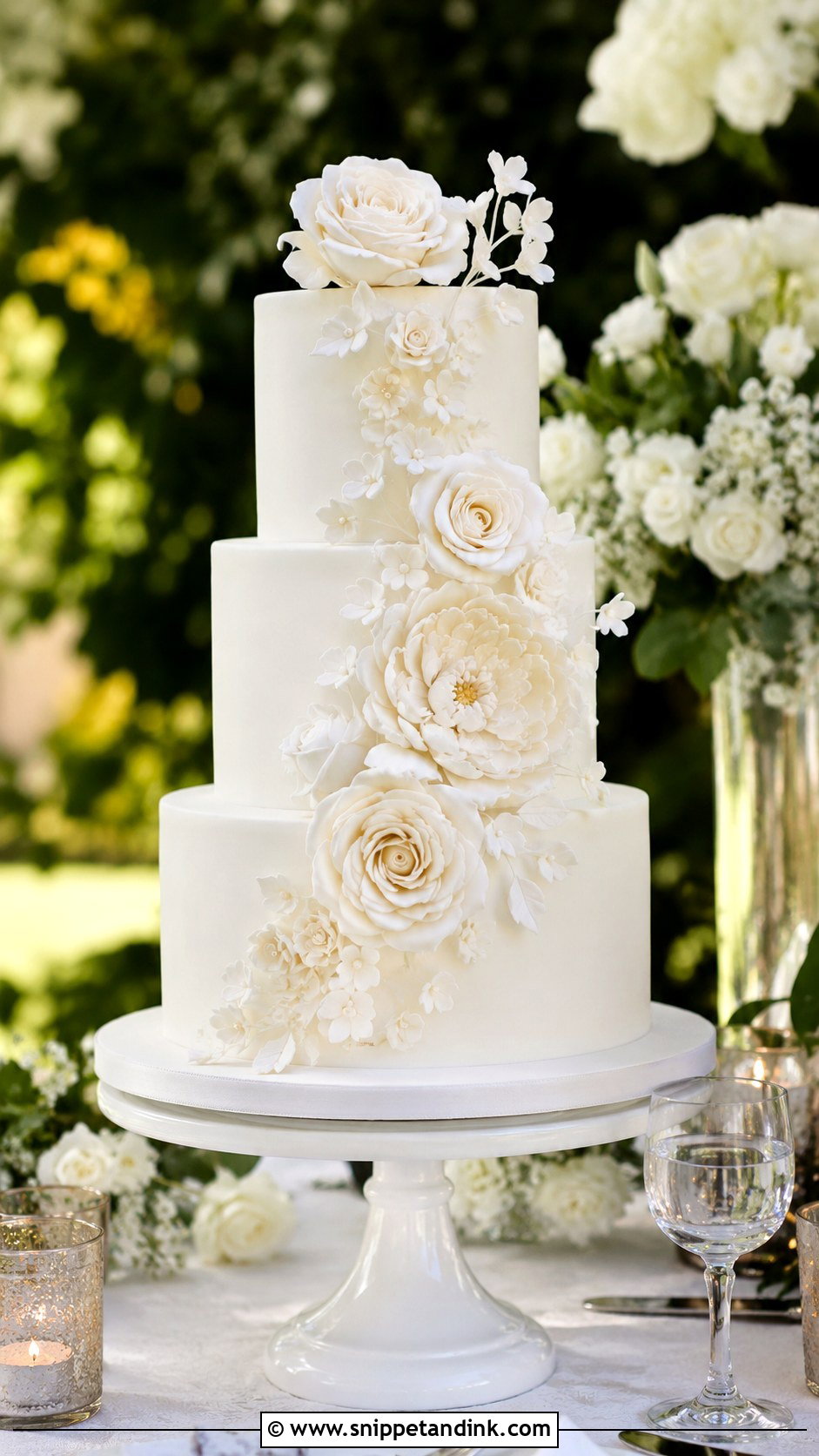
Sugar flowers are the most controlled floral option, because I can match the white exactly and they won’t wilt or drop pollen. Roses, peonies, ranunculus, orchids and small blossoms can sit on the top tier or trail down one side. They’re built petal by petal, usually over several days, so they cost more than fresh flowers and need ordering well ahead. They’re wired, so nobody should eat them, but plenty of couples keep them afterward as a keepsake. Almond cake with vanilla buttercream keeps the inside classic.
20. White Wedding Cake With Simple Topper
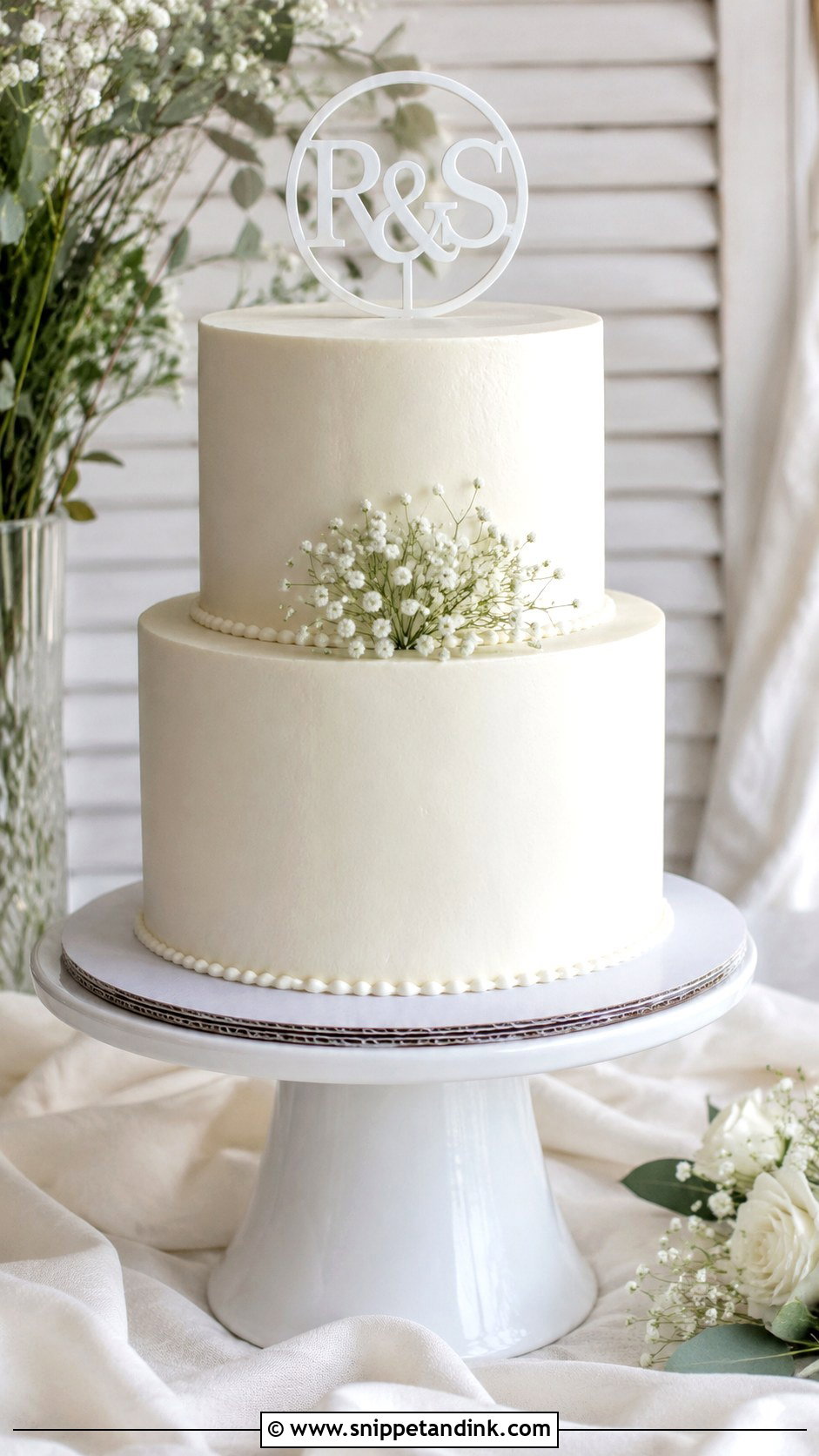
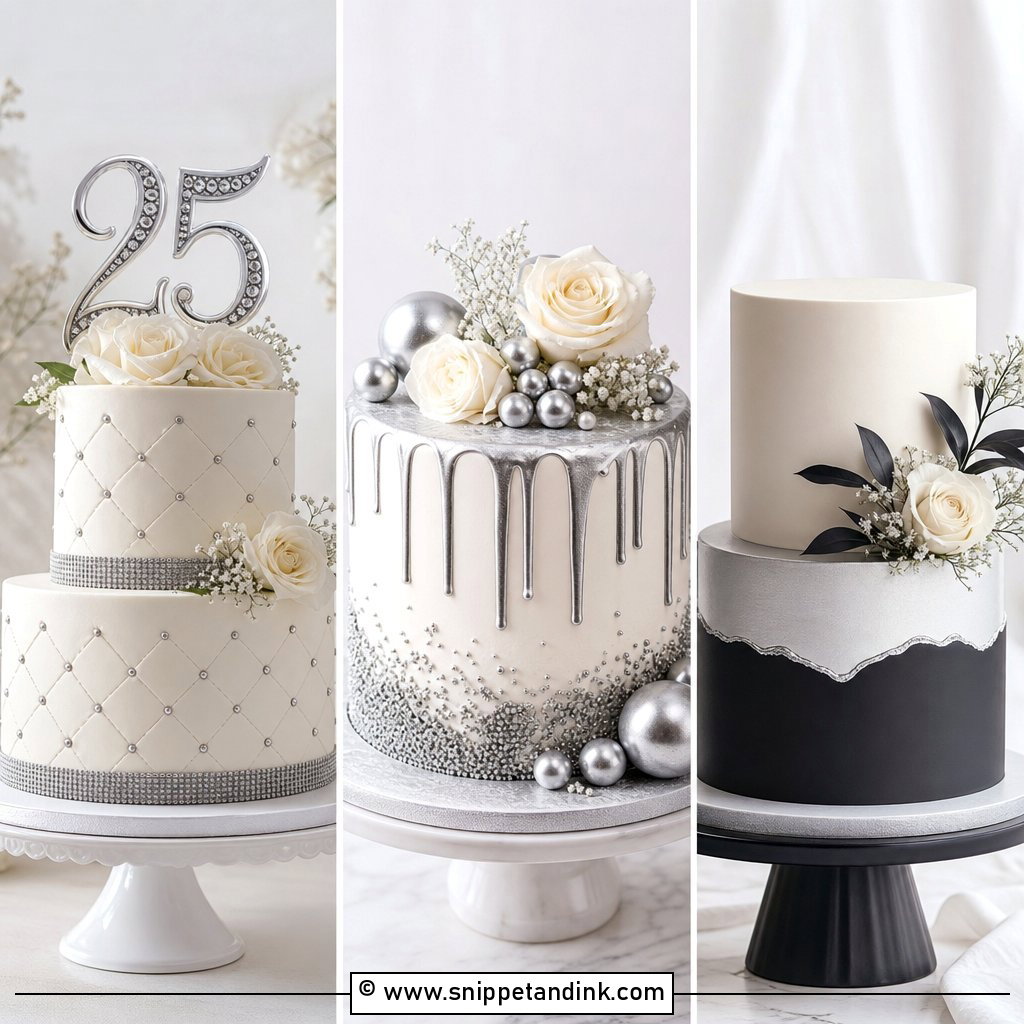
A simple topper gives a plain cake its finishing point. A white ceramic figure, a small monogram, a clean acrylic piece or a tiny cluster of white flowers all work, and I always ask for the topper’s weight and base size before the day. Heavy ceramic pieces need a support disc and a dowel underneath, or they slowly sink into soft icing. It personalizes the cake without making it busy and adapts to one, two or three tiers. Vanilla, almond, lemon or white chocolate sponge keeps the inside as calm as the outside.
Why Red Jam Can Ghost Through a White Cake
A white exterior is a great place to hide a bold filling, but dark fillings and thin white icing need careful building. Jam, curd and chocolate ganache all carry moisture or pigment that can creep outward as the cake sits.
- I pipe a stiff ring of buttercream around the edge of each layer, called a dam, before spooning in jam or curd, so the filling can’t squeeze out under the weight of the tiers above.
- A crumb coat seals in loose crumbs, especially from chocolate or red velvet sponge, which would otherwise freckle a white finish.
- Under very thin fondant, a dark ganache layer can shadow through in bright light. I either switch to white chocolate ganache or roll the fondant a little thicker.
- Fresh fruit fillings release juice as they sit, so I save them for cakes that will be cut within a few hours of assembly.
Mention any bold filling at your first meeting so the structure can be planned around it rather than patched afterward.
Saving the Top Tier for Your First Anniversary
The freezer tradition still holds, and a plain white tier freezes better than most because there’s little decoration to crush. Chill it first so the icing firms, then wrap it tightly in several layers of plastic wrap and foil and seal it in an airtight box. Take off sugar flowers and toppers before wrapping. Thaw it slowly in the fridge, still wrapped, so condensation forms on the wrapping rather than the icing.
Fresh cream and fresh fruit fillings don’t freeze well, so if you plan to keep a tier, tell your baker early and choose a filling that will. Some bakers simply offer to make a small fresh cake for the anniversary instead, and I’ll be honest, that usually tastes better.
Shape First, Then Finish, Then One Detail
Simple doesn’t mean dull. Shape, height, texture and one considered detail can move a white cake from modern to romantic without a drop of color. Settle the guest count and the room first, then the finish, then the detail. A small buttercream cake suits an intimate lunch; a tall fondant cake belongs in a formal ballroom. When you meet your baker, bring the inspiration photos you love most and ask what each finish will do in your weather and with your serving plan.
You'll Like These Ideas:







Leave a Reply