
A waterfall braid is the style I reach for when a bride wants her hair mostly open but still needs something holding it off her face through hours of rituals. One braid runs across the head, and at every pass a strand is dropped and left to hang, so the hair looks like it is pouring out from under a woven band. It sits comfortably under a dupatta, leaves the ears clear for heavy jhumkas, and works just as well for a bridesmaid at the sangeet or a guest at the reception. Below are 20 versions I’d actually put on a client for Indian functions, with notes on what each one needs from your hair and where it tends to struggle.

Does Your Hair Have Enough Length and Grip for a Cascade?
A waterfall braid only works if the dropped strands are long enough to hang and the braid has enough hair to hold onto. At a consultation I look at three things before I promise you any of the styles below.
- Length: your shortest layer should reach at least your chin. Shorter layers pop out of the braid every time you turn your head.
- Texture: silky, freshly washed hair is the hardest to braid. I ask brides to wash the day before, not the morning of, and I add a dry texture spray before I start.
- Density: on fine hair, I make the braid thinner and use clip-in extensions underneath so the open hair below still looks full.
Extensions are worth mentioning at the trial, not on the wedding morning. They need to be colour-matched to your hair and placed below the braid line so the clips never show where the strands drop.
1. Classic Waterfall Braid for Indian Bride
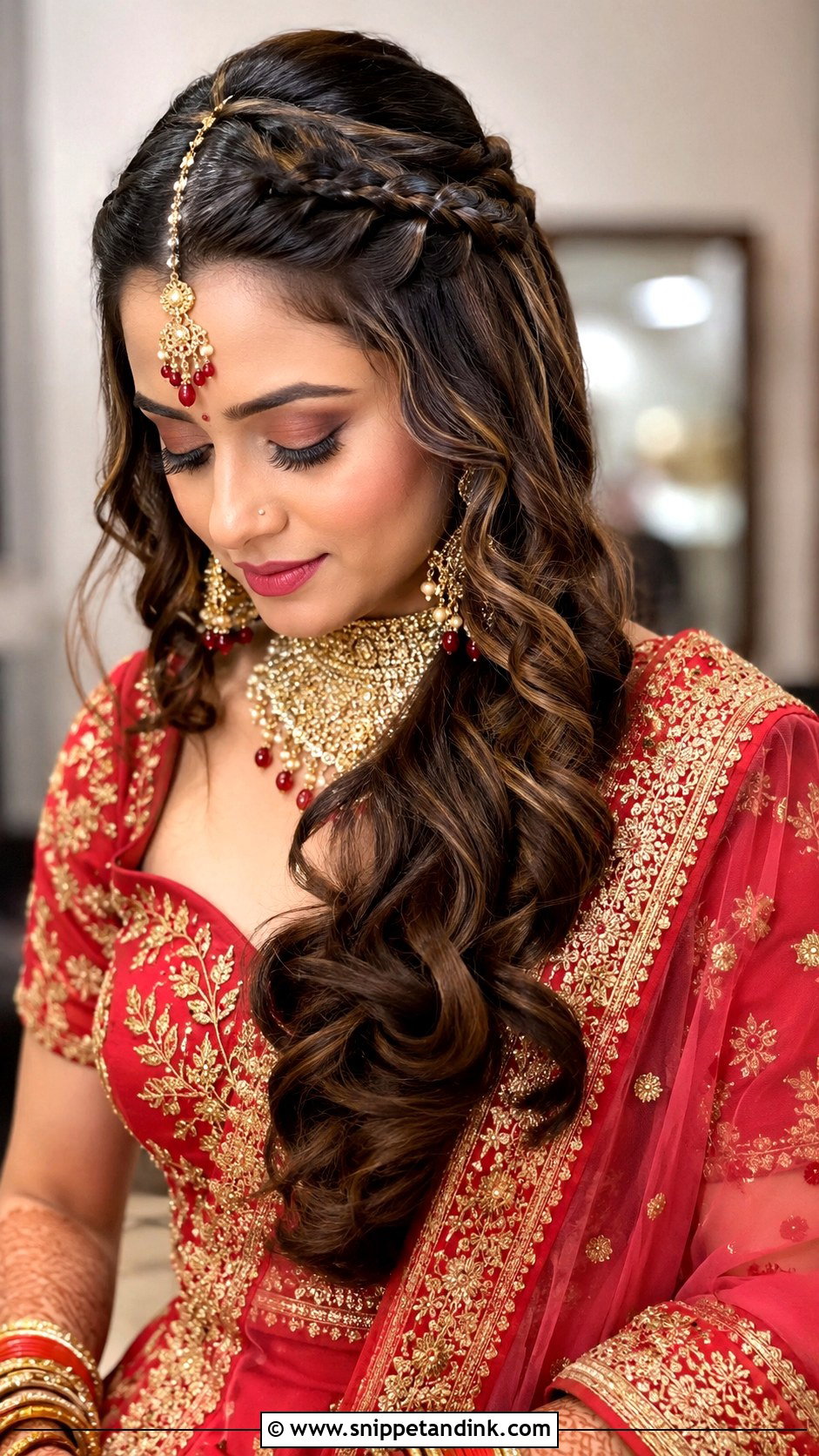
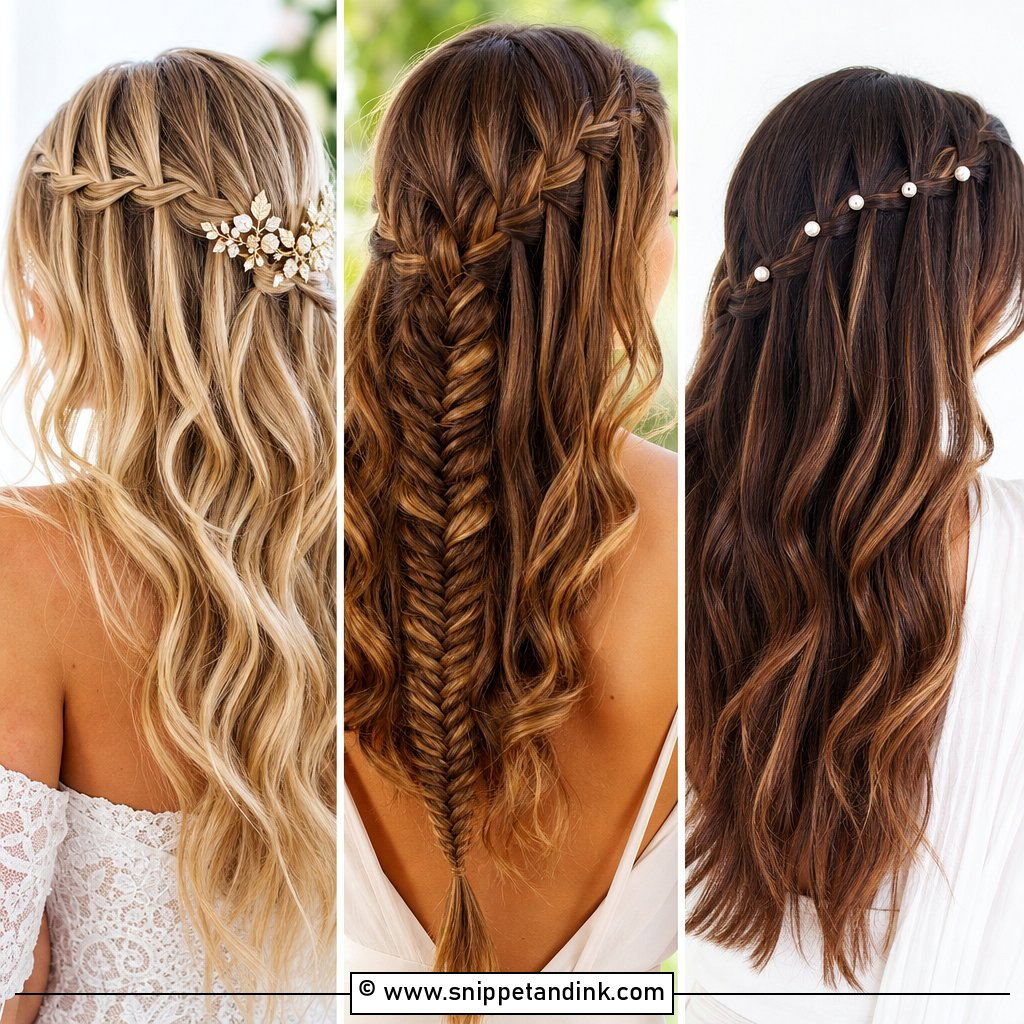
This is the plain version, and the one I test first at a trial because it shows me how the hair behaves. I braid from the temple toward the back, dropping a strand from the top each time and picking up a fresh one from the crown. On thick hair it holds with two hidden pins at the end; on silky, fine hair I prep with a texture spray first, or the dropped strands slide out of the braid by lunch. A maang tikka sits right in front of it without any adjustment, which is why so many brides end up here.
2. Half Up Waterfall Braid With Curls
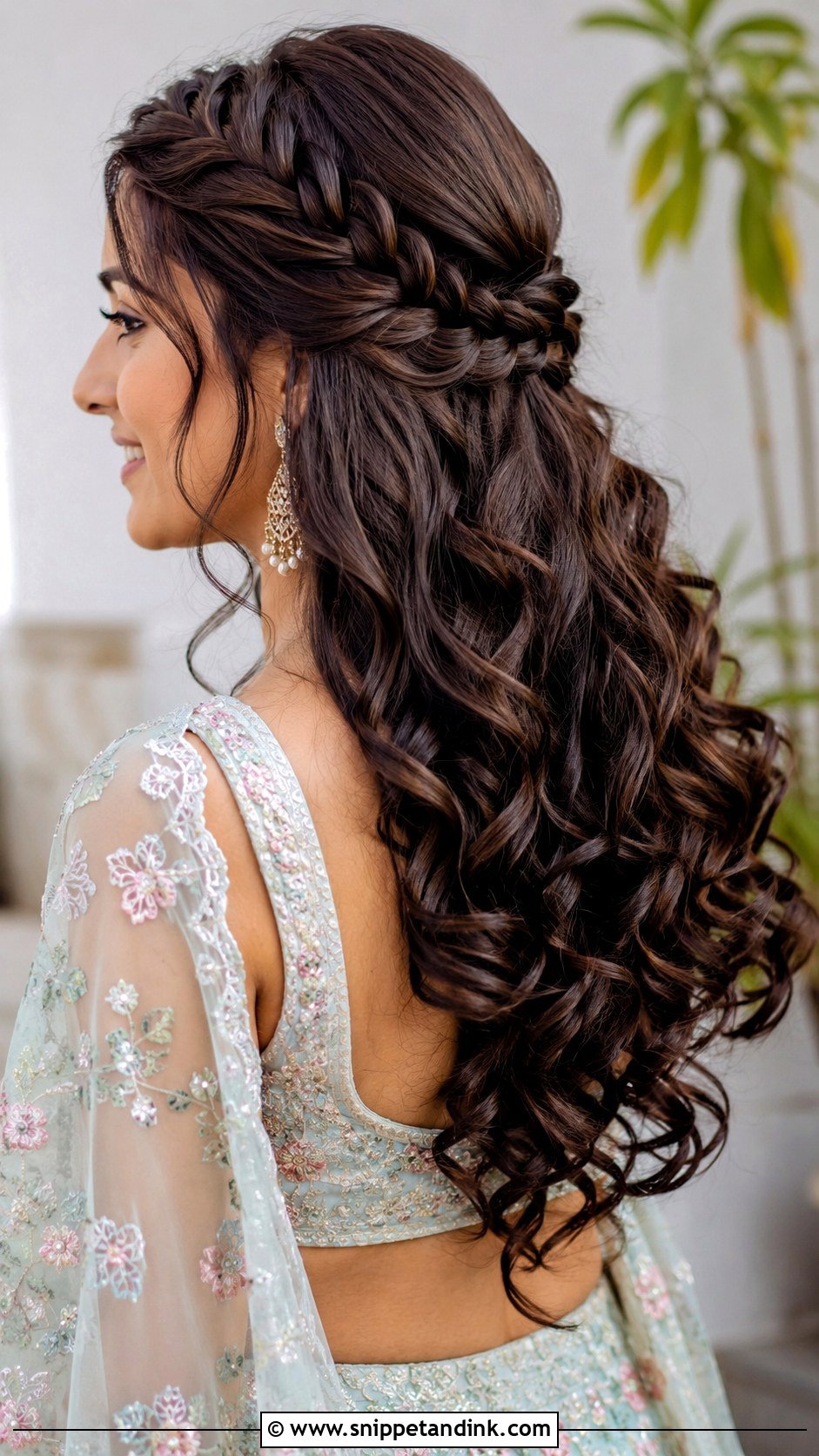
Curls under a crown braid give you volume at the back without the weight of an updo. I set the curls before I braid, pinned in barrels to cool, because curling after braiding means the iron catches the woven strands and frizzes them. Fine hair needs a firmer curl than you’d expect; a loose wave on fine hair is usually flat by the baraat. Small pearl pins tucked along the braid line also help hide where the braid ends.
3. Waterfall Braid With Fresh Flowers
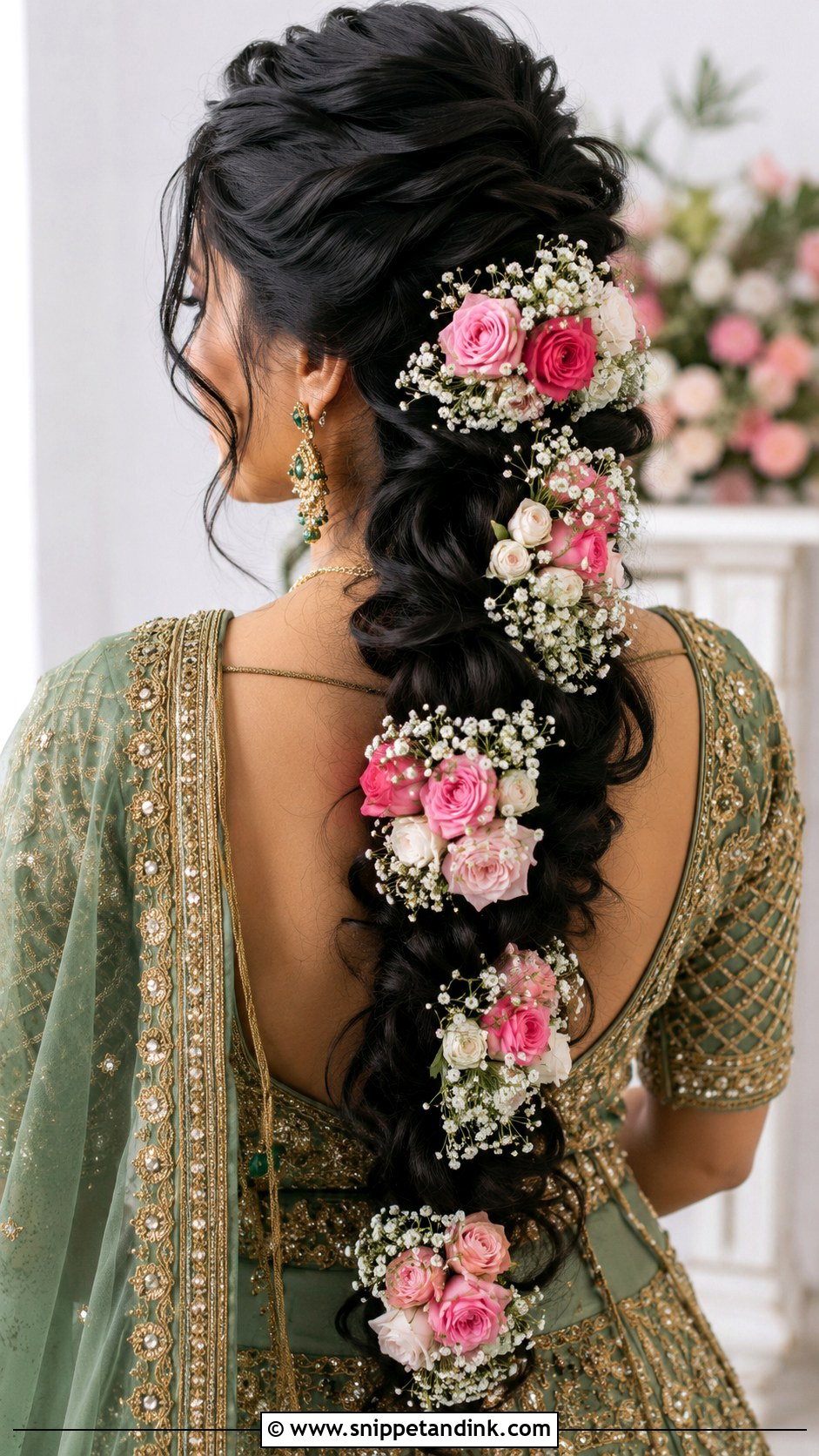
Real flowers sit naturally in the small gaps a waterfall braid leaves at each dropped strand, so you don’t need much wire. For mehndi and haldi ceremonies I like baby’s breath and small rosebuds because they survive a few hours of heat. Large roses are heavier than they look and drag the braid down unless I anchor them with a pin crossed underneath. Ask your florist to deliver the stems the morning of, kept cool, and to cut them short so I’m not fighting long stalks.
4. Pearl Embellished Waterfall Braid
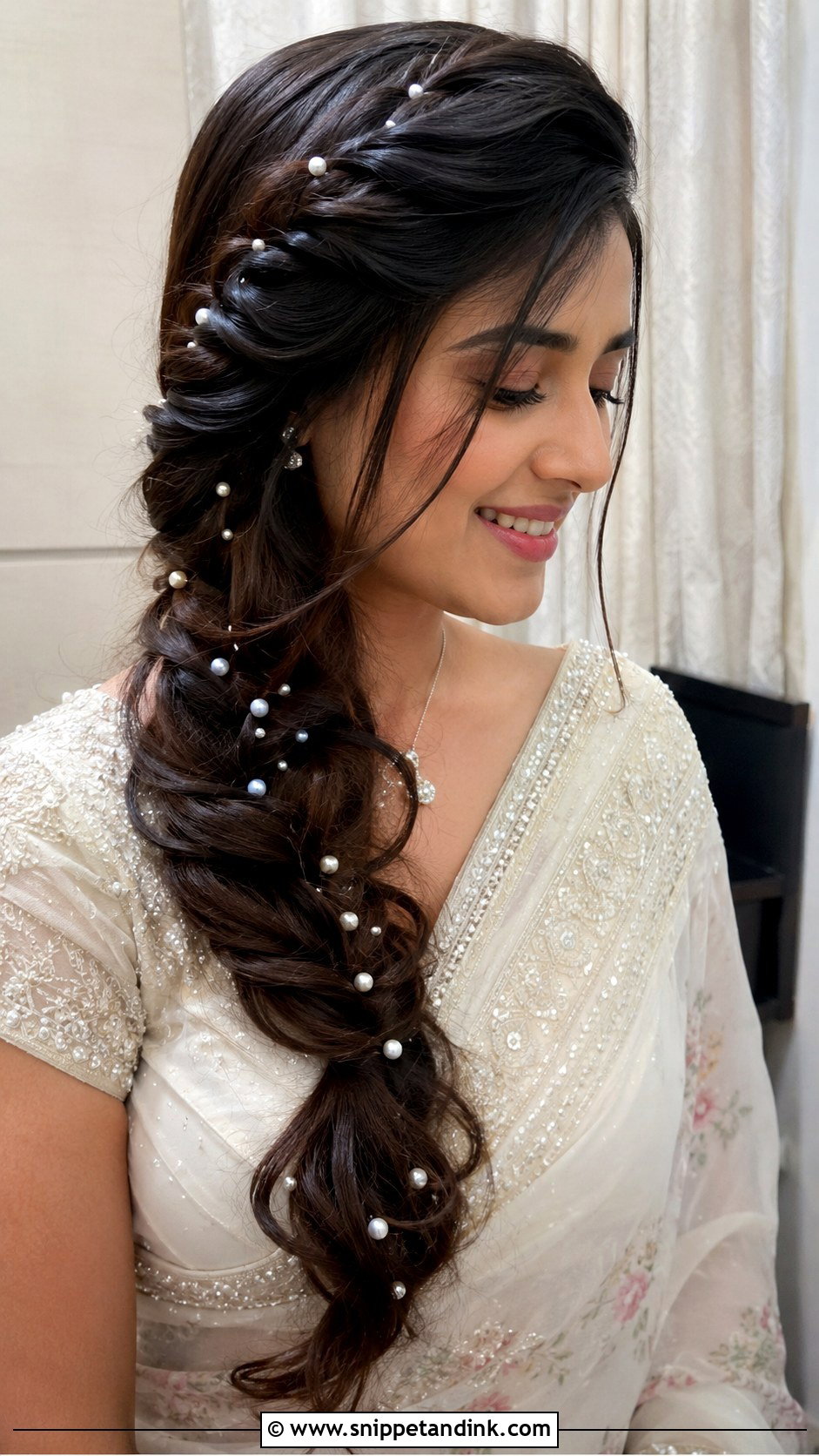
I thread pearls onto the dropped strands with small pearl pins or a clear elastic, never glue, because glue lifts the cuticle and leaves a mark in the photos for weeks. Scattered evenly they read as a soft shimmer; clustered near the crown they become the focal point and work best with a pastel lehenga or ivory saree. Keep the pearl count modest if your outfit has heavy zardozi, otherwise the head and the blouse compete.
5. Side Swept Waterfall Braid
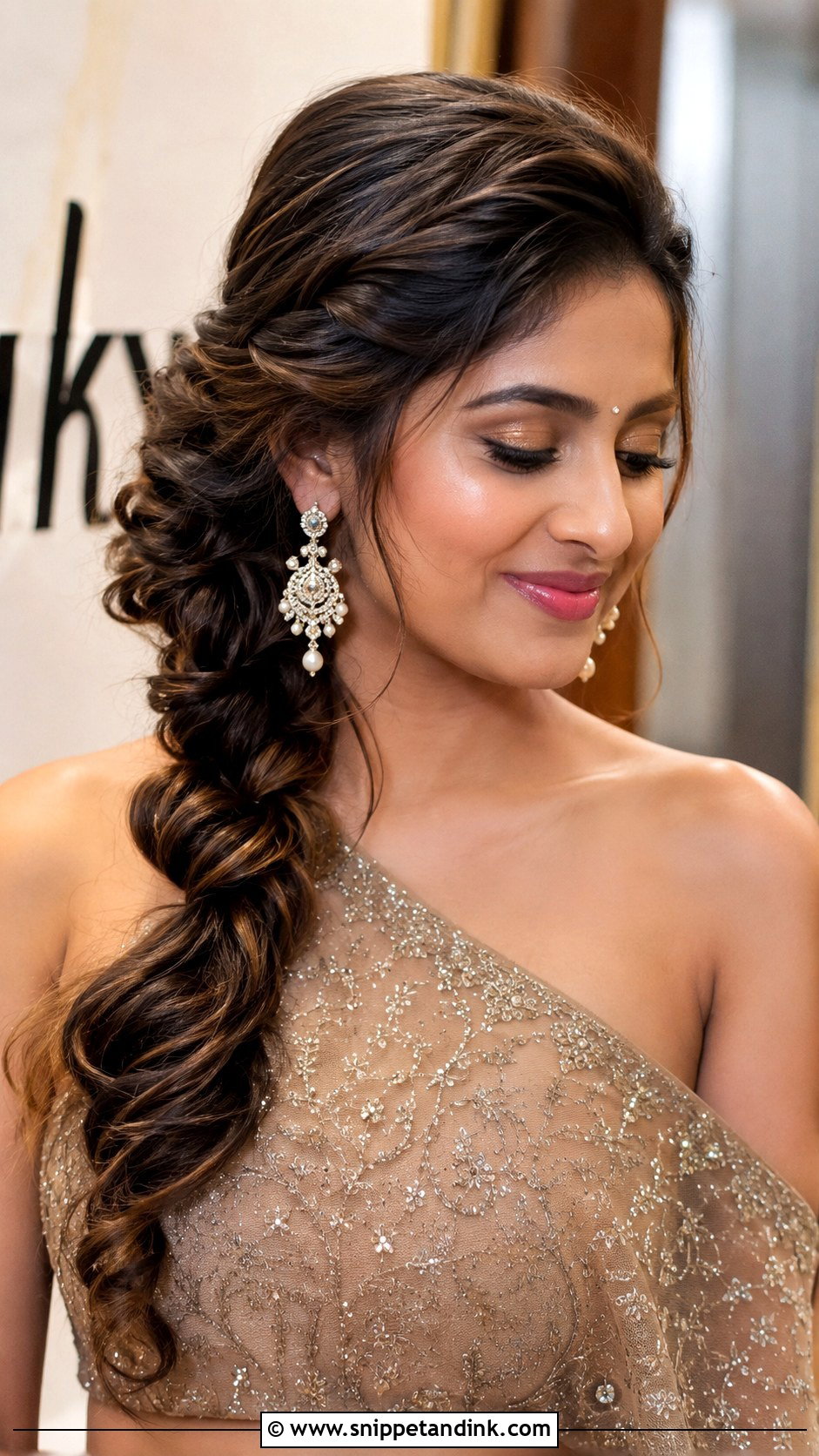
Moving the braid diagonally to one side clears one ear for a statement earring and lets the loose waves fall over the other shoulder. I start it slightly higher at the temple than the classic version so the angle is visible from the front. The catch is weight: all the hair ends up on one side, and with a heavy dupatta pinned on the same side it can pull at the scalp by evening. It’s a good fit for sangeet nights where you’ll be dancing and the dupatta is lighter.
6. Waterfall Braid Bun for Reception
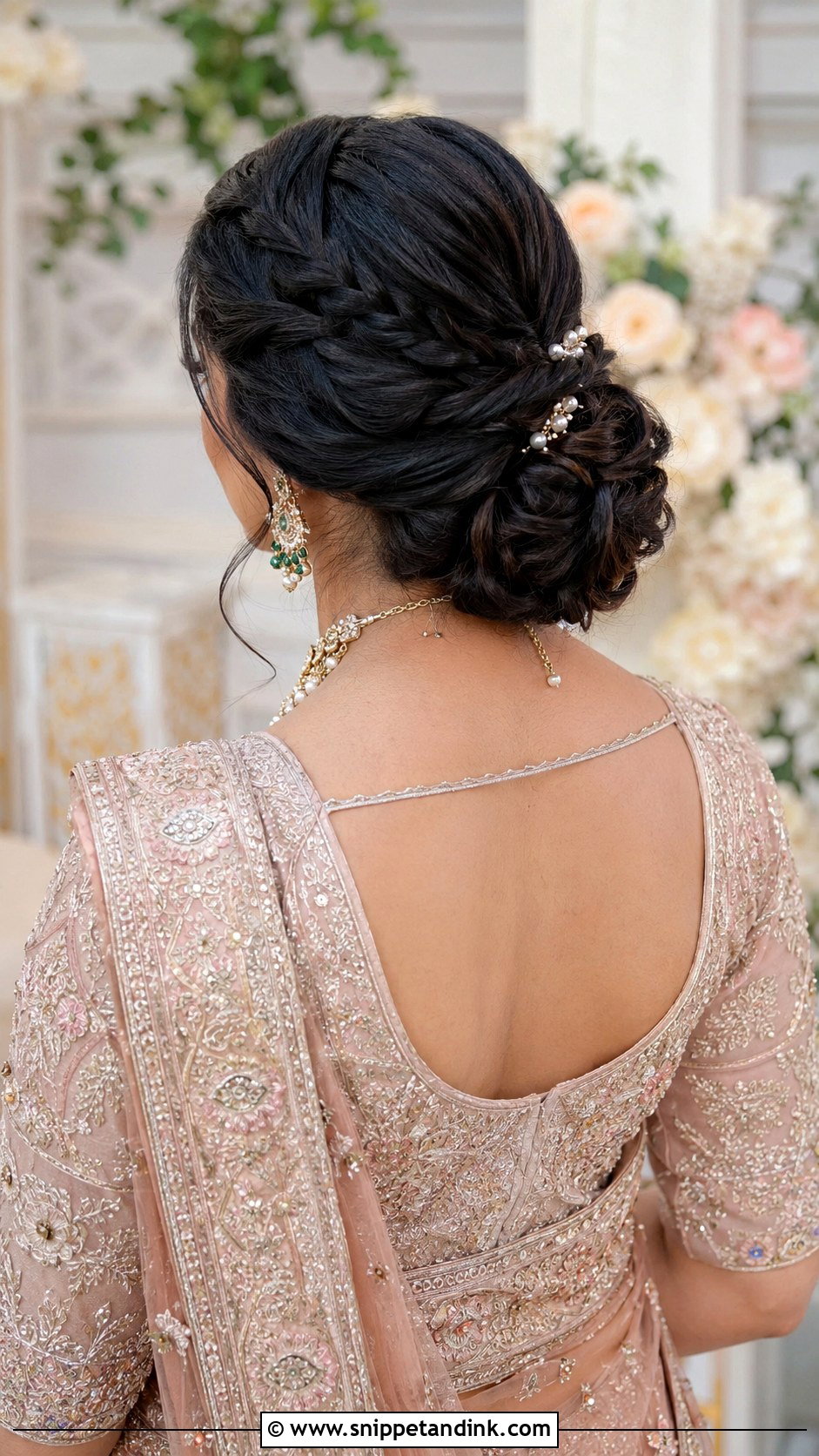
Gathering the braid into a low bun is my safest pick for a long reception. The braid wraps toward the nape, the tail and the dropped strands are rolled into the bun, and nothing is left hanging to tangle in a necklace. I pad the bun on thinner hair so it holds its shape under a heavy saree pallu. Fresh flowers or a jeweled clip go on the side of the bun rather than on top, where they’d catch on a dupatta when you sit.
7. Loose Waterfall Waves for Sangeet
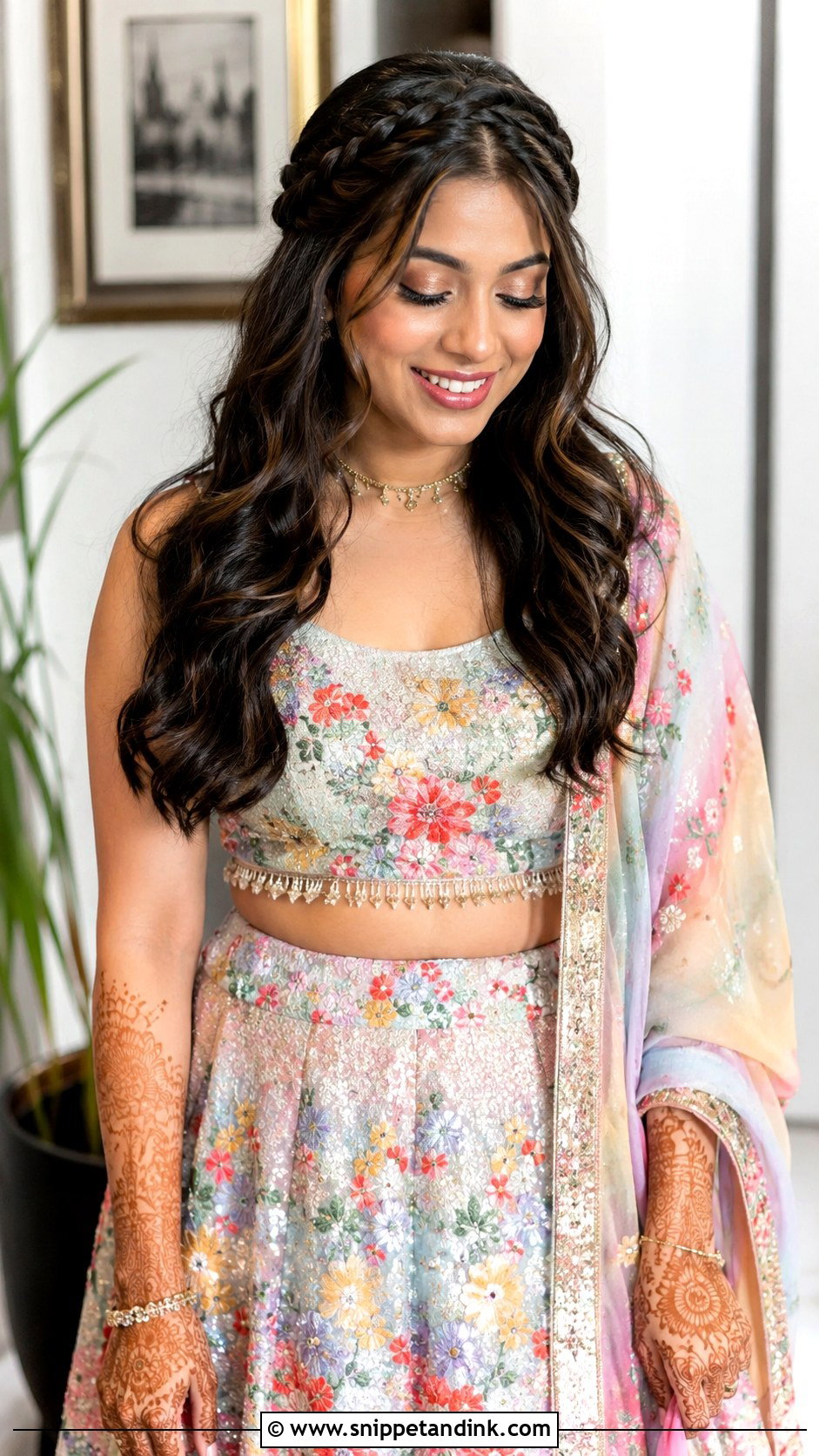
For a sangeet, I keep the braid thin and the waves loose so you can dance without anything feeling tight. I wave the lengths with a flat iron rather than a curling wand, which gives a flatter, more lived-in bend that doesn’t puff up under stage lights. Two hours of dancing will loosen it, so I tell brides to expect it to soften and to treat that as part of the look. Minimal accessories here; a few pearls are enough.
8. Double Waterfall Braid Hairstyle
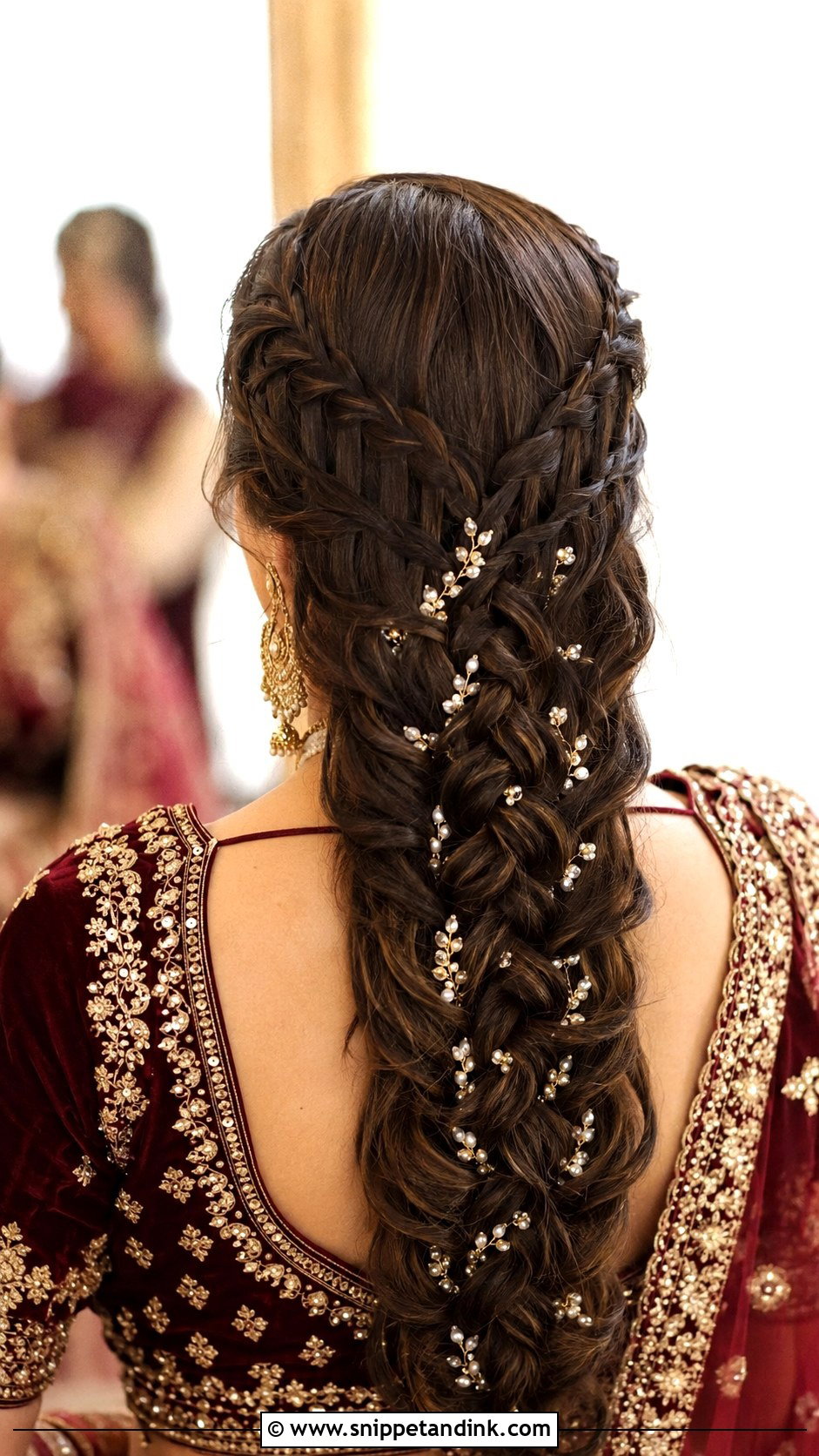
Two waterfall braids, one from each temple, meeting at the back give a woven pattern that shows up well from behind during the pheras. It takes nearly twice as long as a single braid, so build that into your getting-ready schedule. You really need hair past the shoulder blades and some density, because each braid uses up hair from the top and thin hair runs out before the two meet. I join them with a small elastic hidden under a twist.
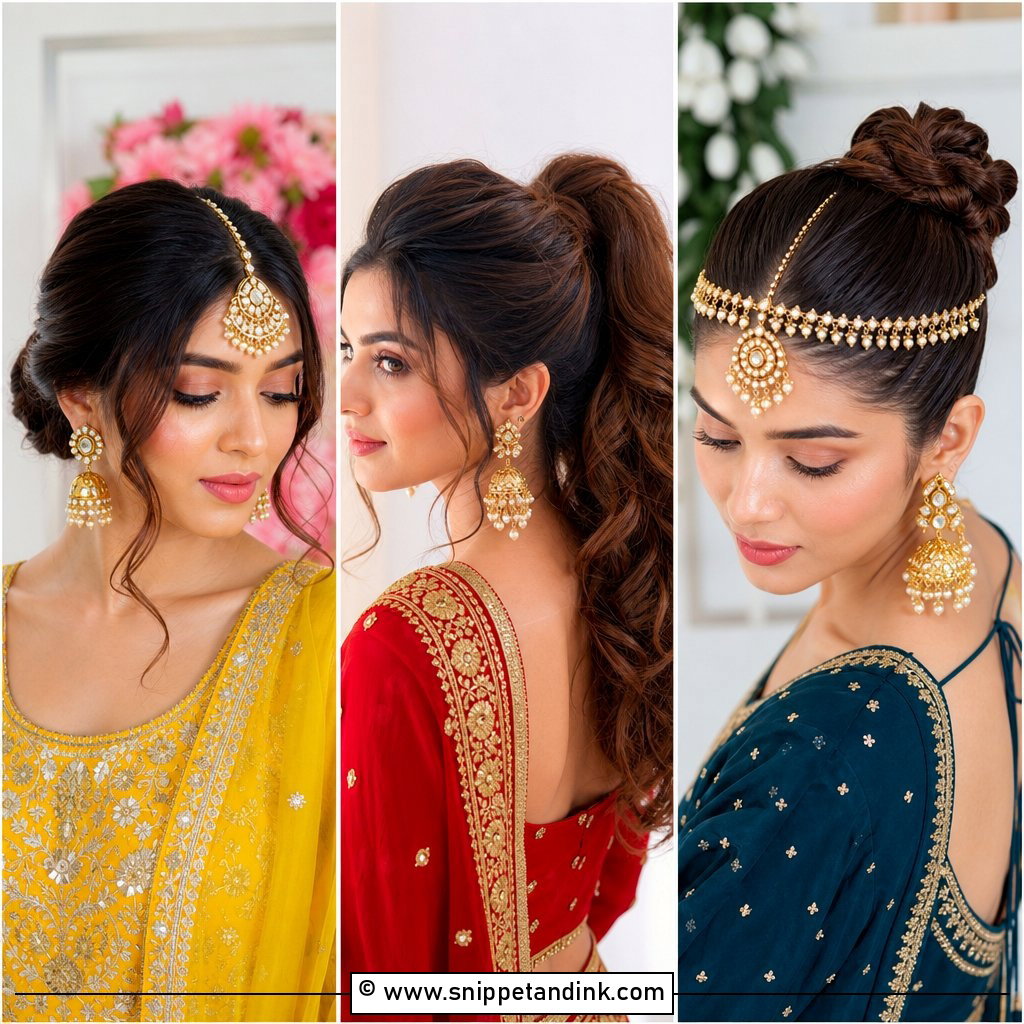
9. Waterfall Braid With Maang Tikka
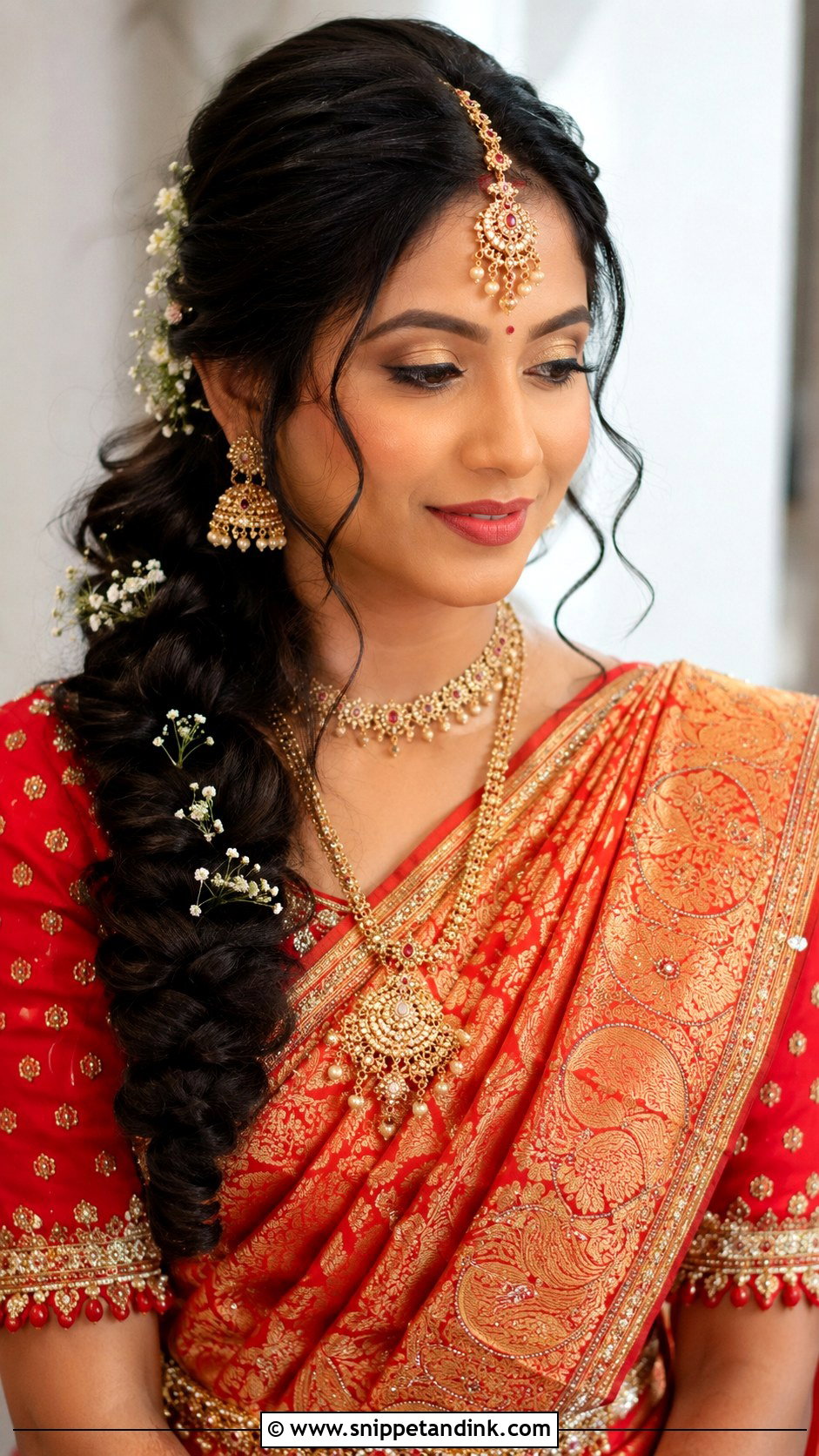
A waterfall braid with a maang tikka needs one thing agreed at the trial: where the parting goes. The tikka chain sits on the centre parting, so I start the braids a little further back on both sides to leave a clean line for it. A heavy tikka with a long chain pulls; I hook it to a hidden pin under the braid rather than relying on the hook at the back. Keep the braid soft so the tikka stays the main detail.
10. Messy Waterfall Braid for Mehndi
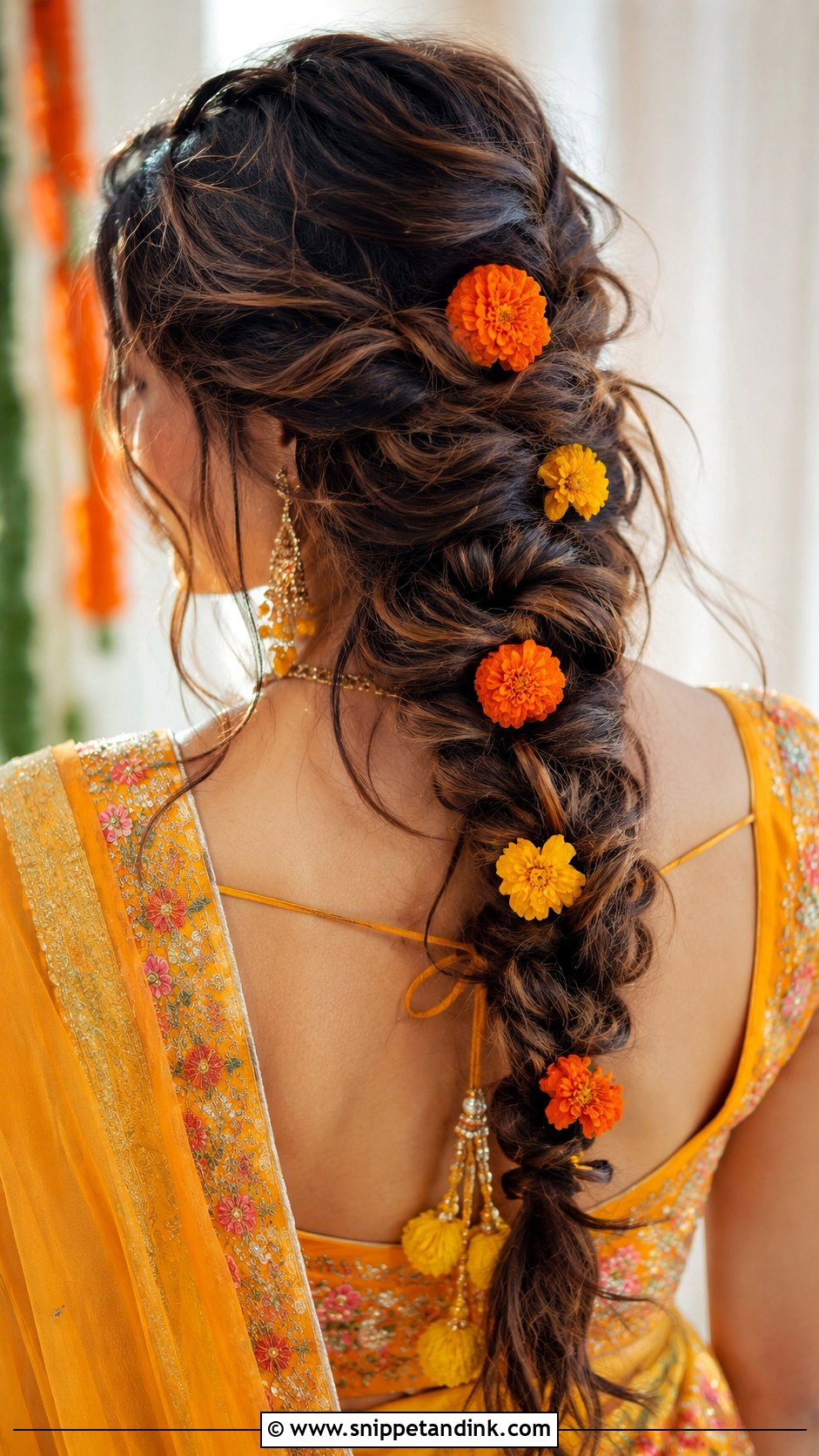
A messy braid for the mehndi is less work for me but more forgiving for you, since you’ll be sitting for hours with your hands out and can’t fix your own hair. I braid loosely, then pull the edges out with my fingers to widen it. Leave a couple of face-framing pieces, but not too many: henna on the hands means you can’t push them back, and they end up stuck in the paste. Marigolds suit this one, tucked in at the end.
11. Waterfall Fishtail Braid Hairstyle
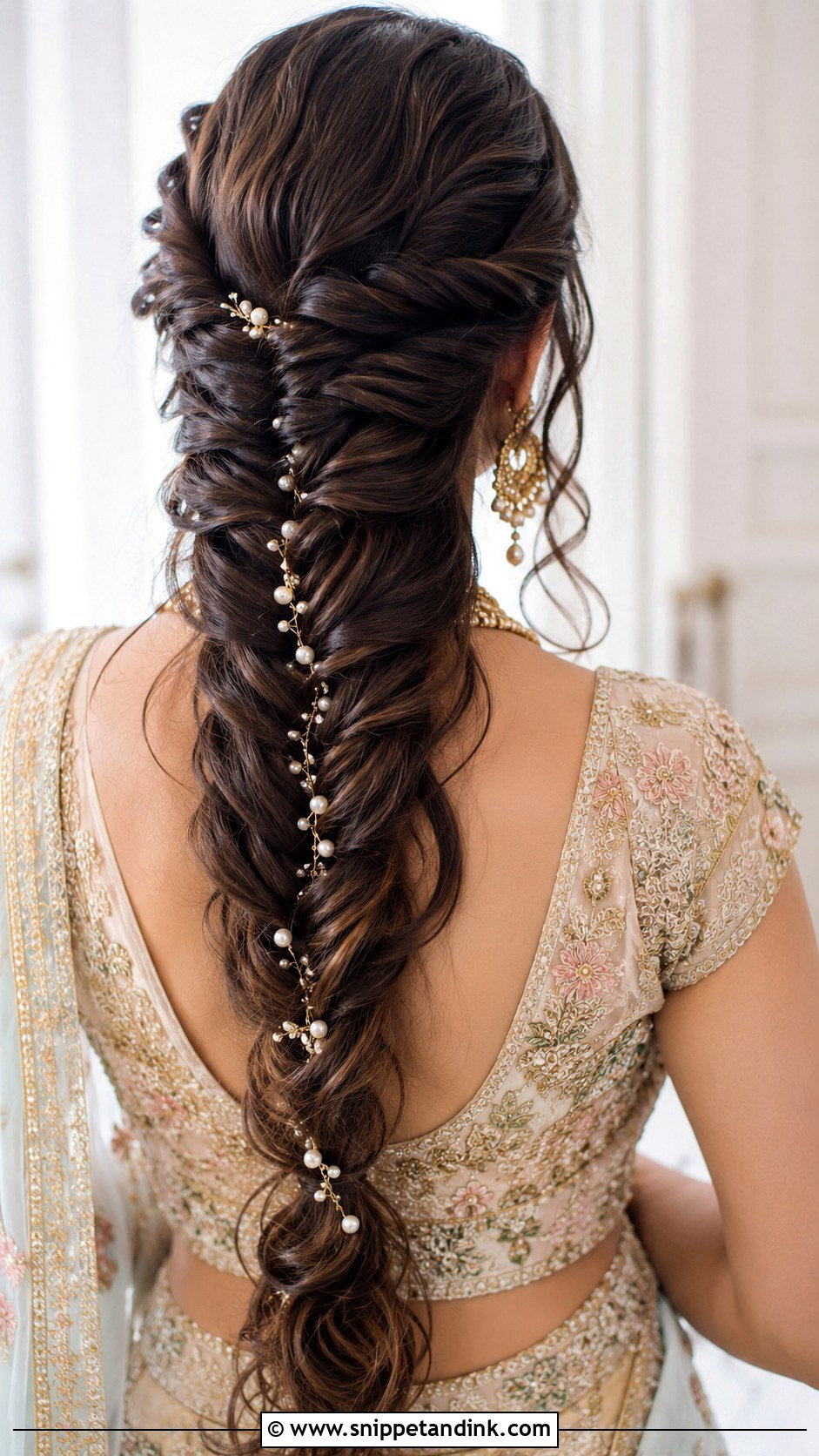
Here the band across the head is a fishtail instead of a three-strand braid, and the dropped strands still fall out of each pass. It is fiddly to do on layered hair, because short layers poke out of the fishtail’s tight crossings. I’d only promise this one if your shortest layer reaches past your ears. Once it’s in, it holds well and looks finer and more detailed than the classic version, especially next to a silk saree.
12. Waterfall Braid Crown for Bride
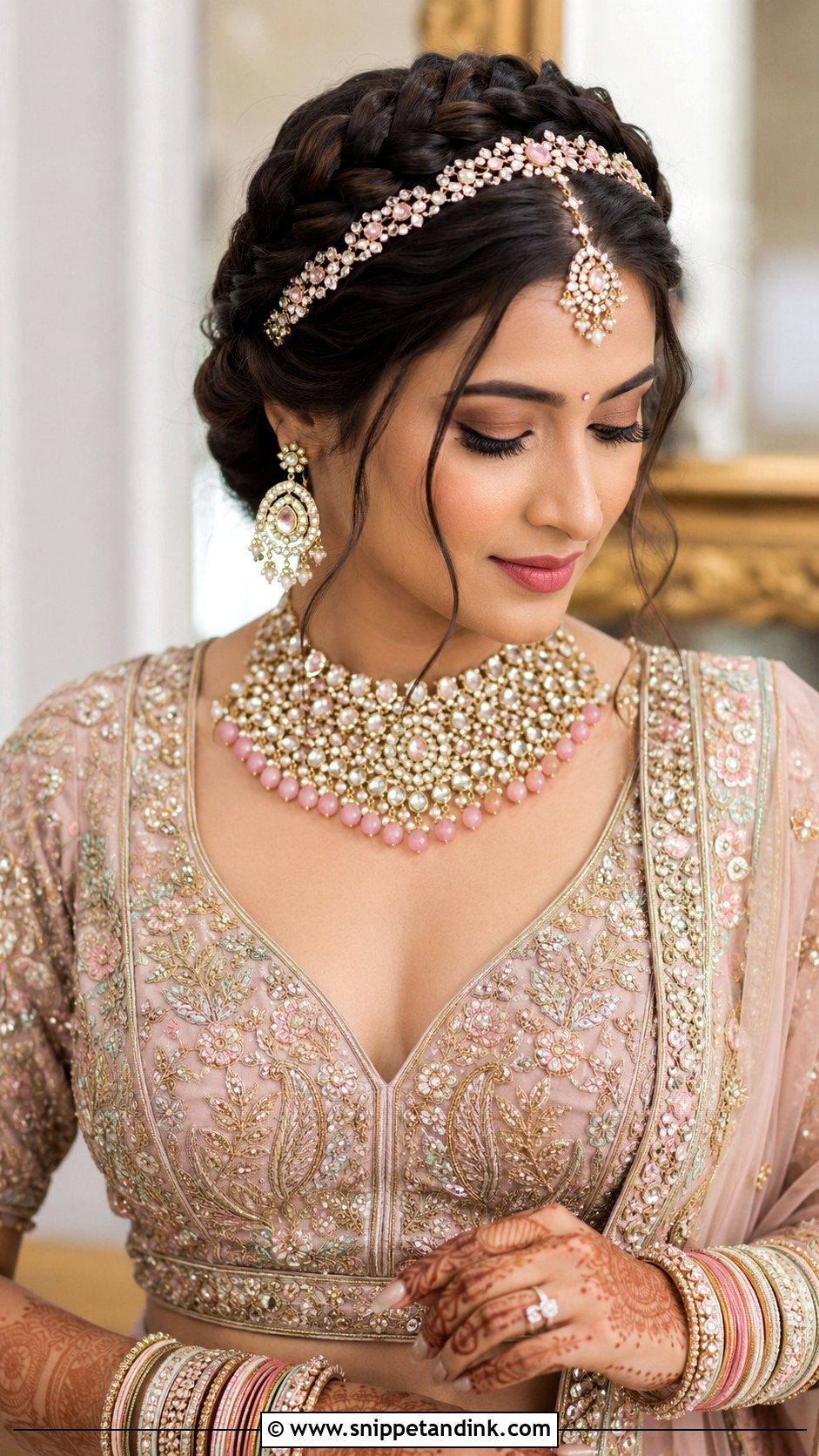
The crown version continues the braid all the way around the head so it reads like a halo from every angle. It suits outdoor ceremonies where people see you from the side and the back. I’d steer you away from this one if you plan to wear a heavy dupatta pinned on top, since the weight flattens the braid and hides most of it. A light jeweled headpiece sits into the weave nicely instead.
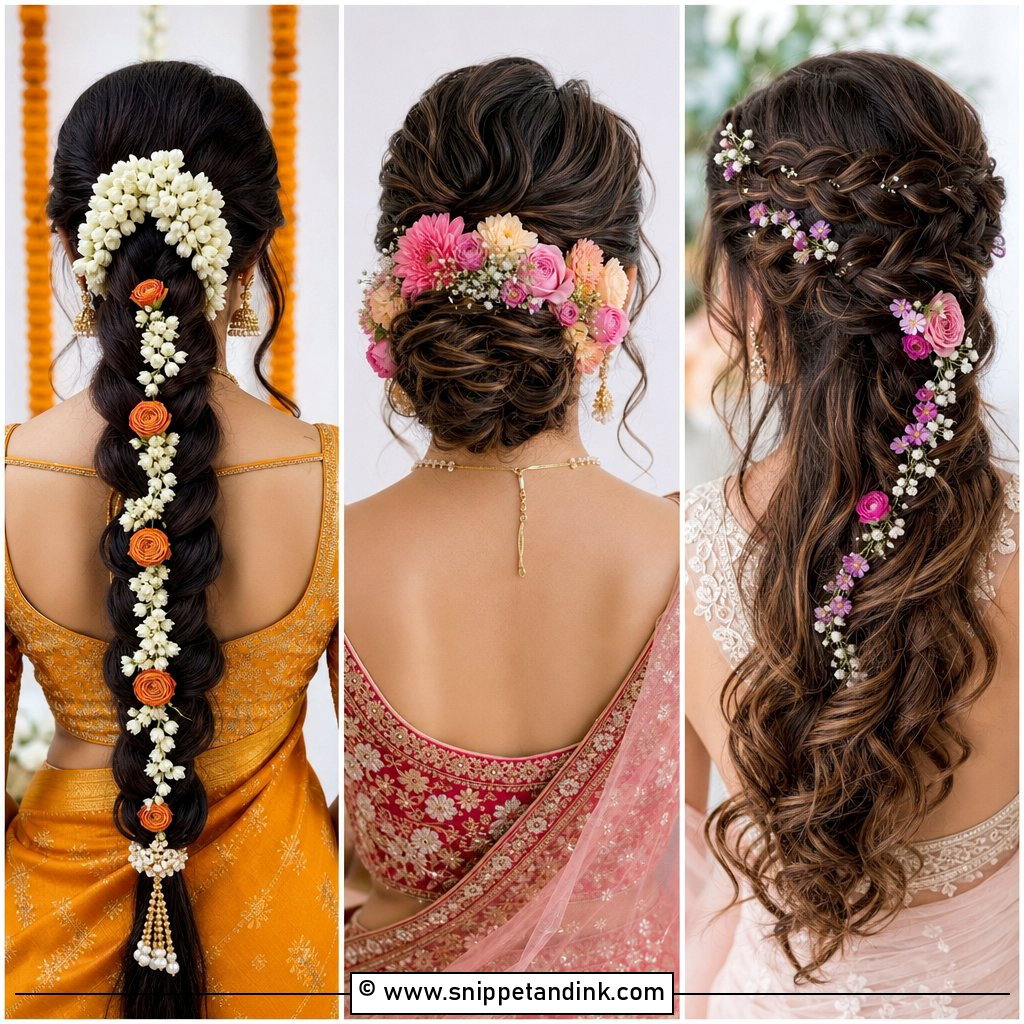
13. Waterfall Braid With Gajra
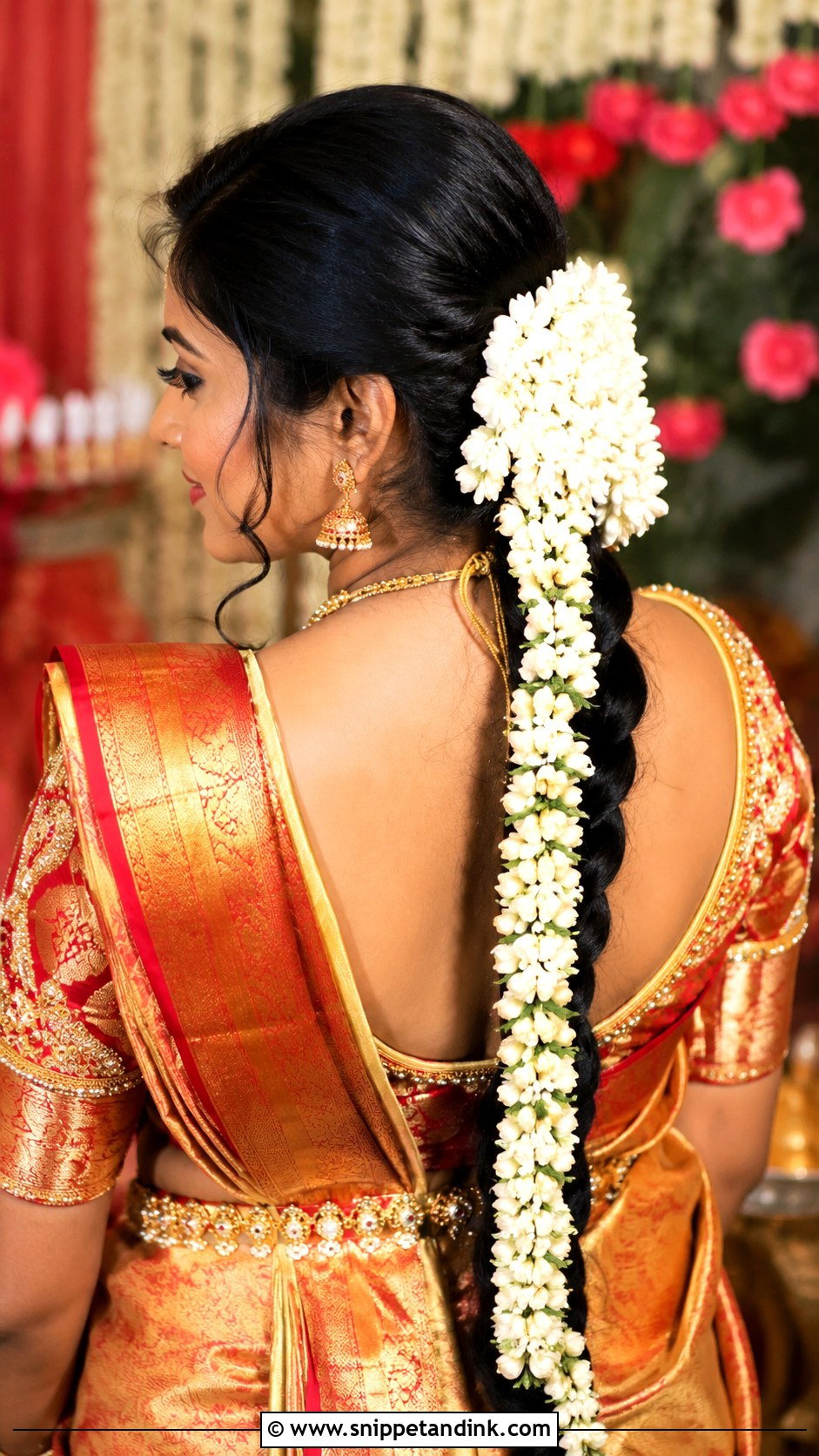
A string of jasmine flowers wrapped along the braid is still my favourite pairing for a South Indian silk saree and a temple wedding. The white buds show up clearly against dark hair, and the scent carries through the day. Jasmine is delicate: buy the gajra the morning of, keep it wrapped in a damp cloth in the fridge until I need it, and expect the buds to brown by evening. I pin the gajra every few centimetres so it doesn’t slide down as the braid relaxes.
14. Waterfall Braid Ponytail for Reception
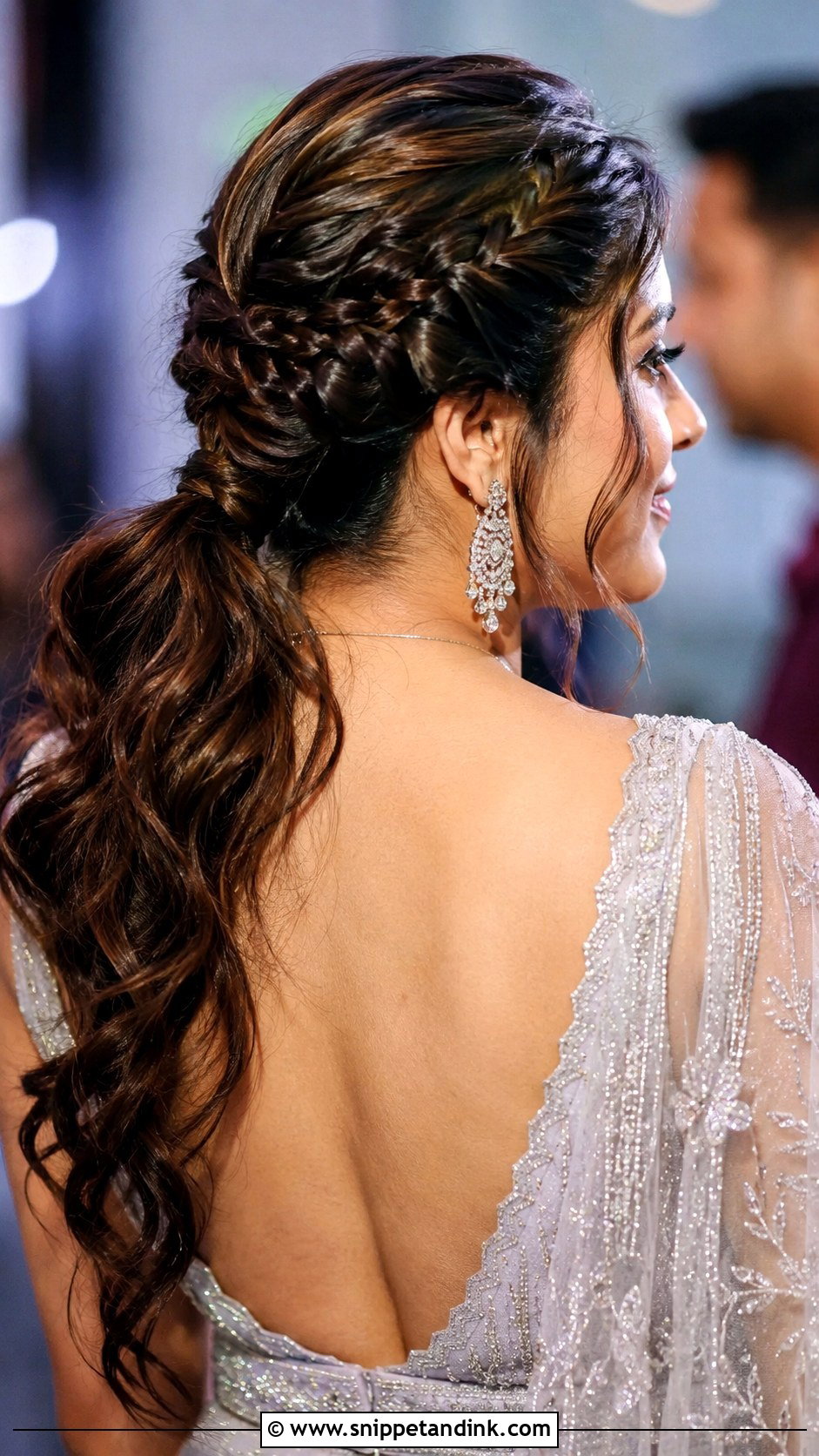
The braid crosses the crown and ends in a high or mid ponytail, which works well with a gown or fusion outfit at the reception. I wrap a strand around the elastic to hide it and pin it underneath. The ponytail is where you see whether the base was secure: a loose one drops halfway through the evening, so I use two elastics, one tight and one covering. Wave or curl the ponytail so it doesn’t look flat in photos taken from the side.
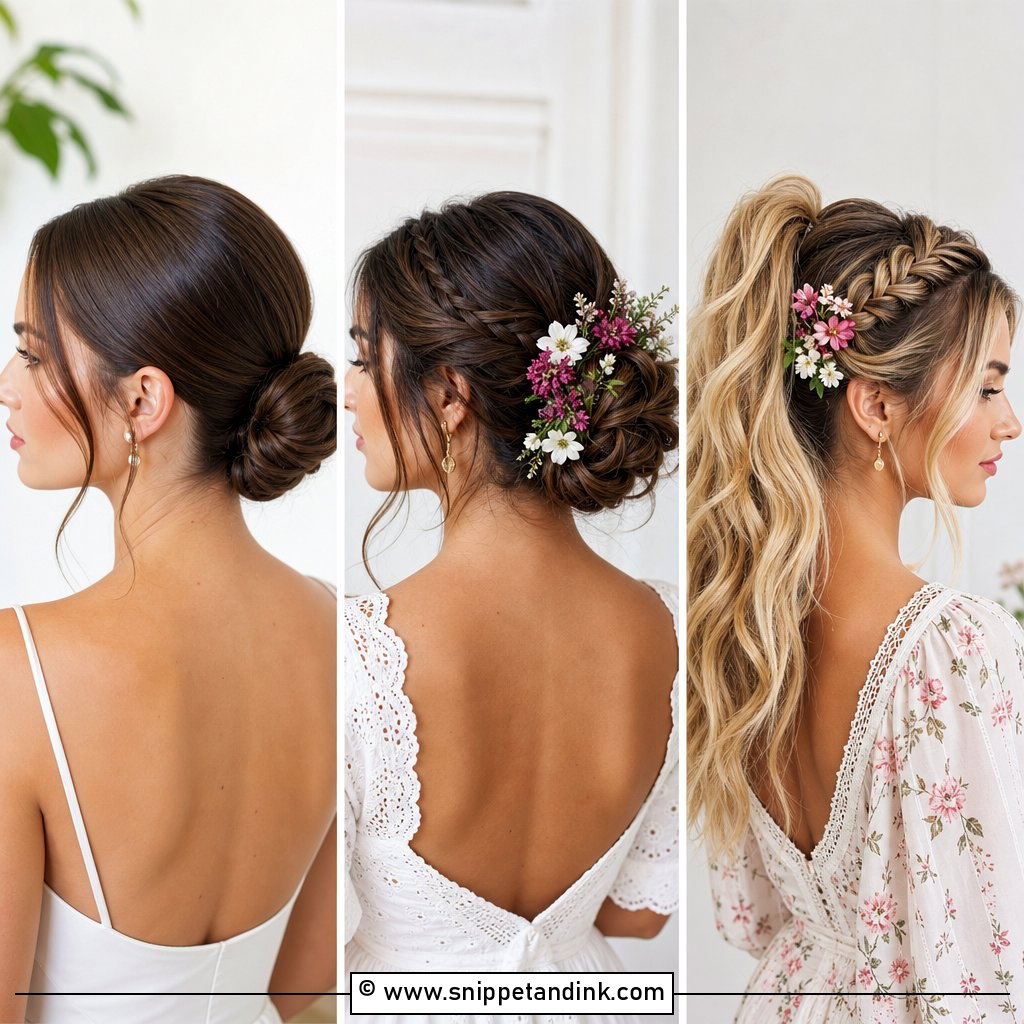
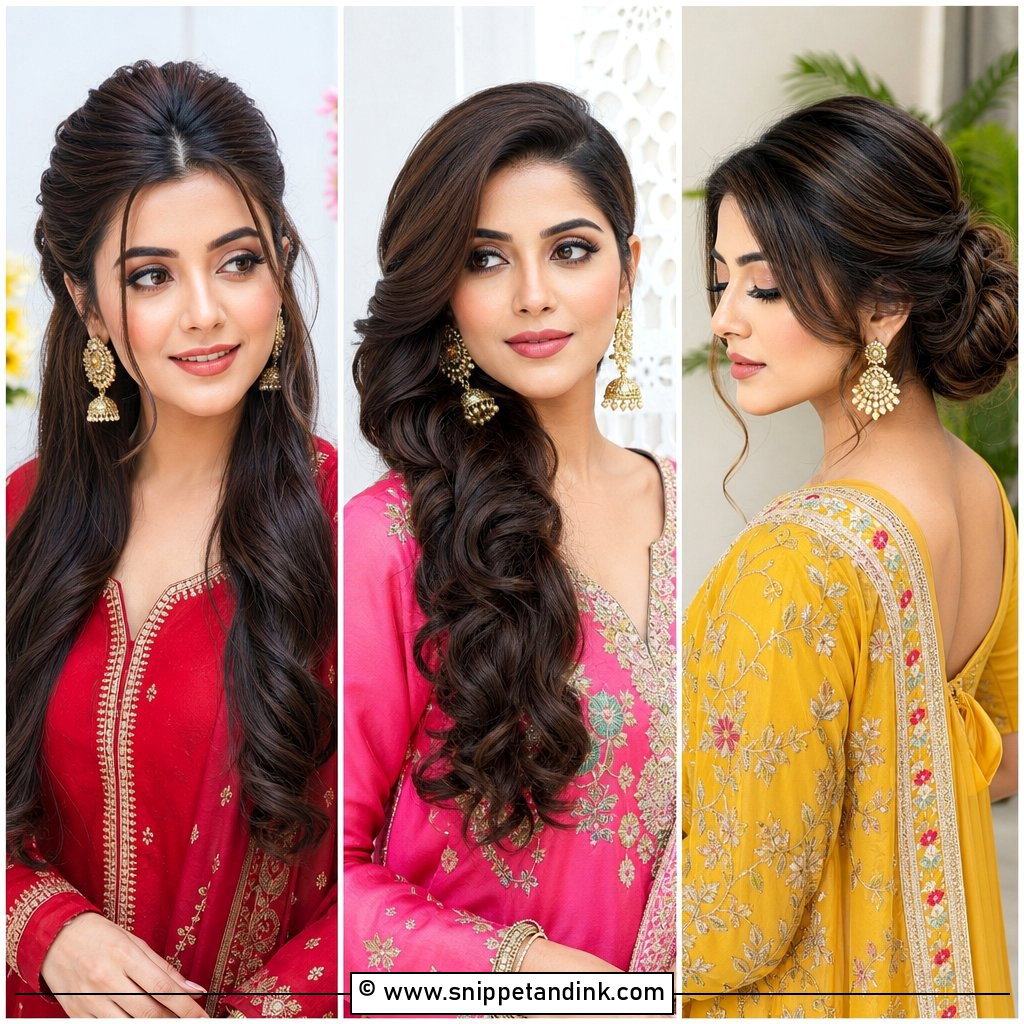
15. Boho Waterfall Braid for Haldi
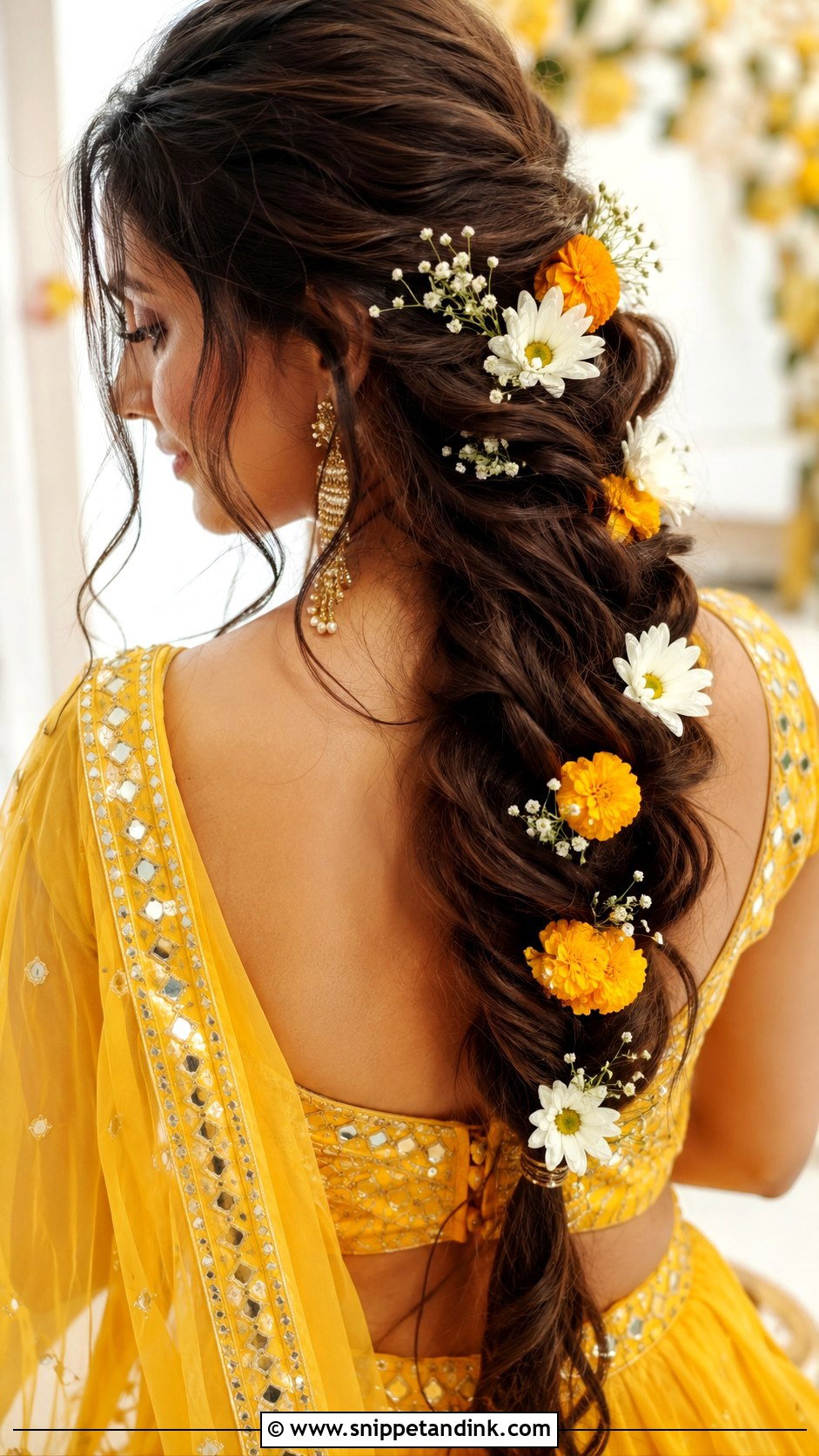
For a haldi, a boho waterfall braid keeps hair away from the turmeric paste while still looking relaxed. Keep the face clear, because the paste is going to land on your cheeks and neck and loose pieces will stain yellow. I don’t put any shine spray on for haldi; turmeric sticks to product. Marigolds or small yellow buds tucked into the braid match the outfit and you won’t mind if they get stained.
16. Waterfall Braid With Open Hair
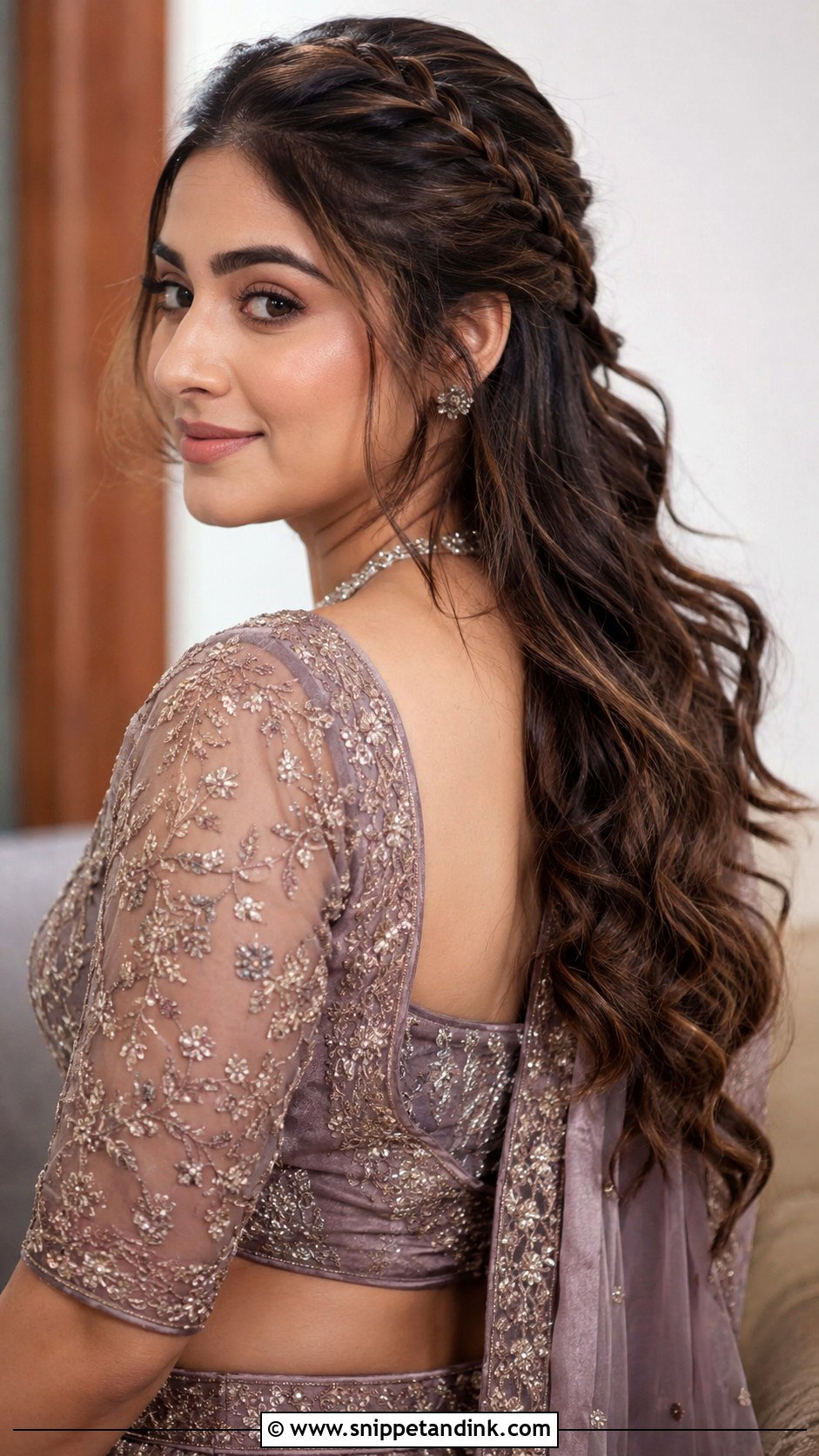
A thin braid across the crown with everything else left open is the most natural option on the list. It shows off long, healthy hair and keeps strands off your face. I add soft waves underneath so the open lengths don’t look like they’ve just come out of a wash. On very straight, slippery hair the braid may loosen, and I’ll suggest a few hidden pins along its length. It suits almost any function, which is why bridesmaids often wear it too.
17. Twisted Waterfall Braid Hairstyle
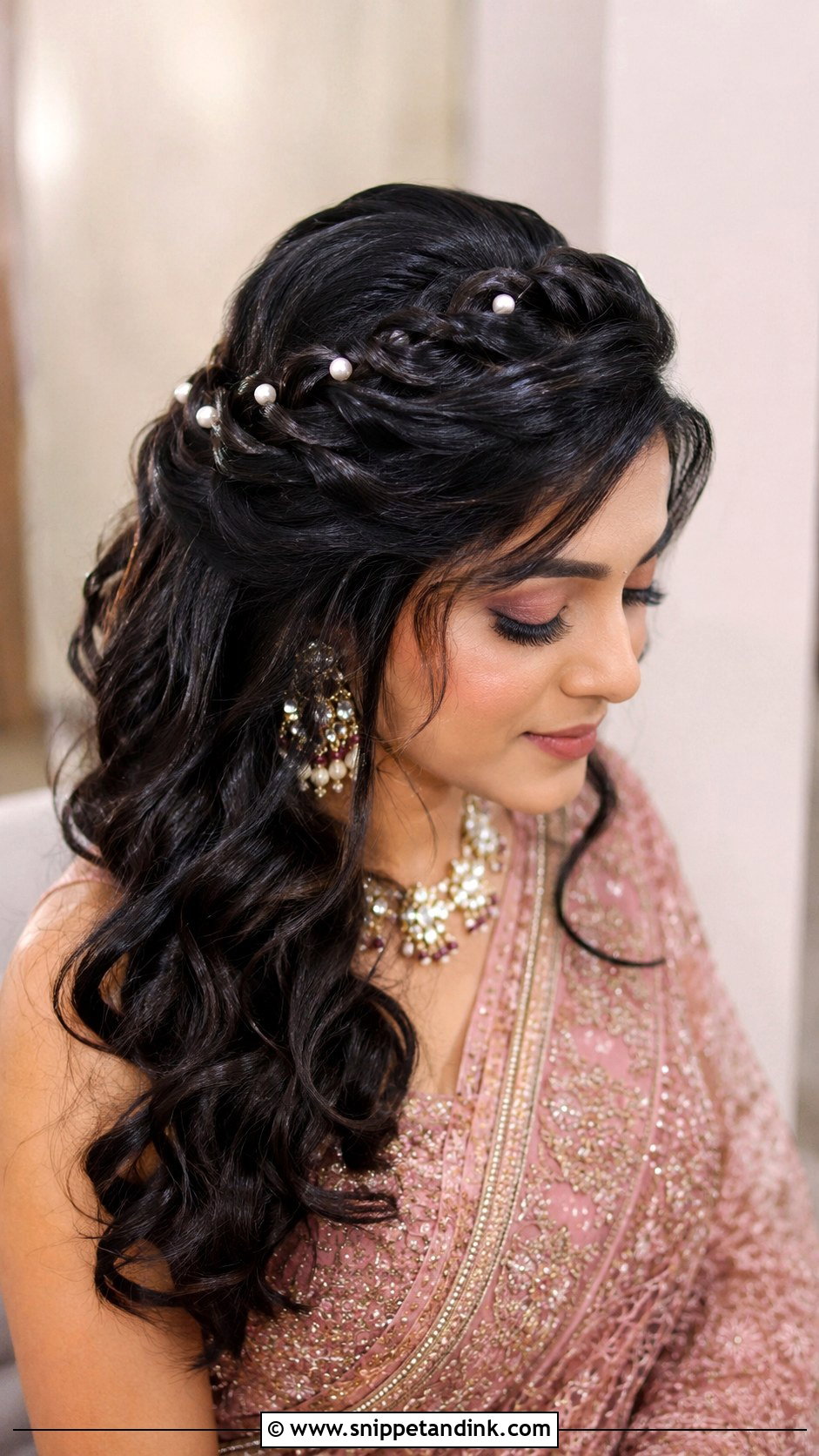
Instead of a braid, I use two twisted strands and drop a strand at every twist. It’s quicker to do than a braid and feels light on the head, so it’s comfortable all day. Twists unwind more easily than braids, though, especially on smooth hair, so I spray each section as I go and pin the end firmly. Pearls or small jeweled pins in the twists add enough detail without overwhelming them.
18. Waterfall Braid With Veil
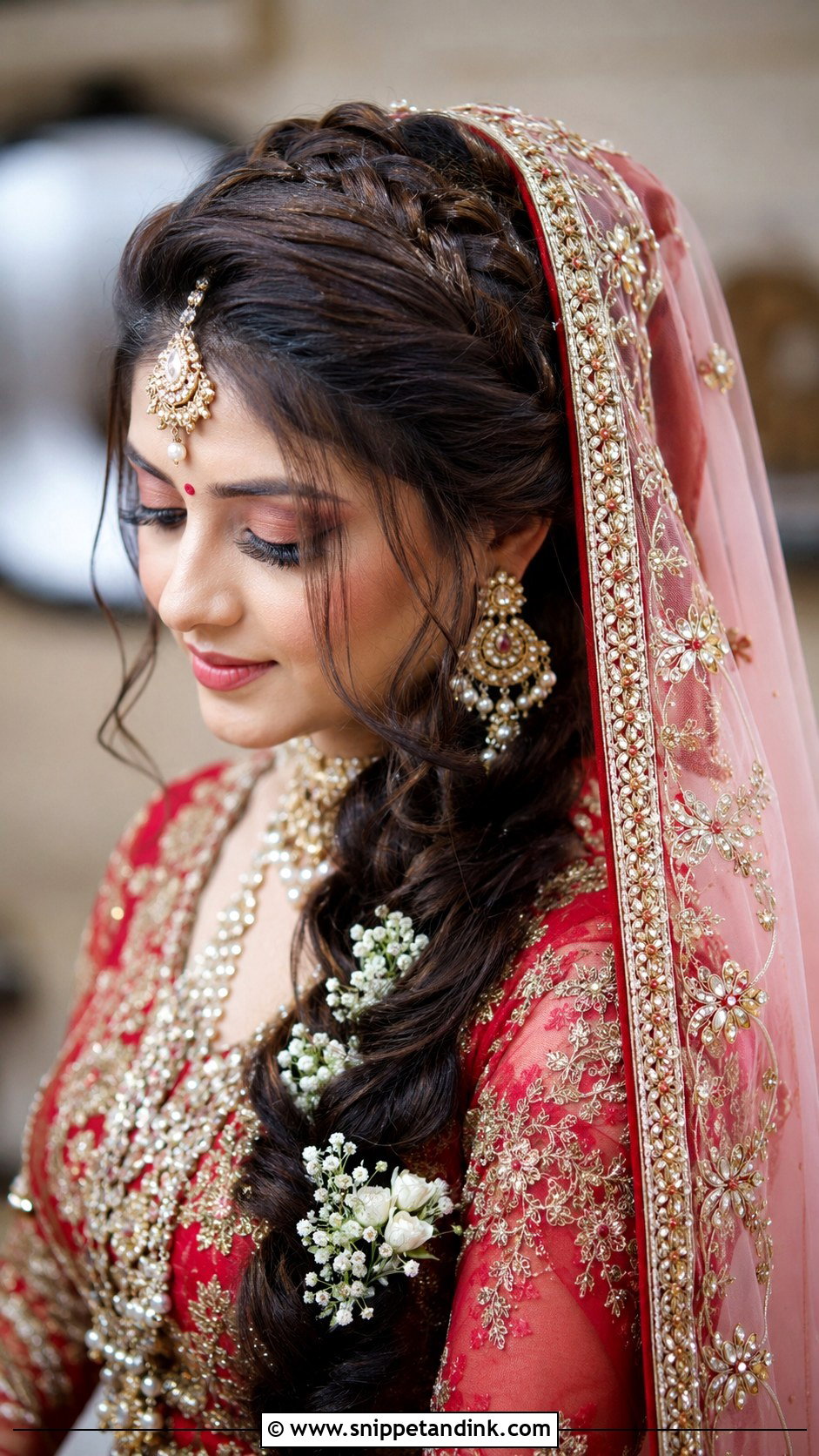
A waterfall braid under a veil or dupatta works best when the braid is set slightly lower than usual, behind the crown, so the dupatta has a firm place to pin. I pin the dupatta into the braid itself, not into the loose hair, which is what keeps it from sliding during the pheras. If you’ll lift the dupatta for the reception, check at the trial how the braid looks after the pins come out; sometimes it needs a quick re-tuck. Keep accessories near the braid small so they don’t snag the fabric.
19. Curly Waterfall Braid Hairstyle
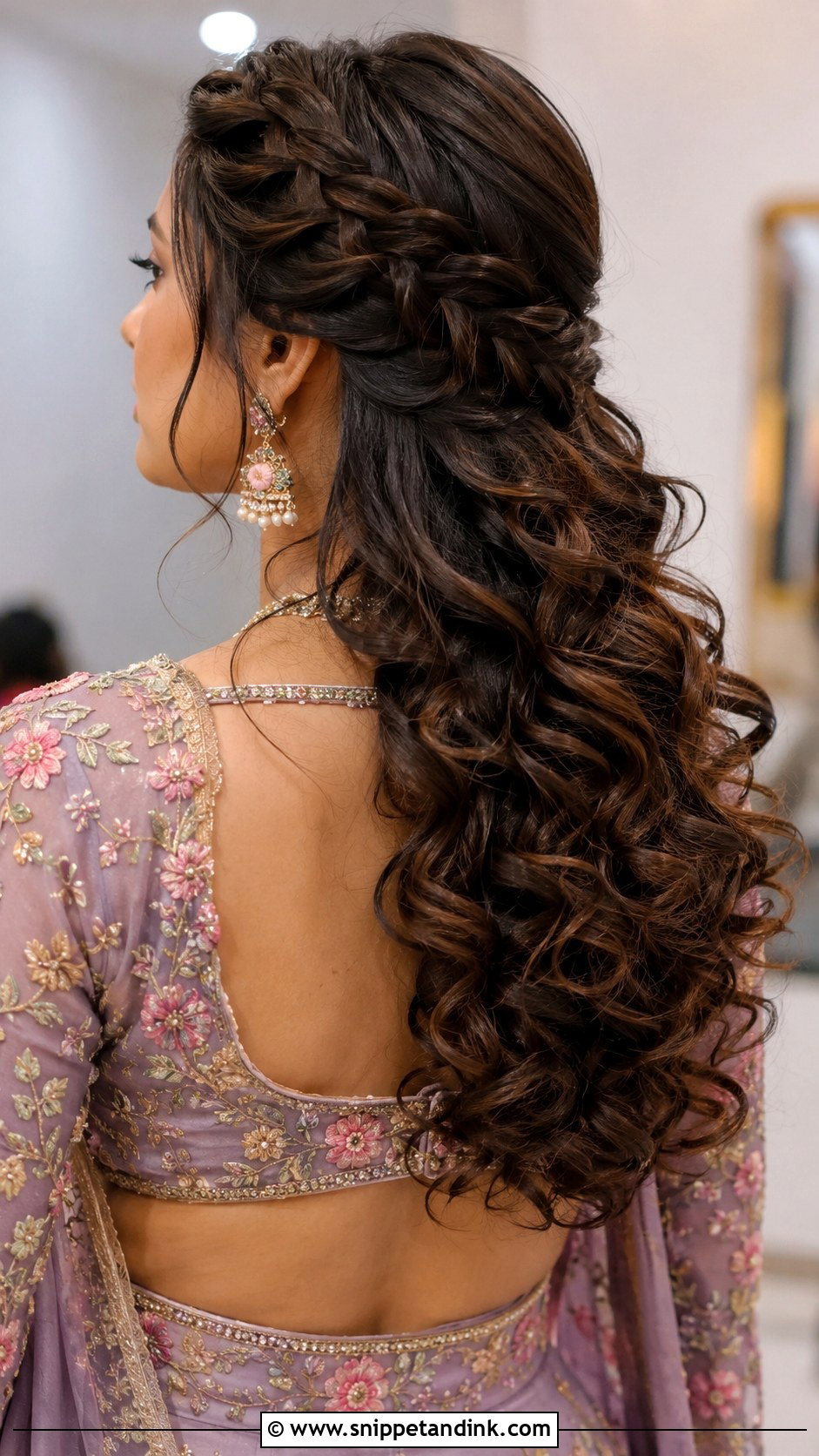
Curly hair holds a waterfall braid better than straight hair because the curl grips the strands, so you don’t need to straighten anything. I work on curls that are refreshed with a cream, not dry, and I braid with my fingers rather than a comb to avoid breaking up the curl pattern. Let the curls hang below the braid at their natural length. Pearls or flowers can be tucked in, but on very tight curls a small accessory gets lost, so go a size up.
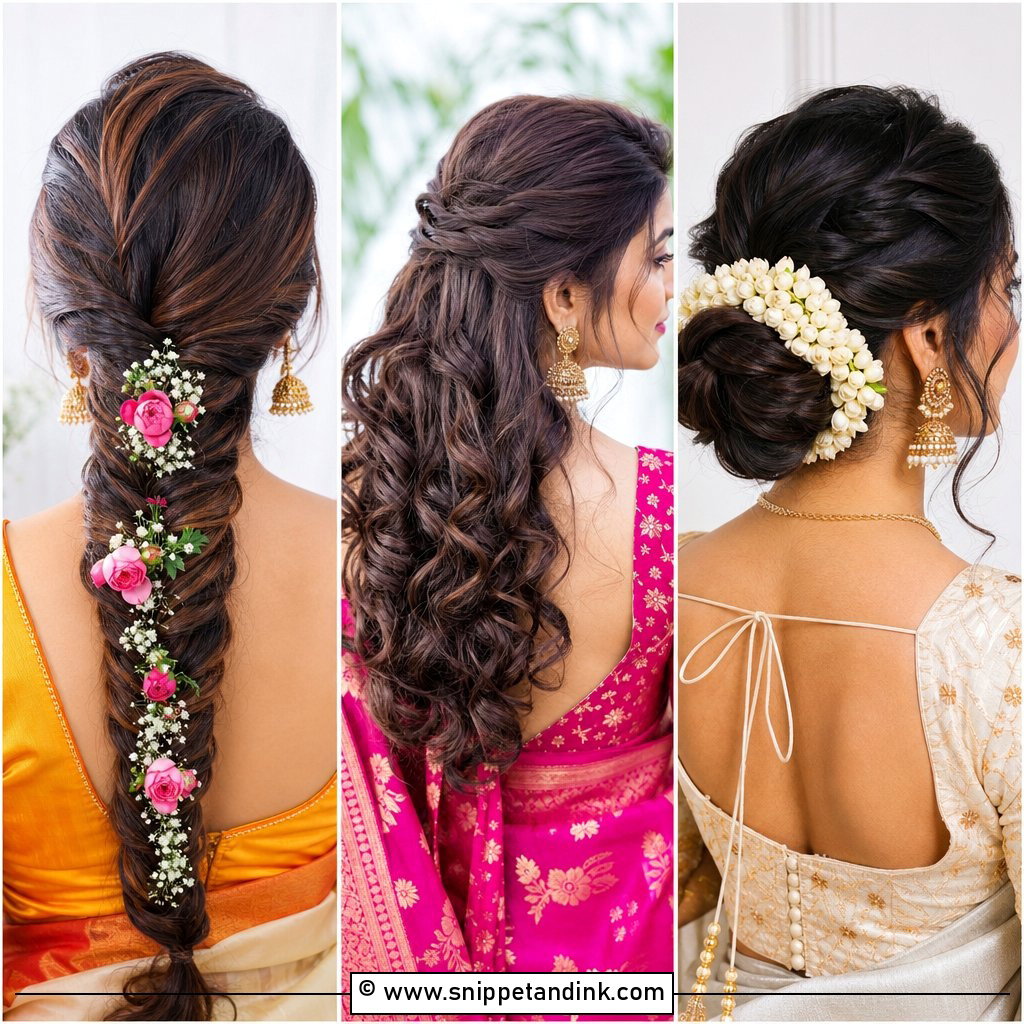
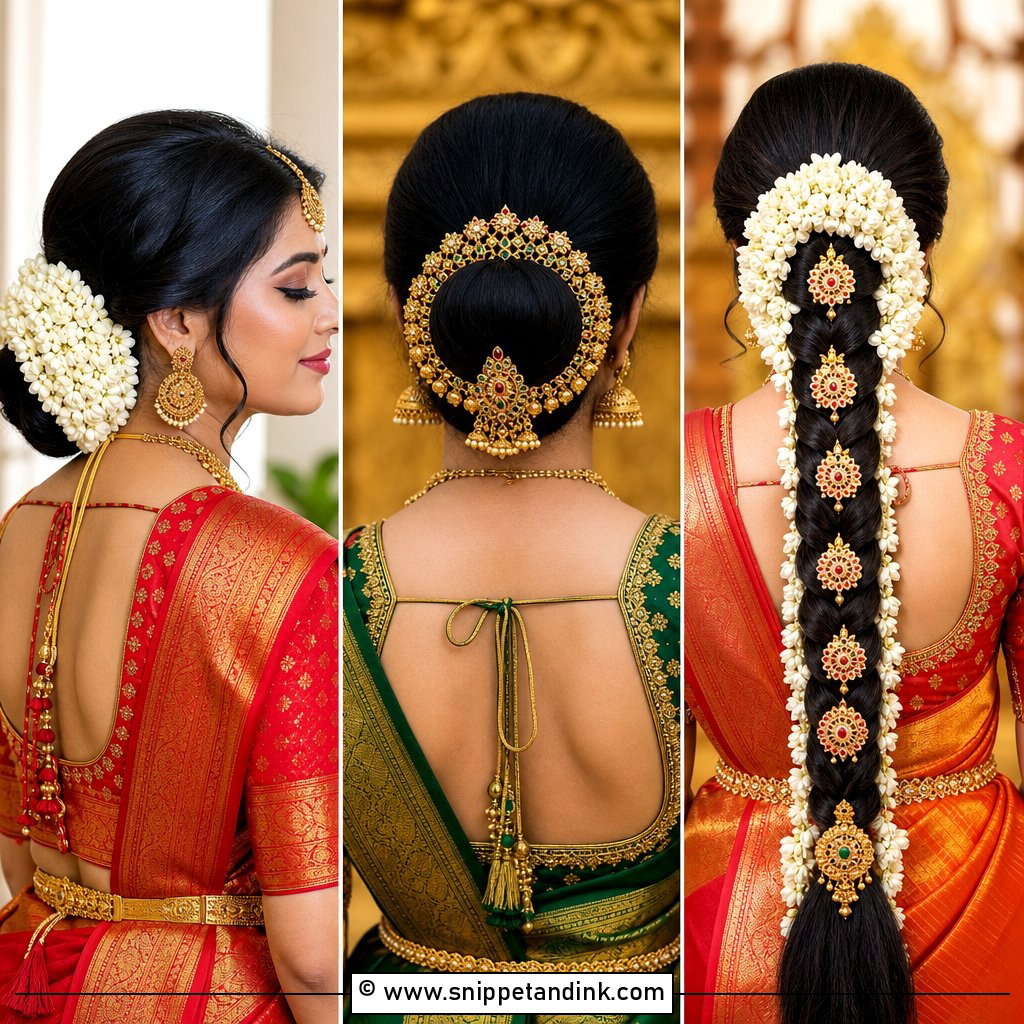
20. Waterfall Braid With Jeweled Accessories
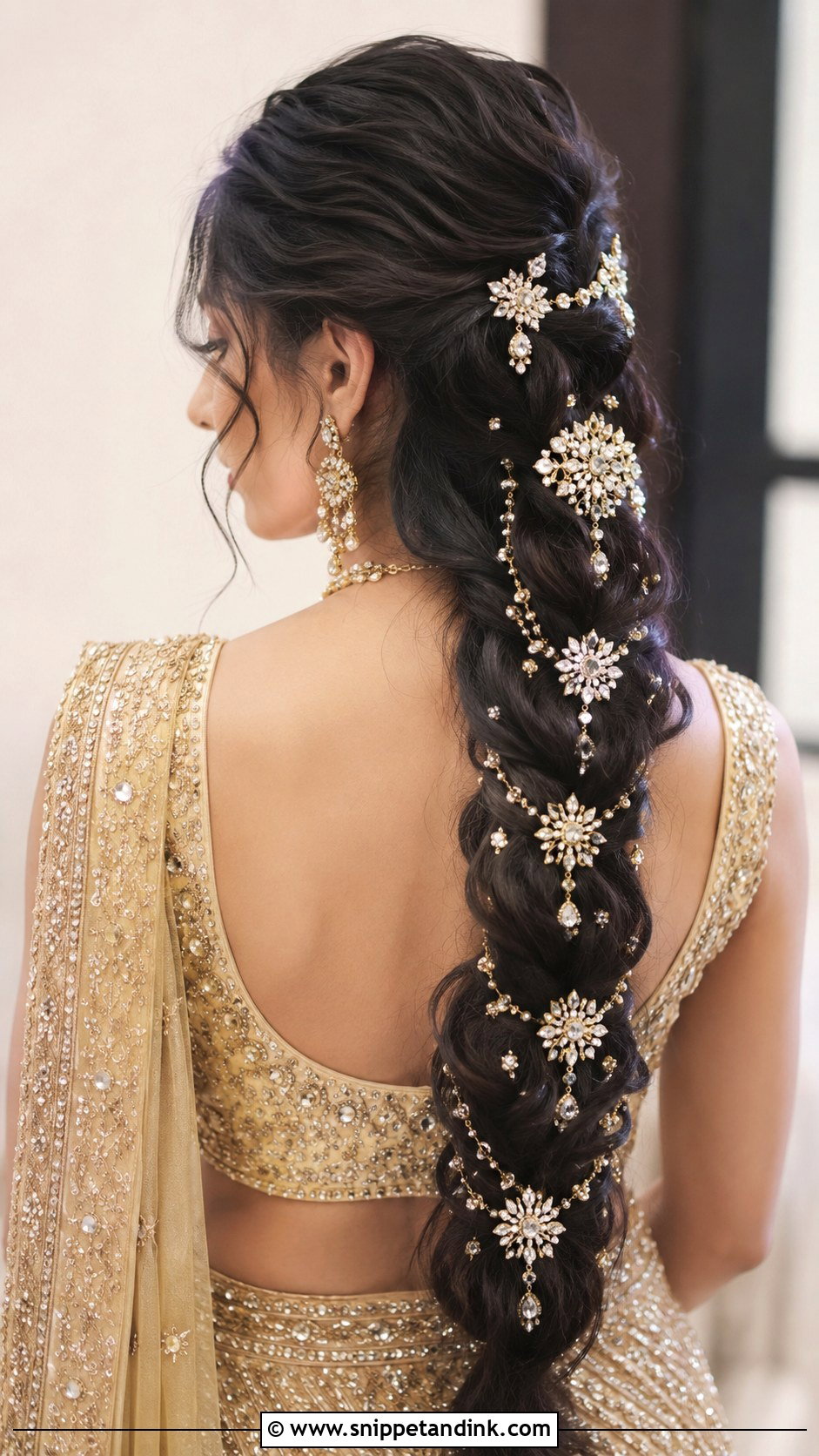
A jeweled braid uses kundan pins, crystal clips or small brooches set along the dropped strands. I place them at the points where the braid turns, because that’s where they are visible from the front and the side. Each piece adds weight, so I keep it to five or six on a single braid and anchor each one with a second hidden pin. Match the metal tone to your jewellery set, gold kundan with gold, otherwise the braid looks like it belongs to a different outfit.
Dupattas, Matha Pattis and the Weight a Braid Can Carry
Most problems I see with a waterfall braid on the wedding day aren’t about the braid at all. They come from how much is pinned onto it. A heavy lehenga dupatta, a matha patti, a tikka and a gajra together can weigh more than you think, and a braid that is mostly open hair has less to anchor into than a bun.
I solve this by building a small hidden base: a tight mini braid or a couple of crossed pins underneath the visible waterfall. The dupatta and the matha patti pin into that base, not into the soft braid on top. Tell your stylist which pieces you’ll wear for which ritual so she can place it in the right spot.
Holding the Drop From Pheras to Vidaai
Indian wedding days are long, and a waterfall braid loosens in three predictable ways: the curls under the braid relax, the dropped strands tangle with each other, and short pieces escape around the face. Here is what I give brides to deal with it.
- A small comb and four or five matching bobby pins in your bridesmaid’s clutch.
- A travel-size flexible hairspray, not a strong one; a stiff spray makes the open hair look crunchy in close-ups.
- In humid weather, a curl set at the start that is tighter than the one you want in the photos, so it drops to the right shape by the evening.
- Gently running your fingers through the open hair before the reception photos to separate tangled strands.
If the braid itself comes loose, don’t try to redo it in a hurry. Pin the loose section flat along the braid line and it will hold for the rest of the night.
Which Waterfall Braid Goes With Which Function
If I were planning a full wedding week with you, I’d use a messy or boho braid for the haldi and mehndi, a gajra or maang tikka braid for the ceremony, and a braided bun or ponytail for the reception, when you need something that lasts into the night. Bring your actual dupatta and jewellery to the trial, since those decide where the braid sits more than any photo. Then pick the version that suits your hair’s length and texture, not just the picture you liked first.
You'll Like These Ideas:





Leave a Reply