
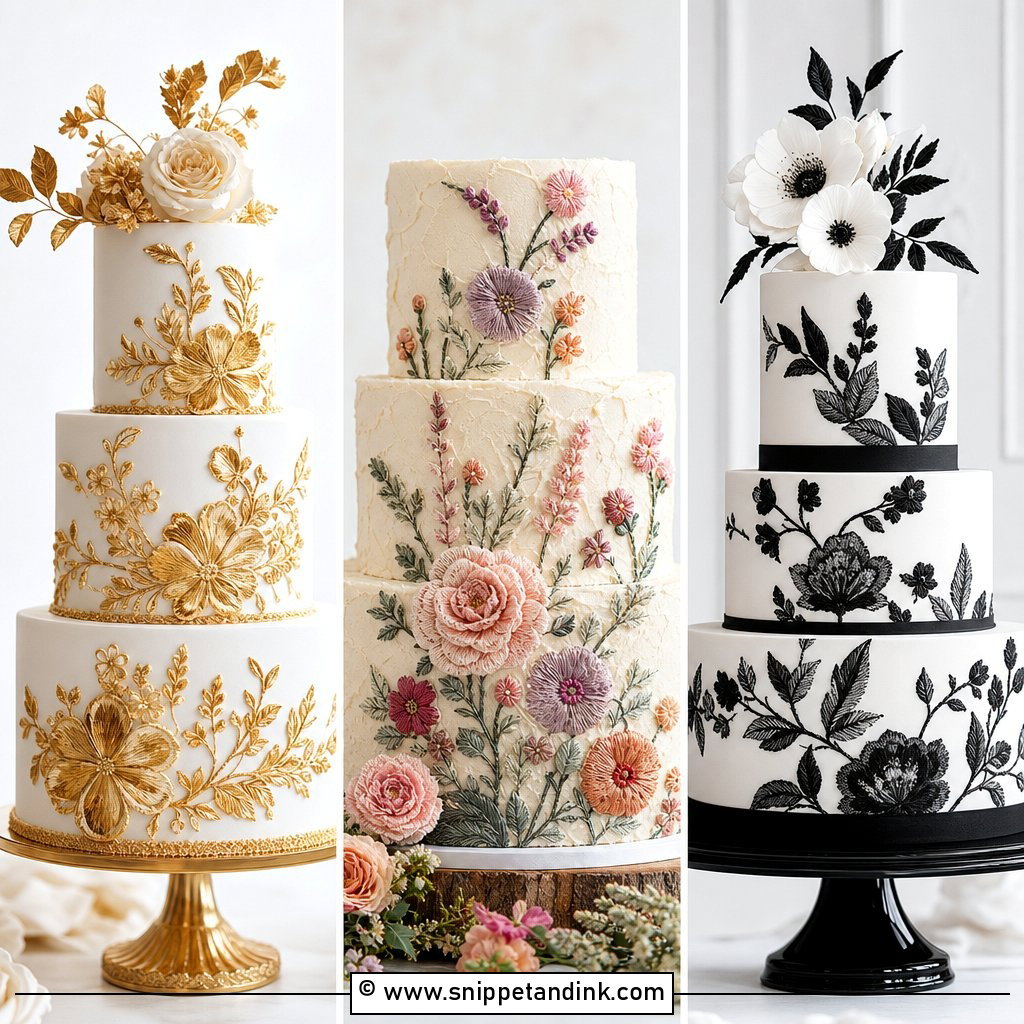
Brush embroidery is one of my favorite techniques to pipe, because it gives a cake the look of hand stitched lace without adding weight or a fussy amount of decoration. It sits best on smooth fondant or a well crusted buttercream, and it reads from across a room as soft texture rather than pattern. Depending on the palette, the same technique can look vintage, modern or straight from a garden. White on white is the classic; pastel grounds bring the flowers forward; pearls, a little gold and sugar flowers add finish. Below are twenty ways I’d use it, with notes on what each design asks of the baker.
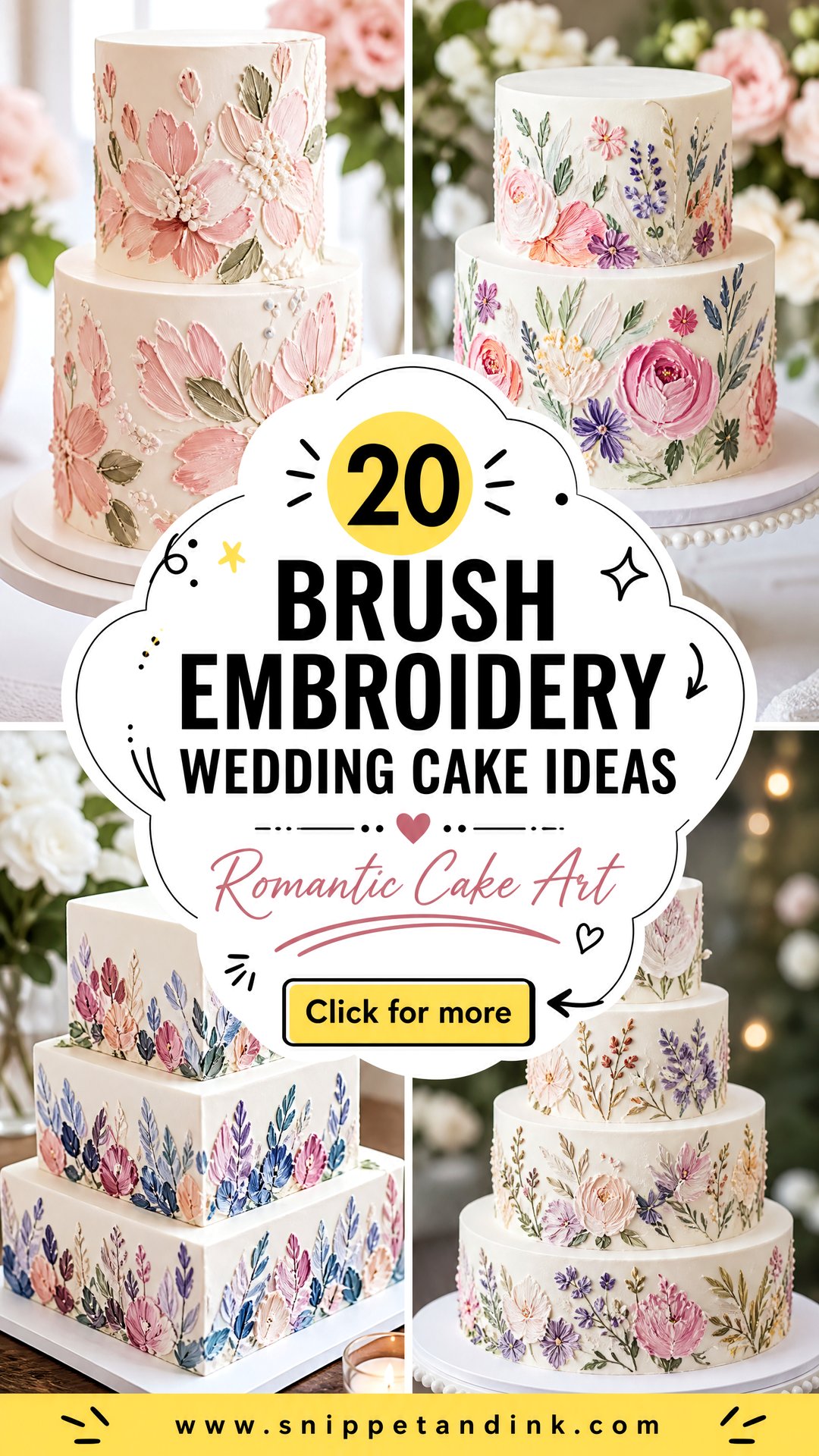
How Brush Embroidery Is Piped, Stroke by Stroke
Knowing how the technique works helps you understand what you’re asking for, and why it costs more than plain piping. Brush embroidery is usually done in royal icing, though buttercream versions exist.
- I draw or imprint the pattern lightly on the set fondant or chilled buttercream.
- Using a small round tip, I pipe the outline of one petal or leaf only.
- Straight away, with a damp flat brush, I pull the inside edge of that line toward the center of the flower, leaving a thick raised rim and a thin brushed fill.
- Then I move to the next petal, always working from the outer petals in, so each layer sits over the last.
- Once dry, the icing can take pearls, dusts or painted gold.
The work has to be fast. Royal icing starts to crust within minutes, and once it’s crusted it won’t brush smoothly. That’s why each flower is finished before the next is started, and why a fully covered tiered cake can take many hours. It also means the icing is firm once set, so the pattern holds well through transport on fondant.
1. White Brush Embroidery Wedding Cake
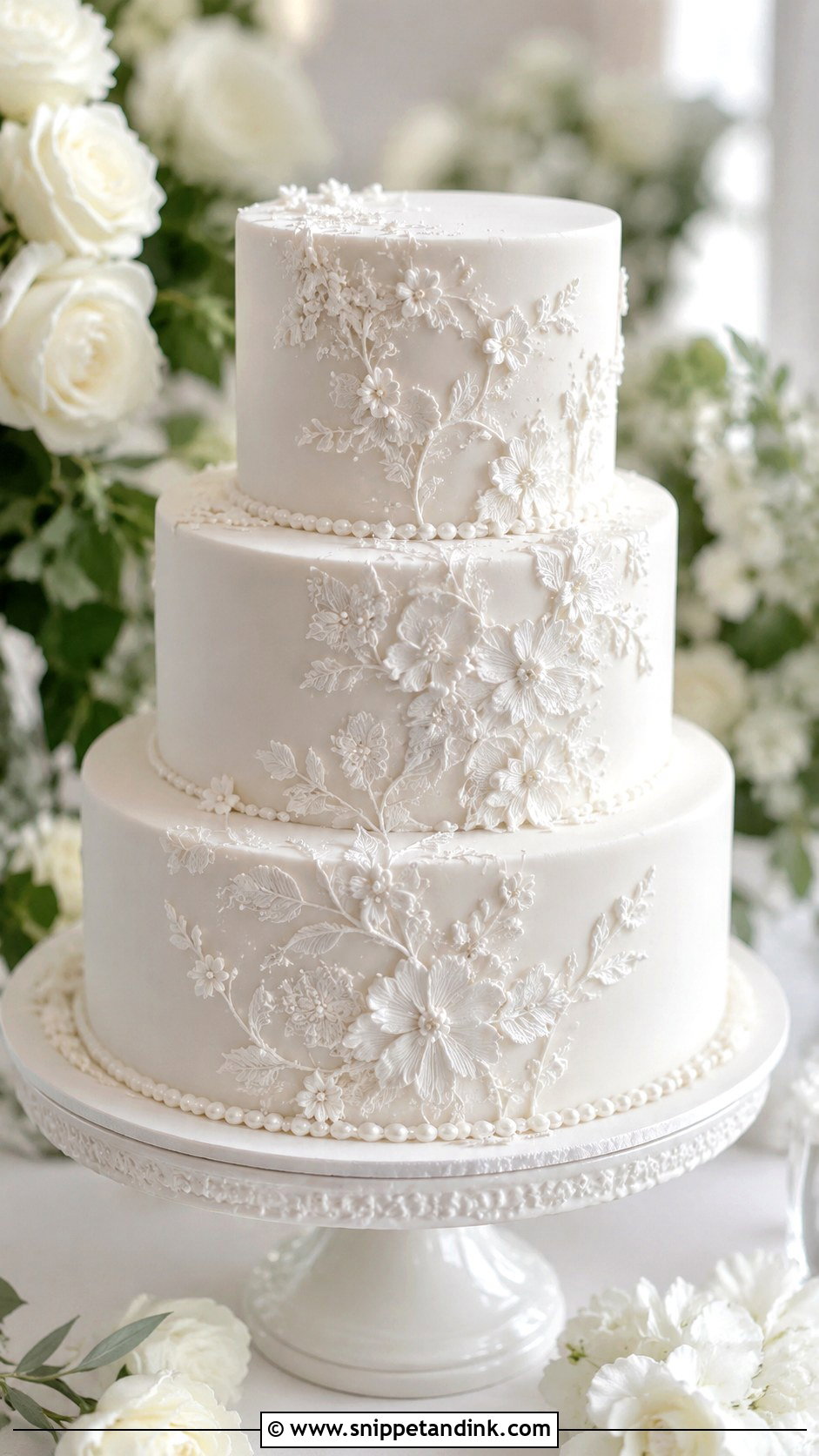
White on white is the purest version, and the one that shows the craft most honestly. With no color to lean on, the whole effect comes from the raised piped edge and the brushed strokes inside it, so light has to hit the cake from the side to show it off. I tell couples to ask the venue where the cake table sits; flat overhead lighting can almost erase white embroidery in photos. Keep the tiers plain and let the design wrap one side or trail down the cake. A few tiny pearl dots add detail for a formal reception.
2. Ivory Brush Embroidery Wedding Cake
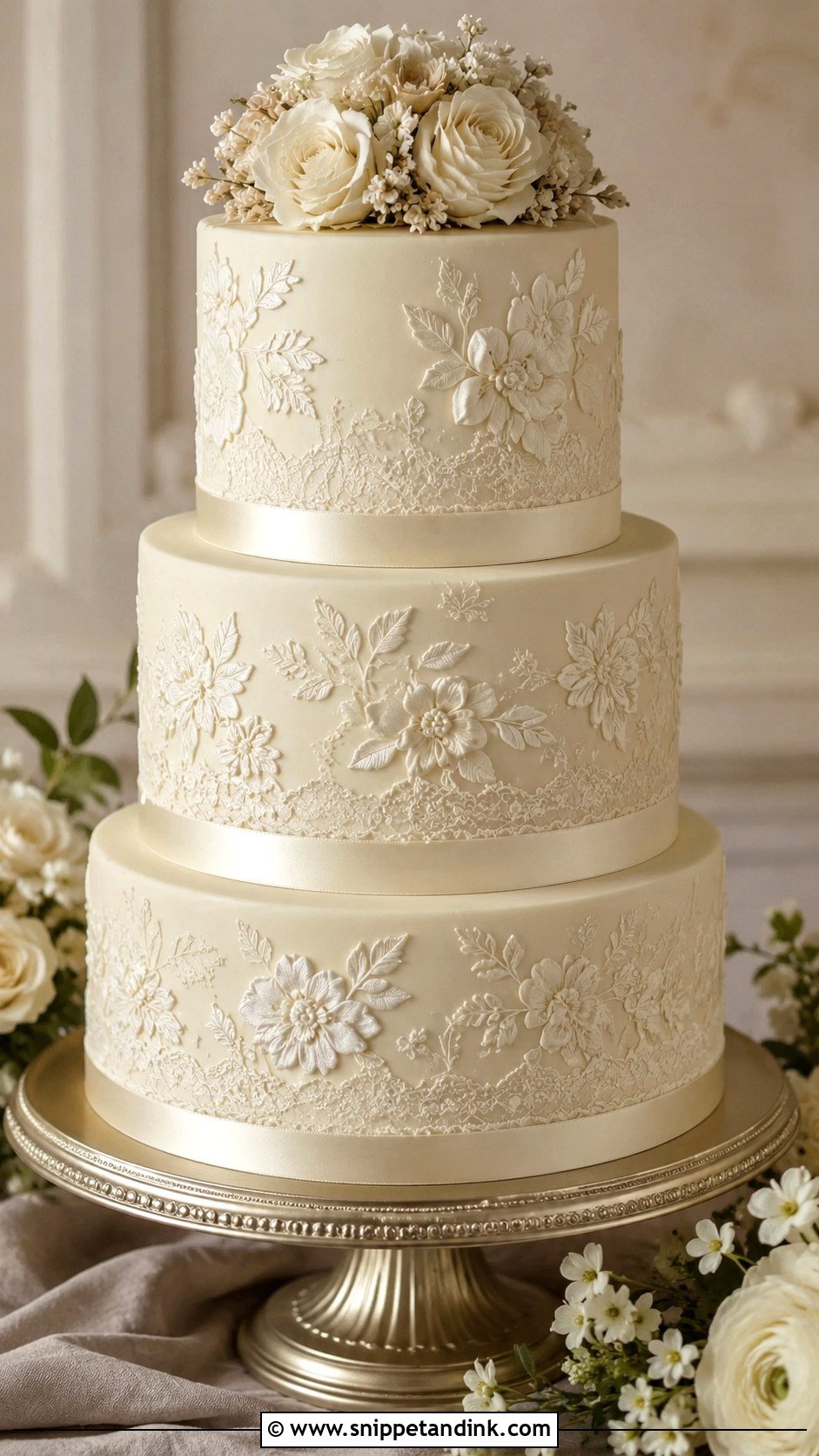
Ivory runs warmer than pure white, which makes it a natural match for candlelit rooms, champagne linens and neutral flowers. I usually pipe in white or a lighter ivory so there’s just enough contrast for the strokes to show without the cake looking busy. The layout can be large floral clusters, small corner sprays or a lace border at the base of each tier. Satin ribbon at each tier and a few sugar blossoms on top finish it. If the dress is ivory too, bring a fabric swatch to the tasting so I can match the tone; there are a lot of ivories.
3. Blush Brush Embroidery Wedding Cake
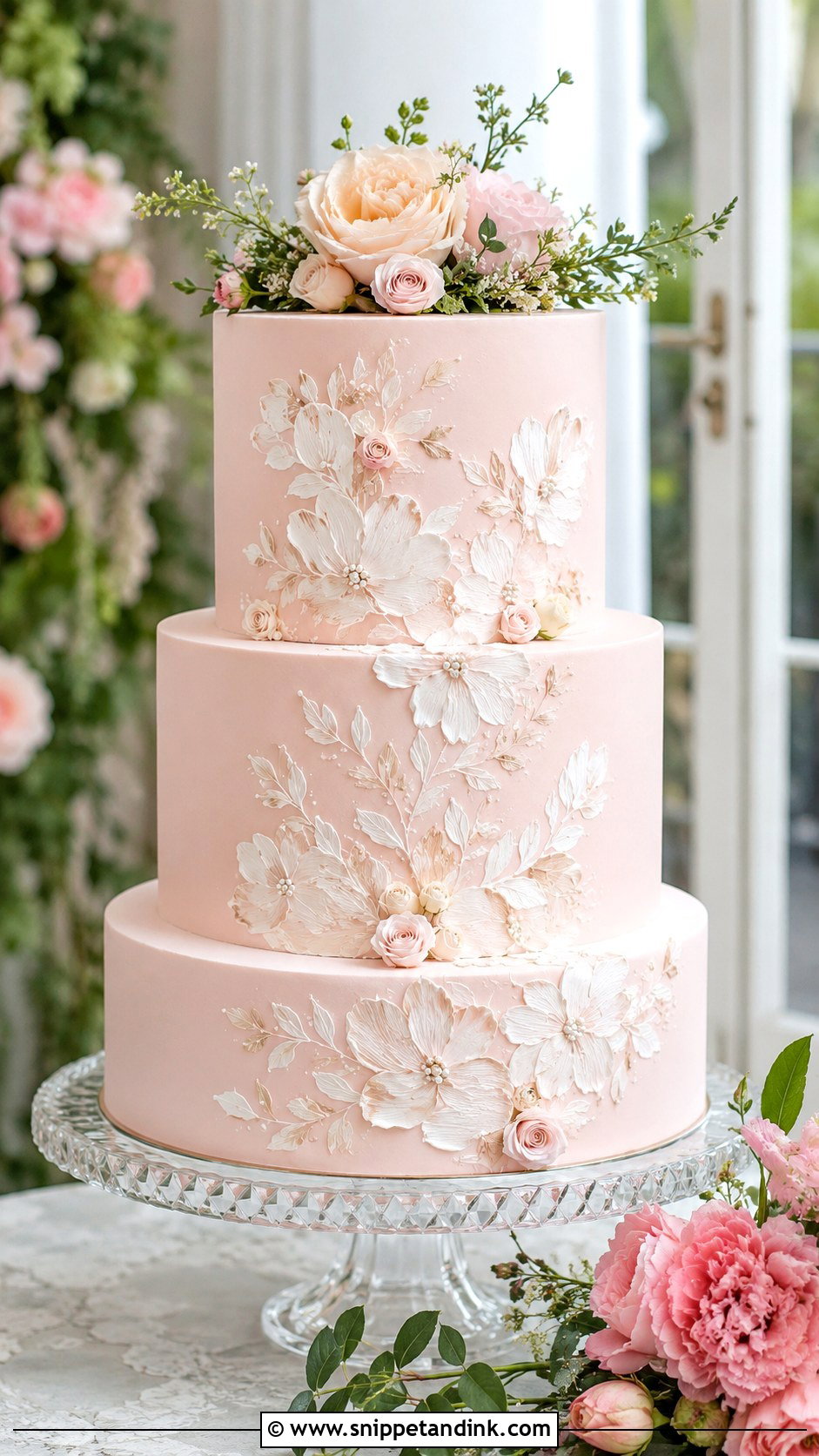
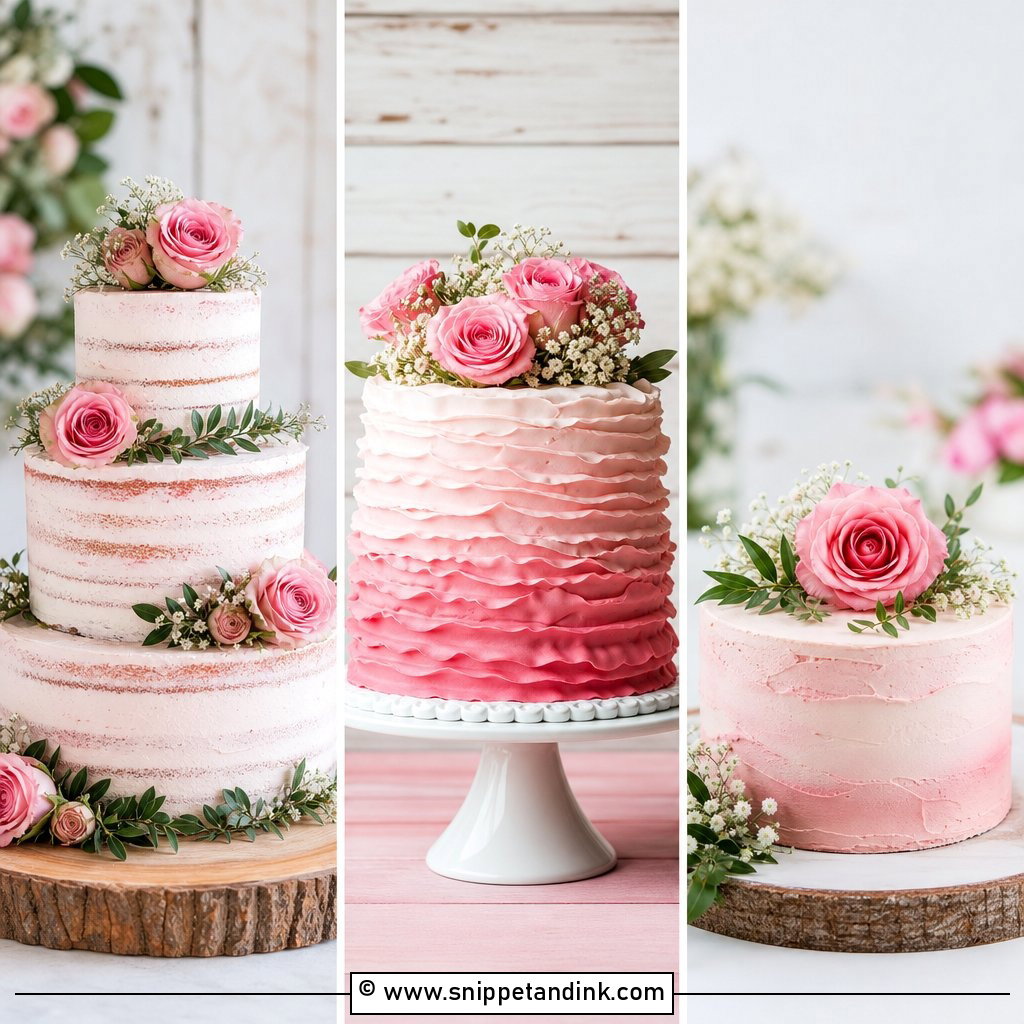
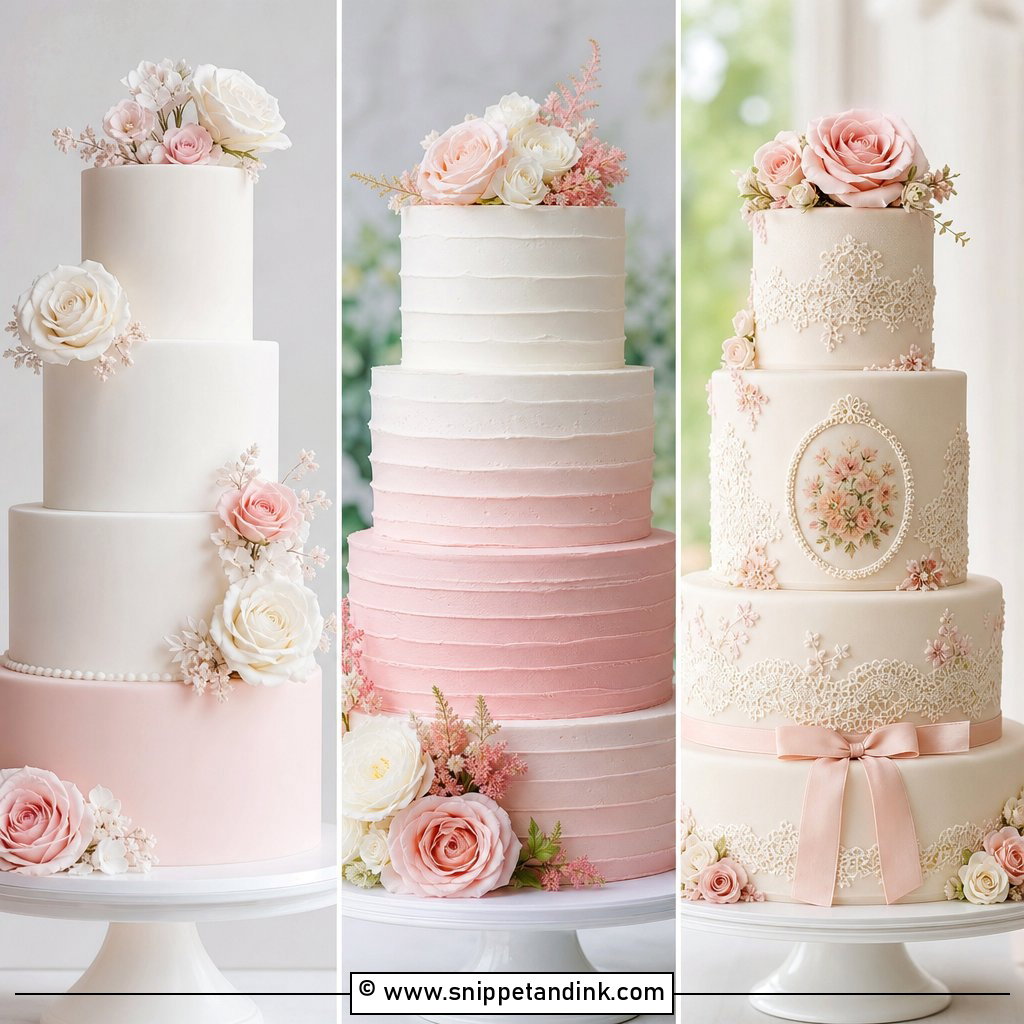
Pale pink fondant makes white brushwork look soft and photograph clearly, and it sits well beside roses, peonies and ranunculus. The risk with blush is sweetness, so I keep the tier shape clean with sharp edges and cover only part of the cake. A diagonal floral sweep feels more modern than an all over pattern. Pearl beads, tiny sugar flowers or a thin champagne ribbon can finish it. One practical note: pale pink fondant can fade under strong light over several hours, so it shouldn’t sit in a sunny window.
4. Blue Brush Embroidery Wedding Cake
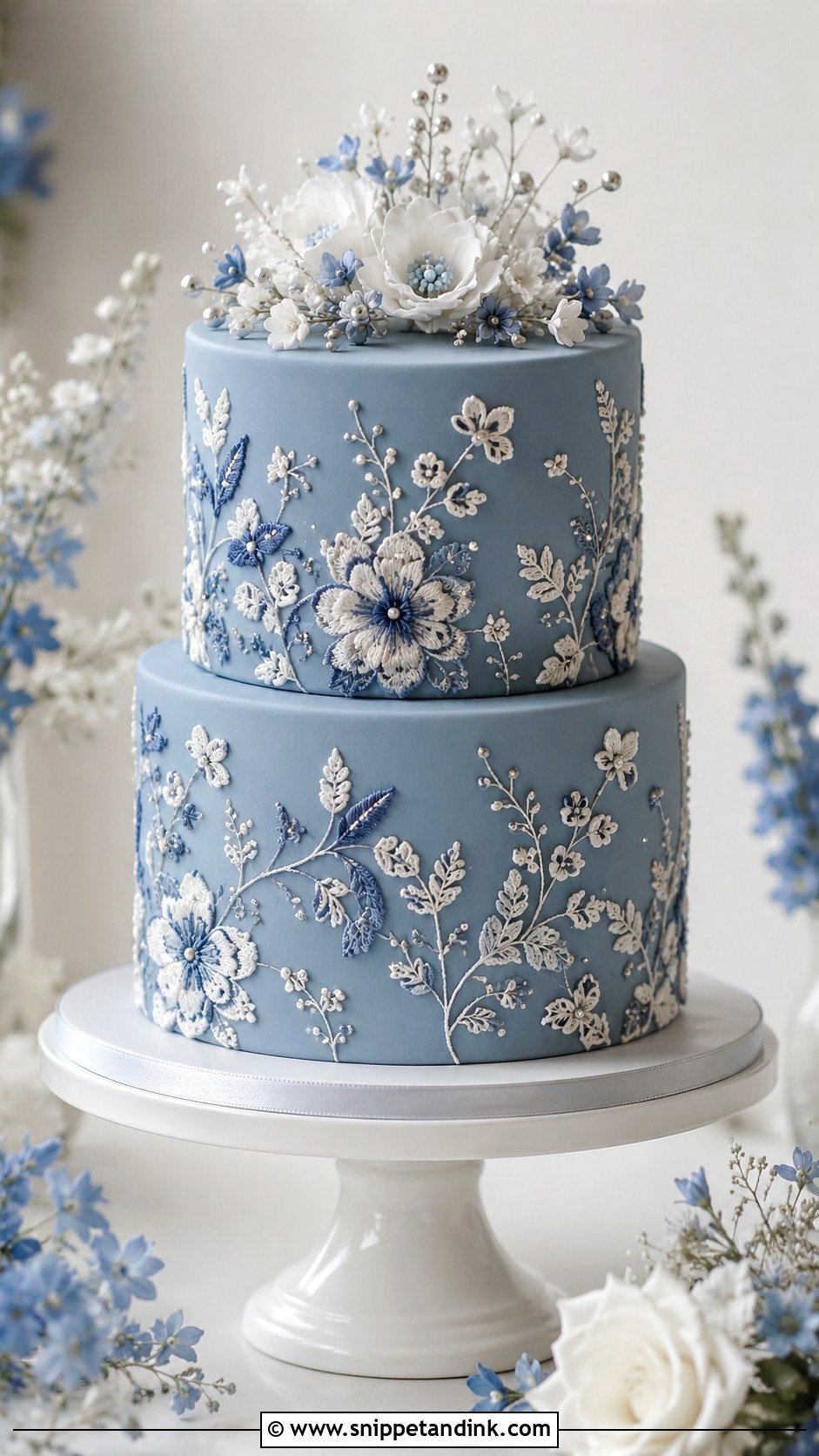
Powder blue, dusty blue or pale slate under white royal icing gives crisp, clear detail that reads well even in large rooms. It suits coastal weddings, garden weddings and a bride’s something blue. I pipe floral motifs or leafy vines and lace curves for a more formal look. Blue is the hardest fondant color to keep consistent between batches, so on a tiered cake I color all the fondant at once. Silver sugar pearls, white blooms or a plain ceramic stand keep it refined.
5. Lavender Brush Embroidery Wedding Cake
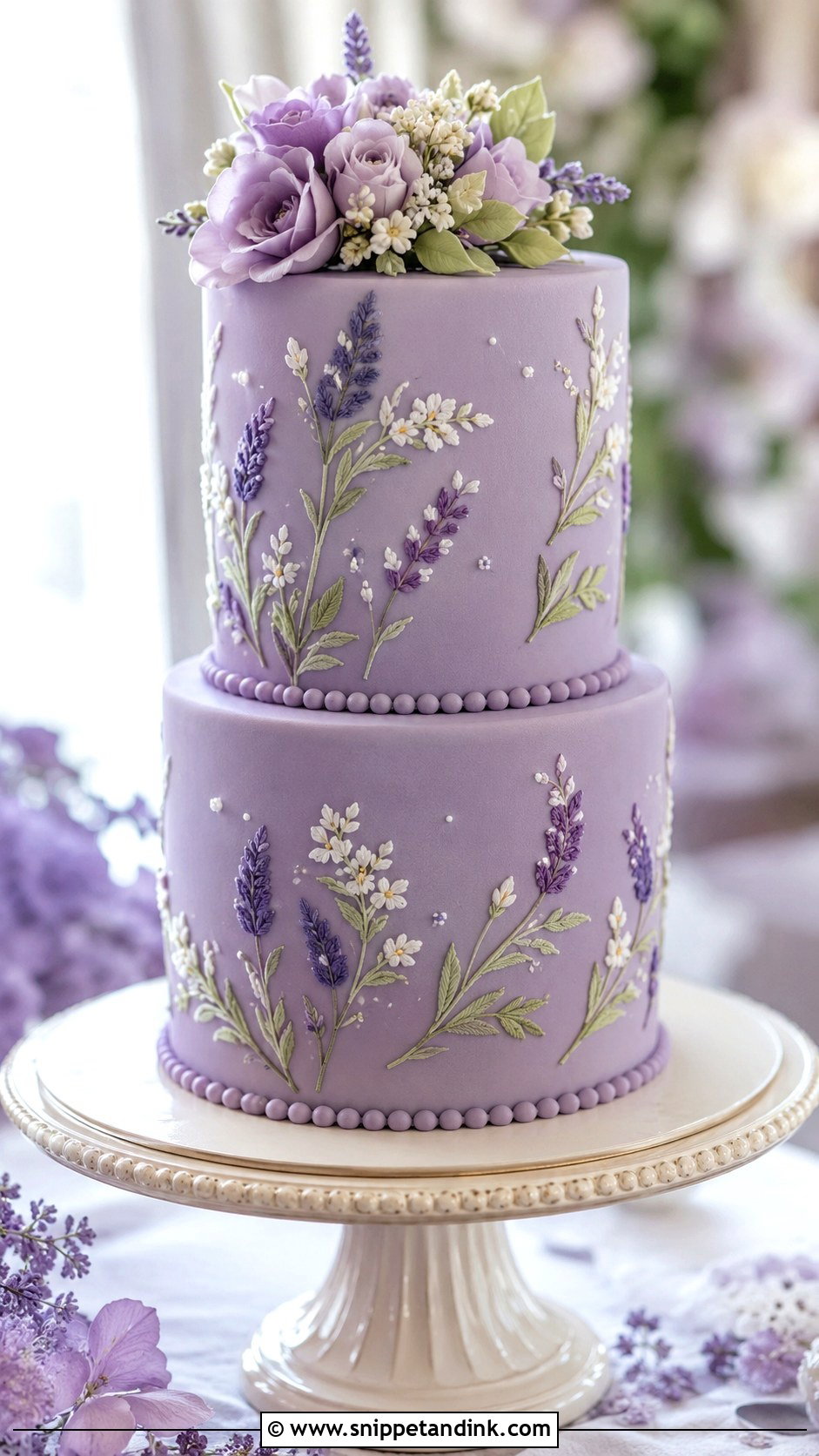
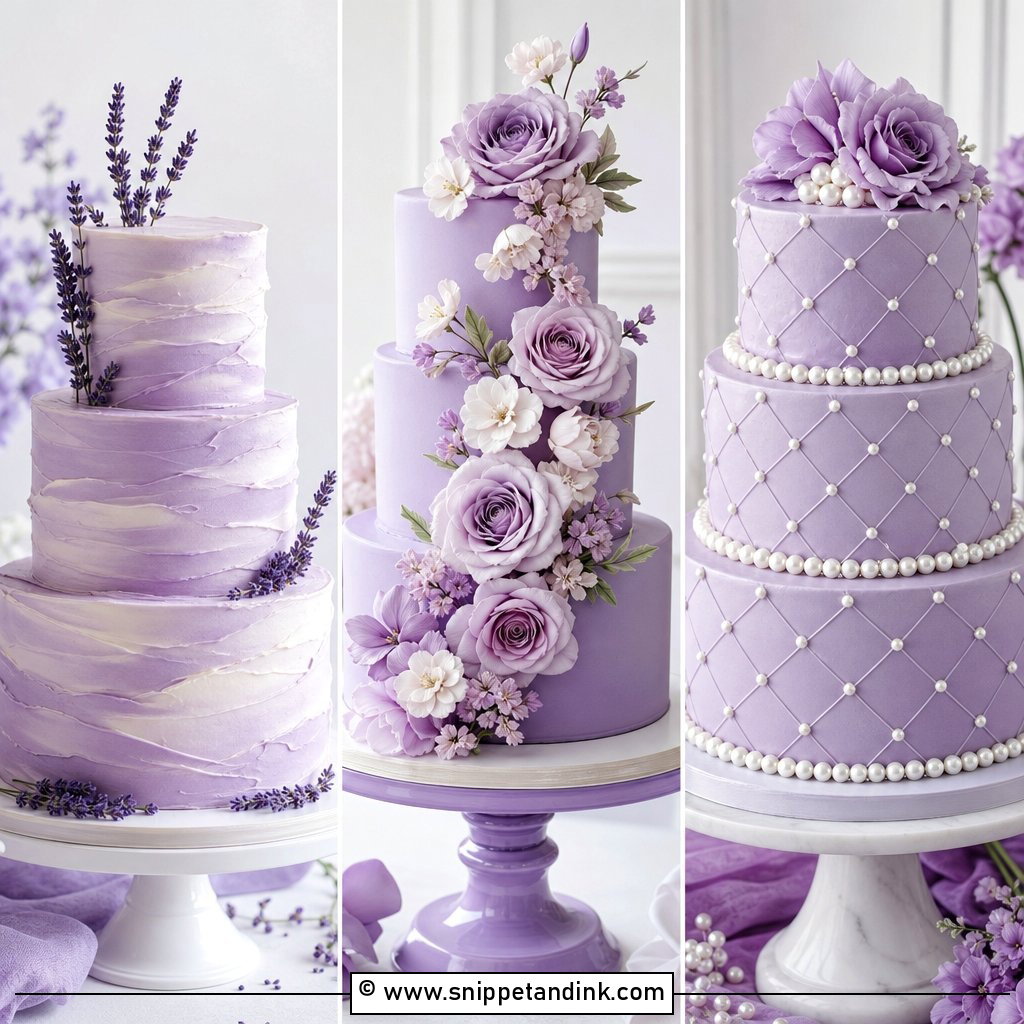
Lavender gives white embroidery a soft contrast, especially with wildflowers, leafy stems or lace blossoms. It fits spring weddings, garden venues and receptions with lavender, lilac, or dusty purple details. I keep the tiers smooth and structured so the brushed texture carries the design, and add piped dots between flowers to fill gaps. Purple fondant is known for shifting toward grey or blue in some lights, so I always show a color sample in the venue’s type of light if I can. Lavender sugar flowers, pale green leaves or a narrow ivory ribbon finish it.
6. Gold Brush Embroidery Wedding Cake
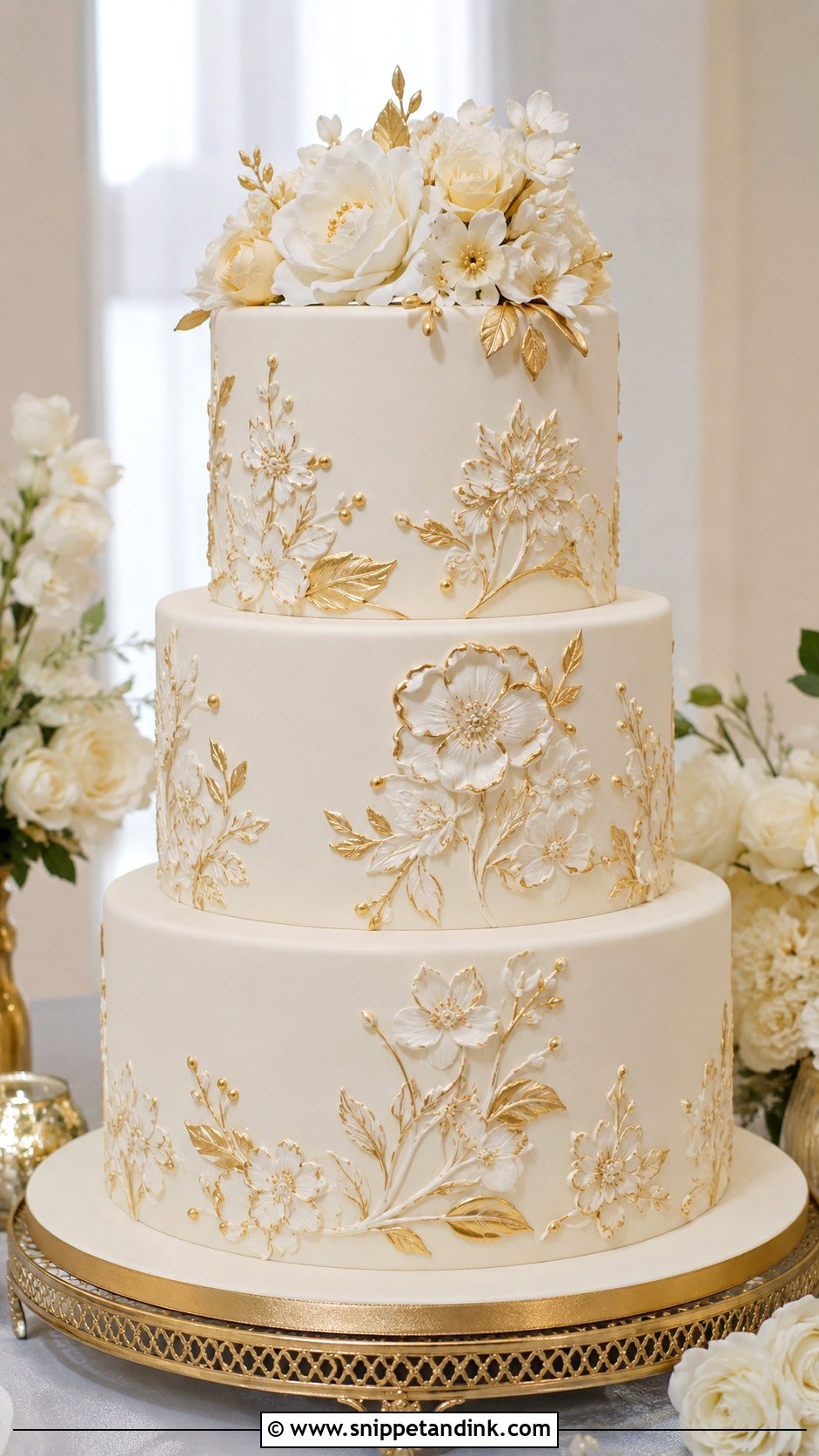
Gold works best as a highlight, not a coat. I pipe the embroidery in ivory or white, let it dry, then paint edible gold onto selected petals or edges, along with a few gold pearl dots. Fully gold embroidery tends to look heavy and shows every wobble in the line. Evening and ballroom receptions suit it. I’d ask for the pattern to climb up the tiers vertically or frame one side. One thing to check: some metallic finishes are decorative only and not meant to be eaten, so ask your baker which gold they use and whether it goes on pieces that will be served.
7. Pearl Brush Embroidery Wedding Cake
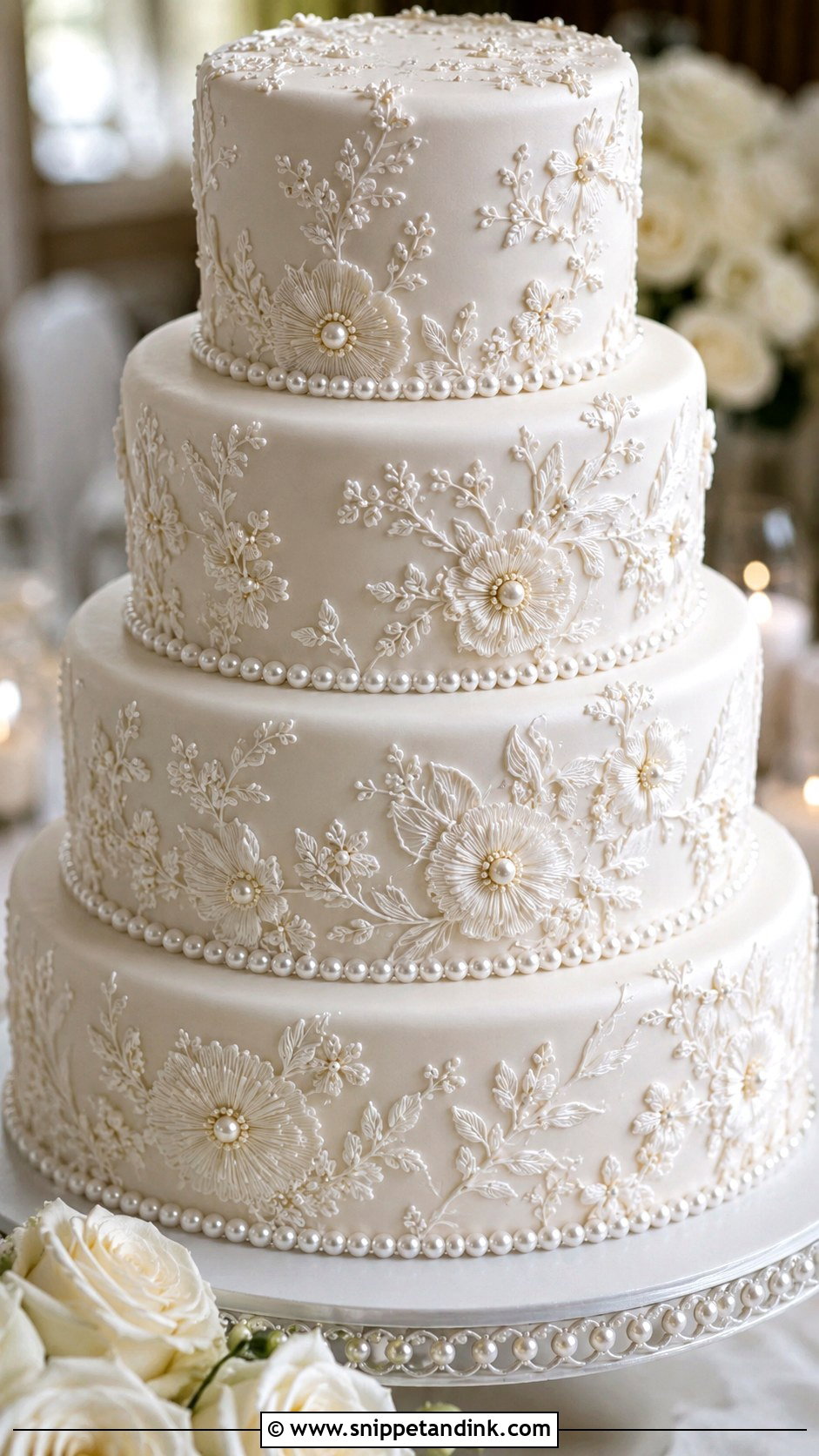
Pearls and brushwork are a natural pair: the embroidery gives soft texture, the pearls a small point of shine. I place them in the center of flowers, along trailing vines or as a border at the base of each tier. White, ivory and champagne keep it classic. Sugar pearls are hard, so I tell couples I keep them small on the tiers that will be cut, to avoid anyone biting down on a large one. A pearl edged ribbon or stand can tie the design together.
8. Floral Brush Embroidery Wedding Cake
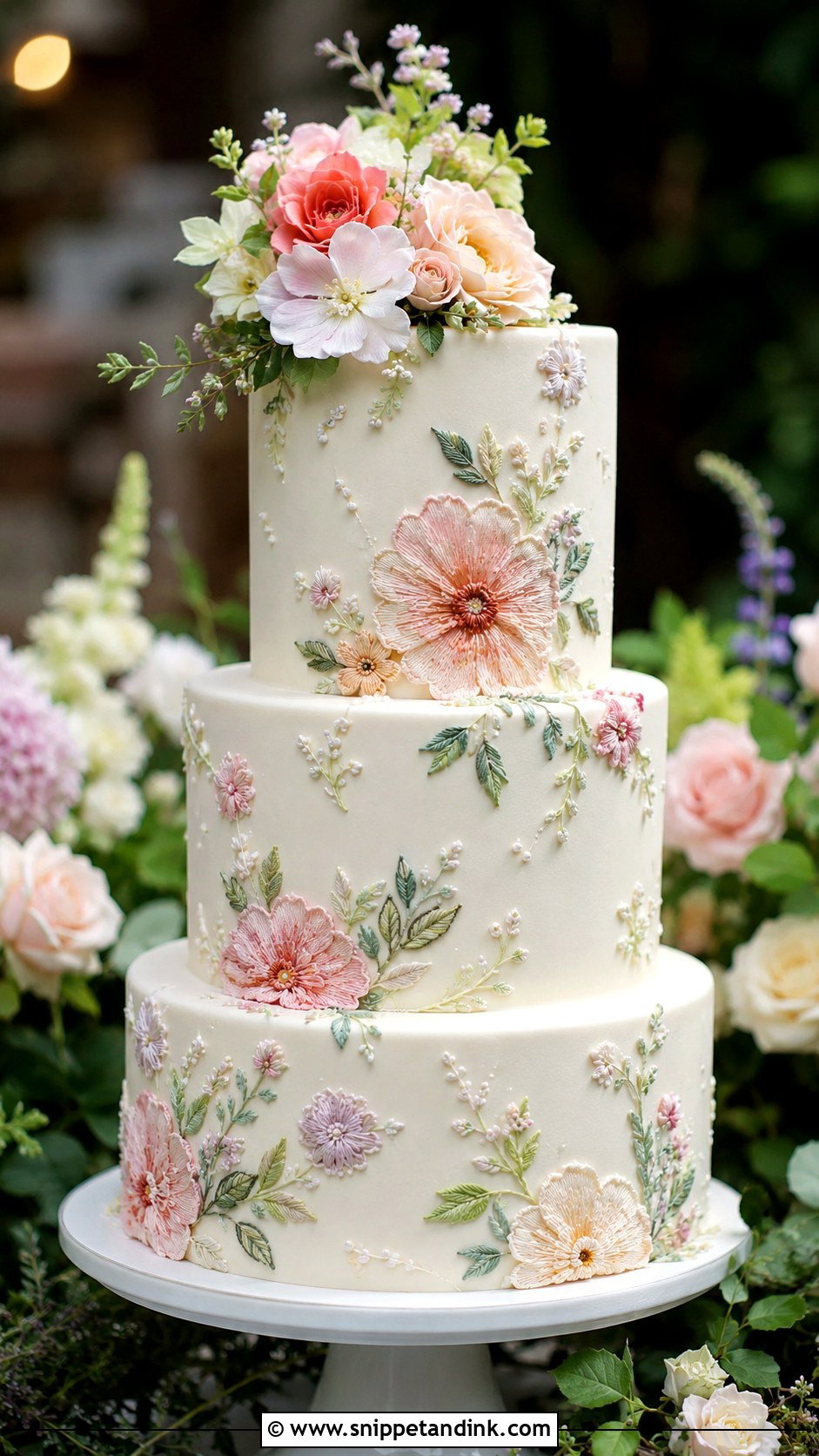
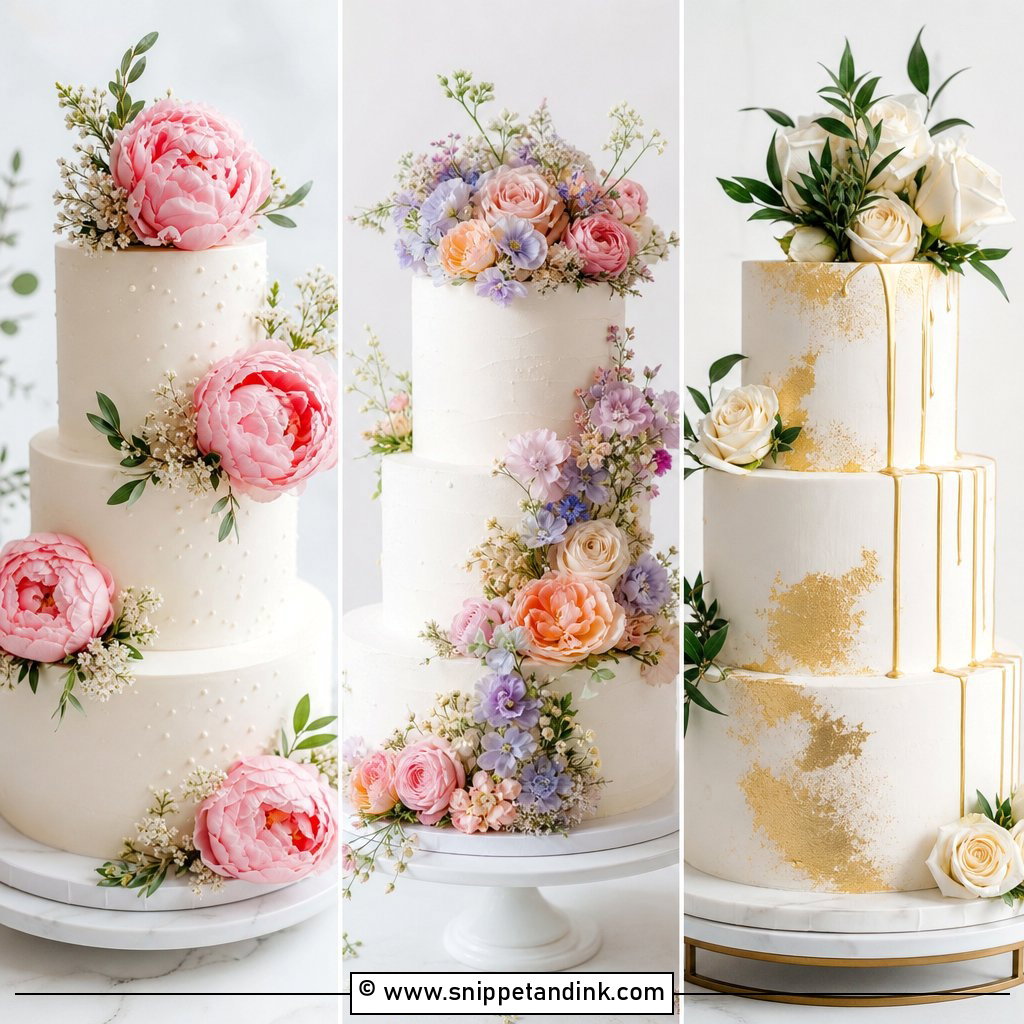
Flowers are where brush embroidery shows its movement and depth. A few large blooms anchor the design and smaller flowers and leaves fill the gaps. White flowers on a pastel base read soft; ivory flowers on white fondant read traditional. For a garden wedding I pipe a vine that wanders across the tiers rather than repeating the same flower in a row. If you want fresh flowers on top, ask your florist for pesticide free blooms and have them wrapped at the stem, as untreated stems shouldn’t go directly into the cake.
9. Rose Brush Embroidery Wedding Cake
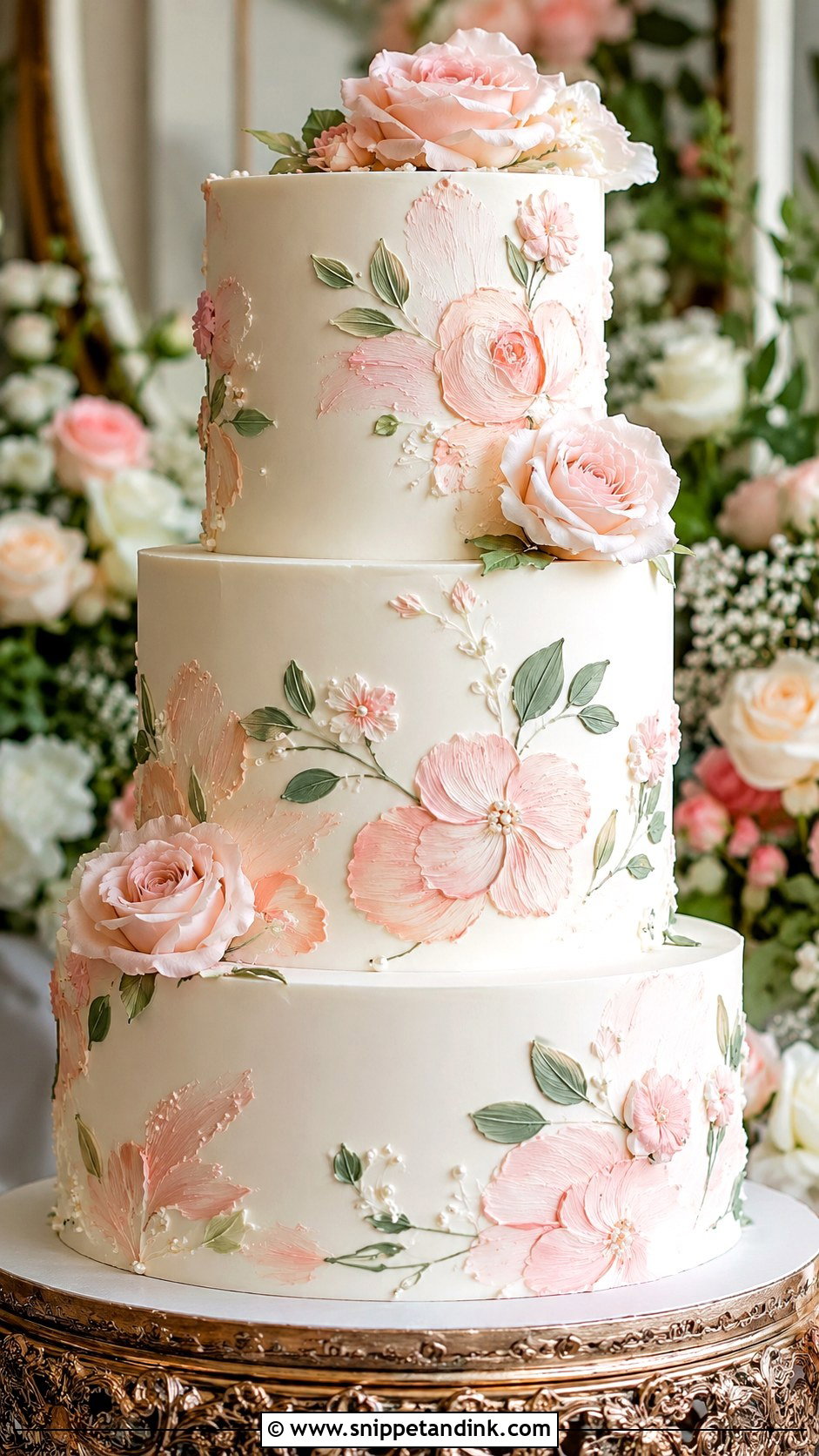
Roses suit this technique particularly well. I pipe each petal as a separate outline and pull the icing inward with short strokes of a damp brush, so the flower looks layered like vintage stitching. White on white roses are classic; blush or ivory roses add warmth. The pattern can cover the cake or appear as corner clusters on each tier. Small leaves, pearl centers or a few sugar roses add depth. The work is slow, as each rose has to be finished before the icing crusts, which is part of why the technique costs more than plain piping.
10. Lace Brush Embroidery Wedding Cake
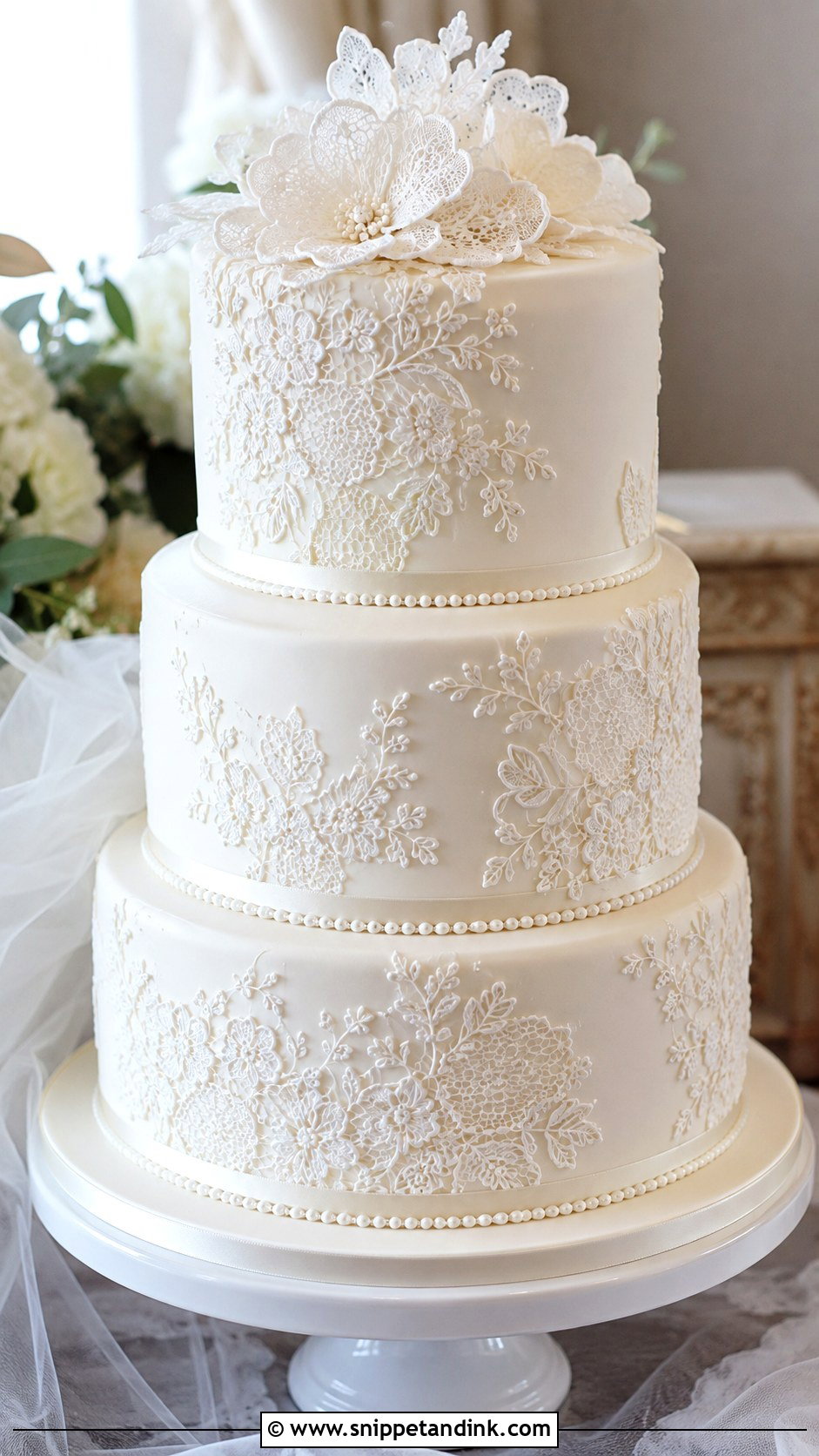
Lace embroidery can echo a dress, veil or table linen. The piped outlines and brushed strokes give a raised texture that reads like fabric. It needs a smooth surface, especially fondant, so the fine lines stay crisp. Full lace coverage feels formal; lace panels on selected tiers feel lighter. White embroidery on ivory fondant is particularly pretty. Bring a photo of your dress lace to the consultation, and I can adapt its motif rather than copying it stitch for stitch, which rarely translates well into icing.
11. Vintage Brush Embroidery Wedding Cake
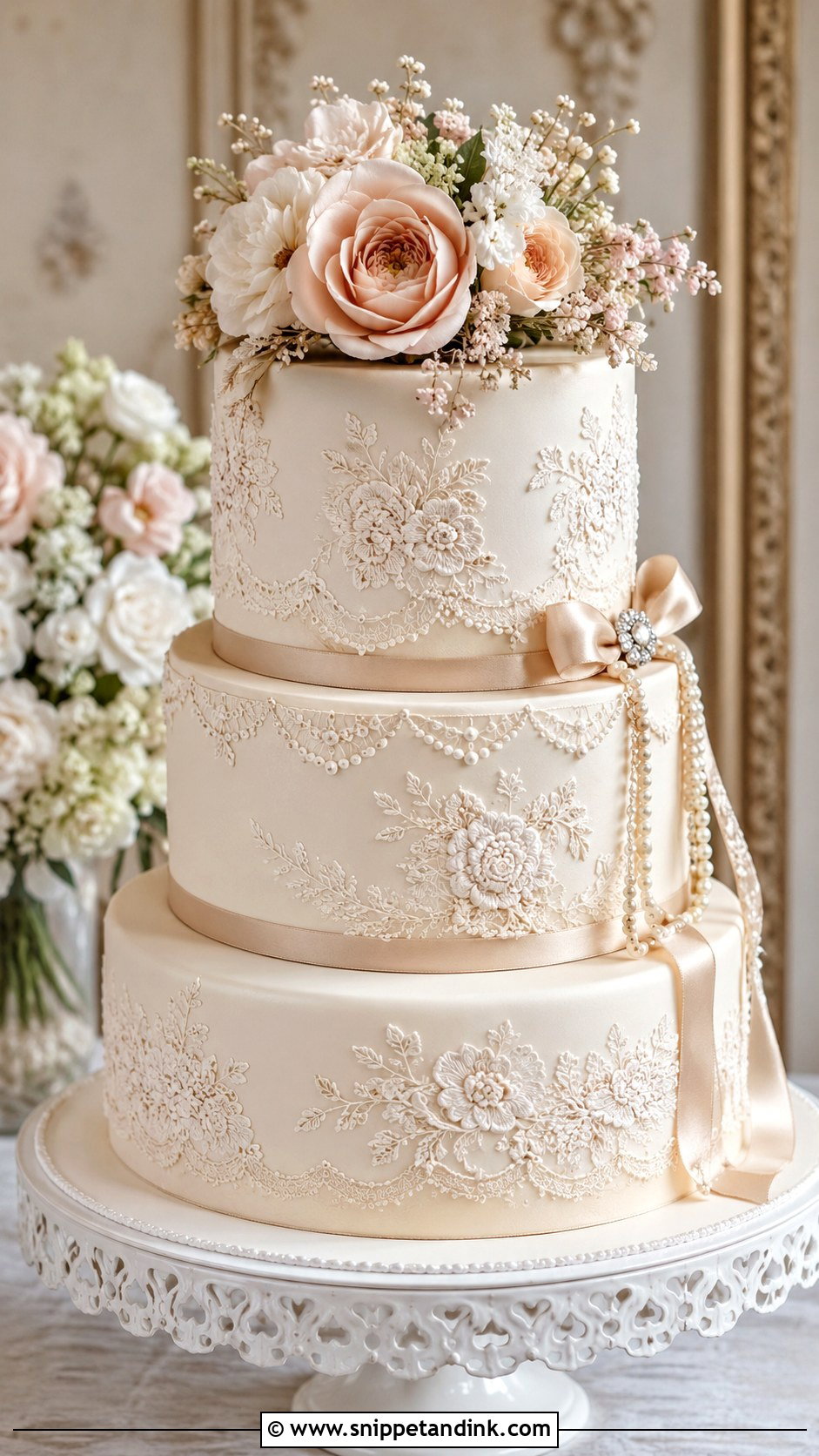
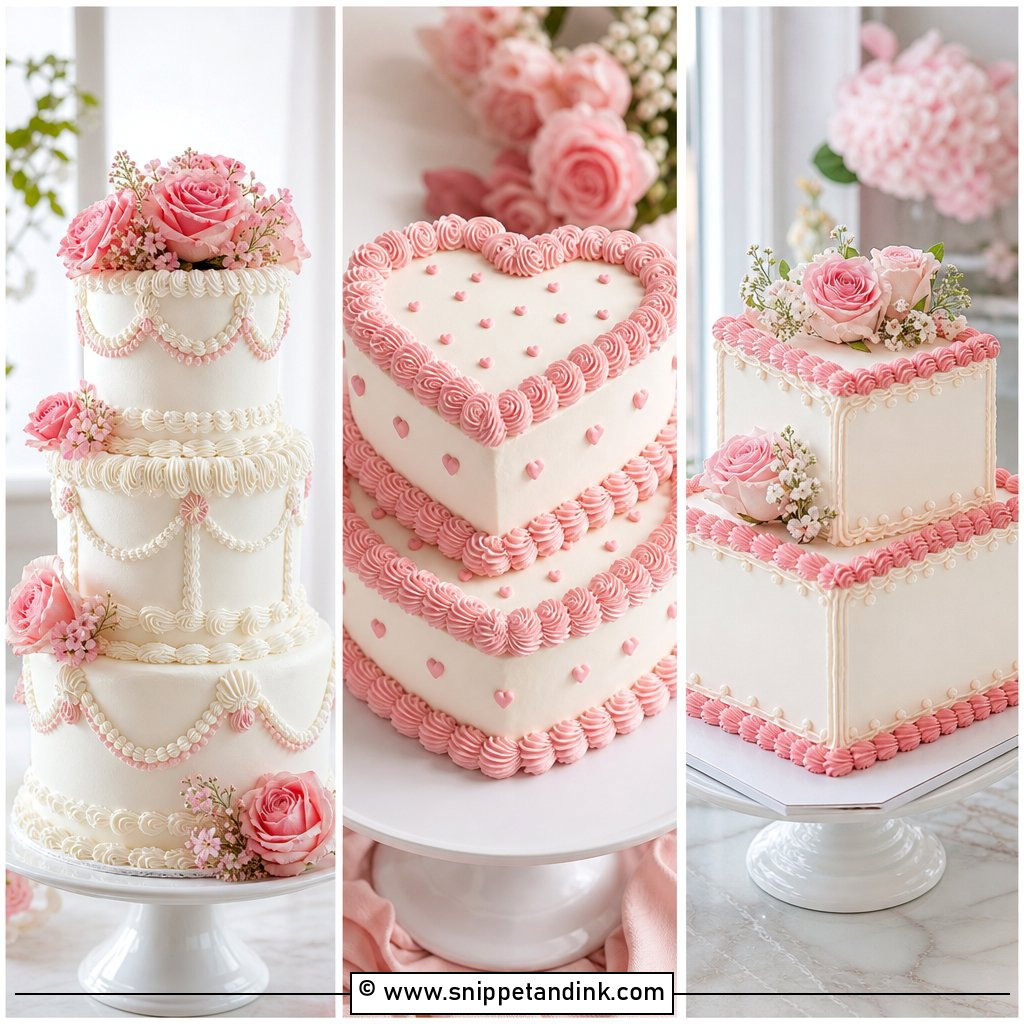
Vintage designs lean on ivory fondant, soft florals, pearl borders and lace inspired brushwork, the kind of thing you’d see on an old handkerchief or embroidered linen. They suit historic venues, garden receptions and weddings with antique details. The trick to keeping it from looking dated is a clean tier shape and fewer heavy borders. Soft blush flowers, a champagne ribbon or tiny piped dots add warmth. If you have a family lace piece, it’s often a good starting point for the pattern.
12. Modern Brush Embroidery Wedding Cake
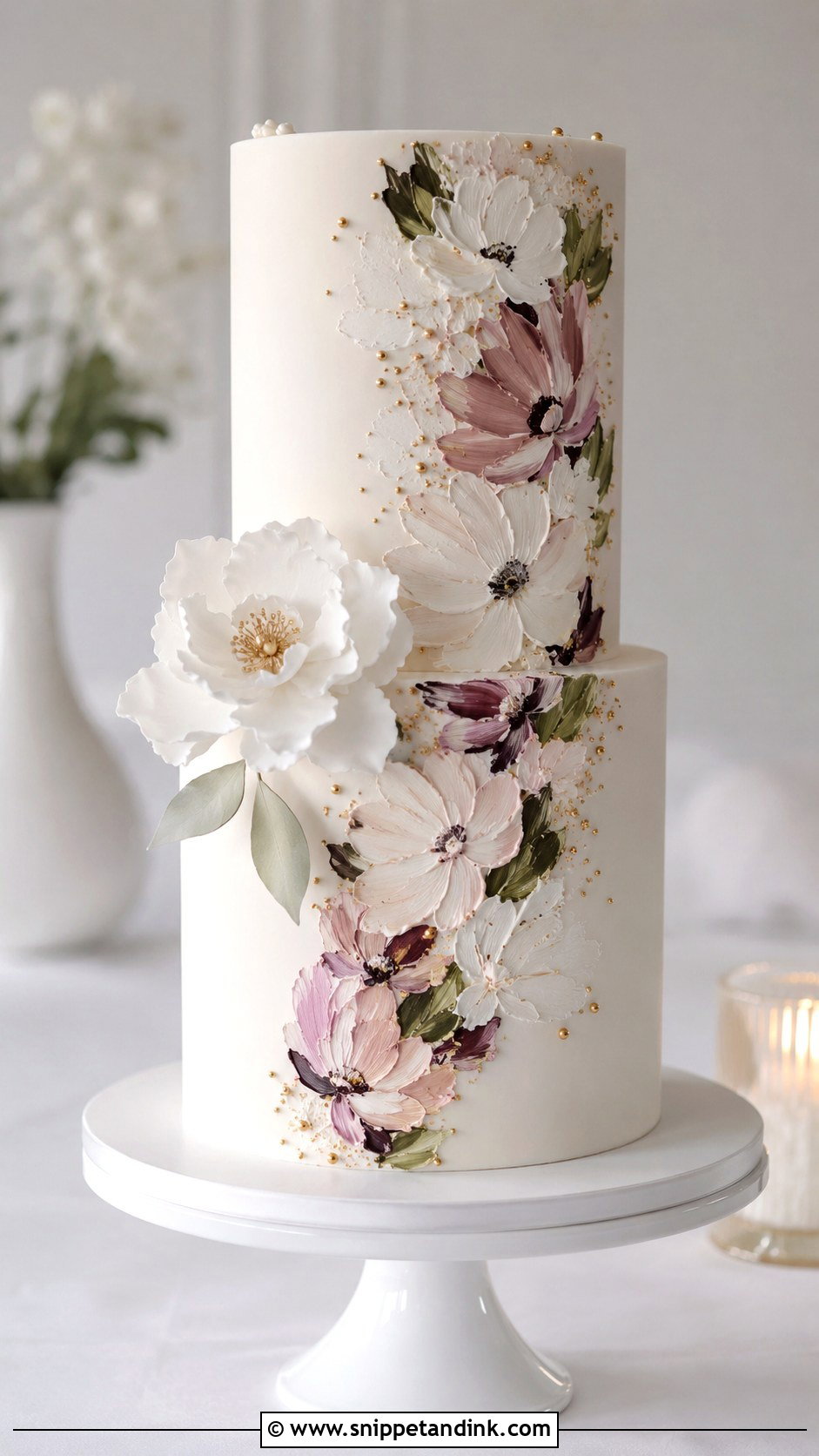
A modern take uses open space. Instead of covering every tier, the embroidery appears as one vertical strip, a corner cluster or a single floating spray. Smooth buttercream or fondant gives a clean background, and neutral grounds like white, taupe, stone or pale grey work well. You can add one oversized sugar flower, a slim metallic line or a minimal stand. Because there’s so little embroidery, each stroke has to be clean; there’s nowhere for a shaky line to hide.
13. Rustic Brush Embroidery Wedding Cake
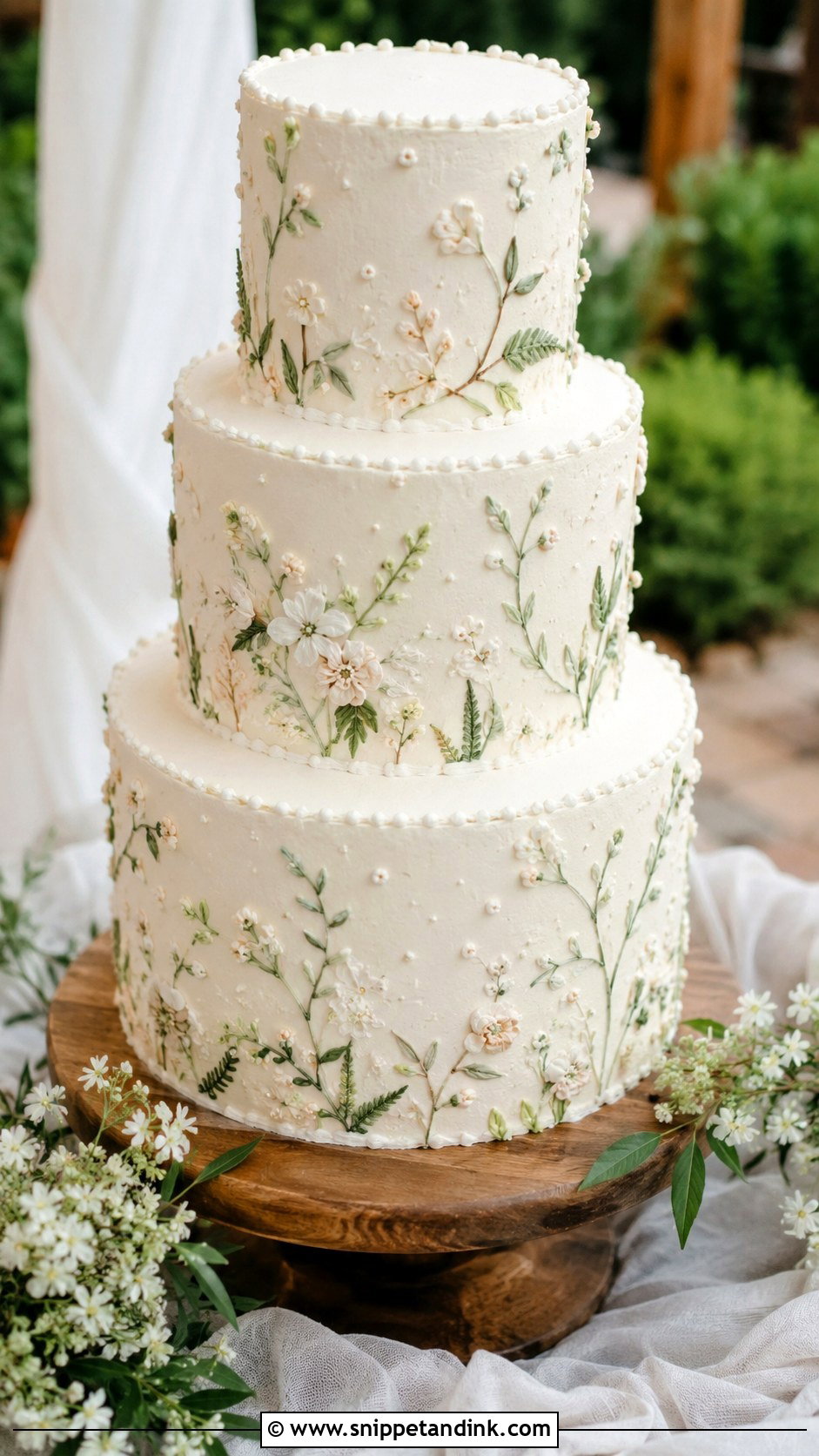
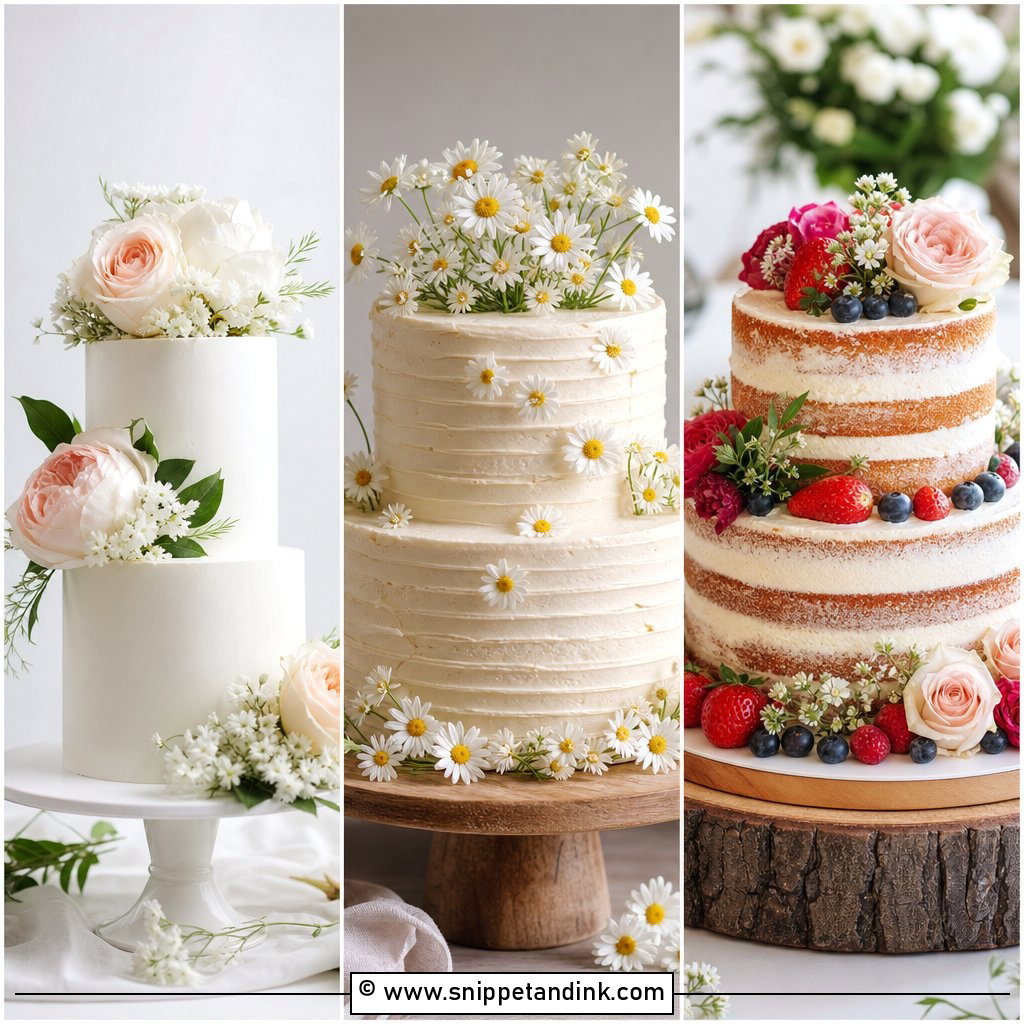
Rustic brush embroidery works when the finish feels soft and natural rather than ballroom perfect. I’d use ivory buttercream, gentle rounded edges and floral embroidery that looks hand touched. It sits well with wooden stands, linen runners and greenery. A simple palette of white, cream, sage or pale blush keeps it calm. Sugar leaves or fresh garden flowers add charm. Barn and outdoor receptions are where it belongs, but buttercream outdoors in summer needs shade and a short time on display.
14. Square Brush Embroidery Wedding Cake
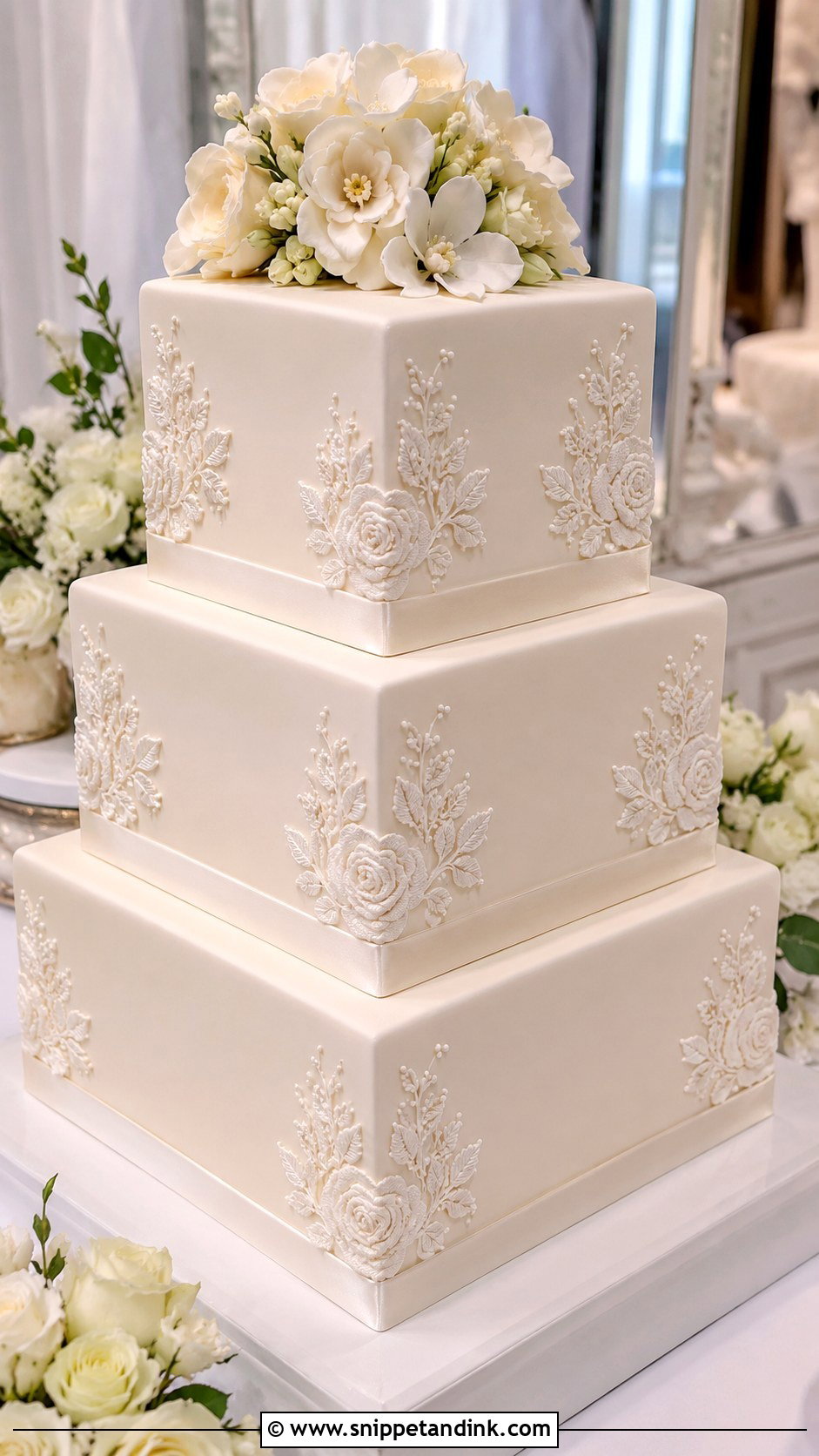
Square tiers give the technique structure. The flat sides are good canvases for floral panels and the corners suit embroidery that wraps around them. I place the design on alternating sides of each tier so guests see detail from every angle. Square cakes are harder to cover cleanly in fondant, especially at the corners, so expect your baker to charge a little more. White or ivory keeps it refined; a pastel base adds personality. A thin ribbon at each tier softens the geometry.

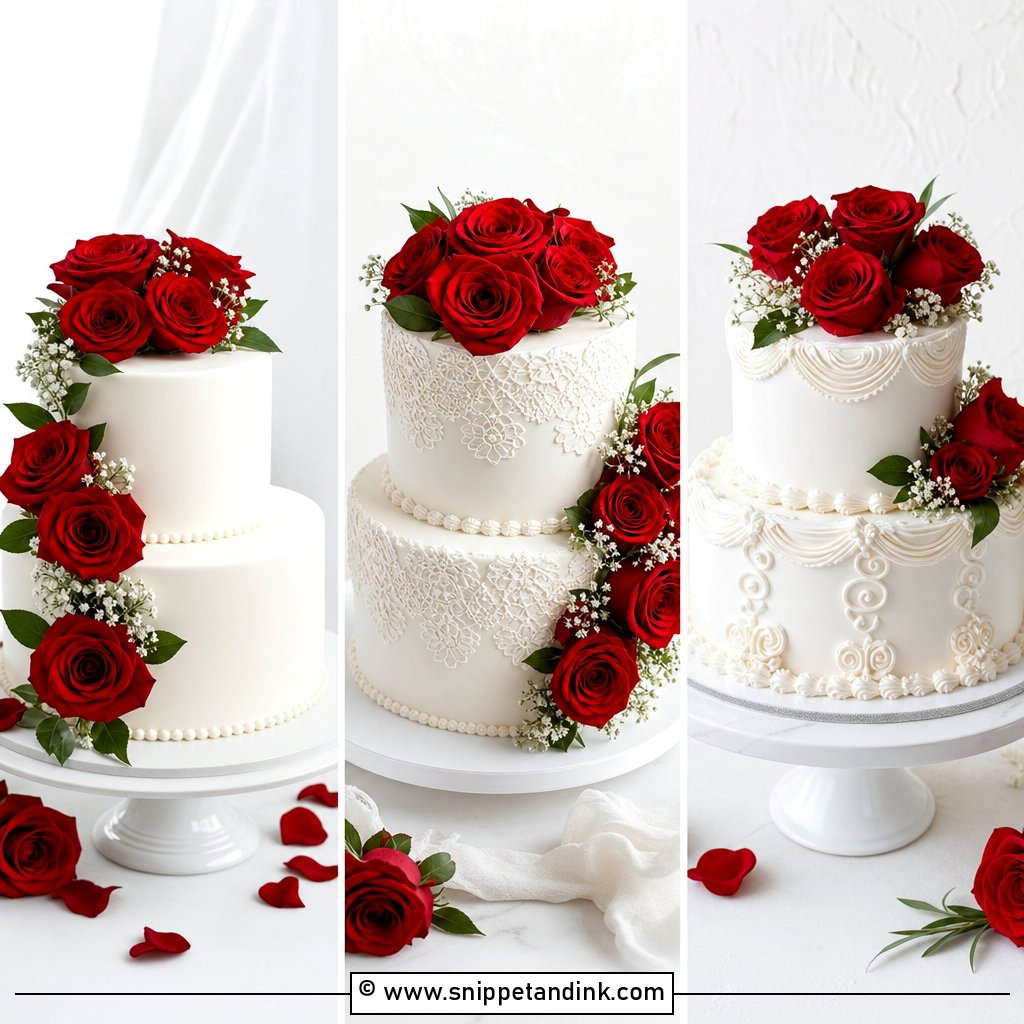
15. Round Brush Embroidery Wedding Cake
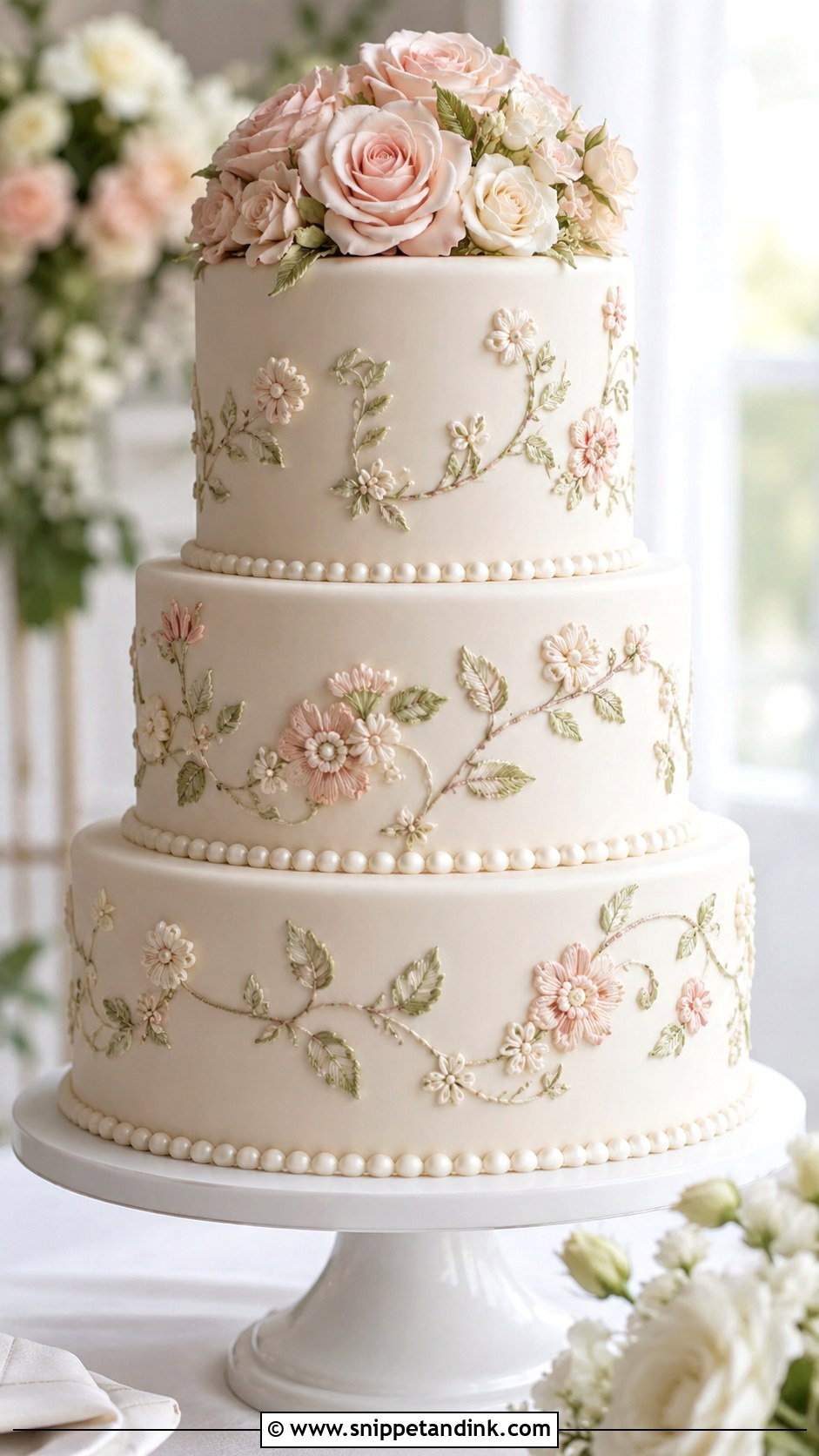
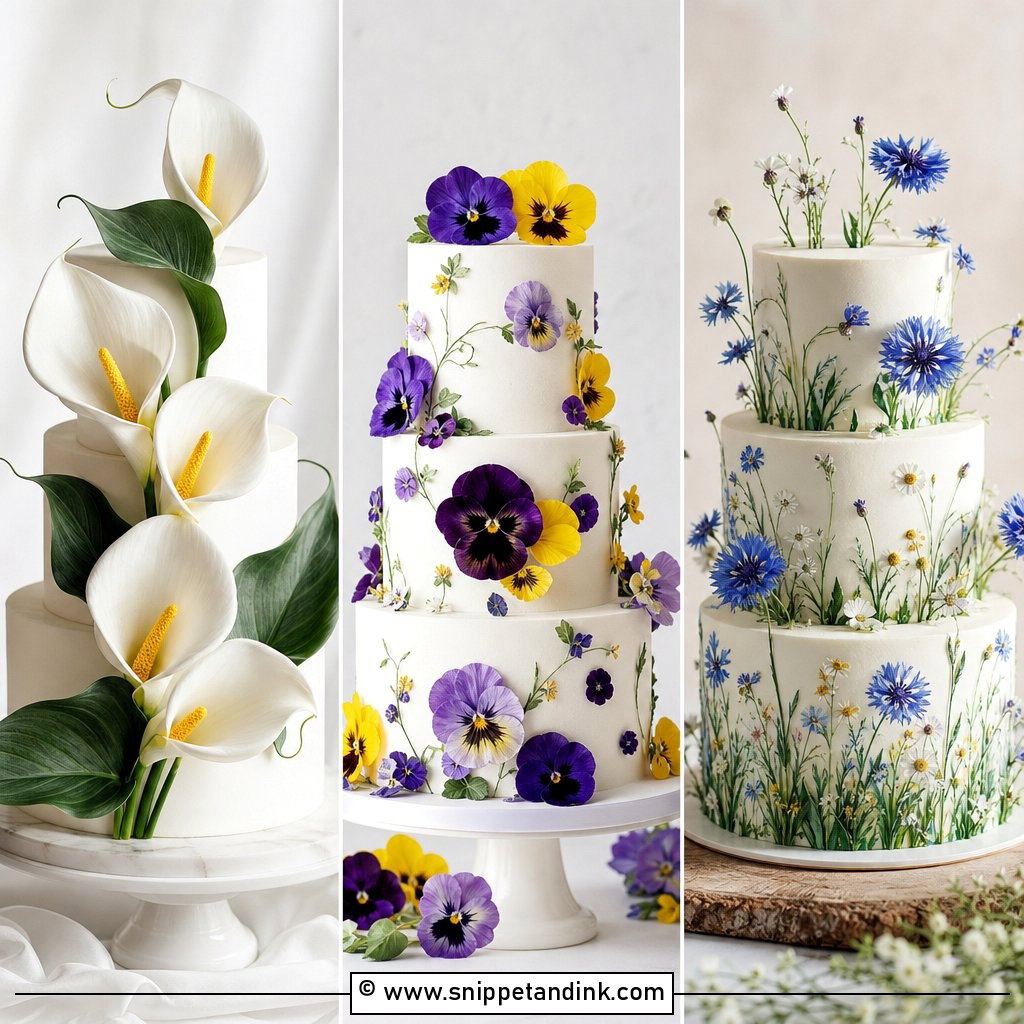
Round tiers let vines, lace swags and floral embroidery flow naturally around the cake. It’s the shape I find easiest to design for, and it suits almost any theme. White fondant with white royal icing and tiny pearl dots is the classic version; a blush, ivory or dusty blue base is softer. A cascading pattern that runs from top to bottom makes the cake look taller, especially with a simple floral topper.
16. Tiered Brush Embroidery Wedding Cake
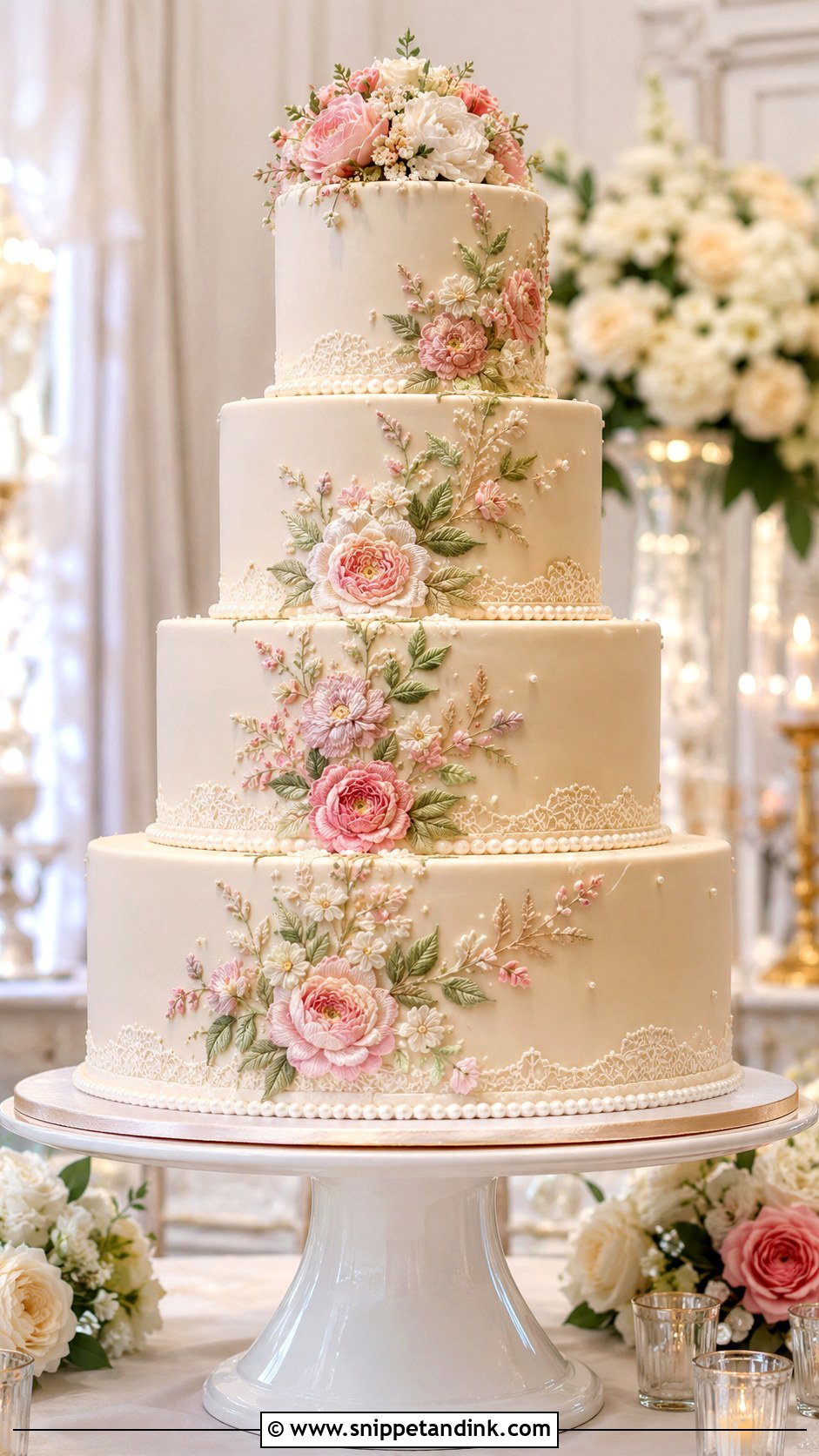
Multiple tiers give room to tell a story: flowers on one tier, lace trim on another, trailing vines on the top. That keeps it interesting without mixing too many styles. A three-tier or four-tier cake looks especially elegant when the embroidery climbs from the bottom toward the top. Choose fondant for crisp lines or crusted buttercream for a softer feel. Larger cakes take longer to decorate, so book early; a detailed tiered design needs more lead time than a plain one.
17. Buttercream Brush Embroidery Wedding Cake
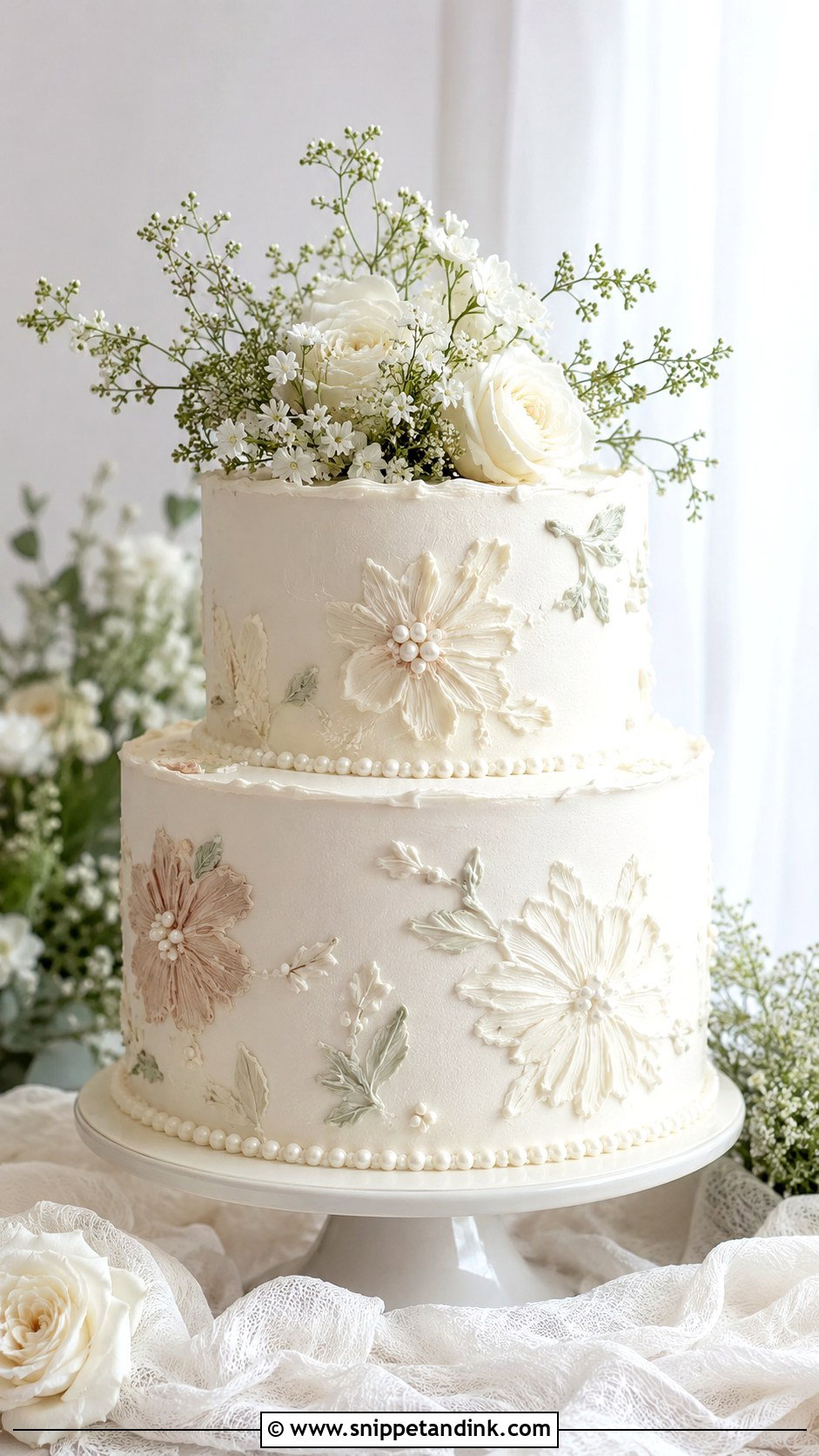
Buttercream versions taste better to many people and look softer. The surface has to be smooth and chilled or crusted, otherwise the piping sinks and the brush drags it. I make the pattern a little larger and simpler than on fondant, since buttercream doesn’t hold fine detail as well. White on white is romantic; tinted buttercream helps the embroidery stand out. Fresh flowers, pearl dots or a simple piped border finish it. In a warm room, buttercream embroidery softens faster than anything else on this list.
18. Fondant Brush Embroidery Wedding Cake
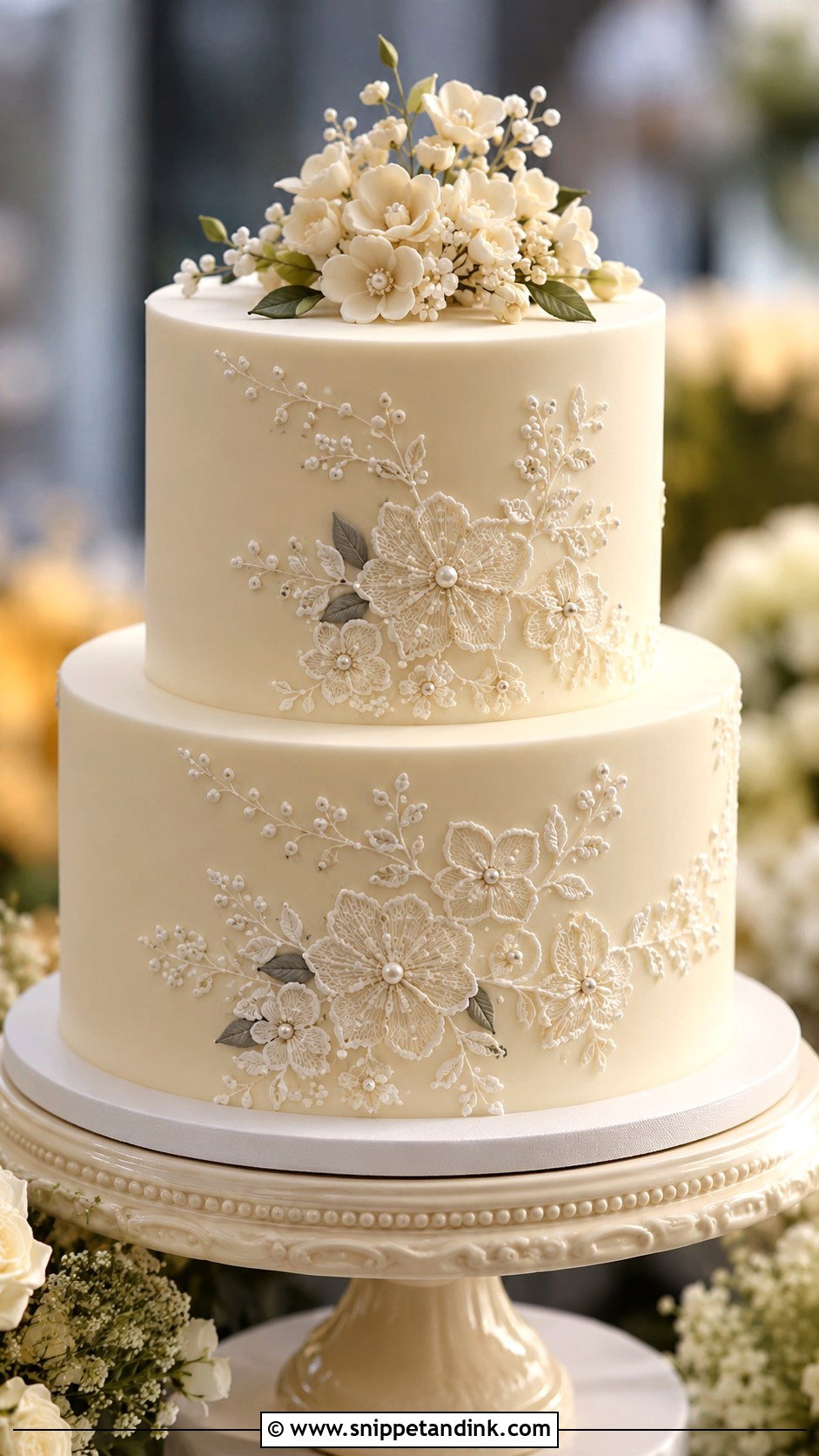
For precision, fondant is the best surface. It gives a firm, smooth base so the outlines and brush strokes stay sharp, which is ideal for detailed lace, floral sprays and fine patterns. I pipe in royal icing because it sets firm and holds the raised edge. White or ivory fondant reads classic; pastel adds gentle color. Fondant also protects the cake better in transport and warm rooms. The trade-off is taste, so some couples ask for a thin layer, or a buttercream tier for cutting.
19. Pastel Brush Embroidery Wedding Cake
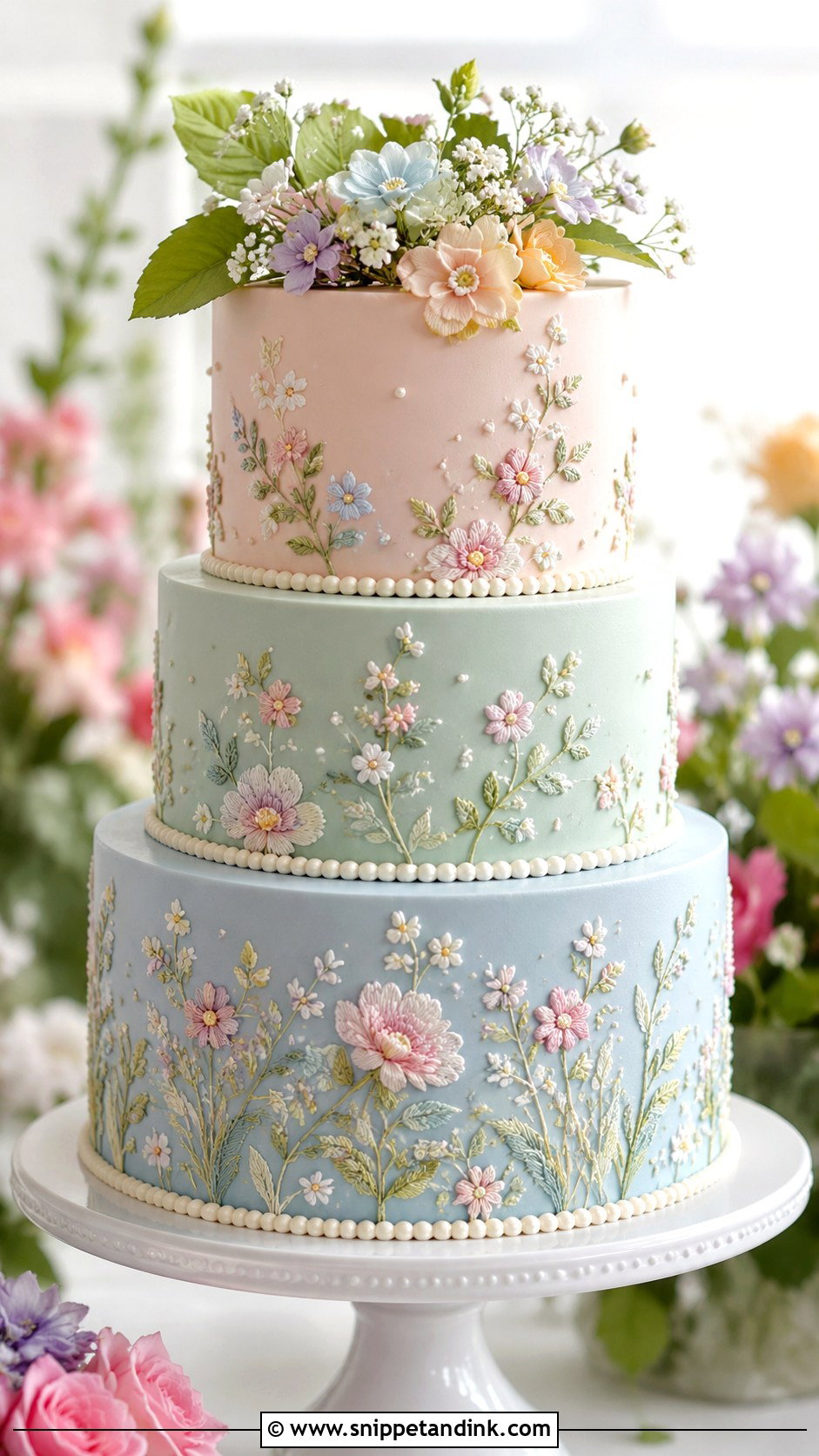
Pale pink, lavender, mint, butter yellow and powder blue all sit well under white embroidery. I use one shade throughout or a soft ombre from bottom to top. It suits spring weddings, garden venues and bridal brunches. Floral or lace patterns keep the color grown up rather than nursery sweet. Sugar flowers, pearl dots and soft green leaves bring it together. If you go ombre, ask to see the shades side by side, since pastel steps that look distinct in daylight can blur together indoors.
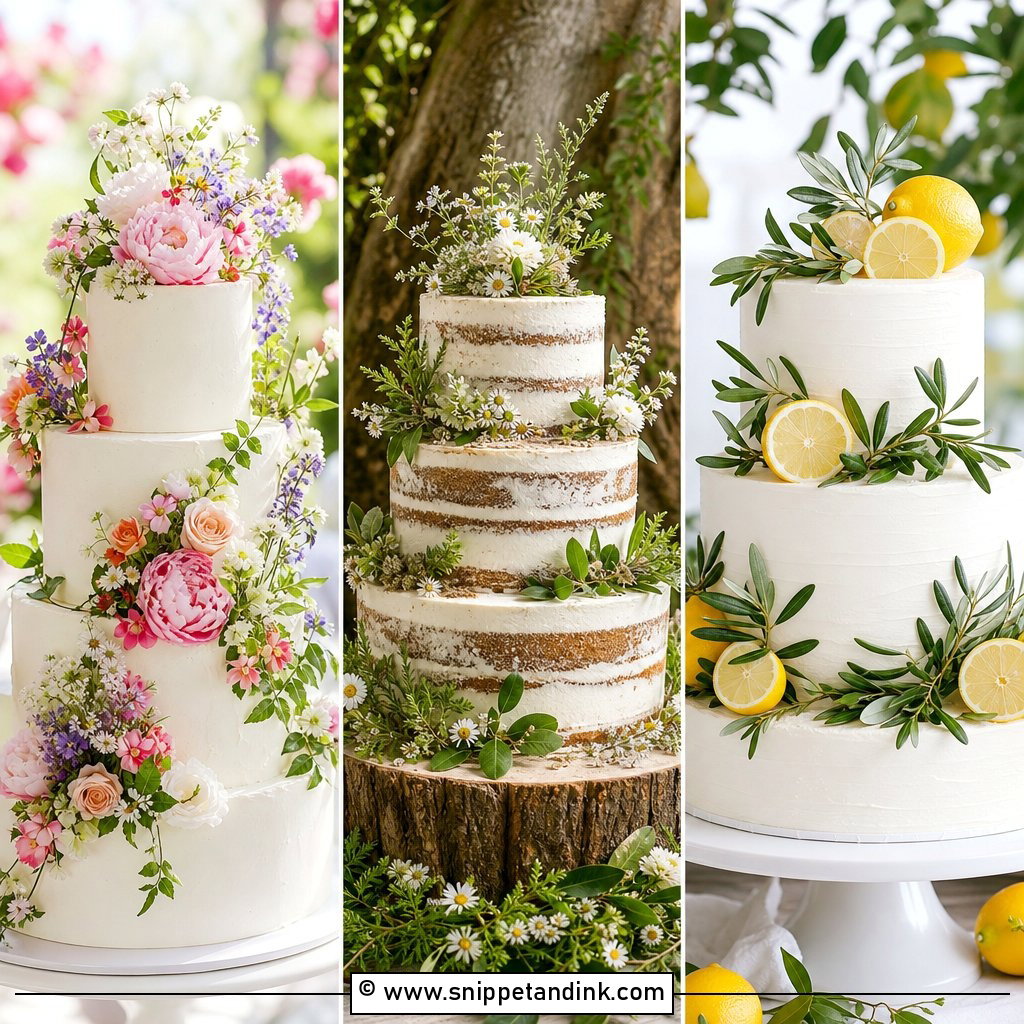
20. Monogram Brush Embroidery Wedding Cake
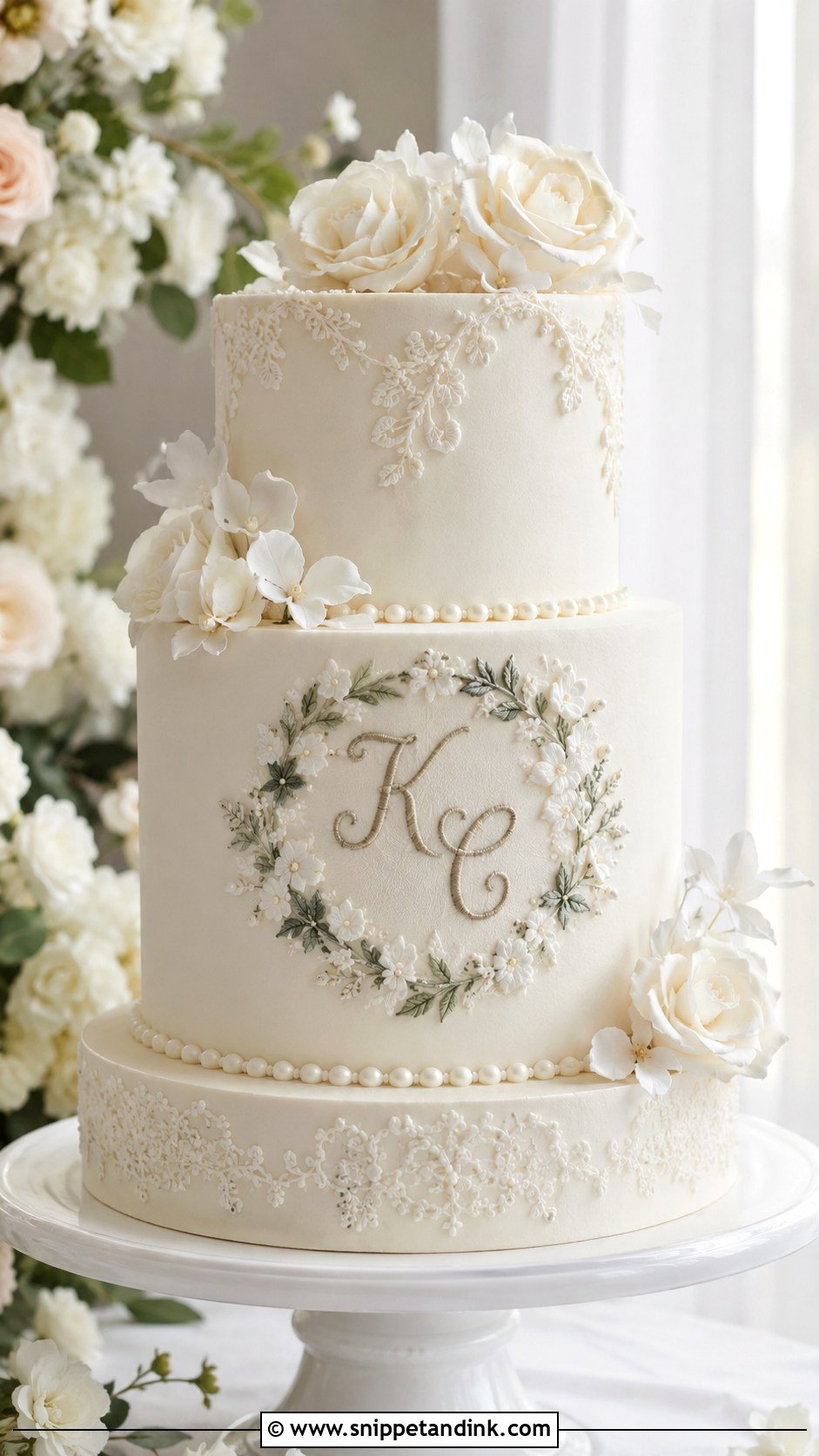
A monogram makes the cake personal. The initials can sit on the center tier, framed by floral embroidery or a lace border. The lettering needs to stay clean and readable, with the embroidery adding softness around it, so I pipe the letters first and build the flowers around them. White or ivory is classic; blush, blue or champagne feels more custom. Pearl dots or tiny piped beads link the monogram to the pattern. It makes a meaningful centerpiece for a formal reception.
Heat, Humidity and the Drive to the Venue
Royal icing embroidery is sturdy once dry. What usually goes wrong is the cake under it.
Fondant in a warm room
A fondant cake moved from a cold fridge into a warm, humid room can sweat, with tiny beads of moisture forming on the surface. That moisture can dissolve the edges of fine royal icing and make colors bleed. Ask your baker how they handle it; many keep finished fondant cakes in a cool room rather than the fridge for exactly this reason.
Buttercream outdoors
Buttercream embroidery begins to soften in direct sun or a hot marquee. Put the cake table in the shade, away from heaters, windows and lighting rigs, and bring the cake out as close to the cutting as your venue allows.
Questions worth asking at the tasting
- Will you show me a sample board of my pattern and colors?
- Will the cake be stacked before transport or assembled at the venue?
- Which decorations are edible, and which must be removed before cutting?
- Can a lower tier be a dummy to save cost while keeping the size?
- How far ahead do you need the order? Detailed hand piped work usually means booking months, not weeks, in advance.
Lace Made of Icing Needs the Right Room
Brush embroidery gives a cake the look of lace, stitched flowers, vines or vintage fabric, which means it fits a lot of wedding styles. White and ivory stay classic; blush, lavender, blue and pastels bring in color. Fondant gives the cleanest finish, and buttercream gives a softer, tastier one if it’s handled carefully. A simple two tier cake can carry it just as well as a dramatic tiered centerpiece. Talk to your baker about the room, the light and the weather, and the texture will show the way it should.
You'll Like These Ideas:







Leave a Reply