
Bows have become one of my most requested cake details, and I understand why: on a white cake, a bow borrows straight from the dress. I make them from fondant, wafer paper, chocolate, buttercream or real ribbon, and each material behaves differently on the day. Scale decides almost everything. A small bow is a finishing touch; a big one becomes the whole design. Below are 25 ways to put a bow on a white cake, with what each version needs to hold up.
How Big Should the Bow Be?
Bows go wrong most often in scale. A bow that looks generous in a close-up photo can look like a hair clip on a four-tier cake, and a huge bow on a small cake swallows it.
I judge it against the tier the bow sits on:
- An accent bow, tied at the front of a ribbon band, is roughly a third of the tier’s height or less.
- A focal bow, the one people photograph, spans most of the tier’s height, with tails that drop onto the tier below.
- A statement bow covers the front of a tier or more and becomes the whole design. Everything else on the cake should stay plain.
Before I commit, I cut a paper template of the bow and tape it to a dummy tier of the same size. It takes ten minutes and saves a lot of second-guessing.
1. White Wedding Cake With Satin Bow
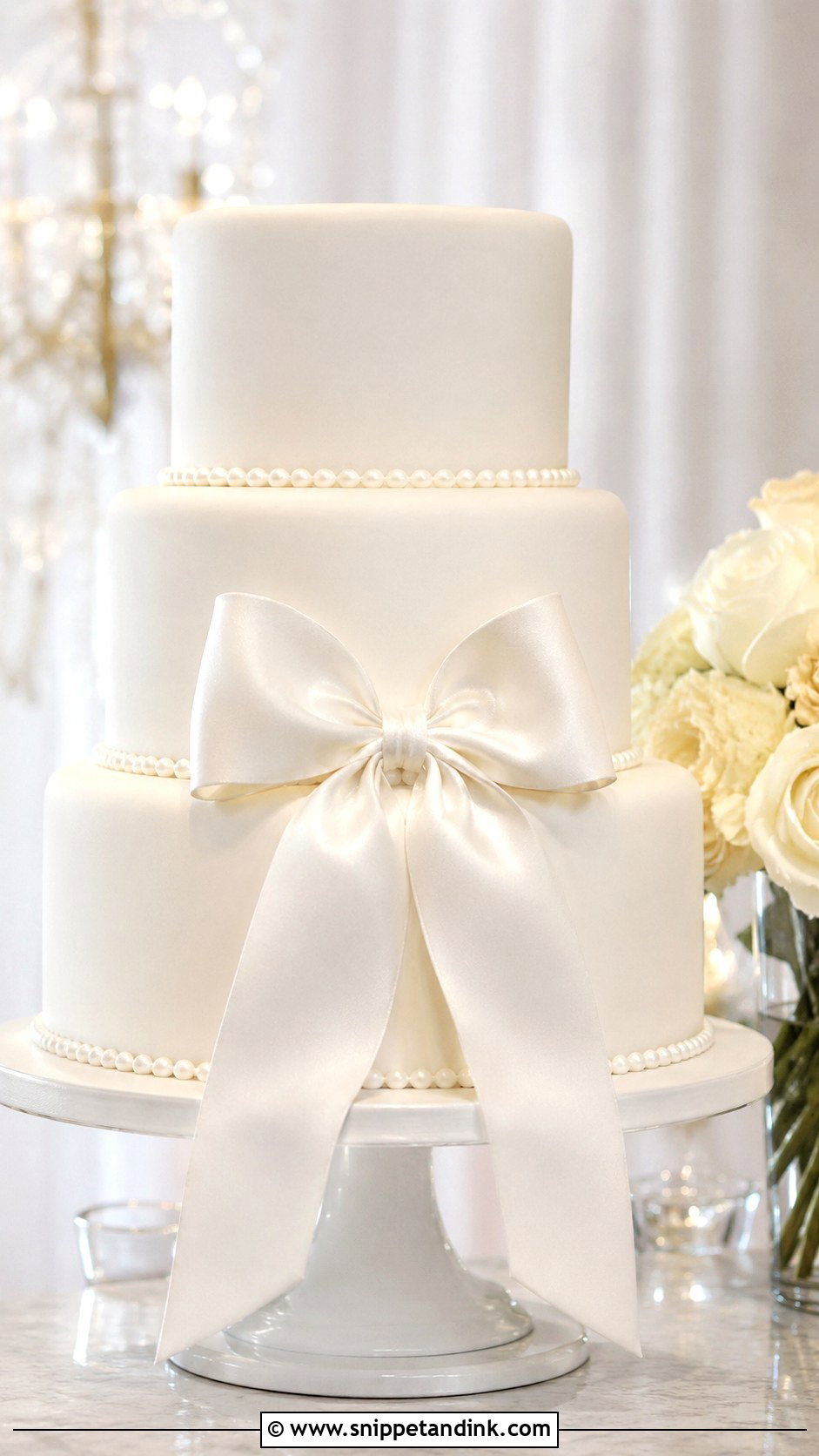
Satin ribbon is the cleanest way in. It can wrap a tier like a sash, sit as a neat bow at the front, or trail into long tails the way a gown’s sash does. Real satin on buttercream will soak up butter and darken in patches within hours, so I back it with a strip of clear food-safe film, or make the bow in fondant with a satin-look sheen. Ivory or champagne ribbon looks softer than optic white against most frosting.
2. White Wedding Cake With Big Bow
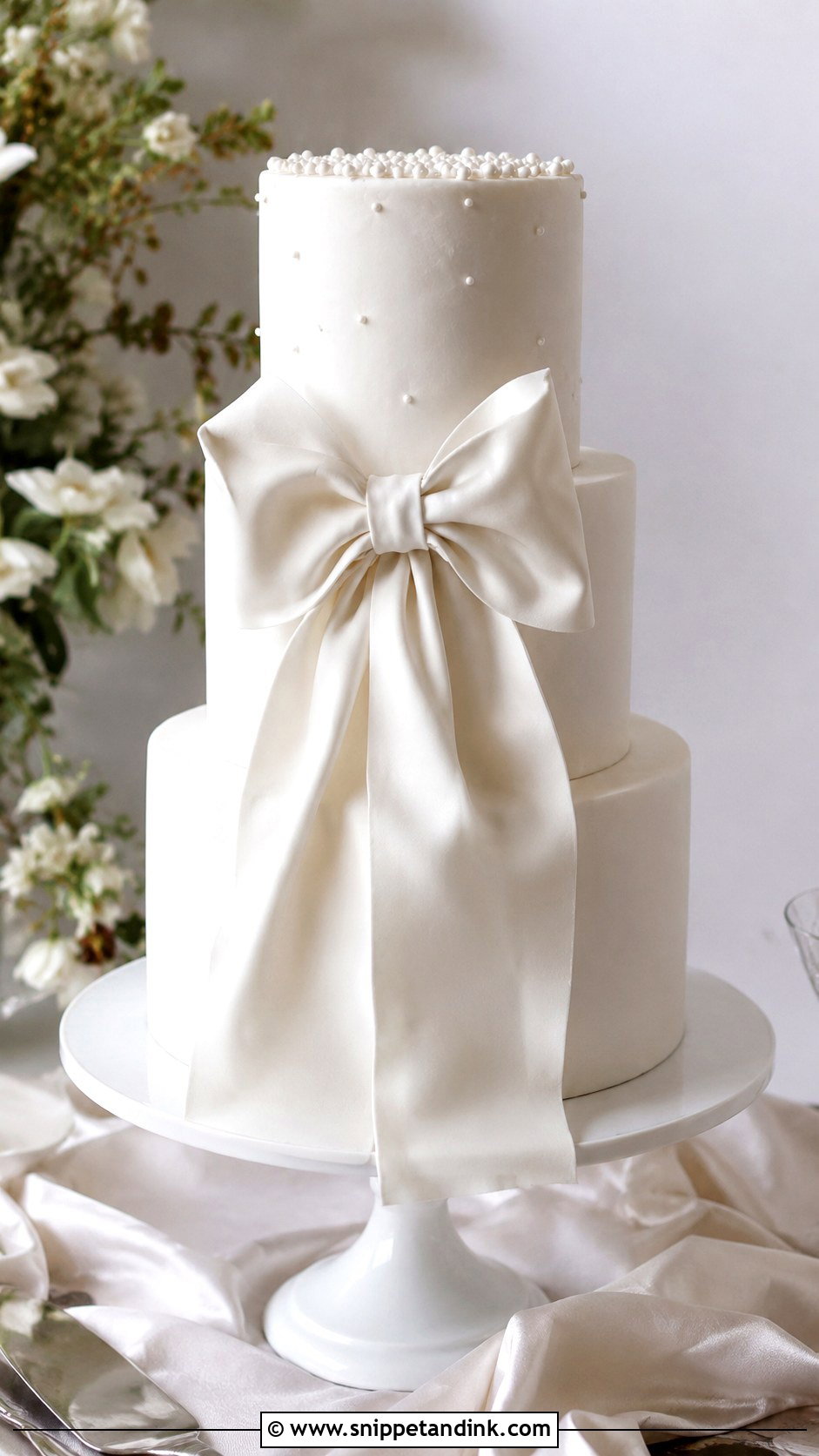
A big bow turns the cake into one confident gesture. It can sit on the top tier, wrap the middle, or fall down the front like couture fabric. An oversized sugar bow is heavy, so I build it on a hidden support and dry it fully before it goes on. Everything else stays plain: smooth fondant or buttercream and maybe a pearl border. Because the bow faces one way, the cake table needs to face the room.
3. White Wedding Cake With Fondant Bow
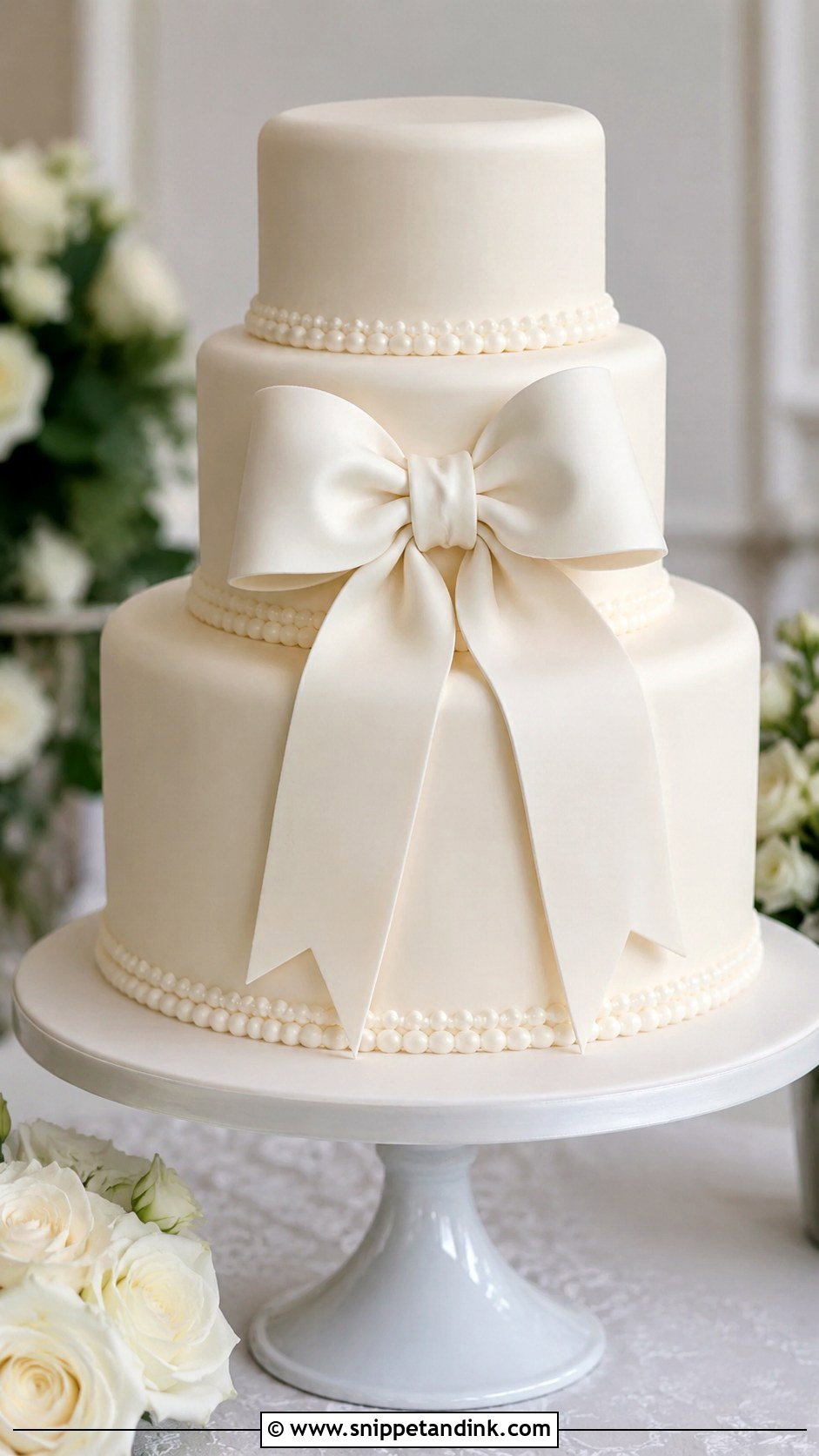
Fondant bows can be folded into loops, knotted and given tails, and they match the cake color exactly. I add a little tylose powder to the fondant so it firms up like gum paste and the loops don’t collapse. Crisp folds look modern; softer gathers look romantic. In a warm venue, where real ribbon can slide on softening buttercream, a fondant bow stays exactly where it’s placed. Quilting or a few pearls suit it.
4. White Wedding Cake With Pearl Bow
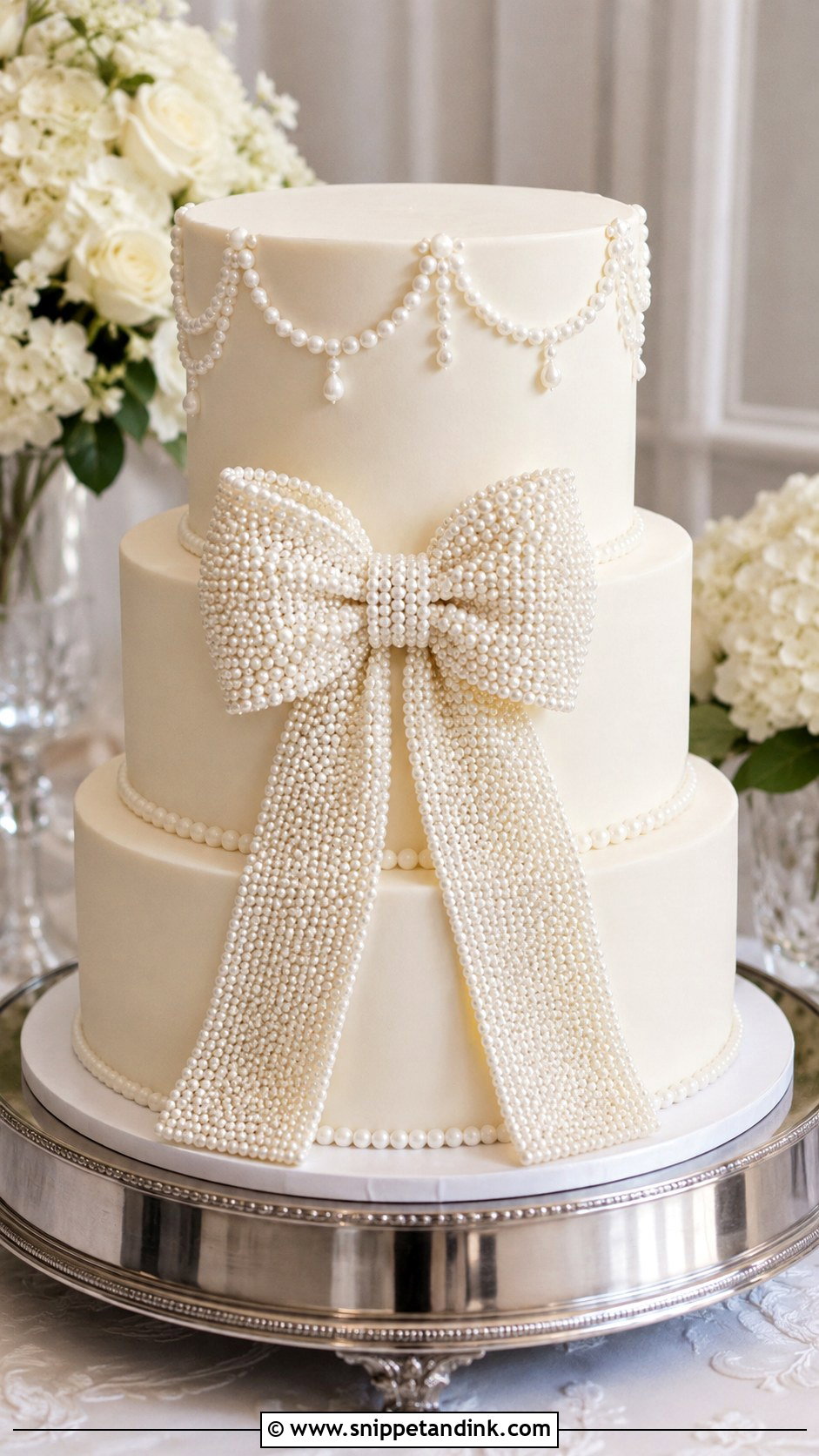
A pearl bow is fondant or white chocolate dotted with tiny sugar pearls, or a plain bow set off by pearl borders on each tier. It leans classic and suits a ballroom, or a bride wearing pearl earrings or a pearl-edged veil. On bright white fondant, pearls can look stark, so I’d use a soft white or ivory base. Placing each pearl by hand is slow, and that time shows up in the price.
5. White Wedding Cake With Lace Bow
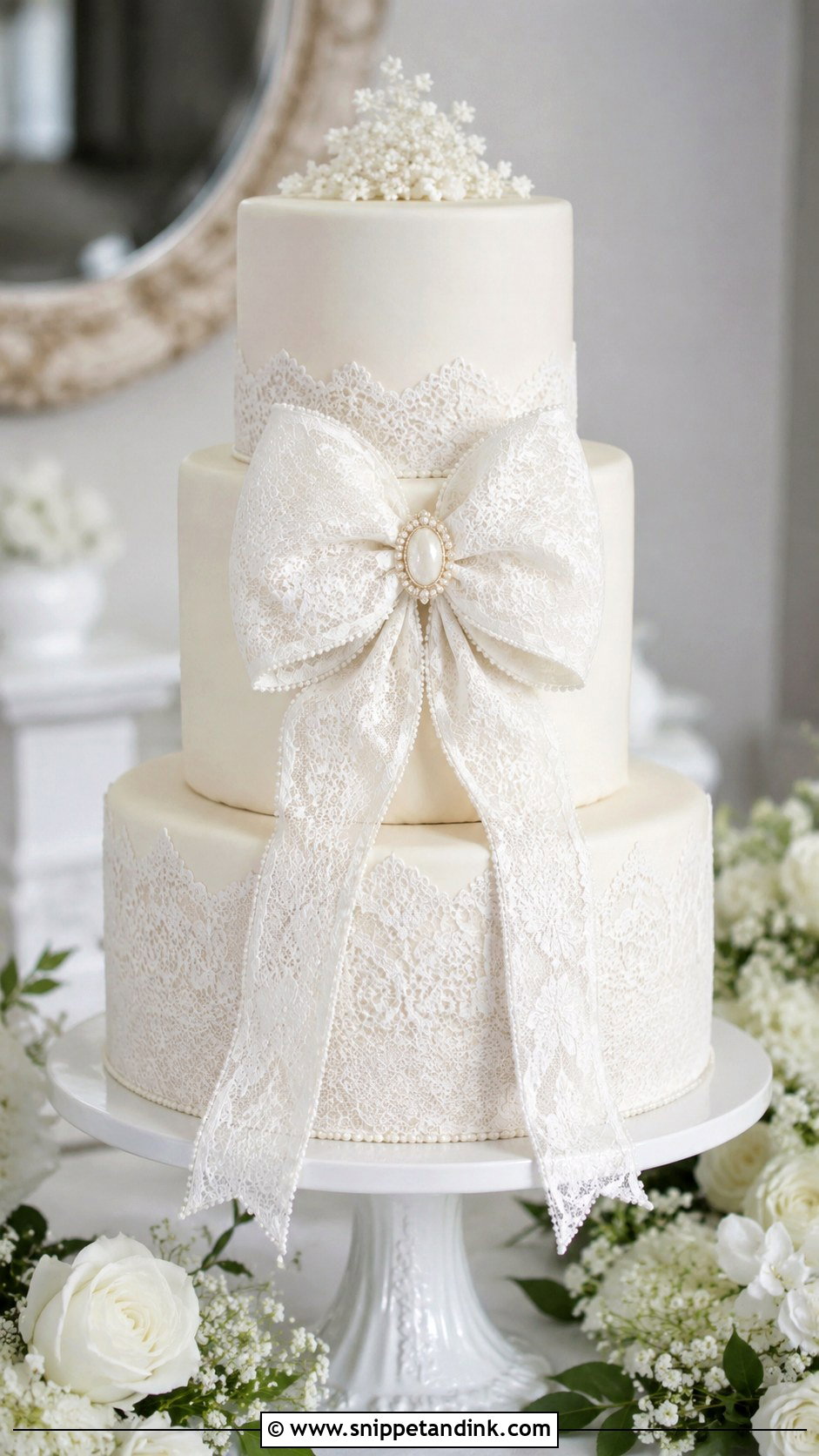
A lace bow lets the cake echo the dress. I press lace-textured fondant from a mold, or cut wafer paper lace, and ask for a photo of the gown’s lace to pick a similar motif. The pattern shows clearest against smooth fondant, where the raised detail casts a little shadow. Repeat the lace on one tier, or keep it to the bow alone. It suits a garden or chapel wedding.
6. White Wedding Cake With Tulle Bow
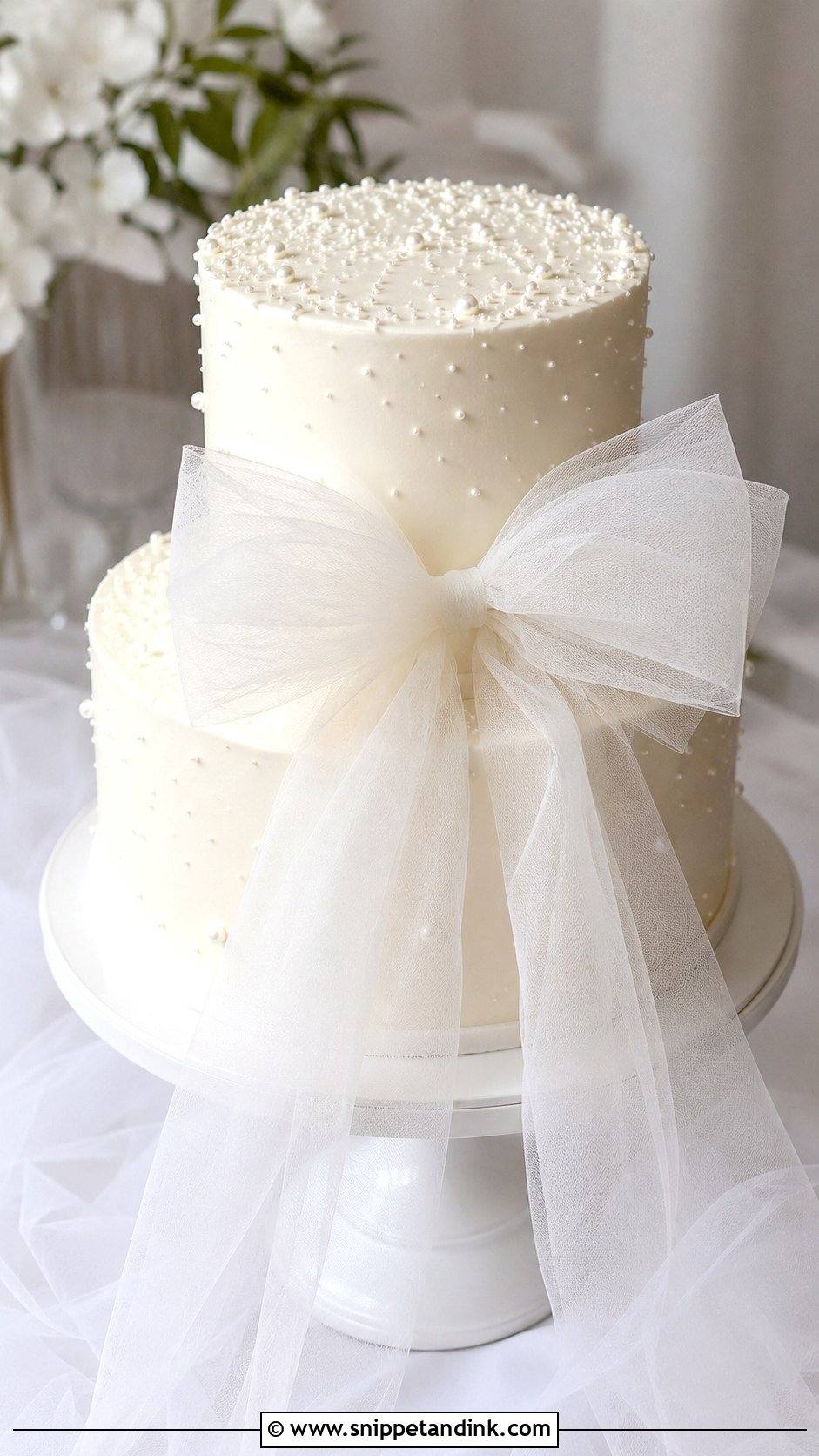
Tulle gives the airiest bow, close to a veil or a full skirt. It’s fabric, though, not food, so it should never be pressed into the frosting; I attach it on a separate backing and remove it before the cake is cut. A large bow with soft loops and floating tails on a smooth cake looks best. Keep everything else simple. It’s the bow I’d match to a dress with tulle layers or sheer sleeves.
7. White Wedding Cake With Bow Topper
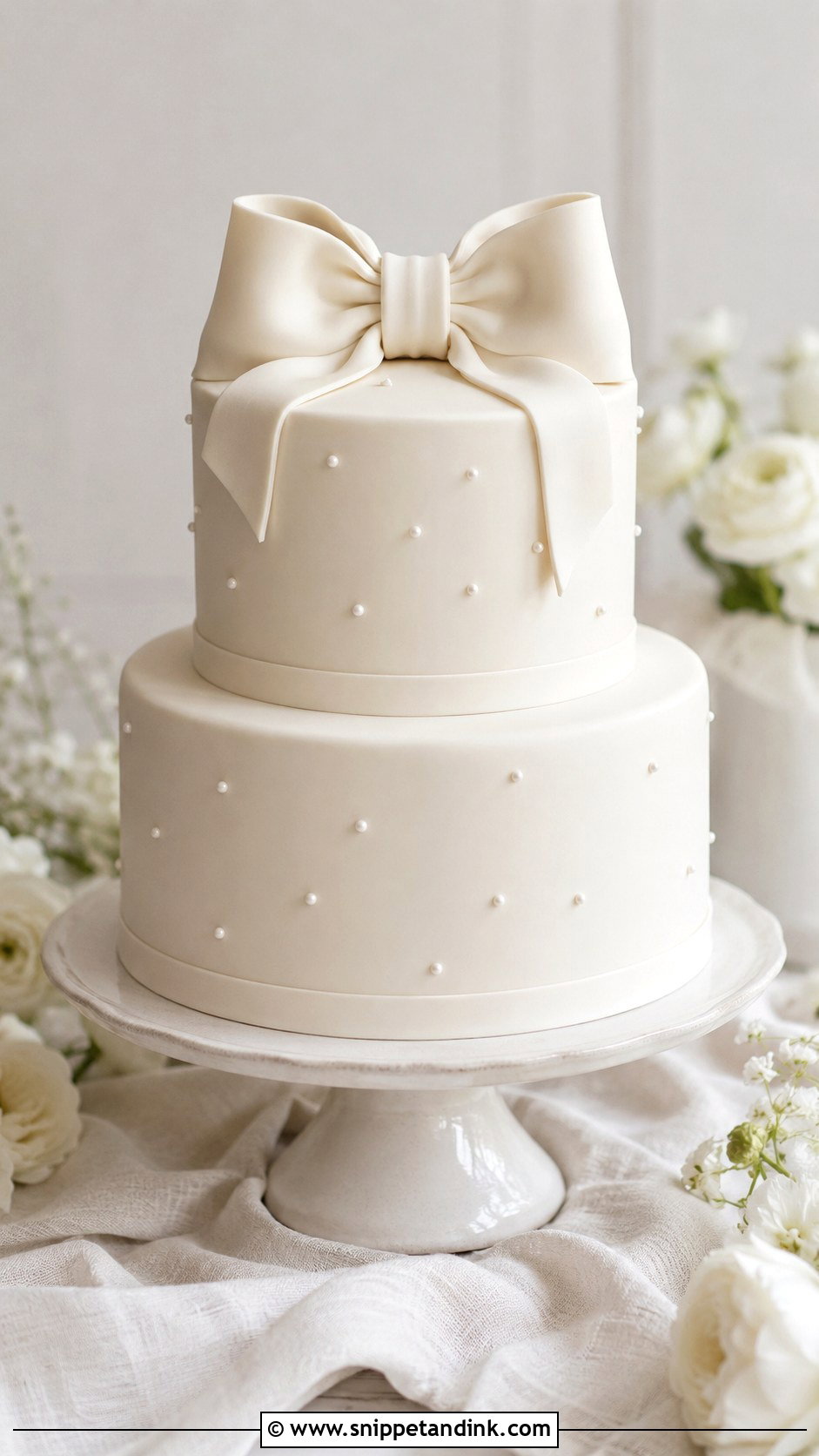
Instead of wrapping the cake, the bow sits on top like a gift. That adds height to a two- or three-tier cake without any flowers. Gum paste, wafer paper and white chocolate all work, but the bow must be light, because a heavy topper can sink into a soft top tier. I keep the loops full but thin-walled. It’s a strong choice for a minimal, all-white design.
8. White Wedding Cake With Bow And Flowers
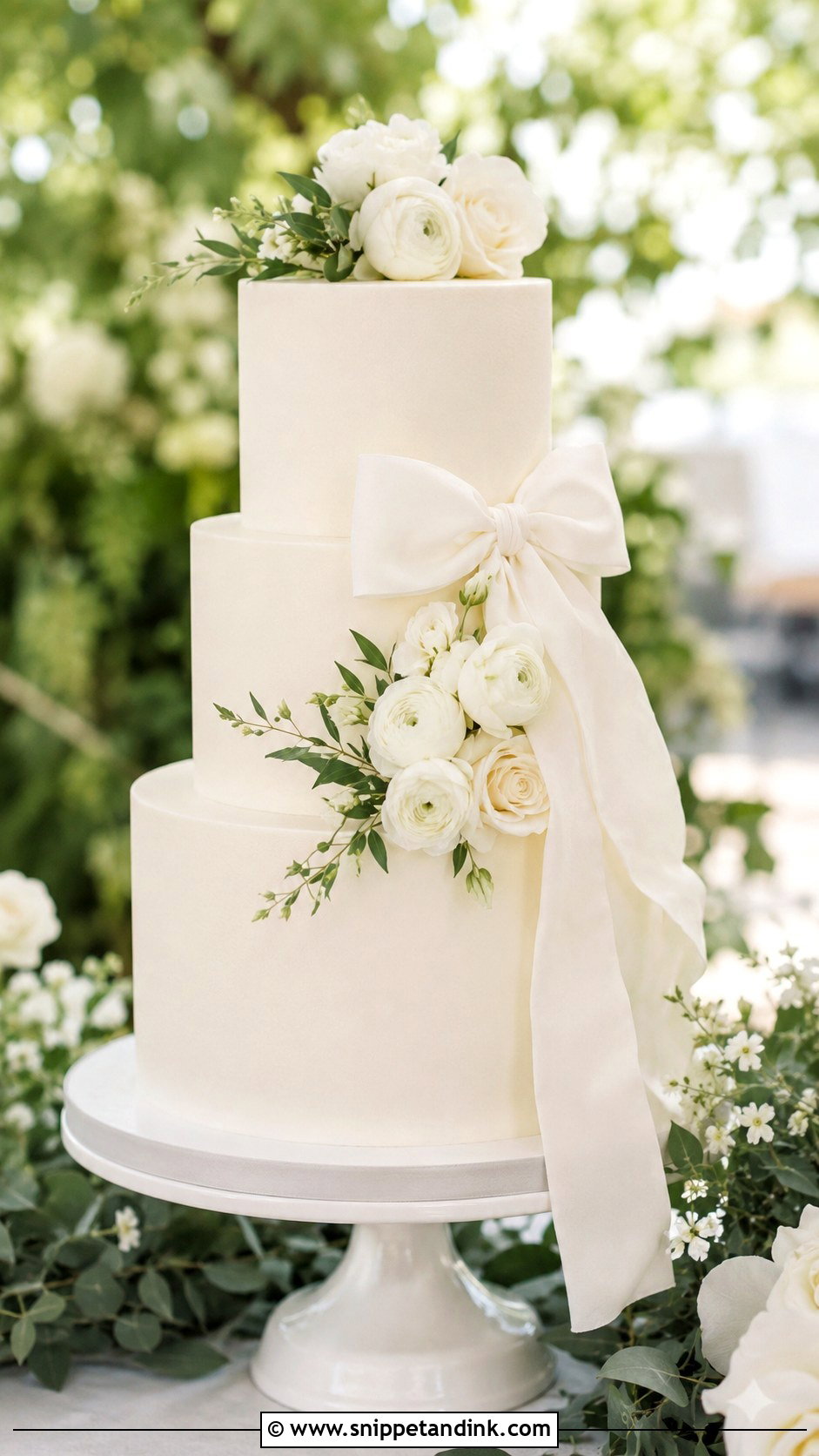
Bows and flowers can share a cake if one leads and the other follows. I let the bow anchor the design and trail the flowers around it, or place them beside it, on one or two tiers only. White roses, orchids, ranunculus and small sugar blossoms all work. A satin or fondant bow in ivory or pale cream keeps the palette calm. Too many flowers and the bow gets lost.
9. White Wedding Cake With Bow And Roses
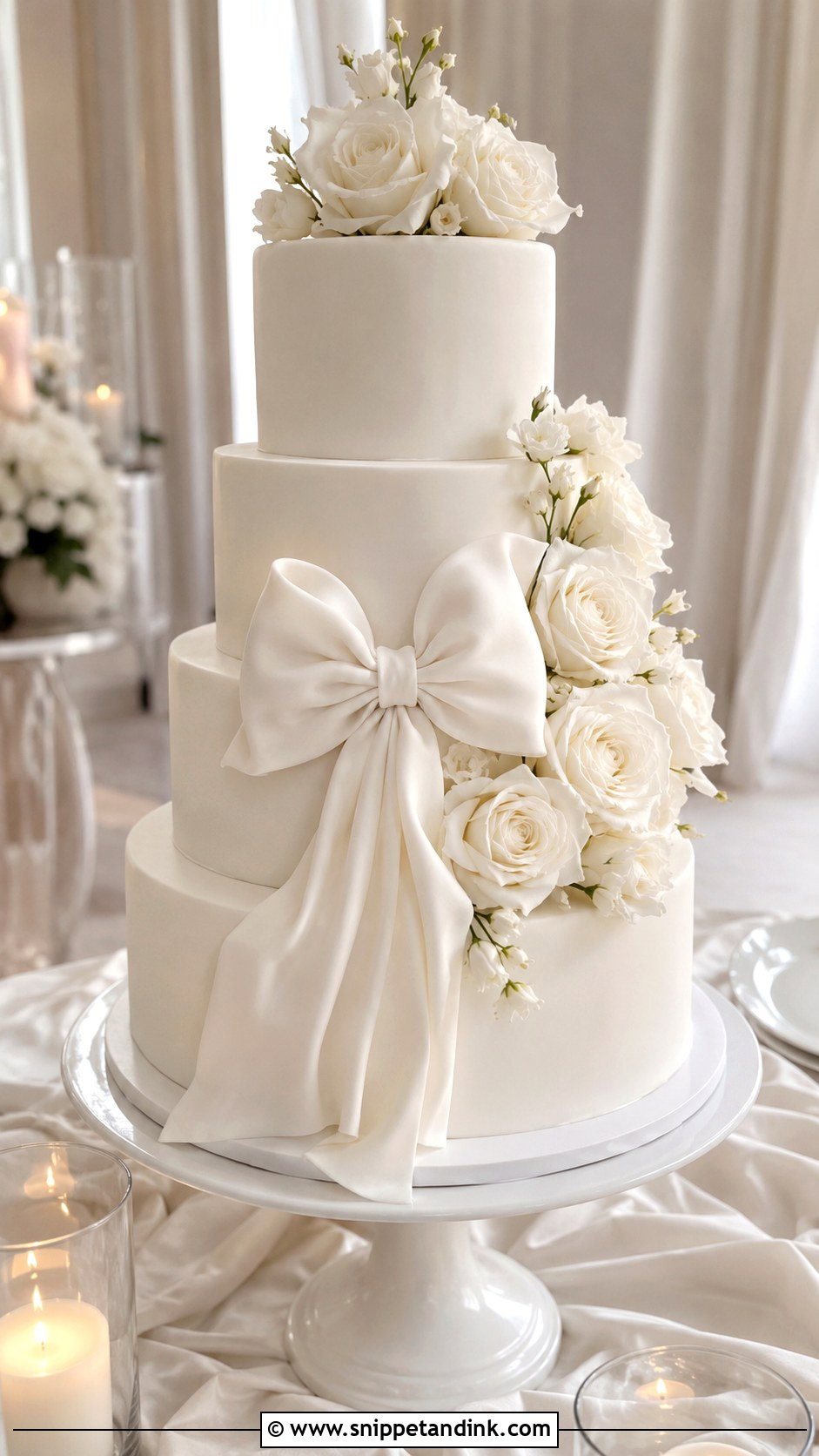
Roses add volume, and the bow adds shape. A large bow at the base of the top tier with roses gathered around the knot is one arrangement; a bow on the front of the middle tier with roses spilling to one side is another. Sugar roses keep everything edible. Fresh roses need wrapped stems and picks, and they should be set in place by someone who handles cake florals routinely. Keep the frosting smooth so both details read.
10. White Wedding Cake With Bow And Pearls
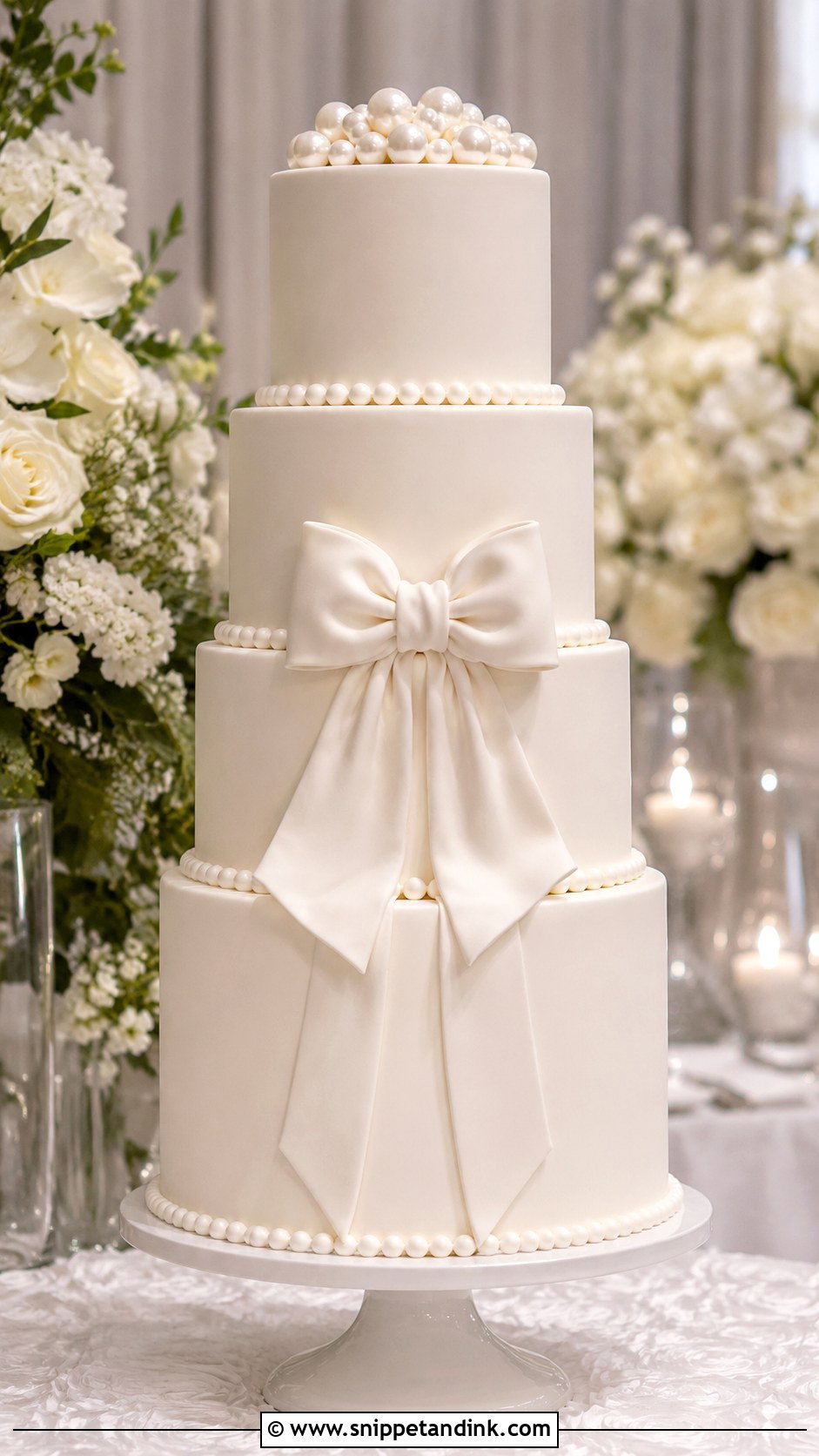
Pearls and bows are a natural pair with classic bridal accessories, but restraint matters. The pearls can frame each tier, cover the knot or scatter lightly across smooth frosting. Too many, and the cake feels heavy. A single pearl-trimmed bow on the front of a tall white cake gives a clean focal point. Ivory buttercream or pearl-white fondant suits an evening reception.
11. White Wedding Cake With Bow And Gold
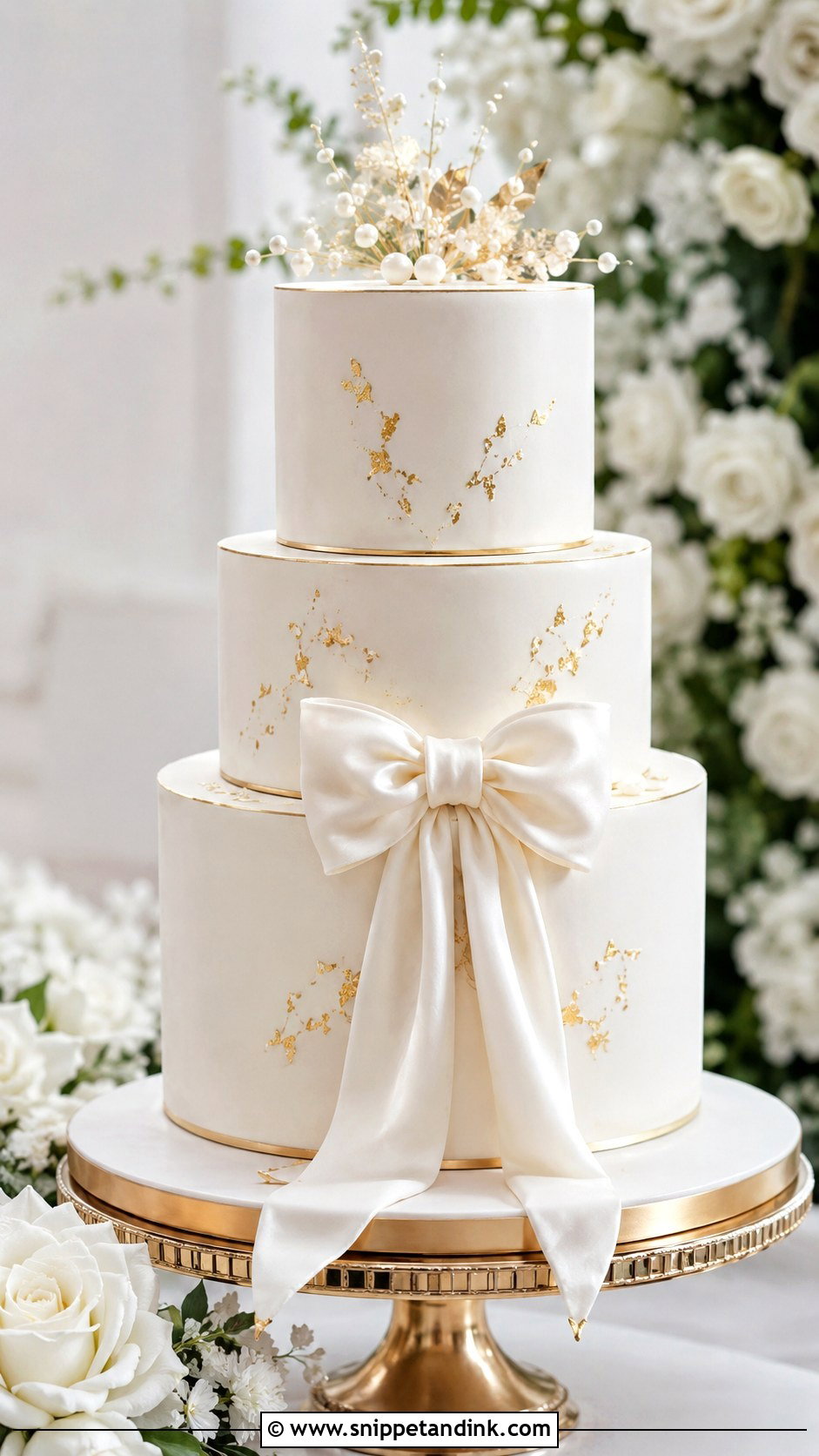
Gold warms a white bow cake. The bow stays white, and gold appears as leaf, a pearl border or thin metallic bands. Or the bow can be pale champagne with small gold touches around the tiers. Edible gold is brushed onto a firm surface, so it goes on fondant or well-chilled buttercream. Keep it fine. Candlelight and gold flatware make the most of it.
12. White Wedding Cake With Bow And Silver
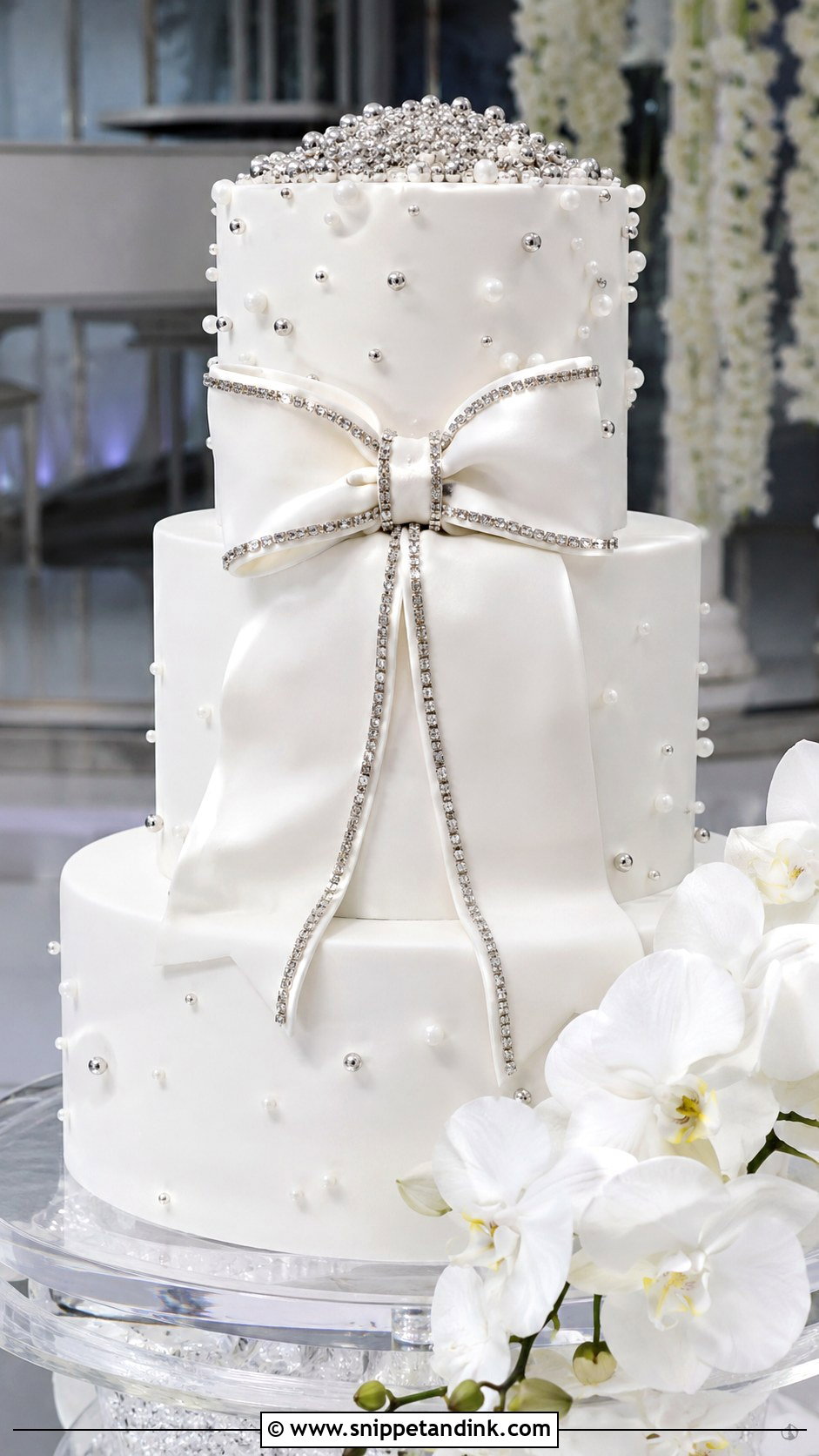
Silver gives a cooler, crisper finish. Edible shimmer, pearlized accents, a metallic edge on the bow or tiny silver dragees around the knot all work. Keep the cake bright white or cool ivory so the silver doesn’t look grey beside a warm cream. Smooth fondant gives the sharpest result. Silver suits crystal decor, white orchids and an acrylic stand, without needing to look wintry.
13. White Wedding Cake With Bow And Ribbon
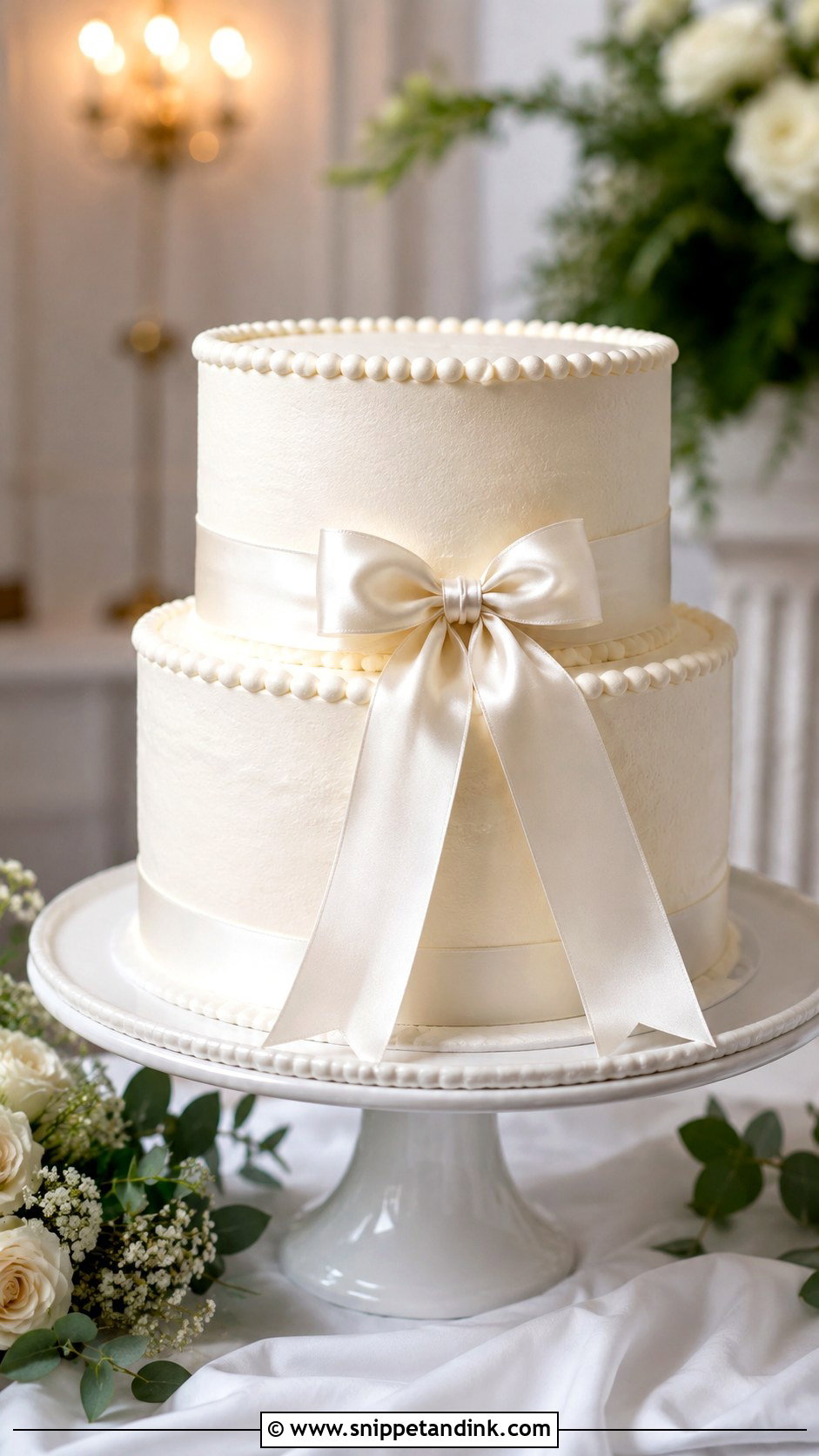
A ribbon band with a bow tied at the front or side is the most traditional version. It can wrap one tier, every tier, or only the base. Width changes the mood: thin ribbon looks delicate, wide ribbon gives presence. Like satin, any fabric ribbon needs a food-safe backing on buttercream, or you can use fondant ribbon instead. Matching it to the bouquet wrap ties the cake into the day.
14. White Wedding Cake With Bow And Draping
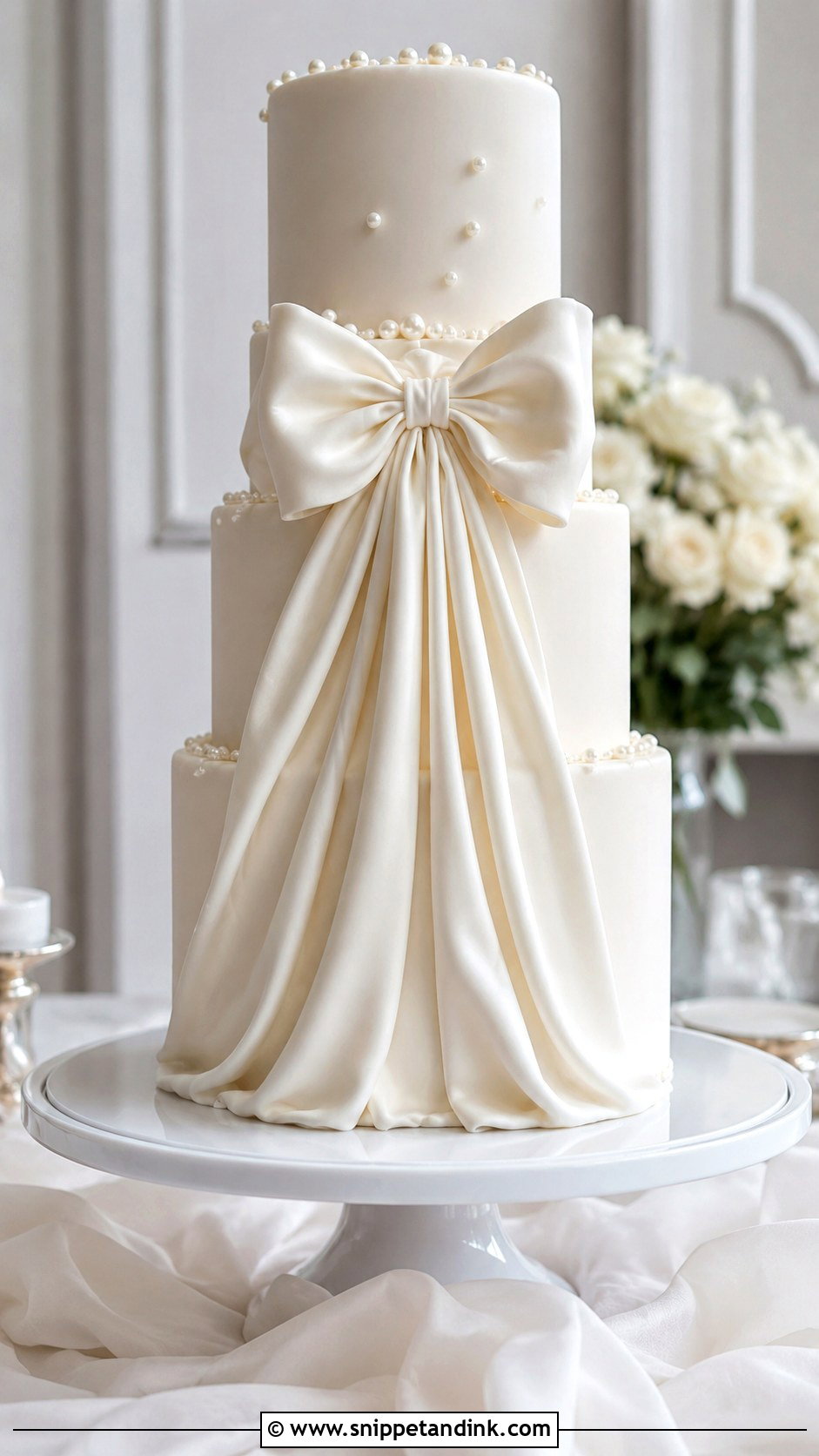
A white wedding cake with bow and draping looks like gathered fabric caught by a bow, much like a bridal gown. The draping is fondant, wafer paper or edible sheets. Fondant drapes have to be shaped quickly before the paste dries and cracks along the folds, which is the hardest part of this design. Tall tiers give the folds room to fall. A little ivory shading makes the folds easier to see.

15. White Wedding Cake With Bow And Ruffles
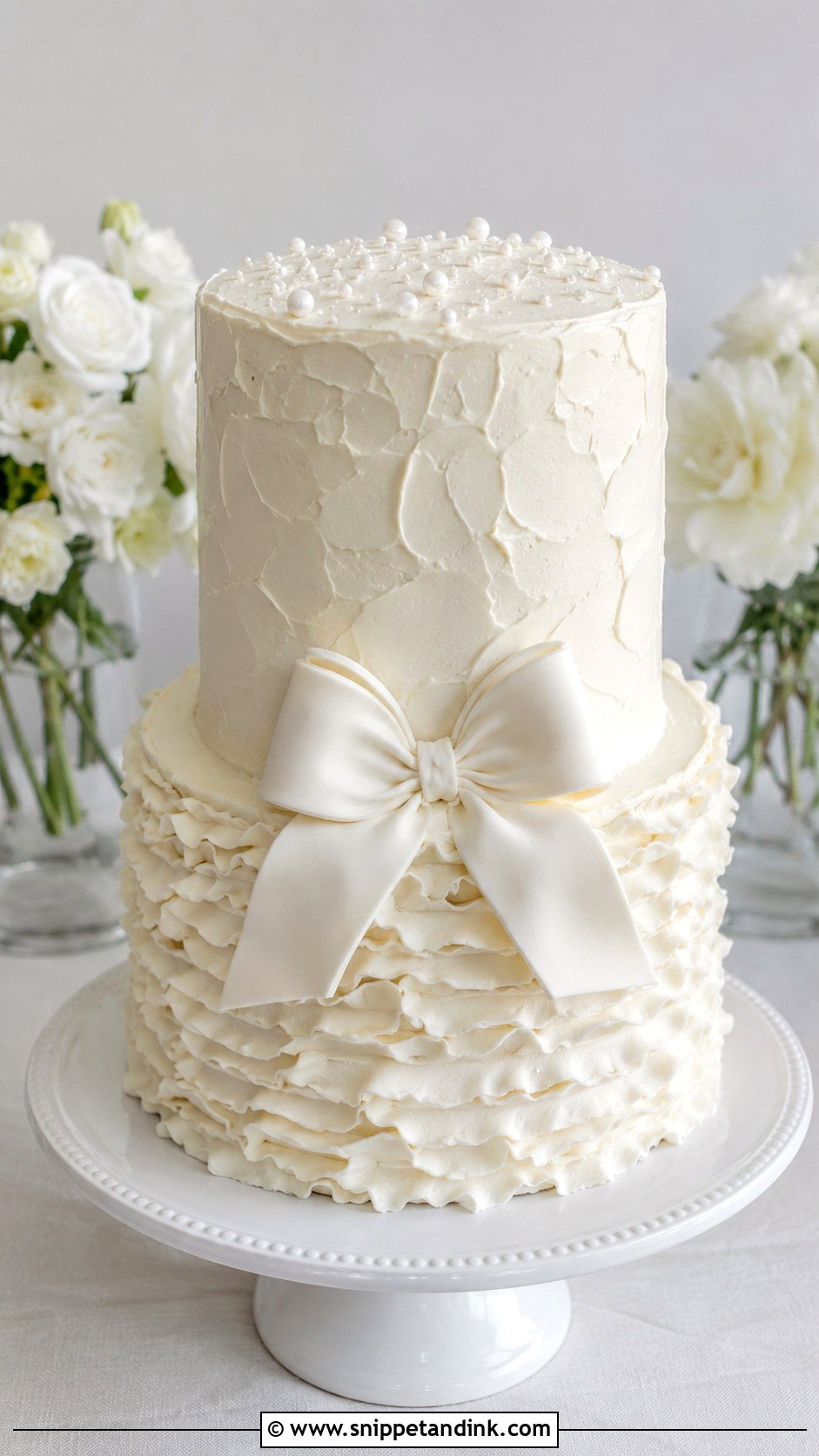
Ruffles and a bow both bring movement, so they need to be separated. I put the ruffles on one tier, often the bottom, and keep the tiers above smooth. A bow placed where the smooth and ruffled sections meet makes the design look planned. Buttercream ruffles are softer; fondant ruffles hold more structure. It suits a dress with a ruffled or layered skirt.
16. White Wedding Cake With Bow And Piping
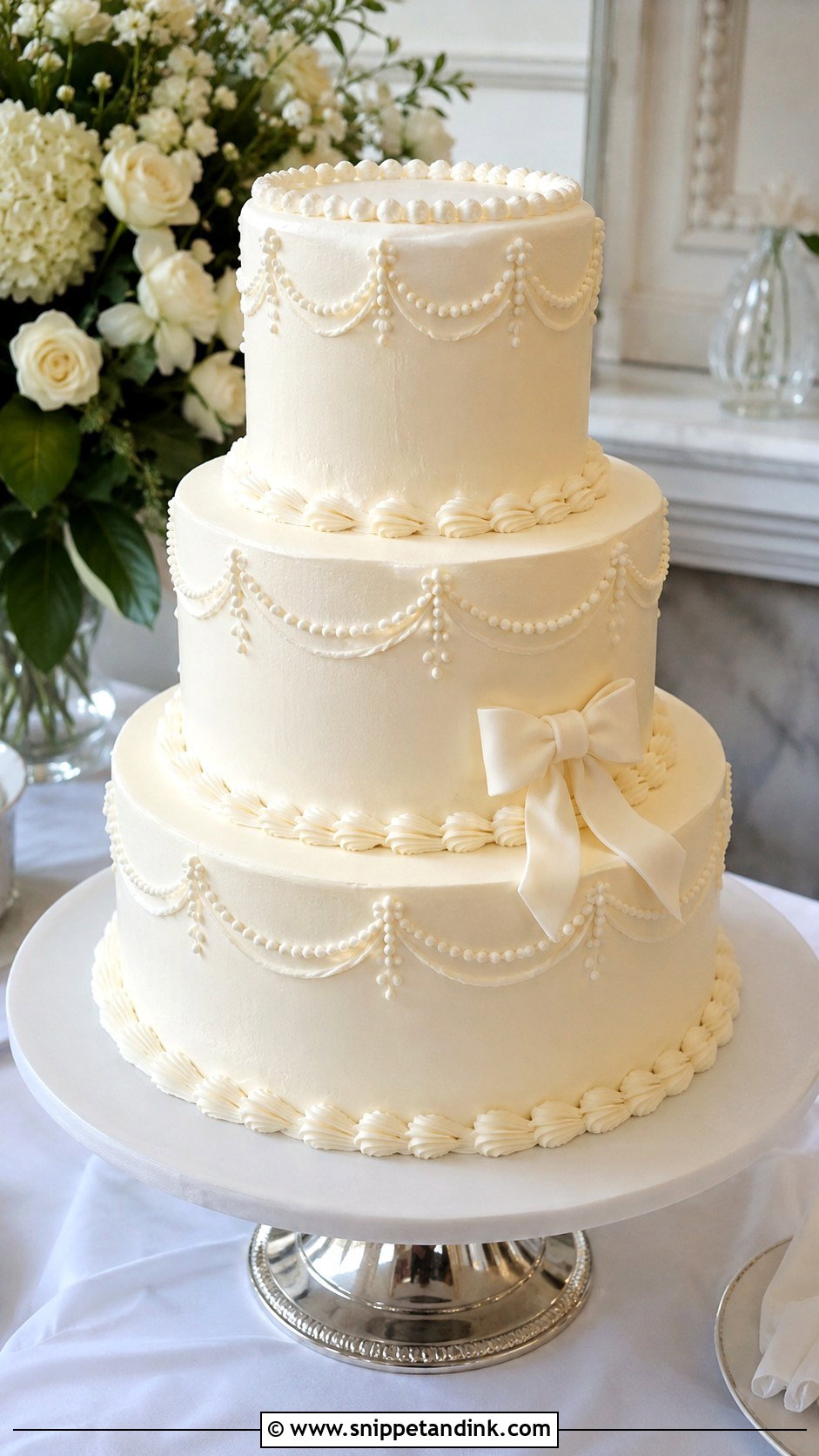
Piping and bows bring classic decorating back in a fresh way. Fine shell borders, tiny pearls, scrollwork or drop strings frame the tiers while a small fondant bow adds the modern note. Keep the piping light; heavy work fights the bow for attention. Drop strings sag in humid air, so I’d skip them for a summer tent. White-on-white piping suits a church wedding.
17. White Wedding Cake With Bow And Sugar Flowers
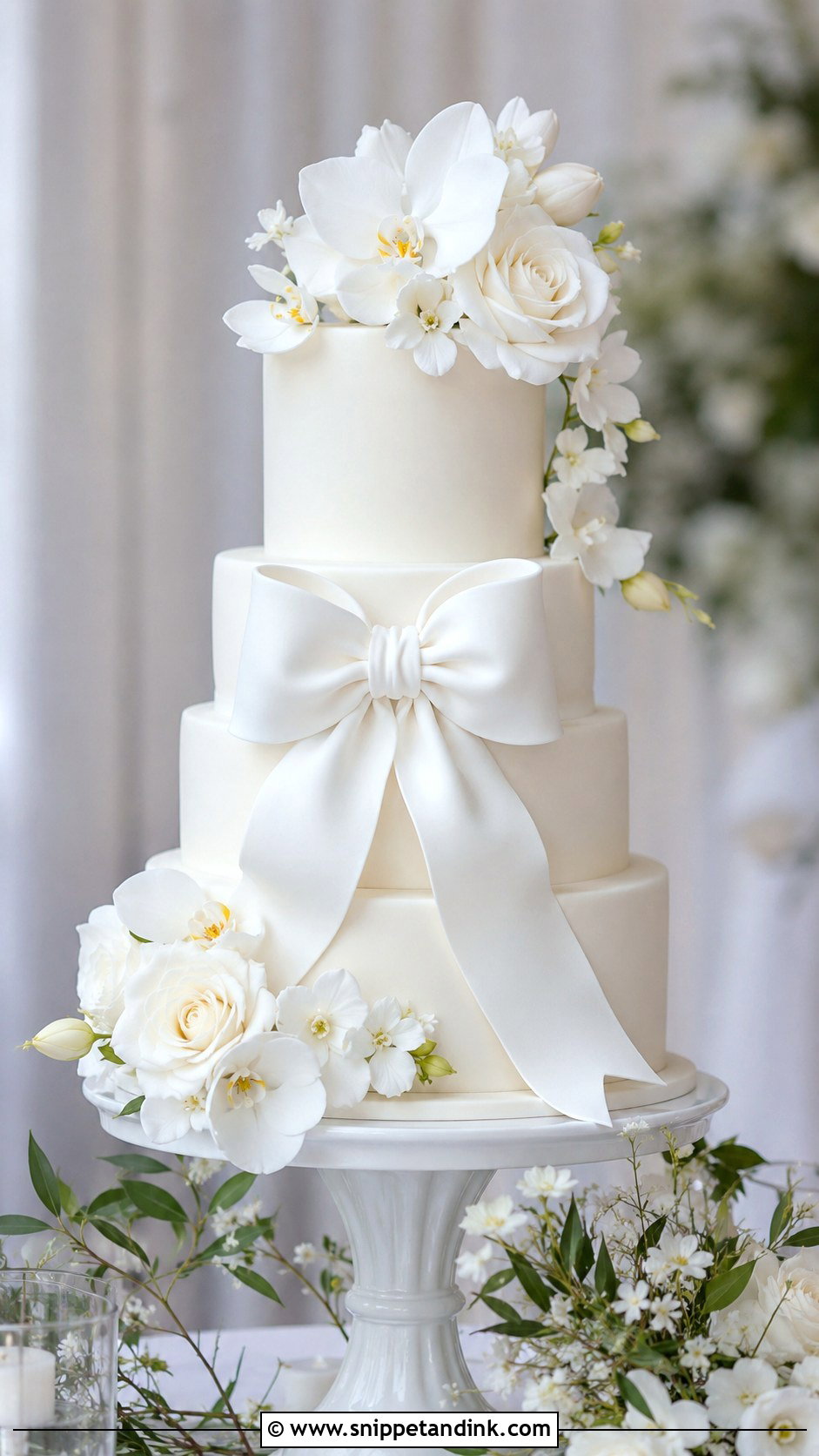
Sugar flowers stay perfect all day, which fresh blooms can’t promise. The bow can sit under a cluster of sugar flowers or tie around the tier below them. White sugar roses, sweet peas, orchids and small blossoms all suit a bow. They’re also keepsakes, since sugar flowers can be stored for years if kept dry. Order them early; detailed sugar flowers take many hours.
18. White Wedding Cake With Bow And Buttercream
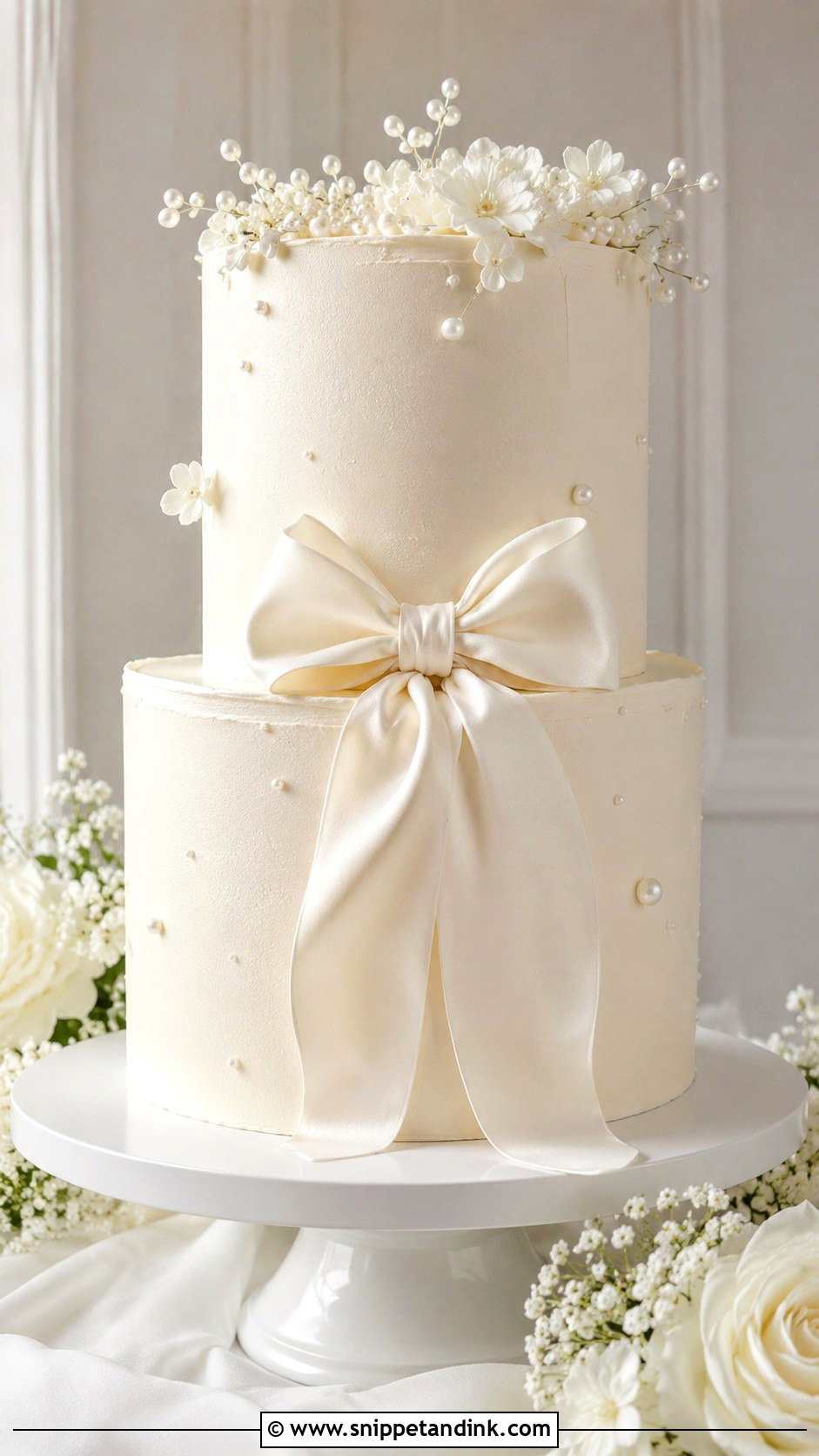
A white wedding cake with bow and buttercream is the softest, most flavorful version. The buttercream can be smooth, lightly ridged or spatula-marked. For the bow, fondant gives structure, wafer paper gives lightness, and ribbon gives a fabric look. I’d avoid a heavy fondant bow on soft buttercream in a warm room, since it can slowly slide. A white chocolate bow is light and fully edible.
19. White Wedding Cake With Bow And Fondant
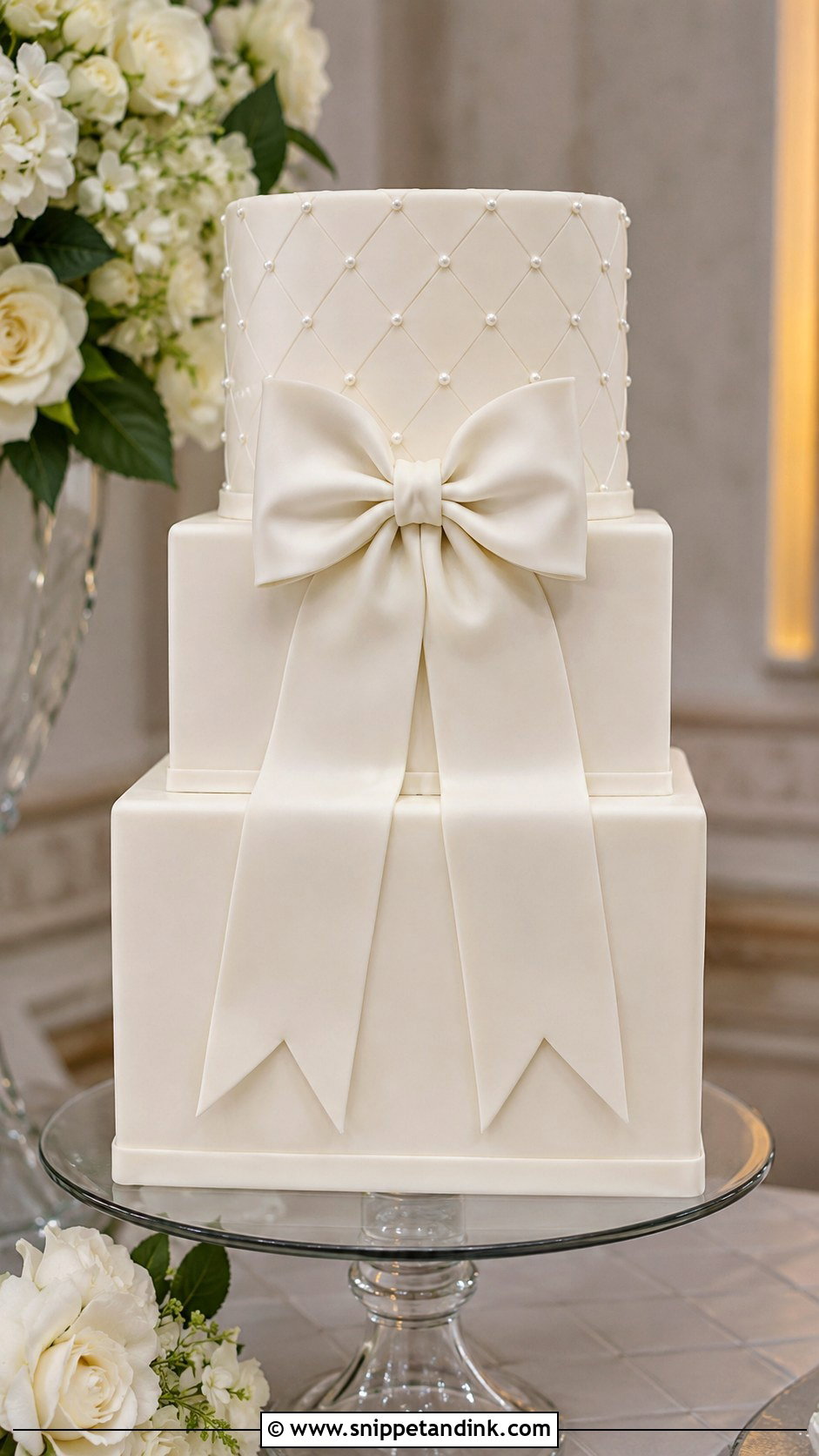
Fondant gives the most structured look, with sharp edges that make bows, bands and quilting stand out. A fondant bow on the front of each tier creates a repeated pattern, or one large bow can carry the design. It suits tall cakes, square tiers and formal rooms. Slight ivory tones add depth. Bright lighting suits the clean lines.



20. White Wedding Cake With Bow And Texture
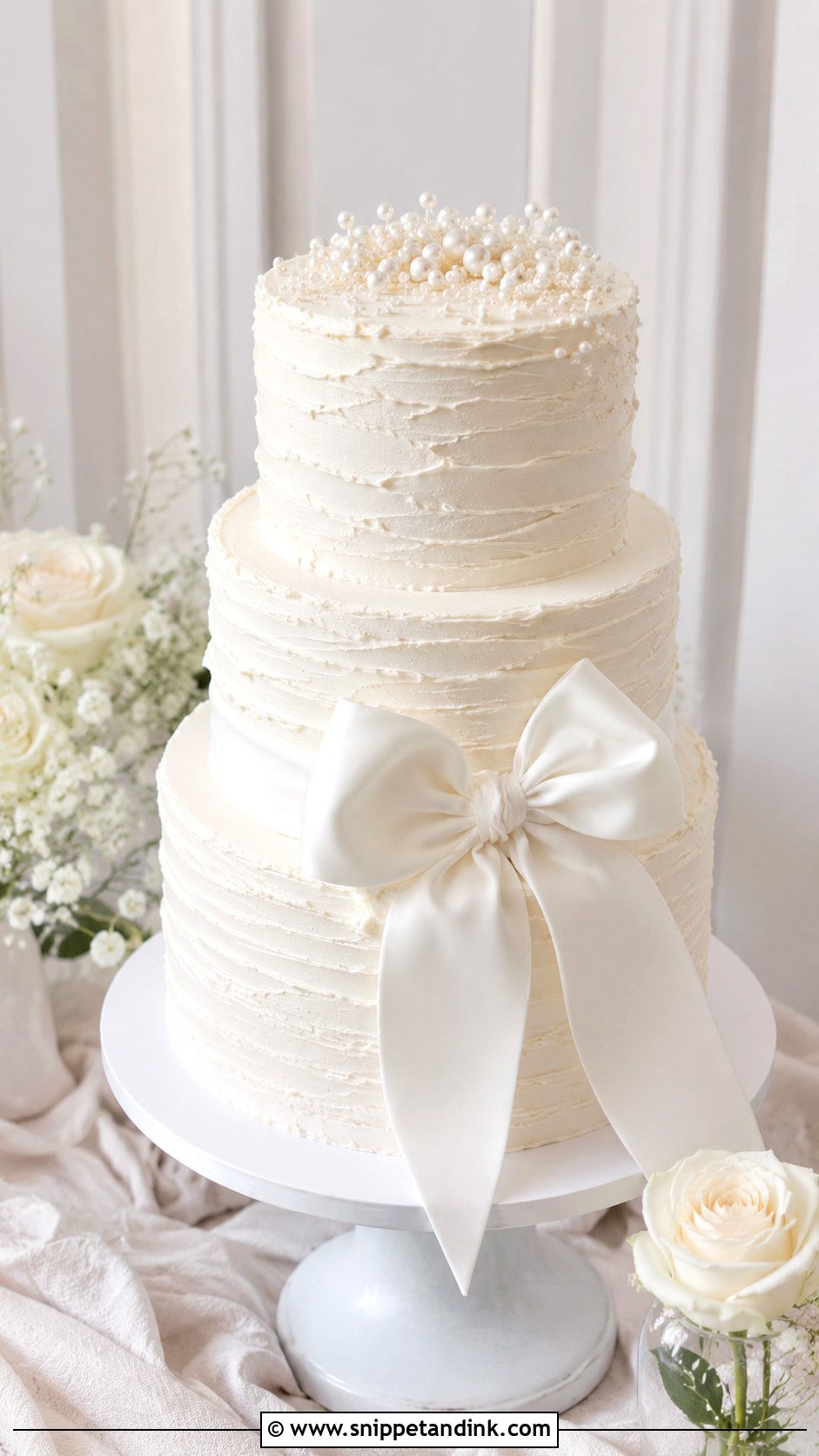
Texture keeps an all-white cake from looking flat, and the bow gives it a focal point. Brushed buttercream, sugar lace, pressed patterns, wafer paper waves, quilted fondant or a stucco finish all work. Pick one texture, not three. A smooth fondant bow against rough buttercream is my favorite contrast. It suits an editorial-style table.
21. White Wedding Cake With Bow And Monogram
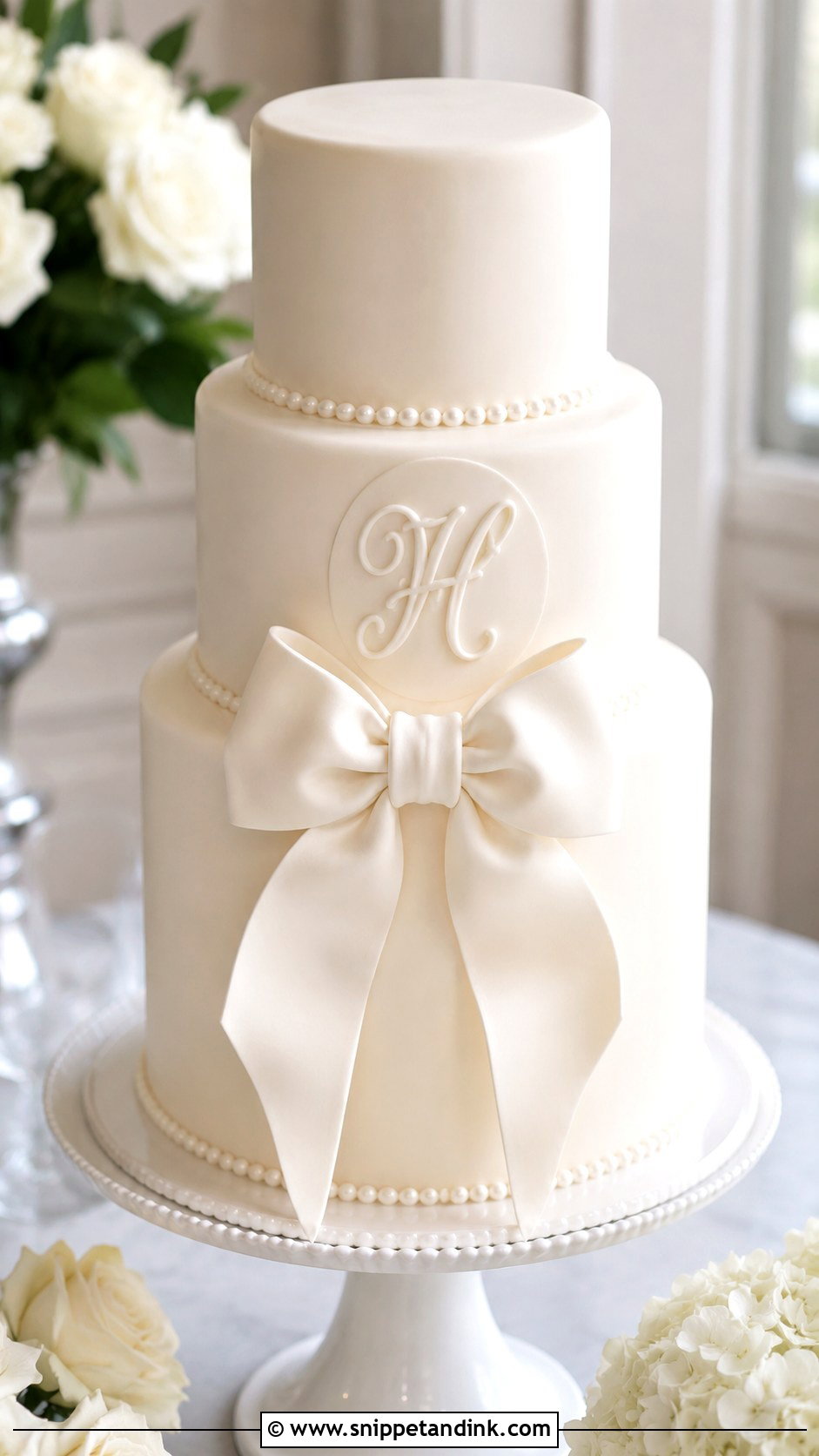
A monogram makes the cake personal. The initials can go on the center tier, on a small plaque or near the knot. If the bow is large, keep the monogram small. Raised white, pearl or soft gold lettering all work. Confirm the initials and their order in writing; it’s the one detail nobody can fix on the day. A ribbon band can frame the monogram tier.
22. White Wedding Cake With Bow And Heart
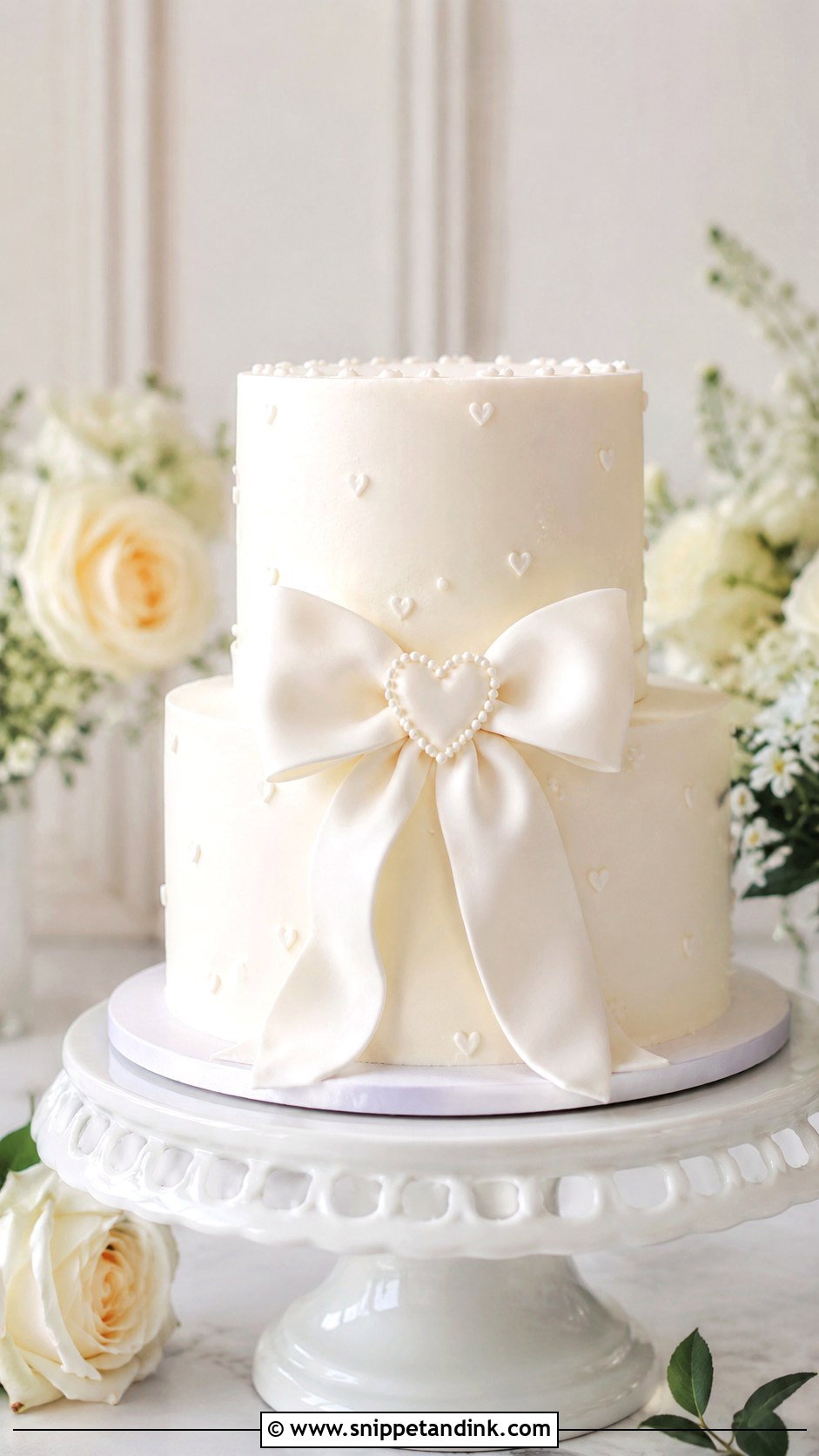
A heart softens the bow design. It can be a fondant charm, a piped outline, a heart-shaped topper or a pattern pressed into one tier. Keeping the heart white, ivory or pearl stops it from tipping into Valentine’s territory, which bright red would. The bow keeps the cake bridal. It suits an intimate wedding or a courthouse celebration.
23. White Wedding Cake With Bow And Cupcakes
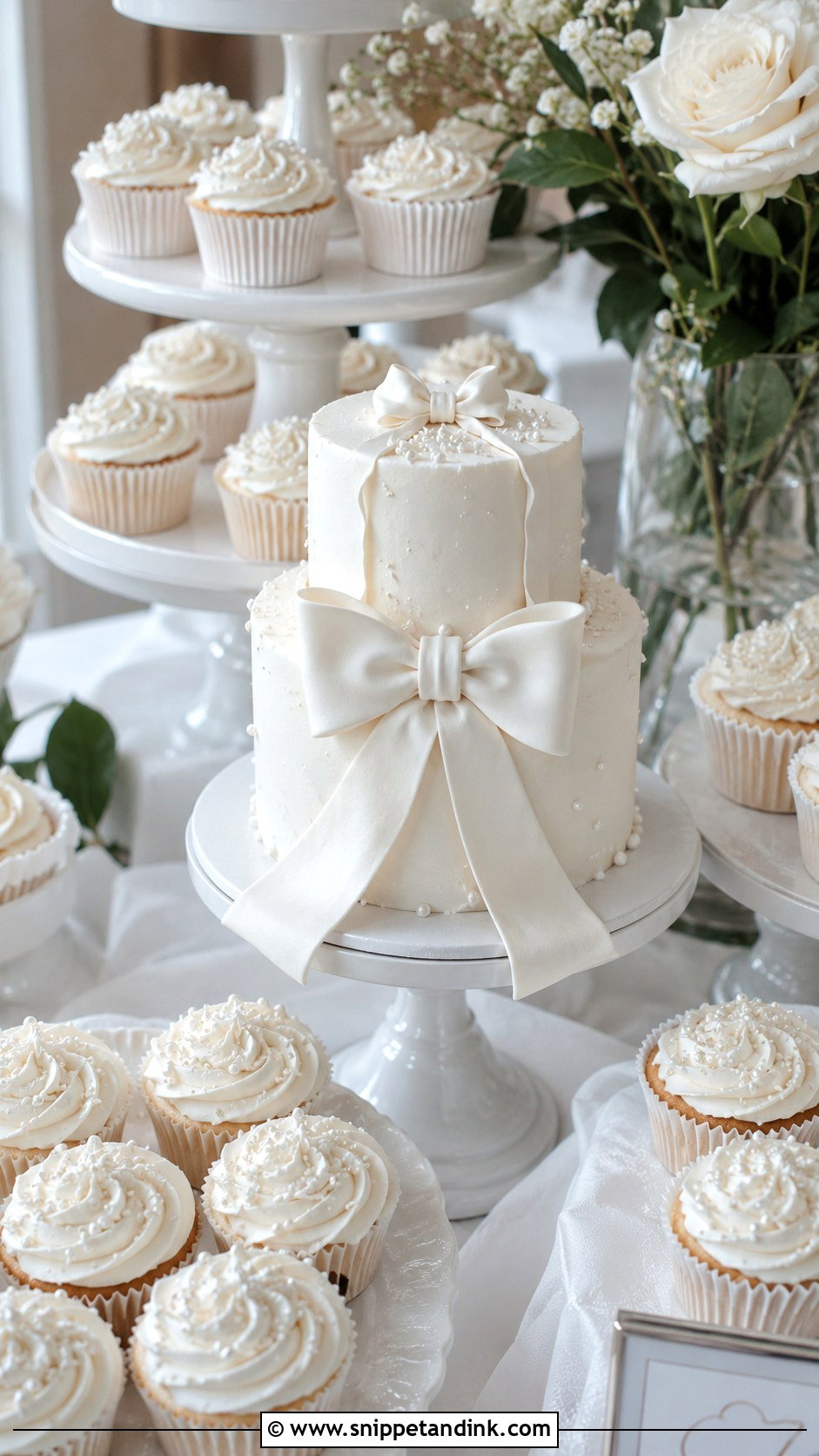
A white wedding cake with bow and cupcakes gives you a display cake for cutting and easy servings for everyone else. The main cake can be one or two tiers with a bow, while matching cupcakes sit around it with small bow toppers or pearl sprinkles. Cupcakes also let you offer several flavors. Make the bow toppers ahead so they’re dry and firm before they’re placed.
24. White Wedding Cake With Bow And Macarons
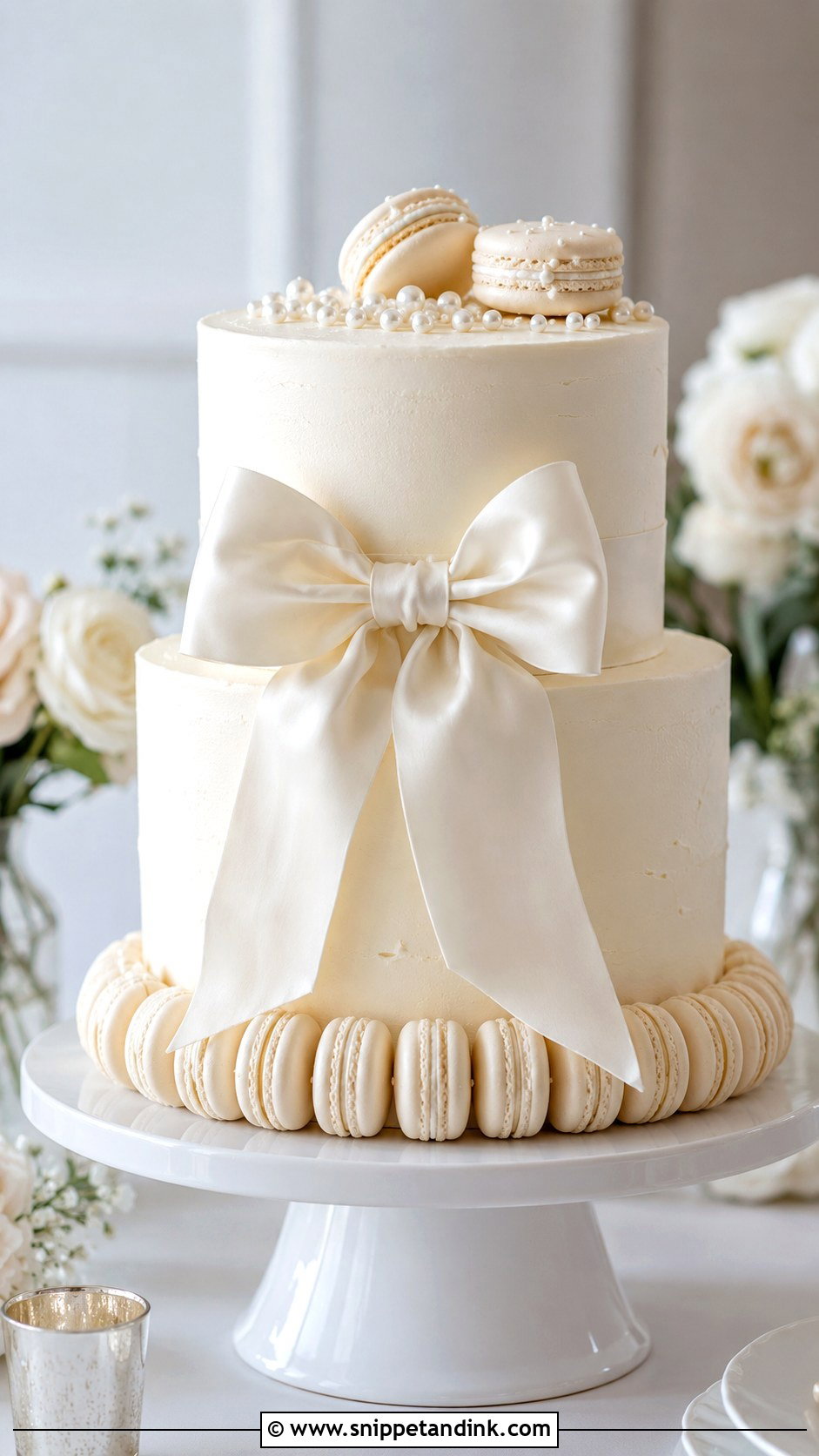
Macarons lend a French note. White or ivory ones can ring the base, stack along one side or sit on a separate stand. Macarons soften on buttercream because they draw moisture from it, so I add them as close to serving as possible. Keep the bow simple so the two don’t compete. Vanilla or almond macarons keep the palette pale.

25. White Wedding Cake With Bow And Cake Stand
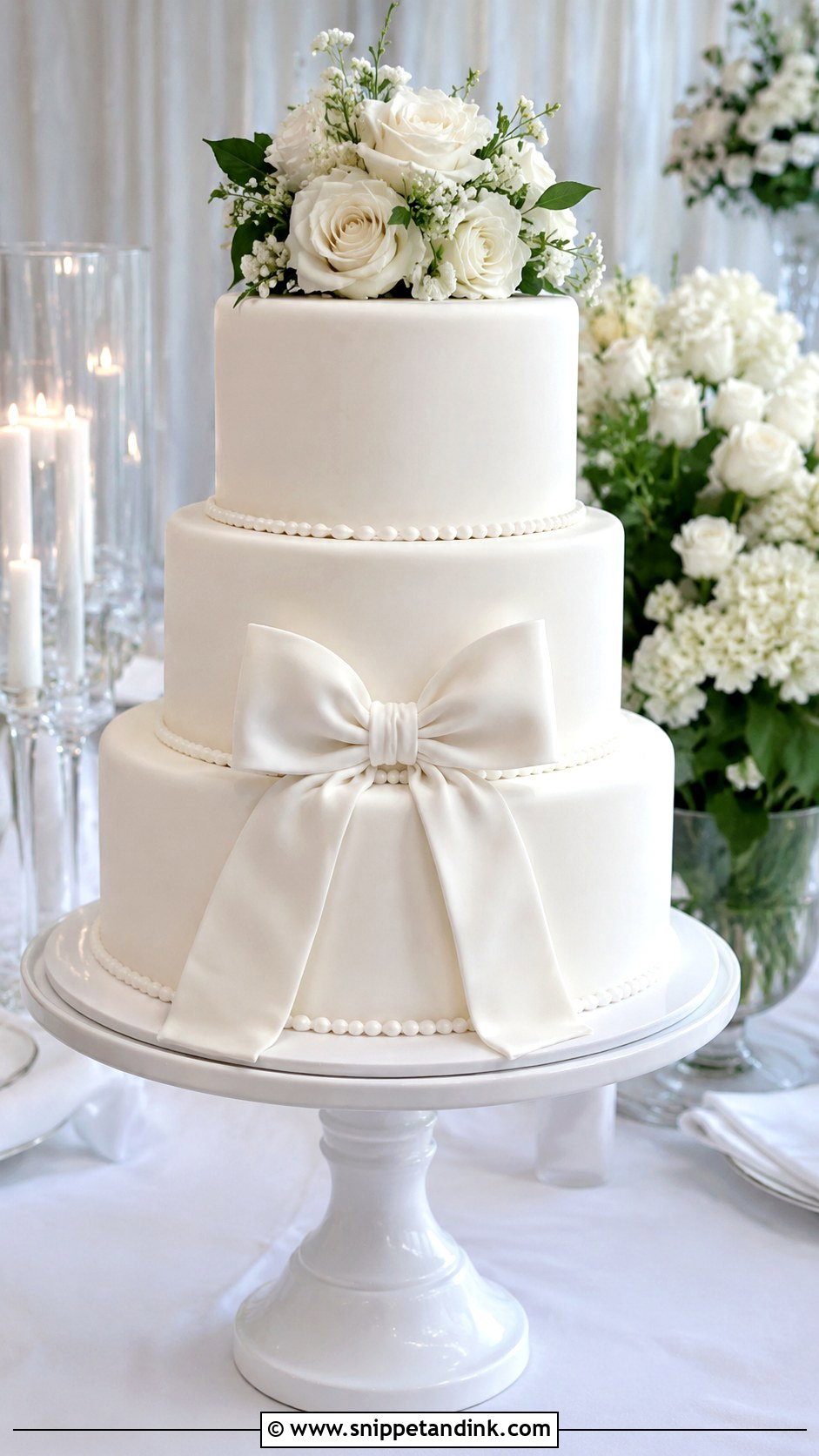
The stand is part of the design. A white pedestal blends into the cake, glass or acrylic looks modern, and silver or gold adds formality. Match the bow to the stand: a front bow suits a round pedestal, and a side bow suits a display with flowers or candles. Check that the stand is rated for the cake’s weight; a three-tier cake is heavier than most people expect.
Real Ribbon on a Cake: What Goes Underneath
Couples often fall for a cake wrapped in silk or satin ribbon. It’s doable, but fabric isn’t food. Dyes can bleed, and the fat in buttercream wicks into the ribbon and leaves dark patches.
- Back the ribbon with clear food-safe tape or film, or attach it over a thin fondant band.
- Secure it with a dab of royal icing or buttercream at the seam, never pins pushed into the cake.
- Tulle and fabric bows need to come off before slicing, so tell the catering team which parts are not edible.
If the ribbon is a family piece, say from a mother’s dress, I’d use it as a band on the stand or the cake board instead. It still shows in every photo, and it goes home clean.
Sugar Bows Need a Head Start
A gum paste or fondant bow has to dry before it can hold its shape. I shape the loops over rolled-up paper towel or foam and leave them to dry, ideally for a couple of days before decorating. Humidity slows drying and can soften a finished bow, so in damp weather I keep them in an airtight box with a food-safe desiccant until it’s time to assemble. That’s also why bows go on near the end of decorating, not the start.
A Bow, the Right Material, and a Cake That Faces the Room
Bows work on white cakes because they borrow from the dress. Size, material and placement decide whether yours reads as soft, sculptural or minimal. For a clean look, one satin or fondant bow on a smooth cake is enough. For drama, go oversized, or add draping, pearls or sugar flowers. Whichever you choose, ask your baker what the bow is made of and how it will hold up in your venue.
You'll Like These Ideas:










Leave a Reply