
A Tswana bride has more freedom than most people realize. Traditional pieces such as patterned leteisi fabric, coordinated headwear, shawls and full skirts can be worn the classic way or cut into modern bridal shapes: a structured mermaid, a ball gown, a tailored two-piece, or a plain dress finished with a few well-placed bands of print. Customs and ceremonial clothing differ between families, so I always ask brides to talk through the meaningful details with relatives before the design is final. After that, my job is making sure the dress fits, lets her move and still looks like her. Here are twenty ways to put the look together.
Preparing Leteisi Before the Tailor Cuts Into It
Leteisi is a printed cotton with a personality of its own, and most of the problems I see in finished gowns come from skipping the preparation.
- Wash it first. New cloth is stiff with a starch finish that washes out, and the cotton can shrink. Wash it in cold water before cutting, or the gown may tighten after its first clean.
- Check the width. The cloth is often sold narrower than ordinary dress fabric, so a full skirt or a train can need far more length than you’d guess. Let your tailor do the calculation.
- Look at the back. Genuine cloth is usually stamped on the reverse, and the print should run straight along the grain.
- Keep new blue cloth away from white until it’s washed. The indigo can rub off onto pale fabric, especially when damp.
Once washed, the fabric softens and drapes more than it did on the bolt. I judge a design on the washed sample rather than the crisp original, because that’s the fabric you’ll actually wear.
1. Blue Tswana Leteisi Wedding Dress
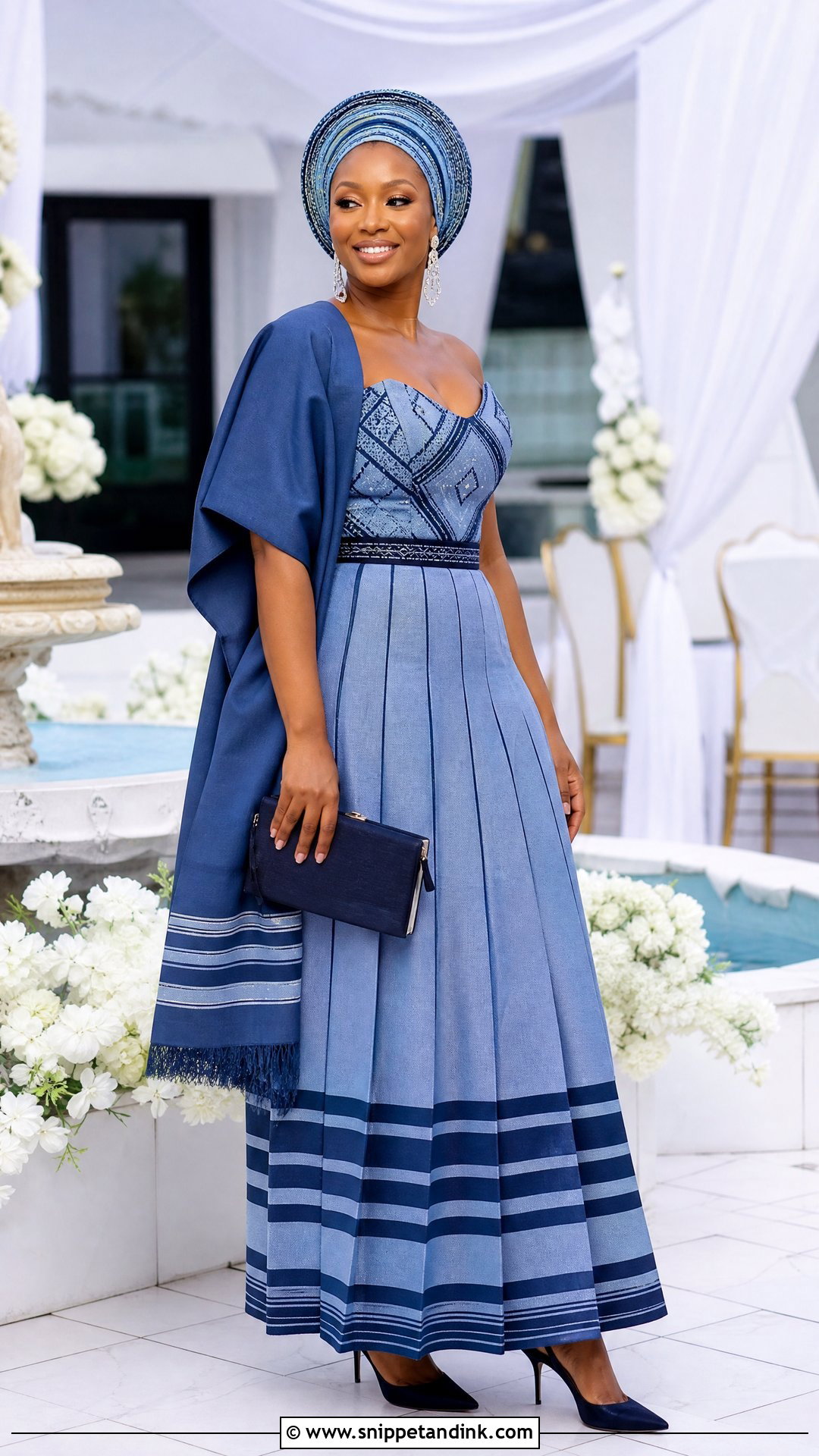
Blue is the color most people link with leteisi, and a floor-length pleated skirt in it is the classic starting point. Pair the skirt with a shaped bodice that supports the bust without squeezing. Leteisi is a firm cotton, so it holds structure well but won’t stretch to forgive a tight fit. Short puff sleeves or fitted elbow sleeves balance the volume below. Add a matching headwrap, comfortable navy heels and small silver or pearl earrings, plus a plain blue shawl over the shoulders for the moments that call for one. I keep embellishment to the neckline and waist so the print carries the dress, and the whole outfit is easy to move in through a long day.
2. Tswana Mermaid Wedding Dress
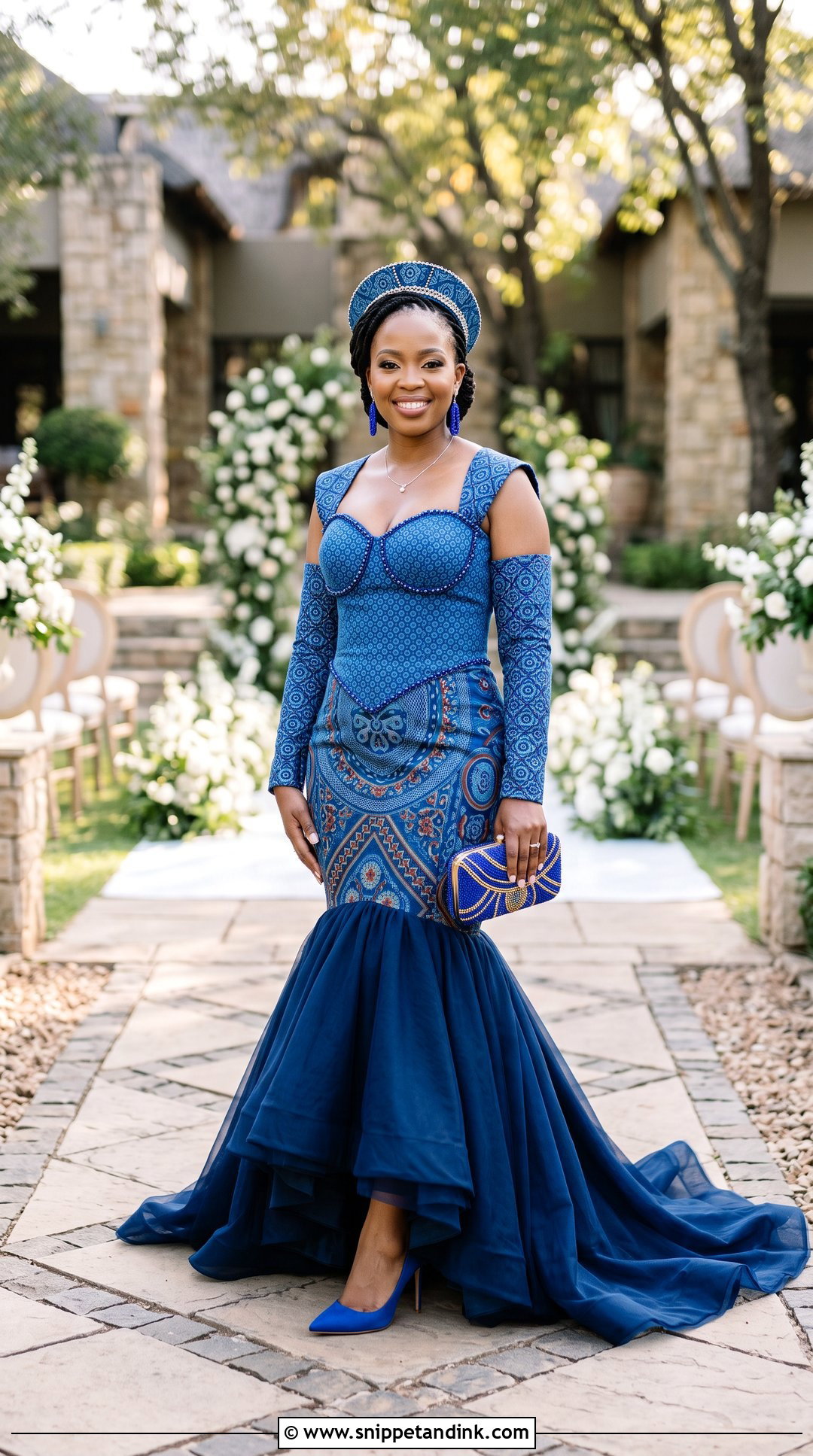
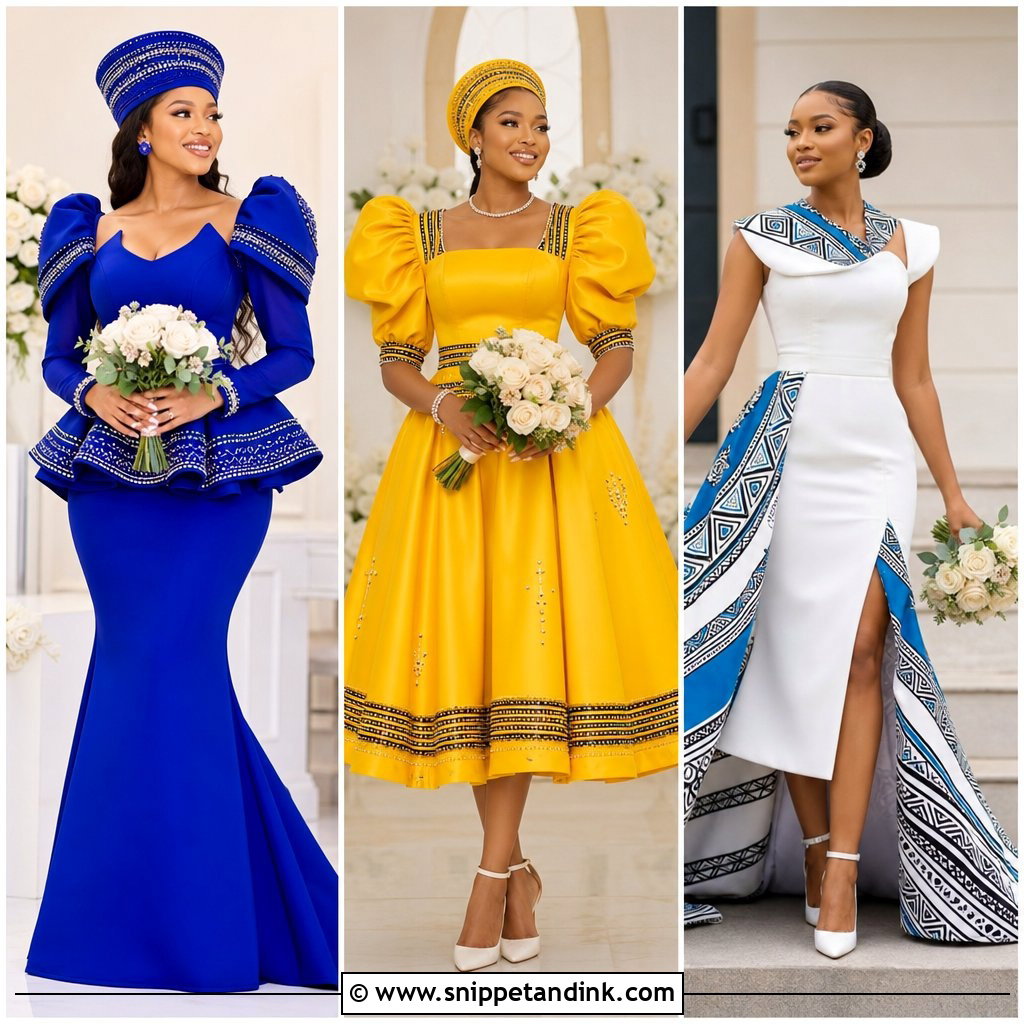
Cotton print isn’t the obvious choice for a mermaid, which is exactly why the construction matters. Leteisi has almost no give, so I put it across the bodice and upper skirt and use a solid fabric with more drape for the flare. Shaped panels define the waist and hips, and a modest sweetheart or straight neckline keeps the gown balanced. The flare should start near the knee, not below it, or walking turns into a shuffle. Ask your tailor for enough ease to sit and dance. Detachable sleeves give you a second look. Pointed heels, a small beaded clutch, drop earrings and a smooth low bun finish it.
3. Tswana Ball Gown Wedding Dress
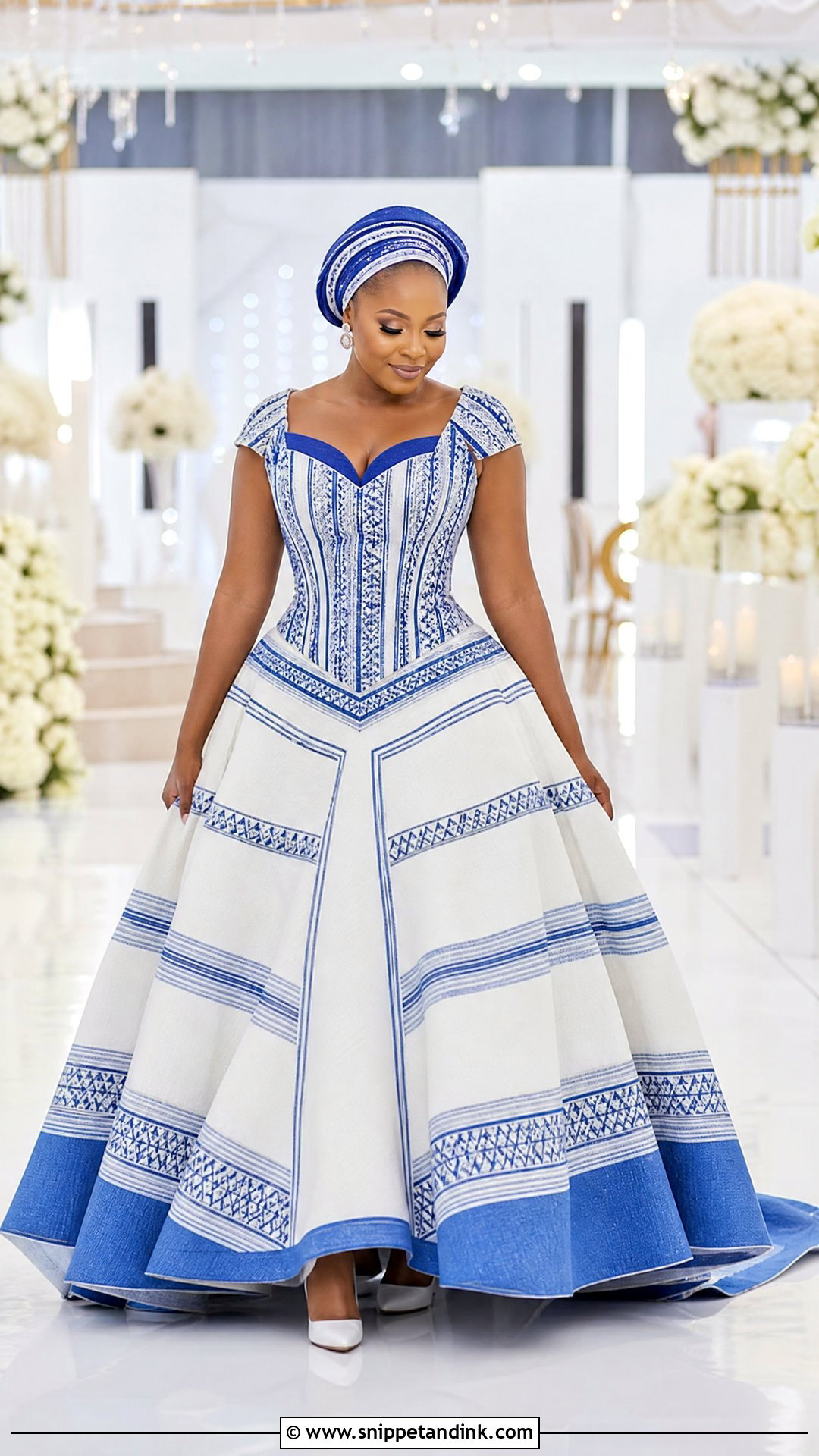
Which matters more to you, the entrance or the dancing? A Tswana ball gown wins the first easily: a fitted top and a wide, floor-sweeping skirt on a solid navy, royal blue or white base, trimmed with leteisi at the neckline, waistband and hem. The volume gives the print room without letting it take over. A light petticoat holds the shape, and it’s worth asking for one that doesn’t add much weight. Choose a headwrap or a simple bridal headpiece to suit the ceremony, closed-toe heels, and no big necklace if the bodice carries beadwork. Before committing, lift the skirt and walk a few steps. If you can’t hold it comfortably in one hand, ask for a lighter build.
4. Off-Shoulder Tswana Wedding Dress
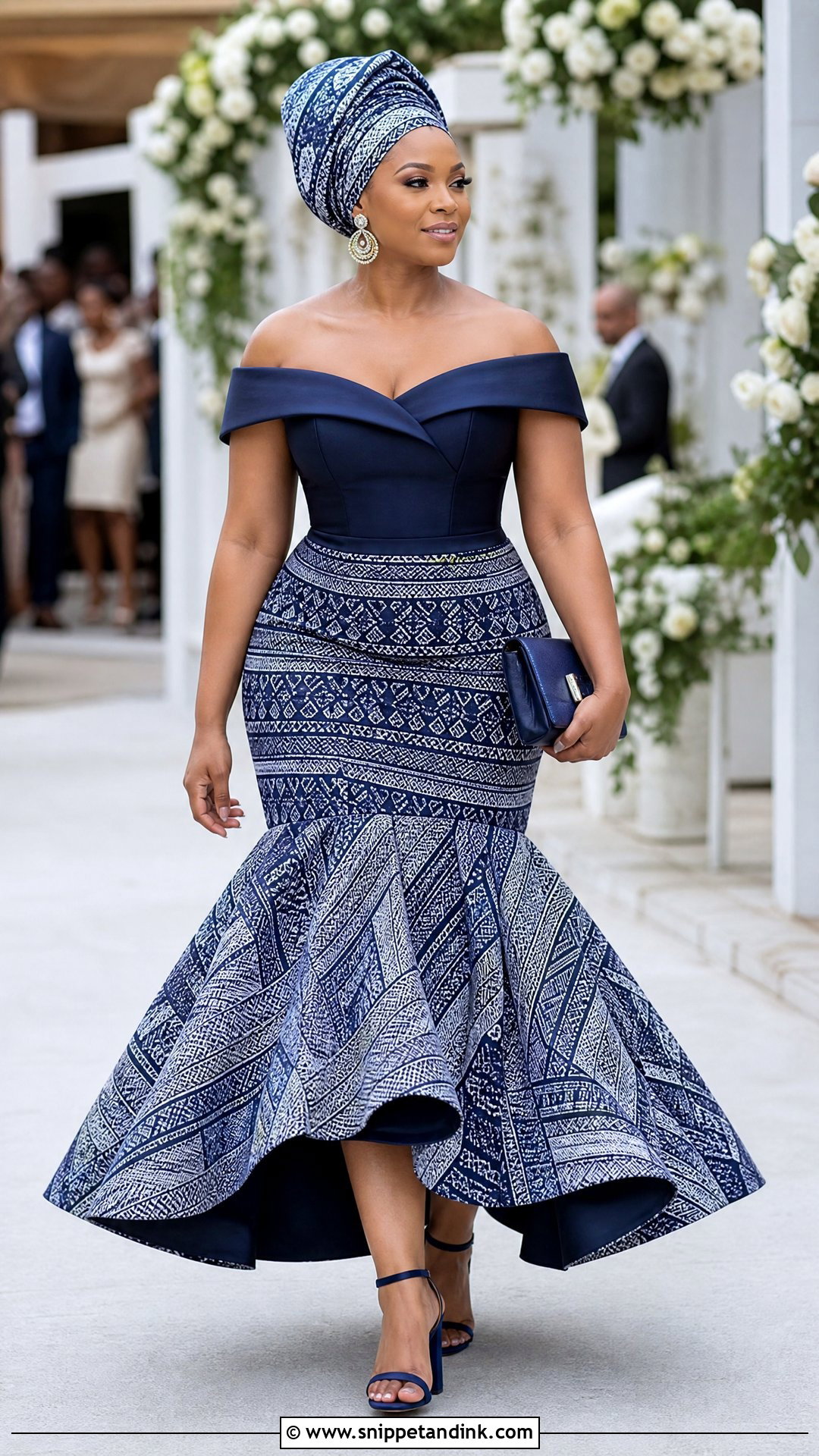
Off-shoulder necklines depend entirely on what’s inside the bodice. I’d ask the tailor about boning and fastenings before anything else, because a folded neckline in plain fabric will slip without them. The leteisi then runs from the waist through a full-length skirt, flared or gently fitted. A structured headwrap adds height to balance the open shoulders. Medium block heels, statement earrings and a fabric clutch complete it. For formal moments that call for coverage, keep a removable shawl in the same color family close by. The aim is secure rather than tight: you should be able to raise your arms for a hug without hitching the dress up afterward.
5. White Tswana Wedding Dress With Blue Print
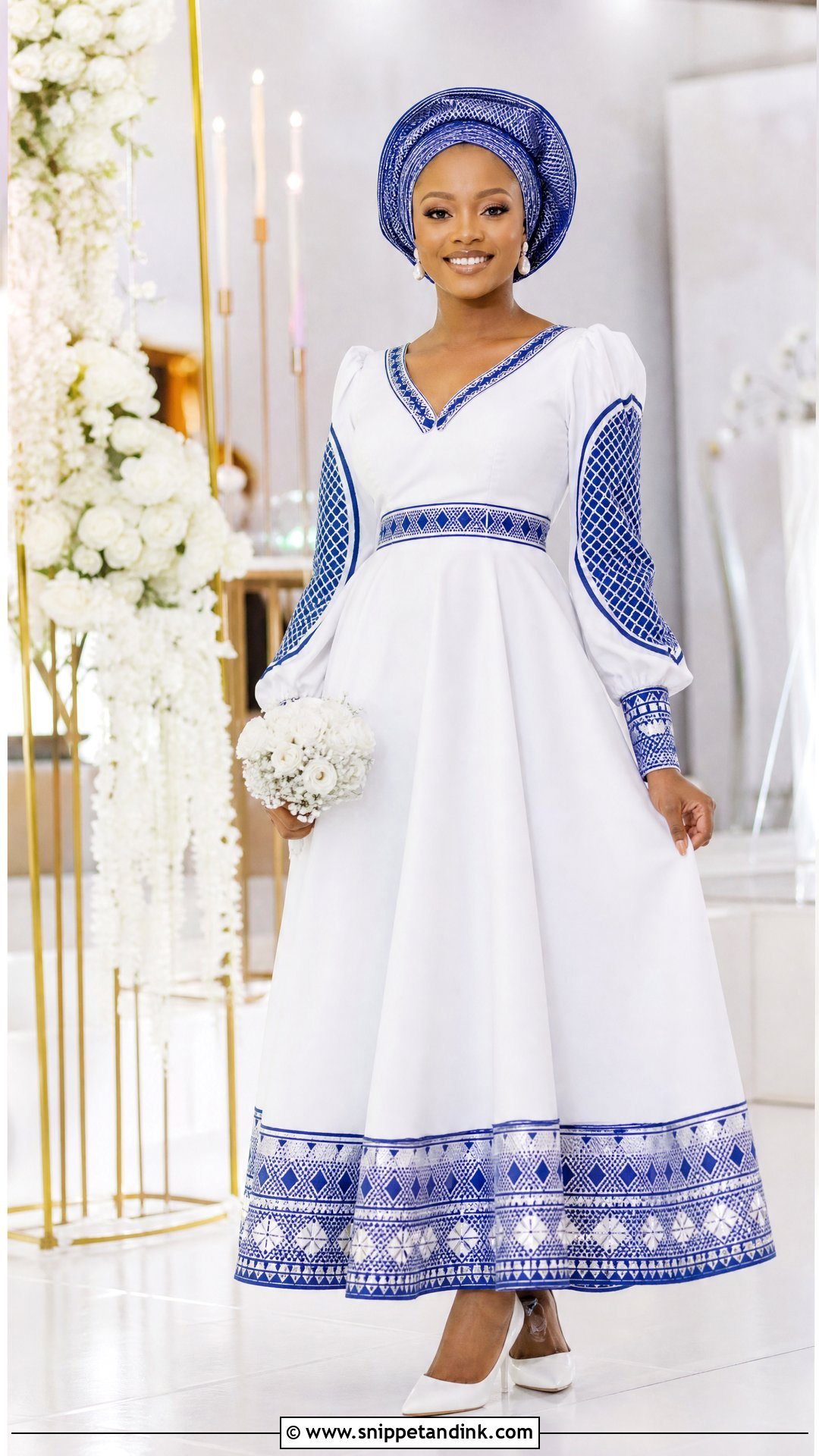
White with blue print reads clean and suits both a traditional ceremony and a church service. Start from a white A-line or fit-and-flare and add print at the waist, sleeves, neckline and lower hem. Blue on white is already high contrast, so resist extra trims. A practical warning from the workroom: new indigo-dyed cotton can transfer onto white fabric when damp, so the leteisi should be washed before it’s stitched next to white. White or silver heels, pearl earrings and a blue patterned headwrap finish it, with a small bouquet of white flowers and cool green foliage. Long sleeves and a high neck give the same look for a modest ceremony.
6. Tswana Wedding Dress With Tartan Blanket
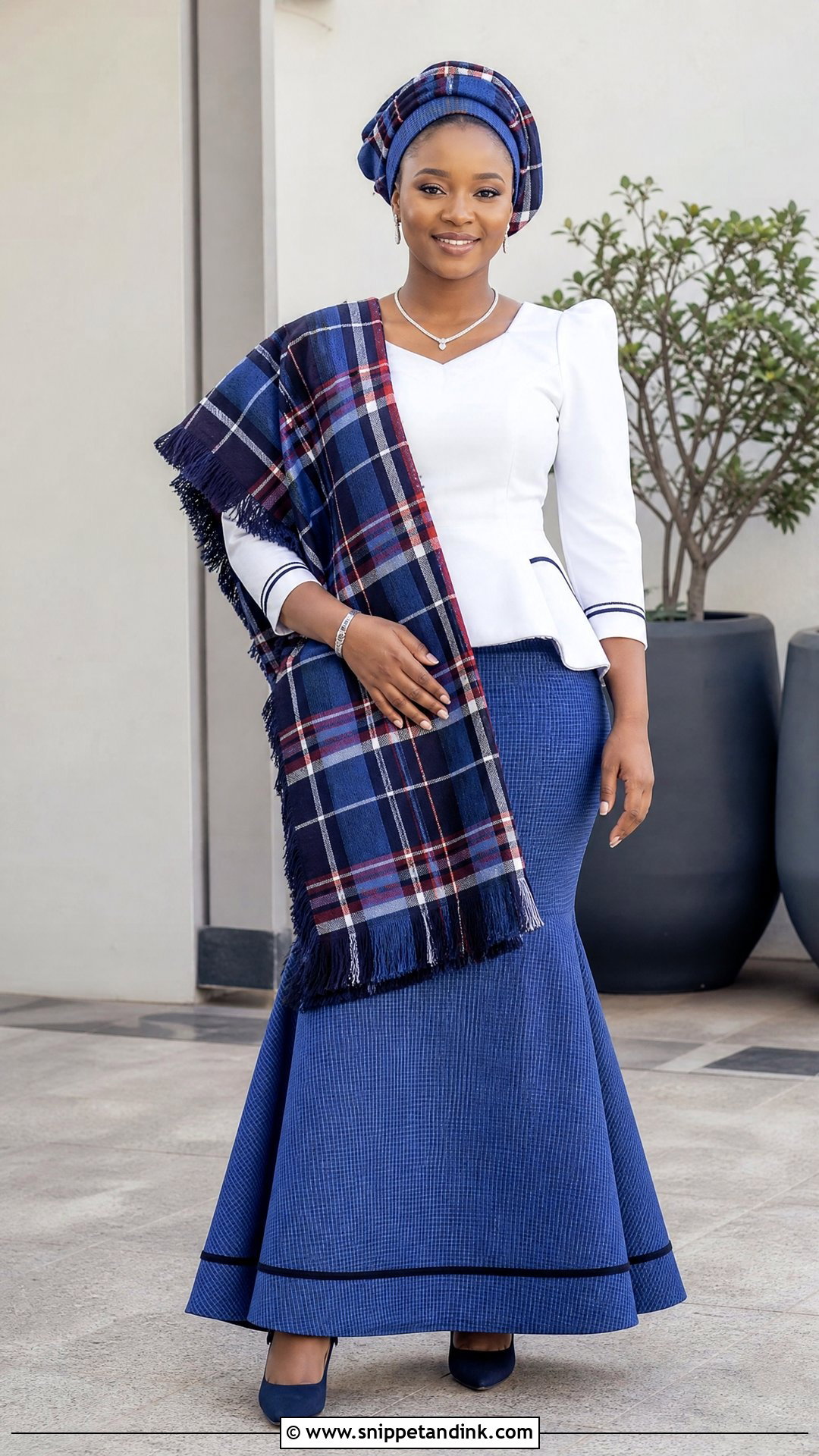
The blanket changes the whole silhouette, so I plan the rest of the outfit around it. Start with a floor-length leteisi skirt and a fitted white or blue blouse with short or elbow-length sleeves, then drape the tartan blanket neatly around the shoulders in colors that connect with the skirt. Because the blanket adds bulk, the blouse should be smooth and the skirt only moderately full, or you’ll look twice your size in photographs. A hidden pin keeps the drape in place through greetings. A matching headwrap, closed-toe shoes and understated earrings are enough. Its significance depends on family practice, so confirm the fabric, colors and way of wrapping with knowledgeable relatives before the wedding.
7. Tswana Two-Piece Wedding Dress
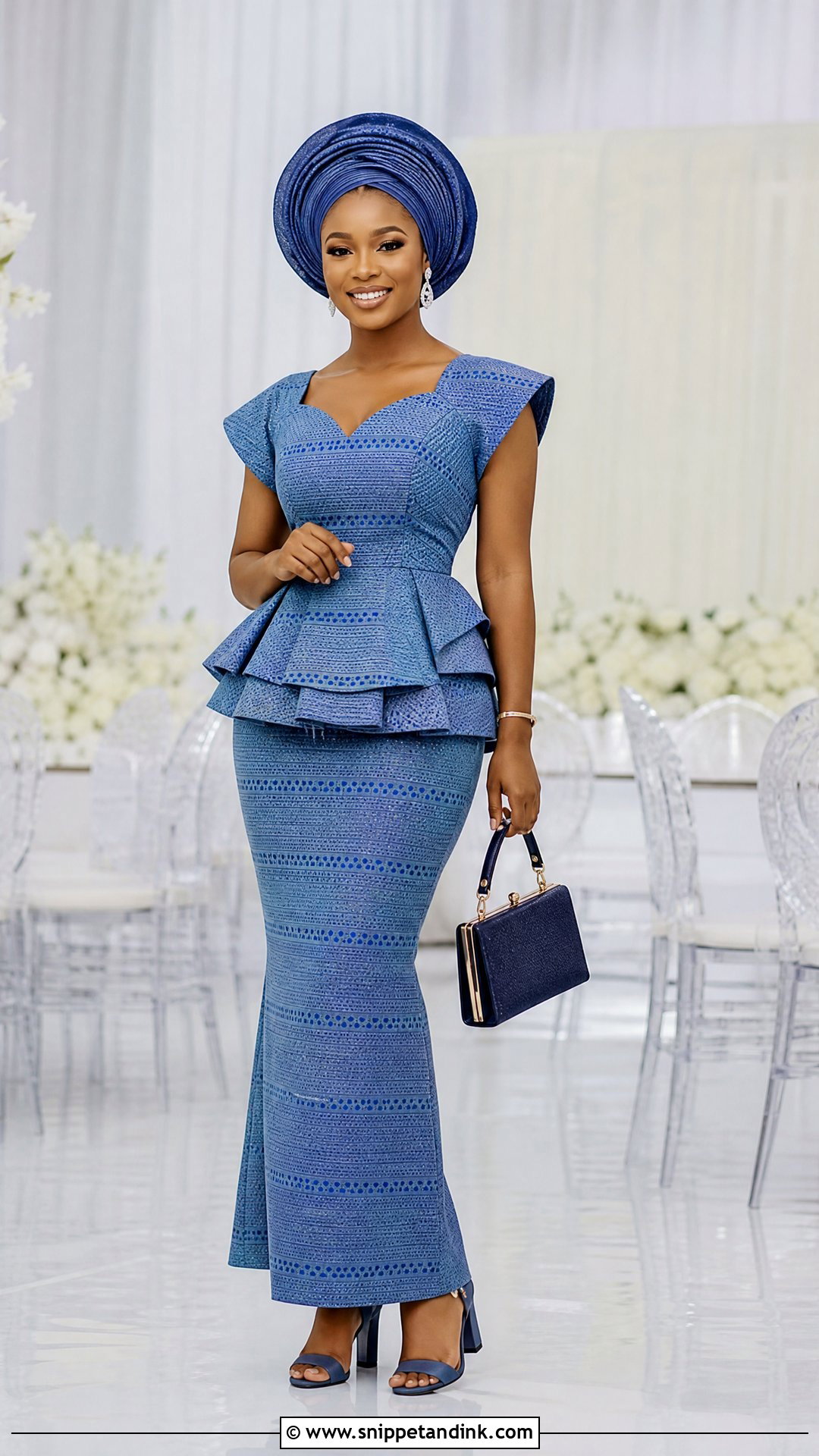
Ask for a small overlap between the pieces. That one detail keeps a two-piece from showing skin when you sit or dance, and it’s easy to forget at the design stage. A fitted peplum top with a high-waisted, floor-length skirt in matching leteisi gives a continuous line; if you prefer contrast, put the print on top and plain navy or white below. Block heels, a structured bag, a headwrap and simple metallic jewelry finish it. The top can be worn again with another skirt later, which makes the cost easier to justify.
8. Tswana Peplum Wedding Dress
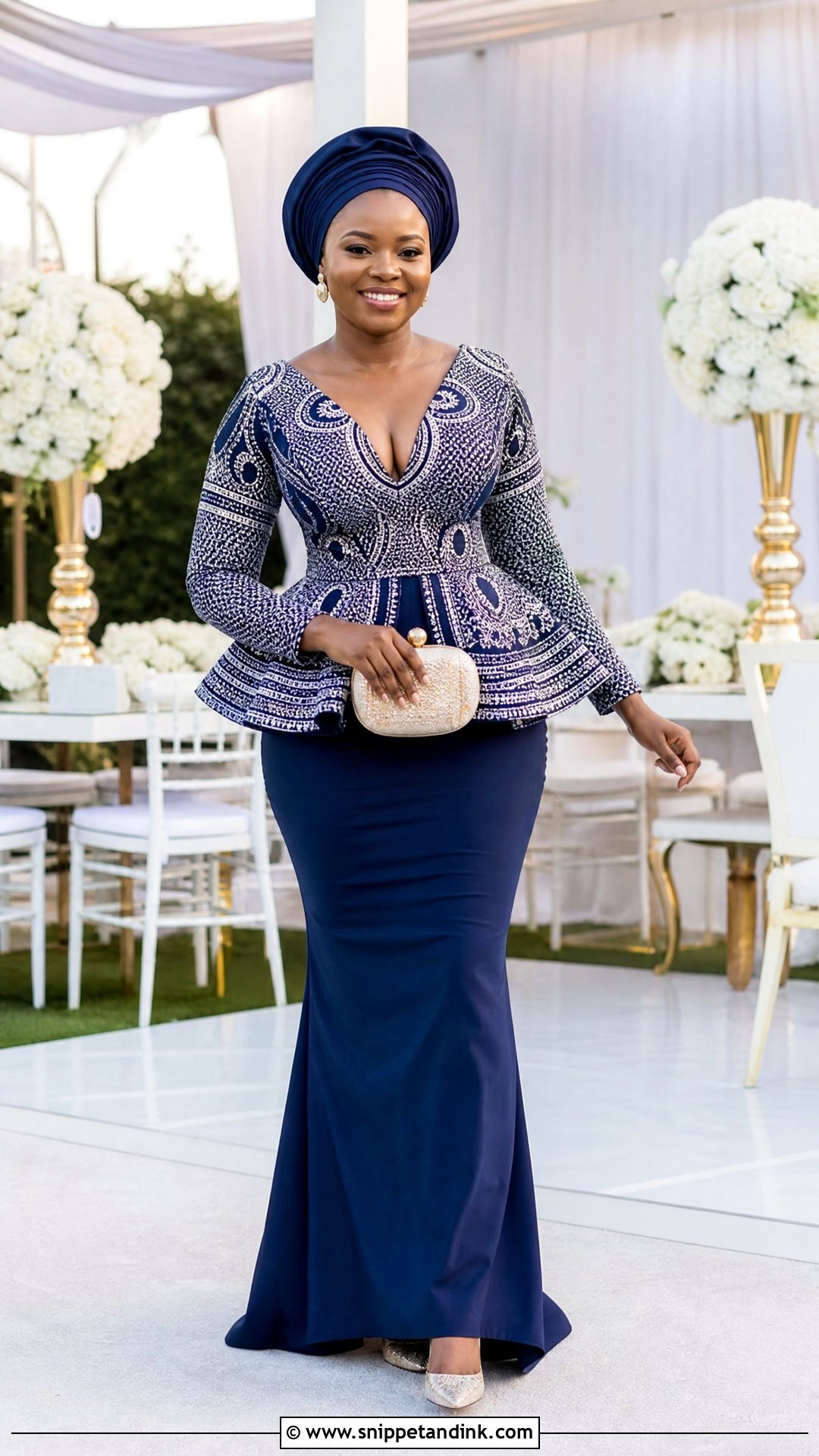
Peplum length is where I spend the time on this dress. On a petite bride, a long peplum swallows the leg line; on a tall one, a short peplum looks like an afterthought. It starts at the natural waist and sits over a straight, flared or mermaid skirt. Leteisi can cover the whole gown or appear only on the peplum, sleeves and hem. A V-neck lengthens the upper body, while a round neckline gives a more traditional, covered finish. Add pumps, a compact clutch, stud earrings and a neatly tied headwrap. With width, length and placement all adjustable, it can be tailored to almost any figure.
9. Tswana Wedding Dress With Lace Sleeves
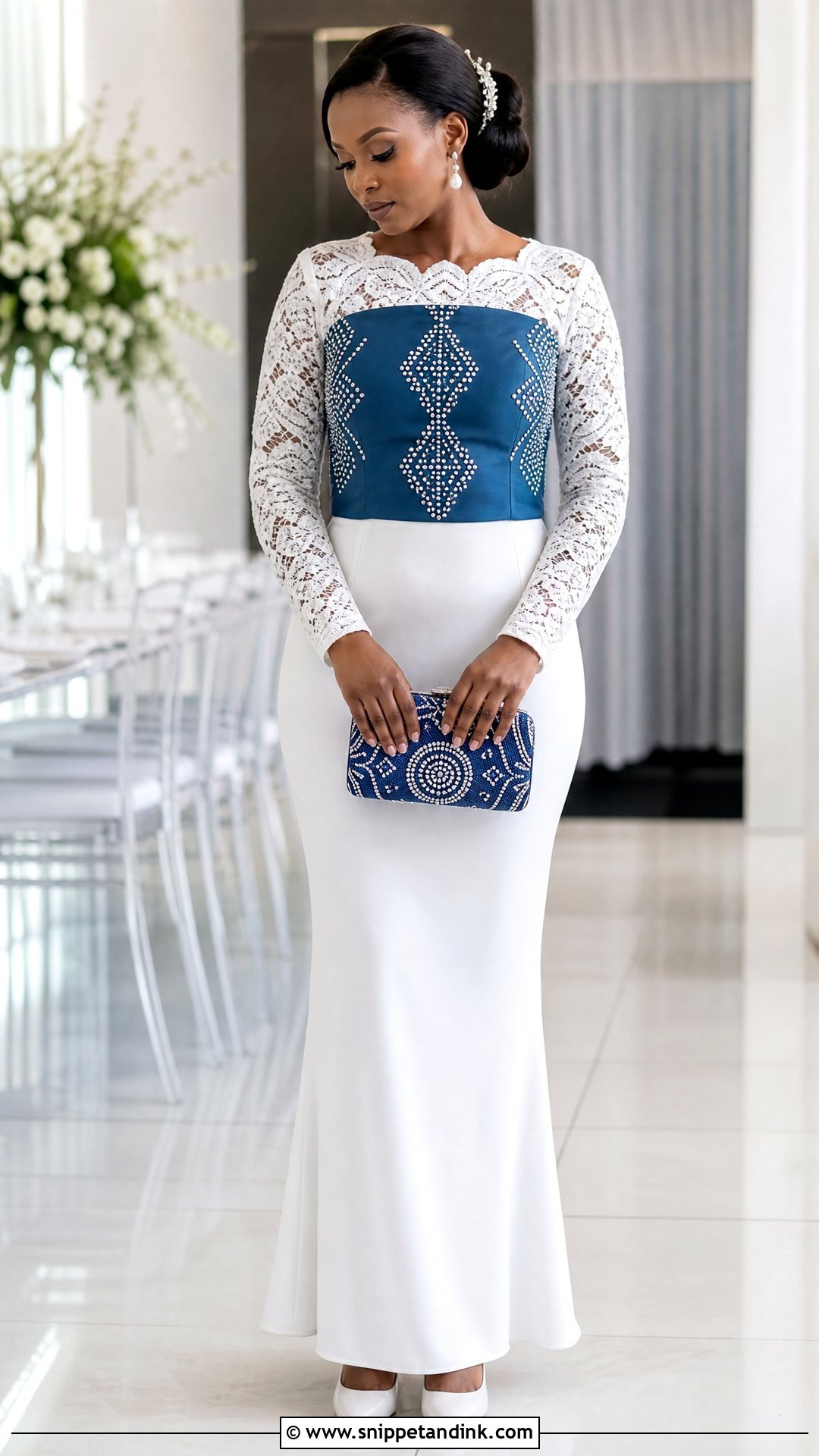
Lace and leteisi sit at opposite ends of the texture scale, one fine and sheer, the other firm and graphic, and that contrast is the point. Use lined lace if the ceremony calls for coverage. The bodice can carry lace at the shoulders and leteisi through the torso, with a plain satin or crepe skirt keeping it refined. Where lace sleeves meet a cotton bodice, the seam needs care, because the two fabrics move differently and a stiff join restricts the arm, so ask the tailor how it will be set. Closed-toe heels, pearl drops, a low bun with a small comb and a print clutch complete the look. On camera, the lace gives fine detail and the print supplies the color.
10. Tswana Wedding Dress With Dramatic Train
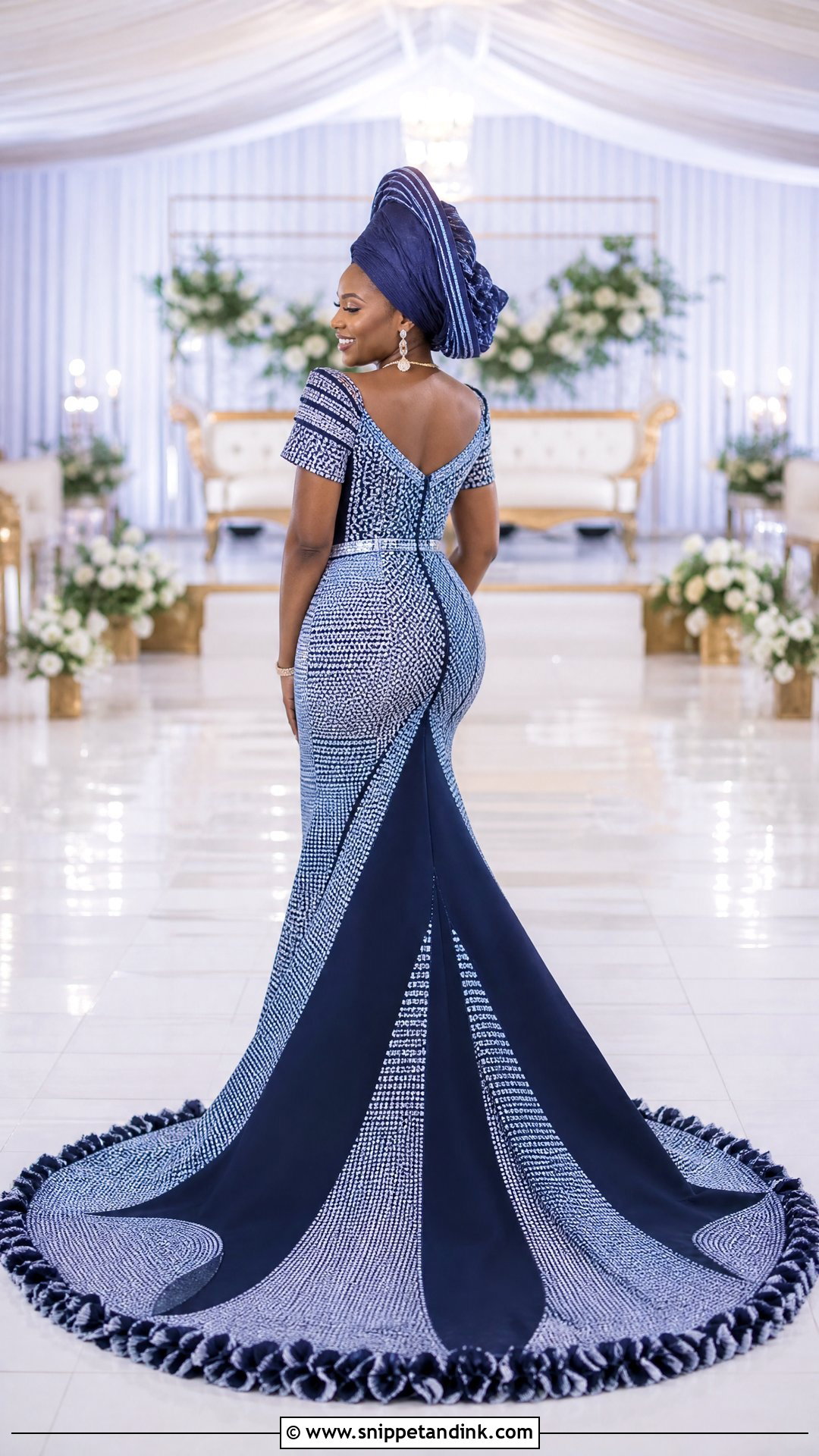
A long train is what guests watch as you walk away from them up the aisle. Build it on a fitted trumpet or ball gown base, either detachable or ready to bustle. Leteisi edging can outline it, with a solid central panel so the pattern doesn’t overwhelm. Firm cotton drags more heavily across grass than satin does, so think about the ground you’ll be walking on. Stable heels, drop earrings and a headwrap sized to the skirt are enough, perhaps with one bracelet. Practice walking, turning and sitting in the finished gown, and ask the tailor for a secure wrist loop or bustle for dancing.
11. Tswana A-Line Wedding Dress
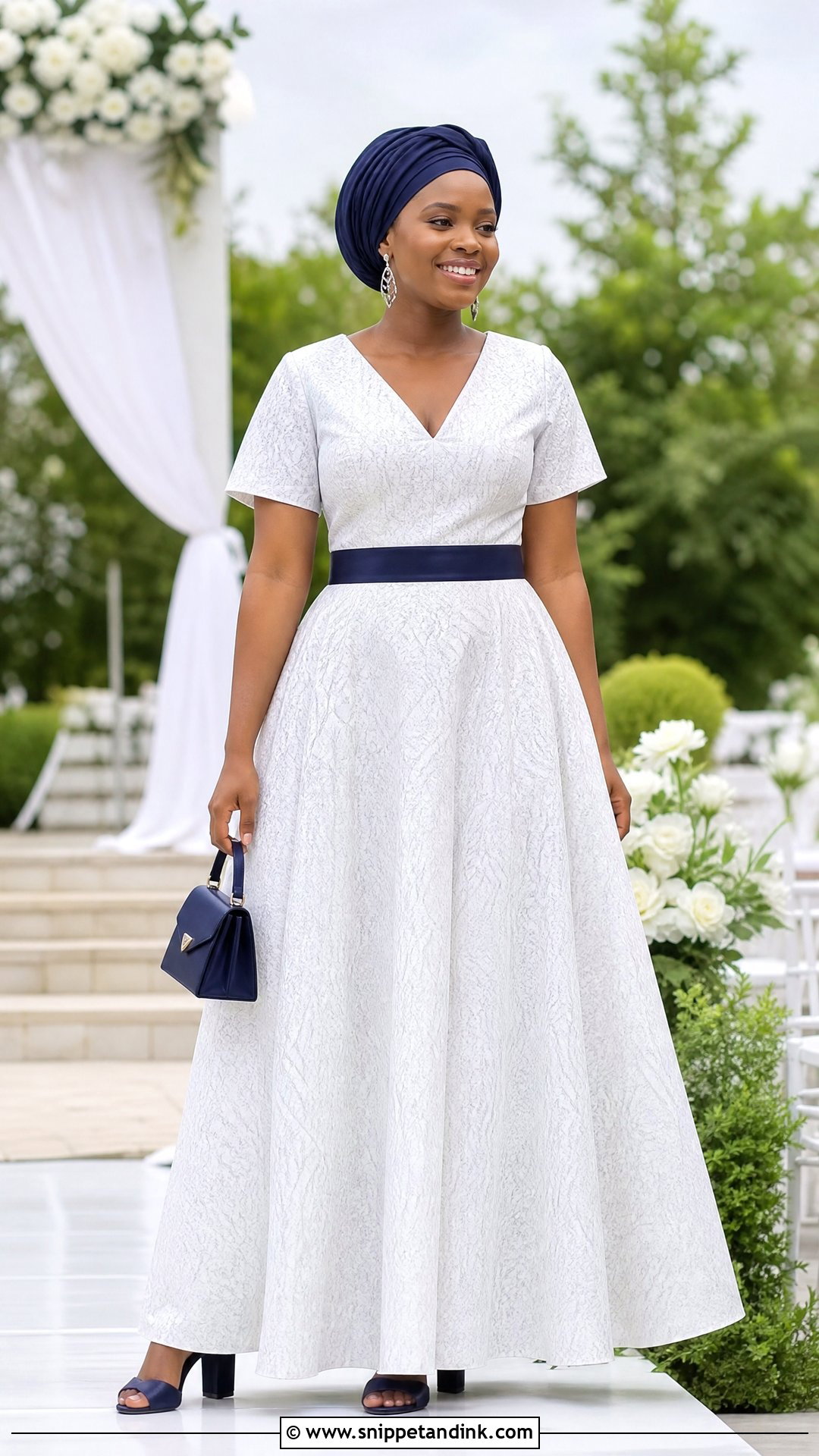
What if the priority is moving easily all day? Then I’d point you to an A-line, which fits through the bodice and widens gradually toward the floor. It can be made entirely of leteisi or combined with plain blue, white or cream. A defined waistband, short sleeves and a modest V-neck balance it. The skirt should skim without clinging so you can sit, walk and dance comfortably, and hidden side-seam pockets are worth requesting. Low block heels, a headwrap, a small bag and simple earrings finish it. With so little fuss in the shape, the print and the fit carry the dress.
12. Tswana Long-Sleeve Wedding Dress
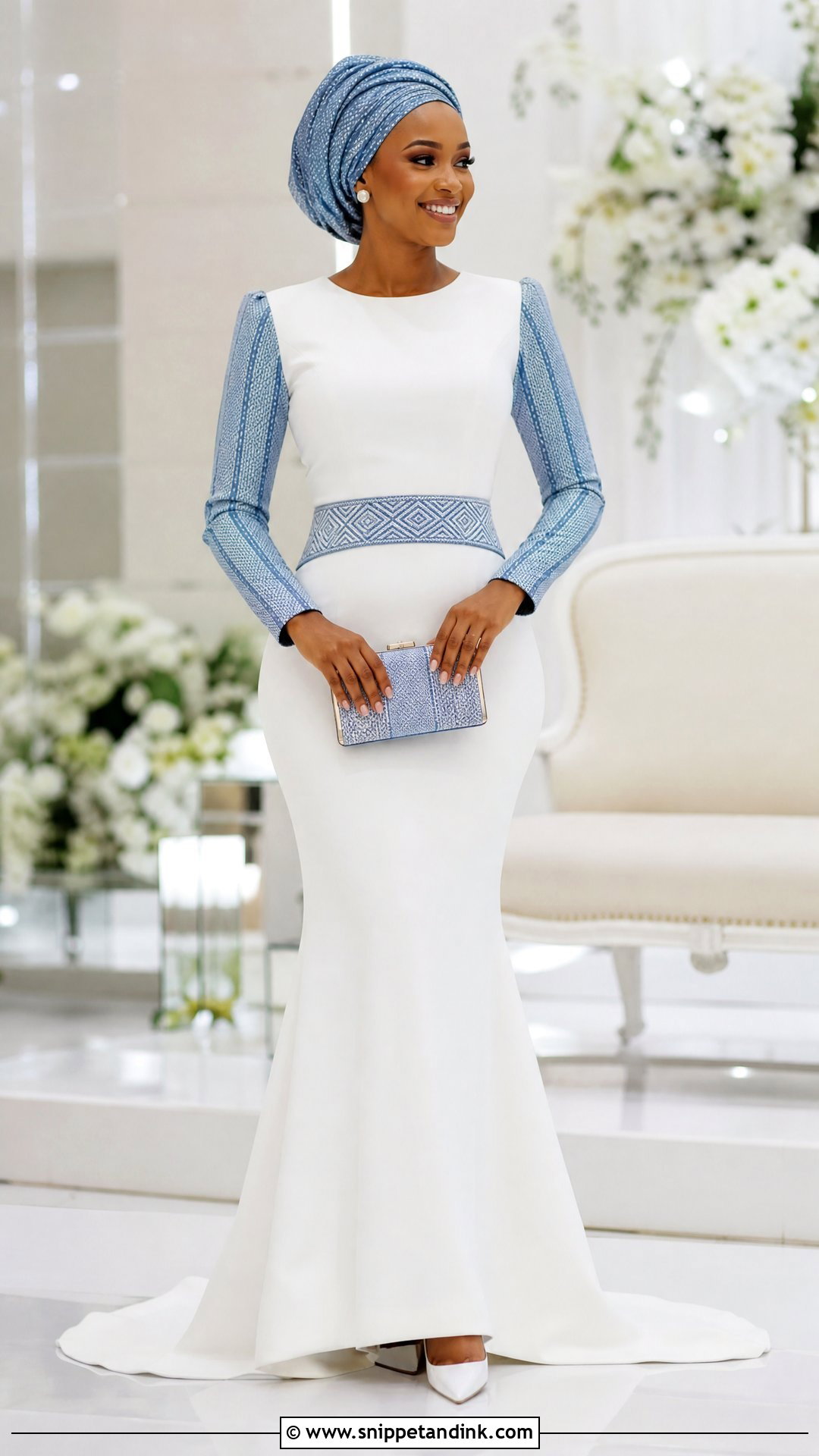
Long sleeves in firm cotton can be warm and restrictive, so I fit this dress with the bride’s arms moving. A fitted bodice, slim sleeves, a defined waist and a gently flared floor-length skirt make the base. Put leteisi on the sleeves with a plain crepe body, or reverse it for a print-heavy look. For a hot day, choose a lighter body fabric and a partial lining. Bend your elbows and reach forward at every fitting. A narrow cuff with covered buttons adds detail without bulk, and pointed pumps, a matching headwrap, pearl studs and a structured clutch complete it.
13. Tswana High-Neck Wedding Dress
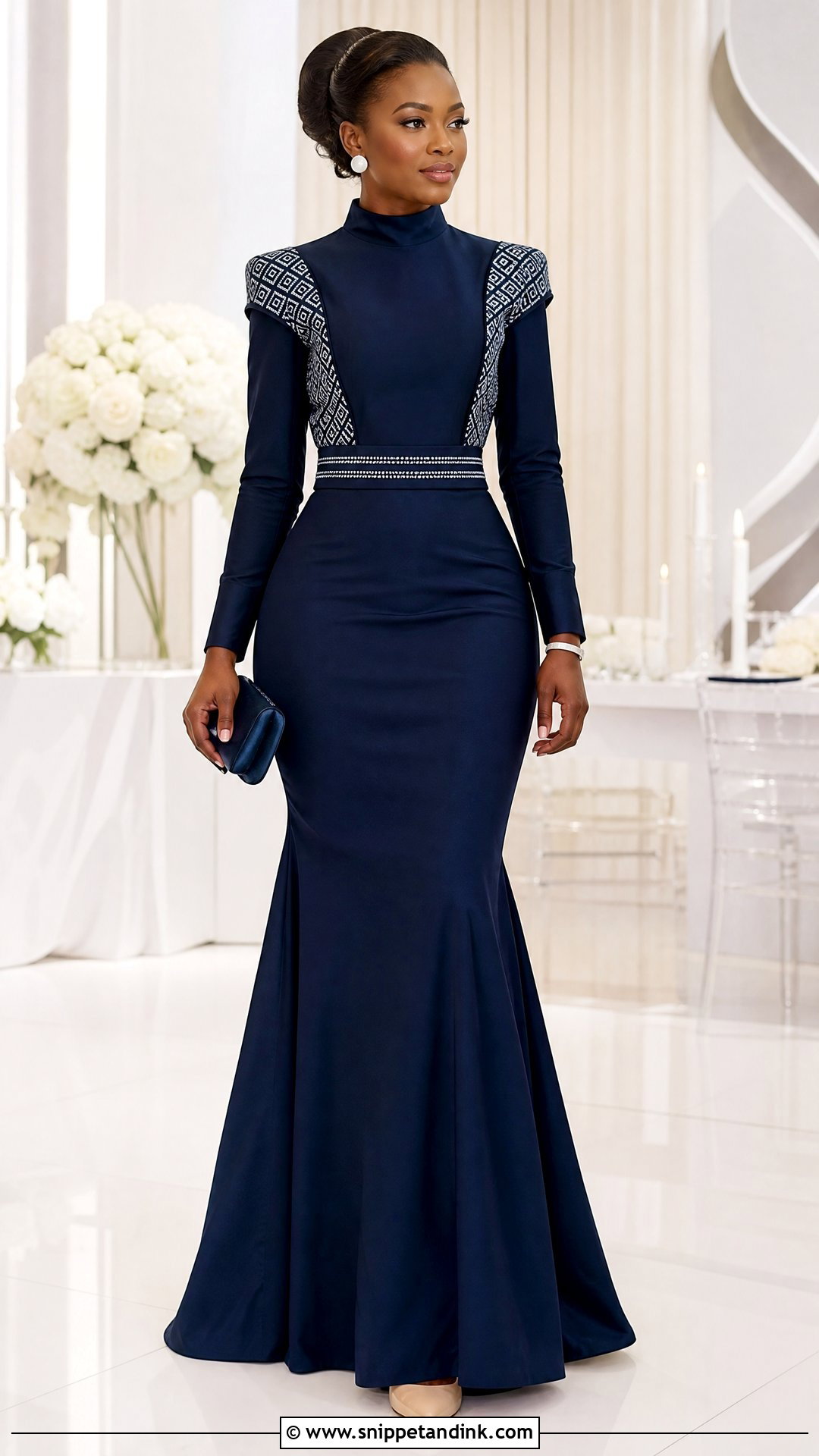
A high neck in cotton print can rub along the jaw by evening if the collar is cut too close, so I check for a finger’s width of room. Use a plain fitted bodice with a leteisi collar, shoulder panels and waistband, then continue the print through a long skirt or train. The bolder alternative is a fully patterned gown with solid piping defining each seam. Modest heels, button earrings and a smooth updo leave the neckline clear; skip the necklace. A matching clutch and a narrow bracelet are enough. Precise tailoring matters here, because clean lines let the print and the silhouette share the attention.
14. Tswana Layered Wedding Dress
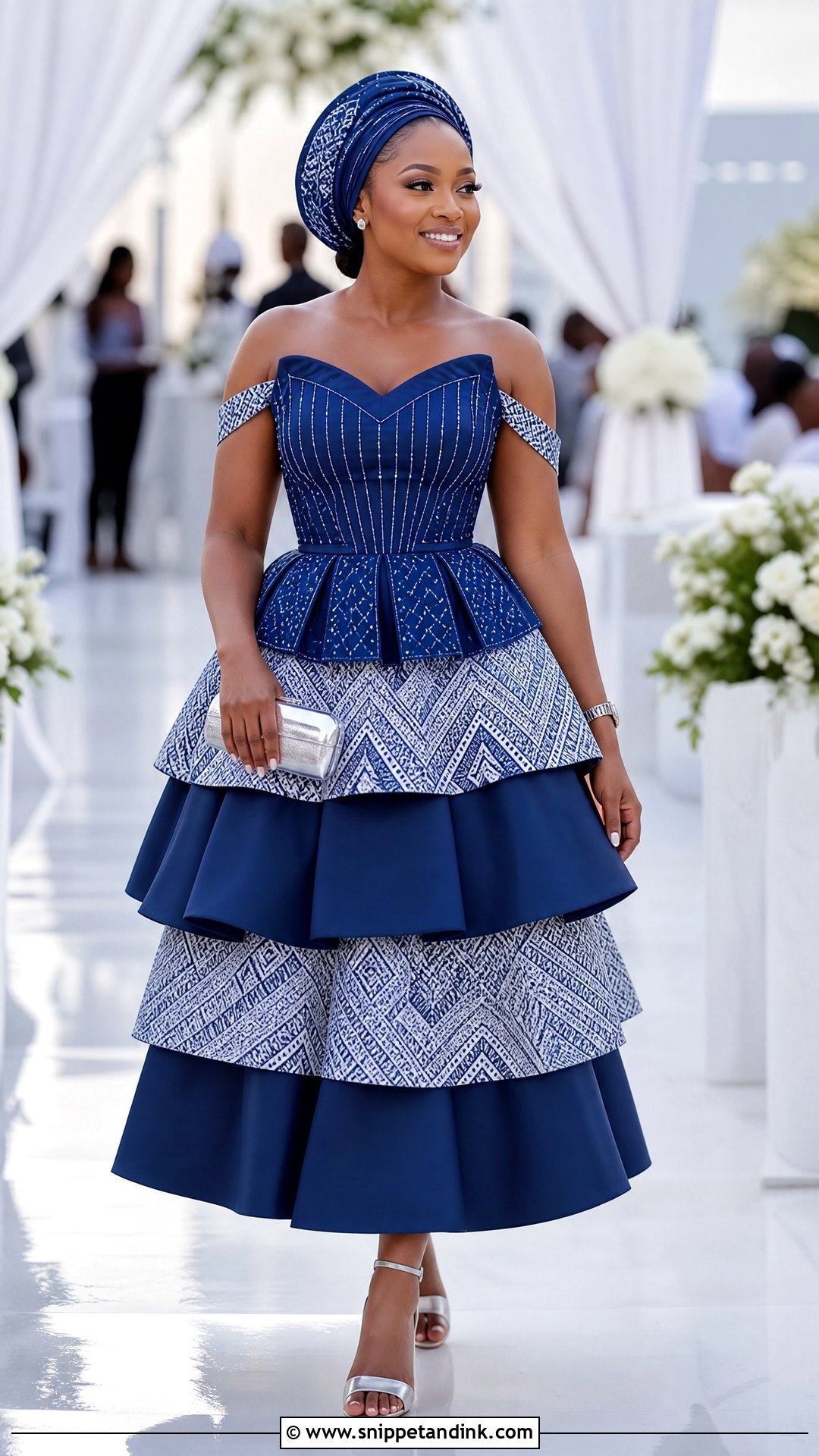
Tiers add movement, but each one adds weight, and leteisi isn’t light. Build the lower half from two or three graduated tiers on a structured bodice, alternating print with plain navy or white so every layer reads. When a bride wants volume without fatigue, I make the tiers in a lighter fabric with leteisi bands at the edges. Start the first tier below the hip rather than at it for a longer, smoother line through the middle. Keep the upper body simple. Medium heels, a headwrap, small earrings and a plain clutch finish it, and the last tier can run into a short train.

15. Tswana Pleated Wedding Dress
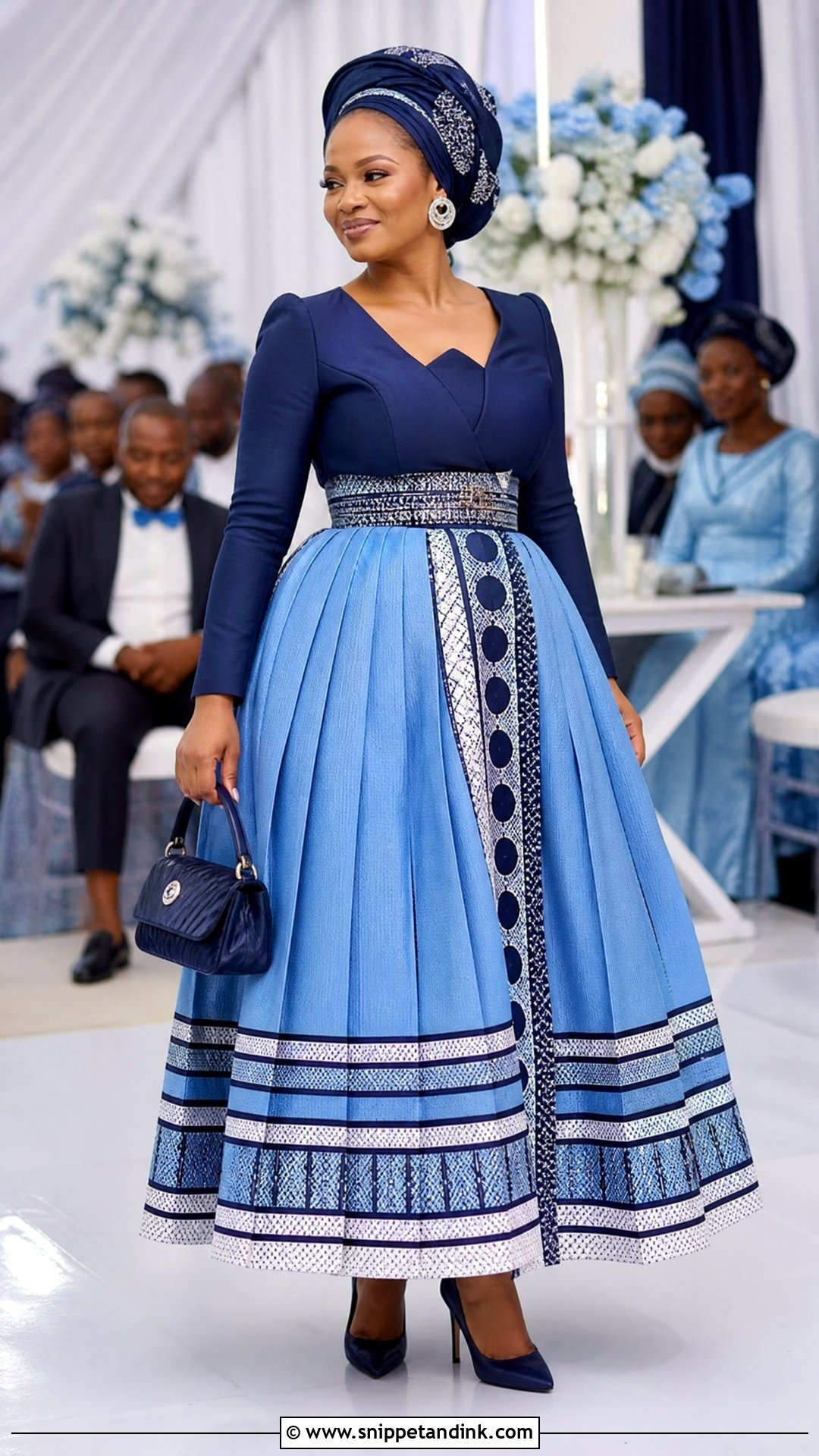
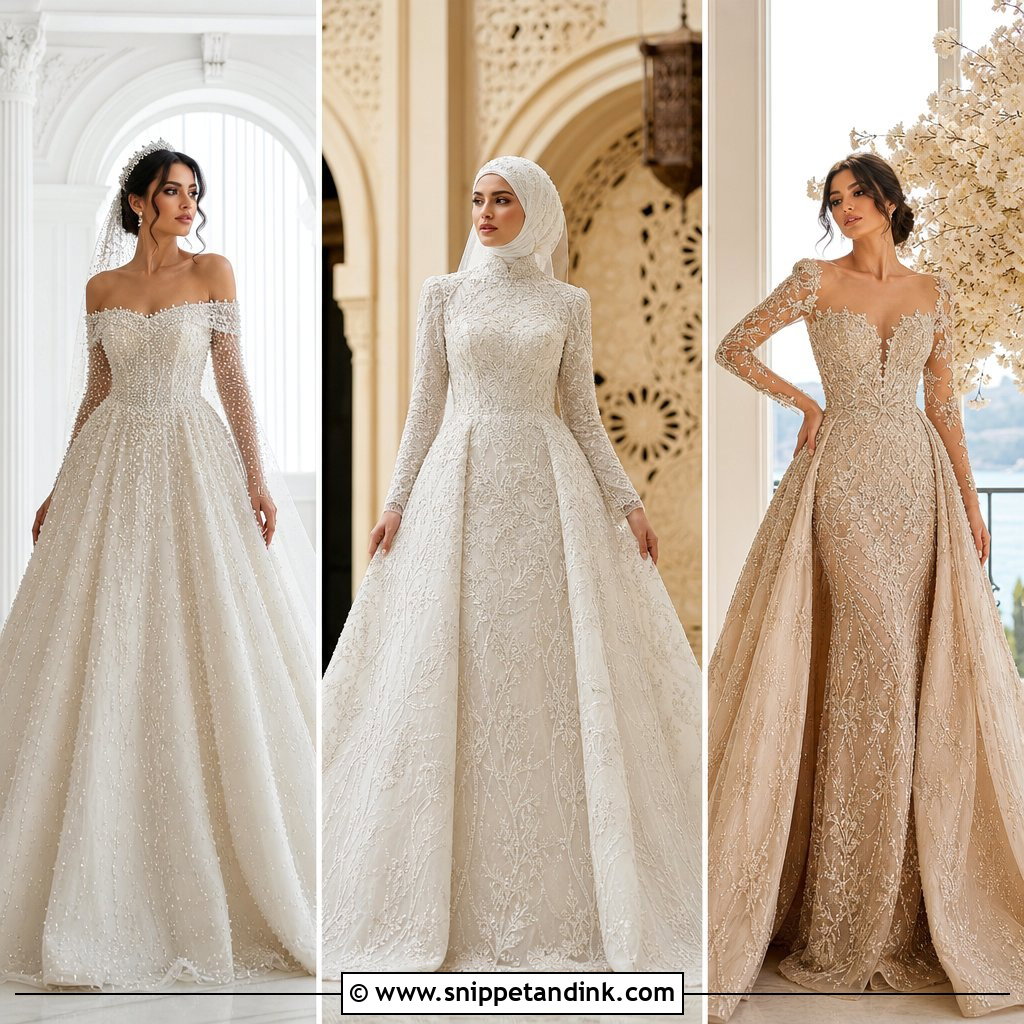
Pleats in printed cotton need planning, because folding the fabric hides parts of the motif. Ask the tailor to line up the key motifs before setting the pleats so the pattern repeats cleanly as you walk. A fitted blouse or bodice pairs with a full pleated maxi skirt in blue leteisi; wide pleats look softer, and narrow ones give more volume and more repetition. A plain waistband separates top from skirt, and the hem should almost touch the shoes without dragging. Pleats need pressing after travel, so transport the skirt hanging, never folded. Add a coordinated headwrap, navy pumps, silver earrings and a compact bag.
16. Tswana Cape Wedding Dress
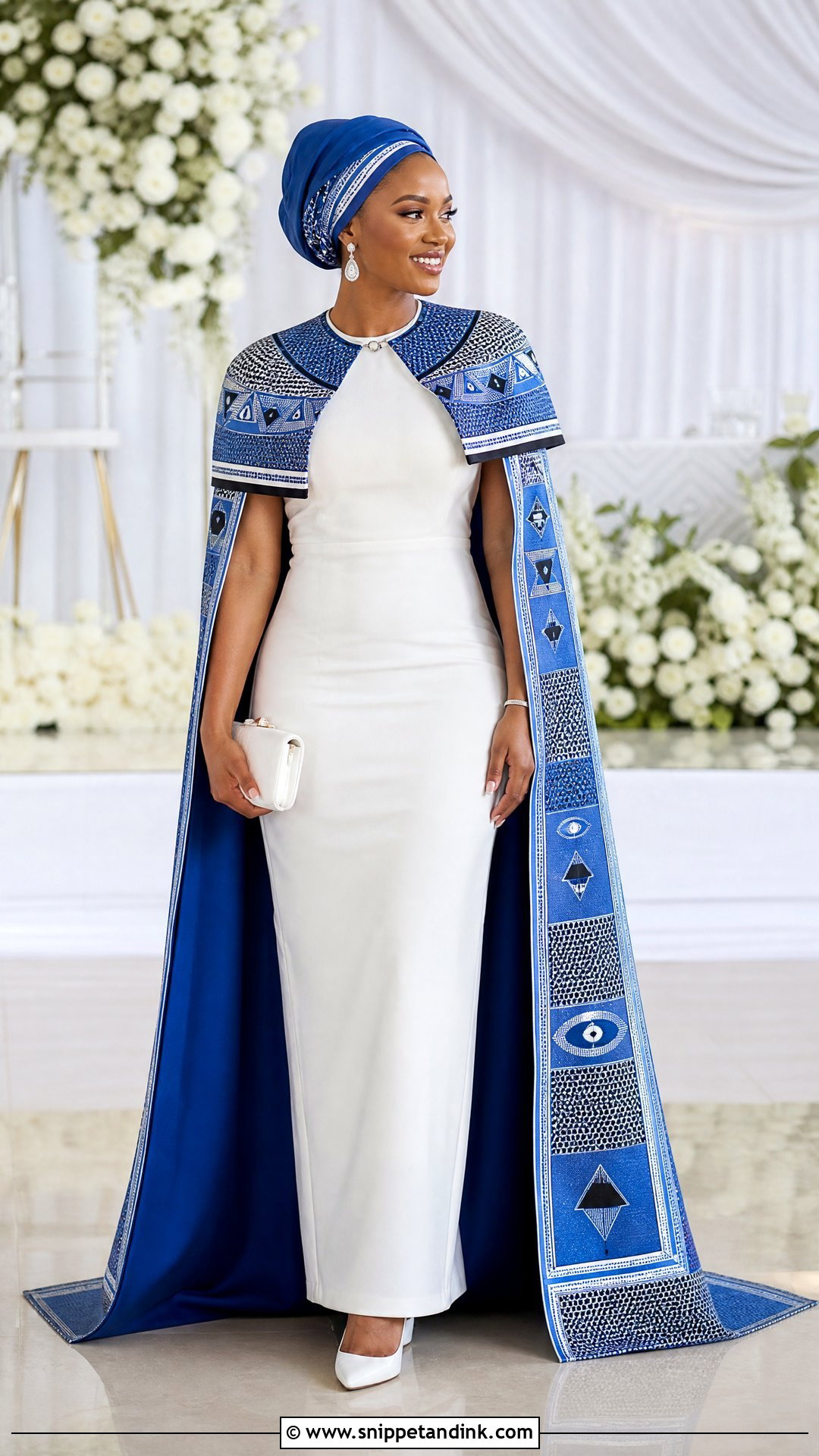
One dress, two looks. A detachable cape covers you for the ceremony and comes off for the reception. Wear a fitted column, mermaid or A-line gown under a shoulder cape in coordinating leteisi; it can end at the elbows, at the waist, or run to the floor at the back. Keep the dress itself streamlined so the cape sits flat. Hidden hooks or snaps under the cape’s edge let it come off without disturbing the neckline. Leave out heavy necklaces that catch on the fabric. Low heels, a sleek headwrap, drop earrings and a simple clutch complete it.
17. Red Tswana Wedding Dress
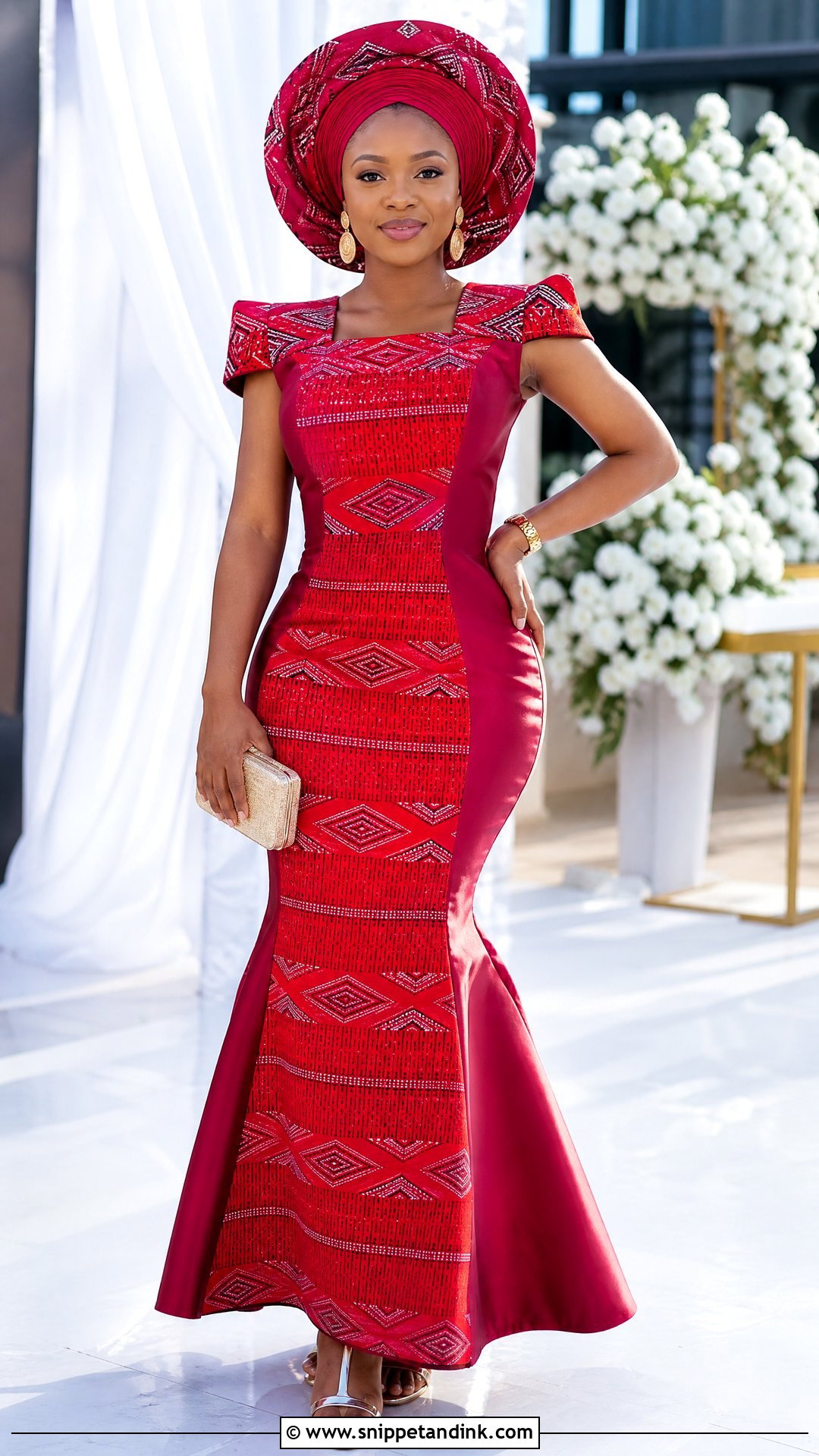
Red leteisi is a confident step away from the blues most people expect. I’d shape it into a floor-length fit-and-flare with a structured bodice and plain burgundy panels down the sides, which lengthen the silhouette. Strong red can reflect onto the face in close-up photographs, so hold the fabric near your face in daylight before deciding on how much to use above the waist. Neutral or metallic heels, gold-toned earrings, a simple clutch and a matching headwrap are enough. If the print carries several colors, take accessories from one secondary shade. Ask family whether particular colors carry ceremonial meaning in your celebration.
18. Green Tswana Wedding Dress
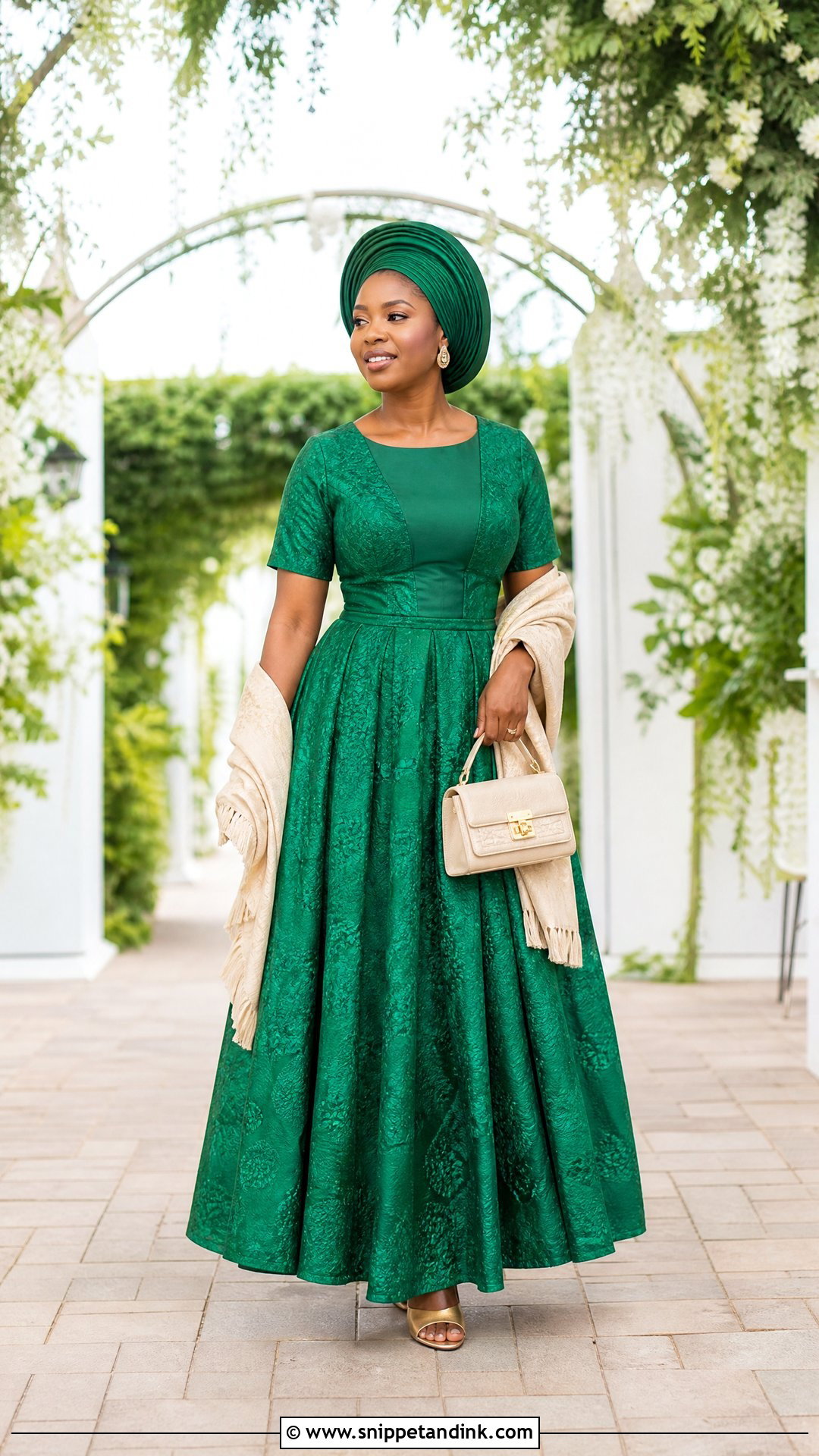
Green leteisi photographs well outdoors, but if it’s too close to the shade of the lawn, you can blend into the background. Emerald or blue-green holds its own at a very leafy venue. Shape it into an A-line with a fitted waist and short sleeves, and add a plain green panel through the bodice or skirt to break up the print. Gold-toned heels, small earrings, a headwrap and a structured bag complete it, and a cream shawl adds soft contrast. For the groom, repeat a small amount of the same fabric rather than matching every piece, so your full-length dress stays the focus.
19. Plus-Size Tswana Wedding Dress
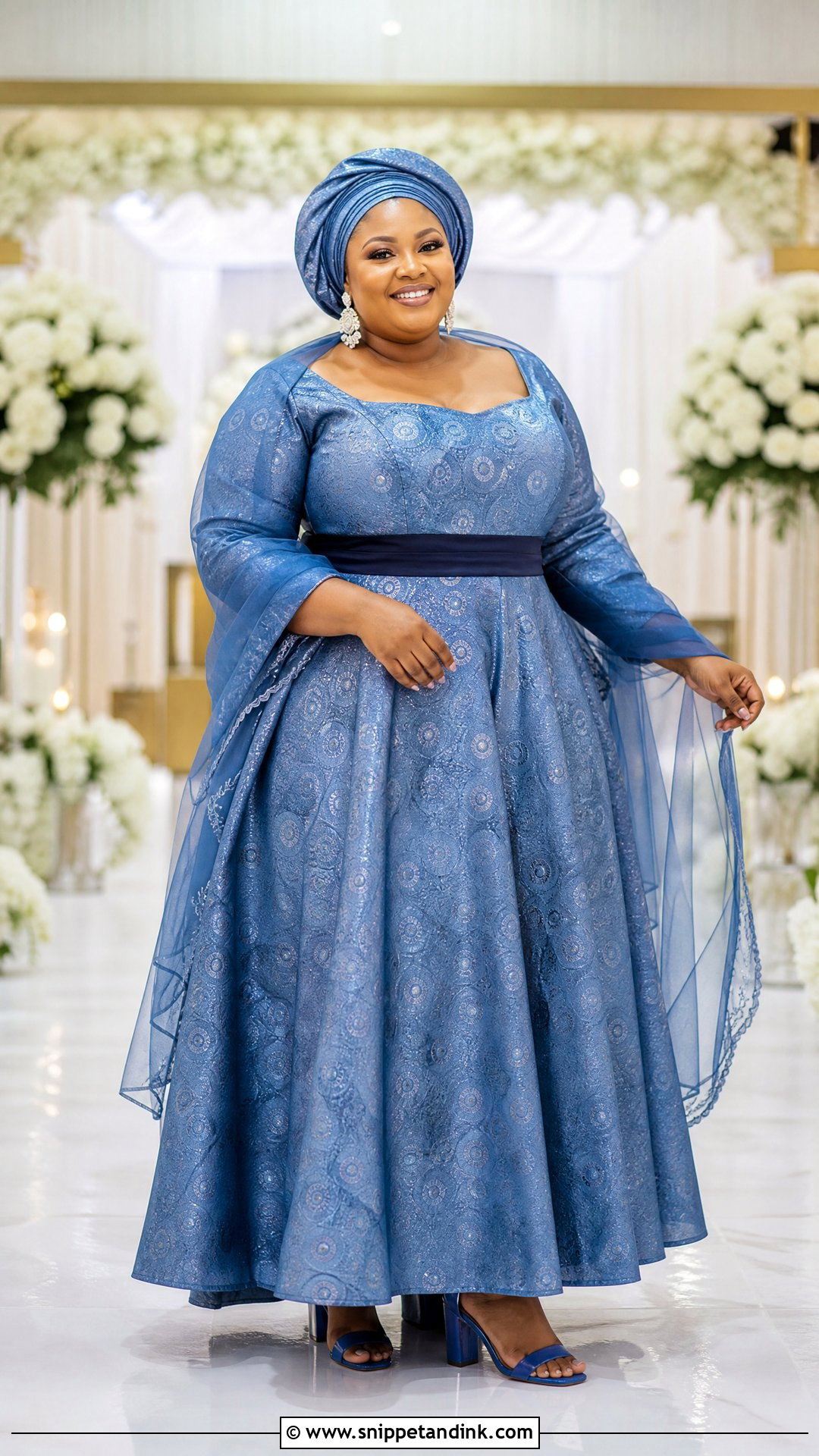
Construction comes first in a plus-size gown, and standard sizing is rarely enough. An A-line with a structured bodice, a defined waistband and a flowing skirt gives comfort without hiding the body, and plain panels can frame the leteisi for a clean, unbroken line. Choose sleeves you actually like rather than following old rules. I’d plan two or three fittings in the real undergarments, because a firm cotton bodice shows any shift in support. Stable block heels, a headwrap scaled to the gown, statement earrings and a light shawl finish it. Made to measure, the neckline, waist, sleeves and hem all land where they should.
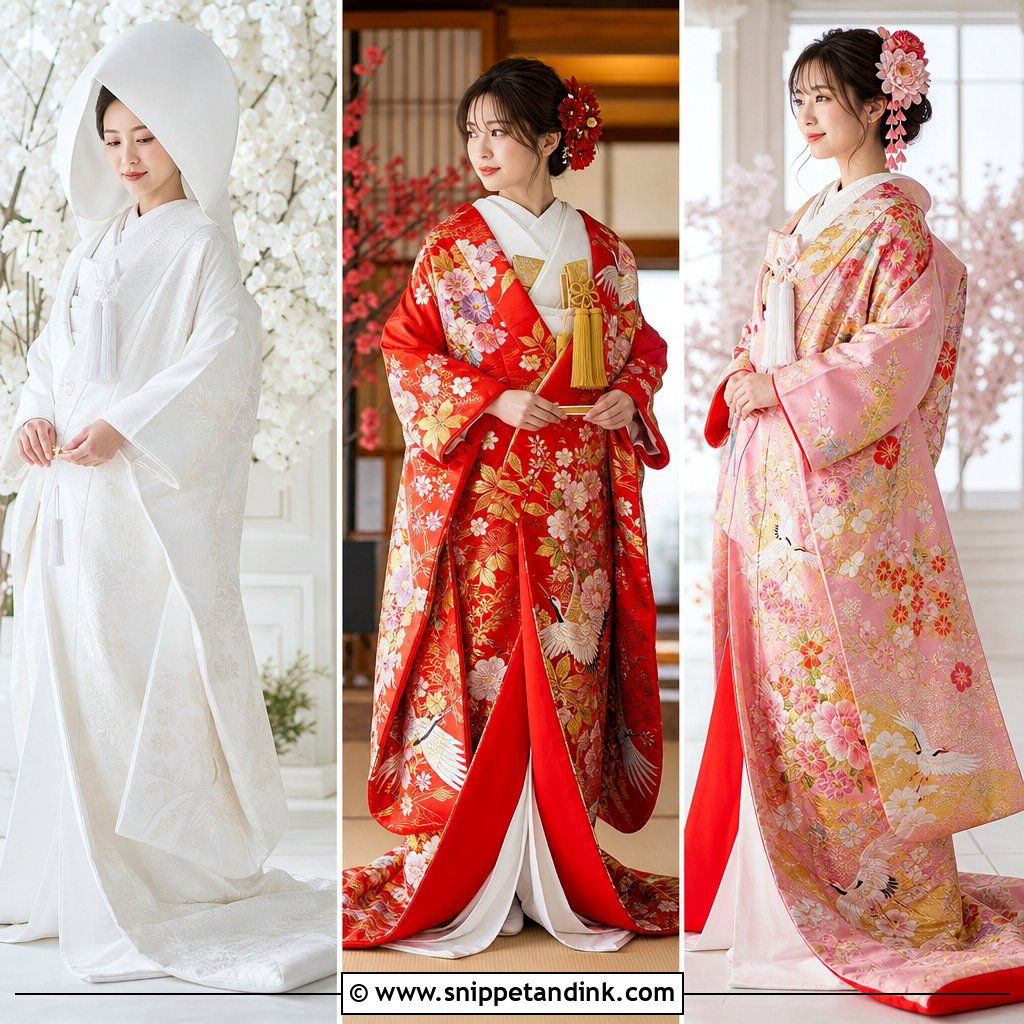
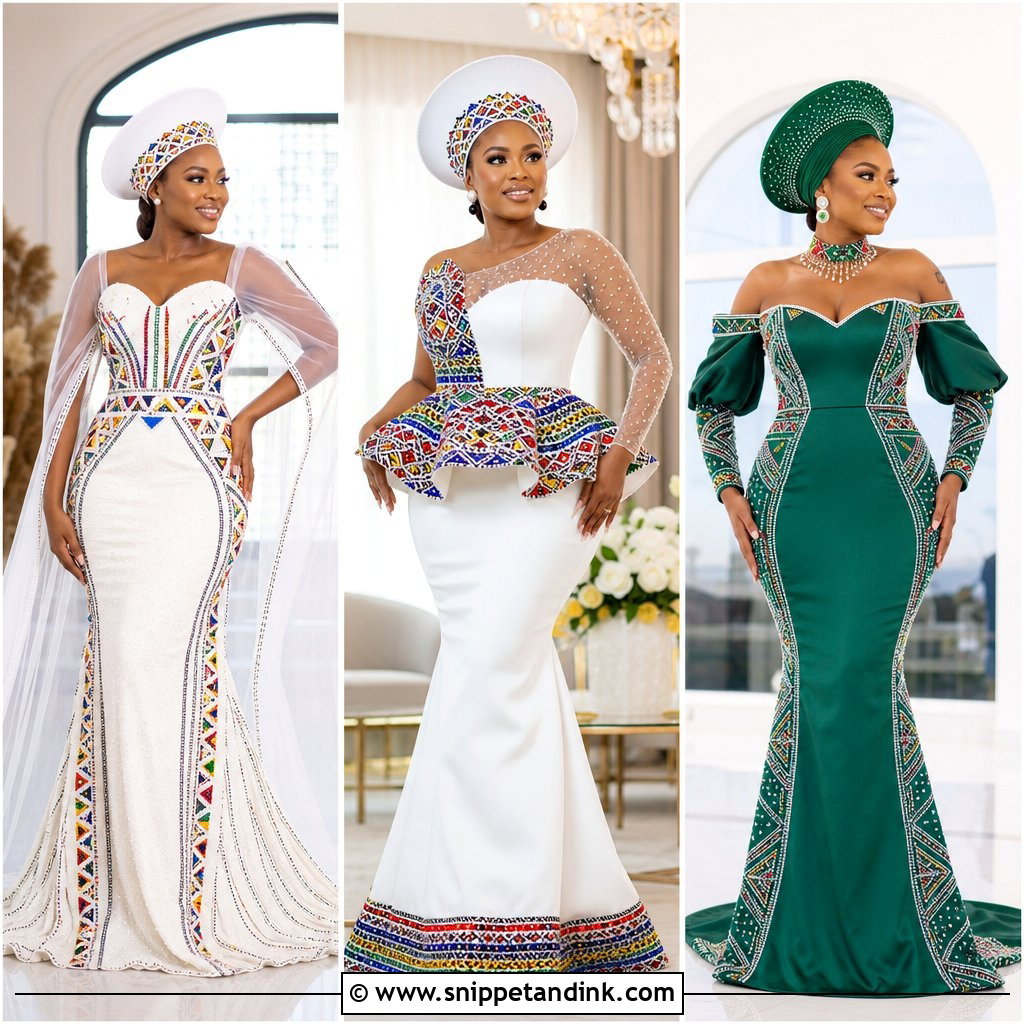


20. Simple Tswana Lobola Wedding Dress
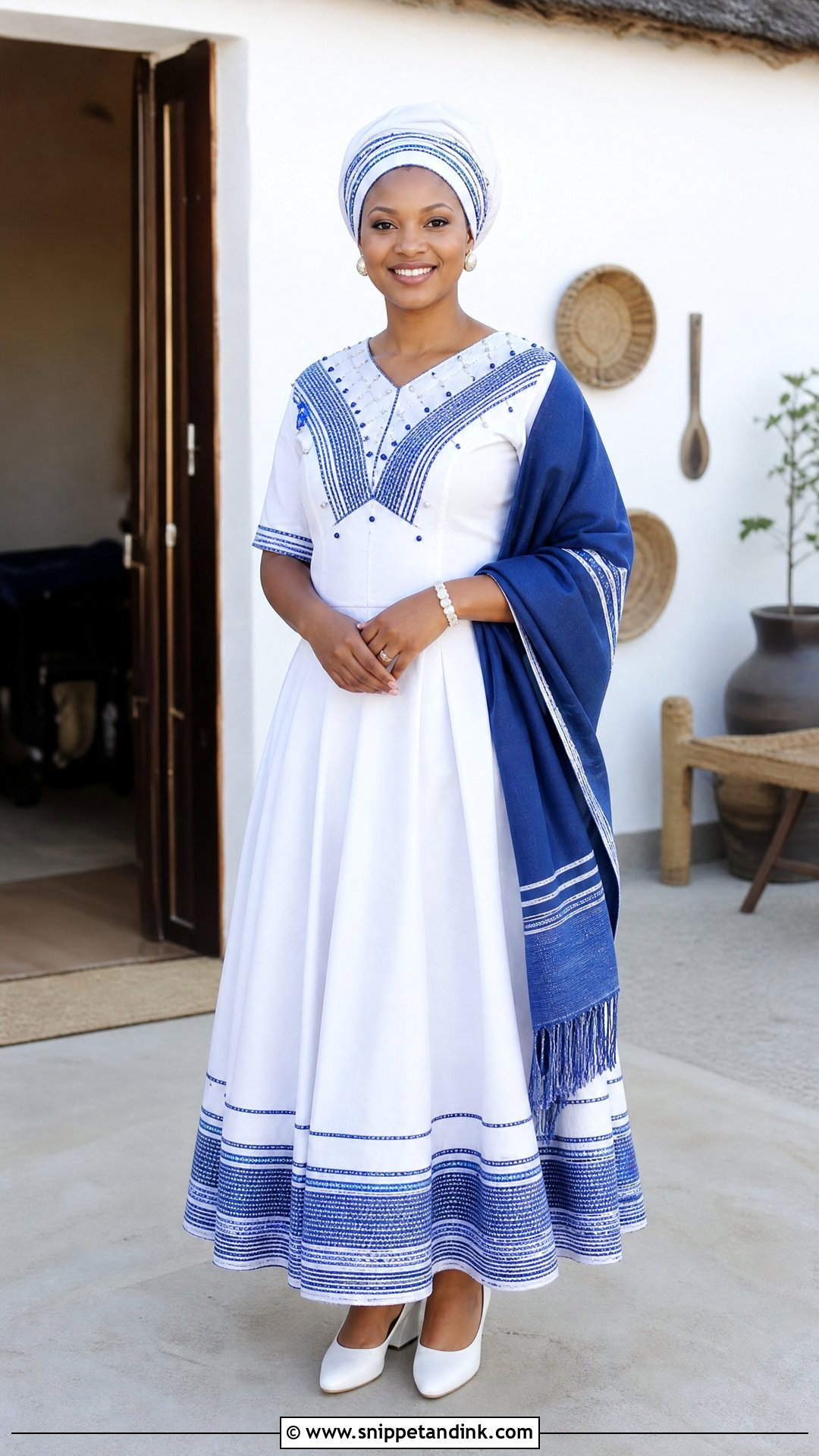
For a smaller family celebration, a simple Tswana lobola dress carries meaning without a heavily embellished gown. Choose a modest ankle- or floor-length dress with a fitted top, a defined waist and a gently flared skirt. Blue-and-white leteisi is a common choice, though the final color should follow the bride’s taste and any family guidance. Add a coordinated headwrap, comfortable closed-toe shoes, small earrings and a shawl or blanket where appropriate, with beadwork kept to the neckline or cuffs. You’ll spend the day greeting, sitting through discussions and sharing meals, so test that you can sit on a low chair comfortably. Traditional marriage processes vary, so speak with both families before settling ceremonial details.
Switching From the Traditional Outfit to a White Gown on One Day
Plenty of couples hold a traditional ceremony and a white wedding, sometimes on the same day. The outfit change is where timelines usually slip, so I plan it like a small event of its own.
Allow more time than seems necessary
Removing a headwrap, shawl and leteisi gown, then fastening a gown with buttons or lacing, rarely takes under half an hour once hair and makeup touch-ups are included. Put that in the schedule, and tell your photographer so they can use the gap for family portraits.
Plan the hair around the headwrap
A headwrap flattens whatever is under it. If your white-wedding hair is loose or curled, have it finished after the traditional part, or wear the wrap over a low bun that can be refreshed in minutes.
Pack a changing kit
Bring a garment bag for each outfit, a clean sheet to stand on while changing, safety pins and a handheld steamer if the venue allows one. Give one person the job of folding and collecting every traditional piece, so nothing is left behind in the changing room.
Leteisi, Family Wishes and a Dress That Moves With You
Traditional fabric, family custom and modern bridal design can meet in many ways. One bride feels most like herself in a full leteisi gown; another prefers a tailored two-piece, a fitted mermaid or a simple skirt-and-blouse combination. Whatever the shape, insist on accurate measurements, supportive construction, comfortable shoes and room to move. Coordinate the headwrap, shawl, jewelry and bag so none of them competes with the dress. Talk to family about ceremonial clothing, and find a tailor who understands patterned cotton. Then wear it the way you’d like to be remembered.
You'll Like These Ideas:




Leave a Reply