
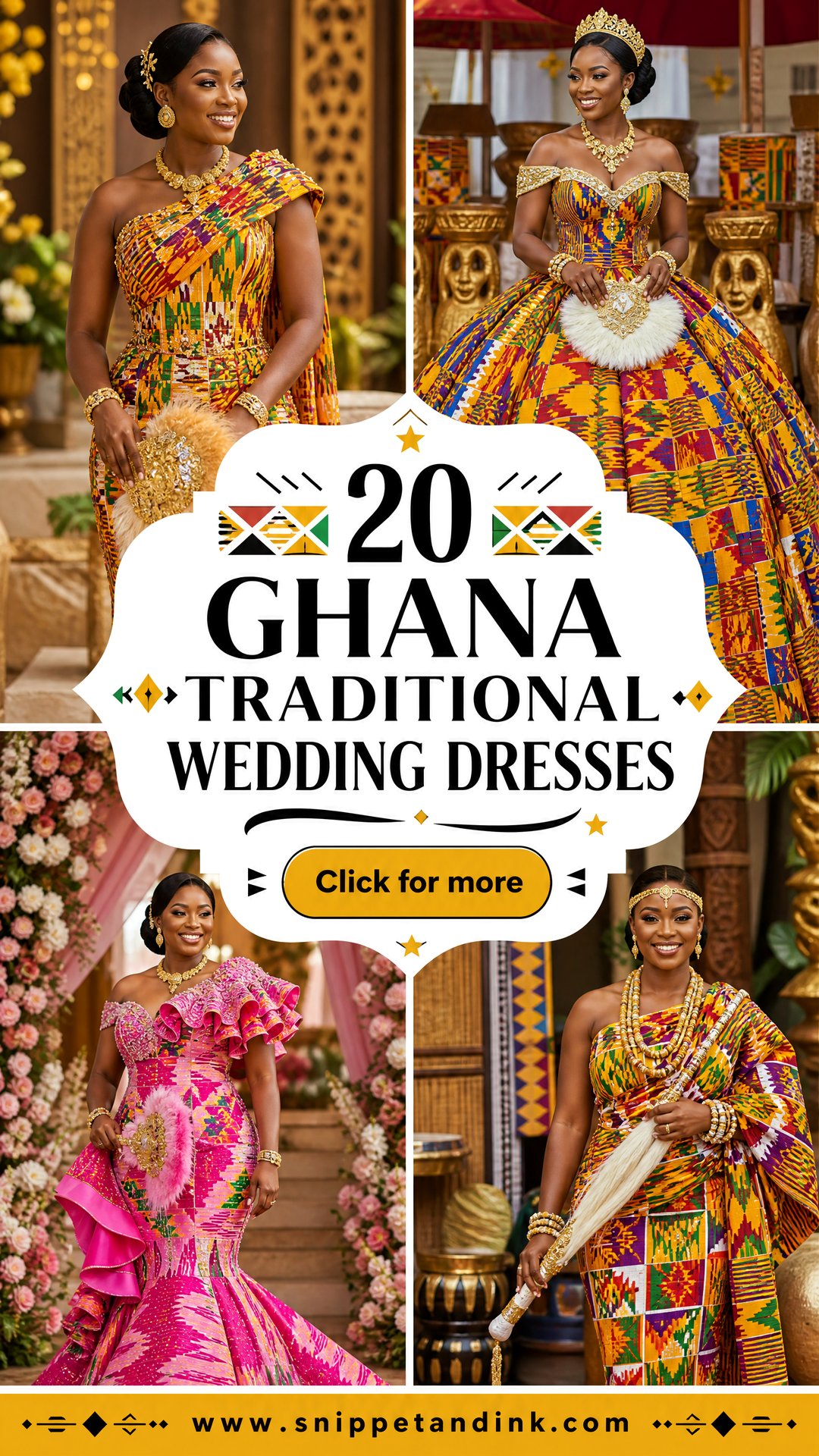
Kente is a cloth that argues back when you cut it, and that shapes everything about how I style a Ghanaian bride. Ghanaian bridal fashion uses it in corseted gowns, wrapped cloths, overskirts and matching couple looks, alongside lace, beadwork, sculpted sleeves and the woven smock cloth of the north. Patterns and colors can carry family, regional or symbolic weight, so talk to your relatives and, ideally, the weaver before anything is cut. The dresses below are styled down to shoes, jewelry, headpiece and bag, with one rule running through all of them: the cloth leads and the accessories follow.
Handwoven, Printed or a Mix of Both?
The first thing I ask a Ghanaian bride is which Kente she means. Handwoven Kente is made on a narrow loom in strips a few inches wide, which are then sewn together edge to edge into a cloth. Asante Kente tends toward bright, bold geometric blocks; Ewe Kente often has more woven motifs and a wider range of muted tones. Printed Kente-pattern fabric copies the look on cotton, and it is much lighter, cheaper and easier to cut, but it doesn’t have the depth or the reversible weave of the real thing.
Many of my brides land on a mix: handwoven cloth where it’s seen and touched, a lighter fabric where the dress needs to move. That decision changes the cost, the weight and the timeline, so make it before you brief a designer.
Working with a weaver
- Commission early. A custom cloth is woven strip by strip, and a weaver may have other wedding orders ahead of yours.
- Ask the pattern’s name and meaning, and check it with family before you approve it.
- Order extra length for pattern matching at seams, plus the groom’s cloth if you’re coordinating.
- Tell your tailor the cloth is handwoven. Cut edges fray quickly and need stay-stitching or finishing straight away.
1. Corset Kente Mermaid Wedding Dress
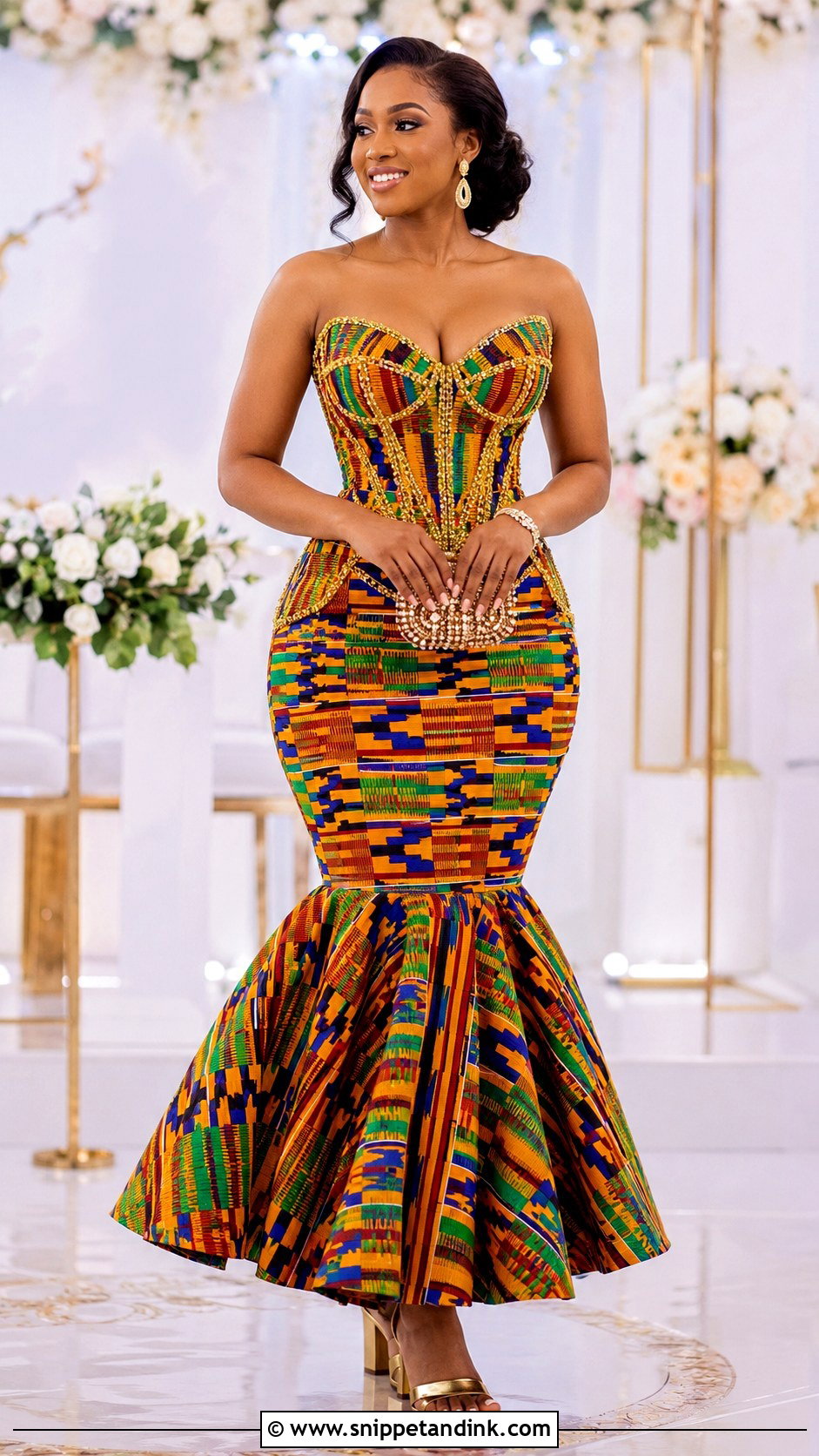
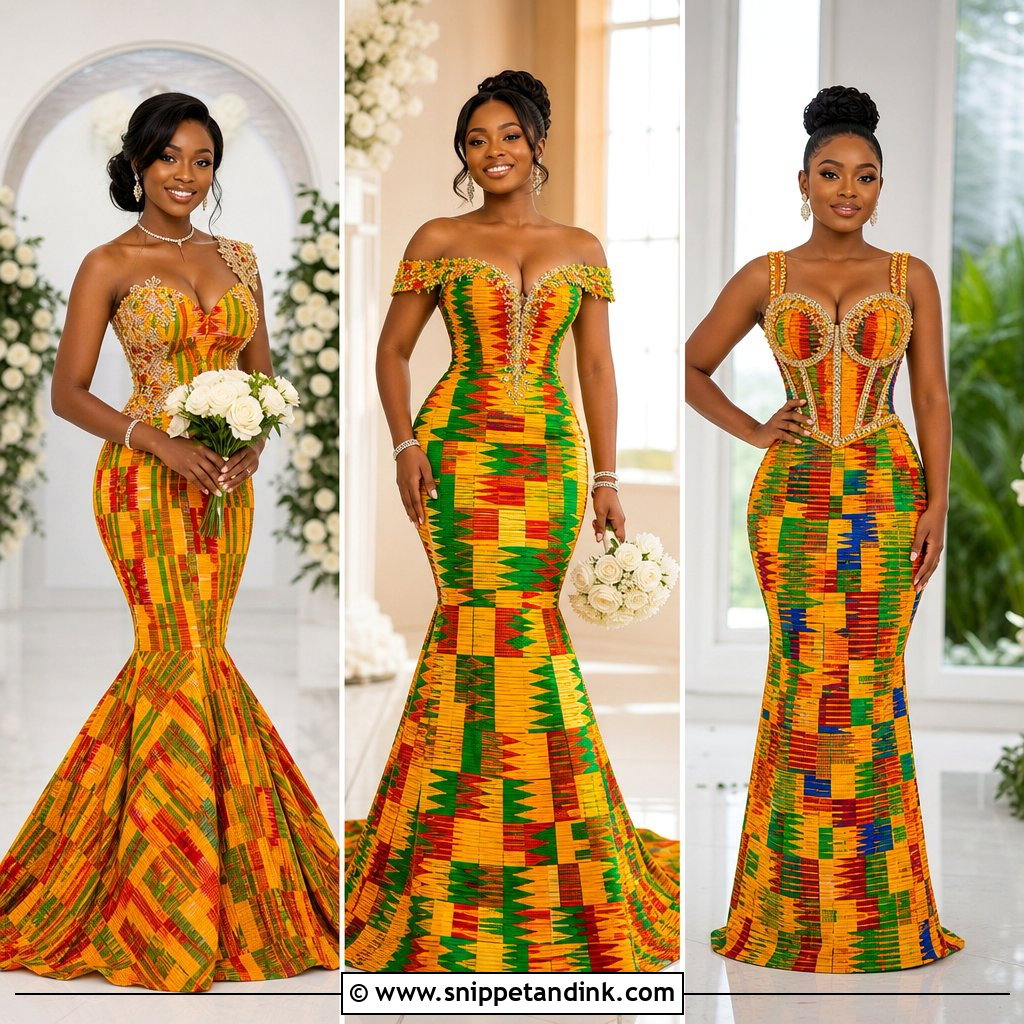
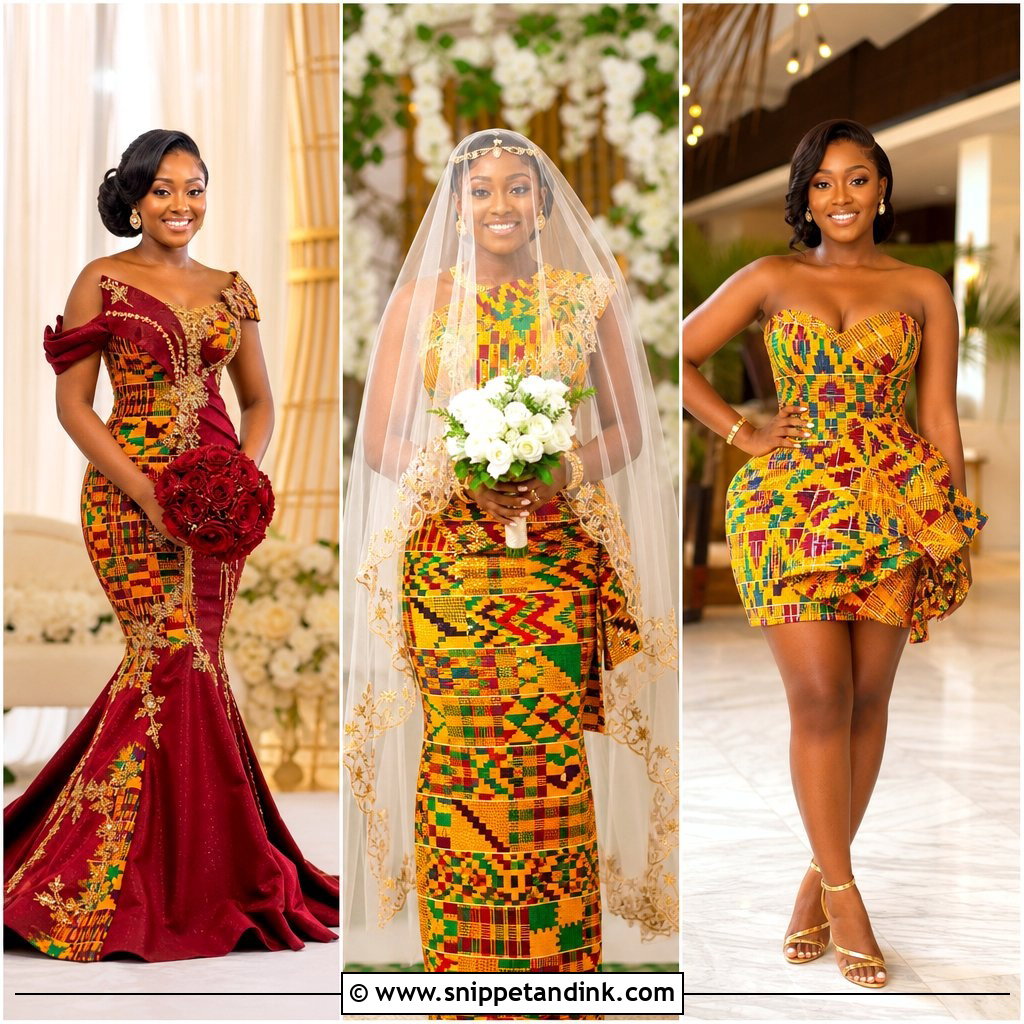
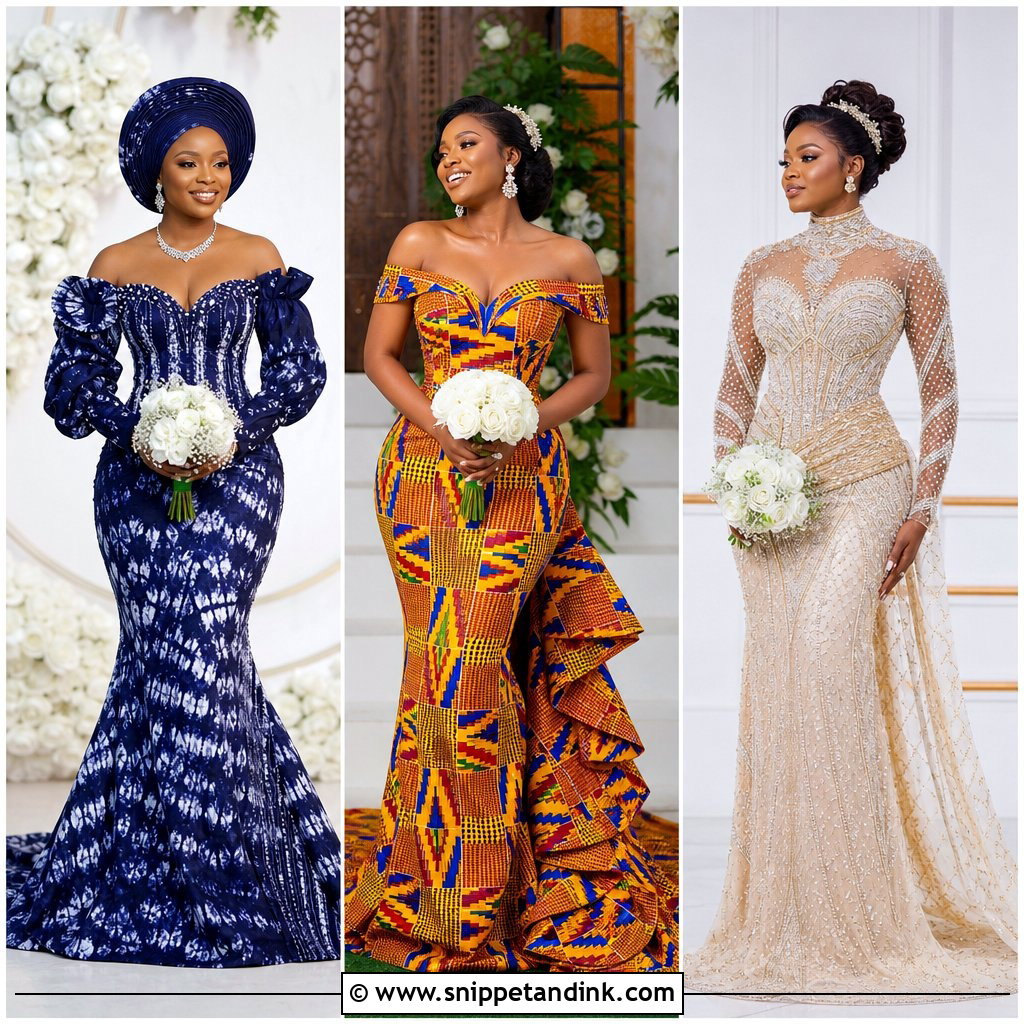
A mermaid shape in Kente is all about where the pattern lands. Kente is woven in narrow strips sewn edge to edge, so the stripes run in strong lines, and on a boned corset bodice I want those lines meeting cleanly at the center front and running level across the waist. The skirt can hug to the knee and then flare. Heavy handwoven cloth makes a fitted mermaid hard to sit in, so I often ask the designer to use Kente on the bodice and front panels and a lighter matching fabric behind. Metallic block heels, a beaded clutch, gold drops and a low braided bun or sleek natural updo finish it.
2. One-Shoulder Kente Wedding Dress
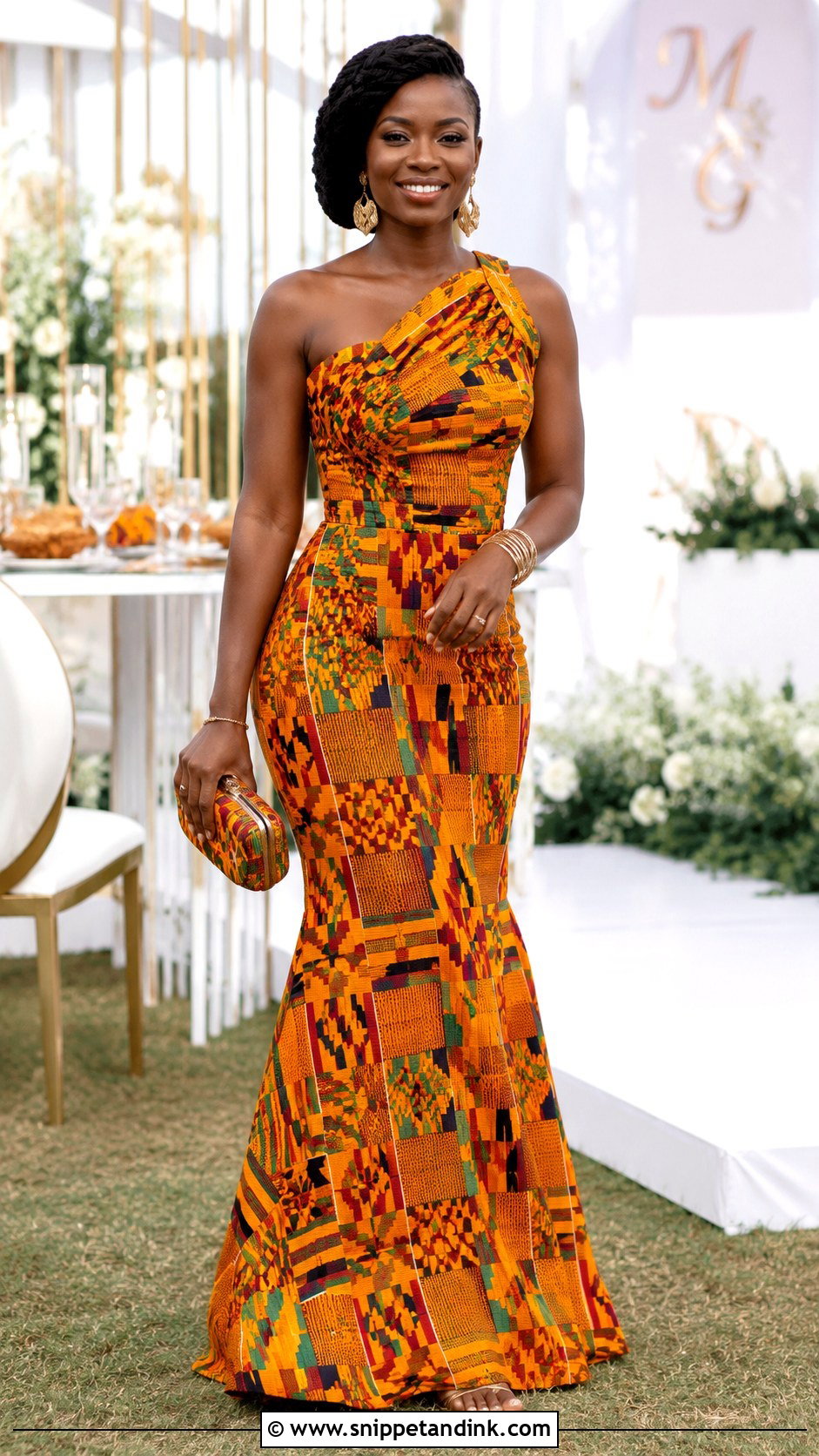
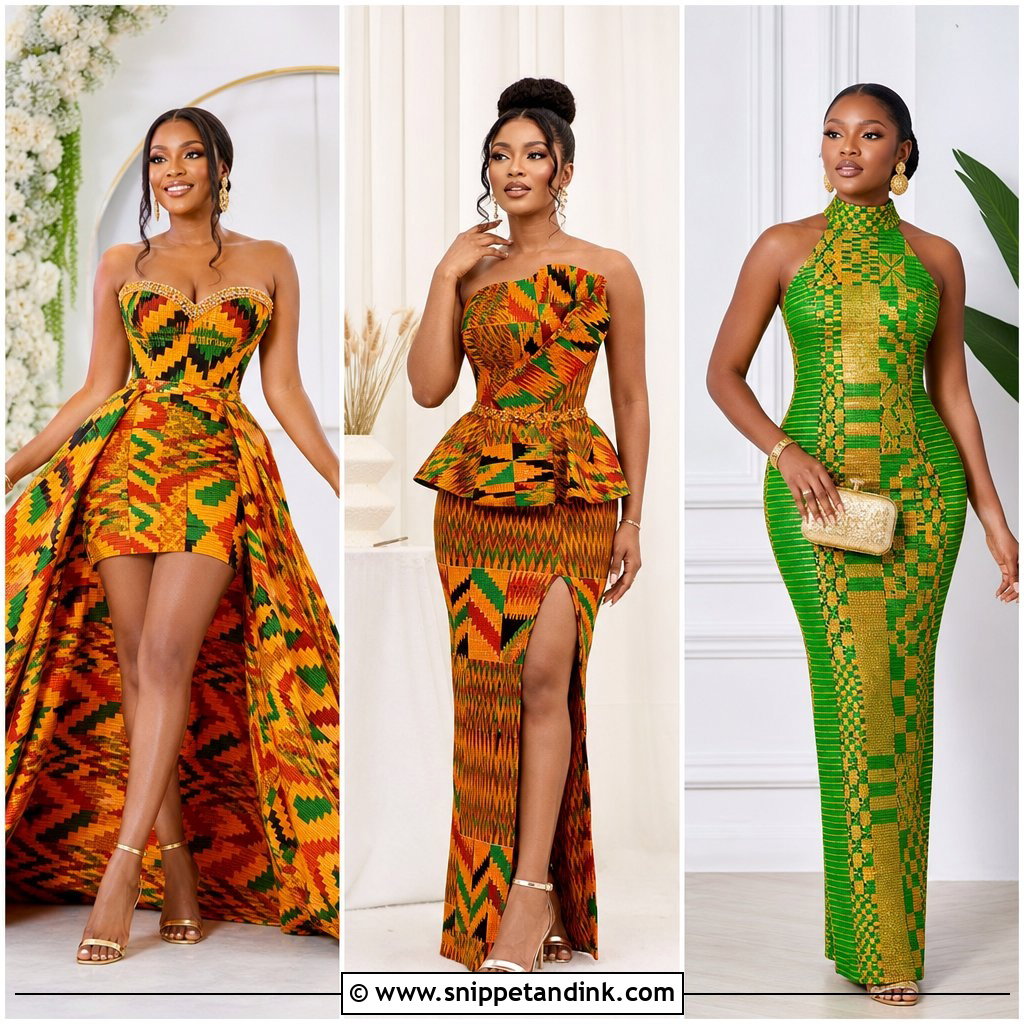
One-shoulder necklines put a diagonal across a cloth that’s built from straight lines, and that tension is what makes this dress interesting. Pair the asymmetric top with a fitted waist and a floor-length skirt that flares softly. I’d keep the shoulder clean or add one fabric rosette, nothing more. Before the tailor cuts, look at how the strips will meet at the bodice seams; a stripe that jumps half an inch at a side seam looks careless in photographs. Gold sandals, sculptural earrings and stacked bangles suit it, with a clutch in one of the quieter colors in the cloth and a side-swept braided updo that leaves the shoulder bare.
3. Off-Shoulder Kente Ball Gown
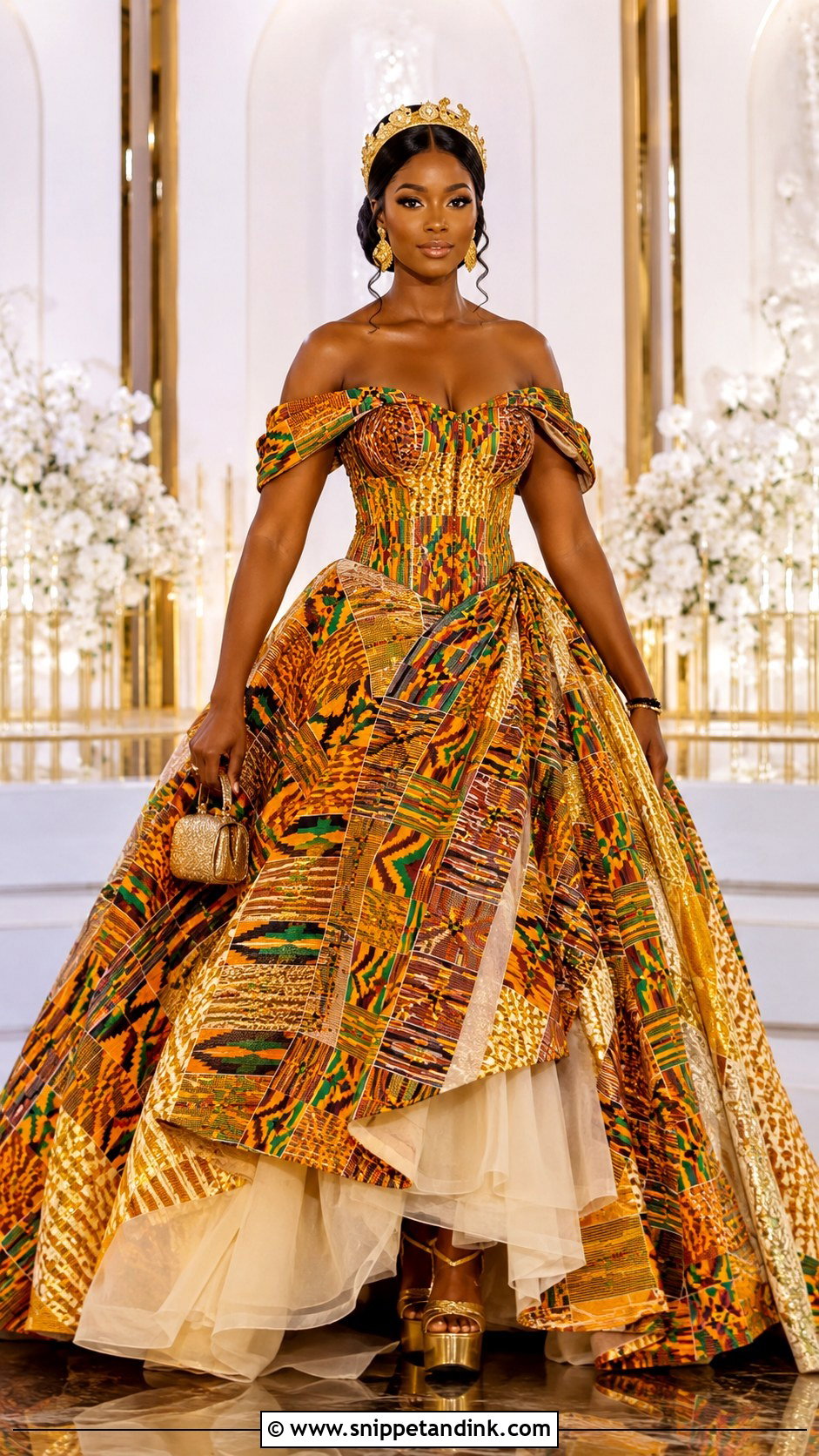
A Kente ball gown is the entrance dress, and the weight is the first thing I raise with the bride. Full handwoven skirts get heavy fast, so the volume usually comes from lighter underlayers with Kente panels on top. An off-shoulder neckline with short draped sleeves over a close-fitting bodice supports all that skirt. Under a full skirt, platform heels give you height and stability without being seen. A regal headpiece, simple gold earrings, a structured mini bag and a fine necklace, or none, keep the neckline clear. Sit and walk in it at the second fitting, not the last one, while there’s still time to take weight out.
4. Green Kente Beaded Wedding Dress
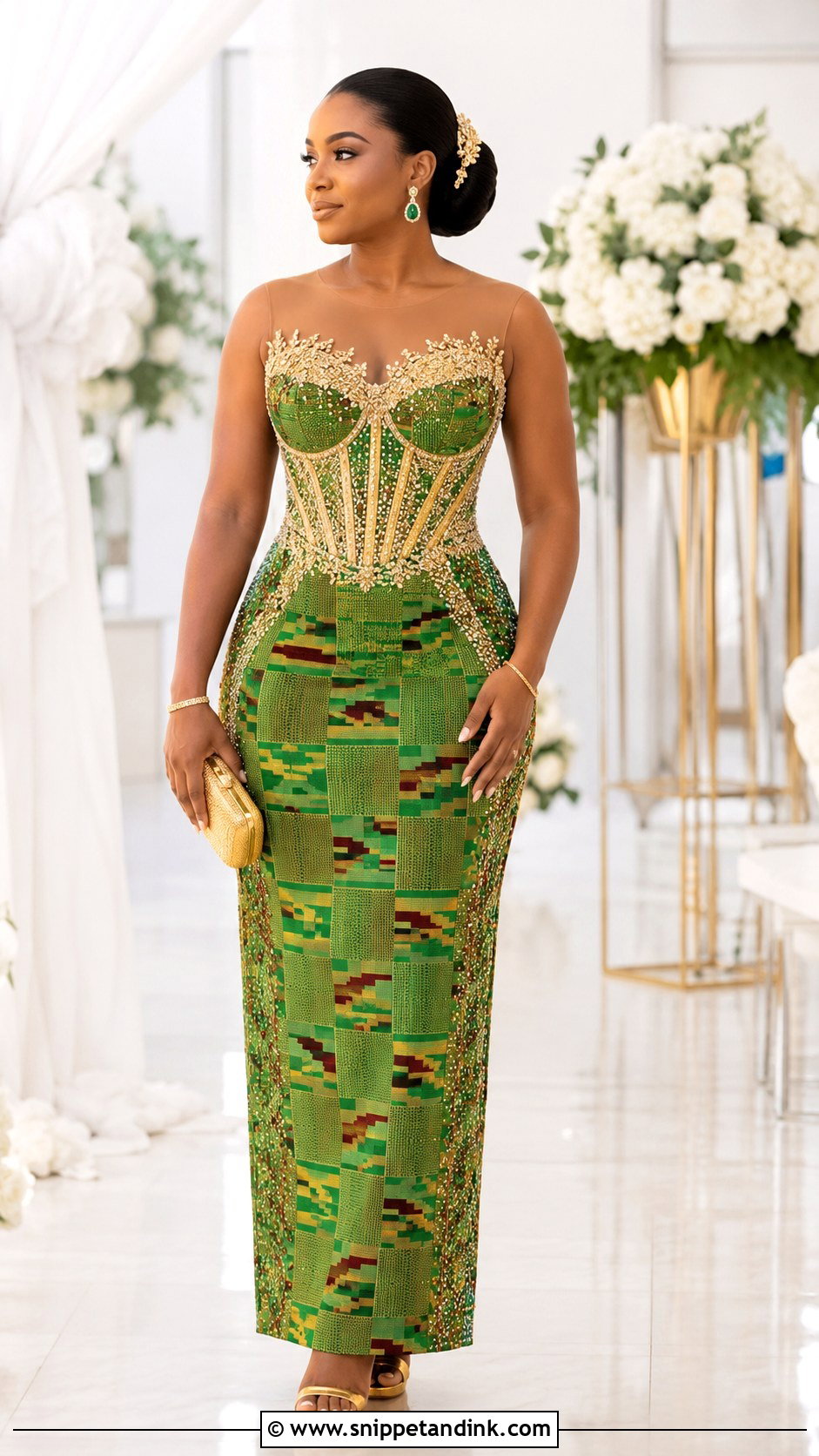
Green Kente with beadwork works when the beads stay in two places: the neckline and the waist. That draws attention to the face and shape and leaves the weave visible everywhere else. Beads stitched over Kente catch on the raised weave, so I ask for them on a separate band or appliqué that’s sewn on, rather than worked straight into the cloth. A corseted gown with a straight or softly flared skirt, gold block heels, a matching clutch, earrings with green stones and a smooth bun with a small gold pin finish it. Confirm the meaning of the cloth with family or the weaver rather than trusting a general online color chart.
5. Red And Gold Kente Wedding Dress
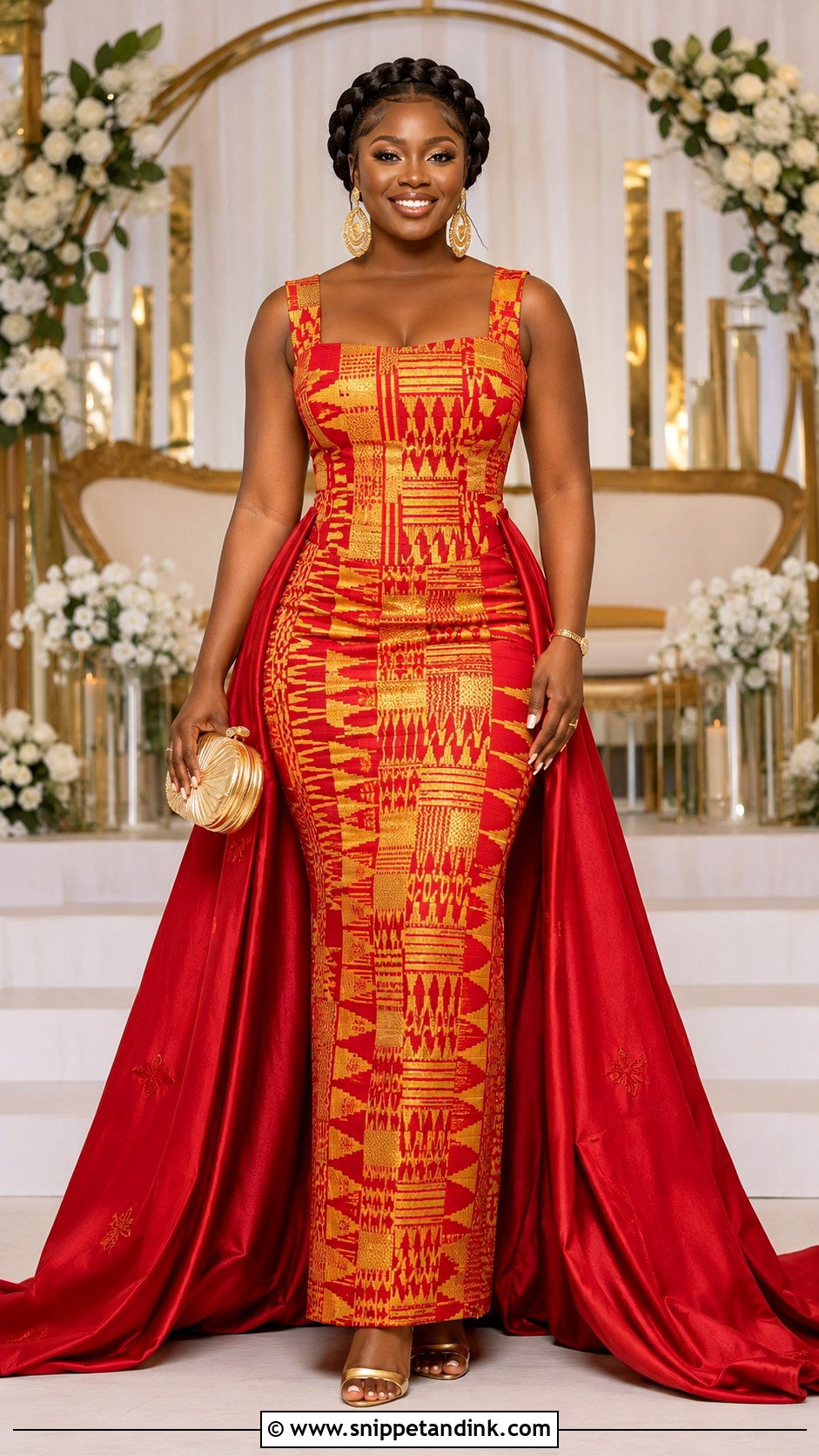
Red and gold is ceremonial and strong, so I keep the shape simple. A fitted gown with a square neckline gives more support and coverage than strapless, and a detachable train in solid red, gold brocade or matched Kente adds the drama for the entrance. Reds are notorious for changing under different light, and the gold threads in Kente flash hard under a camera flash, so I look at the full outfit in daylight and under indoor lamps at the fitting. Metallic heels, a gold minaudiere and statement earrings are enough jewelry. A braided crown or high natural bun suits the palette.
6. Pink Kente Ruffle Wedding Dress
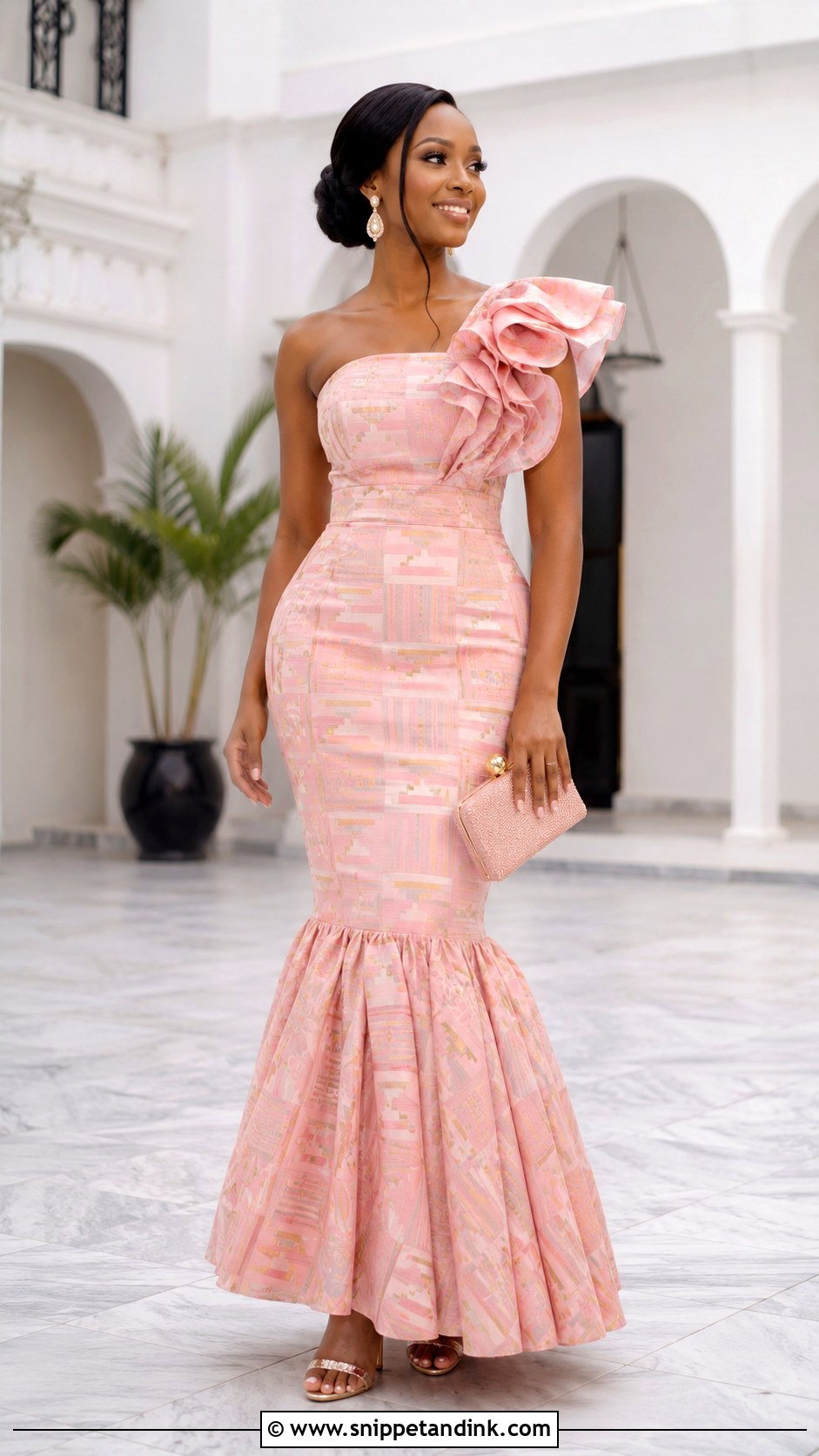
Pink Kente is softer, but it still has the energy of the weave. A fitted column or mermaid gown with one sculpted ruffle running from shoulder to waist adds movement without bulk everywhere. That ruffle needs an interfaced base or horsehair braid at the edge; unsupported, it droops after an hour of hugs. Rose-gold heels, pearl-and-gold earrings and a small blush clutch tie it together, and a modest Kente fascinator or a beaded comb is better than matching every accessory exactly. Soft glam makeup suits the palette, and the ruffle should sit far enough off the arm that it doesn’t rub.
7. Blue Kente Peplum Wedding Dress
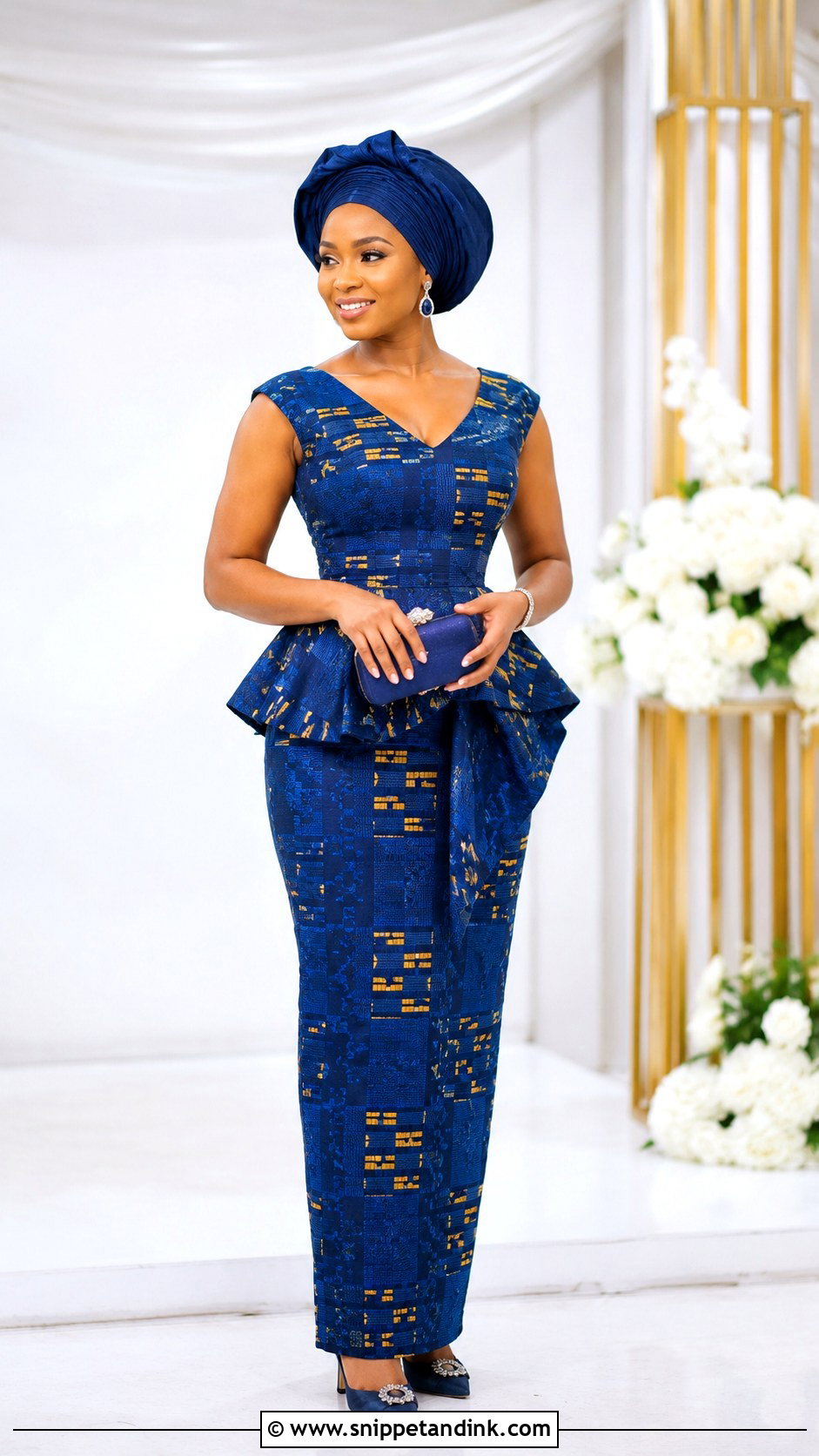
A blue Kente peplum wedding dress gives structure and a defined waist without a full gown. The fitted bodice can take a modest sweetheart or V-neck, with the peplum falling over a long straight skirt with a small back slit for walking. Peplums add volume at the hip, and a stiff circular one cut from heavy cloth stands out like a shelf. A softer, asymmetric peplum, sometimes lined in a lighter fabric, sits much flatter. Navy or metallic heels, sapphire-toned earrings, a structured blue clutch and a wrapped headpiece repeating one color from the cloth finish it.
8. Purple Kente Cape Wedding Dress
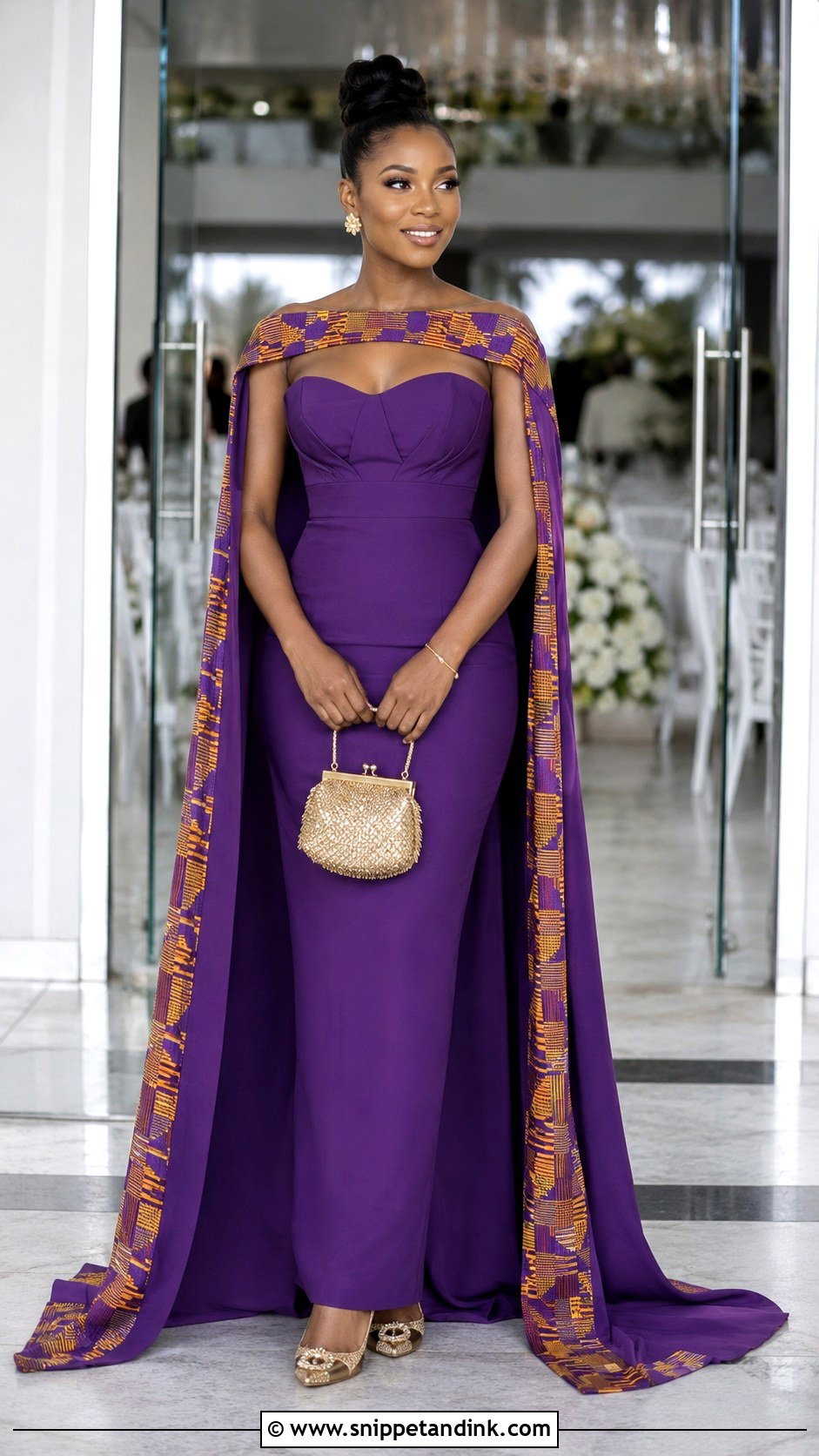
A cape turns a plain purple Kente gown into something commanding. Start with a fitted floor-length dress with a clean neckline and little surface decoration, then add a detachable cape from the shoulders or upper back in matching Kente, or in a lighter purple fabric edged with woven trim. The lighter version is kinder: a full Kente cape is heavy, and its weight drags the bodice backward against your throat. Fastenings should be secure and quick to undo, since the cape usually comes off after the entrance. Gold pumps, a compact metallic bag, fine drop earrings and a high bun keep the shoulders and cape visible.
9. Orange Kente Halter Wedding Dress
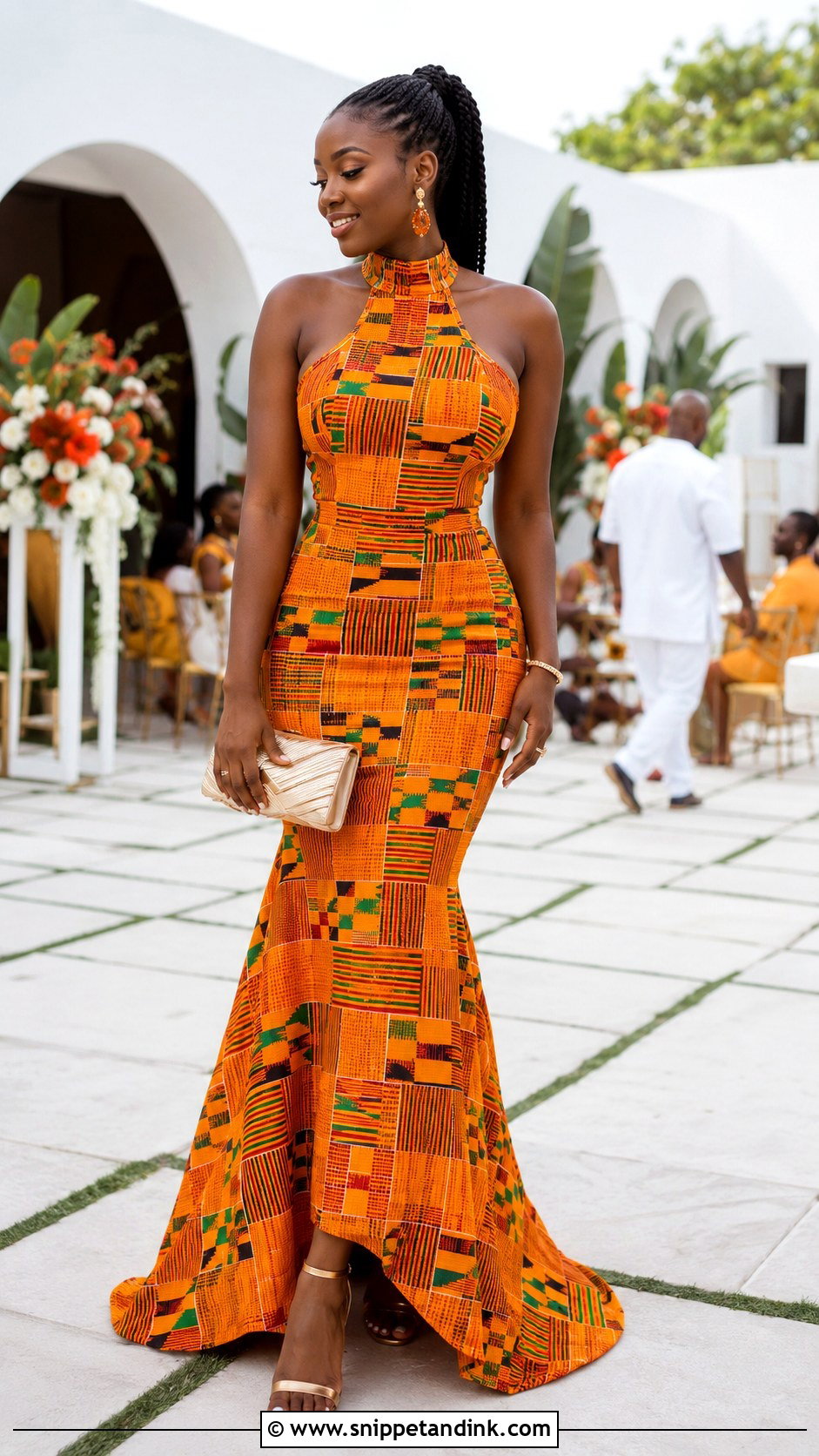
Orange Kente in a halter shape looks fresh and confident. The bodice curves round the neck, leaves the shoulders bare and flows into a long trumpet or A-line skirt. Handwoven Kente can feel rough on the neck where the halter strap sits, so I insist on a soft lining and finished inner edges there. Gold ankle-strap sandals, amber-toned earrings and a neutral clutch keep the palette tight, and an updo or braided ponytail shows off the shape. A sheer upper panel or a detachable plain shawl adds coverage for elders. Keep any beading to one area.
10. Turquoise Kente Strapless Wedding Dress
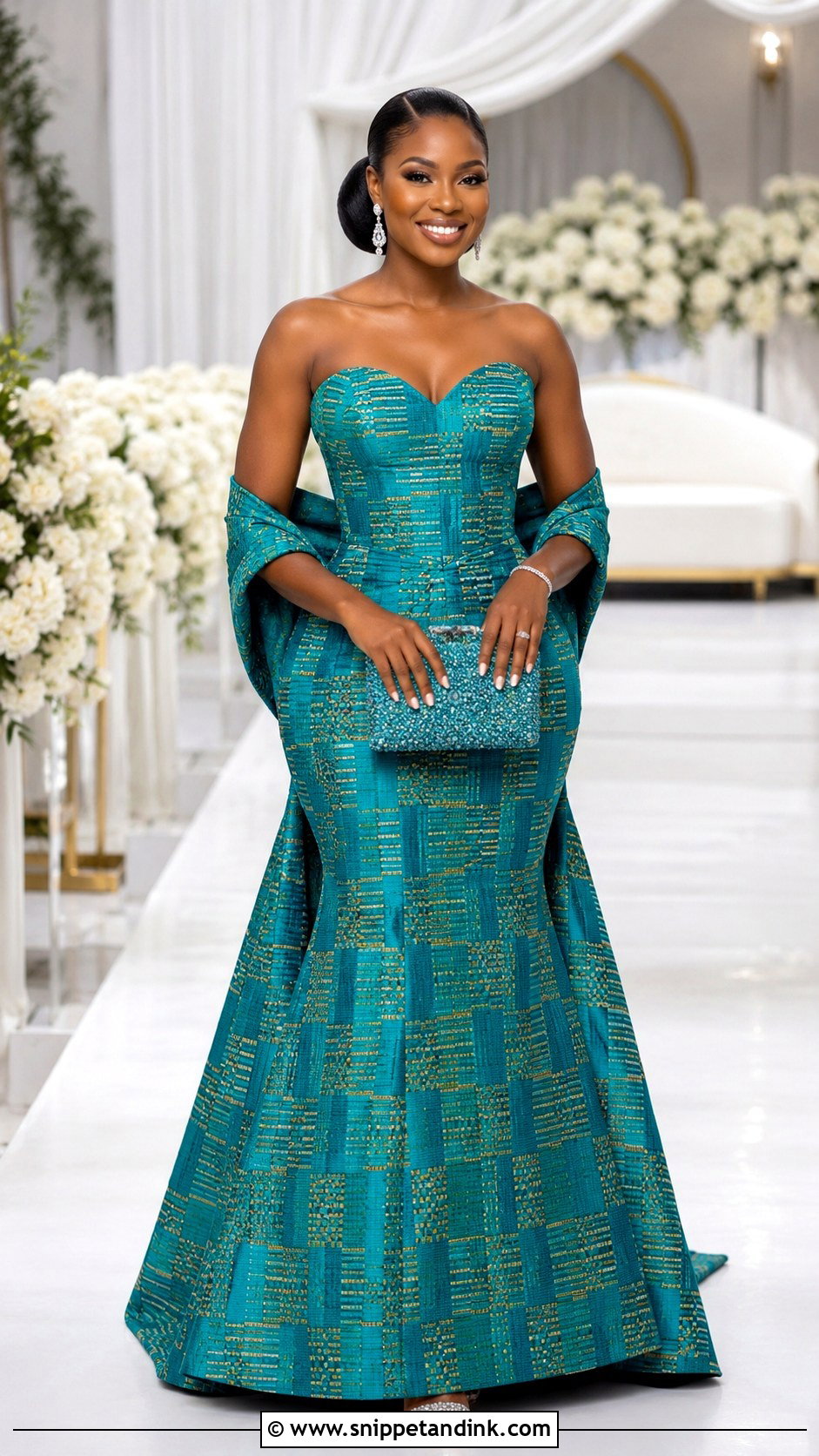
A turquoise strapless gown depends entirely on the engineering inside the bodice. Boning, secure cups and a firm waist stay keep it up; a tight top edge doesn’t, and only cuts into the skin. Fitted through the hips and flaring below, it pairs with silver or pale-gold heels, crystal earrings and a turquoise beaded clutch. A sleek bun and small headpiece keep it uncluttered. A removable wrap or short cape helps for greeting elders and formal portraits. I run a movement fitting with every strapless bride: arms up, sit down, a few dance steps. If you reach to pull it up even once, it needs more support.
11. Kente Wedding Dress With Ruffle Sleeves
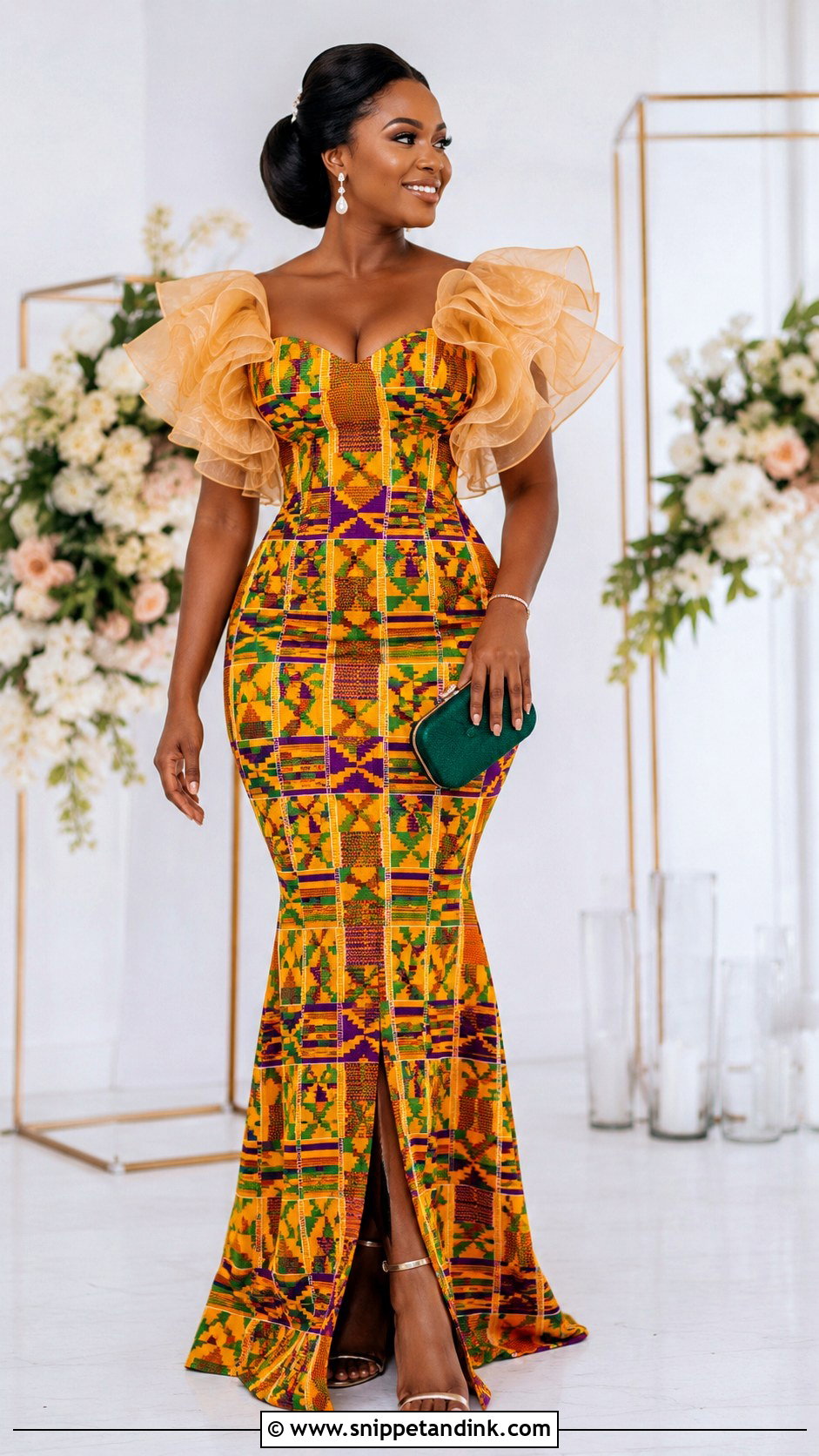
Big ruffle sleeves make a simple Kente gown expressive, as long as the rest stays streamlined. A fitted bodice and a straight floor-length skirt give the sleeves room. Building the ruffles from organza or tulle in a matching color, edged with small Kente details, keeps the weight down; ruffles cut entirely from Kente collapse under their own weight. Petite brides usually suit shorter, upward ruffles, and tall brides can carry long cascading ones. Check the width by hugging someone and sitting at a table at the fitting. Understated metallic heels, studs or drops and a solid clutch are enough, with hair pulled off the shoulders.
12. Kente Wedding Dress With Detachable Overskirt
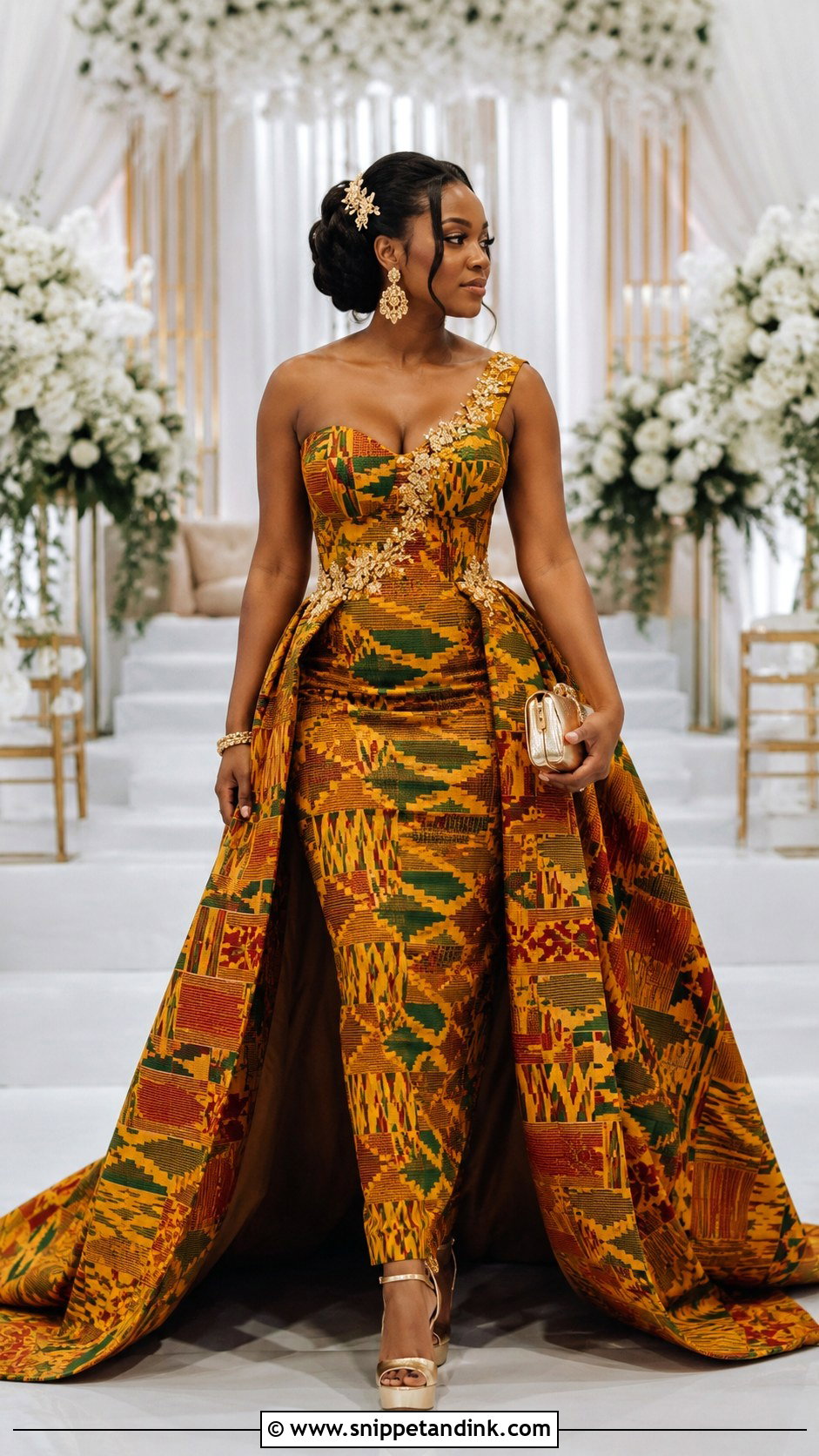
A detachable overskirt gives one Kente wedding dress two looks: full and formal for the entrance and family presentation, then a fitted midi, column or mermaid base for dancing. The overskirt can be Kente panels, a plain satin train or layers of structured tulle with woven edging. The base dress must look finished on its own, not like a slip, and the hooks or snaps should hide under a narrow belt. Practice taking the overskirt off with whoever will help you on the day, because hurried hands tear fastenings. Platform heels, a small gold clutch and statement earrings finish it.
13. Kente Jumpsuit Wedding Outfit
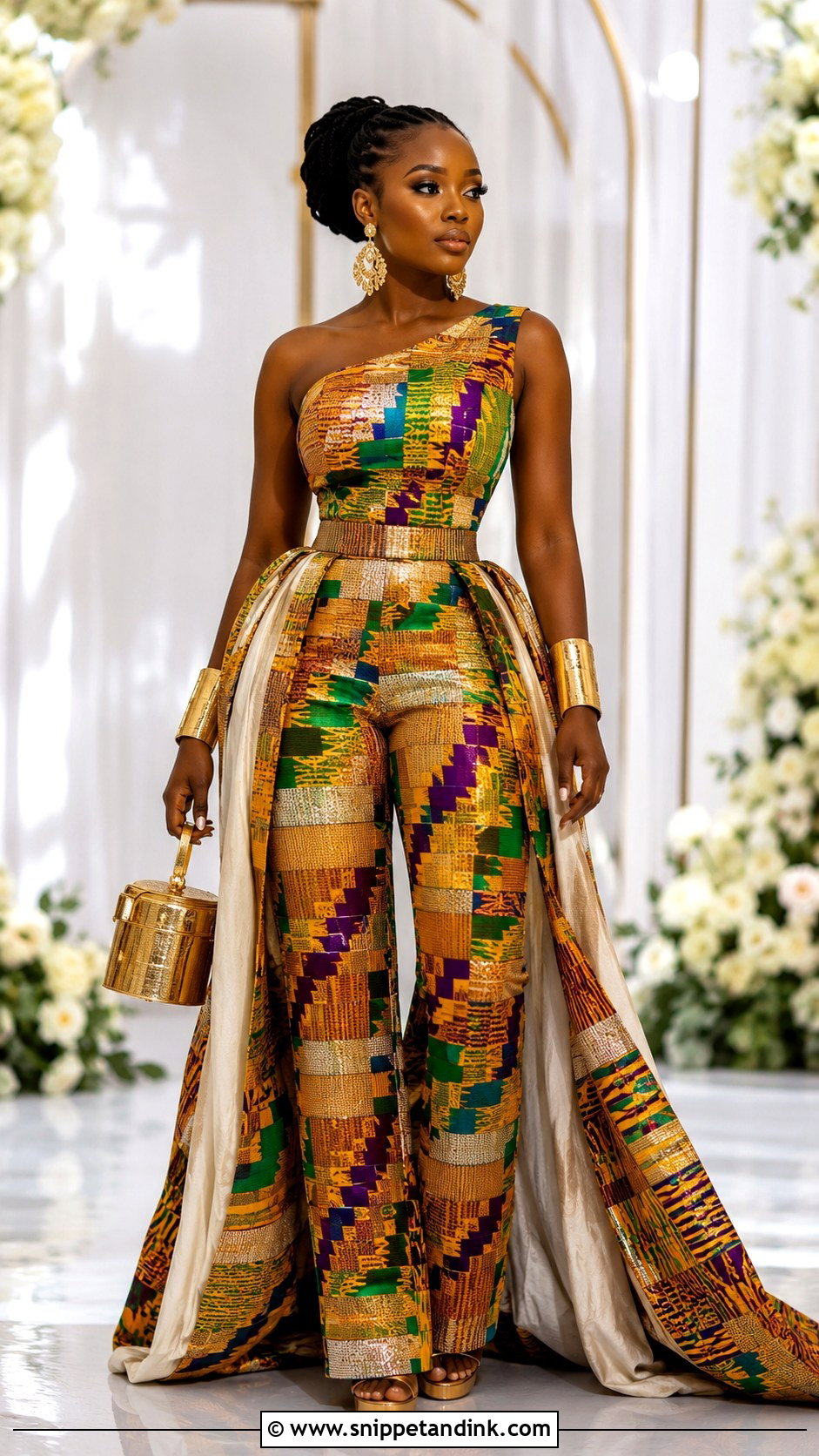
A tailored Kente jumpsuit suits the bride who wants to move freely all day. Choose wide-leg trousers with a corseted, one-shoulder or sleeved bodice, and add a detachable overskirt or train for ceremony drama. Jumpsuits are the hardest thing here to fit, because the torso length, waist and rise must all be right at once; too short in the body and it pulls every time you sit. Platform heels, a structured mini bag, gold cuffs, bold earrings and a sleek braided bun finish it. The trouser hem should nearly skim the floor while still showing the shoe.
14. Kente And Lace Wedding Dress
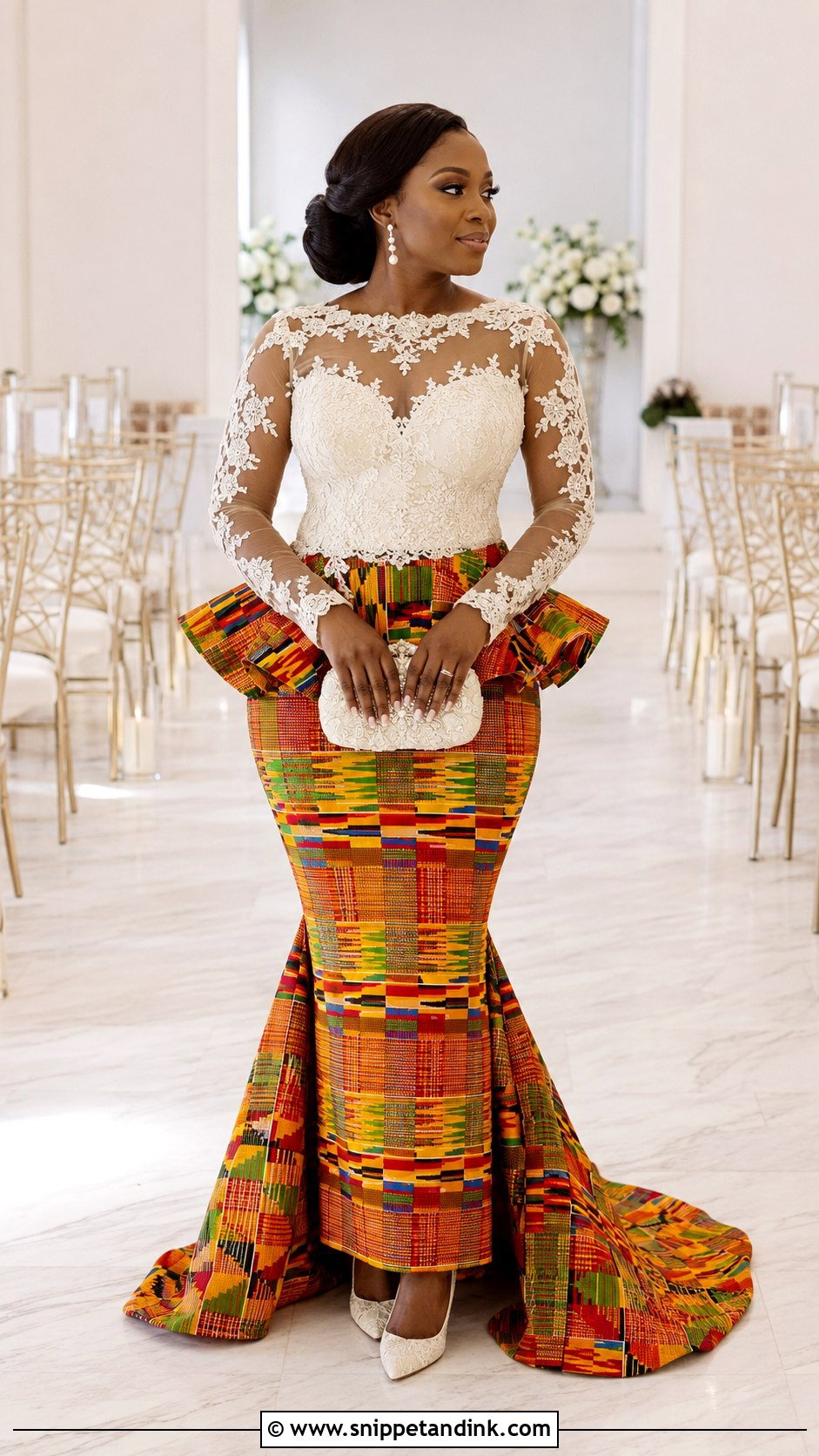
Kente and lace work when one fabric clearly leads. Use Kente for the fitted skirt and waist panels with lace across the bodice, sleeves or back, or flip it: a lace mermaid gown with a Kente peplum and detachable train. Keep the lace in a color that already appears in the weave, ivory, gold, green or burgundy. Heavy appliques over Kente crowd the pattern, so leave the cloth uncovered. I always ask for both fabric samples and look at them side by side in daylight, because lace dyed to “match” a Kente thread often looks different once it sits right next to it. Covered pumps, pearl drops, an embroidered clutch and a low chignon suit the mix.
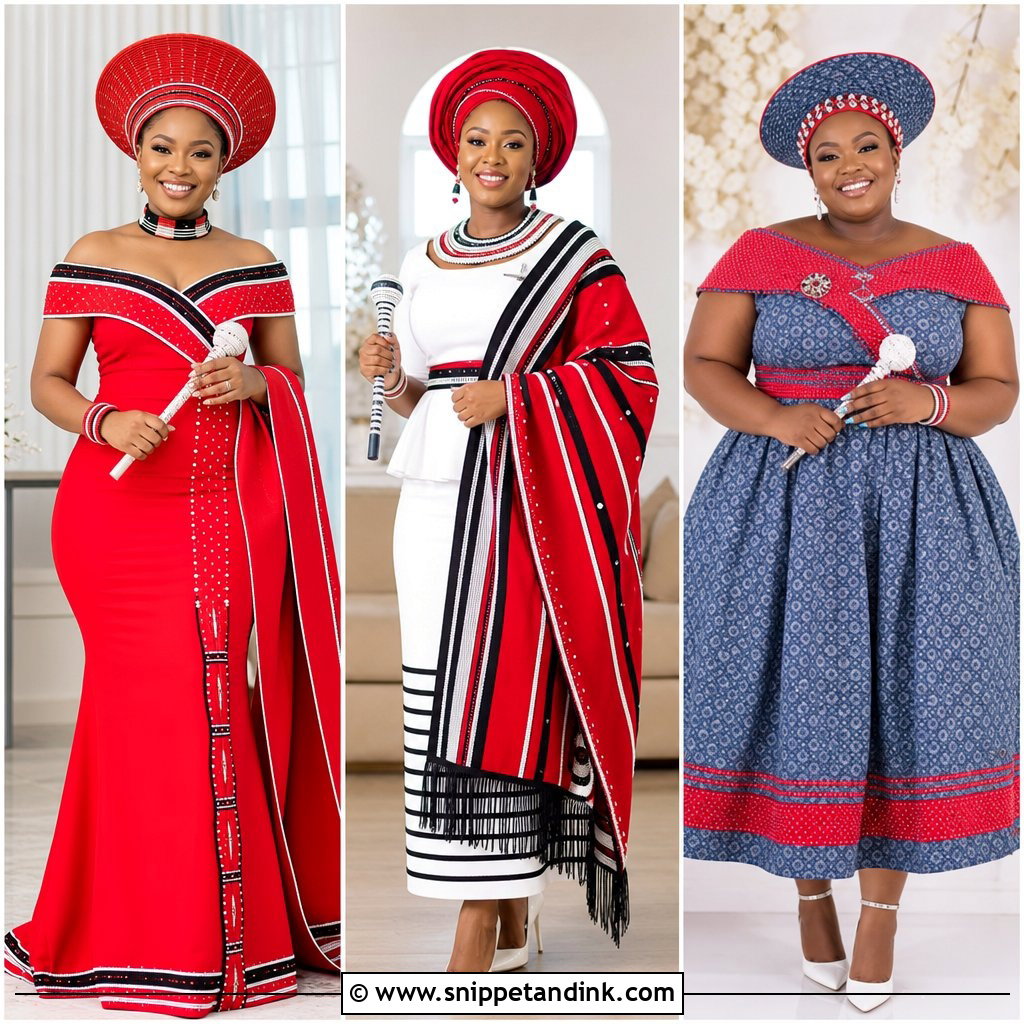
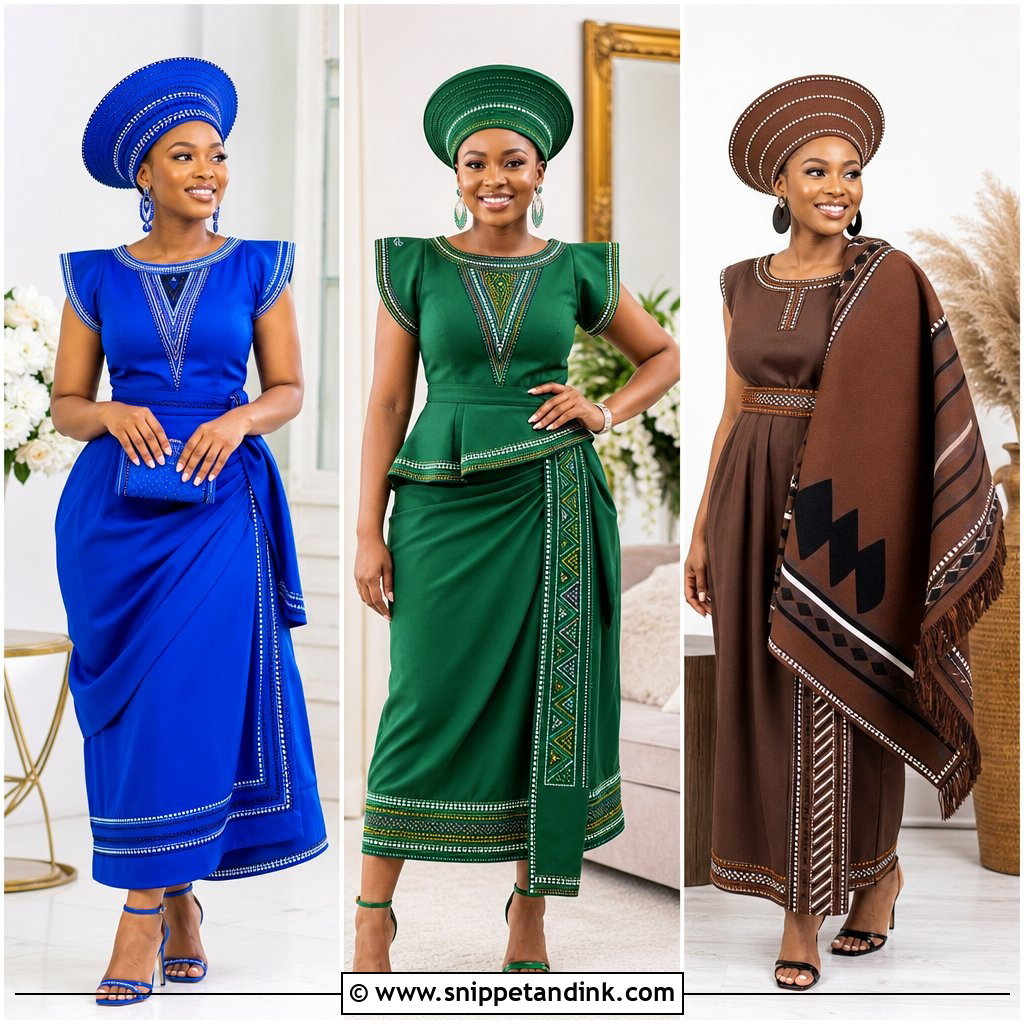
15. Kente Wedding Dress With 3D Flowers
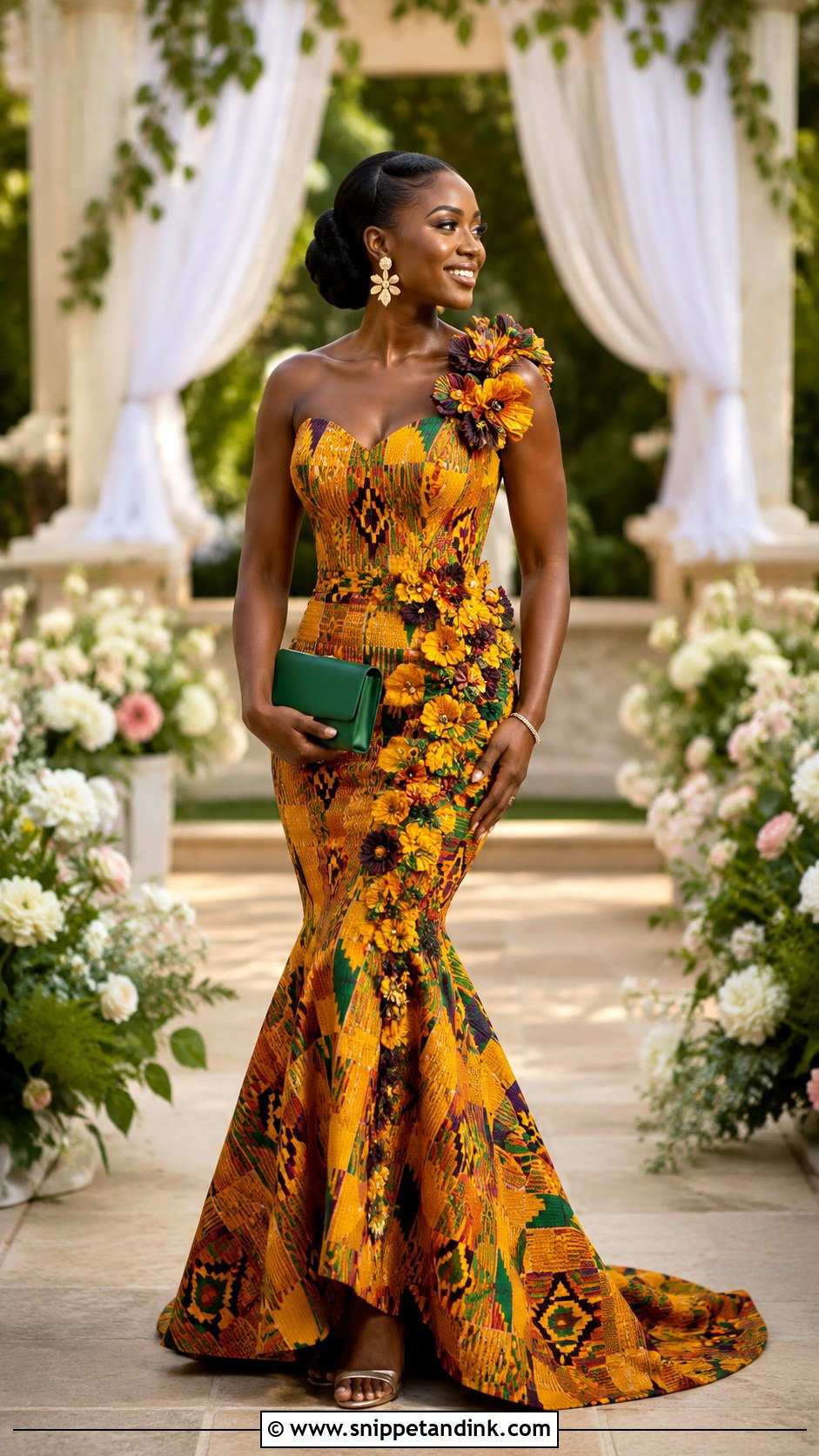
Three-dimensional flowers soften a structured Kente dress if they’re kept to one area: one shoulder, the waist, or down one side of the skirt. A fitted trumpet shape gives them a clean background. The petals should be light and stitched individually with a few anchor points, because flowers that are only glued drop off once you start dancing. Pick petal colors that are already in the cloth. Neutral metallic heels, petal-shaped earrings, a small solid clutch and a smooth hairstyle kept away from the flowers finish the look.
16. Kente Wedding Dress With Puff Sleeves
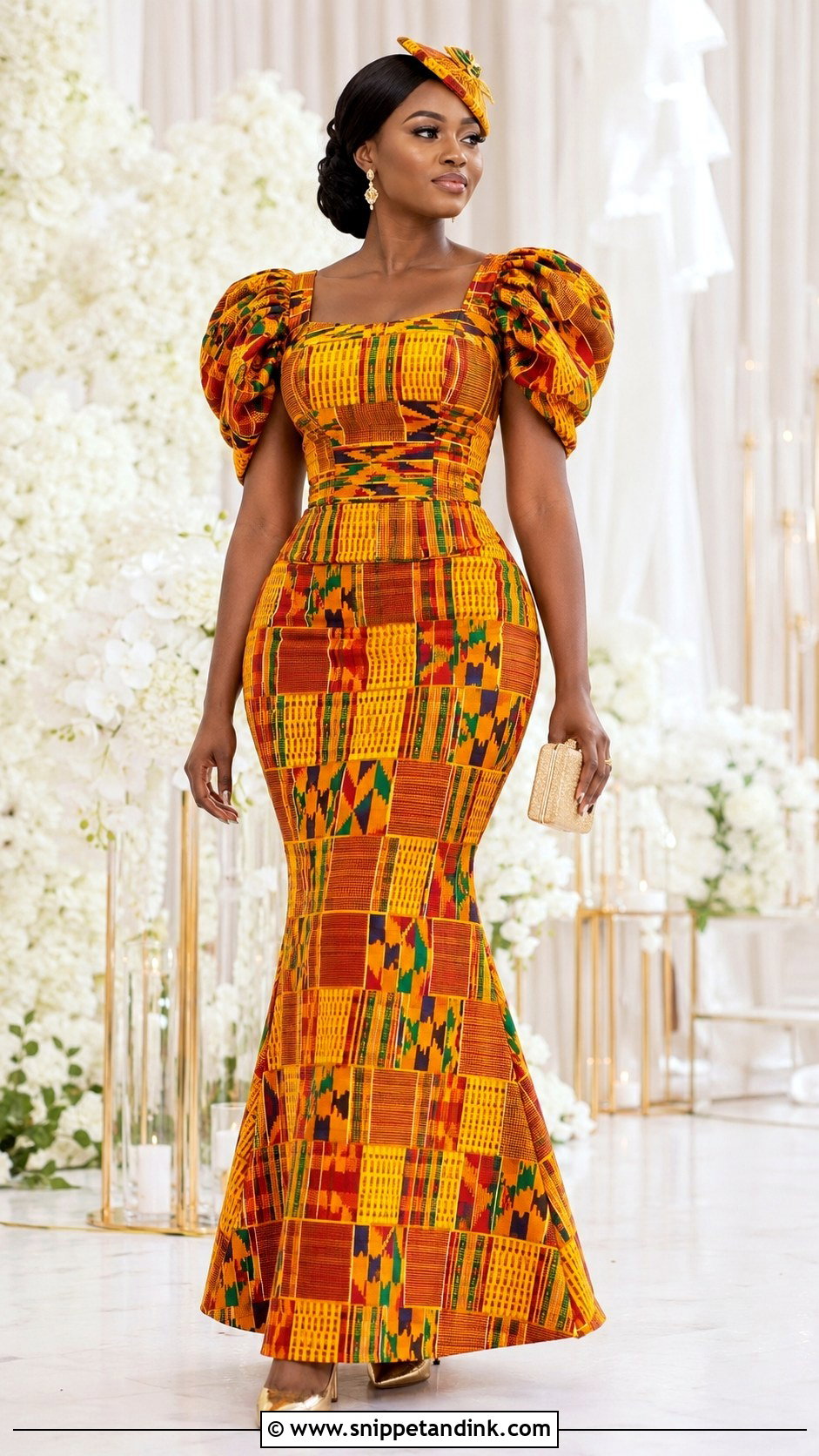
Puff sleeves give arm coverage with a regal shape. Choose a square-neck bodice with fitted cuffs and sleeves of medium volume, enough to hold their shape without looking costume-like, over a long mermaid, straight or softly flared skirt. Lightweight sleeve lining matters in Ghana’s heat. Leave room around the upper arm and elbow; a puff sleeve set too tight pulls the whole bodice up every time you raise your hand to wave or greet. Gold pumps, a box clutch, slim drop earrings, a low bun and a small headpiece for height finish it.
17. Kente Wrapped Bridal Outfit
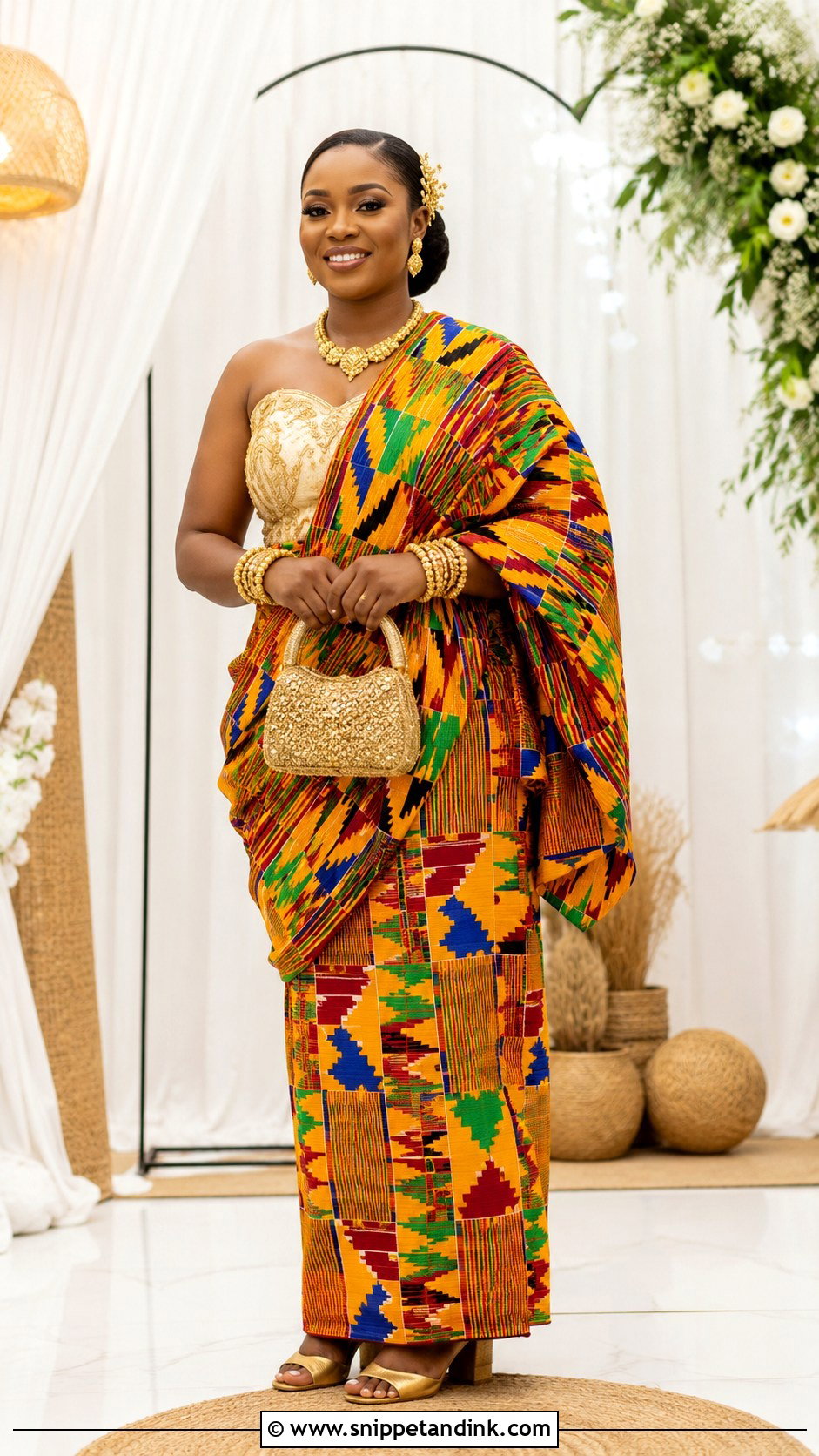
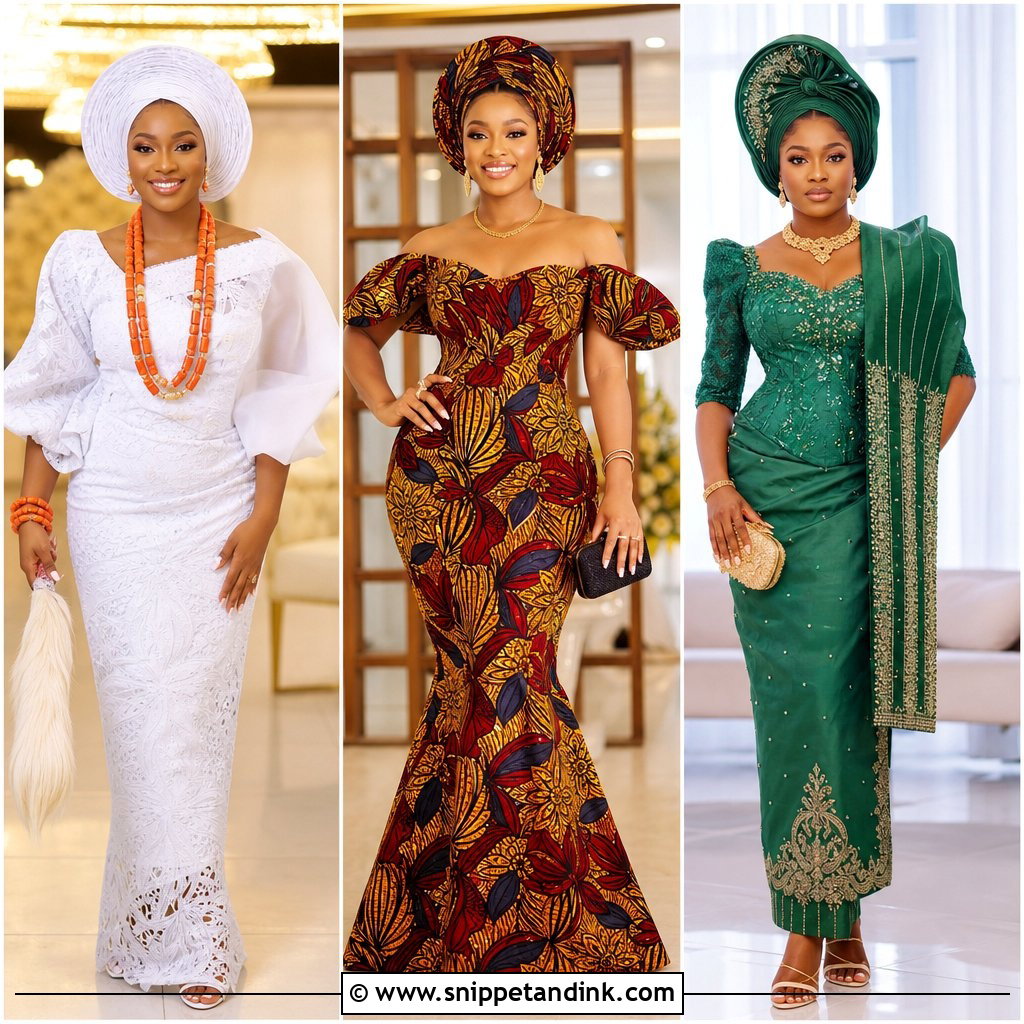
A wrapped Kente outfit is the closest of these to ceremonial dressing, and it’s a skill in itself. The cloth is draped across the body over a fitted blouse, corset or supportive underdress, with a second panel at the waist to form a long skirt with folds. Get someone experienced in Ghanaian wrapping to dress you, and have them do a trial wrap before the day, since a wrap that’s tied in a rush works loose by the time the speeches end. Hidden fastenings help, but they mustn’t drag the pattern out of line. Low gold heels, traditional-inspired jewelry, stacked bracelets, a small beaded bag and a polished natural hairstyle or head wrap complete it.
18. Kaba And Slit Wedding Outfit
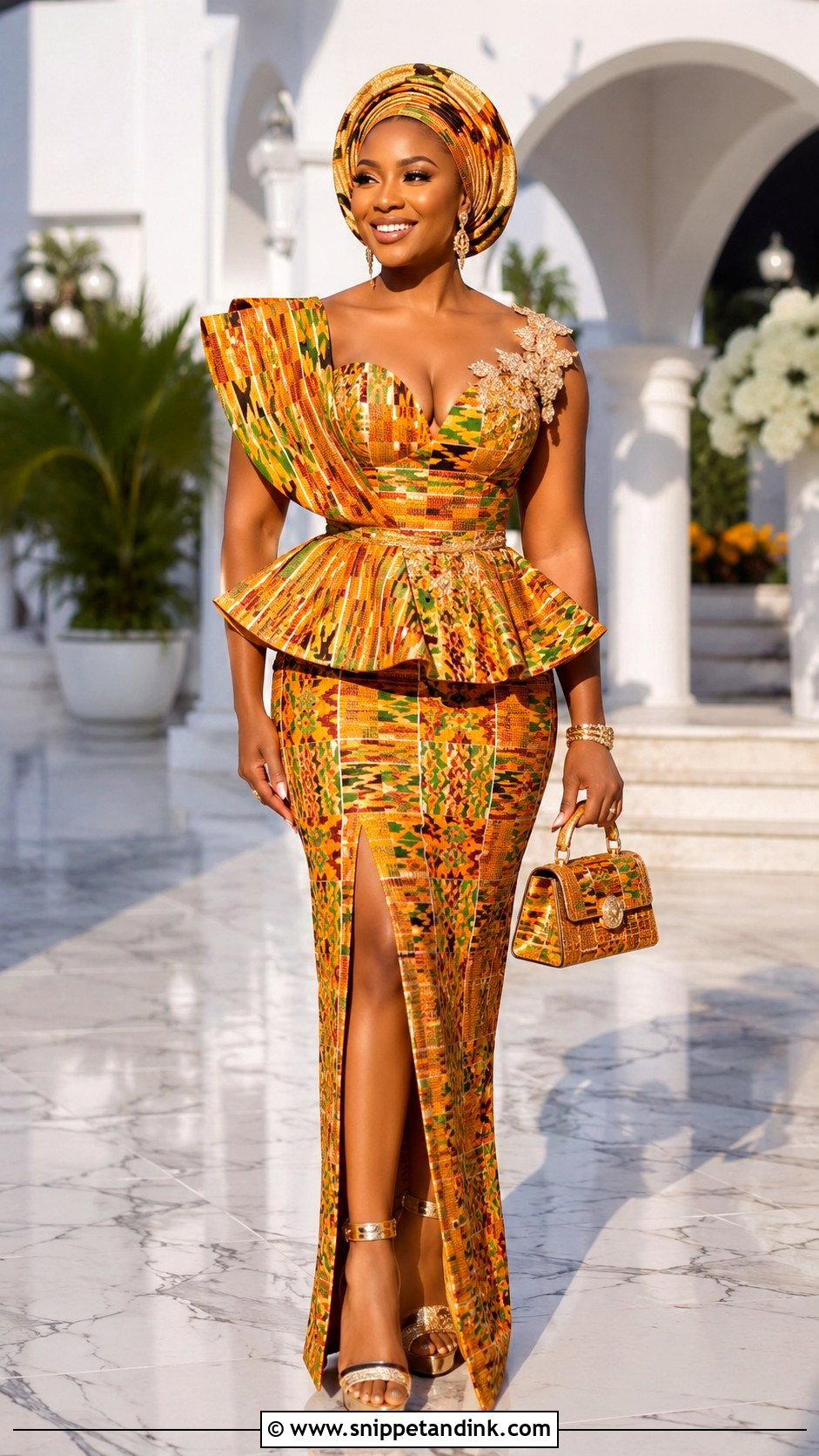
The kaba and slit is the outfit most Ghanaian guests will recognize immediately. The kaba is a fitted blouse, sometimes with a peplum, shaped neckline or decorative sleeves, and the slit is the long fitted skirt below it. Wear matching Kente throughout, or pair a woven skirt with a lace or brocade kaba. The slit has to be long enough, or the back opening deep enough, for you to walk and sit; a narrow skirt in thick cloth is unforgiving. Line the stripes up at every seam. Block heels, gold jewelry, a coordinated head wrap or fascinator and a small structured bag finish it.
19. Northern Ghanaian Smock Wedding Dress
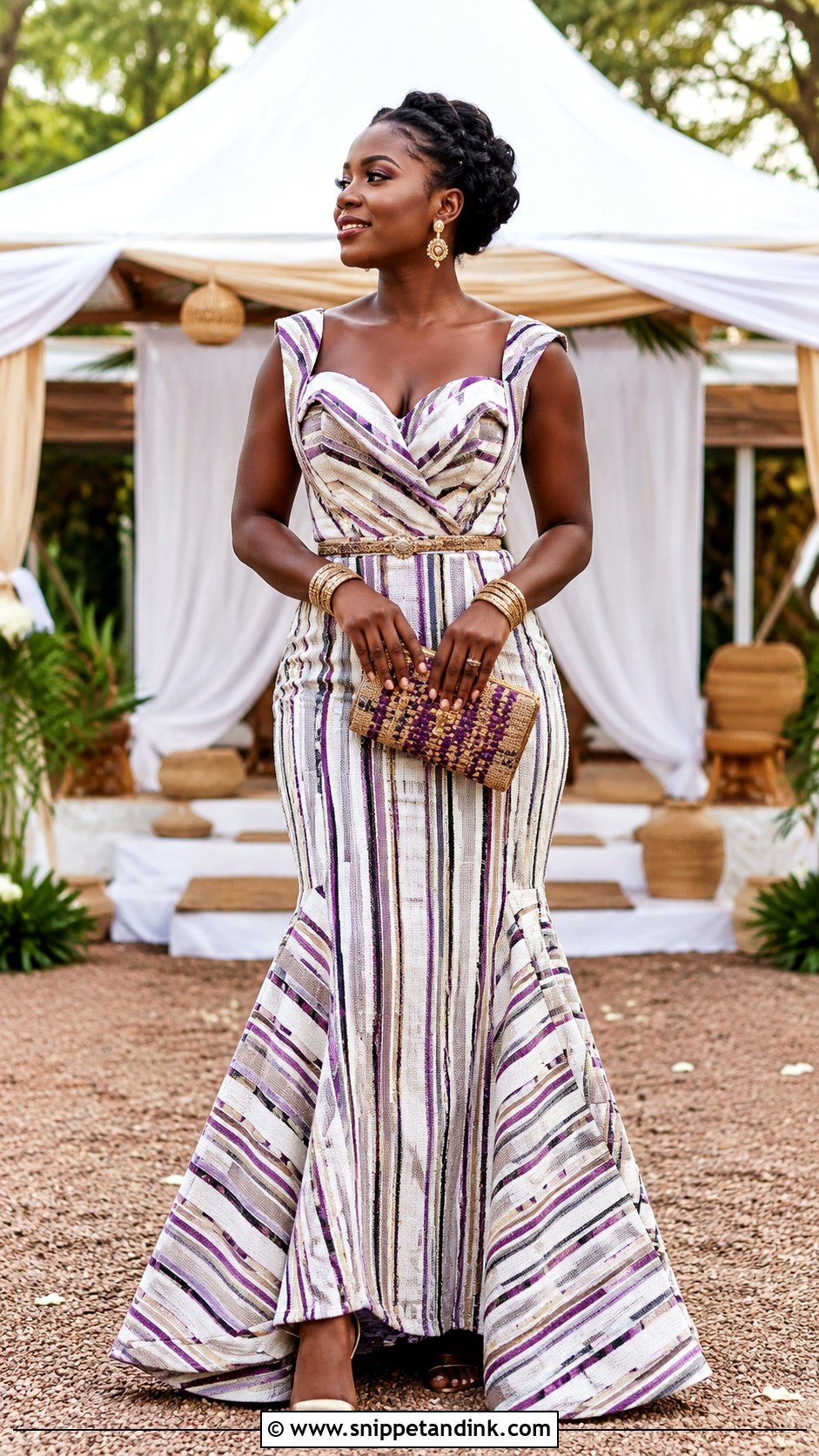
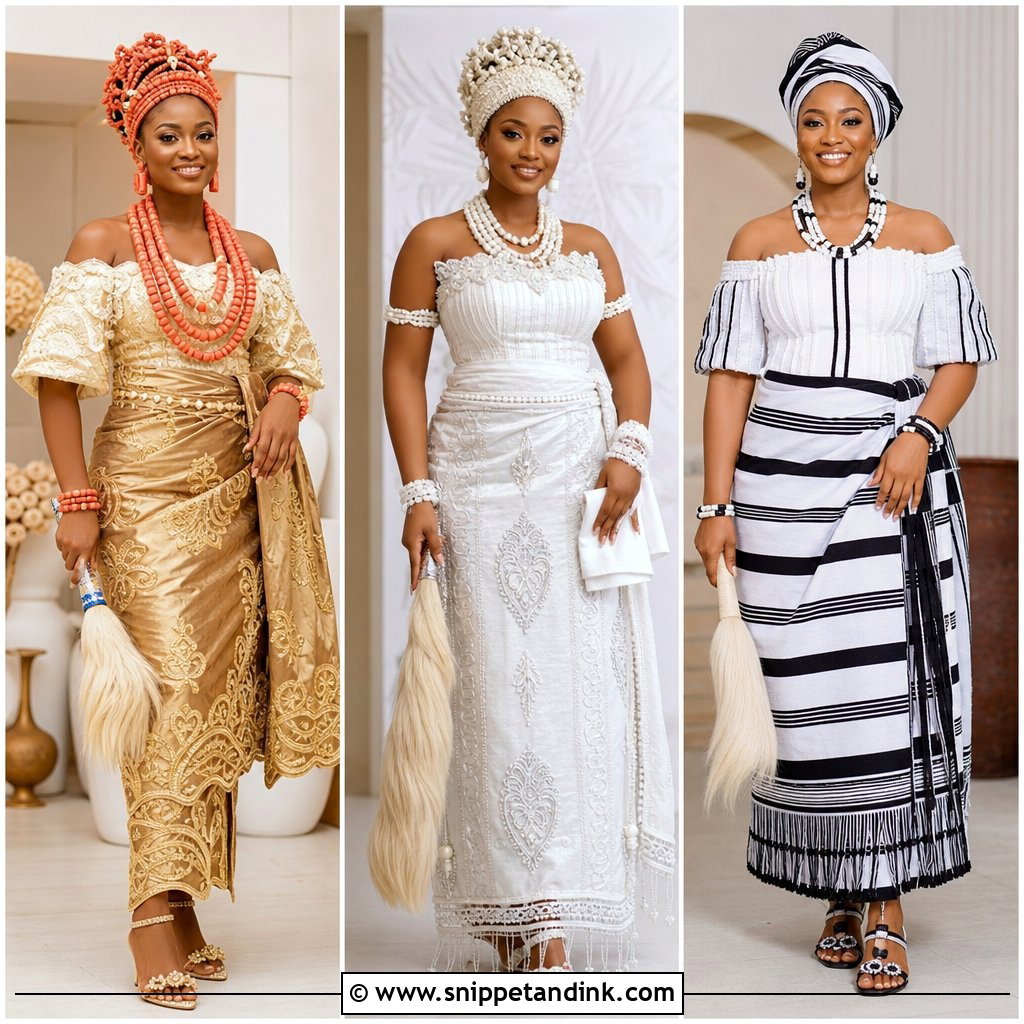
A northern Ghanaian smock-inspired wedding dress uses the striped handwoven cloth of the north rather than Kente, and it has a sturdier hand and a quieter rhythm. Shaped into a full-length dress with a structured bodice and flared skirt, with panels that show off the stripes, it needs a belt to define the waist because the fabric doesn’t drape softly. Leather or metallic low heels, bold earrings, stacked bracelets, a handwoven clutch and a neat natural updo suit the craft of the cloth. Work with a designer who knows the fabric and where it comes from, not one who treats it as a generic stripe.

20. Simple Kente A-Line Wedding Dress
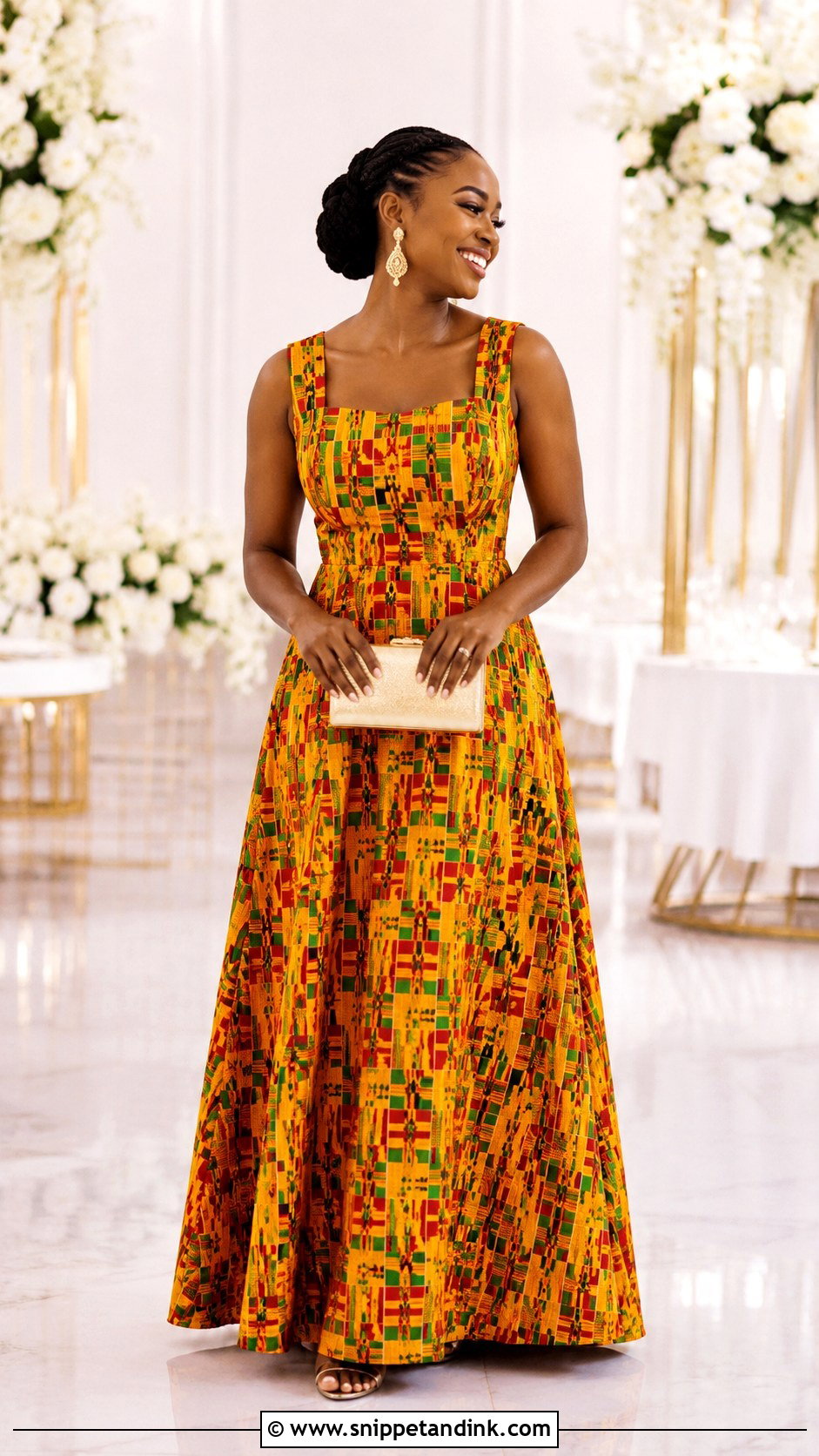
The simplest shape can show Kente off best. An A-line with a fitted bodice, a natural waist and a skirt that widens gradually to the floor works for most bodies, with a scoop, square or modest V-neck and cap, three-quarter or no sleeves. Keep decoration to the waistband or sleeve edges. Pockets are possible if they lie flat, and in a thick cloth they need a lighter pocket bag inside so they don’t bulge. Comfortable metallic heels, medium earrings, a solid structured clutch and a braided bun or natural style finish it. With so little else going on, the pattern placement has to be perfect.
Two or Three Looks on One Engagement Day
At a Ghanaian traditional marriage, brides often appear in more than one outfit: one look for being presented to the families, another once the rites are done, sometimes a third for the party. I plan those changes like a schedule, not an afterthought. The heaviest, most formal Kente goes first, when you’re mostly standing or seated for the rites. The lighter, easier outfit comes later for dancing.
Each change needs a quiet room, one helper who knows every fastening, and shoes, jewelry and head wrap laid out in order. Wrapped cloths and tied head wraps take the longest to redo, so book the person who tied them to stay for the change. A short makeup touch-up belongs in the same slot.
Putting the Kente away afterwards
Handwoven Kente shouldn’t go in a washing machine. Have it cleaned by someone used to delicate handwovens, or hand wash it gently in cold water if the weaver says the dyes allow it, then dry it flat in the shade. Store it loosely folded or rolled with tissue between the layers, and refold it along different lines now and then so the strip seams don’t crease permanently. Keep it out of plastic and away from sunlight, which fades the brighter colors over time.
Ask What the Cloth Means Before It’s Cut
Heritage, comfort, venue and taste all count, and so does the cloth itself. A Kente ball gown, a kaba and slit, a wrap or a northern smock dress each need a maker who understands that textile. Agree on pattern placement, cloth weight, lining, movement and any cultural details before the first cut, then build shoes, jewelry, bag and hair around the neckline. Careful fittings and respectful customizing let you stop thinking about the outfit and enjoy the ceremony.
You'll Like These Ideas:



Leave a Reply