
Mehndi for a brother and sister is a different job from bridal work. The design has to say something about the two of you, often for Raksha Bandhan, Bhai Dooj, a sibling’s wedding function or a family photo, and it usually has to be done quickly. When I plan one, I start from a single symbol, usually a rakhi or a pair of initials, and build ordinary henna patterning around it so the hand doesn’t look busy. Some of the ideas below cover the full hand in the traditional way. Others take ten minutes and suit kids, cousins, or a brother who’ll only agree to a small band on his wrist.
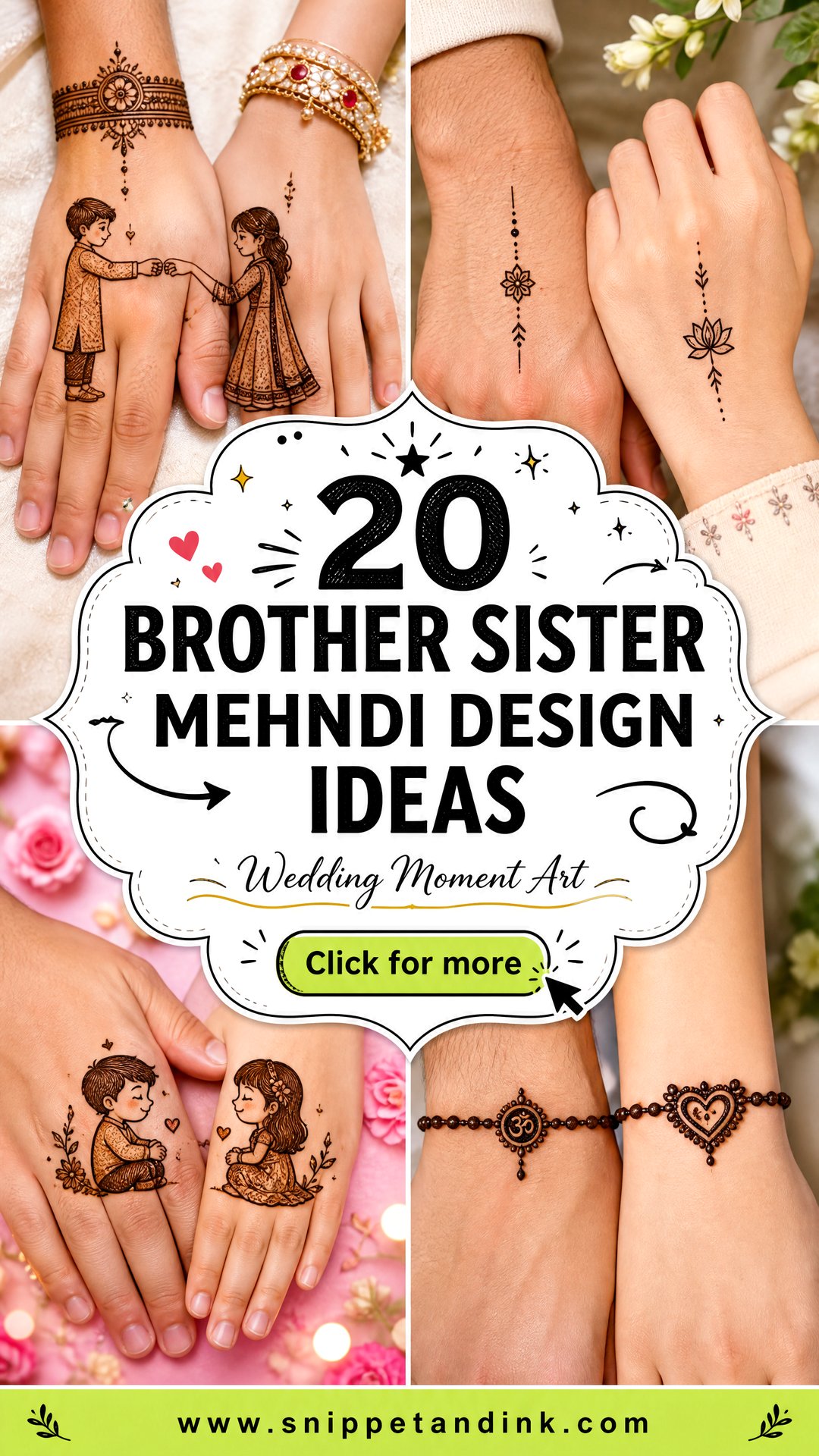
Timing the Paste So the Stain Peaks on Rakhi Morning
Henna doesn’t show its real colour when the paste comes off. It starts bright orange and darkens to a reddish brown over the next day or two, so the stain looks its best roughly 24 to 48 hours after application. For a morning festival, I apply the evening before at the very latest, and two evenings before if you want it at its deepest for photos.
While the paste is on
Leave it as long as you can, ideally six hours or overnight. Once the surface dries, dab on a little lemon and sugar mixture so the paste stays stuck to the skin instead of flaking off early. Keep your hands warm, too. Cold hands stain more slowly and more faintly.
Once it comes off
- Scrape or rub the dried paste away with your fingers or a blunt edge rather than washing it off.
- Keep water off the design for as long as you can, ideally the rest of that day.
- Smooth a little coconut oil or plain balm over it before you bathe, which helps protect the stain.
- Expect palms and fingertips to go darkest; the back of the hand and the wrist always stay a shade or two lighter.
1. Brother Sister Rakhi Mehndi Design
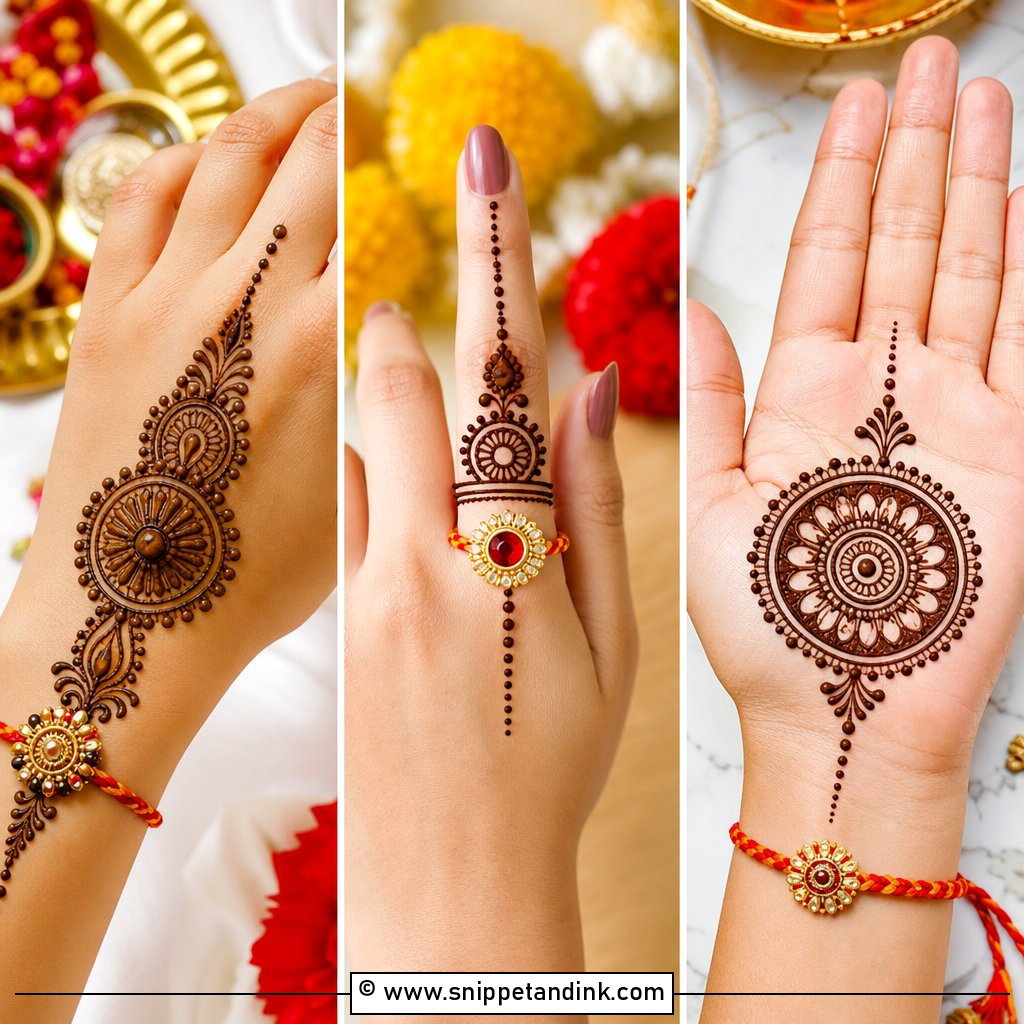
Of all the sibling themes, a rakhi mehndi design says the most about the festival with the least explaining. I draw the rakhi across the palm or the back of the hand like a bracelet, with a round centre medallion and two threads, then surround it with small flowers, dots, paisleys and leafy trails. The fingers take neat bands or small vines. Watch the thread lines: drawn too thin, they break up and the rakhi stops reading as a rakhi once the stain develops. A word such as “Bhai” or “Didi” fits nicely inside the medallion.
2. Brother Sister Portrait Mehndi Design
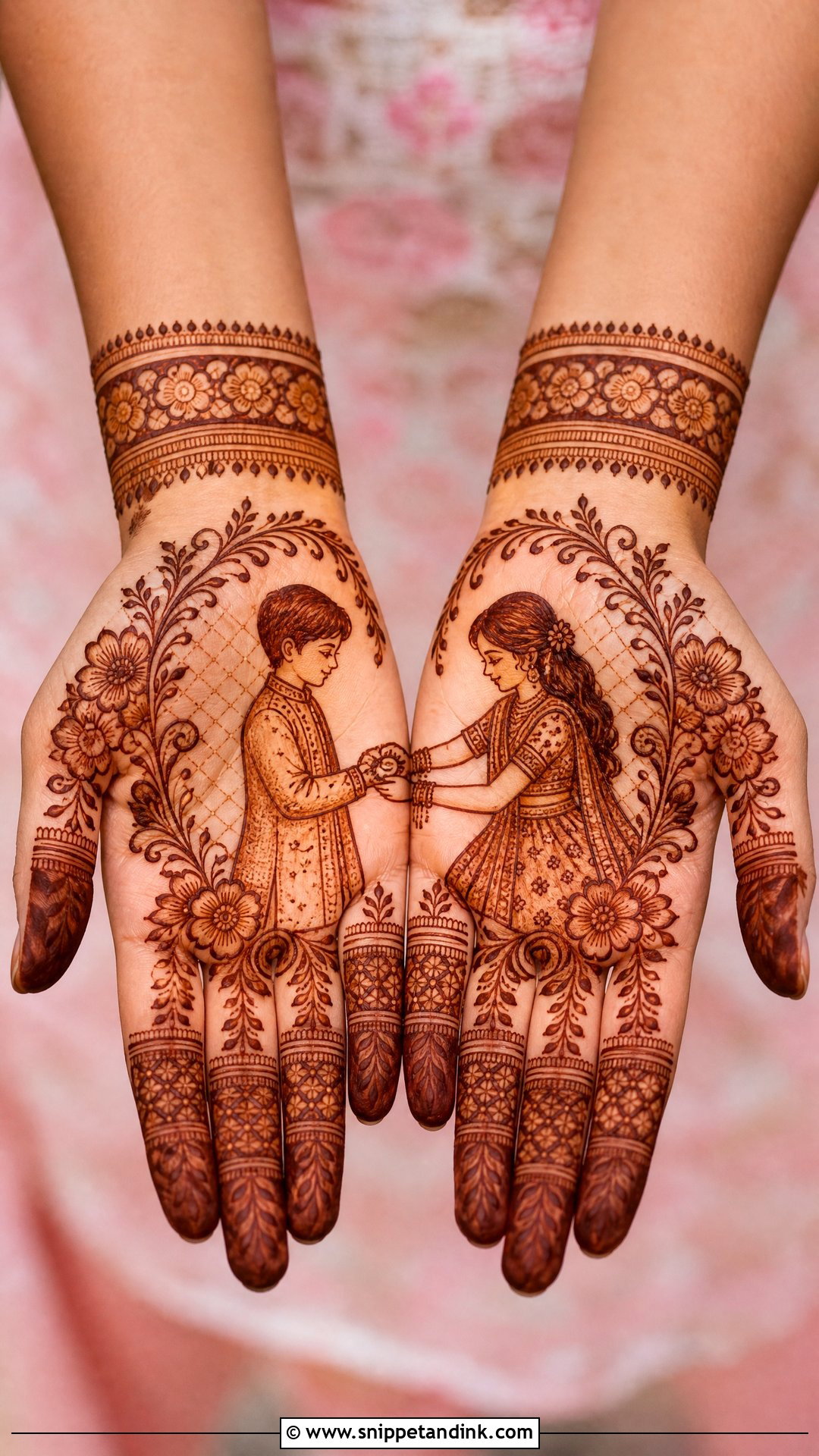
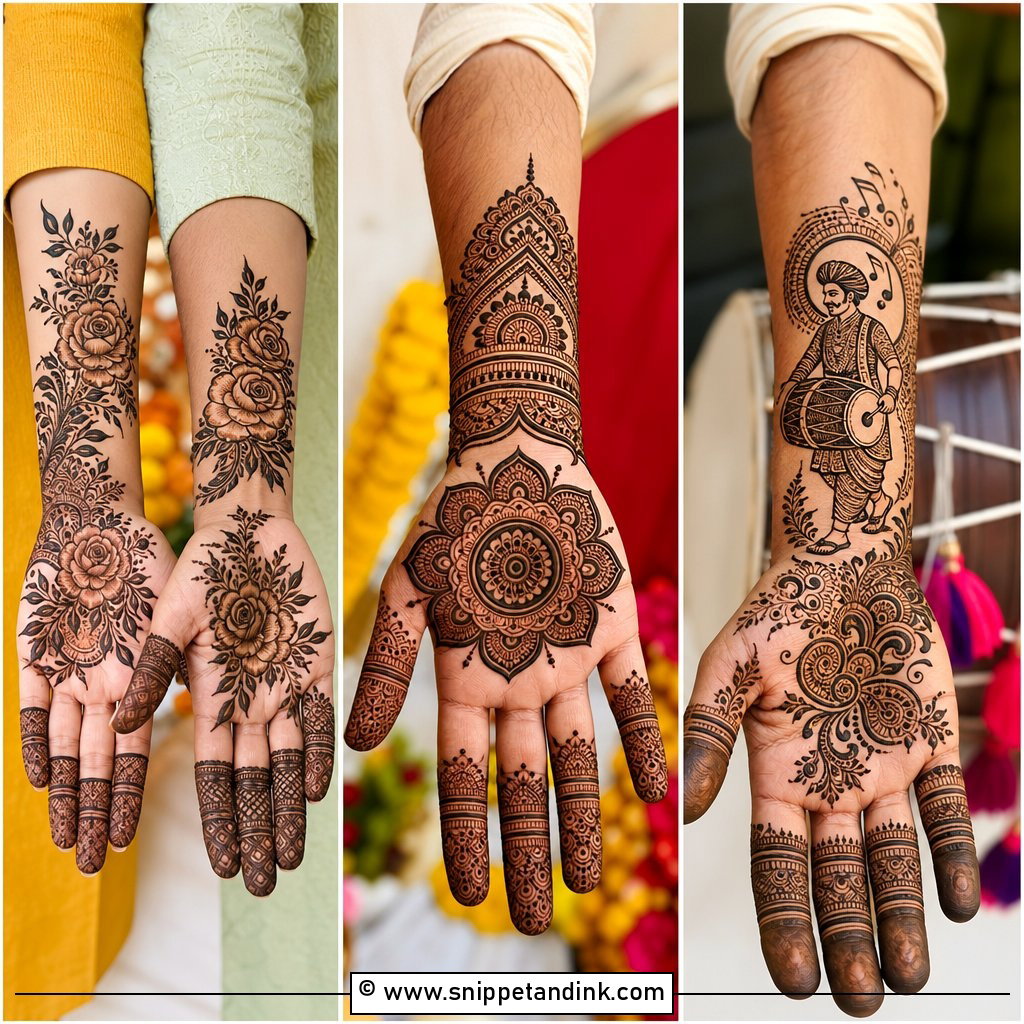
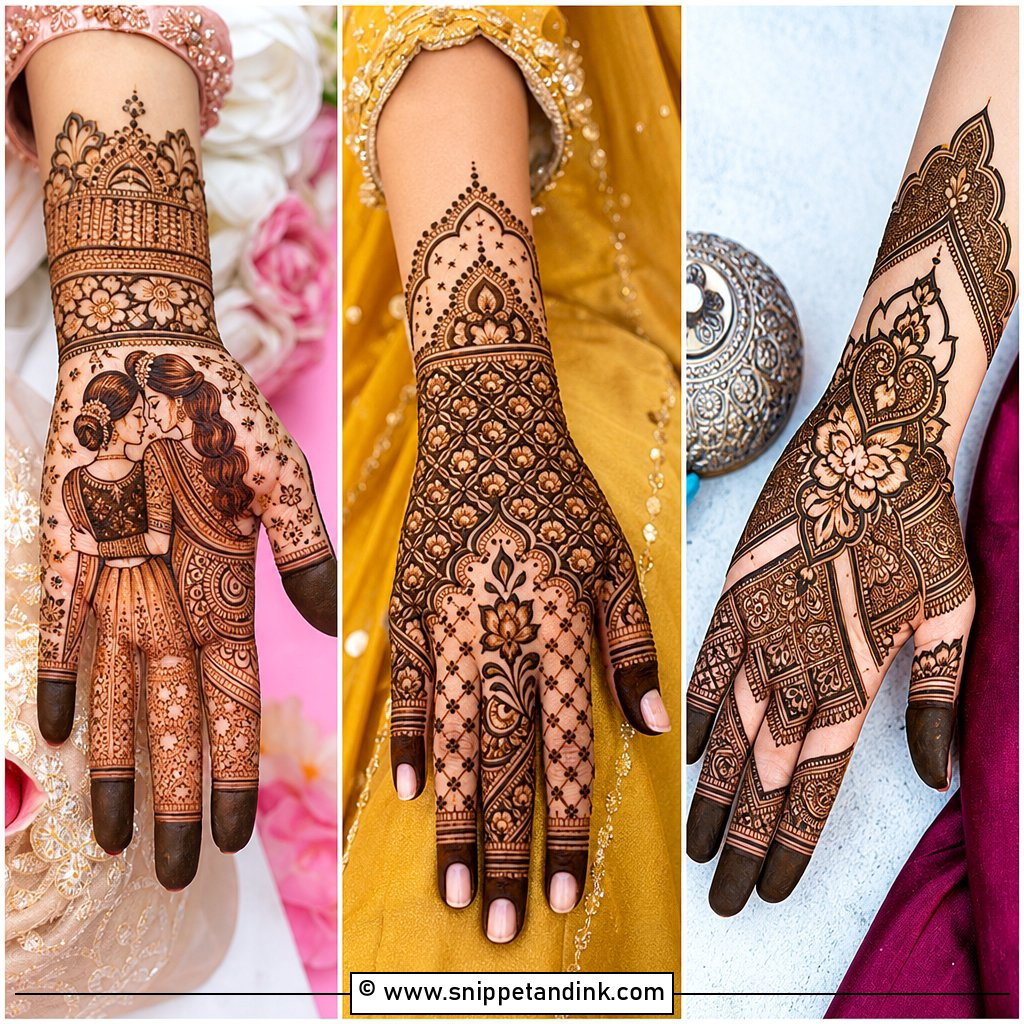
A portrait is a tiny memory drawn on the hand, usually a sister tying rakhi on her brother’s wrist, set in the palm as the main artwork. This is skilled work. Faces in henna are built from a handful of fine lines, and if the cone isn’t steady, expressions turn odd once the stain darkens. I keep the figures simple and frame them with floral borders, curves, dots and light shading, with clean jaali or matching rakhi bands on the fingers. Ask to see an artist’s previous figure work before you book, and allow more time than you would for a pattern of the same size.
3. Simple Brother Sister Mehndi Design
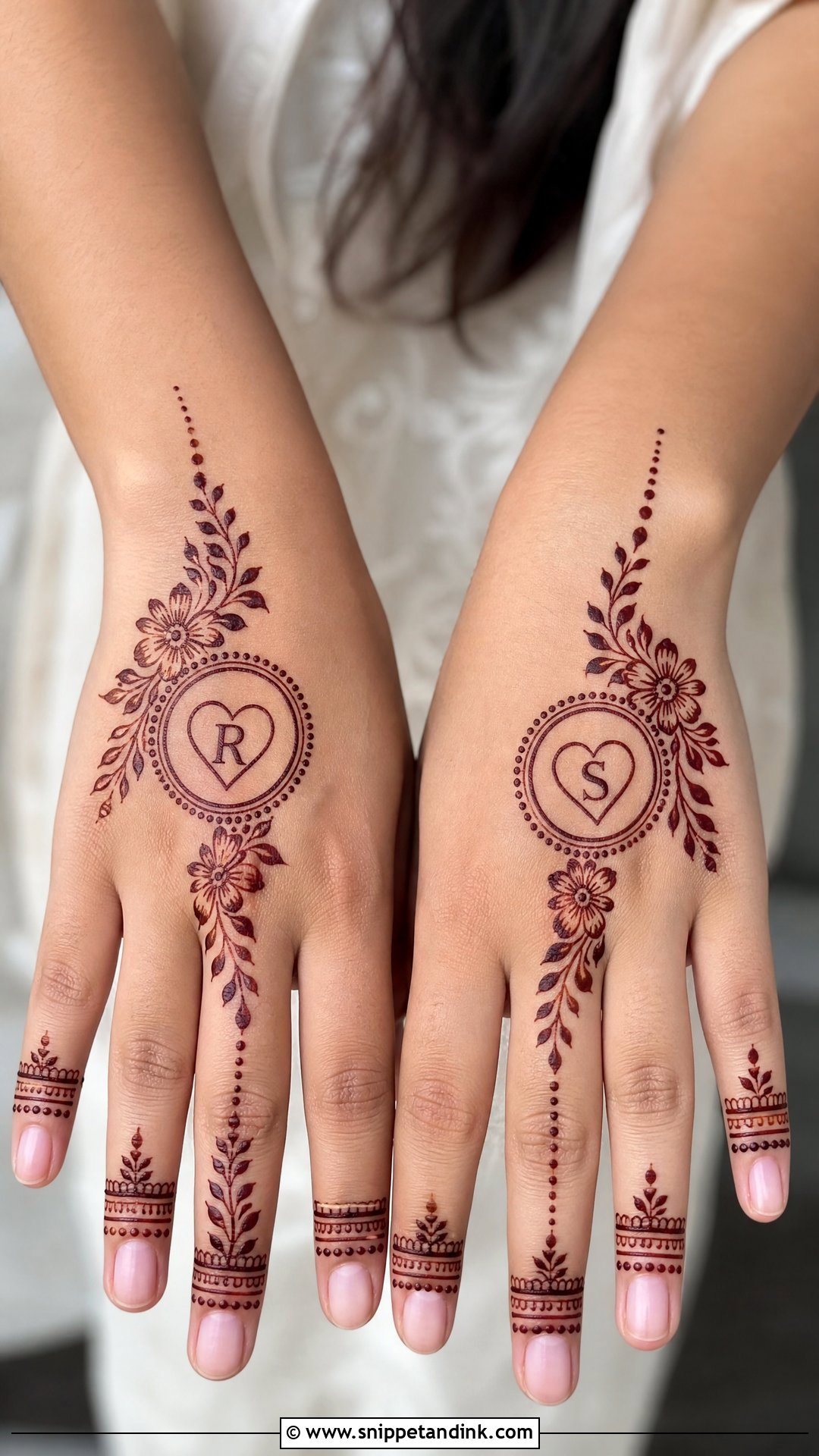
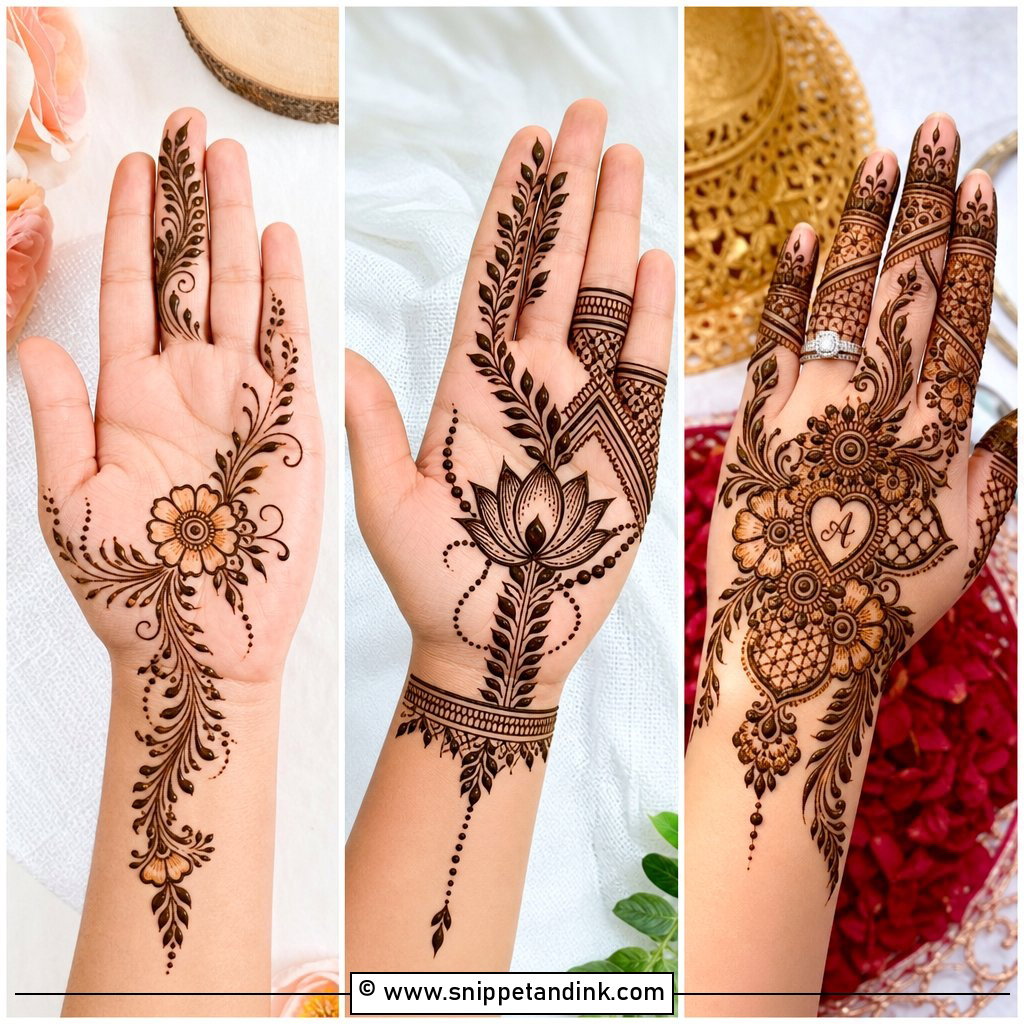
A small rakhi circle on the palm, initials inside a heart and a few floral trails toward the wrist: that’s enough for a festive hand that doesn’t take all evening. Keep the fingers light with dots, tiny leaves and ring-like bands, and leave breathing room between elements. The open space isn’t only about looks. Wet paste lines drawn too close together tend to touch and merge, so a simple layout keeps every line crisp. It’s a sensible choice for applying at home, and for anyone heading to school or work the next day. One word, like “Bhai” or “Sis”, is all the personal touch it needs.
4. Full Hand Brother Sister Mehndi Design
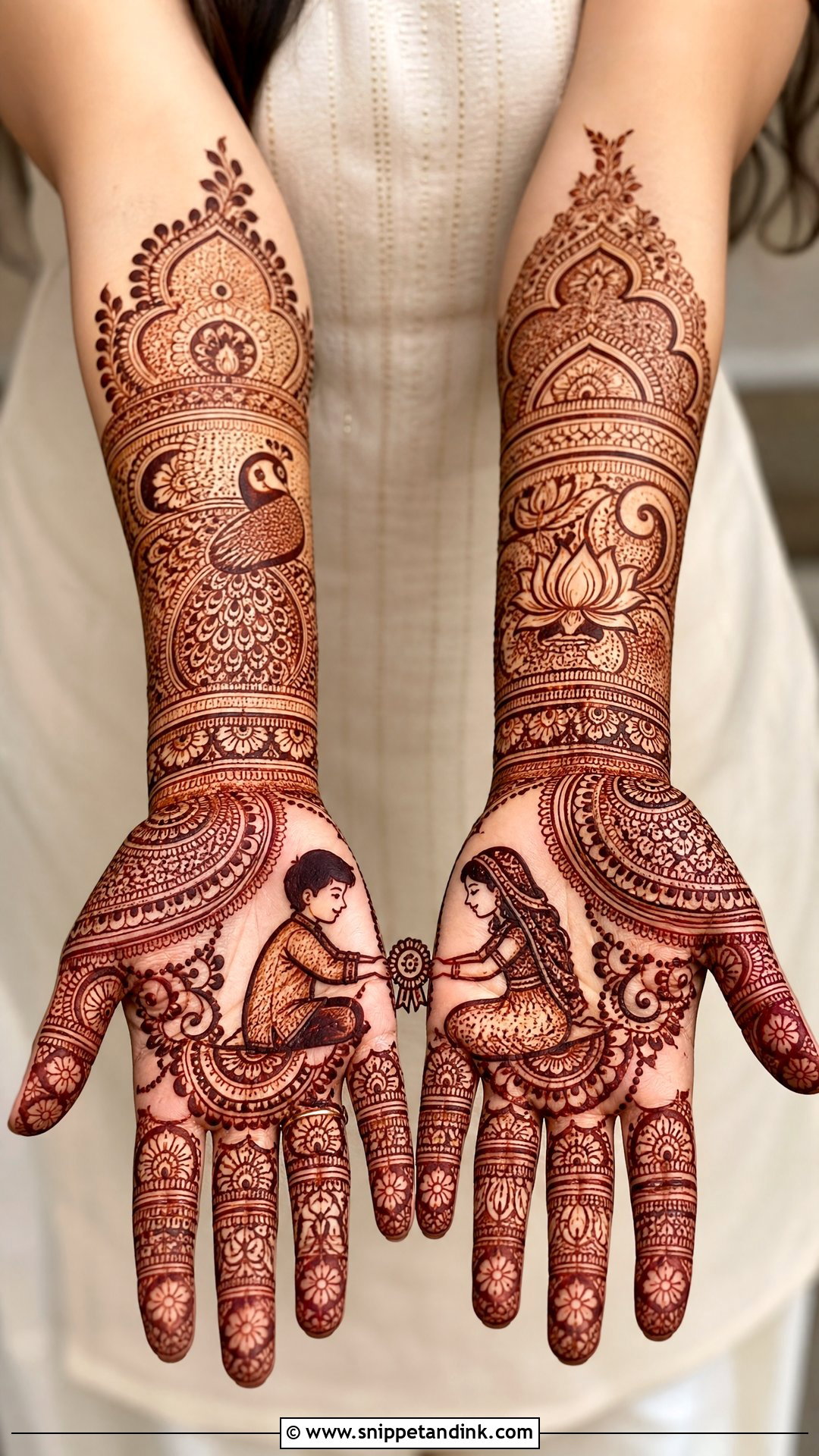
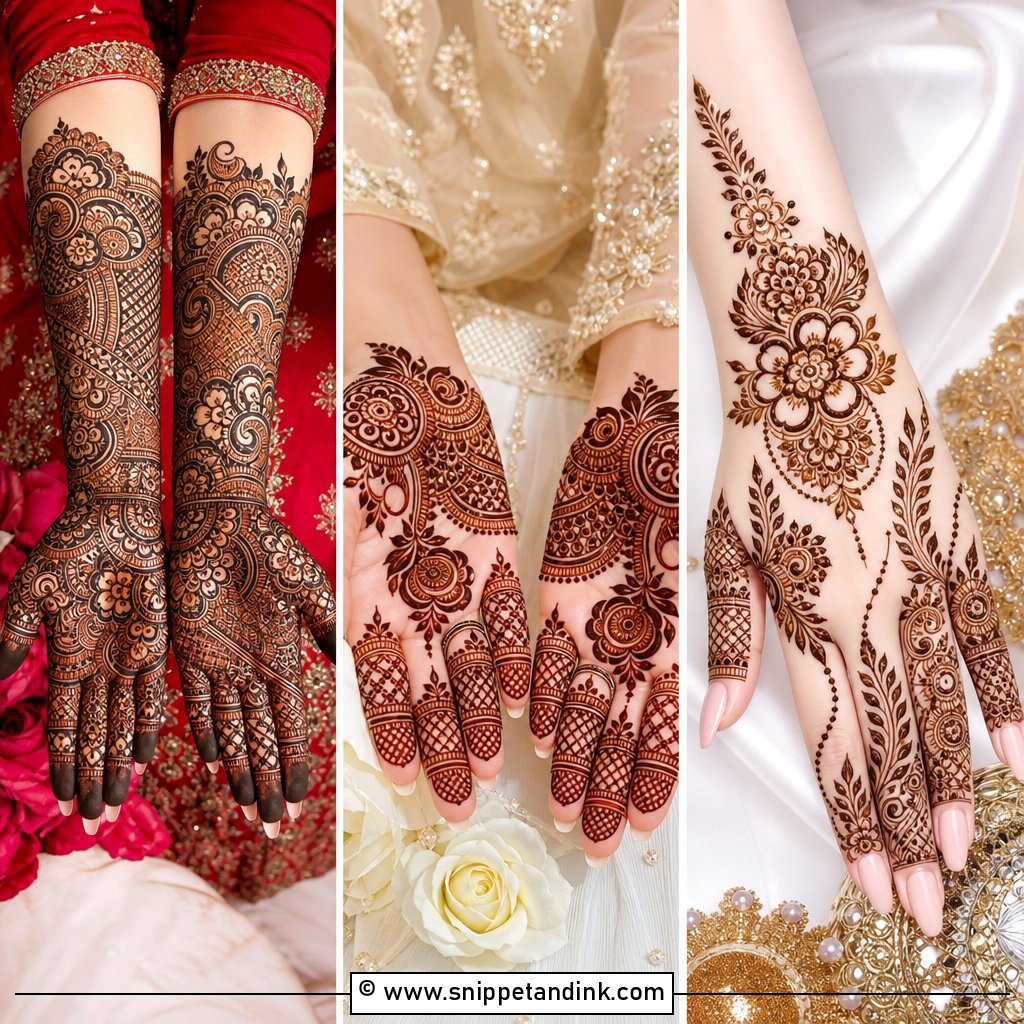
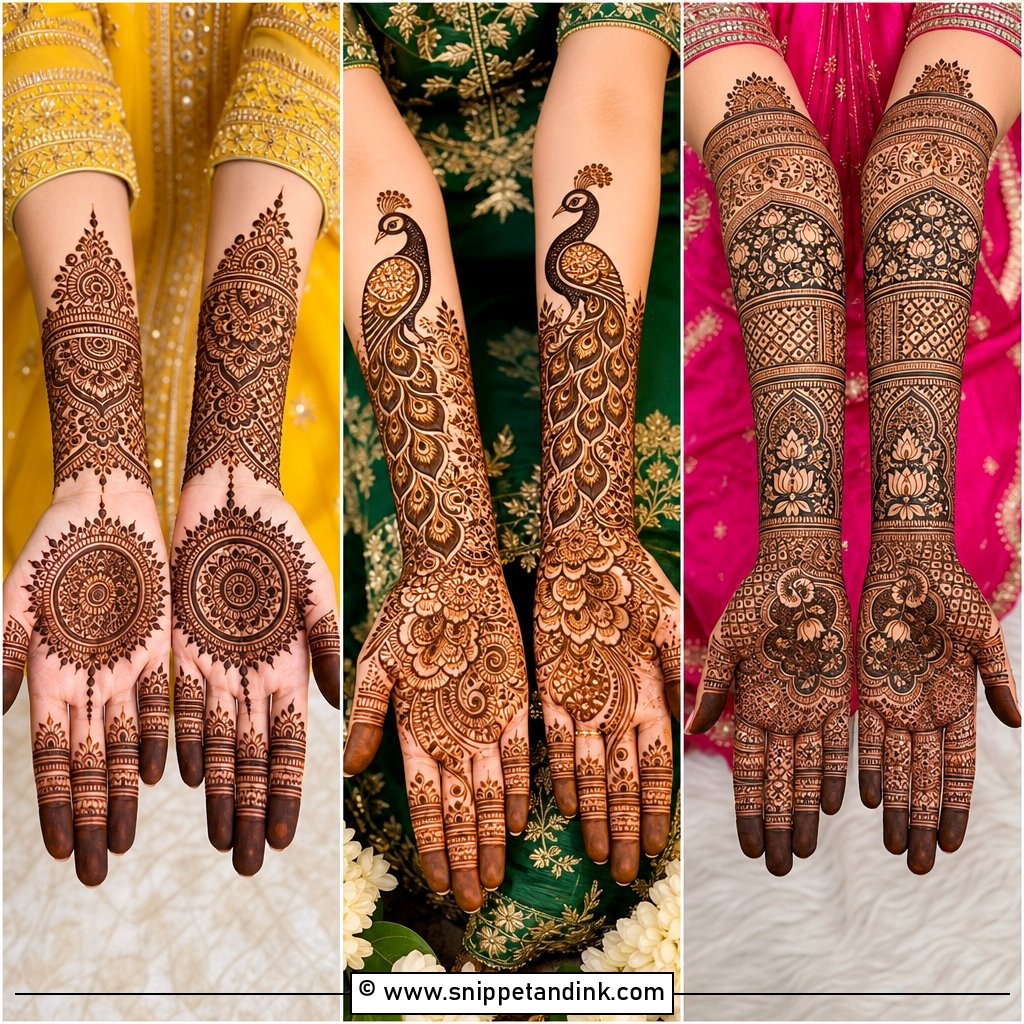
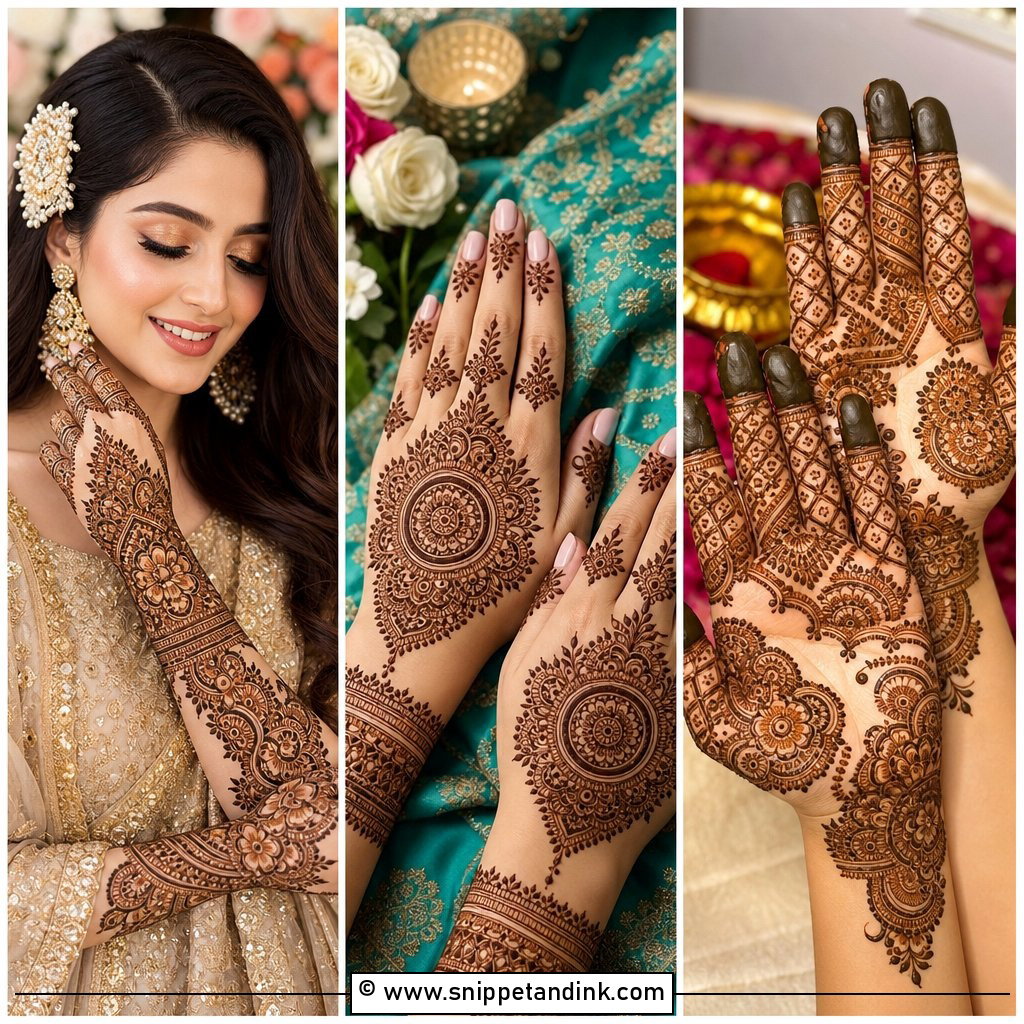
Full-hand sibling mehndi is for the sister who loves detail and has a few hours to sit. The palm carries a rakhi ceremony scene, and the wrist and forearm continue with paisleys, florals, mandalas and bracelet patterns, with coordinated fingers so the hand reads as one piece. The danger is that the theme gets lost in the filler. I place the sibling symbols, a rakhi thread, a protective knot or initials, where the eye lands first, usually the centre of the palm. Plan on two hours or more for both hands, and remember you can’t use them while the paste dries.
5. Back Hand Brother Sister Mehndi Design
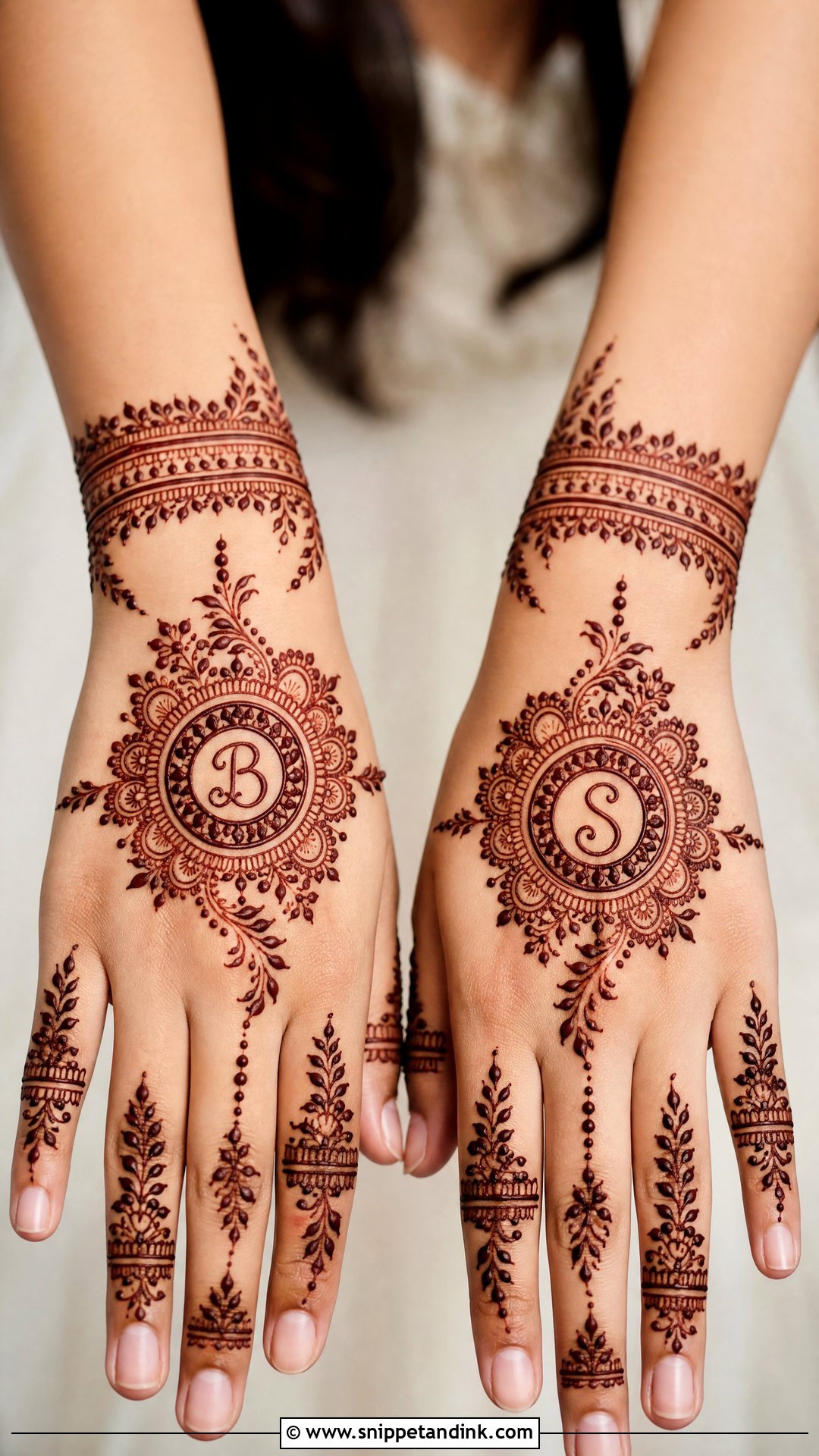
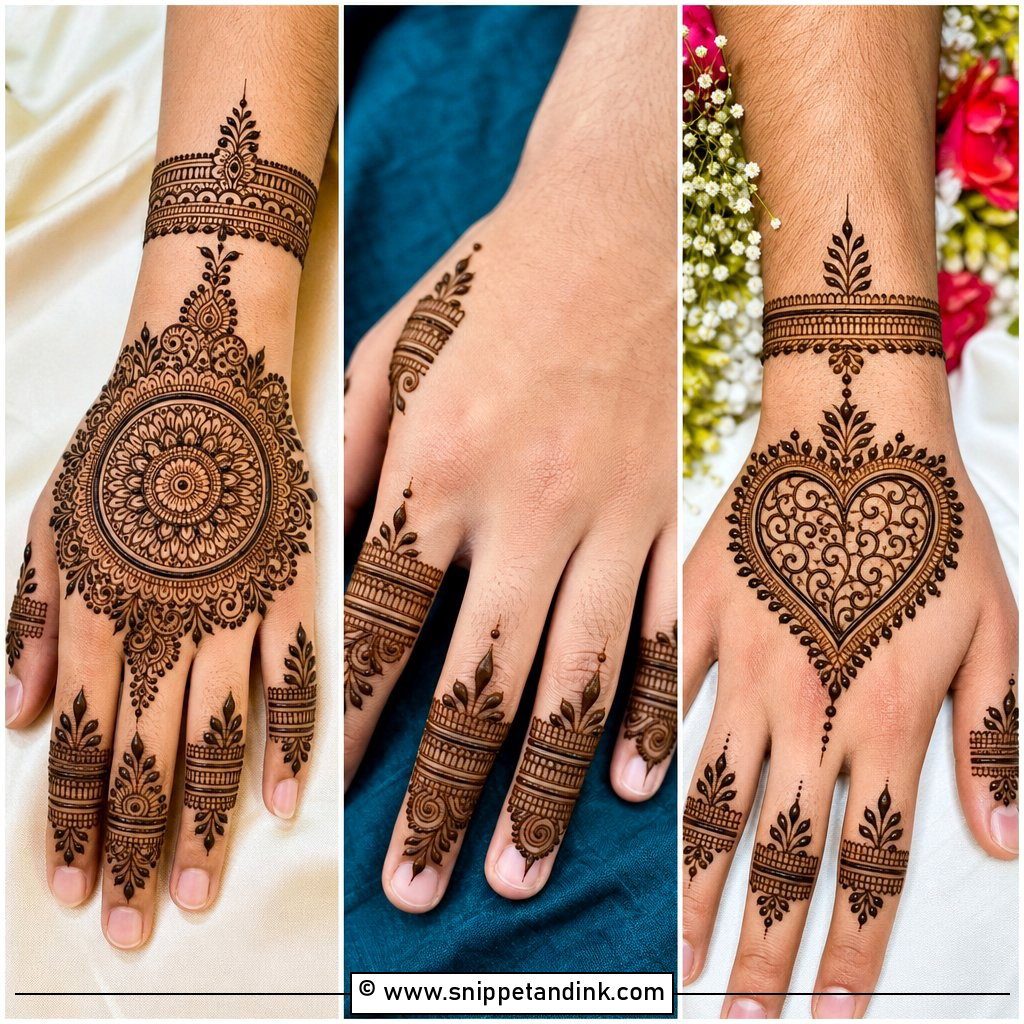
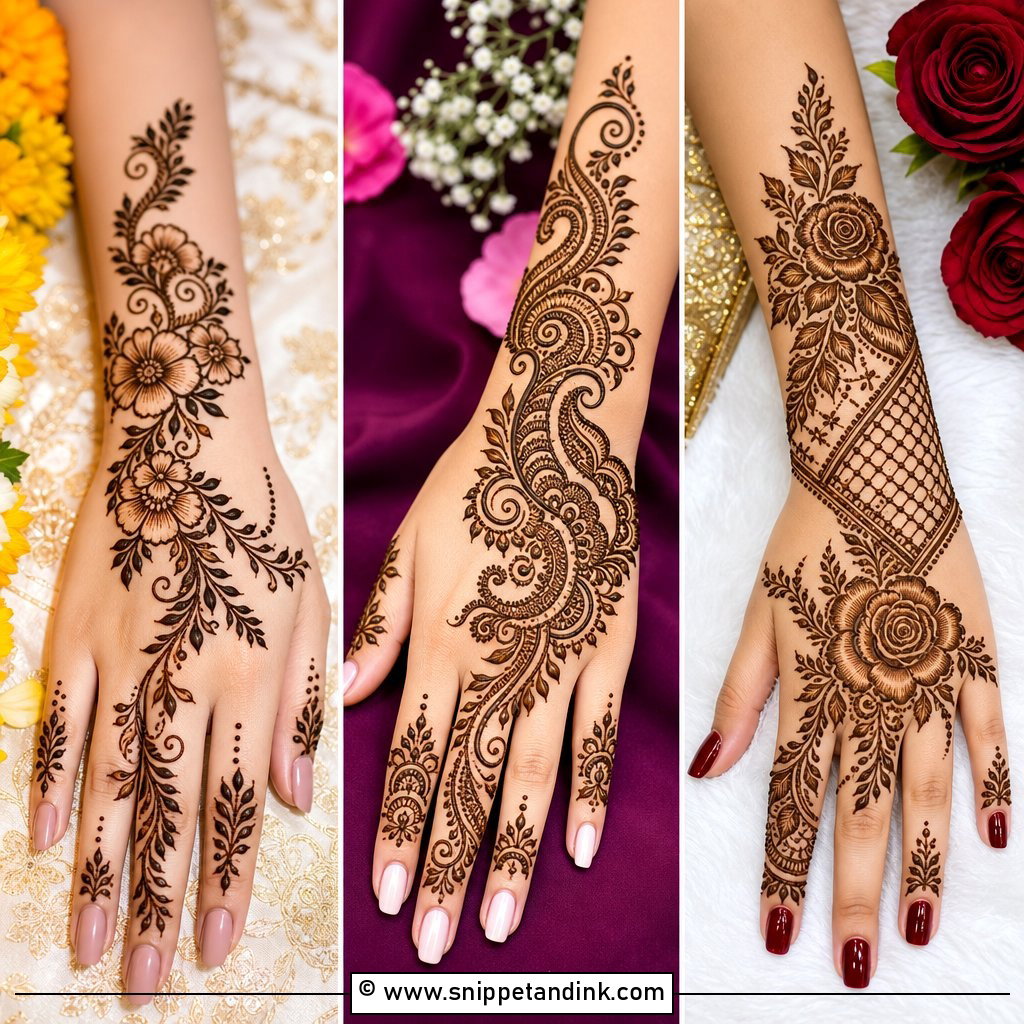
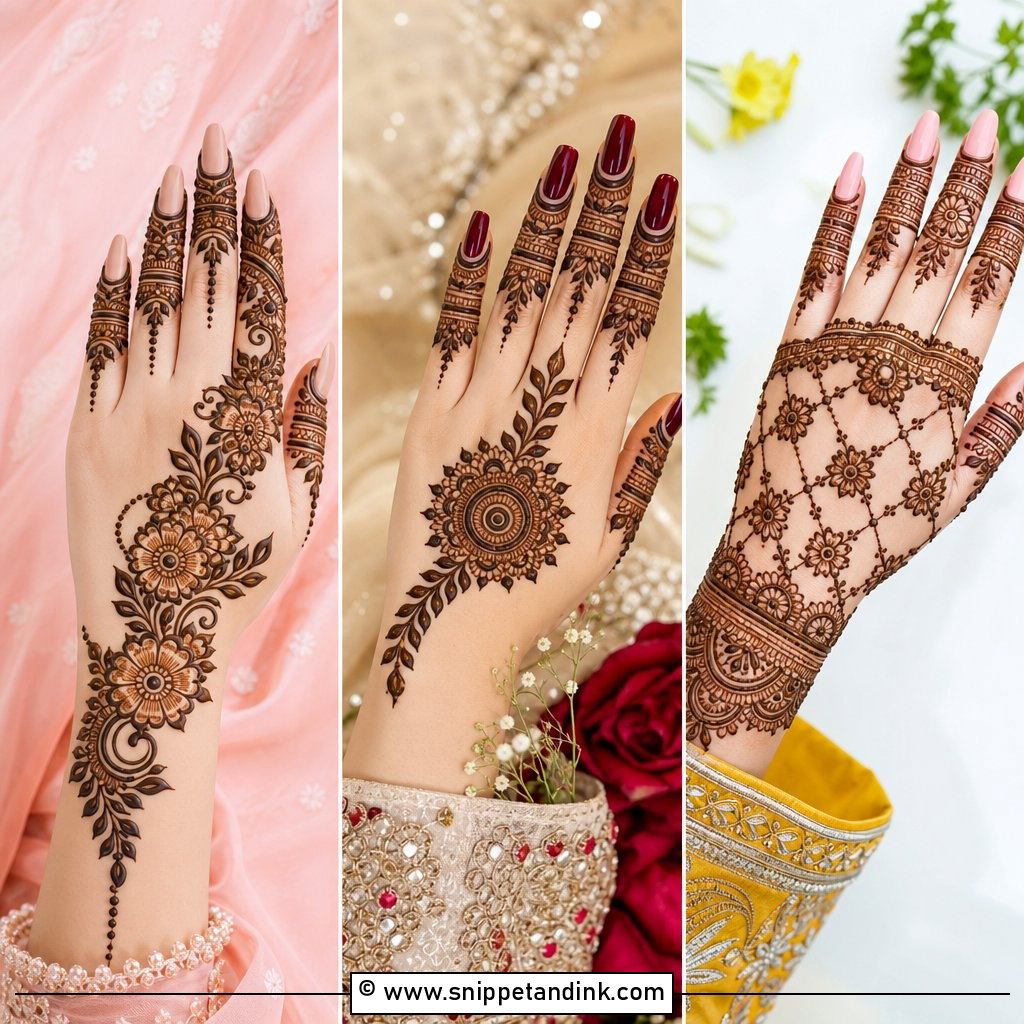
When you’re tying a rakhi or holding the thali, the camera sees the back of your hand, so this placement shows up best in ritual photos. I usually start from a central mandala, rakhi circle or initials near the knuckles, send leafy trails toward the fingers and finish with a bracelet around the wrist. Semi-filled fingers with dots, lines and small floral bands keep it light. Expect a paler stain here than on the palm, because the skin on the back of the hand holds less colour, so I draw the lines a little bolder. It’s also the answer for anyone who wants to keep their palms clean.
6. Front Hand Brother Sister Mehndi Design
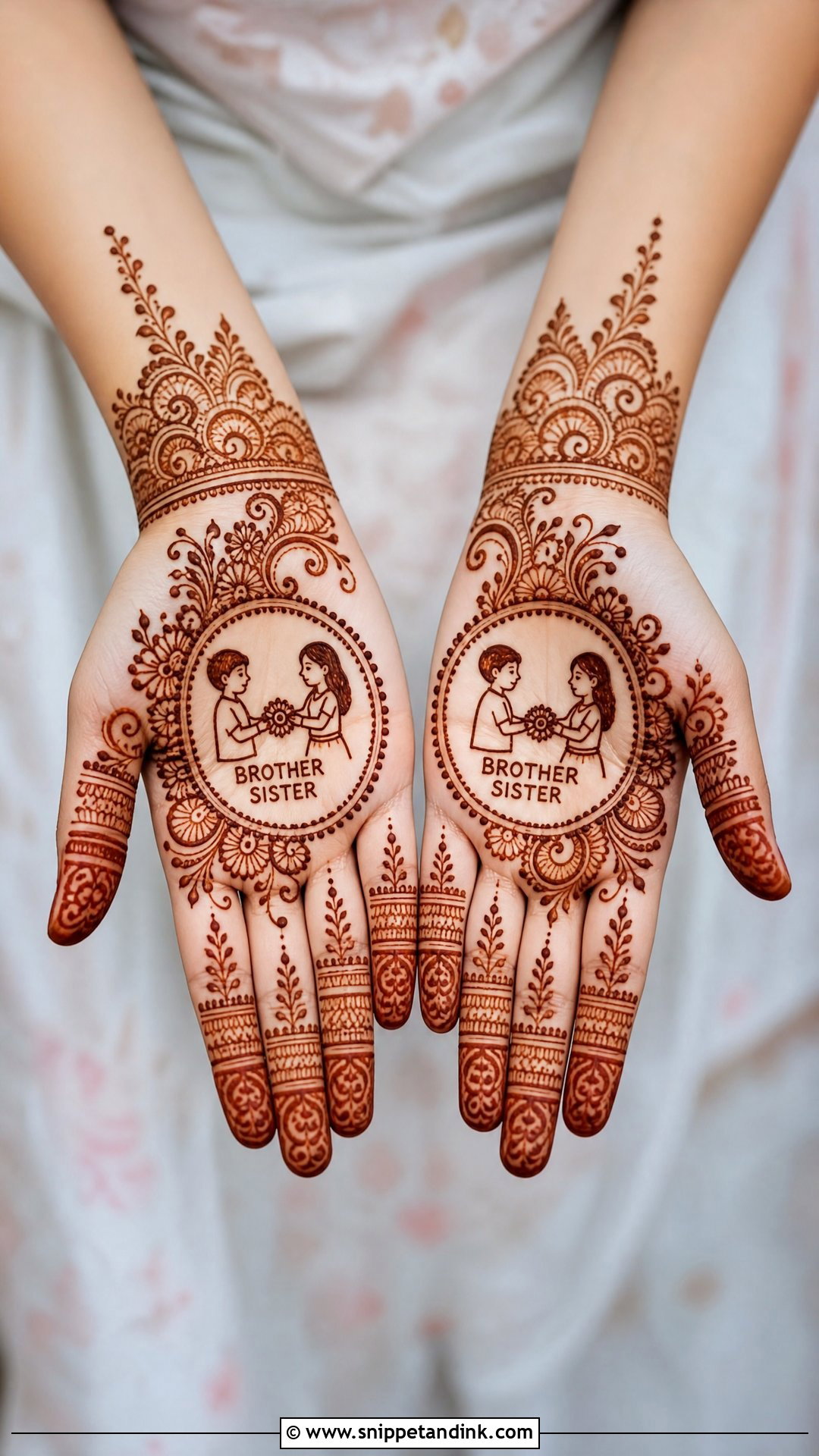
The palm is the widest, flattest canvas you have and it stains darkest, which makes a front hand brother sister mehndi design the natural home for detailed sibling artwork. A brother-sister scene, a rakhi motif or a large circular mandala goes in the centre, surrounded by paisley curves, floral vines, shaded leaves and dotted borders. I keep the fingers simple and matching so the centre stays the focus. Palms are on show throughout the rituals. A short message like “Happy Rakhi” or initials near the wrist, written in fine henna, adds feeling without crowding the scene.
7. Arabic Brother Sister Mehndi Design
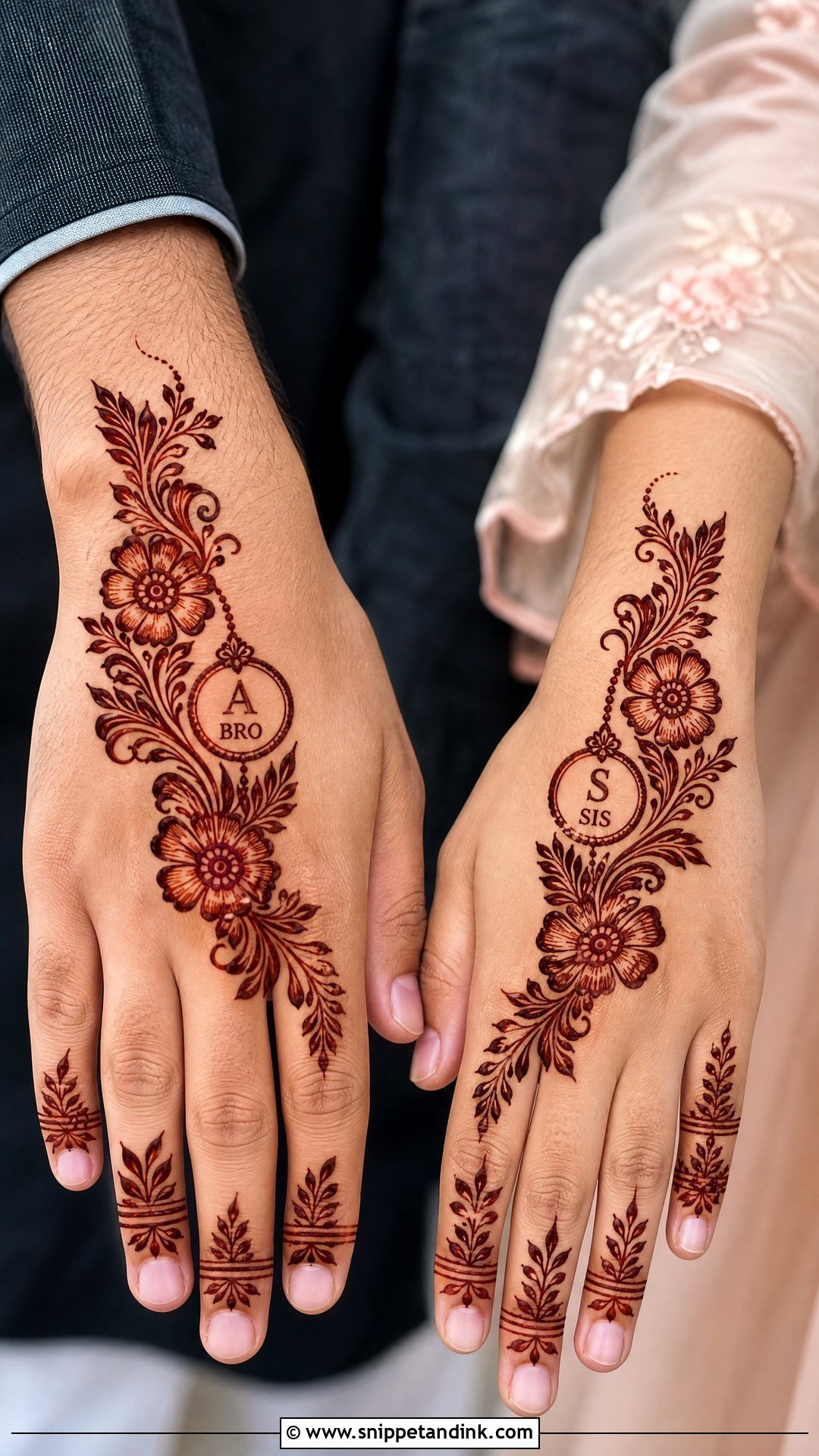
Arabic mehndi travels diagonally from one side of the wrist across the palm or back of the hand toward the index finger, with bold flowers and plenty of open skin. To bring in the sibling theme, I tuck a rakhi motif or a pair of initials inside the main floral curve. The outlines are thicker and the petals shaded, so it goes on faster than dense Indian work while still looking finished. It suits a sister who wants something modern. Heavily shaded areas take longer to dry, though, so don’t rush into your outfit.
8. Indian Brother Sister Mehndi Design
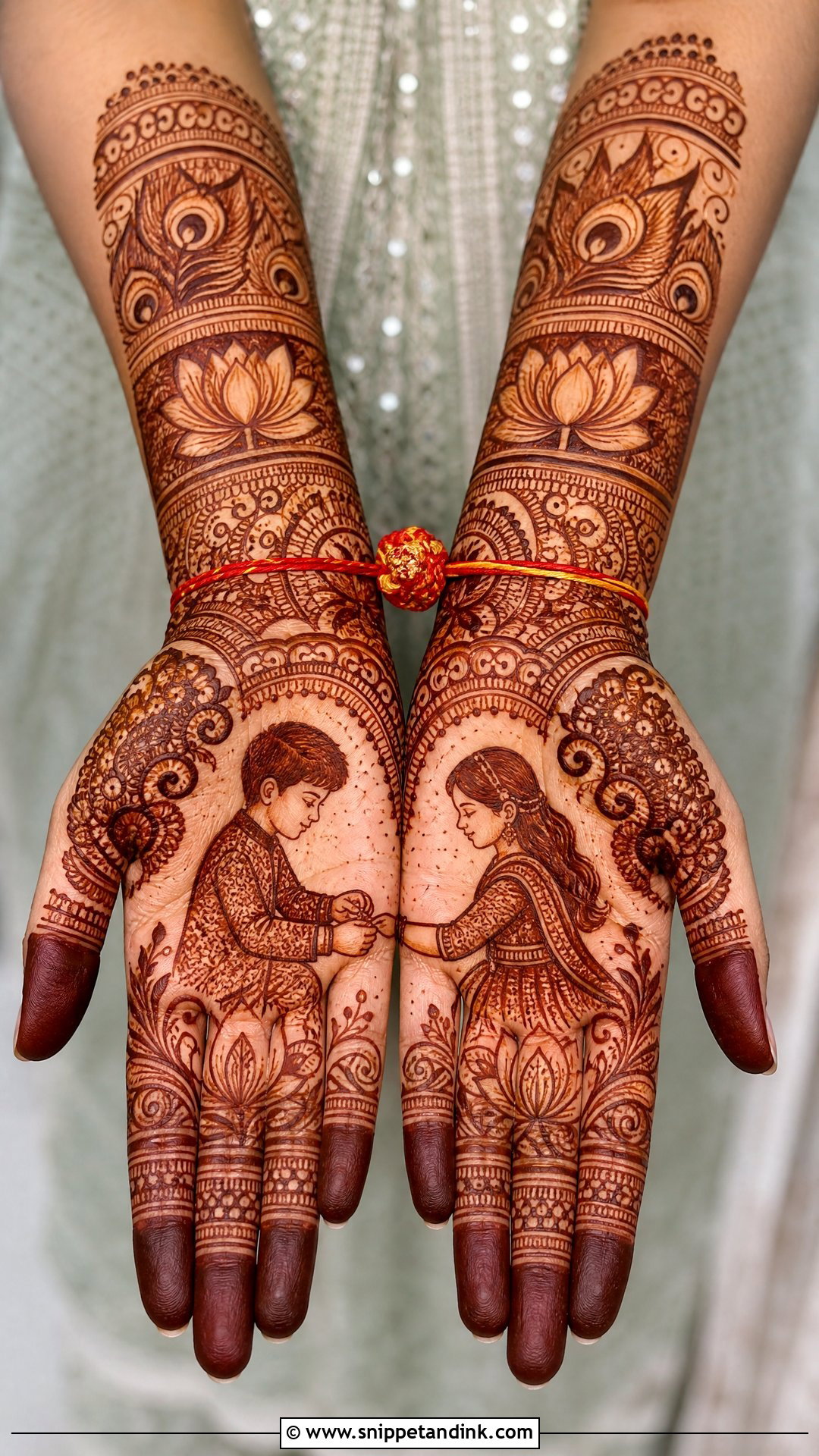
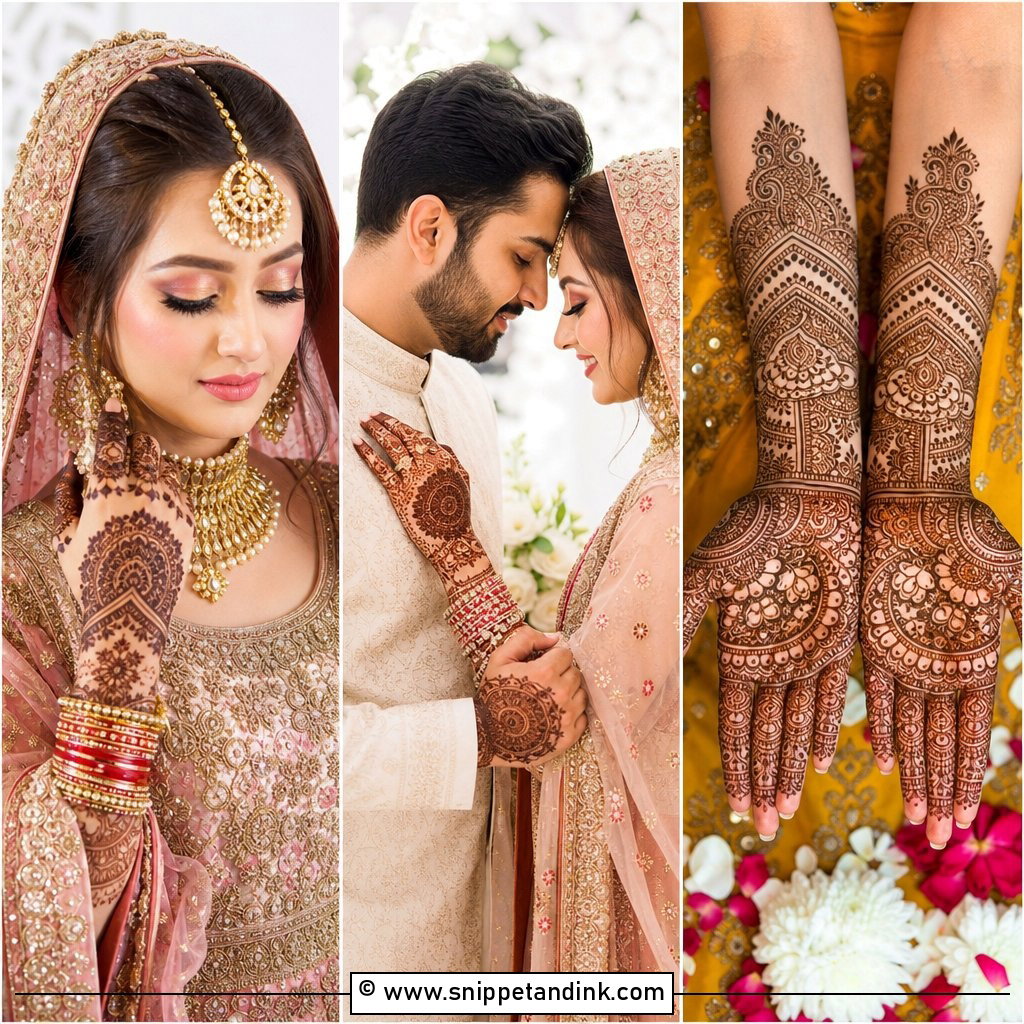
Traditional Indian mehndi can hold an entire rakhi ceremony in the palm, framed by paisley borders, peacock curves, lotus flowers and fine filler. It usually covers the front of the hand and can run past the wrist for a heavier look. In all that detail the sibling elements vanish unless you make them bigger than instinct says, so I give the rakhi thread or the word “Bhai” its own clear patch of space. This style rewards people who enjoy intricate work and don’t mind sitting still for it.
9. Indo Arabic Brother Sister Mehndi Design
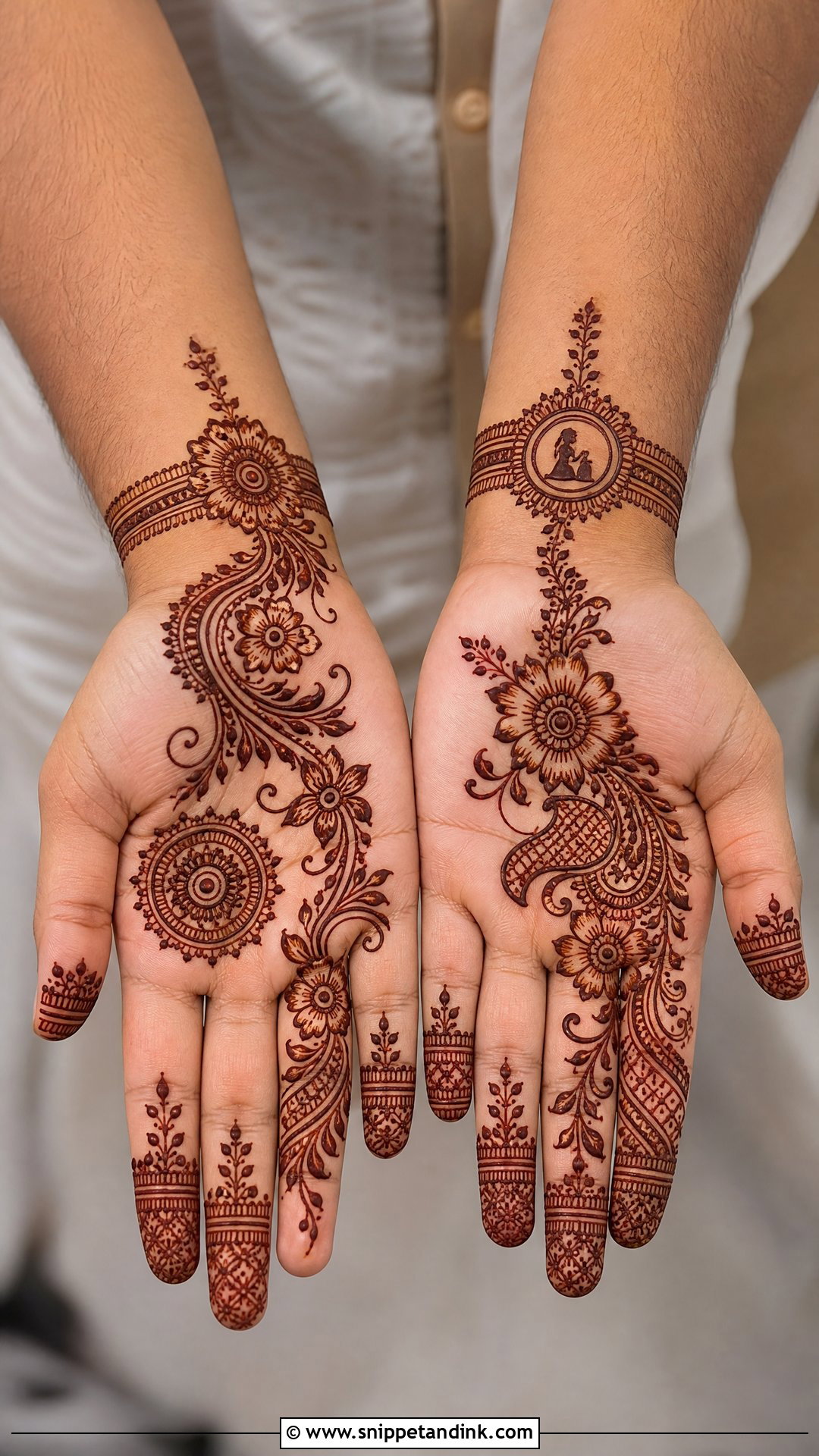
An Indo Arabic brother sister mehndi design takes the bold trail and open gaps of Arabic work and fills the inside of each shape with Indian-style paisleys, dots, jaali and small mandalas. A rakhi motif or sibling initials in the centre ties it to the occasion. Neat bands and leafy tips on the fingers, plus a wrist that reads like a henna bracelet, finish it. I like it for family functions where you’ll be photographed often but also eating and greeting people, because it looks full without the hours a traditional hand needs.
10. Minimal Brother Sister Mehndi Design
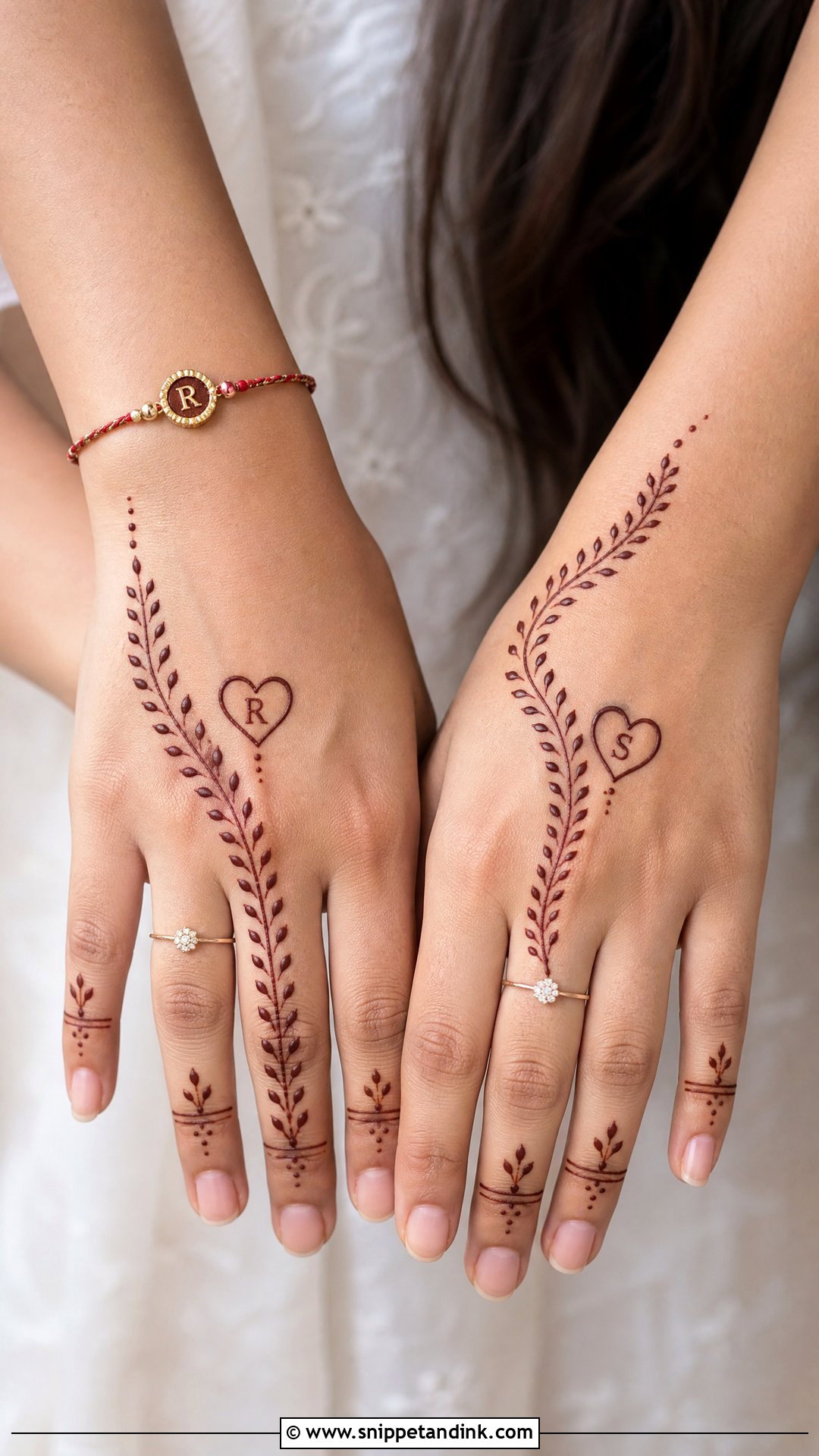
Minimal sibling henna can be as little as a small rakhi bracelet on the wrist, a tiny heart with initials on the back of the hand and a few delicate finger bands. Clean lines, small dots and one meaningful motif carry it, with no heavy filling. It’s the easiest to wear to the office or college the next day, and quick enough that younger girls sit through it happily. With so little henna on the skin, every line shows, so I use fresh, smooth paste that flows in a steady fine line. A tiny bow-shaped rakhi knot near the wrist makes a sweet finish.
11. Cute Brother Sister Mehndi Design
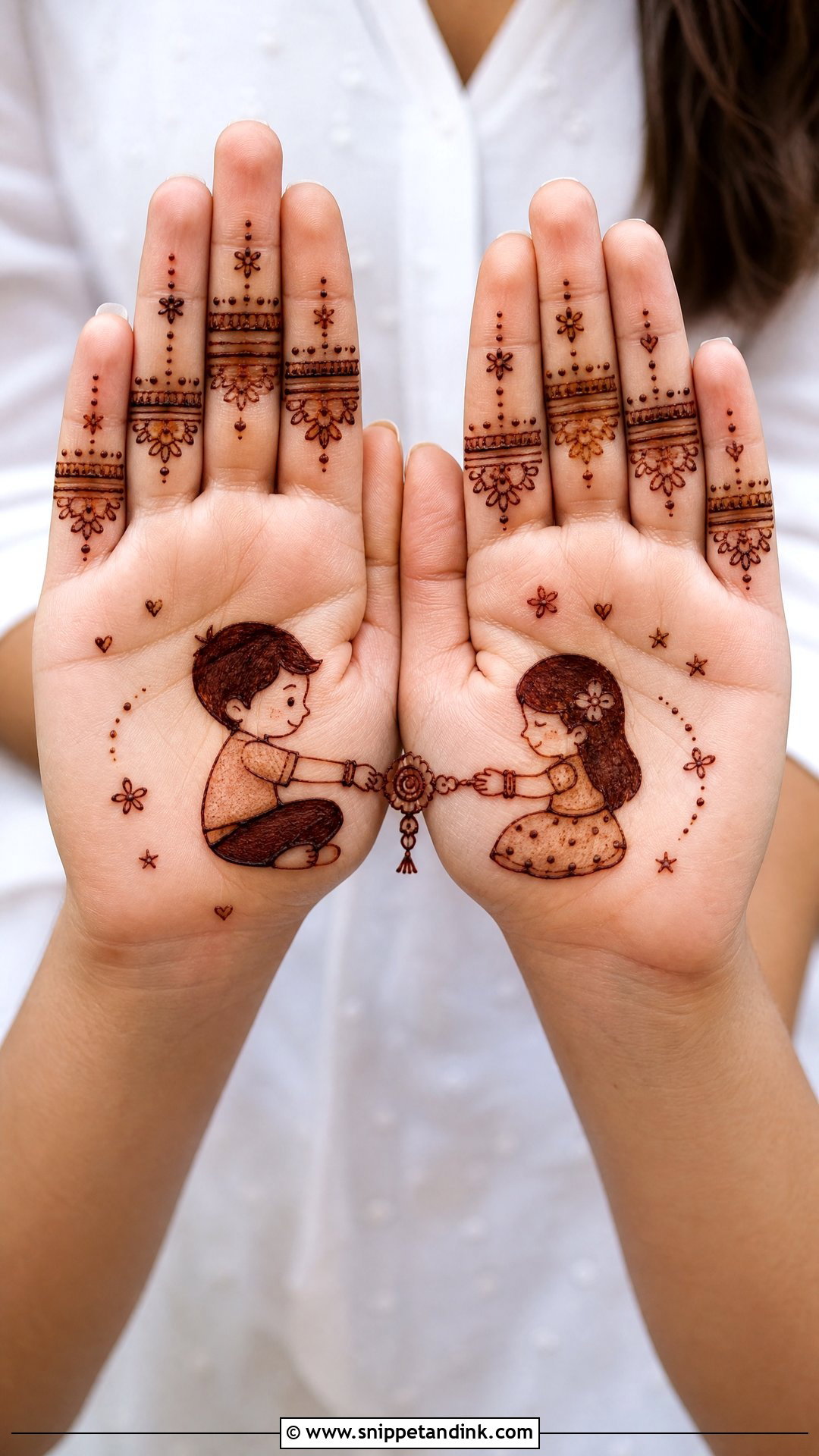
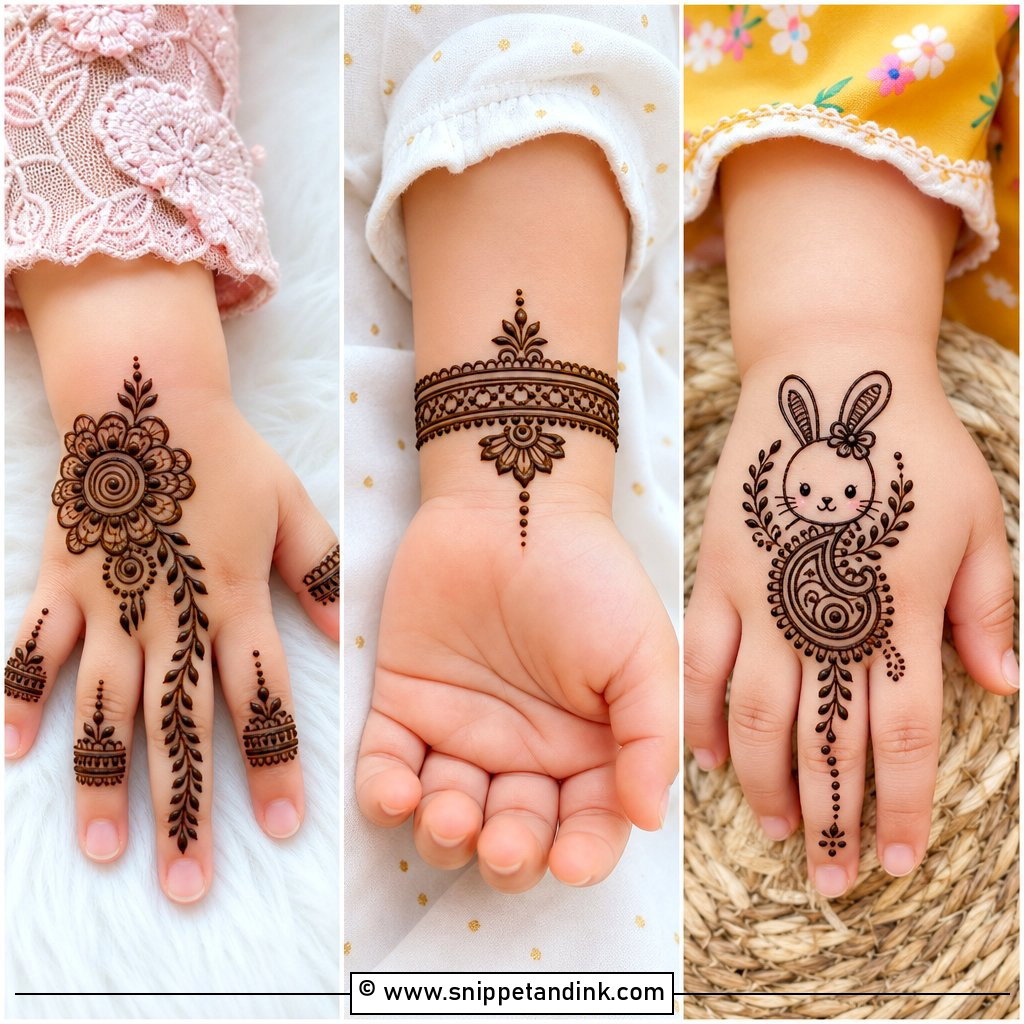
For younger sisters and cousins, a cute brother sister mehndi design can include cartoon-style sibling figures, a small rakhi, tiny hearts and a simple “bro” or “sis”. I keep the layout clean, because small cartoon elements crowded together turn into a smudge the moment a child touches something. The back of the hand or the centre of the palm works best, with light finger patterns. A small gift box or smiley face adds a cheerful note. Simple, recognisable shapes are what make it work, not detail.
12. Brother Sister Name Mehndi Design
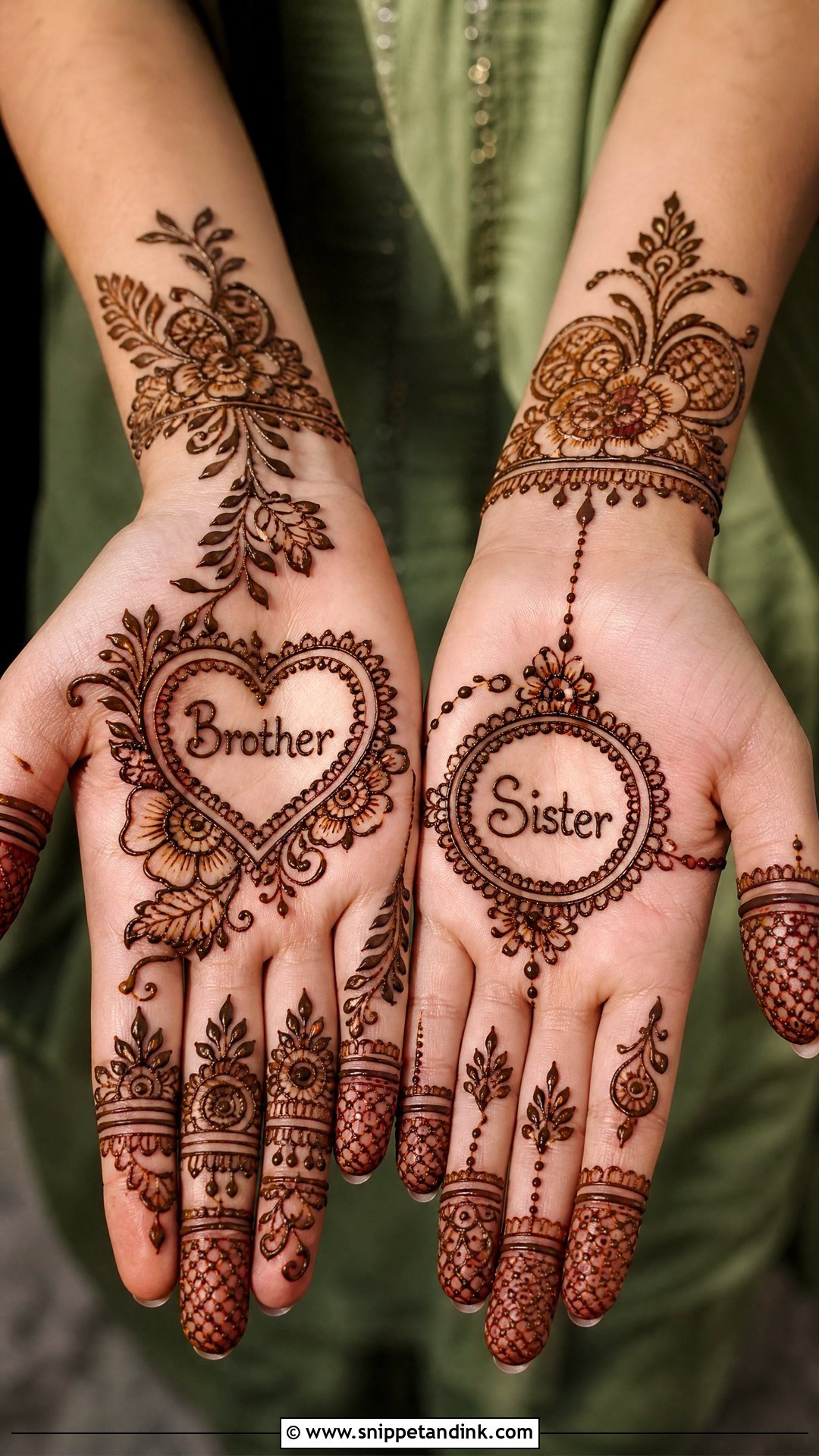
Names turn the hand into something only your family could wear. I write the brother’s name, the sister’s, or both inside a heart or a curved banner, and surround it with flowers, vines and fine paisley borders so it reads as decoration rather than a label. Lettering is where home henna most often goes wrong. Letters that are too small or too close fill in as the paste sits, so I make the strokes slightly bold and space them generously. If a name is long, initials keep the layout clean. It sits well on the palm, the wrist or the back of the hand.
13. Brother Sister Initial Mehndi Design
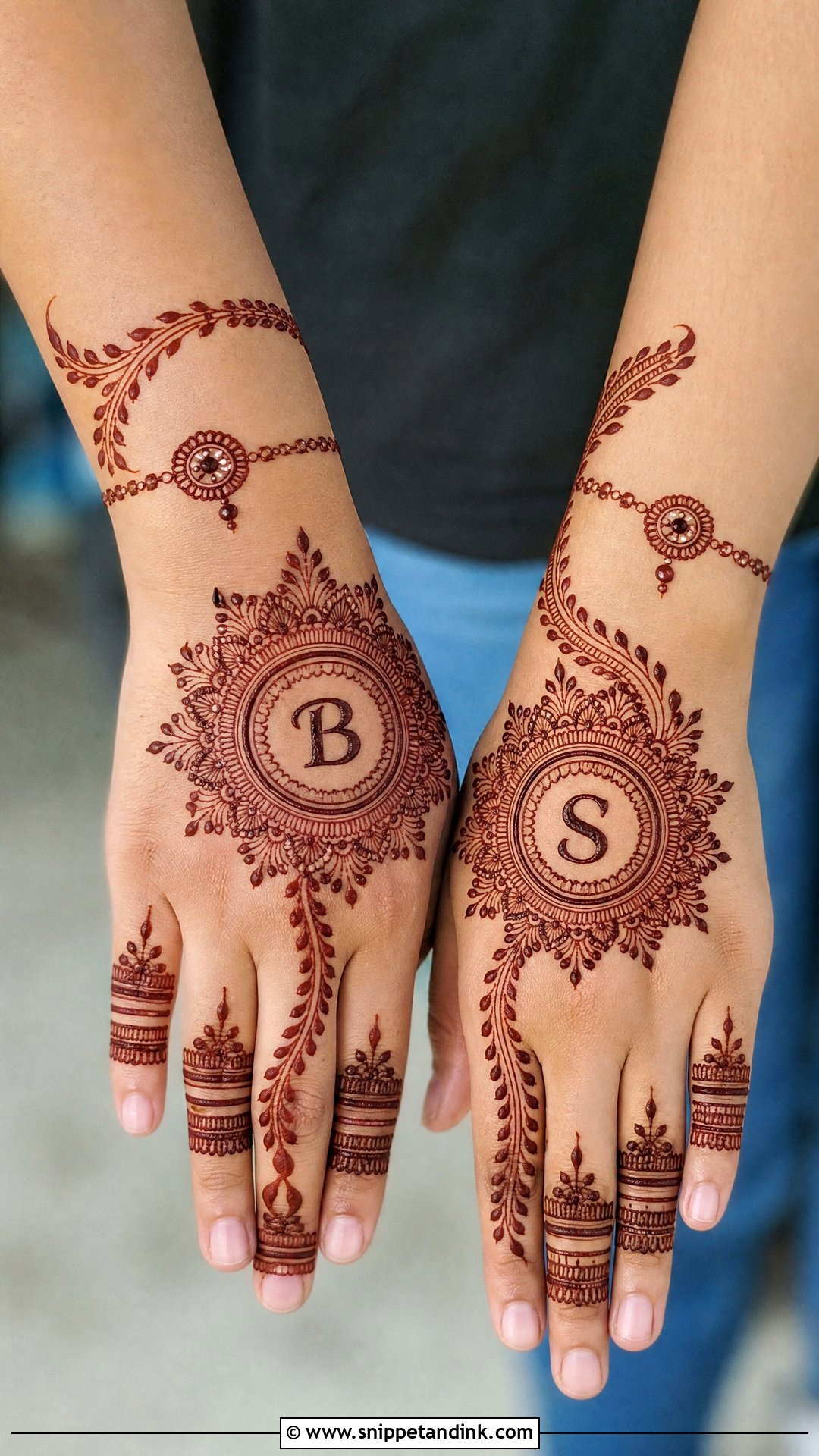
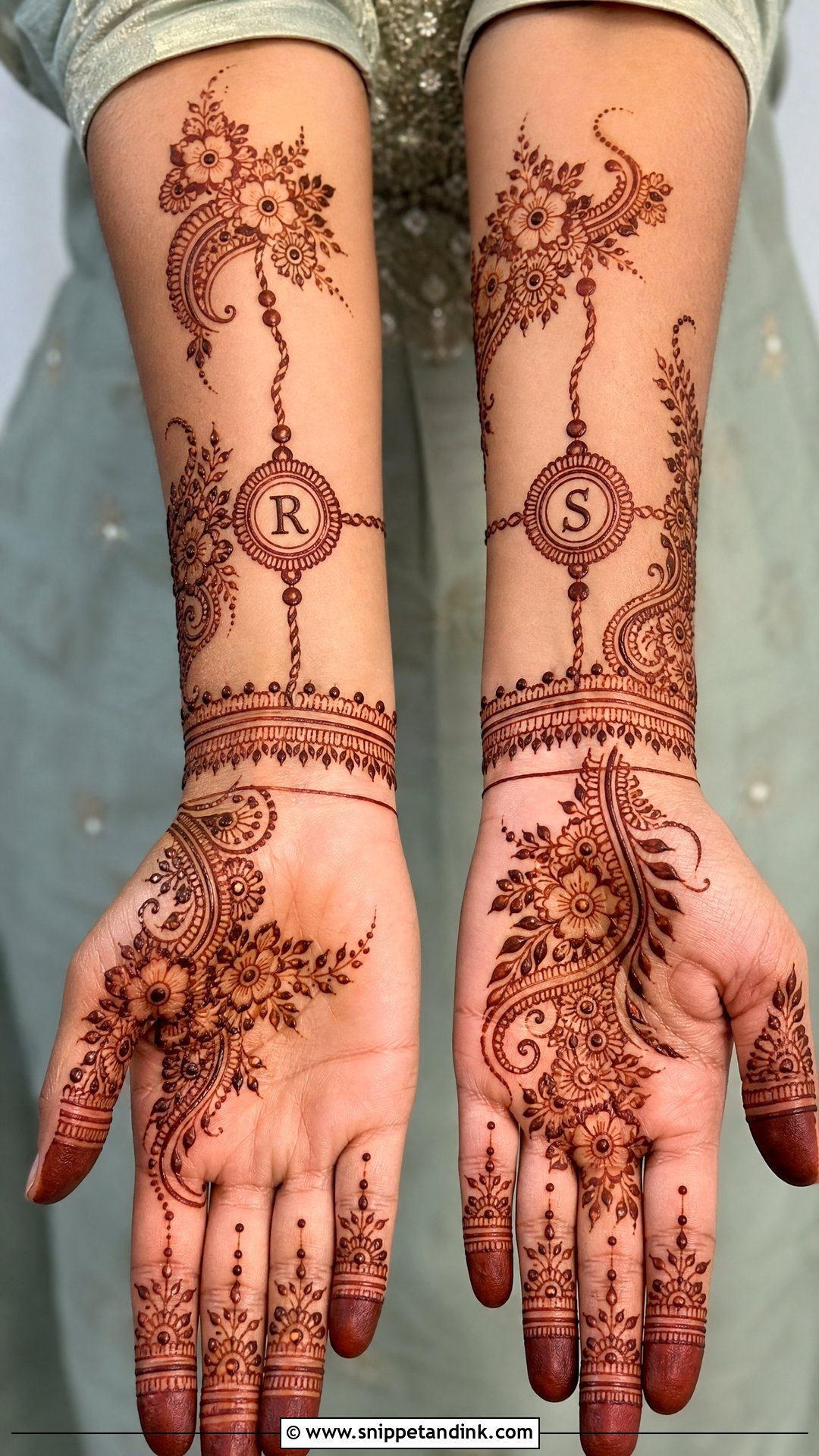
Initials give you the personal touch without filling the hand with text. I place them inside a small mandala, a heart or a bracelet-style wrist pattern, either one initial on each hand or both together in the centre of one hand, with small flowers, dots and leaf trails around them. Choose plain letter shapes where you can, since looping script capitals are hard to read once stained. This is also the easiest way to get a brother involved. A single initial on his wrist takes a couple of minutes.
14. Brother Sister Mandala Mehndi Design
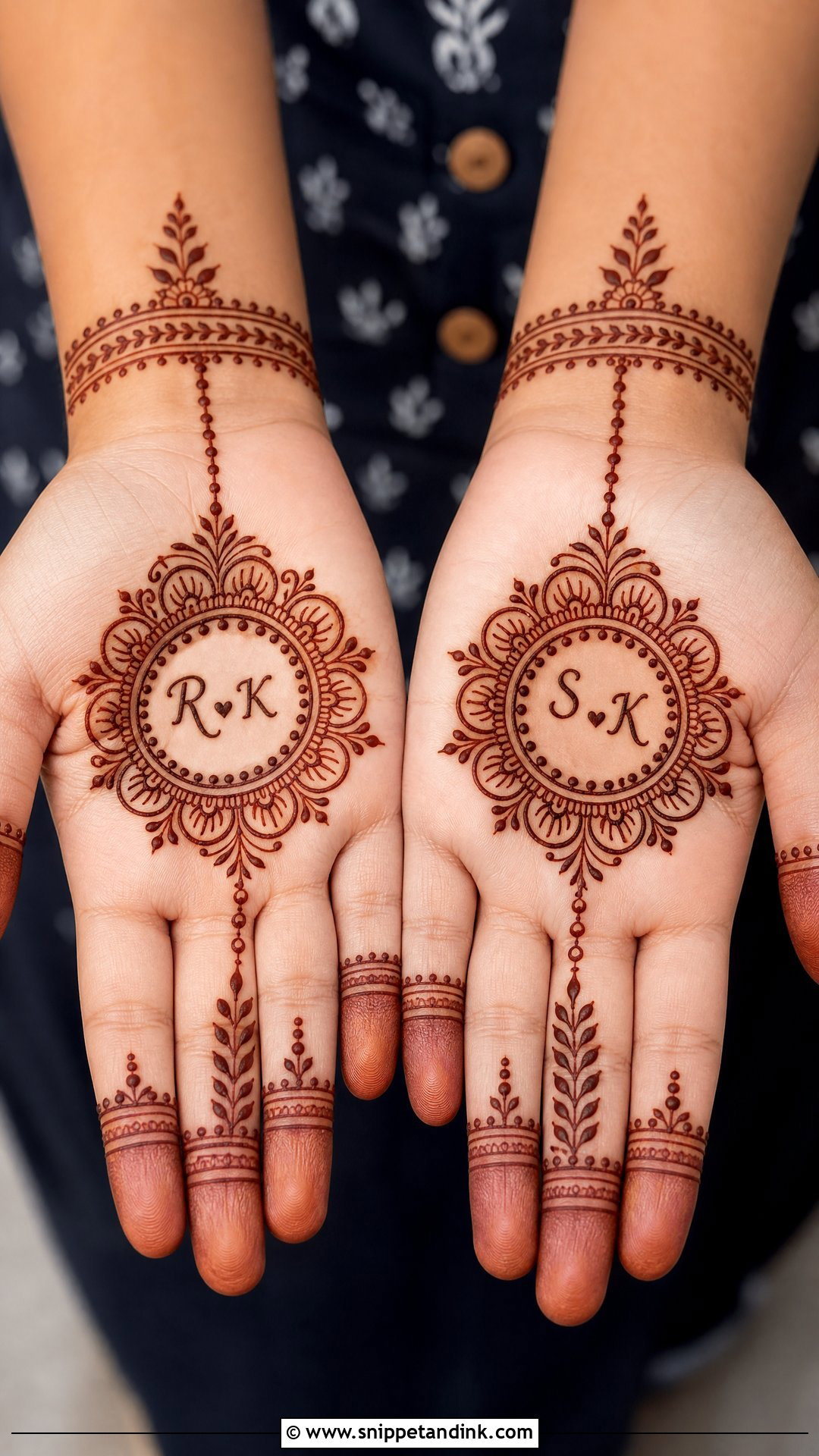
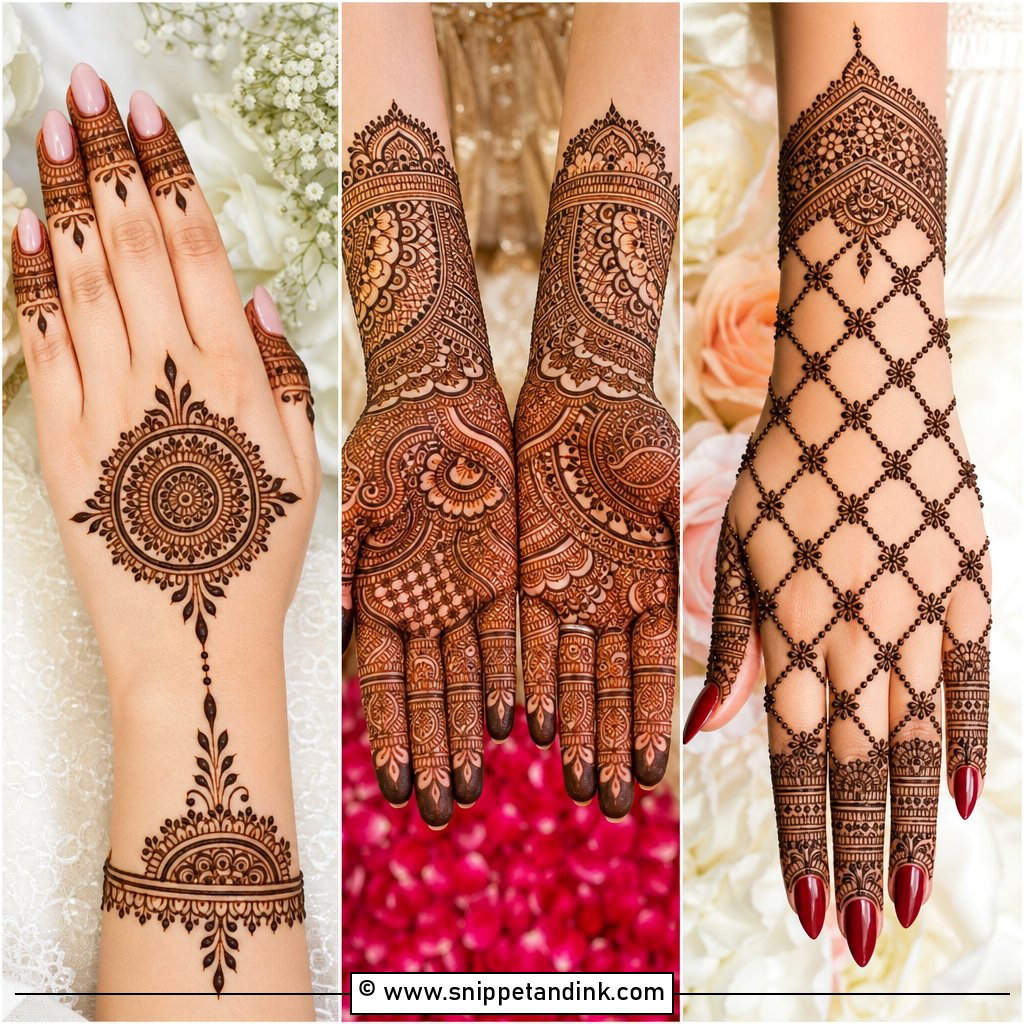
A mandala adapts to any age because I can scale it from a coin-sized circle for a child to a palm-filling piece for a sister who wants detail. It sits in the middle of the palm or back of the hand, with a rakhi-thread effect running out from both sides, and sibling initials, a tiny knot or the word “Bhai” inside or around the circle. Fingers take matching bands, dots and leaf chains, and some wrist detailing finishes the hand. Symmetry is what I watch most. I start from the centre and work outward in rings, otherwise one side drifts.
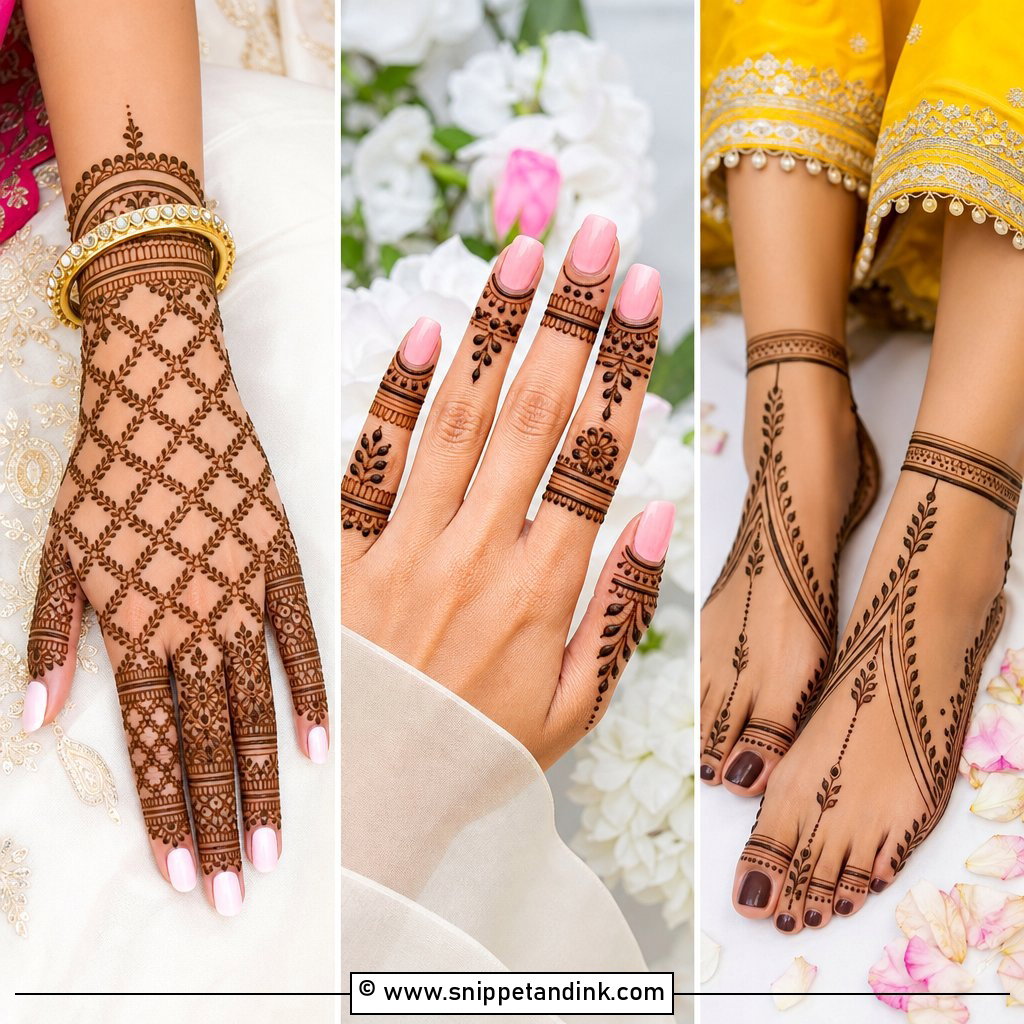
15. Brother Sister Heart Mehndi Design
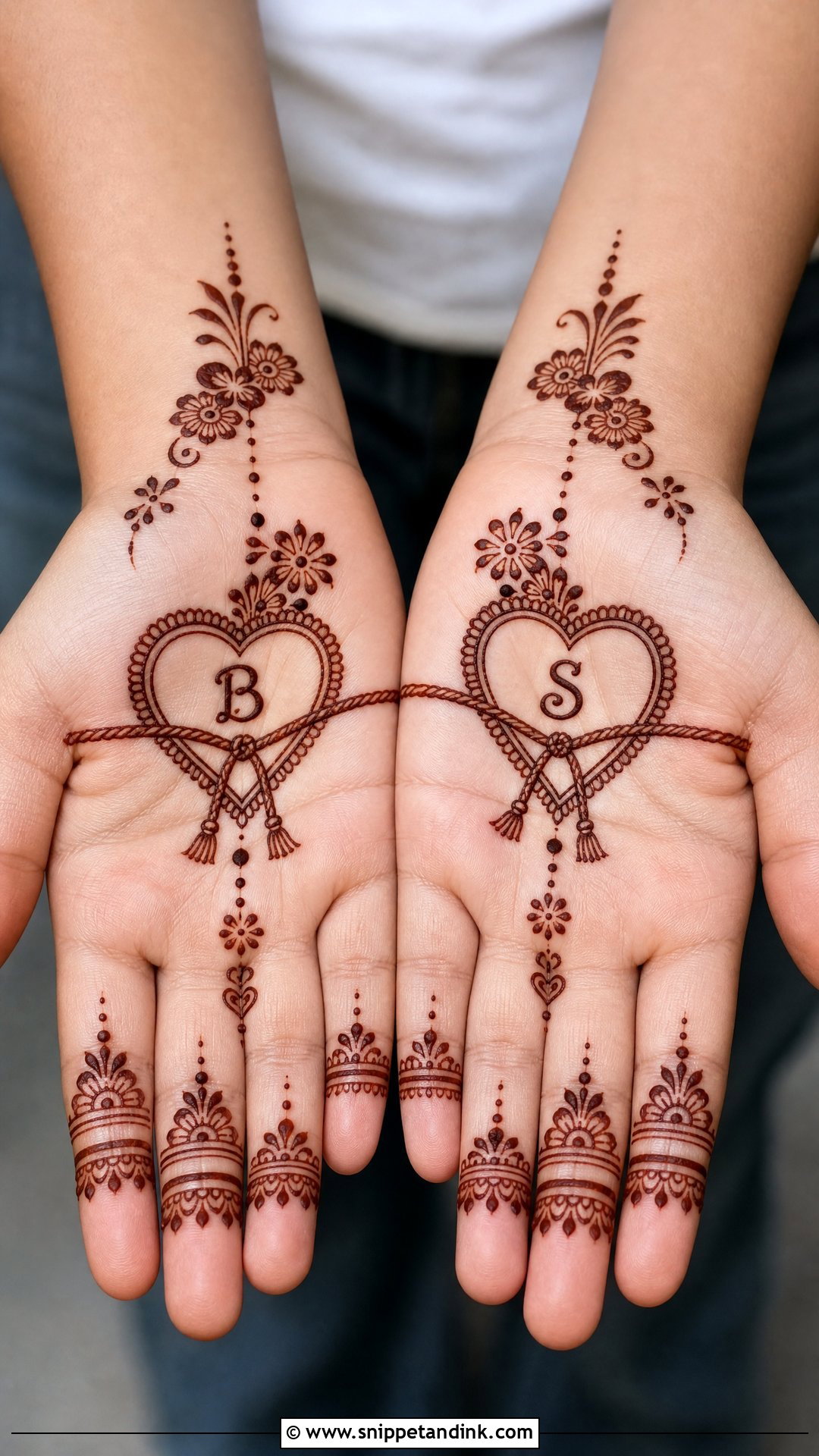
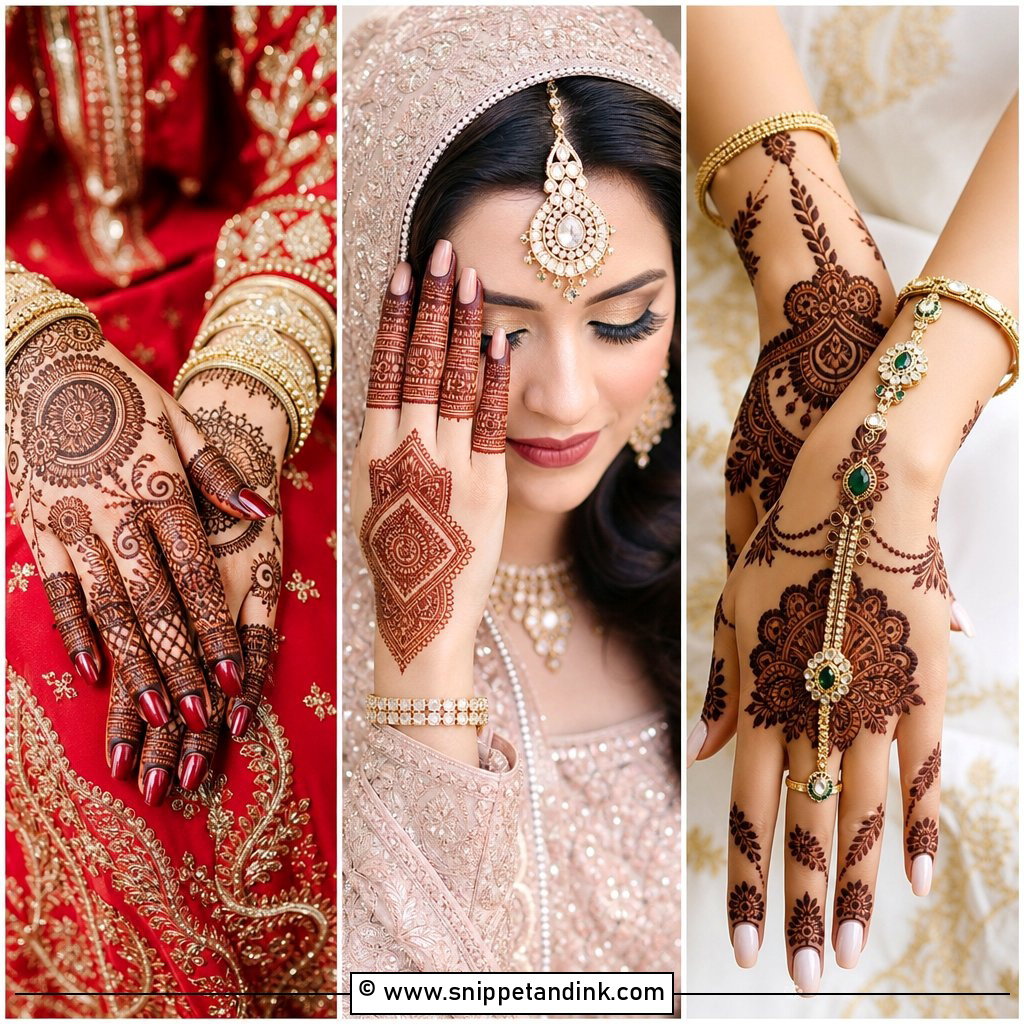
A heart is the simplest way to say it. I put one in the palm with a rakhi thread wrapped around it and initials or a short word inside, then fill around it with flowers, dotted chains, small paisleys and leafy vines so it doesn’t float on an empty hand. A bracelet on the wrist and fine bands on the fingers complete it. You get the emotion of a portrait without the hours, and it’s easy enough for a confident cousin to apply.
16. Brother Sister Peacock Mehndi Design
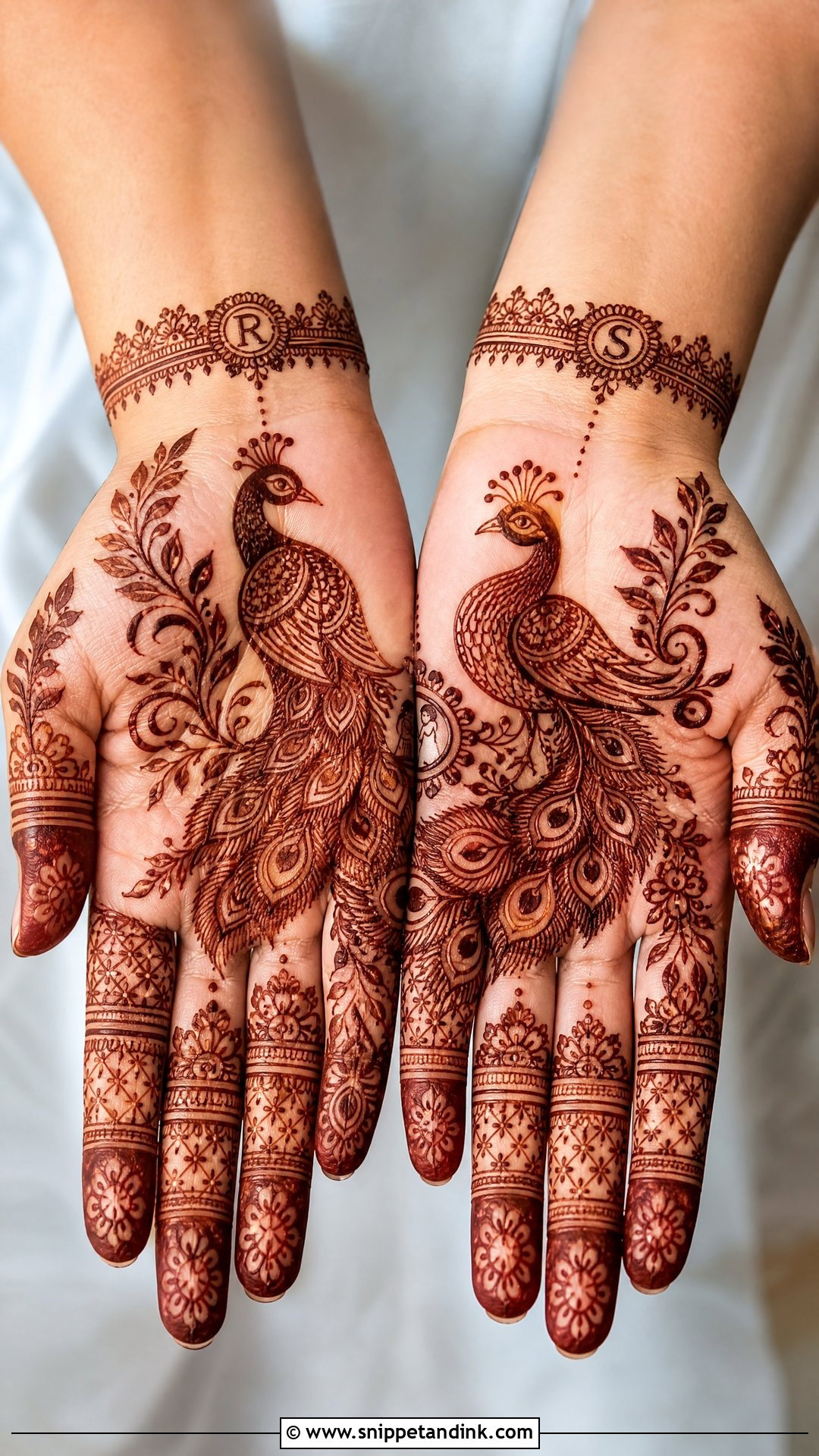
Peacocks are classic mehndi, and the feathers do a lot of the work, flowing into paisleys, florals and fine curves on the palm or back of the hand. I add a small rakhi near the wrist or hide sibling initials inside the feather eyes, which gives your brother a detail to discover. The design depends on neat lines and balanced empty space; a cramped peacock looks like a tangle. Matching feather strokes and dotted trails on the fingers finish it for Raksha Bandhan or Bhai Dooj.
17. Brother Sister Floral Mehndi Design
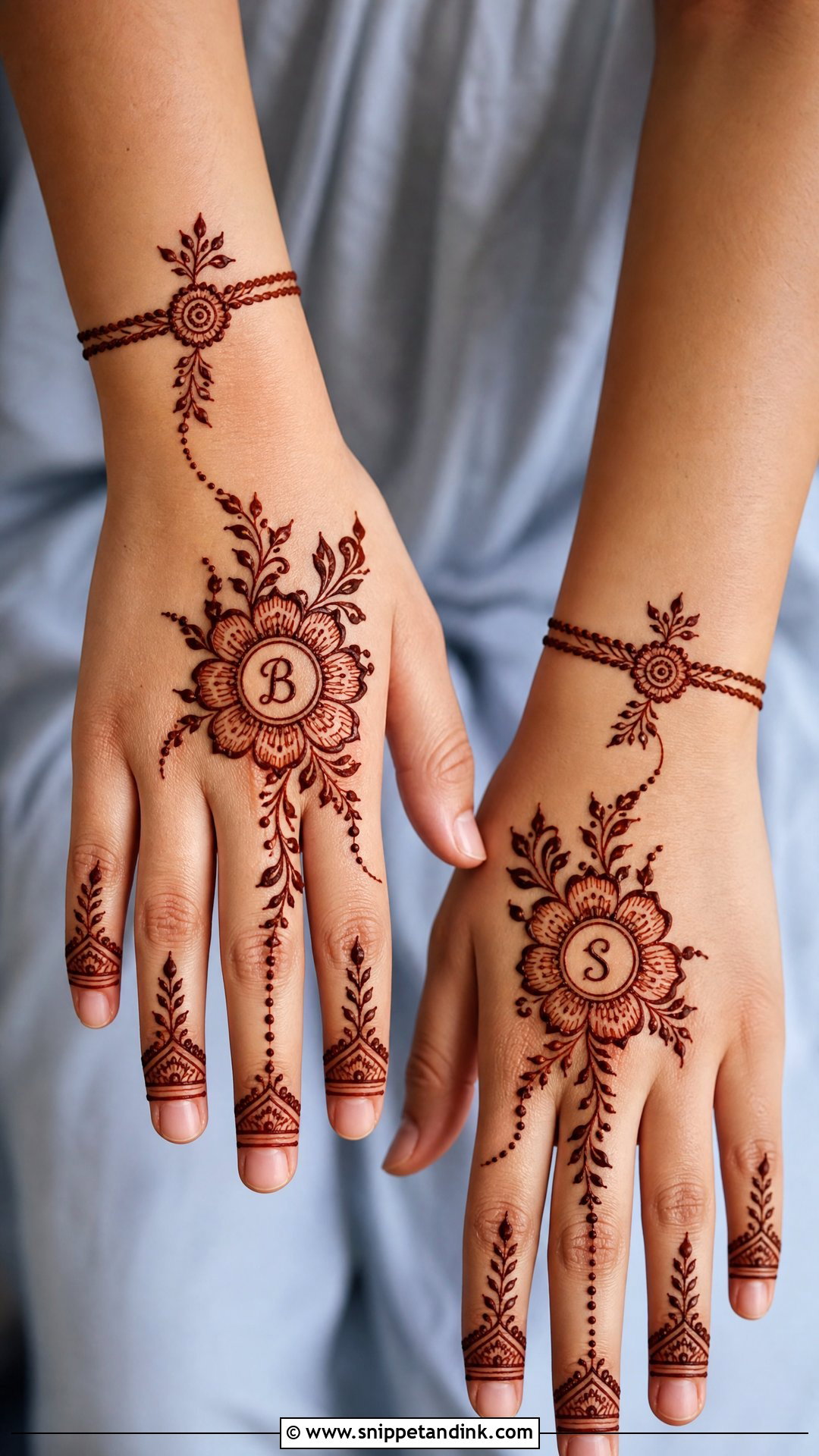
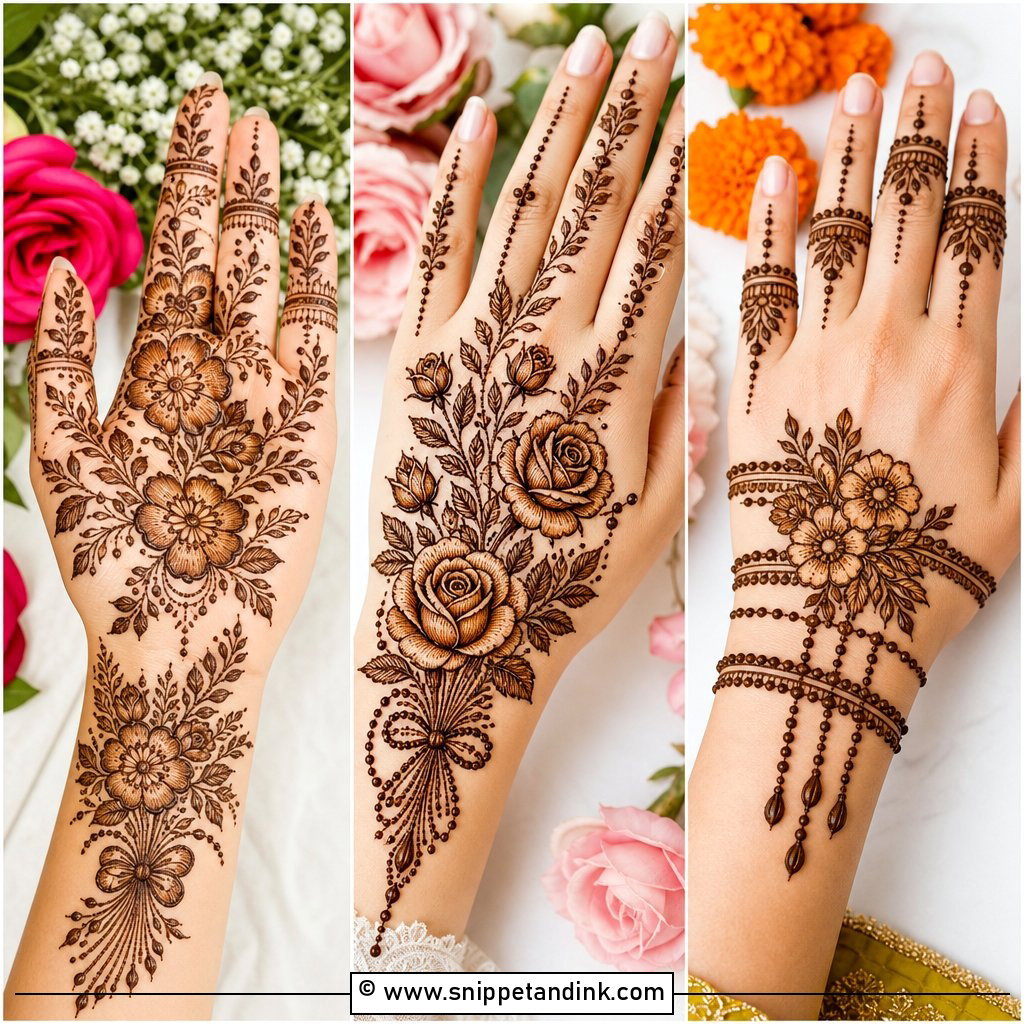
Florals go with almost any festive outfit and stretch to fit whatever time you have. I start with a flower cluster in the palm or back hand and let it run into a rakhi thread, leaves and dotted vines. A sibling initial fits inside the largest flower, or a tiny rakhi charm can sit near the wrist. Big open petals give it an Arabic feel, while small, tight flowers make it delicate and Indian. It’s the least literal design here, which some sisters prefer.
18. Brother Sister Bracelet Mehndi Design
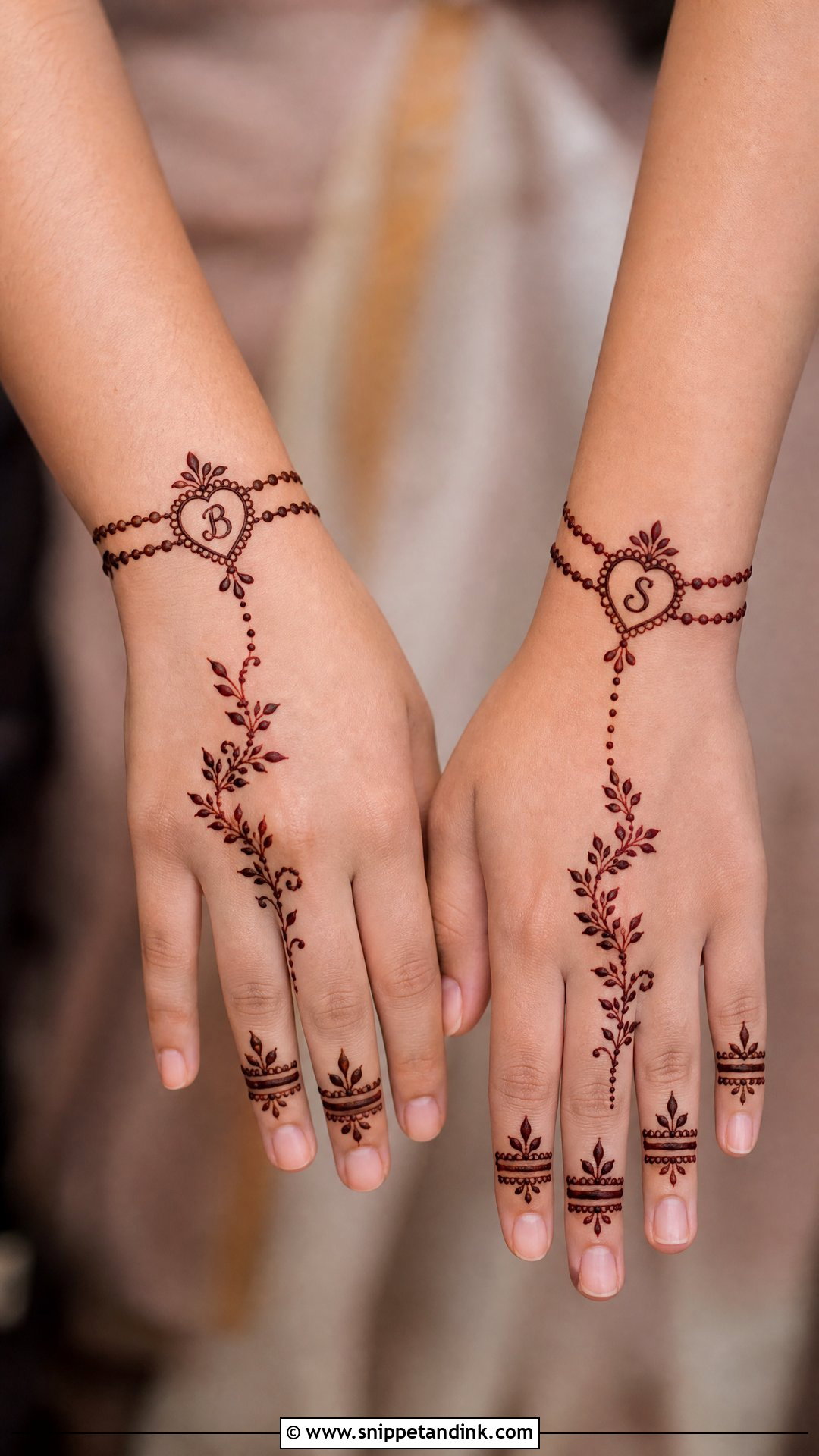
The wrist is where a real rakhi is tied, so a brother sister bracelet mehndi design echoes the festival most directly. The main design wraps the wrist as a decorative band, with a chain, flower trail or small mandala moving onto the back of the hand, and initials or a tiny rakhi knot set inside the band. Because it leaves the palm free, it’s practical, and it’s the version brothers say yes to most readily. For sisters I add finger rings and light vines so it reads as henna jewellery. Wrist skin creases and stains lighter than the palm, so these lines go on slightly bolder.
19. Brother Sister Kids Mehndi Design
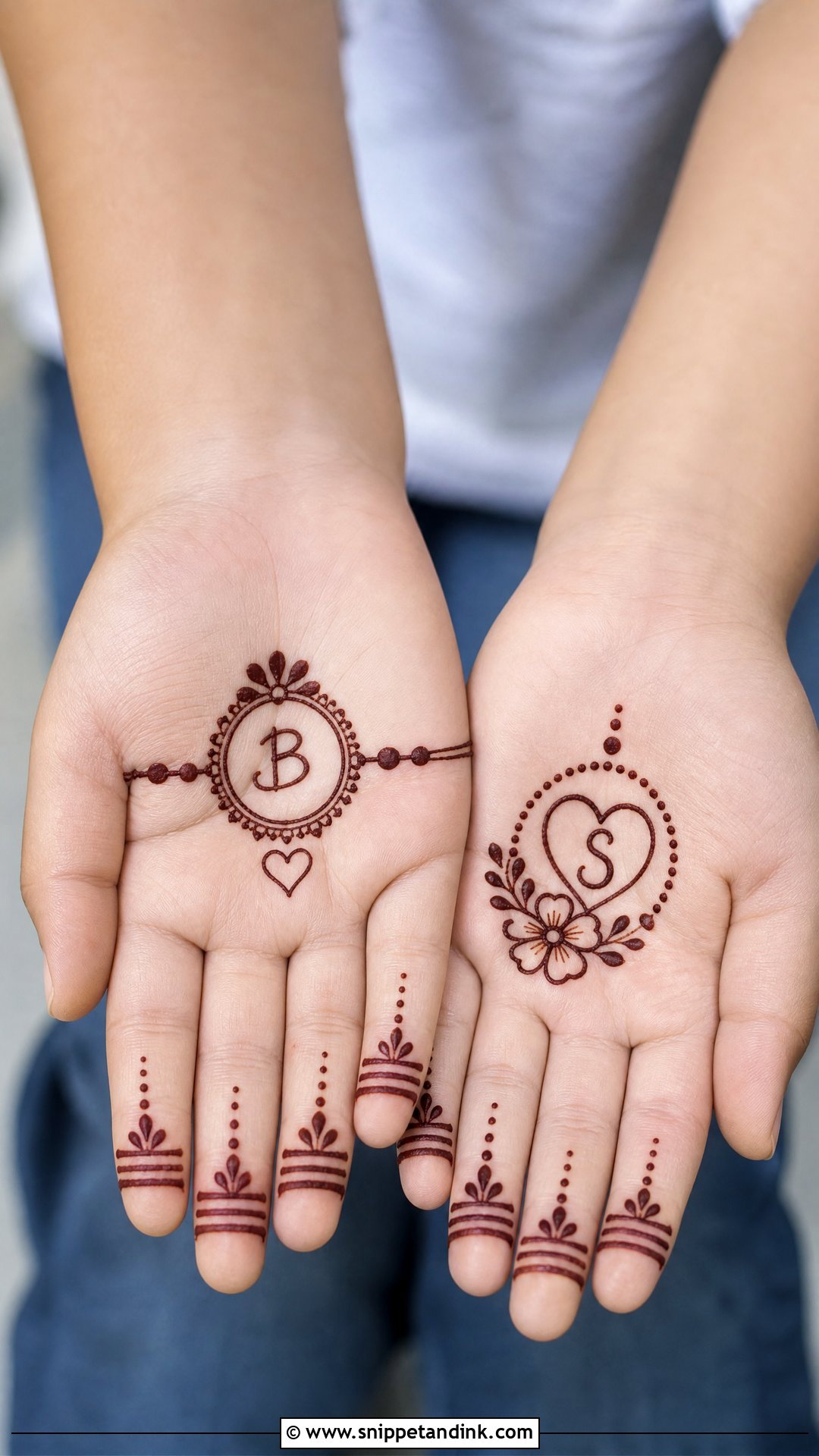
Little hands won’t stay still for long, so a brother sister kids mehndi design has to be quick and comfortable. I choose one simple shape, such as a small rakhi, a heart or initials, for the centre of the palm and finish with a few dots, tiny leaves and short finger bands. Bolder lines survive a wriggling child far better than fine ones. Boys and girls can both wear it. Use only natural henna on children, and if it’s their first time, do a small patch test a day or two before.
20. Brother Sister Matching Mehndi Design
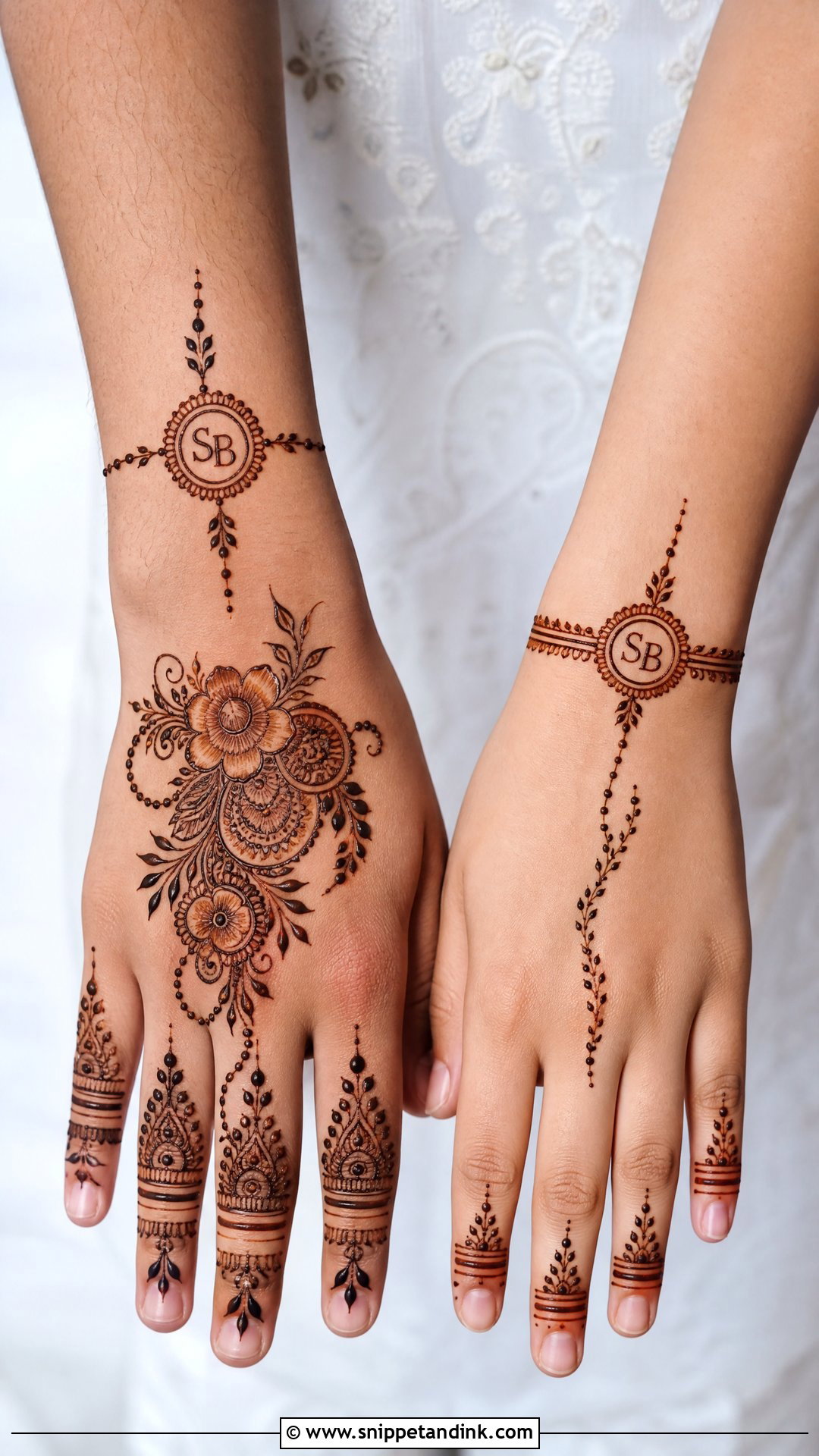
Matching mehndi lets siblings share the celebration in their own way. The sister can wear a fuller version with flowers, mandalas and rakhi details, while the brother has a small rakhi band, an initial or a simple wrist motif. The designs don’t need to be identical, only to share one element, such as the same initials or the same rakhi circle. That keeps them coordinated without feeling forced. For photos, put the shared motif where your two hands will meet in the frame, and both hands tell one story.
Henna for Children, and for Brothers Who Want Only a Little
Kids and brothers are often the shyest customers at a family mehndi, and they need slightly different handling. For children, use natural henna only, which stains in the orange to brown range. Steer clear of anything sold as black henna. It often contains a hair-dye chemical called PPD that can cause blistering reactions, and young skin is especially vulnerable. Ask whoever is applying it what is in their cones. If it’s a child’s first time, a single dot on the inner arm a day ahead tells you whether the skin is happy.
Hairy wrists and short sittings
Paste sits on top of hair instead of reaching the skin, so on a hairy back hand or wrist the stain comes out patchy. The palm or the inside of the wrist is a better spot for a brother’s band, initial or rakhi knot. Keep his design to something that dries in about fifteen minutes. Most men won’t sit longer, and a smudged design looks worse than a small, clean one.
Whoever wears it, the stain fades as the skin renews, usually over one to three weeks, and faster on hands that are washed a lot. If the design is for a wedding later in the month rather than the festival itself, time the application around that date instead.
What Makes Sibling Henna Feel Like Yours
From a single initial to a full rakhi scene, sibling henna has room for every kind of family. Traditional hands lean toward Indian, mandala, peacock or portrait work, while the minimal, Arabic, bracelet and heart designs suit a quicker, modern look. Match the design to the time you have and how long you’re happy to sit with your hands out of action. Keep the lines clean, leave space between them, and make sure at least one detail clearly belongs to your brother or sister.
You'll Like These Ideas:


Leave a Reply