
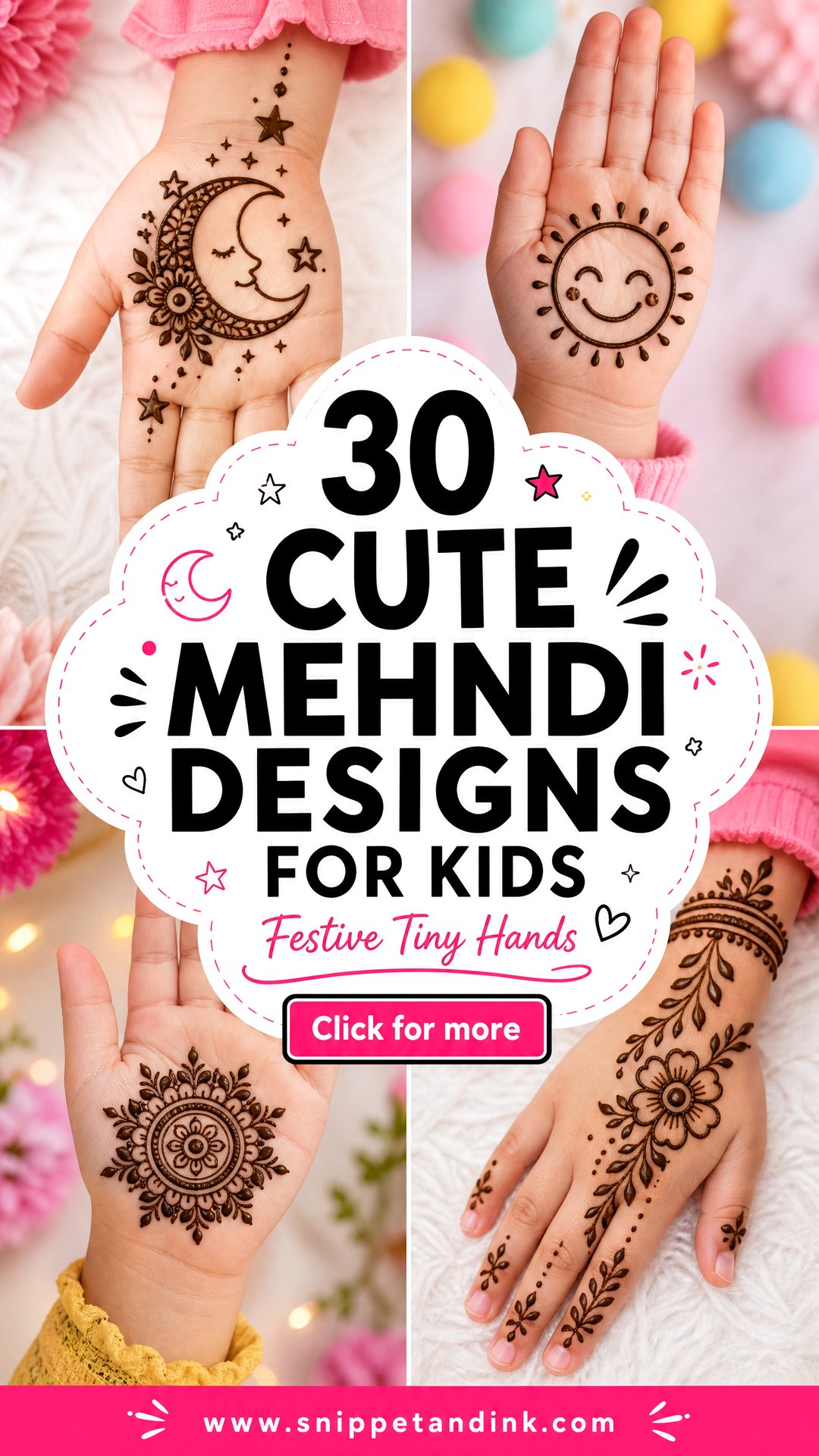
Children are my quickest clients and my most honest ones. If a design takes too long, they tell me, and if the motif isn’t something they recognize, they lose interest halfway. That’s why the patterns I draw on little hands are built around one clear shape, open space and thick lines: a flower, a butterfly, a moon, an initial. Below are 30 designs for Eid, Diwali, weddings and family functions, with notes on which ages each one suits, where it sits best on the hand and what tends to smudge.
Only Natural Henna Goes on a Child, and Here Is How to Check
The single most important choice for kids isn’t the design. It’s the paste. So-called black henna often contains PPD, a hair-dye chemical that can cause blistering reactions and leave a child sensitized to dyes for life. Natural henna never stains black on the spot. It comes off orange and darkens to reddish-brown over a day or two.
What I look for before I touch a child’s hand
- A short ingredient list: henna powder, lemon juice or water, sugar, and an essential oil
- Fresh paste stored frozen or chilled, since real henna is perishable; cones that sit on a shelf for months without refrigeration are a warning sign
- For young children, little or no essential oil, or a mild one like lavender
- A patch test: a small dot on the inner arm the day before, checked for redness or itching
If a child has G6PD deficiency, check with their doctor before using henna at all, because it is not considered safe for them.
1. Simple Flower Mehndi Design For Kids
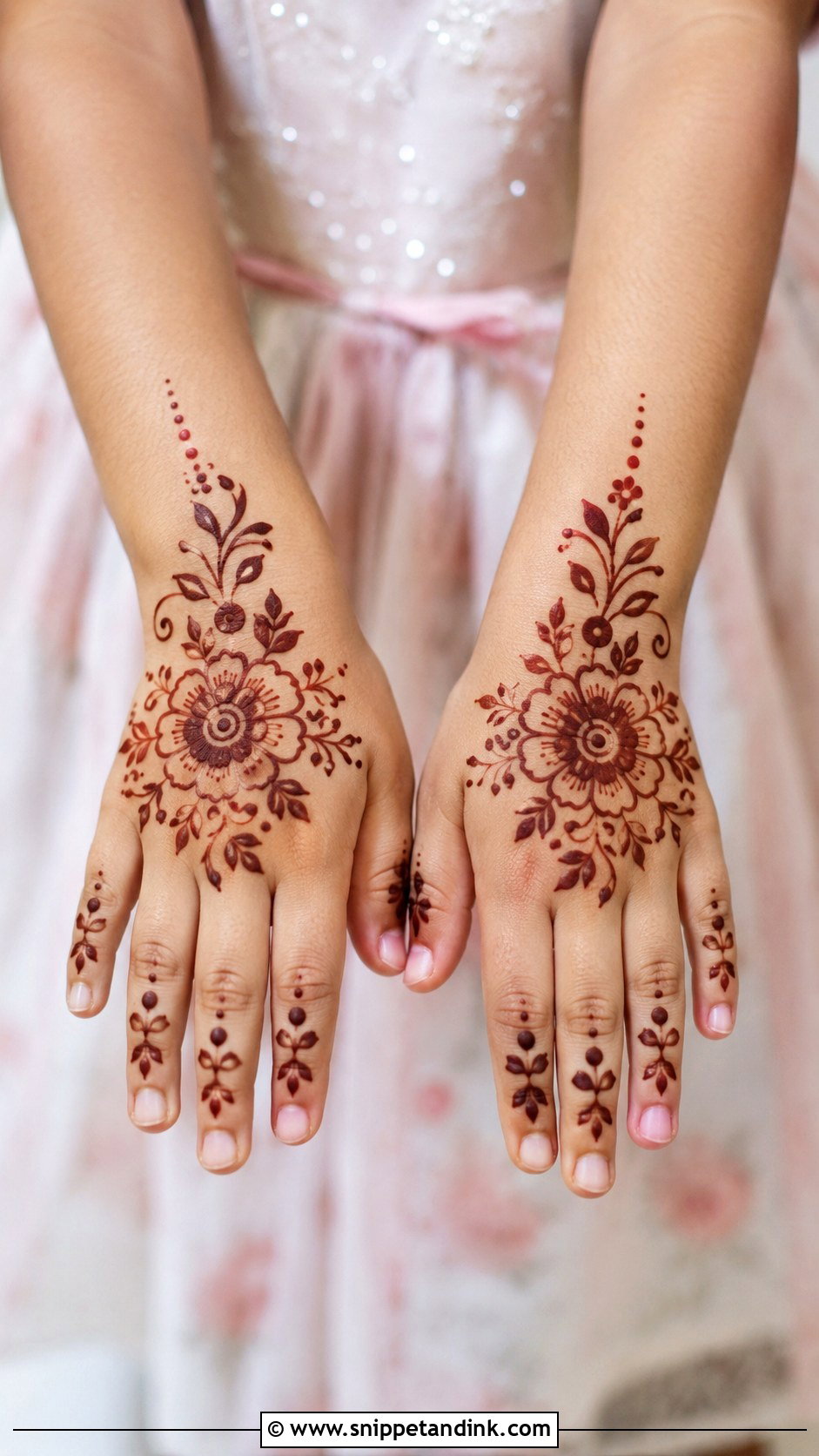
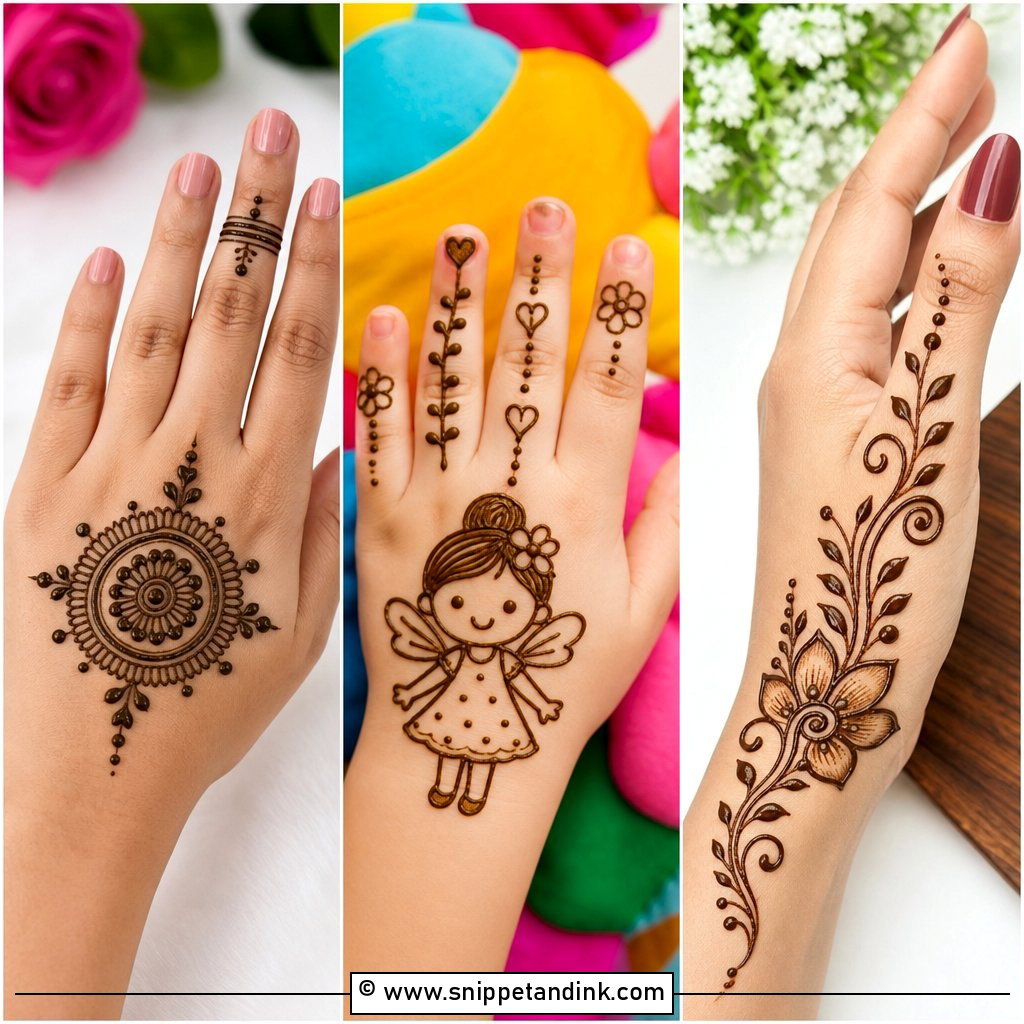
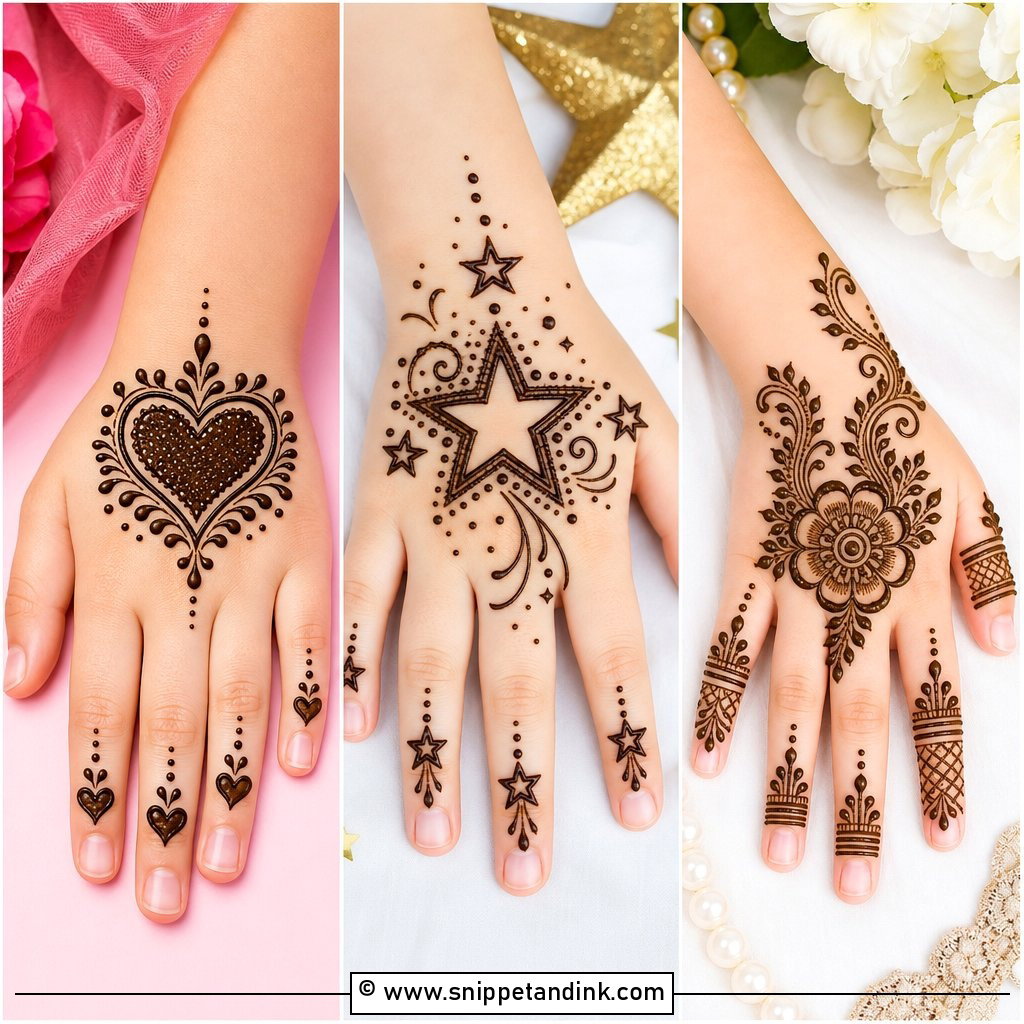
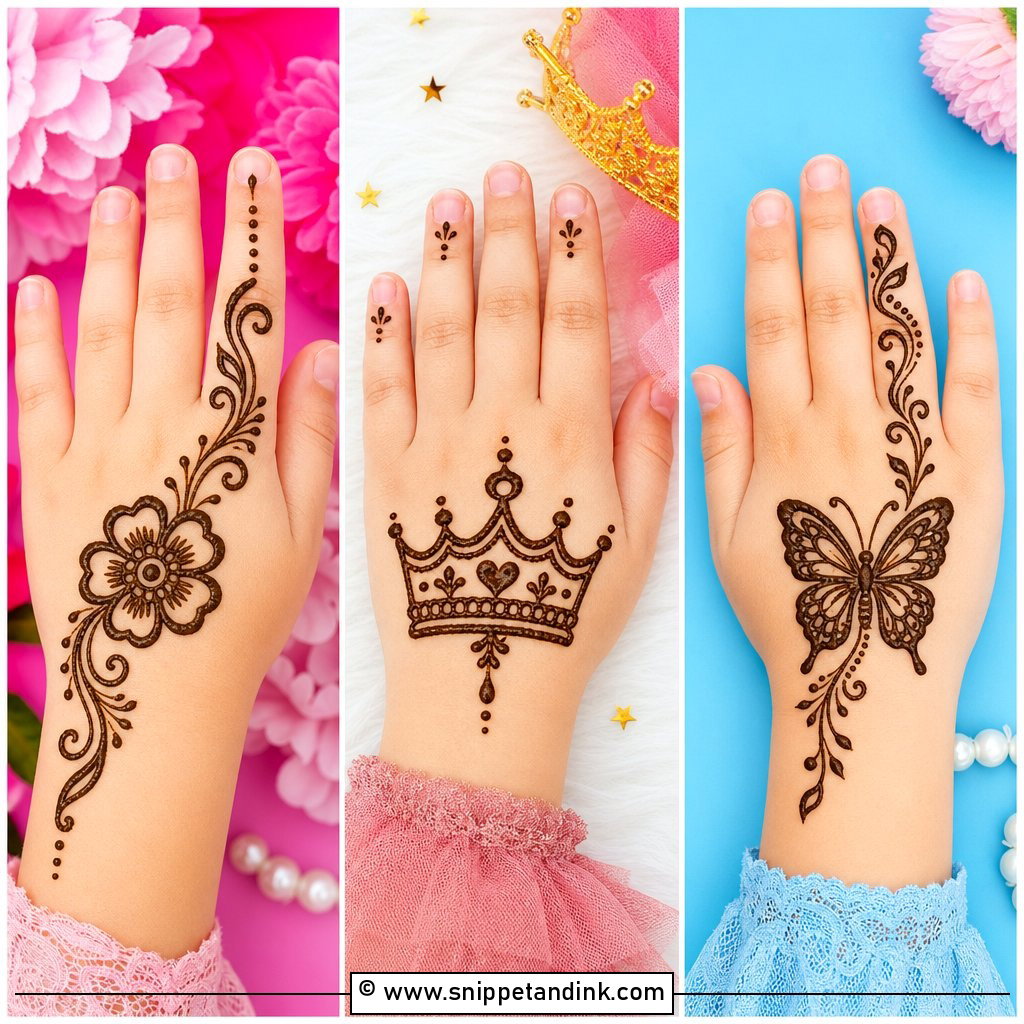
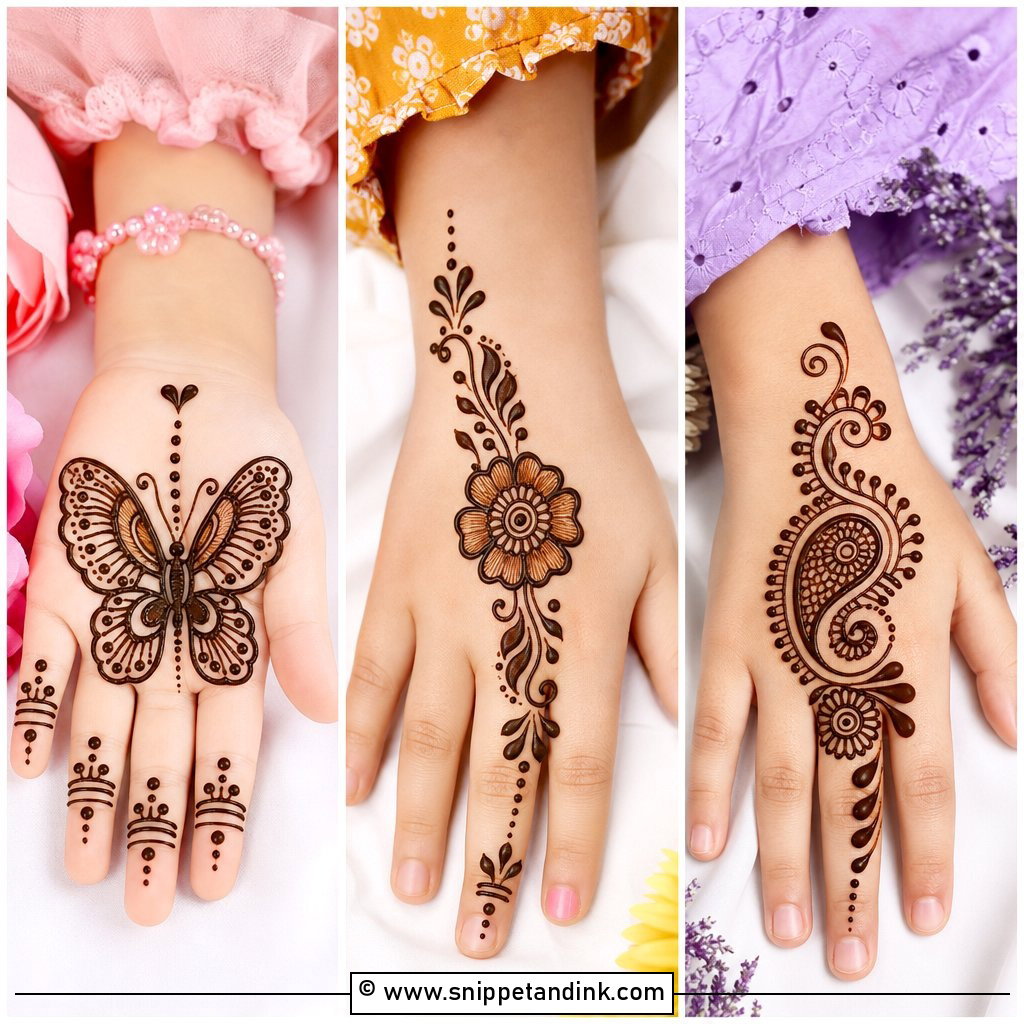
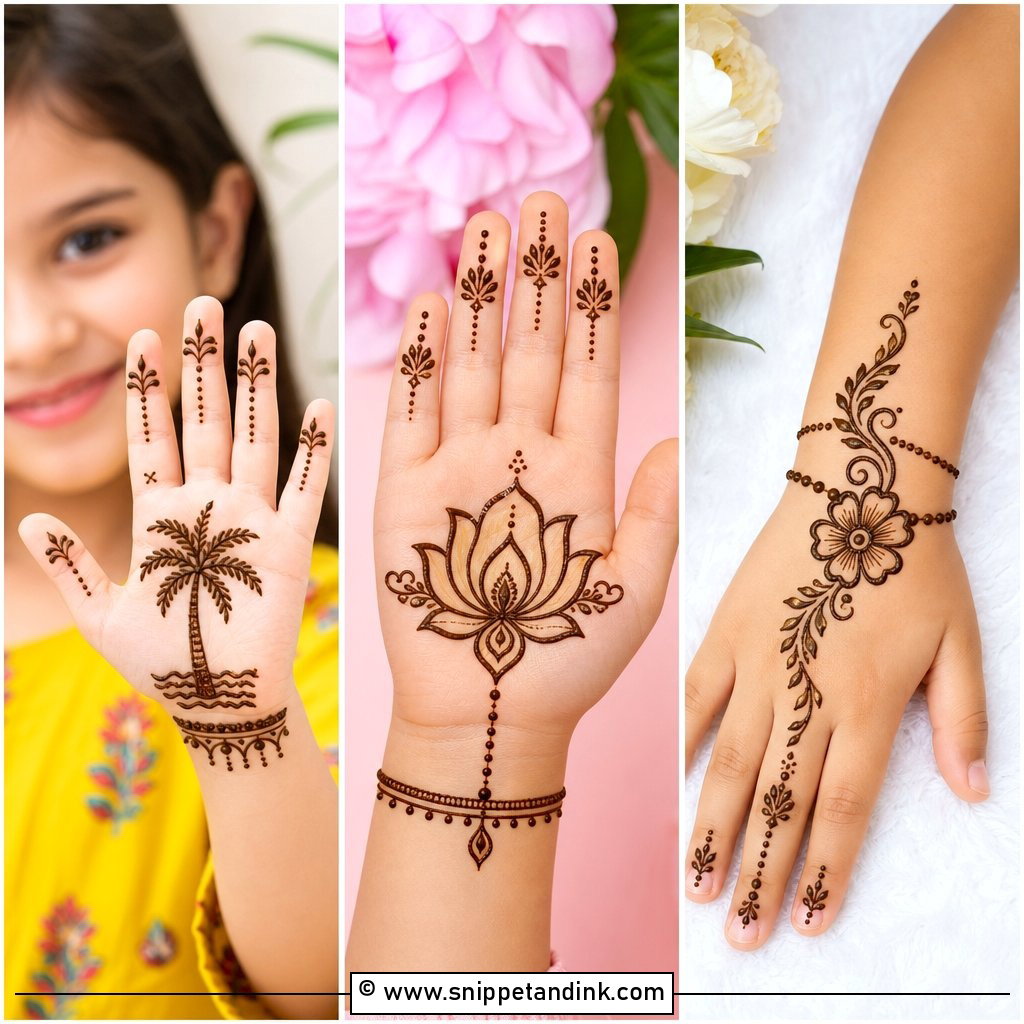
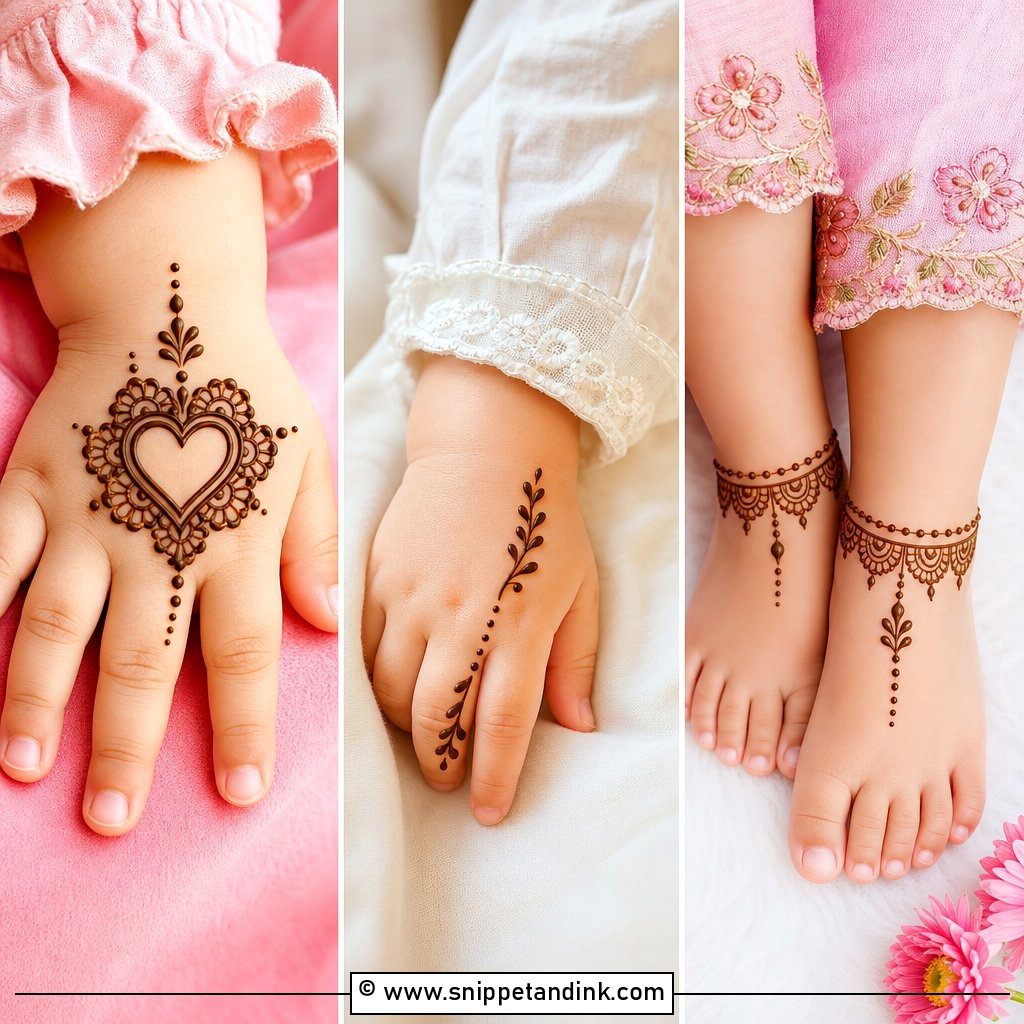
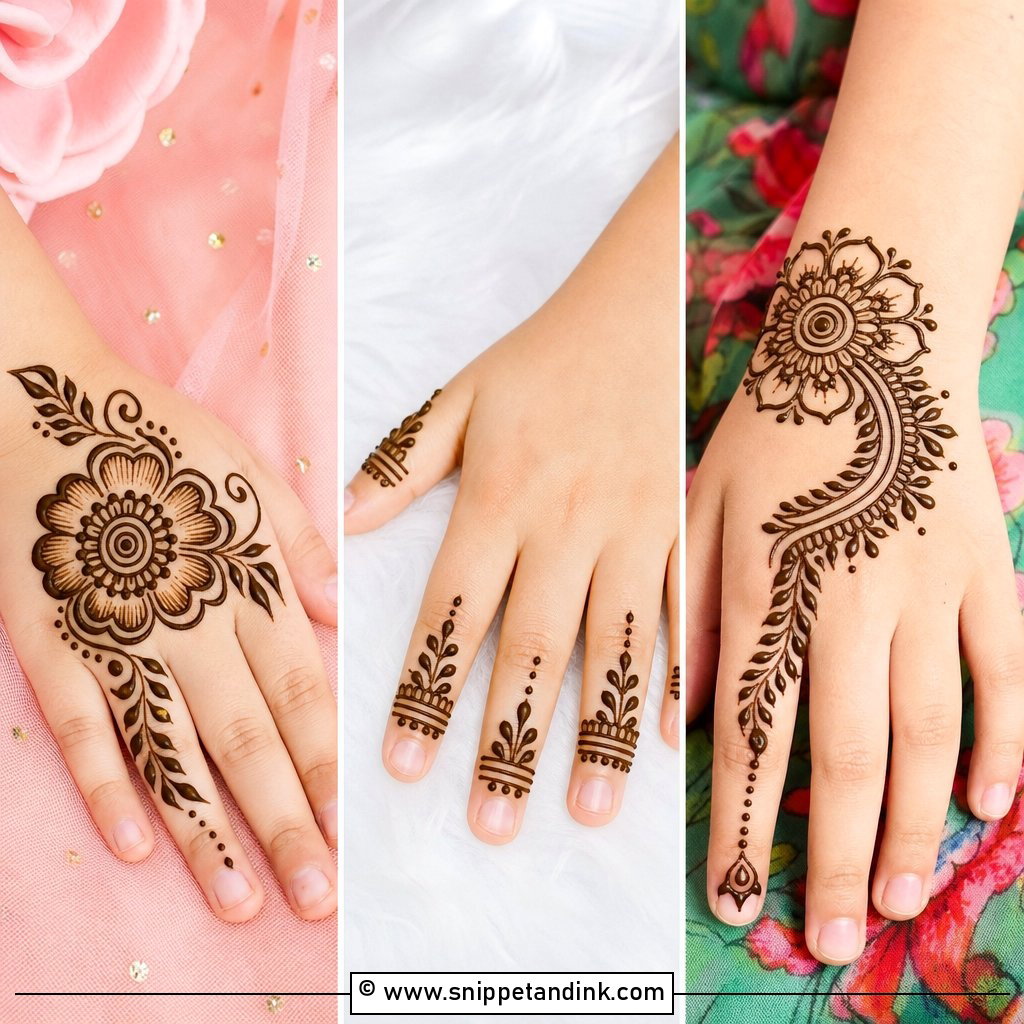
One round flower is where I start with almost every first-timer. I place it at the center of the back of the hand, pipe five or six fat petals, then scatter dots and a short leafy trail toward the wrist. Fingers get dots or petal tips only. Toddlers do best with this because it takes a few minutes and covers very little skin, so there’s less paste to smudge while it dries. Older children can add a thin bracelet line at the wrist.
2. Butterfly Mehndi Design For Kids
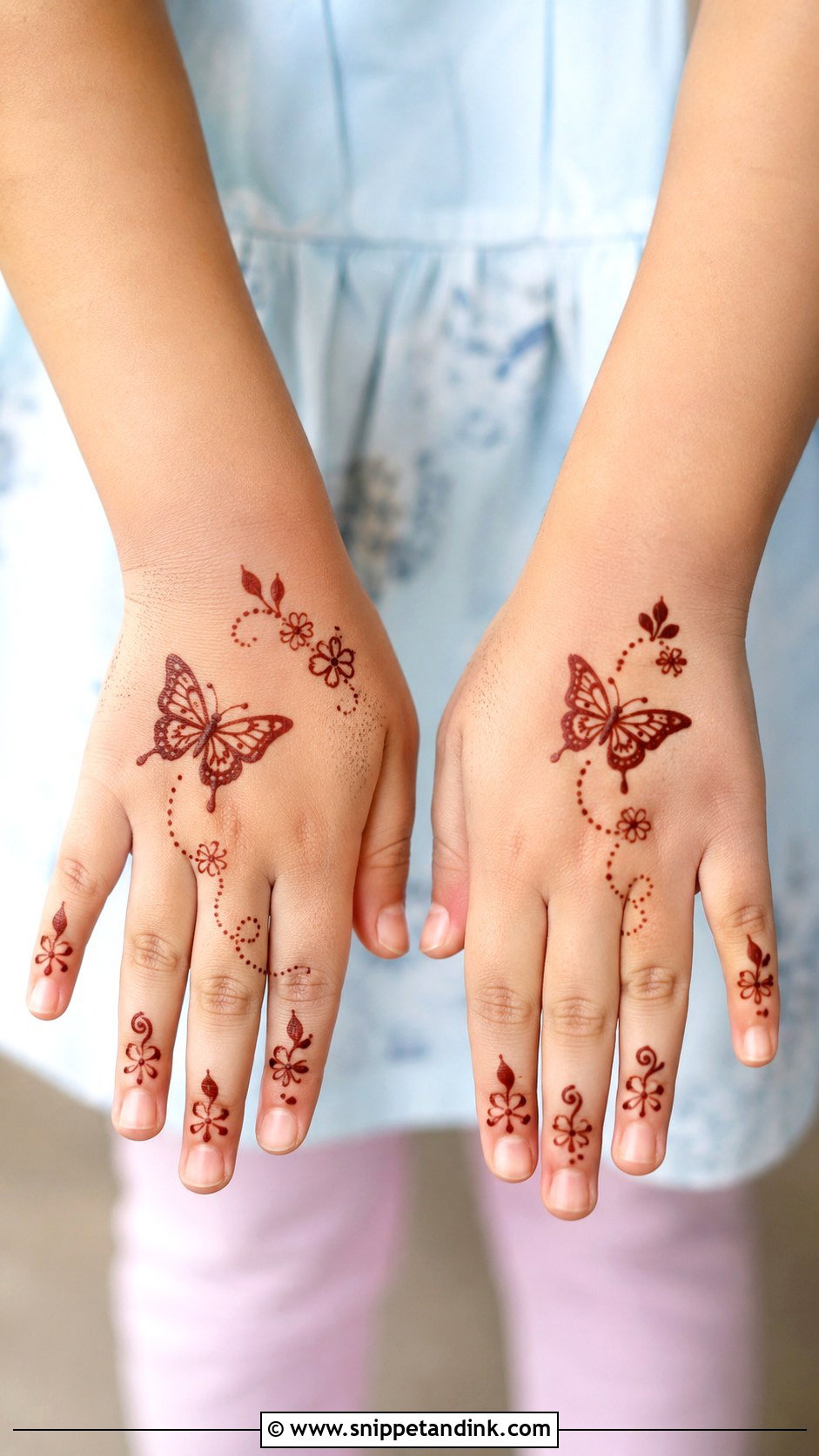
Symmetry is the hard part of a butterfly on a hand that won’t stay still. I draw the body line first, then mirror the wings out from it, keeping them bold and simple so the shape still reads after the paste comes off. A small butterfly in the middle of the back hand, a curved dotted trail toward the wrist and a few tiny flowers is plenty. Kids like that it looks like it’s flying, and it suits birthdays as easily as Eid or Diwali.
3. Heart Mehndi Design For Kids
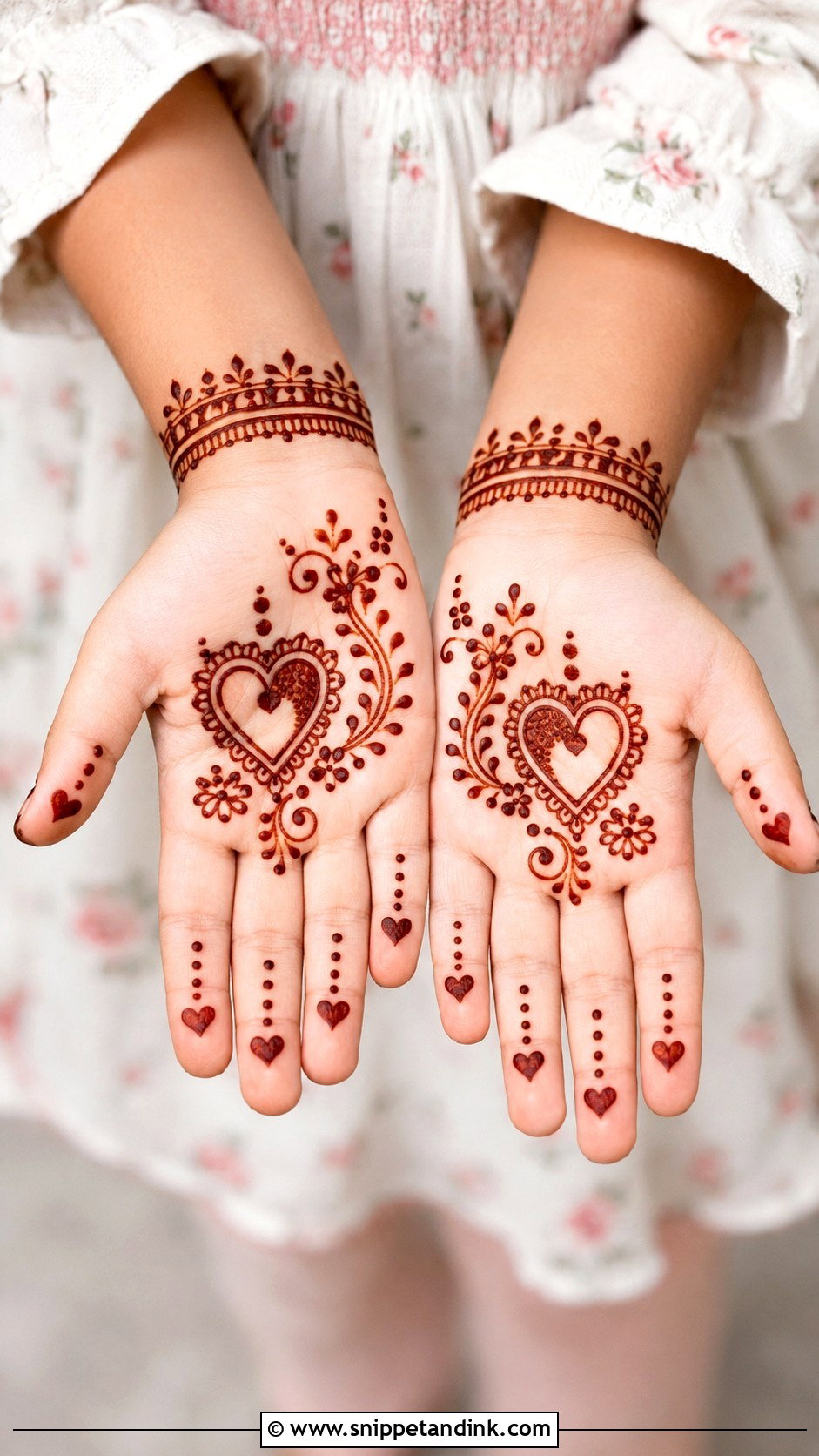
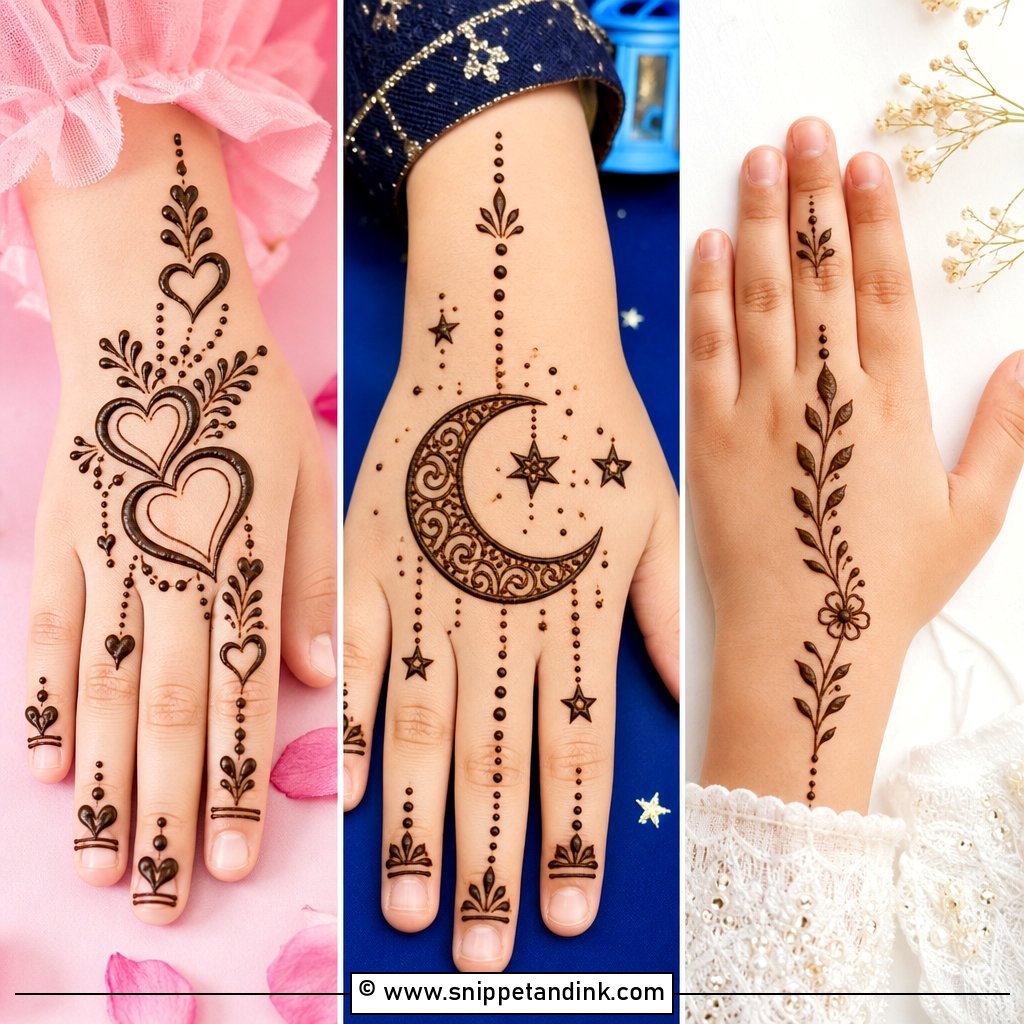
A heart is instantly recognizable, which matters more to a five-year-old than any amount of detail. I keep the outline bold and leave the inside open or dot it lightly; a solidly filled heart takes much longer to dry and smudges the moment a child brushes against something. Surround it with dots and small leaves, tip the fingers with mini hearts, and stop there.
4. Star Mehndi Design For Kids
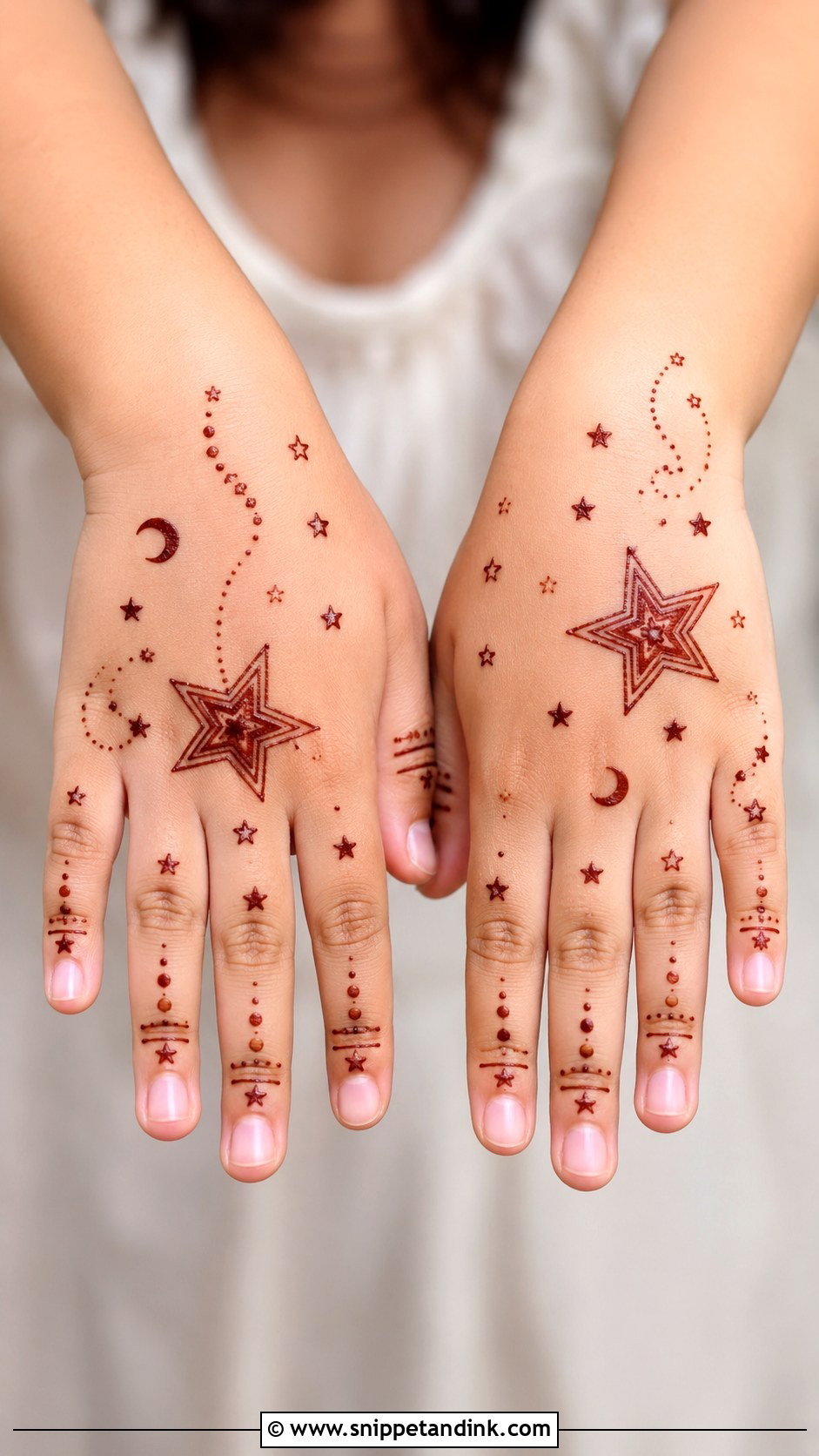
Star mehndi is the fastest design in my kit. One main star on the back of the hand, smaller ones scattered across the fingers and wrist, and dotted swirls between them so they look like they’re floating. Each star takes seconds. I round the points rather than drawing them sharp, because paste piped to a fine tip on a moving hand tends to blob. Young children who can’t sit for long are the ones I’d give this to.
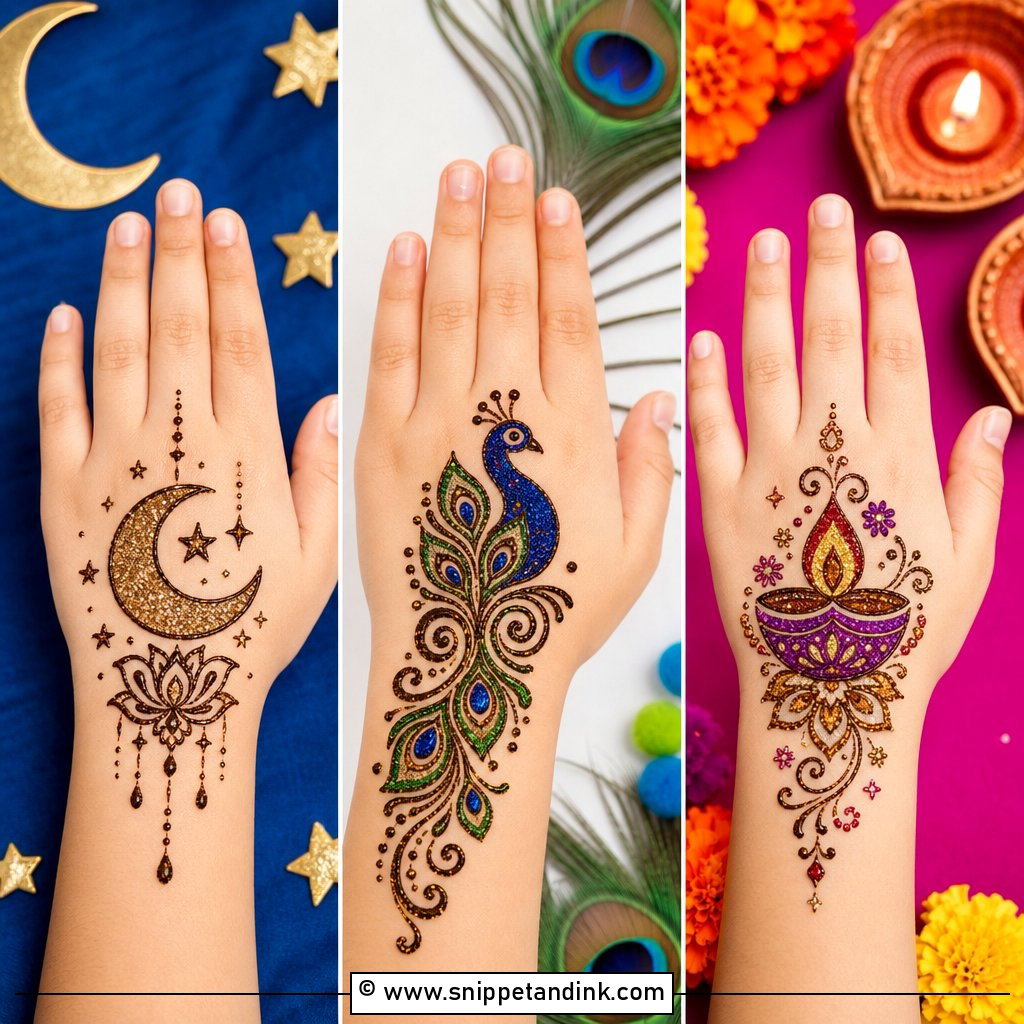
5. Moon Mehndi Design For Kids
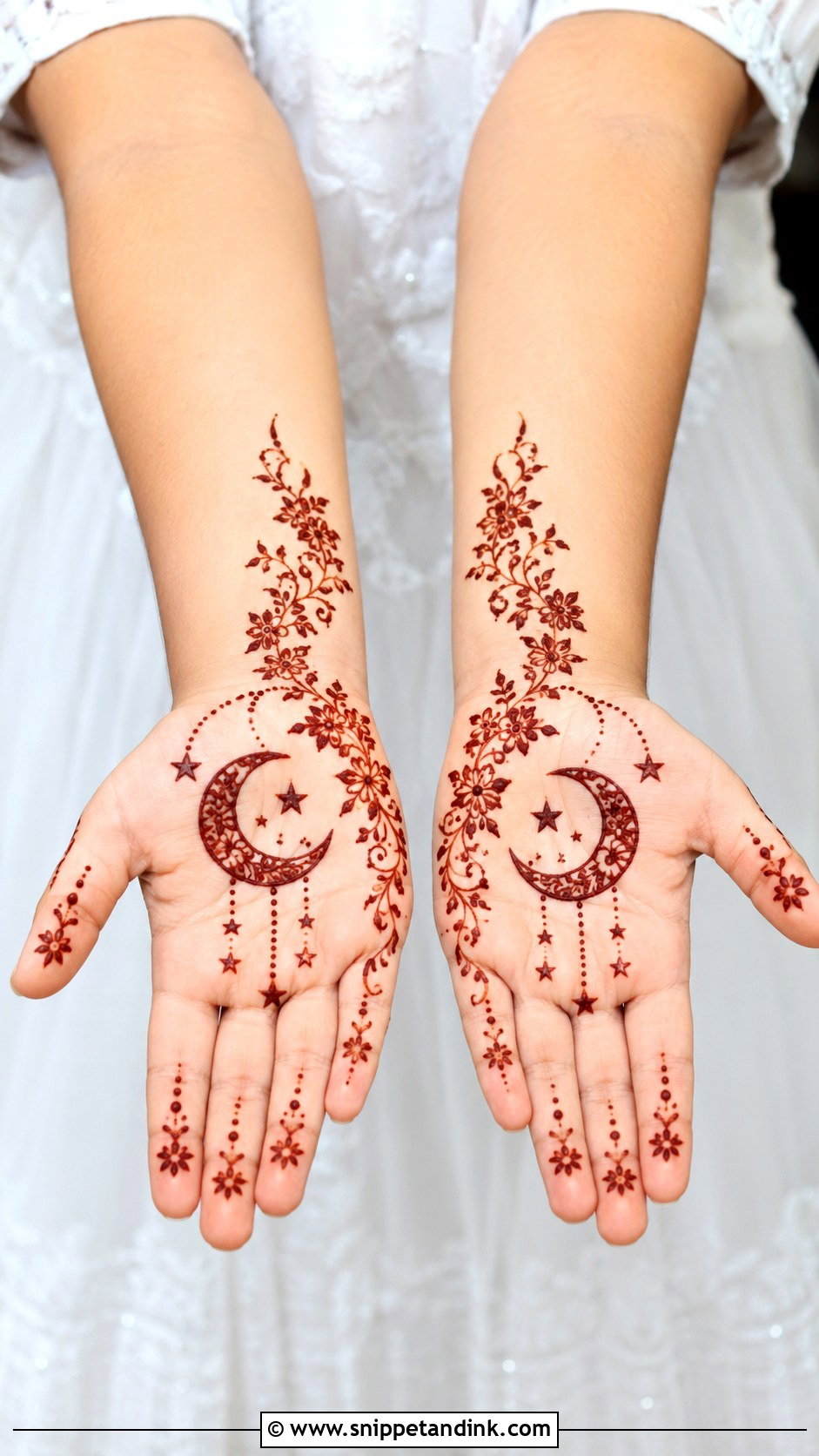
Crescent moons come up constantly before Eid. I place one on the palm or back of the hand, keeping the inner curve thick enough to stain clearly, then add stars, dots and a small floral trail around it. Fingers get dots and half-moon tips. The clean crescent with plenty of space around it is what makes it read on a small hand. A dotted chain from the moon to a wrist band finishes it for evening celebrations.
6. Cute Cartoon Mehndi Design For Kids
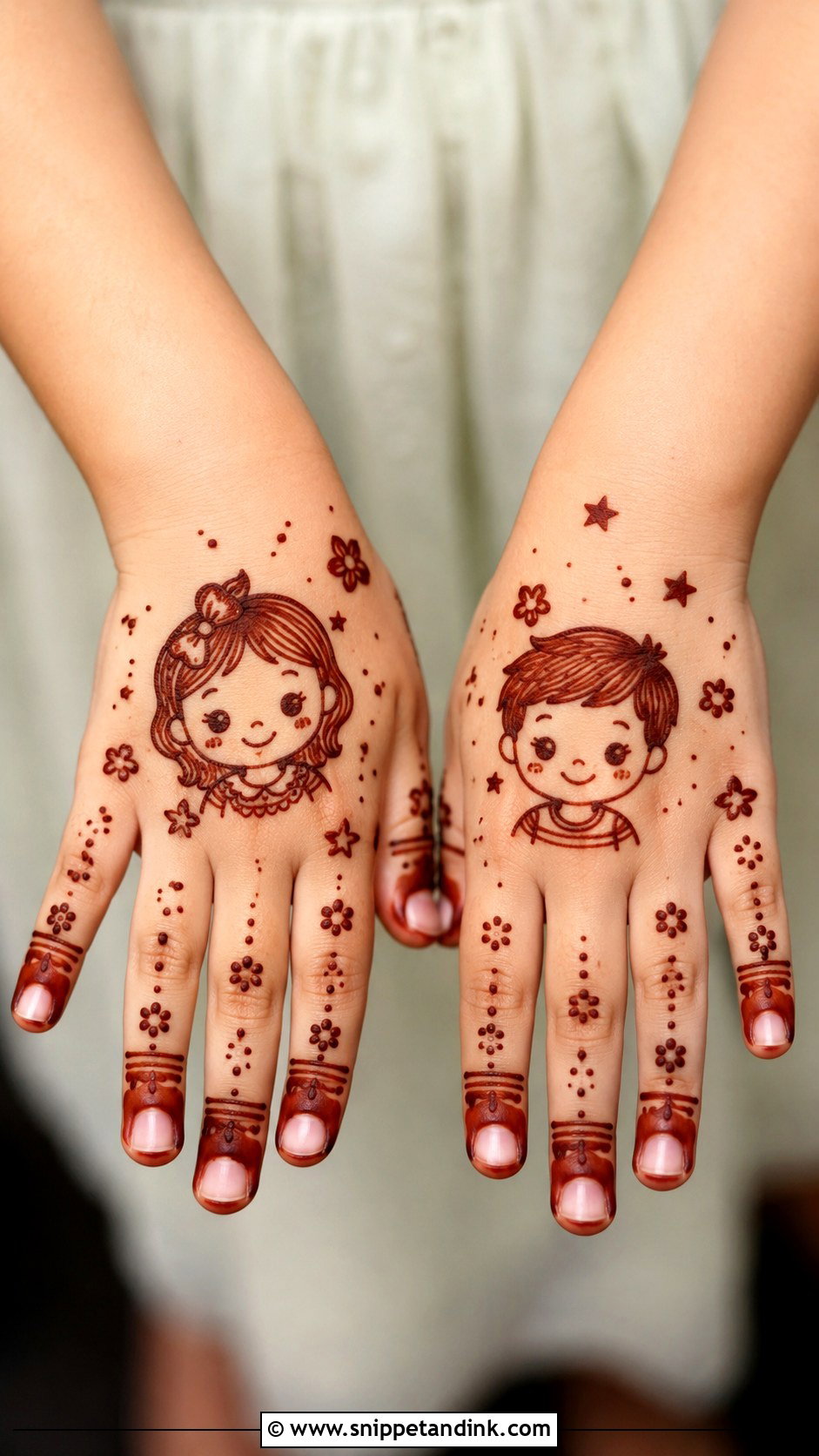
Cartoons are a negotiation. Children ask for a specific character, and I steer them toward its simplest version: a round face, ears, a bow, a smile. Henna lines spread slightly as they stain, so tiny eyes and whiskers blur into one mark. Bold outlines on the back hand or palm, a few flowers and stars around it, and dotted finger tips make it look like mehndi rather than a doodle. Birthdays and family parties suit this one.
7. Smiley Face Mehndi Design For Kids
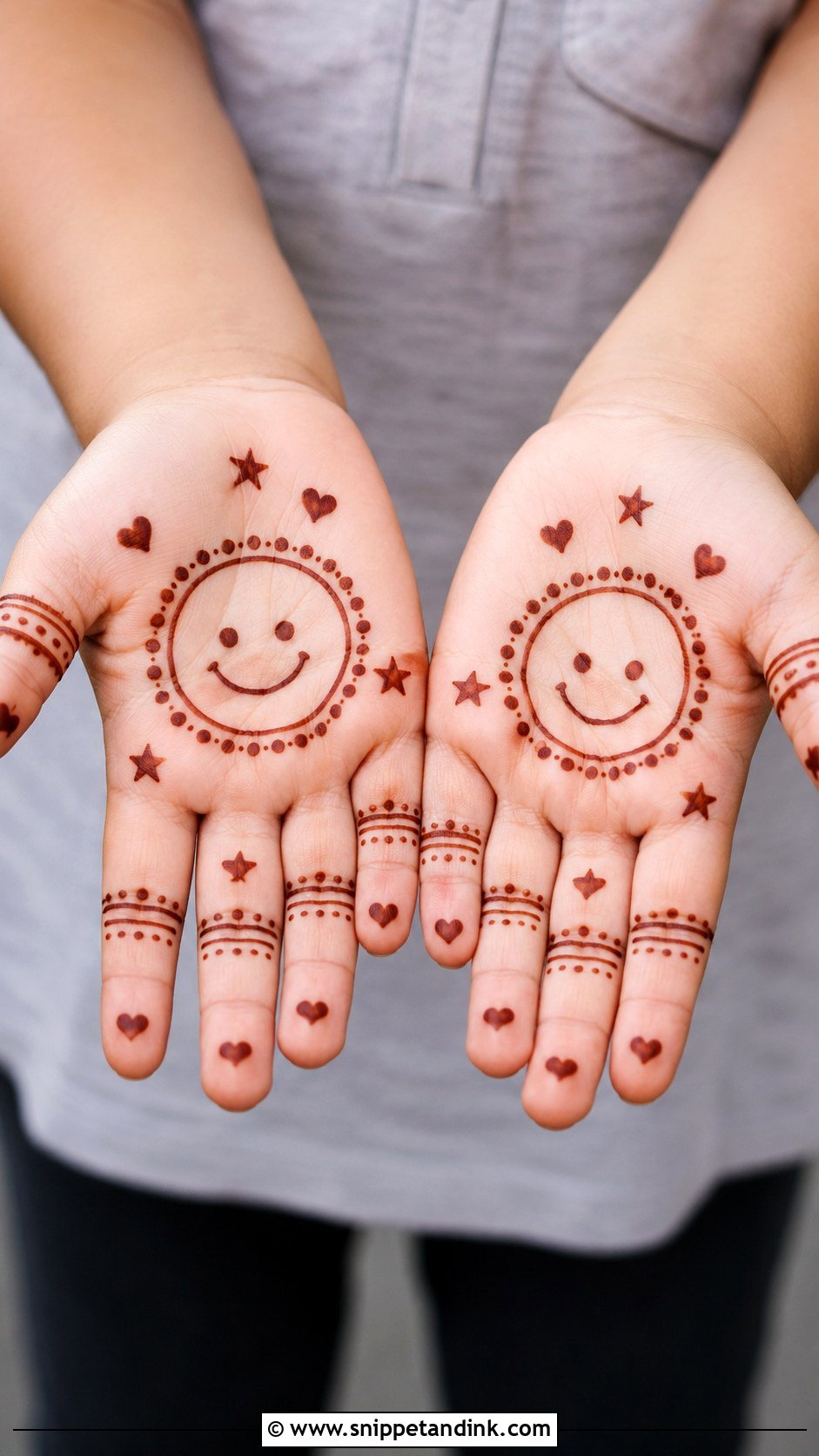
A smiley face takes about as long as it does on paper, which makes it my go-to for the very youngest. I draw a clean circle on the palm, two eyes and a wide smile, then dots or tiny stars around the outside so it looks festive. The palm stains darker than the back of the hand, so even a simple face shows up well. Keep the lines thick and you’ll get a crisp result.
8. Mini Mandala Mehndi Design For Kids
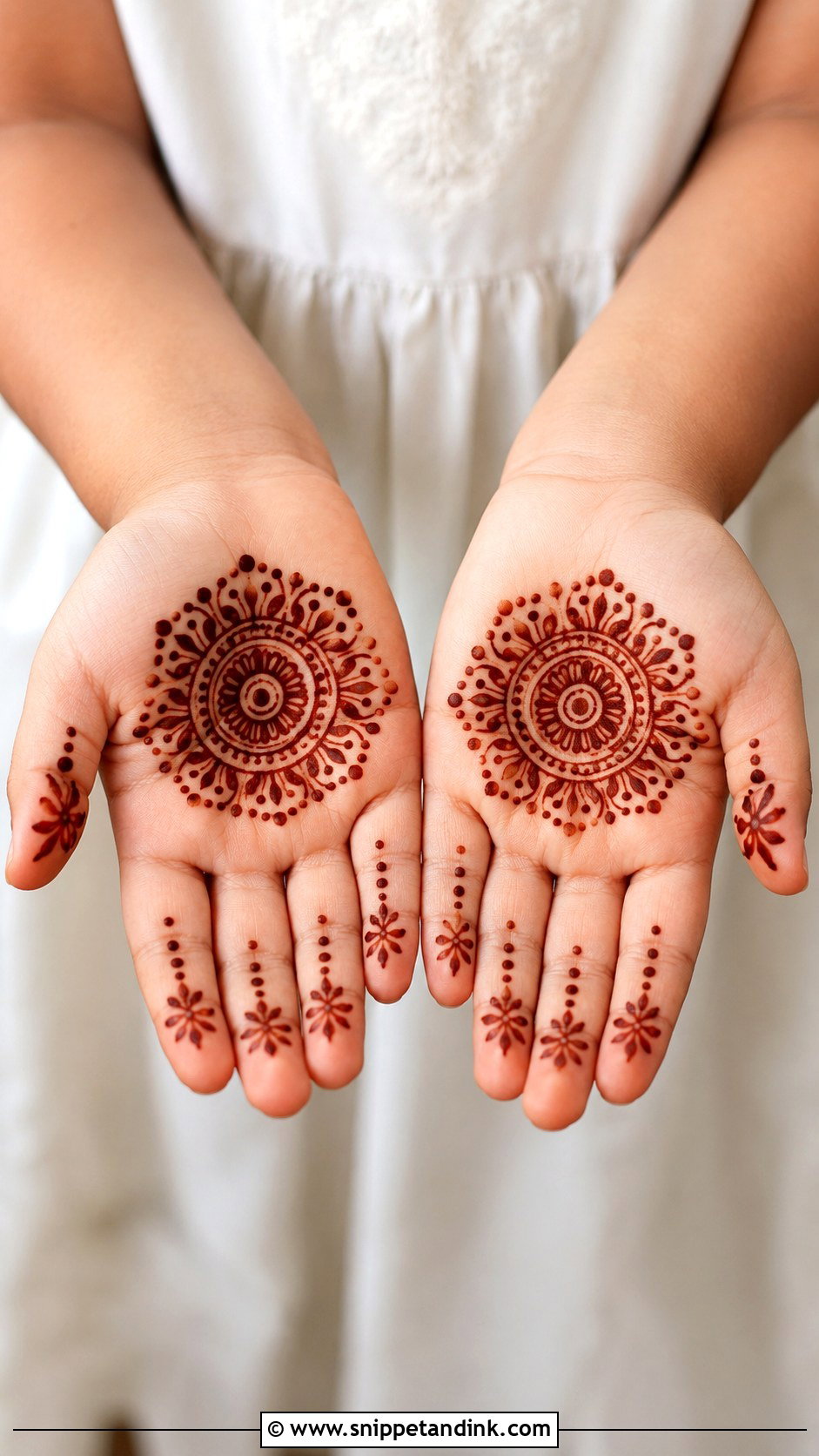
Children who want to look like the grown-ups at a wedding usually ask for a mandala, and a mini one gets them there without hours in the chair. I center a small round motif on the palm or back hand with two or three rings of petals and dots, then leave the fingers light. Dense rings are the mistake: on a small hand the lines merge as they stain and the mandala turns into a dark blot. Open spacing also dries faster.
9. Arabic Mehndi Design For Kids
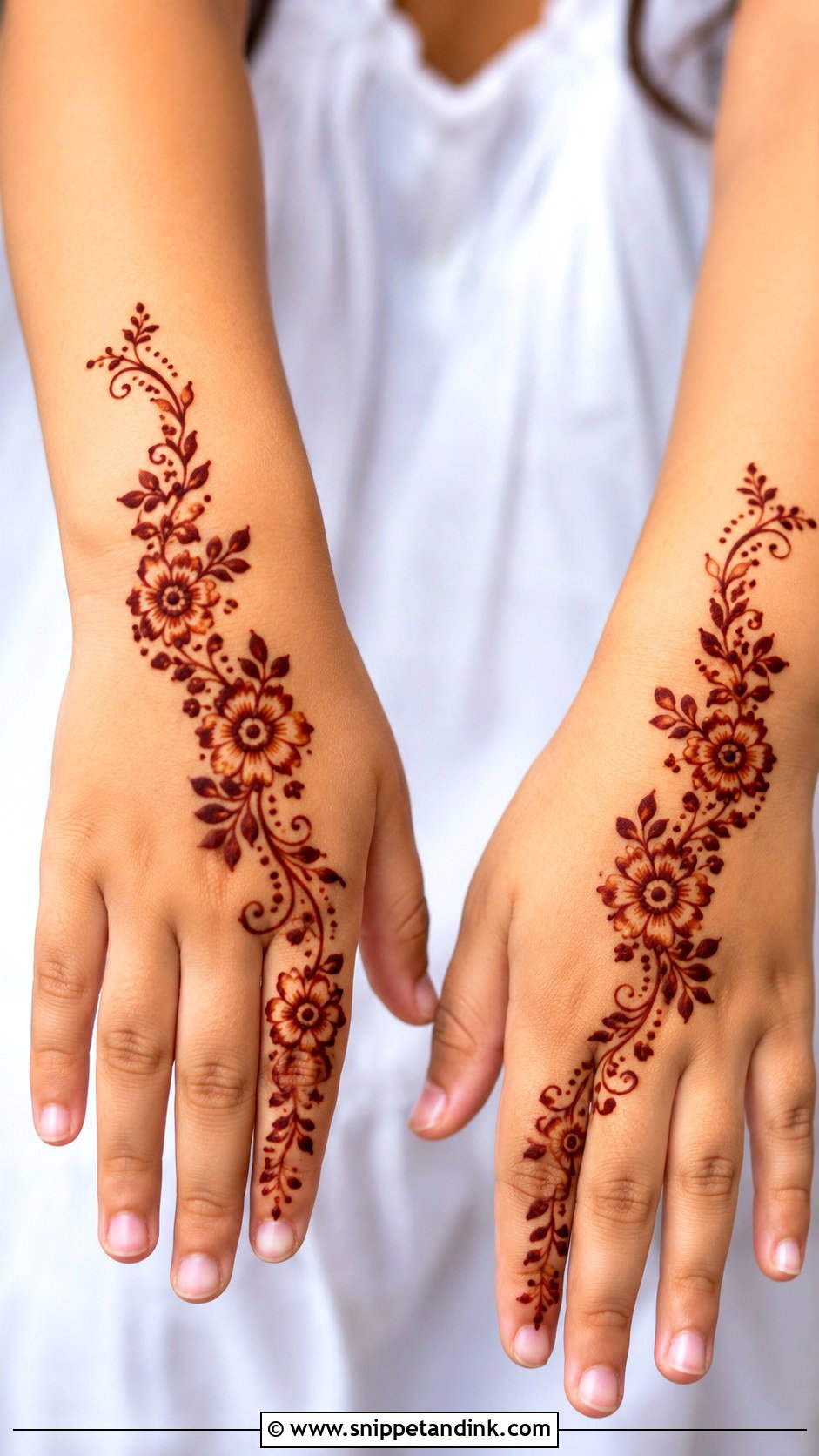
An Arabic mehndi design sized for a child is a short diagonal trail from the wrist toward one finger, with leaves, dots and one or two flowers along it. The negative space is what makes it Arabic, so I resist filling the gaps. It suits children of roughly eight and up who can hold a hand flat for ten minutes or so and want something closer to adult mehndi. Leafy tips on one or two fingers balance the trail.
10. Back Hand Mehndi Design For Kids
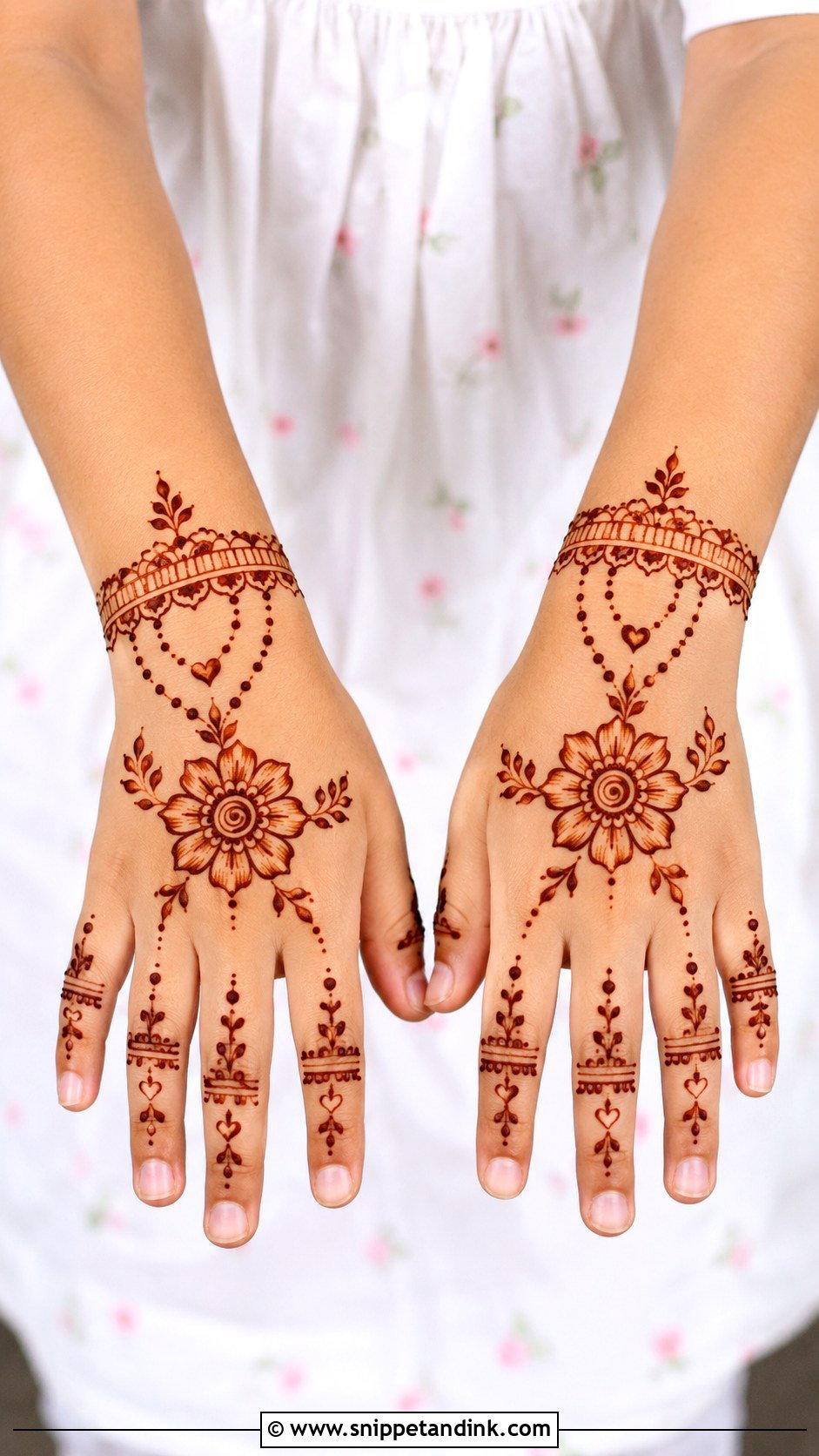
Back hand mehndi designs are my default for active children, because the palms stay free to hold a snack or a phone while the paste dries. A flower in the center, a dotted chain to the wrist and simple finger details are enough. Expect a lighter stain than on the palm, since the skin on the back of the hand is thinner. I keep the knuckles clear so fingers can bend without cracking the paste.
11. Front Hand Mehndi Design For Kids
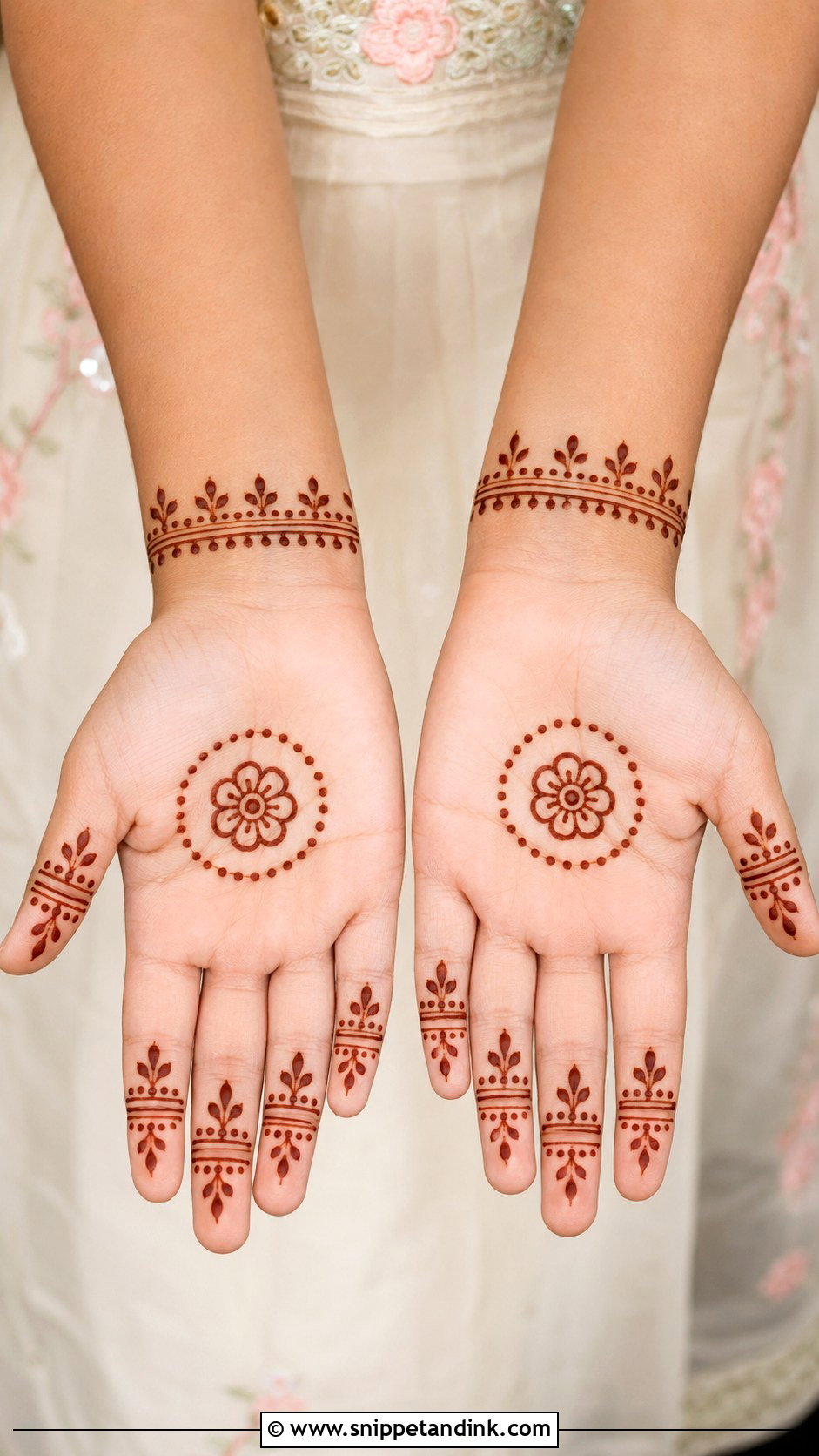
Palm designs stain the darkest, and children love watching them go on because they can see every line being drawn. The trouble is that kids touch everything with their palms. I keep a front-hand design small and open: one flower, heart, butterfly or mini mandala, dots around it, simple bands on the fingers. If the child is very young, I do the palm last, after the back of the hand has dried.
12. Finger Mehndi Design For Kids
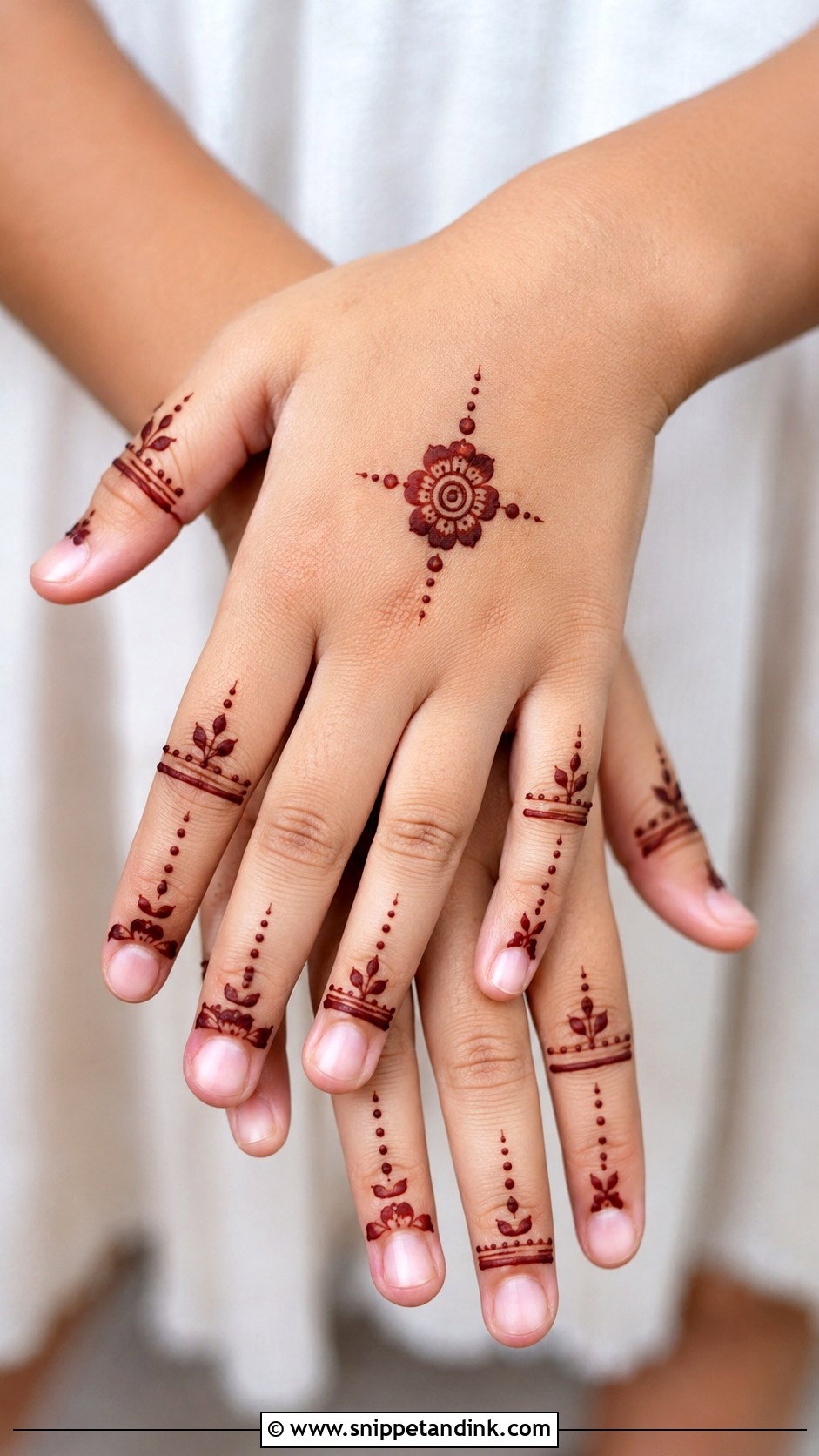
Finger-only designs are what I suggest for school events and for children who won’t sit still at all. Tiny dots, small leaves and short curved lines on each finger, plus one small motif on the back hand to tie it together. Fingertips usually stain very dark, so even light patterns show up well. Keep the tip designs short, because a child’s fingers are the first part of the hand to touch something.
13. Bracelet Mehndi Design For Kids
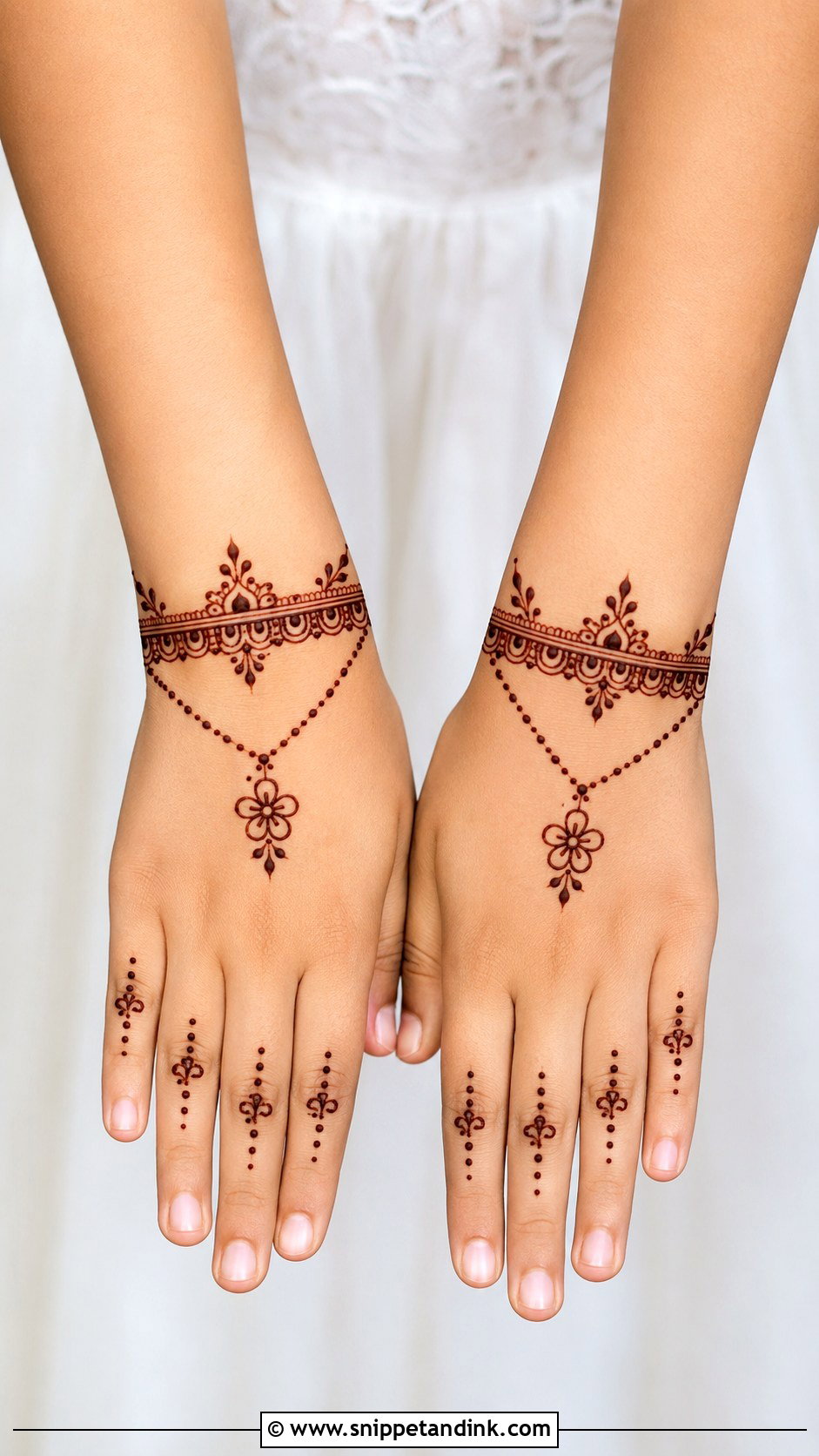
Kids love that a bracelet design looks like jewelry. I draw the band from dots, leaves or tiny hearts and connect it with a dotted chain to a small flower on the back hand. Place the band just above the wrist crease, not on it. Paste on the crease cracks the first time the wrist bends, and the stain comes out broken. Make the line slightly bold so it reads clearly once the paste is gone.
14. Ring Mehndi Design For Kids
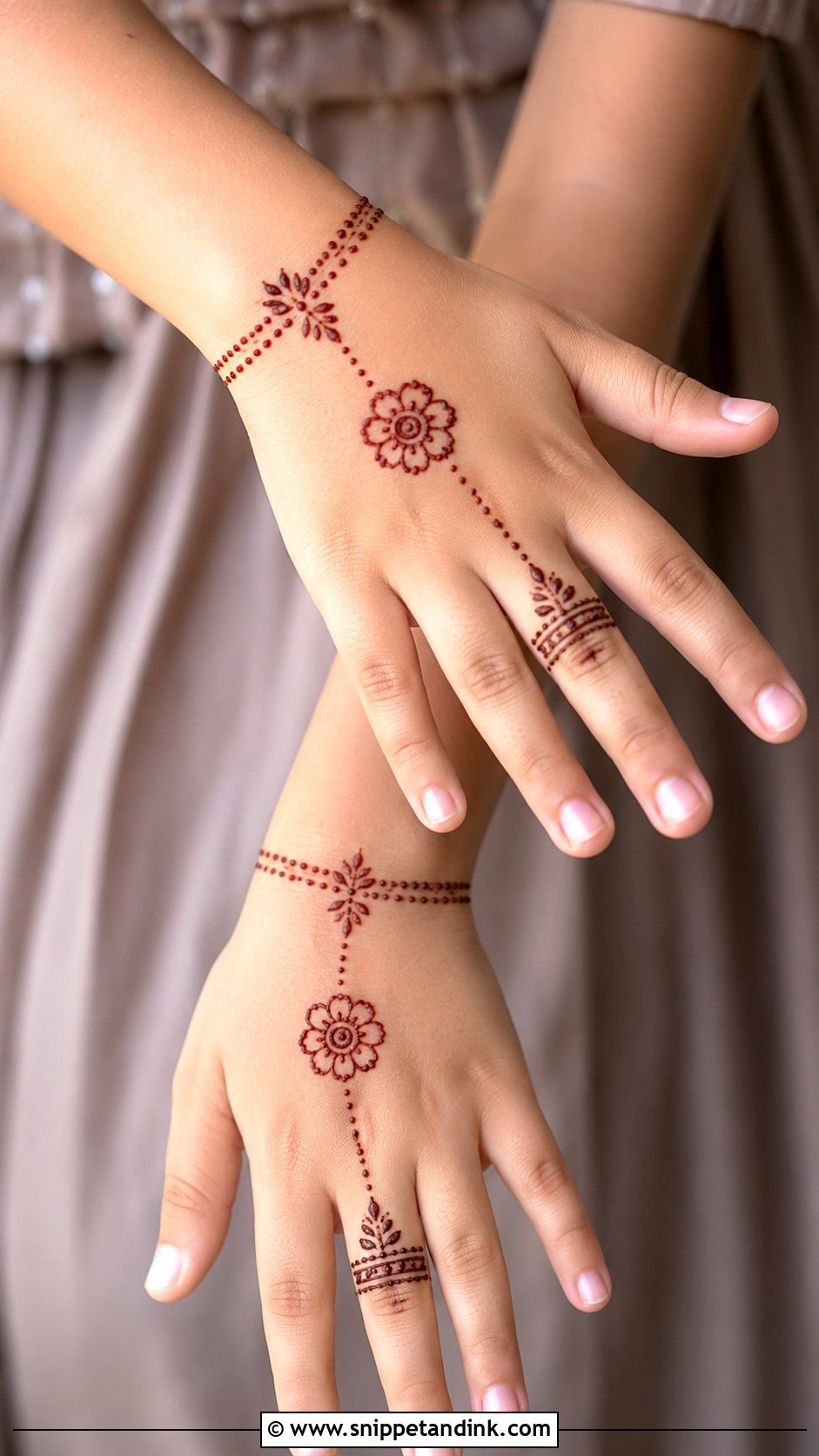
Ring mehndi suits older children who want something neat and a little grown-up. A thin band at the base of one finger connects by a dotted chain to a small flower or heart on the back hand, while the other fingers get light dots. Keep the ring band simple; on a small finger, three or four tiny elements crowd into a smudge. A wrist bracelet can be added if the child wants more.


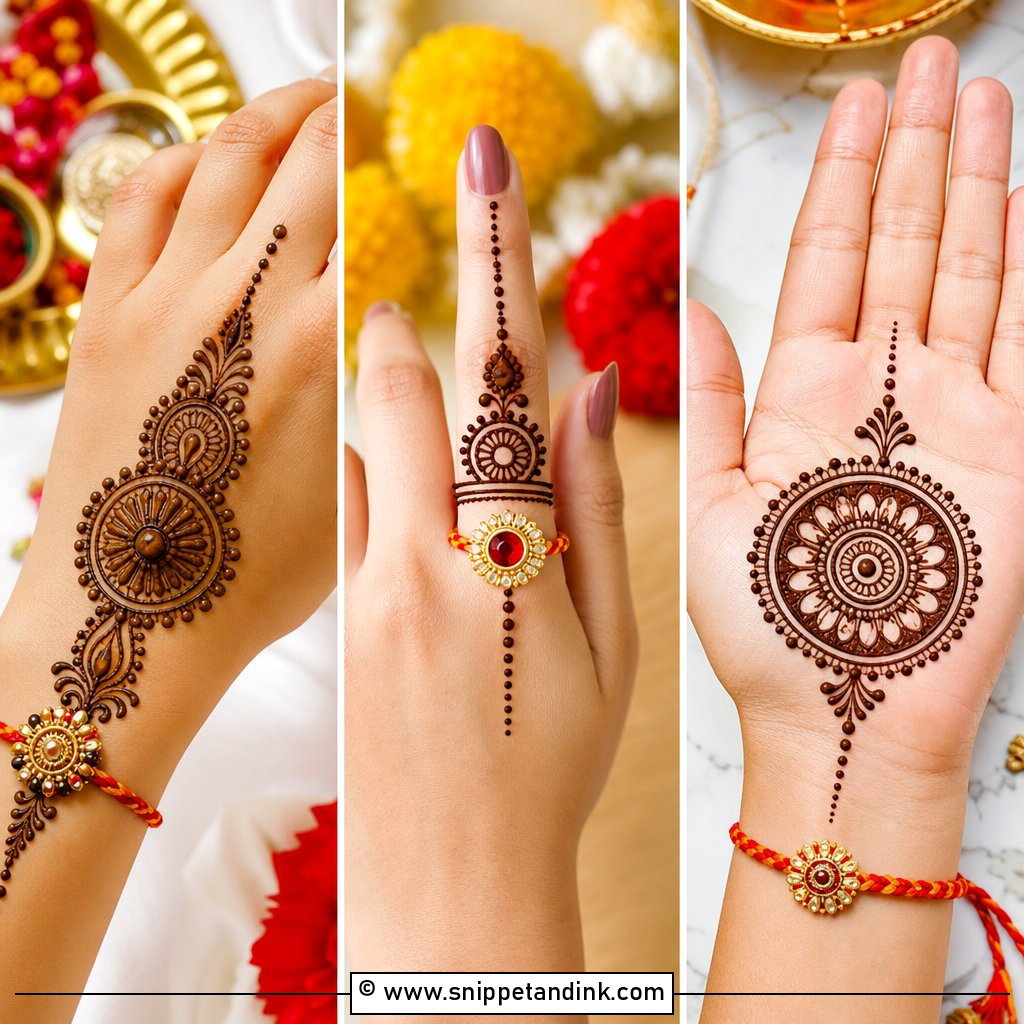
15. Floral Trail Mehndi Design For Kids
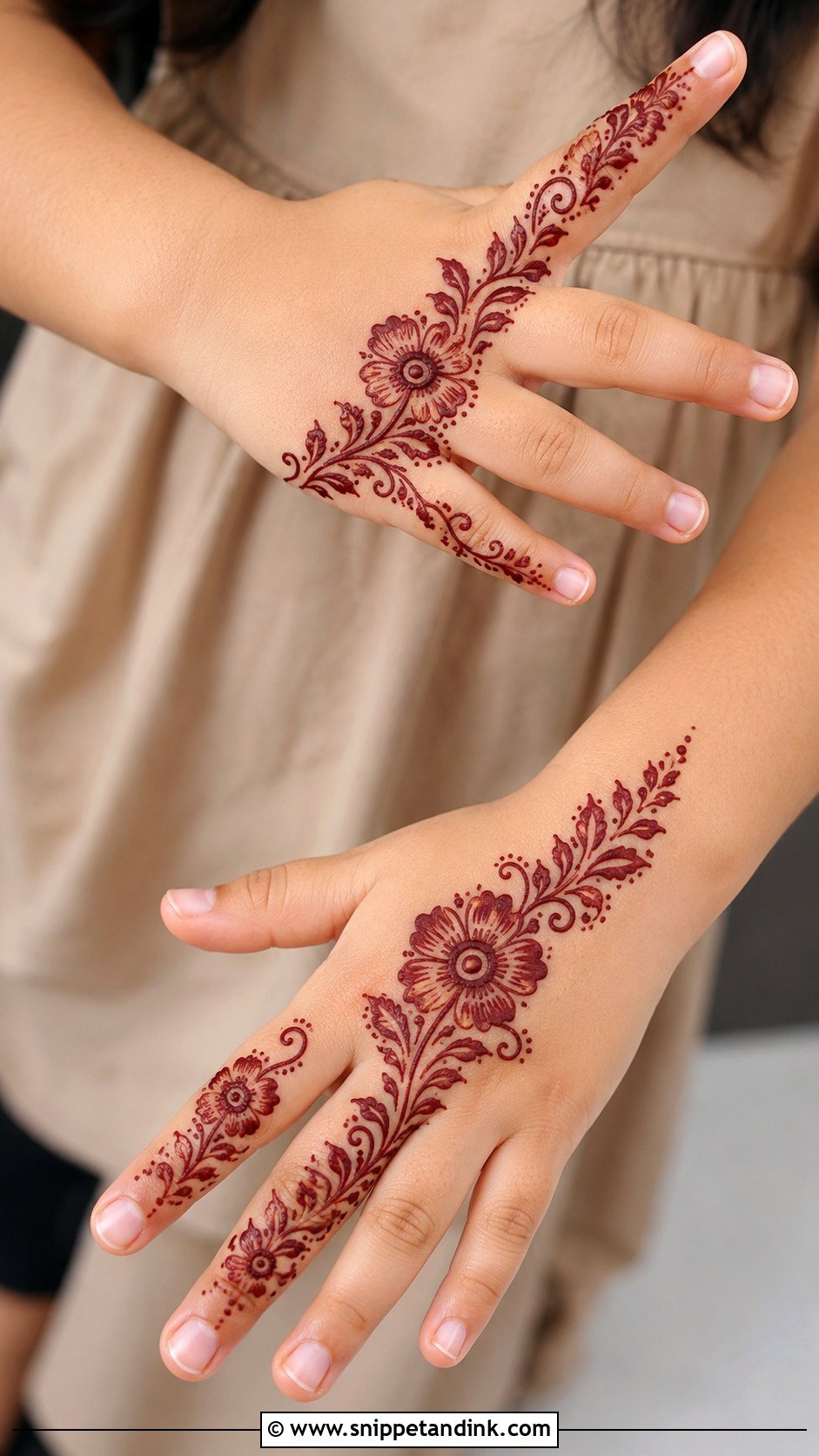
A floral trail is the Arabic style trimmed to fit a child. I start near the wrist with one small flower, then curve the trail across the back hand toward the index finger with leaves and buds along it, leaving gaps between the motifs. Compared with an adult trail, I keep it shorter and the motifs larger. It suits weddings, Eid and Diwali, and the fingers can echo it with a leaf line or dotted tips.
16. Rose Mehndi Design For Kids
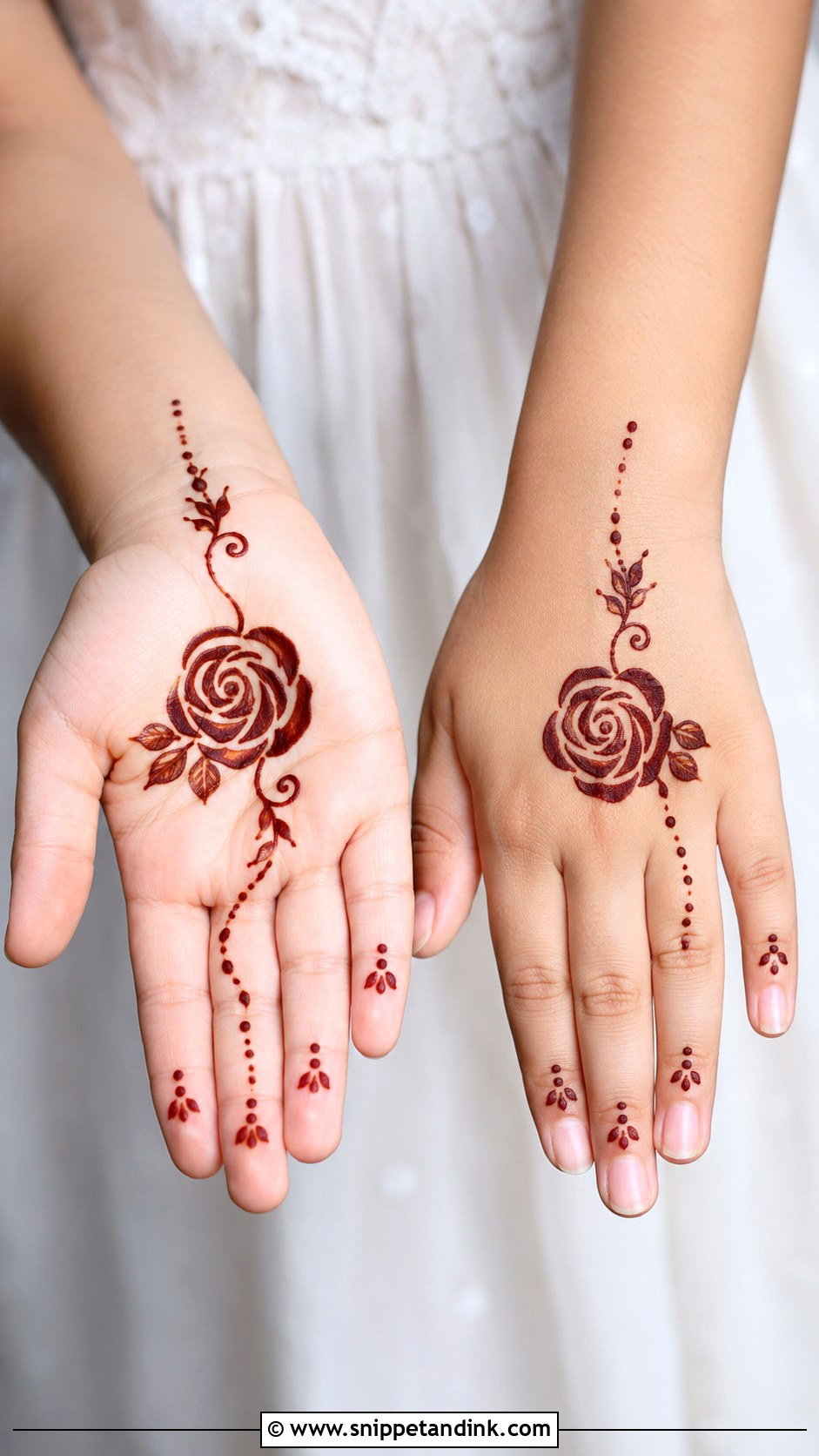
A rose mehndi design on a small hand works when it stays simple. I pipe a rounded spiral rose on the back hand or palm, add two or three leaves and a dotted trail toward the wrist. Shading inside the petals looks pretty on adults but muddies on a child’s hand, so I keep the petals thick and clean, which also stains better. Older children who want something floral but not heavy tend to choose this.
17. Lotus Mehndi Design For Kids
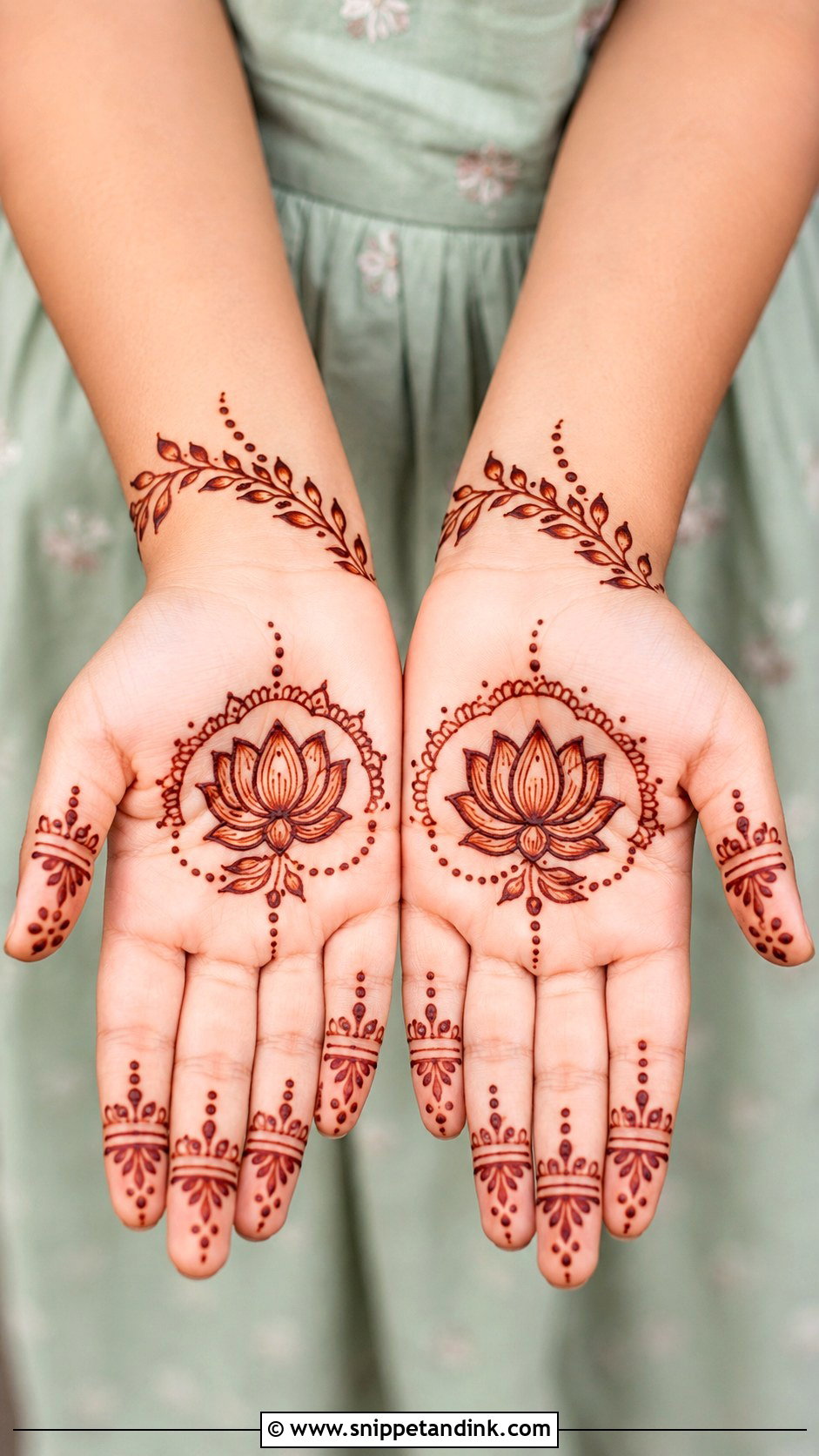
Lotus petals have to be wide on a child’s hand. Narrow, packed petals close up as the paste spreads, and the flower loses its shape. I place a small lotus in the center of the palm or back hand with dots and short curved lines around it, then a tiny bracelet line if the hand looks empty. It’s a quiet, traditional choice for Diwali, poojas and family ceremonies.
18. Peacock Mehndi Design For Kids
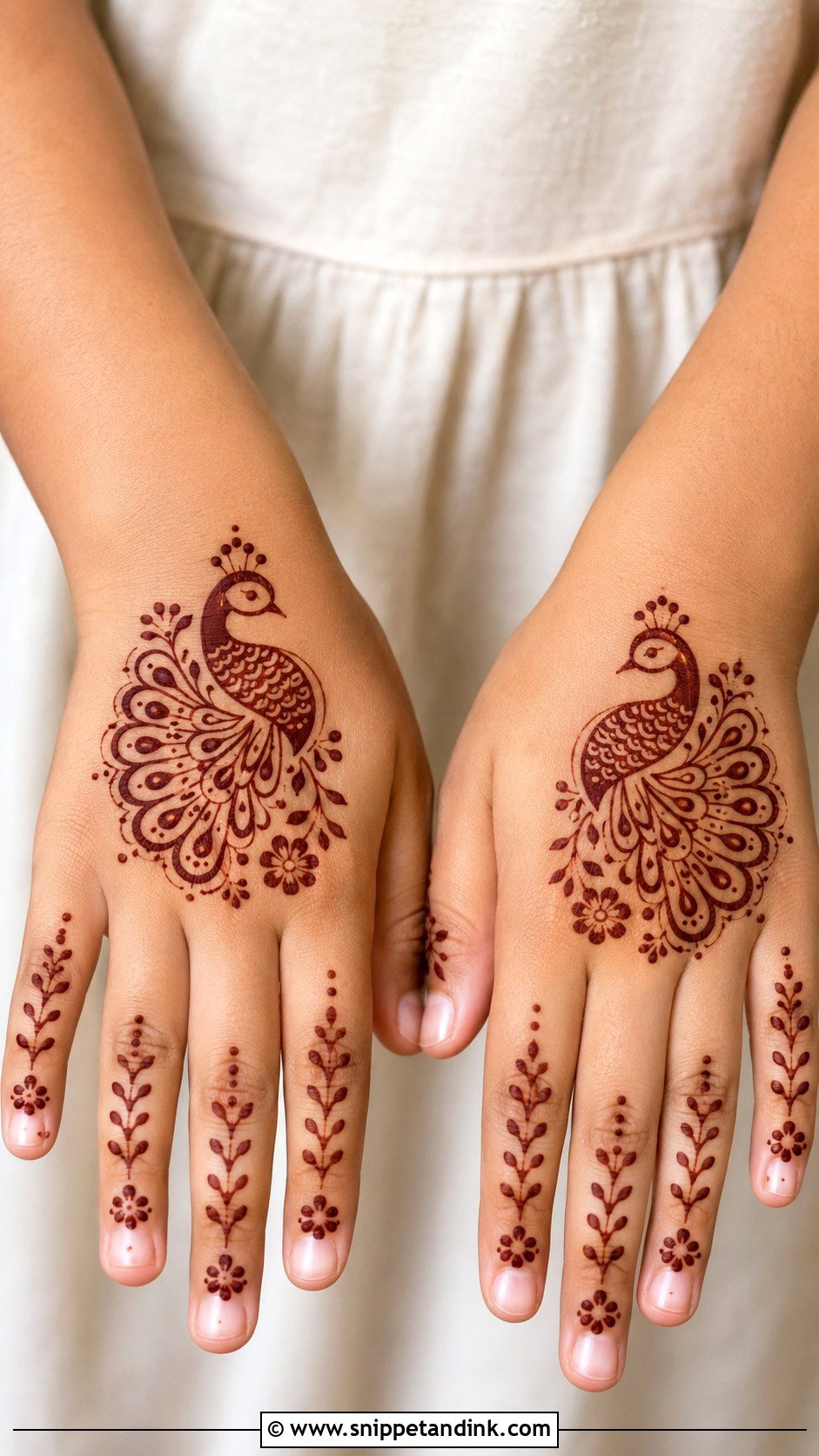
Peacocks are classic in mehndi, but the adult version with dozens of feather eyes won’t fit on a child’s hand. I simplify it to a curved neck, a rounded body and three or four feather lines, then add dots and small flowers around it. Fingers get leaf patterns or dotted bands. The clear outline matters most; heavy feather detail on a small canvas turns into a dark patch.
19. Elephant Mehndi Design For Kids
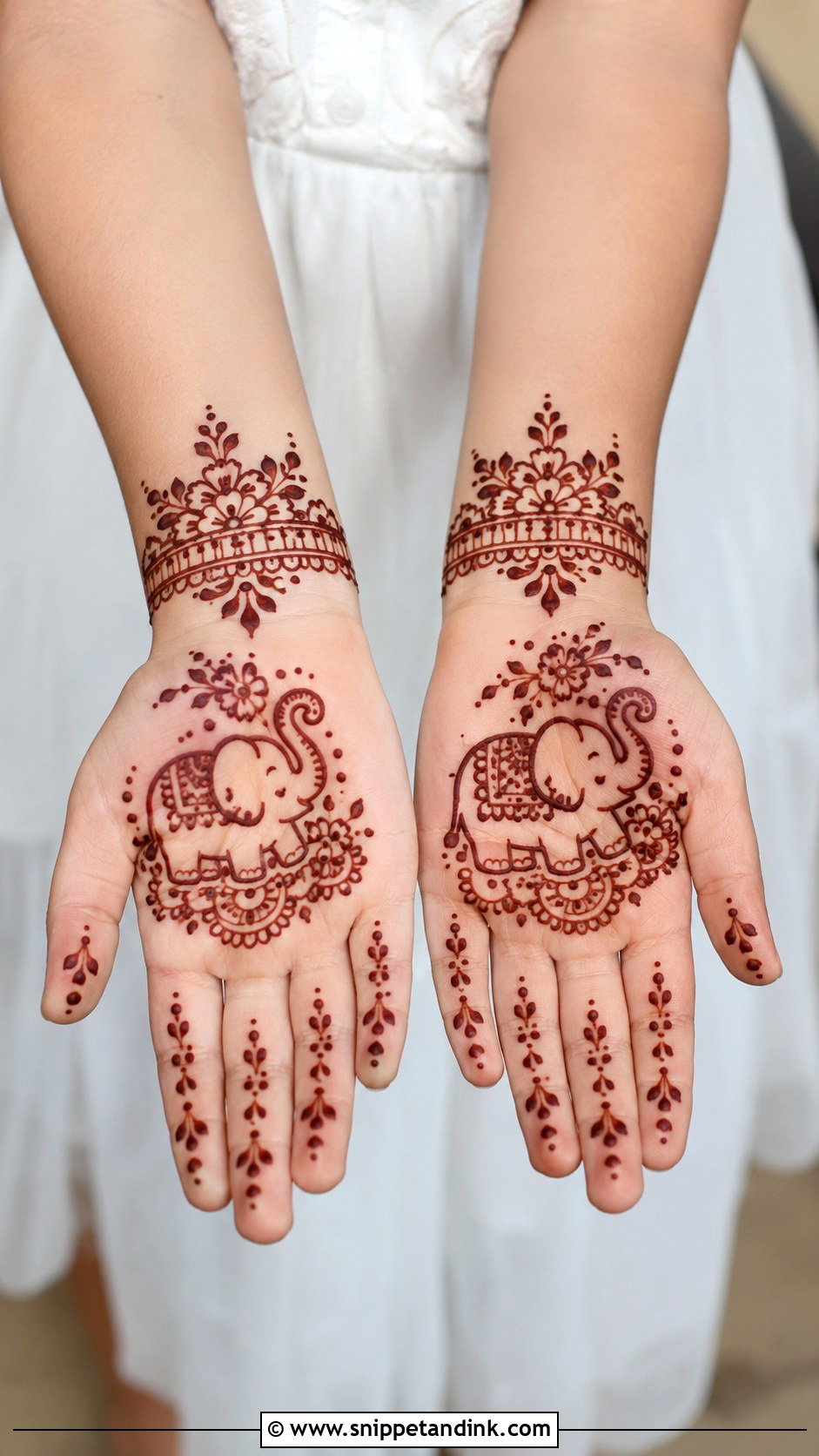
An elephant drawn cartoon-style, with a round body, small ear and curled trunk, is far easier for kids to recognize than a realistic one. I place it on the palm or back hand, add a few flowers, dots and a short border, and keep the fingers to tiny leaves. It feels joyful at weddings and traditional celebrations, and the bold shape stains cleanly.


20. Bunny Mehndi Design For Kids
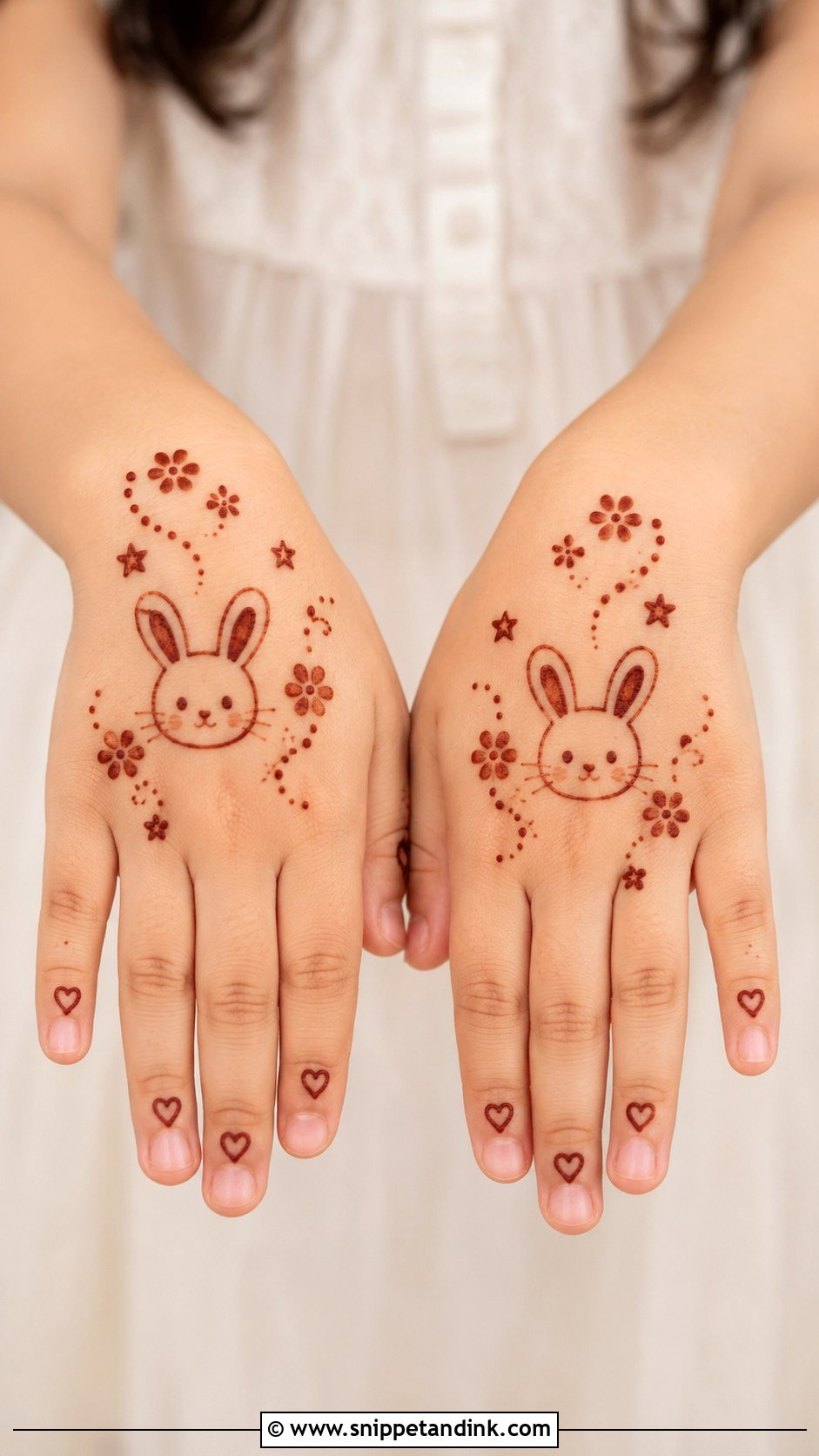
Younger children who love animals often ask for a bunny. A small face or full outline on the back hand, rounded ears, two eye dots and a smile, with little flowers or stars around it. I leave out whiskers and extra facial details because they blur together. Fingers get small dots or heart tips. It makes a nice change from the usual flowers at a birthday or family gathering.
21. Bird Mehndi Design For Kids
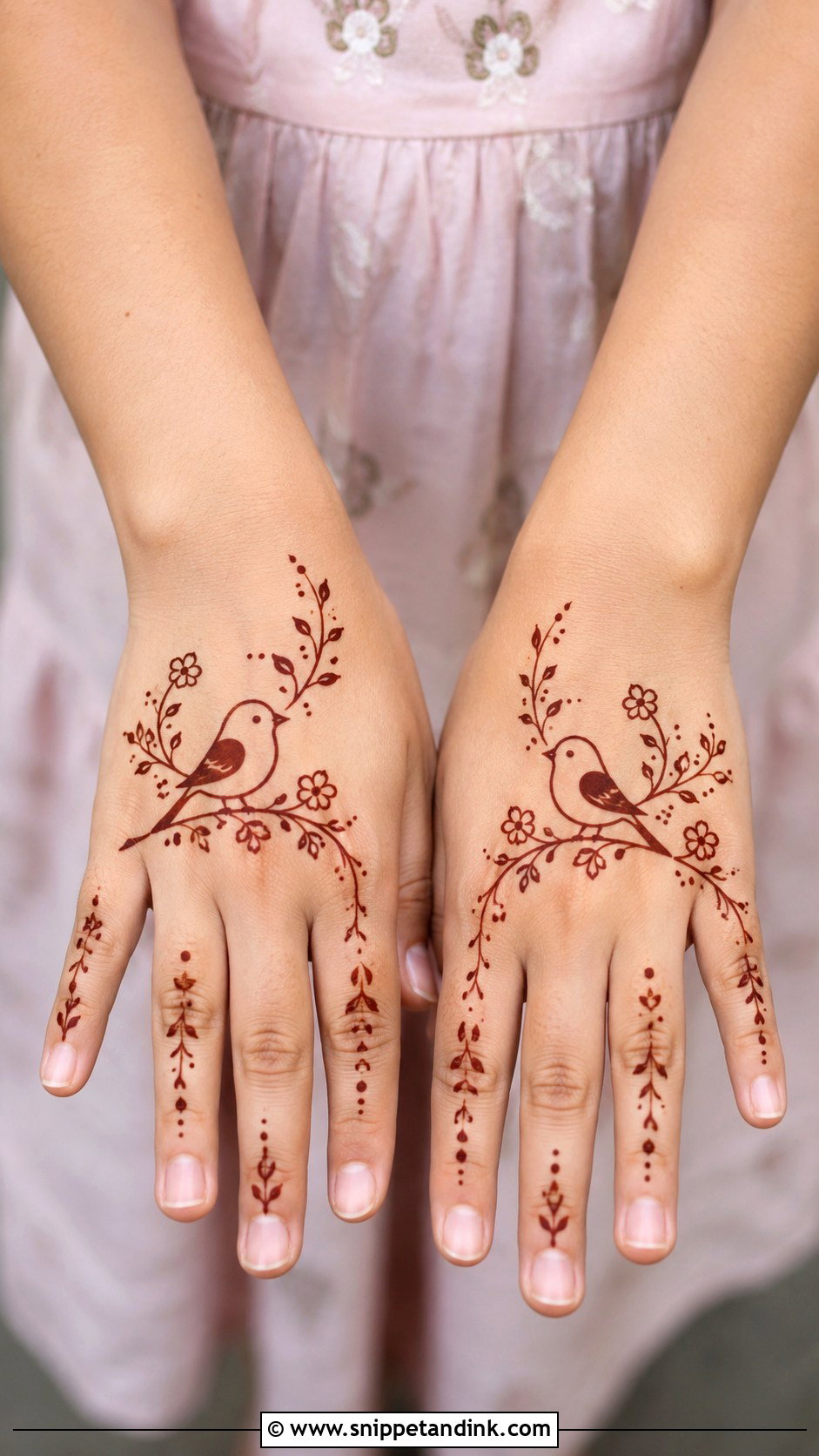
A single small bird on a leafy branch looks fresh and quick. I draw a rounded body, a tiny beak and one wing on the back hand, put the branch beneath it, then fill around with dots and mini flowers. If the child wants more, I add a second tiny bird near the wrist rather than making the first one more detailed. It suits spring events and festivals.
22. Unicorn Mehndi Design For Kids
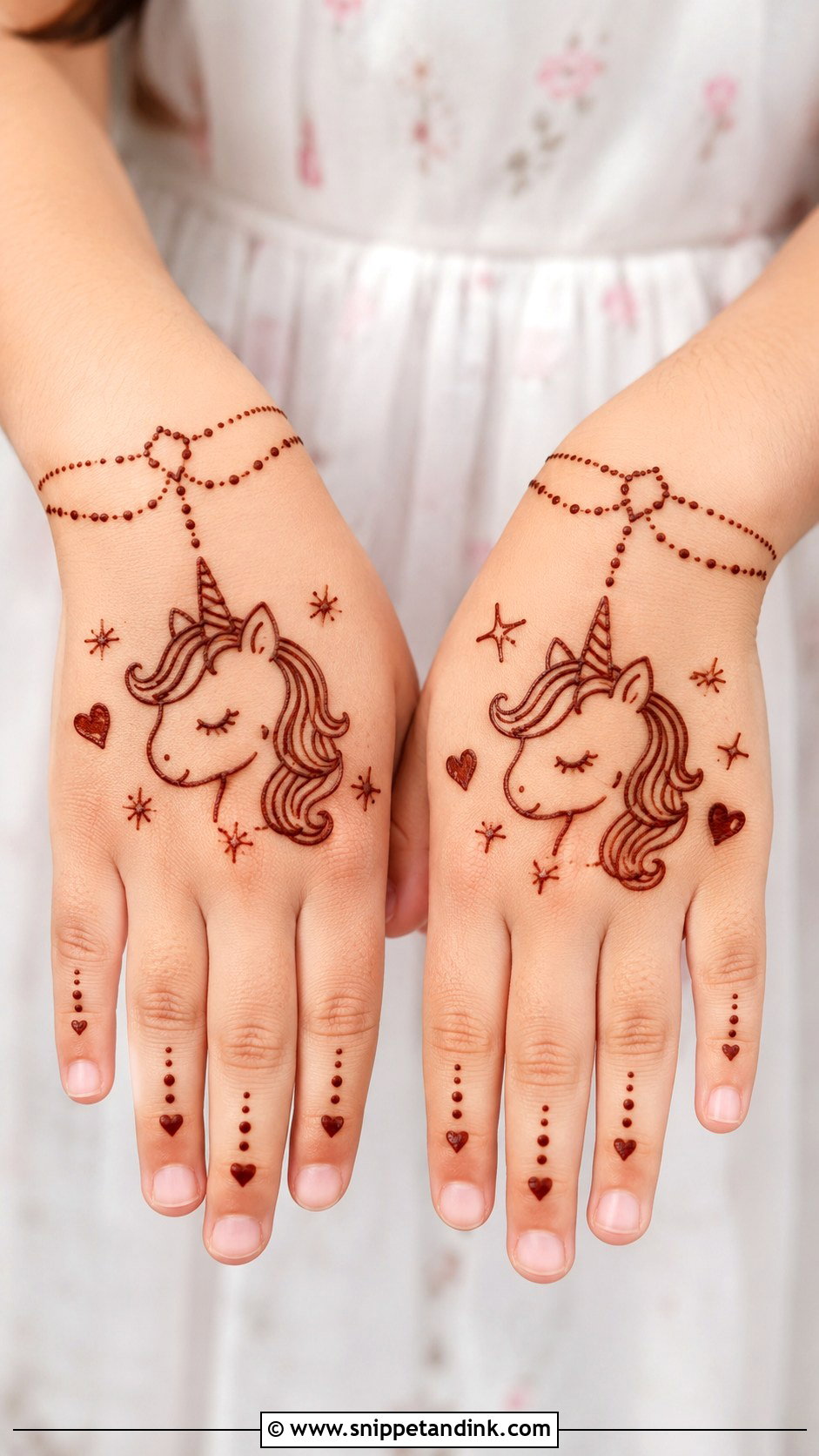
Unicorns are the most requested modern design I do for children. I keep it to a small face on the back hand or palm with a horn, a few mane lines and stars around it. Fine mane strands merge, so three or four bold ones are enough. A dotted wrist chain or small floral border makes it read as mehndi rather than a single drawing, and natural henna keeps it suitable for a festive day as well as a birthday.
23. Rainbow Mehndi Design For Kids
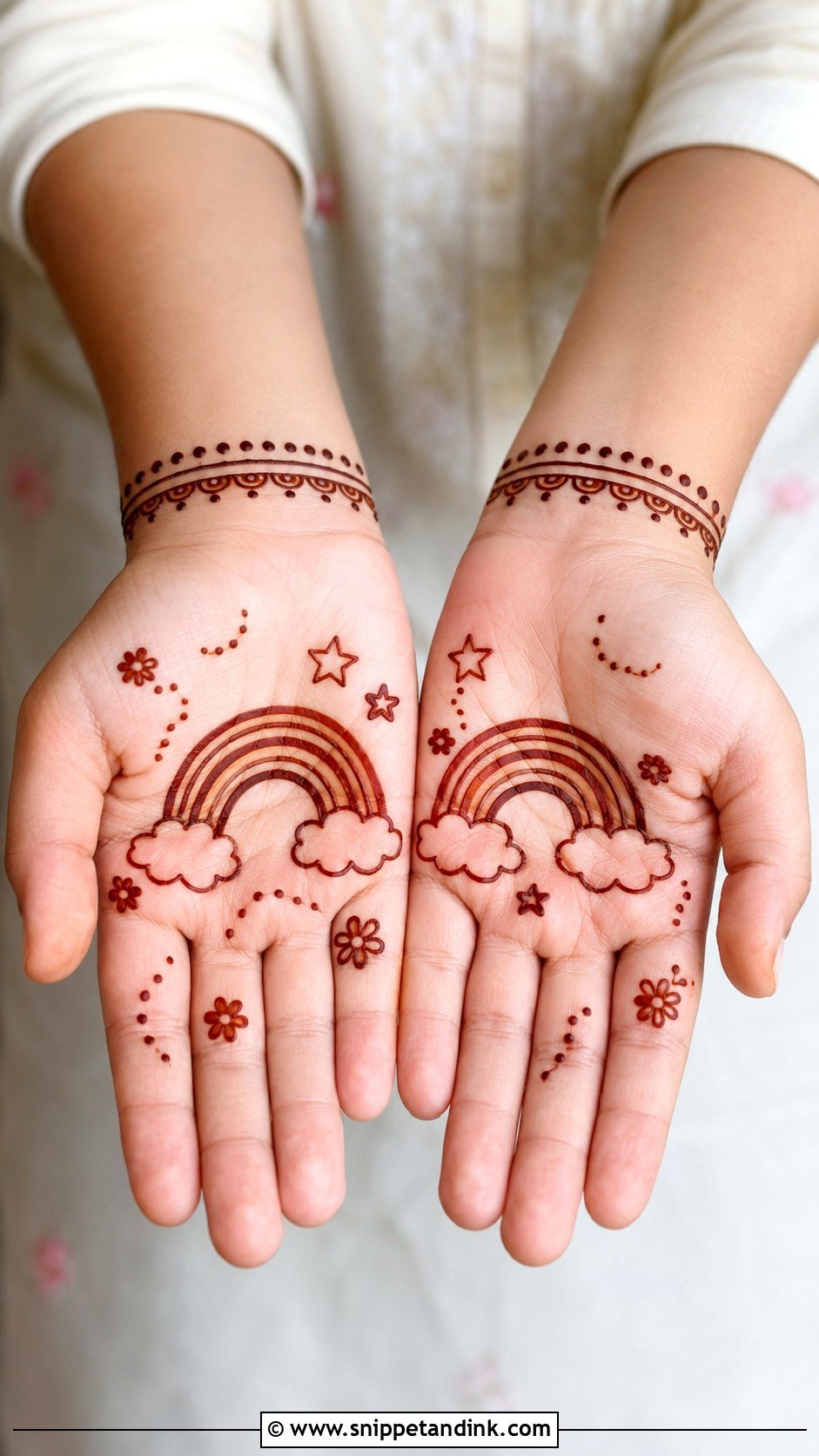
Henna only stains in one color, so a rainbow is drawn as curved bands. I pipe a small arch on the palm or back hand, then add clouds, stars or tiny flowers around it, keeping each band thick enough to stain clearly. I’d skip products sold as colored henna for children; they aren’t henna and the ingredients are often unclear. If a child wants real colors, cosmetic face paint over the dried stain is the safer route.
24. Name Mehndi Design For Kids
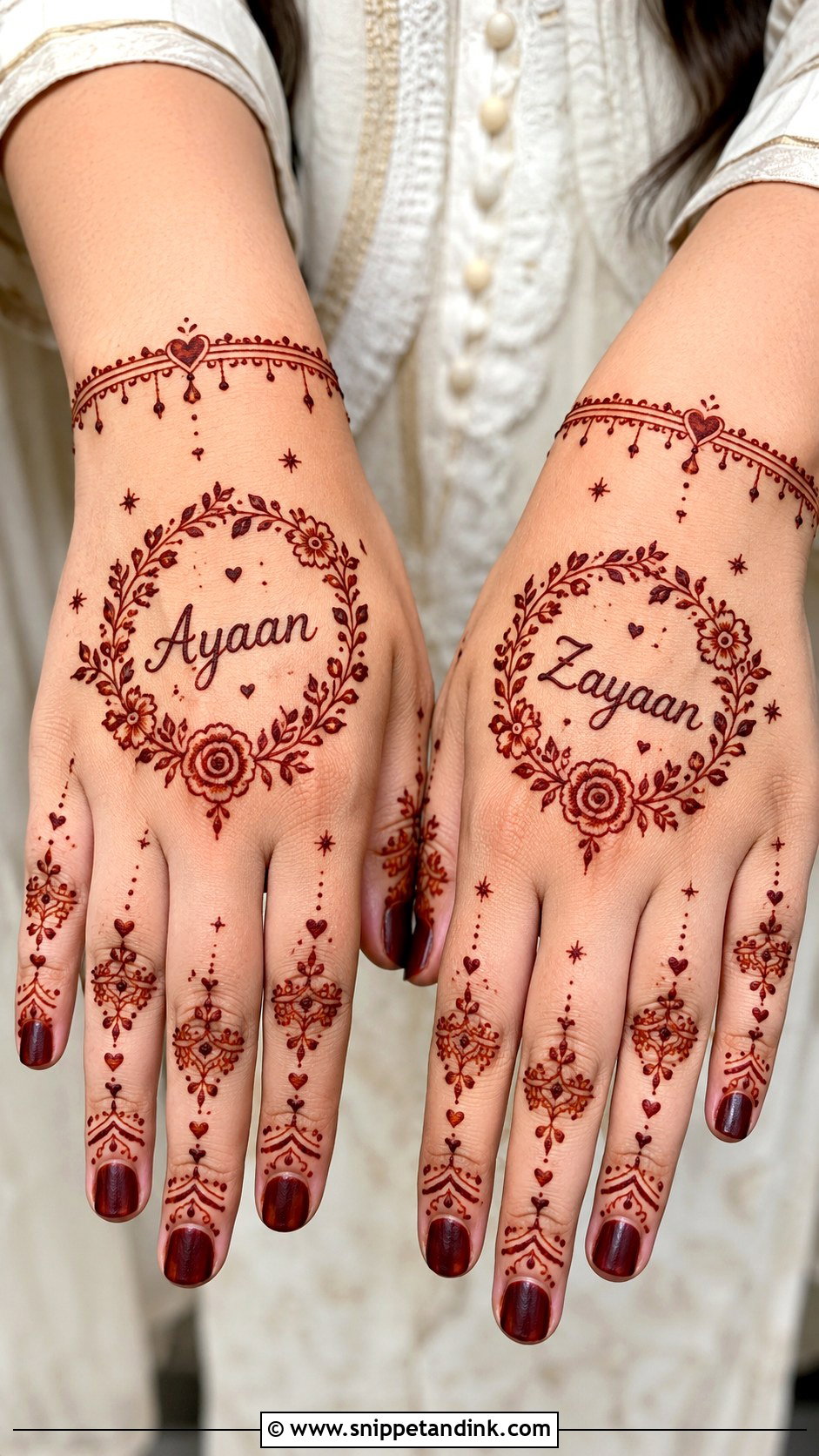
Names make a design personal, and children treat it like a gift. I write the name or first initial on the palm or back hand in large, rounded letters, then frame it with flowers, dots or stars. Letters smaller than a fingernail tend to fill in as the stain develops. Long names get squeezed and become unreadable, so for those I suggest initials instead. A small wrist line finishes it.
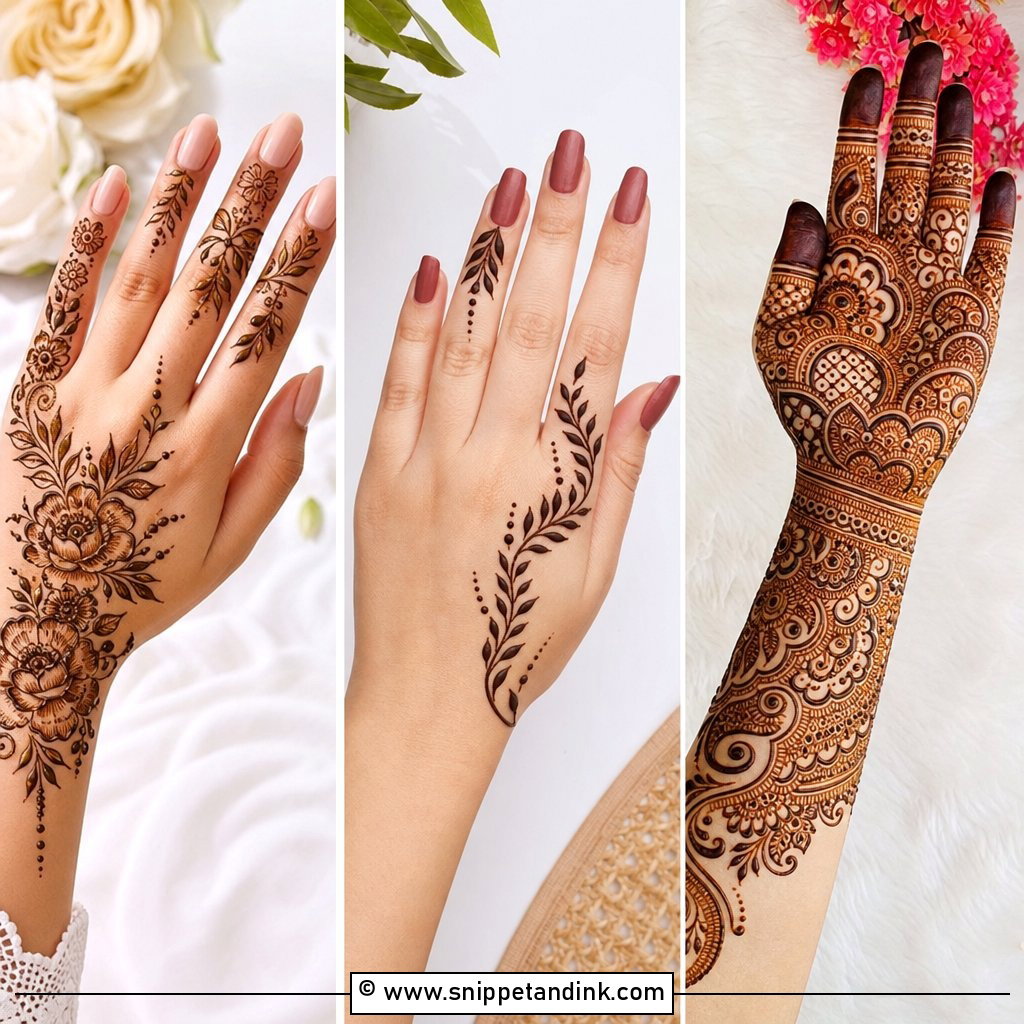

25. Initial Mehndi Design For Kids
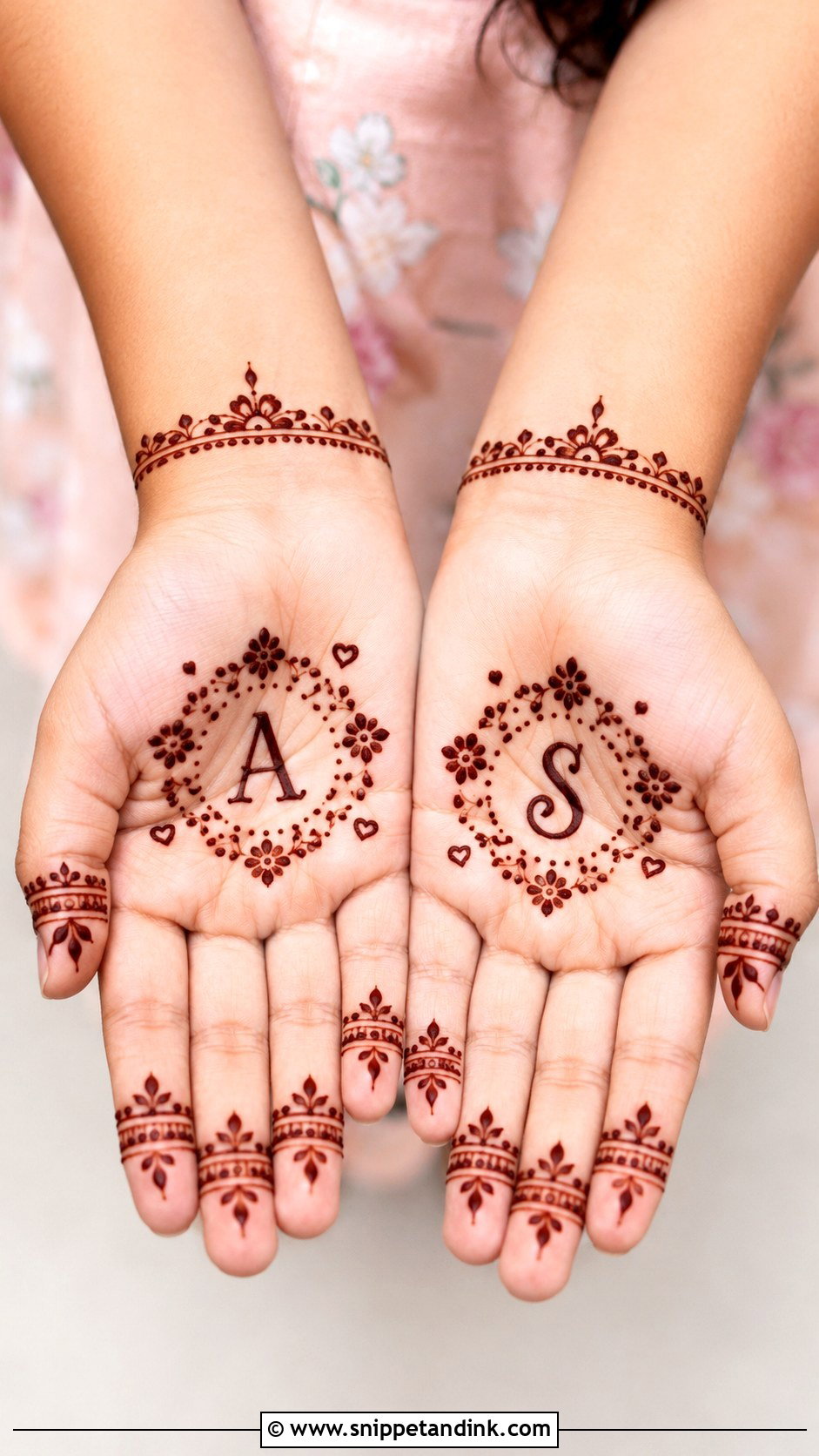
A single initial is the faster version of a name design. One bold, rounded letter goes in the center of the palm or back hand, surrounded by tiny flowers, stars or leaves. A dotted circle or small mandala frame around it gives a more traditional finish. It’s ideal when a child wants something just for them but won’t sit through lettering.
26. Full Hand Mehndi Design For Kids
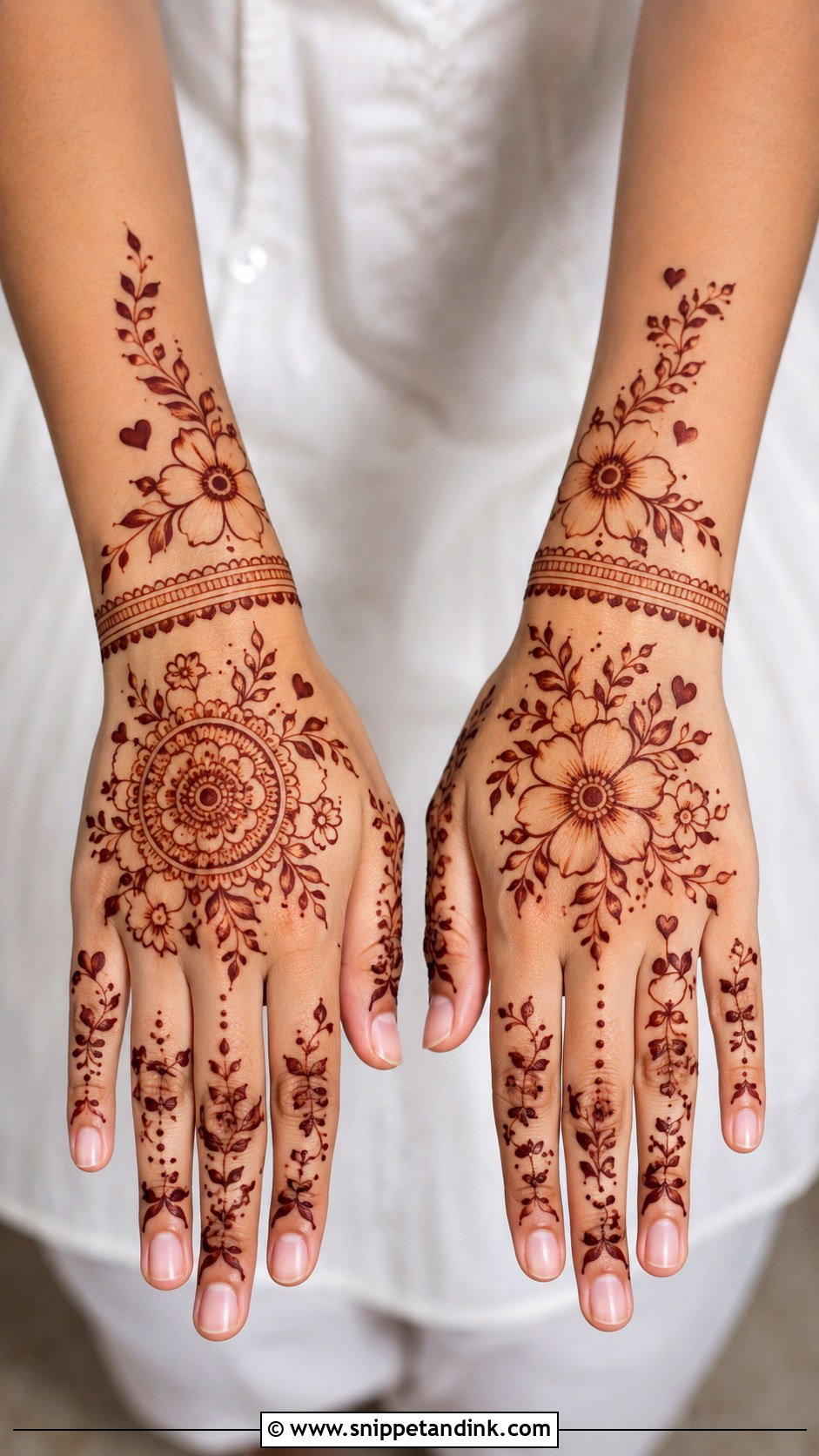
Full-hand coverage for children still needs to be light. I use larger motifs with open space between them: a center flower or mandala, leafy trails, dotted fingers and a wrist border, with a heart or butterfly for fun. Very fine lines and grids belong on adults. This one is for older kids who can sit patiently through a longer application and then keep their hands still while the paste dries.
27. Half Hand Mehndi Design For Kids
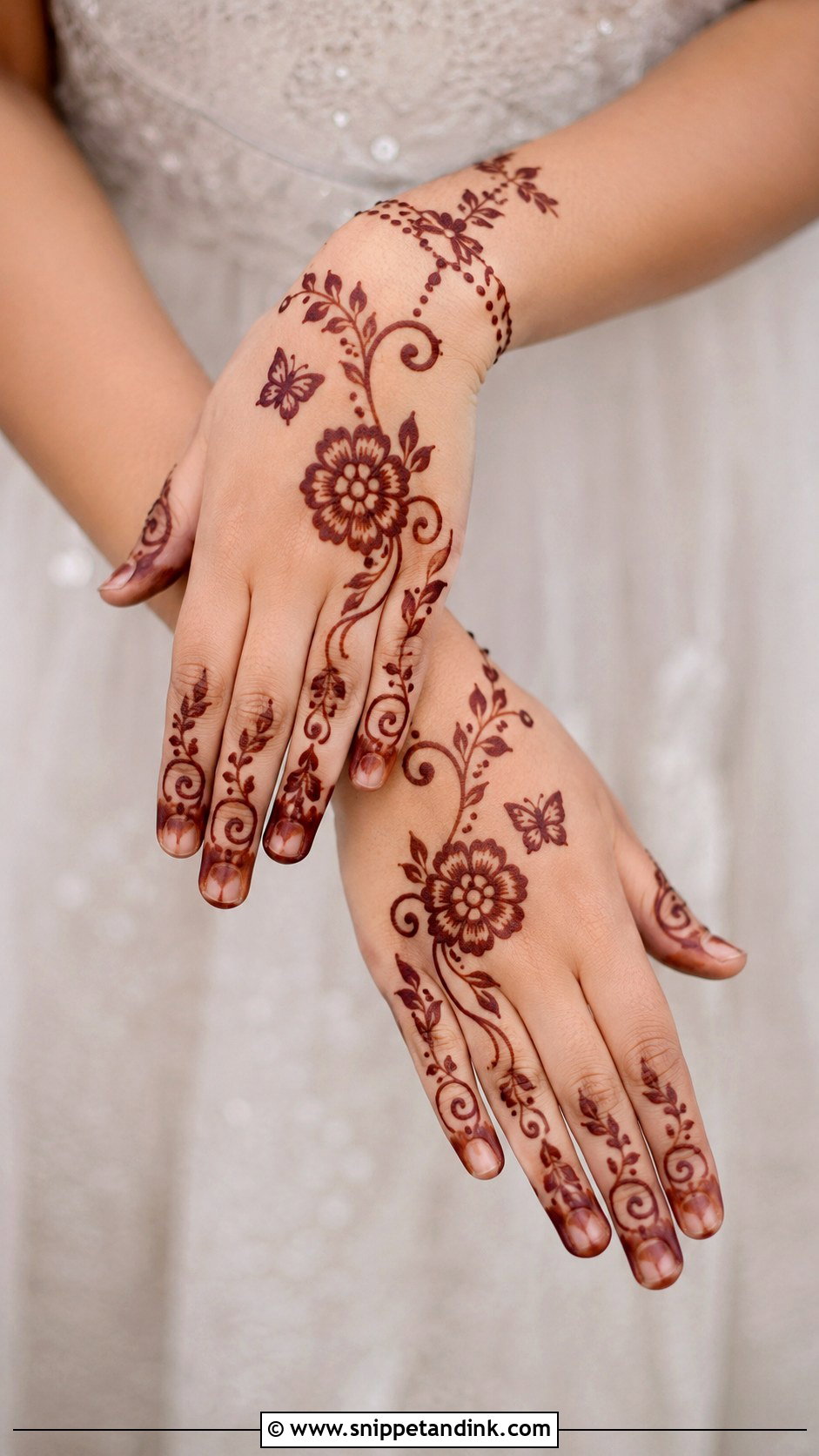
When a child is restless, half-hand is the smart compromise. I cover only part of the palm or back hand with a flower, butterfly or short Arabic trail and leave open space near the fingers or wrist. It dries faster than full coverage but still looks festive. Finger dots or leafy bands connect it, and it’s light enough for school celebrations.
28. Eid Mehndi Design For Kids
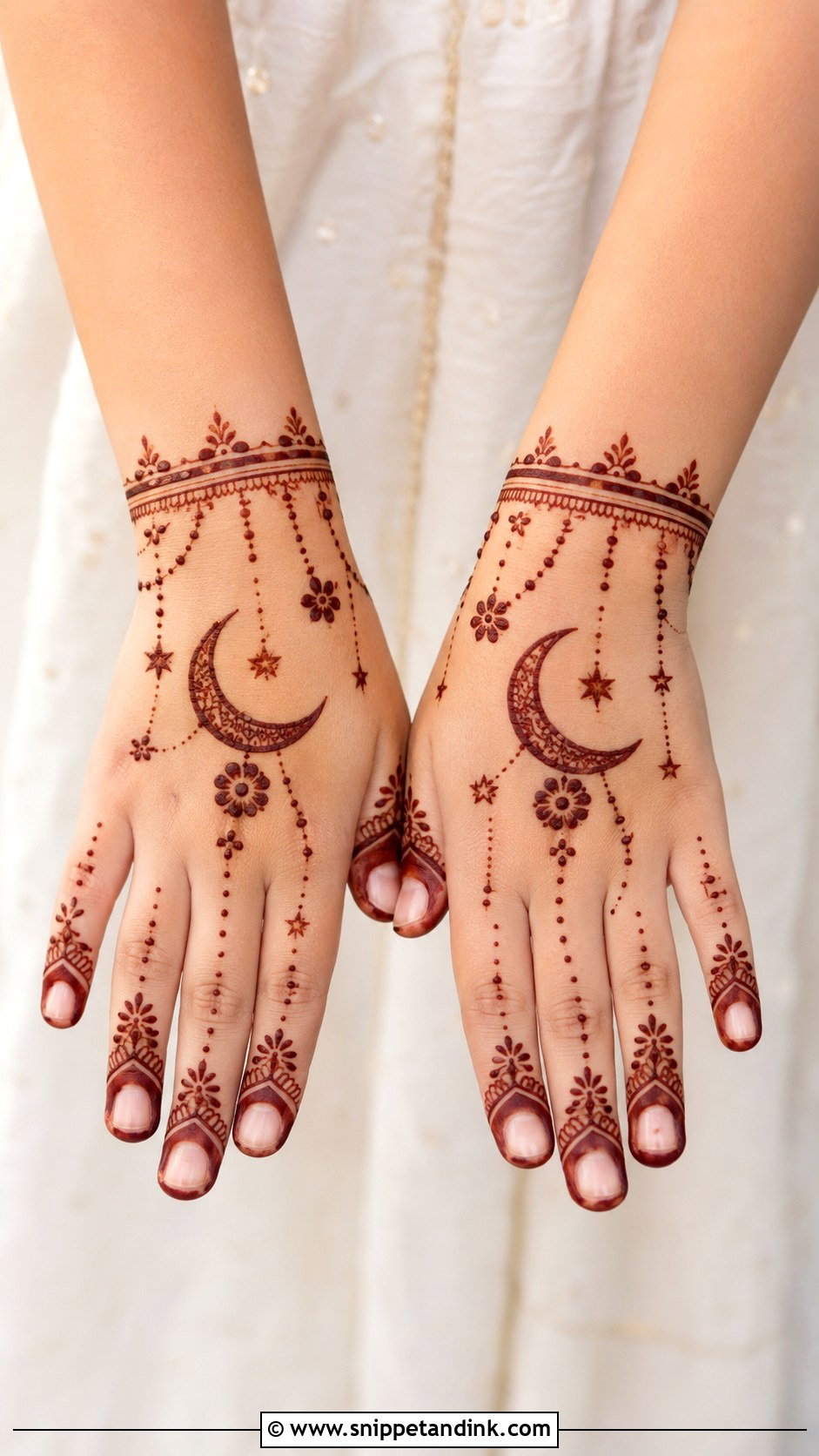
Eid mehndi is traditionally applied on Chand Raat, the night before, so the stain has time to darken by morning. For children I keep it neat and quick: a crescent moon on the back hand, stars around it and a simple band at the wrist, with dots or half-moon tips on the fingers. Natural henna gives a reddish-brown stain that’s ready to show off to cousins the next day.
29. Diwali Mehndi Design For Kids
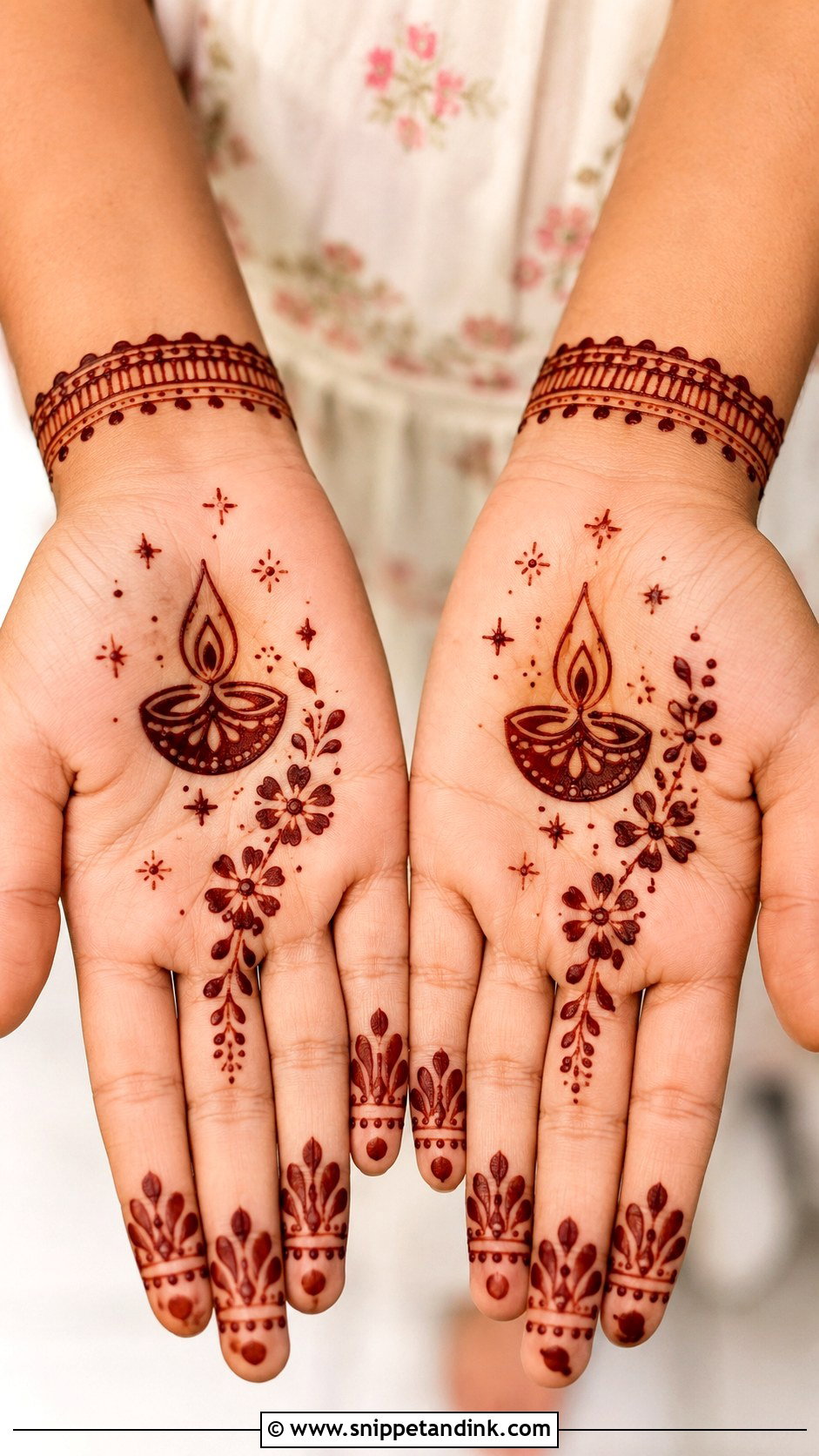
A tiny diya with a bold flame and a simple base is the motif children ask for most at Diwali. I place it on the palm or back hand, add a short flower trail and dotted sparkle shapes around it, and keep the fingers to petal tips. The flame is where small details crowd, so I keep it to a single teardrop. A small wrist border finishes it alongside traditional outfits.
30. Wedding Mehndi Design For Kids
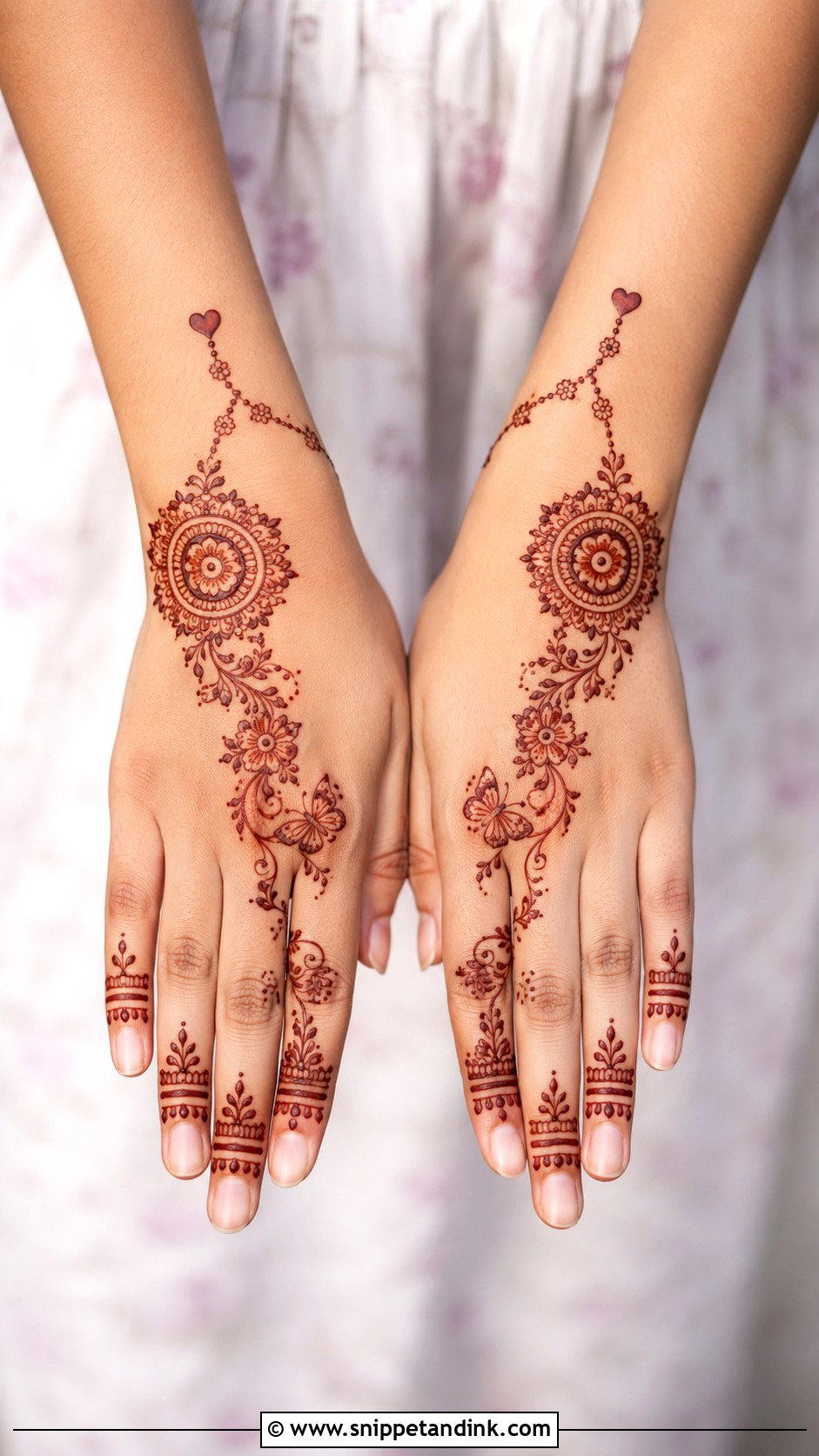
At a wedding mehndi night, children want to feel part of the bride’s celebration without sitting for as long as she does. I combine a small mandala, a few flowers, dotted chains and a bracelet detail, mostly on the back of the hand, where it dries more comfortably. For older kids I extend it slightly toward the wrist; for younger ones I keep it short and open. A tiny heart or butterfly makes it theirs.
Getting a Wriggly Child Through the Drying Time
The design is the easy part. Keeping a small hand still while the paste sets is where most children’s mehndi gets smudged. I plan the session around the child, not the design.
- Feed them and take a bathroom break first, because once the paste is on, both hands are out of action.
- Do one hand at a time, starting with the back of the hand so the palm stays free.
- Put a show on a screen at eye level so they’re not tempted to wave their hands around.
- Dab a little lemon and sugar mix over the dried paste so it stays put on the skin a bit longer.
- Once it feels dry and crusty, wrap it loosely with tissue and medical tape if it’s bedtime.
Scrape It Off, Keep Water Away, Let It Darken
Children rarely keep paste on for hours, and they don’t need to. An hour or so gives a decent stain on small hands, and overnight under a loose wrap gives a deeper one if they’ll sleep with it. When it’s time, scrape the dried paste off with a blunt butter knife or fingernail instead of washing it, then keep the hands away from water for the next several hours. The stain starts bright orange and darkens over the following day or two, which is why I apply mehndi a day or two before the event.
Small Motifs, Real Henna, and a Child Who Asked for It
Every design here works because it keeps to simple shapes on natural henna. Tiny motifs with open spacing suit toddlers, while older children can handle Arabic trails, half-hand patterns or a light full hand. Let the child pick the motif, keep the session short, and use only fresh, natural henna from someone who can tell you exactly what’s in it. A happy child with a clear orange stain that deepens overnight is the result you’re after.
You'll Like These Ideas:





Leave a Reply