
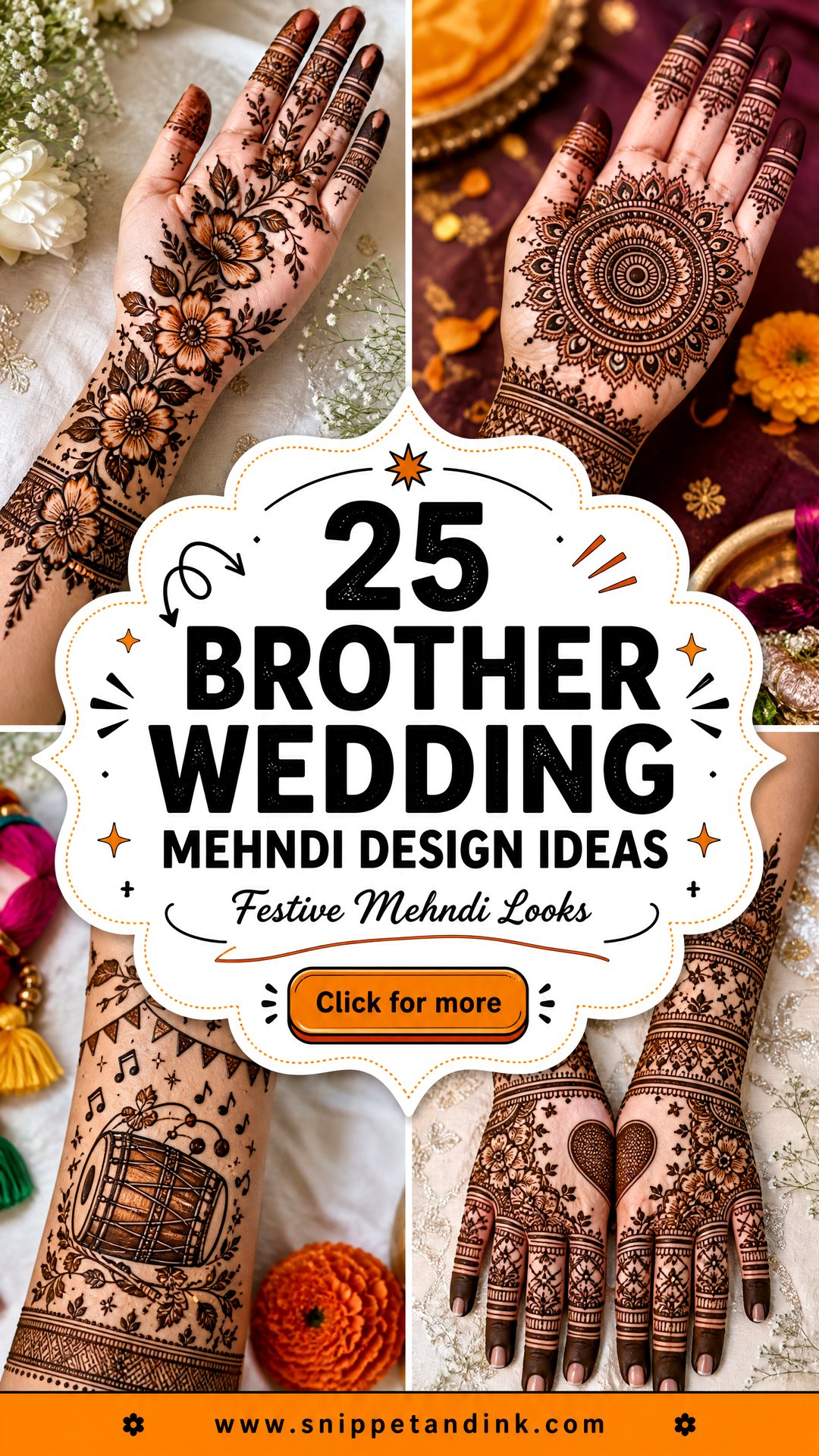
When the groom’s sister sits down in front of me, the first thing we settle is how far her design should go, because at a brother’s wedding the aim is festive without crowding the bride. Most of what I draw for sisters and cousins sits between simple guest henna and full bridal coverage: back-hand trails, half-hand florals, Indo-Arabic palms, bracelet layouts, mandalas, jaali, and sometimes a personal touch like an initial, a dhol or a kalash. Below are the designs I’d suggest for the mehndi, sangeet, haldi and wedding day, with notes on coverage, sitting time and how each one stains.
How Much Lighter Than the Bride Should a Sister Go?
There’s no written rule, but most families expect the bride’s mehndi to be the heaviest and longest. In practice I keep a sister’s design at least one step below in two ways: where it stops on the arm and how densely it’s filled. If the bride goes to the elbow, the sister stops at mid-forearm or the wrist. If the bride has dense filler, the sister’s design keeps more open skin.
The easiest way to avoid awkwardness is to ask the bride. Some love a matching motif on their sisters-in-law; others want certain elements, such as the dulha-dulhan figures or the groom’s name, kept for themselves. A quick message before the artist arrives saves a lot of second-guessing in the chair.
1. Brother Wedding Full Hand Mehndi Design
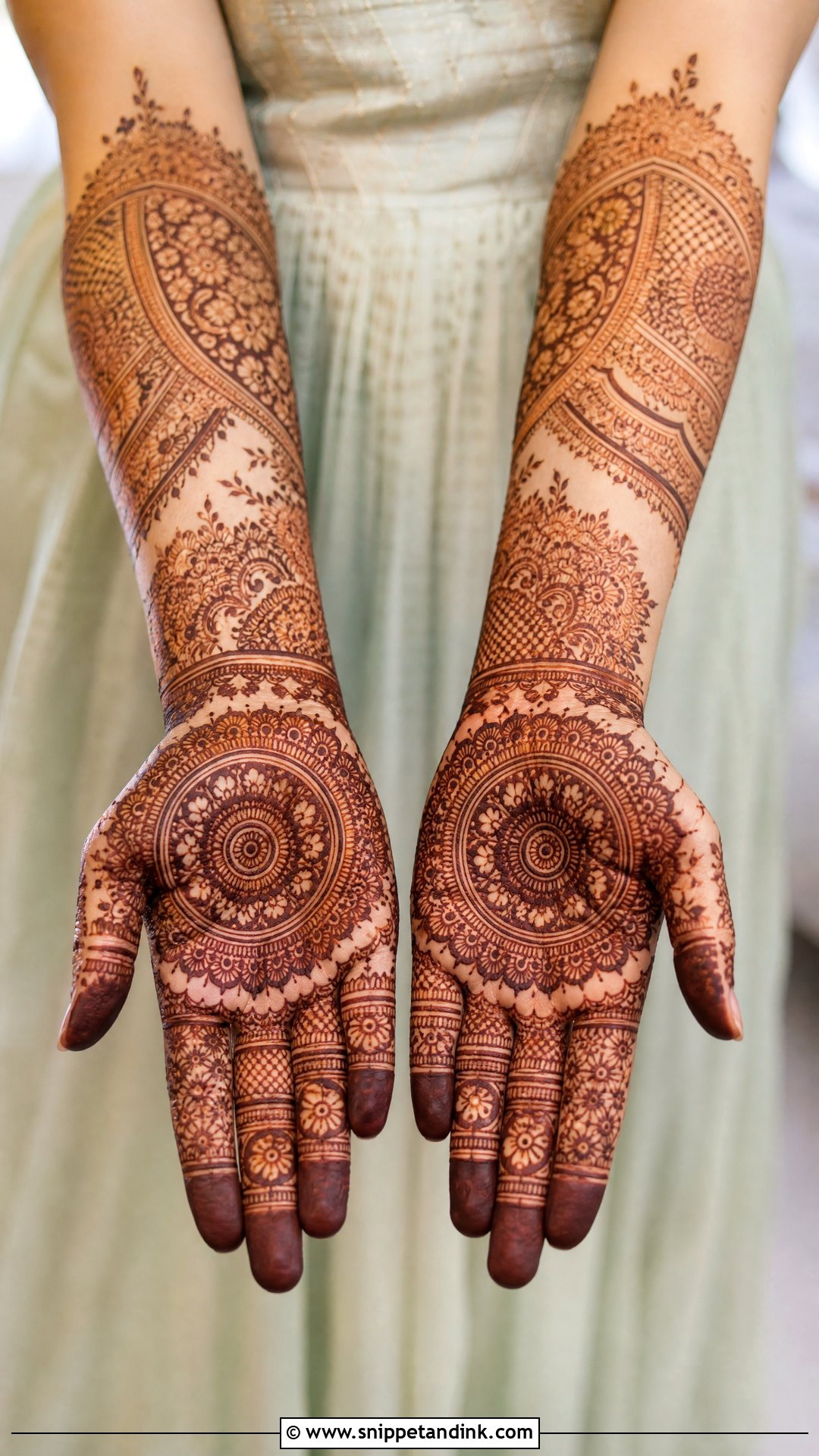
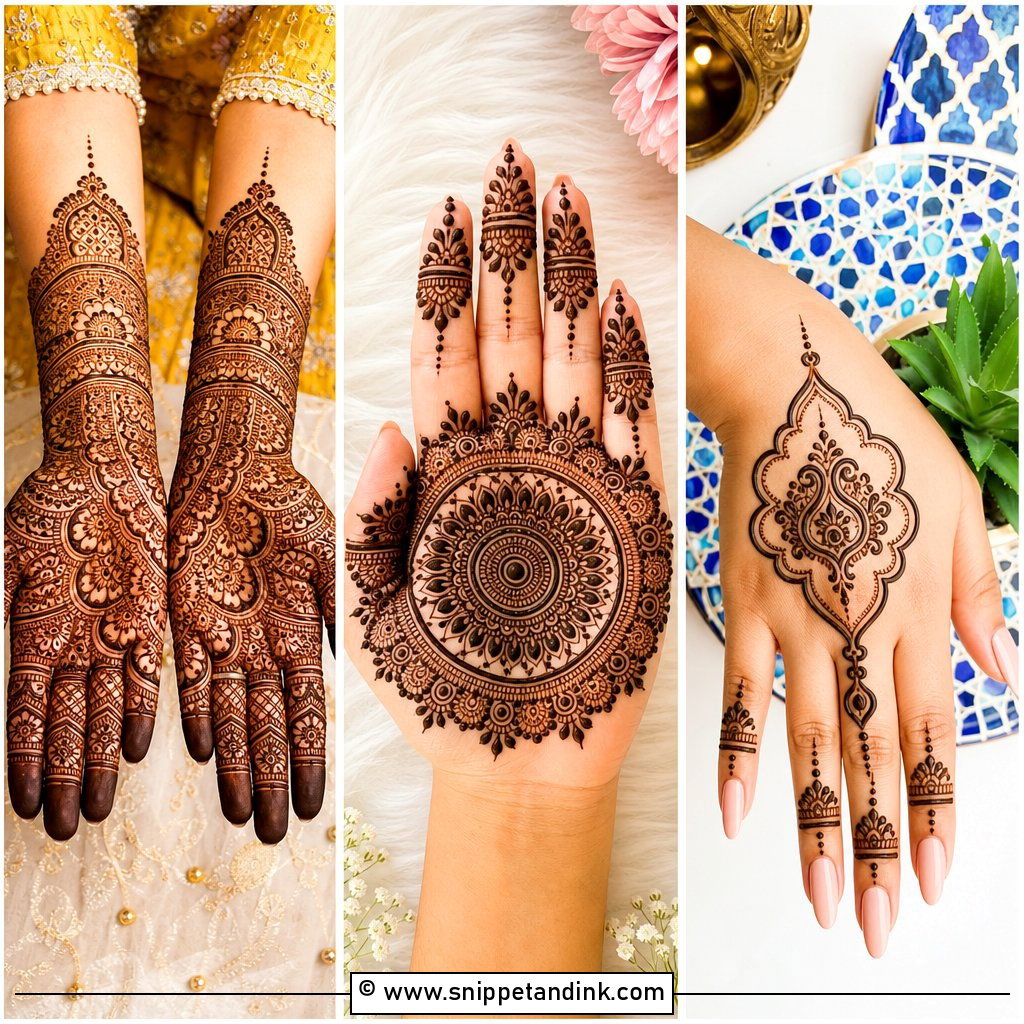
Full hand coverage for a sibling means palm, fingers, wrist and lower forearm, but with more breathing room than a bride gets. I usually build it around a center mandala with paisleys, floral vines and fine filler, then a bracelet-style band and leafy trails on the back. The spacing is what separates it from bridal work. Packed filler stains into a dark blur from a distance, so I leave small gaps between motifs to keep it readable in family photos.
2. Brother Wedding Back Hand Mehndi Design
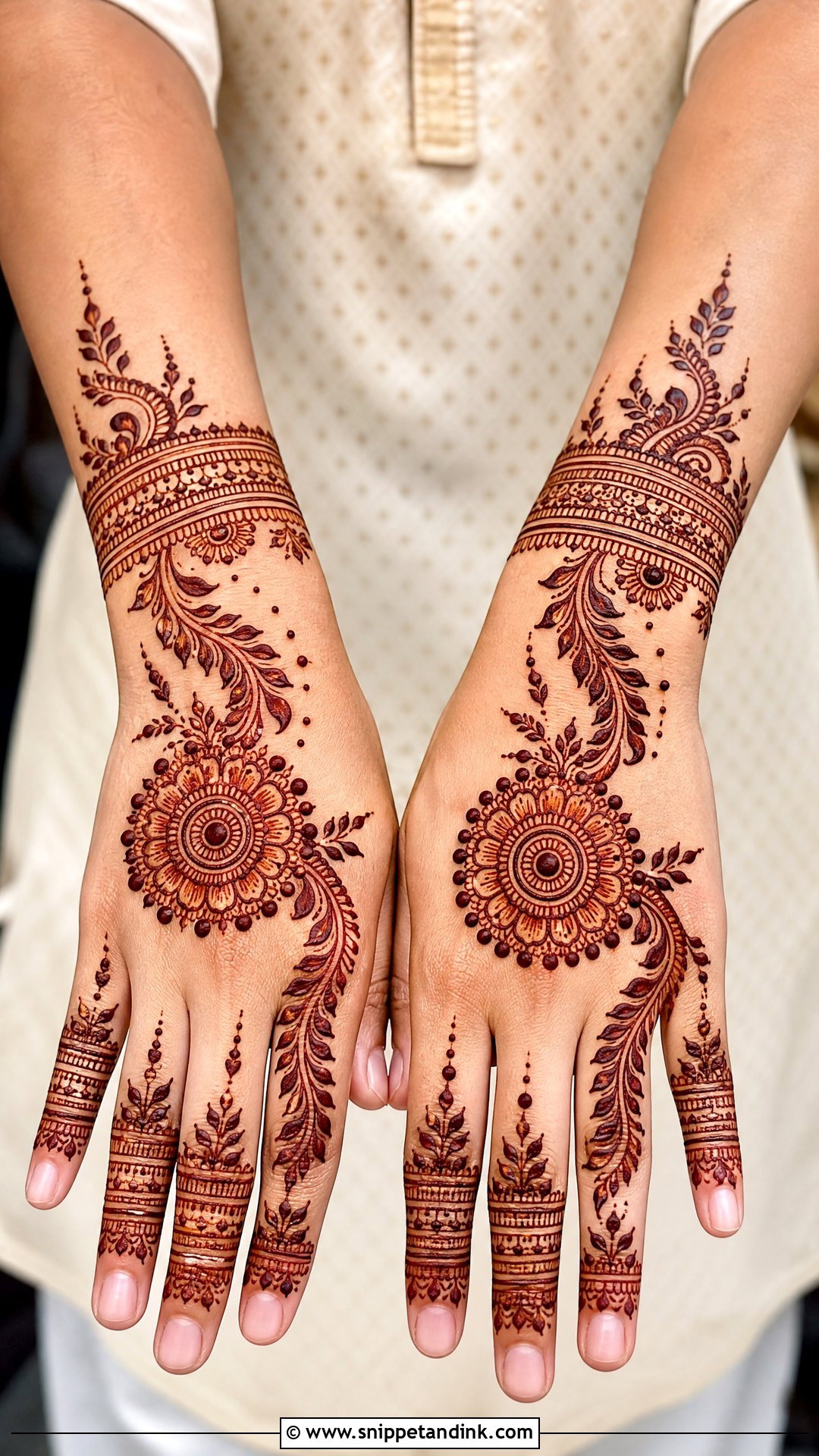
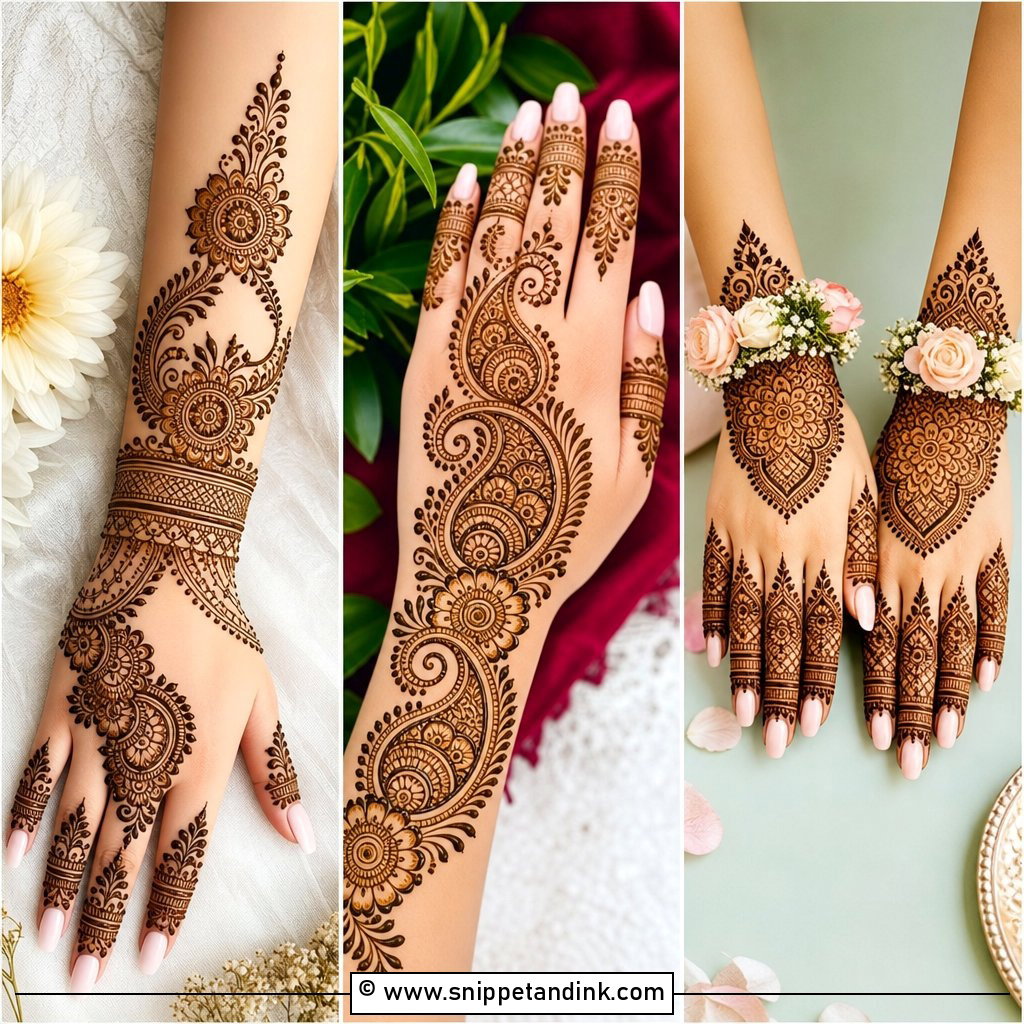
If you’ll be holding a clutch, fixing someone’s jewelry or dancing at the sangeet, the back of the hand is what everyone sees. Back hand mehndi gives you a finished look there: a floral mandala near the center flowing into paisley vines, neat finger caps, leafy borders and a wrist cuff. Heavy sleeves and stacked bangles cover the forearm anyway, so decorating the visible part is time well spent. Expect the back-hand stain to come up a shade lighter than the palm; that’s normal skin, not bad paste.
3. Brother Wedding Front Hand Mehndi Design
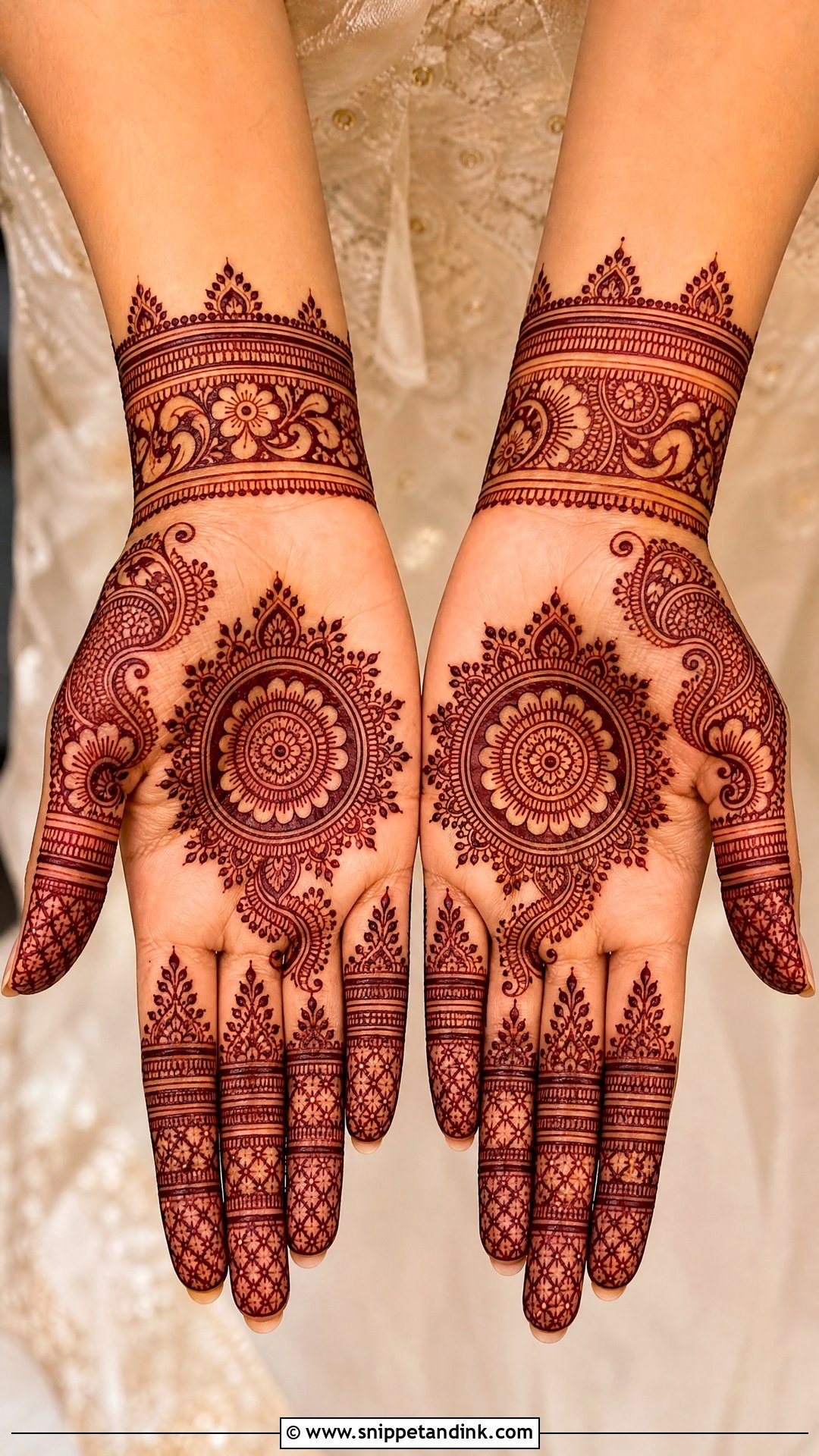
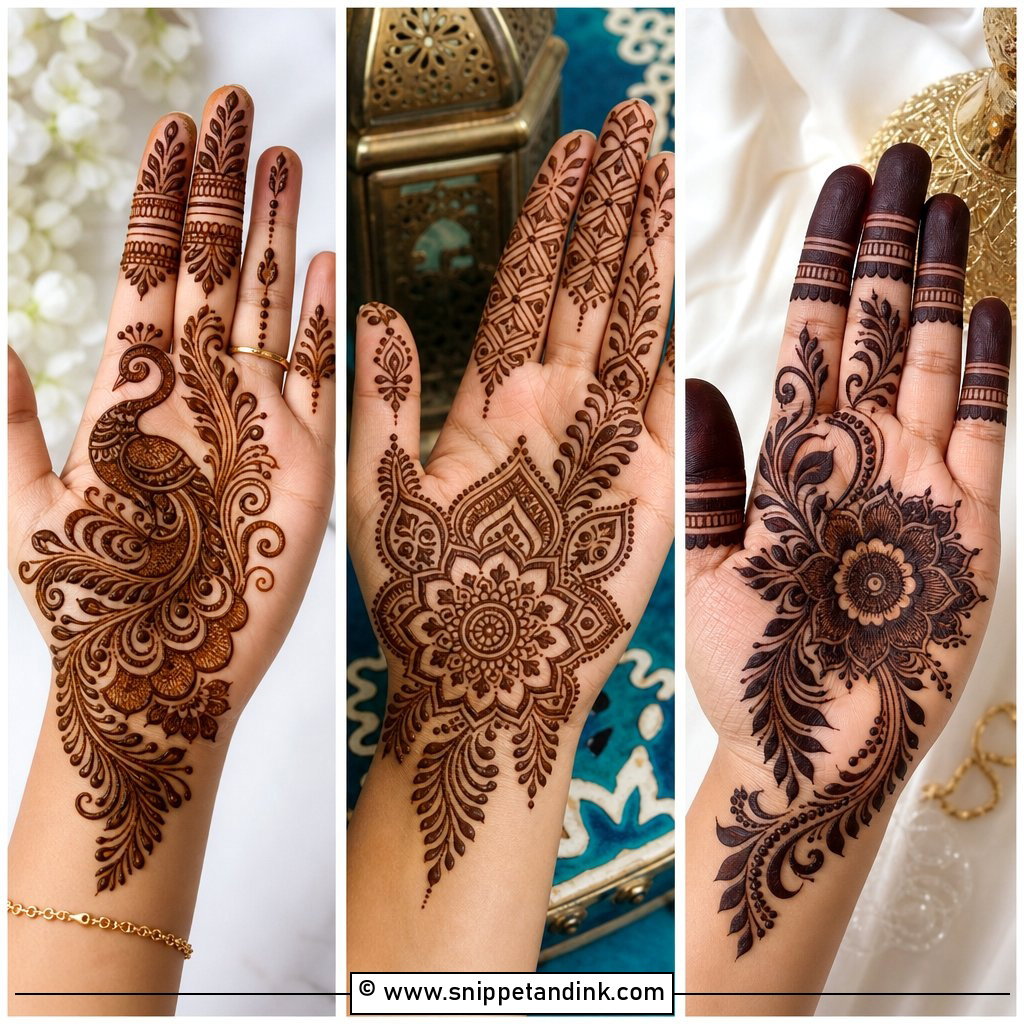
Front hand designs feel the most traditional because the palm is the main focus. I balance a round center mandala with small side paisleys and detailed fingers, then tie it to the wrist with a cuff or bracelet chain. During rituals and gift-giving your palms are open toward the camera, so this is the side to invest in. Palms take the darkest stain of anywhere on the body, which means fine filler can merge; I keep lines slightly more open on the palm than on the back.
4. Brother Wedding Arabic Mehndi Design
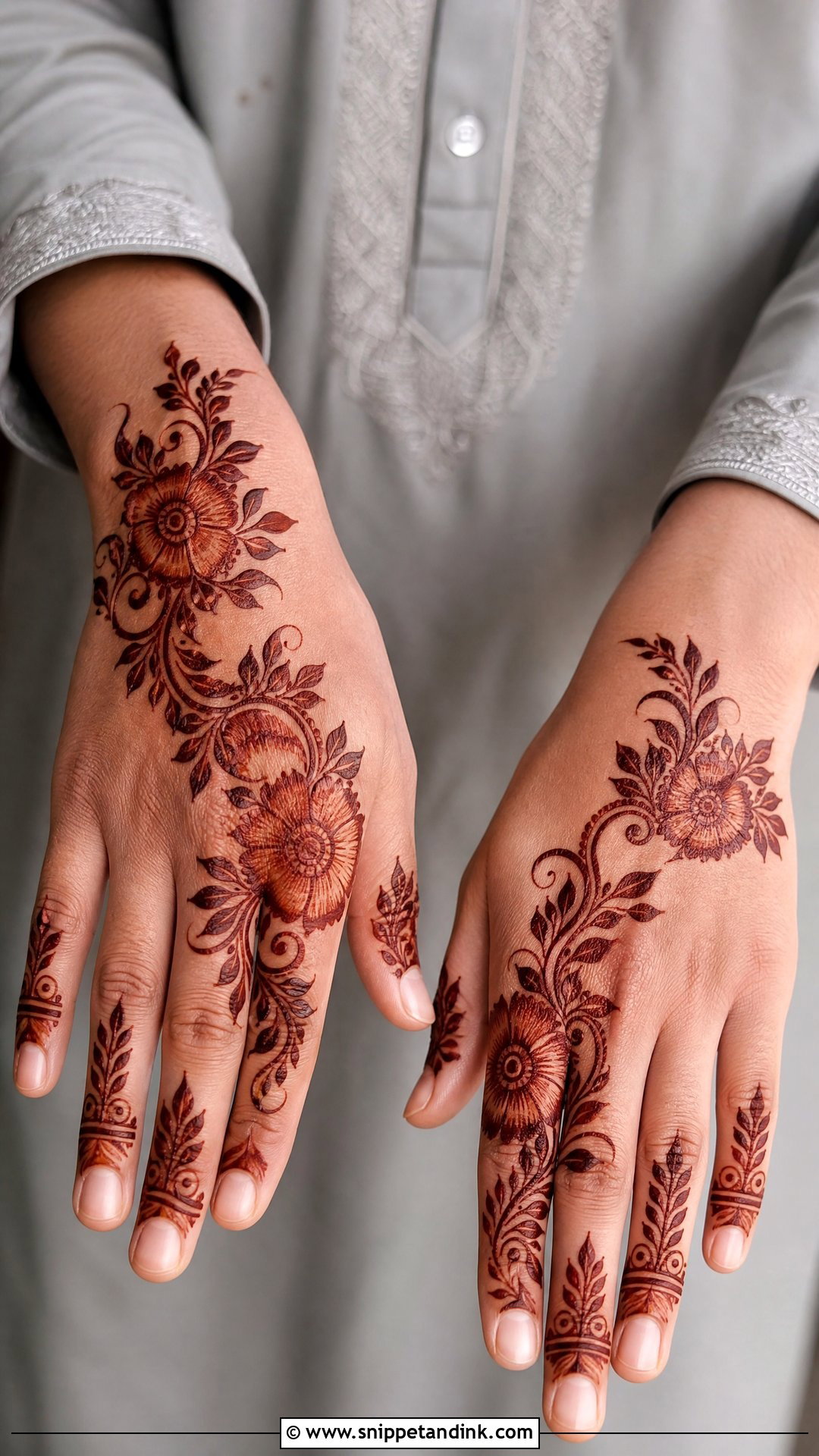
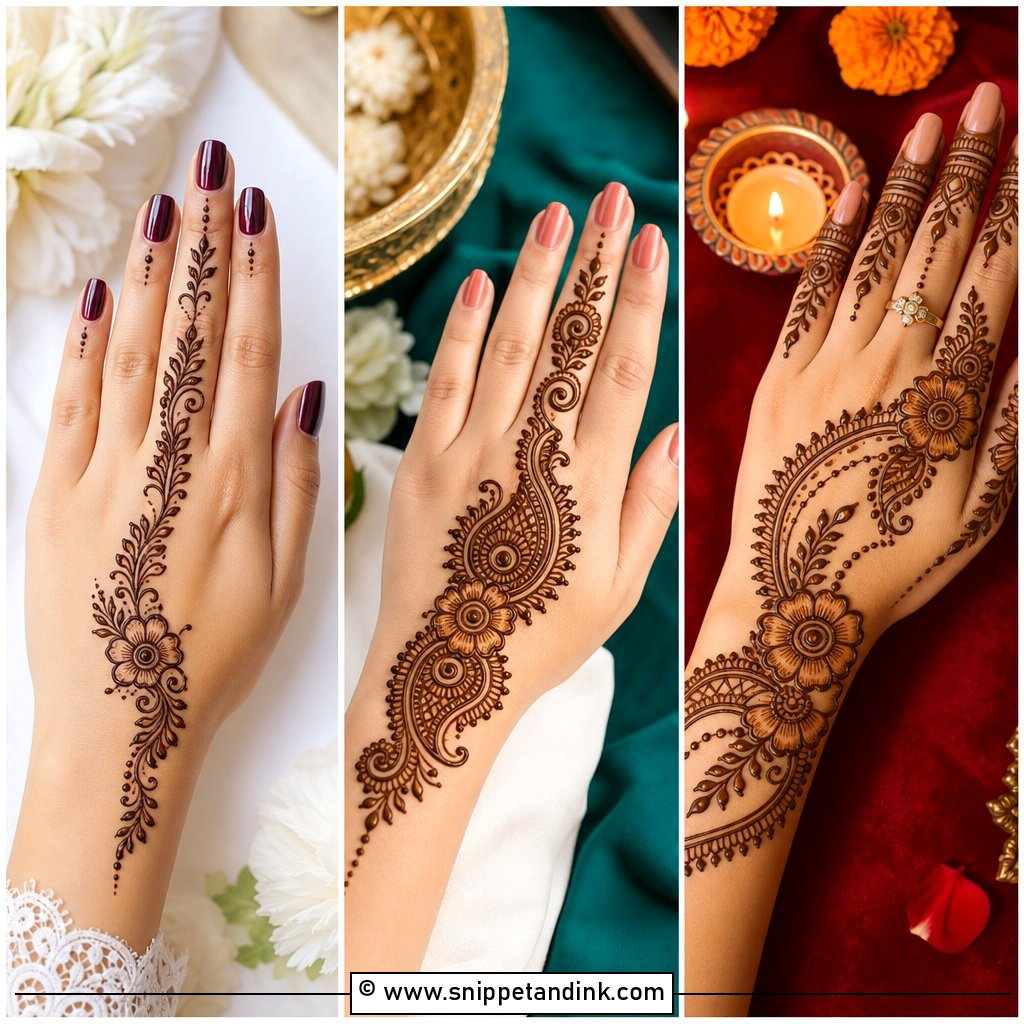
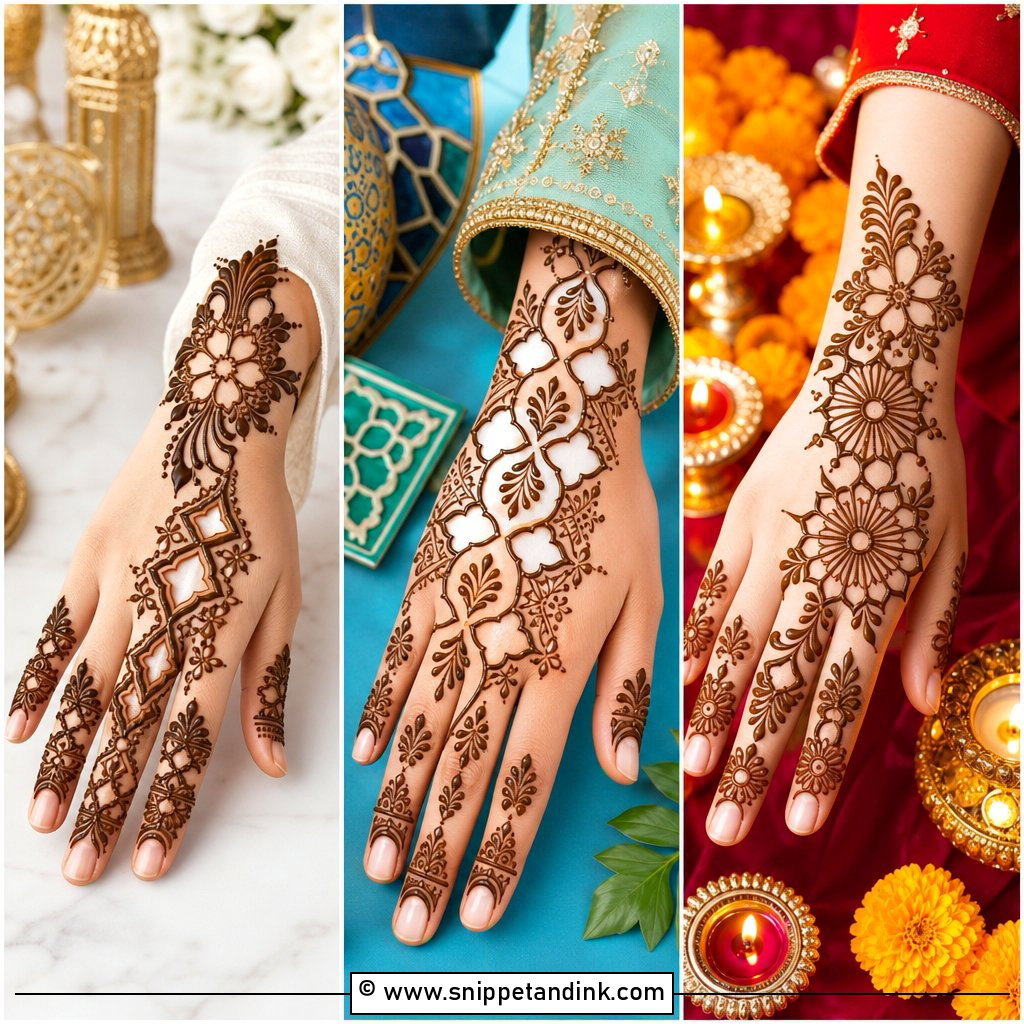
Arabic style suits sisters who want impact without hours in the chair. The design flows diagonally from wrist to index finger in big flowers, leafy vines and swirls, with plenty of bare skin left between them. Those open spaces are the point, so resist asking your artist to fill them in. It’s one of the quickest styles to apply and pairs well with cape lehengas, gowns and pastel suits. Bold outlines need a thicker cone tip, so the paste sits proud and stains deep.
5. Brother Wedding Indo Arabic Mehndi Design
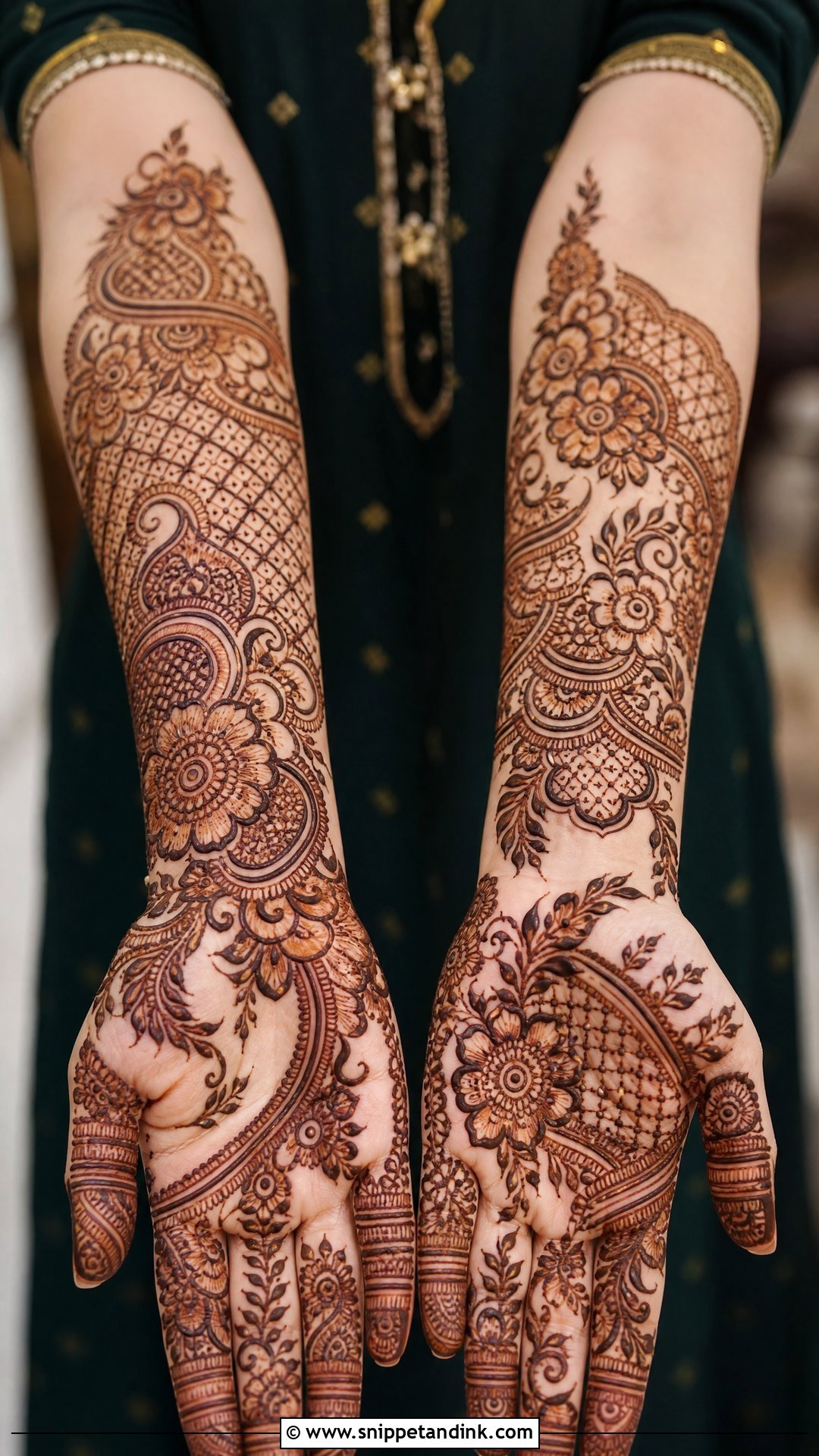
Indo-Arabic takes the diagonal flow of Arabic work and adds Indian detailing inside it: paisley clusters, shaded leaves, small checks and fine finger work. It covers palm and back hand without feeling dense, which makes it my most common recommendation for a groom’s sister. The open-and-filled contrast also keeps the stain crisp, because shaded areas read as a darker tone against the bare skin. It holds up in photos at the mehndi, haldi and sangeet alike.
6. Brother Wedding Simple Mehndi Design
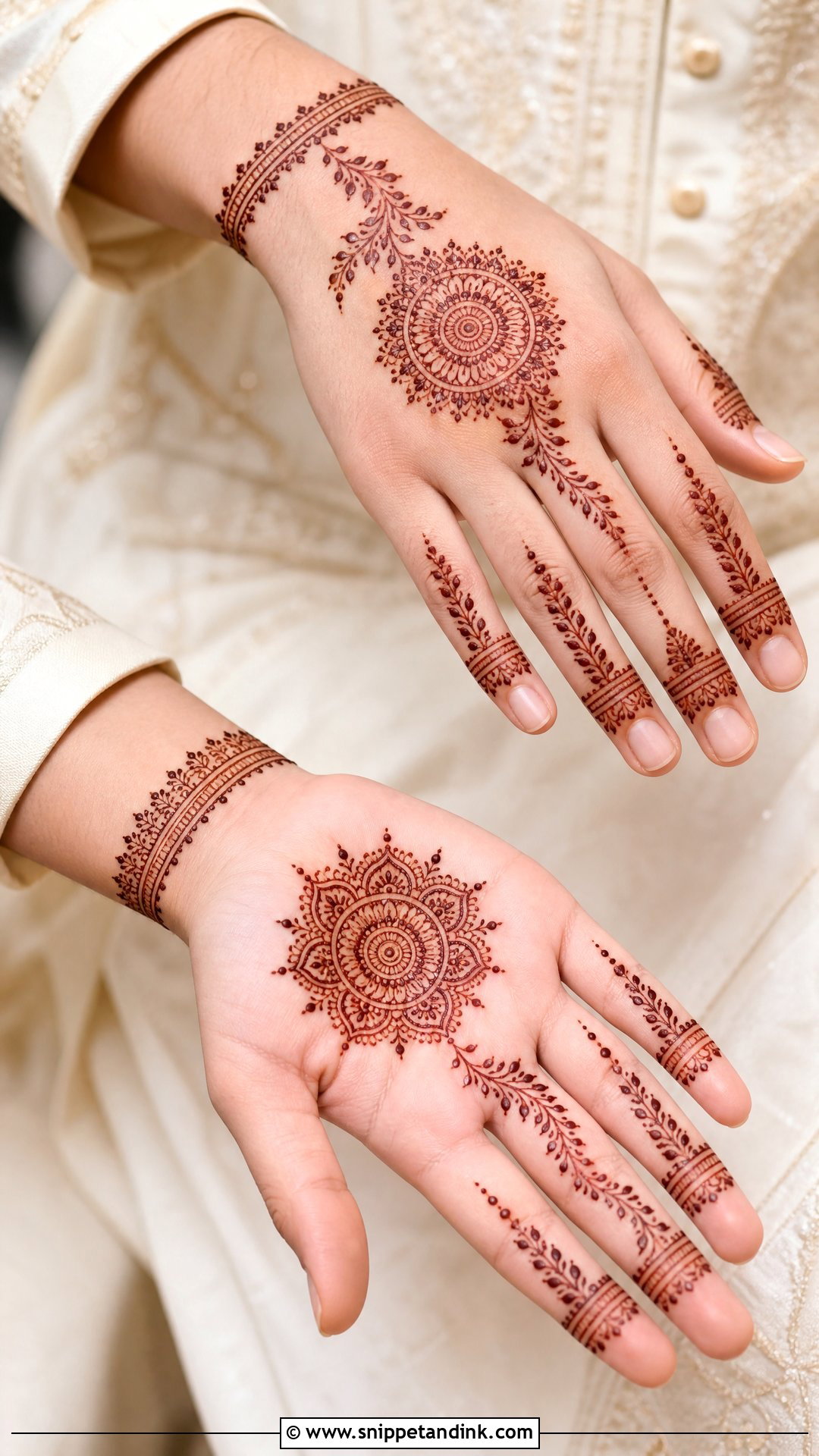
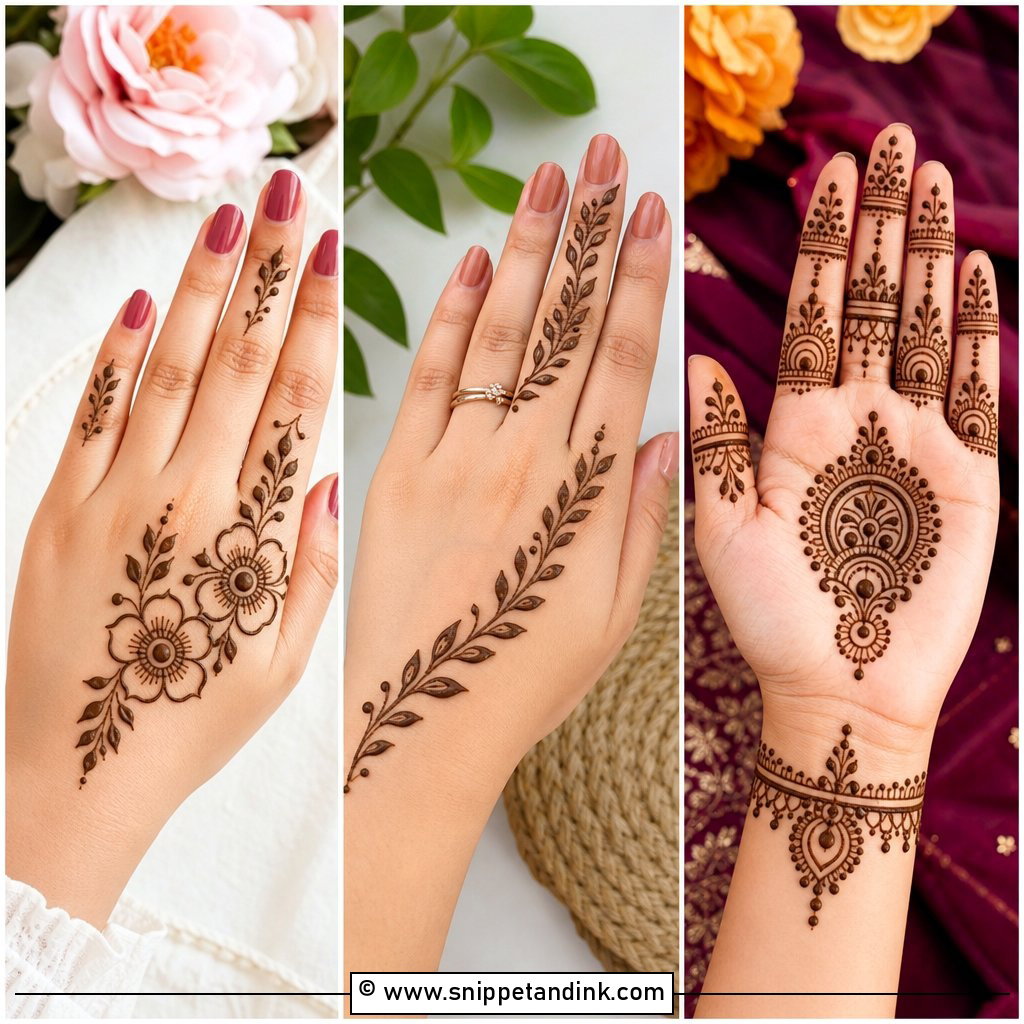
Simple doesn’t have to mean plain. A center palm mandala, light finger patterns and a small bracelet, with a floral trail of clean leaves and dots on the back, is enough for a family wedding. I suggest this for whoever is running errands all week, and it suits younger sisters, cousins and anyone who dislikes heavy coverage. With so little on the hand, line quality shows: shaky edges are obvious on a simple design in a way they’re not on a busy one.
7. Brother Wedding Minimal Mehndi Design
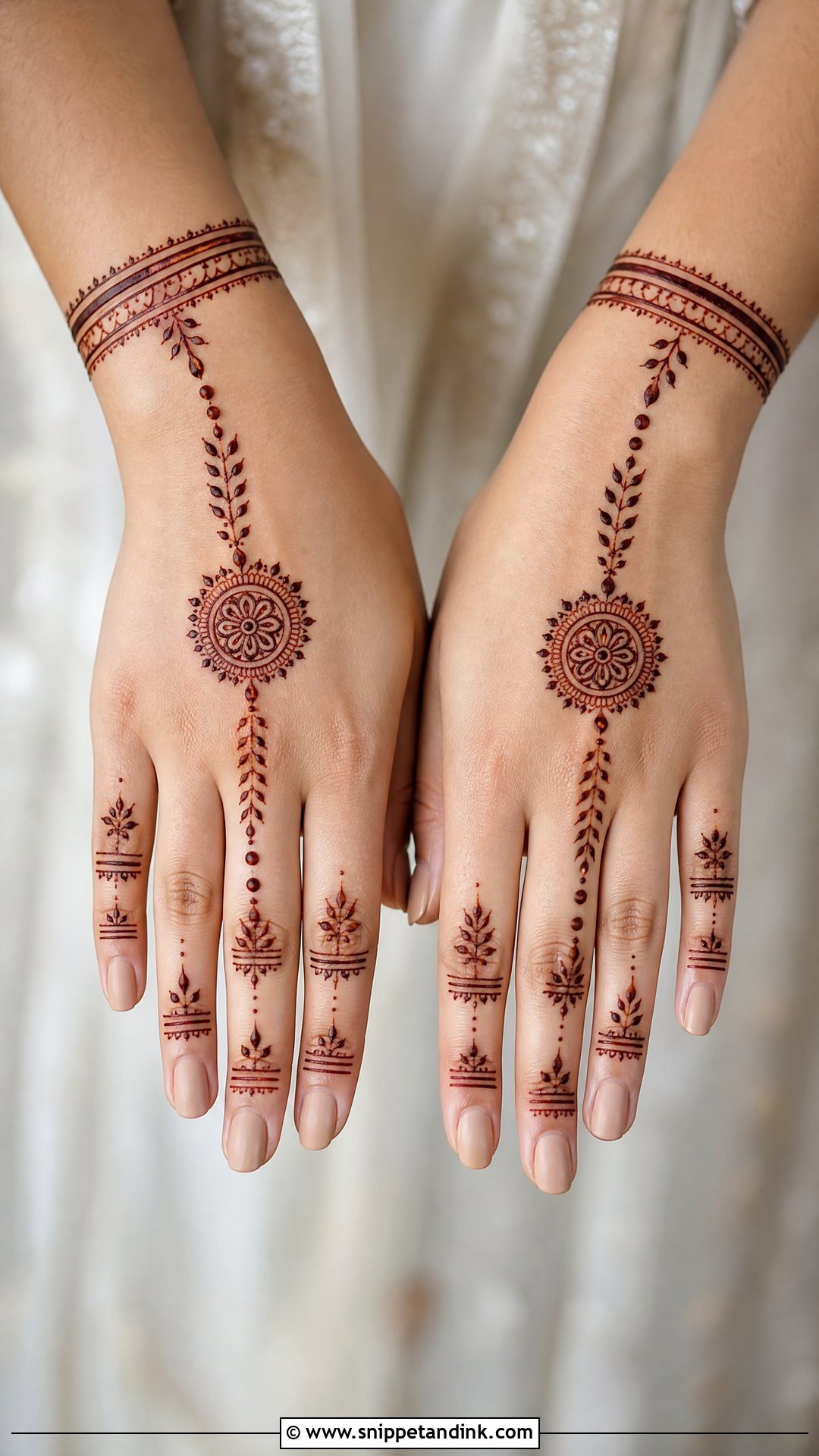
When the outfit, jewelry and makeup are already heavy, I pull the mehndi back. A small mandala on the palm, slim leafy lines on the fingers and a delicate wrist bracelet are all it needs. On the back I draw a ring-to-bracelet chain that reads like hand jewelry. Thin lines need fresh, smooth paste; lumpy or drying paste breaks the line, and on a minimal design every break shows. Keep it symmetrical.
8. Brother Wedding Floral Mehndi Design
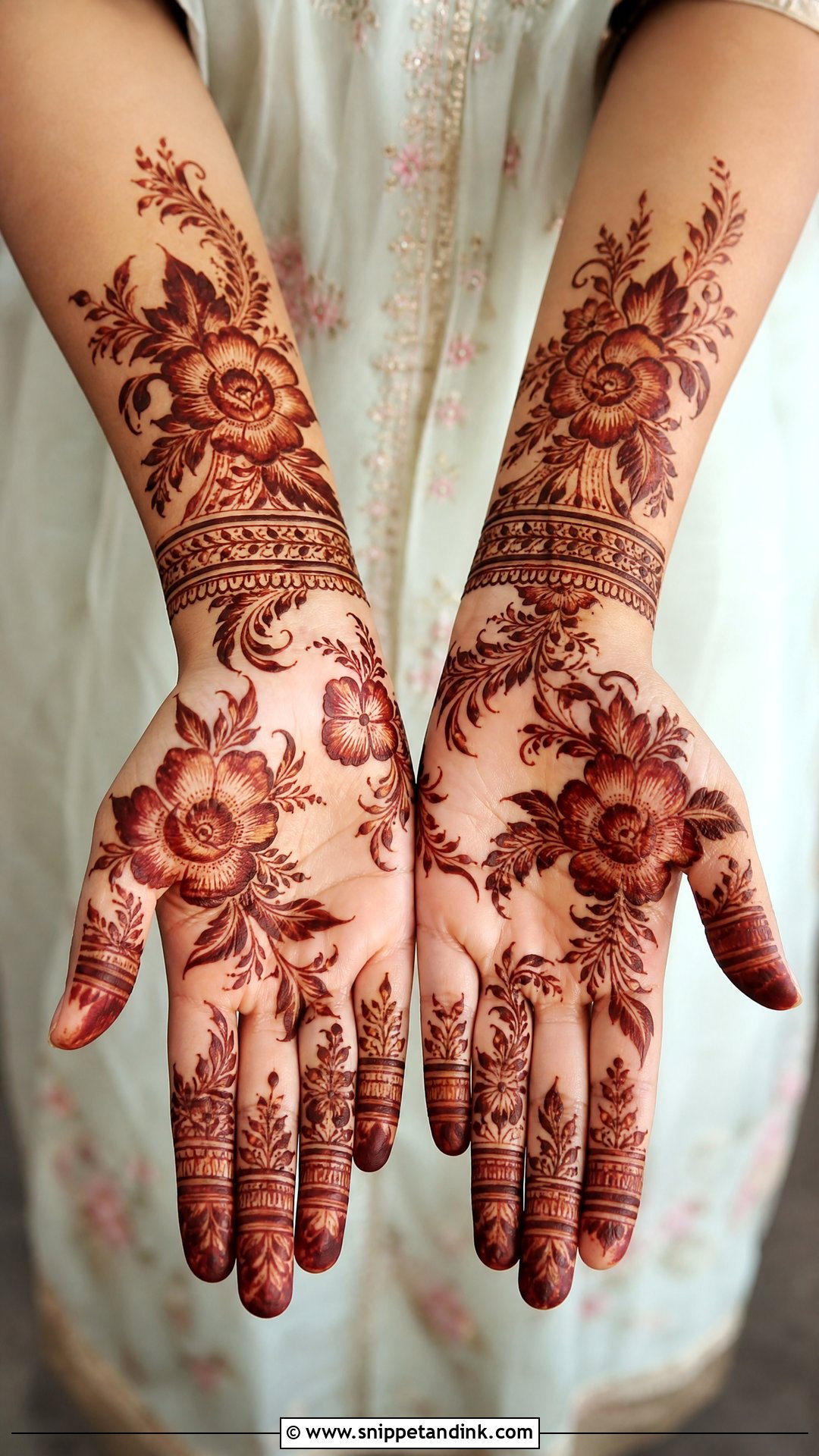
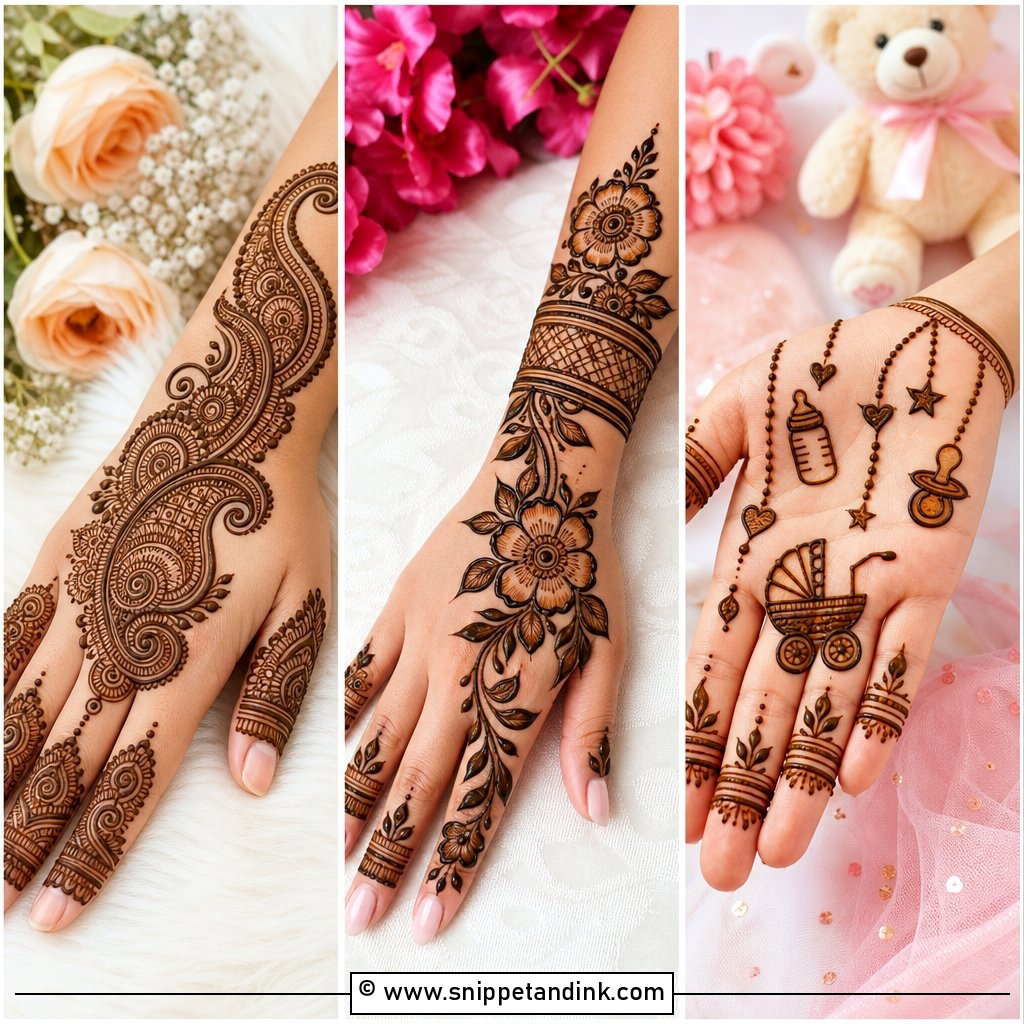
Flowers suit every age at a family wedding, from grandmothers to little cousins. I put large blooms on the palm, smaller ones around the wrist and vines climbing the fingers; on the back, one bold flower near the center joined to a cuff with curved stems. Shaded petals give depth, while outlined petals look cleaner. Shading in henna is done by thinning the paste or using finer lines, and it fades first as the stain wears, so the outlined version keeps its shape longer.
9. Brother Wedding Mandala Mehndi Design
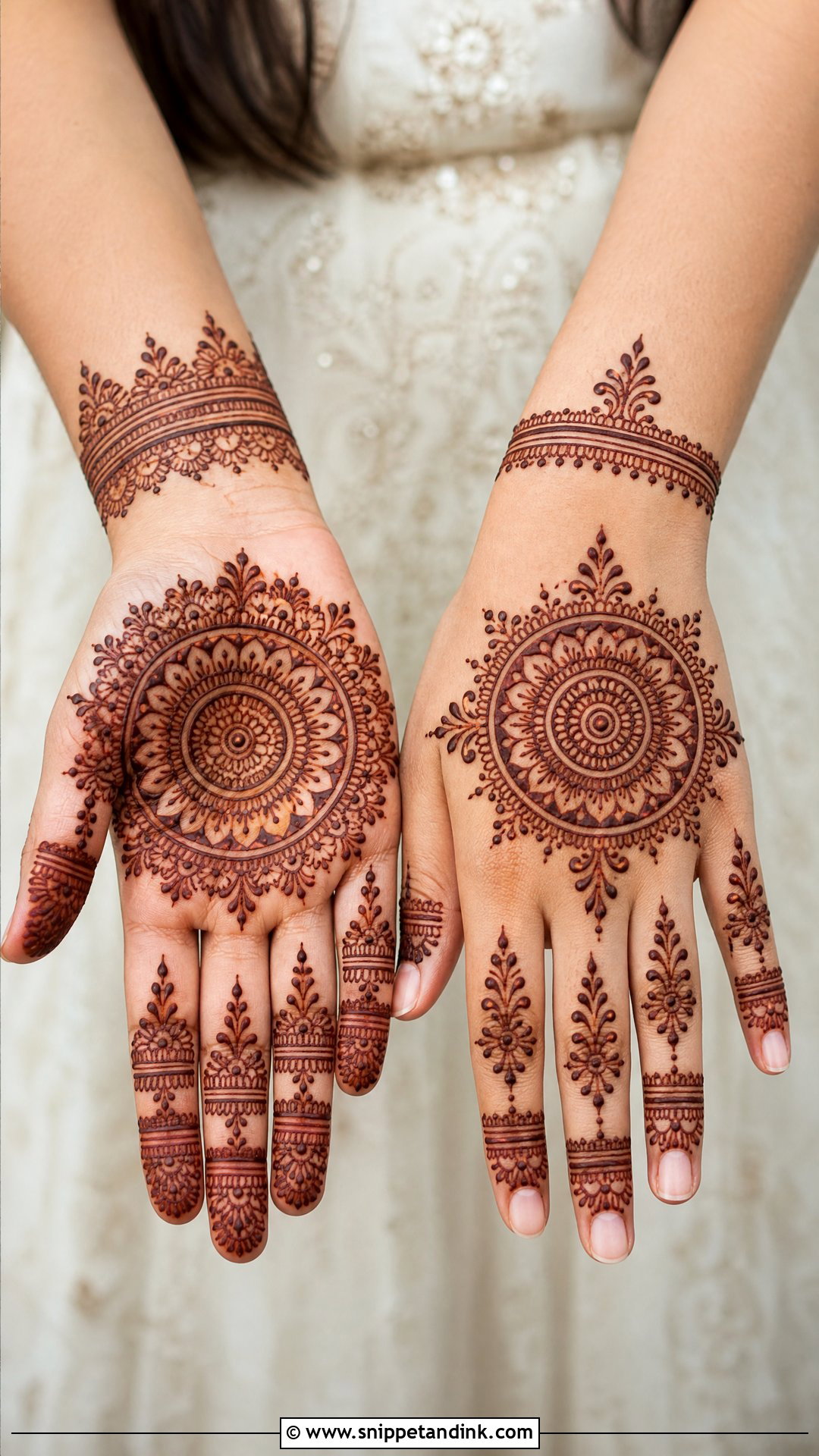
Mandalas photograph neatly because they’re symmetrical. The design starts as a circle in the center of the palm or back hand, then grows outward with dots, petals, small paisleys and borders, with matching bands on the fingers. I always connect a mandala to a wrist bracelet or cuff; on its own, a circle in the middle of the hand can look like a stamp. It works with traditional and modern outfits equally.
10. Brother Wedding Bracelet Mehndi Design
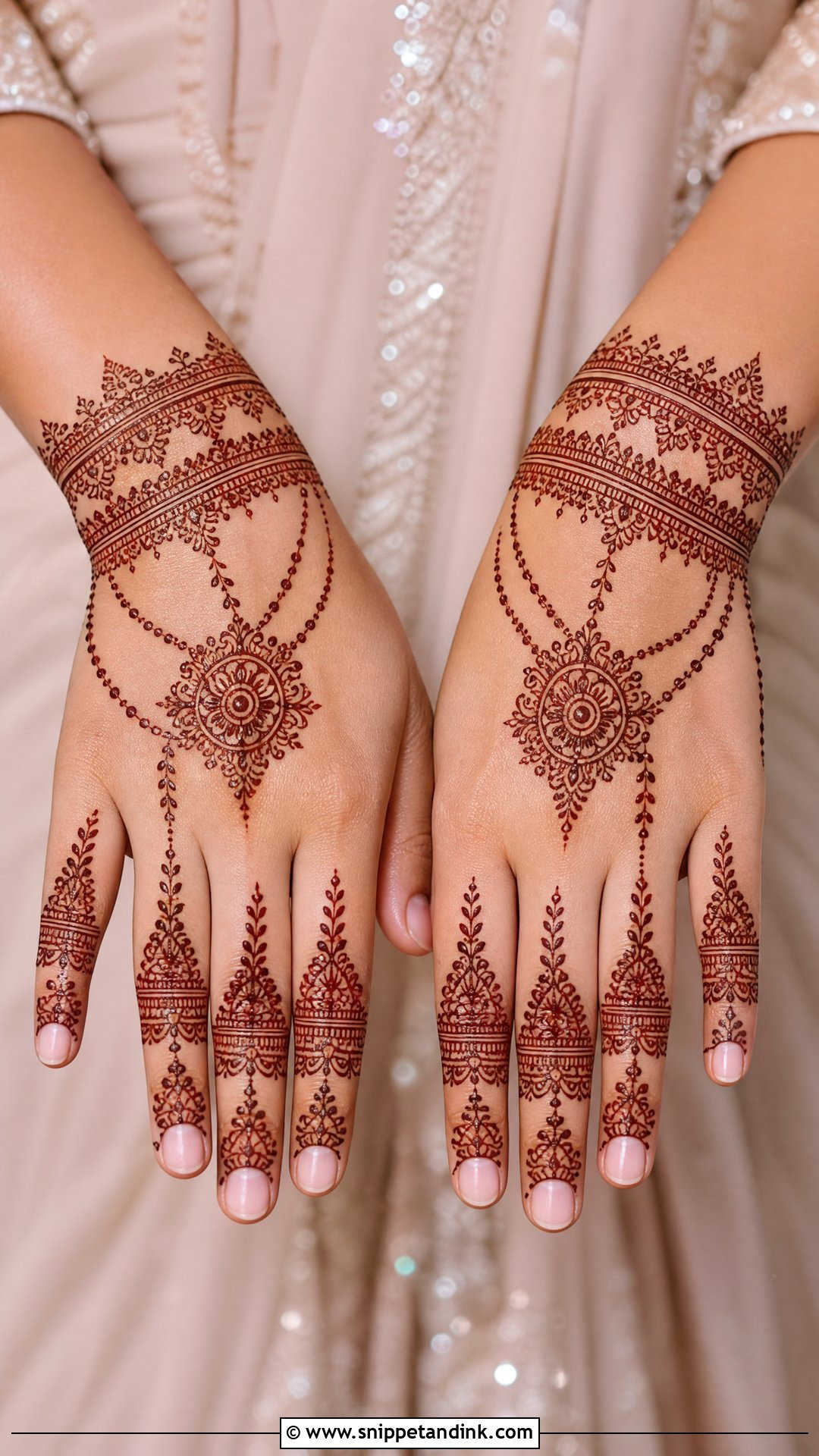
This is the design I suggest when the hands will be photographed moving, at the sangeet or the reception. A wrist cuff extends into chain-like lines that meet finger rings, with a floral or mandala motif on the back and slim leaves on the fingers. It sits well with real bangles and rings, but looks complete without them. The chains need even line weight; if one strand is thicker than the others, the jewelry illusion falls apart.
11. Brother Wedding Jaal Mehndi Design
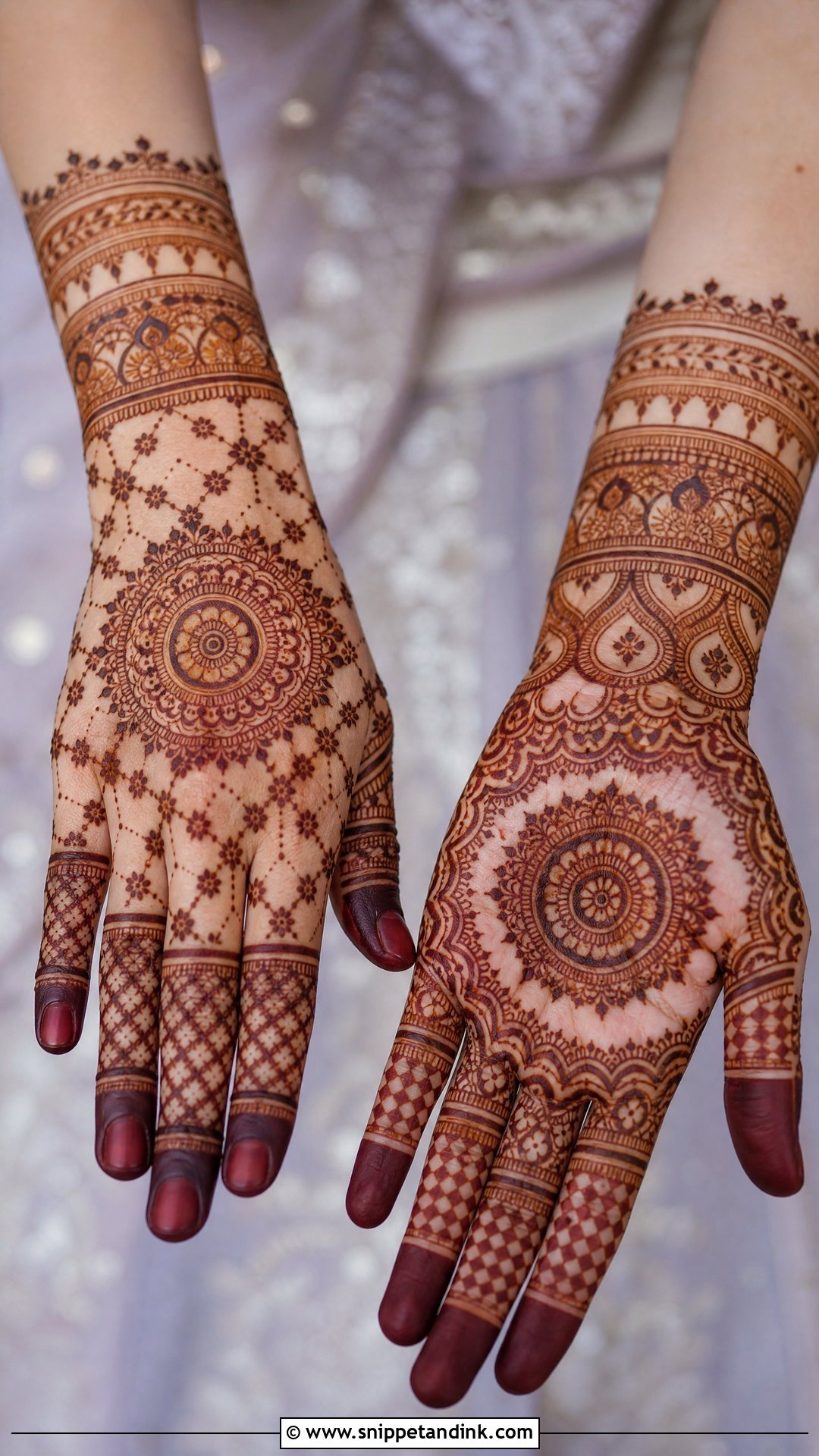
Jaal is a net: diamond mesh across the back hand, tiny dots or flowers at the crossing points, and a detailed wrist border. Fingers get matching checks, leafy strips or shaded tips, and on the palm I combine a small mandala with jaal panels. It looks like lace beside traditional jewelry. Even spacing is the whole skill. Mesh drawn freehand on a curved hand tends to drift, so I mark a few guide lines lightly first, and I’d ask your artist whether she does the same.
12. Brother Wedding Paisley Mehndi Design
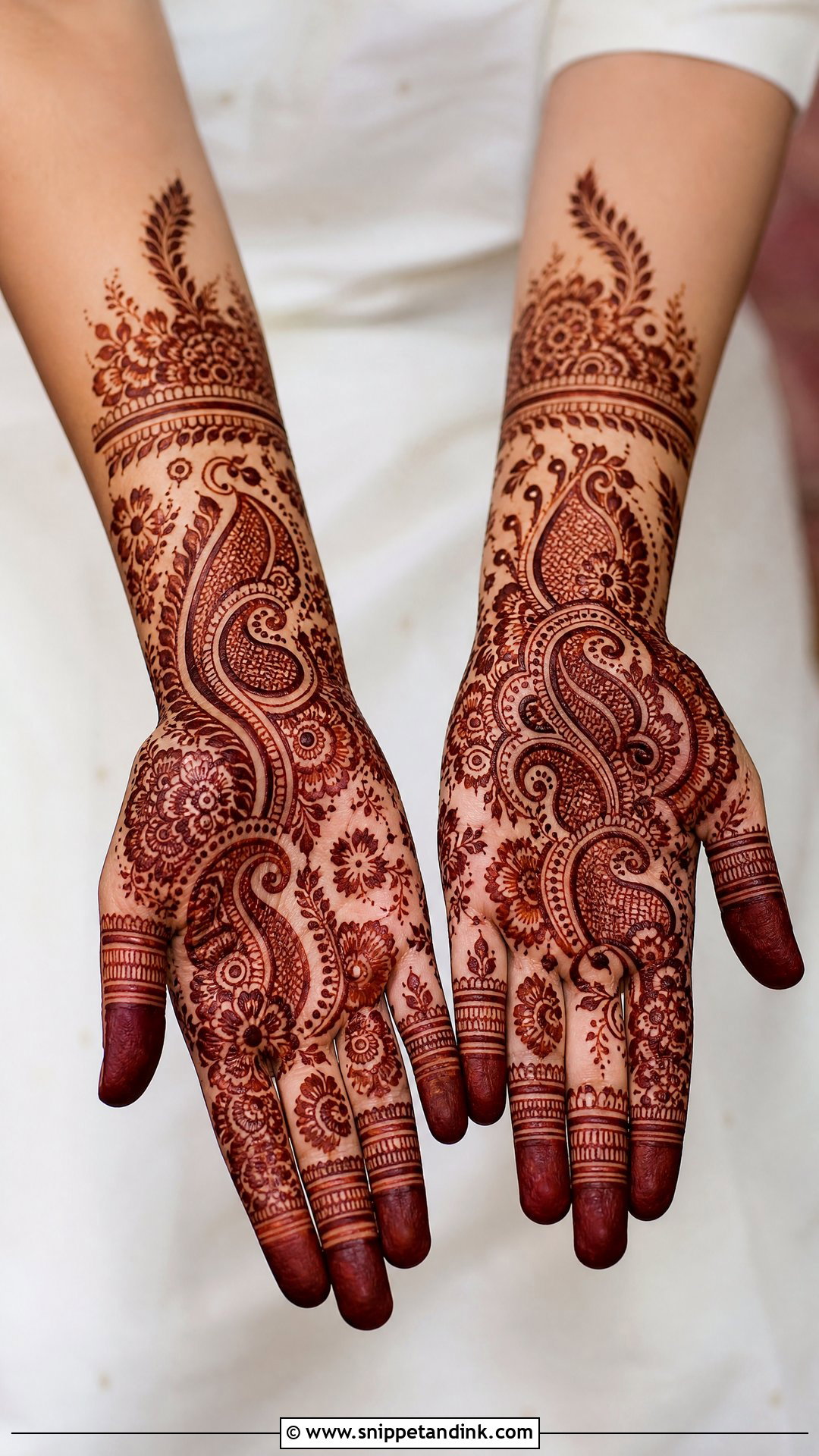
Paisleys have been part of wedding mehndi for as long as I can remember, and they still suit sarees, lehengas and salwar suits. A palm design can start with one large paisley surrounded by smaller ones, floral fillers, leaves and curved borders, continuing to the wrist as a cuff or vine. On the back, a diagonal paisley trail. The large paisley gives room for fine detailing inside it, which is where an artist’s hand shows. It’s traditional without the weight of bridal work.
13. Brother Wedding Peacock Mehndi Design
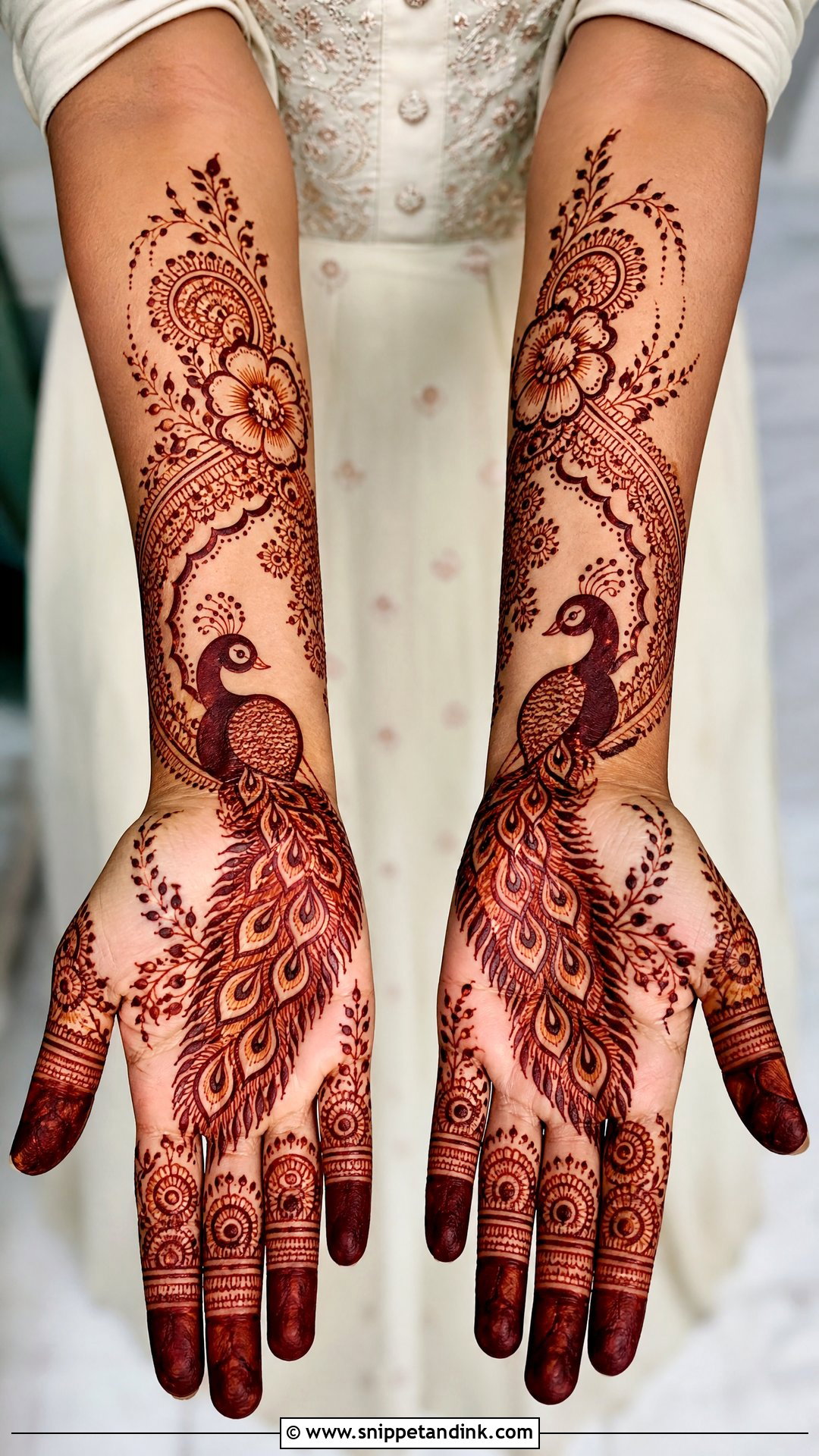
Peacocks bring a royal note, especially for evening functions and the wedding day itself. I place the body near the center of the palm or back hand and let the feathers flow toward the wrist or fingers, with paisleys, floral borders and fine lines around it. I save it for jewel-toned silks. The thing I watch is the head and neck: drawn too small or too busy, the peacock becomes a squiggle once the stain develops. Keep the outline clear and the feather detail light.
14. Brother Wedding Groom Initial Mehndi Design
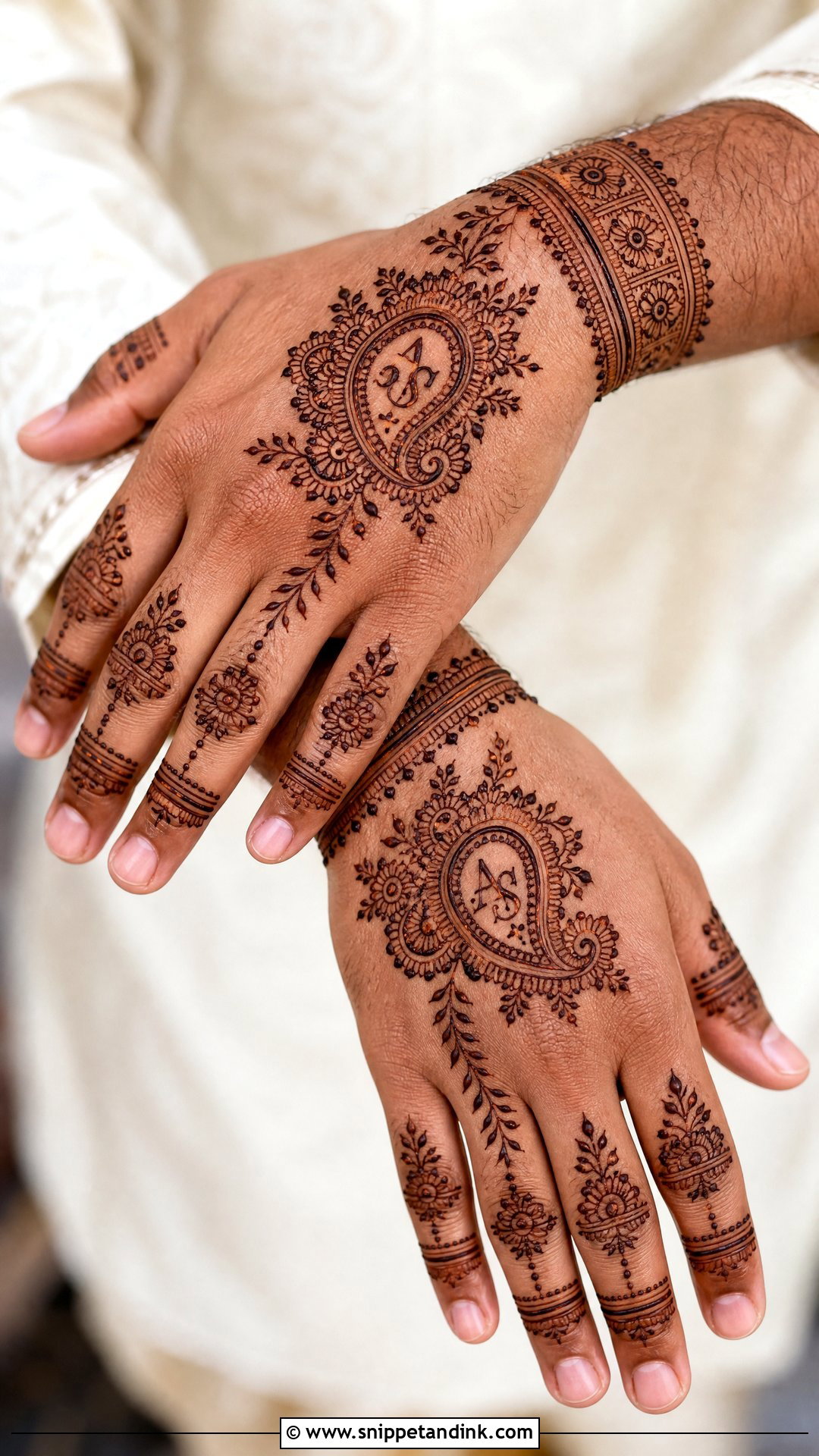
Hiding your brother’s initial in the design makes it personal without straying into bridal territory. I tuck it inside a paisley, a small heart frame or a decorative circle within a palm mandala or floral layout, and some sisters add the wedding date in tiny script at the wrist. Keep the letters simple; ornate script in henna tends to blur. Surround it with dhol, leaves, flowers or jaali so the wedding theme stays strong. It’s a sweet detail for close-up photos.
15. Brother Wedding Dhol Mehndi Design
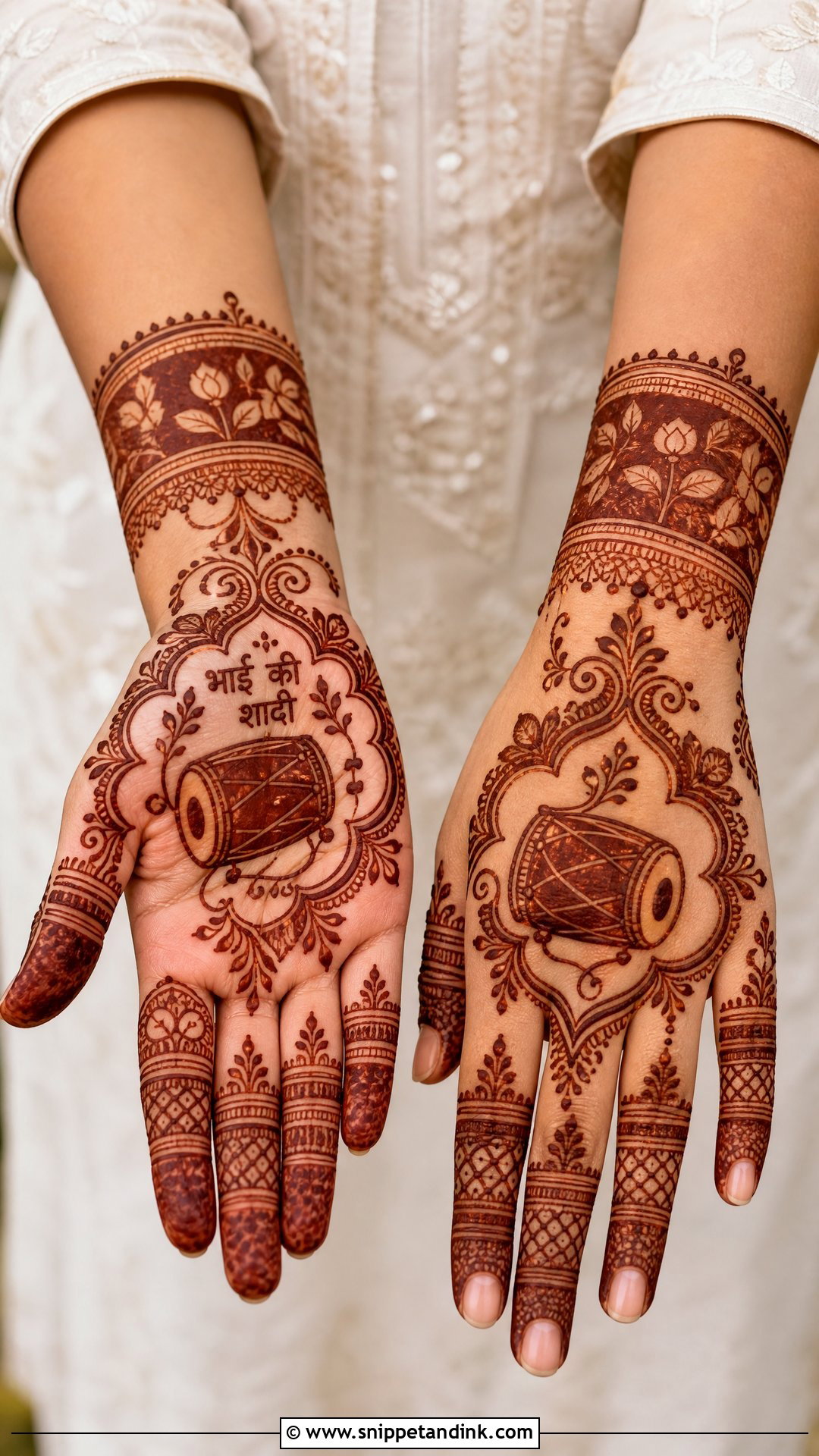
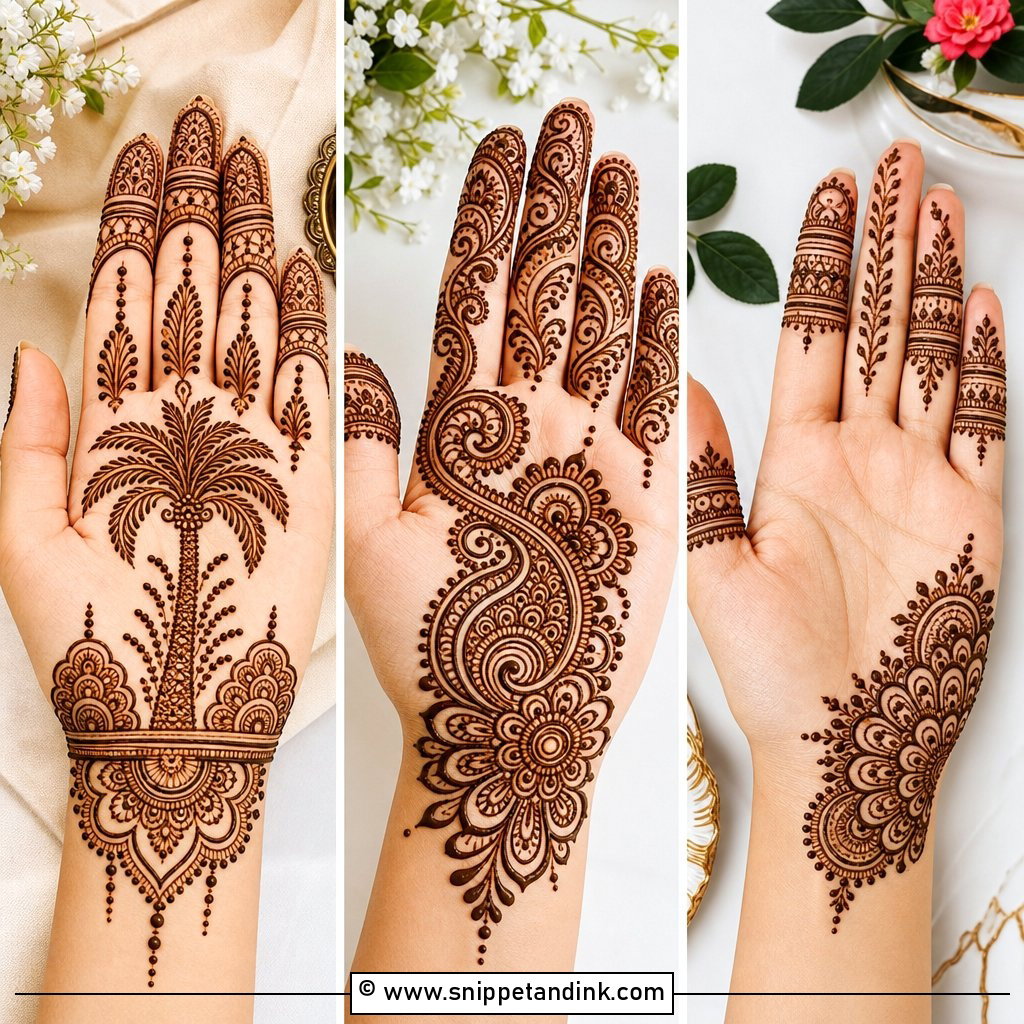
For a family that loves music and dancing, a dhol on the palm or back hand feels right. I surround it with flowers, swirls and dotted borders, and sometimes add the drumsticks or a few musical curves. The rest of the hand stays balanced with finger patterns and a wrist band. Mehndi night, haldi and sangeet suit it best. Small figurative motifs like a dhol need clean outlines; I draw them first, before any filler, so they don’t get crowded out.
16. Brother Wedding Half Hand Mehndi Design
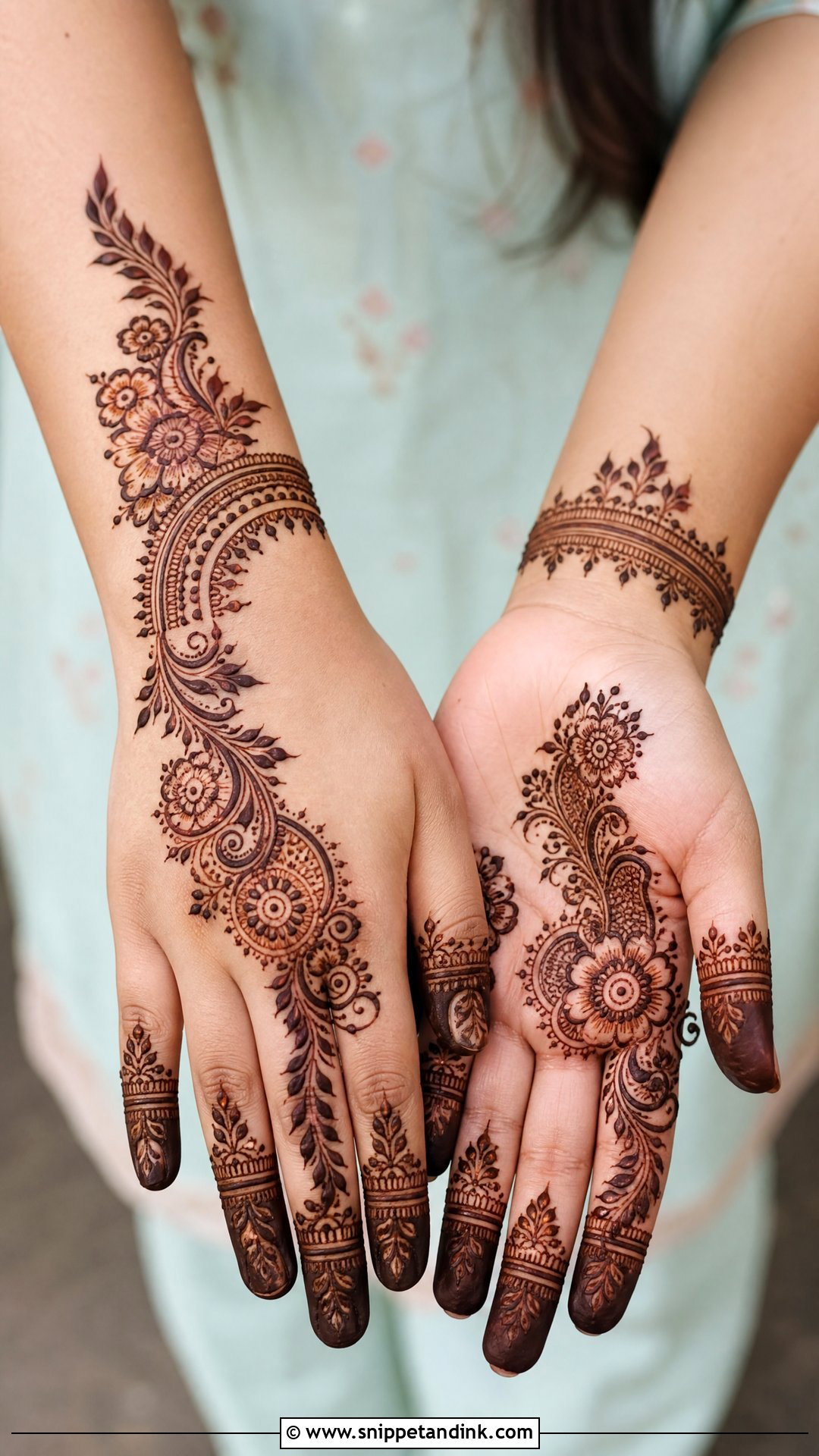
Half hand mehndi gives enough coverage for a wedding without a full arm. I cover the palm and fingers and stop neatly at the wrist or just above, using a center mandala, side paisleys, floral borders and slim finger detailing, with a diagonal trail and bracelet cuff on the back. It’s comfortable and quick to dry. A sister who is hosting, dancing and helping all day will be glad she didn’t sit for the full arm.
17. Brother Wedding Wrist To Forearm Mehndi Design
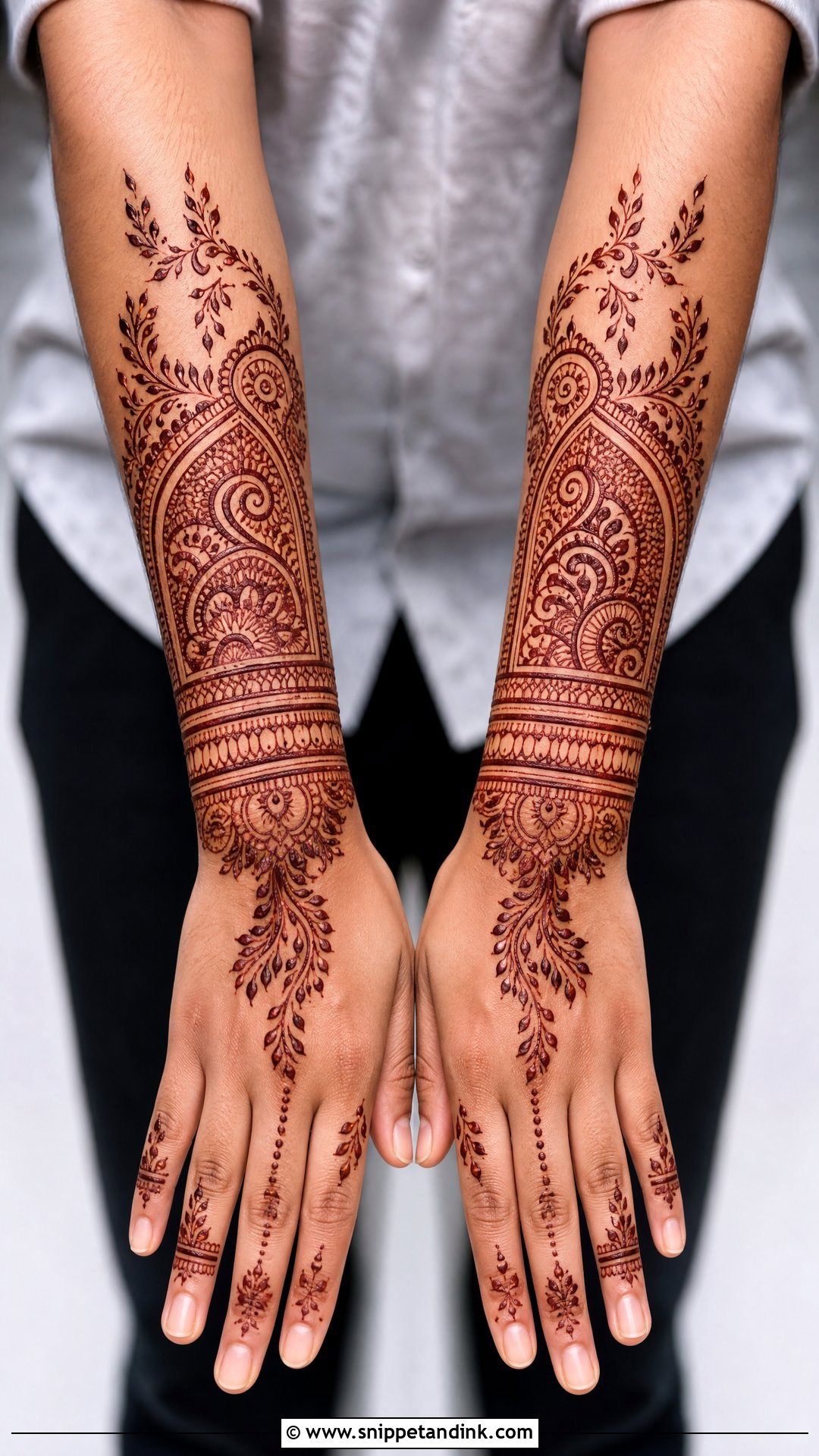
A forearm extension looks dressed up without full bridal coverage. I start with a decorated wrist cuff and extend upward in florals, paisleys, vines and thin borders, keeping the palm or back hand lighter so the forearm reads like a sleeve. Short sleeves, sleeveless blouses and sheer cuffs show it best. Taper it as it climbs; a band that stays the same width up the arm looks bulky. Skin on the forearm stains lighter than the hand, so allow for a softer color there.
18. Brother Wedding Finger Mehndi Design
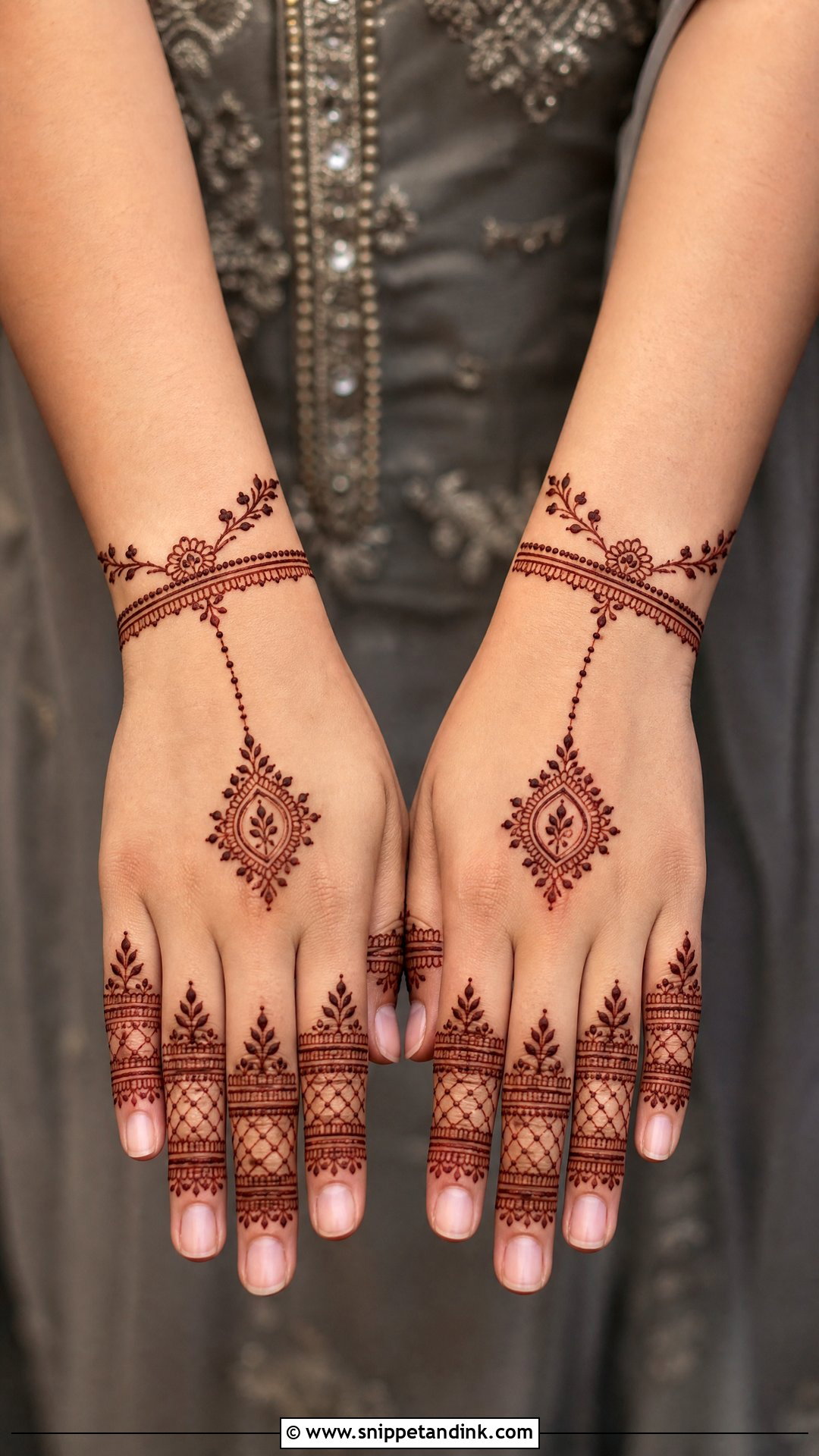
Finger work looks chic when it’s treated as one complete design, not random lines. I give each finger leafy bands, dots, fine checks or small florals, then connect them to a simple palm or back-hand motif, a ring pattern or a wrist bracelet. It suits minimal outfits and lets nails and rings stand out. Fingertips take a dark stain but wear fastest because you use them constantly, so expect them to fade first.
19. Brother Wedding Rose Mehndi Design
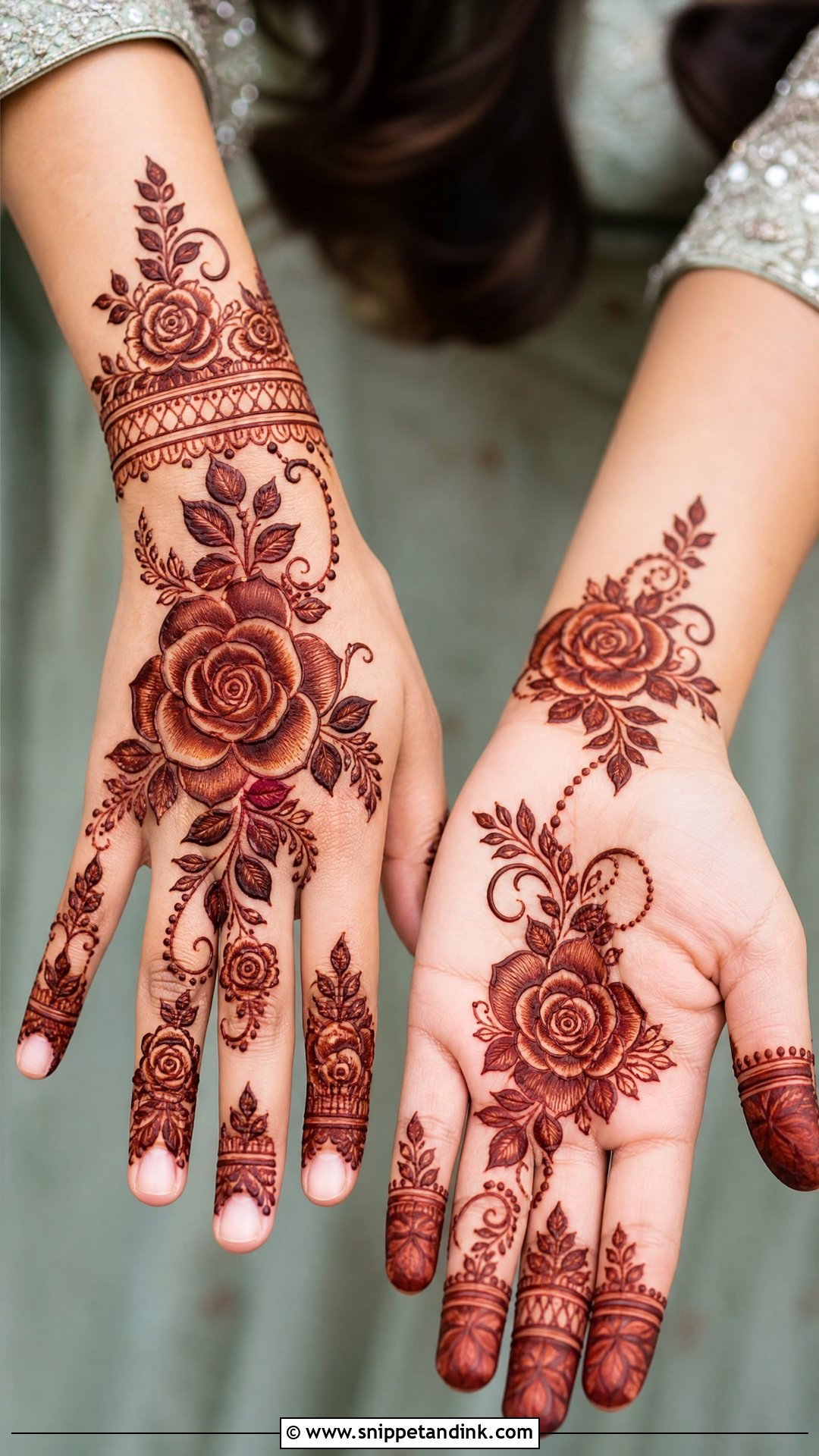
One large rose on the back hand, smaller ones near the wrist and leafy vines moving to the fingers: that’s how I lay out a rose design. On the palm, roses pair with paisleys and softly shaded petals. Roses need bold enough petal outlines to survive staining, and I mix open petals with filled leaves so the flower doesn’t flatten into a single dark shape.
20. Brother Wedding Moroccan Mehndi Design
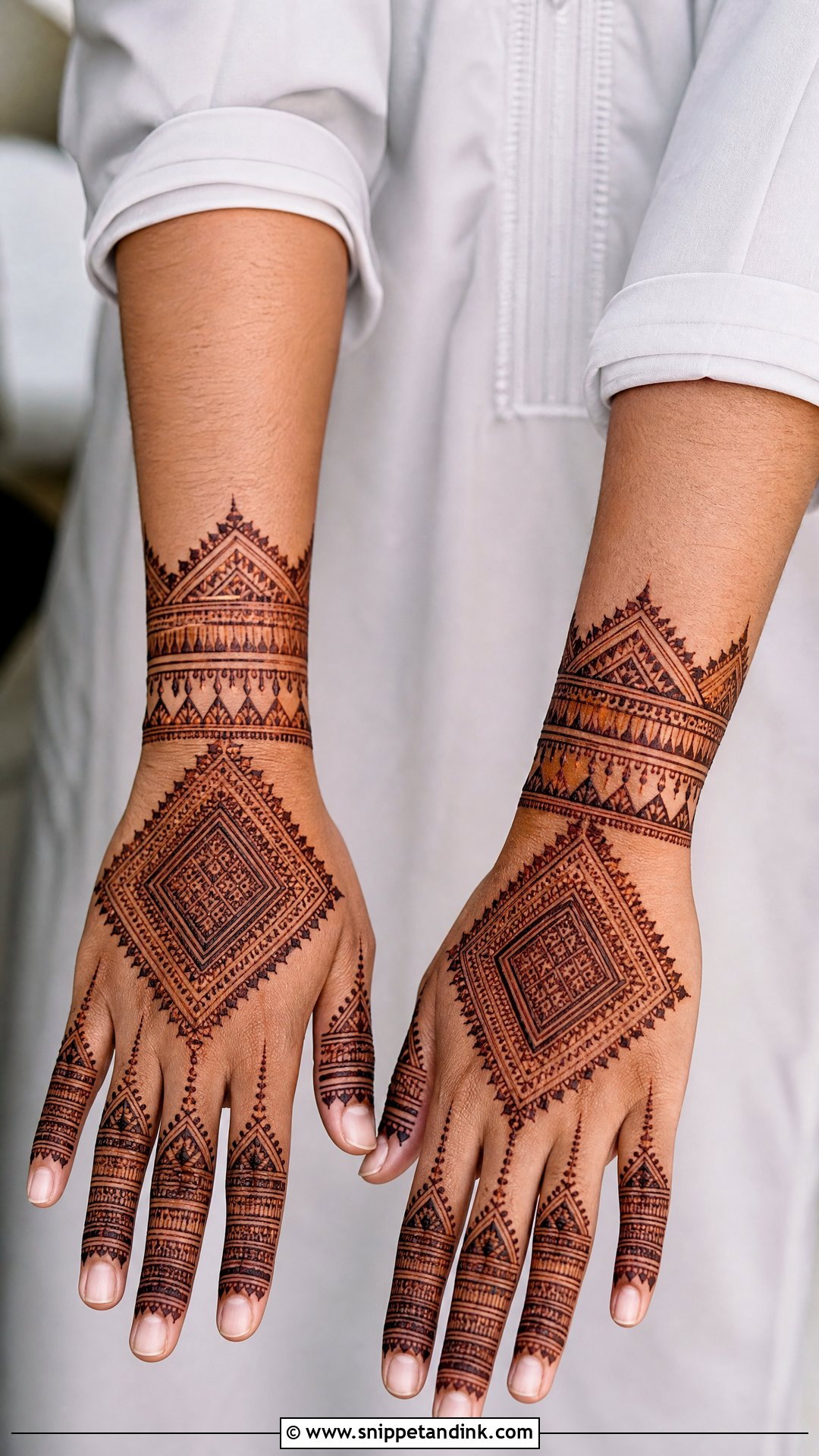
For sisters who prefer clean geometry to florals, Moroccan work uses diamond grids, angular lines, triangular borders, dots and structured wrist bands, with a geometric center on the palm and repeated sections on the fingers. It feels modern and suits fusion outfits, mirror work and contemporary jewelry. Straight lines are harder in henna than curves, so choose an artist with a very steady hand and look at her geometric work specifically before booking.
21. Brother Wedding Gulf Mehndi Design
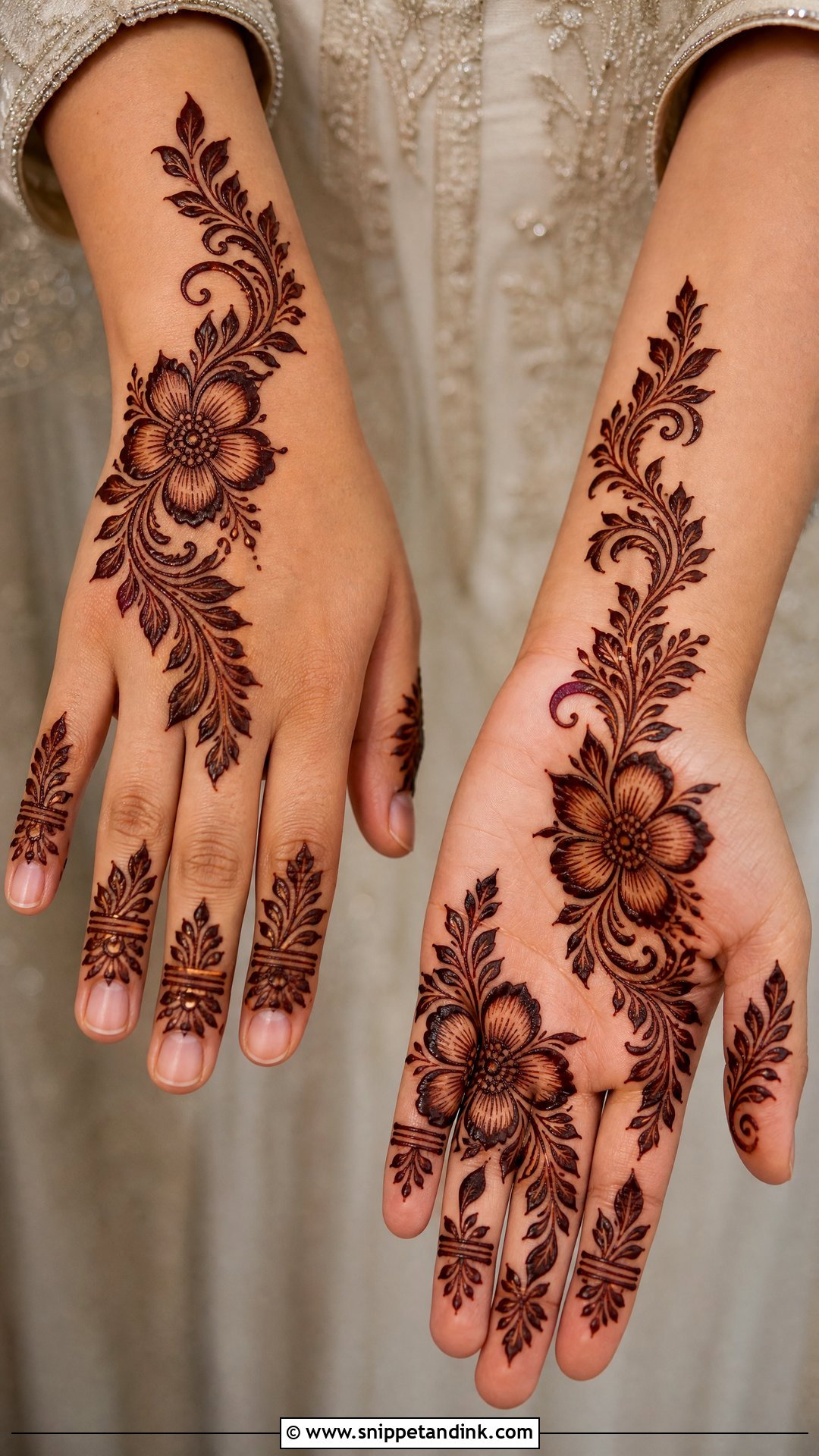
Gulf or Khaleeji style is known for bold flowers, flowing vines and wide, open layouts. Across the back hand I draw large flowers and curved leaves sweeping from wrist to fingers, keeping the palm lighter or adding a matching trail. Impact comes from the scale of the motifs, not from filling. A deep maroon stain shows it off well, and the open spaces let each flower stand clear. It suits modern festive outfits.
22. Brother Wedding Rajasthani Mehndi Design
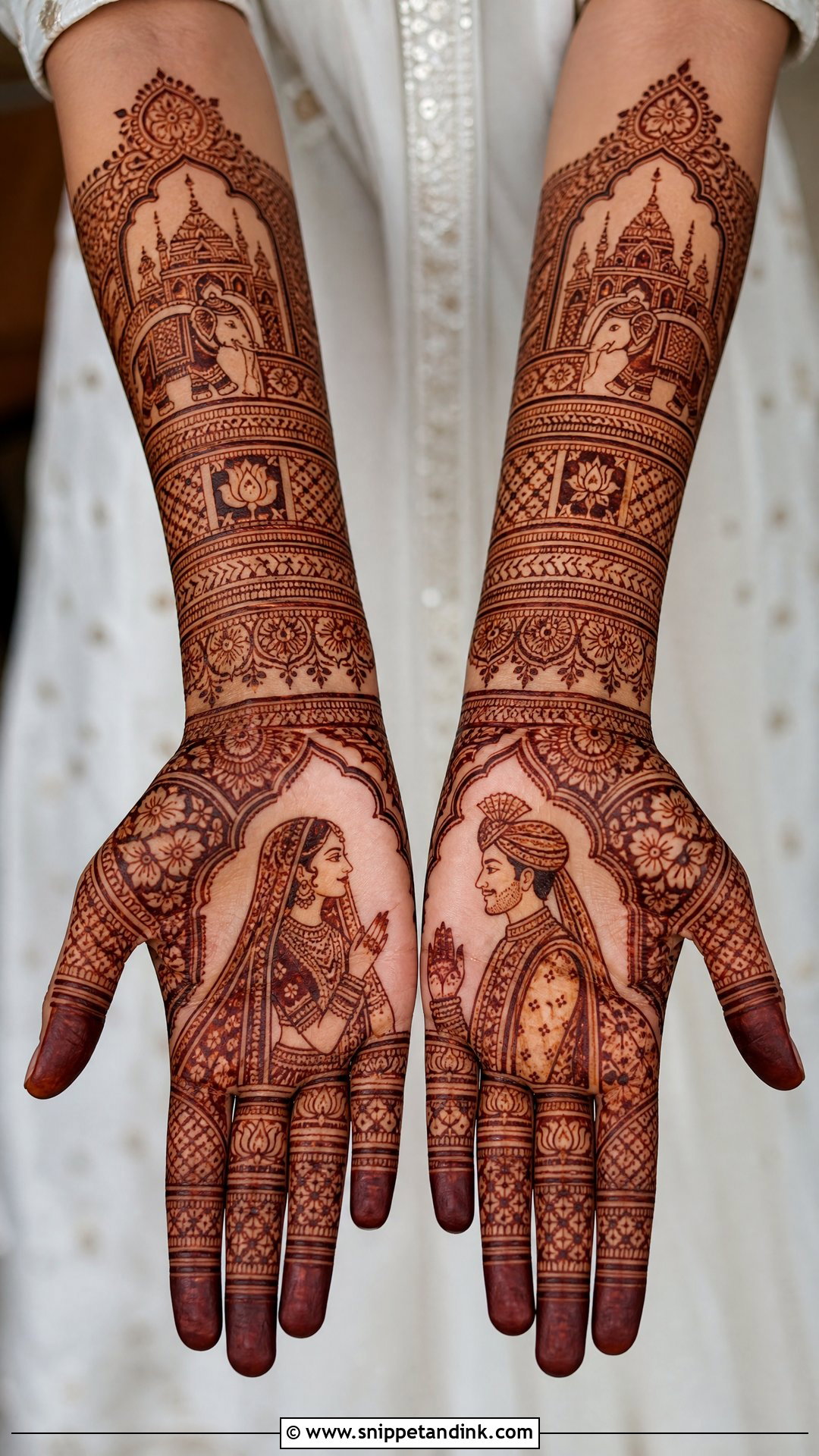
Rajasthani mehndi is traditionally intricate, so for a sibling I draw a lighter version: a small bride-and-groom inspired motif, paisleys, flowers, checks and ornamental wrist bands, with more detail on the palm and open mandala and jaali sections on the back. I’d always check with the bride before drawing figures, since some brides want the dulha-dulhan motif to be hers alone. It sits naturally with bandhani and heavy embroidery.
23. Brother Wedding Modern Mehndi Design
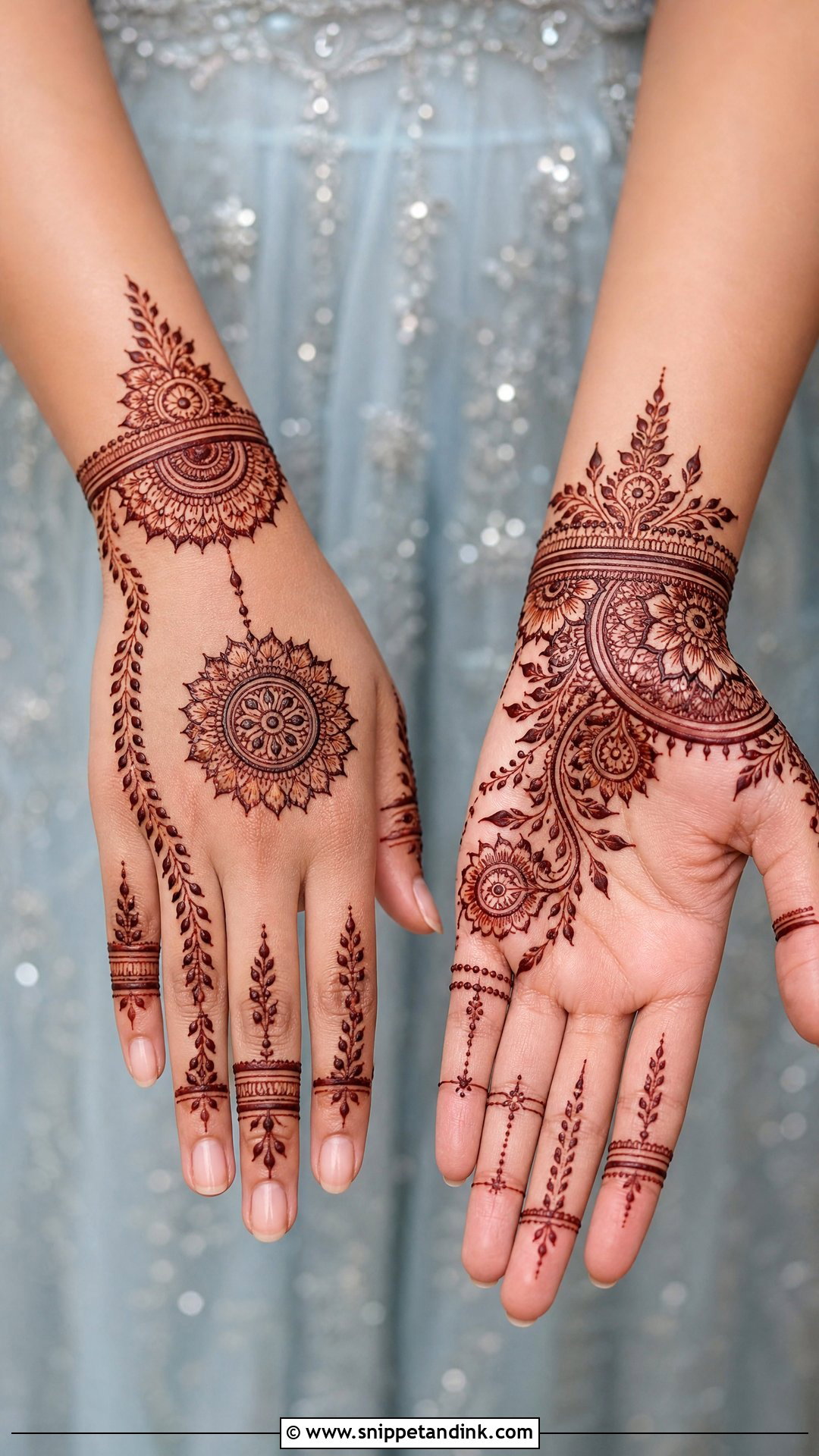
Modern layouts use bare skin as part of the design: sleek florals, ring patterns, thin vines and neat wrist cuffs placed with intent instead of filling the hand. The back can follow a jewelry layout, the palm a small mandala or abstract floral trail. It’s quick, and it looks fresh in close-ups, though it can feel too sparse for a traditional wedding-day ceremony.
24. Brother Wedding Matching Hands Mehndi Design
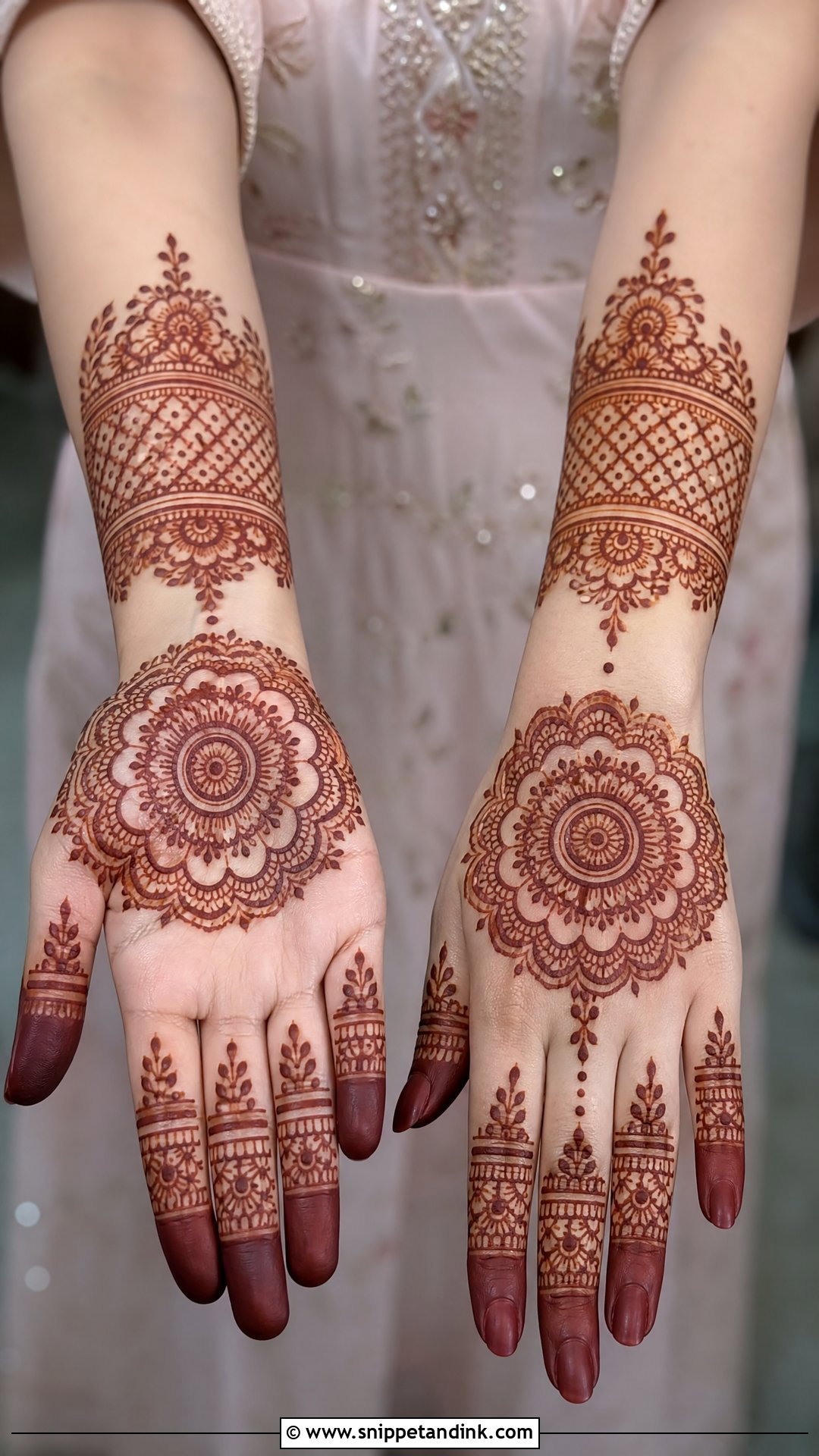
Mirrored hands look polished in group photos and dance poses. Twin mandalas, matching floral trails, identical cuffs or symmetrical jaal sections all work. Exact mirroring takes longer than people think, because the artist draws the second hand from memory in reverse, so build in extra sitting time. If you don’t want both hands fully covered, keep the motifs the same and reduce the coverage on both equally.



25. Brother Wedding Bridal Look Mehndi Design
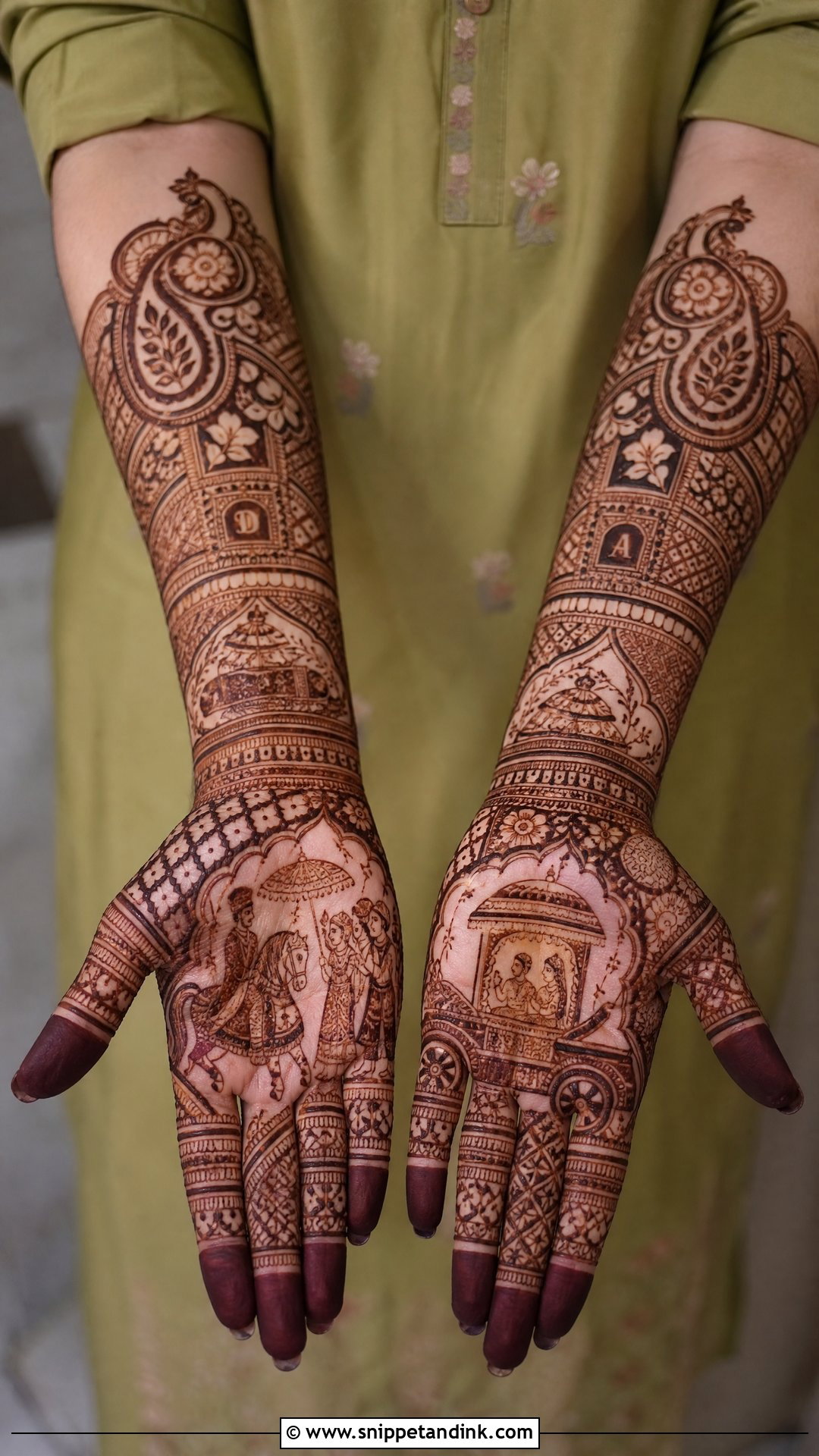
For the groom’s sister who wants a grand look, I draw something bridal-inspired with lighter coverage than the bride: full palms, detailed fingers, wrist cuffs, paisleys, florals, jaali and a forearm extension. Some add the brother’s initials, the wedding date or a small baraat motif. I stop the forearm well below where the bride’s design ends, and I keep the density lower, so the two hands never compete when you stand next to her. Save it for the main wedding day or the big mehndi function.
When to Sit for Your Mehndi So It’s Darkest on the Wedding Day
Natural henna comes off the skin bright orange and darkens over the next day or two, usually reaching its deepest color around 24 to 48 hours after the paste is removed. So the mehndi function itself is rarely when your stain looks best. If the wedding is the day after the mehndi night, you’re in good shape. If the baraat is the same evening, sit as early as you can.
Sisters often end up last in the queue because the bride takes most of the artist’s time. If your family has booked one artist for everyone, ask whether a second artist can handle the guests, or book your own slot earlier in the day.
Hosting the Sangeet With Henna Drying on Both Hands
The paste needs to stay on for several hours to stain well, ideally six or more, and overnight if you can manage it. That’s hard when you’re the one greeting guests. A few things help:
- Eat and change into your outfit before you sit for henna, not after.
- Let the paste dry for about half an hour before dabbing on a lemon and sugar mix, which keeps it stuck to the skin.
- Scrape the dried paste off rather than washing it, and keep water away from the hands for as long as you can after that.
- Avoid anything sold as instant or black henna. Real henna never stains black, and dark instant pastes may contain chemical dyes that can cause serious skin reactions.
If you’ve never worn henna before, ask your artist about a small patch test a day or two ahead, especially if you have sensitive skin.
Your Role at the Wedding Sets How Far Up the Arm It Goes
At a brother’s wedding, the right mehndi is festive and meaningful but sits a step below the bride’s. Simple mandalas, Arabic trails, full hands, bracelet layouts, jaal, peacocks and personal initials can all work. Think about your role, how long you can sit before the function, and which parts of your hands will show most in photos. Clean lines and good paste matter more than the amount of coverage, and a dark, even stain on a modest design will always look better than a pale one on a crowded hand.
You'll Like These Ideas:




Leave a Reply