
When it’s your sister getting married, your hands end up in more photos than you expect: tying her kaleeras, carrying the thaal, clapping through the sangeet. I plan a sister’s henna to read clearly at that distance without competing with the bride’s. Among the best 20 Sister Wedding Mehndi Designs below you’ll find full Indian coverage, open Arabic trails, mandalas and small back-hand pieces. My rule of thumb for the bride’s sister is one step down in density from the bridal hands, so the two of you look related in photos rather than identical.
Where the Sister’s Appointment Fits in the Mehndi Schedule
The bride sits first, and everyone else fits around her. For a sister that usually means the evening of the mehndi function or the day after, and the timing matters more than most families realize. Natural henna comes off the skin orange and darkens to a deep reddish brown over the next 24 to 48 hours. Paste applied on the wedding morning will still look pale and orange in the ceremony photos.
Matching coverage to the hours you have
When a sister books with me, the first thing I ask is how long she can genuinely stay still. A back-hand Arabic trail is quick. Full Indian work on both palms and backs can take a couple of hours, and you can’t use your hands while it sets. If you’re the one coordinating caterers or helping the bride change, choose the lighter layouts from the list and save the heavy ones for a sister with nothing else on her plate.
- Eat, drink and use the bathroom before you sit down. Once the paste is on, someone else has to feed you.
- Wear a top with loose sleeves you can push above the elbow.
- Skip lotion and oil on your hands that day; they stop the paste from gripping the skin.
- Refuse any paste sold as black henna. Real henna never stains black, and black pastes often contain a dye that can burn sensitive skin.
1. Full Hand Sister Wedding Mehndi Design
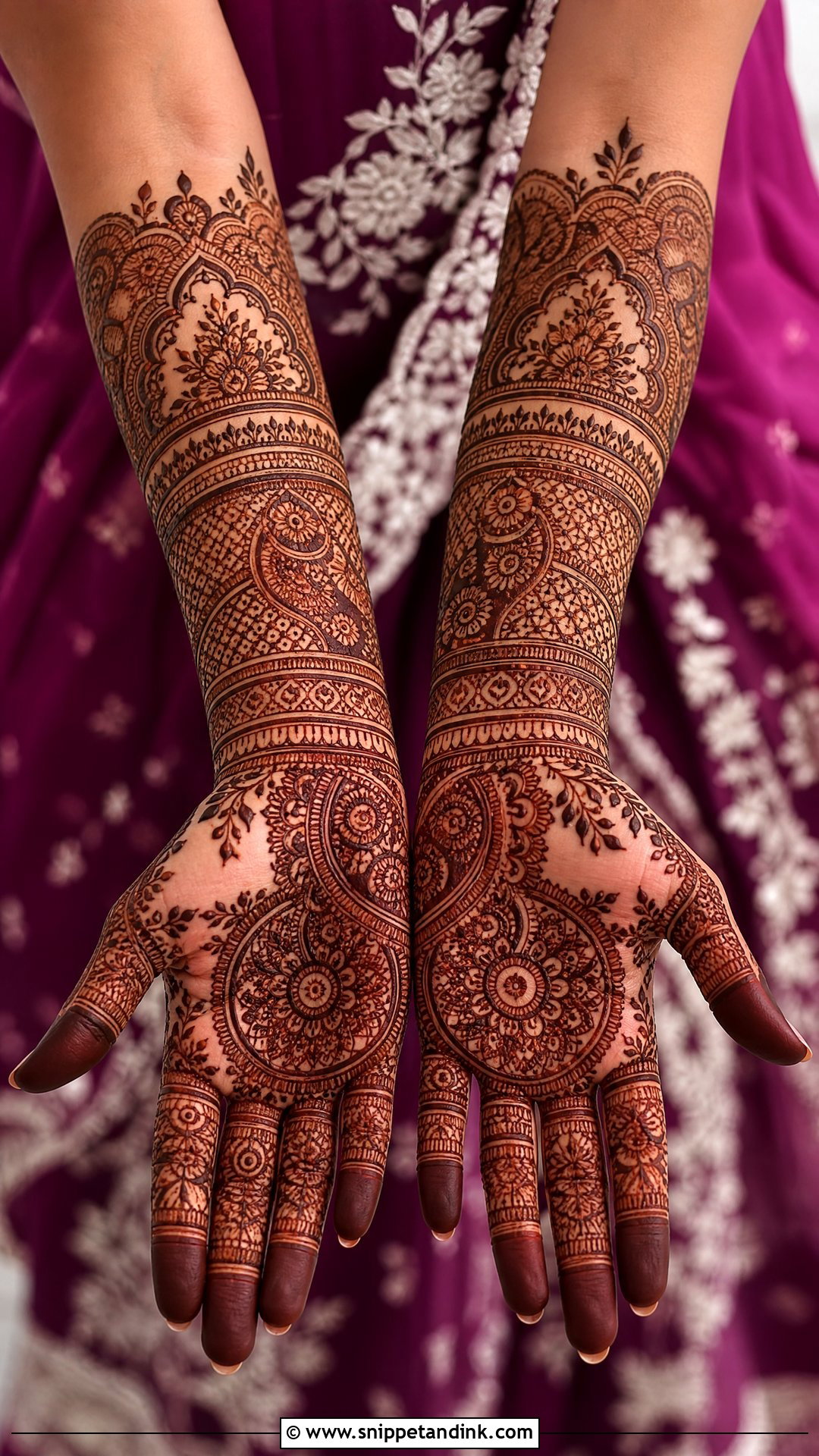
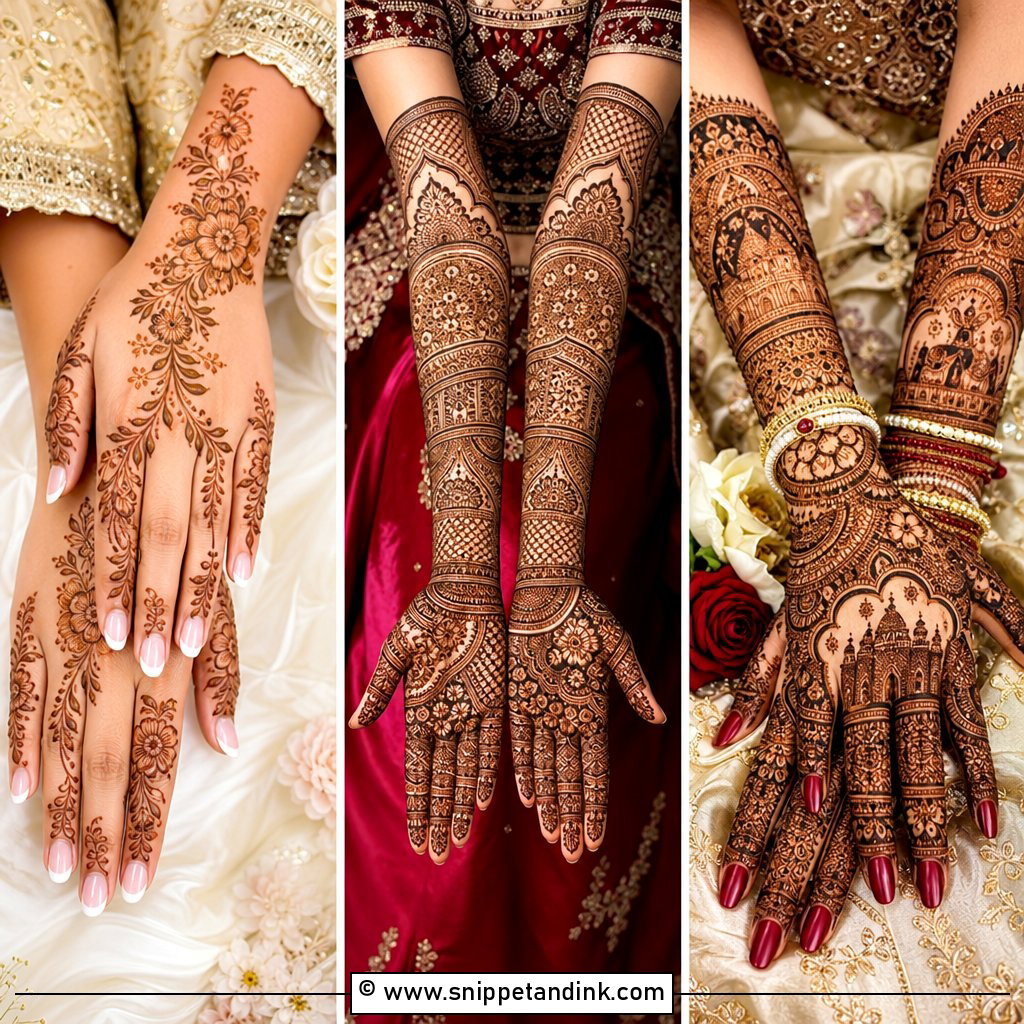
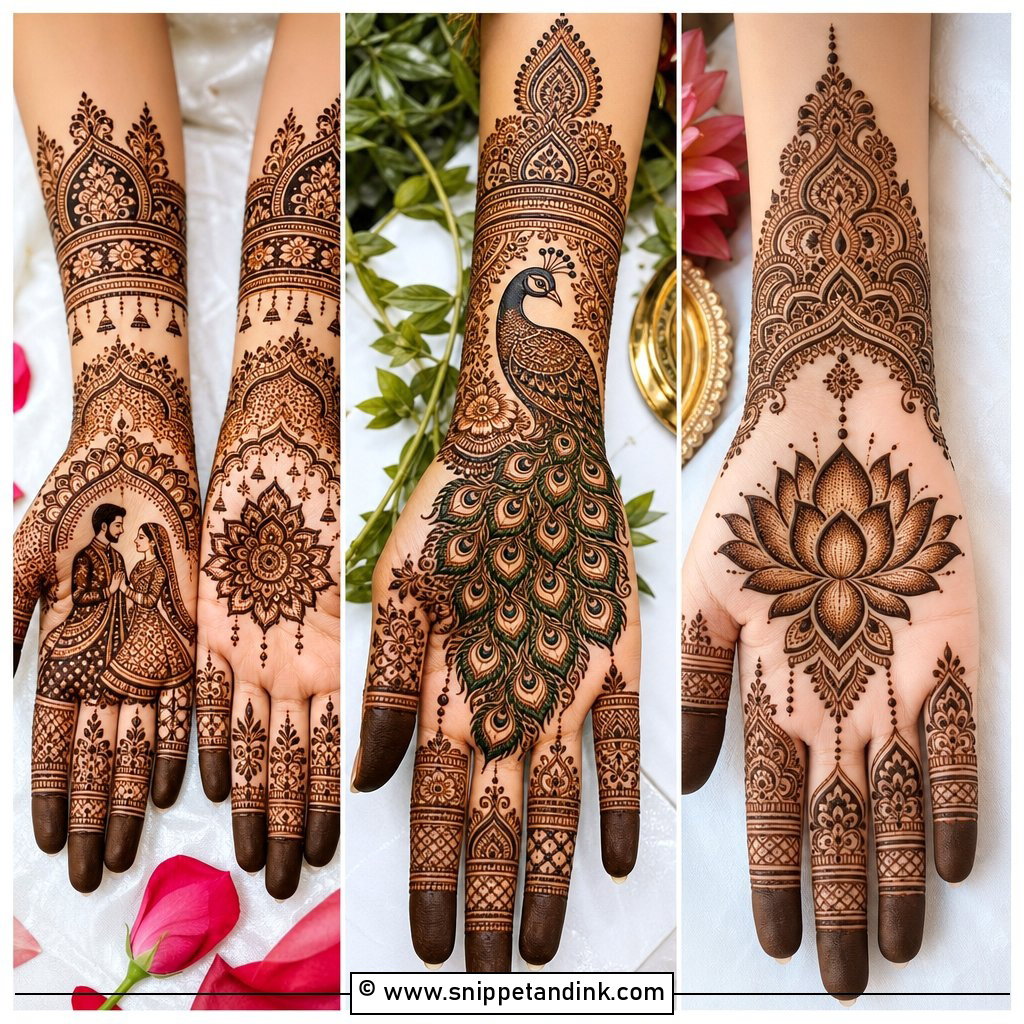
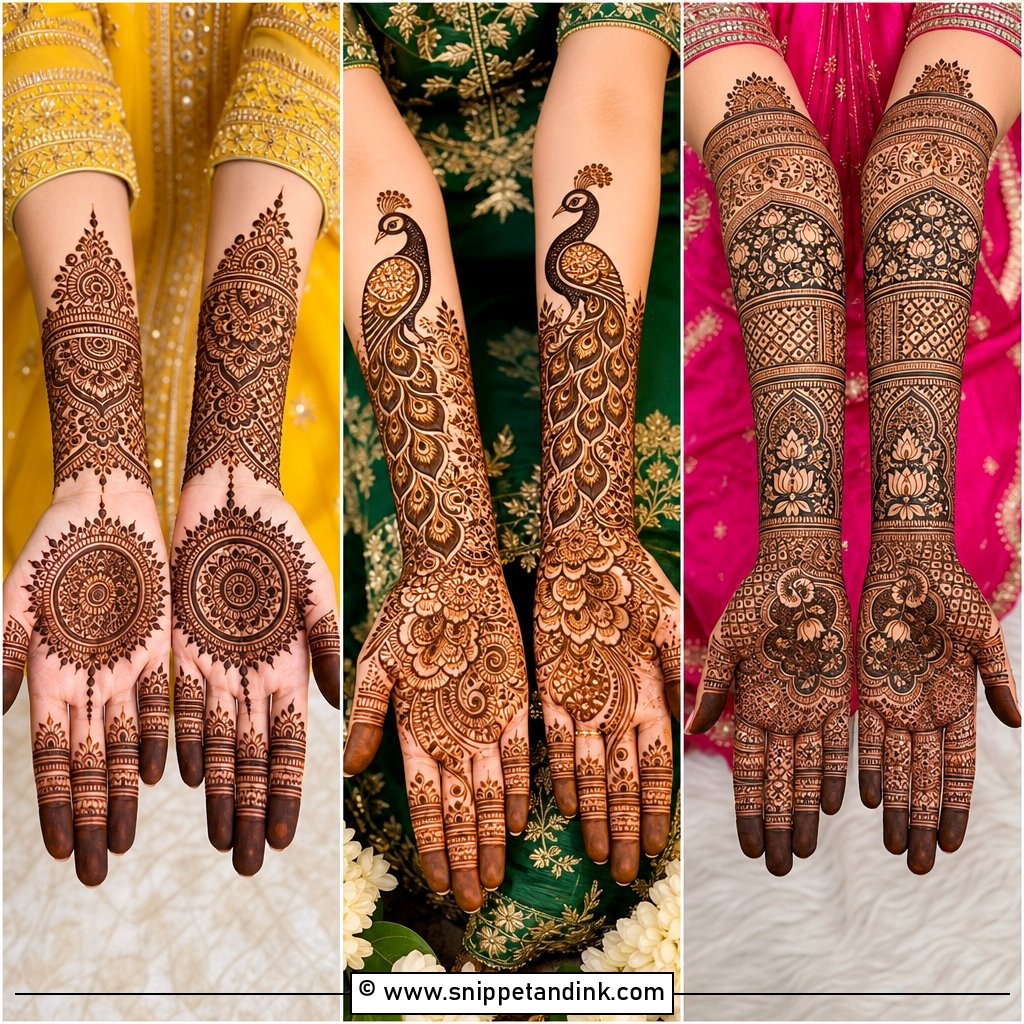
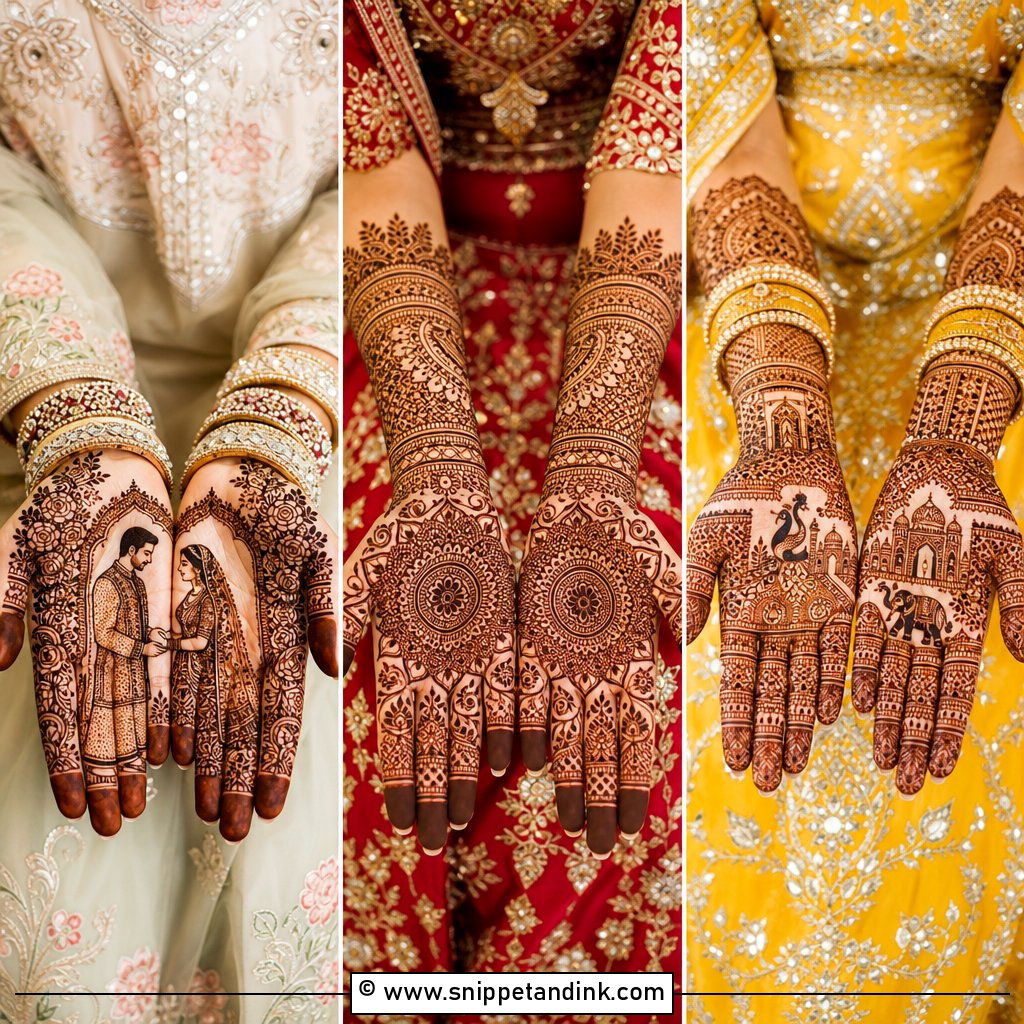
Full coverage on a sister usually means palm, fingers and wrist, with the forearm work stopping well below where the bride’s design ends. I build it from florals, paisleys and jaali, and I keep the center of the palm the most detailed because that’s where the stain comes up darkest. The wrist is where I leave air. A crowded wrist blurs once the stain deepens and bangles start rubbing it. Small personal marks like the bride’s initial or a tiny shehnai can hide inside the filler, and the whole layout sits most naturally with lehengas, shararas and traditional sarees.
2. Arabic Sister Wedding Mehndi Design
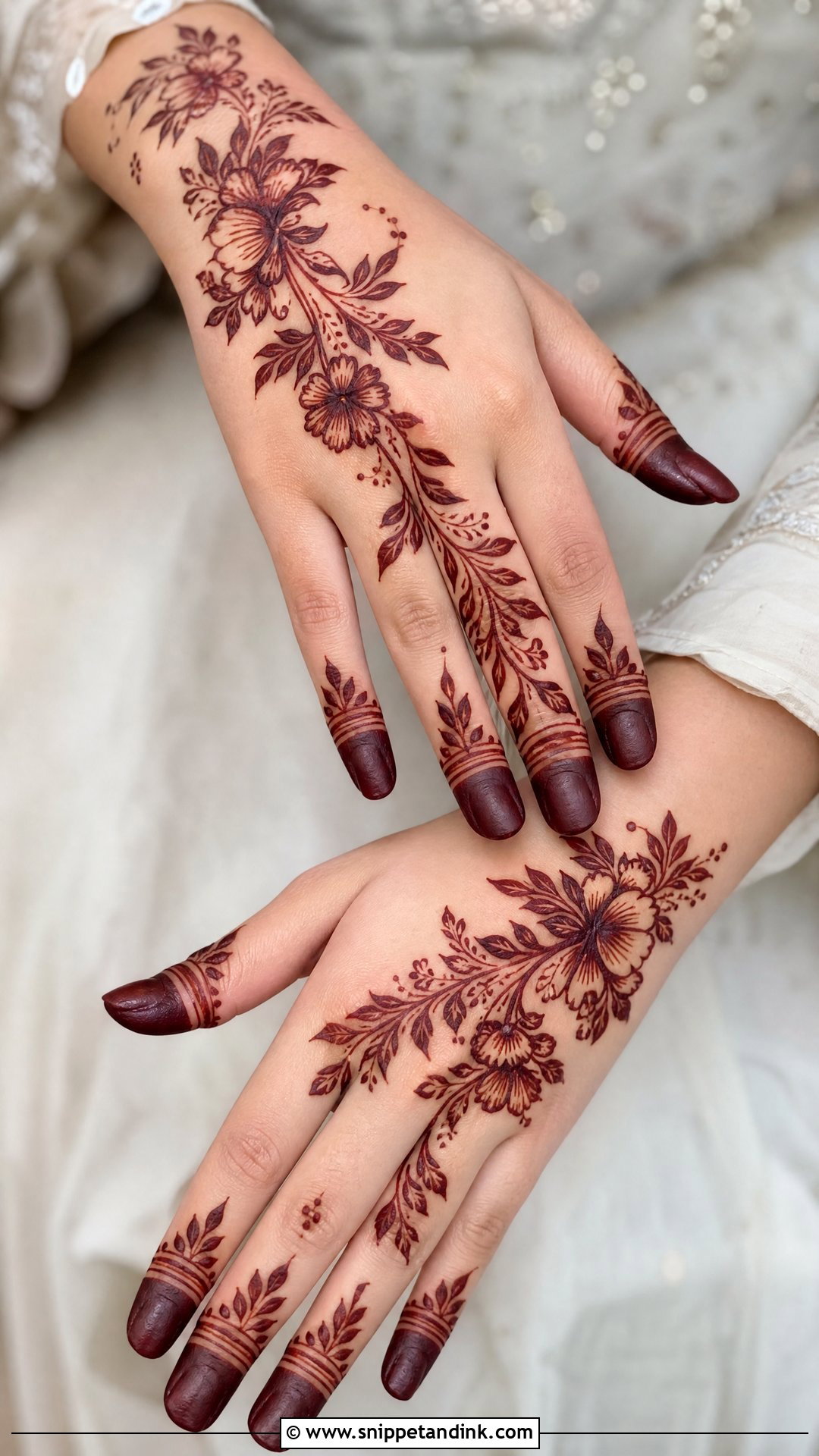
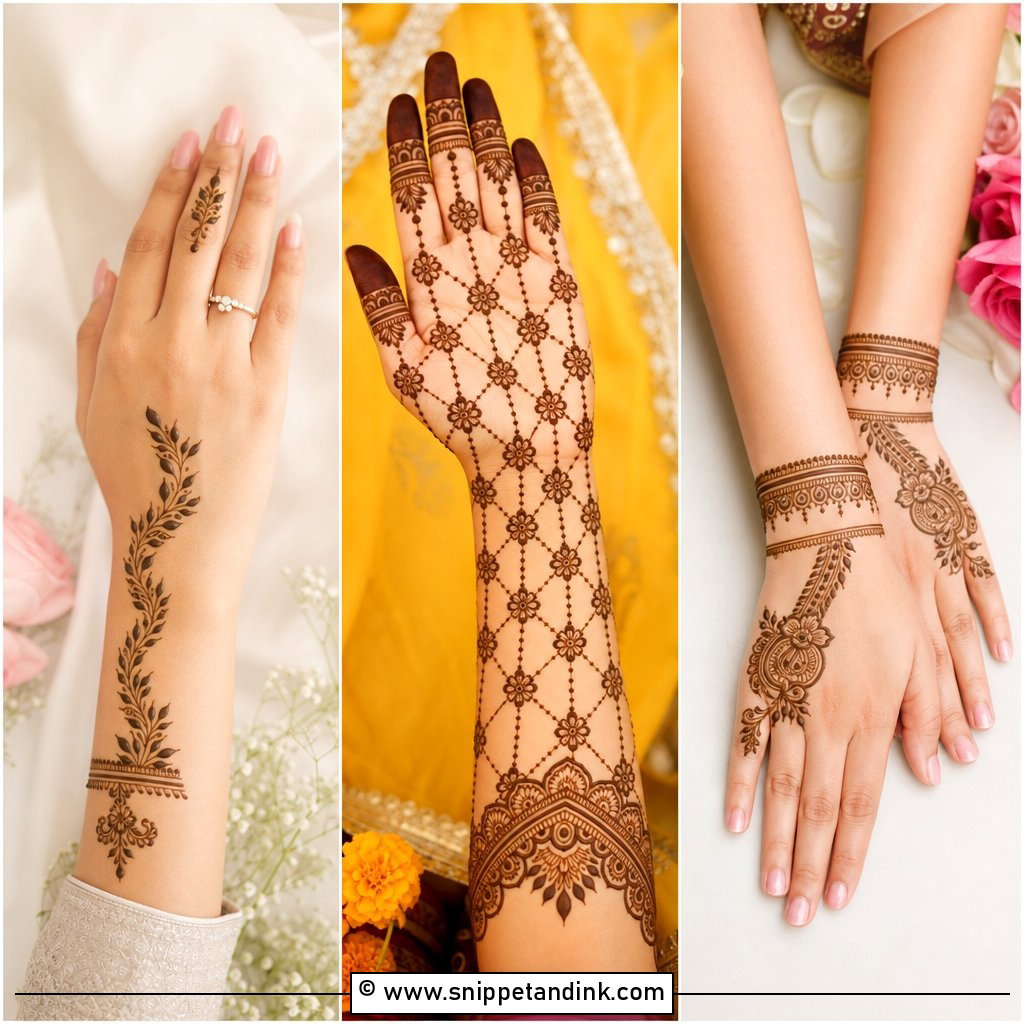
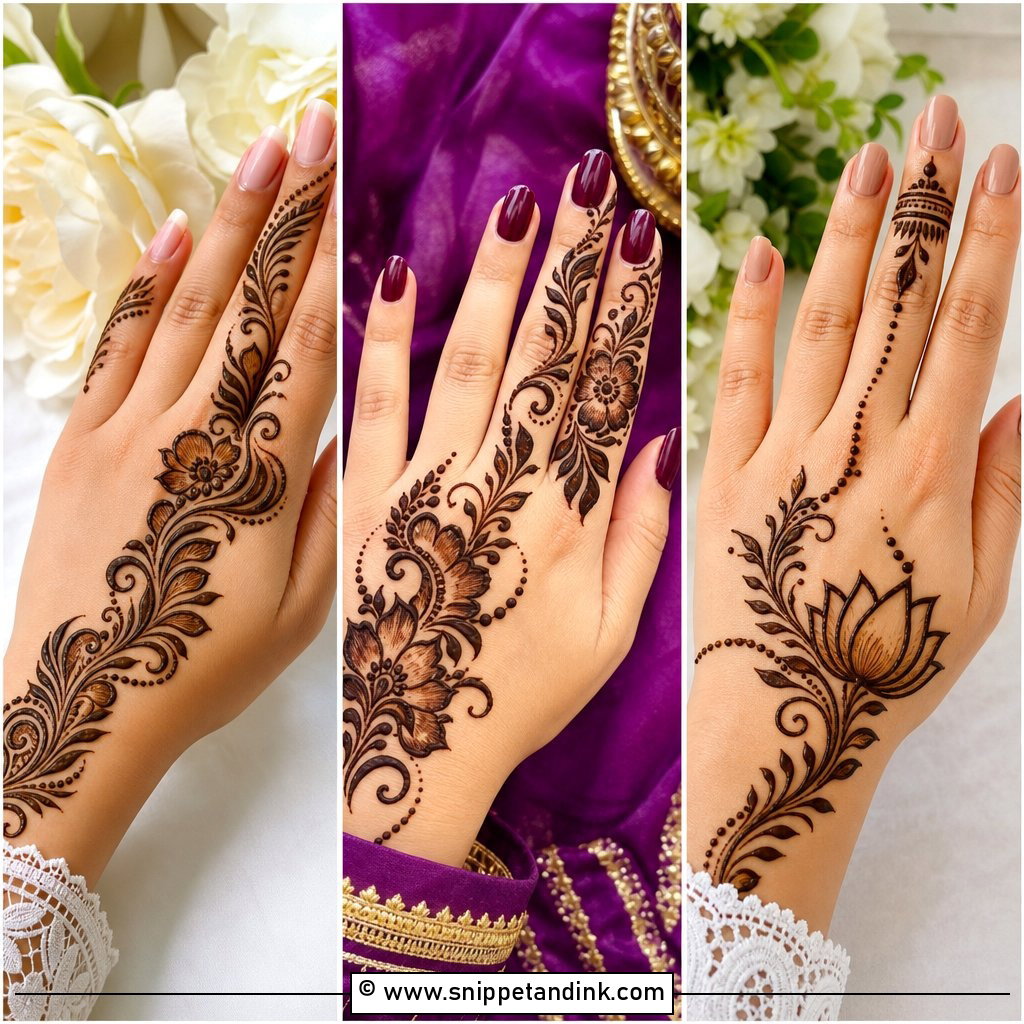
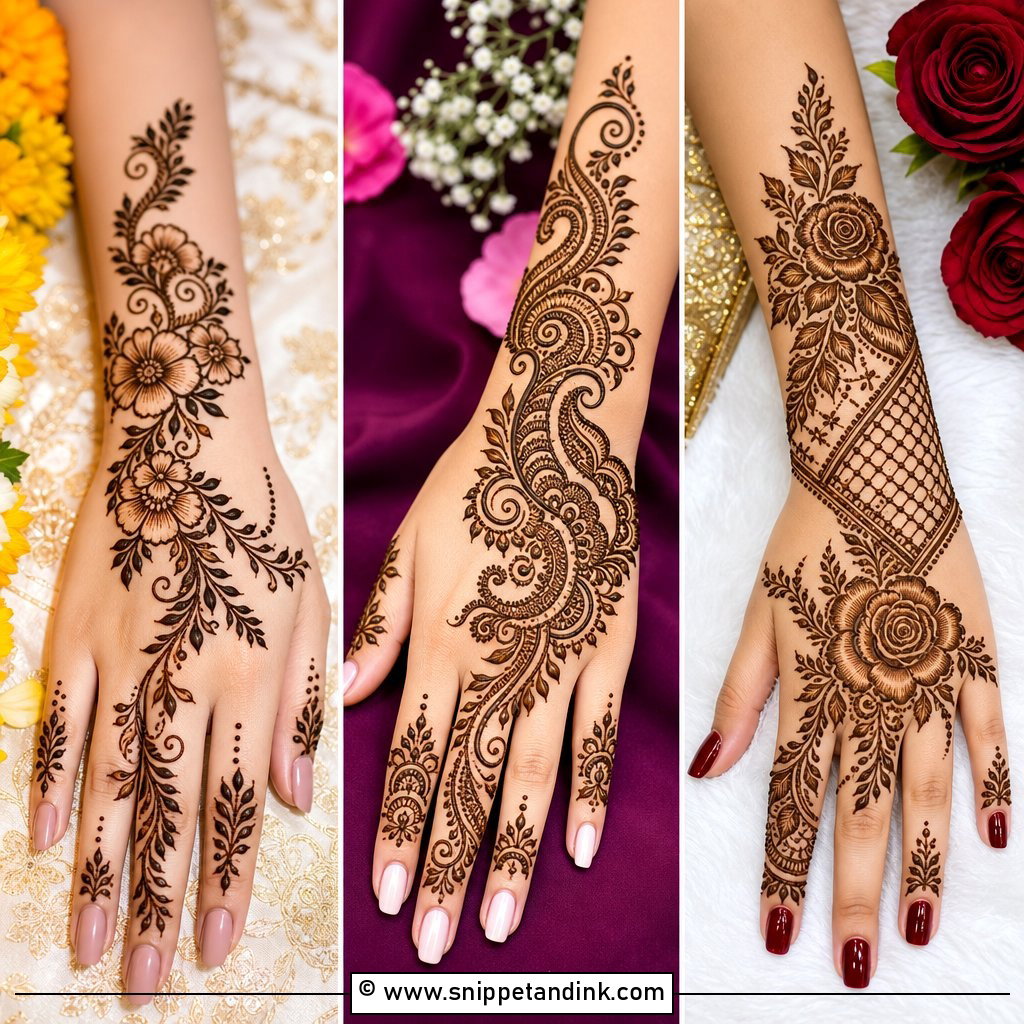
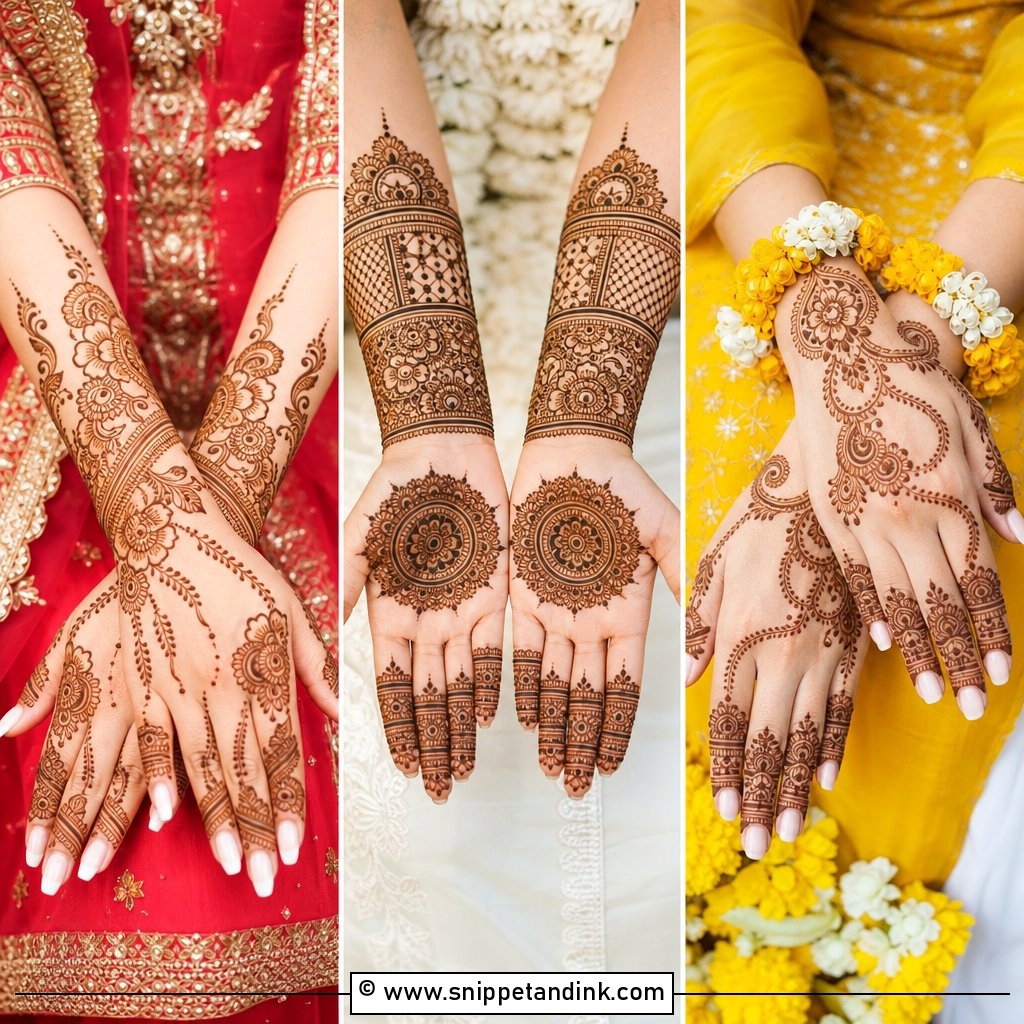
Short on sitting time? An Arabic sister wedding mehndi design takes me a fraction of the time of a full Indian hand, because the flow runs diagonally and the bare skin does half the work. Bold flowers, shaded petals and leafy vines carry it. For a wedding I thicken the outlines a little, since very fine Arabic lines can stain patchily at the edges, and I add finger detailing plus a wrist cuff so it reads as occasion henna rather than an everyday trail. It’s the design I suggest to the sister who will be greeting guests and dancing, since there’s less paste to smudge while it sets.
3. Indo Arabic Sister Wedding Mehndi Design
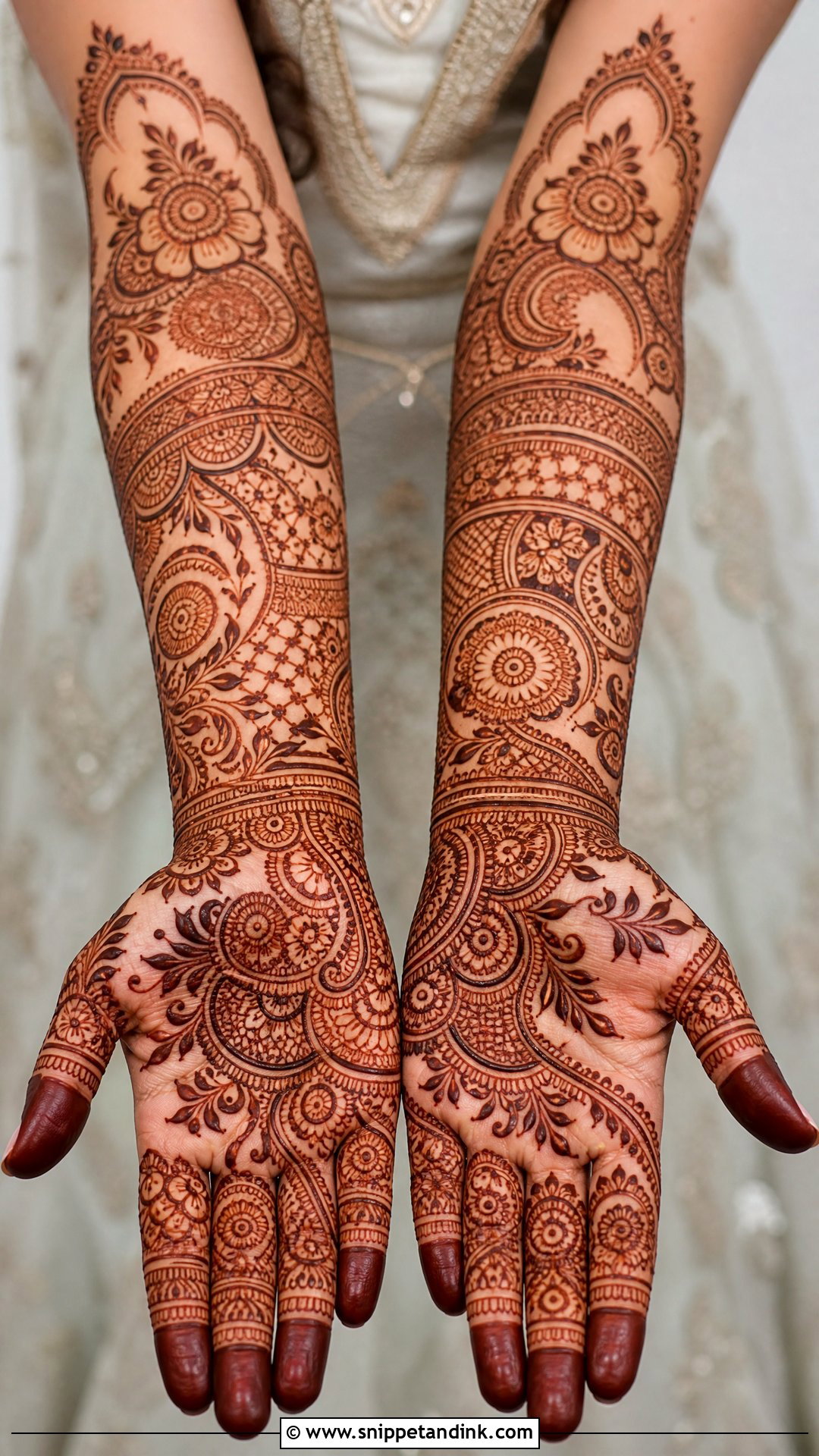
Indo-Arabic borrows the diagonal flow of Arabic work and fills parts of it with Indian detail: paisley bands, tiny checks, leafy borders. On a sister I usually start a floral trail on the palm and let it widen into those filled bands toward the wrist, which reads rich but sits lighter than bridal coverage. If your outfit has mirror work or zari motifs, show me the blouse. Repeating one shape from the embroidery ties the hands to the clothes far better than piling on more filler.
4. Back Hand Sister Wedding Mehndi Design
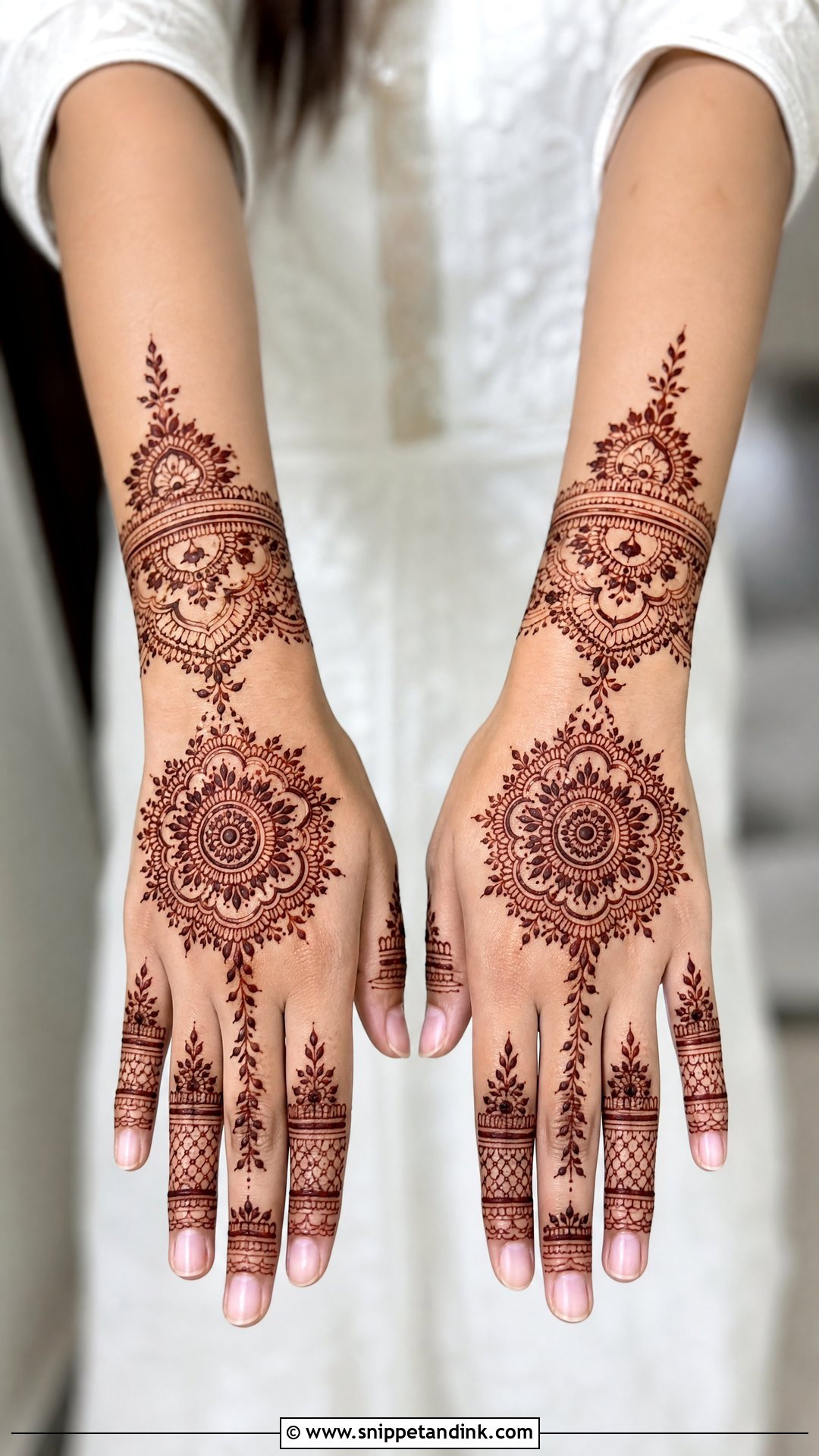
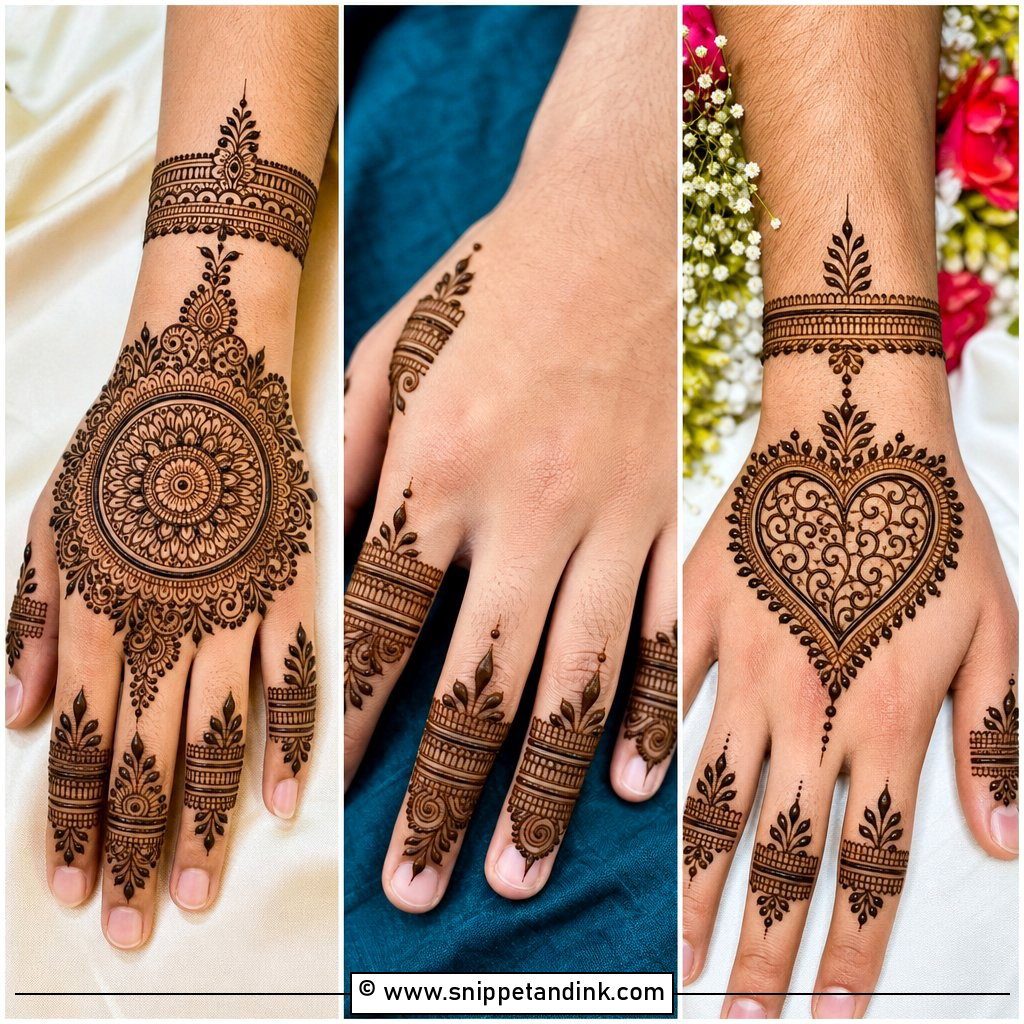
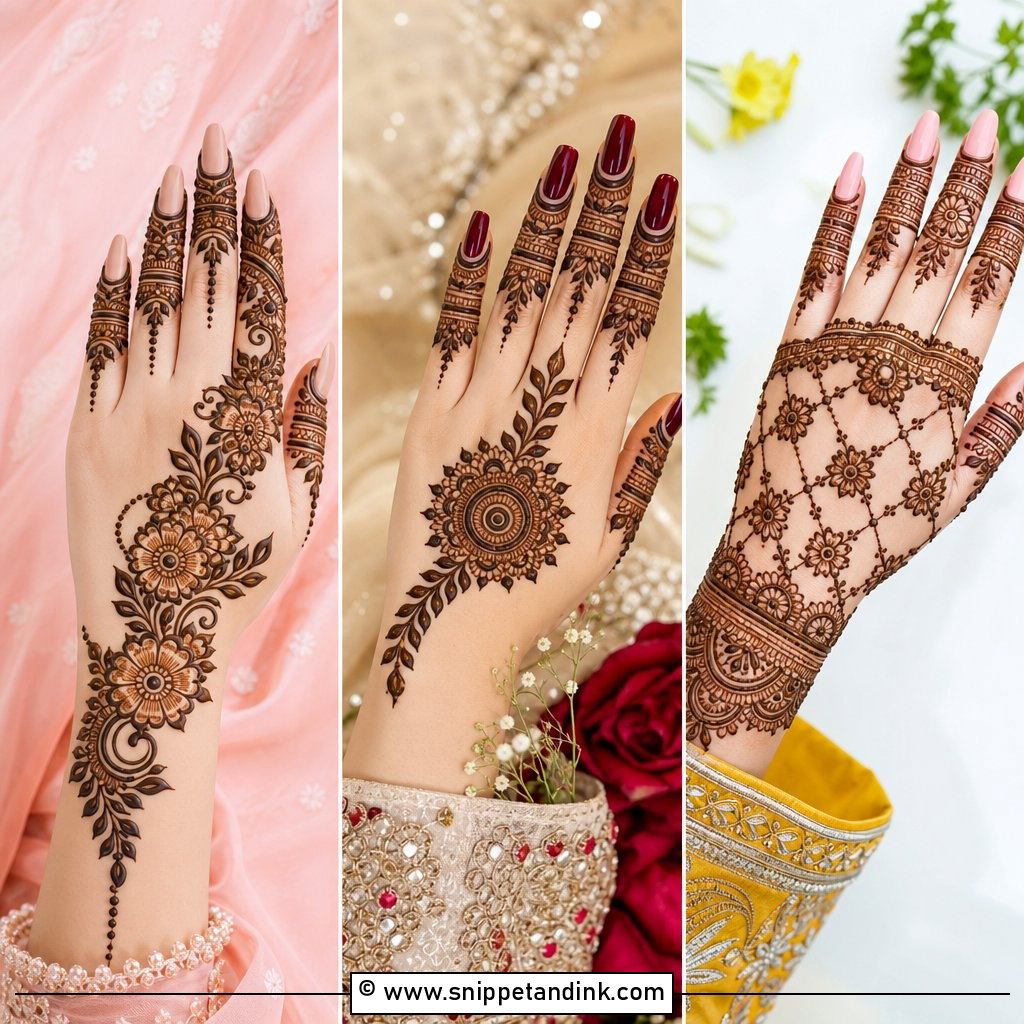
The back of your hand is what the camera catches most: holding a clutch, pinning the bride’s dupatta, adjusting a necklace. I plan back-hand work from the fingertips down, usually a central mandala, a bracelet band at the wrist and detailed finger caps. Leave gaps where your rings sit, otherwise the metal covers the very lines you sat still for. Worth knowing before you choose: skin on the back of the hand is thinner and drier than the palm, so the stain comes up a shade or two lighter. It does dry faster, which helps on a crowded day.
5. Front Hand Sister Wedding Mehndi Design
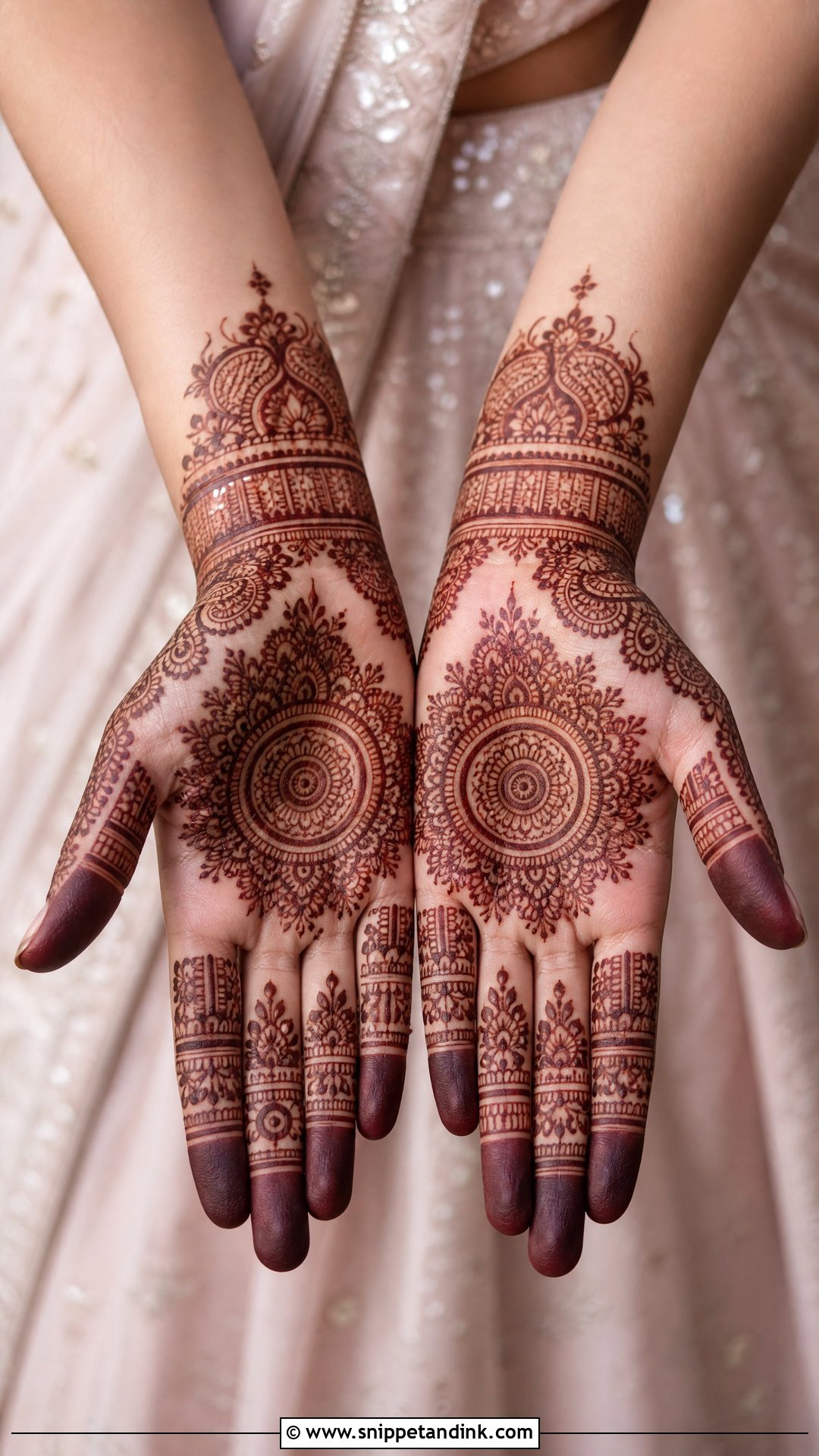
Palms stain darkest because the skin there is thicker and warmer, so a front hand sister wedding mehndi design is where your henna will look boldest. I lay it out around a central mandala with paisley corners and filled fingertips, then settle the density with you: dense Indian detailing to the wrist, or a neat center with Arabic vines opening toward the fingers. Before I start, I ask you to put your palms together. A good front-hand layout joins into one picture that way, and that’s exactly how you’ll hold them up at the haldi, the chooda ceremony and the family blessings.
6. Mandala Sister Wedding Mehndi Design
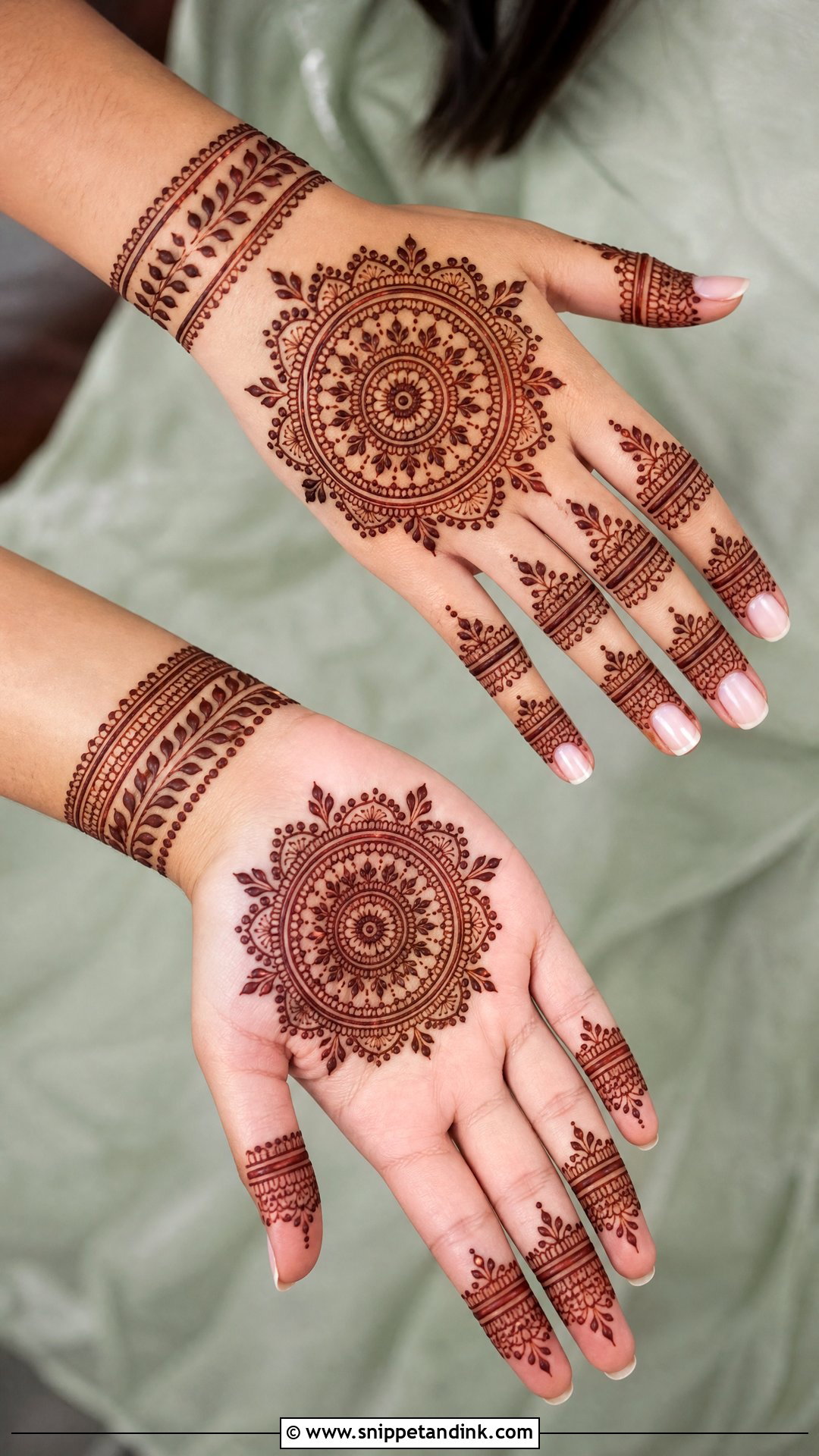
Symmetry is the whole point here, and it’s harder than it looks. I mark the center first, usually a little below the true middle of the palm, because a mandala placed dead center looks off once the fingers curl. Around it go finger patterns, leafy wrist bands and fine circular borders, kept spare or full depending on your outfit. Younger sisters and cousins often prefer it since it looks festive without reading as bridal. On the back hand it behaves like a piece of hand jewelry; on the palm it takes a deep, even stain.
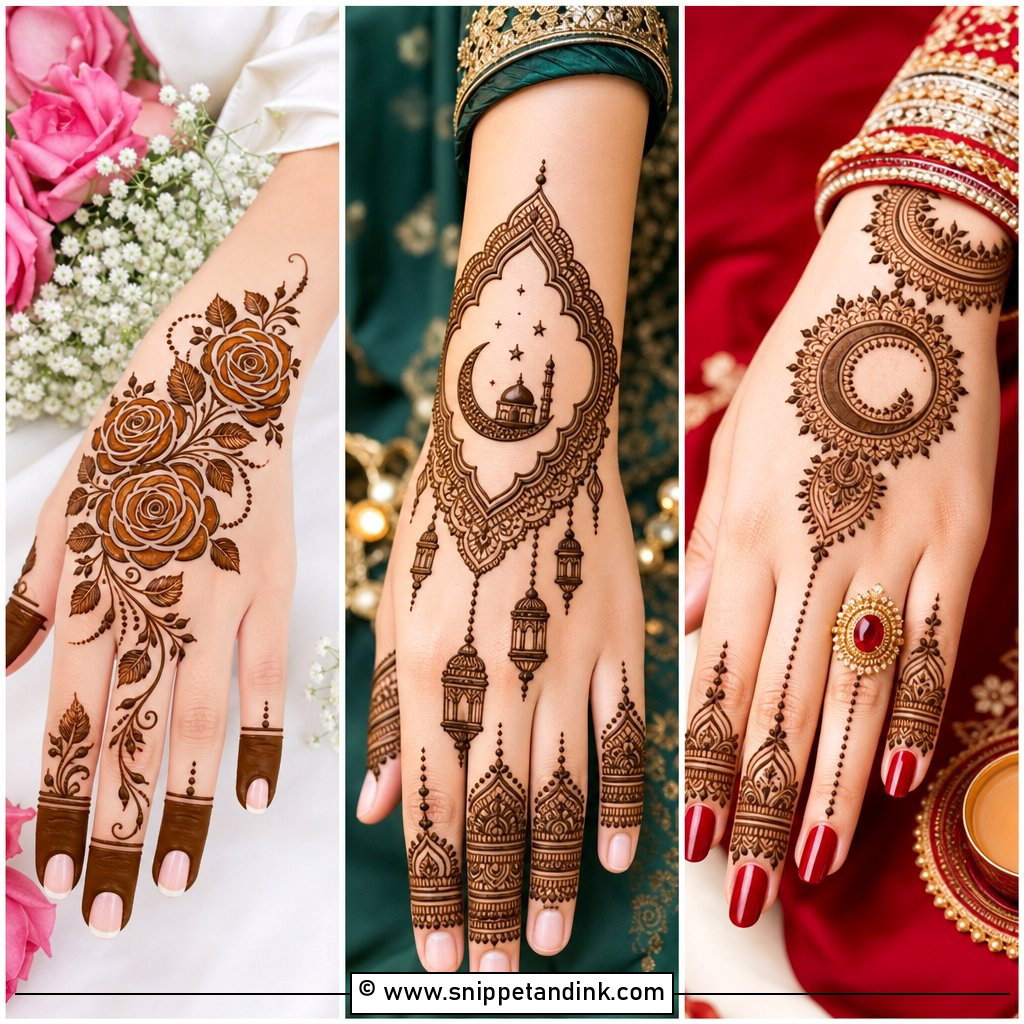
7. Floral Sister Wedding Mehndi Design
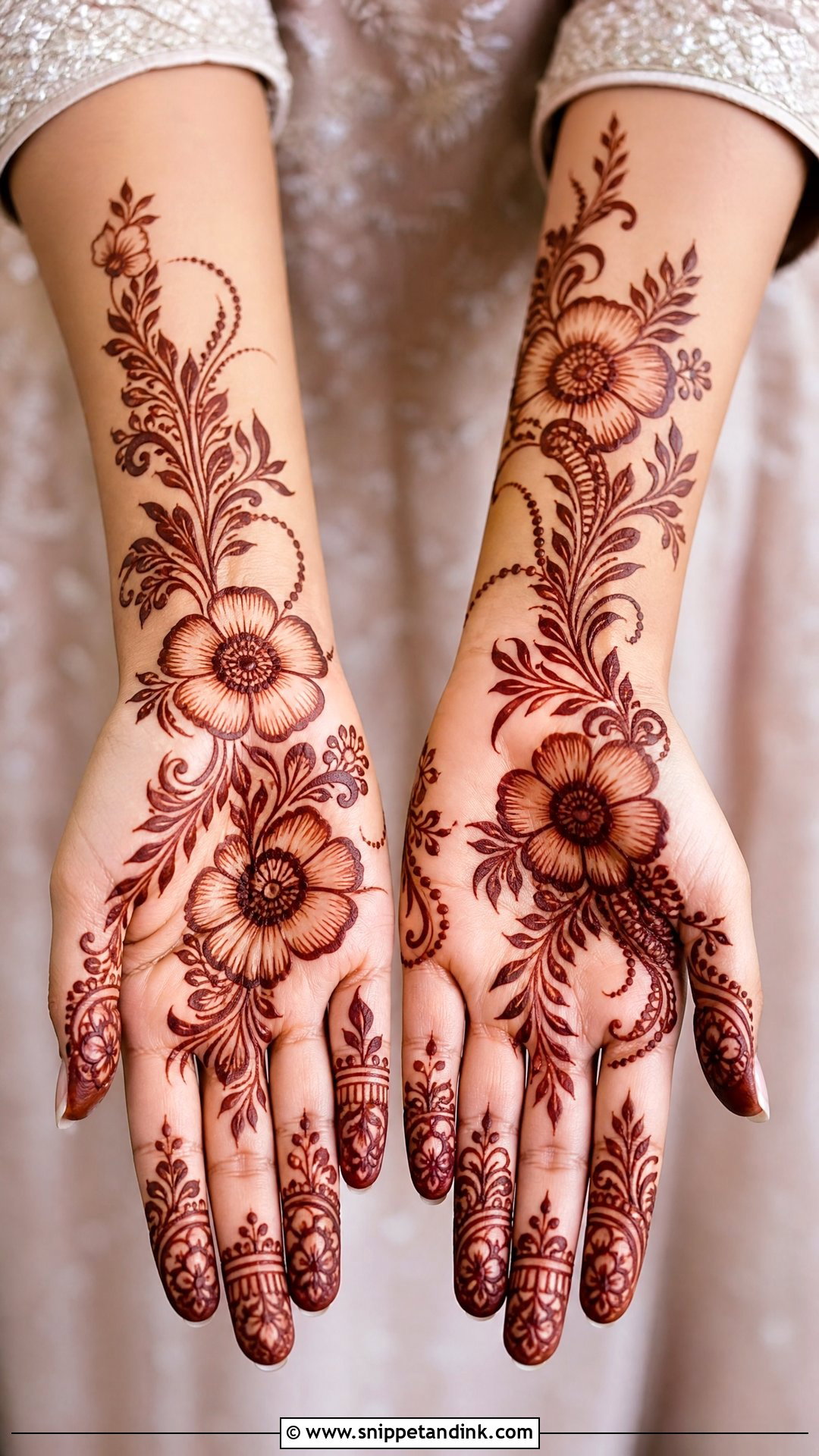
Flowers are the most forgiving motif I draw, which is why florals suit almost any outfit, from pastel lehengas to bright silk. Large blooms, small buds, shaded petals and trailing leaves can flow across the palm, back hand and fingers. My one firm opinion: bold outlines with fine inner strokes. Henna lines soften slightly as the stain develops, and petals drawn only in hairline strokes lose their shape by the second day. If your dress has rose, lotus or marigold embroidery, bring a photo and I’ll echo that same bloom.
8. Paisley Sister Wedding Mehndi Design
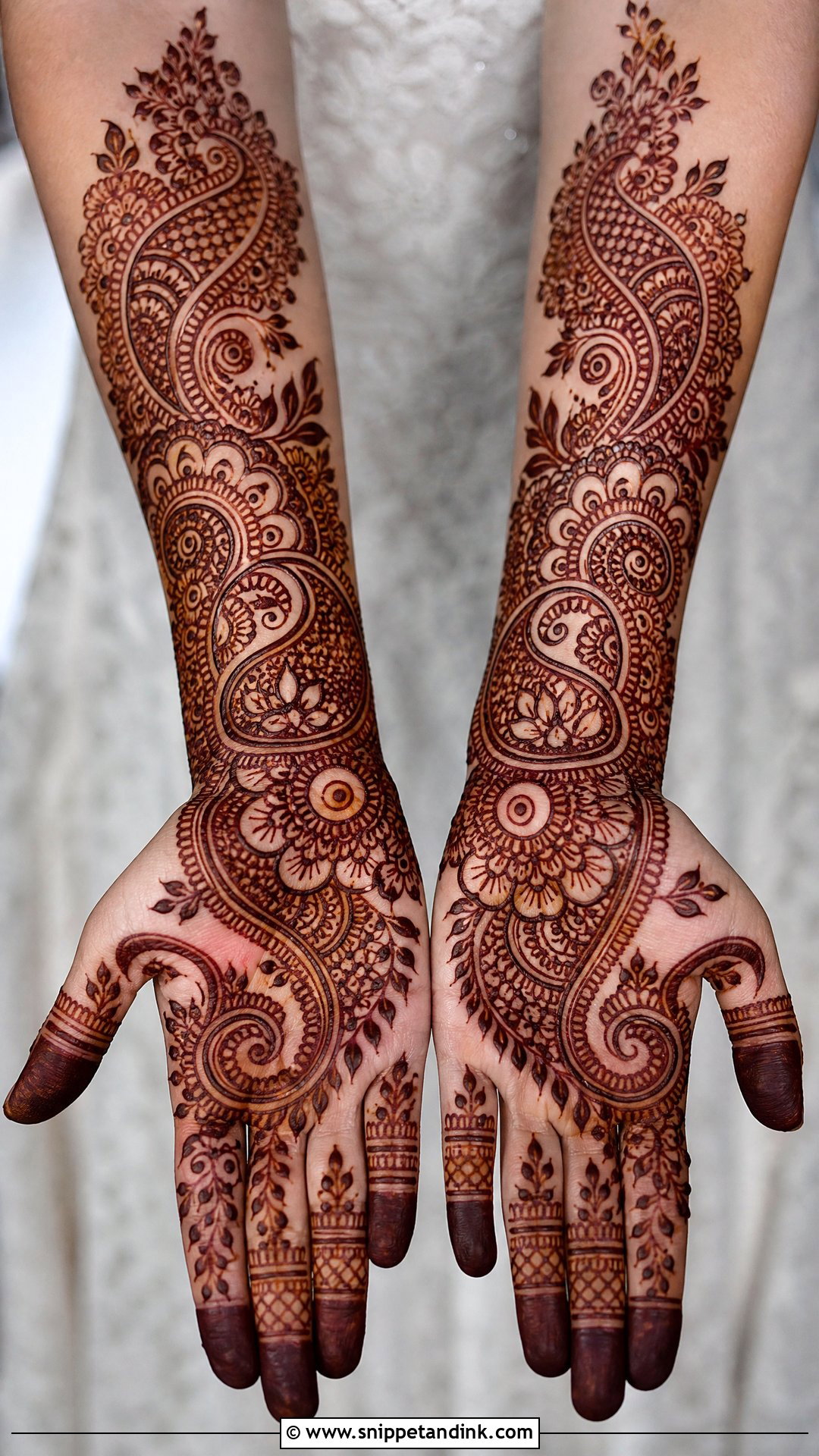
Paisley is the shape most families picture when they think of wedding mehndi, and it carries that traditional weight on a sister’s hands without needing full coverage. I’ll usually give the palm one or two large paisleys filled with checks, spirals and tiny leaves, then match the fingers with bands and filled tips and finish the wrist like a bracelet. Long, slim hands suit paisleys best because the curve has room to stretch. On a small, broad palm I’ll draw one paisley instead of two, or the shapes start crowding each other. Leave open skin and a floral trail between them if you want it to feel current.
9. Minimal Sister Wedding Mehndi Design
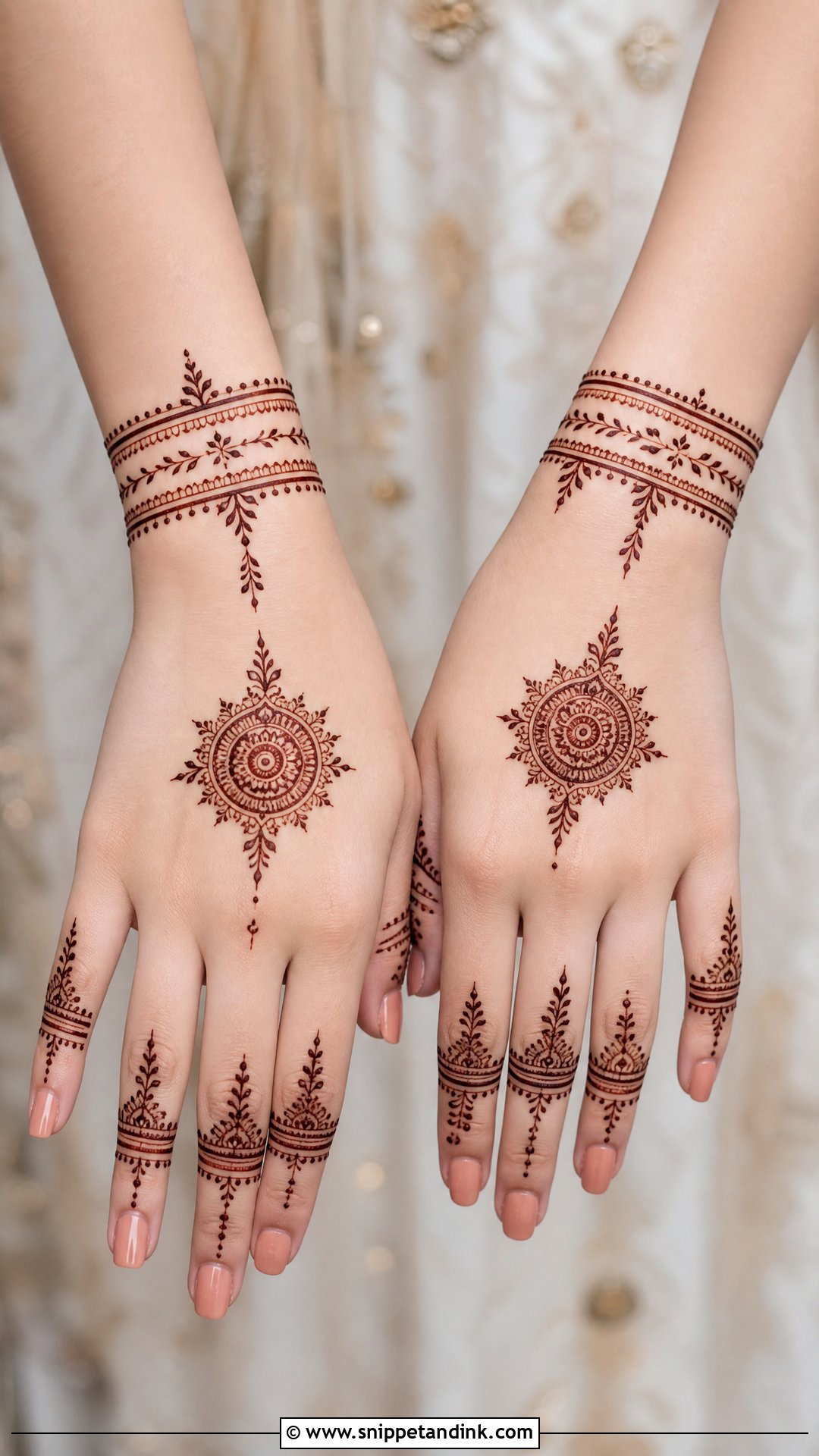
Not every sister wants a full hand, and a small design can still look festive if it’s planned rather than left half-done. Picture a neat back-hand mandala, thin finger detailing, a small wrist cuff and a few leaves. The difference between minimal and unfinished is spacing: I place every element deliberately and keep the line weight consistent throughout. This suits modern outfits, destination weddings with packed schedules, and anyone who’d rather not sit still for two hours. With so little paste on the skin, the stain carries everything, so this is the design where I’m strictest about aftercare.
10. Simple Sister Wedding Mehndi Design
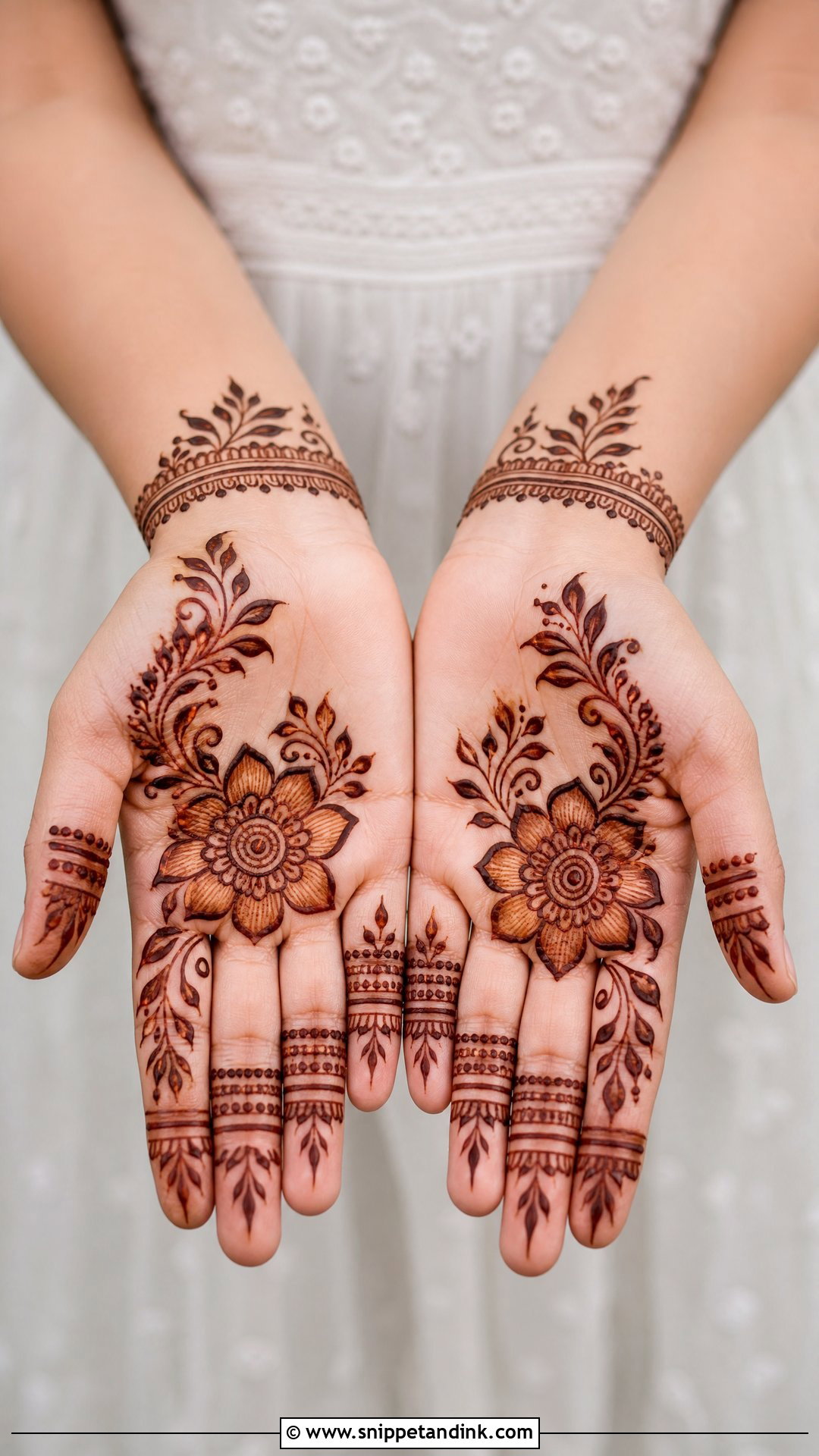
Simple and minimal aren’t the same thing to me. Simple can still cover the palm; it just uses fewer techniques, with a floral pattern, leafy fingers, a small wrist border and light shading but no dense filler. What makes it work is clean placement and an unbroken flow from fingers to wrist. I often do this on the sister who’s running errands for the family and can only give me half an hour. Want it more formal? Fill the fingertips and add a bracelet line at the wrist. That small change moves it from sangeet-casual to wedding-morning.
11. Bridal Sister Mehndi Design
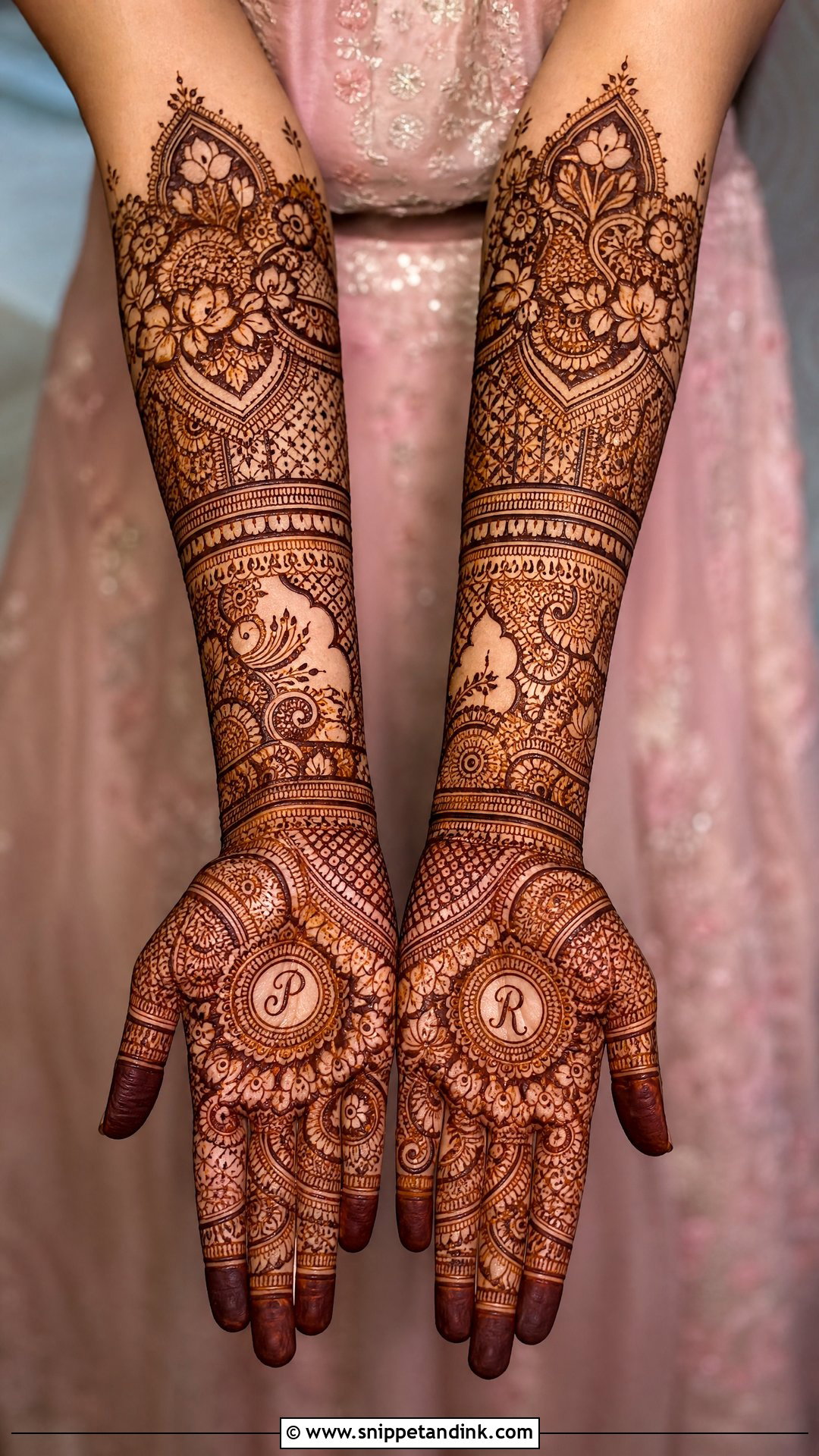
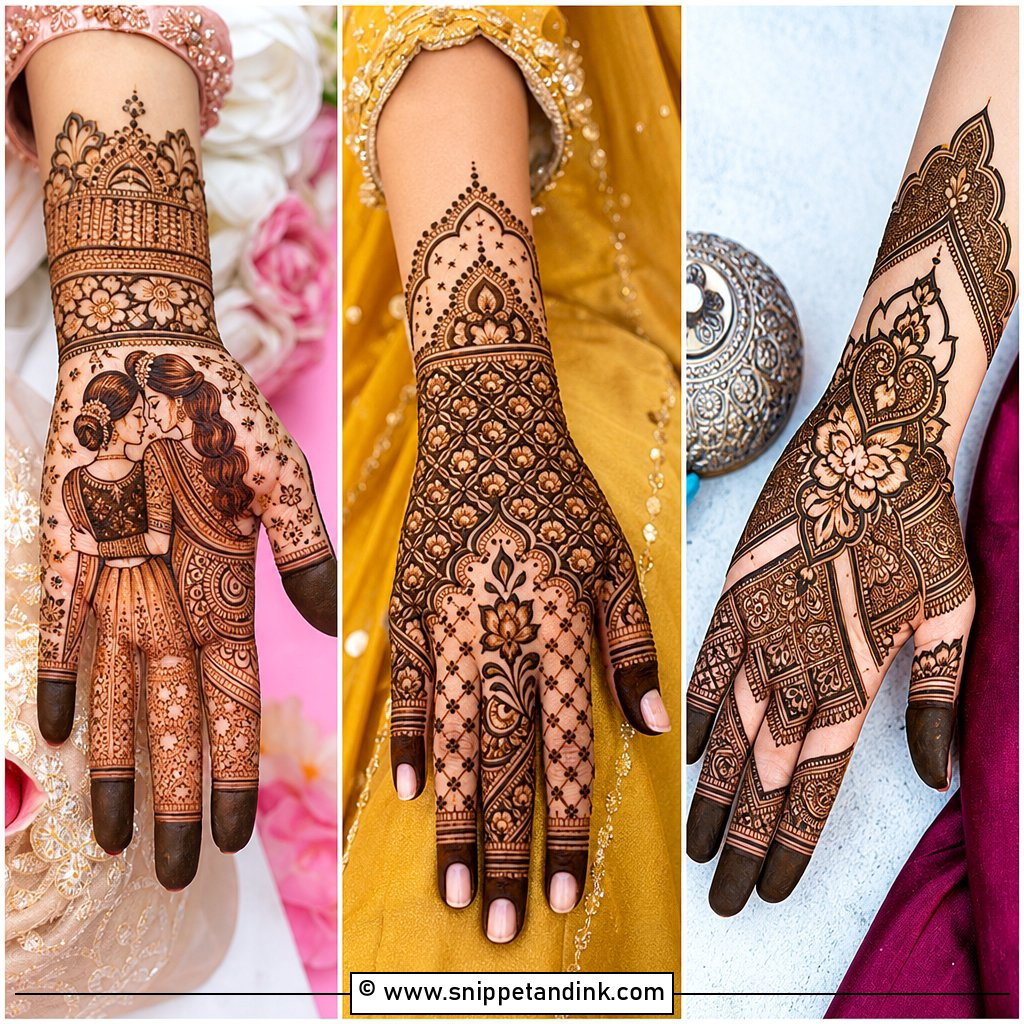
The bride’s real sister often wants something close to bridal, and I can take it from fingertips to forearm with florals, paisleys, mandalas, jaali and fine borders. The difference from the bride’s hands lies in density. I leave more skin showing between motifs and skip full-arm coverage and large portraits unless you specifically ask, because standing beside her you’ll want the two sets of hands to read as a pair, not as rivals. Her initial, the wedding hashtag in tiny script or a small doli can tuck into the filler as a family detail.
12. Modern Sister Wedding Mehndi Design
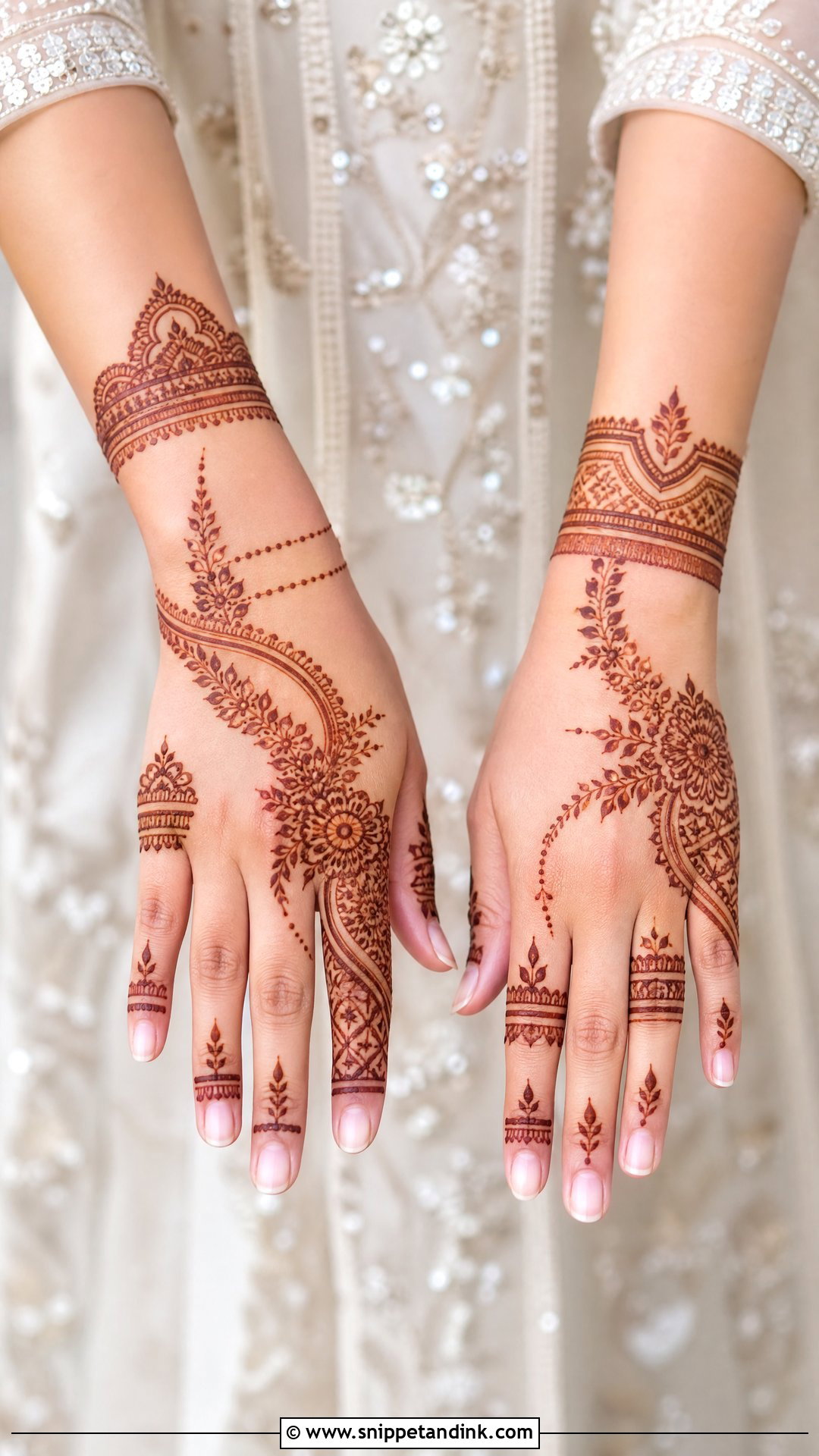
Modern sister henna leans on contrast: negative space, geometric bands, half-hand coverage and bold finger work, with bare skin left on purpose. I’ll add bracelet cuffs, ring-style finger chains or an asymmetric trail. The catch with geometry is that straight lines show every wobble, so this style needs a steady hand and a smooth, freshly filled cone. It sits well with contemporary lehengas, gowns and fusion sarees, and I suggest it most for cocktail-style sangeets and receptions where a dense traditional hand might feel out of step with the clothes.
13. Jaali Sister Wedding Mehndi Design
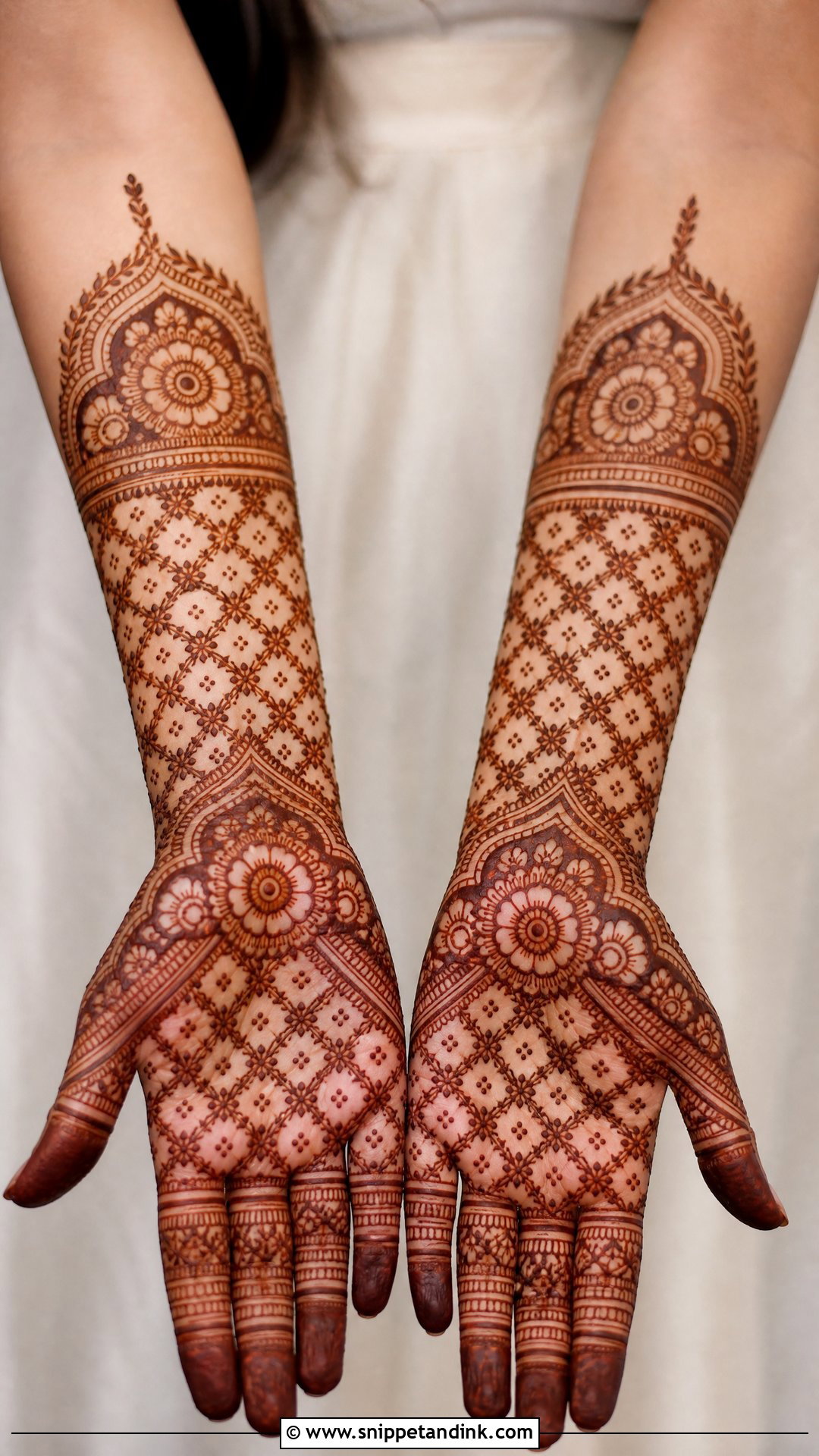
Jaali is the mesh: grids, tiny dots, small flowers and bordered panels that give skin a lace-like texture. I rarely use it alone at a wedding. It works best as filler around a mandala on the palm, or stretching toward the fingers on the back hand, where it can look almost like a glove. Mesh lines sit fine and close together, so if the paste is too runny they bleed into each other and stain as a dark smudge. I keep my cone tip tight for jaali. Wear it with net, chikankari or finely embroidered outfits and the textures echo each other.
14. Peacock Sister Wedding Mehndi Design
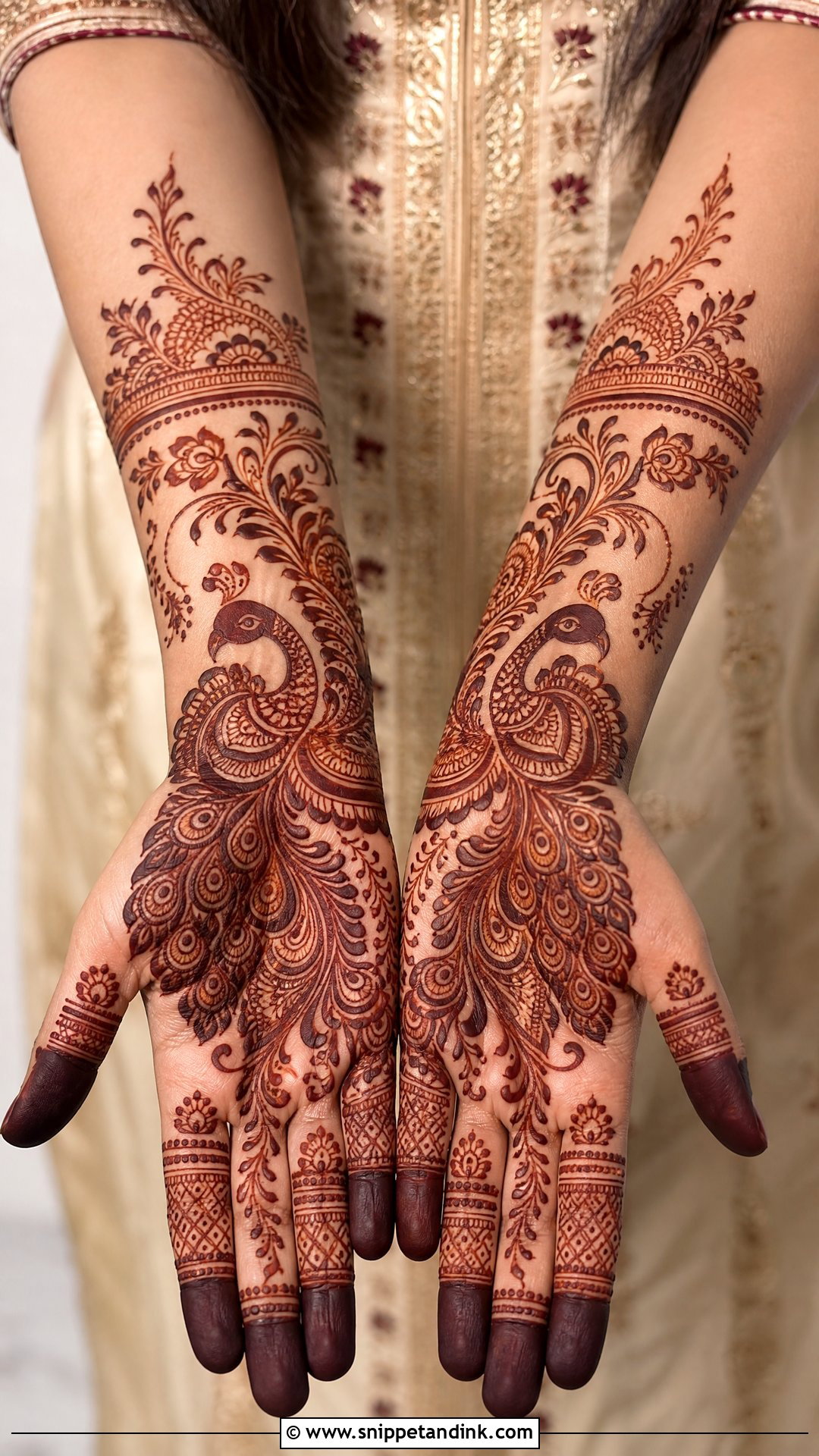
Peacocks bring a celebratory note that fits Indian weddings naturally. I place one main bird on the palm with paisleys, flowers and curved vines around it, and the feathers get the fine work of dots, thin lines and shaded spaces. My advice is one peacock, not three. Several large birds on a sister’s hand push it into bridal territory and leave the feathers no room to breathe. It can move to the back hand with a bracelet border, and it pairs well with jewel tones, silk and traditional gold.
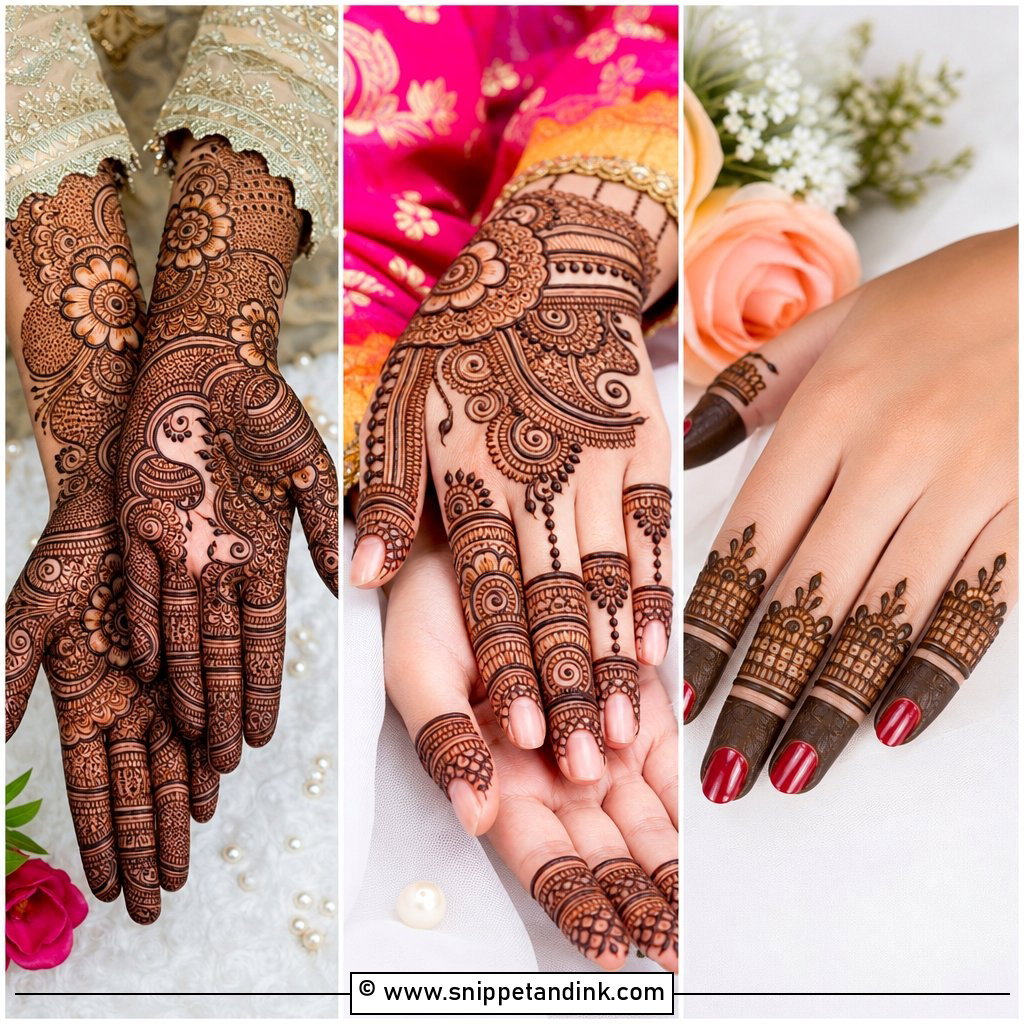
15. Jewelry Sister Wedding Mehndi Design
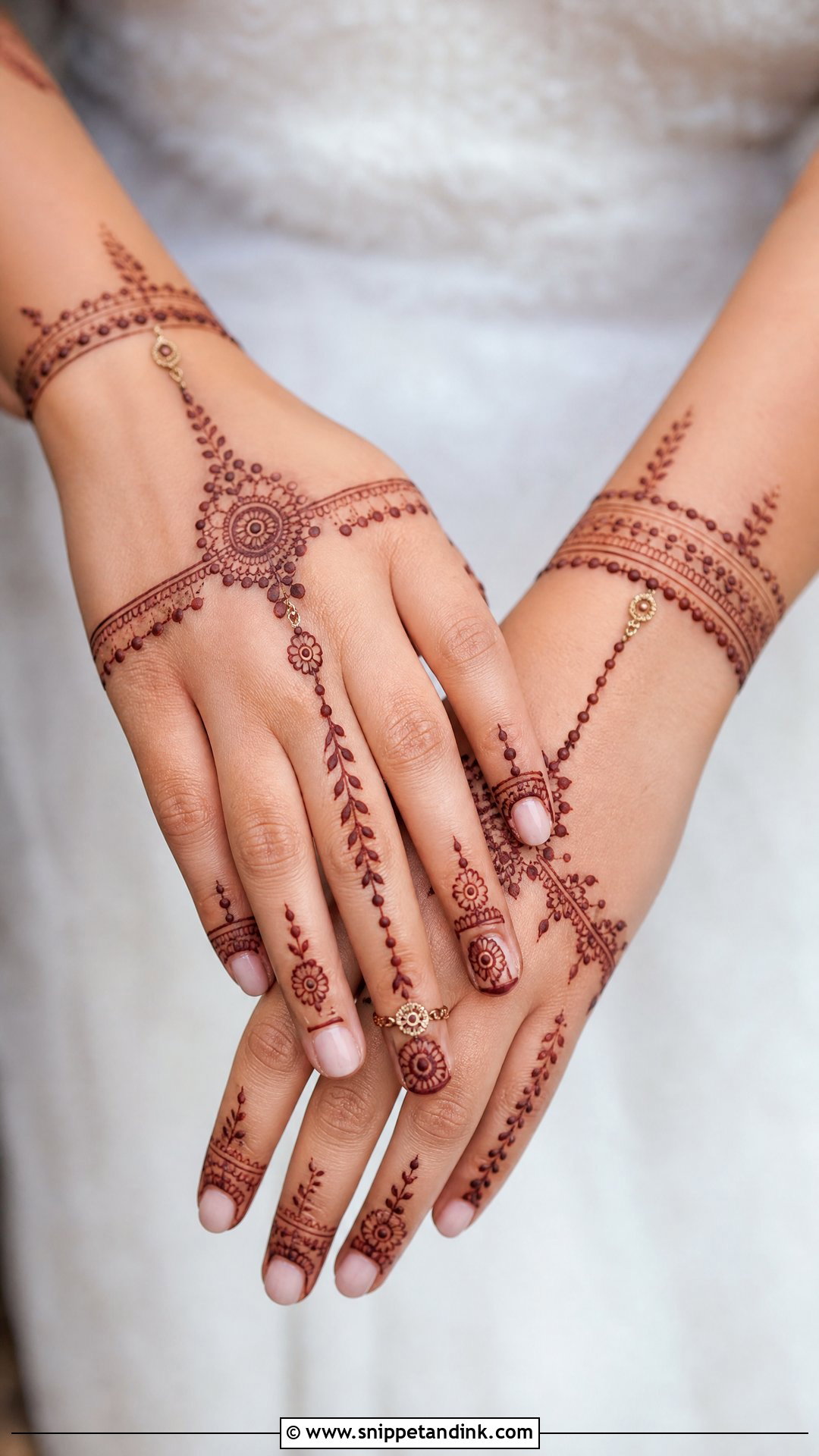
This design imitates accessories: ring chains, haath phool patterns, bracelet cuffs, finger bands and fine trails across the back of the hand. Before I draw it, I ask what real jewelry you’re wearing. If you’ve got a statement haath phool or stacked rings, I route the henna around them so the two don’t fight. The back hand is where it shows; the palm can stay plain or take a small mandala. You get a dressed-up hand for much less sitting time than full coverage.
16. Wrist To Forearm Sister Wedding Mehndi Design
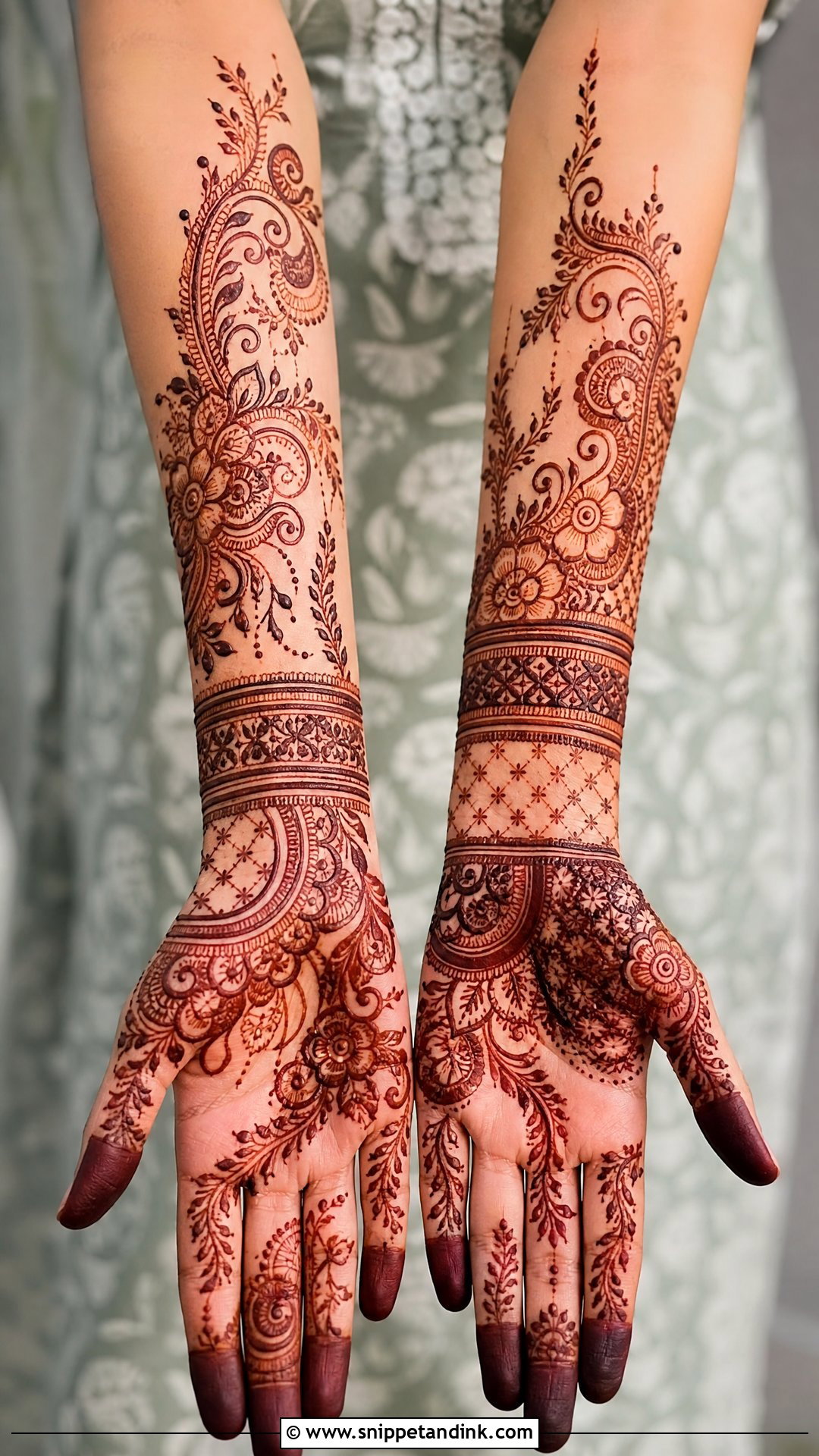
Extending up the forearm adds length without the full-arm commitment of bridal henna. I start with a bold cuff at the wrist and let paisleys, flowers and vines climb from there. It only pays off with short sleeves, sleeveless blouses or anything that leaves the forearm bare, so check your outfit before you ask for it; under a long sleeve it’s an hour of work nobody sees. For the bride’s sister I keep the forearm open enough to breathe and pair it with a simpler palm. Expect the forearm to stain lighter than the hand, as the skin there is thinner.
17. Finger Heavy Sister Wedding Mehndi Design
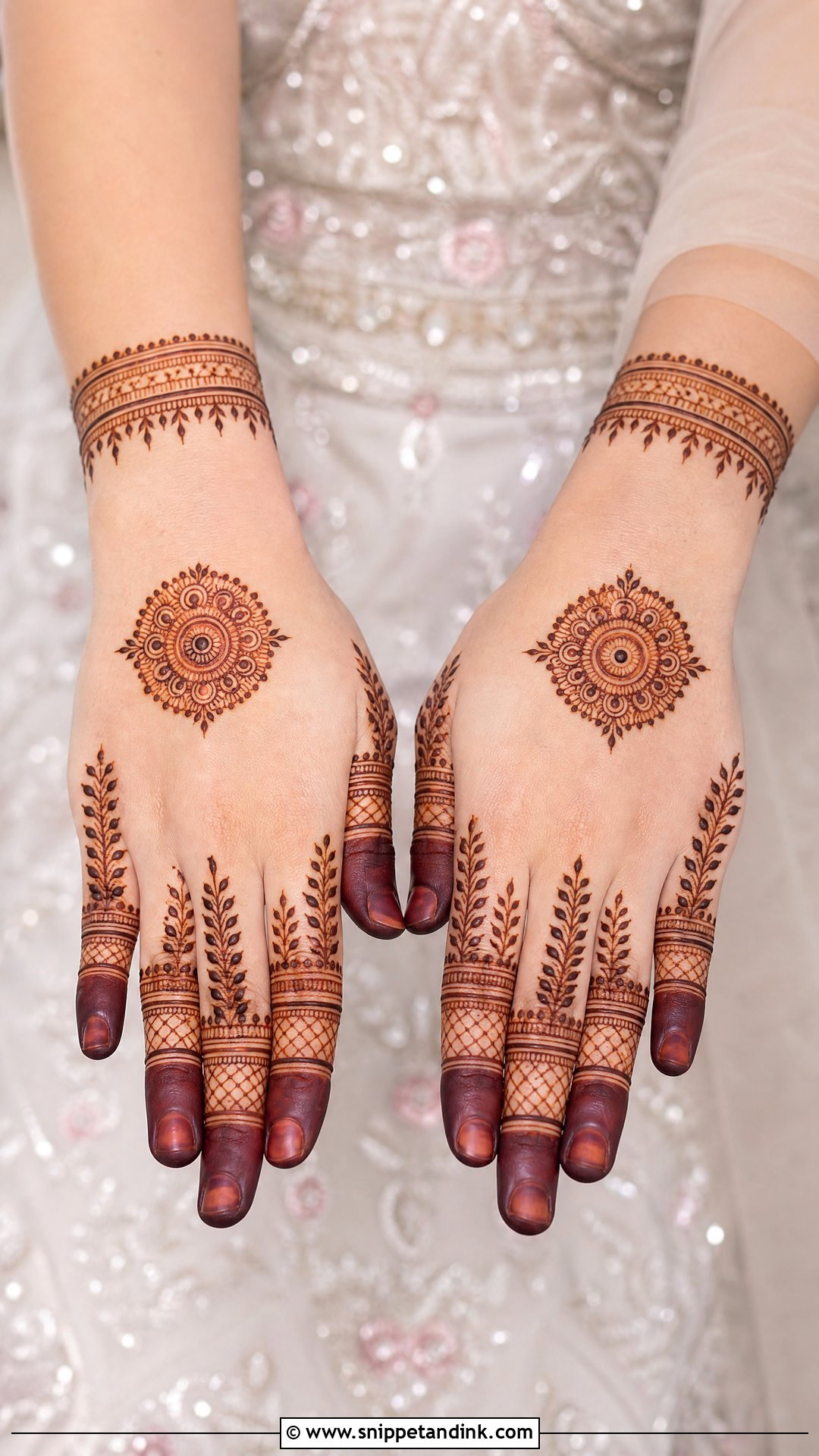
Here the drama lives on the fingers while the palm or back hand stays cleaner. Expect filled fingertips, ring bands, leafy lines, tiny checks and fine chains down each finger, with a small mandala or flower in the center. Fingertips take one of the darkest stains on the hand, so this layout gives strong color for little time in the chair. Do your nails before the appointment; painting them afterwards means scrubbing near fresh henna. I finish it with a neat wrist cuff or side trail so it reads as wedding henna.
18. Half Hand Sister Wedding Mehndi Design
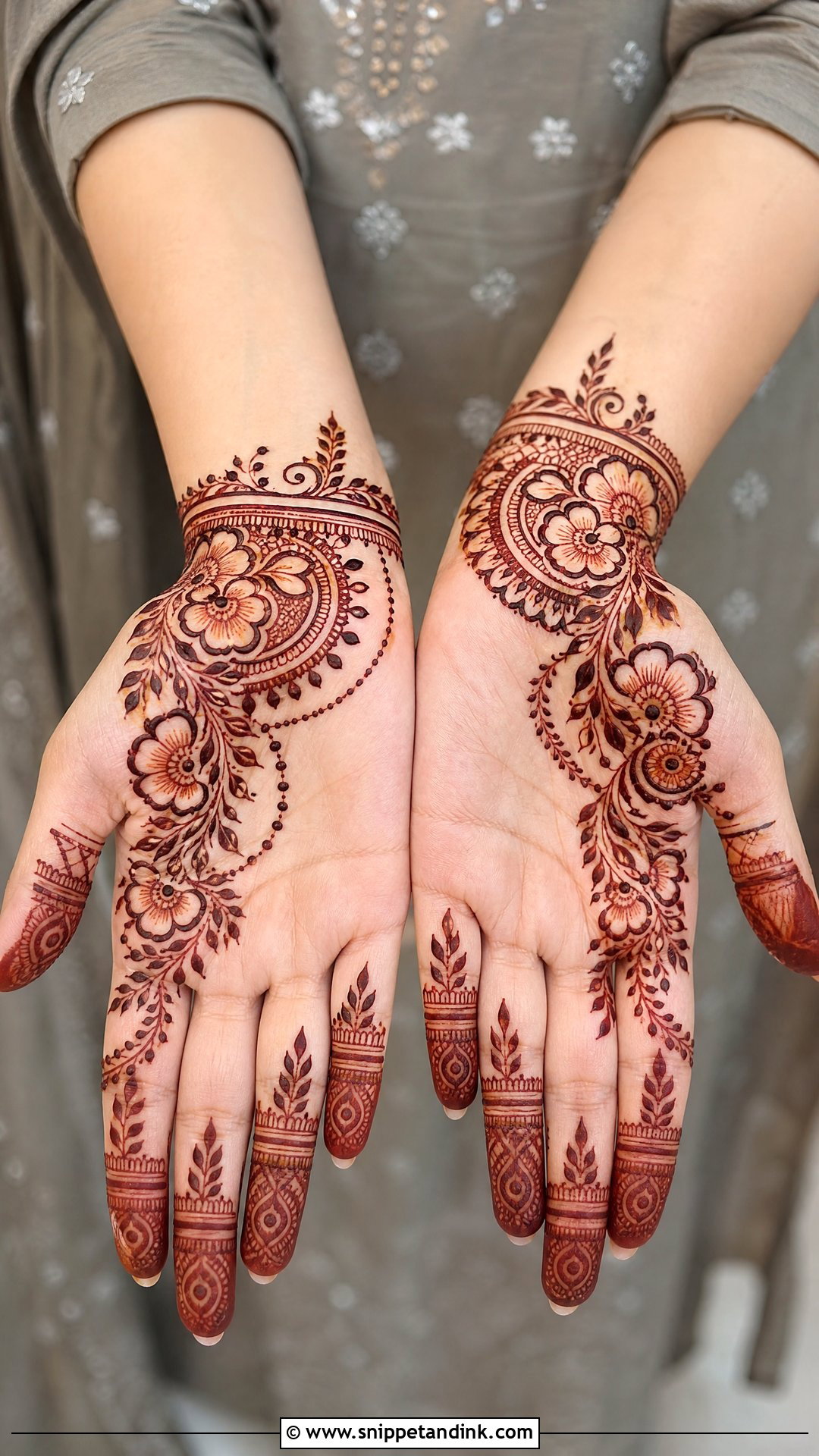
Half-hand designs either cover the fingers and half the palm, or rise from the wrist and stop before the center. Arabic trails, mandalas, florals and paisley panels all fit the format. It dries quickly and frees your fingertips sooner, which matters if you’re the one handing out sweets and fixing the bride’s jewelry all evening. One idea I like for sisters: make one hand slightly heavier than the other. The hand that wears your rings gets more detail, the other stays lighter, and it reads as deliberate rather than mismatched.
19. Portrait Sister Wedding Mehndi Design
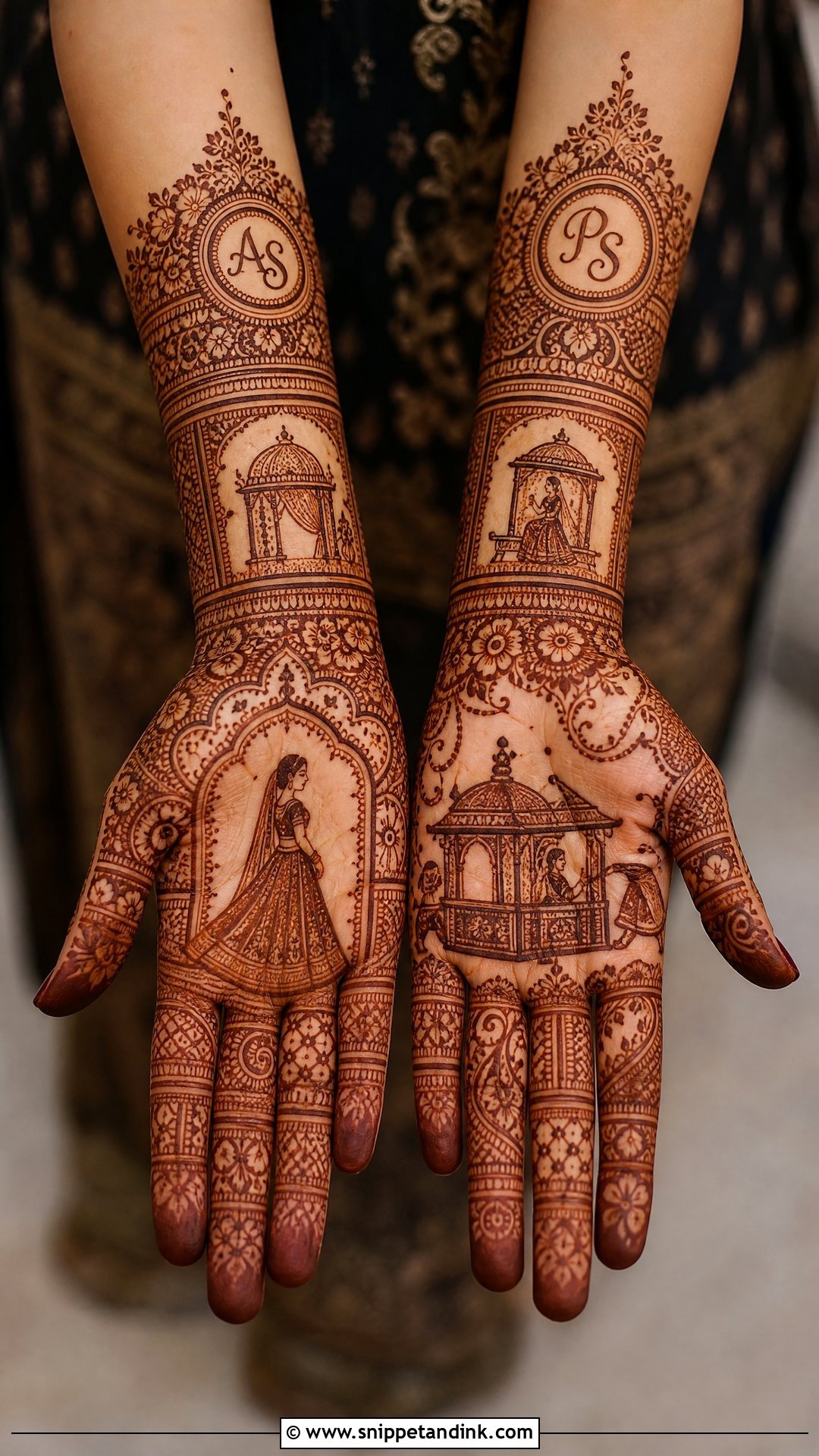
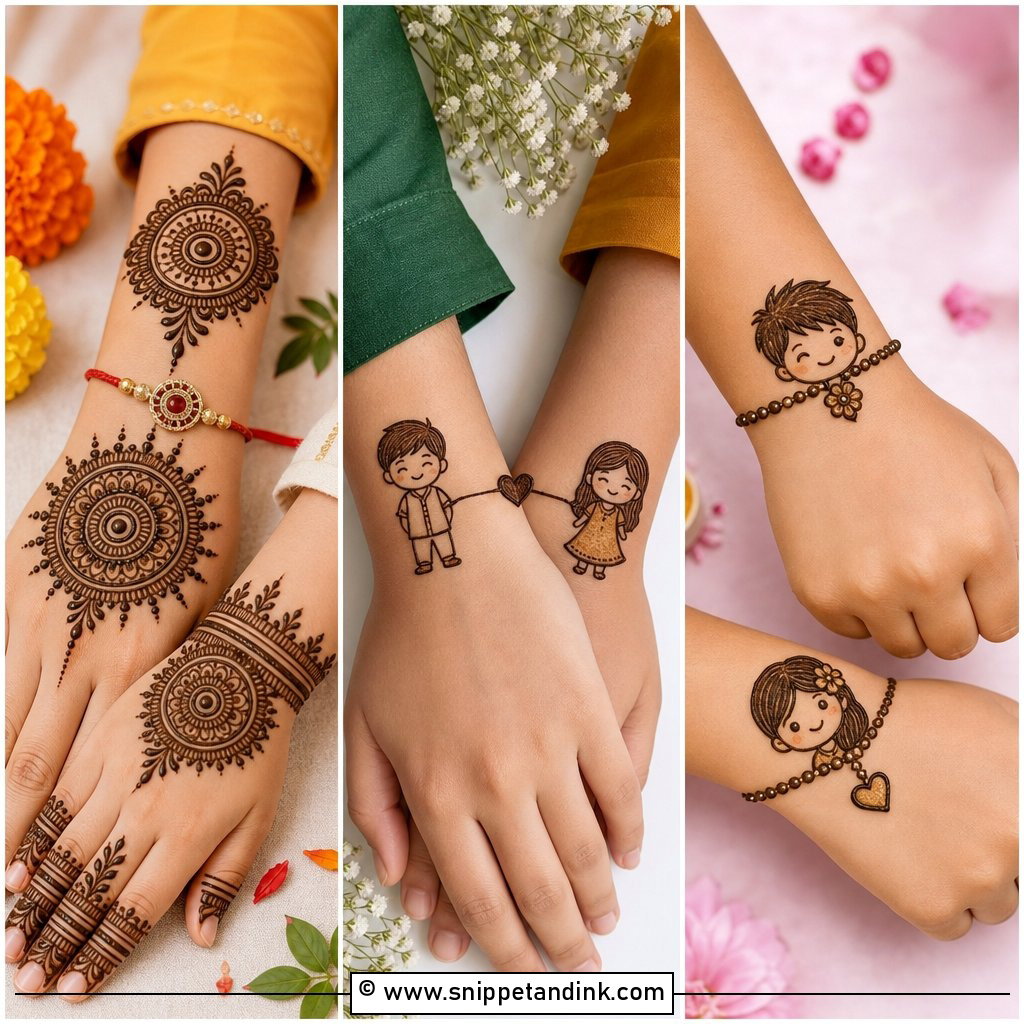
A full bridal portrait takes a lot of room, so for a sister I suggest small story motifs instead, such as a bride silhouette, doli, couple initials, a kalash or a symbol for the two of you. One palm carries those and the rest fills with florals, paisleys and jaali. Faces and figures are the hardest thing to draw in henna, because one slightly thick line on a nose or an eye changes the whole expression. Ask to see close photos of an artist’s figure work as a developed stain, not fresh paste, before you commit.
20. Matching Sister Wedding Mehndi Design
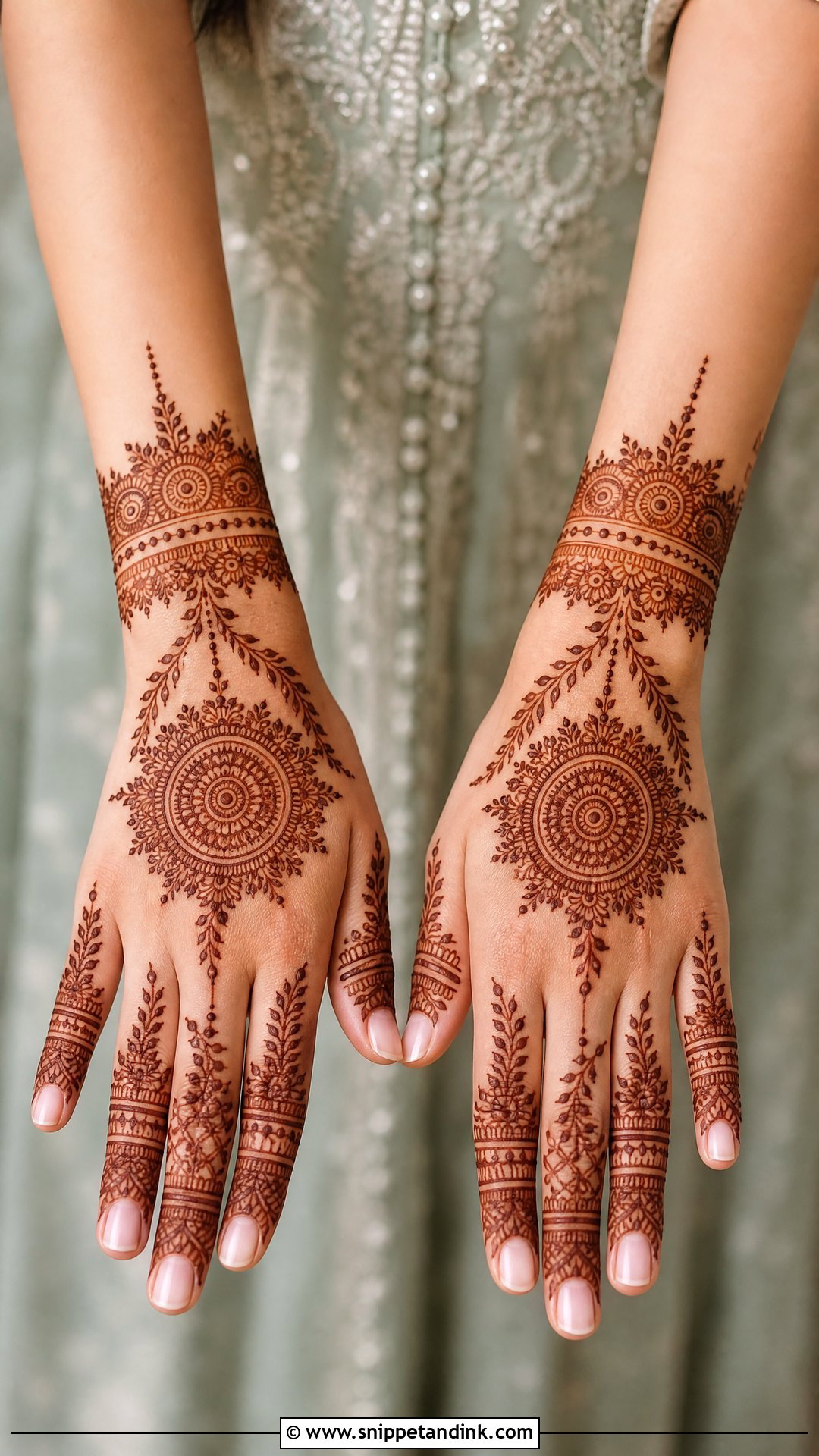
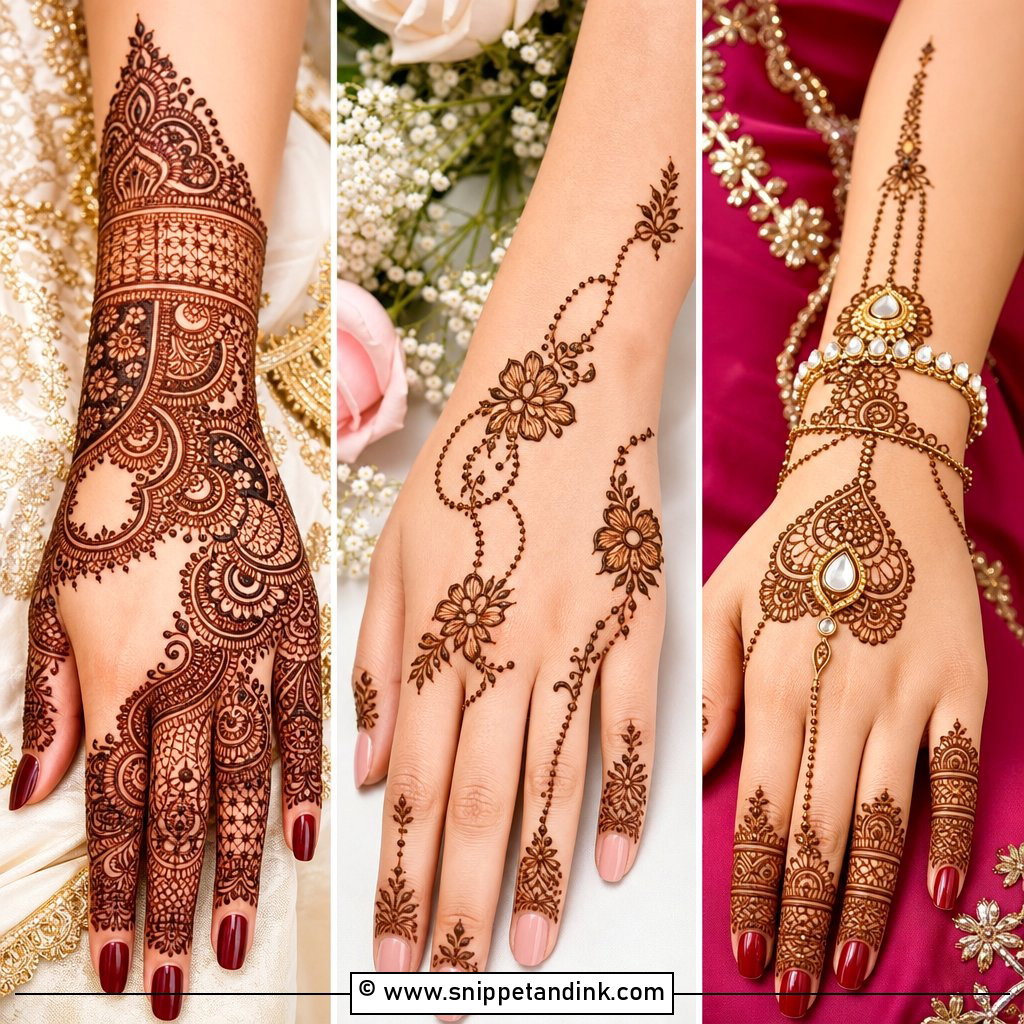
Matching doesn’t have to mean identical. For sisters, cousins or bridesmaids I usually pick one shared element, like the same central mandala, the same floral wrist or a motif lifted from the bride’s design, and then let each person’s coverage suit her hand size and how long she can sit. Keeping everyone in one style family, all Arabic or all Indo-Arabic, matters more than copying every line. Plan the timing as well. If five of you want matching hands, the artist needs time for all five, so settle the headcount before the event.
Coaxing a Dark Stain Out of a Busy Wedding Week
A sister’s hands work harder than the bride’s during the festivities, and that shows in the stain. Every round of washing up, every sanitizer squirt at the buffet strips color. A few habits in the first day make the difference between a rich brown and a faded orange.
- Leave the paste on for at least six hours, overnight if you can. The longer it sits, the deeper the dye travels into the skin.
- Once it’s dry to the touch, dab on a little lemon juice mixed with sugar. It keeps the paste from cracking and flaking off early.
- Keep your hands warm. A cold venue slows the stain, so wrap them loosely or sit near a heater.
- Scrape the dried paste off with a blunt edge instead of washing it away.
- Keep water off for as long as you can, ideally most of the next day, and rub in a little balm before any unavoidable washing.
If your stain still comes up lighter than your cousins’, it’s rarely the design. Palms, fingertips and warm hands simply take more color than cool, thin skin on the back of the hand or forearm. That’s another reason I put the boldest detail on the palm for a sister who wants depth.
Henna That Stands Beside the Bride, Not in Front of Her
The balance I aim for with every sister is festive enough to belong in the family portrait, lighter than the bride so she still holds the eye. Full-hand Indian work suits a grand celebration; Arabic, mandala, jewelry and minimal layouts are kinder to someone running between ceremonies. Before your appointment, look honestly at your outfit, your jewelry and how many hours you can actually sit. Then save two or three clear reference photos that show the coverage you want, not twenty, so your artist can match the density instead of guessing.
You'll Like These Ideas:


Leave a Reply