
Clients rarely ask me for “traditional” or “modern” anymore. They show me a screenshot and ask whether it’ll suit their hand. That’s the right question. Current mehndi covers everything from open Arabic trails and full bridal coverage to negative space, jaali, mandalas, cuffs and fusion layouts, and the same design can look elegant on one hand and cramped on another. For Eid, a wedding, an engagement or a family dinner alike, what matters is how the pattern runs from fingertip to wrist and whether it fits the occasion. Here are 25 designs I’m drawing a lot right now, each described as a complete hand, with what I’d watch for when you sit down in my chair.
Matching a Design to Your Hand Shape
When a client sits down, I look at her hands before I look at her reference photos. The same design can make one hand look graceful and another look crowded, and a few simple rules decide which.
- Short fingers and a wide palm: diagonal trails and vertical finger lines add length. Avoid wide horizontal bands across the fingers.
- Long, slim fingers: jaali, stacked rings and detailed fingertips all look good, and you can handle more density.
- Small hands: one central motif with open space reads better than a full layout scaled down.
- Prominent knuckles: keep finger bands just above or below the crease, where the skin doesn’t fold.
Bring a photo you like and let your artist adapt it. A good one will move a flower or shorten a trail so the design fits your hand, rather than forcing your hand to fit the photo.
Skin matters too. Dry hands take the stain unevenly, so moisturise well the day before, then come to the appointment with clean hands and no lotion at all.
1. Arabic Mehndi Design For Back Hand
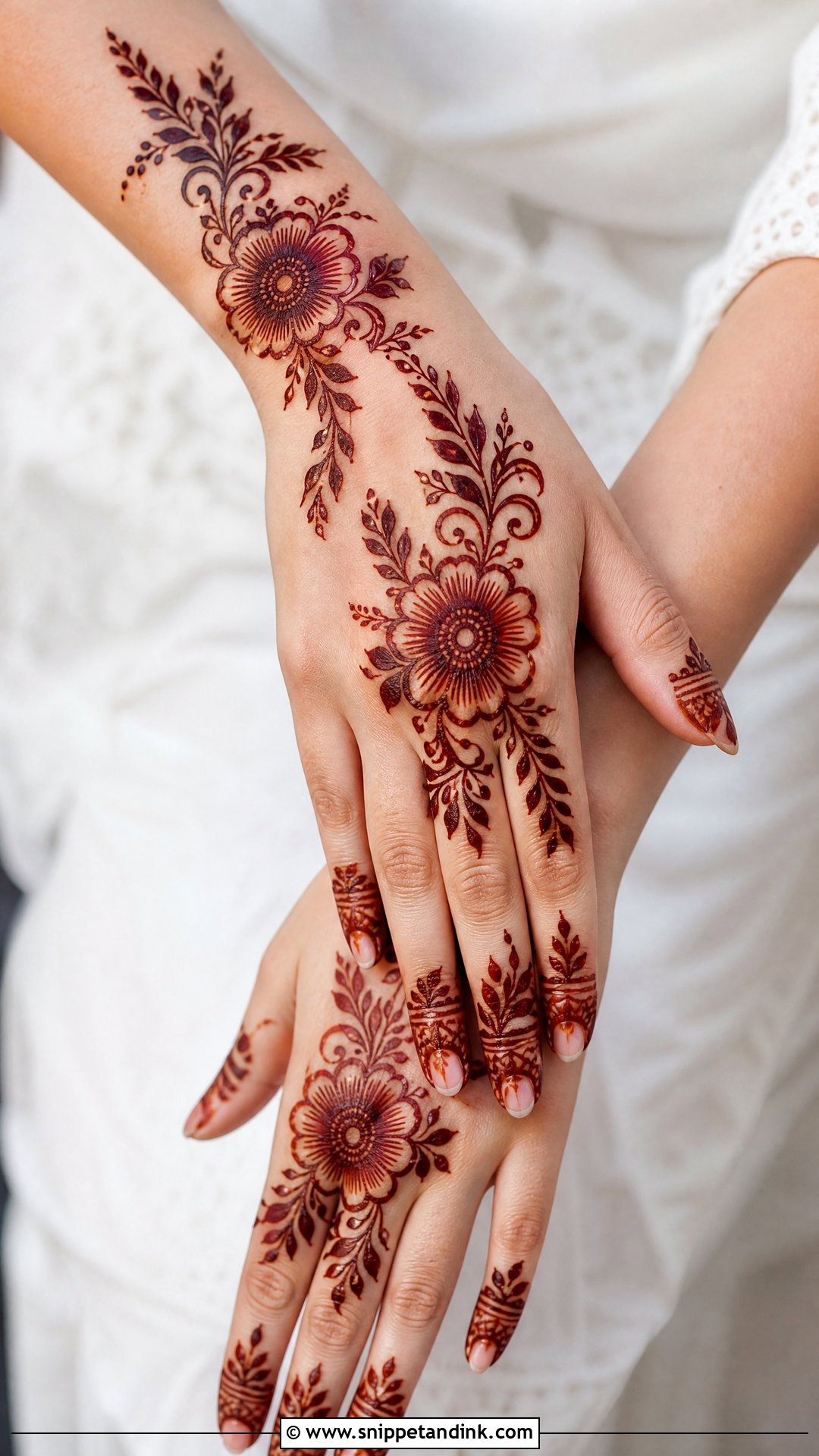
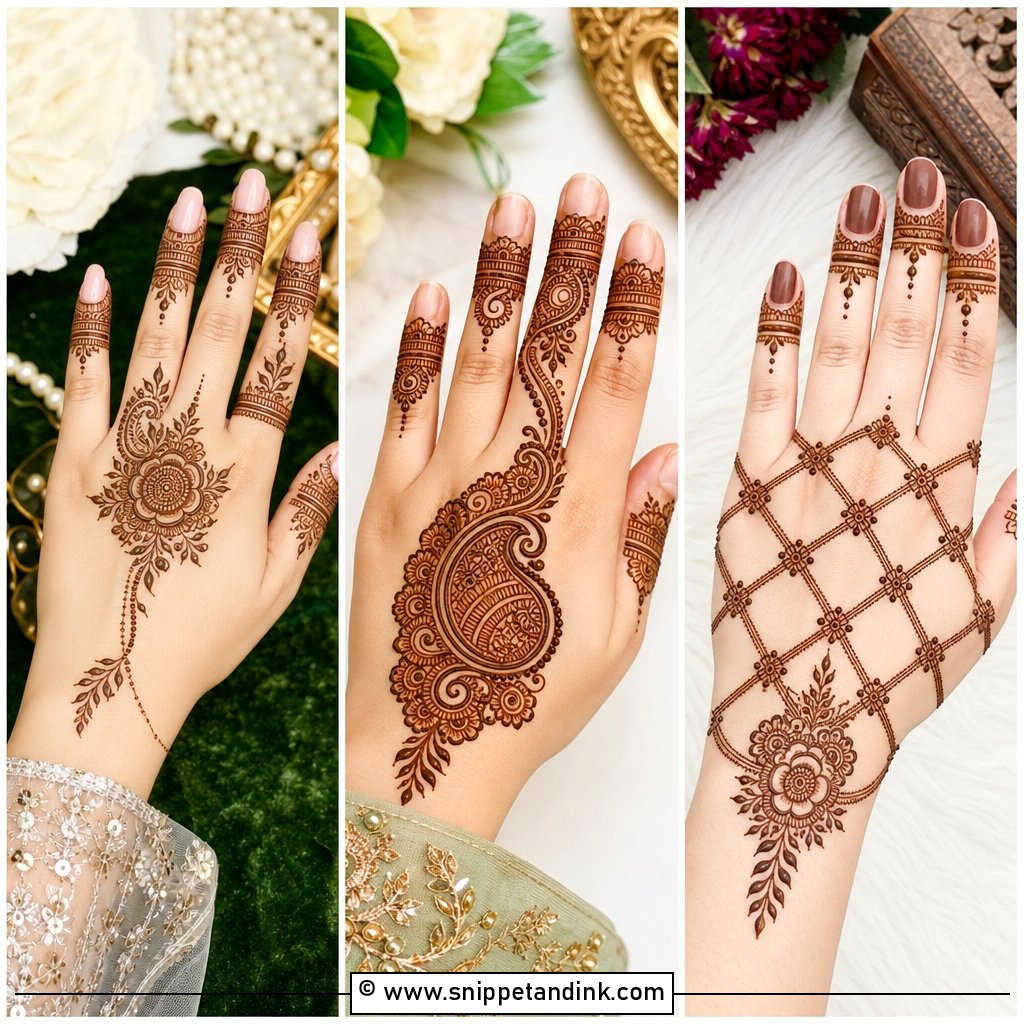
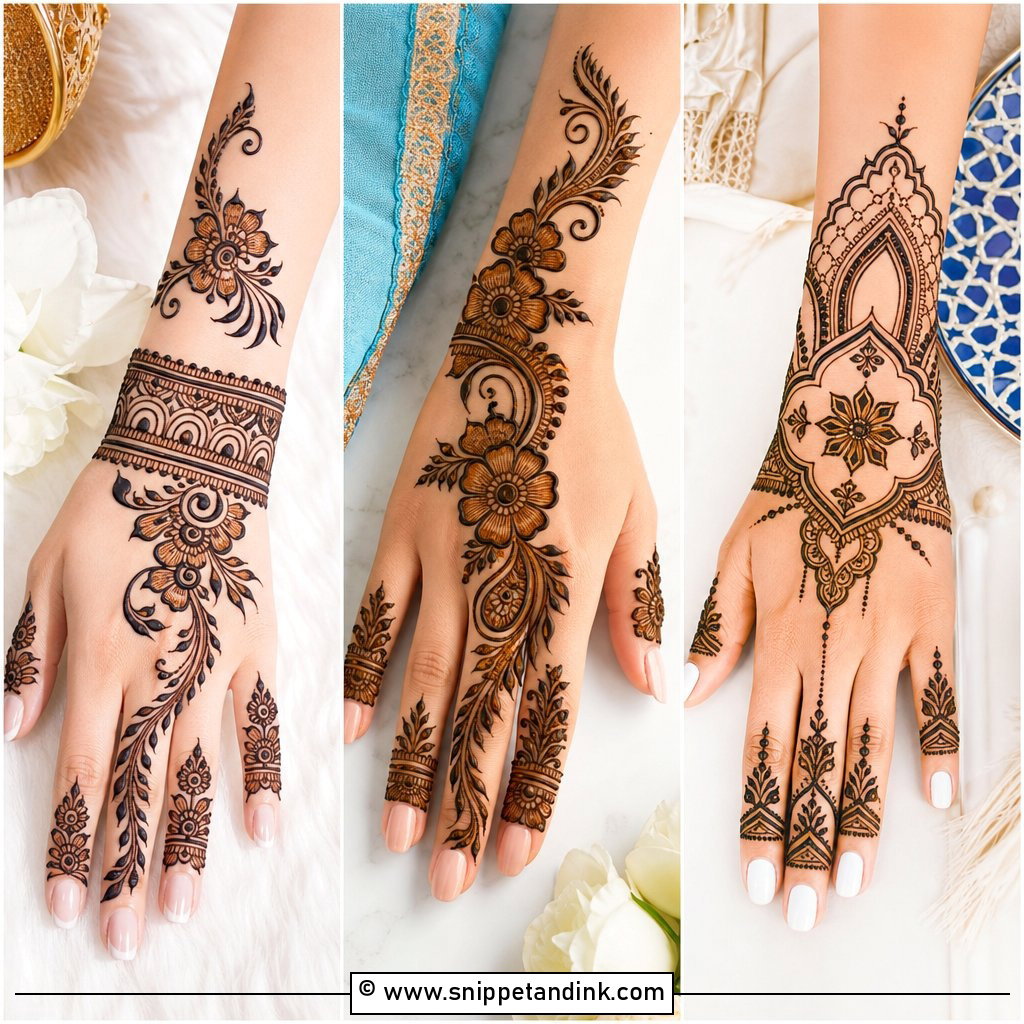
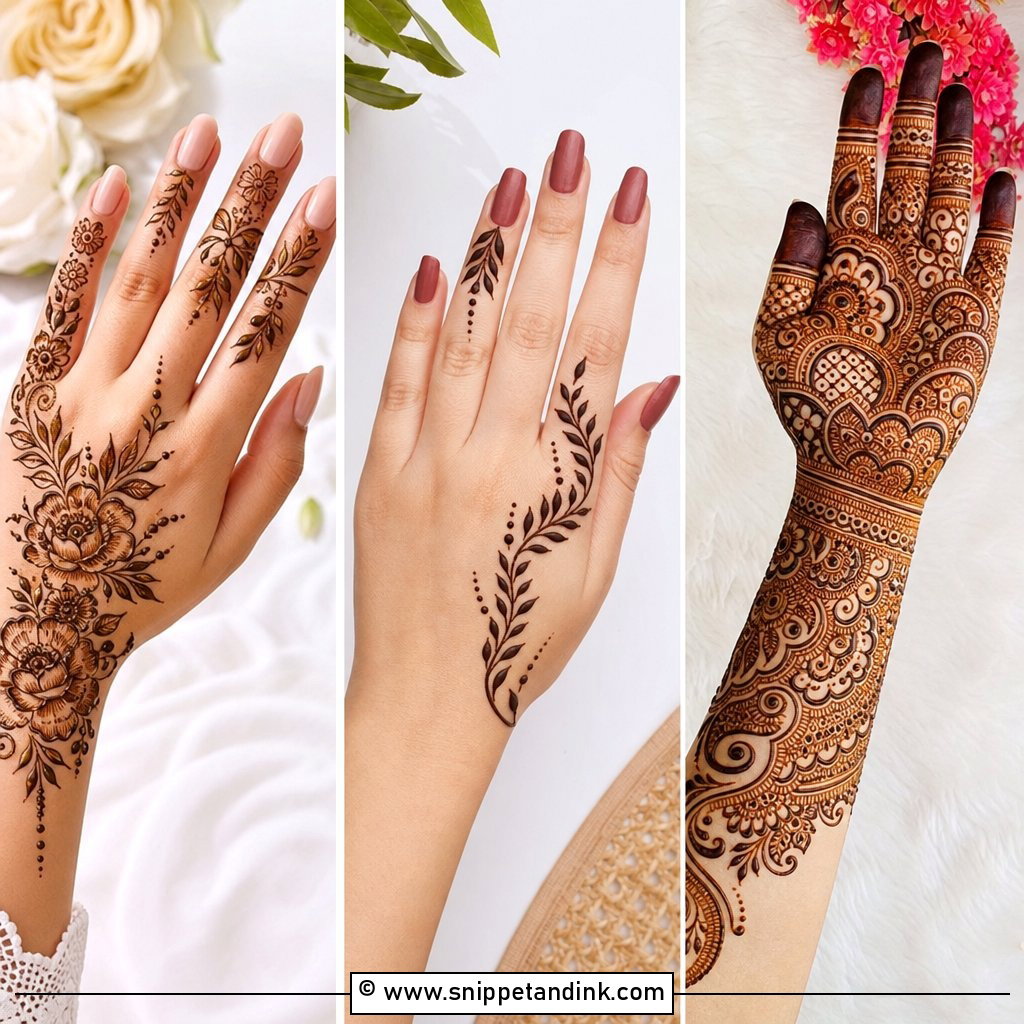
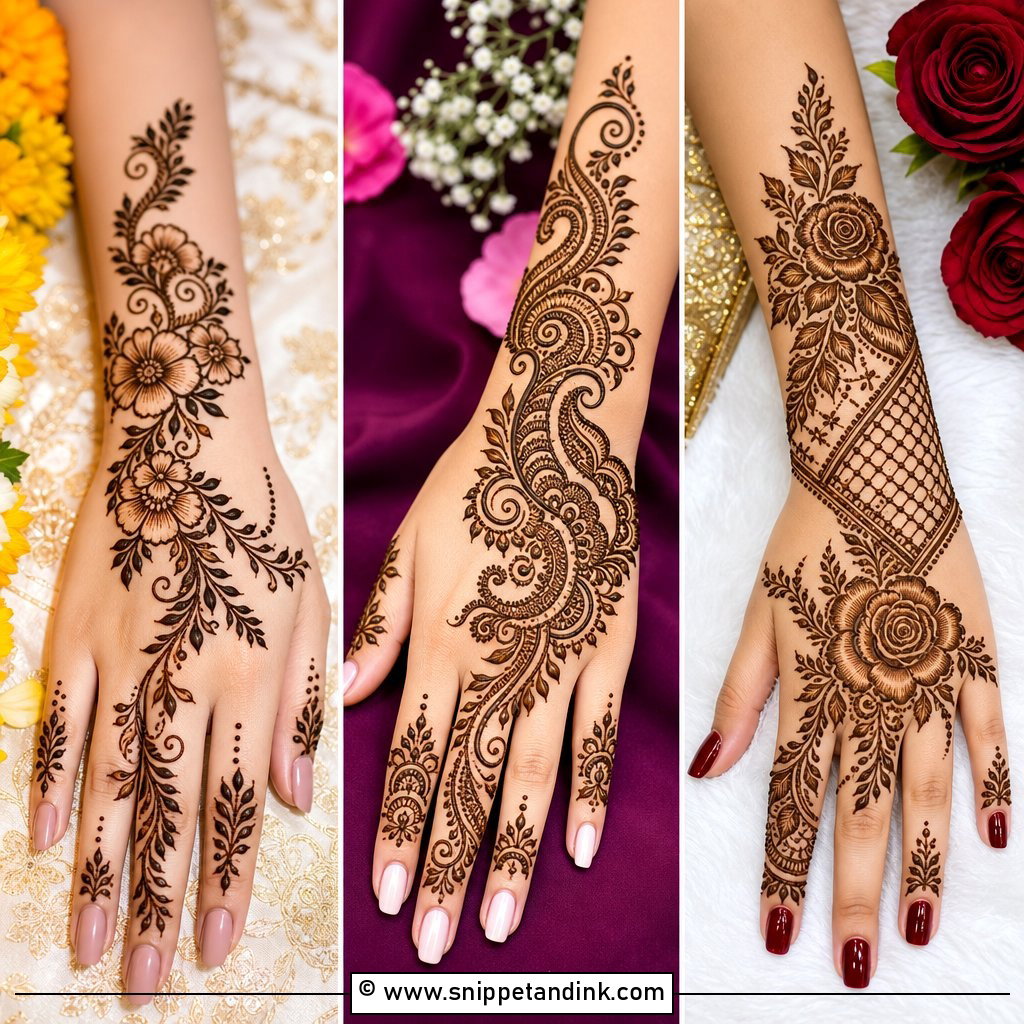
Of all the back-hand options, this is the one I’d put first. An Arabic trail starts at the index finger or wrist and runs diagonally across the hand: big flowers, leafy vines, curved lines, and generous gaps. The diagonal is what makes it flattering, because it draws the eye along the hand and makes it look longer. Fill the fingers with small leaves, dots and fine lines to finish it. If you’re learning to apply henna yourself, start here; the large shapes forgive a shaky cone far more than fine Indian filling does.
2. Simple Mehndi Design For Front Hand
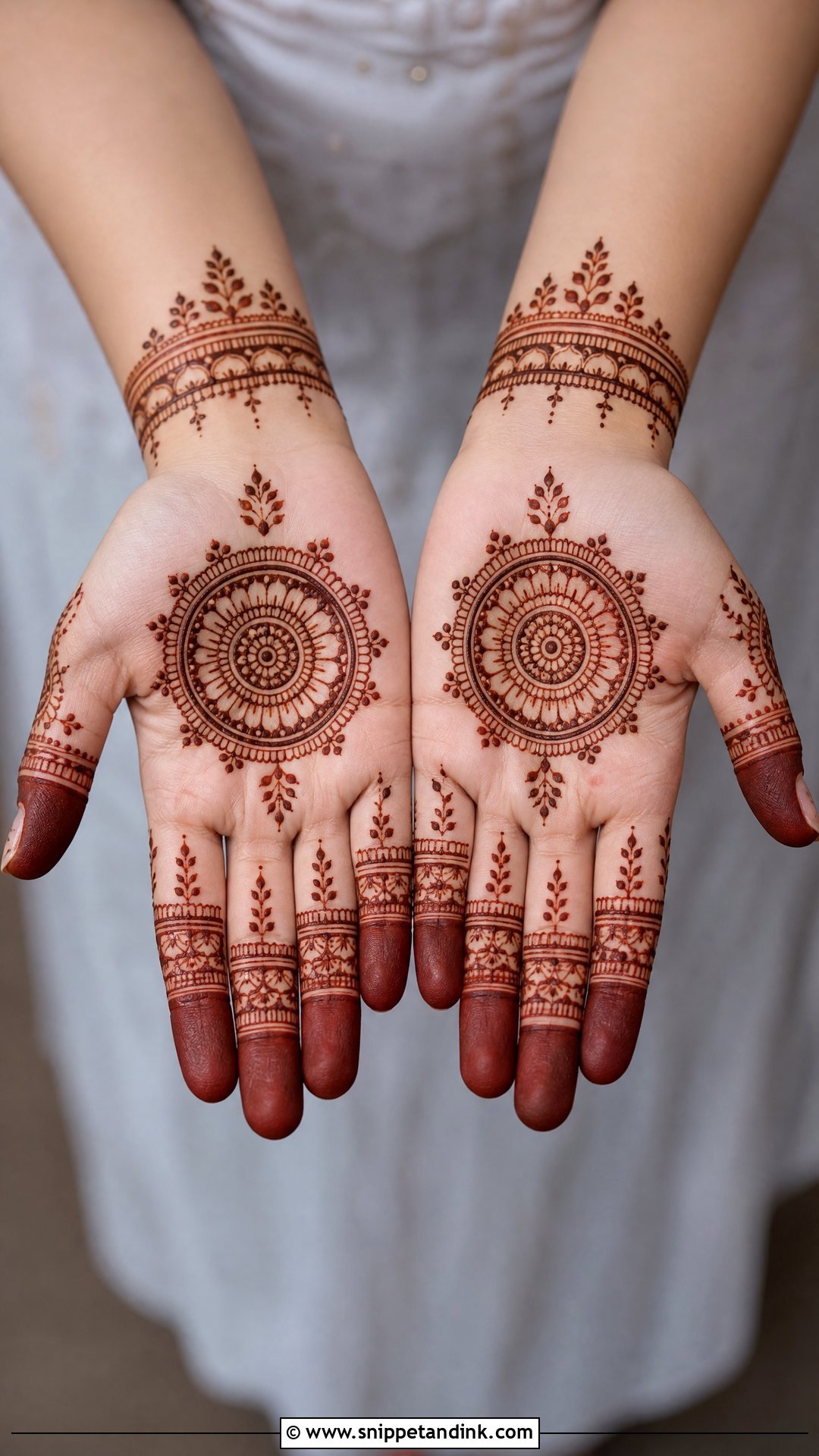
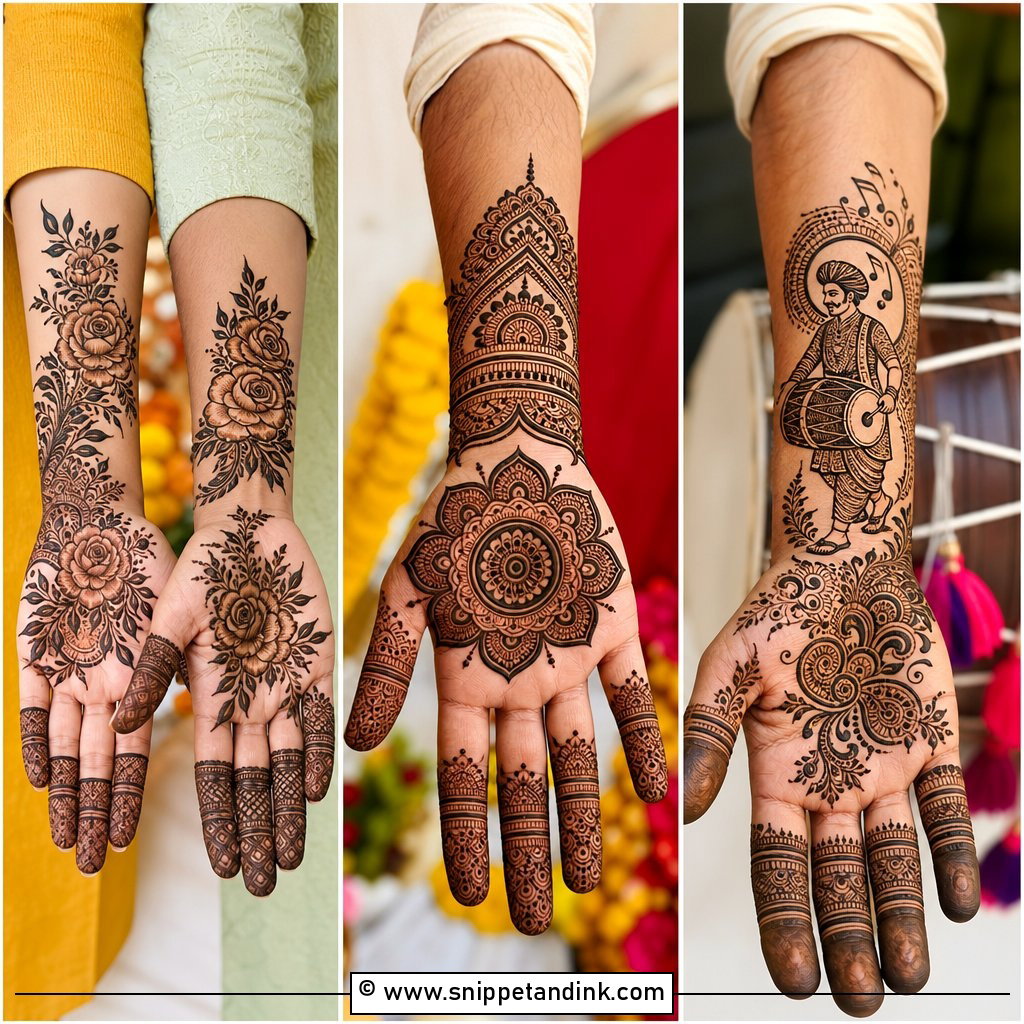
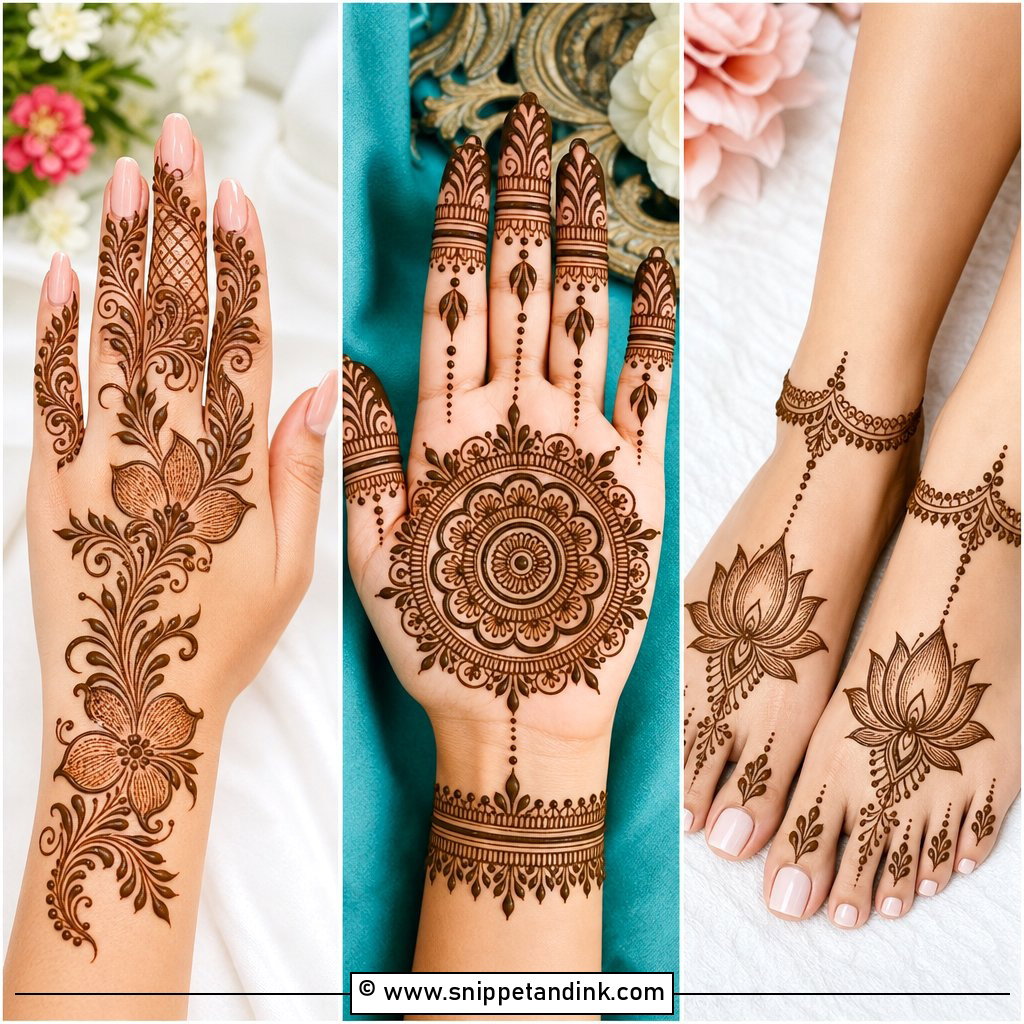
A simple front-hand design rests on one good motif: a central mandala, a floral circle or a soft paisley, with matching line work and dots on the fingers. It doesn’t need shading or dense filling. What it does need is space. The palm stains darker than anywhere else on the body, and lines drawn too close together merge as the stain deepens, so I leave small gaps around the main motif. It’s the design I suggest for first-timers, school functions and casual gatherings.
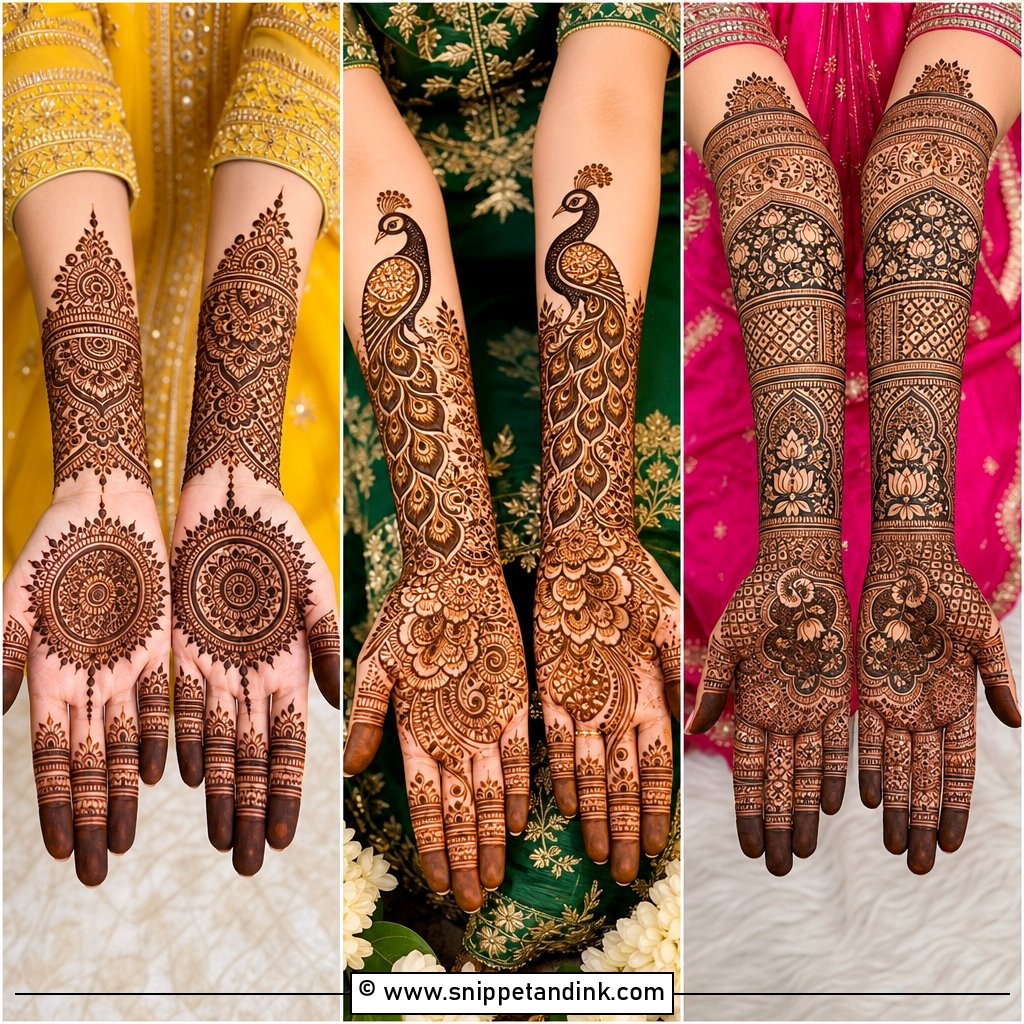
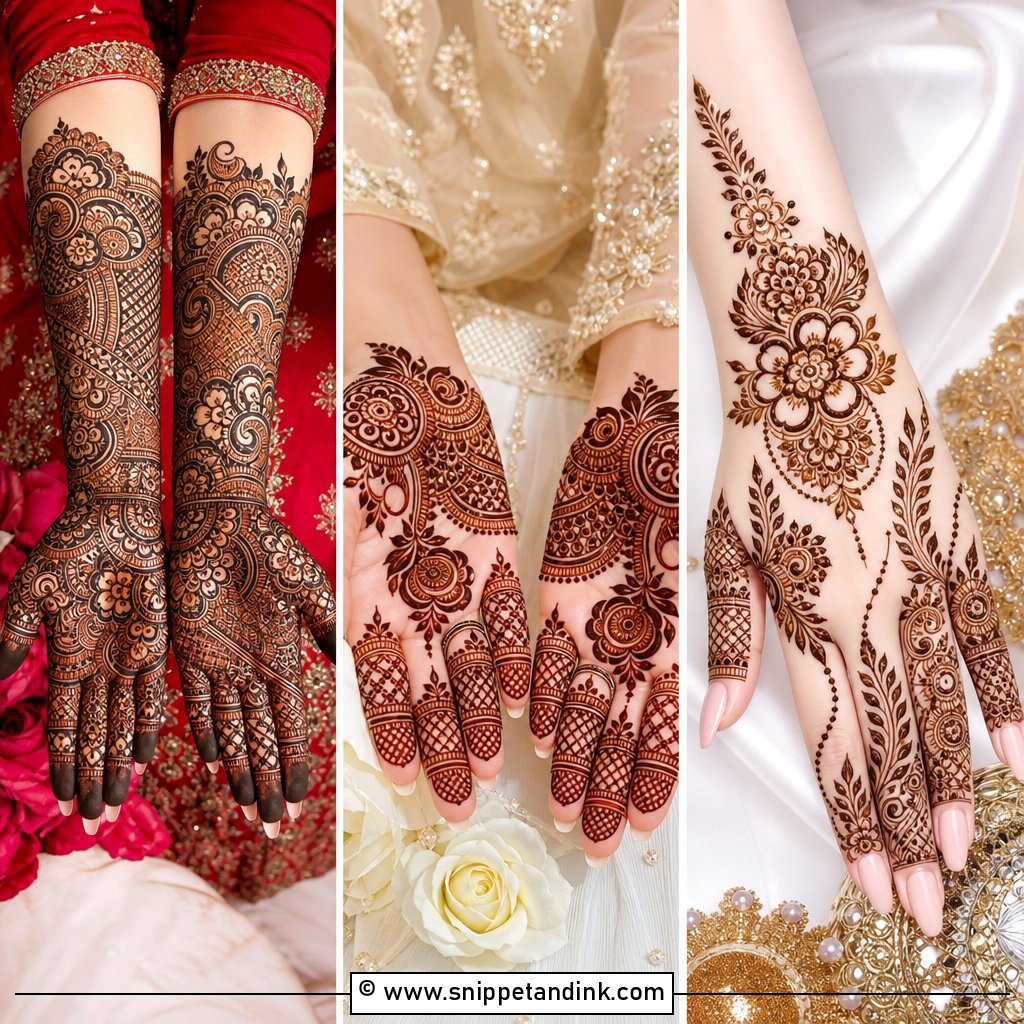
3. Full Hand Bridal Mehndi Design
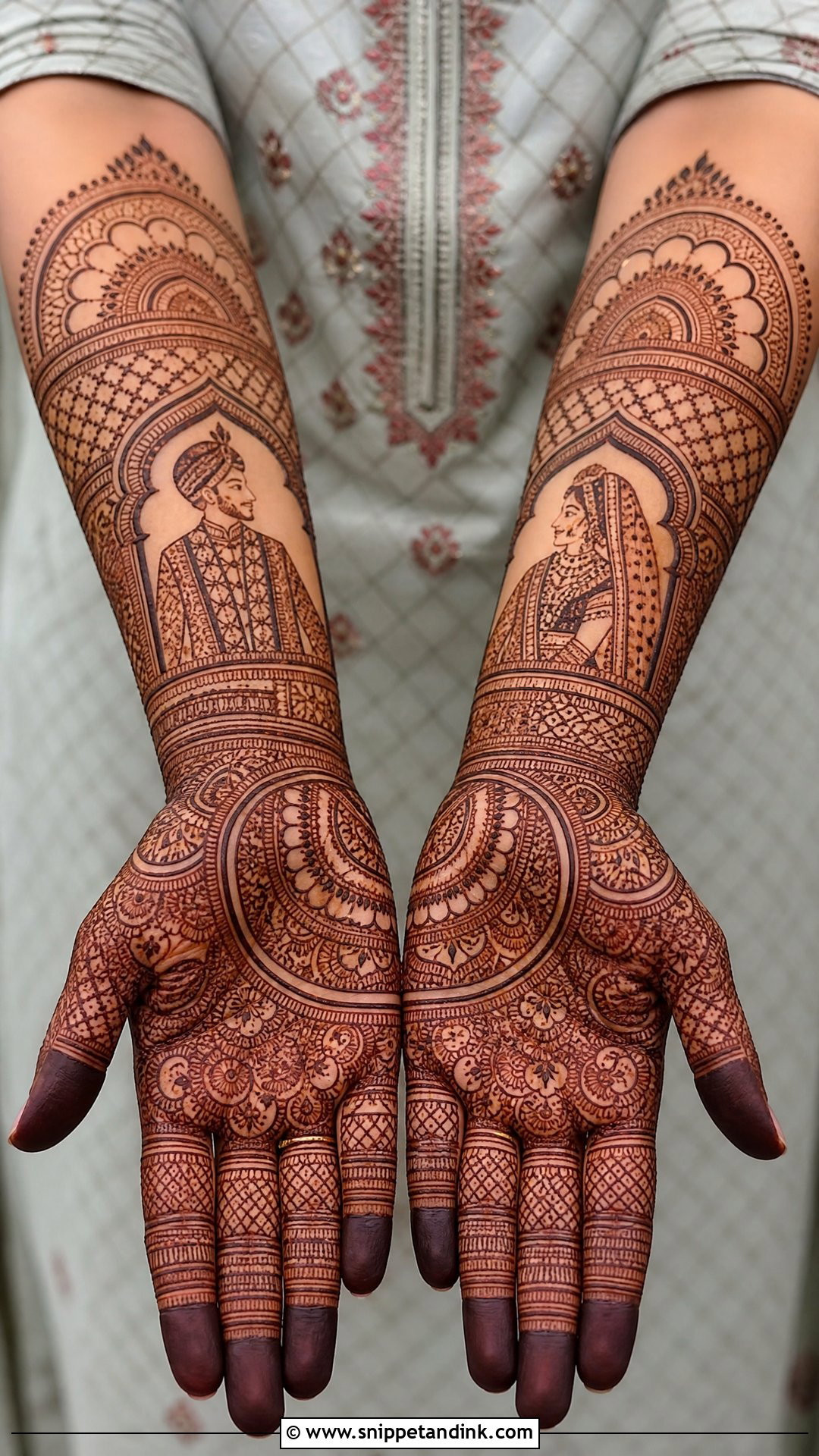
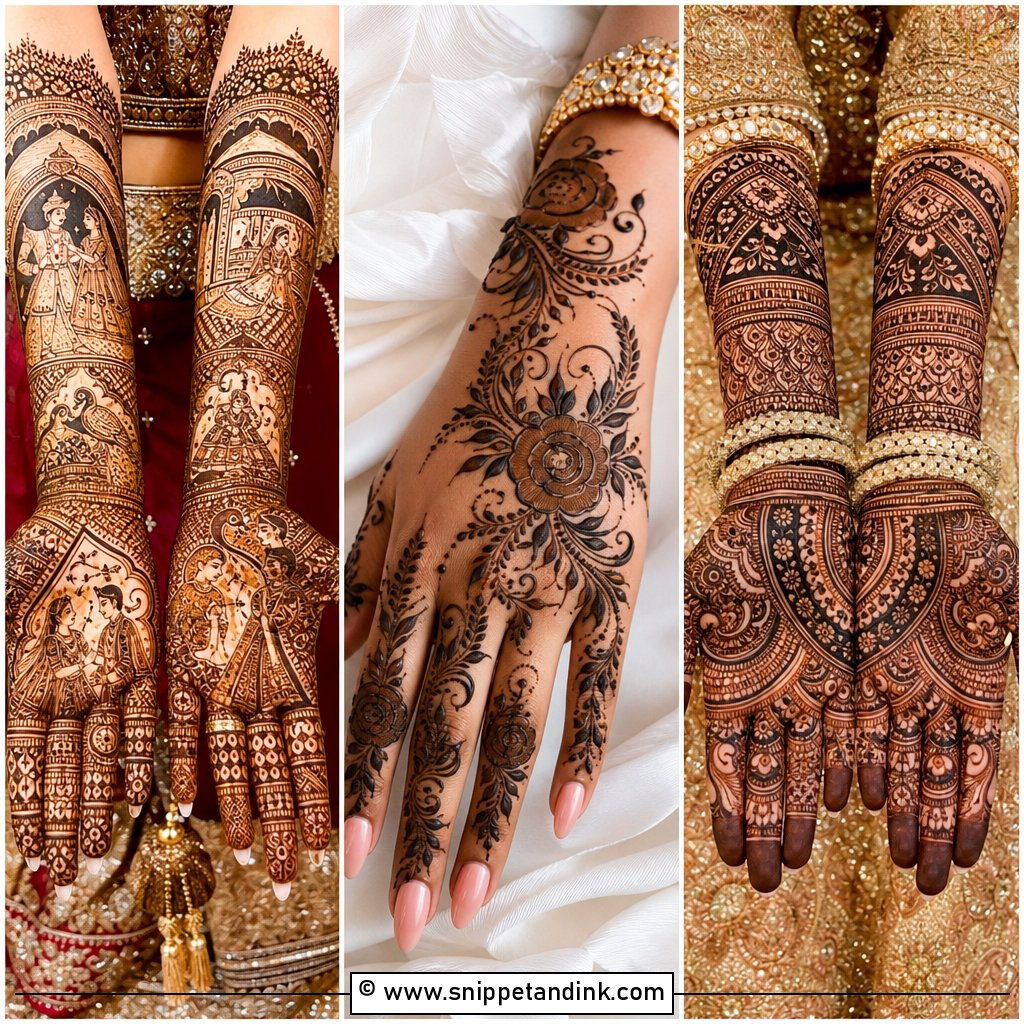
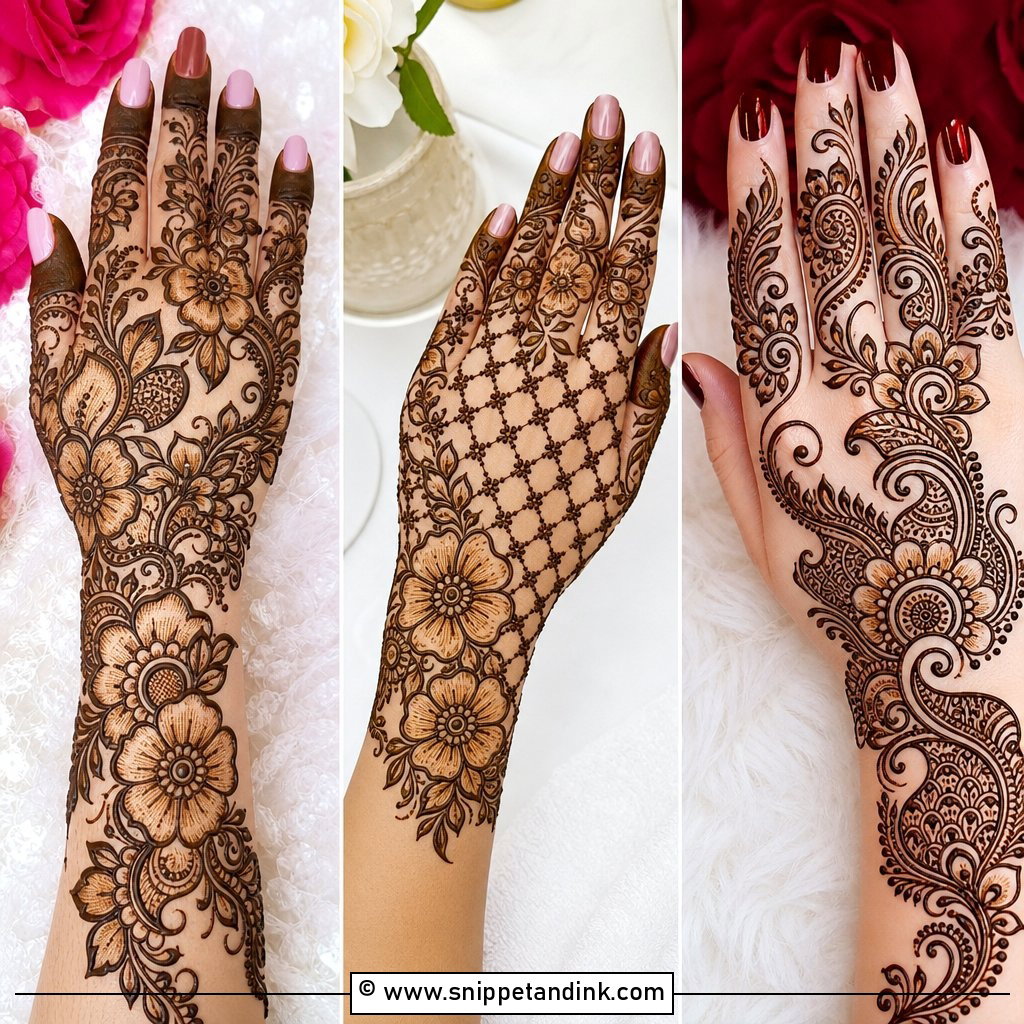
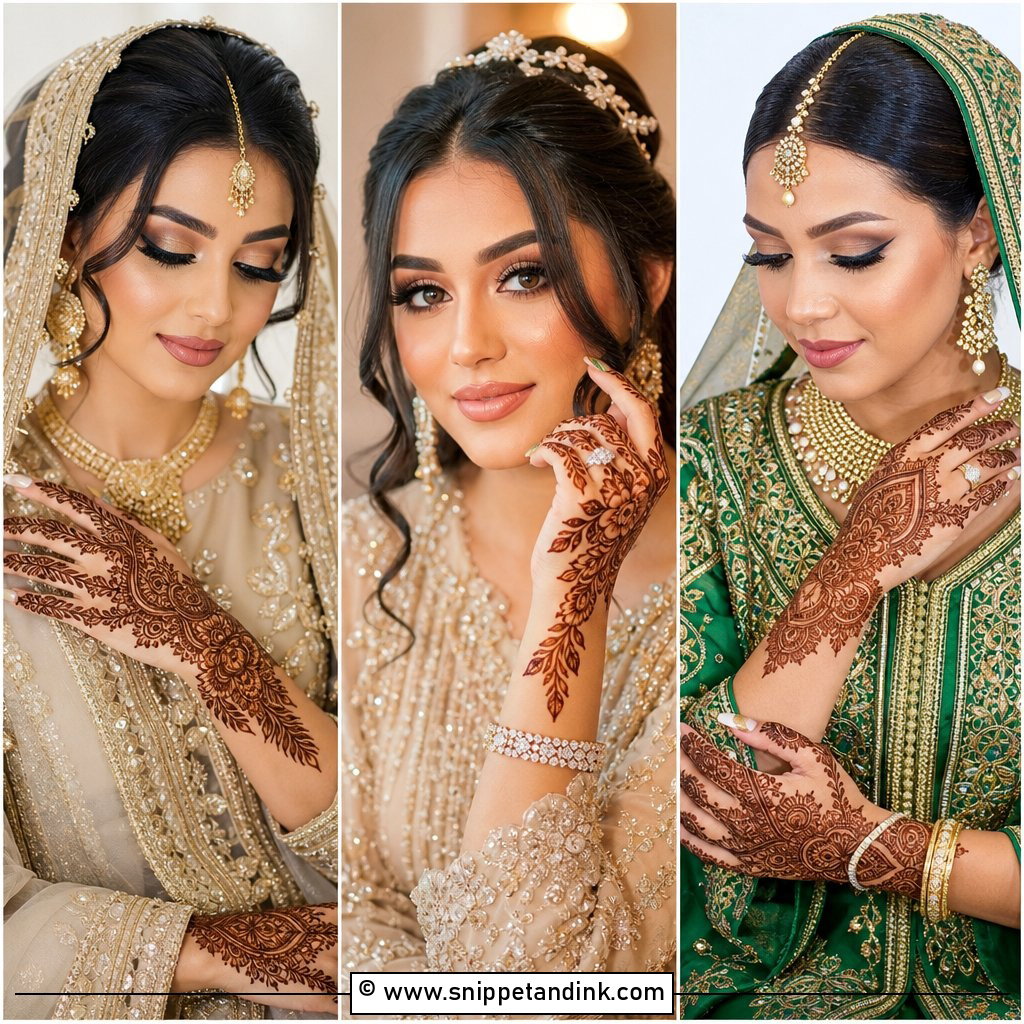
Full bridal coverage runs from the fingertips over the palms and wrists up the forearms, with paisleys, flowers, jaali, mandalas and often the bride-and-groom figures. The difference between good and average bridal work is connection: the design should read as one piece, not separate patterns parked next to each other. I plan the main story on the palm first and let everything else lead into it. A few pockets of negative space near the wrist or forearm stop it from looking heavy. Expect to sit for several hours, and eat before you start.
4. Indo Arabic Mehndi Design For Hands
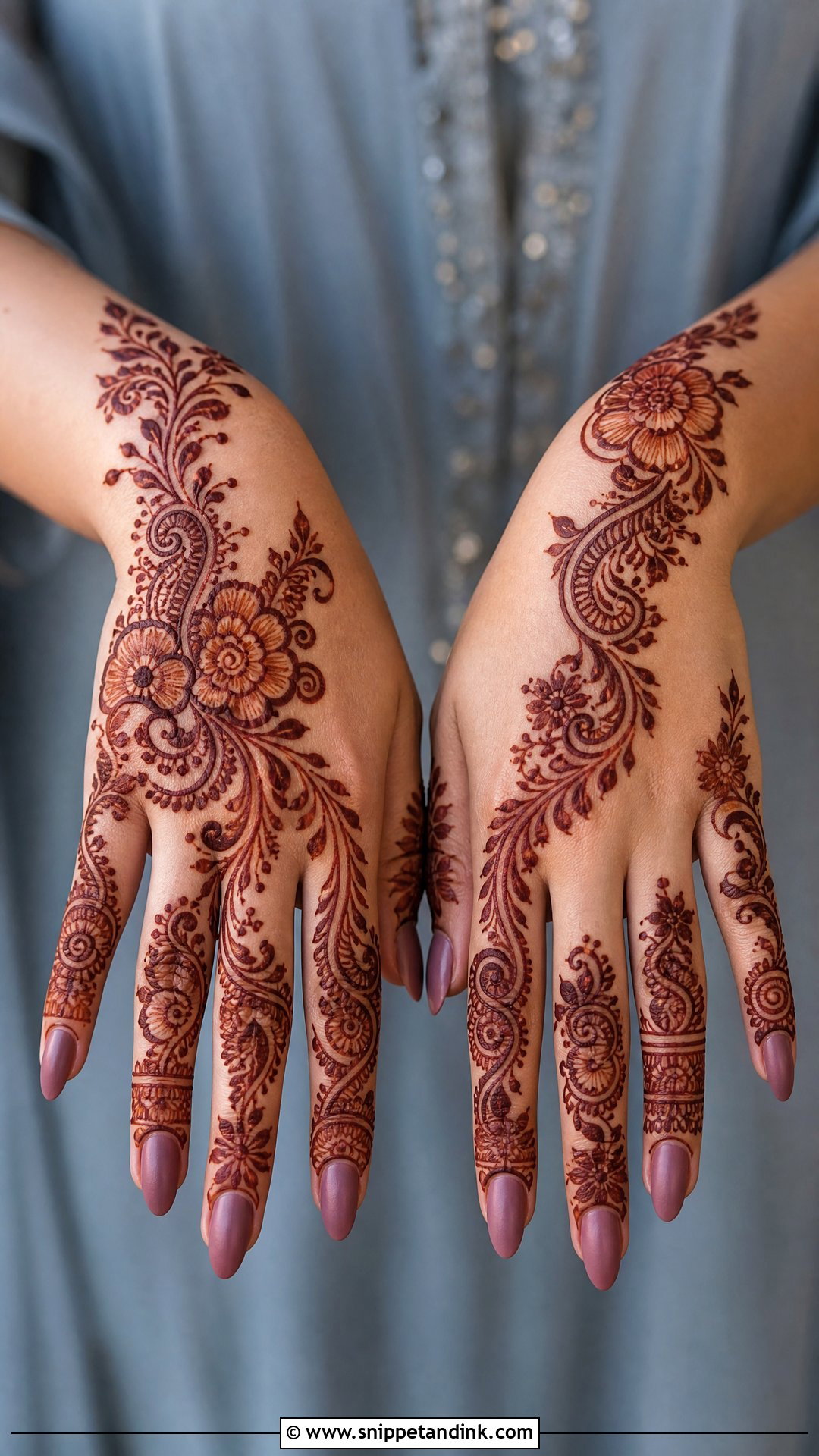
Indo Arabic mehndi design for hands takes Arabic’s open flow and adds Indian fine detail: bold floral trails, shaded leaves, paisley outlines and small fillers inside the larger shapes. It looks best on the back of the hand, where the open spaces make the hand appear longer. Fingers can be half filled for a lighter look or fully detailed for a festive one. It’s my most-requested design for bridesmaids, sisters of the bride and Eid, because it sits right between casual and bridal.
5. Mandala Mehndi Design For Palm
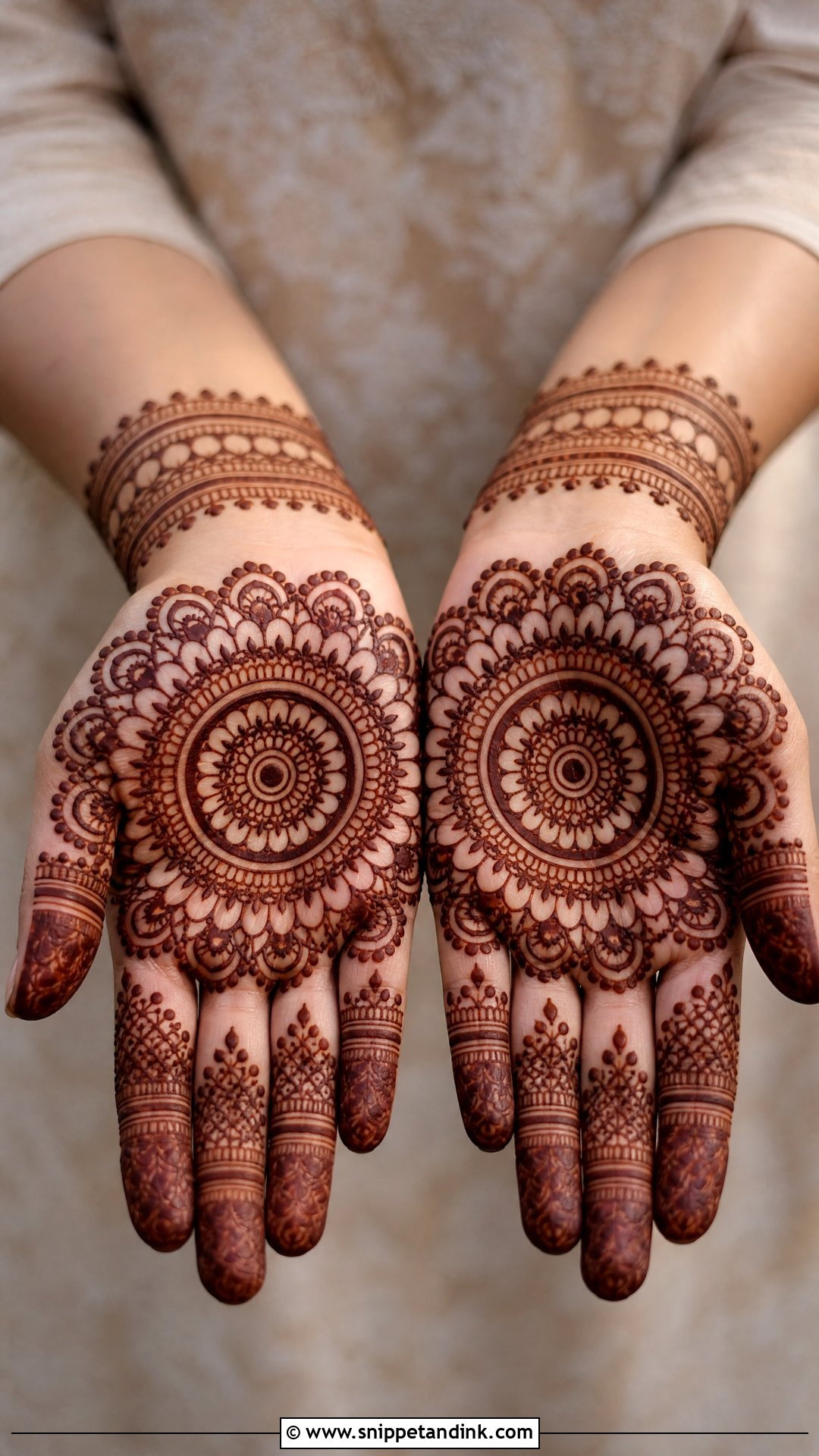
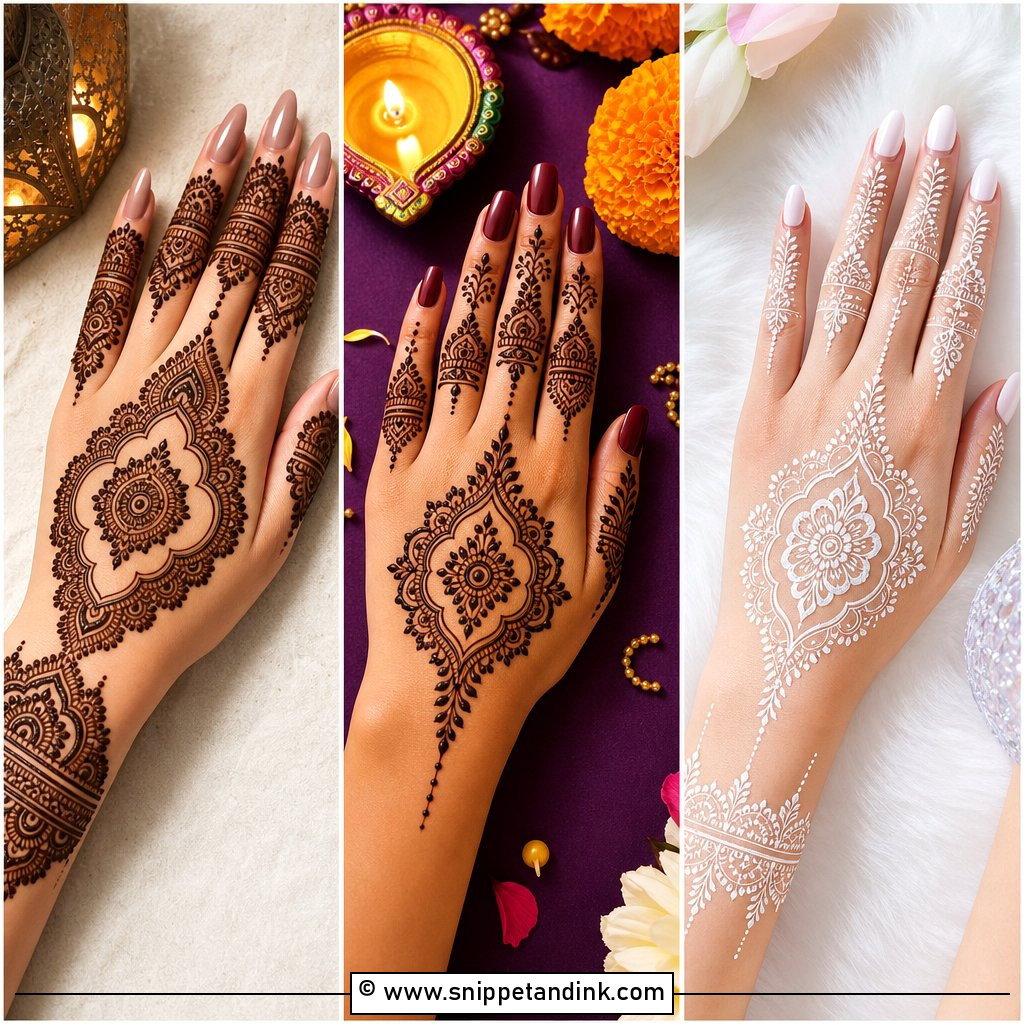
A palm mandala sits right in the middle of the hand and grows outward in rings of petals, dots, scallops and fine borders. Pair it with detailed fingertips and a slim wrist band and the hand looks finished. I draw the rings from the center outward, checking each one against the last, because a lopsided circle is the one flaw everyone notices. It suits small, round palms especially well. The current version leaves clean negative space around the mandala, which makes the circle crisper and easier to see once the stain deepens.
6. Floral Mehndi Design For Back Hand
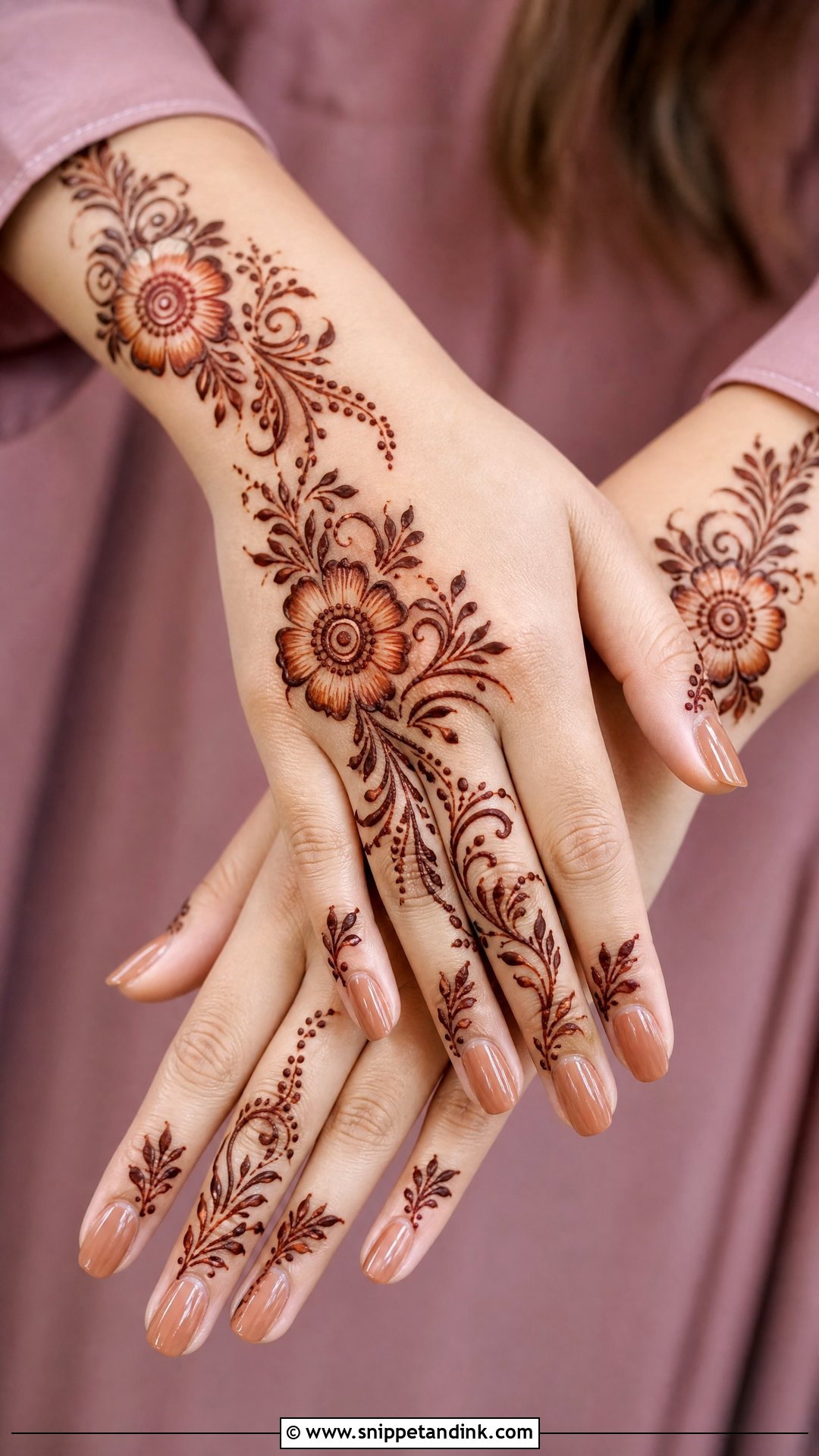
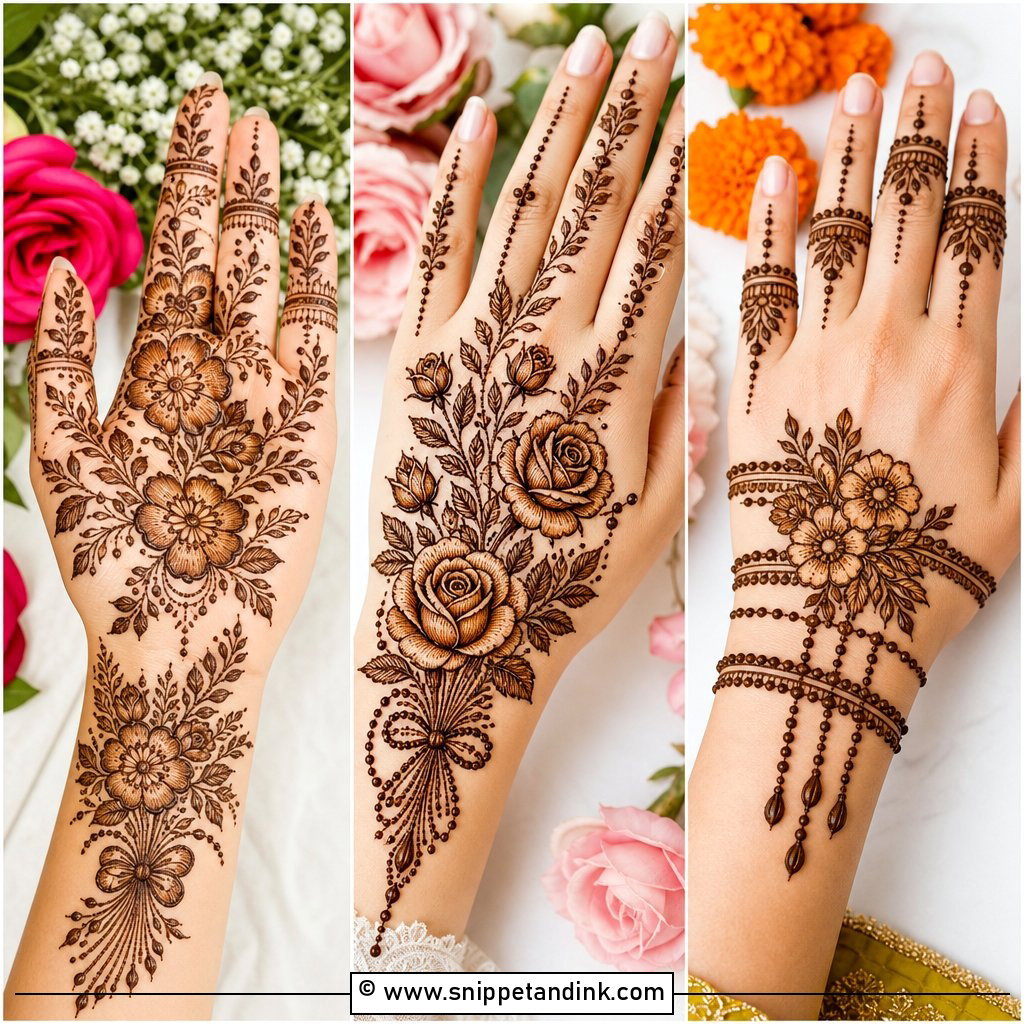
A floral back-hand design usually anchors one large flower near the wrist or center, with smaller blooms stepping toward the fingers and vines, leaves and dots joining them. The newer way to draw it is bigger flowers, bold outlines and light inner detail, so the shapes stay clear after the henna darkens. Fingers get matching floral tips, leafy chains or ring bands. It suits Eid, Karwa Chauth, baby showers and wedding guests, and it’s easy to scale up or down depending on how long you can sit.
7. Minimal Mehndi Design For Back Hand
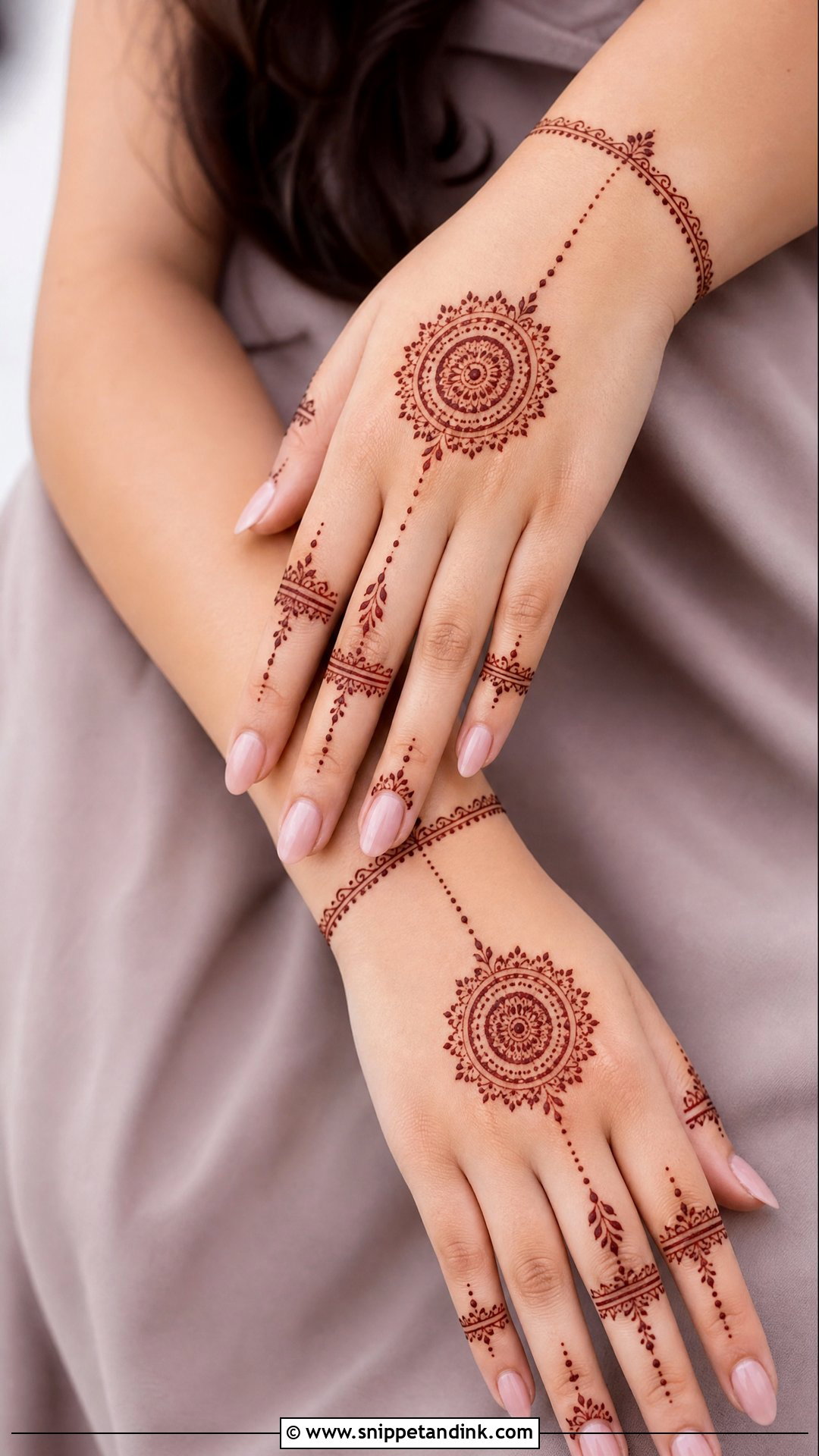
Minimal back-hand designs choose a few areas and leave the rest bare: a small mandala, fine finger details and a thin wrist bracelet. Spacing is everything. In a sparse design every line is on show, so I use a fine cone tip and work slowly. It’s my go-to for clients who need festive hands at work the next day. Open skin around the lines makes the stain read clearly on any skin tone, from fair to deep.
8. Modern Mehndi Design For Front Hand
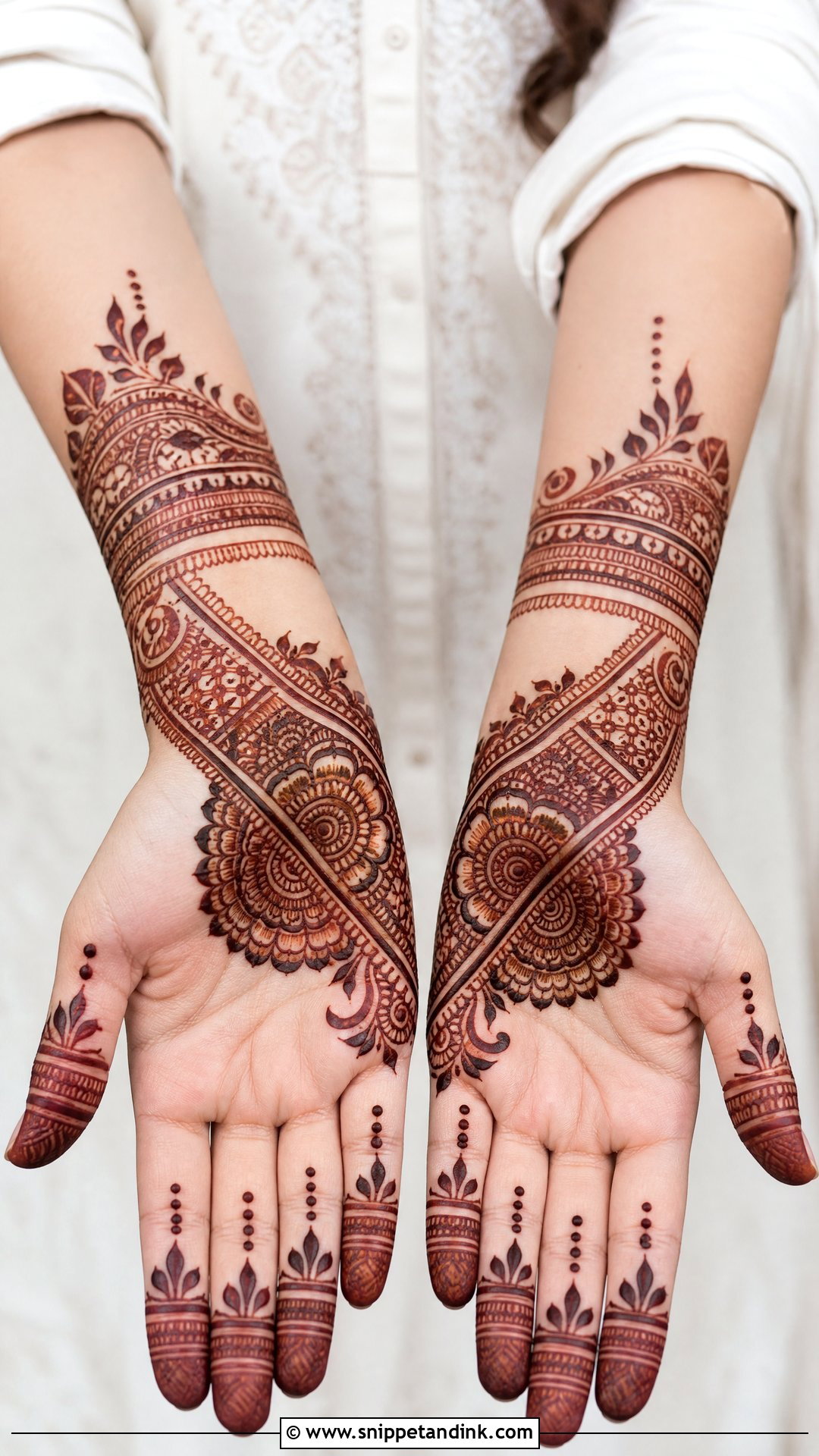
A modern front-hand design mixes classic motifs with cleaner shapes: a half mandala on one side of the palm, diagonal floral bands, geometric borders and open gaps. Fingers carry coordinated but different details like dots, small leaves and slim checks. I always finish the wrist with a cuff or slim bracelet; without it, a modern palm looks like it was abandoned halfway. It suits engagements, parties and brides wanting a lighter pre-wedding design.
9. Bridal Mehndi Design With Name
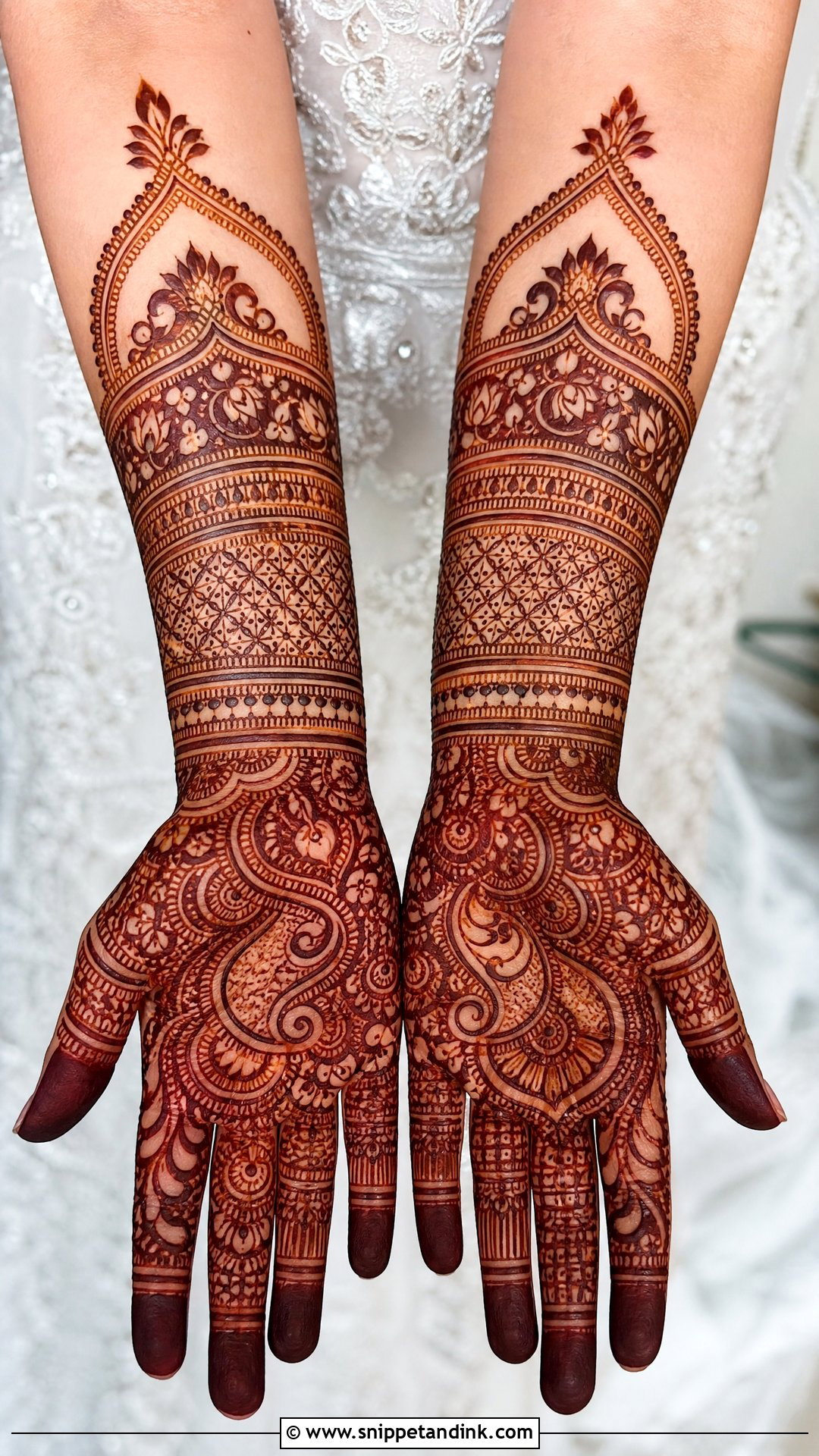
Hiding a name in bridal mehndi is a tradition I love, and the game is to make it part of the artwork rather than a label. I tuck the letters into a petal, a paisley curve, a jaali panel or the wrist band, around the detailed palms, full fingers and forearm panels. Leave a little space around each letter, or the name becomes unreadable once the stain darkens. If you want it in Urdu, Hindi or another script, tell your artist ahead of time so she can practise the letterforms.
10. Jaali Mehndi Design For Hands
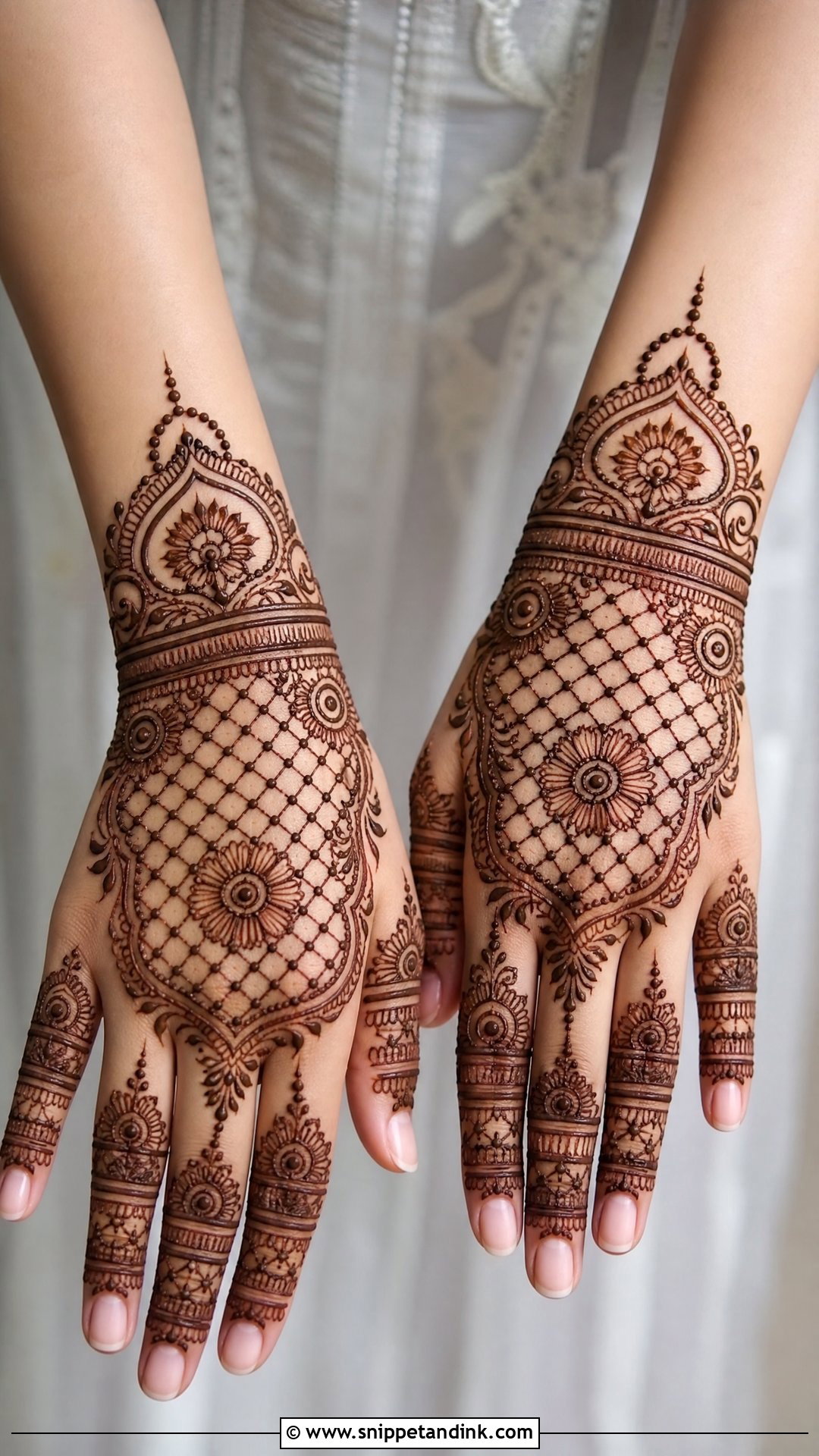
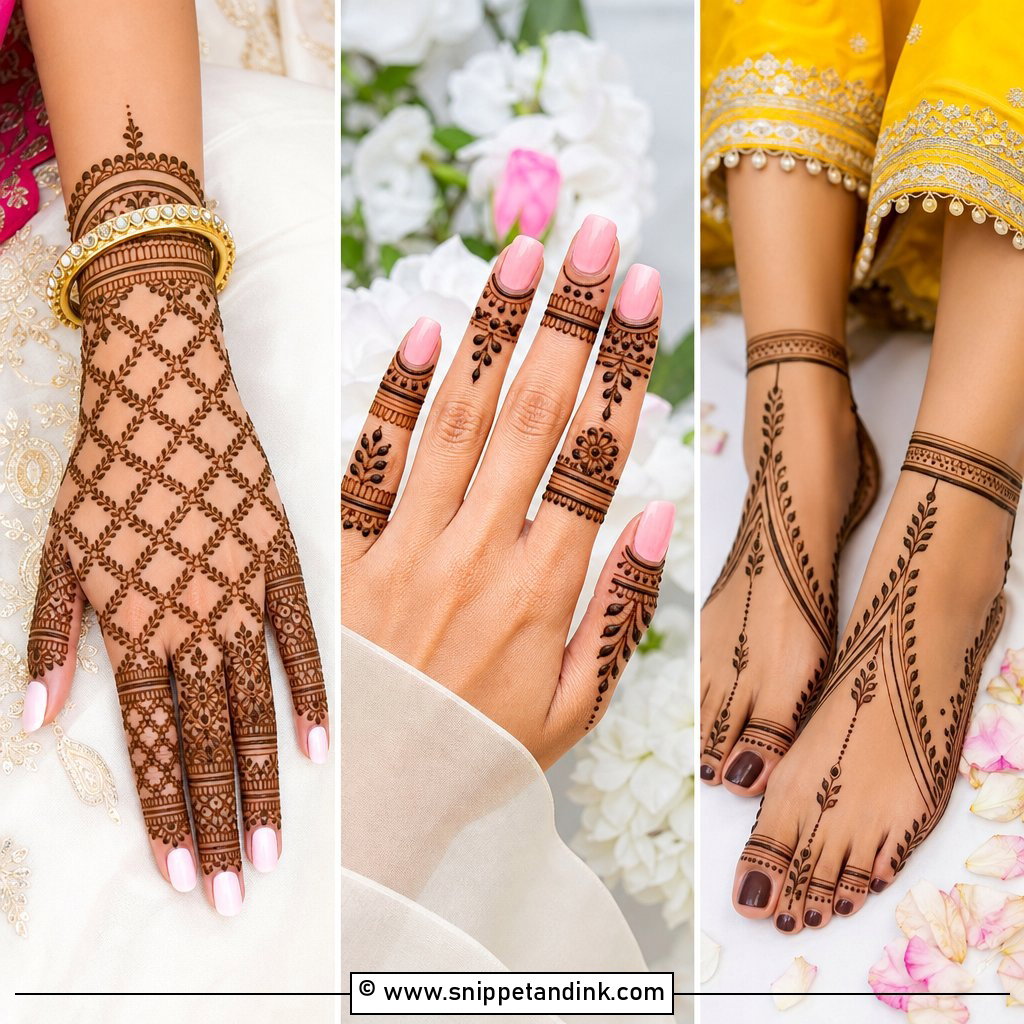
Jaali is a fine mesh, and it shows an artist’s control more than any other pattern. Across the back of the hand, the grid frames flowers, paisleys or mandalas set inside selected sections. The contrast between straight grid lines and curved motifs is what makes it work. It flatters long fingers in particular. Mixing the mesh with negative space and bold floral borders keeps it current. I make the fingertips slightly heavier than the hand so the design looks anchored.
11. Peacock Mehndi Design For Front Hand
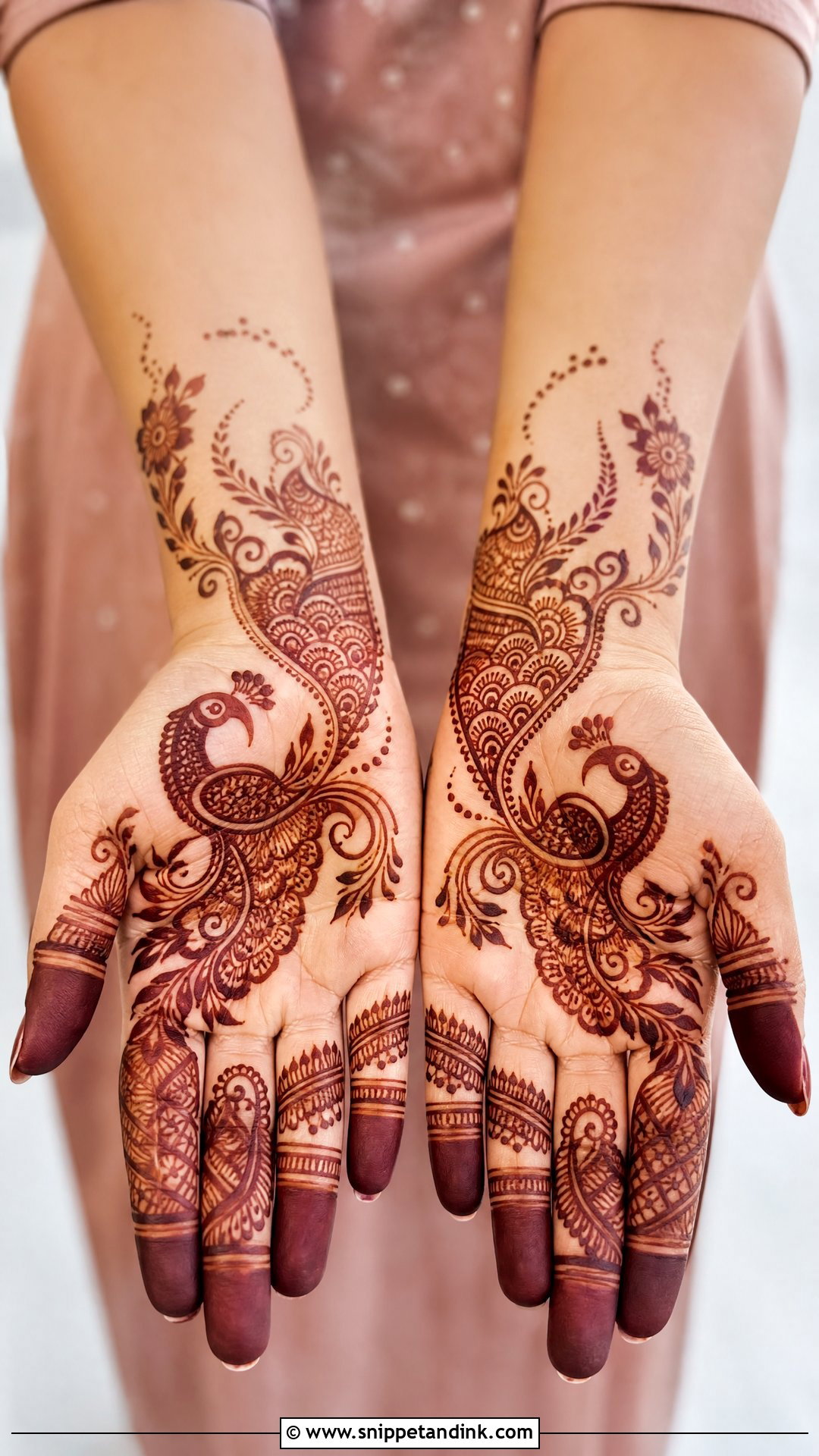
A palm peacock places the body near the center with feathers spreading into paisleys, curves and floral fillers, and the theme continues on the fingers as slim leaf chains and dotted trails. It’s more expressive than a mandala, and it’s where artists love to show detail. That’s also the trap: an overworked peacock turns into a dark smudge once the stain develops. I leave tiny gaps between the feathers so each one still reads on the second day.
12. Moroccan Mehndi Design For Back Hand
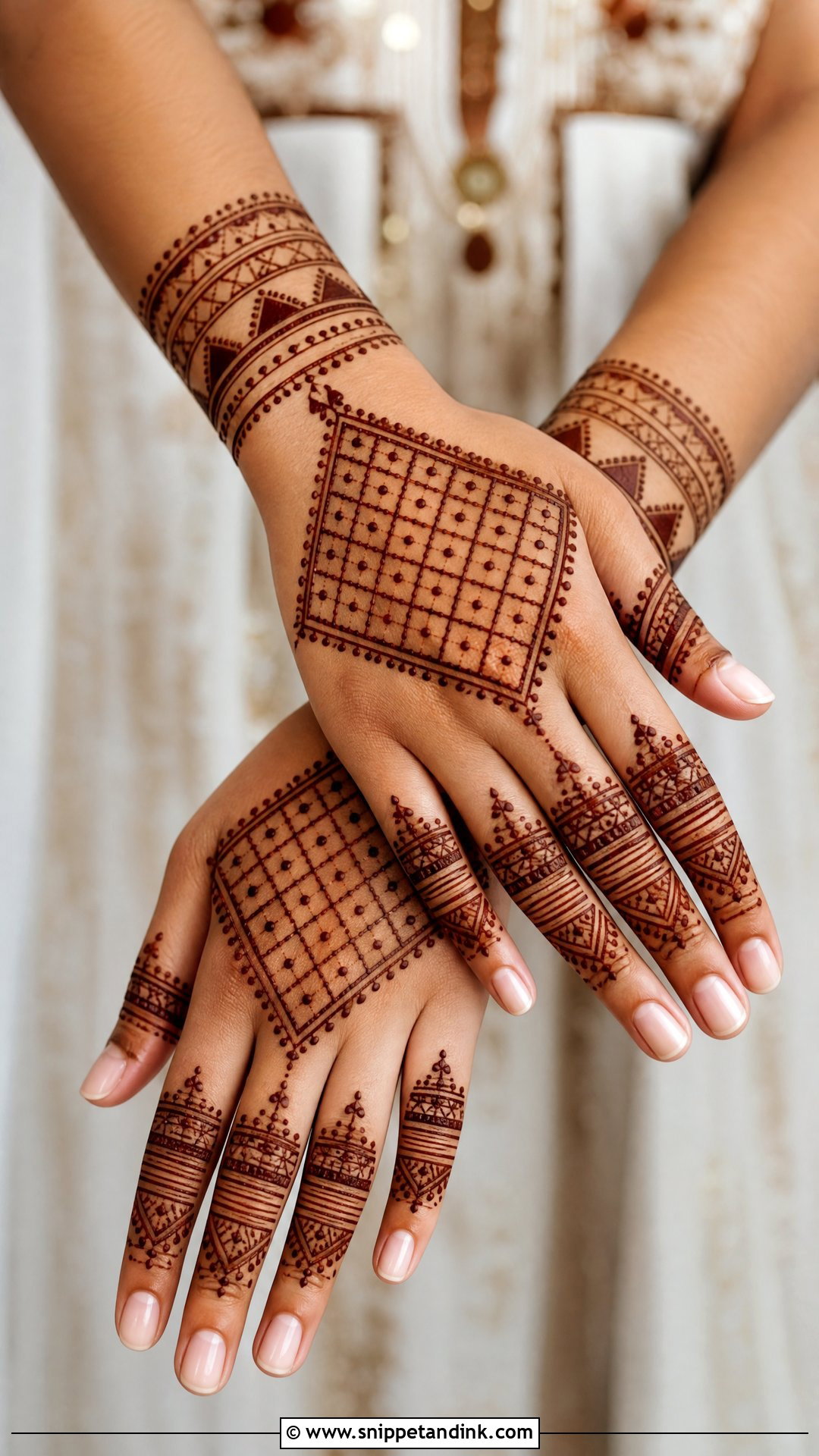
Moroccan back-hand designs swap flowers for geometry: diamonds, triangles, straight bands, dots and repeated lines, starting at the wrist with bracelet bands and building upward in neat sections. They suit casual festive days, destination events and simple outfits with statement jewellery. Steady lines are non-negotiable, because any wobble in a straight line is obvious. I draw long lines in a single pull, with my wrist resting on the client’s hand for support.
13. Khafif Mehndi Design For Hands
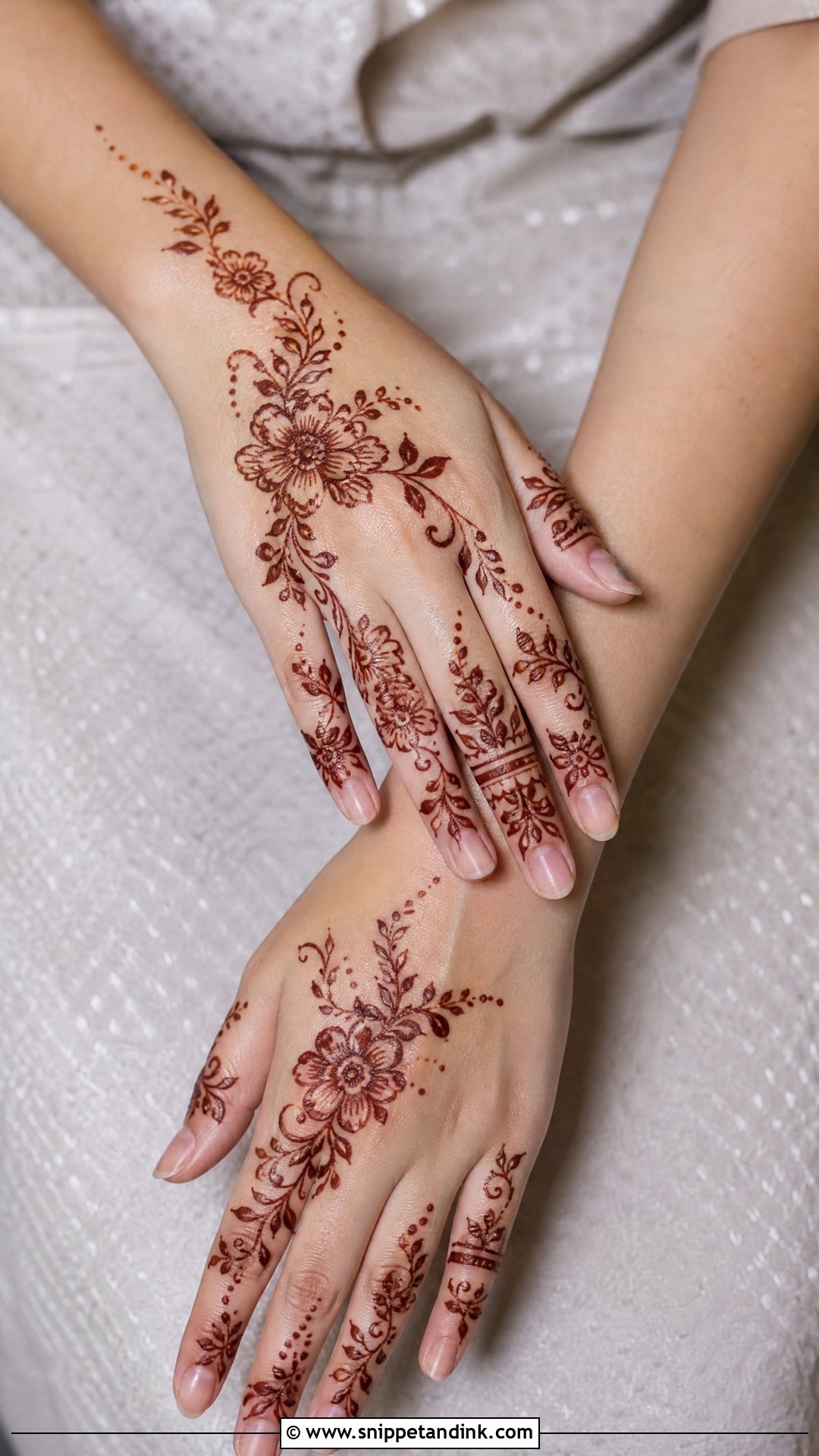
Khafif is fine, airy work with light shading and lots of flow: floral clusters, delicate vines, small leaves, dotted trails and soft finger patterns. The back hand is where it shines, running naturally from wrist to fingertip. It’s lovely for semi-bridal looks, Eid and wedding guests. The current way to draw it leaves open space between the floral clusters instead of filling every gap, which keeps the airy feel that gives Khafif its name.
14. Finger Mehndi Design For Both Hands
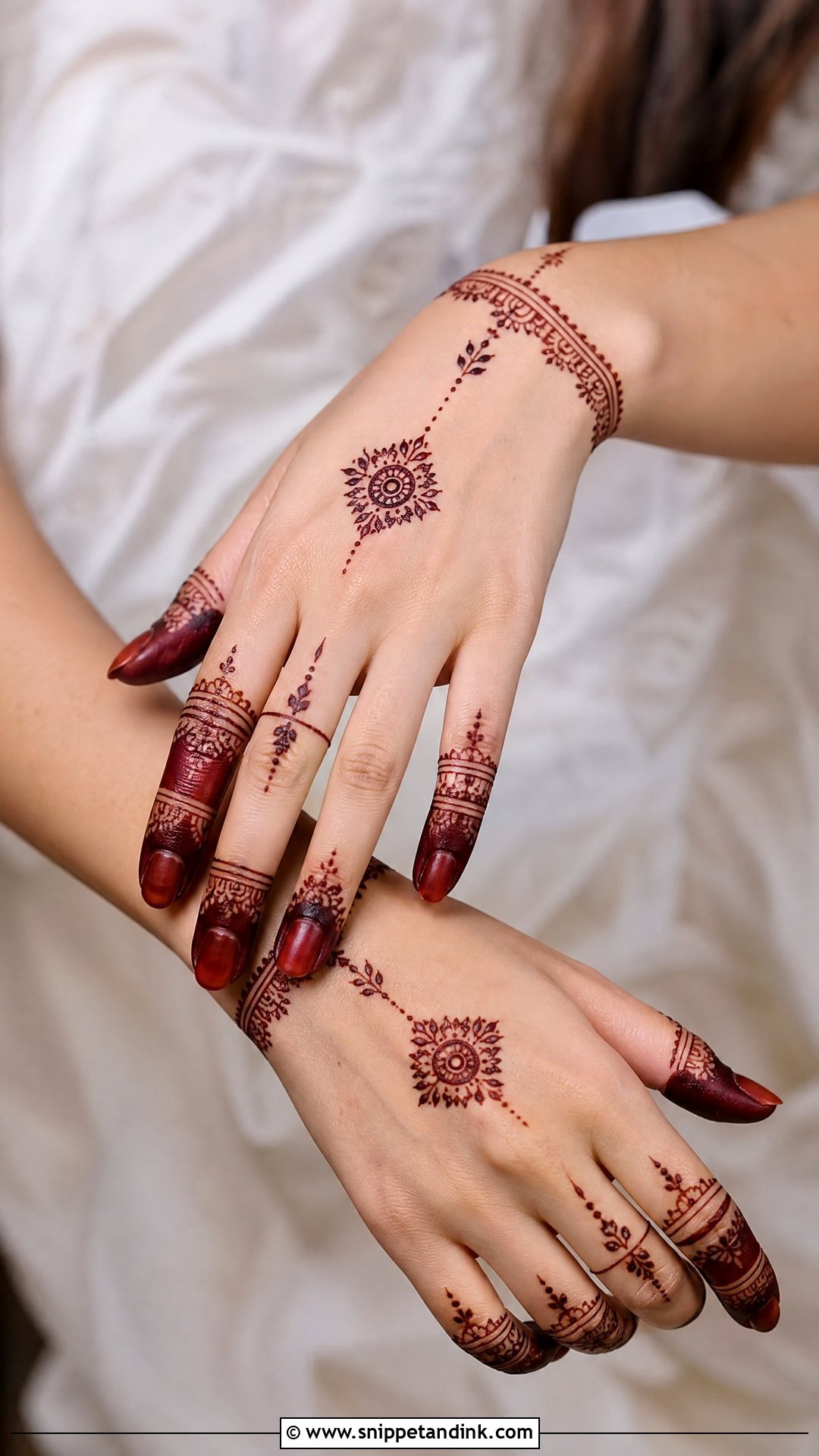
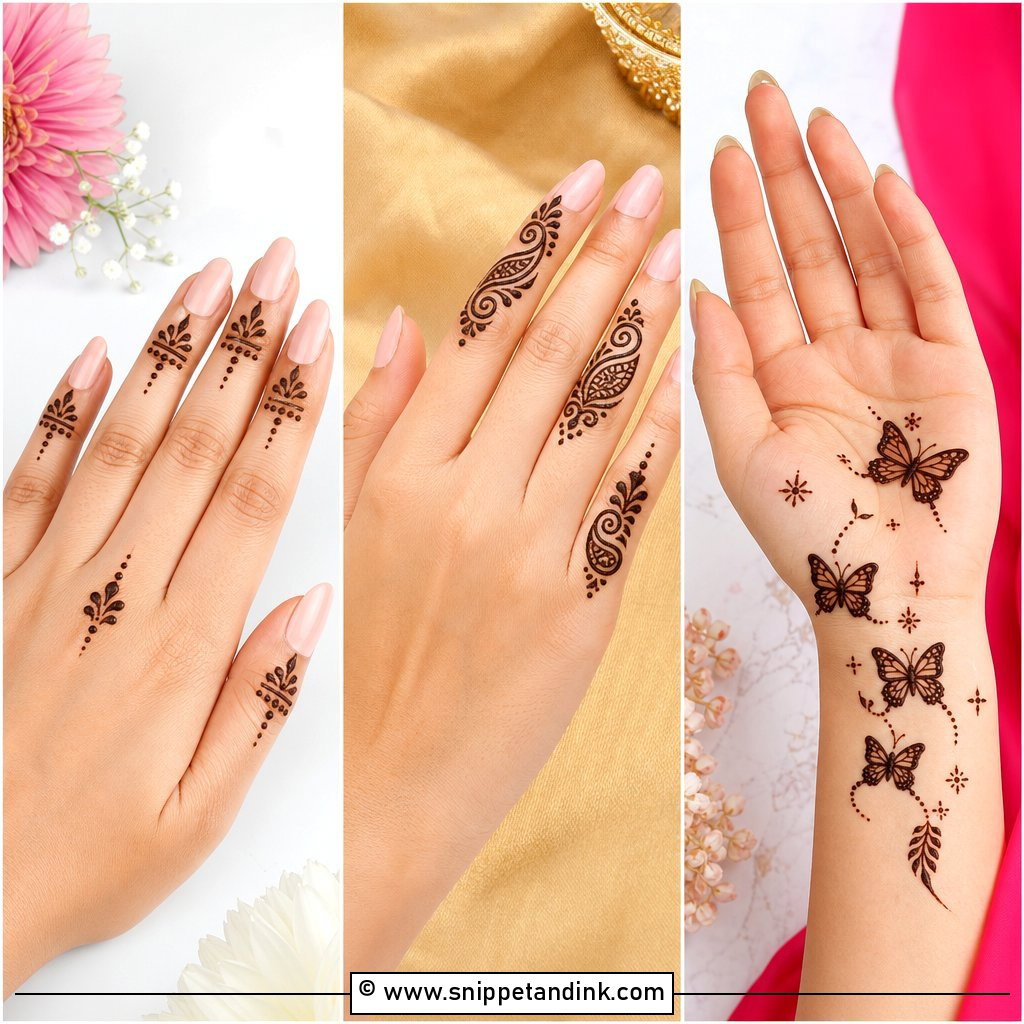
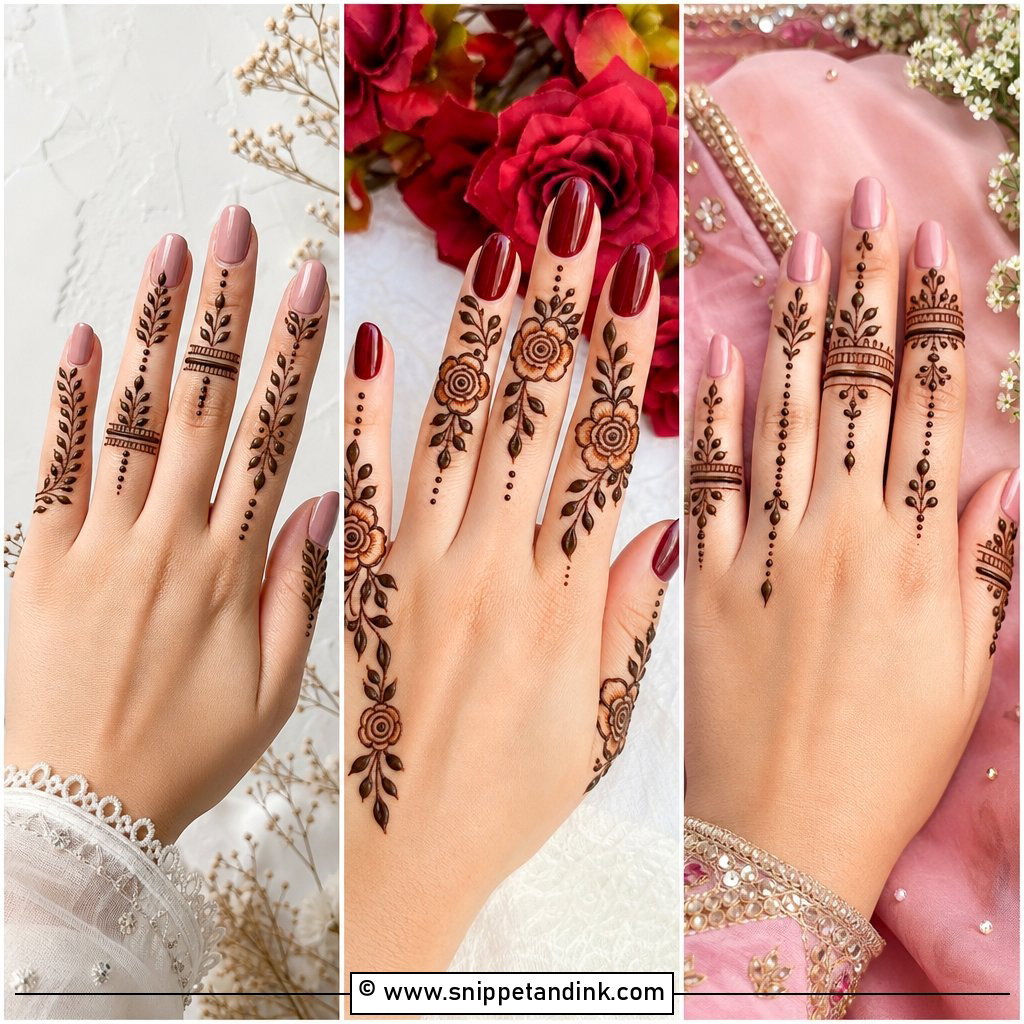
Finger mehndi design for both hands concentrates on decorated fingertips, ring bands and small vines, with a light wrist or center-hand detail to balance the bare skin. It’s quick to apply and suits people who dislike palm coverage. Vertical lines, slim leaves and tiny dots make fingers look longer. Fingertips also stain very dark, so the finger work carries real colour even when the rest is light. Add a small mandala or floral bracelet at the wrist so it doesn’t look unfinished.
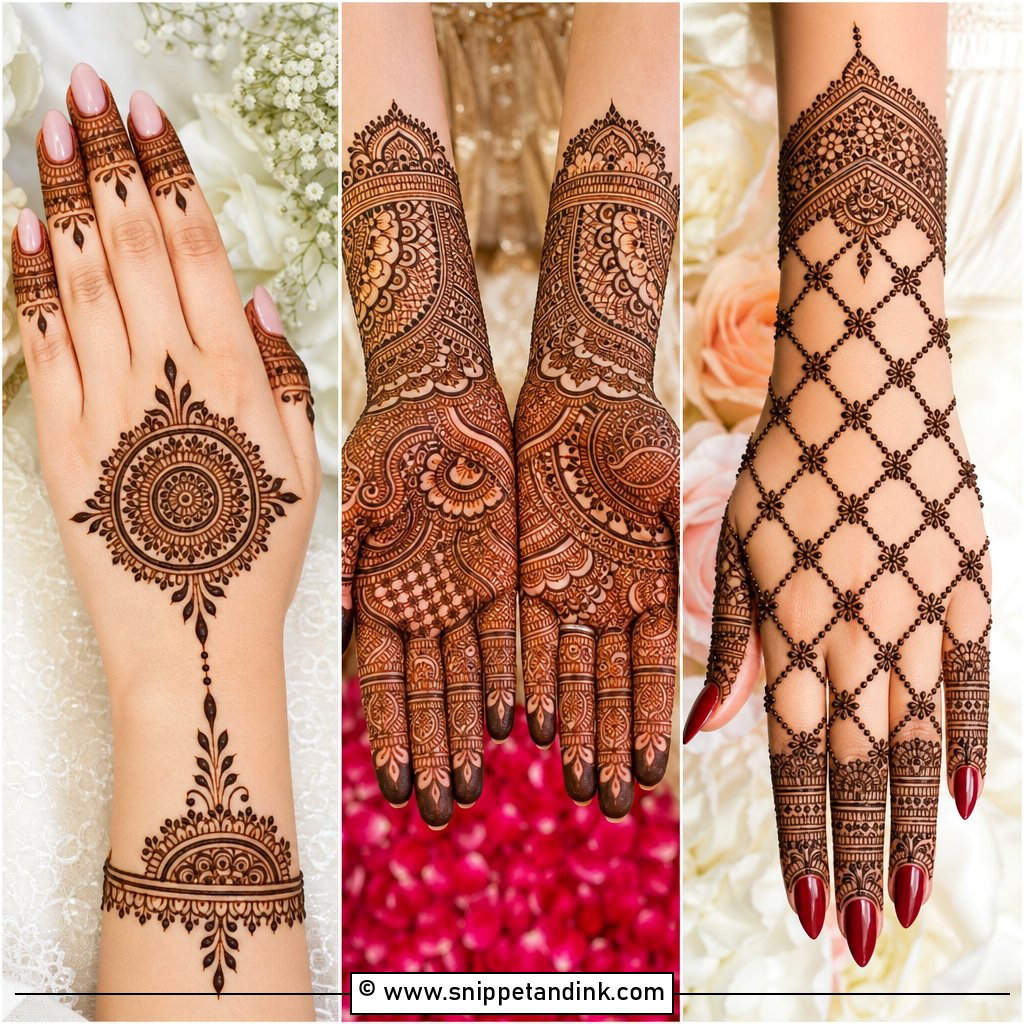
15. Bracelet Mehndi Design For Back Hand
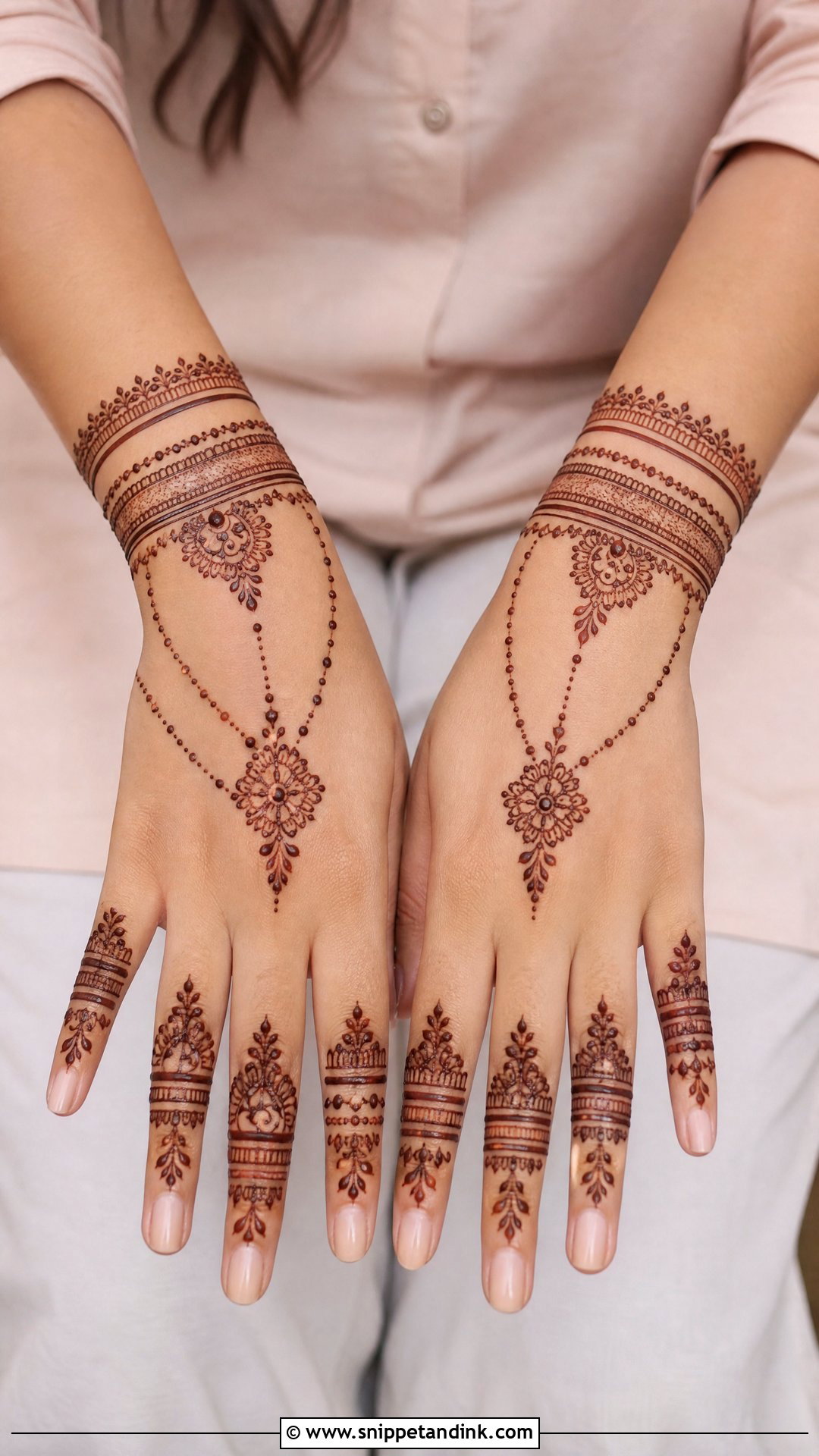
A bracelet design gives jewellery without weight. The focus is a cuff or bangle pattern at the wrist, linked to the fingers through chains, vines, dots or small florals. It suits young and mature hands alike. The newer version layers two cuffs with small jaali sections and floral links between them. Keep the middle of the hand partly open so the bracelet effect stays obvious; fill it in and the jewellery idea disappears.
16. Negative Space Mehndi Design For Hands
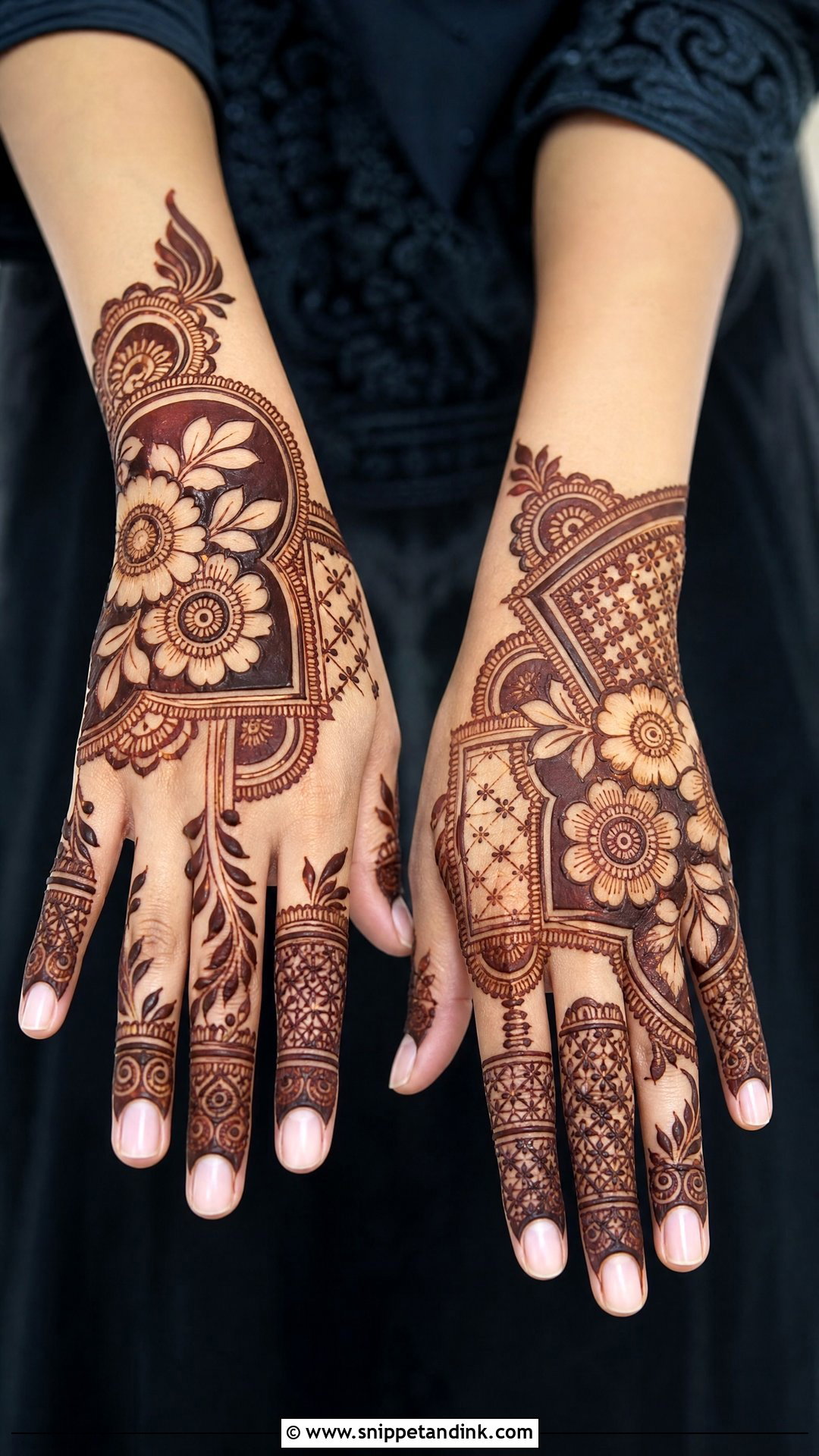
Negative space designs treat bare skin as part of the pattern: large flowers, mandala sections or geometric panels with open skin around them. If your henna usually stains on the lighter side, this is the design I’d suggest, because the spacing makes the artwork easy to see even when the colour isn’t deep. It works on both sides of the hand. Keep the fingers detailed but not fully packed so the open-space idea carries through.
17. Gulf Mehndi Design For Hands
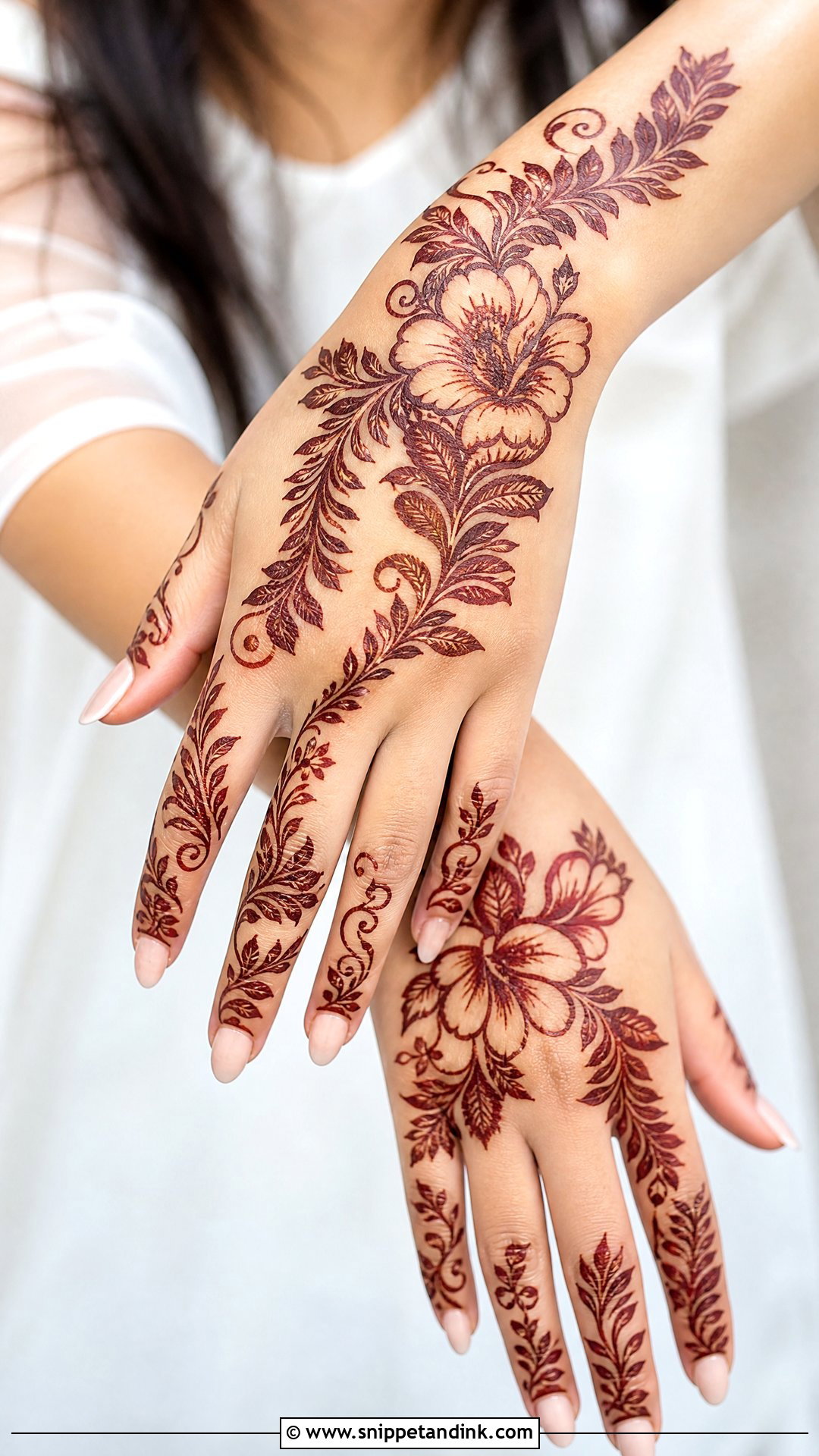
Gulf designs, also called Khaleeji mehndi, use big florals, leafy vines, thick outlines and shaded spaces, sweeping from the wrist toward the fingers. They give a rich look without Indian-style density. The thick outline is the signature, and it needs a cone with a slightly larger opening than I’d use for fine work. Slim geometric accents or neat finger bands give it a current edge. It has strong impact for Eid, weddings and evening events.
18. Rose Mehndi Design For Back Hand
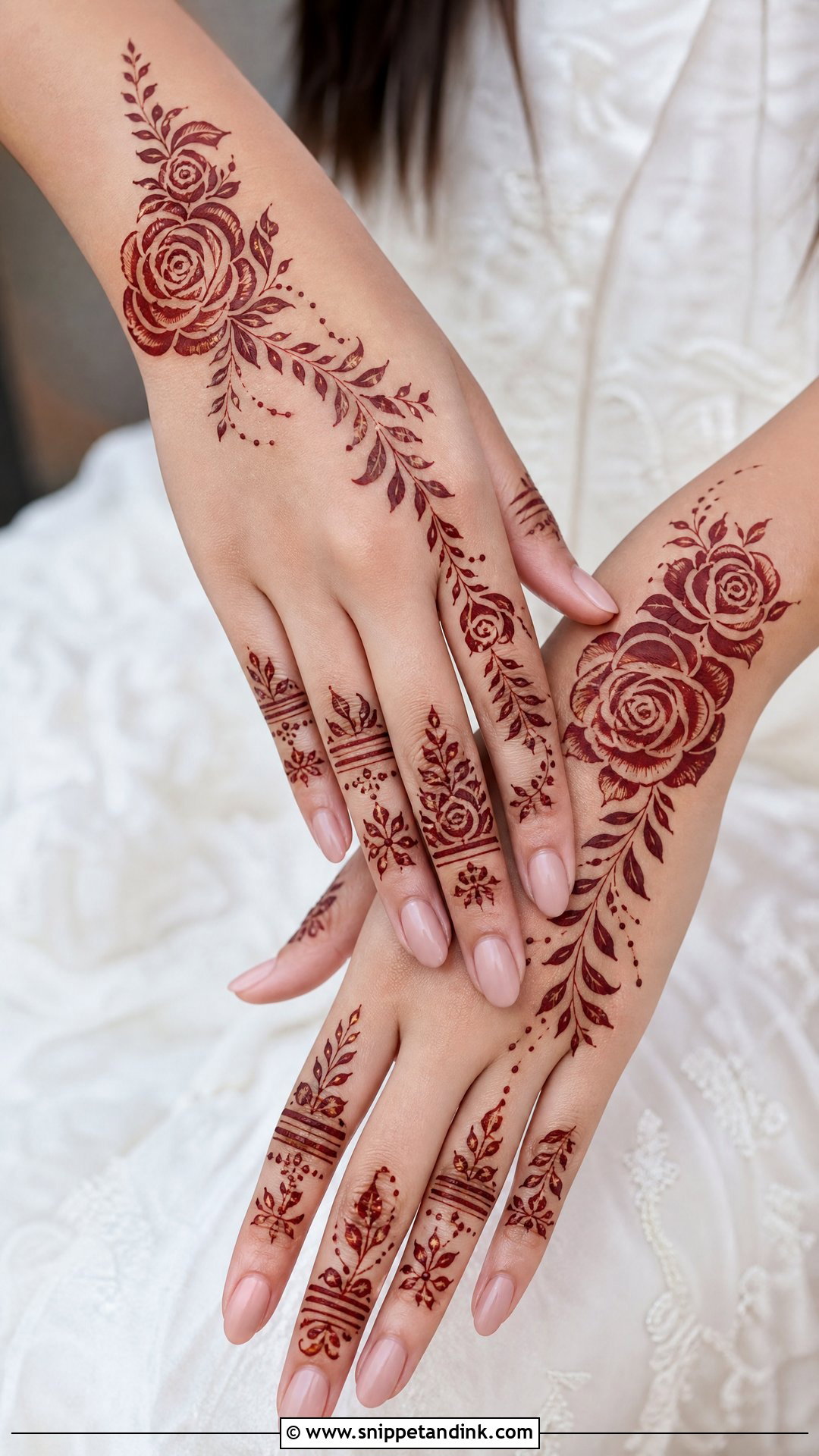
A rose back-hand design sets a large rose near the wrist and carries smaller roses and leaves diagonally toward the fingers. Roses need thick outlines with fine inner curves, otherwise the layered petals blur together as the stain darkens. Keep the fingers simple with leafy trails, dots and narrow bands so the rose stays in front. It pairs naturally with Arabic and Indo-Arabic layouts and suits engagements, wedding guests and anniversaries.
19. Engagement Mehndi Design For Hands
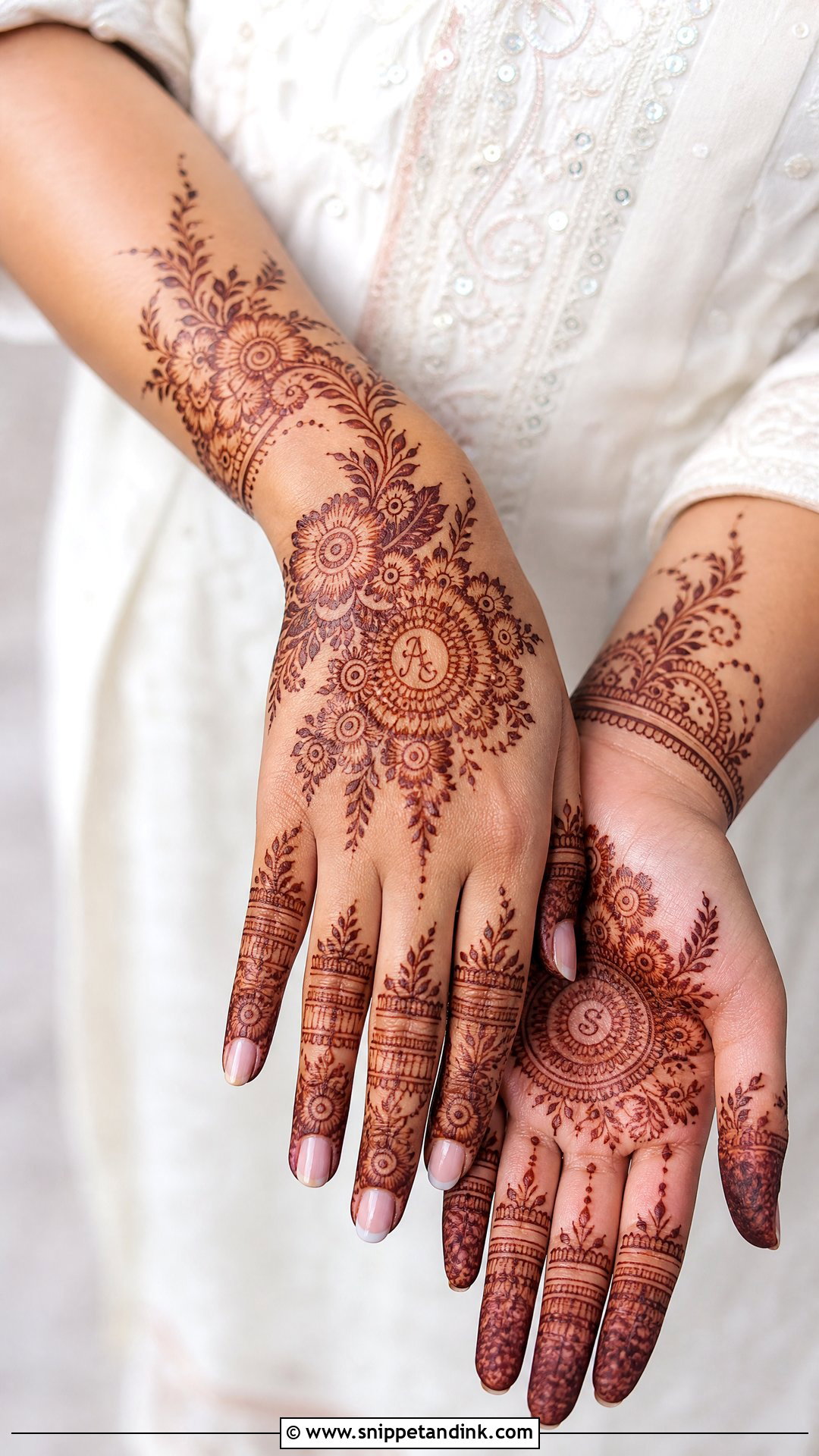
Engagement henna should feel special but stay well short of bridal weight. I’d do a detailed back hand, decorated fingers, a wrist cuff and a soft palm motif, with florals, mandalas, ring patterns and fine vines. Initials or a tiny date hidden inside a motif make it personal. Keep the forearm light. Think about the ring moment: your left hand will be in close-up, so I make sure the ring finger has clean, open detail that won’t fight with the stone.
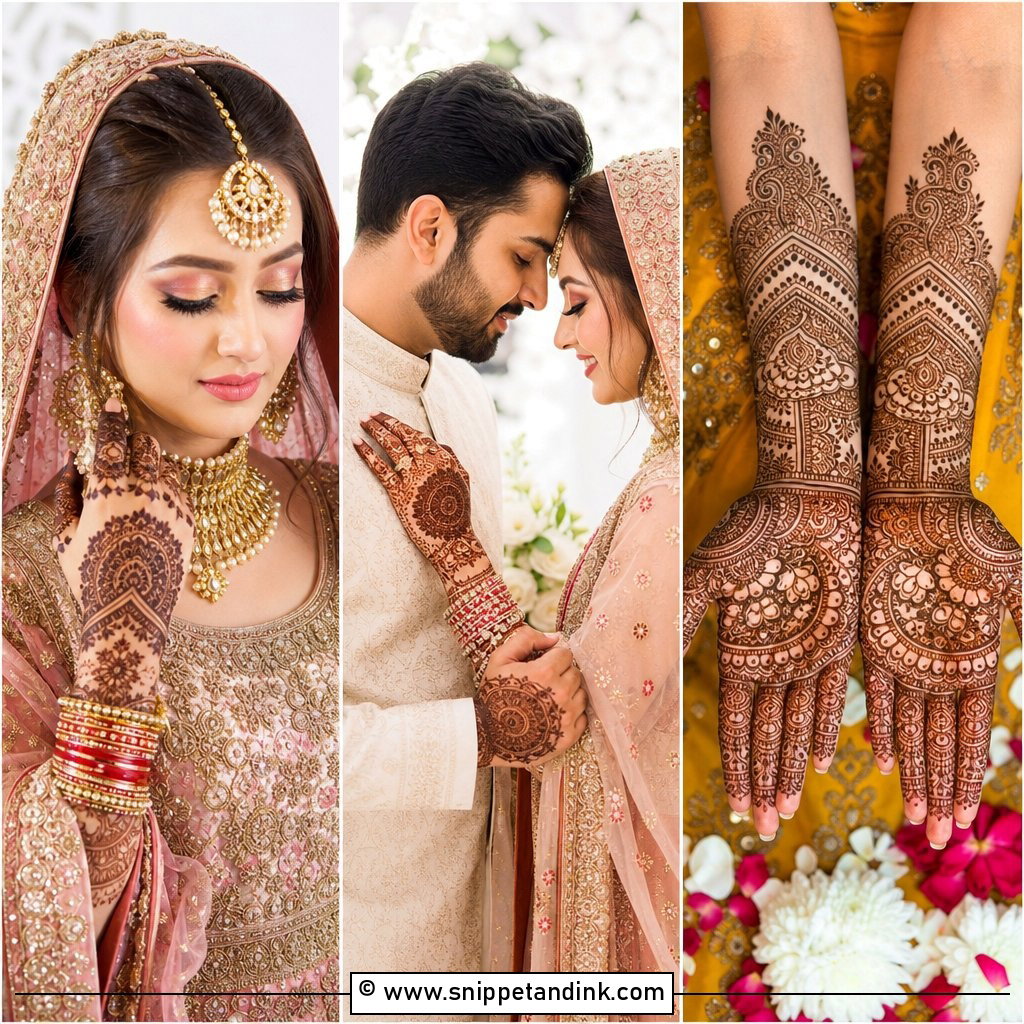
20. Eid Mehndi Design For Front Hand
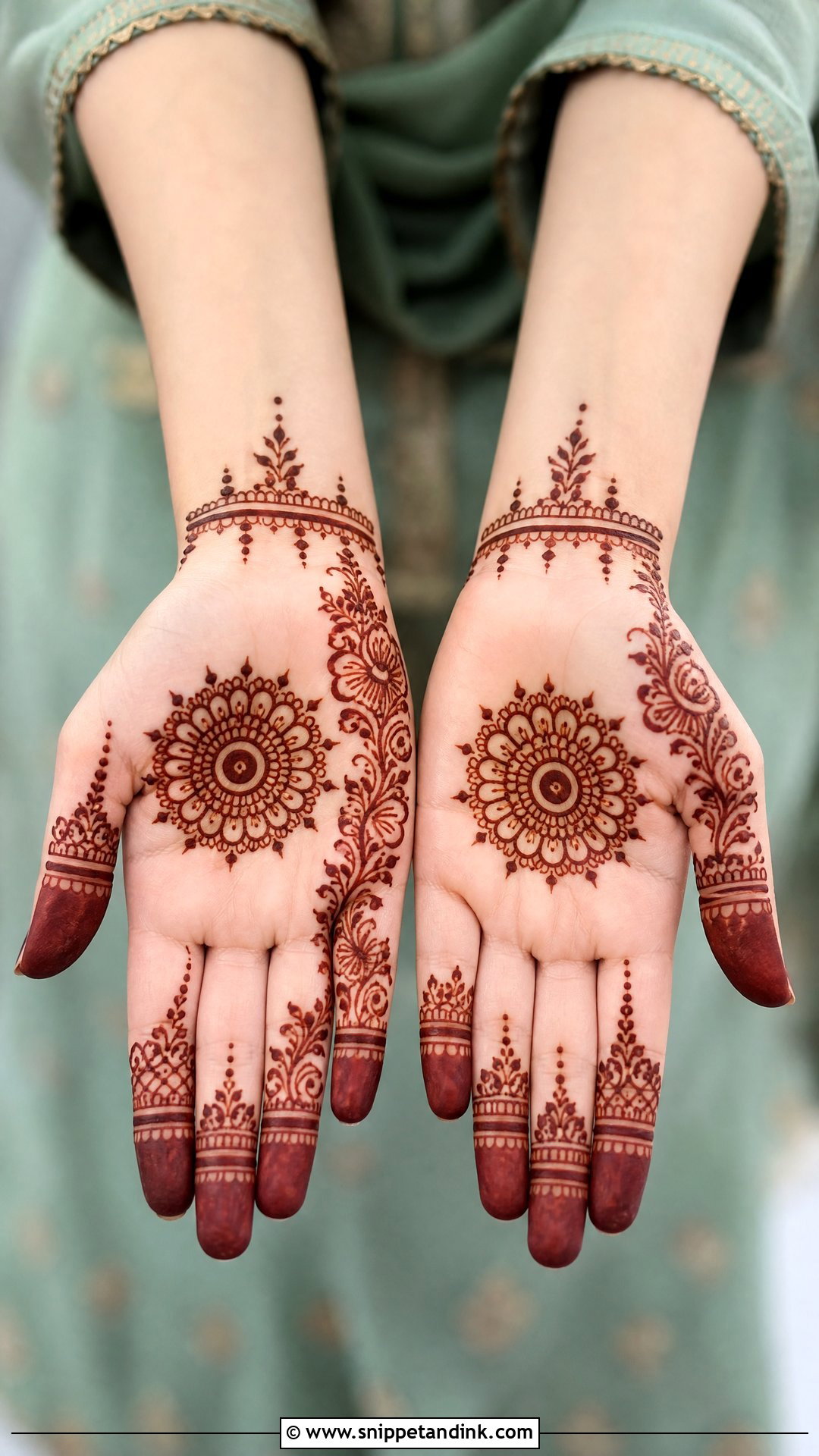
Eid henna has to last a full day of visiting, cooking and hugging. A balanced front-hand design includes a palm mandala, a floral side trail, decorated fingertips and a simple wrist border, and Arabic and Khafif elements keep it detailed without weight. If your outfit is heavily embroidered, go lighter with more open space; if it’s plain, fill the palm more. Most families apply it on Chand Raat, and that overnight wait is exactly what the stain needs to deepen by morning. It adapts easily for children, teens and adults.
21. Festive Mehndi Design For Both Hands
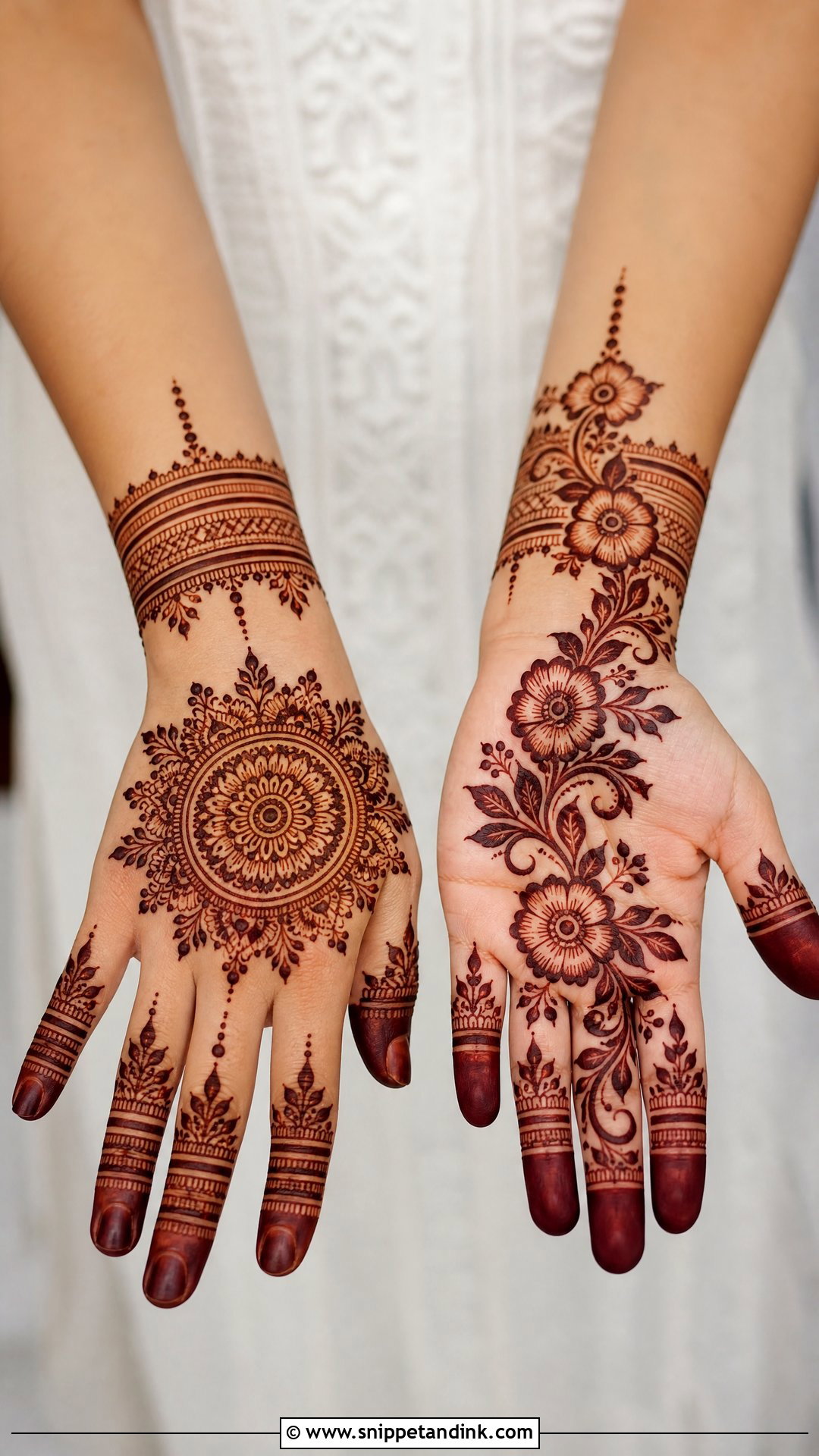
Festive mehndi design for both hands should look connected without being identical. One hand might carry a floral trail and the other a mandala, with matching finger details, dots, leaves, wrist bands and small paisleys tying them together. Medium coverage with open spaces works for Diwali, Eid, Karwa Chauth, Teej and family functions. I always ask which hand you’ll use most during the event, and keep that one slightly lighter so it dries faster.
22. Shaded Mehndi Design For Back Hand
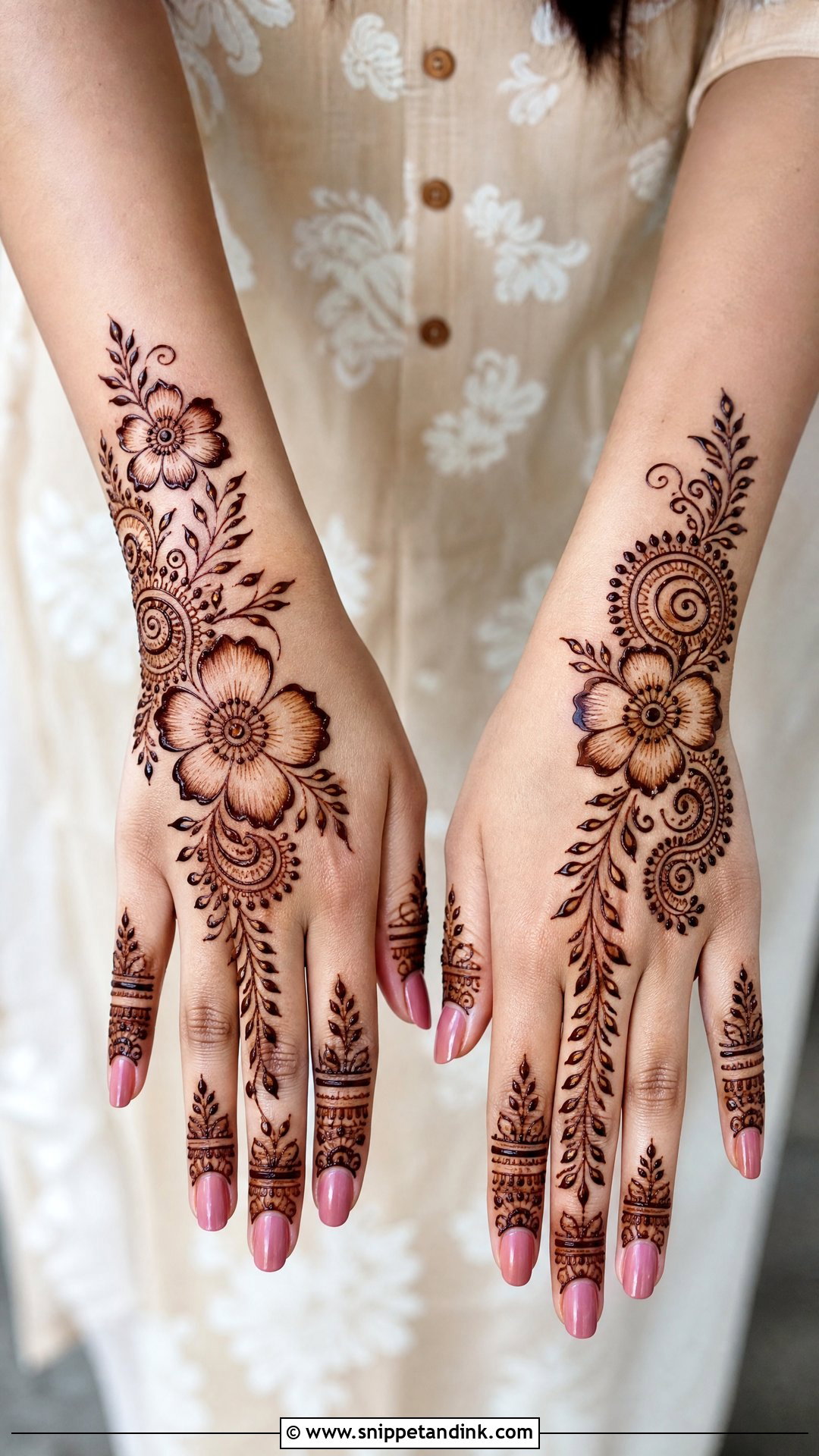
Shading adds depth without solid filling. I pull the paste thin with light strokes inside flowers, leaves and paisleys, building a soft gradient. A complete shaded design starts at the wrist and runs diagonally across the hand in large floral sections, with shaded tips or slim leafy details on the fingers. It’s most effective in Arabic and Gulf layouts, where the bold outline contrasts with the soft inside. Uneven pressure is the risk; heavy spots become dark patches as the stain develops.
23. Full Finger Mehndi Design For Back Hand
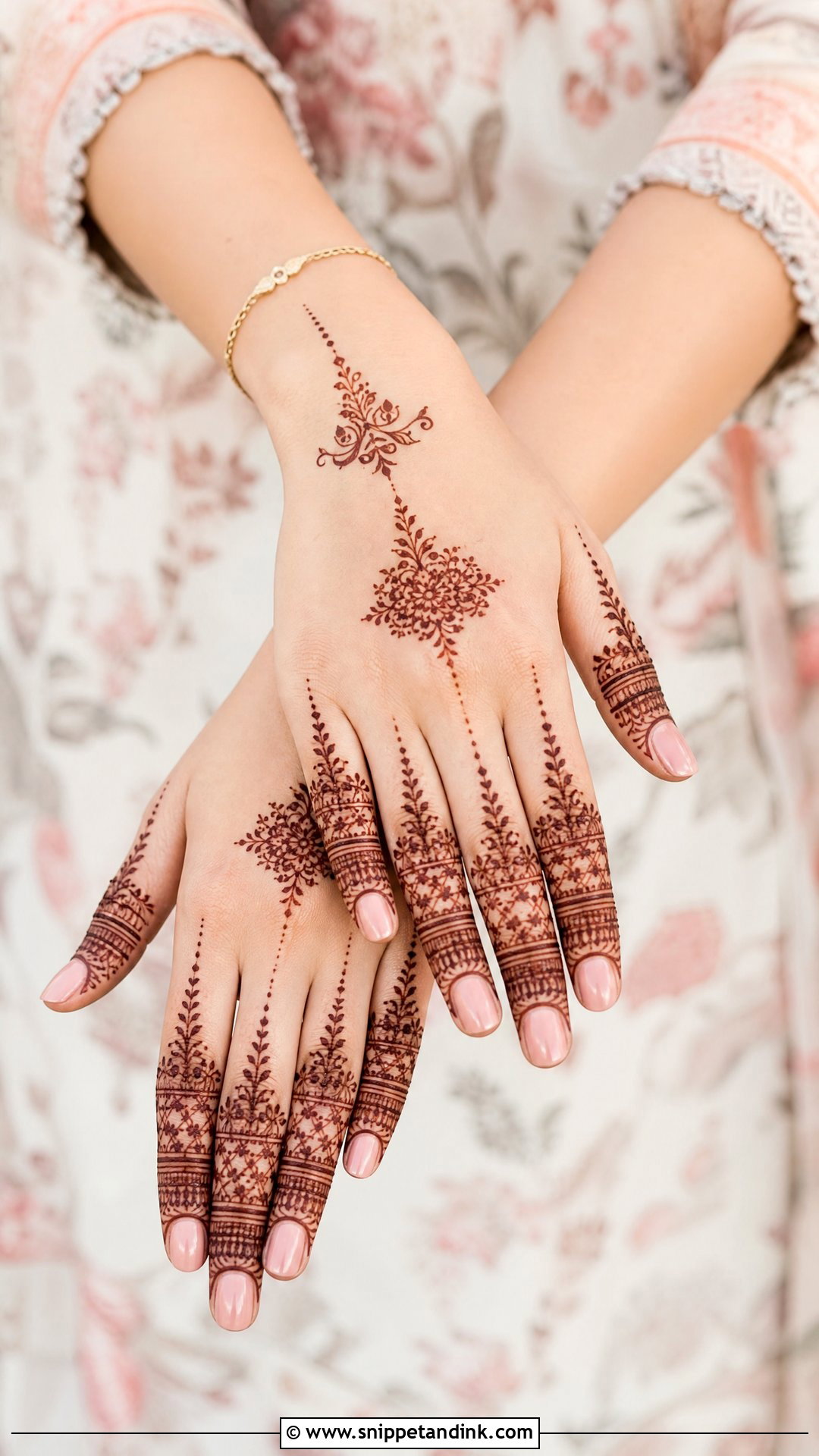
Full finger designs pile the detail onto the fingers and keep the back of the hand light. Each finger can carry its own pattern, from checks and vines to dots, tiny florals and stacked bands, with a small wrist bracelet or center motif to complete it. Keep the patterns narrow and vertical if you want longer-looking fingers. It’s quick, it shows up sharply in close-ups, and it’s the design I’d recommend if you’ll be wearing rings.
24. Half Hand Mehndi Design For Front Hand
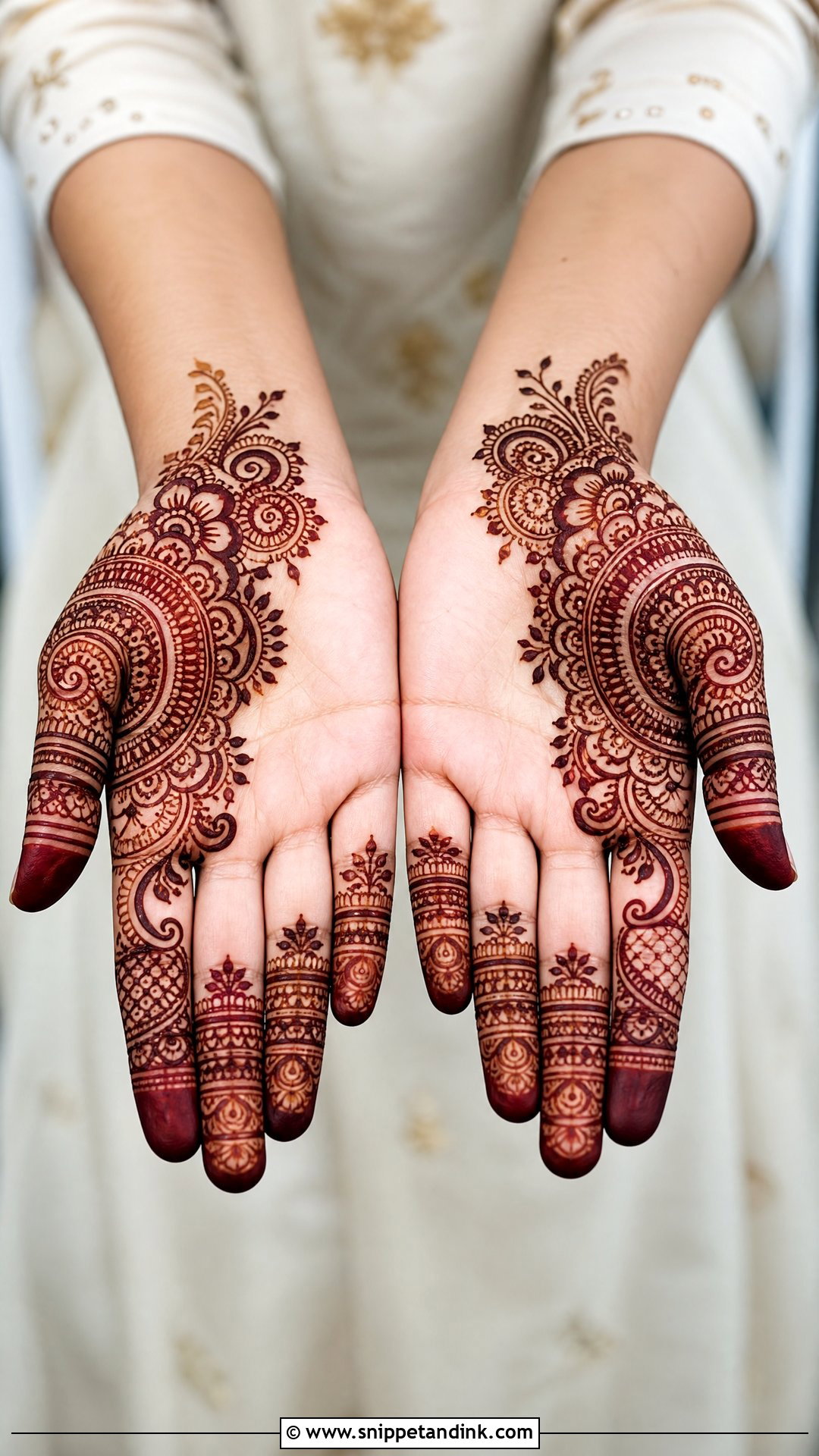
Half-hand designs cover either the palm and fingers or the lower hand and wrist, leaving the rest open: a side mandala, a floral corner, a diagonal paisley trail and detailed fingertips. They’re quicker to apply and dry faster than bridal coverage. The tricky part is the edge where the design stops. I finish it with a deliberate border or a trailing vine, so it looks designed rather than cut off. Bold outlines and clean empty spaces keep it current.
25. White Mehndi Design For Hands
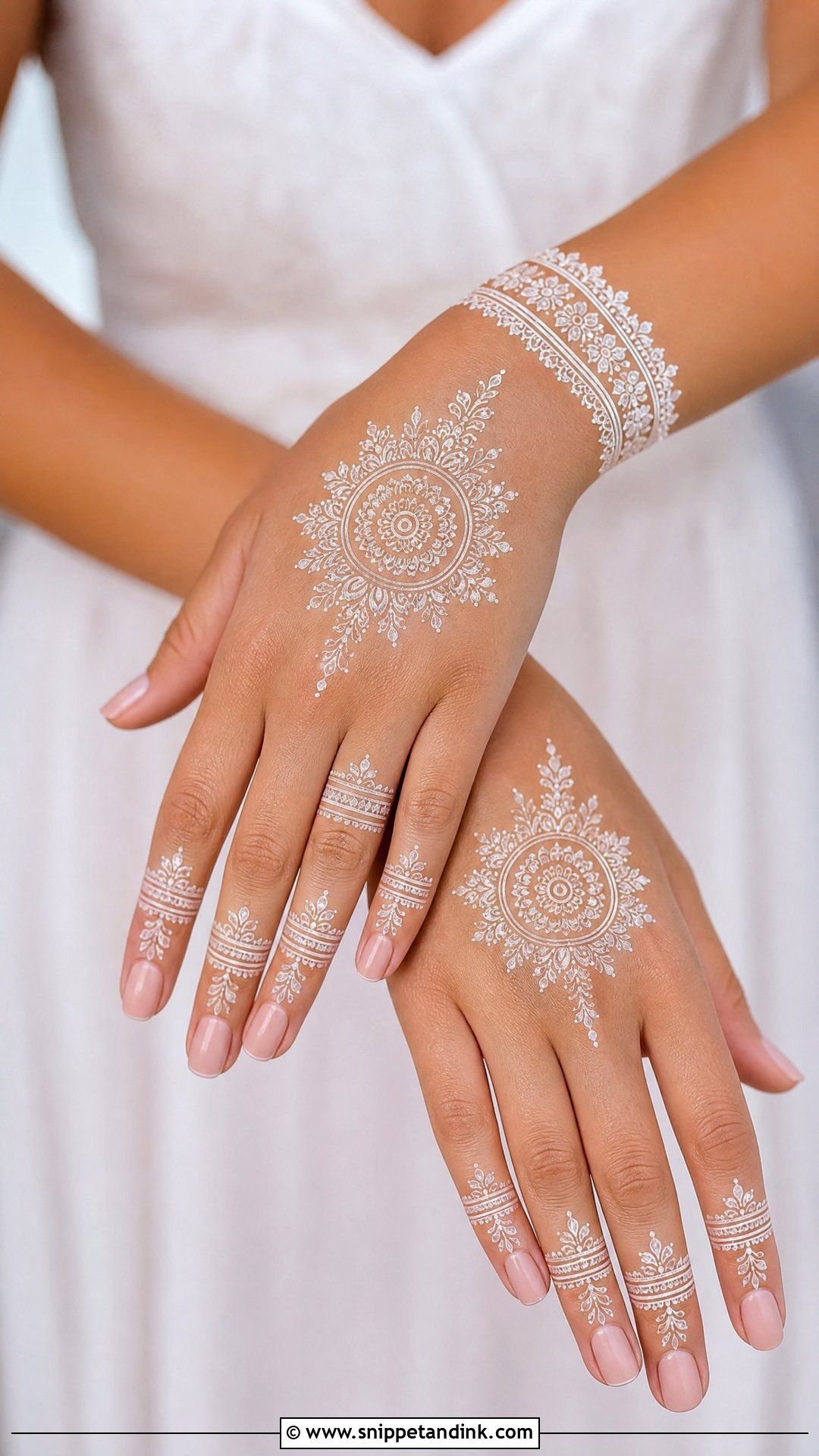
White mehndi isn’t henna at all. It’s a body-art paste or adhesive design that sits on the skin, so it leaves no reddish-brown stain and comes off within a day or so. People wear it for photoshoots, parties and modern events. Lace-like florals, mandala details, finger bands and wrist cuffs are typical, and the contrast is especially bright on medium to deep skin. White lines show every flaw, so keep the design neat and uncrowded. I’d always do a small patch test first, since some body adhesives irritate sensitive skin.
Home Cones, Fresh Paste and Practising on Paper
Plenty of people try these designs at home, and the paste matters more than the pattern. Natural henna paste is made from finely sifted henna powder, a liquid such as lemon juice or water, a little sugar for smoothness and an essential oil that helps the dye release. It needs several hours to rest before it’s ready to use, and once it is, it should be used or frozen; fresh paste loses its strength in a few days at room temperature.
Be careful with ready-made cones that claim to last for months on a shop shelf without refrigeration. Natural henna doesn’t keep that way, so those cones often contain preservatives or added dyes. If a cone promises a very dark stain in minutes, skip it.
Before you draw on skin
- Practise lines, dots and petals on paper until the pressure feels even.
- Cut the cone tip very small; you can always cut more.
- Do a small patch test on your inner arm a day before.
- Start with a simple Arabic trail or a finger design rather than a full palm.
Coverage Follows the Occasion, the Motif Follows You
The easiest way to pick is to decide coverage first, then the motif. Arabic trails give open elegance, bridal designs carry full coverage, mandalas bring balance and minimal patterns suit modern events. If you like structure, try Moroccan or negative space layouts; if you prefer softness, florals, roses, Khafif or shaded designs. Match the amount of henna to the occasion, your outfit and how long you can sit, then save the screenshots of the design you love and show them to your artist along with your hands.
You'll Like These Ideas:


Leave a Reply