
At a brother’s wedding, the groom’s sister is everywhere at once, sorting outfits, fixing last-minute details, posing in every family photo and dancing at every function. Her mehndi has to keep up with all of that. When I design for a groom’s sister, I aim for hands that look properly festive but stay a clear step lighter than the bride’s, and that she can actually use while the wedding happens around her. Below are twenty directions, from full-hand traditional work to a neat back-hand design you can have done in half an hour, with Arabic trails and Indo-Arabic fusion in between.
How Much Lighter Than the Bride Should a Sister Go?
There’s no fixed rule, but in most families the bride’s mehndi is the heaviest and longest in the room, and everyone else steps down from it. When I’m booked for the groom’s side, I ask how high the bride’s design will go. If she’s covering to the elbow, a sister usually stops at the wrist or mid-forearm. If the bride is going minimal, the family keeps it light too.
Motifs that traditionally belong to the bride
A large dulha-dulhan portrait, the groom’s full name worked into the palm, and doli or baraat scenes are usually bridal details. A sister can borrow a small version of any of them, but I’d check with the bride first rather than arrive with the same centrepiece. Most brides are happy to be asked, and it saves an awkward photo of two identical palms.
Thinking about the stain against your outfit
A fresh stain is orange and darkens toward maroon over about two days. Against pastel or ivory fabric, even a lighter design looks bold once it darkens, while deep red or bottle-green outfits swallow fine detail. If your outfit is dark, ask for slightly bolder outlines so the pattern still reads next to it.
1. Brother Wedding Full Hand Mehndi Design
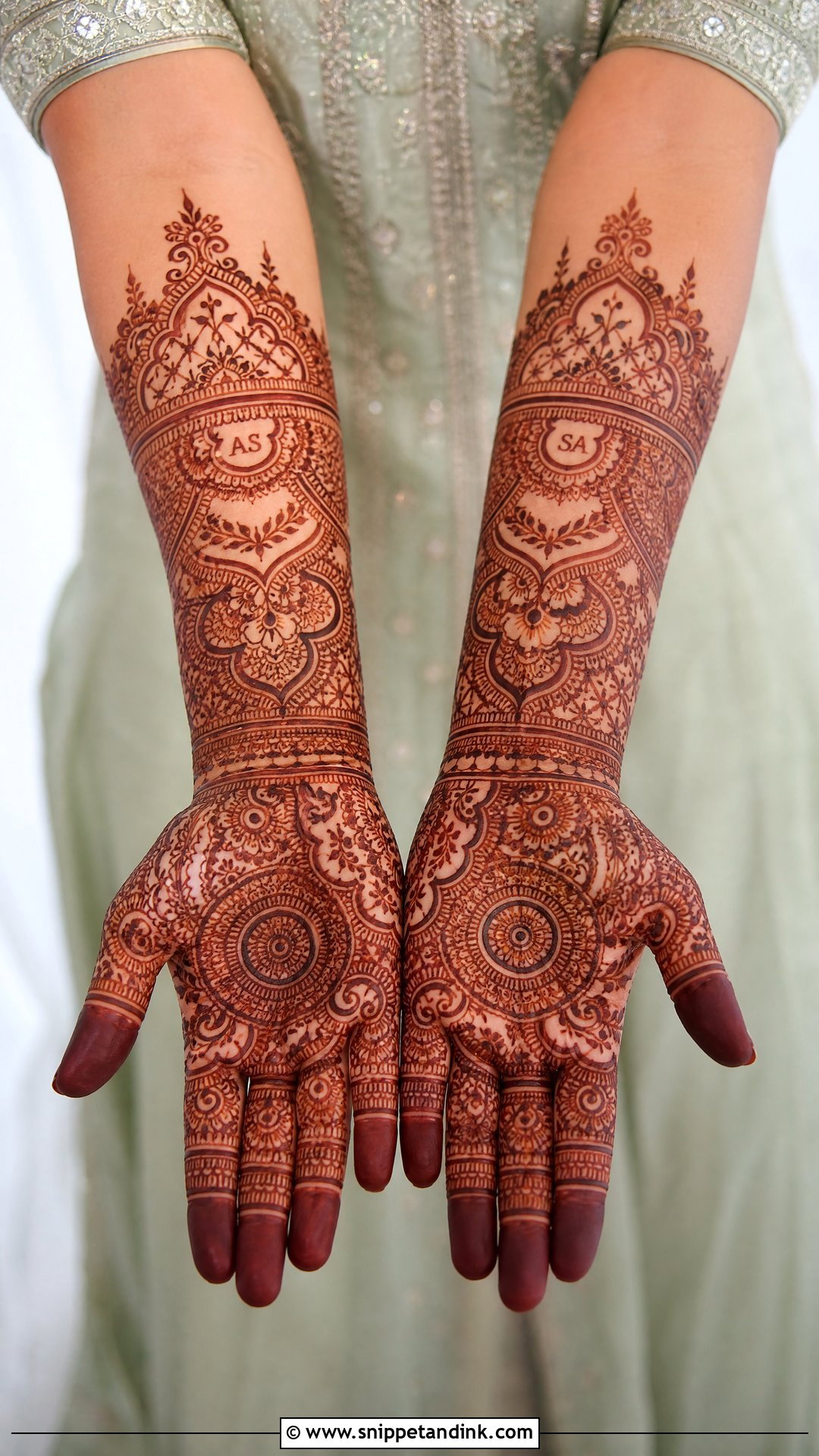
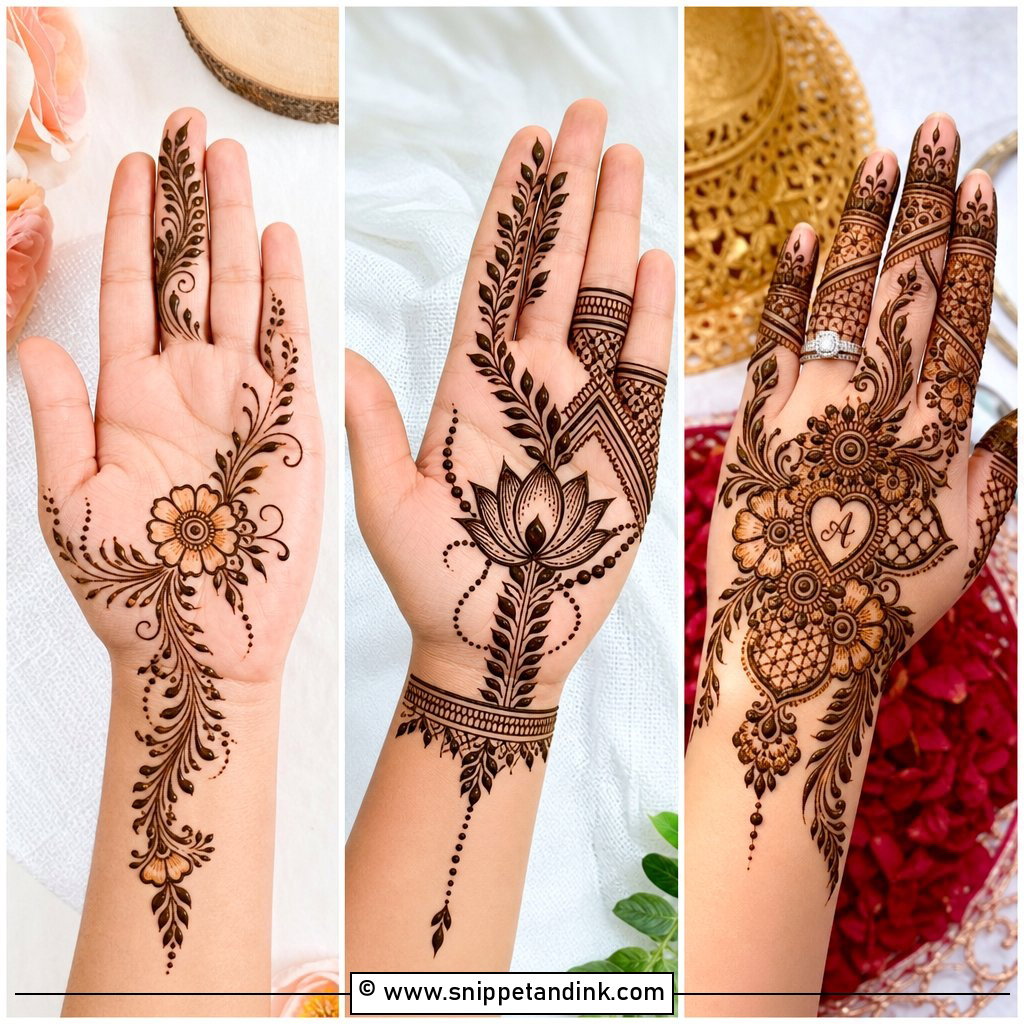
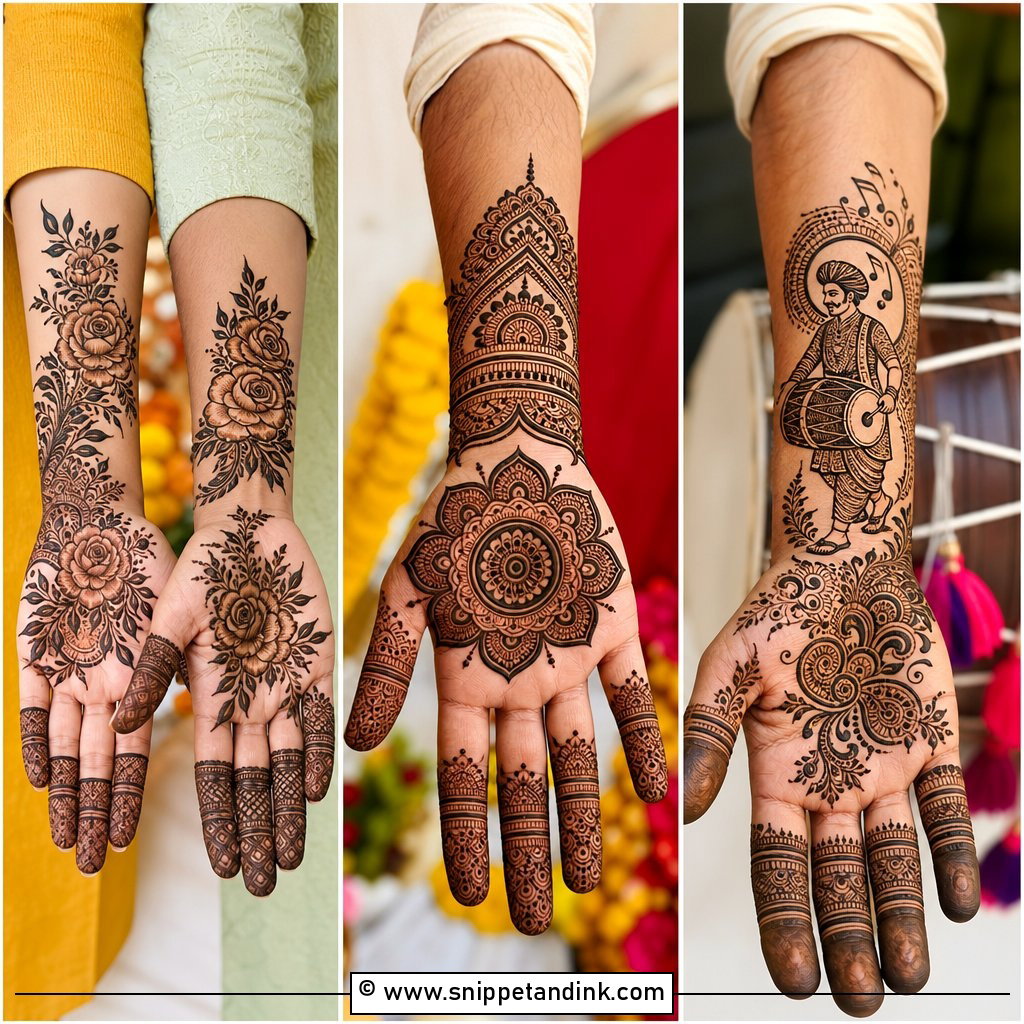
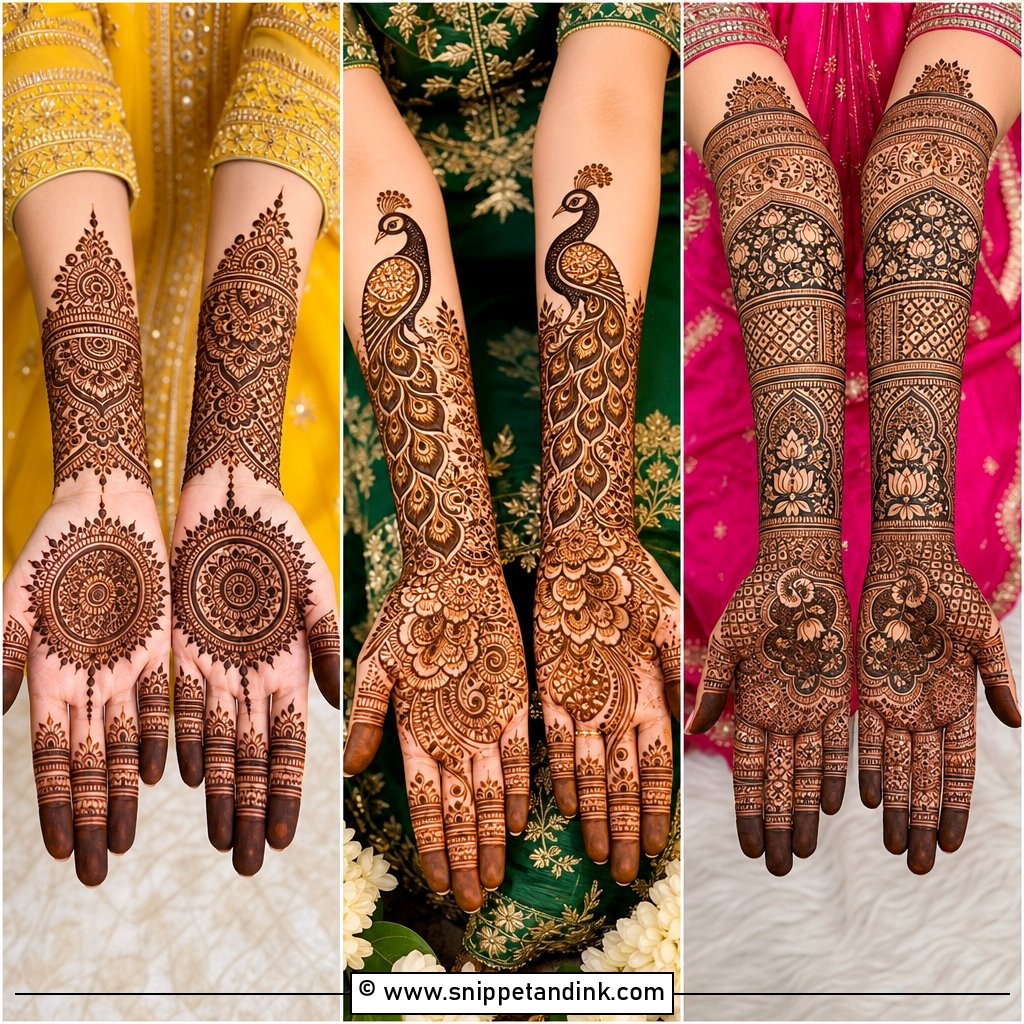
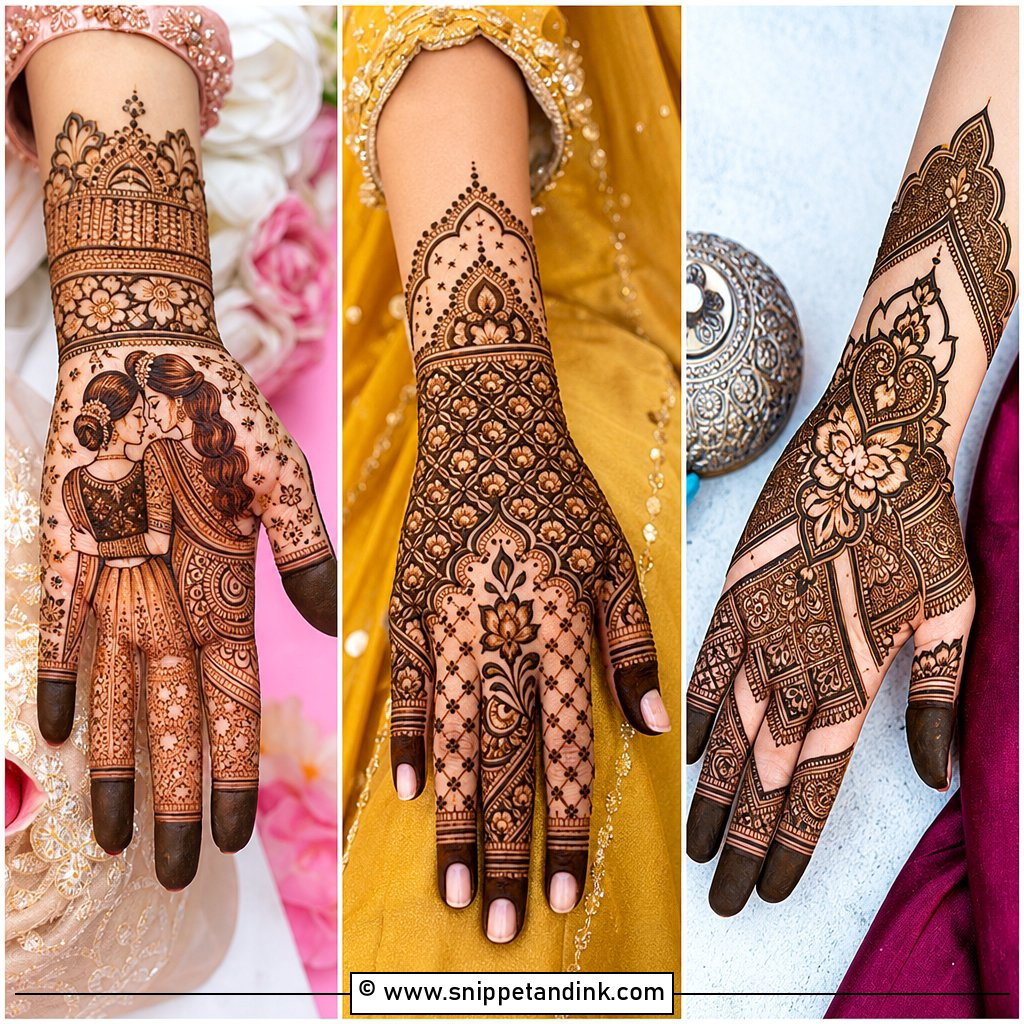
If you want to look close to bridal without competing with the bride, a full hand mehndi design with clean spacing is how to do it. I keep the palm detailed with a central mandala, paisley vines, small florals and fine filler, then run bracelet bands, leafy borders and soft jaali panels up the wrist and forearm. The breathing spaces between motifs are what separate a sister’s full hand from a bride’s packed one. Your brother’s initials or the wedding date can go in a tiny corner, where only people who look closely will find them.
2. Brother Wedding Front Hand Mehndi Design
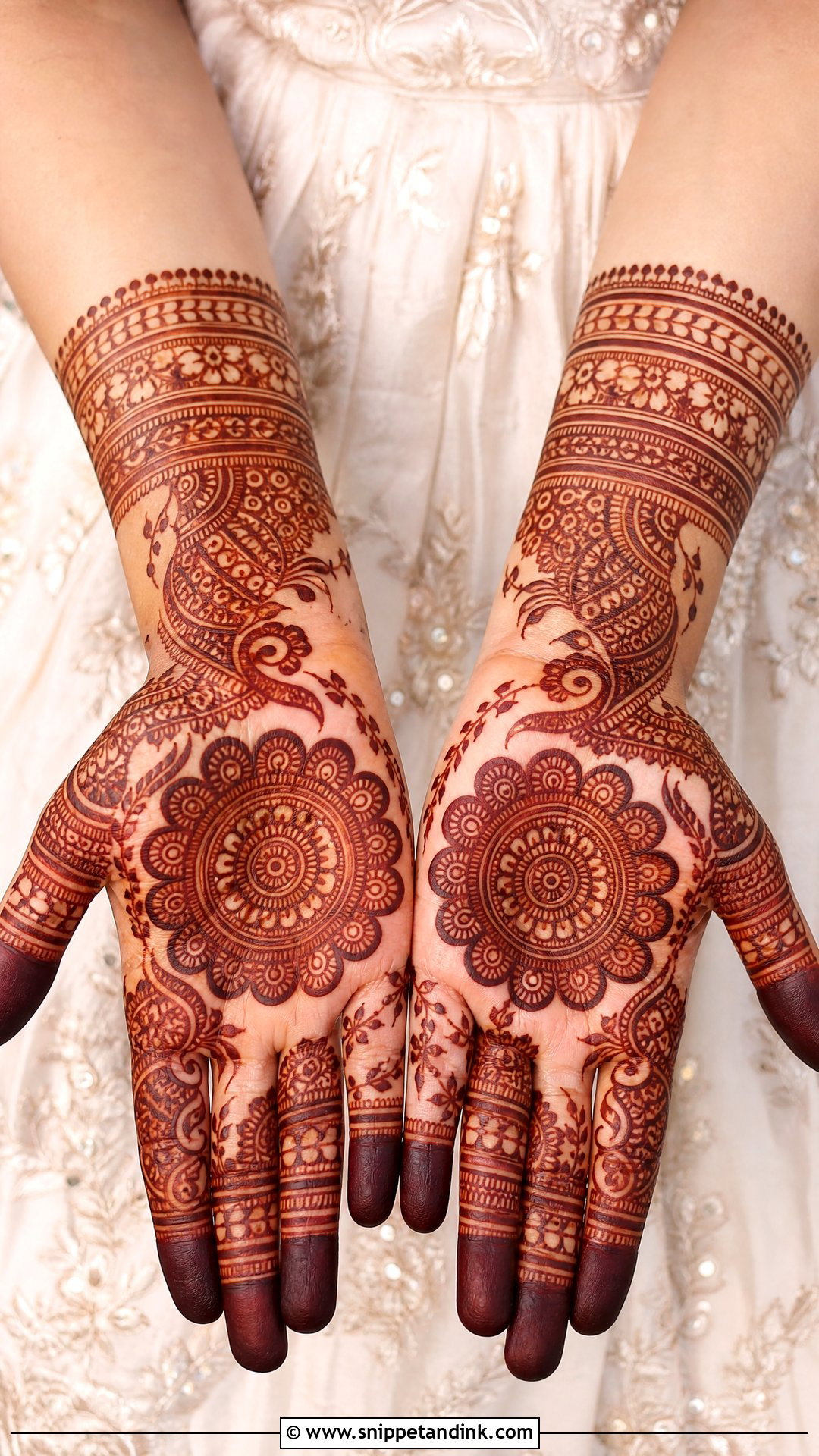
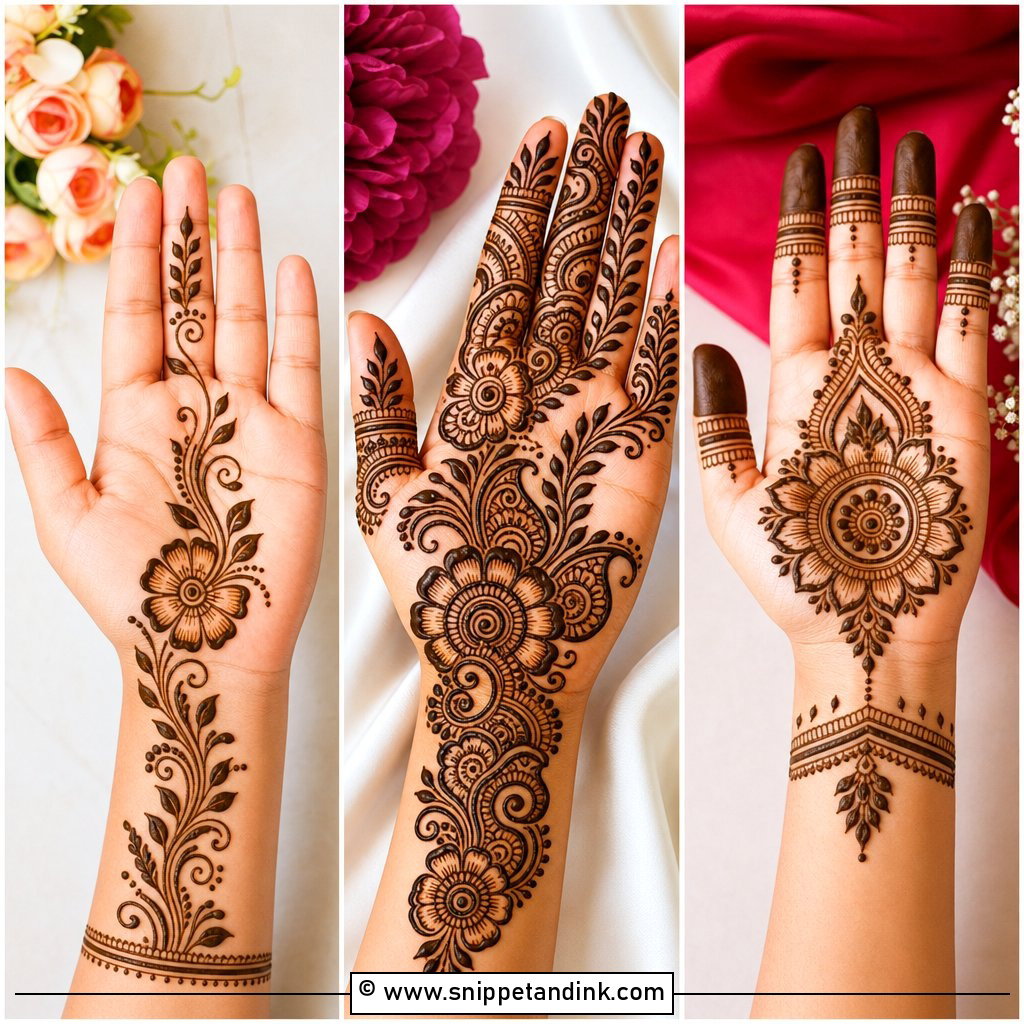
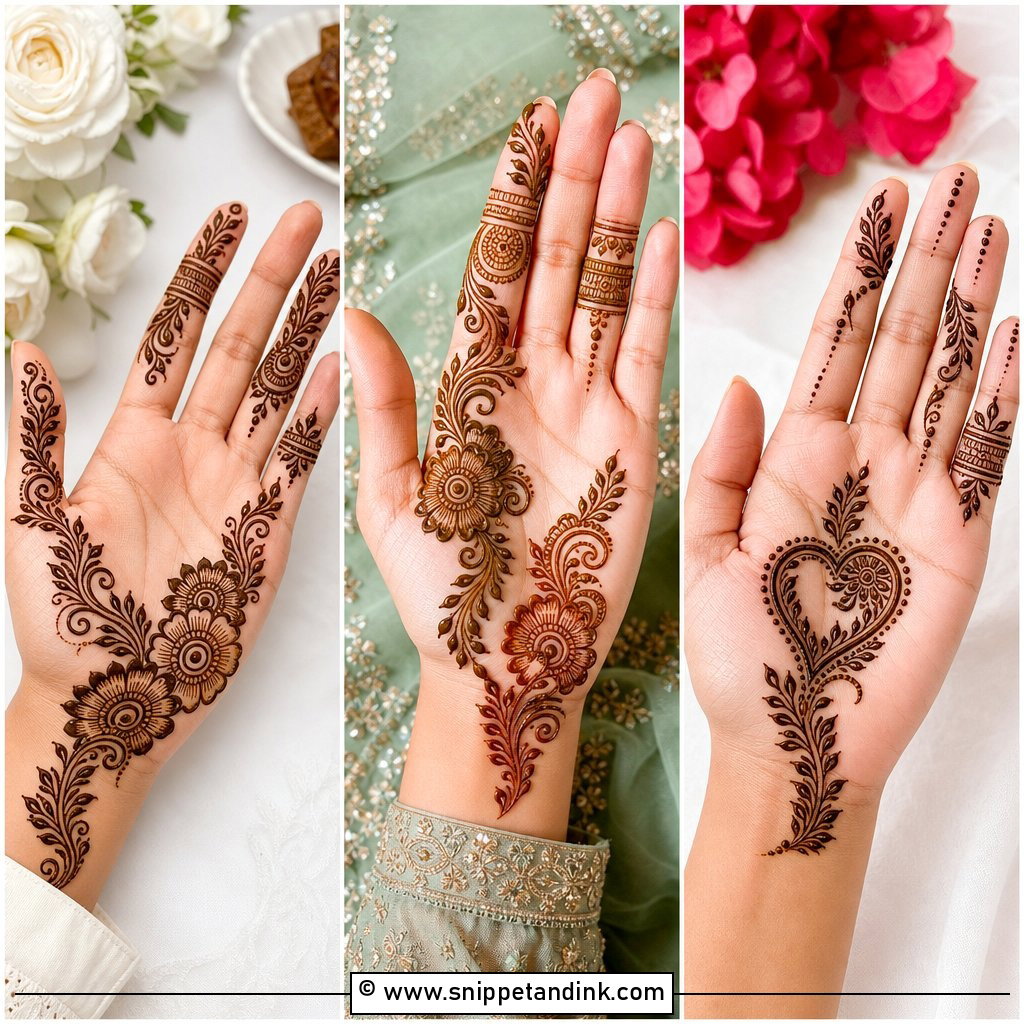
Your palms are on show during the rituals, every time you hold a tray, flowers or a thali beside the couple. I start a front-hand design with a bold mandala in the palm, then move into paisley curves and floral vines across the fingers. Filled fingertips give the classic wedding look, while fine checks and dots keep it lighter. Stacked bangle bands at the wrist make the hand look finished even with little jewellery, and short sleeves show it off. One practical point: the palm stains darkest, but it’s also the part you use most, so get this design done early in the week.
3. Brother Wedding Back Hand Mehndi Design
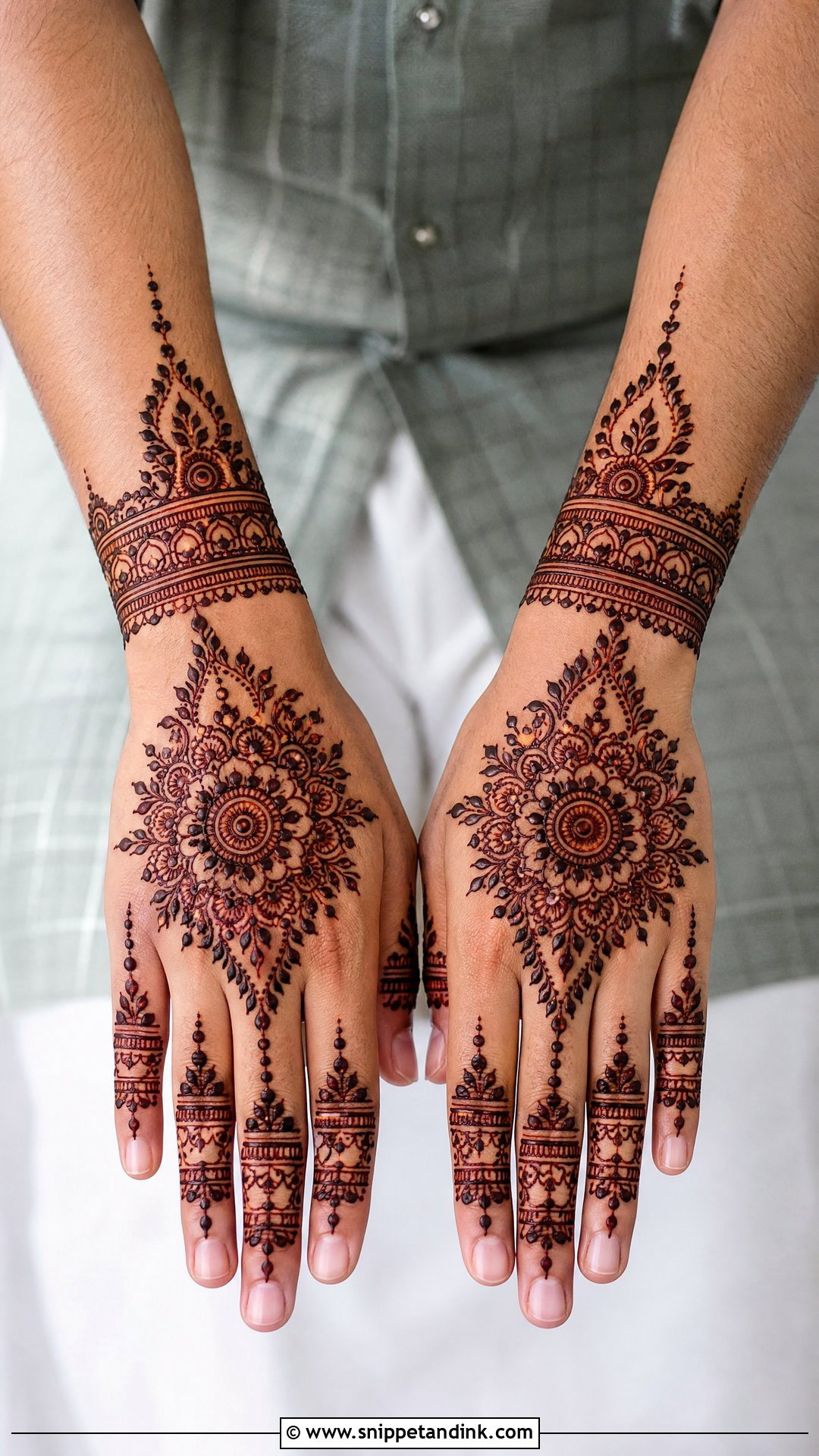
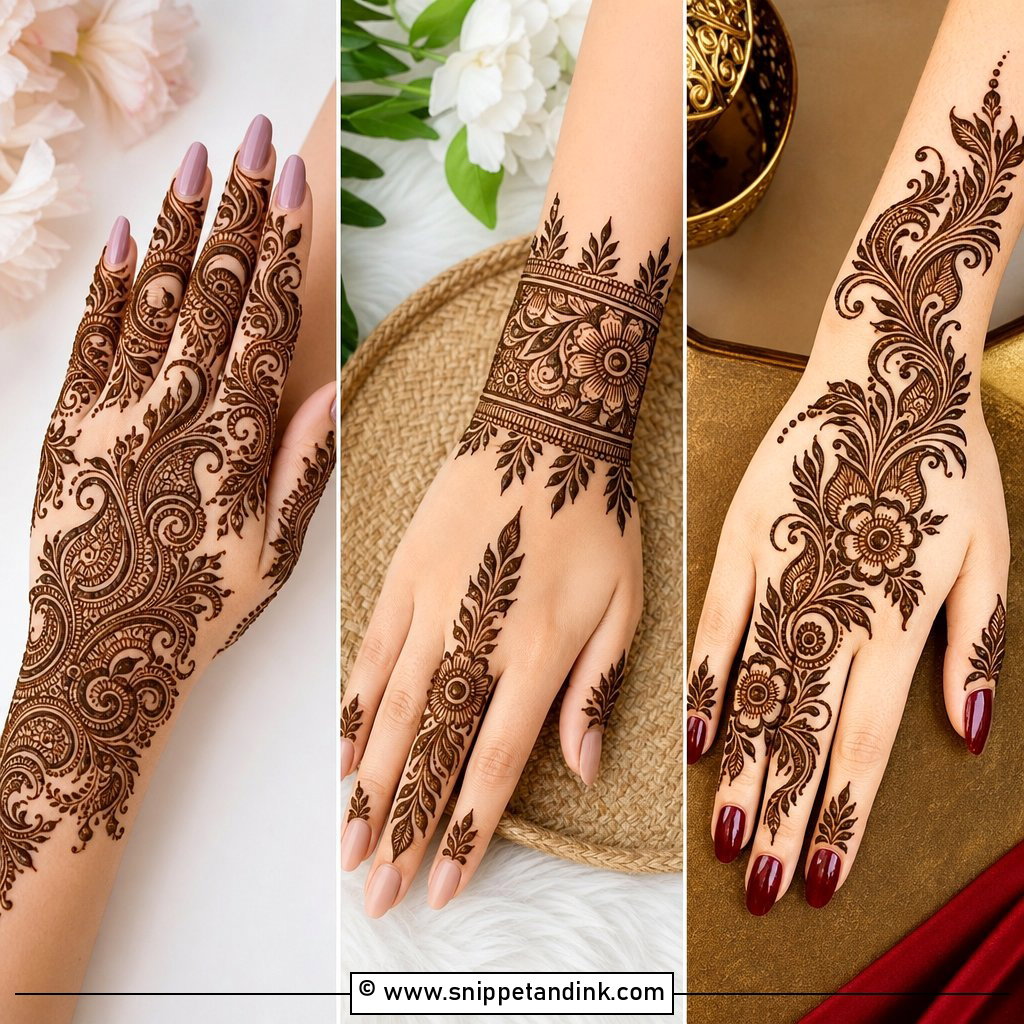
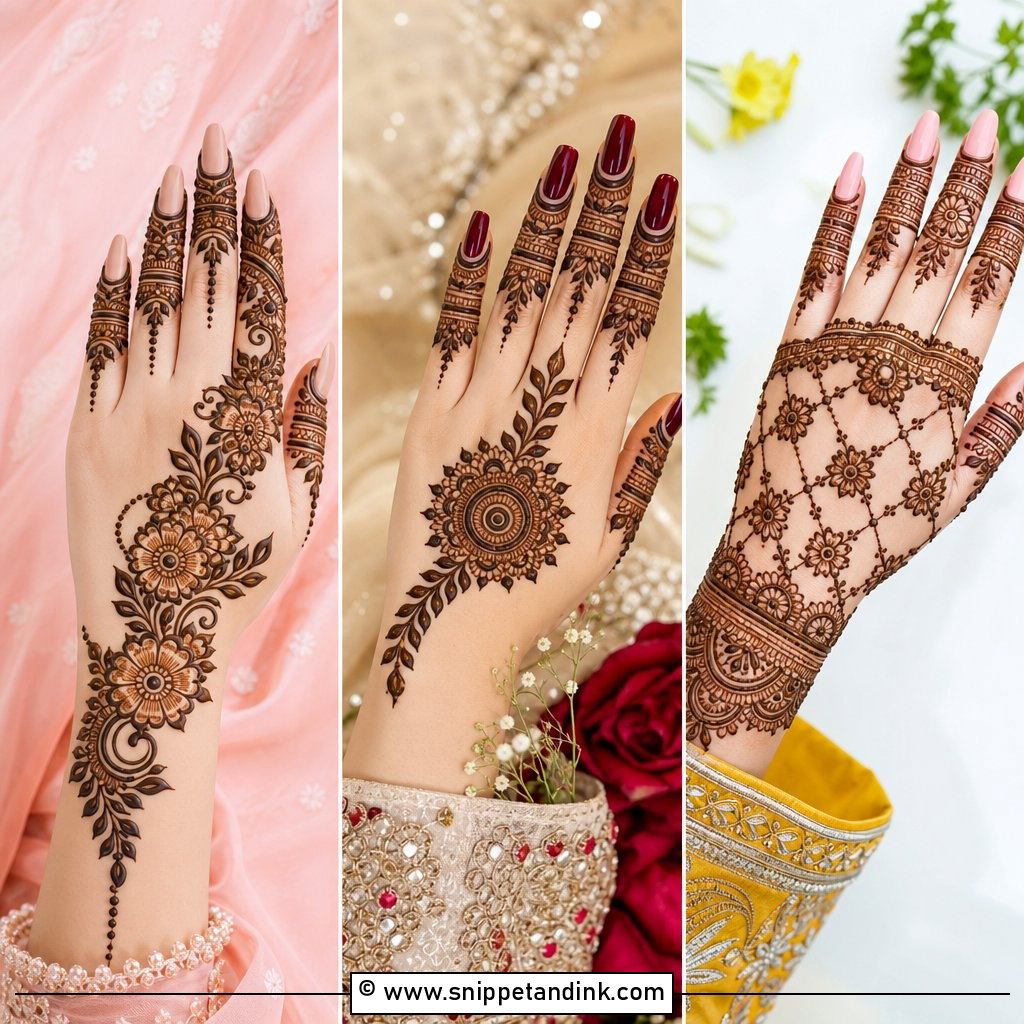
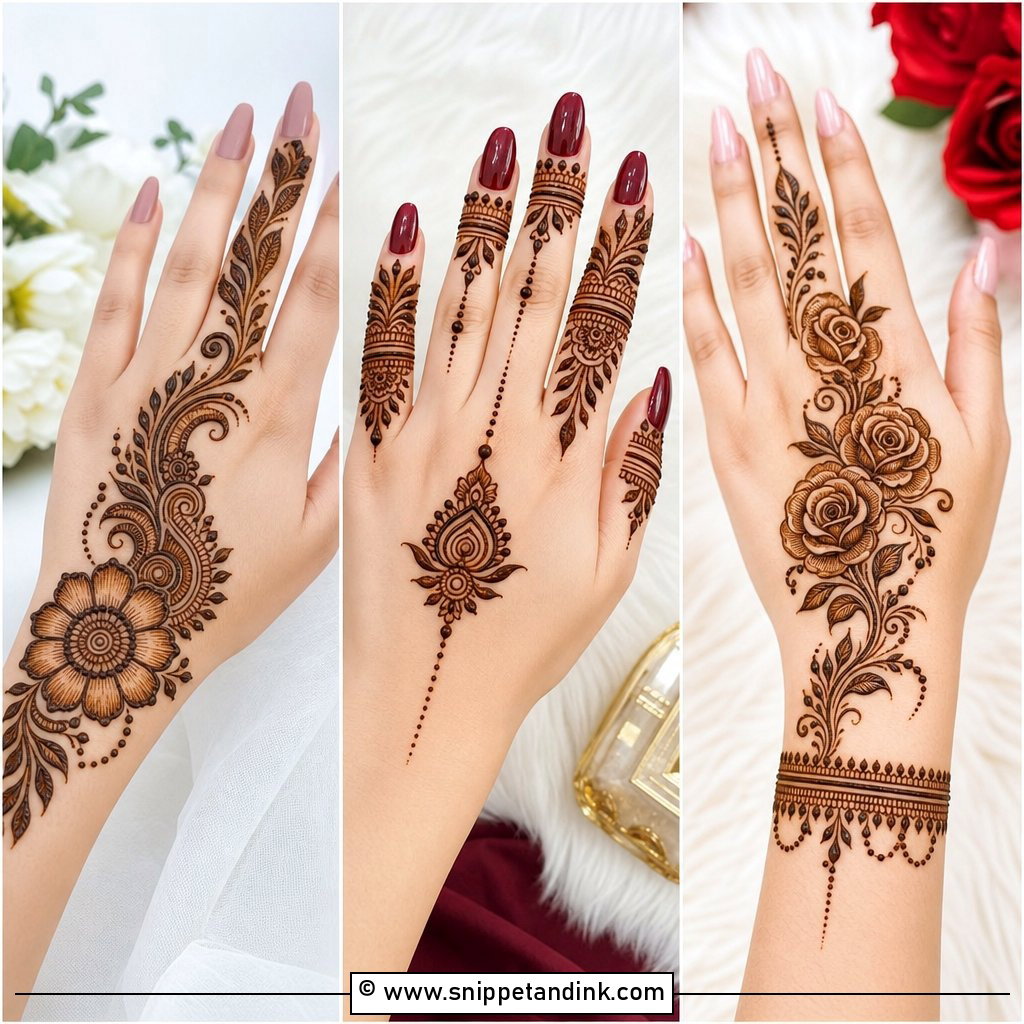
The back of the hand is the side that shows when you wear rings, bangles or nail art, and it’s the quickest canvas to fill. For a brother wedding look, I place a central mandala or floral circle on the back of the hand and connect it to the fingers with leafy chains, dots and delicate lines, finishing with a bracelet band at the wrist. Your palms stay free, so you can keep helping while it dries. It’s a sensible pick before the haldi or sangeet when you can’t spare hours in the chair. Expect a slightly lighter stain than the palm would give you.
4. Brother Wedding Arabic Mehndi Design
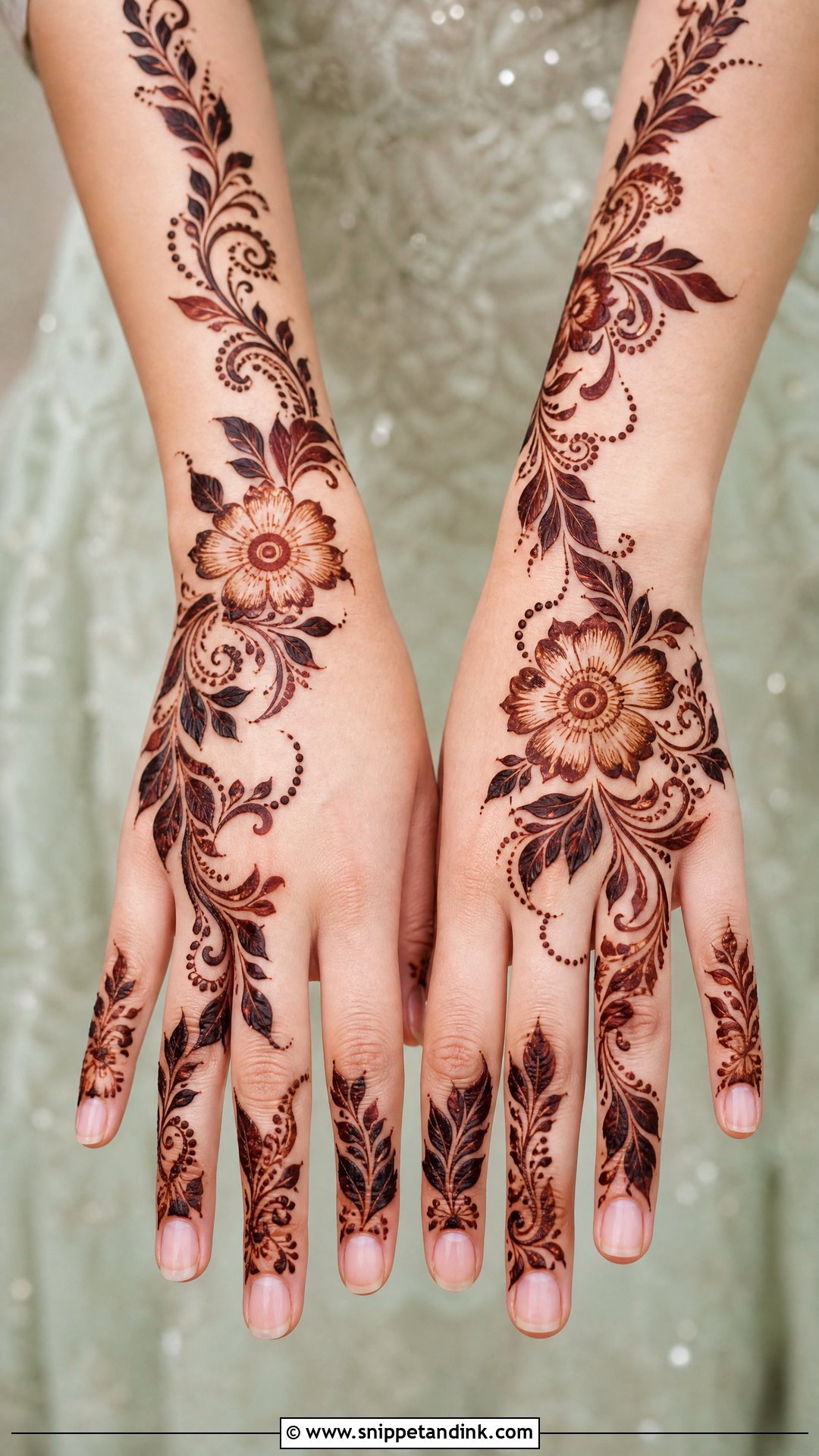
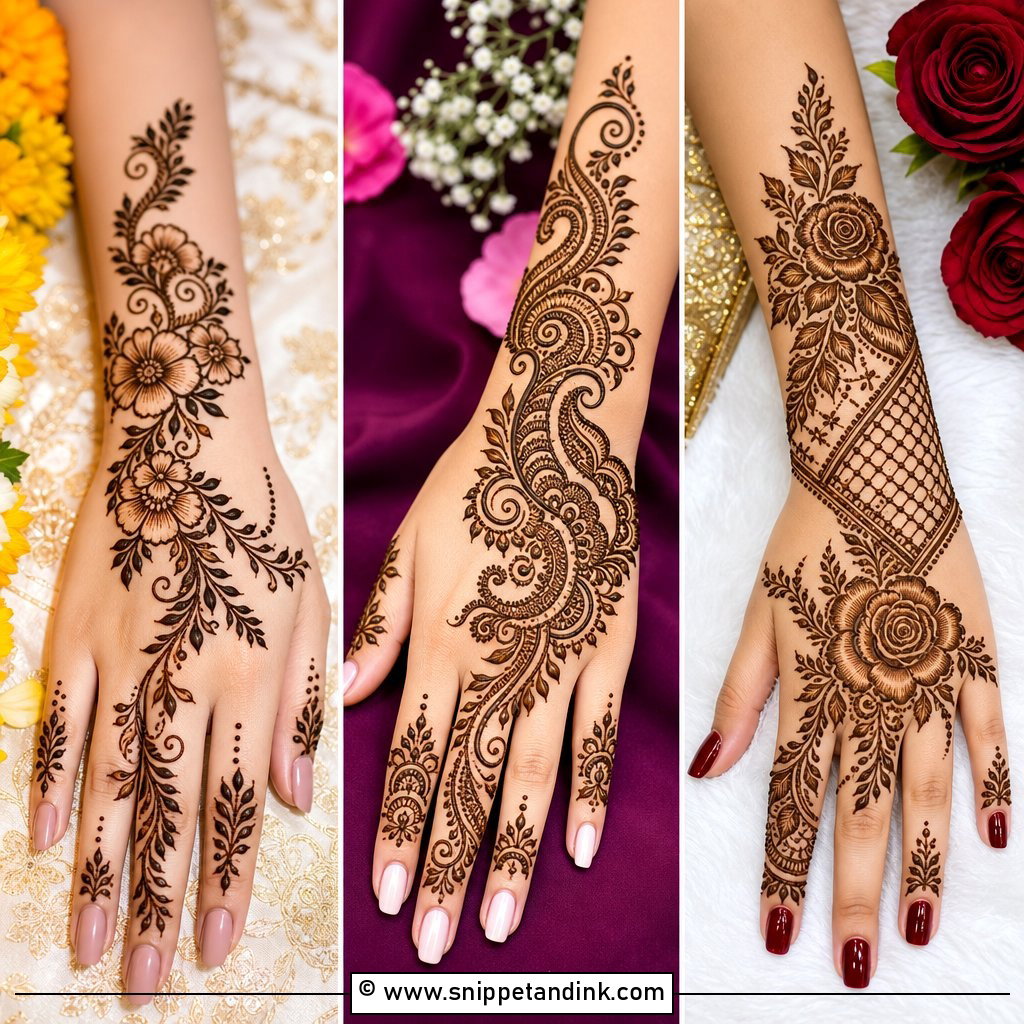
Arabic work is bold but airy, flowing diagonally from wrist to fingers with large flowers, shaded petals, leafy trails and curved paisleys. To give it a wedding feel, I add tiny bells, dots and fine net detail around the main trail. The empty skin around each motif keeps it modern, and it sits comfortably with a lehenga, sharara, anarkali or saree. It also dries faster than dense Indian mehndi, which matters when you’re running wedding errands. If your stain usually comes out pale, ask for slightly thicker lines, because open designs show a weak stain more than packed ones do.
5. Brother Wedding Indo Arabic Mehndi Design
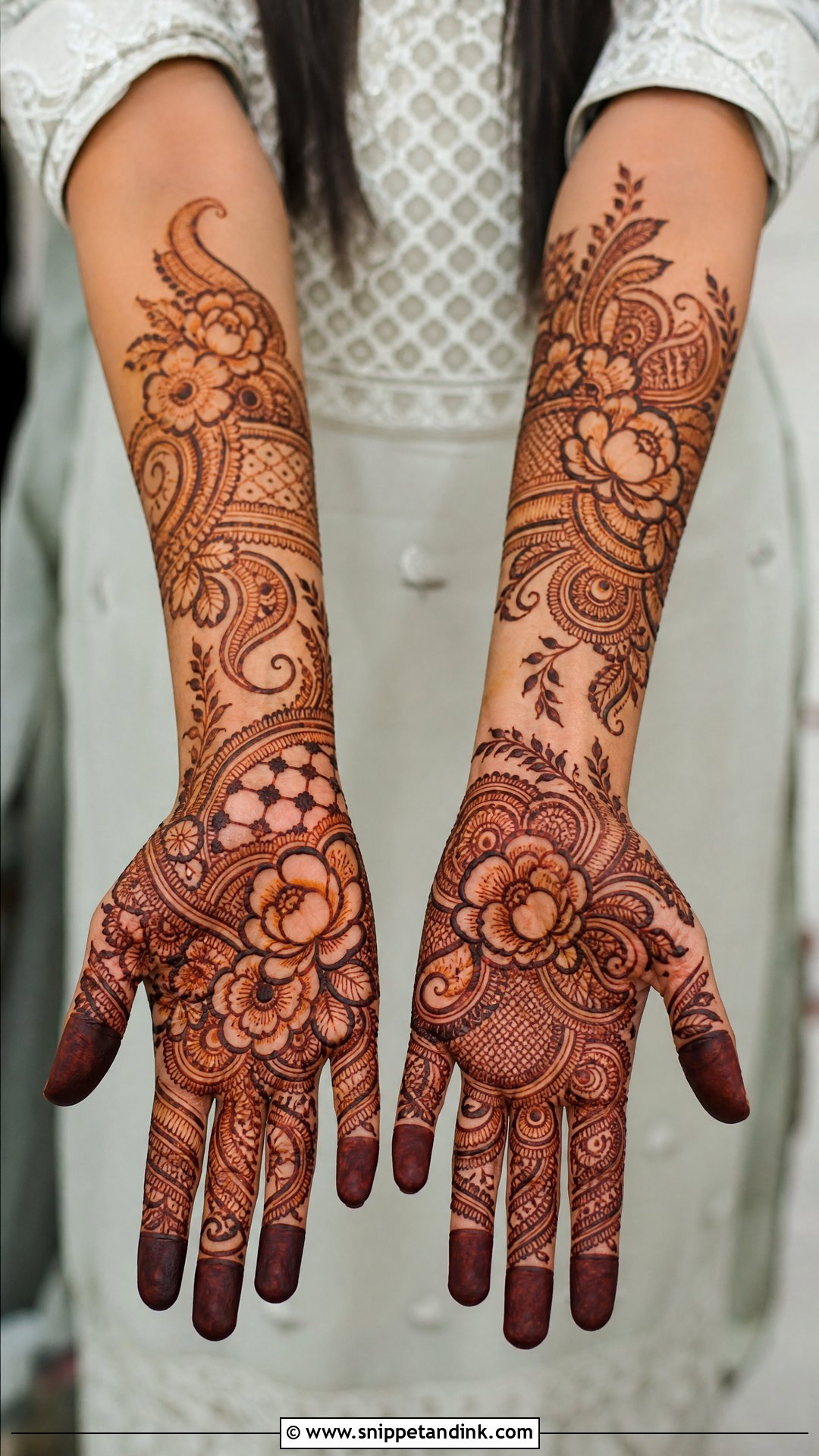
Bold flow from Arabic design, fine detailing from Indian mehndi: that’s the appeal. Indo-Arabic mehndi starts with a diagonal floral trail, then adds paisleys, mini mandalas, jaali panels and shaded leaves around it. The fingers can be half-and-half, mixing bold outlines with delicate inner detail. On a sister it reads rich without looking bridal, and it can extend from the palm to the wrist or partway up the forearm. Embroidered sleeves and heavy bangles both frame it well, so I decide where the design stops based on your sleeve length.
6. Brother Wedding Minimal Mehndi Design
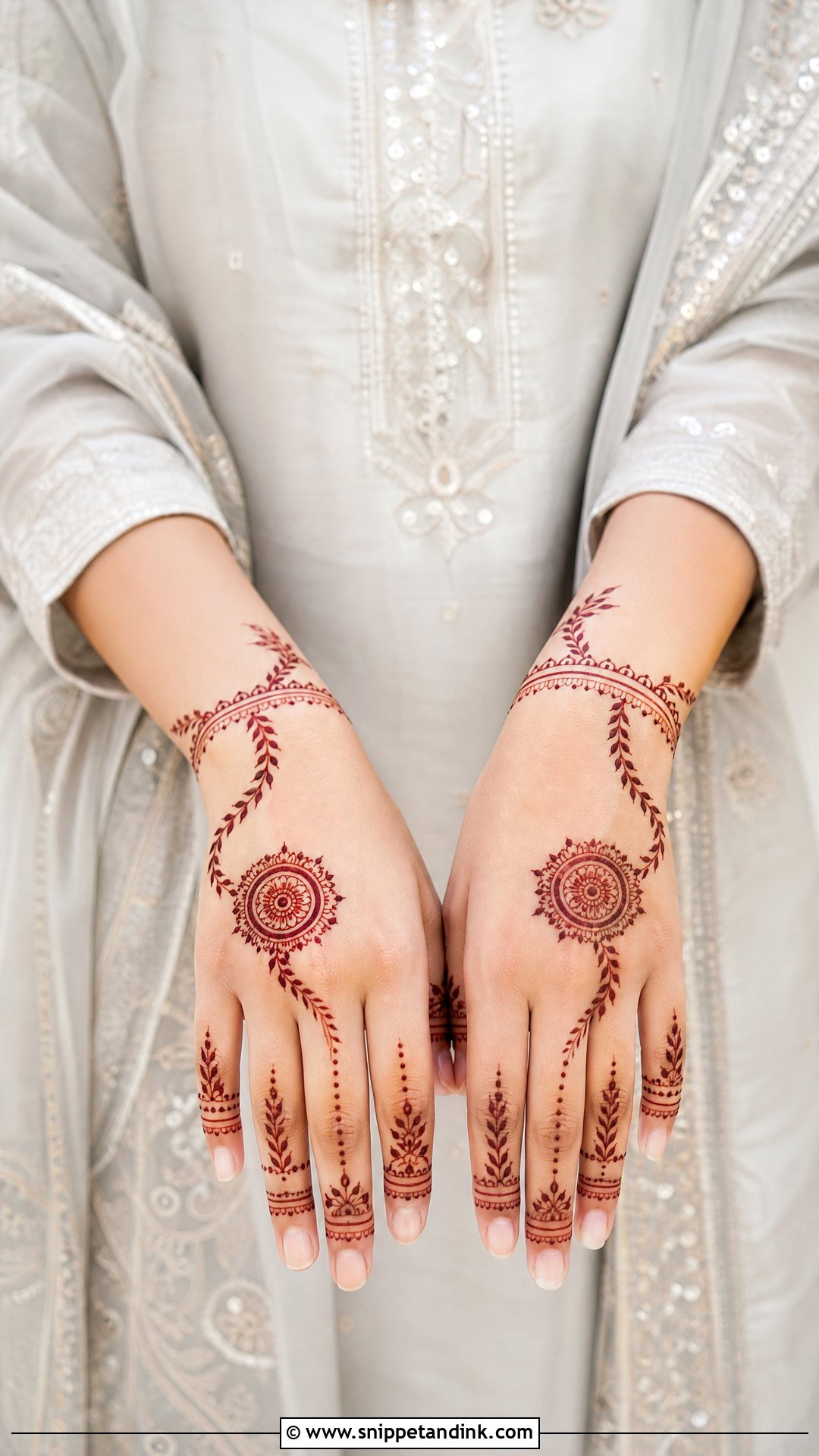
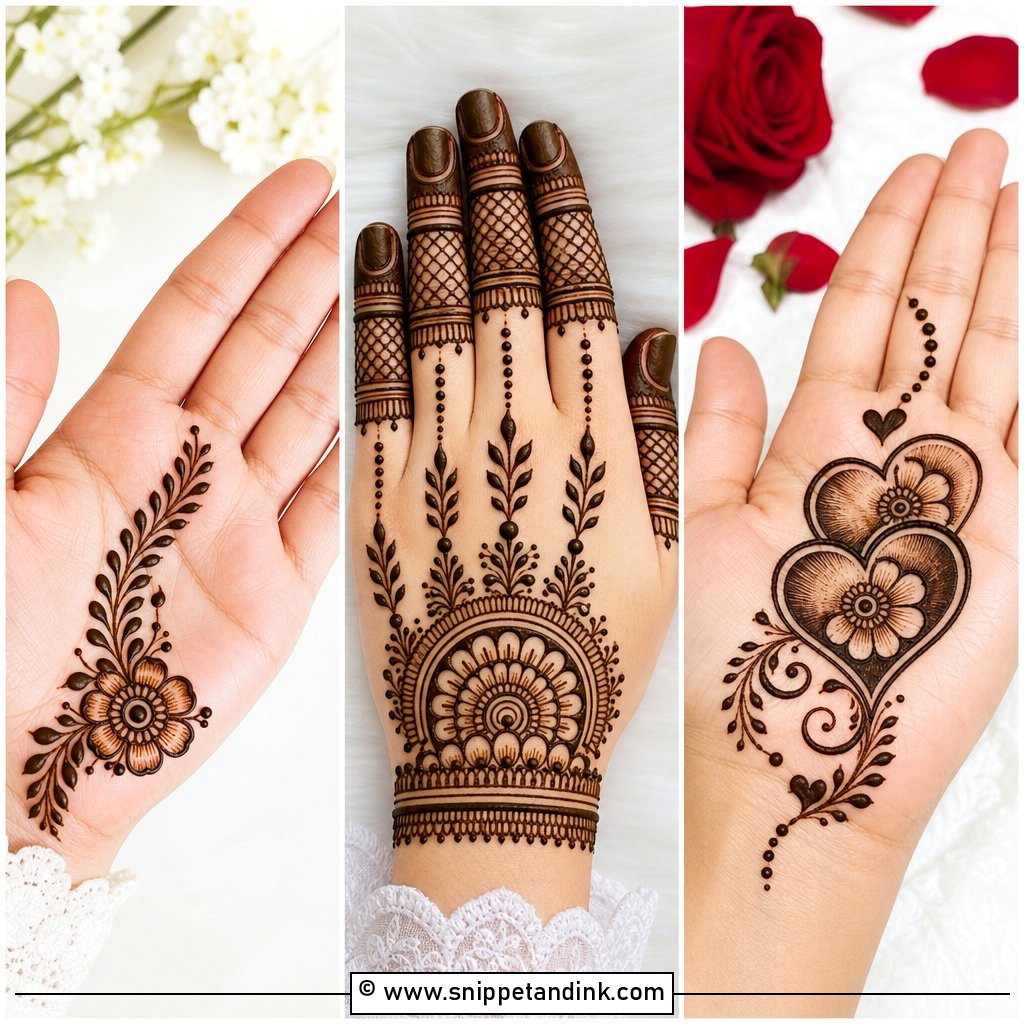
Do you want something neat that still looks festive? Minimal mehndi only works when it’s planned, because with so little on the hand, a wobbly line has nowhere to hide. A small mandala on the palm or back of the hand, fine finger bands, leafy side trails and a thin bracelet at the wrist are enough. I keep the spacing generous so your skin shows through. Younger sisters and bridesmaids in heavily embellished outfits often prefer it, and it’s the easiest to keep tidy across several functions. A tiny heart or initial adds a family touch.
7. Brother Wedding Mandala Mehndi Design
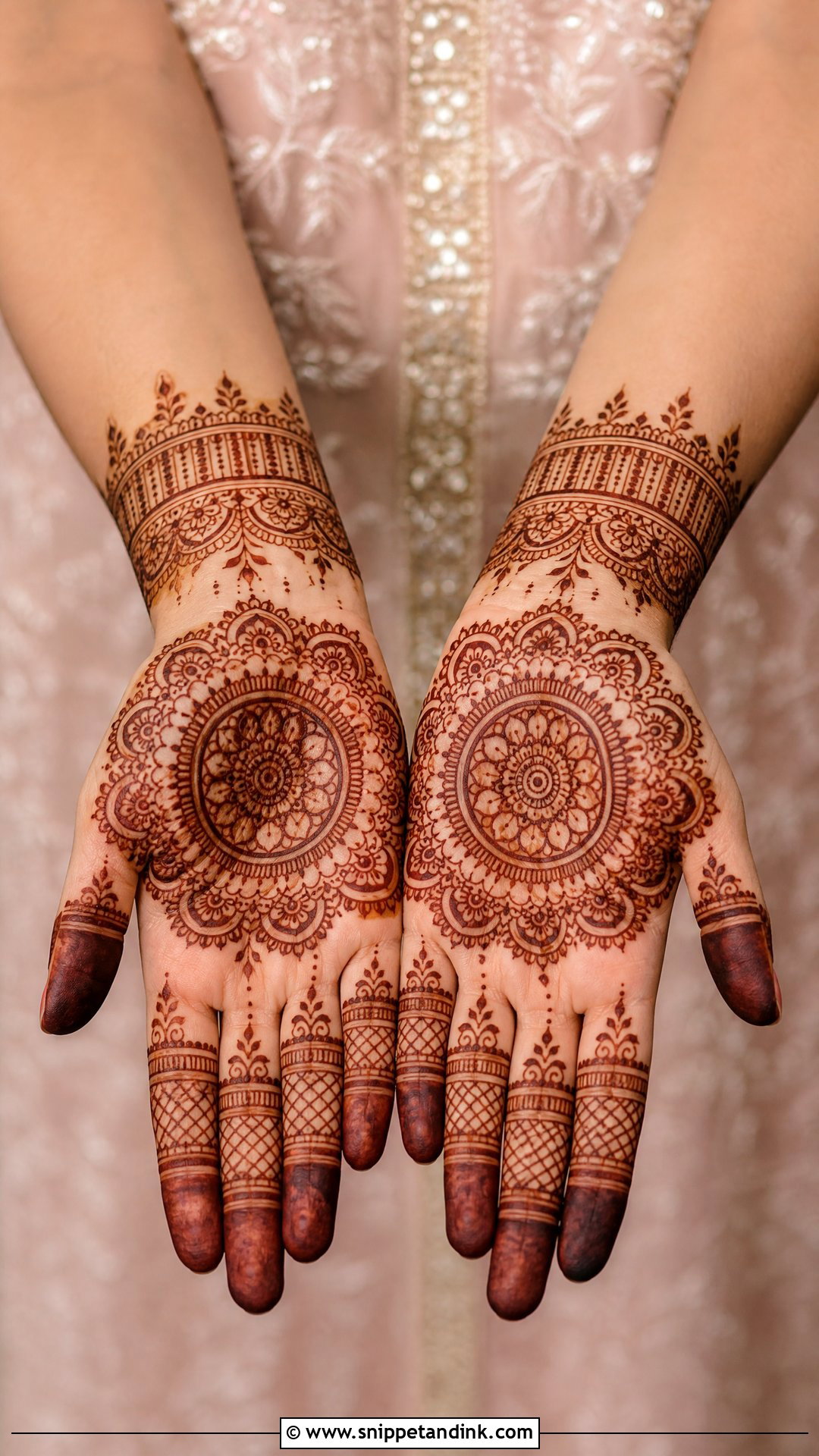
A mandala reads as balanced from across the room, which is why it never looks dated at a wedding. I place a detailed one in the centre of the palm or back of the hand, surround it with small flowers, dots, leafy rings and neat circular borders, and give the fingers matching bands, mesh sections and shaded tips. A simple cuff on the wrist connects hand to arm. The centre has to sit exactly in the middle, so I mark it with your hand relaxed, not stretched flat. Otherwise the circle looks off-centre once your hand rests naturally.
8. Brother Wedding Floral Mehndi Design
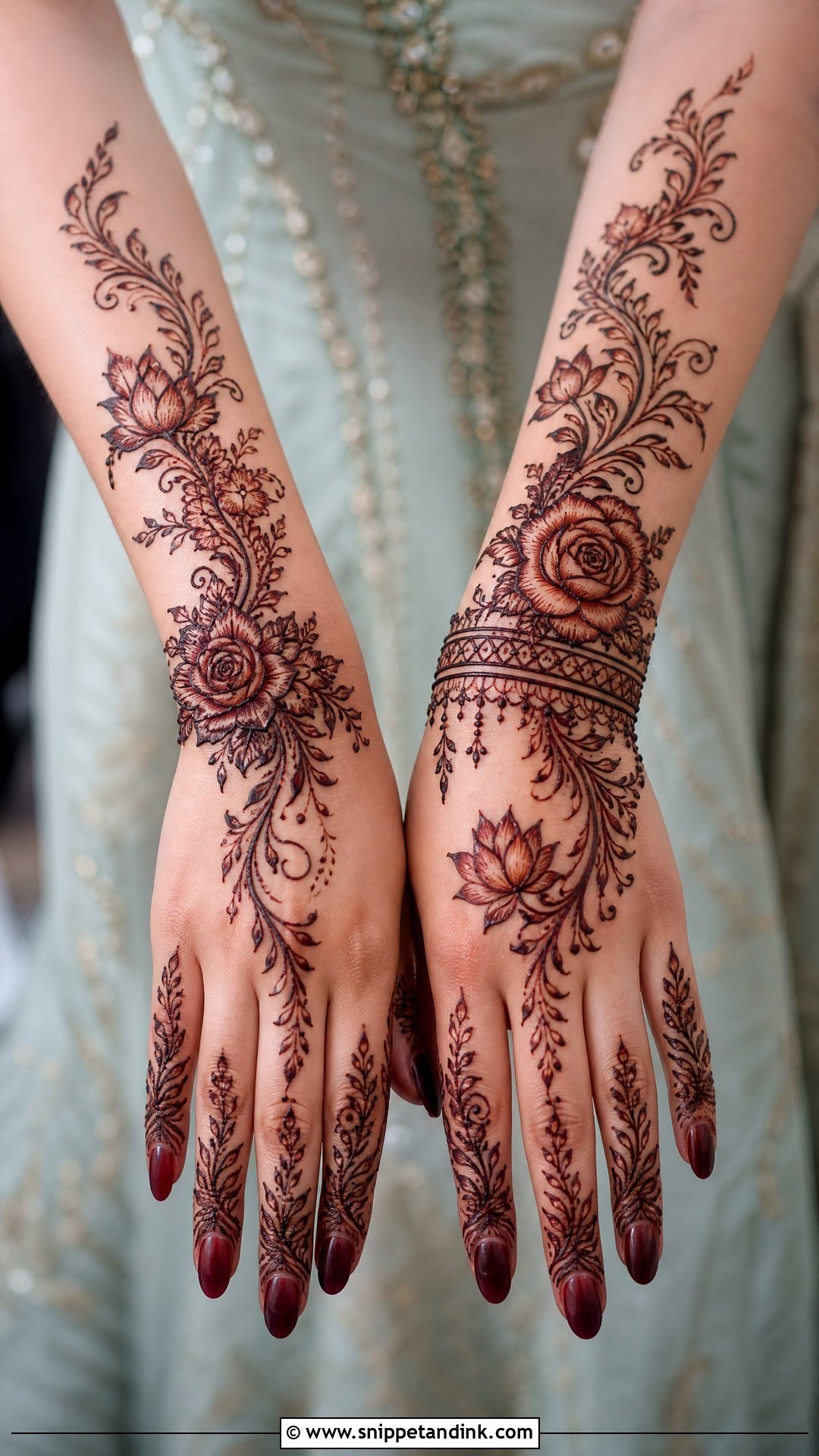
Florals keep a sister’s mehndi fresh. A complete floral design covers the palm with roses, lotus shapes, leafy branches and shaded petals, all flowing toward the fingers and wrist in one direction instead of scattered at random. That flow is what makes it look professional. I combine bold outer petals with tiny inner lines, dots and vines for depth, then add a flower bracelet at the wrist and buds and leaves on the fingers. Pastel outfits and daytime ceremonies suit it, though once the stain deepens to maroon it holds its own at night too.
9. Brother Wedding Jaal Mehndi Design
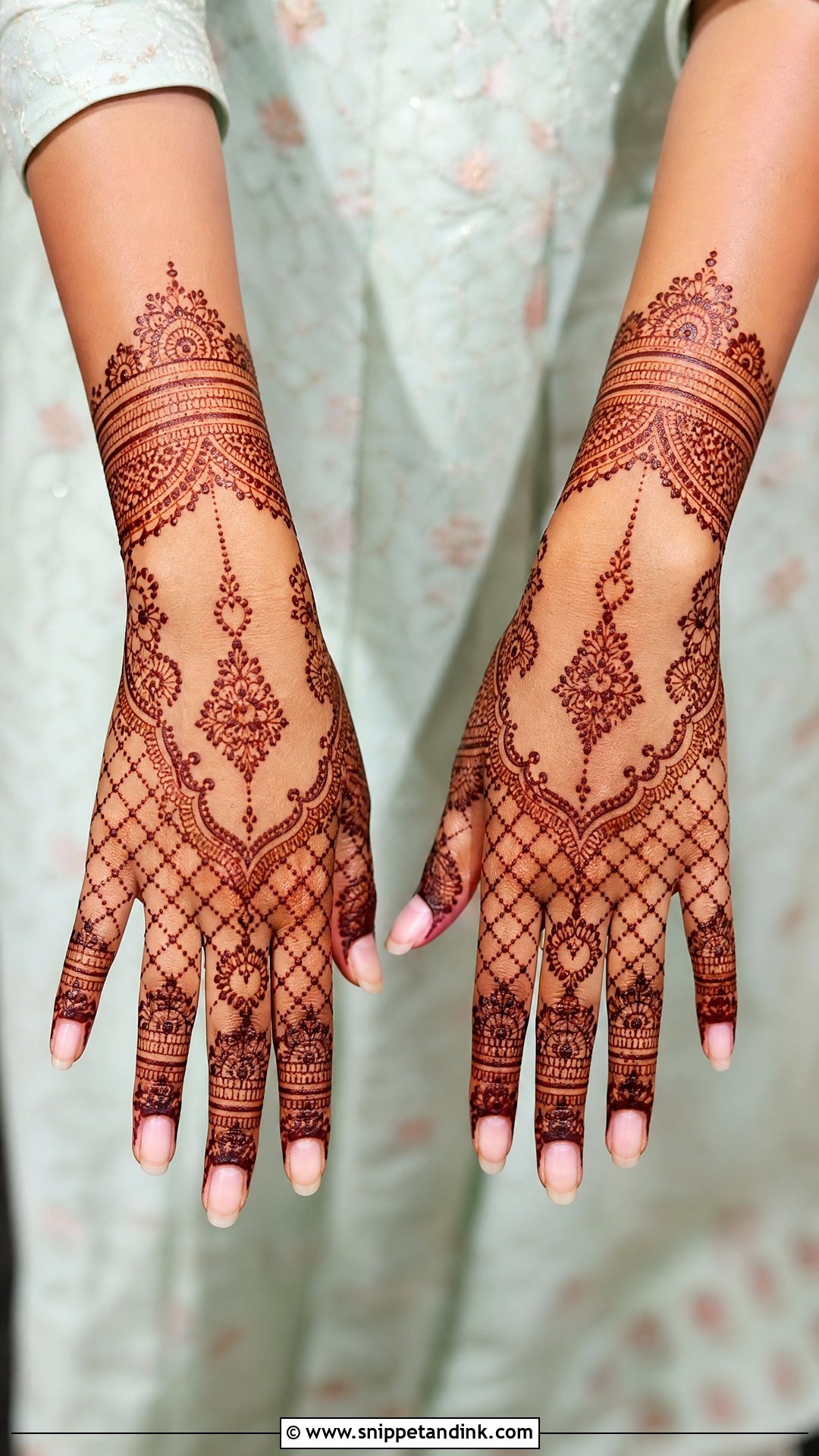
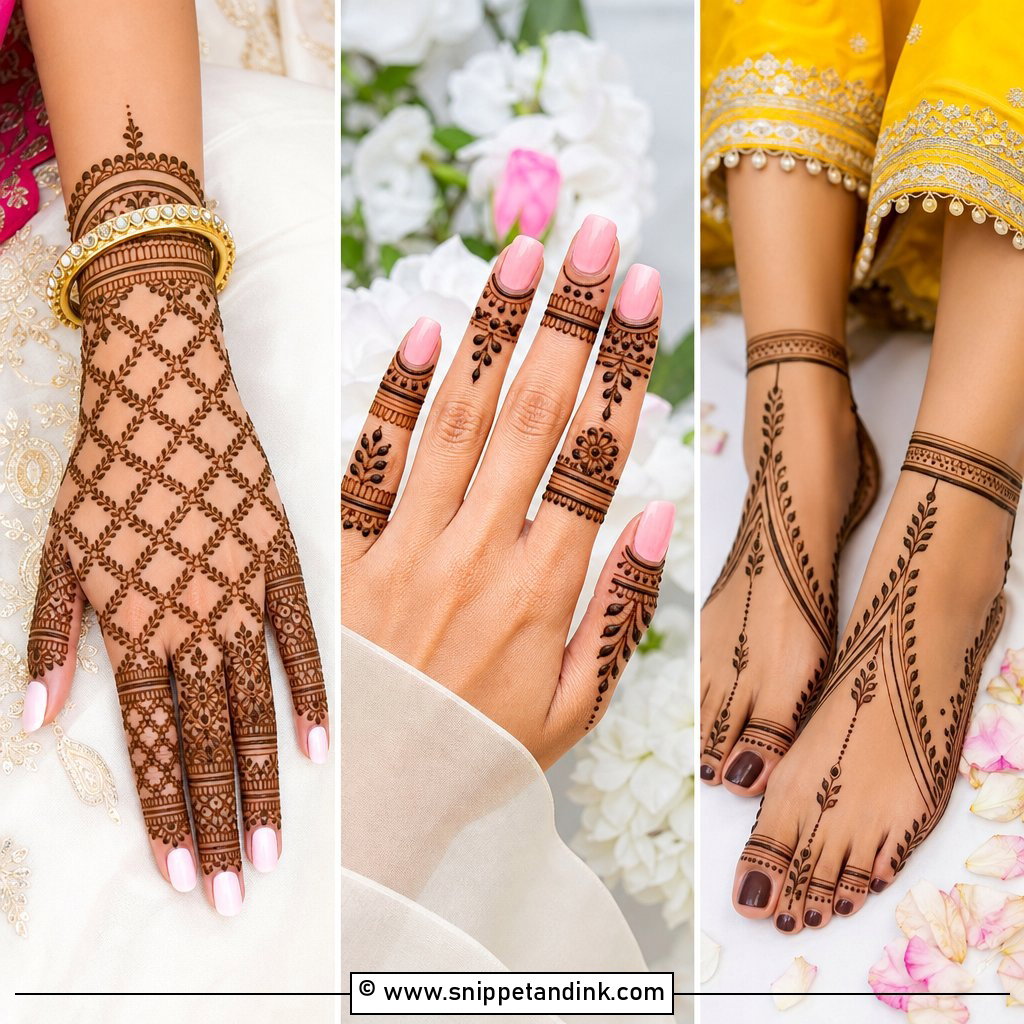
Jaal gives the hand a lace-like finish. I fill the palm or back of the hand with jaali mesh and frame it with flowers, paisleys and curved borders, then repeat smaller mesh on the fingers with a dot at each crossing point. Leave some areas open, or the mesh turns into a solid patch once it stains. On the back of the hand it looks like delicate hand jewellery, especially with a bracelet band at the wrist and a ring chain linking the middle finger to the main design. The grid needs a very steady cone, so this isn’t one to rush.
10. Brother Wedding Bracelet Mehndi Design
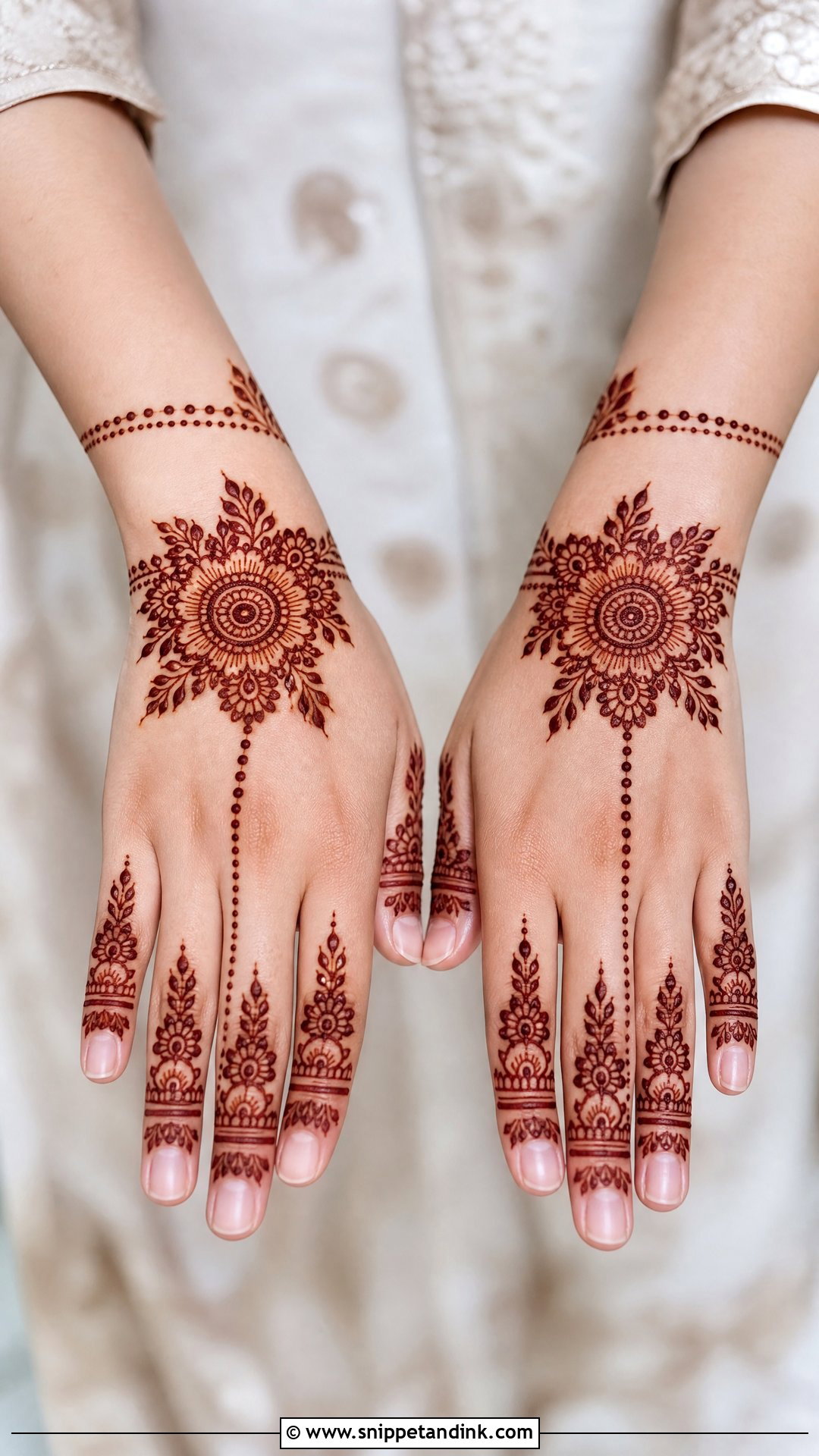
When you don’t feel like wearing many accessories, a henna bracelet does the job for you. The design focuses on the back of the hand and wrist: a floral band around the wrist, dotted chains running up, a small mandala or flower on the back of the hand, and stacked bands, leaves and tiny paisleys on the fingers. It leaves your palms free, so you can greet guests and handle wedding jobs while it dries. It also sits well under bangles, haath phool or statement rings, as long as I line the chain up with where your jewellery falls.
11. Brother Wedding Finger Mehndi Design
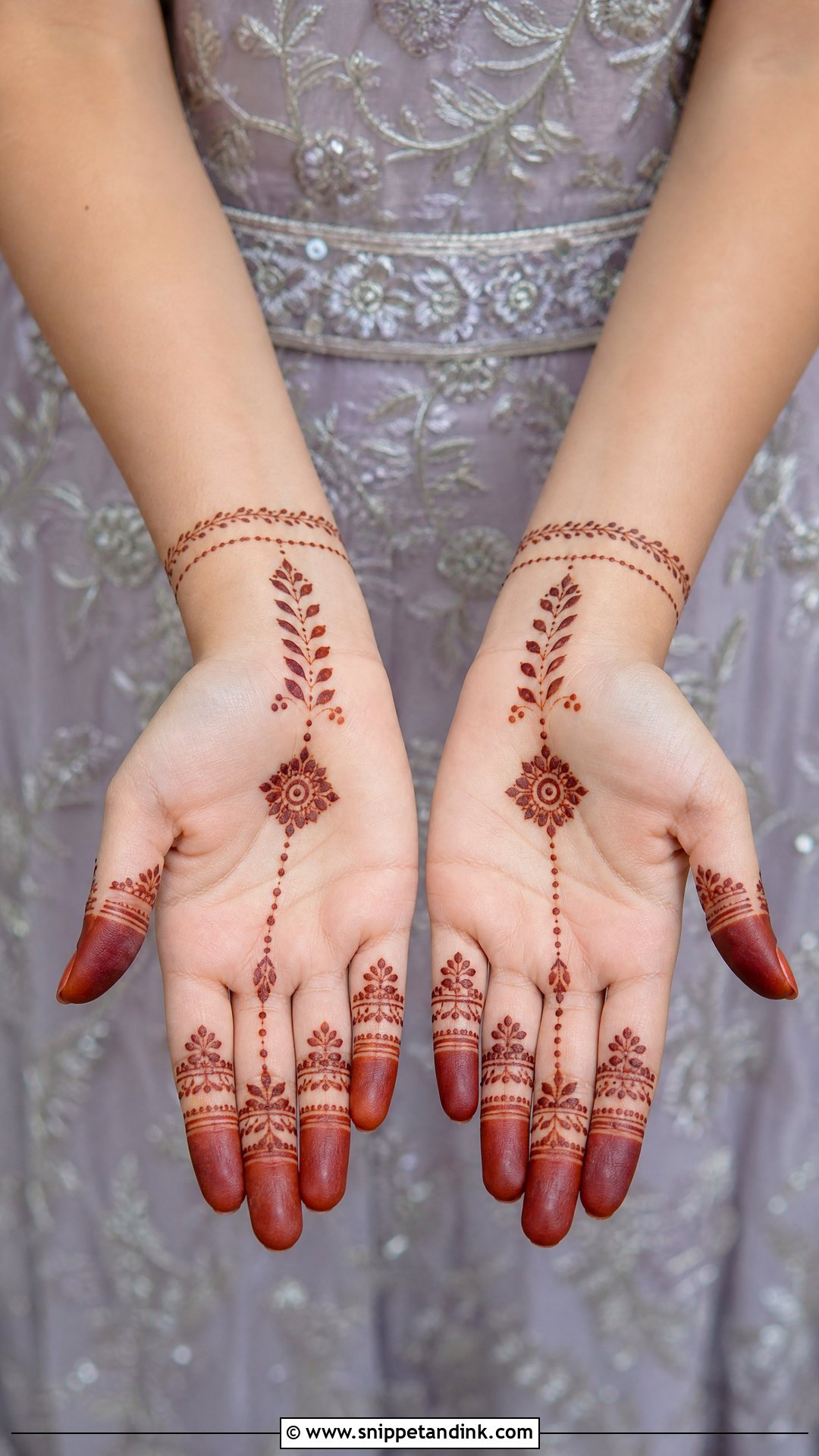
Finger mehndi only looks finished when it’s designed as one piece, not as random fingertip patterns. I keep the palm mostly open with a small central motif, decorate each finger with coordinated bands, leafy vines, dots and mini florals, and add a thin wrist cuff or side trail to tie everything together. It’s clean and modern, and it suits long nails or detailed nail art. It’s also one of the quickest designs here to dry. Just have your nails done before the mehndi, since fresh polish and wet paste don’t mix.
12. Brother Wedding Peacock Mehndi Design
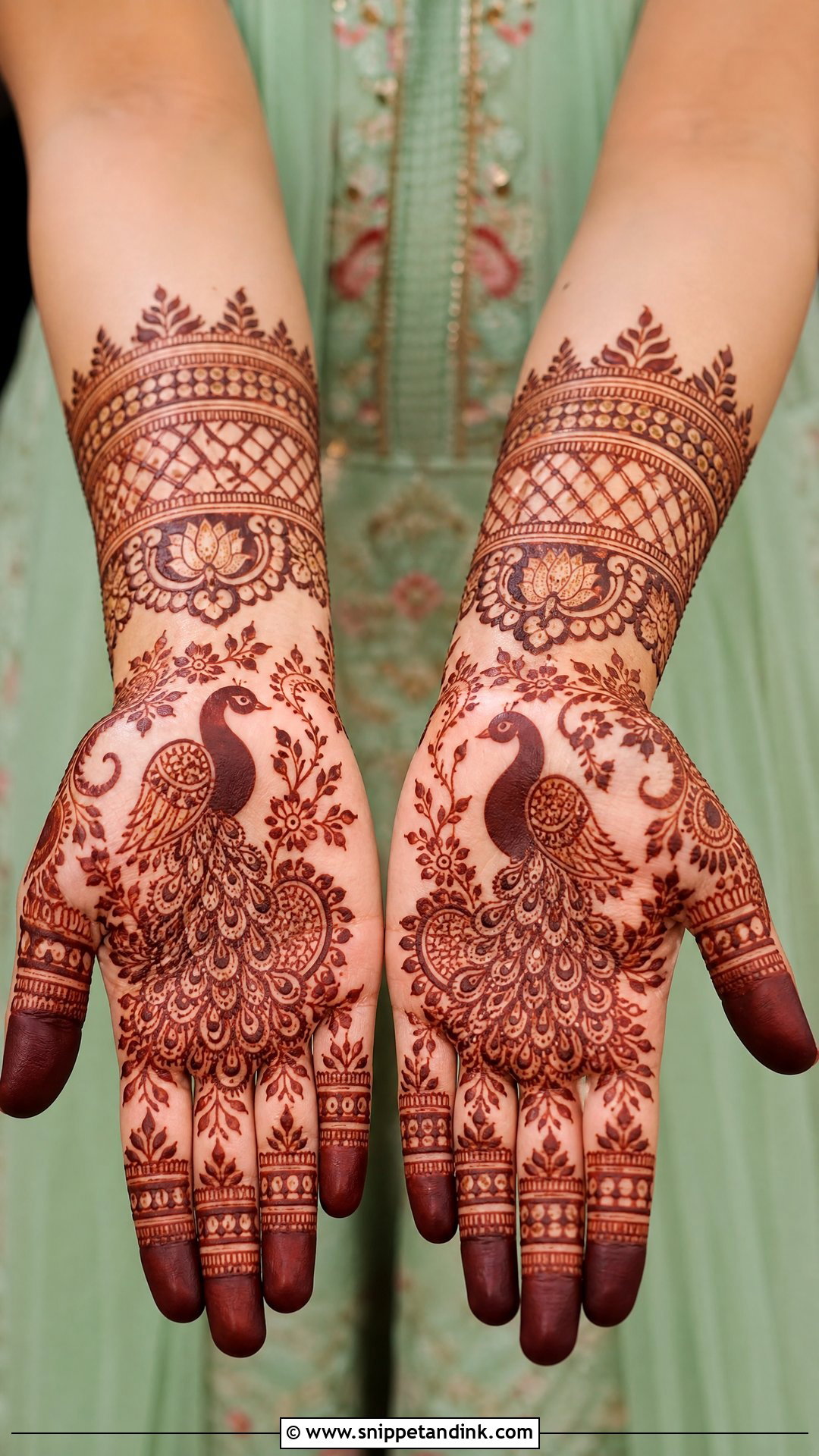
One peacock brings a royal feel without bridal coverage. I place it on the palm or back of the hand and build around it with paisleys, feathers, florals and curved vines, letting the feathers run toward the wrist while the fingers carry smaller leaf and line patterns. The bird should be detailed but not oversized, or it starts to look like the bride’s centrepiece. Lehengas, silk sarees and embroidered suits suit it. Peacocks have long been a celebration motif in mehndi, which makes them a natural fit for a family wedding, and a deep maroon stain brings out every feather line.
13. Brother Wedding Paisley Mehndi Design
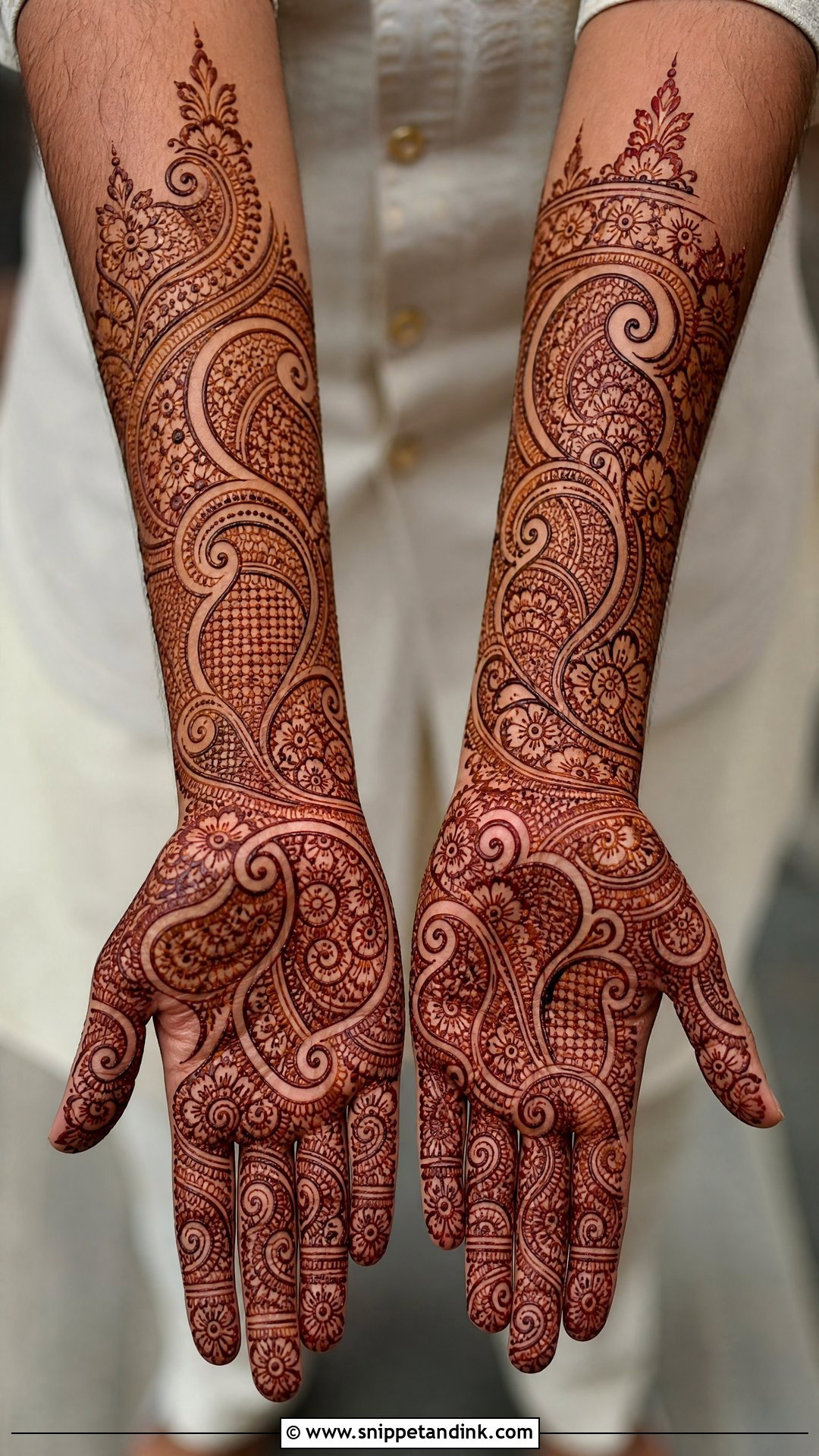
Paisley is the motif mehndi was built on, so it never feels outdated. I use large paisleys across the palm or back of the hand, fill them with tiny flowers, dots, checks and curved lines, and let smaller ones flow toward the fingers, with a neat border or cuff at the wrist. It looks detailed without the portrait elements a bride might wear. Keep it medium-heavy for the mehndi function, or extend it to the forearm for the wedding day. The teardrop shape bends with the hand, which is why it fits almost every hand shape.
14. Brother Wedding Heart Mehndi Design
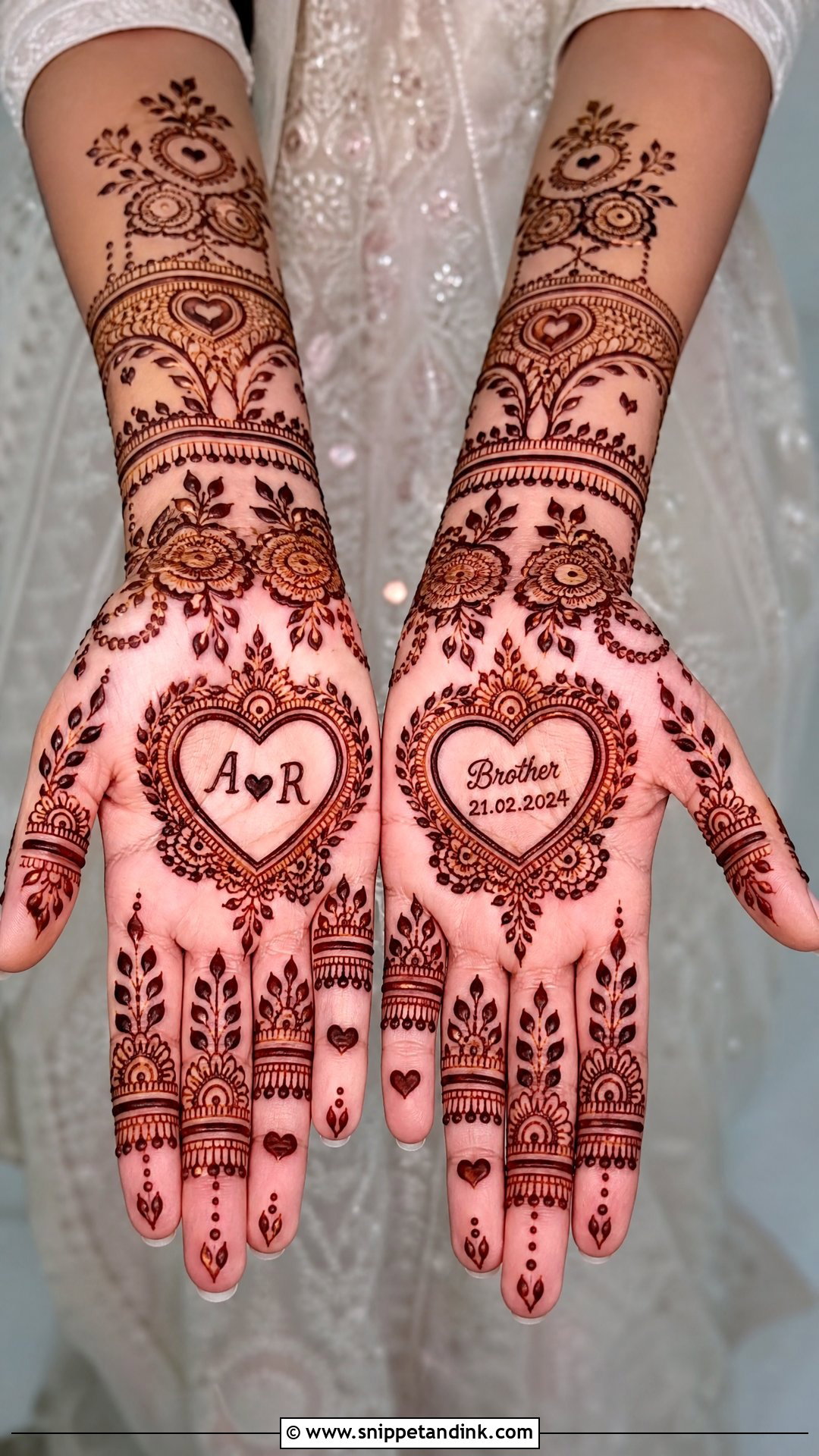
Hearts can look sweet or childish depending on scale. At a brother’s wedding I keep them small and tucked inside a mandala, between paisleys or near a floral frame, never as the main motif. Your brother’s initials, the couple’s initials or the wedding date can sit inside. The rest of the hand gets vines, dots, finger bands and wrist borders so it reads as a complete wedding design rather than a doodle. It makes a sweet close-up for the photographer.
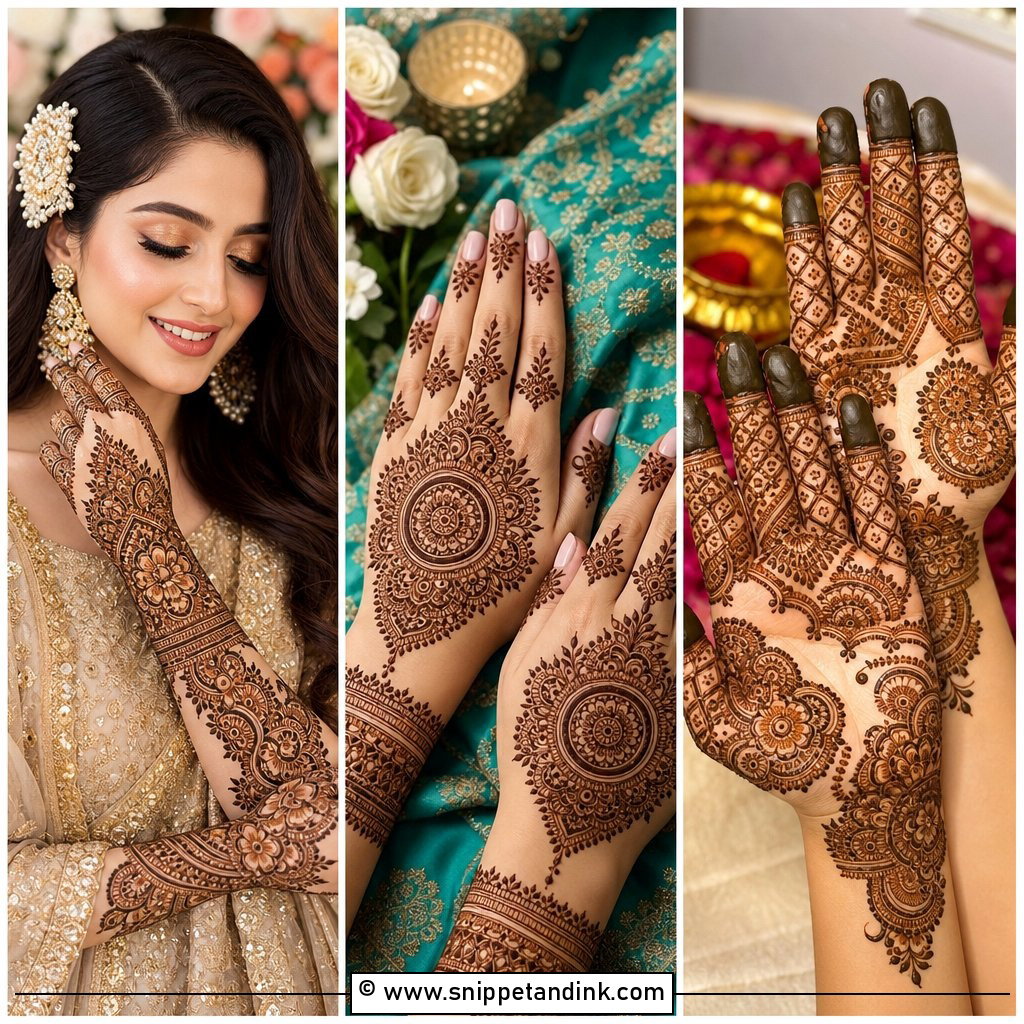
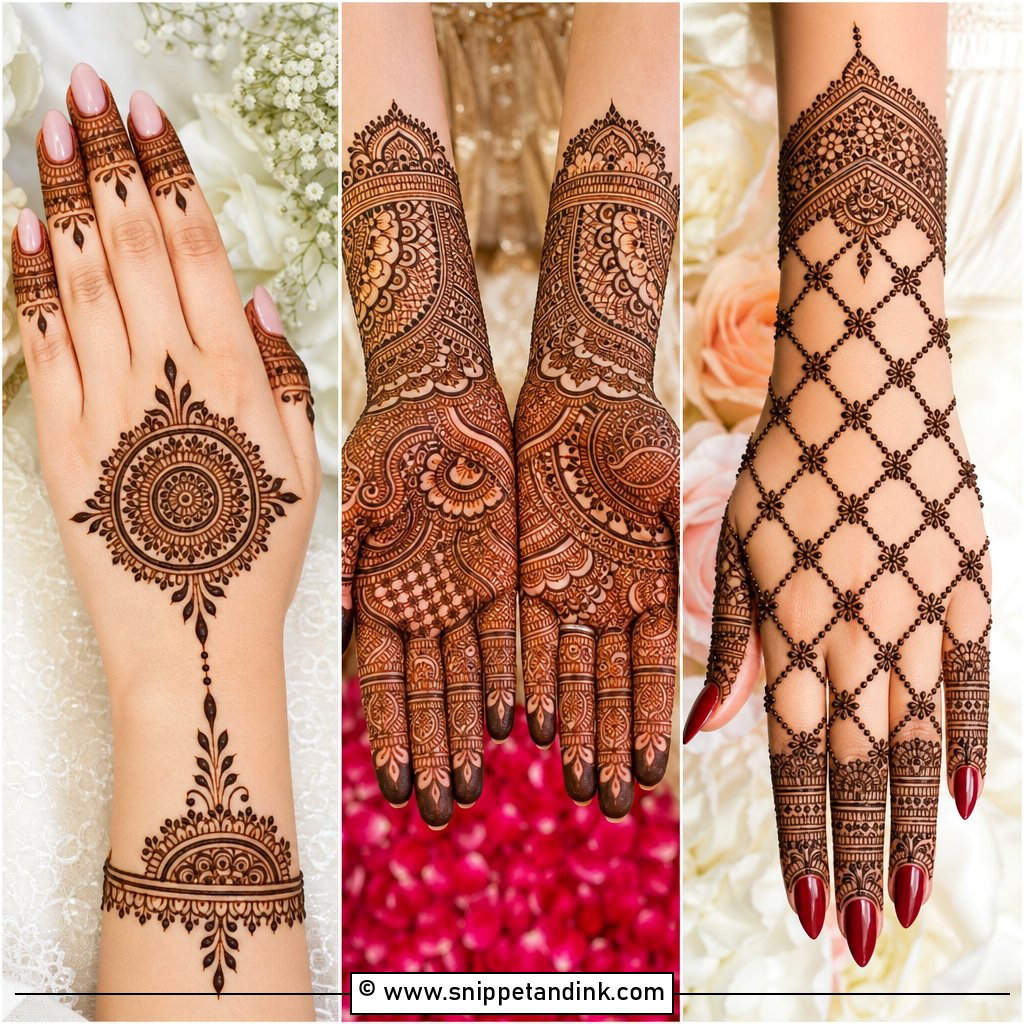
15. Brother Wedding Initials Mehndi Design
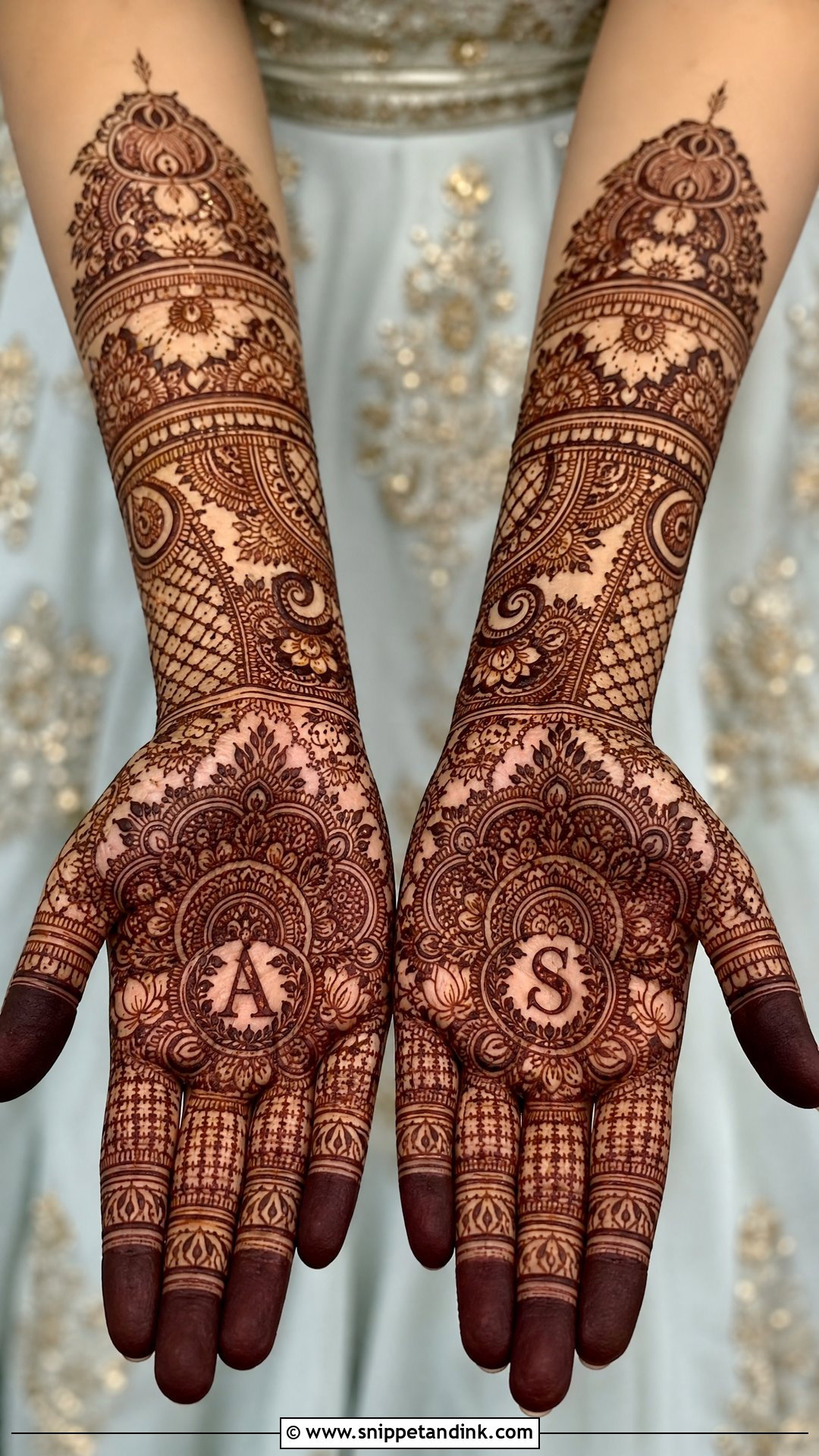
Personal touches don’t get more direct than this. Initials mehndi for a groom’s sister can carry his initials, the couple’s initials or a tiny hidden monogram worked into the palm. I keep the letters small and surround them with flowers, paisleys or jaali, so the hand reads as wedding mehndi first and a message second, with decorated fingers and a wrist cuff to finish. At the mehndi function relatives inspect each other’s hands, so hide the letters well enough to be found rather than spotted at a glance. I make letter strokes a touch thicker than the filler, because very fine letters blur as the paste dries and cracks.
16. Brother Wedding Portrait Mehndi Design
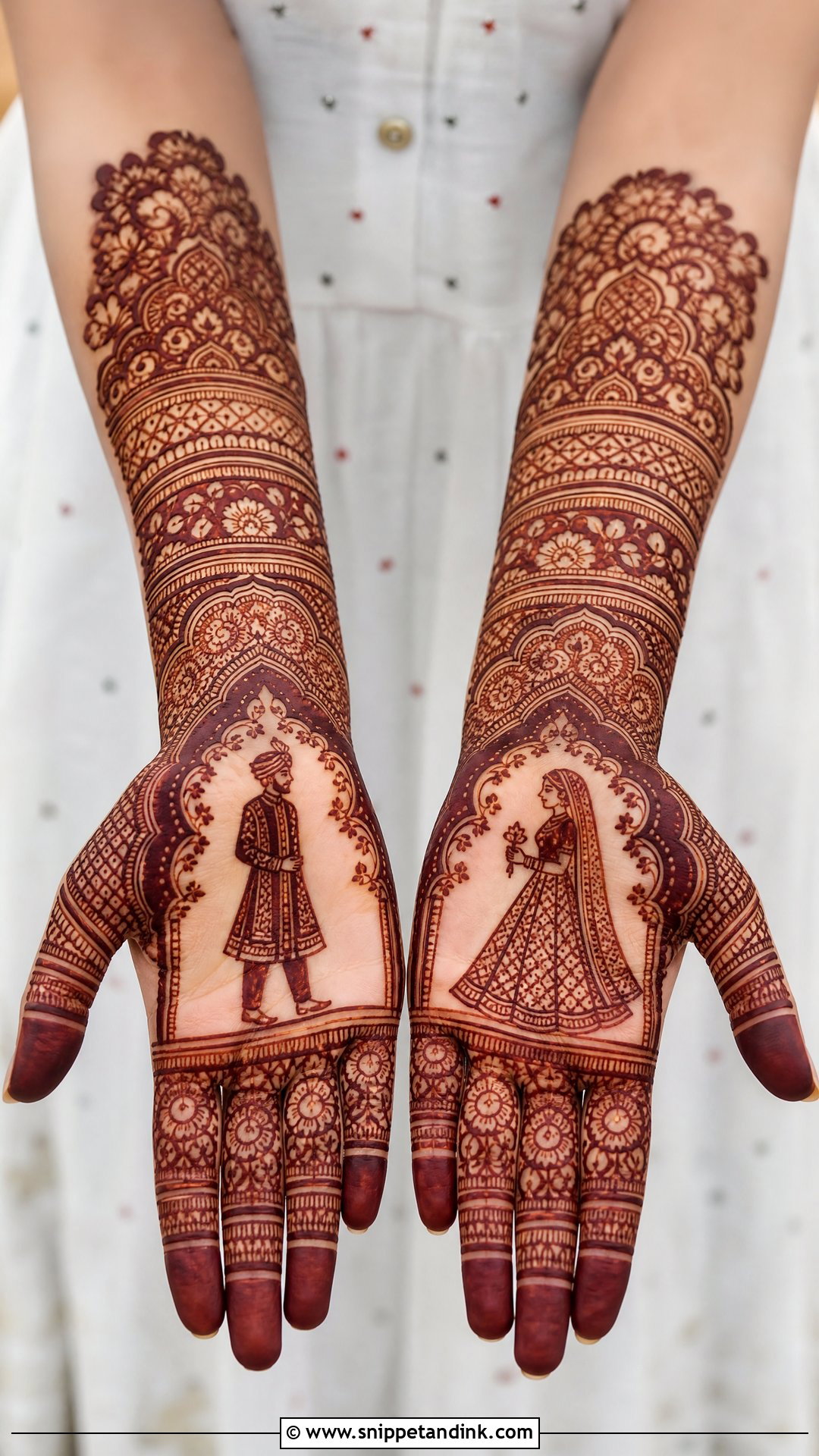
A couple portrait is a memorable choice for a brother’s wedding, but scale matters. Portrait mehndi on a sister works best as a small bride-and-groom silhouette, a couple outline or a symbolic dulha-dulhan frame on one palm, not the full portrait the bride may be wearing. I add florals, arches, paisleys and fine borders around it, and keep the second hand simpler with matching mandalas or jaali. Faces need clean lines and good spacing, so book an experienced artist and ask to see figures they’ve drawn before. A quick word with the bride helps too, in case she’s planning a portrait of her own.
17. Brother Wedding Half Hand Mehndi Design
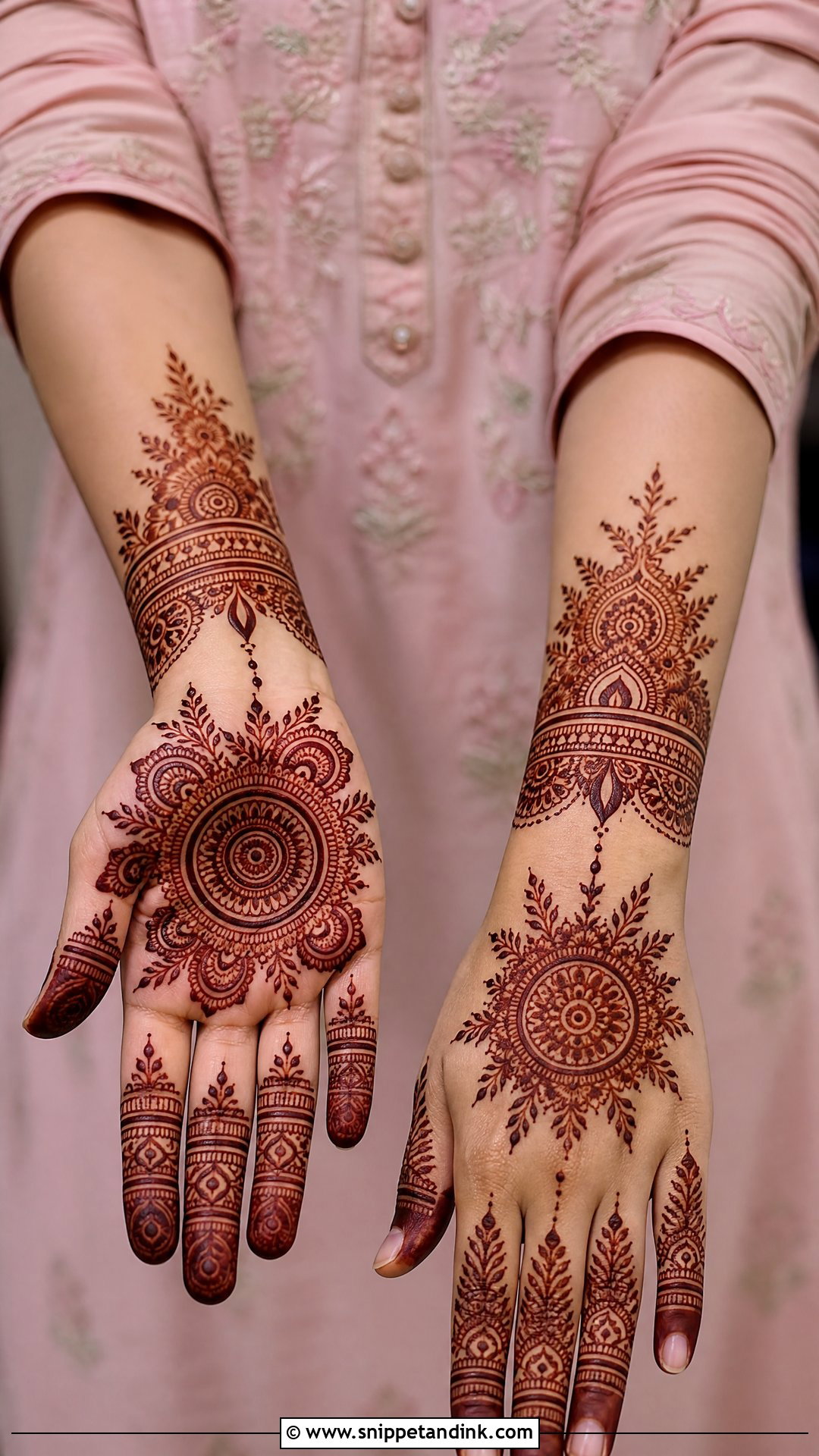
Half-hand coverage keeps things festive while staying lighter than a full hand. It can cover the palm and stop neatly at the wrist, or decorate the back of the hand with a bracelet finish, using florals, paisleys, mandalas and detailed fingers. For a brother’s wedding I go medium-dense, enough to look special in photos without feeling heavy. If you have several functions in a row, it’s the comfortable middle ground. With bangles or rings on, nobody notices the wrist is bare.
18. Brother Wedding Forearm Mehndi Design
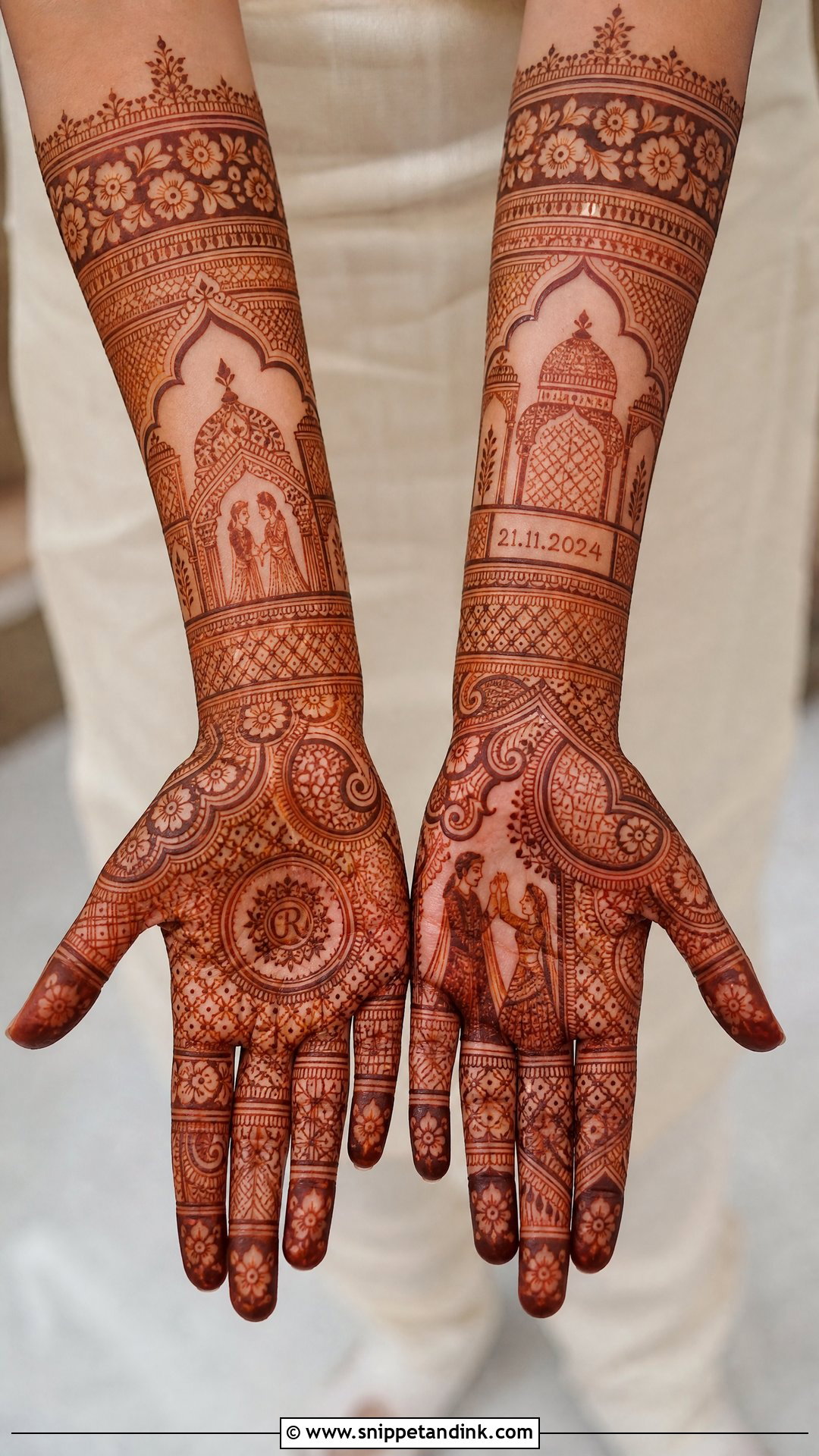
Forearm mehndi gives you a grand look without crossing into bridal territory, provided it stops well short of the elbow. I start from the fingers or palm and extend past the wrist with floral bands, paisley chains, arches and jaali panels, spacing the forearm work a little more widely than the hand. Sleeveless, short or sheer sleeves turn it into part of the outfit. A small hidden initial or date near the wrist adds a personal note. Forearm skin stains lighter than the palm, which actually helps, because the colour fades naturally as the design travels up the arm.
19. Brother Wedding Simple Mehndi Design
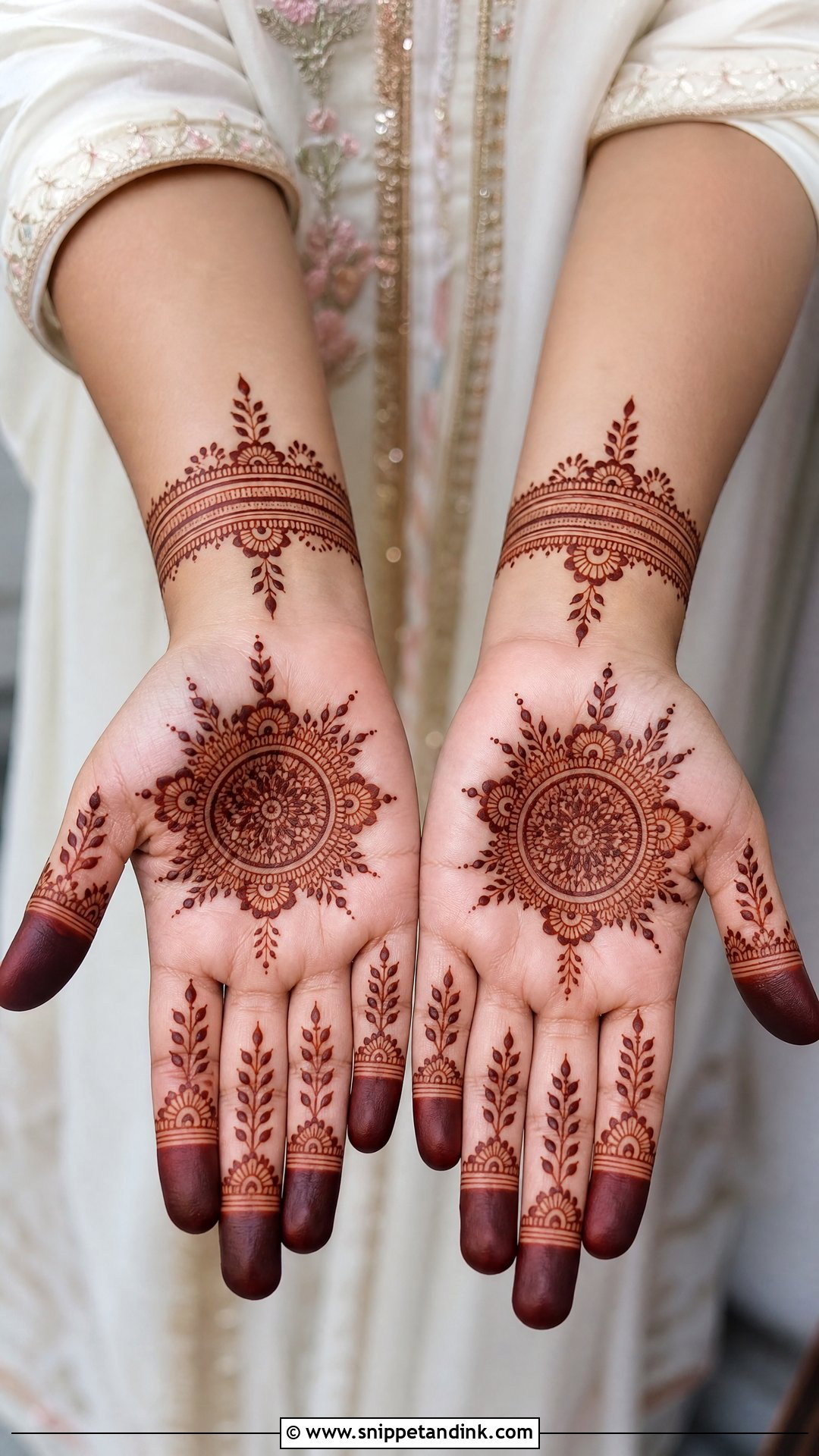
Simple mehndi doesn’t have to look plain. A neat palm mandala, leafy finger trails, small flowers and a clean wrist border make a complete design if the symmetry and spacing are right. Every motif needs to read clearly, or simple starts to look unfinished. It suits a sister who can’t spare a long sitting, a daytime function or a small family ceremony. Want it more festive? Fill the fingertips and add dots around the main motifs. Clean lines also look deliberate even while the stain is still orange, which helps if it’s only had a day to darken.
20. Brother Wedding Heavy Mehndi Design
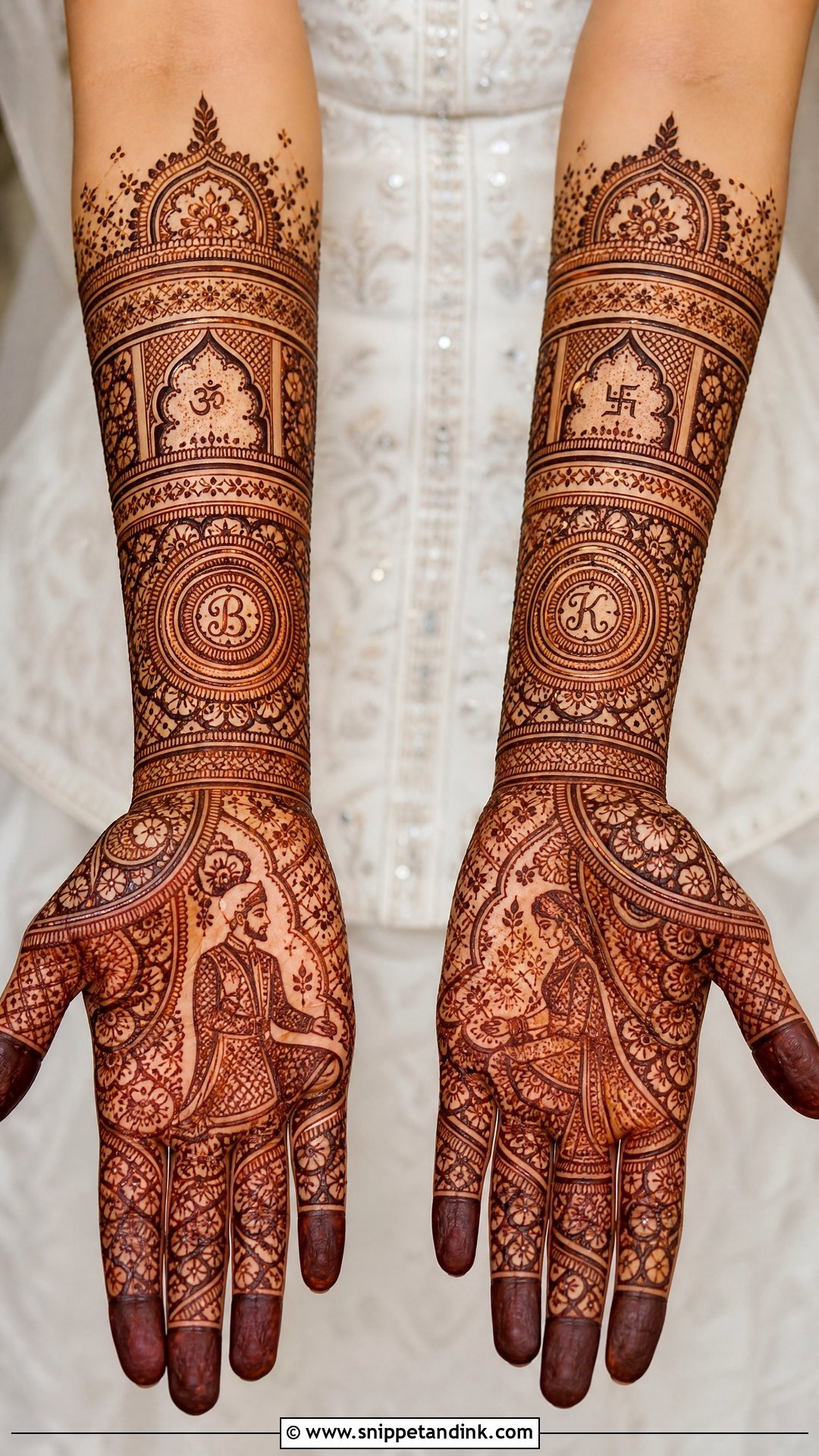
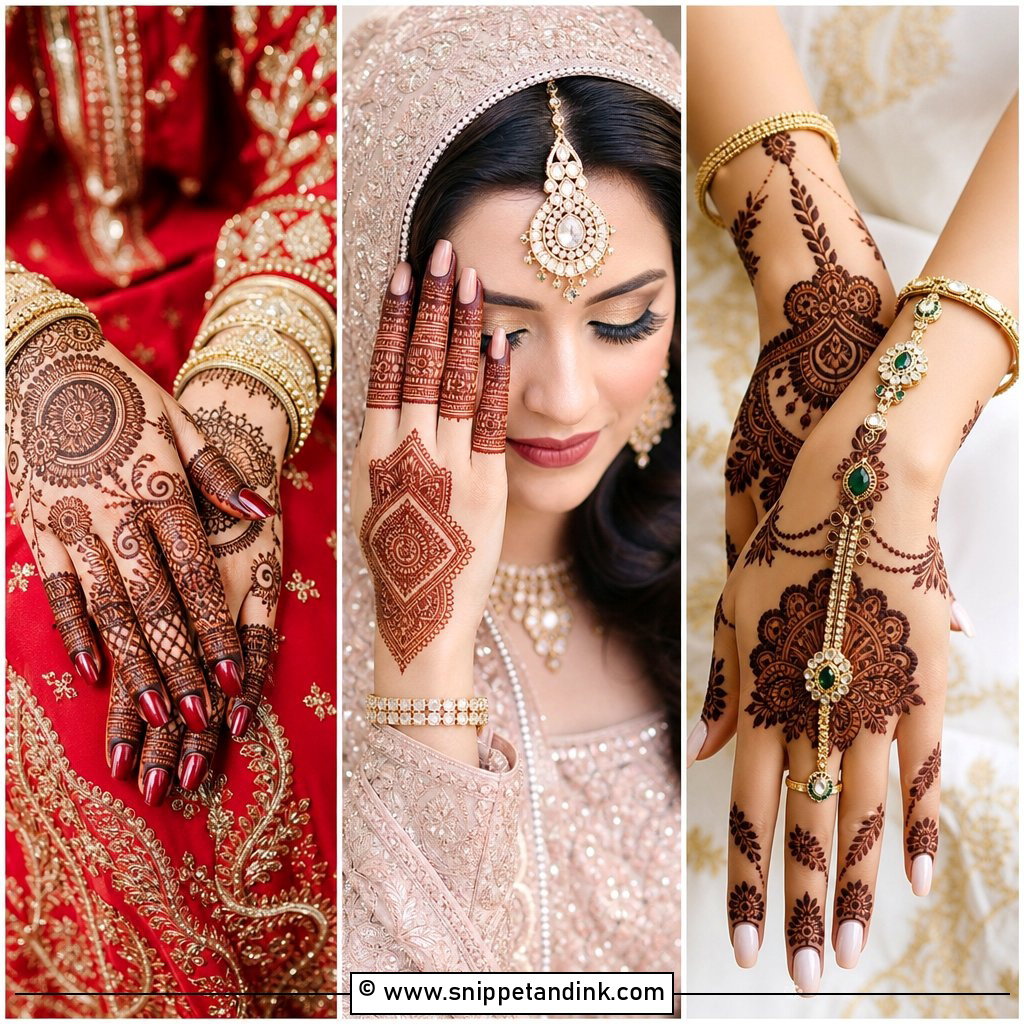
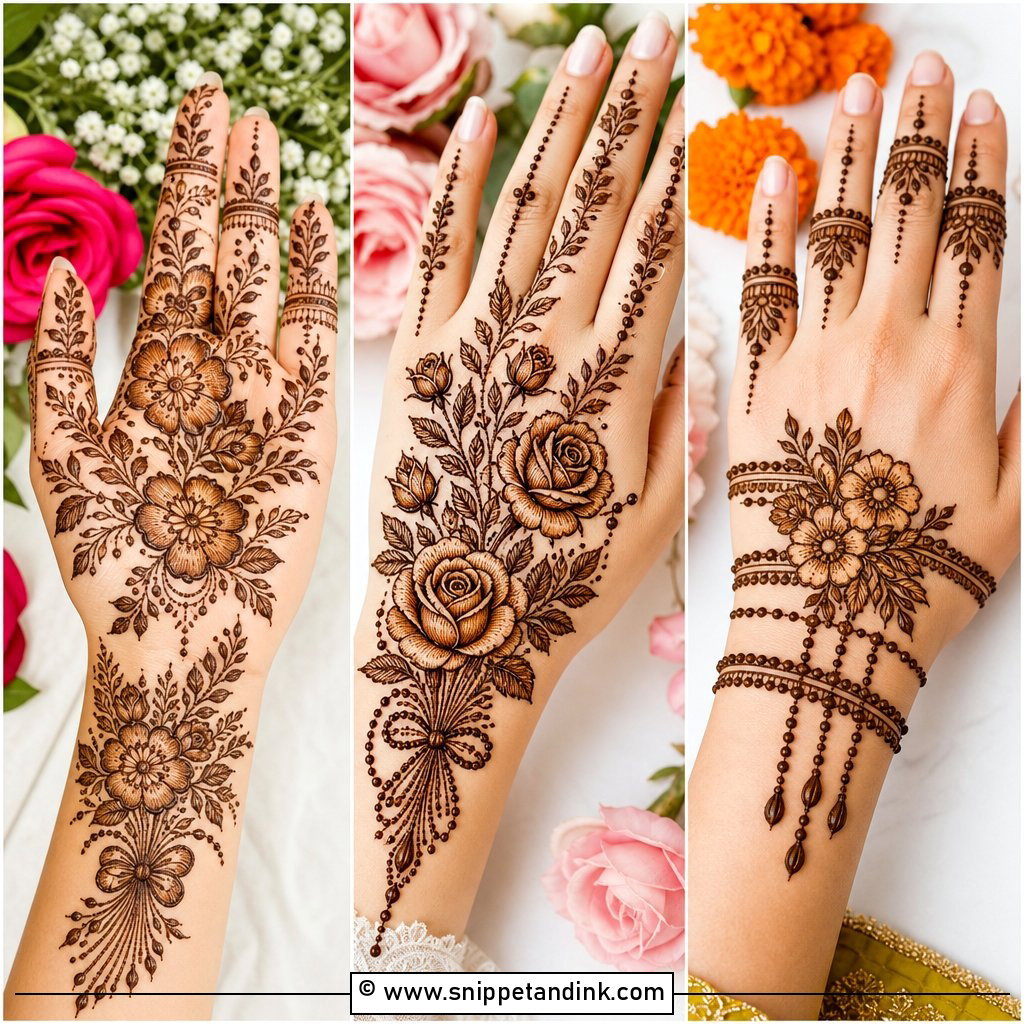
For sisters who love detail, heavy mehndi makes the wedding feel extra special. I fill the palm with paisleys, florals, mandalas, jaali and layered borders, and extend from the fingers to the forearm, keeping it a little lighter than the bride’s so she stays the focus. Wedding symbols such as a dhol, a kalash, baraat elements or tiny couple initials can sit quietly inside the pattern. The fingers are richly filled, and the wrist and forearm get cuffs and patterned panels. Plan on several hours for both hands, and don’t book it for the same evening as the bride unless the family has more than one artist.
Working the Wedding Week Around Wet Henna
A groom’s sister rarely gets a free afternoon in the wedding week, so when you have your mehndi done needs as much thought as the design. The bride’s sitting takes hours and usually gets the artist’s full attention, so arrange your own slot, or a second artist, well ahead.
- Work out which day you most want it dark. The stain is at its best about two days after application, so a design done at the mehndi function often peaks on the wedding day itself.
- Have your non-dominant hand done fully and keep your dominant hand lighter or back-hand only, so you can still eat, text and help while it sets.
- Once the paste dries, seal it with a little lemon and sugar and leave it on overnight, loosely wrapped in tissue if you need to sleep.
- Scrape it off dry the next morning and keep water away from it for as long as your duties allow.
If the ceremonies stack up and you can’t sit still for long, choose a bracelet or back-hand design and accept a smaller hand. A clean, dark, simple design photographs far better than a heavy one smudged halfway through because someone handed you a tray.
Henna That Celebrates Him and Still Looks Like You
Mehndi for your brother’s wedding should be fun to decide on, not a puzzle. Start with your outfit and your role in the ceremonies, then think about how much detail you want in photos. Full hand, Arabic, Indo-Arabic, floral, bracelet, initials and portrait designs all work when the spacing is balanced. Minimal, finger and back-hand designs lean modern, while paisley, mandala, peacock and heavy forearm work lean traditional. Whatever you go with should celebrate your bond with your brother and still feel like you.
You'll Like These Ideas:



Leave a Reply