
When the bride is your sister, your hands end up in almost as many photos as hers: holding her dupatta, fixing her kalire, passing the ring. That is why a sister wedding mehndi design needs a different brief from a bridal one. It should read as festive from across the room, stay a clear step lighter than the bride’s, and survive a few days of you running every errand in the family. Below are the layouts I’m asked for most by sisters, from Arabic trails and Indo-Arabic fusion to jaali, mandalas and small personal motifs, with notes on how each one wears and stains.
Planning Your Sitting Around the Bride’s Henna Night
On most mehndi nights the bride is in the chair for hours, and the family queue forms behind her. Sisters tend to go last because they’re busy, then end up rushed by a tired artist at the end of the evening. I’d rather book the sister separately, either earlier the same afternoon or with a second artist working in parallel.
Timing matters for colour, too. Natural henna comes off the skin bright orange and deepens to its darkest reddish brown over roughly one to two days. If your mehndi goes on the night before the wedding, your hands will look their best on the day after the ceremony, not during it. Two days before the main event is the sweet spot for most families.
What to agree on before the cone comes out
- How much lighter than the bride you want to go, in coverage and in density. Look at her design first.
- Which side of the hand the camera will see most, so the detail goes there.
- Where your bangles, rings and haath phool will sit, so the artist leaves room or draws around them.
- Any personal motif or initials, written down and spelled correctly.
- Whether the artist mixes her own paste from henna powder, lemon juice and essential oils. Dark-in-minutes “black henna” usually contains PPD, a dye that can cause chemical burns, and I’d never put it on a guest.
1. Full Hand Sister Wedding Mehndi Design
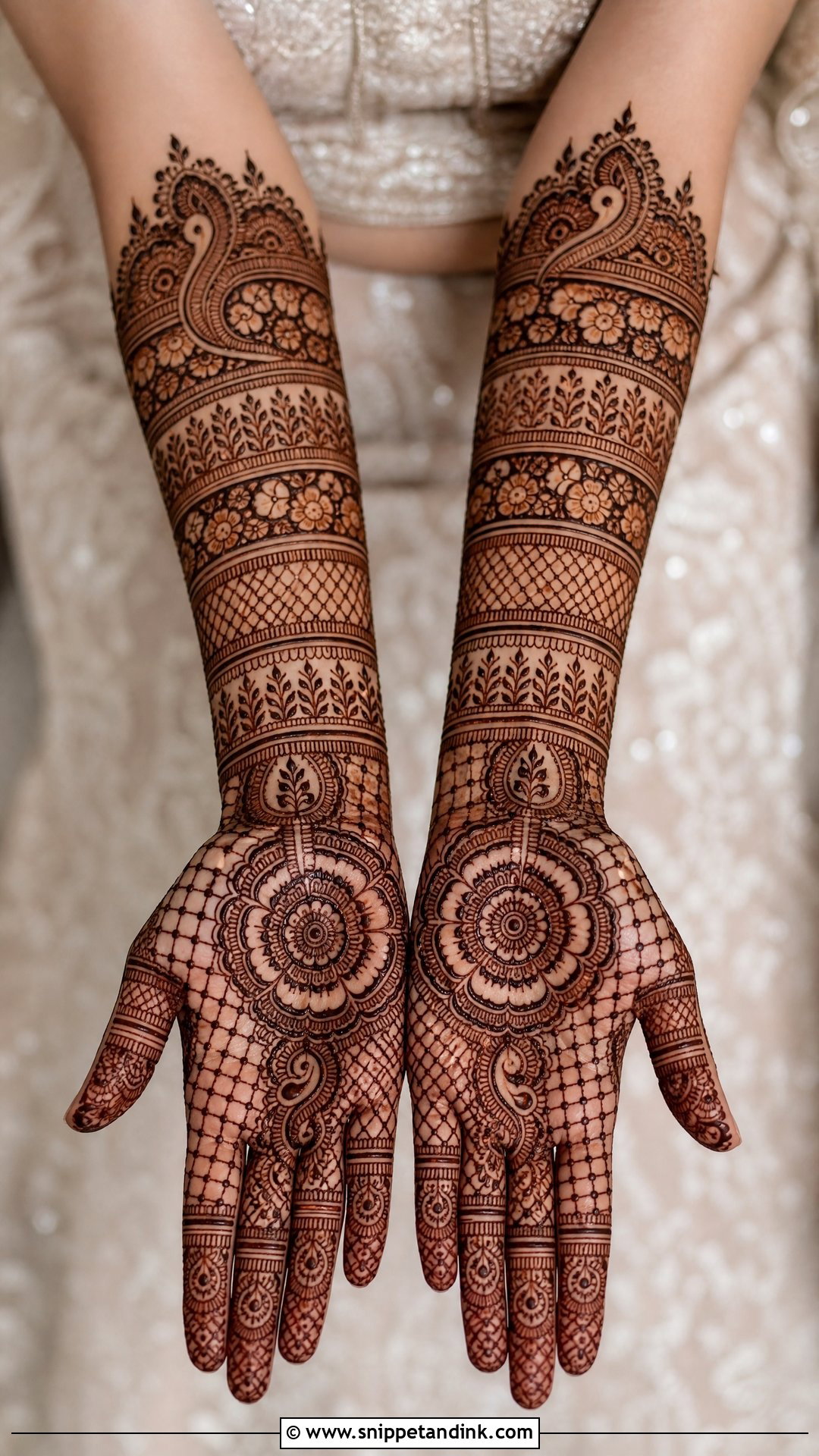
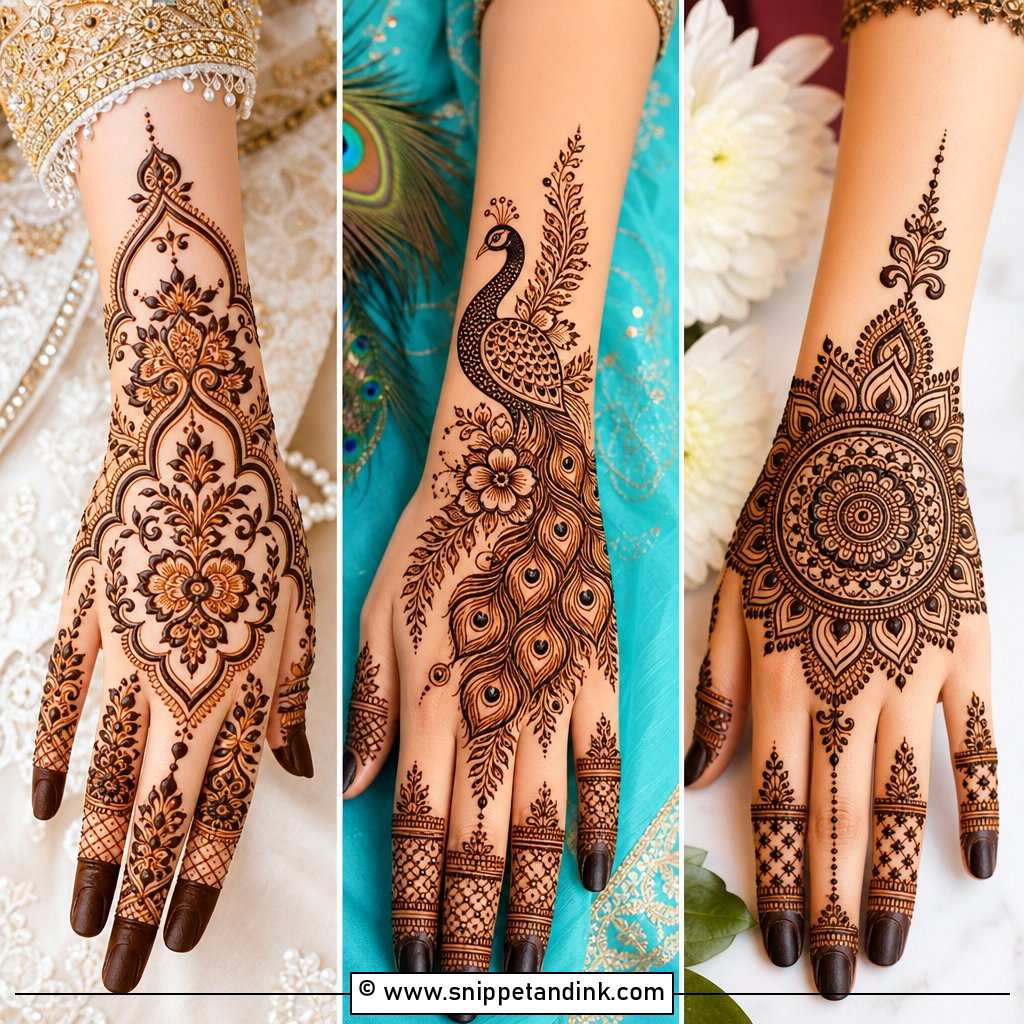
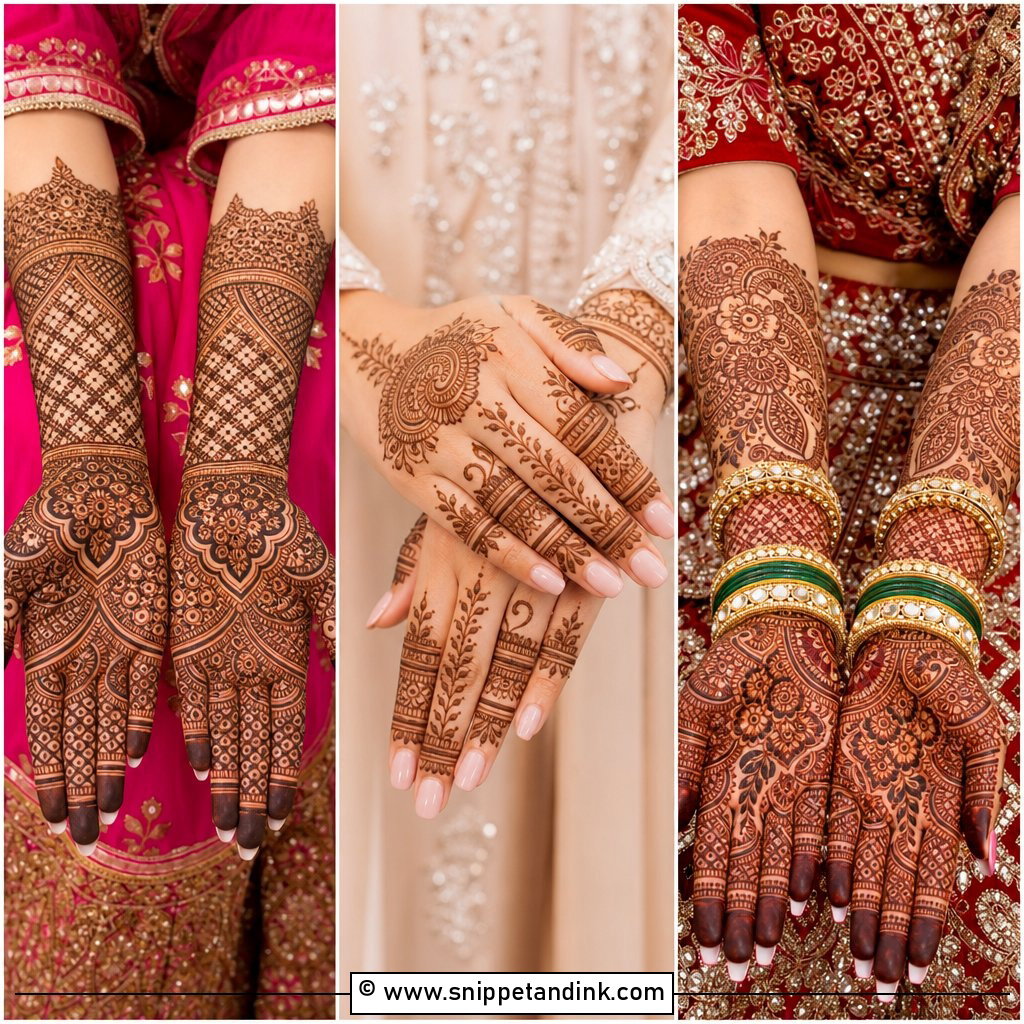
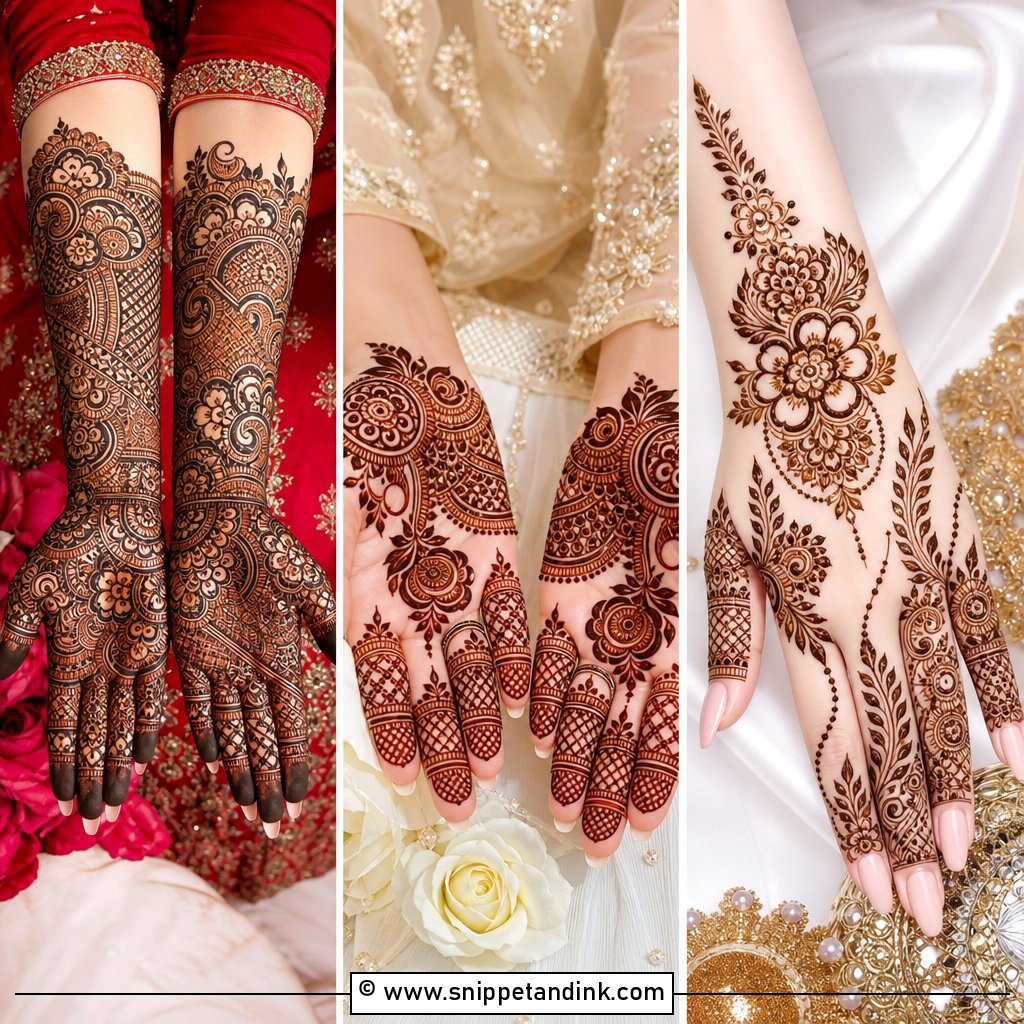
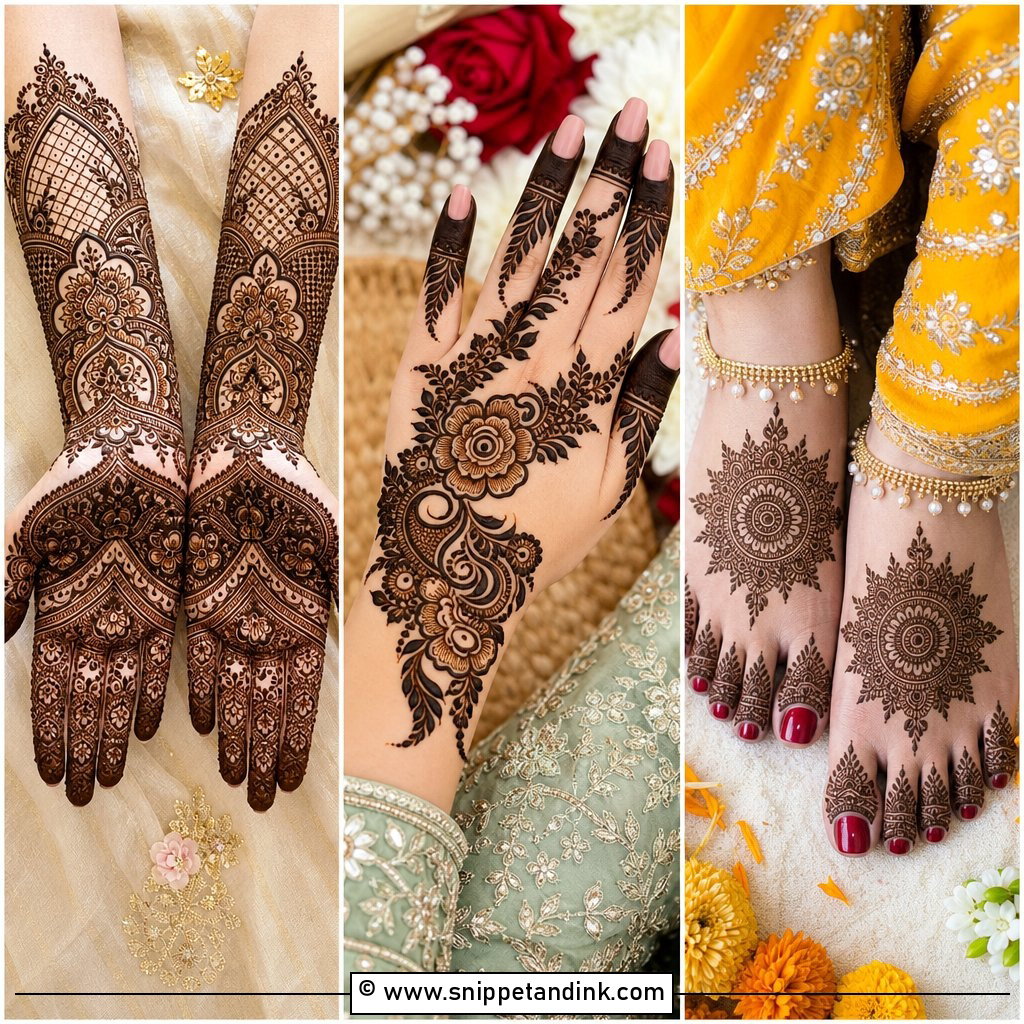
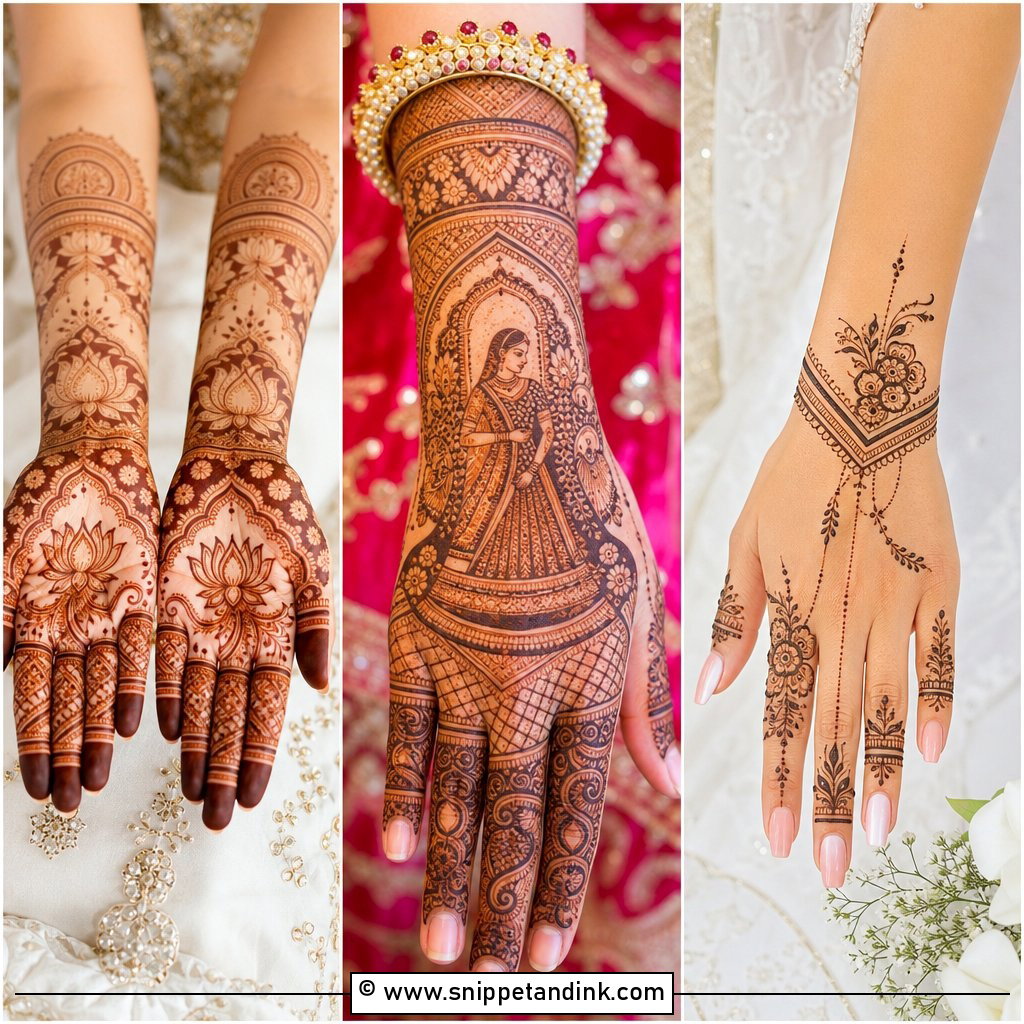
Full hand coverage is the closest you can get to bridal without competing with her. I usually anchor the palm with a mandala or floral circle and build paisleys, vines and dot work outward, then finish the forearm with bracelet bands and a little jaali. Budget around two hours for both hands at this density. The one thing I hold back for a sister is the figure work and the groom’s name, which belong to the bride.
2. Arabic Sister Wedding Mehndi Design
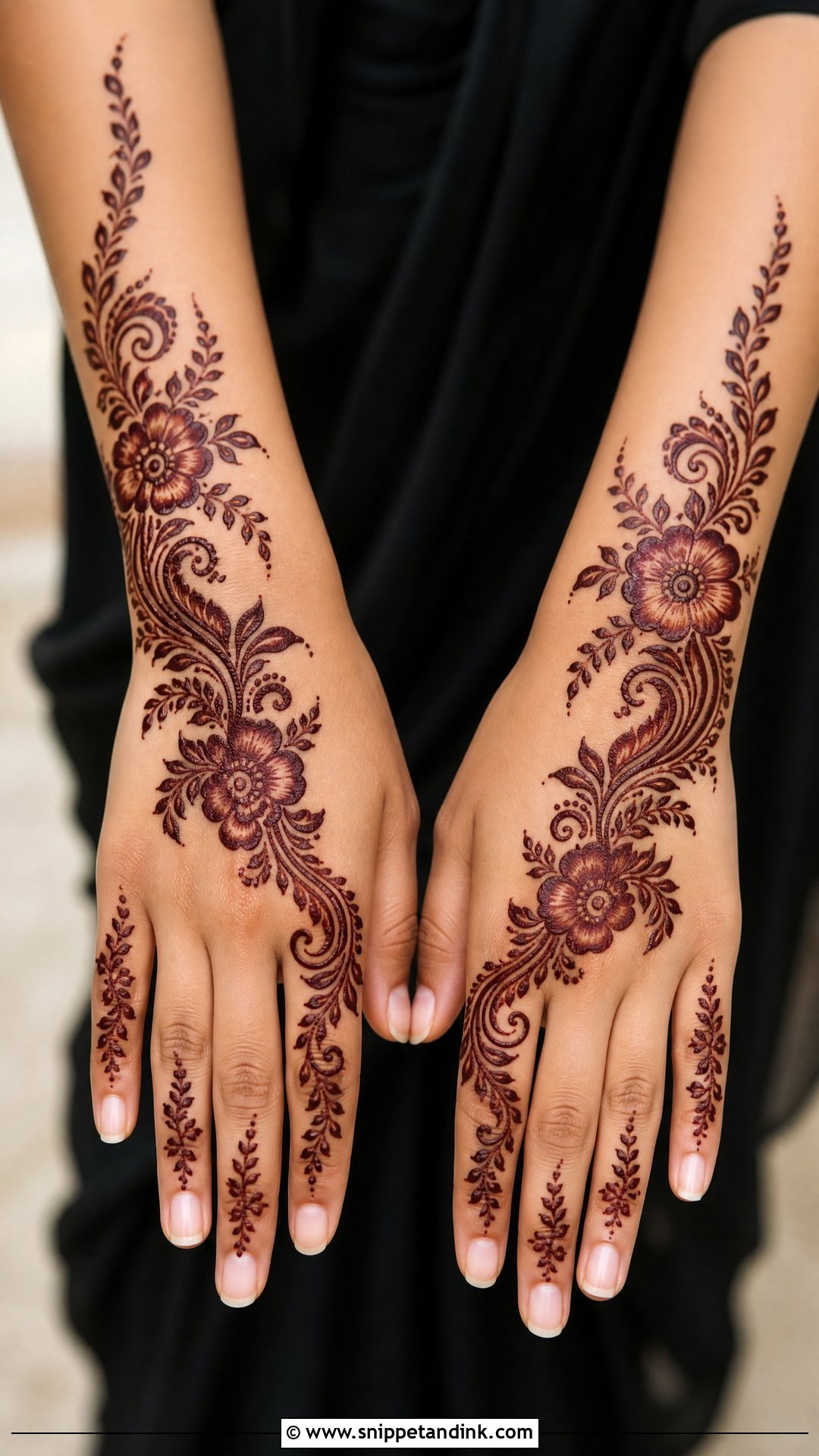
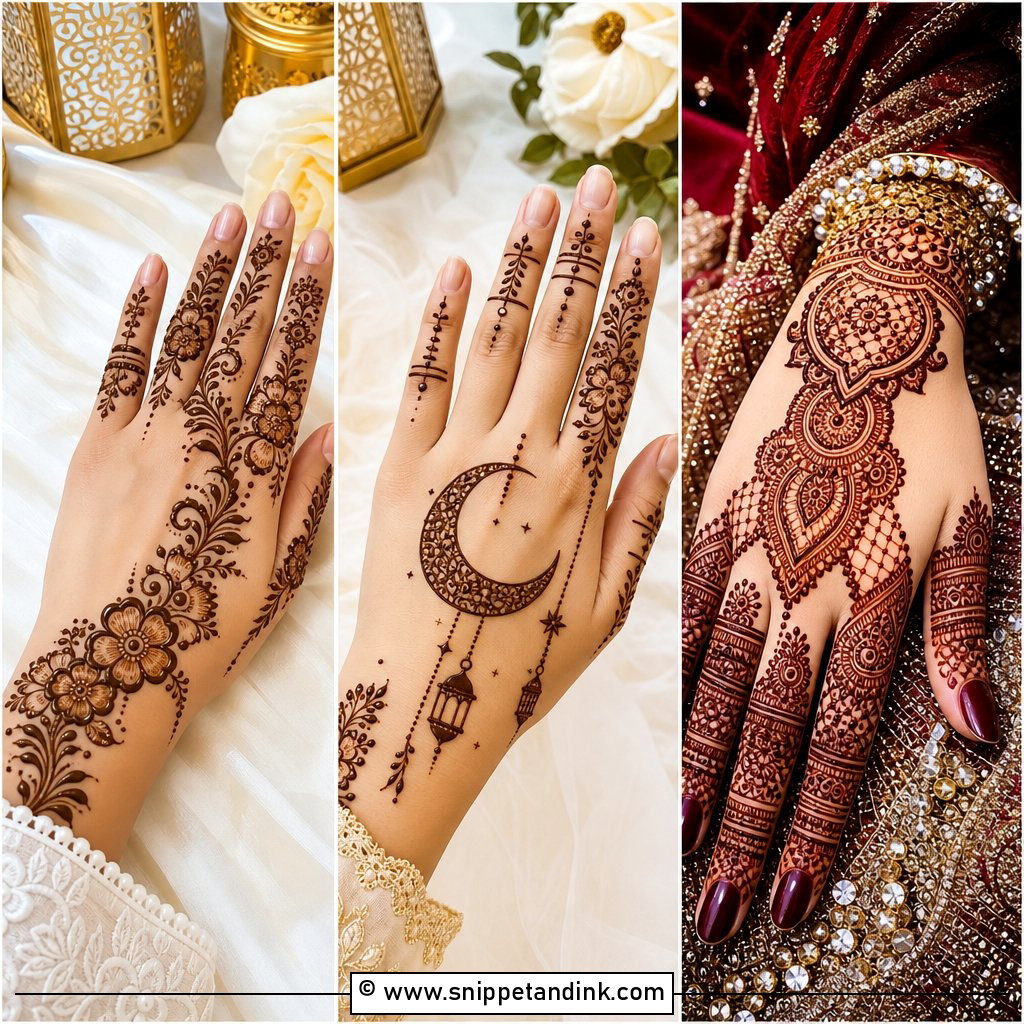
Arabic work is the fastest route to a bold result: one diagonal trail running from the wrist to the fingertips, with big shaded flowers and plenty of bare skin between them. Because the shading is done with a thinner line pulled at an angle, it stains slightly lighter than the outlines, which gives it that dimensional look in photos. I keep it to one strong trail per hand. Two trails crossing each other on a busy sangeet hand start to look muddled once the bangles go on.
3. Simple Sister Wedding Mehndi Design
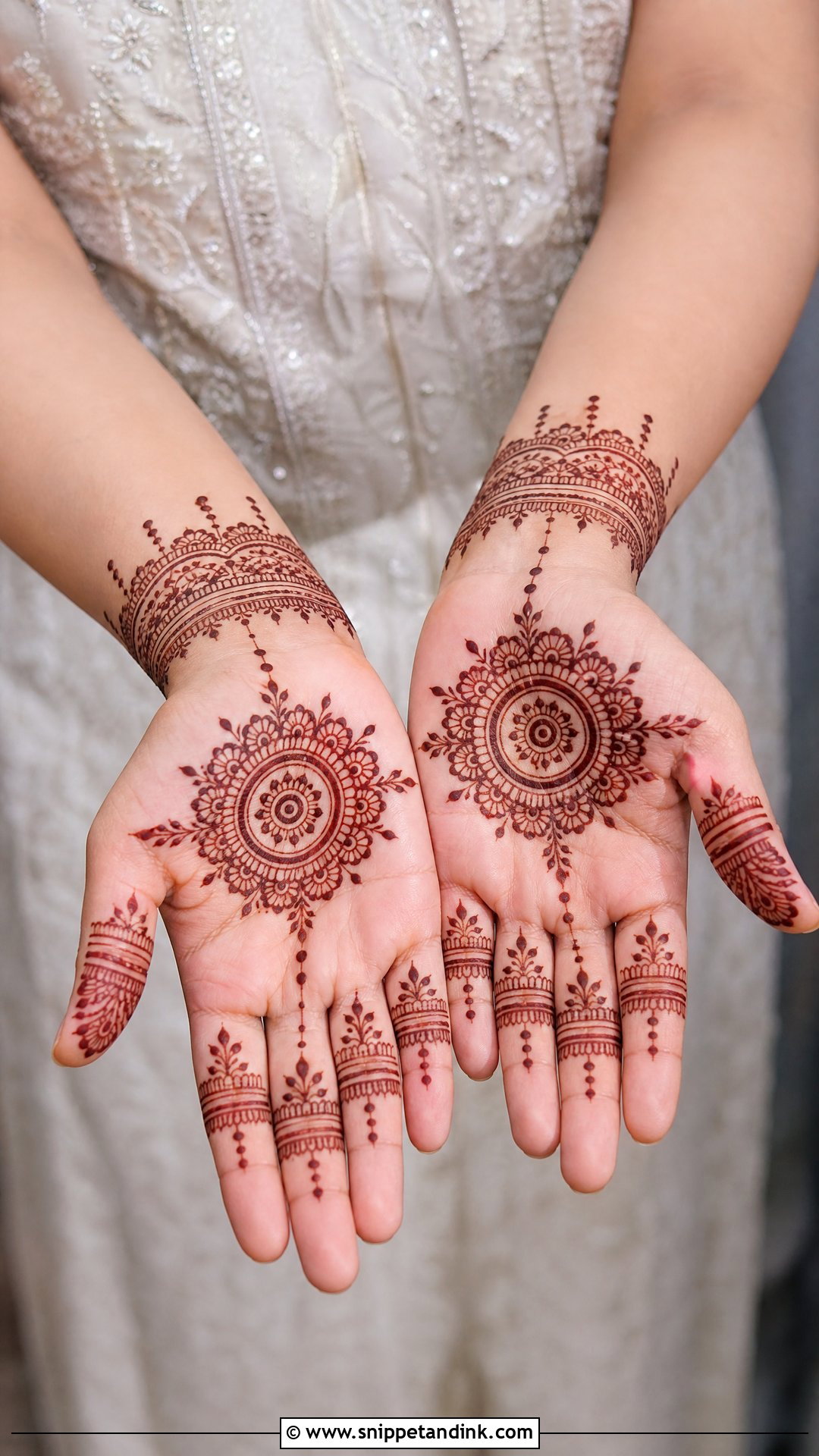
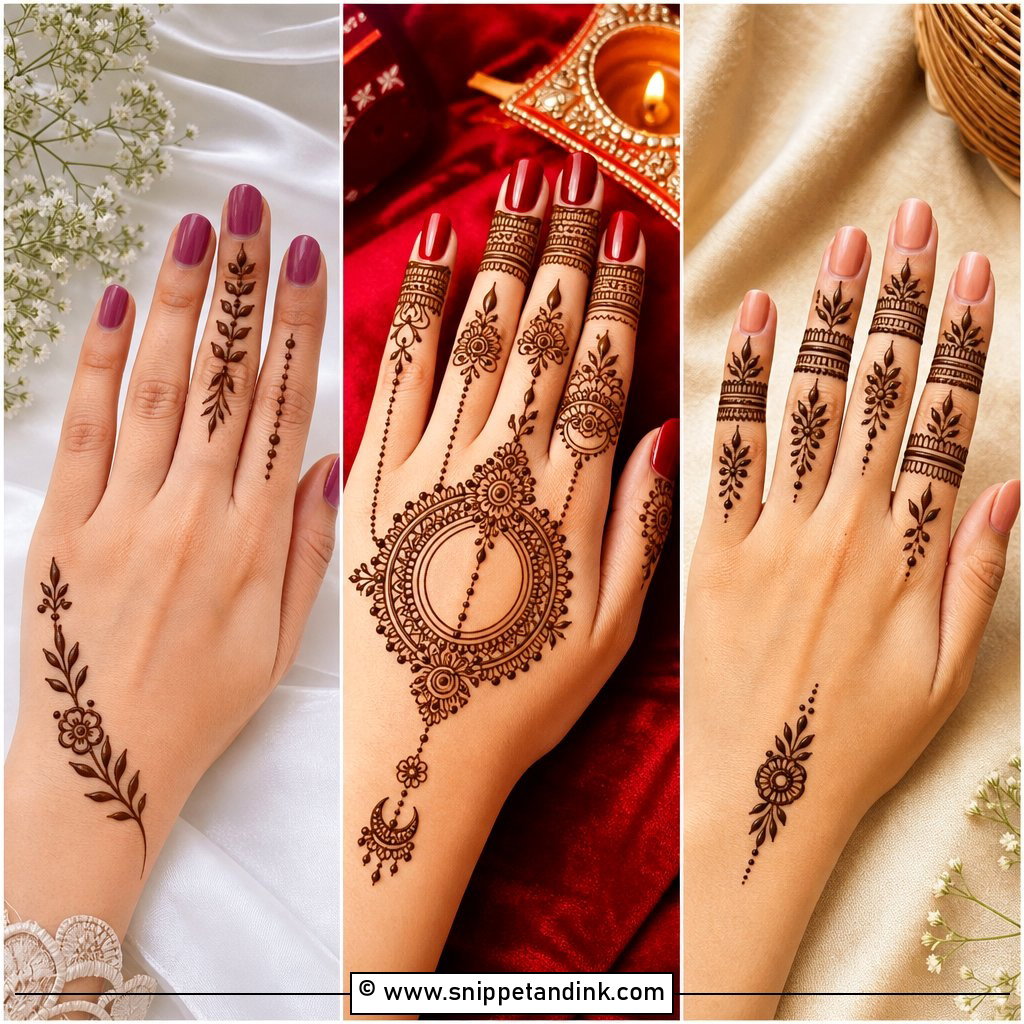
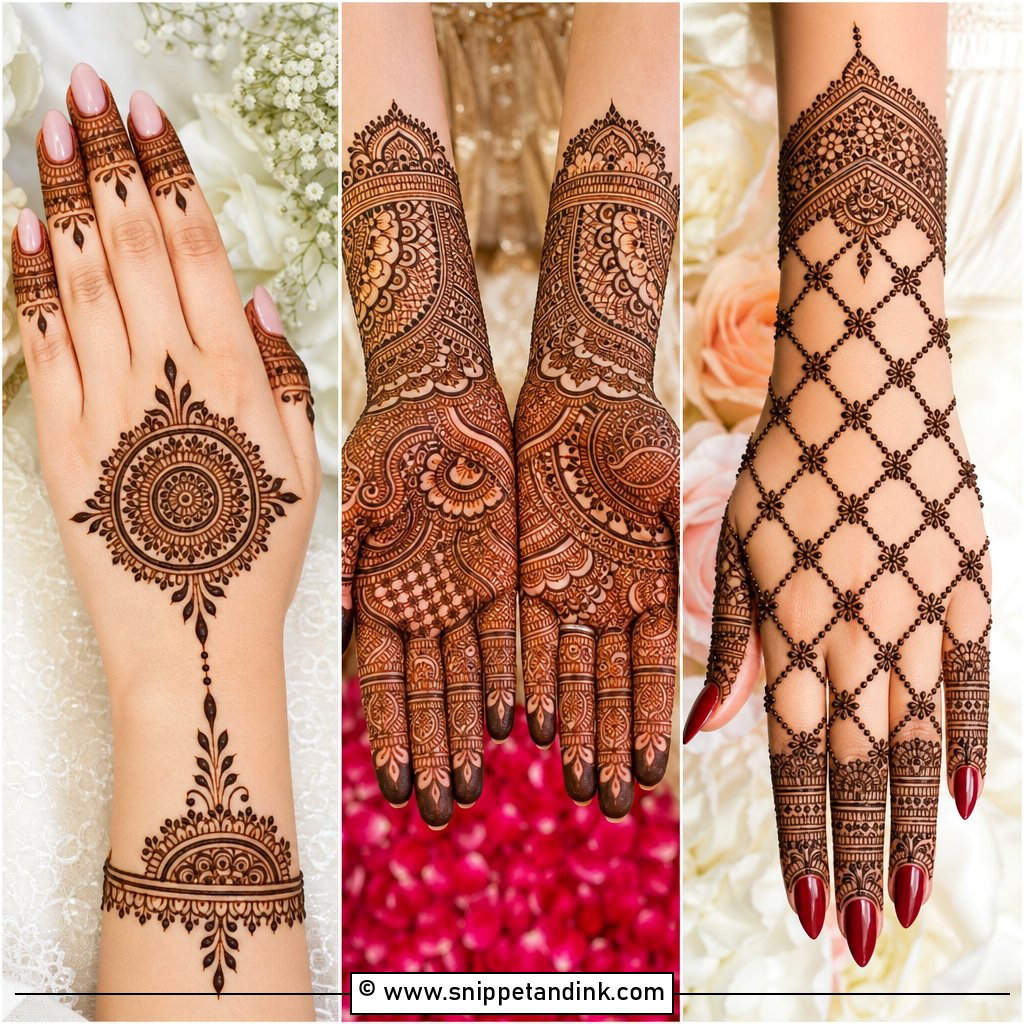
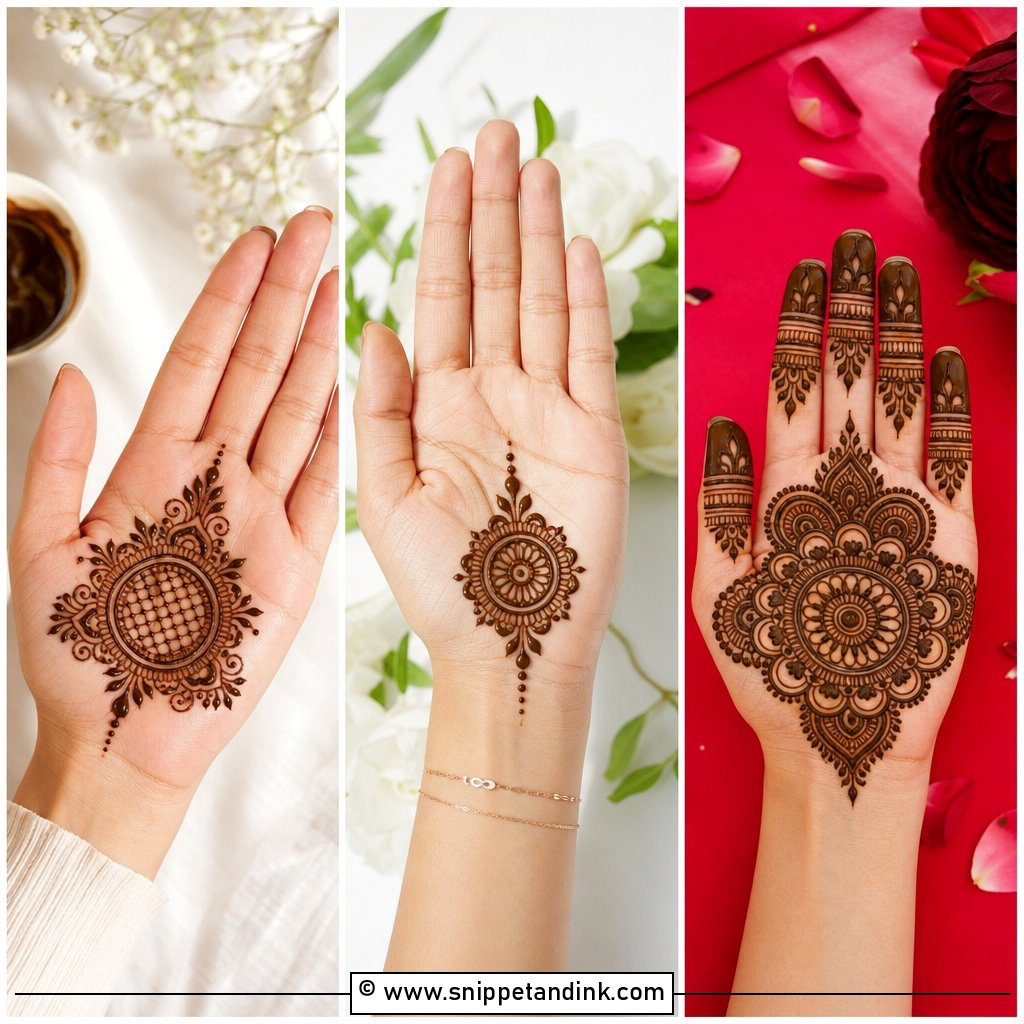
Simple doesn’t mean sparse. A neat palm mandala, capped fingers and a fine wrist border can be finished in under half an hour per hand, which matters when you are the person everyone calls for safety pins. The trick I use is spacing: give each motif room, and a light design looks deliberate rather than rushed. It also means the paste is drying while you are still useful.
4. Back Hand Sister Wedding Mehndi Design
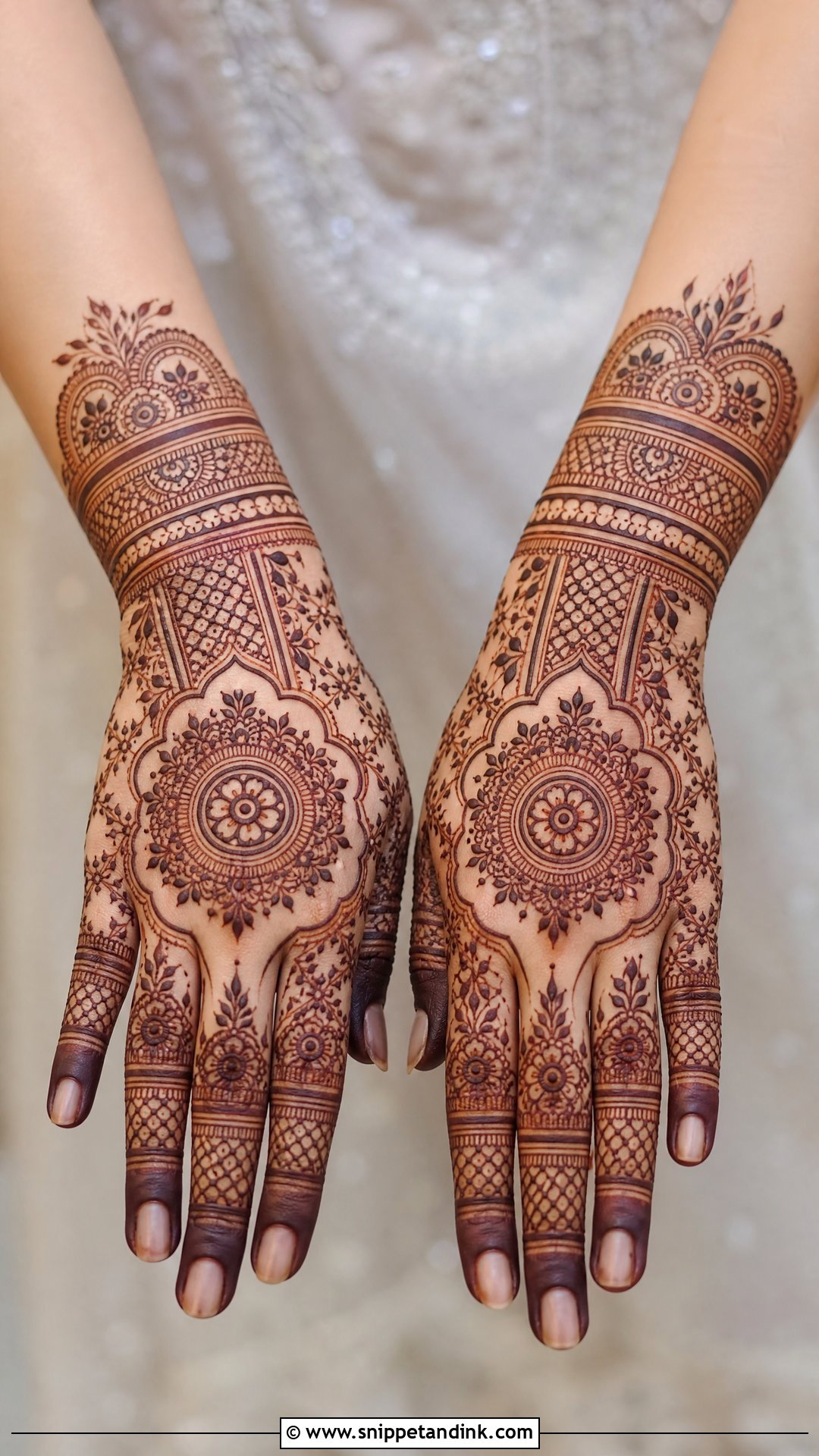
The back of the hand is what the camera actually sees during most rituals, so this is where I put the detail for a sister. A central mandala, a bracelet band at the wrist and decorated knuckles is the classic layout, with jaali or small leaf borders to fill the gaps. Be aware that the back of the hand stains lighter than the palm because the skin there is thicker and drier. Leave the paste on longer on this side if you want it to match.
5. Front Hand Sister Wedding Mehndi Design
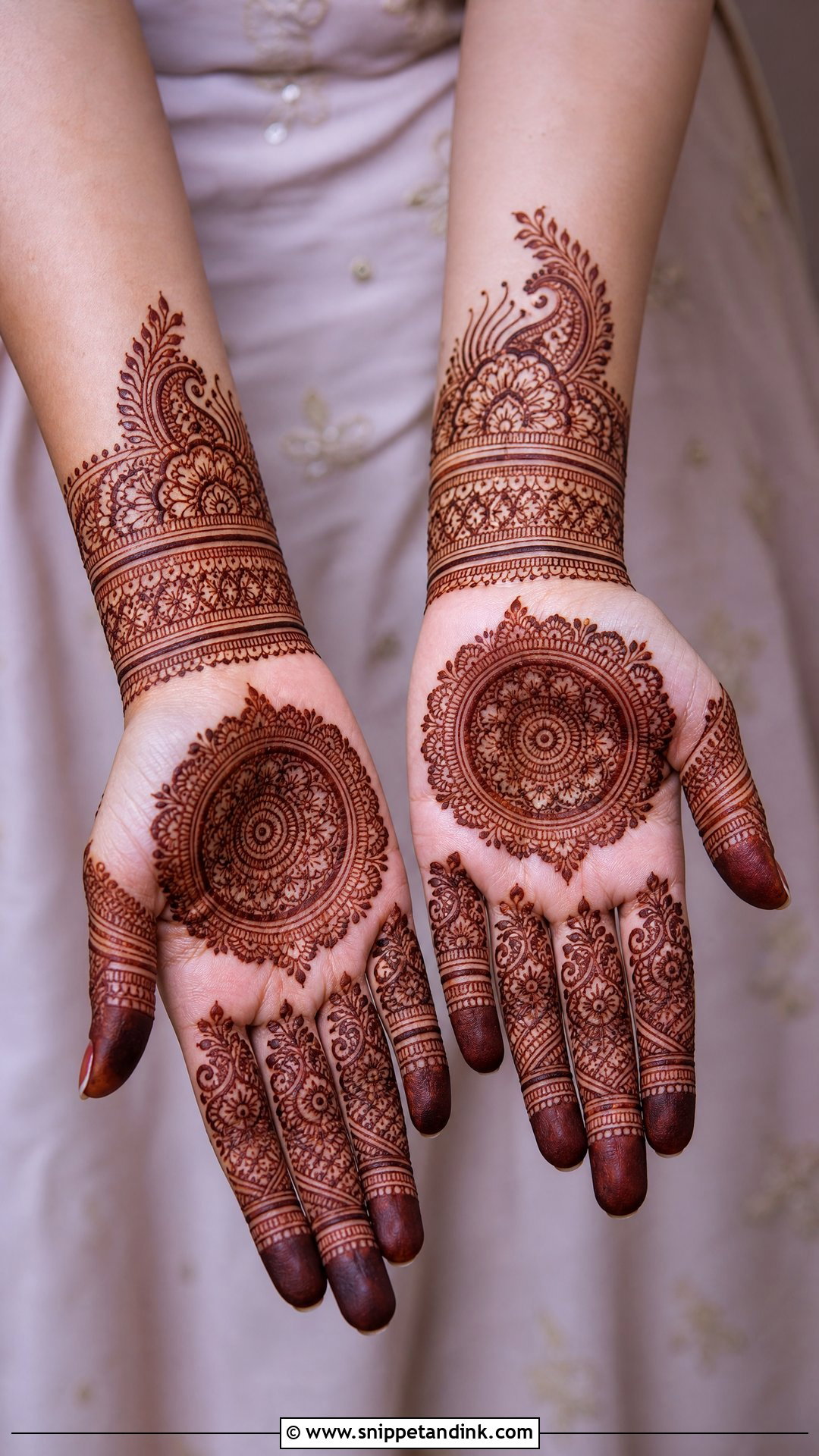
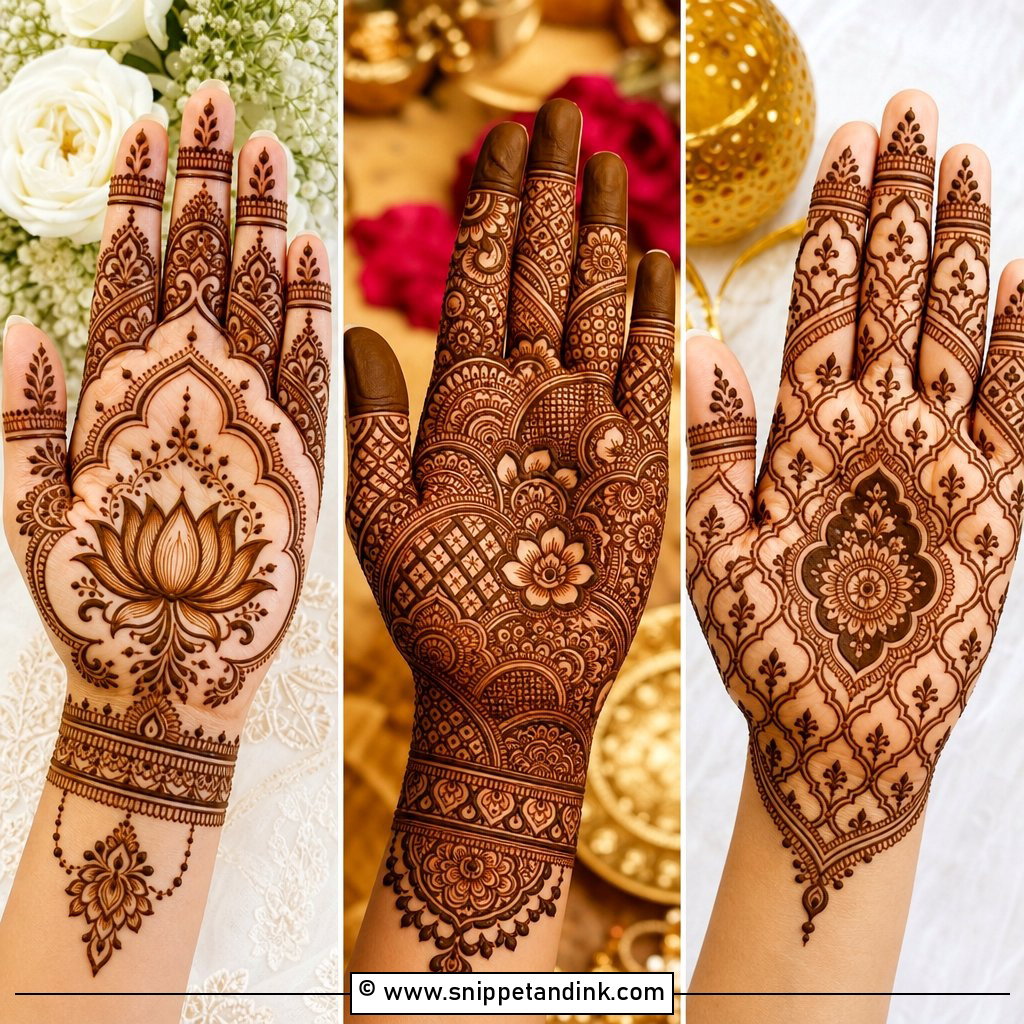
Palms take henna better than anywhere else on the body, so a front hand design gives you the deepest colour for the least effort. I start with a round centrepiece, often a lotus or paisley cluster, then pull curved bands toward the wrist and fill the fingers with checks and small leaves. Leave some breathing space between sections unless you’ve agreed on a near-bridal look with your sister. Dense palms on a bride’s sister can make the two of you hard to tell apart in close-ups.
6. Indo Arabic Sister Wedding Mehndi Design
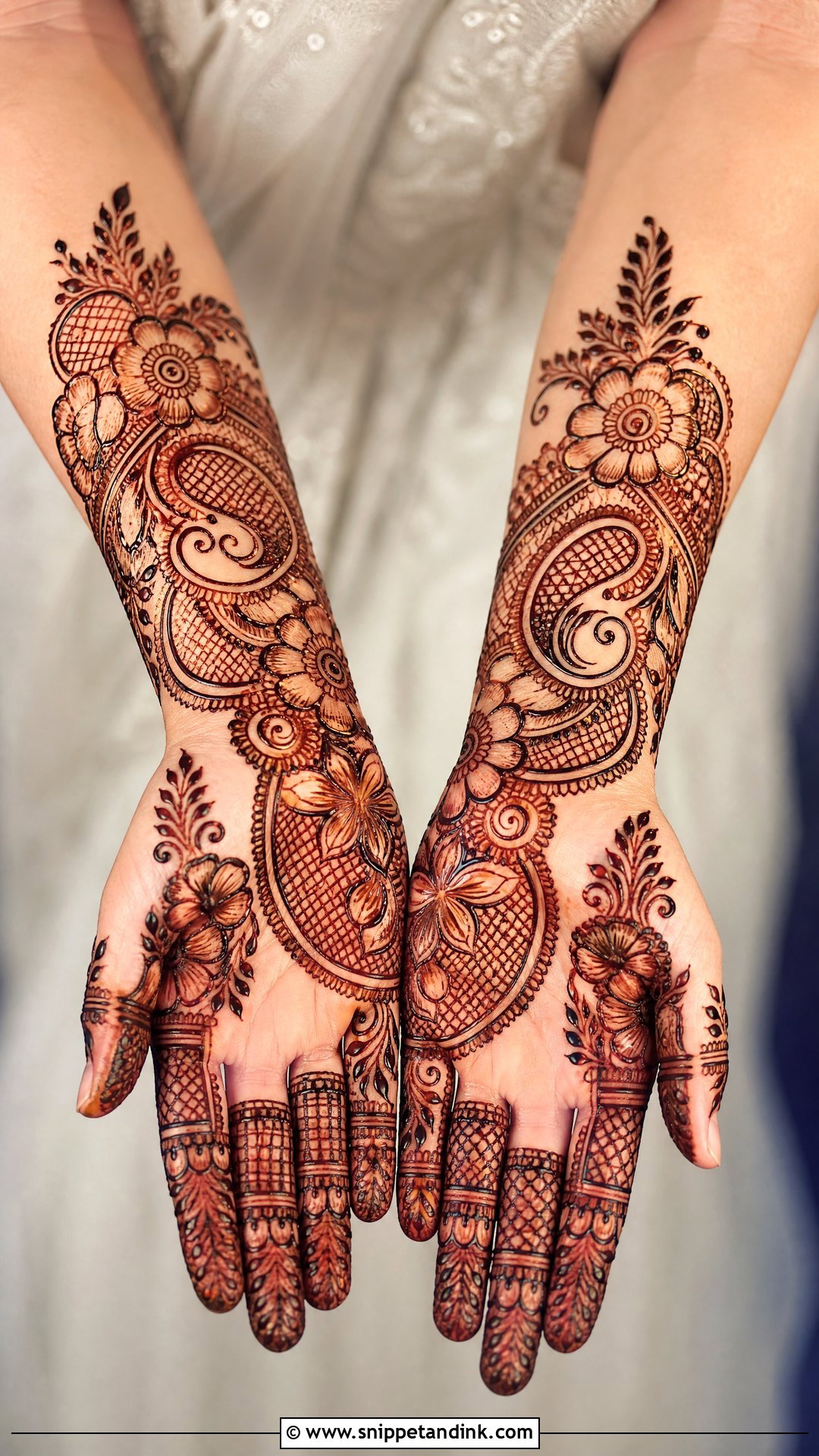
Indo-Arabic mehndi is what I suggest when a sister can’t decide between bold and detailed. The structure comes from Arabic work, a big diagonal floral trail, and the texture comes from Indian fillers like jaali, dots and miniature paisleys tucked inside it. It takes longer than pure Arabic because of those fillers, so plan for it if your slot is near the end of the night.
7. Mandala Sister Wedding Mehndi Design
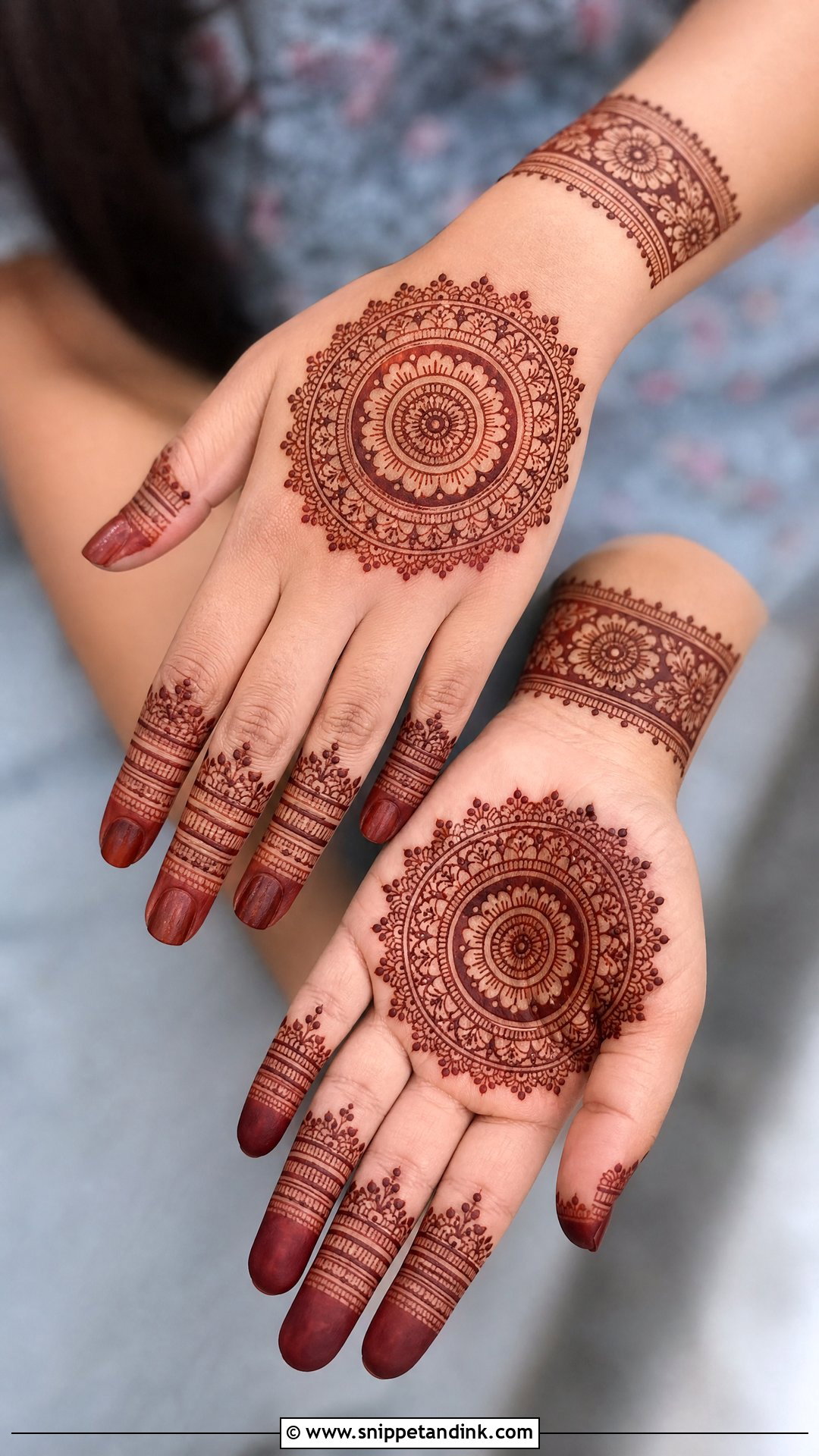
A mandala gives the hand an instant centre, which is why it photographs so cleanly. The round motif sits on the palm or the back of the hand, with decorated fingers and a wrist cuff around it. To dress it up for a wedding I add petal layers and dot rings rather than making the circle bigger. A mandala that spreads past the edges of the palm loses its shape when the hand is cupped or holding something.
8. Floral Sister Wedding Mehndi Design
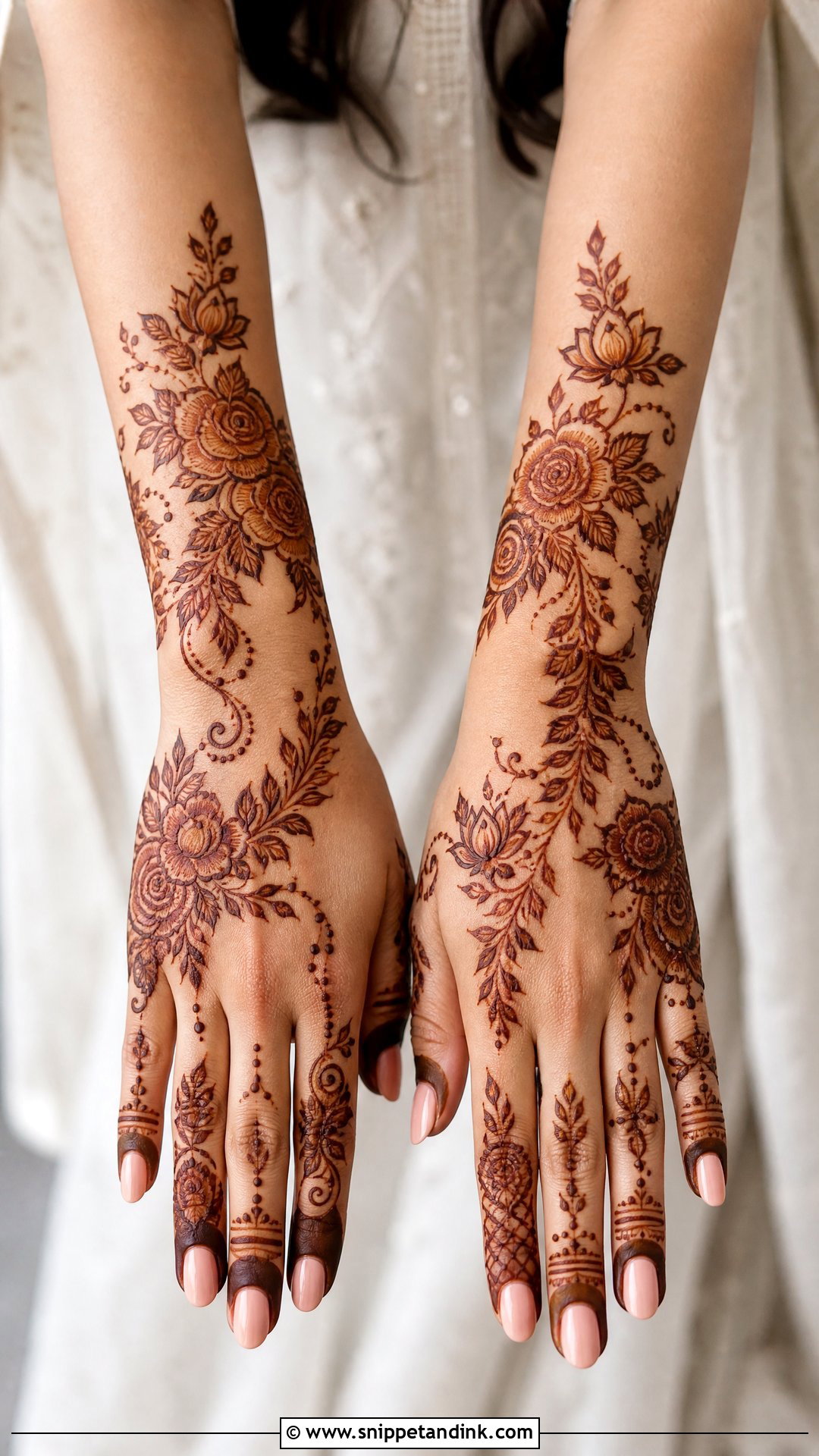
Floral layouts work best when the flowers are the pattern, not decoration scattered between other motifs. I place the larger roses and lotus shapes near the wrist and centre of the hand, then shrink them as they travel toward the fingertips. That graduation keeps the hand from looking crowded. Fine petal lines need a cone with a small, clean tip, so if your artist’s cone is starting to blob, ask for a fresh one before the flowers.
9. Peacock Sister Wedding Mehndi Design
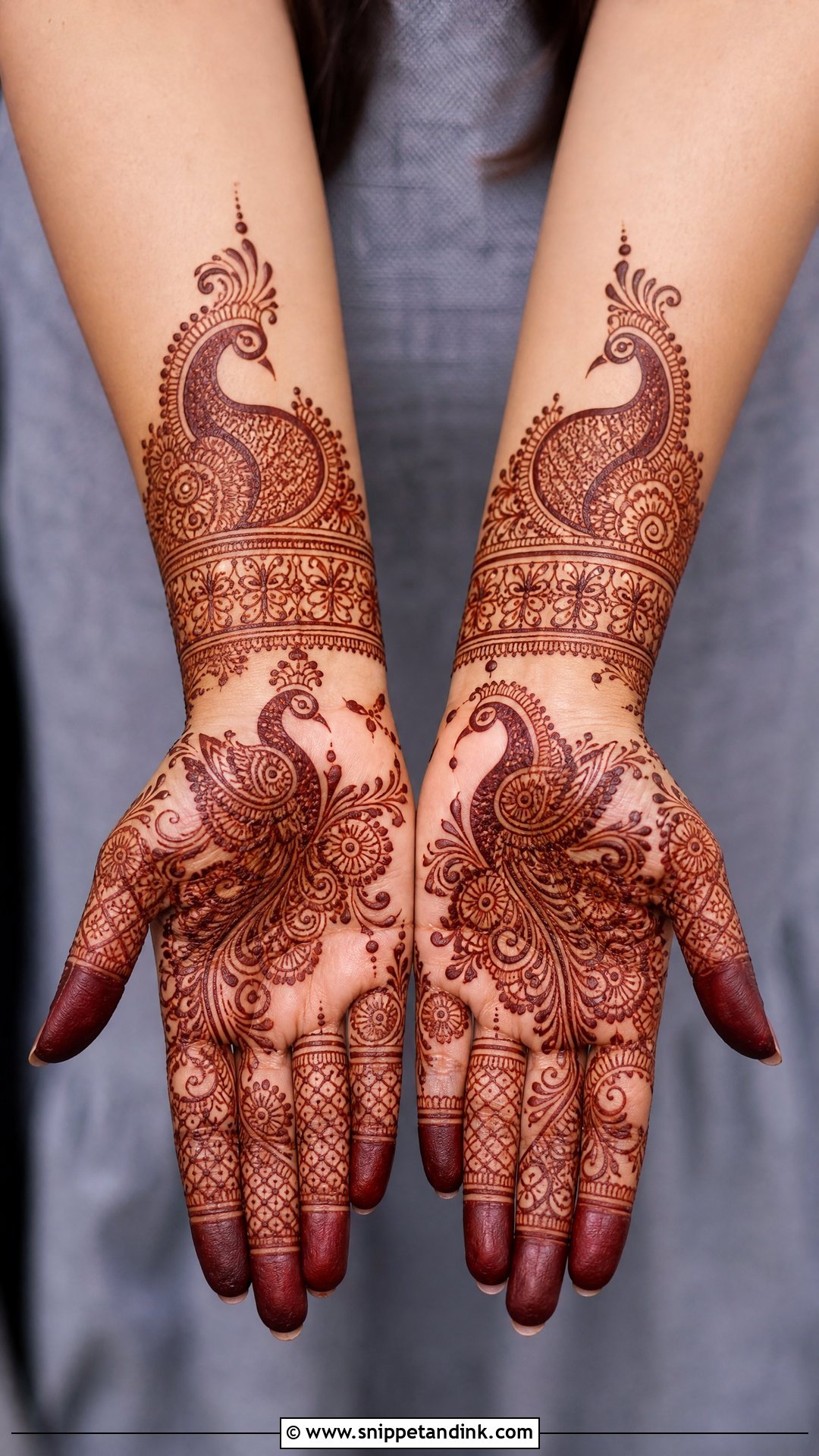
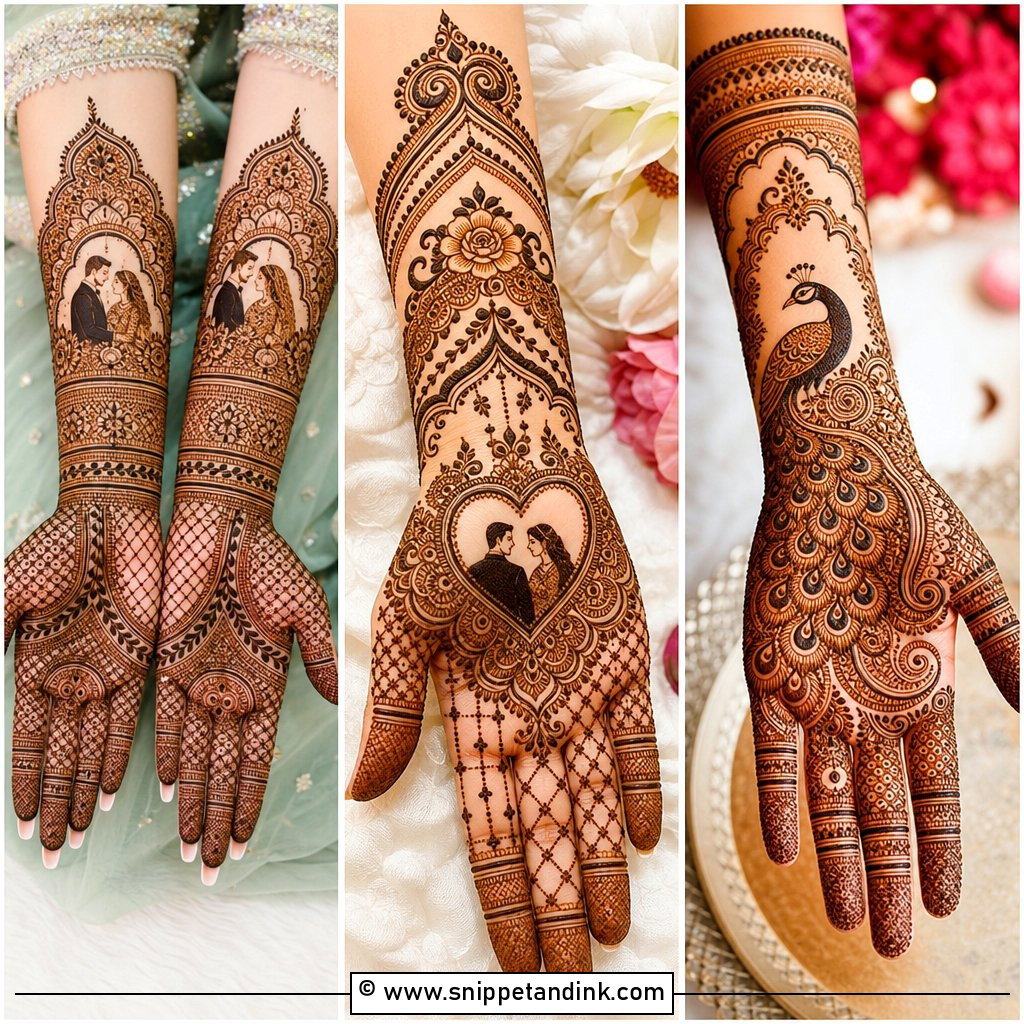
Peacock mehndi carries a lot of traditional weight, and that’s exactly why I keep it modest on a sister. One small peacock on the forearm or the side of the palm, with its feather trail curving around paisleys and floral borders, reads as festive without echoing the bride. A peacock across the full palm is a bridal-scale motif. I’d steer you away from it unless your sister has specifically asked for matching birds.
10. Paisley Sister Wedding Mehndi Design
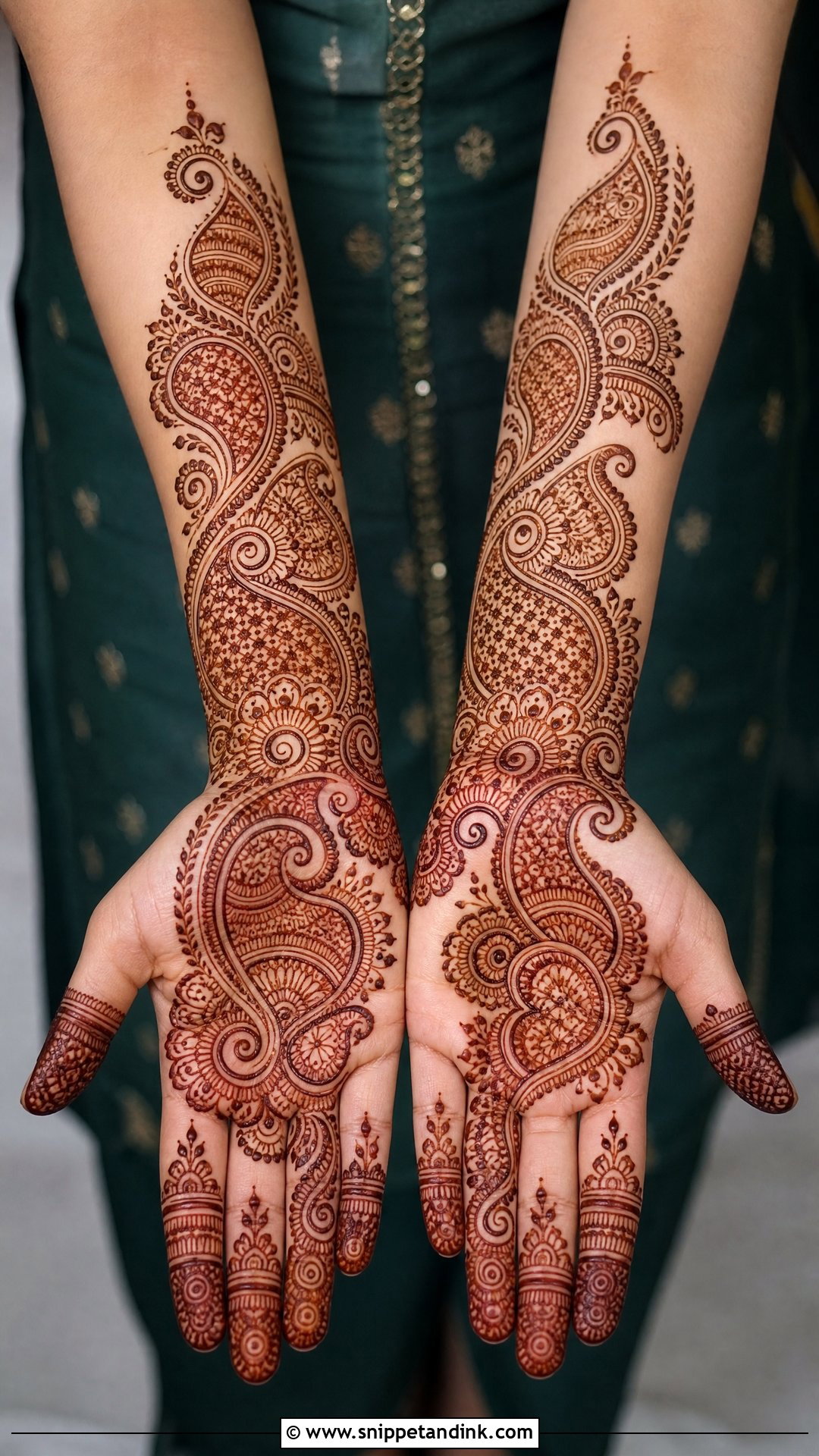
Paisleys are the most forgiving shape in henna. They fit around knuckles, they scale up or down without losing their character, and they can be filled with checks, spirals or tiny flowers depending on how much time you have. For a sister I use medium paisleys as the main shapes and smaller tips on the fingers. If you’re short on time, ask for the outlines only and skip the internal fill on the forearm.
11. Jaali Sister Wedding Mehndi Design
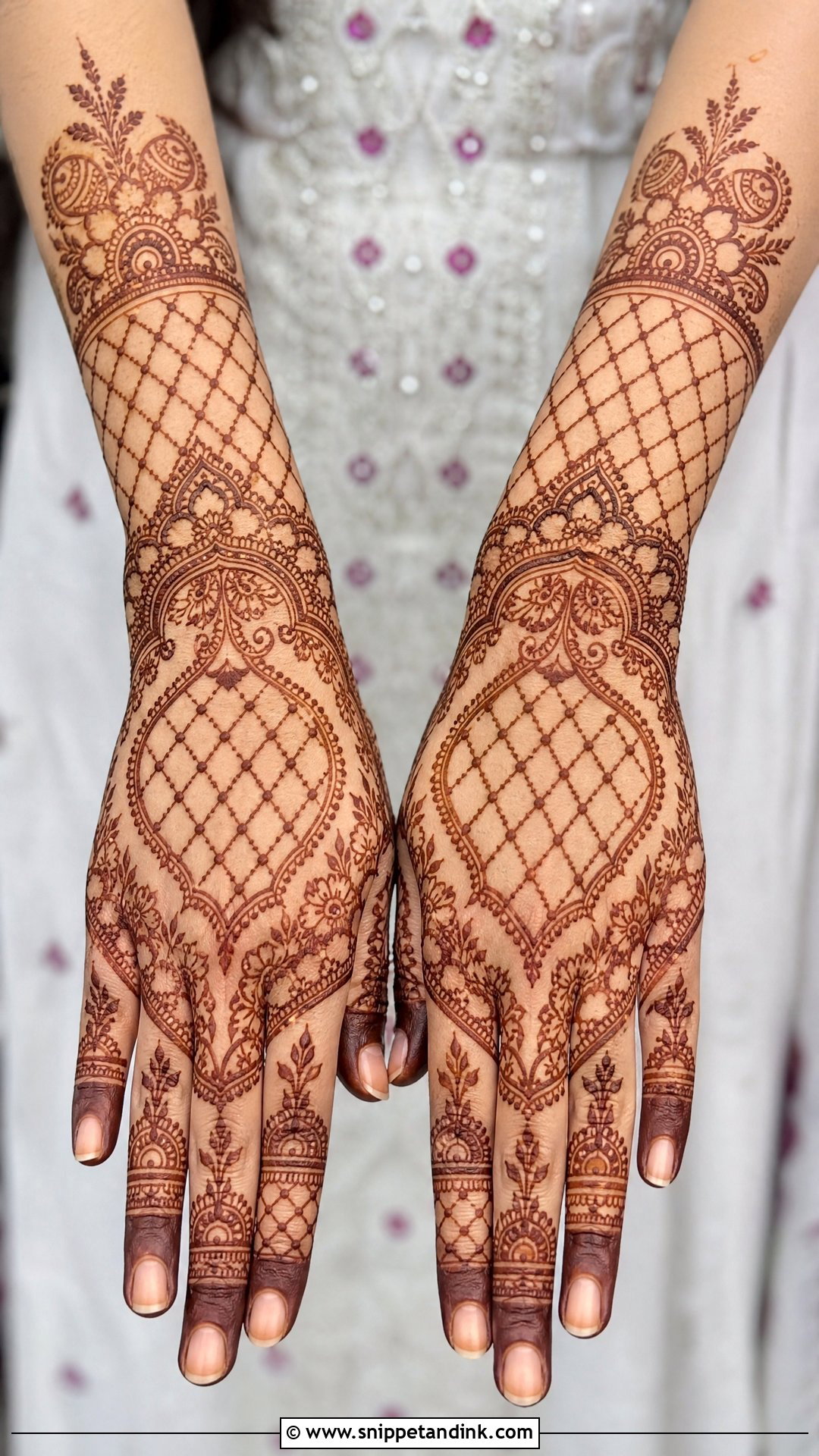
Jaali is the lace net of mehndi: crisscross lines, tiny dots at the intersections, and borders holding it all together. On its own it can look flat, so I always pair a jaali panel with something solid like a flower or a mandala. The lines need to be very even, which makes jaali one of the slower fills to apply. It looks particularly sharp under a haath phool, where the chains cross the mesh.
12. Bracelet Sister Wedding Mehndi Design
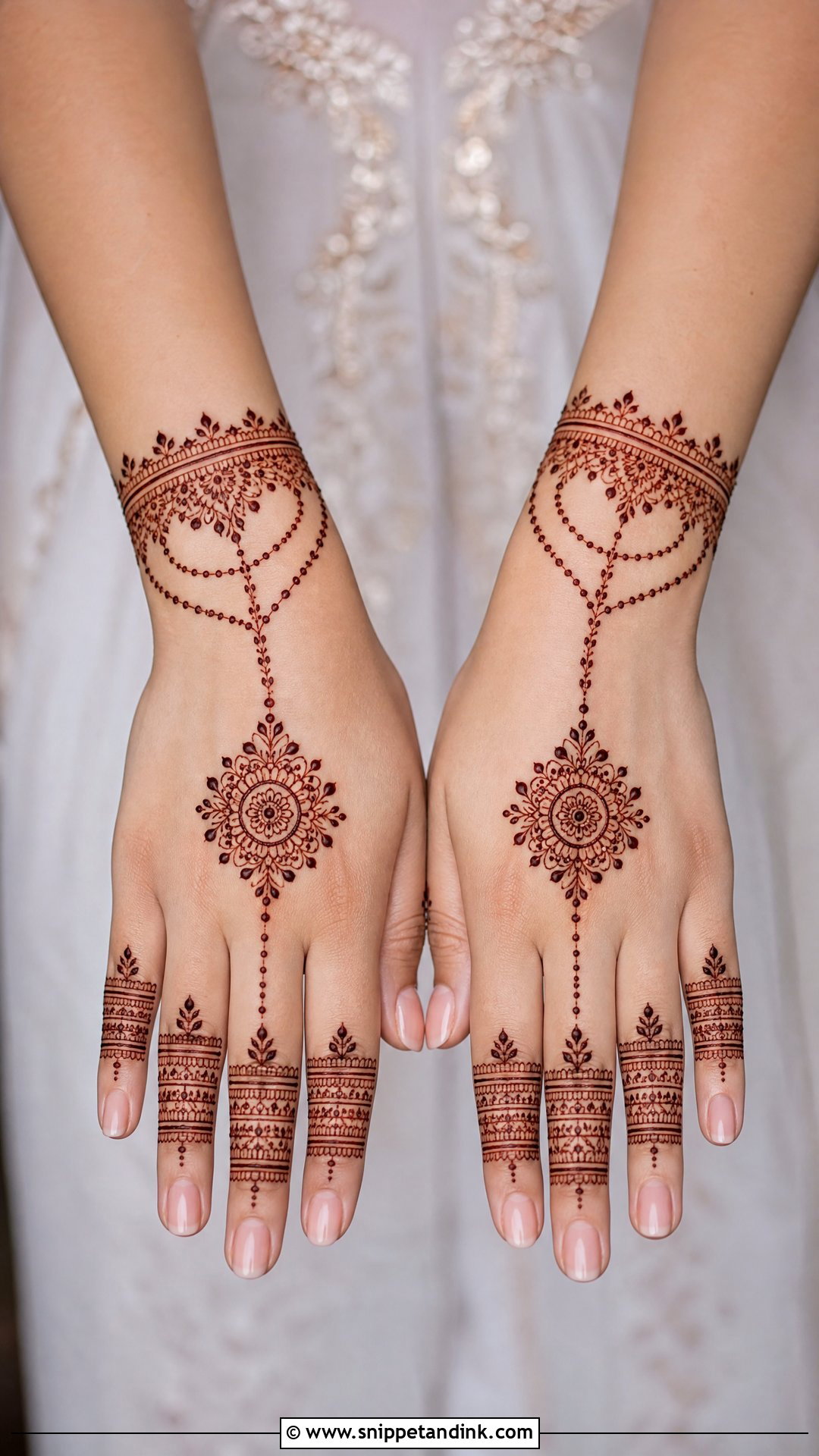
A bracelet mehndi design is basically jewellery drawn on the skin: a wrist cuff, a chain line up the back of the hand and ring bands on the fingers. I place the cuff just above where your bangles will sit, not under them. Bangles rub against fresh stain and can blur the lines in the first day, and a cuff hidden under metal is wasted work anyway.
13. Finger Sister Wedding Mehndi Design
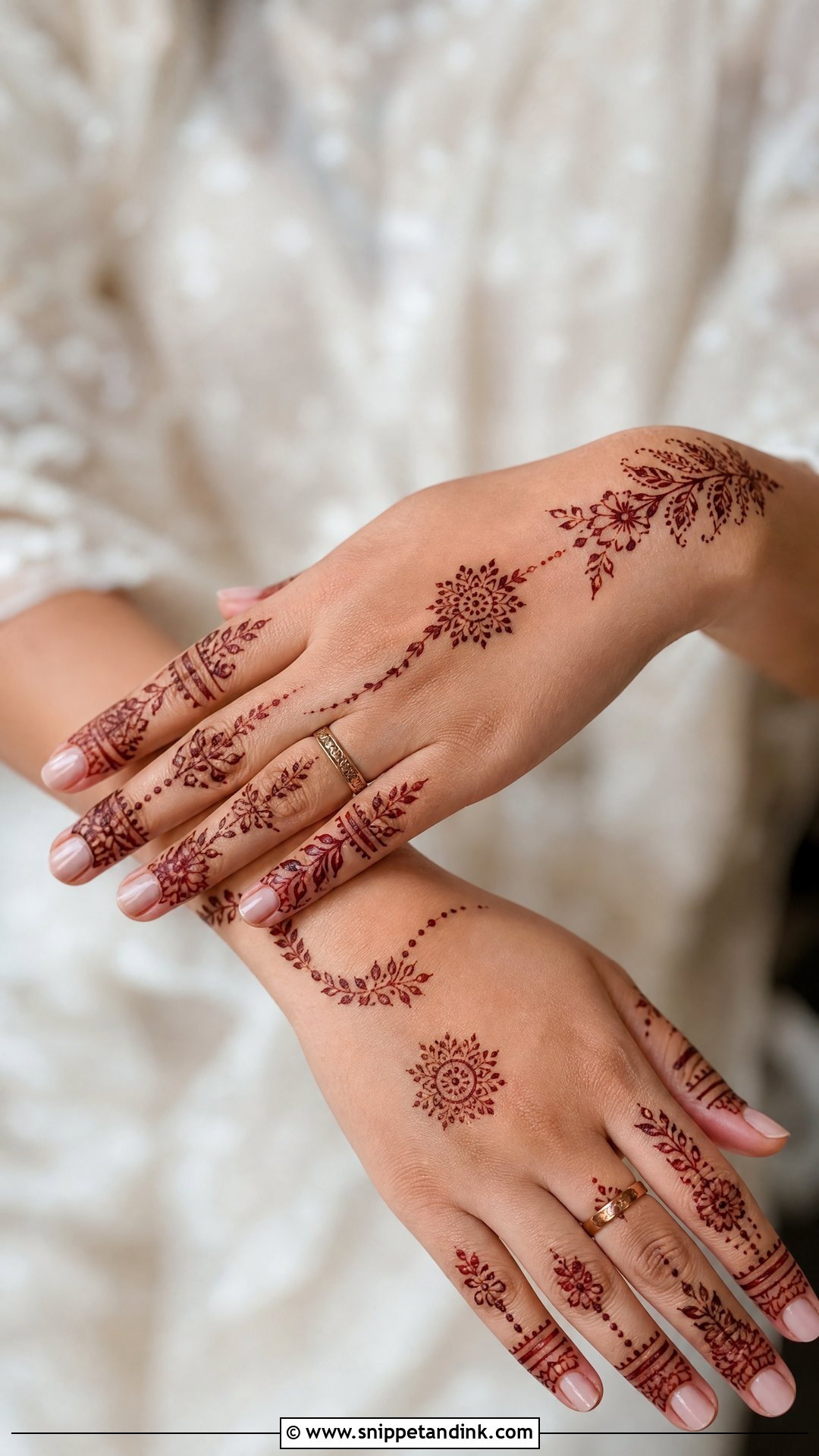
Finger-focused designs put the work where your hands do the most talking. Each finger gets lines, leaves or ring-like bands, and the back of the hand stays almost clear apart from a small mandala or a short trail. Fingertips also stain darker than almost anywhere else, so even a quick finger design comes up rich. The trade-off is that fingertip henna fades fastest, since that skin gets washed and rubbed constantly.
14. Minimal Sister Wedding Mehndi Design
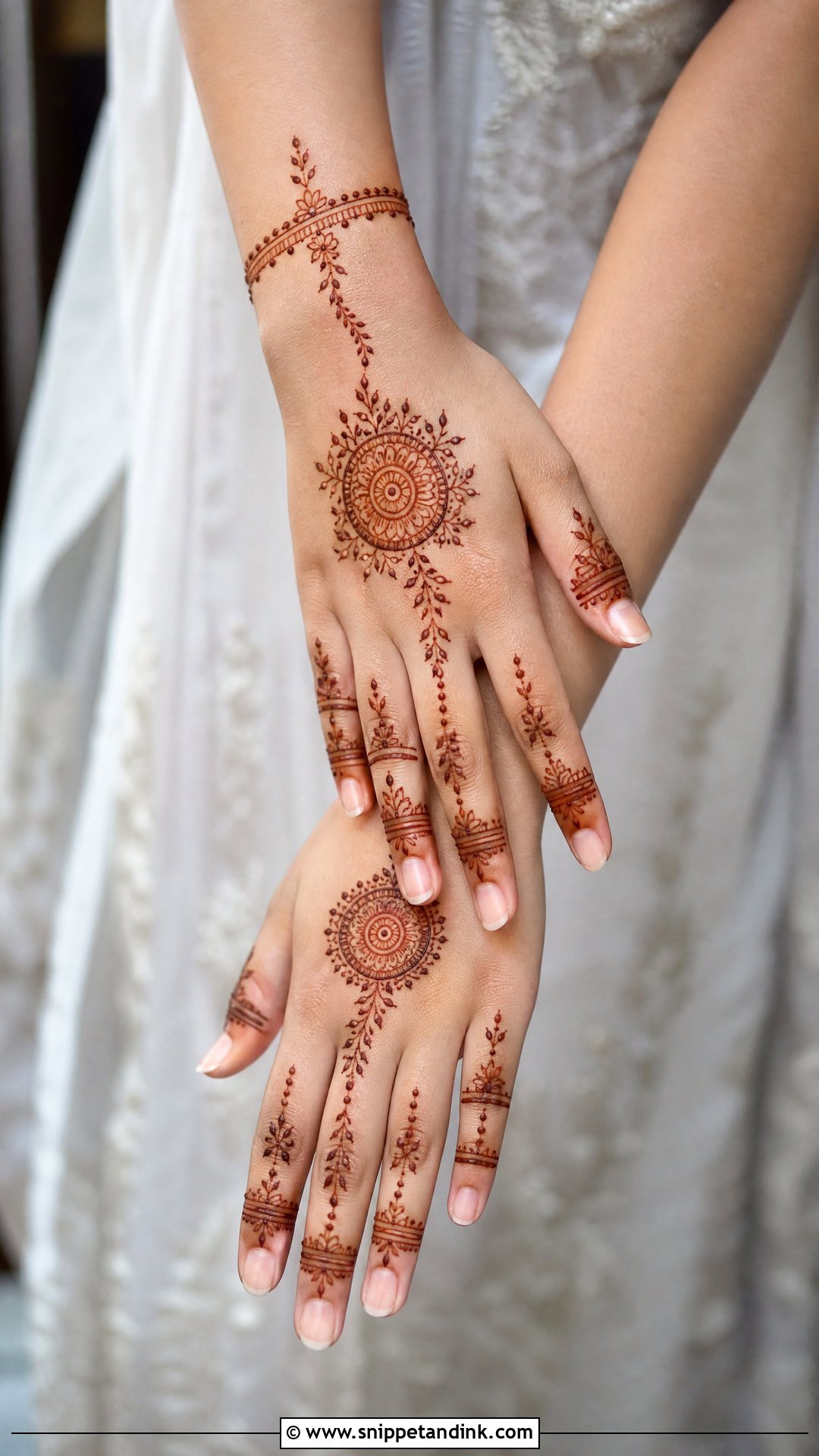
Minimal mehndi only works if it looks finished. I see a lot of minimal designs that read as half done because the motifs stop randomly. A small palm mandala, a leafy wrist trail and simple finger lines can feel complete as long as each piece has an edge and the two hands mirror each other. Choose this when your outfit or jewellery is already heavy and the hands just need to join in.
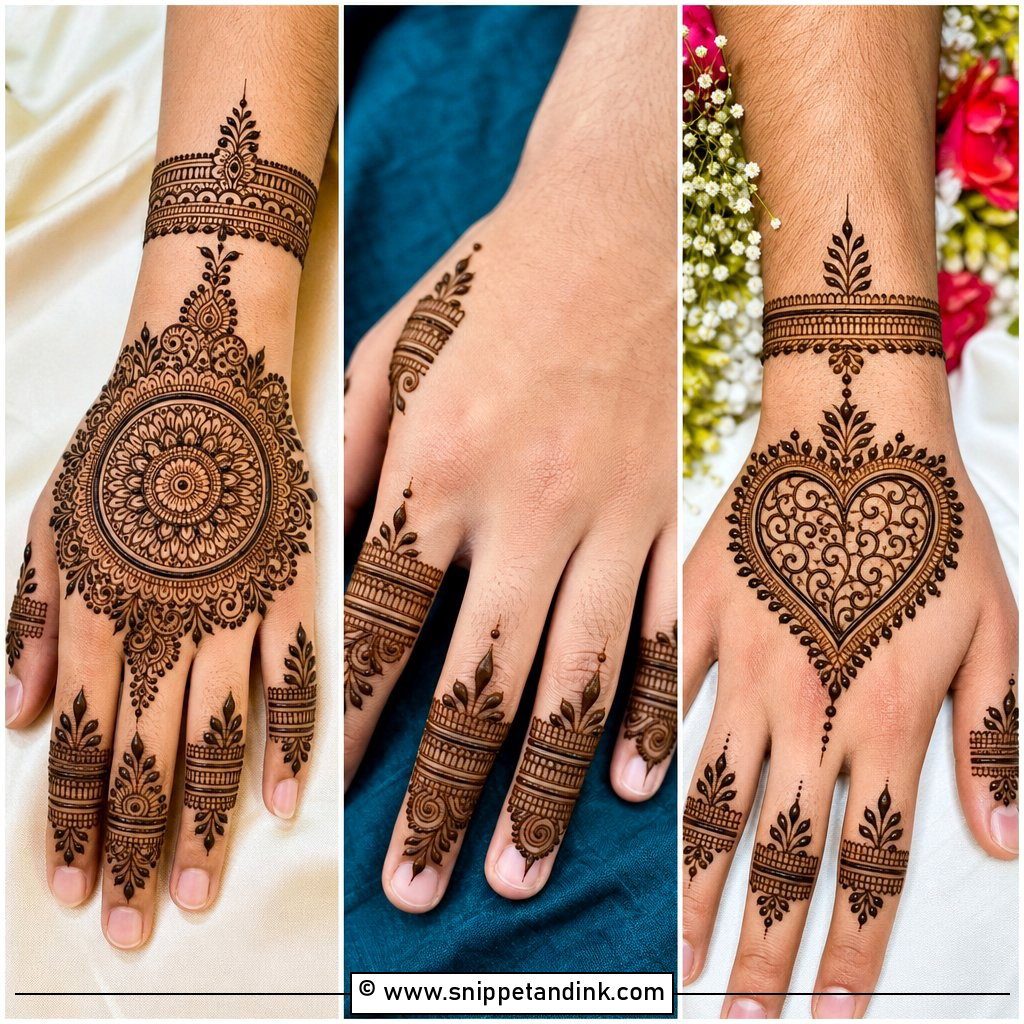
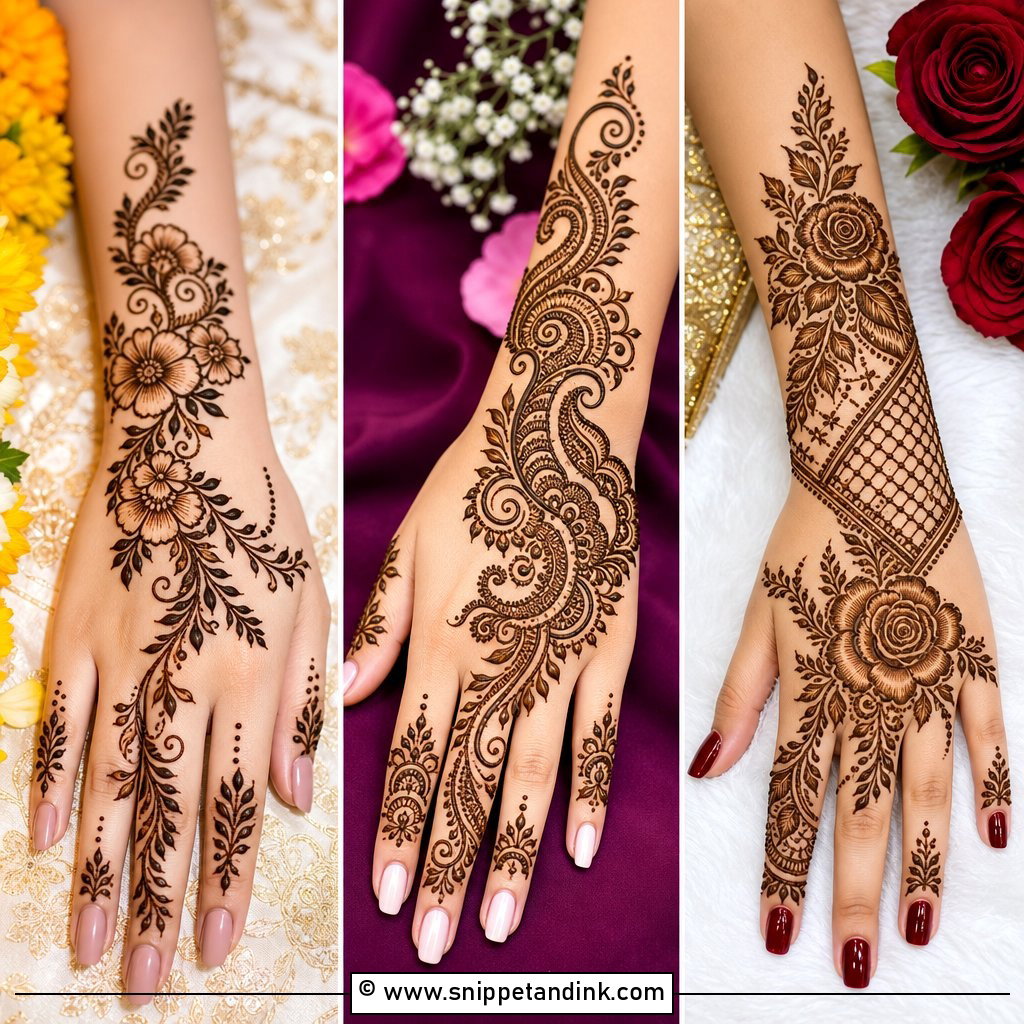
15. Modern Sister Wedding Mehndi Design
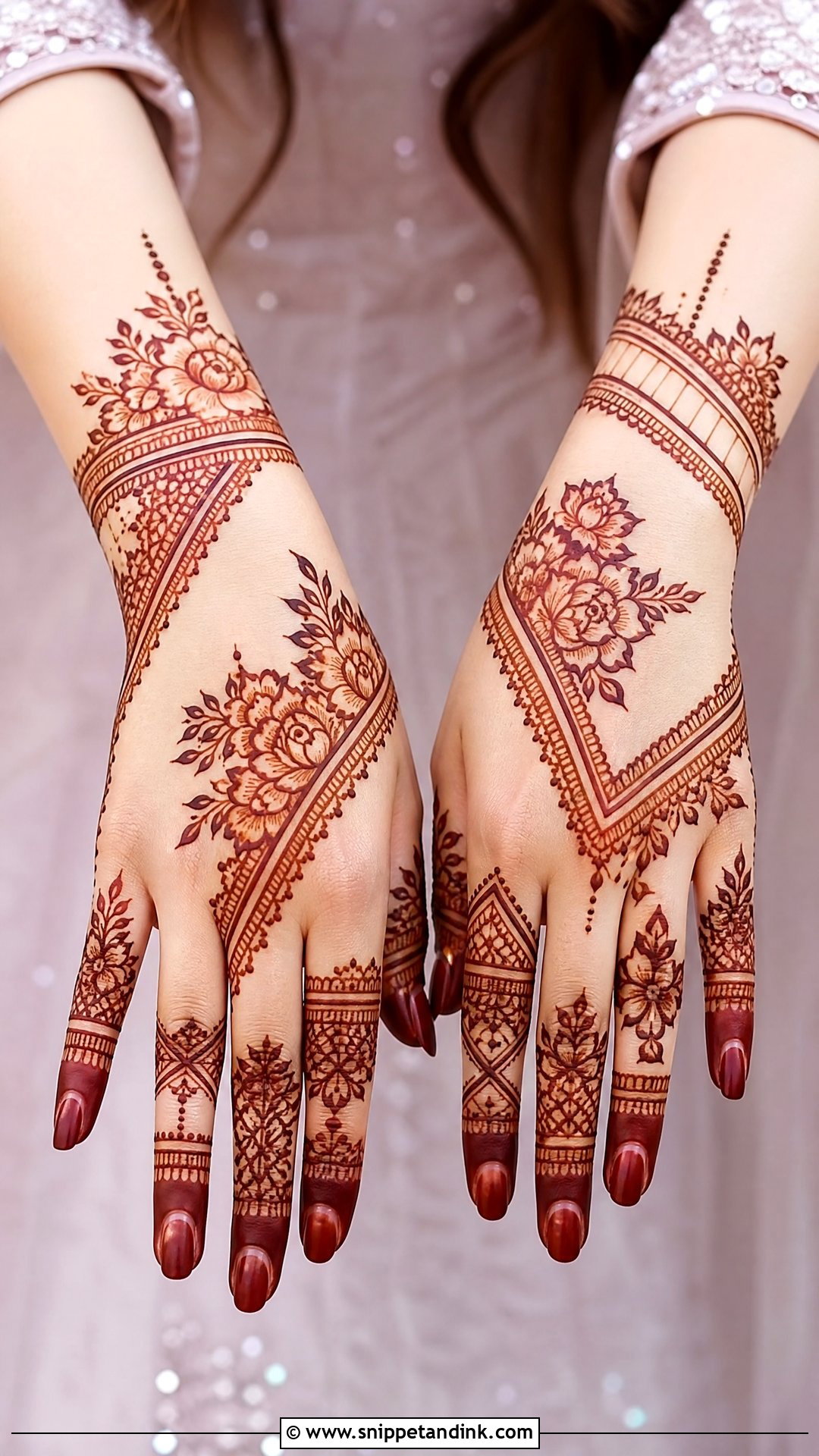
Modern layouts play with negative space and asymmetry. One option I like for sisters is splitting the hands: a bold floral trail on one, a mandala with finger work on the other, so the pair reads as a set without being twins. Geometric lines and clean fingertips keep it current. Ask your artist to sketch the split lightly first, because asymmetry that isn’t planned just looks lopsided.
16. Personalized Sister Wedding Mehndi Design
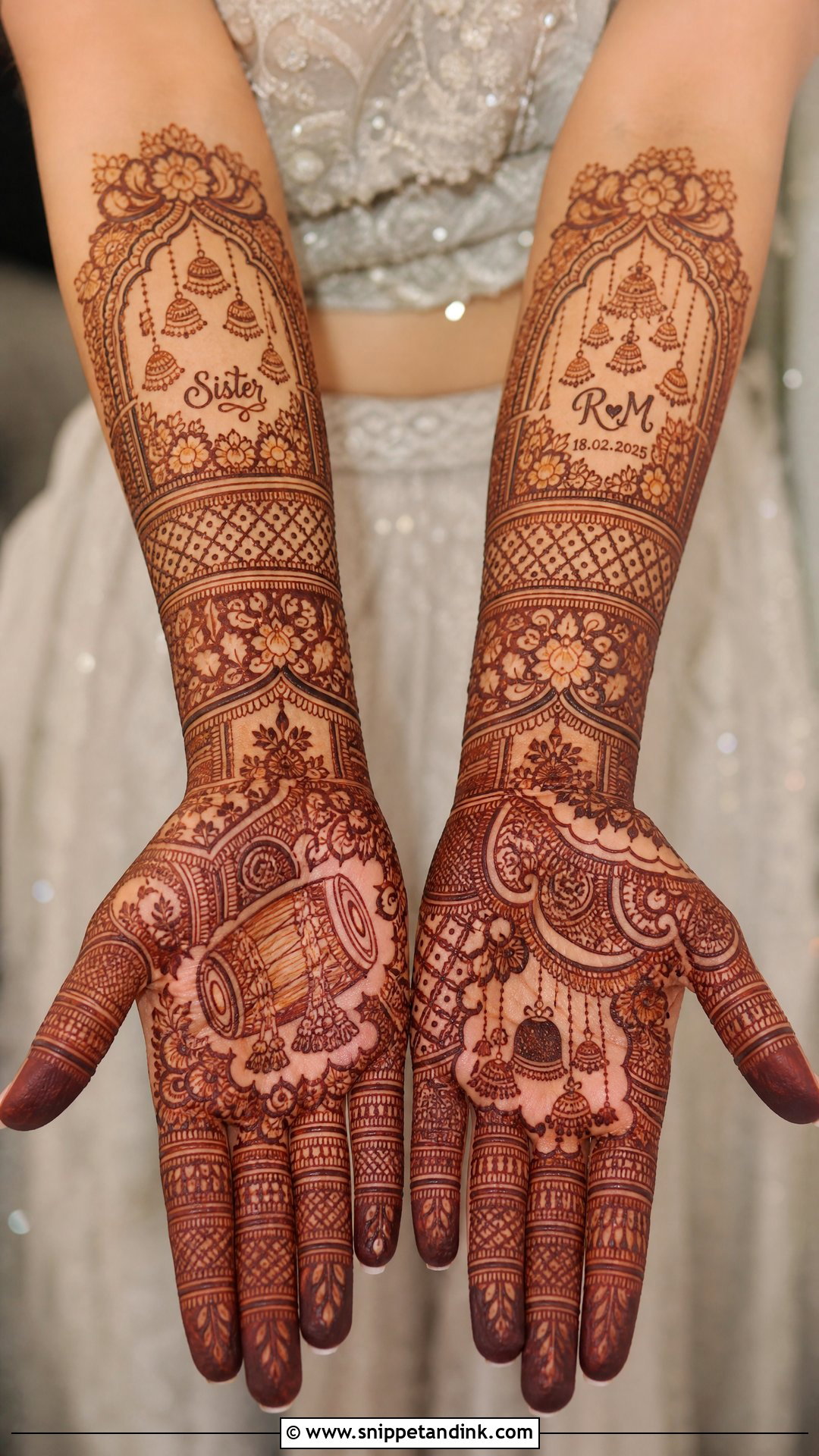
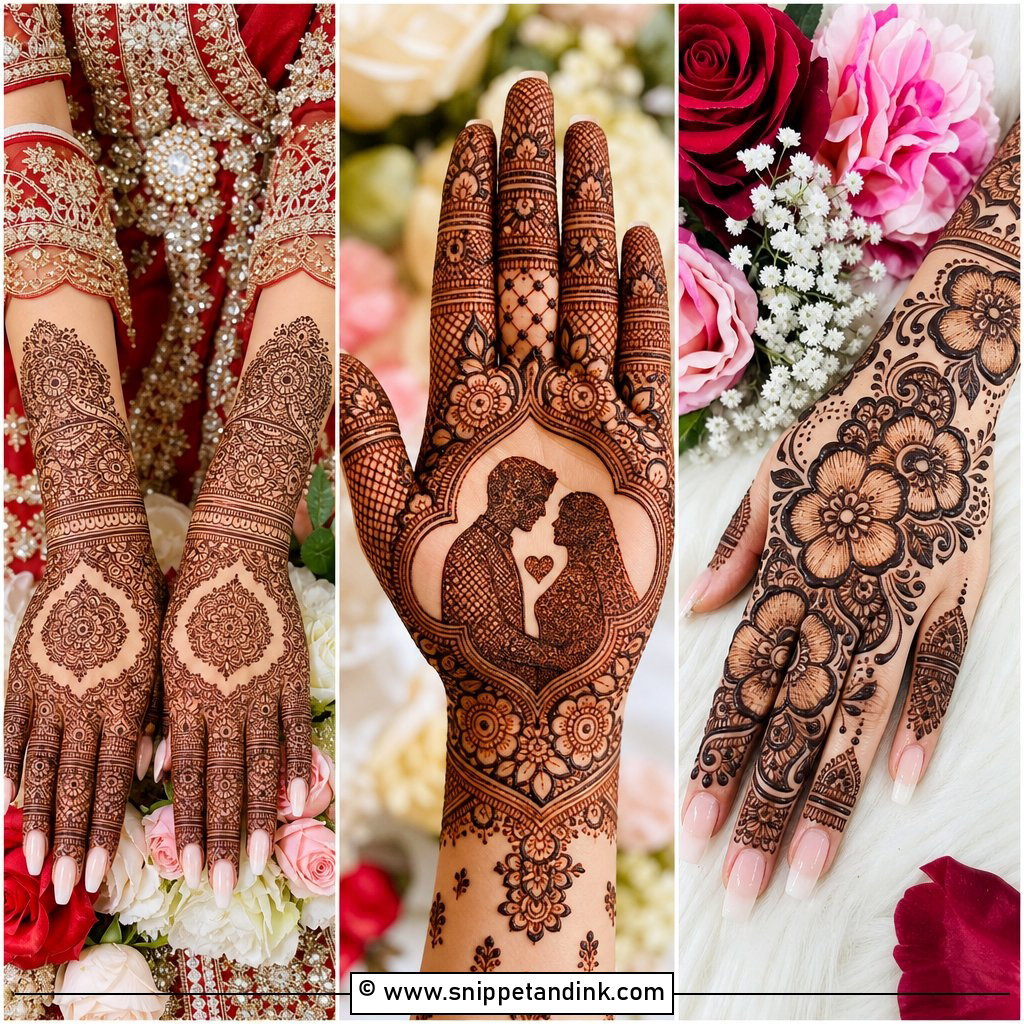
Personal details are where the sister’s role really shows: initials, the wedding date, a small dhol, kalire, or the words “bride’s sister” tucked into the pattern. I keep these small and hide them inside florals or jaali so they become something to discover rather than a caption. Writing needs a smooth, flat surface, so the palm or the inner forearm works far better than the knuckles. Double-check the spelling of any names before the cone touches skin.
17. Matching Sister Wedding Mehndi Design
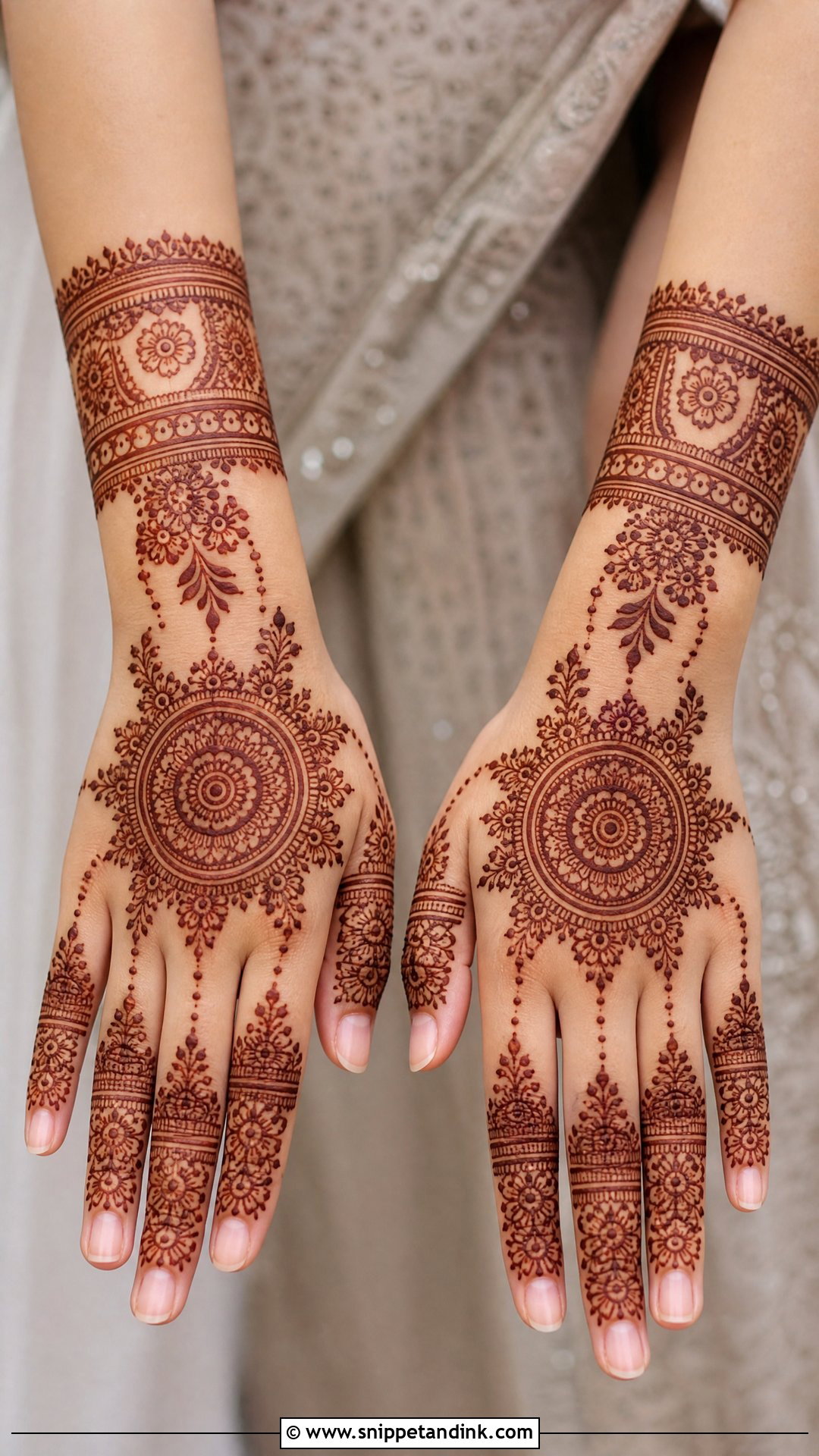
Coordinated mehndi across sisters, cousins and bridesmaids looks great in group shots, but identical copies rarely suit every hand. I prefer a shared theme with variations, such as mandala palms for everyone and different finger details for each person. The bride’s sister usually gets the fullest version of the group design. Let the artist adjust the scale to each person, since a pattern drawn for a long, slim hand looks cramped on a short, wide one.
18. Half Hand Sister Wedding Mehndi Design
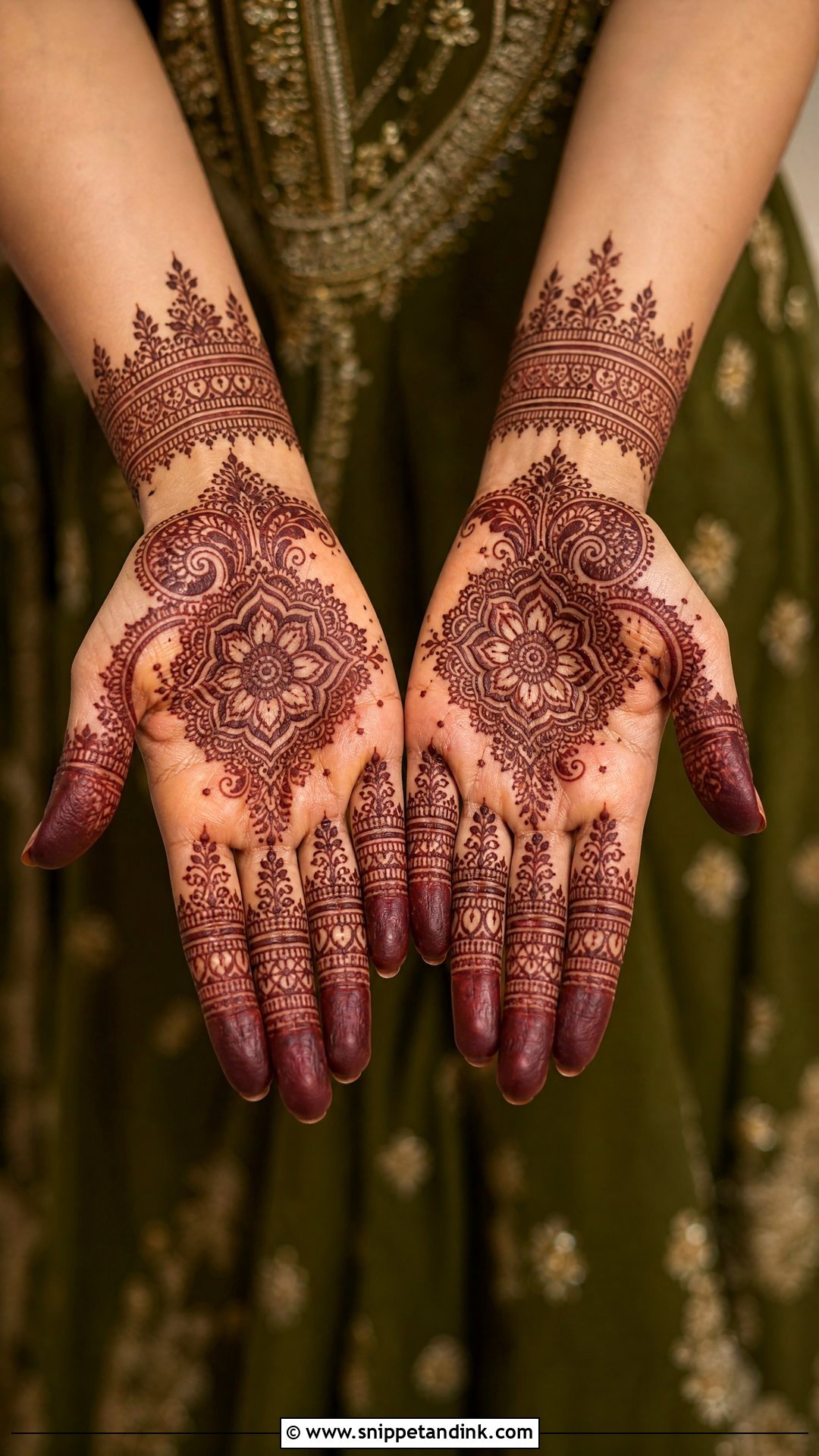
Half hand coverage stops at the wrist: fingers, palm and a bracelet band to finish. It’s the design I recommend most to sisters who have several functions in a row, because it goes on quickly and still gives a full look in every photo where your hands are visible. Make sure the edge at the wrist is a proper border rather than a pattern that simply ends.
19. Full Arm Sister Wedding Mehndi Design
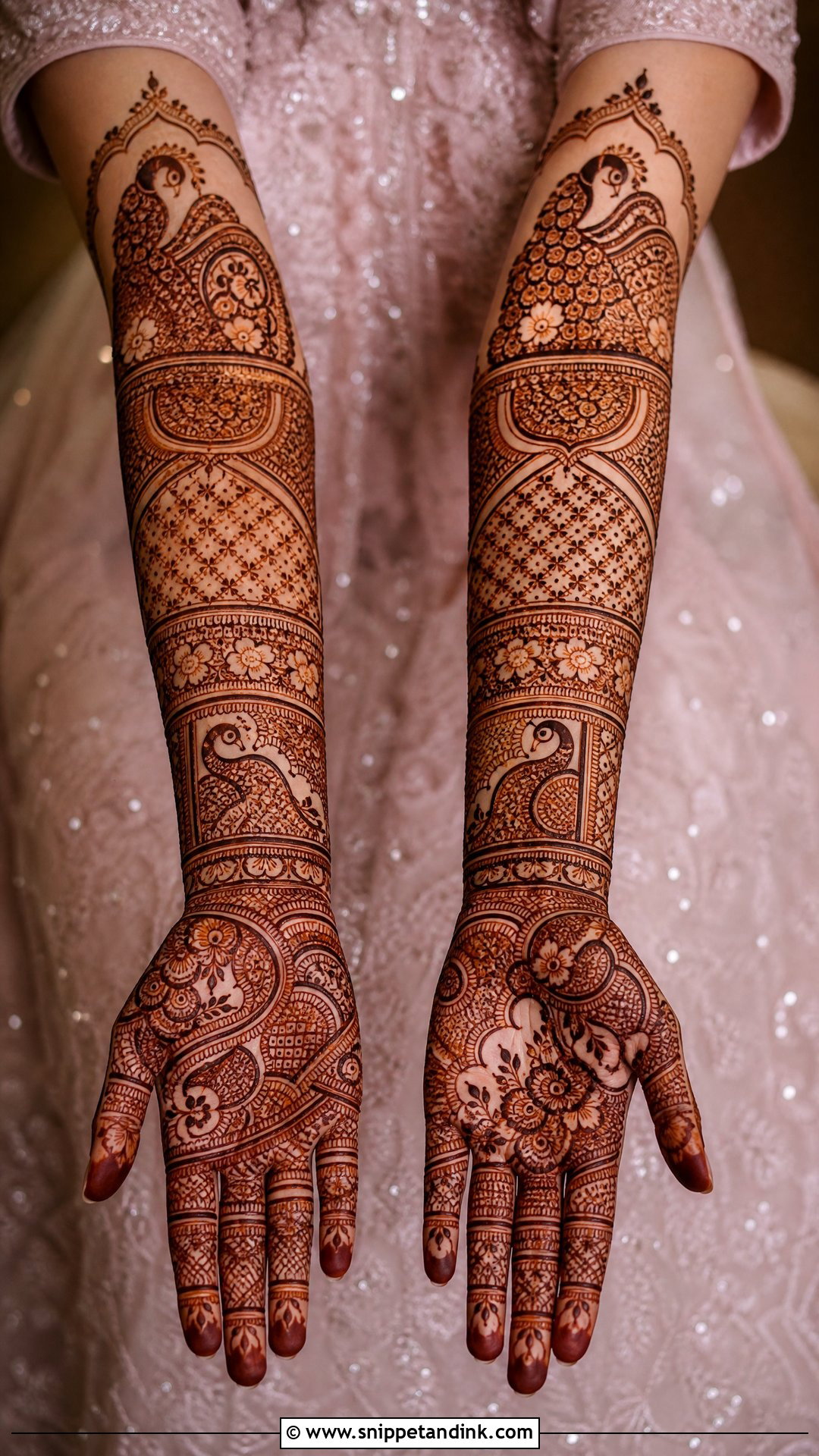
Full arm mehndi runs from the fingertips to the forearm and sometimes near the elbow, so it suits short sleeves or sleeveless blouses best. Keep the arm work flowing, with florals, paisleys, a peacock and jaali panels, rather than dense portraits, which belong to the bride. Expect the upper forearm to stain noticeably lighter than the hand. That gradient is normal for henna and actually looks graceful in photos.
20. Front And Back Sister Wedding Mehndi Design
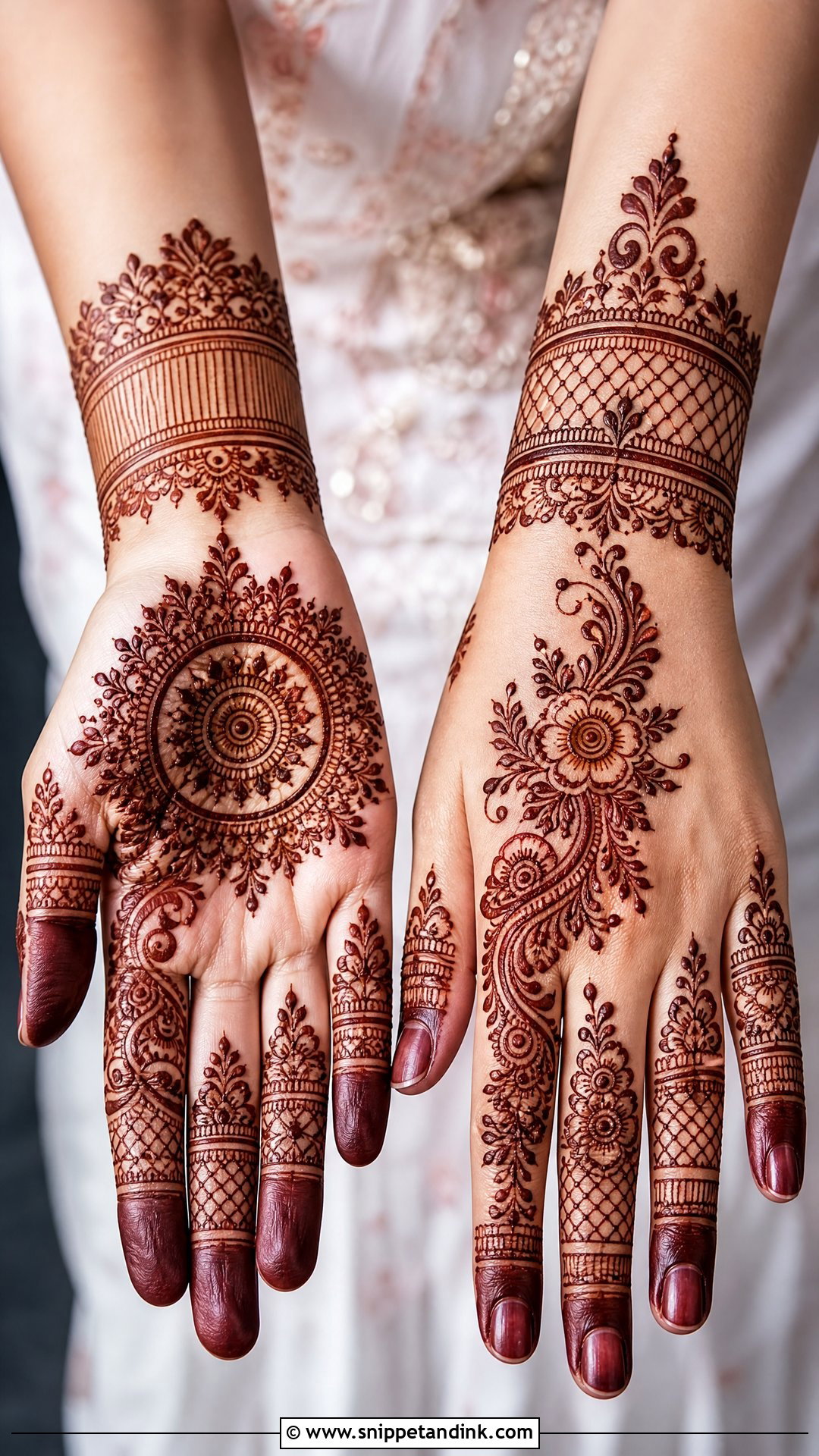
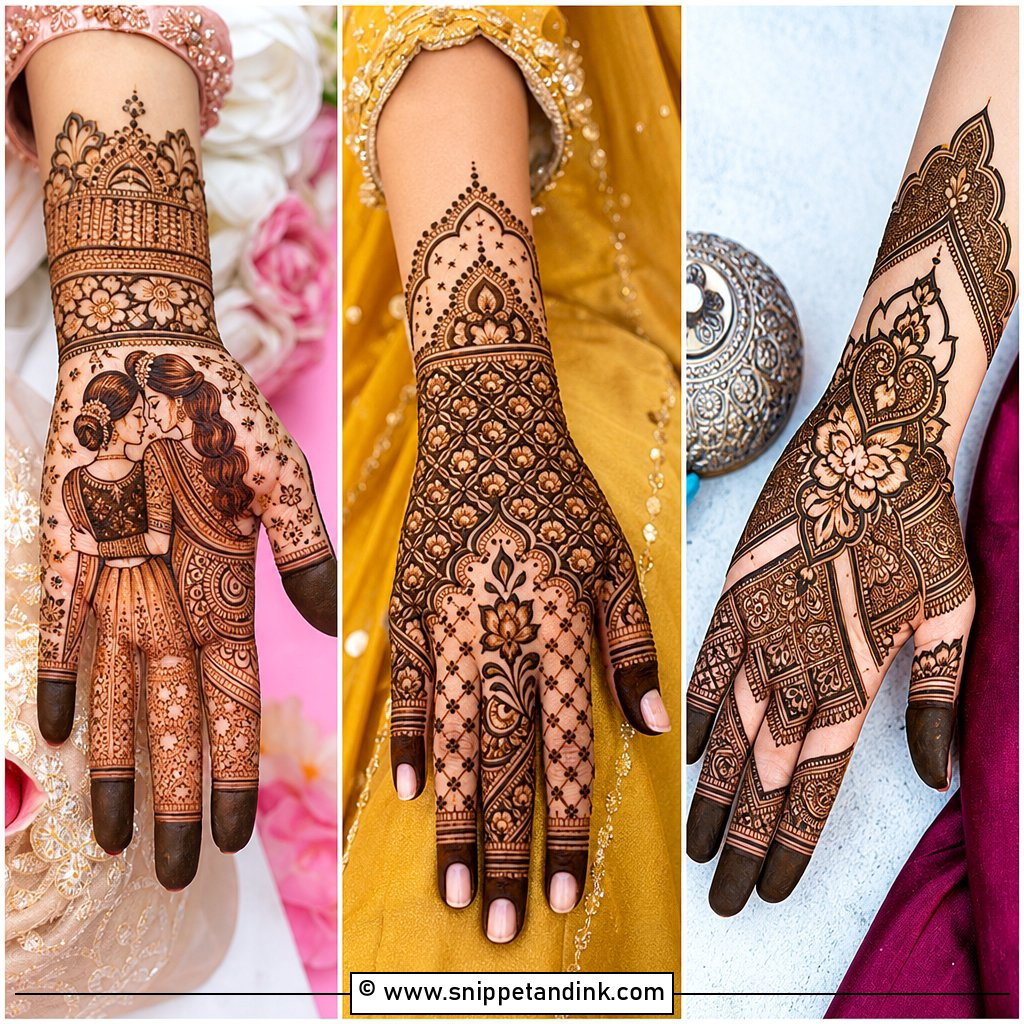
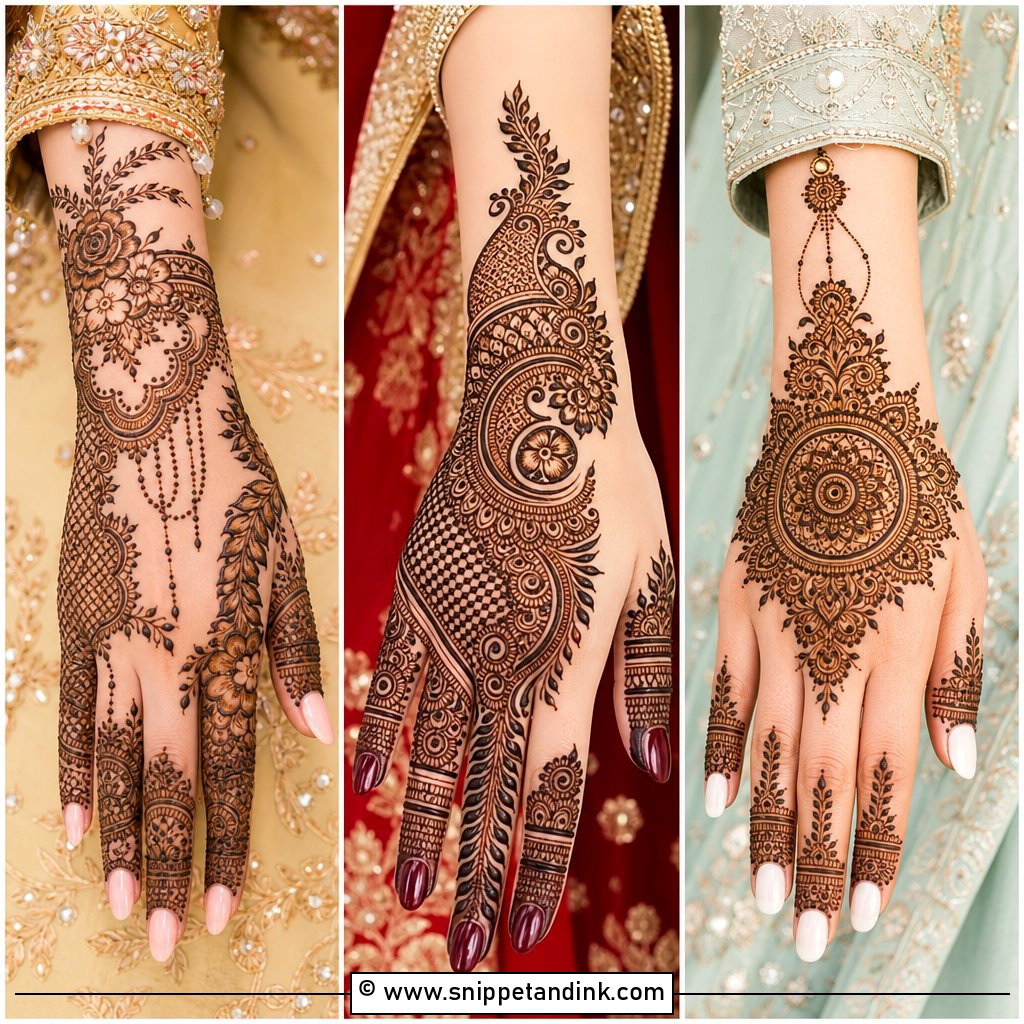
Doing both the palm and the back gives you a finished hand from every angle, which helps during rituals and dancing when you can’t control how your hands are turned. My usual balance for a sister is a fuller palm with mandala and paisley work, and a lighter back with a bracelet or floral trail. Both sides at once need a longer sitting, because you can’t rest the hand on anything until the paste sets.
21. Rajasthani Sister Wedding Mehndi Design
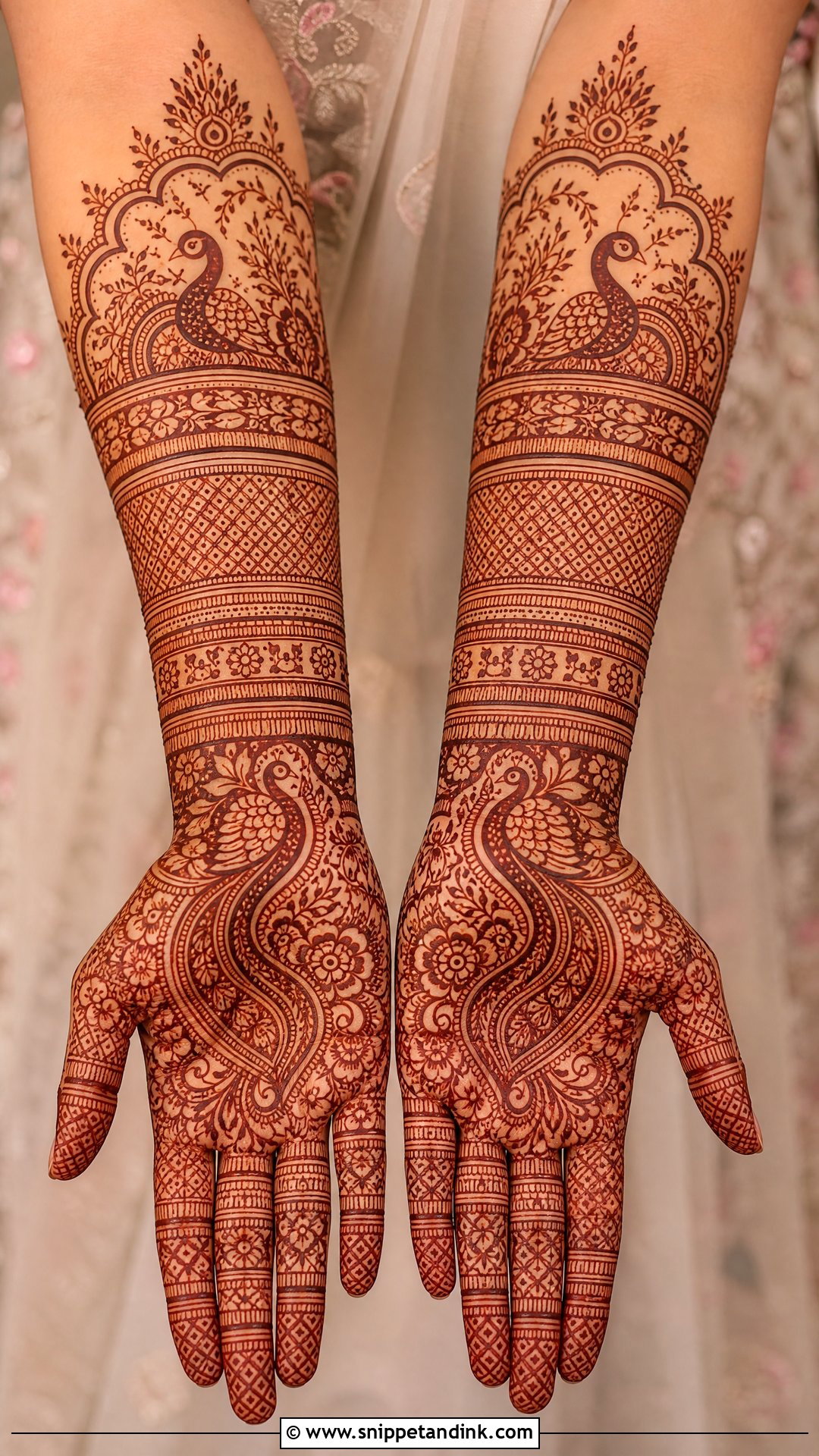
Rajasthani mehndi is known for very fine lines, mirror symmetry and densely packed traditional motifs. For a sister I borrow its elements, such as paisleys, peacocks and decorated wrist panels, but leave out the full figure scenes that make it bridal. This style depends on an artist with a very steady fine line. Ask to see a close-up of their past Rajasthani work, not just a wide shot, before you book it.
22. Moroccan Sister Wedding Mehndi Design
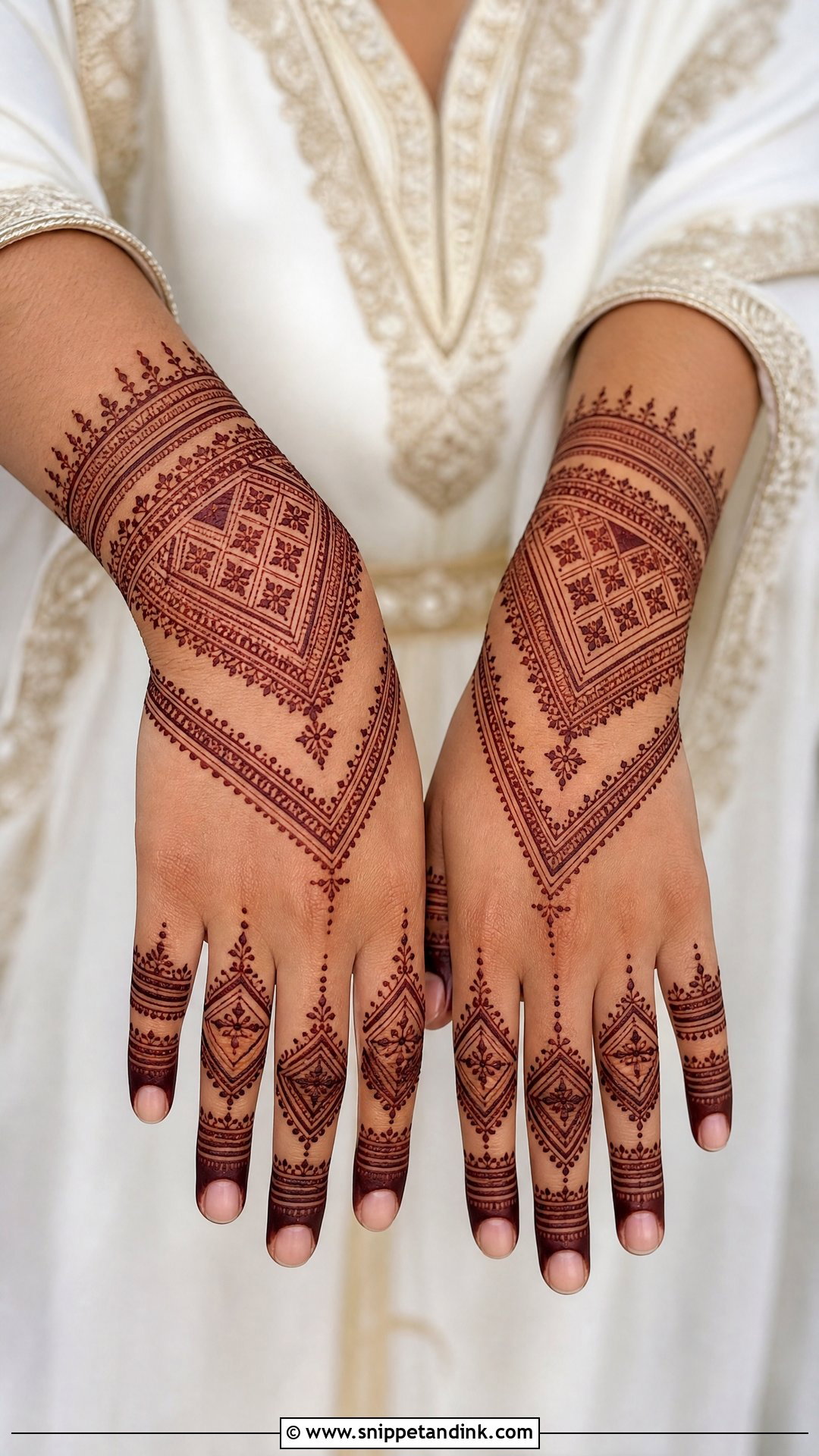
Moroccan designs swap florals for geometry: diamonds, grids, dots and straight lines. That structure looks sharp on the back of the hand and the fingers, especially with fusion outfits. I soften it for a wedding with a few small leaves at the edges. Straight lines show every wobble, so this is not the style to rush at midnight when the artist is tired.
23. Gulf Sister Wedding Mehndi Design
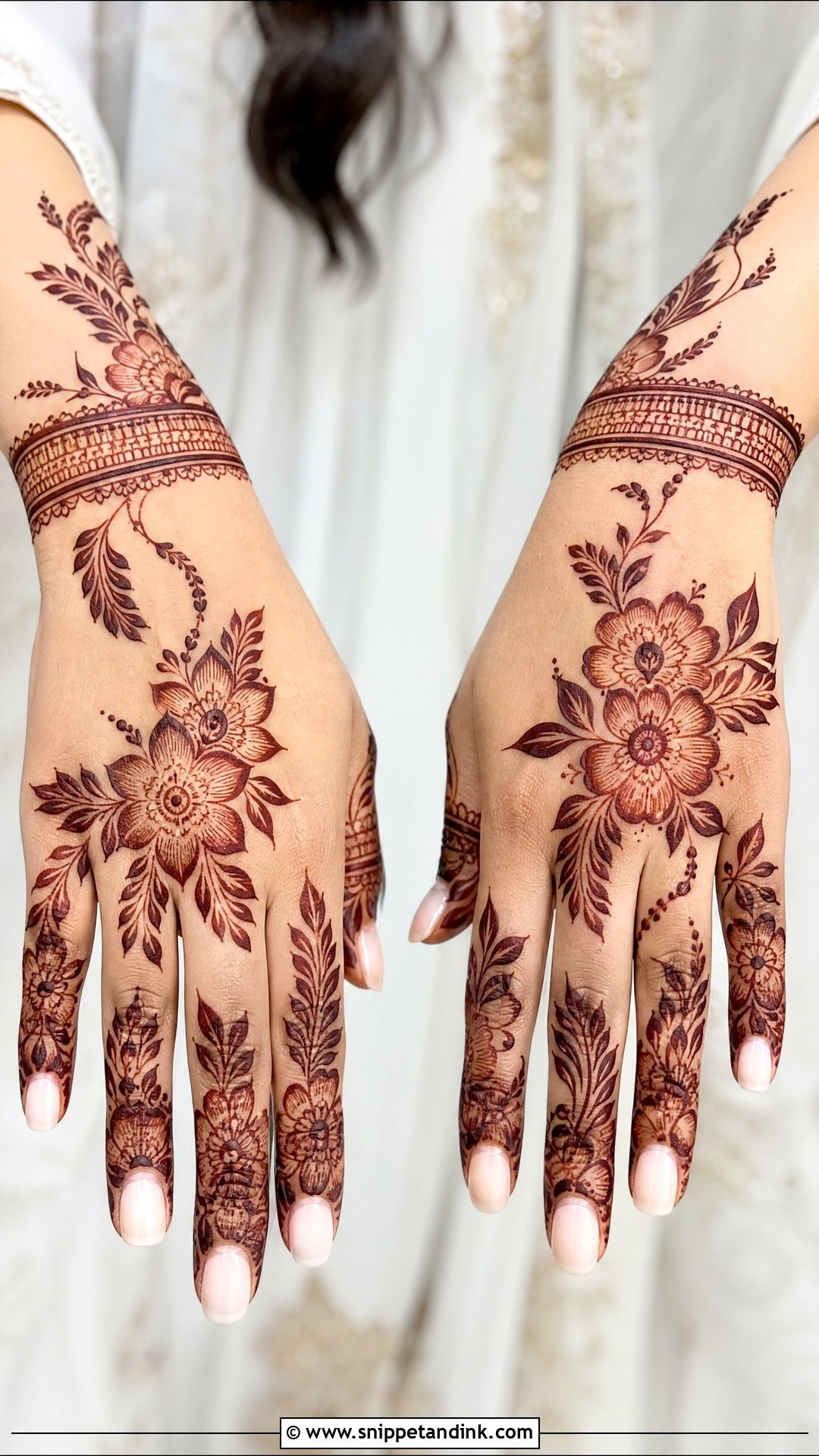
Gulf and Khaleeji mehndi designs rely on big shaded flowers, leafy trails and generous open skin. They’re quick to apply because the impact comes from a few large motifs. I start at the wrist, sweep across the back of the hand and finish with detailed fingers, adding small vines and a cuff border to make it feel dressed for a wedding. It pairs well with kaftans and ghararas as much as with heavier Indian wear.
24. Feet Sister Wedding Mehndi Design
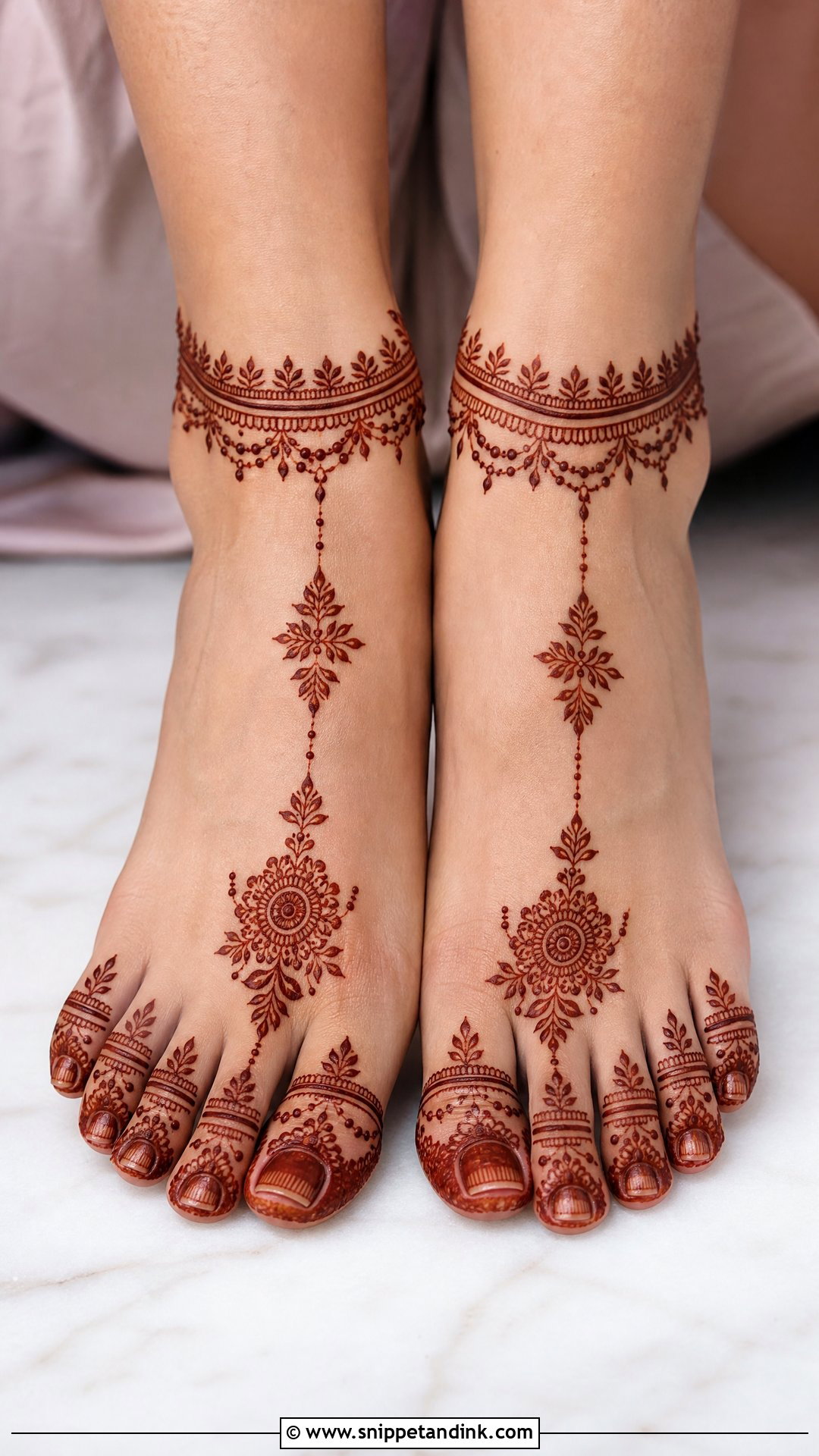
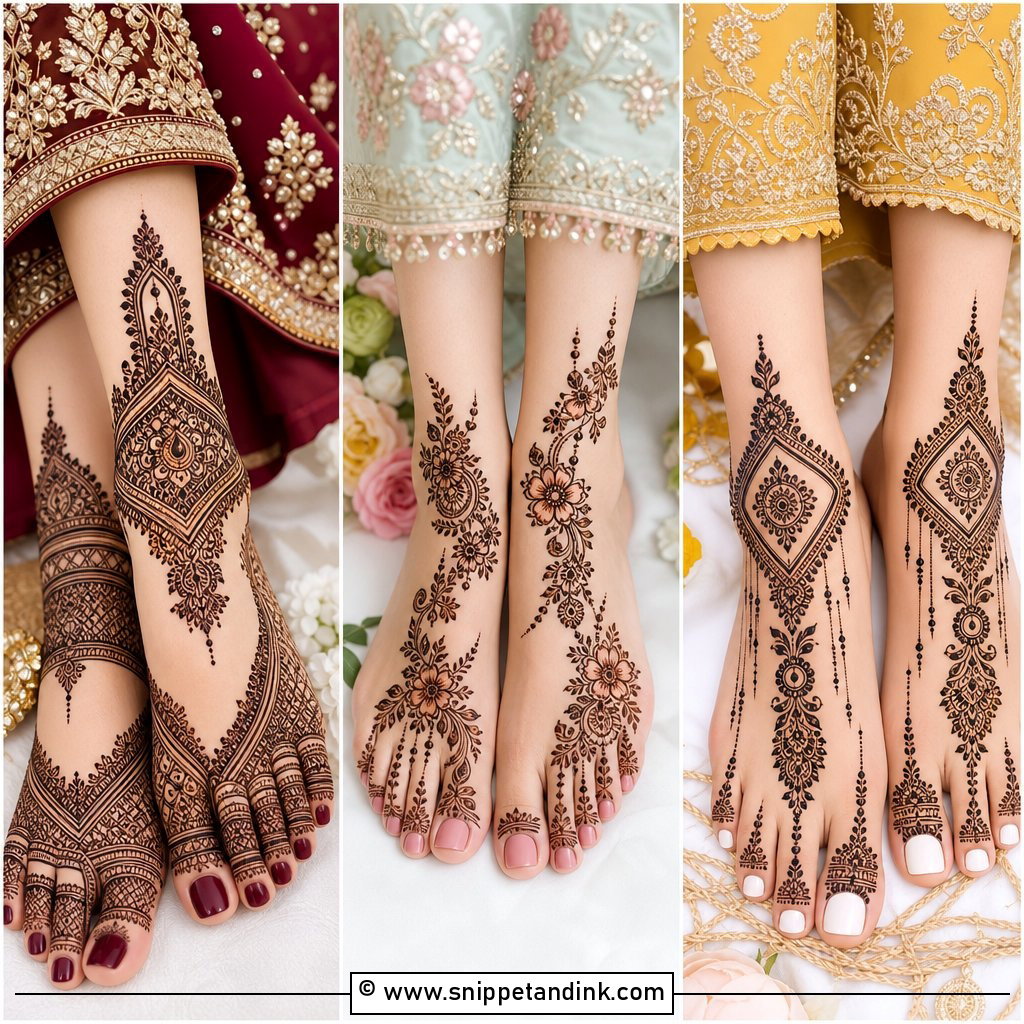
Feet are worth doing if your sandals and hemline will show them. I keep sister feet designs to the toes, the top of the foot and an ankle band, since sole designs smudge as soon as you have to walk anywhere. Feet stain very dark, often darker than the hands, so a light design there still shows. Plan to sit with your feet up for a while afterwards; this is the hardest area to protect while the paste dries.


25. Quick Sister Wedding Mehndi Design
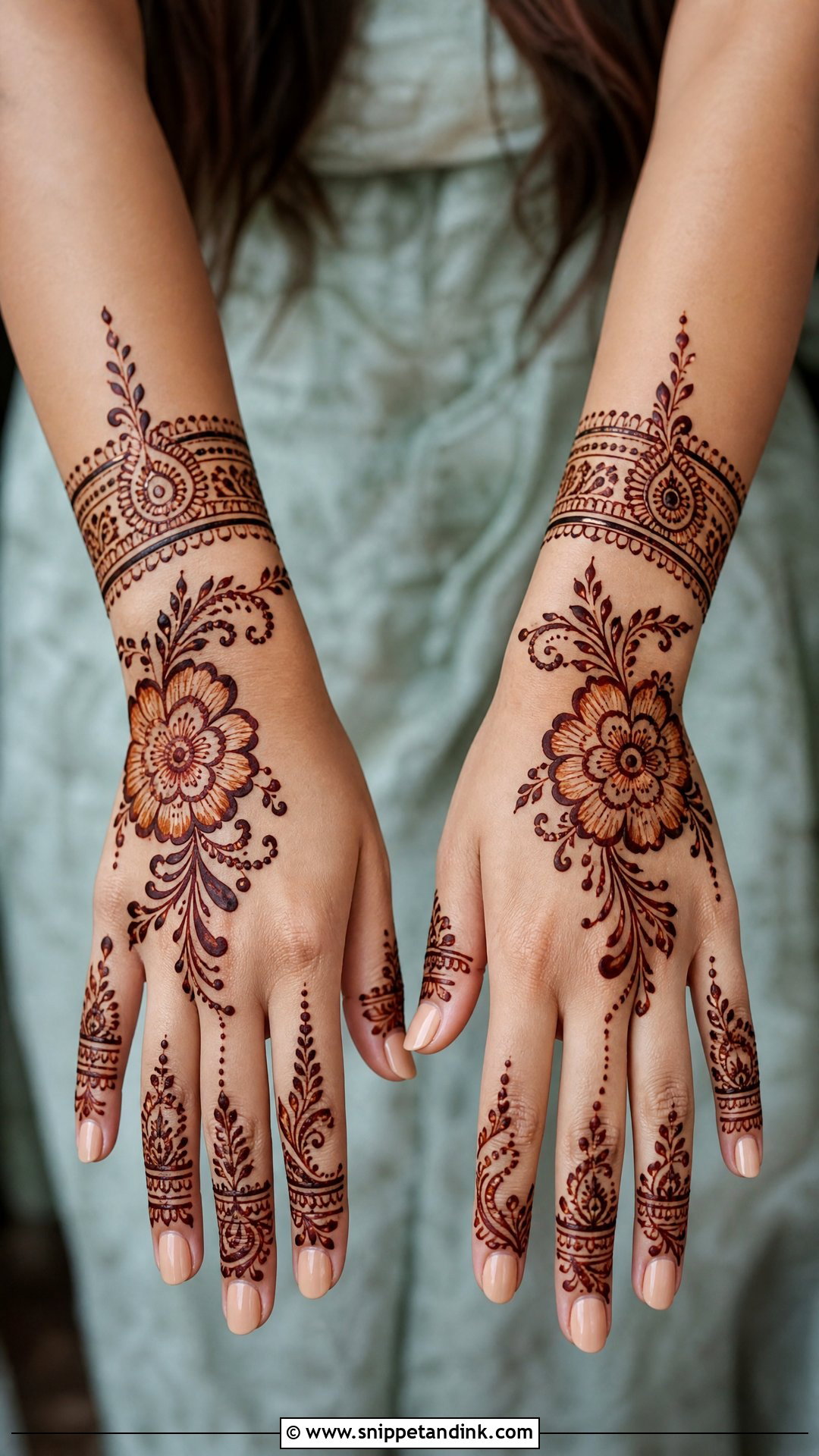
Quick designs are for the sister who is still steaming outfits at midnight. Bold outlines matter more than fill here, because a strong line stains visibly even without detail around it. A back-hand floral trail, decorated fingers and a small wrist band can be done in minutes, as can a palm mandala with simple finger fillers. Ask the artist for clean spacing; a fast design with neat gaps looks better than a slow one that’s crowded.
Getting a Deep Stain When You Can’t Sit Still
The paste needs time on the skin to release its dye, and sisters are the people least able to give it that time. Here is what I tell every sister in my chair, knowing she’s about to get up and organise something.
- Let the paste dry until it looks matte, then dab on a little lemon and sugar mix so it stays stuck to the skin instead of flaking off.
- Keep it on for at least six hours. Overnight is better, wrapped loosely in tissue or medical tape so it doesn’t smear on the bedding.
- Scrape it off with a blunt edge or your fingernail. Don’t wash it off, and keep water away from your hands for as long as you can that first day.
- Warmth helps the colour develop, so keep your hands warm rather than holding cold drinks all evening.
- Avoid hand sanitiser, chlorine and harsh soaps until after the wedding. All of them fade the stain early.
If you have to cook, carry trays or help with the decor, ask for rubber gloves the next morning. A stain that spends a day in hot washing-up water will fade noticeably faster than the bride’s, and you’ll see the difference in the pictures.
Your Hands Will Be in Her Photos Too
Start from the practical questions: how many functions you have, what sleeves you’re wearing, and how much time you can actually sit still. Traditional sisters tend to love full hand, paisley, peacock or Rajasthani work, while Arabic, bracelet and finger designs suit anyone short on time. A small personal motif or a theme shared with your cousins adds meaning without adding hours. Whatever you choose, keep it one step lighter than the bride, and you’ll both look right standing side by side.
You'll Like These Ideas:



Leave a Reply