
The film gave a name to something mehndi nights always had: the bride at the centre and her girls around her, all with henna drying on their hands and nobody able to hold a drink. This collection is for that whole group. There are dense bridal palms, Arabic trails, mandala backs, initials, friend-group motifs and modern negative-space work, and the theme stretches from grand to minimal. The bride usually takes full-hand bridal coverage, while her veeres go lighter, wrist to fingers. I’ve noted for each design who it suits, how long it keeps someone in the chair, and what I watch out for when I draw it.
How Many Artists Does a Bride Squad Actually Need?
This is the question I wish more families asked before the mehndi night instead of during it. A full bridal design takes several hours on its own. A simple guest trail on one hand can be done in a few minutes, but a medium design on both hands takes much longer, and the queue grows faster than anyone expects once the music starts.
When I plan a group, I count the guests who want henna, sort them by design size, and then decide how many artists to book. One artist working through a long queue means the last guests get their henna as the party ends, and those stains will still be orange the next morning.
- Book the bride separately, ideally the day before or early on the day, so her artist isn’t also serving guests.
- Make a list of everyone who wants henna and how much: a quick trail, one full hand or both hands.
- Send that list to the artist when you book. It lets her bring enough cones and decide whether to bring a second artist.
- Do the bridesmaids and close family first, since they need the best stain for the wedding photos.
- Keep a small set of quick designs for drop-in guests so the queue keeps moving.
1. Veere Di Wedding Full Hand Bridal Mehndi
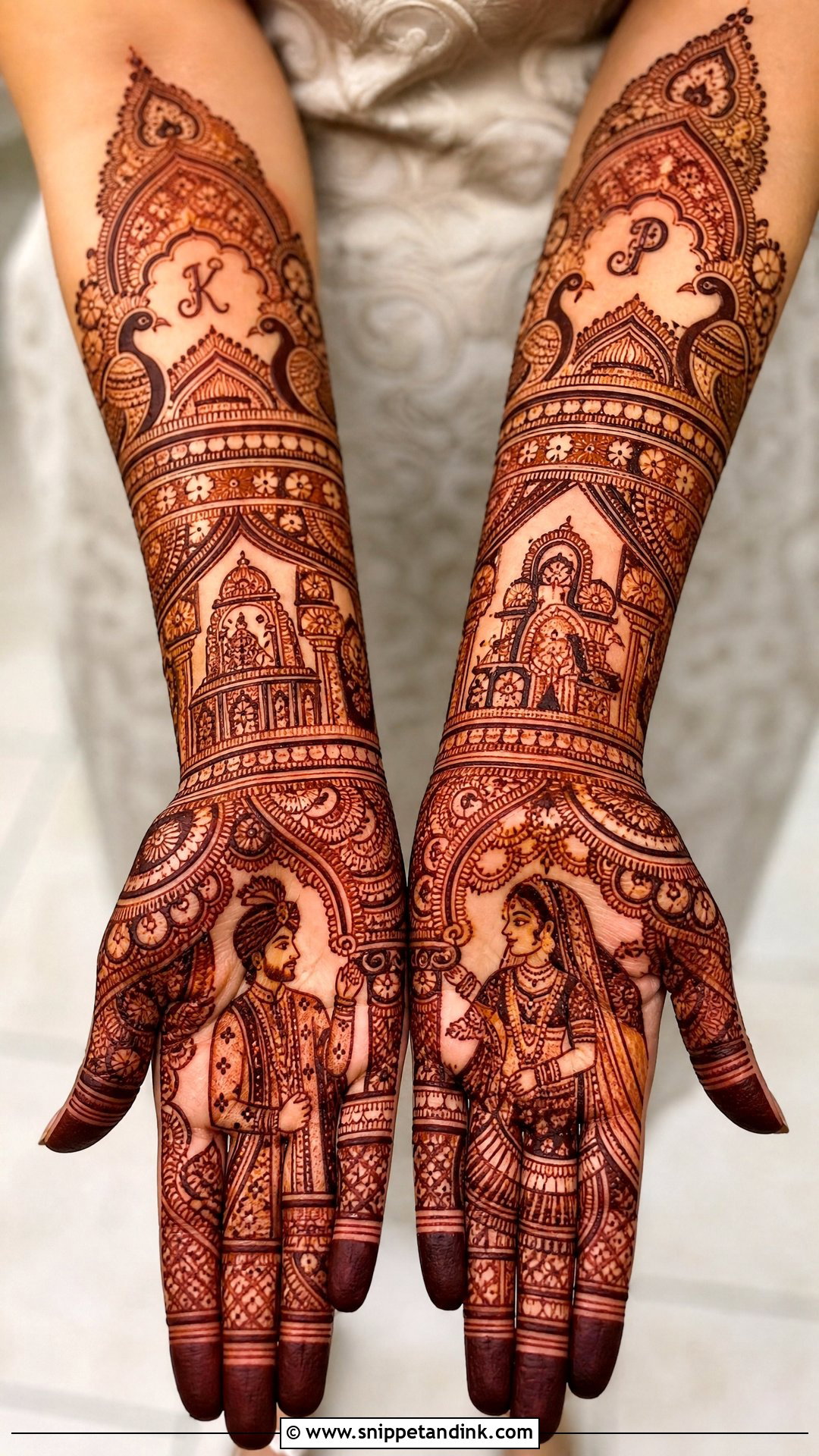
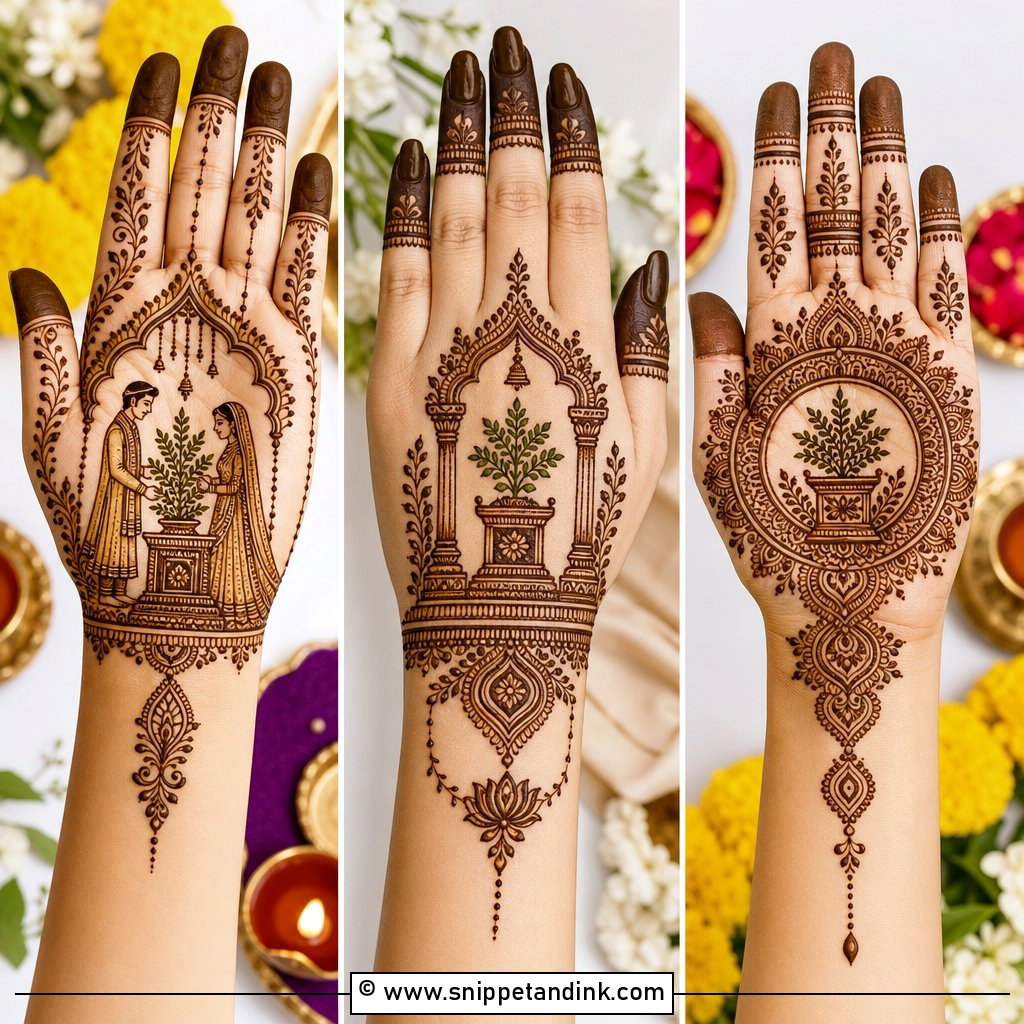
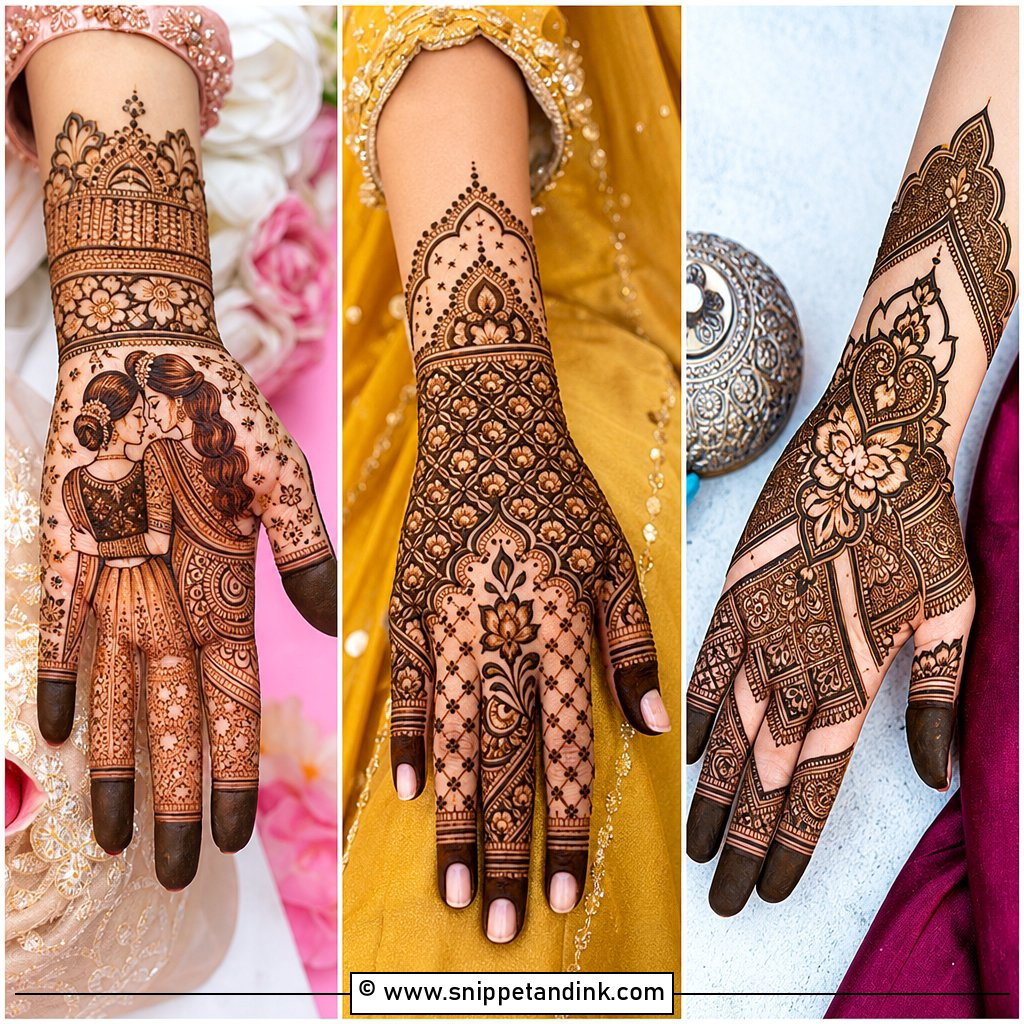
Full bridal coverage is still the centrepiece of the night: palms, fingers, wrists and forearms in dense Indian patterns with paisleys, lotus, peacocks, mandap details, bride and groom figures and hidden initials. I plan both hands as a pair, with storytelling panels that answer each other, so they read as one composition when she holds them together for the camera. Keep the centre of each palm bolder than the rest, or the detail turns to texture in photos. This is the slowest design in the room, so I start the bride before her guests arrive or on a separate day.
2. Veere Di Wedding Arabic Floral Mehndi
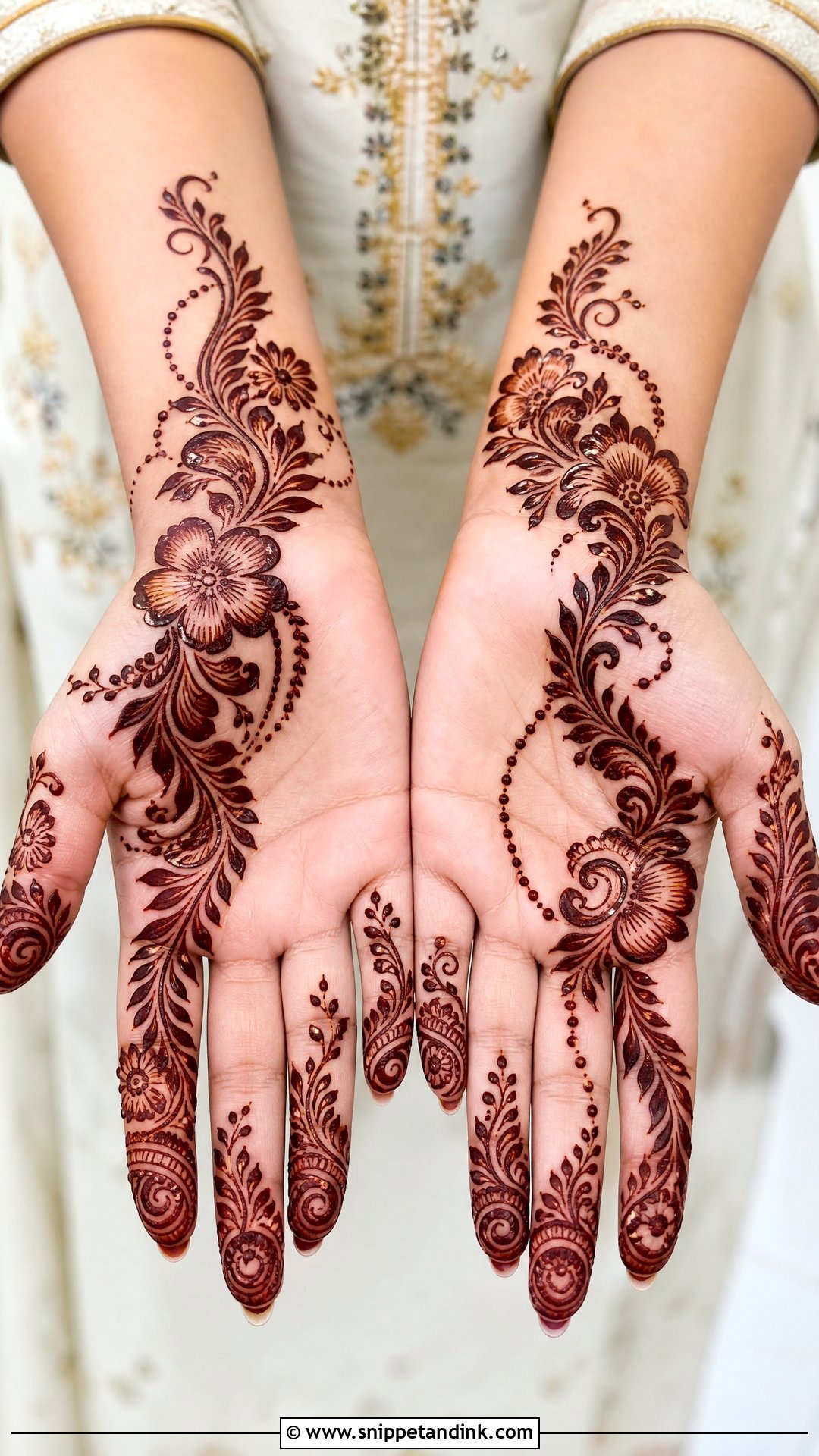
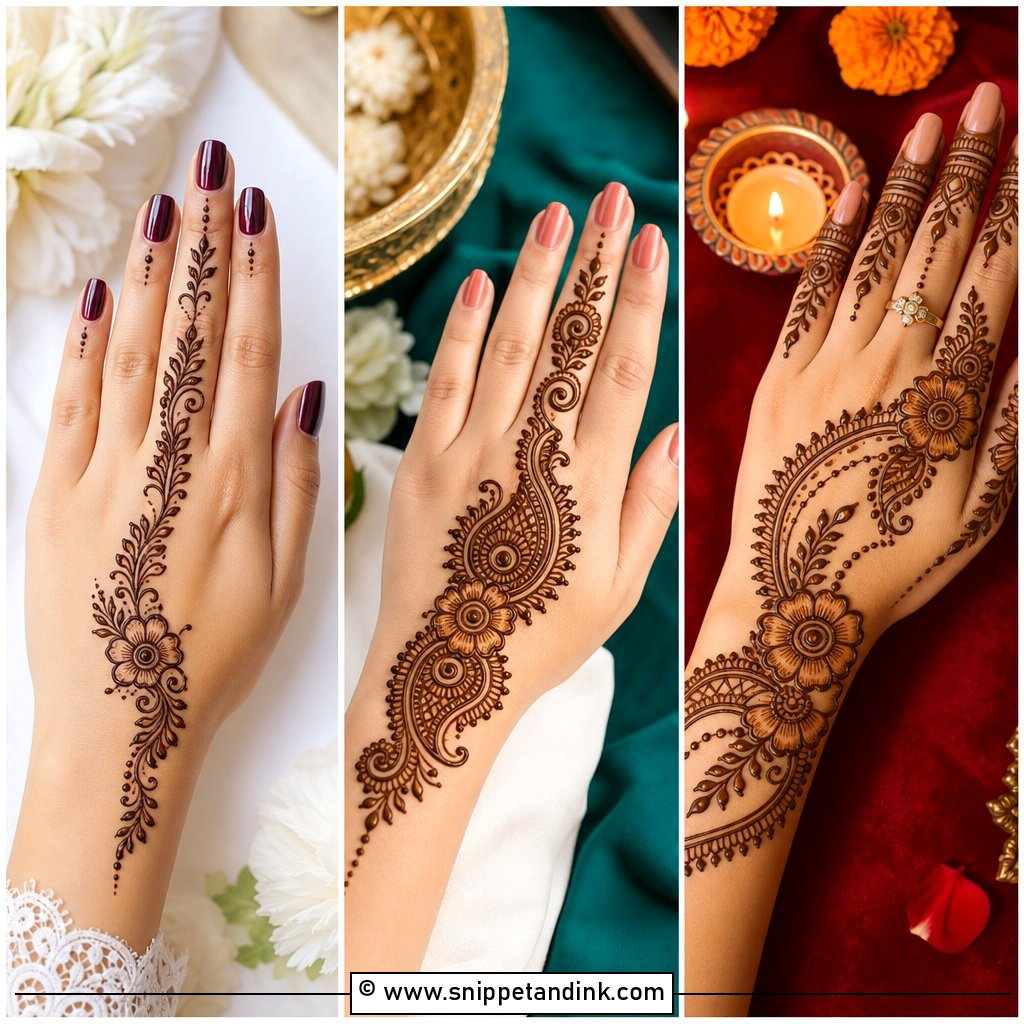
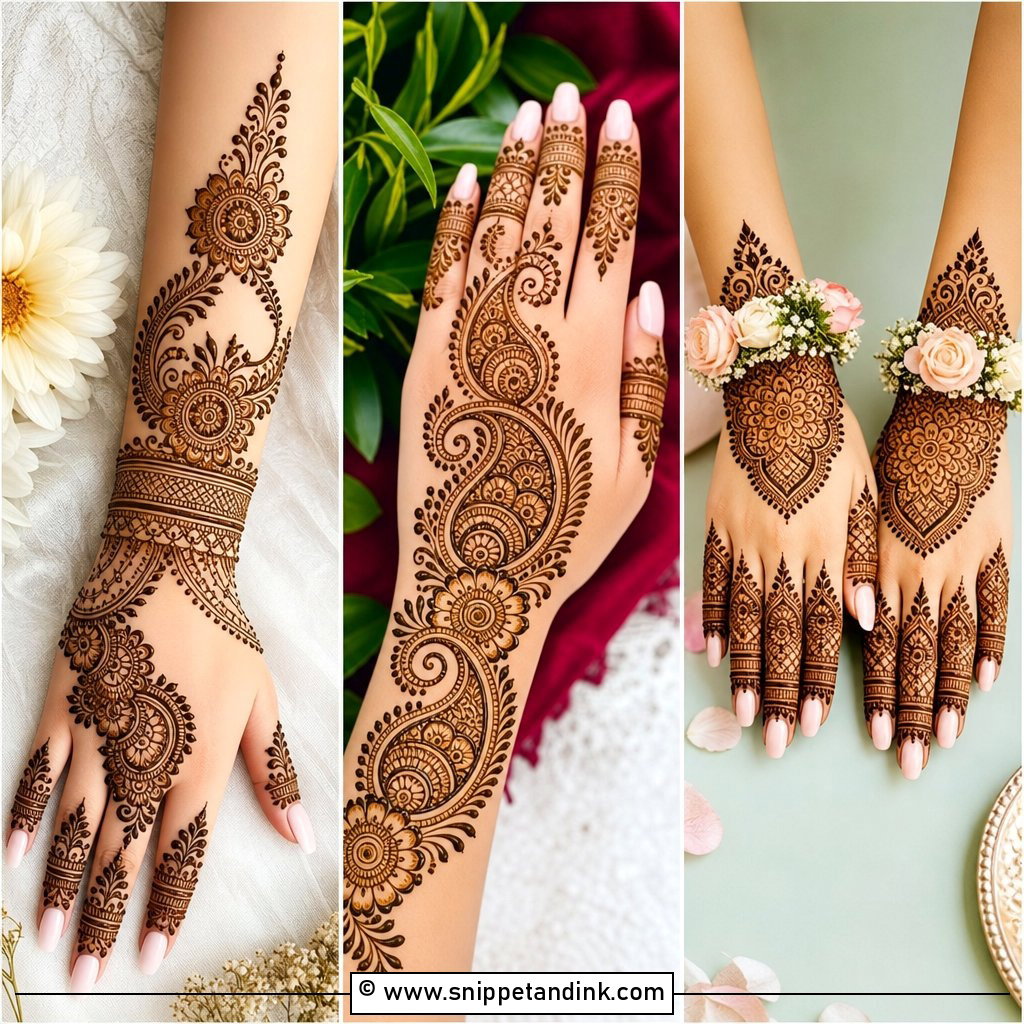
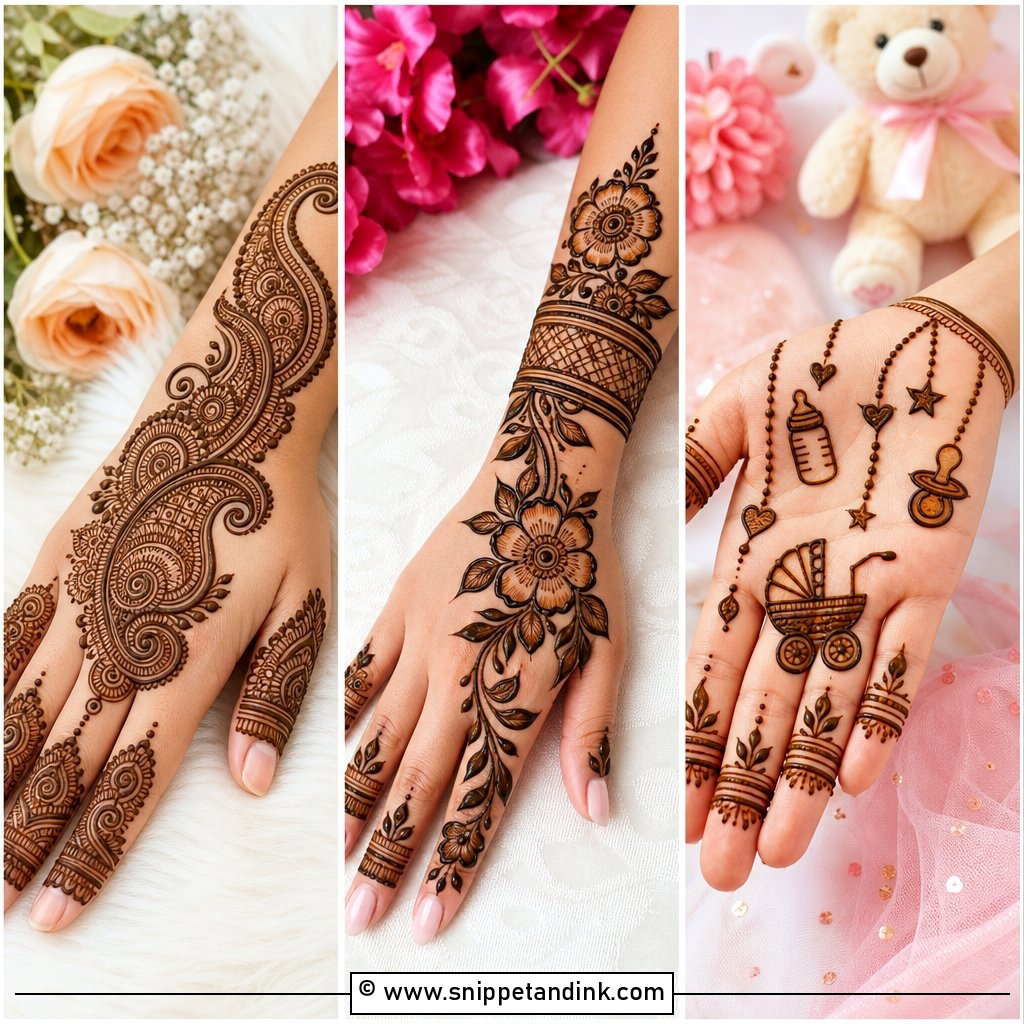
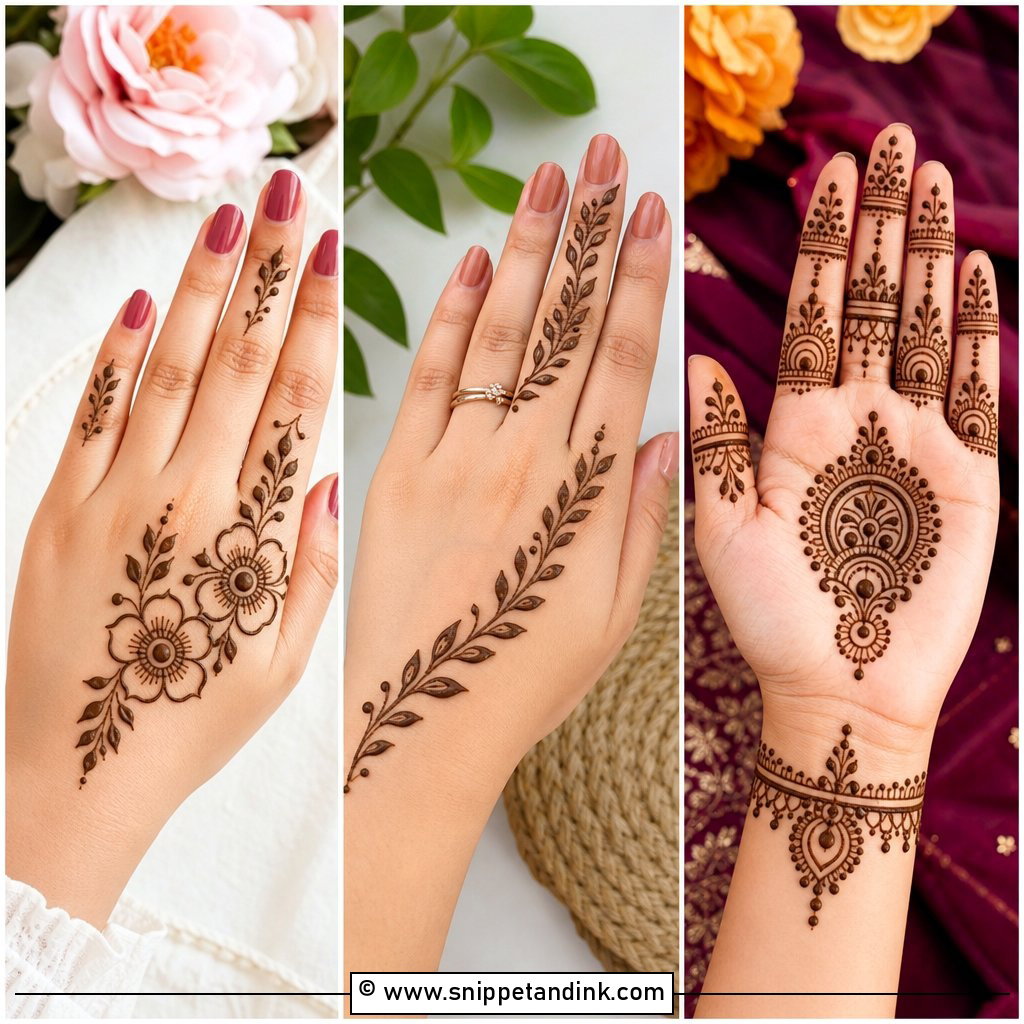
An Arabic floral trail is the design I can repeat fastest without it looking rushed. Bold flowers, leafy vines and curved strokes start at the wrist, cross the palm on a diagonal and finish on the index or middle finger, with plenty of open skin. That open skin is what lets the stain read clearly. Bridesmaids, sisters, cousins and guests like it because it’s festive without being heavy. Go for larger flowers for a modern feel, and add small dots or fine shading around them. In group photos, a row of these looks coordinated even when each trail runs slightly differently.
3. Veere Di Wedding Back Hand Mehndi
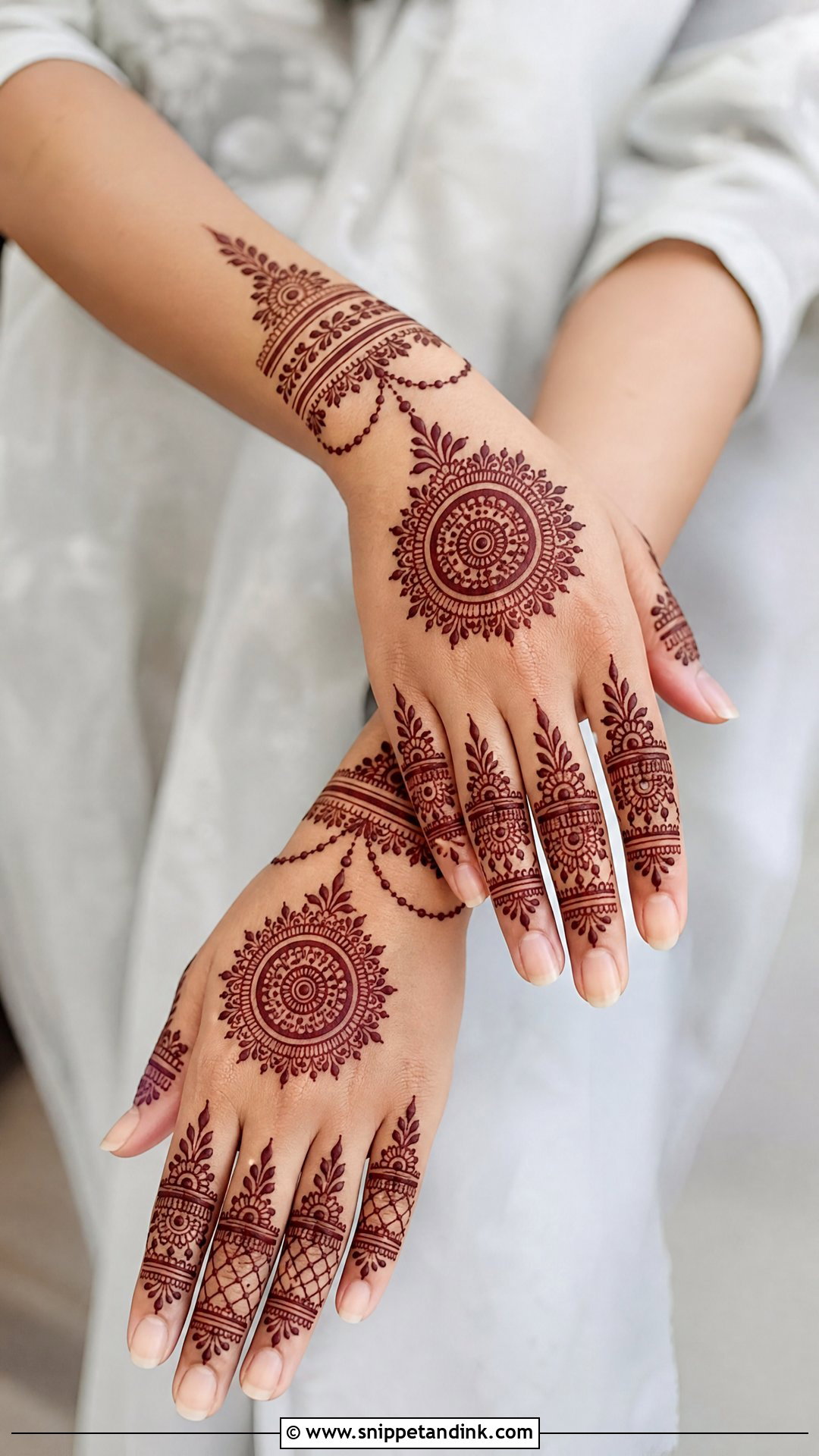
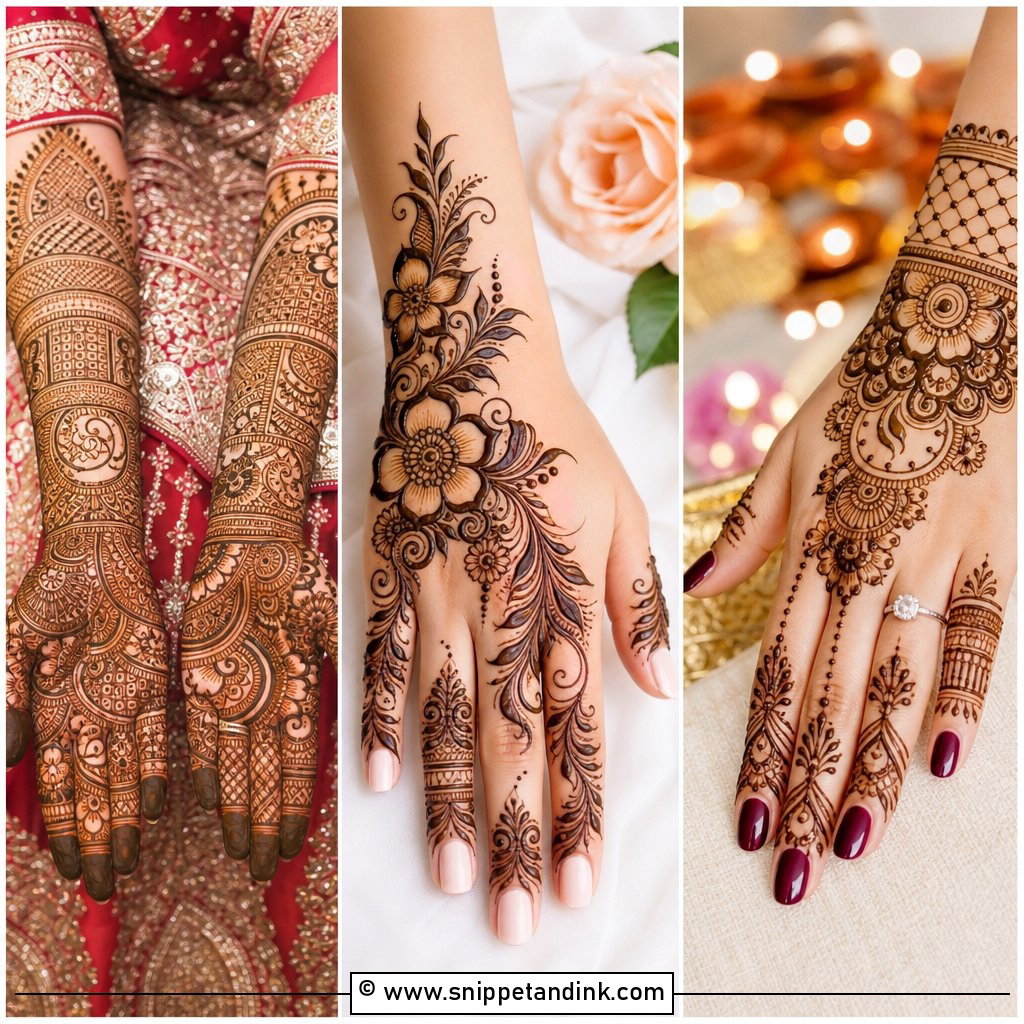
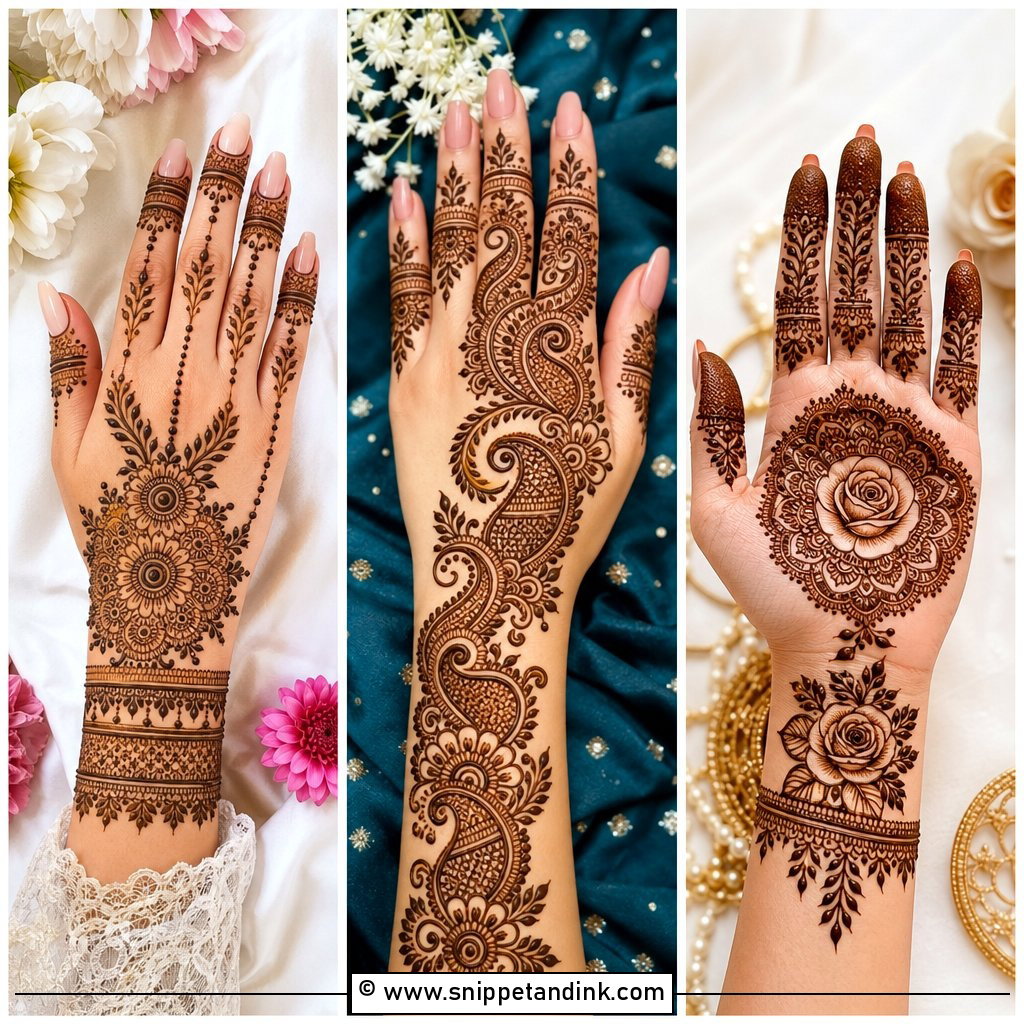
Back-hand designs are what your friends will actually see all night, since the back of the hand is on show while dancing, posing and holding a clutch. I cover the fingers, knuckles, back of the hand and wrist with a central mandala, a bracelet band and finger detailing, sometimes adding small floral chains and dotted curves. Leave clean space where rings and bangles sit so the jewellery isn’t fighting the henna. Expect a lighter stain here than on the palm. The skin is thinner, so it settles into a warm brown instead of deep maroon.
4. Veere Di Wedding Mandala Mehndi
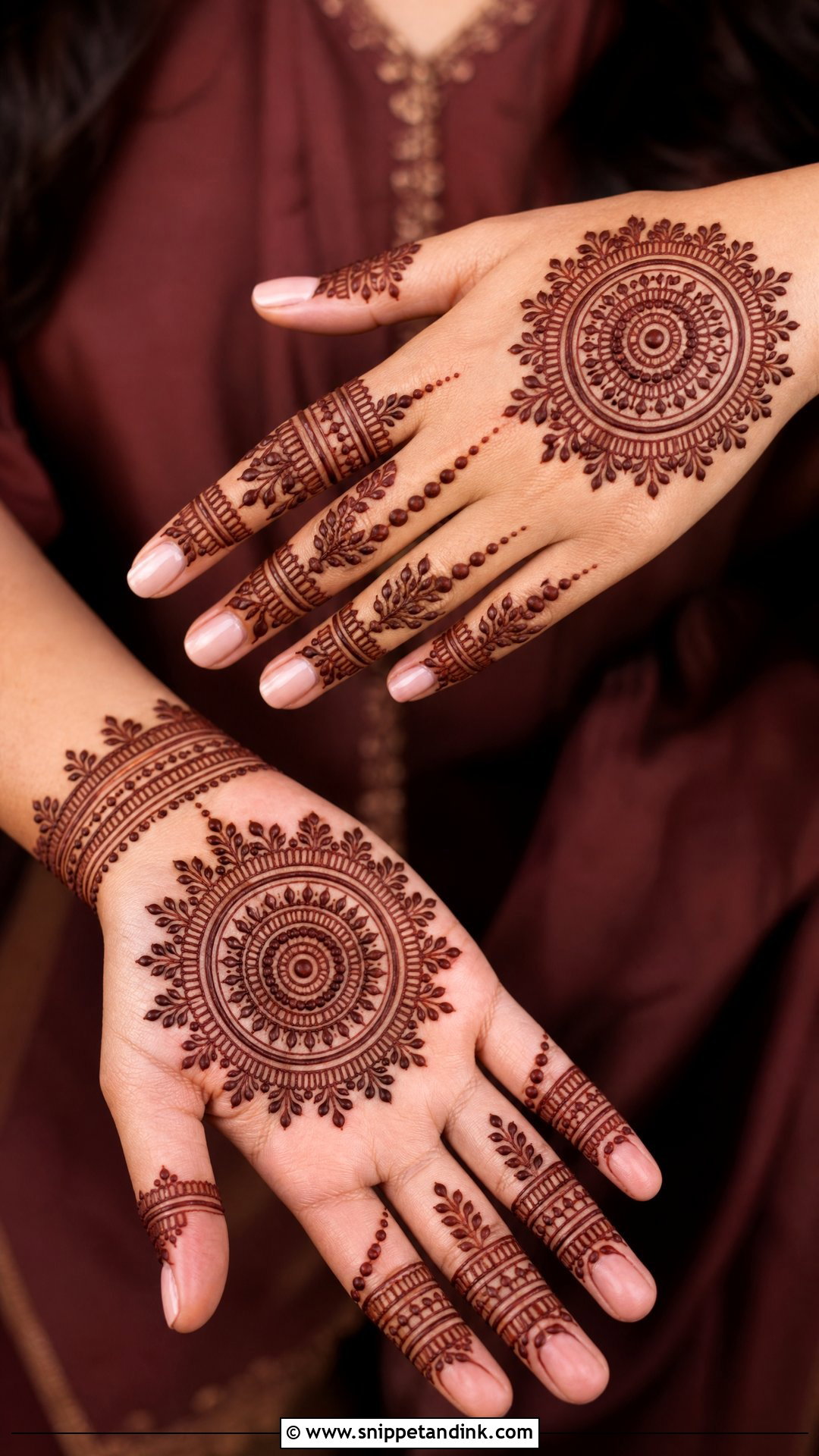
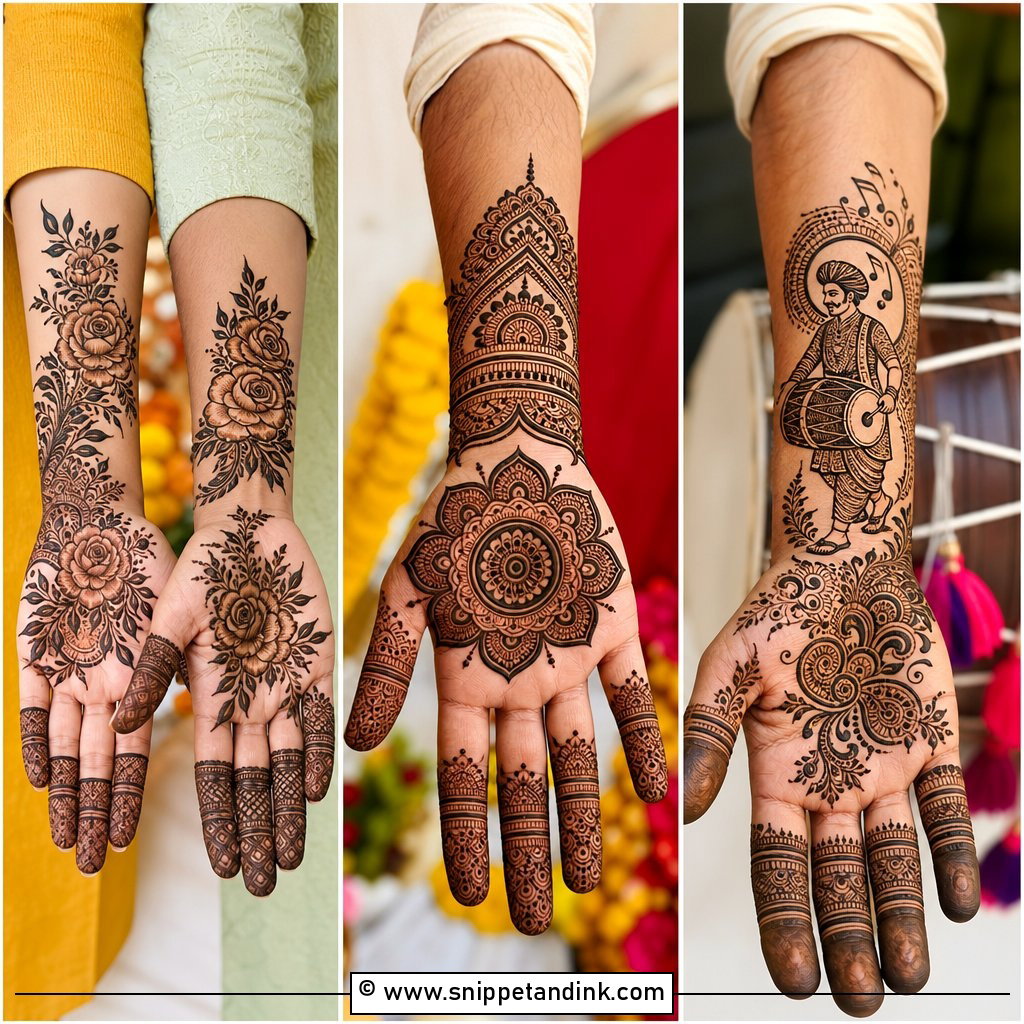
Mandalas are the safest bet when a bridesmaid can’t decide. A large circle on the palm with detailed petals, dots and fine rings, leafy bands and small checks on the fingers, and on the back hand a matching mandala with bracelet-style wrist work. The circle suits nearly every hand shape because it gives the eye one clear centre. Symmetry is the whole design, though, so I mark the centre point before drawing and check it with the fingers both spread and relaxed. A lopsided mandala is the one mistake everyone notices.
5. Veere Di Wedding Minimal Mehndi
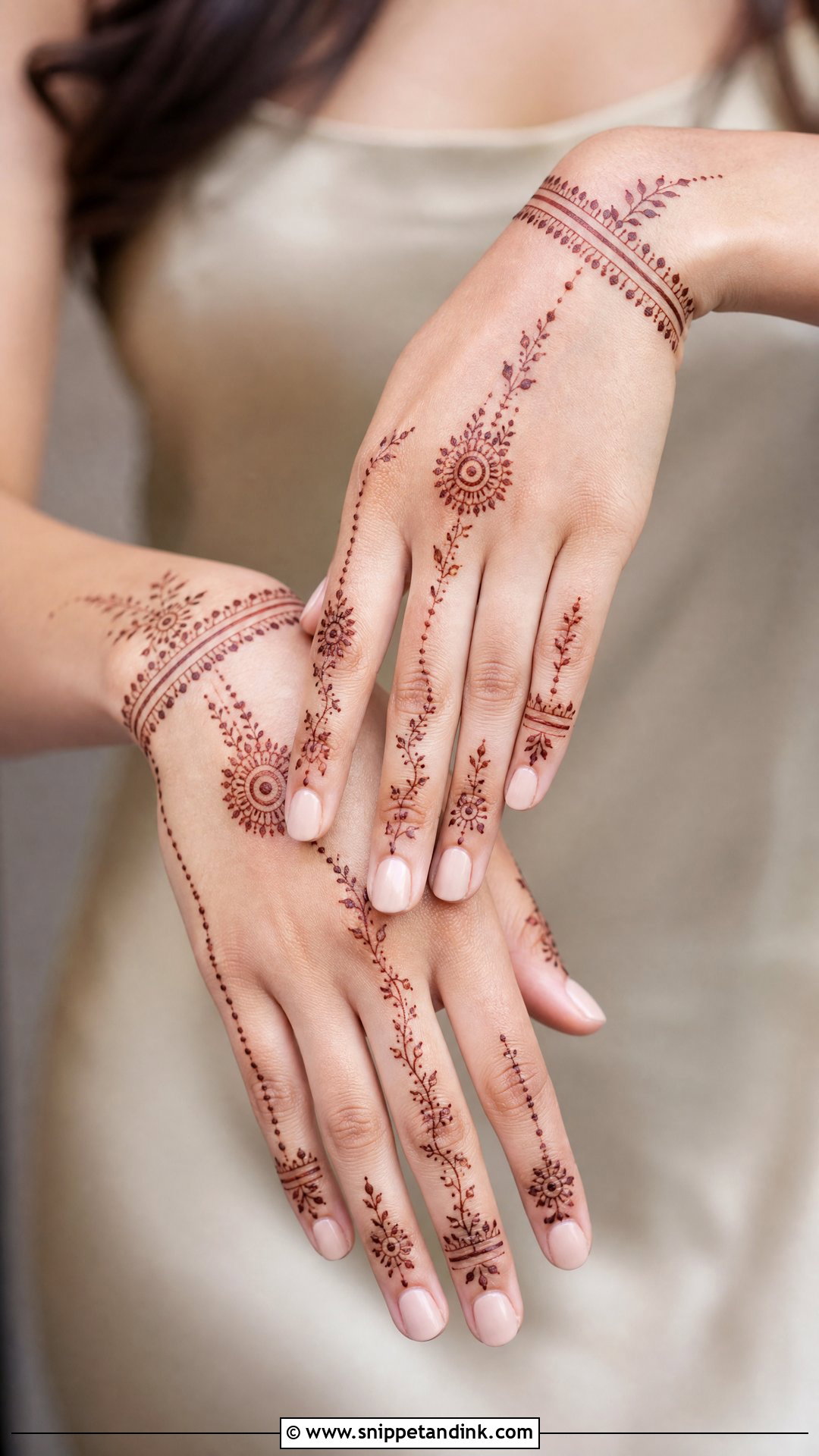
Not everyone wants heavy henna, and a minimal design keeps a reluctant cousin in the group without making her sit for an hour. Clean finger patterns, tiny florals, fine vines, a small mandala and a light wrist band, usually on the back of the hand or along one side of the palm. Keep the motifs small but connected so the hand still looks finished. It’s the sensible choice for anyone attending several functions in one week, because a light design fades evenly instead of going patchy halfway through.
6. Veere Di Wedding Personalized Mehndi
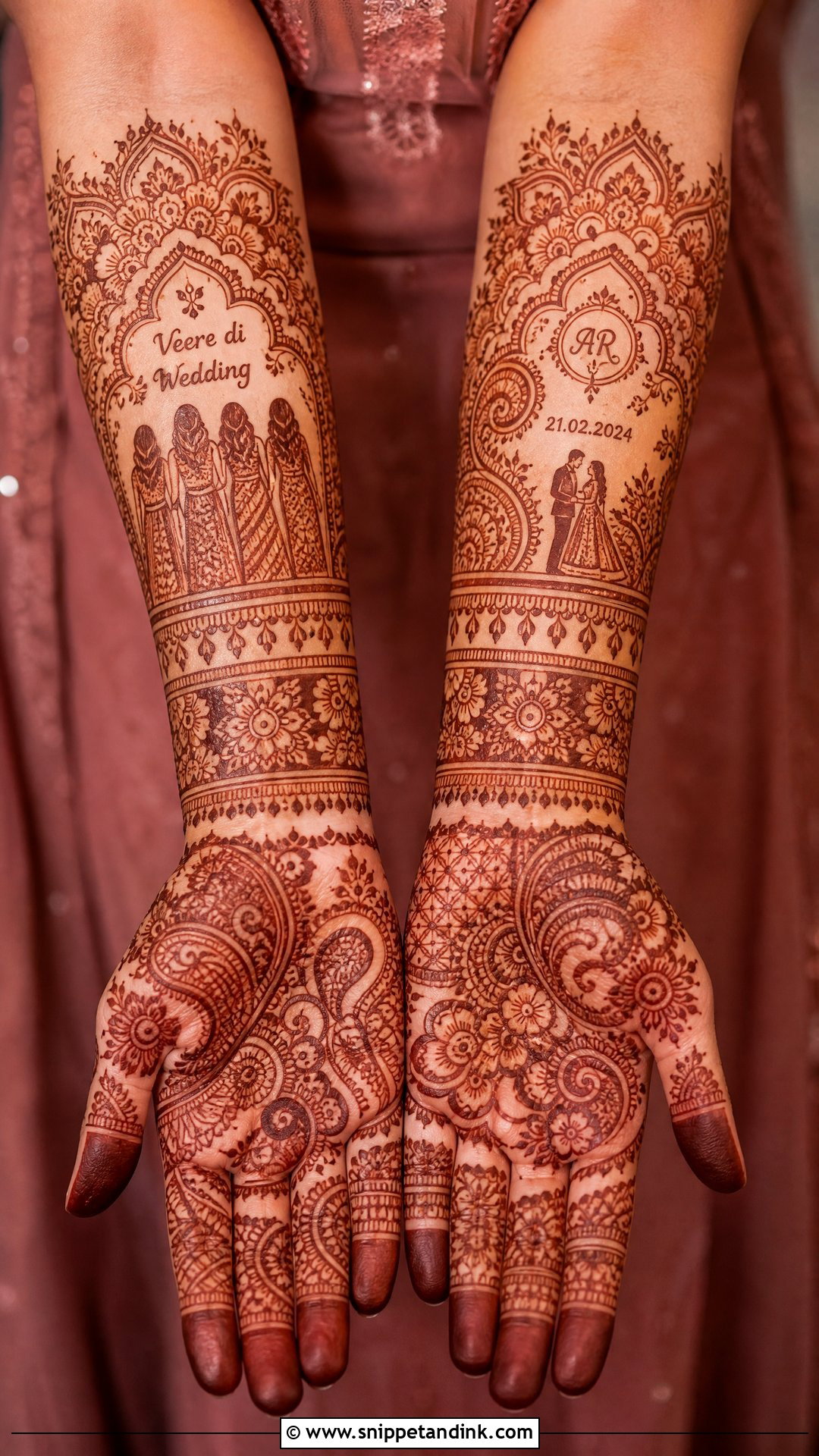
This is where the friendship part of the theme comes in. Initials, the wedding date, tiny couple symbols, a travel sign or a small memory from the bride’s story can all be worked in, but they have to belong to the pattern, not float on top of it. I hide the bride’s details inside paisleys or mandalas and give each bridesmaid one matching mini symbol. Medium to full coverage gives these details room. Collect every personal element, with spellings, before the night; deciding them in the chair is how a guest ends up with a symbol she didn’t want.
7. Veere Di Wedding Bridesmaid Mehndi
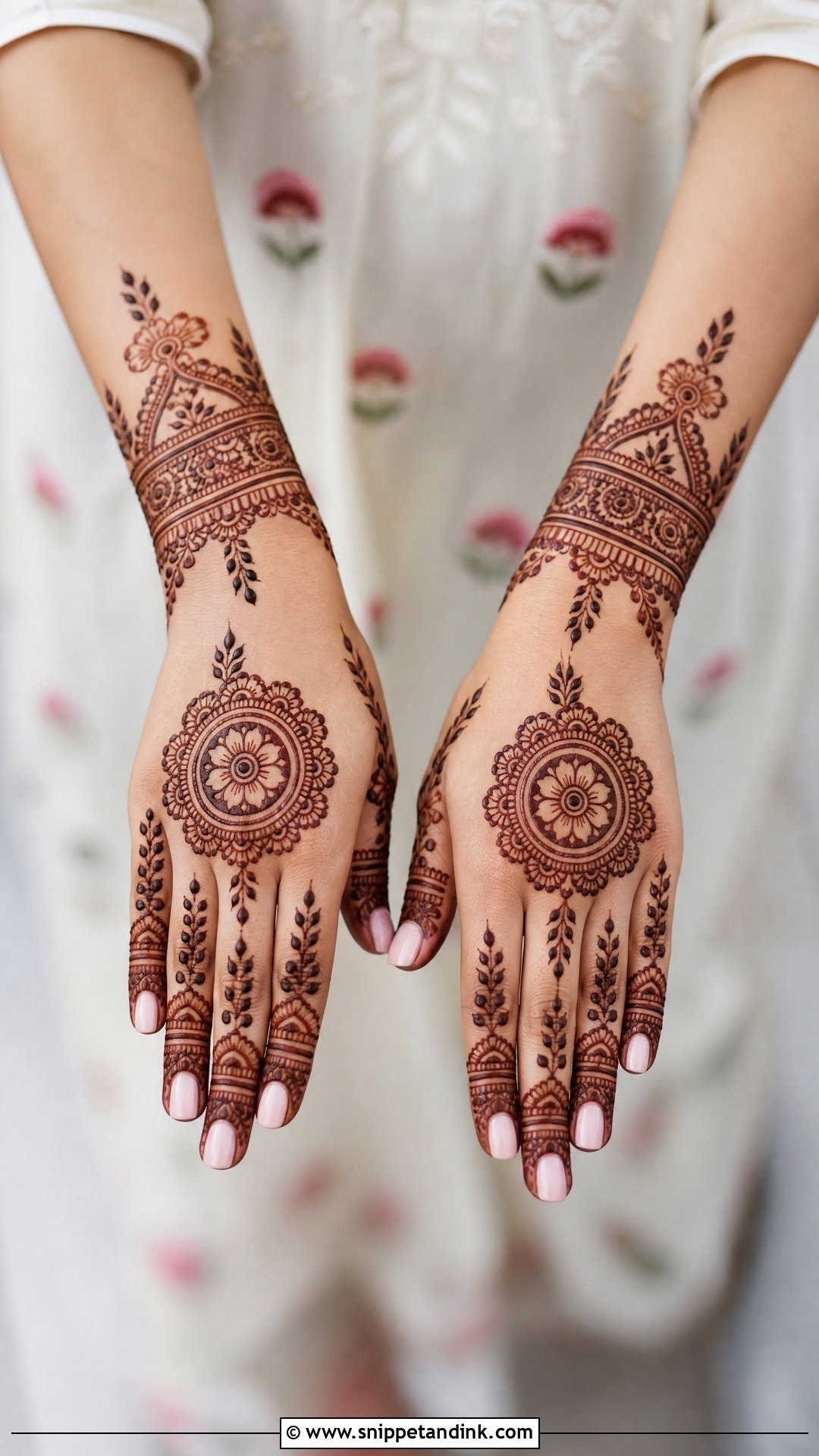
Bridesmaid henna has two jobs: look coordinated with the bride, and be done before the music starts. I cover the back hand with floral trails, leafy fingers, a wrist cuff and small pockets of bare skin, always lighter than the bride’s. For matching sets, I keep one common element, a mandala or a particular flower, and vary the layout for each person. Everyone ends up with her own hand, and the group still looks planned. Pastel and bright outfits both suit it.
8. Veere Di Wedding Indo Arabic Mehndi
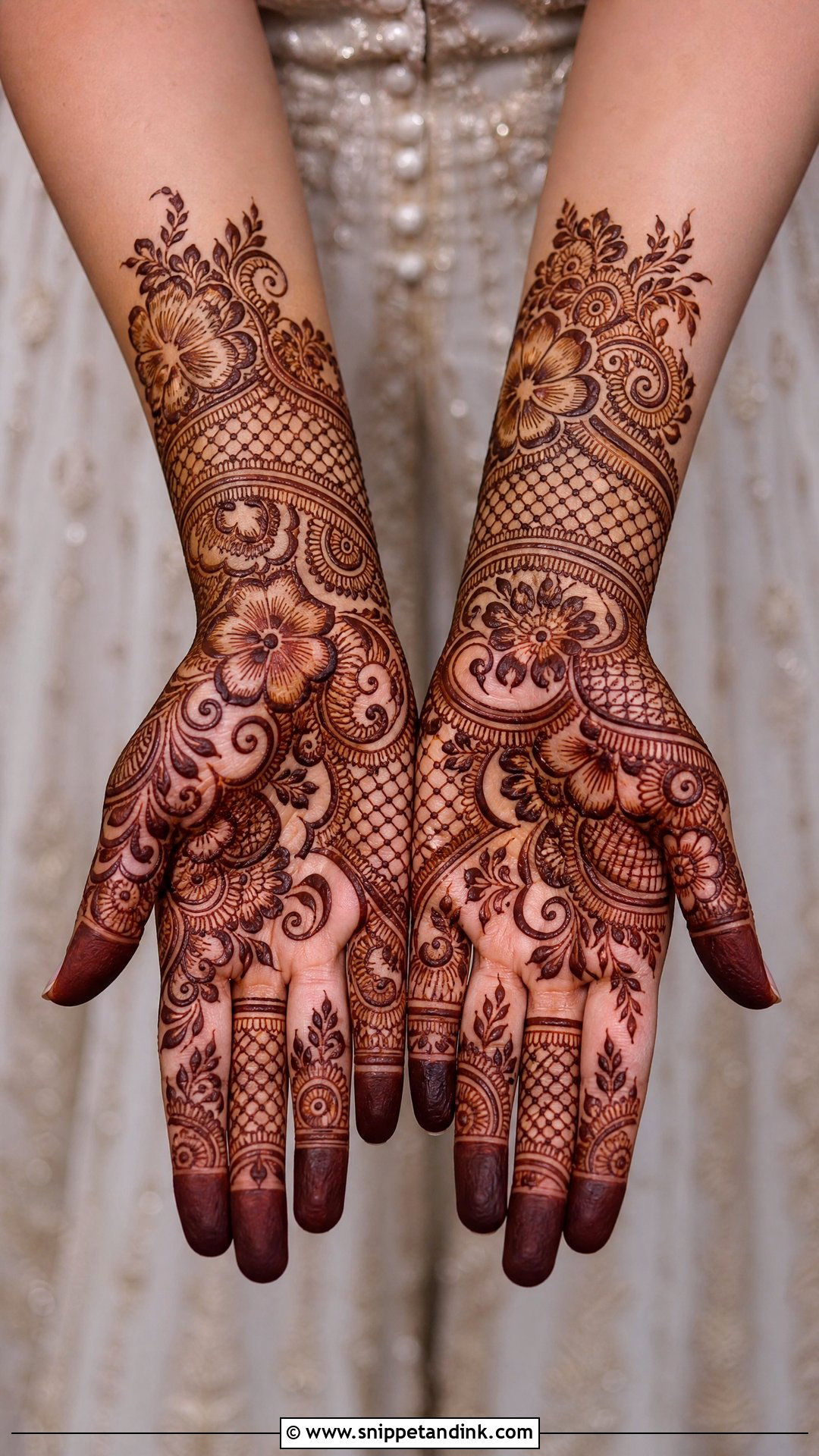
Indo-Arabic takes Arabic flowers and vines and fills parts of them with Indian jaali, paisley and fine line shading. The pattern runs diagonally across the palm and can continue up the forearm, so the hand looks full without being solid. It suits a bride who wants a modern bridal look, or a bridesmaid who wants more than a simple trail. The contrast between thick outlines and delicate interiors is the point. Keep clean gaps between motifs, or the fine interiors blur into the outlines as the stain darkens.
9. Veere Di Wedding Simple Front Hand Mehndi
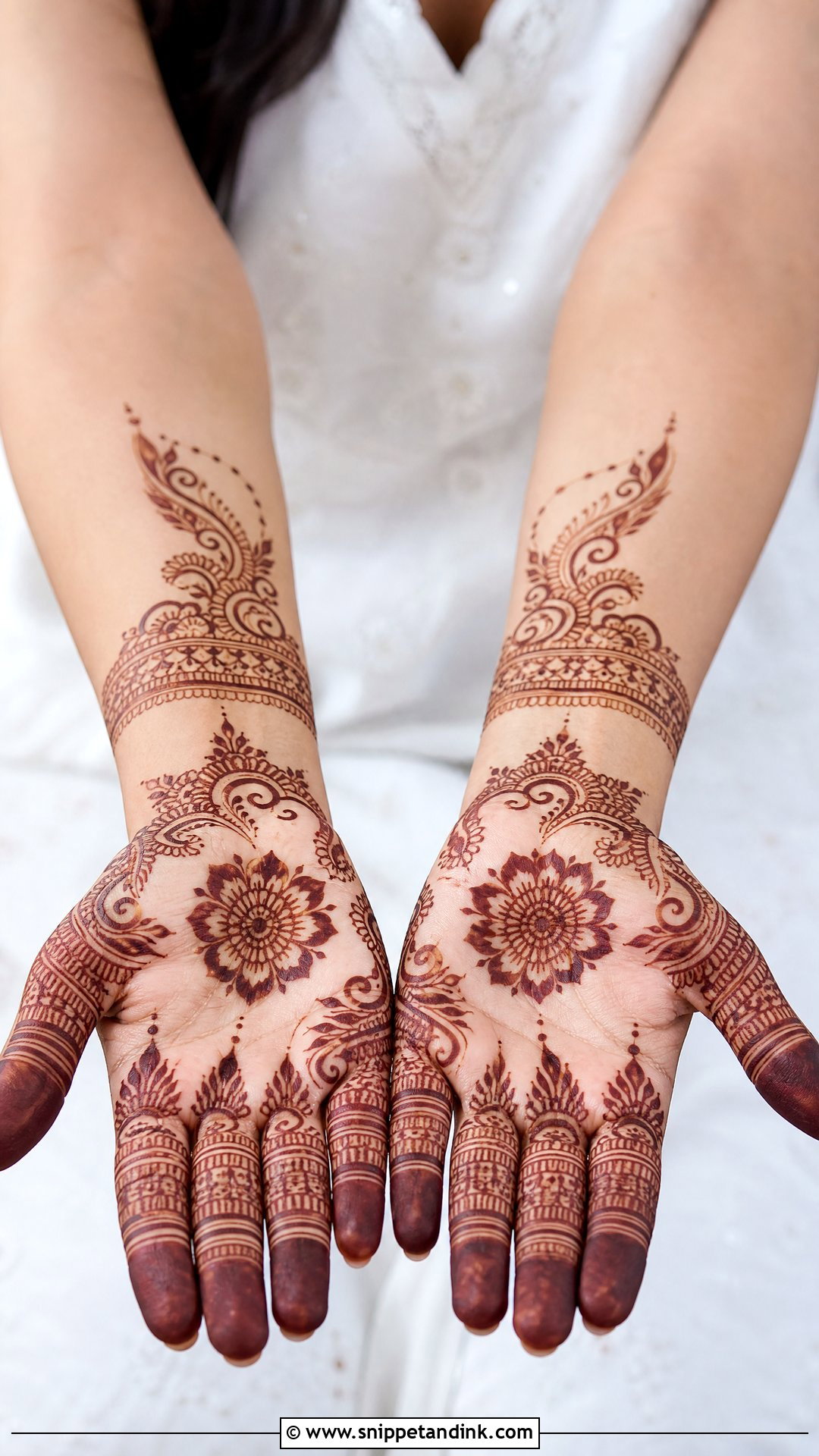
A front-hand design can look complete without hours in the chair if it’s planned properly. A central floral motif, curved paisley bands, fingertip patterns and a small wrist bracelet fill the palm without weighing it down. Guests, sisters and friends who need to be back on the dance floor go for this. For a modern touch, leave soft negative space around the main motif. It works especially well at daytime functions, where a lighter palm suits lighter outfits.
10. Veere Di Wedding Jaali Mehndi
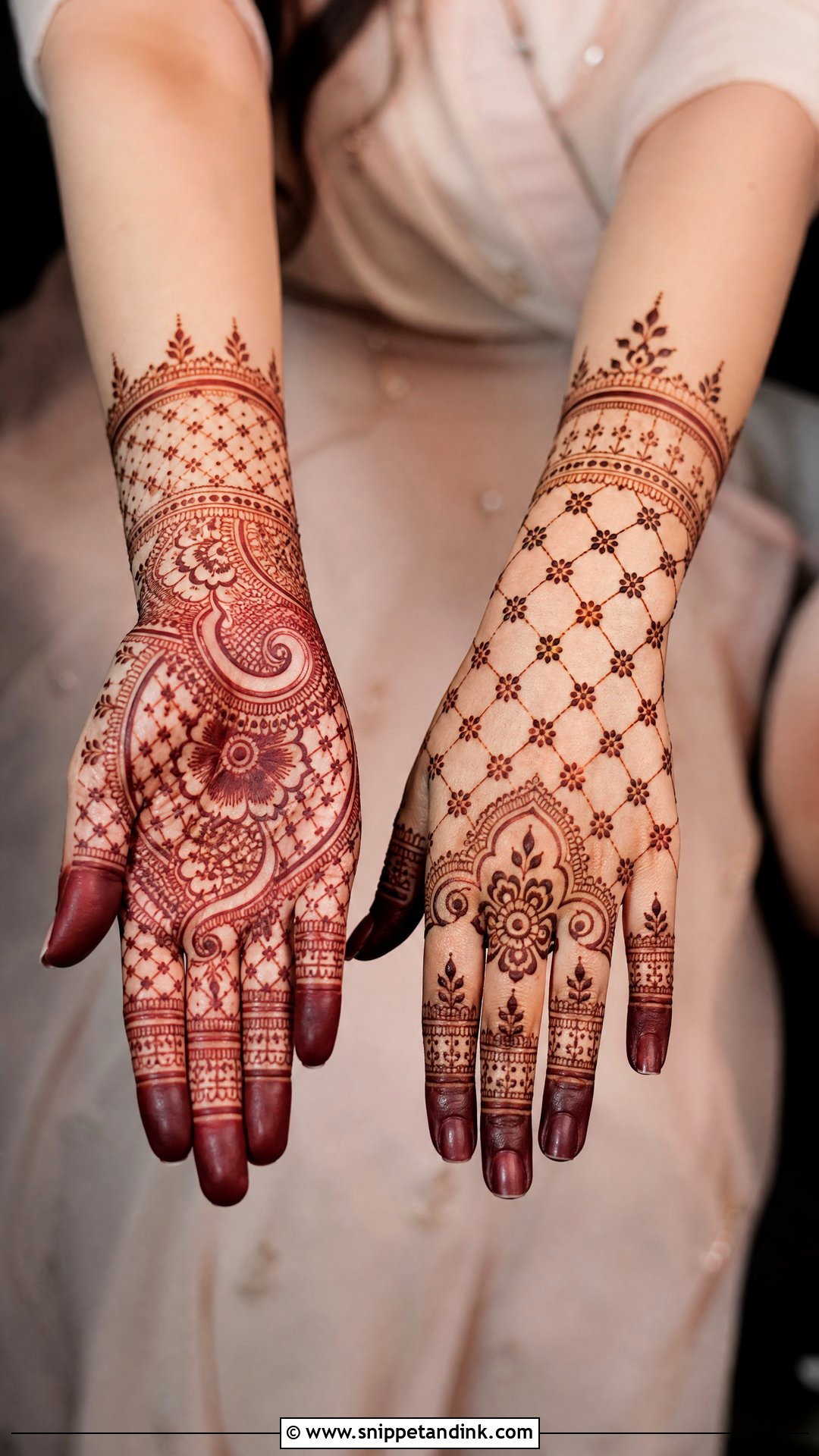
Jaali brings a net texture to palms and back hands alike. On the palm, I’ll run mesh down one side and fill the other with florals and paisleys; on the back hand, a jaali glove with a wrist cuff and finger bands looks sharp. Even spacing is everything. I draw the frame first so the grid lines have a fixed edge to meet, then add tiny dots inside the boxes. Close family and brides who like a refined pattern choose it most.
11. Veere Di Wedding Peacock Mehndi
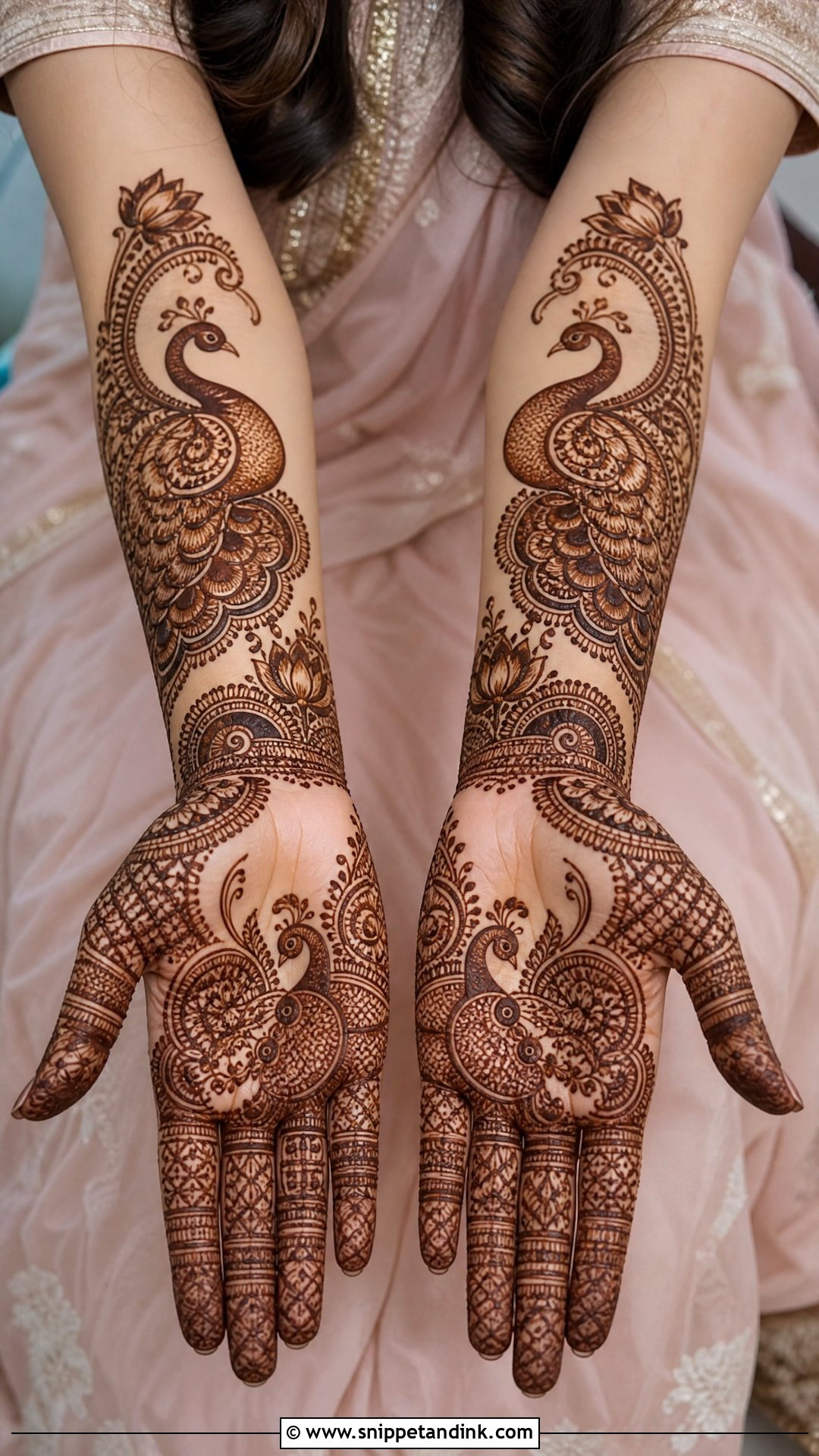
Peacocks are a wedding favourite for good reason. One large bird on the palm can send its feathers across the wrist and up the forearm, or smaller mirrored peacocks can sit on both hands so they face each other when the palms are held together. Paisleys, lotus details and fine shading enrich it. Keep the peacock’s outline bold and the space around its neck clear. Once the stain deepens, fine filler crowding the head makes the bird hard to pick out.
12. Veere Di Wedding Portrait Mehndi
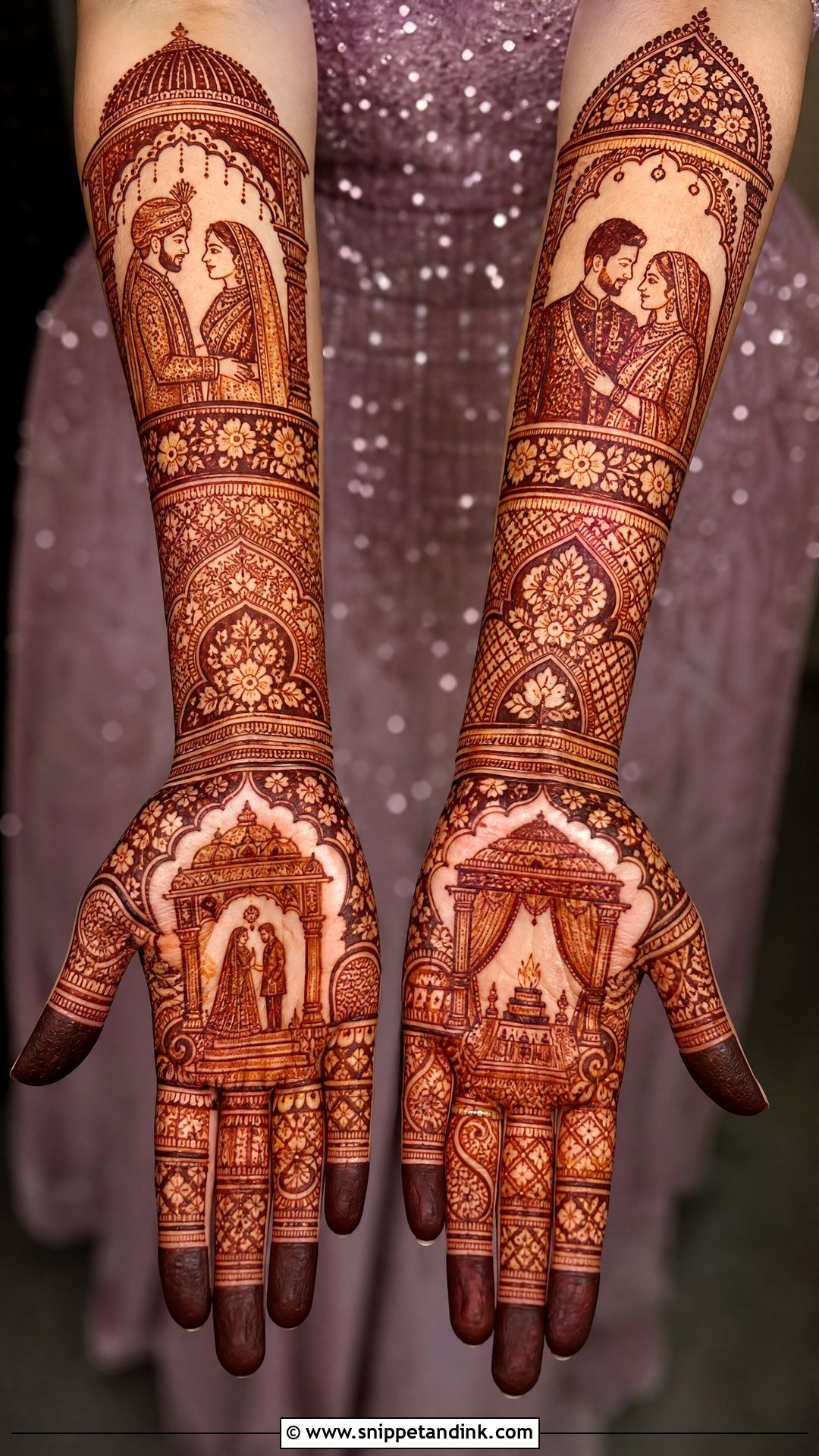
Portrait mehndi puts the bride on one hand and the groom on the other, framed by mandap, floral and paisley work, on the palm or forearm where there’s room. Faces are unforgiving. A single heavy line on a nose or eye changes the expression, so this needs an artist who draws figures regularly; ask to see her portrait work before you book. Keep the surrounding pattern quieter than usual so the figures carry the story. Full bridal mehndi and pre-wedding shoots are where it earns the extra time.
13. Veere Di Wedding Bracelet Mehndi
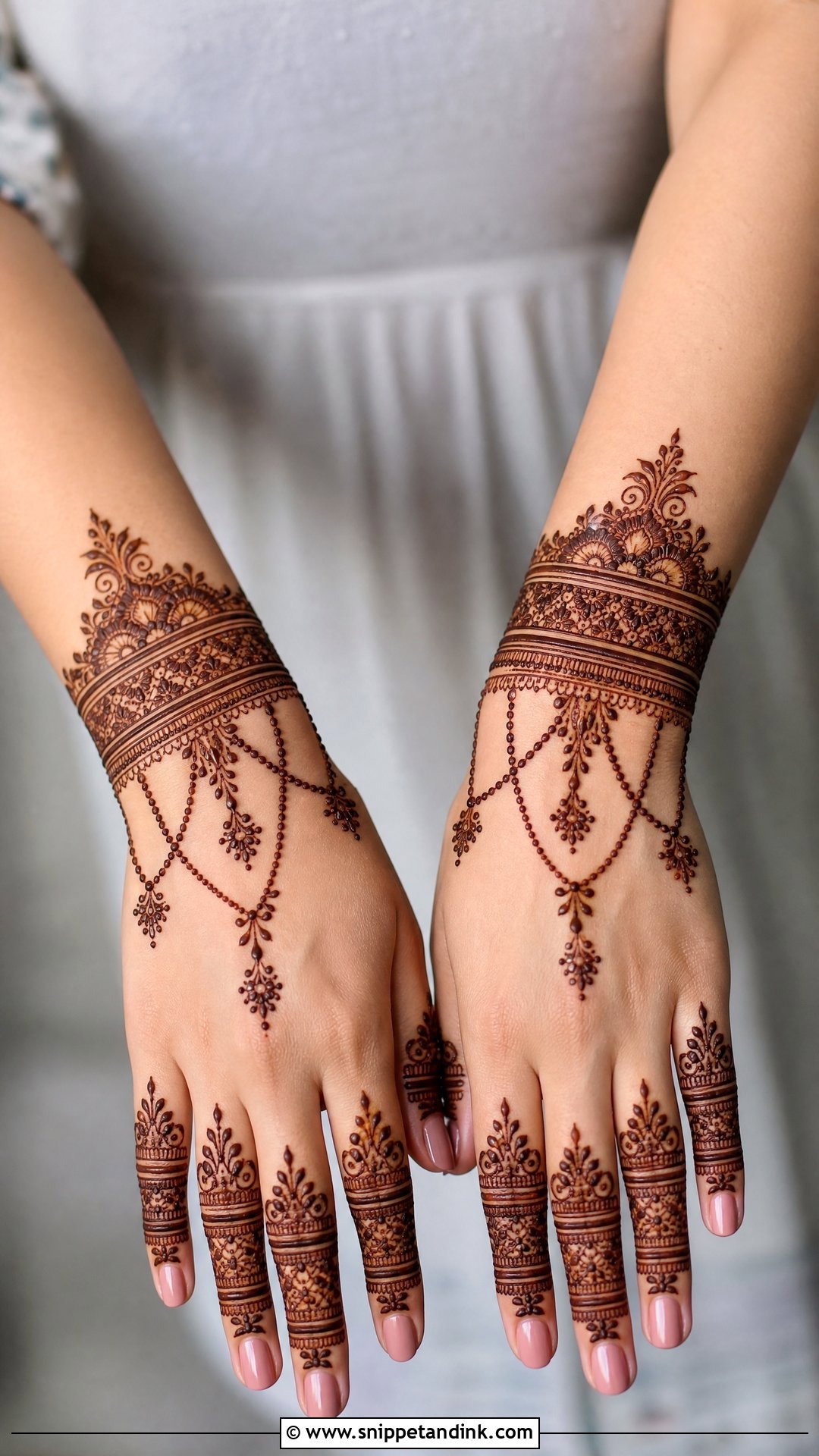
Bracelet designs dress the wrist like jewellery: a bold cuff, chain-like lines, tiny floral charms and detailed fingers, with a lighter palm or back hand so the wrist stands out. A dotted string to a central back-hand flower finishes it. It’s a practical pick for bridesmaids who’ll wear real bangles, but check where the bangles sit first. I draw the cuff just above that line, since a henna band hidden under glass bangles is lost all evening and wears off faster from the friction.
14. Veere Di Wedding Finger Mehndi
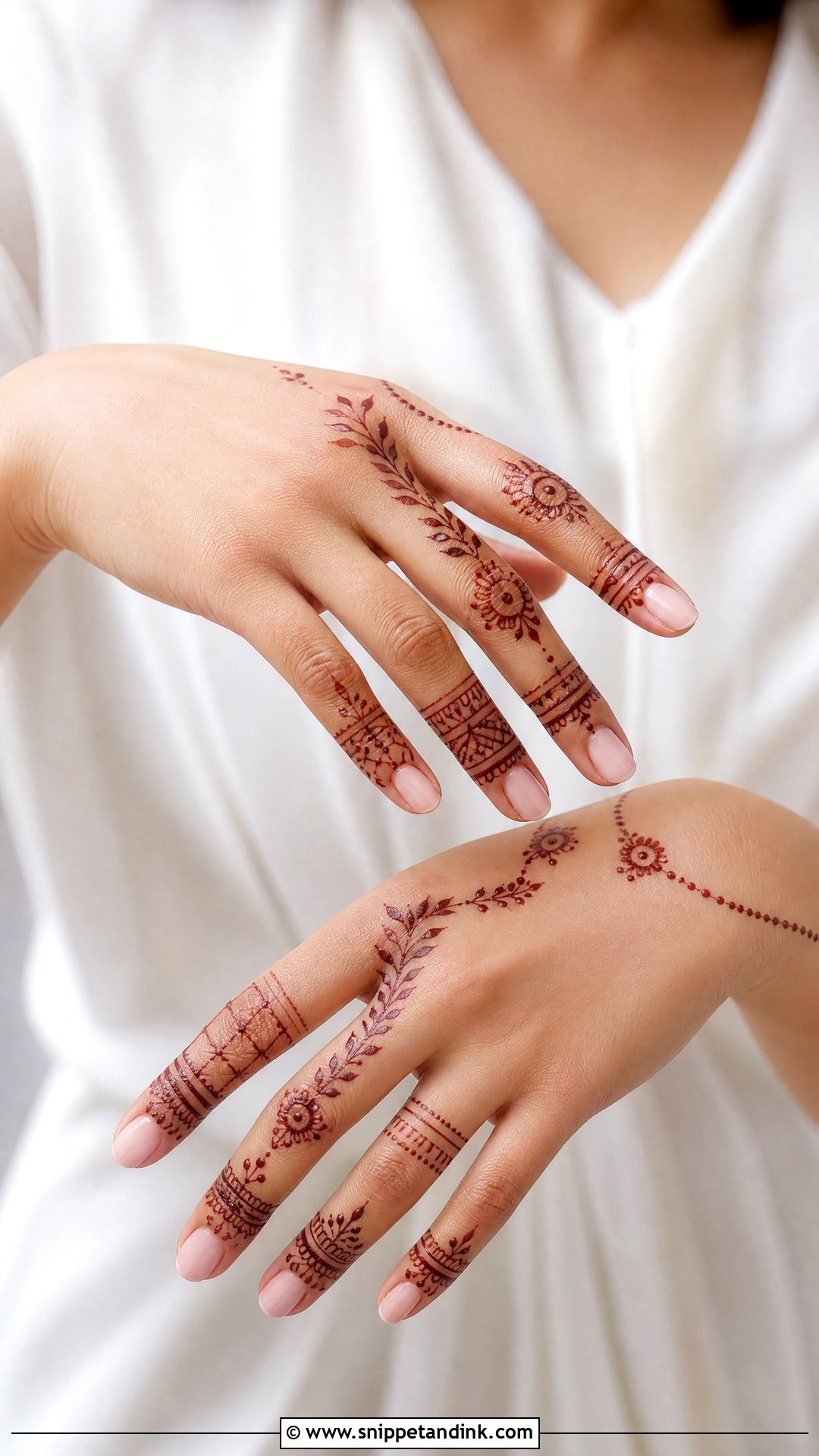
Finger-focused designs are quick and look sharp in hand-stack photos. Each finger gets a different band, leaves, dots, checks or a small floral, and the centre of the back hand stays open or carries a tiny mandala near the knuckles. A slim wrist line or tiny cuff pulls it together. One thing I watch is the knuckle crease. Paste over the crease cracks as soon as the finger bends, so I keep bands just above or below it.
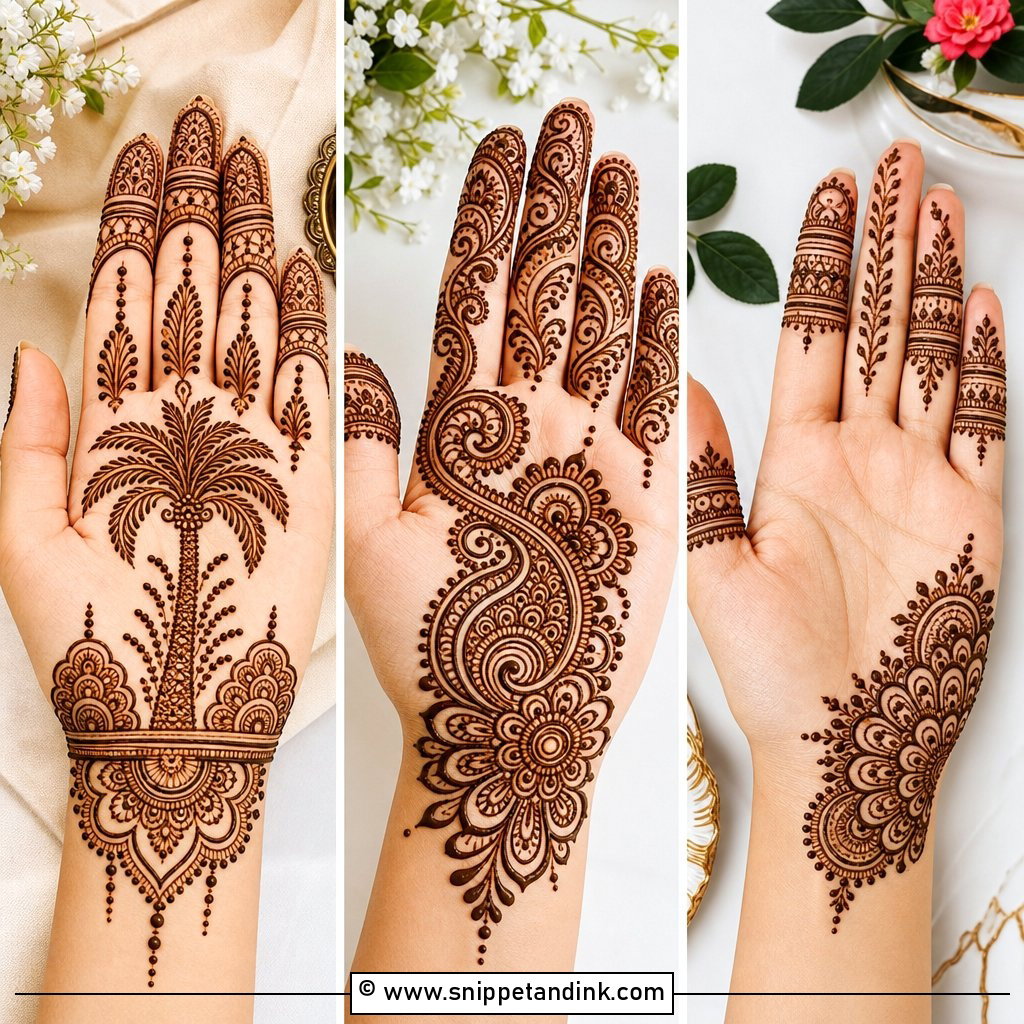
15. Veere Di Wedding Half Hand Mehndi
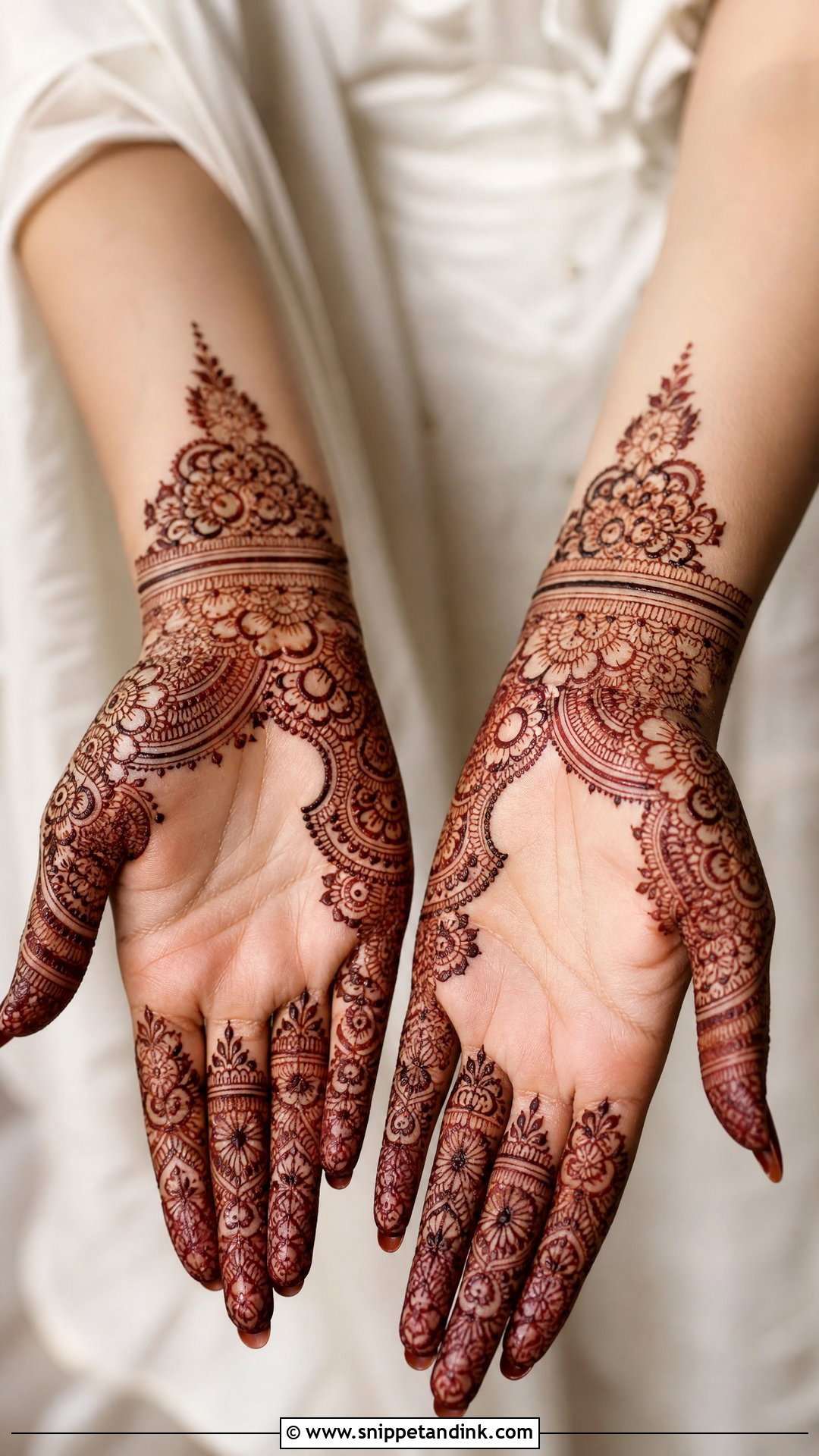
Half-hand designs cover the palm and stop around the wrist or mid-hand, mixing mandalas, paisleys, florals and finger filling. Bridesmaids and family members who’ll be hosting, serving or running errands all evening find it far easier to live with. It’s also a sensible pre-wedding choice for a bride saving the full design for later. Give it a clean border where it stops. Without one, a half design looks unfinished instead of intentionally light.
16. Veere Di Wedding Lotus Mehndi
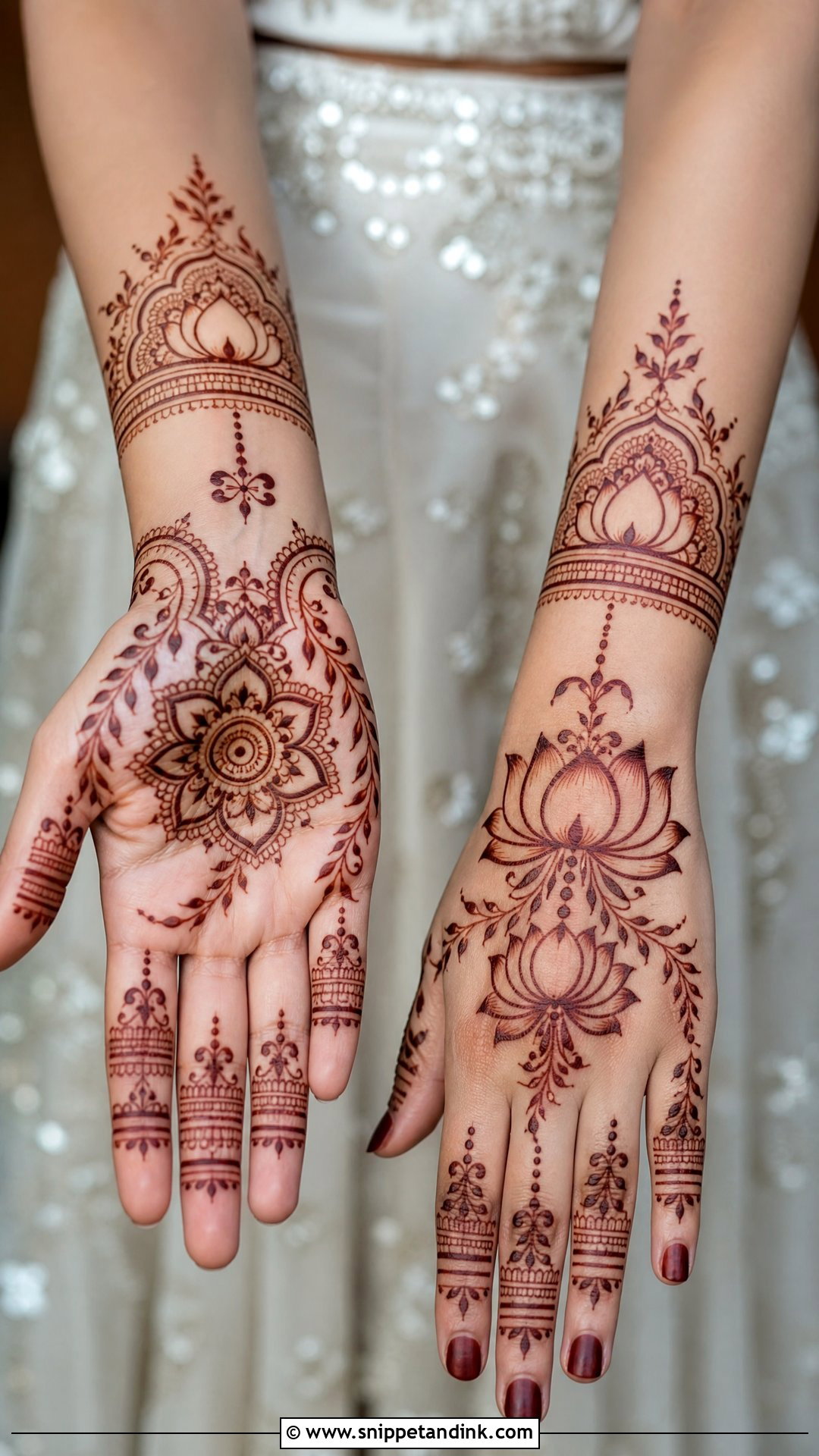
Lotus motifs bring a quiet, traditional feel: large blooms on the palm with leafy borders, fine dots and curved vines toward the wrist, or a lotus mandala on the back hand with careful finger detail. Mothers of the bride often ask for this one. Draw the petals bolder than you think they need to be and leave open skin around them; a lotus surrounded by tight filler loses its outline once the colour deepens. Silk outfits and floral jewellery suit it well.
17. Veere Di Wedding Paisley Mehndi
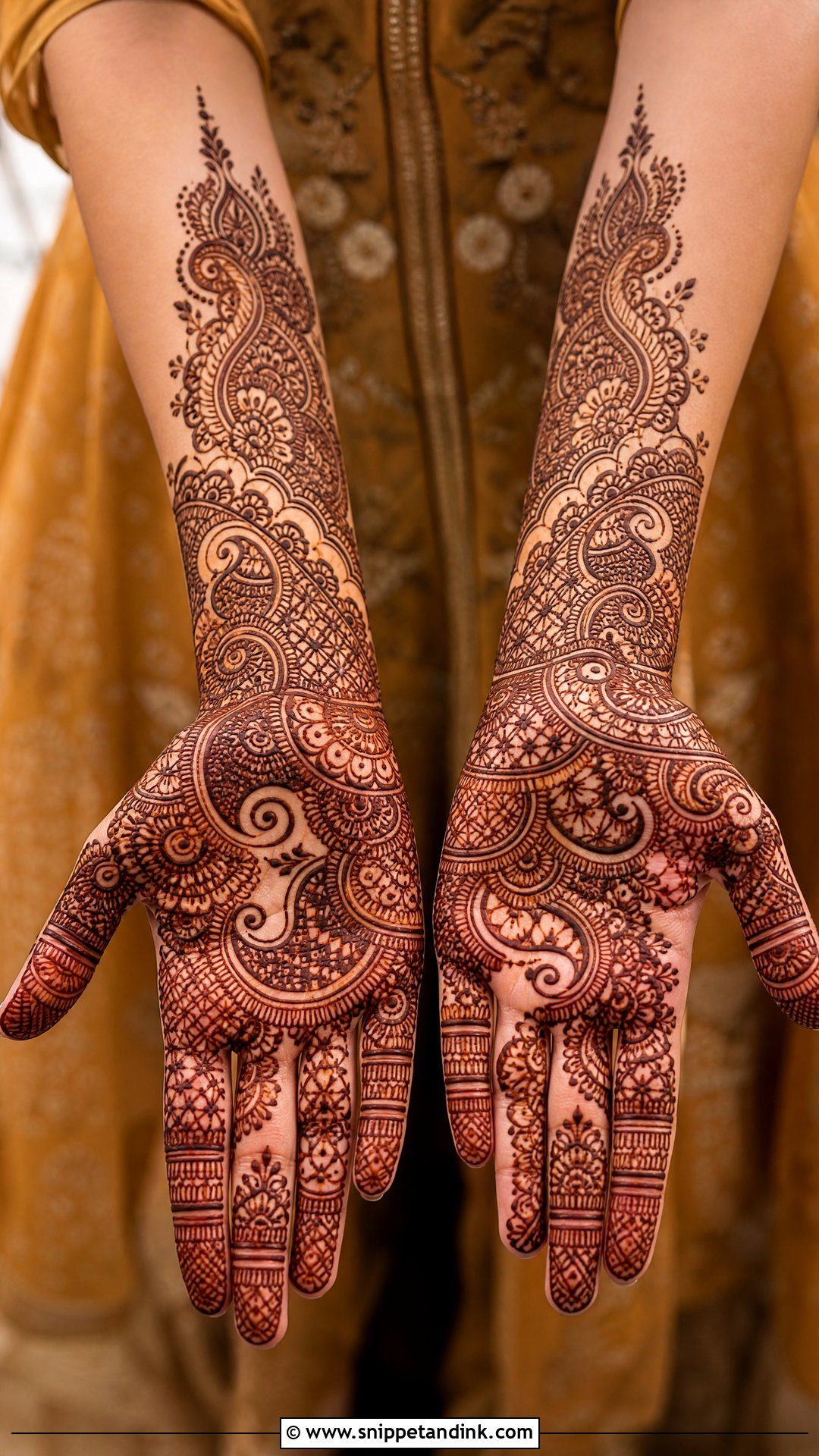
Layered paisleys across the palm, wrist and forearm, filled with tiny flowers, checks, dots and curved lines, with slim finger bands that match their flow. That’s the paisley look, and it suits anyone who loves detailed Indian mehndi without portraits or scenes. It scales well: light for bridesmaids, dense for the bride. The curve of a paisley follows the natural bend of the hand, which is why it flatters most hand types. Bold, clean outlines are non-negotiable.
18. Veere Di Wedding Modern Negative Space Mehndi
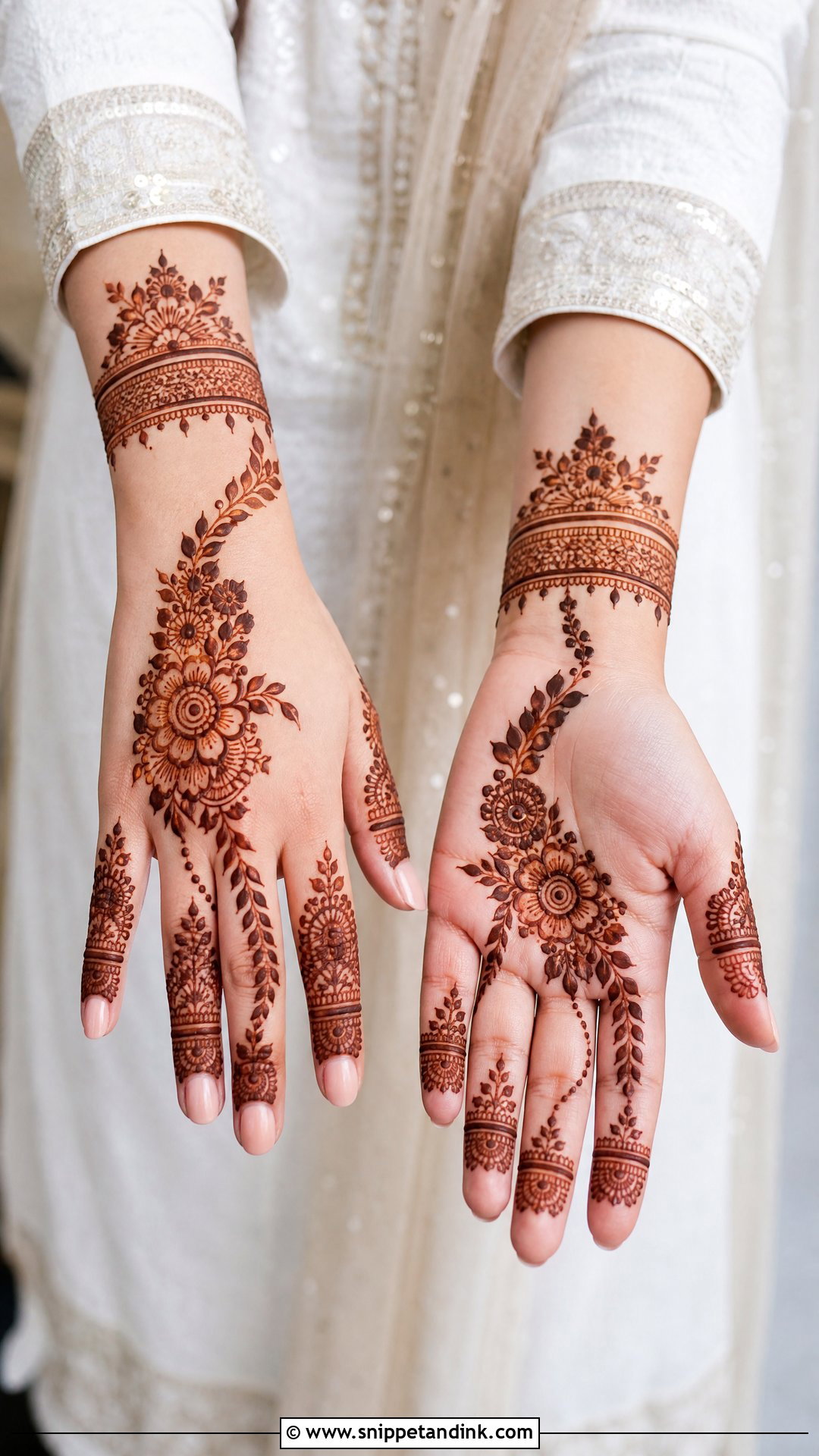
Negative-space designs treat bare skin as part of the pattern. Bold floral clusters, diagonal trails, wrist cuffs and finger details sit with deliberate gaps between them, so the hand looks light and modern. The balance is hard to get right. Too much empty skin reads as unfinished, too much filling loses the effect. I sketch the empty shapes as carefully as the drawn ones, and ask for clear borders so the stain looks crisp. Fashion-forward brides and bridesmaids pick this most.
19. Veere Di Wedding Rajasthani Mehndi
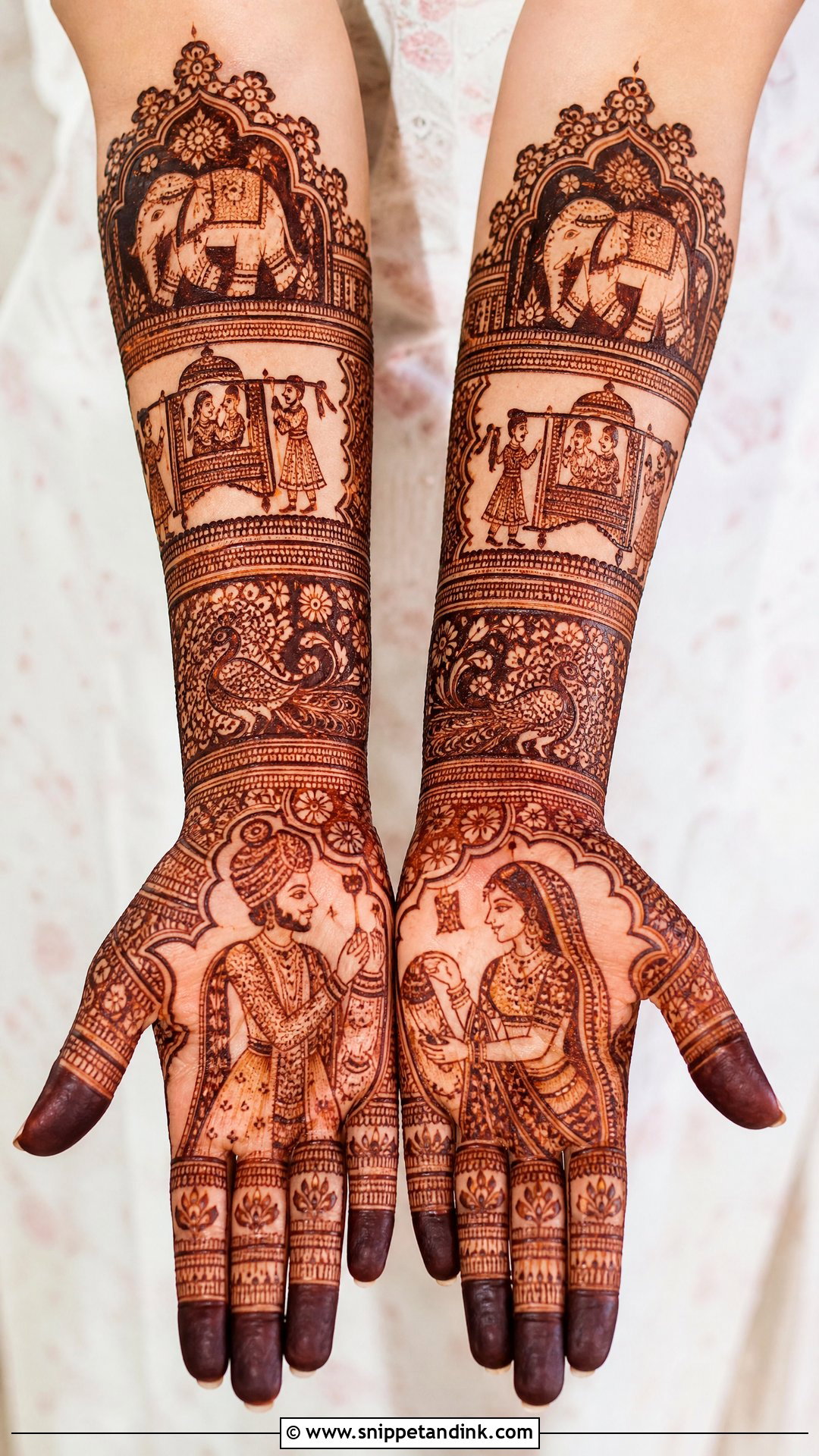
Rajasthani mehndi is storytelling at full scale: bride and groom figures, doli elements, peacocks, elephants, paisleys and layered borders, with a different but connected scene on each hand, often from fingertips to forearms. Only the bride usually has the hours for it. Keep the main figures large enough to recognise from across the room, with smaller filler surrounding them so the scene stays readable. It sits naturally alongside a heavy traditional outfit and bridal jewellery.
20. Veere Di Wedding Moroccan Mehndi
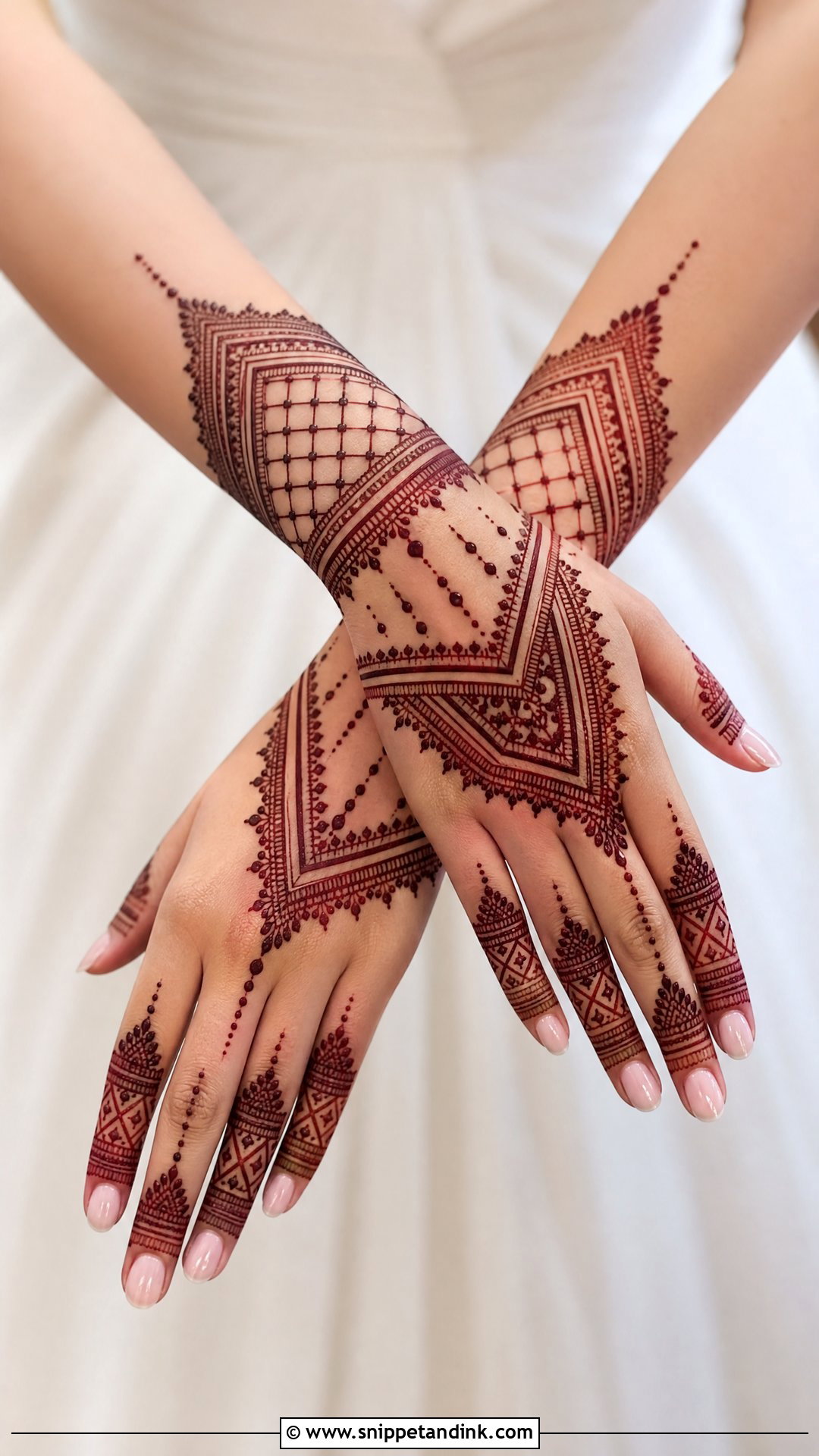
Moroccan work swaps flowers for geometry: diamonds, lines, triangles, grids, dots and bold borders, usually on the back of the hand and wrist, with heavily patterned fingers and small open spaces around the main shapes. Friends of the bride who want something different from Indian florals tend to choose it, and it pairs well with Indo-western outfits. Even line weight matters more than anything here. One wobbly line breaks a geometric pattern in a way a floral design would hide.
21. Veere Di Wedding Gulf Khaleeji Mehndi
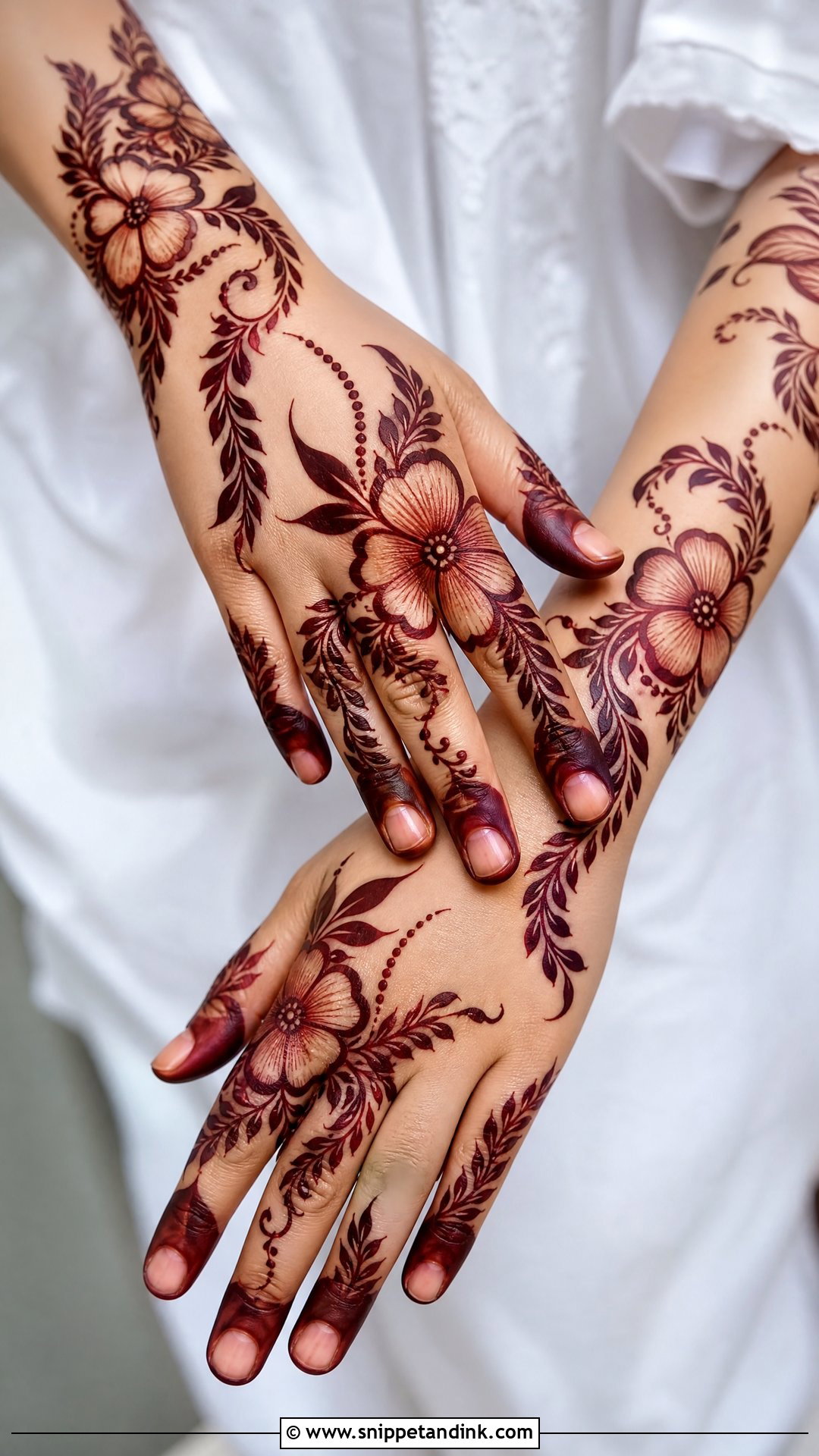
Gulf-Khaleeji mehndi is all about big, confident shapes: large flowers, thick leaves, shaded petals and sweeping vines across the palm or back hand. Strong outlines and open skin make it ideal for a deep reddish-brown stain, and the large motifs read well from a distance. For bridesmaids and guests it’s glamorous without being dense, and it’s quicker to apply than heavy bridal work. Extend the trail from the wrist to one or two fingers for drama. The outlines need a slightly wider cone tip and smooth, unbroken strokes.
22. Veere Di Wedding Matching Friends Mehndi
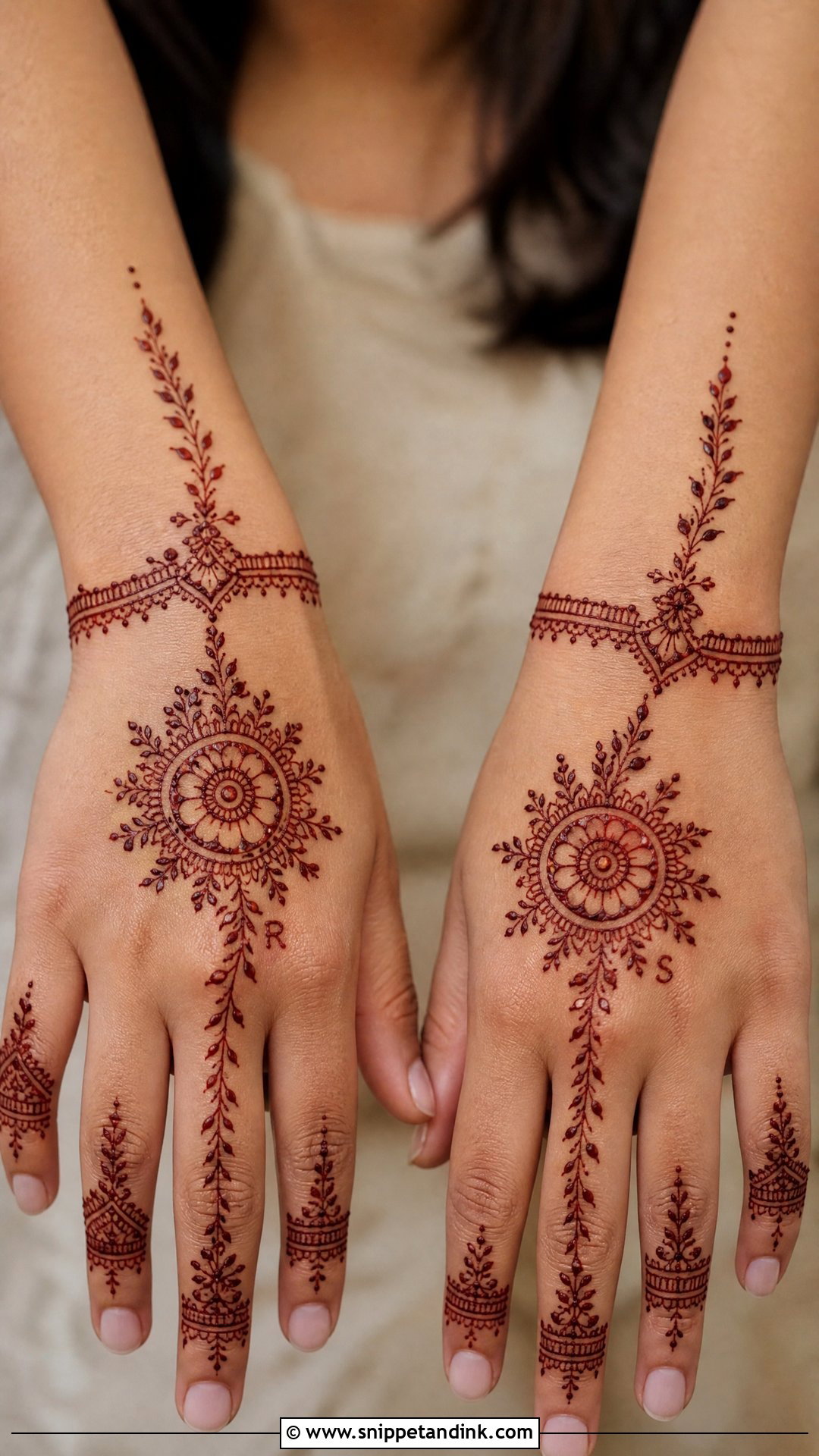
Matching friends mehndi is the most requested idea for this theme, and the version that works best isn’t identical hands. Choose one shared motif, such as a small mandala, a floral trail or a wrist cuff, and place it on everyone, then let each friend choose palm or back-hand placement and her own coverage. Hand sizes differ, so I scale the motif to each hand instead of copying it at one size. Tiny initials, dots or friendship symbols add a personal touch, and the payoff is the photo of everyone’s hands around the bride’s.
23. Veere Di Wedding Engagement Mehndi
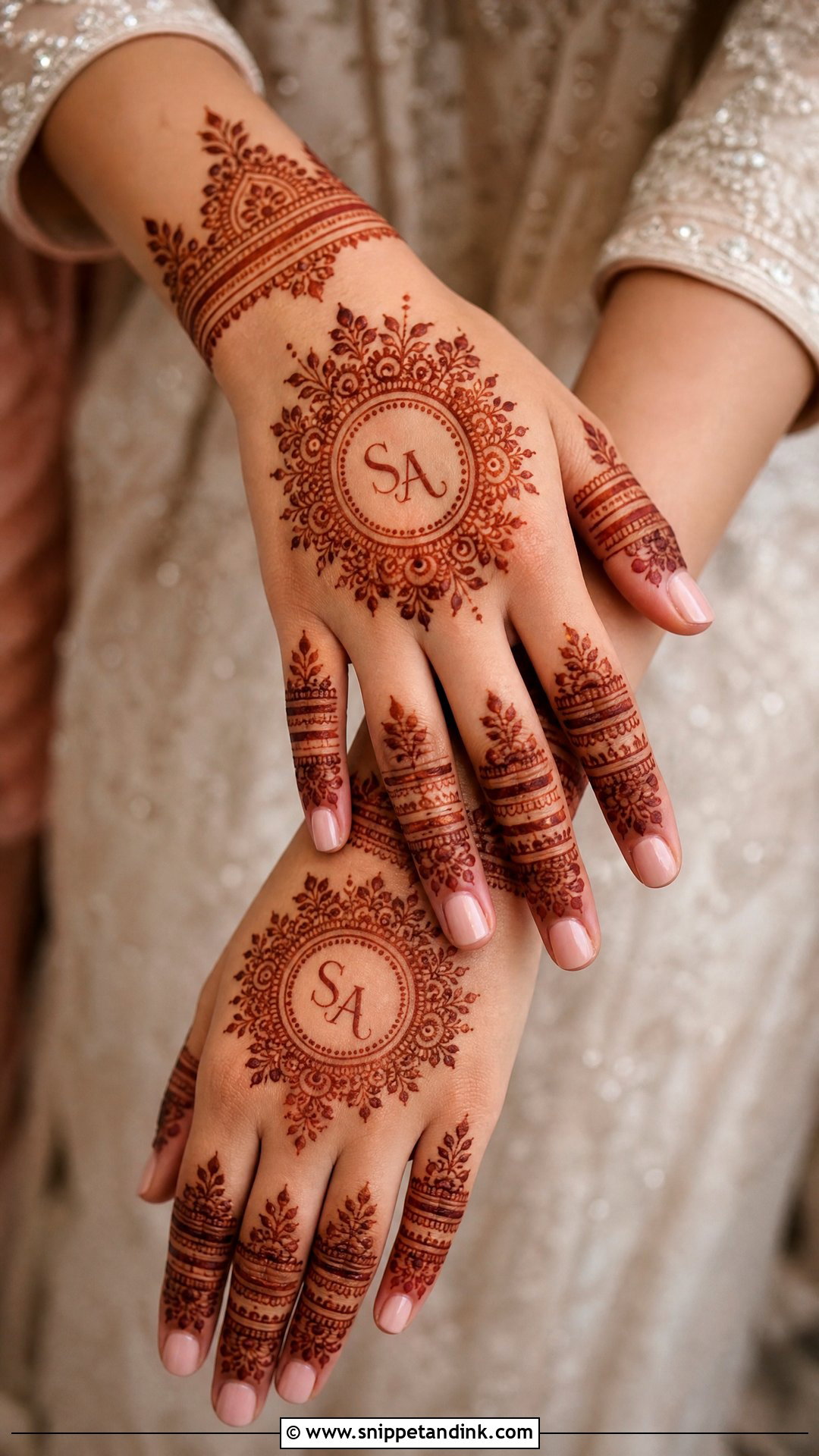
Engagement henna gets photographed closer than almost anything else, usually right next to the new ring. Ring-frame motifs, delicate florals, finger bands and a wrist cuff work, with enough clear skin on the palm or back hand that the jewellery stays visible. A small mandala near the ring finger gives the eye a focus, and the couple’s initials can sit in a quiet corner. Keep the ring finger itself light. A dense band right under the ring hides both.
24. Veere Di Wedding Glitter Mehndi
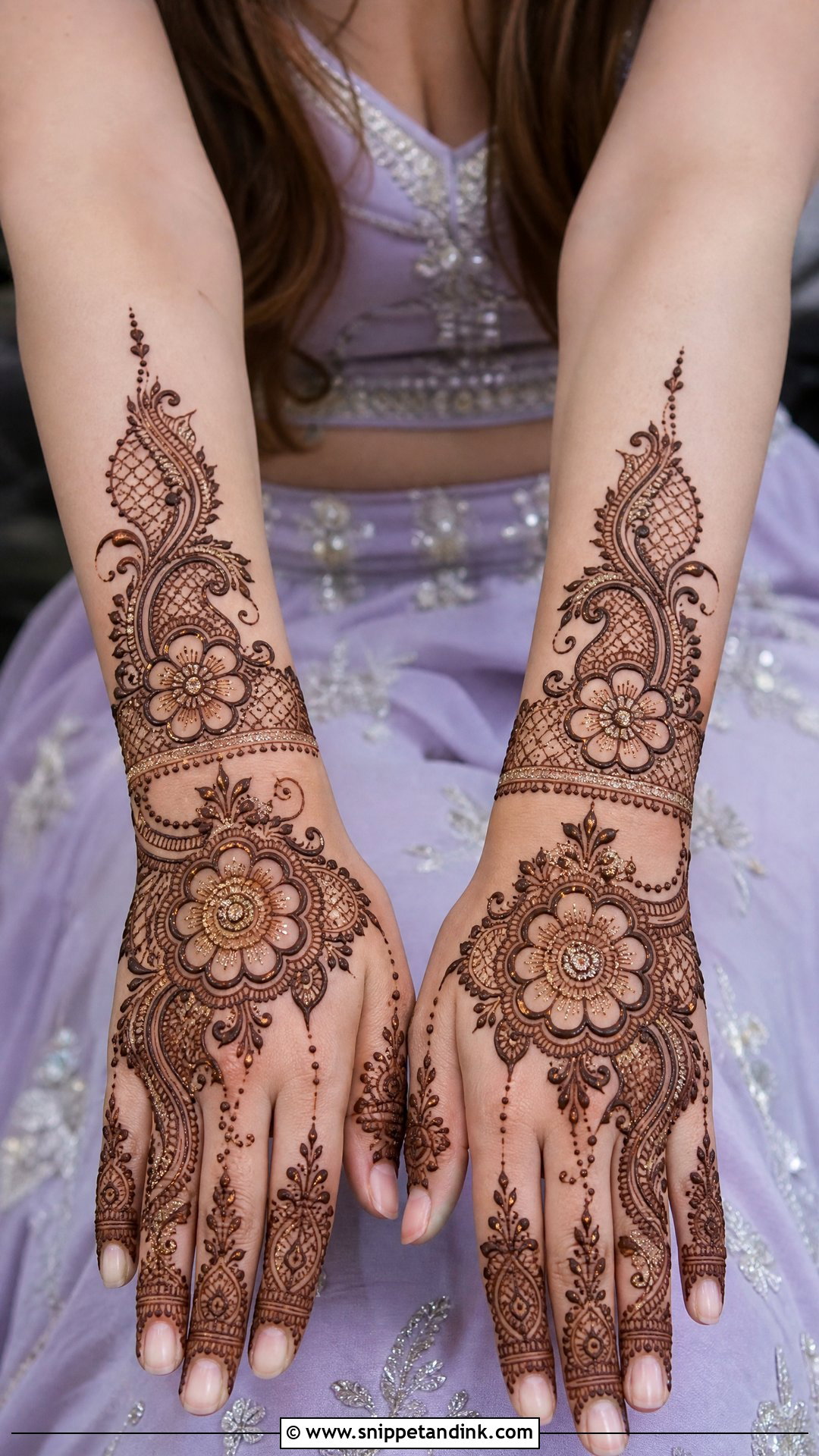
Glitter is for the playful night, not the ceremony. I draw a regular henna design, let the paste dry, then add a little gold, silver or coloured cosmetic glitter only to selected spots, such as flower centres, wrist bands or small borders. Use glitter made for skin, applied with a skin-safe adhesive, never craft glitter. Remember that glitter sits on top of the paste, so it disappears when the paste comes off; what stays is the stain. An Arabic floral, mandala or Indo-Arabic base works, as long as the glitter stays an accent.



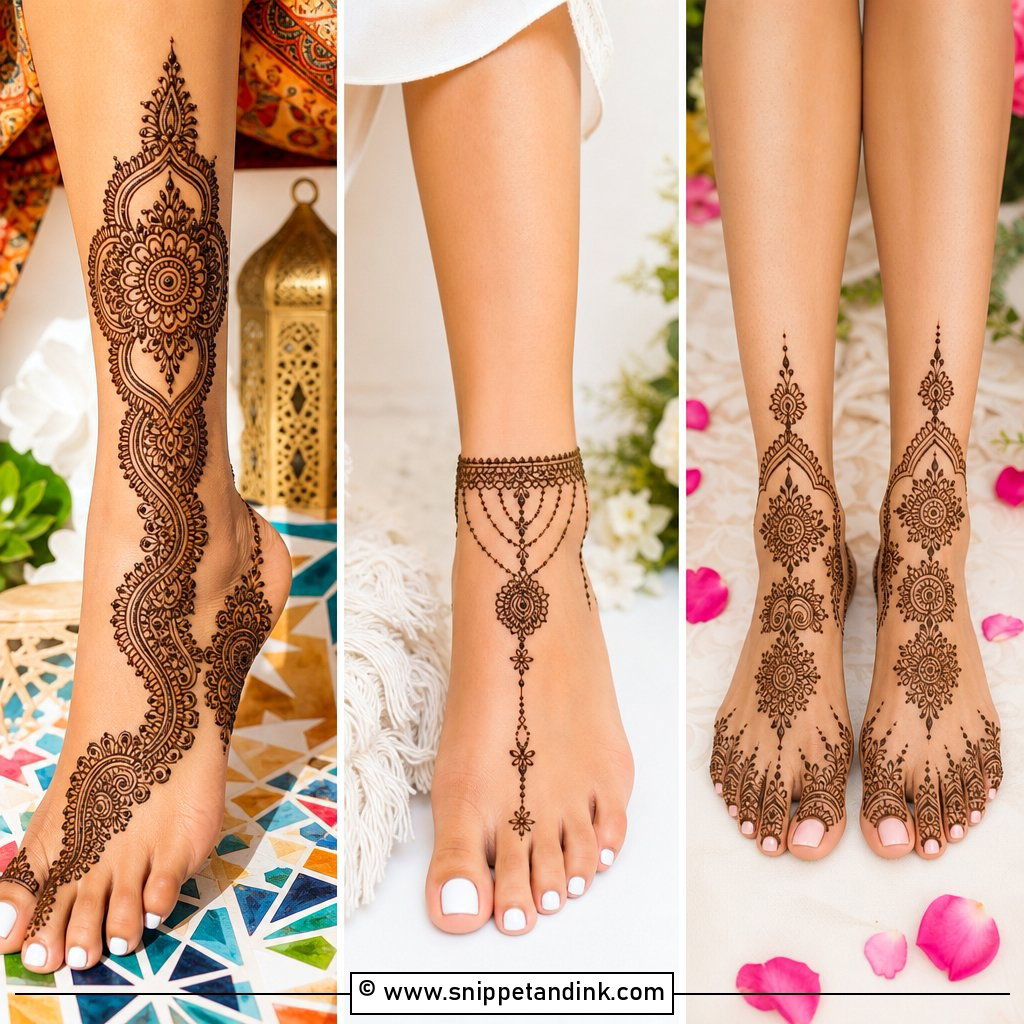
25. Veere Di Wedding Foot Mehndi
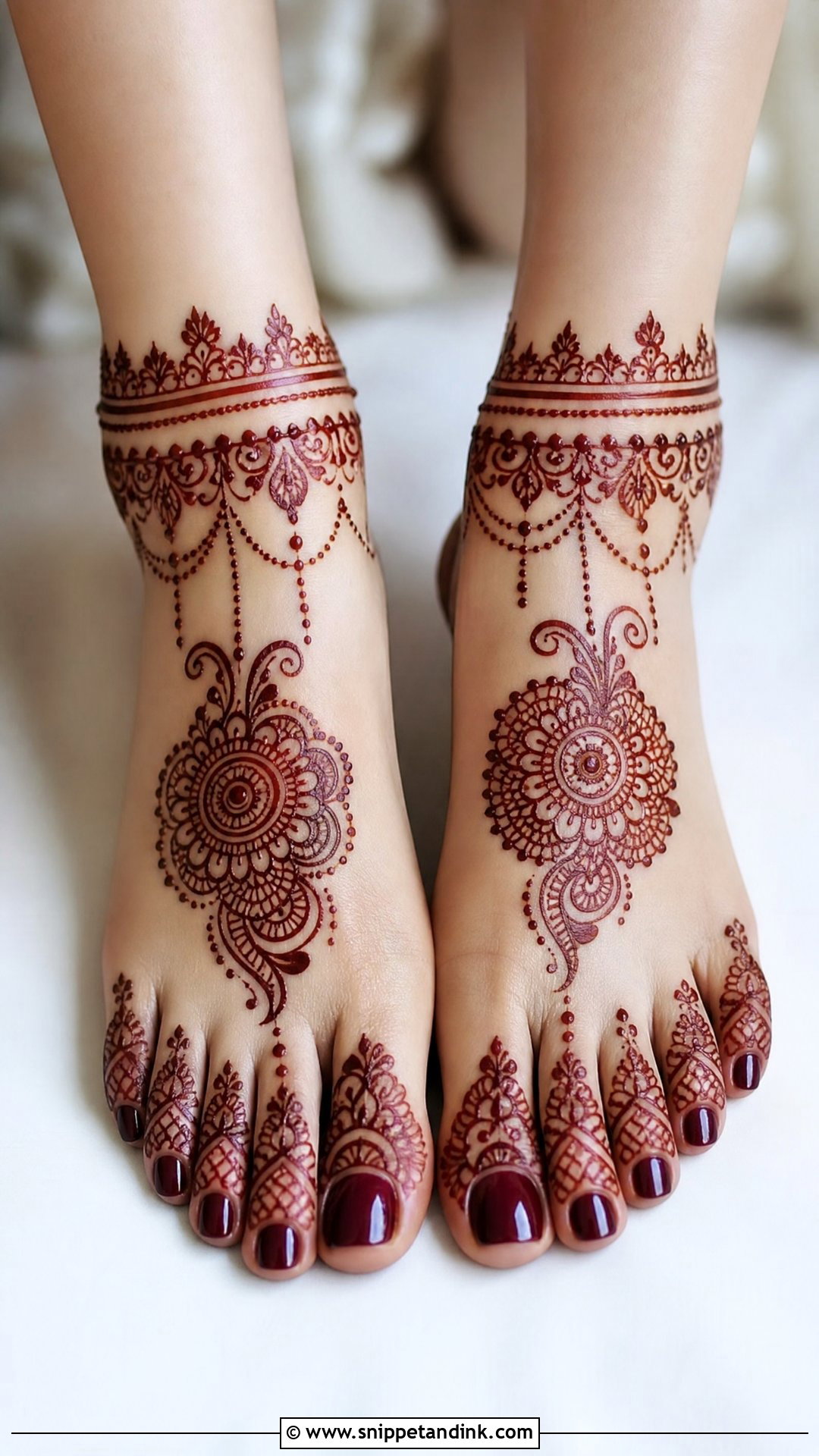
Foot mehndi finishes the look for brides in lehengas, anklets or open footwear: mandalas on the tops of the feet, floral anklet bands, toe detailing, paisley curves and fine dotted chains. For the bride, the design can climb toward the ankles. For bridesmaids, a lighter ankle-to-toe layout is plenty. Feet stain deeply, but they need time without walking, so I do them last and keep them clear of the toe creases, where paste cracks. It’s also a lovely close-up in the album.
Dancing, Eating and Hugging With Wet Henna
Mehndi nights are loud and crowded, and wet paste and a dance floor don’t mix well. The surface of the paste usually dries within the first half hour or so, but it stays fragile for hours and can smudge if it’s knocked or squashed.
- Wear sleeves that end above the wrist, or roll them up and pin them before you sit down.
- Eat before your turn, or ask a friend to feed you. Most brides end up being fed anyway, and that’s part of the fun.
- Keep your phone in a friend’s bag. Reaching into a clutch is the most common way I see paste smudged.
- Dance with open palms facing out, and save the hugs for later.
- If paste does smudge, lift it off with a cotton bud while it’s still wet instead of wiping. The artist can redraw the line quickly.
Leave the dried paste on as long as possible afterwards, overnight if you can, and scrape it off rather than washing. The stain will look orange at first and deepen over the next day or two, which is exactly why the night before the wedding is the latest I’d book anyone who wants a dark colour for the ceremony.
The Bride Goes Heaviest, Her Veeres Go Lighter
The theme mixes friendship, celebration and tradition, and every role at the wedding can have its own version. Full bridal coverage, Arabic florals, minimal finger designs, initials and matching bridesmaid sets all belong on the same night. Brides can go bold with portraits and Rajasthani scenes, while friends pick lighter mandalas, bracelets or floral trails. Base your choice on your outfit, the event timing and how long you can sit, and book an artist who can handle a group so nobody spends the party waiting.
You'll Like These Ideas:




Leave a Reply