
At every wedding and Eid booking, there’s a queue of children waiting for their turn, and they’re the clients who teach you the most about speed. Small hands need mehndi that’s quick to apply, dries fast and still looks like something once the stain comes up. What works is a few bold shapes with open space around them: a flower, a heart, a crescent, a little bracelet. Children love motifs they recognize, and parents want something that won’t smudge onto a new outfit. Here are 25 designs I’d draw on a child’s hand, with notes on how long each takes and which ages it suits.
Only Natural Henna Should Go on a Child’s Skin
Before any design, check what’s in the cone. Real henna paste is made from dried henna leaf powder, lemon juice or water, sugar and sometimes a little essential oil. It’s applied green-brown and stains orange first, darkening to brown over a day or two. Anything sold as “black henna”, or paste that stains black within an hour, usually contains PPD, a hair dye chemical that can cause blistering and lasting allergies. I never use it on anyone, and children’s skin is the last place I’d risk it.
- Ask the artist or check the cone label for the ingredients. Shop-bought cones with no ingredient list are best avoided.
- Children with G6PD deficiency should not have henna at all; if you’re unsure, check with your doctor first.
- For young children, I use paste without strong essential oils, or with a mild one, since some oils irritate thin skin.
- Do a small dot on the inner arm a day before if the child has sensitive skin or eczema.
1. Simple Flower Kids Mehndi Design
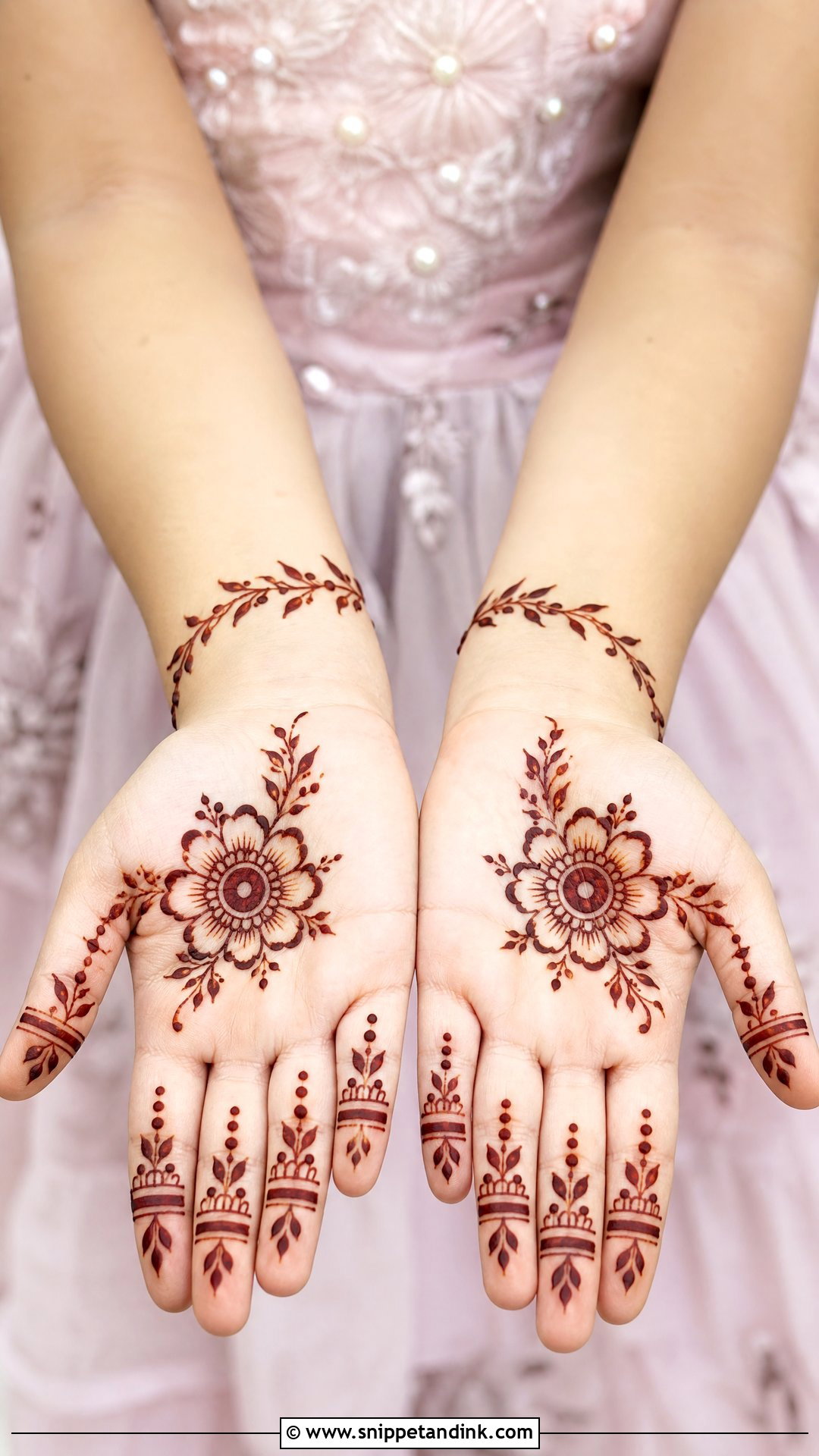
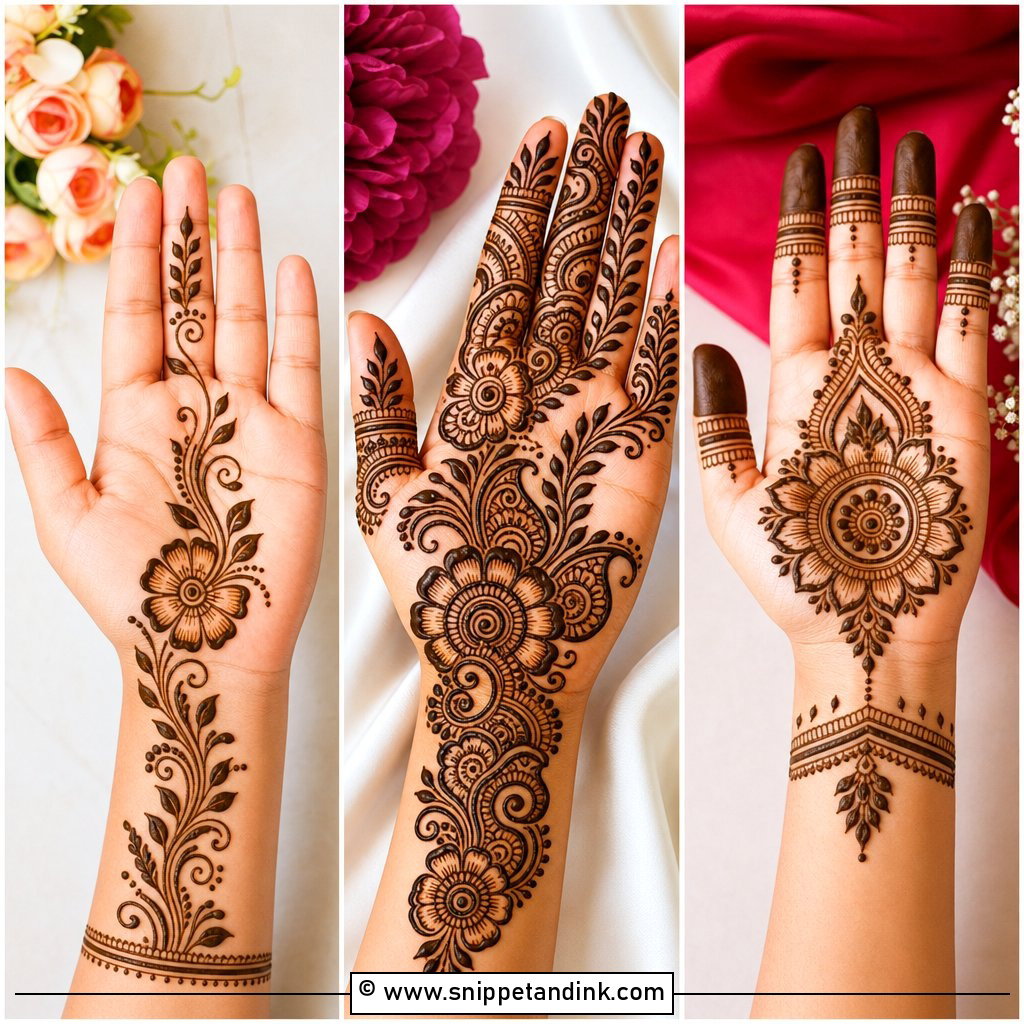
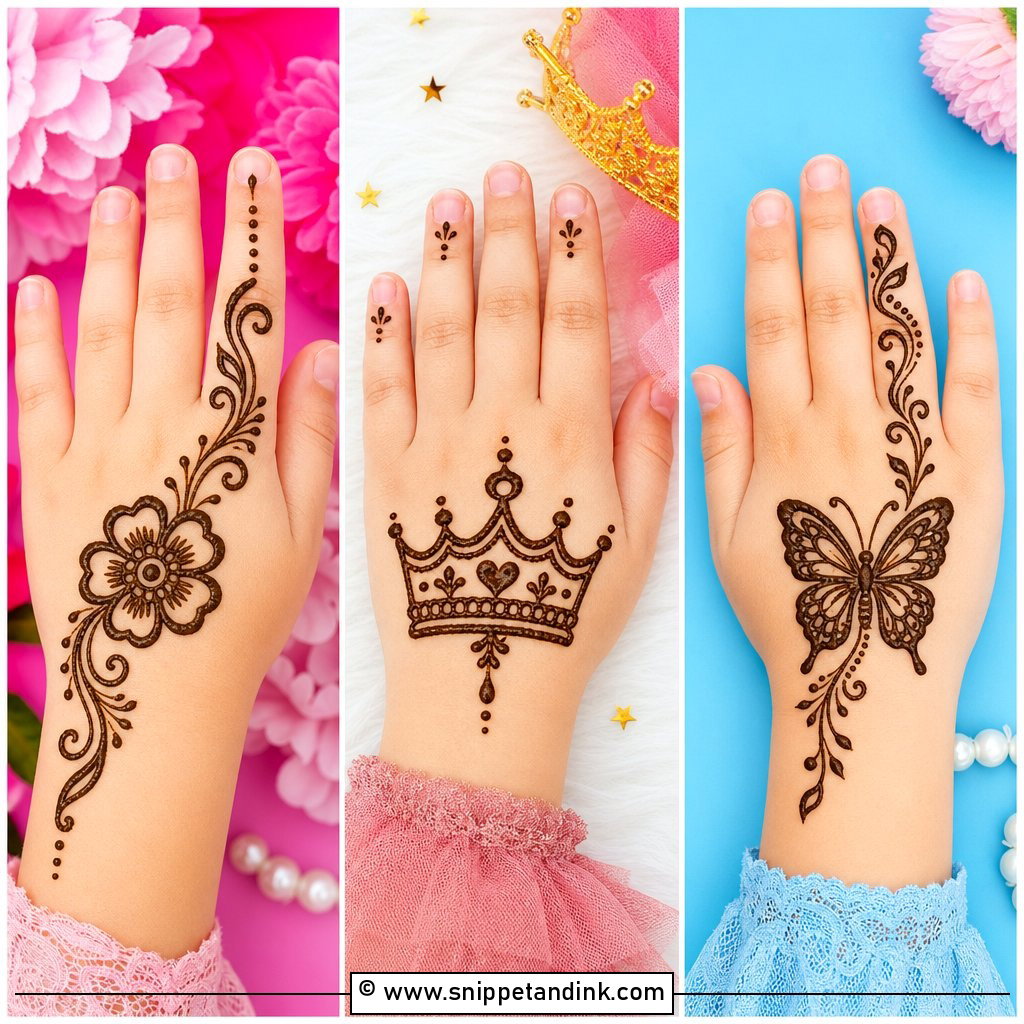
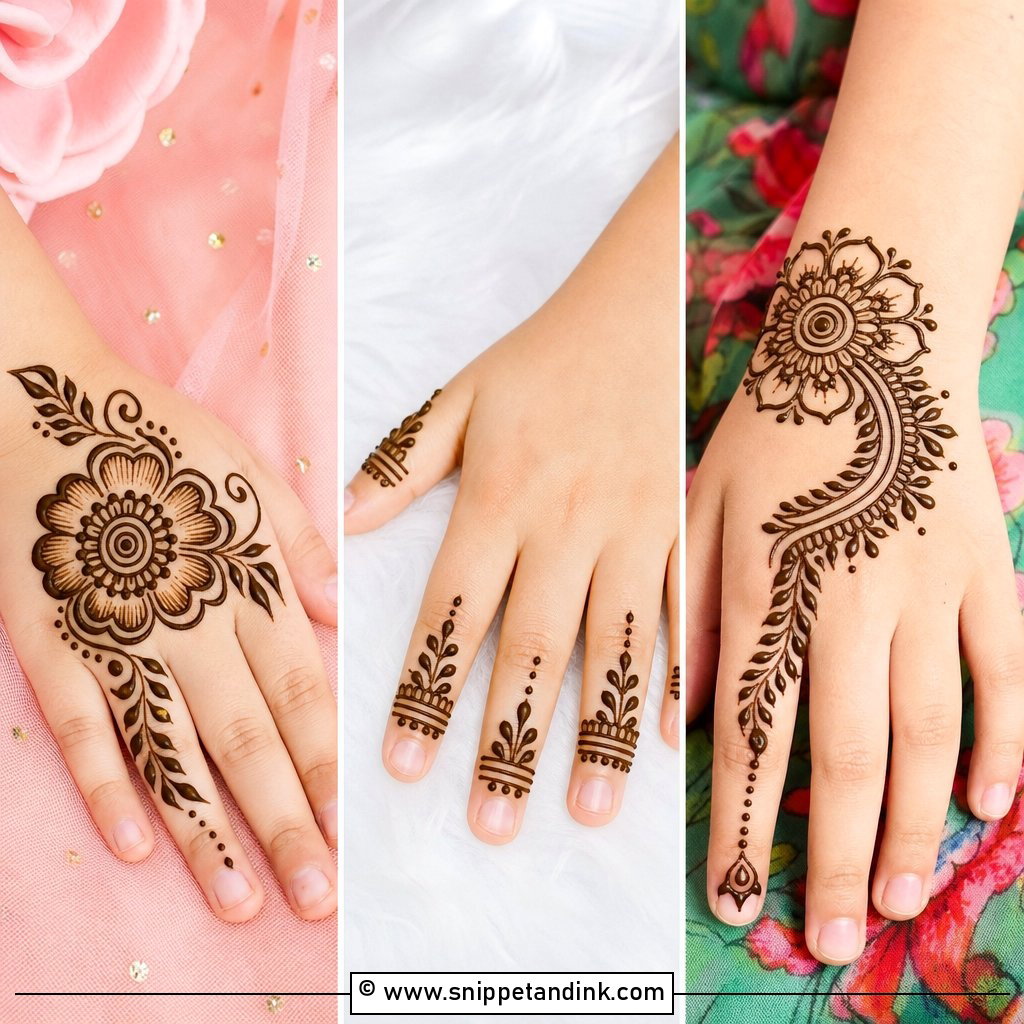
A single flower is the design I draw most for children. A round bloom in the center of the palm or back of the hand, a couple of leaves, dots, and a short vine to the wrist. It takes a few minutes, which matters more than anything when the child is four. I make the petals fat and rounded, because thin petals on small skin can merge into one blob once the paste spreads. For toddlers, stop at the flower and two branches. Older children can have it run onto two fingers.
2. Cute Heart Kids Mehndi Design
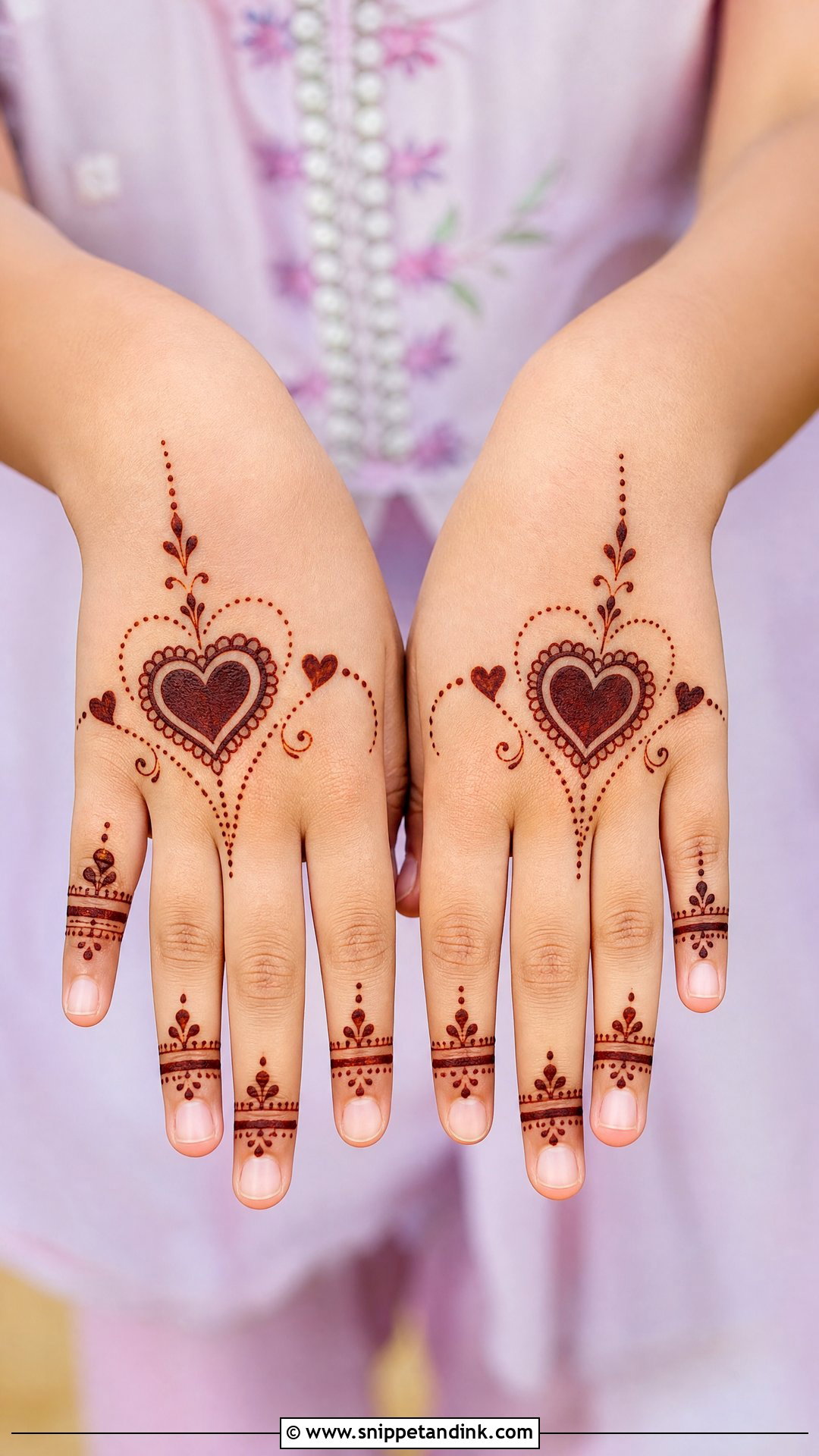
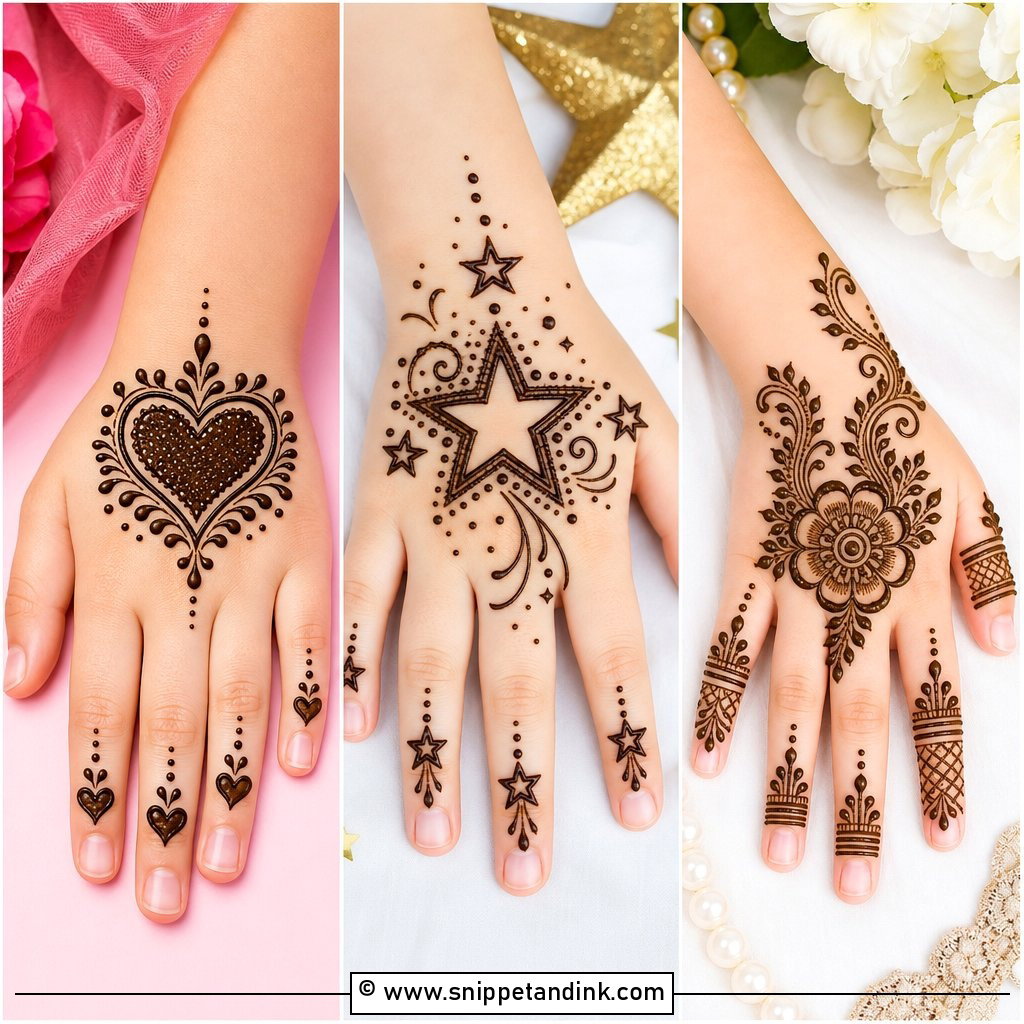
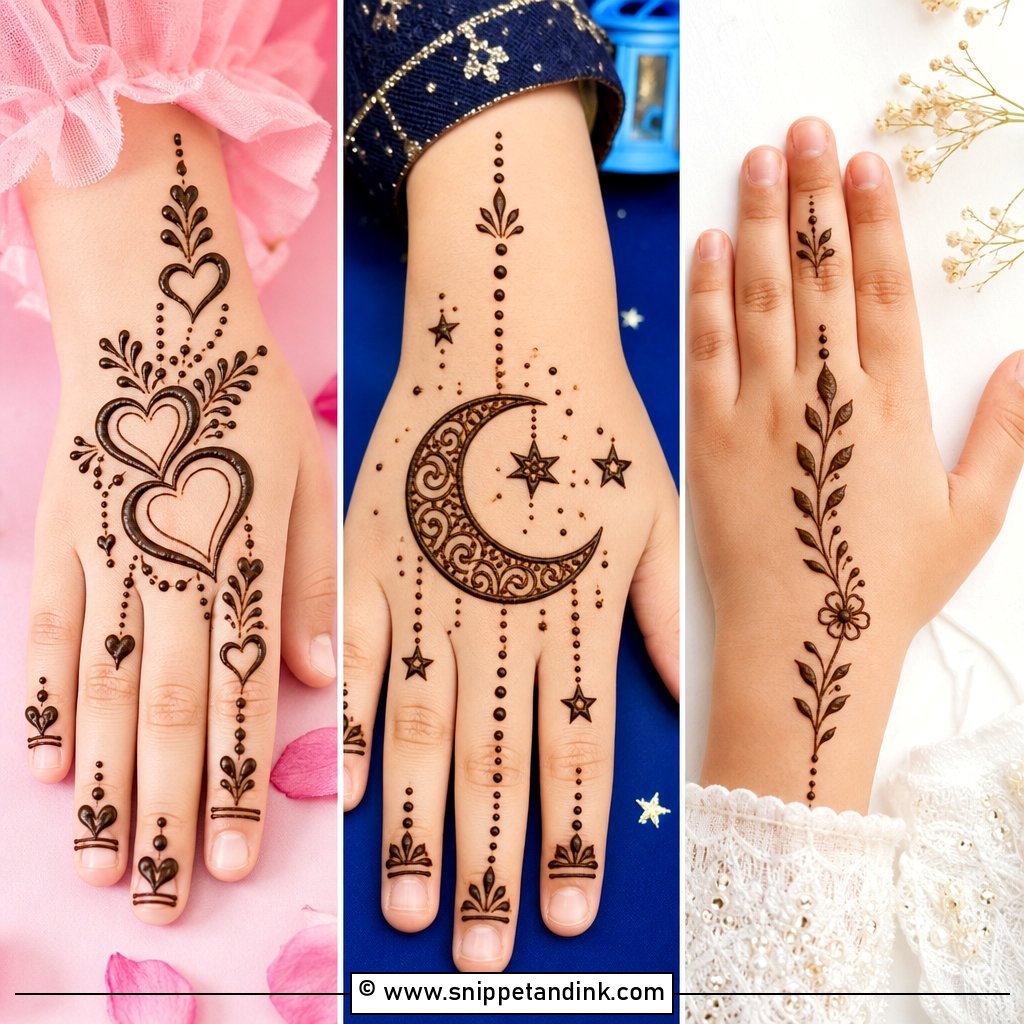
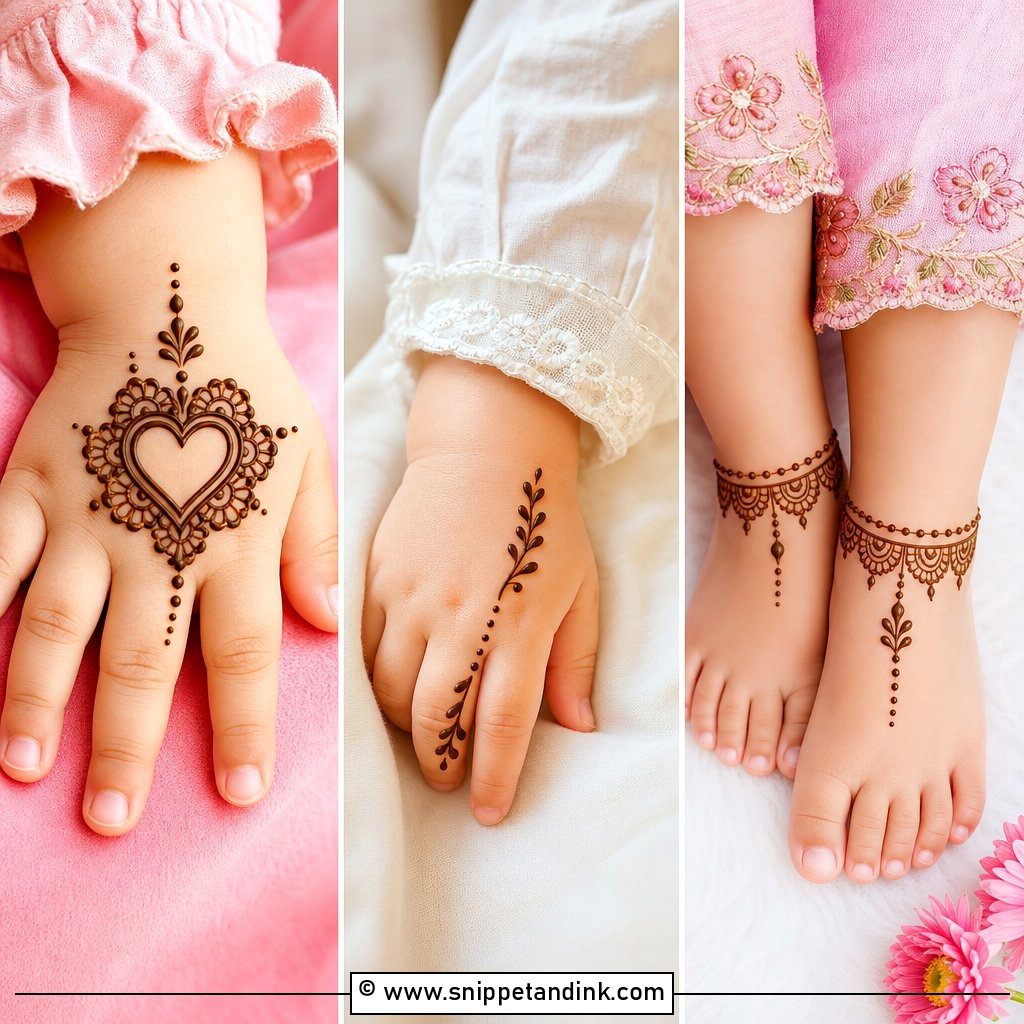
Children recognize a heart instantly, and that’s half the appeal. I draw one neat heart in the middle, decorate it with dots and small curves, and sometimes add two tiny hearts at the wrist as a bracelet. Keep the outline thick and skip heavy shading inside; shaded areas take longer to dry and smudge on hands that won’t stay still. A dotted trail from the heart to the fingers makes it festive. It works on palm or back of hand.
3. Butterfly Kids Mehndi Design
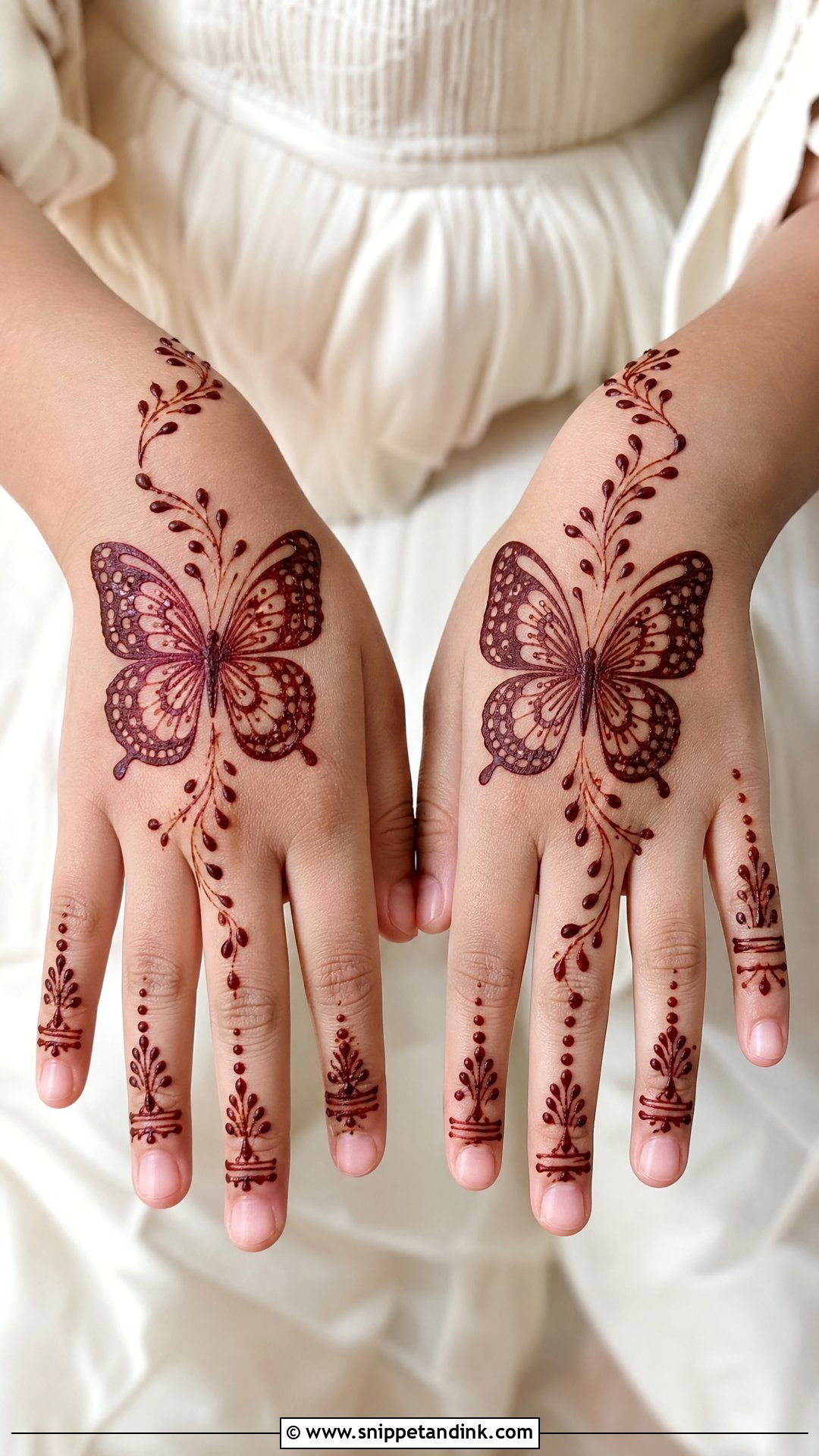
I put a butterfly kids mehndi design on the back of the hand, where the wings can open across the center without crossing the knuckles. Rounded wings, a small body, two antenna lines. I fill the wings with dots and little petals rather than lines of shading. A short leafy trail to the wrist finishes it, and one or two fingers can take tiny dots or rings. It’s quick enough for a birthday, an Eid morning or a wedding function.
4. Small Mandala Kids Mehndi Design
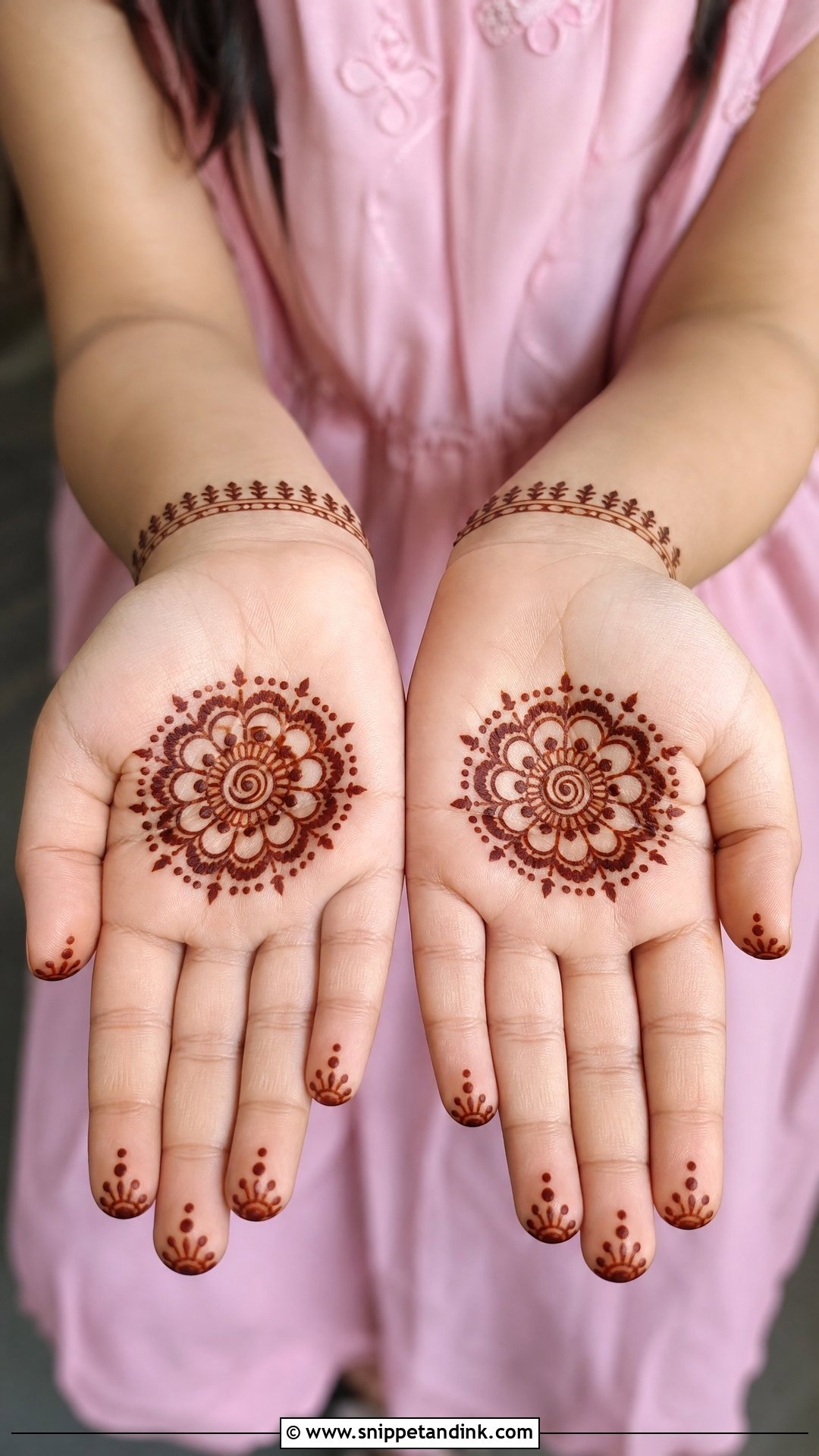
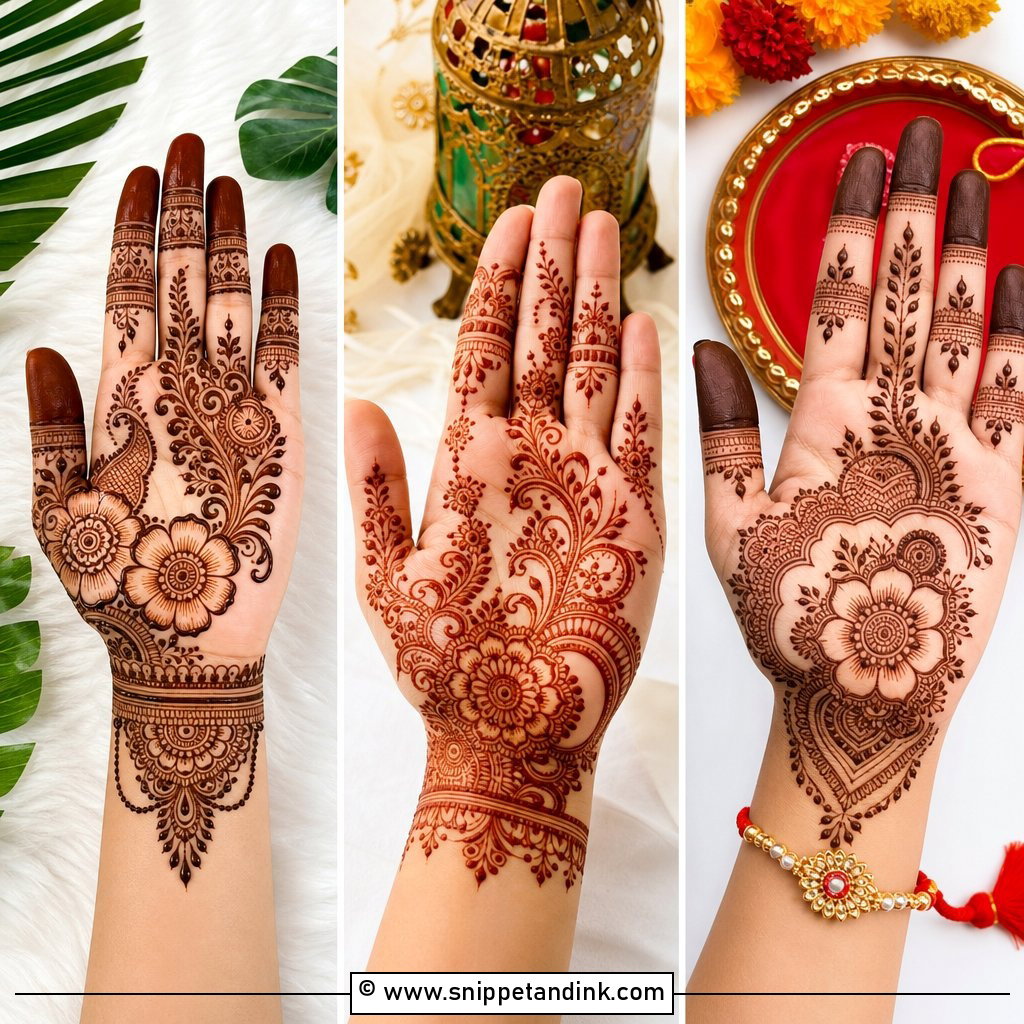
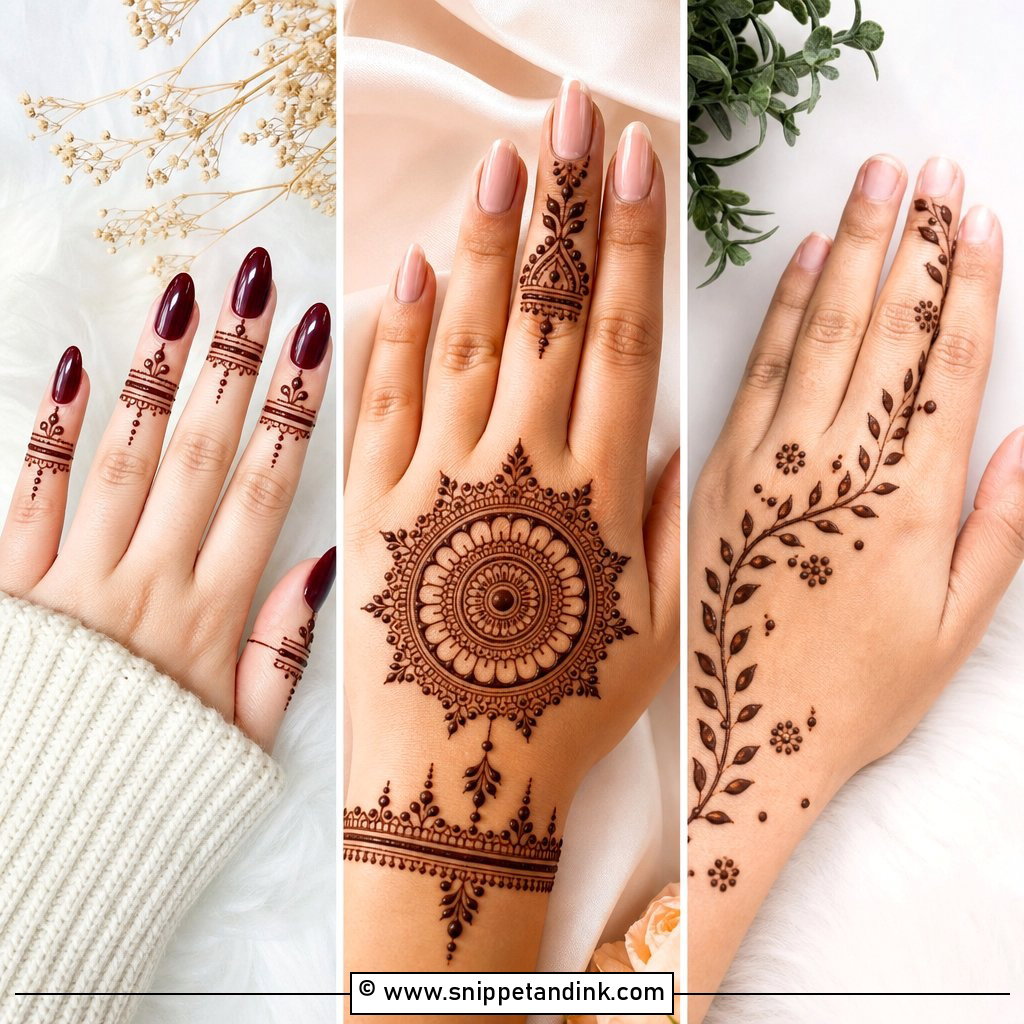
Children’s palms are small, so a mandala has to be small too: a tiny circle at the center, a ring of petals, dots, and one outer ring. That’s usually enough. If I add a second ring, the spacing gets so tight that the lines bleed together as the stain darkens. Fingertip dots or half-flower caps finish the look, and a slim wrist band can follow if the child is still sitting nicely. It gives a classic mehndi feel without a long sitting.
5. Arabic Trail Kids Mehndi Design
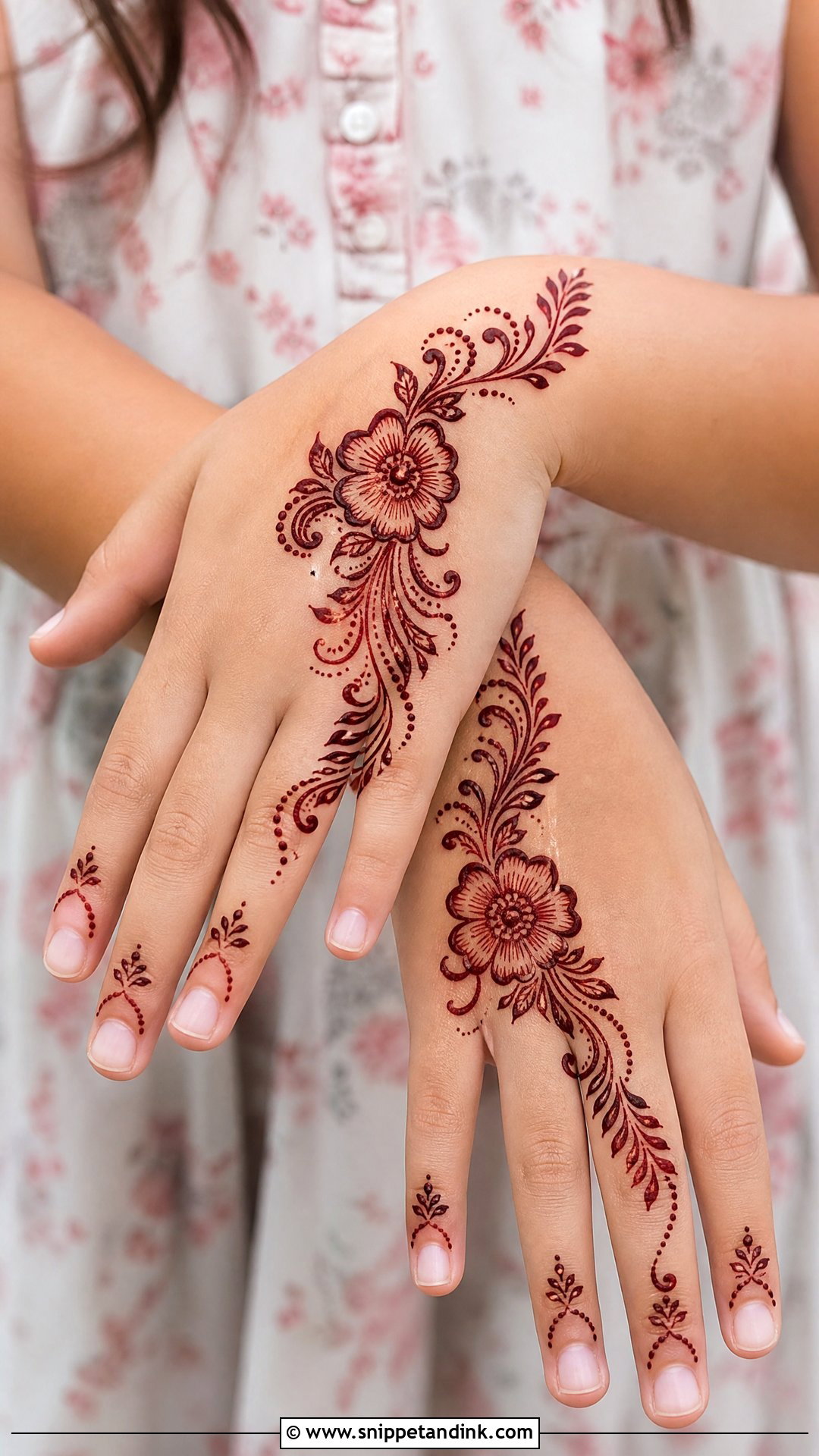
A diagonal Arabic trail, from one side of the wrist up toward the index finger, covers less skin and dries faster than full-hand work. I use medium flowers, leaves, dots and curved vines with plenty of empty space. Tiny flowers look good on an adult hand and turn into specks on a child’s, so I size up. A single finger ring at the end finishes it. Older children and preteens usually like this one because it looks grown-up.
6. Back Hand Kids Mehndi Design
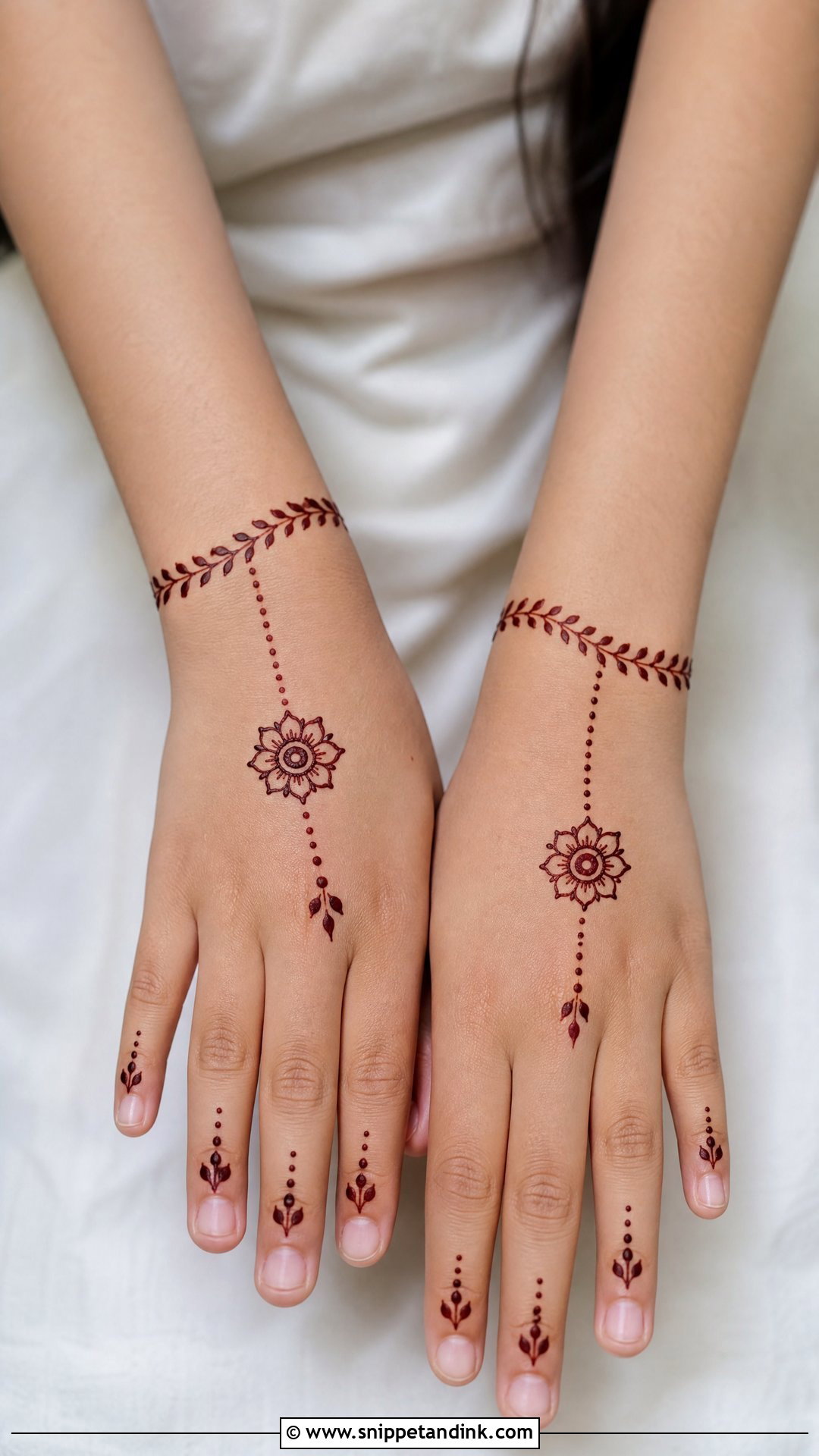
For younger children, I nearly always choose the back of the hand. Back hand mehndi is less likely to smudge because the child can still hold things, and they can see and show it off. A small flower, heart or mandala in the center, a short vine or bracelet line to the wrist, tiny dots or leaves on the fingers. I keep paste off the knuckles of active children: every time the hand makes a fist, the paste there cracks and flakes.
7. Front Hand Kids Mehndi Design
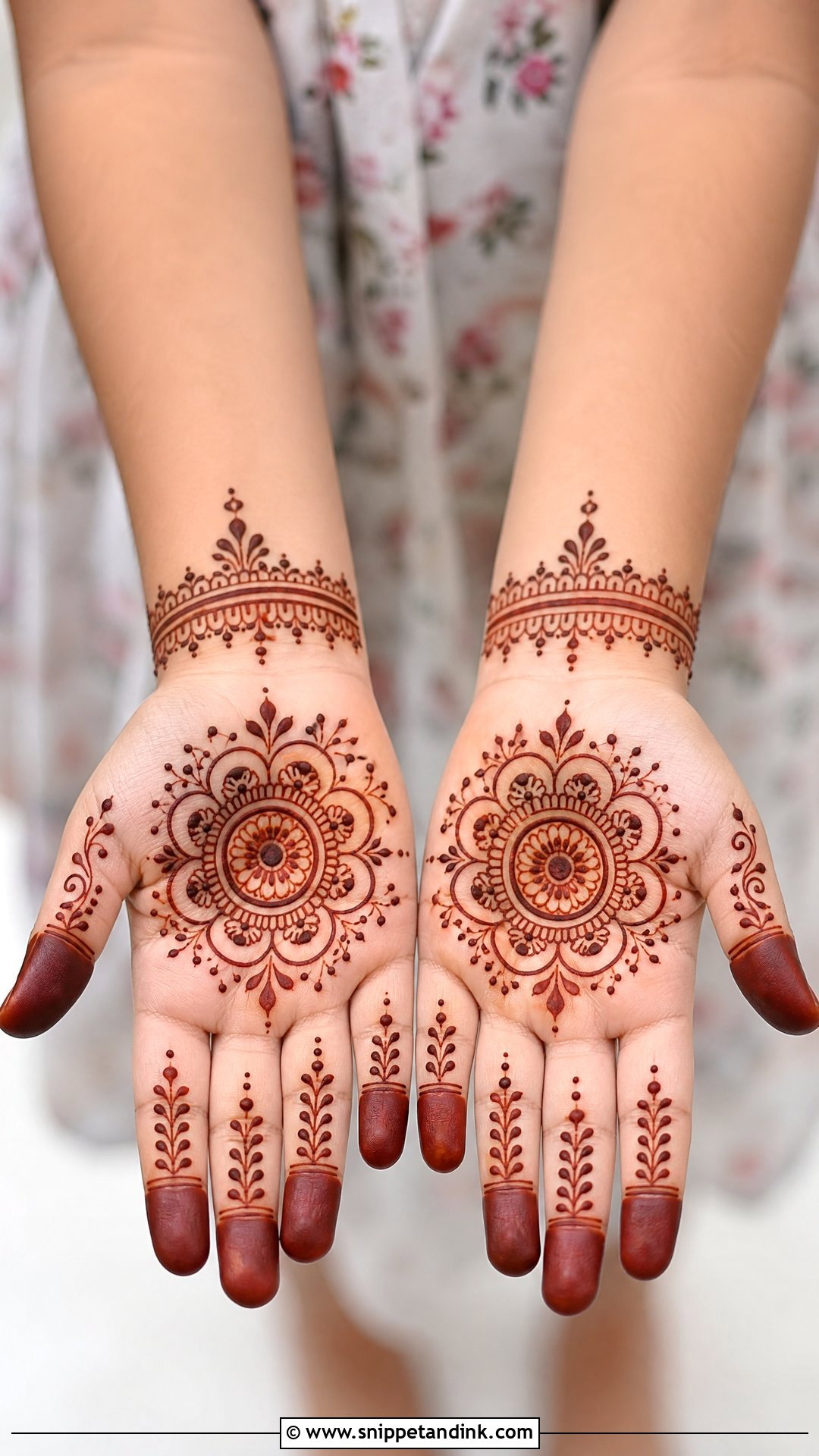
Palms stain darkest, because the skin there is thicker, but kids curl their hands constantly. I place one motif in the center, such as a flower, sun, heart or small mandala, add a few curved lines and finish with dots at the fingertips. No wet, heavy filling. I leave small gaps between elements so that if the hand closes a little, the paste doesn’t smear across the whole palm. A tiny wrist border can be added for a festive outfit.
8. Finger Kids Mehndi Design
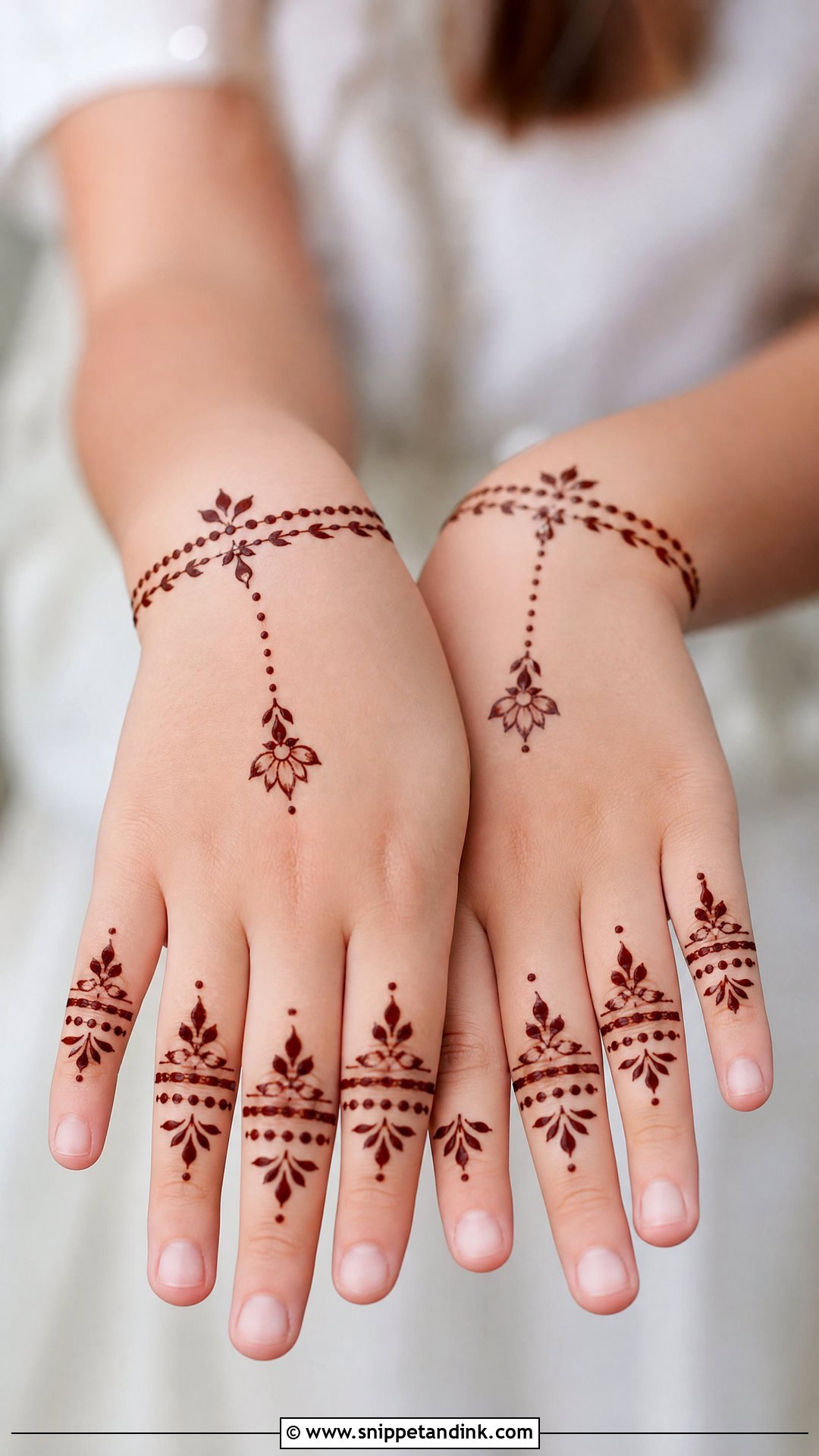
Fingers only is the fastest design in this list and suits children who won’t sit at all. Little rings, dots, leafy lines and flower caps, with a small motif near the knuckles or wrist to tie it together. Older girls like it because it looks modern and minimal. I vary each finger slightly, one with dots, another with leaves, another with a band. Fingertips stain very dark, so this design shows up well even if the paste comes off early.
9. Bracelet Kids Mehndi Design
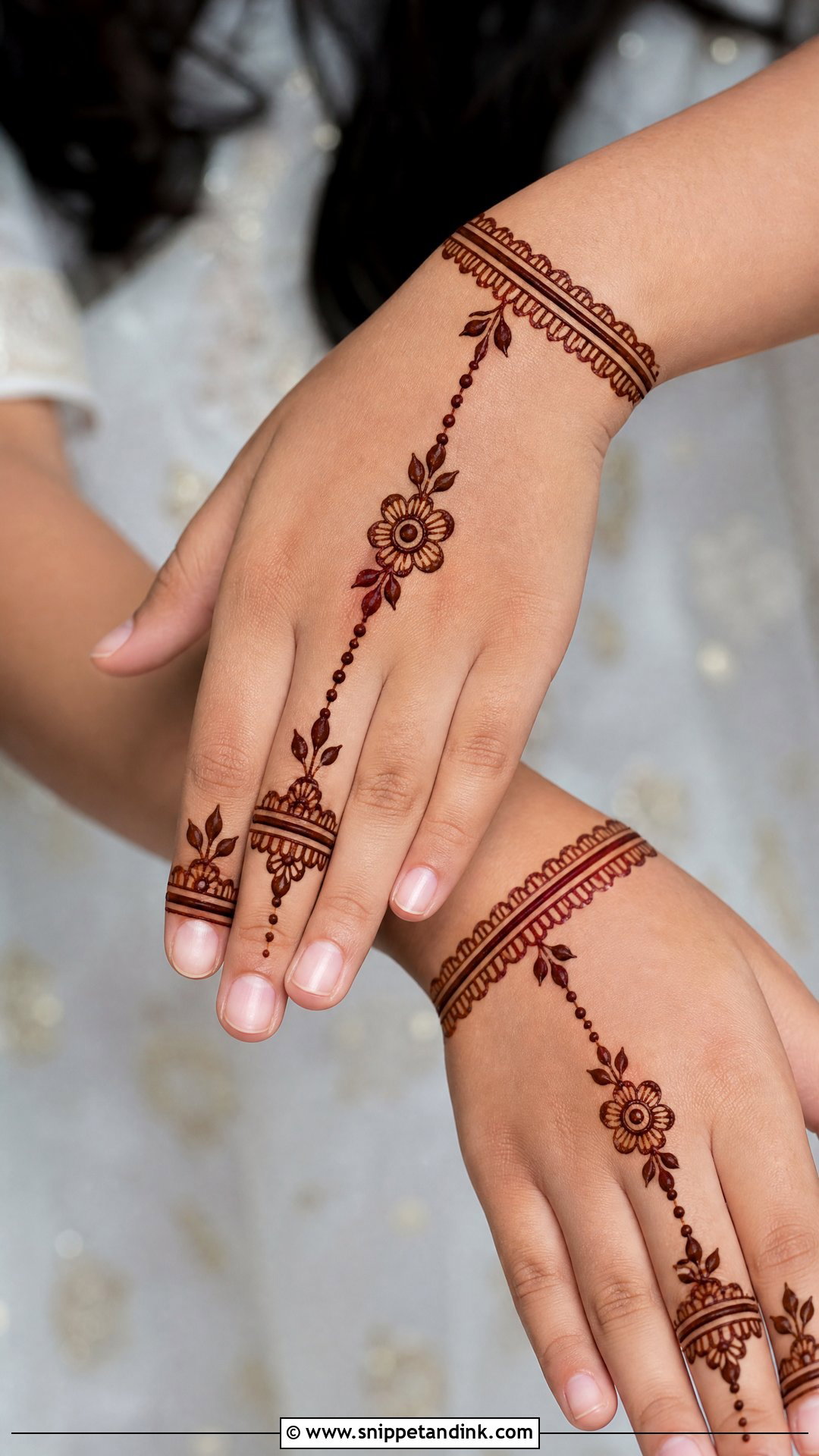
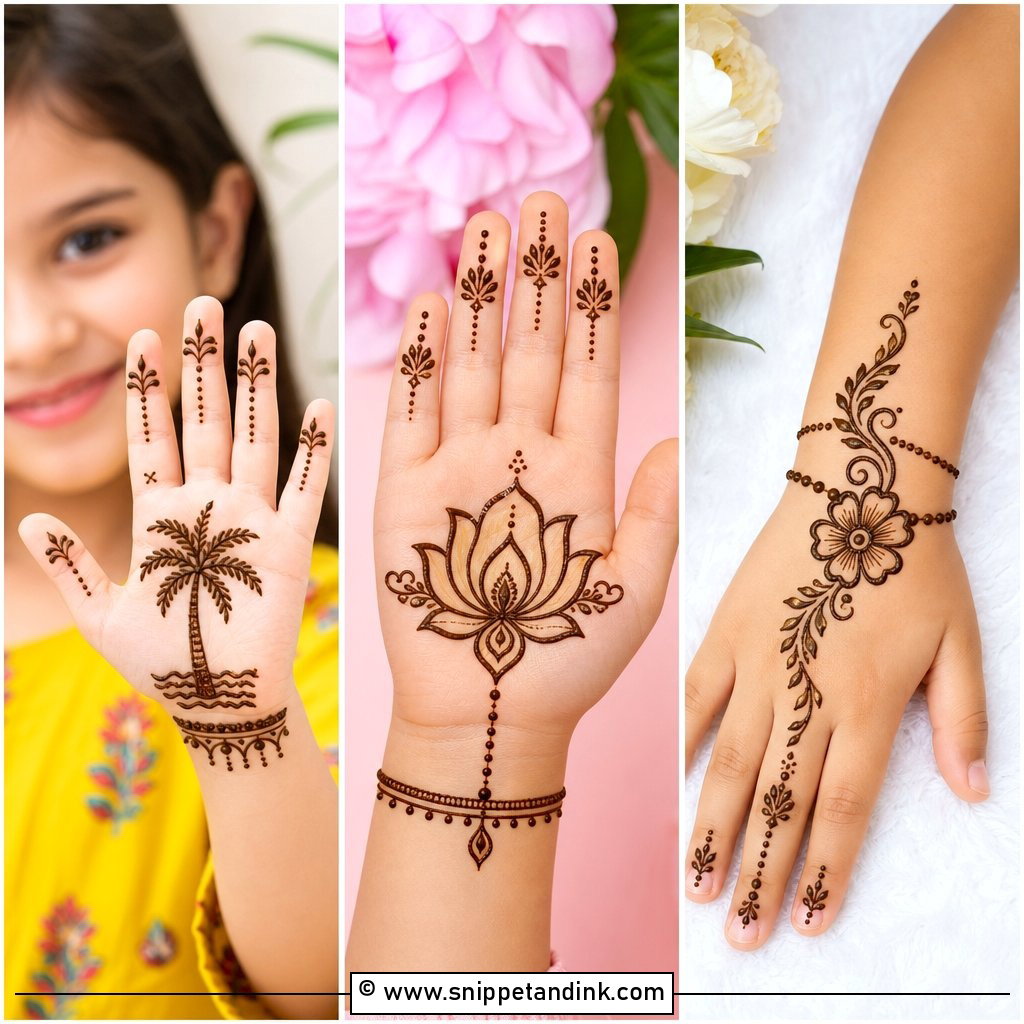
A bracelet design looks like a tiny piece of jewelry, and children love that. I draw a slim band at the wrist with dots, small flowers or scallops, then a short chain to the middle of the back of the hand, finished with a heart, flower or mandala. It dries quickly and sits well with bangles. Keep the band thin; a thick band on a small wrist looks like a cuff. One or two finger rings complete the jewelry effect.
10. Star Kids Mehndi Design
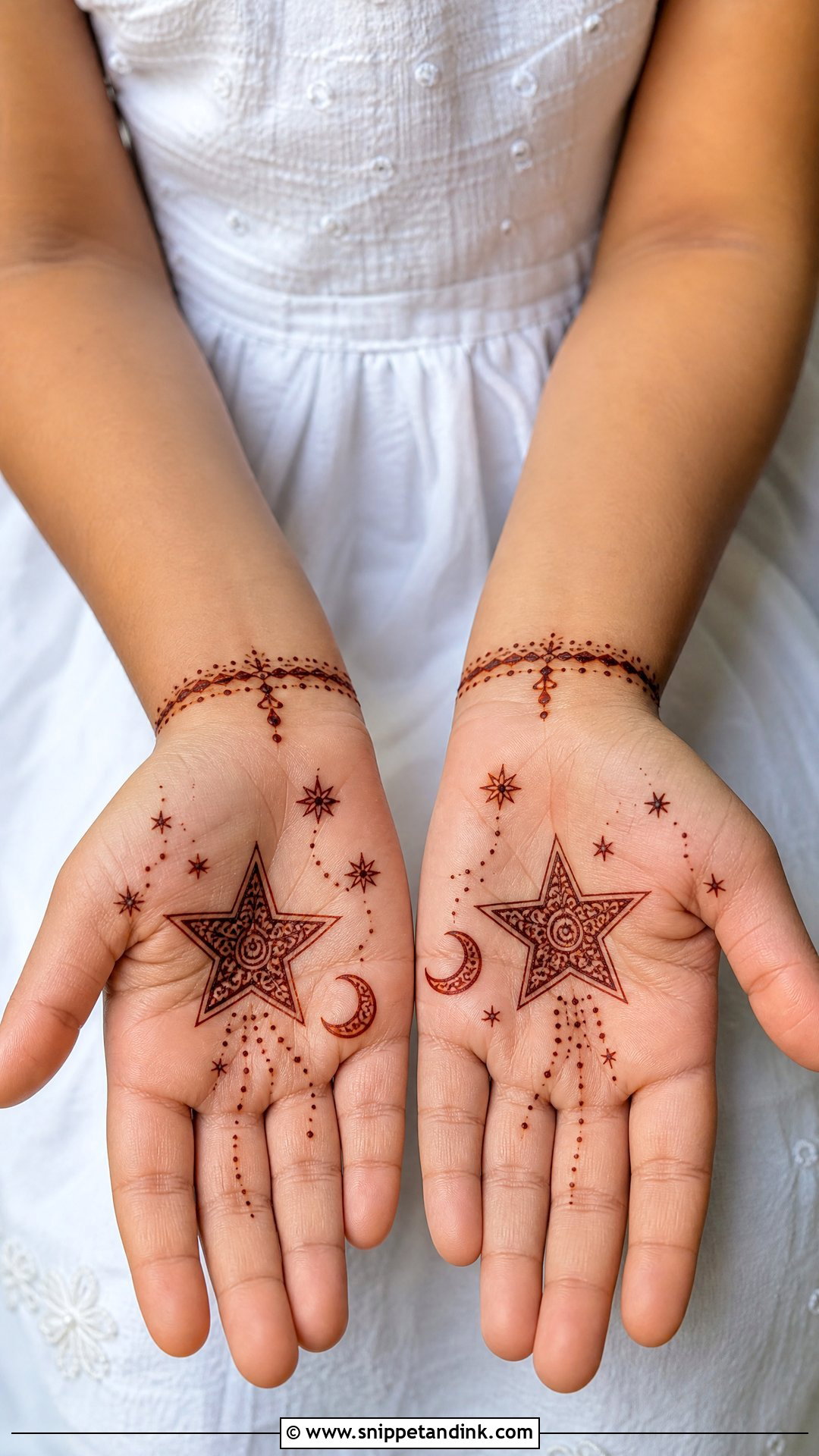
Stars are playful and quick. One larger star on the palm or back of the hand, smaller stars and dots trailing away from it. I round the points slightly, because sharp star points on small skin tend to fill in and lose their shape. A small moon beside them suits Eid and evening events. A dotted line or tiny leafy band at the wrist is enough. Stars stain clearly without heavy detail.
11. Moon Kids Mehndi Design
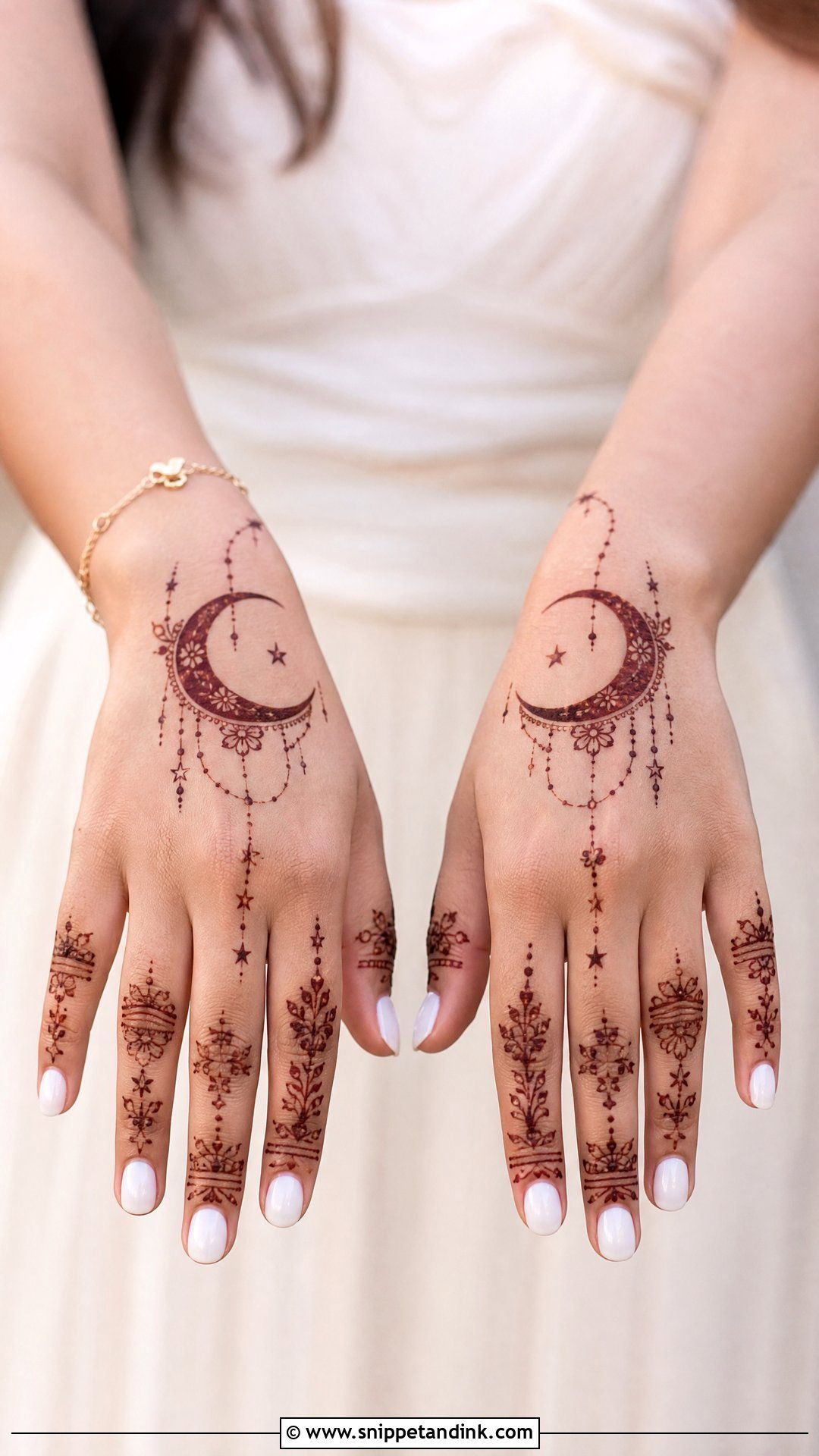
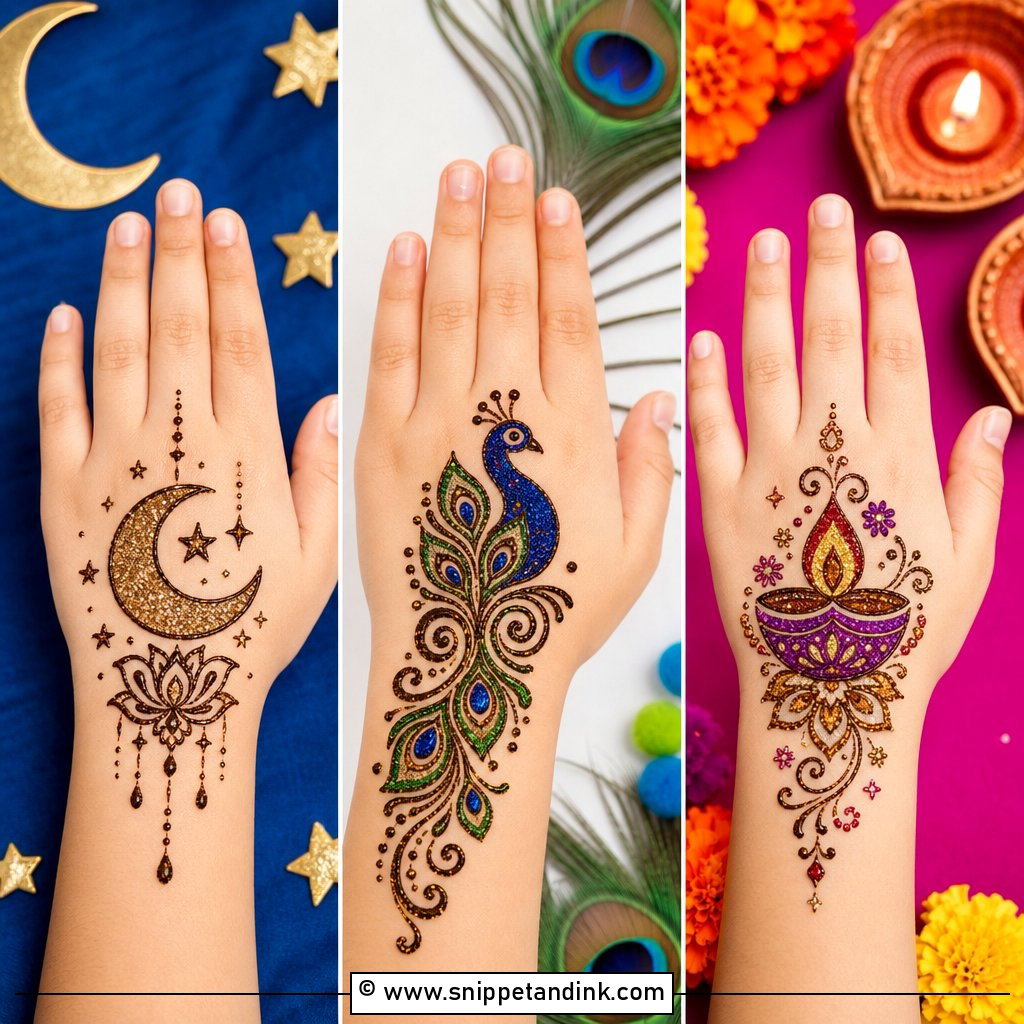
I draw the crescent moon bold, on the back of the hand or the palm, and decorate its curve with tiny dots, flowers and stars. A short chain can hang from the moon toward the wrist. It’s especially popular for Eid and evening family celebrations. For very young children I keep it to one crescent and three stars. For older ones, add a finger trail or bracelet.
12. Rose Kids Mehndi Design
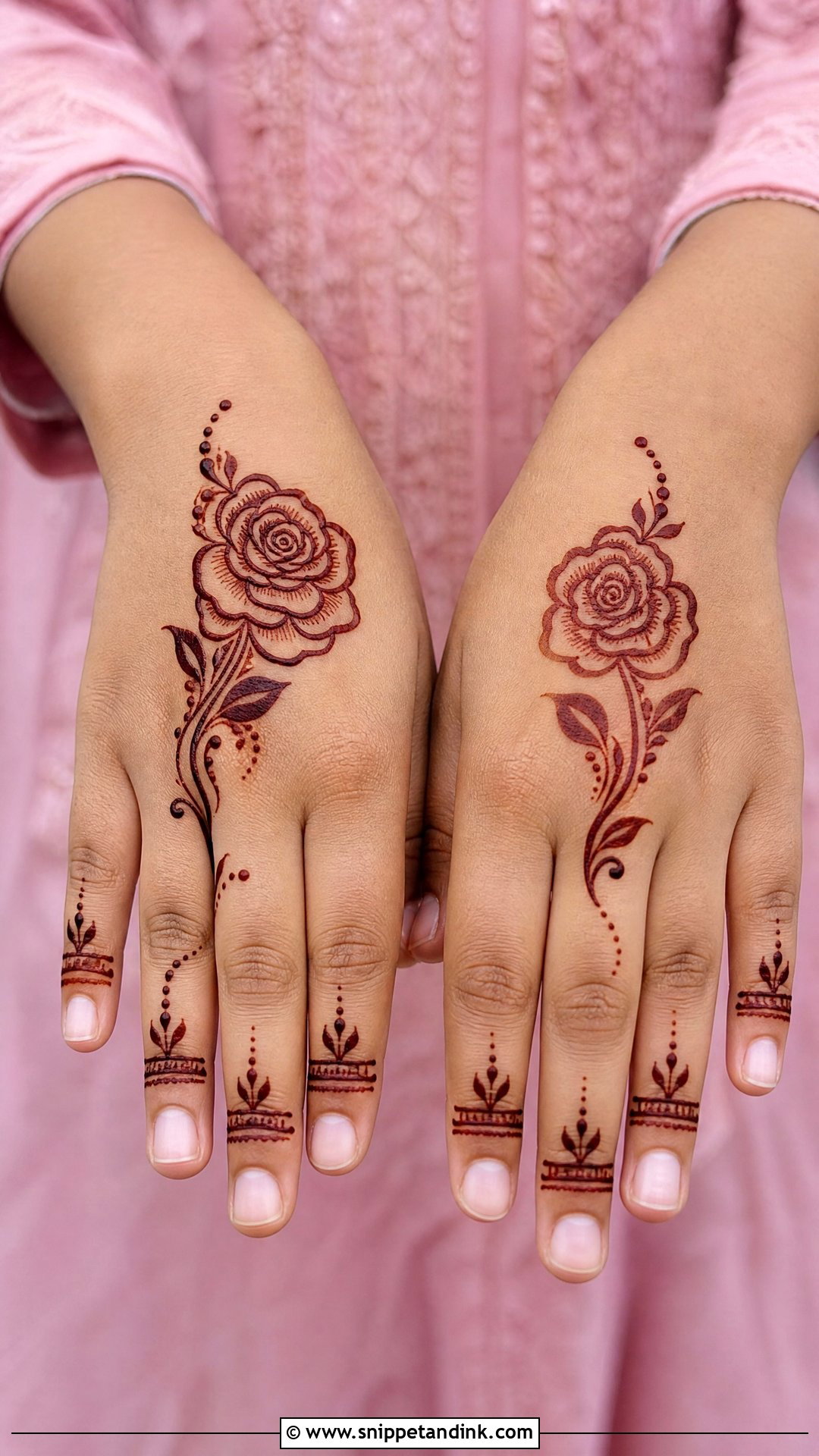
A rose on a child’s hand needs open petals, not the tight spiral I’d draw for a bride. A simple outline on the palm or back of the hand, two or three leaves, a short curved stem to the wrist, and a few dots around it. If the petals are too close, the stain fills the gaps and the rose becomes a dark circle by the next day. If the child wants more, add finger bands or a tiny rosebud on one finger.
13. Daisy Kids Mehndi Design
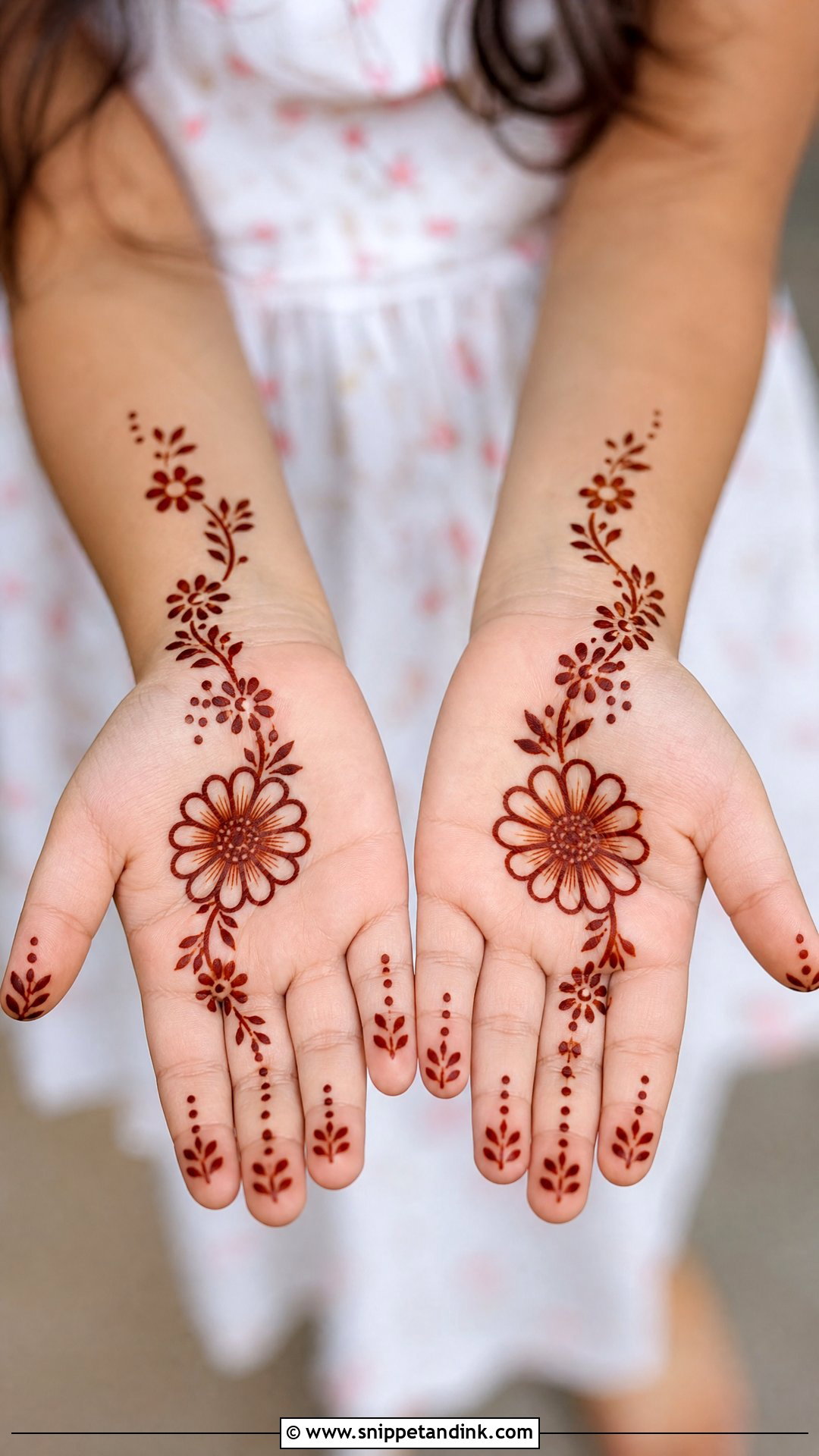
Daisies are among the easiest flowers to draw quickly and neatly. One in the center, smaller ones along a curved vine, round petals and a dot in the middle of each. Dotted lines join them, and a tiny wrist border completes the hand. It suits palm or back of hand. For a very small child, one flower and two leaves; for older children, finger dots too. It’s a good choice when you have a line of cousins waiting.
14. Peacock Kids Mehndi Design
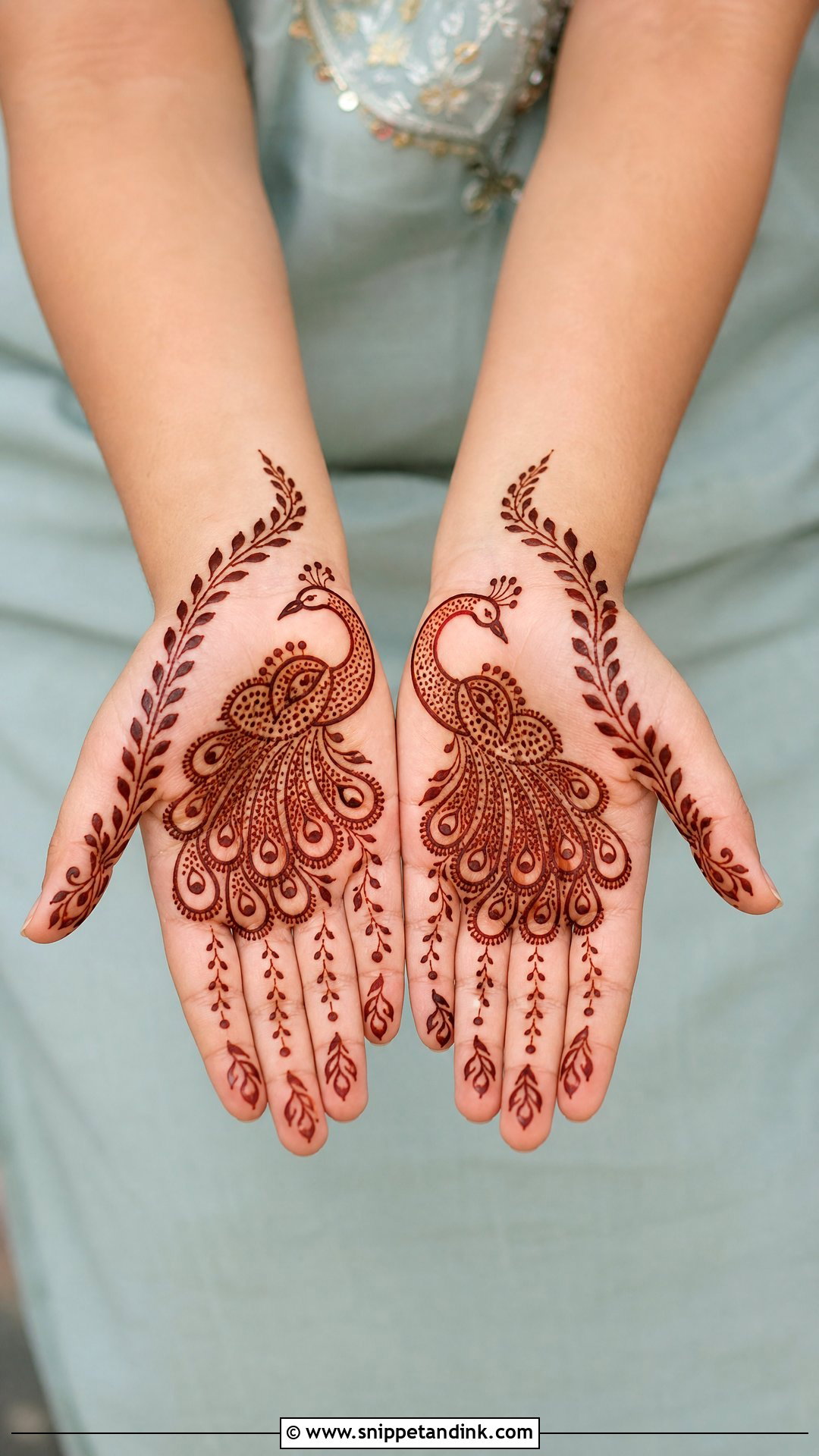
Peacocks are a traditional motif, but a full one is far too detailed for a child’s hand. I draw a tiny version: curved neck, small beak, a fan-shaped tail filled with dots, lines and teardrops. The body stays bold and the tail stays open. A small leafy vine to the wrist frames it. It suits weddings, Diwali and cultural events. Fine lines are risky with a child who fidgets, so I keep this one for older children who can stay still for longer.

15. Paisley Kids Mehndi Design
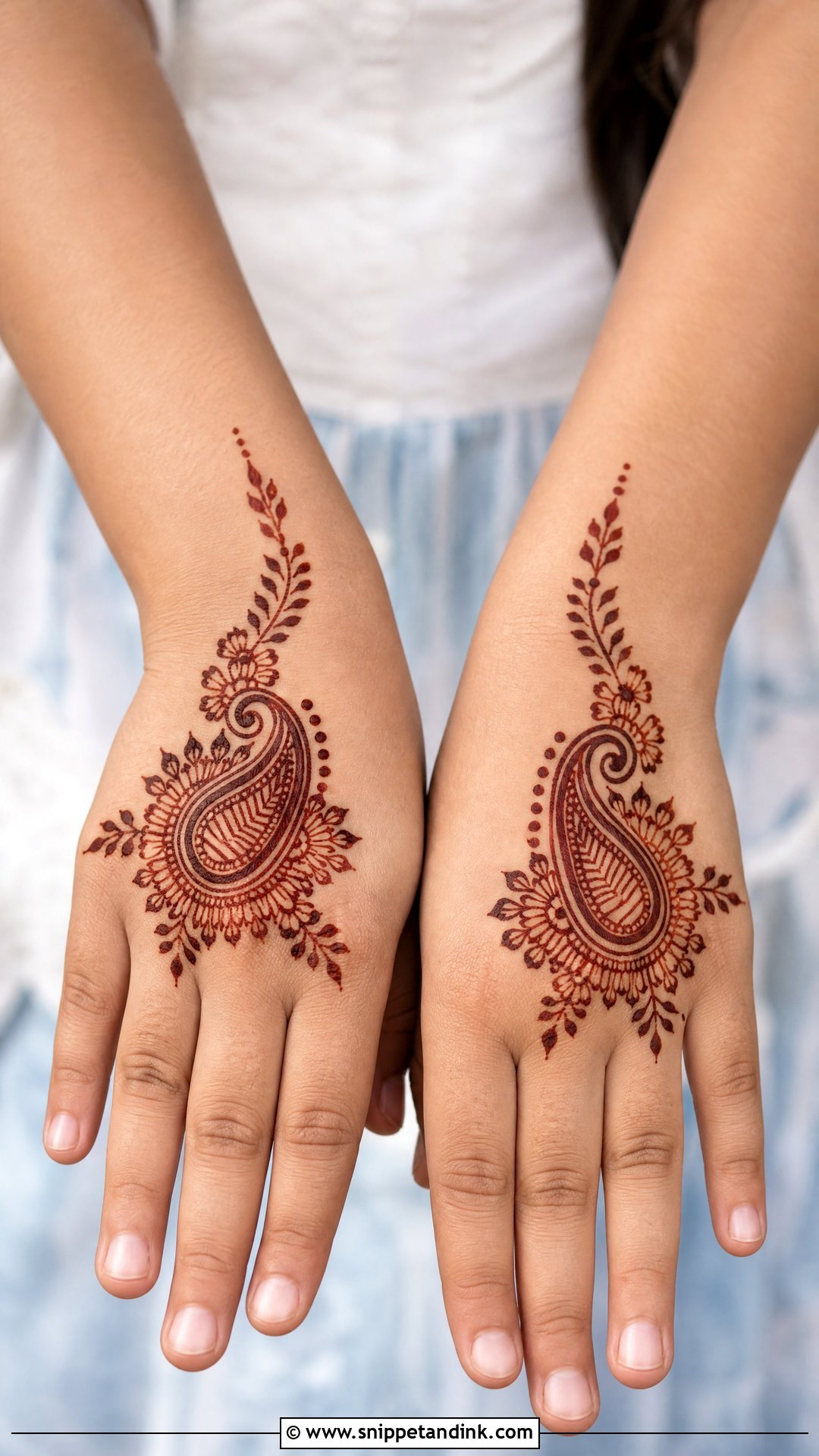
A paisley gives the most traditional feel for the least time. One medium paisley on the palm or back of the hand, filled with a few dots, curved lines and petals, leaves outside and a short trail to the wrist. Paisley fills can get dense very quickly, so I deliberately stop early for children. A tiny paisley on one finger matches it. Smooth, rounded outlines keep it soft. Preteens tend to choose this one.
16. Smiley Kids Mehndi Design
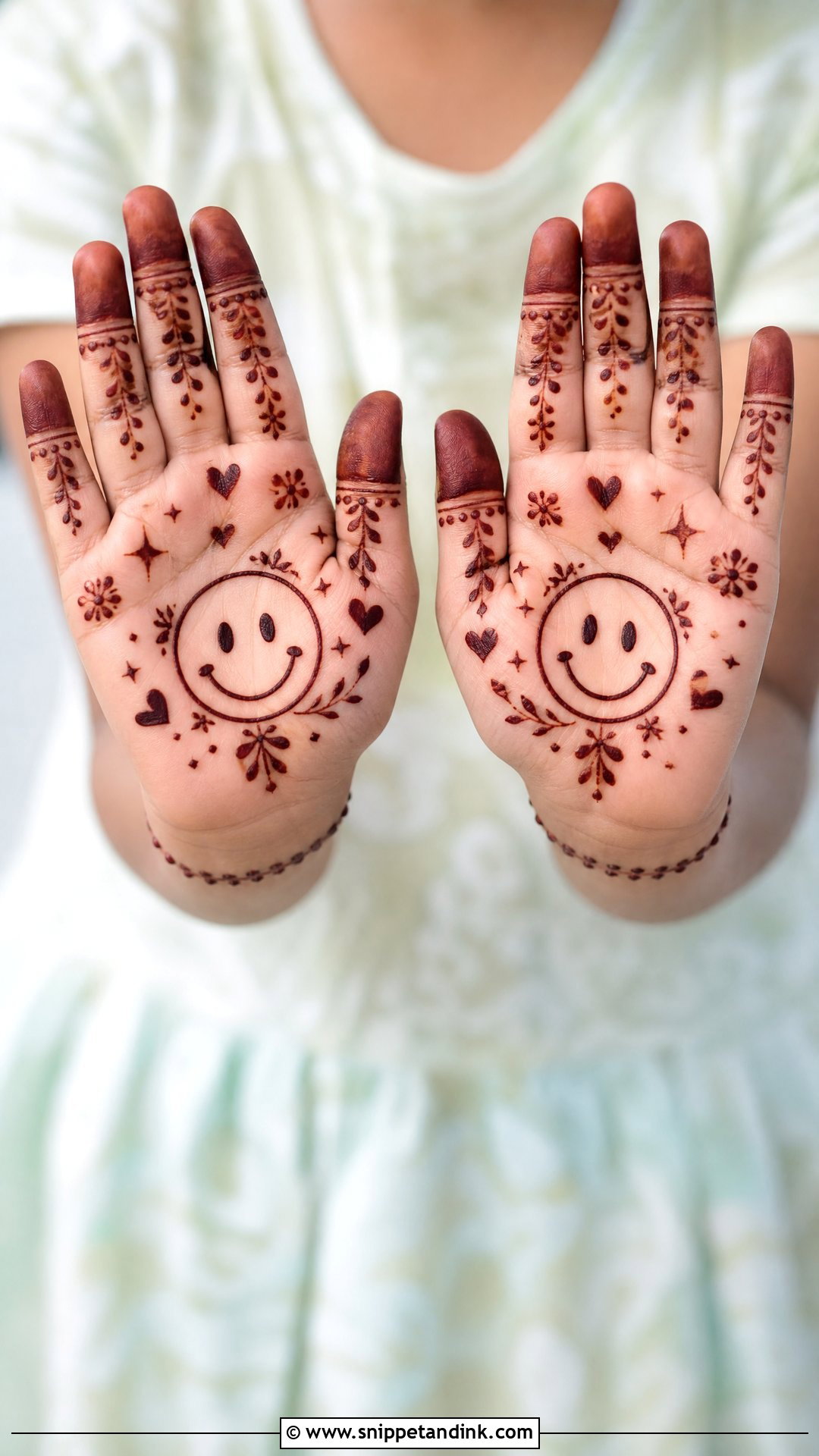
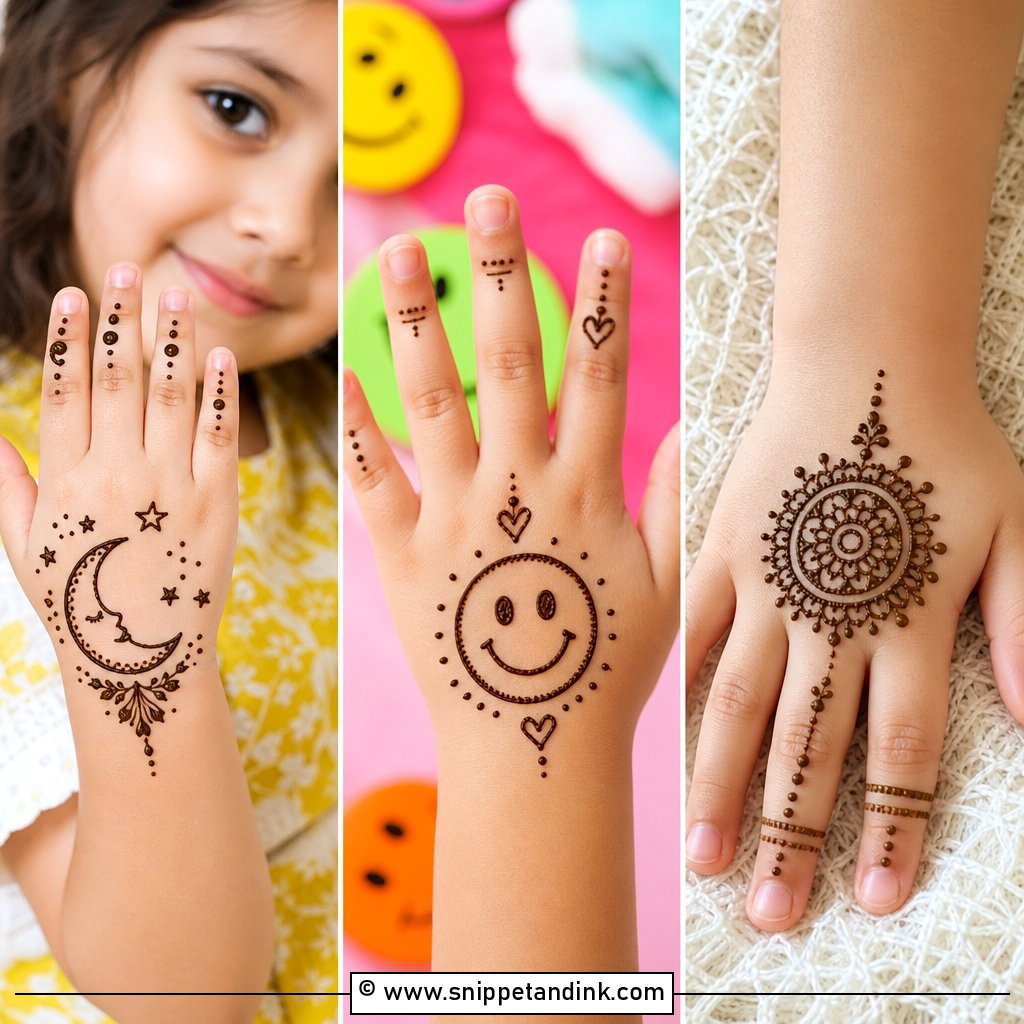
A smiley face is pure fun and the youngest children love it. A happy face in the center of the palm, then dots, hearts, stars or petals around it. Keep the eyes and mouth well apart and bold; small features blur as the stain develops and the face can end up looking surprised. A dotted bracelet or two finger trails finish it. It takes very little time and suits casual family gatherings and birthday parties.
17. Cartoon Kids Mehndi Design
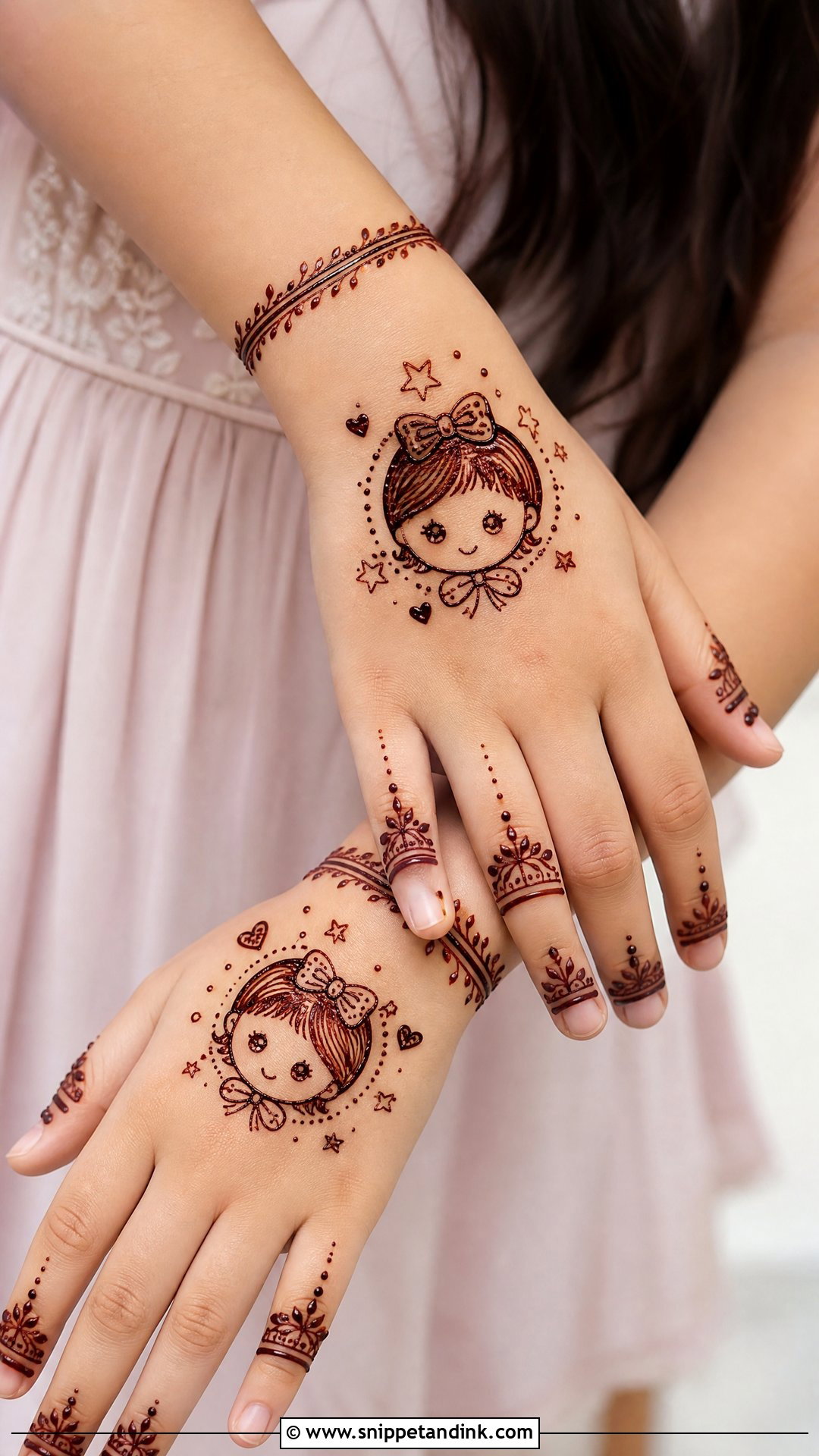
A cartoon kids mehndi design works only when the character is simple: a cute face, a bow, a cloud, a little animal or a round character. Complex figures don’t survive on a small hand. I place it on the back of the hand or palm and surround it with stars, dots, hearts or flowers, with thick, smooth lines throughout. Keep the rest of the hand light so the character stays the focus. Finger dots or a soft wrist band finish it.
18. Floral Vine Kids Mehndi Design
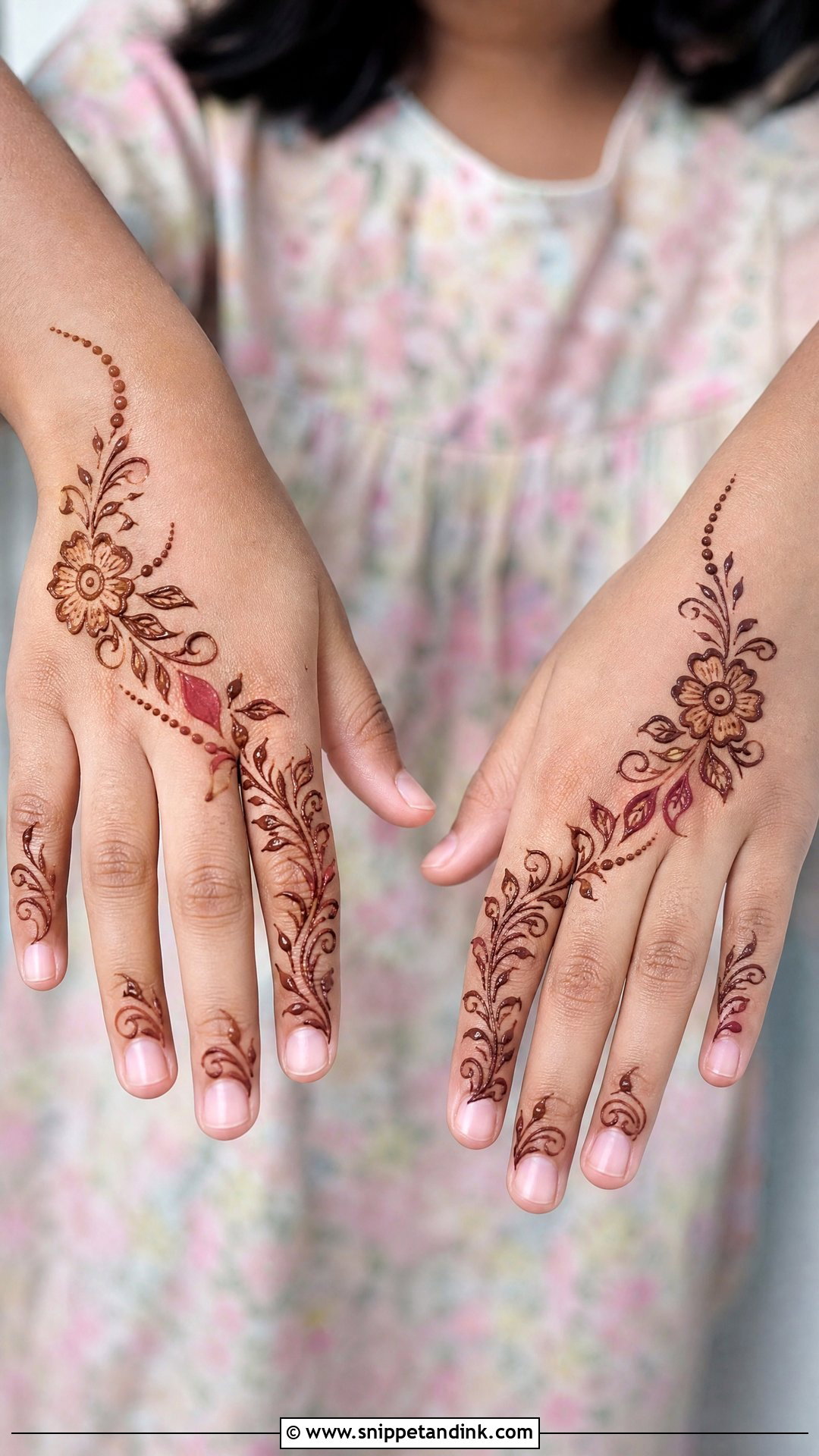
A floral vine starts at the wrist and curves toward the middle finger or across the back of the hand, with small flowers, leaves and dots along the line. Open spacing keeps it light. It looks like a complete mehndi design without covering the hand, and it’s fast to apply. A small flower at the wrist and another at the base of a finger make it more festive. It suits Eid, Diwali, weddings and family occasions.
19. Minimal Kids Mehndi Design
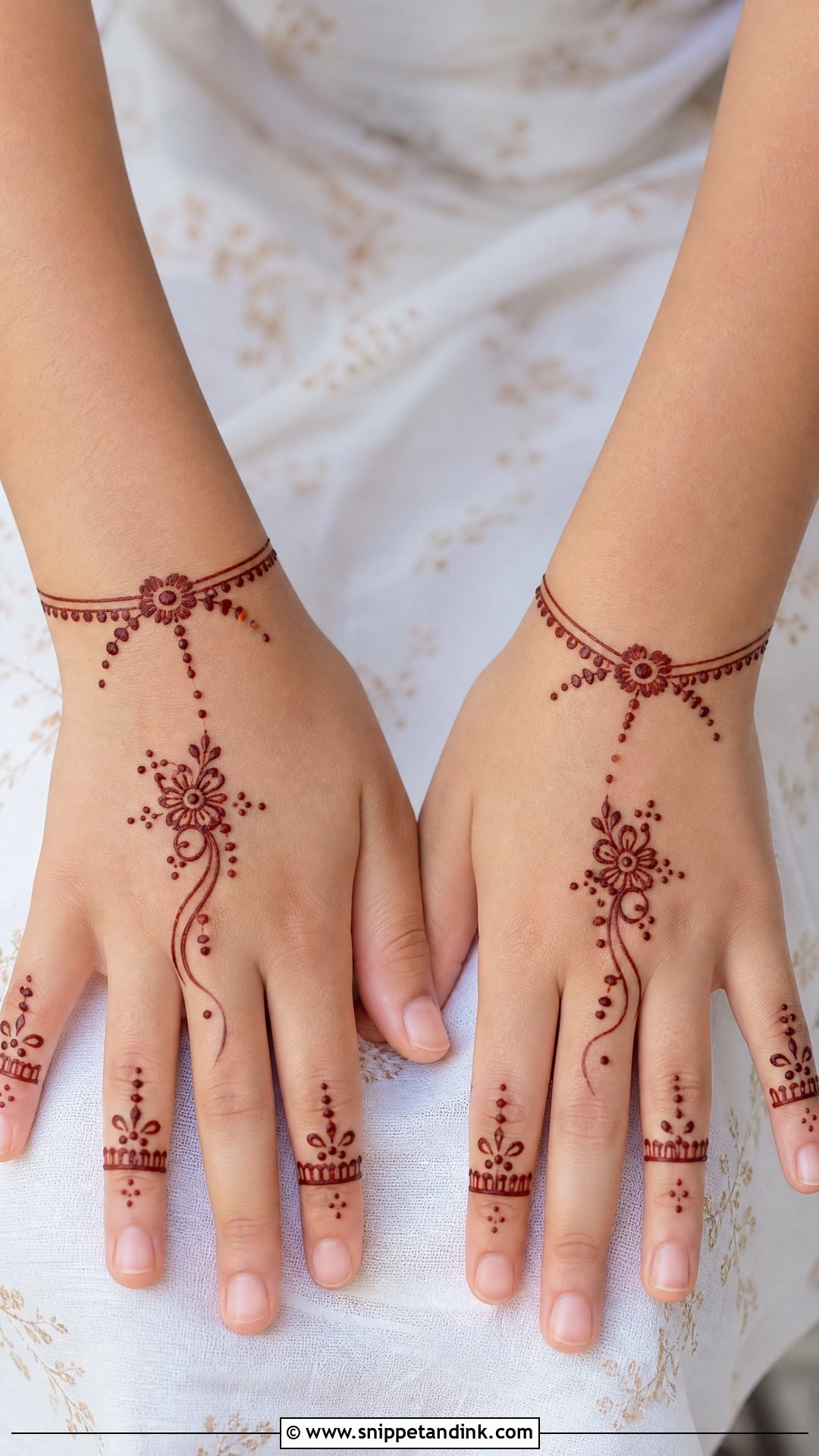
Minimal designs are what I suggest for a child’s first mehndi. One small motif, such as a flower, heart, star or mandala, with a few dots or thin lines, on the back of the hand, palm, wrist or fingers. Lots of blank skin. It dries fast and there’s less mess if the child gets bored, and you’ll see how their skin reacts before trying a bigger design. One tiny finger band dresses it up a little.
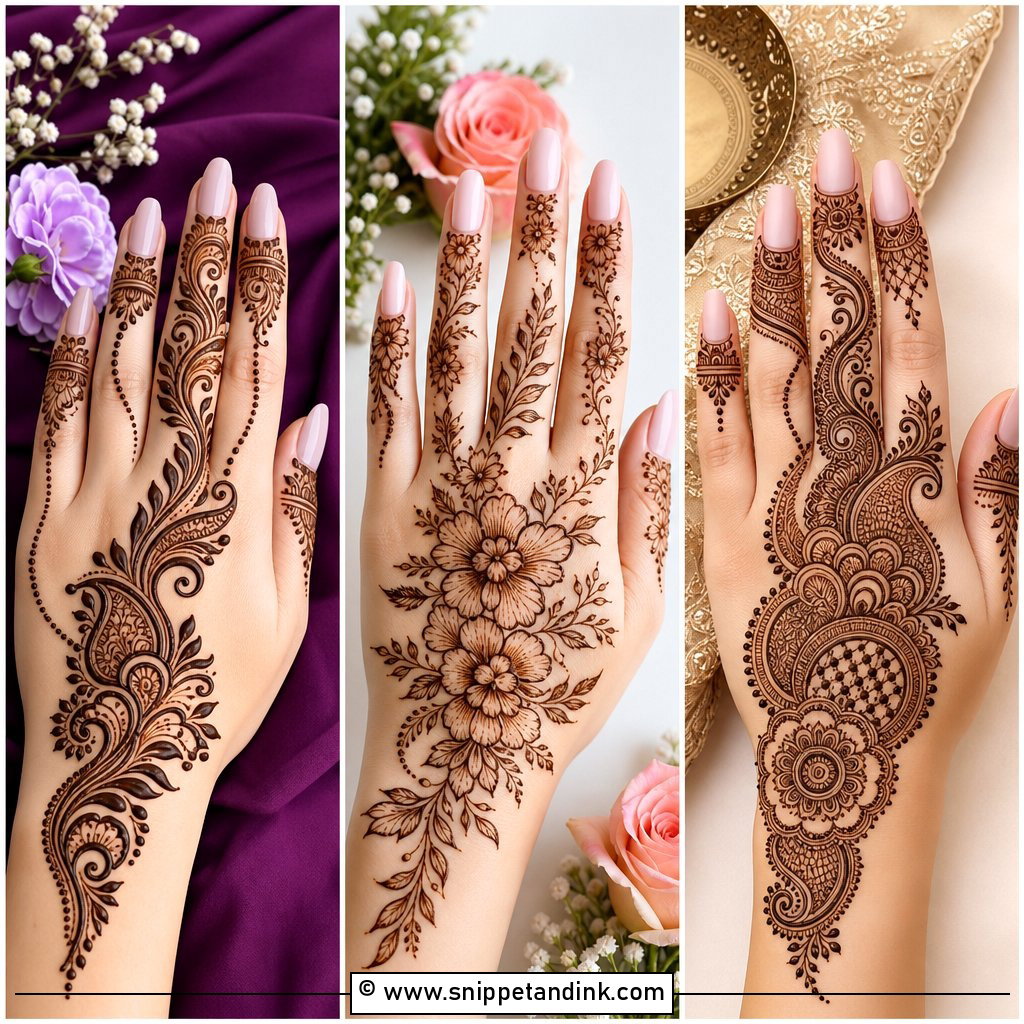
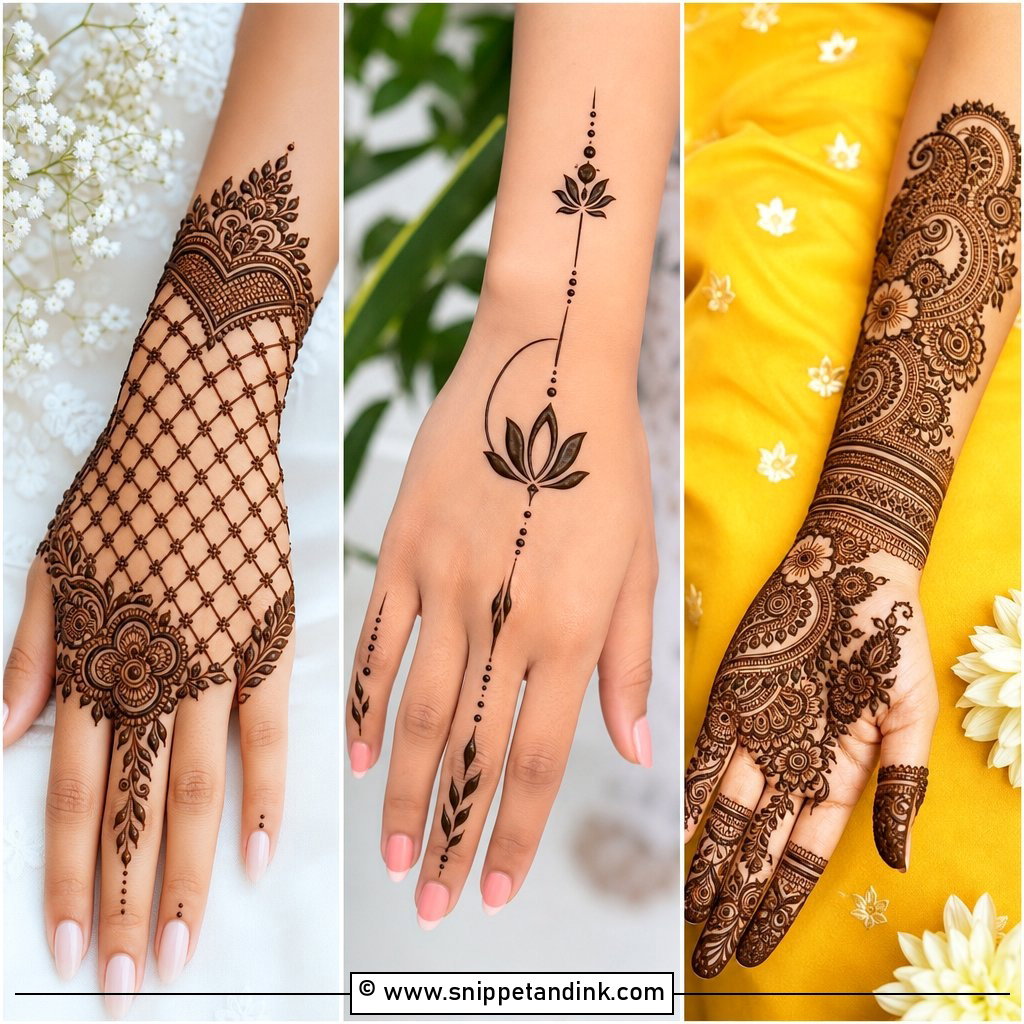
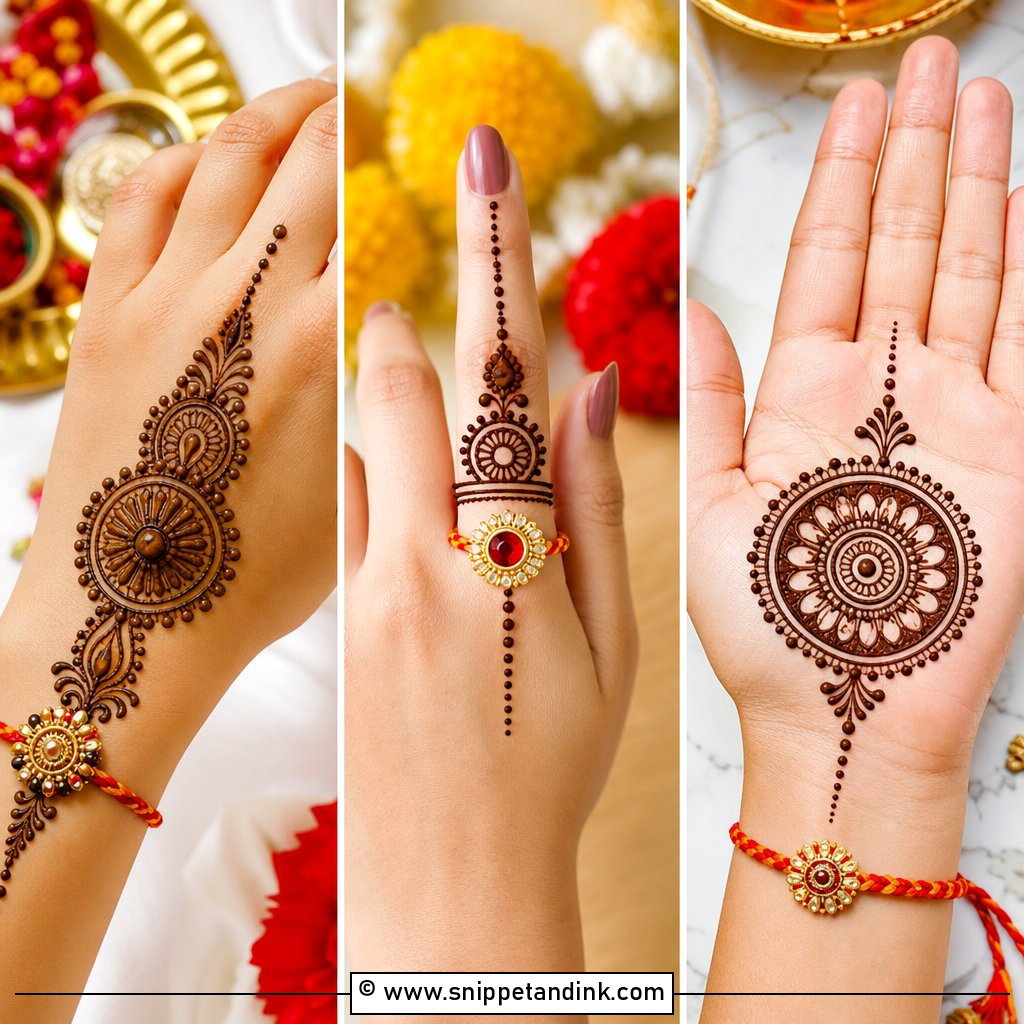

20. Eid Kids Mehndi Design
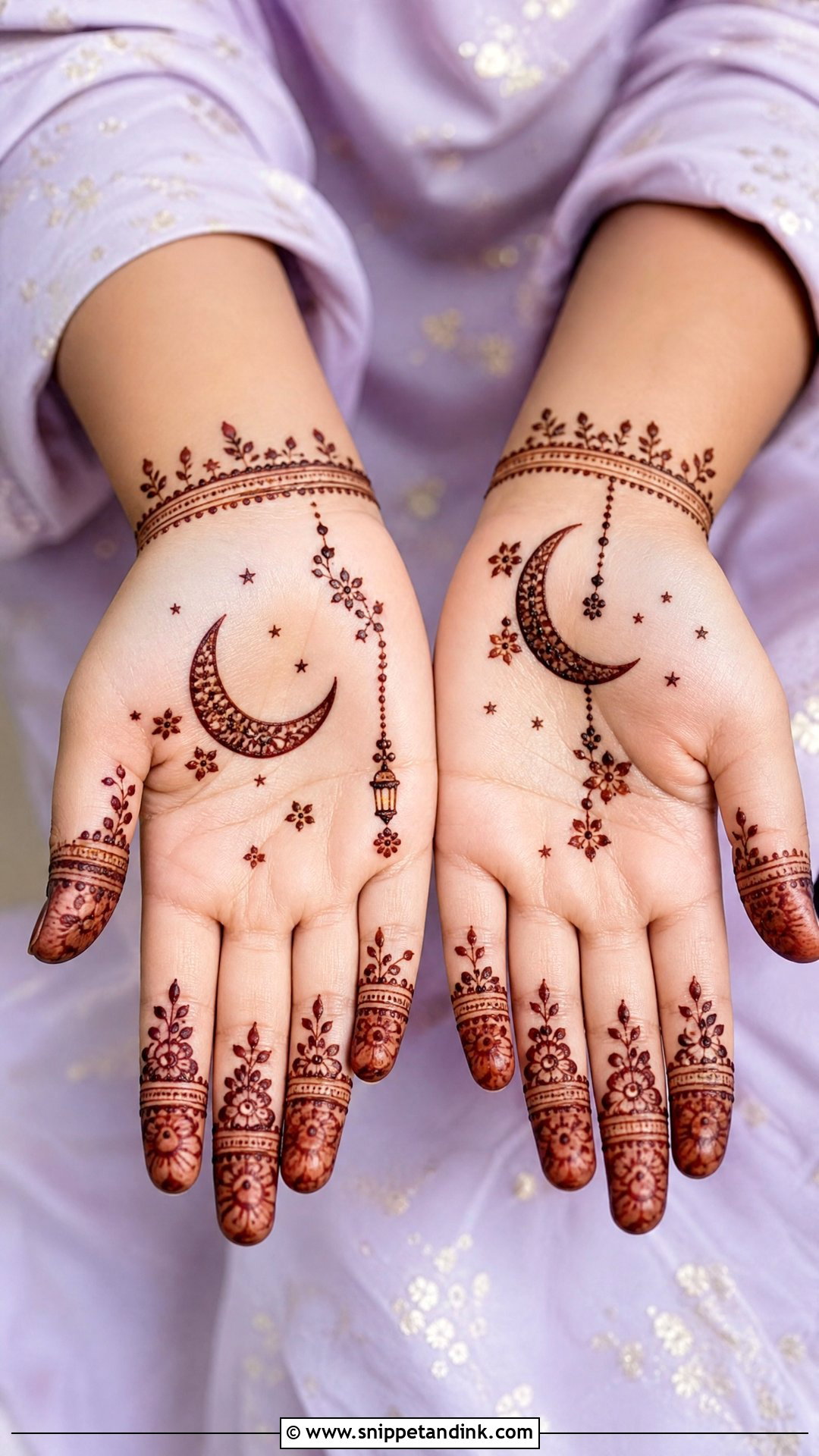
An Eid kids mehndi design is usually applied on Chand Raat, the night before, when there are many children and little time. Crescent moons, stars, flowers, dotted chains and small bracelets are the classic elements. I put a crescent or flower in the center, add stars and a slim wrist band, and keep the fingers to dots or leafy rings. Applying it the evening before gives the stain the night to darken before the morning prayers and visits.
21. Diwali Kids Mehndi Design
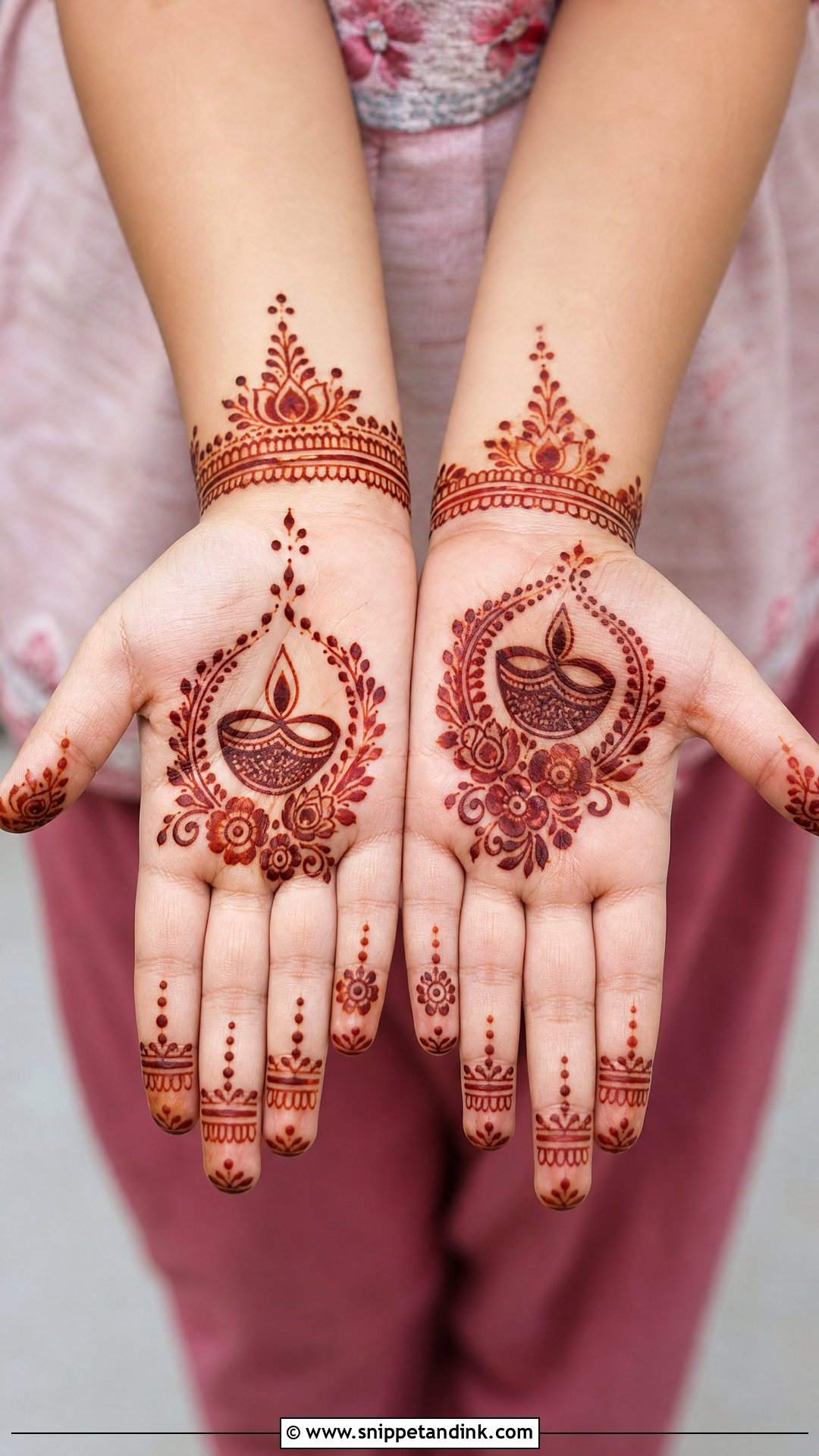
For Diwali, I draw a small diya on the palm with a clean, recognizable flame, then dots, flowers and curved lines around it. A tiny mandala or flower border at the wrist completes it. Children are running around during festivities, so I keep outlines bold and spacing open. Finger dots or mini rings can be added if the child wants more. It should feel traditional without being heavy.
22. Wedding Kids Mehndi Design
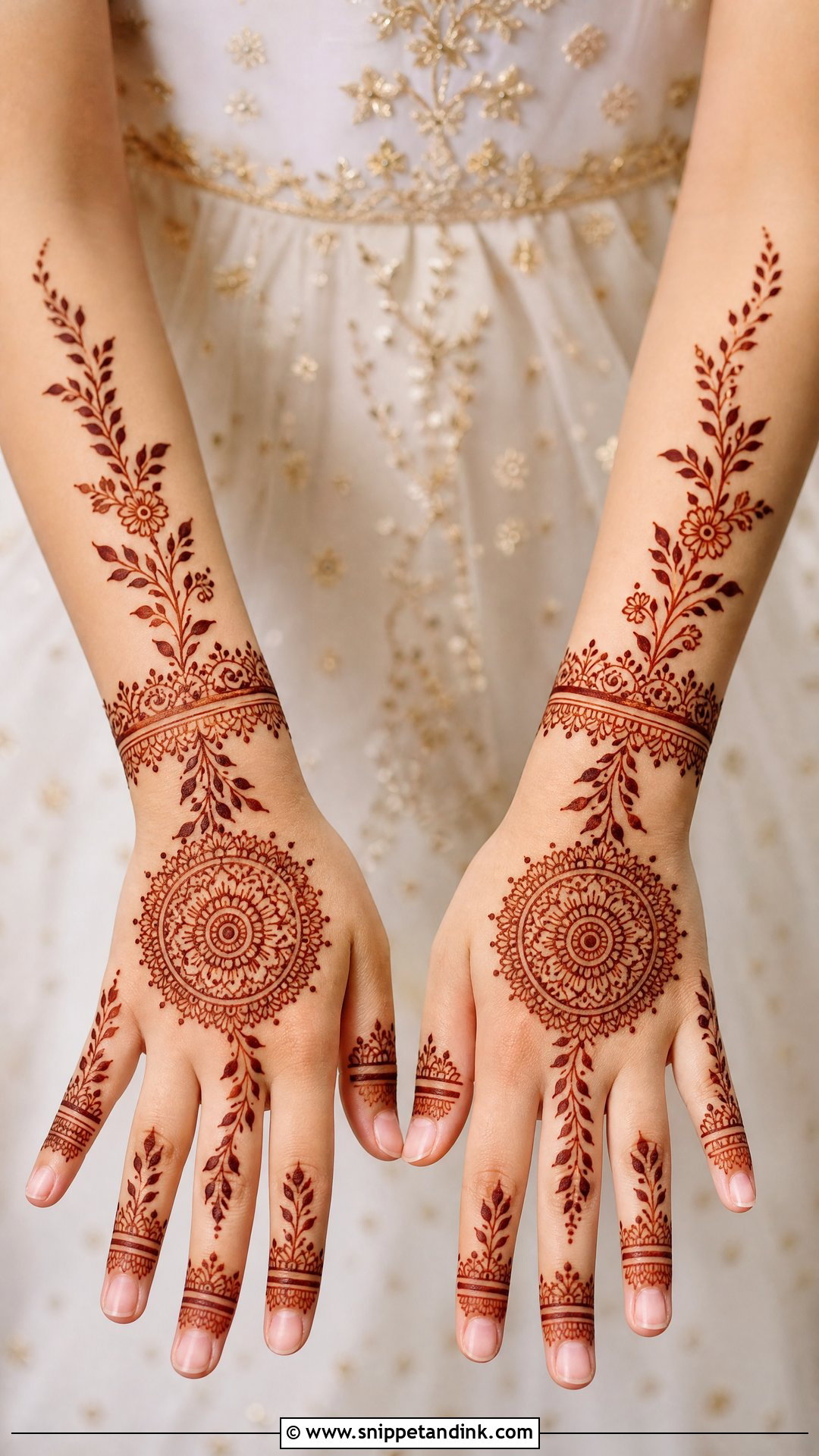
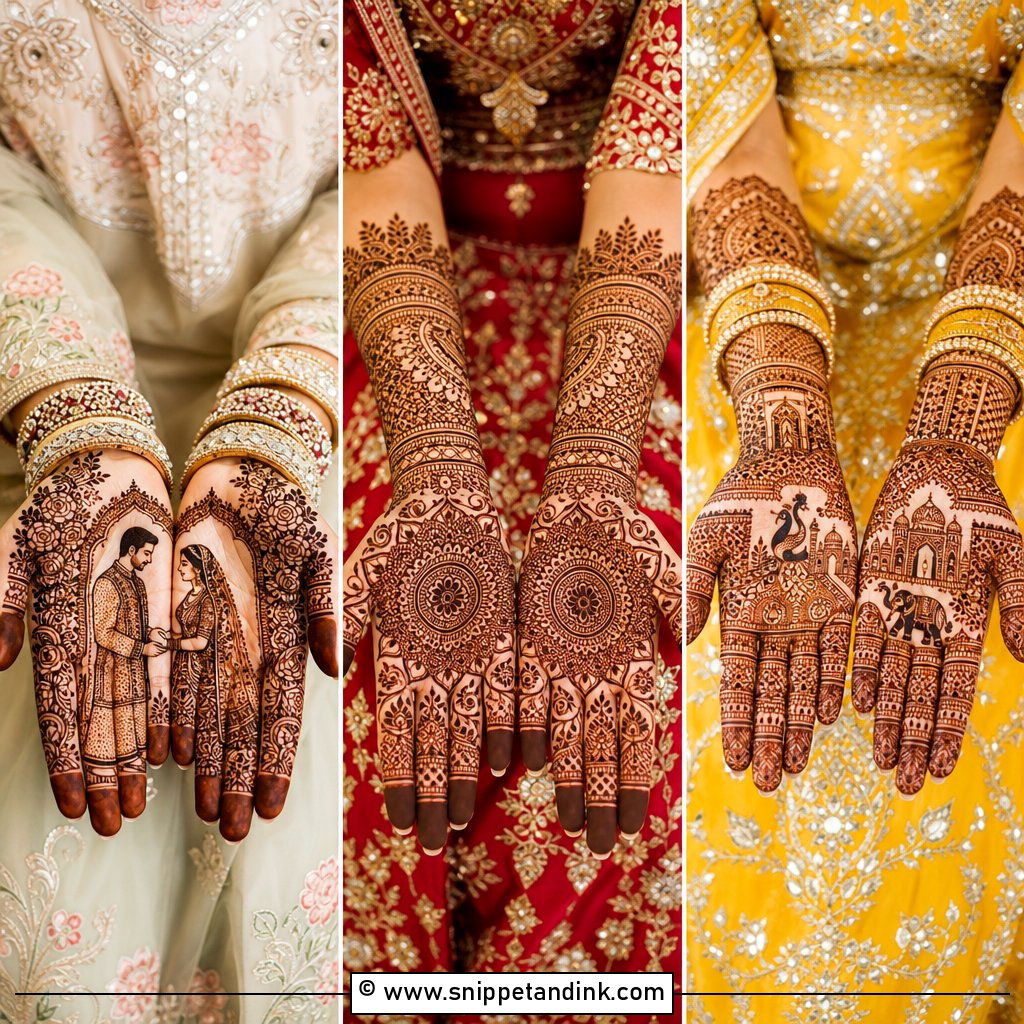
At a wedding, the children want to feel included, not to sit for two hours like the bride. I give them a neat back-hand or palm layout with flowers, leaves, dots and a small mandala, plus a wrist bracelet and simple finger bands. Not every finger gets filled. A diagonal floral trail is quicker and dries faster. Younger children get one main flower with a dotted chain; older ones can have it extend slightly onto the forearm.
23. Birthday Kids Mehndi Design
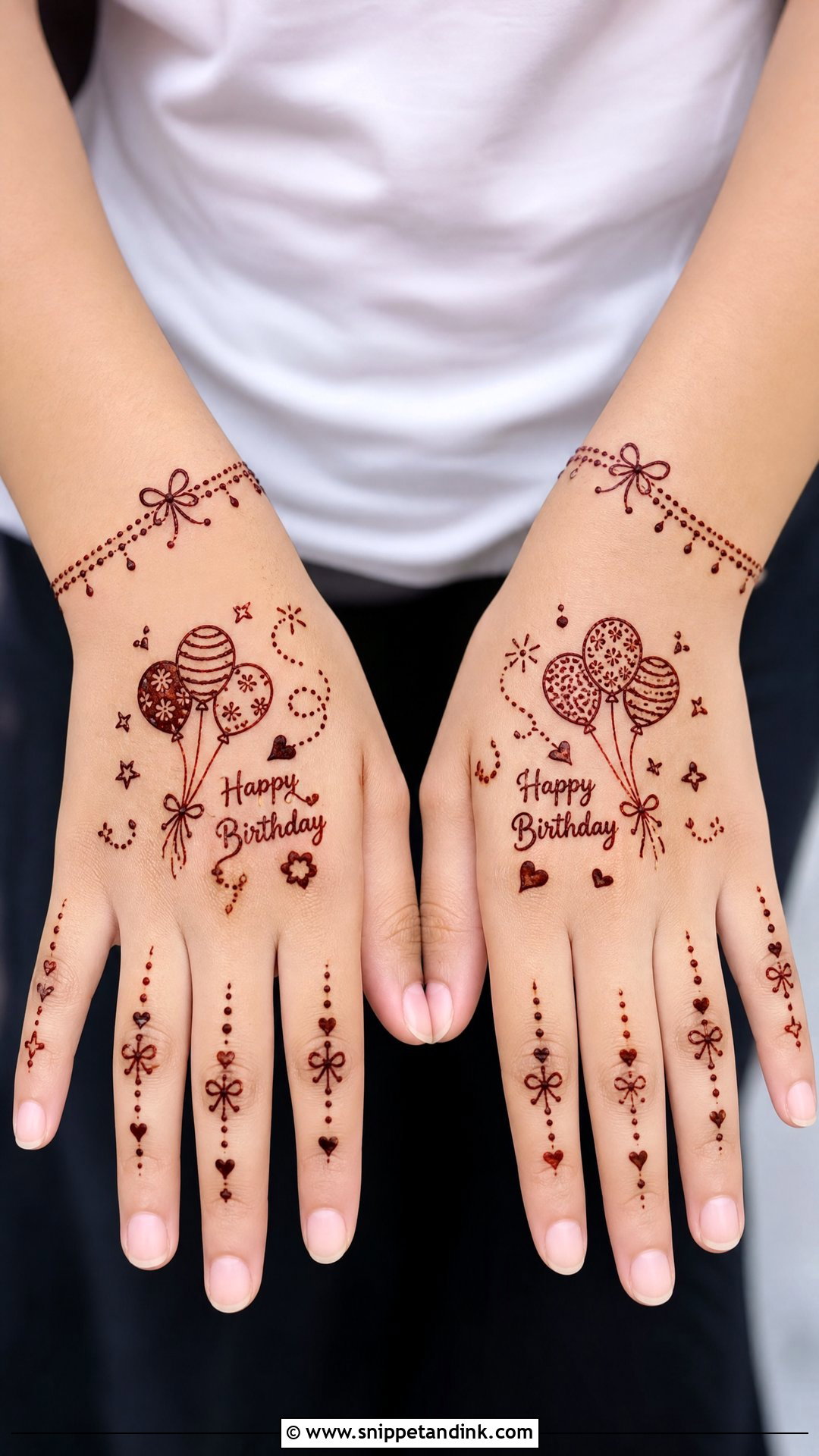
For a birthday, let the child choose: hearts, stars, tiny flowers, balloons, bows or a little cake doodle. I place the main motif on the back of the hand or palm and surround it with dots and curved lines, keeping it uncrowded. A bracelet band with tiny hearts is a nice touch. At a party children are running around, so I avoid covering the whole palm and choose something that dries quickly.
24. Quick Kids Mehndi Design
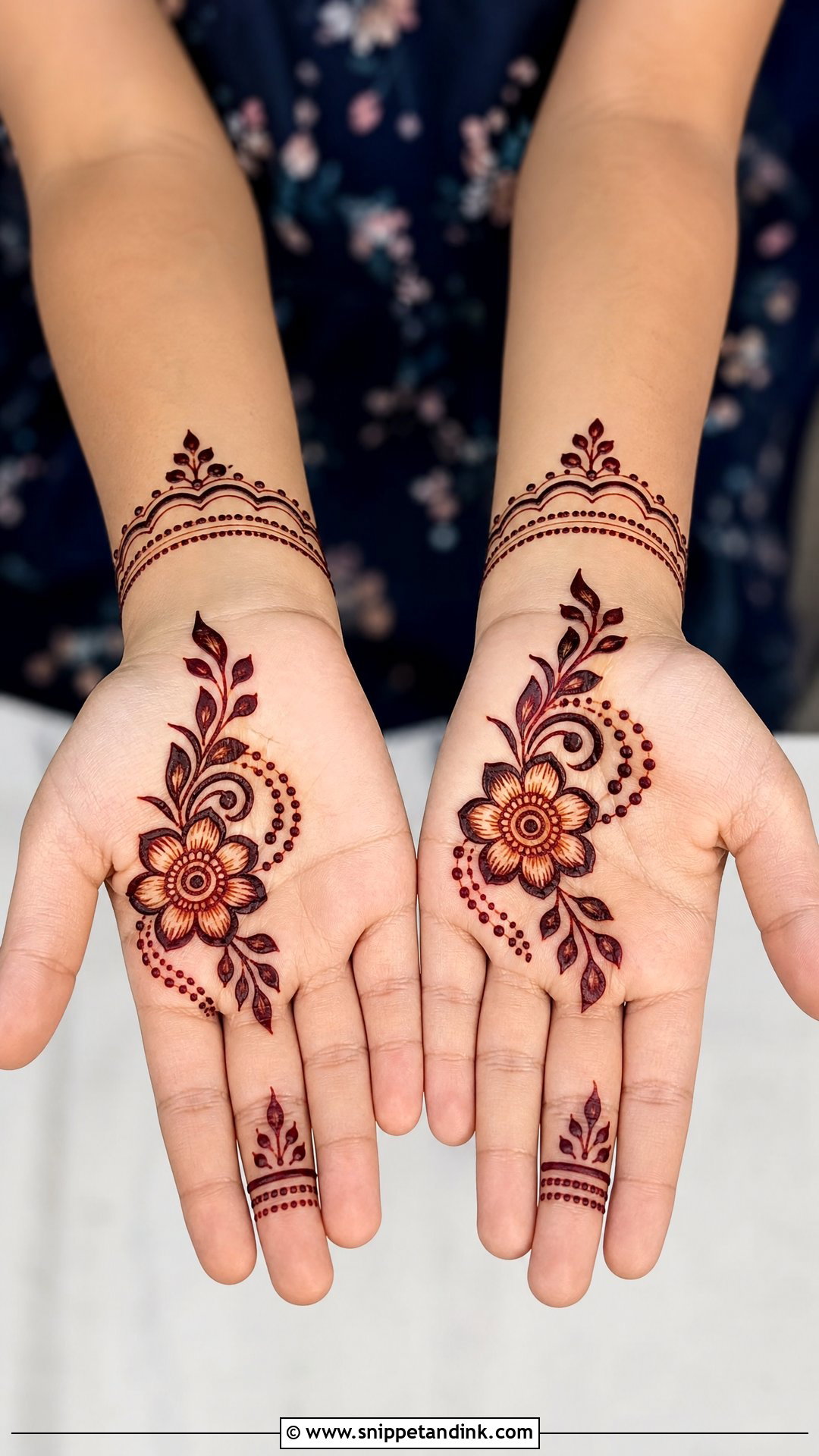
When there’s almost no time before an event, I build around one element, like a flower, heart or star, with dots, leaves and one wrist line. Done openly, it takes a few minutes. Bold outlines are faster to pipe and stain more clearly than fine work. Fine shading, tight grids and tiny repeated details are what slow you down, so leave them out. Decorate the wrist and one or two fingers lightly and the hand still looks finished.
25. Easy Small Kids Mehndi Design
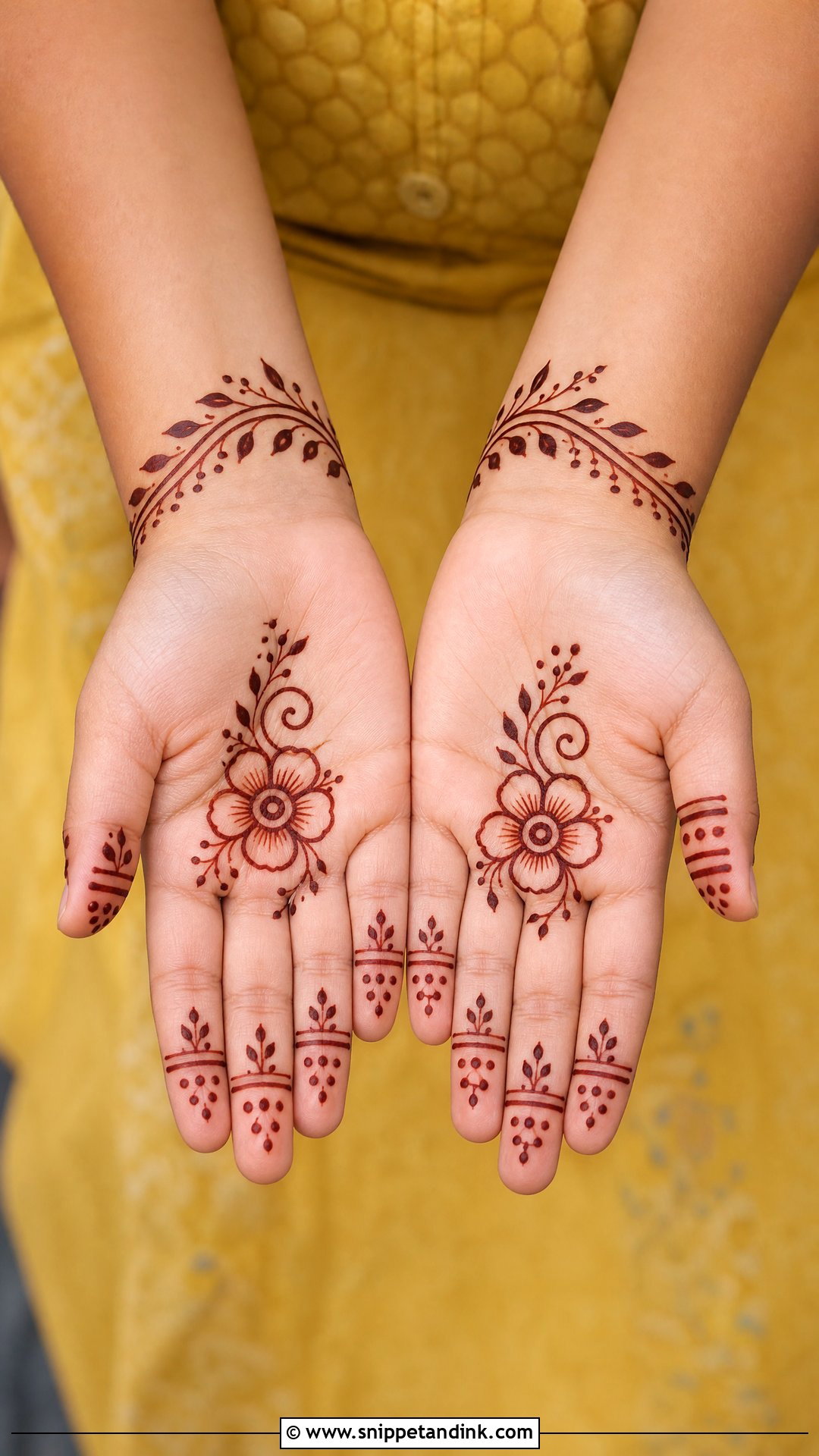
This is the design I’d teach a parent or an older sibling to do at home. A small flower or circle in the middle of the palm, five petals, a few dots, two leaves and a curved line toward the wrist, plus dots or bands on one or two fingers. The skill is in the cone: steady pressure, the tip held just above the skin rather than pressed into it, and space between details. Practise on paper or a plastic sheet first to get the paste flow right.
Getting a Dark Stain From a Child Who Won’t Sit Still
Adults leave paste on for hours. Most young children manage thirty minutes to an hour before they want to wash it off, and the stain will be lighter. That’s fine; the trick is to make that time count.
Before and during
Wash their hands with soap and dry them well, with no lotion. Feed them first and take them to the bathroom. I seat children with a cartoon playing in front of them, and do the hand they use less first, so they can still hold a snack while it dries.
After the paste is on
Once the paste is touch-dry, a light dab of lemon and sugar helps it stick, though it’s sticky and some children hate it. If you apply in the evening, wrap the hand loosely in tissue and a sock for sleep. Scrape the dried paste off rather than washing it; keep water away for a few hours afterward. The orange stain you see first will darken to brown over the next 24 to 48 hours, so don’t judge it straight away.
Little Hands, Short Sittings and a Clear Stain
For children, the best mehndi is the one they’re comfortable sitting through. Open patterns, bold outlines and shapes they recognize, such as flowers, hearts, moons, butterflies, stars and bracelets, stain clearly and dry quickly. Match the design to the child’s age and patience as much as to the outfit: a palm flower for an everyday celebration, a moon, mandala or bracelet for a festival. Use natural henna, keep the sitting short, and let them enjoy watching the color come up the next day.
You'll Like These Ideas:




Leave a Reply