
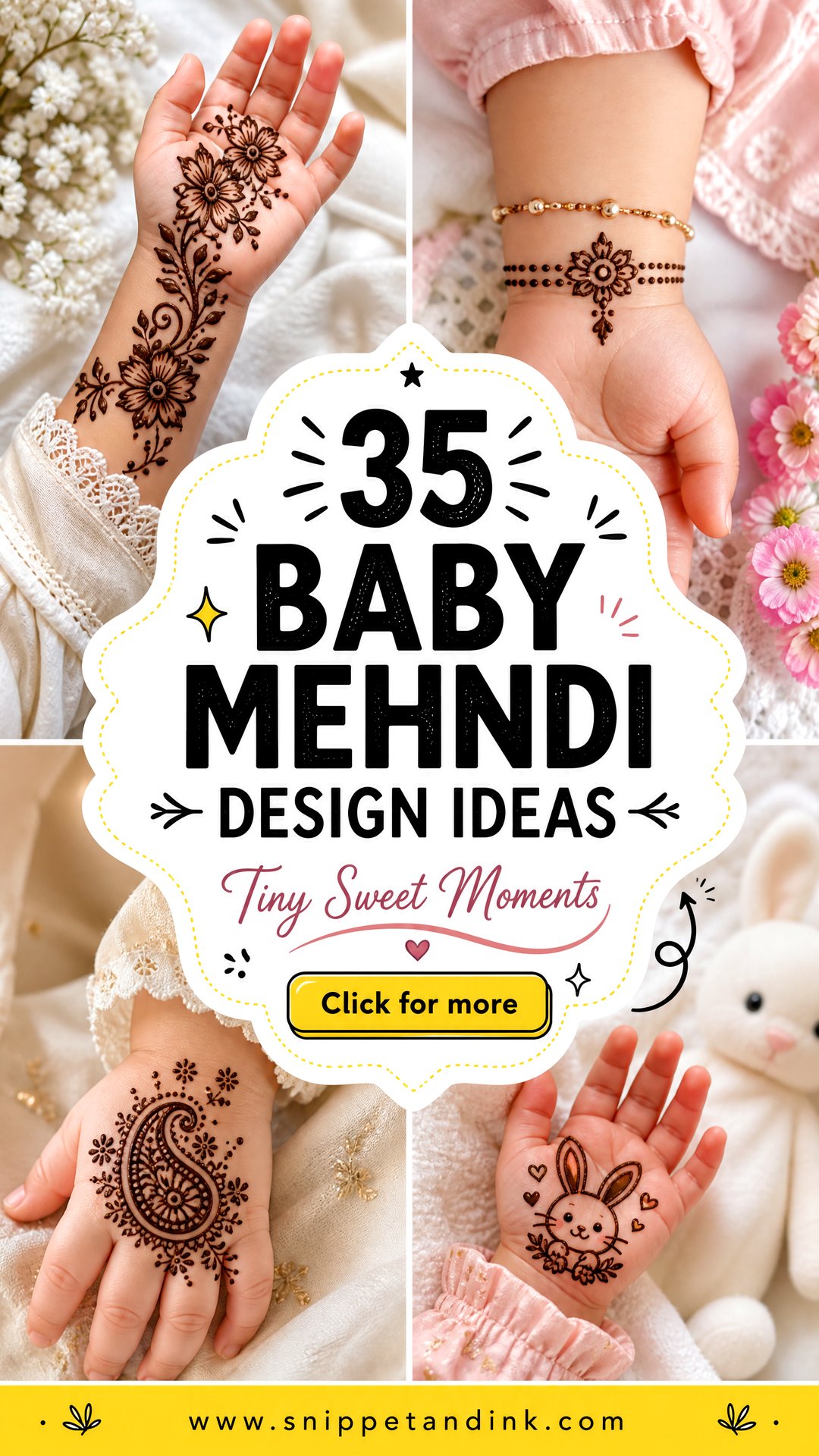
Children always want henna when the adults are getting theirs, and with tiny hands the rules change completely. Babies and little kids can’t sit still for long, so I draw small, rounded shapes that look finished after two minutes: a flower, a heart, a star, a dotted bracelet, a moon for Eid, a bunny for a birthday. The paste has to be fresh natural henna, never black henna or a chemical cone, because young skin reacts far more easily than ours. The ideas below are the ones I actually draw on little hands at weddings, Eid and family gatherings, with notes on what holds up and what to skip.
Which Little Hands I Will and Won’t Draw On
Parents are often surprised that I ask questions before drawing on a child. Henna is a plant dye and is usually gentle, but young skin is thinner and more reactive, and some children shouldn’t have it at all.
What I ask first
- Has the child been diagnosed with G6PD deficiency? The dye in henna can trigger a serious reaction in children with this condition, so for them I don’t apply it at all.
- Is the baby still putting hands and feet in the mouth? If so, I’d rather wait, or keep to a tiny design on the top of the foot.
- Any eczema, cuts or rashes? Paste never goes on broken or irritated skin.
- Have they had henna before? If not, I put a single small dot on the inner arm and we check it before doing a full design.
What goes in a child’s cone
For children, I use a plain paste of henna powder, lemon juice or water and a little sugar, with very little or no essential oil, since the oils that deepen adult stains can irritate small hands. Ready-made cones with a long shelf life, coloured cones and anything sold as black henna often contain chemical dyes or preservatives. Black henna in particular can cause blistering and lasting skin sensitivity, so if a cone stains black within minutes, throw it away.
1. Baby Flower Mehndi Design
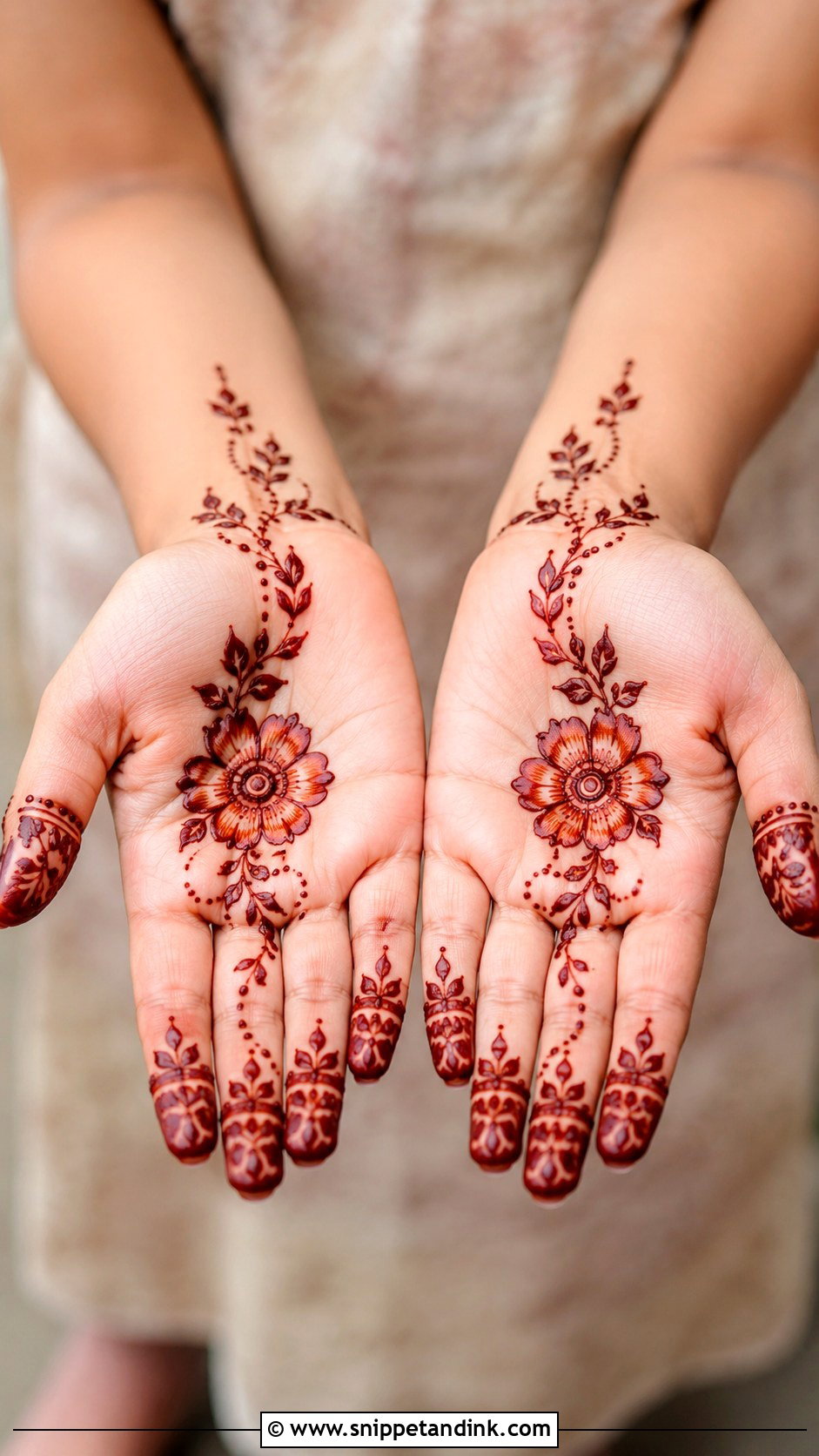
A single round flower in the middle of the palm is the design I draw most on toddlers. I keep the petals big and open, add a few leaves and dots toward the fingers, and stop. Big petals matter because a small child will close the hand within minutes, and fine detail smudges into a blob, while a fat petal still reads. It doesn’t need symmetry. A dotted trail around the flower softens it more than shading would.
2. Baby Heart Mehndi Design
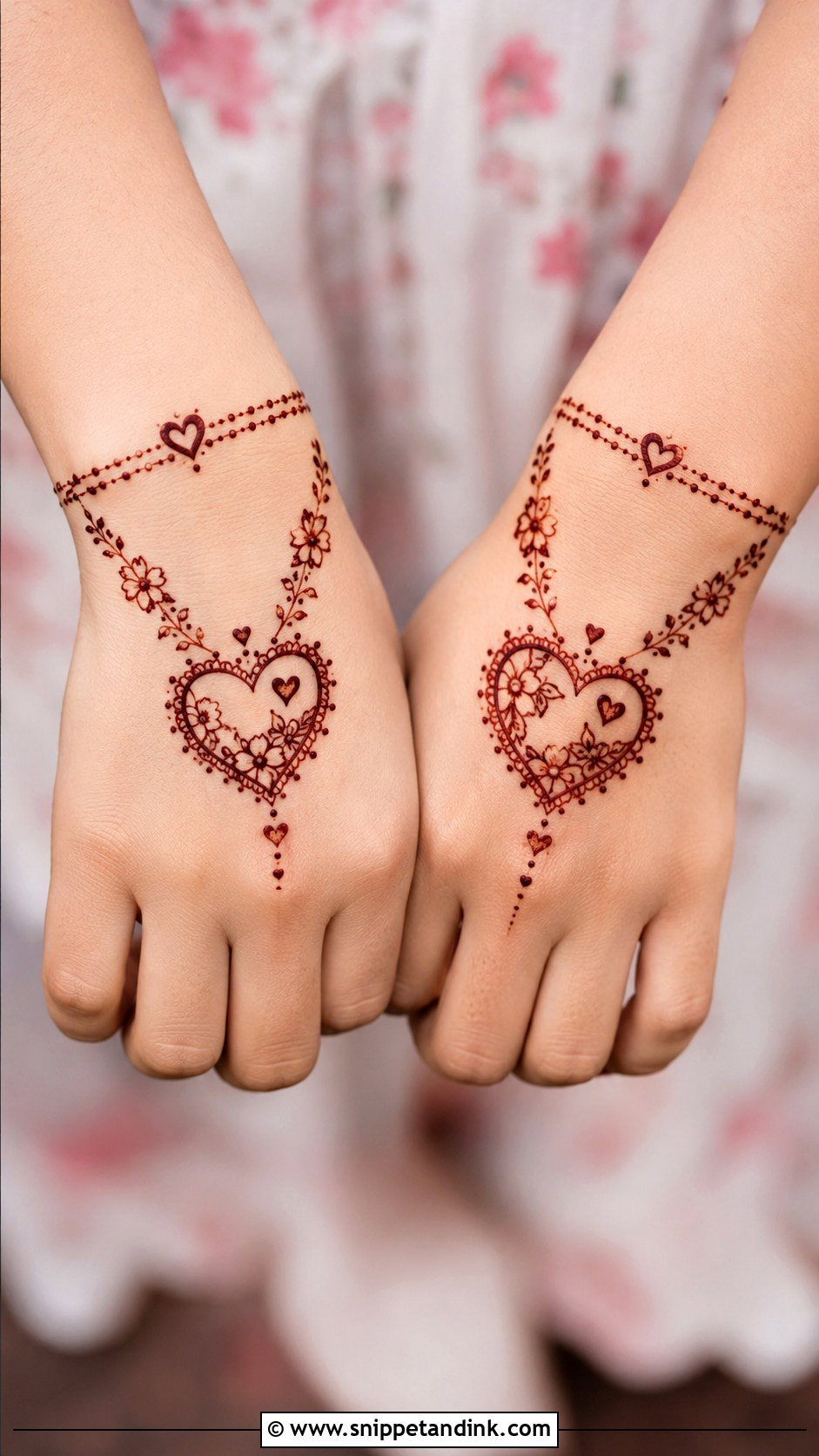
Children recognise a heart immediately, which is half the fun. One medium heart on the palm or back of the hand, a few dots and small flowers around it and a light wrist border take a couple of minutes. Two tiny hearts near the fingers make it more playful. I draw the heart in two strokes, one per side, meeting at the point, so it stays smooth even when the hand wriggles. It suits birthdays and casual festive days.
3. Baby Star Mehndi Design
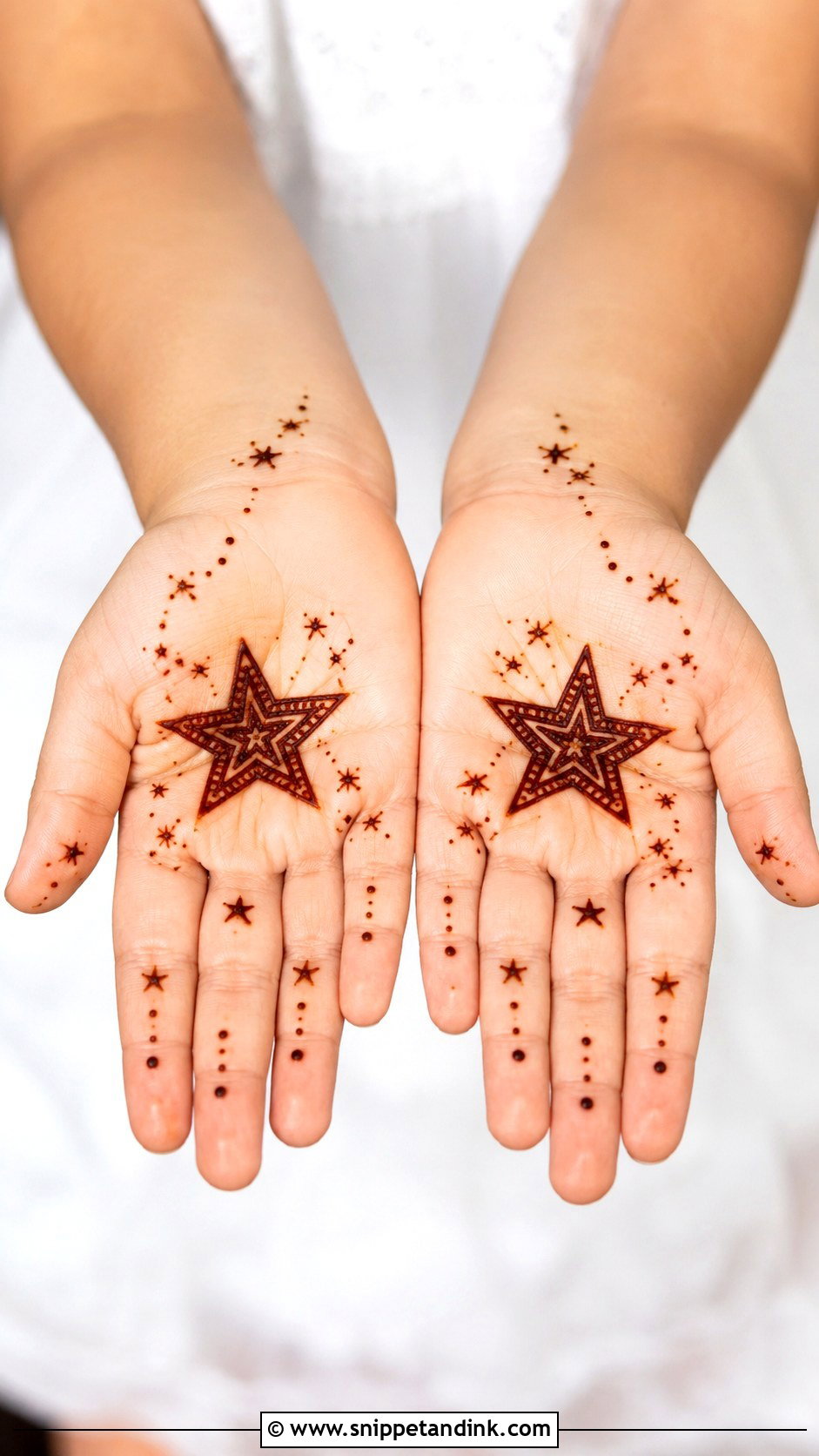
Stars suit children who’d rather have shapes than flowers. One star on the palm with mini stars, dots and small spark lines around it is enough, or a star trail from wrist to one finger on the back of the hand. I outline the stars and leave them unfilled. A filled star on a tiny hand turns into a dark smudge if the child grabs anything, while an outline survives a small knock.
4. Baby Bracelet Mehndi Design
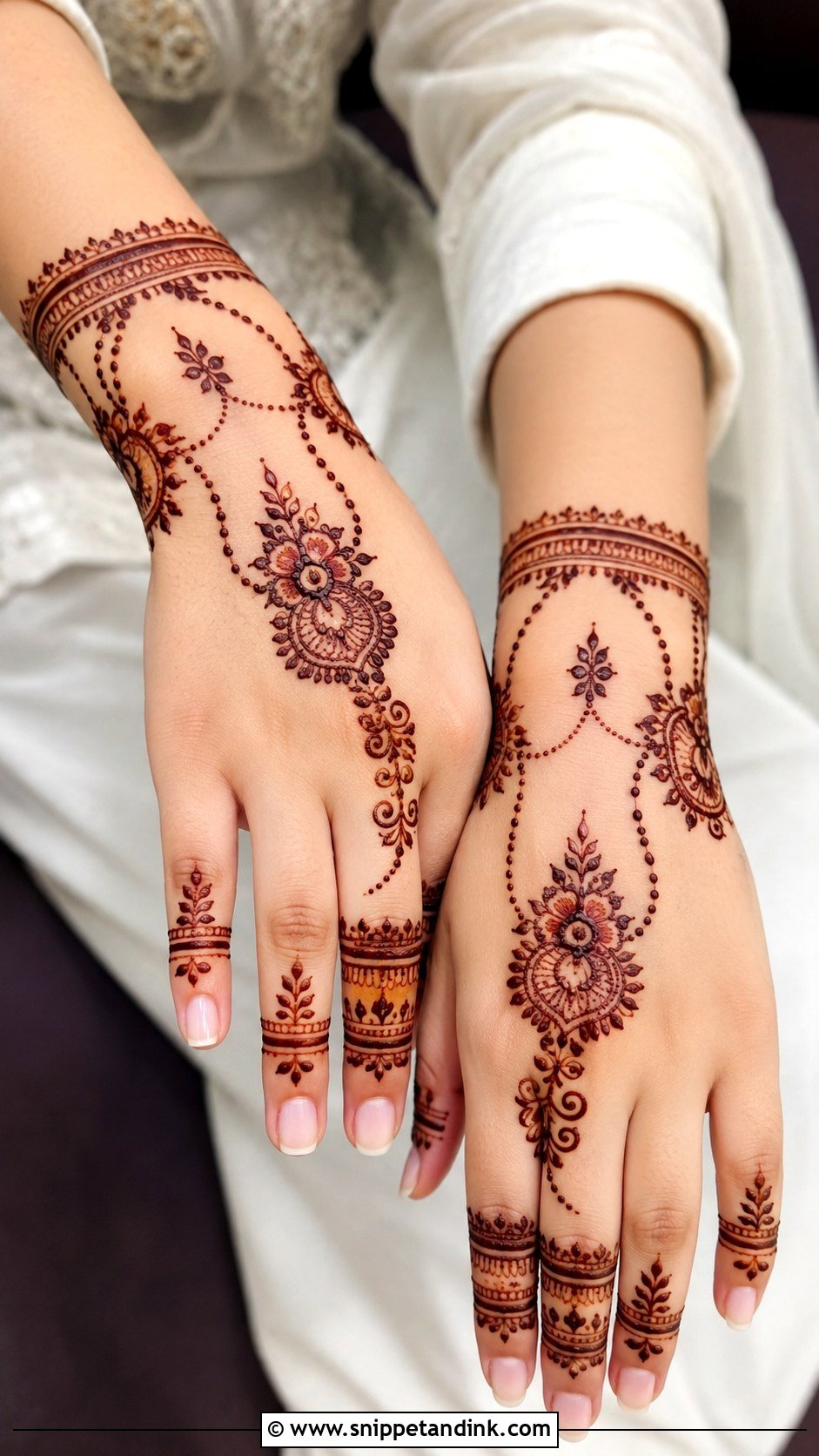
The bracelet is my first suggestion for babies who won’t keep a palm open. The pattern sits around the wrist like a tiny bangle, with a small chain line running toward one finger and a dot ring or heart on that finger. Because the palm stays clean, there’s far less to smudge and far less henna near the mouth. Small paisleys along the band give it a traditional feel; dots and loops keep it modern.
5. Baby Finger Mehndi Design
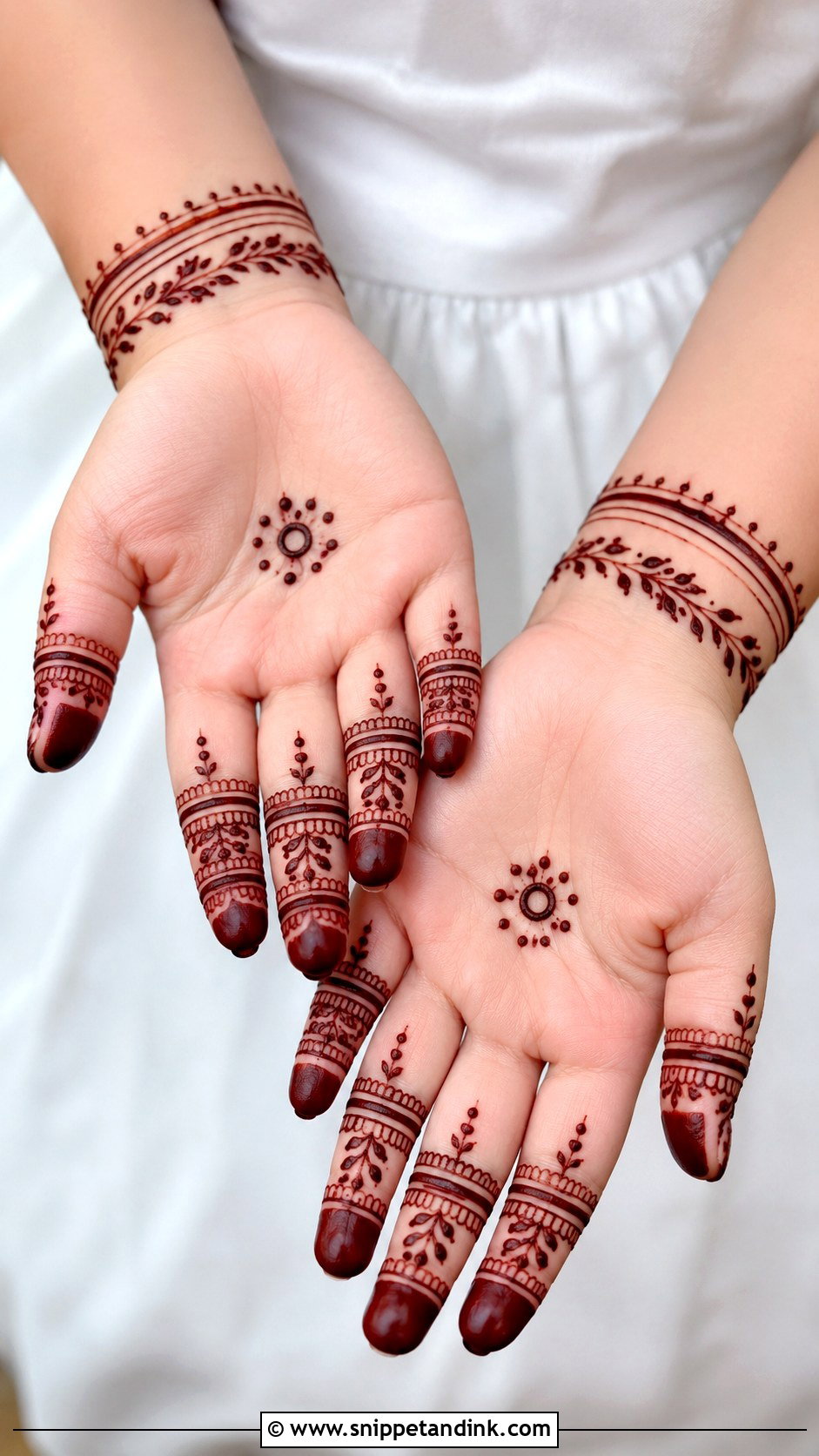
Fingers only, with the palm almost bare: tiny dots, leafy vines, mini flowers and small bands on each finger, perhaps one dot cluster on the palm. It’s quick, which is the main reason to choose it. One warning from experience: finger designs end up in the mouth more than anything else, so for children still at that stage, I’d pick the back of the hand or the wrist instead. Use a slightly thicker line than you would on an adult; fine lines on little fingers barely stain.
6. Baby Palm Mehndi Design
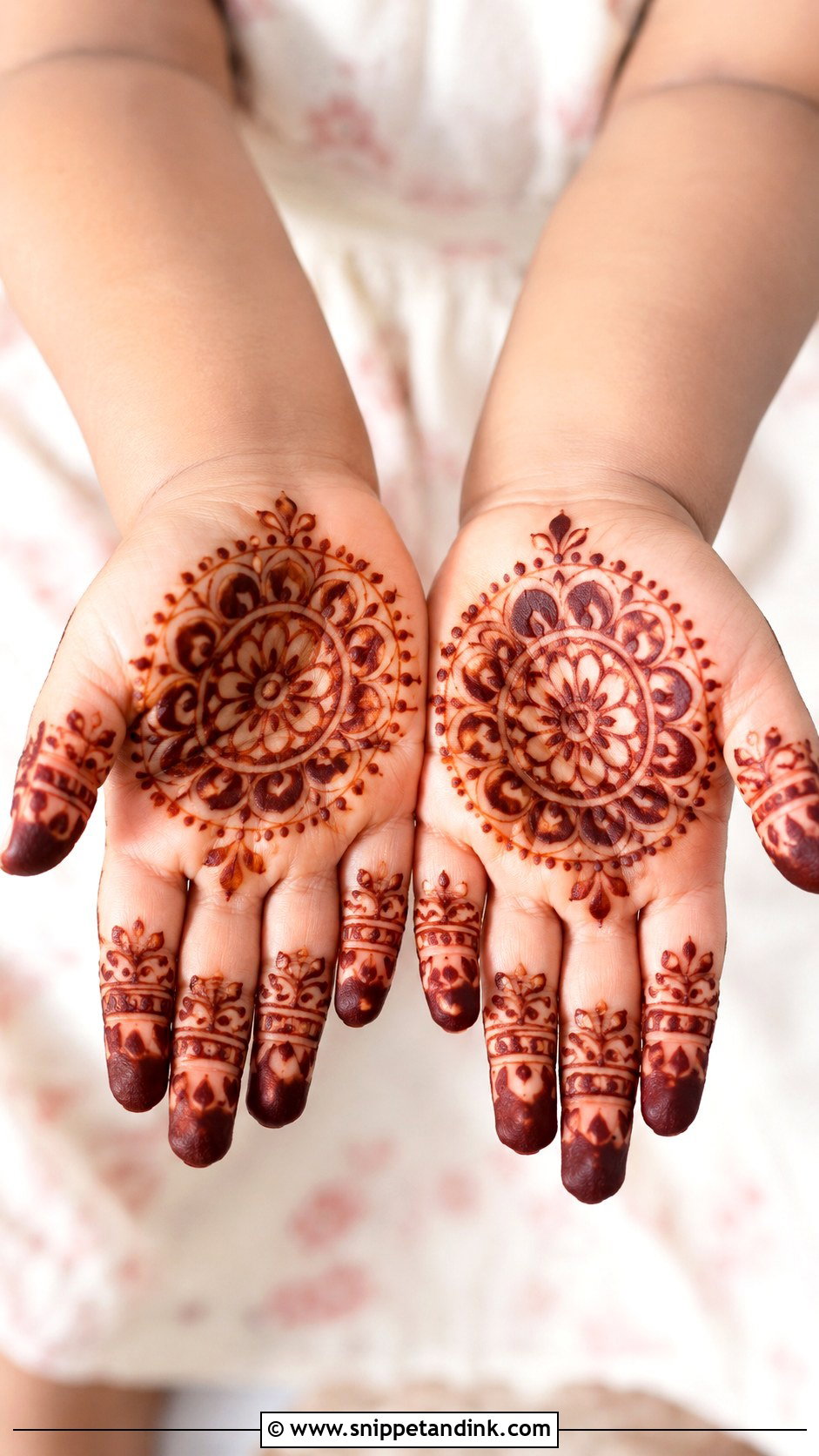
A centred palm design works when it stays small: a little mandala, flower or heart in the middle, with dots around it like a frame and tiny caps or dots on the fingers. Leave the edges of the palm bare. It shows completely when the child opens the hand, which makes it easy to photograph. The difficulty is getting a small child to keep the palm open while it dries, so I save this one for older toddlers who can follow instructions.
7. Baby Back Hand Mehndi Design
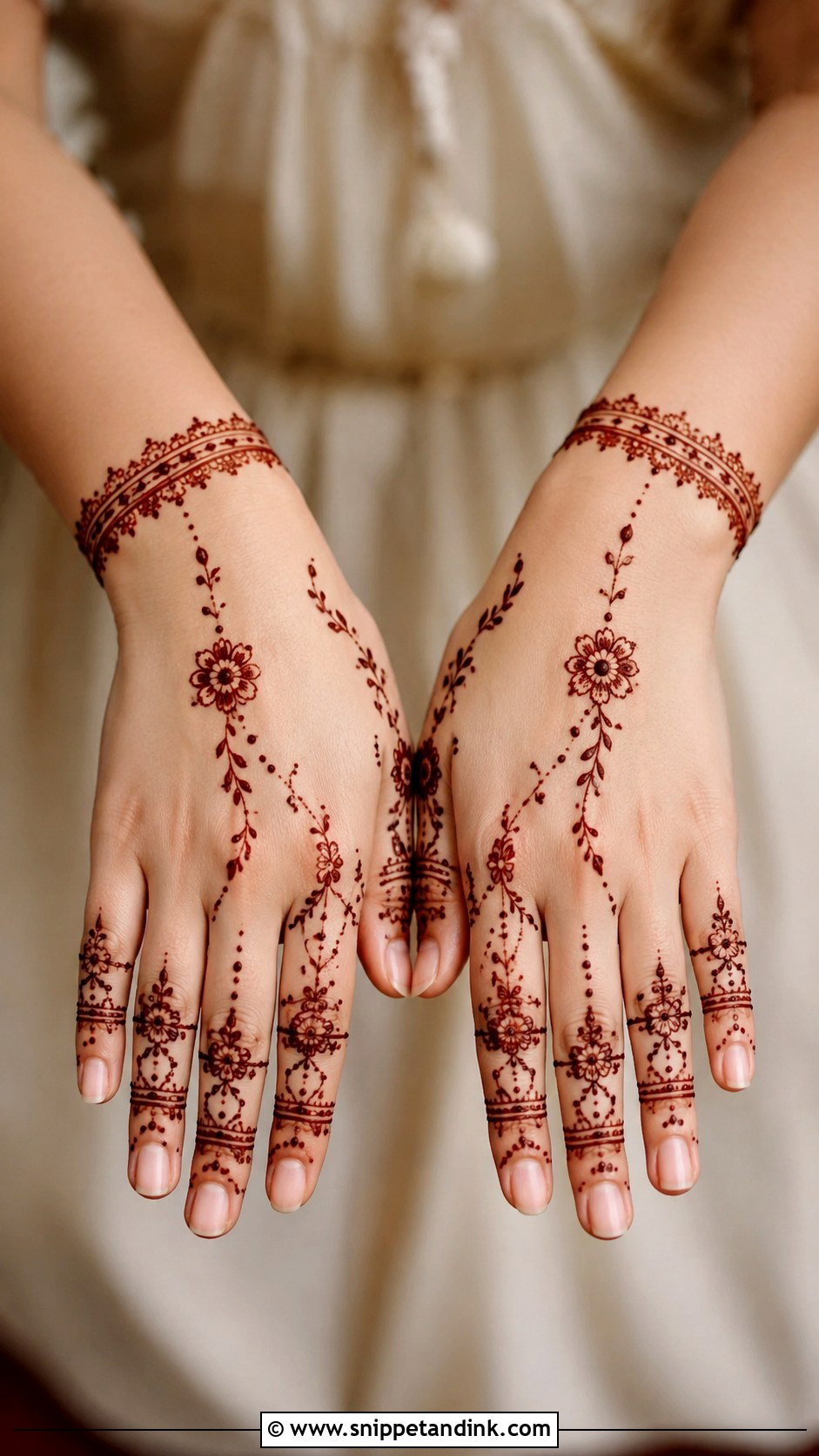
For babies, the back of the hand is often the better spot. It rubs less against clothes and toys, children don’t tend to suck it, and the design can dry while they play. A small flower near the centre, a dotted vine toward the wrist and simple finger bands are enough, with a tiny bracelet if you like. The stain will be lighter than on a palm, which is no bad thing on a child.
8. Baby Arabic Mehndi Design
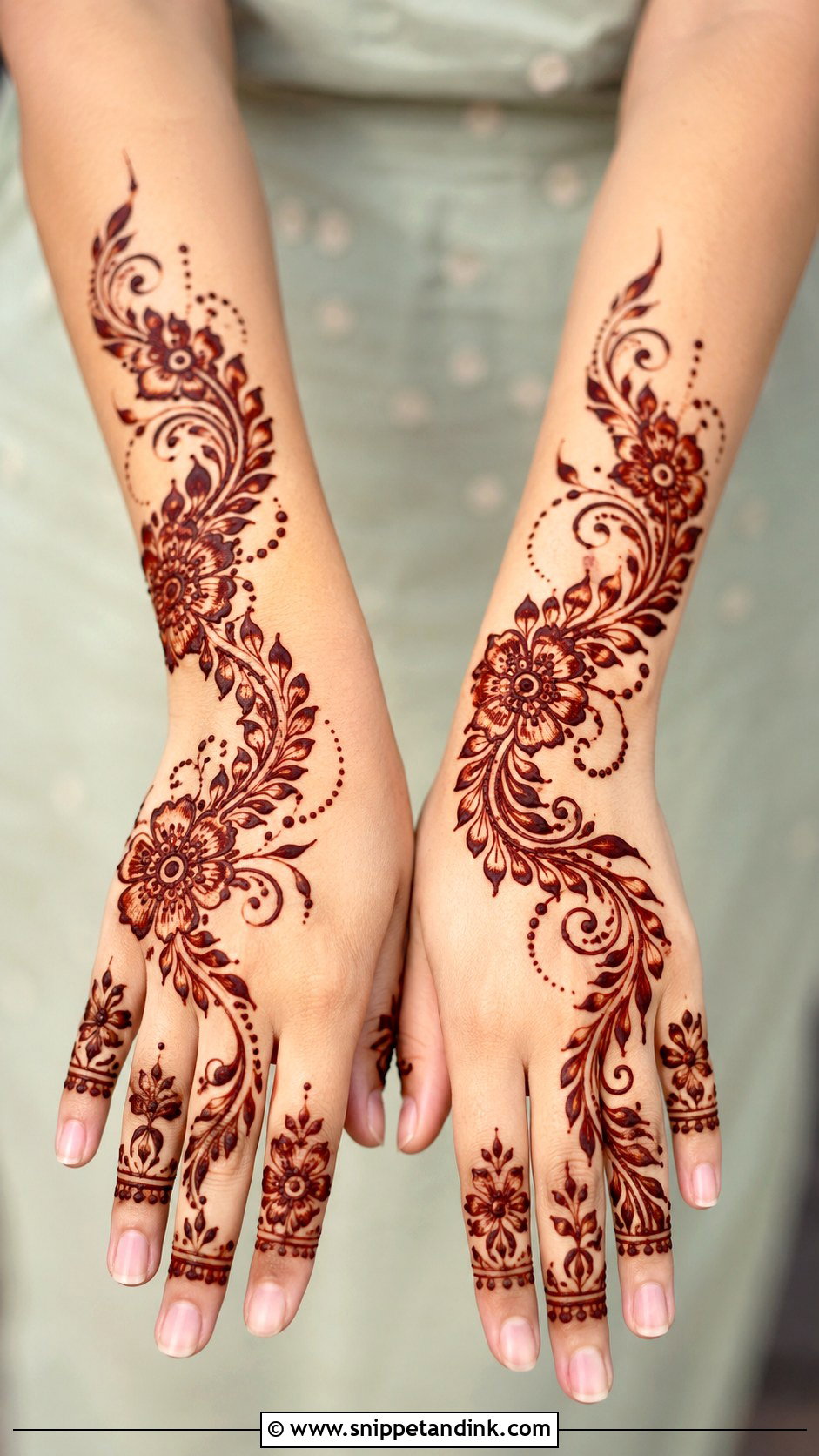
A baby Arabic mehndi design borrows the open diagonal of Arabic henna, running from one side of the wrist toward the index finger with one or two simple flowers, curved leaves and dots. It’s quicker than dense Indian work and still looks stylish with very little on the hand. I keep the strokes slightly thick so the stain shows. Weddings, Eid parties and family gatherings all suit it.
9. Baby Indian Mehndi Design
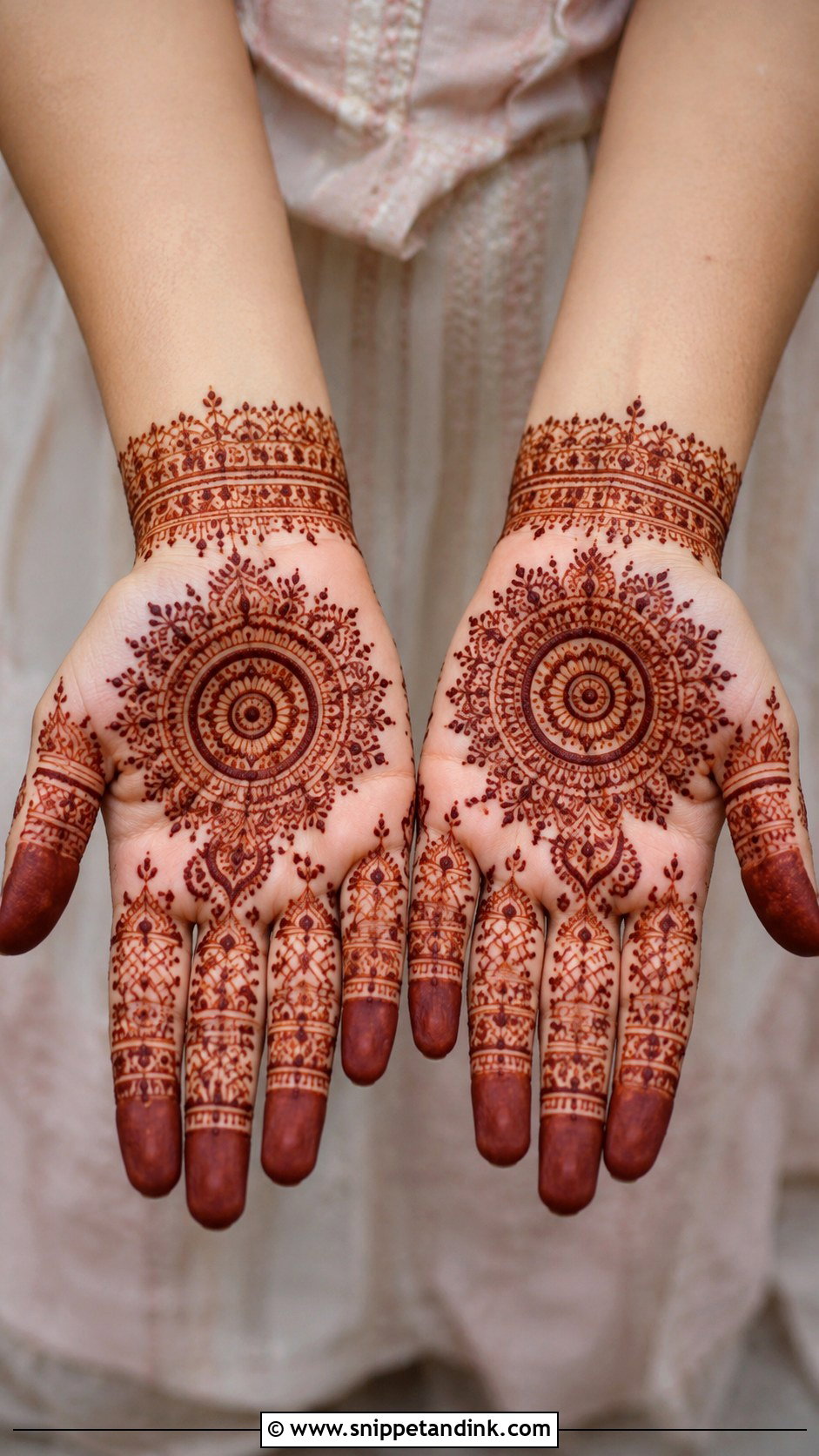
A small Indian-style design can still be traditional: a little palm mandala, a couple of tiny paisleys, dotted borders and simple fingertips, with open space between them. A wrist cuff of dots and lines finishes it. I limit it to three motifs at most, because the classic elements shrink badly on a small hand and start to merge. It suits weddings, Karwa Chauth family functions and Diwali gatherings.
10. Baby Indo-Arabic Mehndi Design
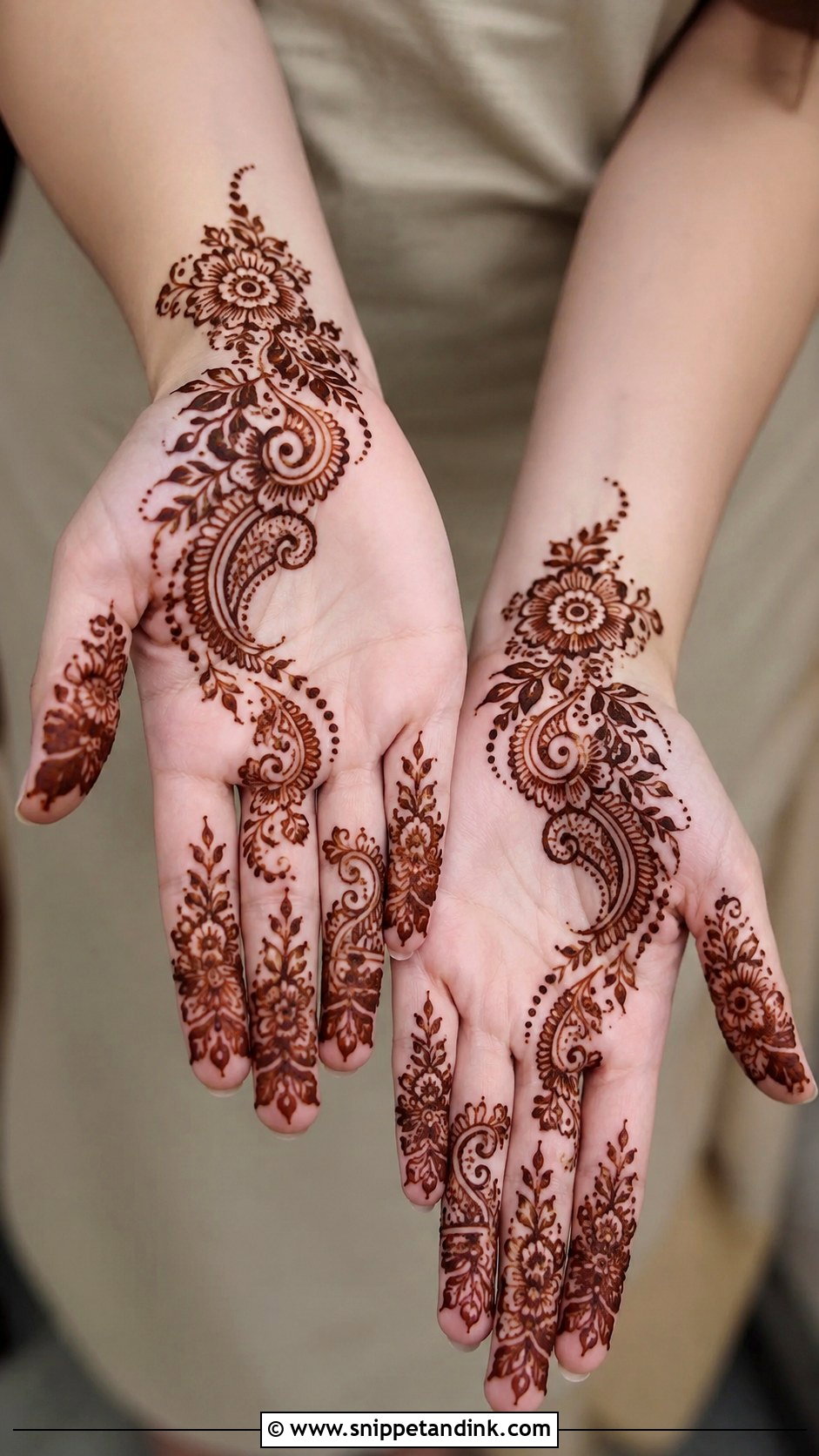
Indo-Arabic on a child means one small paisley on the palm, a floral trail along one side and simple finger details, connected from wrist to fingers by dotted outlines and curved leaves. It’s a step up from a single motif without being much slower. The open spacing helps it dry quicker and reduces smudging. It suits weddings and Eid when a child wants something that looks like the grown-ups’ henna.
11. Baby Mandala Mehndi Design
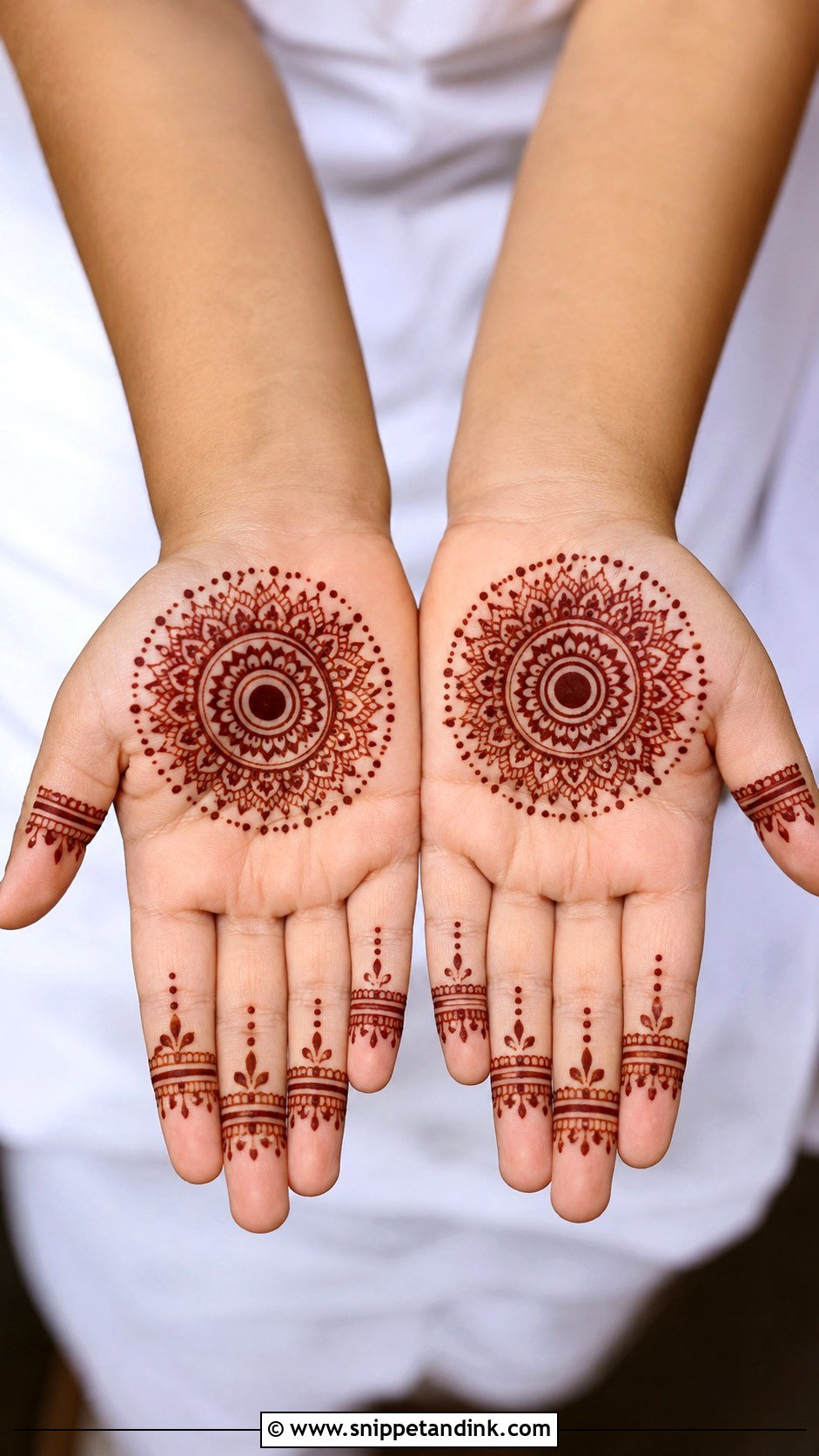
Mandalas look complicated but are among the easiest shapes for a parent to draw. I limit a child’s mandala to three layers: a centre dot, one ring of petals and an outer dotted border. Anything more blurs on a small hand. Place it in the centre of the palm or the back of the hand, and leave the fingers plain or dotted. It suits everything from a quiet family celebration to a big festival.
12. Baby Butterfly Mehndi Design
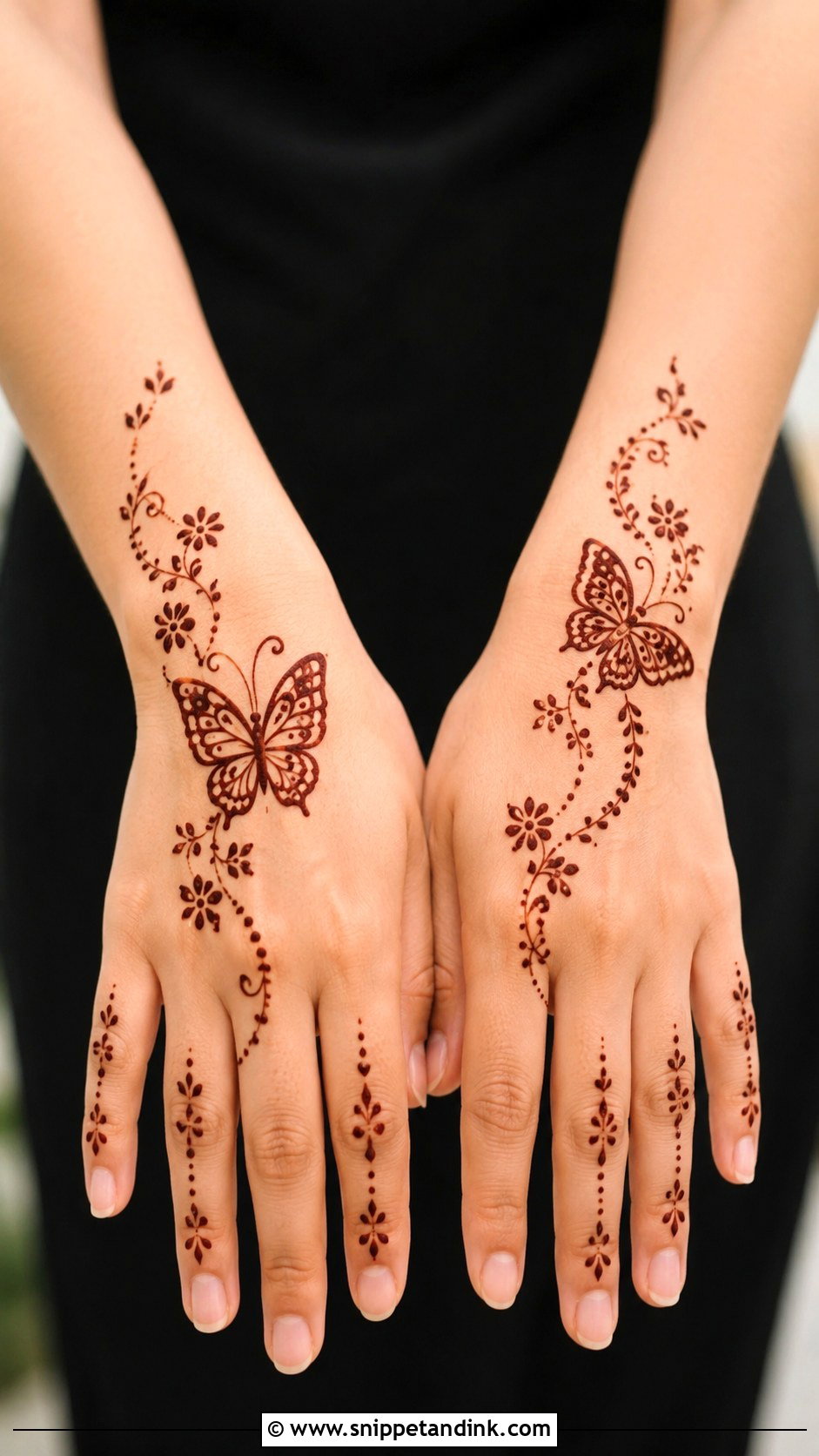
Butterflies are a favourite with little girls. Draw a small rounded butterfly on the back of the hand or the palm, decorate the wings with dots, tiny petals and curved lines, and add a trail of dots toward the wrist. Rounded wings look softer than pointed ones, and they’re easier to draw in one stroke. Keep the wings open inside so the shape stays visible. It suits birthdays, spring celebrations and casual family events.
13. Baby Moon Mehndi Design
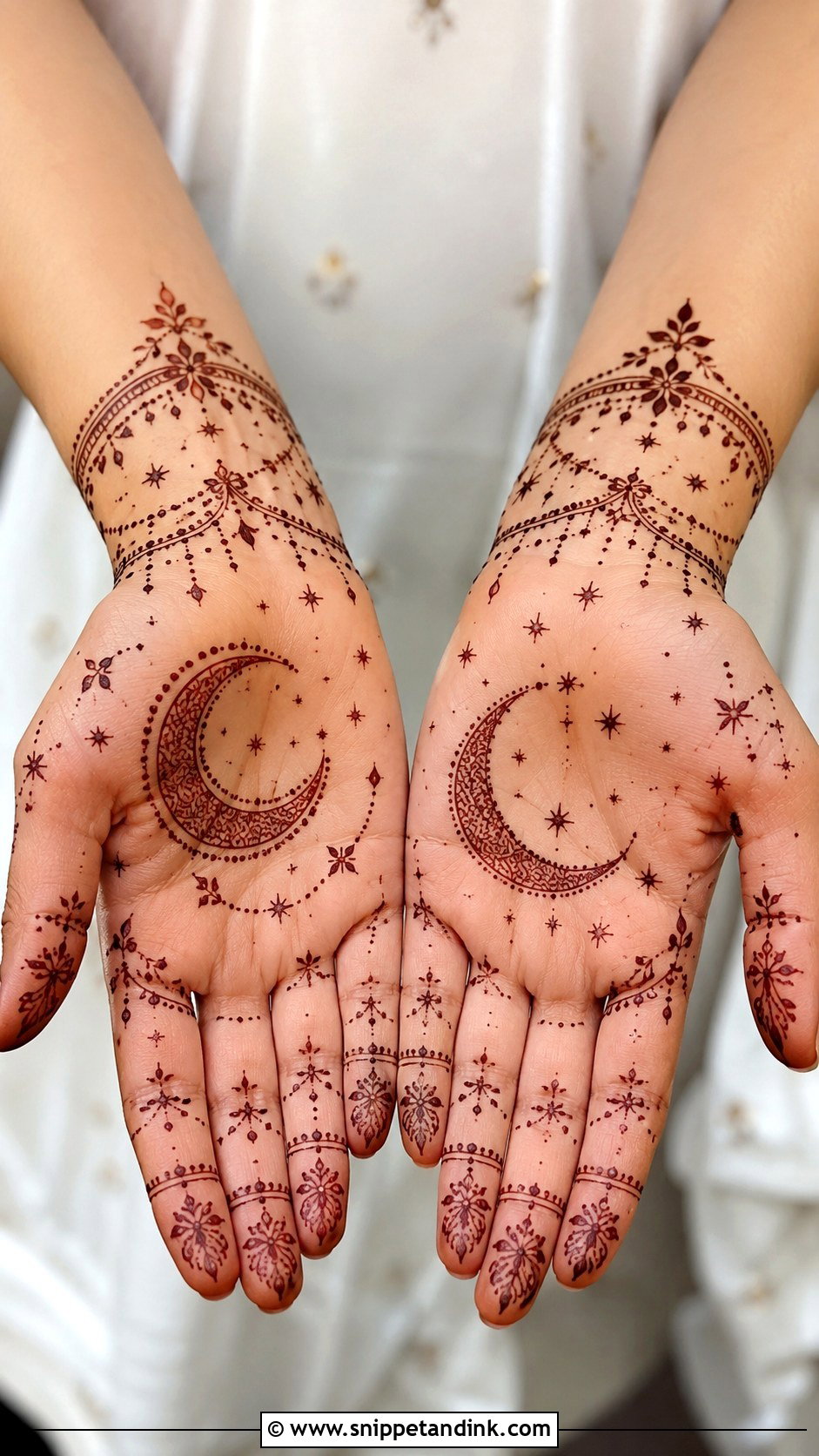
A crescent moon is quick and meaningful, especially for Eid. It sits in the centre of the palm with tiny stars, dots and curves around it, or connects to a bracelet line on the back of the hand. I outline the crescent clearly and leave it unfilled; a filled moon on a child’s palm loses its shape once small fingers curl over it. The shapes are big and easy to recognise, which makes it a sweet choice for family photos during Eid or Ramadan gatherings.
14. Baby Eid Mehndi Design
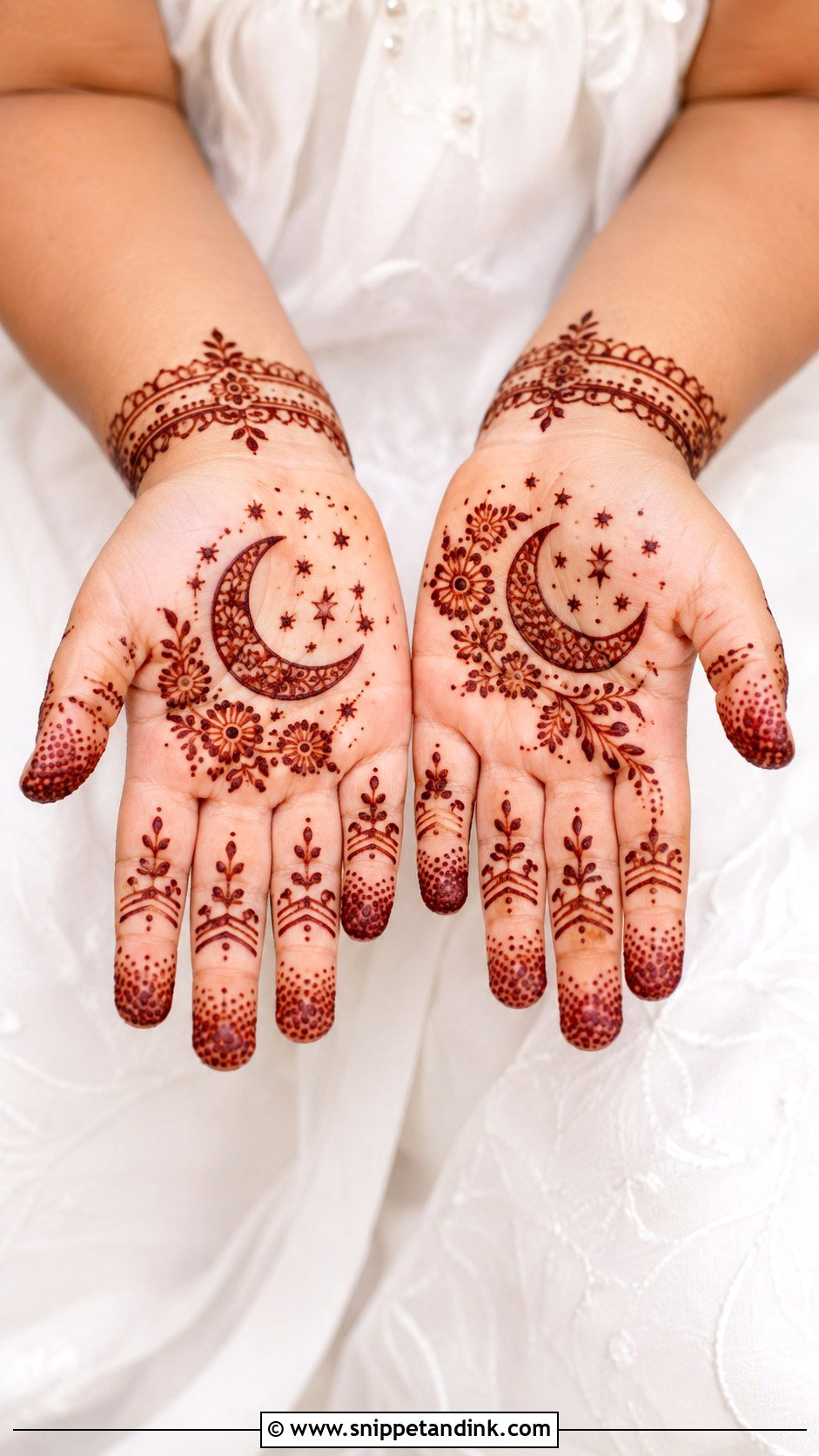
On Eid morning, I aim for under ten minutes per child. A small crescent, a star cluster, a flower or a palm mandala, with light finger dots and a wrist band, gives a complete look without covering the hand. Clean, bold lines in natural henna show well even on small hands. Both hands can match, or one palm and one back of the hand. Better still, do it the evening before, while they’re winding down, so the colour has developed by morning.
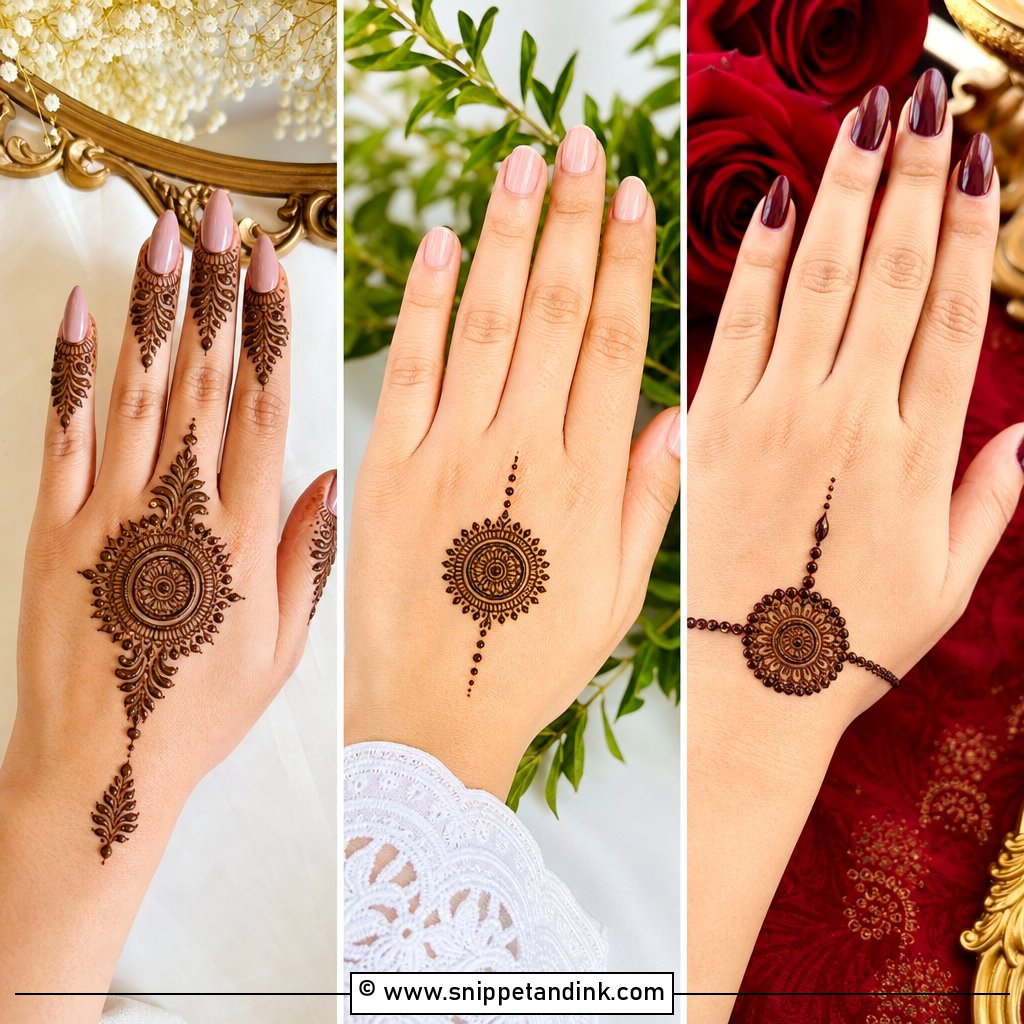
15. Baby Wedding Mehndi Design
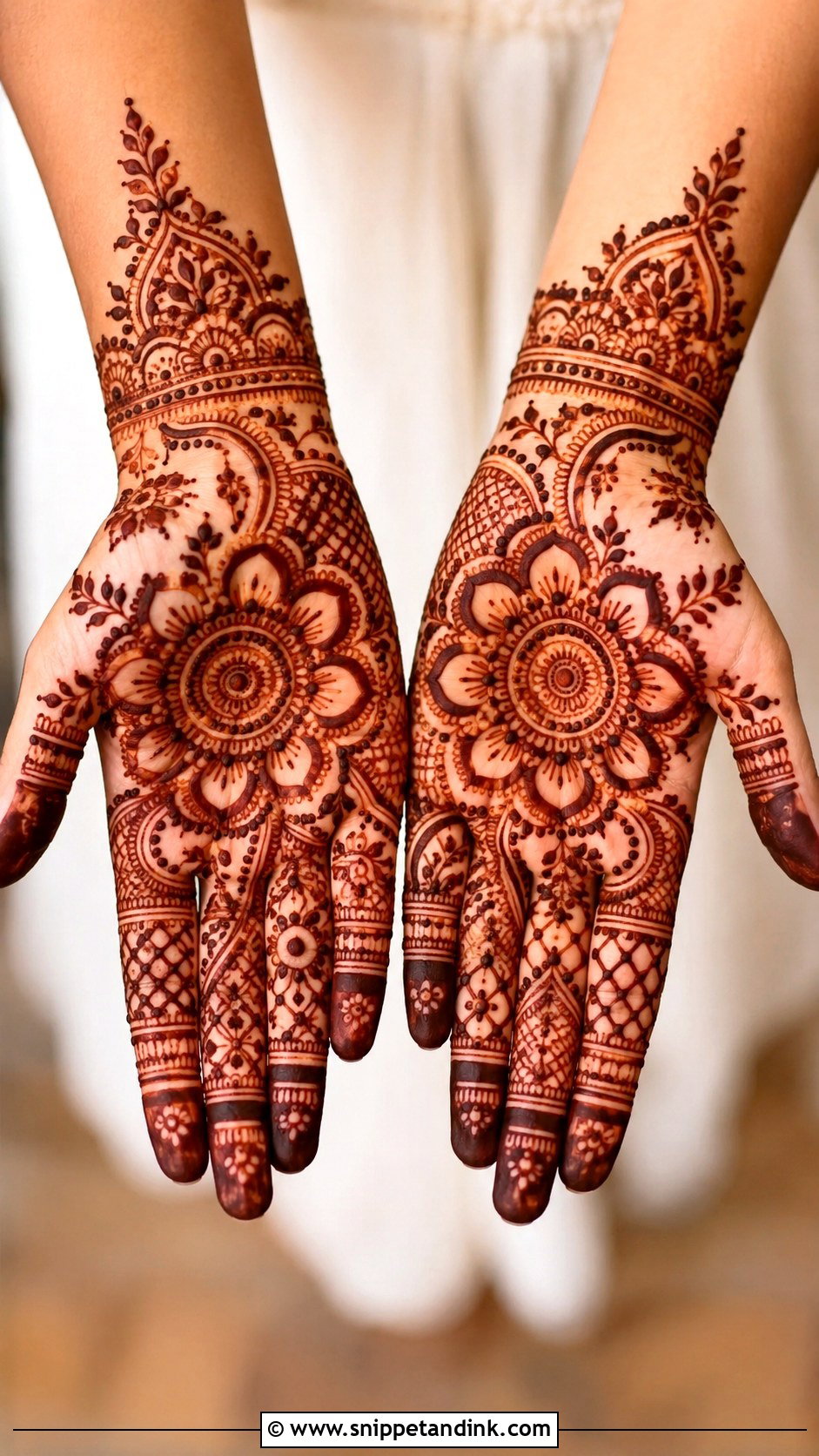
A child in the wedding party often wants henna like the bride’s. I draw a lighter echo of her design, one motif from it, such as her central flower, shrunk into a tiny mandala on the palm, with a paisley near the wrist and dotted finger bands. It looks adorable in family photos and takes a few minutes. Skip dense shading and very thin lines on children; they smudge long before they stain.
16. Baby Birthday Mehndi Design
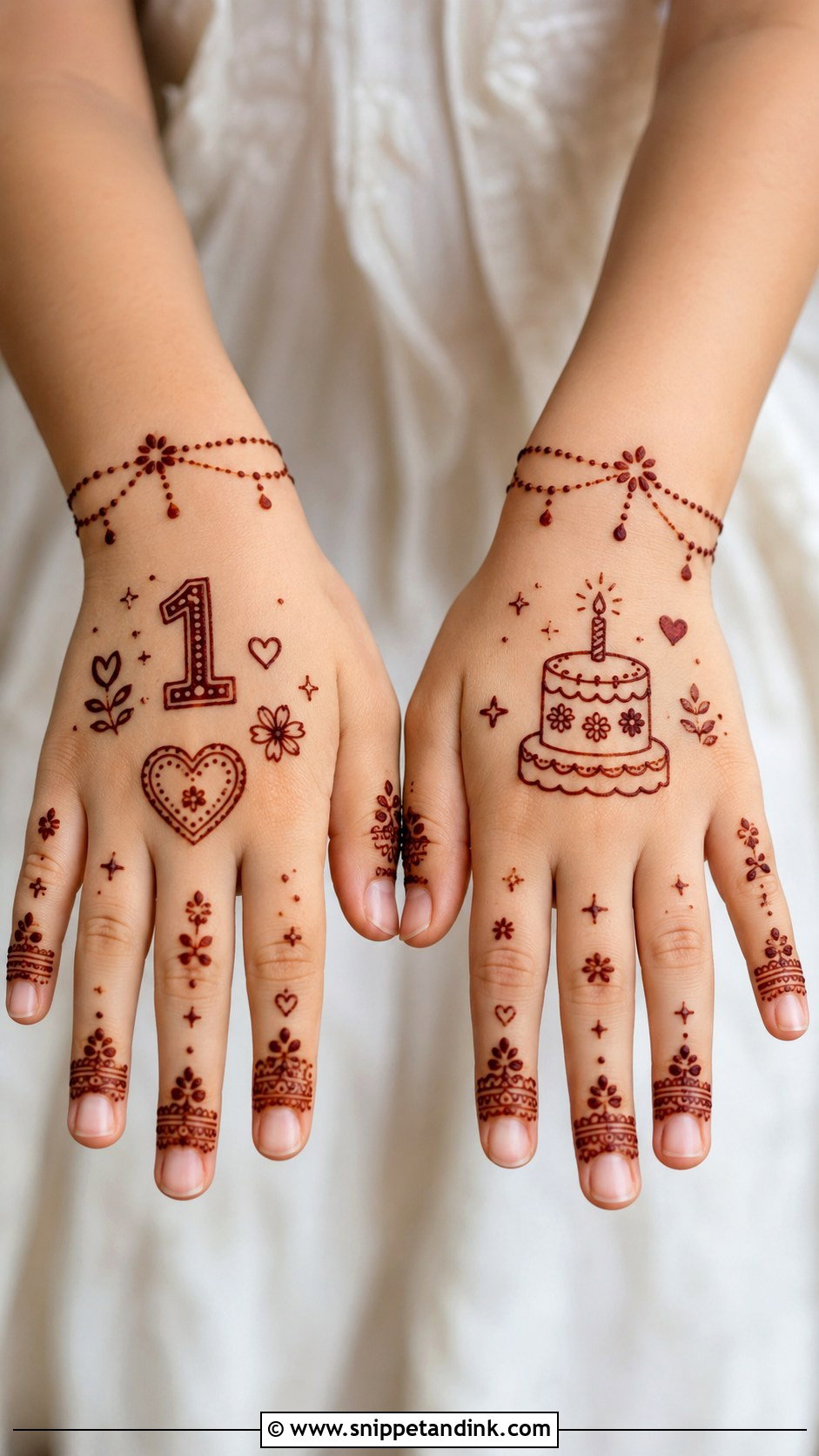
Birthday henna should be fun first. Hearts, stars, flowers and dots look playful in photos, with one main motif on the back of the hand and a small bracelet line. If the child is old enough, let them choose the shape; a child who chose the design sits much better than one who didn’t. Keep it short, especially if there’s a party outfit to put on afterwards.
17. Baby Simple Mehndi Design
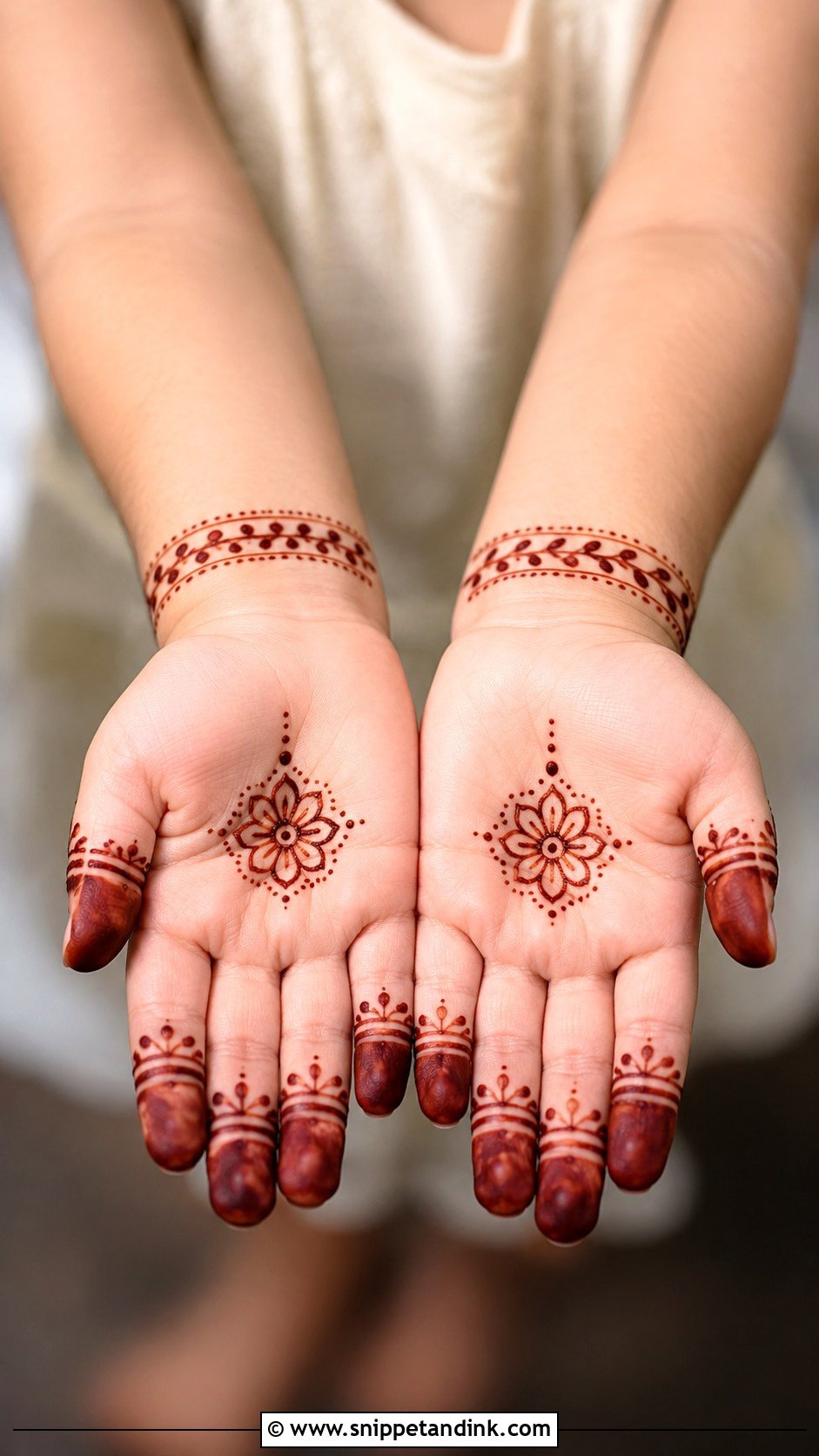
For a first try at henna, one small motif is enough: a flower, heart, mandala or star, finished with dots and a tiny wrist line. Parents can do this at home without an artist, and it’s done before the baby gets restless. Neat spacing and smooth lines are what make it look good. Don’t copy an adult design at a smaller scale; it won’t fit, and a clean small pattern looks far more polished.
18. Baby Easy Mehndi Design
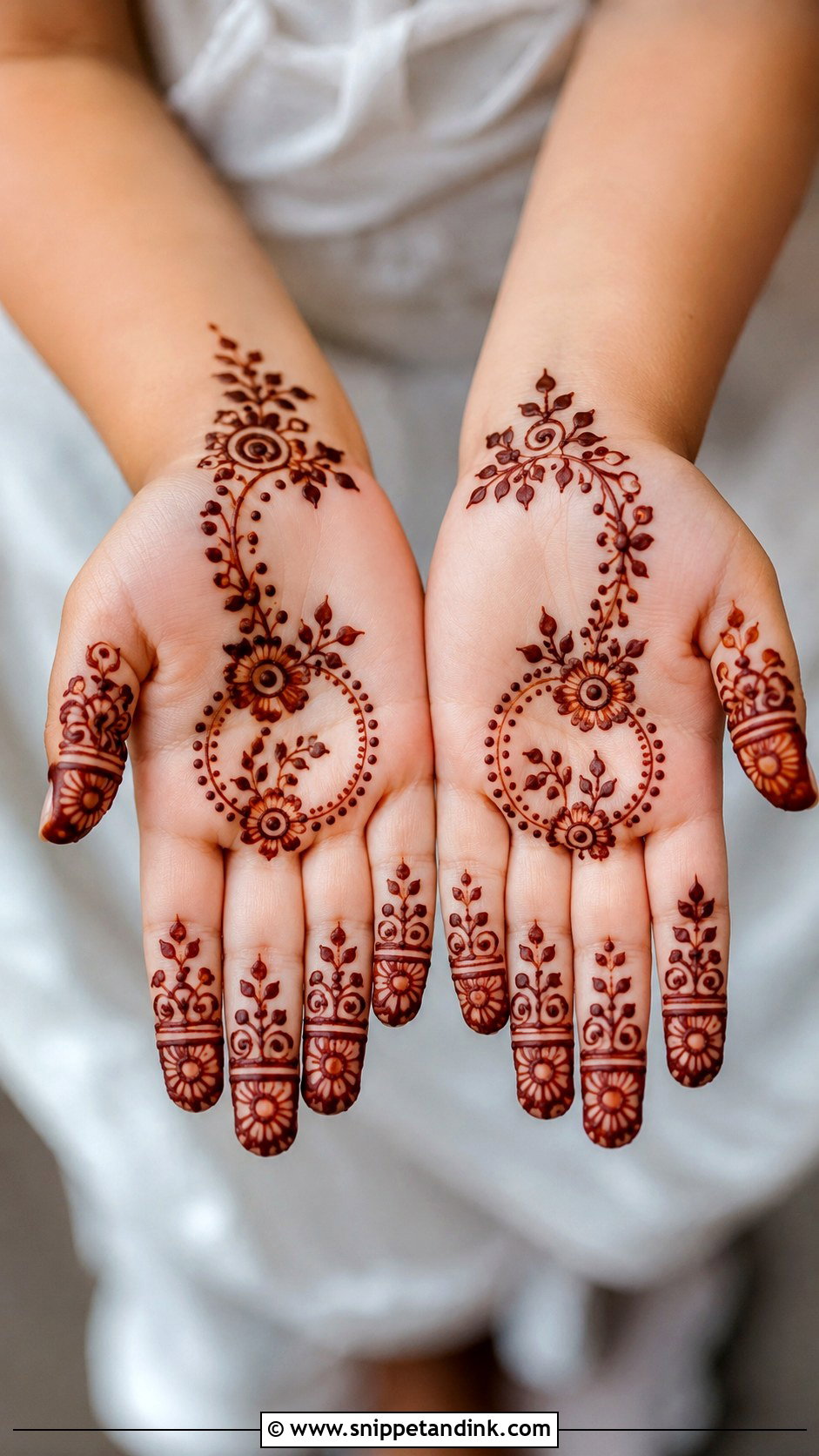
Easy designs use shapes that can be drawn in one or two strokes: round flowers, dotted circles, small leaves and curved trails. My working rule with children is to draw the biggest motif first and add details only while the child is still relaxed. That way, if you have to stop early, the design already looks complete. Keep tissues nearby, and use a cone with a smooth, slightly wider tip. It doesn’t need to be perfect.
19. Baby Full Hand Mehndi Design
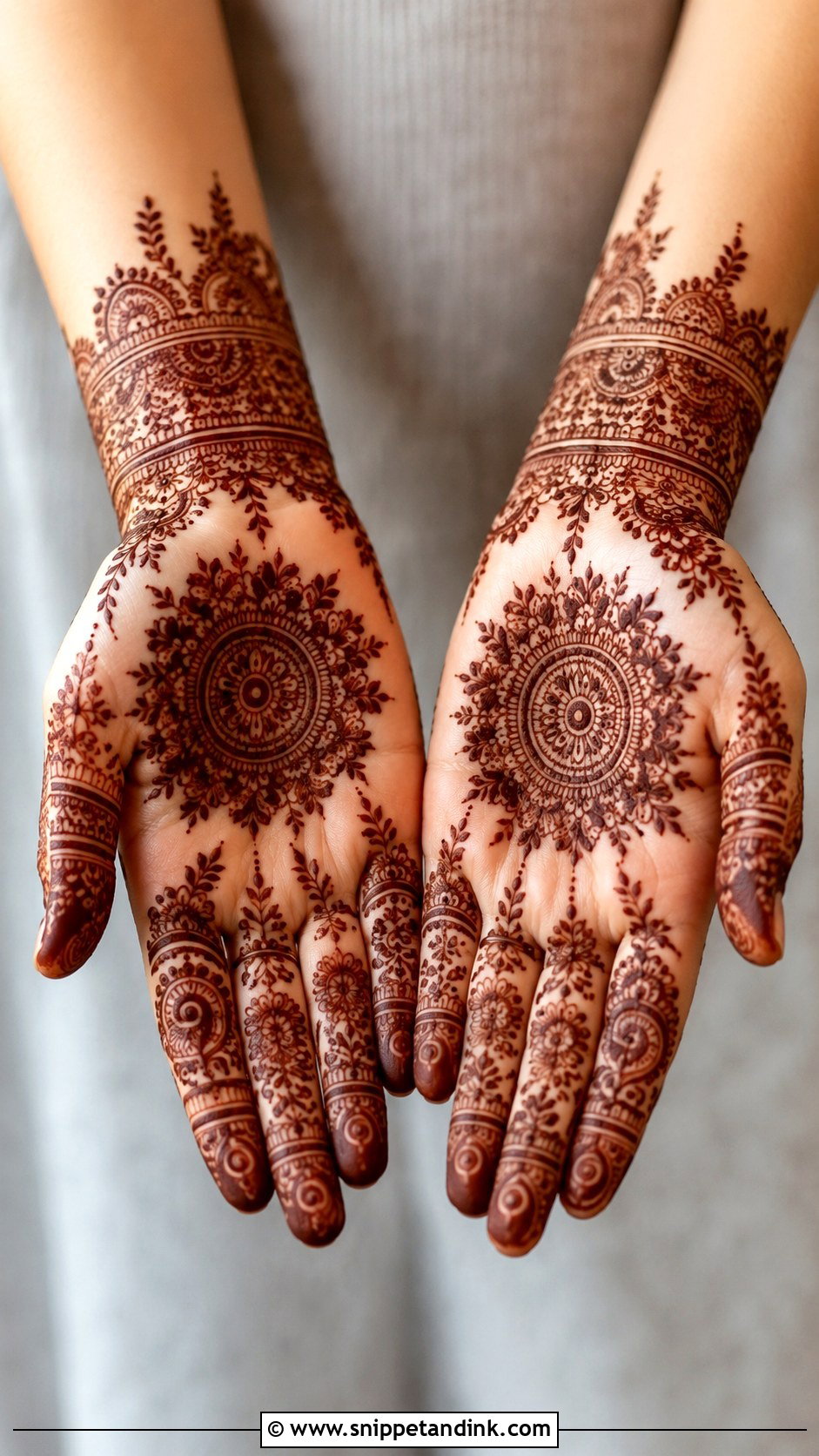
Full-hand henna for a child should still be far lighter than an adult full hand: a small mandala or flower on the palm, simple vines toward the fingers and a soft wrist cuff, with plenty of blank space. Covering both sides of both hands takes time, so I only offer this to older children who can sit calmly for a while, never to babies. Rounded, bold motifs keep it easy to read. It’s for weddings and major festivals rather than everyday occasions.
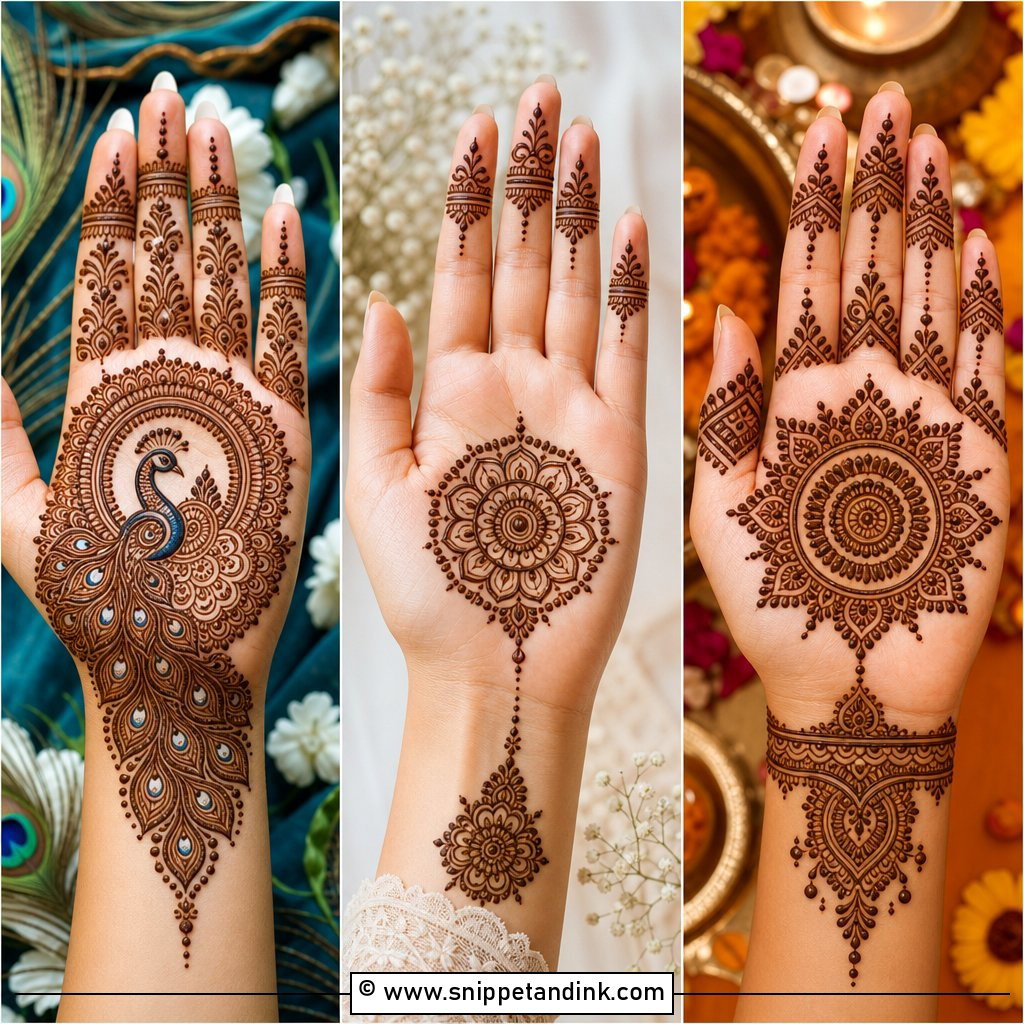
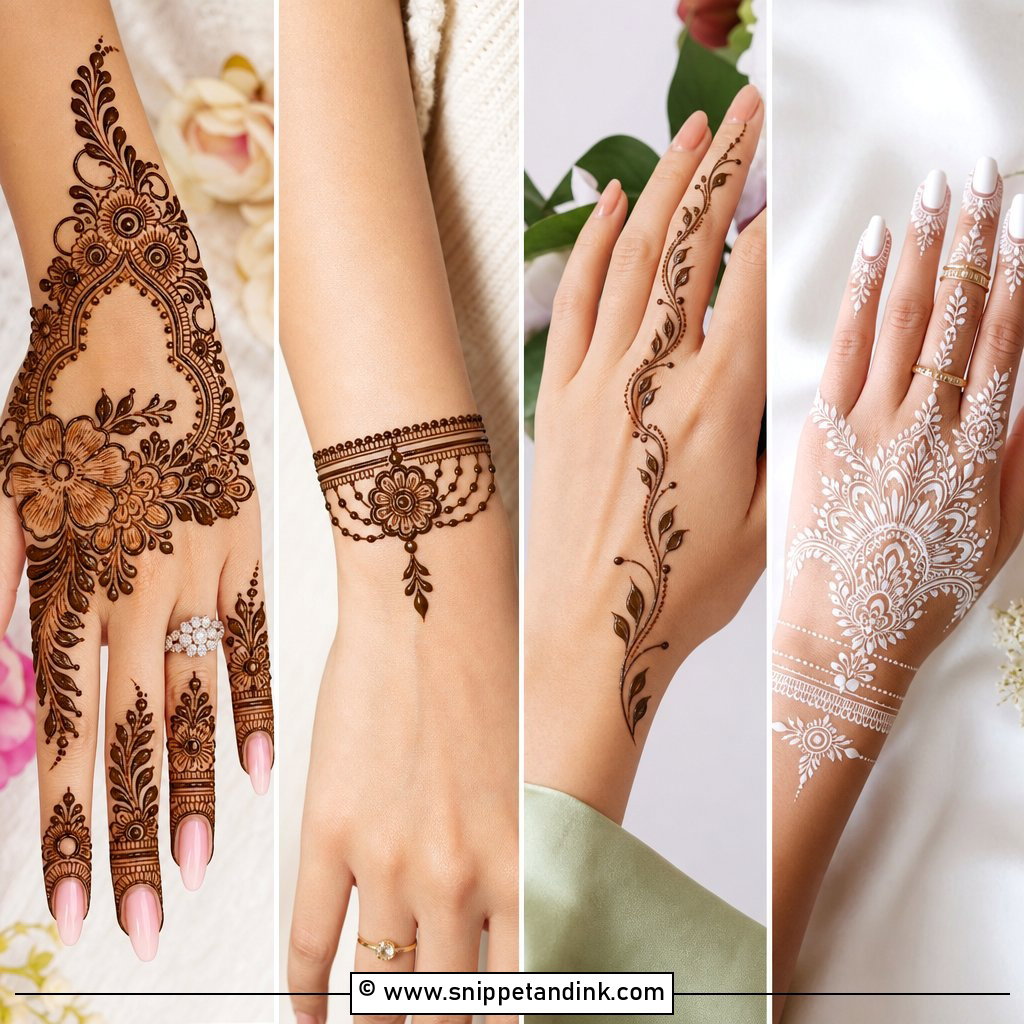
20. Baby Half Hand Mehndi Design
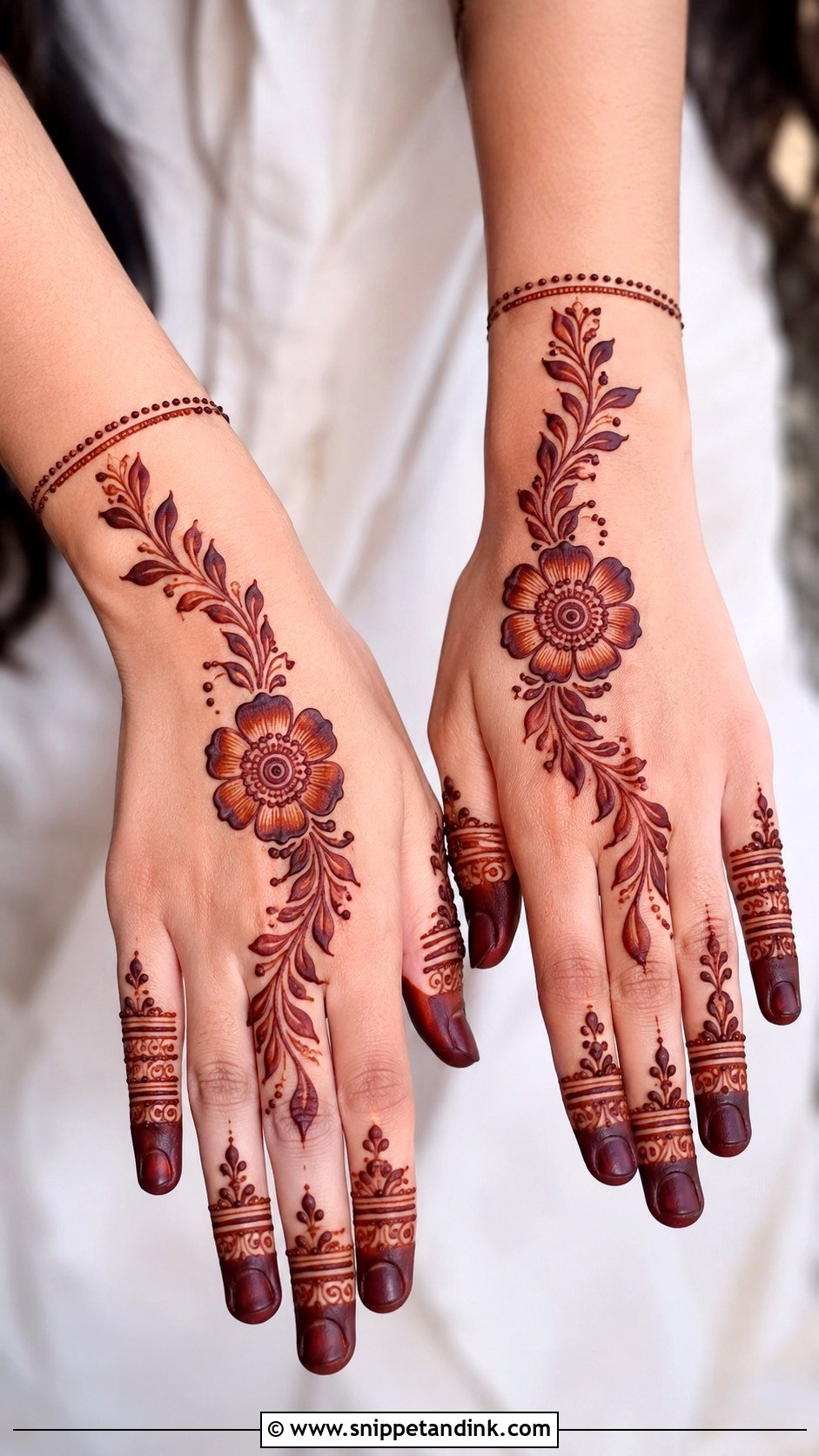
Half-hand designs decorate either the palm or the back of the hand and keep the fingers very simple: one flower, a leafy trail and a small wrist border, linked by dots. Less skin covered means less waiting and less smearing. I often suggest this for children who want henna but hate sitting still. It suits Eid, weddings, birthdays and family visits.
21. Baby Minimal Mehndi Design
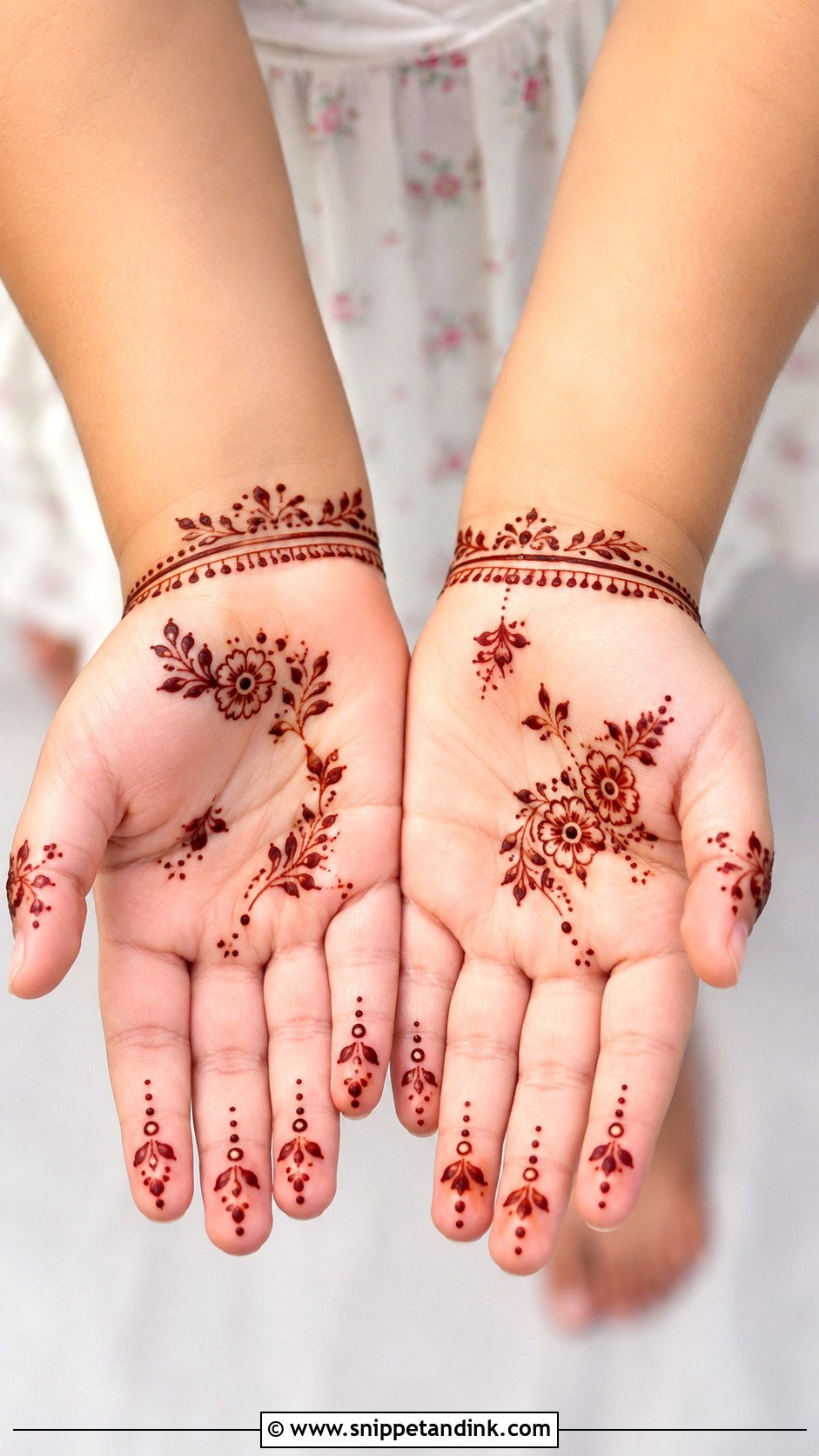
Minimal means three things at most: a tiny flower on the palm, dotted fingertips and a delicate wrist line. Each one has to be placed deliberately so the hand looks decorated rather than unfinished. It dries quickly and is the least bothersome option for a baby. It’s what I’d recommend for a very first henna experience, and it doesn’t compete with a busy outfit.
22. Baby Cute Mehndi Design
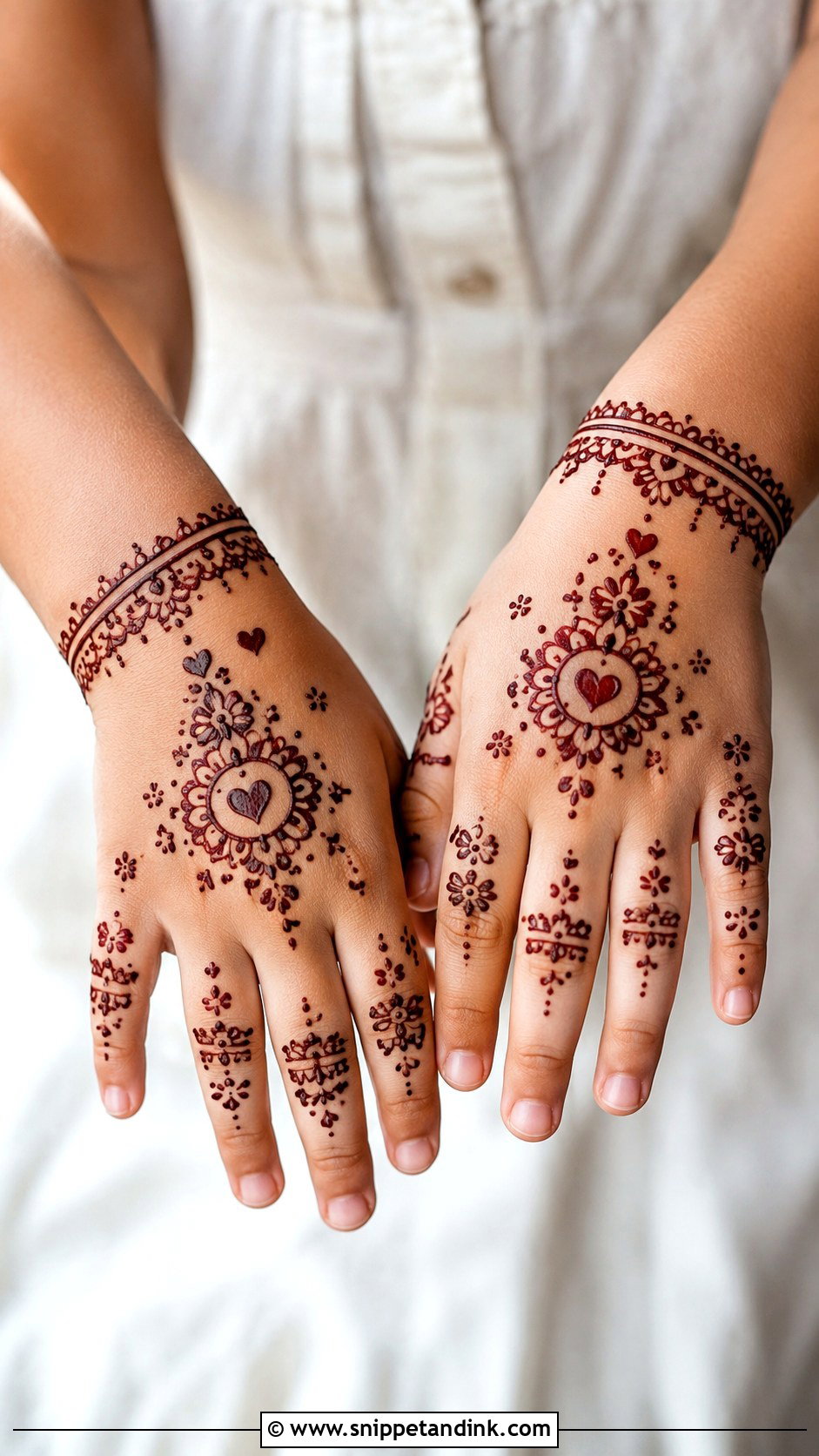
Cute designs mix a small heart, a flower, a few dots and a little bracelet into one look, all rounded and simple. Put the main motif on the back of the hand and add dotted lines on two fingers. The goal isn’t perfection; it’s a happy, soft design that the child is proud to show people. Toddlers who like playful shapes love it, and it’s easy to apply at home.
23. Baby Front Hand Mehndi Design
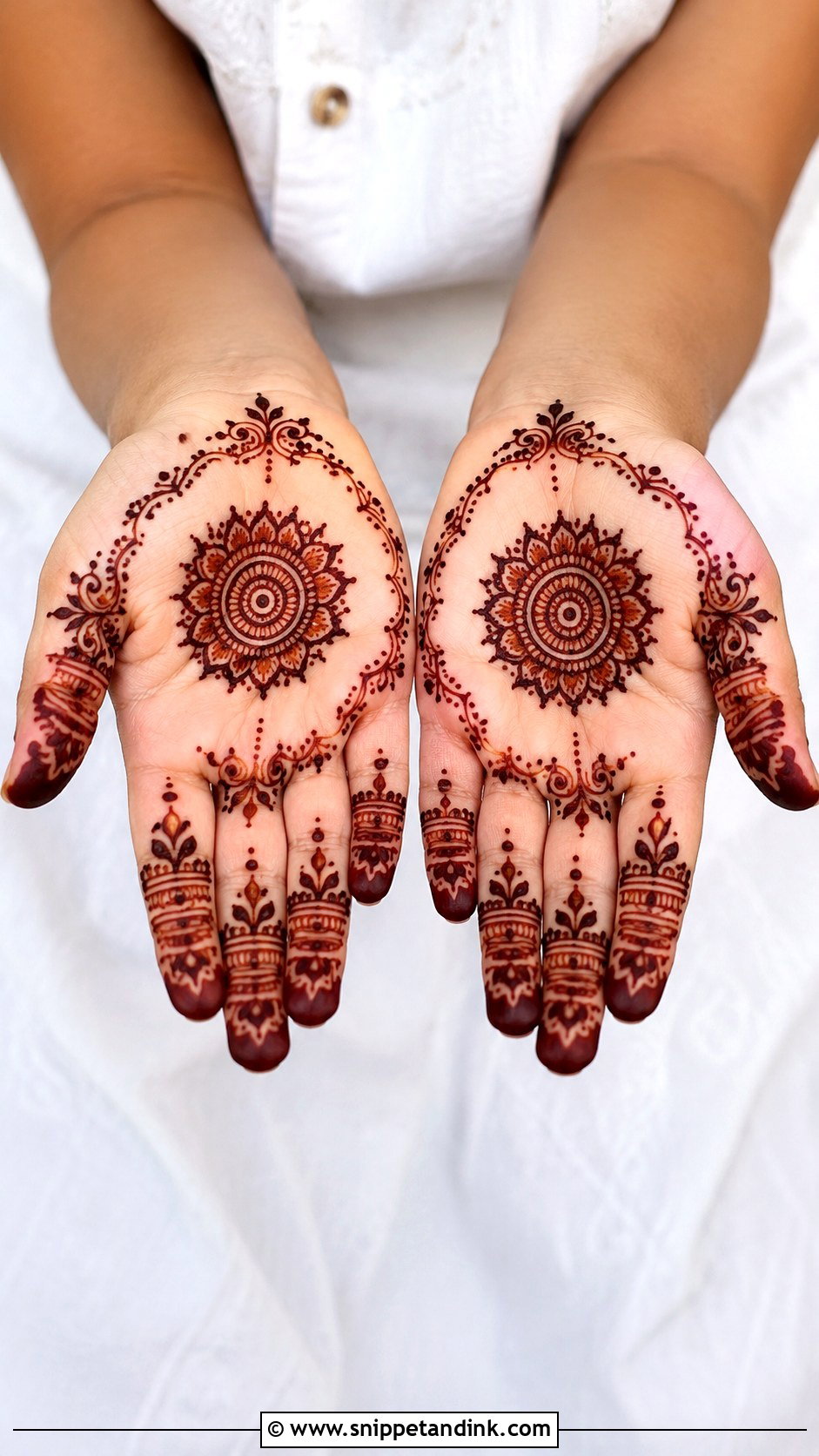
Palm-and-finger designs centre a small mandala, flower or heart, frame it with dots, and add tiny bands, leafy tips or dotted lines on the fingers. The palm stains darkest, so even a light design here shows clearly. Avoid lots of thin lines, which blur on small palms. The real challenge is drying time with a closed fist, so I sit the child with a toy they can hold on their other hand.
24. Baby Wrist Mehndi Design
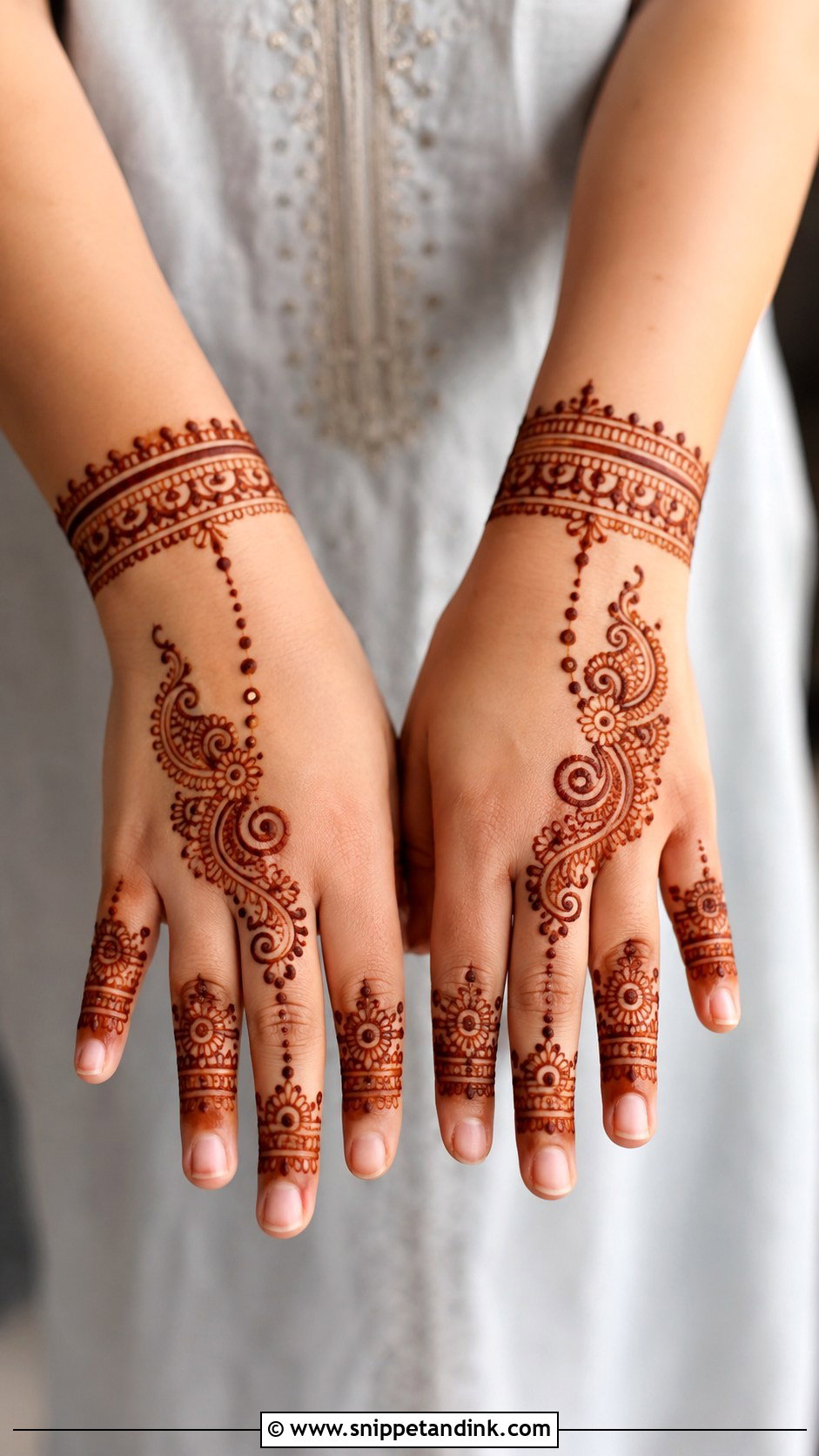
A wrist design gives decoration without covering the palm: a tiny bracelet of dots, loops, flowers or paisleys, with a chain line toward one finger for a jewellery effect. It’s quick and less likely to smudge, and younger babies can still use their hands freely. Draw the band slightly loose rather than tight around the wrist, since chubby baby wrists have creases that break up a line drawn straight across them.
25. Baby Paisley Mehndi Design
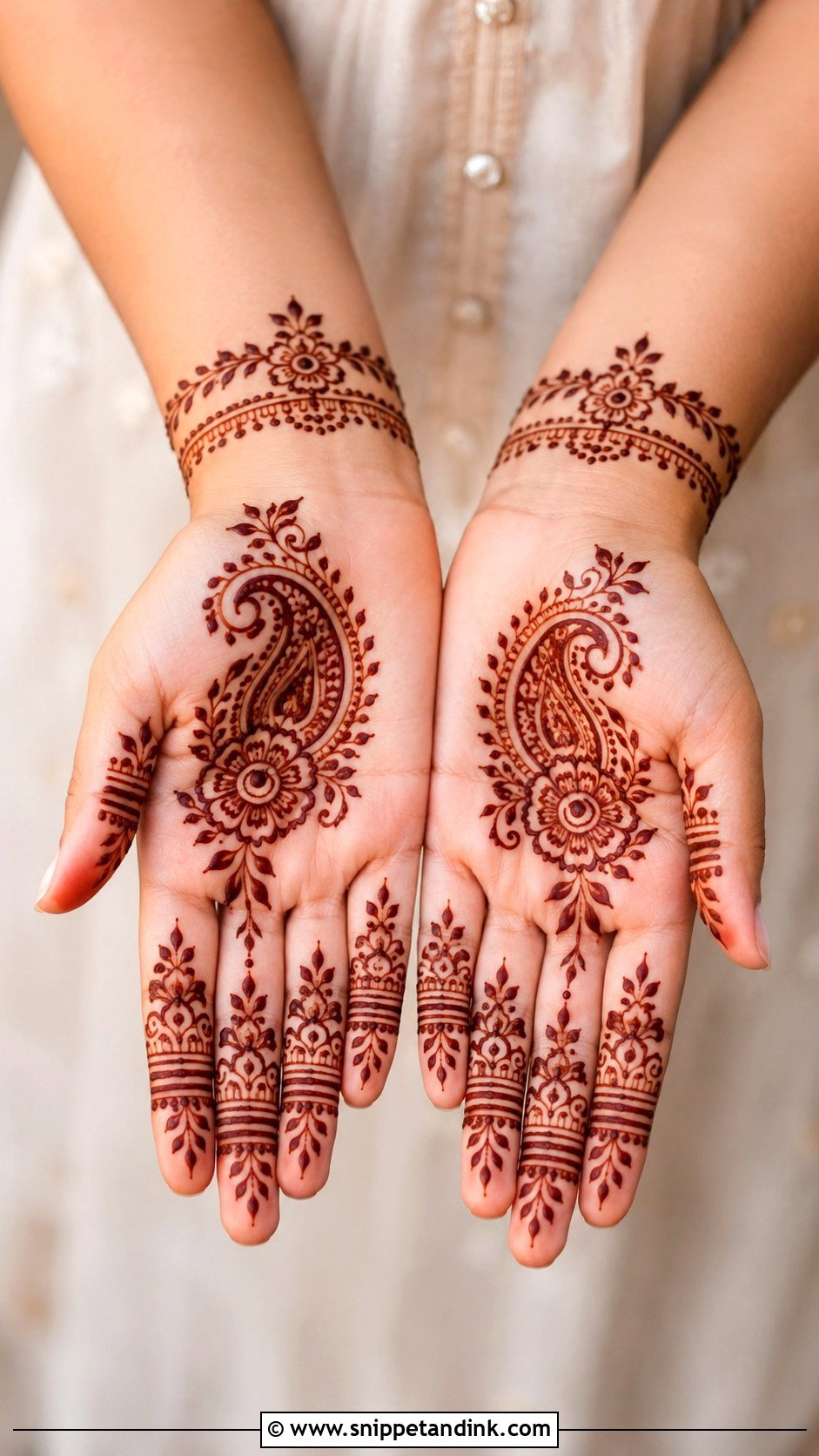
A baby paisley mehndi design shrinks a classic motif: one paisley on the palm or back of the hand, decorated with dots, a mini flower and a few curved leaves, plus a simple finger trail or wrist border. The paisley should be visible but not cover the whole hand. Paisleys can look grown-up, so I round the curves and leave the inside mostly open to keep it childlike. Weddings, Diwali, Eid and family functions suit it.
26. Baby Peacock Mehndi Design
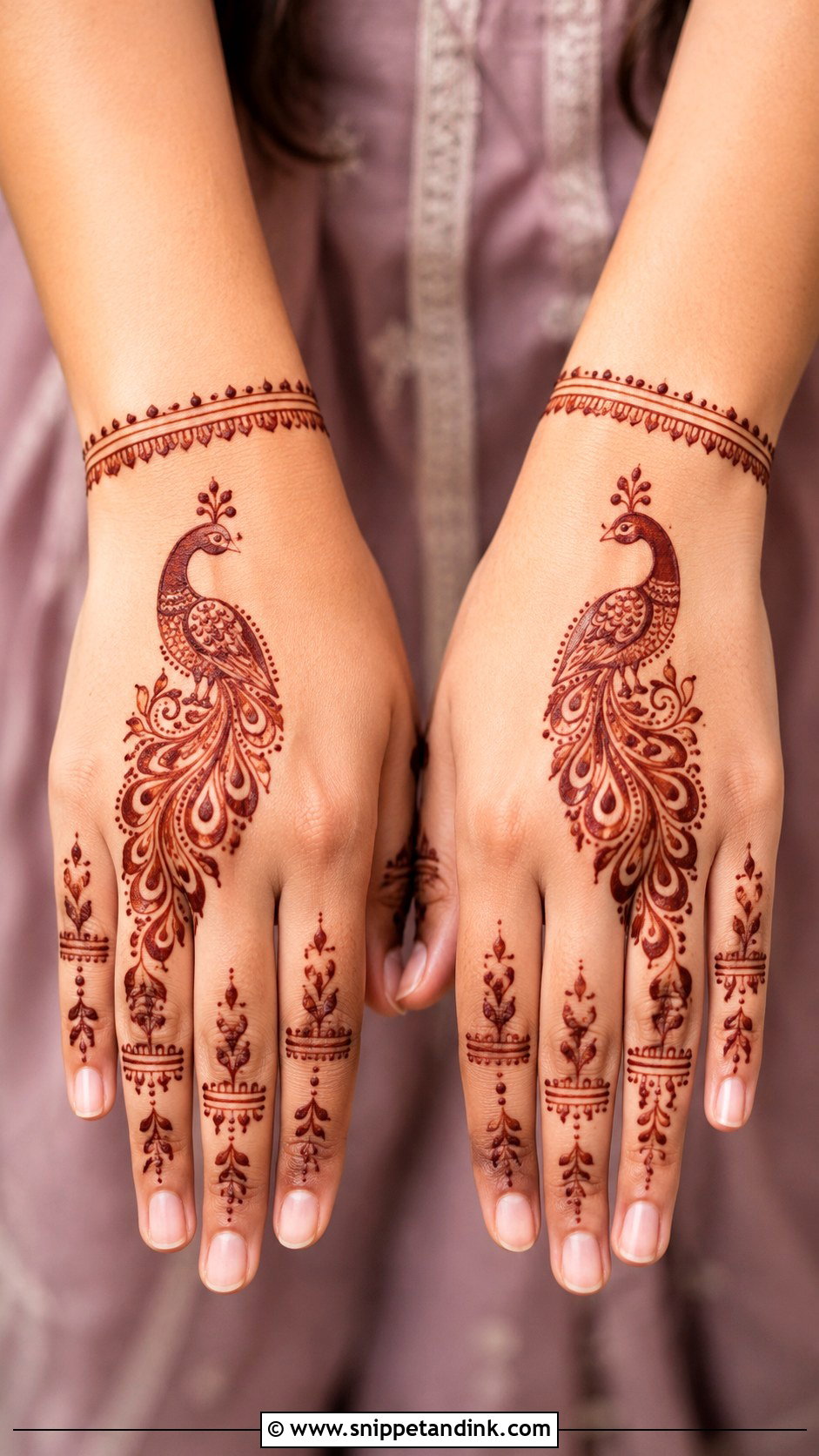
Peacocks have to be simplified for small hands. I draw a curved neck, a round body and a tail of three or four bold feather lines with a dot at each end, and skip detailed feather filling entirely. It goes on the back of the hand or palm, with simple finger dots or a small wrist line. It’s for toddlers who can sit a little longer, at weddings and cultural celebrations.
27. Baby Leaf Mehndi Design
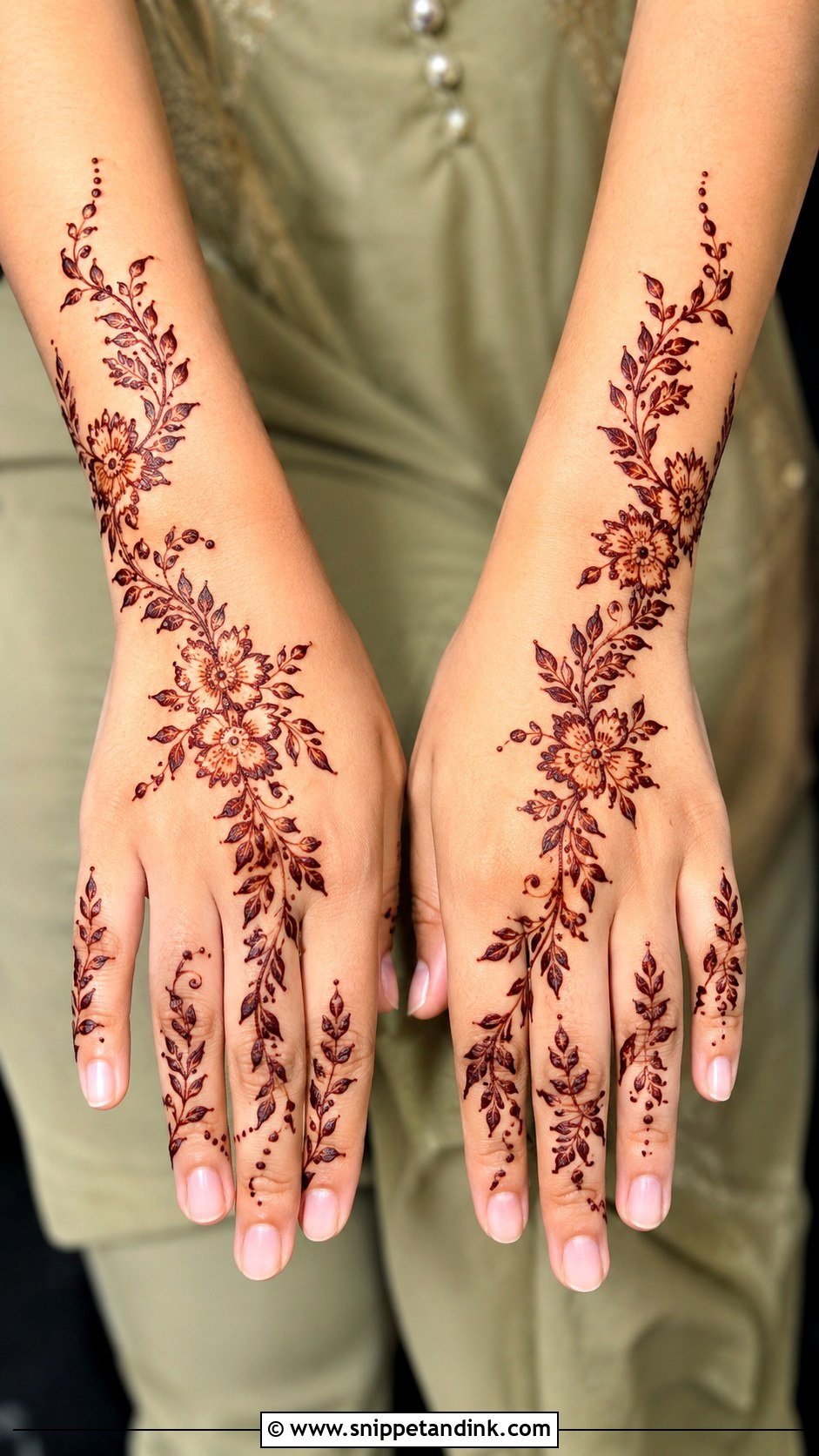
A leafy vine runs from the wrist to one finger, with small dots along it and maybe a tiny flower near the wrist. The beauty of a vine for children is that it looks complete at any length, so if the child gets restless halfway, you simply stop. It sits nicely on the back of the hand and suits casual days and festive occasions alike.
28. Baby Dots Mehndi Design
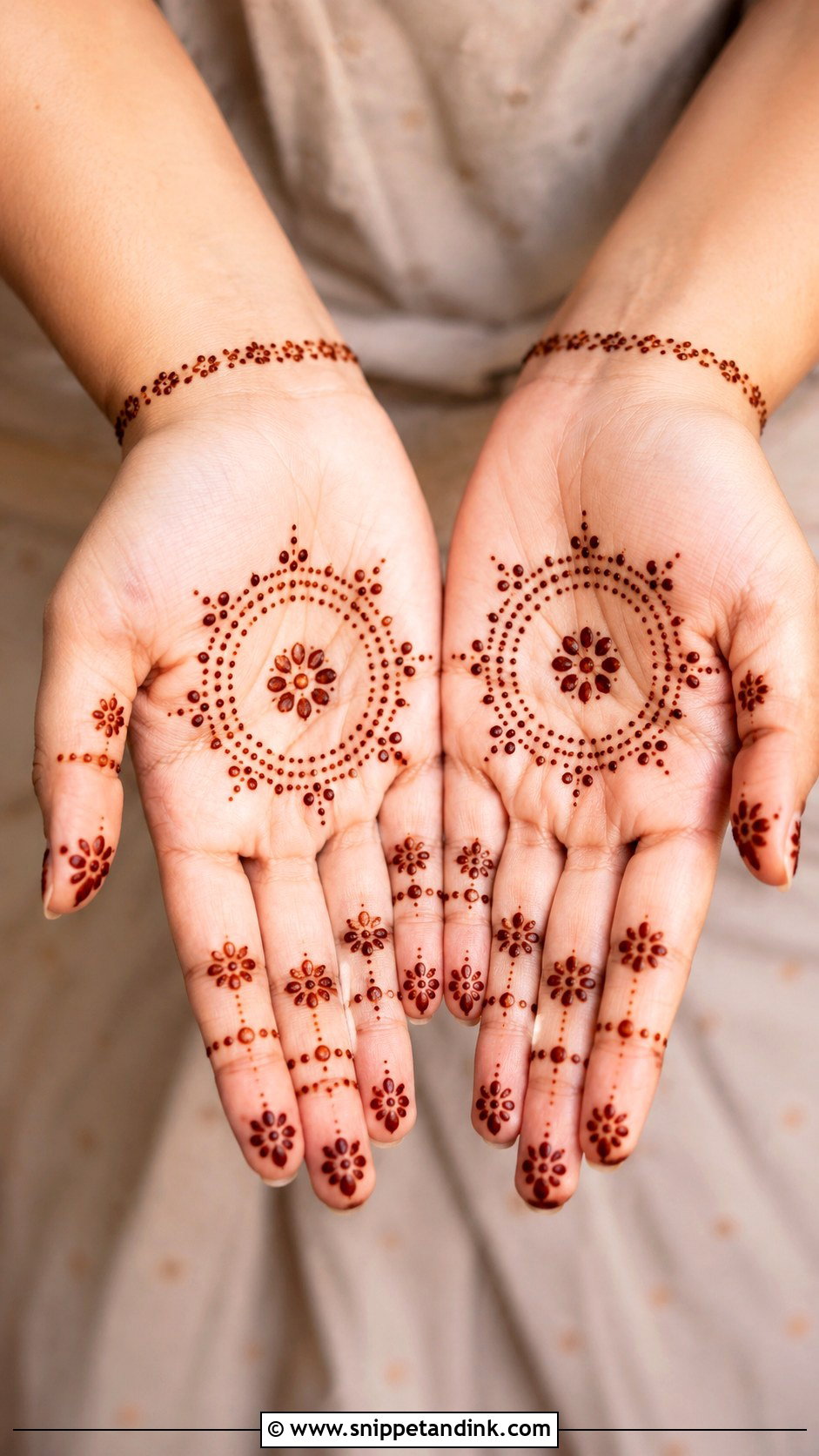
Dots are the fastest option of all. Clusters make a flower, a bracelet, a ring or a frame for the palm, and they dry quicker than filled shapes. You can stop at any point and it still looks intentional. I touch the cone down and lift straight up, so each dot stays round instead of trailing a tail. A small centre flower or heart adds shape. It’s a good first design for parents applying henna at home.
29. Baby Ring Mehndi Design
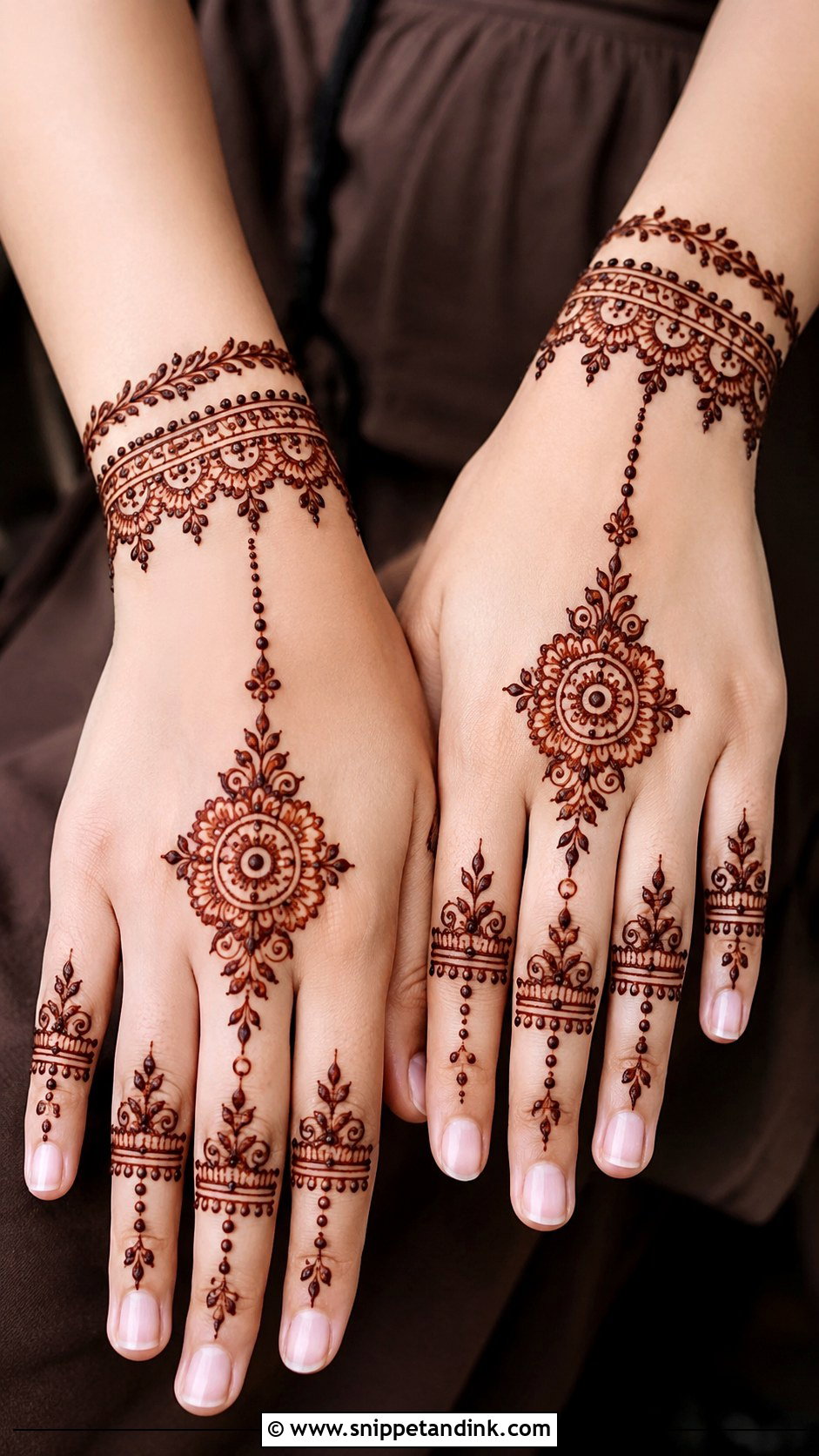
A ring design draws tiny jewellery: a ring around one finger, joined to a wrist bracelet by a dotted chain, with a flower or heart on the back of the hand where the chain meets. The palm stays clean, which keeps the child comfortable. Use soft curves instead of sharp chain links so it looks gentle. It pairs well with traditional outfits and bangles for weddings and Eid.
30. Baby Cartoon Mehndi Design
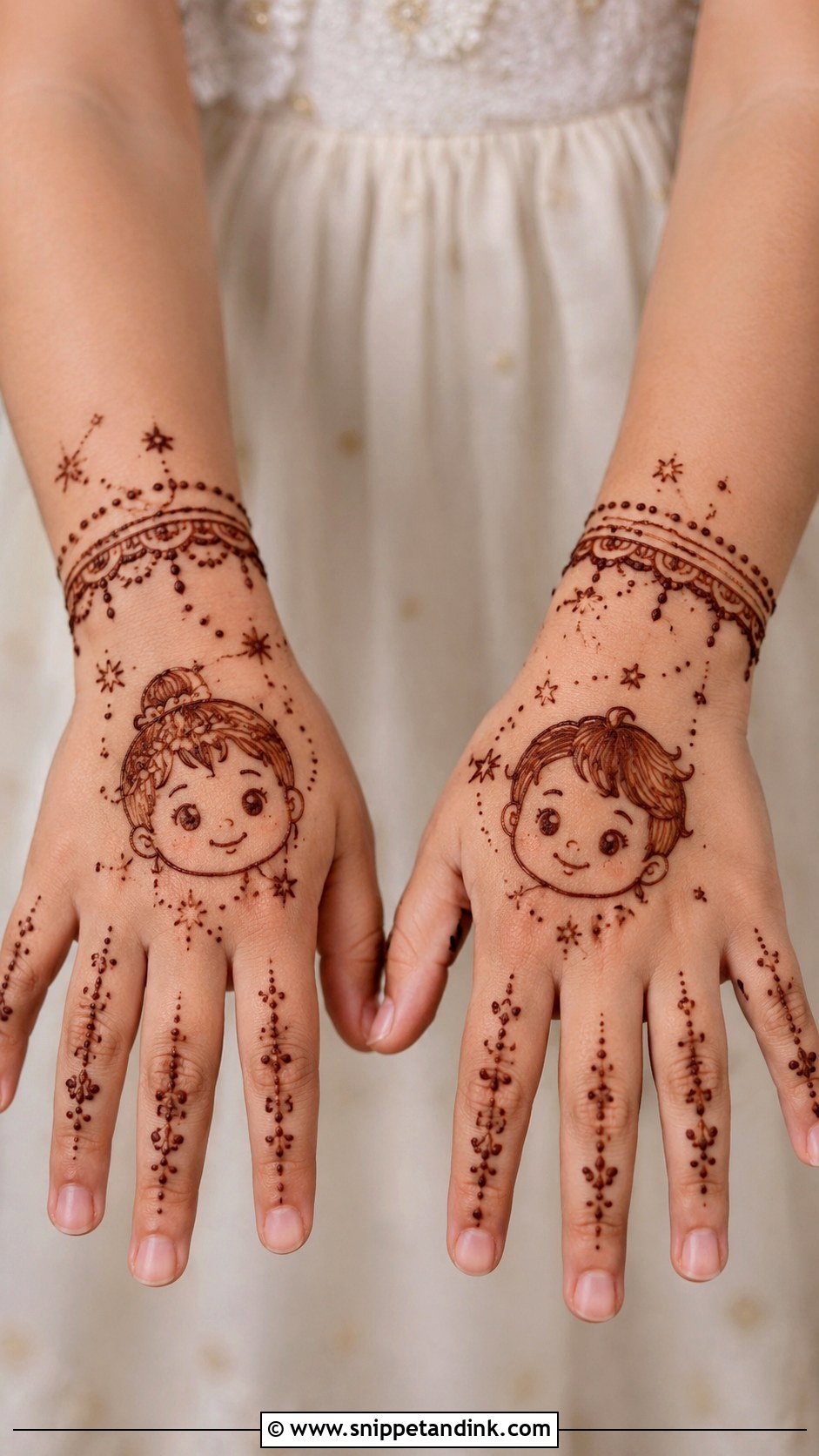
Cartoon shapes work only if they’re very simple: a teddy face, a bunny, a cat or a smiling cloud on the back of the hand, with dots, stars or a tiny wrist line. Complicated faces blur, since small features merge as the stain develops. Children who can recognise the shape enjoy it most. Natural henna only; coloured or black cones sold for ‘fun’ designs are exactly the products I’d keep away from children.
31. Baby Teddy Mehndi Design
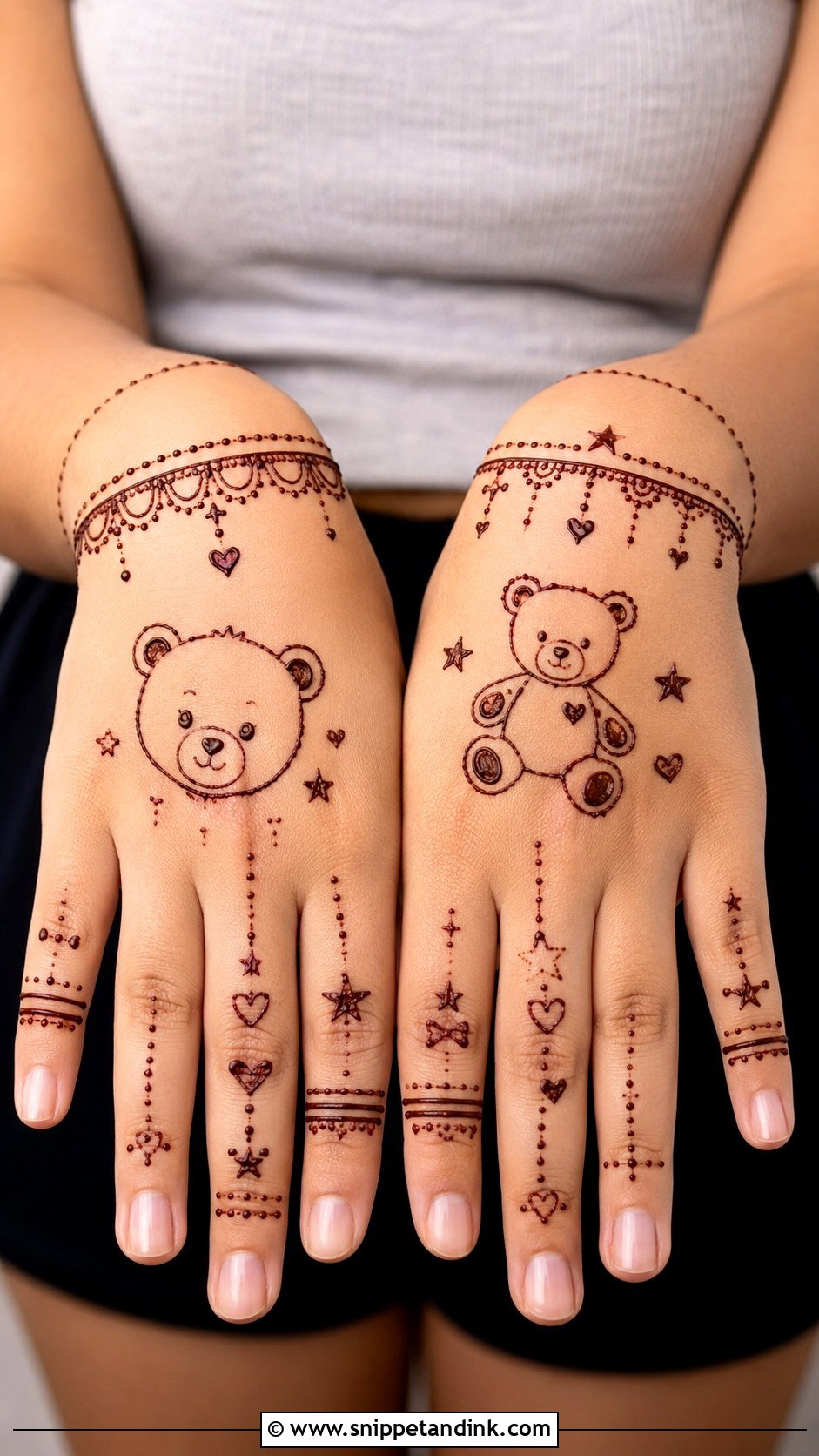
A teddy is a round face, two round ears and three dots, which is why it works in henna. Place it on the back of the hand with small dots, hearts or stars around it, and a small bracelet at the wrist. I make the ears touch the head so the shape holds together even if a line wobbles. It suits birthdays and children’s parties.
32. Baby Cat Mehndi Design
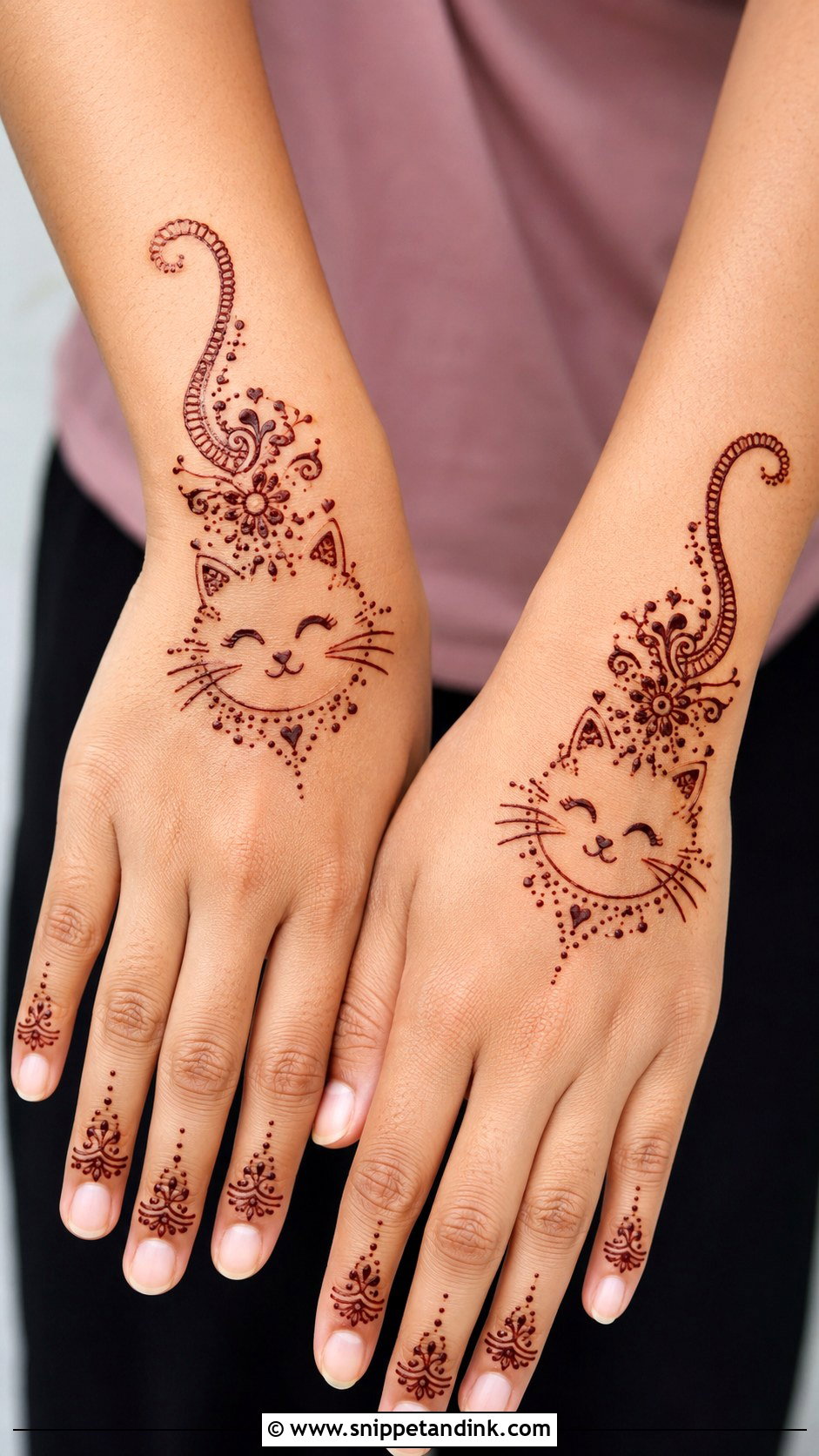
A cat face needs round eyes, whiskers and tiny ears, placed on the back of the hand with dots and a little tail curve near the wrist. Too many details make it unrecognisable, so I draw whiskers as two short strokes each side and stop there. Add a small heart or star beside it for extra charm. It’s a fun change from flowers for toddlers who love animals.
33. Baby Bunny Mehndi Design
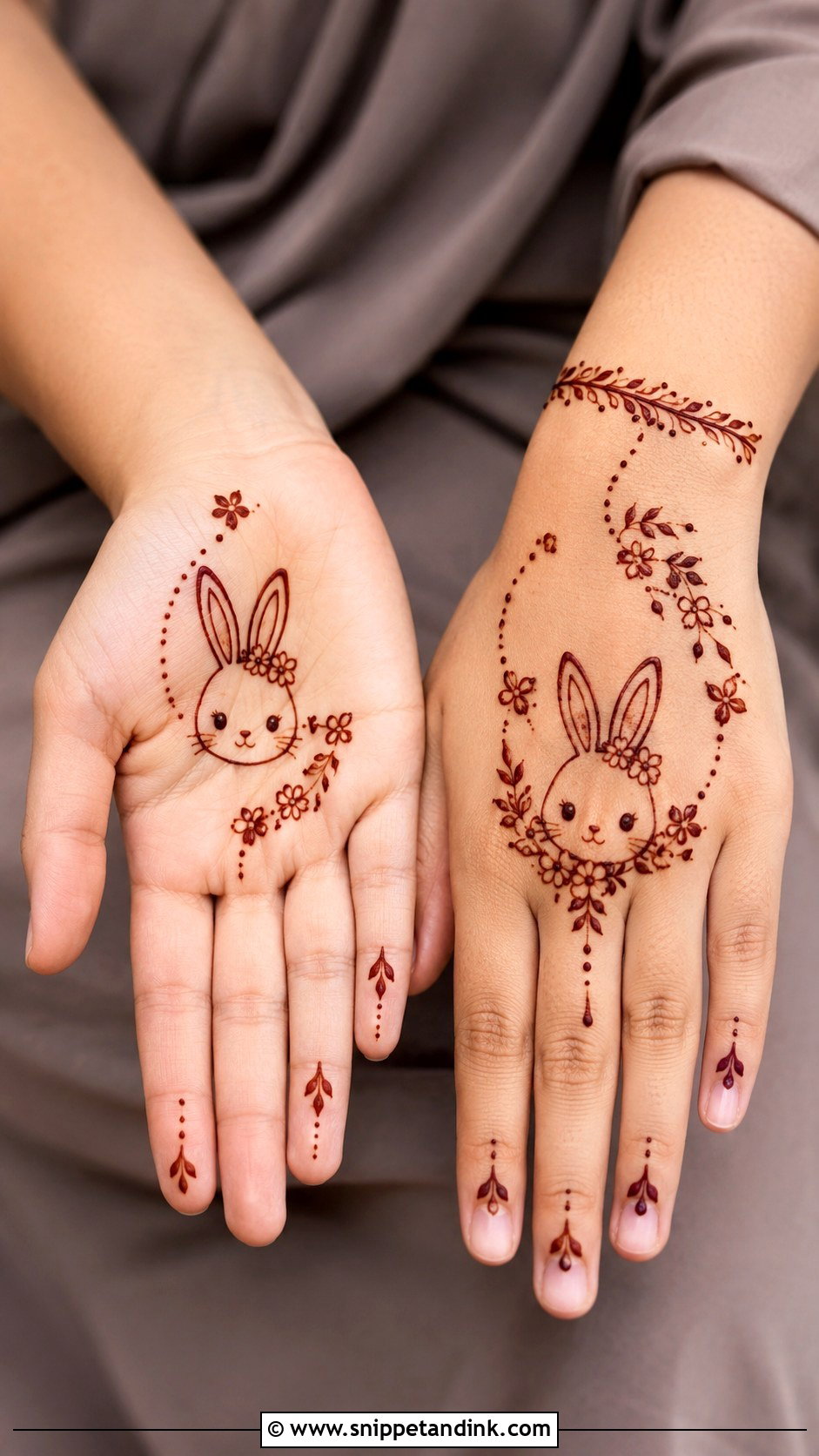
A bunny is a rounded face with two long ears, small dots for the eyes and nose, and a few dots and tiny flowers around it. A short leafy trail near the wrist makes it feel more like traditional henna. The ears are the recognisable part, so I draw them long and slightly apart. It’s quick and easy to identify in photos. Keep the lines bold and the details light.
34. Baby Foot Mehndi Design
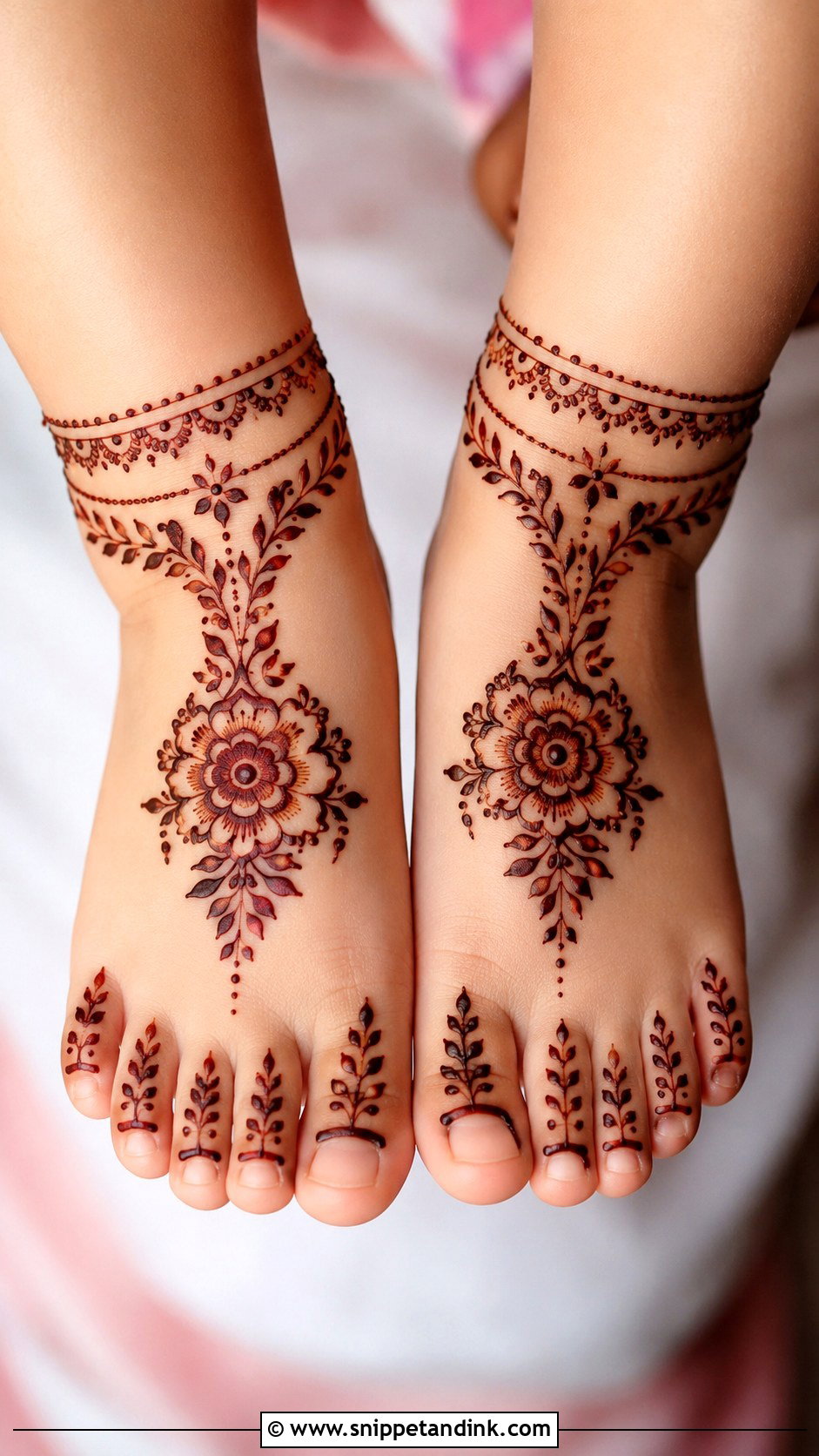
Feet need to be kept very simple: tiny flowers, dots and soft anklet lines across the top of the foot only. I never put paste on the sole of a child’s foot, as it smears on the floor and makes walking uncomfortable. A small floral anklet with a dotted trail toward the toes looks festive. Do it when the child will be carried or sitting for a while, and let it dry completely before socks or shoes go on. It suits weddings, naming ceremonies and family pictures.
35. Baby Toes Mehndi Design
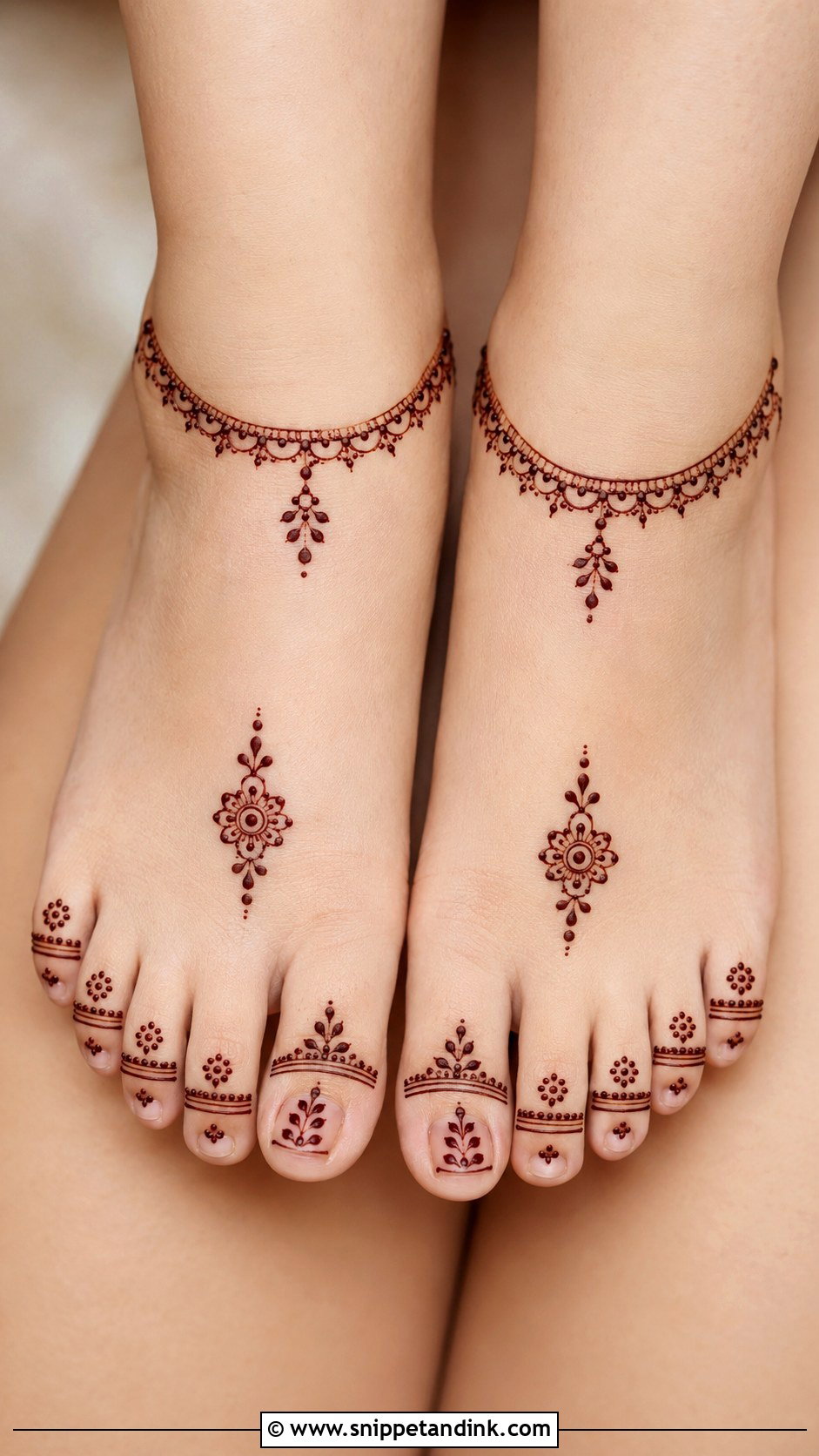
Toe designs are tiny: a few dots, mini flowers and light curves across the top of the foot, with a thin anklet border. Toes wiggle constantly, so the best time is when the baby is relaxed or asleep, and the whole thing should take a minute or two. For babies still putting their hands in their mouths, toes are the spot I’d choose over hands. Small clean dots work far better than any detail.
Getting a Wriggly Toddler Through the Drying Time
Drawing the design takes a minute. Keeping it intact while it dries is the real job, and most of the tricks are about timing rather than skill.
- Pick the moment. Straight after a meal, during a favourite cartoon or when the child is getting sleepy works far better than the busy hour before guests arrive.
- Do one hand at a time and leave the other free for a snack or a toy. Children tolerate henna much better when they still have a usable hand.
- Keep it short on the skin. Adults leave paste on overnight; for a small child, half an hour to an hour is plenty. The stain will be lighter, which is fine.
- Once it’s dry to the touch, slide a clean, loose sock over the hand or foot so it can’t be rubbed onto clothes or faces.
- Remove the dried paste by gently brushing or crumbling it off over a tissue, not by scrubbing, and keep it away from eyes and mouth.
Watch the skin over the next day. A little orange colour that deepens to brown is normal. Redness, itching, swelling or blisters are not; wash the area and speak to a doctor, especially if the child seems unwell.
A Light Stain Is a Good Result on Little Hands
With children, comfort and safety come before the design. Small, open motifs that go on quickly, such as flowers, hearts, stars, vines, little mandalas, bracelets and simple animal shapes, let them join in at weddings, Eid and birthdays without a long sitting. Use fresh natural henna, skip black henna and chemical cones entirely, and keep the coverage light. A paler stain on a child is nothing to worry about; it fades in a week or two and they’ll remember sitting with the grown-ups far longer than the colour.
You'll Like These Ideas:


Leave a Reply