
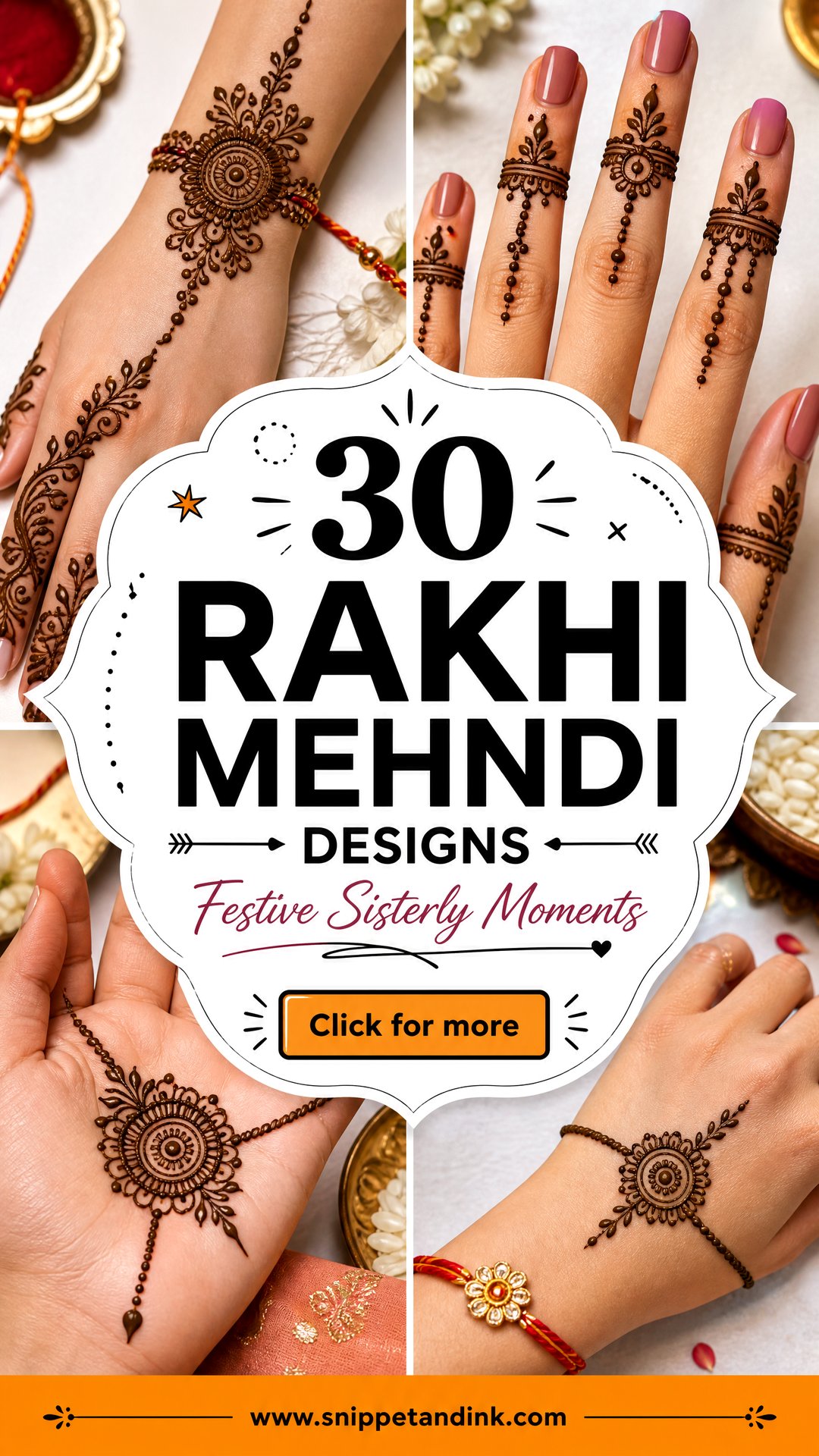
Raksha Bandhan mehndi is a different job from bridal work. Nobody wants six hours in a chair, the hands have to tie a thread, hold a thali and feed sweets the next morning, and the stain only needs to look its best for one day of family photos. The designs below are full hand looks I’d put on sisters, cousins, mums and teenagers, from simple palm patterns to back-hand trails, Arabic florals, bracelet layouts and a few heavier Rajasthani pieces. A handful can be done the night before; the denser ones need you to plan a day ahead so the colour has time to deepen.
How Much Sitting Time Each Layout Really Needs
The question I ask first is not which design you like, but how long you can sit still and how many people are waiting. A design you rush is worse than a smaller design done properly. These are rough guides for one hand from a reasonably confident applicator; times vary a lot with skill and paste.
- Finger, minimal or quick layouts: around 10 to 20 minutes. Good for children, guests arriving late and anyone applying their own.
- Palm mandala, floral or Arabic trail: roughly half an hour. This is the sweet spot for most sisters.
- Indo-Arabic, jaali, peacock or bracelet with back-hand detail: closer to an hour.
- Full hand, Rajasthani or story designs: allow a long sitting per side, plus the drying time afterwards.
Then add the part people forget. Once drawn, the paste should stay on the skin for several hours, ideally overnight, and you cannot use that hand freely while it does. If three cousins all want full hands, someone is doing a lighter design or starting a day early.
1. Simple Rakhi Mehndi Design
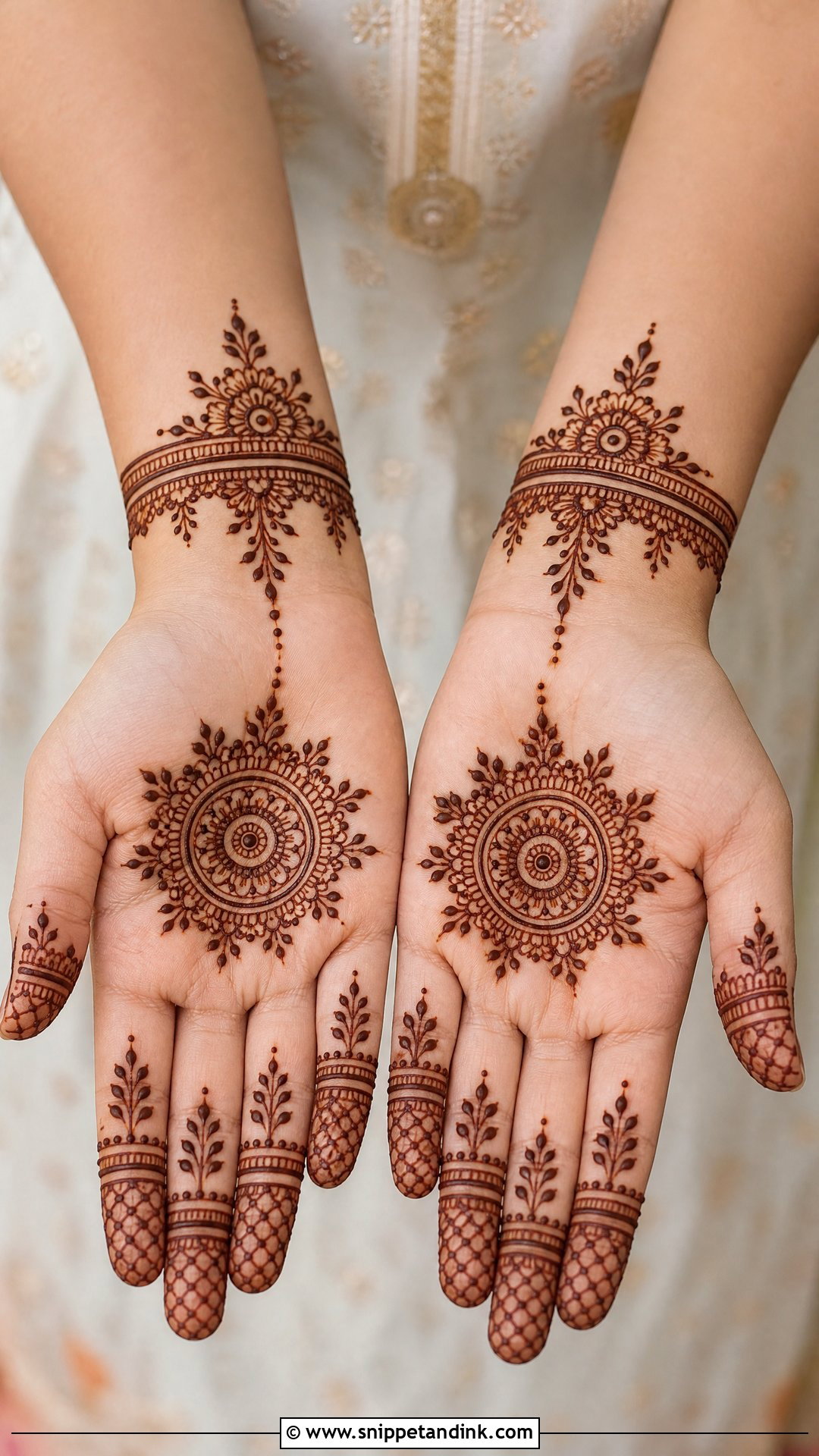
This is the layout I reach for when someone sits down with twenty minutes and a cup of tea: a neat palm mandala, a light floral edge and simple finger tips, with a thin band at the wrist so it sits well beside bangles or a watch. The negative space matters more than the motifs. Leave gaps between petals at least as wide as your line, because henna spreads slightly as it dries and crowded fillers merge into a muddy patch. It is also the most forgiving design for doing at home on your own non-dominant hand.
2. Rakhi Mehndi Design Front Hand
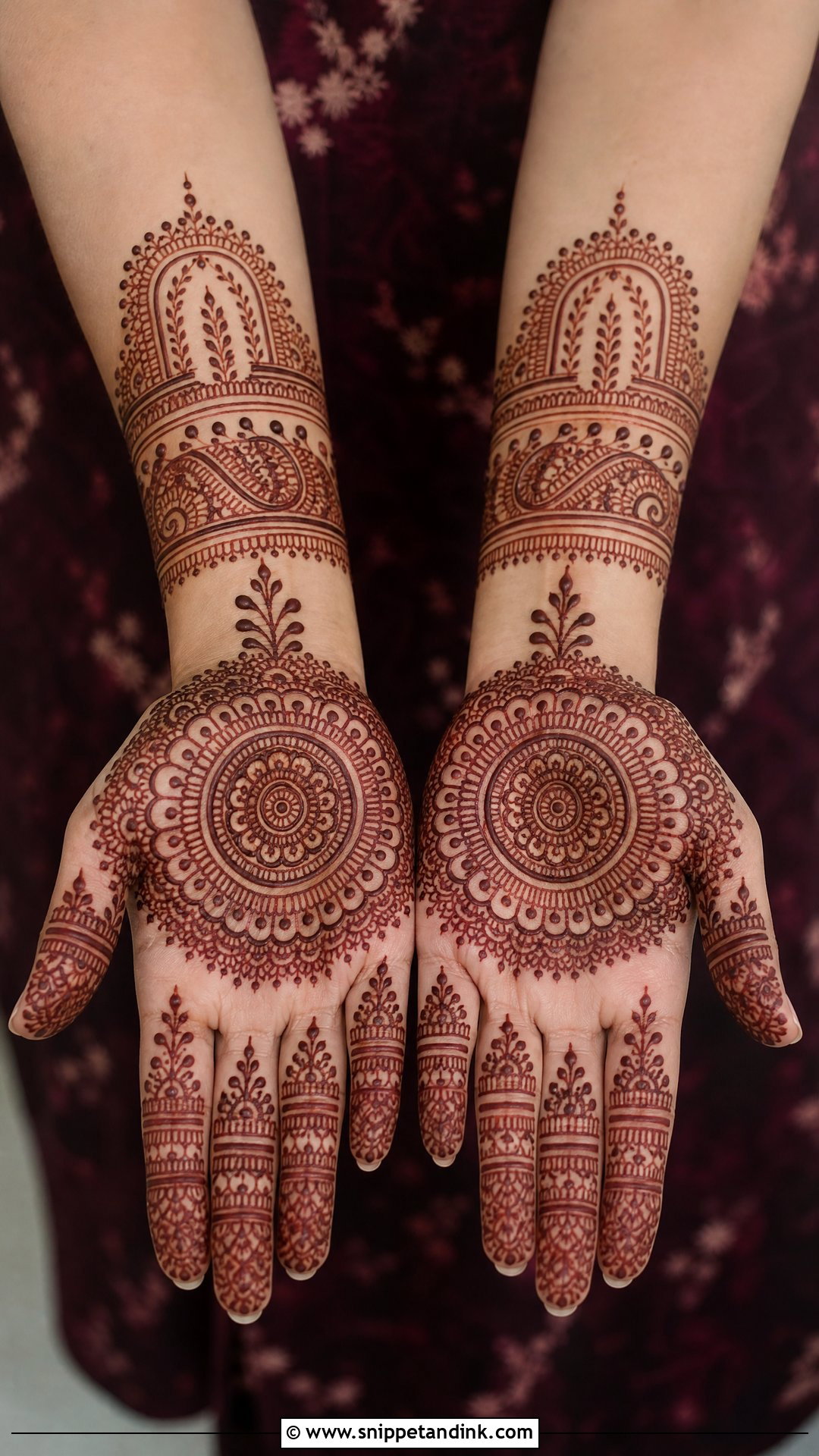
The palm is what everyone sees during the ritual, so this is where I put the strongest work. I start with a round mandala or floral circle dead centre, then build outward with paisleys, leaf chains and dotted curves, and finish the fingers in alternating bands. Palms take the darkest stain on the body because the skin there is thick, so slightly bolder strokes reward you with a deep maroon by the next day. Keep the crease lines in mind; a motif drawn straight across the main palm crease breaks when the hand closes around the thali.
3. Rakhi Mehndi Design Back Hand
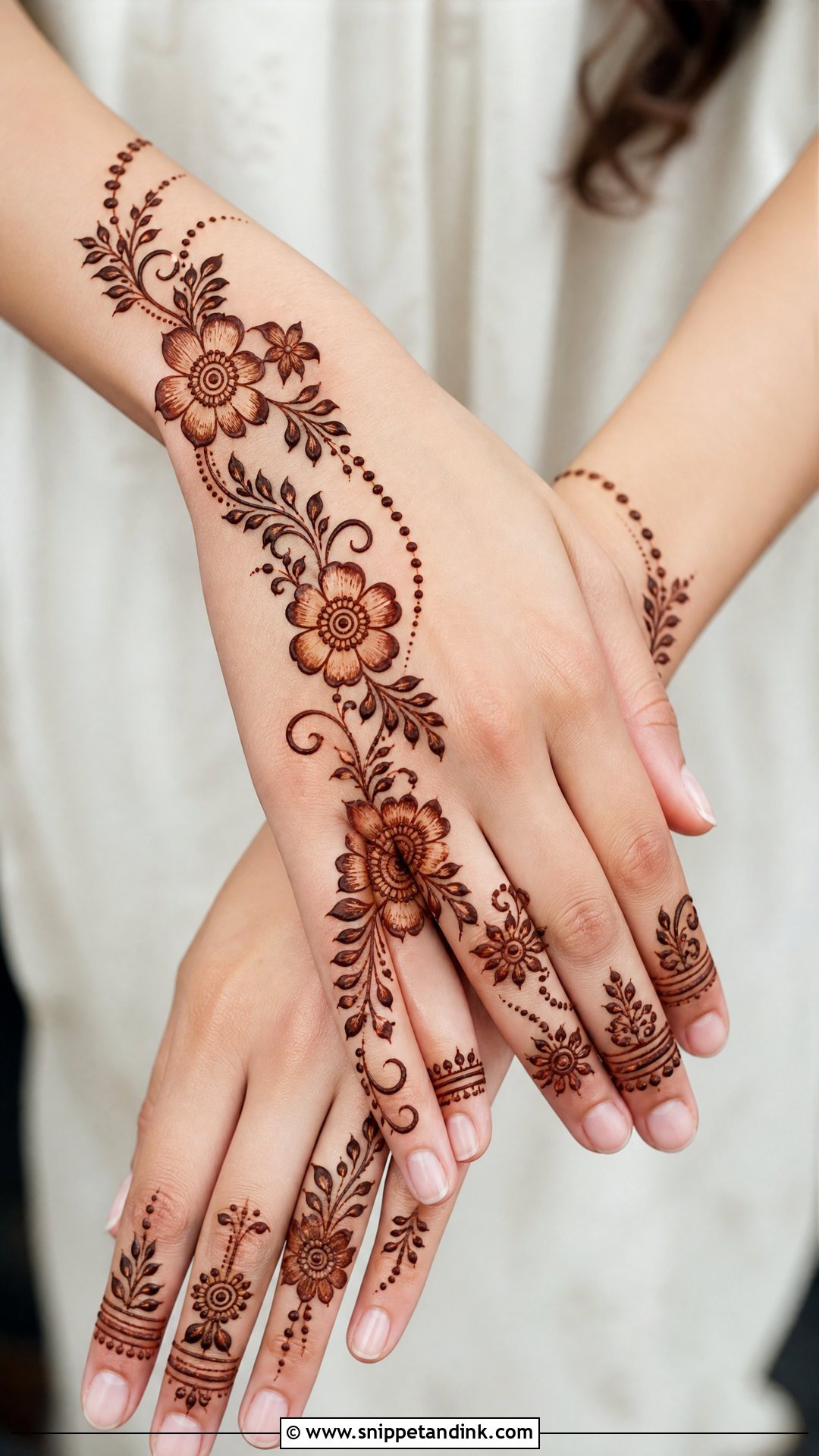
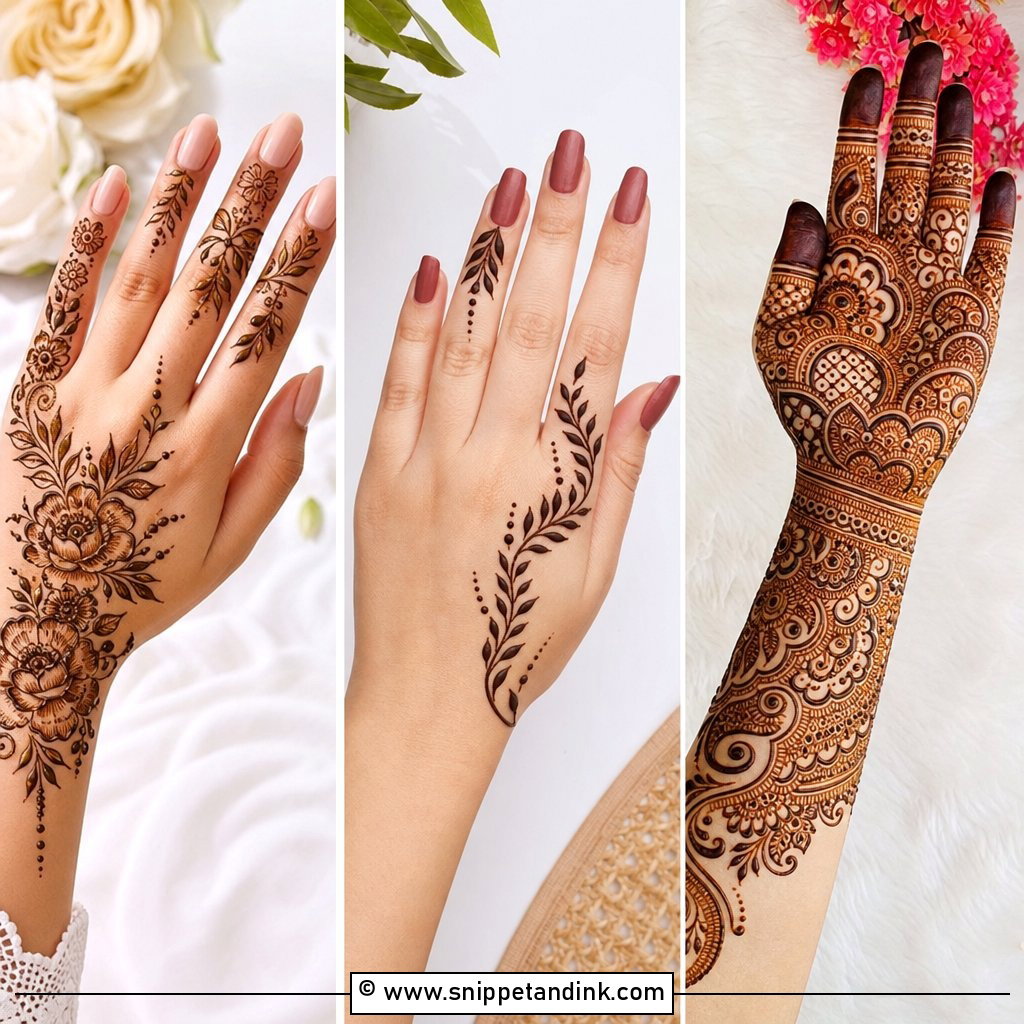
A diagonal floral trail from the index finger down to the wrist is the back-hand layout I get asked for most, and for good reason: it shows from almost any angle a camera catches. Small jaali patches, leaf vines and shaded petals fill it out, while the rest of the hand stays bare. Expect a lighter shade here than on your palm, since back-of-hand skin is thinner and stains more orange-brown. Because the pattern flows in one direction, it goes on faster than a full palm, which is why I suggest it for anyone with a queue of cousins waiting.
4. Full Hand Rakhi Mehndi Design
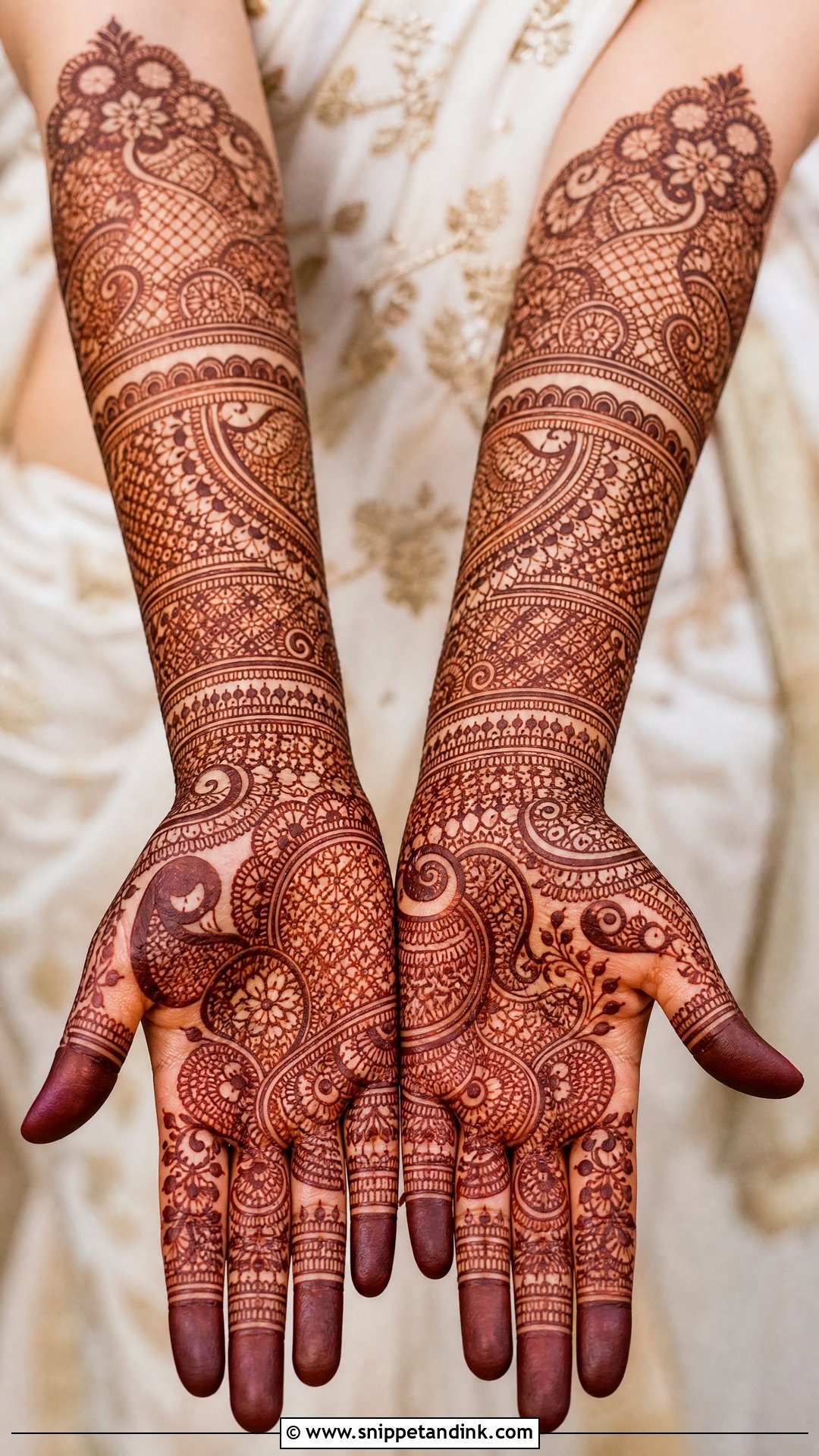
Full coverage means palm, fingers, wrist and part of the forearm, all connected. It suits newly married sisters and big family gatherings where heavier mehndi is expected. The structure I follow is simple: large motifs on the palm and forearm first, then smaller fillers around them, so the eye has somewhere to rest. Budget real time for it. A full hand and forearm on both sides is a long sitting, and the paste needs several hours on the skin afterwards, so start the day before Rakhi rather than the same morning.
5. Easy Rakhi Mehndi Design
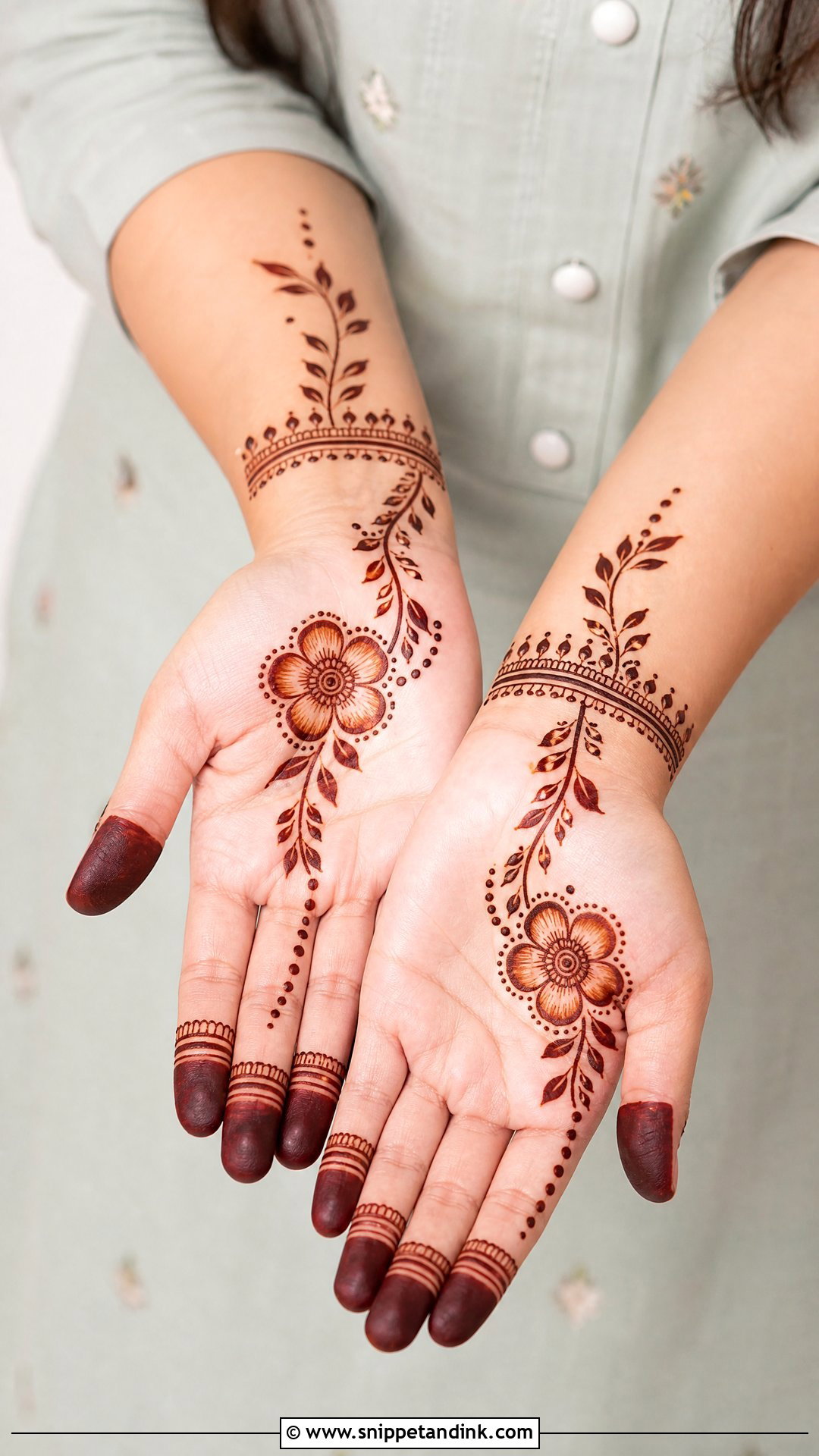
Beginners worry about symmetry, and this layout sidesteps the problem. A palm-centred flower, one curved vine toward the wrist and dotted finger caps do not need to mirror the other hand to look finished. Two thin wrist bands with small leaves between them read as a bracelet. If time is tight, stop at the palm and fingers. I’d use bold outlines and simple fillers here, because thin hesitant lines from a shaky cone often stain patchy where the paste was too thin to sit on the skin.
6. Arabic Rakhi Mehndi Design
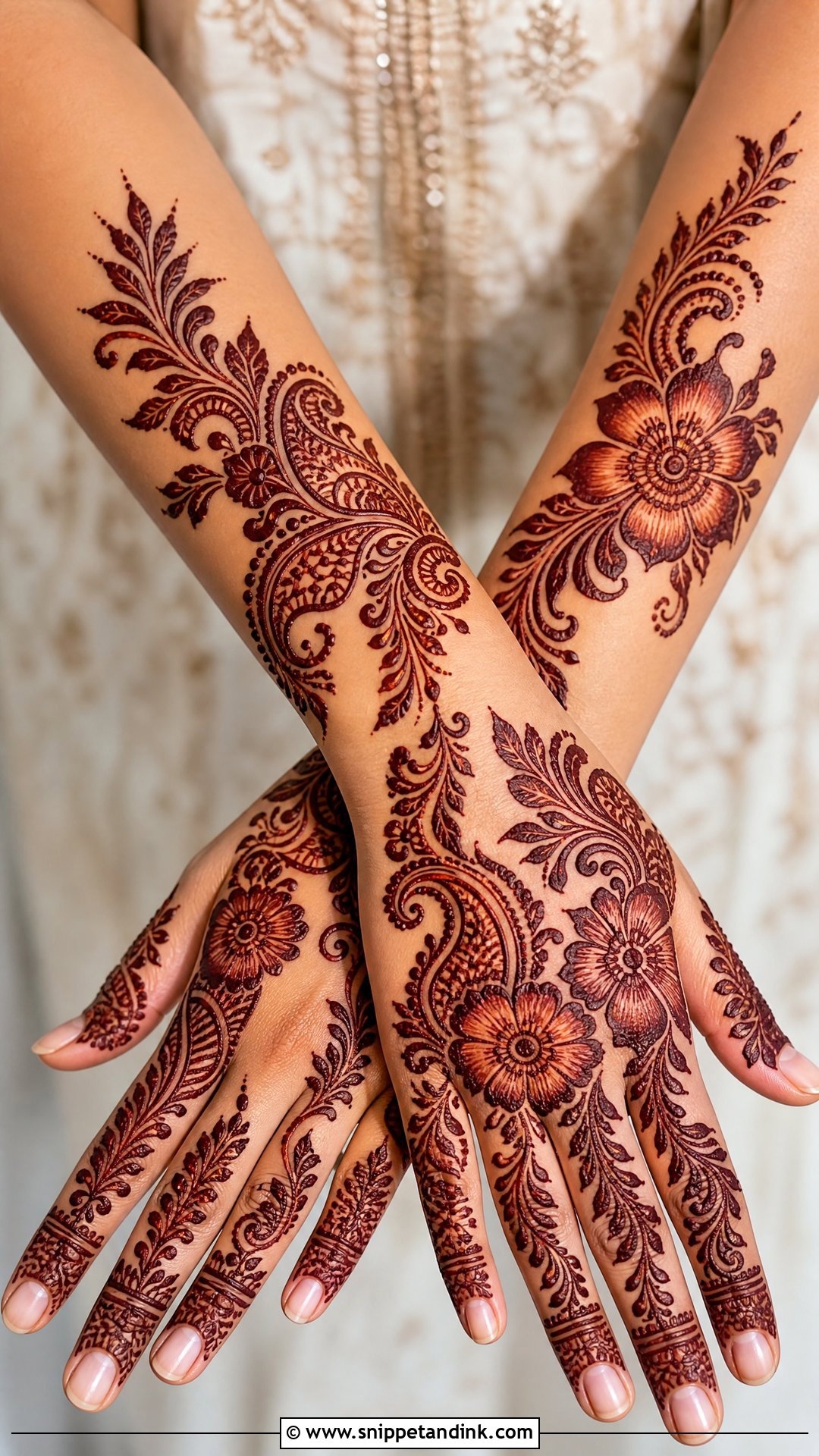
Arabic work starts at one finger, sweeps across the back of the hand and ends near the wrist, with big flowers, shaded leaves and lots of open skin. That open skin is the point: it keeps the hand cooler and comfortable through a long, hot festival day. Draw the petal and paisley outlines thicker than you think you need, then add fine inner detail for contrast. The shading inside each petal is done by dragging a lighter layer of paste, so a cone that is too stiff will skip and leave gaps.
7. Indo Arabic Rakhi Mehndi Design
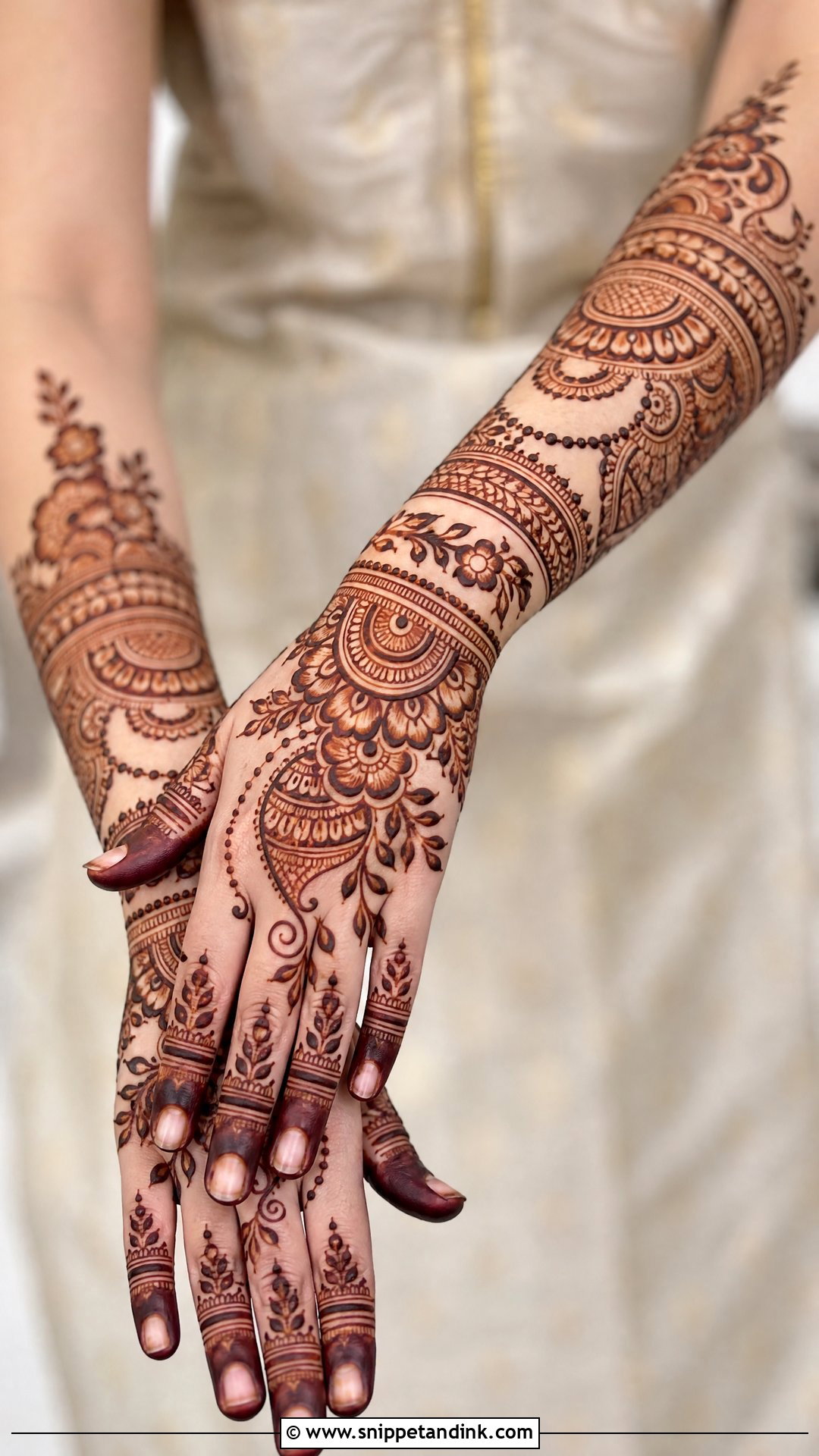
Indo-Arabic sits between the two traditions: Arabic trails give the structure, and Indian-style fine lines, dots and swirls fill selected pockets. I usually put an open mandala on the palm and a bracelet band at the wrist, then switch to a diagonal layout with detailed fingers on the back hand. The trick is deciding which spaces to fill before you begin. If you fill as you go, you end up filling everything, and the Arabic breathing room disappears.
8. Mandala Rakhi Mehndi Design
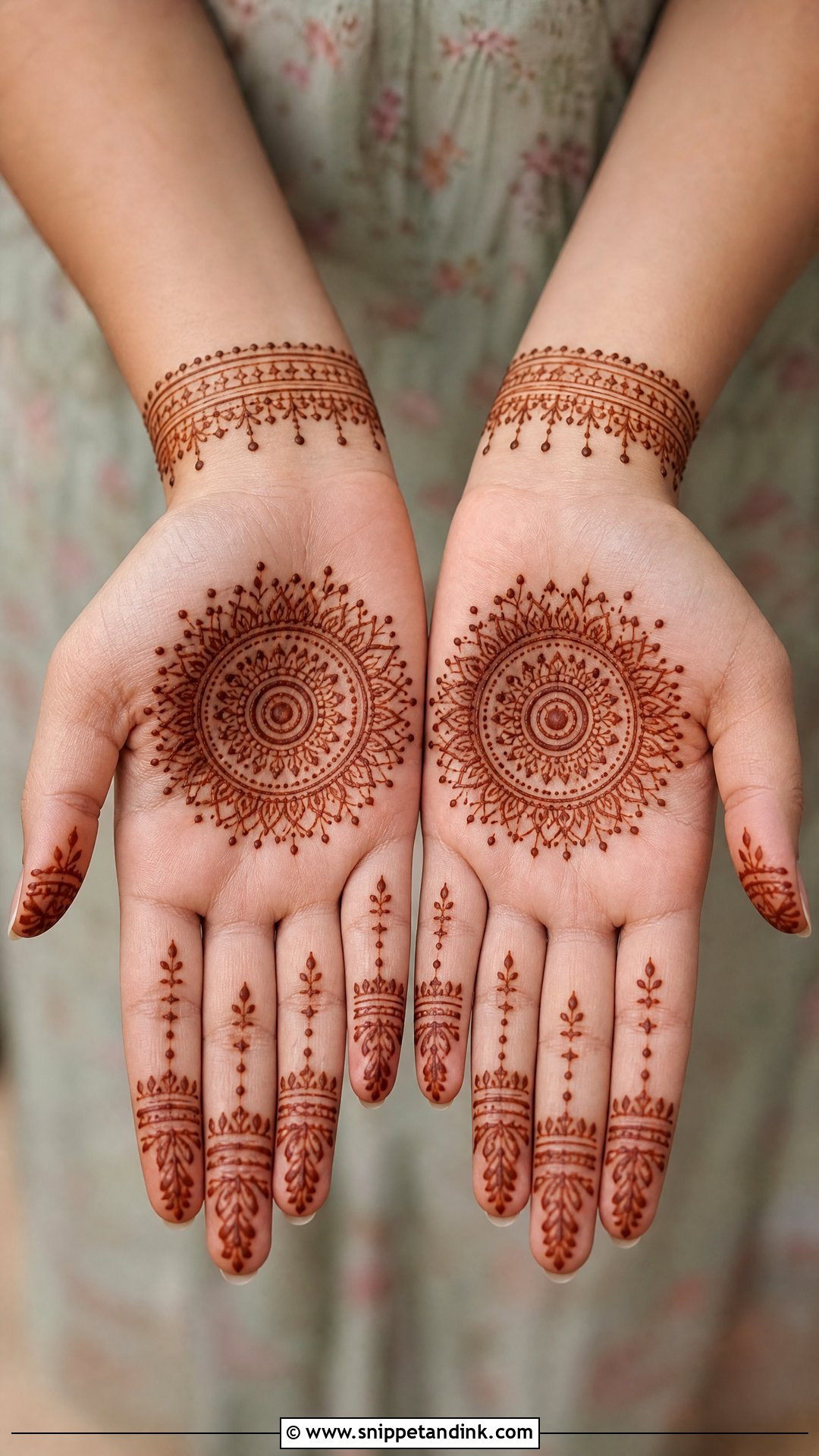
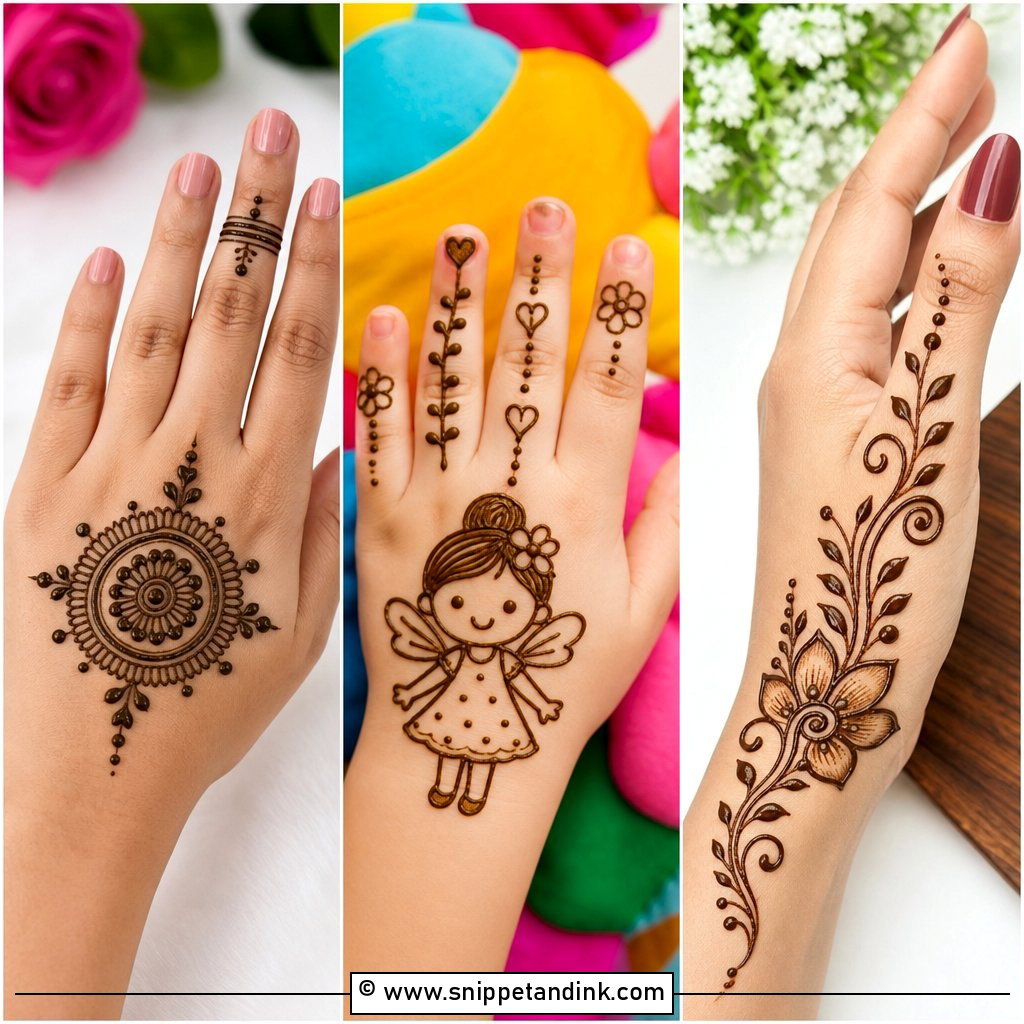
A centred mandala is the quickest way to get a festive hand that looks deliberate. The circle sits on the palm or back of the hand, with petal rings and dots expanding evenly, while the fingers get only leafy tips or thin bands. It suits kids and teens well because it reads as celebratory without looking grown-up. My one technical warning: draw the outer ring first as a guide and work inward, otherwise the circle drifts into an oval by the third layer. A thin wrist bracelet with tiny flowers finishes it.
9. Floral Rakhi Mehndi Design
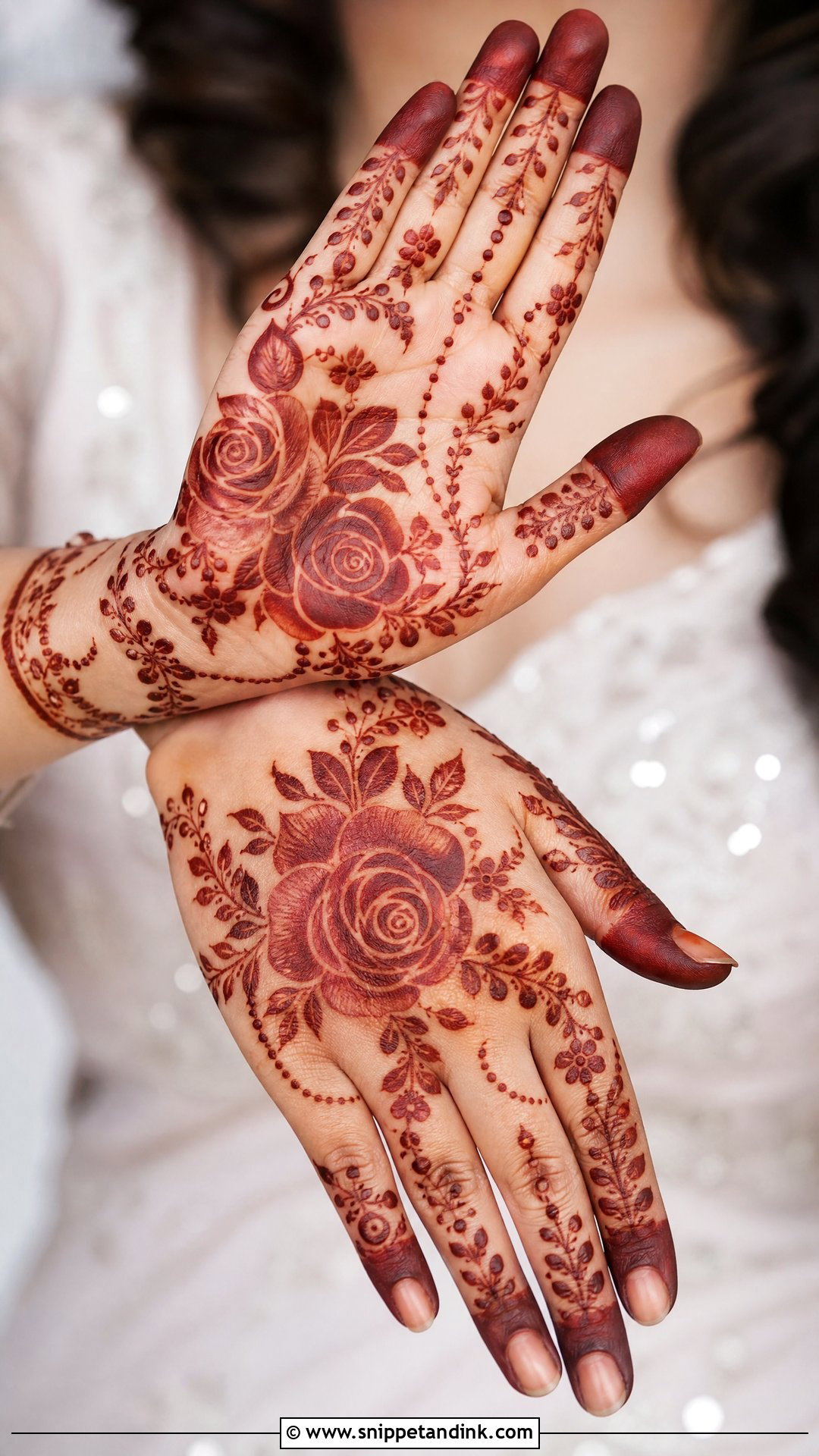
Flowers are the most adaptable motif in my kit. A floral layout can cover the palm, the back of the hand or both with roses, lotus petals, small blossoms and leafy vines. For a light version, I place one large flower near the centre and let smaller ones trail toward the fingers. For a fuller one, I add shaded petals, paisley leaves and a dotted border at the wrist. Vary the flower sizes; three blooms of identical size in a row is what makes henna look stamped rather than drawn.
10. Peacock Rakhi Mehndi Design
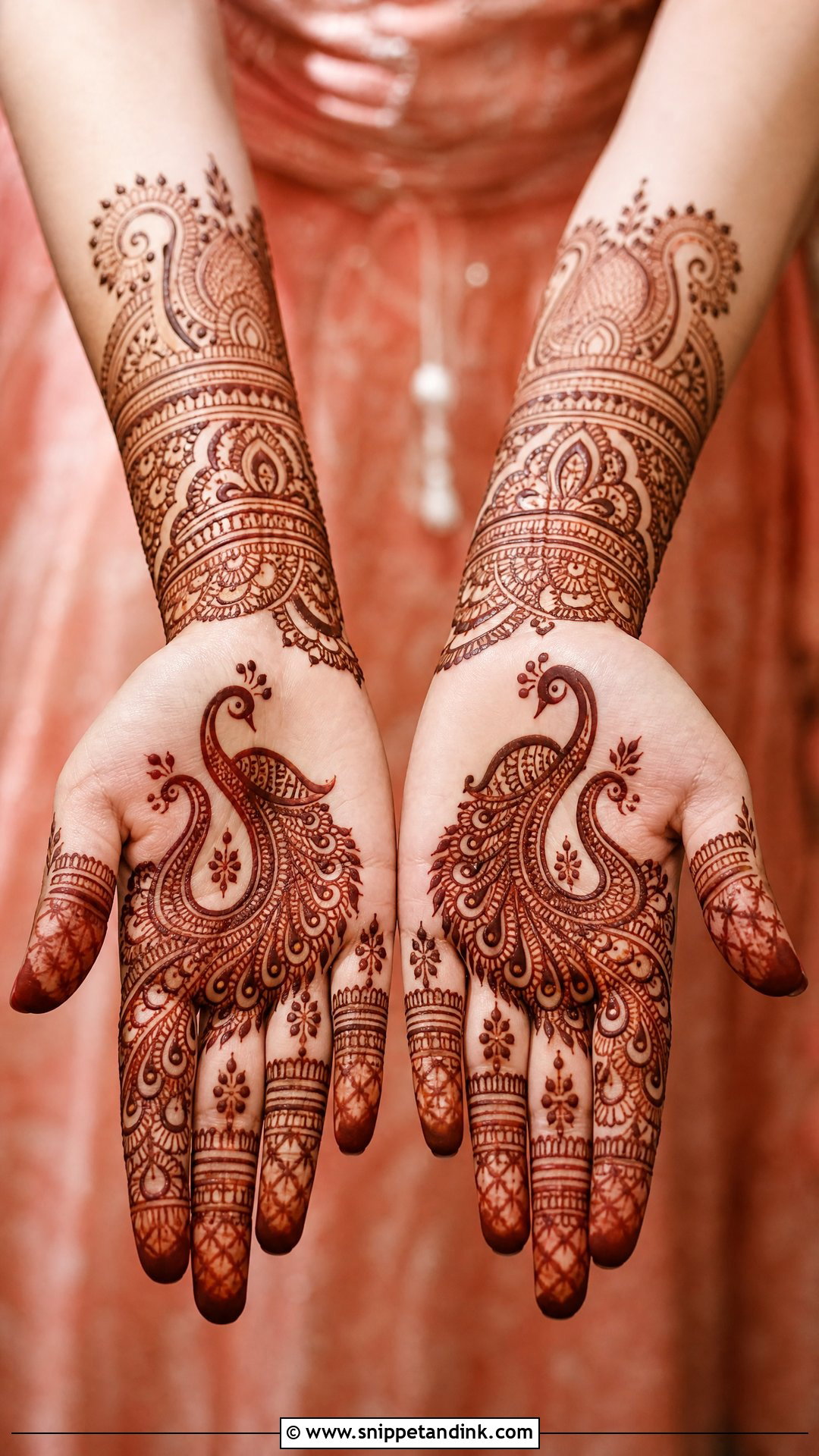
Peacocks bring the classic Indian drama, but they are easy to get wrong in a festive-sized design. I keep the body solid and bold so it holds a strong stain, and use fine single lines for the feathers so they do not bleed into each other. On the palm I pair the bird with a mandala or paisley border; on the back hand, the tail feathers trail diagonally toward the wrist. It is detailed enough for a family celebration and still a fraction of the work in a bridal peacock.
11. Rakhi Bracelet Mehndi Design
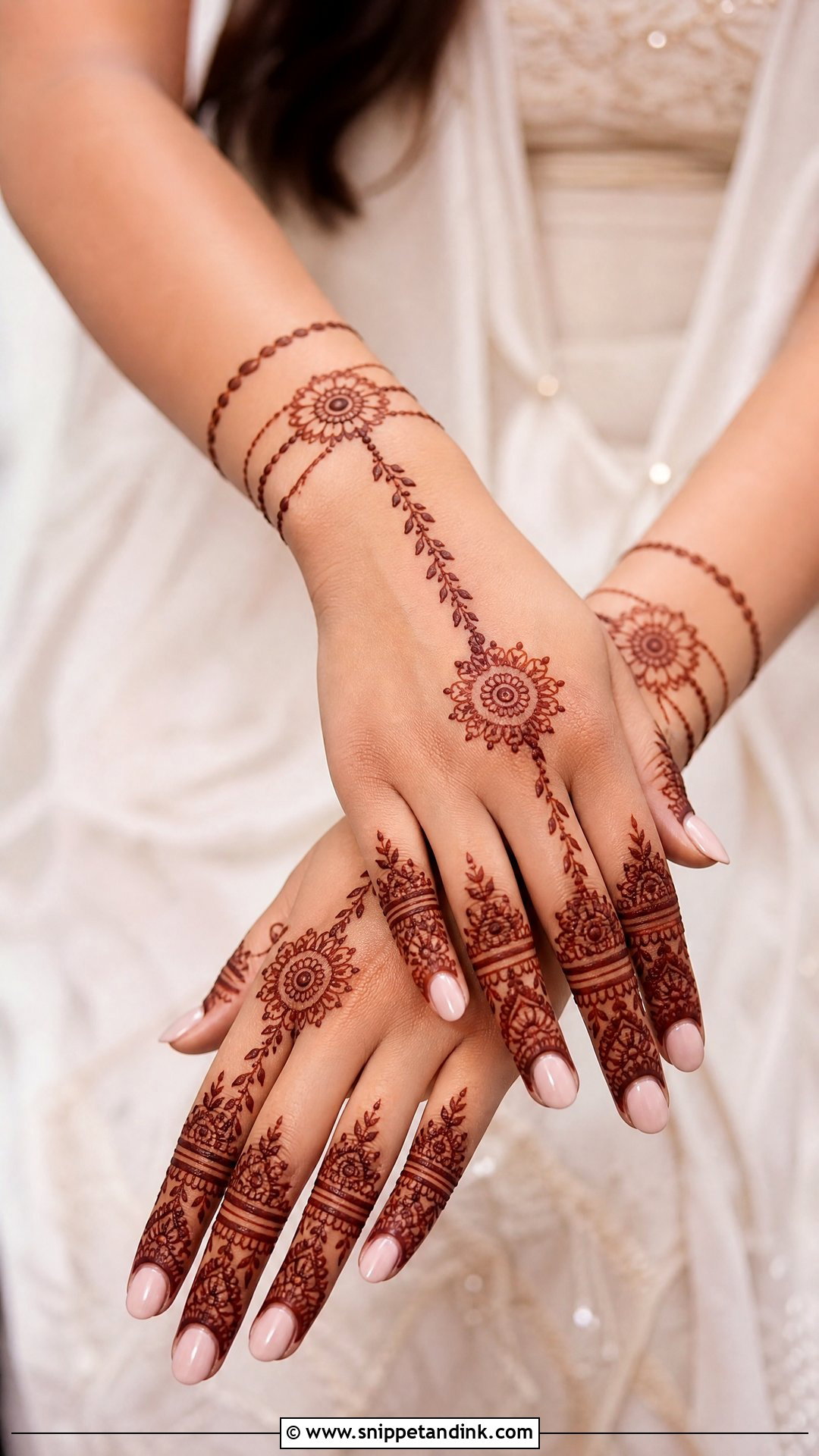
This is the design most tied to the meaning of the day: a decorated band around the wrist that reads almost like a henna rakhi. Small flowers, dots, chain lines and tiny paisleys make up the band, and a short trail or central motif on the back of the hand stops it looking unfinished. Symmetry matters more here than anywhere else in this list, because a wrist band that dips on one side looks crooked next to real bangles. I mark the top and bottom edge with two light guide lines before filling it.
12. Rakhi Name Mehndi Design
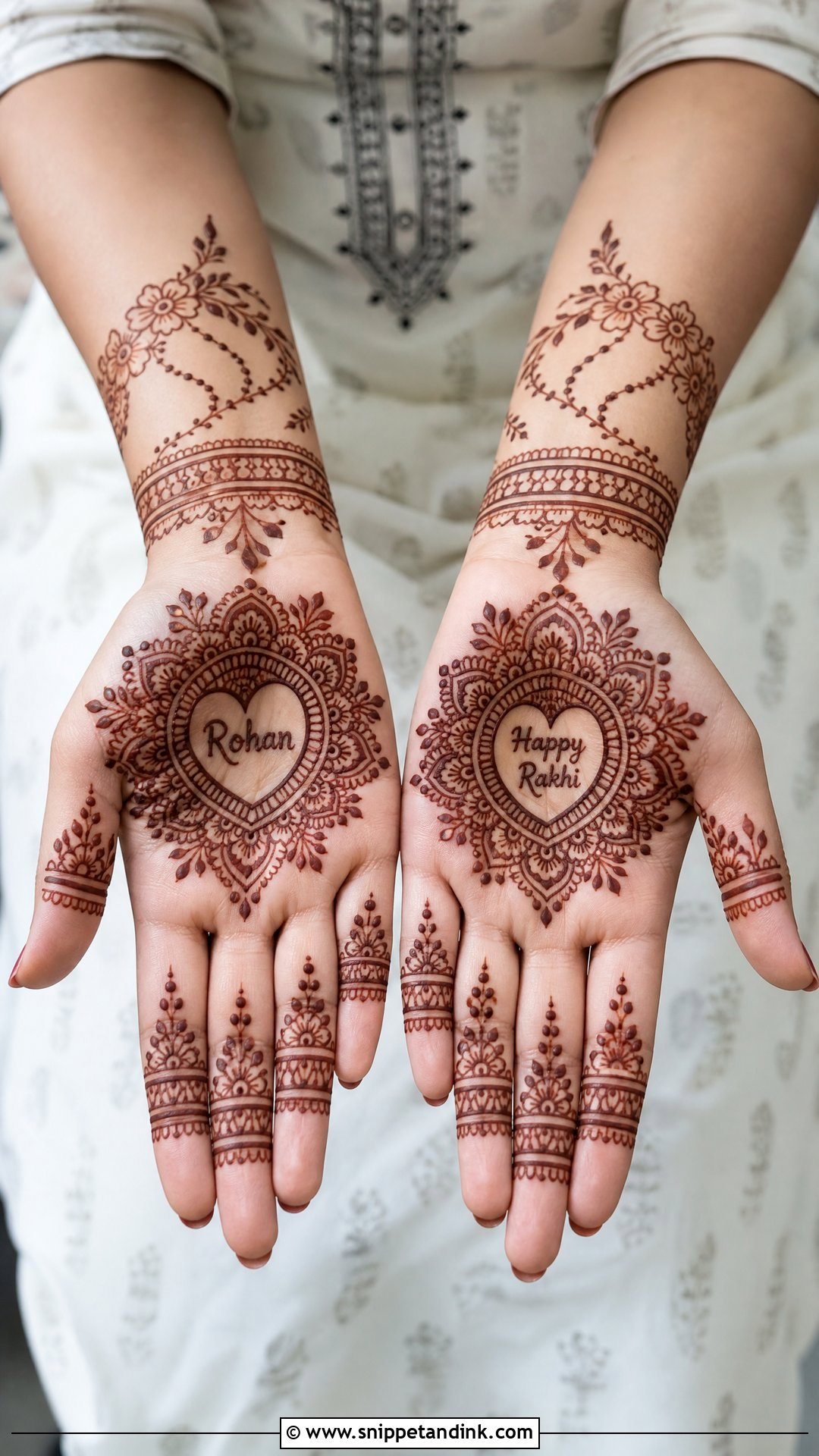
Writing a brother’s name, initials or a short word like “Bhai” into the design makes it personal, but lettering in henna is harder than it looks. Keep the letters simple and a little larger than you think, because fine script fills in as the paste dries and becomes unreadable once stained. I frame the word in a heart, scroll or small mandala so it stands apart from the surrounding flowers. Put it on the palm or inner wrist, where it faces up during the ceremony. Children love this one.
13. Brother Sister Rakhi Mehndi Design
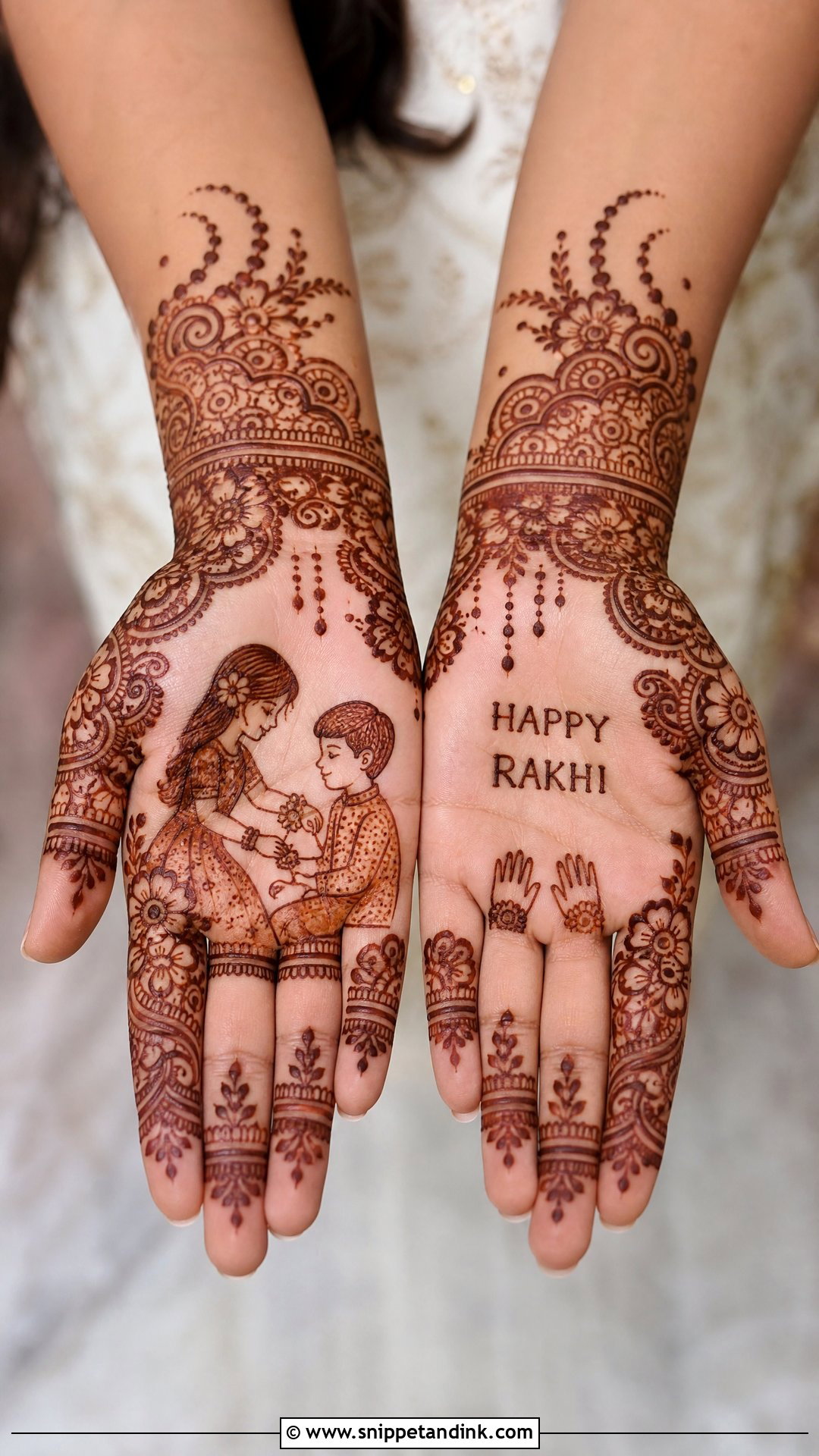
A brother-sister Rakhi mehndi design tells a small story: a sister tying the thread, two hands joined, or a rakhi motif between two decorative circles. Henna is not a fine-detail medium for faces, so I simplify figures down to outlines and silhouettes and let the floral border and paisley corners do the decorating. The palm is the only place with enough flat space for a scene. It takes patience, and it is the design guests will ask to look at closely.
14. Raksha Bandhan Mehndi Design
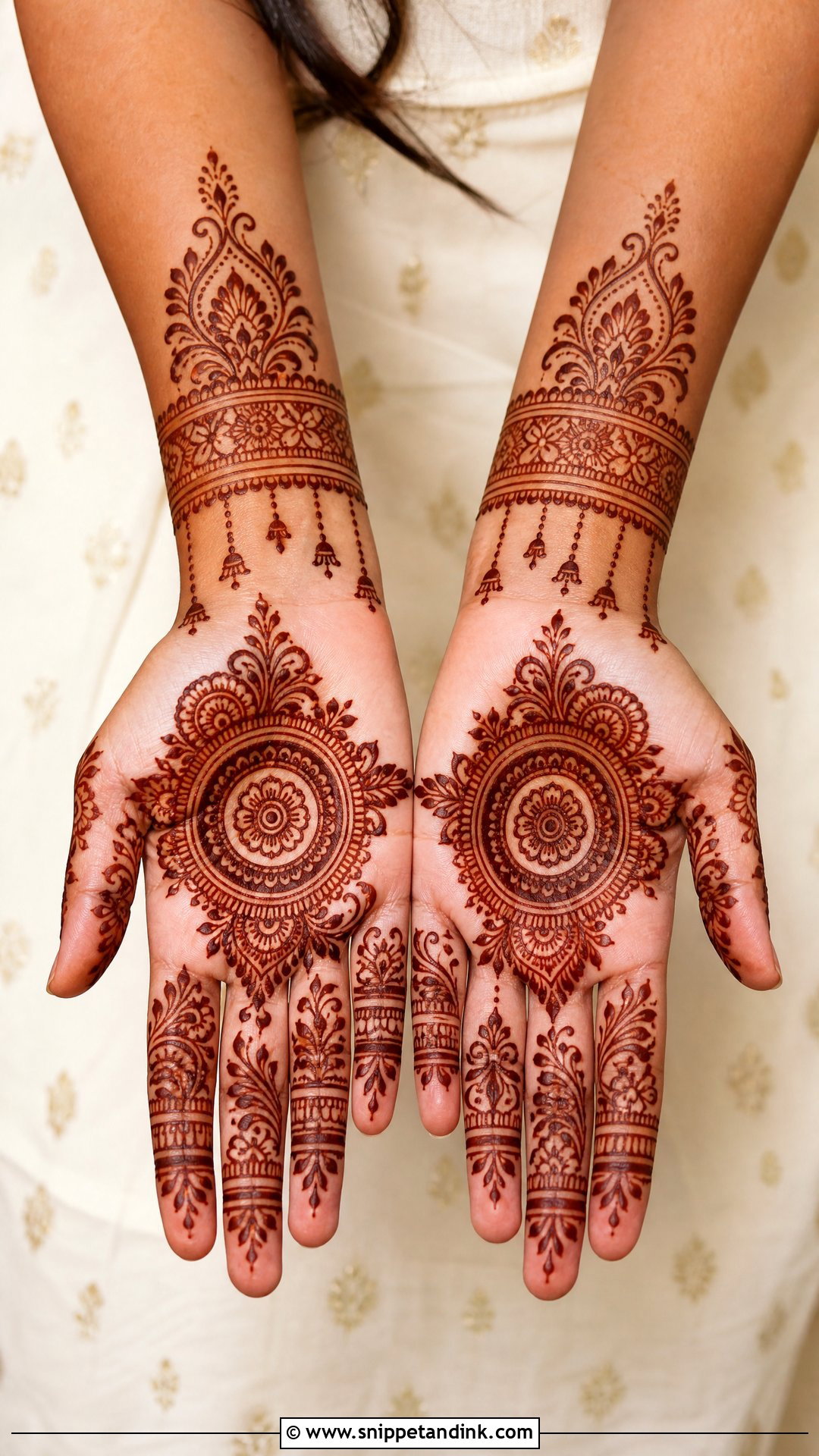
Here the festival symbols do the work: rakhi threads, a small thali motif, flowers and a bracelet band. The palm holds a rakhi-inspired circle, the fingers carry fine lines and dots, and the wrist echoes the thread. You get an obvious Raksha Bandhan connection without a full illustrated scene. Leave clear spacing between symbols. A thali drawn too close to the flowers around it reads as a blob once the stain darkens.

15. Minimal Rakhi Mehndi Design
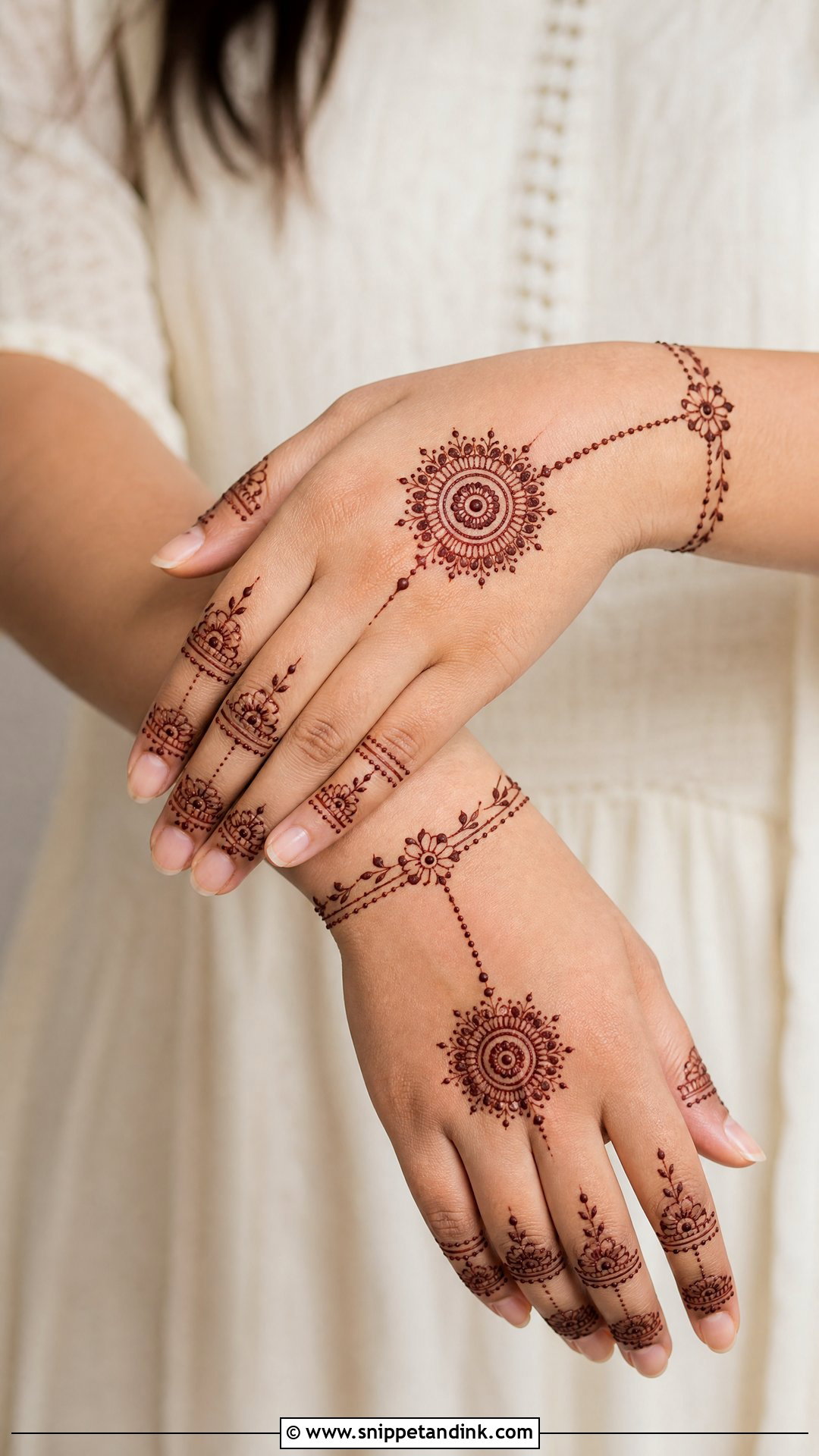
Minimal does not mean quick and careless; with so little on the skin, every line shows. A small mandala on the back of the hand, fine finger patterns and a slim wrist band is my standard version, or a single floral trail across the palm with light dots. It suits office celebrations and anyone who dislikes dense henna, and it dries faster than any other layout here. Thin lines stain lighter than thick ones, so if you want this look to stay visible through the day, keep the paste on for longer rather than drawing heavier.
16. Modern Rakhi Mehndi Design
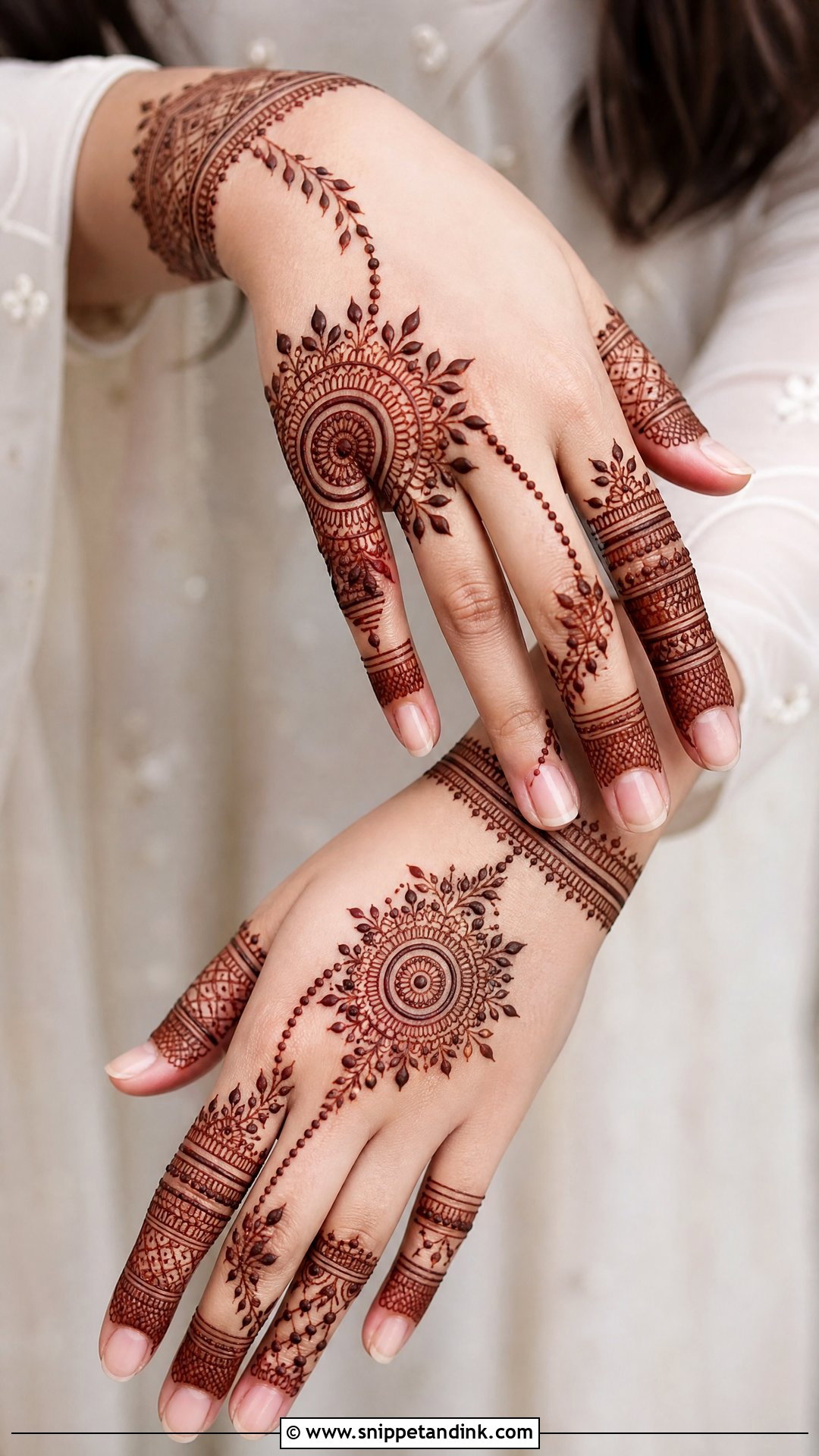
Modern layouts borrow from jewellery: chain links, finger rings, small florals and a neat wrist cuff on the back hand. On the palm, I like an off-center mandala with geometric borders and soft leaf trails. These sit well with kurtas and Indo-western outfits and hold up in close-up photos because there is space around each element. Pick two strong areas and connect them with dots or a fine chain. The common mistake is adding a third and fourth focal point until the modern look is gone.
17. Stylish Rakhi Mehndi Design
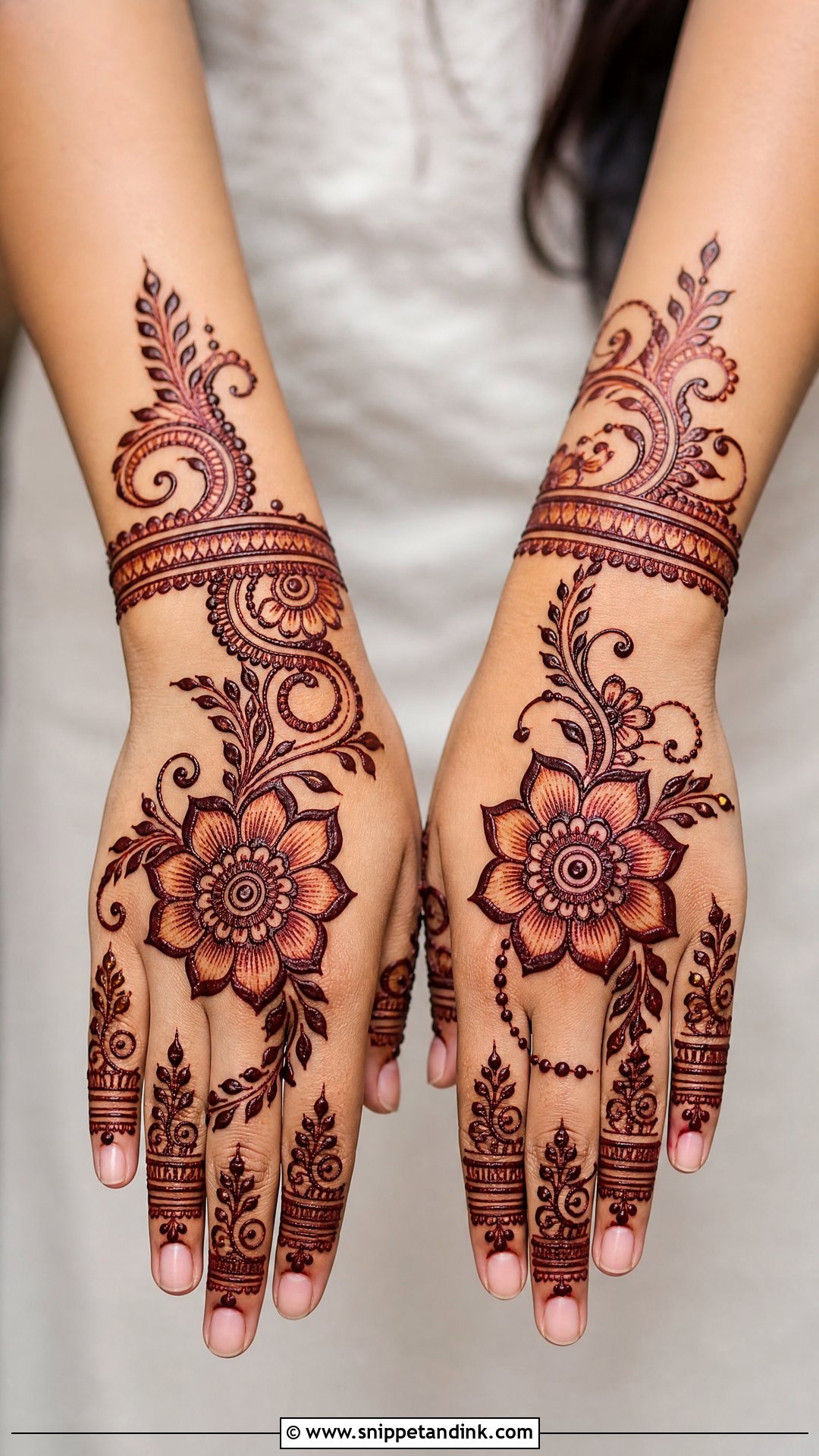
Teenagers usually ask for this one: decorated fingers, a central flower on the back of the hand and a bracelet finish, joined by leaves and dot chains. It plays nicely with rings and painted nails. If you plan to paint your nails, do it before the mehndi, not after, because acetone and scrubbing during a manicure will lift fresh stain from the fingertips. Mixing bold outlines with delicate fillers keeps the hand from looking flat.
18. Kids Rakhi Mehndi Design
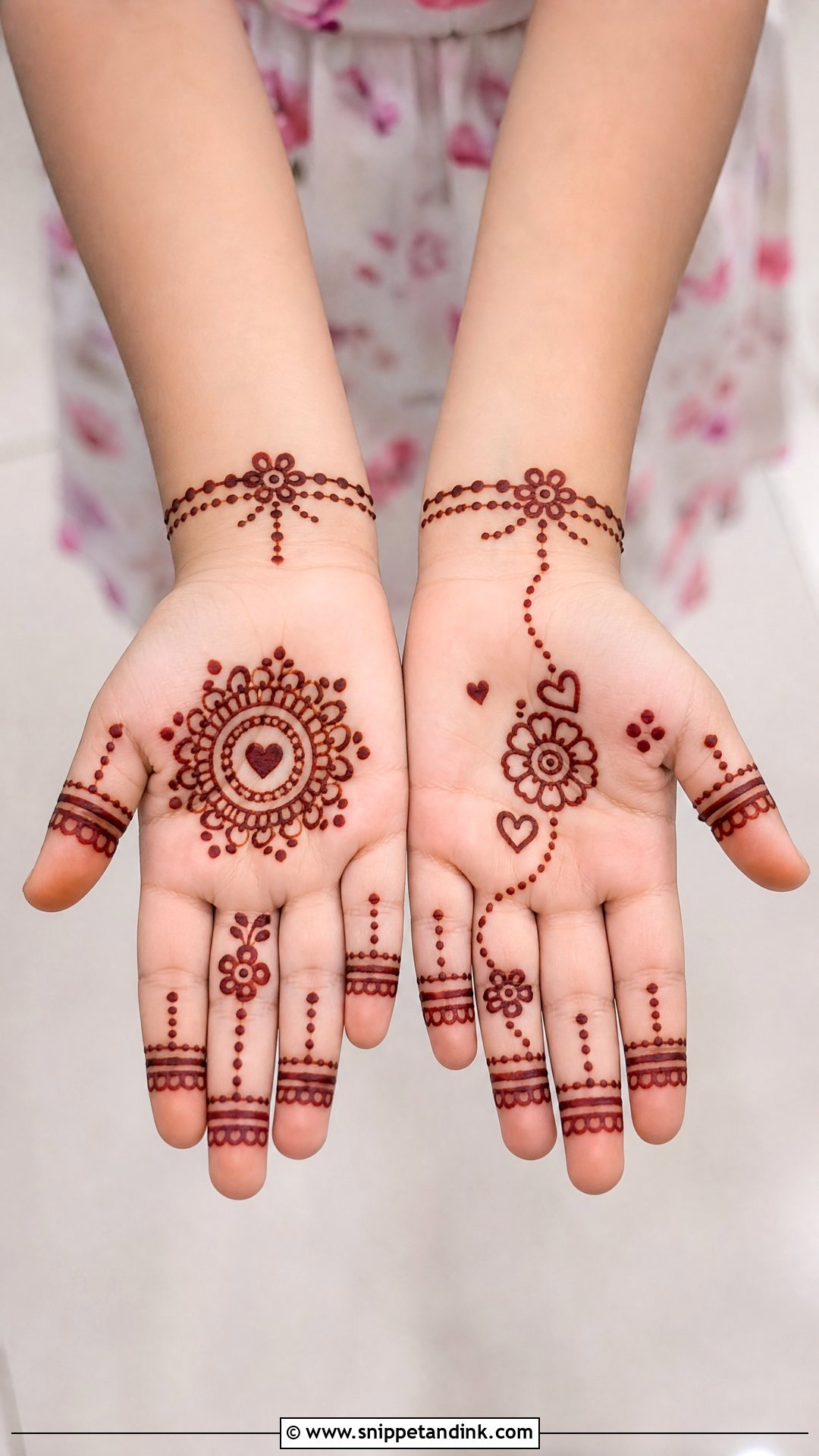
With children, sitting still is the real limit, so I plan for ten minutes, not forty. Small motifs work best: flowers, hearts, stars, tiny mandalas and dotted vines, on the palm with lightly decorated fingers and maybe a wrist band. Bold lines matter because kids smudge, and a bold line survives a smudge where a fine one disappears. Use only natural henna on children. I would never put a dark “instant” black paste on a child’s skin, for the reasons I explain further down.
19. Finger Rakhi Mehndi Design
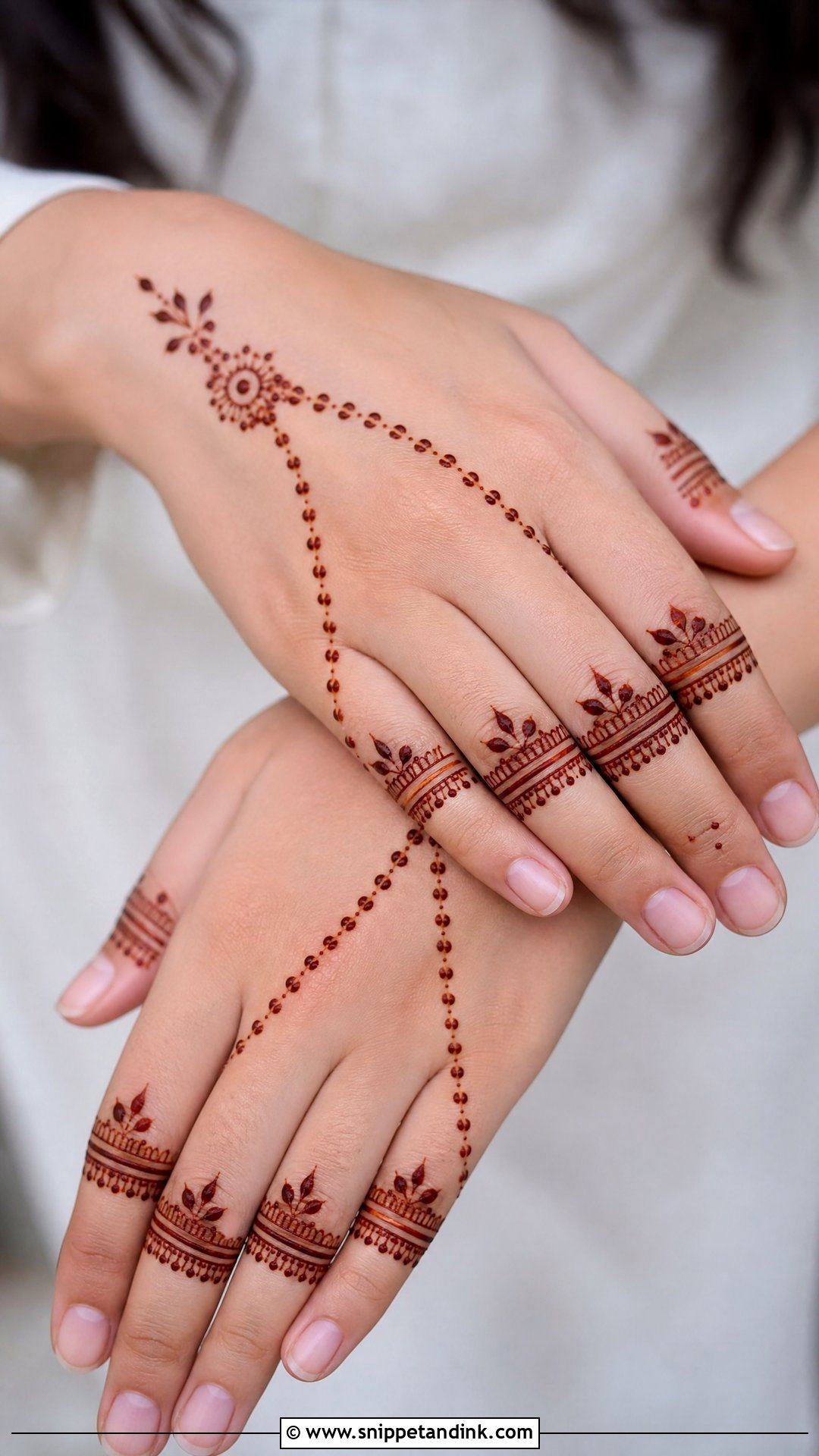
Finger-only designs give you a noticeable look with very little drying time. Each finger gets its own bands, leaves or tiny flowers, with a small mandala at the base, and on the back of the hand fine chains run from the fingers to a wrist bracelet. Fingertips take colour very well, so even a light design reads clearly. Balance is the thing to watch. I alternate dense and open fingers rather than filling them all equally, which stops the hand from looking heavier on one side.

20. Palm Rakhi Mehndi Design
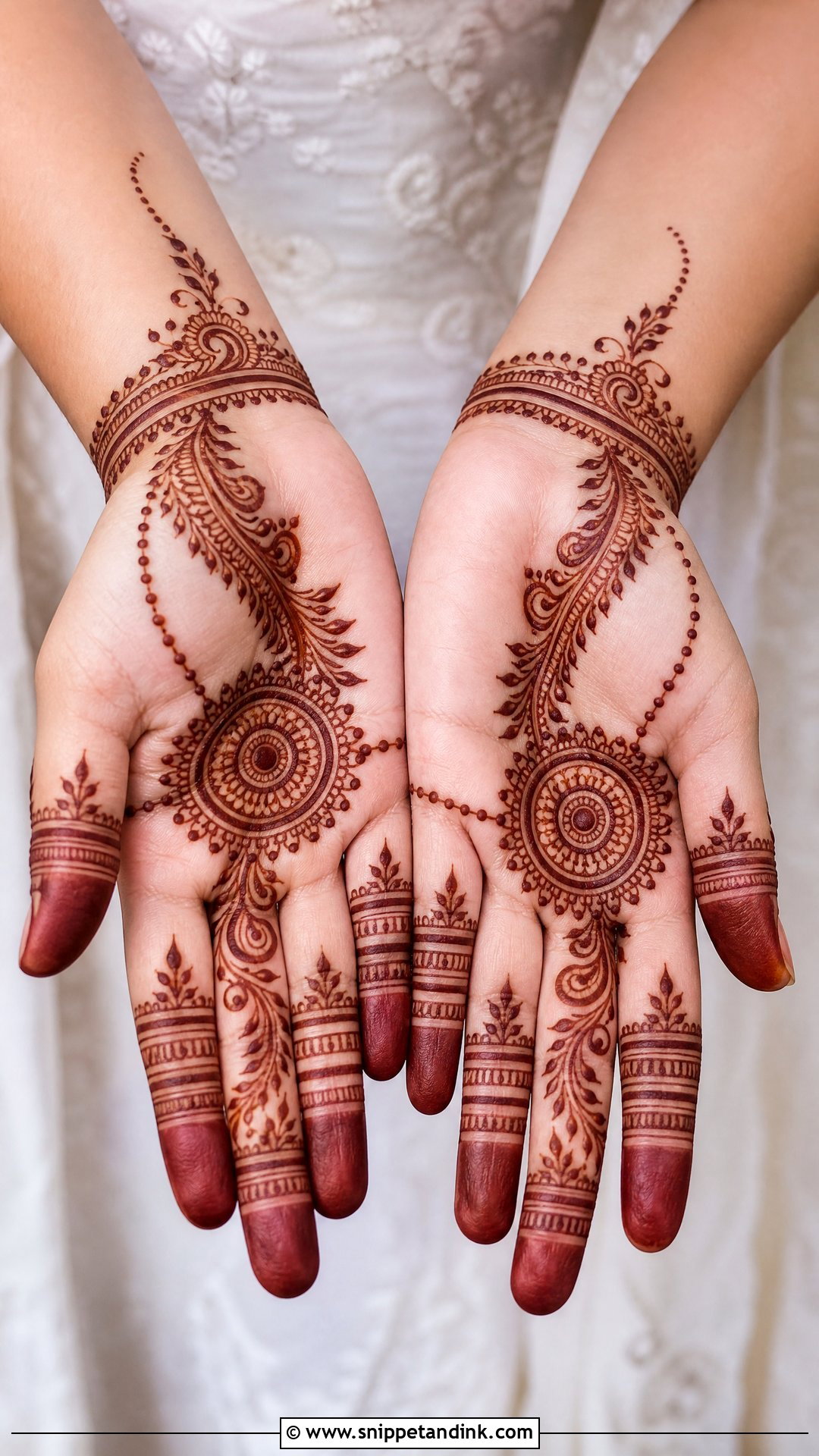
The palm is where the festival actually happens, holding sweets, the thali and the thread, so a palm-centred design gets seen more than any other. I start with a central rakhi motif, flower or mandala, add paisley curves and leaf borders, then fill the fingers with stripes and floral tips. Beginners do best here because the palm is the flattest surface on the hand. Extend toward the wrist if you want more coverage.
21. Back Side Rakhi Mehndi Design
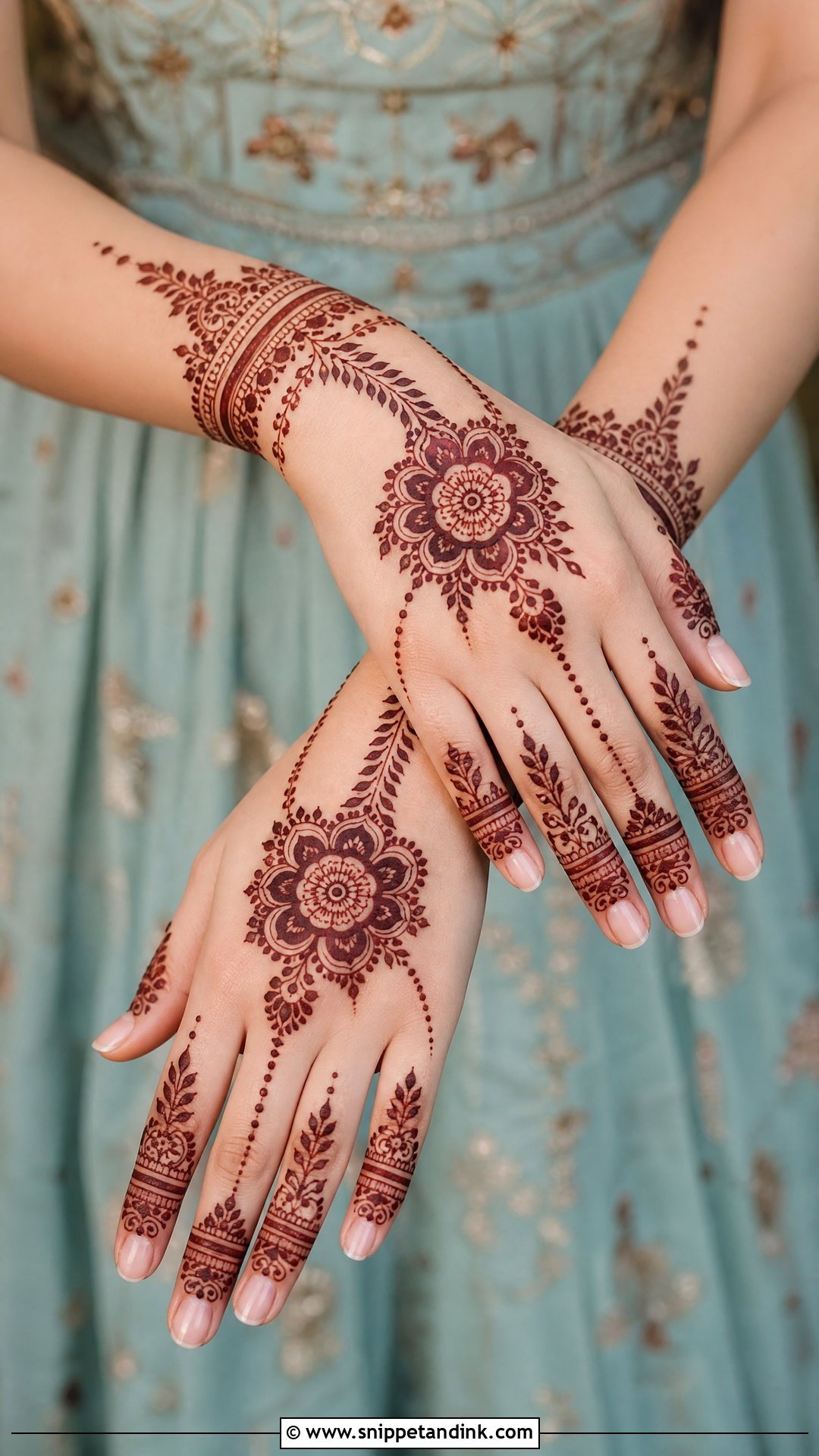
Back side Rakhi mehndi is where I do most of my jewellery-style work: a centre floral motif, decorated finger trails, a wrist cuff, and chain lines connecting the motif to the fingers like a hand harness. It can stay light with open spaces or get richer with jaali and shaded petals. Remember the stain on the back of the hand is lighter and fades sooner than the palm, since that skin is thinner, so this layout looks its best within the first few days.
22. Jaali Rakhi Mehndi Design
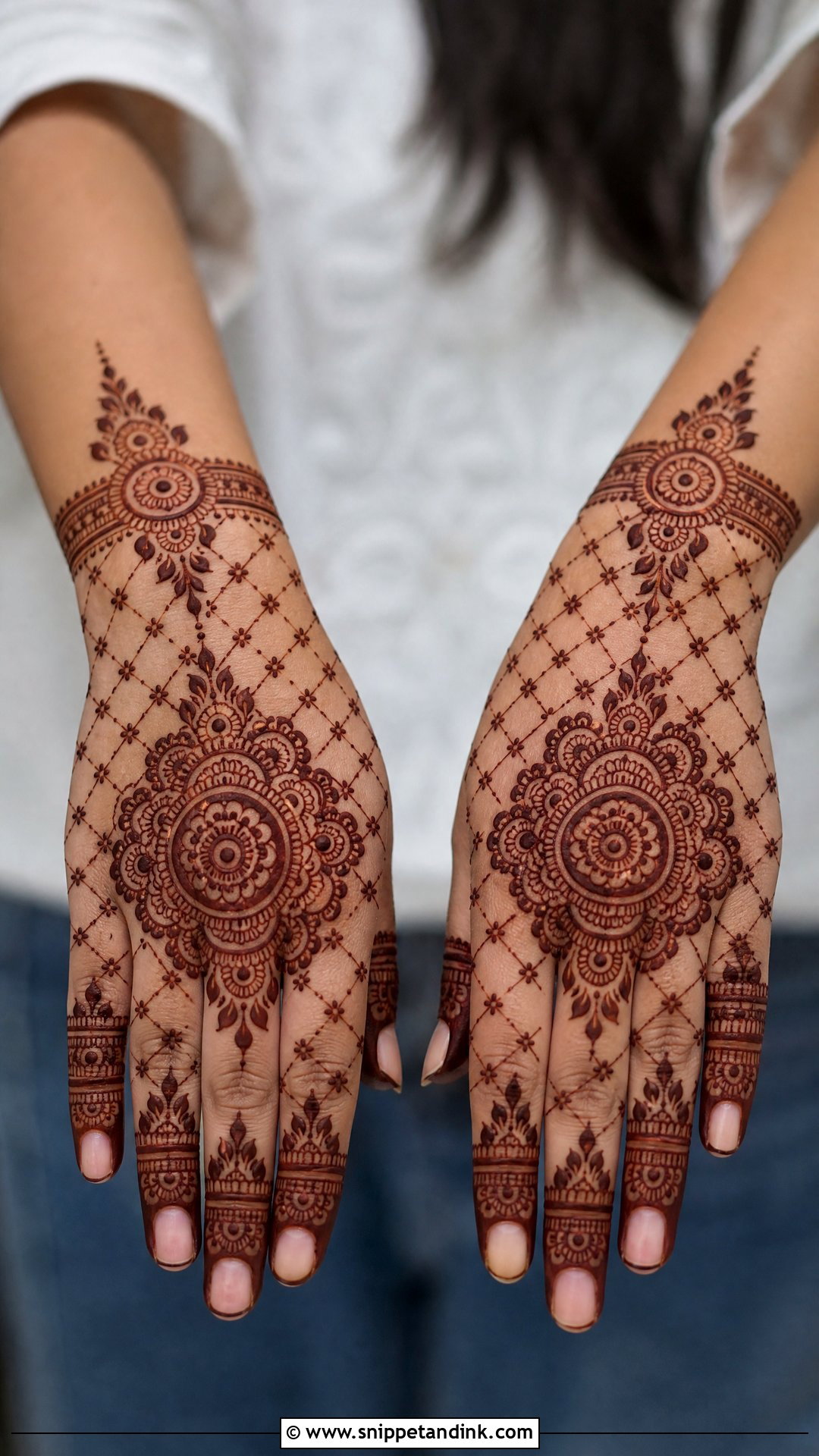
Jaali is a net pattern, and it gives the hand a lace effect, especially on the back where the skin is smooth. For Rakhi, I pair a jaali panel with a central mandala or a bracelet band, so the open net contrasts with filled flowers. The mesh only looks clean if the lines are evenly spaced, which means a steady cone and a consistent paste. Dots at each intersection hide small wobbles. If your hand is unsteady, keep the jaali patch small.
23. Lotus Rakhi Mehndi Design
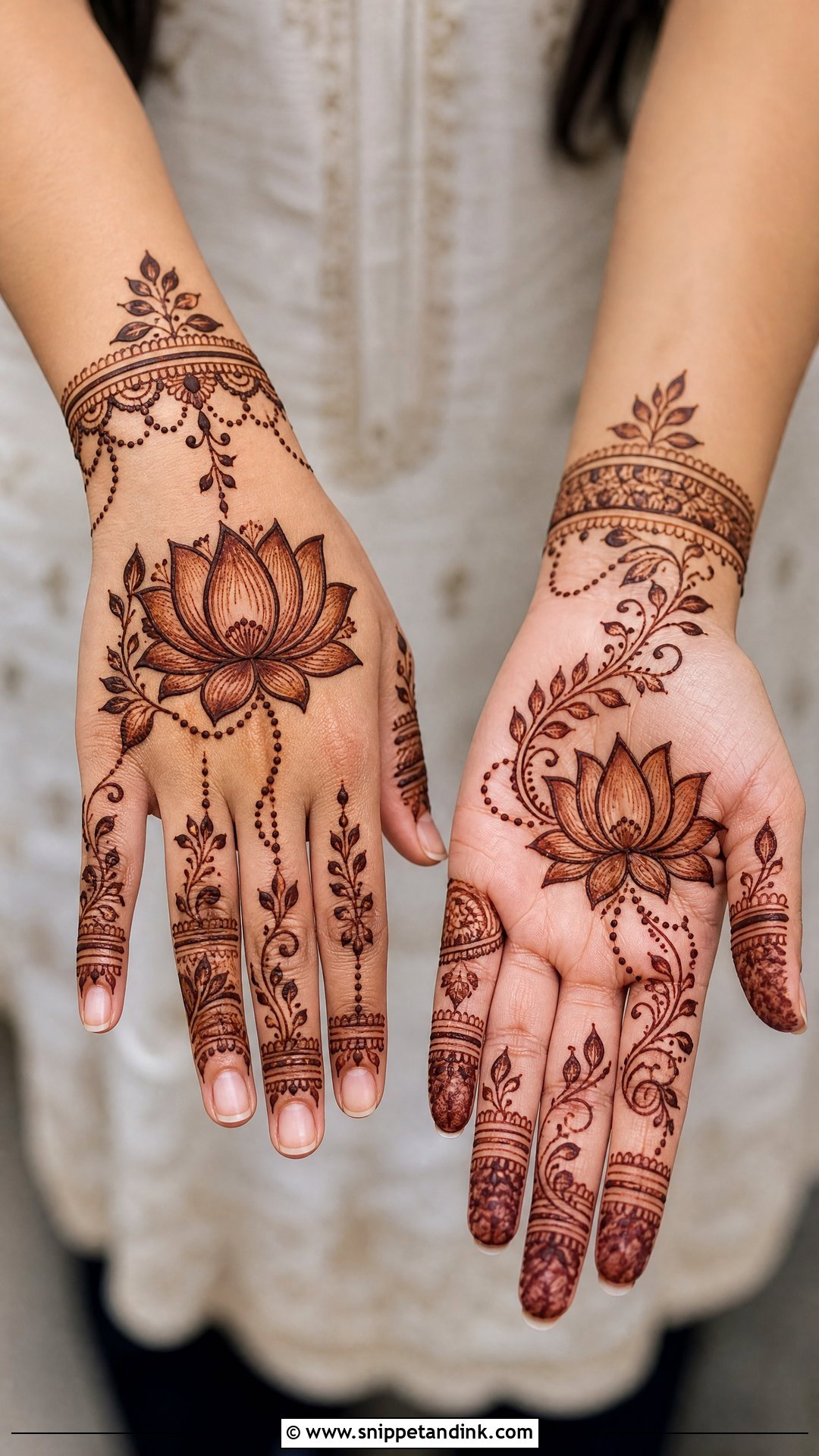
A shaded lotus is softer than a rose and less common than a mandala. I place it near the wrist, the palm centre or the back of the hand, with leaves and dots flowing out from it, and keep the rest of the hand to simple finger lines. Bold outer petals with fine inner shading is what gives the lotus depth once it stains. Pair it with a slim bracelet band. It sits well with a simple cotton suit and a dressier outfit alike.
24. Rose Rakhi Mehndi Design
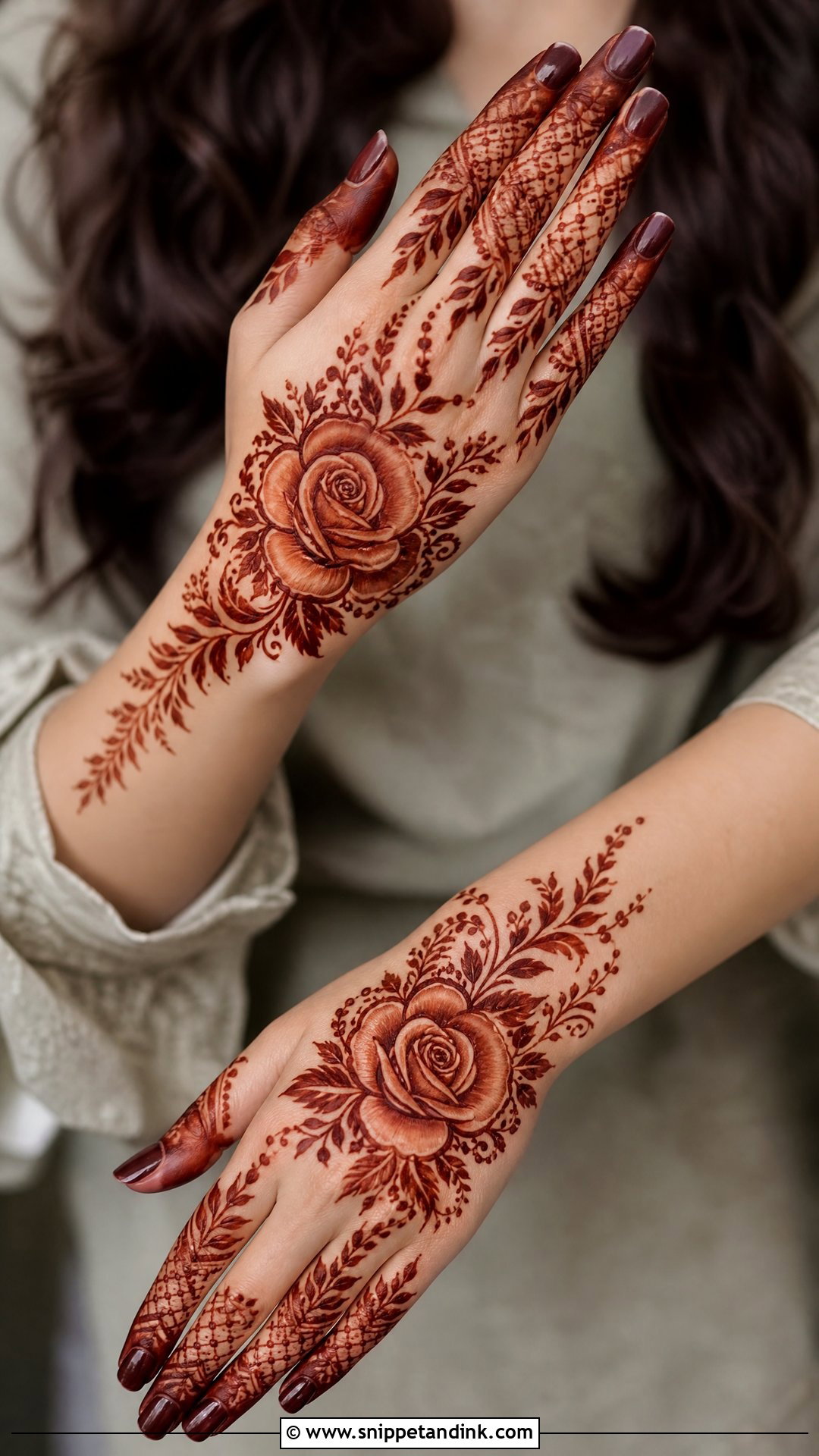
One large rose on the back hand or palm, leafy vines toward the fingers and wrist, a dotted border to finish. For a modern take, I run it diagonally with open space around; for a fuller one, I add smaller roses and paisleys. Rose petals are drawn as overlapping curved strokes, and they only stay distinct if each stroke has a hairline gap from the next. That is why this design looks sharpest with a deep maroon stain: the darker the colour, the clearer the petal layers become.
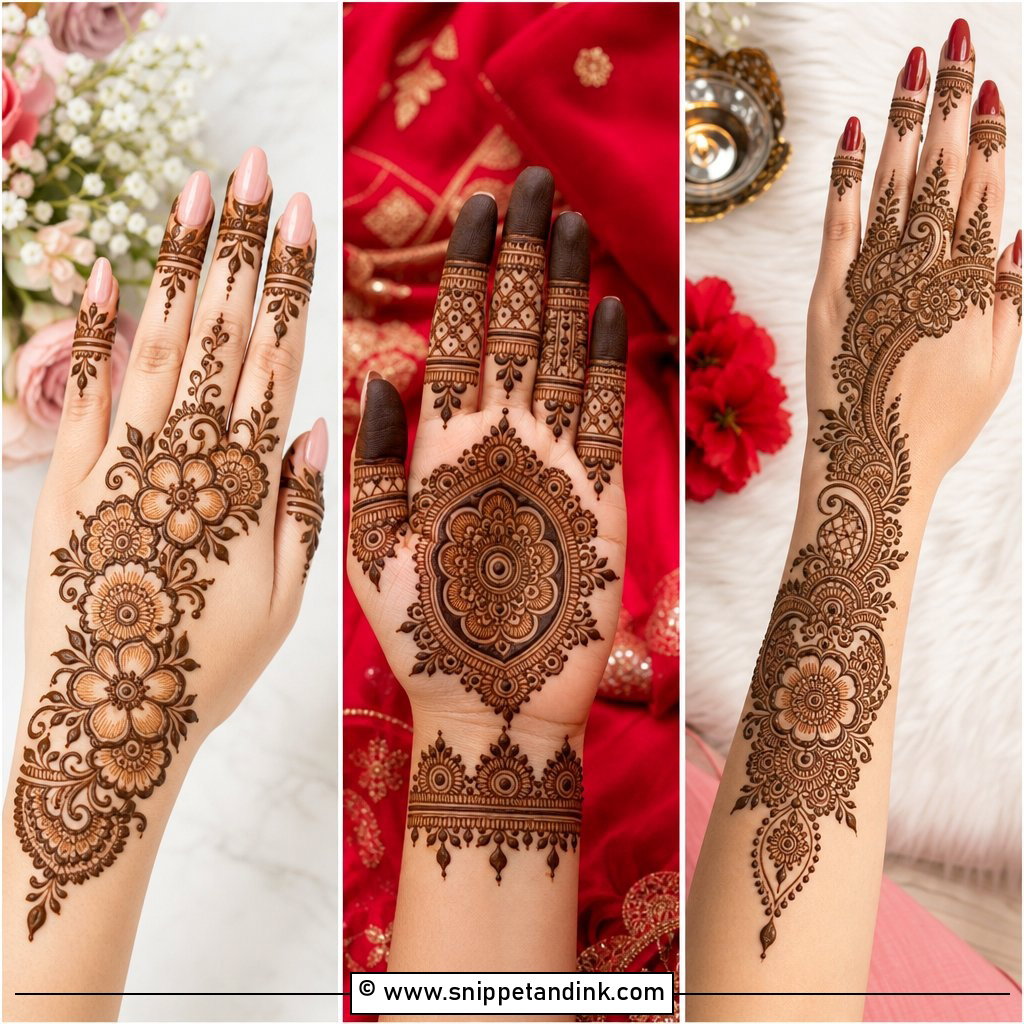
25. Jhumka Rakhi Mehndi Design
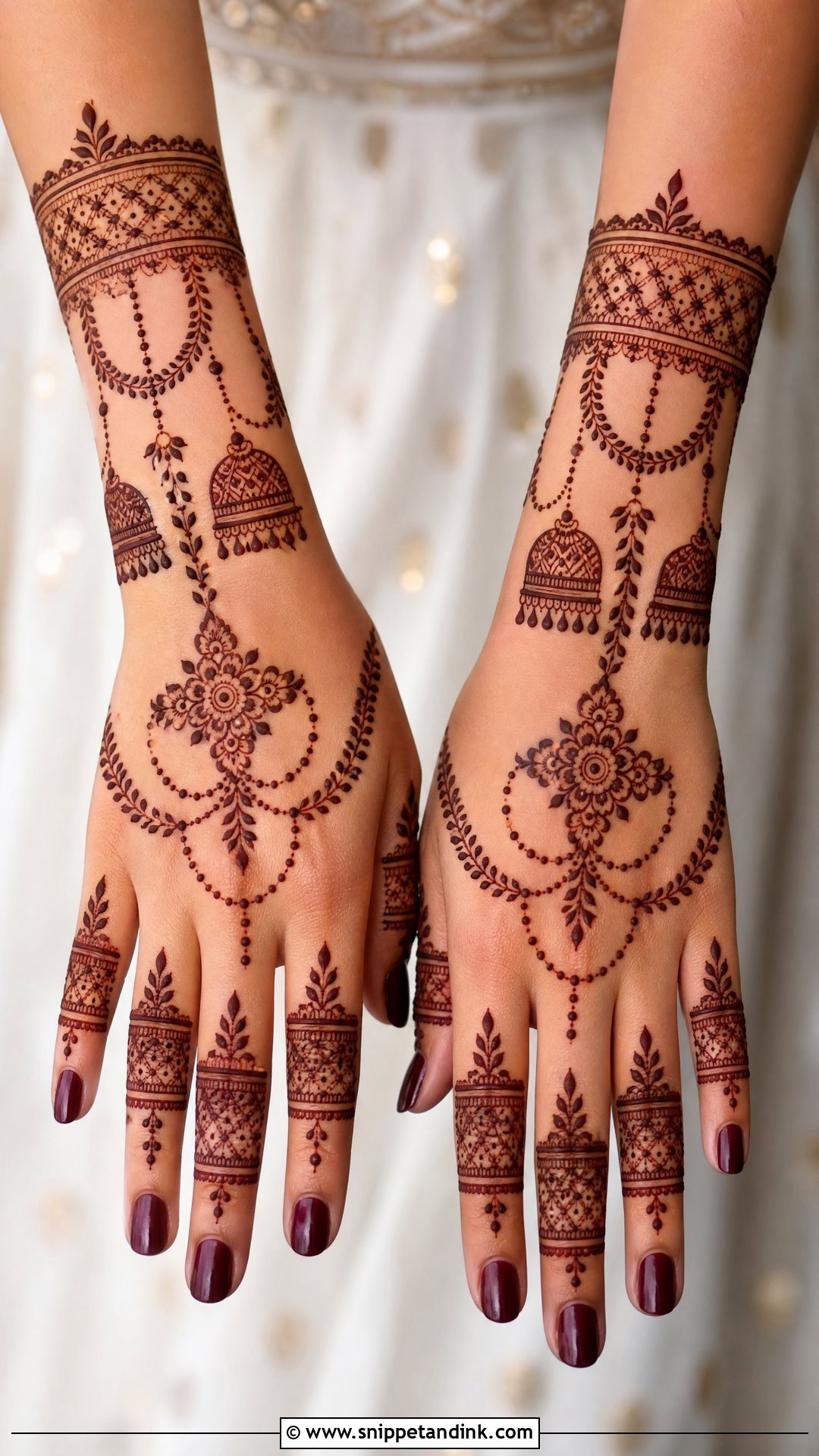
Jhumka shapes hanging from floral chains on the back of the hand make a playful change from mandalas and flower trails. I add a wrist band beneath the earring motif to ground the layout and keep the fingers light with leaves and ring bands. Draw the jhumka outline bold, then do the fine detail inside it, otherwise the dome and the dangling beads blur together. It suits anyone wearing traditional jewellery that day, since it echoes it.
26. Bangle Rakhi Mehndi Design
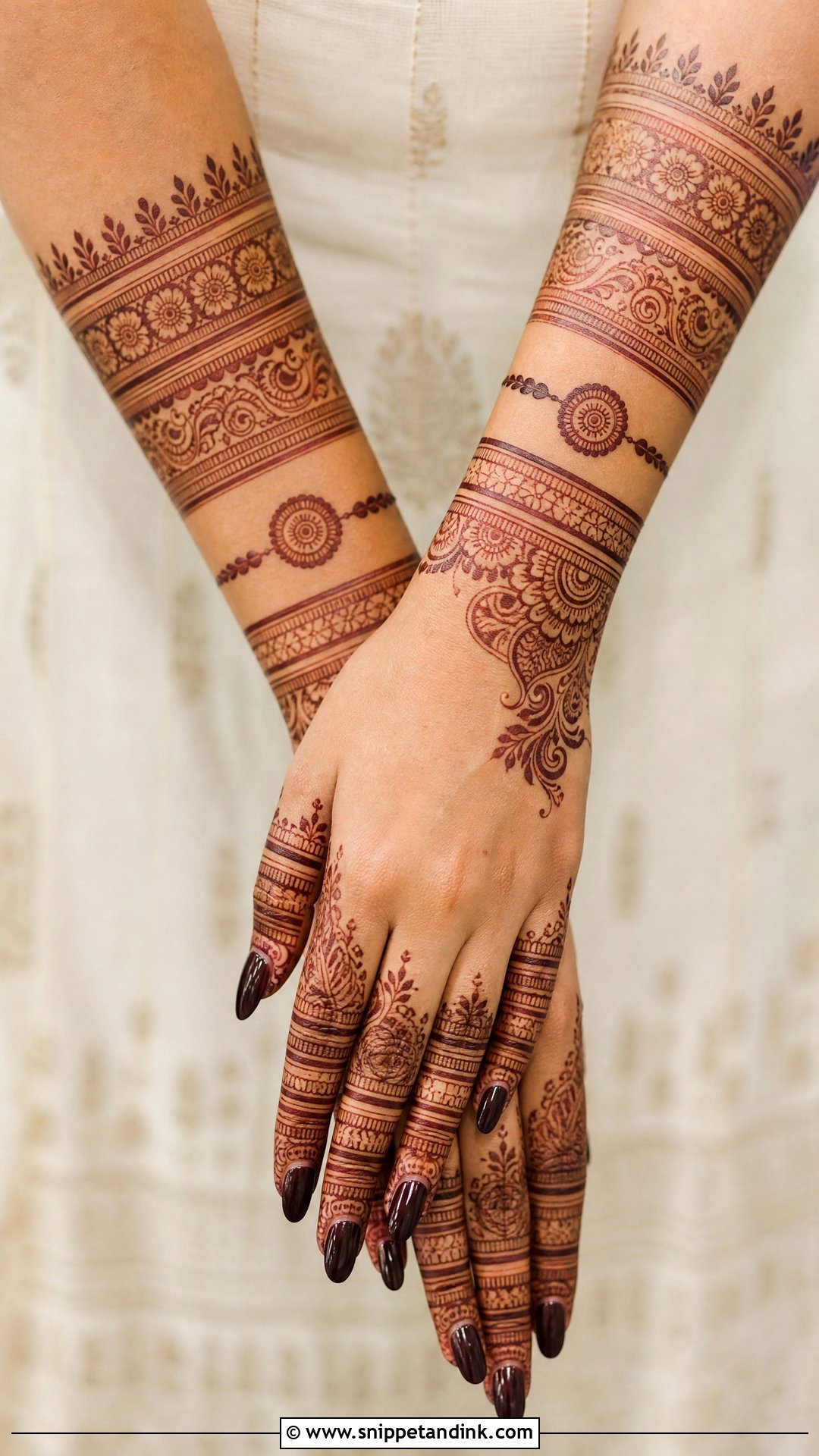
Stacked henna bangles with floral bands, dotted borders and paisley strips concentrate the work at the wrist and leave the palm mostly free, which is handy if you are the one cooking or serving that morning. I extend one small trail toward the fingers so the design does not stop abruptly. A small circular rakhi charm worked into the band ties it to the festival. Wrist skin stains reasonably well, but bangles rubbing against fresh stain can fade it faster, so wear real bangles loose for the first day.
27. Moroccan Rakhi Mehndi Design
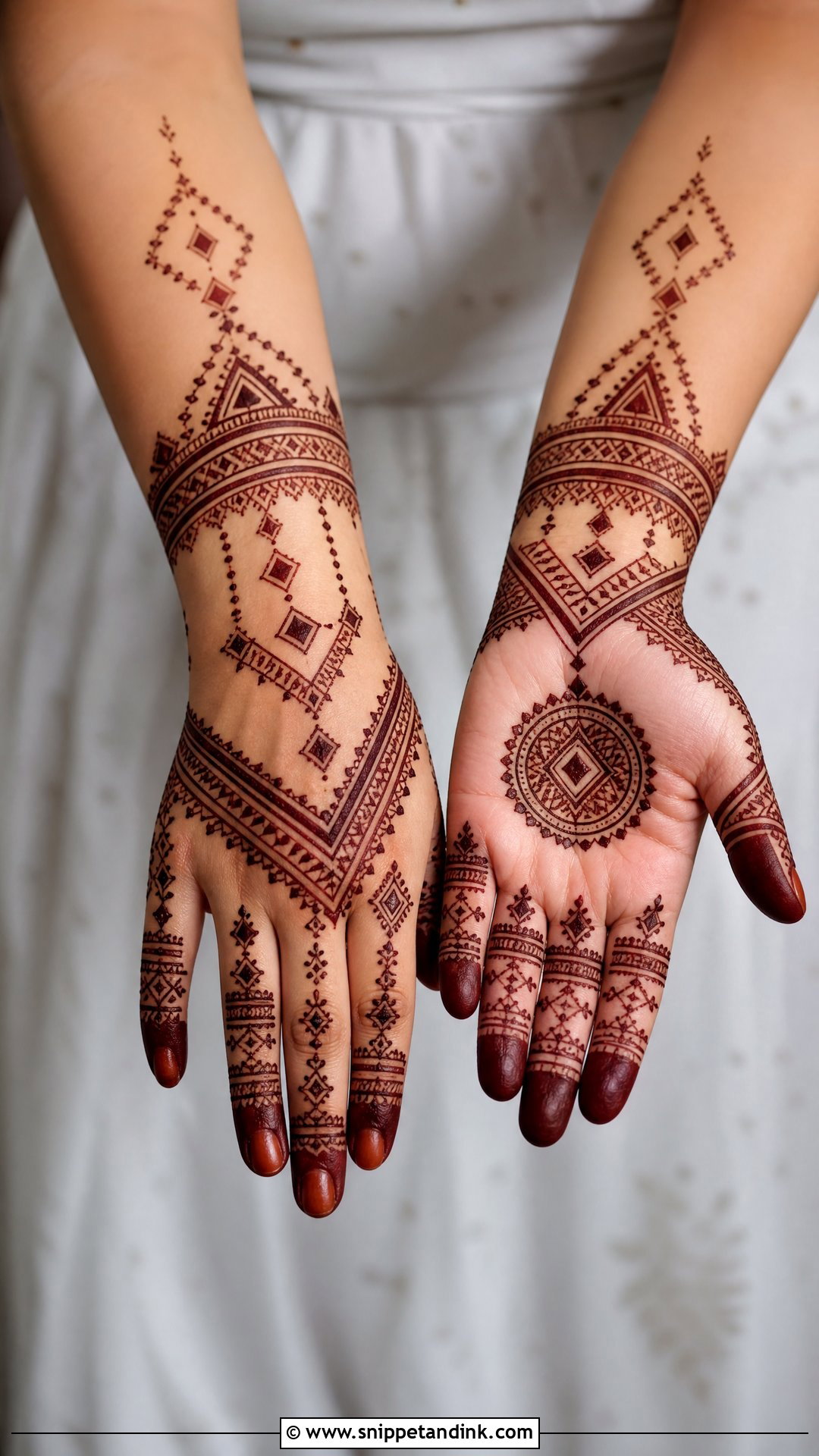
Moroccan Rakhi mehndi trades florals for geometry: diamonds, triangles, lines, dots and structured bands across the palm or back hand. A small bracelet detail or a rakhi-inspired centre circle softens it for the festival. Geometric henna is unforgiving because straight lines show every wobble, so I pull lines in one smooth motion with the cone lifted slightly off the skin. Keep the sections aligned and leave open space between them. It pairs naturally with fusion outfits.
28. Gulf Rakhi Mehndi Design
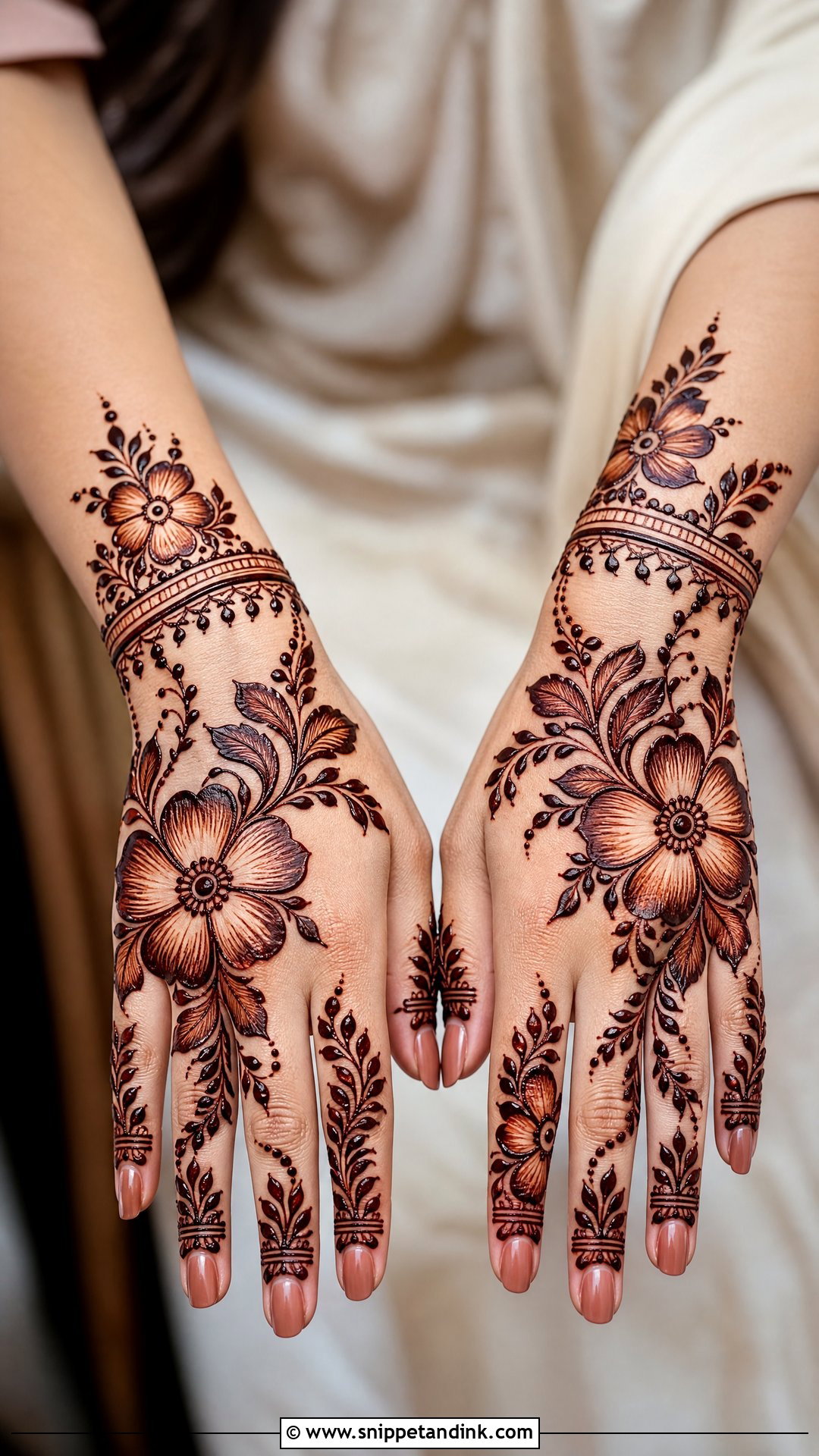
Gulf, or Khaleeji, style uses larger, rounded florals, leafy vines and generous open space, and it is more flowing than dense Indian work. For Rakhi, I run a floral trail across the back of the hand and finish with a wrist bracelet, adding shaded leaves and dotted accents for depth. Many older women in a family prefer this to heavy coverage, and it is comfortable to wear all day. Confident, rounded strokes are the whole style; hesitating mid-petal leaves a visible bump.
29. Rajasthani Rakhi Mehndi Design
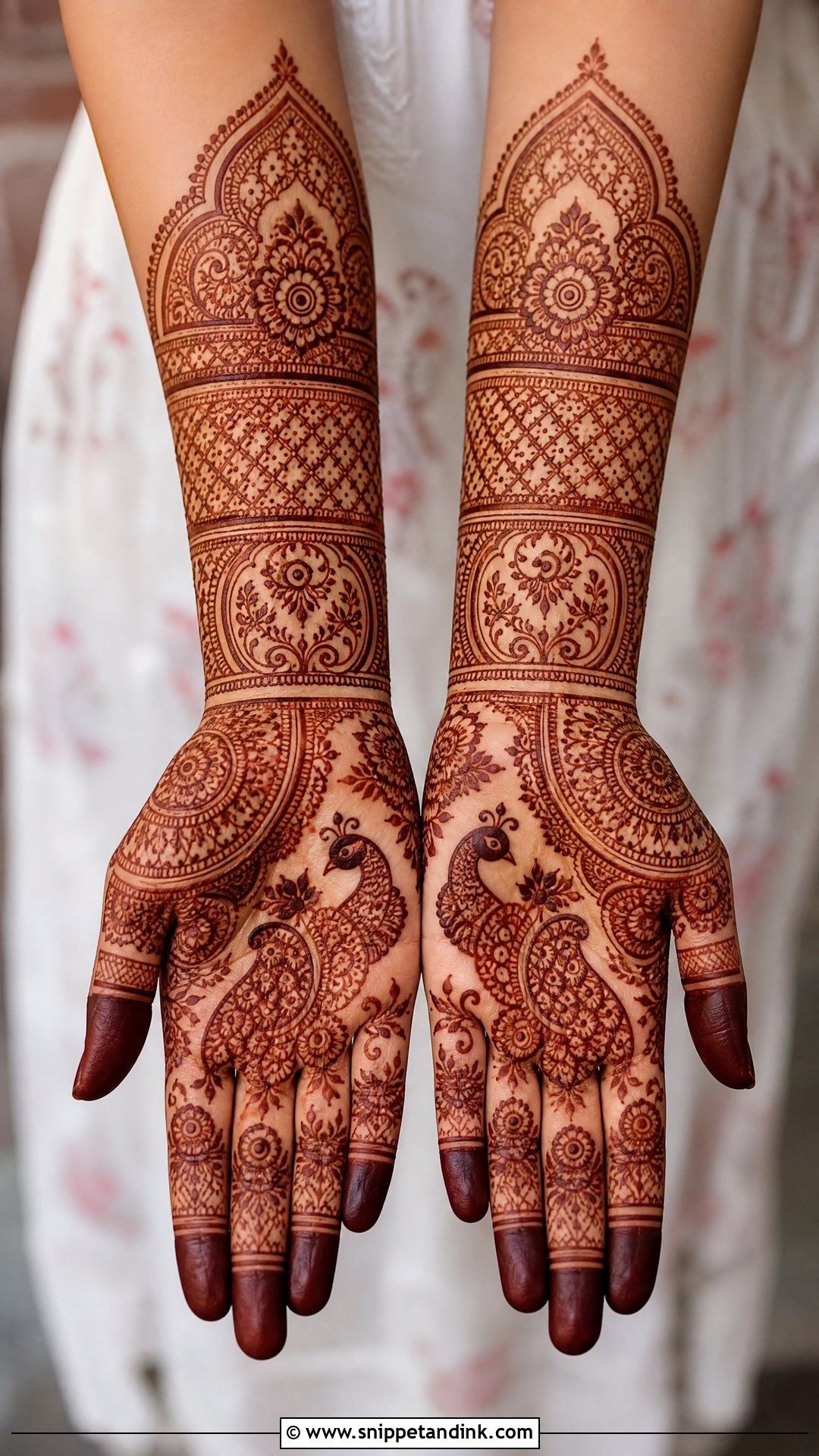
Rajasthani work is the heaviest in this list: paisleys, peacocks, floral borders, mirrored symmetry and fine fillers, often with a small rakhi or brother-sister symbol tucked into the palm. I only suggest it if you have a long sitting free and genuinely enjoy dense mehndi. Organising the hand into sections, with bracelet bands, jaali panels and leafy borders at the wrist and forearm, is what keeps it from looking crowded. It suits sarees, lehengas and traditional suits.
30. Quick Rakhi Mehndi Design
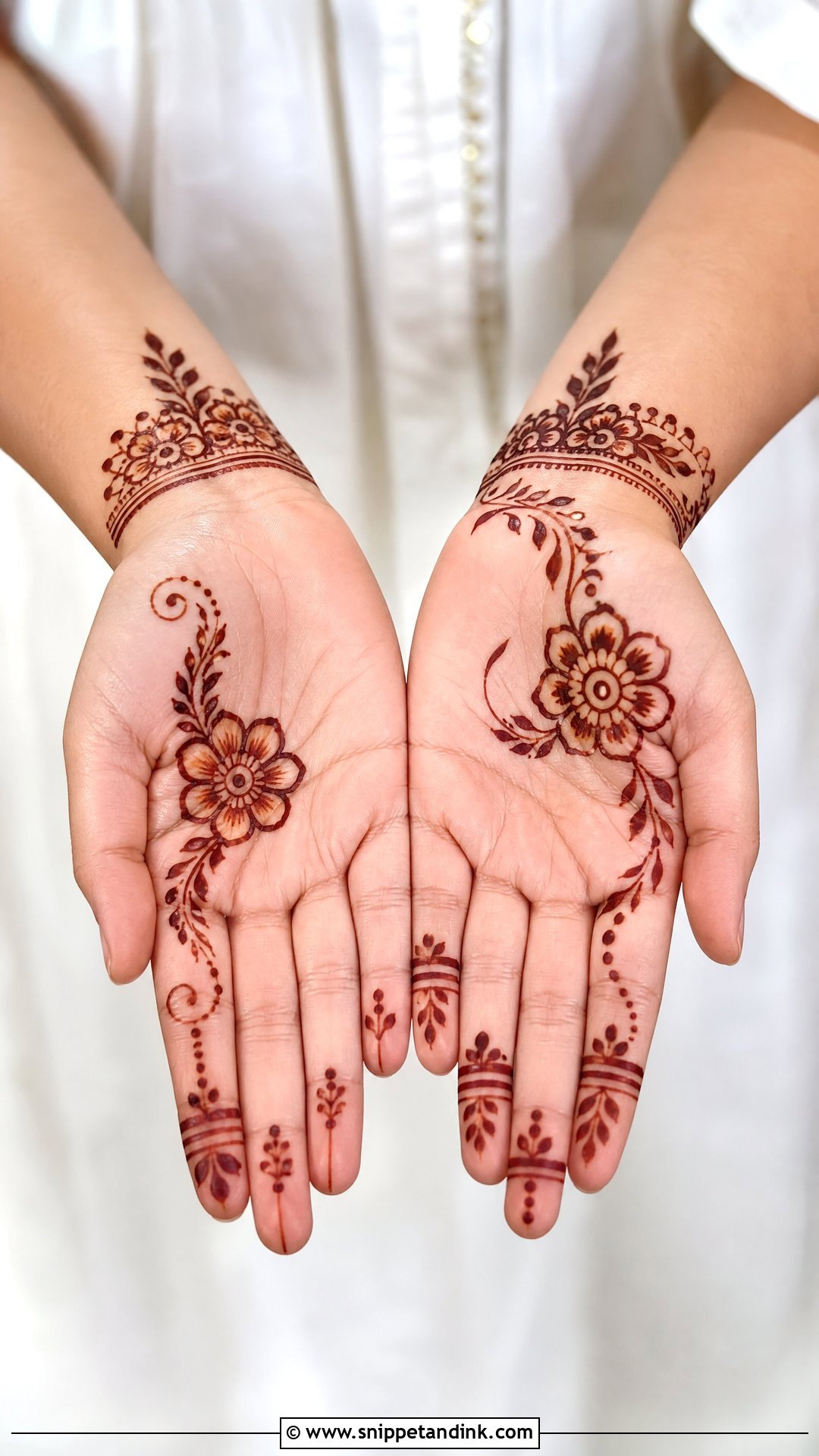
When you have minutes, use fewer elements and place them well: a small palm flower, a few curved leaves and simple finger bands, or on the back hand a diagonal vine with dots and one bold flower. Bold outlines stain clearly; open space keeps it neat. Add a wrist band if you want it to feel finished. The catch with a last-minute design is the stain, not the drawing. Applied on Rakhi morning, it will still be orange at the ceremony, so do even a quick one the evening before if you can.
Timing the Stain So It Peaks on Rakhi Morning
Natural henna does not come off the skin at its final colour. When you scrape the paste away, the stain is bright orange, and it oxidises to red-brown or maroon over the next day or two. That is why I tell everyone to apply the evening before Raksha Bandhan, or the afternoon before for dense designs. Applied on the morning itself, you will tie the rakhi with orange hands.
My aftercare routine for a darker colour
- Once the paste is dry to the touch, dab on a little lemon and sugar mix so it stays stuck to the skin and keeps releasing dye.
- Leave it on as long as you can bear, six hours at minimum and overnight if possible. Wrapping the hands loosely in tissue helps it survive sleep.
- Scrape the dried paste off with a blunt edge or your fingernail. Do not wash it off.
- Keep water away from the hands for the next several hours. Warmth helps the stain develop, so keeping hands warm is better than rinsing them.
- A thin layer of balm or natural oil before bathing protects the colour on the day itself.
Black Henna, Chemical Cones and Little Hands
Real henna paste is greenish-brown when applied and never stains black. Cones sold as black henna, or promising a dark colour in minutes, often contain PPD, a hair-dye chemical that can cause blistering, scarring and lasting allergic reactions, and it is especially risky on children. I only use cones whose ingredients I know: henna powder, lemon or water, sugar and an essential oil. If a cone has no ingredient list or smells strongly chemical, I don’t put it on anyone.
For first-timers and kids, I do a small test dot on the inner arm a day before. It is a cheap precaution against an itchy, unhappy morning, and it shows you how dark your paste actually stains on your skin.
Matching the Hand to Your Rakhi Morning
Simple palm patterns, full-hand layouts, mandalas, peacocks, bracelet bands and geometric Moroccan work all have a place on Raksha Bandhan. If you lean traditional, the mandala, peacock, Rajasthani and front-hand layouts carry that feel. If you prefer modern, look at the minimal, bracelet, finger, Moroccan and back-hand jewellery designs. Name and brother-sister motifs add a personal layer. The heaviest design is rarely the best one for this festival. I’d choose the one your sitting time allows, that stays comfortable while you tie the rakhi, and that has a night to darken before the photos.
You'll Like These Ideas:












Leave a Reply