
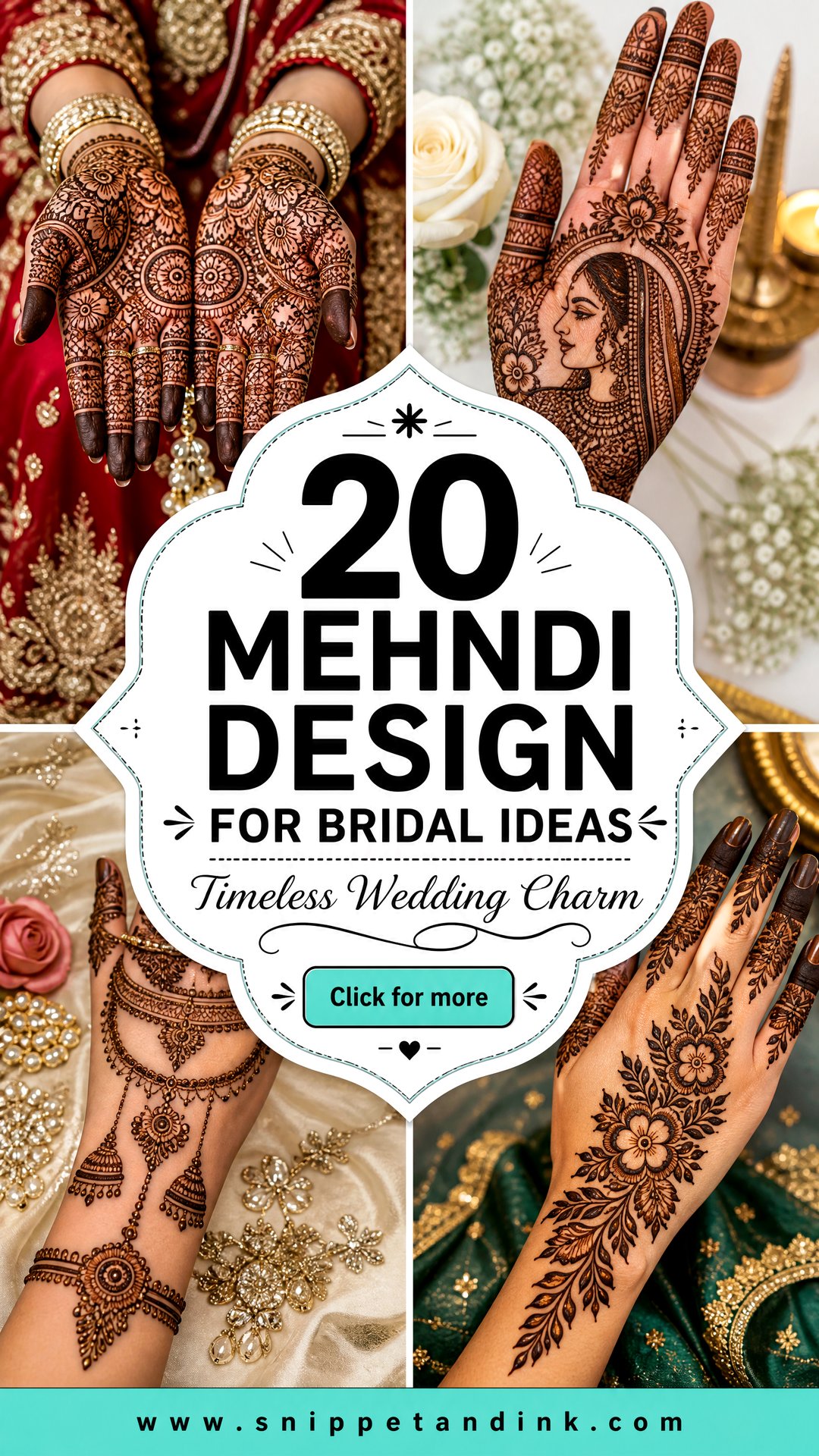
Bridal mehndi does more than decorate the hands. It frames your jewelry, appears in nearly every ceremony photo, and carries a meaning that guest henna doesn’t. The brides I work with ask for everything from dense Indian full-hand work to airy Arabic trails, Indo-Arabic fusion, portraits, mandalas, jaali and pared-back modern layouts, often with initials, dates, couple symbols, lotus motifs or peacocks worked in. Which one suits you depends on your outfit, the shape of your hands, your ceremony schedule and how bold you want the stain. Here are twenty, running from the most traditional to the most minimal.
What a Full Bridal Sitting Actually Feels Like
Full bridal hands and feet take hours, and you’re still for most of them. Dense Indian or Rajasthani work on both arms can run well past four hours depending on the design and the artist, and then the paste needs to stay on long after I’ve finished. Most brides have it done one or two days before the wedding, so the stain is near its darkest on the day.
The morning of your mehndi
- Wash your hands and arms with plain soap and skip lotion, oil and sunscreen there. Anything greasy sits between the paste and your skin.
- Do any waxing or exfoliating a couple of days earlier, not that morning, so the skin isn’t irritated.
- Wear a loose top that buttons at the front, or sleeves you can push above the elbow. You won’t be pulling anything over your head for a while.
- Eat a proper meal first, and line up someone to feed you and hold a drink with a straw.
- Use the bathroom before your feet are done. After that, you’re mostly staying put.
I like brides to rest their forearms on a pillow on their lap, with the phone propped on a stand within sight. A relaxed arm gives me steadier skin to work on, and a bride who isn’t twisting round to read messages ends up with cleaner lines.
1. Full Hand Bridal Mehndi Design
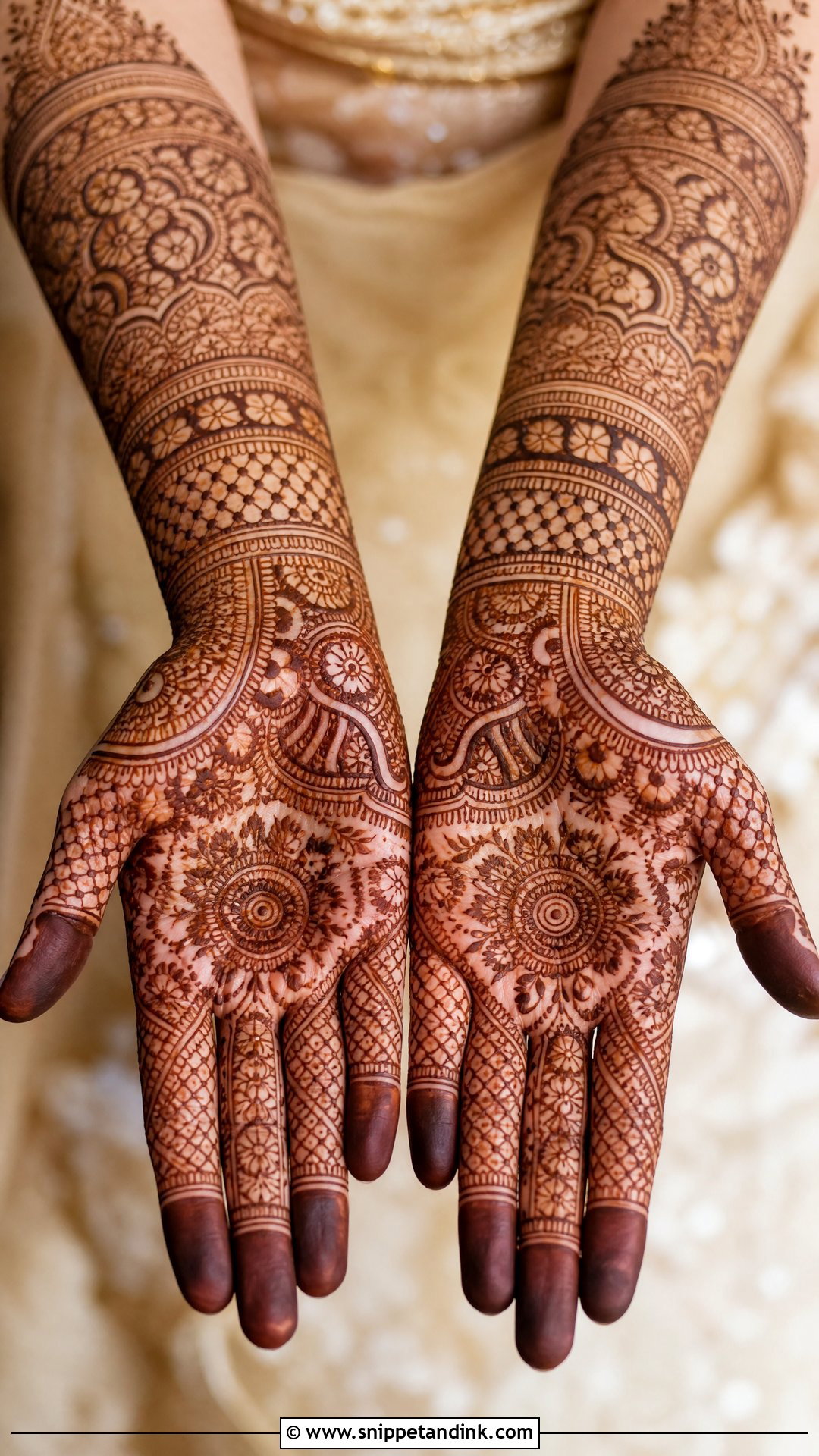
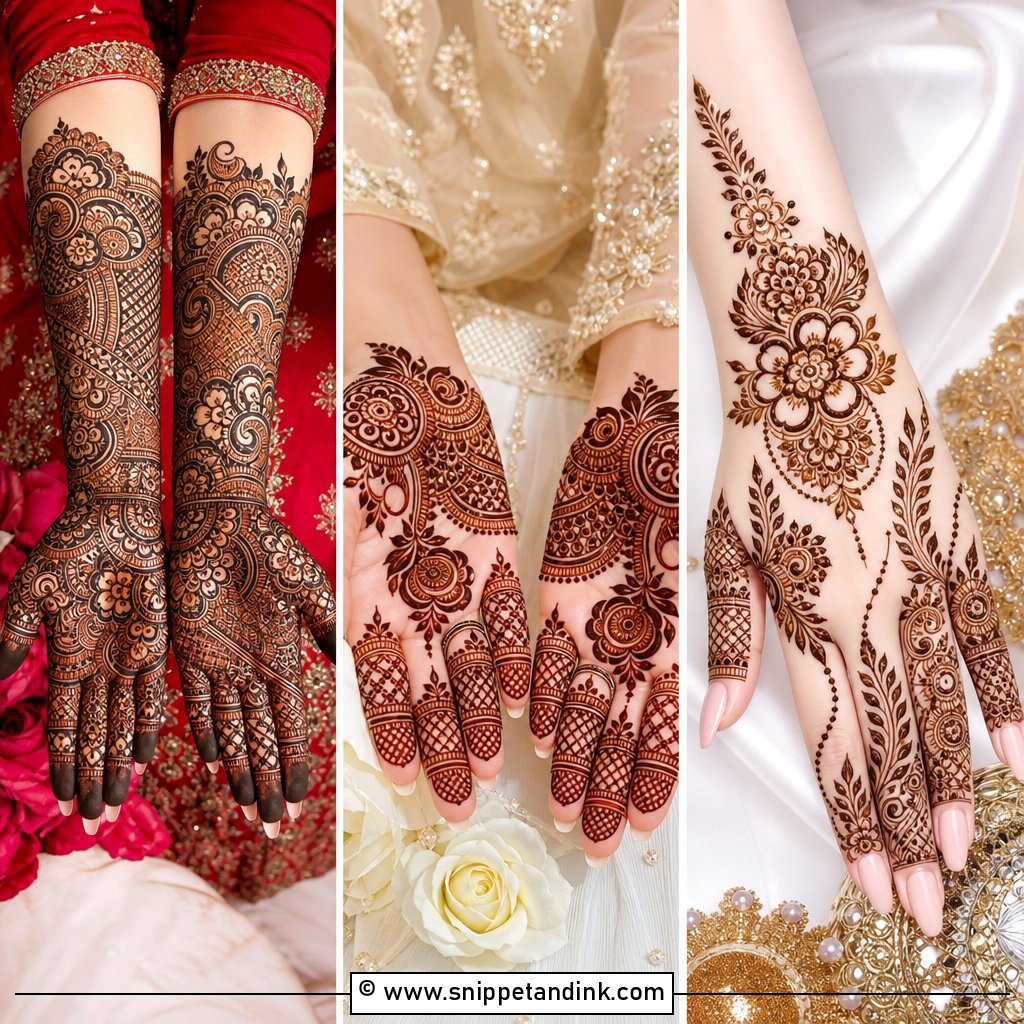
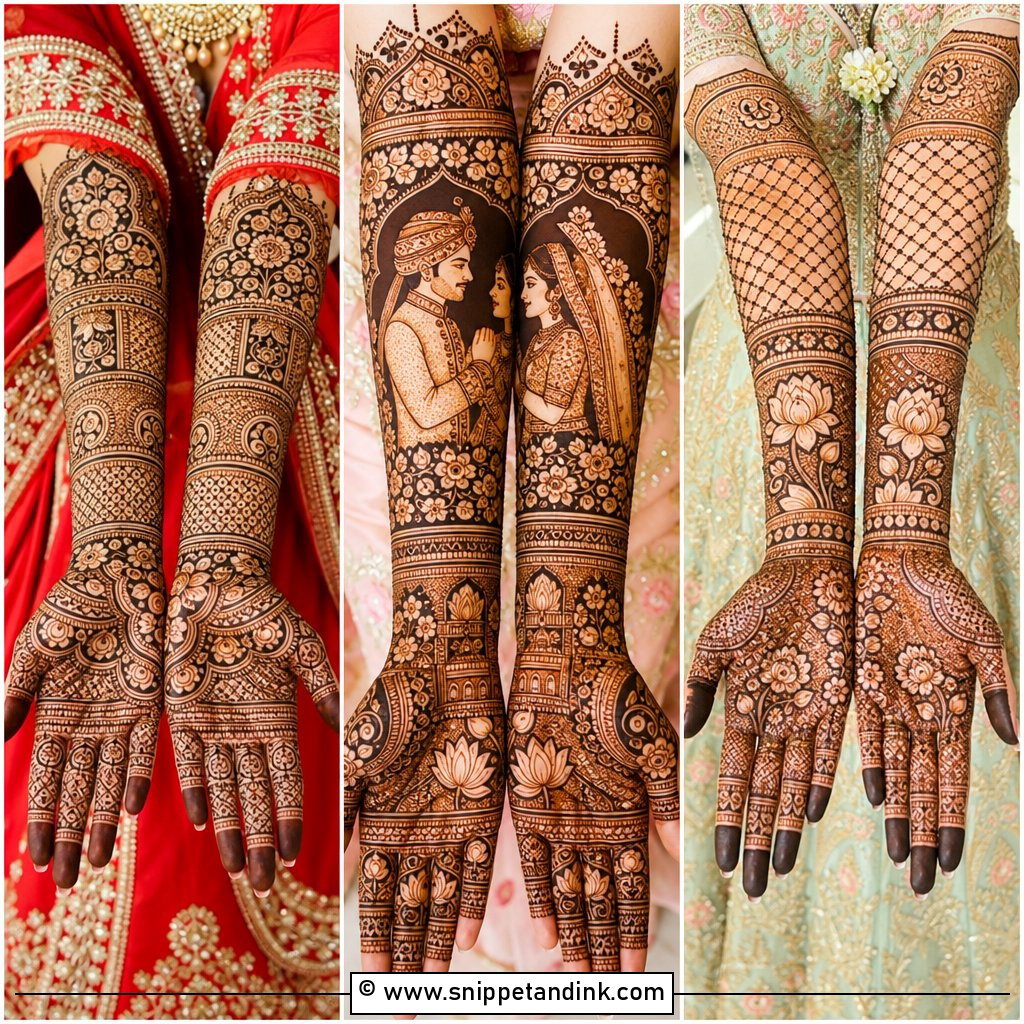
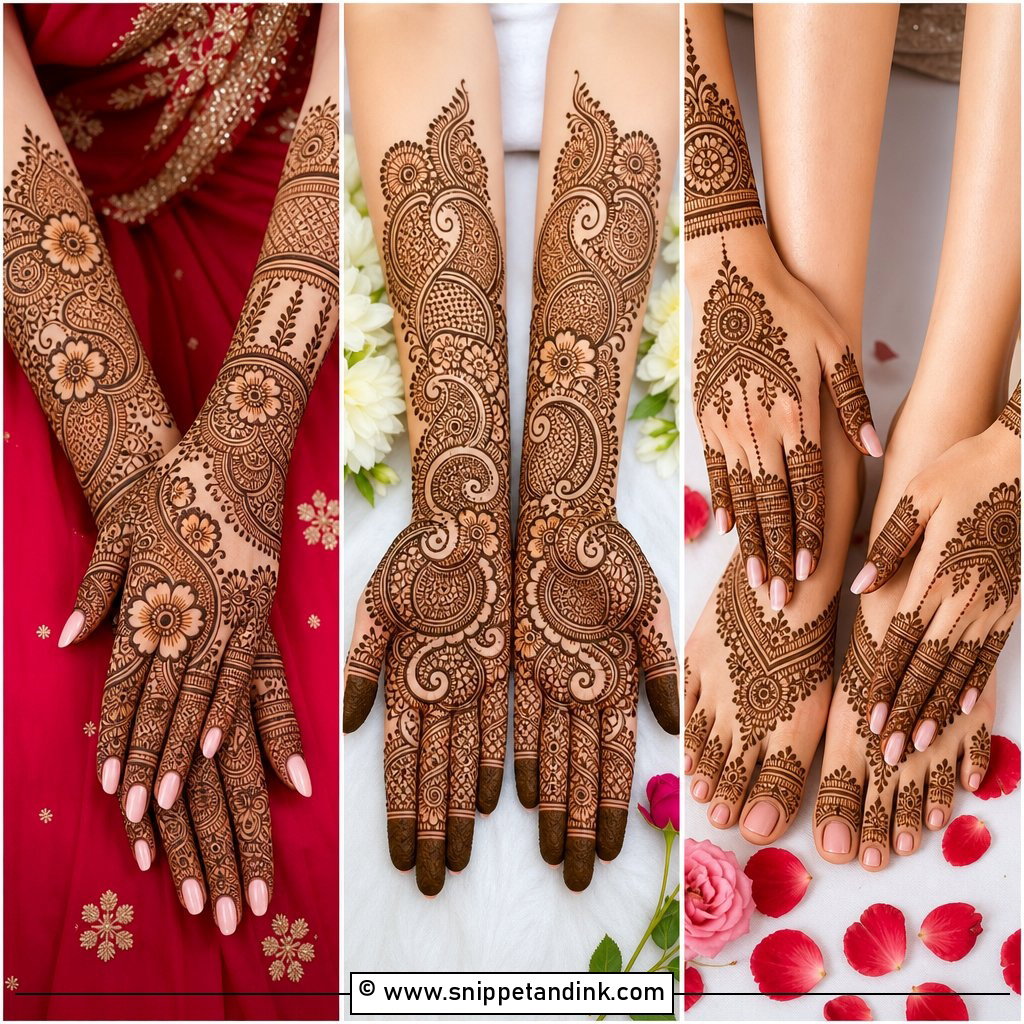
Full hand bridal mehndi covers palms, fingers, wrists and forearms with dense motifs, leaving very little bare skin. Paisleys, flowers, vines, checkered jaali, mandalas and small wedding symbols fill both hands, and up close with bangles and bridal sleeves it looks grand. What I watch most is rhythm. If every area gets the same fine filler, the hand reads as a brown blur from a couple of meters away, so I set bold outlines and a few larger motifs first and fill around them. Traditional Indian, Pakistani and South Asian weddings, where mehndi is a centerpiece of the bridal look, are its home.
2. Indian Bridal Mehndi Design
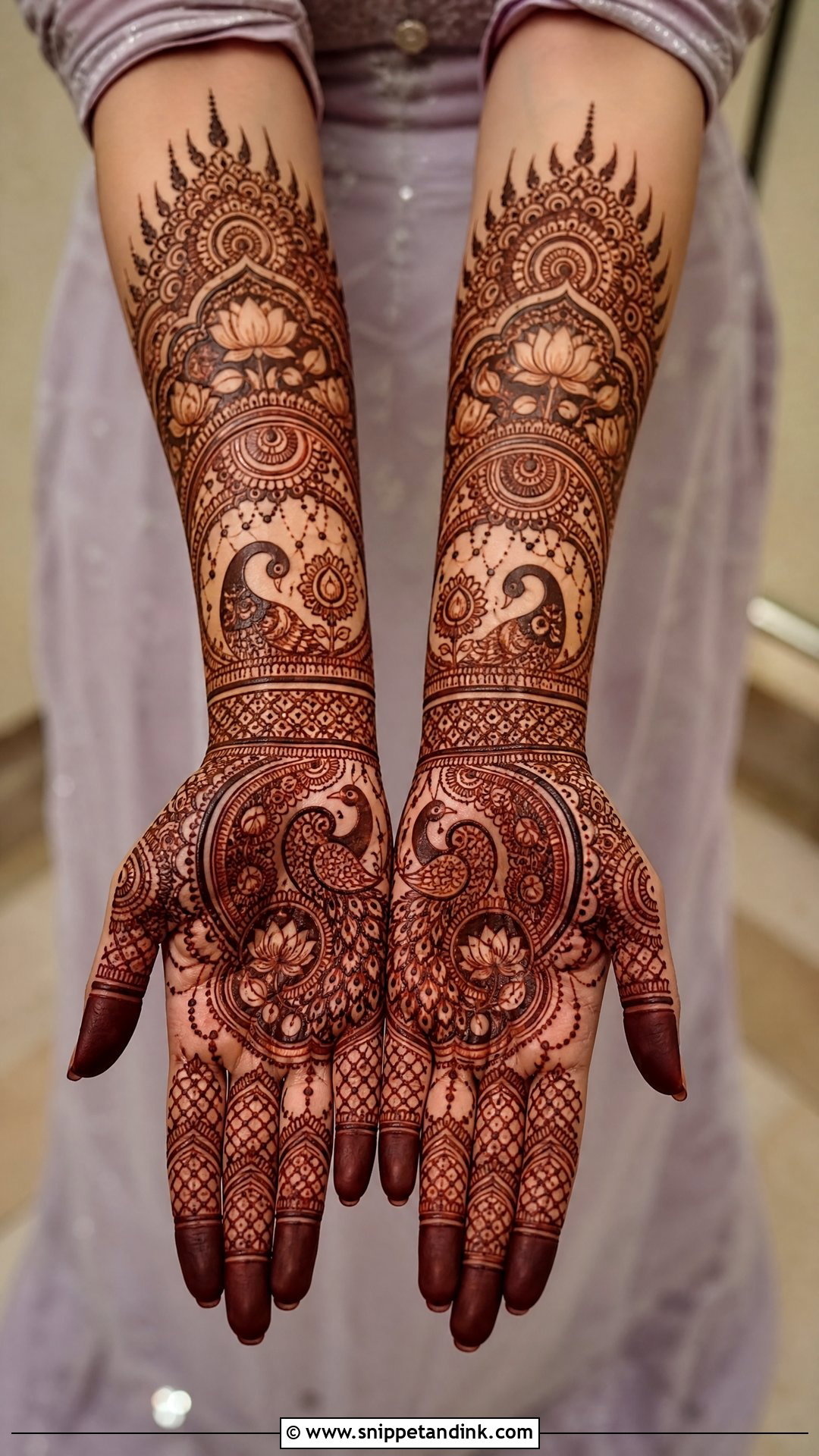
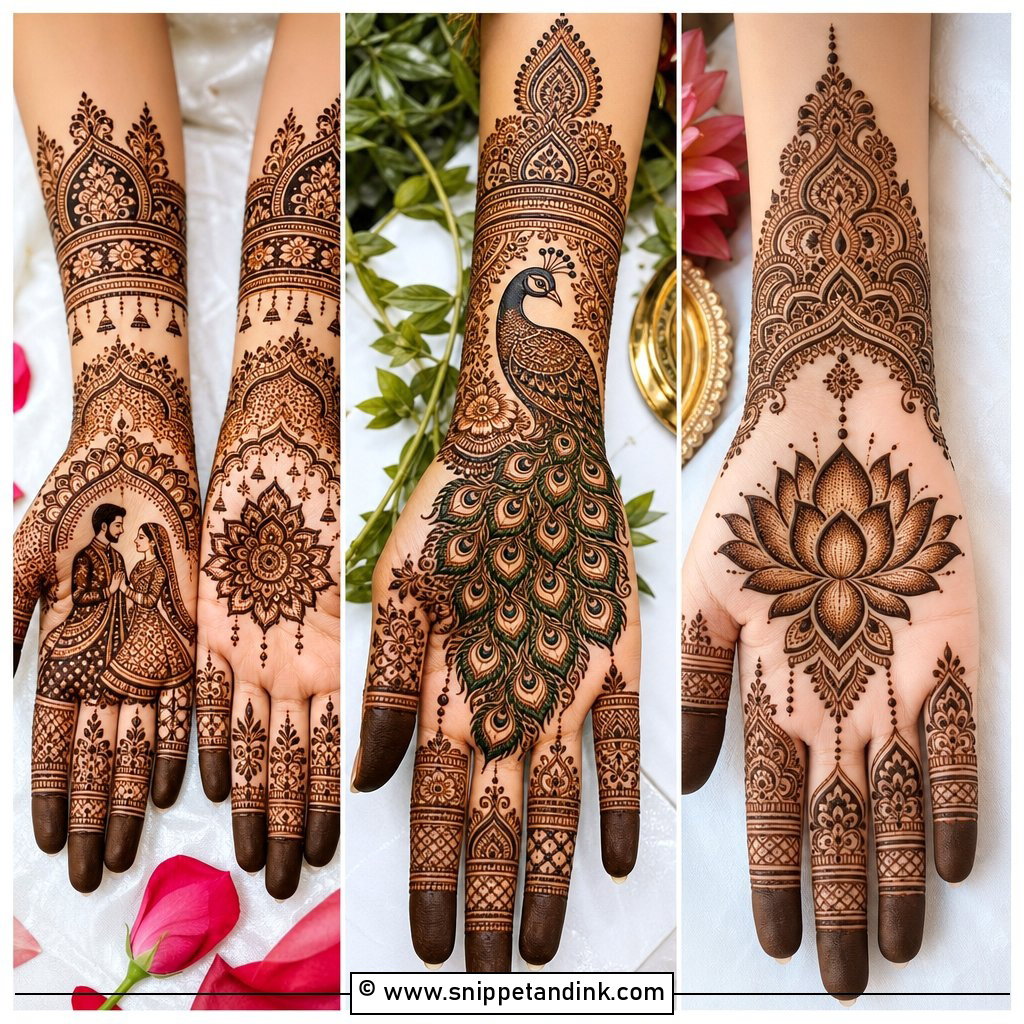
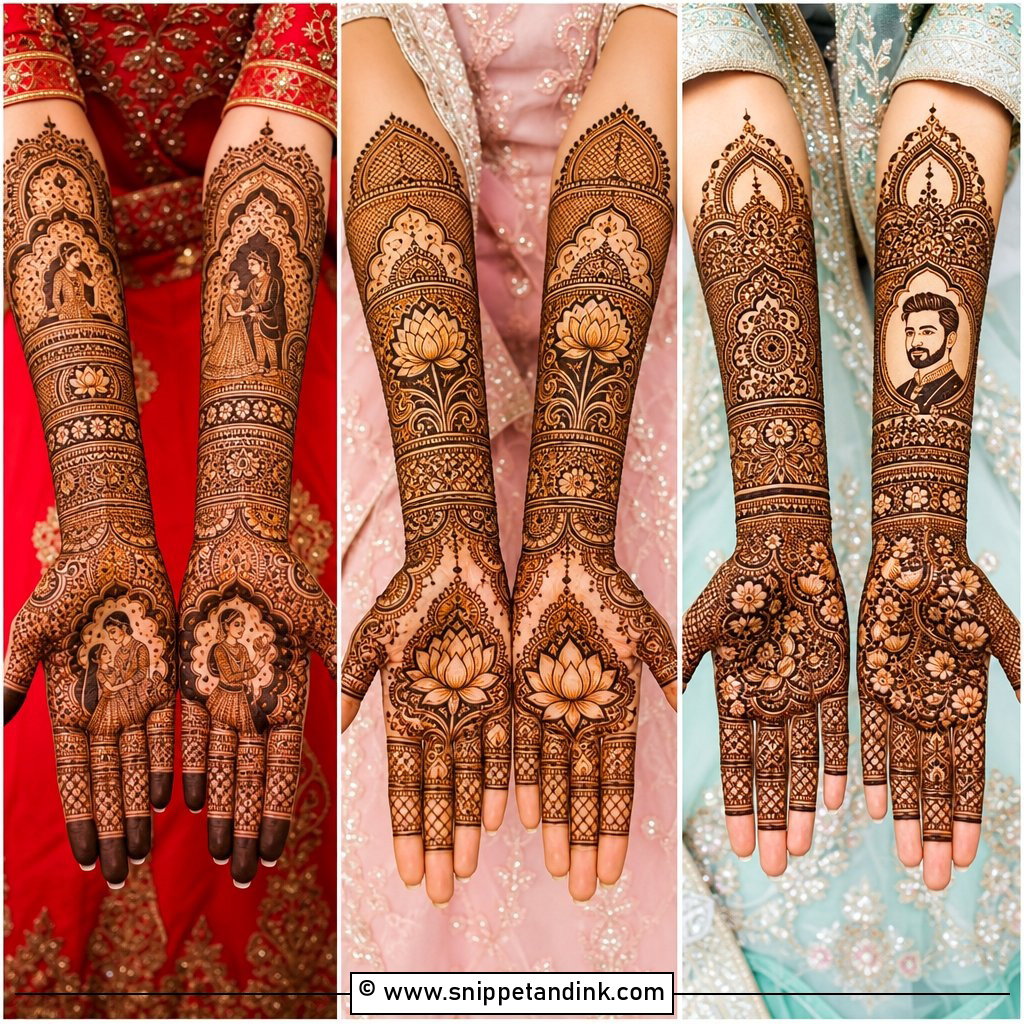
Indian bridal mehndi is where the storytelling lives: peacocks, lotus flowers, paisleys, mandalas, bride and groom figures, kalash motifs and layered borders. I usually let the palms carry the main story and continue the forearms with arches, vines and ornamental bands. It’s dense, symmetrical and slow to apply, so plan a long sitting. Initials, a wedding date or small symbols from your relationship slot in easily. Palms take the deepest color, often reaching maroon, and the inner arm usually lands a shade lighter, which still shows all that detail well.
3. Arabic Bridal Mehndi Design
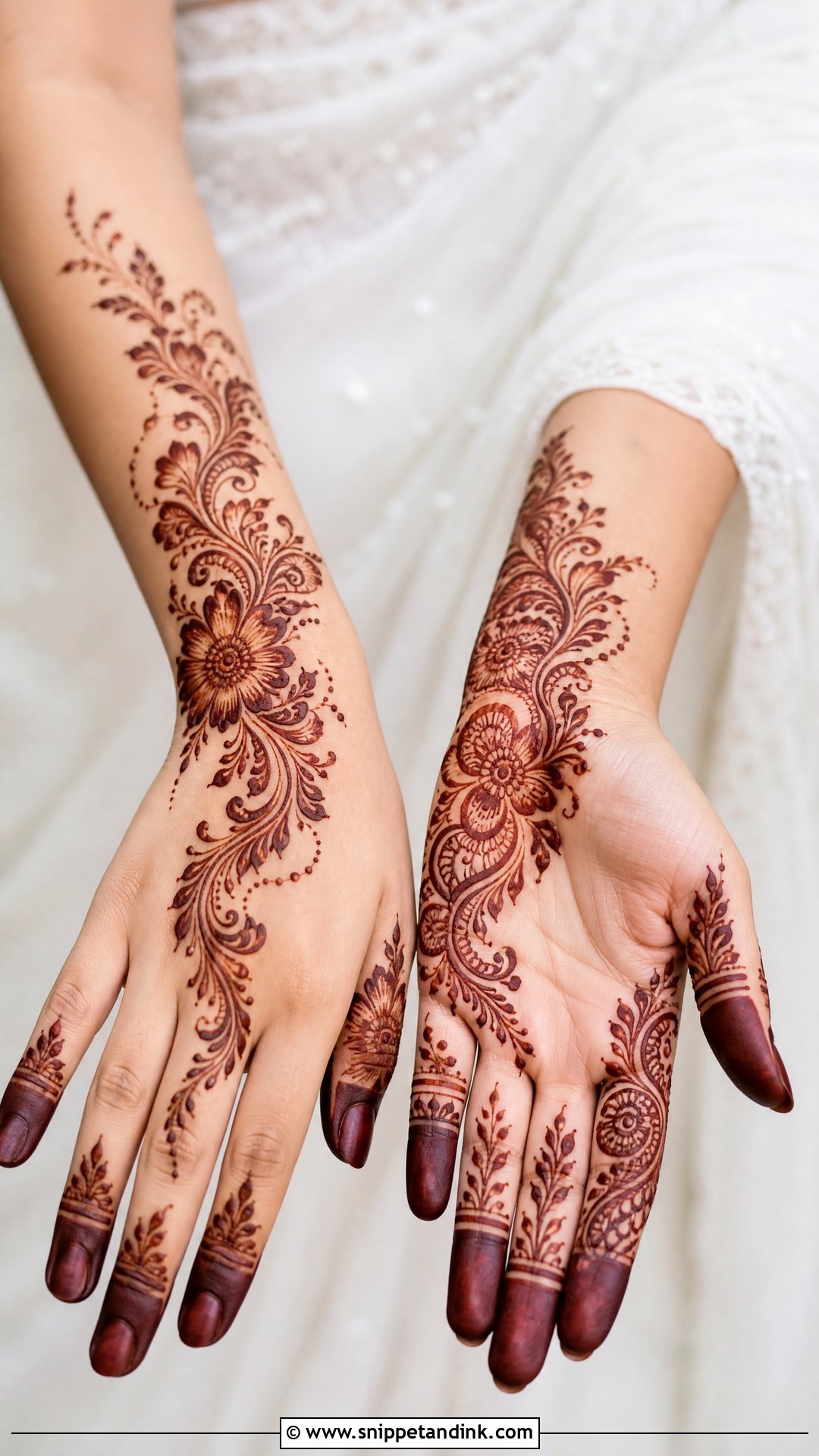
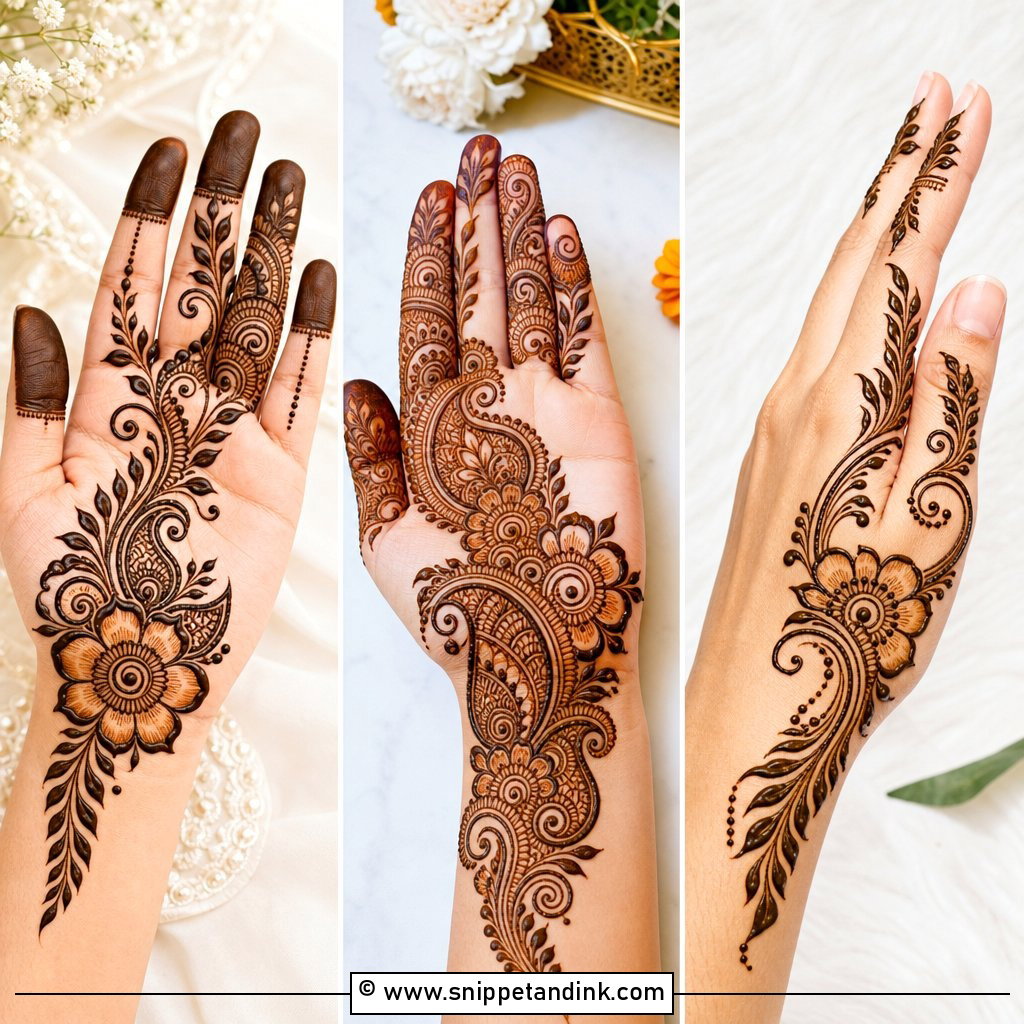
Arabic bridal work stays bold but open. Instead of filling every inch, it flows diagonally across the palm, back of the hand, wrist and forearm with large flowers, leafy vines, shaded petals, paisleys and curved trails, leaving skin visible between them. Those gaps keep it clean and modern, and the motifs read easily from a distance. With a heavily embroidered outfit, I often suggest it as a counterweight. Dark fingertip caps finish it, and I fill them solidly, because a patchy fingertip is the first thing people notice when you hold up your hands.
4. Indo Arabic Bridal Mehndi Design
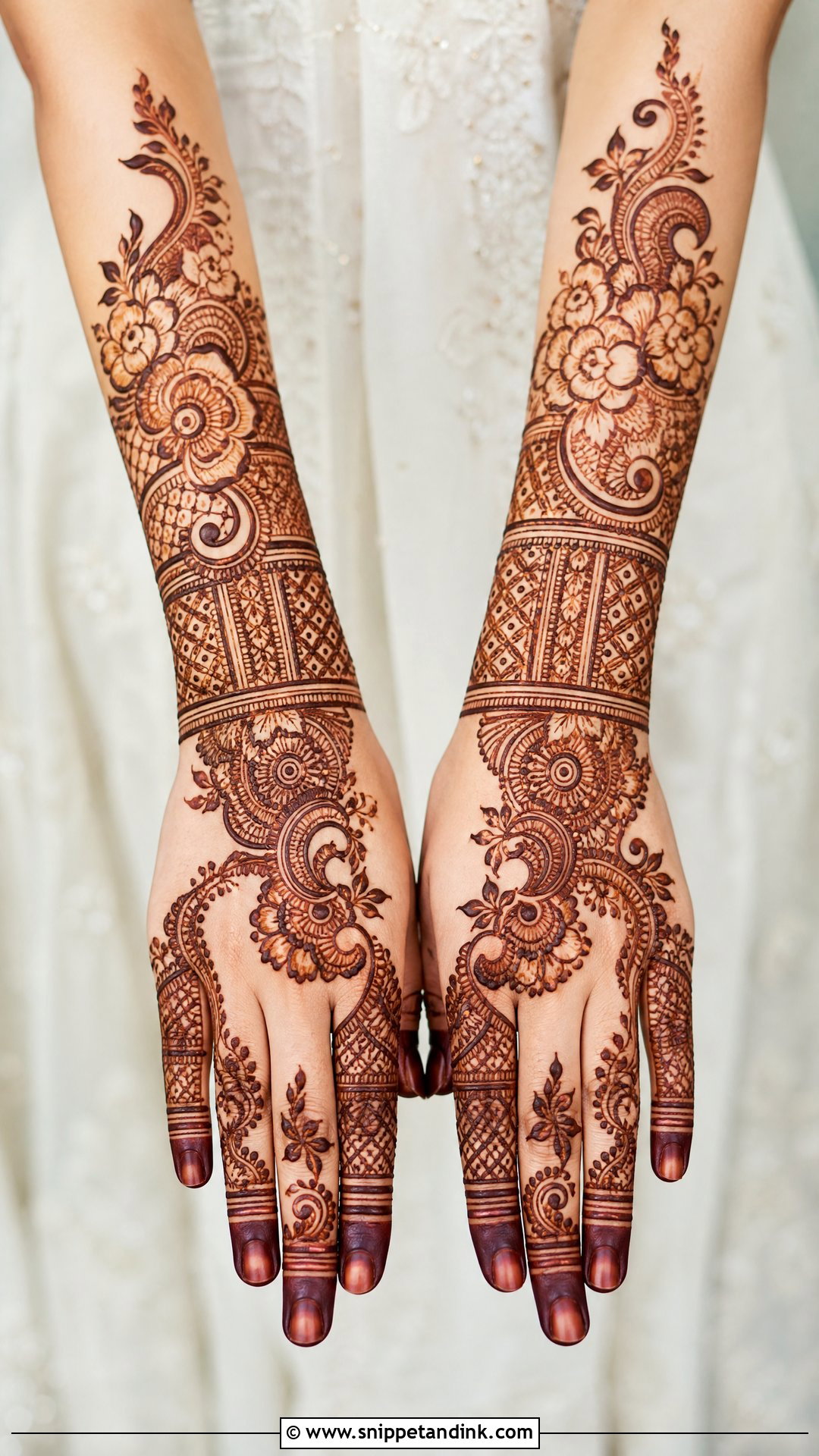
Indo-Arabic combines the open flow of Arabic mehndi with Indian fine detail, so one design might hold bold floral trails, paisley chains, mandalas, mesh panels and detailed fingertips. I often make the palms dense and keep the back of the hand more open, which gives a full bridal feel without heavy-looking hands. It adapts to engagement, nikah, sangeet and wedding mehndi alike. If you’re having a lighter design for an engagement earlier on, keep the same design family and save the density for the wedding, so those hands still feel like an occasion.
5. Rajasthani Bridal Mehndi Design
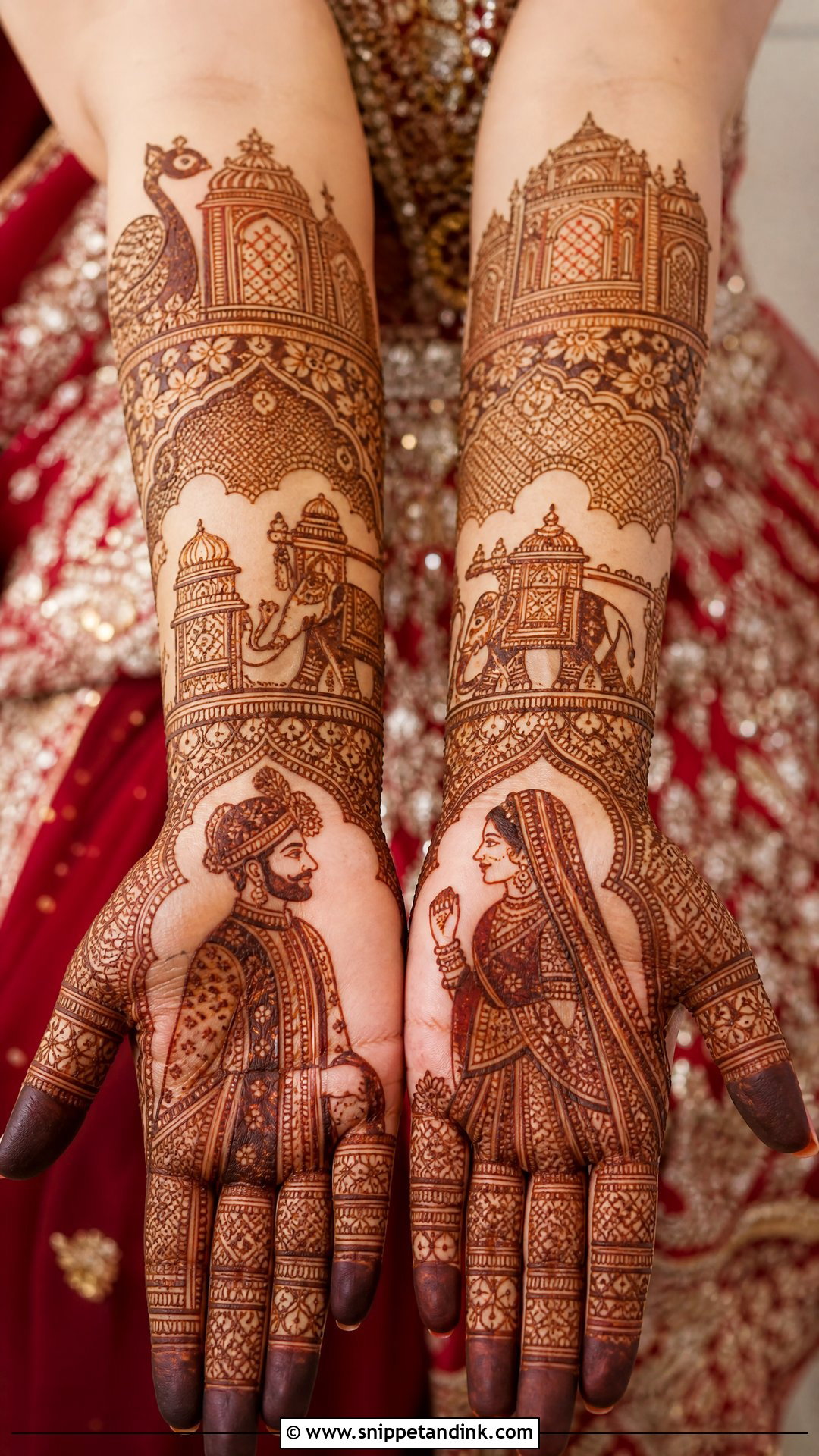
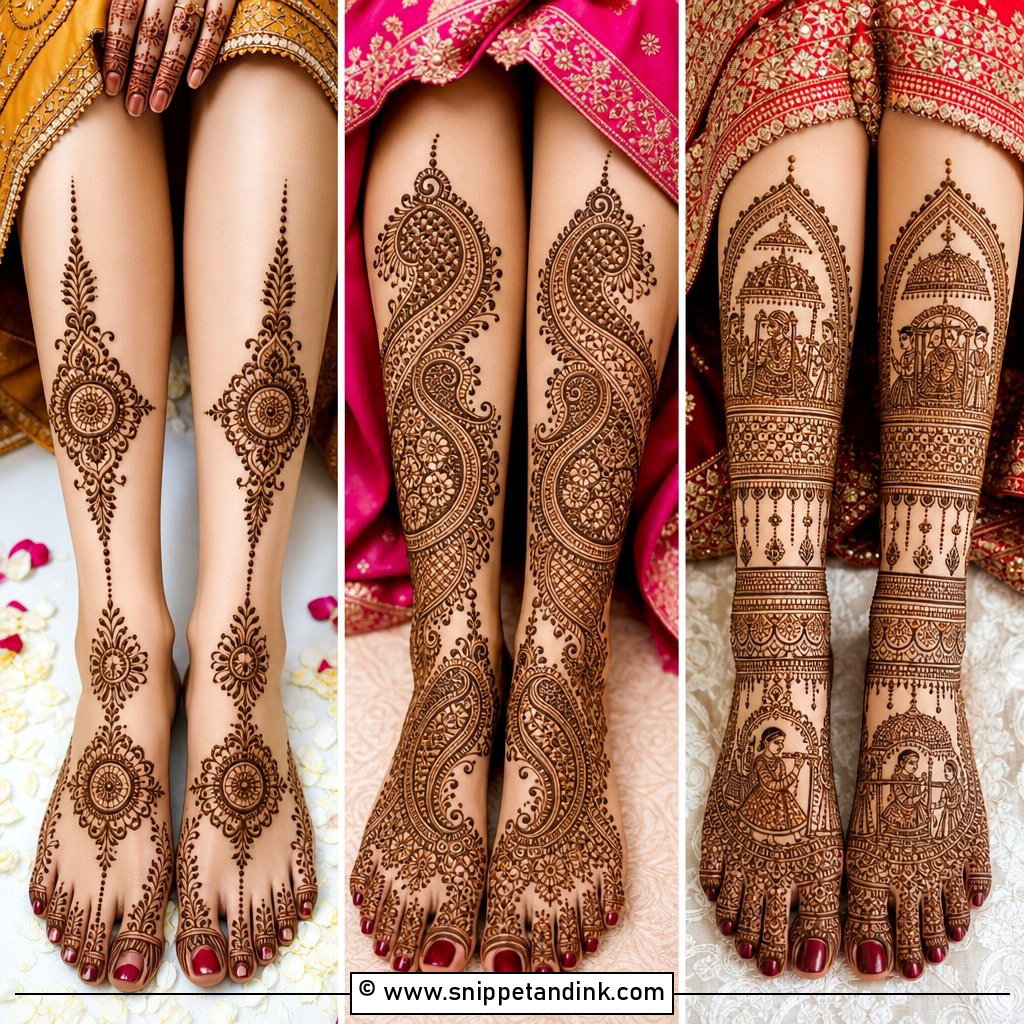
Rajasthani bridal mehndi is royal and full of story: bride and groom portraits, elephants, palanquins, peacocks, palace arches, drums and folk patterns, usually covering hands and forearms completely. If heritage detail matters to you, nothing else carries as much meaning. It is also the most demanding style here. It needs an experienced artist and a long sitting, and I’d ask to see photos of her figure work before booking. Check your sleeve length early so the forearm scenes aren’t hidden. Traditional lehengas, heavy bangles and classic bridal jewelry are its natural partners.
6. Pakistani Bridal Mehndi Design
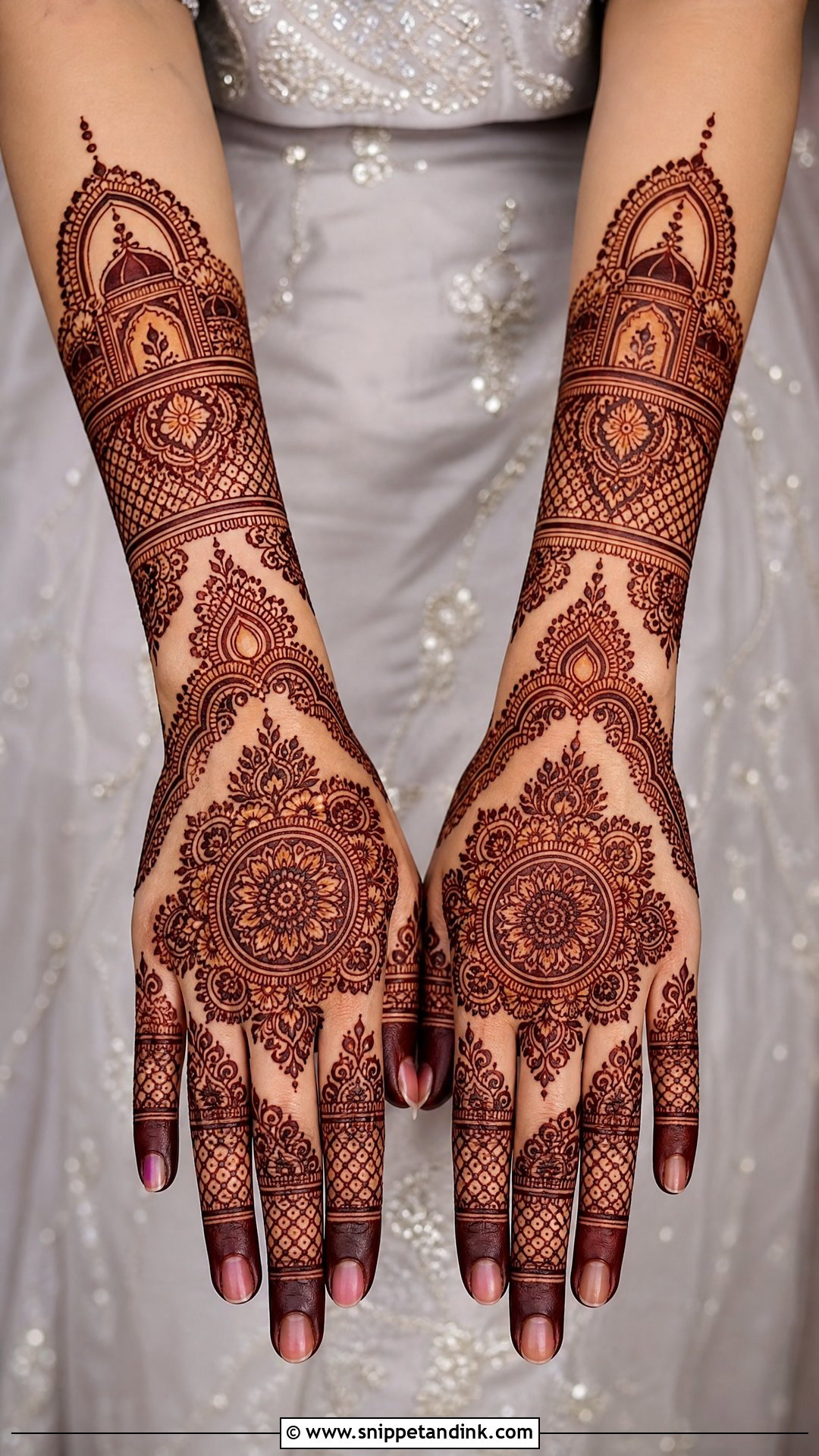
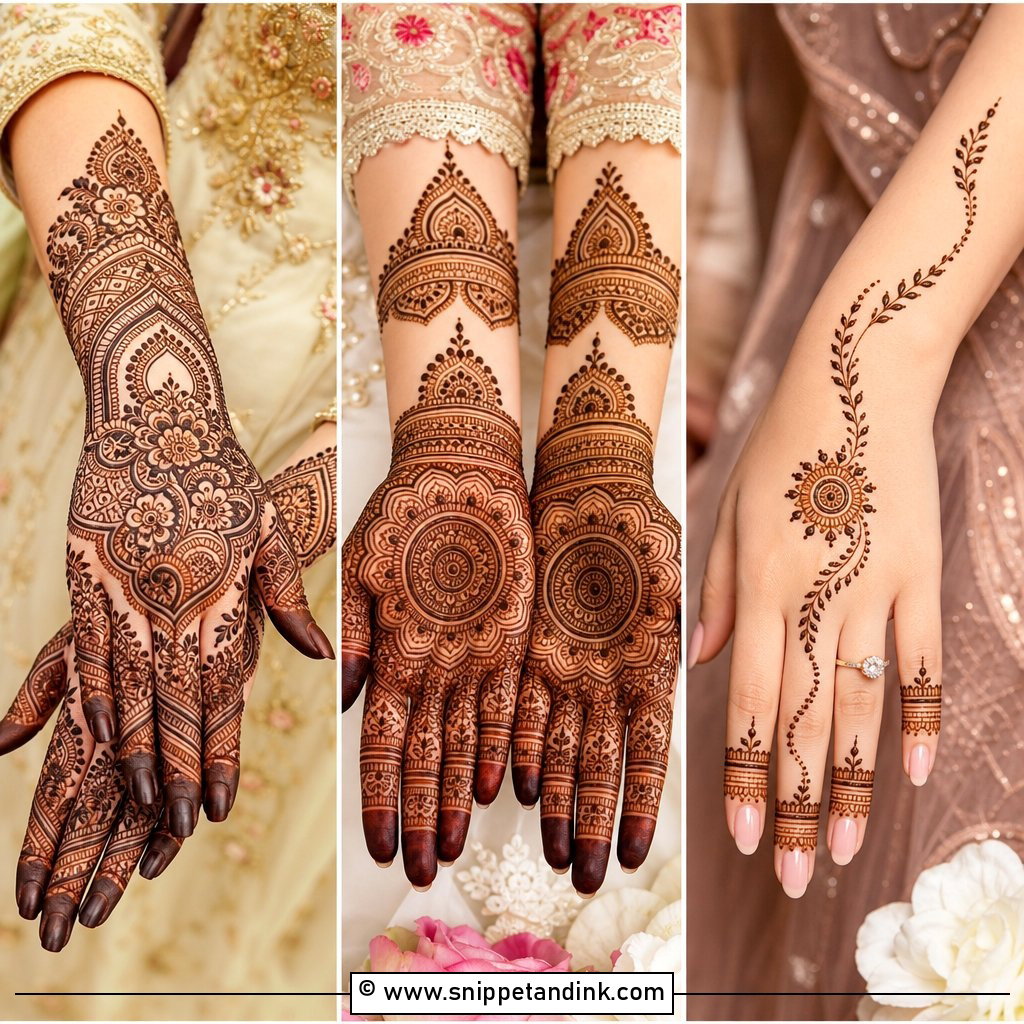
Pakistani bridal mehndi often blends Indian detail with Arabic spacing: florals, domes, paisleys, mandalas, leafy trails and fine mesh, frequently dense on the palms and lighter on the back. It looks luxurious without always needing complete coverage, and it pairs naturally with shararas, ghararas, lehengas and embroidered outfits. Initials or a small couple motif add a personal note. I keep the fingertips neat and bold, since they frame the whole hand whenever you raise your palms for a photo.
7. Minimal Bridal Mehndi Design
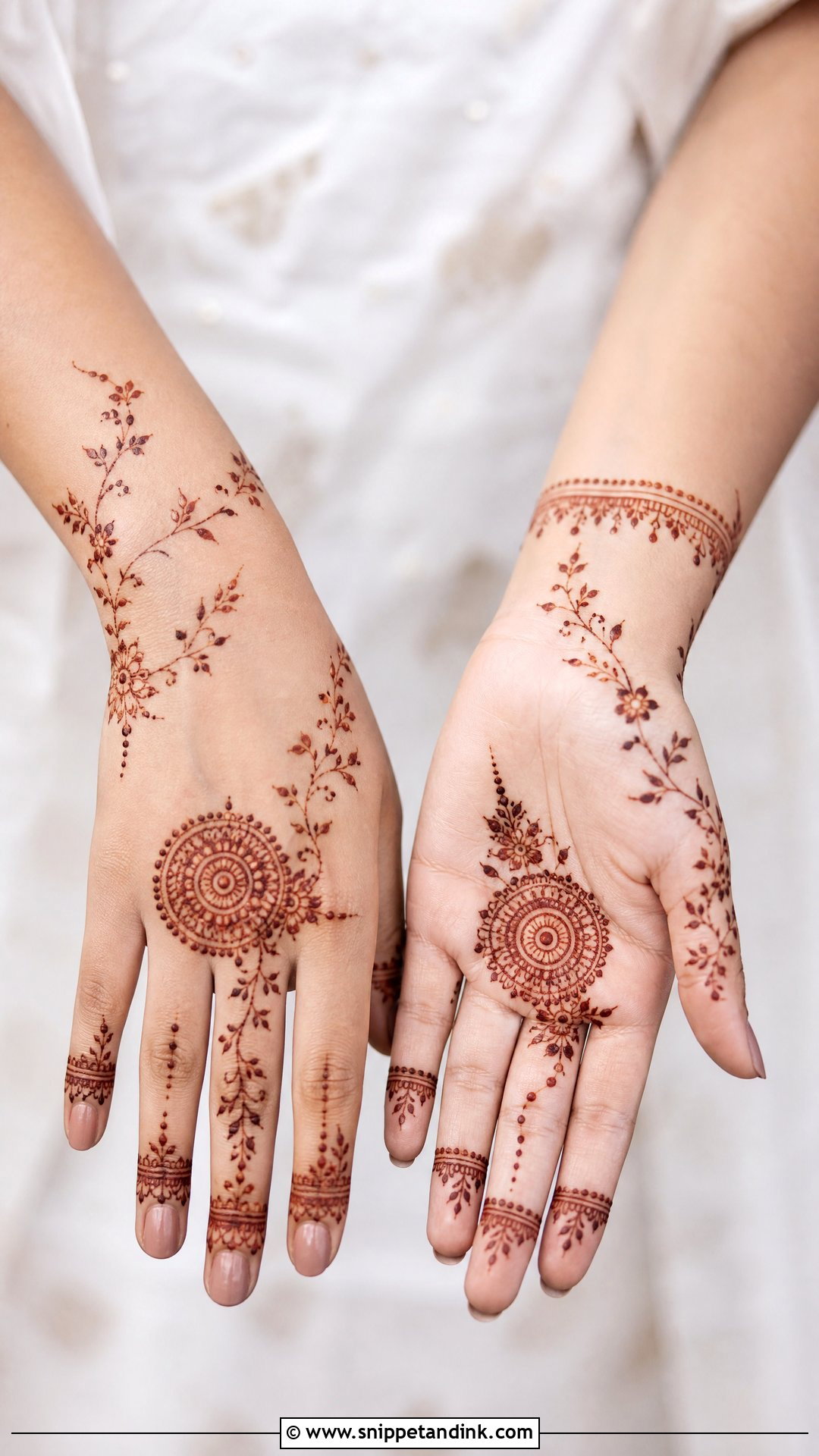
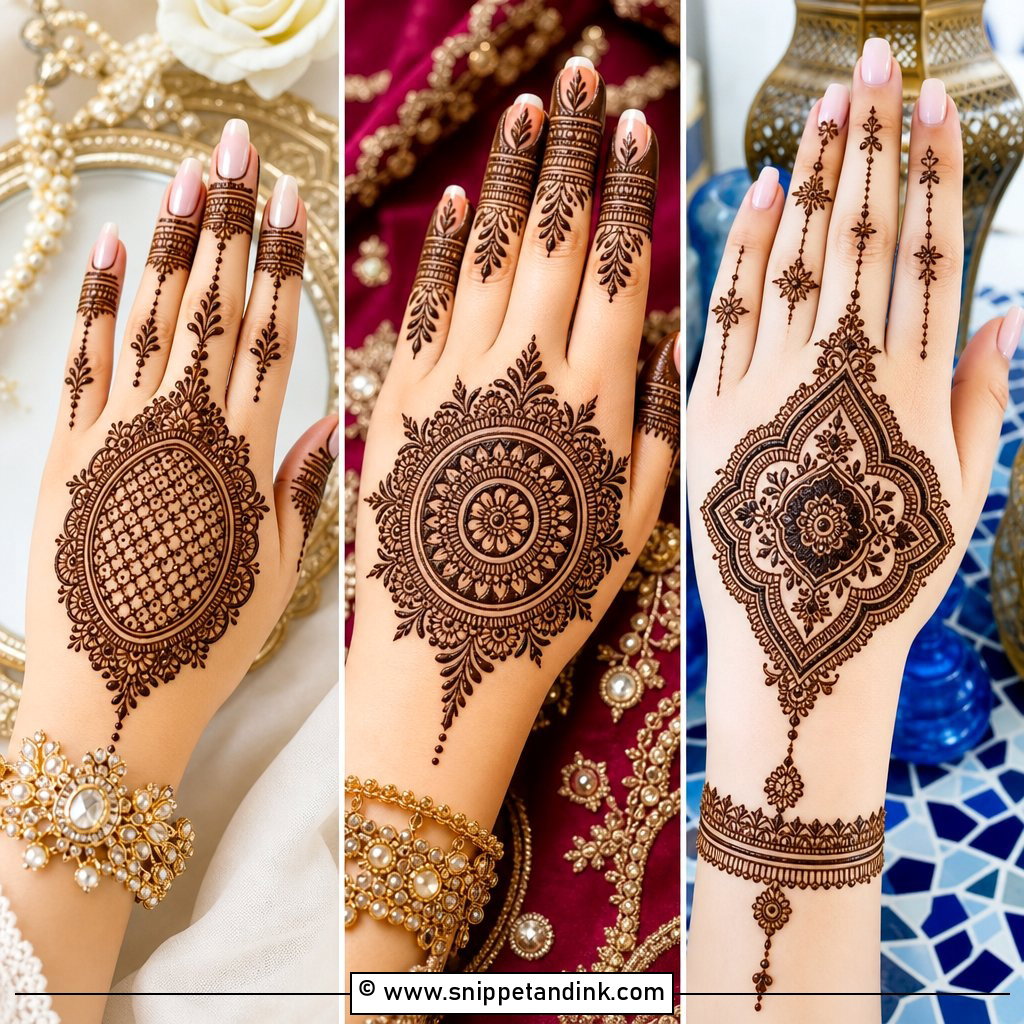
Not every bride wants full-arm coverage. Minimal bridal mehndi uses clean spacing, fine lines, small flowers, delicate vines, tiny mandalas and light finger work, sometimes only on the back of the hand, the palm center, the wrist or part of the forearm. Intimate weddings, destination trips and courthouse ceremonies suit it, and it leaves room for jewelry to show. Minimal is the hardest style to hide a mistake in. Every line is visible, so I go slower on a minimal bride than on a dense one, and I’d always ask for crisp lines and balanced negative space over extra motifs.
8. Mandala Bridal Mehndi Design
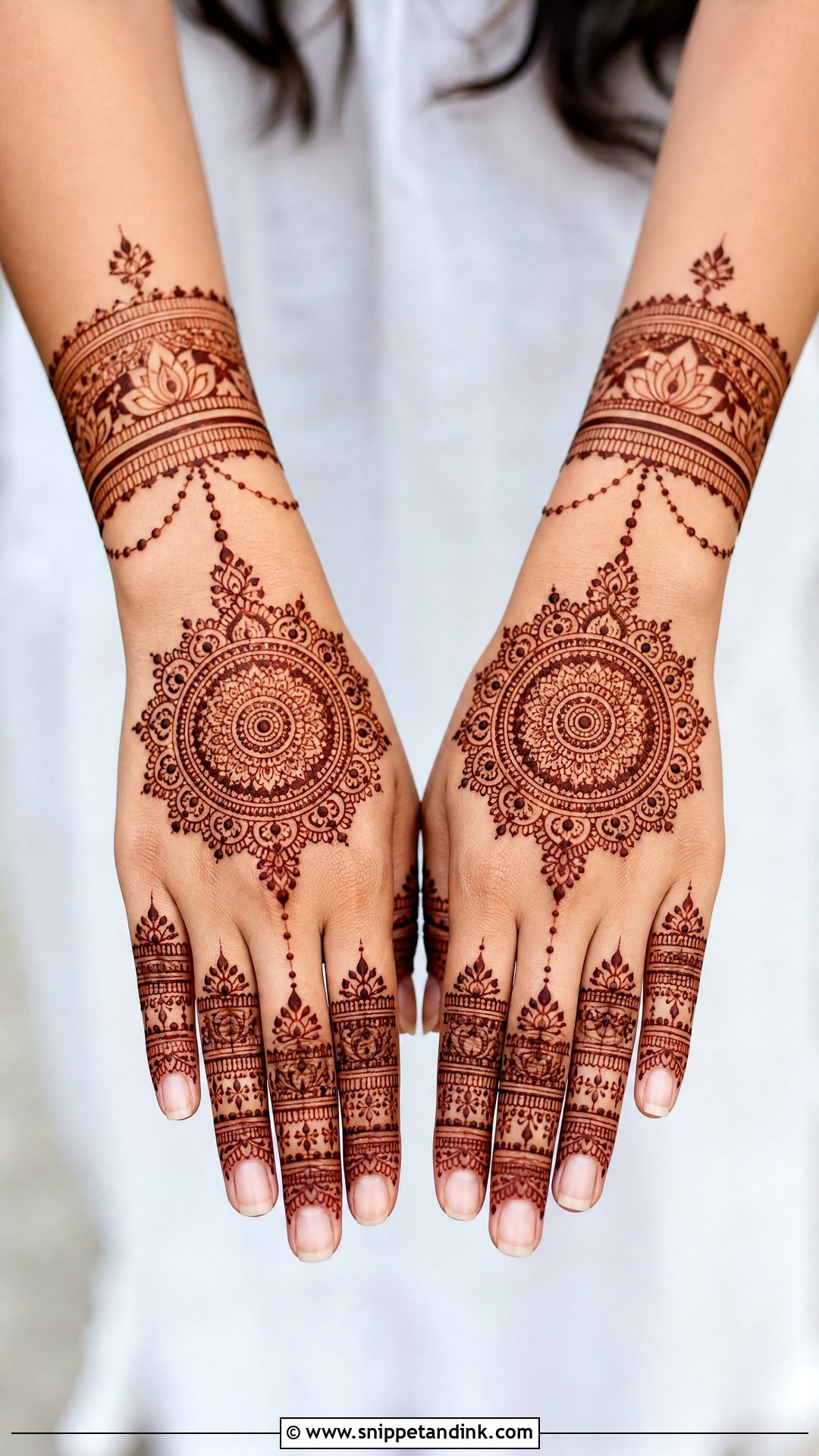
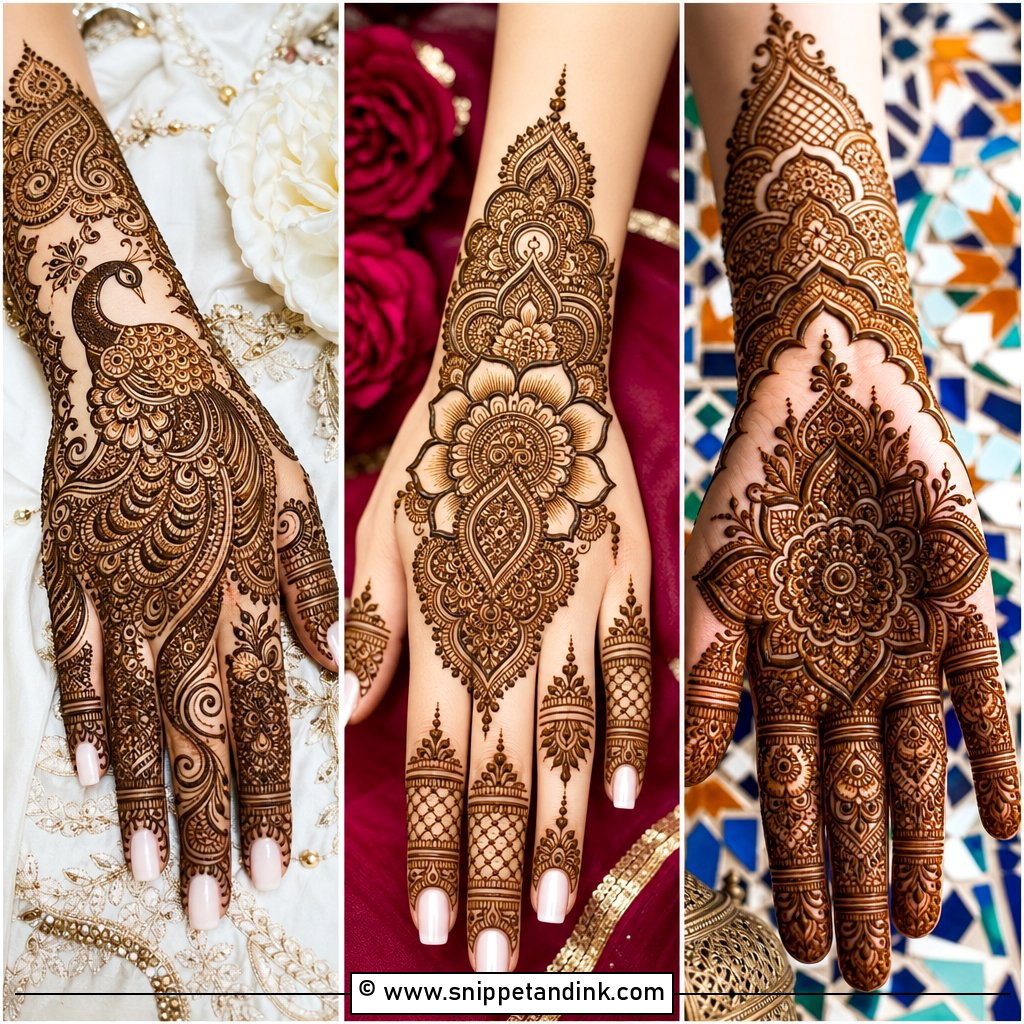
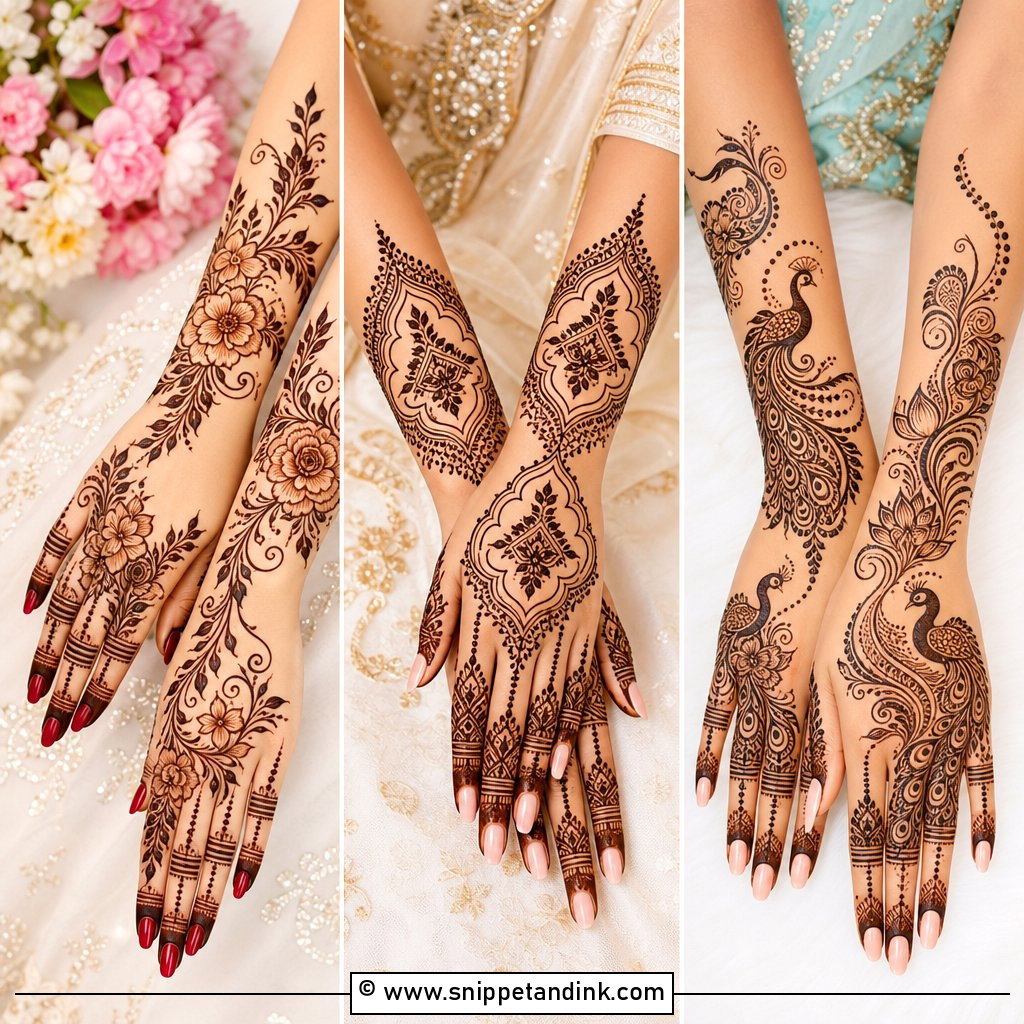
A mandala gives a calm, symmetrical center to a bridal design. The main circle sits in the middle of the palm or back of the hand, with matching finger details and wrist bands around it. For a bride I expand it with florals, dots, paisleys, lotus petals and fine circular borders. It suits small and long hands alike because I size the circle to the palm, roughly from the base of the fingers to the wrist crease. Bracelet bands or floral trails carry it up the forearm when you want it to feel more bridal.
9. Peacock Bridal Mehndi Design
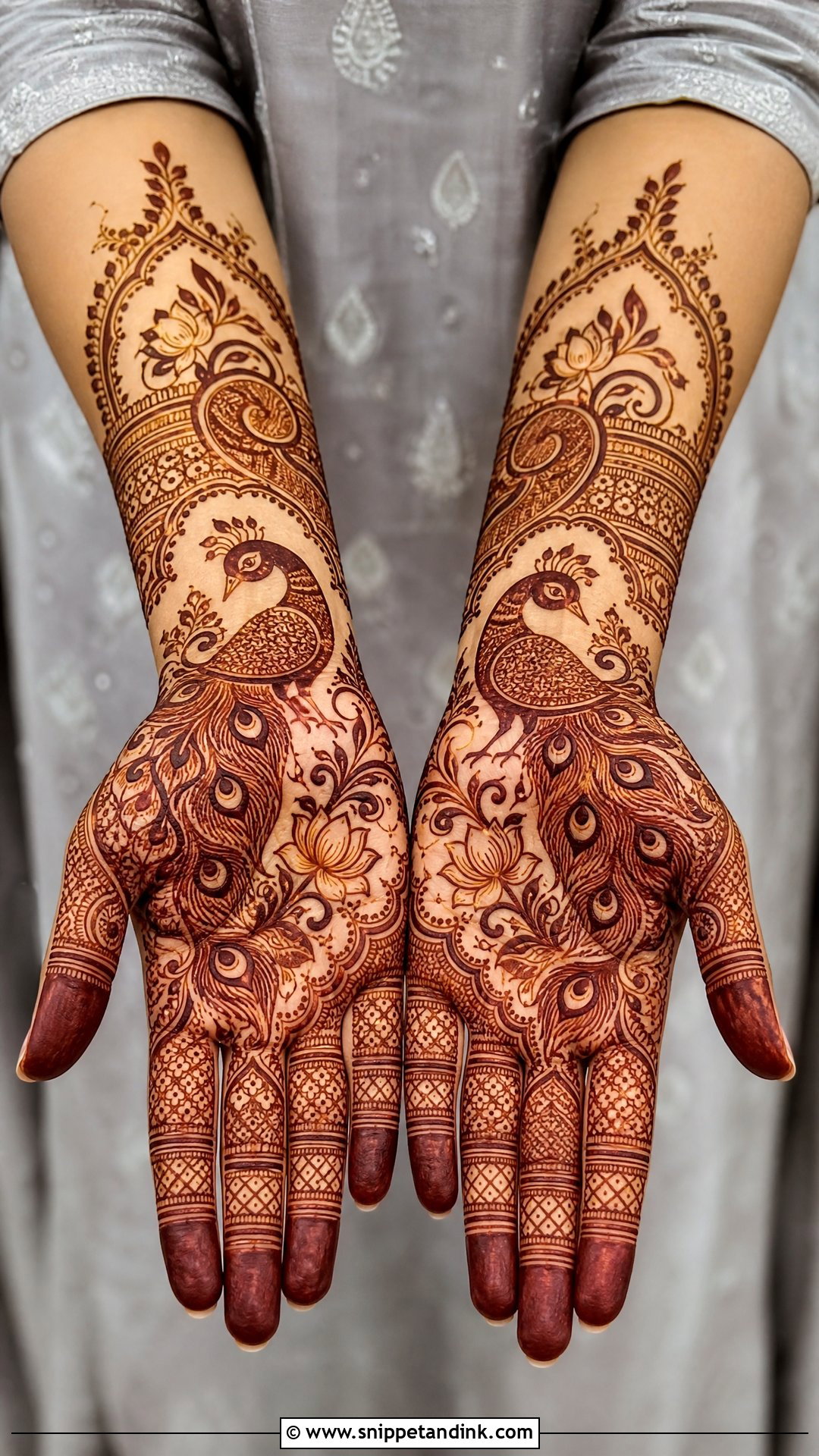
Peacocks bring movement into a bridal hand. The bird can sit on the palm, back of the hand, wrist or forearm, with feathers flowing into paisleys, vines and jaali. It’s common in Indian and Rajasthani bridal mehndi because a single peacock carries a lot of visual weight on its own. For balance I place one large peacock on each palm, facing each other, so they mirror when the bride holds her hands together. Fine feather detail stains well, especially beside dark fingertips and ornamental wrist bands.
10. Portrait Bridal Mehndi Design
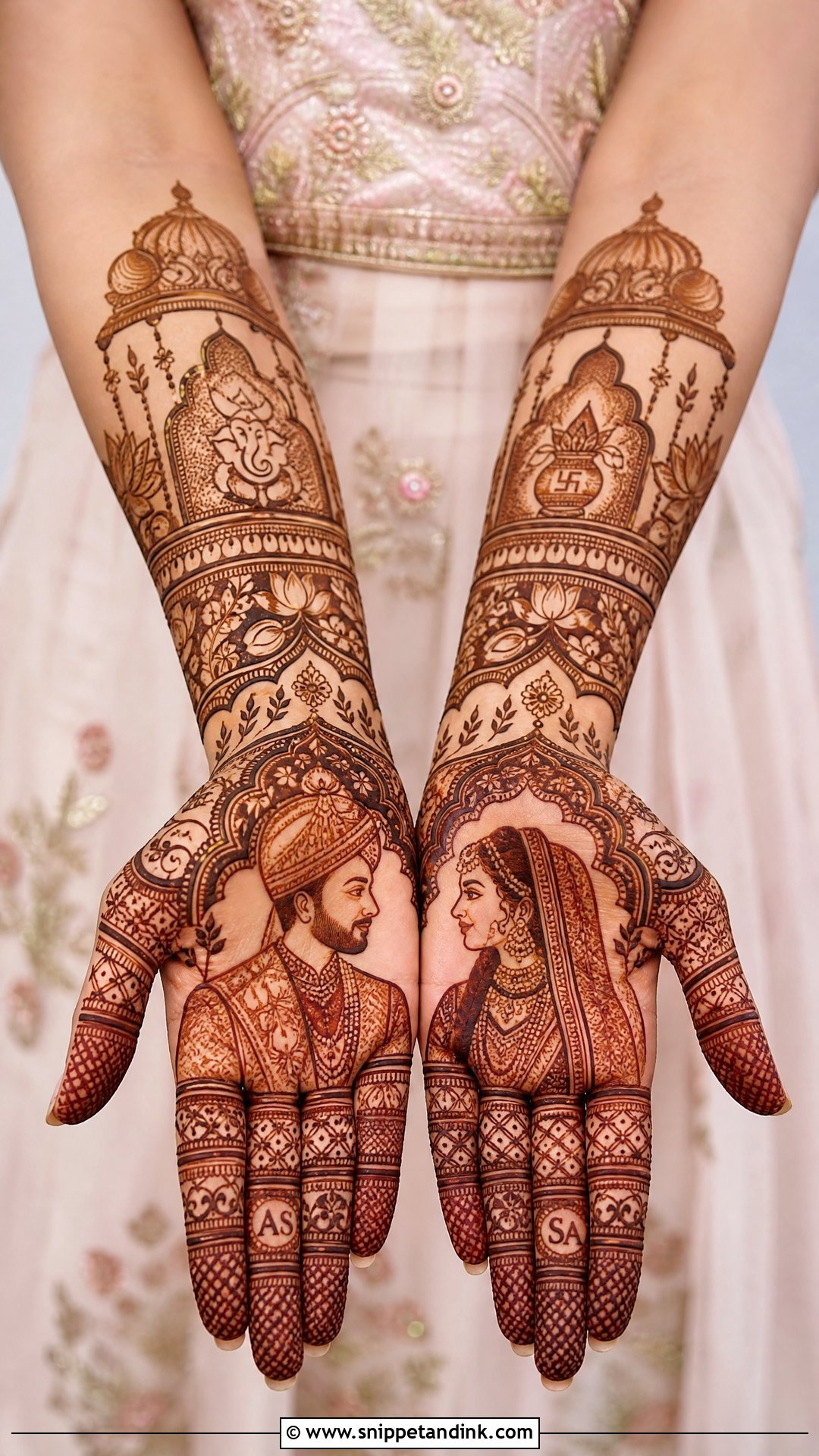
Portrait mehndi tells your story directly: a bride on one hand and a groom on the other, often framed by mandaps, floral borders, paisleys and ceremony symbols. Some brides add dates, initials, pets, travel symbols or other meaningful icons. Faces are the hardest thing we draw in henna; one slightly heavy line changes an expression, and paste settles a little as it dries. Choose an artist whose portfolio shows faces with good proportions, and keep the surrounding design detailed but quieter, so the figures stay the focus when both palms are shown together.
11. Bridal Mehndi Design With Initials
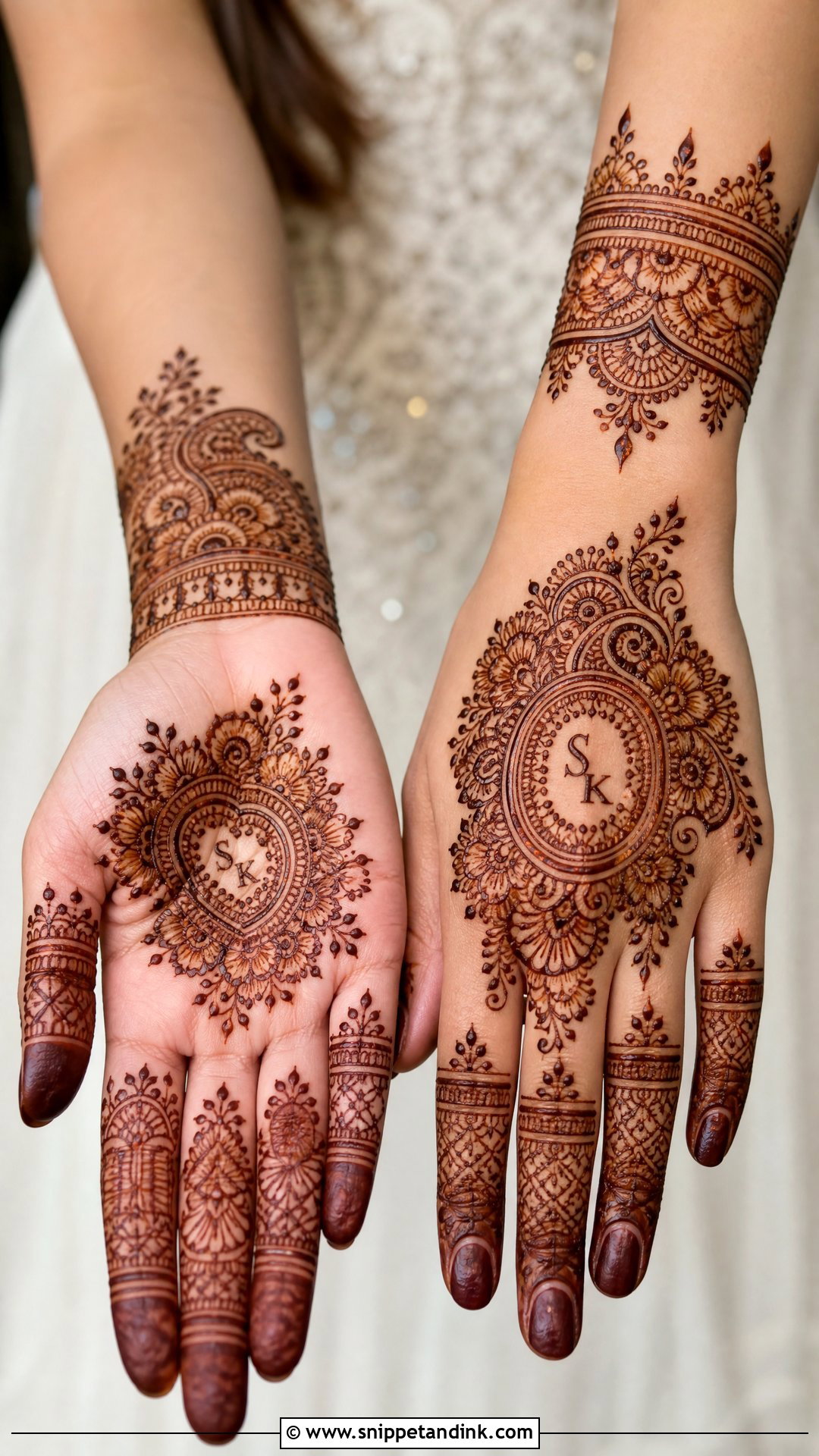
Hidden initials add a private detail without changing the overall look. They can sit inside a paisley, flower, heart frame, mandala border or wrist band. Some brides hide the groom’s initials for him to find, a playful custom at many weddings; others prefer both initials with the wedding date placed clearly. It works in Indian, Arabic, Indo-Arabic and minimal designs. If he’s meant to search, I tuck the letters into the busiest part of the hand. If you want them visible in photos, I place them on the palm center or wrist and show you the spot before I start.
12. Lotus Bridal Mehndi Design
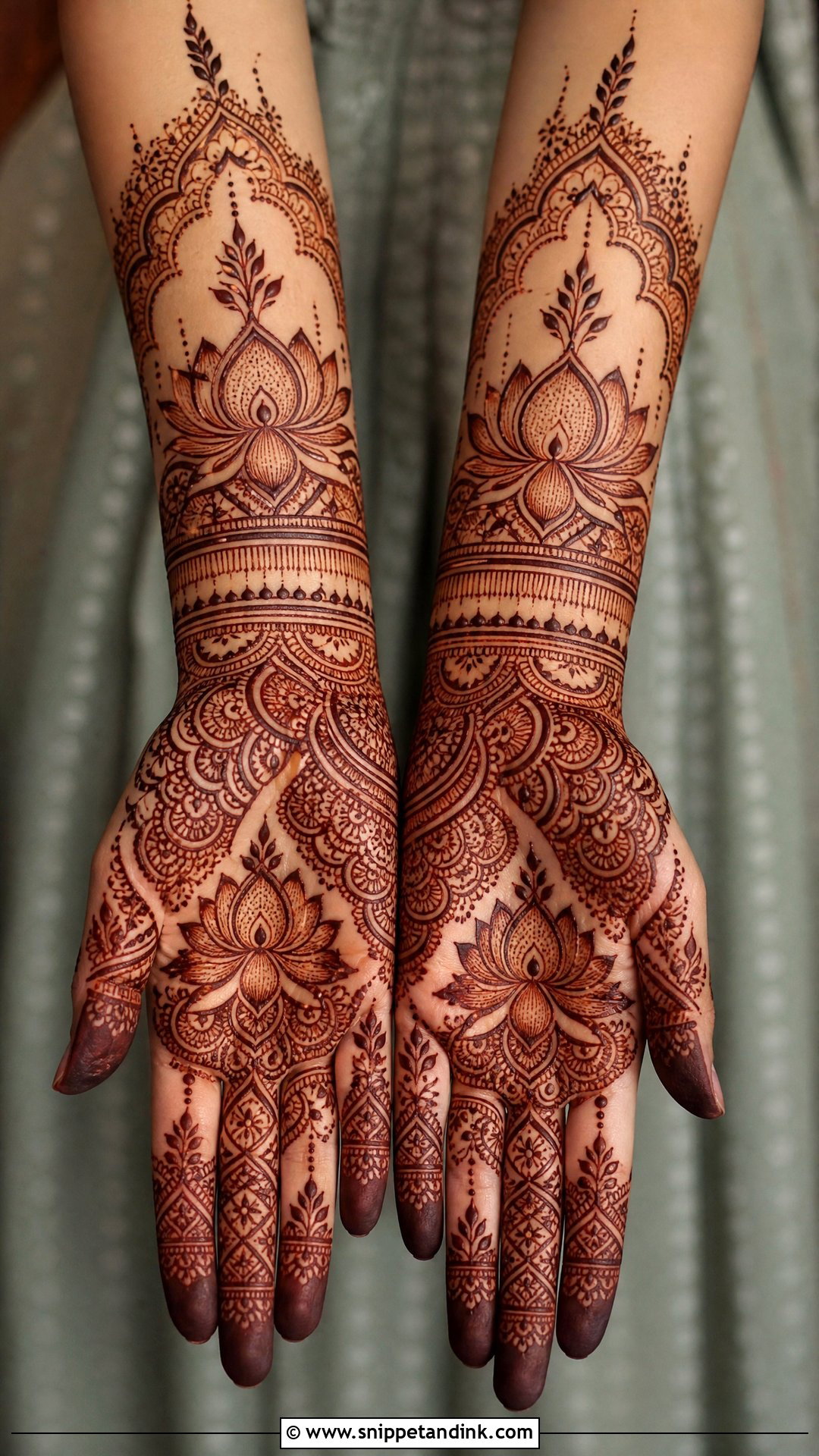
The lotus can be the main palm motif, a wrist centerpiece or a repeated pattern up the forearm, and it combines easily with mandalas, paisleys, dotted chains, leafy vines and ornamental borders. Brides choose it for meaning and grace without heaviness. A large lotus on the palm with fine petal shading turns the whole hand into a piece of art. For a modern bridal finish, combine lotus motifs with clean spacing on the back of the hand and denser detail on the fingers. I leave petal tips slightly open at the point, so they stay sharp instead of filling into rounded blobs.
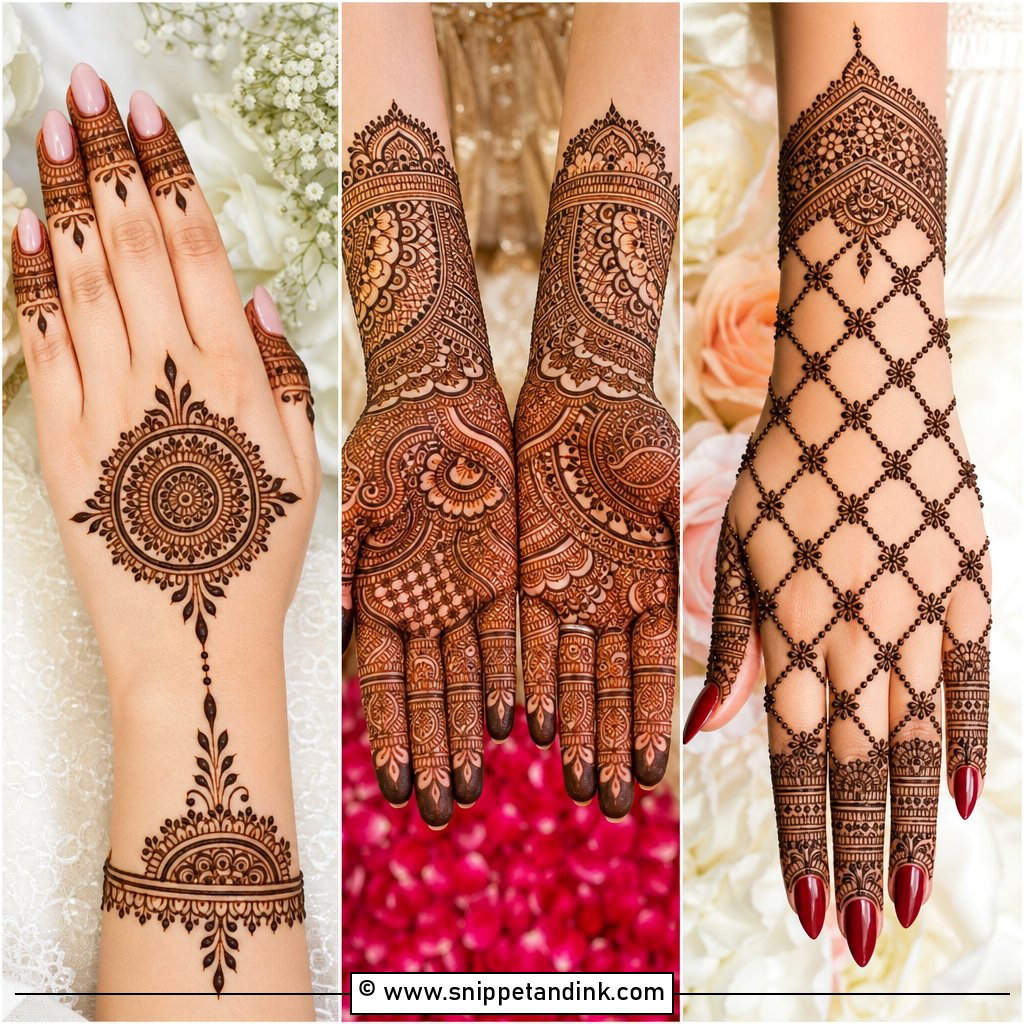
13. Jaali Bridal Mehndi Design
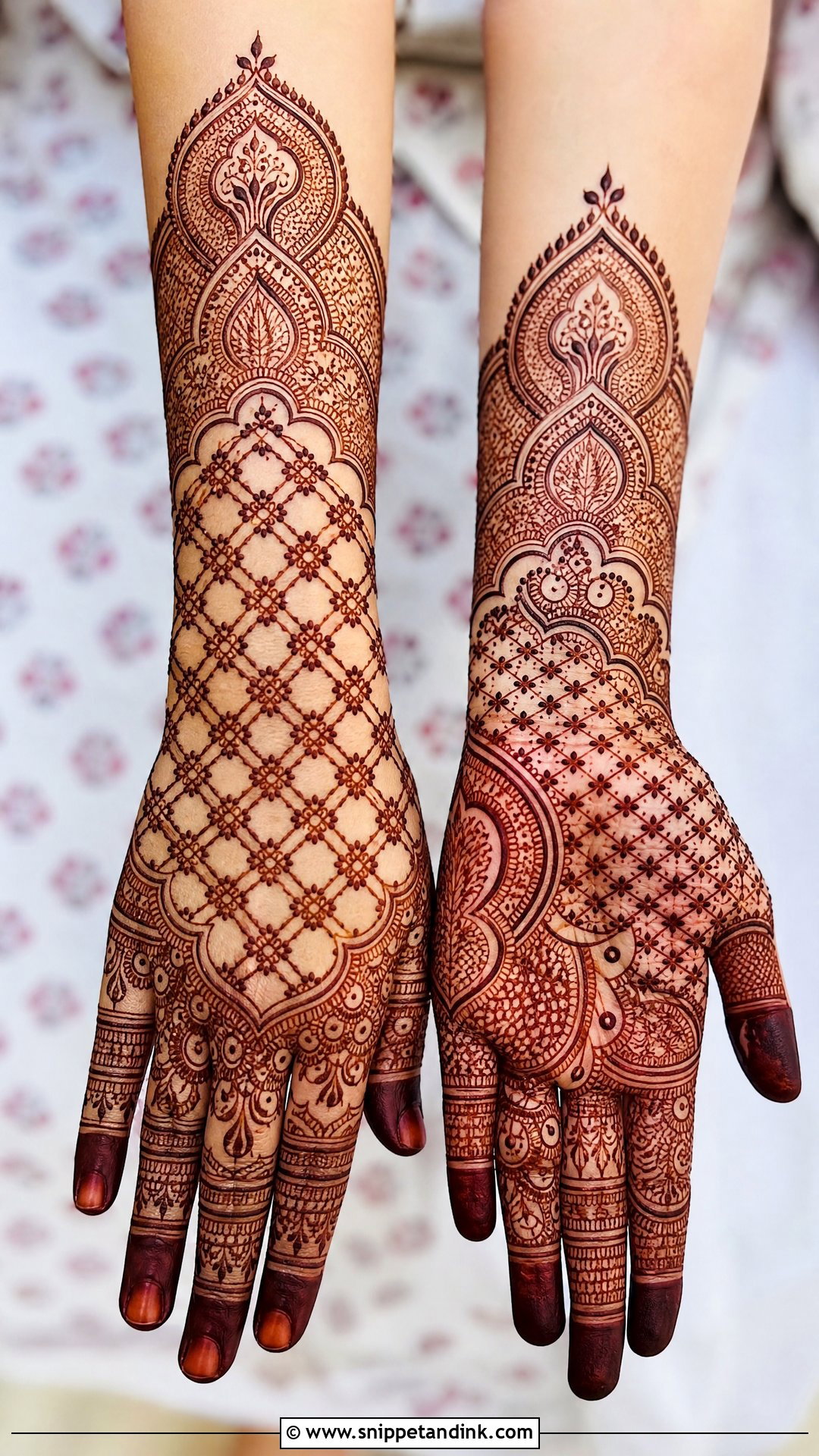
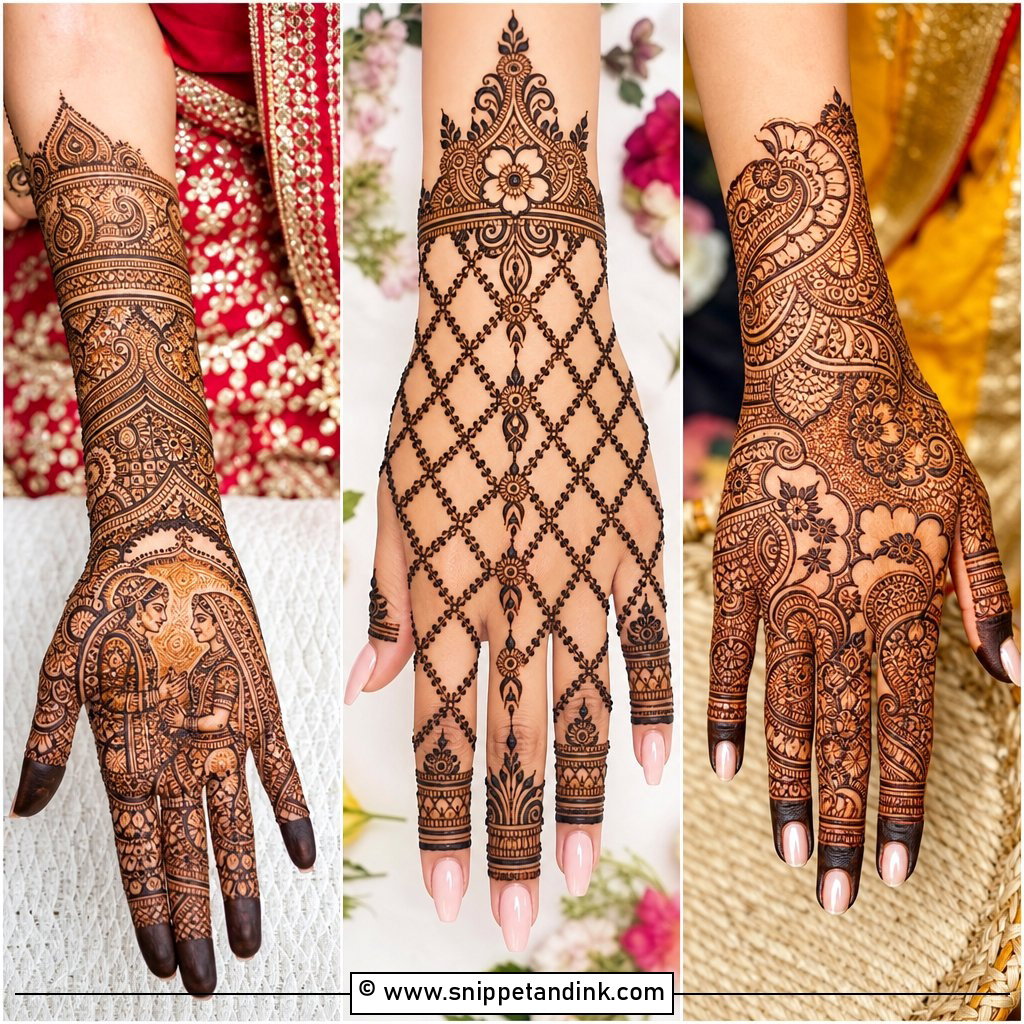
Jaali creates a net-like, lace effect from crisscross lines, tiny dots, floral intersections and panels across the palm, back of the hand or forearm. Brides drawn to jewelry or textile-inspired designs tend to love it, since it echoes lace, veil embroidery and bridal fabric. It needs contrast to stay legible, so I frame jaali panels with bold borders and larger motifs. The mesh itself must be evenly spaced; if the gaps vary, the eye catches it at once. It can be full and traditional or open and modern, depending on how much of the hand you want covered.
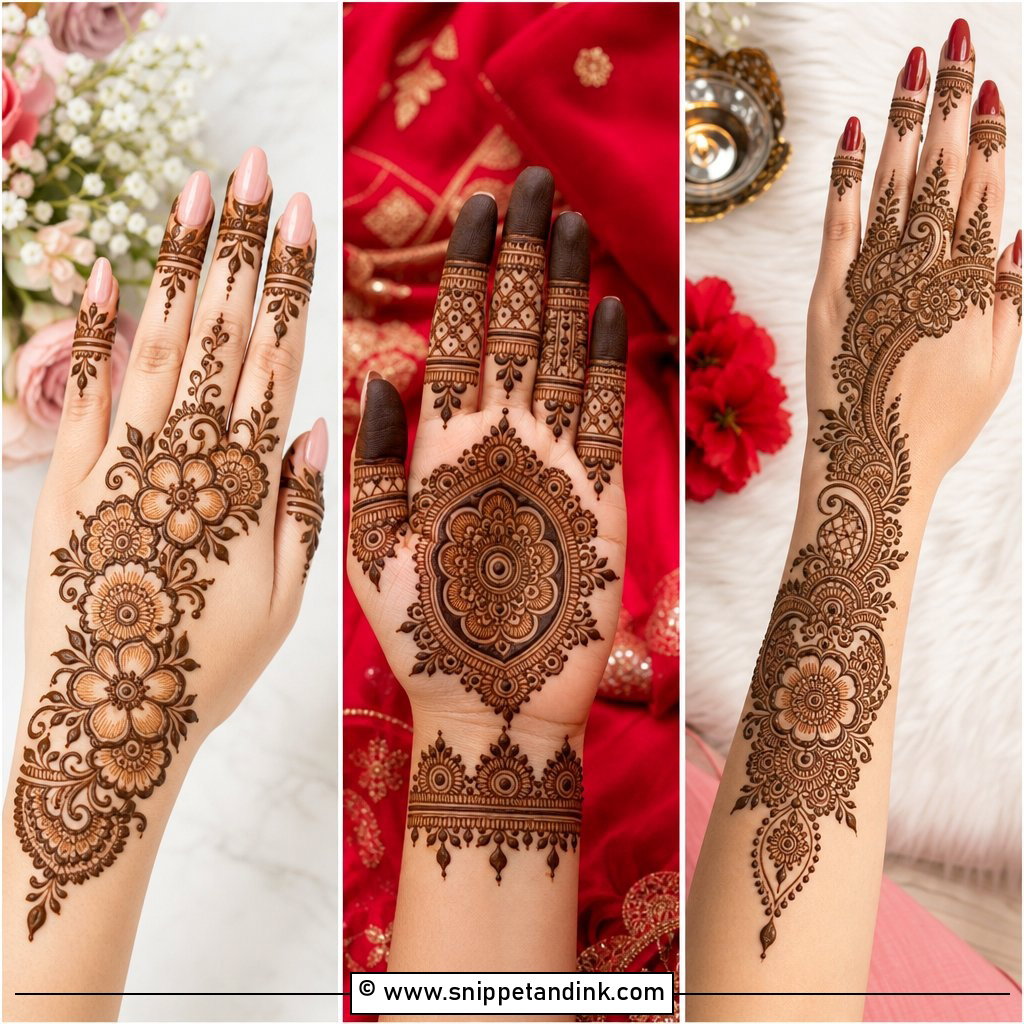
14. Floral Bridal Mehndi Design
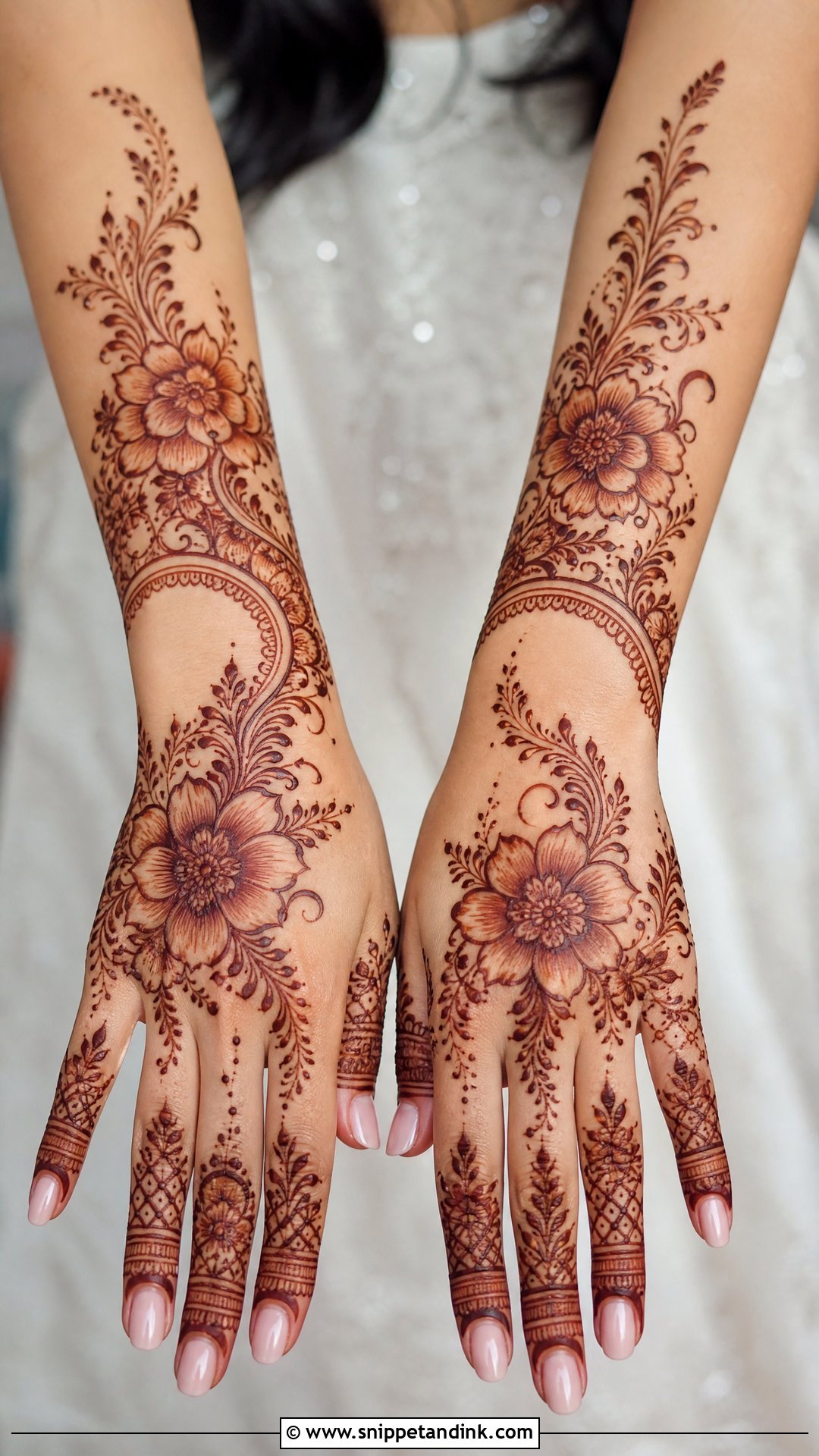
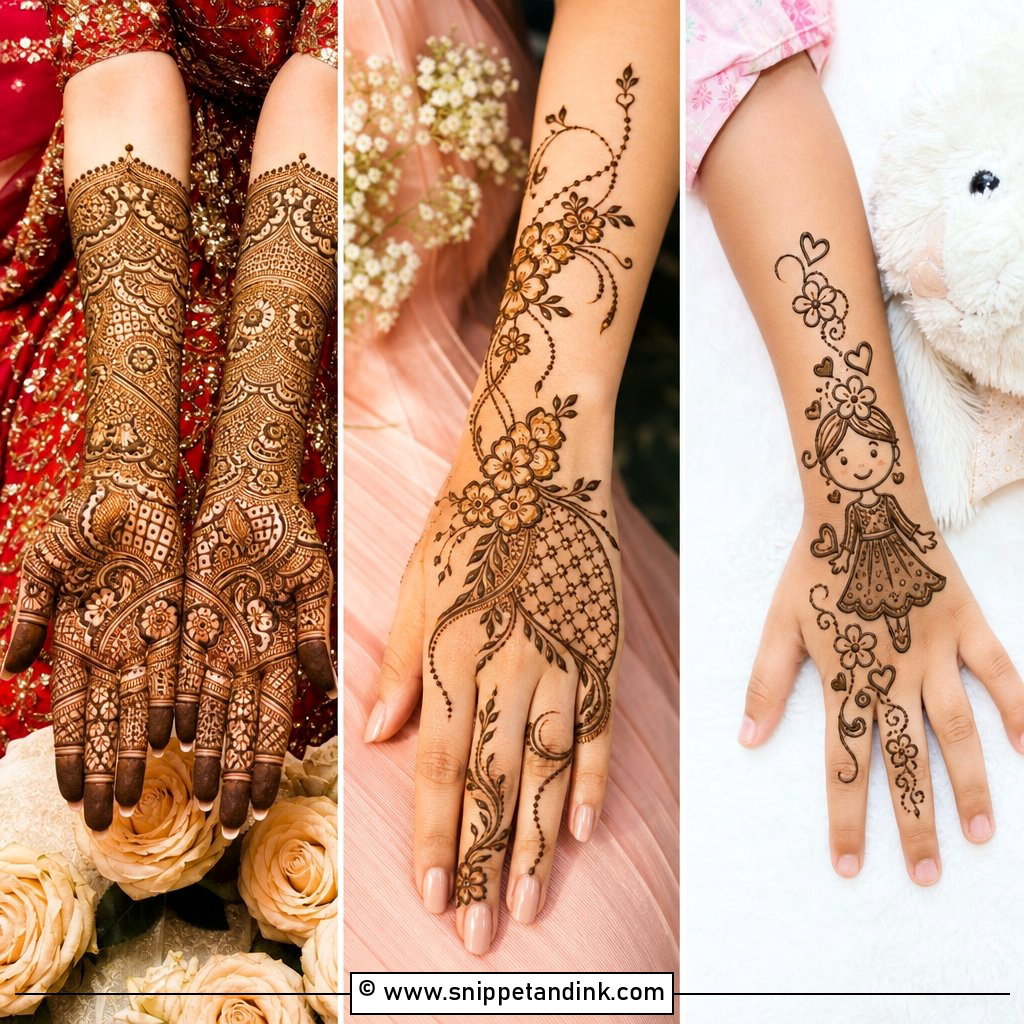
Florals are the most adaptable bridal option: bold or delicate, traditional or modern, all depending on flower size and spacing. Large blooms read from across a room, while tiny ones feel soft and detailed. A full floral bridal look might include palm flowers, leafy back-hand trails, wrist cuffs, shaded petals and finger vines, and it sits easily with lehengas, sarees, gowns and fusion outfits. My rule for balance is bigger flowers near the palm and smaller details toward the fingertips, which follows the way the hand naturally narrows.
15. Back Hand Bridal Mehndi Design
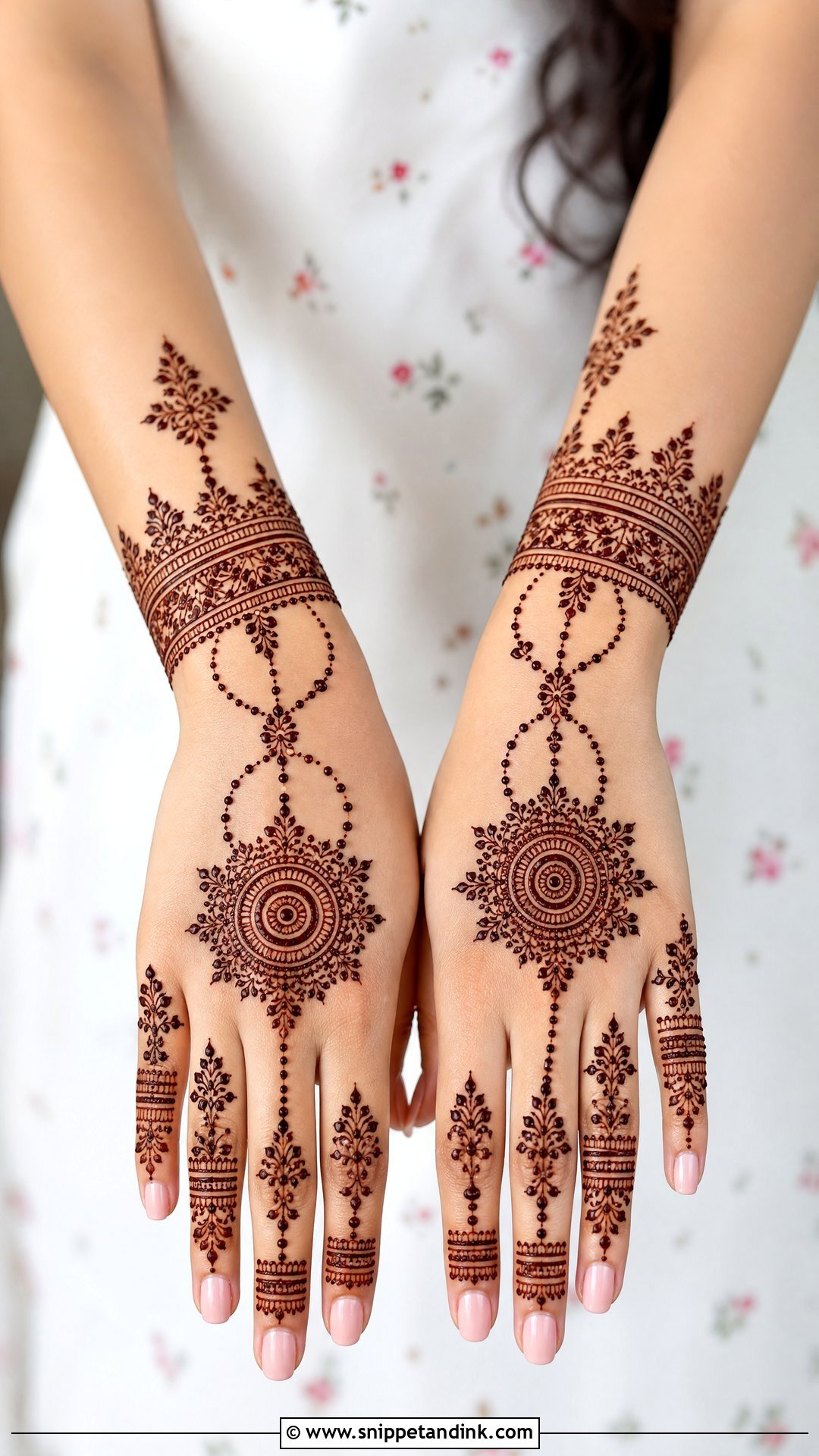
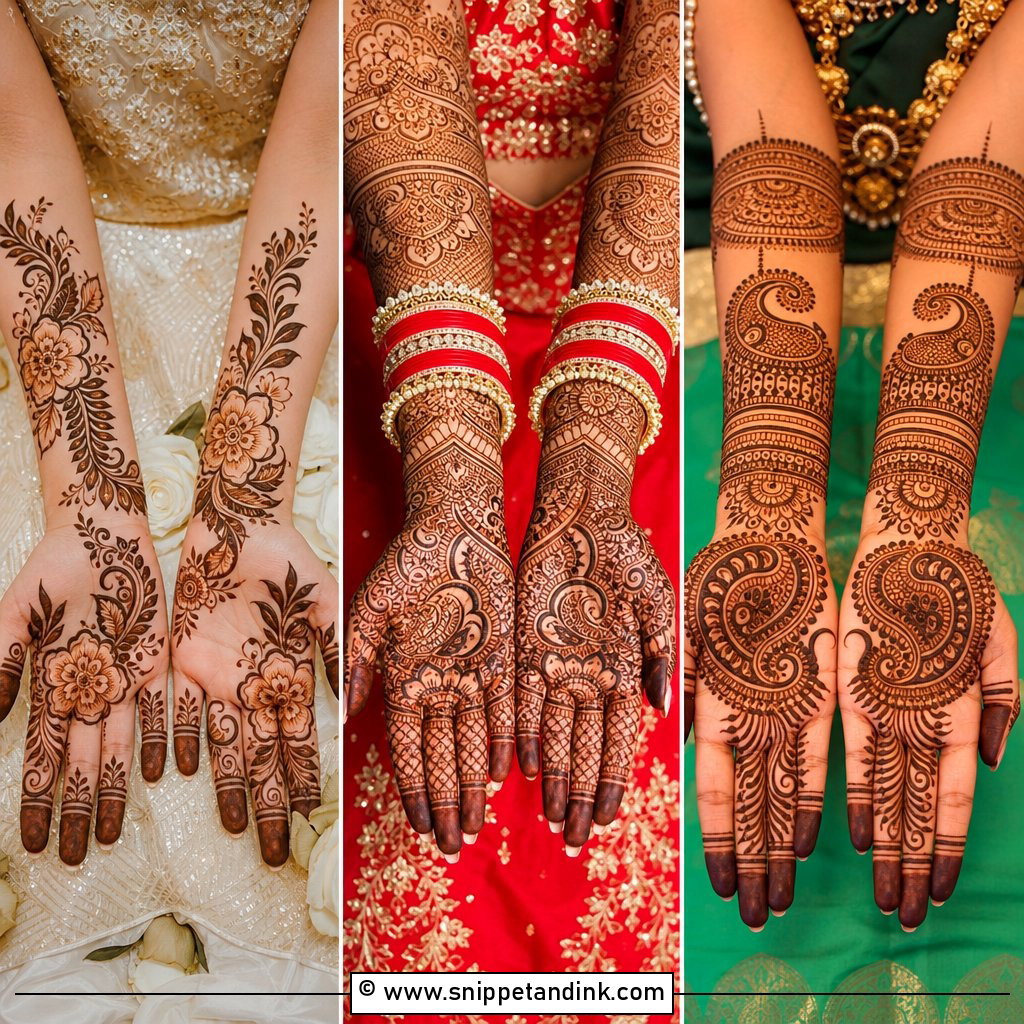
The back of the hand matters because it’s what shows in ring photos, jewelry shots and many rituals. A strong design here might combine a central mandala, floral trail, hathphool pattern, bracelet band, finger detailing and a wrist-to-forearm extension, laid out symmetrically for a traditional feel or diagonally for an Arabic one. Skin on the back of the hand stains a little lighter than the palm, so I draw bolder lines here to keep the contrast even on both sides. Detailed fingers are essential; they frame everything else.
16. Front Hand Bridal Mehndi Design
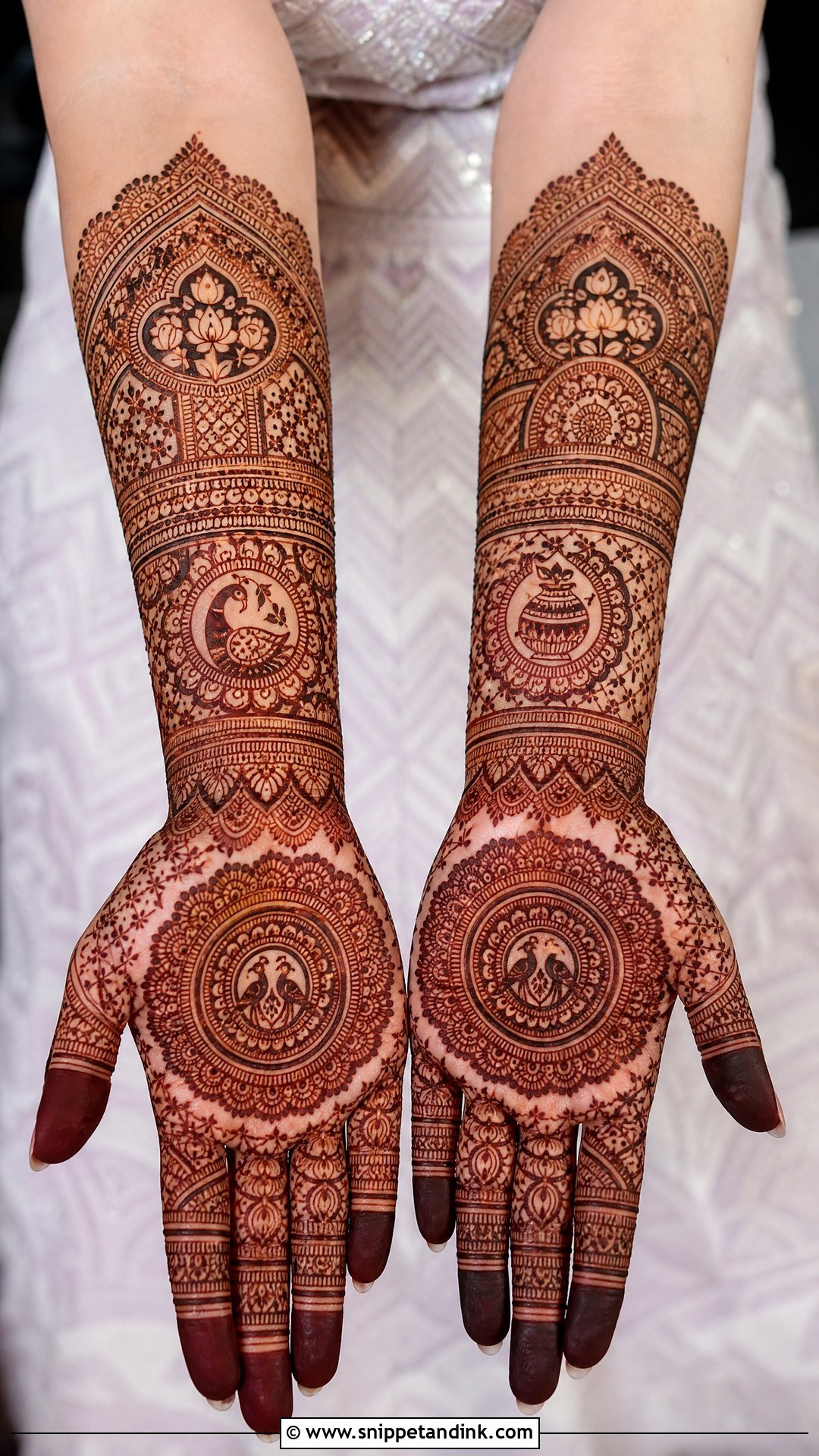
The palm is where henna stains darkest, which makes it the best place for detailed motifs, names, mandalas, peacocks, paisleys and wedding symbols. I connect the palm to the fingers and wrist so it reads as one design rather than separate pieces. Dense patterns feel traditional and open layouts more modern. If you’ll show your palms in photos, choose bold central motifs that stay clear after the stain darkens. Fine detail sitting in the deepest palm creases tends to crack off with the paste as the hand flexes, so I keep key motifs just off those lines.
17. Half Hand Bridal Mehndi Design
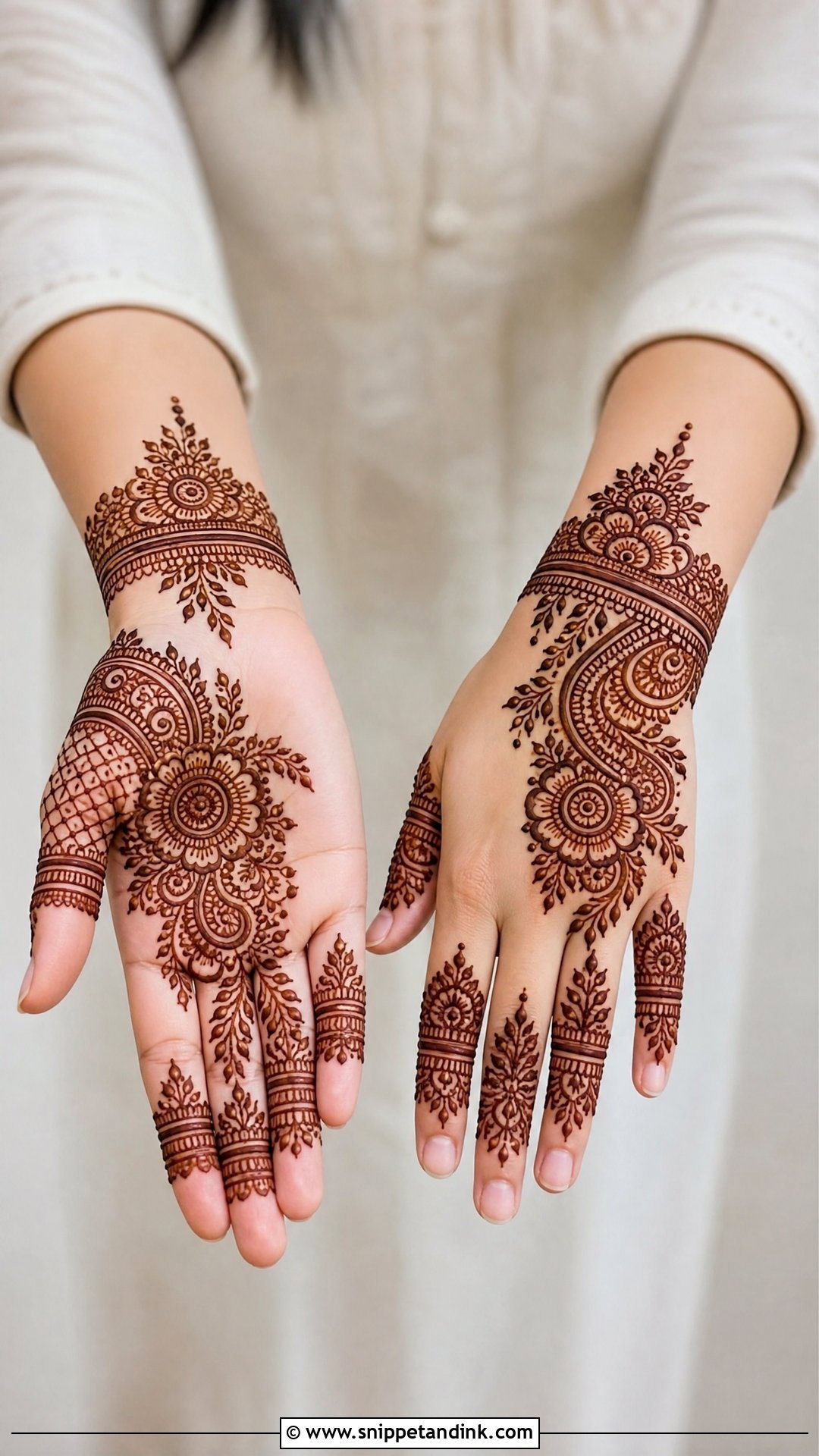
Half hand bridal mehndi runs from the fingertips to the wrist or a little above, with no forearm coverage. It can be dense on the palm, open on the back, or balanced on both, using florals, paisleys, mandalas, jaali and leafy vines. The sitting is noticeably shorter than full-arm work, which helps with smaller weddings and tight schedules. With long sleeves, there’s little point in forearm detail nobody will see. The wrist ending decides whether it looks finished, so I always close it with a decorative cuff.
18. Jewelry Bridal Mehndi Design
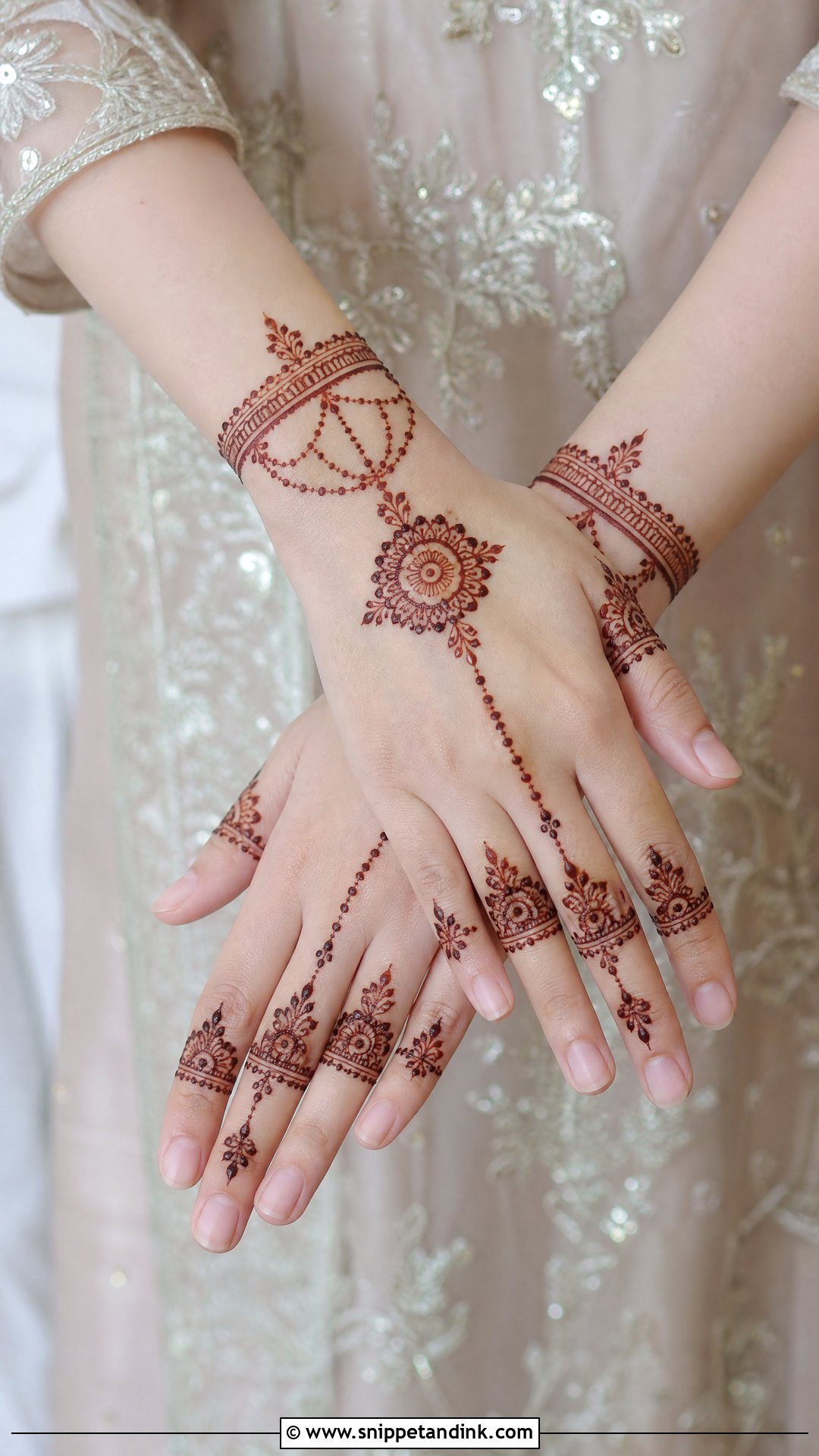
Jewelry mehndi draws hand ornaments in henna, borrowing the shapes of hathphool, rings, chains, bracelets and wrist cuffs. It sits best on the back of the hand, where chain-like lines connect the fingers to a central flower or mandala, and it pairs naturally with real jewelry without competing. Keep it minimal with open spacing, or make it bridal with dense fingertips and detailed wrist bands. If you’re wearing an actual hathphool, I draw around where it will sit rather than under it, so the henna chain and the metal one don’t double up.
19. Moroccan Bridal Mehndi Design
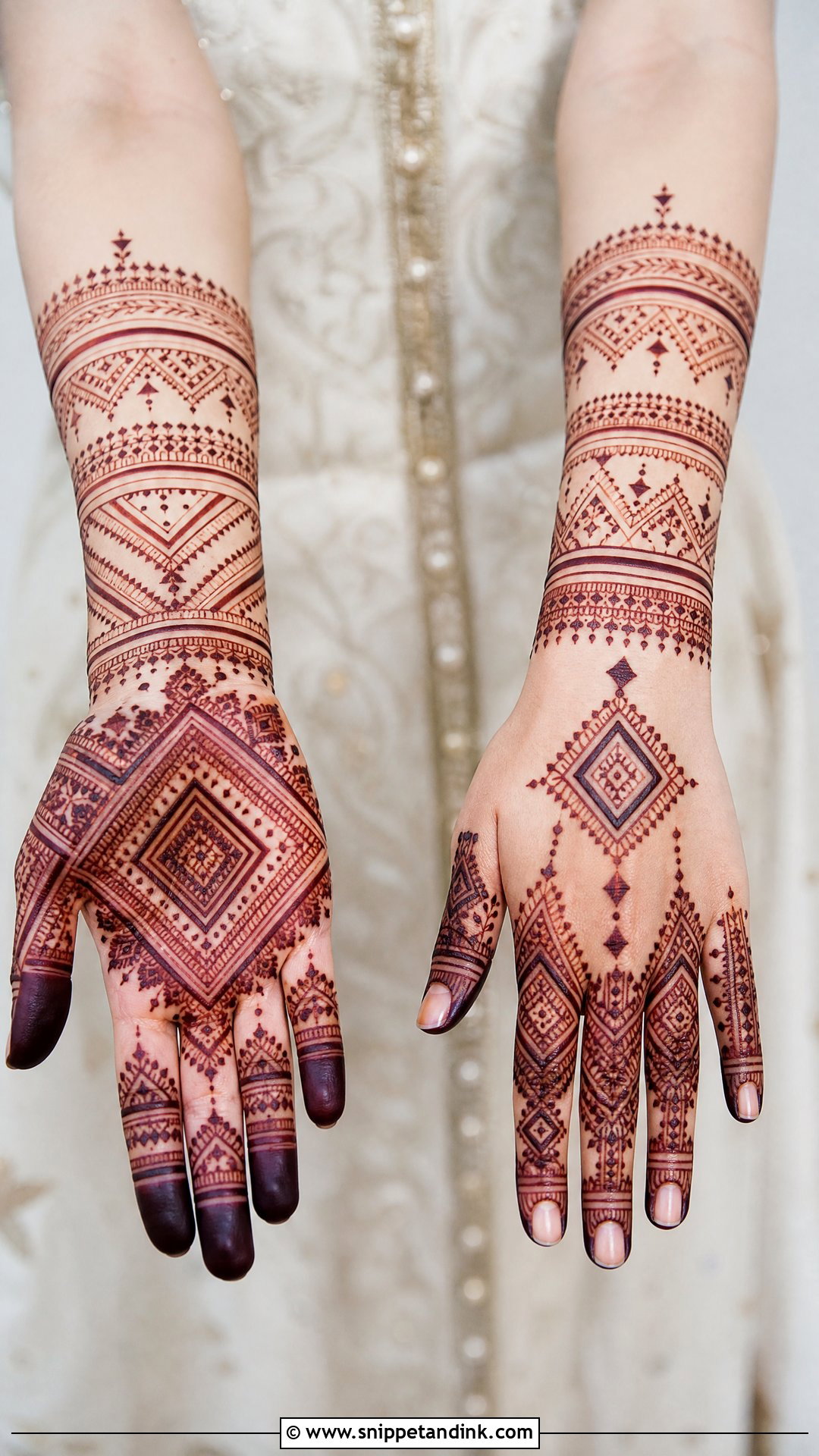
Moroccan bridal mehndi swaps florals for geometry: diamonds, lines, grids, triangles, dots and bold angular shapes. It feels structured and noticeably different from paisley-heavy bridal work. For a wedding, the patterns can cover palms, backs of the hands, wrists and forearms in balanced panels, and long fingers carry the linear details especially well. Small floral borders soften it into a fusion look. I suggest it most when the bridal outfit has geometric embroidery, so the hands echo the fabric.
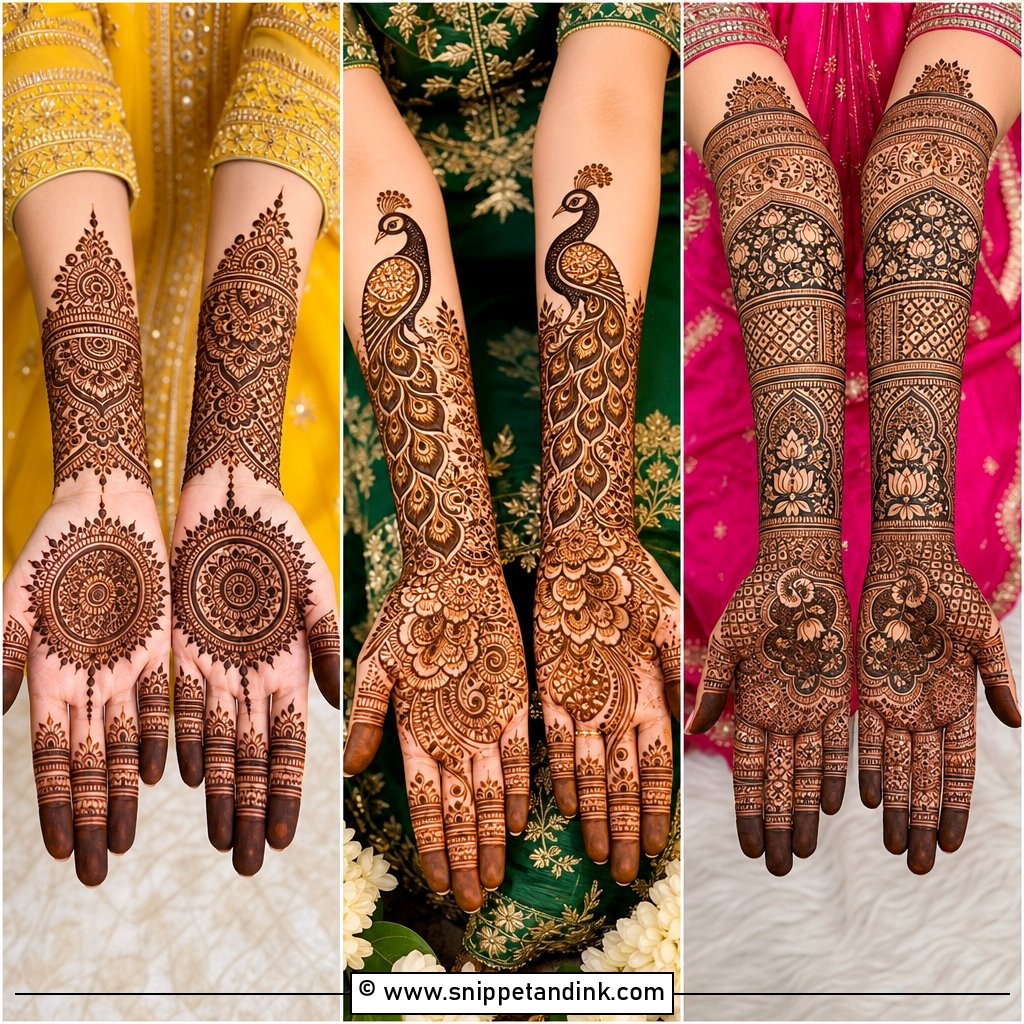
20. Gulf Bridal Mehndi Design
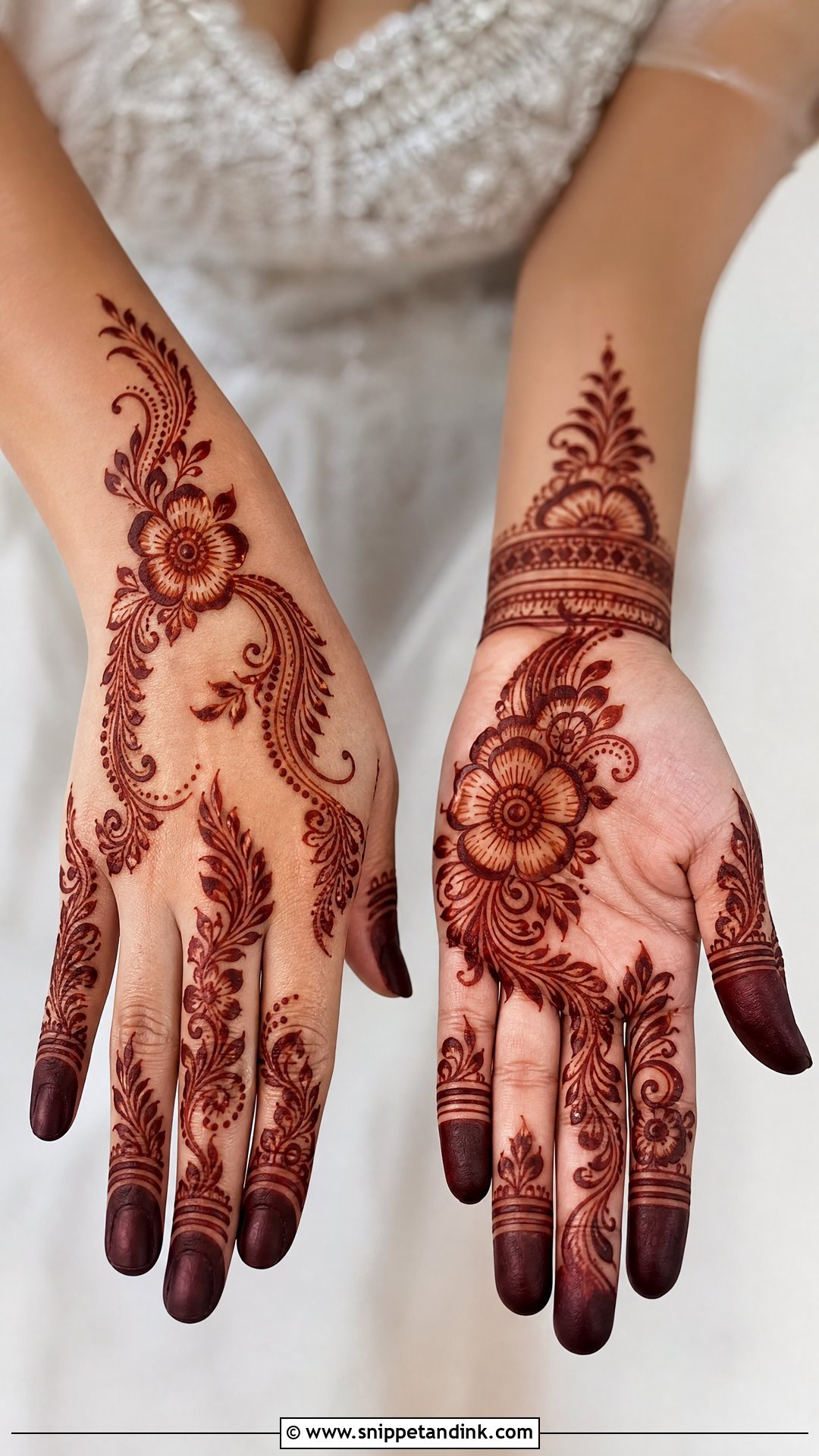
Gulf bridal mehndi, also called Khaleeji-inspired mehndi, is all bold florals, flowing curves, shaded leaves and dramatic spacing. Its motifs run larger than in Indian work, so it reads clearly in photos. The design sweeps from the fingers to the wrist, leaving skin gaps for contrast, and for a bride I extend it onto the forearm with bigger flowers, leafy trails and bracelet-like bands. It’s less crowded than dense full-hand work and quicker to apply. Shading is the skill to look for: soft, even shading inside the petals is what separates good Gulf work from flat outlines.
Bring Your Sleeves and Your Rings to the Consultation
The most useful thing a bride can bring to a consultation isn’t a screenshot. It’s her outfit, or at least a photo showing where the sleeves end. Elbow-length sleeves mean forearm work stops at the elbow; a three-quarter sleeve means anything above mid-forearm will barely be seen. Rings and bangles matter too, because I plan cuffs and finger bands around where the real jewelry will sit.
If your skin is sensitive, ask for a small patch test with the artist’s own paste a few days ahead. Reactions to natural henna are uncommon, but some people react to the essential oils mixed into it, and you want to find that out on a small spot on the inner arm, not across both hands.
Questions worth putting to your artist
- Do you mix your own paste, and what goes into it?
- How long will my design take, and will a second artist do my feet?
- Can I see figures or portraits you’ve drawn, if I want them?
- Where would hidden names go, and can I see the spot before you start?
- When should I take the paste off so the stain peaks on my wedding day?
Dense, Open or Personal? Matching the Design to Your Ceremony
Your bridal mehndi comes down to comfort, outfit, ceremony plans and personal style. For tradition, look at Indian, Rajasthani, peacock or portrait work. For a cleaner modern look, Arabic, minimal, jewelry or Gulf designs. For something in between, Indo-Arabic, lotus, floral, jaali and mandala layouts give detail without weight. Book a skilled artist early, patch test if your skin is sensitive, and leave proper time for the stain to develop before your main events. Take a shortlist of two or three to your consultation; once an artist has seen your hands and your sleeves, the choice usually makes itself.
You'll Like These Ideas:


Leave a Reply