
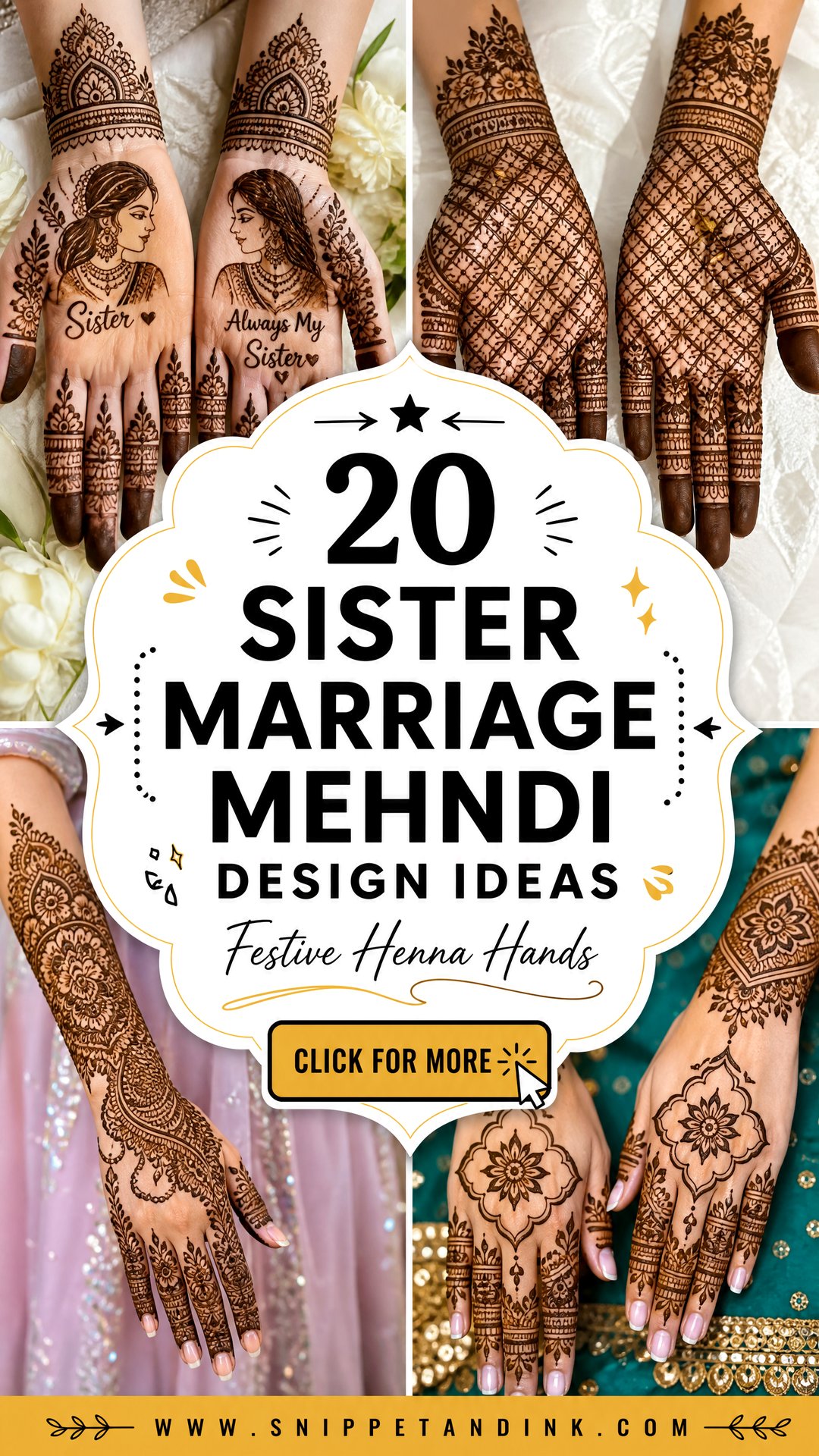
At a family wedding, the sister’s hands are in almost as many photos as the bride’s, yet she is the one carrying trays, fixing dupattas and running between rooms. So when I plan a sister marriage mehndi design, I’m balancing two things: it has to feel festive enough for close family, and it must stay lighter than the bride’s. Full Indian coverage, Arabic trails, Indo-Arabic spacing, mandala palms and small personalised text all have a place, and the right one depends on which function you’re dressing for, from haldi to the reception. Below are twenty layouts I’d offer a bride’s or groom’s sister, with how each one wears and stains.
Your Place in the Mehndi Queue, and Why It Matters
On a mehndi day the bride is applied first, and her design can take several hours. Sisters usually come next, then the wider family. That order affects what you can realistically have, so it helps to plan it rather than hope.
How long each design takes
- A minimal palm or finger design: roughly fifteen to thirty minutes for both hands.
- Arabic or half hand: often thirty minutes to an hour.
- Full hand to the wrist, front and back: one to two hours or more, depending on detail and the artist’s speed.
Then add drying and wearing time. The paste should stay on for at least six hours, ideally overnight, so a full design effectively takes you out of action for the evening. If you’re the sister organising food or guests, a lighter design applied early in the day is kinder to you.
Talk to the bride before you sit down
Ask her how much coverage she’s comfortable with you wearing and whether there’s a motif she wants kept just for her, such as the couple’s portrait or a particular peacock. Most brides are relaxed about it, but it’s a conversation better had beforehand than in front of the artist. I always check, because I’d rather adjust a sister’s design than have the bride’s feel less special.
1. Sister Wedding Full Hand Mehndi
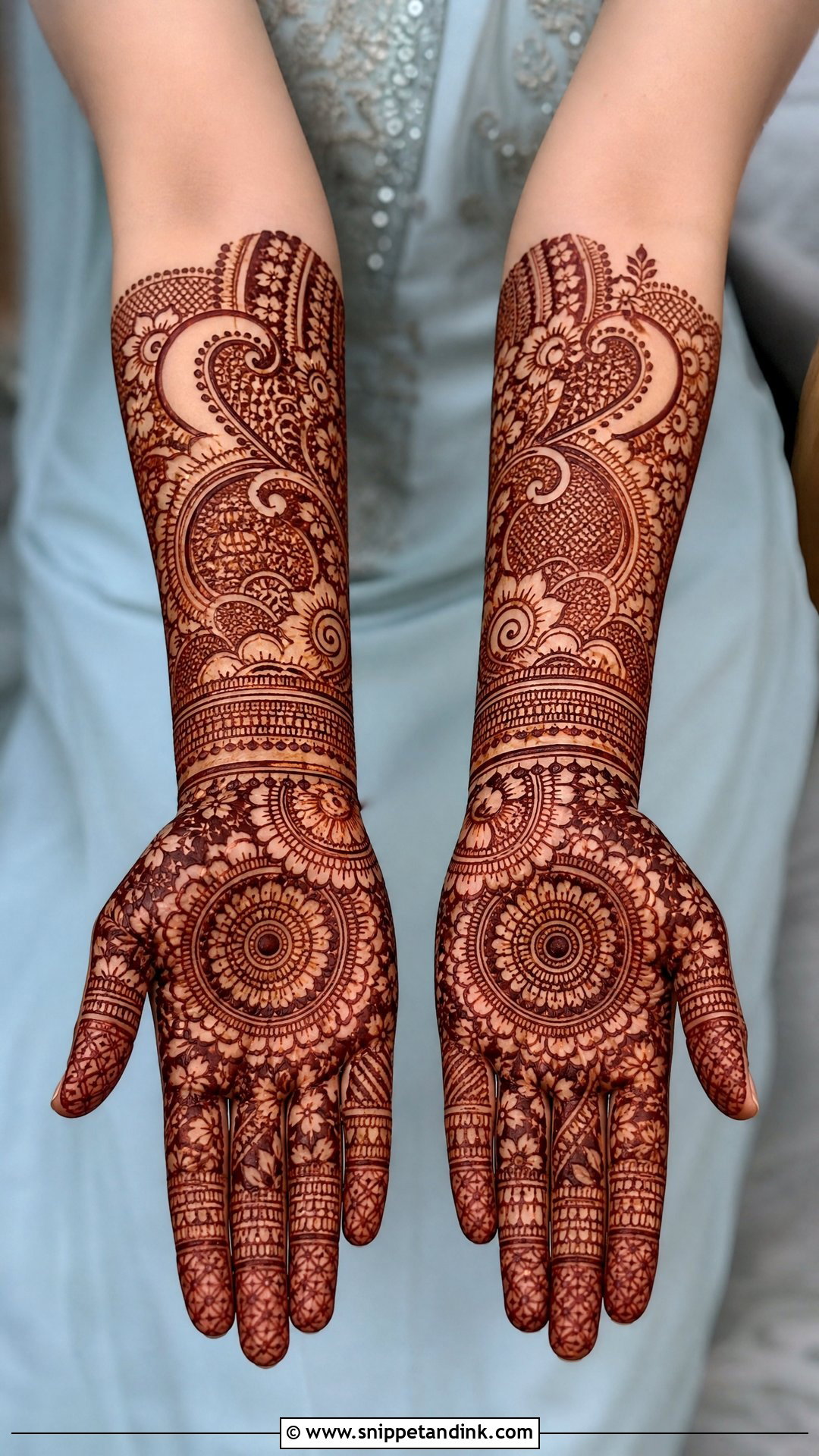
Full hand is the richest option here, and I still hold it back from bridal density. Palm, fingers, wrist and a short way up the forearm with paisleys, vines and neat filler, but with the centre kept a little open around a mandala or a floral circle. That breathing space is what tells people at a glance that you’re family and not the bride. I also leave a clear band at the wrist so bangles sit on bare skin and don’t hide the work. Expect a long sitting for this one, so plan to have nothing else to do that afternoon.
2. Bride Sister Arabic Mehndi
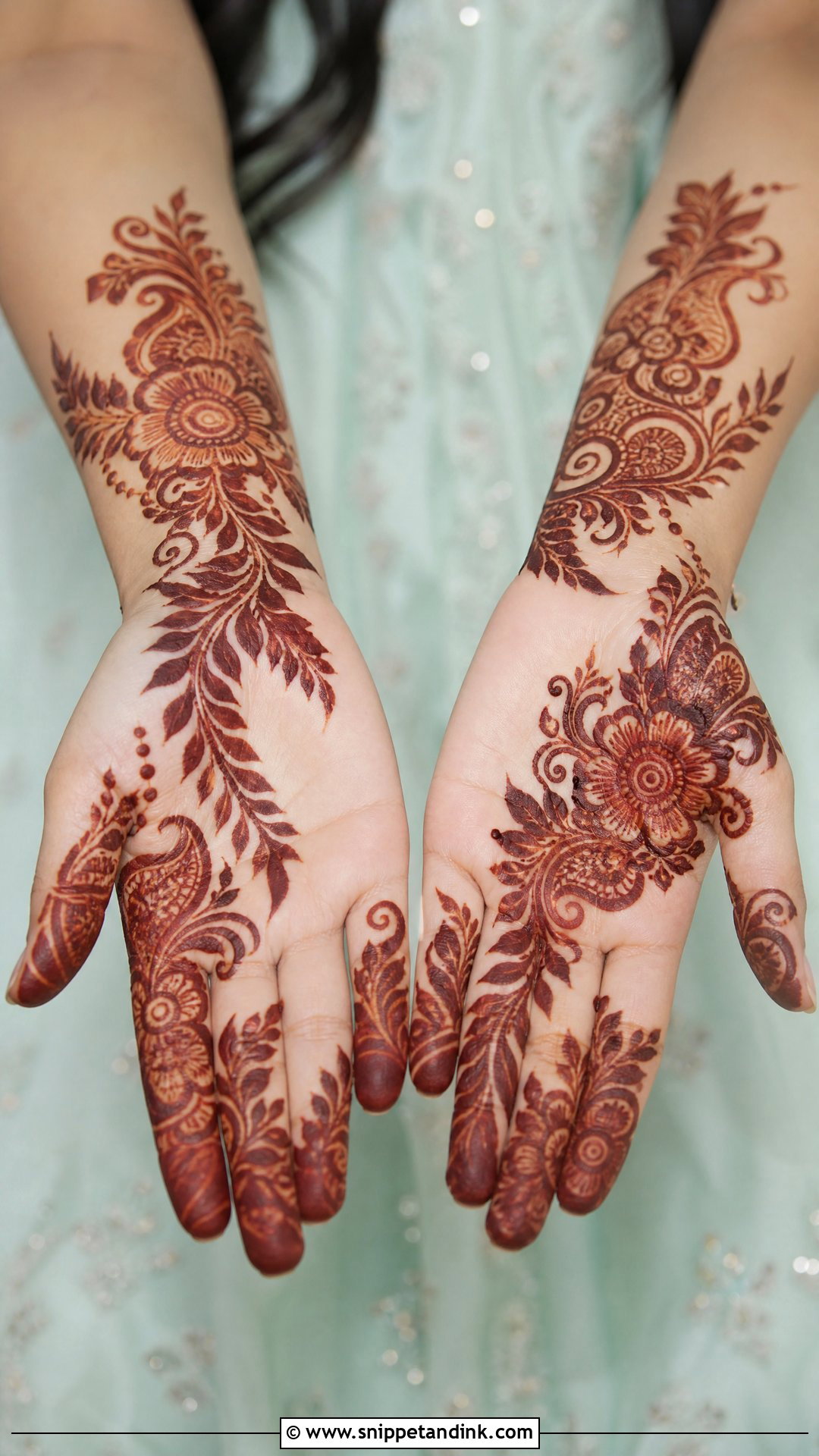
Arabic is the layout I suggest most to sisters with a long to-do list. A diagonal trail runs from one side of the wrist across the palm and up toward the fingers, with big shaded flowers and leafy vines and plenty of bare skin between. Fewer lines means a faster application and quicker drying, so you’re back on your feet sooner. The open spaces also make each motif stain crisply, without fine lines bleeding into each other. A couple of statement rings fill the gaps nicely.
3. Sister Of Bride Back Hand Mehndi
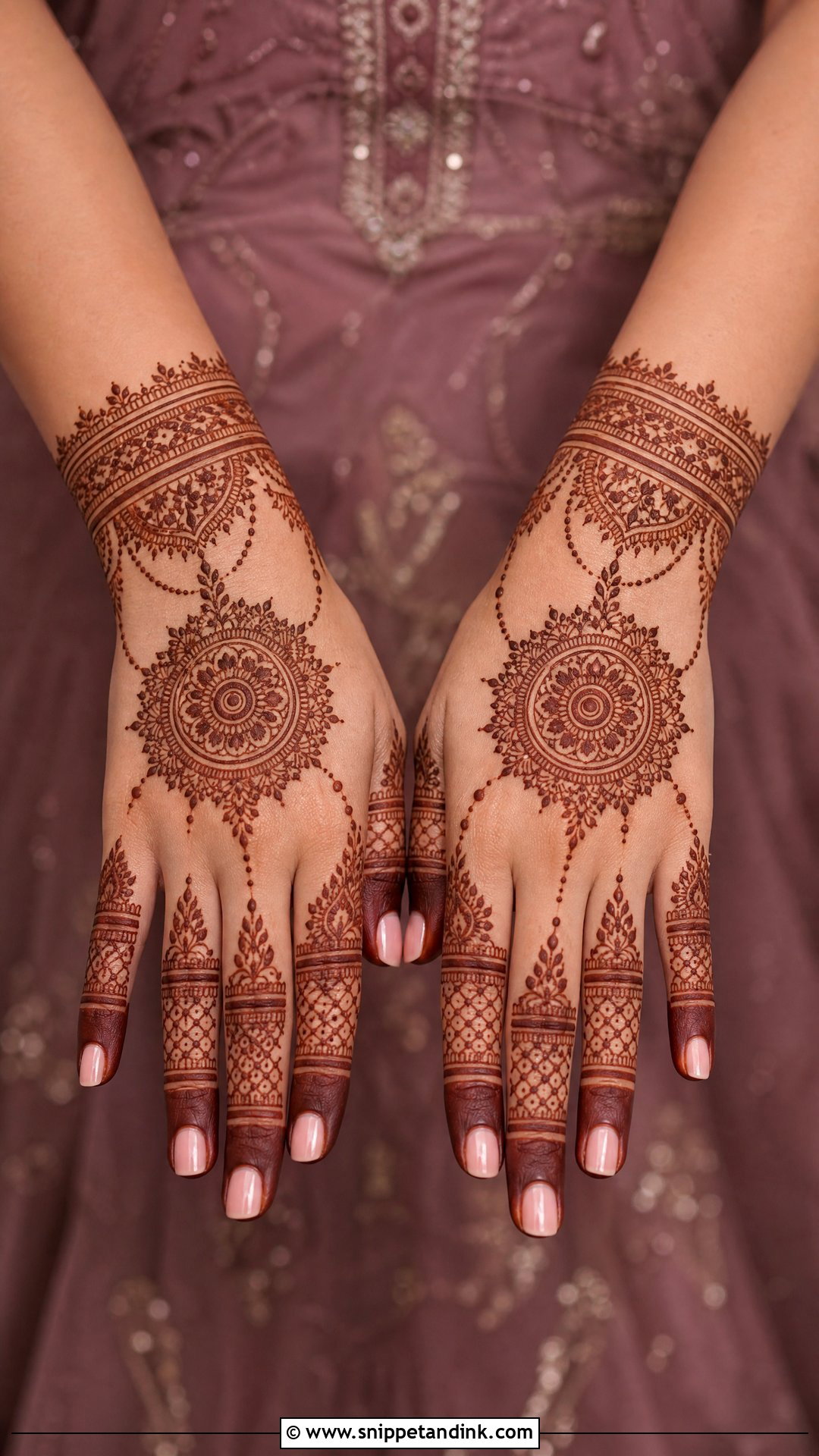
Think about where your hands appear in pictures: holding a dupatta, adjusting the bride’s jewellery, resting on someone’s shoulder. That’s the back of the hand. I usually build this one around a central mandala connected to the fingers by fine chains or a little jaali, with a bracelet band at the wrist so it reads like hand jewellery. The back of the hand has thinner, drier skin than the palm and naturally stains a shade lighter, so I fill or cap the fingertips, which stain darkest of all, to give it contrast. It’s a good pick for a younger sister who wants something festive that doesn’t look too grown-up.
4. Groom Sister Simple Mehndi
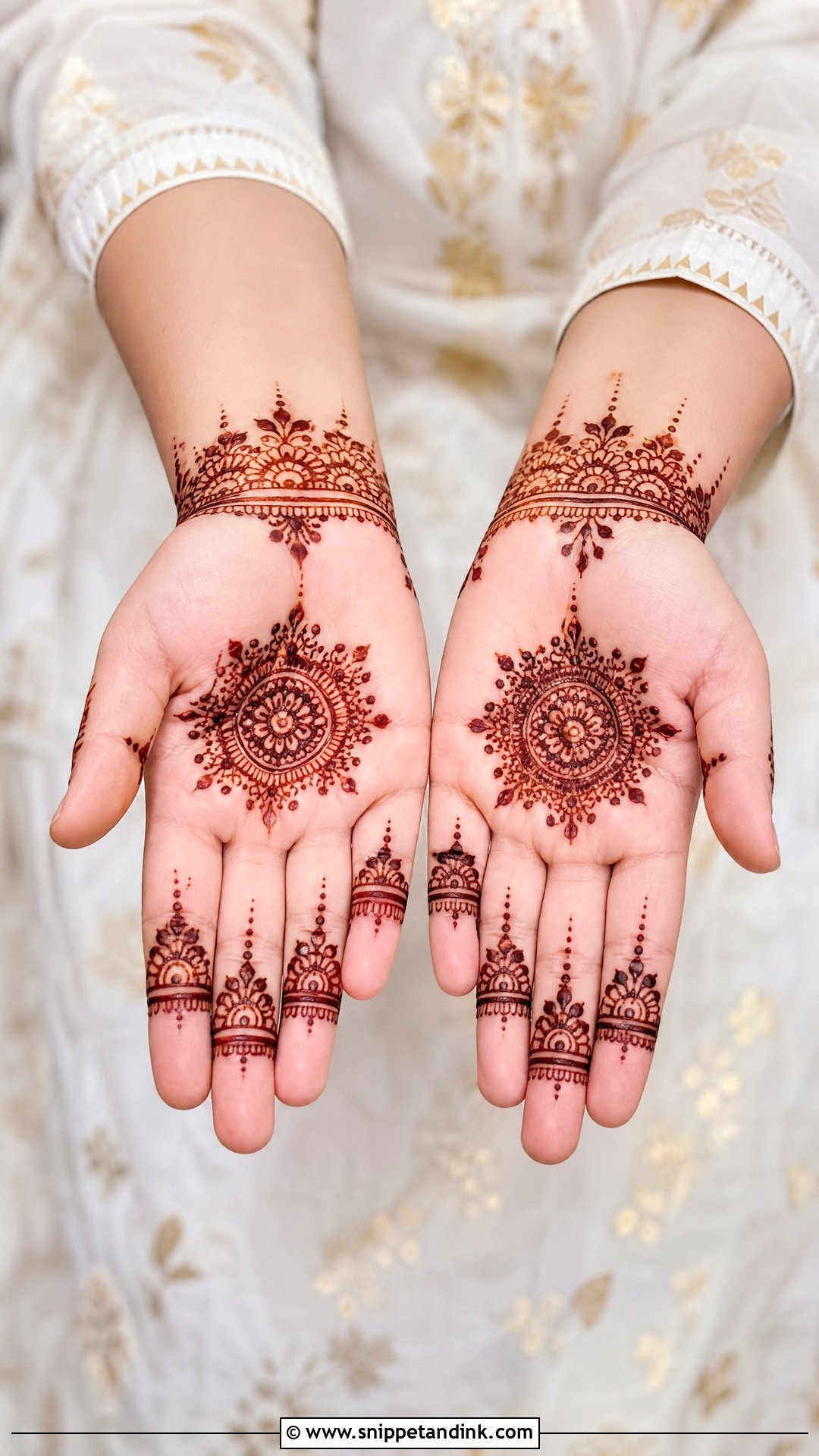
Simple doesn’t mean plain; it means fewer, cleaner elements. For a groom’s sister who will be hosting and greeting, I’d put a small mandala or a short floral trail on the palm, with matching finger bands and fine leaf lines. Symmetry and spacing do the heavy lifting here, and a few bold motifs show up clearly in photos where dense filler would blur. It also sits comfortably with suits and Indo-western outfits, where full coverage can feel like too much.
5. Sister Marriage Front Hand Mehndi
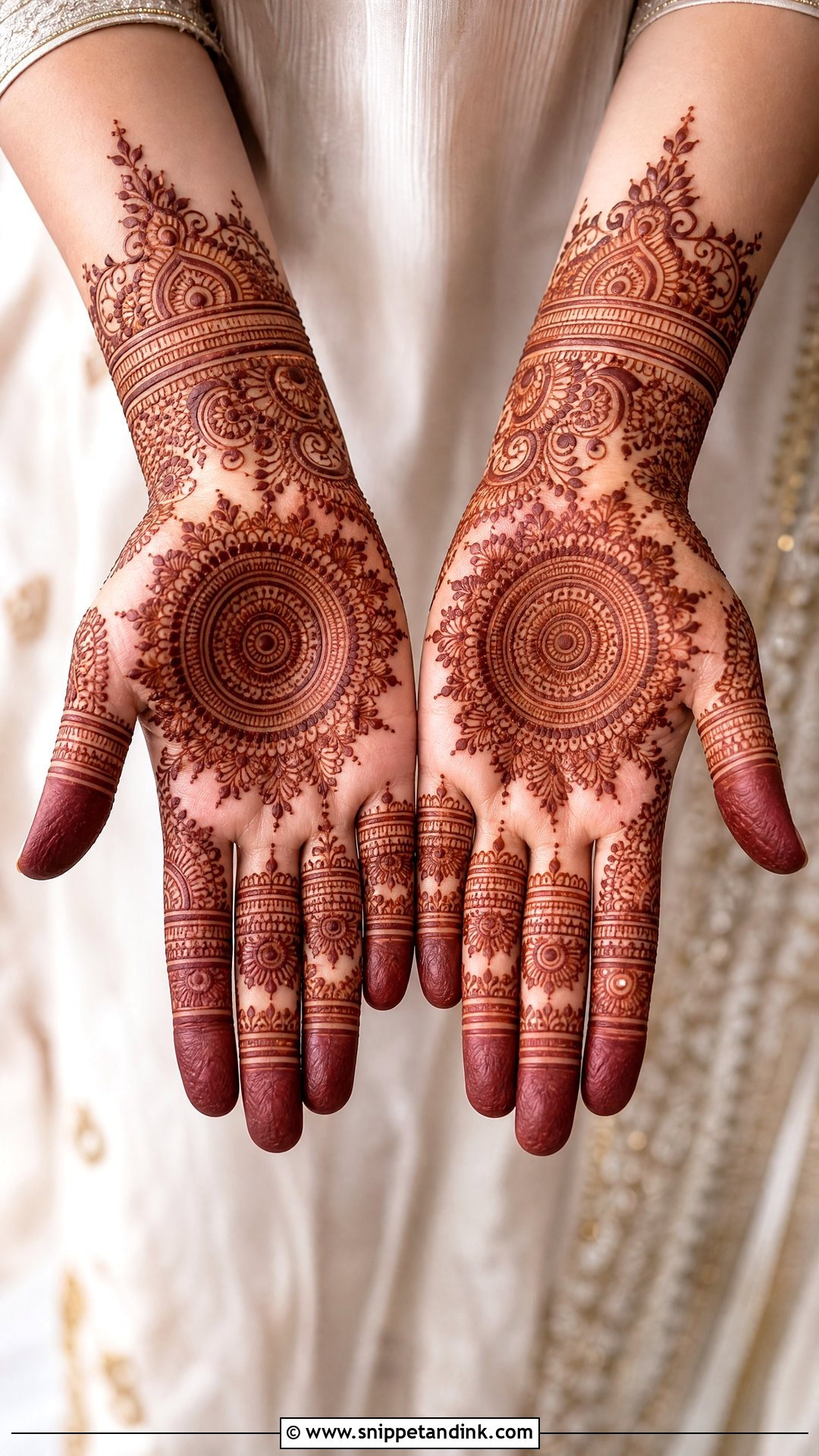
Palms come up constantly in wedding photos, from haldi to family portraits, so a front-hand design should have a clear centre. I start with a round mandala, ring it with a paisley border and leafy cuffs, and pattern the fingertips. Small filler motifs fill gaps without making it dense. The palm is also where henna stains darkest, which is why front-hand work tends to look strong even when it’s lighter than a bride’s. I make the two hands similar but not mirror images; it looks handmade in a good way.
6. Sister Wedding Mandala Mehndi
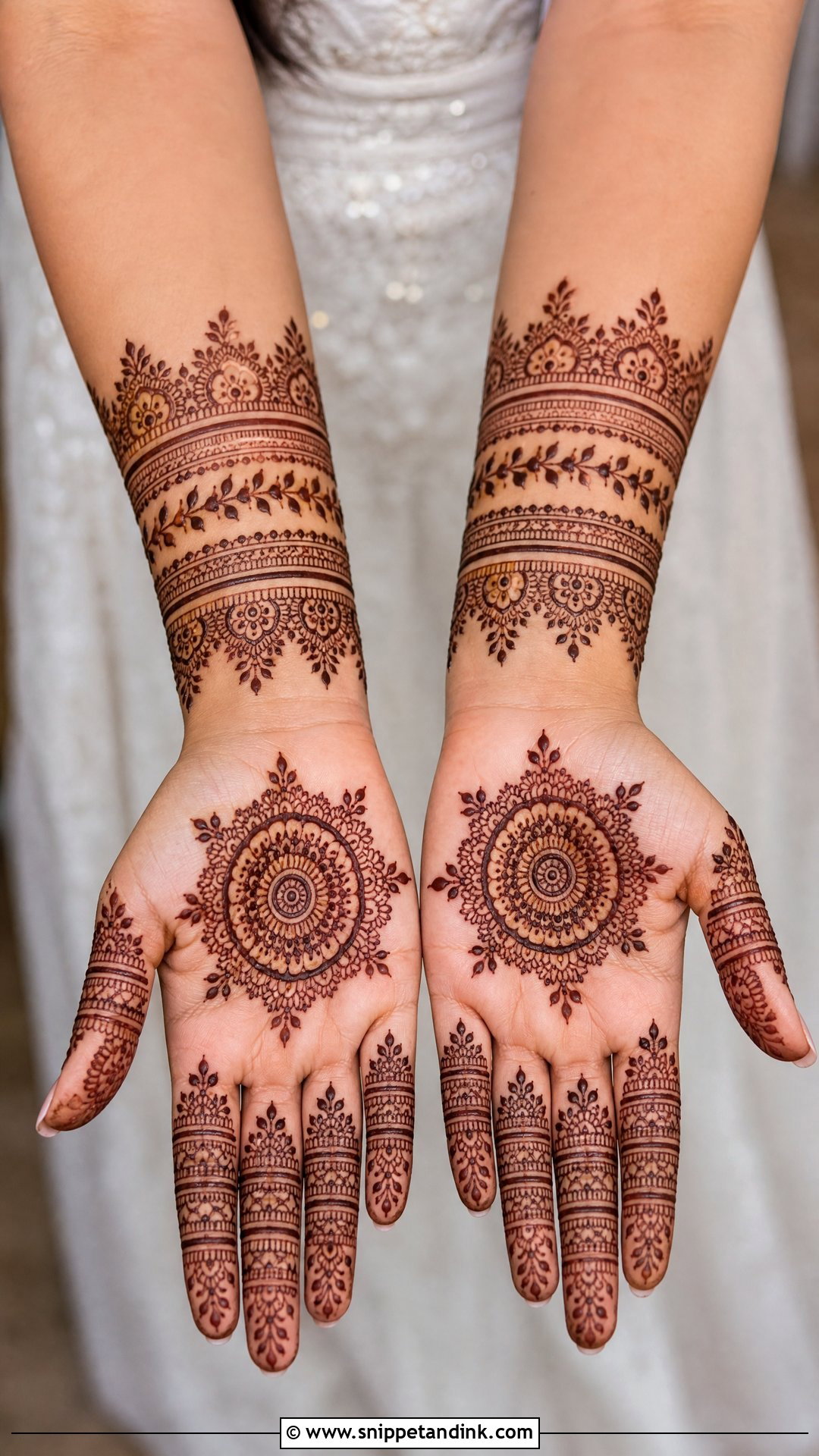
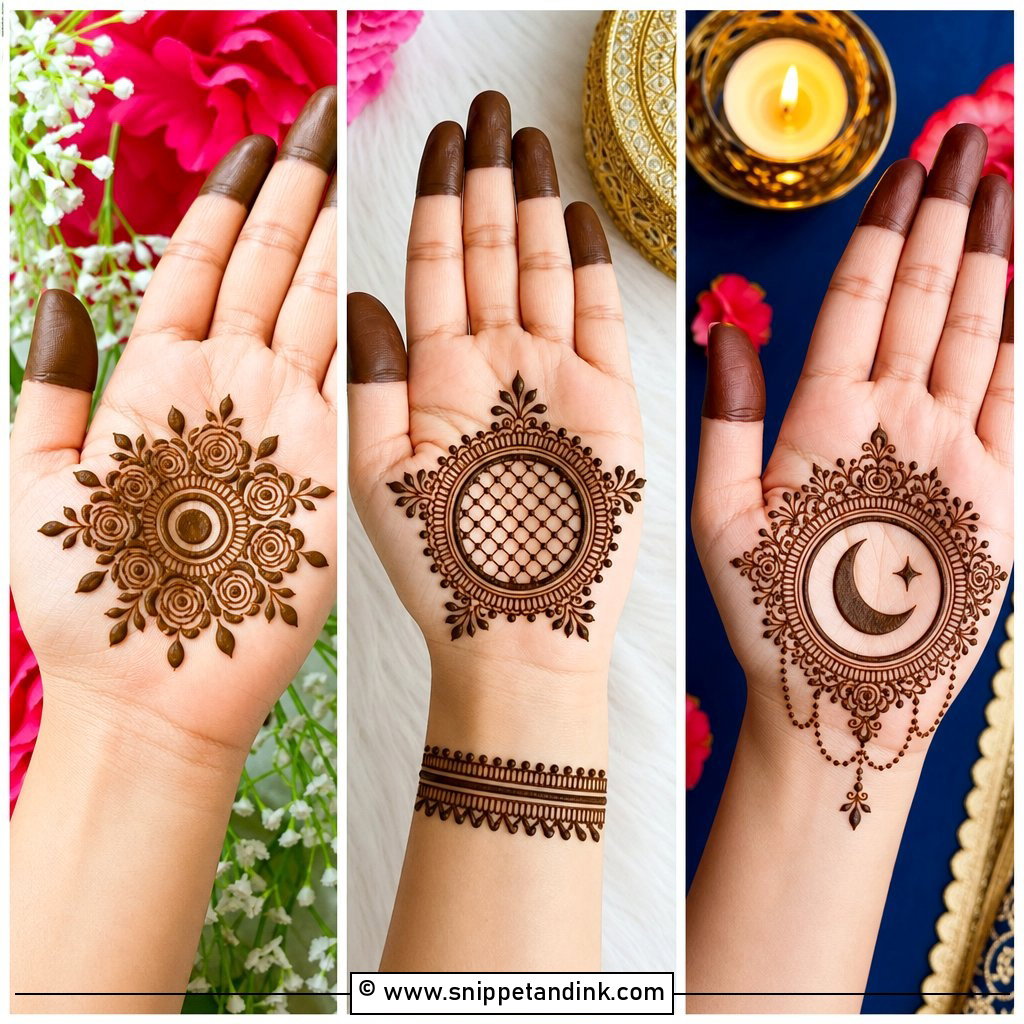
A mandala is the most forgiving design I know for different ages, from a teenage sister to a married older one. It can sit on the palm, the back or both. The circle is the focus, so I keep the fingers to fine lines, dots and small floral caps, and add a bracelet at the wrist only if you want it fuller. What I’m careful about is centring: a mandala that’s slightly off on the palm shows instantly, so I mark the centre point before I begin. Leaving a little open skin around the circle gives it a modern finish.
7. Sister Wedding Floral Mehndi
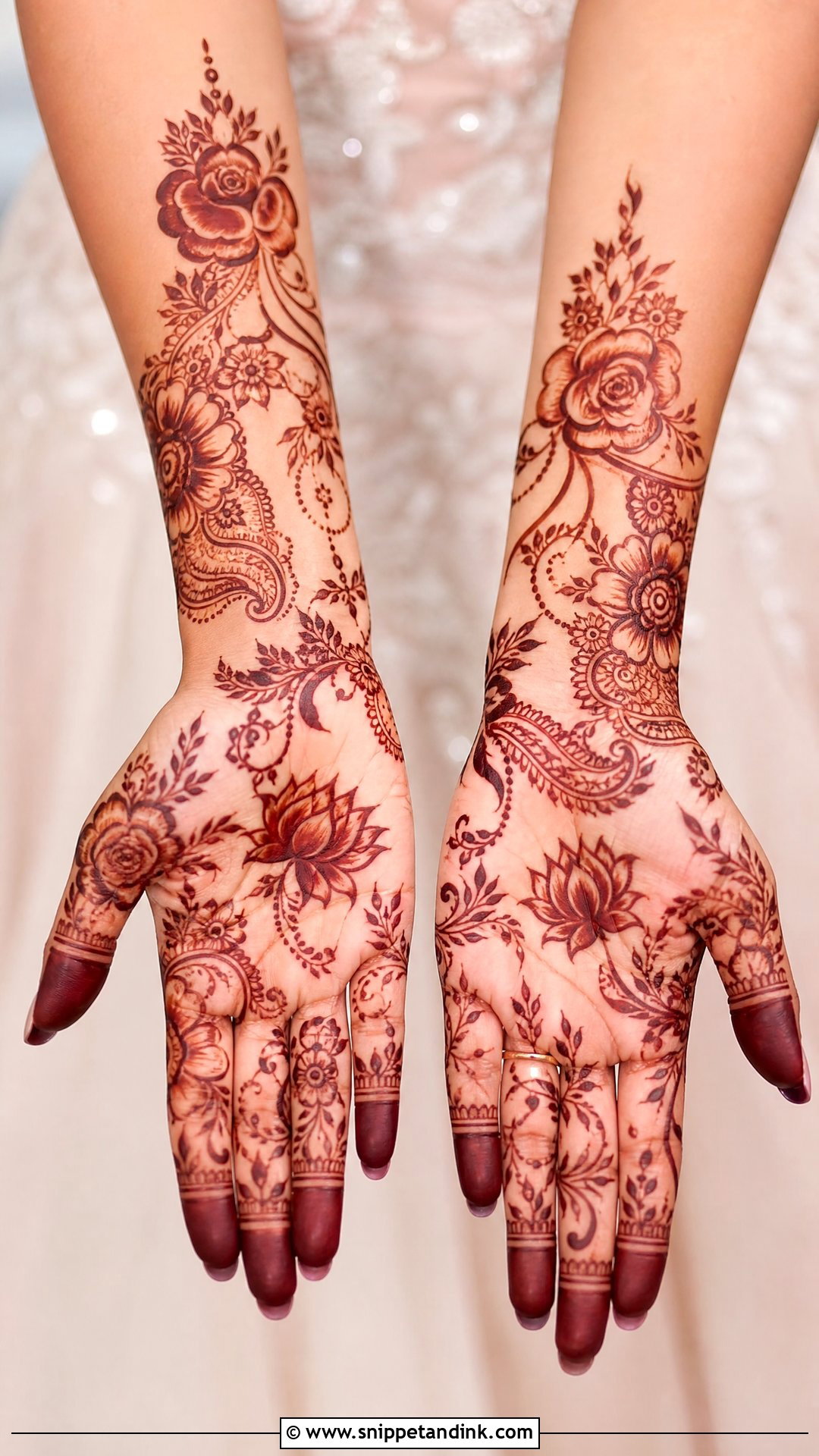
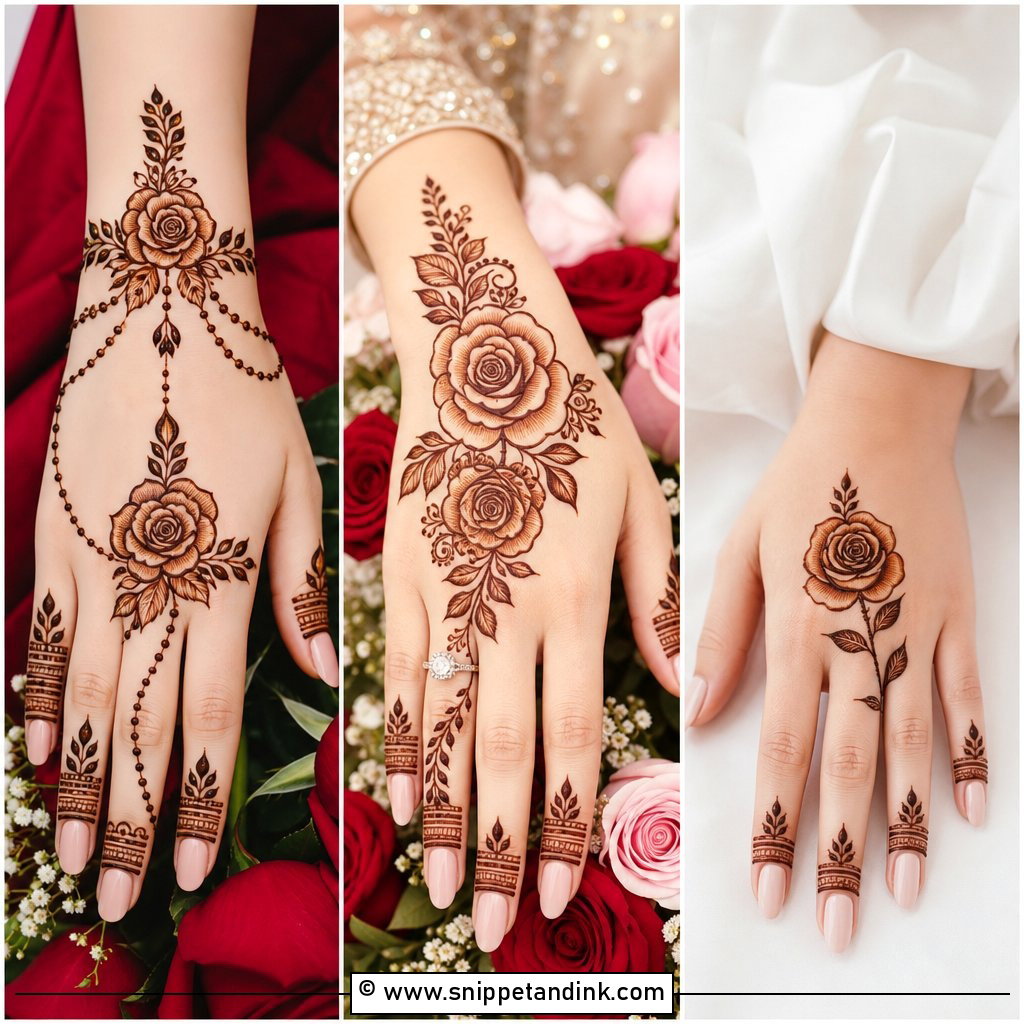
Flowers suit daytime functions and pastel outfits. Large roses, lotus shapes, small blossoms and shaded petals spread across the palm and back. I keep the biggest blooms near the wrist and let them shrink toward the fingers, which gives the hand a natural direction. Shading inside petals is done with a lighter touch of the cone, and on day two that shading reads as a softer tone next to the bold outlines. Dots and swirls between flowers fill it out if you want more, and the whole thing translates into Arabic or Indo-Arabic layouts easily.
8. Sister Wedding Indo Arabic Mehndi
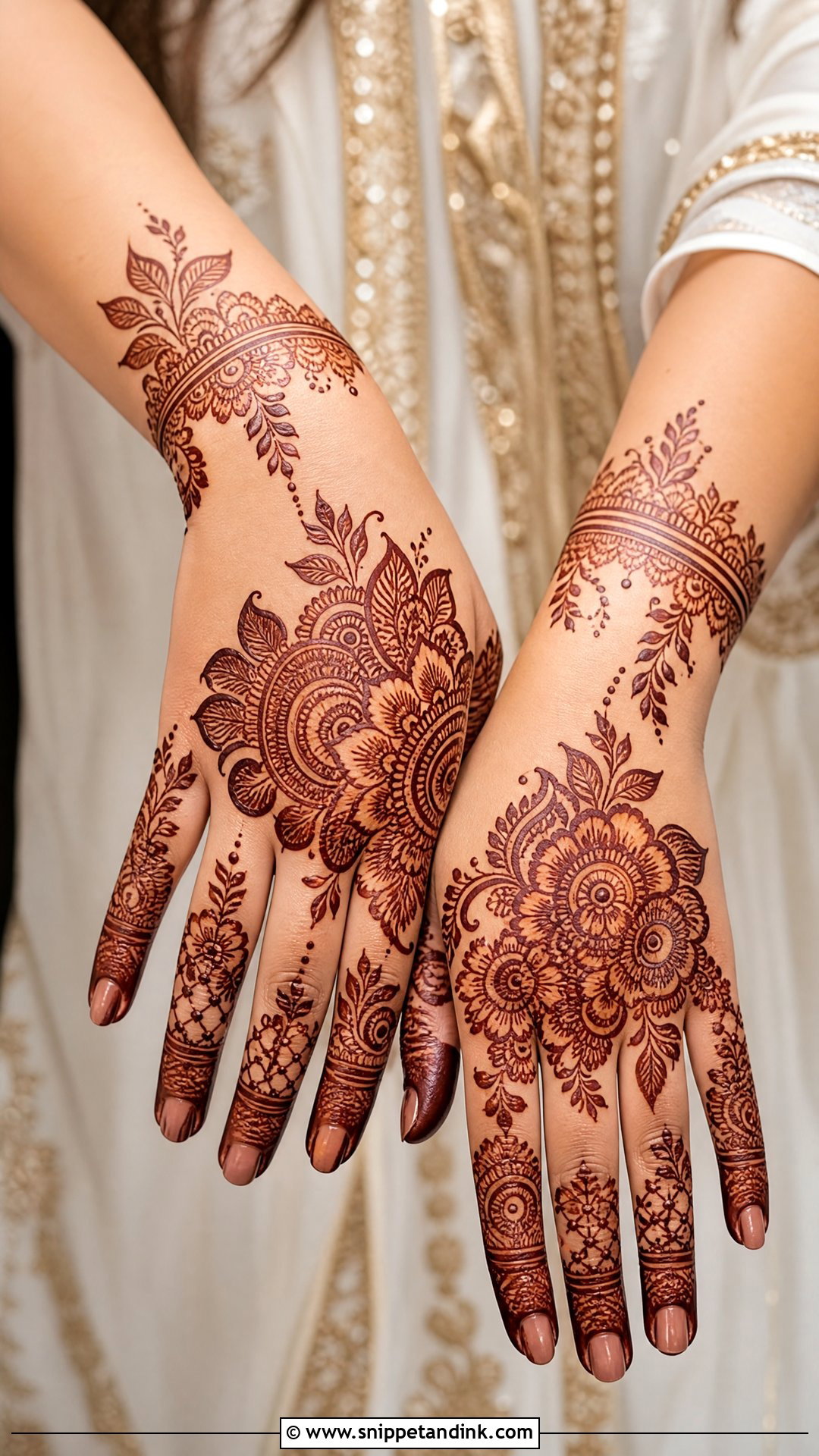
Sister wedding Indo Arabic mehndi borrows the motifs of Indian work, paisleys and mandala accents and fine lines, and spaces them out the way Arabic designs do. Every element stays readable. That is exactly the position a close family member wants to be in: clearly dressed up, clearly not the bride. It can go on the front, the back or run from wrist to forearm. I often suggest a mandala on one palm and a floral trail on the other, which keeps the pair related without being identical.
9. Sister Marriage Personalized Mehndi
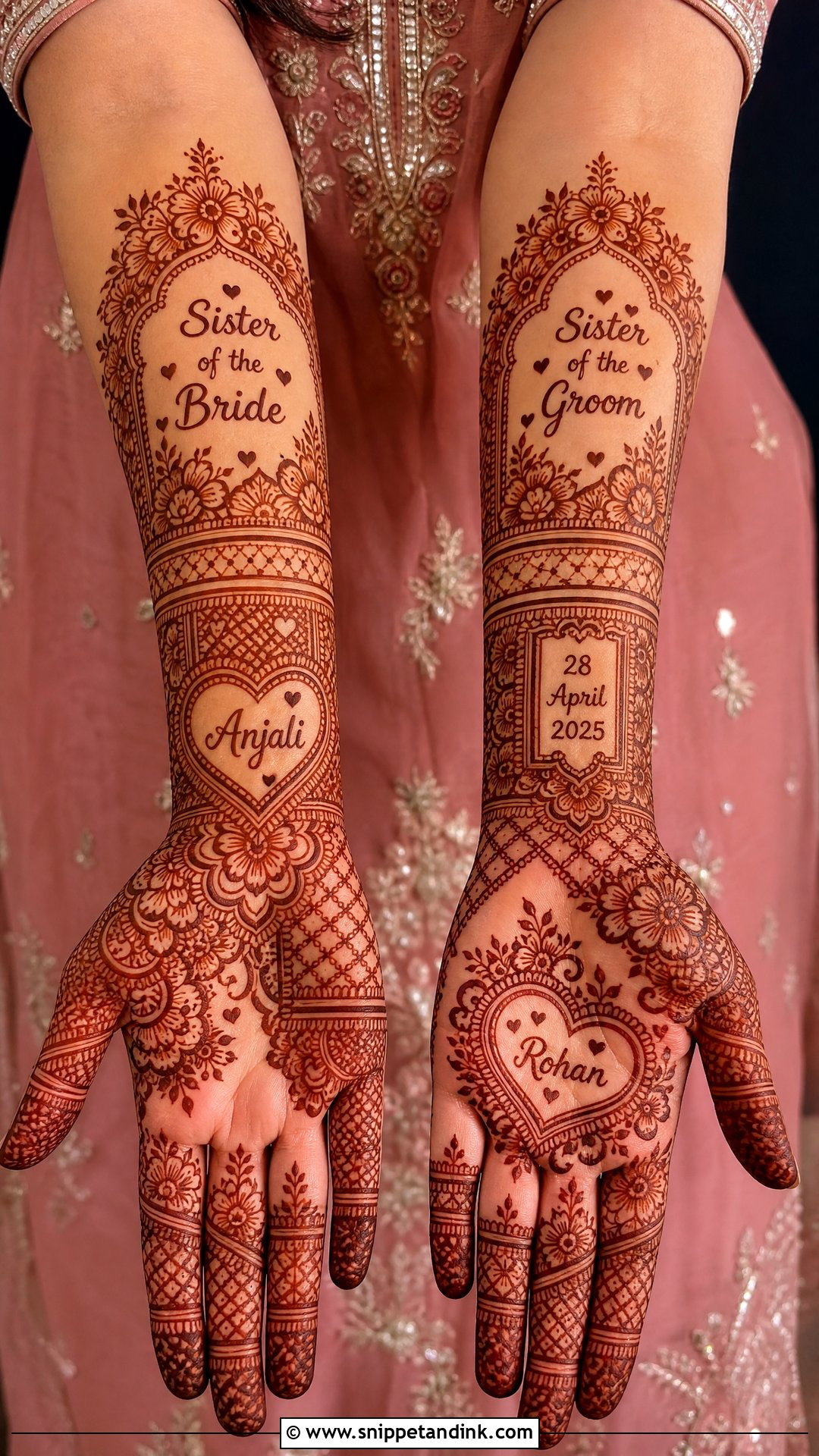
A personalized sister marriage mehndi is the design that gets the most reactions at the mehndi party. The bride’s name, the date, initials or a short phrase, tucked inside a heart, a banner or a mandala border. Keep the text small, because lettering in henna thickens slightly as it dries and long words become hard to read. The rest of the hand can be paisleys, florals and jaali so it still looks like wedding mehndi. A hidden initial that she has to search for is a lovely tradition to borrow.
10. Sister Wedding Jaali Mehndi
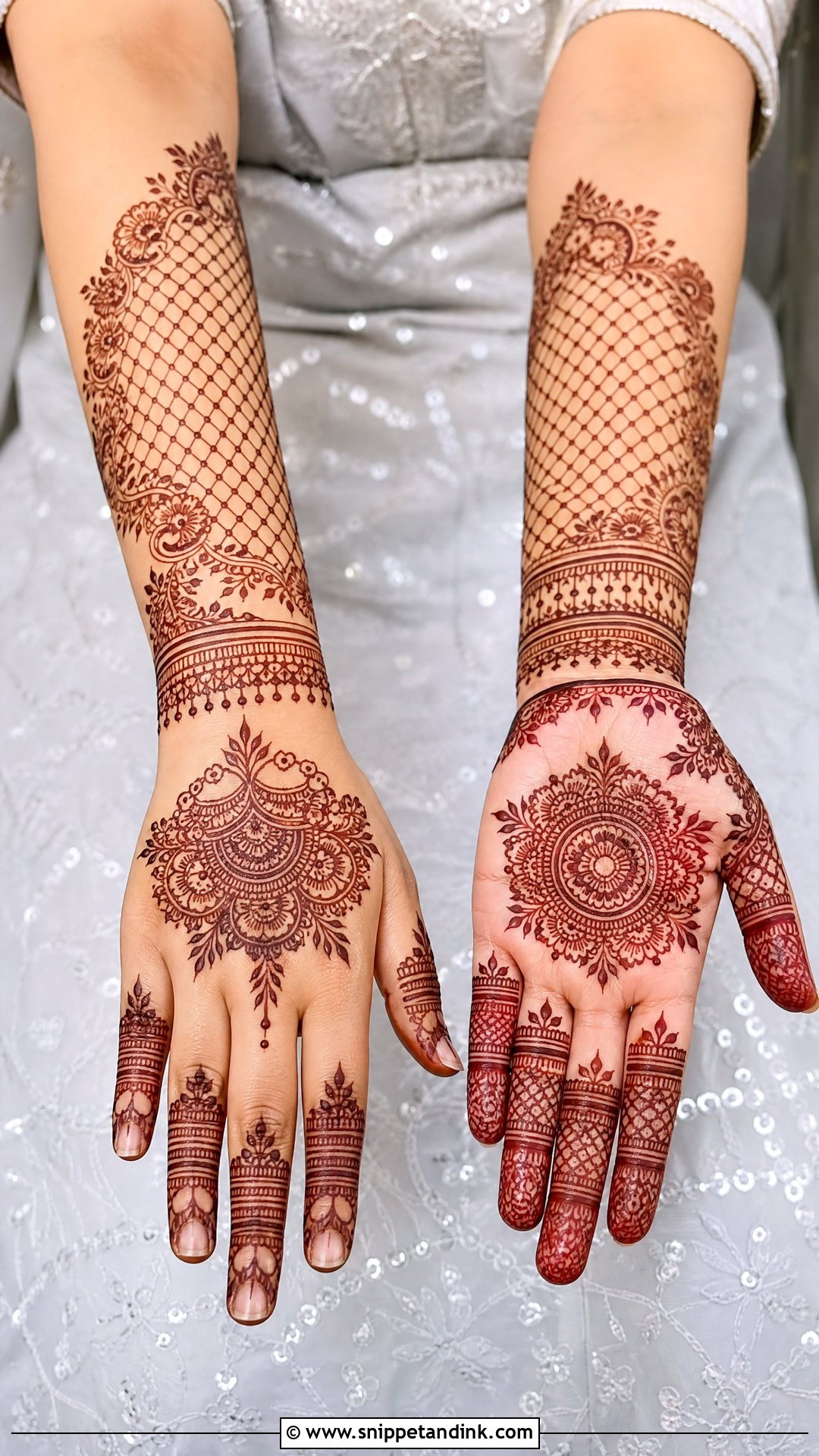
Jaali is precision work. The mesh lines must be evenly spaced and the same thickness, or the net looks uneven from a distance, so I keep the cone tip fine and work slowly. On the back of the hand it pairs with floral corners and bracelet bands; on the palm I mix it with mandalas or paisleys. It gives detail without solid fill. If your outfit has heavy embroidery, jaali echoes that texture well.
11. Sister Wedding Bracelet Mehndi
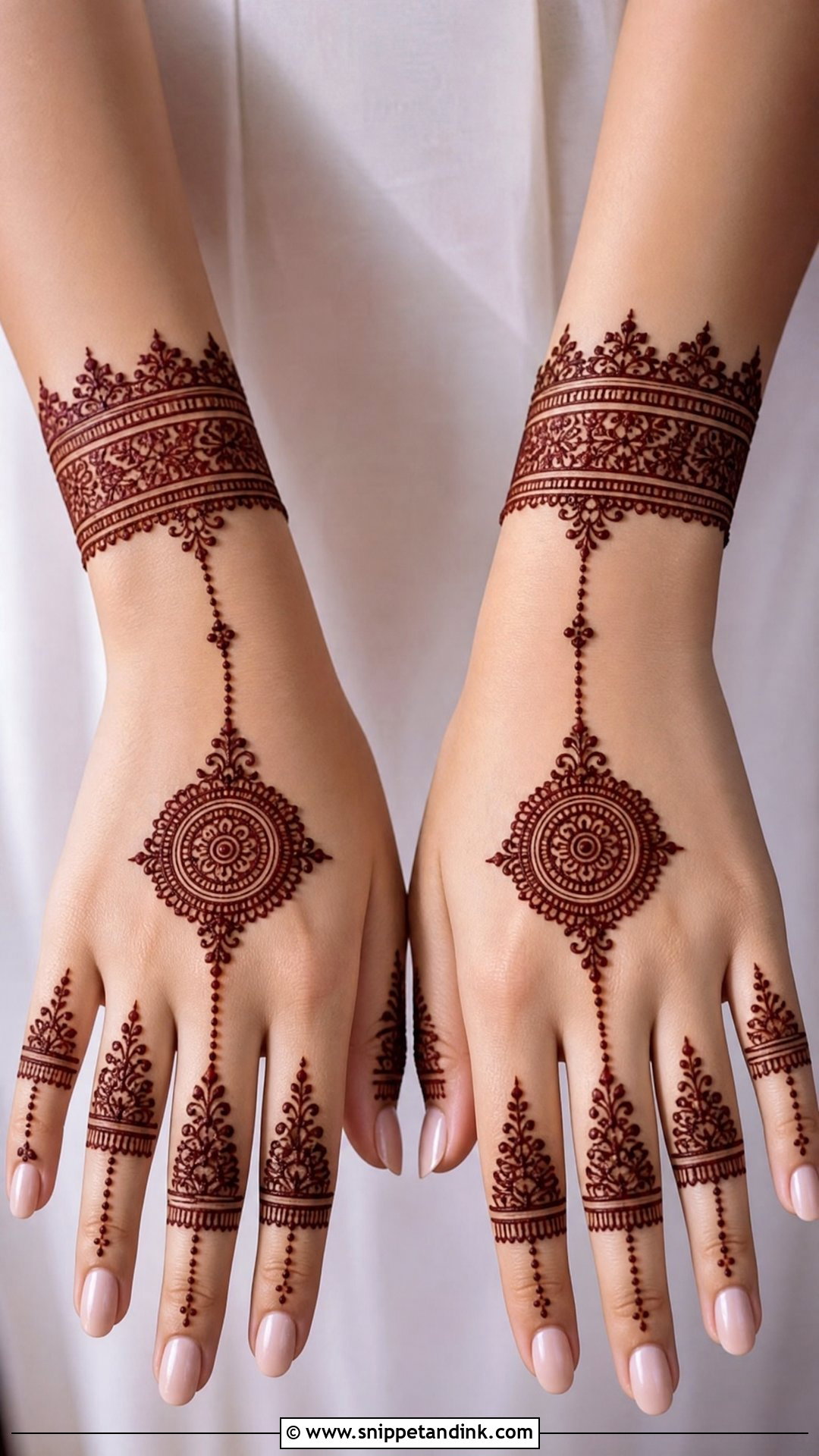
Bracelet designs wrap the wrist like a kada and then run up to the fingers in chains, dots or small florals, with a little motif on the back of the hand. They leave room for real jewellery: bangles, rings, a hathphool. This is what I’d suggest for the sangeet or reception, when you want something lighter and dressier than the mehndi night. I make the wrist band the boldest part, since it’s the bit that shows between bangles.
12. Sister Marriage Minimal Mehndi
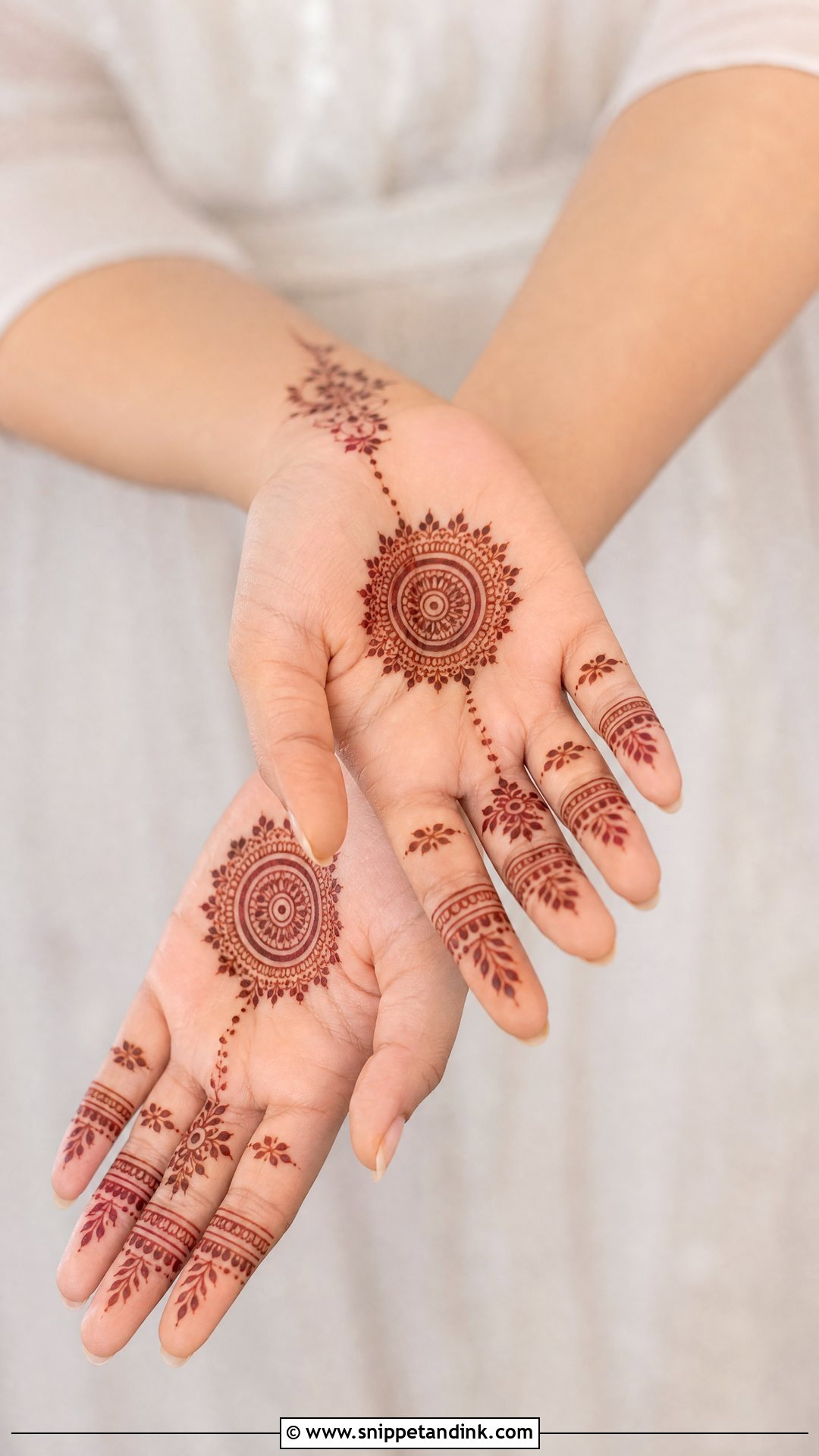
Minimal can look underdressed at a wedding unless one element is clearly special. A small palm mandala, dainty finger bands, a slim cuff or a single floral trail, with one statement piece, a lotus mandala or a curved Arabic vine, holding it together. It takes a fraction of the time of a full design, which matters if you’re also the one organising the evening. It suits modern outfits and saree gowns, and it fades more gracefully than heavy work over the following week.
13. Sister Wedding Peacock Mehndi
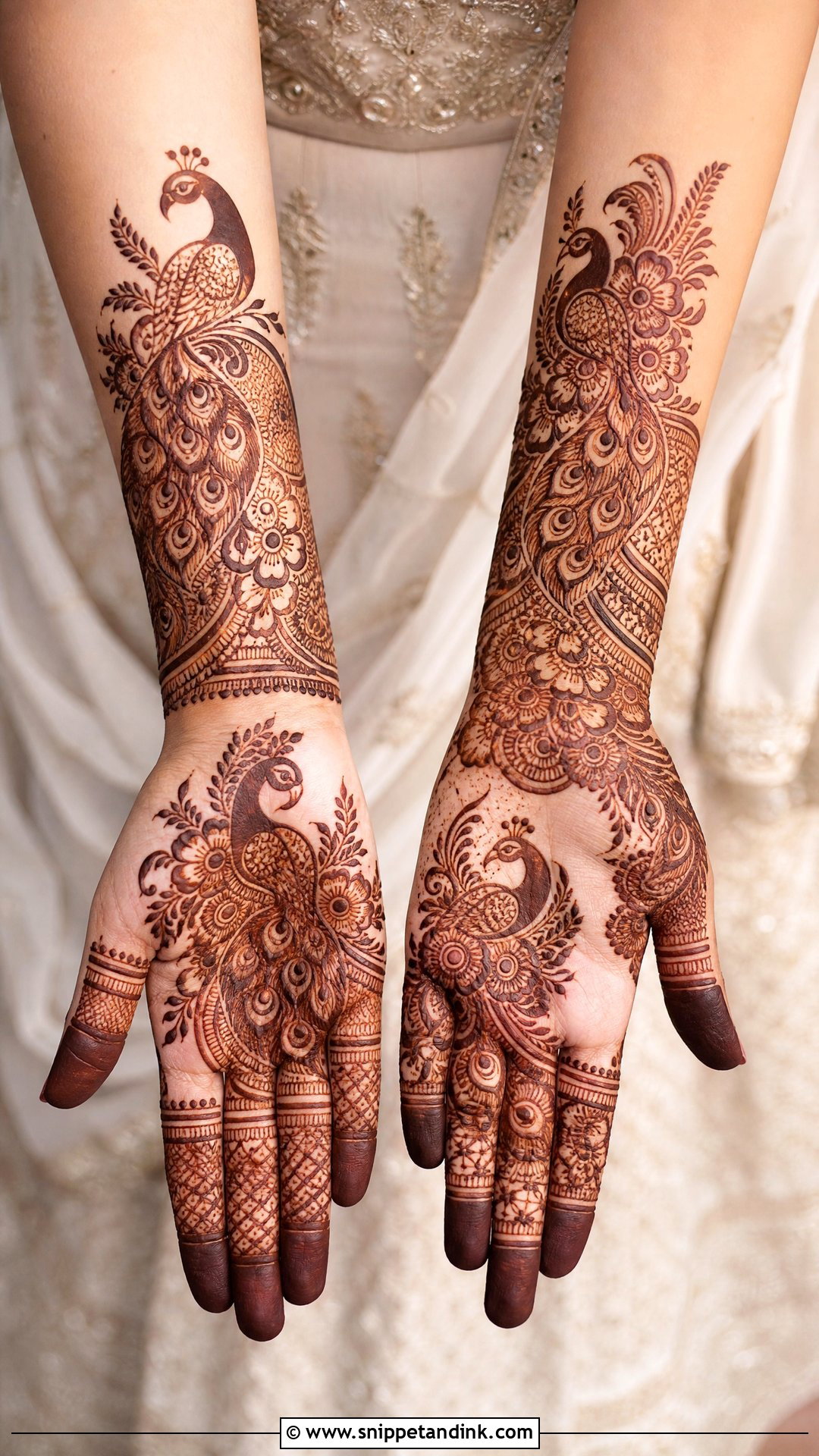
A peacock needs space to be recognisable. I place one bird on the palm or back of the hand and keep the surrounding paisleys and florals a step smaller, otherwise the body and neck get swallowed by filler. Feathers are built from dots, short lines and teardrops, and I leave tiny gaps between them so they don’t bleed together as the paste dries. It goes with a silk saree or a heavy lehenga. On the other hand, a matching floral or mandala keeps the look balanced.
14. Sister Wedding Paisley Mehndi
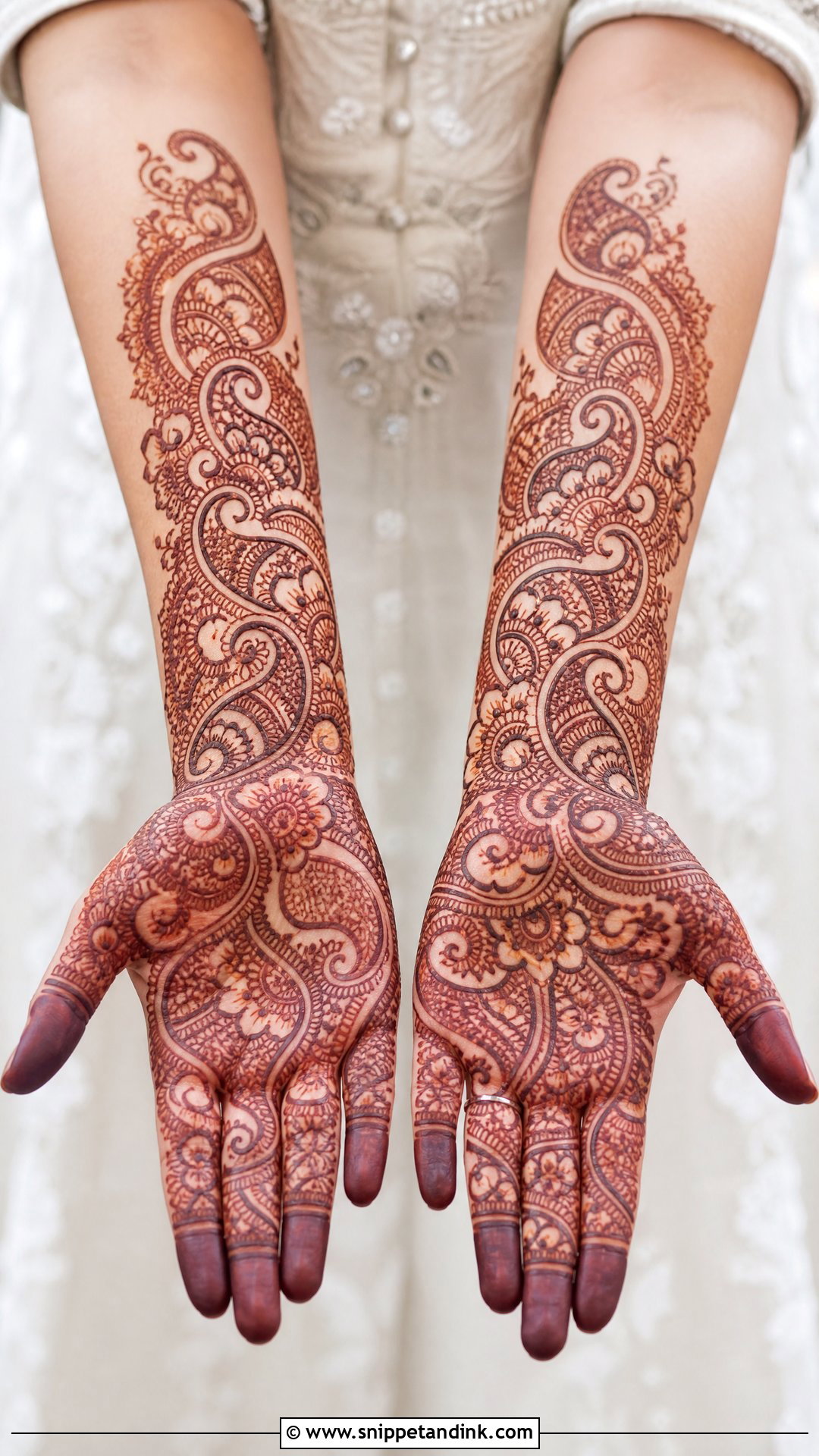
Paisley is the motif I’d call the backbone of wedding mehndi, and it adapts to almost any outfit. On the palm I layer mango shapes with floral fillers, curved vines, dots and shading; on the back, they can flow in a trail from the wrist toward the index finger. Dense paisleys with small fillers read traditional, while larger ones with open space look more current. The curved shape also draws the eye along the hand, which makes fingers look longer.
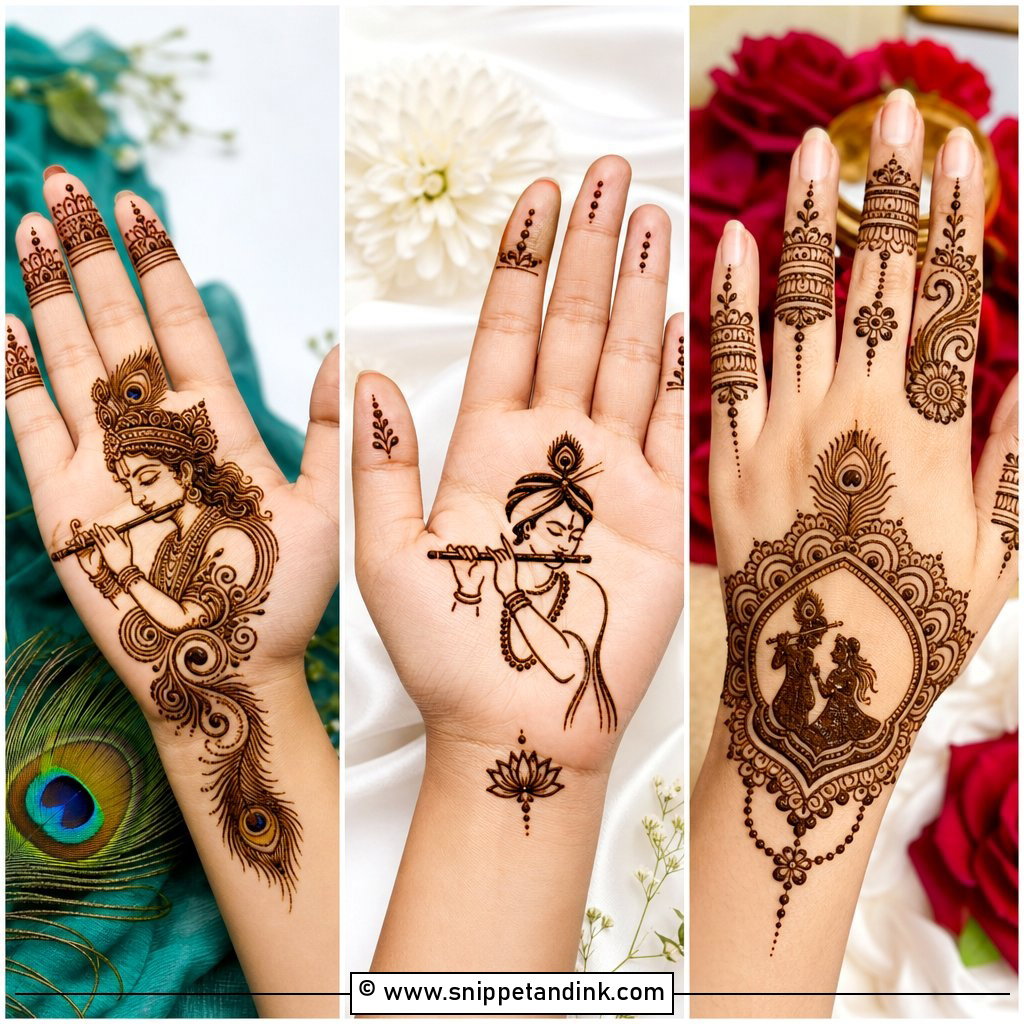

15. Sister Wedding Half Hand Mehndi
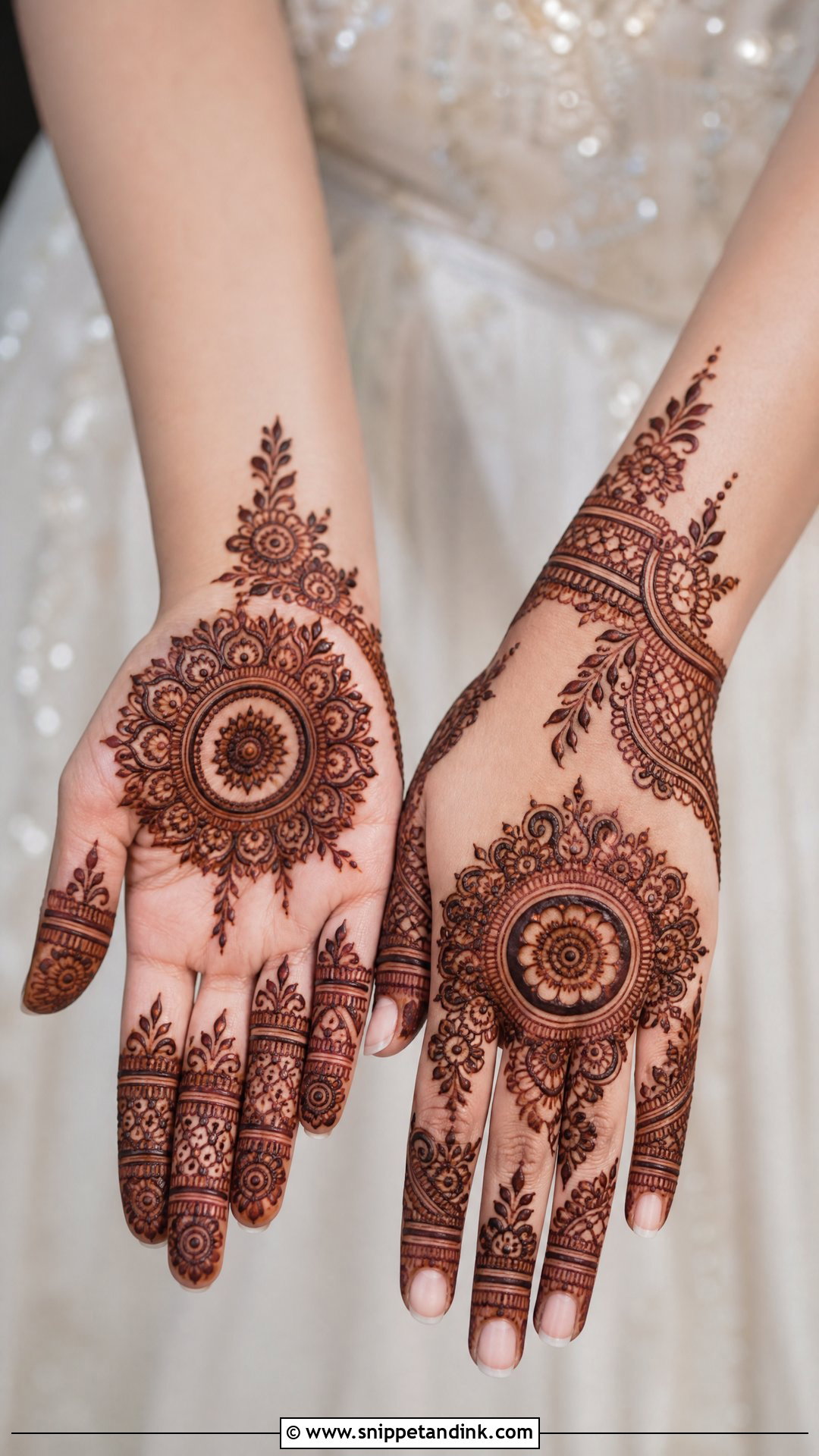
A sister wedding half hand mehndi covers either the palm and fingers or the back and fingers, stopping at or just before the wrist. It’s what I’d recommend if you have work, travel or several outfit changes around the wedding and don’t want henna on your forearm for two weeks. Mandalas, florals, jaali or Arabic trails all fit. The ending is what makes it look finished, so I draw a clean border at the wrist and give the fingers bold detail.
16. Sister Wedding Finger Mehndi
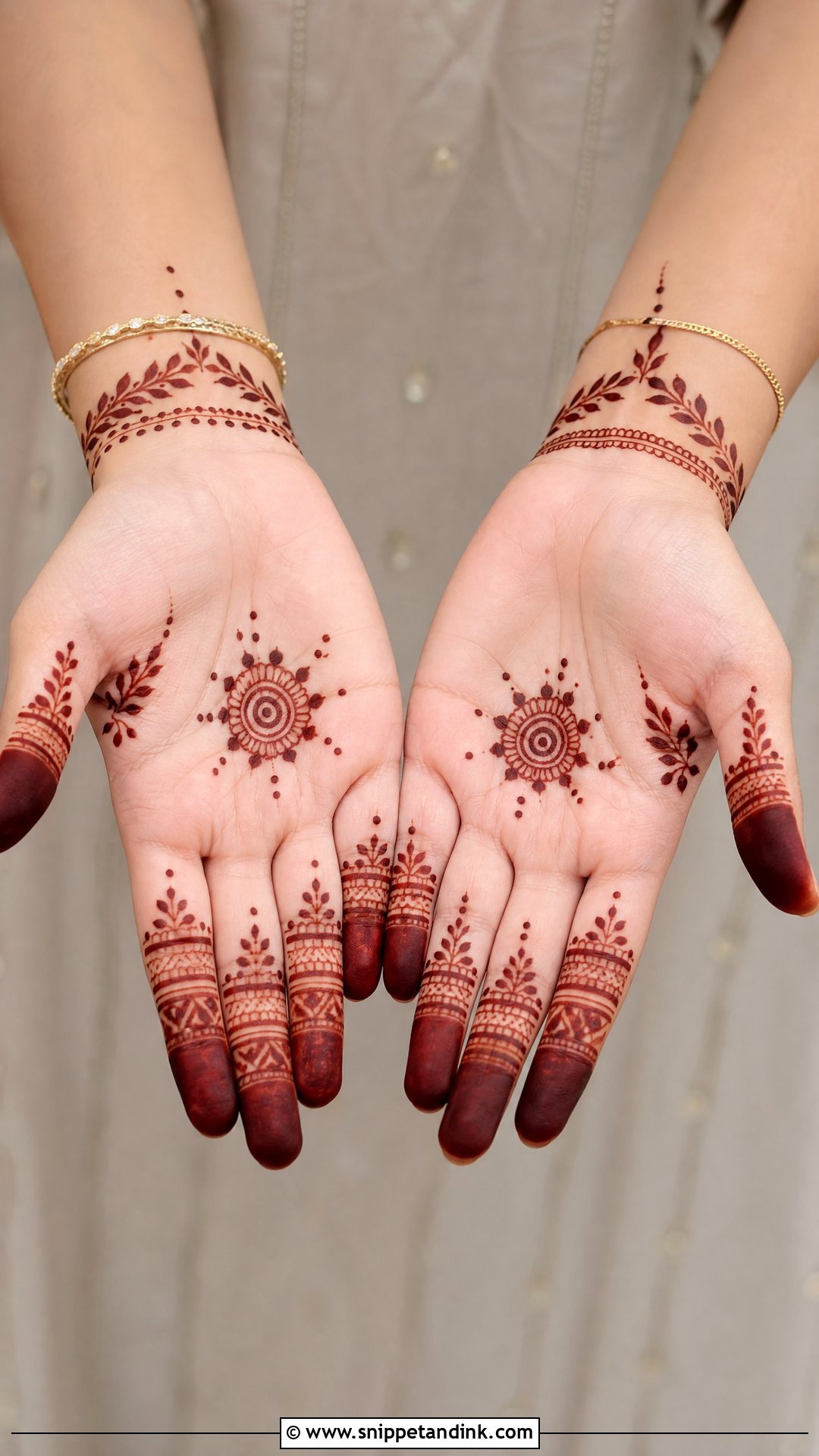
Finger-focused designs leave the palm nearly bare and put all the work on the fingers: bands, leaves, checks and filled tips, with perhaps a slim bracelet or a tiny flower on the back of the hand to tie it together. It looks fashionable with rings and nail art. Fingertips take the darkest stain on the whole hand, so even a light design reads strongly. I vary each finger slightly while keeping the motifs related, so the hand looks deliberate.
17. Sister Marriage Wrist To Forearm Mehndi
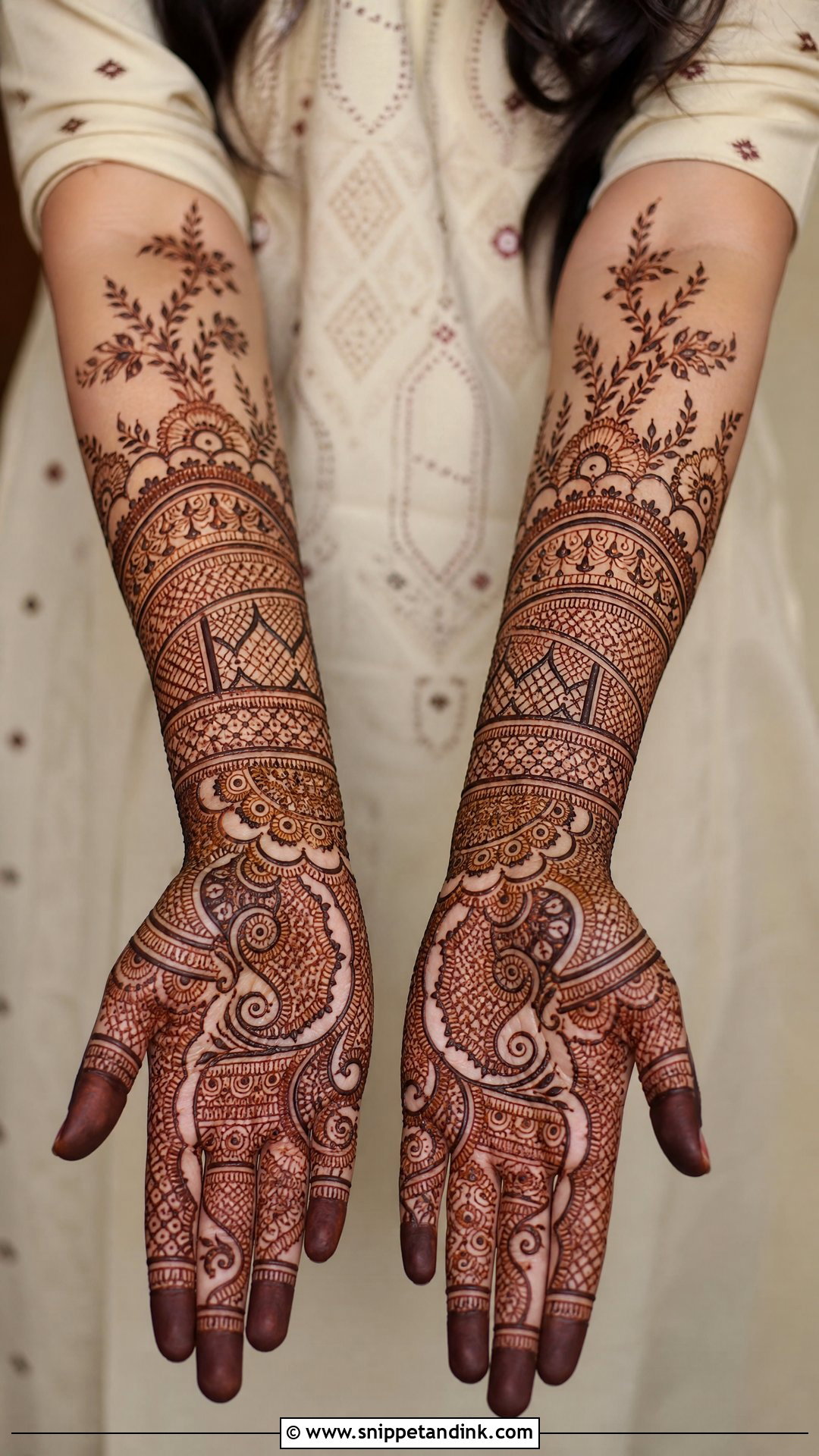
Wrist to forearm work suits short sleeves, sleeveless blouses and bangles worn a little higher up the arm. I begin with a floral cuff at the wrist and travel upward with paisleys, vines, jaali bands and small leaves, keeping the palm simpler so the arm carries the weight. The most common mistake is a hard stop halfway up the arm. I taper the pattern so it fades out. Be aware that forearm skin stains lighter than hands, so the arm will look softer than your palms on the day.
18. Sister Wedding Gulf Mehndi
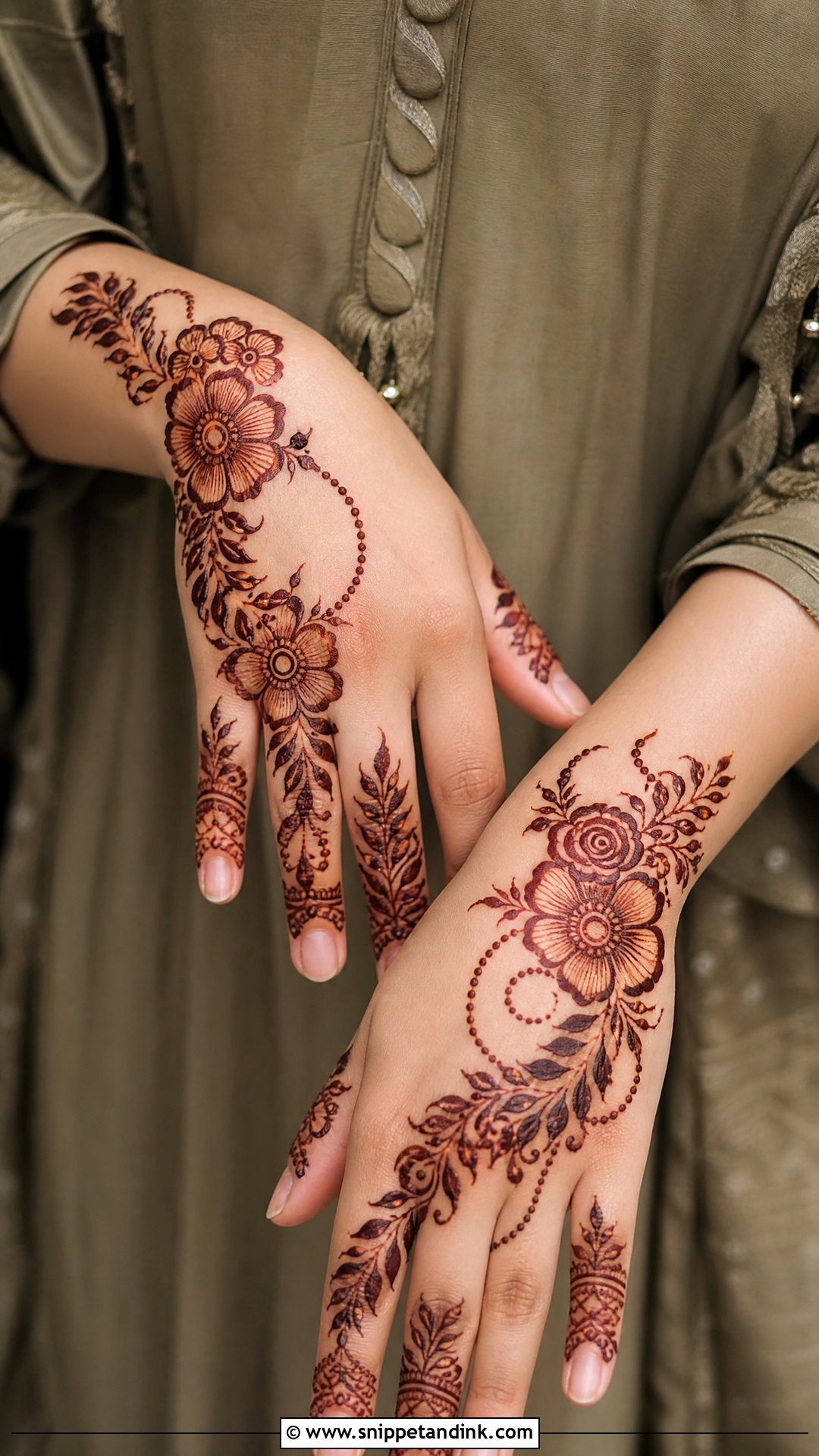
Gulf style is about thick, confident outlines: large flowers, leafy trails and lots of open skin. I use a slightly wider cone tip for those outlines because they’re meant to stain bold and read clearly in close-ups. The design usually starts at the wrist, crosses the back of the hand on a diagonal and finishes on two or three fingers. It holds its own beside mirror work and sequins. Dotted chains, shaded petals and a neat wrist cuff complete it.
19. Sister Wedding Moroccan Mehndi
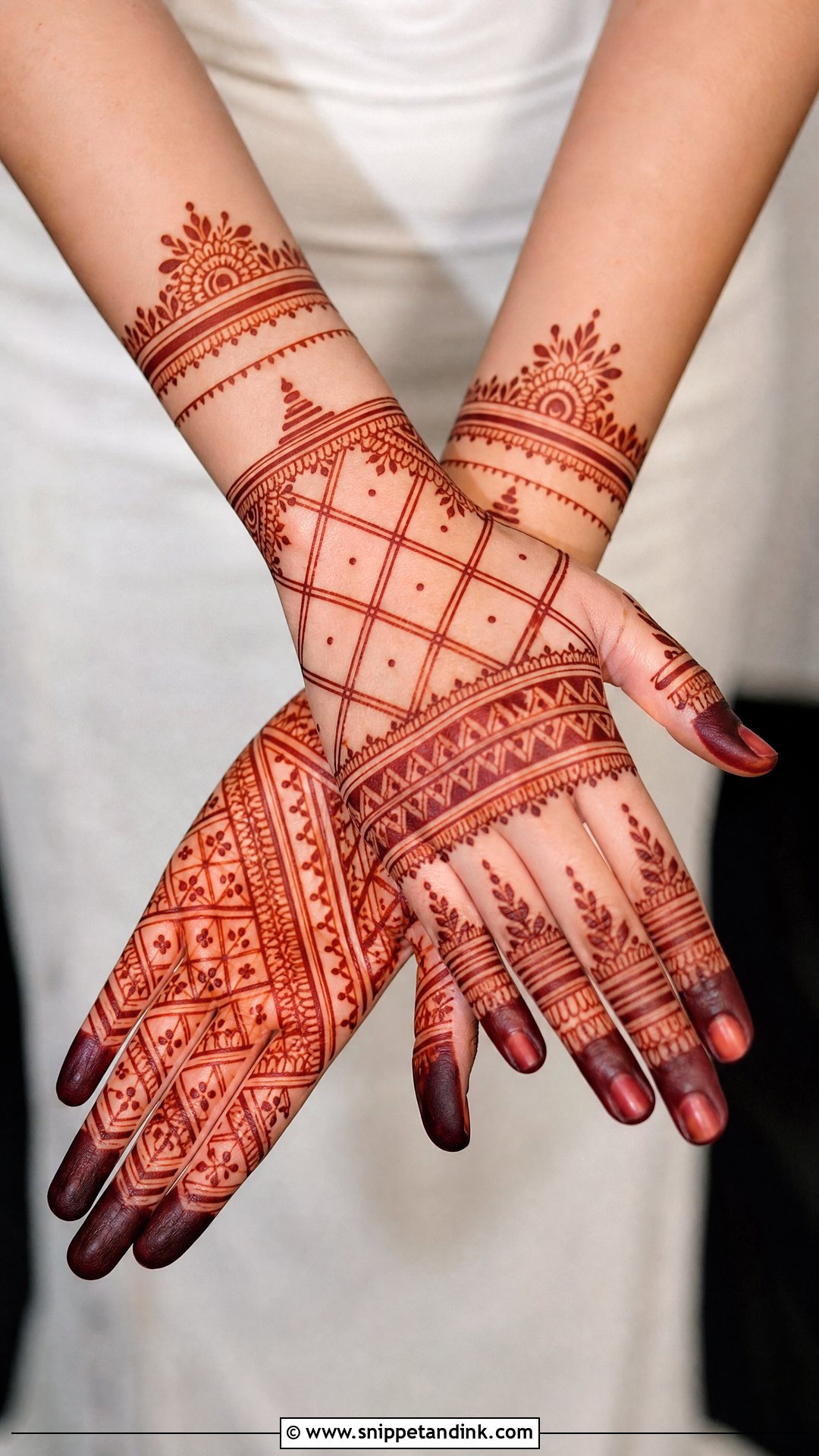
Moroccan mehndi is geometry: diamond grids, triangle bands, straight lines and dots, often in bracelet-like sections. It looks sharp with fairly little coverage, which suits contemporary lehengas and fusion outfits. Straight lines are less forgiving than curves, so any wobble shows; I brace my hand and work in short strokes. If you want it to feel more bridal, a small floral cuff or a mandala at the centre softens the grid.

20. Sister Wedding Matching Mehndi
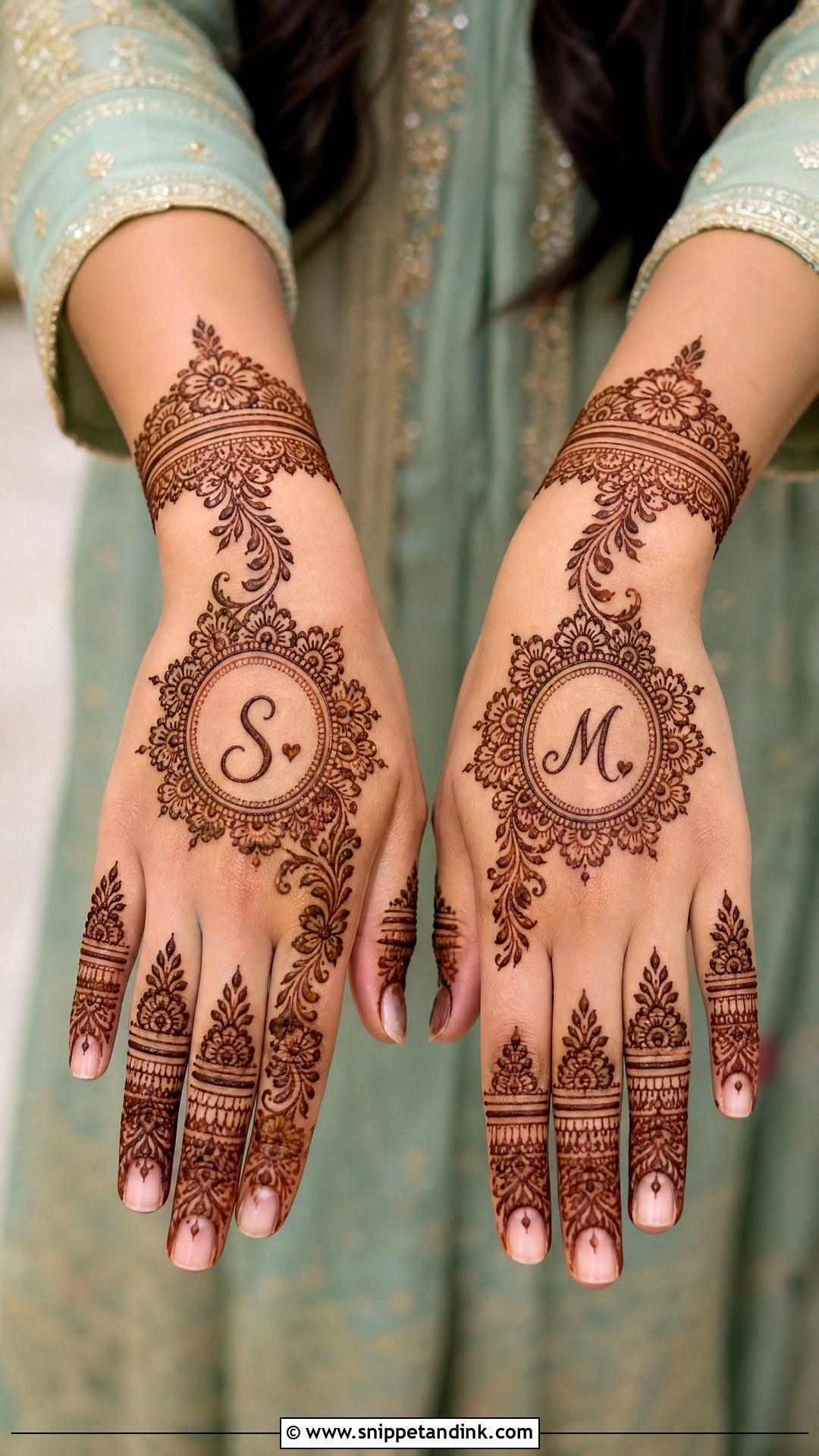
Matching designs are a sweet idea for sisters, cousins or bridesmaids who want to look like a group. I draw the same base on everyone, perhaps a mandala palm or a bracelet back hand, and then change one detail per person: an initial, a flower size, a different wrist border. They look related without being copies. Medium coverage works best, since a big group means the artist’s time is split, and nobody wants to be the last one waiting with wet hands.
Getting a Dark Stain When You Can’t Sit Still
Natural henna starts as a bright orange when the paste comes off and deepens to reddish brown over the next one to two days. That timing is the first thing to plan around: have your mehndi applied one to two days before the function where you most want it to look its best.
- Let the paste dry, then dab on a little lemon and sugar mix so it stays moist and stuck to the skin. Dried paste that flakes off early takes the colour with it.
- Keep it on as long as you can; overnight gives the deepest result. Wrap loosely in tissue if you need to sleep in it.
- Scrape the paste off with a blunt edge or rub it away dry. Avoid washing your hands for twelve to twenty-four hours if you can.
- Warmth helps the stain develop, so keep your hands warm rather than holding cold drinks all evening.
- Avoid soap, sanitiser and chlorine for the first day. Before showers, a thin layer of balm protects the design.
One safety point I don’t compromise on: never let anyone apply black henna or a product promising a jet-black stain in an hour. Those often contain PPD, a hair-dye chemical that can cause severe skin reactions and blistering. Real henna stains brown to maroon, never black. If you have very sensitive skin, ask your artist for a small patch test on the inside of your arm a day or two early.
The Bride Leads, Her Sister Frames Her
Your sister’s mehndi should be fun, not a source of stress. Your role, your outfit, how much you need your hands free and how long you can sit all point toward the right coverage. Traditional sisters tend to love full hand, paisley, peacock or mandala work; Arabic, minimal, bracelet and finger designs are lighter and quicker. Personalised or matching mehndi adds family meaning. Whichever you choose, check with the bride first, then let your artist suggest the layout that suits your hands.
You'll Like These Ideas:











Leave a Reply