
The bride’s sister sits in my chair with a particular brief: she wants mehndi that looks properly festive in the photos, yet it has to stay a step lighter than the bride’s. Getting that balance right is mostly about layout and coverage, not about leaving out detail. Below are 25 directions I’d offer a sister, from full Indian hands and flowing Arabic trails to back-hand jewelry patterns and quick finger designs. For each one I’ve noted how long it takes, where it sits best on the hand and what it needs to stain well, because the outfit, the jewelry and the hours you can spare away from the bride all shape the right choice.
How Much Lighter Than the Bride’s Hands?
There’s no fixed rule, but there is a conversation worth having with the bride before you book. Some brides love their sister in near-bridal mehndi; others want their own hands to be the only full ones in the room. I ask the sister to find out first, because changing a design halfway through a session is far harder than planning it.
When she’s happy either way, I scale three things down rather than removing detail: the length up the arm, the density of the filling, and the size of any personal motif. A sister’s design that stops a few inches below the bride’s and leaves more open skin reads as clearly secondary in group photos, even if the individual motifs are just as intricate.
- Ask whether the bride is including initials, a portrait or a doli, and avoid repeating them.
- Book your session separately from hers if you can; on the bride’s mehndi night the artist’s time goes to her first.
- Moisturisers and oils create a barrier, so arrive with clean, dry hands and no lotion.
1. Full Hand Bridal Sister Mehndi Design
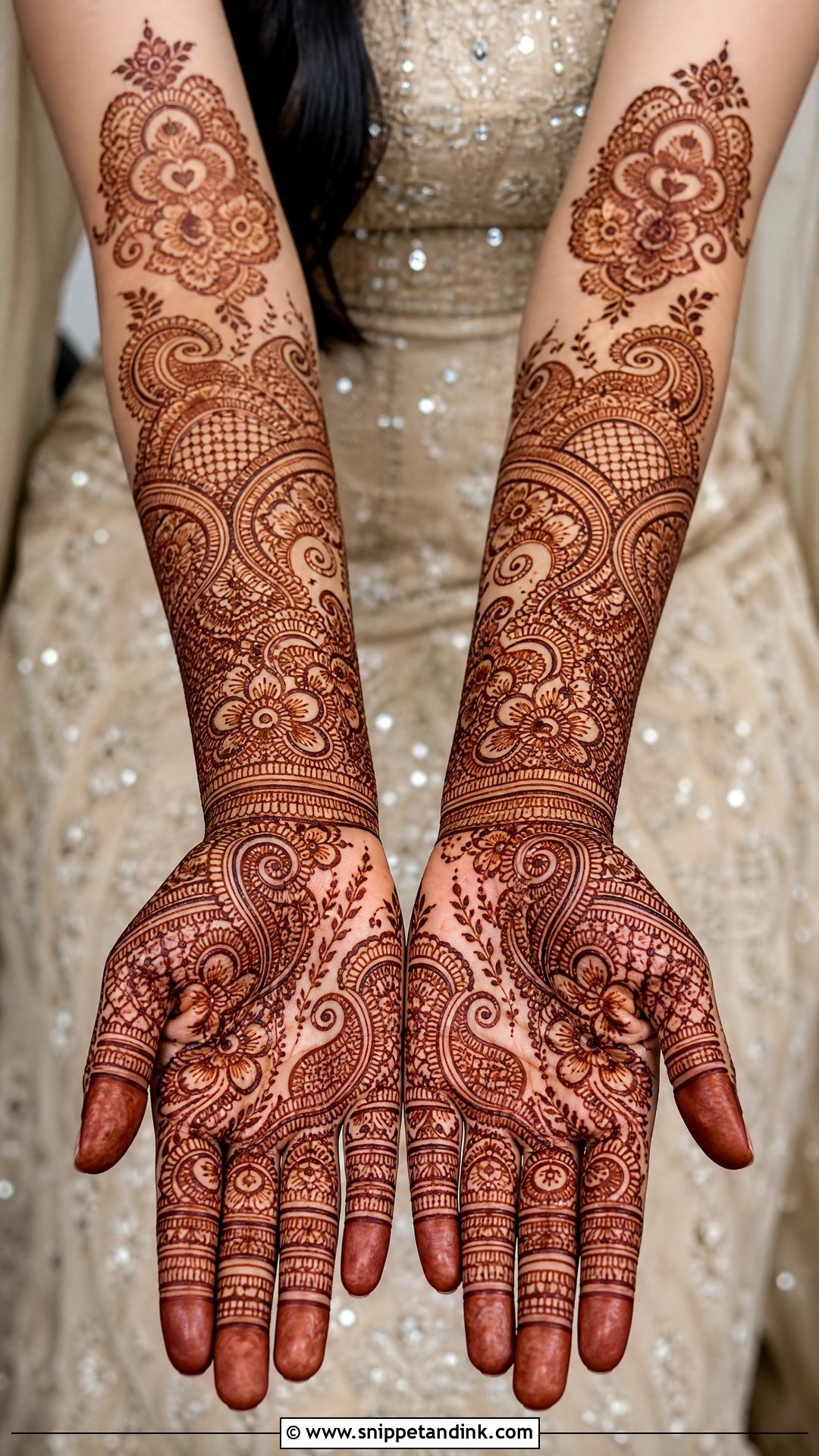
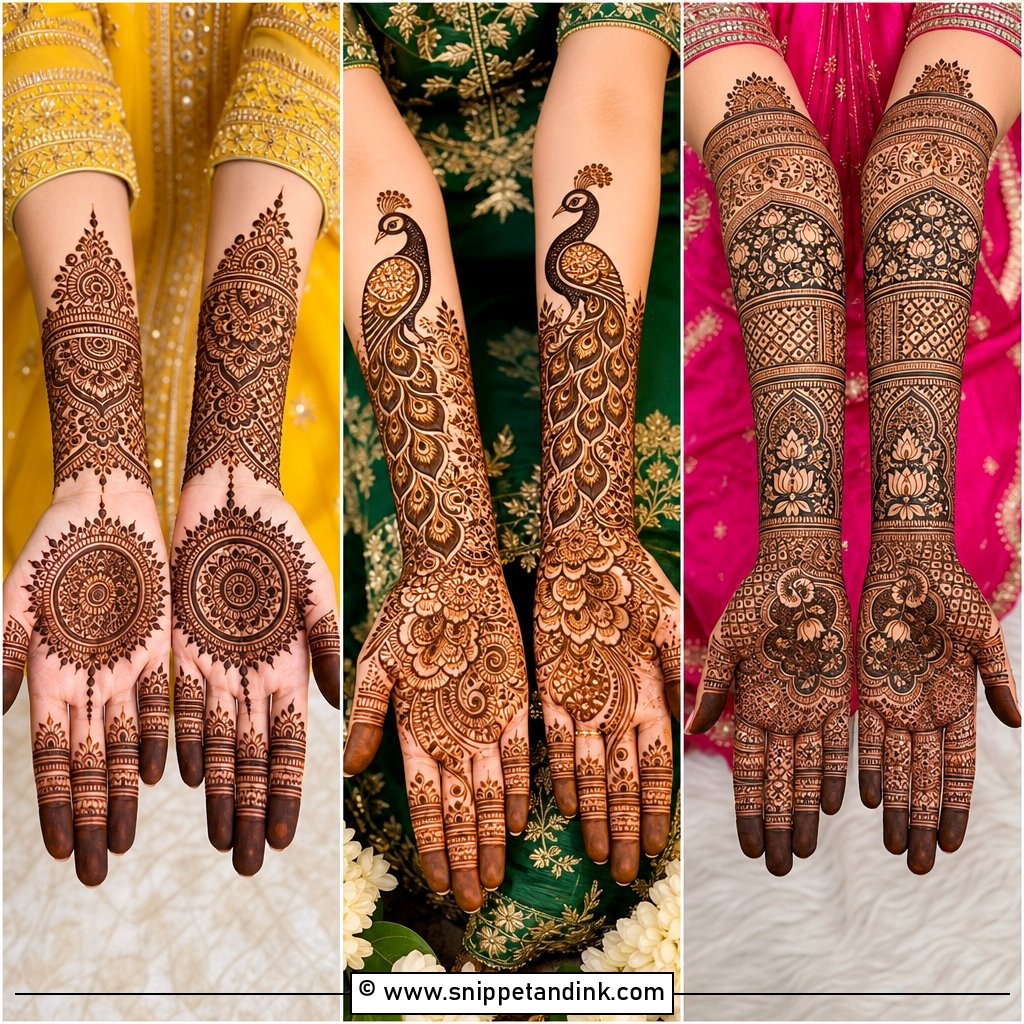
Full coverage for a sister usually means palm, fingers, wrist and part of the forearm, filled with paisleys, florals, curved vines and small mandalas. The difference from the bride’s hands is breathing space. I leave small open gaps between motifs so the design reads as rich rather than solid, and I stop the forearm a little lower than hers. It sits naturally with lehengas, sarees and anarkalis. If you want something personal, initials or a tiny doli tucked into the wrist border work better than a large central feature. Plan on a few hours per pair of hands.
2. Arabic Bridal Sister Mehndi Design
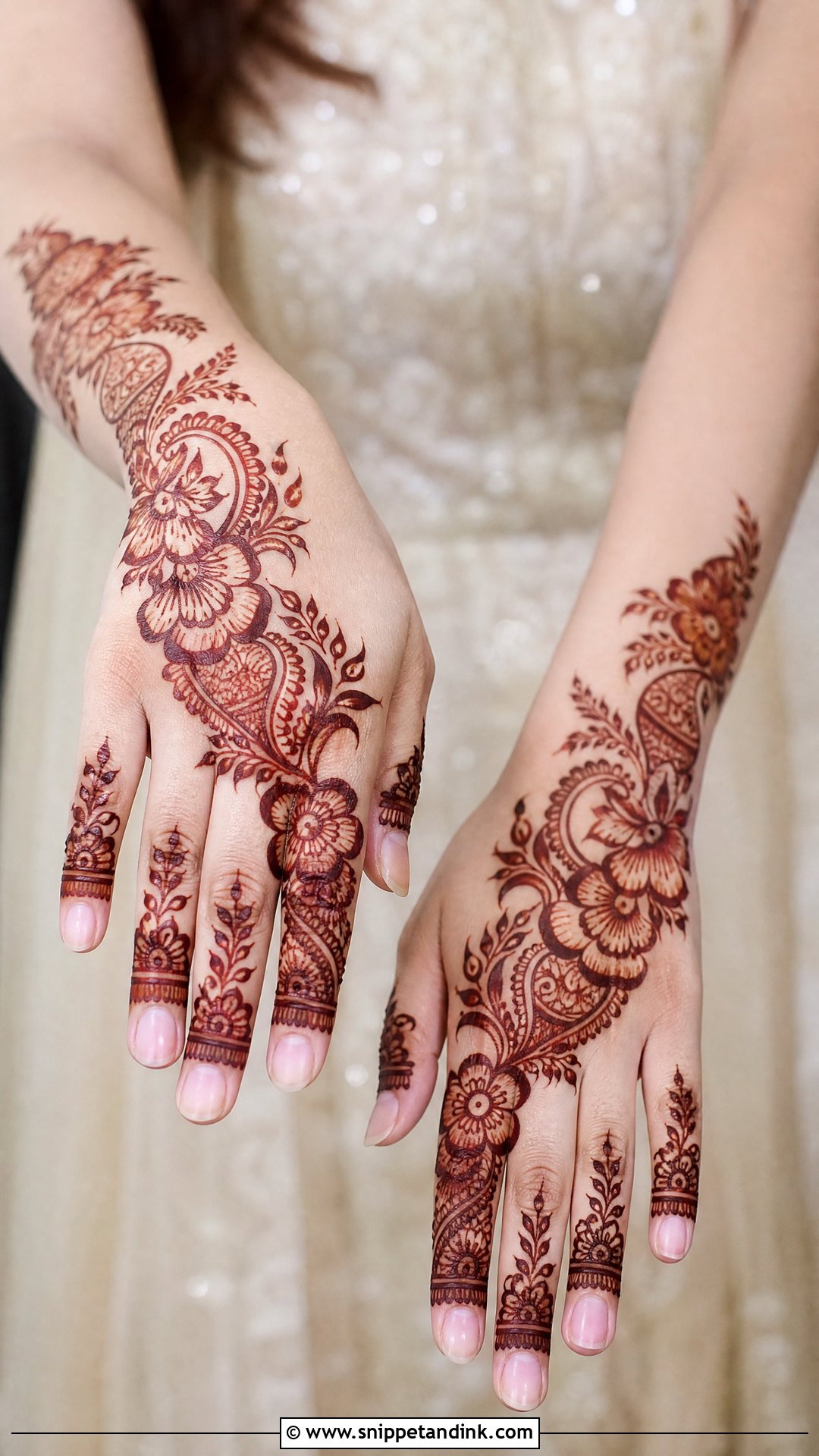
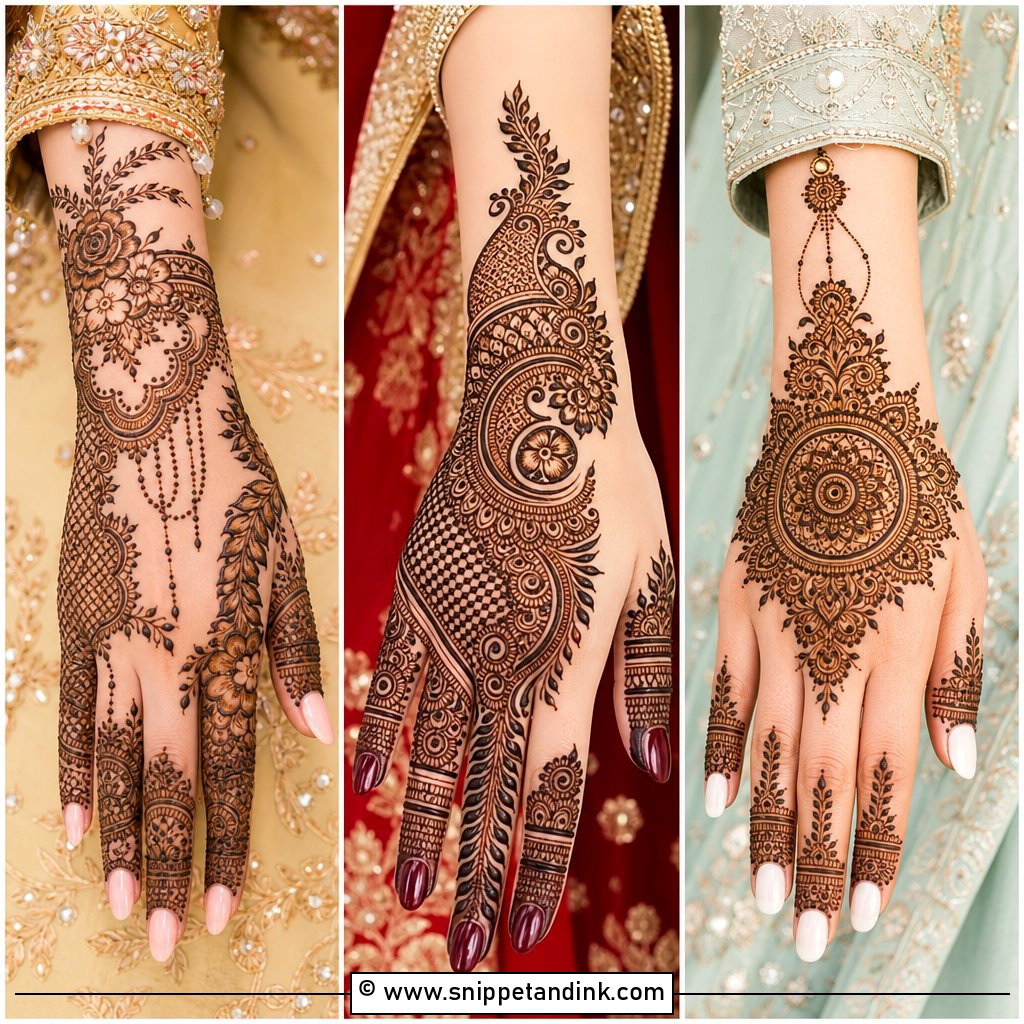
Arabic layouts are what I suggest when a sister is running between events, because they go on far quicker than dense Indian work. The design moves diagonally from one side of the wrist toward the fingers in a flowing vine, with large flowers, leafy trails and shaded petals. The open skin between motifs is what makes each flower stand out once the stain develops. If your outfit is heavily embroidered, this is the style that complements it instead of competing.
3. Indo-Arabic Bridal Sister Mehndi Design
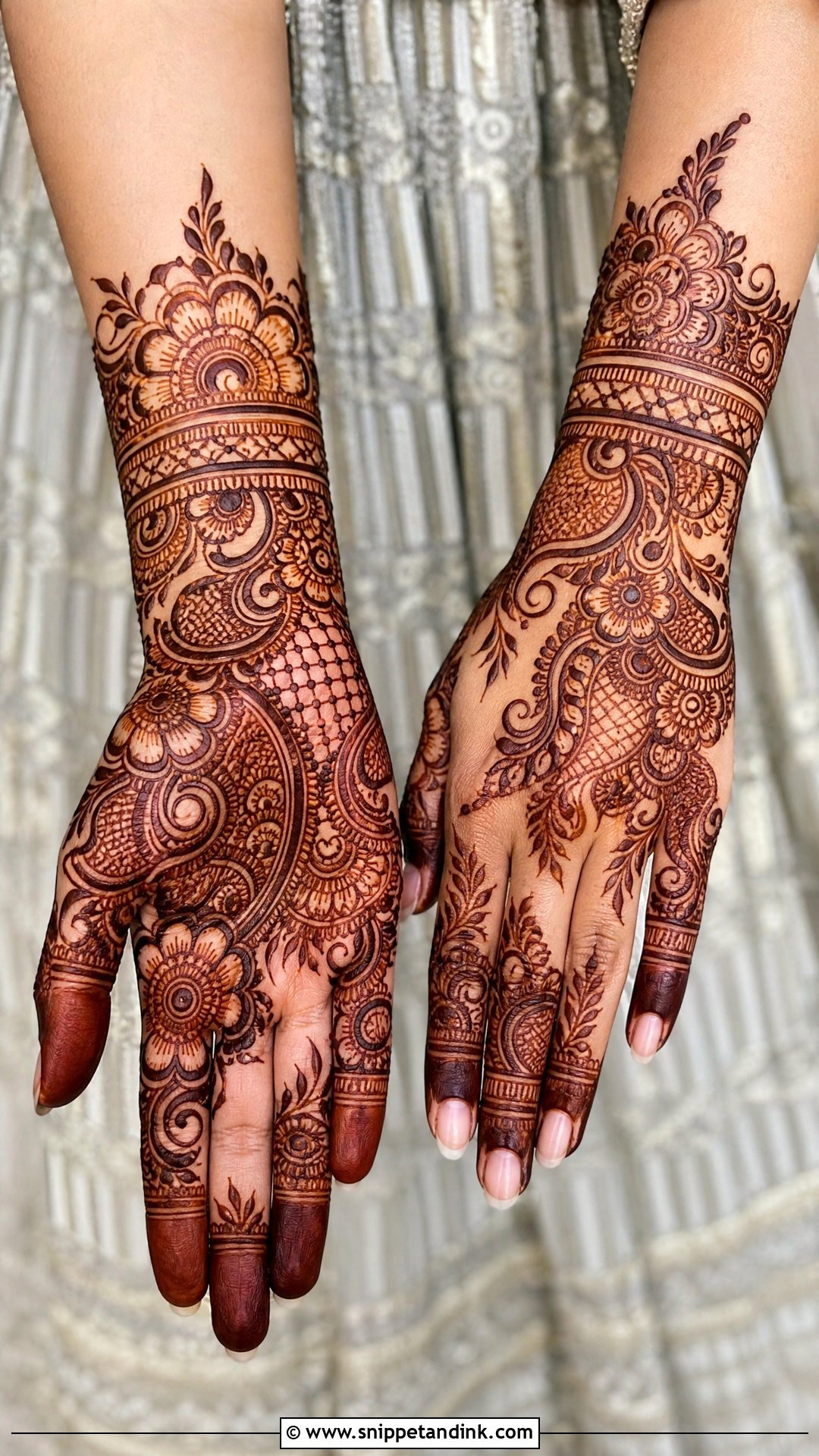
Mixing the fuller filling of Indian work with the flowing Arabic layout gives you an Indo-Arabic bridal sister mehndi design, and it’s the one I do most for sisters. Bold flowers, paisley trails, fine checks and neat finger detail, usually with a central mandala on the palm and a diagonal trail on the back. It’s easy to scale down for matching bridesmaids too. I always add a slim bracelet band at the wrist, so the design looks finished once bangles or a hathphool go on.
4. Back Hand Bridal Sister Mehndi Design
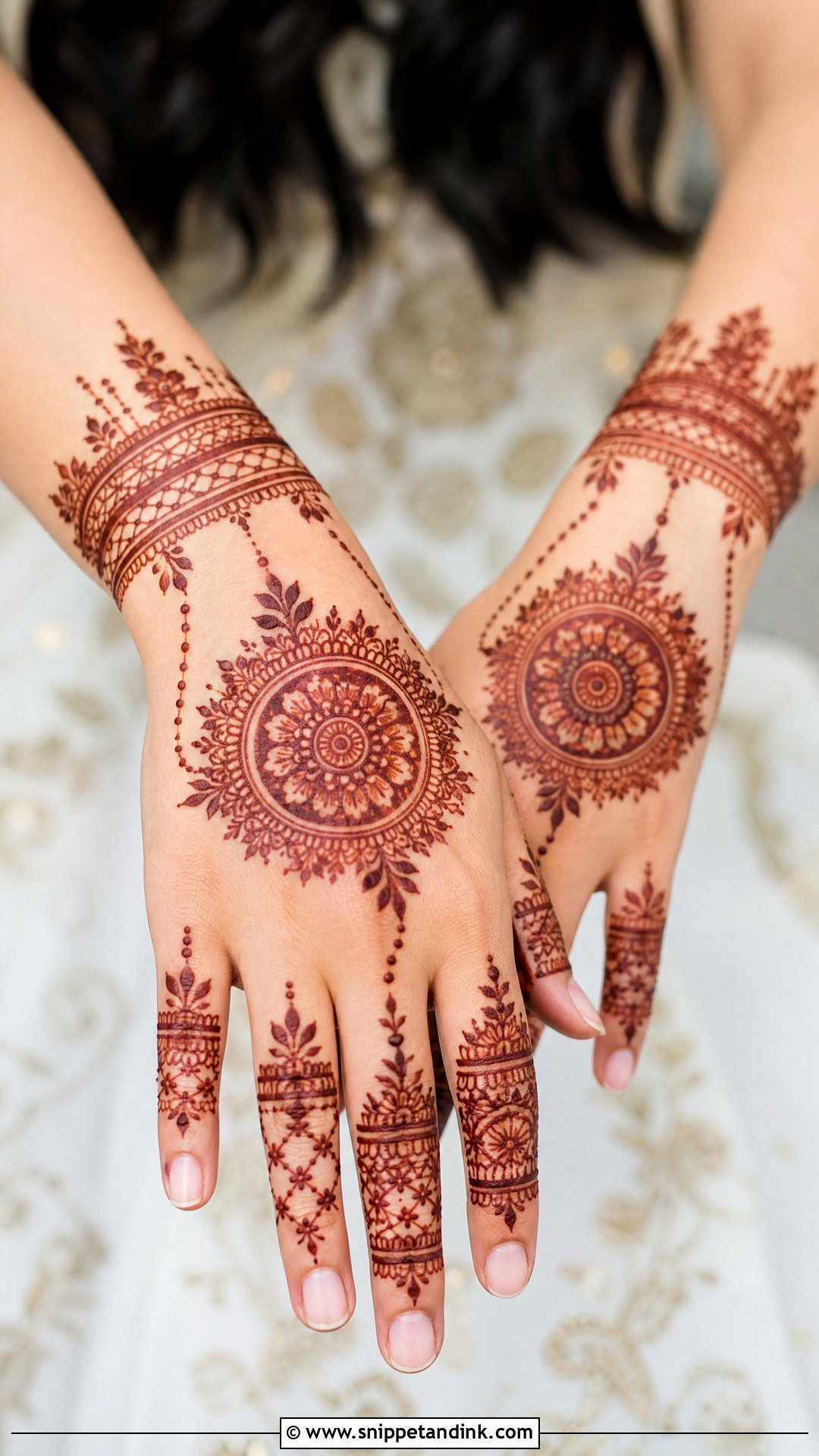
The back of the hand shows up in ring shots, dance videos and every candid, so a back hand bridal sister mehndi design has to be clean. I start from a central mandala or floral medallion and extend into finger bands and a bracelet-style wrist. Many sisters choose this with a lighter palm, and it’s a practical call: palms do the work of carrying gifts, phones and plates all day, and the paste on a busy palm is the first to smudge before it’s set. Match the flow of the design to where your rings and bangles sit.
5. Front Hand Bridal Sister Mehndi Design
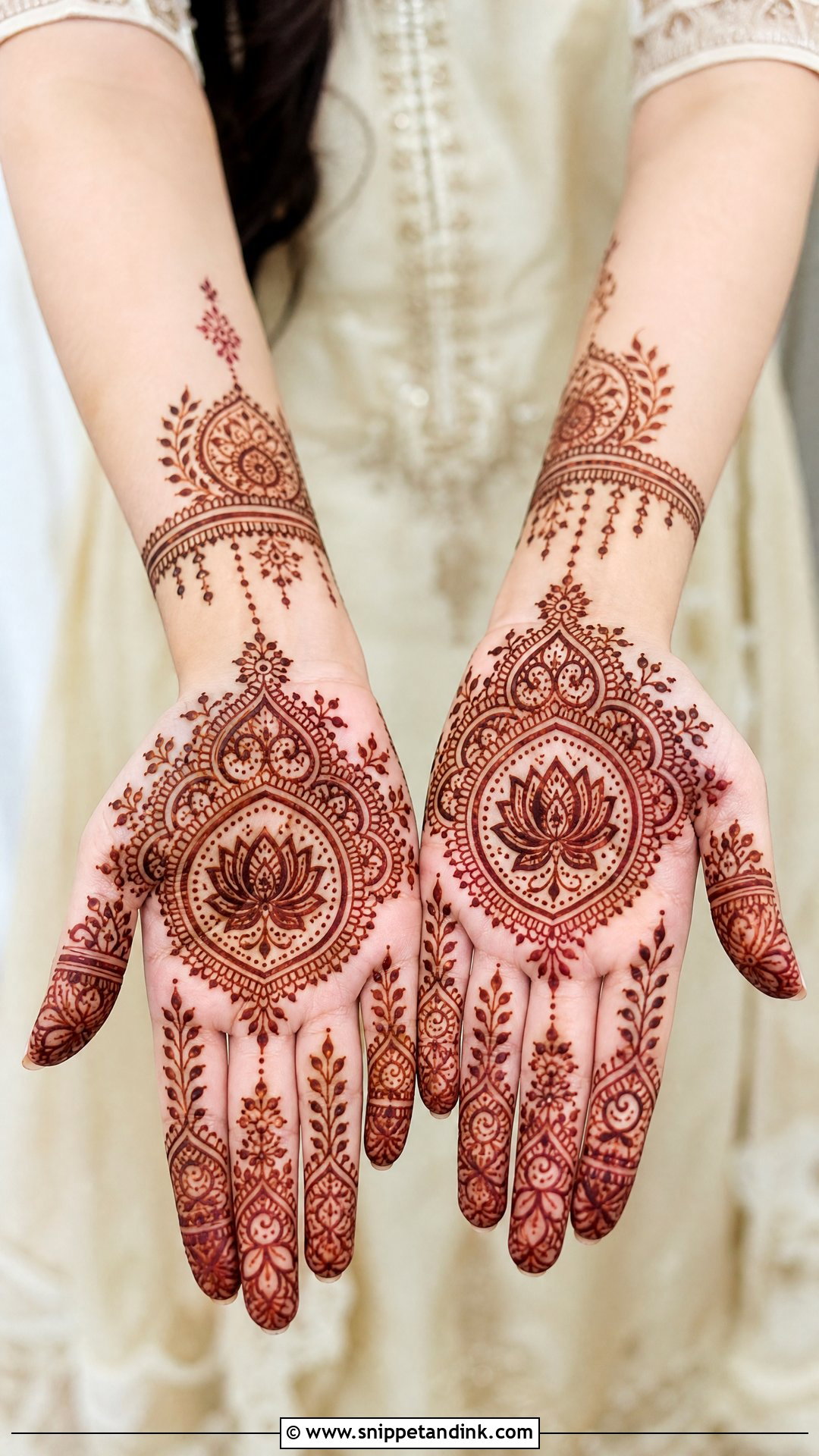
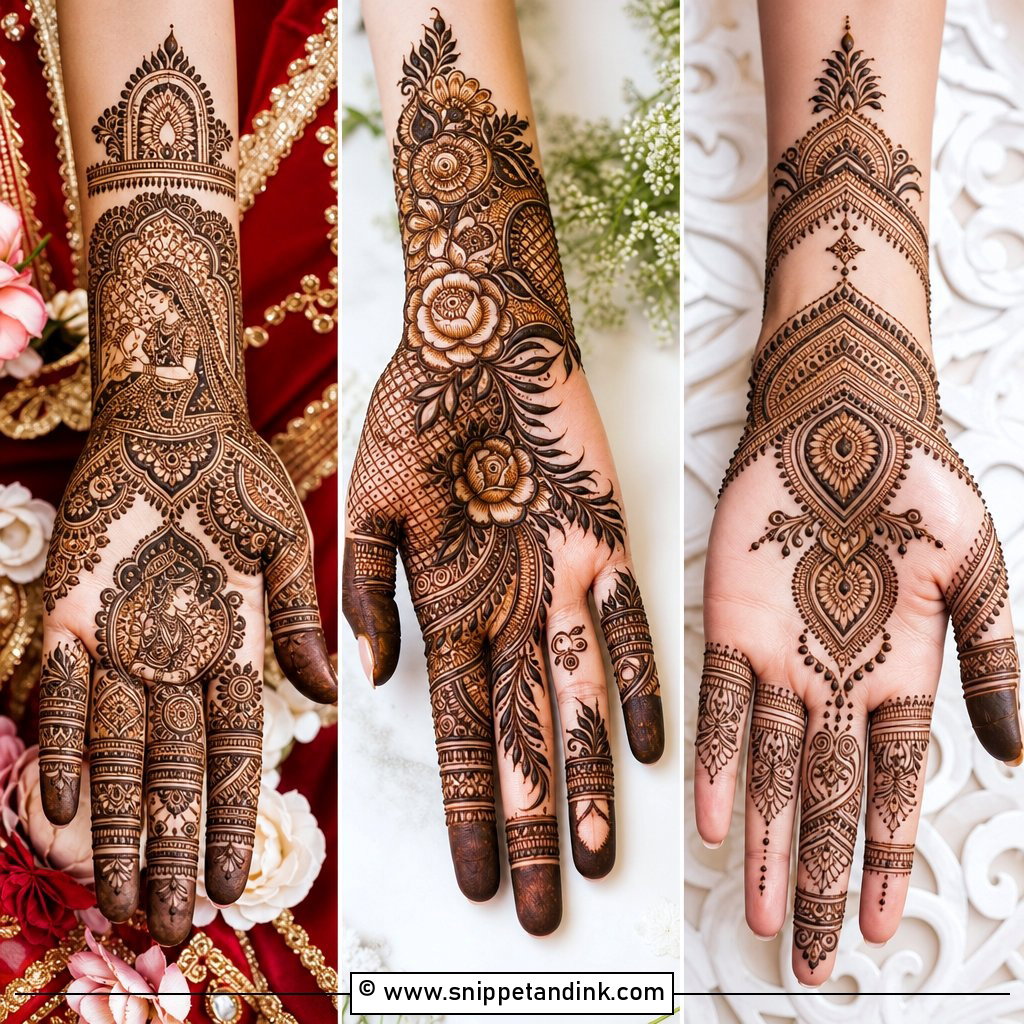
Palms get opened for blessings, rituals and photos, so they need a clear focal point: a mandala, lotus or floral circle in the centre, with vines, dots or checks along the fingers. For a sister I usually suggest a medium-filled palm with a decorated wrist instead of solid coverage to the elbow. Palm skin also takes the deepest stain on the body, so a medium design there will look richer than it did as wet paste.
6. Simple Bridal Sister Mehndi Design
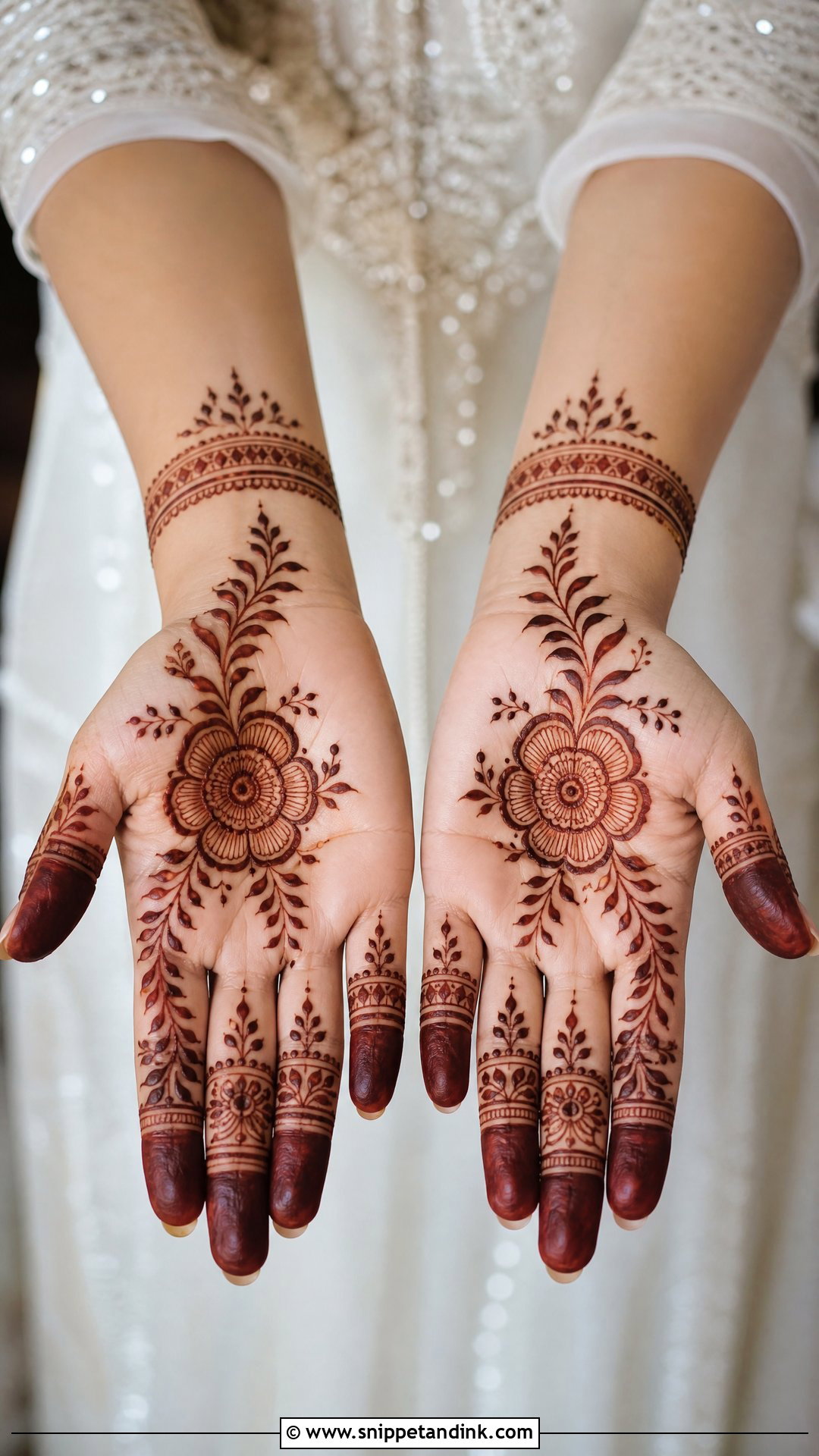
Simple doesn’t have to mean unfinished. A clean palm motif, a slim wrist border, filled fingertips and light vines across the fingers make a complete design for haldi, an engagement or a daytime function. It’s also the sensible pick when your sleeves are heavy or your jewelry is the statement. I draw the motifs a little larger than usual on simple designs, because very fine lines spread out with fewer details around them look faint in photos.
7. Modern Bridal Sister Mehndi Design
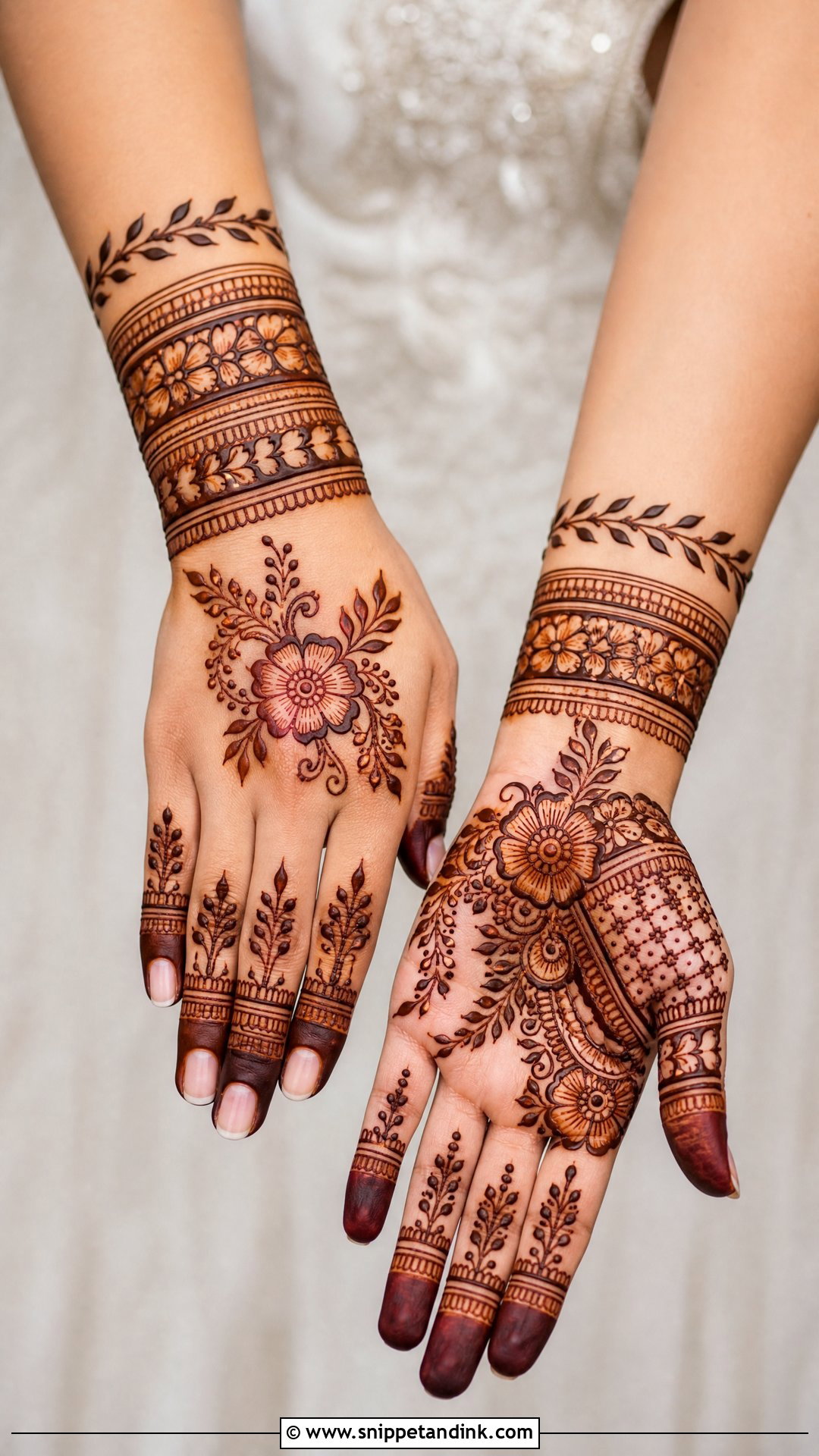
Modern work trades full coverage for negative space, geometric lines, leafy cuffs and bold floral blocks. It suits gowns, fusion lehengas, shararas and contemporary sarees. I’ll often focus it on the back hand with crisp finger details, or make a chic palm with a bracelet-style wrist. Because there is less filling, every line shows, so the cone has to be well mixed and the lines steady. A wobble that would vanish inside a dense Indian pattern stands out here.
8. Minimal Bridal Sister Mehndi Design
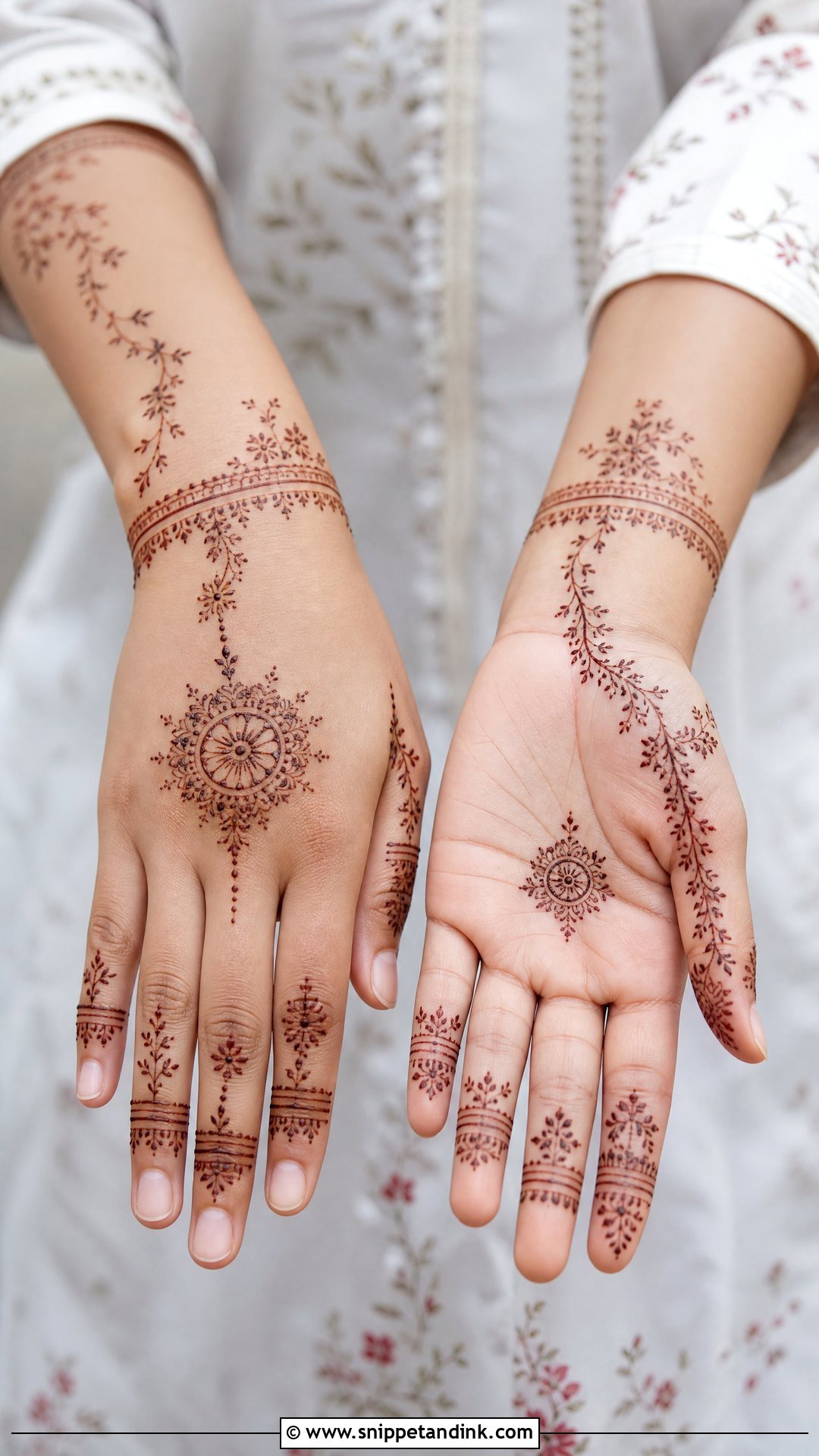
Minimal mehndi uses slim vines, tiny florals, a small mandala, finger bands and a delicate wrist accent. It’s what younger sisters and anyone who prefers subtle work usually ask me for, and it pairs well with pastel outfits and pearls. The trick is connection: even with few motifs, the palm, fingers and wrist should link up so it doesn’t look like something got missed. Natural henna gives a reddish-brown stain, and I keep fillers to a minimum so the design stays airy.
9. Heavy Bridal Sister Mehndi Design
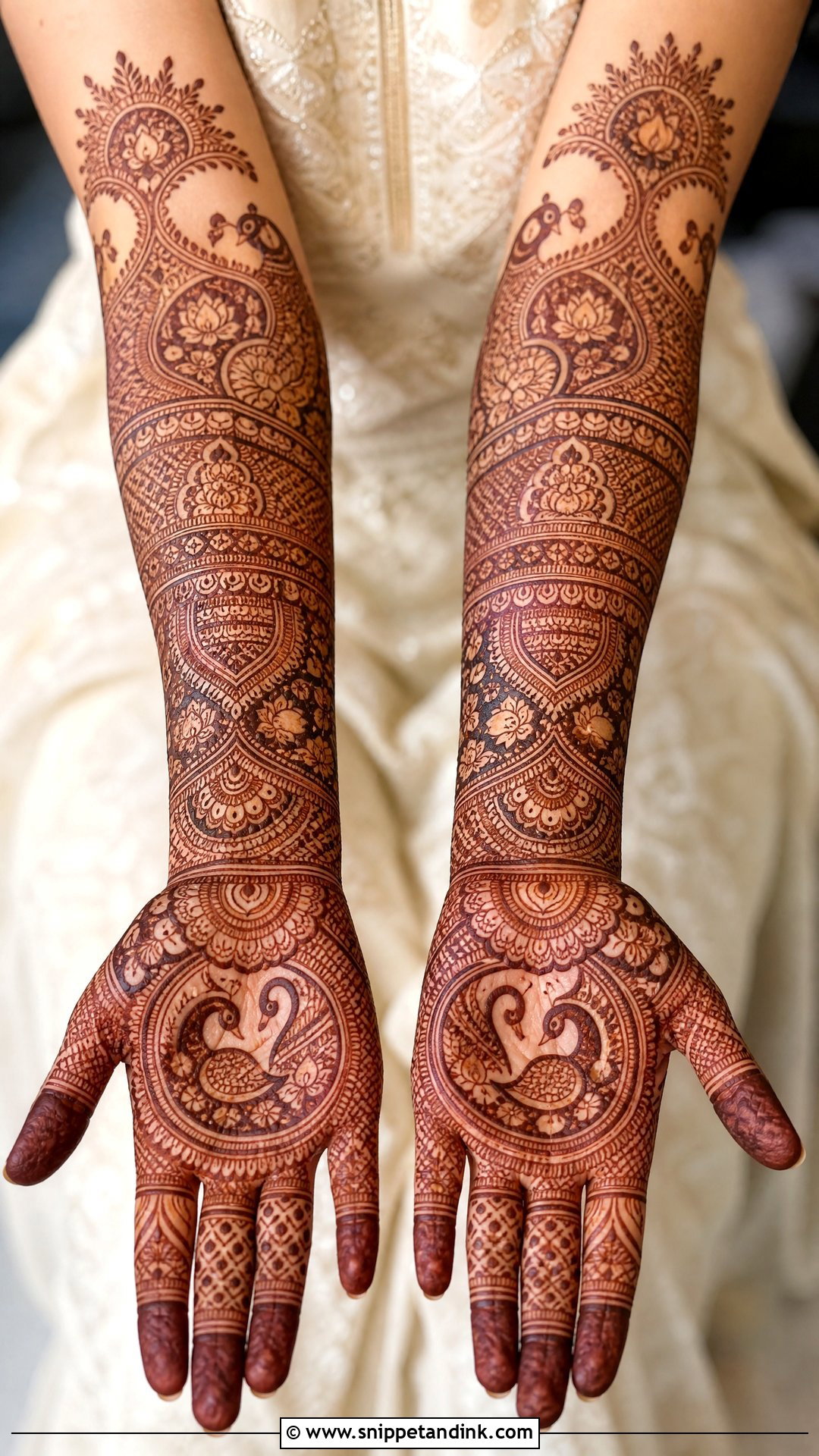
Dense Indian patterns with detailed paisleys, peacocks, lotus motifs, jaali mesh and ornamental borders, running from fingertips to forearm, suit the sister who loves drama. What separates it from bridal work is restraint in the personal details and a layout that doesn’t copy the bride’s. I’d only suggest this for the closest sister, and only if she can sit for a long session and then keep her hands still while it dries. Give the artist enough time; rushed heavy work is where lines merge into blotches.
10. Floral Bridal Sister Mehndi Design
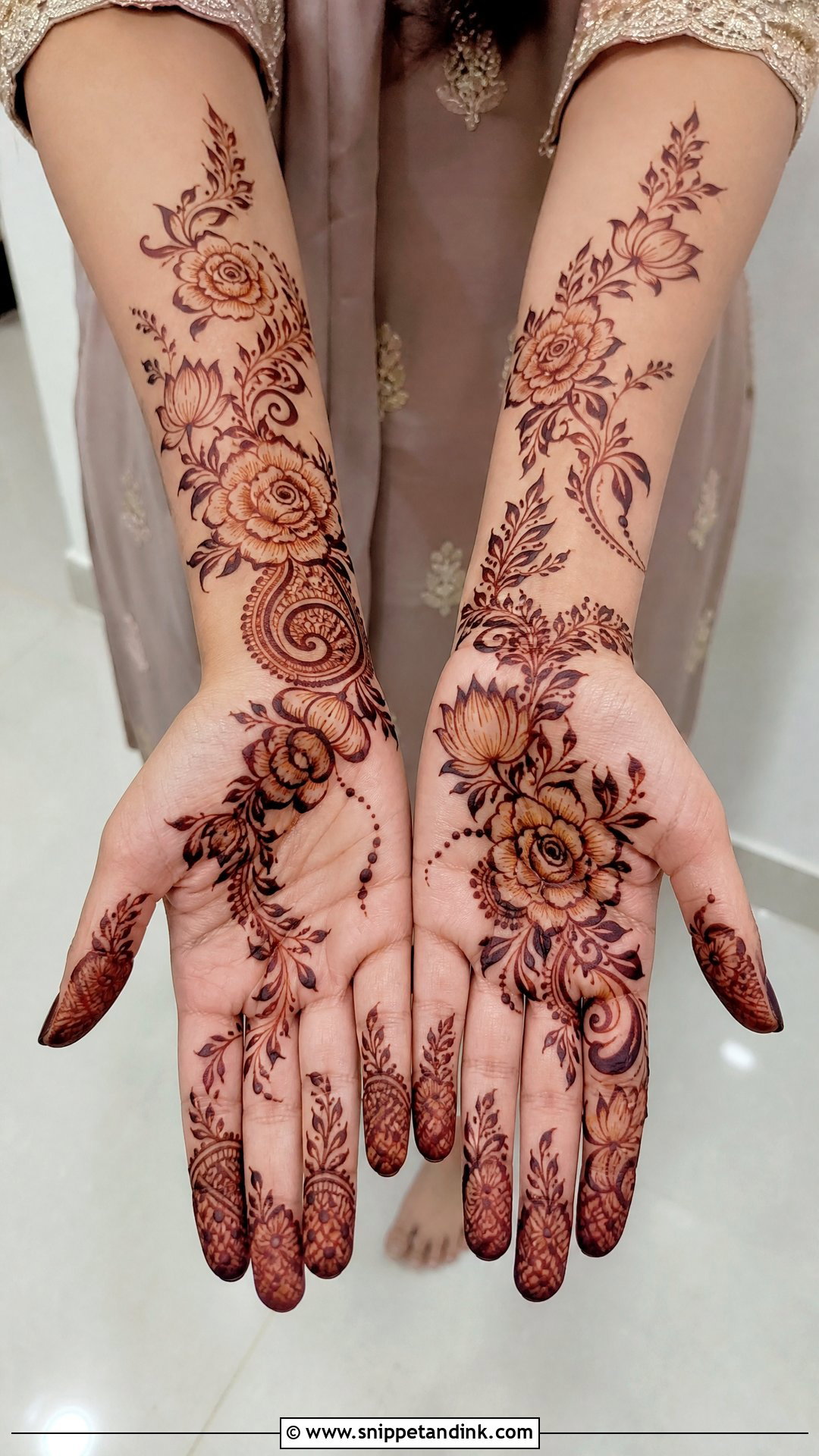
Florals are the most forgiving choice for almost any outfit, from roses and lotus blooms to small daisy-like flowers with shaded petals. They work in Arabic, Indian and Indo-Arabic layouts, so I can make them light or full. A wrist cuff or finger vines finish the pattern. Shaded petals need a slightly thinner paste flow so the shading doesn’t flood into solid blocks, which is something I adjust in the cone as I go. They suit daytime ceremonies and garden venues especially.
11. Mandala Bridal Sister Mehndi Design
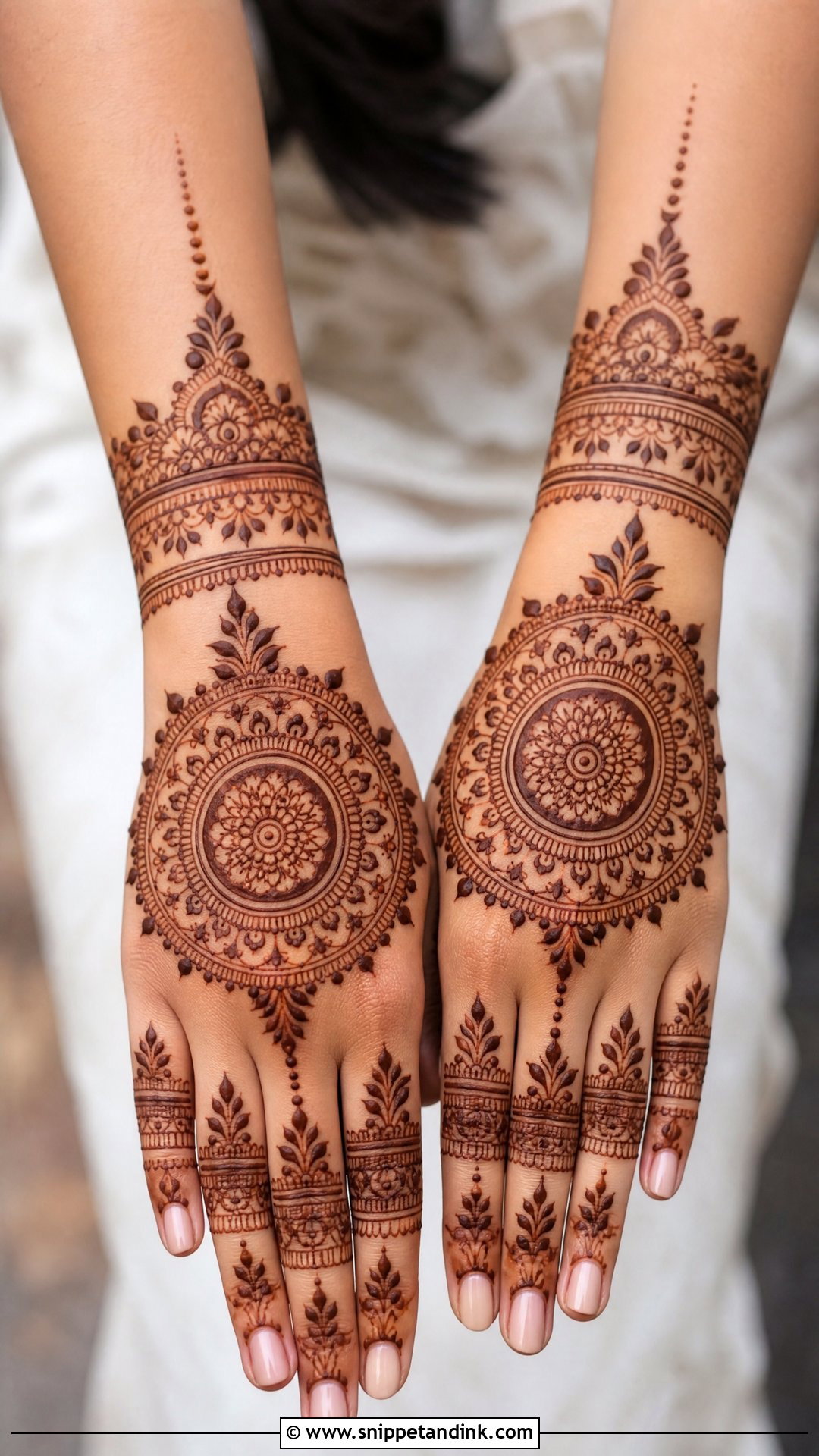
A round mandala in the centre of the palm, ringed with dots, petals and fine circular borders, gives the hand instant balance. The fingers get matching bands and leafy tips, and on the back hand a larger mandala can sit like a piece of jewelry with chains leading to the wrist. Symmetry is unforgiving: an off-centre mandala is obvious, so I mark the centre point on the palm before drawing. Keep the outer ring bold enough to hold its shape once the stain darkens.
12. Peacock Bridal Sister Mehndi Design
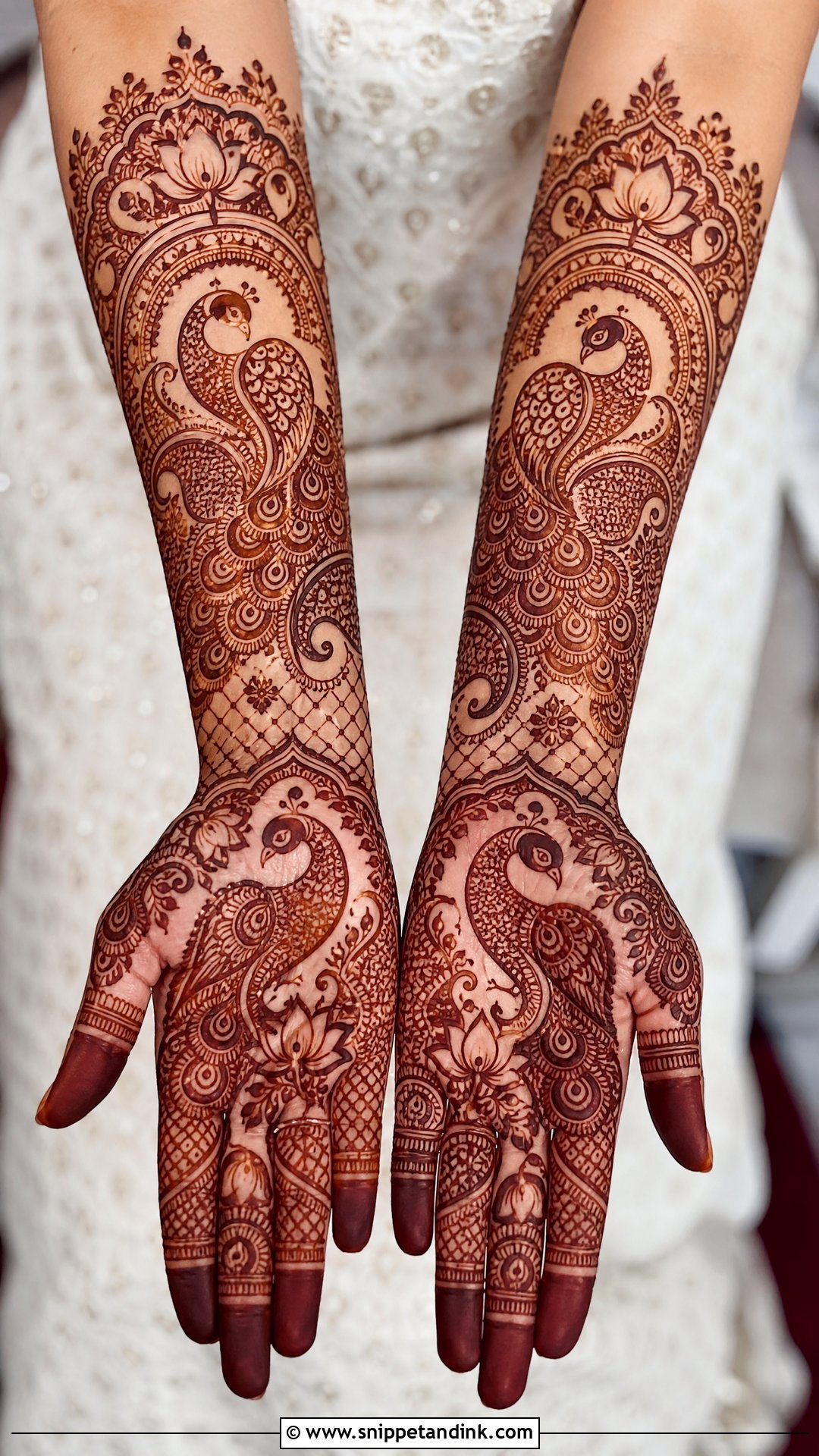
A peacock gives the hands a royal, traditional feel. It can sit on the palm, wrist or forearm, framed by paisleys, leaves and curved lines. One peacock with open floral spacing looks elegant; paired peacocks with dense fillers look heavier, so you can choose your level. It’s a natural match for silk sarees and bright lehengas. The detail that makes or breaks it is clarity in the feathers. If the filler around the bird is too dense, the peacock disappears into the background once stained.
13. Paisley Bridal Sister Mehndi Design
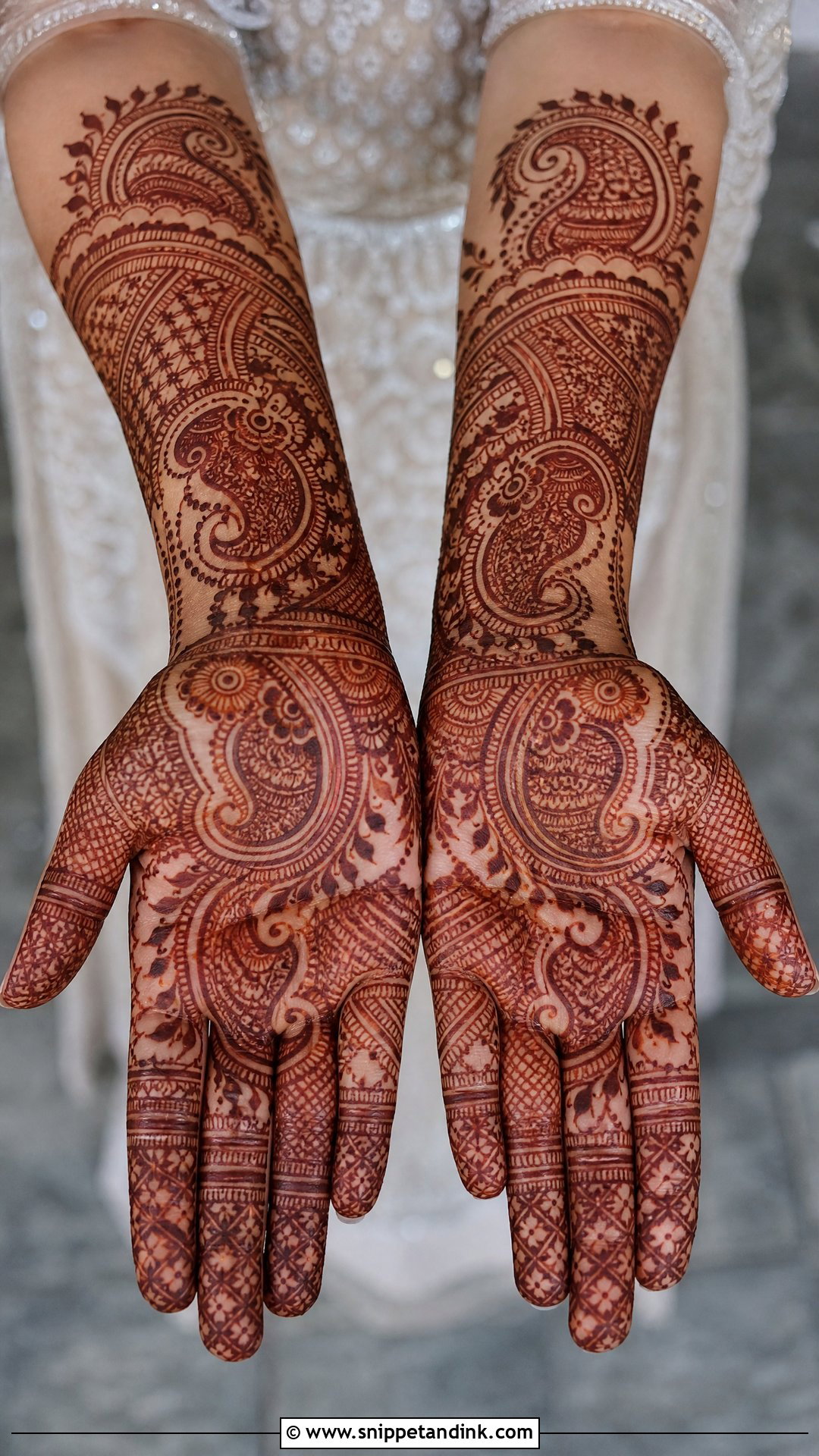
Paisleys have been part of wedding henna for generations, and they stay traditional without feeling bridal-heavy. I usually anchor one large paisley on the palm and run smaller paisley chains along the wrist and fingers, filled with flowers, dots and mesh. The shape scales easily from bold to fine for different functions. Ask for clear outlines and thin inner detailing; as henna darkens over the following days, a crowded paisley interior fills in and loses its pattern.
14. Jaali Bridal Sister Mehndi Design
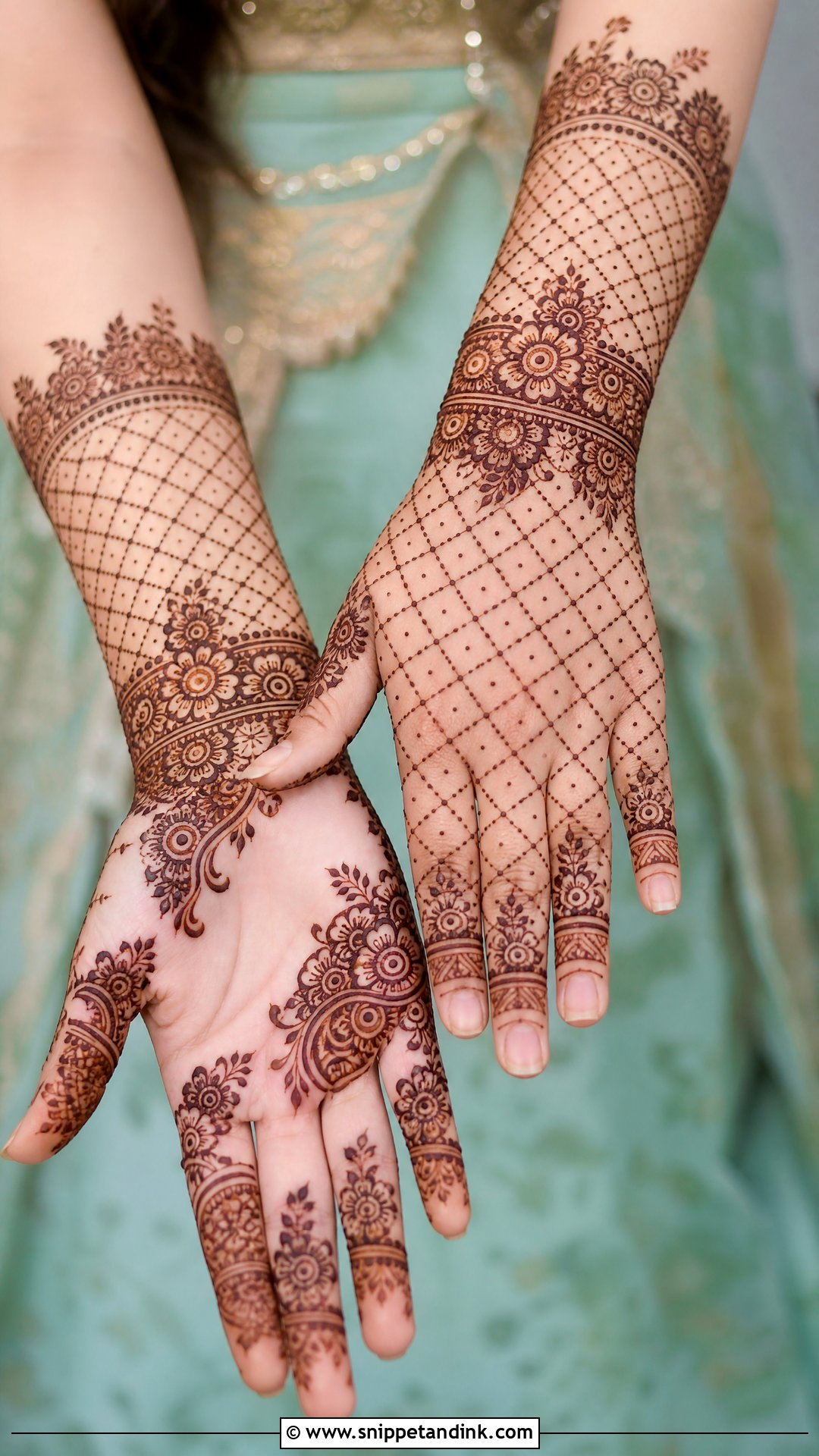
Net-like grids with tiny dots and floral corners create a lace effect, and Jaali patterns look most refined on the back hand, where the mesh mimics hand jewelry. I keep the palm lighter, with a small mandala or floral centre, so the hand doesn’t feel busy. It frames rings, bangles and a hathphool very well. The grid is the hard part: even spacing takes a steady hand, and one crooked line throws the whole lace off, so this is a design to give a skilled artist time for.

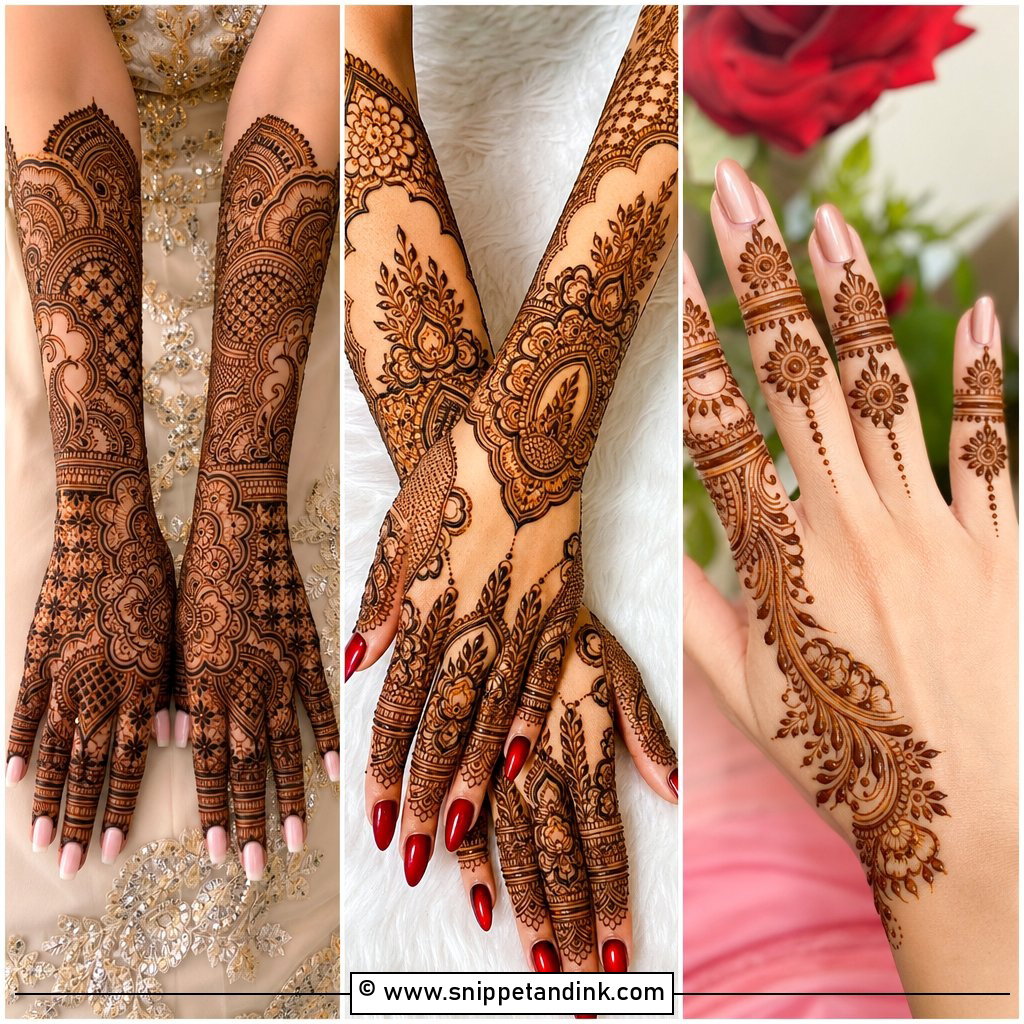
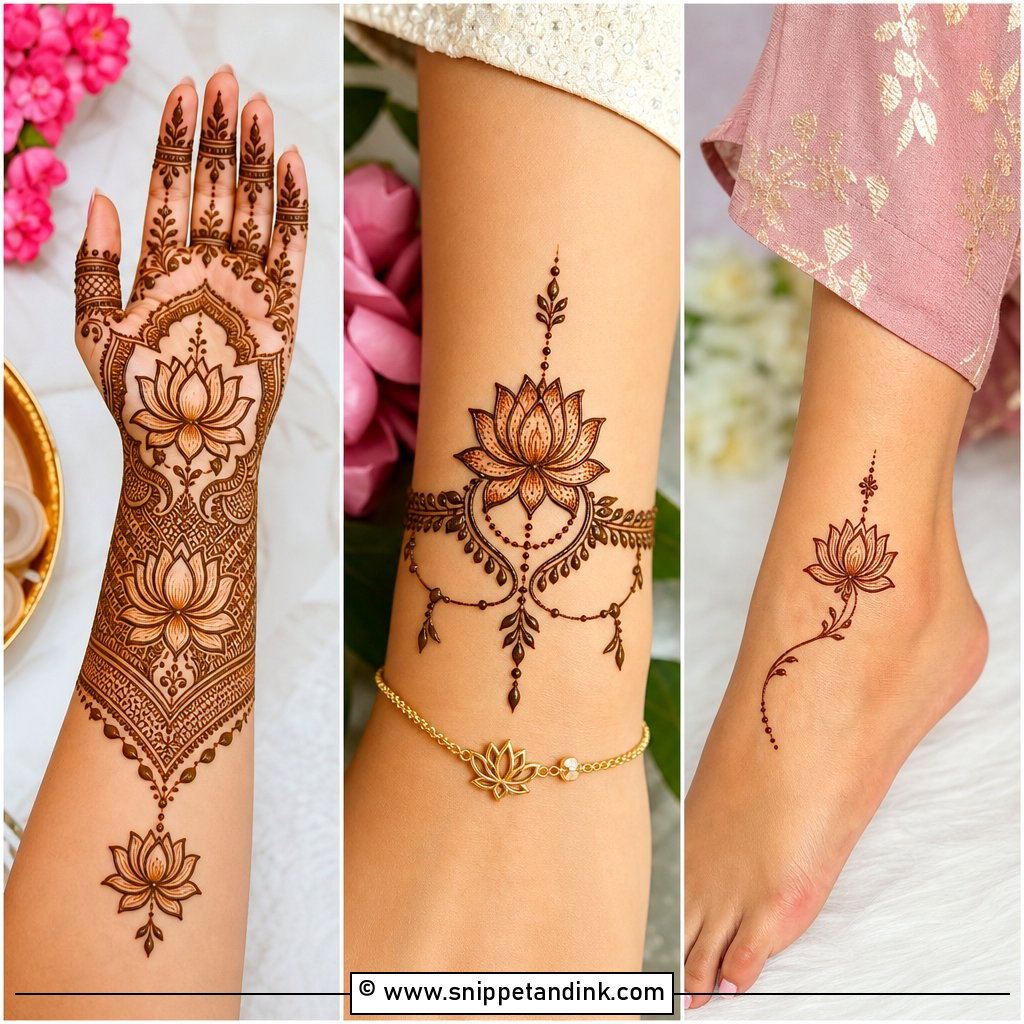
15. Bracelet Bridal Sister Mehndi Design
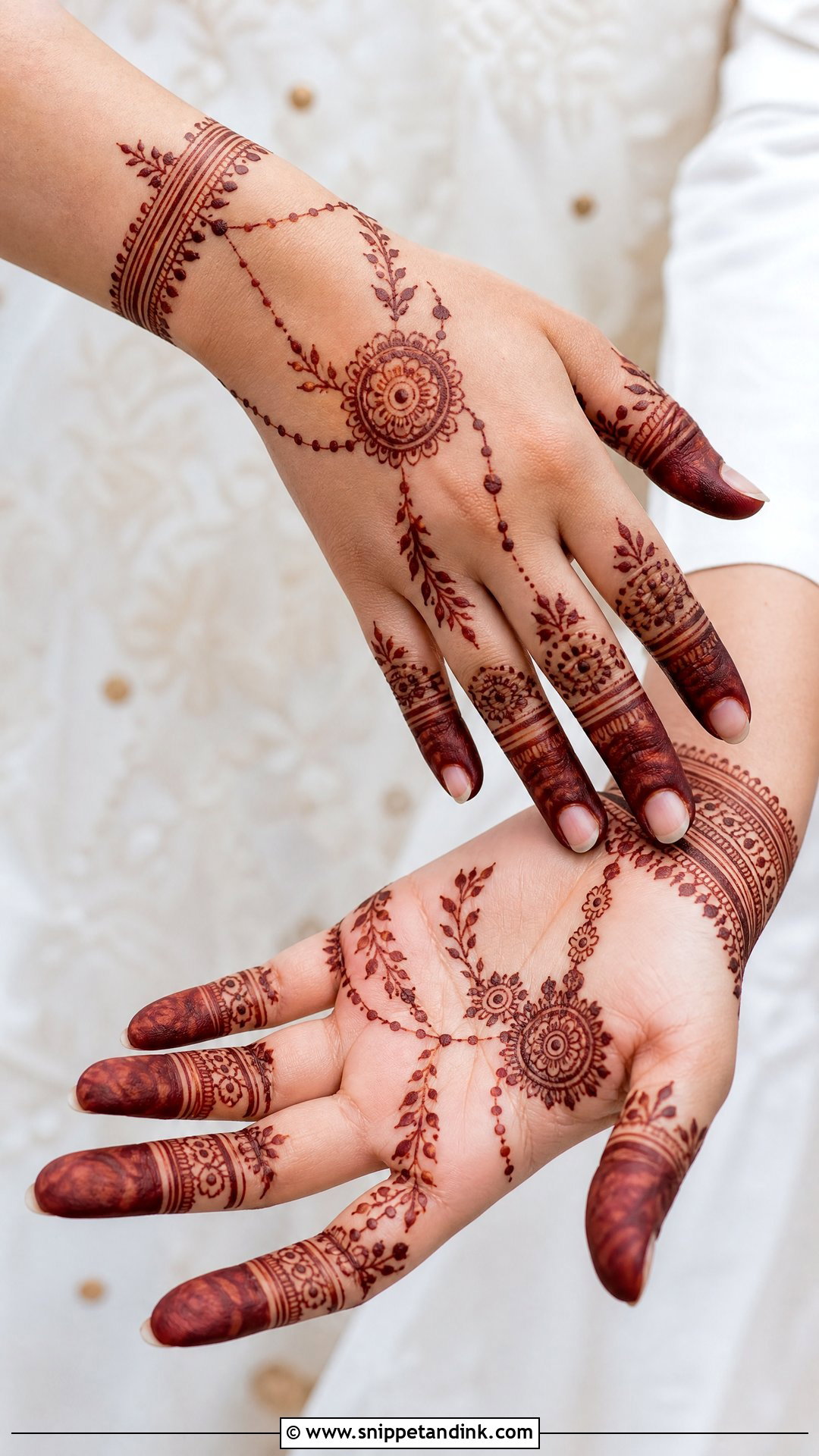
Here the wrist becomes the highlight, with cuff bands, chain details, small florals and hanging dots that read like jewelry. The palm can stay light with a small flower or leafy trail. It’s practical if you don’t want mehndi far up the arm, and it looks just as good with bangles as without. I like to connect the bracelet to one or two fingers with a fine chain line so the hand looks complete rather than banded.
16. Finger Bridal Sister Mehndi Design
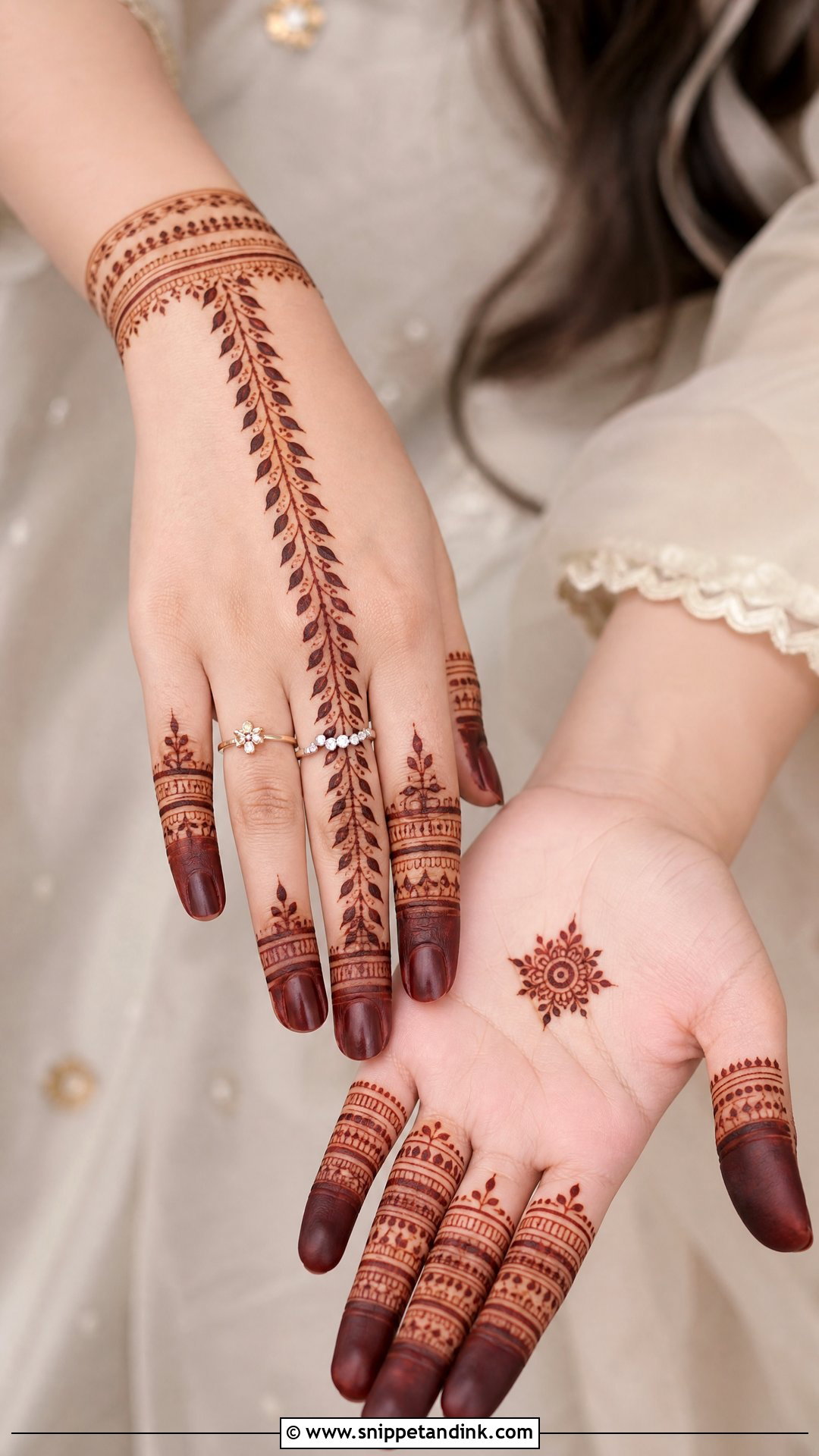
Decorated fingers with a lighter palm or back hand make a clean, fashionable look. The design can mix finger rings, leafy strips, geometric bands, tiny florals and shaded tips. To make it wedding-ready, I add a small palm motif or wrist detail so the hand doesn’t look half done. Fingertips usually take the darkest stain on the hand, which is why finger-focused designs read strongly in photos even with little coverage. I vary each finger slightly and tie them together with matching dots or lines.
17. Half Hand Bridal Sister Mehndi Design
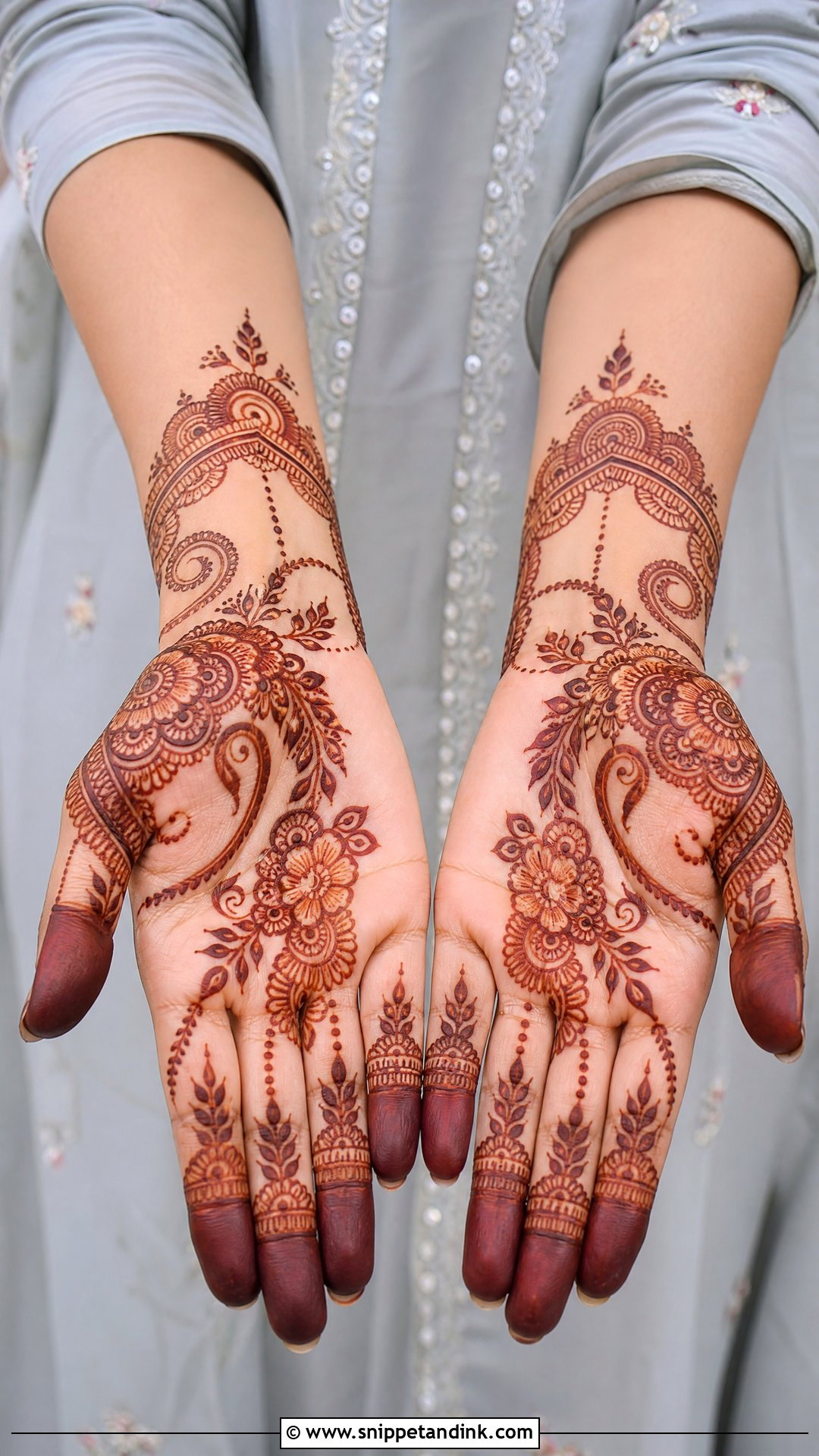
Half-hand coverage runs over the fingers, palm and wrist and stops before mid-forearm. The layout can be floral, paisley, mandala or Indo-Arabic. It’s the smart middle ground when you want noticeable mehndi but can’t spare hours for full arms, and it suits both traditional and modern outfits. I always finish it with a defined wrist border or cuff. Without a clear ending line, half-hand designs look as though the artist simply ran out of time.
18. Forearm Bridal Sister Mehndi Design
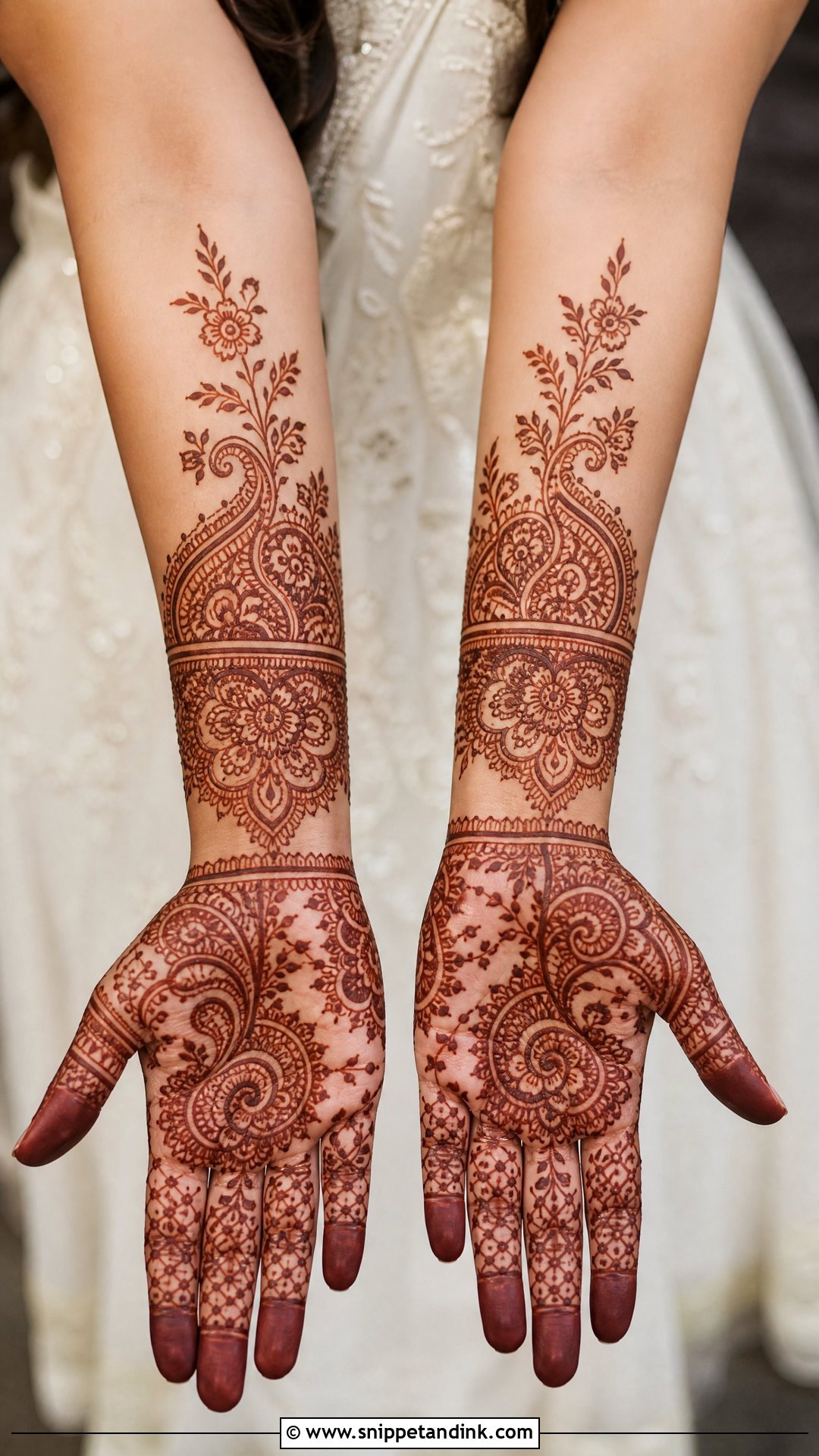
Extending past the wrist with florals, paisleys, vines or ornamental bands makes a grand effect in dance pictures and family portraits. For a sister I keep the forearm detailed but still lighter than the bride’s, often a vertical Arabic trail or a bracelet-to-forearm pattern rather than full filling. Forearm skin stains lighter than palms, so expect the upper part to come out a shade or two paler than your hands. It shows best with sleeveless, short or sheer sleeves.
19. Personalized Bridal Sister Mehndi Design
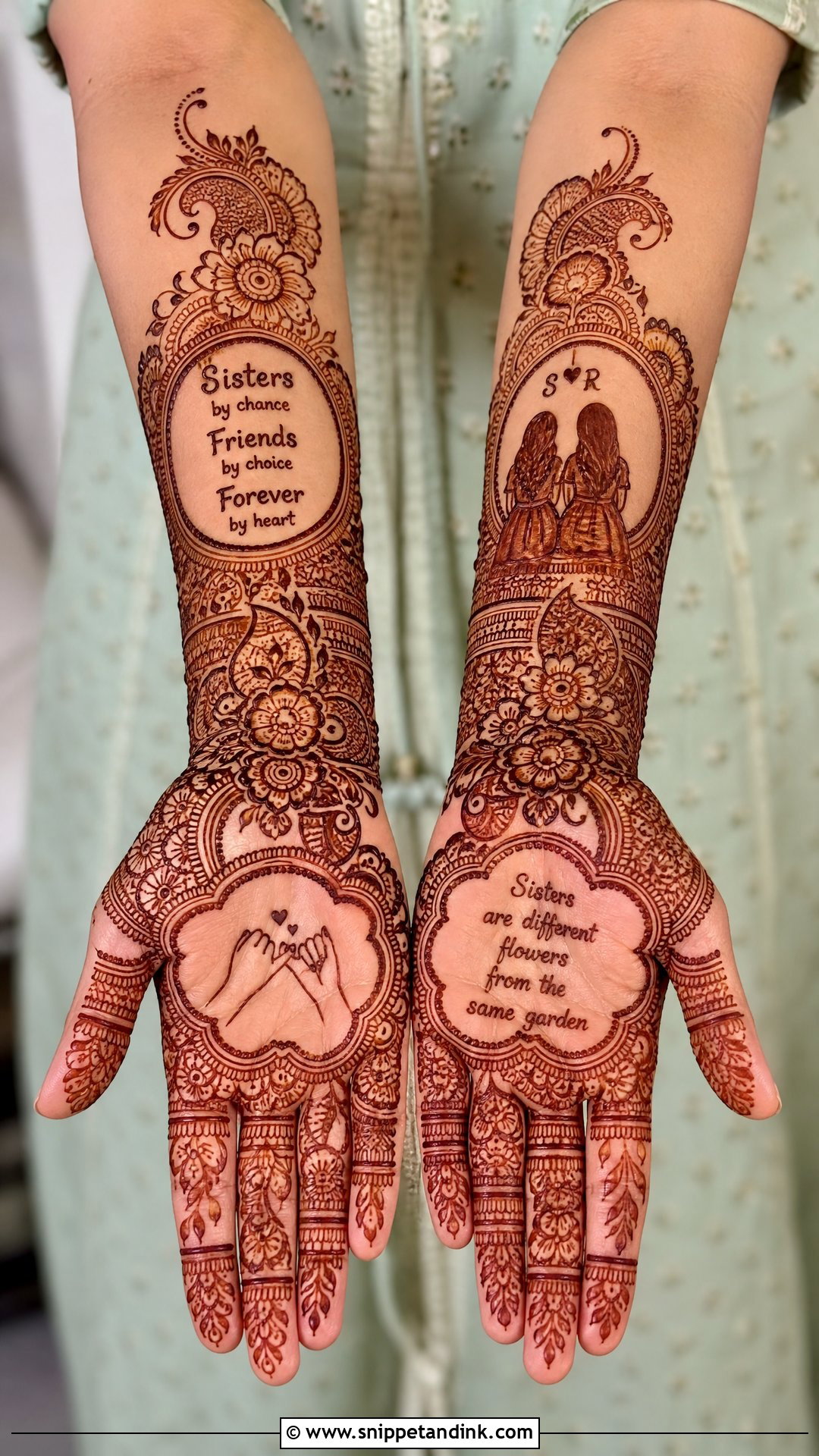
Adding something that belongs only to you and the bride makes the henna feel meaningful: her initials, a small sister symbol, a favourite flower or a motif tied to a shared memory. I keep these elements small and place them on the wrist, a palm corner or the forearm, where a close-up will catch them. Hiding the bride’s initial somewhere in the pattern is a fun touch too. Just make sure the personal details on your hands don’t echo what the bride has chosen for hers.
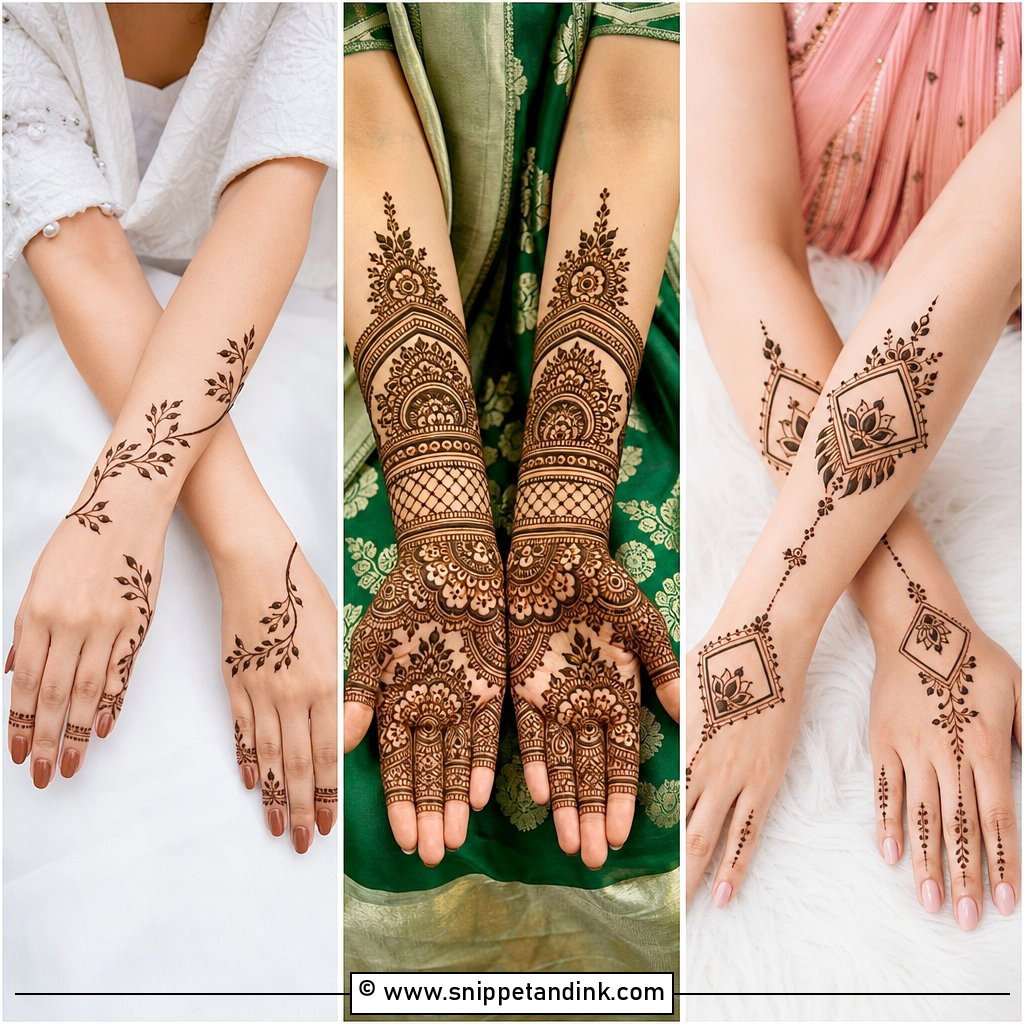
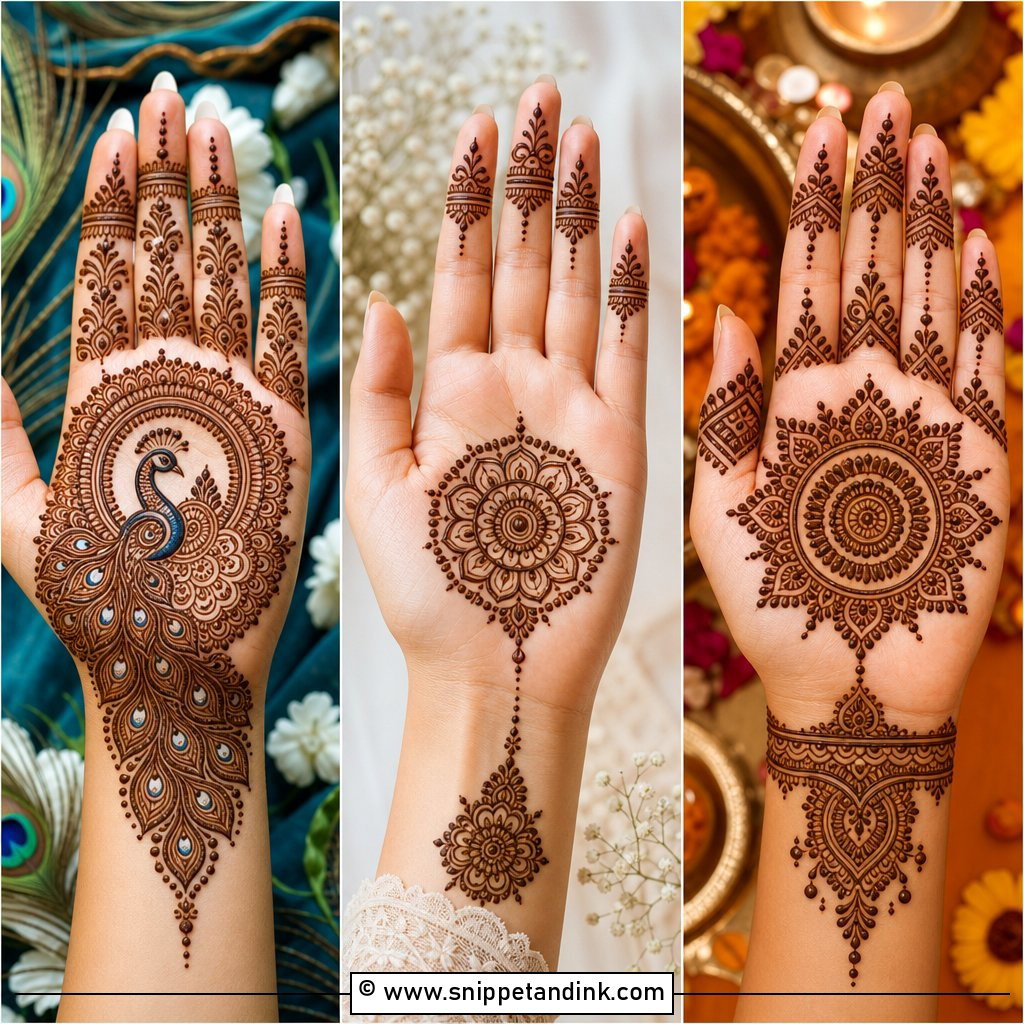
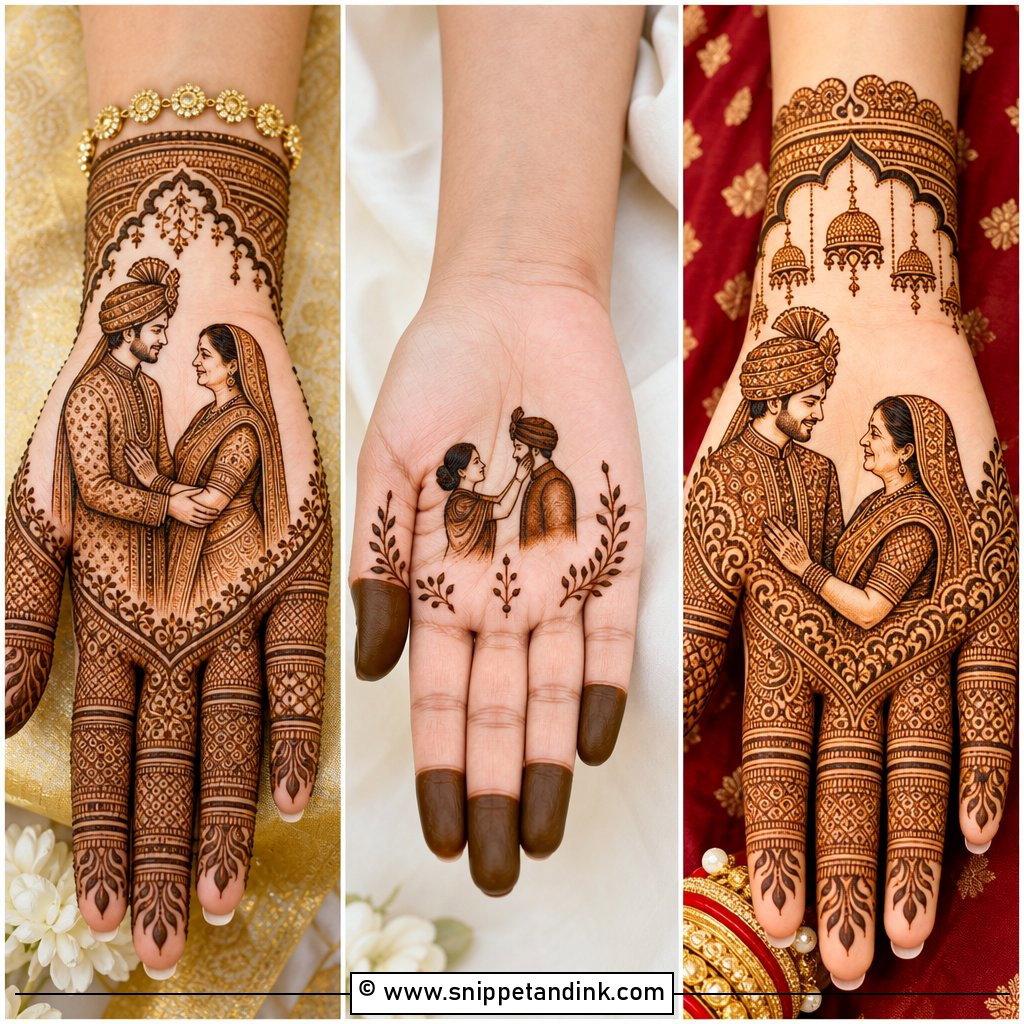

20. Rajasthani Bridal Sister Mehndi Design
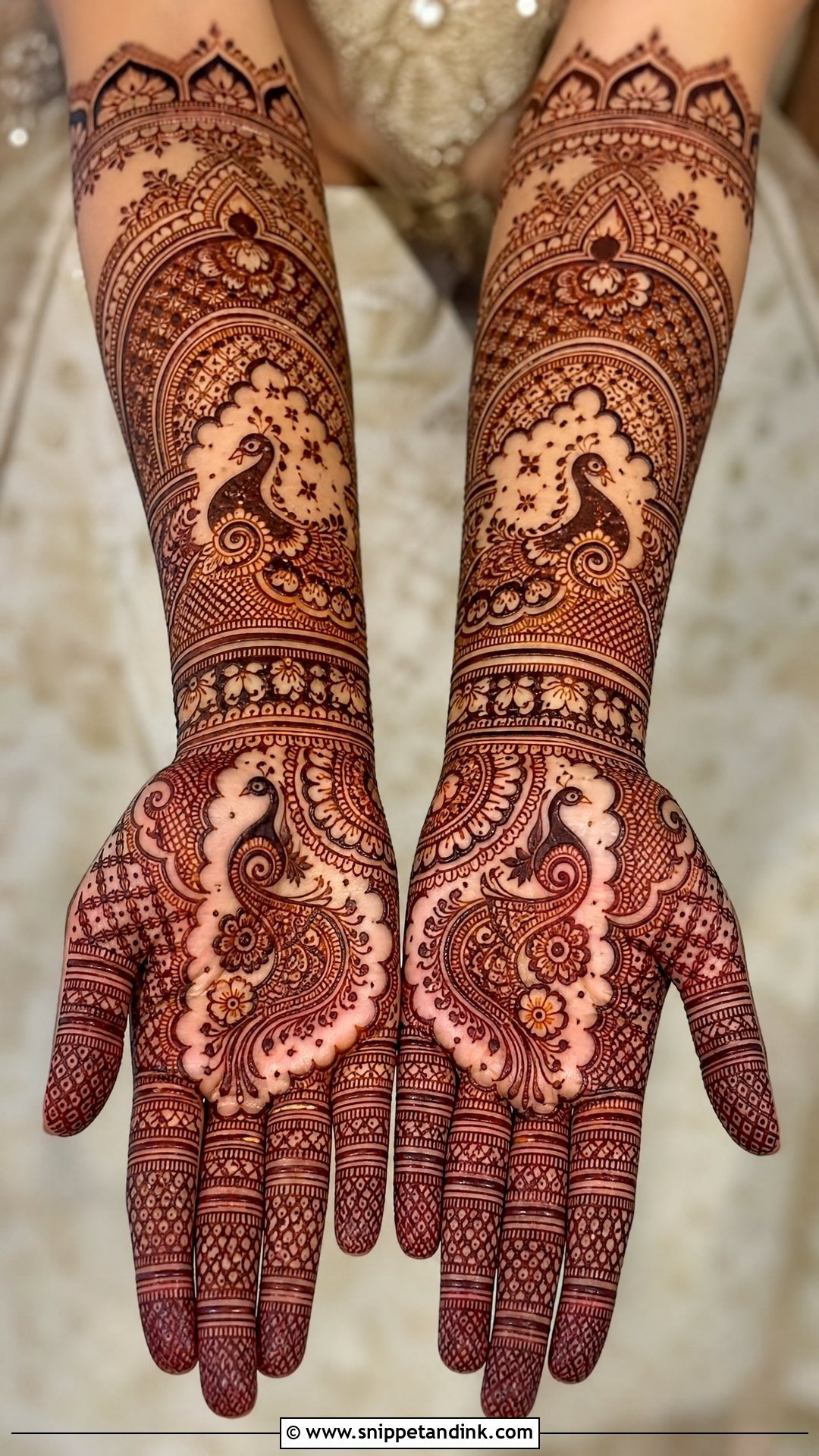
Rajasthani work is full of fine lines, mirror-like sections, paisleys, peacocks and ornamental panels. For the bride’s sister I’d keep it medium-heavy rather than full bridal density: a palm filled with paisley and jaali, plus a decorated wrist and forearm border. It pairs naturally with bandhani, gota patti and kundan jewelry. Because the style relies on very thin, close lines, choose an artist with steady line work. Clean spacing is what keeps the final stain sharp instead of muddy.
21. Moroccan Bridal Sister Mehndi Design
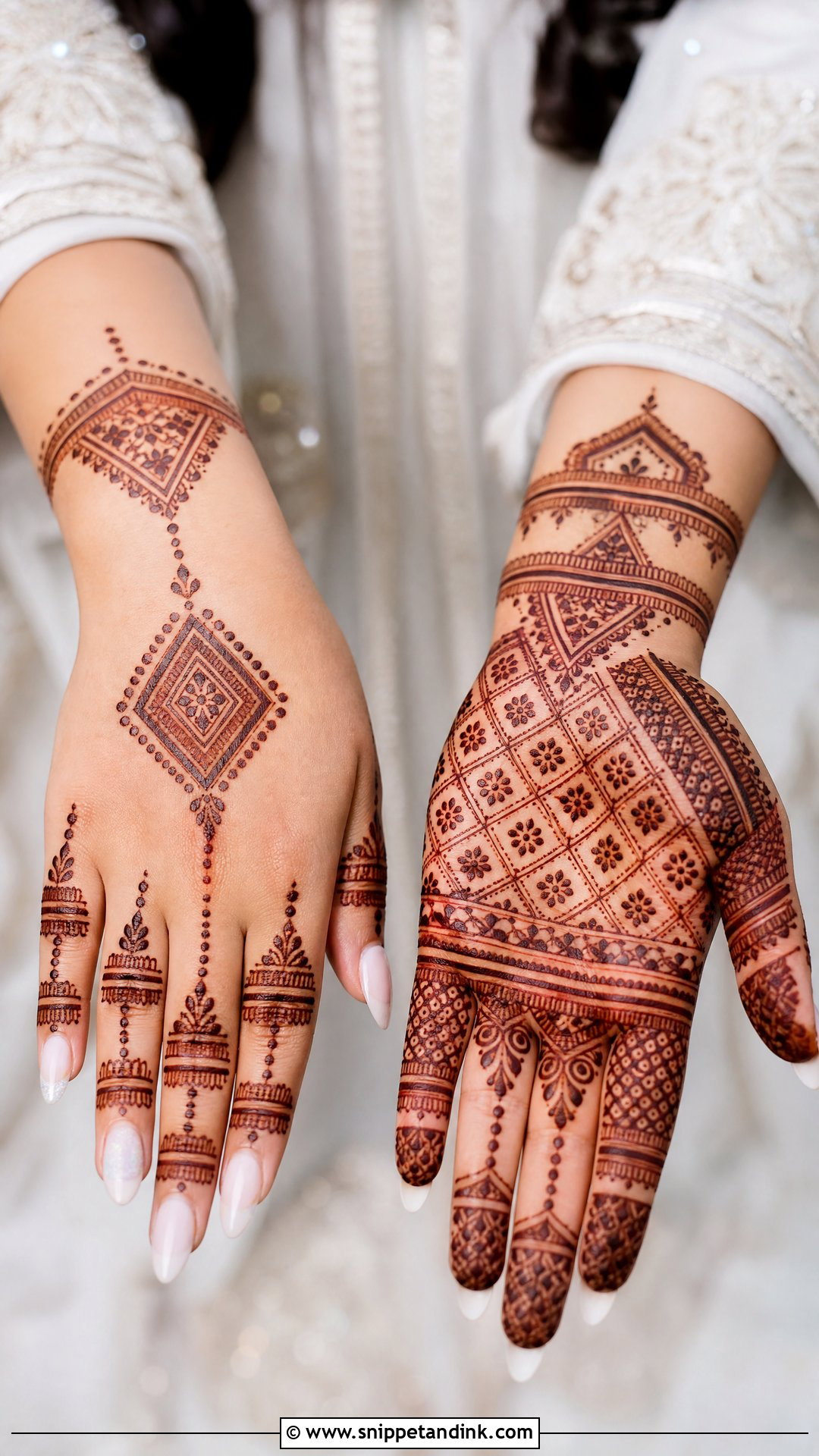
Moroccan henna is built from diamonds, grids, triangles and bands with strong geometric symmetry, so it looks completely different from paisley-heavy Indian work. It’s striking on the back hand and fingers. For a wedding I soften it with a few tiny flowers or leaves. It suits modern lehengas, fusion outfits and anyone who wants to stand apart from the usual patterns. Straight lines show every tremor, so I draw the main grid first and fill afterwards.
22. Gulf Bridal Sister Mehndi Design
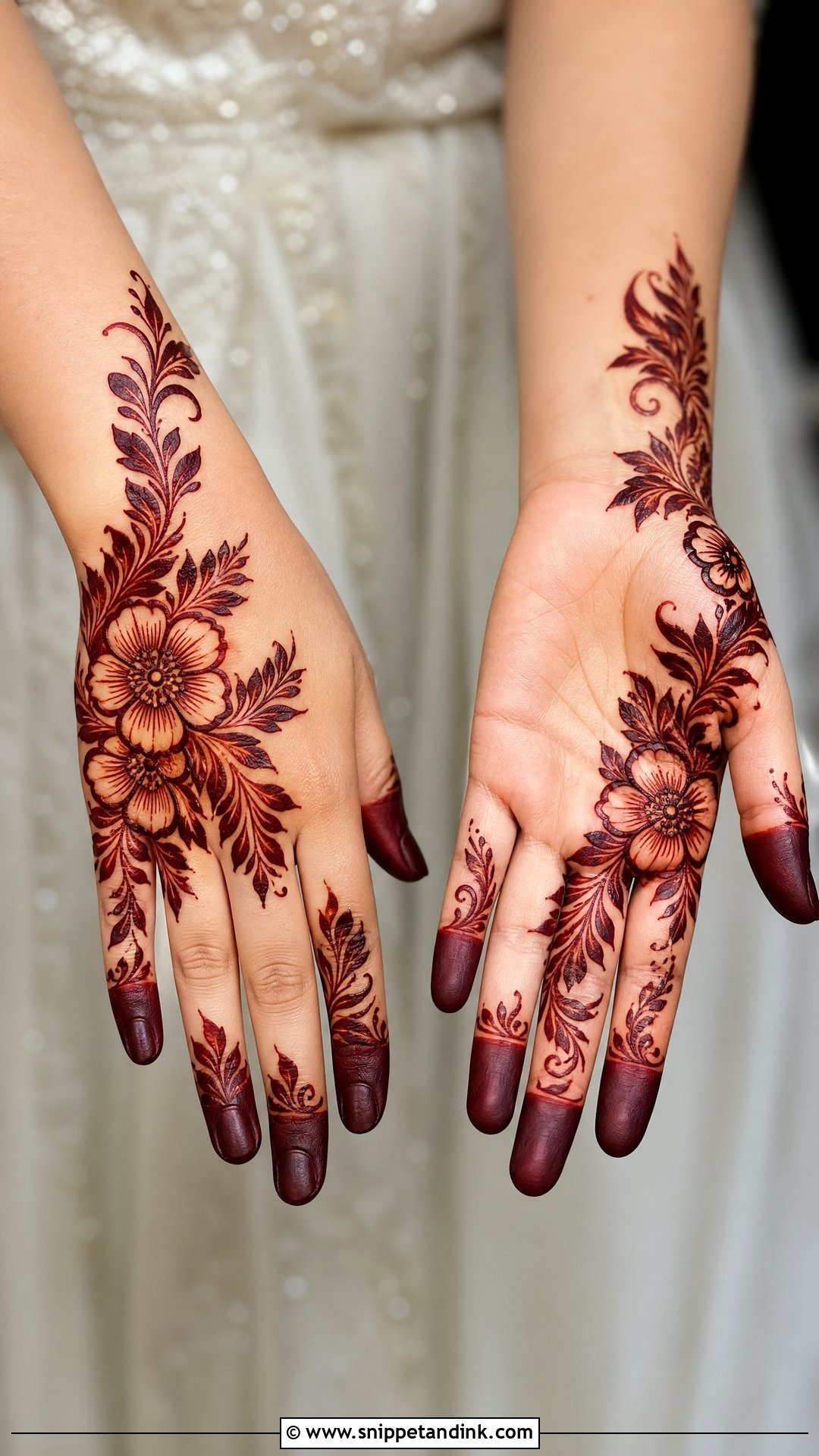
Big flowers, leafy trails, open space and dramatic finger coverage are what define a Gulf bridal sister mehndi design, also known as Khaleeji-inspired henna. It sweeps across the back hand or palm with large blooms and shaded leaves, so it feels glamorous without dense filling. Larger motifs also stay visible against heavily embellished outfits. Smooth shading inside petals depends on a well-strained, fine paste, and a deep maroon stain suits this style best.
23. Shaded Bridal Sister Mehndi Design
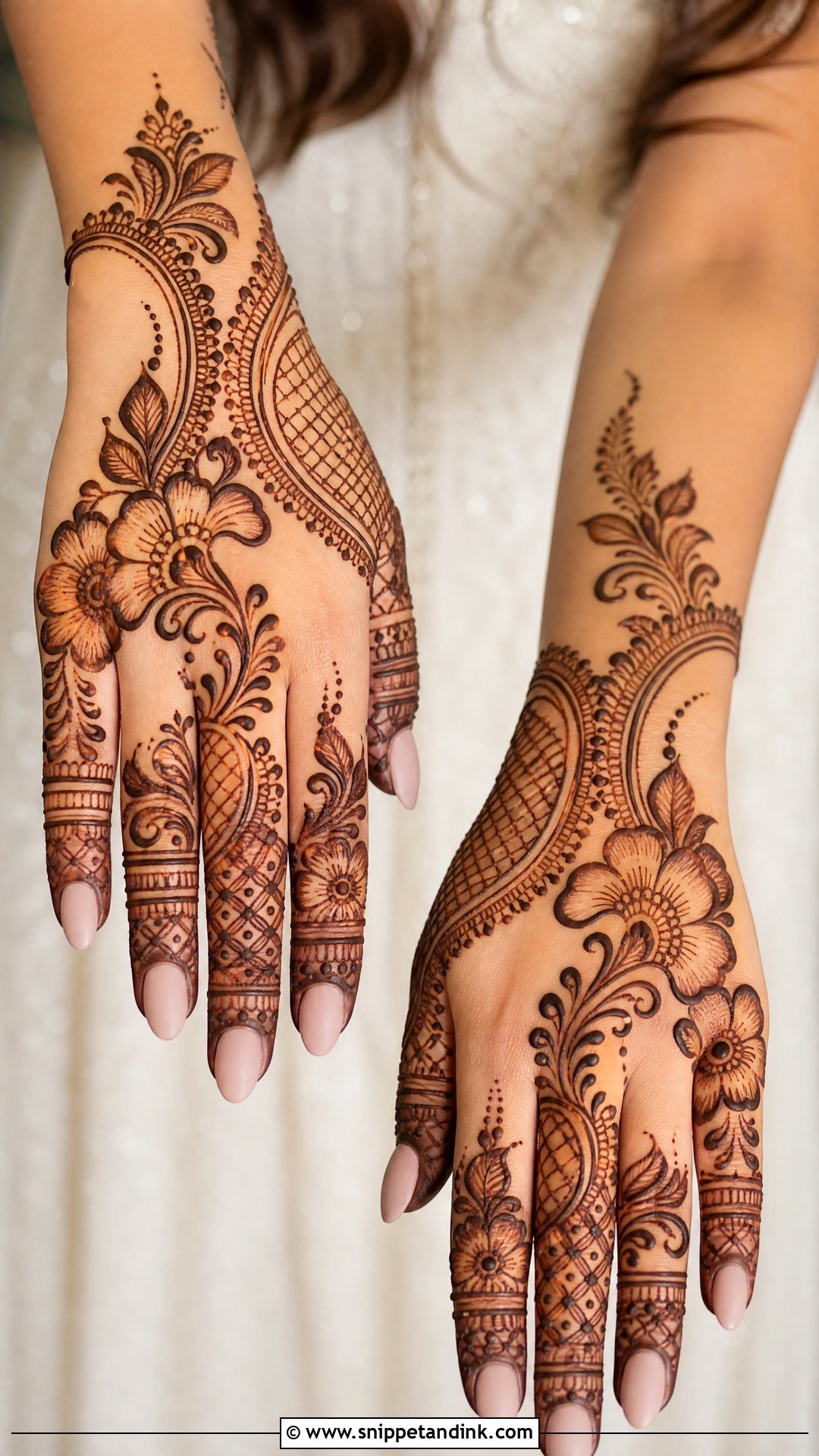
Instead of filling every area with tiny lines, shading uses smooth gradients inside flowers, leaves and paisleys, which gives the design depth. It suits Arabic and Indo-Arabic layouts, where large petals and curved trails have room to show. Shading is technically a thin layer of paste, and thin paste stains lighter than thick lines, so I leave the outer edge of each petal heavier to keep the contrast. Keep the fingertips detailed so the whole hand feels finished.
24. Jewelry Bridal Sister Mehndi Design
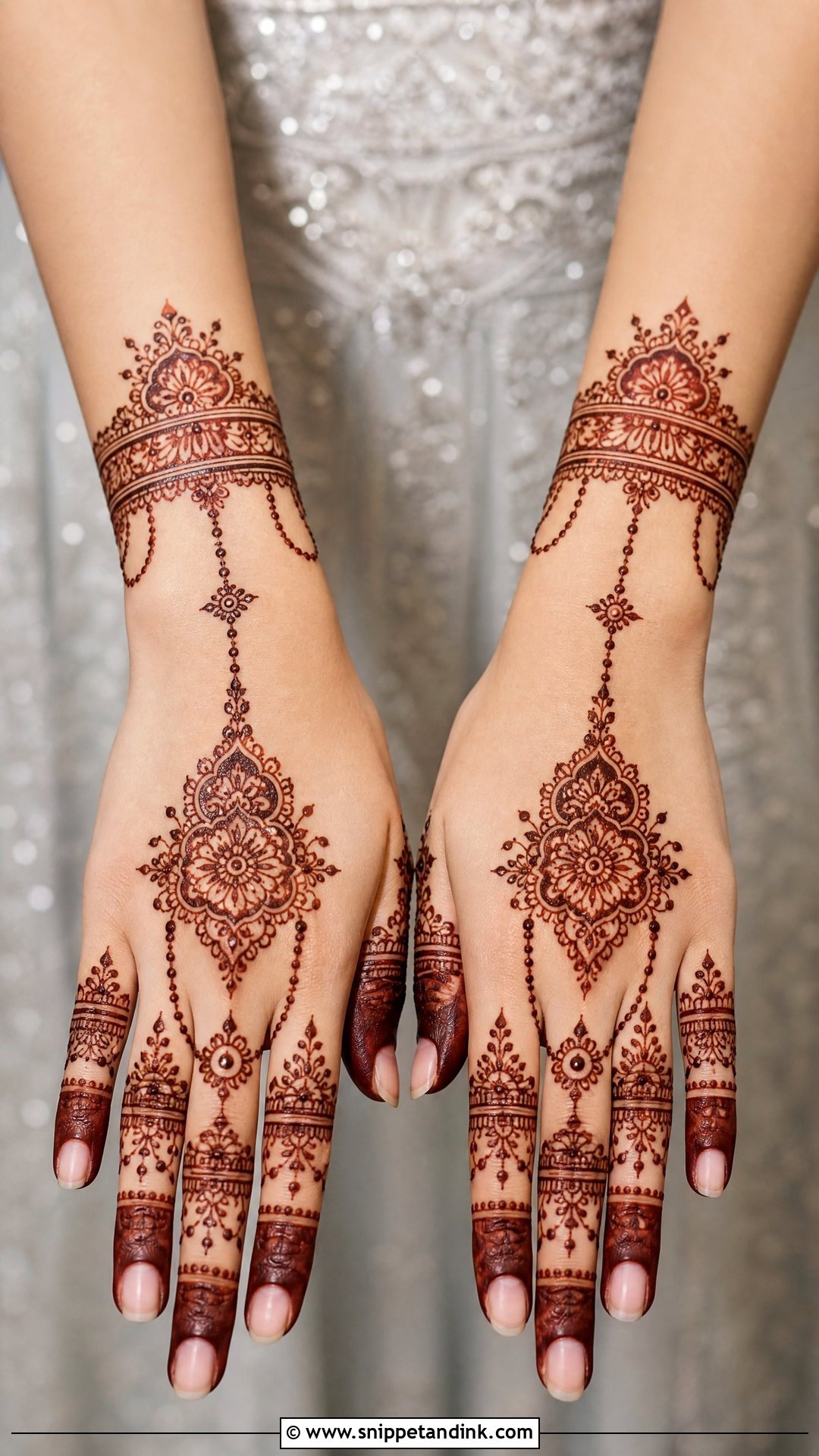
Ring chains, bracelet cuffs, hathphool-style lines and hanging dots turn the hand into an ornament. It’s a sweet choice for sisters who want something graceful that works with or without real jewelry. The back hand is the best place for it, with the chain running from wrist to fingers; the palm can stay plain or carry a small matching motif. Thin, neat lines keep the jewelry effect delicate. Heavy lines make it look like a costume piece.
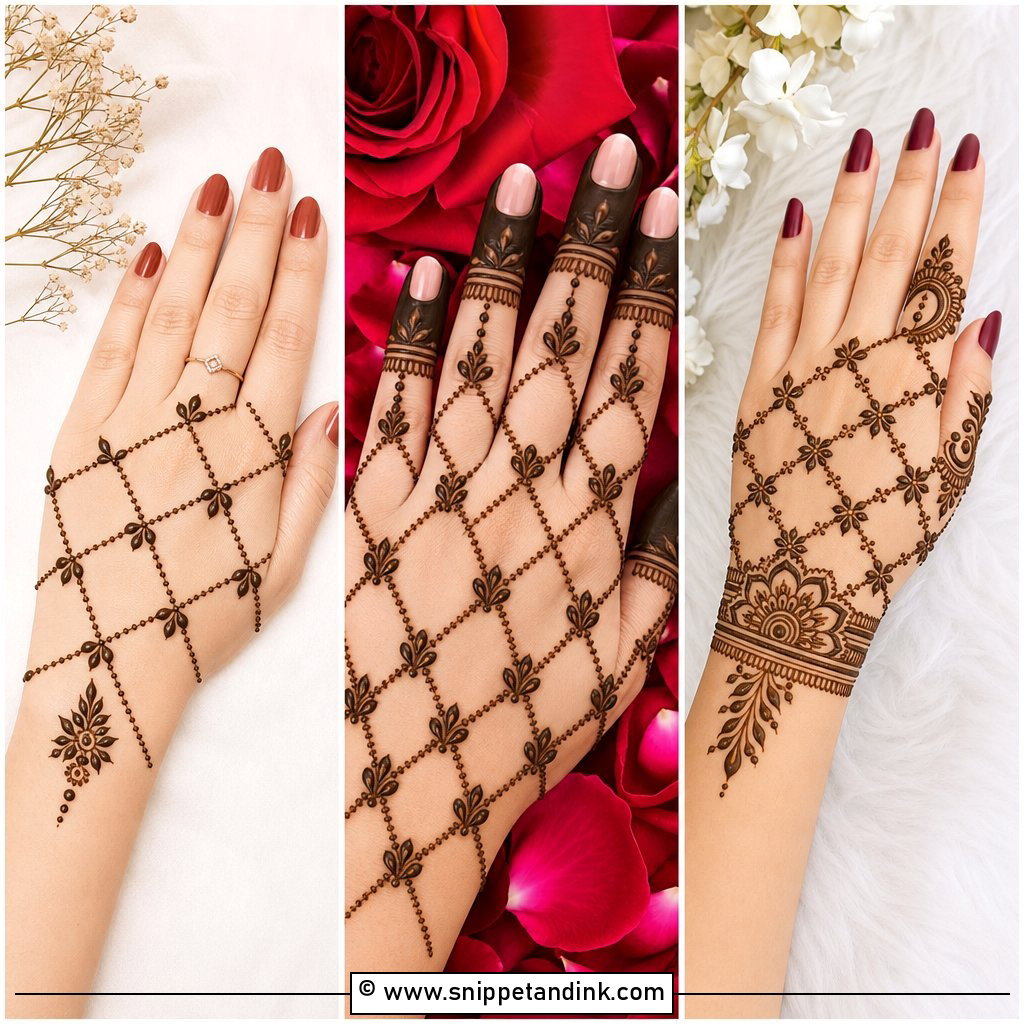


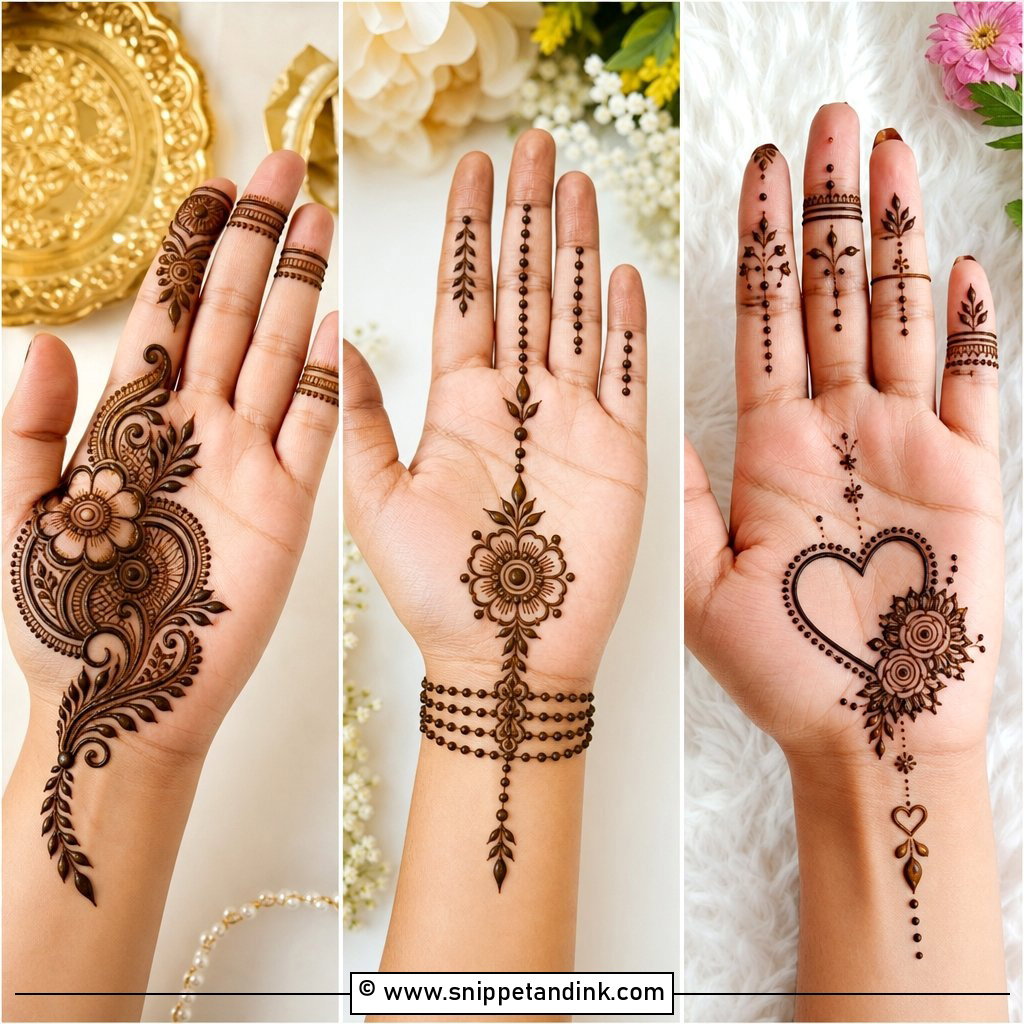
25. Matching Bridal Sister Mehndi Design
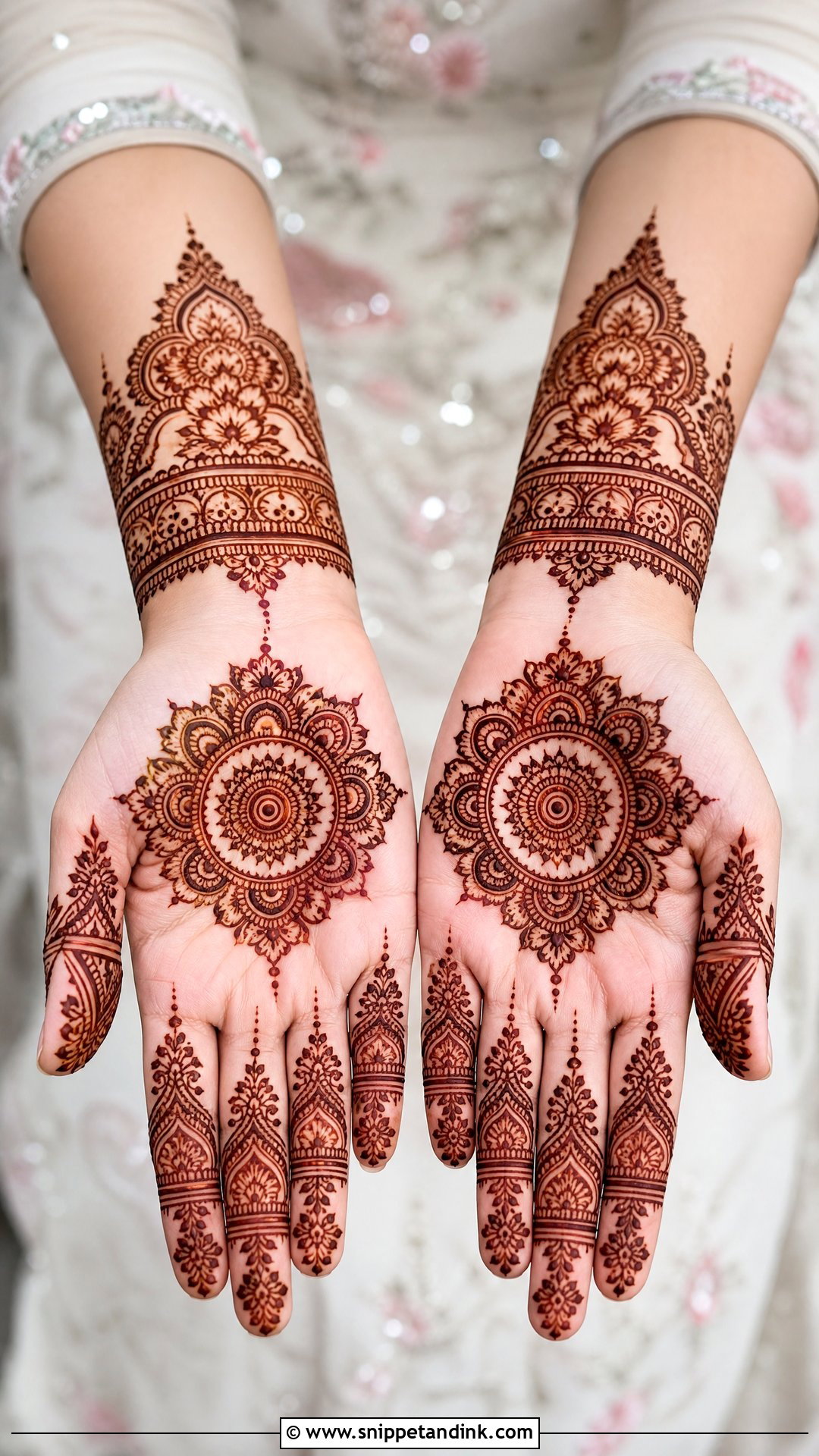
Sisters, cousins and bridesmaids often want to coordinate. The designs needn’t be identical: they can share a mandala, a flower, a wrist cuff or a finger pattern while each person picks her own coverage. I usually draw the sister’s version first as the most detailed, then simplify it for the rest of the group. Keep the motif style, the spacing and the henna batch the same, so the stain colours match in photos and the group looks unified without identical hands.
Getting a Deep Stain While You’re Busy Helping the Bride
A sister’s biggest enemy is not the design; it’s her schedule. Natural henna stain comes from the dye soaking into the skin, and it needs time. When the paste comes off, the stain is a pale orange that deepens to reddish-brown over the next day or two, so the hands look their best around two days after application. Time your session so that peak falls on the main day, not the morning after.
What actually helps
- Leave the paste on as long as you can, ideally overnight; I’d say at least six hours.
- Dab on a little lemon and sugar once it’s touch dry so it stays stuck to the skin.
- Scrape the dried paste off rather than washing it, and keep water away for as long as possible afterwards.
- Keep your hands warm; a stain develops faster on warm skin than cold.
- Hand sanitiser and harsh soaps lighten fresh stains, so wear gloves for dishes and use them sparingly.
One firm warning: avoid any so-called black henna or instant dark cones. They often contain chemical dyes that can cause serious skin reactions. Natural henna is never jet black, and that’s a good thing.
A Step Behind the Bride, Still Unmistakably Festive
As the bride’s sister, your mehndi should feel festive and personal while leaving the bride’s hands as the grandest in the room. Full Indian patterns, Arabic trails, minimal finger designs, jewelry layouts and personal details can all do that. Think about your comfort, your sleeve length, your jewelry and how much coverage you really want, then let a skilled artist adjust the design to your hands.
You'll Like These Ideas:








Leave a Reply