
The groom’s sister sits in an odd spot on my mehndi schedule. She wants more than a guest design, she’s in half the family photos, and yet her hands shouldn’t read as a second bride. Most of the sisters I apply for end up somewhere in the middle: full-hand florals, Arabic trails, a mandala palm, personalized brother motifs or a jewelry-style back hand, with something lighter saved for haldi or the reception. Below are 25 layouts I’d happily put on a groom’s sister, with notes on how each one stains, how long it keeps you in the chair and who it suits.
Fitting a Henna Sitting Into the Groom’s Side of the Week
The sister is usually the person everyone needs during mehndi night. Someone has to greet the bride’s family, find the dhol player and keep the aunties fed, and that is hard to do with wet paste on both hands. So the first thing I ask a groom’s sister is not which design she likes, it’s when she can actually sit still.
Henna doesn’t show its true colour straight away. It goes on as bright orange and deepens over the next day or two. That means the design you get on mehndi night will look its best a day or two later, which is often the main wedding day or the baraat. If you have the option, getting your hands done a day before the busiest function gives you a darker stain when it counts and frees you up on the night itself.
Rough sitting times, so you can plan
- Finger, wrist or jewelry styles: a short sitting, often well under an hour for both hands.
- Arabic, Gulf and half-hand designs: somewhere in the middle, depending on fill.
- Full hand with forearm, bridal-look or jaali work: the longest, and drying time comes on top.
- Times vary a lot by artist speed and how much detail you add, so confirm with yours.
One more practical point: ask your artist whether the paste is freshly made with natural henna. Ready-made cones that promise an instant black colour can contain chemical dyes that irritate skin. If you’ve never worn henna, a small patch on the inner arm a few days before is a sensible test.
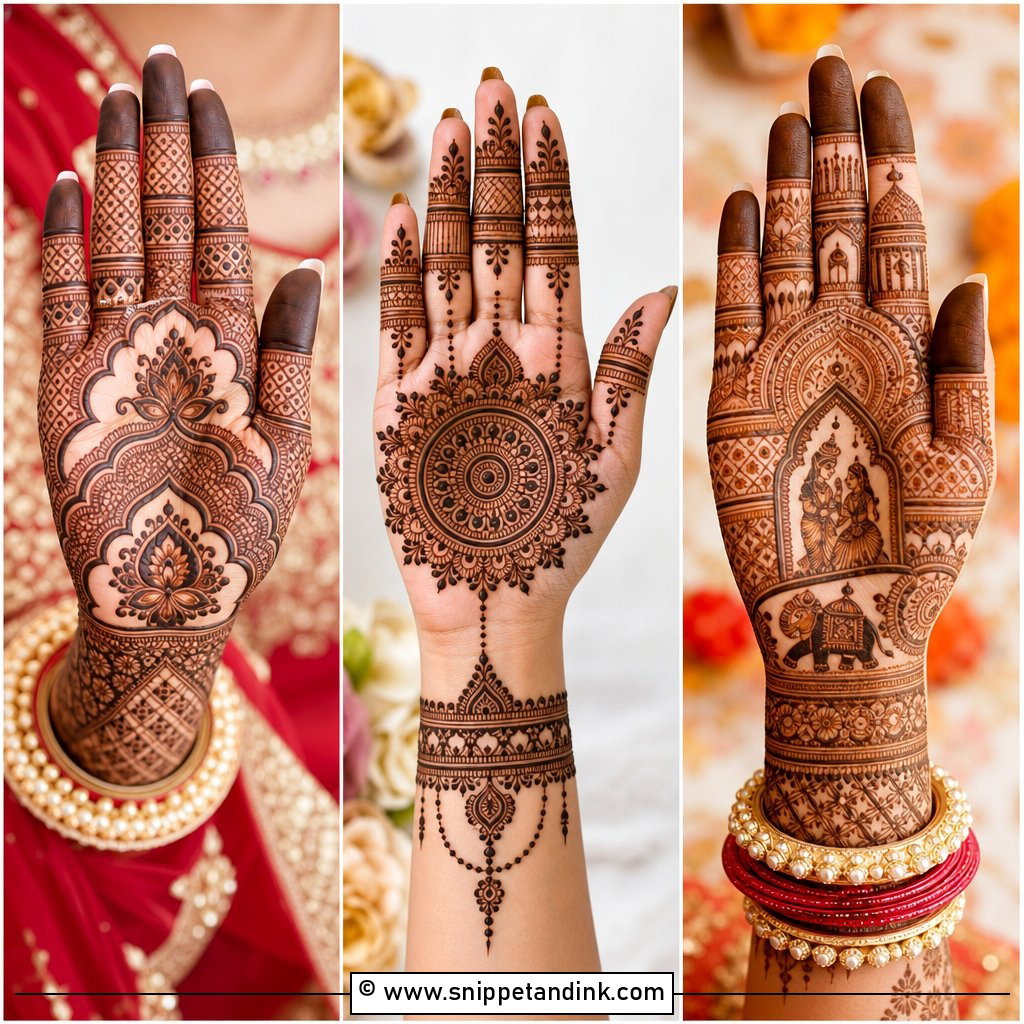
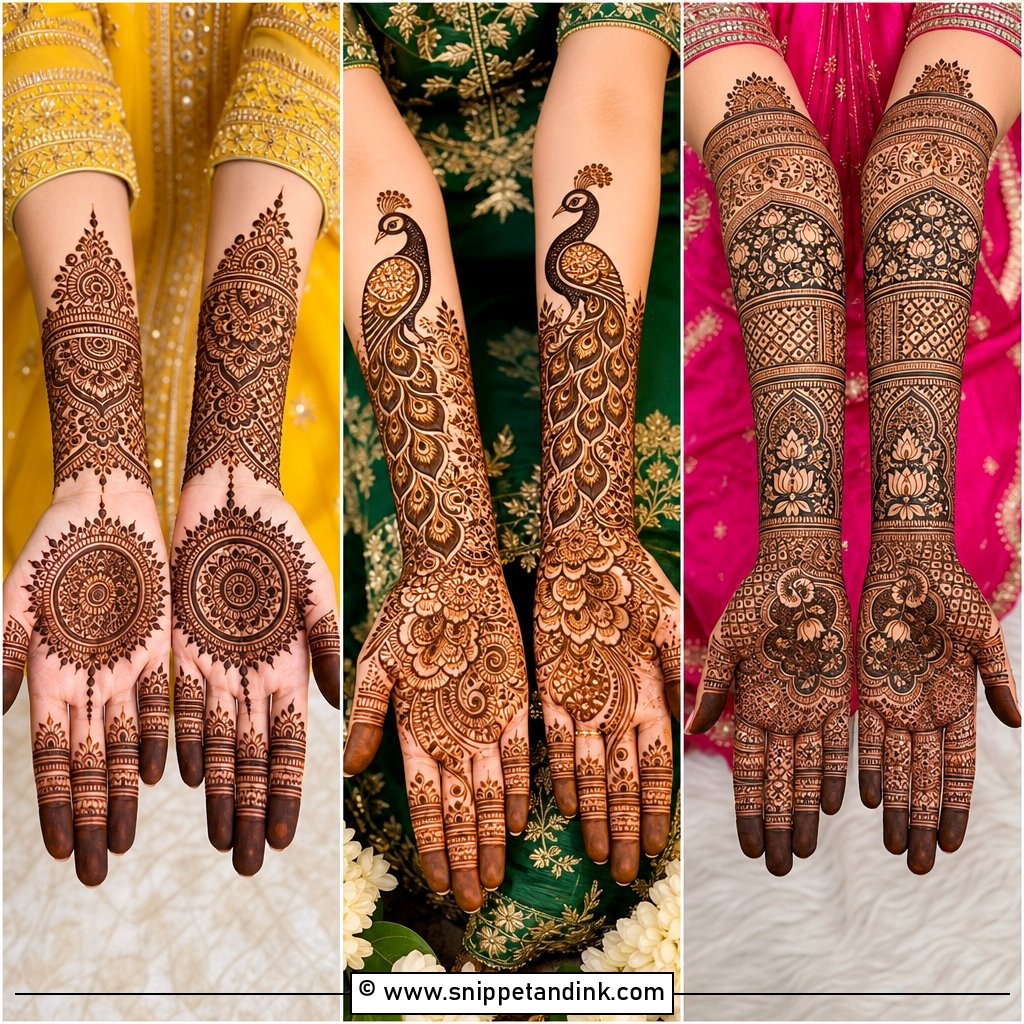
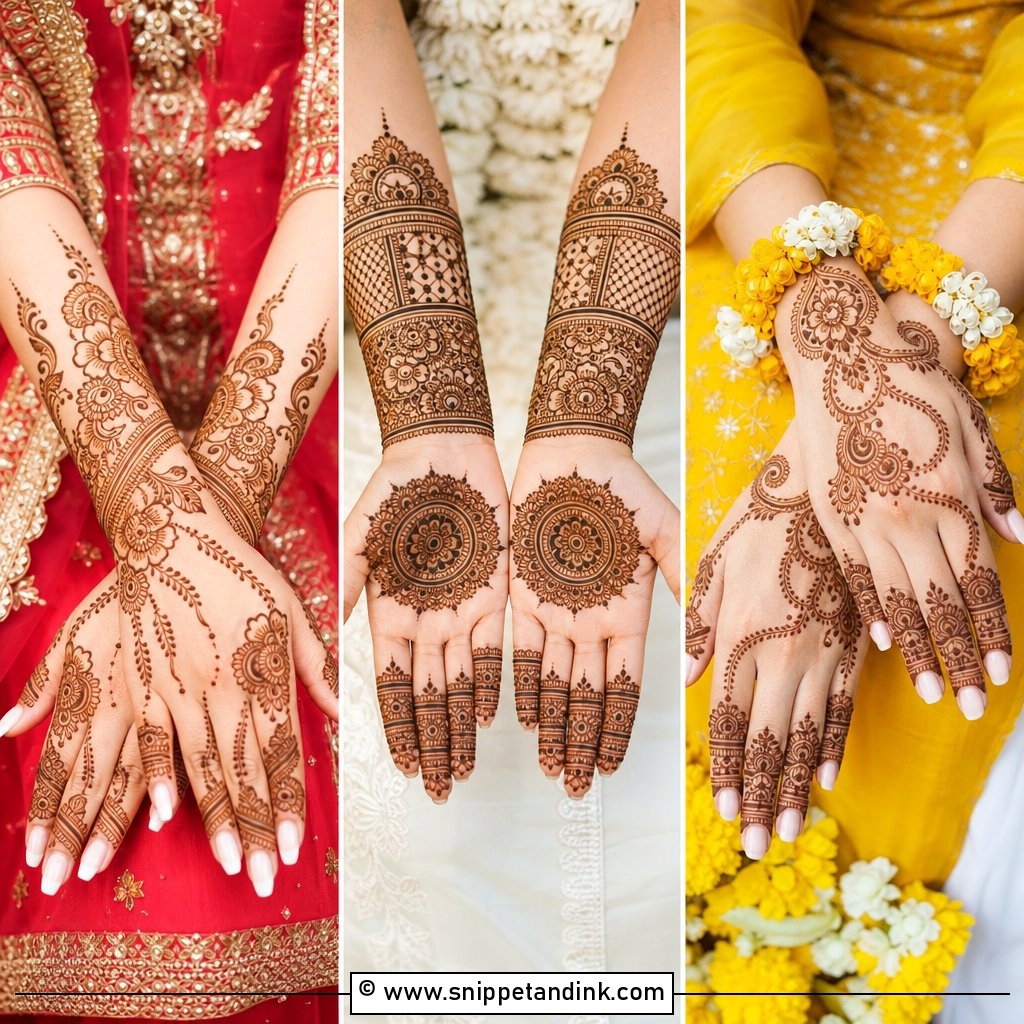
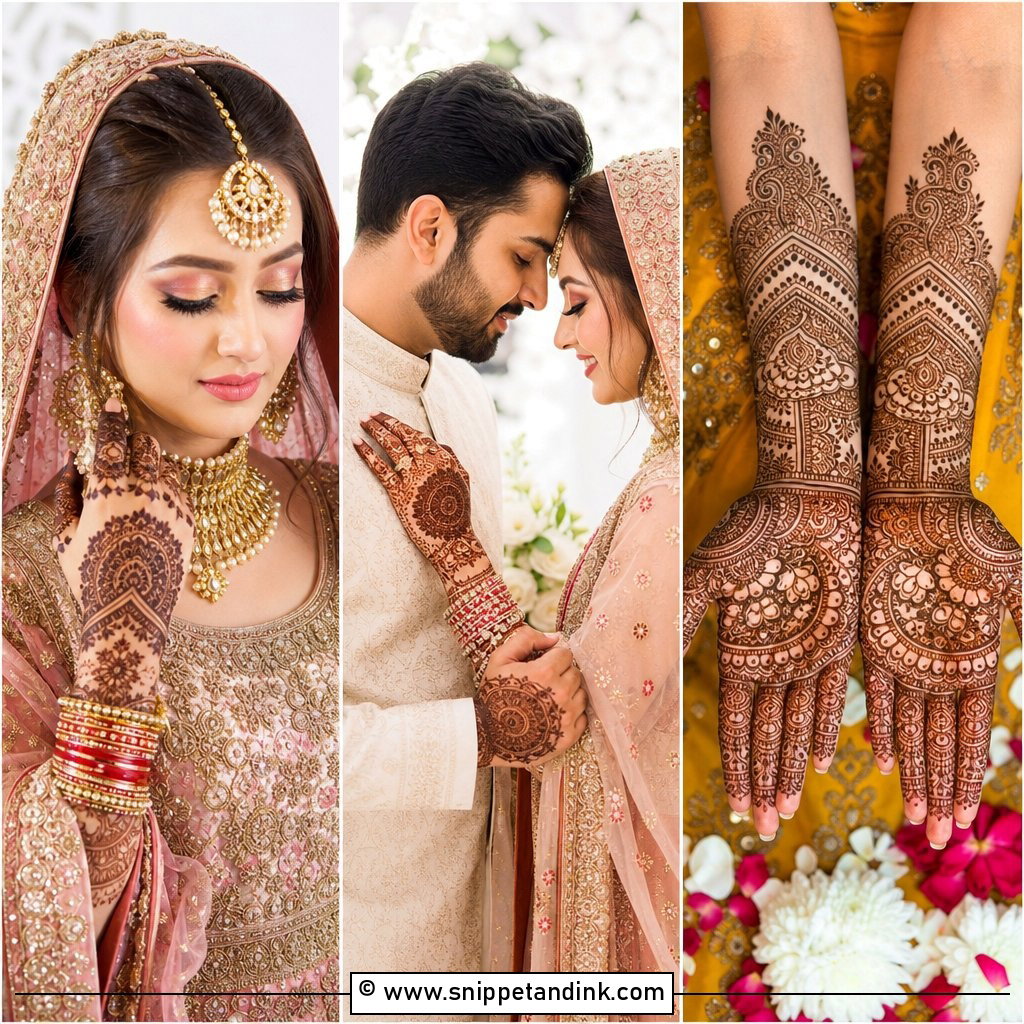
1. Groom Sister Full Hand Mehndi Design
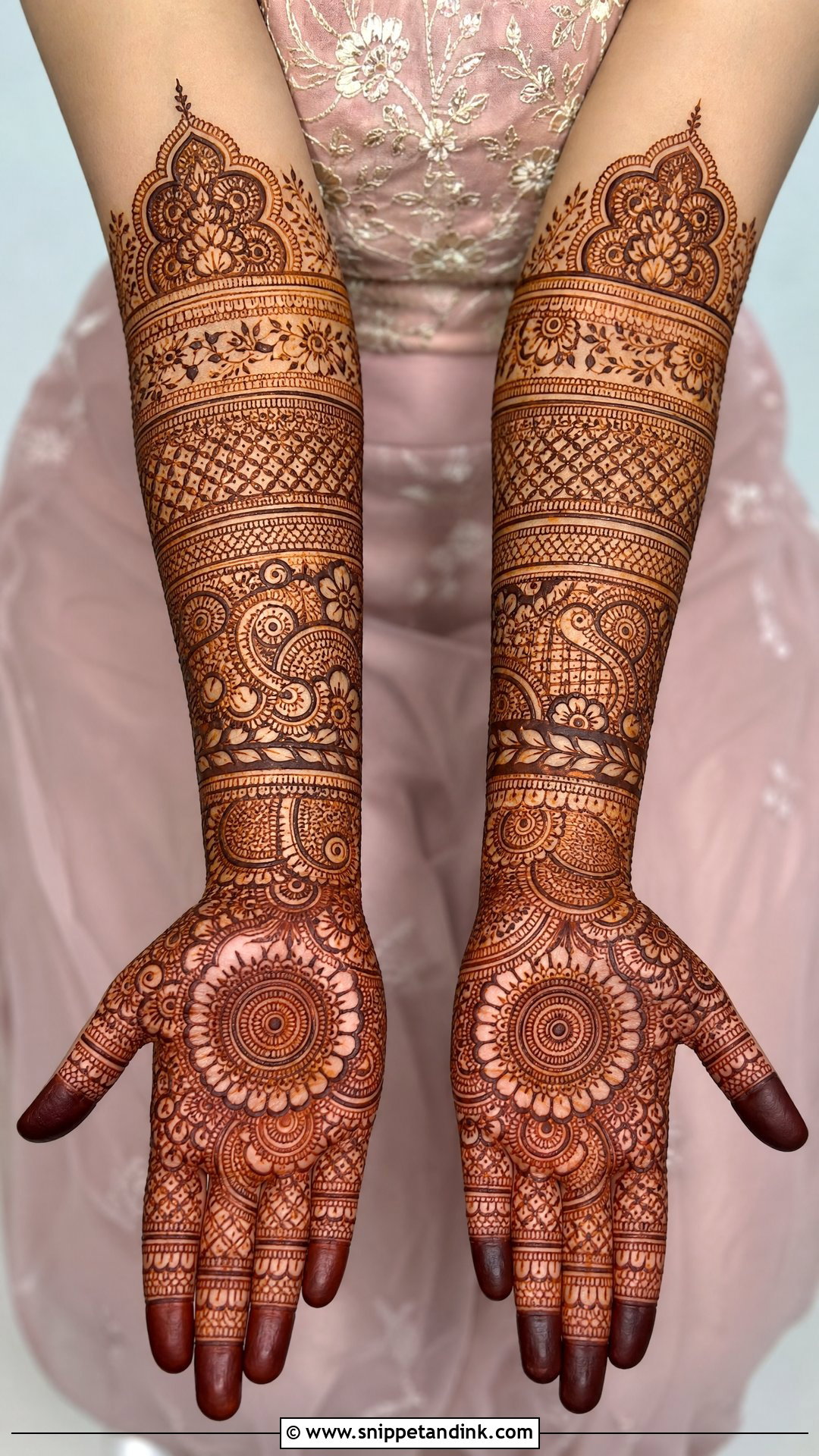
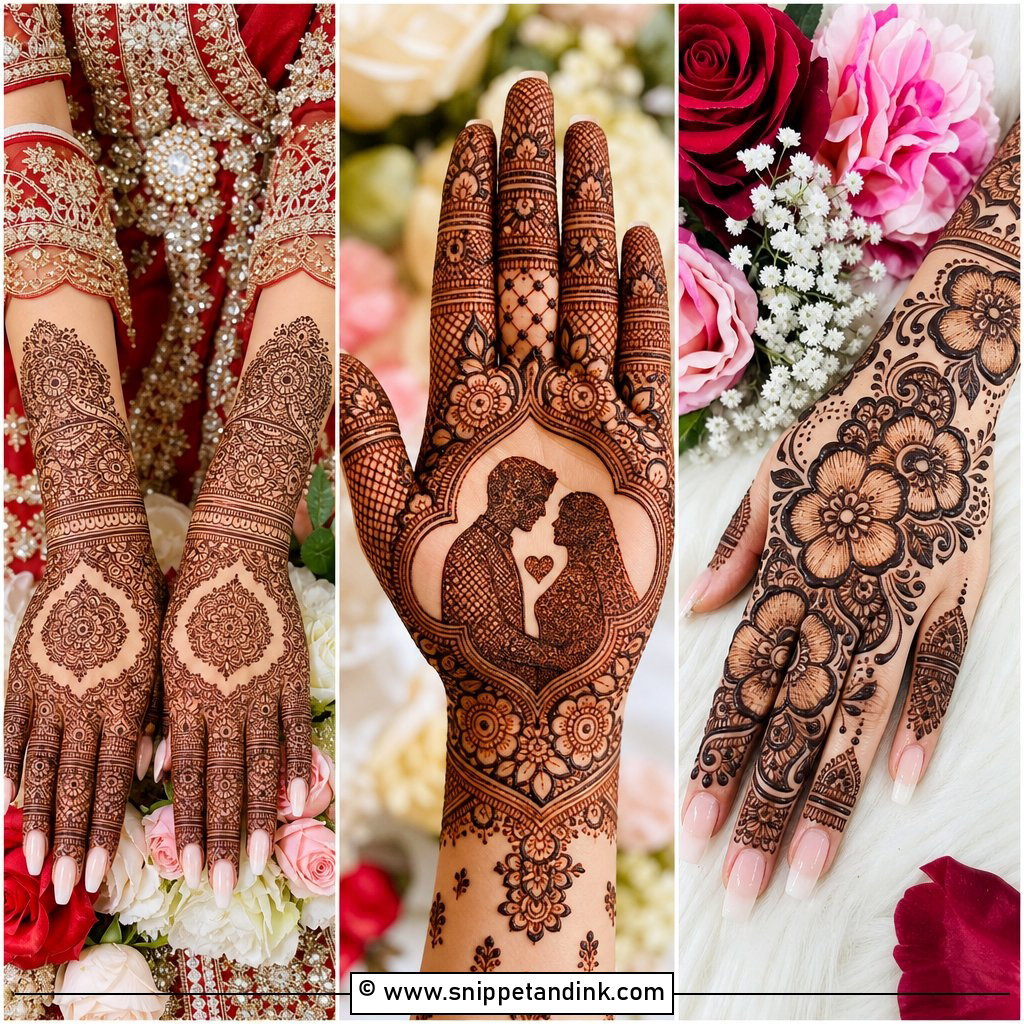
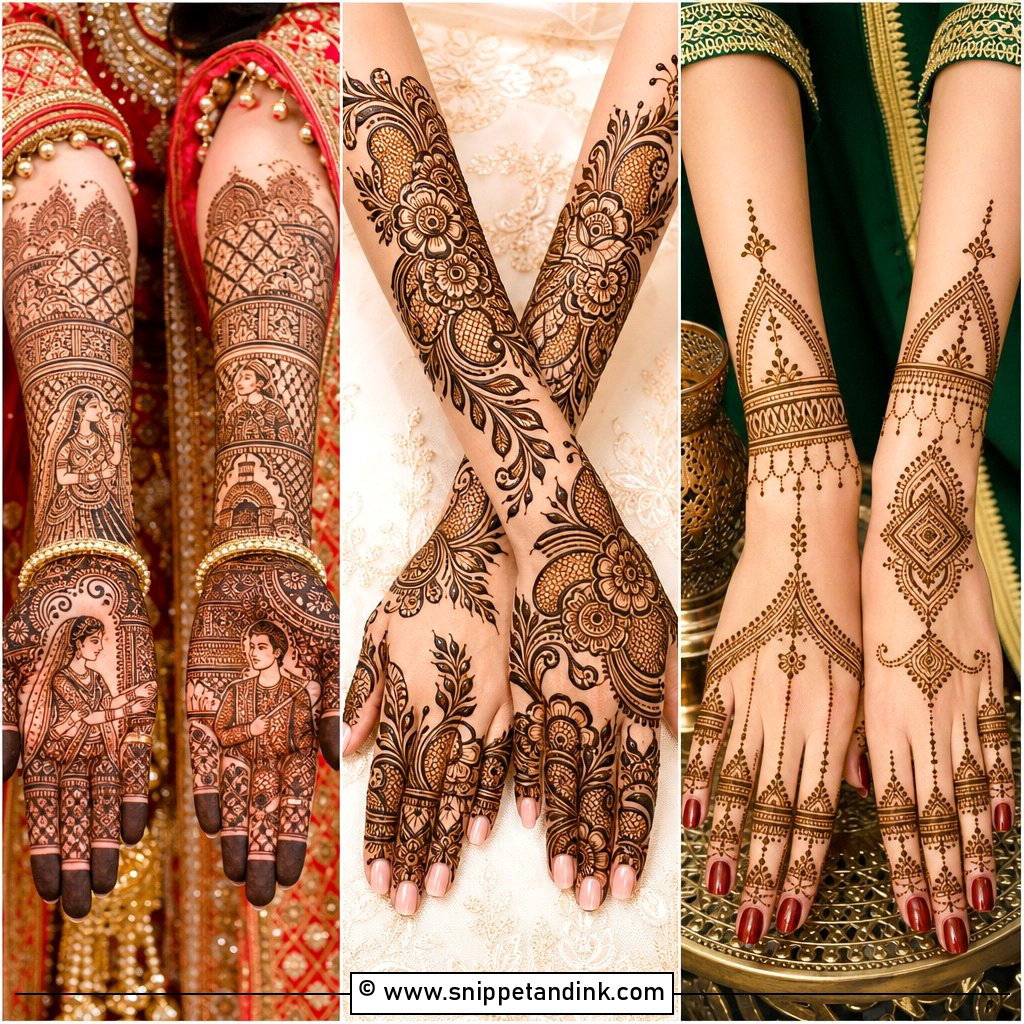
Full-hand coverage on a sister usually means palms, fingers, wrists and a short run up the forearm, built from vines, paisleys, jaali and a cuff border. The trick that stops it looking bridal is an open centre: I leave a mandala or a single flower circle in the palm with breathing room around it. A tiny “brother’s wedding” detail, initials or a little doli, can sit inside a border where only you will know to look. Budget a proper sitting for this one; it is the slowest design on the list.
2. Groom Sister Arabic Mehndi Design
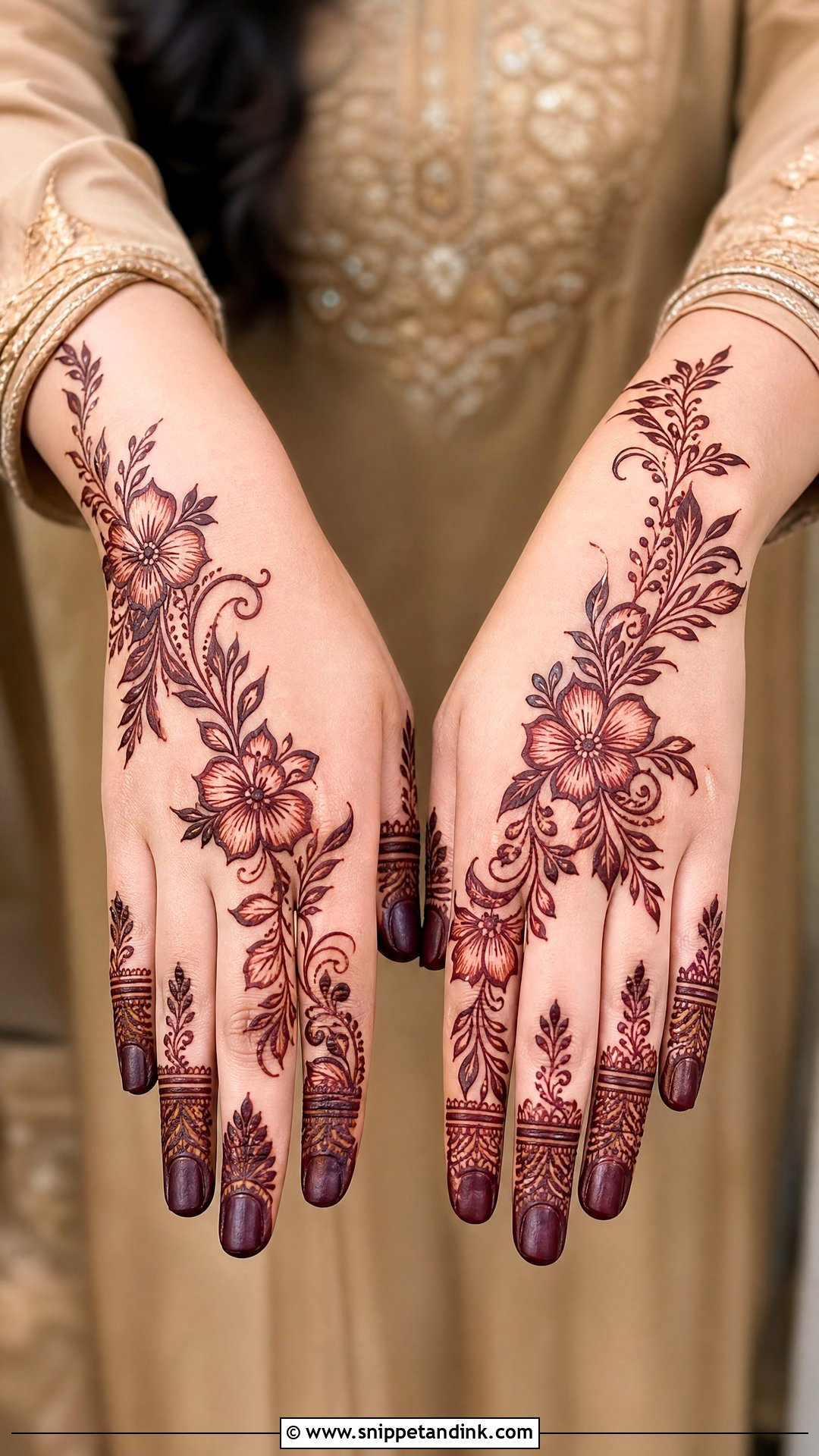
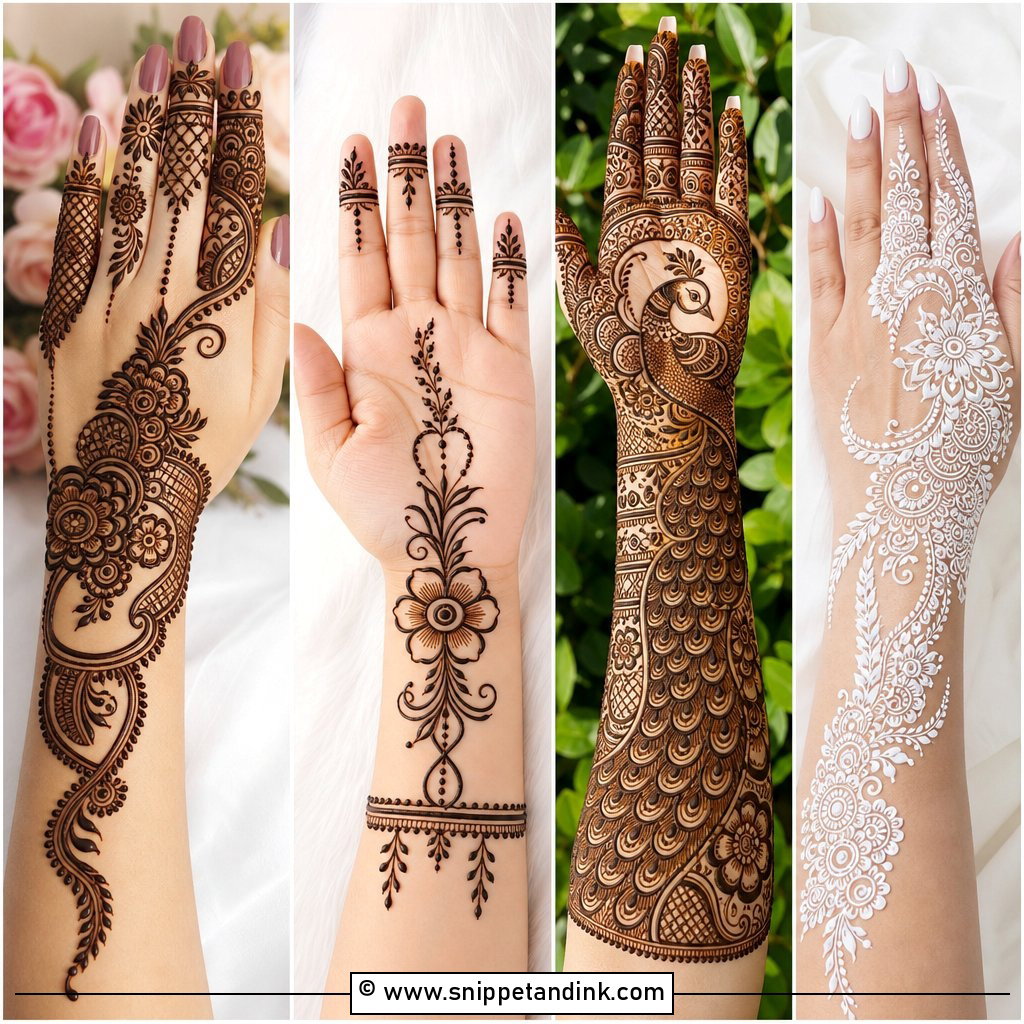
Arabic is the design I suggest most often to sisters who are also hosting. Big diagonal flowers, shaded petals and long spaced curves go on quickly, and because there is so much open skin, the paste dries faster and you’re back on your feet sooner. I usually run the trail from the wrist toward the index finger and decide on fingertips last, once I’ve seen your outfit. The gaps between motifs are what make it read clearly from across a room.
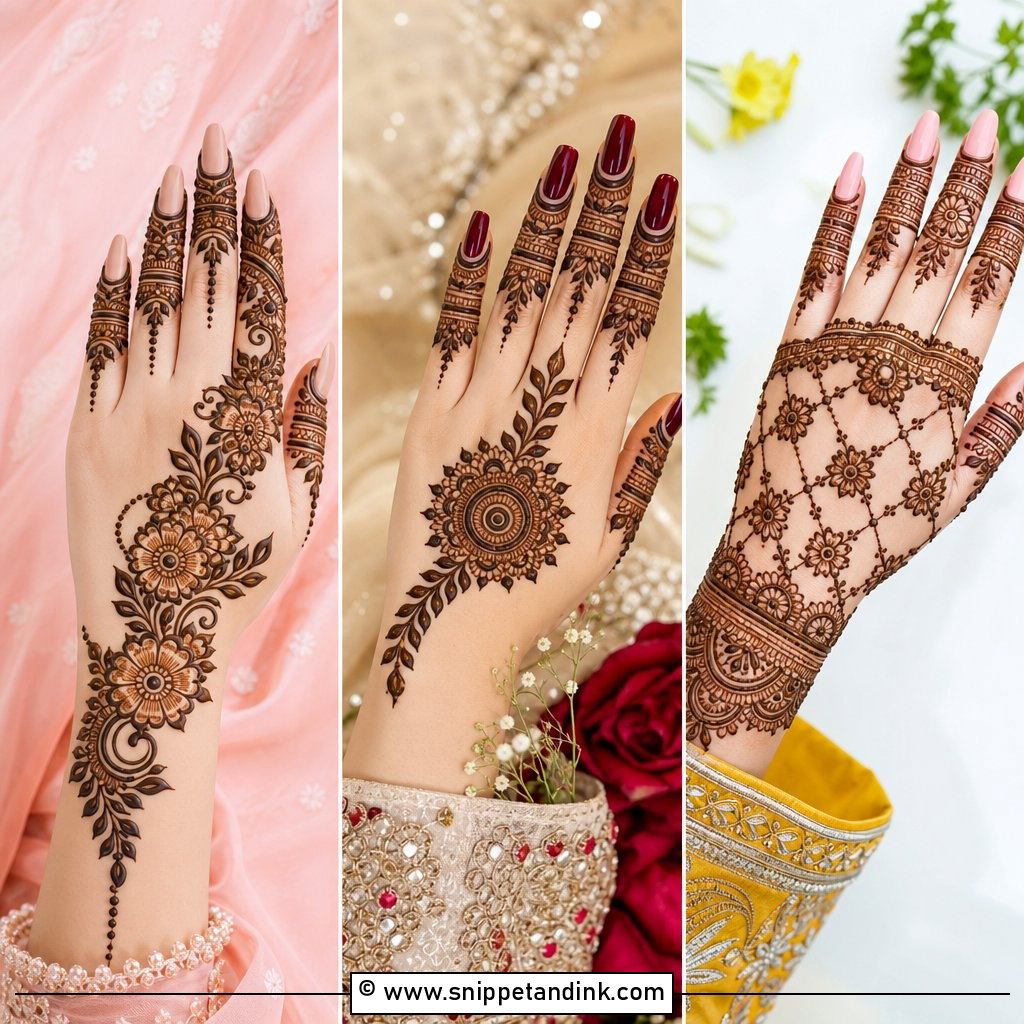
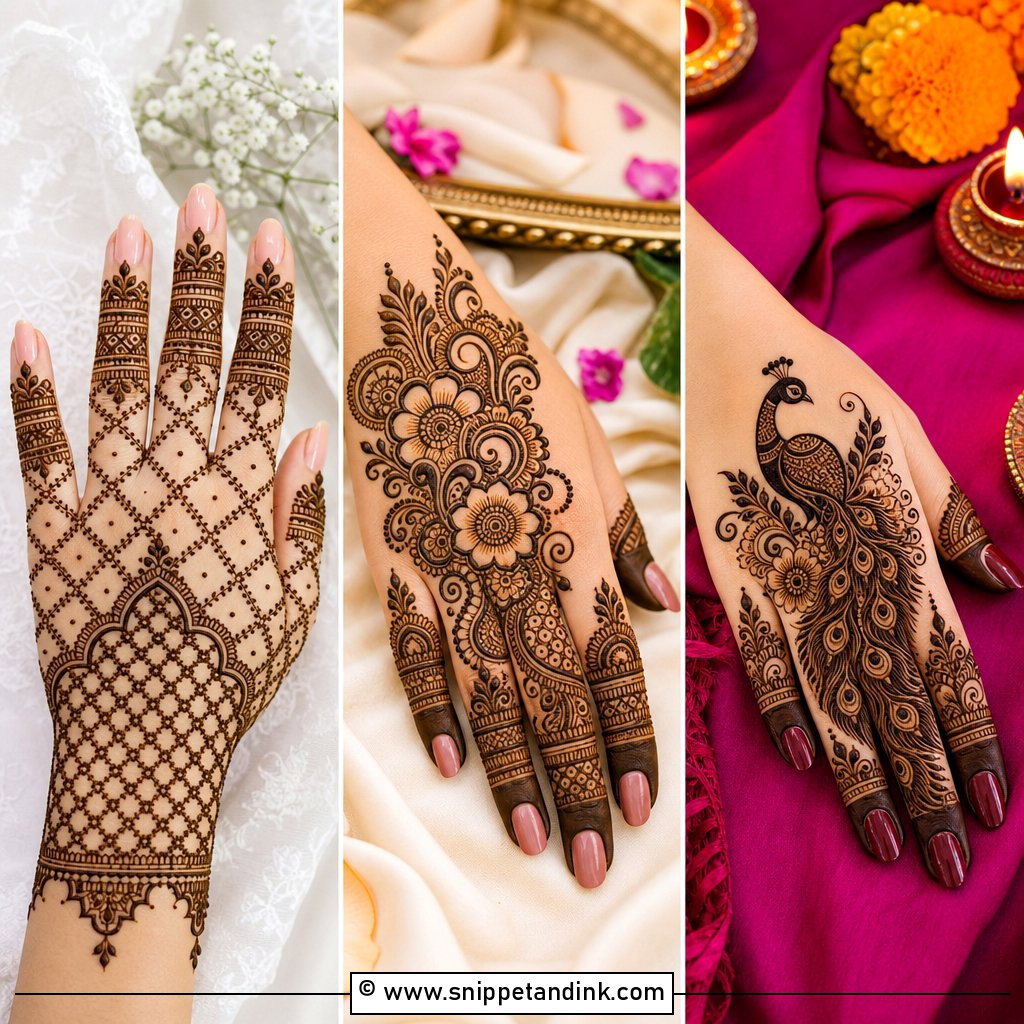
3. Groom Sister Back Hand Mehndi Design
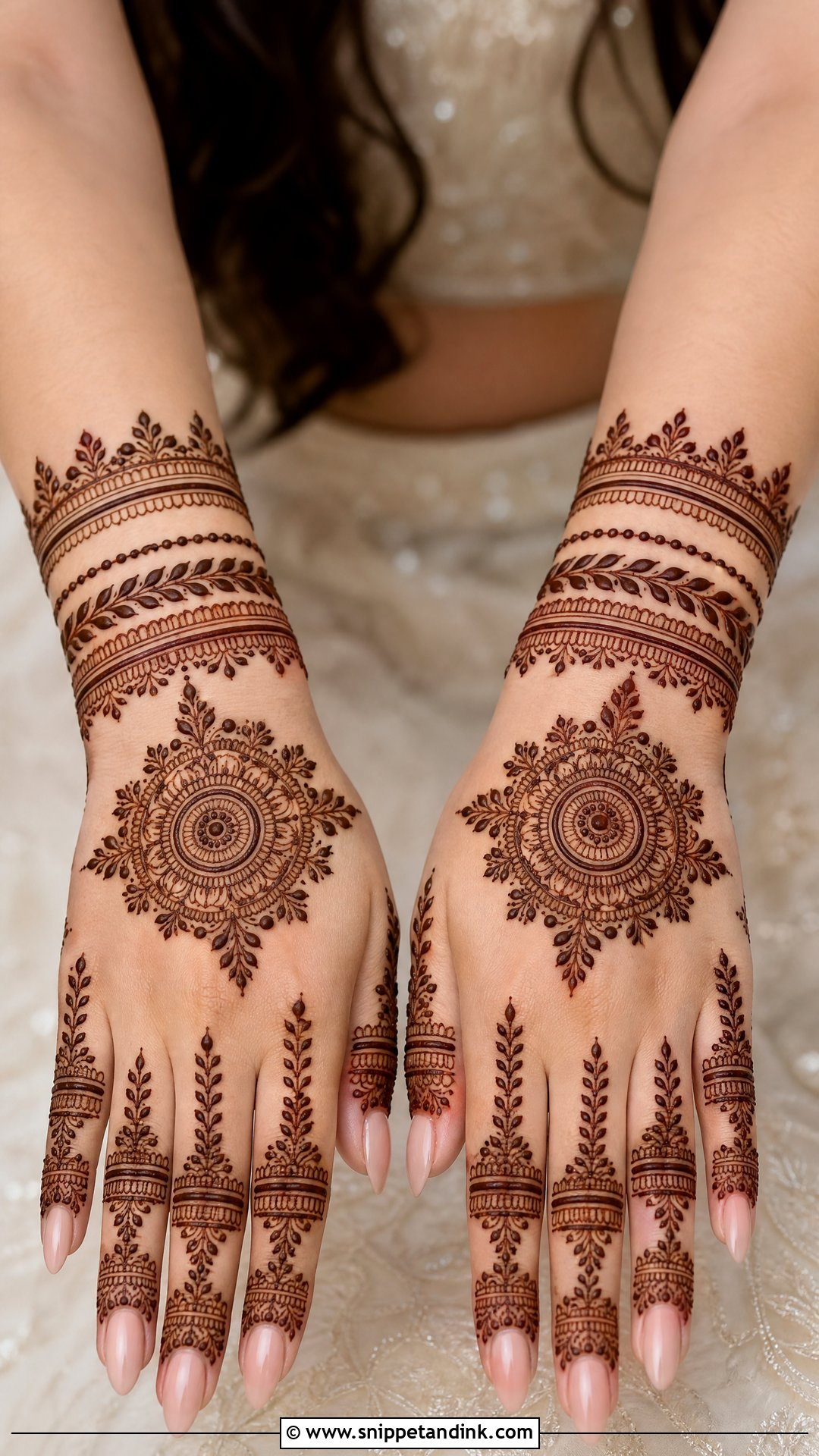
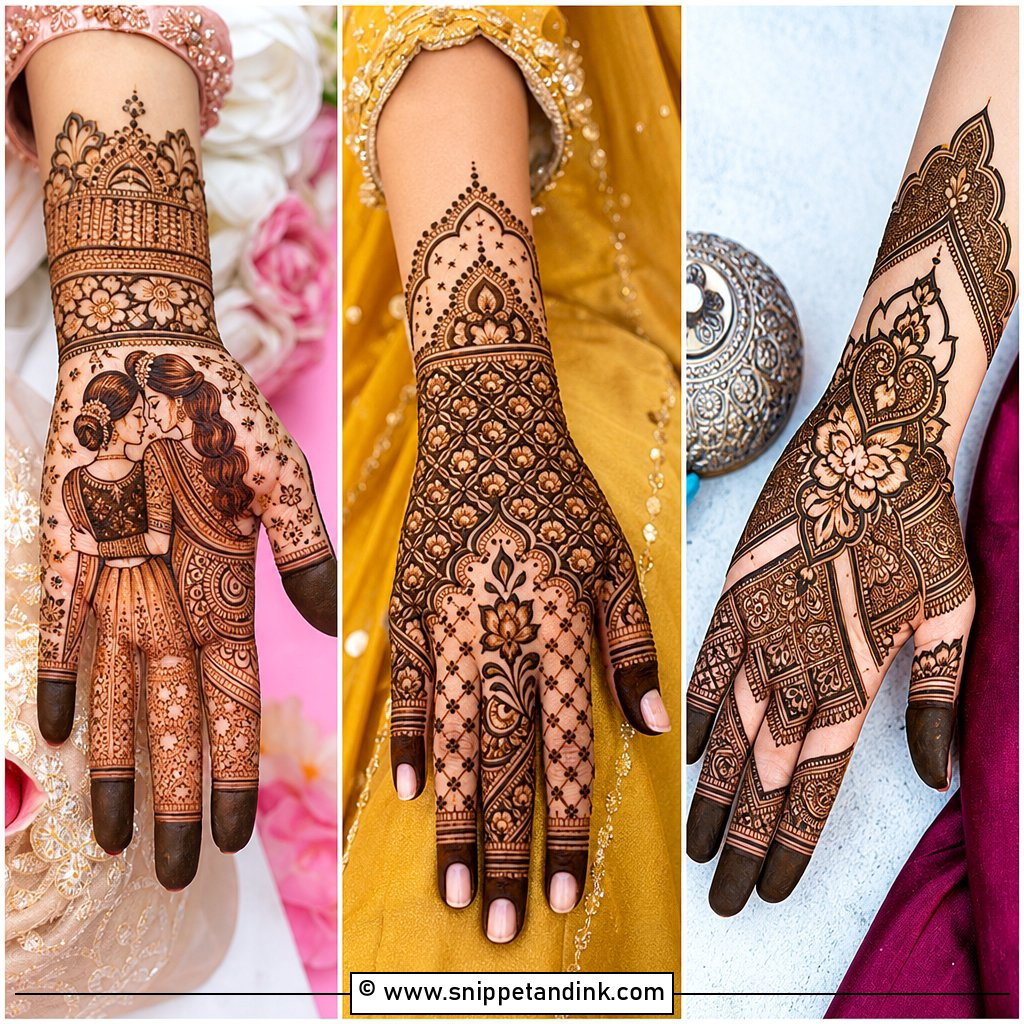
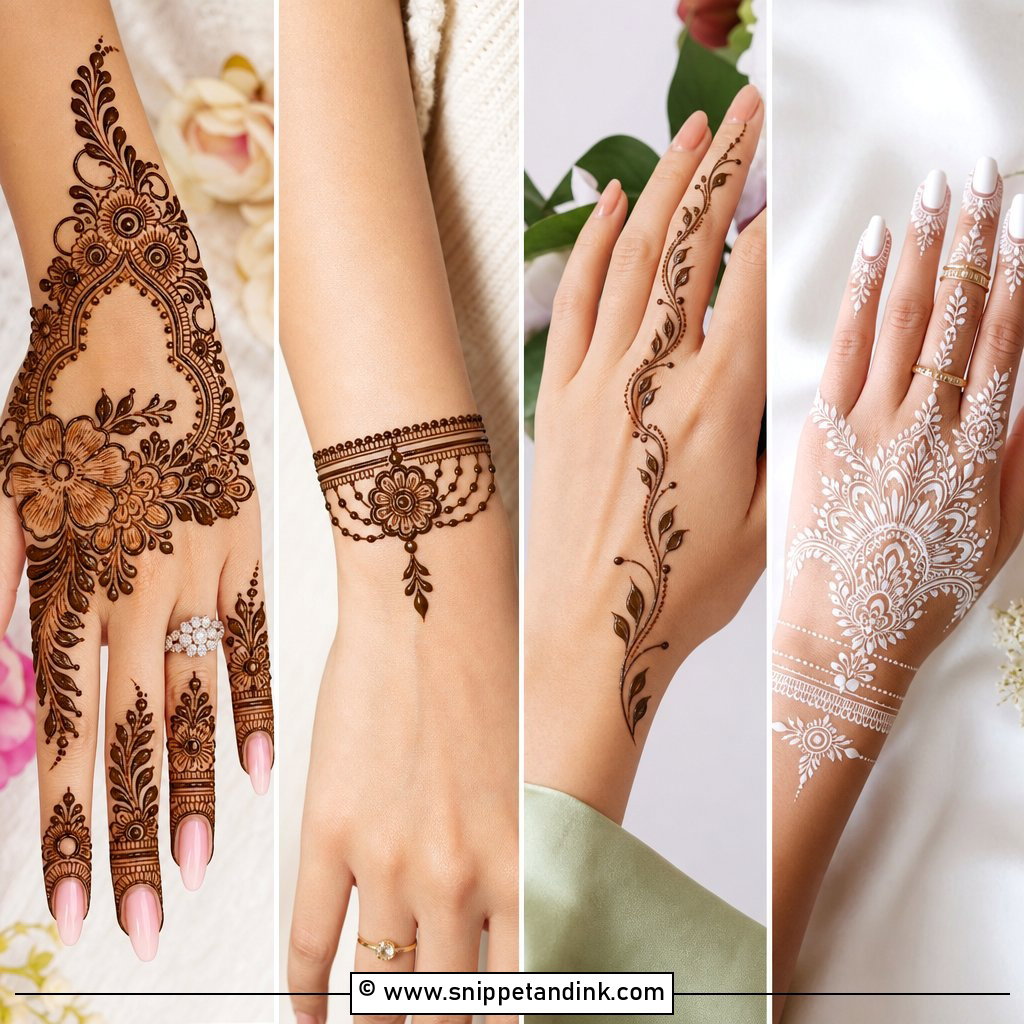
The back of the hand gets photographed far more than the palm, because that’s what shows when you hold a dupatta or fix an earring. A centre mandala, a bracelet band and decorated fingers do the work of hand jewelry. One thing to know before you choose it: skin on the back of the hand is thinner and less absorbent than the palm, so the stain lands a shade or two lighter. If you’re wearing heavy sleeves or a stack of bangles, I keep the wrist clean and push the detail toward the knuckles.
4. Groom Sister Front Hand Mehndi Design
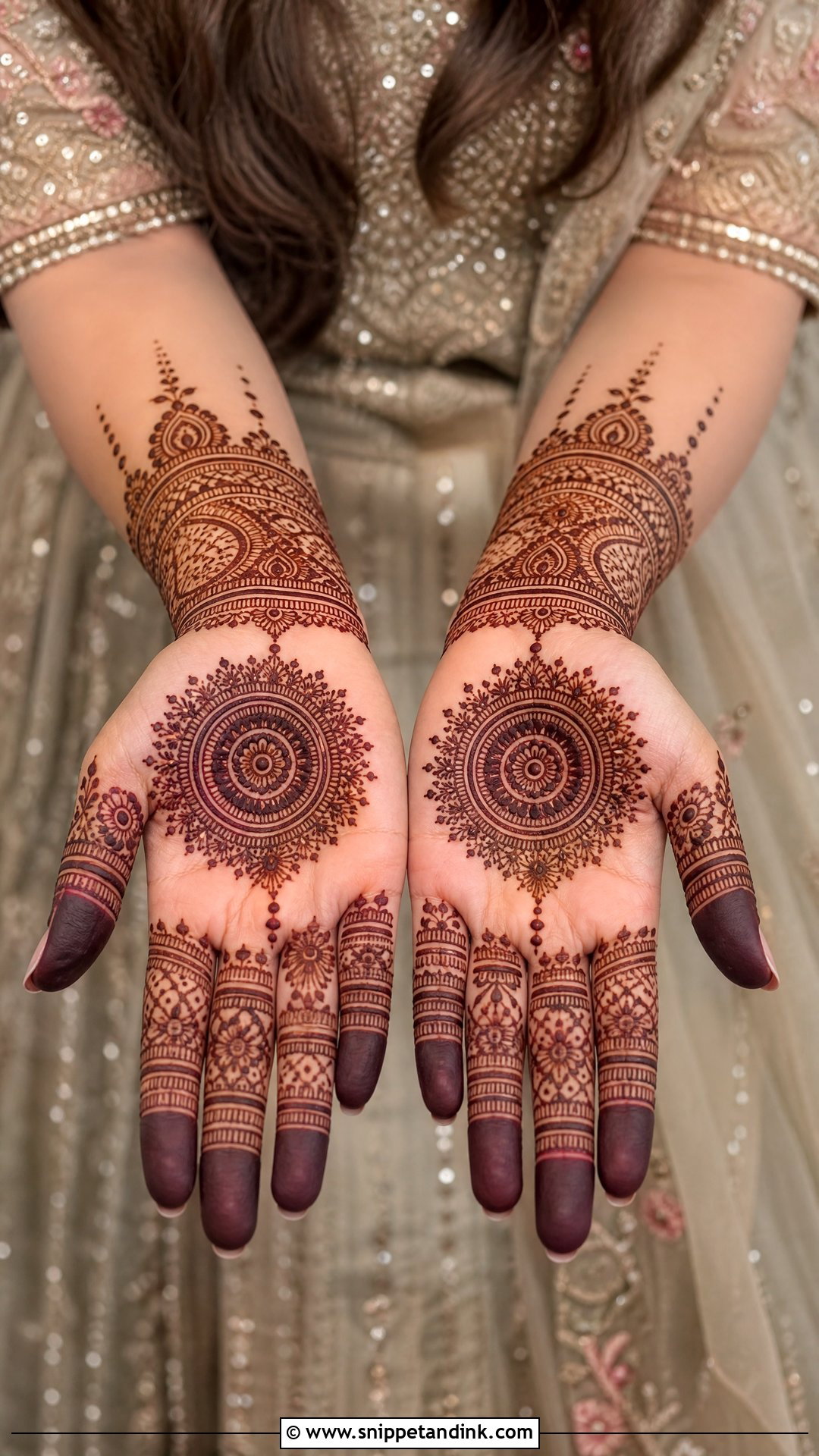
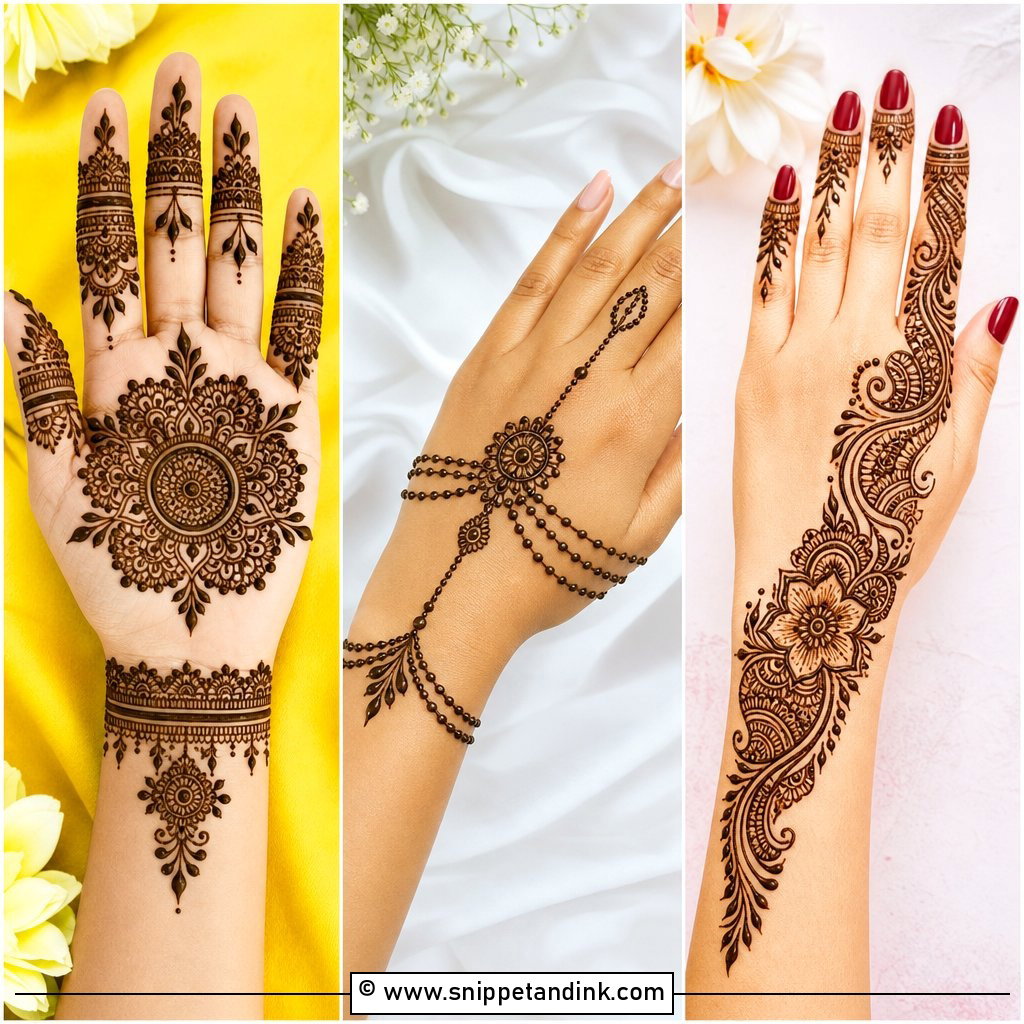
Palms take henna better than anywhere else on the body, which is why a front-hand design gives the deepest colour you’ll get. A round palm mandala, paisley borders at the wrist and filled fingertips is the classic sister layout, and it suits a teenage sister as easily as a married older one. I add thin vines between the fingers and the palm so the two areas connect instead of floating separately. Ask for fresh, natural paste; this is where a good cone shows.
5. Groom Sister Simple Mehndi Design
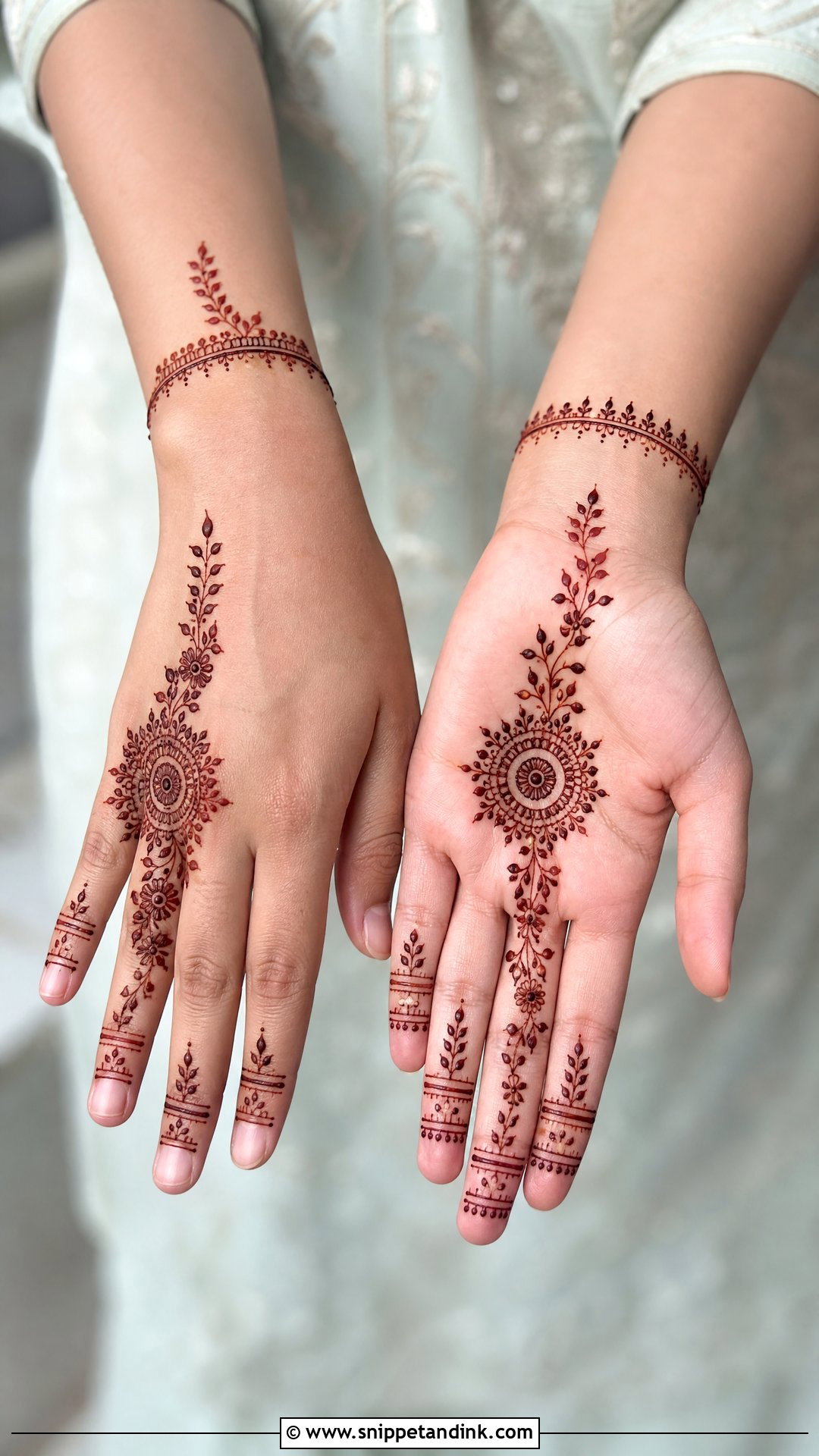
Simple is a reasonable answer when you have four functions in five days. A single floral trail on the back hand, a small palm mandala and fine finger lines can be done in a short sitting, which matters when relatives are queuing for the same artist. What makes a light design look deliberate is spacing. I’d rather draw six well-placed elements than fill the hand with tiny scattered dots that blur once the stain develops.
6. Groom Sister Bridal Look Mehndi Design
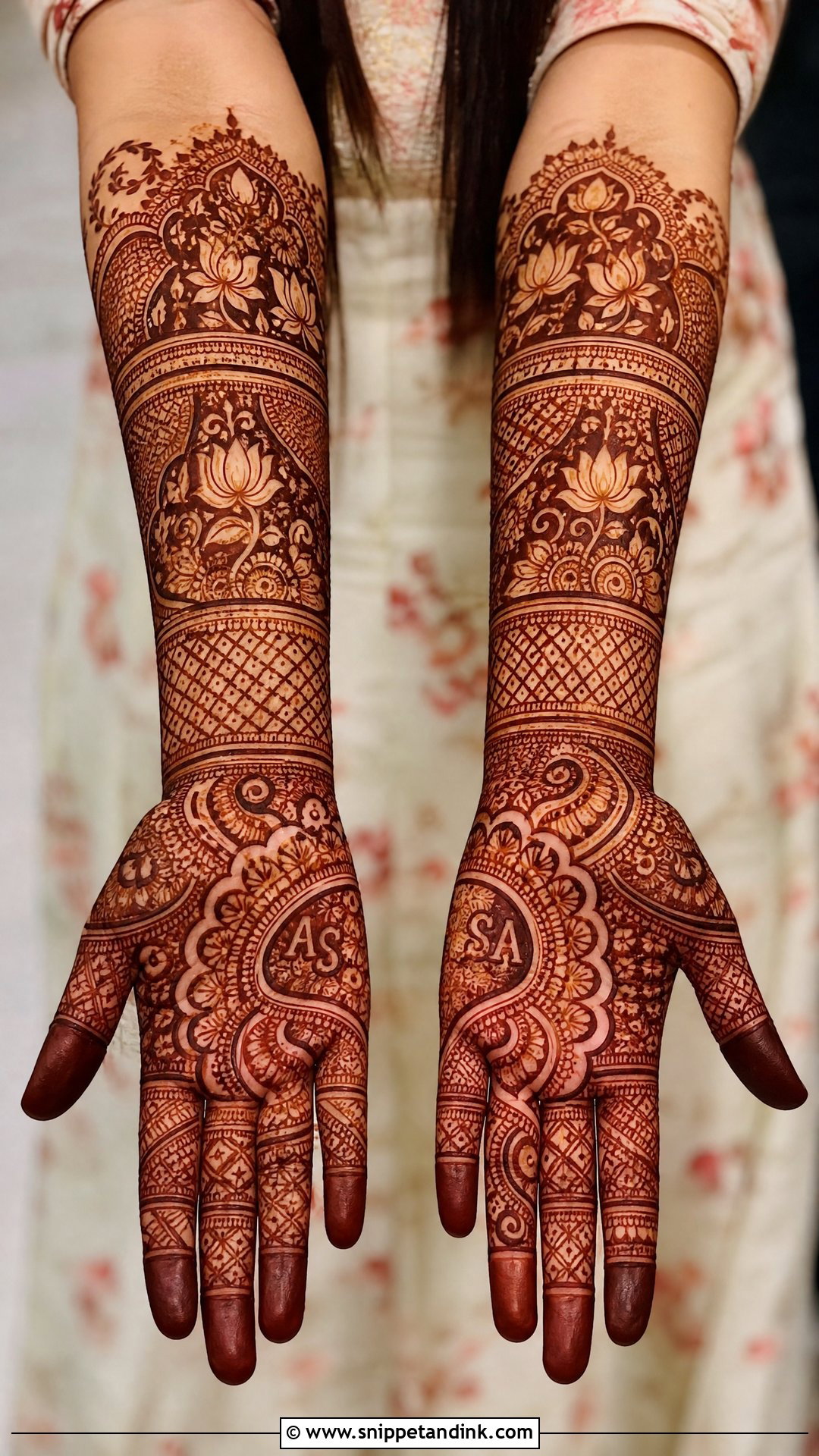
Some sisters want the full drama of bridal work without stepping on the bride’s toes. My rule here is to borrow bridal motifs (paisleys, lotus, jaali, wrist cuffs) and drop the things that mark a bride: dense portrait panels and coverage to the elbow. I fill the palms richly and stop the forearm design a few inches below the elbow. A little kalash or a baraat symbol personalises it. I’d only recommend this if you can sit still for a long session and keep the paste on overnight.
7. Groom Sister Indo Arabic Mehndi Design
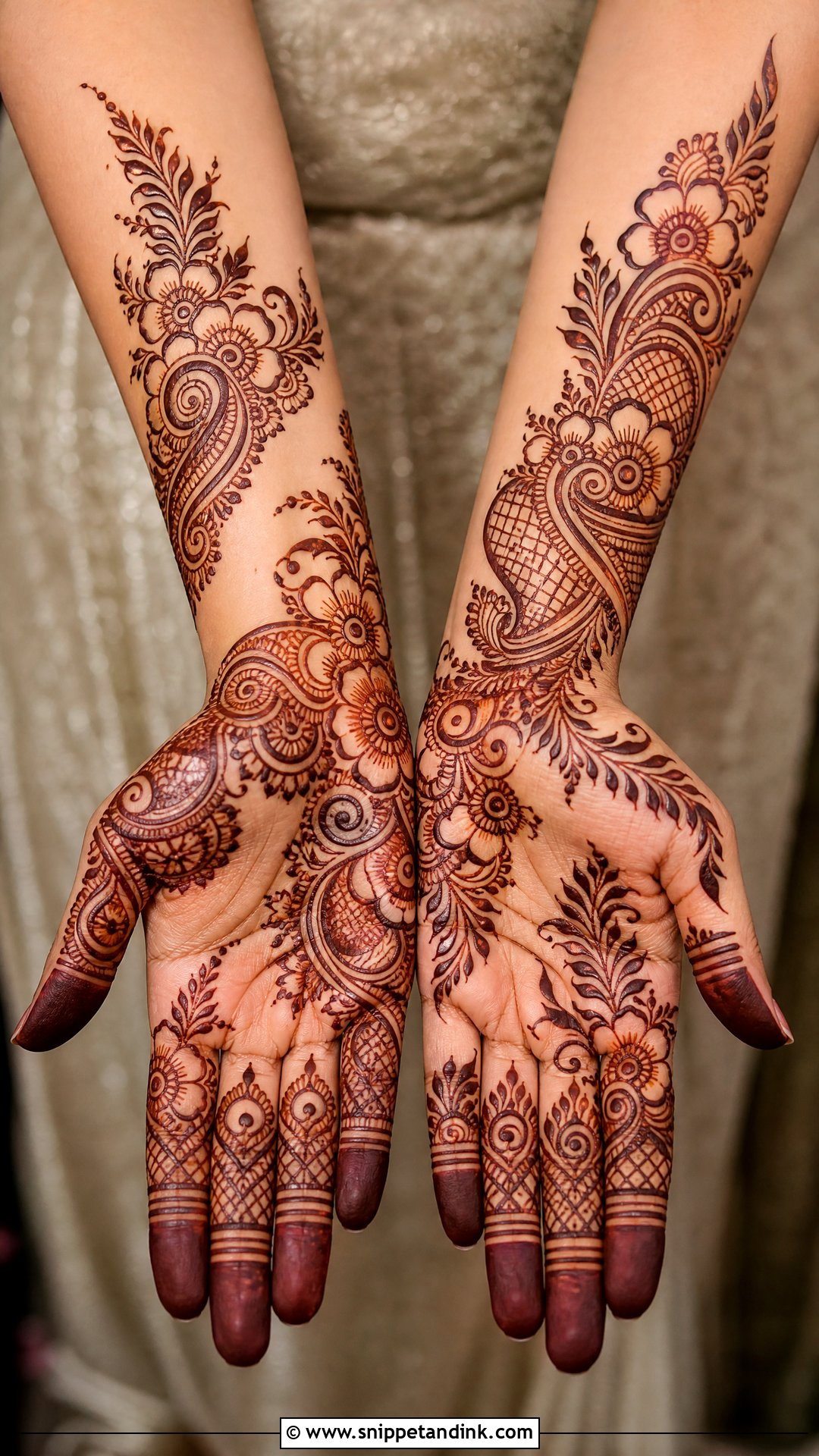
Indo-Arabic takes the sweeping flow of Arabic work and fills parts of it with fine Indian detailing: mesh panels inside leaves, clustered paisleys, shaded petals. On a sister I run it from fingers to wrist along one side and leave the opposite edge open, so the contrast carries the design. It’s a good pick if you like a busy look but don’t want every inch covered. Heavier mirror-work outfits and statement rings sit comfortably next to it.
8. Groom Sister Mandala Mehndi Design
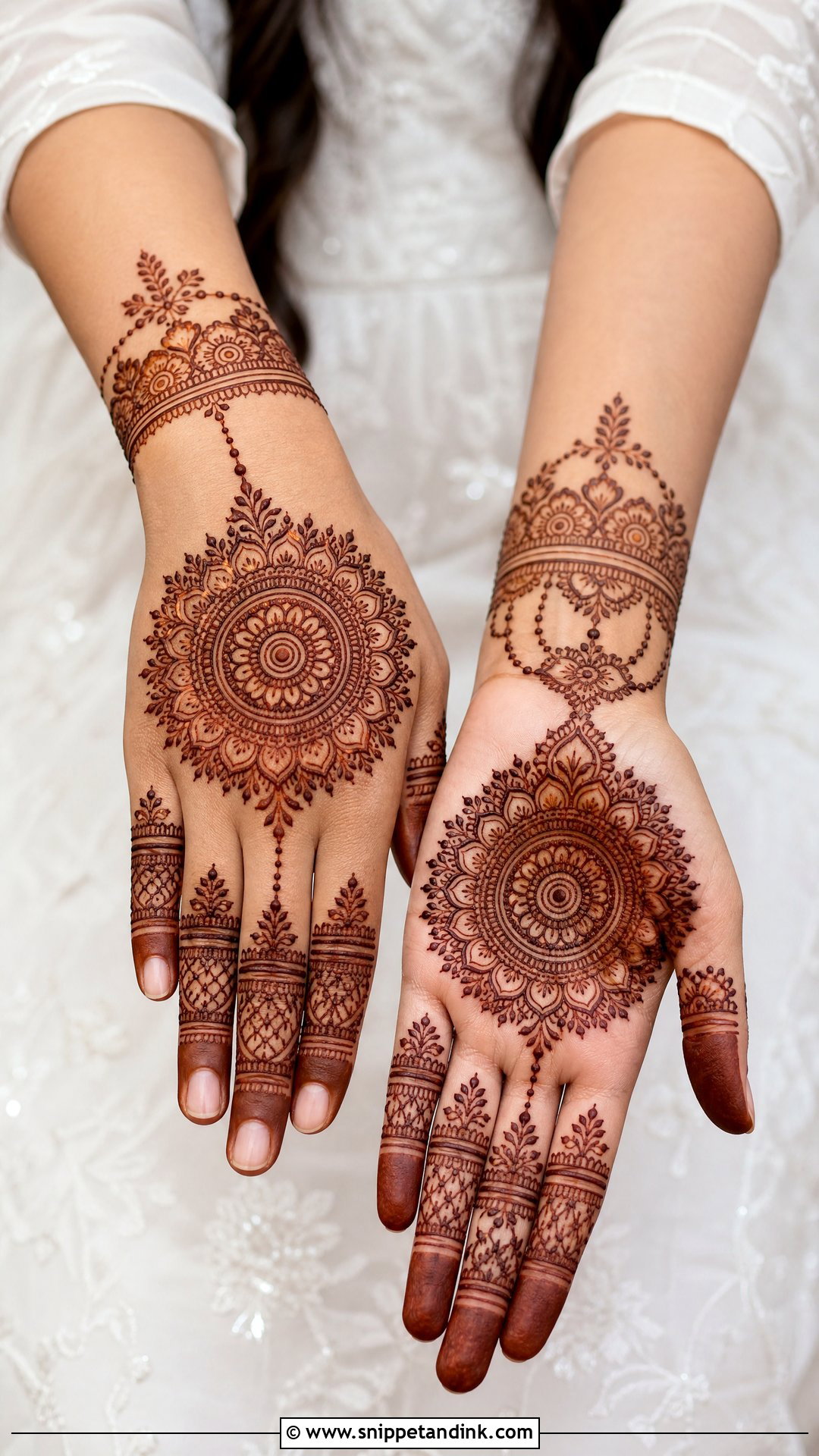
A mandala is the easiest centrepiece to place well, which is why I reach for it so often. I set the circle on the palm or the back hand, connect it to the fingers with thin lines and finish with a wrist band. For a lighter result, leave a ring of bare skin around the mandala; for a richer one, I fill that ring with petals and dots. Matching both hands is worth the extra minutes, because asymmetric mandalas look like a mistake in photos.
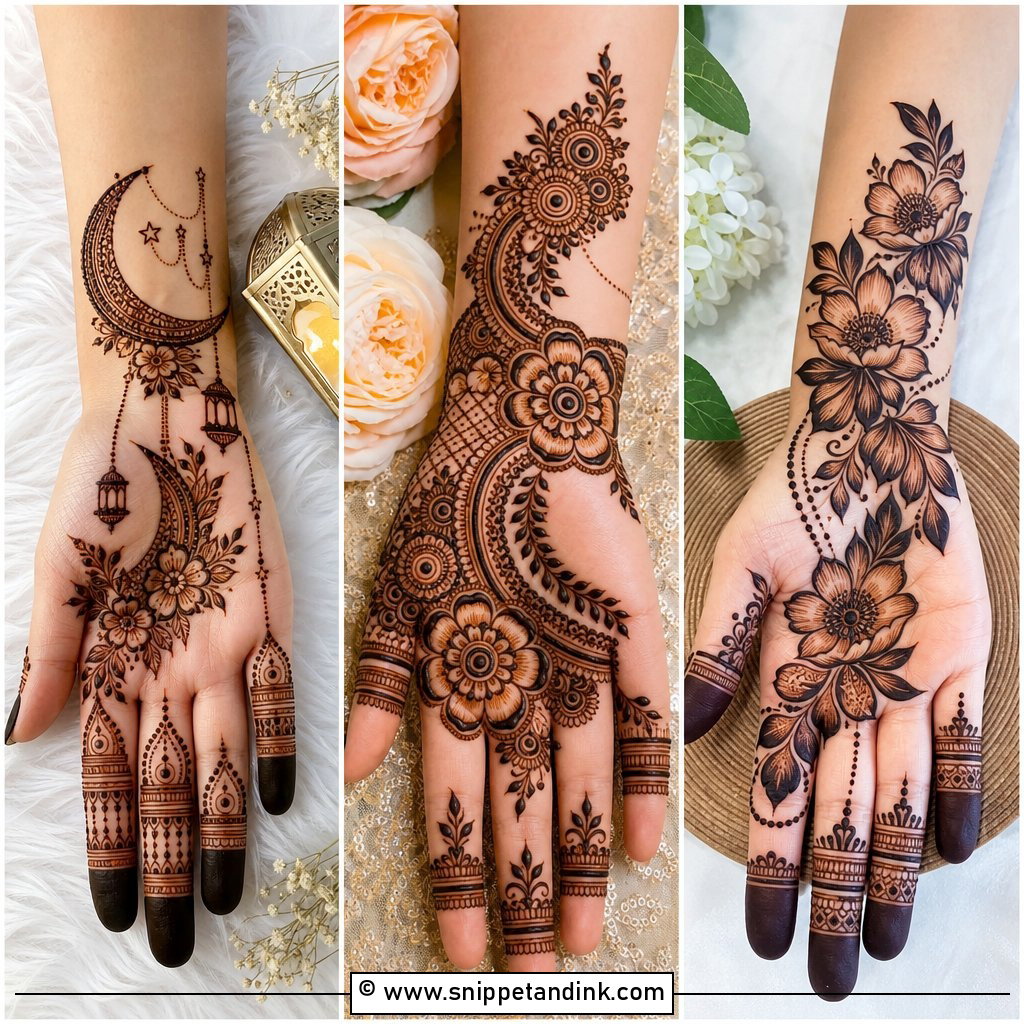
9. Groom Sister Floral Mehndi Design
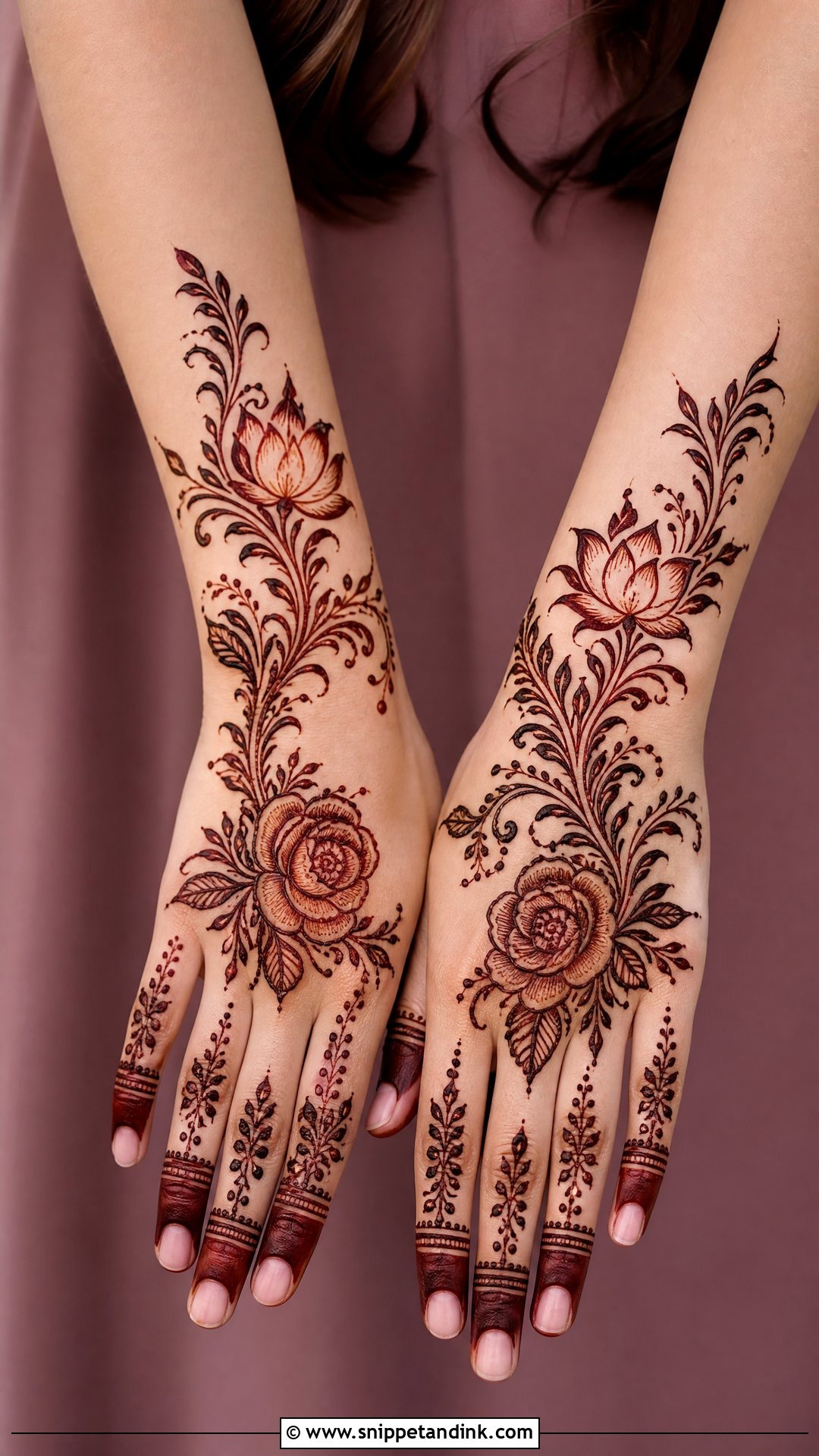
Florals are forgiving, both for the artist and for the stain. Roses, lotus petals and leafy vines tolerate small variations in line weight, so they still look good if the paste dries a little unevenly. I start the trail at the wrist and let it climb toward the index or middle finger, then add mesh pockets on the palm for depth. The thing to watch is clutter: flowers dropped randomly across the hand look scattered rather than full.
10. Groom Sister Paisley Mehndi Design
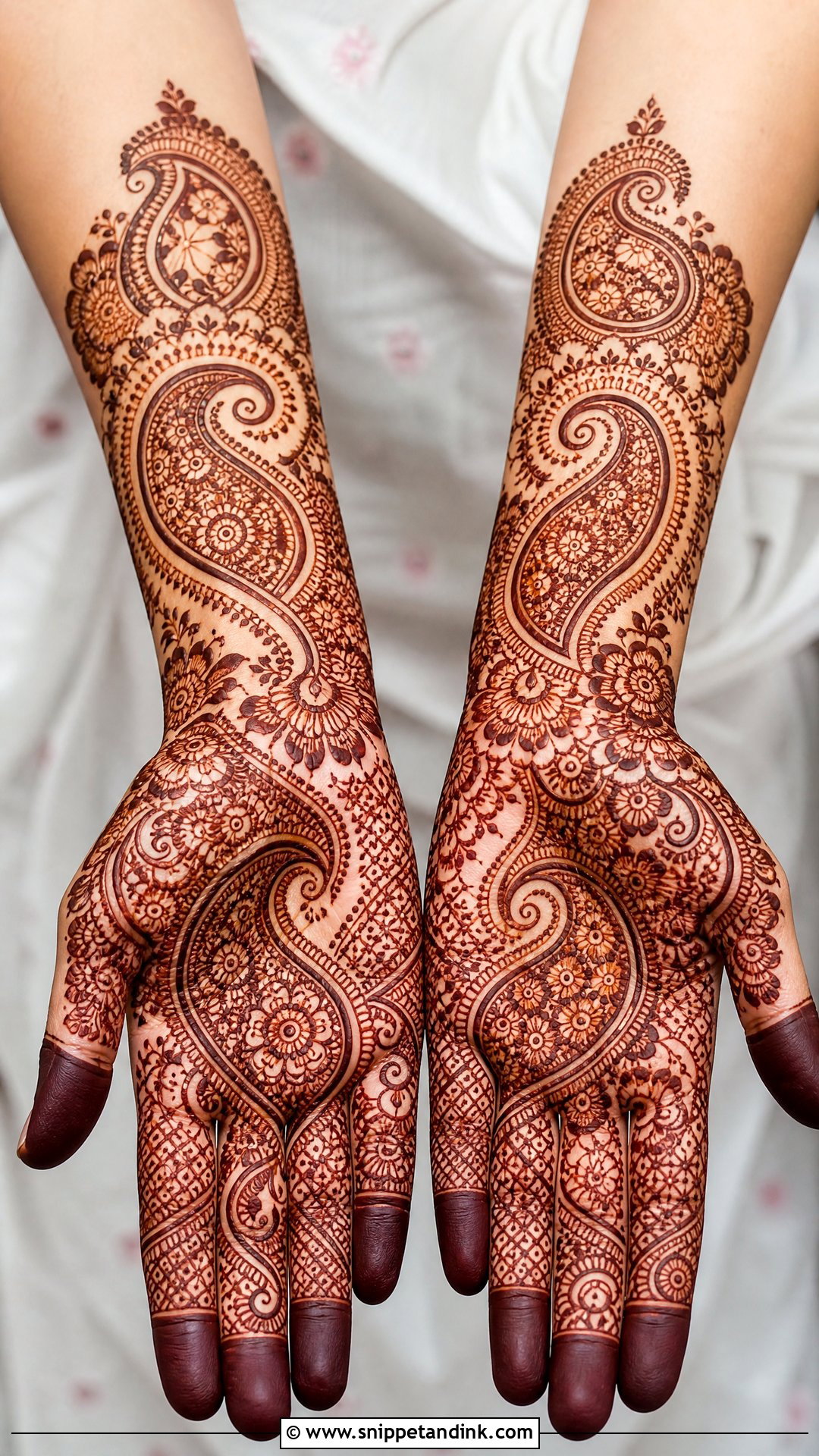
Paisley mehndi follows the natural curve of the hand better than almost any motif, so it rarely looks awkward on long or short fingers. I either place one large paisley on the palm with smaller ones stepping down to the wrist, or repeat them in rows for a traditional effect. Leave clean gaps between each one. Packed paisleys merge into a dark blob once the stain deepens on day two.
11. Groom Sister Jaali Mehndi Design
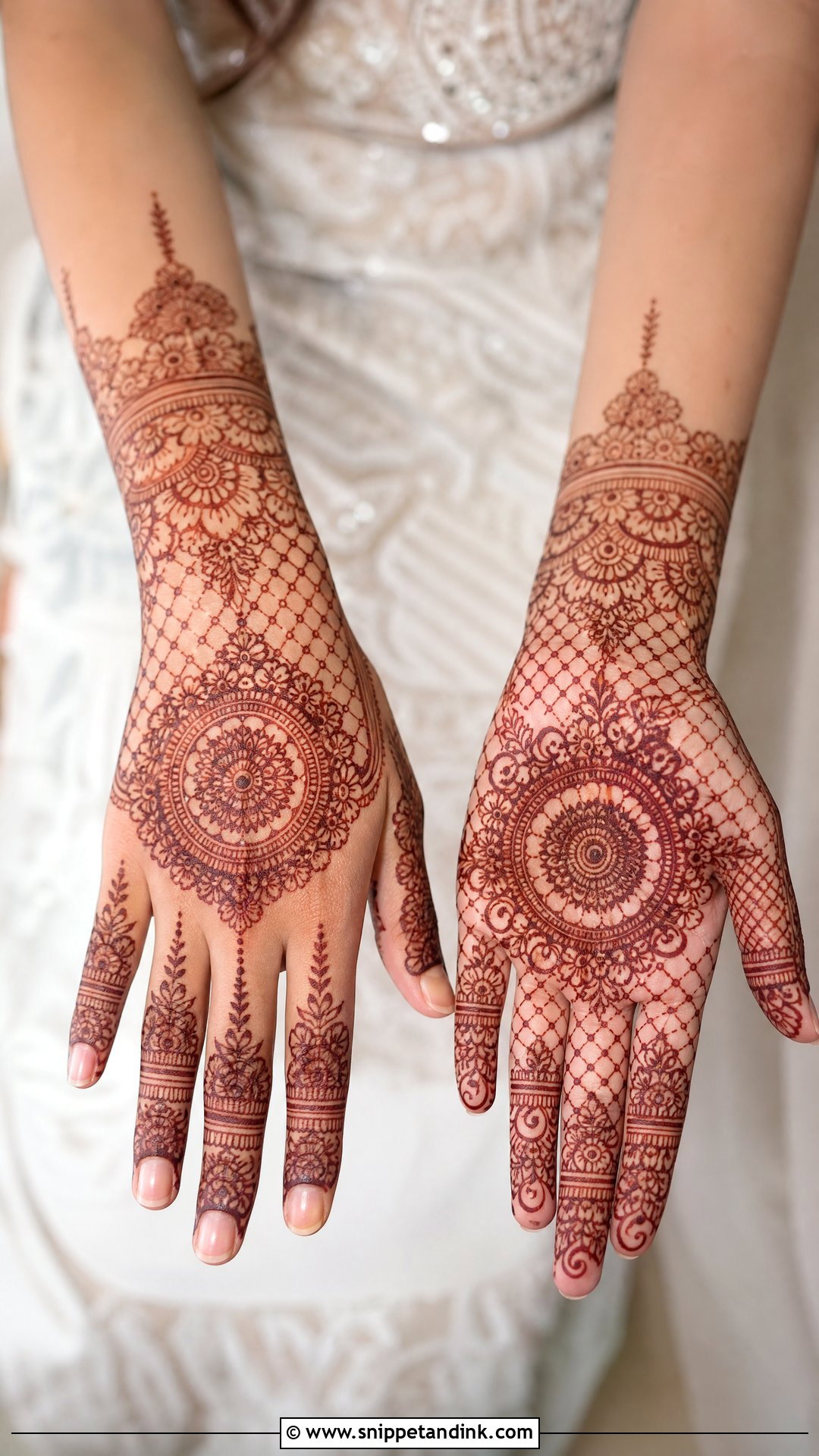
Jaali mehndi gives a lace effect without heavy motifs everywhere, and it pairs well with rings and bangles. On the back of the hand I build mesh panels inside floral borders; on the palm I mix the mesh with a mandala or paisley centre. The honest caveat: jaali demands a steady hand and a fine cone tip. If the grid lines aren’t even, the whole design looks wobbly, so ask to see your artist’s mesh work before you commit.
12. Groom Sister Peacock Mehndi Design
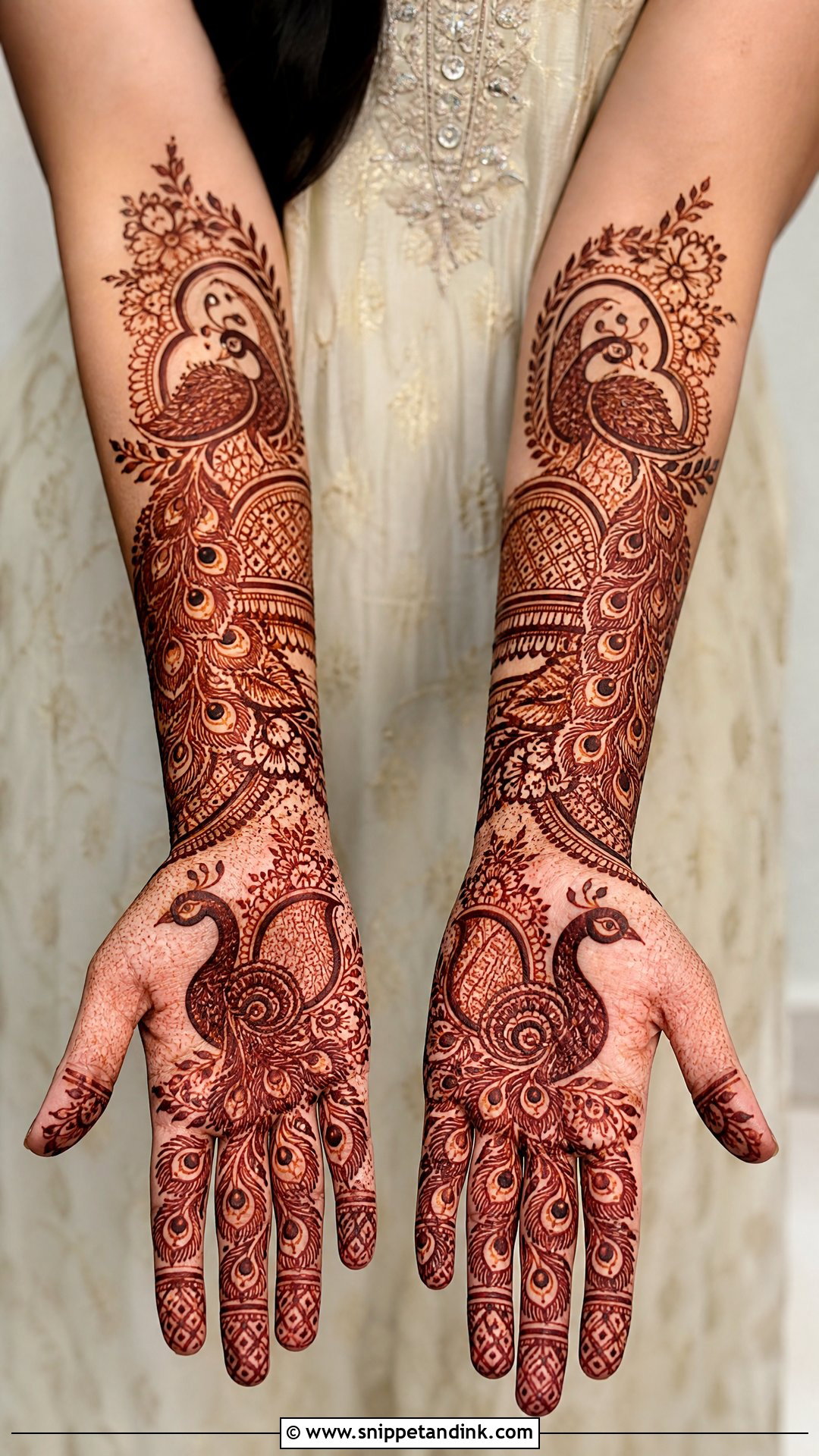
Peacocks are a family favourite at Indian weddings, and a single bird on the palm, wrist or forearm makes a strong focal point. I keep the peacock modest in size if I know the bride is getting heavy coverage, so the sister’s hand doesn’t upstage hers. The feathers give natural movement, which means I need fewer filler motifs around them. Fine shading on the neck and tail is what separates a good peacock from a cartoonish one.
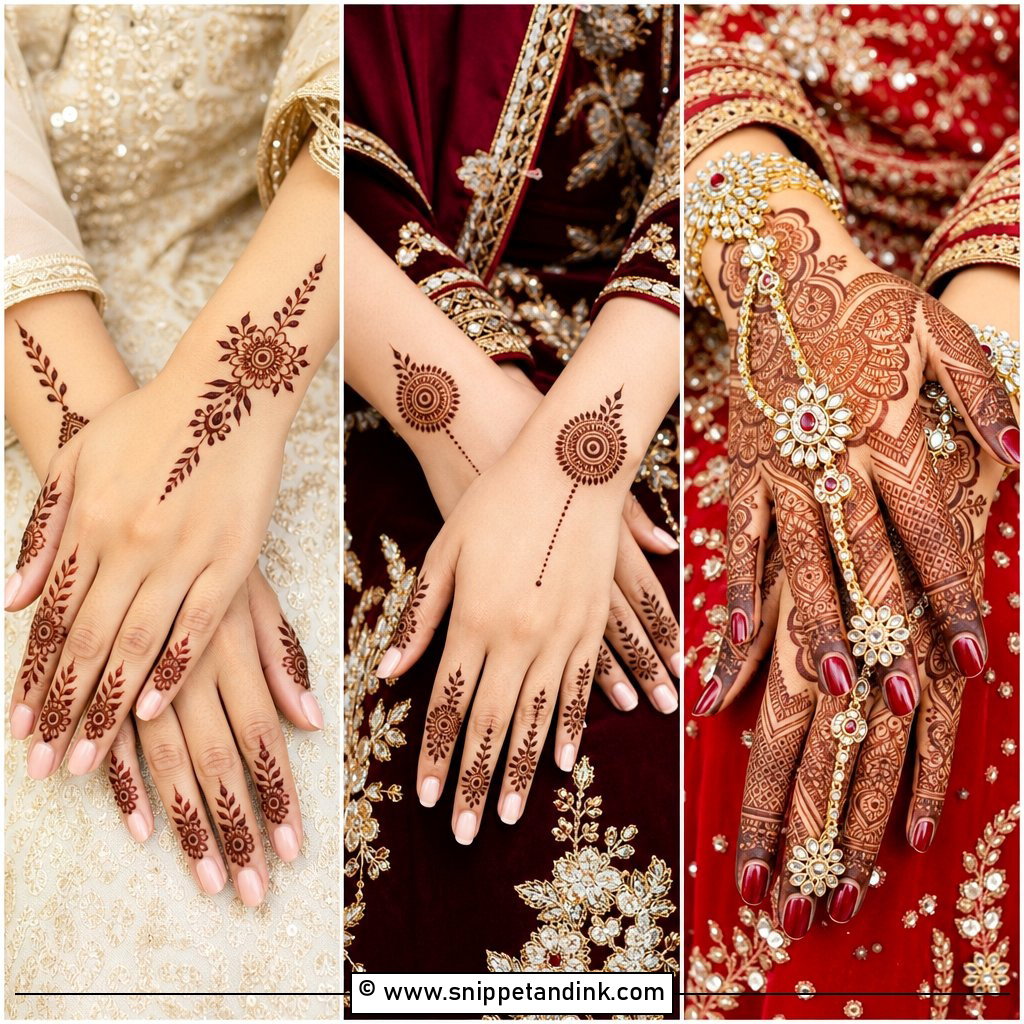
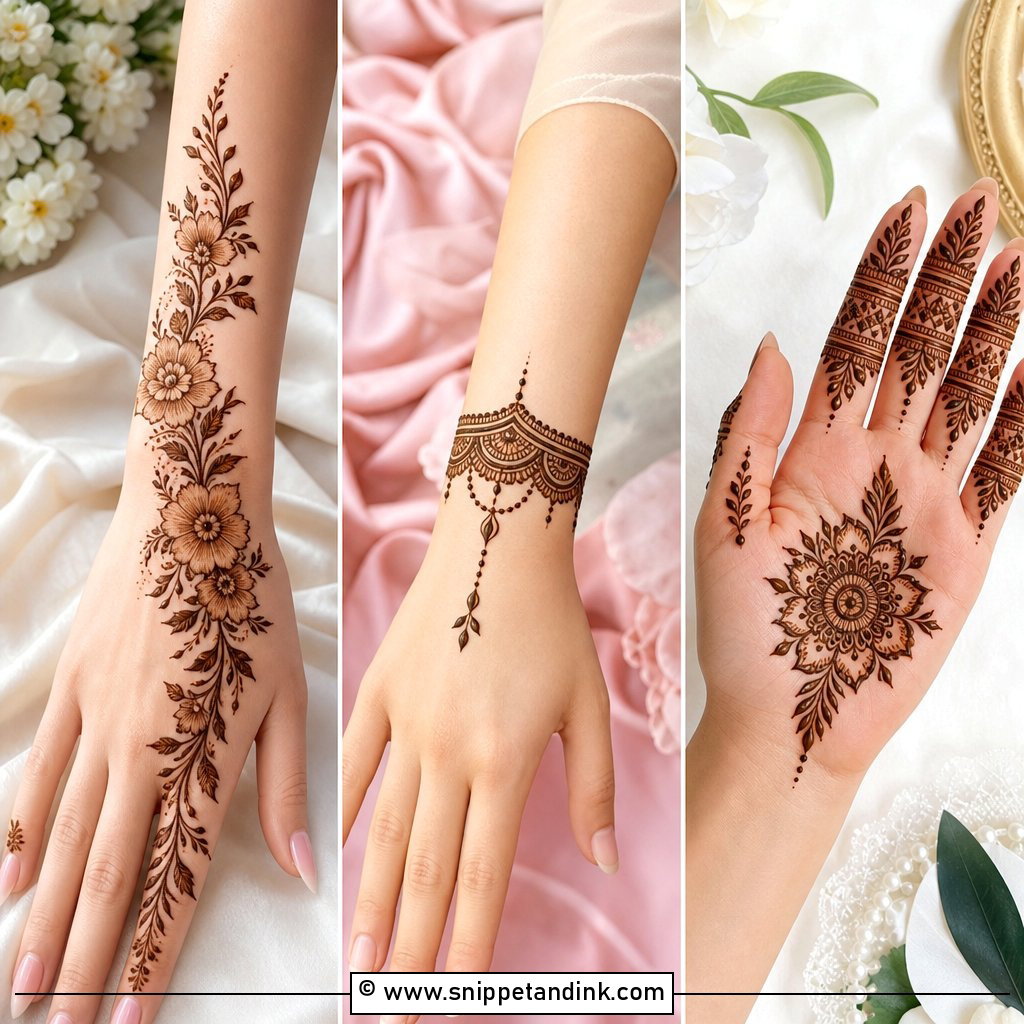
13. Groom Sister Jewelry Mehndi Design
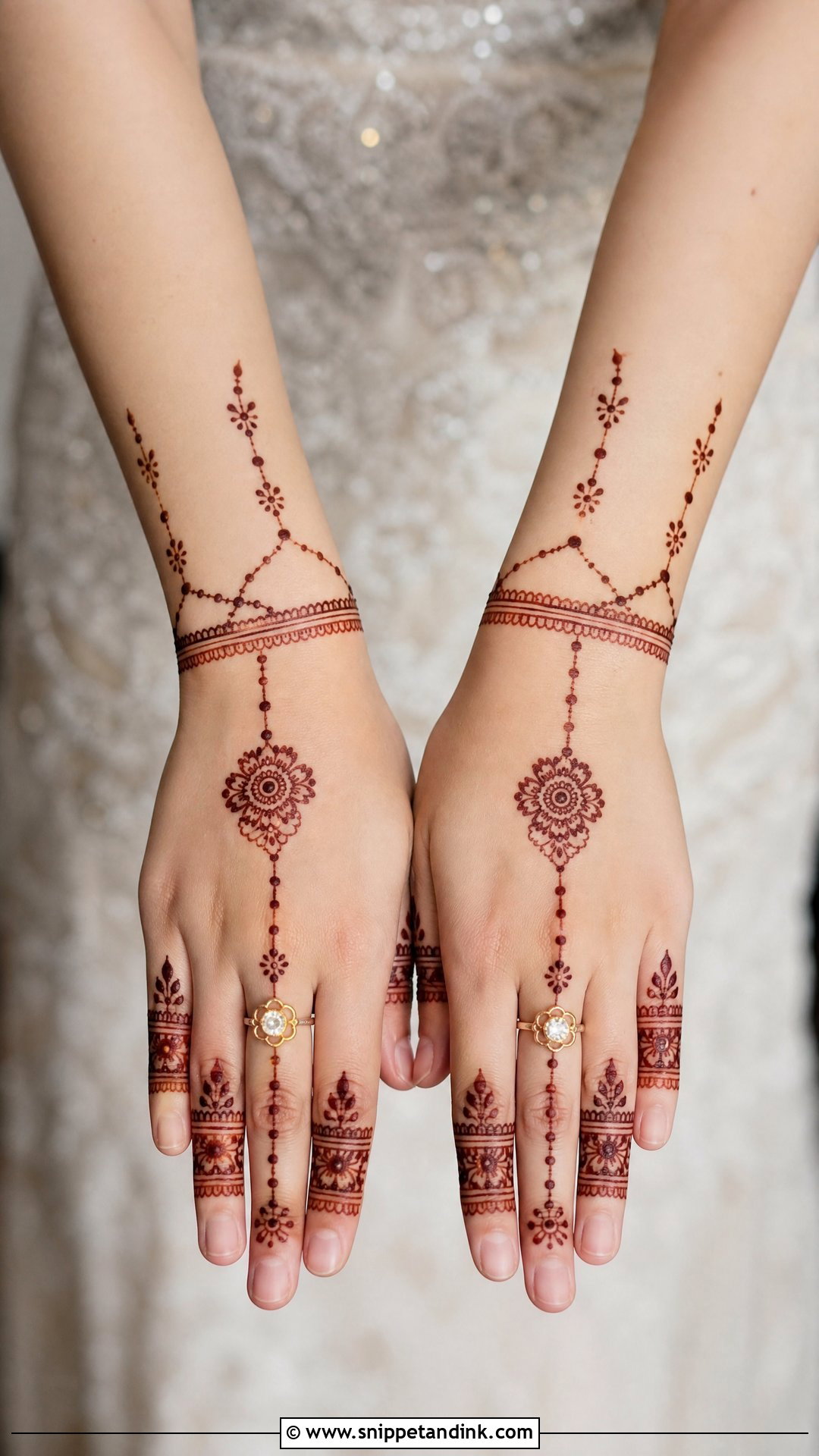
Jewelry mehndi mimics a haath phool: ring chains, a bracelet band, finger loops and a floral or mandala piece in the centre. It sits best on the back of the hand and works with minimal real jewelry rather than heavy pieces, which would sit on top of the pattern and hide it. Both hands symmetrical, always. Because it covers so little skin, it dries quickly and you can get on with hosting duties.
14. Groom Sister Minimal Mehndi Design
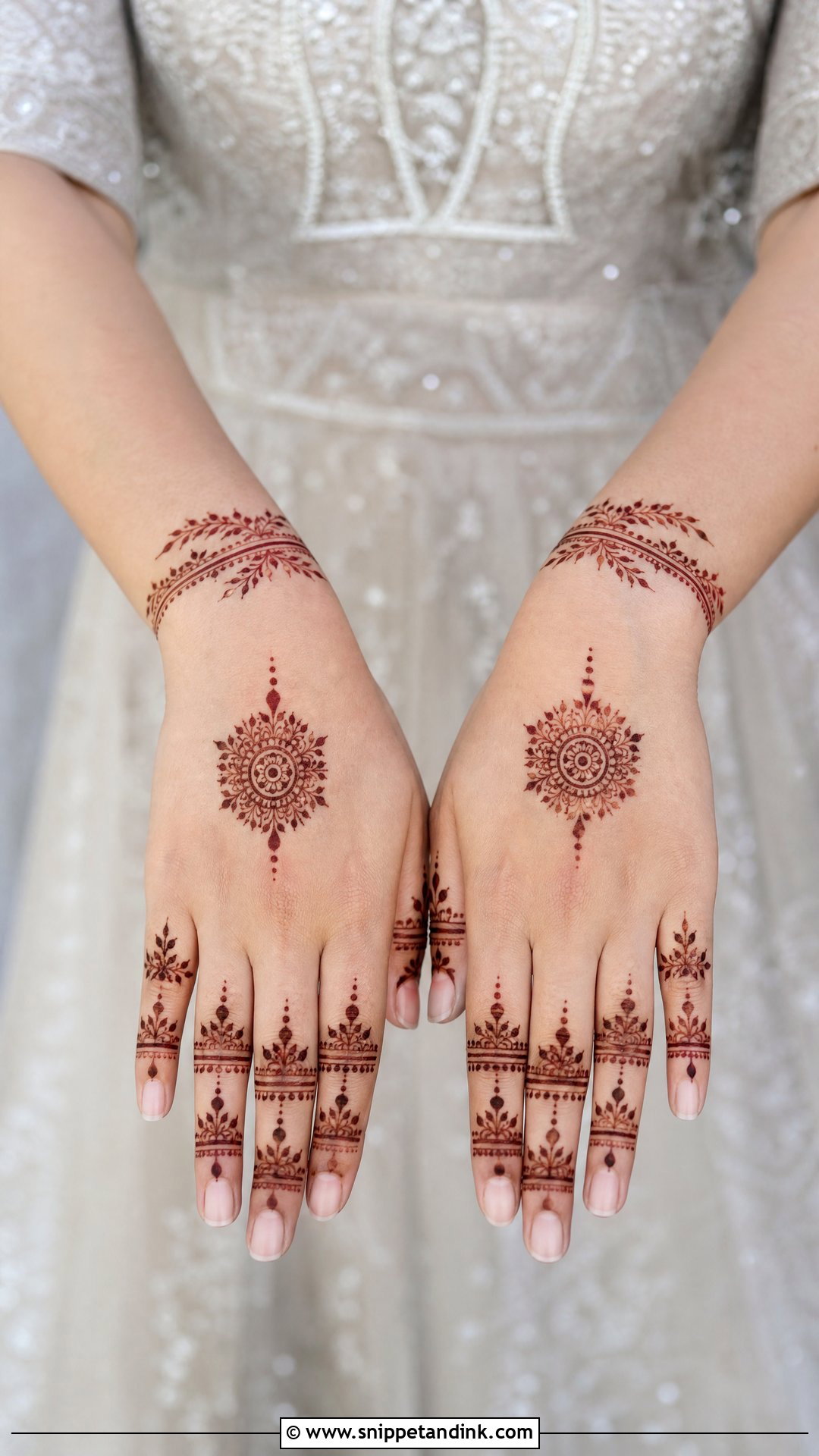
Minimal work exposes every mistake, so I treat it more carefully than a full design. Fine finger lines, a small back-hand mandala, a leafy wrist band and a few dots are enough. I’d choose it for pre-wedding events where heavy coverage feels premature, or for a sharply cut modern outfit. Keep the elements connected; three disconnected motifs on one hand read as unfinished.
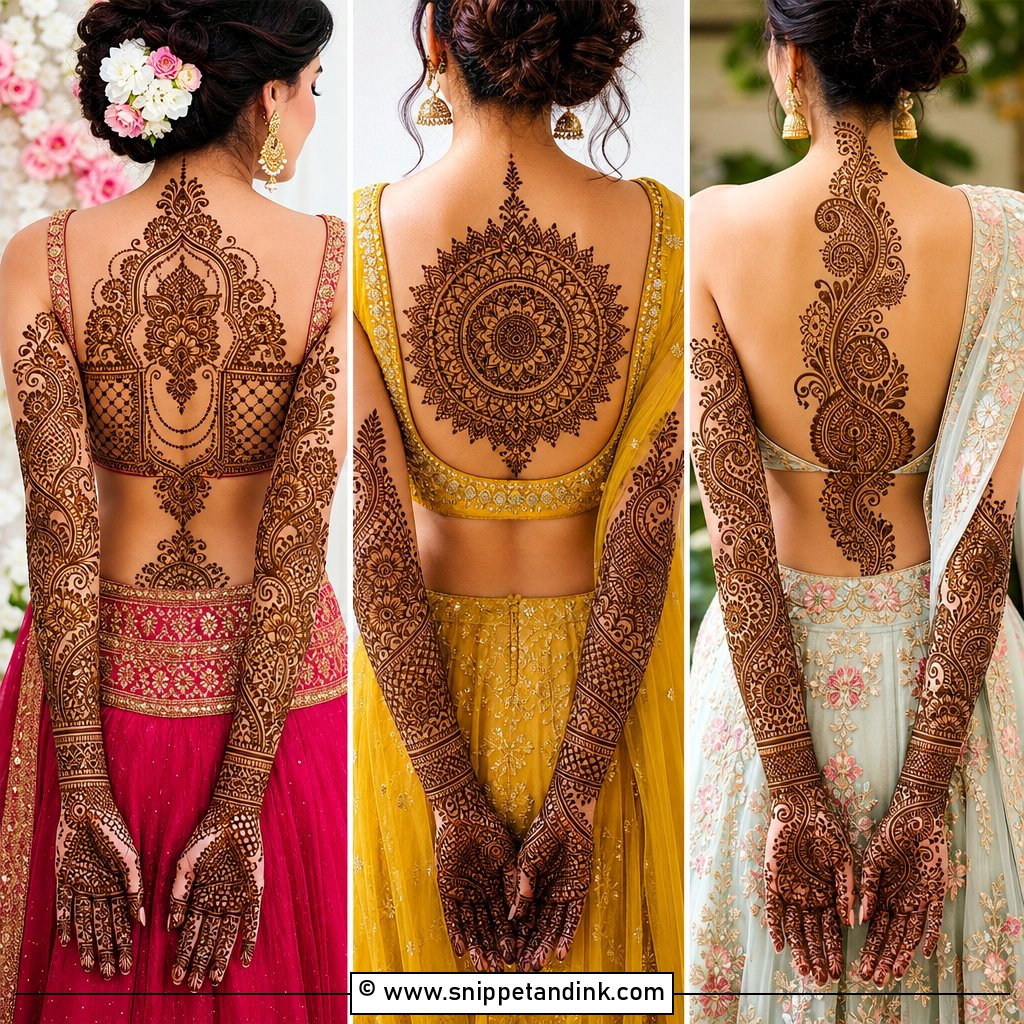
15. Groom Sister Modern Mehndi Design
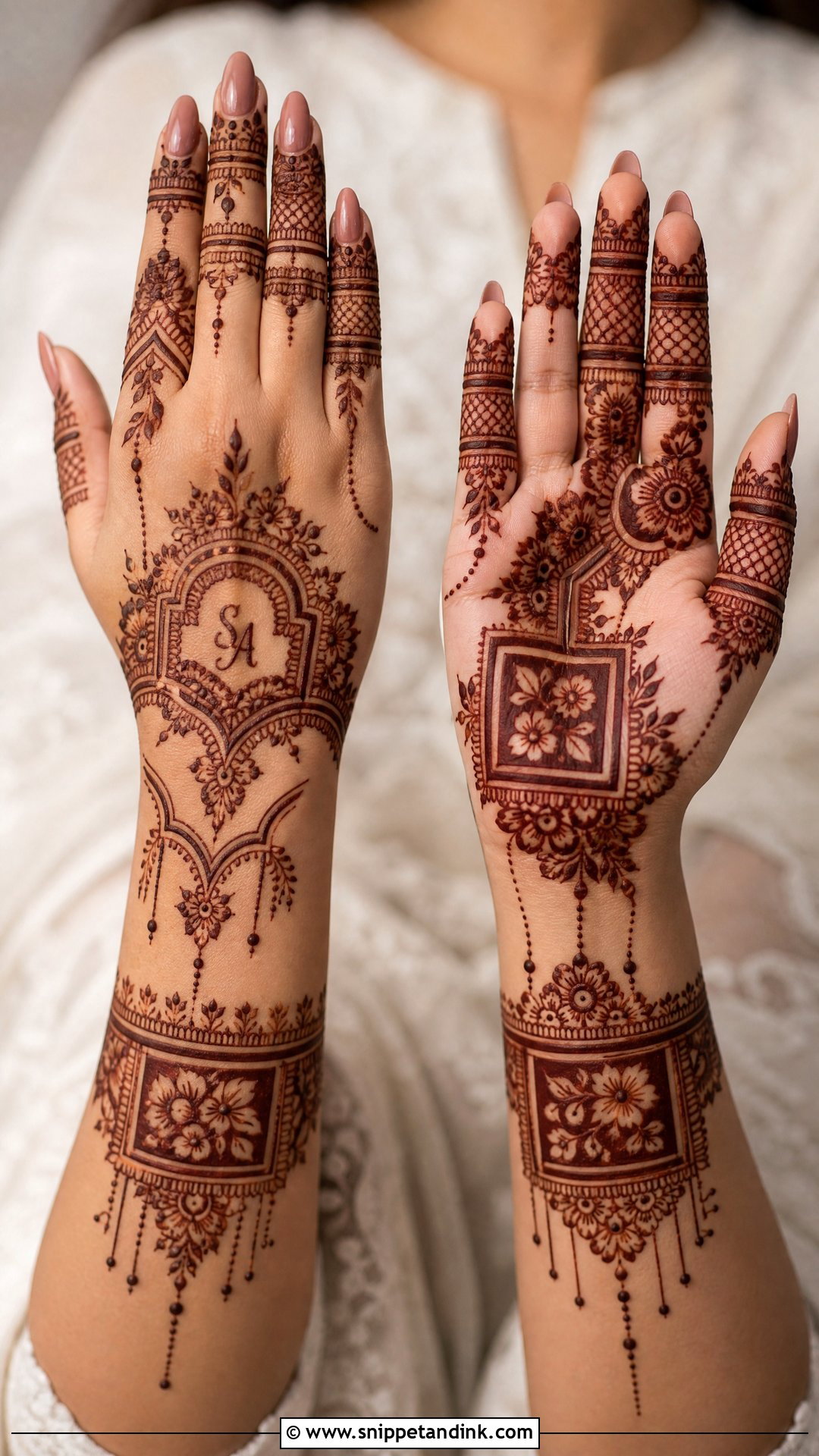
Modern layouts use geometric lines, floral blocks and deliberate empty space, often with the back hand fully patterned and the palm kept light. They suit fusion sarees and Indo-western outfits. Initials hidden in a border are a neat way to make it personal. Sharp lines matter more than anything here, and that comes down to paste consistency: too runny and the edges bleed, too thick and the lines break.
16. Groom Sister Half Hand Mehndi Design
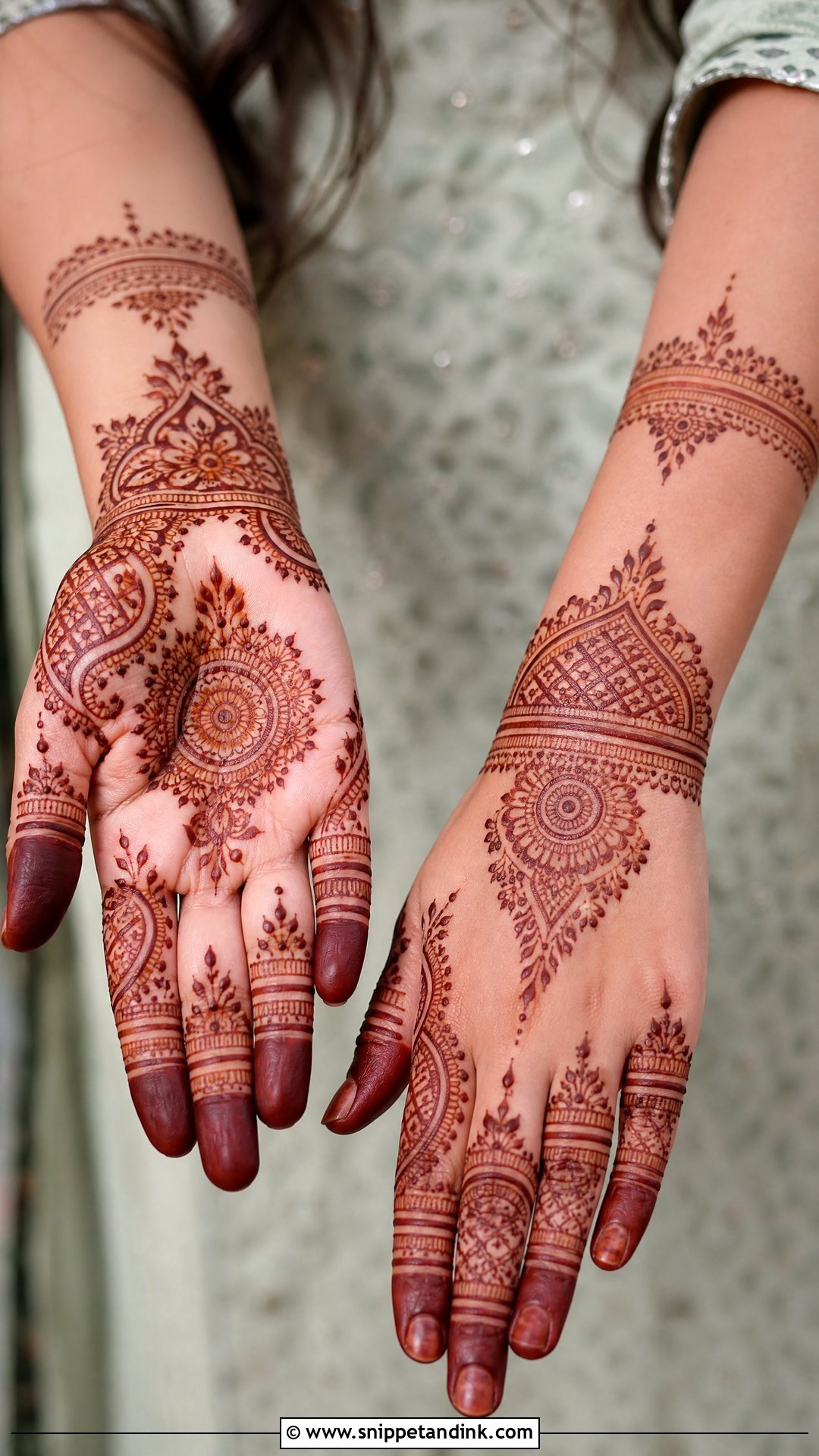
Half-hand coverage ends at or just above the wrist, so you get full detail on the fingers and hand without the forearm. It’s practical for a sister who has to carry thaals, help with rituals or rush between rooms, and it works under heavy sleeves. I mix a mandala with paisleys and a wrist band. The one rule: finish it properly at the wrist with a border, or it looks like the artist ran out of time.
17. Groom Sister Finger Mehndi Design
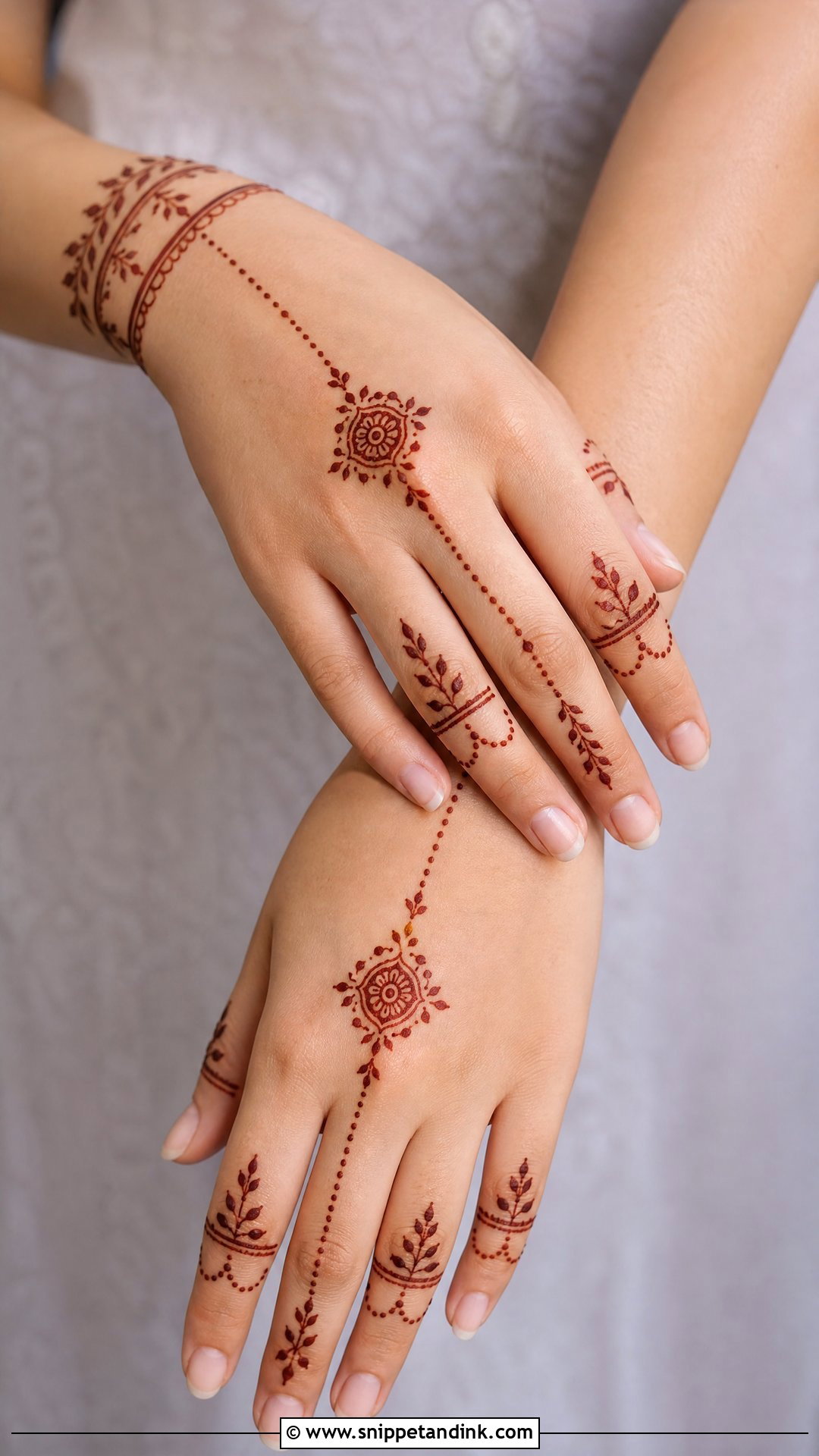
Finger-focused designs give a lot of visual payoff for little coverage. To make them look intentional, I pair detailed fingers with a wrist bracelet or a small centrepiece, using rings, leafy bands and fine lines on each finger. They suit sangeet and reception looks well. A practical point: fingertips stain very dark because the skin there is thick, so finger detail stays visible long after a lighter back-hand design has faded.
18. Groom Sister Wrist Mehndi Design
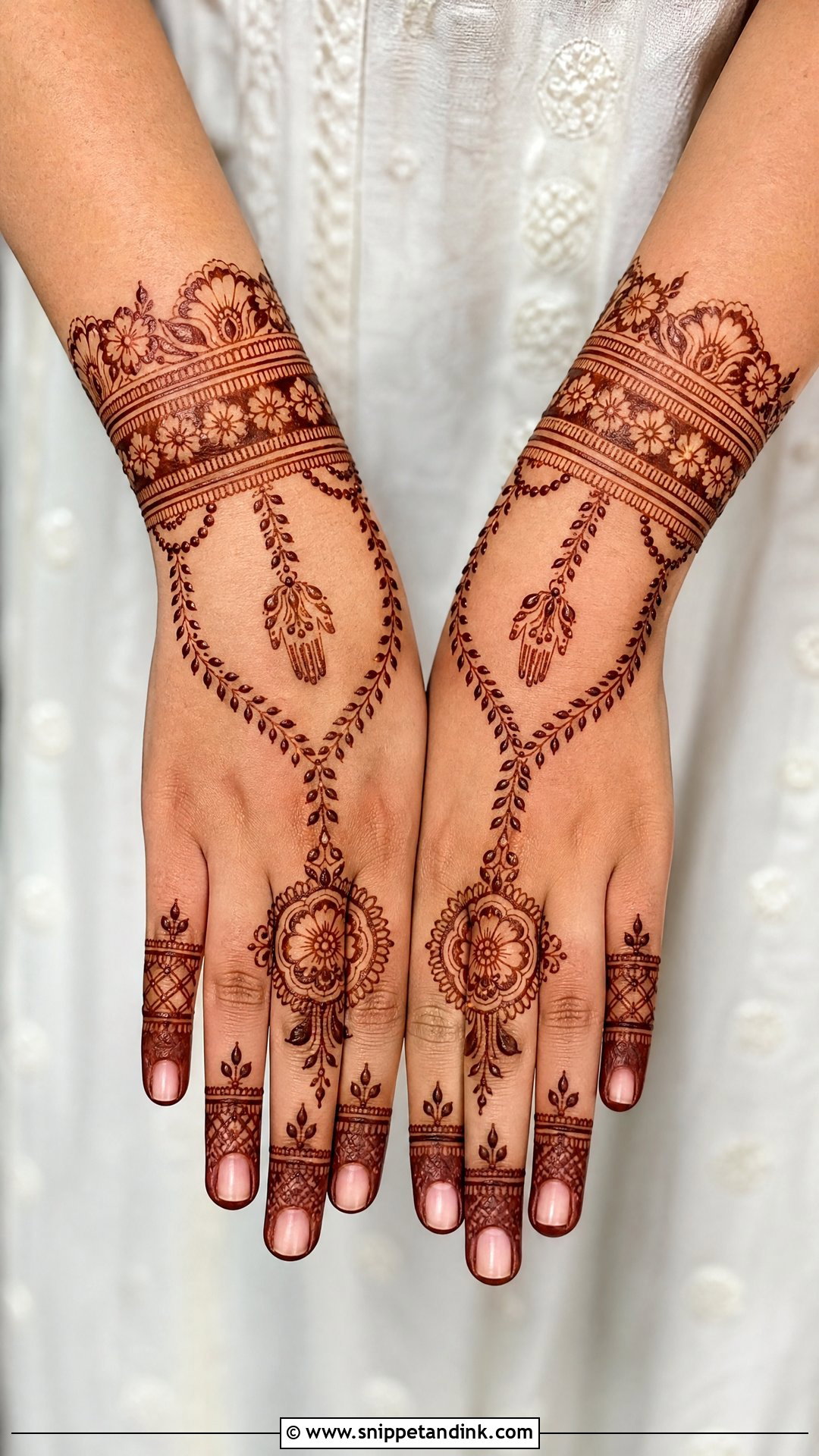
A wrist-focused mehndi design works like a kada or cuff drawn on the skin, with fine detail spilling slightly onto the hand and forearm. Floral cuffs, jaali bands and paisley borders all suit it. I like it for sisters wearing heavy rings, since the hand stays open and the rings don’t fight the pattern. Keep the band crisp and identical on both wrists; a wobbly cuff is the first thing people notice.
19. Groom Sister Forearm Mehndi Design
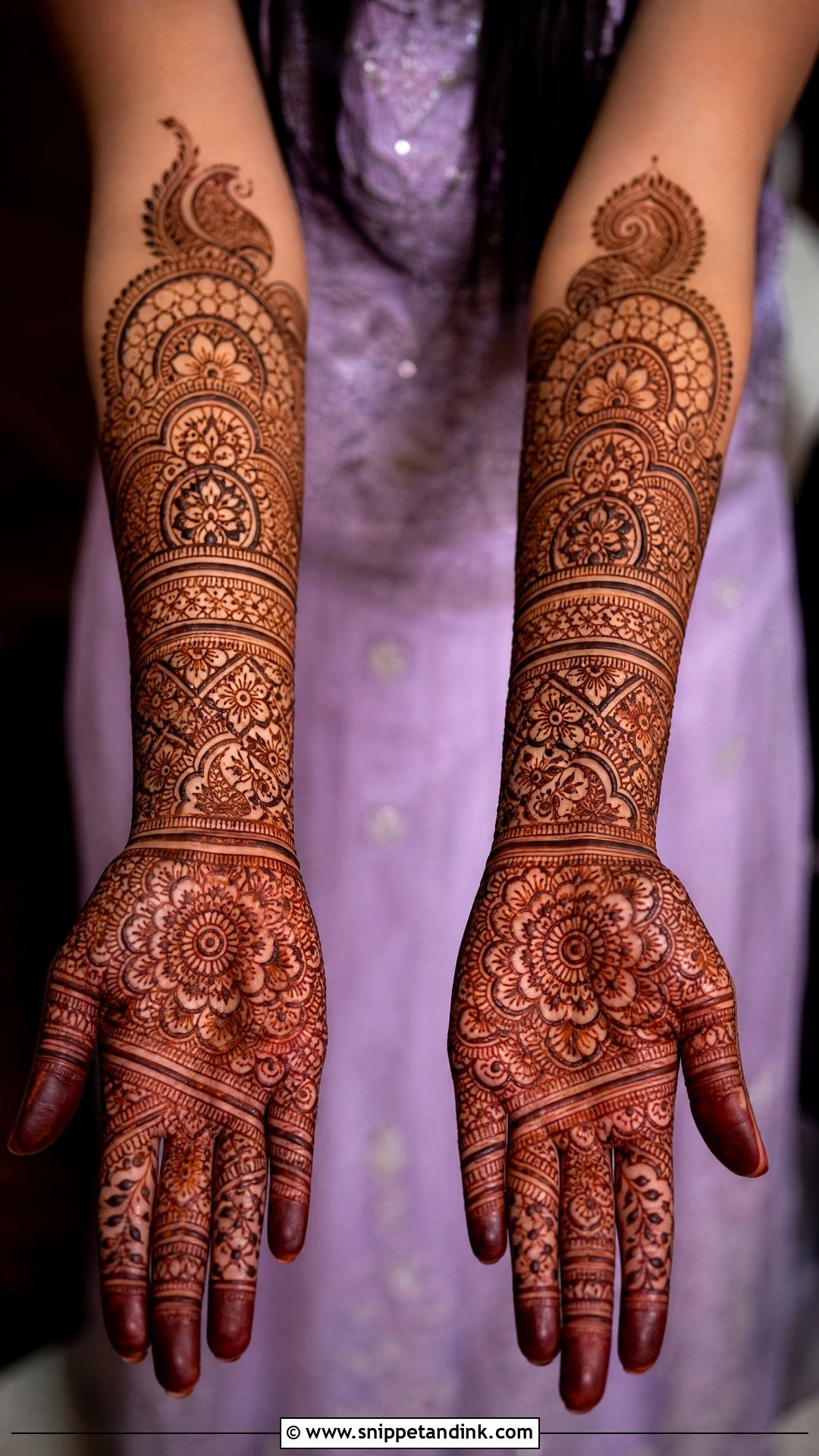
Forearm designs give a sister real presence on the main mehndi night without full bridal coverage. I start at the fingertips and carry florals, vines and shaded bands past the wrist, either as one continuous piece or with the palm left open and the forearm as the feature. The design should taper as the arm narrows toward the wrist. Skin on the forearm takes the stain more lightly than the palm, so expect a softer brown there.
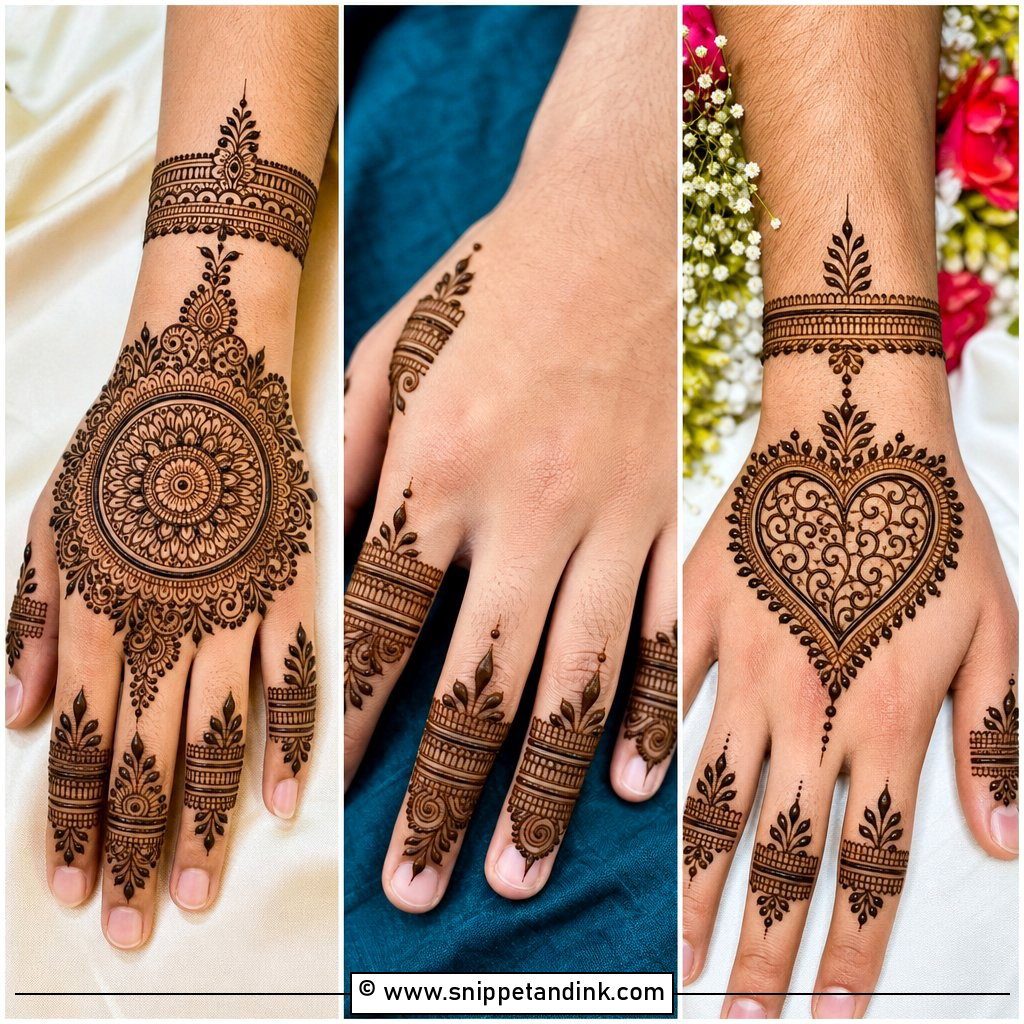
20. Groom Sister Personalized Mehndi Design
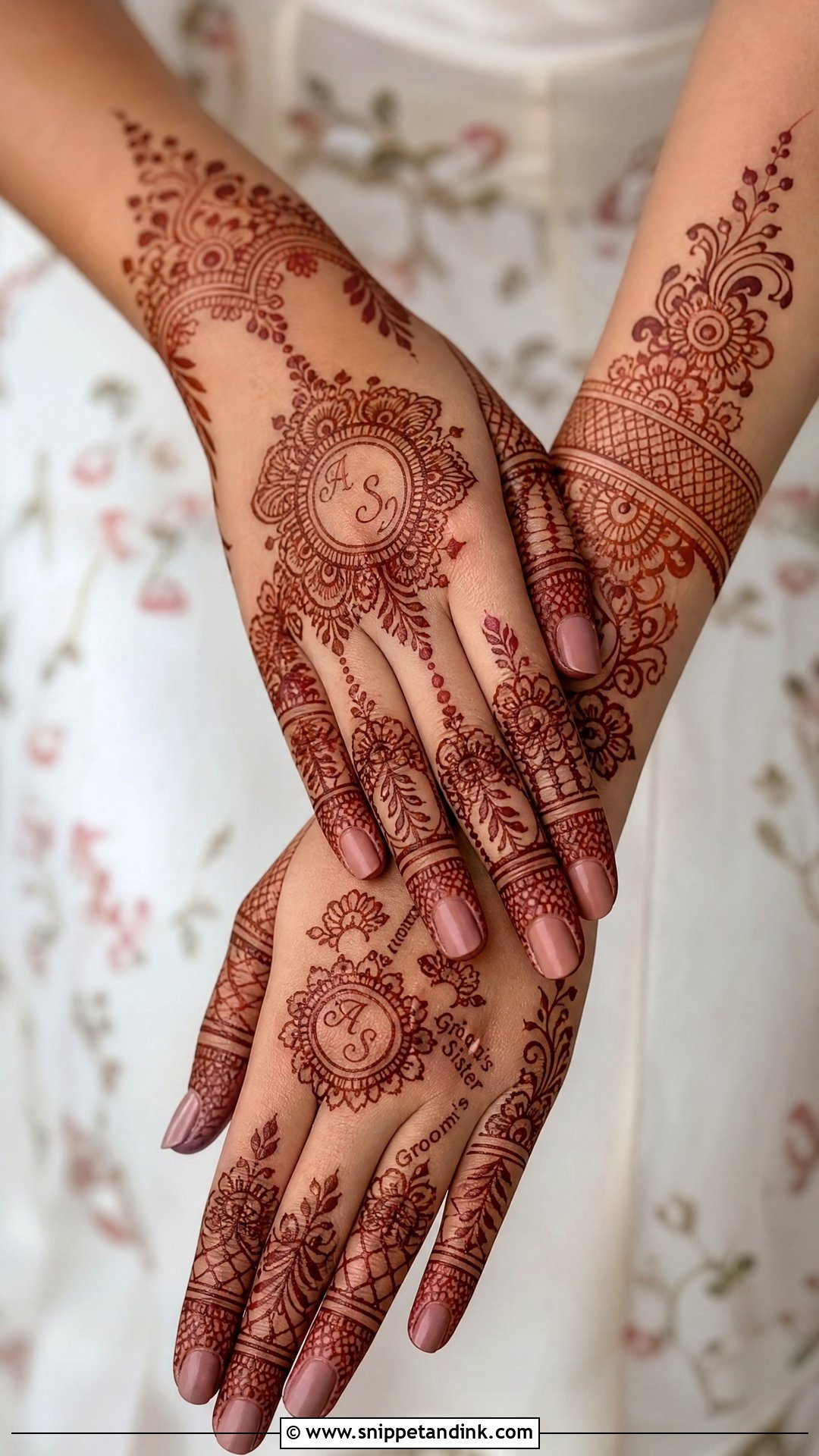
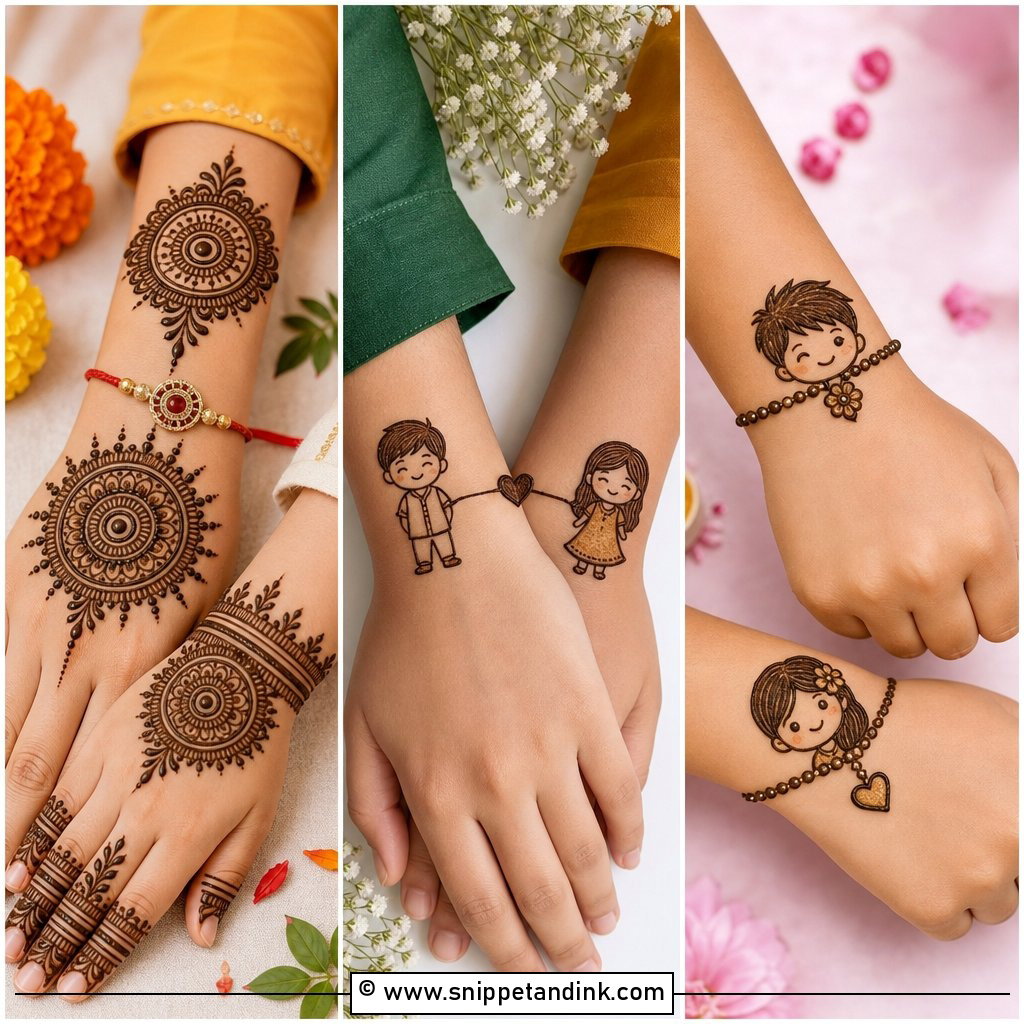
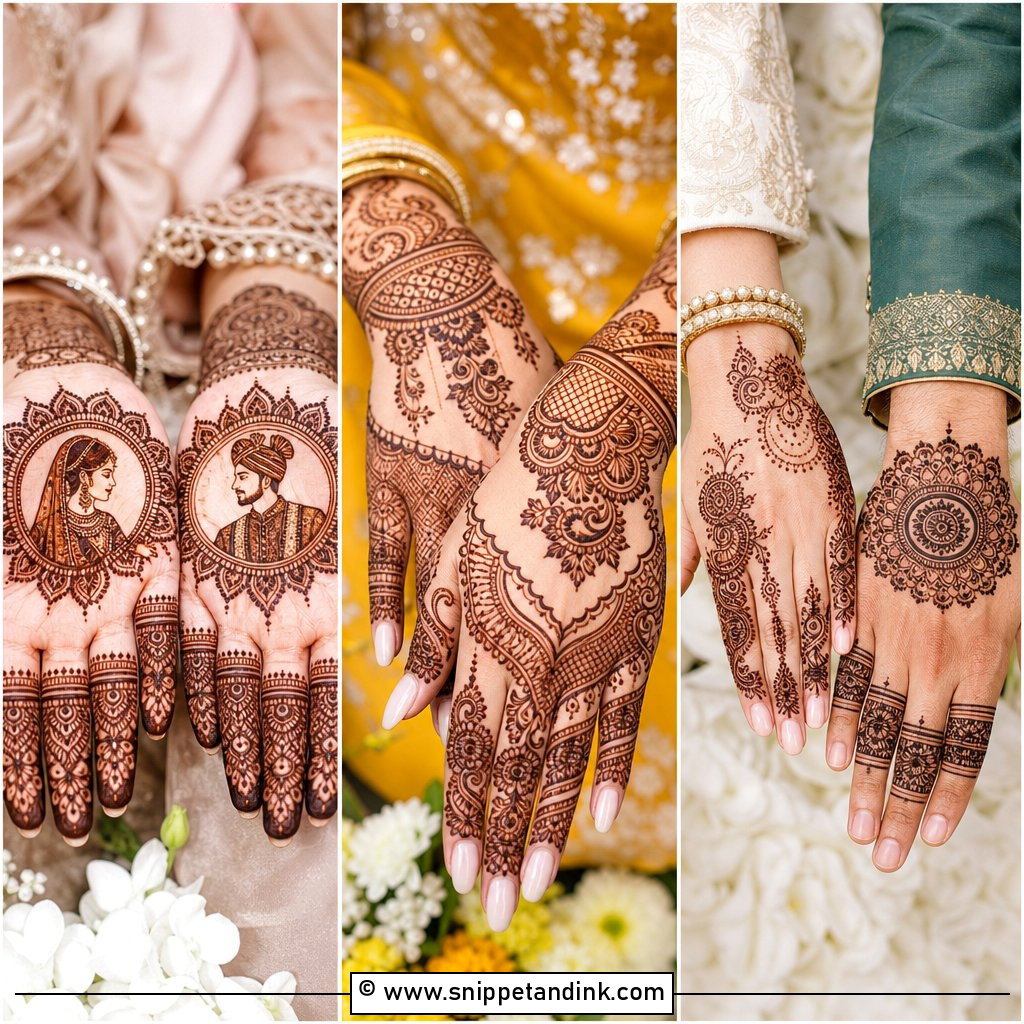
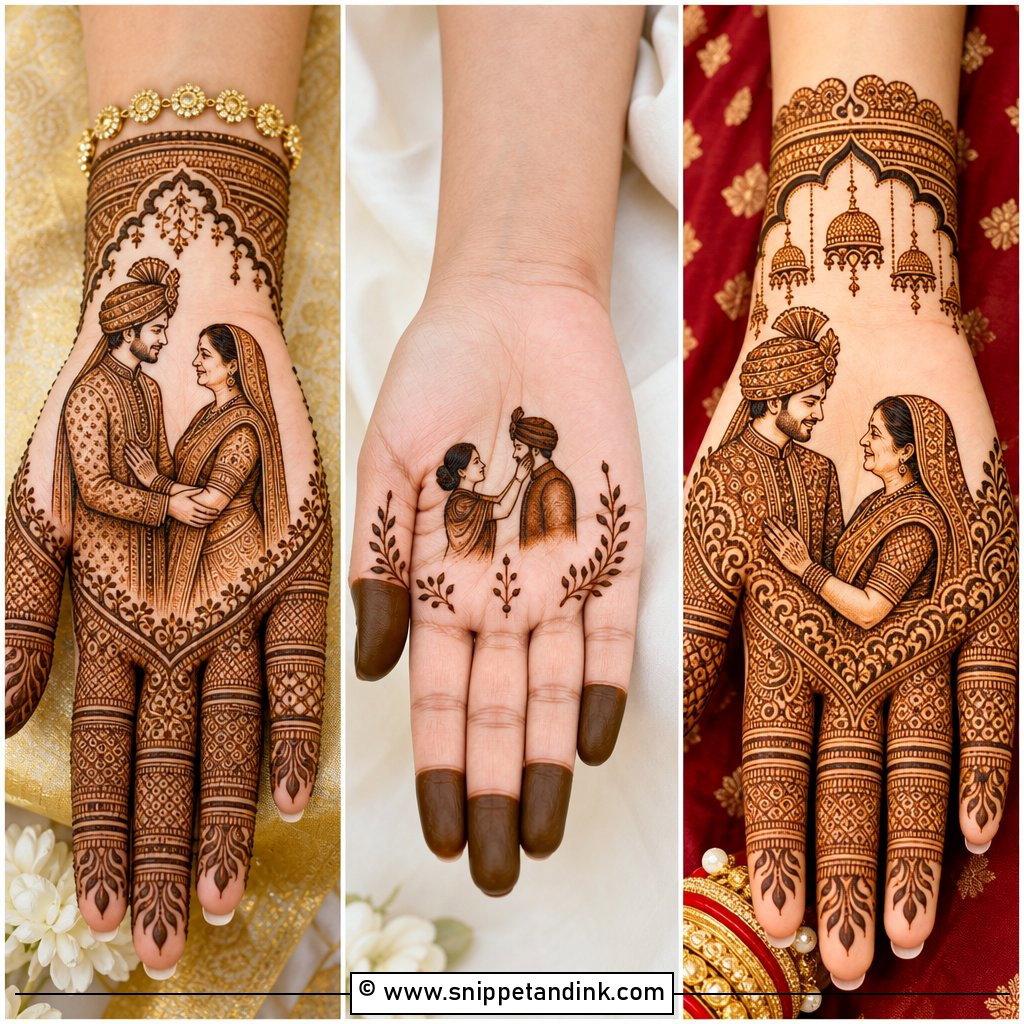
Personal details are the part sisters enjoy most: the groom’s initials, the couple’s initials, a tiny baraat, a hashtag or a small “bhai” tucked into a border. I keep these to one or two elements inside a traditional base, because more than that crowds the hand. Lettering needs fine, steady lines and enough space; if a name is long, I’d suggest initials instead. These details show up best in close-up shots, so tell your photographer they’re there.
21. Groom Sister Brother Wedding Mehndi Design
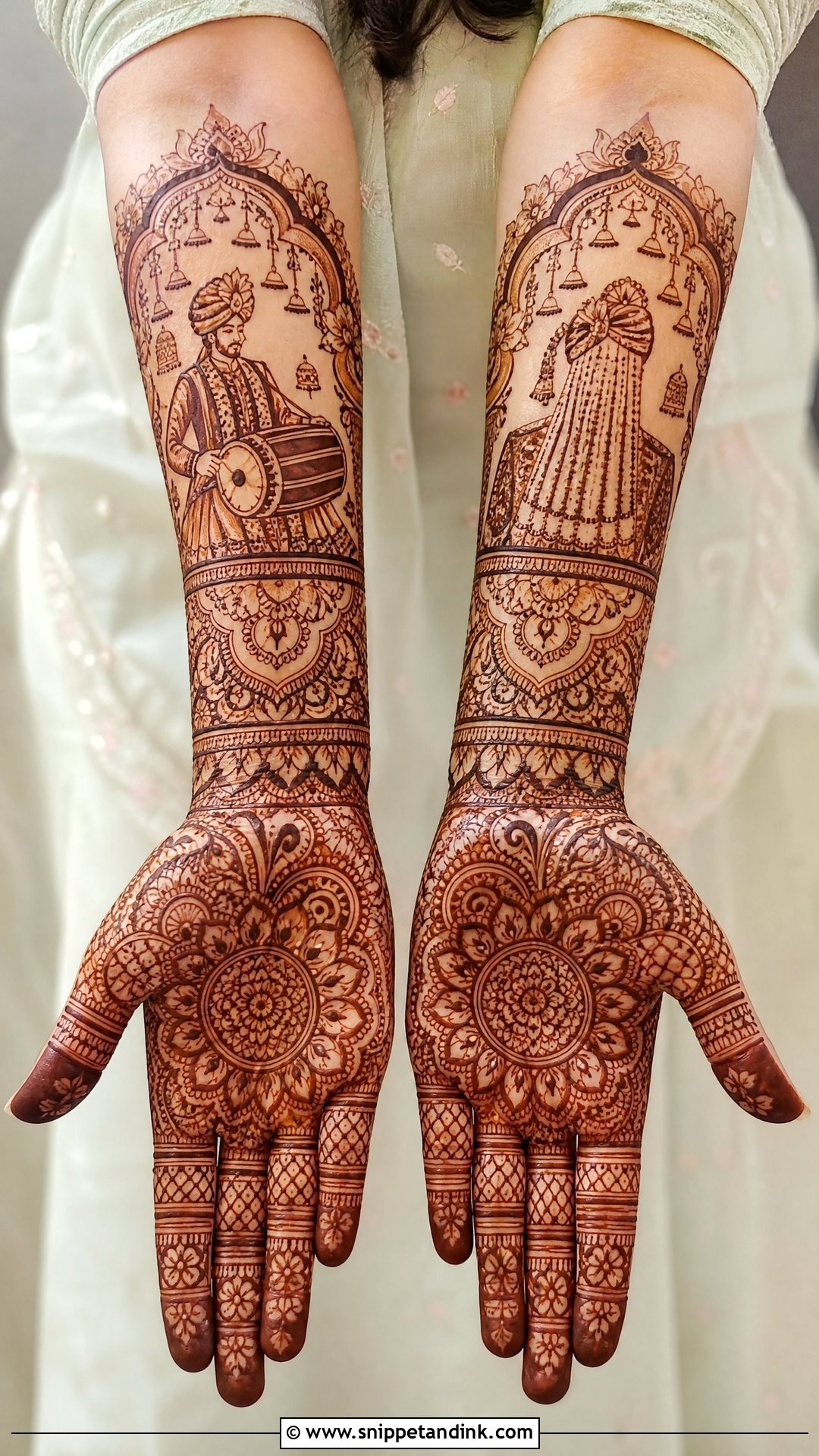
A brother wedding mehndi design tells a small story: a groom figure, a sehra, a dhol or a baraat trail set among paisleys, florals and jaali. I place story elements on the palm, where the stain is darkest and small figures stay legible. Figures need restraint. Drawn too large or too cartoonish, they look out of place next to classic motifs, so I keep them small and frame them like a scene.
22. Groom Sister Rose Mehndi Design
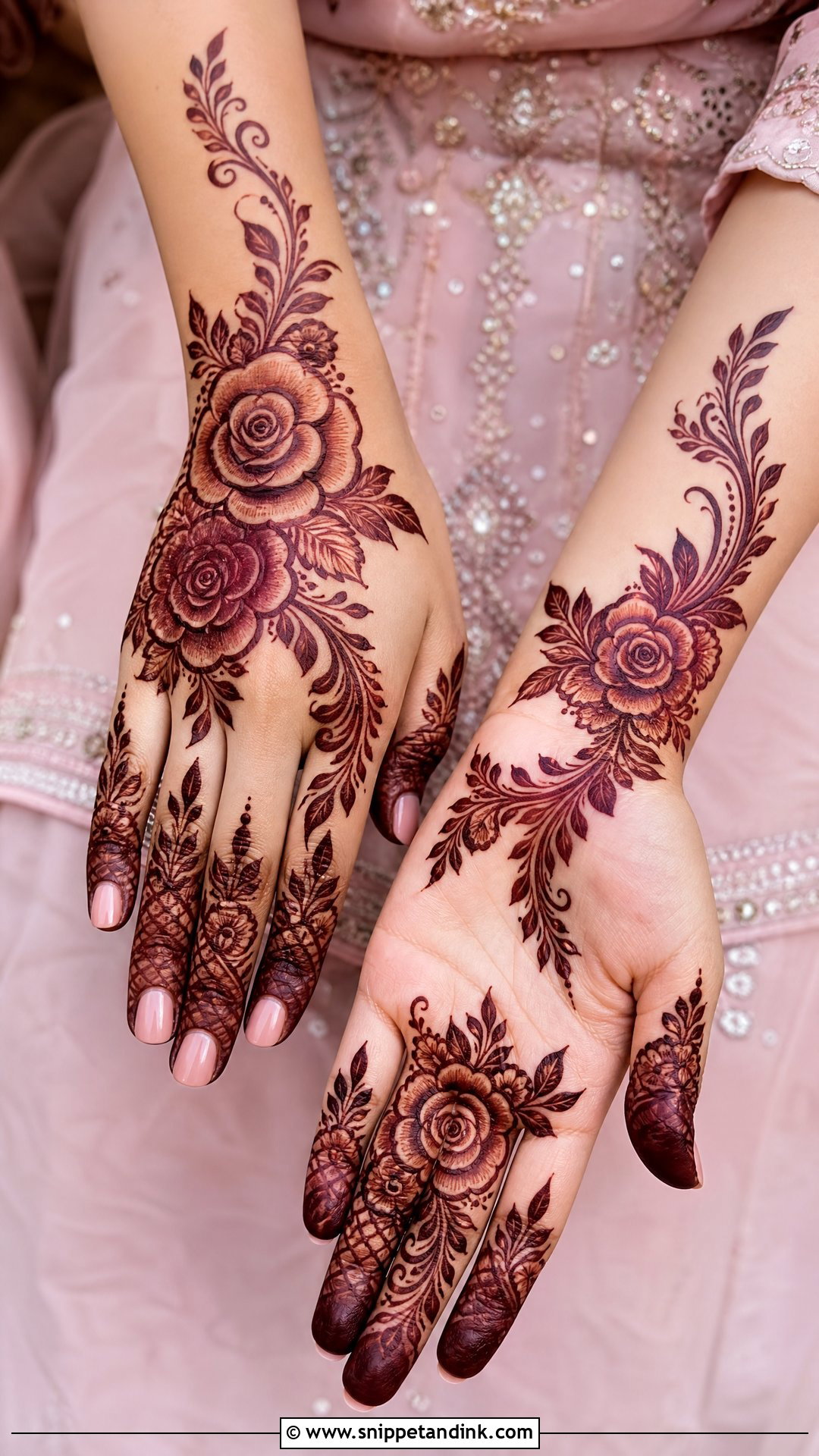
Large shaded roses make a bold back-hand design with plenty of open skin between them, which keeps the hand from feeling heavy. On the palm I mix roses with paisleys or curved borders. Rose shading is done by varying line weight and leaving tiny gaps in the petals; without that, the roses turn into solid circles once the henna darkens. They sit nicely with pastel outfits and floral jewelry.
23. Groom Sister Lotus Mehndi Design
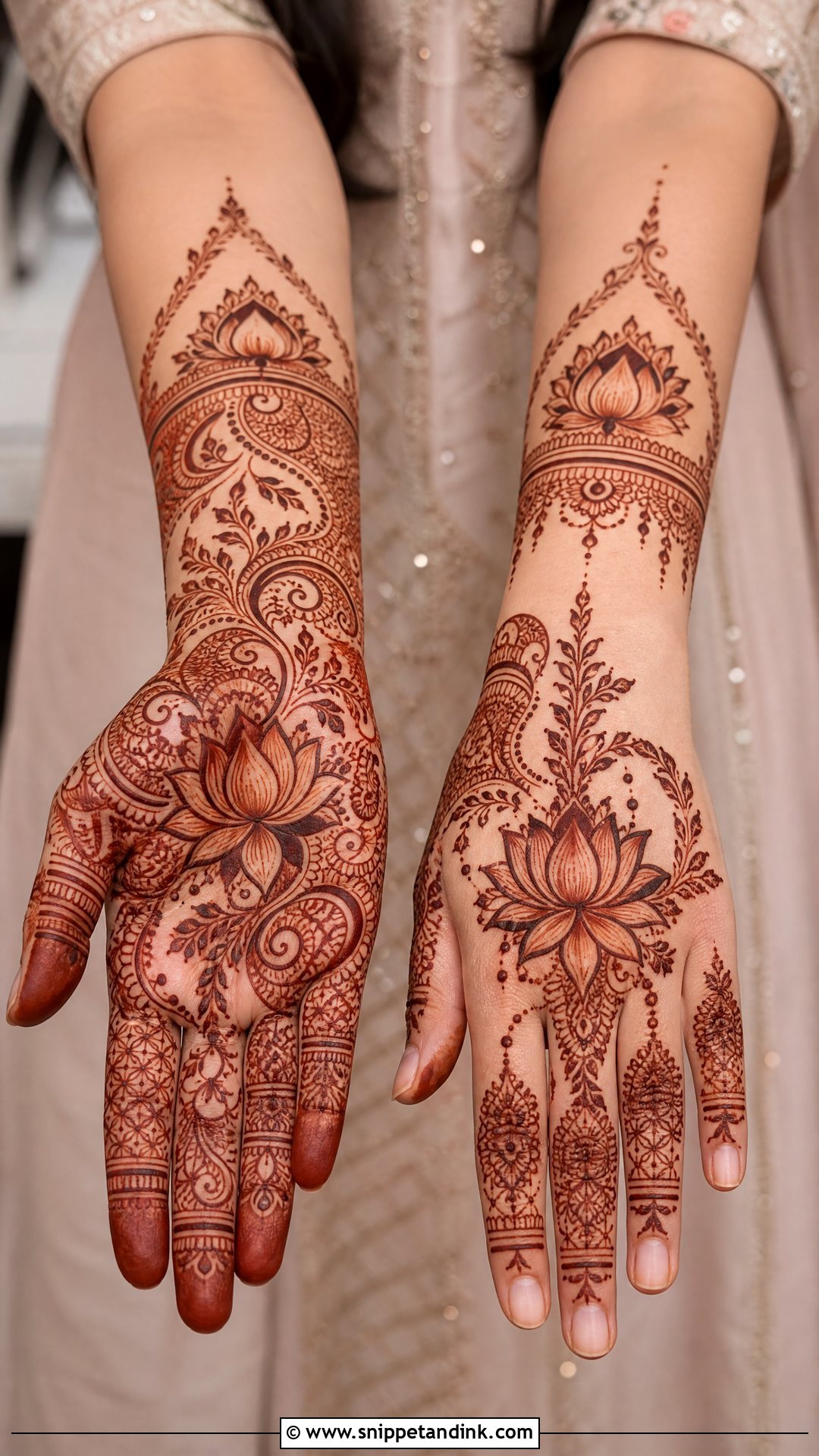
The lotus has a clean, balanced shape that works in both simple and detailed layouts. You can repeat lotus motifs across a full Indian design or use one large flower as the centre of a modern back-hand pattern, framed by vines and dots. I find it pairs especially well with silk sarees and temple jewelry. If the bride is also having lotus work, I’d vary the scale so the sister’s hands look related rather than copied.
24. Groom Sister Moroccan Mehndi Design
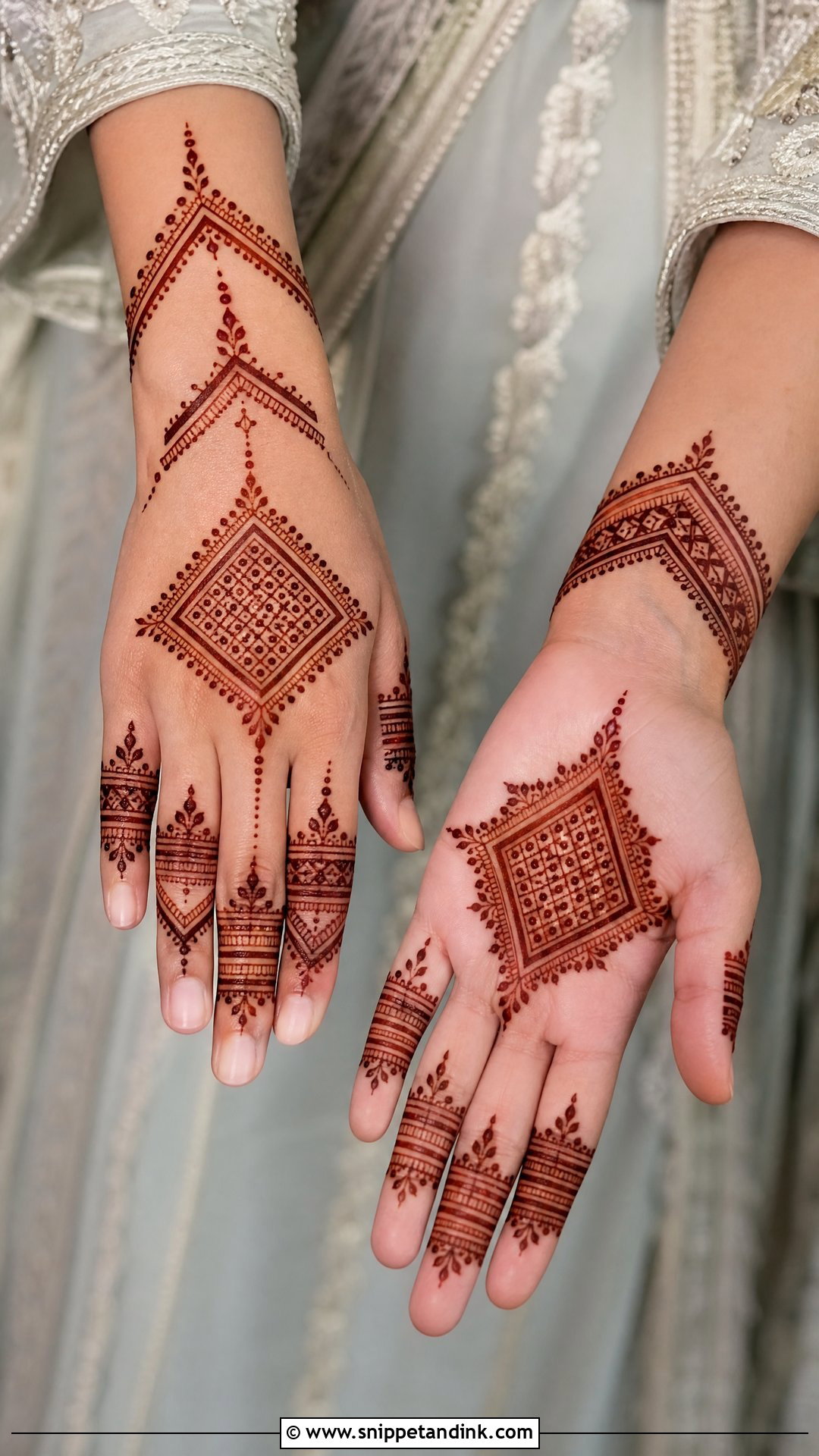
Moroccan work swaps flowers for diamonds, grids, dots and angular bands. It’s striking on the palm and back hand, and I usually soften it with a little wrist or finger detailing for a wedding. This suits sisters who want something different from the floral crowd, and it echoes mirror work or geometric embroidery. Geometric patterns are unforgiving: lines must stay parallel and spacing even, or the hand looks random rather than designed.
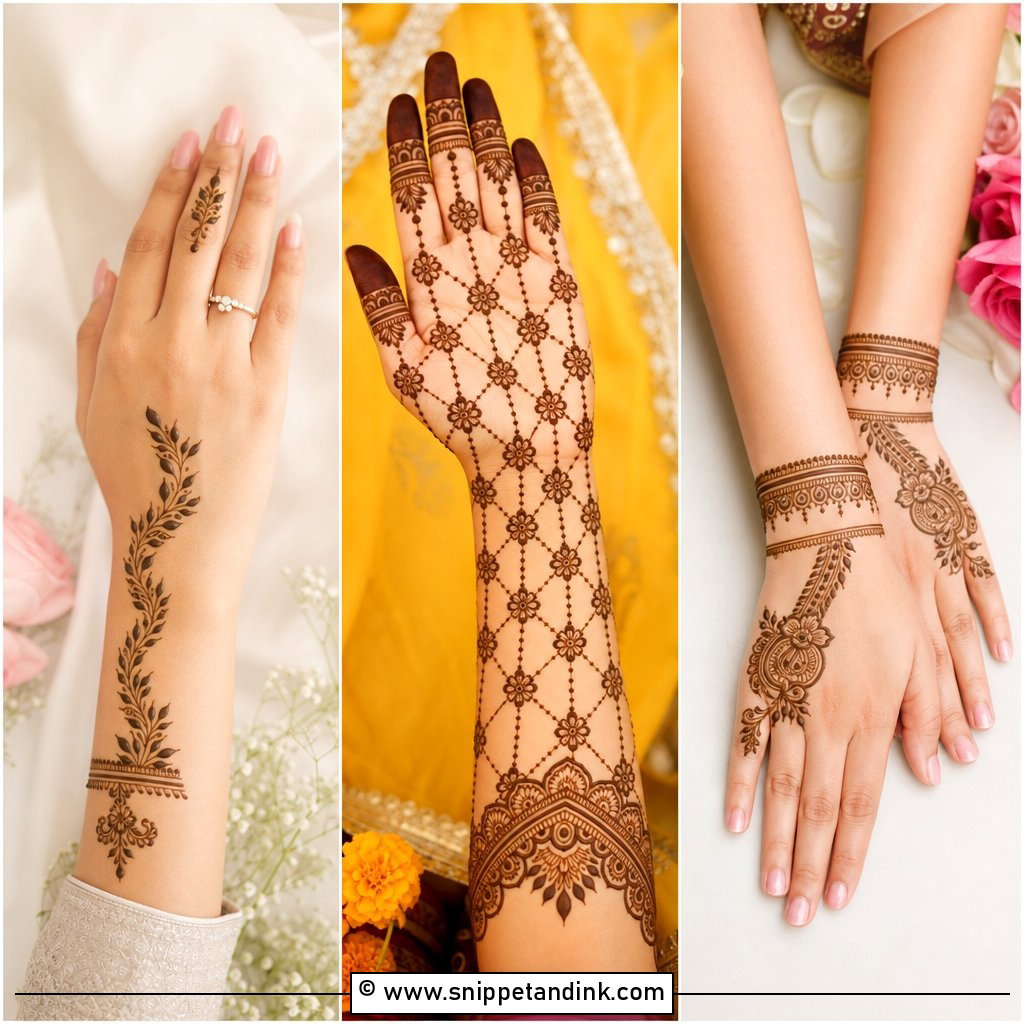
25. Groom Sister Gulf Mehndi Design
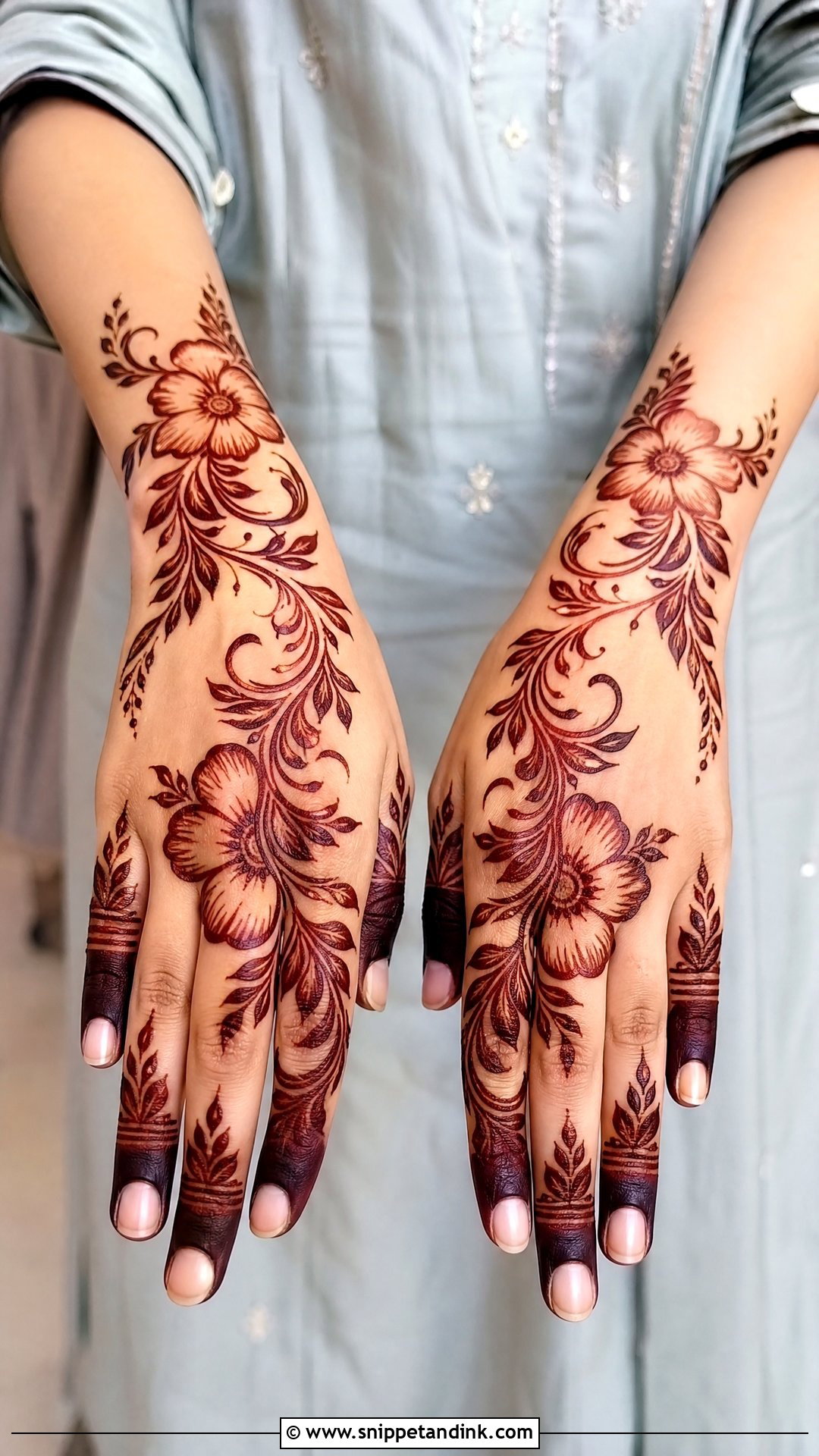
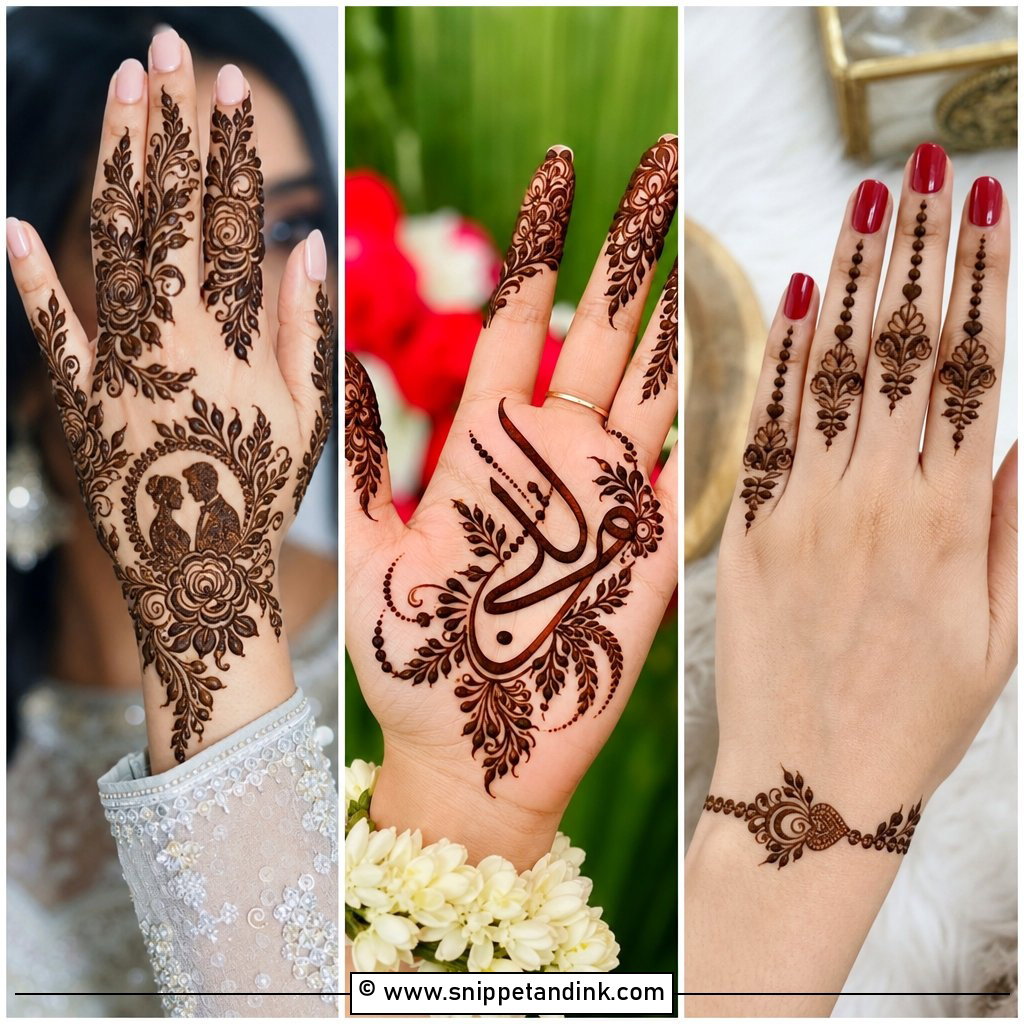
Gulf style uses big flowers, thick leaves and lots of bare skin in sweeping lines, usually on the back of the hand from wrist to fingers. Thick lines carry more paste, so this style tends to give a strong, clear stain that reads from a distance. I add shaded petals and detailed fingertips when a sister wants it fuller. It’s also one of the faster designs to apply, which helps on a busy function day.
How I Tell Sisters to Treat the Paste Afterwards
Most disappointing stains have nothing to do with the design. They happen in the twelve hours after I’ve finished, when the paste comes off too early or meets water.
- Leave the paste on as long as you can, ideally several hours or overnight. The longer it sits, the deeper the colour.
- Once it’s touch-dry, dab on a little lemon and sugar mixture so the paste stays stuck to the skin instead of flaking off.
- Scrape the dried paste off with a blunt edge or your fingernail. Don’t wash it off.
- Keep your hands away from water for as long as possible after removal, ideally until the next morning.
- Rub in a natural balm or a little oil before bathing to protect the stain from soap.
Warmth helps too. Some families hold their hands over a gentle clove steam, and simply keeping your hands warm does a similar job. Expect the colour to look orange the first evening and to reach a deep reddish brown over the next day or two. Palms and fingertips will always be darker than the back of the hand and the forearm; that difference is normal skin behaviour, not a problem with your artist’s paste.
Keeping it a step behind the bride’s hands
If you’re unsure how much coverage is too much, ask the bride or her artist what she’s having. I aim for the sister’s design to stop shorter on the arm and use fewer dense panels, so in a group photo the bride’s hands are clearly the centre.
Matching the Design to Your Role on the Day
Start from how much time you really have and what you’ll be doing with your hands. If you love tradition and can sit for it, full hand, paisley, peacock, lotus and mandala layouts give the richest result. If you’re running errands all evening, Arabic, finger, wrist or jewelry mehndi will dry quickly and still photograph well. Add one personal detail, not five. And plan your sitting so the stain is at its darkest on the day that matters most to you.
You'll Like These Ideas:





Leave a Reply