
A faux tier is a block of polystyrene covered and decorated exactly like cake, and more of the cakes I build contain one than most guests would ever guess. Couples use them for height, for an outdoor display that has to sit out for hours, or simply because a five-tier cake for eighty guests would mean a lot of waste. Some keep one real tier for the cutting; others serve slices from a kitchen cake out of sight. Covered properly, a dummy can carry any finish, from smooth fondant to sugar flowers and gold. Here are 25 ways to use them, with notes on what makes each one look convincing up close.
Where the Real Cake Hides in a Faux Display
Every dummy cake needs a plan for the eating. Before I sketch anything, I ask how you’d like to handle the cutting and the serving, because it changes how I build the stack.
A real tier in the stack
The top tier is the simplest to make real, since no weight rests on it. A real bottom or middle tier needs dowels and boards like any stacked cake. Either way, the real tier is cut for photos and the rest of the servings come from the kitchen.
A wedge cut into the dummy
I can cut a slot out of the back of a faux tier, line it, and fill it with a wedge of real cake covered to match. You slice into that spot for the photo. It works well on small cakes where a whole real tier would be too much.
Kitchen cake only
If you skip the cutting altogether, the whole display can be faux and every slice comes from a plain iced cake in the same flavour. Ask your caterer to confirm there’s a person and a space to cut it.
1. White Dummy Wedding Cake
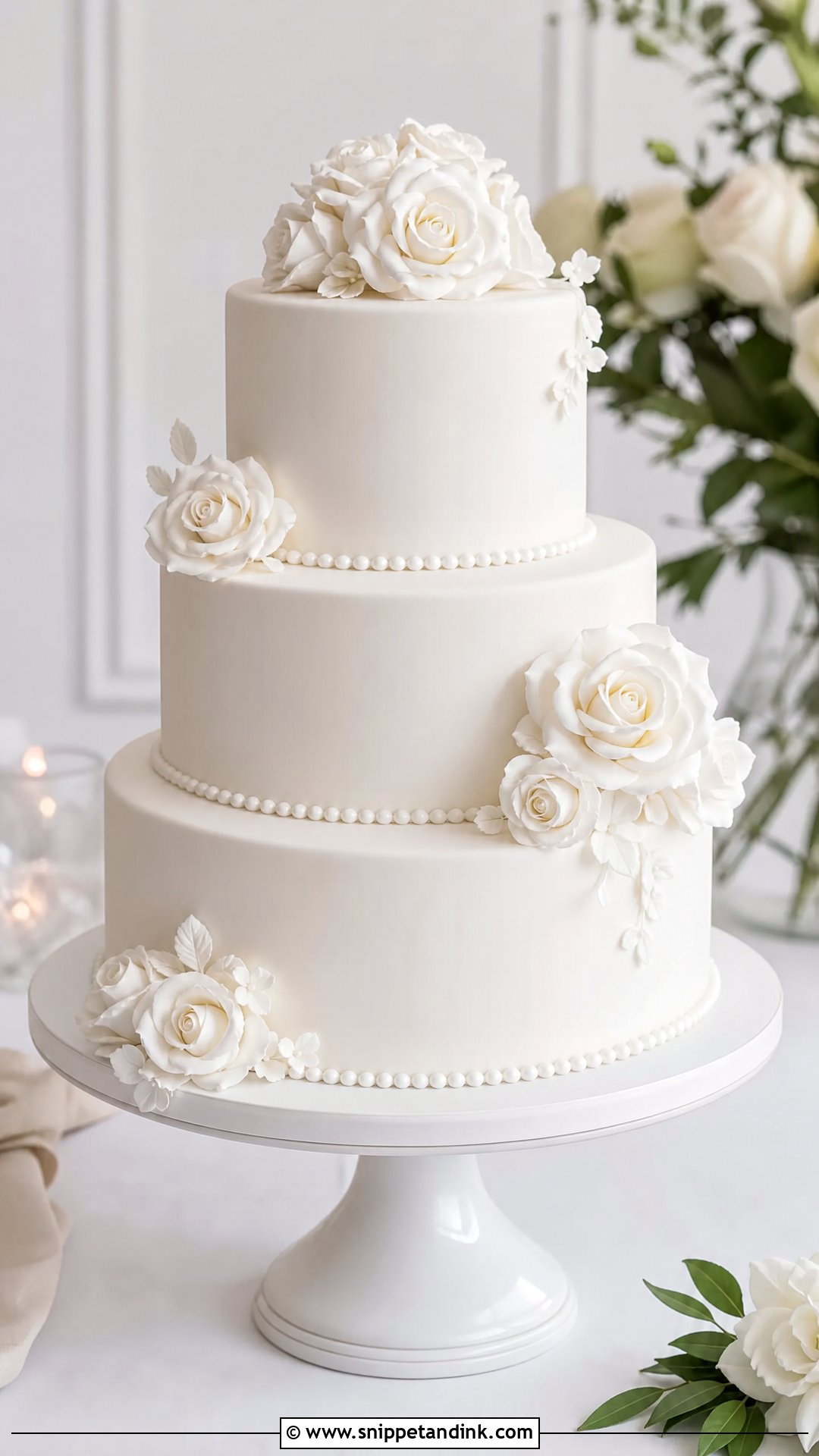
All-white is the easiest faux cake to make believable, because there’s no colour to look slightly off. The giveaway is usually the white itself: pure bright white reads as plastic, while a soft ivory reads as icing. I finish dummies with the same fondant or buttercream I’d use on real tiers, plus pearl borders or white sugar flowers. A hidden cutting tier or a small real insert at the back keeps the cake-cutting photo honest. Raised on a stand under good lighting, nobody will be checking.
2. Three Tier Dummy Wedding Cake
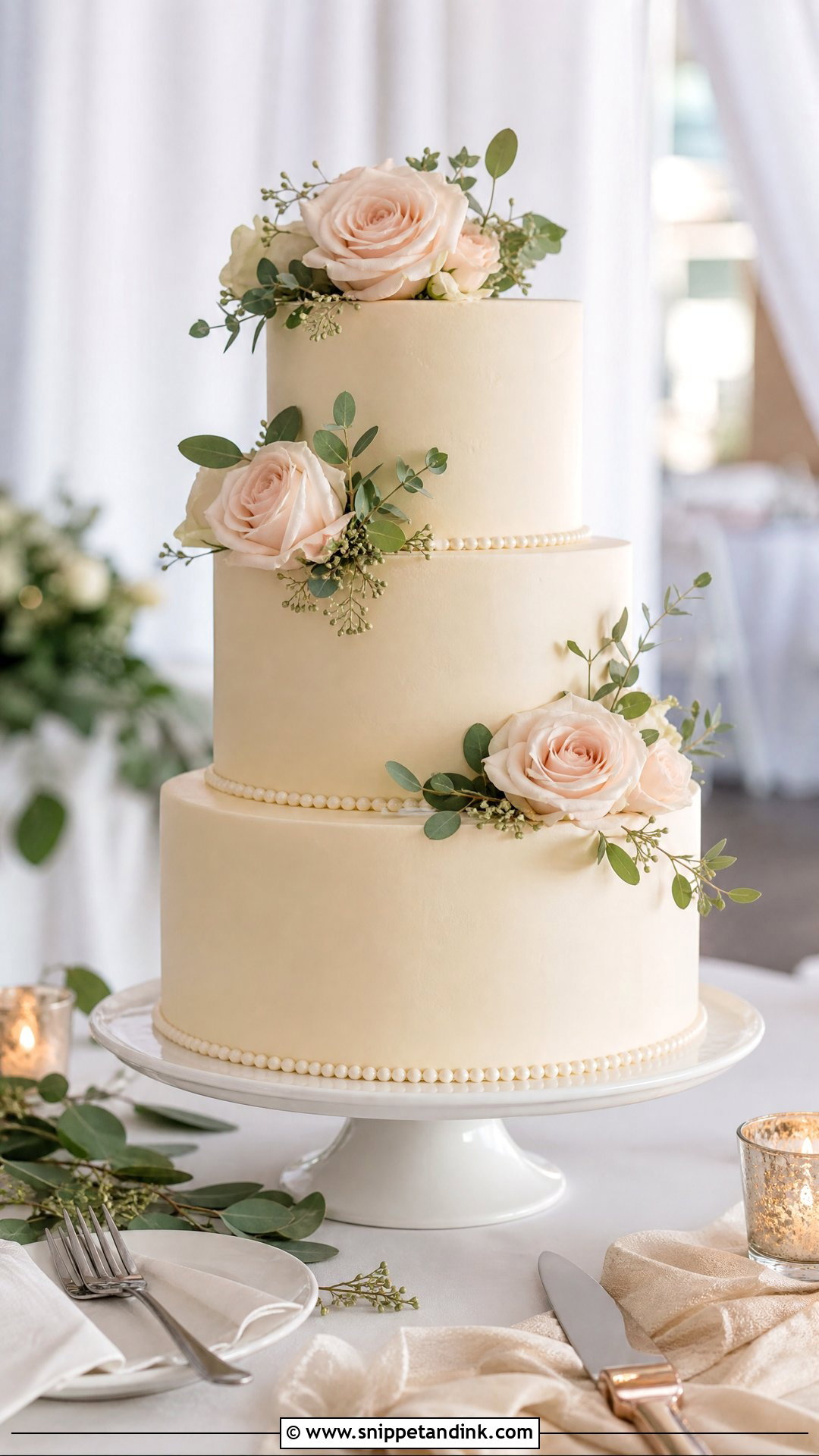
Three tiers is the size I’d suggest for most medium receptions. It gives enough height for photos without towering over a small room or blocking the backdrop. You can make all three faux or keep the bottom one real for cutting. Florals are easy to balance on three tiers: one generous cluster on the side, a few loose blooms, a simple topper. Almost any finish works, from smooth fondant to a rough buttercream texture.
3. Five Tier Dummy Wedding Cake
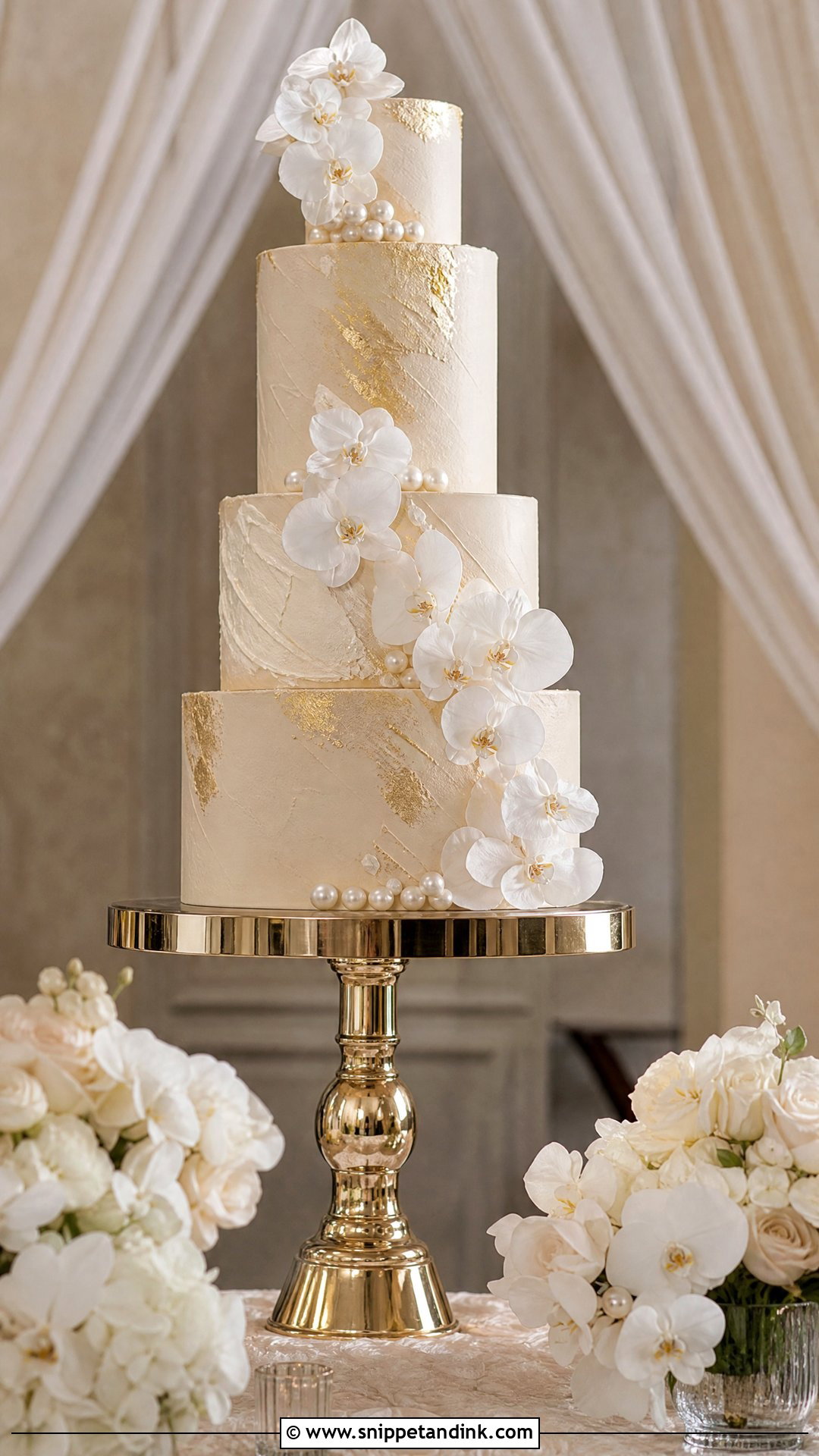
Five real tiers weigh a great deal and need serious internal support; five faux tiers are light enough to stack tall with crisp edges and very little risk. That’s why dummies are the usual answer for a ballroom-scale cake. Light doesn’t mean stable, though, and a tall dummy can tip if it’s knocked, so I still fix each tier to the next and set the whole cake on a heavy board. Keep the decoration restrained: smooth ivory, subtle texture and a single flower cascade carry the height better than detail on every tier.
4. Dummy Wedding Cake With Real Cutting Tier
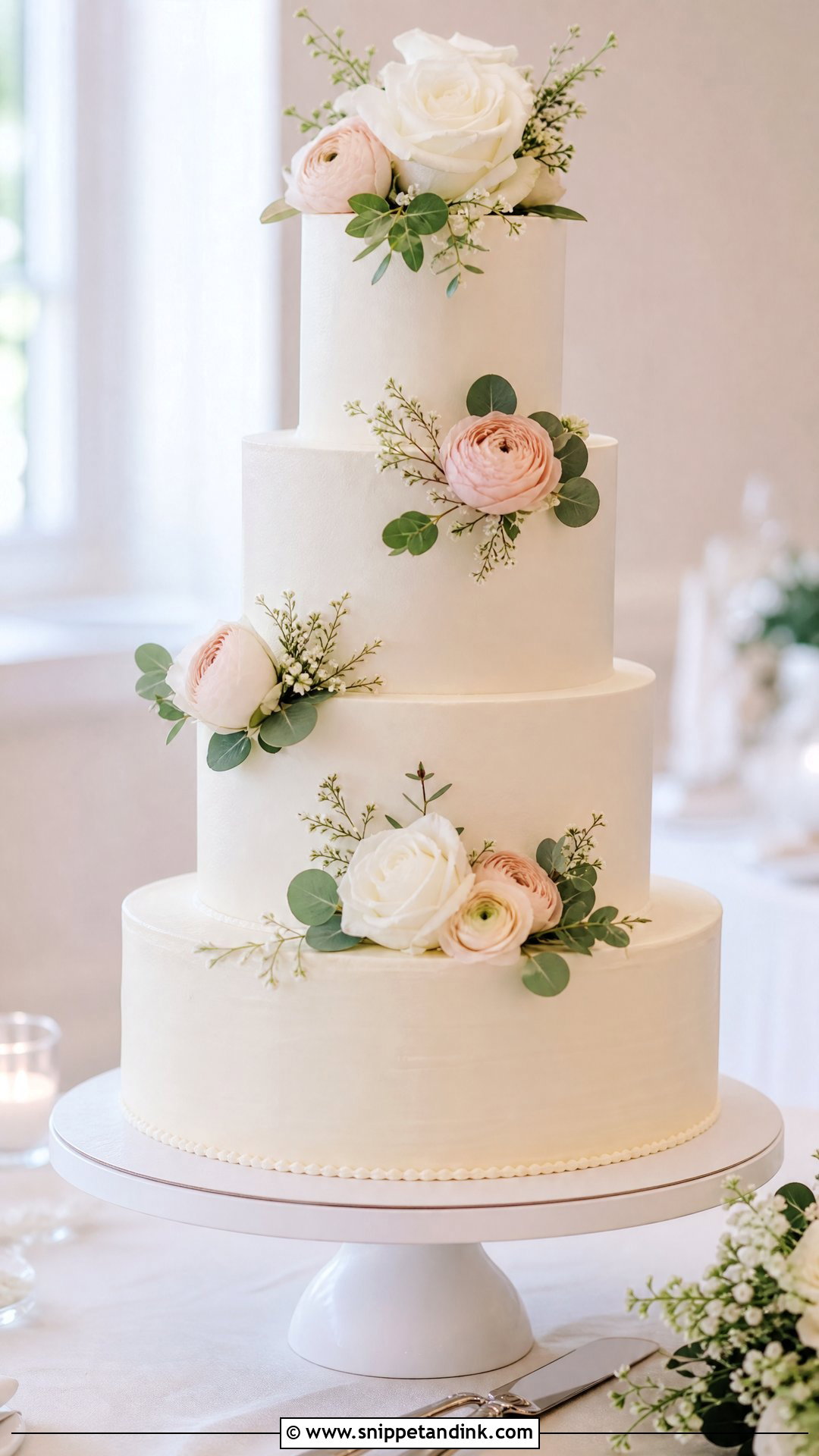
A real cutting tier gives you the tradition and the faux tiers give you the scale. Where it sits depends on structure. A real top tier is simplest, since nothing rests on it; a real bottom tier needs proper support so the weight above doesn’t crush it. Guests are then served sheet cake from the kitchen in the same flavour. I match the covering and colour exactly across real and faux tiers so there’s no visible line between them, which is the only way the trick works in close-up photos.
5. Dummy Wedding Cake With Fresh Flowers
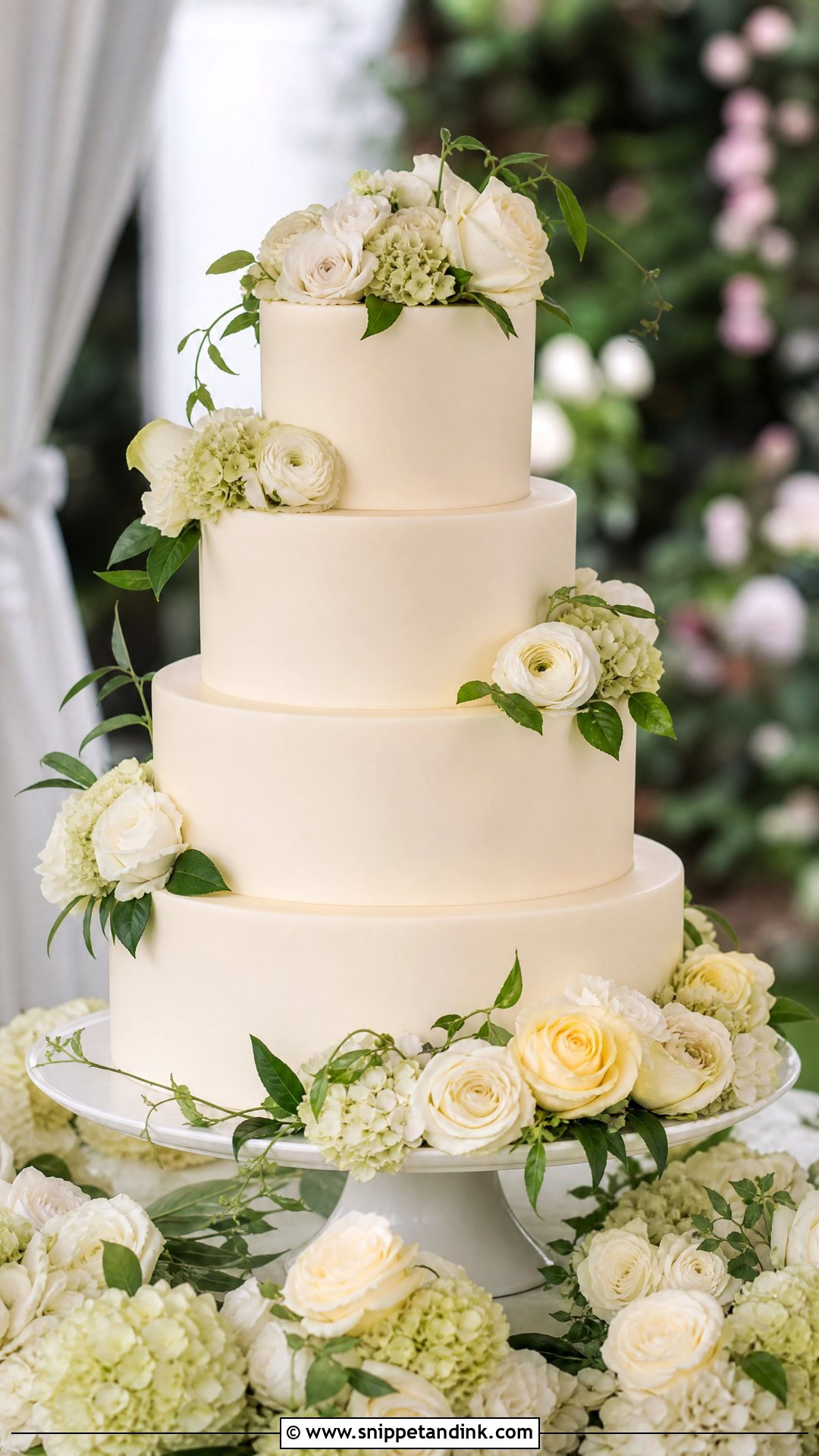
Fresh flowers do a lot of the work in making a faux cake look real, because the eye trusts living petals. Roses, ranunculus and small greenery are easy to place. Even on polystyrene, I still use flower picks or tape on stems, mostly because a dummy is often stacked against a real tier and because stems sitting in icing will mark it. Clusters at the top, one side and the base give the cake movement without hiding the tiers. Remember that fresh flowers wilt during a long display, so plan when they go on.
6. Dummy Wedding Cake With Silk Flowers
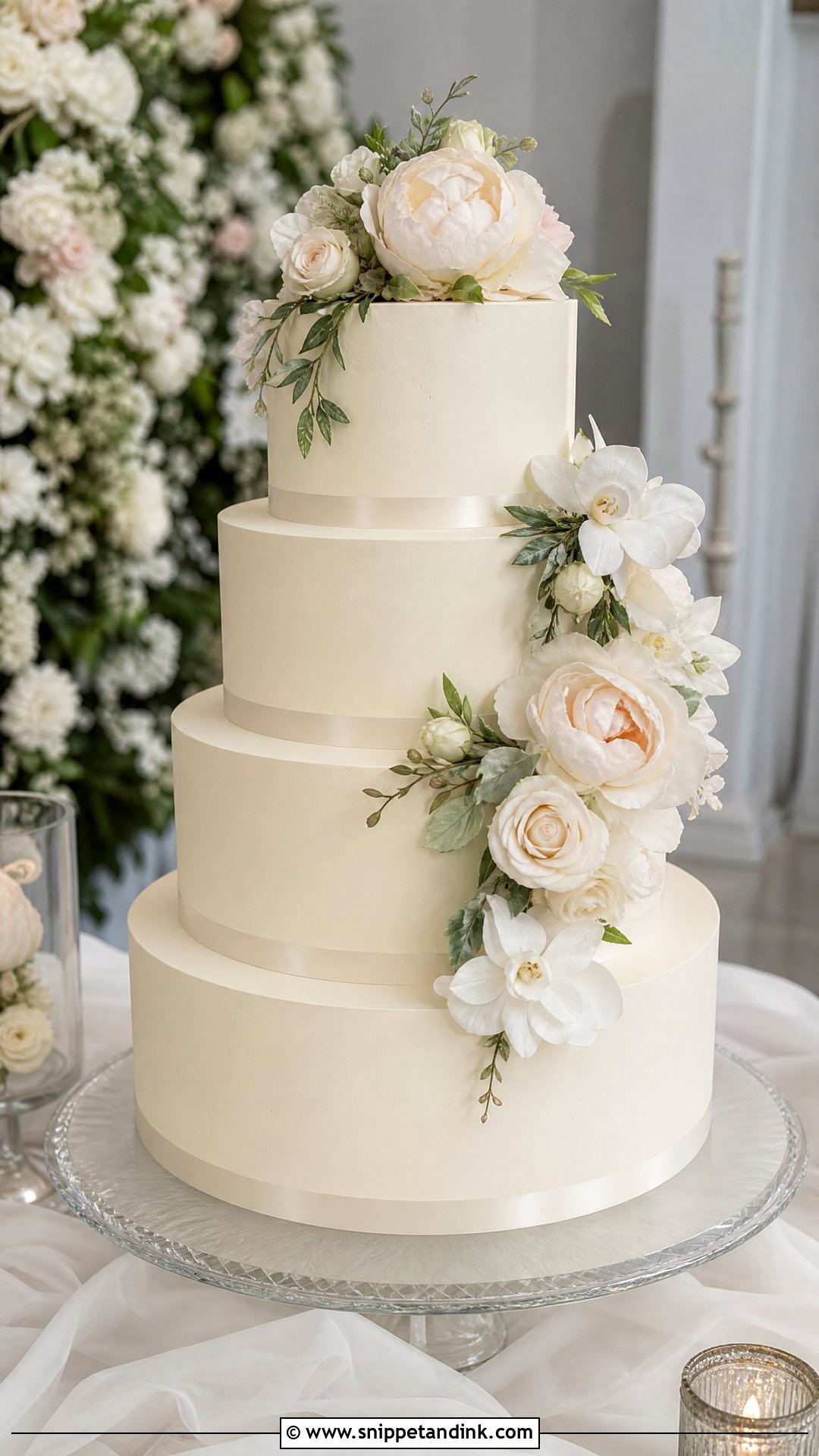
Silk flowers solve the wilting problem. They don’t drop petals, bruise or brown, which is why I recommend them for cakes set up hours early or displayed outdoors. Cheap silk looks flat in photos, so it’s worth paying for good-quality stems with realistic colour variation in the petals. They also let you keep the arrangement afterwards. Silk roses or peonies on smooth ivory tiers, finished with a pearl trim, look polished and won’t change all evening.
7. Rustic Dummy Wedding Cake
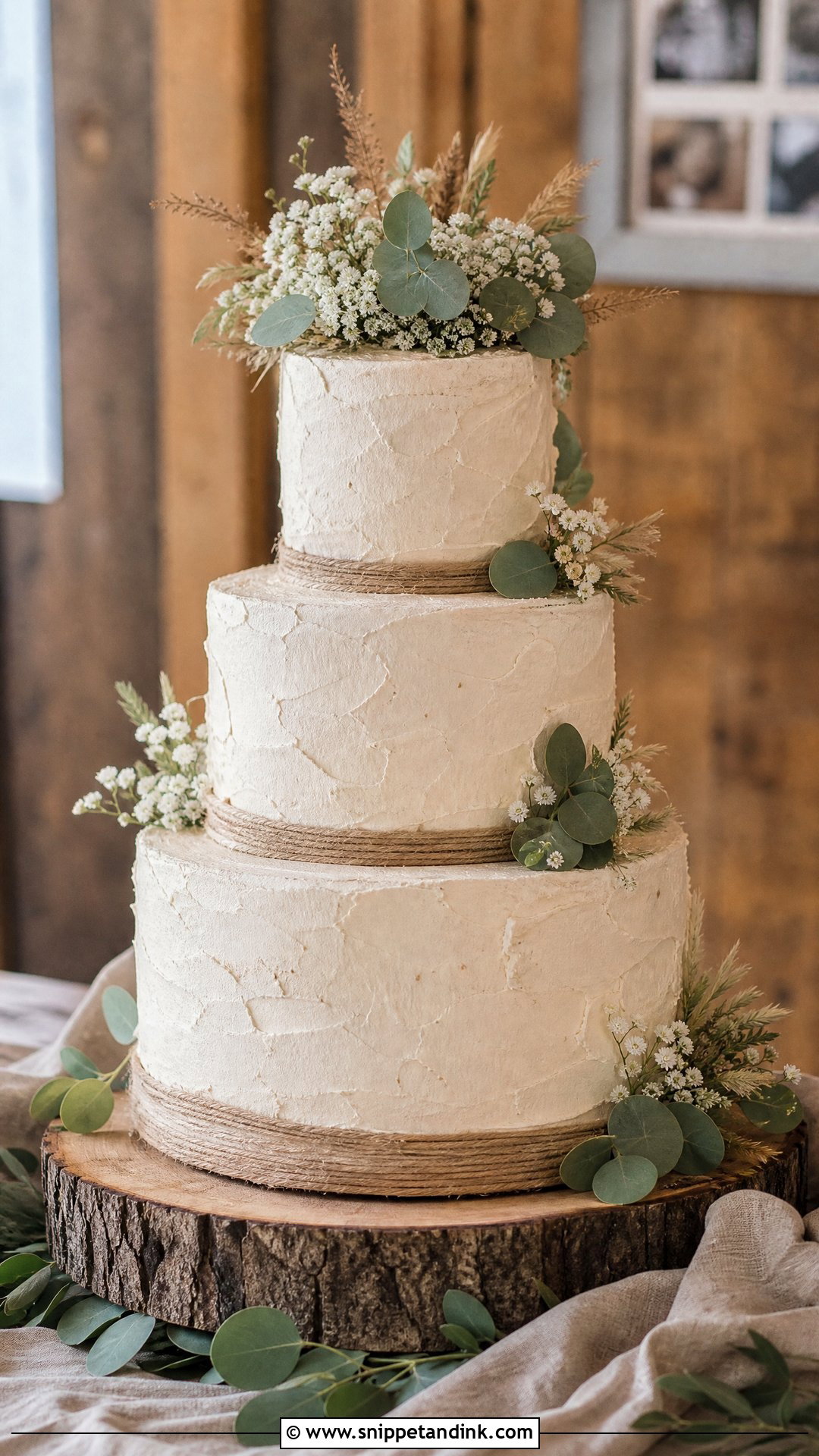
Rustic finishes are where faux tiers really earn their place. A rough spatula texture on real buttercream starts to soften and slump in a warm barn by late afternoon; the same texture on a dummy covered in a firmer icing holds its shape all night. I keep the strokes uneven but deliberate, with greenery, small white flowers or dried grasses. Set it on a wood slice or plain linen, and keep the stacking simple.
8. Modern Dummy Wedding Cake
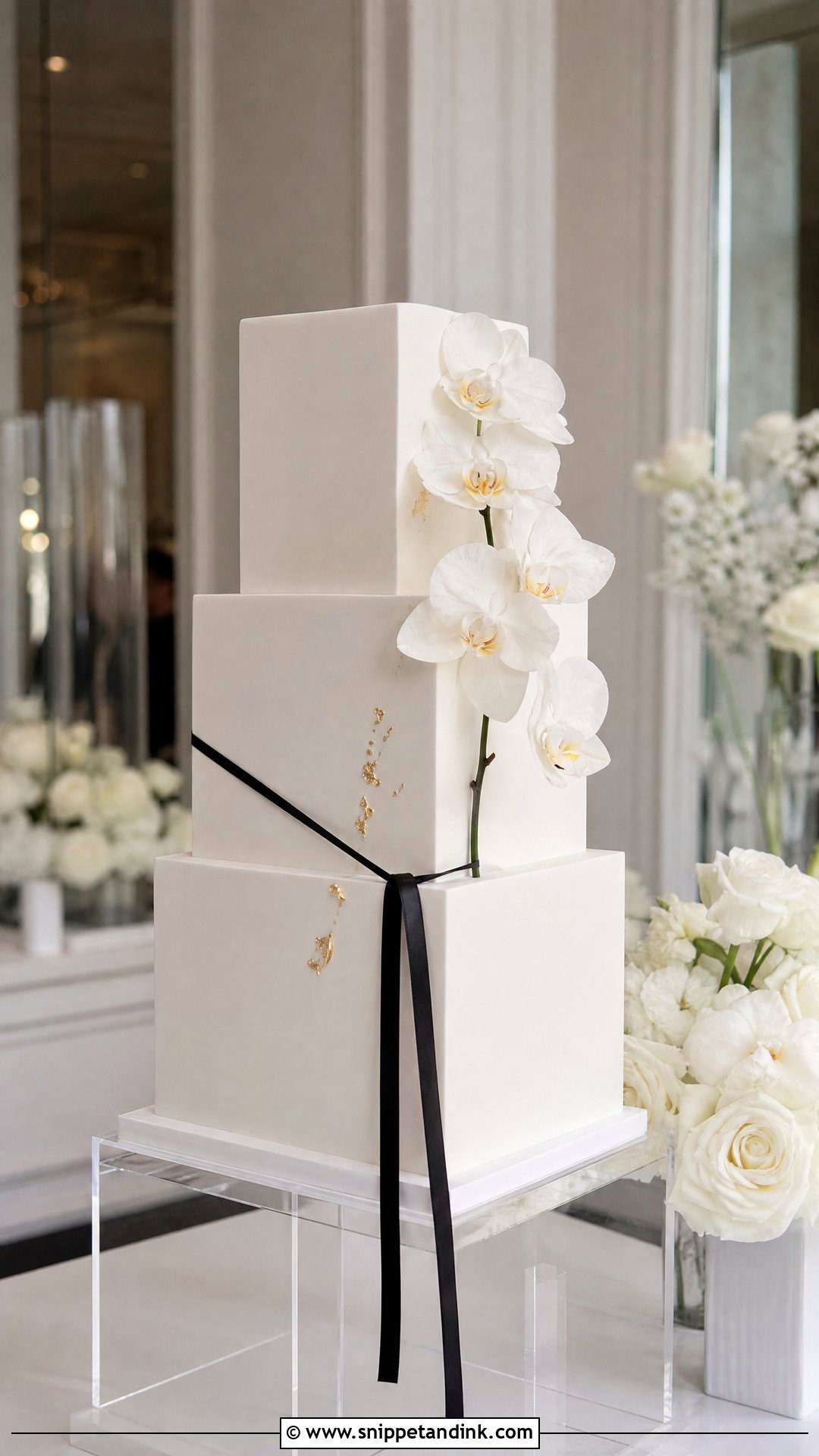
Modern designs live or die on sharp edges, and polystyrene holds a crisp corner better than any sponge ever will. Tall tiers, asymmetric flowers and one strong colour detail are the usual ingredients. I’ll often add a single orchid stem, a smooth ribbon band or one painted tier. City venues and galleries suit it best. Clear acrylic stands and white florals keep the table as clean as the cake.
9. Minimalist Dummy Wedding Cake
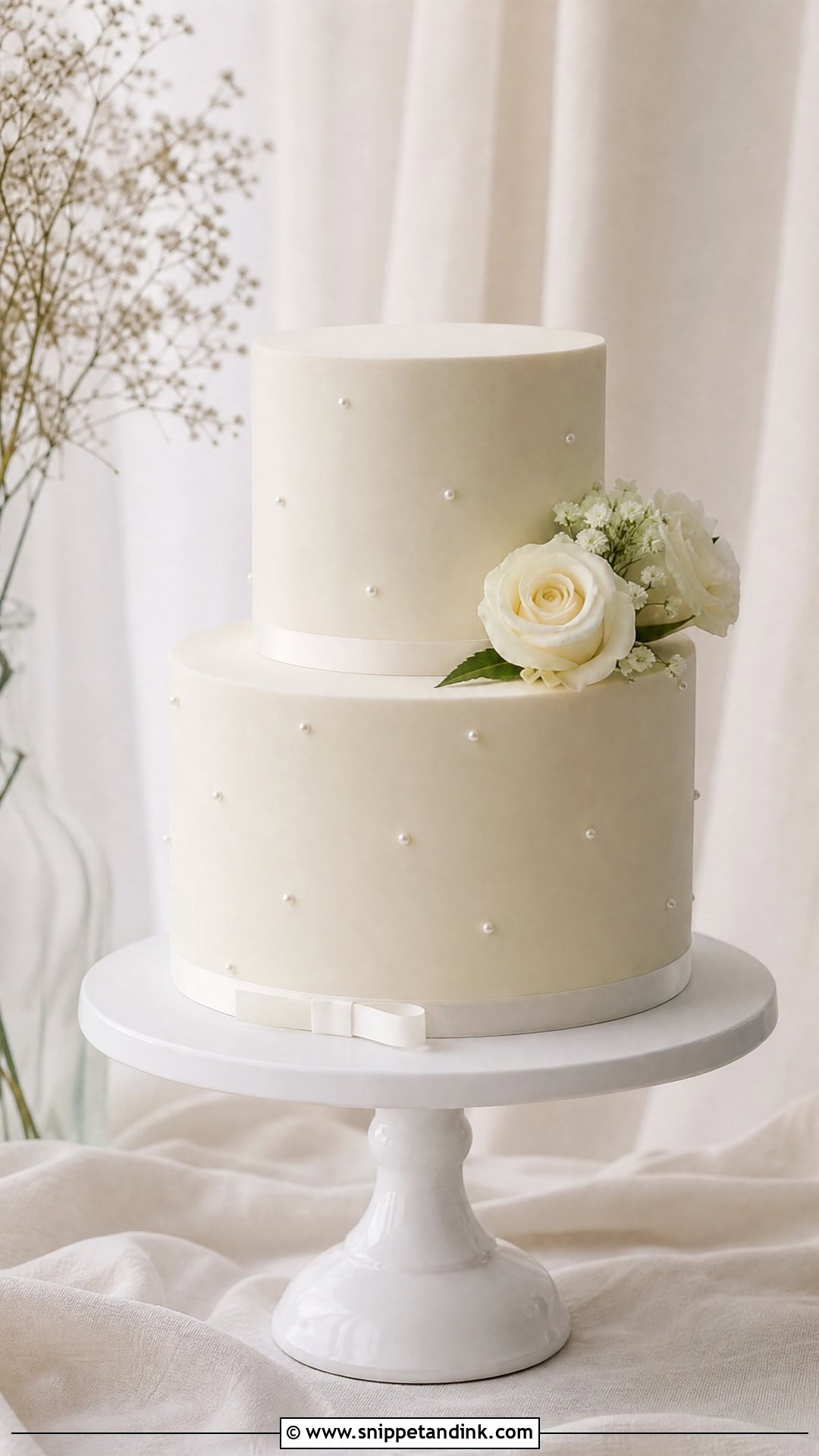
Minimalism is unforgiving, which makes it a good match for dummies. With almost no decoration, every bulge or wobbly edge shows, and a dummy gives me a perfectly level, straight-sided base to work on. White, ivory, blush or pale beige suits it, with one small floral accent or a narrow ribbon. It fits intimate weddings and courthouse celebrations. A plain stand and soft fabric backdrop are enough styling.
10. Luxury Dummy Wedding Cake
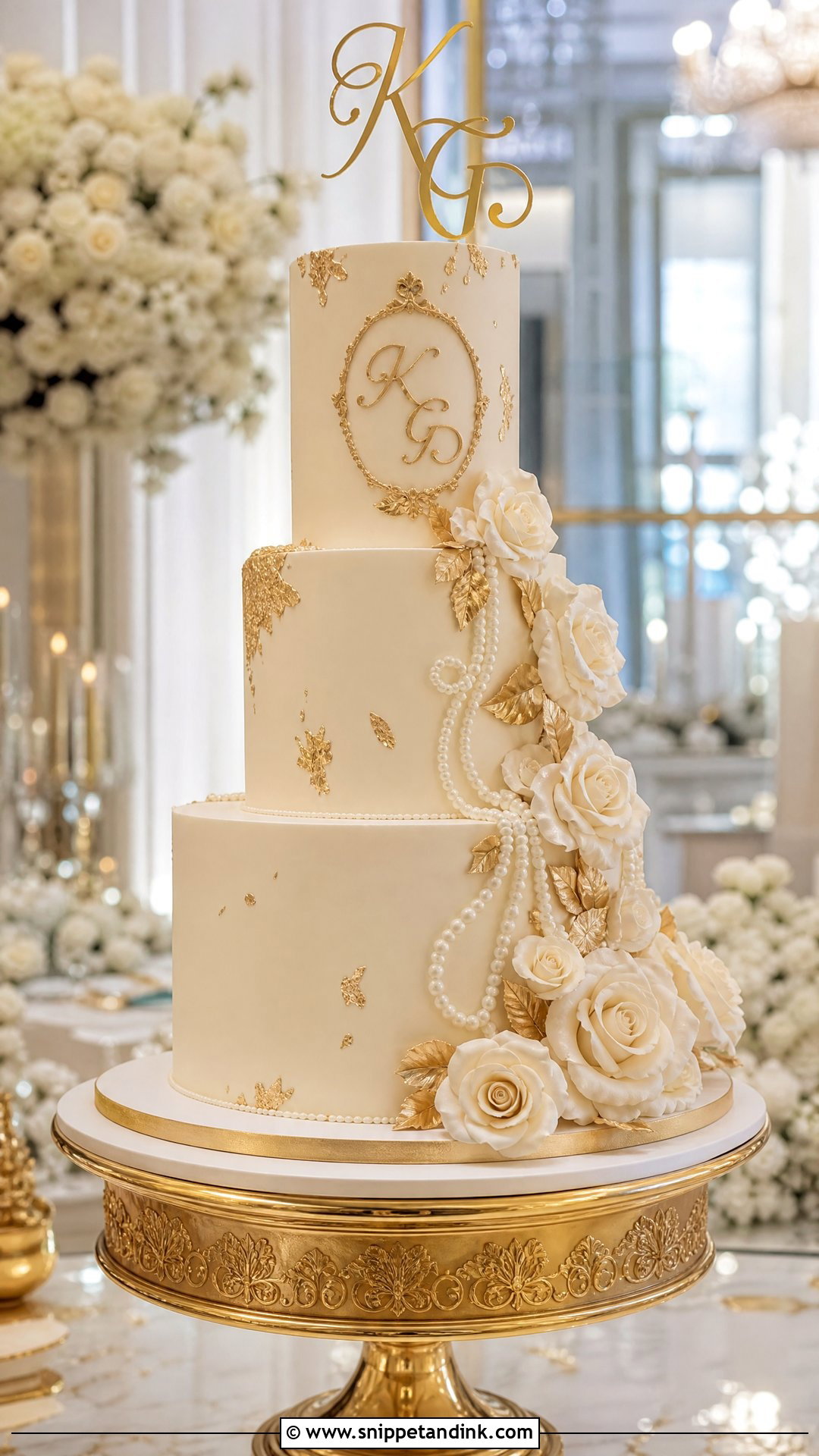
Luxury cakes usually mean height and lots of hand-finished work: sugar flowers, gold detail, pearls and structured tier spacing. Faux tiers let you build that scale without hundreds of real servings. I’d be honest with couples here: the decorating hours are the same on a dummy as on real cake, so the savings come from ingredients and baking, not from the craftsmanship. One strong focal point, such as a floral cascade or monogram, looks more expensive than detail everywhere.
11. Gold Dummy Wedding Cake
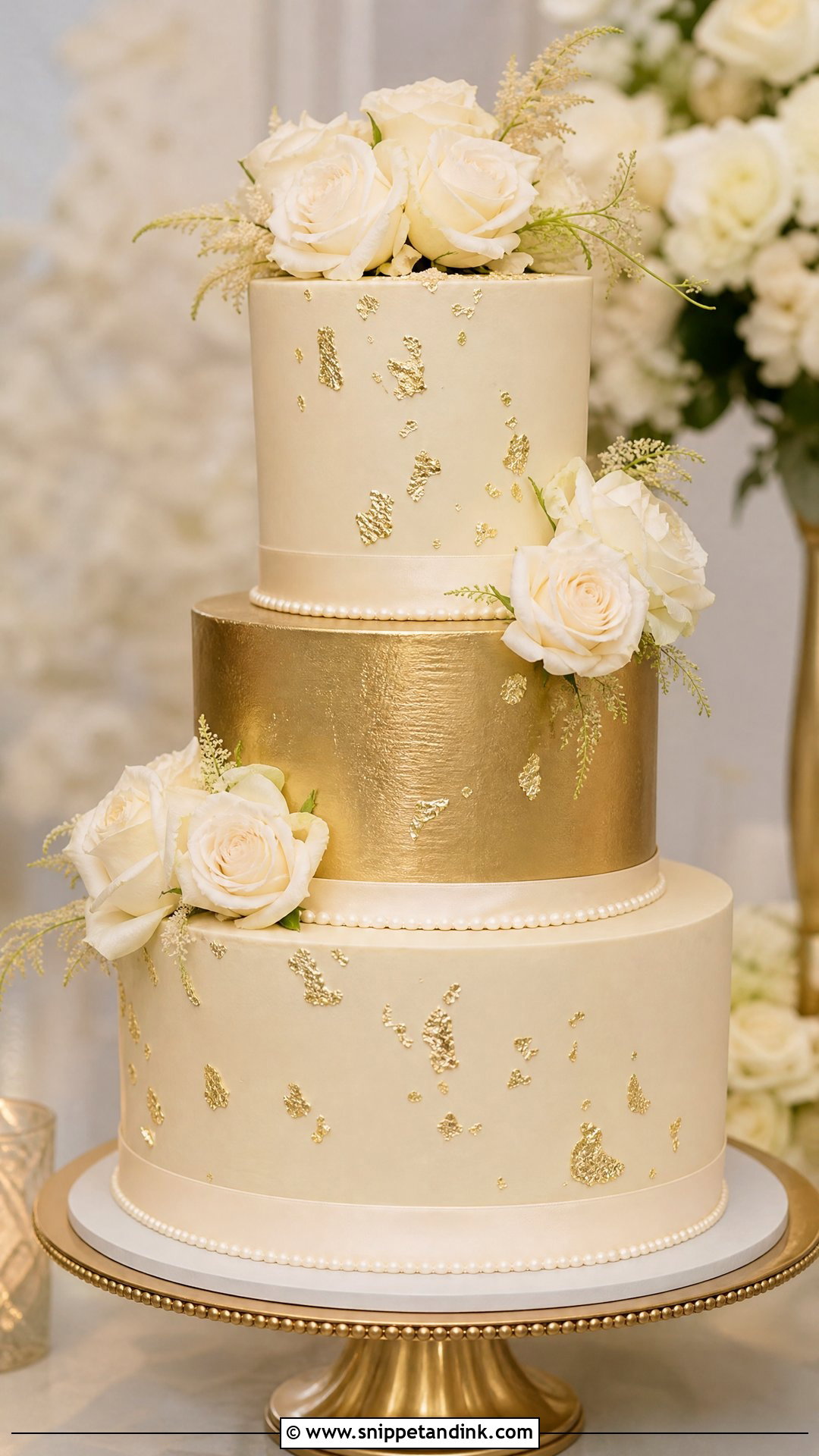
Gold leaf and metallic paint behave more predictably on a firm dummy surface than on cake that might sweat or soften. That’s why I’m happy to cover a whole faux tier in gold, which I’d hesitate to do on a real one. Subtle thin bands work just as well. Pair gold with ivory or champagne to keep it bridal. A smooth cake with a little gold leaf and a few soft flowers often looks richer than a busy one, especially in a hotel or evening setting.
12. Pearl Dummy Wedding Cake
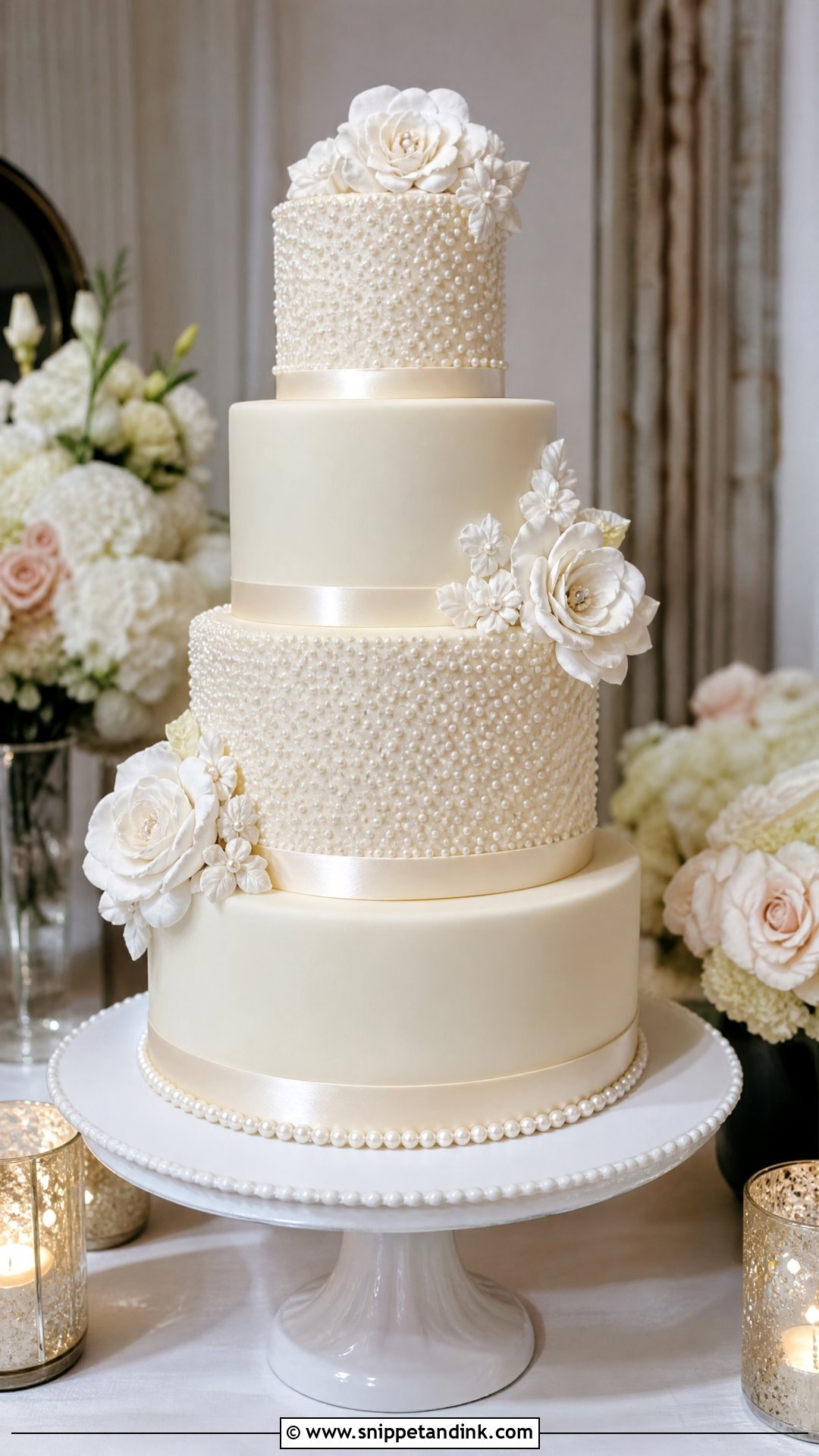
Pearl work is slow and fiddly, placed one bead at a time. On a dummy, I can apply pearls days ahead without worrying about the cake going stale underneath, which takes the pressure off and gives better placement. Tiny borders, scattered accents, full beaded tiers or vertical strings all work. Keep them balanced so the cake doesn’t look heavy. Under candlelight with pale flowers and a white stand, a pearl cake looks graceful and photographs well.
13. Floral Dummy Wedding Cake
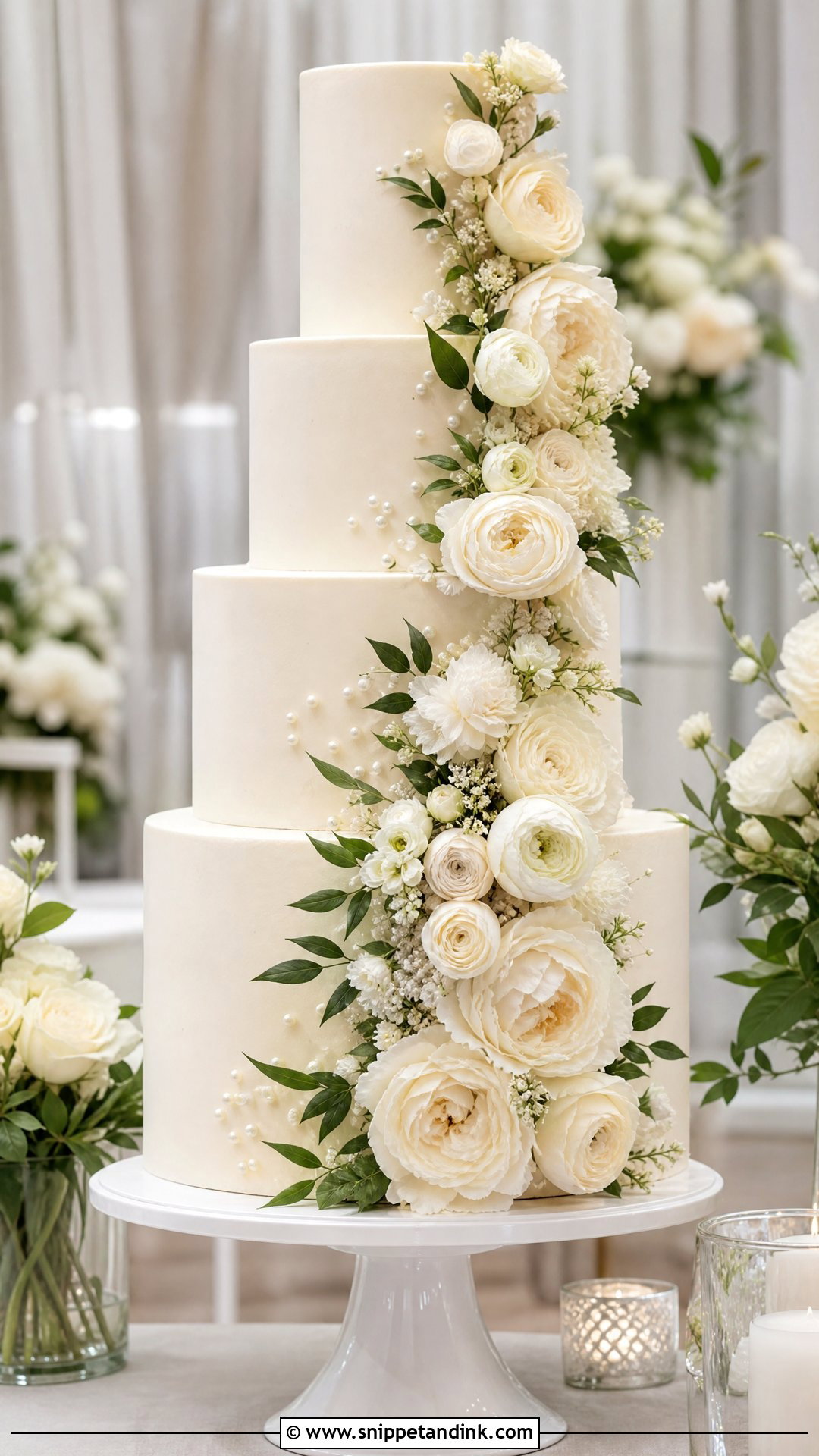
Flowers are the easiest way to tie a faux cake to the rest of the room, and you can use sugar, silk, fresh or a mix. Placement is what matters. A diagonal cascade from top to base makes the cake look taller, while clusters between tiers feel more like a garden. Keep the base colour plain so the flowers stand out. I like to ask the florist for a couple of stems from the centrepieces so the cake visibly belongs with them.
14. Greenery Dummy Wedding Cake
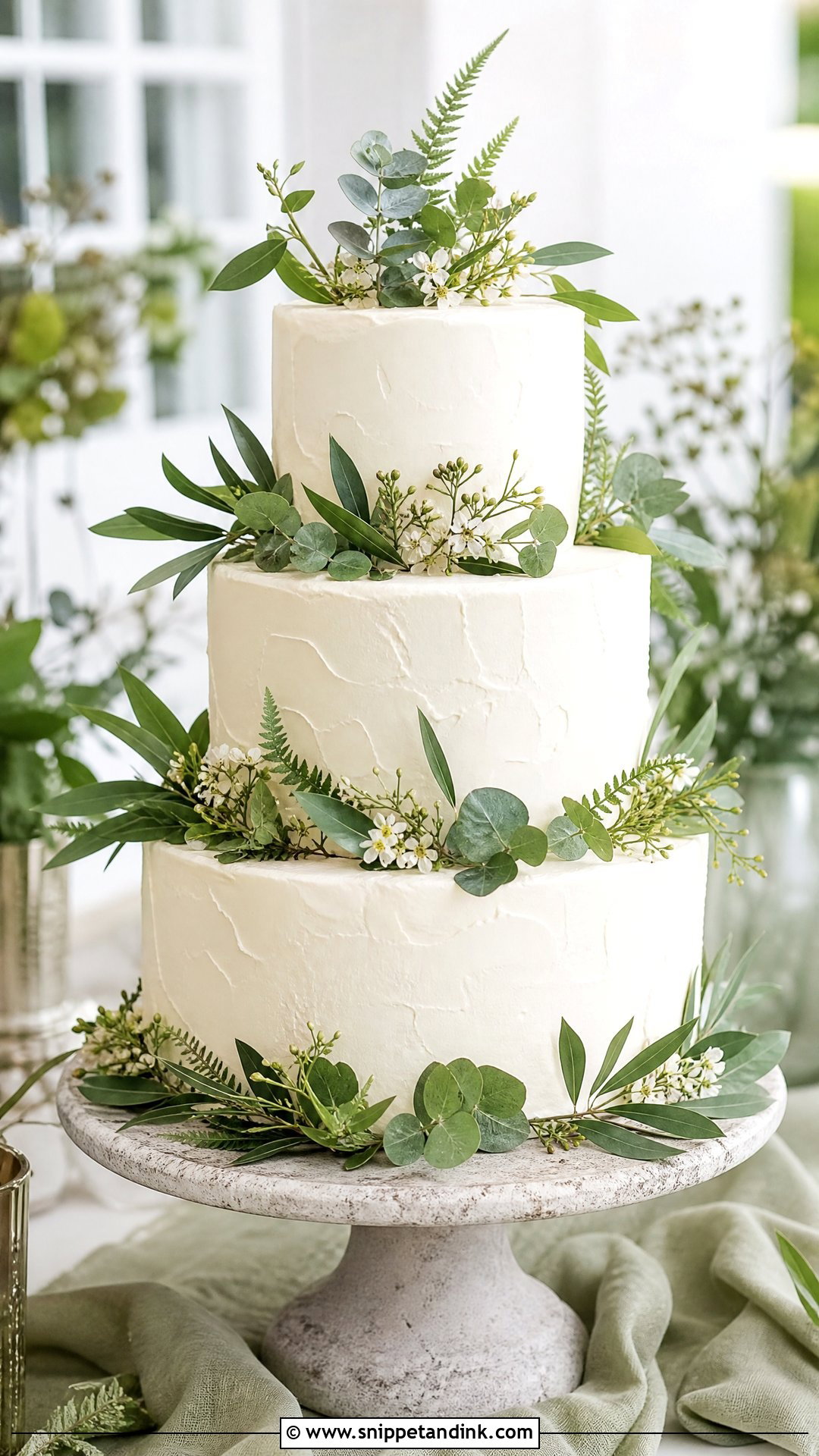
Greenery suits garden weddings and couples who want a natural look with very few flowers. Eucalyptus, olive branches, ferns and trailing vines all work. Some foliage isn’t safe near food, and on an all-faux cake that matters less, but the moment there’s a real cutting tier, I keep a barrier between leaves and icing. Ivory texture behind the greenery keeps it soft. A few small blooms finish the display.
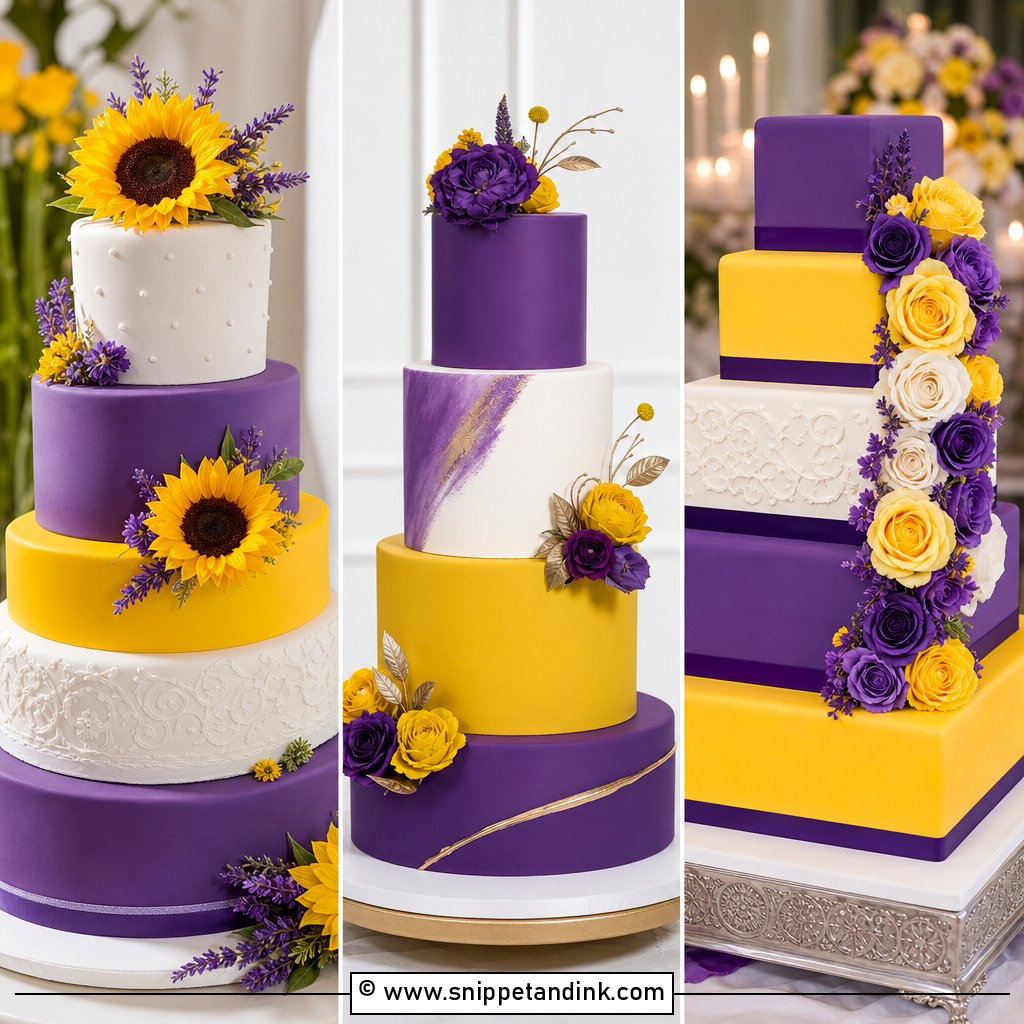


15. Buttercream Style Dummy Wedding Cake
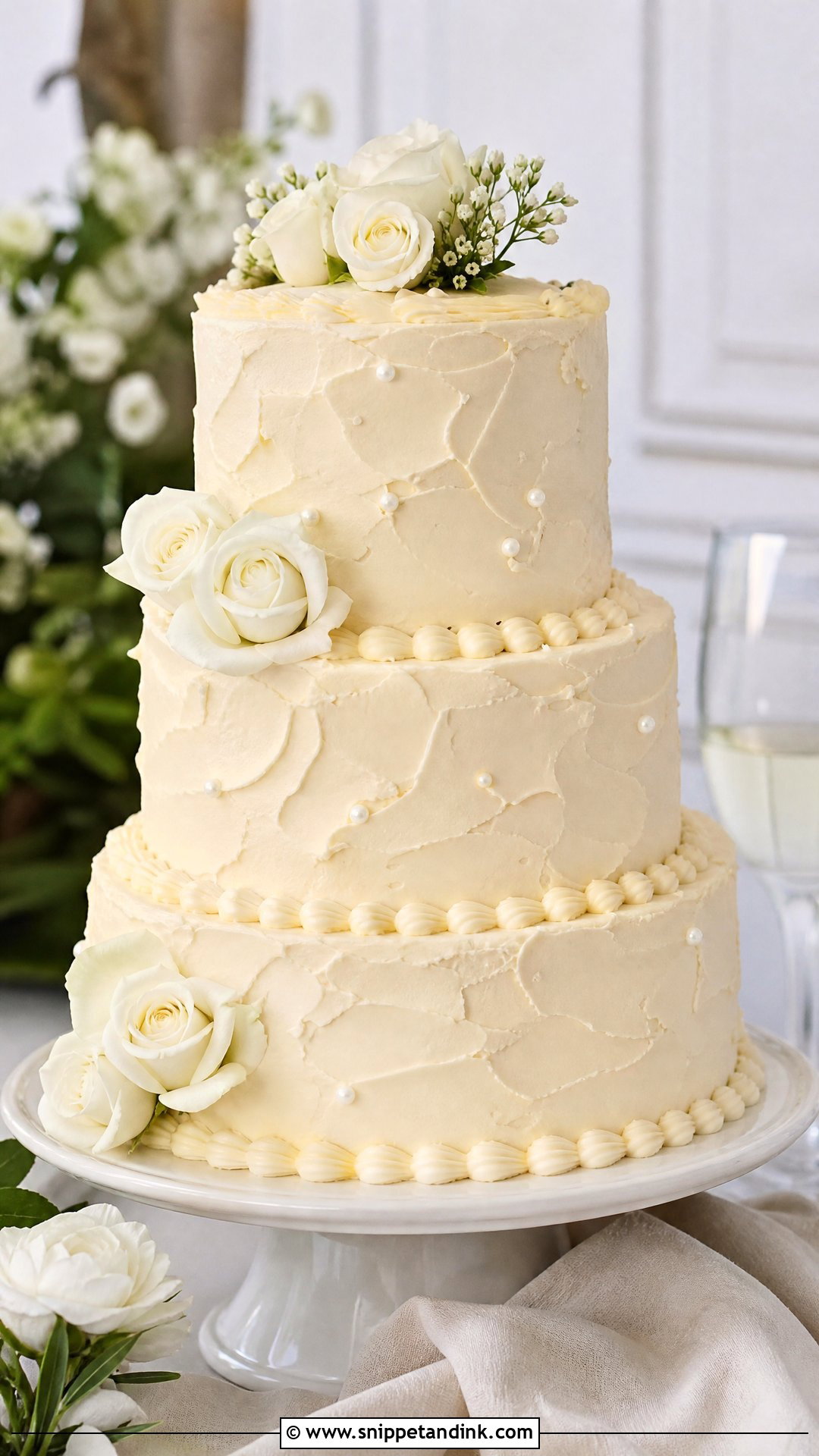
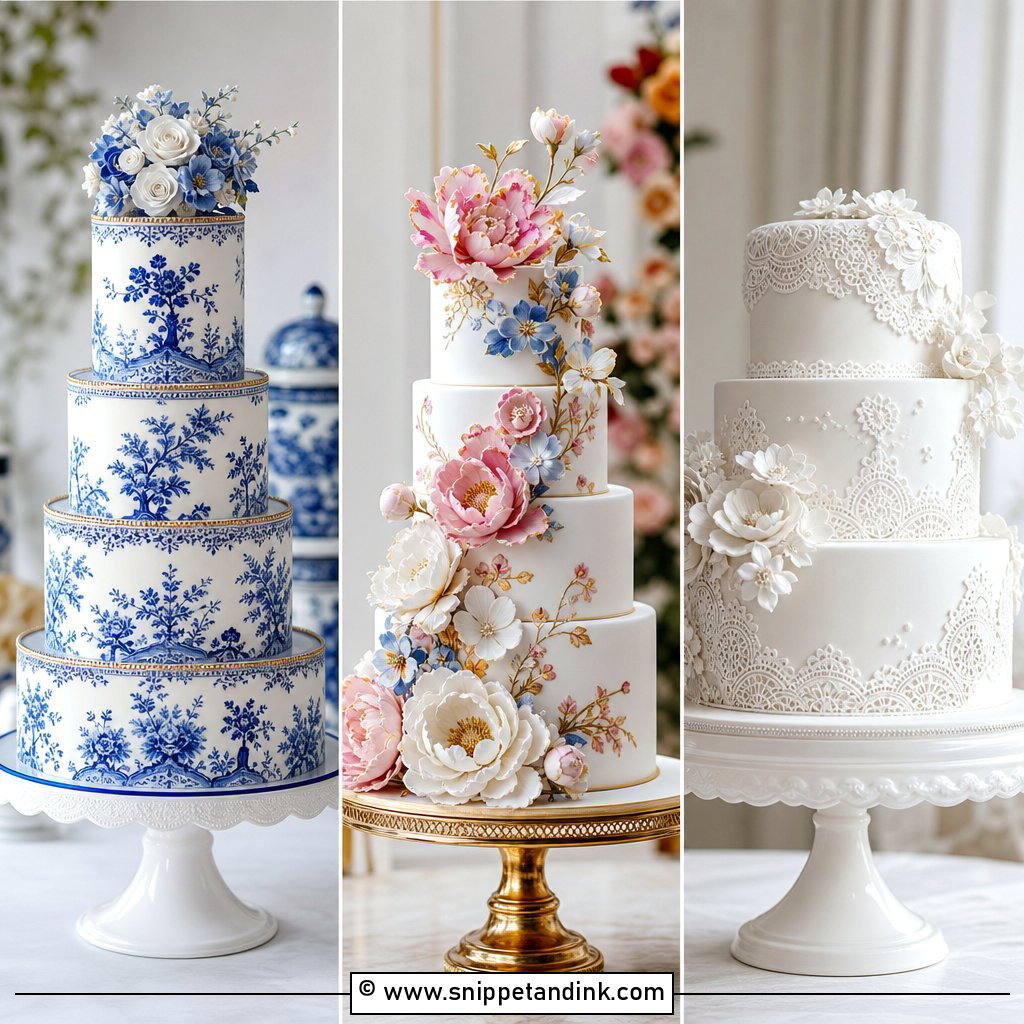
Buttercream on a dummy is real buttercream, and that catches people out. It still softens in heat and still shows fingerprints, so an outdoor faux cake isn’t automatically heat-proof if it’s iced in buttercream. For hot venues I use a firmer, crusting recipe or a buttercream-look fondant texture. Smooth sides, ridges or spatula marks all translate well. It’s the right finish for couples who dislike the look of fondant but still want a display cake that reads as freshly frosted.
16. Fondant Dummy Wedding Cake
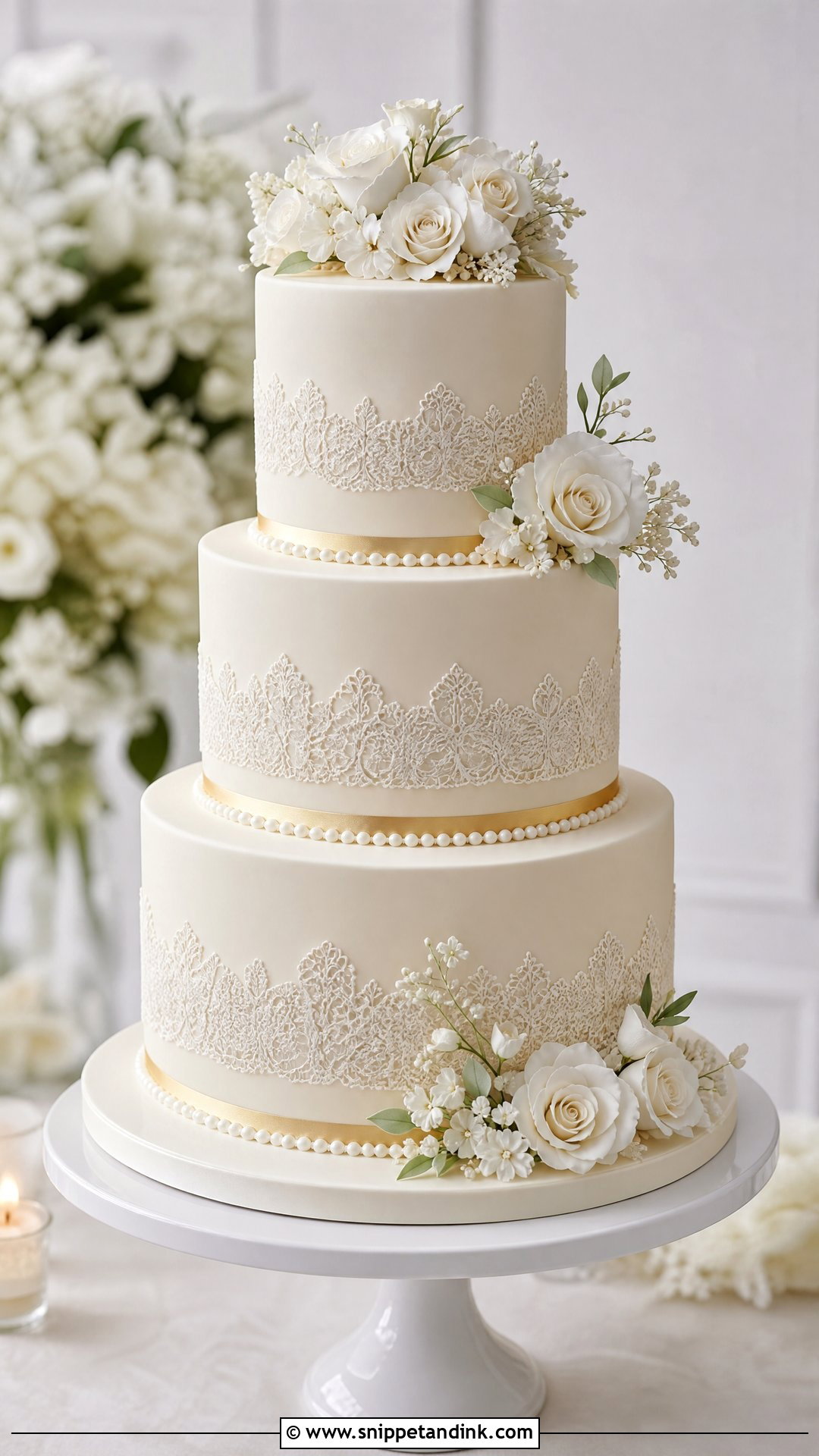
A fondant dummy wedding cake is the most durable faux option. Fondant wraps polystyrene cleanly, holds sharp edges and takes painted details, lace patterns, sugar flowers and metallic accents without any risk of the base shifting. It also holds its look through long setup and reception hours. For the most realistic result, I tint the fondant a natural ivory rather than leaving it stark white.
17. Lace Dummy Wedding Cake
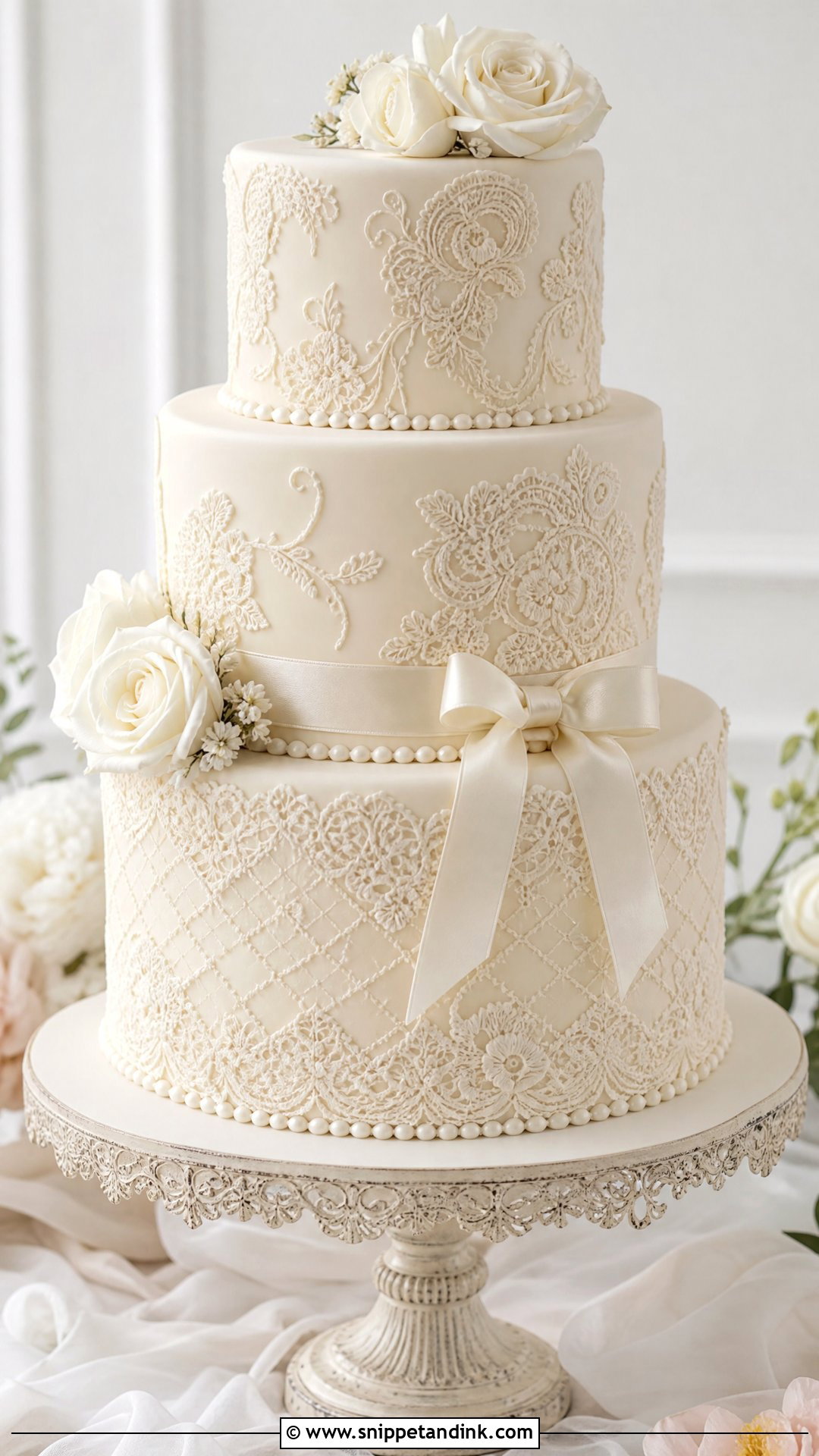
Lace detail can echo the bride’s gown, and I’ll often ask for a photo of the dress to match the pattern. It can be piped, stencilled, moulded or painted. On faux tiers I have time to get fine patterns right without the cake deteriorating. Leave some smooth areas between lace sections, or the cake loses its shape under the pattern. Ivory lace over a champagne base with a pearl border is a gentle combination.
18. Square Dummy Wedding Cake
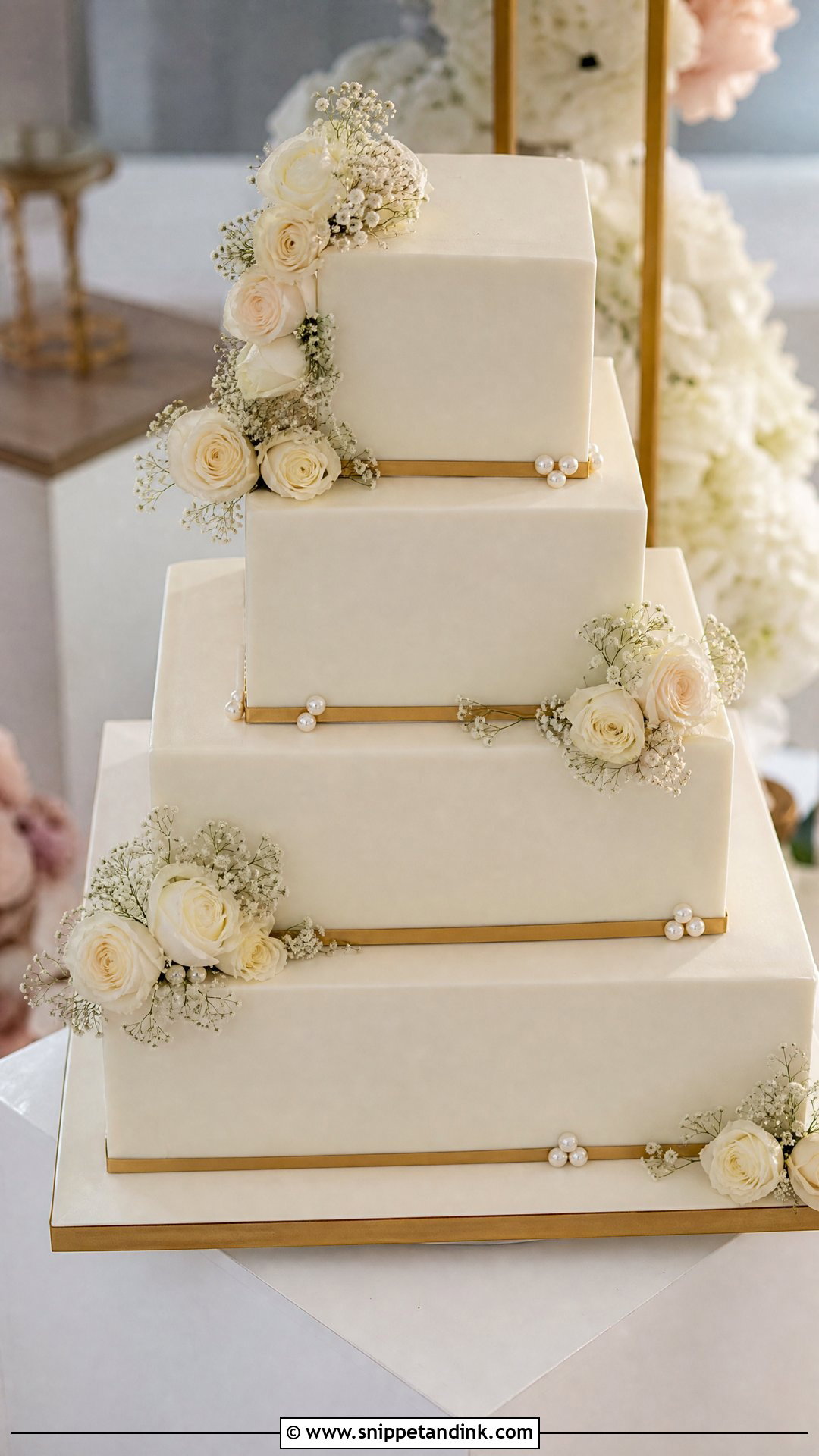
Square tiers are harder to cover neatly than round ones, because fondant tends to tear or bunch at the corners. On dummies I can get corners crisp and straight far more reliably. The strong shape suits geometric details, ribbon bands or corner floral clusters. Soften it with ivory and white flowers, or push it bolder with gold trim or a marbled tier. Centre the cake carefully on its stand, since any misalignment shows on a square.
19. Round Dummy Wedding Cake
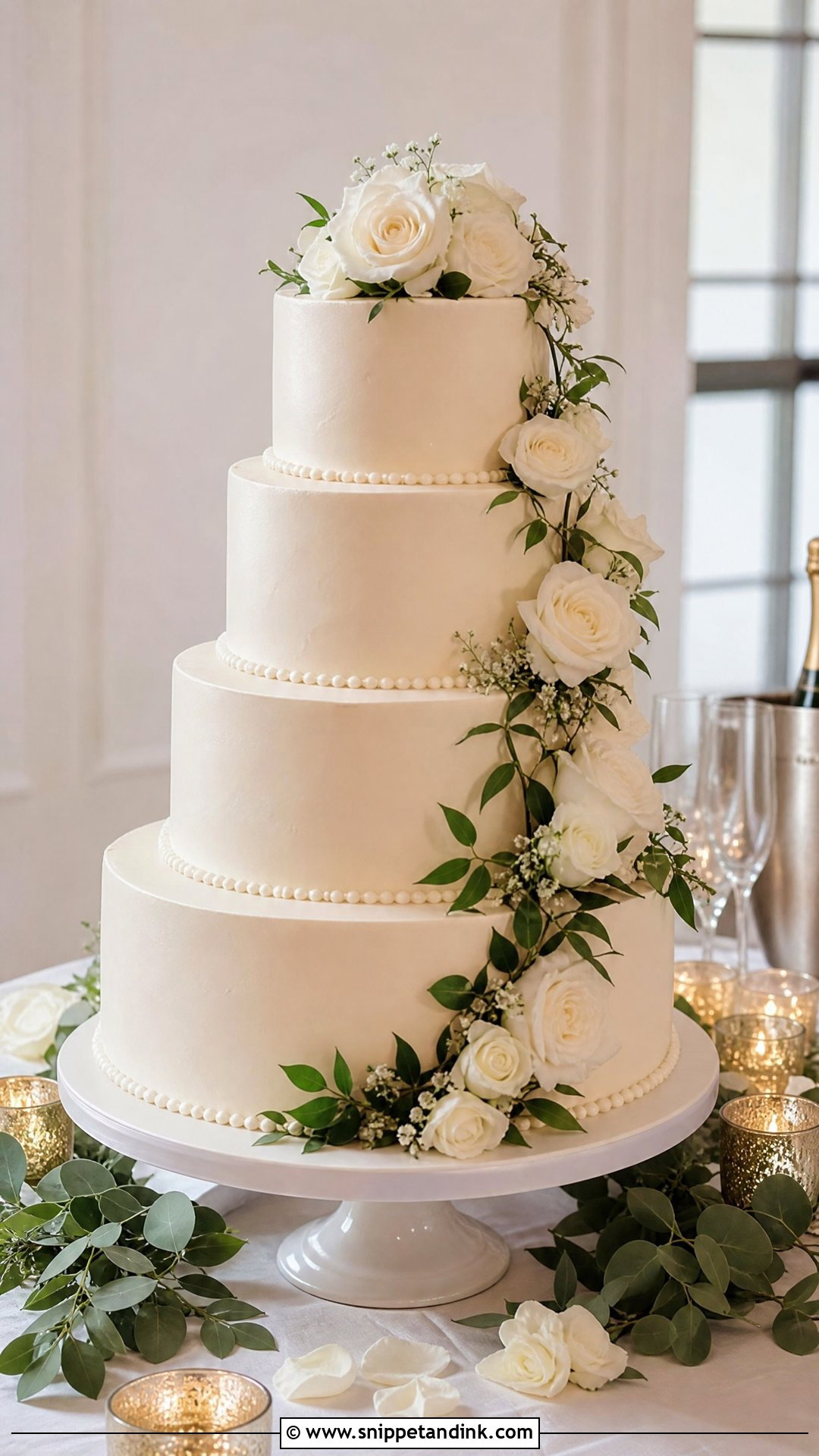
Round tiers are the traditional shape and the simplest to style. Three or four round tiers give good height while looking classic, and a real cutting tier slots in easily. Decorations that follow the curve, such as garlands or floral arcs, suit them best. Even stacking matters more than you’d think; a slightly off-centre tier is the first thing photographers notice from above.

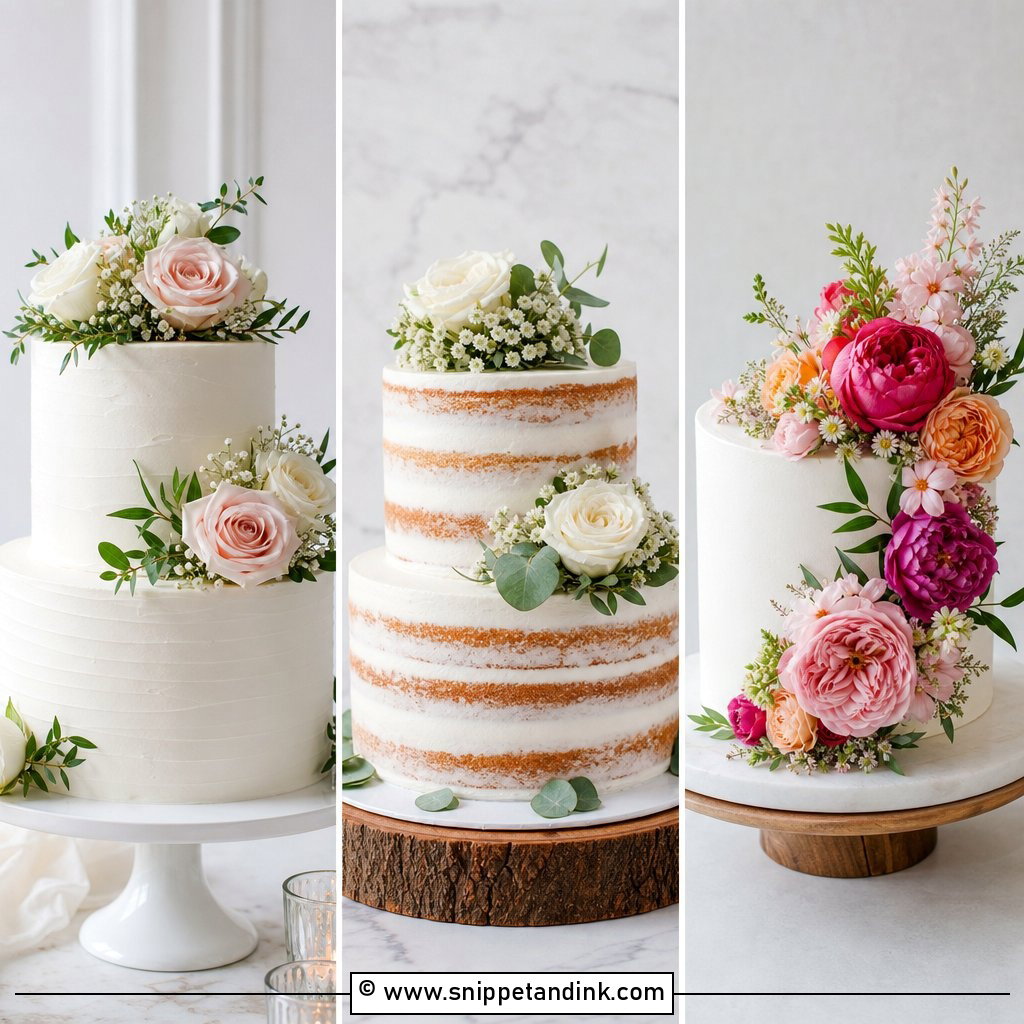

20. Tall Dummy Wedding Cake
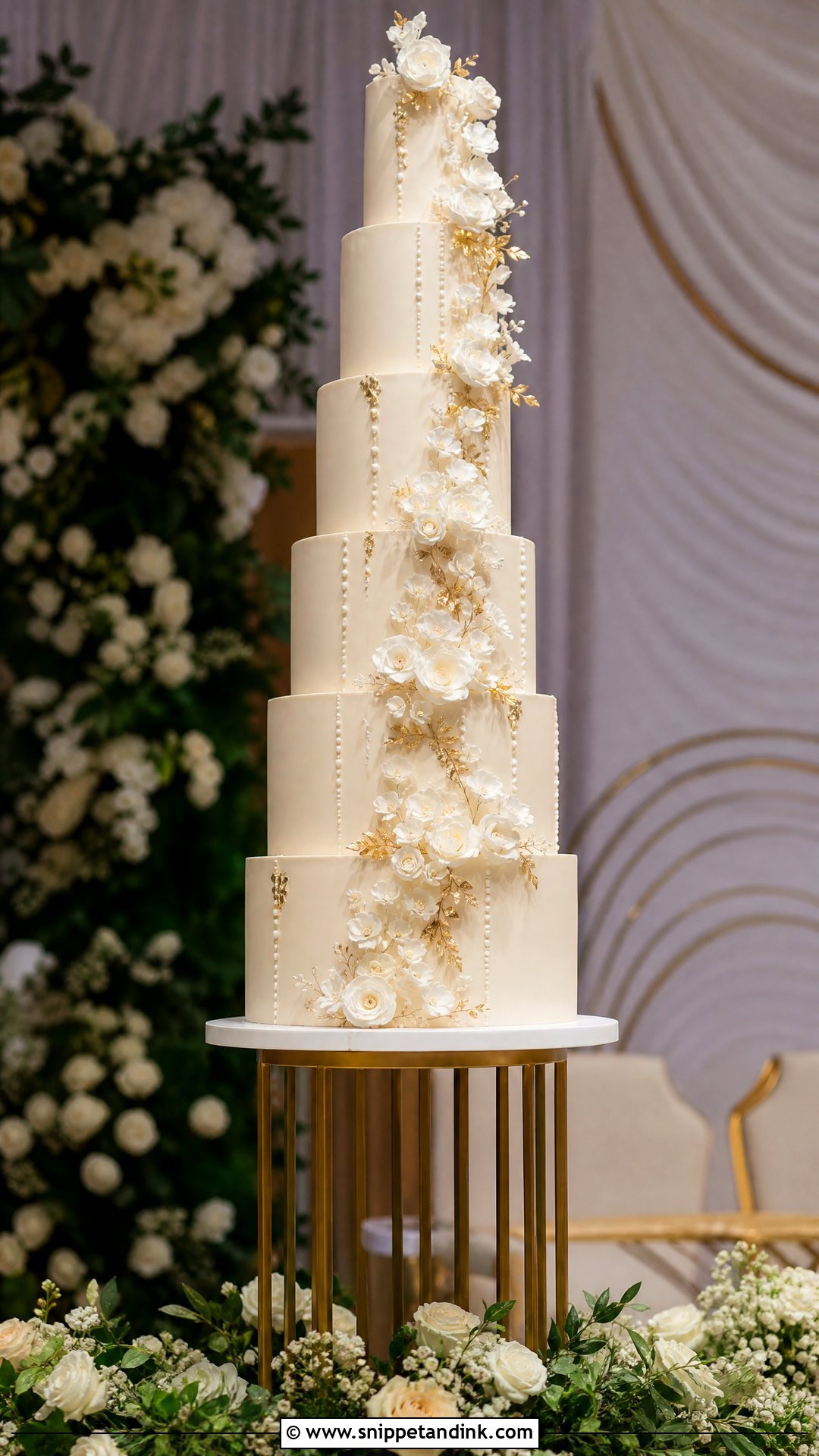
Height turns the cake into part of the room’s decor, and it suits high ceilings and grand entrances. Narrow tiers, separators or extra-tall stacked rounds stretch the silhouette. Weight is the real constraint with tall real cakes, and faux tiers remove most of it, but a tall light cake is easier to knock over, so it needs a heavy base and a spot away from traffic. A vertical flower cascade or clean pearl lines keep the detail from crowding the height.
21. Small Dummy Wedding Cake
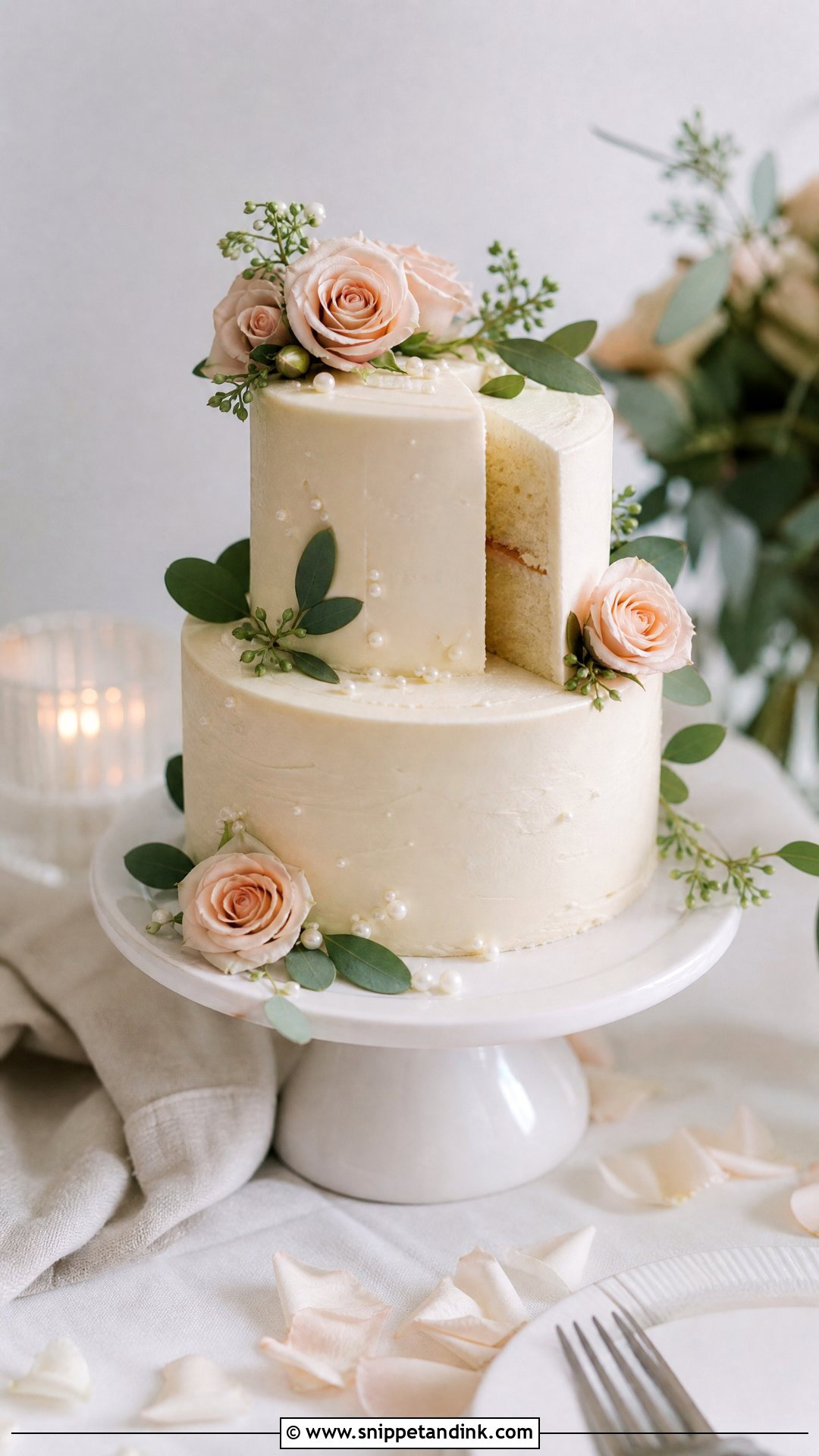
Small faux cakes suit micro weddings, elopements and dessert tables where other sweets share the space. A two-tier dummy with a single real slice set into a cut-out at the back gives you a cutting photo without baking a whole tier. Style the table around it with linen, flameless candles, petals or a framed sign. It’s also handy when guests are getting plated desserts but you still want a cake in the room.
22. Vintage Dummy Wedding Cake
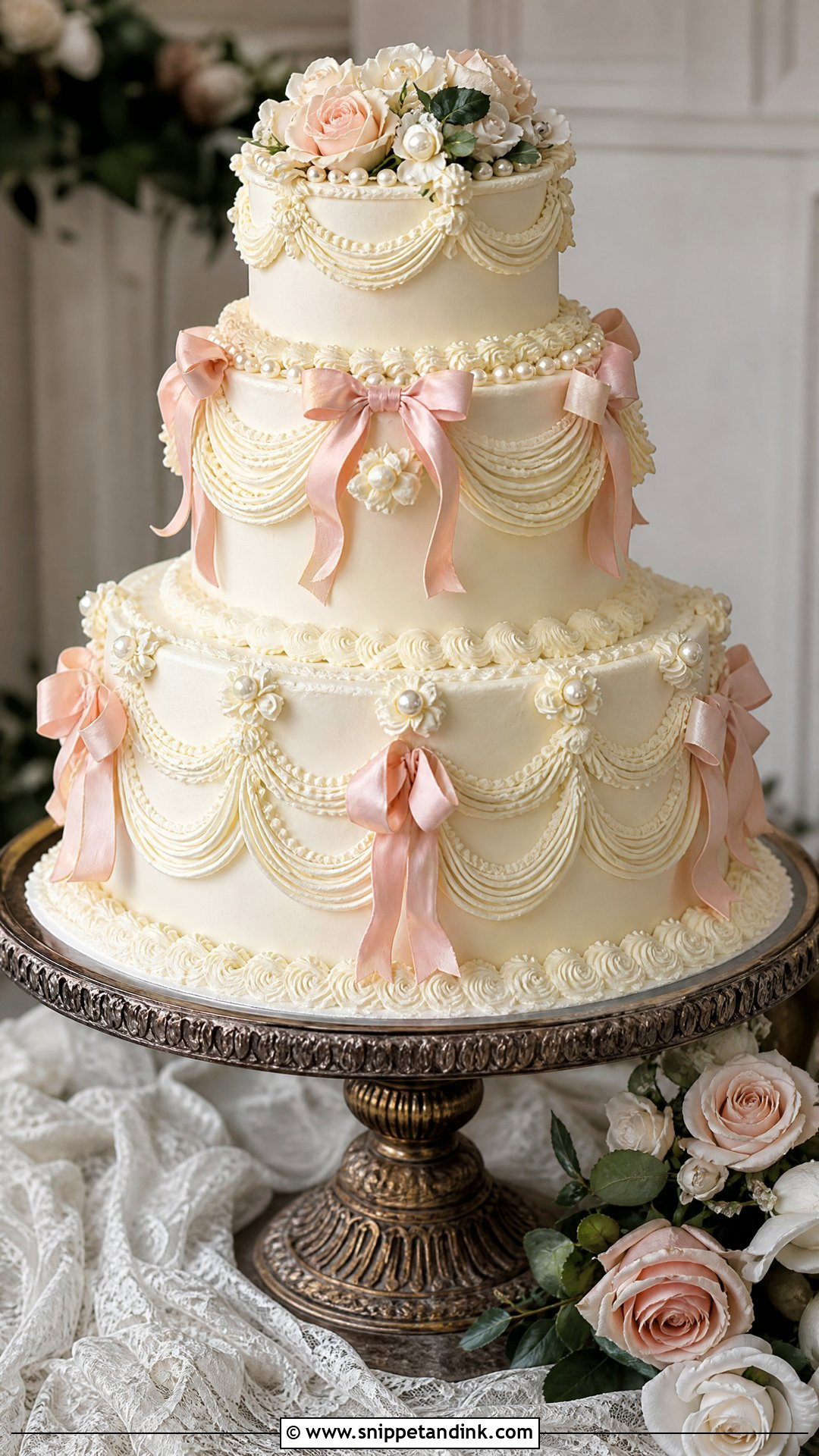
Vintage piping is the most time-intensive decoration a cake can have, and it can be piped onto faux tiers days in advance. Lambeth borders, shells, bows, pearls and even heart-shaped tiers all work. The risk with vintage is tipping into costume, so I choose one or two statement details, such as dramatic piping and pearls, and keep the colours soft. Ivory, blush or pale blue suit it. Lace linens finish the table.
23. Black And White Dummy Wedding Cake
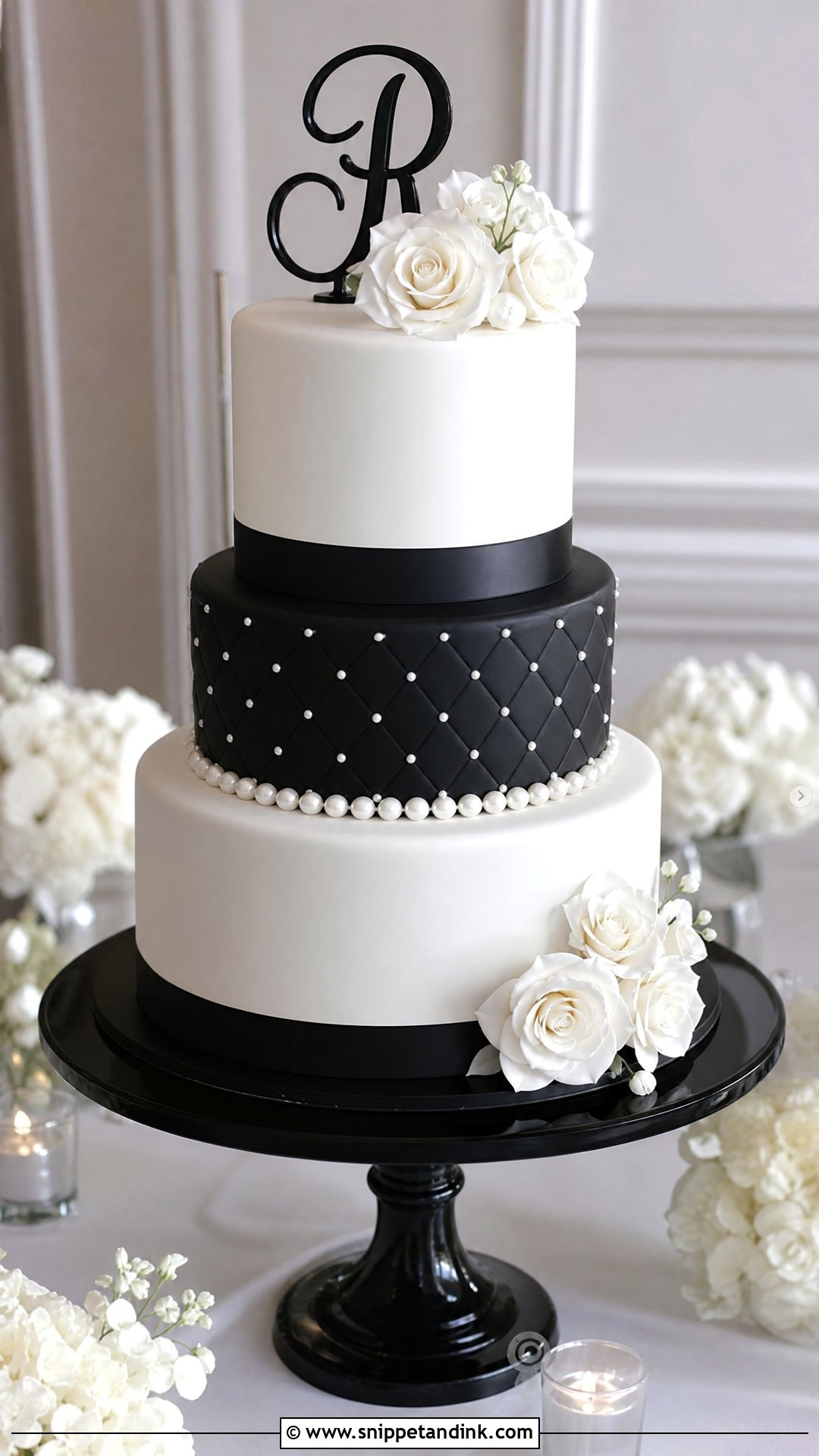
Black on a real cake means very heavy colouring, which can taste bitter and stain mouths. On a faux tier none of that matters, so this is where I’ll happily use black as a solid tier or bold accent. Ribbon bands, painted details and floral outlines also work. Keeping the base white or ivory keeps it bridal. White flowers or pearls soften the contrast.
24. Blush Dummy Wedding Cake
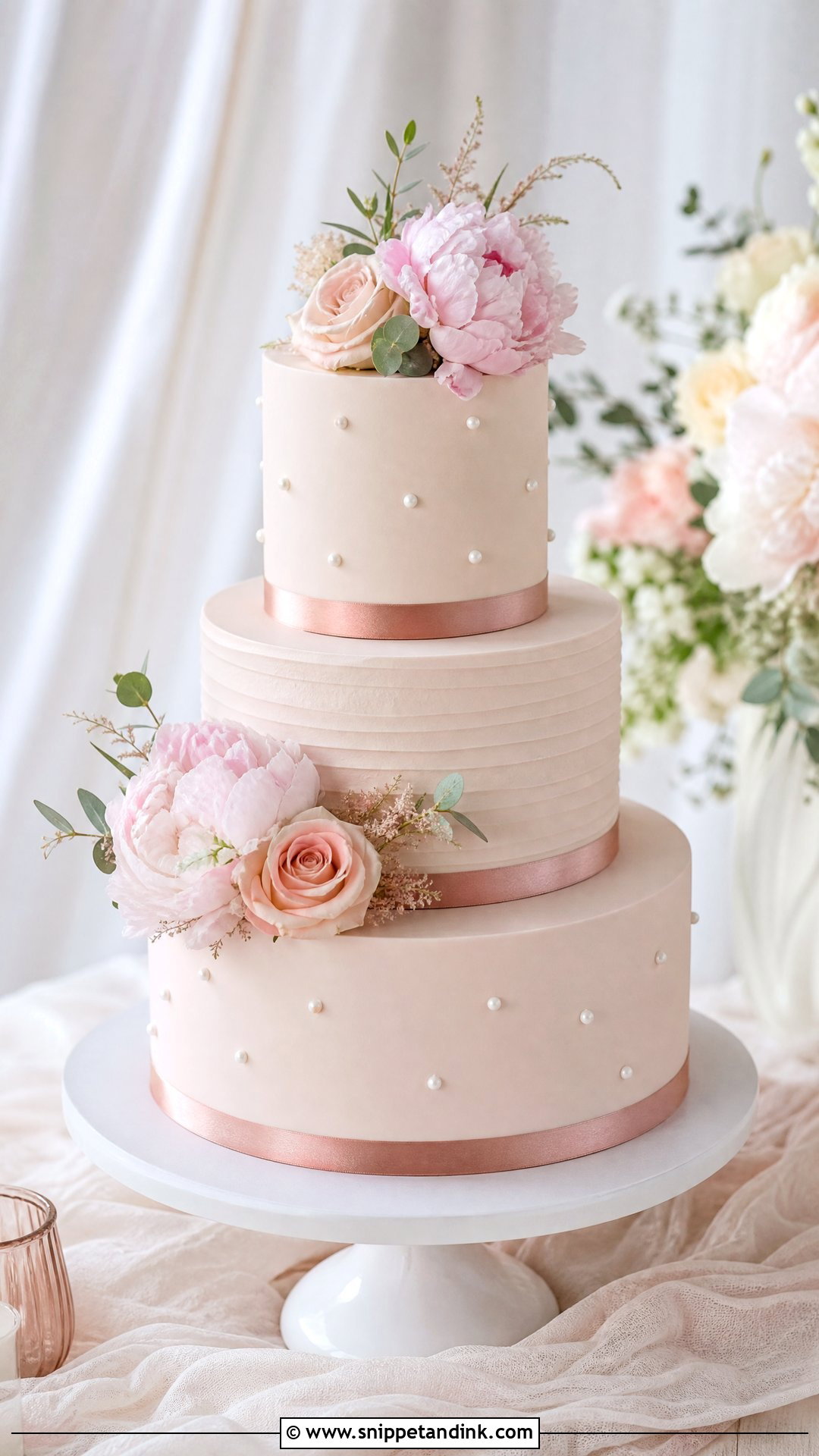
Blush on faux tiers can be matched carefully to linens, flowers or bridesmaid dresses, since the colour won’t shift as the cake warms. I mix it as a full base or paint it as an accent on one tier. Check the shade under the venue’s lighting if you can; blush can turn beige under warm bulbs. Roses, peonies and a gentle texture suit it, especially for spring weddings and venues with lots of natural light.
25. Marble Dummy Wedding Cake
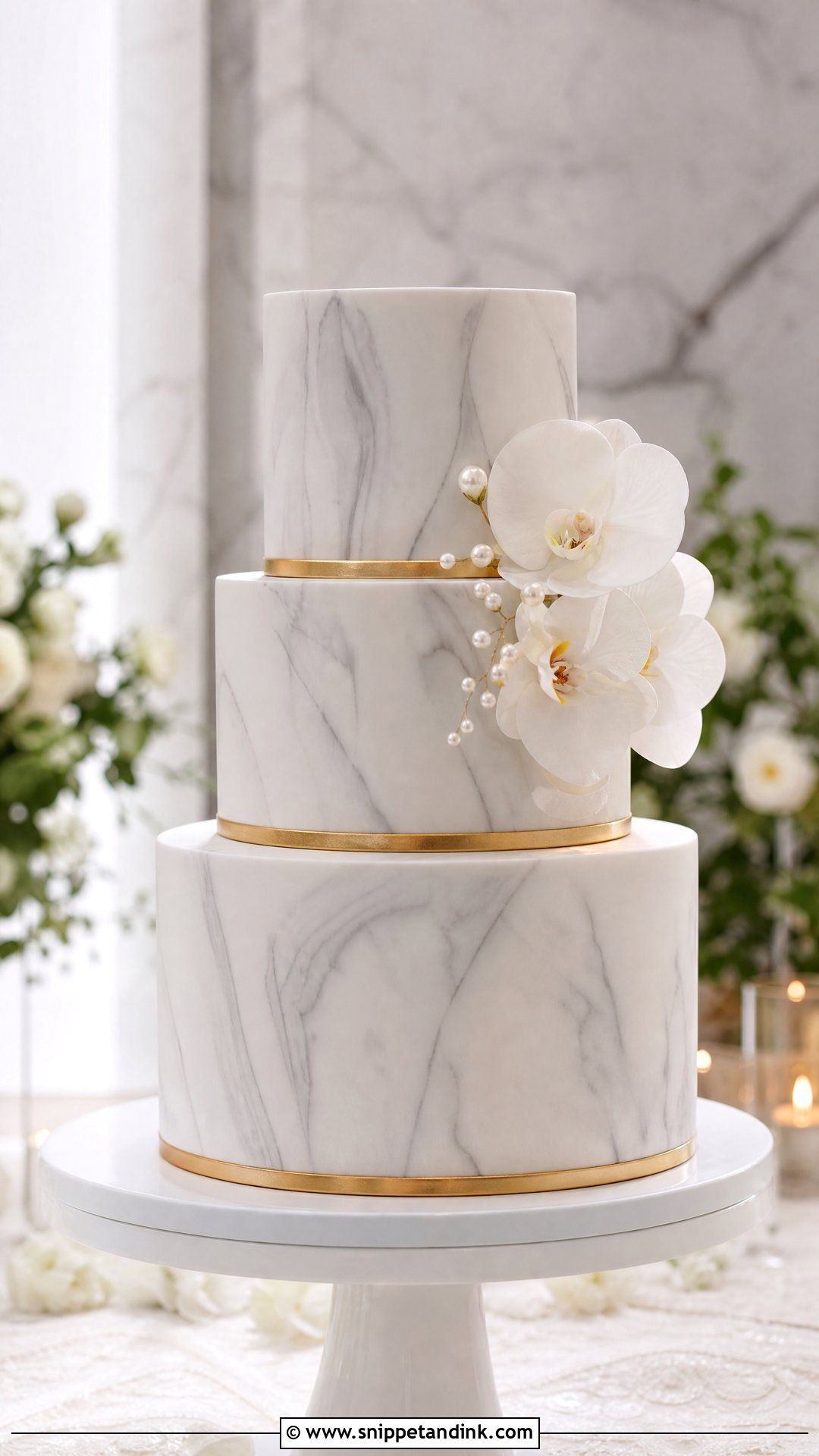
Marbling is done by twisting coloured fondant through white before rolling, so no two tiers come out the same. Faux tiers give me a smooth, firm surface that shows the veining cleanly. Soft grey, warm beige, blush or subtle gold veins all work. Keep decoration minimal so the pattern stays visible, perhaps one white flower cluster or a thin gold line. It fits modern venues, museums and hotel receptions.
Will Anyone Notice It’s Not Cake?
Rarely, if a few details are handled. These are the giveaways I watch for:
- Stark white covering. Real icing is a shade warmer, so I tint faux tiers ivory.
- Edges that are too perfect next to a real tier with softer edges. I finish both the same way.
- A cutting that’s slow or awkward because the knife hit polystyrene. Mark the real spot clearly for whoever helps you cut.
- A cake that sits untouched all night while slices appear from nowhere. That’s fine; most guests assume it’s simply been cut in the kitchen.
What a Dummy Saves, and What It Doesn’t
Couples often expect faux tiers to cost a fraction of real ones. The savings are real but smaller than people think, because the expensive part of a wedding cake is the decorating time, and covering and decorating a dummy takes the same hours as a real tier. What you save is the baking, the ingredients and the waste of uneaten tiers.
Some bakers rent out decorated display cakes and keep them afterwards, which can bring the cost down further, though you’ll have less say over the design. If you’d like to keep yours, fondant-covered dummies last for years in a dry, dust-free spot out of sunlight. Buttercream-covered ones won’t, since the icing will eventually spoil.
Polystyrene, Planned Properly
Dummy tiers aren’t a shortcut so much as a design tool. They let you have the height and detail you want while keeping serving plans sensible. They still need the same finish, styling and planning as real cake, and the same conversation with your baker, florist and venue. Decide early whether you want a real cutting tier, a hidden slice or a kitchen cake, then pick a design that suits the room. Done well, nobody at the reception will know which tiers are real.
You'll Like These Ideas:










Leave a Reply