
A dark cake is one of my favorite briefs, and also one where I ask the most questions. Black frosting, deep red roses, lace, silver leaf and candlelit tables can look grand in a ballroom or earthy at a fall garden wedding, but dark color behaves differently from white icing in the mixing bowl, in the mouth and in photographs. Below are twenty moody designs, each with the thing I’d check before making it, so you can walk into a consultation knowing which ideas are simple and which need planning.
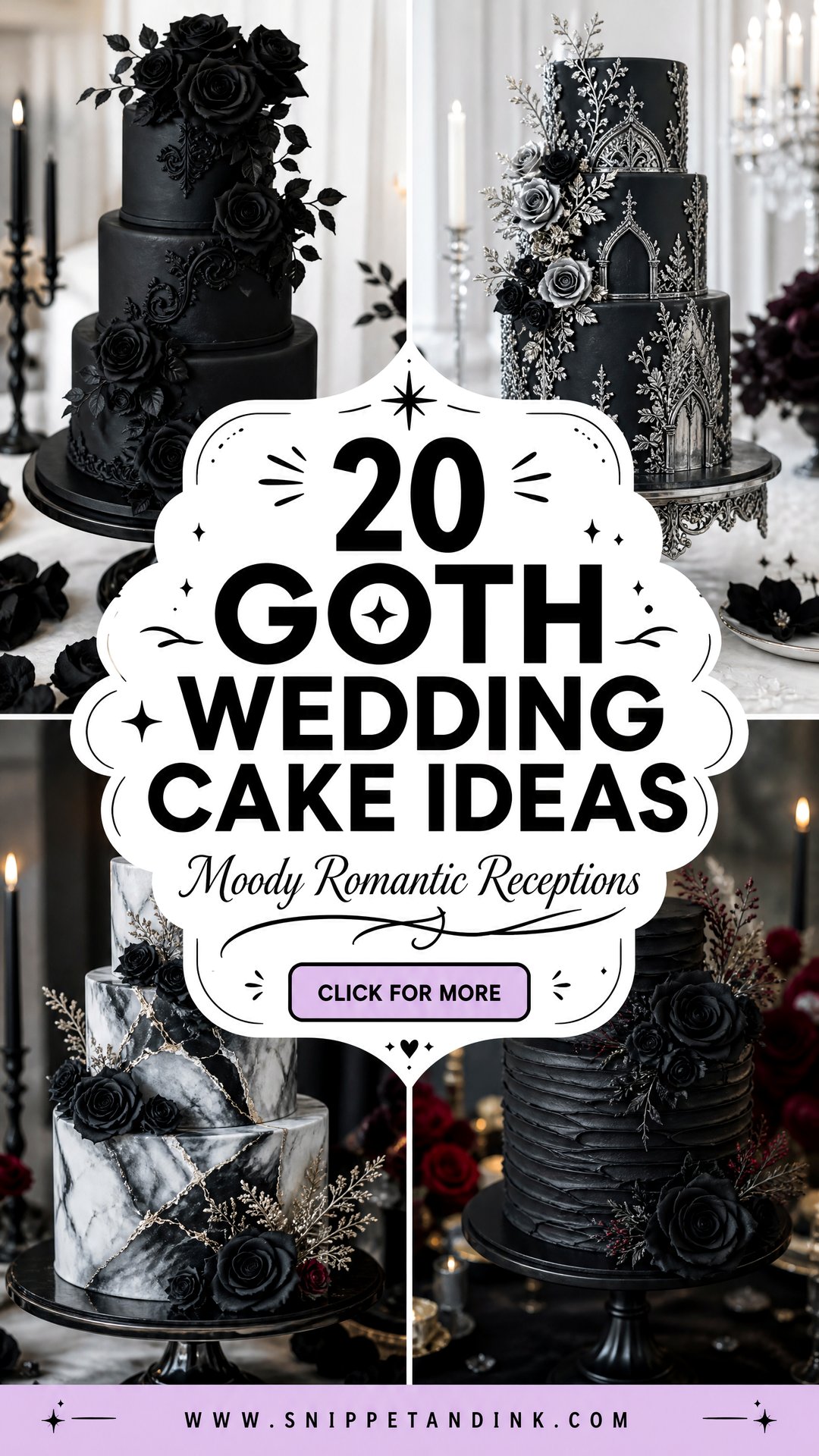
How Bakers Actually Get Icing That Black
White buttercream fights you all the way to black. Push enough gel coloring into it and you get a cake that tastes faintly bitter and turns tongues and teeth grey for the rest of the evening. So I rarely start from white.
- Black cocoa: a heavily processed cocoa that turns buttercream and sponge nearly black with a flavor close to a dark chocolate cookie.
- A dark chocolate base, then a small amount of coloring to push it the last step.
- Black fondant bought ready-colored, which keeps the color out of the buttercream underneath.
- Mixing a day ahead, because dark colors deepen as they rest, so less coloring is needed.
Ask your baker which method they’ll use and taste a sample of the black frosting itself at the tasting, not just the sponge. If you’re wearing white or ivory, the cutting moment is also worth a thought: black crumbs and dark icing on a sleeve are a real risk, so I suggest the couple cut from a lighter tier or that the caterer handles the slicing.
1. Black Goth Wedding Cake
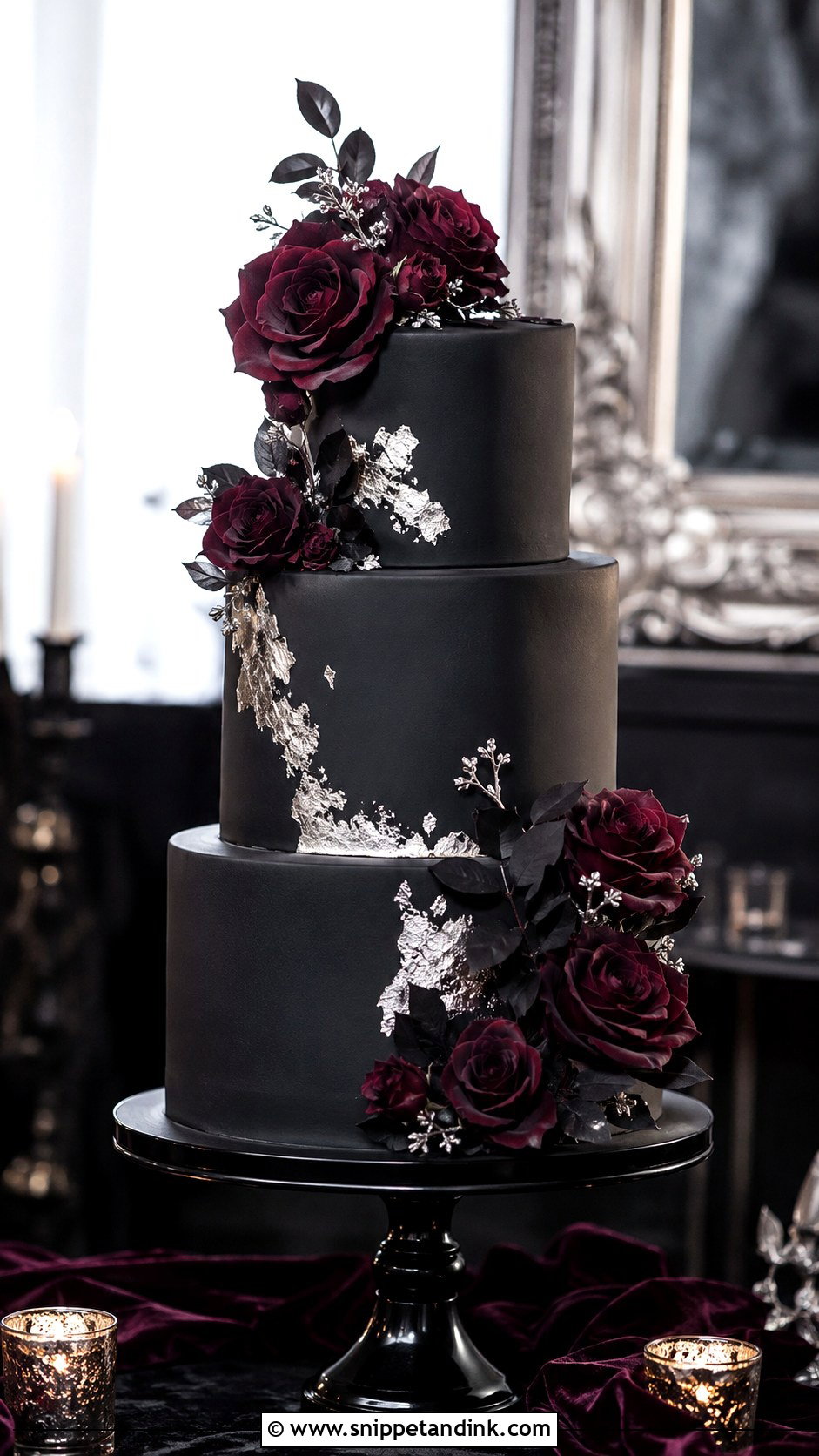
The all-black three tier is the reference point for every other cake here. I make it in black fondant for a crisp edge or black cocoa buttercream for a softer surface, and I’ll usually suggest satin over high gloss because a glossy black shows every fingerprint from the setup. Contrast keeps it bridal: deep red sugar roses, a little ivory piping or a scrap of silver leaf. Dark chocolate, espresso and blackberry suit it inside. Stand it against something lighter than itself, or it vanishes into a dark room.
2. Red And Black Goth Wedding Cake
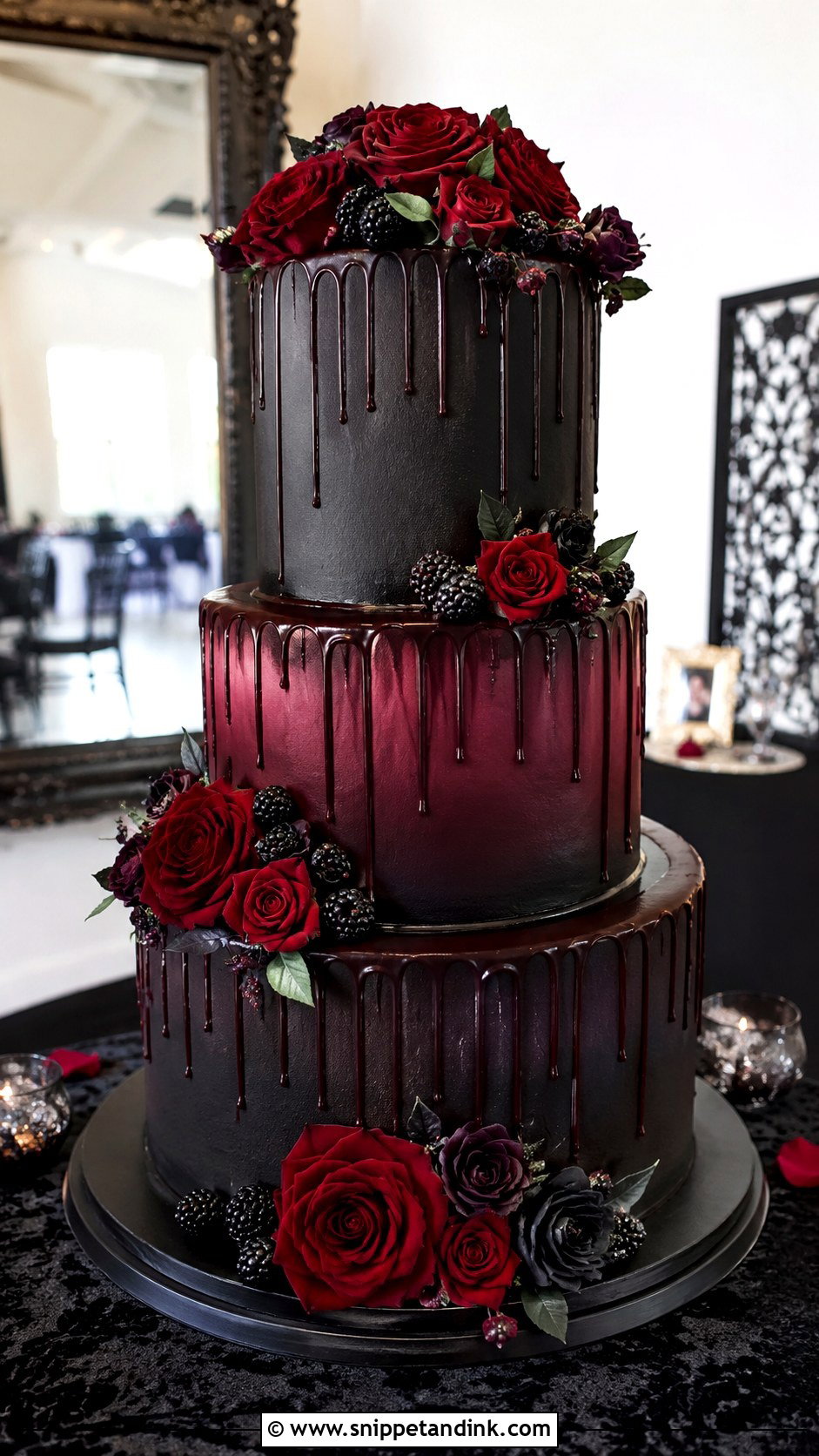
Red and black only looks expensive when the red is dark: oxblood, garnet, maroon, black cherry. Bright red against black reads Halloween in seconds. Deep red is also hard to reach with coloring alone, so I build it on a chocolate base rather than piling gel into white buttercream. A burgundy ombré tier, a few sugar flowers or a thin ganache drip are enough. Inside, red velvet, dark chocolate raspberry or black cocoa with cherry filling echo the outside, and black taper candles nearby finish the display.
3. Black Lace Goth Wedding Cake
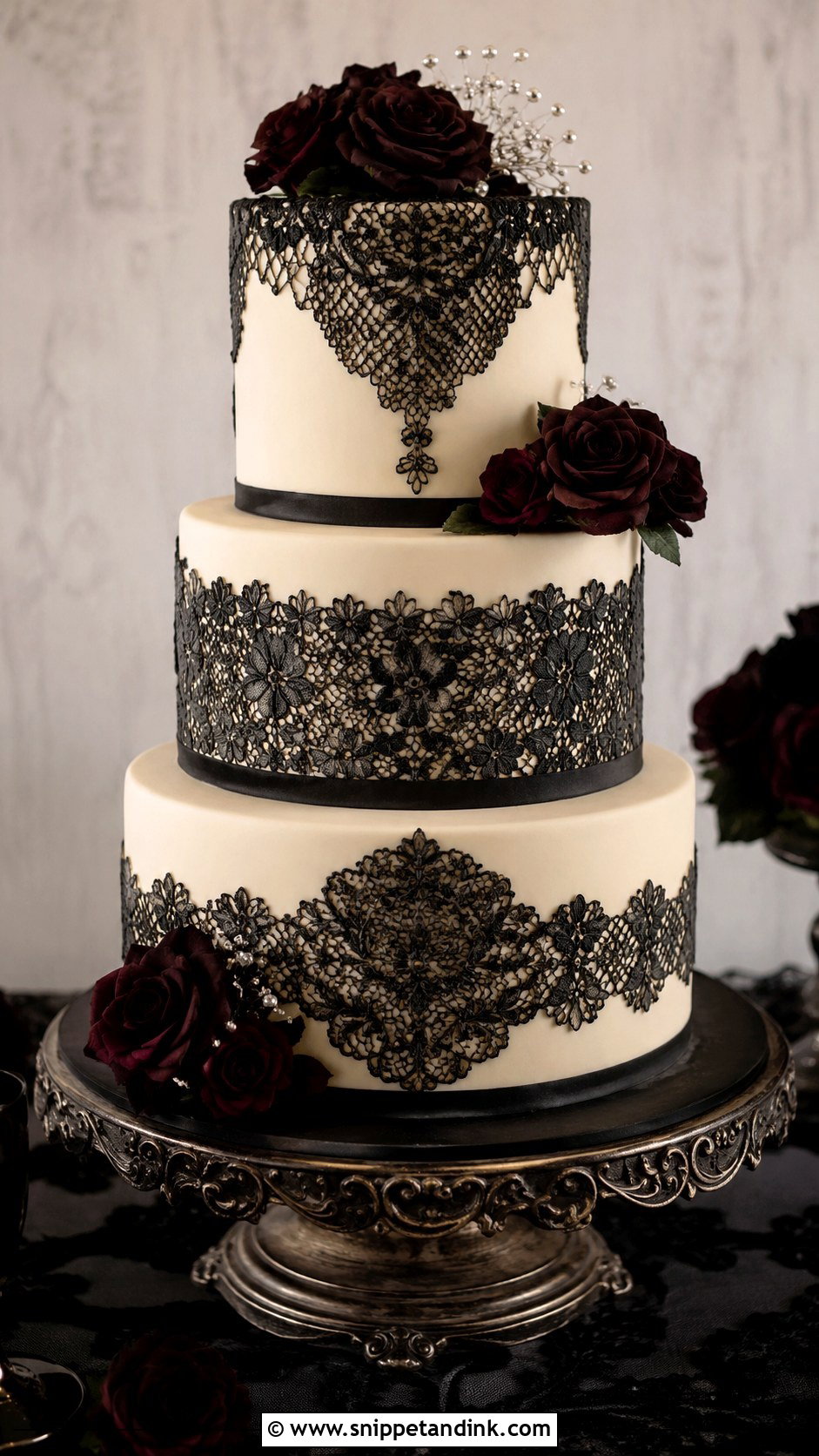
Edible lace is made by spreading a flexible icing paste into a silicone lace mat or cutting it from wafer paper, then wrapping it round the tier. Black lace on ivory looks bridal and Victorian; an all-black cake with raised lace is darker and relies on texture rather than contrast, so it needs good side lighting to be seen at all. Lace pieces dislike humidity and can sag on a soft buttercream, which is why I apply them close to delivery. Keep the extras to a few burgundy roses, blackberries or silver pearls.
4. Victorian Goth Wedding Cake
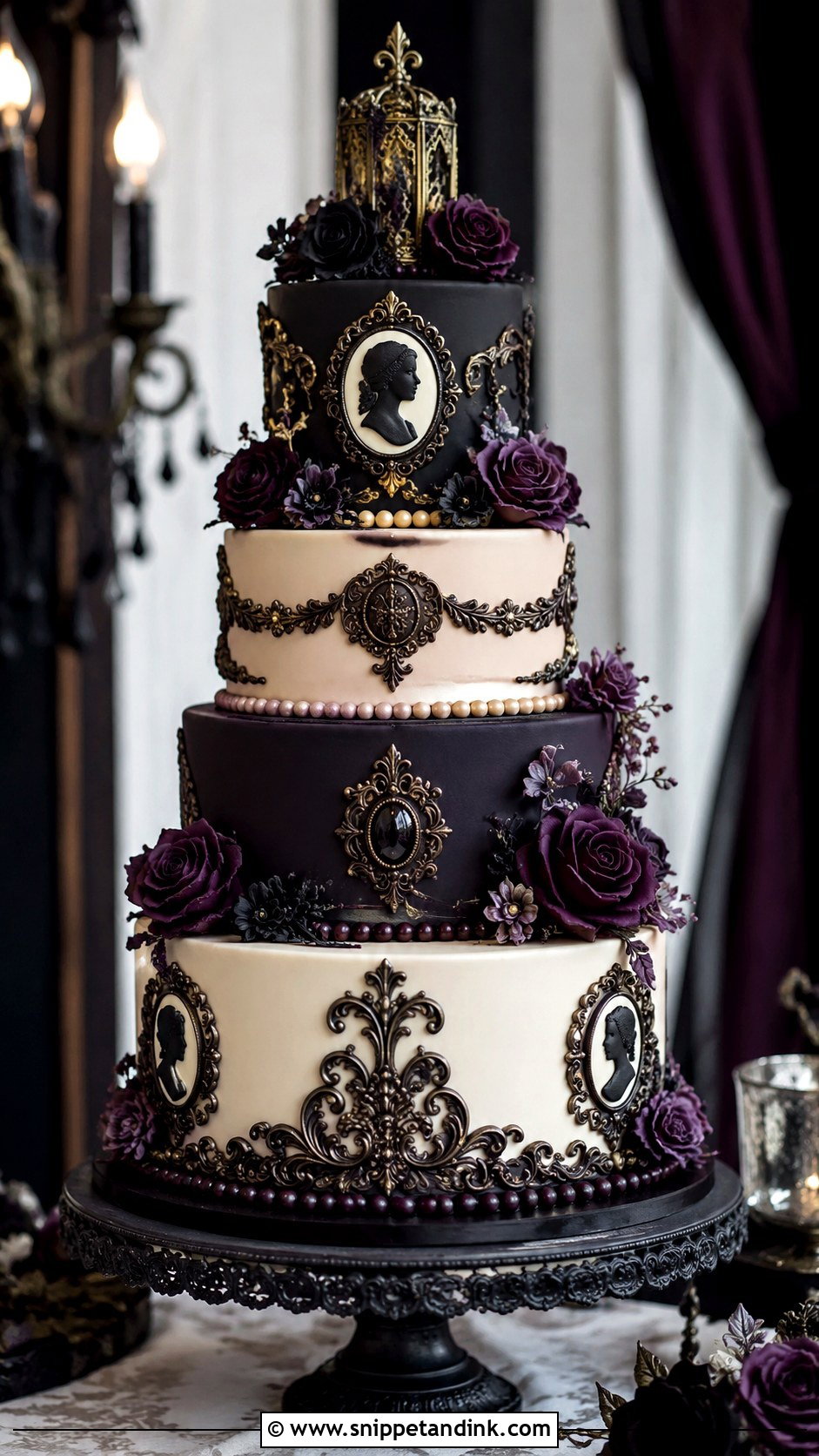
Victorian cakes invite clutter, so I pick two decorative devices and repeat them, say piped scrollwork and molded cameo frames, rather than adding a new idea on every tier. Black or ivory fondant suits the height, with antique gold, pewter, burgundy, plum and dusty mauve as accents. Pearl borders tie the tiers together. Vanilla bean with raspberry keeps it classic; chocolate, blackberry or a spiced sponge leans darker. Tall, ornate tiers need proper internal support, so expect structure to be part of the quote.
5. Black Rose Goth Wedding Cake
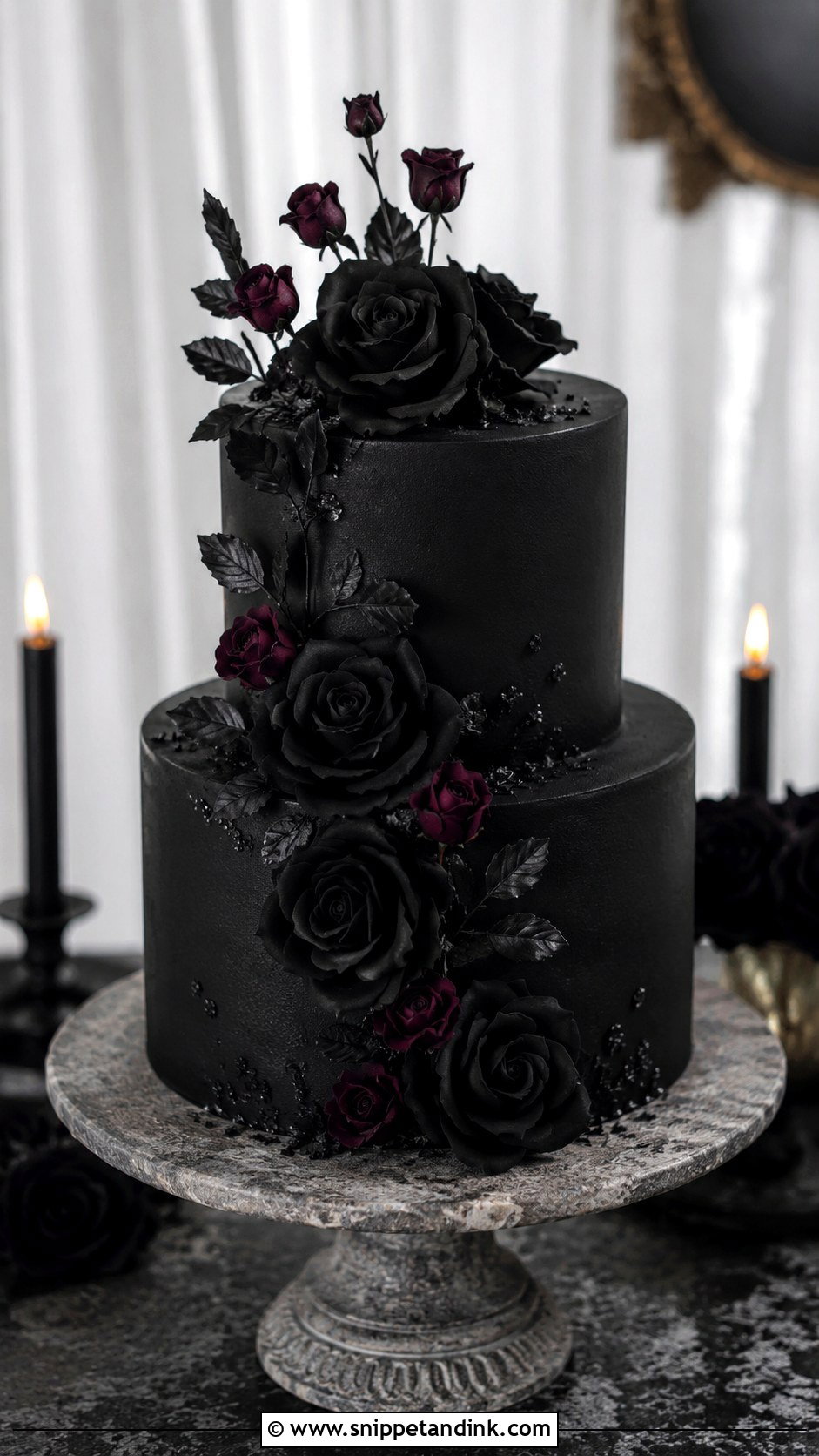
There’s no truly black rose in nature; the fresh ones sold as black are very dark red varieties, and they look almost black only in low light. For a reliably black bloom I make them in sugar paste, wafer paper or buttercream. A matte black cake topped with black roses is a monochrome look that depends on texture; ivory or grey tiers make the roses read from across the room. Mixing in burgundy or deep purple adds depth. Keep the frosting smooth so the flowers stay the focus.
6. Burgundy Goth Wedding Cake
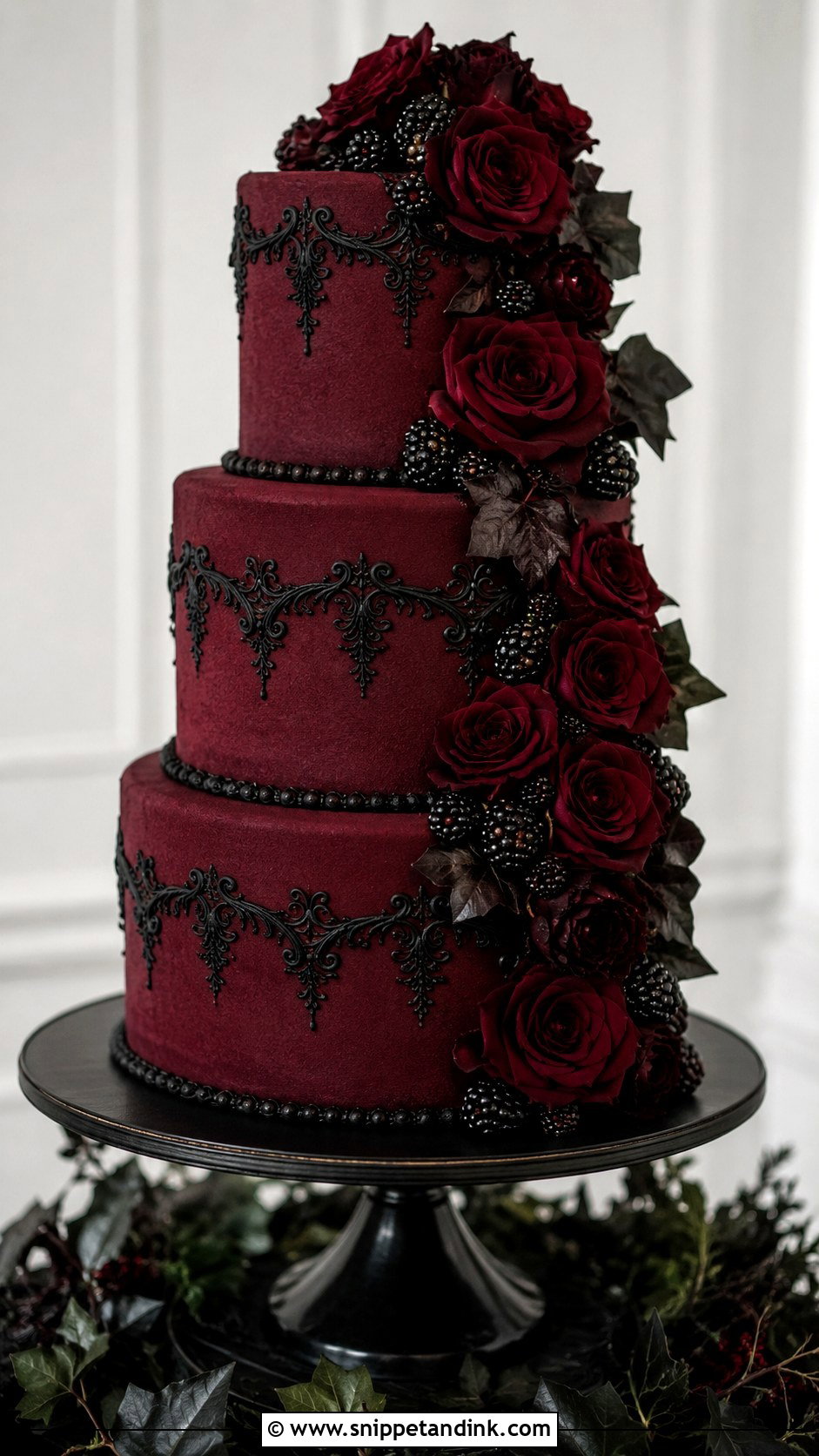
Burgundy is my suggestion for couples who want moody but have a family that might flinch at all-black. It pairs with ivory, gold and dark green as easily as with black. A two or three tier in burgundy buttercream with black lace piping and cascading roses covers most of what people picture. A velvet spray finish gives a soft, almost fabric-like surface. Red velvet, chocolate cherry and spiced chocolate suit the color, and a black stand with brass serving pieces finishes it.
7. Purple Goth Wedding Cake
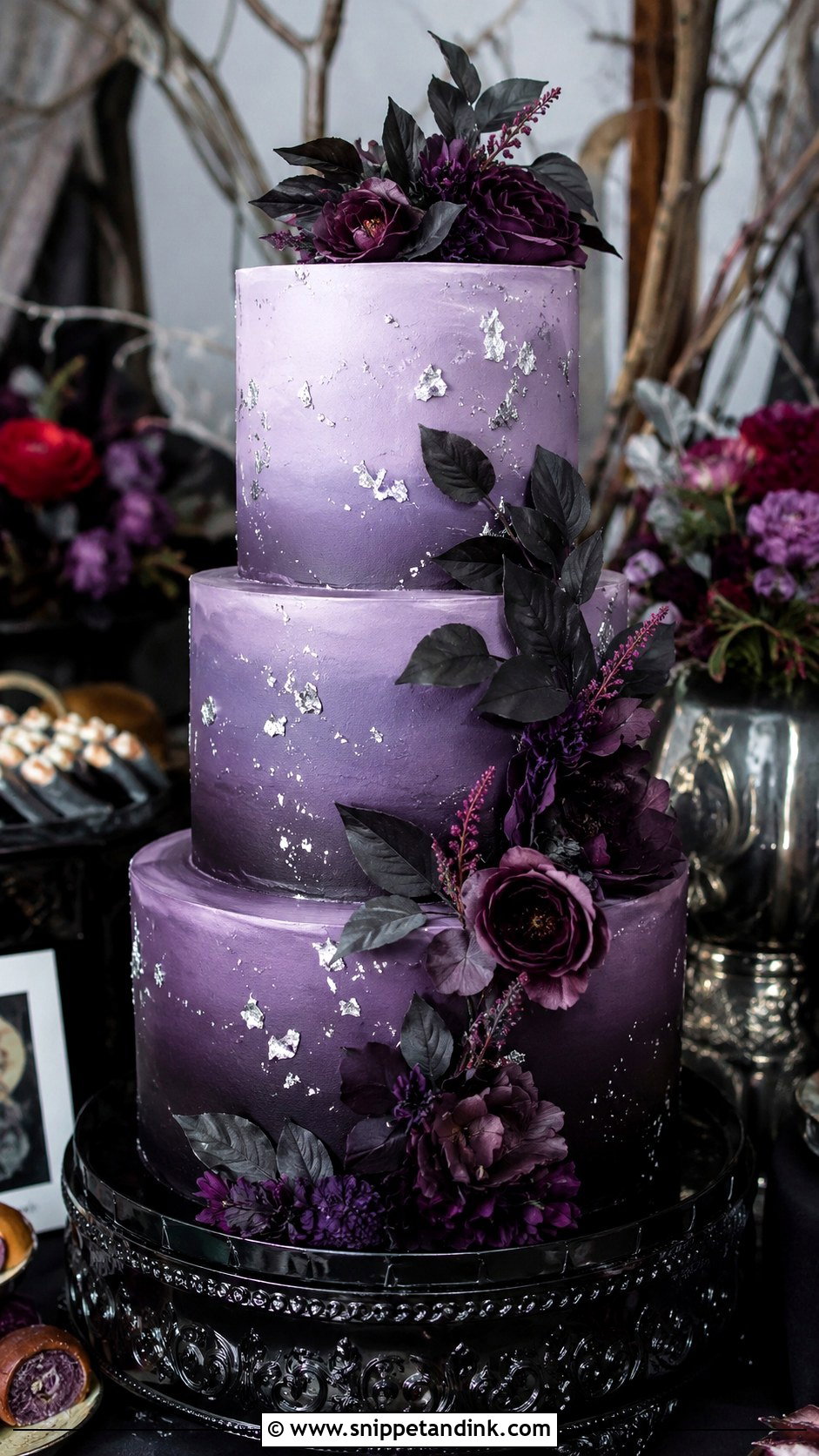
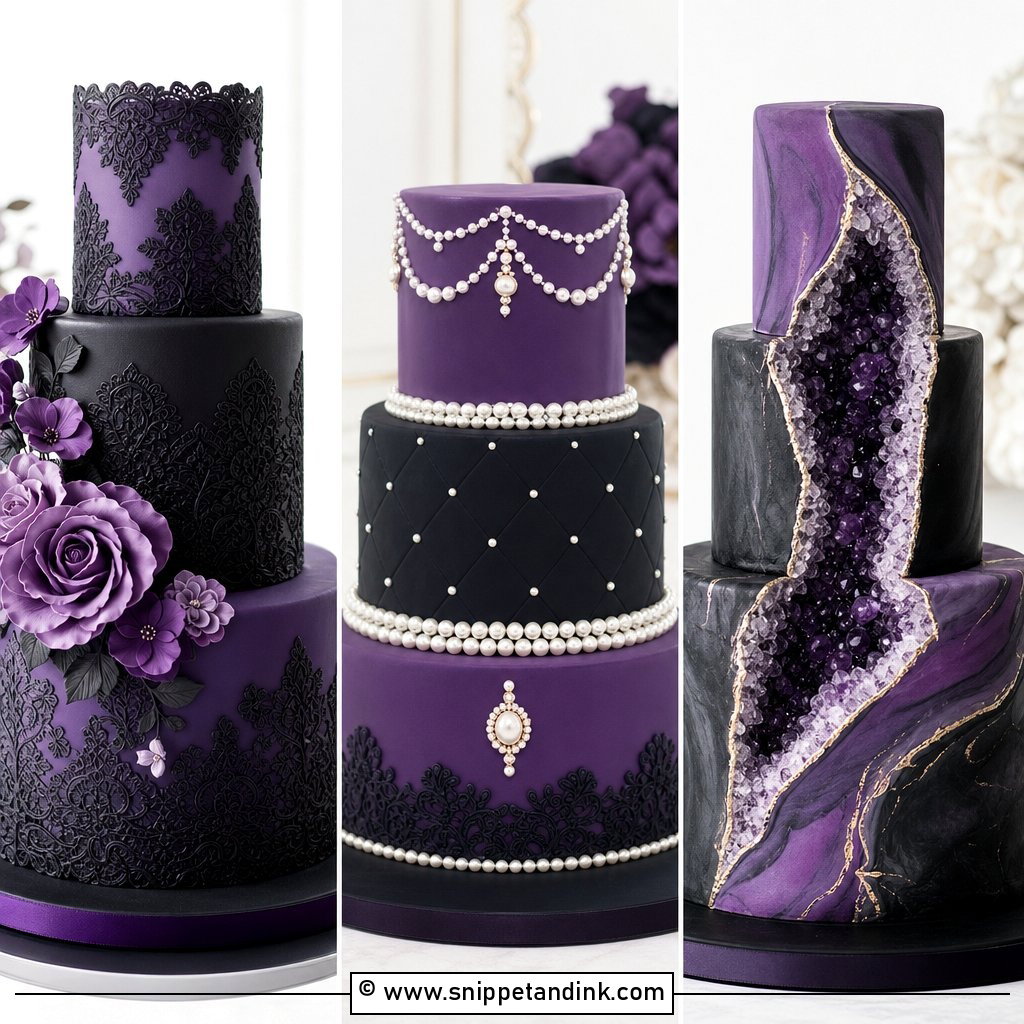
Purple is the color I warn people about most. Some purple colorings shift toward blue or fade in strong sunlight and under some indoor lights, so I keep a purple cake out of windows and do a color test if the reception is outdoors in daylight. Deep plum, eggplant, amethyst and smoky lavender all suit a gothic palette. A black cake with purple sugar flowers is bold; a purple ombré is softer. Blackberry, ube, chocolate plum and lavender vanilla taste as moody as they look.
8. Gothic Wedding Cake With Gold
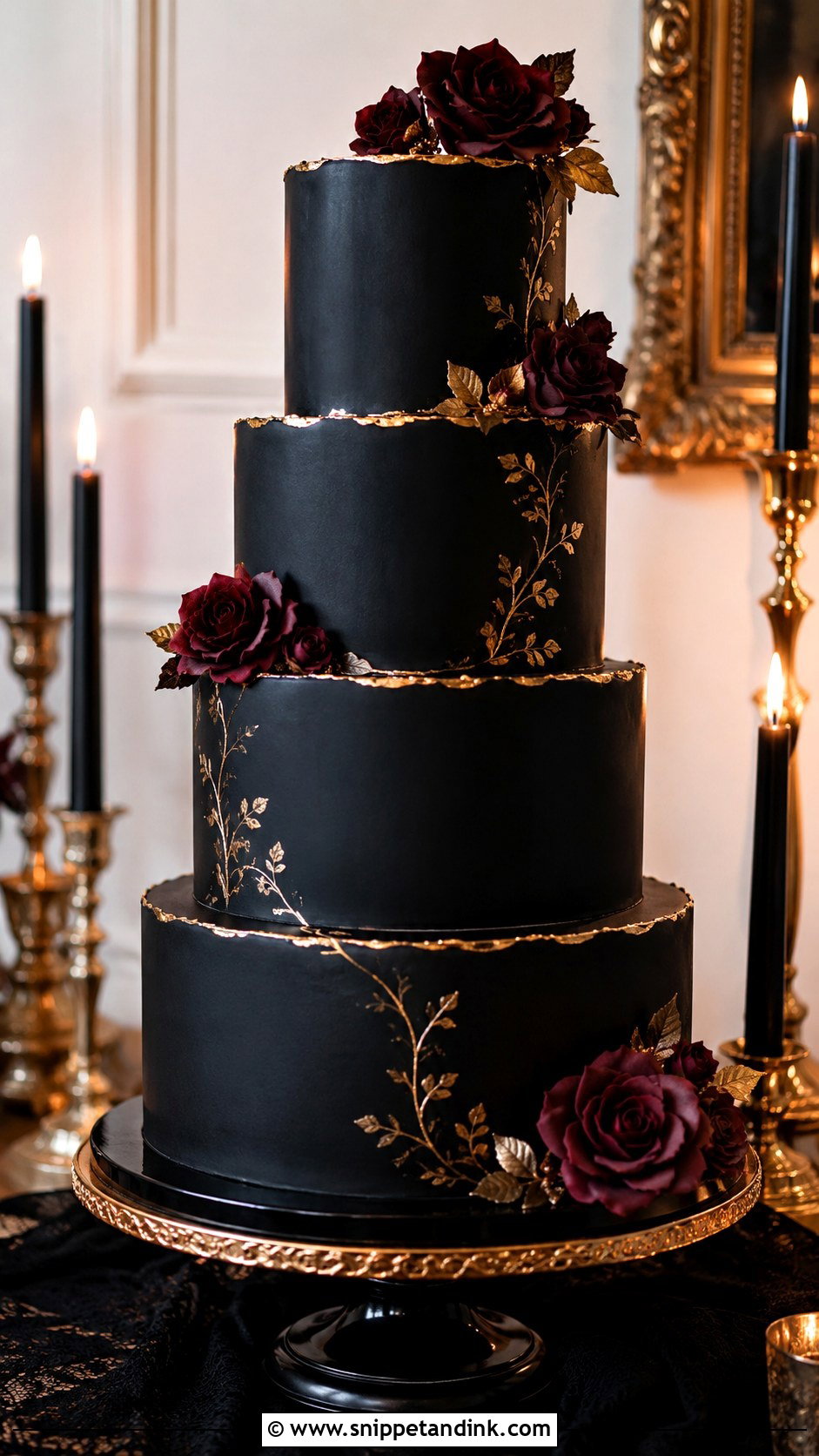
Gold works on a dark cake in thin, sharp lines: gilded edges on black fondant, hand-painted vines, a few brushstrokes. Ivory and gold with black flowers is the more romantic version. I only use metallics sold as edible, since some craft lusters are labeled non-toxic but aren’t meant to be eaten. Covering every tier in gold is possible, though it loses the gothic feel quickly. Chocolate ganache, salted caramel, hazelnut and espresso sit well under it, and dark roses or blackberries keep it grounded.
9. Gothic Wedding Cake With Silver
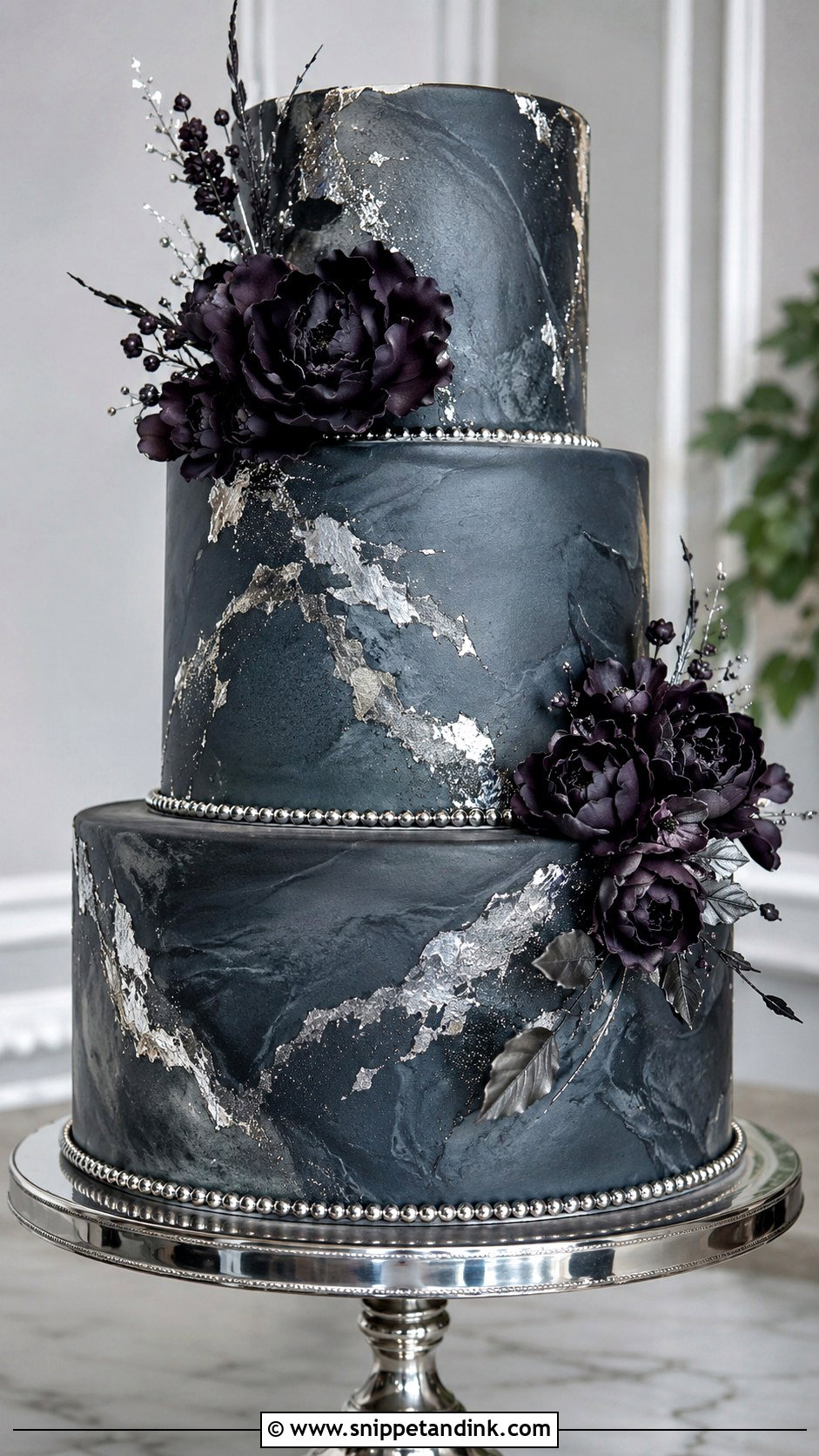
Silver gives a colder, moonlit feel and sits well beside charcoal, slate blue, deep purple and white. Silver leaf on smooth black, silver piping or painted metallic flowers all look sharp; a grey marble with fine silver veins is softer. Edible silver rules differ by country, so ask your baker which products they use. It suits stone venues and celestial themes. Dark chocolate, Earl Grey, vanilla blackberry and cookies and cream make good matches inside.
10. Gothic Wedding Cake With Red Roses
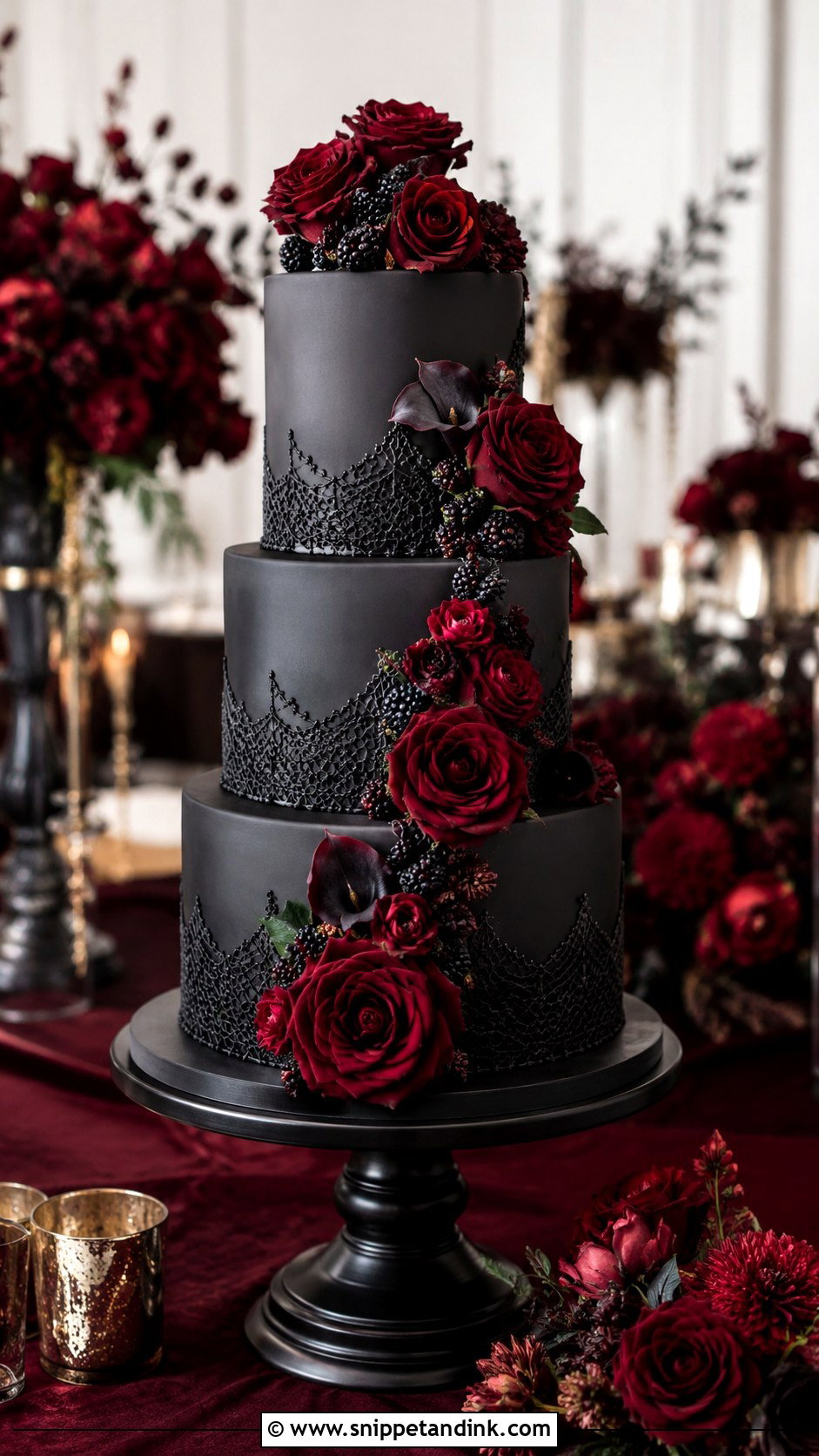
Deep red roses against black, ivory or charcoal frosting are the most romantic option here. A cascade down one side gives movement; a ring between tiers feels traditional. Sugar roses are the safest choice. If you’d rather use fresh ones from your florist, stems must be wrapped and set into picks so nothing raw touches the sponge, and the roses should be unsprayed. Red velvet, chocolate raspberry or vanilla with cherry compote tie the inside to the flowers.
11. Gothic Wedding Cake With White Flowers
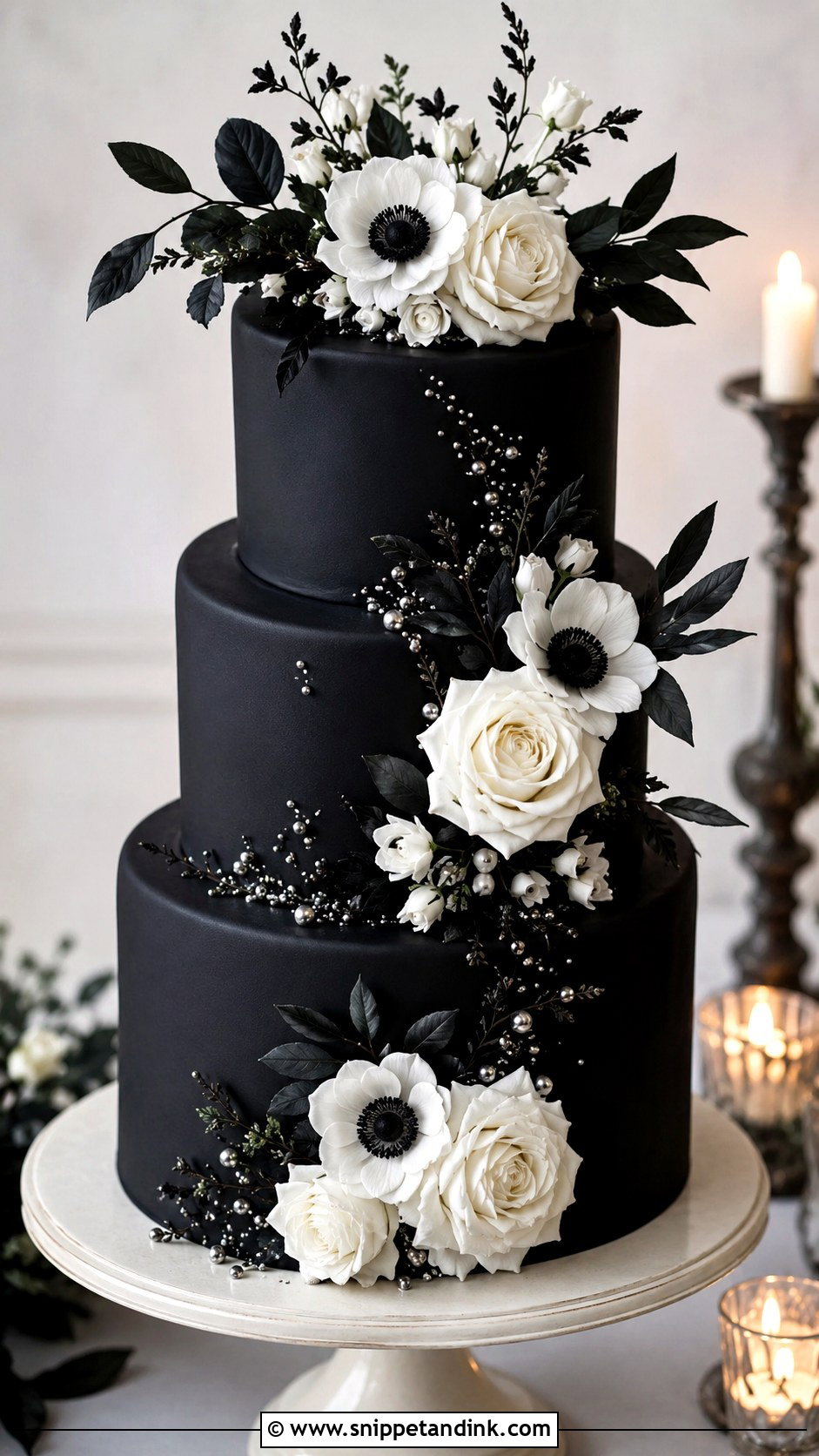
White flowers on a matte black cake are the highest contrast on this list, and in a dim venue that contrast is what lets the camera find the cake at all. White roses, anemones, orchids or sugar magnolias each work. It’s my usual recommendation when one partner is goth and the other wants a cake their grandmother will recognize as a wedding cake. Keep the tiers clean. Black cocoa with vanilla buttercream or almond with blackberry filling suits it.
12. Gothic Wedding Cake With Marble
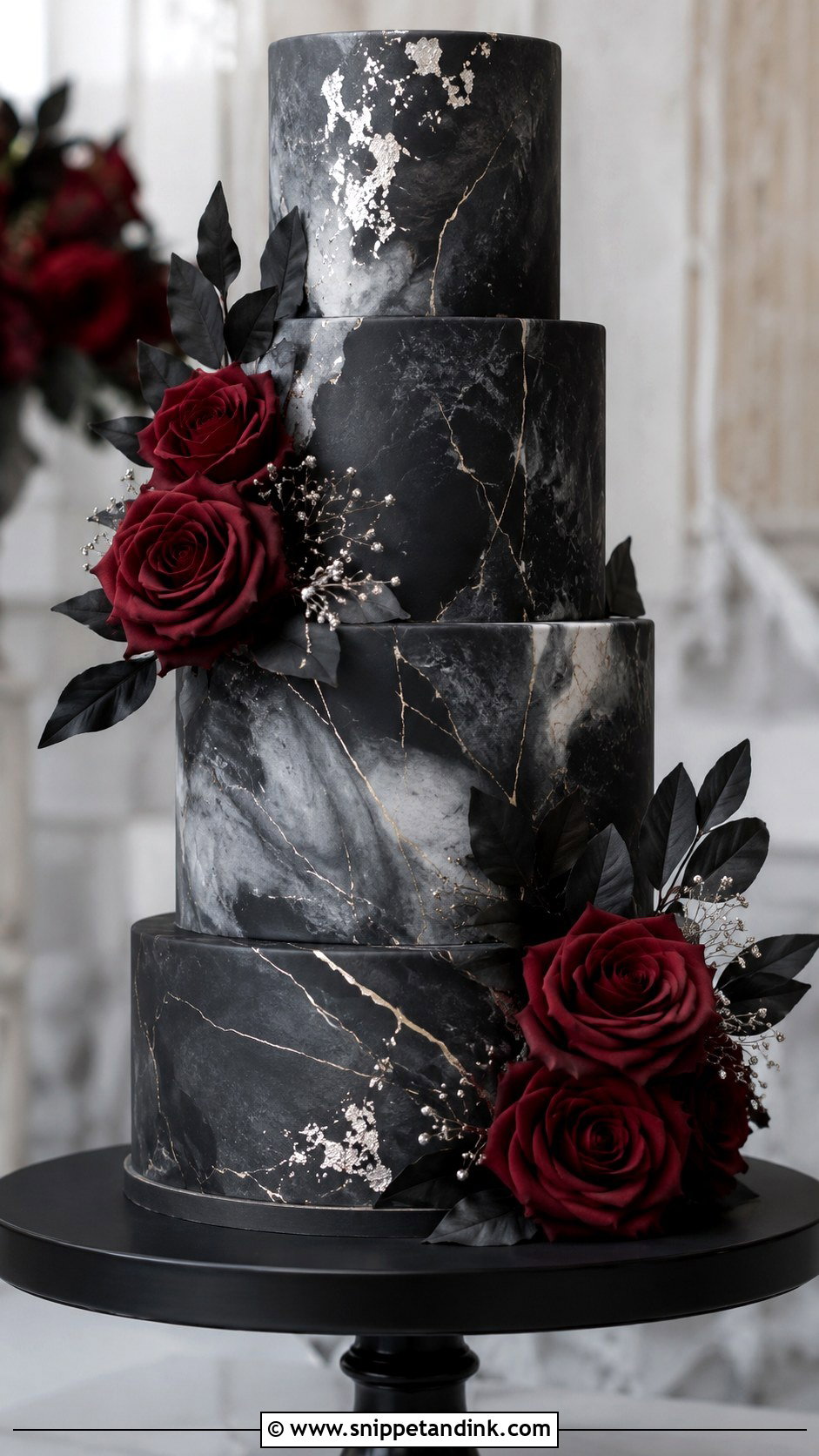
Gothic marble swaps classic white marble for black, charcoal, smoke grey and ivory, with thin veins of silver or gold painted in afterwards. The marbling itself happens when I fold colored and plain fondant together and roll it out, so every tier comes out different, and couples have to be happy with that. Tall tiers, clean edges and very few flowers suit it. A couple of burgundy roses or black sugar leaves are enough. Dark chocolate, vanilla bean, espresso and blackberry go well inside.
13. Gothic Wedding Cake With Drip
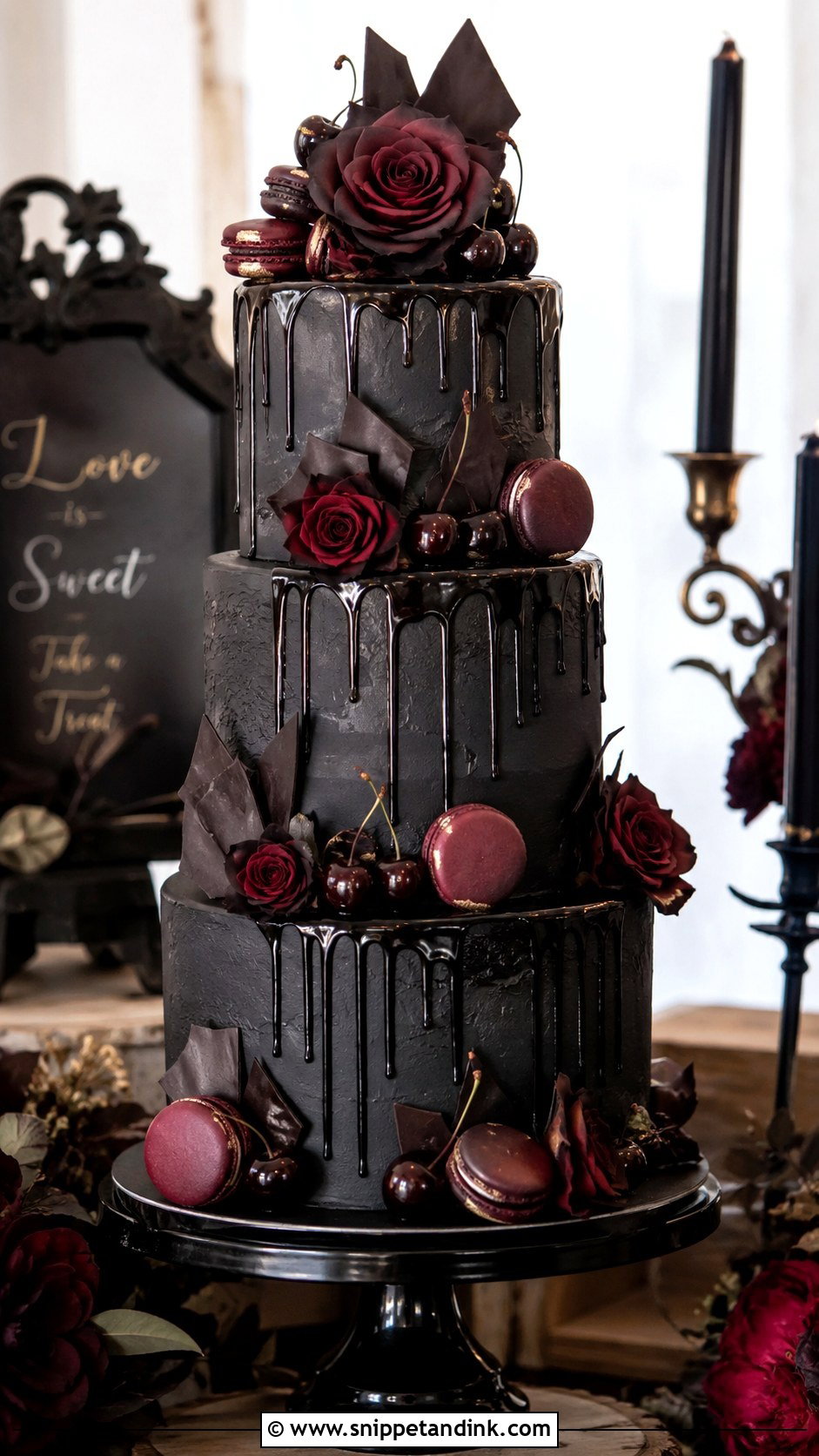
A drip has to be poured onto a chilled cake at the right temperature; too warm and it runs to the board, too cool and it stops in thick blobs. Black ganache over charcoal buttercream is dramatic; dark chocolate or red over black feels richer. Berries, sugar roses, black or burgundy macarons, or shards of tempered chocolate add height on top. Those shards soften in warm rooms, so I’d skip them for a summer tent. Chocolate raspberry, black forest style, mocha and red velvet all suit it.
14. Gothic Wedding Cake With Bats
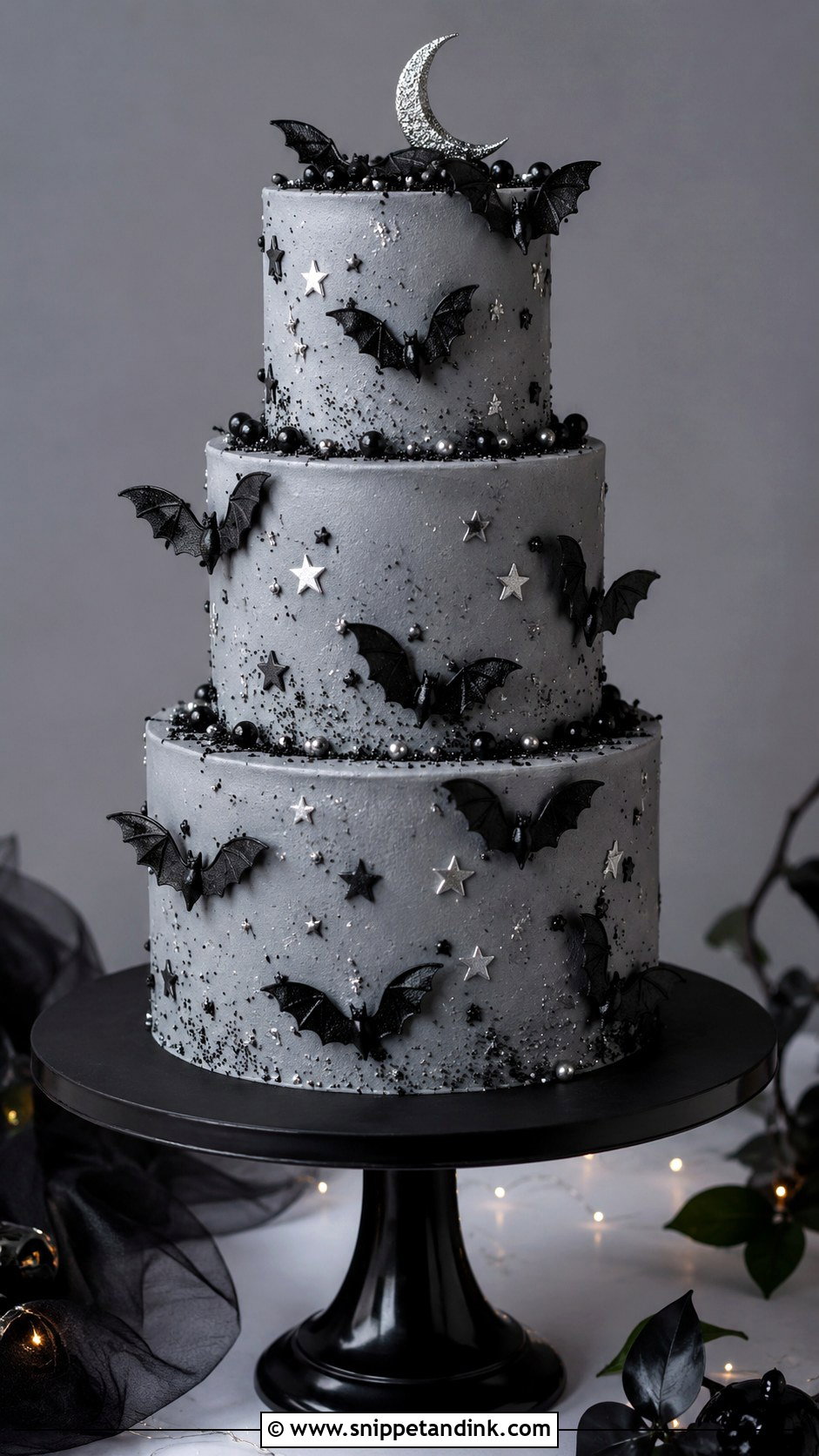
Bats are where restraint matters most. Small, simple wafer paper bats rising up one side of a white, grey or black tier read stylish; big cartoon bats turn it into a party cake. Wafer paper softens if it sits against moist buttercream for hours, so I attach them late. A crescent moon topper, smoky purple buttercream or silver stars nudge it toward celestial. Keep the palette to black, silver, ivory and one accent. Chocolate, vanilla blackberry and ube all fit.
15. Gothic Wedding Cake With Crescent Moon
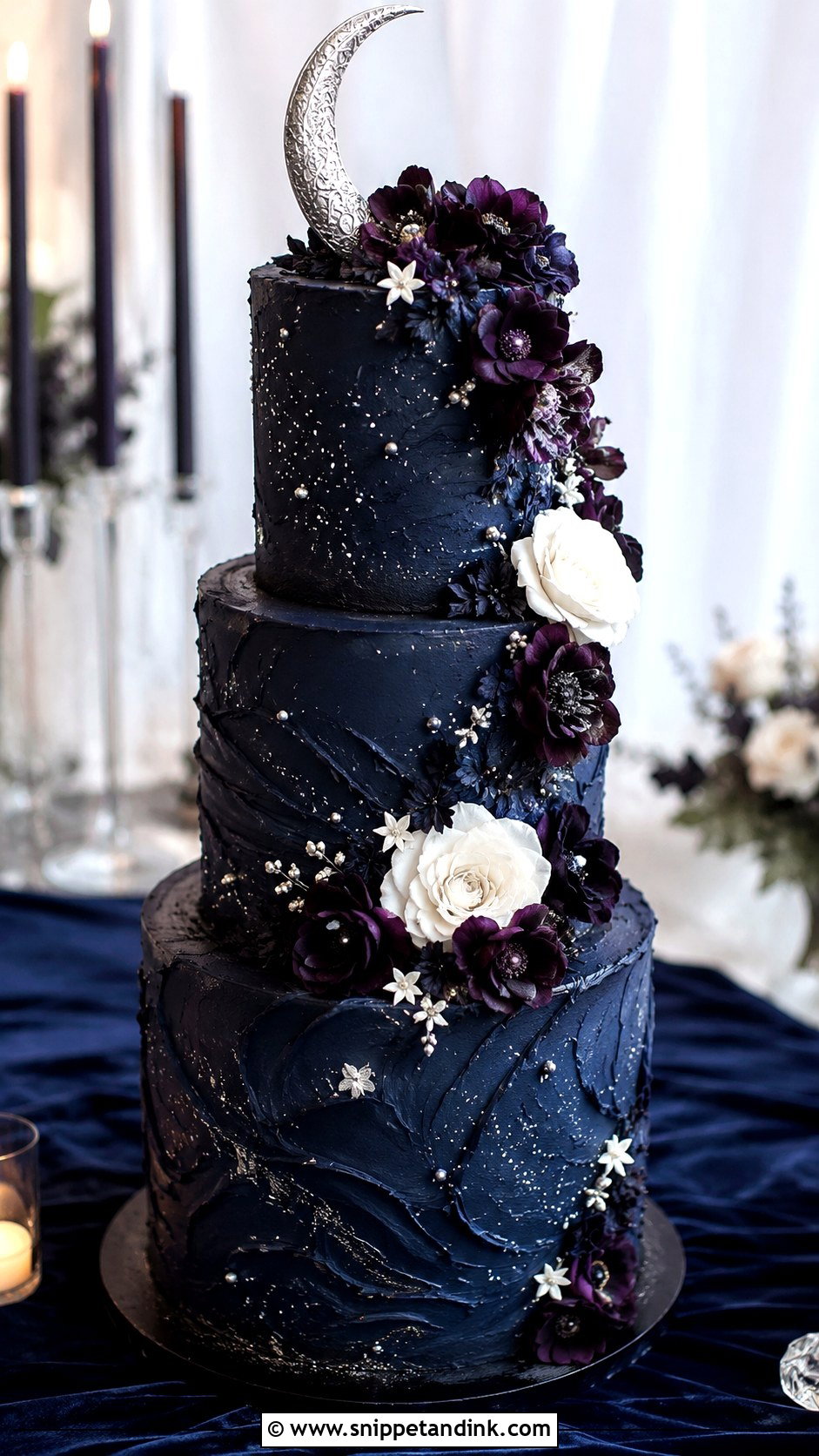
A crescent moon cake starts with black or midnight blue tiers and silver stars, pearls and a moon topper. Smooth fondant gives a polished sky; textured buttercream looks more painterly. The topper is the part I spend time on: a moon that’s too thick or too detailed stops reading as a moon from a distance, so I keep the shape clean. Dark purple flowers or white sugar roses around its base soften it. Chocolate, blueberry, Earl Grey or vanilla bean work inside.
16. Gothic Wedding Cake With Spiderweb
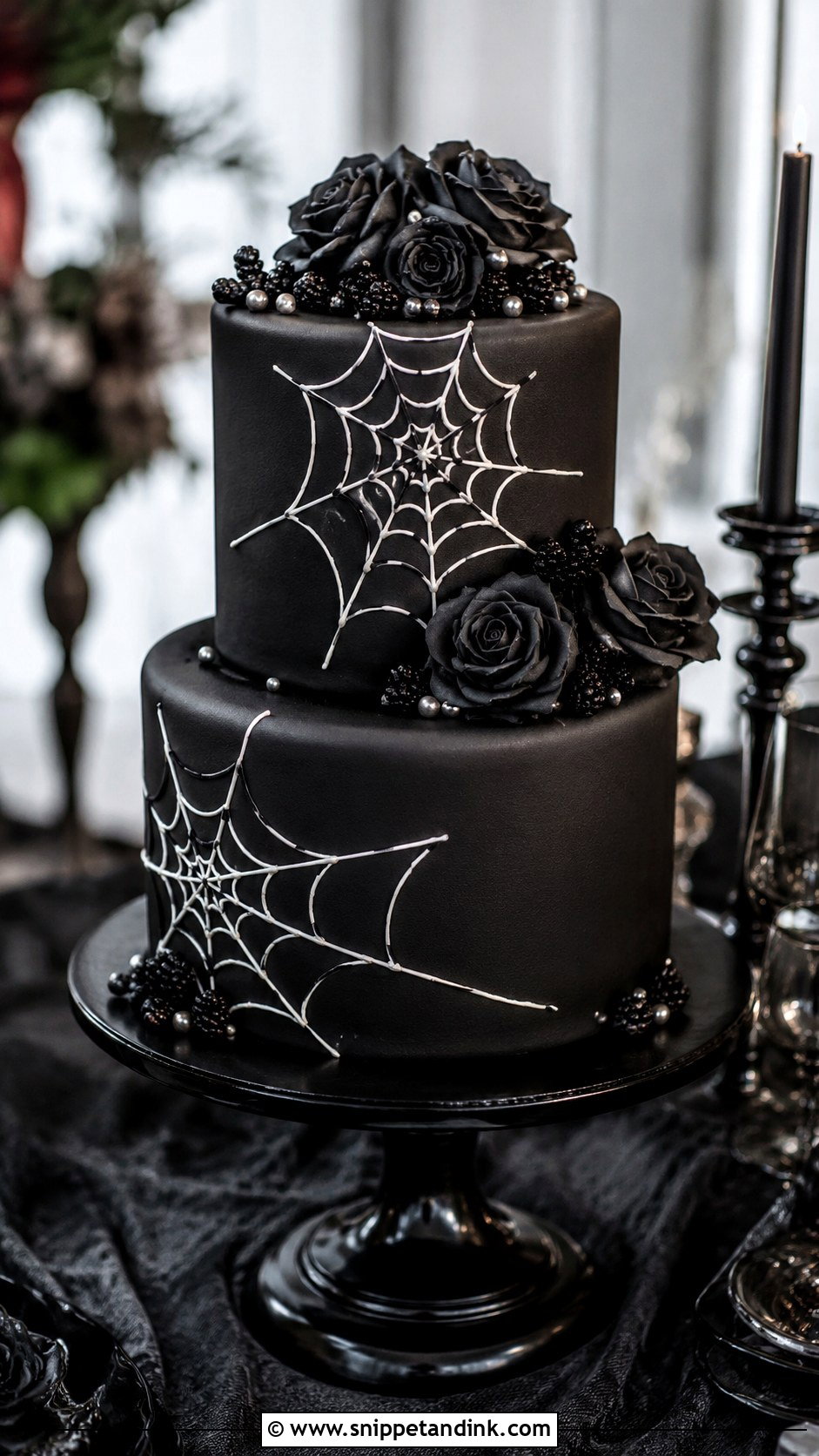
Spiderwebs look refined only when they’re fine. I pipe them in thin royal icing lines, black on black for a subtle sheen or white over a dark tier for contrast, and stop at one or two tiers. Clean tiers and very little else let the web work. Black roses, dark berries or a few silver pearls keep it bridal; oversized novelty spiders undo the effect. Black cocoa, chocolate orange, vanilla blackberry and red velvet suit it.
17. Gothic Wedding Cake With Pearls
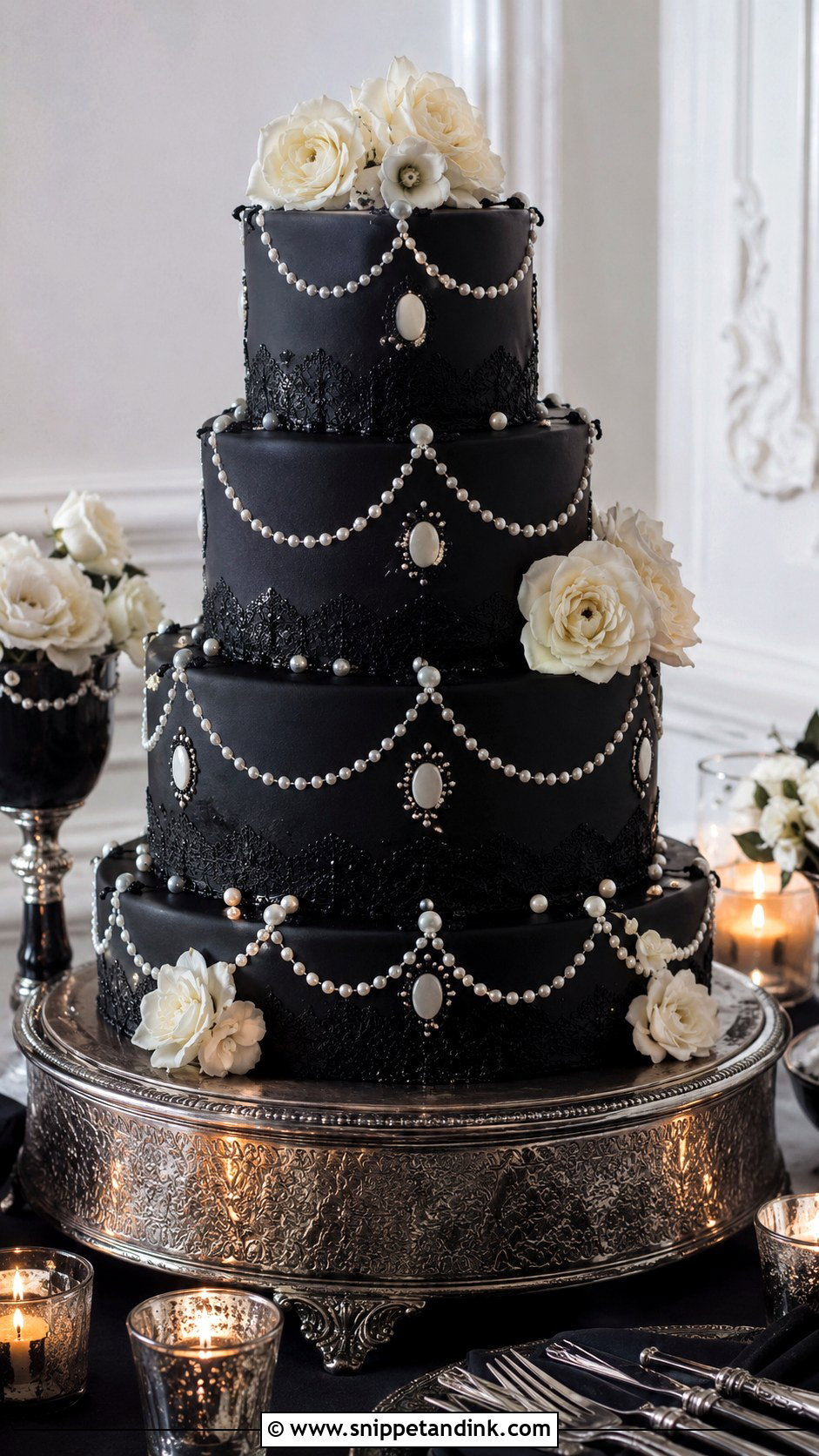
Pearls borrow straight from the bridal gown. White or silver sugar pearls stand out on black; black pearls or dark piping push an ivory cake toward gothic. Pearl borders, pearl-studded lace panels or a scatter round sugar flowers each work. Hard sugar pearls are crunchy, so on the parts people will eat I often switch to soft fondant pearls. Satin finishes and vintage stands suit it. Almond, vanilla, chocolate or a champagne-style flavor keep the inside classic.
18. Gothic Wedding Cake With Dried Flowers
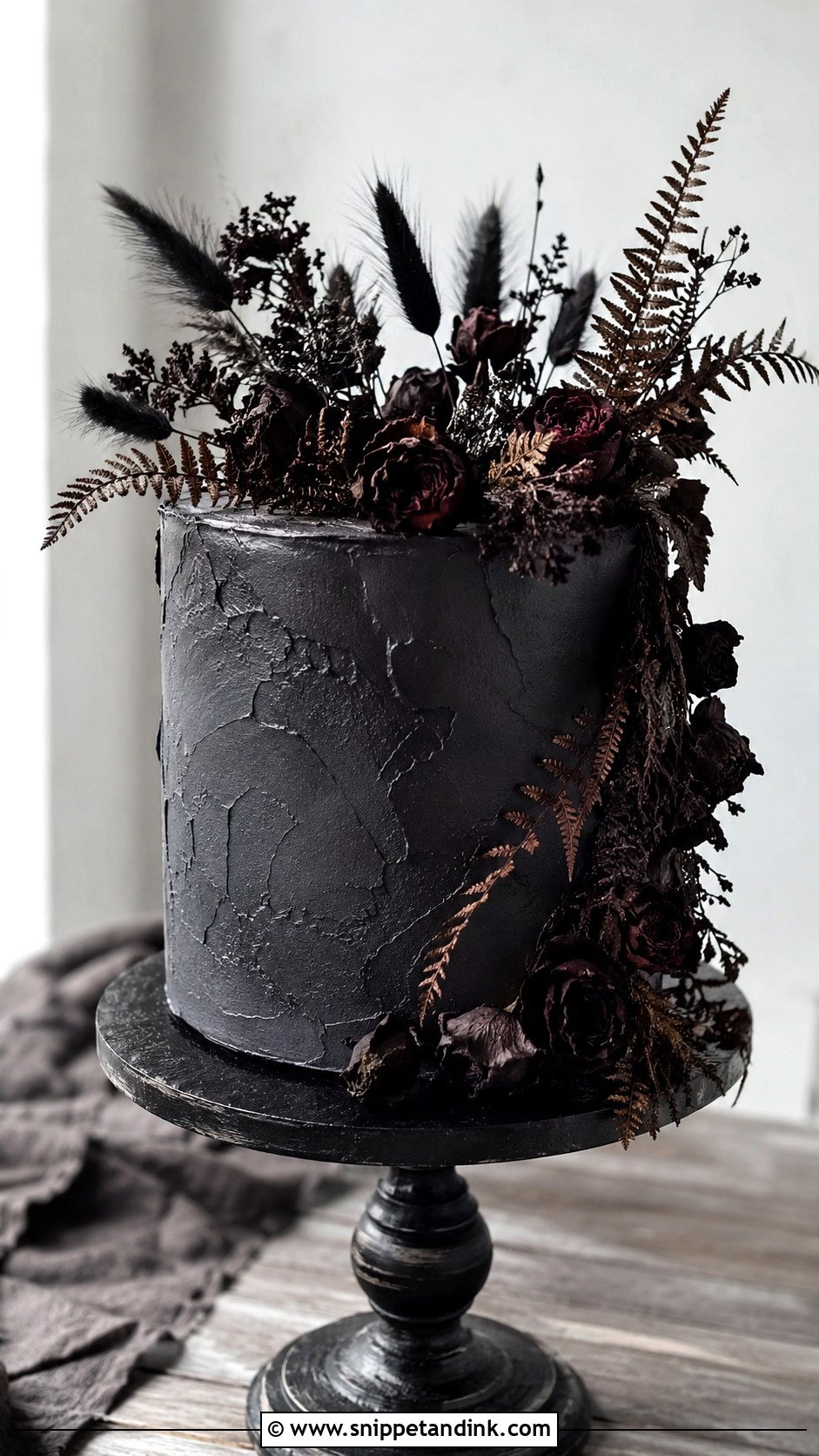
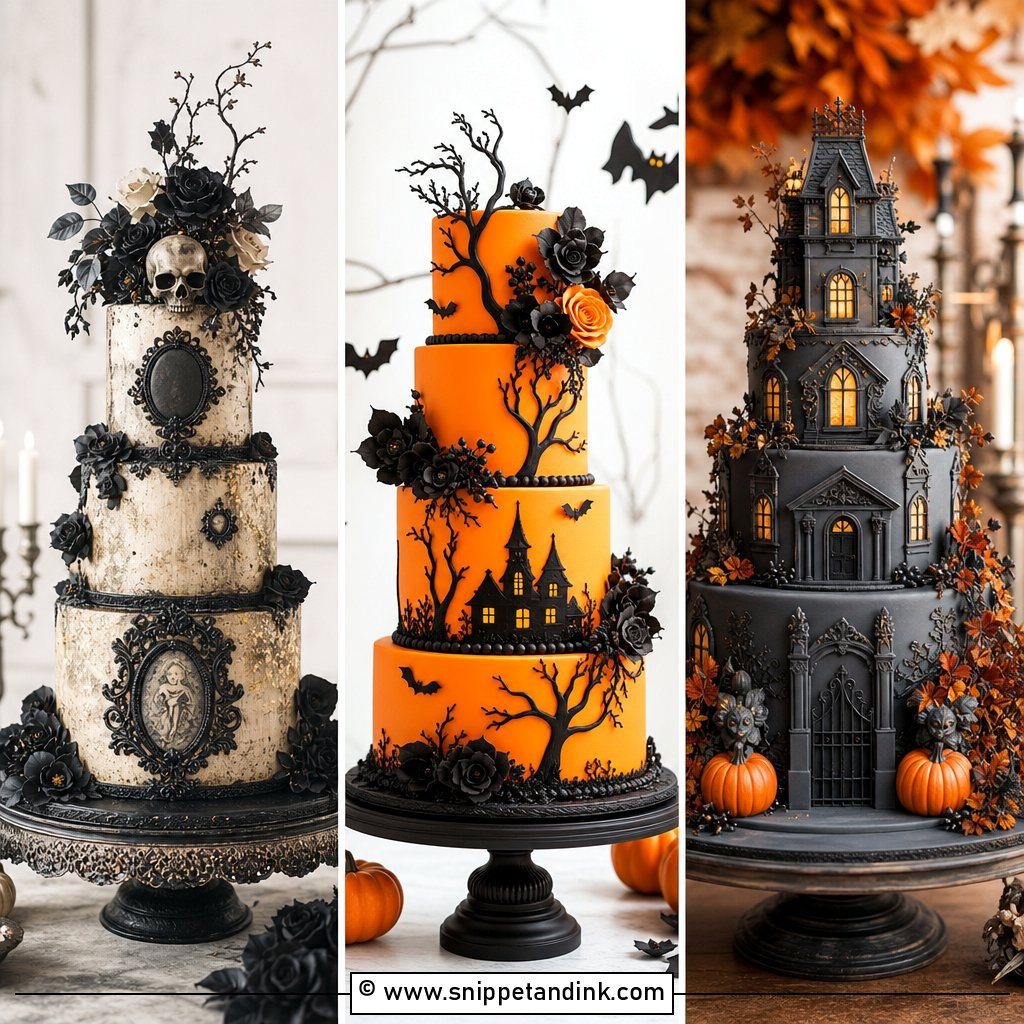
Dried flowers are my most common safety conversation. Many are sprayed with preservative or dye, black bunny tails included, so I treat them as non-food: they sit on a barrier or in picks, and come off before cutting. Dried roses, dark grasses, preserved ferns and burgundy blooms look earthy on charcoal buttercream and more dramatic on black fondant. Arrange them in clusters. Spice cake, chocolate blackberry, brown sugar vanilla and carrot cake with cream cheese frosting match the autumn mood.
19. Gothic Wedding Cake With Black Buttercream
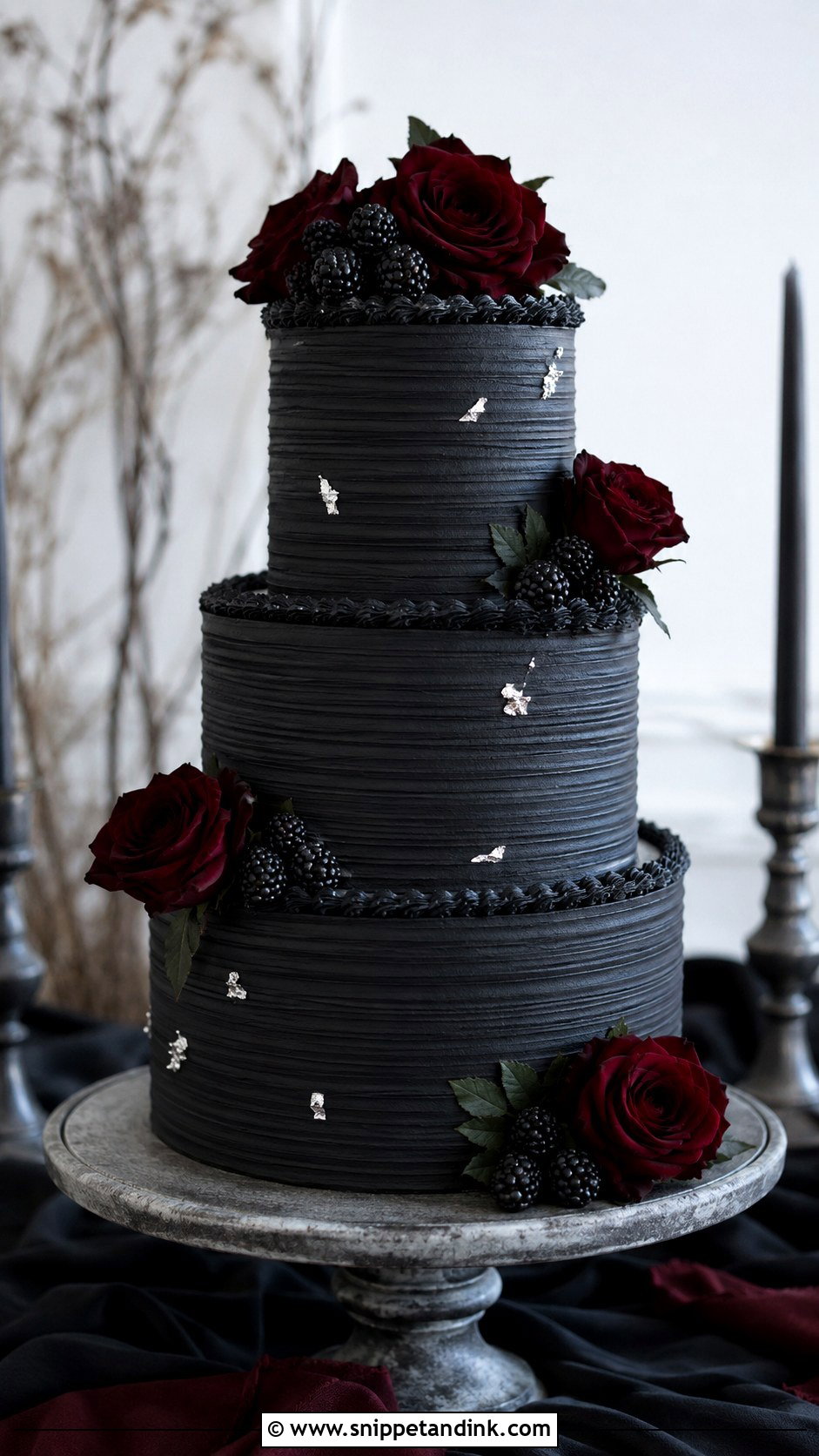
Black buttercream looks softer and more edible than fondant, and it can be smooth, ribbed or rustic. I start from black cocoa or a dark chocolate base so I need far less coloring, which keeps it from tasting bitter. I also mix it a day ahead, because dark buttercream deepens as it rests. Decoration can be minimal: red roses, white flowers, silver leaf or blackberries. It suits intimate weddings, and chocolate, espresso and cookies and cream make sense with it.




20. Gothic Wedding Cake With Black And White
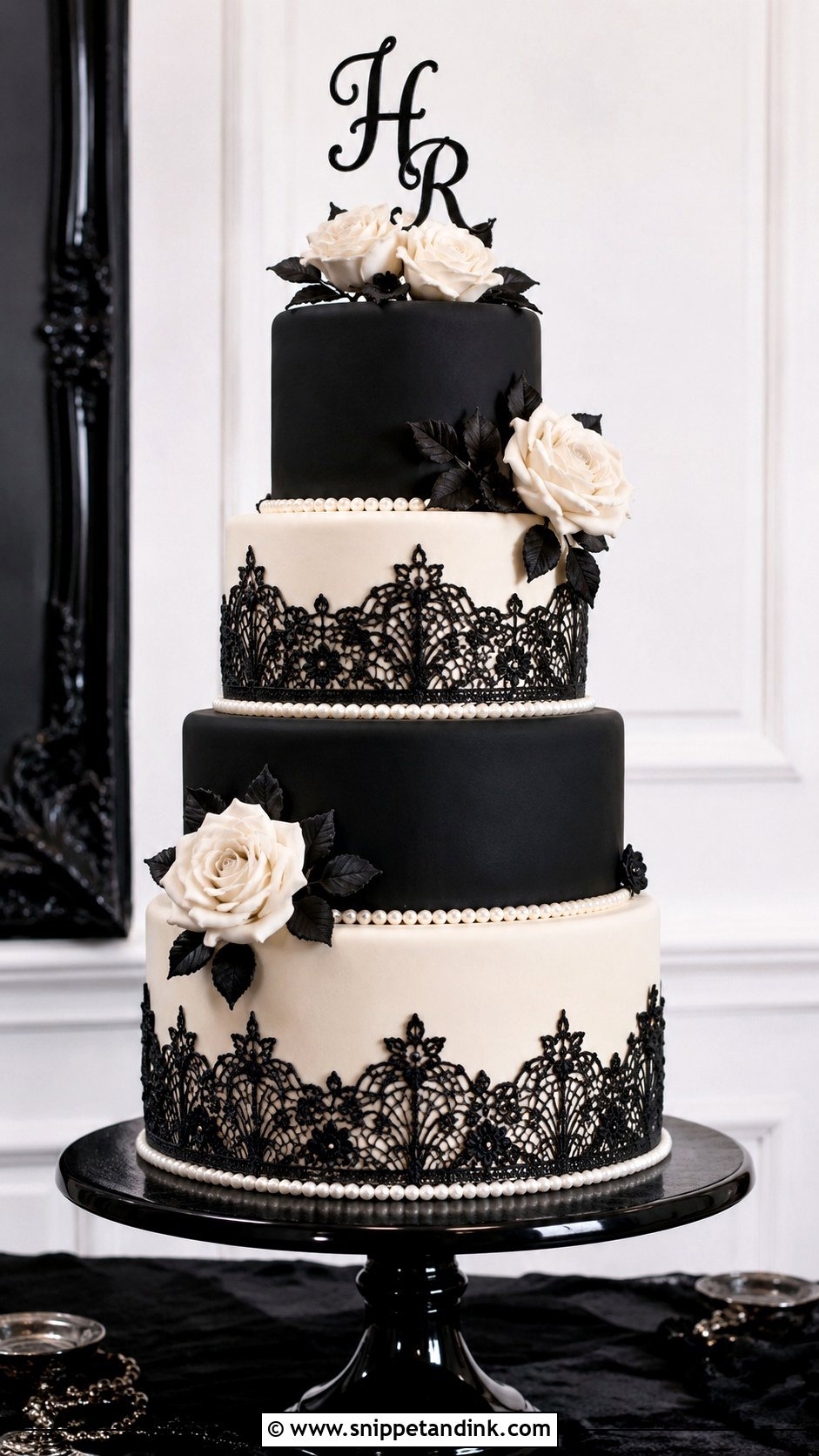
Black and white is the cleanest way into gothic. Black tiers with white flowers, white tiers with black lace, or alternating black and ivory layers all give strong contrast without introducing a third color. Pearl borders, fondant bands, painted flowers or a monogram topper suit it. The flavor can be anything from vanilla to black cocoa. Because the cake already carries its own contrast, it holds up in dark venues where an all-black cake would be lost.
Dark Cakes Vanish in Dim Rooms Unless Someone Plans the Light
Goth receptions tend to be candlelit, and a black cake on a black linen under candles can come out in photographs as a dark shape with roses floating on it. That’s fixable, but only if someone thinks about it before the day.
Where the table goes
I ask planners to put the cake where there’s some steady light, near a wall sconce or with a small spot overhead, and to give it a backdrop at least one shade lighter than the cake. Grey velvet or aged stone behind a black cake shows its outline; black drapes swallow it.
Candles, but not too close
Taper candles look right beside a gothic cake, yet open flame a few inches from buttercream softens it, and dripping wax on a cake board is no fun. Keep candles on a separate riser or use flameless ones closest to the cake.
Show the inside too
A slice of red velvet or blackberry sponge against black frosting is one of the best details of these cakes. Ask your photographer to catch the first cut slice on a white plate, where the colors actually read.
Black Outside, Something Guests Crave Inside
A good dark cake starts with a tight palette and one texture, flowers, lace, metal or marble, built across the tiers. Black with red roses or silver details makes the boldest centerpiece; ivory with black lace, white flowers or smoky marble is the gentler route. Whichever way you lean, ask your baker how the dark colors will be made, how flowers will be placed safely and what you’ll taste. A cake that looks moody and tastes of nothing is the only real mistake here.
You'll Like These Ideas:








Leave a Reply