
Most of the cakes that make people nervous online were finished by someone who has done the same motion thousands of times. You don’t need that to make a cake you’re proud of. What you need is a cold cake, a thin crumb coat, a second chill, and one idea carried all the way through instead of five half-done ones. Every design below leans on something a beginner can control: texture that forgives, toppings that do the visual work, or a single piping motion repeated until your hand learns it. I’ve written each one the way I’d explain it to someone standing at my bench for the first time.
The Short Kit I’d Buy Before Anything Fancy
Most beginner frustration traces back to fighting the wrong tool, not to lack of talent. You can make every cake on this list with a handful of basics, and I’d buy these before any specialty tips or molds.
- A turntable that spins freely. A cheap one that sticks halfway round will put a ridge in every coat you try.
- A small offset spatula and a larger straight one, for spreading and for texture.
- A metal bench scraper with a true straight edge. Plastic scrapers flex and leave waves.
- Disposable piping bags plus one large open star tip and one round tip. Those two tips cover rosettes, borders, swirls, dots, and writing.
- Cake boards a little wider than your cake, so you can lift and move it without touching the sides.
Buttercream consistency matters as much as any tool. For crumb coats and smooth sides, it should spread like soft butter. For piping, it should hold a peak that curls over slightly at the tip. If it’s too stiff, beat in a teaspoon of milk; if it’s too soft, chill the bowl for ten minutes and beat again.
A Two-Day Schedule That Takes the Panic Out
Trying to bake, cool, fill, and decorate in one afternoon is the most common reason a first cake slumps. Warm sponge melts buttercream, and rushed chilling means the final coat drags crumbs. Splitting the work across two days fixes most of that before you’ve picked up a spatula.
- Day one: bake, cool completely on a rack, then wrap each layer tightly and refrigerate overnight. Cold layers are firmer and far easier to level and stack.
- Day two, morning: level the layers, fill, and apply the crumb coat. Chill for at least 30 minutes until firm.
- Day two, midday: apply the final coat, chill again, then add drips, piping, or texture.
- Last hour: add anything delicate, such as fresh flowers, cut fruit, cookies, and sprinkles that bleed.
Most buttercream cakes are happiest served at room temperature, so take the finished cake out of the fridge an hour or so before cutting. It will taste softer and slice more cleanly than straight from the cold.
1. Smooth Buttercream Cake
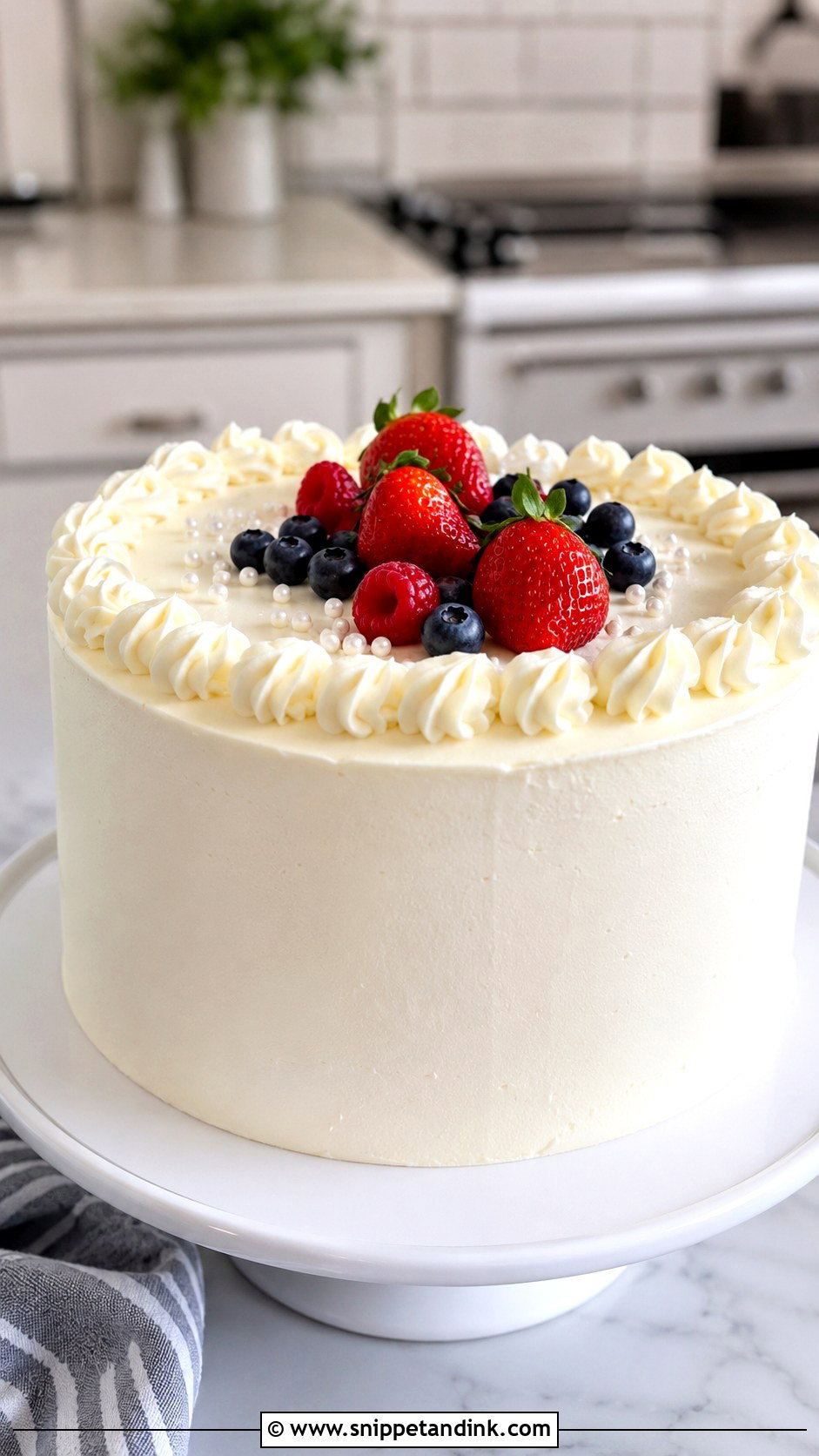
I start every new decorator here, because smoothing teaches you how buttercream actually moves. Fill two round layers, crumb coat them thinly, and chill until the outside feels firm to a fingertip before the final coat goes on. Hold the bench scraper still at a slight angle and let the turntable do the turning; most ridges come from a scraper that wobbles, not from the frosting. If you get a few soft waves, leave them. A clean top edge and some berries will read as finished, while a sixth pass with the scraper usually drags crumbs back up into the white.
2. Sprinkles Birthday Cake
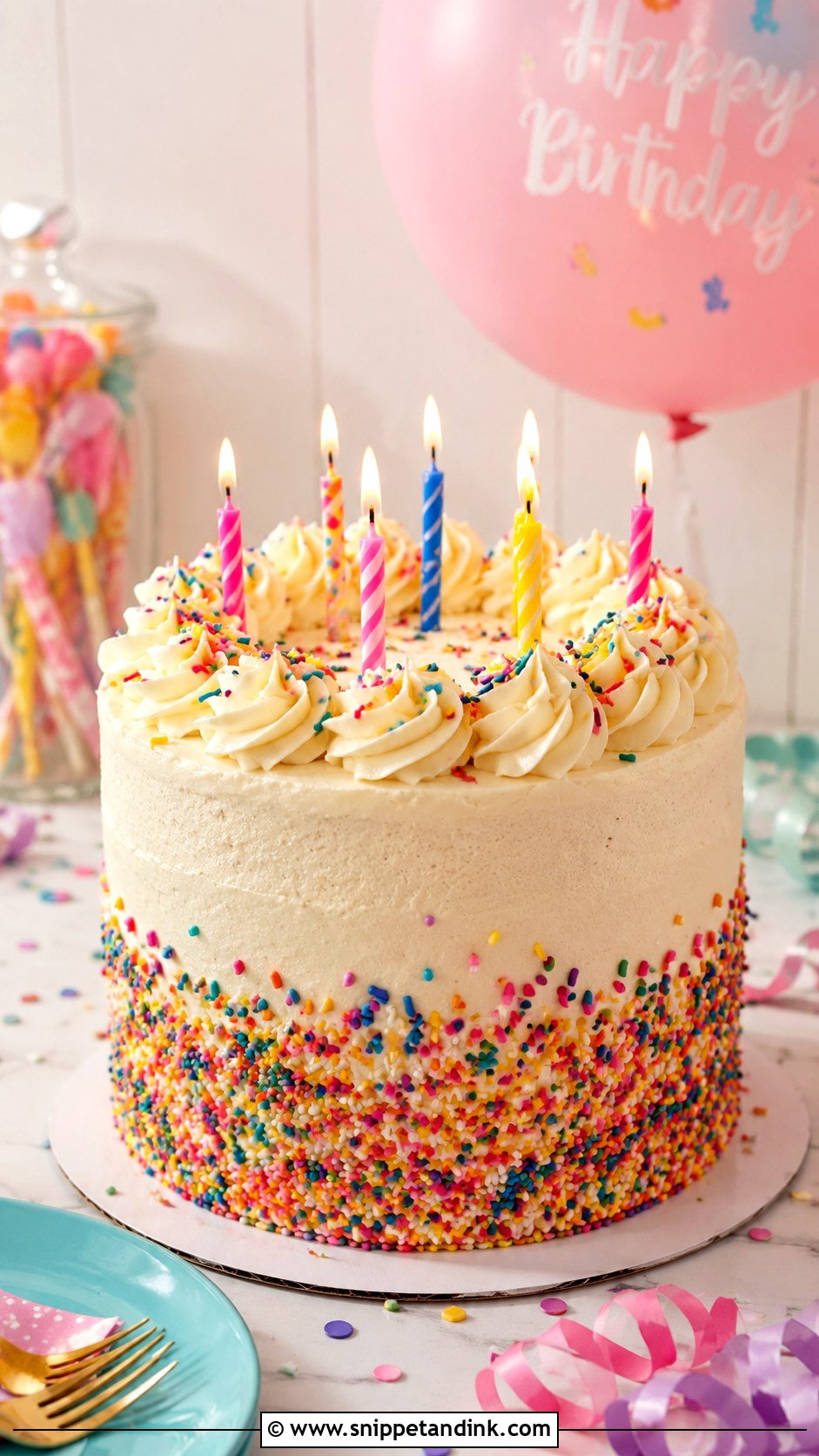
Sprinkles are the kindest cover there is for uneven sides. Press them onto the lower half while the buttercream is still tacky, over a rimmed tray so you can reuse what falls. Cup a small handful in your palm and push upward against the cake rather than throwing them, or you’ll get bald patches and a kitchen full of nonpareils. One thing I watch for: rainbow strands bleed color into very soft or whipped frosting within a few hours, so decorate close to serving if your buttercream is on the loose side.
3. Chocolate Drip Cake
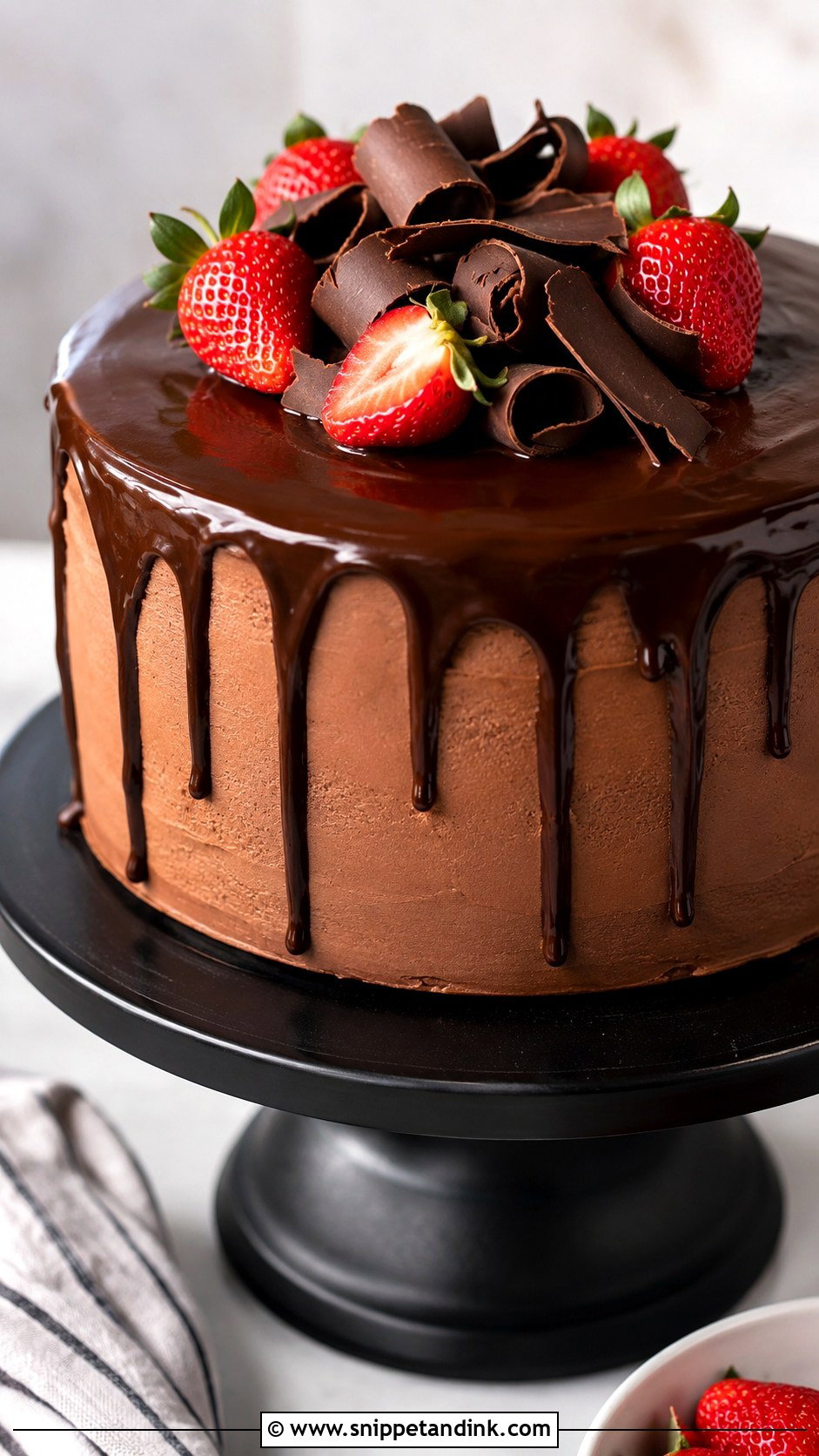
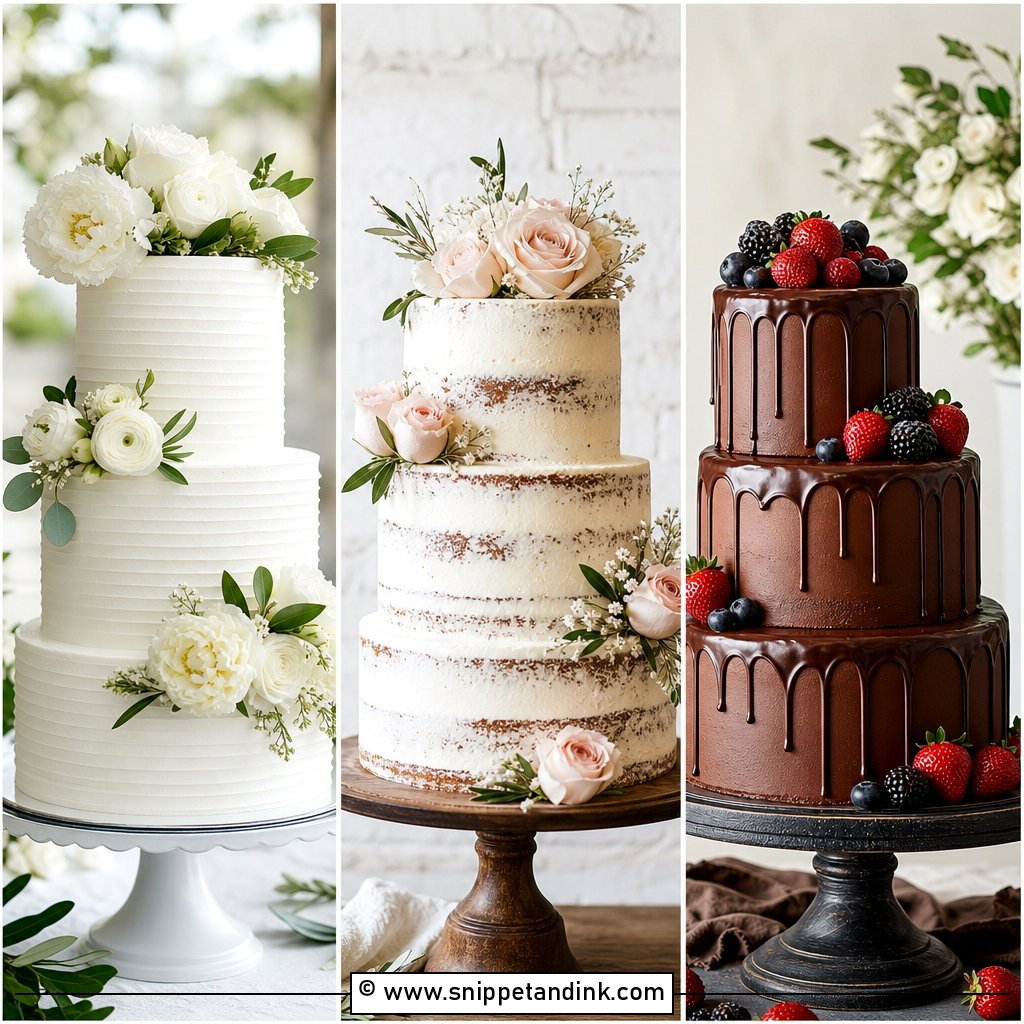
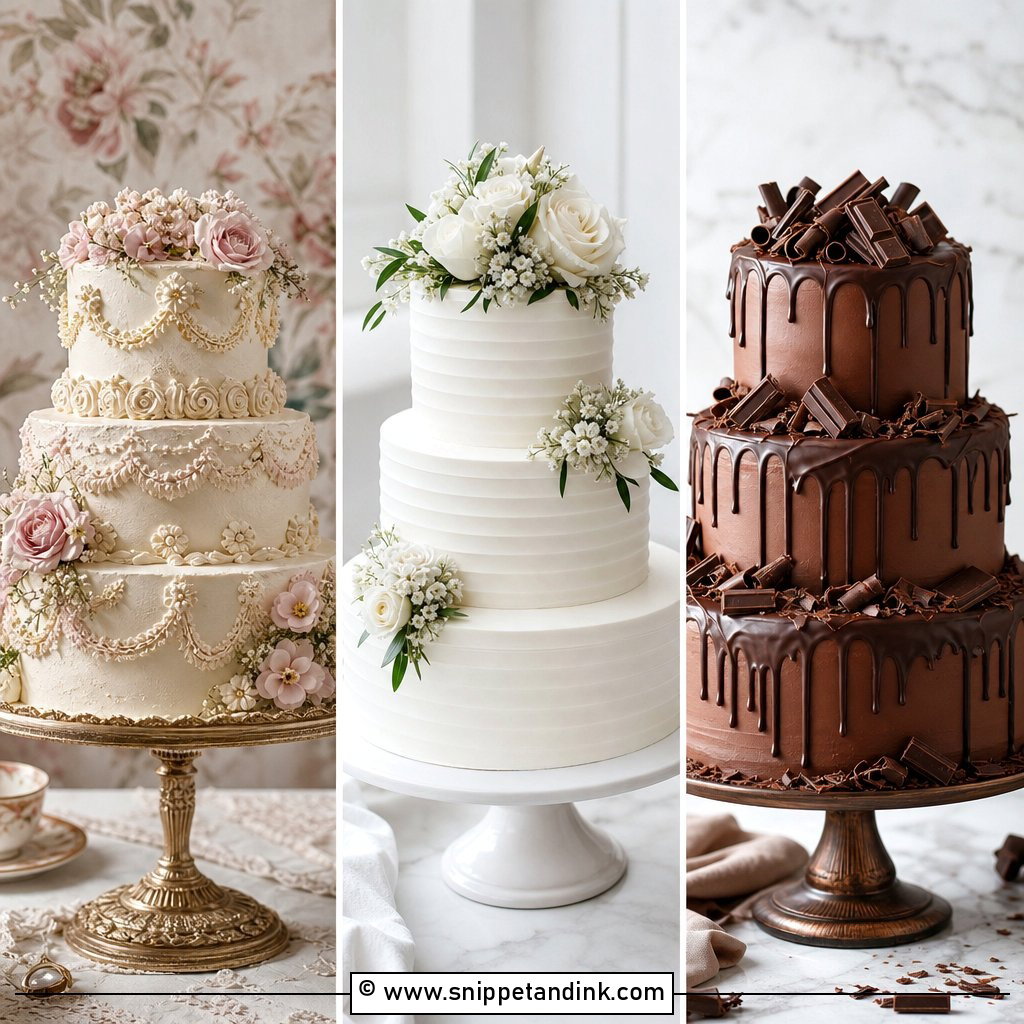
Drips go wrong for one reason more than any other, and that’s temperature. The cake has to be properly cold and the ganache has to be cooled until it moves like thick honey. Too warm and it runs straight to the board; too cool and it sits in stubby lumps. I always test a single drip on the back of the cake before committing to the front. Pipe or spoon the edge drips first, then flood the top and spread it thinly. Curls, cookies, or berries go on once the ganache has set enough to hold them.
4. Naked Layer Cake
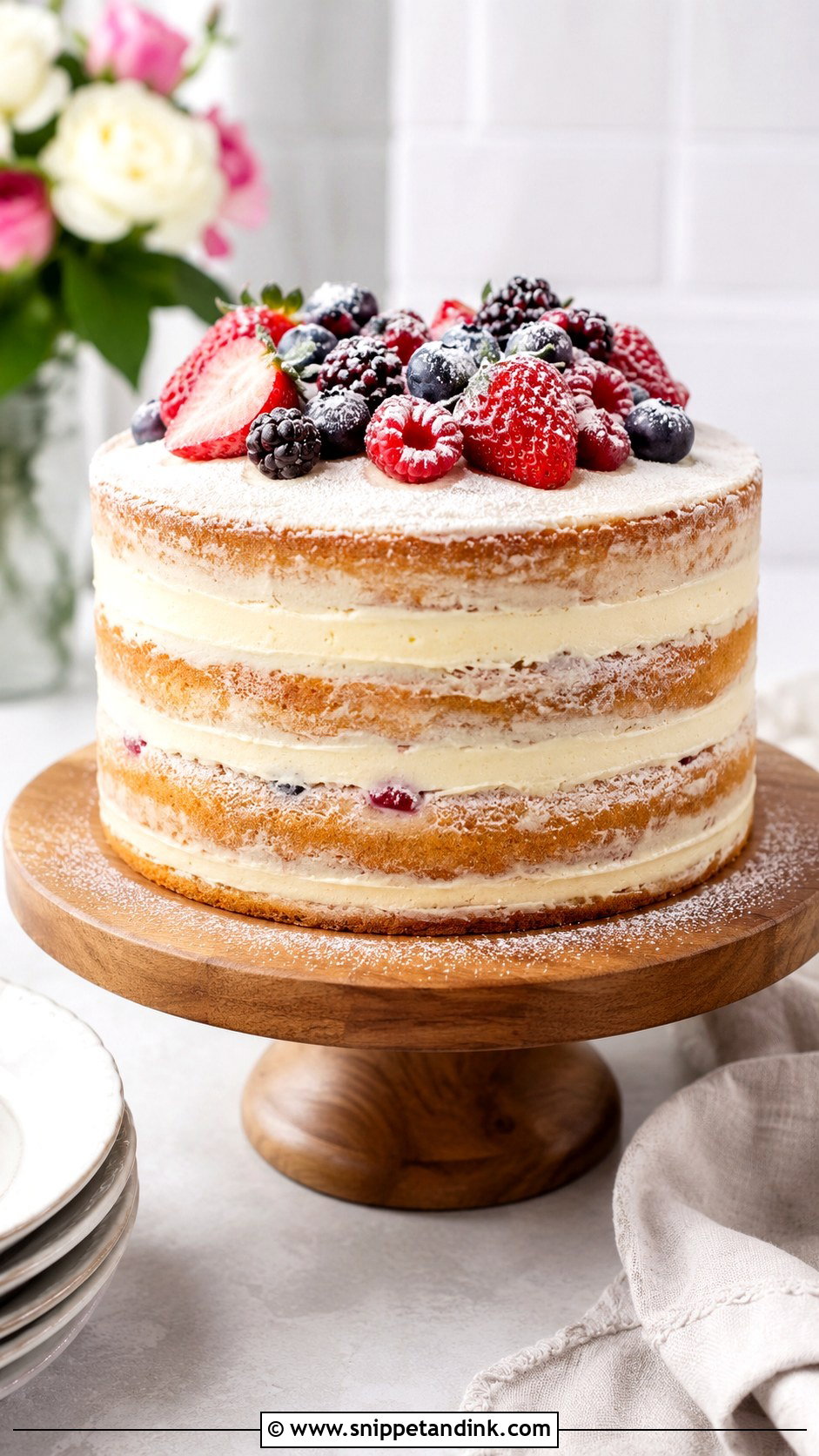
A naked layer cake takes smoothing almost out of the equation. Stack the layers with a generous filling, coat the outside thinly, then scrape most of it back off so the sponge shows through. The part people underestimate is the stacking: level each layer with a serrated knife, because a dome in the middle tier shows plainly when nothing covers it. The other honest trade-off is that exposed sponge dries faster, so I’d assemble this one the day it’s eaten. Berries, a dusting of sugar, or a little greenery are all it needs on top.
5. Rosette Cake
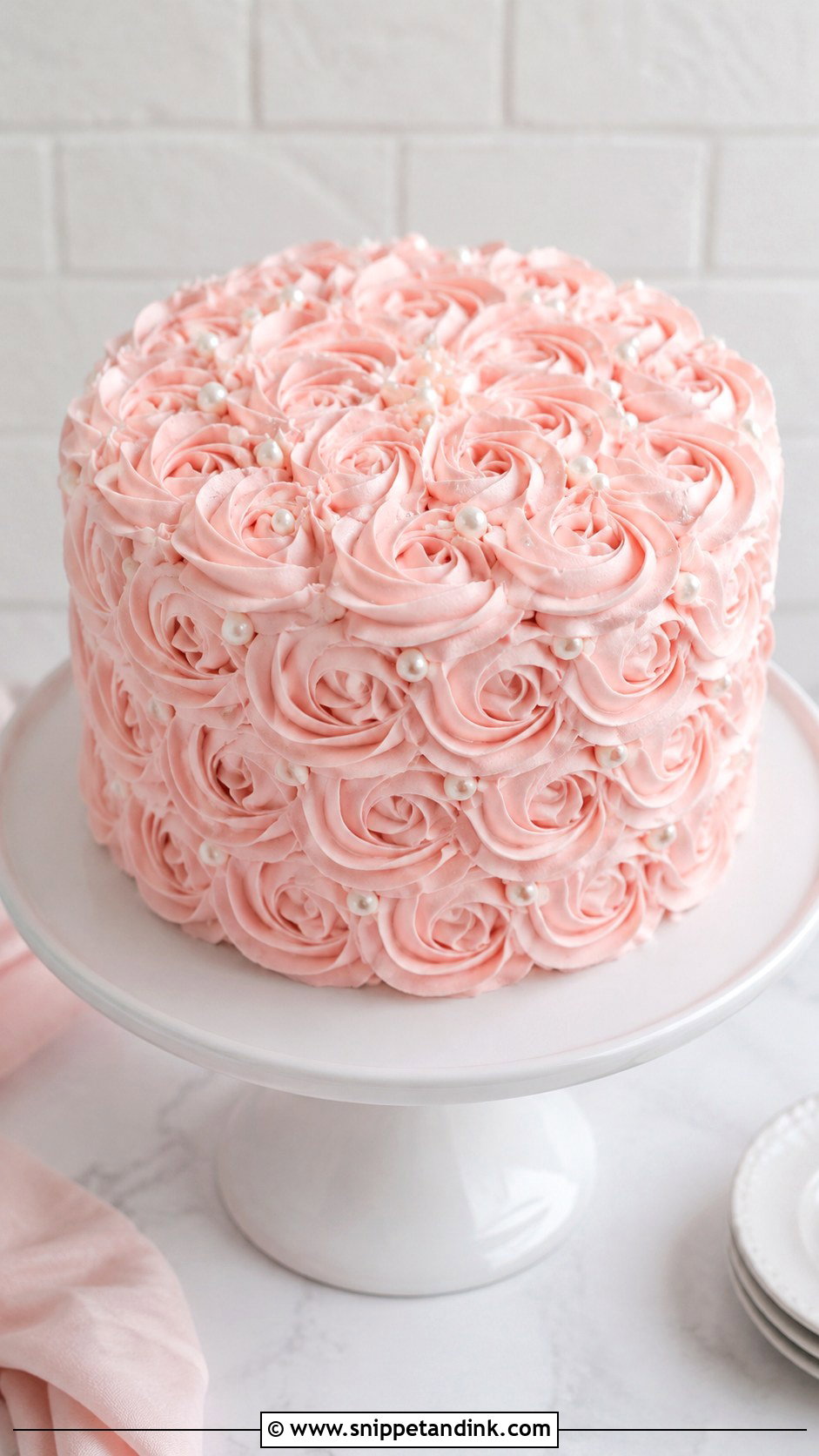
Rosettes are where I send people who want to try piping without the pressure of writing or fine detail. Use a large open star tip and buttercream that holds a peak without sagging. Start in the center of each rosette, spiral outward once, then release pressure before you pull the bag away; lifting while still squeezing leaves a tail. Pipe a full sheet of parchment first. Place them close enough to touch, and fill any small gaps with single stars. In one color or a soft ombre, the cake looks complete from any side you turn it.
6. Simple Piped Border Cake
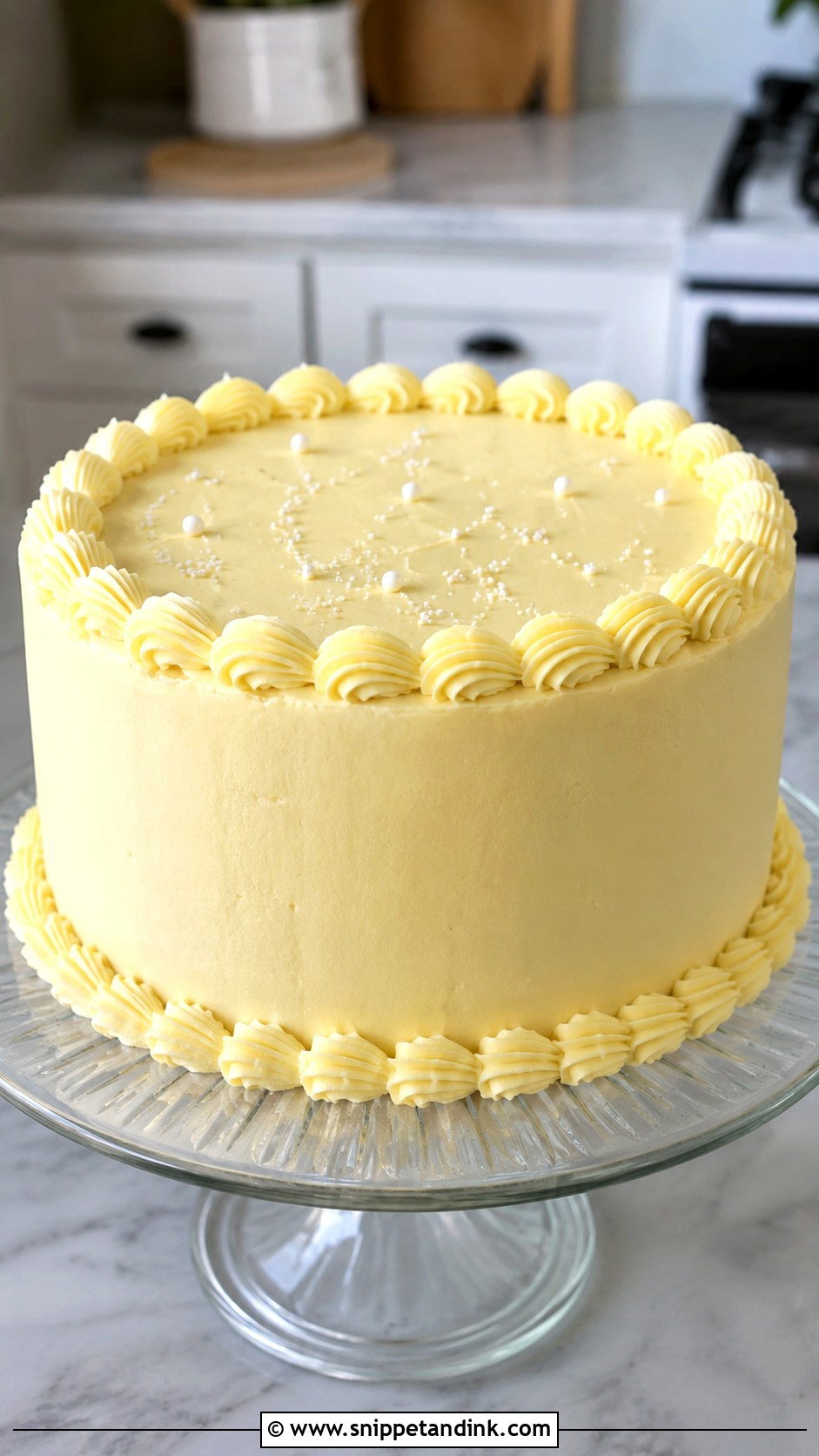
A border is the cheapest way to make a plain cake look intentional, and it hides the messiest spot on any cake, where the frosting meets the board. Fit a star or shell tip and pipe around the base first, then the top rim. The trick is speed: move slowly and evenly, and keep the bag at the same angle the whole way round. If you lose rhythm, stop at a natural break and restart rather than squeezing harder. A small gap can be covered with a dot or a sprinkle and nobody will spot it.
7. Fresh Fruit Cake
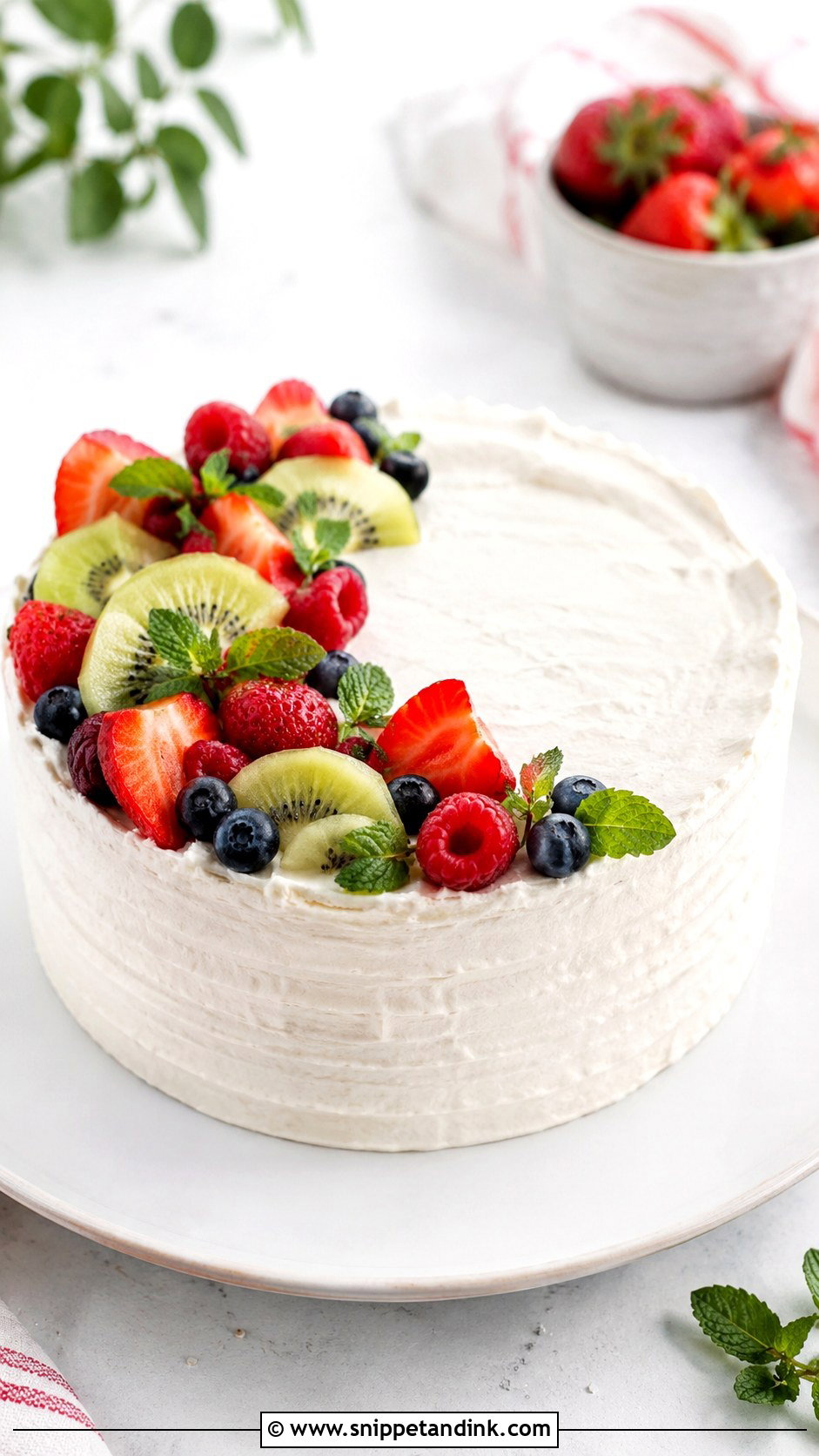
Fruit lets you skip piping almost entirely, but the fruit has to be the right kind. A fresh fruit cake holds up best with firm berries, kiwi, and citrus slices; cut strawberries and peaches weep juice into the frosting within an hour or two. Pat everything dry on paper towel before it goes on. I like a crescent along one side of the top because it leaves room for a candle or a name. Whipped cream frosting looks lovely here but needs to stay chilled until serving, so pick buttercream or cream cheese if the cake will sit out.
8. Ombre Buttercream Cake
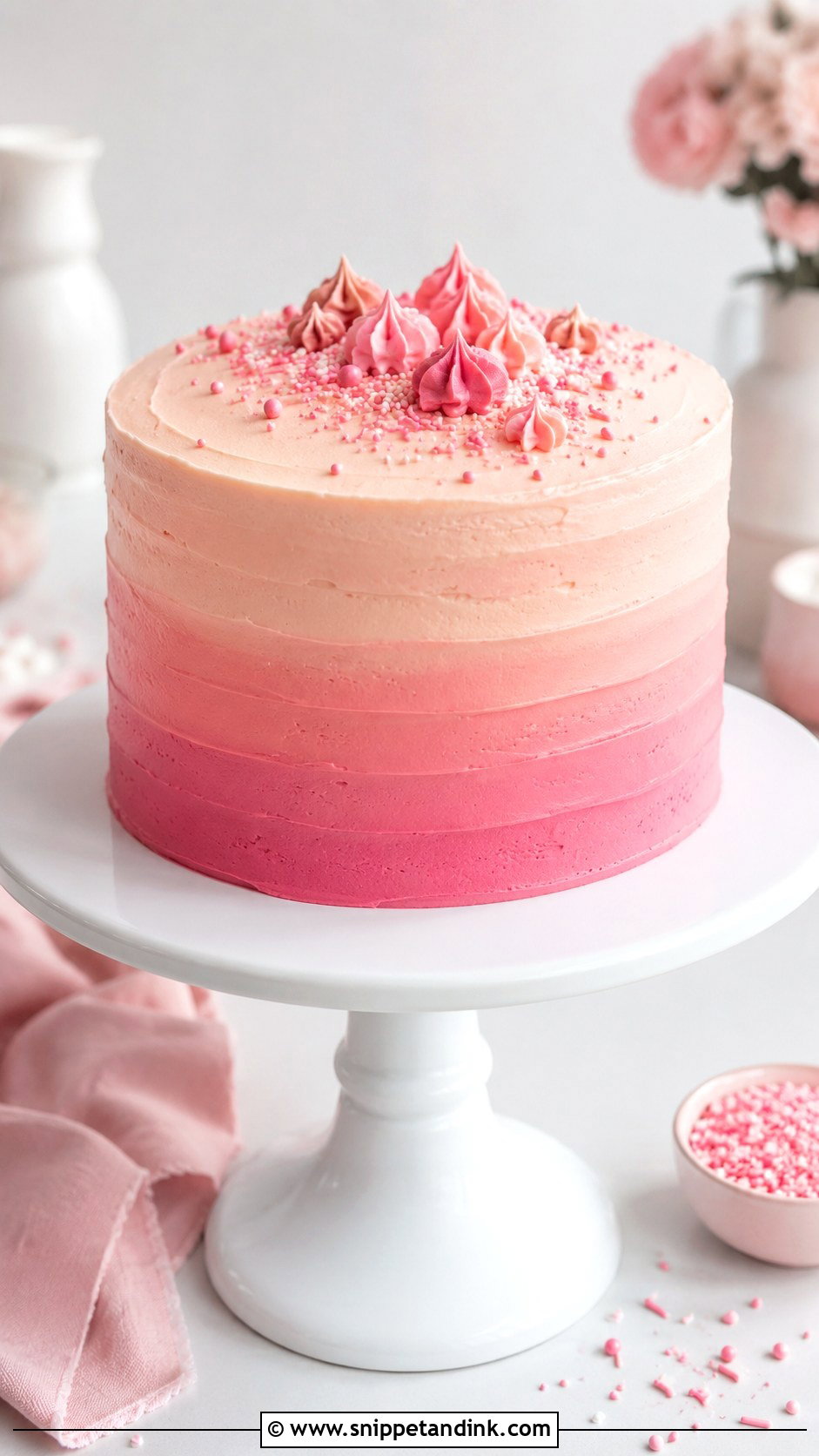
Ombre is mostly about mixing the shades properly before you touch the cake. Tint three or four bowls of the same color, pale to deep, and check them side by side under daylight, because kitchen lighting hides a shade that jumps. The deepest goes at the base, the palest at the top, and you blend them with one or two slow passes of the scraper while the turntable spins. Stop sooner than you think. Overworking an ombre muddies it into one flat color with streaks.
9. Textured Spatula Cake
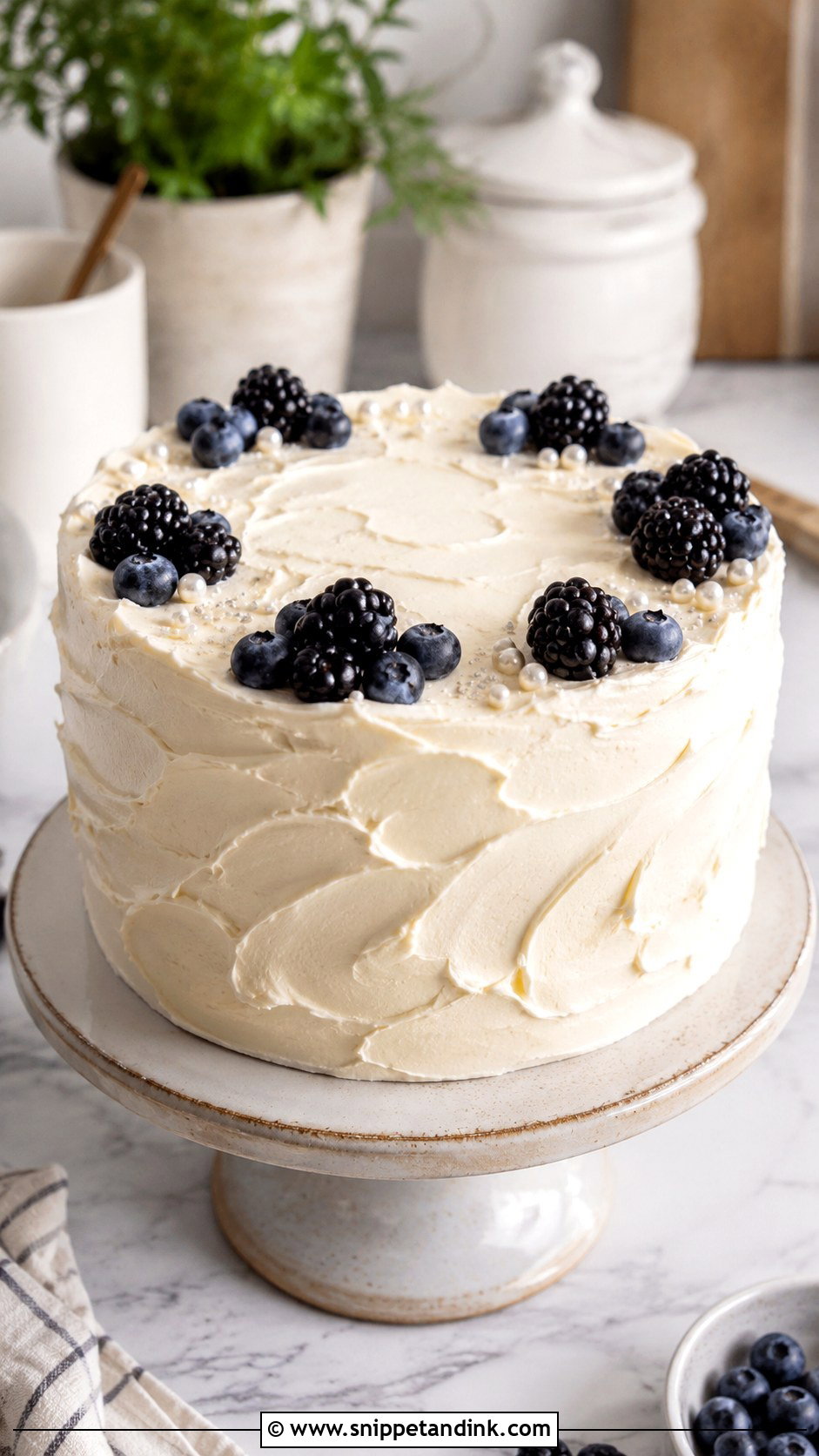
When smooth sides feel like a fight, give up on them on purpose. Put on a thicker coat of buttercream than usual, then use a small offset spatula or the back of a teaspoon to press and pull swoops around the cake. What makes texture look deliberate is repetition: the same stroke, the same pressure, section after section. Random marks look like a mistake; repeated marks look like a style. Keep toppings small so they don’t fight the texture.
10. Cupcake Style Cake
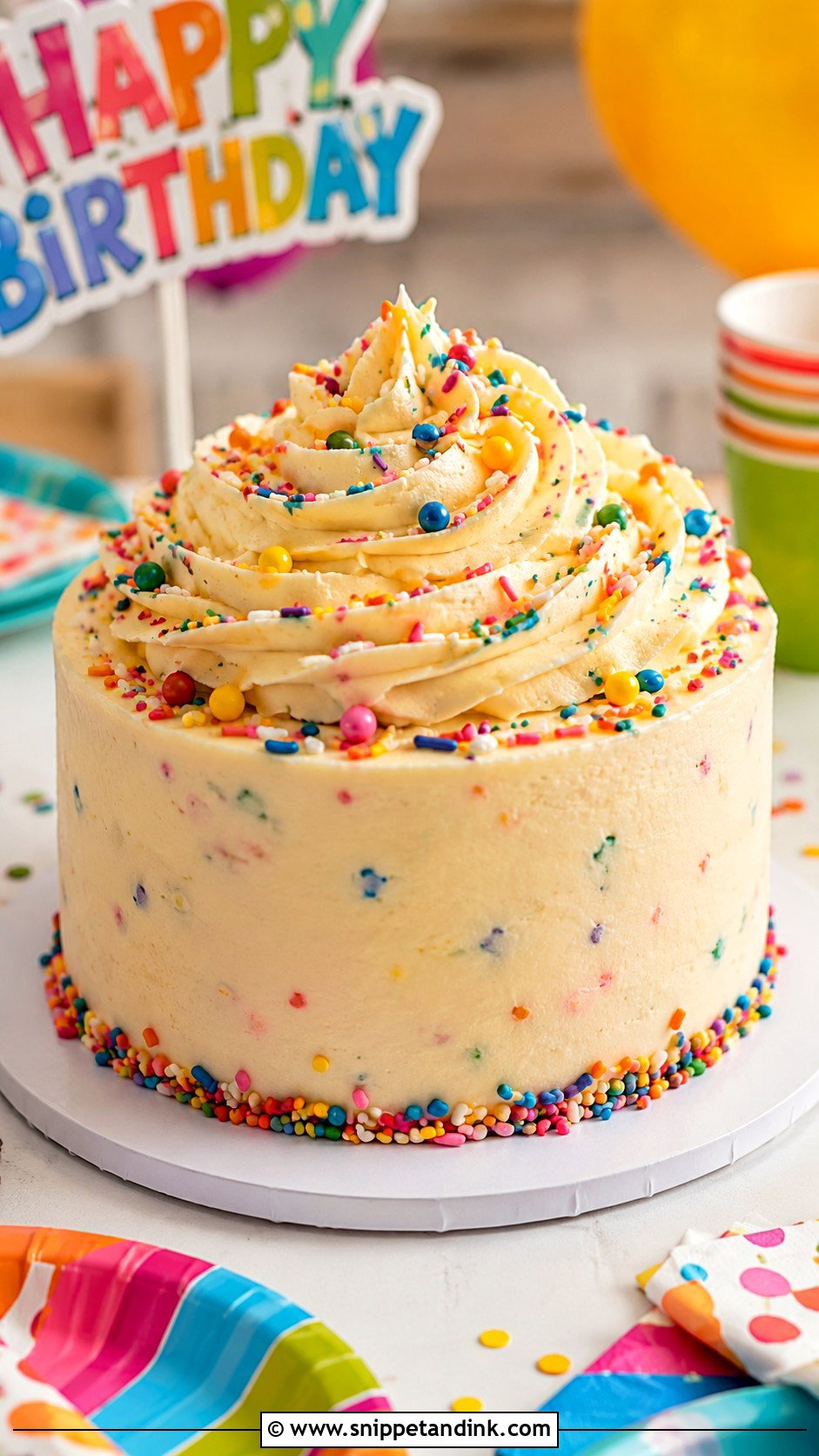
Here you only decorate the top, which halves the work. Frost the sides smoothly or with light texture, then pipe tall swirls across the surface with a large star tip, working from the outside of each swirl inward and building height as you go. Make sure your buttercream is stiff enough; a soft batch slumps flat within the hour in a warm room. Sprinkles and small candies finish it. This is the design I’d hand to someone baking for a class party or a casual birthday where height and color count more than clean edges.
11. Heart Shaped Cake
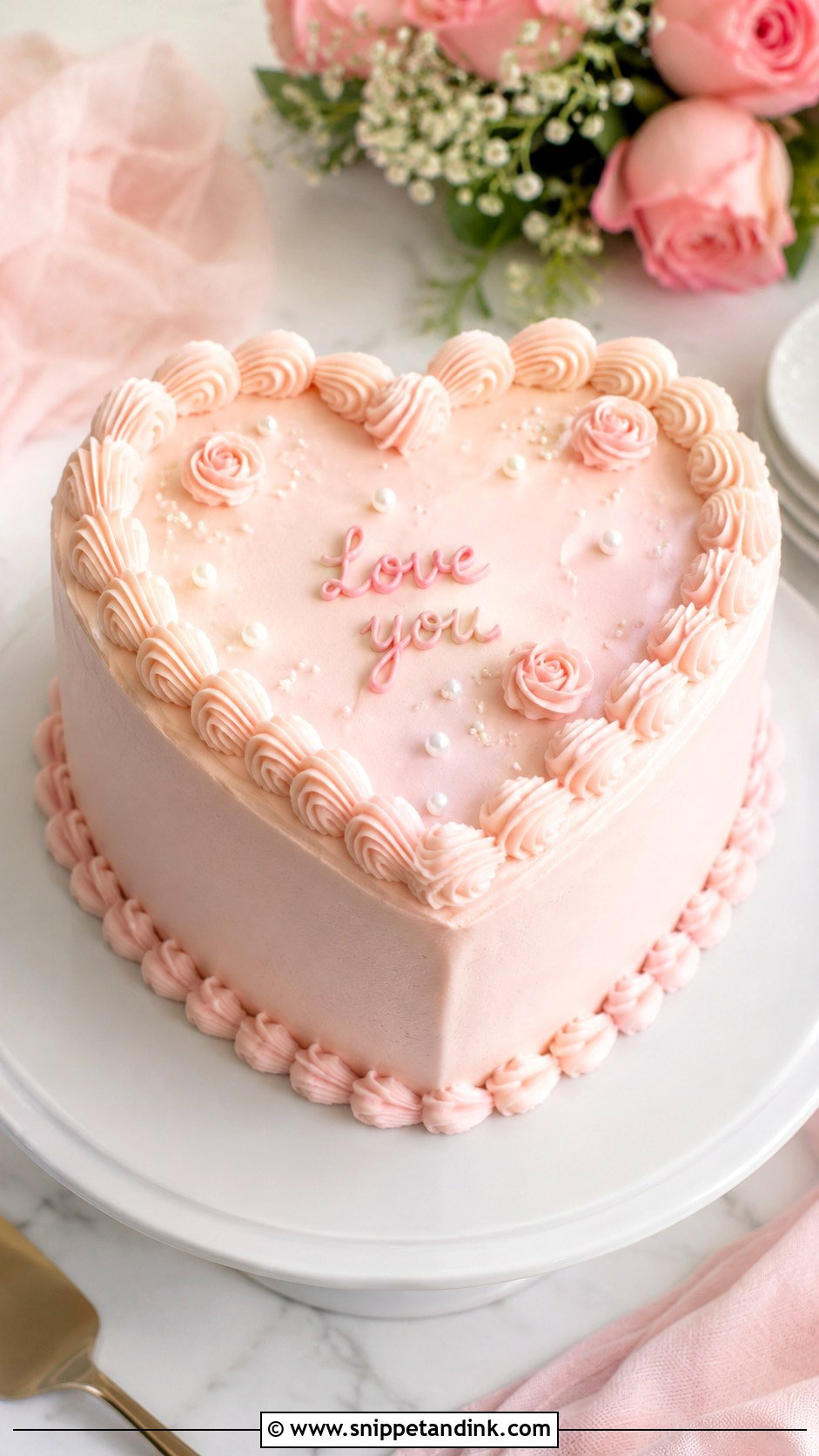
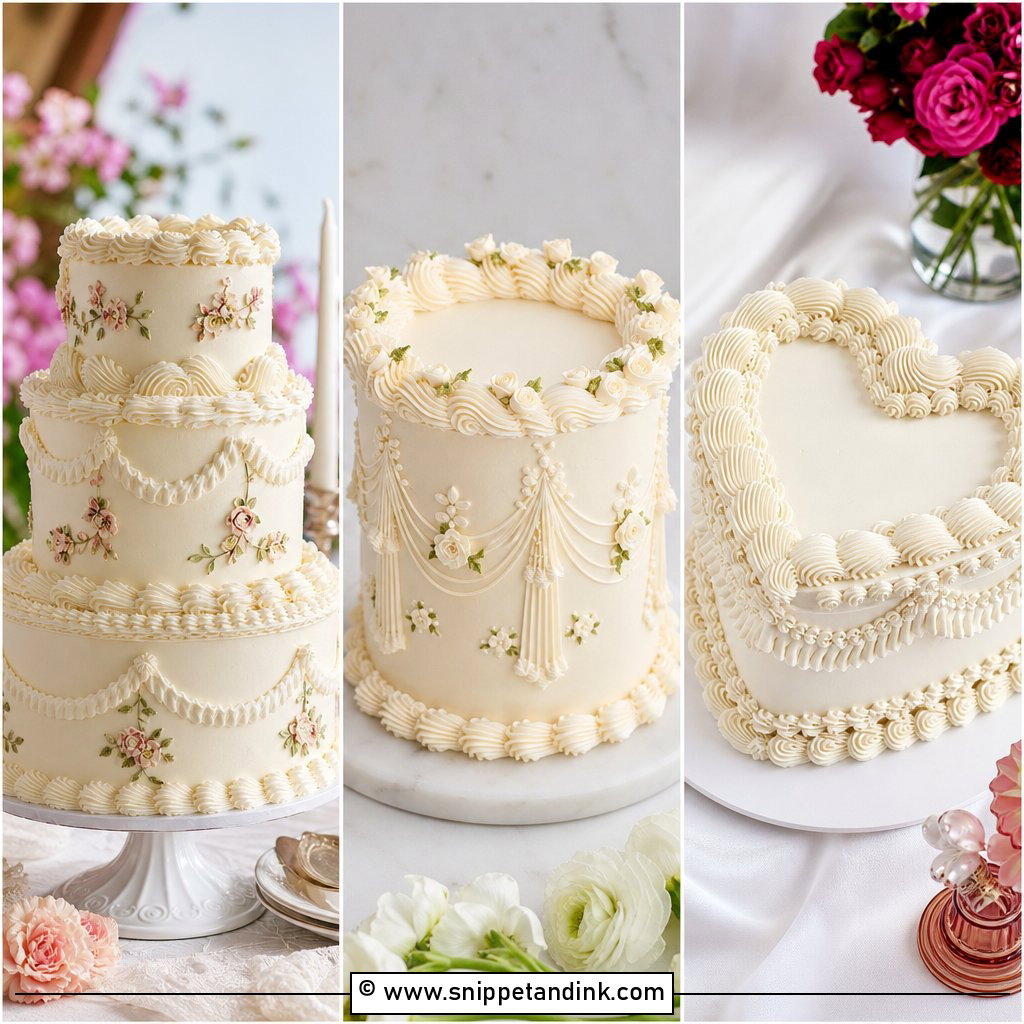
No heart pan? Cut a square cake and a round cake of the same diameter, halve the round, and set the halves against two sides of the square turned on its point. Crumb coating matters more than usual here, because cut edges shed crumbs everywhere. The inner point of the heart is the hardest spot to smooth, so I let a shell border around the top edge do the defining. If you add a message, write it on parchment three times first and keep it to a word or two.
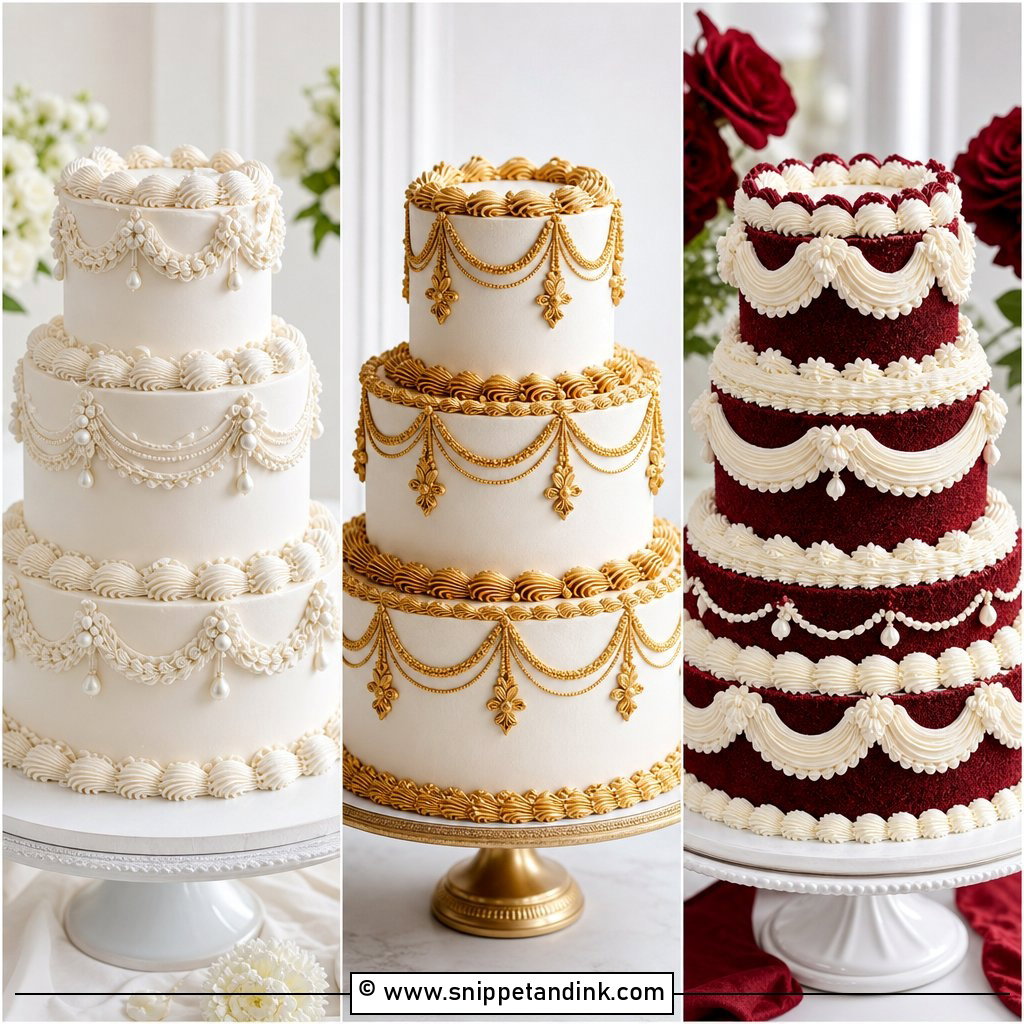
12. Vintage Buttercream Cake
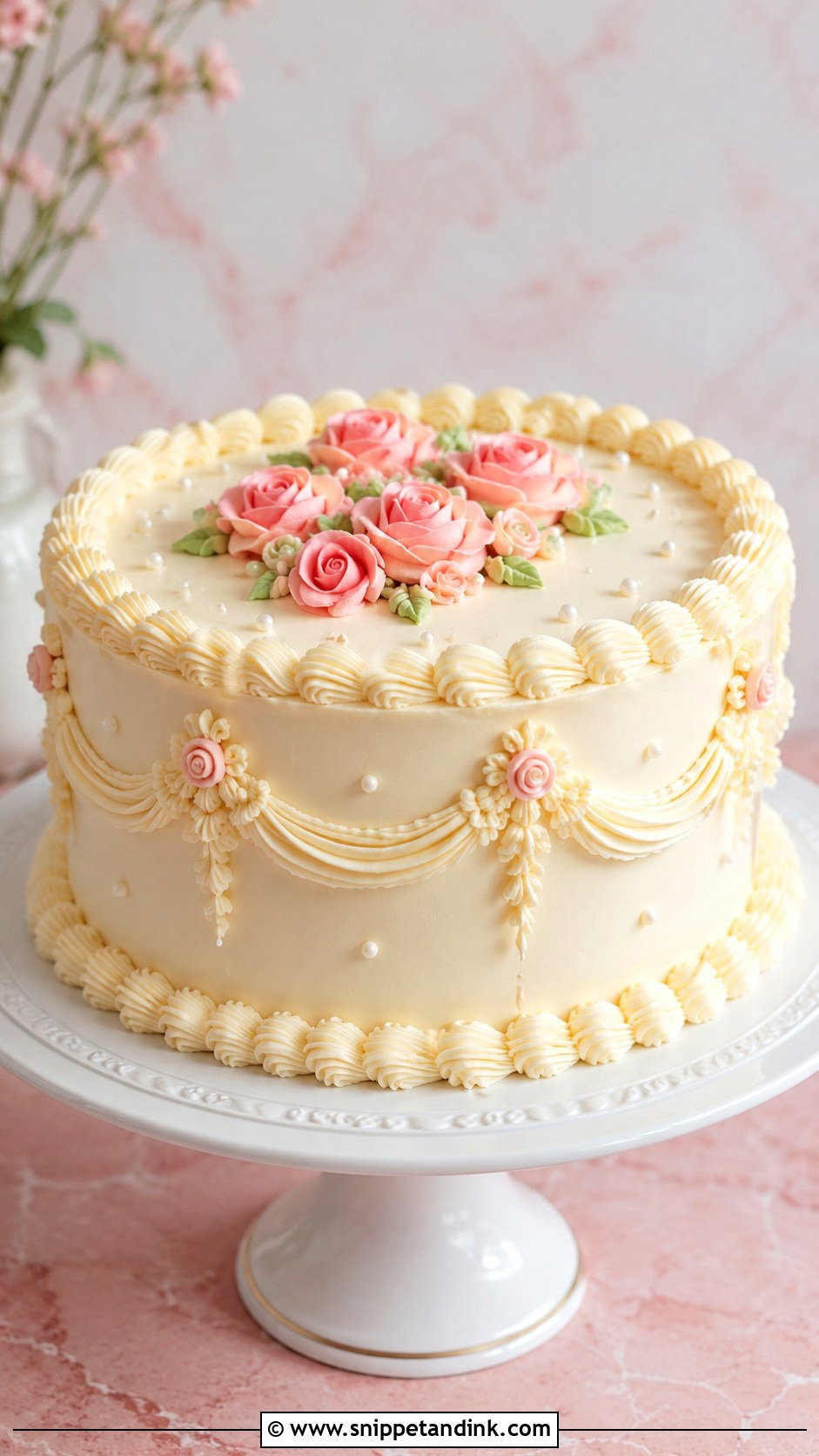
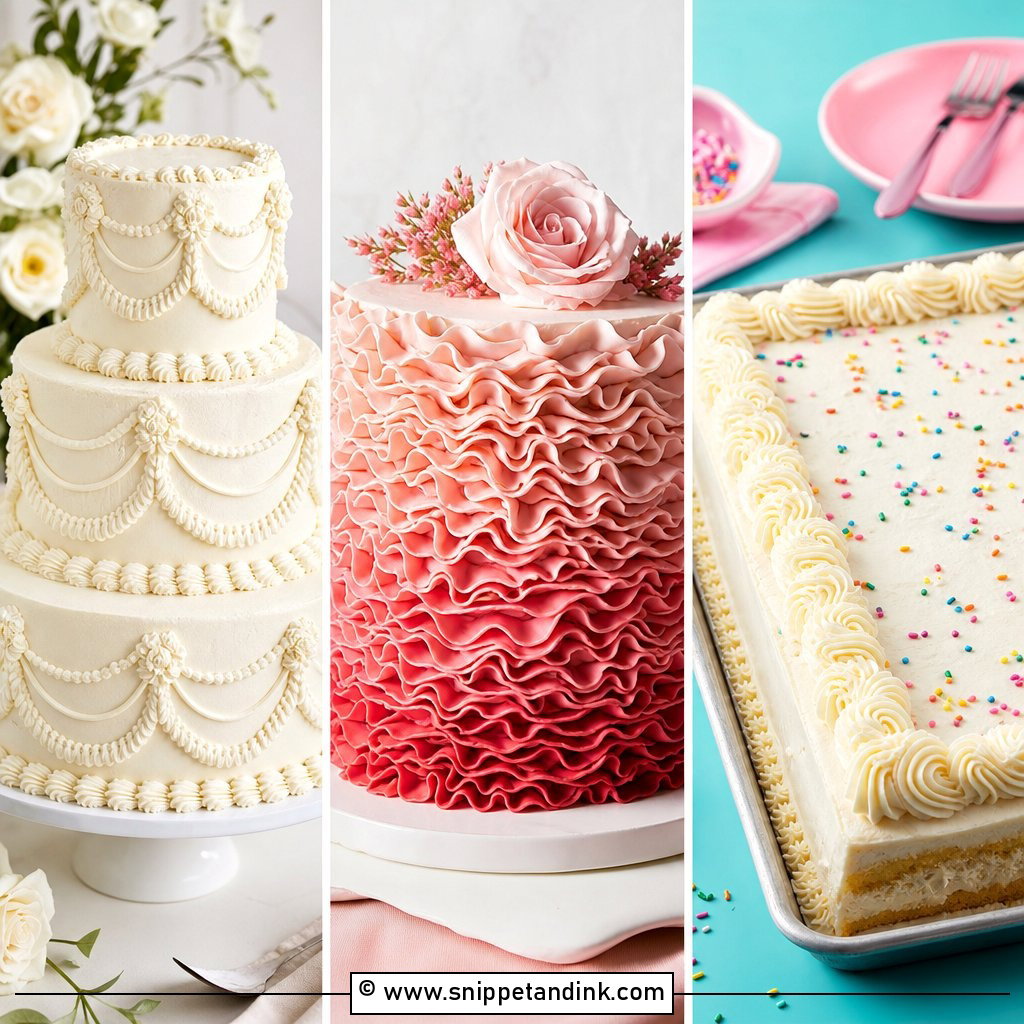
Vintage piping looks intricate, but it’s built from three or four basic shapes stacked together. Start with shells along the top and bottom edges, then add small swags, dots, or tiny rosettes on the sides. Keep the palette to two colors; pink and white or lavender and cream are easy ones to mix. I tell beginners to mark the swag points lightly with a toothpick first, dividing the cake into even sections, because uneven spacing is what gives an amateur vintage cake away. The motions themselves are forgiving.
13. Rainbow Layer Cake
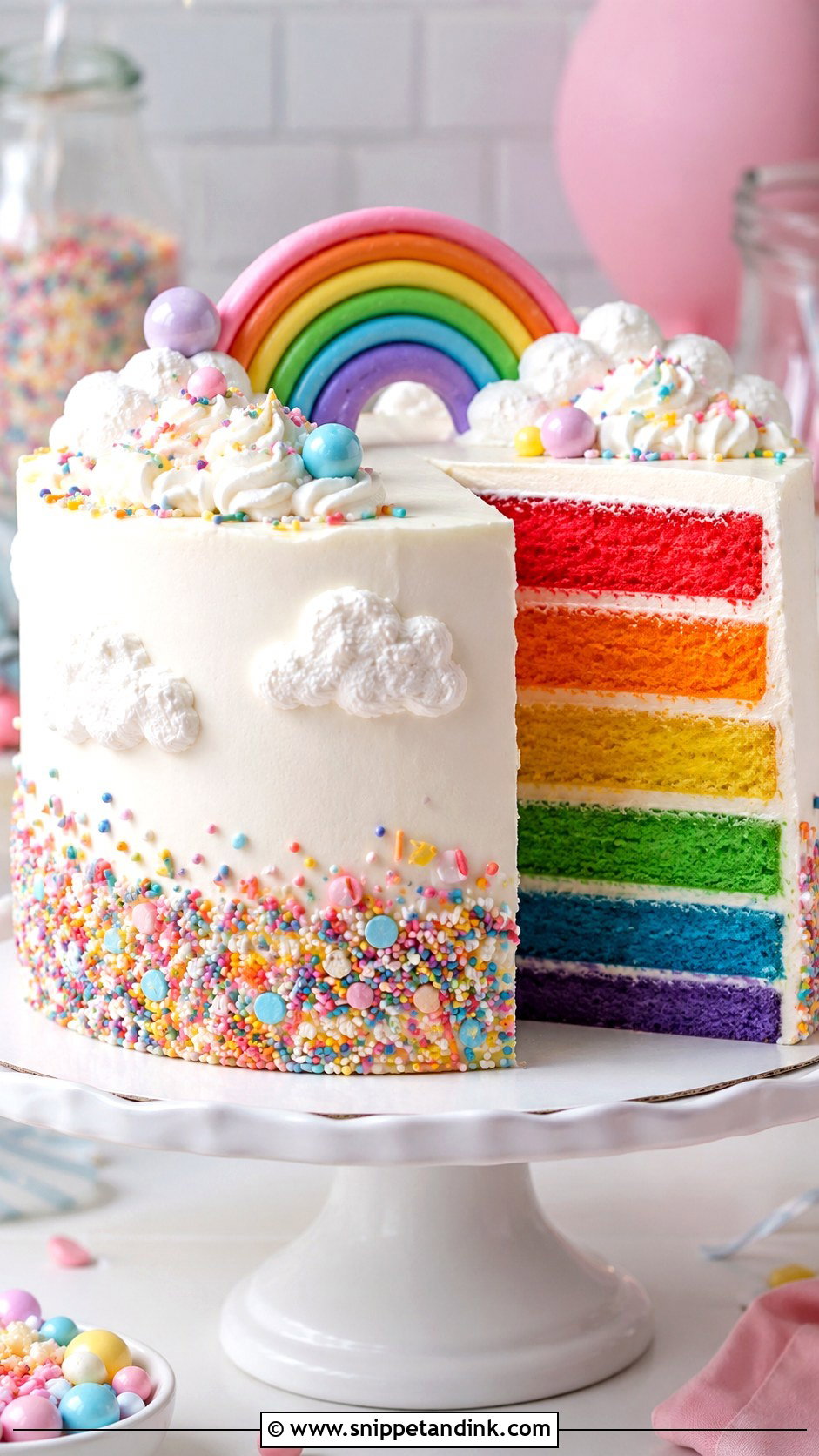
The decoration on this one happens inside the oven. Bake thin layers in strong colors using gel coloring, which tints without loosening the batter the way liquid coloring does. Stack them with vanilla buttercream and chill the whole thing before frosting so the layers don’t slide. Keep the outside white and simple. The only real risk is overbaking the thin layers, which browns their edges and dulls the colors you worked to get, so check them a few minutes earlier than the recipe says.
14. Fondant Cut Out Cake
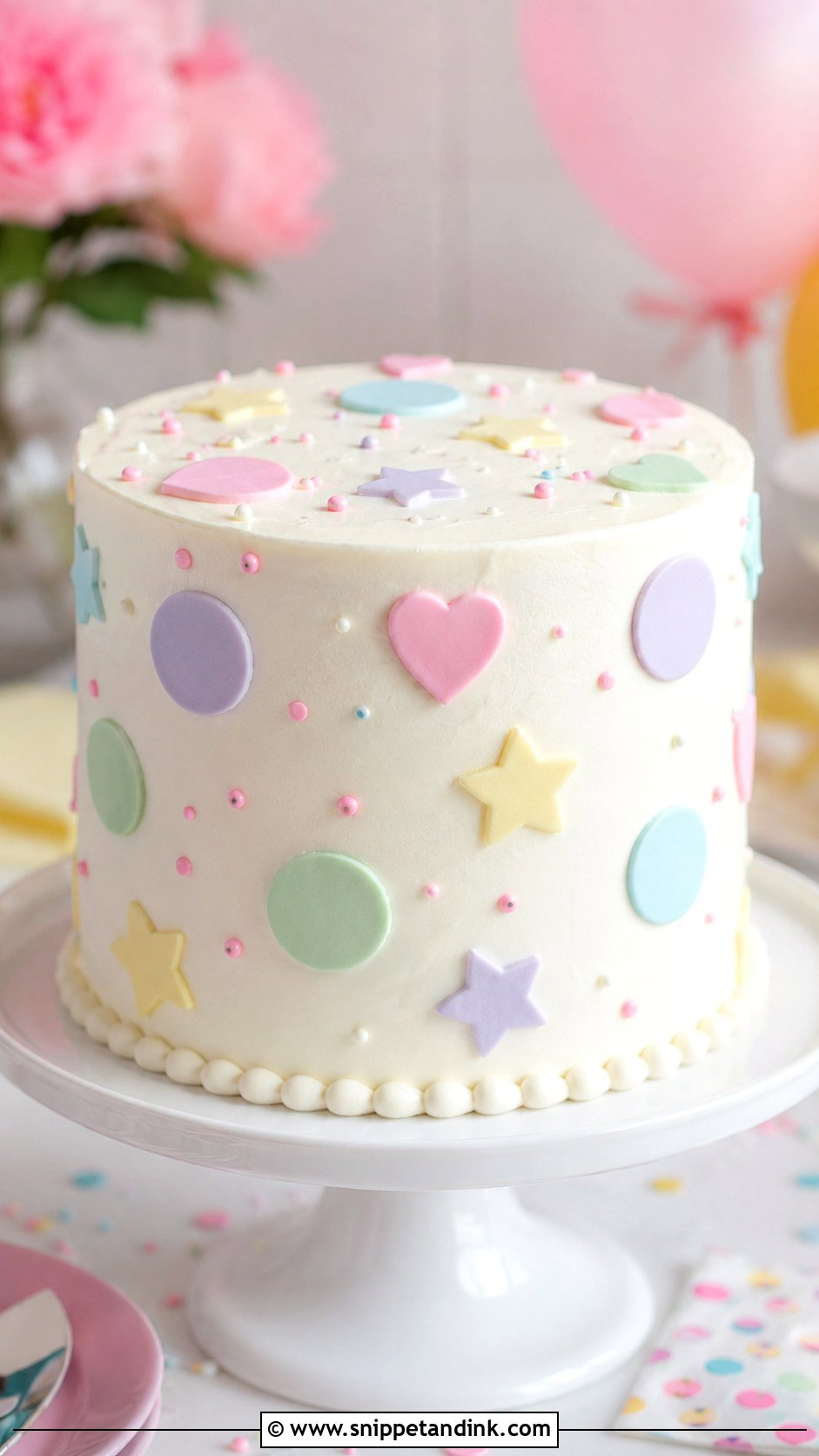
Fondant cutouts give you crisp shapes without ever covering a whole cake. Roll small pieces thin, cut stars, hearts, or letters with cookie cutters, and press them onto buttercream that is still slightly soft so they grip. If the cake has already crusted, a tiny dab of frosting on the back works as glue. Keep fondant pieces away from the fridge once they’re on, or condensation will make them sticky and shiny. For a themed birthday, this is the fastest way to change the whole look by changing only the cutter.
15. Edible Flower Cake
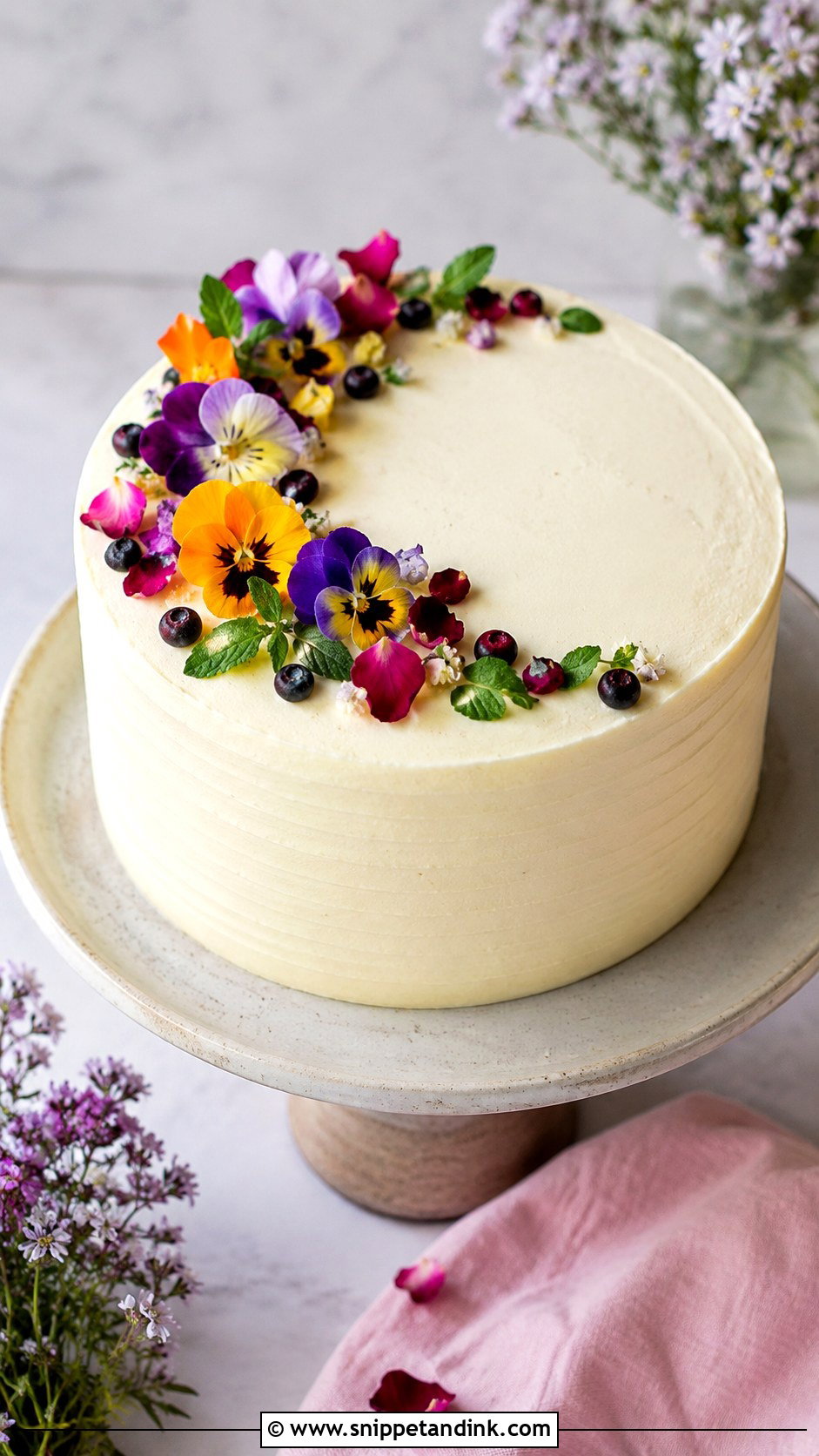
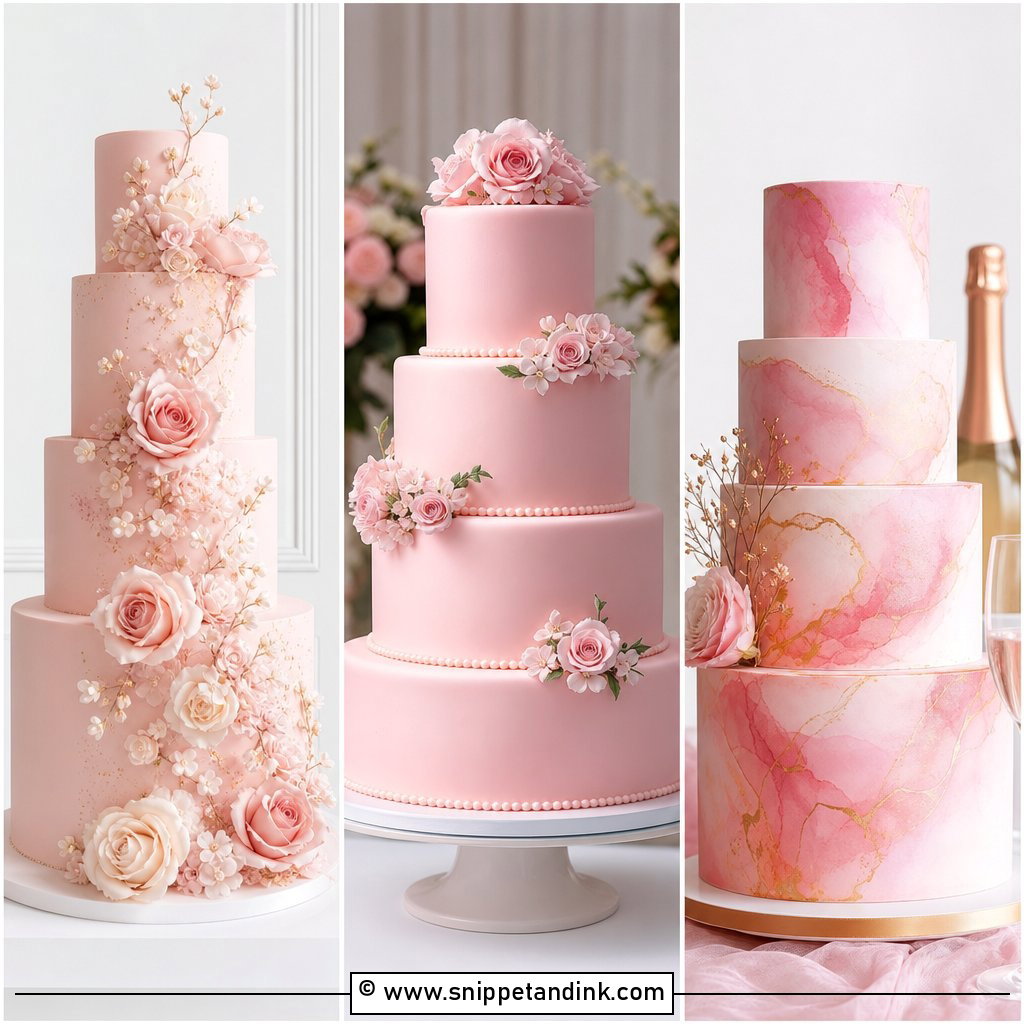
Edible flowers do a lot with very little skill, but where they come from matters more than how you arrange them. Use pansies, violas, calendula, or rose petals sold for eating, or grown yourself without sprays. Florist stems are usually treated and shouldn’t touch frosting. I place flowers within an hour or two of serving, because delicate petals wilt against buttercream faster than people expect. A loose crescent with mint leaves and a few berries looks generous; covering the whole top looks crowded.
16. Cookie Topped Cake
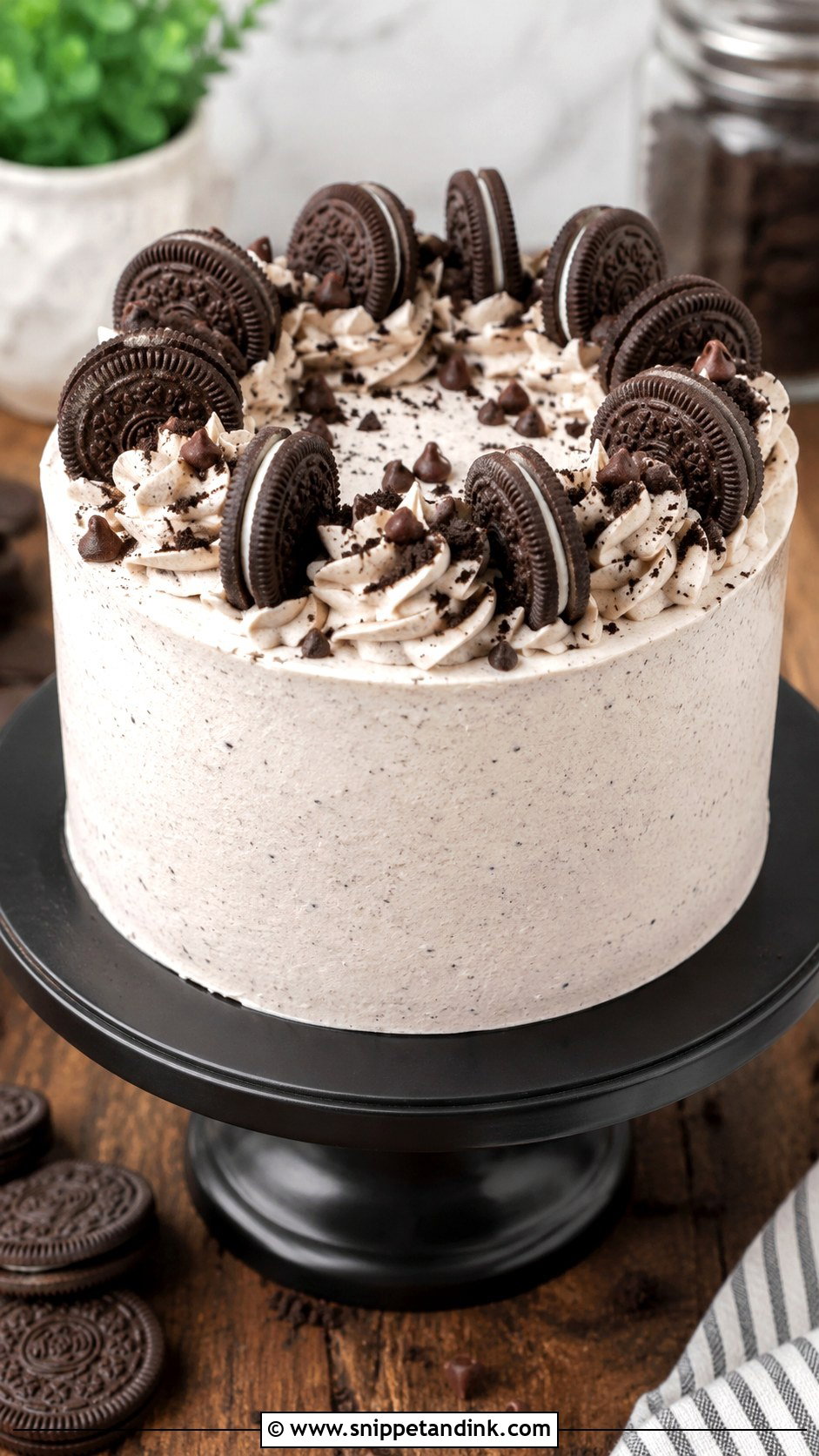
Store-bought cookies hand you detail you didn’t have to pipe. A cookie topped cake works on chocolate, vanilla, or cookies and cream sponge with a buttercream coat. Press crushed crumbs around the base to hide the board line, then arrange whole and halved cookies on top between piped swirls. Standing cookies need a swirl behind them to lean on, or they topple during the drive. Sandwich cookies soften within a day on frosting, so add them close to serving.
17. Candy Drip Cake
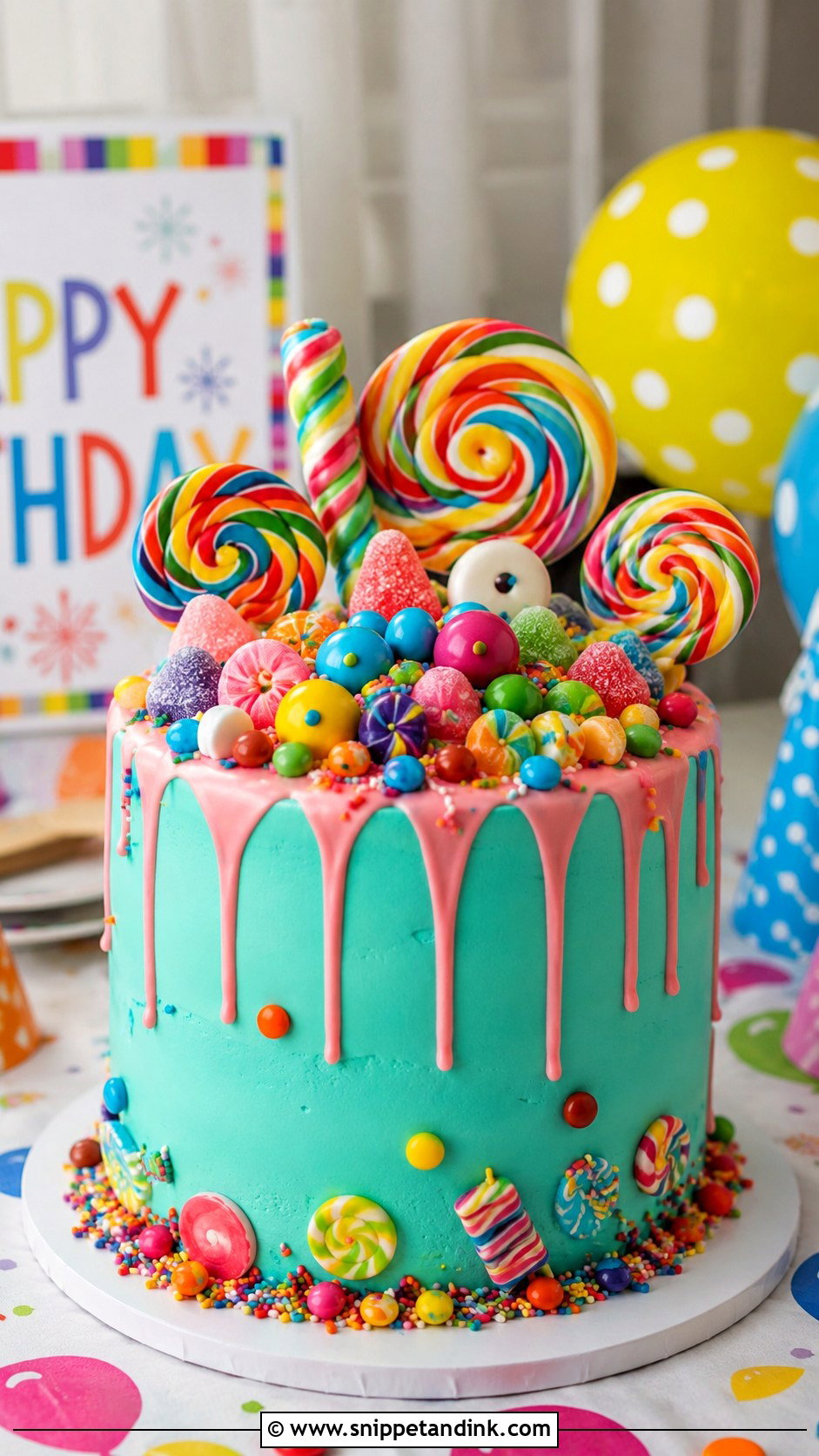
A candy drip is a regular drip cake with white chocolate tinted in one color, and the same rule applies: cold cake, cooled drip. Use oil-based or candy coloring for white chocolate, because water-based gel can make it seize into a grainy paste. Pick one candy palette and cluster the pieces rather than scattering them, with the tallest lollipops toward the back. The candy does most of the visual work, so a slightly uneven drip disappears under it.
18. Stencil Cake
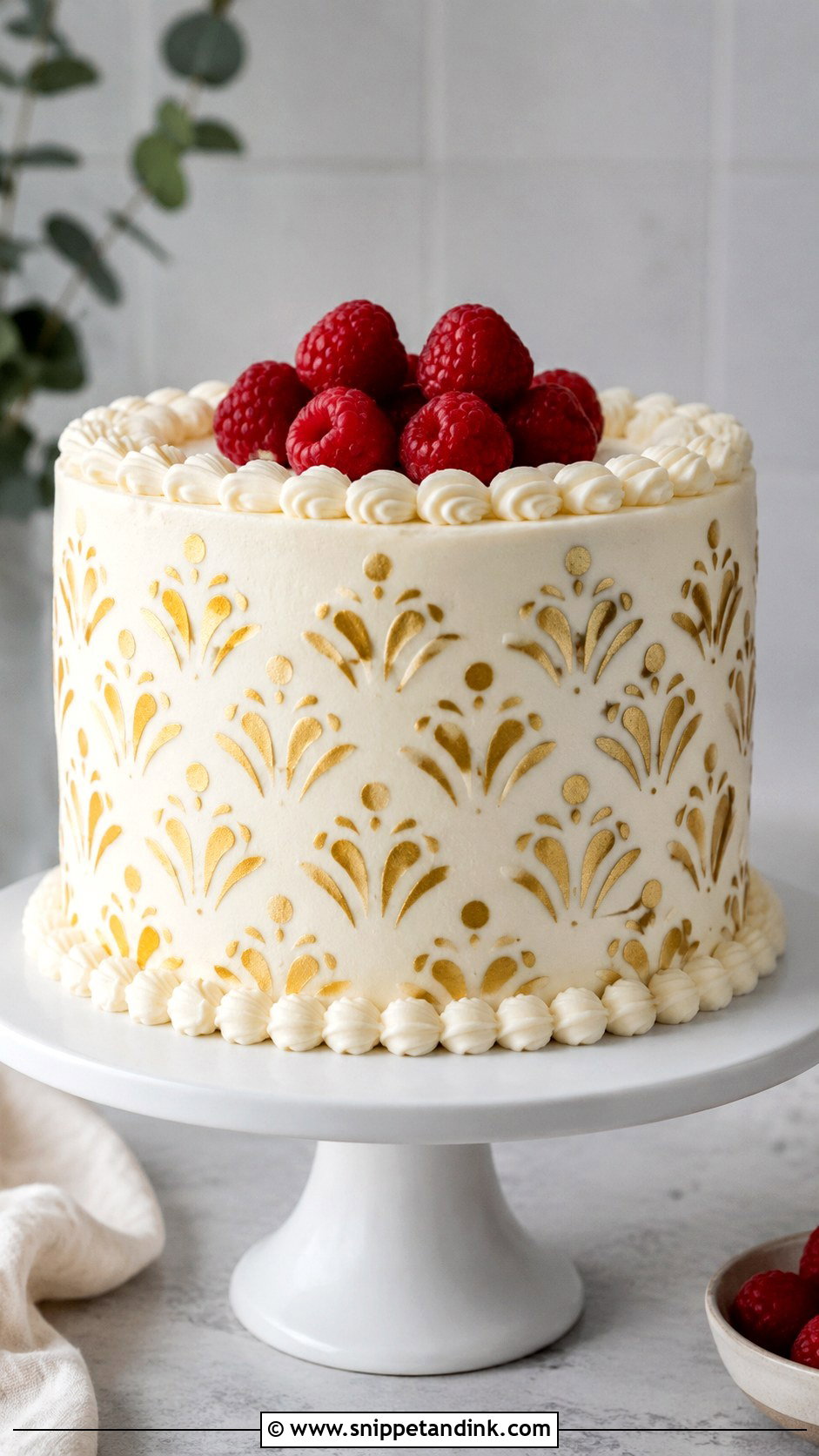
Stenciling gives you a pattern without any freehand drawing, as long as the surface underneath is firm. Frost and chill the cake until it’s cold to the touch. Hold the cake stencil flat against the top or side, spread a thin layer of contrasting buttercream over it, and lift it straight away in one movement. Sliding it smears the edges. I’d start with the top only, since curving a stencil around the side takes a second pair of hands. Cocoa or powdered sugar through the stencil is even easier.
19. Mini Layer Cake
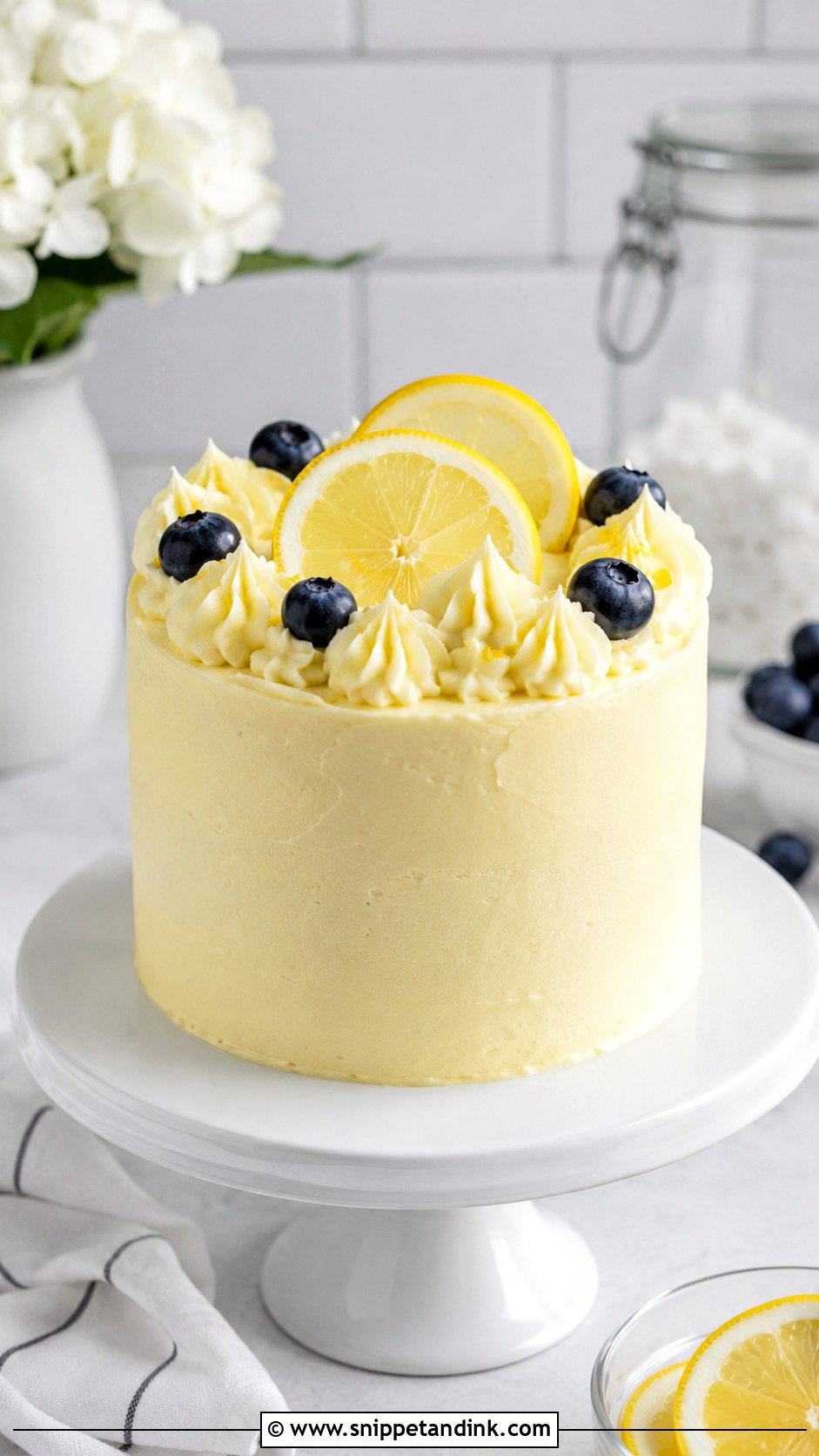
Small cakes are less frightening because there is less to go wrong. A mini layer cake in 4-inch or 6-inch rounds uses a fraction of the frosting, chills faster, and lets you test a color or technique before you commit to a full-size cake. Thin sides do have one catch: a tall, narrow stack can lean, so chill it after filling and keep it under three layers until you’re confident. Give it one focal point on top and stop there.
20. Sheet Cake With Piped Frosting
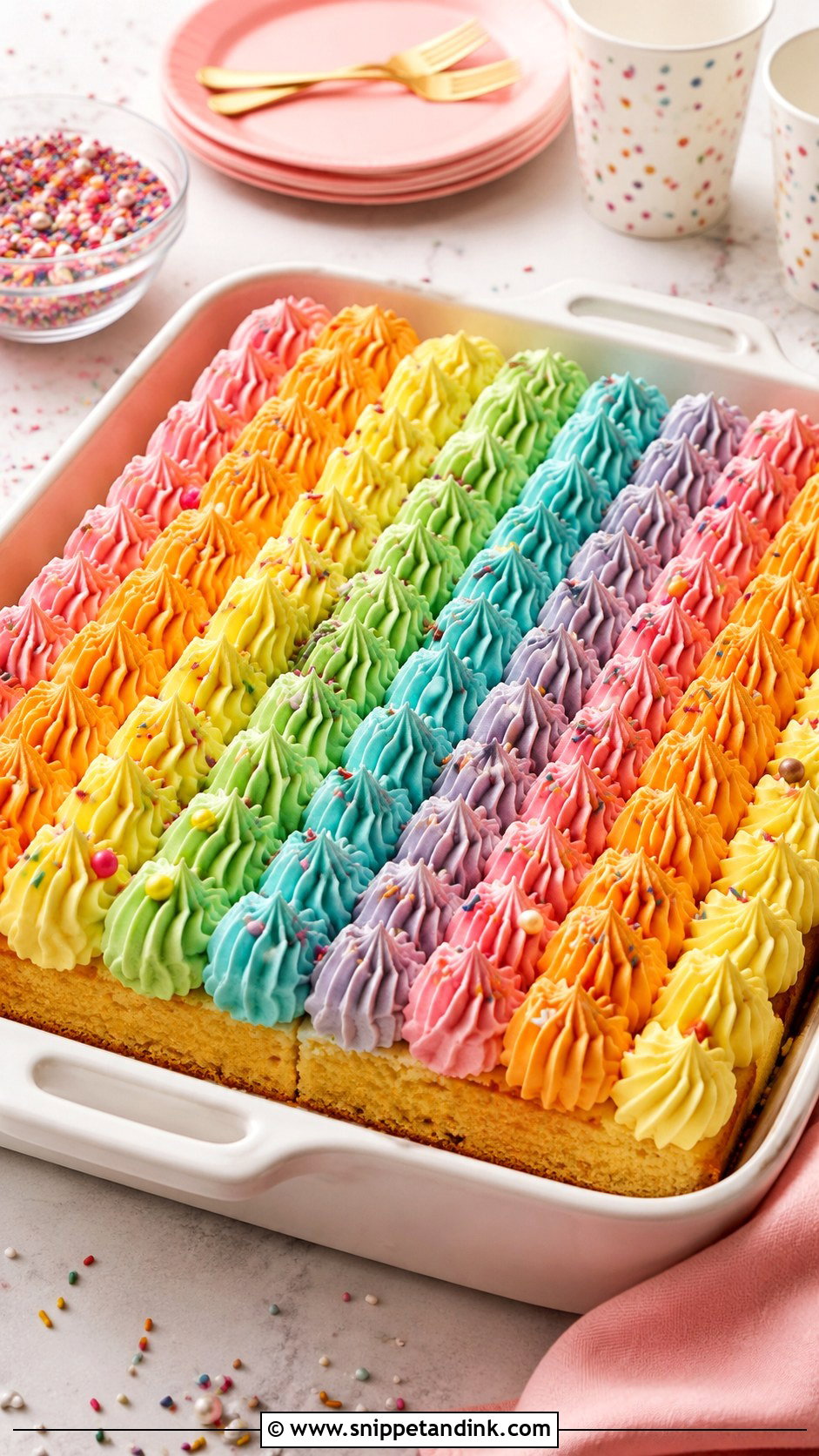
With no tall sides to smooth, a sheet cake with piped frosting is pure piping practice. Let the cake cool completely in the pan, spread a flat base coat, then pipe rows of shells, rosettes, or zigzags across the top with a star tip. Lightly scoring guide lines with a knife first keeps rows straight. Use one pattern across the whole surface or split it into colored sections. It slices neatly, feeds a crowd, and travels flat.
Rescuing the Cake When Something Goes Sideways
Every decorator has a cake that misbehaves. Most of the problems beginners hit have quick, unglamorous fixes.
A bulge around the middle
That ring of filling pushing out between layers usually means the cake settled after it was frosted. Next time, pipe a stiff dam of buttercream around each layer before adding softer filling, and let the stacked cake rest in the fridge before the crumb coat. On the day, a border or a band of sprinkles across the bulge hides it.
Air pockets and tiny holes in a smooth coat
These come from buttercream whipped too fast. Stir the bowl by hand with a spatula for a minute, pressing against the sides, to knock the air out before your final coat. Holes already on the cake can be filled with a dab of frosting and scraped again.
Ganache running all the way down
Scrape off what you can, chill the cake for 15 minutes, and let the remaining ganache thicken in the bowl. Then go again. If the drips are already set and too long, a piped border at the base turns the puddles into a finish.
Sprinkles or candy bleeding color
Moisture is the cause, usually from a fridge or a humid room. There’s no undoing a bleed, so add colored toppings as late as you can and keep the decorated cake in a cool, dry spot rather than a damp fridge.
Start With One Cake and Finish It
If I could hand a beginner one habit, it would be chilling between every stage. A cold cake forgives shaky hands, holds a drip in place, and lets a scraper glide instead of drag. Pick one cake from this list, gather only the tools it calls for, and finish it even if the border wobbles. Your second cake will be noticeably better than your first, and by the fifth you’ll start seeing your own style in the swirls.
You'll Like These Ideas:


Leave a Reply