
Expensive-looking bridal wear comes down to four things: the fabric, how the dress is built inside, how much of the finishing was done by hand, and accessories chosen with the same care. Those are the details that give a gown true couture presence, whether it’s a crystal-heavy ball gown with a cathedral veil, a sculpted satin column or a pearl-covered cape. Each look below comes with the shoes, jewelry and hair I’d put with it. Genuine couture carries an extraordinary price, but the effect can be borrowed at far lower budgets if you pick one or two statement details and let everything else stay quiet.
Where the Money in a Couture Gown Actually Goes
Two gowns can look alike in a photo and differ in price many times over. When I’m in a fitting room with a high-end dress, these are the things I look at to see what a bride is paying for.
- Fabric content. Silk mikado, faille, satin and organza breathe, drape and hold structure differently from their polyester versions, and they feel cooler over a long day. Read the label.
- Hand-sewn embellishment. On good work each bead, pearl or crystal is secured on its own, so a snag costs you one stone, not a whole row. Chain-stitched or glued beading can unravel or pop off.
- What’s inside the bodice. A built-in corset with sturdy boning, a waist stay and a full lining mean the dress supports you rather than the other way round.
- Finishing. Clean enclosed seams, hand-rolled edges and horsehair braid in the hem are slow work, and they’re why a skirt still holds its shape at midnight.
If a gown is priced like couture but turns out to be polyester with glued crystals and an unlined bodice, the money is going to the label.
1. Diamond Ball Gown Wedding Dress With Cathedral Veil
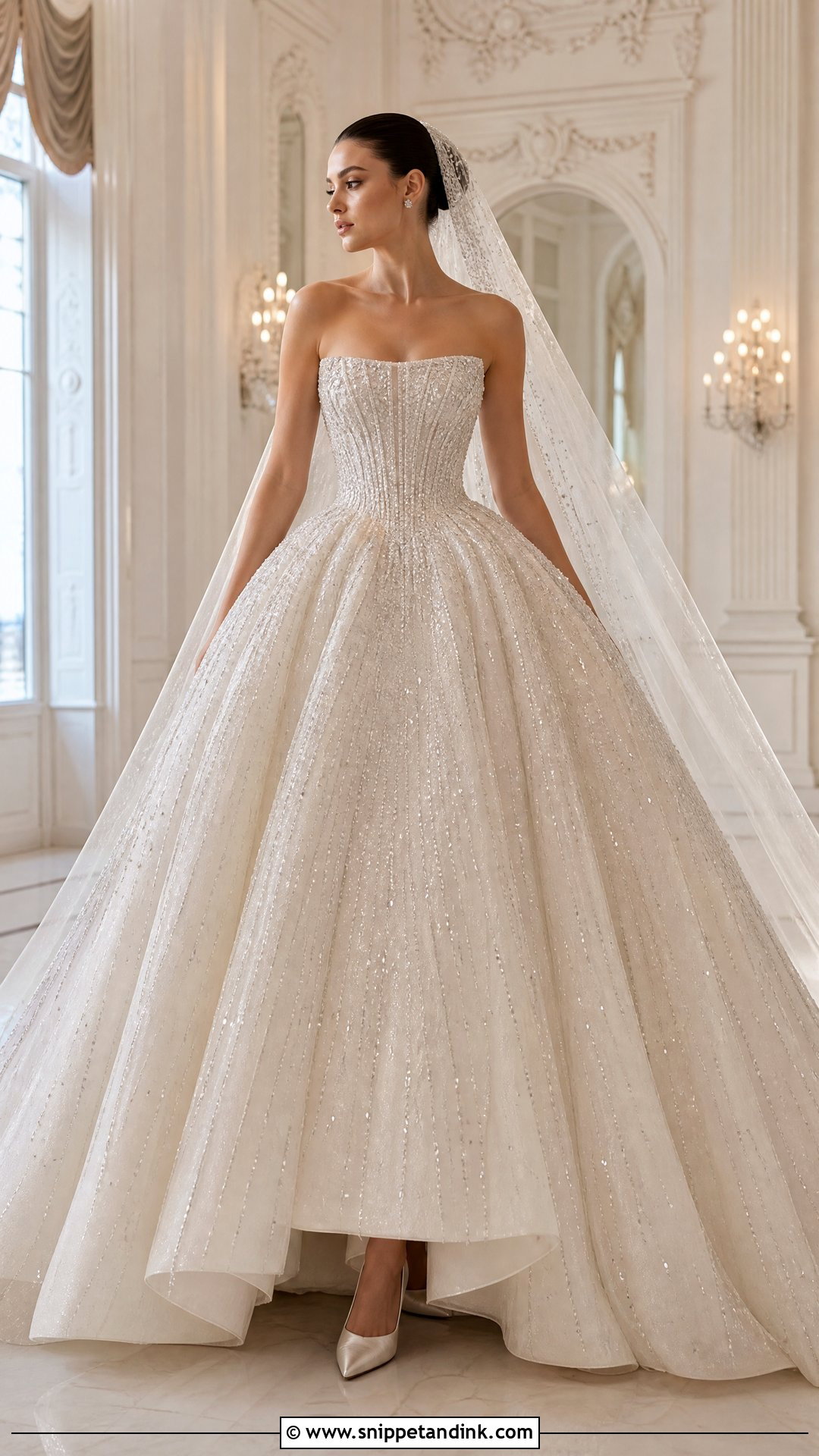
A crystal-covered ball gown is the entrance guests talk about, but the craft is in where the crystals stop. On an ivory silk or structured satin gown with a corset bodice and wide layered skirt, the embroidery should be densest at the neckline and thin out toward the hem. That gradient catches light near your face and keeps the skirt from looking, and feeling, like armor; a fully crystal-covered skirt can be genuinely heavy to walk in. Add a cathedral veil edged in matching crystals, pointed satin pumps and small diamond studs, with a polished low bun, and skip the big necklace when the bodice is this detailed. I adjust skirt volume and waist placement to the bride’s height, since a petite bride can disappear inside a full-size skirt.
2. Royal Wedding Dress With Extra Long Train
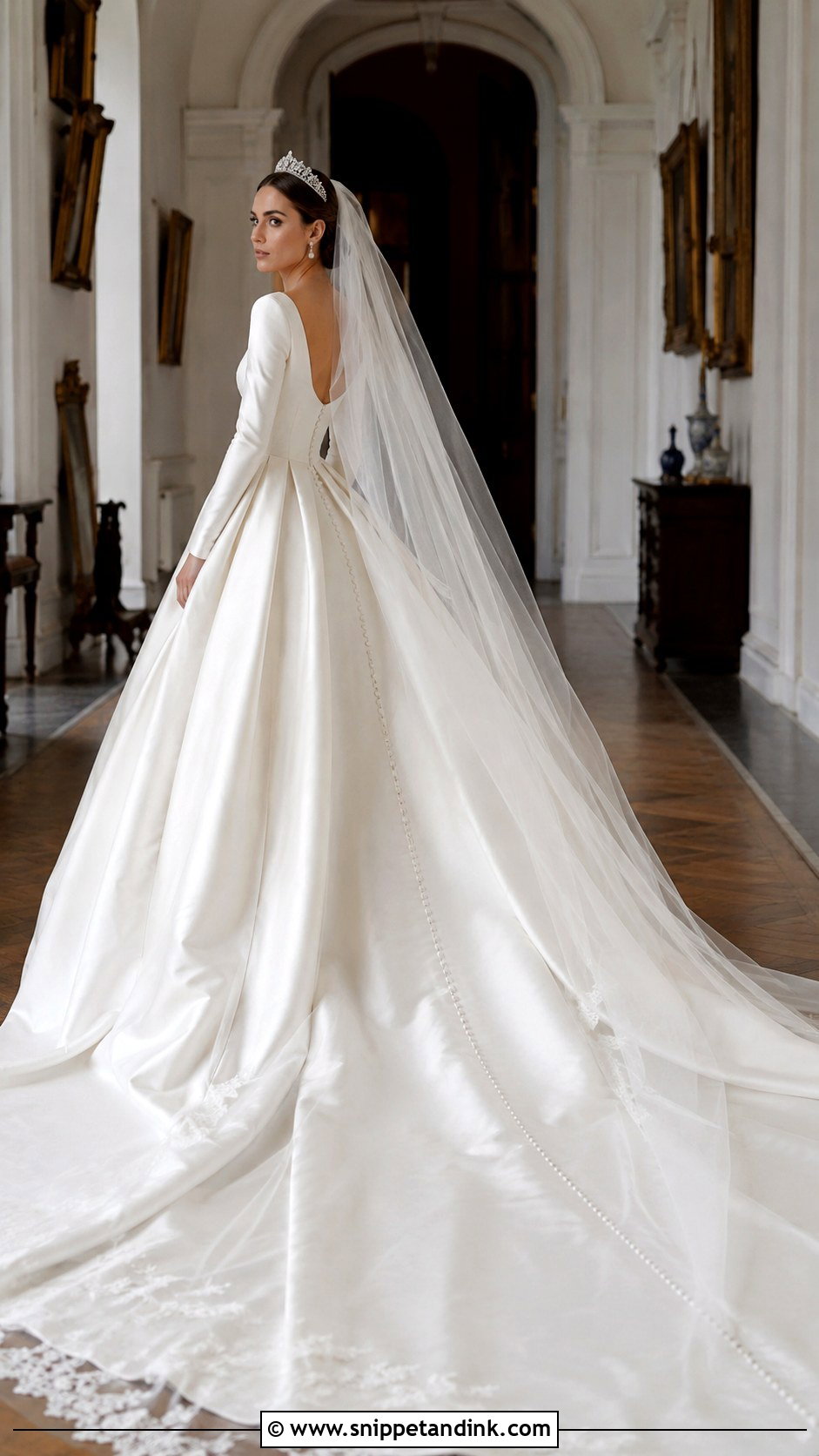
An extra-long train gives you royal impact, and it depends entirely on how it’s cut. On a structured silk mikado ball gown with a fitted bodice, covered buttons and a portrait neckline, the train should grow out of the skirt seams rather than look pinned on. Add a cathedral veil ending just past the train, pearl drops, a delicate tiara or crystal headband, and ivory platform pumps under the hem. Two practical things I insist on: a bustle tested at the final fitting, and a quick rehearsal with whoever will spread the train before you walk. A train this size also needs a wide aisle, so it belongs in a grand ballroom, historic estate or formal venue with room to show it.
3. Pearl Embellished Wedding Dress With Matching Cape
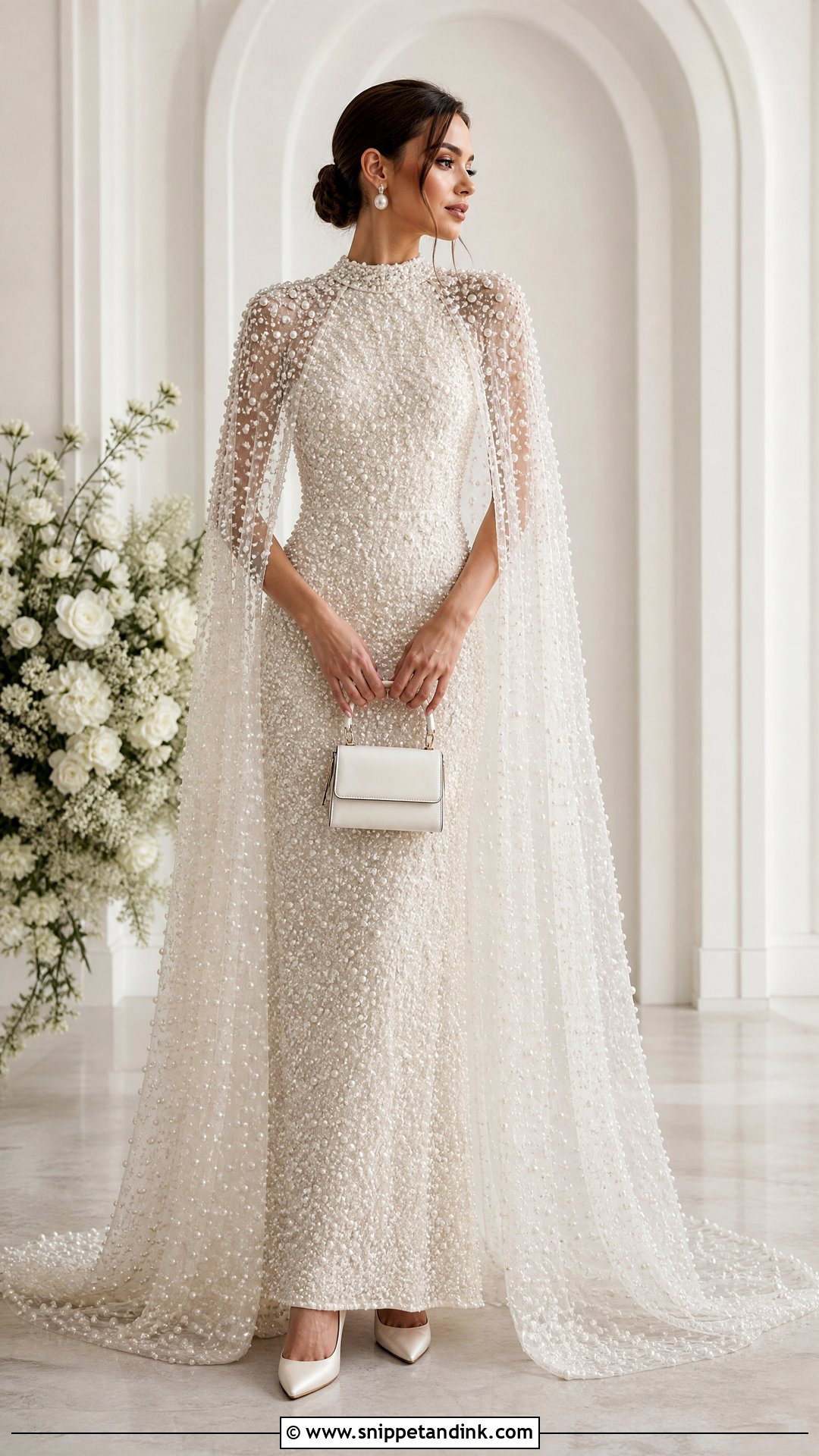
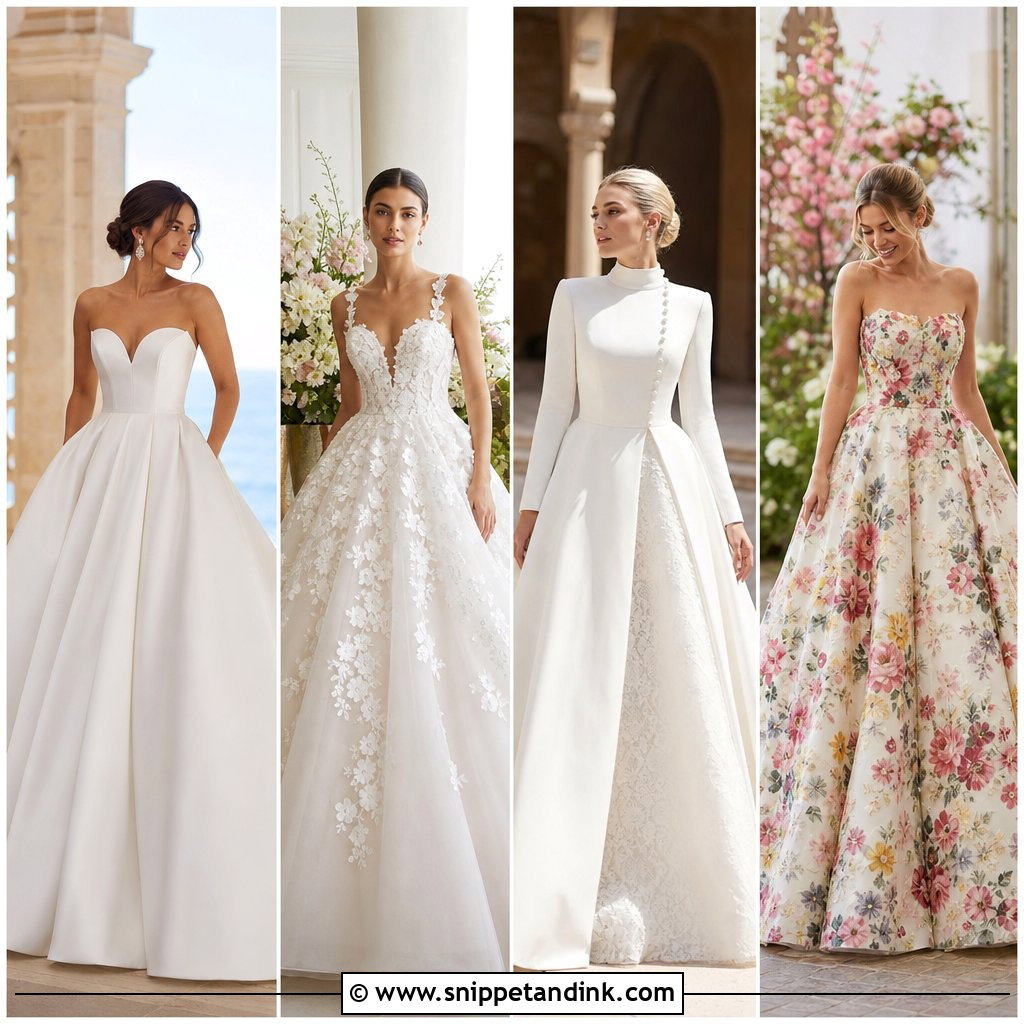
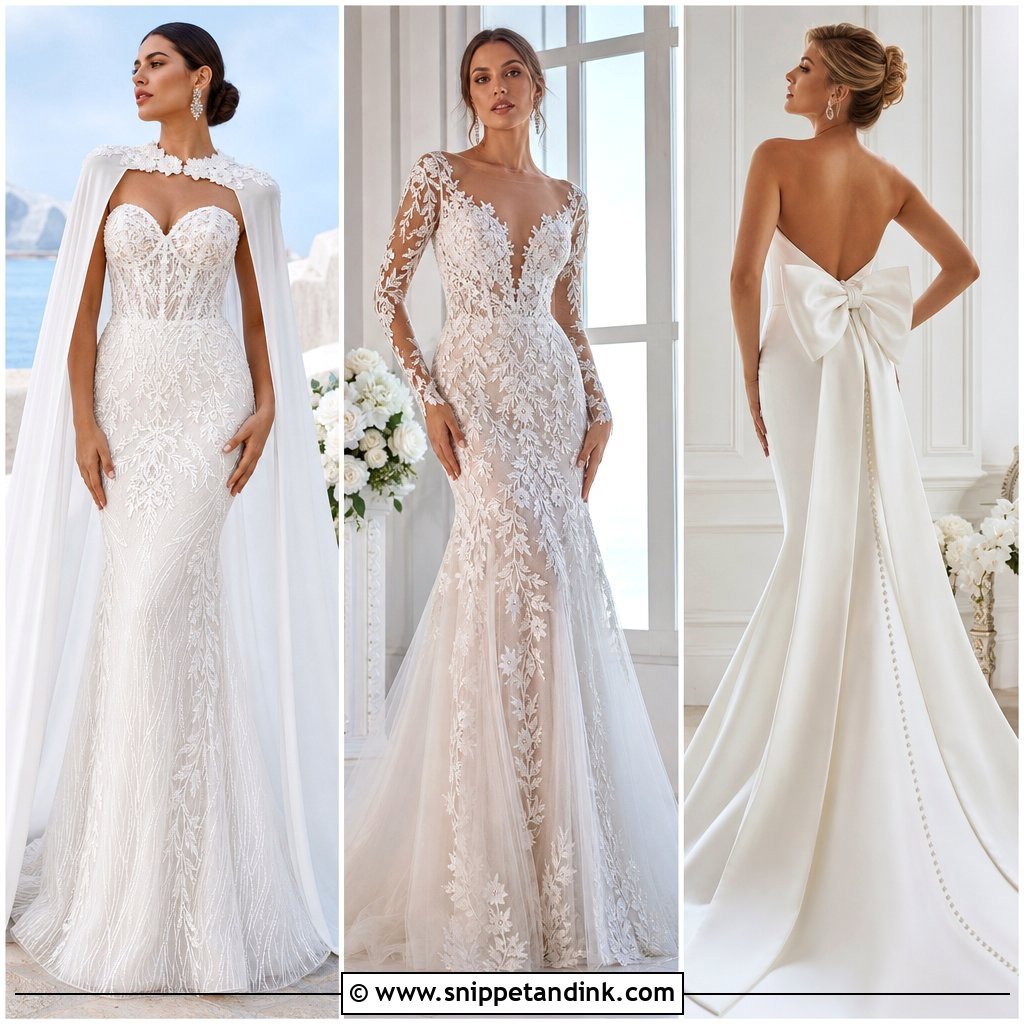
Pearls give richness without the hard sparkle of crystal. A fitted column or soft A-line covered in hand-applied pearls of several sizes looks deeper and more natural than one uniform bead. Pay attention to placement. At the waist and hips, where the body bends, the pearls should be smaller and spaced so they don’t press into you when you sit, and the bodice needs a full lining so nothing feels rough against skin. A sheer pearl-detailed cape replaces the veil and adds movement. Ivory satin heels, pearl studs and a structured mini bag finish it, with a smooth chignon or side-parted waves depending on the neckline.
4. French Lace Wedding Dress With Mantilla Veil
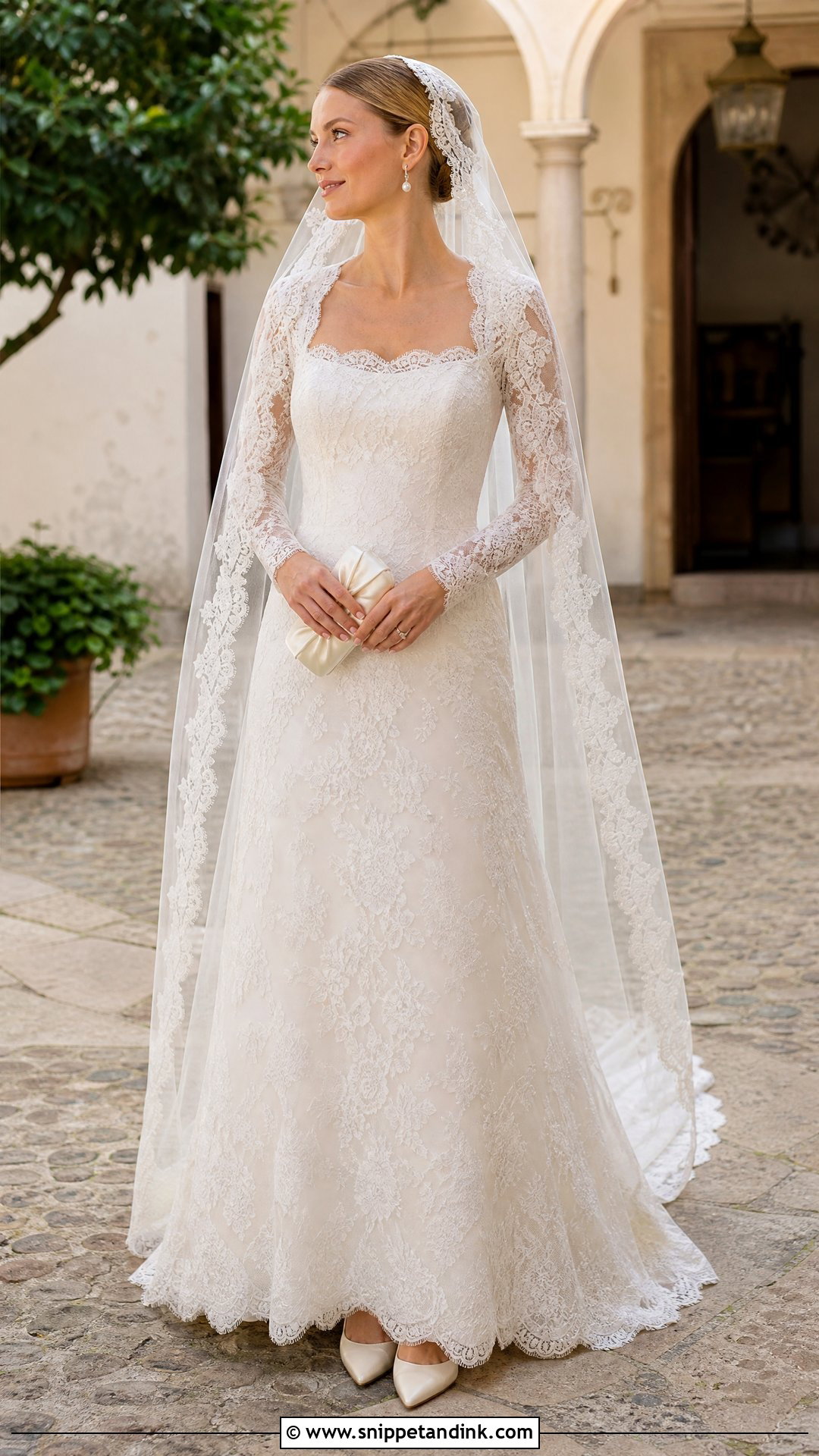
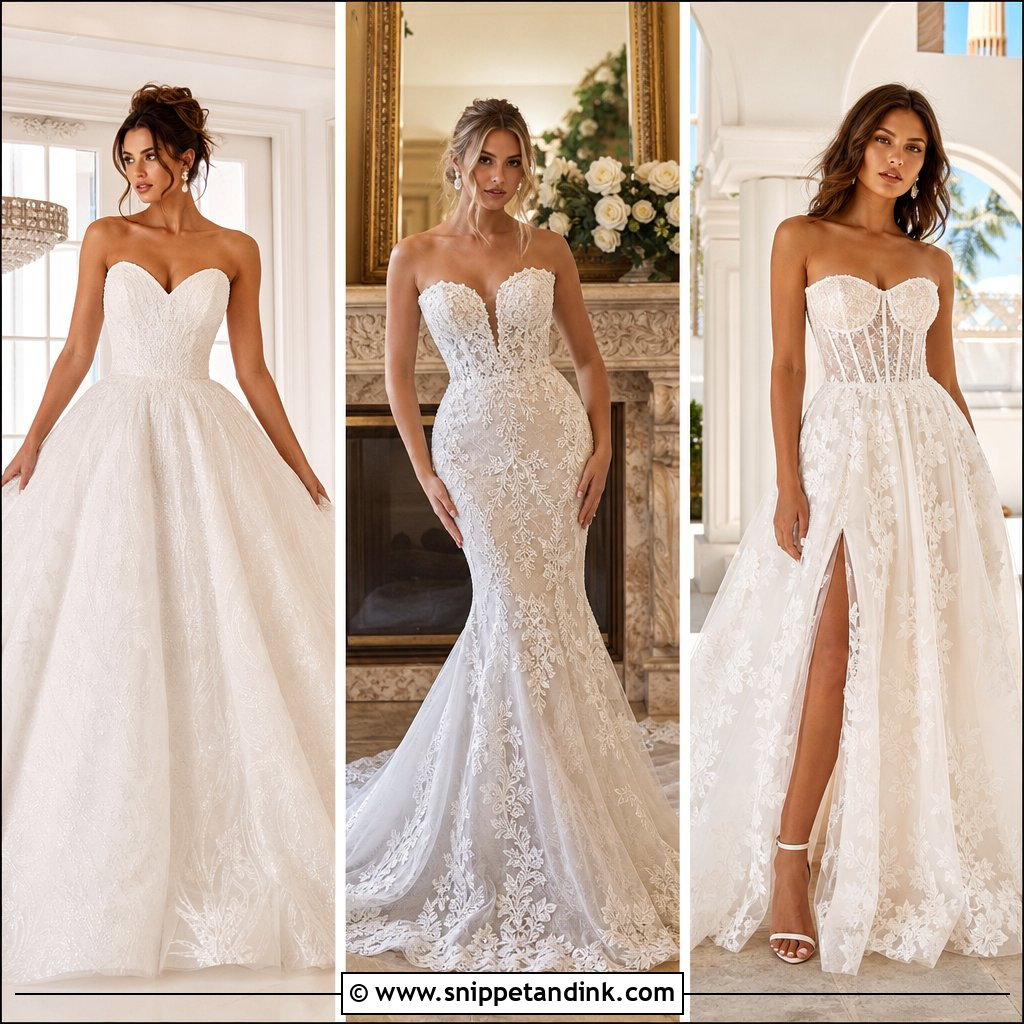
Fine lace looks most expensive when the pattern runs unbroken across bodice, sleeves and skirt, which takes careful hand-cutting around each motif. Choose a fitted A-line with a softly structured corset, long lace sleeves and a scalloped hem. A lace-edged mantilla veil frames the face, falls over the shoulders and extends behind the dress. When I pair a veil with a lace gown, I bring a piece of the dress lace to the veil maker, because mixing unrelated lace motifs is the fastest way to make a costly gown look busy. Closed-toe ivory pumps, antique-style pearl earrings and a small satin clutch finish it, with a sleek center-parted bun that leaves the neckline lace visible.
5. Crystal Corset Wedding Dress With Detachable Skirt
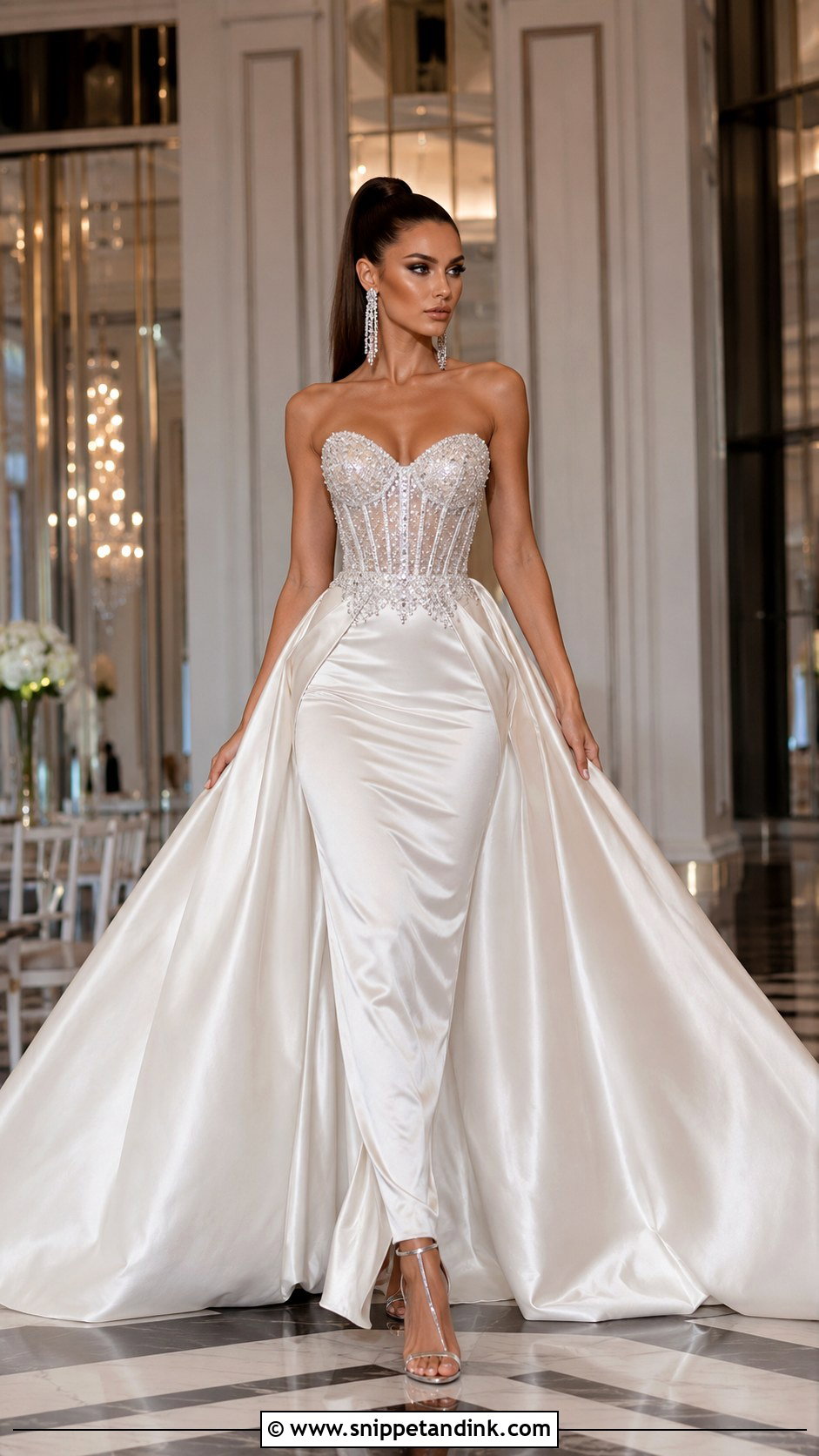
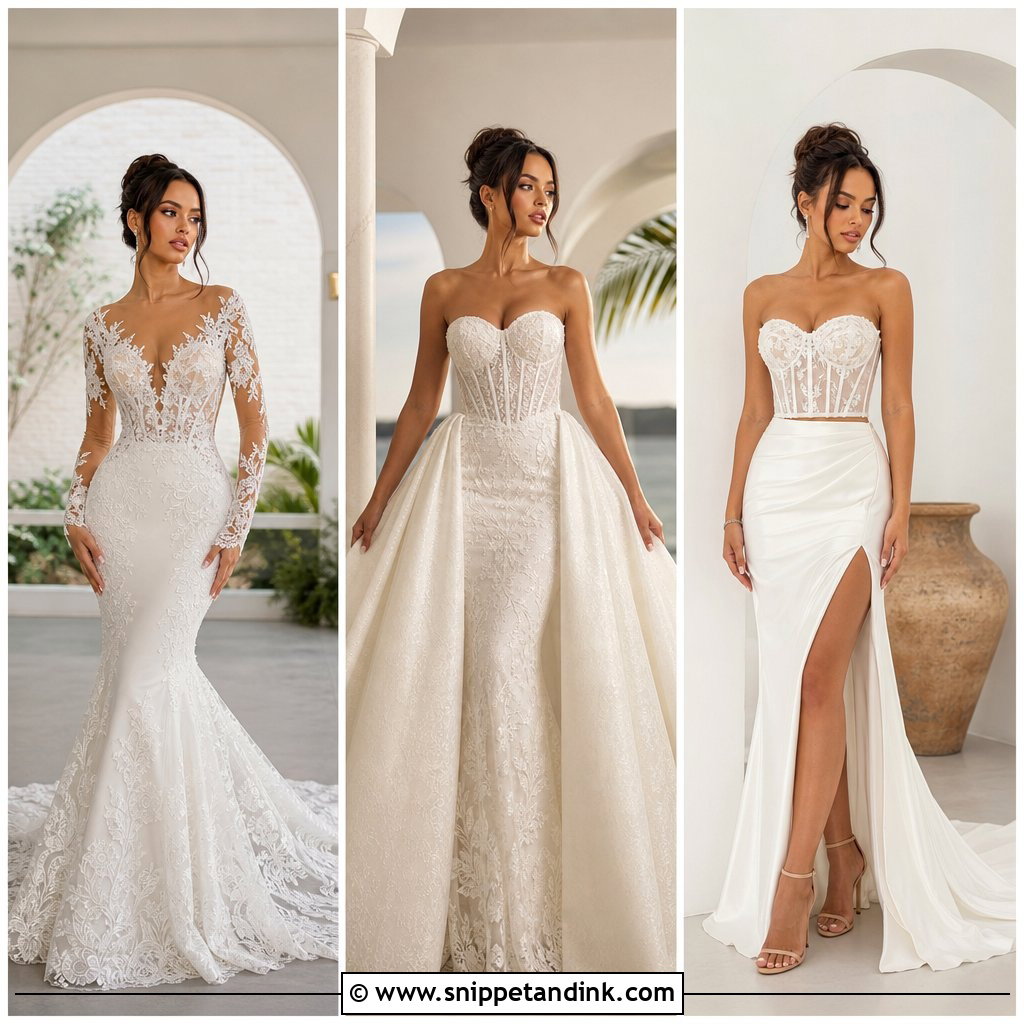
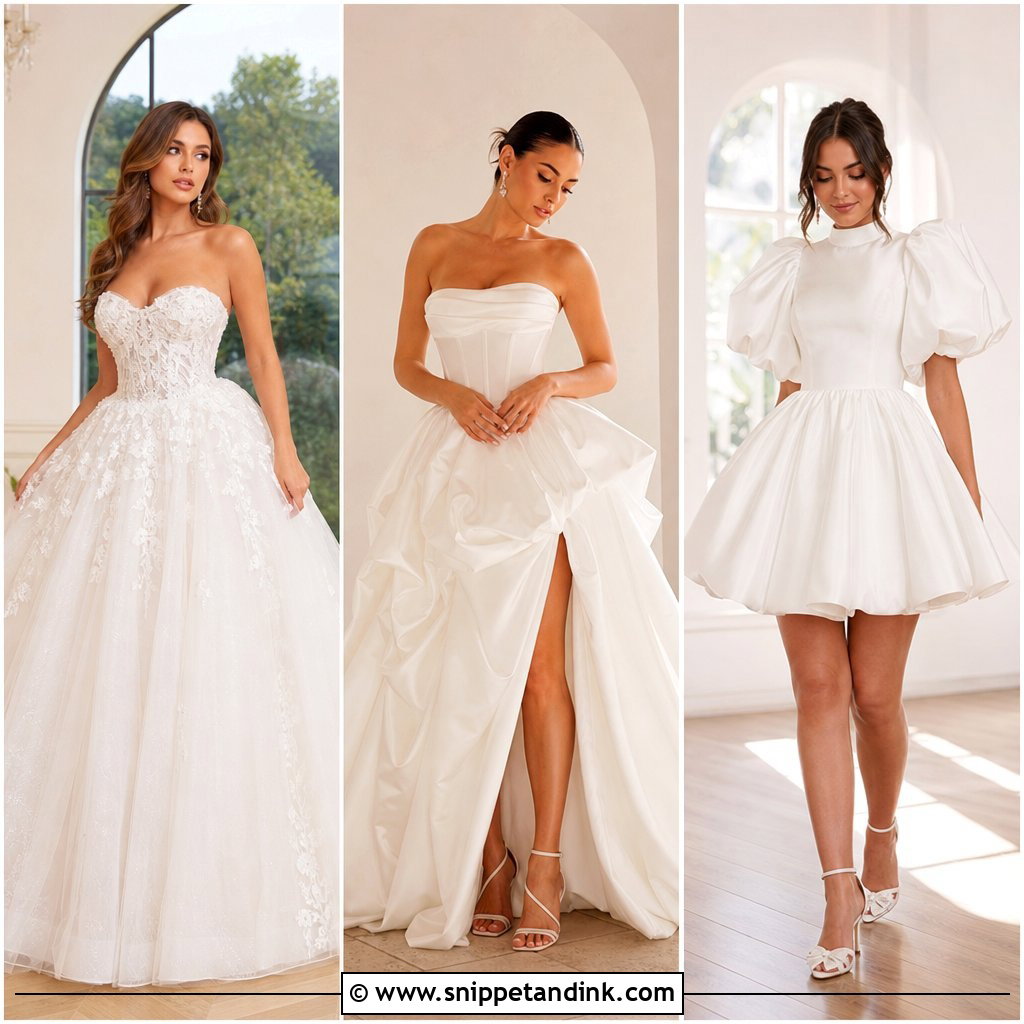
A detachable overskirt gives you a ball gown for the vows and a slim column for dancing. The base gown is crepe or satin with a boned corset and crystal embroidery placed where the overskirt won’t cover it, and a full silk overskirt with a sweeping train goes on top for the ceremony. Practice taking it off, before the wedding, with the person who’ll do it on the day; hooks undone in a hurry are how fabric tears. Metallic silver heels, crystal drops and a small embellished clutch work for both versions, with a high ponytail or smooth bun. The fastening must sit flat and hidden from every angle, including from behind when you’re seated.
6. Silk Satin Wedding Dress With Statement Jewelry
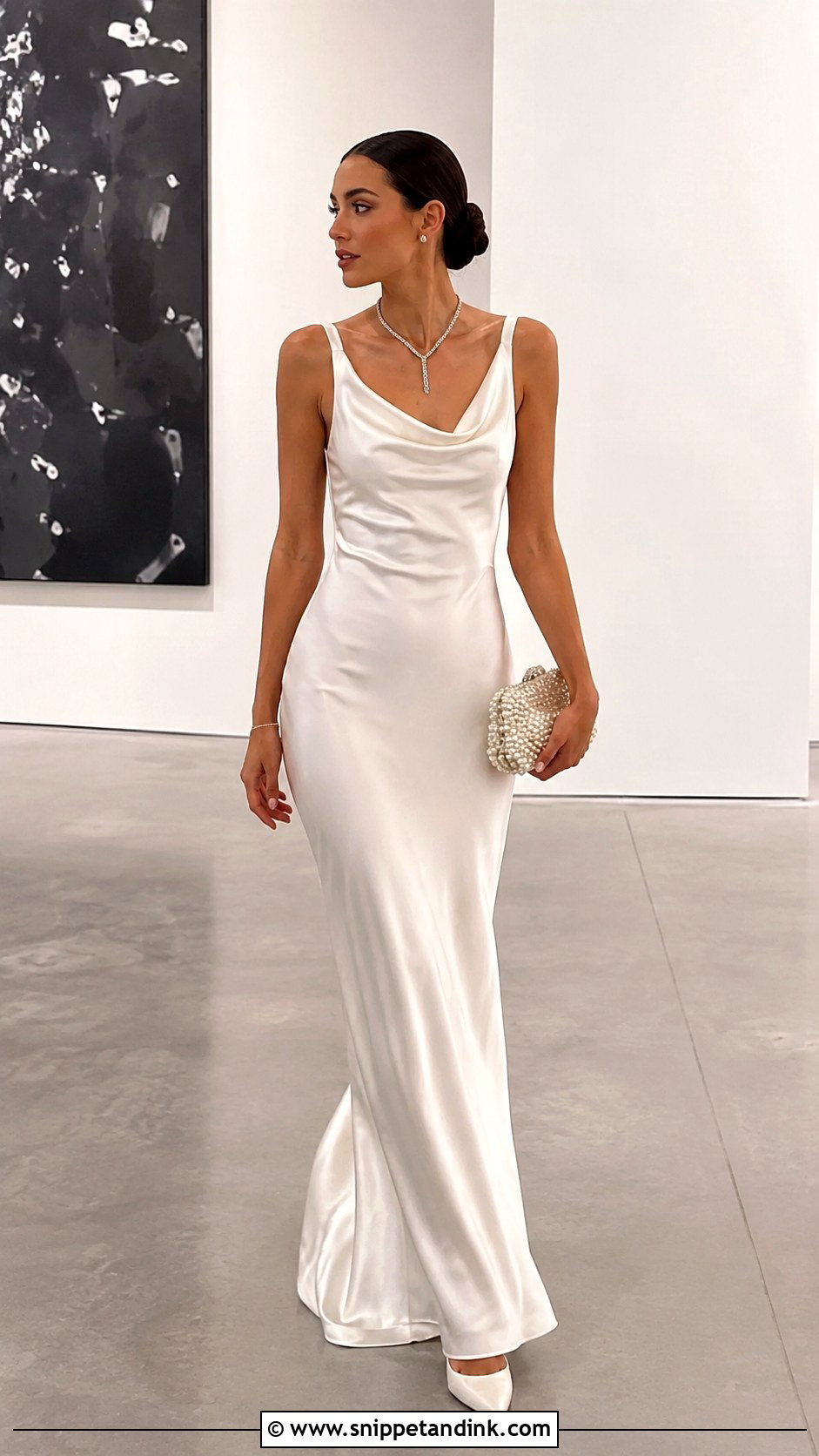
Can a plain dress look expensive? Yes, but only if the fabric and fit are flawless, because there’s nowhere to hide. Heavy silk satin in a bias-cut or structured column with a clean neckline and fluid skirt needs one statement piece, a diamond collar or sculptural earrings, not several. Pointed satin pumps, a small pearl-finished bag and a smooth blowout, low bun or tucked waves keep it uncluttered. Satin shows every seam and line underneath, so bring your exact undergarments to every fitting and have the gown professionally steamed on the day. An elegant hotel, gallery or city ceremony suits it.
7. Gold Embroidered Wedding Dress With Beaded Veil
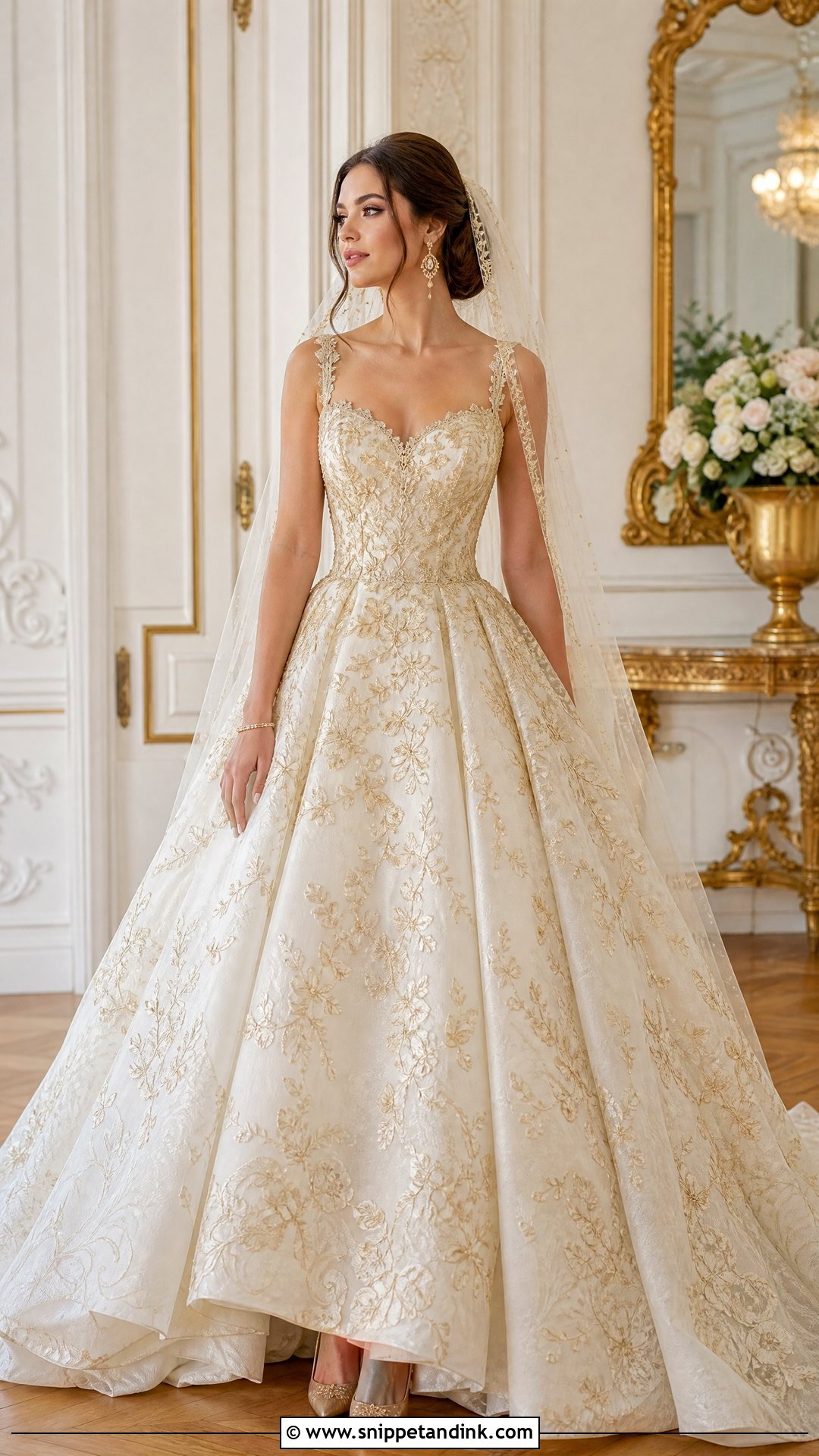
Gold embroidery warms an ivory gown, and the finish of the thread decides whether it looks rich or loud. An antique, slightly matte gold reads as heirloom; bright reflective yellow gold can look costume-like under a camera flash. Look for a full A-line or ball gown with metallic floral threadwork concentrated around the bodice, waist and skirt border, and a softly beaded veil that repeats a little of the gold. Champagne heels, delicate gold earrings, a slim metallic bracelet and a low textured bun are enough. With this much detail, keep the bouquet simple. Evening ballrooms and ornate estates suit it.
8. Beaded Mermaid Wedding Dress With Long Veil
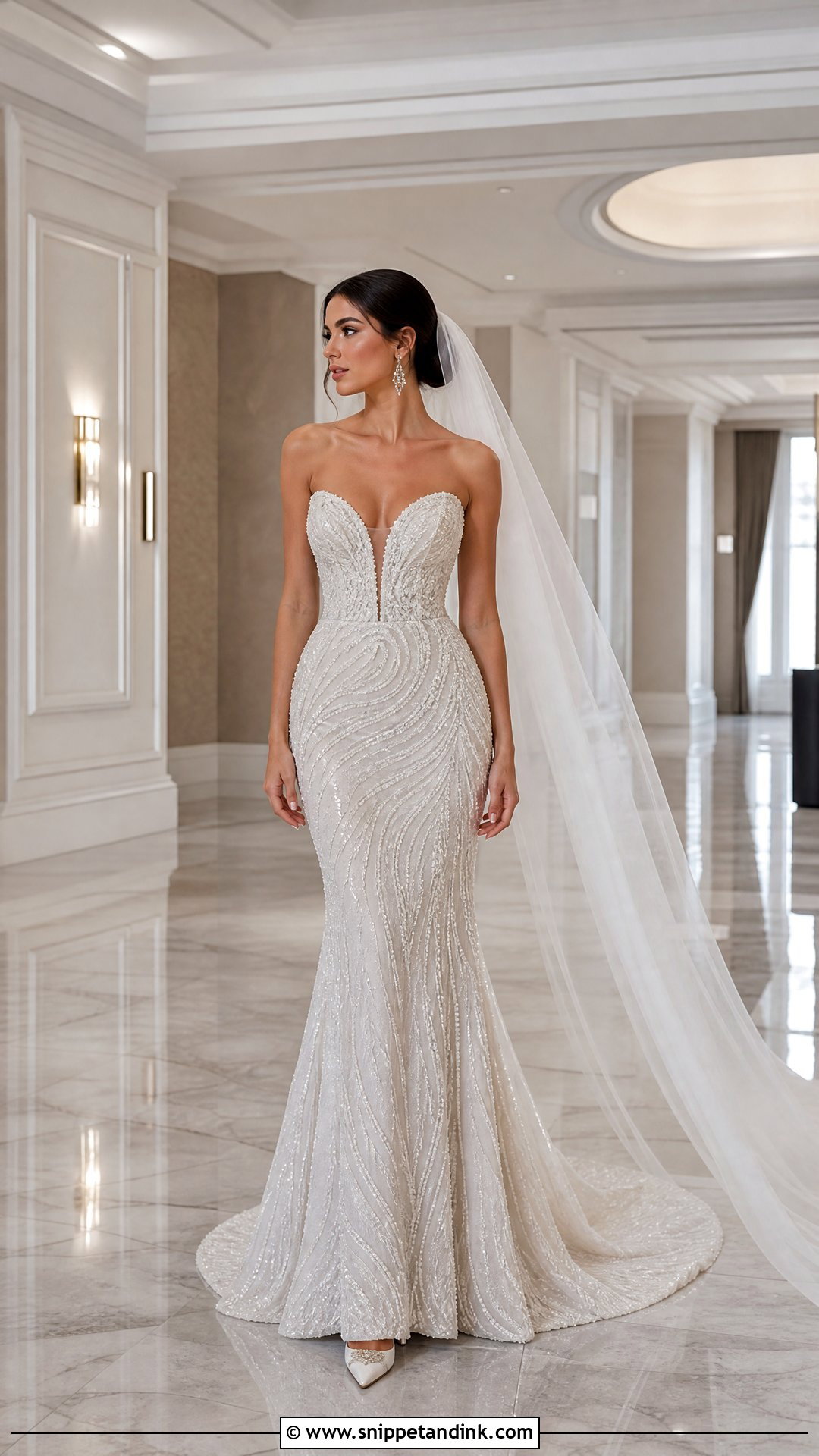
A beaded mermaid is the most demanding fit on this list. The gown follows the body through the bodice and hips before flaring near the knee, and the flare point decides everything: set too low, you’ll shuffle; set at or just above the knee, you can walk and manage steps. Hand-beading in vertical or curved lines shapes the body without adding bulk. I’d raise hidden stretch panels or a softer lining at the first fitting, not the last, when there’s still time to change the build. A plain cathedral veil, crystal earrings, sleek pointed heels and side-parted waves or a polished updo finish it. It shines in a contemporary ballroom or a venue with strong architecture.
9. Three Dimensional Floral Wedding Dress With Floral Veil
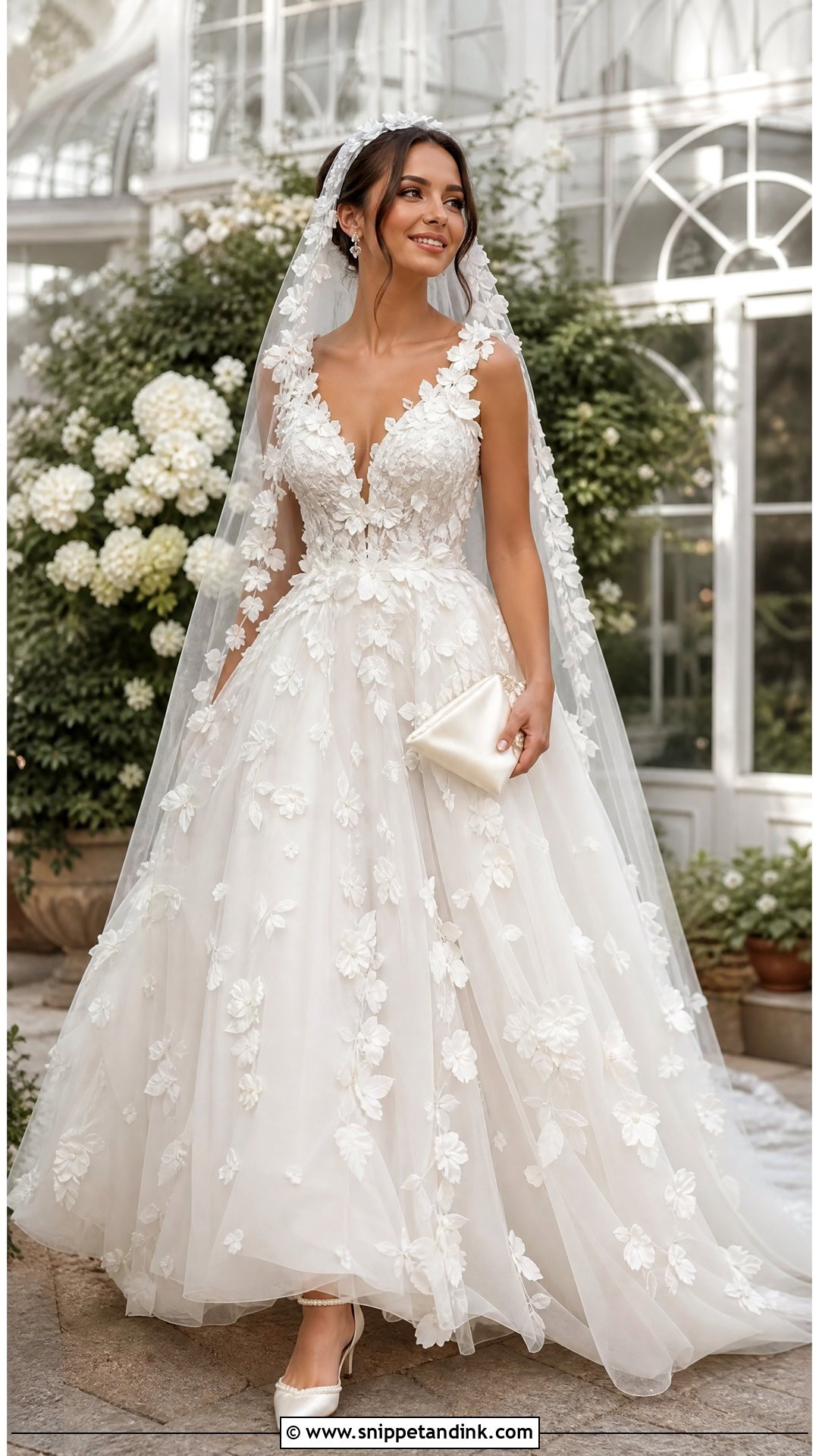
Three-dimensional flowers turn a gown into something closer to sculpture. Start with layers of soft tulle in an A-line or ball gown, then hand-applied floral appliqués across the corset and skirt, shrinking toward the hem so the skirt stays light. Every flower adds a little weight and can catch, so check that the appliqués at the hips lie flat enough for an arm around your waist during photos. A sheer veil with a few matching flowers, pearl-trimmed pumps, floral studs and a simple satin clutch complete it. Keep the hair to a low bun with one small floral pin and leave the flower crown out. A garden, conservatory or formal spring wedding suits it.
10. Feather Wedding Dress With Satin Gloves
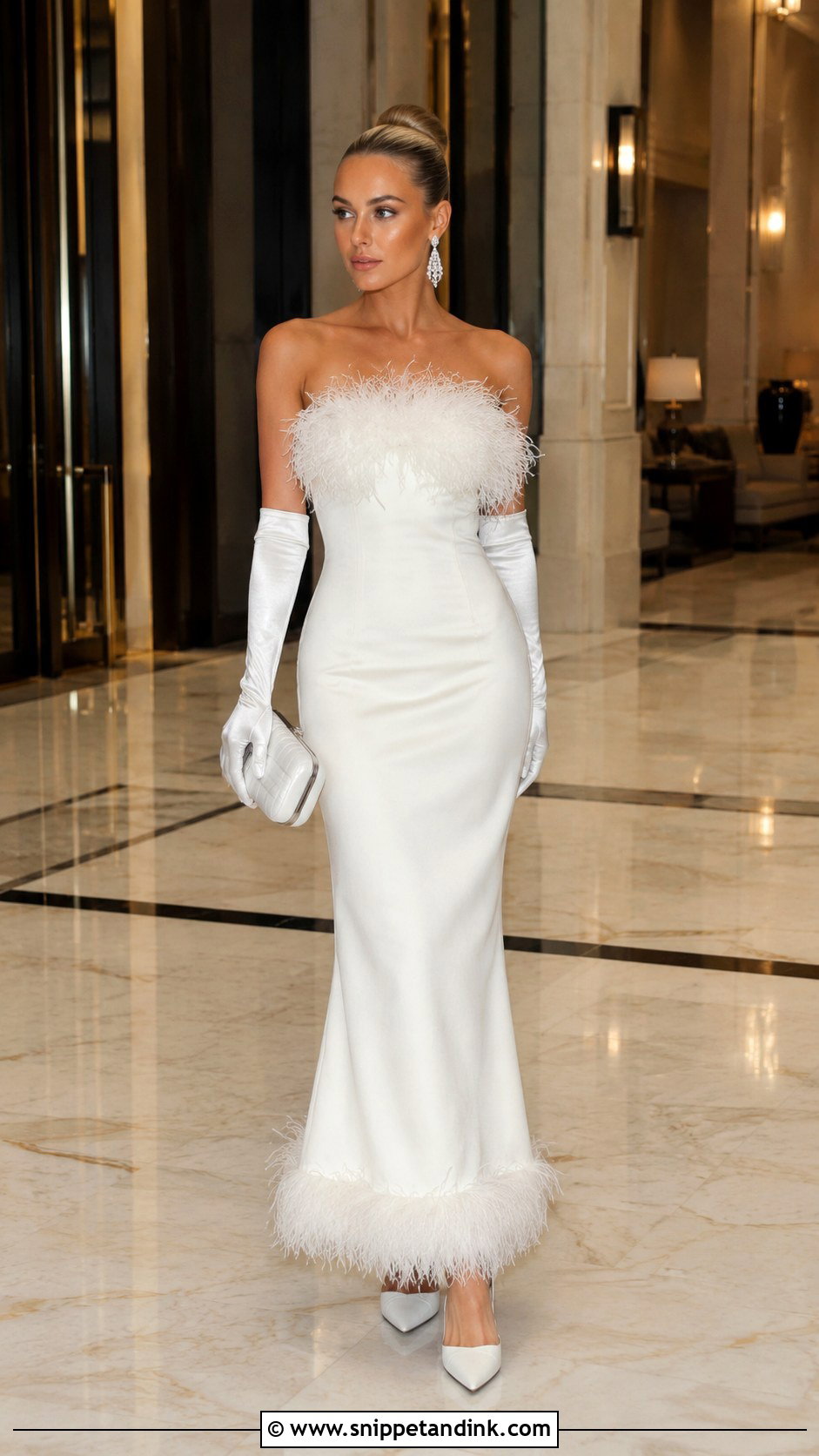
Feathers are dramatic, and restraint is what keeps them luxurious. Choose a fitted satin dress with feather detailing around the neckline, sleeves or lower skirt rather than all over. Soft ostrich feathers move gracefully; stiff, densely packed ones look like a costume. Long satin gloves suit a strapless or off-the-shoulder bodice. Crystal earrings, pointed ivory heels, a small structured clutch and a smooth bun or sculpted wave keep the trim in focus. Watch the feathers in motion at your fitting as you sit, walk and turn. They also droop in humidity and rain, so I’d keep this one for an indoor ceremony.
11. Sculptural Wedding Dress With Opera Gloves
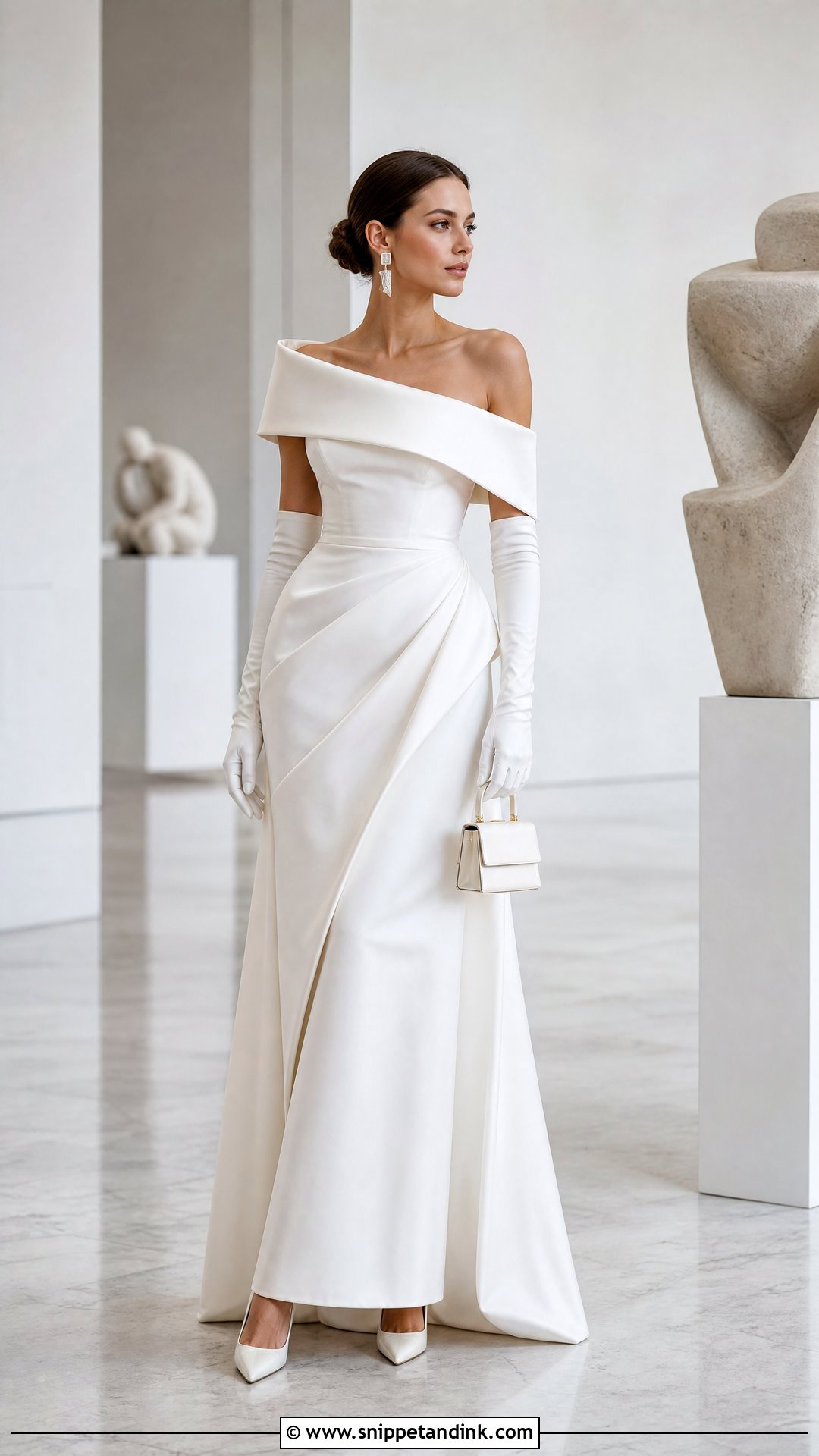
A sculptural dress is expensive in a quiet way: you’re paying for construction, not decoration. Look for an architectural neckline, a draped hip or a folded overskirt in structured silk faille or mikado, and check that the shape holds from the side and back, not just the front. Add elbow-length opera gloves, geometric earrings and sharp pointed pumps for the modern line, with a compact top-handle bag for portraits. Keep the hair sleek in a low knot or tucked behind the ears. Bring your exact ceremony shoes to every fitting; with a sculpted hem, an inch of heel changes where every fold falls.
12. Basque Waist Wedding Dress With Layered Tulle Skirt
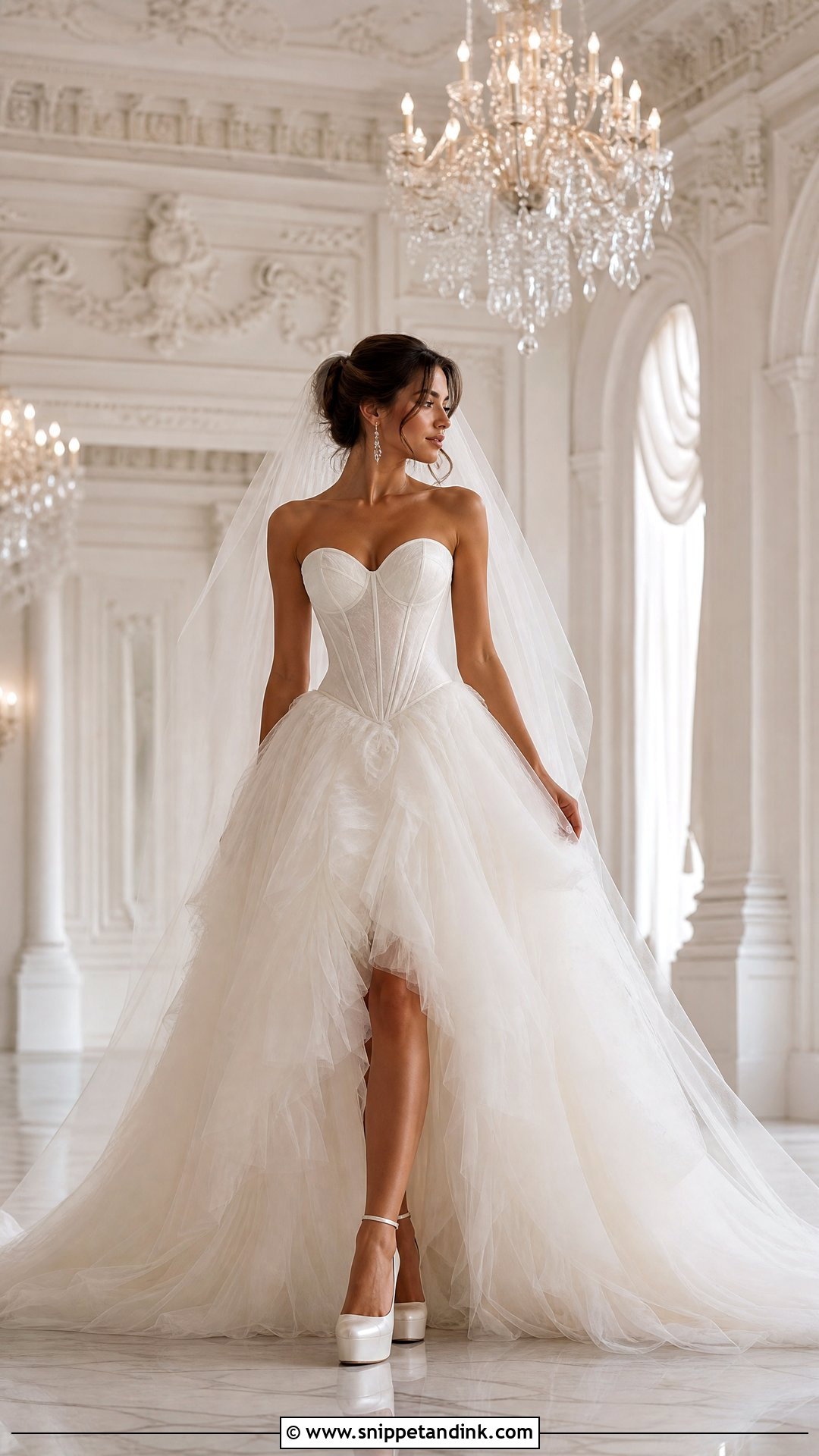
A basque waist dips into a point at the center front and makes the torso look long before the skirt opens out. Choose a corseted gown with layers of fine silk tulle and subtle embroidery or tiny crystals around the bodice. The point has to be placed for your body. Too long and it shortens your legs; too short and it looks like an ordinary waistline that slipped. I mark it with the bride sitting as well as standing. A fingertip or cathedral veil, delicate drop earrings and ivory pumps with a block or platform sole suit it, with a polished updo. It brings ball-gown drama to a formal indoor ceremony.
13. Long Sleeve Wedding Dress With Crystal Train
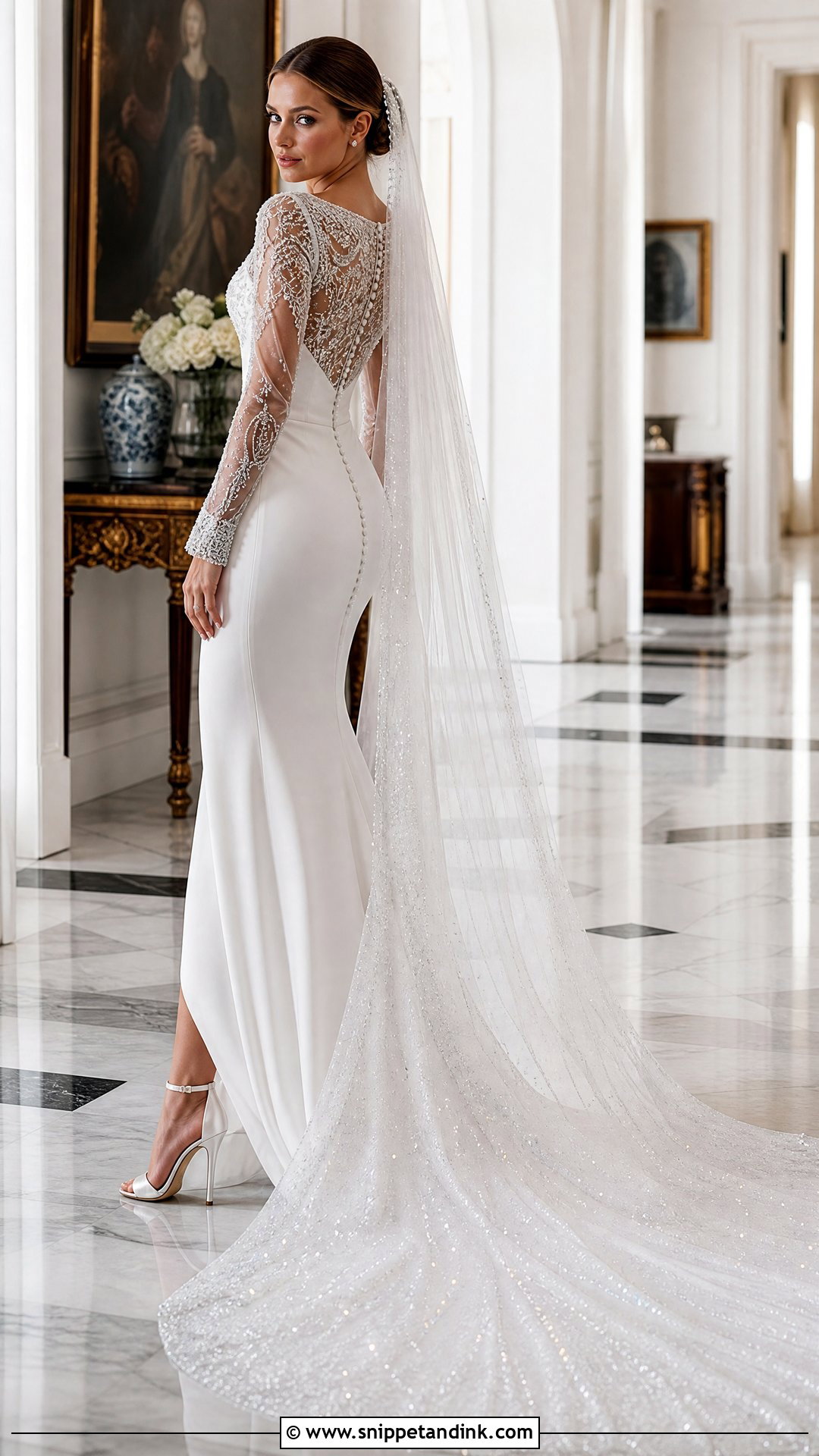
Long sleeves can be modest and spectacular at once if the decoration is placed well. Choose a fitted bodice with sheer illusion sleeves, crystal cuffs and fine embroidery across the shoulders, then keep the skirt smooth and save the heavy crystal for the train, so the drama shows as you walk away. Crystal cuffs and underarm beading can scratch and snag against the bodice, so lift your arms at every fitting and ask for any rough stones near the underarm to be moved. A simple veil, crystal studs and satin heels with an ankle strap complete it, with a low bun to show the sleeves. It suits a formal fall or winter wedding.
14. Blush Wedding Dress With Rose Gold Accessories
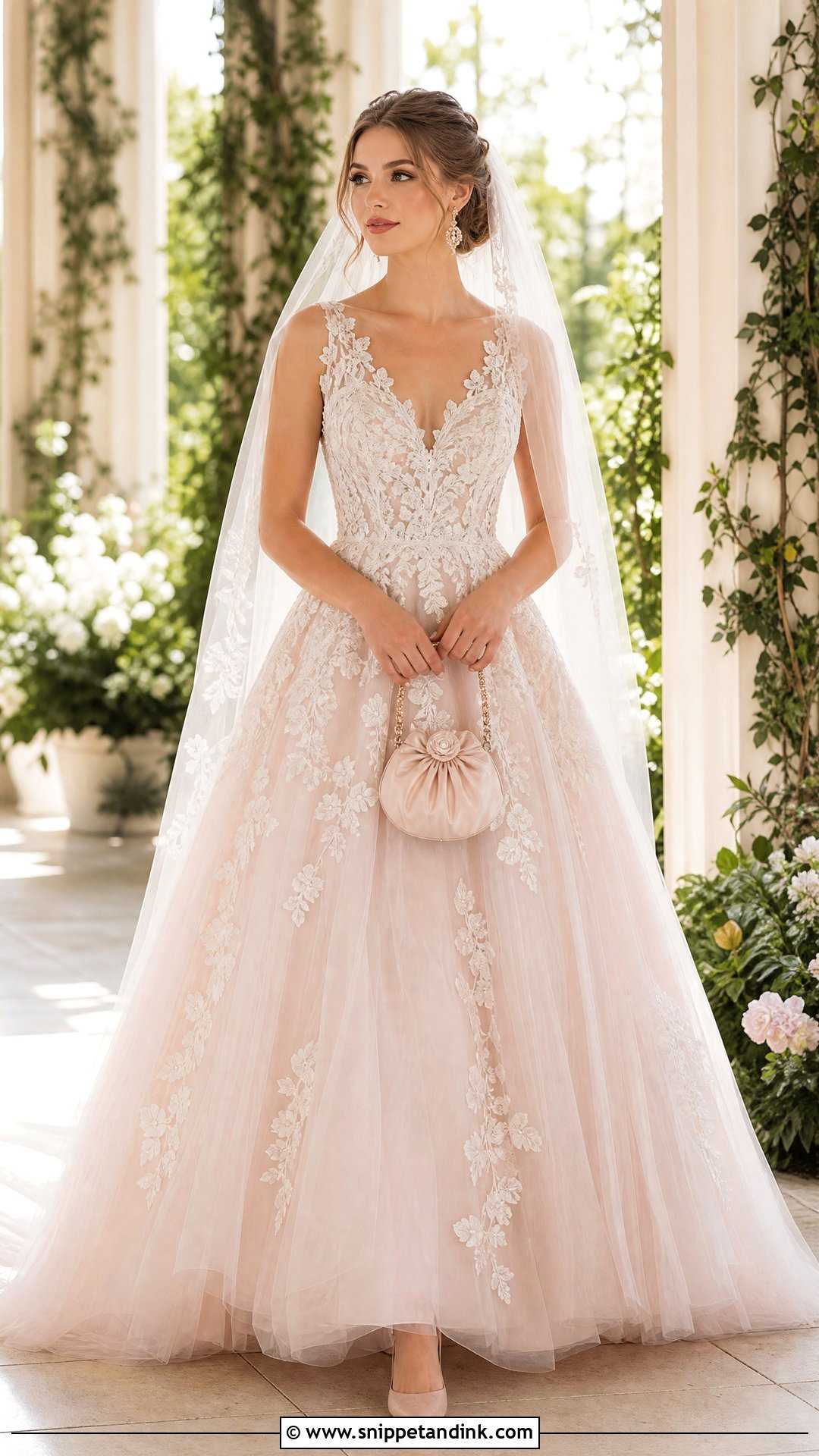
Blush is softer than white and still clearly bridal, and it’s the shade I test most carefully. Choose a layered tulle ball gown or flowing A-line with a pale blush lining under ivory lace, which adds depth and lifts the embroidery. Blush can look almost white indoors and distinctly pink in sunlight, and it shifts against different undertones, so look at it near your face in both kinds of light. Rose gold earrings, blush pumps and a small matching satin bag suit it, and a sheer ivory veil keeps the whole look from turning too pink. Soft waves or a textured low bun finish it.

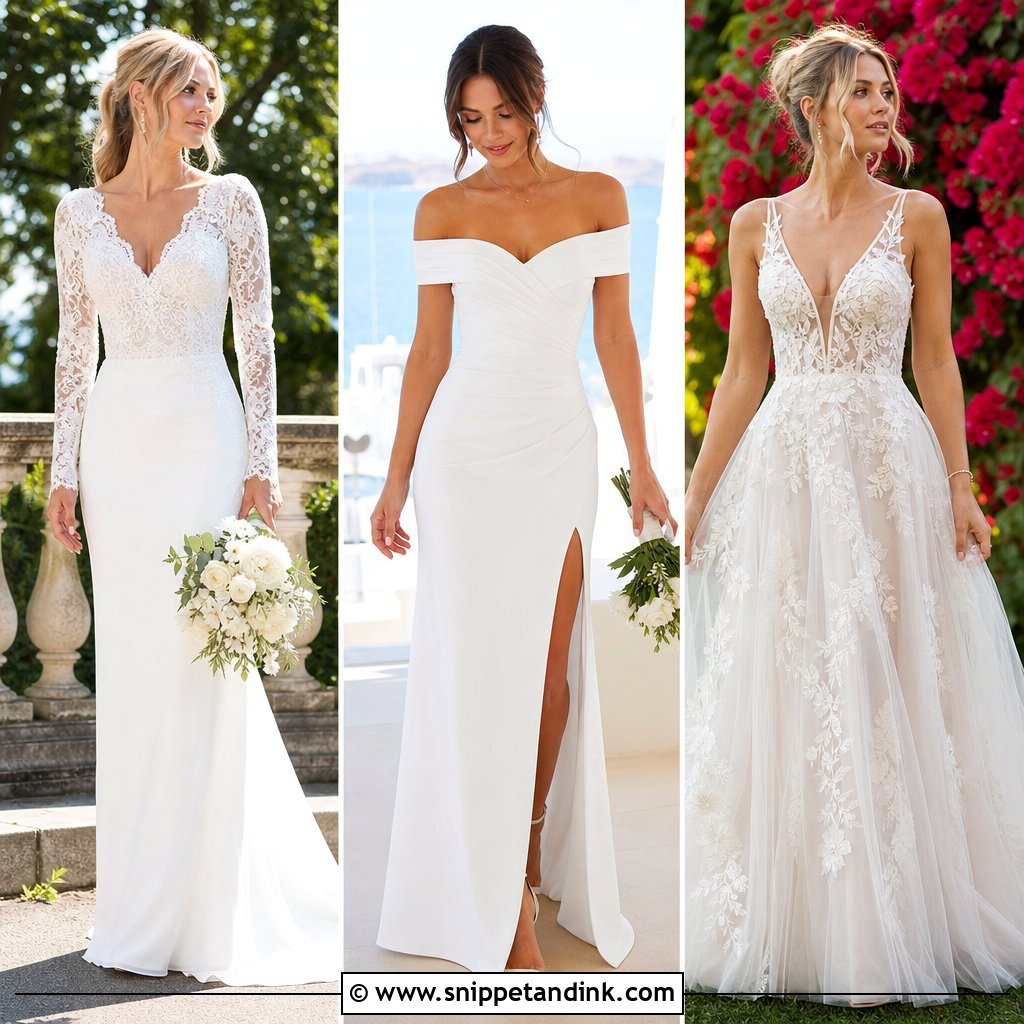
15. High Neck Wedding Dress With Embroidered Cape
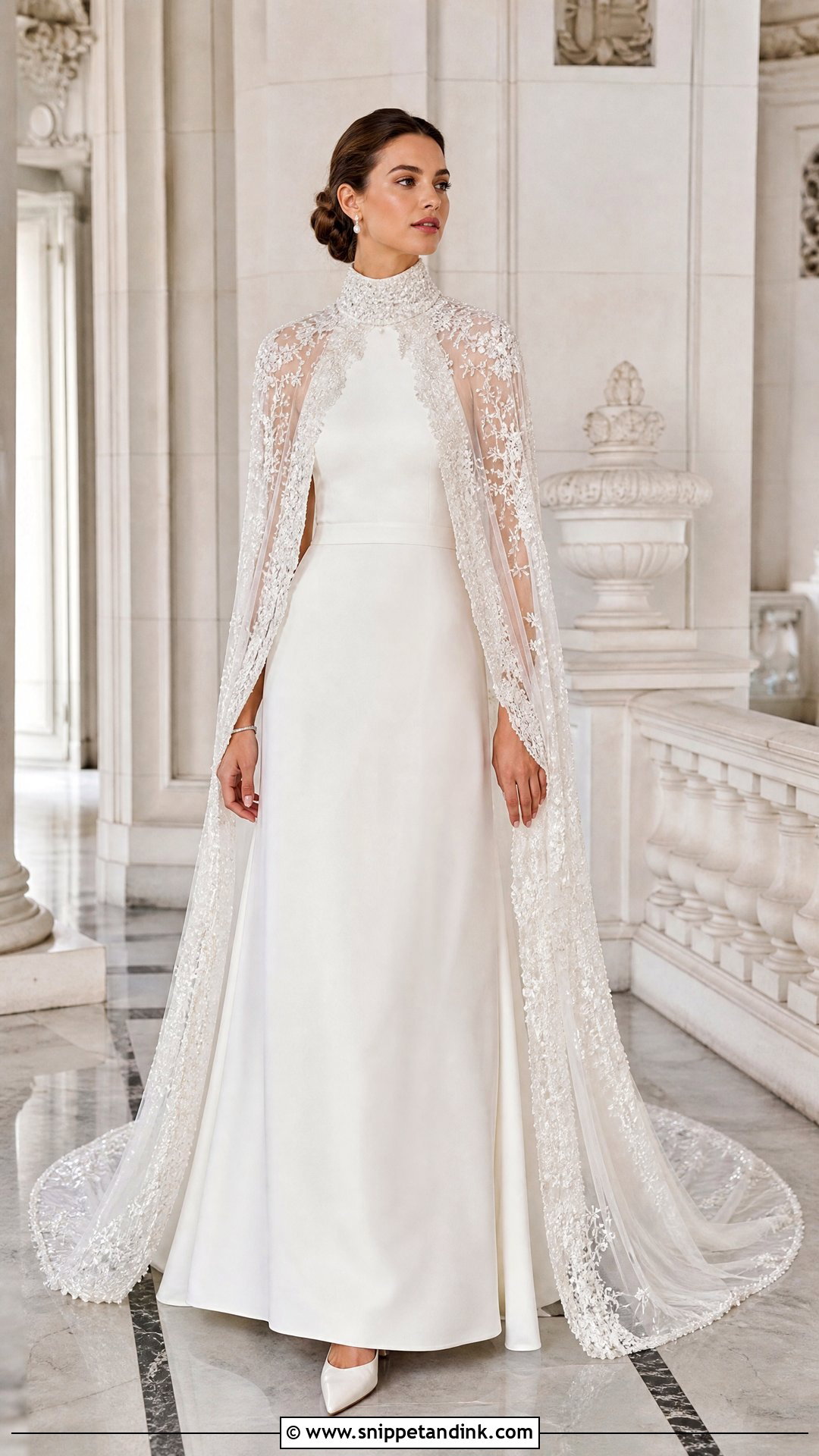
A high neck with a cape gives a stately silhouette and two looks in one. Choose a slim A-line with a fitted high neckline, covered shoulders and a smooth skirt, and a removable cape with threadwork, crystals or lace along its edges and train. Pearl earrings, closed-toe satin pumps and a slim bracelet worn under the cape are enough, with a sleek bun or high style to keep the neckline visible. No necklace. The cape should hook onto reinforced points, usually inside the shoulder seams, so its weight doesn’t drag the high neck back against your throat. Remove it for a cleaner reception look.
16. Off Shoulder Wedding Dress With Pearl Accessories
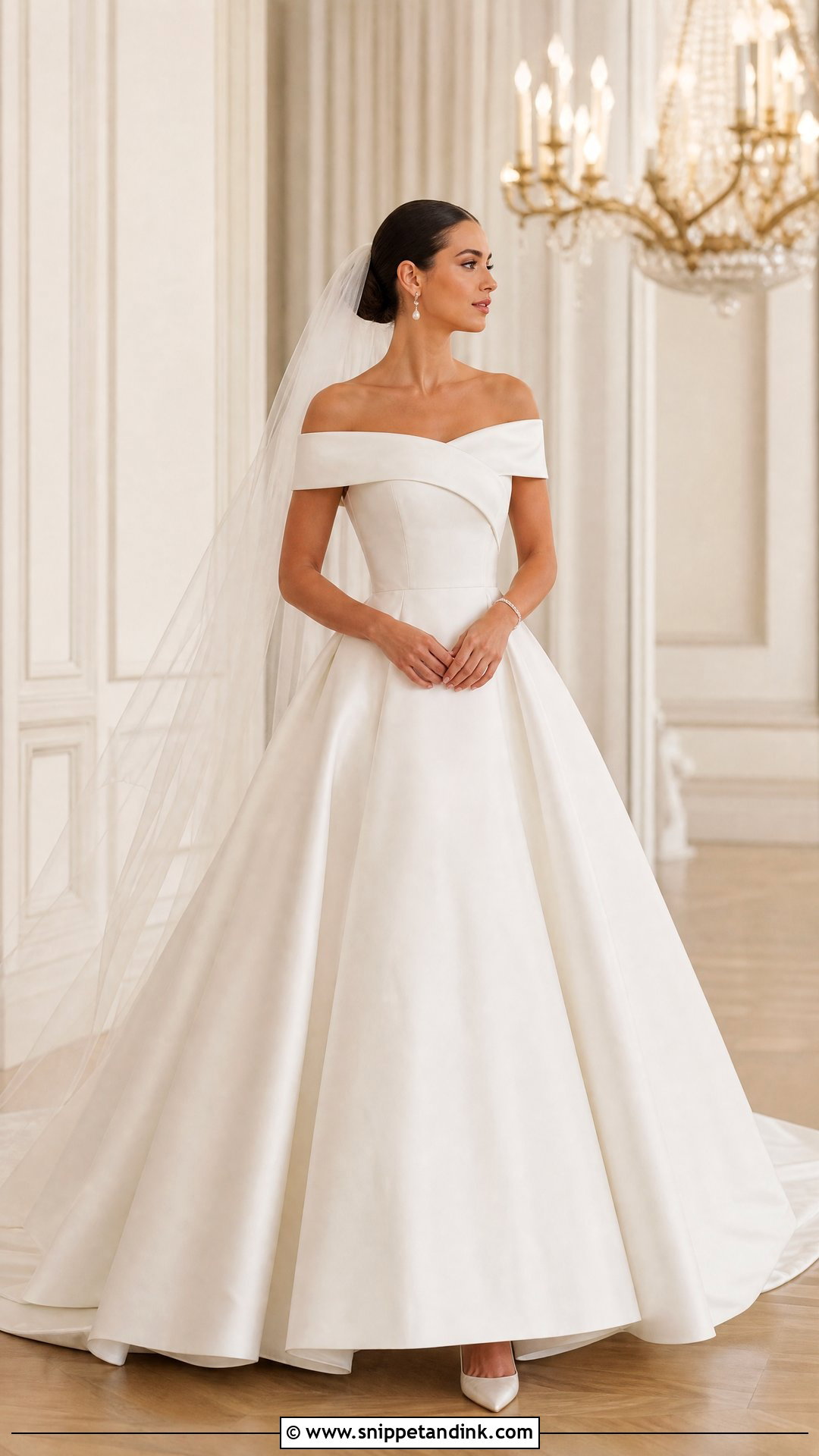
Off-the-shoulder frames the collarbones, and the luxury here is in corsetry you can’t see. Choose a structured silk ball gown or fitted A-line with a folded neckline and a properly boned inner corset, so the dress holds itself up rather than relying on the shoulder band. At fittings, reach, sit, hug and walk; the band should let you lift your arms without the bodice riding up. Pearl drops, a delicate pearl bracelet and pointed ivory pumps suit it, and a cathedral veil under a low bun keeps the shoulders clear from the front. Add a necklace only if the neckline is very plain.
17. Vintage Inspired Wedding Dress With Antique Jewelry
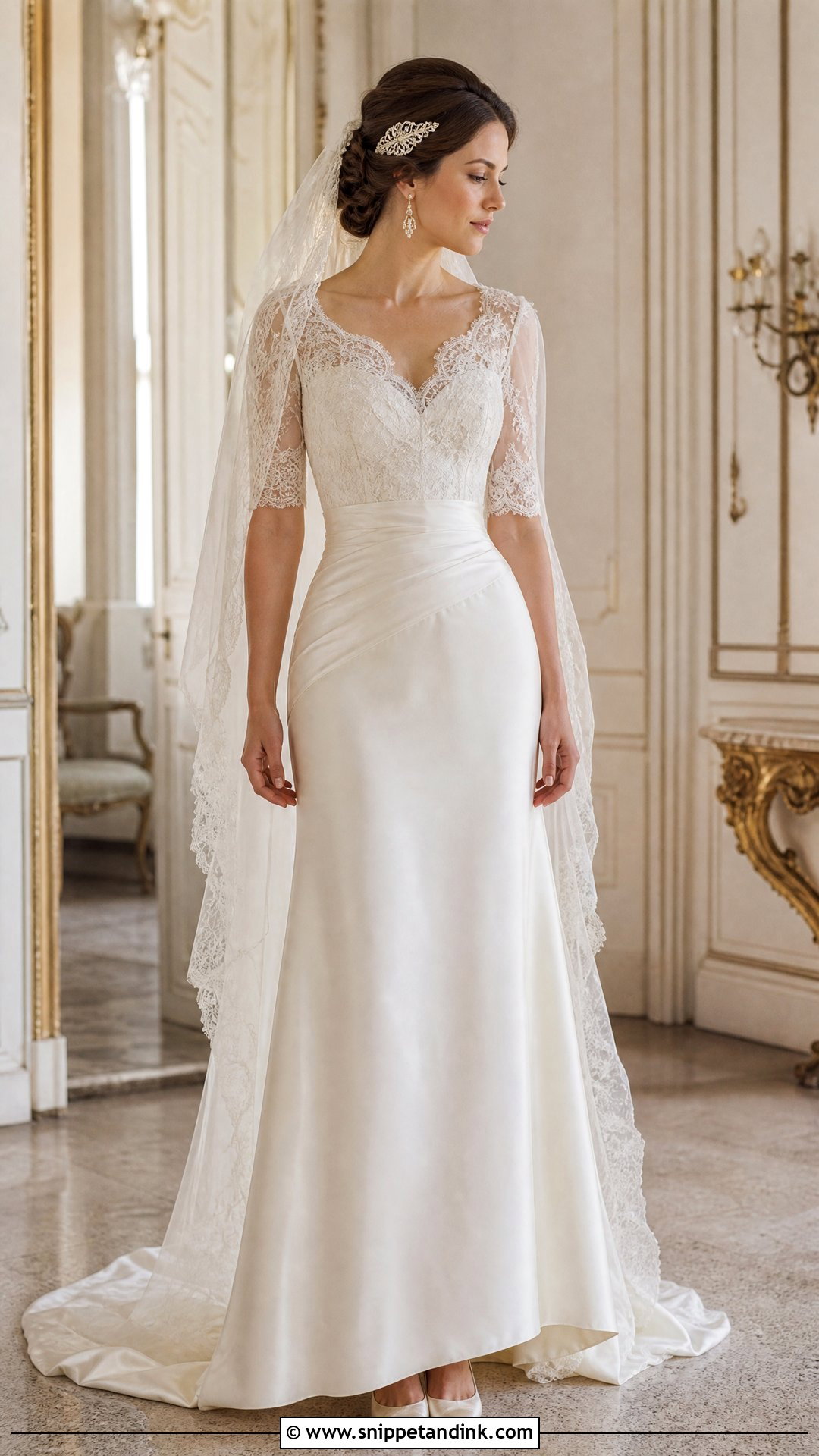
Old-world glamour comes from fabric and detail that feel collected rather than freshly decorated. Choose a fitted lace bodice, covered buttons, soft sleeves and a fluid silk skirt, then antique-style earrings, a delicate comb and classic ivory pumps with a modest heel. A lace-edged fingertip veil keeps the back of the gown visible, and brushed waves or a low twisted bun suit it. Keep every accessory from roughly the same era so it reads as a look rather than a costume. If you’re wearing real antique jewelry, have a jeweler check the clasps and settings a few weeks before. Old prongs loosen, and nobody wants a missing stone in the portraits.
18. Detachable Overskirt Wedding Dress With Crystal Heels
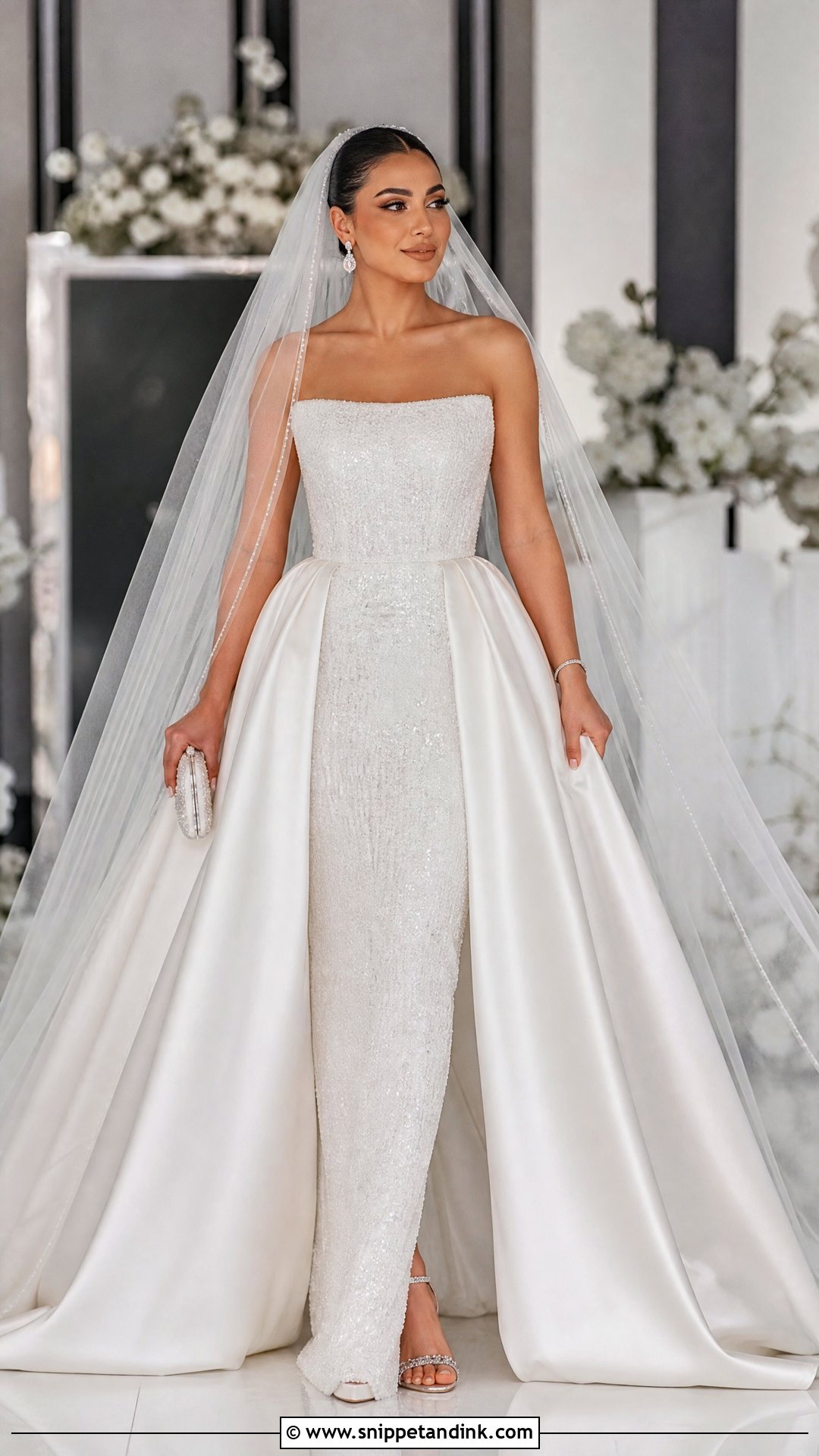
An overskirt over a beaded column or crepe gown gives you ceremony volume and a streamlined reception shape. Choose a structured satin or tulle overskirt that opens slightly at the front so the base gown’s best detail still shows. Crystal heels, drop earrings and a sleek clutch work for both looks, and a long veil can come off at the same moment as the overskirt, so ask your hairstylist for a style that survives two changes. Your seamstress should hide every hook, snap and waist attachment, and I also ask for a small hanging loop on the overskirt so it isn’t left in a heap on a chair afterward. Fitted well, it looks like part of the original design.
19. Hand Painted Wedding Dress With Silk Veil
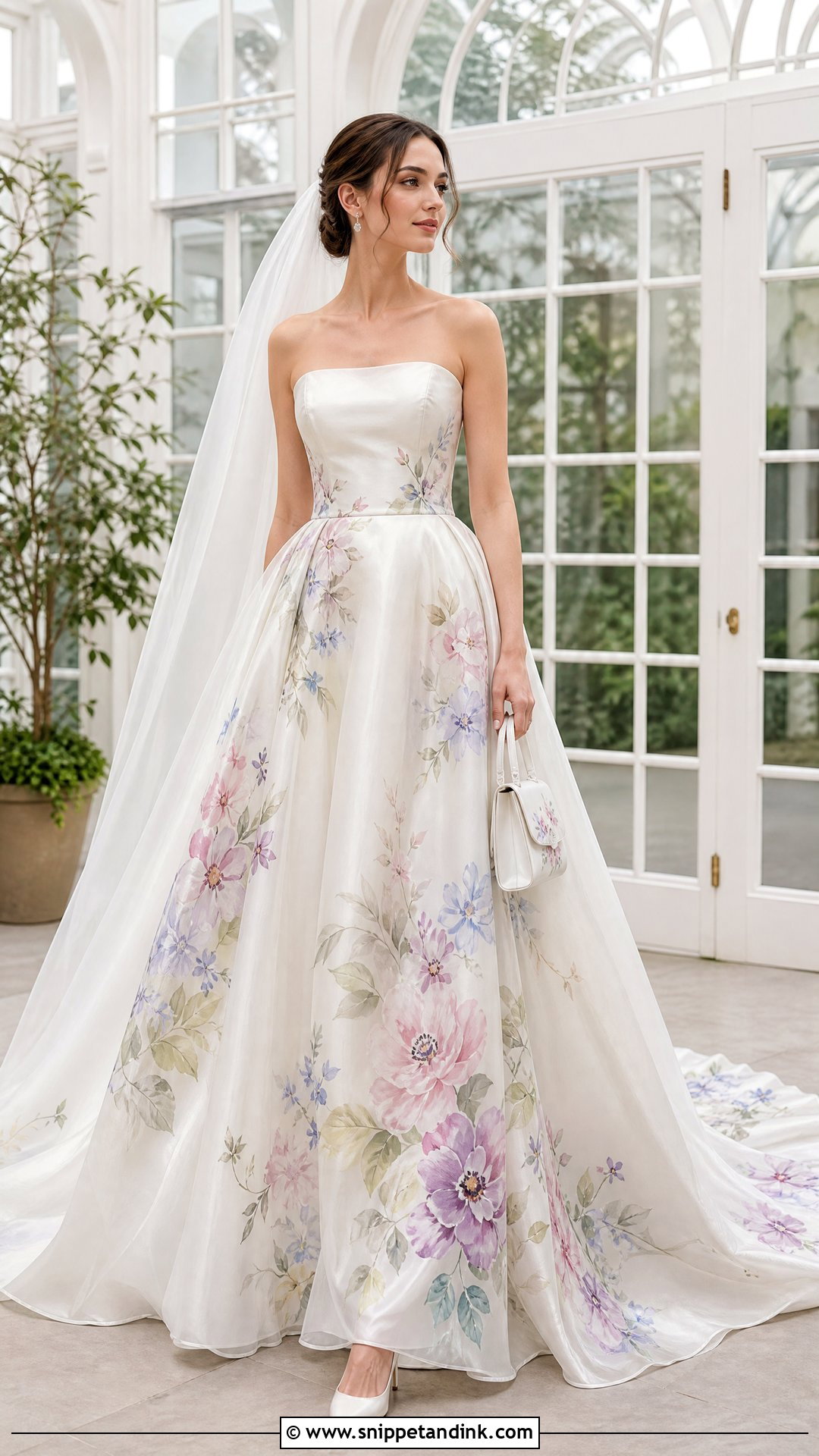
Hand-painted fabric is the most personal kind of luxury, because no two pieces are alike. Choose silk organza or satin with flowers, vines or abstract brushwork around the skirt and train, and keep the bodice fairly simple. Always ask for a painted sample on the real fabric before approving colors; pigment soaks into silk differently than it sits on paper, and soft tones often come out paler. Ask the artist how marks should be treated as well, since many painted silks can’t be cleaned the usual way. A plain silk veil, understated earrings, satin pumps and a small bag in one color from the painting complete it, with a soft bun or polished waves, for a garden, museum or creative venue.
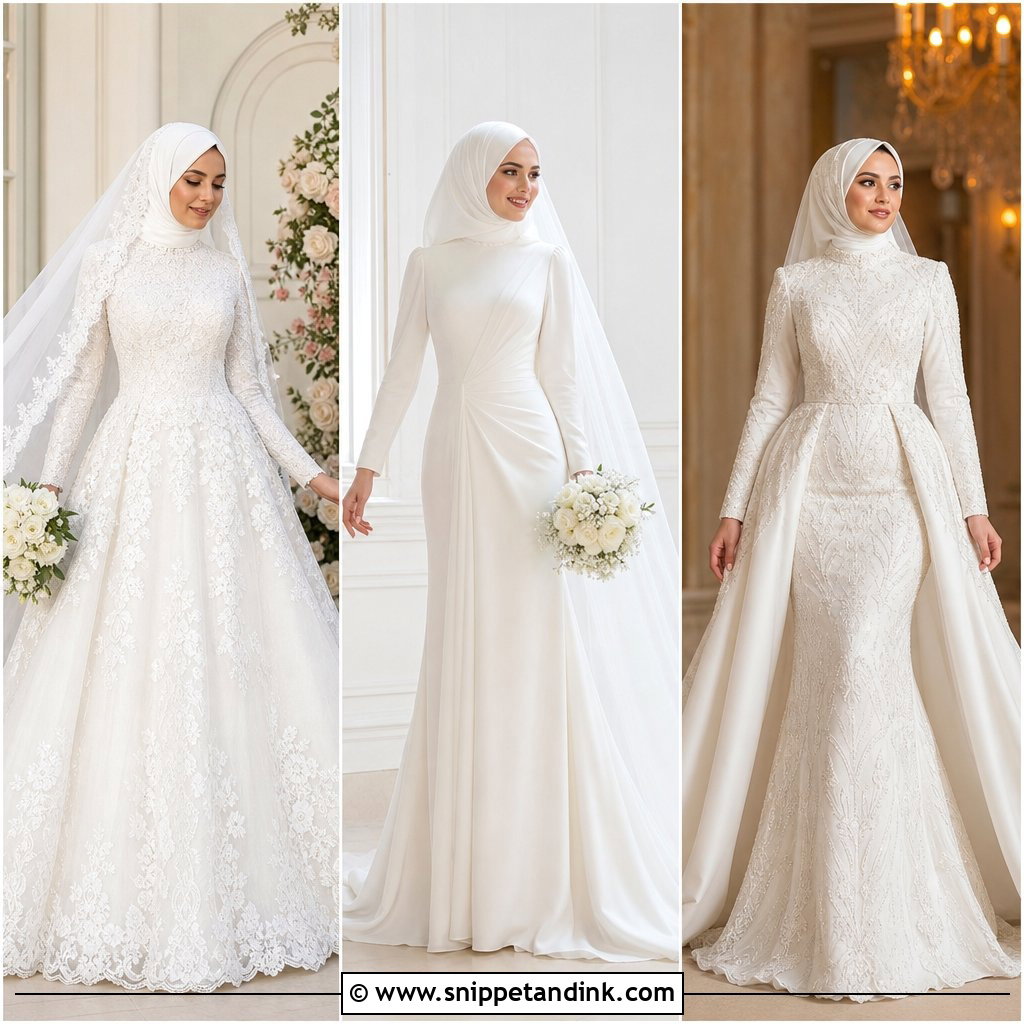

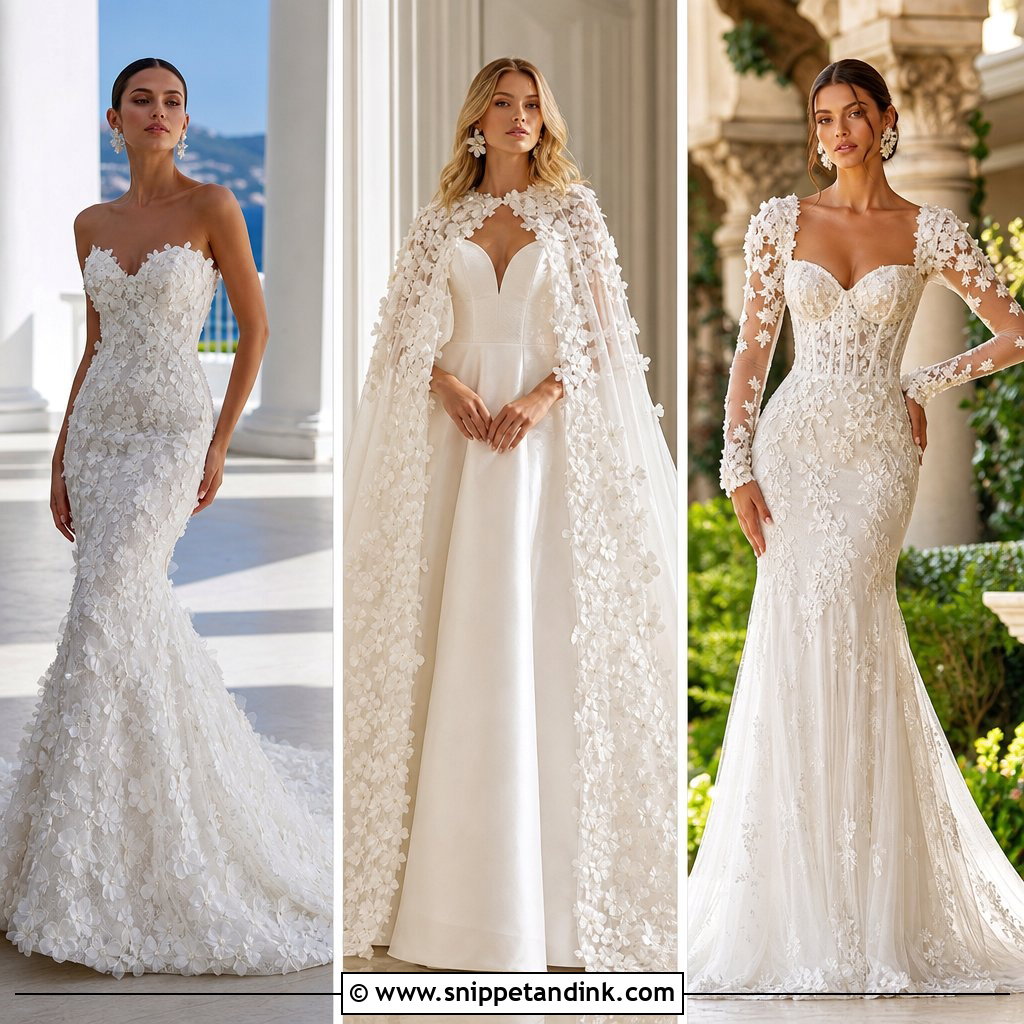
20. Couture Wedding Dress With Matching Bridal Coat
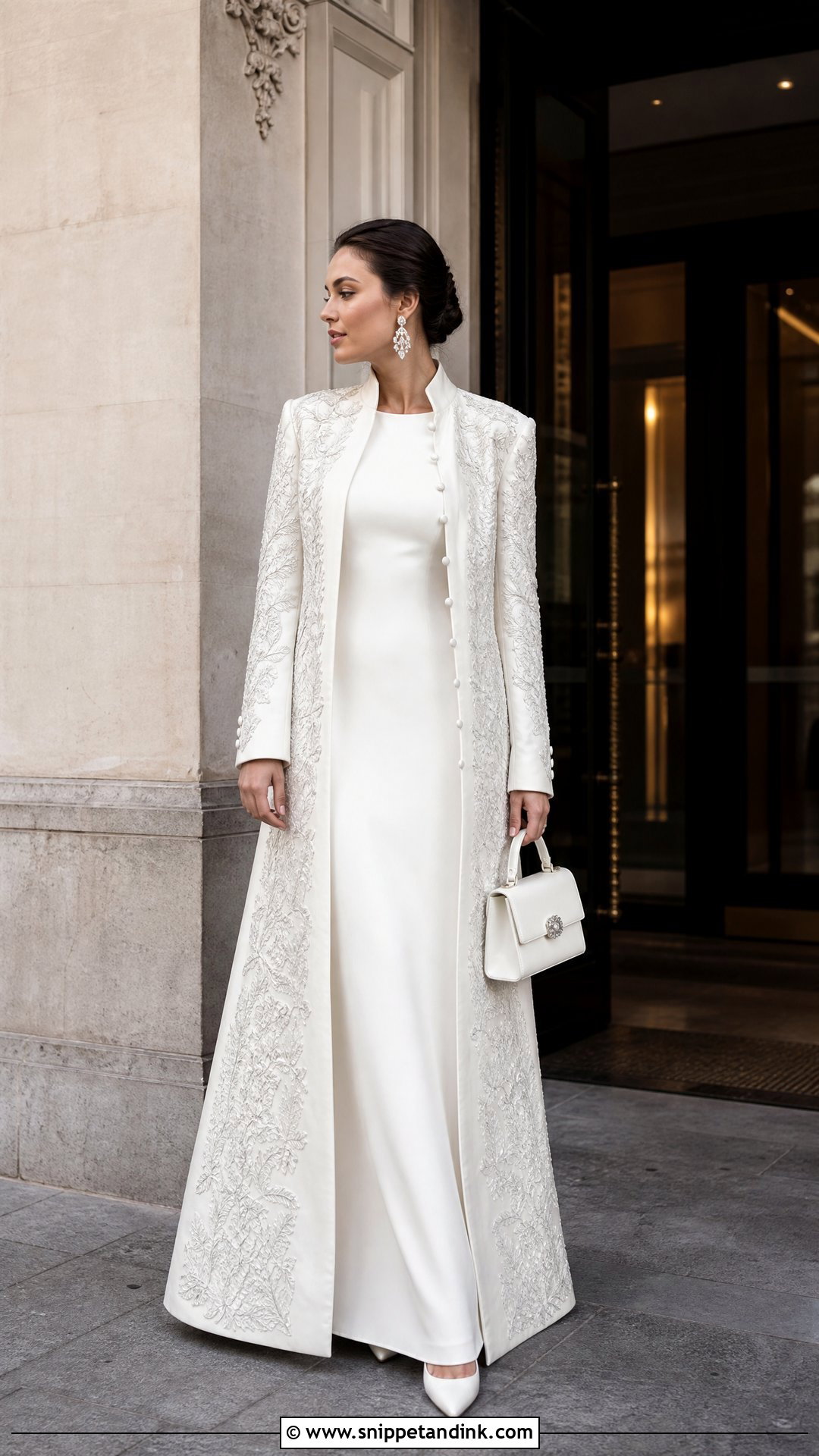
A matching coat turns a dress into an ensemble. Start with a streamlined silk column or softly fitted A-line, then add a full-length coat in the same fabric with crystal buttons, floral embroidery or sculpted shoulders. Wear it closed for the entrance and take it off to reveal the simpler gown. The coat has to be fitted over the finished dress, never separately, or it pulls across the arms and back. Pointed satin pumps, statement earrings, a small structured bag and a sleek bun or smooth shoulder-length style suit its tailored lines. It’s as practical as it is dramatic for cold weather, formal city venues and evening celebrations.
Which Luxury Details Are Worth Paying For?
Most brides don’t have a couture budget, and the effect can still be borrowed. This is how I’d divide the money.
Spend on fit and on what sits near your face
Alterations, a well-built bodice and good fabric at the neckline matter most, because every portrait shows them. A modest gown tailored precisely looks more expensive than a lavish one that pulls.
Save on what can be added later
A plain, well-made gown can be lifted with a detachable cape, an overskirt, a beaded veil or opera gloves, all bought separately or borrowed. Sample sales and pre-owned designer gowns are another route, as long as the seams leave enough fabric for alterations.
Allow months, and rehearse the weight
Made-to-order and hand-embellished gowns take months to produce before alterations even begin, and heavy beading can’t be rushed. Heavily beaded gowns and long trains are also heavier than brides expect, so at the last fitting I have you wear the finished dress for a good while, sit, and climb a few stairs. The wedding shouldn’t be the first time you carry it.
Luxury Is One Detail Carried Well
Luxury in a wedding dress takes many forms: hand-applied crystals, custom embroidery, exceptional silk, architectural tailoring, a train people remember. The strongest outfits don’t simply pile on expensive details, though. The veil, shoes, jewelry, hair and venue all serve one idea. Decide which single feature you want guests to see first, then keep everything else in support. And budget honestly for the parts nobody notices: alterations, proper undergarments, steaming and a bustle that holds. Couture or a clever recreation, it’s fit and restraint that make a dress look costly.
You'll Like These Ideas:






Leave a Reply