
A high price tag on a wedding gown usually pays for things you only notice up close: dense silk that holds its own shape, boning sewn into a proper inner corset, and beading or lace that someone attached by hand. Designer bridal pricing can climb into five figures once couture construction, heavy embellishment or custom changes come in. In fittings I tell brides the costliest gown in the salon is rarely the right one. The one worth the money suits your venue and your proportions, and you can still breathe in it at eleven at night. Below are twenty gowns where the money shows, from structured Mikado to plain bias-cut silk.

Reading the Inside of a Couture Gown Before You Pay for It
When a bride asks me whether a gown is worth its price, I turn it inside out. The outside of most bridal gowns looks good on a hanger. The inside tells you how it was made and how it will behave after hours of standing, sitting and dancing.
- Boning should sit in its own channels in an inner corset, not be stitched straight onto the outer fabric. That inner structure is what holds a strapless bodice up without you tugging at it.
- Seams should be finished cleanly or bound. Raw, fraying edges on a five-figure dress tell you corners were cut.
- Hand-sewn beading has knots every few stitches, so one broken thread loses a single bead rather than a whole run of them.
- Lace appliqués should be stitched around their edges and cut to follow the motif, not glued or left as a straight strip.
- Ask what the fabric is. Pure silk Mikado, crepe and satin feel cool and dense in the hand, while polyester versions feel lighter and slightly slippery.
None of this means a cheaper gown is a bad one. It means that if you’re paying for craftsmanship, you should be able to see it.
Ordering Timeline for Made-to-Order and Custom Gowns
Expensive gowns are almost never sitting in a stockroom. Most designer dresses are cut and sewn after you order, which commonly takes somewhere around four to eight months, and a fully custom piece can take longer depending on the atelier. Heavy hand embroidery adds time on top of that. Ask the salon for their delivery estimate in writing before you pay a deposit.
Then add alterations. I like a first fitting roughly two to three months before the wedding, with two or three appointments after that and a final one in the last couple of weeks. Bring your actual shoes and undergarments to every fitting. A heel half an inch higher changes the hem, and a different bra changes the bodice. If you’re shopping later than about ten months out, tell the consultant immediately so she only pulls styles that can arrive in time.
1. Silk Mikado Ball Gown Wedding Dress
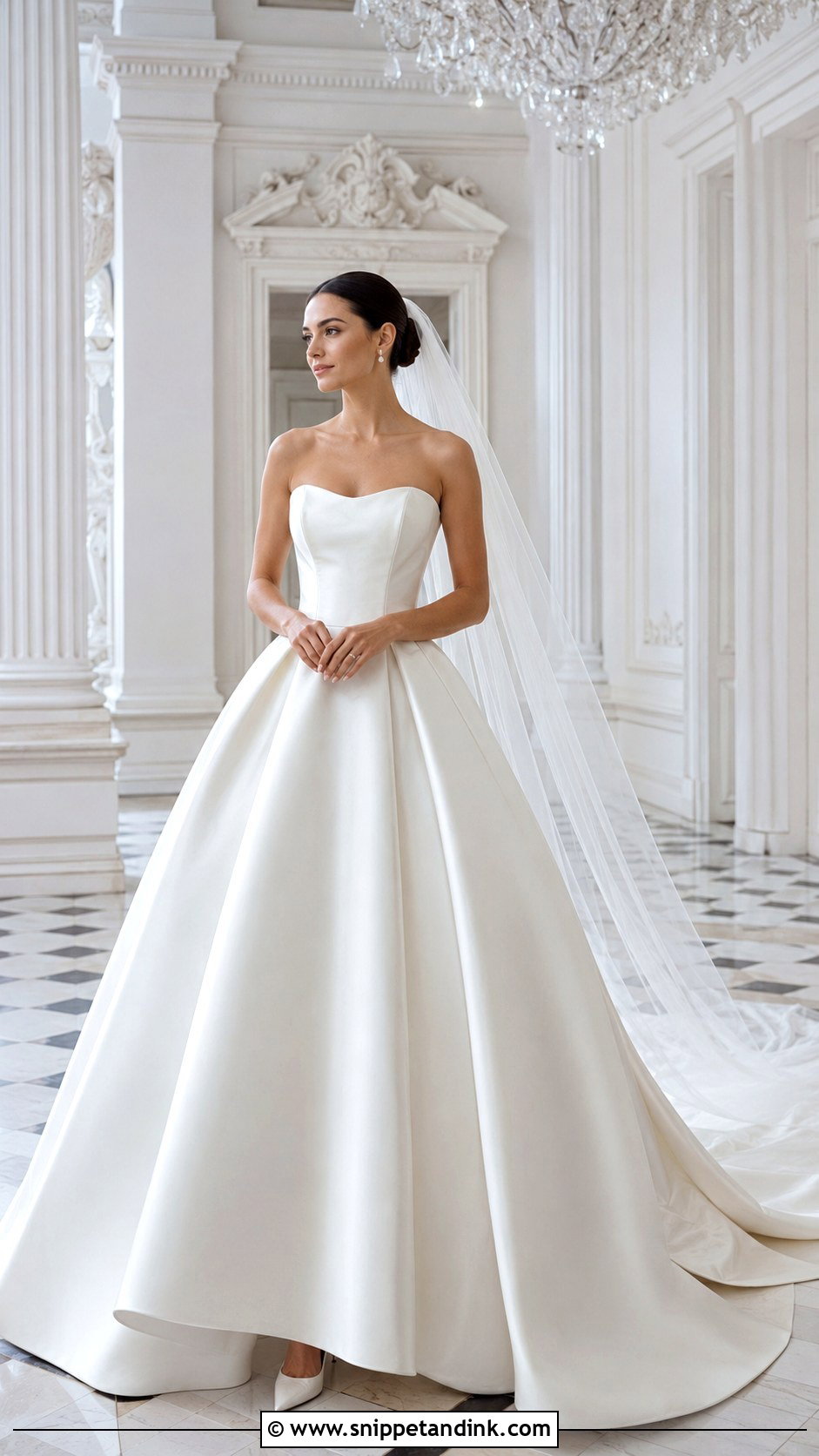
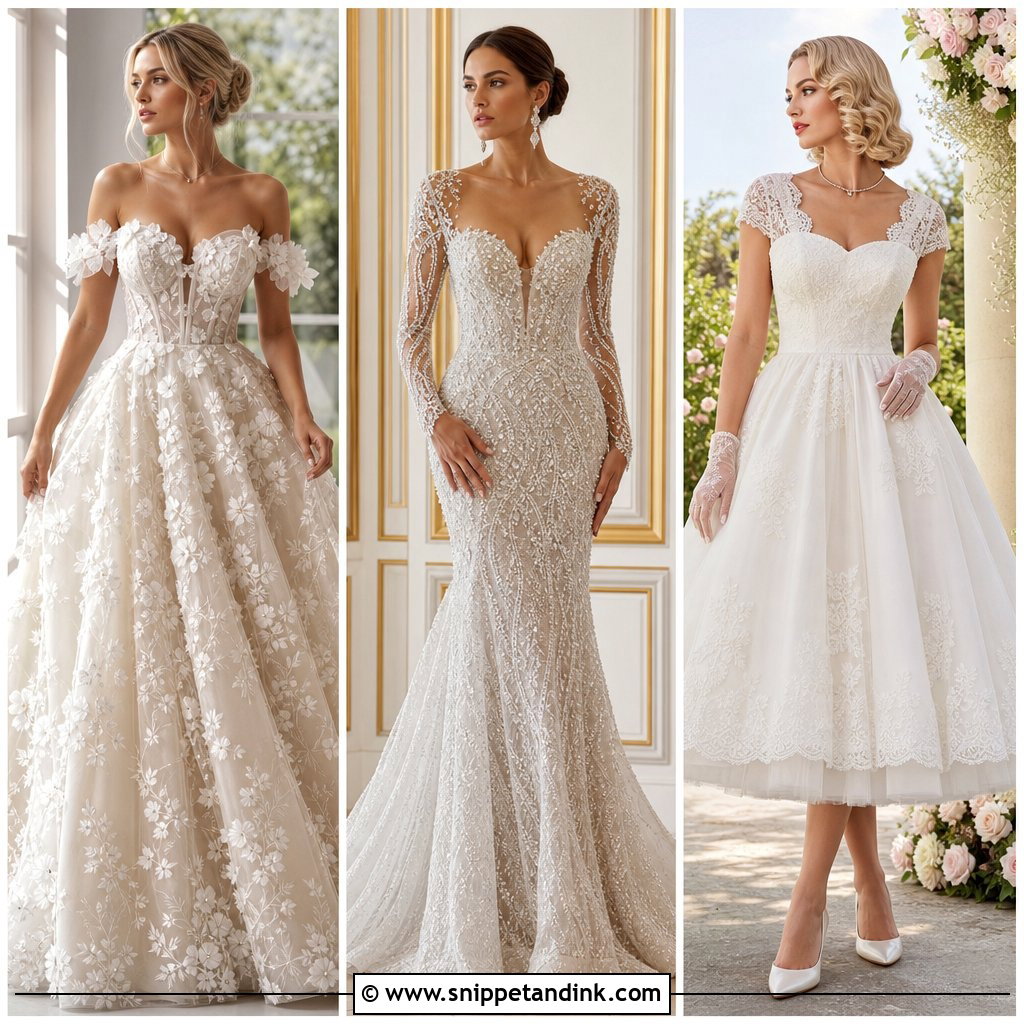
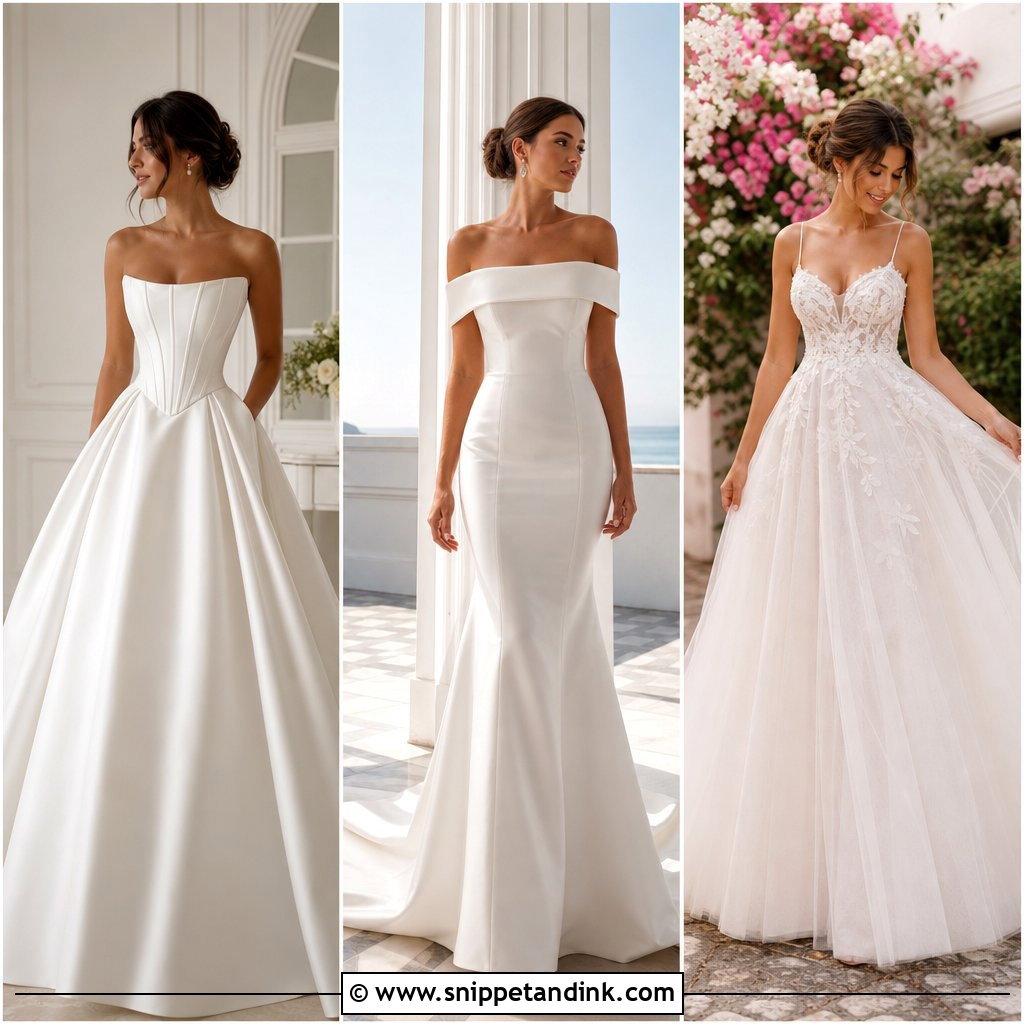
Mikado is a heavy twisted silk with a slight sheen, and its weight is the reason a ball skirt like this keeps its dome without a cage of petticoats. A fitted bodice with a softly curved neckline and a defined waist suits it, and I always ask the salon whether pockets can be set into the side seams, because Mikado hides them well. Keep the train to chapel length unless you have attendants to manage it. Pointed ivory pumps, pearl drops and a cathedral veil edged in narrow satin finish it, with a low bun to keep the neckline clear. Save it for a ballroom, a hotel or a museum; on a lawn, the skirt simply has too much to fight.
2. Long Sleeve Lace Wedding Dress With Cathedral Veil
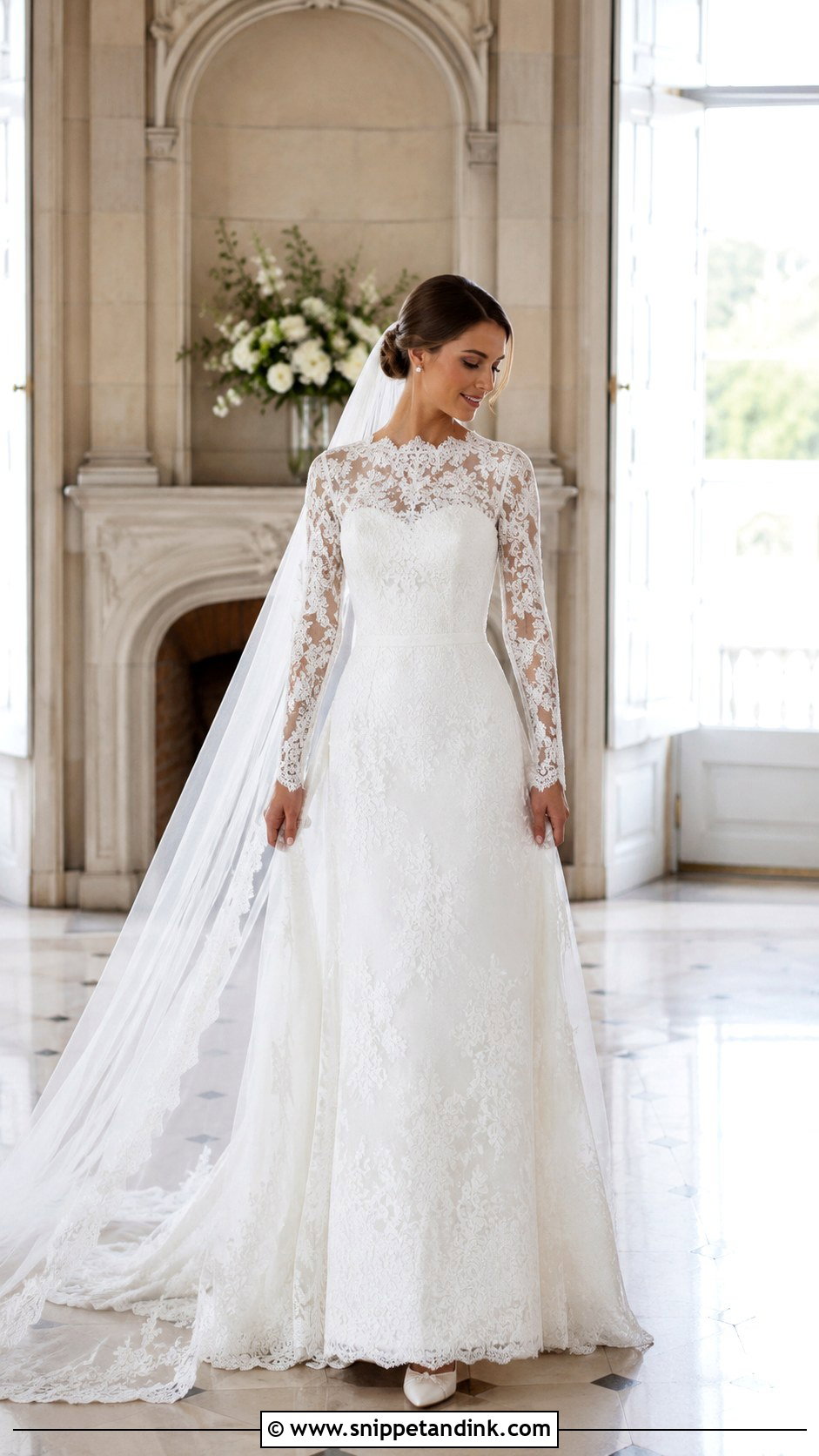
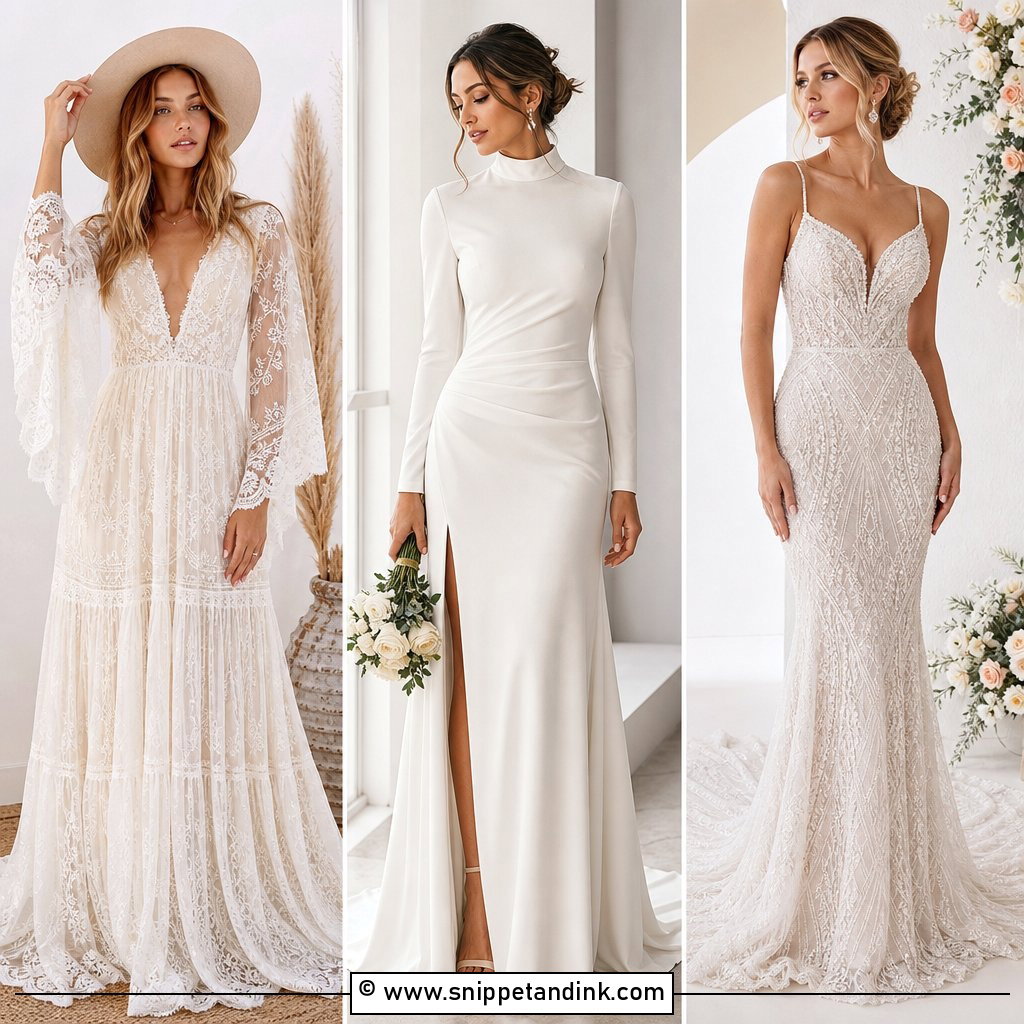
Sheer lace sleeves are the first thing I check at a fitting, since they’re usually cut close and a bride needs to lift her arms to hug people. Look for a fitted lace bodice over an ivory lining, with an A-line skirt and appliqués placed to mark the waist. Closed-toe satin heels, small studs and a narrow comb under the cathedral veil keep the styling quiet, and a smooth chignon stops the lace neckline from looking crowded. Ask for a soft lining in the sleeves and a bustle that lifts the train cleanly for the reception. Historic properties and cooler months suit it best.
3. Crystal Embellished Mermaid Wedding Dress
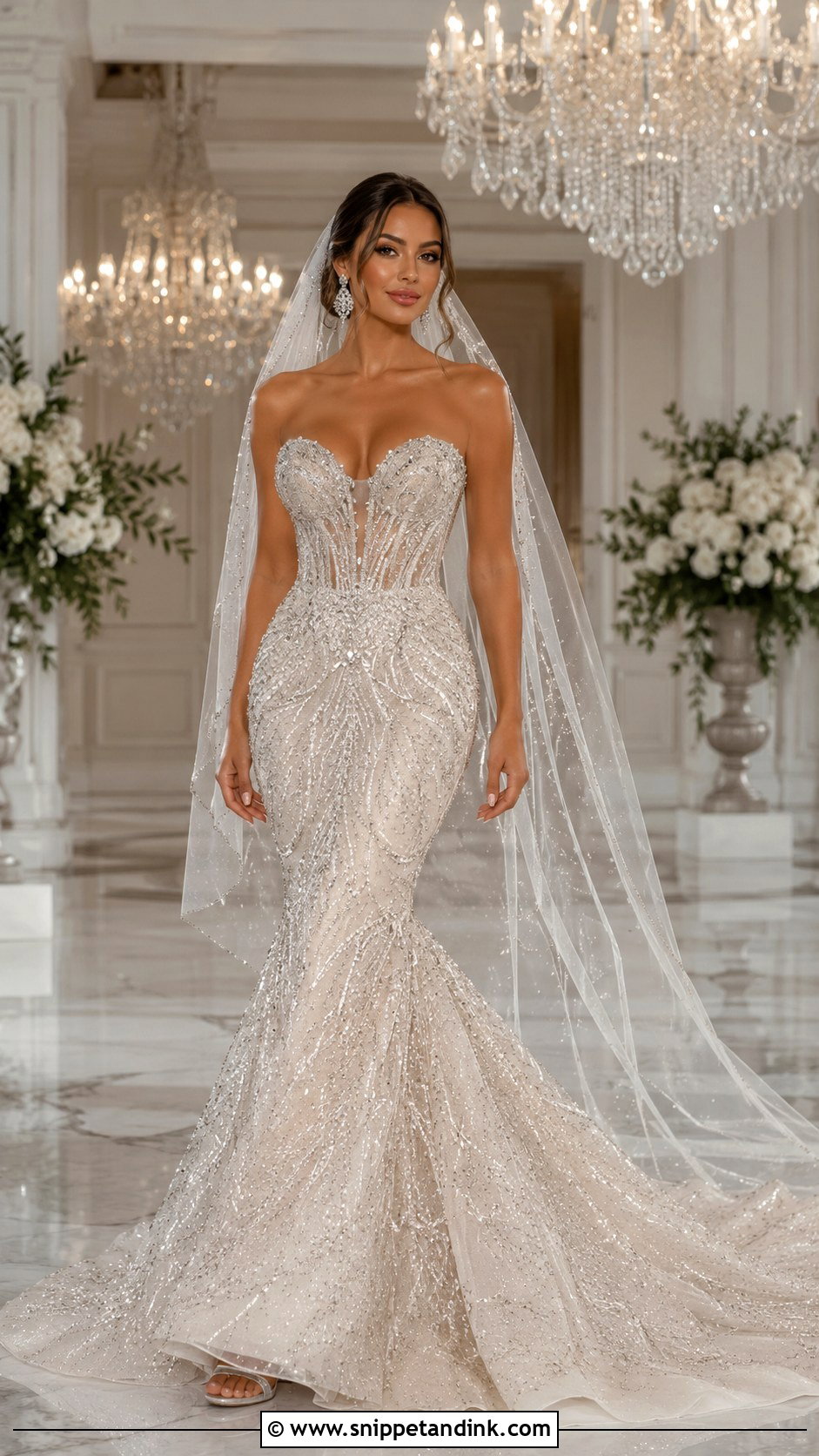
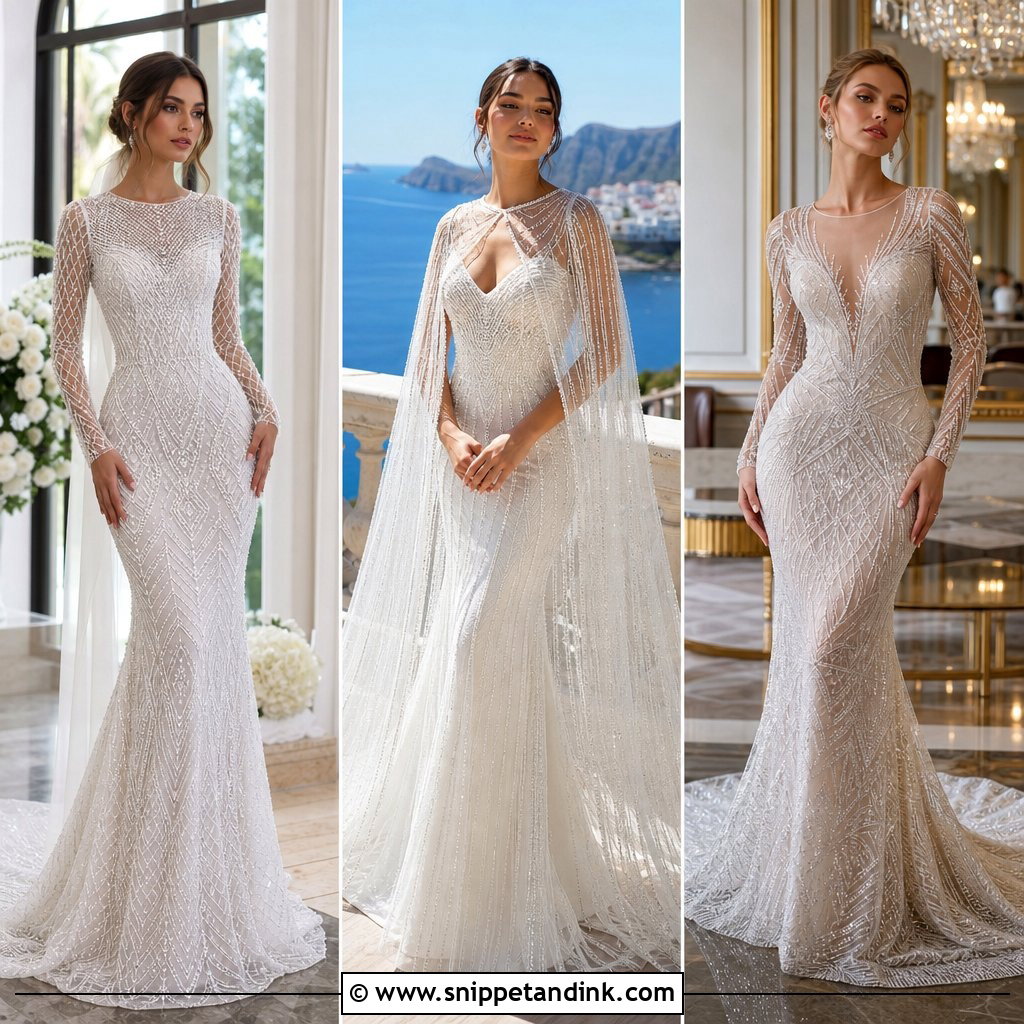
For a glamorous entrance, crystal on a mermaid shape is hard to beat, but the inner corsetry matters more than the sparkle. Good versions grade the crystals: dense over the bodice, thinning as they travel down the skirt, so the eye reads a waist rather than a wall of glitter. The catch is movement. Mermaid skirts flare at or below the knee, so sit, climb a step and dance a few bars before you order. Silver heels, small diamond earrings and a sheer fingertip veil are plenty, with glossy waves or a sleek side-parted bun to balance the shape.
4. Floral Appliqué Ball Gown Wedding Dress
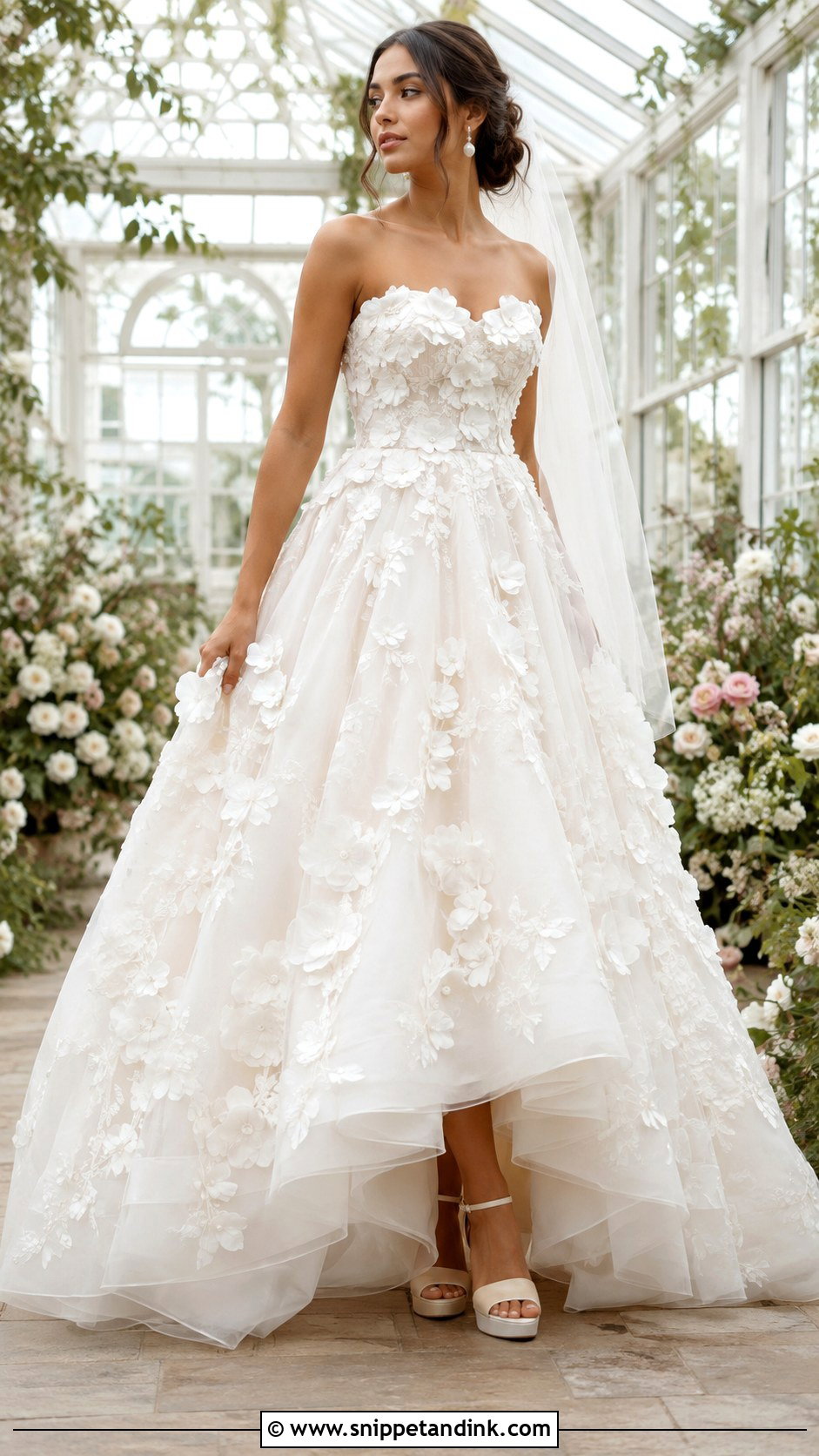
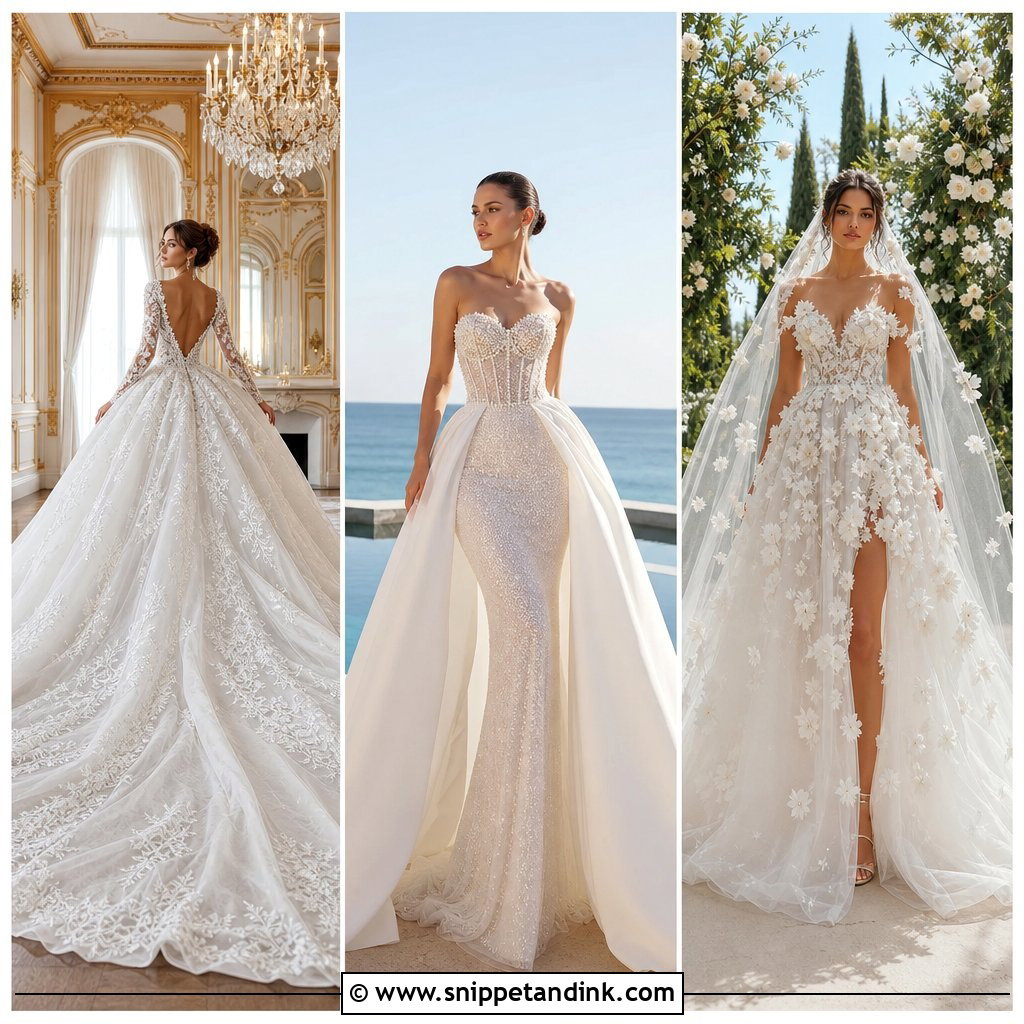
Dimensional flowers in organza, lace or embroidered tulle need room, which is why I pair them with a strapless or off-the-shoulder neckline. The appliqués should drift naturally from the bodice into the skirt rather than sit in neat rows. One honest warning: three-dimensional petals crush under a seatbelt and in a packed car, so plan how you’ll travel. Pearl earrings, ivory platform sandals and a plain tulle veil let the flowers lead. A soft updo with a few loose pieces suits it, and so does a compact bouquet in one creamy flower, which won’t fight the skirt.
5. Drop Waist Corset Wedding Dress
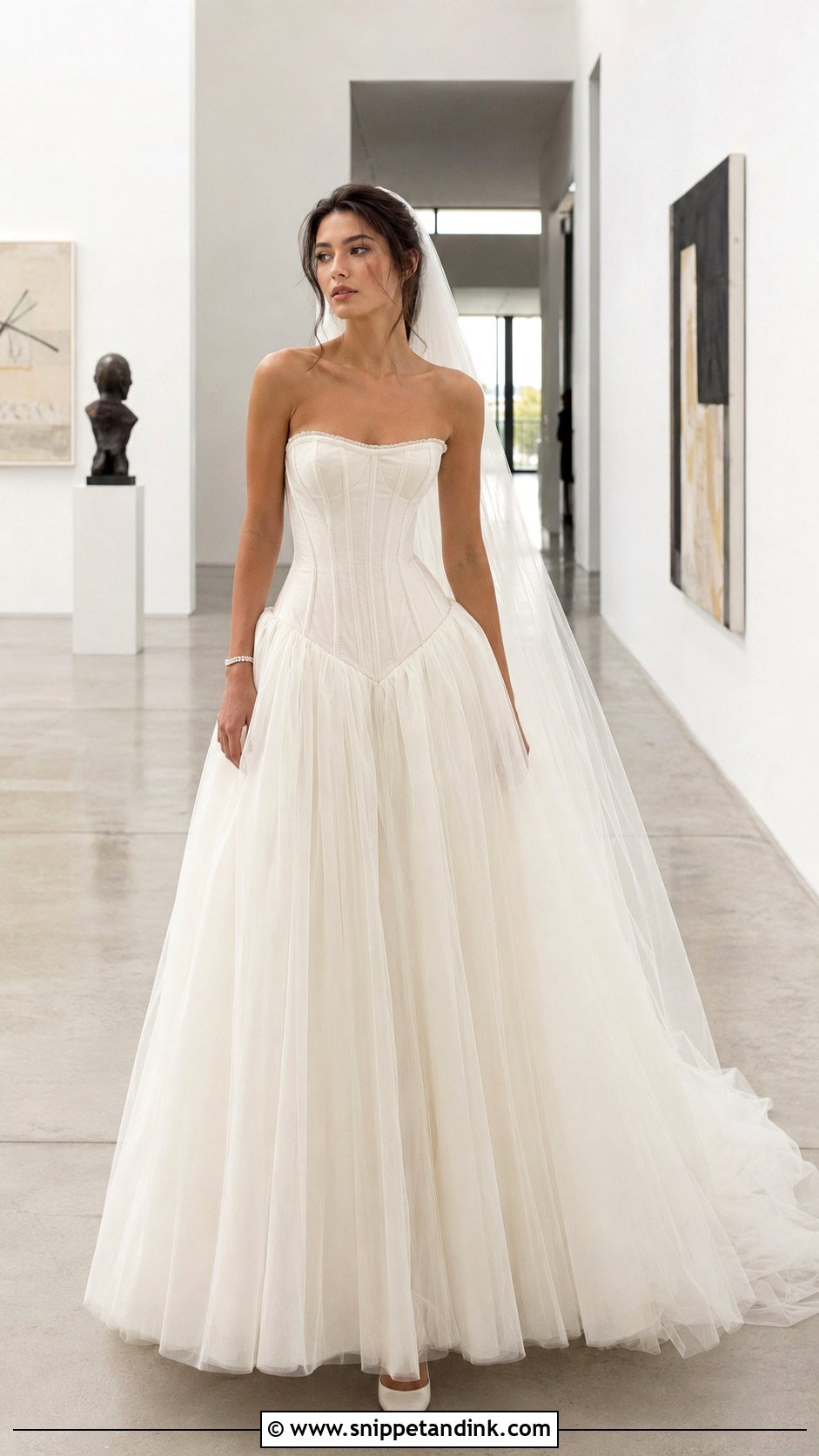
The drop waist lengthens the torso before the skirt opens out, and it lives or dies on the boning. I press along the basque point at every fitting; if it digs in when the bride sits, it needs taking up before anything else is touched. Silk satin and Mikado give a crisp, architectural line, while layered tulle softens the whole thing. Finish with pointed satin heels, a slim tennis bracelet and a long plain veil, plus a polished bun or a sculpted ponytail. City venues and galleries suit its clean lines.
6. Off The Shoulder Satin Wedding Dress
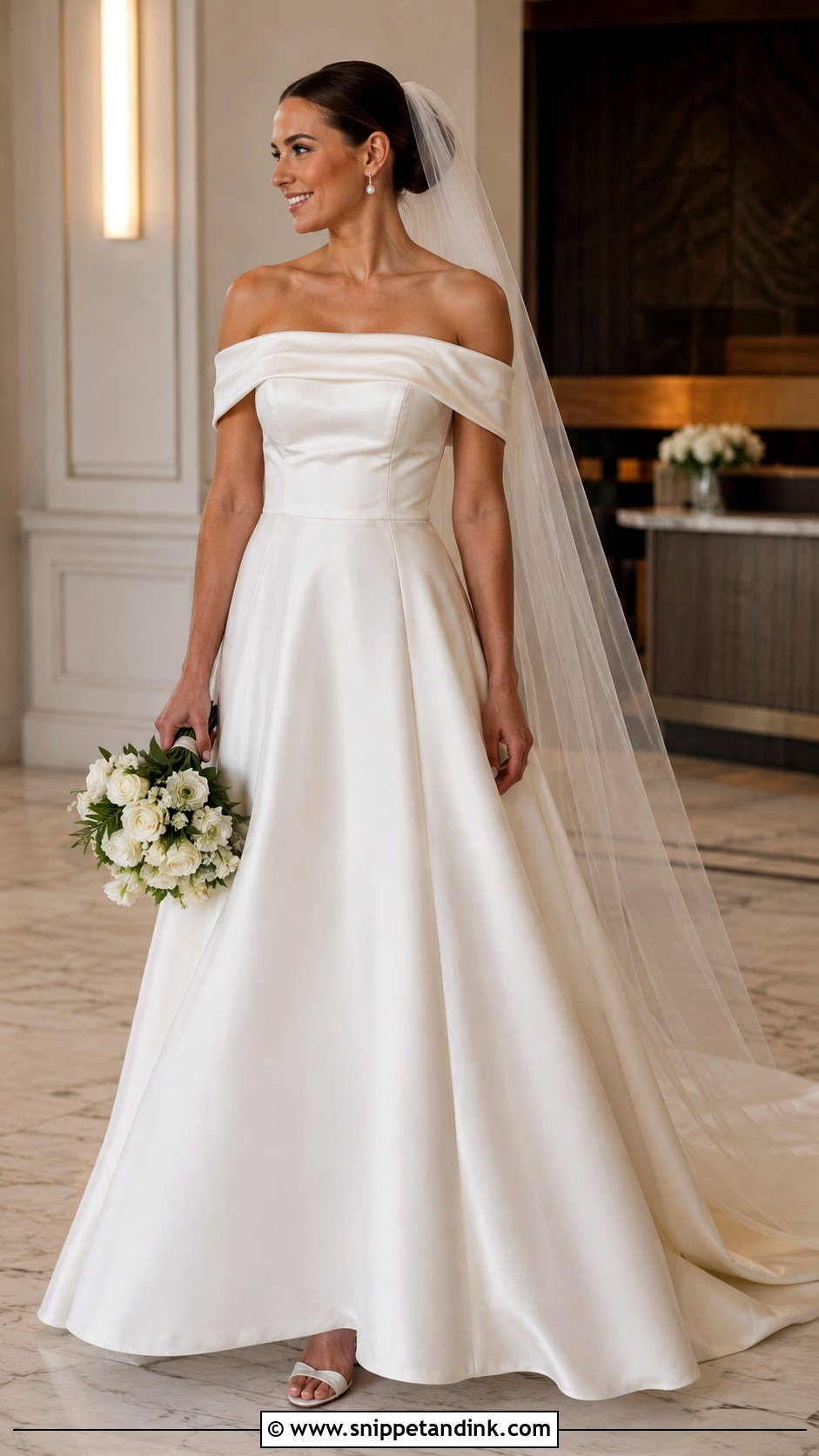
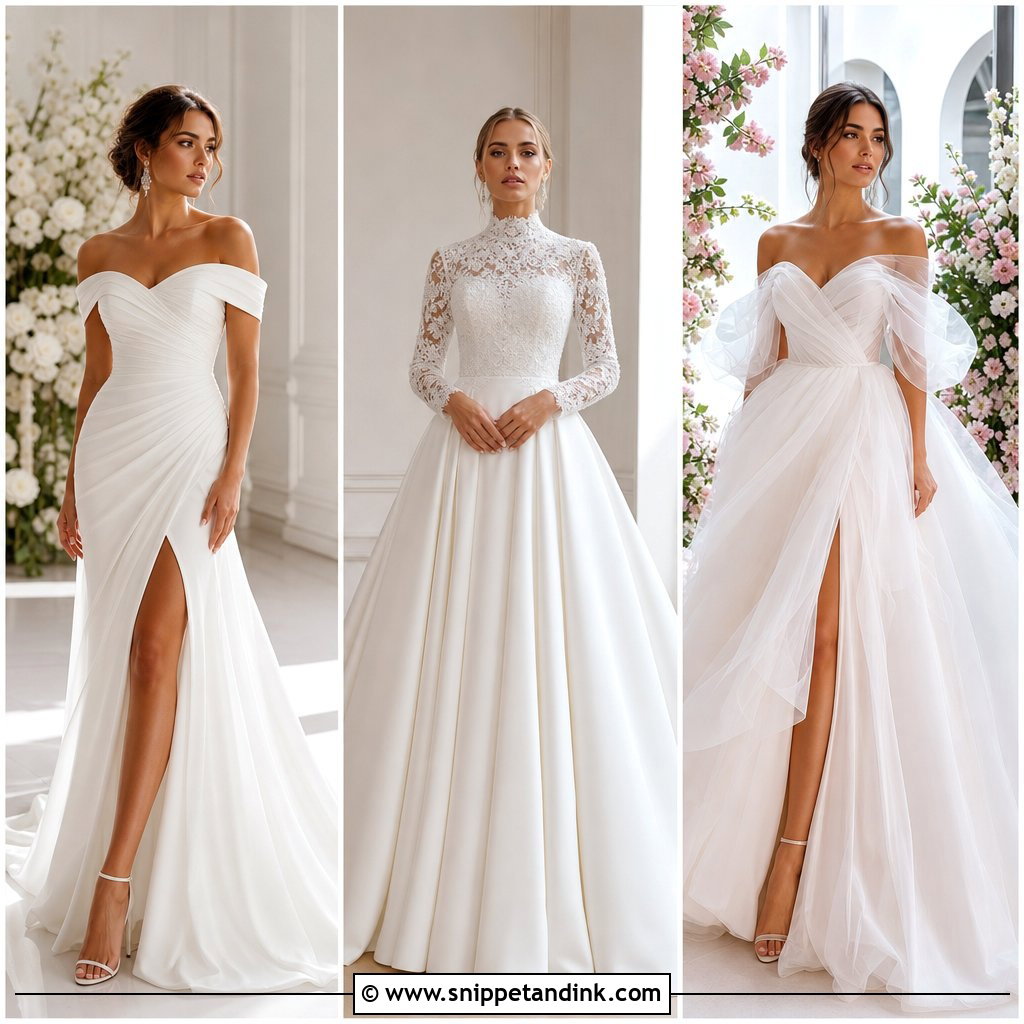
Folded satin across the shoulders frames the collarbone, but off-the-shoulder bands only stay put if there’s a structured bodice inside doing the real work. Without it, the band slides every time you raise your arms. A column skirt reads modern; an A-line moves more easily. Pearl and diamond earrings, ivory slingbacks and a sheer chapel veil are enough, and I’d skip a necklace unless the neckline is completely plain. A low twisted bun keeps the folds visible in a hotel ballroom or a candlelit room.
7. Beaded Illusion Wedding Dress
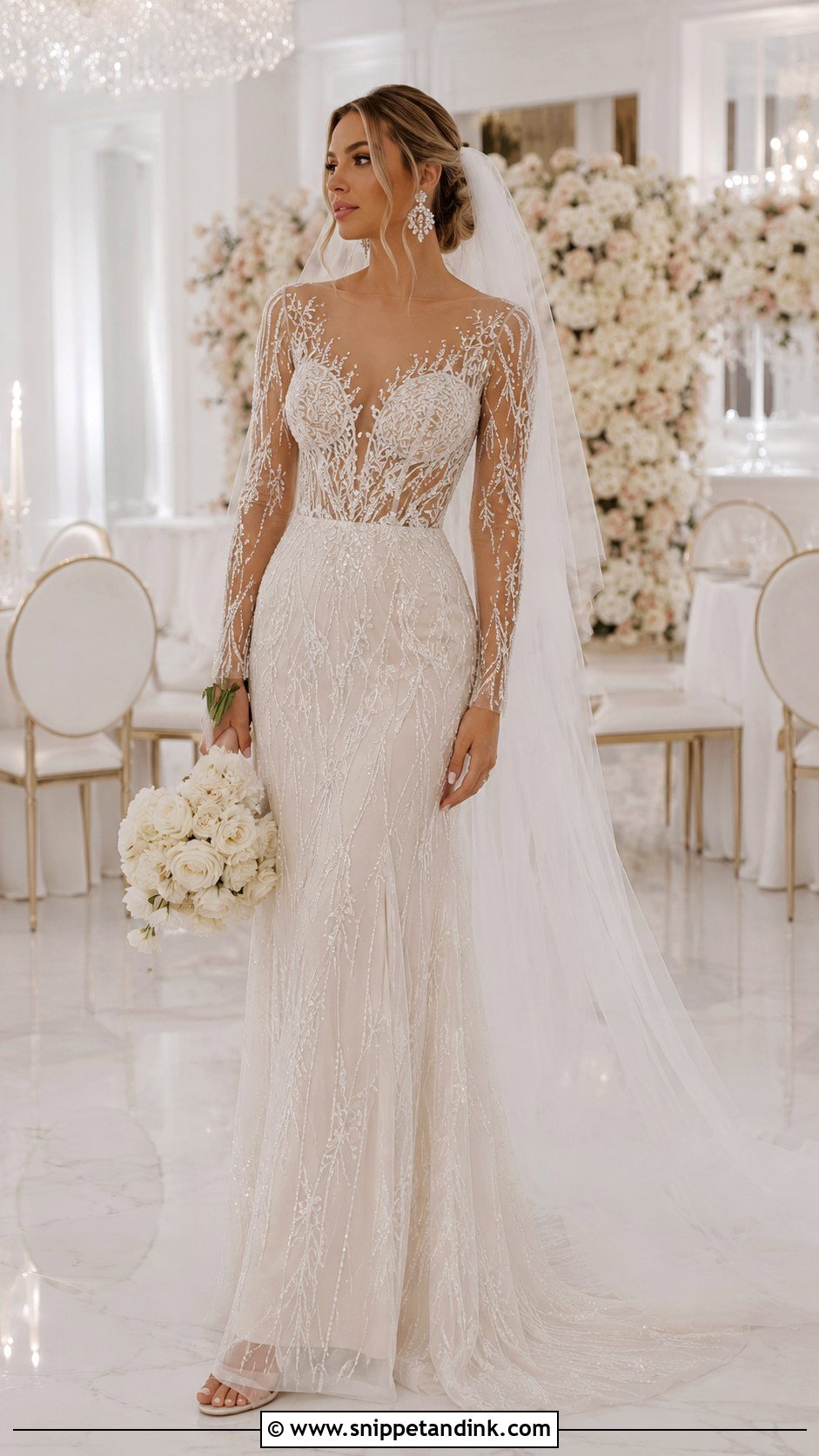
Beading on illusion tulle can look almost weightless, but every bead adds drag on fabric that’s barely there. I look for a proper lining through the bodice and appliqués placed where they hide the seams, plus a skirt light enough to balance the detail above. Turn the gown inside out before you commit. If the threads behind the beadwork scratch your fingers, they’ll scratch your skin for ten hours. Crystal drops, neutral heels and a plain veil tucked under a sleek bun keep the beadwork readable, and a compact bouquet stops it disappearing in photos.
8. Minimalist Silk Column Wedding Dress
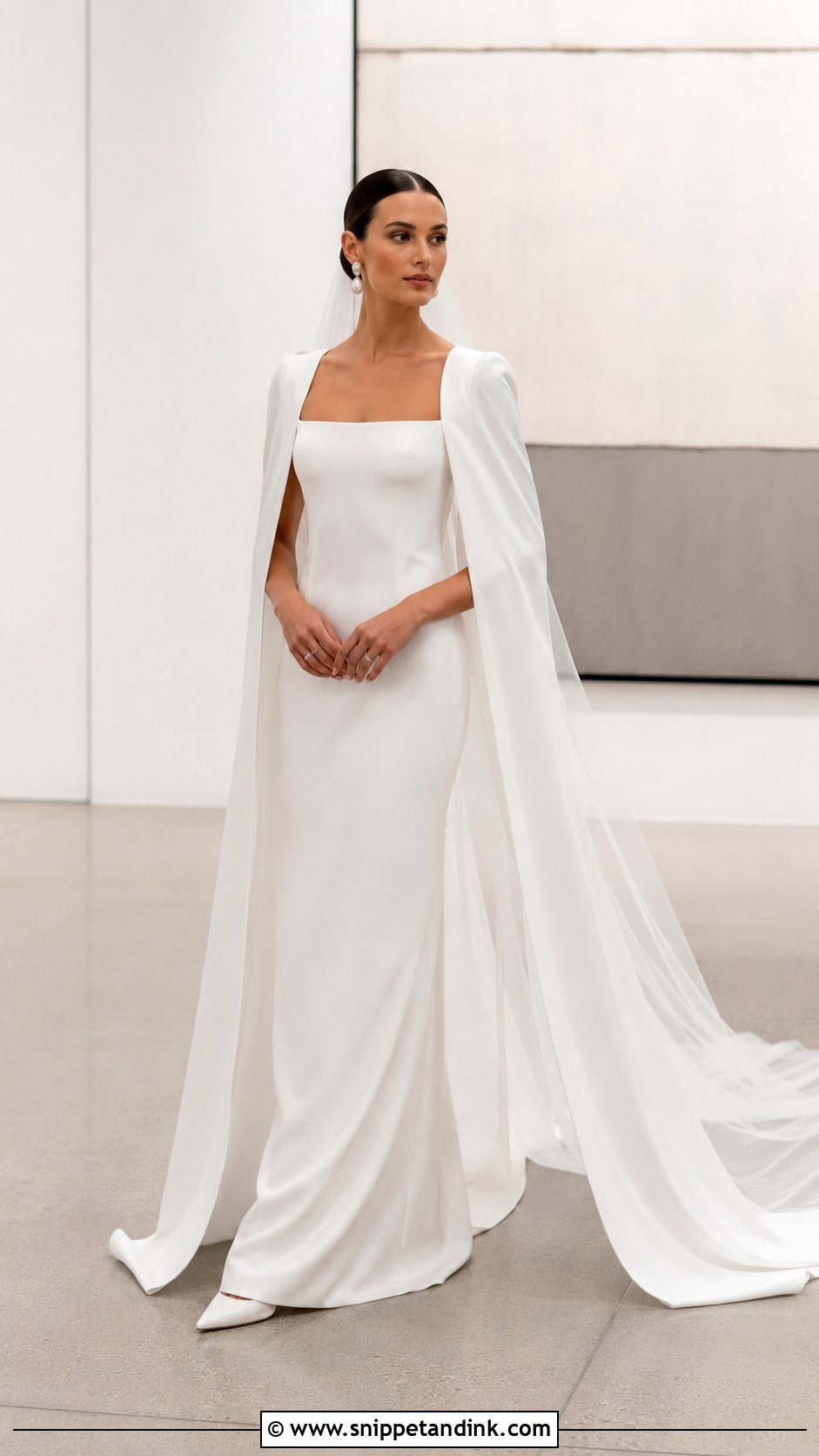
Can a plain gown be the most expensive one in the room? Easily, because a silk column has nowhere to hide a bad cut. Heavy silk crepe or satin should skim the body without clinging, and the lining and undergarments matter as much as the dress itself, since every line shows through. A square or bateau neckline gives the eye a focal point. Sculptural gold or pearl earrings, pointed pumps and a long veil with a raw cut edge suit it, and a removable silk cape is a smart addition for the ceremony.
9. Royal High Neck Wedding Dress
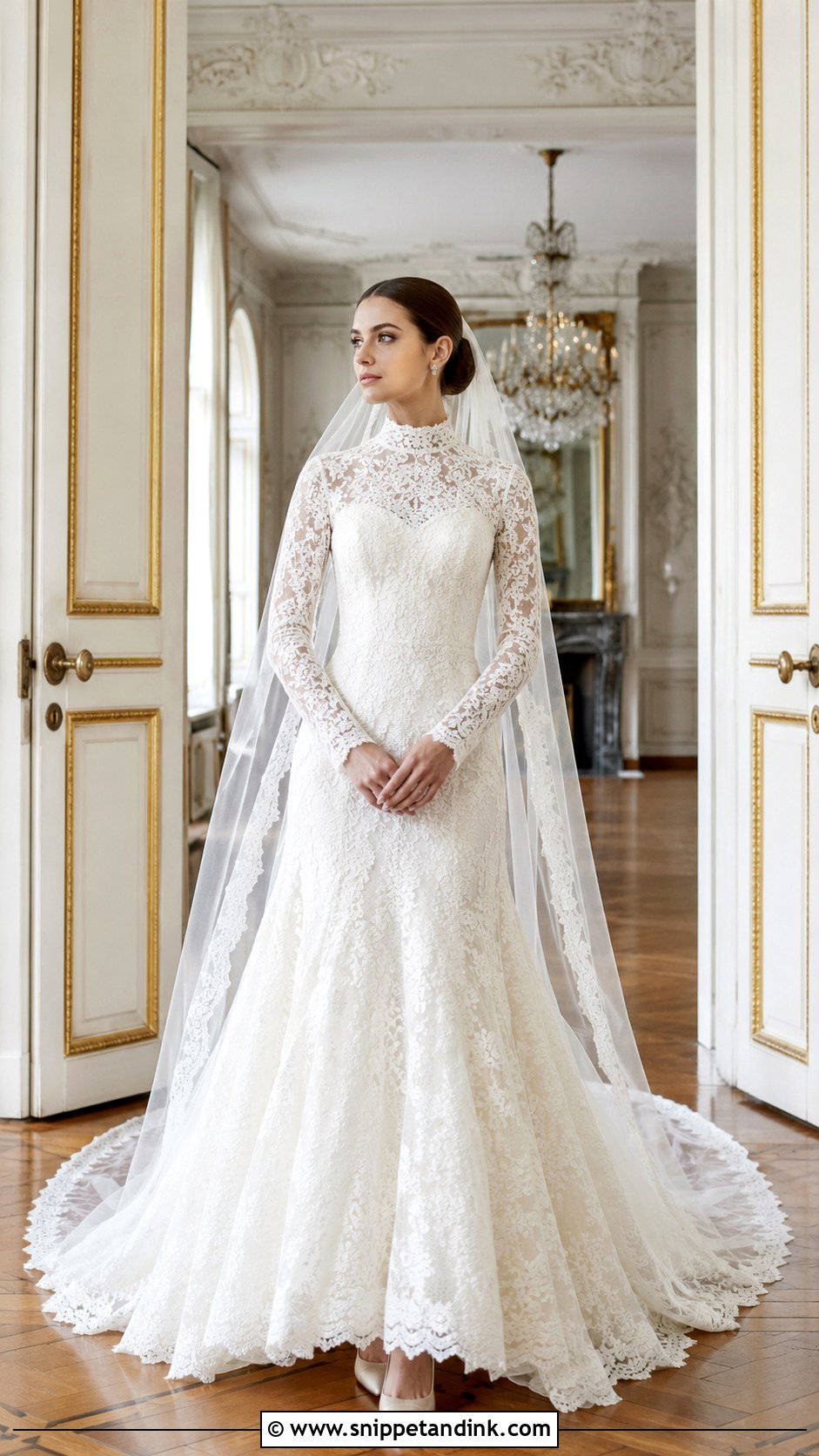
A high neck gives full coverage with a regal line, and the comfort test is simple: swallow, turn your head both ways and look down at your bouquet. If the collar rubs or rides up, ask the seamstress to drop it by a few millimetres. Fine lace or embroidered tulle shaped over a fitted, long-sleeved bodice works well, finished with covered buttons down the back. Small studs, satin pumps and an extra-long veil under a low bun keep the face clear, so leave the necklace at home. Winter ceremonies and churches with tall ceilings suit it.
10. Oversized Bow Wedding Dress
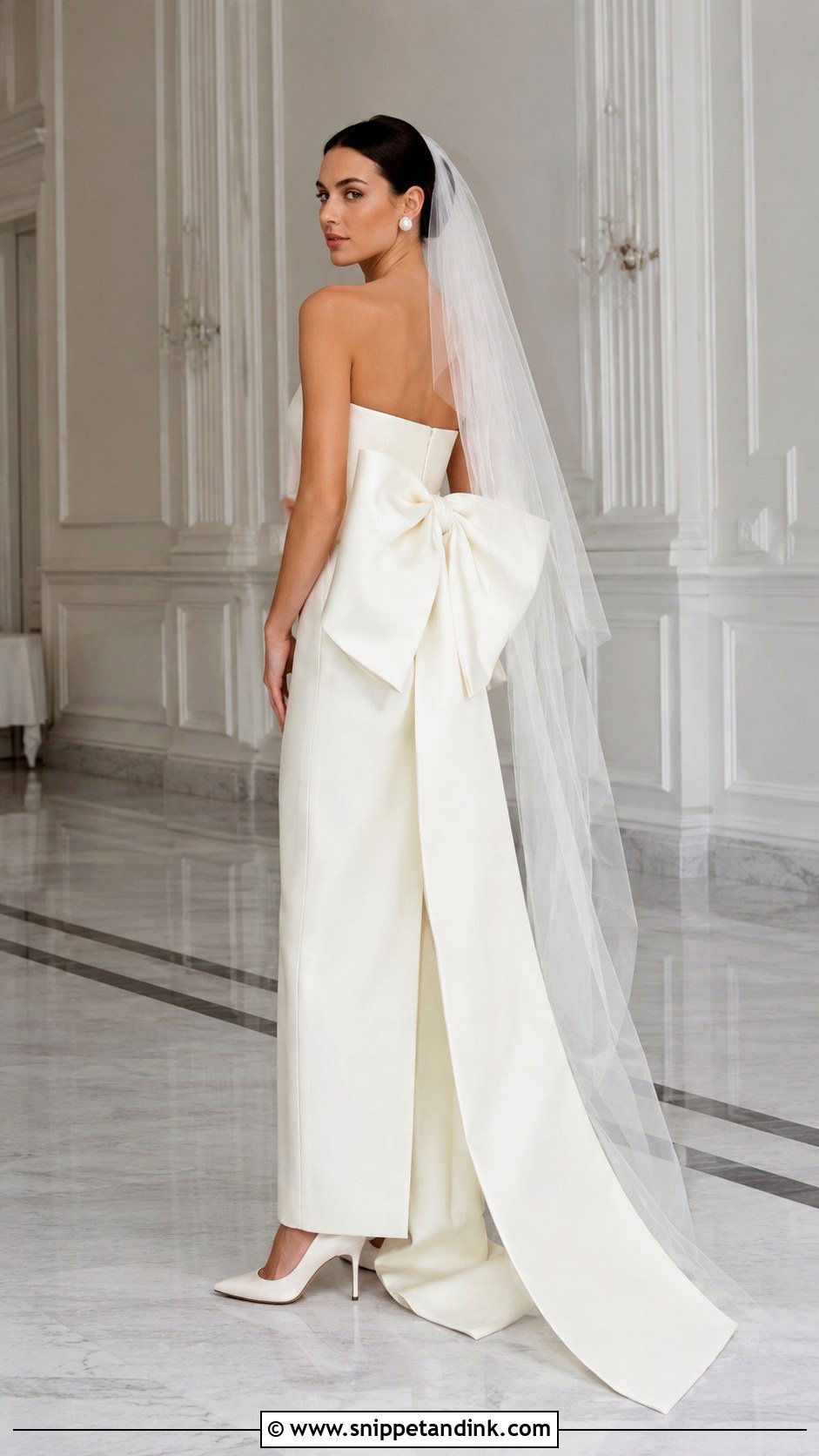
An oversized bow brings couture-level impact to a restrained gown, provided the fabric can hold it. Crisp silk faille or Mikado keeps loops standing; softer satin collapses by the first dance. The bow can sit at the back waist, sweep across one shoulder or form a detachable train, and the gown beneath should stay simple. Since most of the drama is behind you, tell your photographer to plan full-length portraits from the back against a clean wall. Pointed satin heels, button earrings and a neat bun complete it.
11. Pearl Embellished Wedding Dress
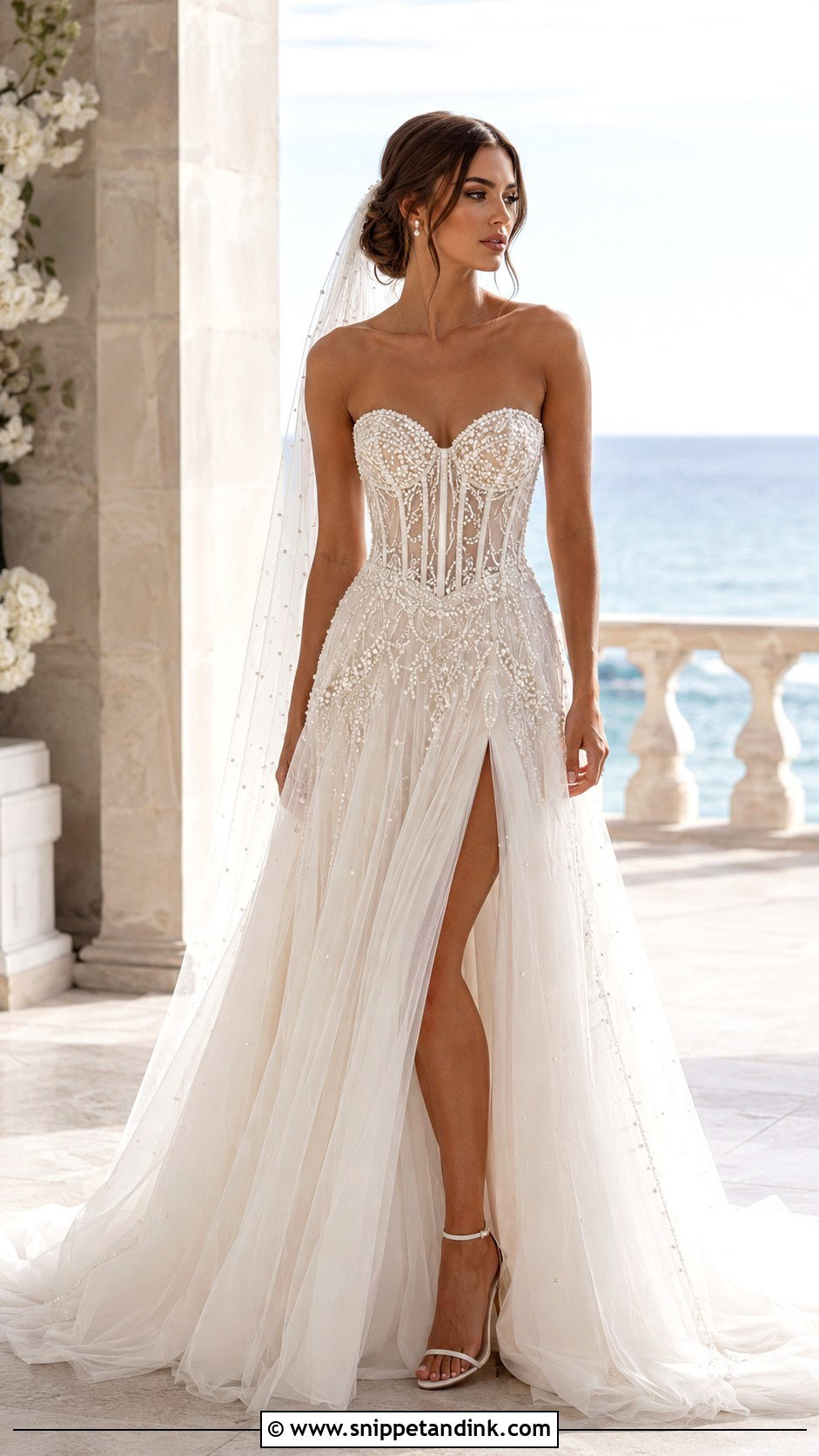
Pearls glow rather than sparkle, which makes them kinder in daylight than crystal. Mixed sizes look richer than uniform rows. What I check is the stitching at the underarms and waist, where arms brush the bodice all day and loose pearls start to drop by the reception. Pearl studs, ivory ankle-strap heels and a veil with only a scattering of matching accents keep things in proportion. Wear a softly waved low bun and keep other jewelry minimal so the pearls carry the look.
12. Detachable Overskirt Wedding Dress
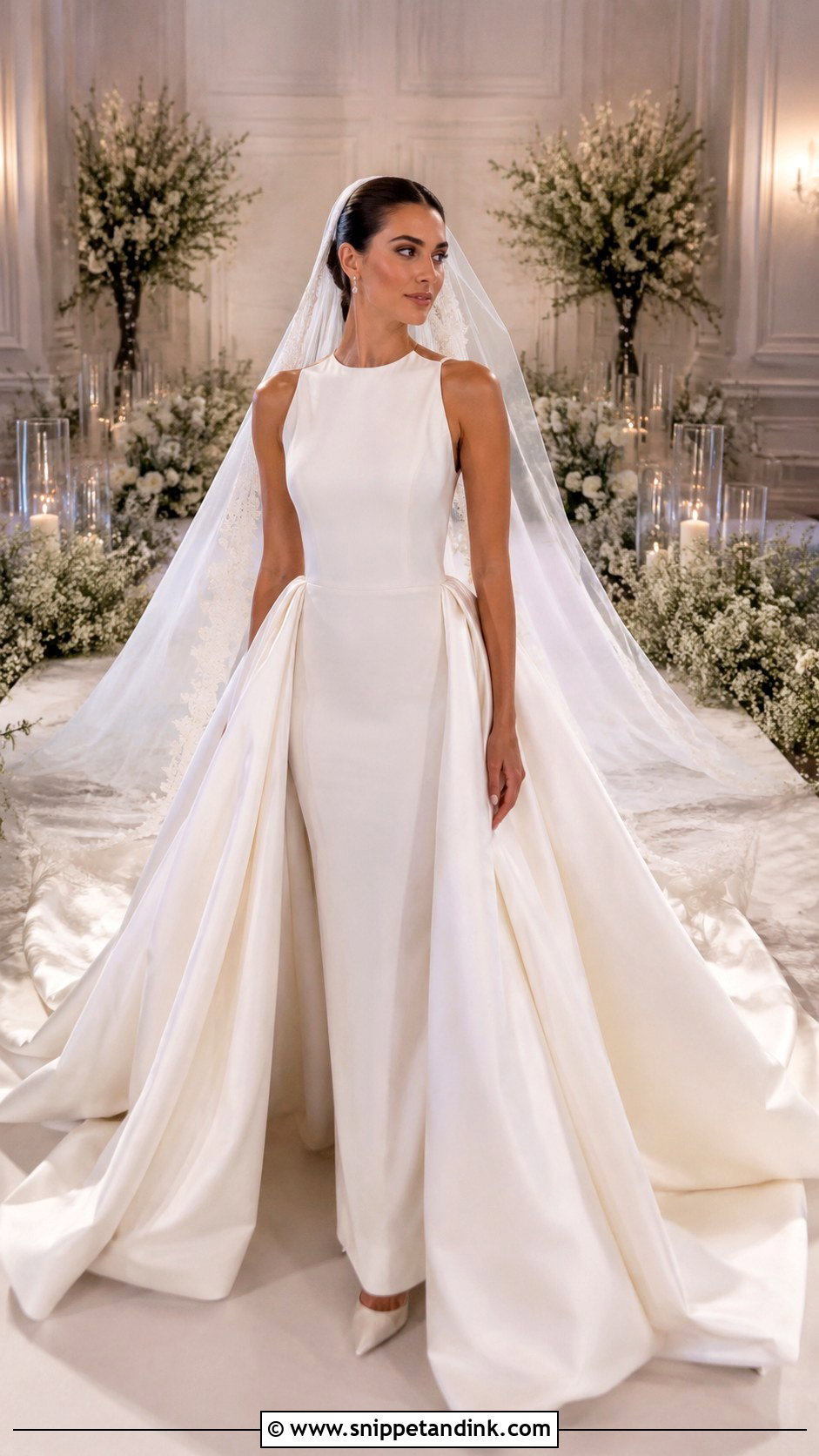
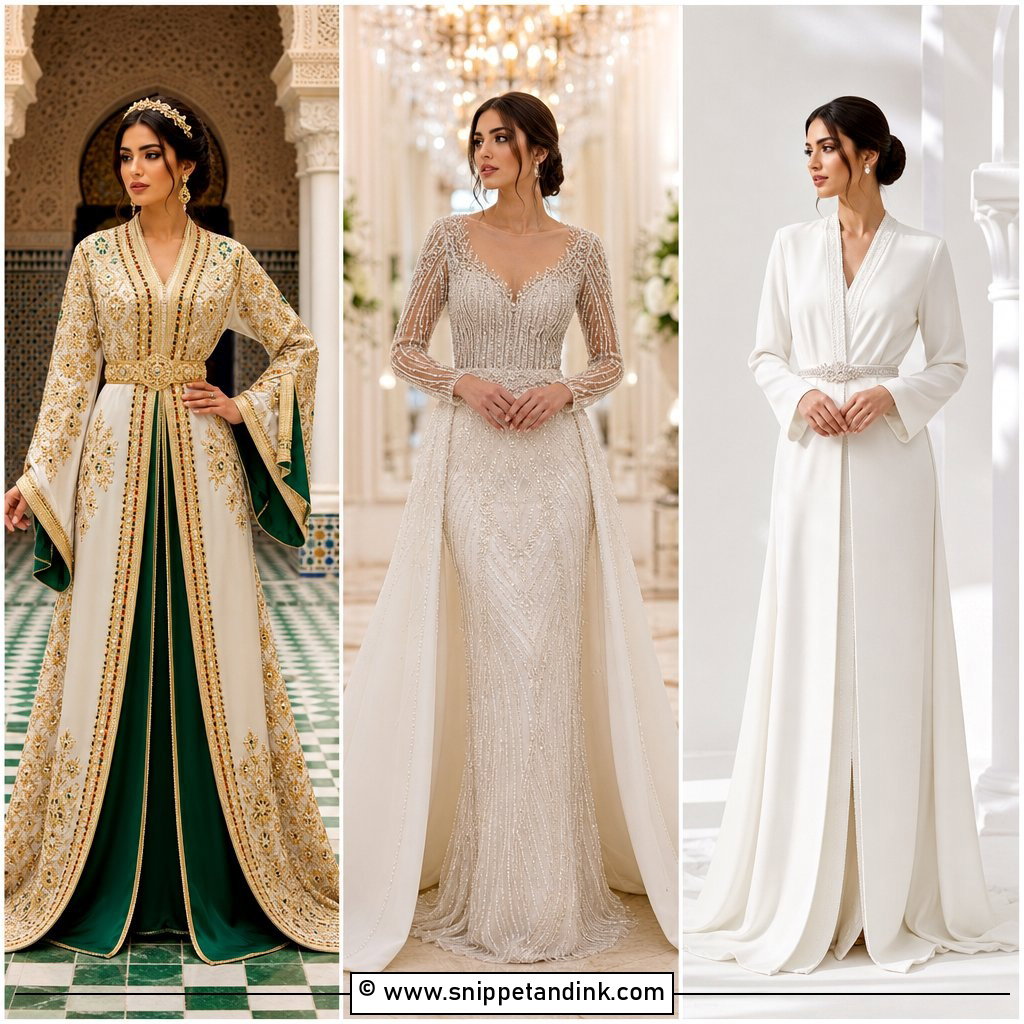
A detachable overskirt gives you two silhouettes from one dress. Start with a fitted crepe, satin or embellished column, then add a full tulle or Mikado skirt for the ceremony. The join at the natural waist is where cheap versions give themselves away, so ask to see it from the side as well as front and back. Have your maid of honour practise unhooking it before the day; hidden hooks are fiddly in a dim hotel corridor. A sleek ponytail or low bun suits both versions.
13. Feather Trim Wedding Dress
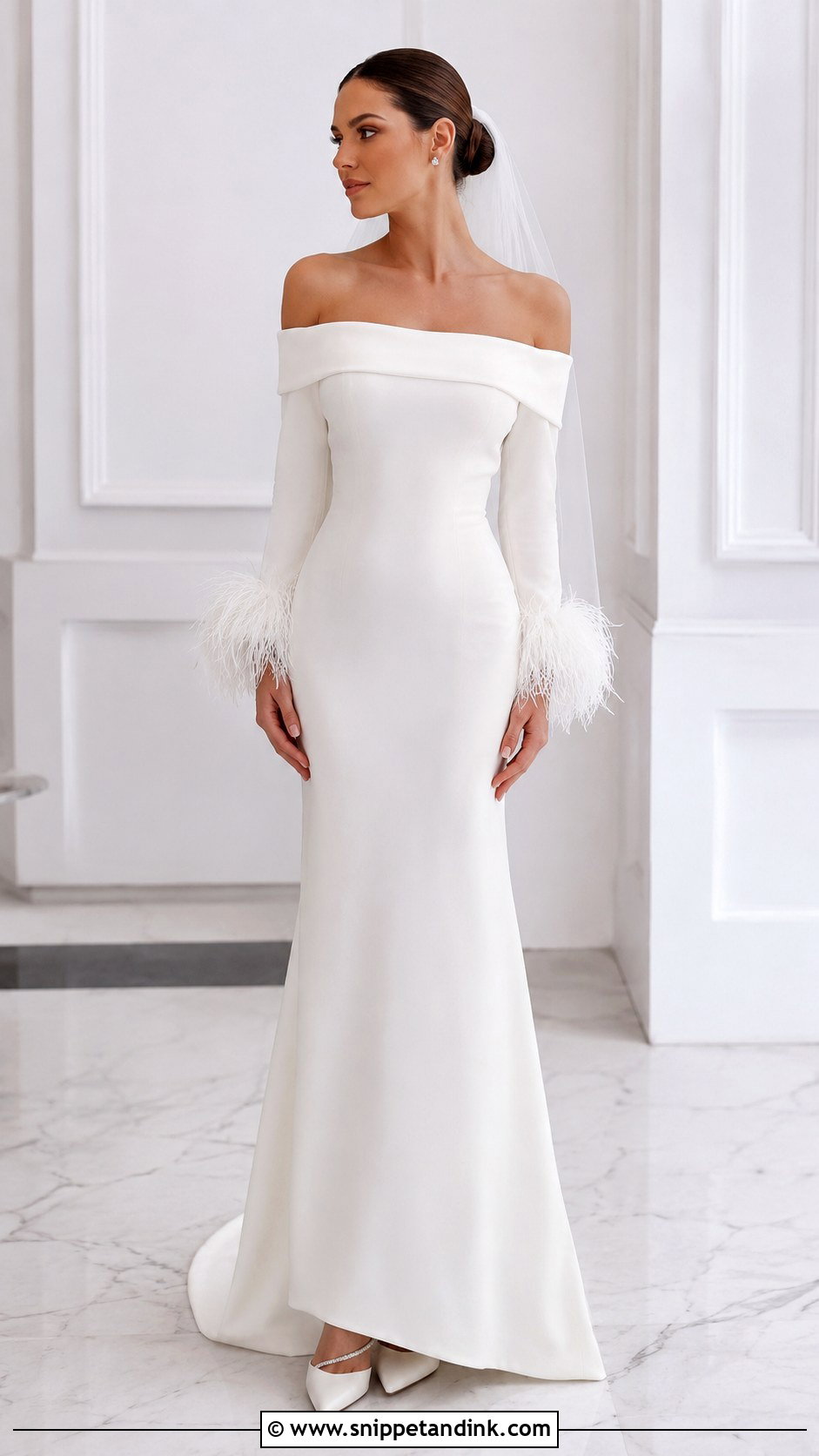
Feathers shed. That’s simply the nature of the material, so I keep feather trim to one area: a neckline, the cuffs, a hem or a removable cape. A clean crepe or satin base lets the trim stand out. Give it a firm shake at the final fitting and check the bouquet doesn’t catch on the cuffs. Crystal studs, sleek ivory heels and a short plain veil finish it, with a smooth bun or structured waves. Detachable feather cuffs let you dance freely later in the evening.
14. Embroidered Tulle A Line Wedding Dress
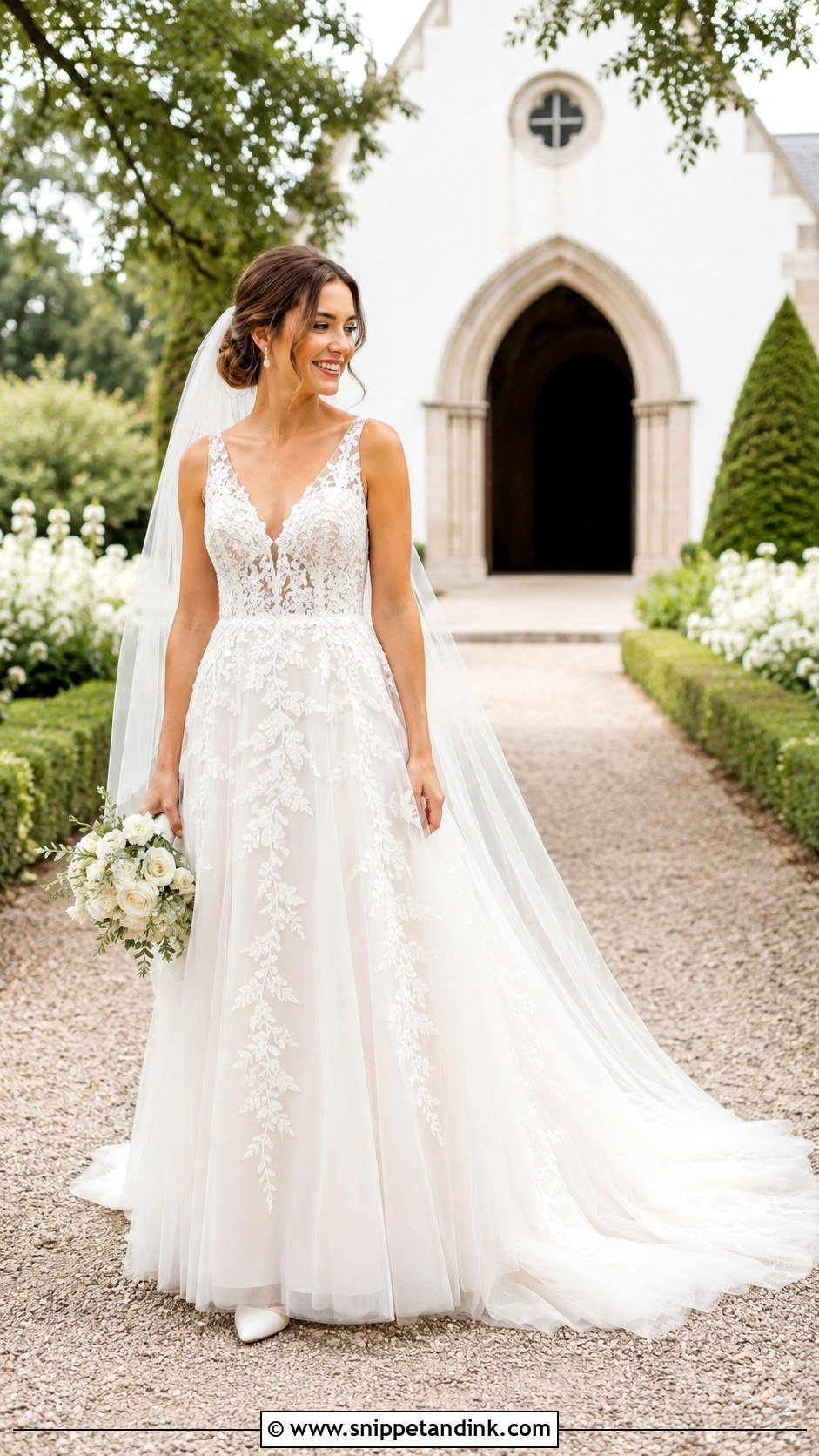
Embroidered tulle in layers gives an A-line depth without weight, and a V or scoop neck with a softly defined waist flatters a wide range of figures. Look for botanical motifs or tonal ivory thread spread evenly, not clustered at the bodice. Tulle snags on rough ground, so on grass or gravel I’d keep the train short or plan a bustle before the walk to drinks. Closed-toe heels, small drops and a plain chapel veil keep the embroidery visible, with loose waves pinned behind the ears.
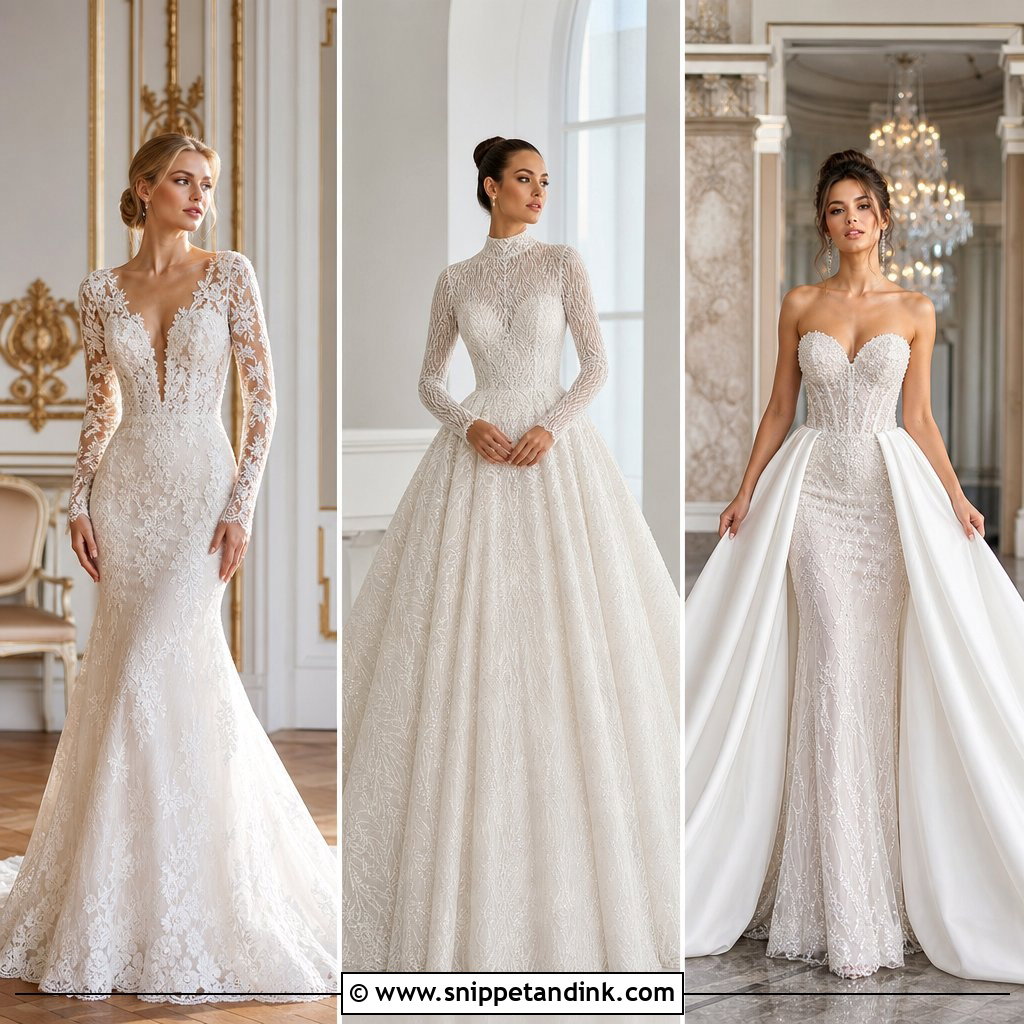
15. Draped Silk Satin Wedding Dress
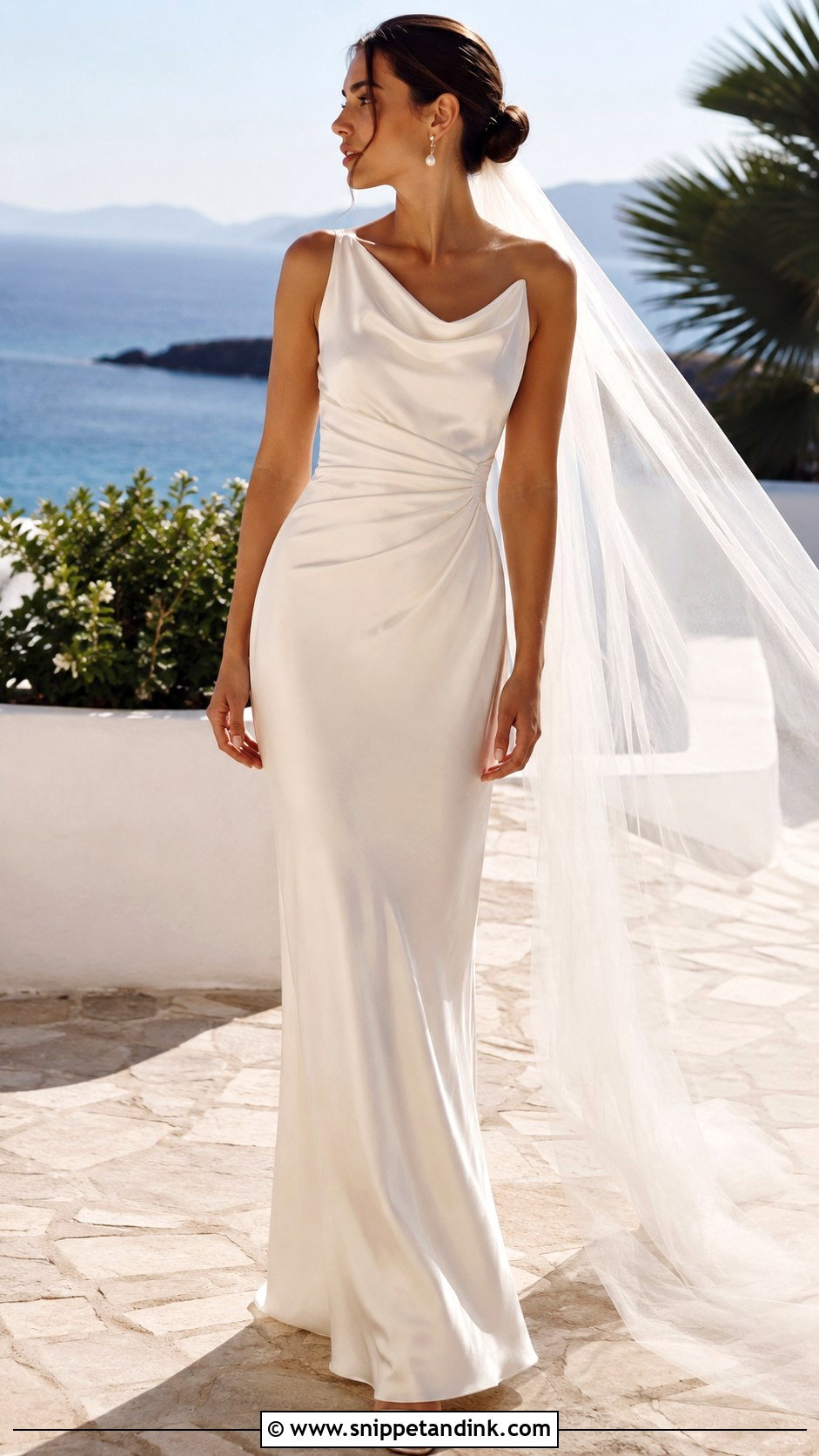
Silk satin is unforgiving. It shows every pull at the hip and every line underneath, so a bias-cut or draped gown needs a skilled cutter and smooth, invisible undergarments chosen before the first fitting, not after. A gathered neckline or wrapped waist should follow the body without adding bulk. Have it professionally steamed and handle it as little as possible on the morning; satin takes fingerprints and creases from a single careless sit. Delicate drops, slim ivory sandals and a sheer veil suit coastal venues and summer evenings.
16. Cape Sleeve Wedding Dress
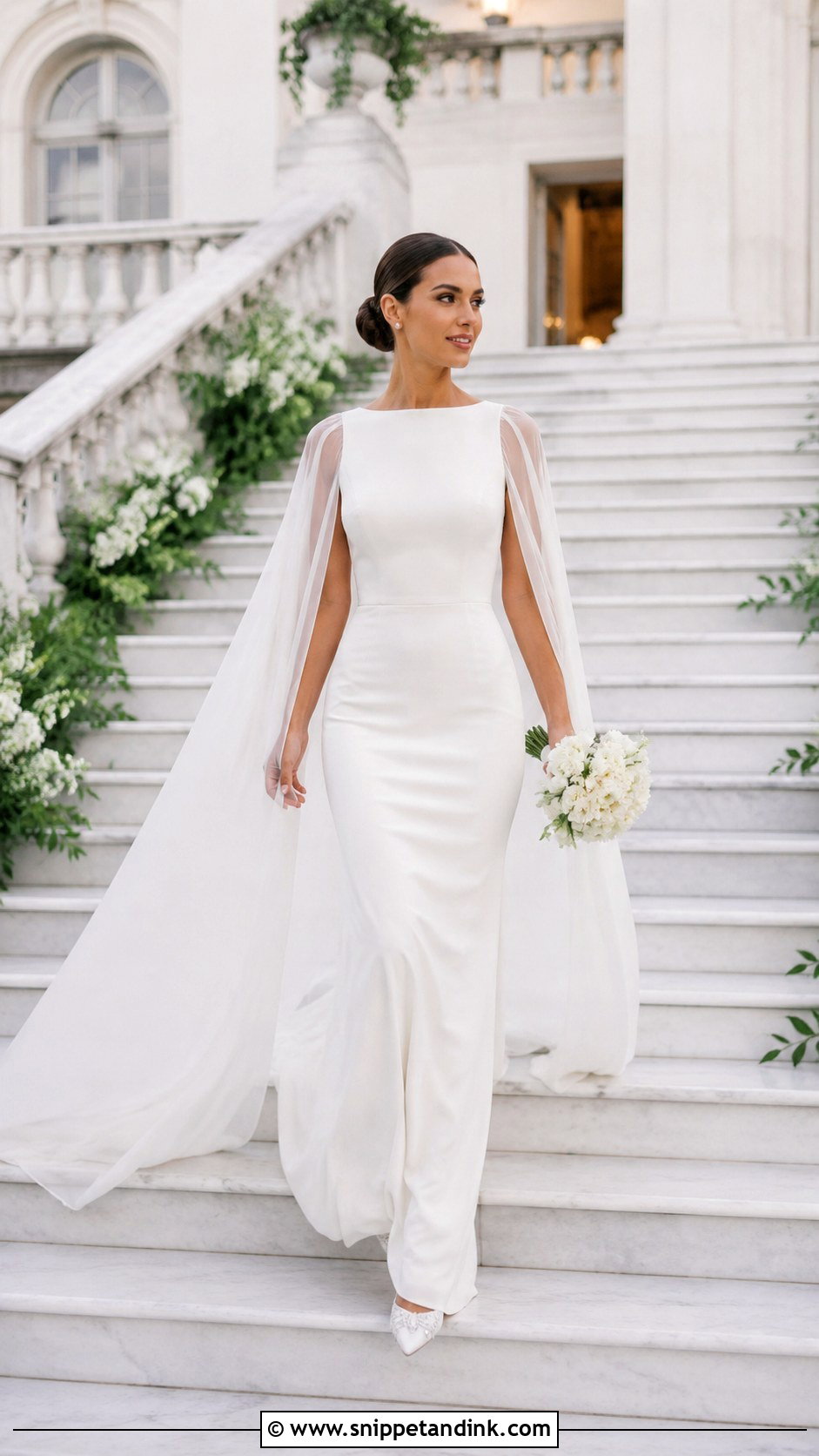
A cape gives movement without a veil, and it can come off for the reception to reveal a simpler line. It can attach at the shoulders or the back neckline of a fitted crepe or structured satin gown. Sheer tulle floats; silk or an embellished cape feels heavier and more couture. The weak point is the attachment, so I test every snap or hook by walking briskly outdoors at the fitting. Pointed pumps, diamond studs and a sleek low bun keep the shoulders clean. A sweeping staircase is where a cape really earns its cost.
17. Sculptural Ruffle Wedding Dress
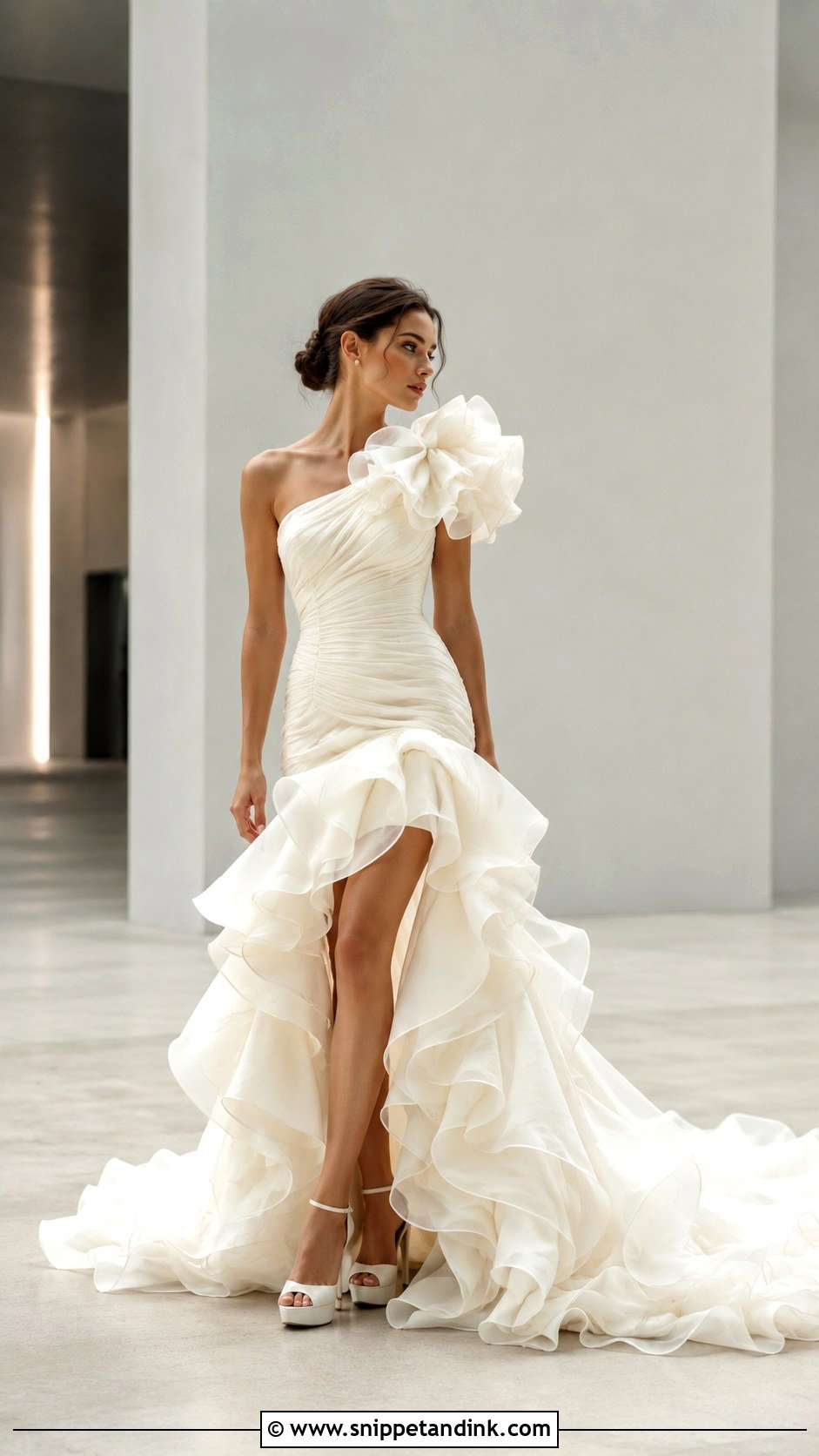
Big ruffles need lightweight fabric, otherwise the dress becomes exhausting to wear. Organza, silk gazar and crisp taffeta all hold volume without the weight of satin. Whether they frame one shoulder or spiral down a mermaid skirt, the foundation underneath has to be fitted and supportive so the shape doesn’t drag. At fittings, confirm that you can raise your arms, sit and reach the bustle loops. Keep accessories to simple studs and platform heels, and choose a spacious venue where the silhouette reads from across the room.
18. Colored Floral Wedding Dress
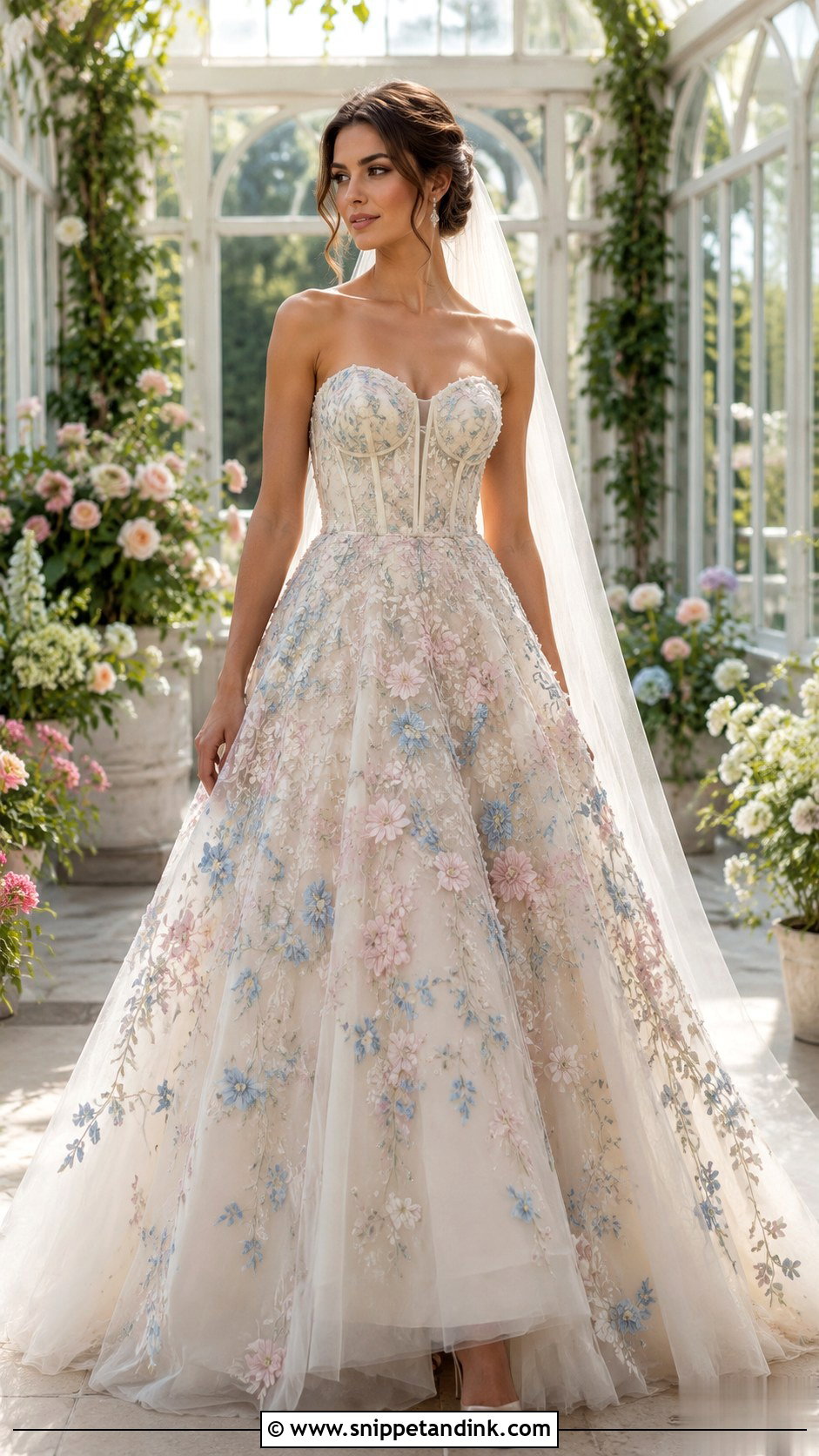
A colored floral gown keeps a pale tulle base so it still reads as bridal, with soft blue, blush or sage flowers embroidered or applied over it. A structured bodice and full A-line skirt give the pattern room. The mistake I see most is a bouquet in the same flowers as the gown, which turns into a blur in photos, so pick blooms that sit next to the print rather than copy it. Neutral heels, understated diamonds, a plain or faintly tinted veil and natural makeup keep the gown in charge. Spring gardens suit it.
19. Vintage Inspired Basque Waist Wedding Dress
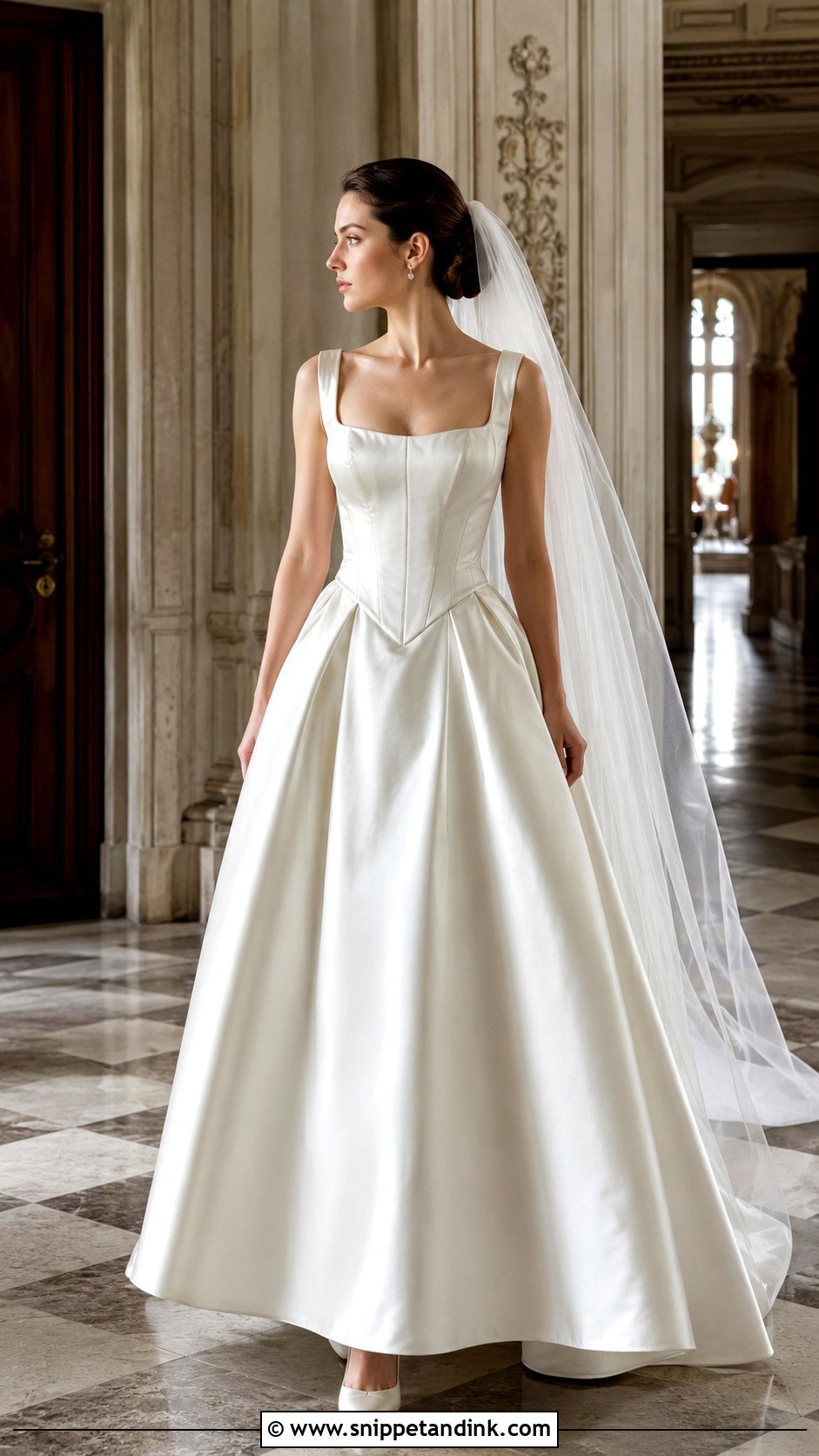
A basque waist dips below the natural waist in a V, and it’s the one cut where I’m strictest about seated fittings. If the point is even slightly long, it creases and lifts every time you sit at dinner. Pair it with a corseted bodice, a rounded neckline and a full satin or tulle skirt. Covered buttons or fine lace trim add a vintage note without tipping into costume. Pearl earrings, pointed pumps, a long veil and a polished chignon suit historic houses and formal ballrooms, and the defined waist gives front-on portraits a clear focal point.



20. Custom Couture Wedding Dress With Statement Train
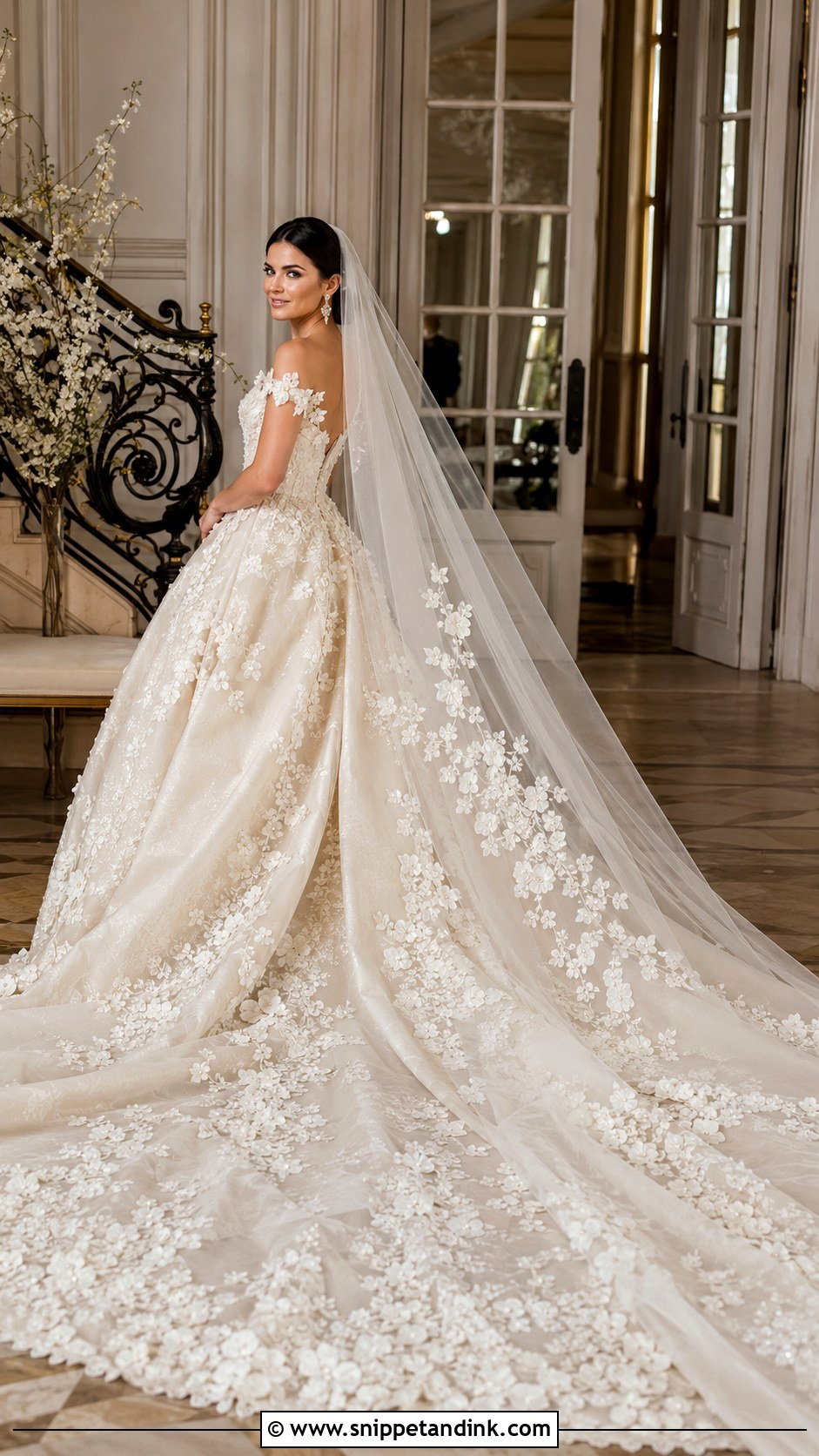
A custom couture gown is designed around you, your venue and how much drama you want. The train is where most of the hand work usually goes: embroidery, lace appliqués, a monogram or placed crystals. I’d remind any bride that the front still has to stand on its own, because guests mostly see it. Custom-dyed shoes, heirloom earrings and a cathedral veil that sits behind the work rather than over it finish things. Insist on a multi-point bustle, and give yourself enough time for fittings and movement tests in a venue with an aisle wide enough to show the train.
What Silk, Beading and Feathers Need After the Last Dance
An expensive gown deserves more care than being stuffed into a garment bag at midnight. Hang it by its inner hanging loops, not the shoulders, so heavy skirts don’t stretch the bodice. Leave it in a breathable cotton cover, never plastic, which traps moisture against silk.
Get it to a cleaner who specialises in bridal wear within a few weeks. Sugar from champagne or cake can be invisible on the night, then turn yellow-brown over months as it oxidises, and grass or mud sets the longer it sits. Point out every mark and tell the cleaner what’s beaded or glued, because some solvents dull crystals or loosen adhesive. Feathers and dimensional flowers usually need hand cleaning, which costs more.
For long-term storage, I’d ask for acid-free tissue folded into every crease and an acid-free box, kept somewhere dark with a steady temperature. Attics and basements are the worst places for silk. Open the box once a year and refold along different lines so permanent creases don’t form.
Where the Money in a Luxury Gown Should Actually Go
Luxury isn’t one silhouette. A plain silk column can feel as rich as a crystal ball gown when the fabric, cut and fit are right. I’d start with your venue and how formal it is, then test comfort, movement and train management at every fitting. Hold back part of the budget for alterations, undergarments, shoes, a veil and cleaning afterwards, because those decide how the gown looks on the day. Choose the dress that looks like you, not the one with the highest number on the tag.
You'll Like These Ideas:







Leave a Reply