
An all-white cake is the order I find hardest to fake. With no color or gold leaf to pull the eye away, every wobble in an edge and every air bubble under the icing shows, so a plain design is really a brief about craftsmanship. The three-tier style gives you enough height to hold a reception table without risers, and it feeds a mid-sized guest list without dummy tiers. Below are twenty white versions I’d happily put my name to, from bare satin fondant to pearls, ruffles and a few well-placed flowers, with notes on how each finish behaves once it leaves the kitchen.
Why Real Buttercream Comes Out Ivory, and How to Get a Truer White
Most couples who order a white cake are picturing the white of their tablecloth. Butter has a natural yellow tint, so an all-butter icing always comes out ivory, and that’s often the first surprise at a tasting. There are honest ways round it, and each one has a trade-off.
- Swiss or Italian meringue buttercream whips paler than the classic sugar-and-butter kind, though it’s still off-white.
- A tiny amount of violet gel cancels the yellow. Too much and the cake turns grey, so I add it a toothpick tip at a time and check it in daylight, not under kitchen bulbs.
- Swapping some of the butter for shortening gives a whiter icing that also copes better with heat, but the flavor is flatter and the mouthfeel slightly waxy.
- Fondant is the whitest covering of all, and fondant over ganache is the most stable for a long display.
My suggestion is to hold a swatch of your dress fabric against the icing at the tasting. A bright white gown beside an ivory cake can make the cake look creamy, even slightly dingy, in photos, while an ivory or champagne gown flatters a true buttercream finish.
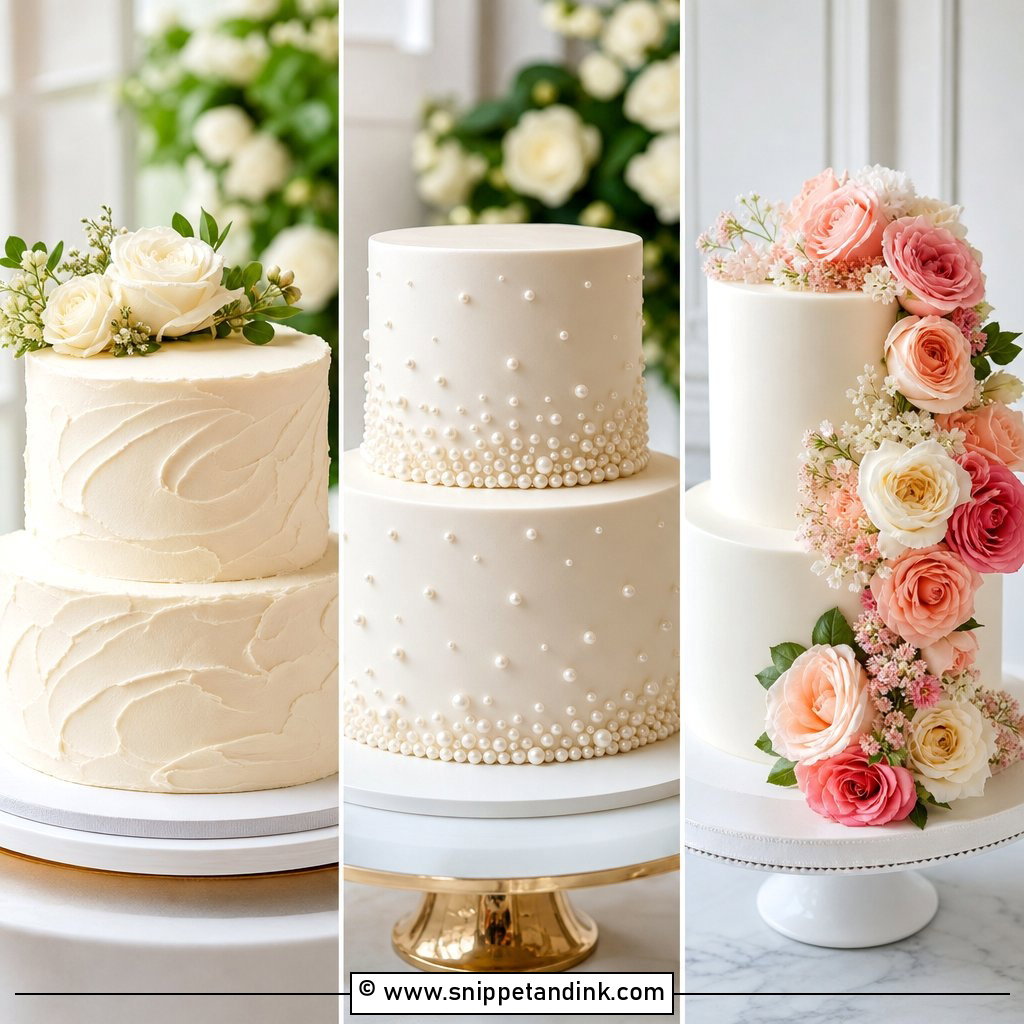
1. Plain White 3 Tier Buttercream Wedding Cake
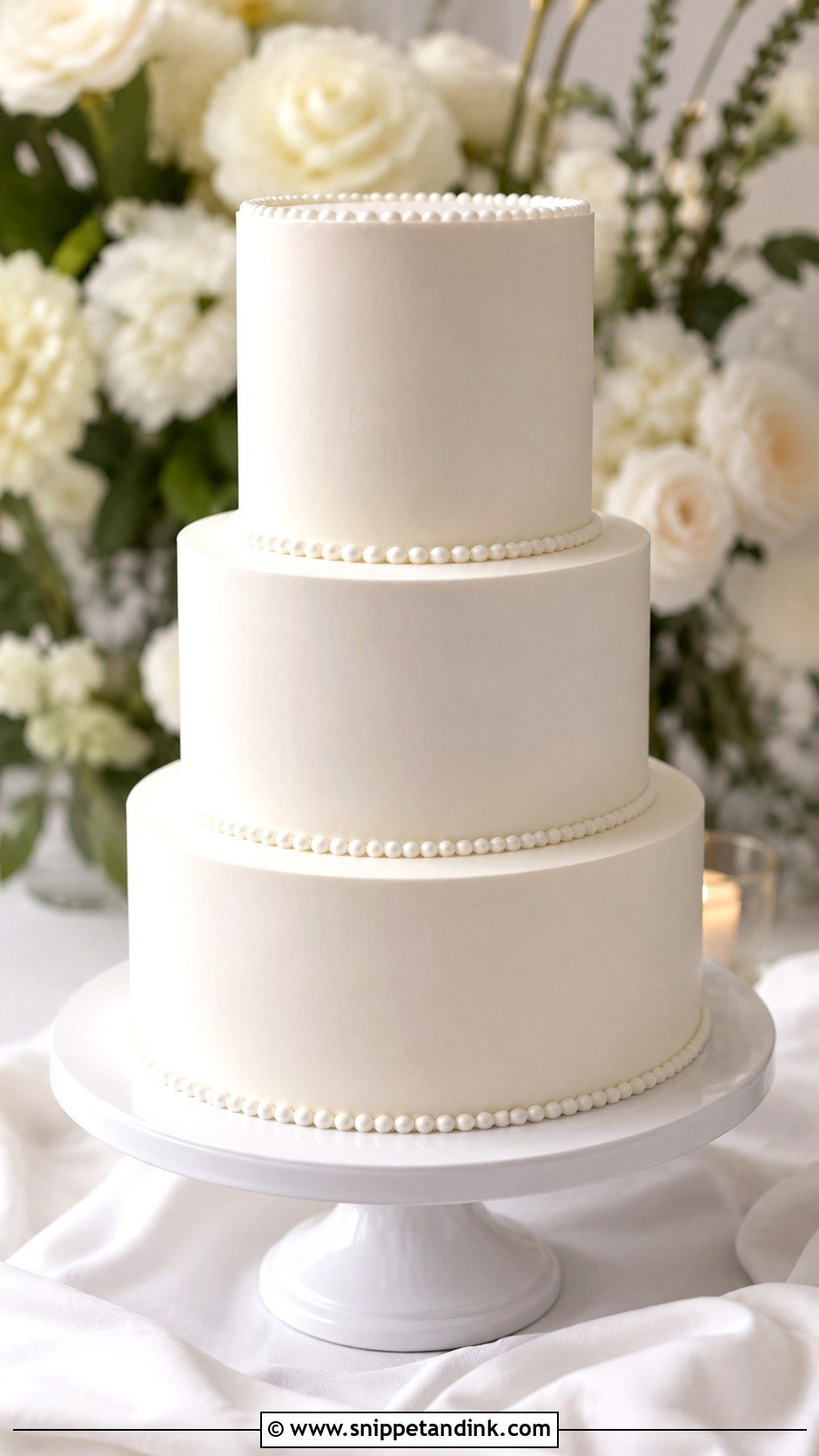
Buttercream is where I start most plain white conversations, because most guests prefer the taste to fondant and it forgives a slightly uneven board. The catch is color: real butter makes the icing ivory, not white, so for a truer white I either use some shortening or add a speck of violet to cancel the yellow. A crisp scraped edge reads modern. A hand-smoothed finish with soft palette marks suits a garden reception. Vanilla bean, almond, lemon and white chocolate sponges all sit happily under it, and a pedestal stand makes the tiers look deliberate rather than bare.
2. Plain White 3 Tier Fondant Wedding Cake
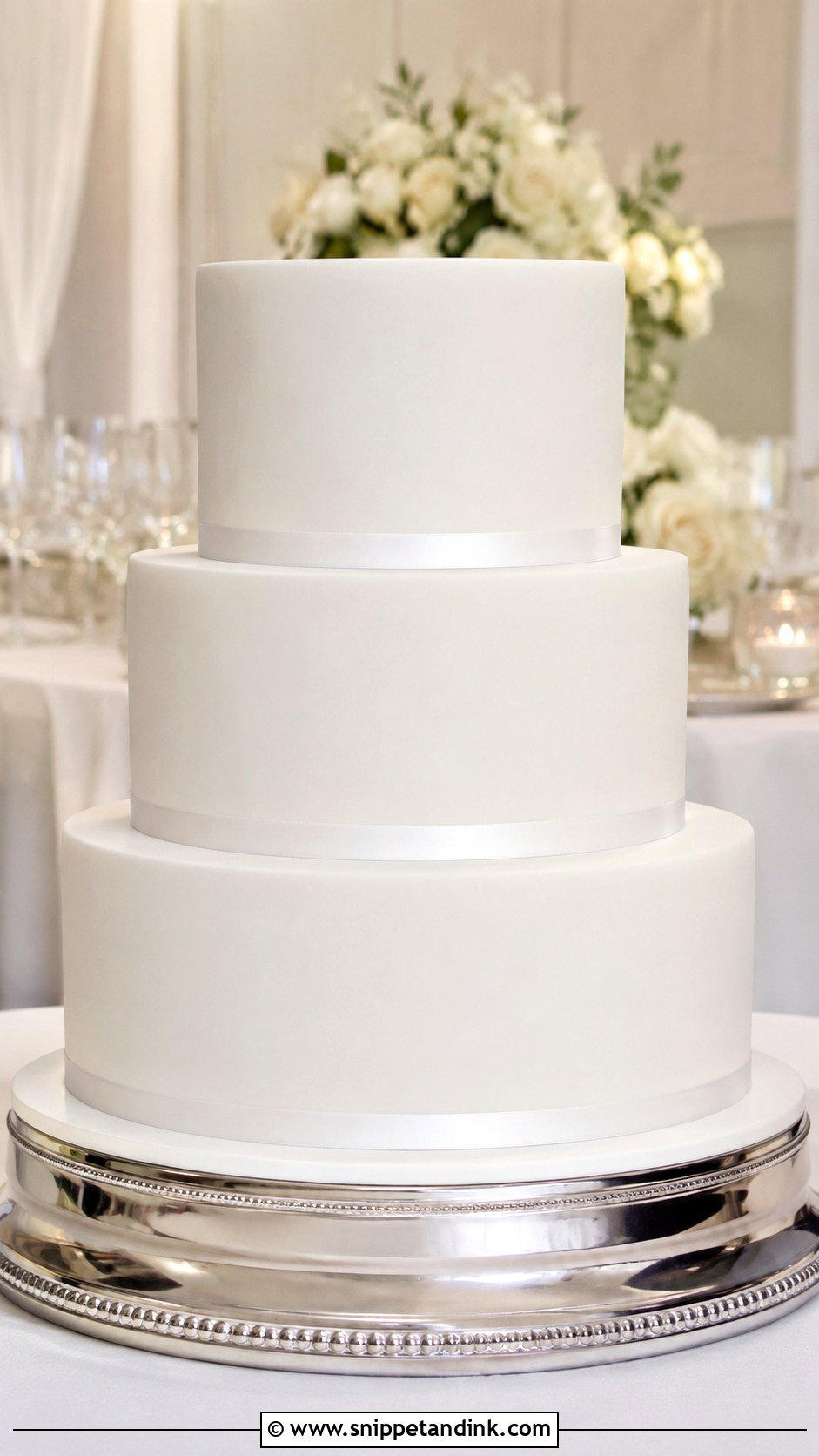
Fondant earns its place at black-tie receptions because the surface stays dry and photo-ready for hours, even in a warm ballroom. With nothing on it, proportion carries the whole design, so I spend most of the consultation on tier height: double-height tiers read fashion-led, standard four-inch tiers read traditional. A narrow white ribbon at each base hides the join. What I’d warn you about is texture. Some guests peel thick sugarpaste off, so I usually suggest a thin roll over firm ganache rather than a heavy layer over soft buttercream.
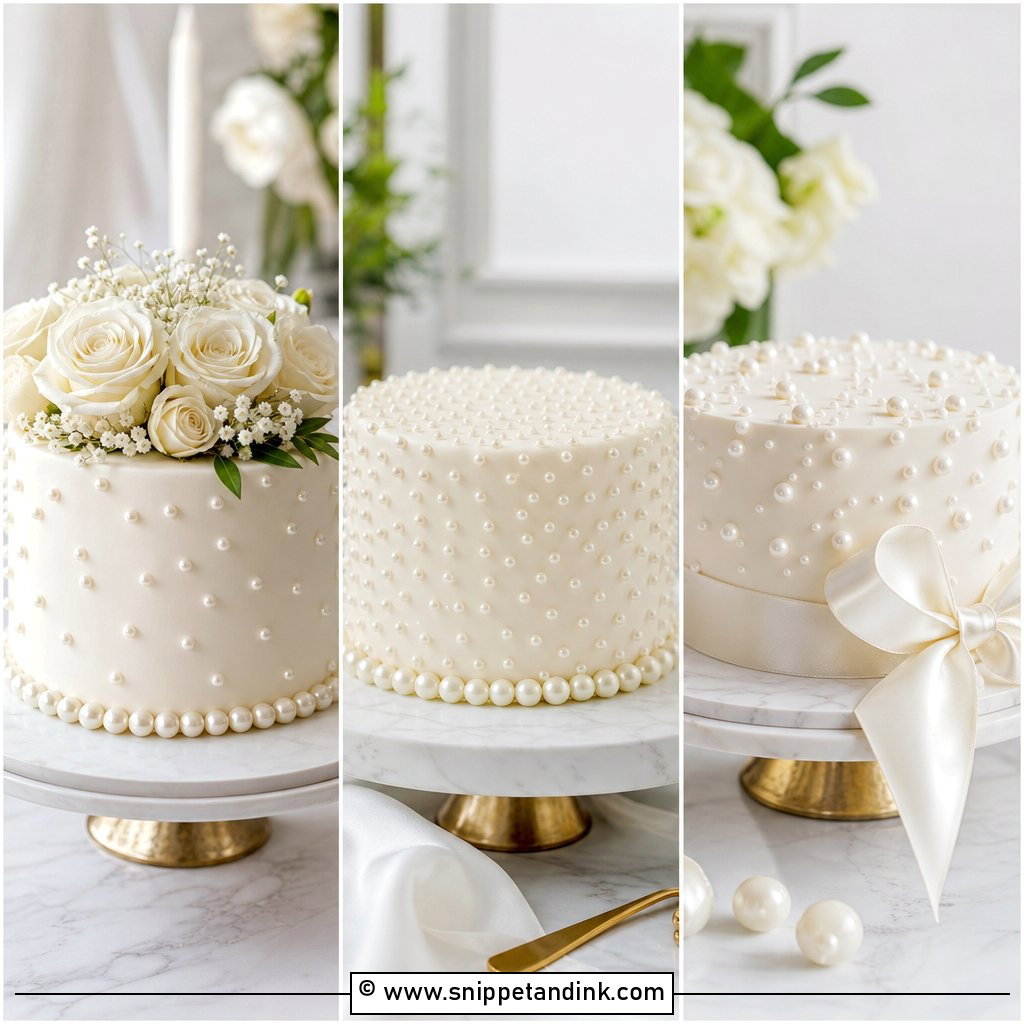
3. Plain White 3 Tier Pearl Wedding Cake
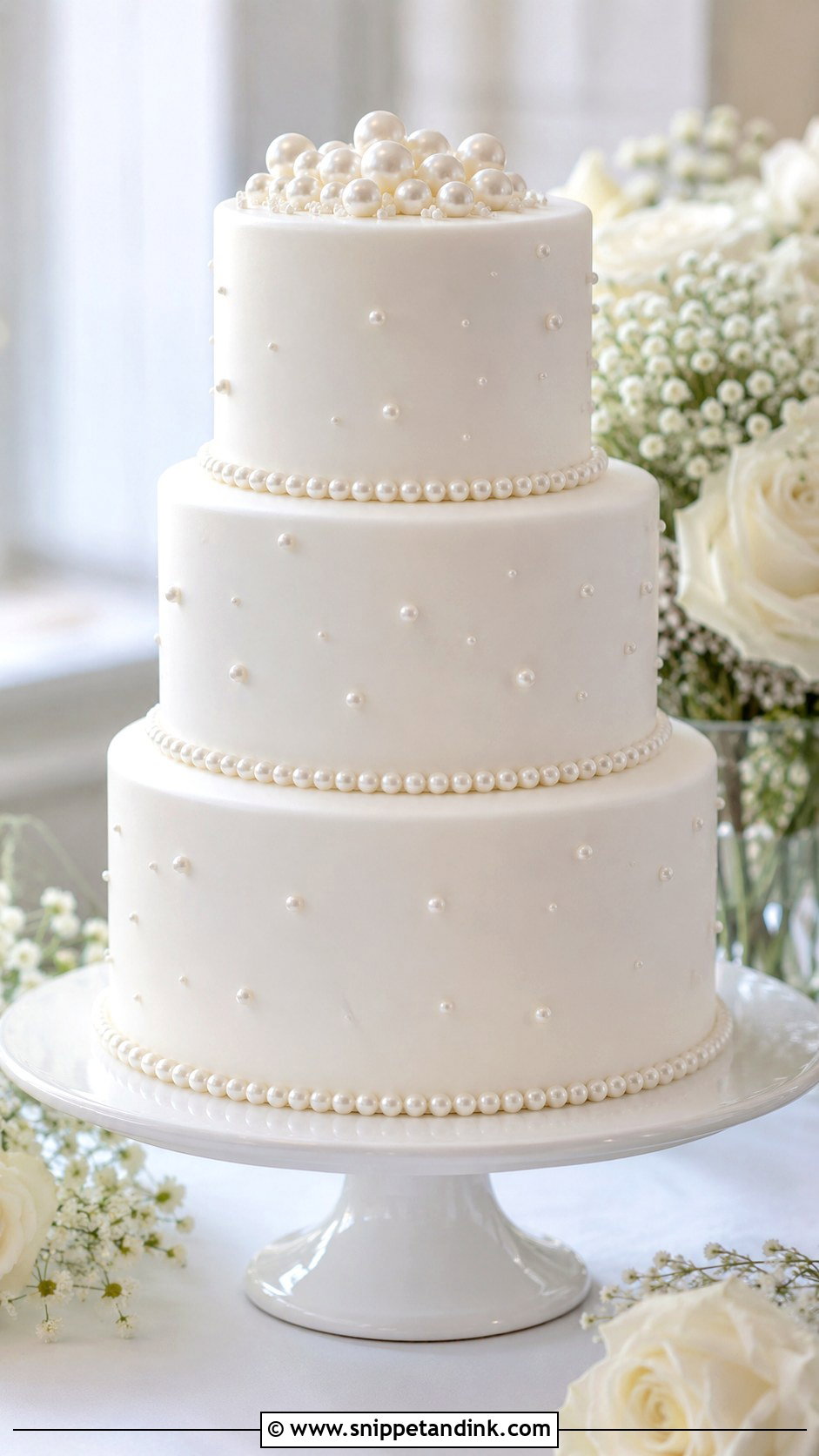
Edible pearls add detail without breaking the white, as long as they’re rationed. I keep them to one border per tier, or a scatter that thins out as it climbs, because a fully pearled cake starts to look like a beaded clutch bag. Ivory or soft white pearls stay tonal; bright silver lustre pearls can read grey under flash. On buttercream they need to go on while the crust is still slightly tacky, otherwise they roll off during delivery. Matching them to pearl buttons or beading on the dress is a tidy way to tie the cake table to the gown.
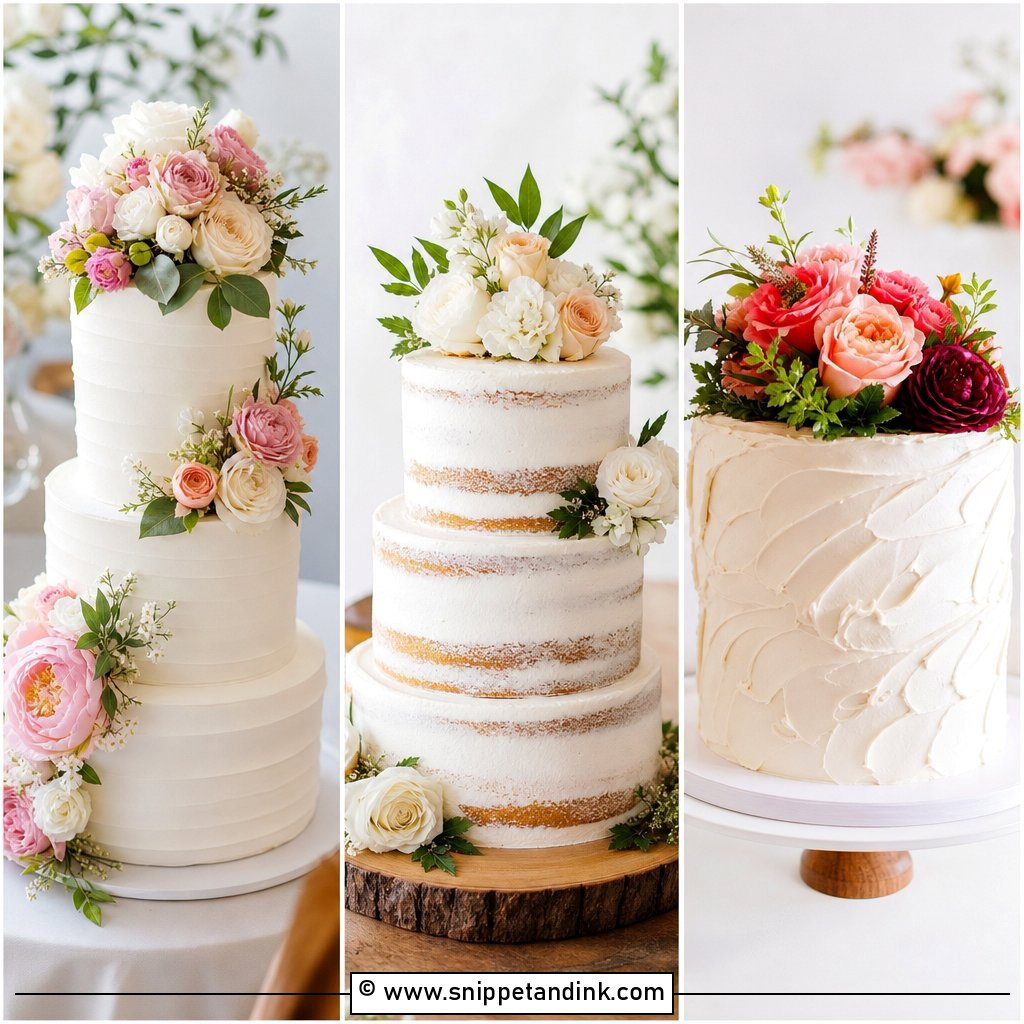
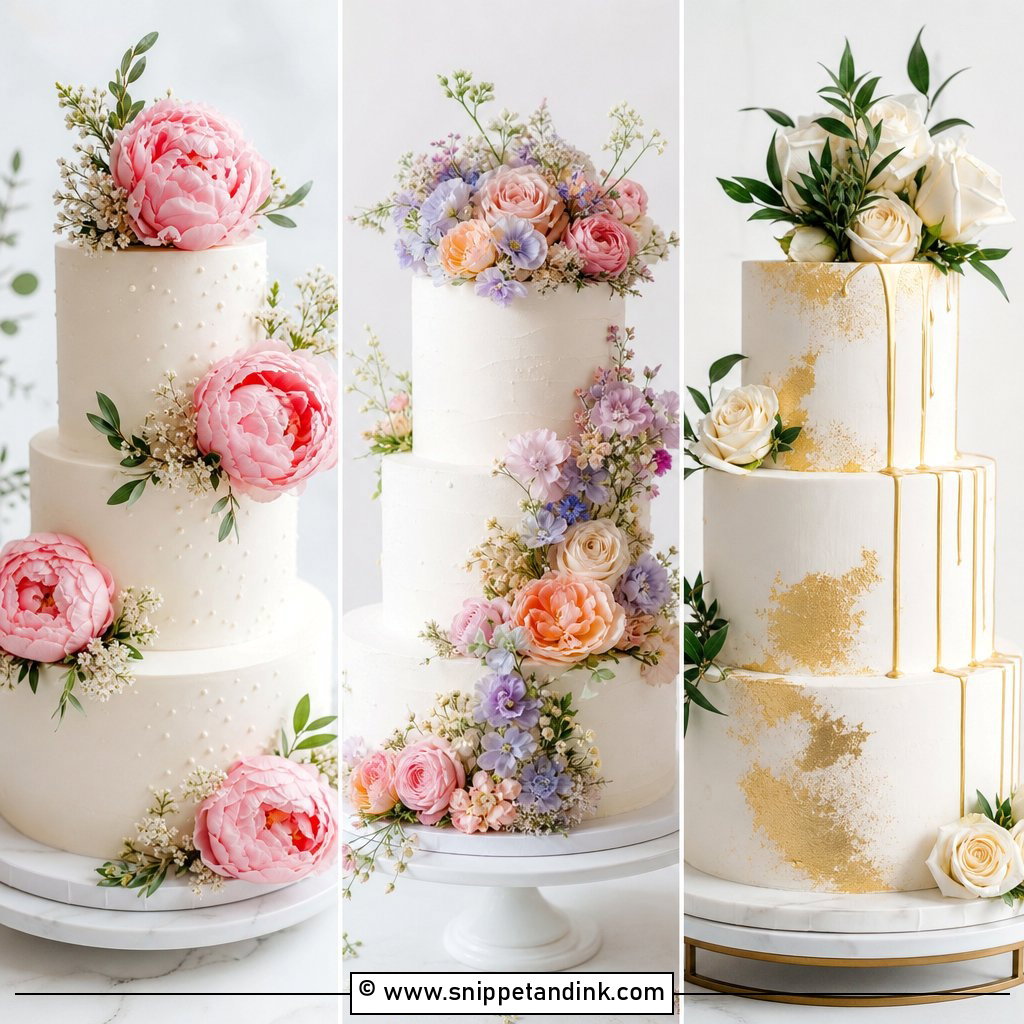
4. Plain White 3 Tier Floral Wedding Cake
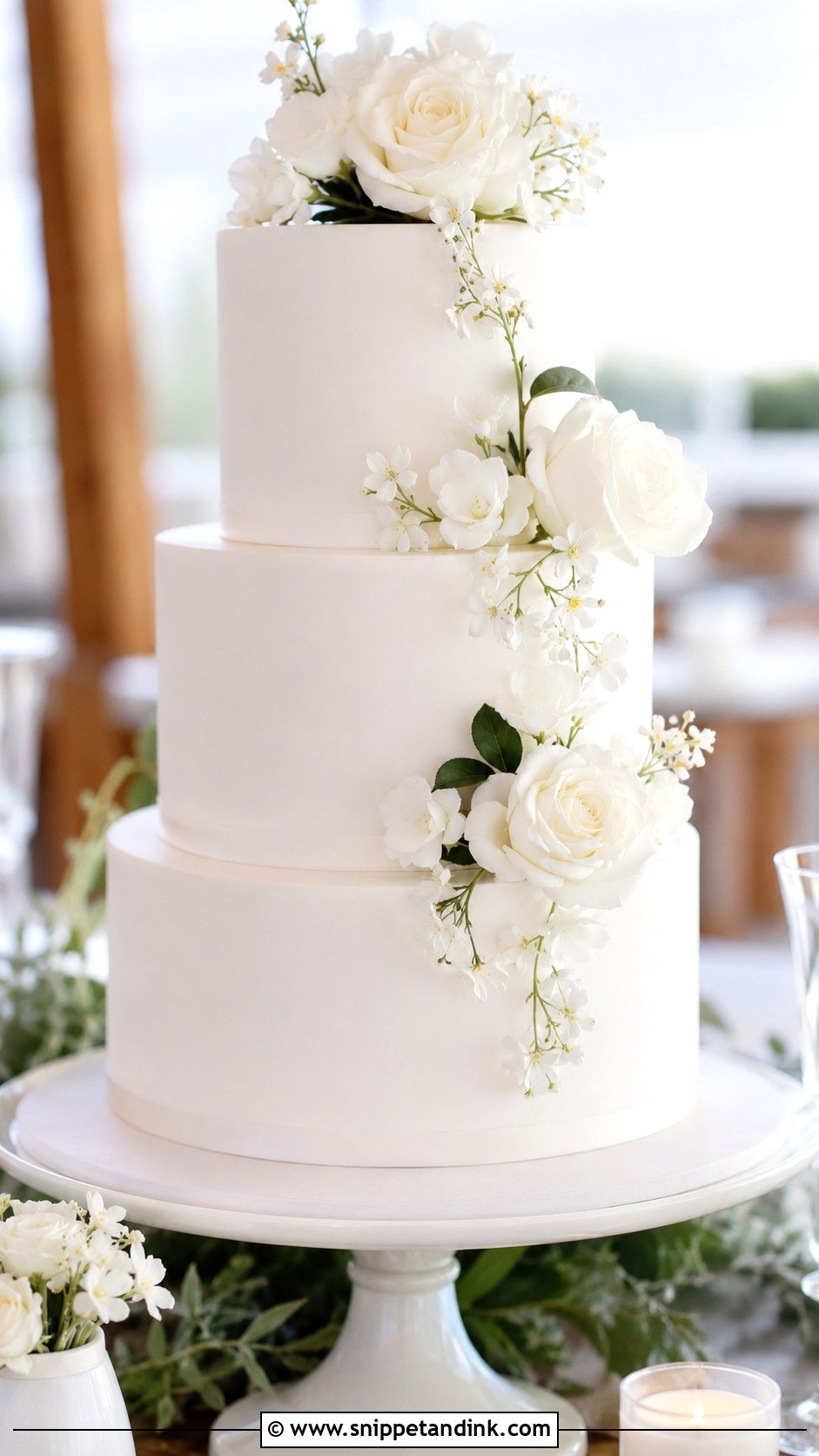
White flowers keep a floral cake inside the plain brief, but the stems are the part couples rarely think about. Roses, orchids, ranunculus and baby’s breath all turn up on cakes, yet plenty of common blooms aren’t food-safe, so I wrap or tape every stem and set it into a flower pick, never straight into the sponge. Airiness matters more than quantity. A few blooms between tiers or one vertical line looks intentional; a tight cluster on every tier crowds the white. Agree whether the florist or the baker places them on the day, because that handover is where things get missed.
5. Plain White 3 Tier Ruffle Wedding Cake
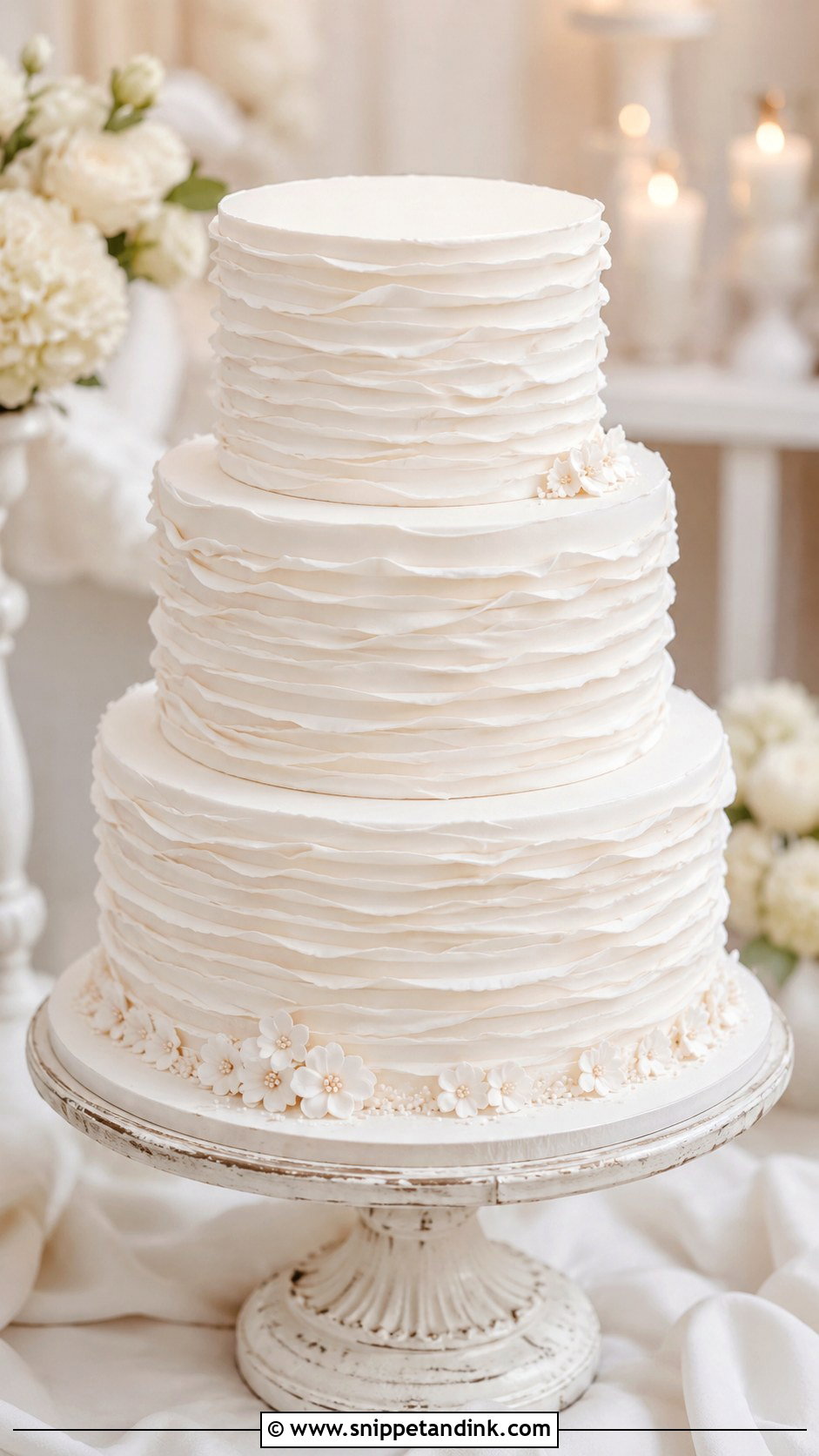
Soft white ruffles give movement and shadow, which is exactly what an all-white cake needs to show its shape on camera. Buttercream ruffles piped with a petal tip look loose and romantic. Fondant frills are cut and layered by hand, look sculpted, and take far longer, which shows up in the quote. I often ruffle only one tier and leave the other two smooth so the texture has something to contrast with. Heat is the risk: thin buttercream edges are the first thing to droop on a warm afternoon. They sit naturally beside tulle or organza skirts.
6. Plain White 3 Tier Vintage Wedding Cake
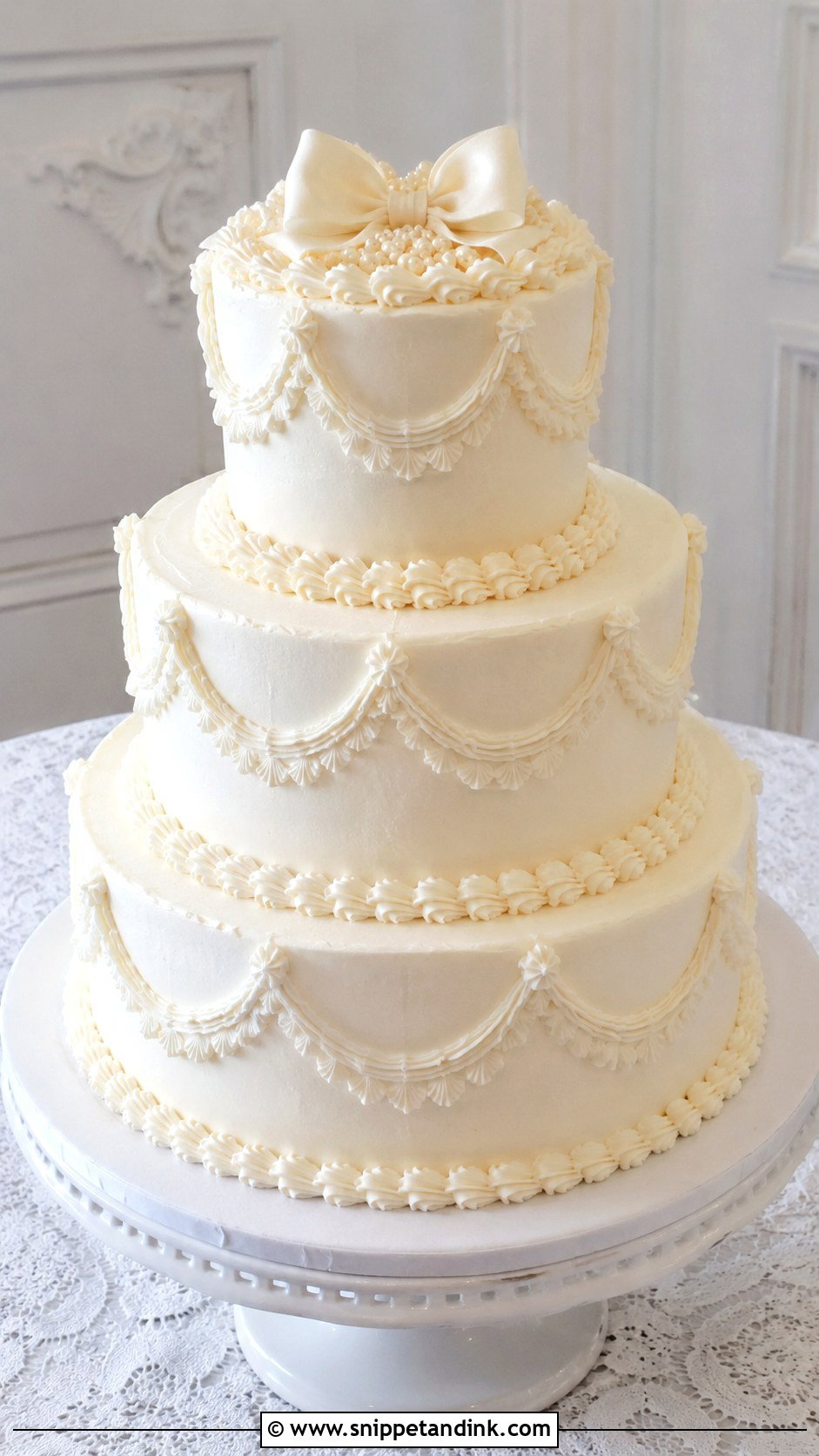
Lambeth-style overpiping is back, and I’m glad, but it is slow work. A white vintage wedding cake can carry shell borders, swags, small bows and scrolls, and the temptation is to use every one. I pick two techniques and repeat them, because a cake piped edge to edge loses the calm you chose white for. Royal icing holds sharp detail far longer than buttercream piping, though it sets hard and needs a firm covering underneath. Next to a lace gown it can look like the cake from your grandmother’s wedding album.
7. Plain White 3 Tier Modern Wedding Cake
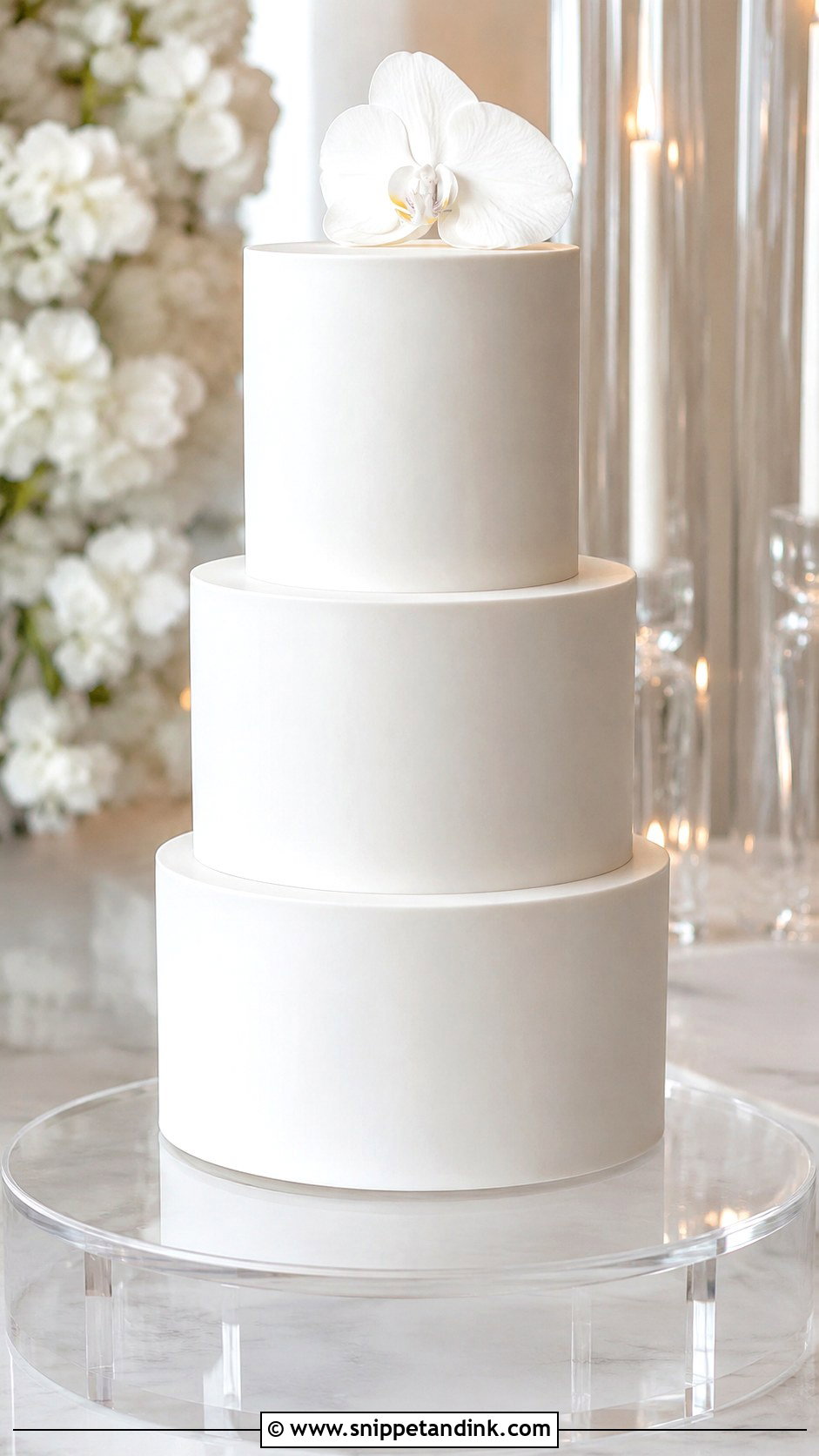
Sharp edges are the whole design here, and they’re the hardest finish to produce. I chill the tiers between coats and take the top edge in with a warmed scraper, because any rounding shows straight away on a bare white cake. Taller tiers, offset stacking or a simple acrylic stand push it further toward modern. Lofts, galleries and rooftops suit it, but for a summer rooftop I’d choose fondant over ganache rather than risk soft buttercream corners. Let the lighting do the job decoration would do on any other cake.
8. Plain White 3 Tier Textured Wedding Cake
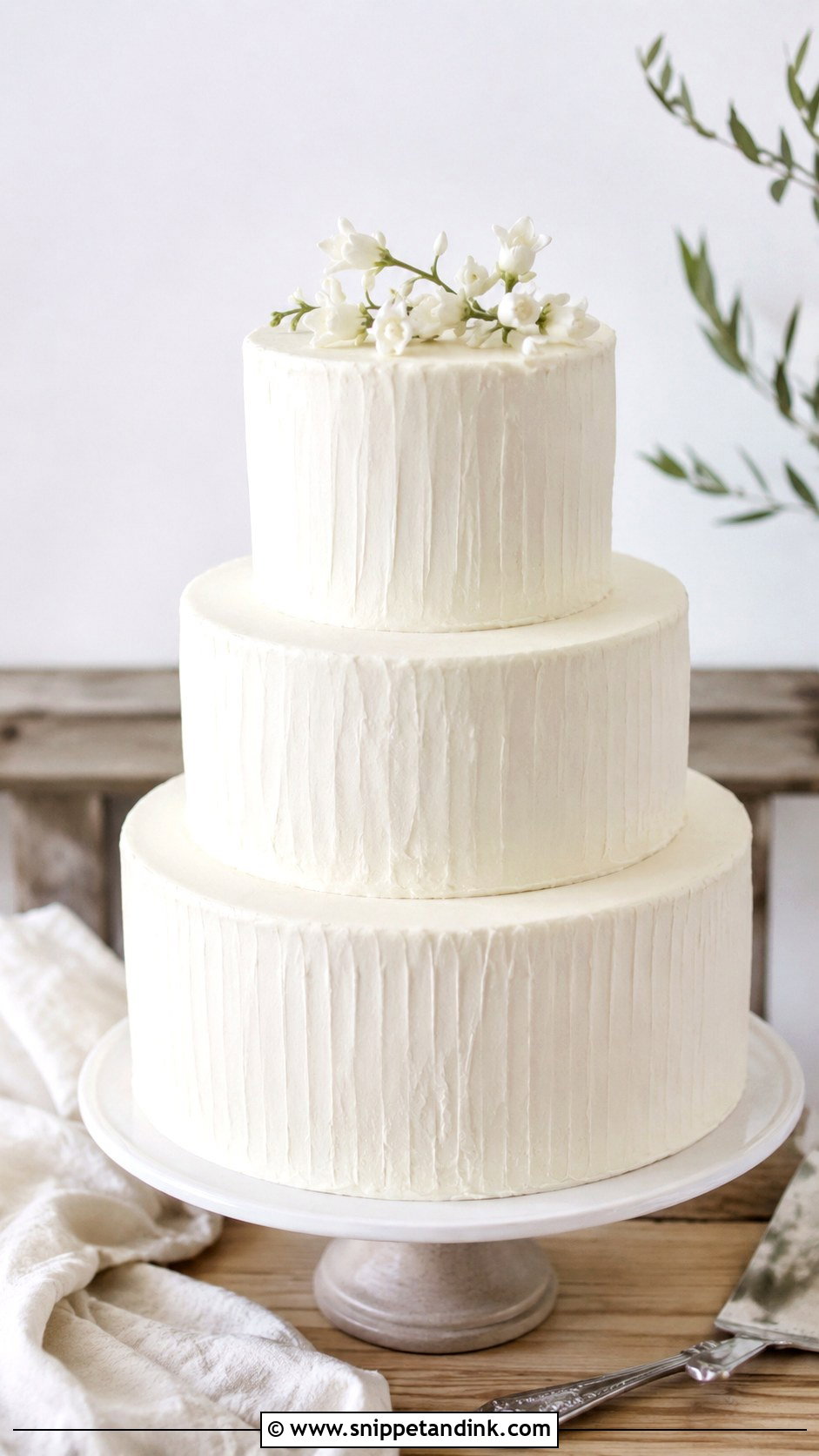
Spatula marks, vertical combing, brushed stucco. Texture is the friendliest finish for an outdoor wedding because a small scuff from the van or a bit of softening in the heat disappears into it. That’s why I suggest it for barns, coastal tents and anywhere the cake might sit out longer than planned. Consistency is what keeps it looking polished: the same stroke direction and depth on all three tiers. White icing shows texture through shadow alone, so side light from a window helps far more than an overhead spotlight.
9. Plain White 3 Tier Lace Wedding Cake
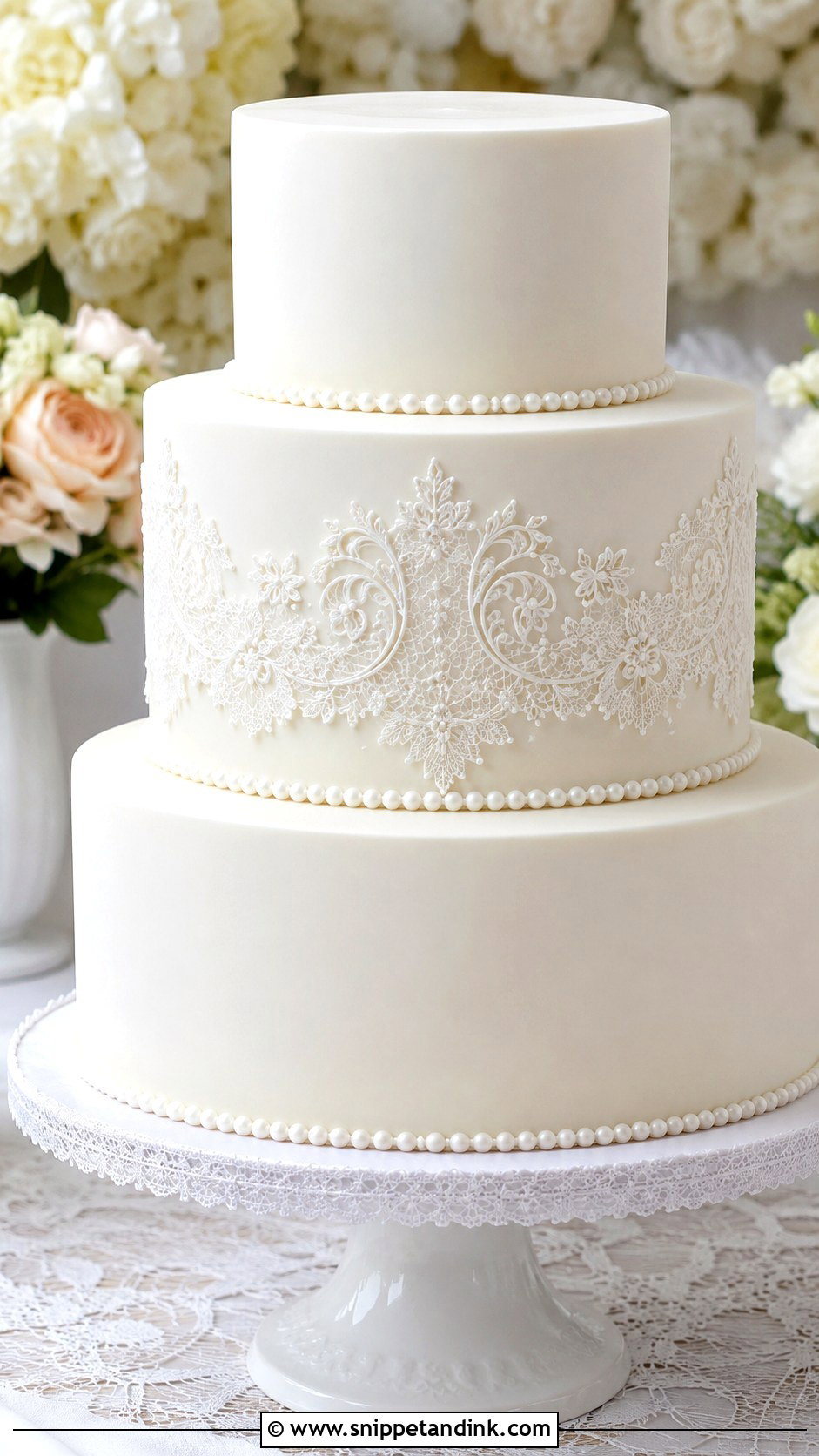
Cake lace can be made four ways: fondant appliqué cut from a lace mat, royal icing piped freehand, royal icing pushed through a stencil, or piped buttercream. Each gives a different depth, and I’d ask to see a sample of the exact method your baker uses, since a stencilled pattern is much flatter than the hand-piped lace in most saved photos. One laced tier keeps things simple; all three looks formal. Bring a close photo of your gown’s lace and a good decorator can echo its motif instead of reaching for a generic pattern.
10. Plain White 3 Tier Satin Ribbon Wedding Cake
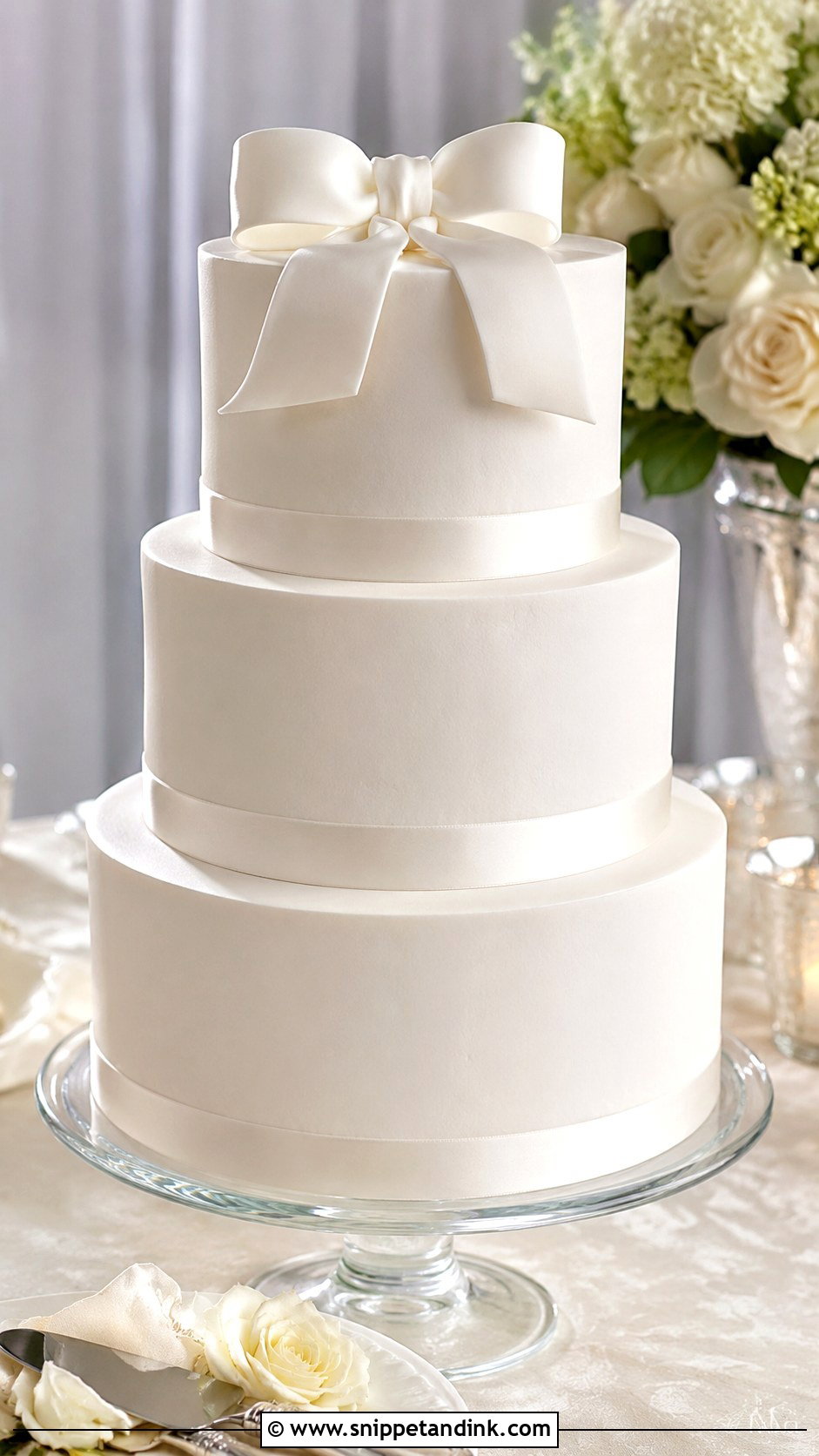
One ribbon per tier is the most economical finish I offer that still looks complete. What nobody mentions is that real satin ribbon soaks up butter from buttercream and shows grease spots within hours, so I back it with clear tape or switch to a fondant ribbon that’s fully edible. Narrow widths look tailored. Wide ones date quickly. It suits buttercream and fondant equally, and a plain stand with soft lighting is all it needs.
11. Plain White 3 Tier Orchid Wedding Cake
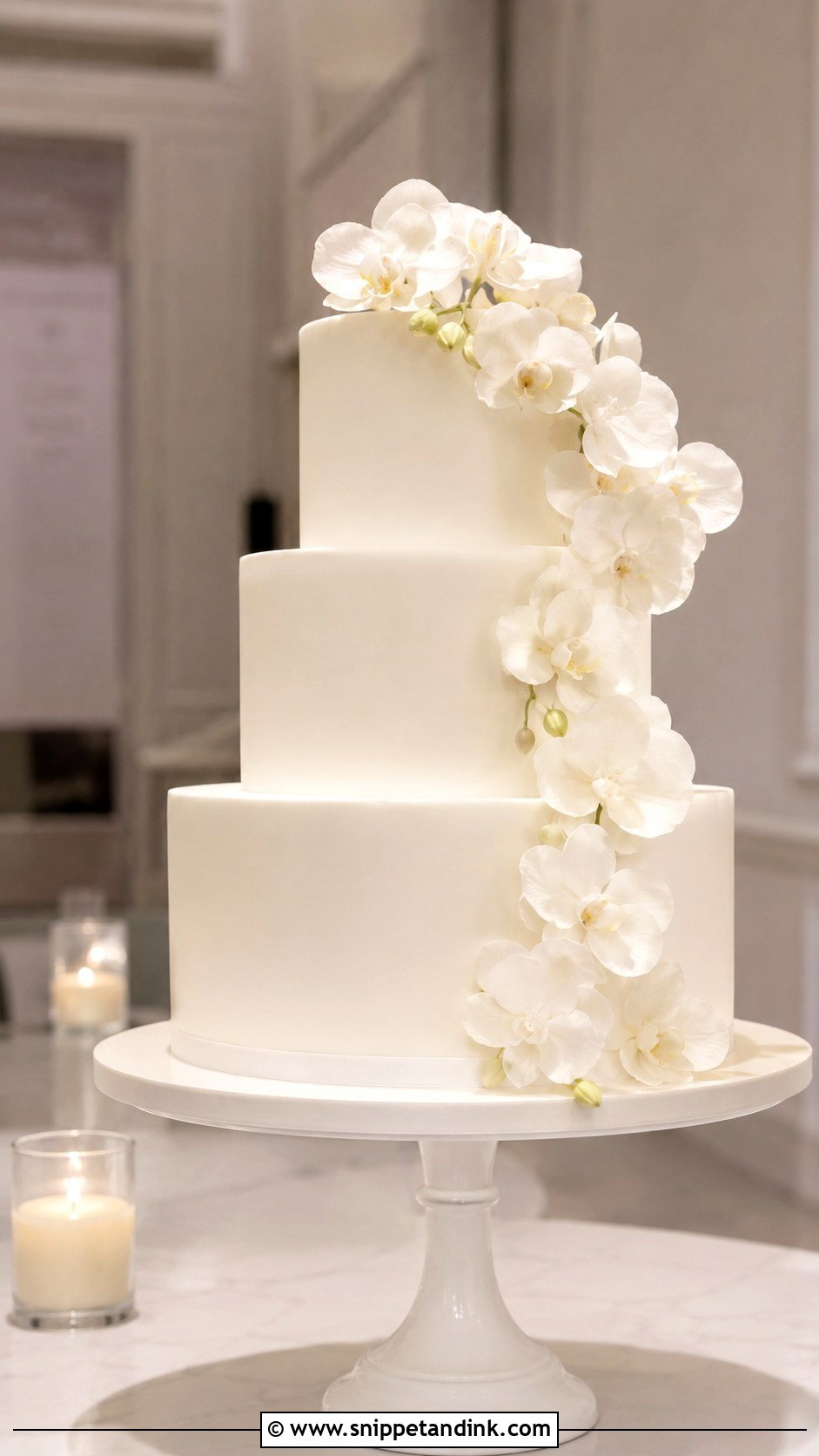
Phalaenopsis orchids have a flat, sculptural face that suits a smooth white tier better than almost any other flower. I place them in a loose diagonal down one side so they create movement without hiding the cake. Fresh orchids are fairly sturdy but still need a barrier between stem and sponge. Sugar orchids keep everything edible, though wired sugar petals are fragile and add to the cost. Skip greenery to keep the palette white; hotel receptions and tropical venues carry this one without any gold or color at all.
12. Plain White 3 Tier Rose Wedding Cake
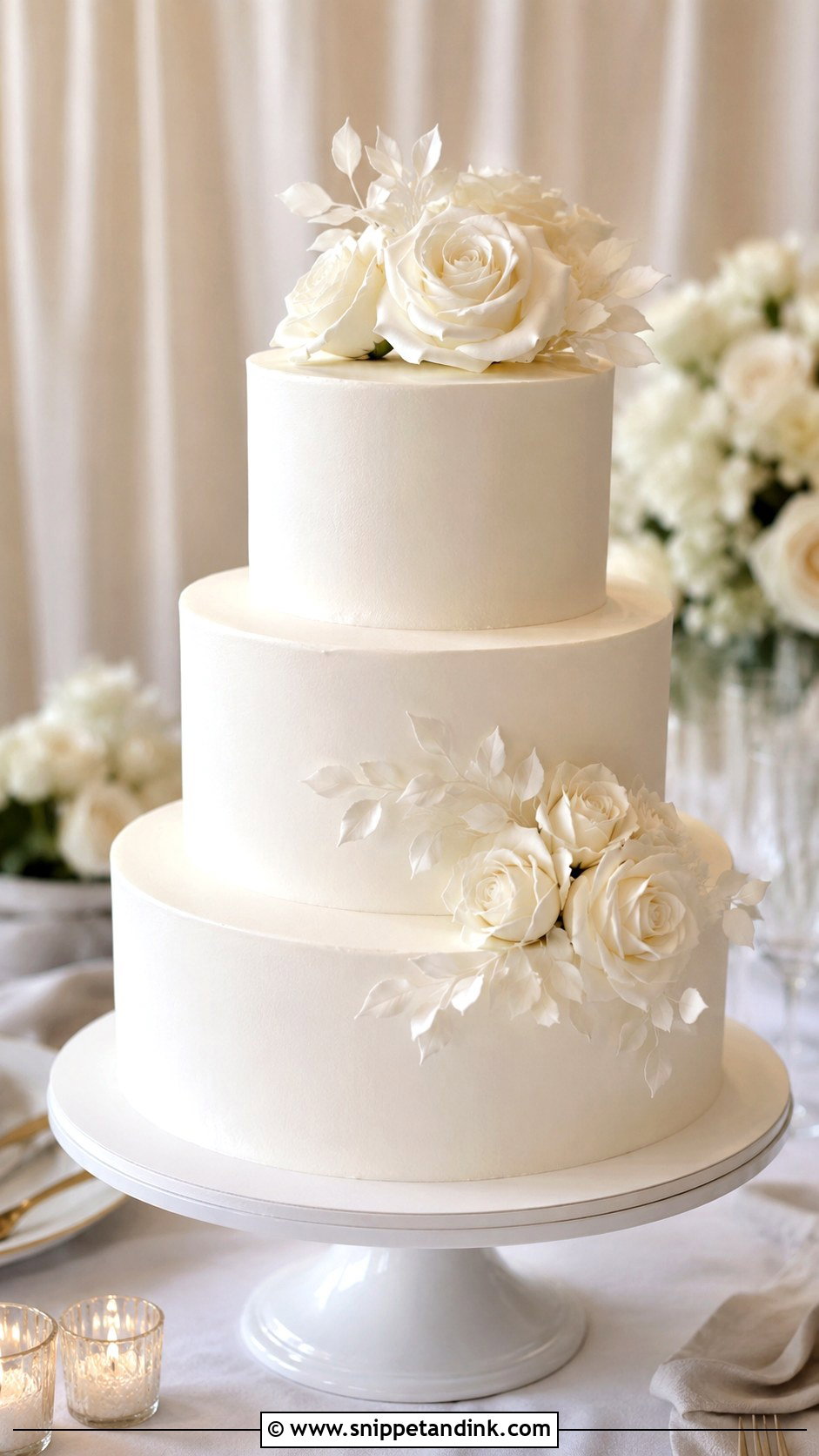
Roses forgive a lot, so I recommend them to couples who are nervous about flowers on the cake. Sugar roses look porcelain-smooth, fresh garden roses look loose and smell wonderful, and piped buttercream roses feel homely. Two groupings, a small one on the top tier and another near the base, keep plenty of white showing. Garden roses are thirsty, though, and they flop faster than you’d expect once they’re off water, so I place them as late as I can. Vanilla, almond, coconut and champagne-style sponges all suit the flavor of the theme.
13. Plain White 3 Tier Hydrangea Wedding Cake
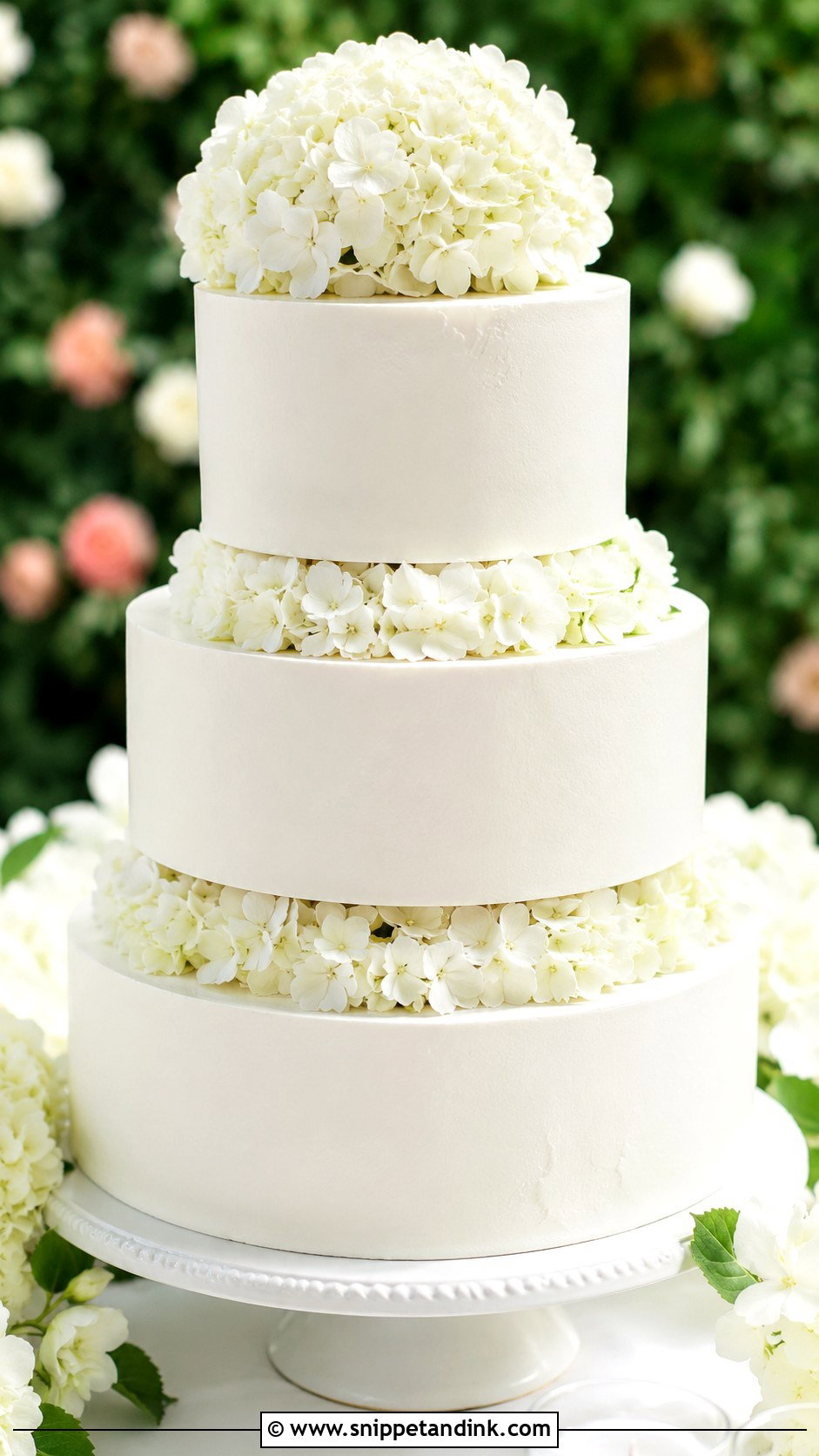
Hydrangeas look cloud-soft, but fresh ones are a risky pick for a cake. They wilt quickly once cut, especially in a warm room, and they aren’t a food-safe flower. That’s why I usually steer couples toward sugar hydrangea florets, which hold their shape all night and can sit directly on the icing. A single cluster on the side or a few florets between tiers is plenty, since the flower is naturally full. If you’re set on real ones, the florist needs to hydrate them well and every stem must be sealed off from the sponge.
14. Plain White 3 Tier Piped Wedding Cake
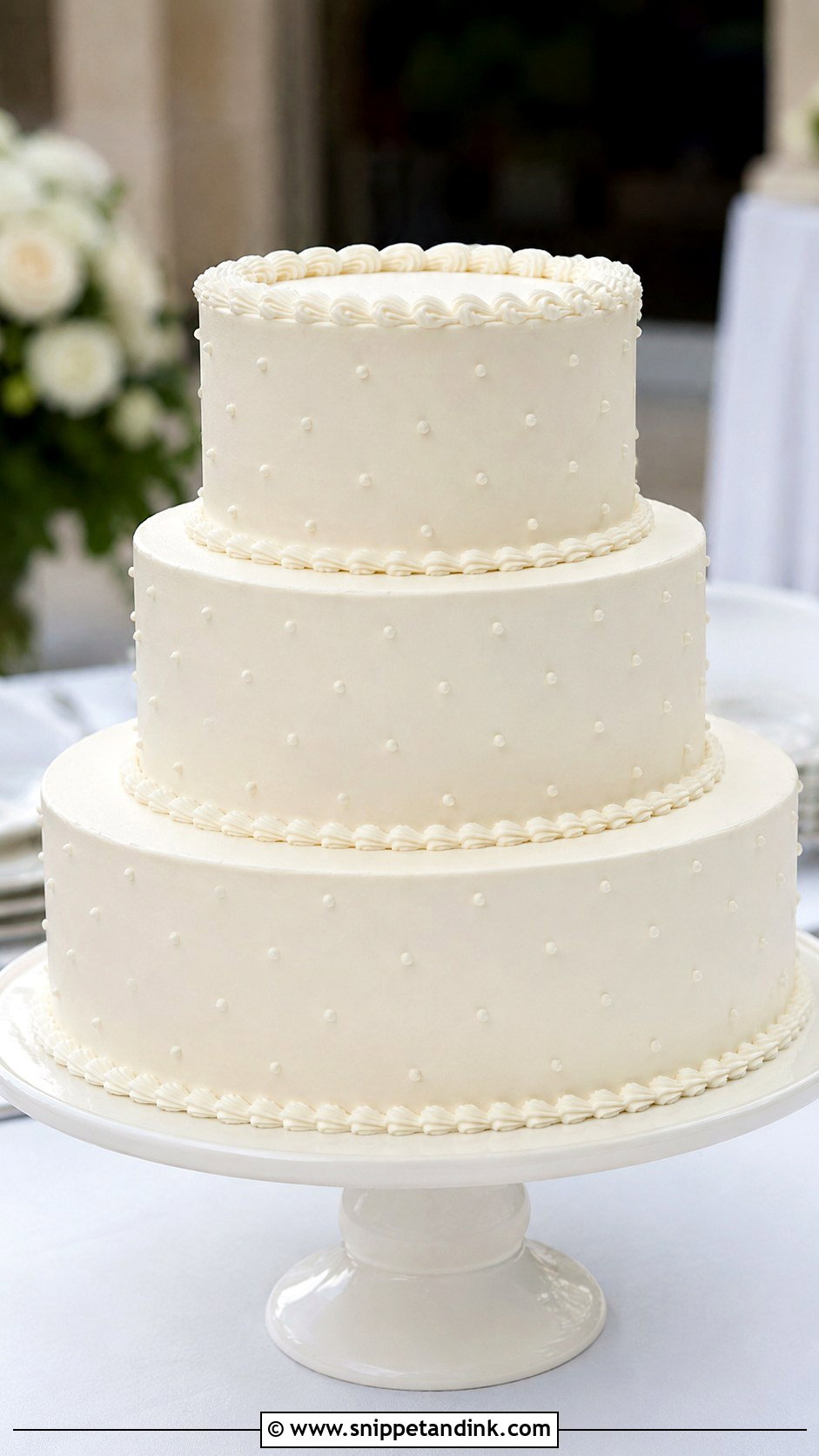
Fine piping is quieter than full overpiping and much quicker, which makes it the middle ground I suggest most often. Swiss dots, slim beaded borders and small scrolls give texture without crowding, provided the spacing is even. I mark out dot spacing with a template before I pipe, because uneven gaps are the first thing a guest notices on a white cake. Tight beading reads formal, scattered dots read relaxed, and both are usually gentle on the budget.

15. Plain White 3 Tier Square Wedding Cake
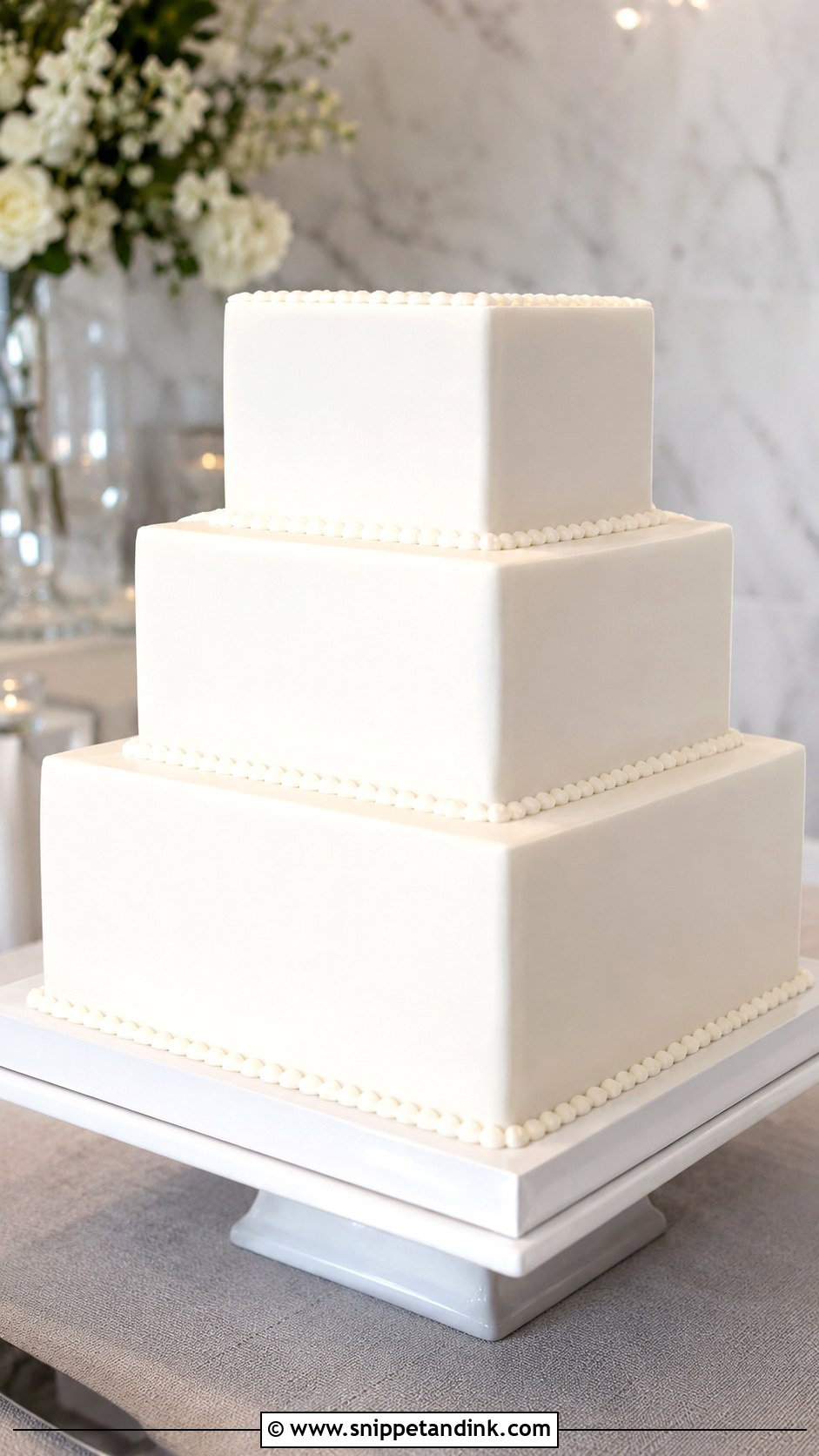
A square cake shape changes the whole mood of a white cake, but square tiers are harder than they look. Corners are where fondant tears and buttercream sags, so I’d only go square with a baker whose portfolio shows clean square work. Straight sides suit city venues and contemporary rooms. Square tiers also serve more slices than round tiers of the same width, thanks to the corners, which helps when the guest list keeps creeping up. Keep decoration to a slim base border; the shape is already doing the talking.
16. Plain White 3 Tier Round Wedding Cake
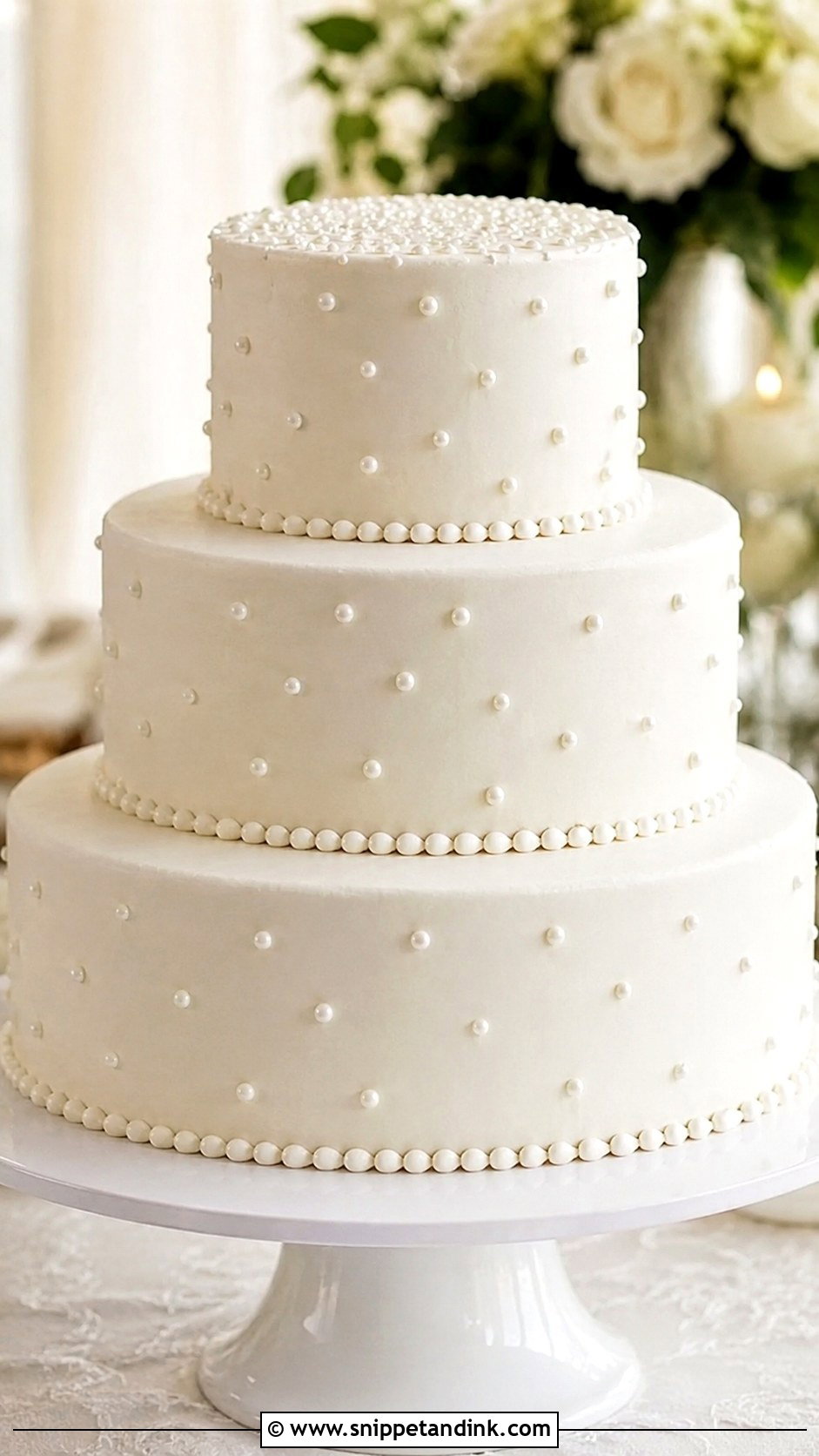
Round is what I’d recommend if you’re unsure, simply because it suits almost every venue and gives the baker the most freedom with proportions. It also travels best, since there are no corners to chip in transit. Pearls, piped dots, satin fondant or plain buttercream all sit well on it. The one decision worth real thought is tier height: taller for a dramatic table, standard for a traditional one. Familiar is not a weakness here.
17. Plain White 3 Tier Tall Wedding Cake
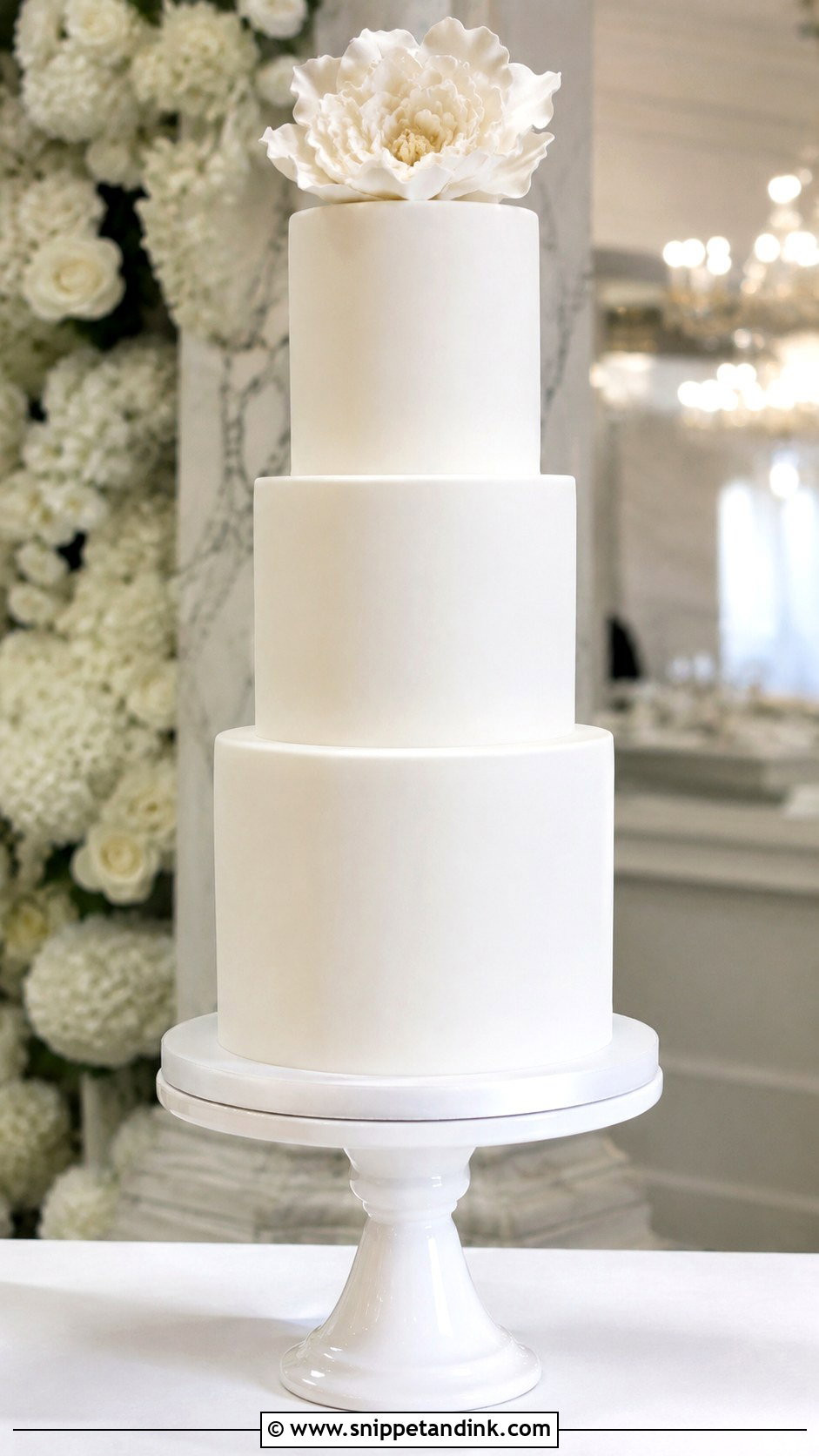
Extra height gives presence without extra decoration, and a white tall wedding cake on a pedestal holds its own in a big ballroom. Structurally, double-height tiers need an internal board and dowels halfway up each one, or the top layers slowly compress the bottom. Fondant gives the crispest vertical line; buttercream looks softer. One white floral topper, or nothing, is enough. I’d also look at where the venue’s lights sit, because a very tall cake under a single downlight can end up with a glowing top tier and a base lost in shadow.
18. Plain White 3 Tier Minimalist Wedding Cake
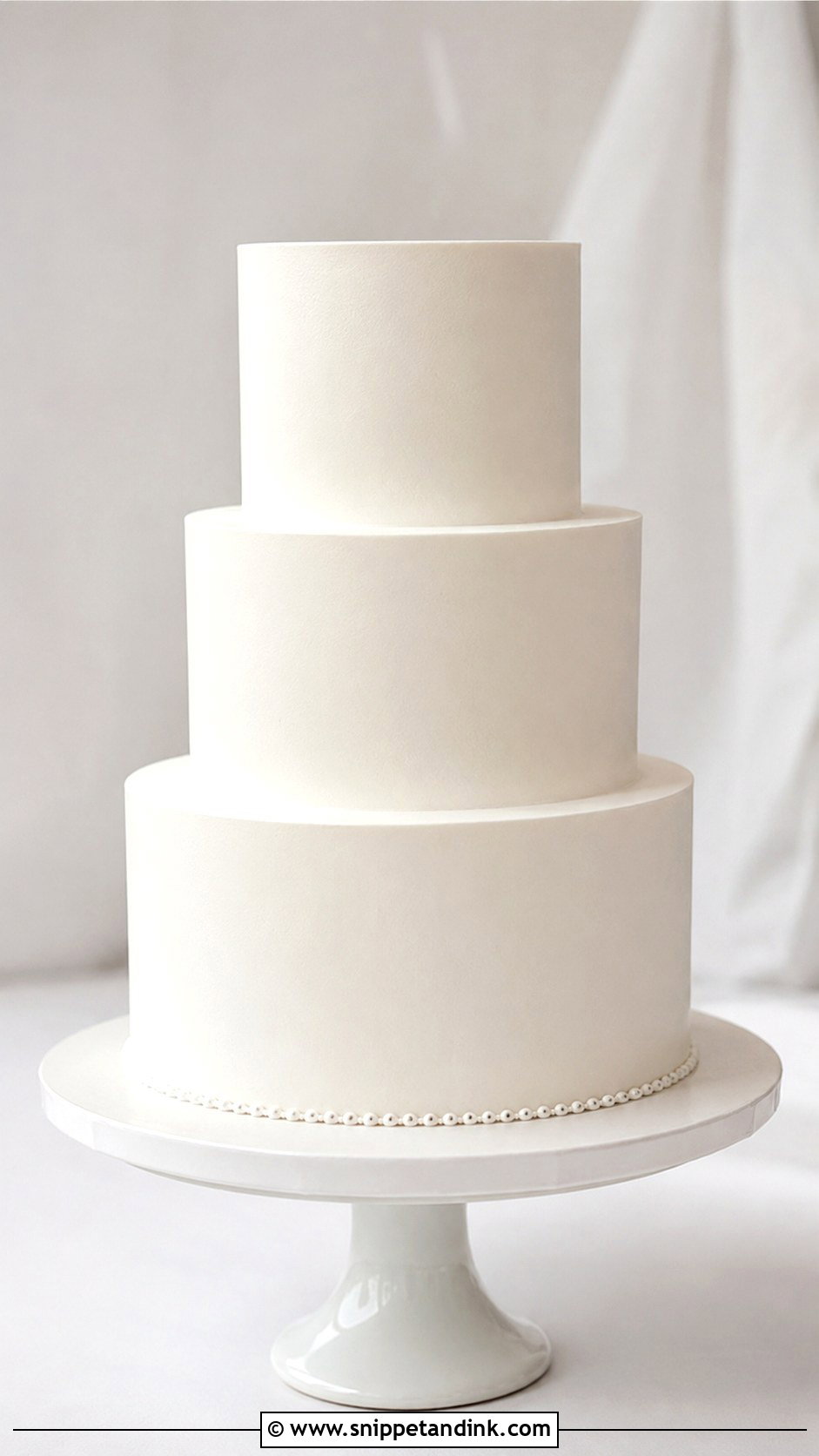
Less decoration only looks more expensive when the finish is flawless, so this is where I’d spend money on skill rather than sugar flowers. Smooth sides, sharp edges, a clean board and a tidy table. That’s the whole brief. Intimate weddings and rooms with strong architecture or good daylight carry it best, and it hands the attention to the flowers and linens around it. Minimalist doesn’t mean unfinished, though: the cake board should be covered and trimmed to match, because a bare cardboard edge is the most common giveaway.
19. Plain White 3 Tier Garden Wedding Cake
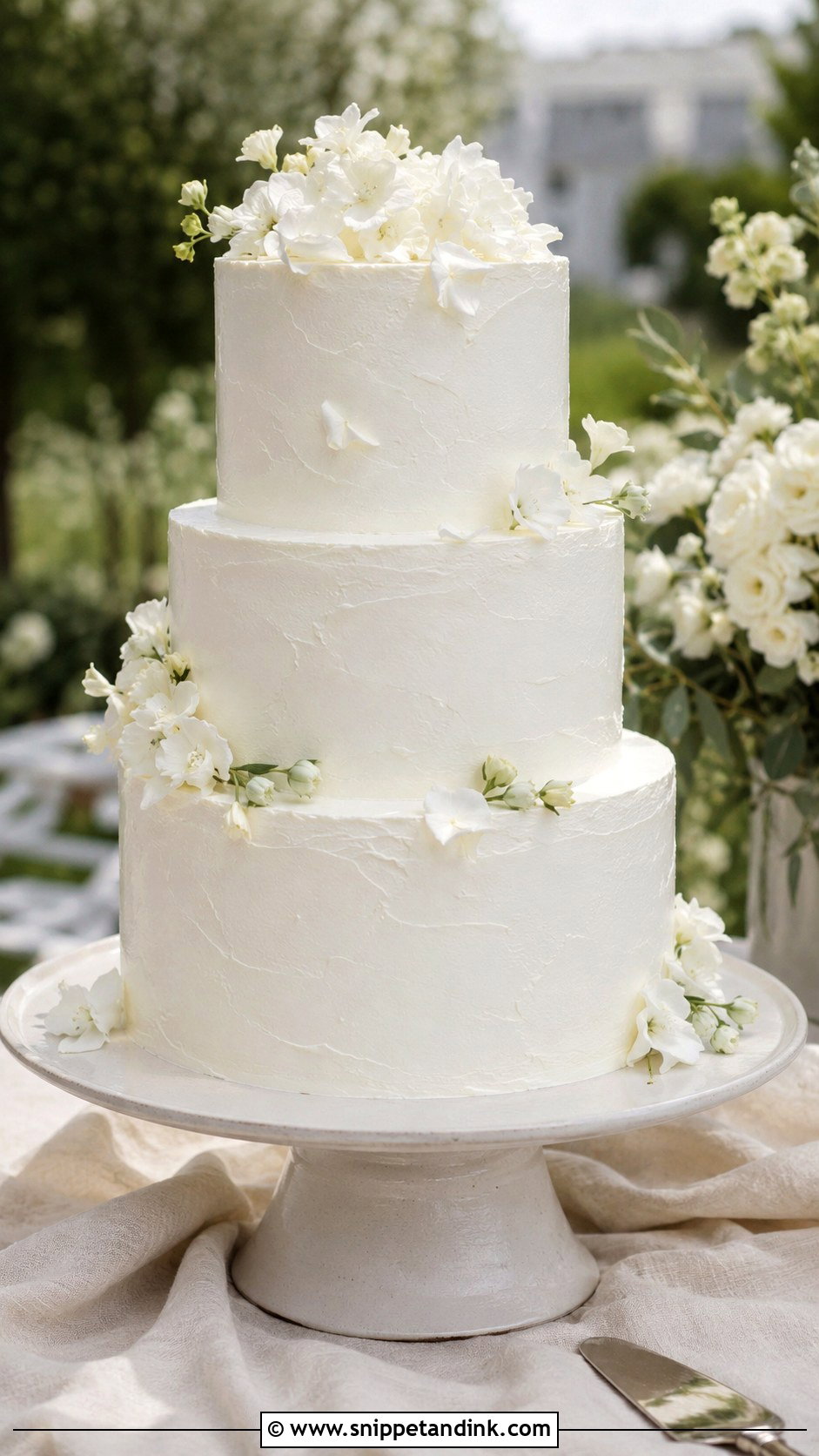
For a garden cake I keep the surface lightly textured and set small white buds or edible petals loosely, as if they’d drifted there. Greenery is the trap. A few sprigs read garden, while a full wreath turns the cake green. A ceramic stand or a plain wooden board suits it. Outdoors is also where buttercream suffers most, so I always ask where the cake will stand and for how long, and I make sure the dessert table is in shade before anyone carries it out.


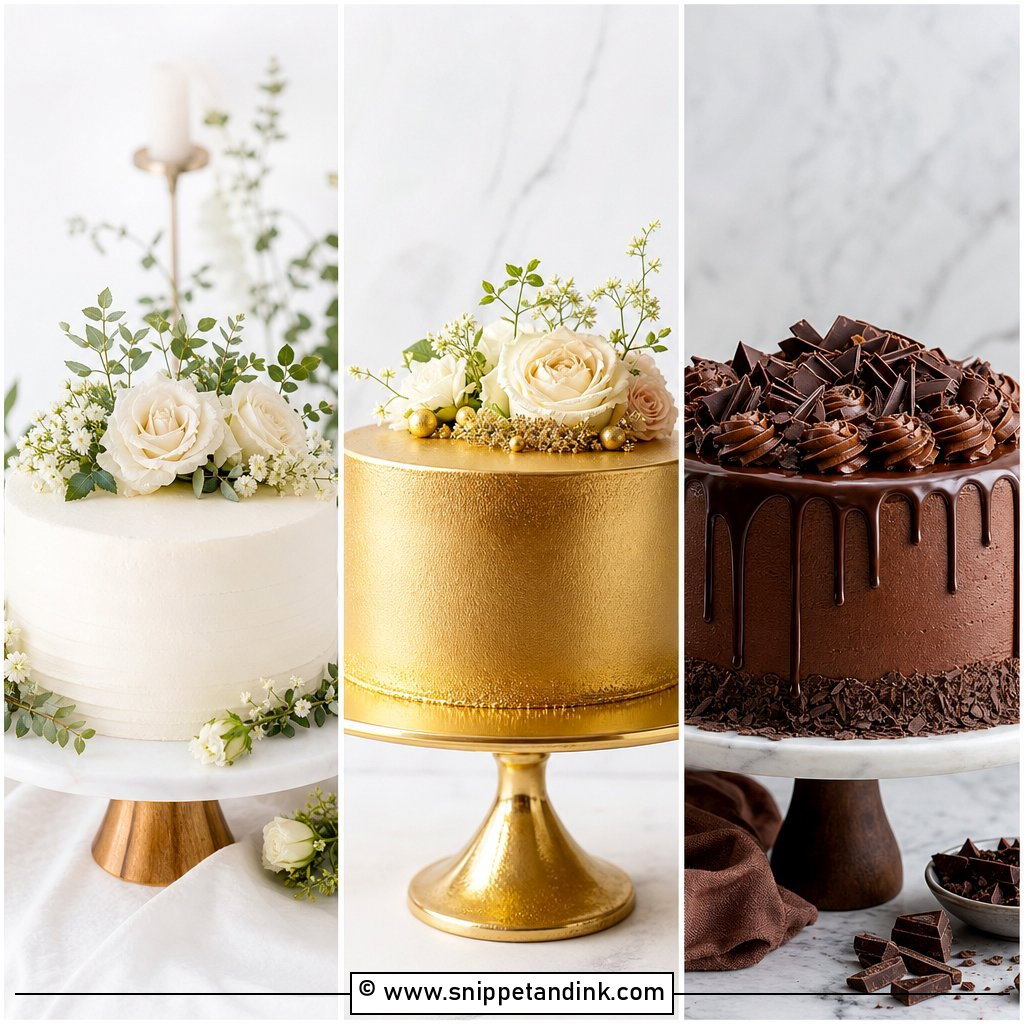
20. Plain White 3 Tier Elegant Wedding Cake
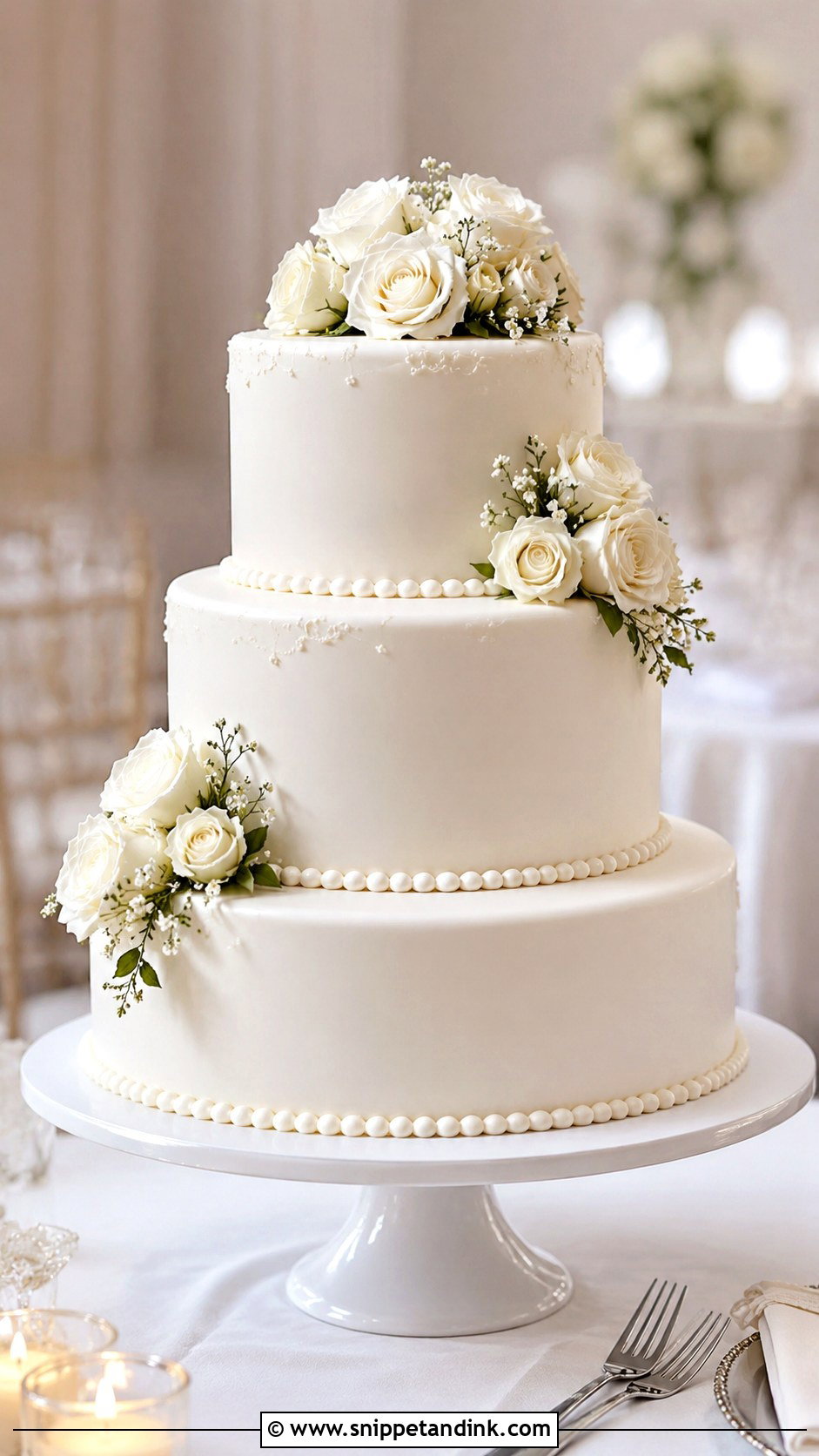
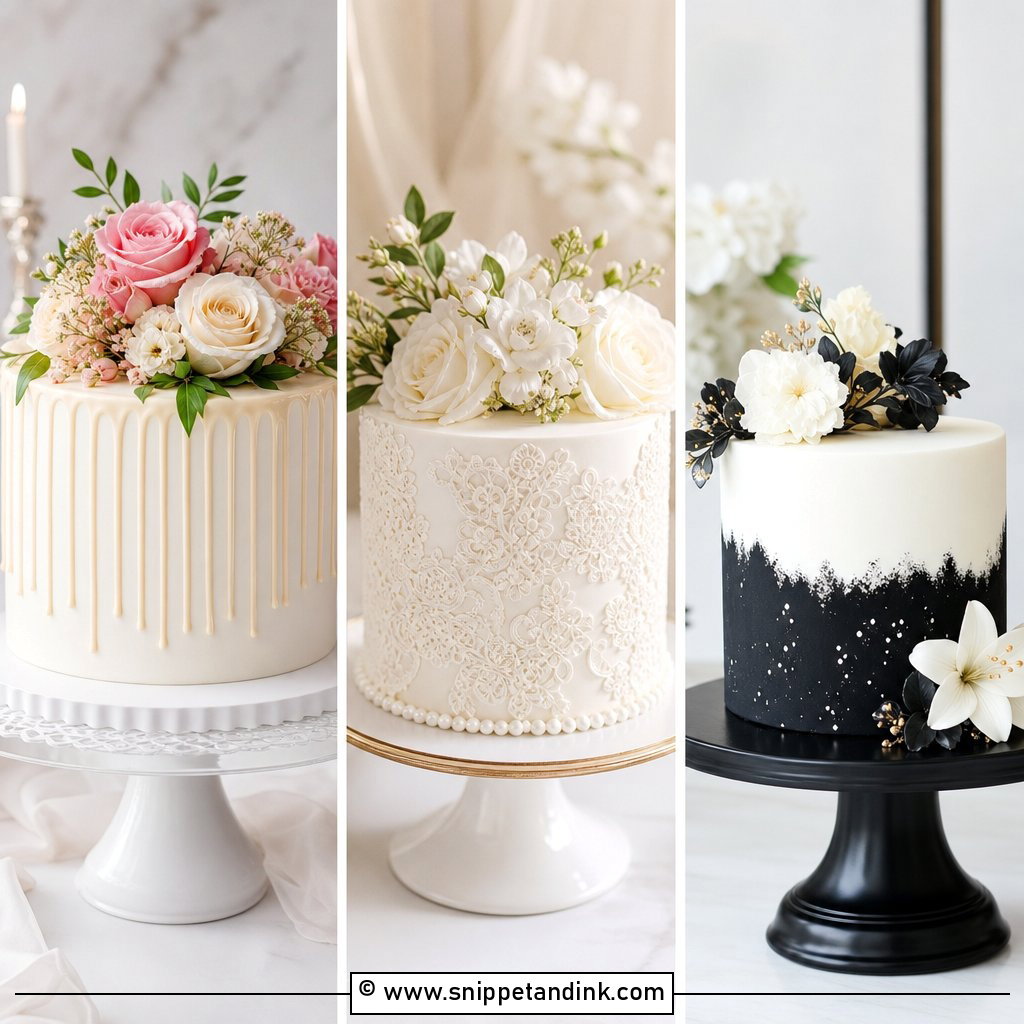
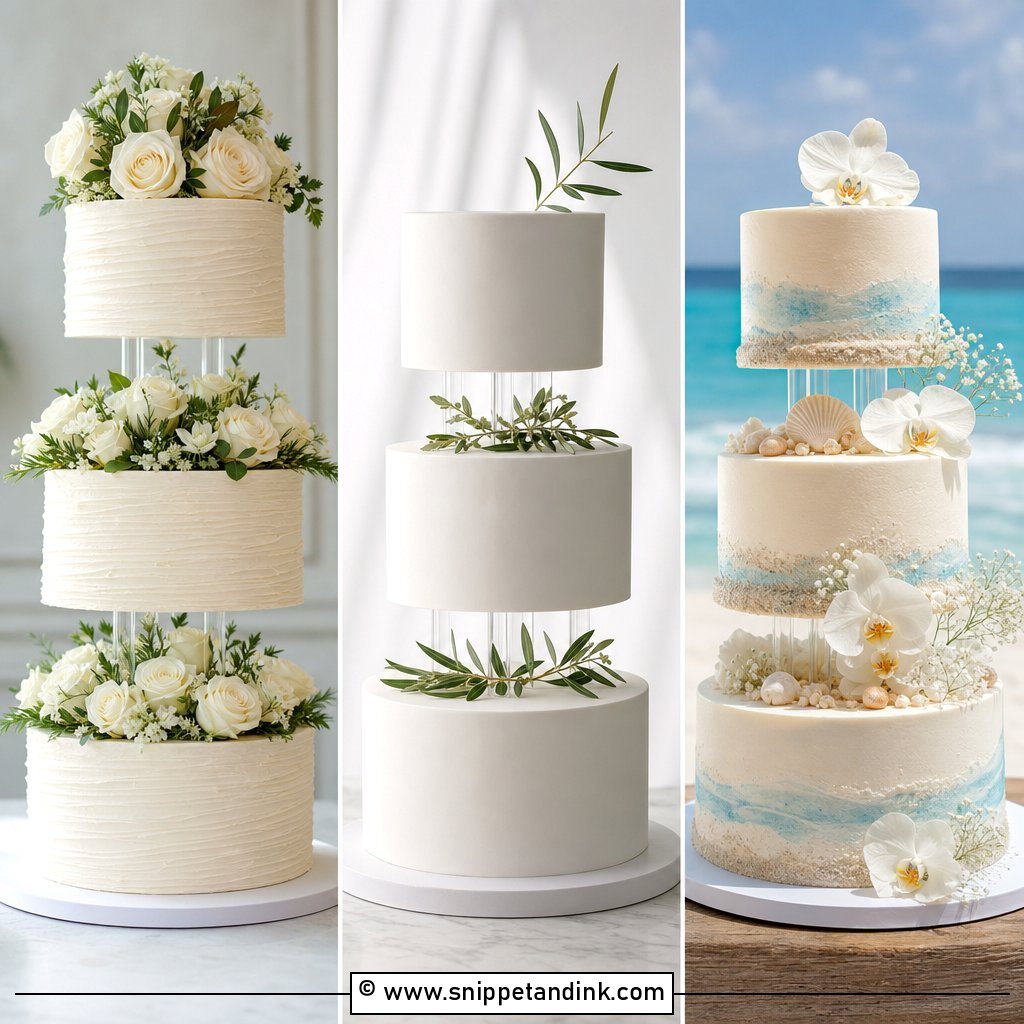
Elegance on a white cake comes down to balance: smooth frosting, neat borders, perhaps a few flowers, and nothing competing. I match one detail to the venue or the dress and keep everything else quiet. Pearls feel classic, orchids feel modern, lace feels romantic. Pure white looks crisp in daylight, while ivory warms up in candlelight. If you’re torn between two finishes, put a photo of each beside your linen and flower samples and the answer is usually obvious within a minute.
Slices, Servings and How Far Three Tiers Stretch
Three tiers sounds like plenty, but the number of portions depends on tier sizes and slice size far more than on the number of tiers. Wedding portions are traditionally cut as narrow fingers, about one inch wide and two inches deep, which is much smaller than a dessert slice. As a rough guide, and every baker’s chart differs a little:
- 6, 8 and 10 inch rounds give roughly 70 to 75 wedding portions.
- 8, 10 and 12 inch rounds give roughly 115 to 120.
- The same sizes in square tiers serve noticeably more, because of the corners.
If the cake is also the dessert course, slices get cut larger and each tier feeds fewer people. When the guest list outgrows three real tiers, I’d rather add a plain kitchen cake iced to match and cut out of sight than make the display cake wider and squatter. The proportions on the table stay right, and nobody can tell.
What a Plain Finish Needs on the Day
Decoration hides small damage. A plain white cake doesn’t, so delivery and display are where I take the most care.
- Keep the cake out of direct sun and away from stage lights, heaters and radiators. Buttercream starts softening in a warm room within an hour or two.
- Don’t move a fondant cake from a cold fridge into a humid room right before display. Condensation beads on the surface and can leave marks as it dries.
- Ask the venue for a sturdy, level table. A wobbly trestle is the most common reason I end up re-levelling a cake on arrival.
- Agree who cuts and serves. If the caterer is cutting, tell them where the dowels and boards sit so the tiers come apart cleanly.
I also leave a small tub of matching icing with the coordinator, so any scuff that happens after I’ve left can be smoothed over before the cutting.
Plain White Is a Craft Decision, Not the Safe Option
A plain white cake is only dull when it’s badly finished. Shape, covering and one quiet detail do the work that color does on any other cake, so give those three most of your attention at the tasting. Think about your venue, your dress and how long the cake will stand before it’s cut. Then keep the decoration controlled and let the baker’s hands show.
You'll Like These Ideas:





Leave a Reply